EP3086432A1 - Power distribution systems - Google Patents
Power distribution systems Download PDFInfo
- Publication number
- EP3086432A1 EP3086432A1 EP15164879.7A EP15164879A EP3086432A1 EP 3086432 A1 EP3086432 A1 EP 3086432A1 EP 15164879 A EP15164879 A EP 15164879A EP 3086432 A1 EP3086432 A1 EP 3086432A1
- Authority
- EP
- European Patent Office
- Prior art keywords
- electrical machine
- link
- inverter
- busbar
- rectifier
- Prior art date
- Legal status (The legal status is an assumption and is not a legal conclusion. Google has not performed a legal analysis and makes no representation as to the accuracy of the status listed.)
- Granted
Links
Images



Classifications
-
- H—ELECTRICITY
- H02—GENERATION; CONVERSION OR DISTRIBUTION OF ELECTRIC POWER
- H02J—ELECTRIC POWER NETWORKS; CIRCUIT ARRANGEMENTS OR SYSTEMS FOR SUPPLYING OR DISTRIBUTING ELECTRIC POWER; SYSTEMS FOR STORING ELECTRIC ENERGY
- H02J9/00—Circuit arrangements for emergency or stand-by power supply, e.g. for emergency lighting
- H02J9/02—Circuit arrangements for emergency or stand-by power supply, e.g. for emergency lighting in which an auxiliary distribution system and its associated lamps are brought into service
-
- H—ELECTRICITY
- H02—GENERATION; CONVERSION OR DISTRIBUTION OF ELECTRIC POWER
- H02J—ELECTRIC POWER NETWORKS; CIRCUIT ARRANGEMENTS OR SYSTEMS FOR SUPPLYING OR DISTRIBUTING ELECTRIC POWER; SYSTEMS FOR STORING ELECTRIC ENERGY
- H02J9/00—Circuit arrangements for emergency or stand-by power supply, e.g. for emergency lighting
- H02J9/04—Circuit arrangements for emergency or stand-by power supply, e.g. for emergency lighting in which the distribution system is disconnected from the normal source and connected to a standby source
- H02J9/06—Circuit arrangements for emergency or stand-by power supply, e.g. for emergency lighting in which the distribution system is disconnected from the normal source and connected to a standby source with automatic change-over, e.g. UPS systems
- H02J9/066—Circuit arrangements for emergency or stand-by power supply, e.g. for emergency lighting in which the distribution system is disconnected from the normal source and connected to a standby source with automatic change-over, e.g. UPS systems characterised by the use of dynamo-electric machines
-
- B—PERFORMING OPERATIONS; TRANSPORTING
- B63—SHIPS OR OTHER WATERBORNE VESSELS; RELATED EQUIPMENT
- B63J—AUXILIARIES ON VESSELS
- B63J3/00—Driving of auxiliaries
- B63J3/02—Driving of auxiliaries from propulsion power plant
-
- H—ELECTRICITY
- H02—GENERATION; CONVERSION OR DISTRIBUTION OF ELECTRIC POWER
- H02J—ELECTRIC POWER NETWORKS; CIRCUIT ARRANGEMENTS OR SYSTEMS FOR SUPPLYING OR DISTRIBUTING ELECTRIC POWER; SYSTEMS FOR STORING ELECTRIC ENERGY
- H02J3/00—Circuit arrangements for AC mains or AC distribution networks
- H02J3/38—Arrangements for feeding a single network from two or more generators or sources in parallel; Arrangements for feeding already energised networks from additional generators or sources in parallel
-
- H—ELECTRICITY
- H02—GENERATION; CONVERSION OR DISTRIBUTION OF ELECTRIC POWER
- H02M—APPARATUS FOR CONVERSION BETWEEN AC AND AC, BETWEEN AC AND DC, OR BETWEEN DC AND DC, AND FOR USE WITH MAINS OR SIMILAR POWER SUPPLY SYSTEMS; CONVERSION OF DC OR AC INPUT POWER INTO SURGE OUTPUT POWER; CONTROL OR REGULATION THEREOF
- H02M7/00—Conversion of AC power input into DC power output; Conversion of DC power input into AC power output
- H02M7/66—Conversion of AC power input into DC power output; Conversion of DC power input into AC power output with possibility of reversal
- H02M7/68—Conversion of AC power input into DC power output; Conversion of DC power input into AC power output with possibility of reversal by static converters
-
- H—ELECTRICITY
- H02—GENERATION; CONVERSION OR DISTRIBUTION OF ELECTRIC POWER
- H02J—ELECTRIC POWER NETWORKS; CIRCUIT ARRANGEMENTS OR SYSTEMS FOR SUPPLYING OR DISTRIBUTING ELECTRIC POWER; SYSTEMS FOR STORING ELECTRIC ENERGY
- H02J2105/00—Networks for supplying or distributing electric power characterised by their spatial reach or by the load
- H02J2105/10—Local stationary networks having a local or delimited stationary reach
- H02J2105/12—Local stationary networks having a local or delimited stationary reach supplying households or buildings
-
- H—ELECTRICITY
- H02—GENERATION; CONVERSION OR DISTRIBUTION OF ELECTRIC POWER
- H02J—ELECTRIC POWER NETWORKS; CIRCUIT ARRANGEMENTS OR SYSTEMS FOR SUPPLYING OR DISTRIBUTING ELECTRIC POWER; SYSTEMS FOR STORING ELECTRIC ENERGY
- H02J2105/00—Networks for supplying or distributing electric power characterised by their spatial reach or by the load
- H02J2105/30—Networks for supplying or distributing electric power characterised by their spatial reach or by the load the load networks being external to vehicles, i.e. exchanging power with vehicles
- H02J2105/31—Networks for supplying or distributing electric power characterised by their spatial reach or by the load the load networks being external to vehicles, i.e. exchanging power with vehicles for ships or vessels
-
- H—ELECTRICITY
- H02—GENERATION; CONVERSION OR DISTRIBUTION OF ELECTRIC POWER
- H02J—ELECTRIC POWER NETWORKS; CIRCUIT ARRANGEMENTS OR SYSTEMS FOR SUPPLYING OR DISTRIBUTING ELECTRIC POWER; SYSTEMS FOR STORING ELECTRIC ENERGY
- H02J9/00—Circuit arrangements for emergency or stand-by power supply, e.g. for emergency lighting
Definitions
- the present invention relates to power distributions systems, and in particular to marine power distribution systems or marine power distribution and propulsion systems.
- the term 'marine vessels' is intended to include ships, drilling rigs and any other surface-going vessels or platforms or submersible (submarine) vessels.
- Marine power distribution and propulsion systems are well known.
- a series of power converters are used to interface a main ac busbar to a series of loads which can be electric motors, e.g., propulsion motors or thrusters.
- loads can be connected directly to the main ac busbar or connected to an auxiliary ac busbar which is in turn connected to the main ac busbar by means of a transformer.
- the ac busbars typically operate at different voltages, e.g., 690VAC and 440VAC.
- Each power converter can be an 'active front end' (AFE) converter with a supply-side active rectifier/inverter (or 'front end' bridge) having ac terminals connected to the main ac busbar and a load-side active rectifier/inverter connected to the load.
- the dc output of the supply-side active rectifier/inverter is connected to the dc input of the load-side active rectifier/inverter by a dc link.
- the supply-side active rectifier/inverter will operate as an active rectifier to supply power to the dc link and the load-side active rectifier/inverter will operate as an inverter to supply power to the load.
- Each active rectifier/inverter will typically have a conventional topology.
- a prime mover e.g., a diesel engine or turbine
- a prime mover is connected to individual generators which supply power to the main ac busbar.
- the main ac busbar can be equipped with protective switchgear with circuit breakers and associated controls.
- the marine propulsion system will typically include a first (or port) ac busbar and a second (or starboard) ac busbar that are interconnected by a busbar tie.
- Some marine propulsion systems use a plurality of ac busbar sections or groups interconnected by a plurality of busbar ties to improve power availability.
- the marine propulsion system 1 includes a power take-in/power take-out (PTI/PTO) hybrid drive system 2.
- the hybrid drive system 2 includes an induction (or asynchronous) electrical machine 4 and a diesel engine 6.
- the rotor of the electrical machine 4 and the driving end of the diesel engine 6 are mechanically coupled through a gearbox 8 and are used to drive a propulsion thruster 10, for example.
- the electrical machine 4 is connected to the main ac busbar 12 by means of an AFE converter 14 with a supply-side active rectifier/inverter 16 having ac terminals connected to the main ac busbar and a machine-side active rectifier/inverter 18 connected to the electrical machine.
- the dc output of the supply-side active rectifier/inverter 16 is connected to the dc input of the machine-side active rectifier/inverter 18 by a dc link 20.
- the electrical machine 4 is operated as a motor and is used to drive the propulsion thruster. Power is supplied to the electrical machine 4 from the main ac busbar 12 through the AFE converter 14 with the ac supply-side active rectifier/inverter 16 being operated as an active rectifier and the machine-side active rectifier/inverter 18 being operated as an inverter.
- the electrical machine 4 is operated as a generator with the rotor of the electrical machine being driven by the diesel engine 6.
- Power is supplied from the electrical machine 4 to the main ac busbar 12 through the AFE converter 14 with the machine-side active rectifier/inverter 18 being operated as an active rectifier and the supply-side active rectifier/inverter 16 being operated as an inverter.
- Diesel generators 22, 24 supply power to the main ac busbar 12.
- the diesel generators 22, 24 are non-operational and the electrical machine 4 typically needs to recover the main ac busbar 12 by supplying power to the main ac busbar through the AFE converter 14.
- the electrical machine 4 will be driven by the diesel engine 6 and operated as a generator.
- the present invention provides a way of supplying power to magnetise the electrical machine 4 during a restart process so that it can subsequently supply power to the main ac busbar 12 for recovery purposes during an electric power blackout situation.
- the present invention provides a power distribution system (e.g., a marine power distribution or a marine power distribution and propulsion system) comprising:
- the electrical machine will typically be an induction (or asynchronous) machine. But if the electrical machine is an external-excitation synchronous machine and the excitation circuit is not operational for any reason, the blackout restart system and process described herein can be used to provide power to the excitation circuit.
- At least one ac generator will normally be electrically connected to the main ac busbar.
- the ac generators provide power to the main ac busbar during normal operation of the power distribution system and each has an associated prime mover, e.g., a diesel engine or turbine.
- the blackout restart system can be used to partially charge the dc link from the emergency ac busbar as part of a blackout restart process.
- the emergency ac busbar is a separate ac busbar that is used to maintain power to critical loads in the event of an electric power blackout situation.
- the emergency ac busbar will have its own dedicated power supply, e.g., a suitable uninterruptable power supply (UPS) that can provide near-instantaneous power to the emergency ac busbar and/or a back-up ac generator such as a diesel generator.
- UPS uninterruptable power supply
- the critical loads could include communication systems, navigation systems etc.
- the use of the blackout restart system will preferably have a minimal impact on the operation of the emergency ac busbar in supporting these critical loads.
- Each active rectifier/inverter (or bridge) employed in the power distribution system can have any suitable topology such as a two-level, three-level or multi-level topology with a series of semiconductor power switching devices fully controlled and regulated using a pulse width modulation (PWM) strategy, for example.
- PWM pulse width modulation
- the power distribution system as described herein can be a marine power distribution system or marine power distribution and propulsion system.
- the hybrid drive system can be used to drive a propeller or propulsion thruster.
- the hybrid drive system can use any suitable prime mover, e.g., a diesel engine or turbine.
- the blackout restart system can be electrically connected to the emergency ac busbar by a circuit breaker, protective switchgear or other protective circuits for fault isolation purposes.
- the rectifier can have any suitable topology such as an active topology with a series of semiconductor power switching devices fully controlled or regulated using a PWM strategy, for example, or a passive topology with a series of diodes (diode bridge).
- the ac input terminals of the rectifier can be electrically connected to the emergency ac busbar by an ac contactor or other switching means.
- the dc output terminals of the rectifier can be electrically connected to the dc link by a dc contactor or other switching means.
- the ac contactor and/or the dc contactor can be of any suitable type and can be controlled (i.e., opened and closed) by a control unit. Both the ac contactor and the dc contactor are closed to electrically connect the blackout restart system between the emergency ac busbar and the dc link, i.e., so that power can flow from the emergency ac busbar to the dc link as part of a blackout restart process.
- the blackout restart system is considered to be electrically disconnected if at least one of the ac contactor and the dc contactor is opened.
- the blackout restart system is preferably electrically disconnected from the dc link by opening the dc contactor so that the rectifier can use lower rated components, i.e., components that are rated for the partial dc link voltage.
- the blackout restart system can include a transformer having primary and secondary windings.
- the primary winding can be electrically connected to the ac contactor and the secondary winding can be electrically connected to the ac input terminals of the rectifier.
- the transformer can isolate the blackout restart system from the emergency ac busbar and provide protection and common mode noise filtering benefits.
- the transformer can have any suitable transformer ratio and can provide a step-up/step-down function if needed.
- the transformer and the rectifier can have any suitable number of phases, e.g., three. Charging current flowing through the blackout restart system can be limited by the line impedance of the transformer and by the firing angle of the rectifier if an active topology is used.
- the present invention further provides a method of operating the power distribution system according to any preceding claim in the event of an electric power blackout situation, the method including the steps of:
- the present invention further provides a method of operating a power distribution system (e.g., a marine power distribution or a marine power distribution and propulsion system) in the event of an electric power blackout situation, the power distribution system comprising:
- the second active rectifier/inverter can be controlled so that the output ac voltage of the second active rectifier/inverter has a predetermined magnitude and/or a frequency substantially synchronous to the rotating angular velocity of the electrical machine.
- the second active rectifier/inverter can be operated for a predetermined time.
- the partial dc link voltage can be between about 10% and about 40% (preferably about 30%) of the rated dc link voltage and the partial magnetic flux can be between about 10% and about 40% (preferably about 30%) of the rated magnetic flux of the electrical machine.
- a slip control process can be used to supply power from the electrical machine to the dc link.
- the slip control process can provide a small difference (or slip) between the synchronous speed and the rotor speed so that a torque is generated by the electrical machine.
- the generated torque can then be used to drive the electrical machine in a generating mode.
- the second active rectifier/inverter can be operated as a rectifier to supply current from the electrical machine to the dc link to increase the dc link voltage to the rated dc link voltage and then subsequently operated as an inverter to supply the rated dc link voltage to the electrical machine to increase the magnetic flux of the electrical machine to the rated magnetic flux.
- the second active rectifier/inverter can be operated as a rectifier to supply current from the electrical machine to the dc link to increase the dc link voltage to the rated dc link voltage whilst at the same time the magnetic flux of the electrical machine is increased to the rated magnetic flux.
- a slip control process it is possible to use a slip control process to increase the dc link voltage and the magnetic flux of the electrical machine at the same time using a suitable slip control process.
- any components that are electrically connected do not need to be directly electrically connected but can be indirectly electrically connected by interposing components where appropriate.
- a marine power distribution and propulsion system 30 includes a PTI/PTO hybrid drive system 32.
- the hybrid drive system 32 includes an induction (or asynchronous) electrical machine 34 and a diesel engine 36.
- the rotor of the electrical machine 34 and the driving end of the diesel engine 36 are mechanically coupled through a gearbox 38 and are used to drive a propulsion thruster 40, for example.
- the electrical machine 34 is connected to a main ac busbar 42 by means of an AFE converter 44 with a supply bridge 46 having ac terminals connected to the main ac busbar by means of a filter 52 and a machine bridge 48 connected to the terminals of the electrical machine.
- the dc output of the supply bridge 46 is connected to the dc input of the machine bridge 48 by a dc link 50 with one or more capacitors.
- Diesel generators (not shown) supply power to the main ac busbar 42.
- a blackout restart system 54 is electrically connected between an emergency ac busbar 56 and the dc link 50 of the AFE converter 44.
- the blackout restart system 54 is electrically connected to the emergency ac busbar 56 by a circuit breaker 58. It will be readily understood that the circuit breaker 58 is not operated as part of the blackout restart process described in more detail below, but only for fault isolation and protection purposes.
- the blackout restart system 54 is shown in more detail in Figure 3 and includes a rectifier 60.
- the semiconductor switching devices of the rectifier 60 can be controlled by a control unit (not shown).
- the rectifier 60 has dc output terminals that are electrically connected to the dc link 50 by a dc contactor 62 that is controlled to open and close by a control unit 64.
- the rectifier 60 has ac input terminals that are electrically connected to a transformer 66.
- the transformer 66 includes a primary winding that is electrically connected to the emergency ac busbar 56 by an ac contactor 68 that is controlled to open and close by the control unit 64, and a secondary winding that is electrically connected to the ac input terminals of the rectifier 60.
- the rectifier 60 and the transformer 66 can have any suitable number of phases, e.g., three.
- the ac contactor 68 and the dc contactor 62 are open so that the blackout restart system 54 is electrically disconnected from the emergency ac busbar 56 and the dc link 50.
- the hybrid drive system 32 can be used to recover the main ac busbar 42 by supplying power to it.
- the electrical machine 34 can be driven by the diesel engine 36 so that it is operated as a generator in a PTO mode to supply power to the main ac busbar 42 through the AFE converter 44. But before the electrical machine 34 can be operated as a generator, it must receive power in order to magnetise. This can be achieved using a multi-step blackout restart process described with reference to Figure 4 .
- the ac contactor 68 and the dc contactor 62 are controlled to close to electrically connect the restart system 54 to the emergency ac busbar 56 and the dc link 50 of the AFE converter 44.
- the rectifier 60 is also enabled.
- the blackout restart request can be manually triggered by an operator, or triggered automatically by a separate control or monitoring process, for example.
- any reference herein to charging the dc link means charging the dc link capacitor(s) shown in Figure 2 .
- the rated dc link voltage is 1070 VDC and the dc link 50 is charged to 395 VDC.
- the firing angle of the power semiconductor devices in the rectifier 60 can start at a predetermined angle (e.g., 150°) and can then decrease at a predetermined rate determined by the required restart time and the charging current limit.
- the machine bridge 48 of the AFE converter 44 When the dc link 50 is partially charged, the machine bridge 48 of the AFE converter 44 is enabled and operated as an inverter to supply the partial dc link voltage to the electrical machine 34 to partially flux or magnetise the electrical machine.
- the semiconductor switching devices of the machine bridge 48 can be controlled using a pulse width modulation (PWM) strategy so that the output ac voltage of the machine bridge has a frequency synchronous to the rotor speed of the electrical machine. If the electrical machine does not allow the rotor speed to be measured (e.g., using a speed sensor or encoder) then the rotor speed can be estimated using a suitable estimation process.
- PWM pulse width modulation
- the semiconductor switching devices of the machine bridge 48 can also be controlled so that the output ac voltage has a predetermined magnitude, e.g., 210 VAC, so that the electrical machine is partially fluxed or magnetised to about 30% of the rated flux depending on the speed of the electrical machine and the partial dc link voltage.
- a predetermined magnitude e.g., 210 VAC
- the blackout restart system 54 is then electrically disconnected, typically by opening the dc contactor 62 to electrically disconnect the blackout restart system from the dc link 50. This allows the components of the blackout restart system 54, and in particular the power semiconductor devices of the rectifier 60, to be rated to the partial dc link voltage. Otherwise, if the blackout restart system 54 remains electrically connected to the dc link (but is disconnected from the emergency ac busbar 56) it will experience the increasing dc link voltage up to the rated voltage during the slip control process - see below.
- the ac contactor 68 can be opened to electrically disconnect the blackout restart system 54 from the emergency ac busbar 56, or can be opened after the dc contactor 62 has been opened.
- a slip control process is used to fully charge the dc link voltage from 395 VDC to the rated dc link voltage (i.e., 1070 VDC). It will be readily appreciated that before the slip control process is started, the electrical machine is partially fluxed or magnetised but the rotor speed is the same as the synchronous speed, i.e., the rotation rate of the magnetic field of the stator. There is no slip and consequently no torque is generated by the electrical machine.
- the slip control process is designed to provide a small difference (or slip) between the synchronous speed and the rotor speed so that a torque is generated. The generated torque can then be used to drive the electrical machine in a generating mode to fully charge the dc link.
- a suitable slip control process is shown in Figure 5 .
- the process uses the rotor speed ⁇ _rotor, which can either be measured (e.g., using a speed sensor or encoder) or estimated using a suitable estimation process.
- a dc link voltage reference Vdc_ref is compared with a dc link voltage feedback Vdc_fb that is provided by a voltage sensor. The output of the comparison is provided to a proportional-integral (PI) controller 70.
- PI proportional-integral
- the output of the PI controller 70, ⁇ _slip represents a target slip reference and is converted into a negative value (for negative slip since the electrical machine is operating as a generator and so rotor speed is greater than the synchronous speed) and summed with a value p ⁇ _rotor, where p is the number of pole pairs of the electrical machine 34.
- the sum is provided to a PWM generator 72 as phase angle information and is multiplied by a constant K and provided to the PWM generator as amplitude information.
- the phase angle information is indicative of the phase angle between the target voltage and the actual voltage
- the amplitude information is indicative of the amplitude difference between the target voltage and the actual voltage.
- the PWM generator 72 can form part of a controller for the machine bridge 48.
- the machine bridge 48 of the AFE converter 44 is enabled and operated as an inverter to supply the rated dc link voltage to the electrical machine 34 to fully flux or magnetise the electrical machine, i.e., to increase the flux to the rated flux.
- the slip control process can be used to fully charge the dc link to the rated dc link voltage and fully flux or magnetise the electrical machine simultaneously.
- a slip control process is shown in Figure 6 and uses dq axis vector control.
- a flux reference ⁇ s_ref is compared with a flux feedback ⁇ s_fb.
- the output of the comparison is provided to a first PI controller 74.
- the output of the first PI controller 74 is a d-axis current reference Id_ref that is compared with a d-axis current feedback Id_fb.
- the output of the comparison is provided to a second PI controller 76.
- the output of the second PI controller 76 is provided to a PWM generator 78 as amplitude information.
- a dc link voltage reference Vdc_ref is compared with a dc link voltage feedback Vdc_fb that is provided by a voltage sensor.
- the output of the comparison is provided to a third PI controller 80.
- the output of the third PI controller 80 is a q-axis current reference Iq_ref that is compared with a q-axis current feedback Iq_fb.
- the output of the comparison is provided to a fourth PI controller 82.
- the output of the fourth PI controller 82 is summed with a value p ⁇ _rotor, where p is the number of pole pairs. The sum is provided to the PWM generator 78 as phase angle information.
- the sum is also provided to a Park transformation block 84 which also uses a measured value of the stator current Iabc to derive the d- and q-axis current feedbacks Id_fb and Iq_fb.
- the slip control process shown in Figure 6 can be useful in some situations because the electrical machine 34 is regulated during the entire process and it allows the dc link voltage and the machine flux to be increased simultaneously by dynamically adjusting the flux reference ⁇ s_ref and the dc link voltage reference Vdc_ref.
- the blackout restart process is complete.
- the electrical machine can subsequently supply power to the main ac busbar 42 through the AFE converter 44 for recovery purposes.
- the supply bridge 46 is not operated. But on completion of the blackout restart process, the supply bridge 46 is operated as an inverter and the machine bridge 48 is operated as an active rectifier.
- the blackout restart system In the simulated blackout restart process, the blackout restart system is connected to the emergency ac busbar at 0.1 seconds and is disconnected from the emergency ac busbar at 2.7 seconds.
- a slip control process to fully charge the dc link is started at 3.2 seconds and is finished at 4.4 seconds.
- the electrical machine is fully fluxed at 4.4 seconds and this represents the end of the blackout restart process.
- Figure 7 shows that the dc link voltage is charged from 0 VDC to 395 VDC between 0.1 and 2.7 seconds and then more rapidly from 395 VDC to 1070 VDC after the slip control process is started at 3.2 seconds.
- the rate at which the dc link voltage increases can be controlled by the blackout restart system during the first stage of the blackout restart system (i.e., from 0.1 to 2.7 seconds) and by slip control process (e.g., by the PI controller 70) during the second stage of the blackout restart system (e.g., from 3.2 to 4.4 seconds).
- FIG 8 shows that the charging current peaks at 68 A for about one cycle. This current can be controlled by the blackout restart system. A smaller peak current means that it will take longer to partially charge the dc link and vice versa.
- Figure 9 shows that the voltage on the emergency ac busbar is not obviously affected by the blackout restart process.
- the emergency ac busbar only experiences a fall of about 5 V for less than about 300 ms.
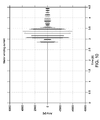
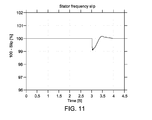
- the stator winding current and stator frequency slip is shown in Figures 10 and 11 , respectively.
- the electrical machine is a 2.8 MW, 690 VAC, 0.81 power factor, induction machine with a rated current of 2.9 kArms.
- the charging current from the electrical machine reaches the rated current for about 15 cycles then decreases to less than 0.1 p.u. This is acceptable and the charging current can be further controlled by the slip control process (e.g., by the PI controller 70) as necessary.
- the slip during the slip control process is less than about 0.8% as the electrical machine charges the dc link using current generated from the torque, i.e., the active power.
- the slip is about 0% as no active power is needed from the electrical machine to charge the dc link and no load current is needed.
Landscapes
- Engineering & Computer Science (AREA)
- Power Engineering (AREA)
- Business, Economics & Management (AREA)
- Emergency Management (AREA)
- Chemical & Material Sciences (AREA)
- Combustion & Propulsion (AREA)
- Mechanical Engineering (AREA)
- Ocean & Marine Engineering (AREA)
- Control Of Eletrric Generators (AREA)
- Inverter Devices (AREA)
- Direct Current Feeding And Distribution (AREA)
Abstract
Description
- The present invention relates to power distributions systems, and in particular to marine power distribution systems or marine power distribution and propulsion systems. The term 'marine vessels' is intended to include ships, drilling rigs and any other surface-going vessels or platforms or submersible (submarine) vessels.
- Marine power distribution and propulsion systems are well known. In a typical arrangement a series of power converters are used to interface a main ac busbar to a series of loads which can be electric motors, e.g., propulsion motors or thrusters. Other loads can be connected directly to the main ac busbar or connected to an auxiliary ac busbar which is in turn connected to the main ac busbar by means of a transformer. The ac busbars typically operate at different voltages, e.g., 690VAC and 440VAC.
- Each power converter can be an 'active front end' (AFE) converter with a supply-side active rectifier/inverter (or 'front end' bridge) having ac terminals connected to the main ac busbar and a load-side active rectifier/inverter connected to the load. The dc output of the supply-side active rectifier/inverter is connected to the dc input of the load-side active rectifier/inverter by a dc link. In normal operation, the supply-side active rectifier/inverter will operate as an active rectifier to supply power to the dc link and the load-side active rectifier/inverter will operate as an inverter to supply power to the load.
- Each active rectifier/inverter will typically have a conventional topology.
- A prime mover (e.g., a diesel engine or turbine) is connected to individual generators which supply power to the main ac busbar.
- The main ac busbar can be equipped with protective switchgear with circuit breakers and associated controls.
- The marine propulsion system will typically include a first (or port) ac busbar and a second (or starboard) ac busbar that are interconnected by a busbar tie. Some marine propulsion systems use a plurality of ac busbar sections or groups interconnected by a plurality of busbar ties to improve power availability.
- In one arrangement, shown in
Figure 1 , themarine propulsion system 1 includes a power take-in/power take-out (PTI/PTO)hybrid drive system 2. Thehybrid drive system 2 includes an induction (or asynchronous)electrical machine 4 and adiesel engine 6. The rotor of theelectrical machine 4 and the driving end of thediesel engine 6 are mechanically coupled through agearbox 8 and are used to drive apropulsion thruster 10, for example. Theelectrical machine 4 is connected to themain ac busbar 12 by means of anAFE converter 14 with a supply-side active rectifier/inverter 16 having ac terminals connected to the main ac busbar and a machine-side active rectifier/inverter 18 connected to the electrical machine. The dc output of the supply-side active rectifier/inverter 16 is connected to the dc input of the machine-side active rectifier/inverter 18 by adc link 20. During a PTI mode, theelectrical machine 4 is operated as a motor and is used to drive the propulsion thruster. Power is supplied to theelectrical machine 4 from themain ac busbar 12 through theAFE converter 14 with the ac supply-side active rectifier/inverter 16 being operated as an active rectifier and the machine-side active rectifier/inverter 18 being operated as an inverter. During a PTO mode, theelectrical machine 4 is operated as a generator with the rotor of the electrical machine being driven by thediesel engine 6. Power is supplied from theelectrical machine 4 to themain ac busbar 12 through theAFE converter 14 with the machine-side active rectifier/inverter 18 being operated as an active rectifier and the supply-side active rectifier/inverter 16 being operated as an inverter. -
Diesel generators main ac busbar 12. - If the
marine propulsion system 1 is in an electric power blackout situation, thediesel generators electrical machine 4 typically needs to recover themain ac busbar 12 by supplying power to the main ac busbar through theAFE converter 14. In other words, theelectrical machine 4 will be driven by thediesel engine 6 and operated as a generator. The present invention provides a way of supplying power to magnetise theelectrical machine 4 during a restart process so that it can subsequently supply power to themain ac busbar 12 for recovery purposes during an electric power blackout situation. - The present invention provides a power distribution system (e.g., a marine power distribution or a marine power distribution and propulsion system) comprising:
- a main ac busbar;
- an emergency ac busbar;
- a hybrid drive system comprising:
- an electrical machine and a prime mover, the rotor of the electrical machine and the driving end of the prime mover being mechanically coupled to a load, e.g., by means of a mechanical linkage such as a gearbox;
- a first active rectifier/inverter (or supply bridge) having:
- ac input terminals electrically connected to the main ac busbar, and
- dc output terminals;
- a second active rectifier/inverter (or machine bridge) having:
- dc input terminals electrically connected to the dc output of the first active rectifier/inverter by a dc link, and
- ac output terminals electrically connected to the electrical machine; and
- a blackout restart system comprising a rectifier having ac input terminals selectively electrically connectable to the emergency ac busbar, and dc output terminals selectively electrically connectable to the dc link.
- The electrical machine will typically be an induction (or asynchronous) machine. But if the electrical machine is an external-excitation synchronous machine and the excitation circuit is not operational for any reason, the blackout restart system and process described herein can be used to provide power to the excitation circuit.
- At least one ac generator will normally be electrically connected to the main ac busbar. The ac generators provide power to the main ac busbar during normal operation of the power distribution system and each has an associated prime mover, e.g., a diesel engine or turbine.
- In the event of an electric power blackout situation, where no power is supplied to the main ac busbar from the one or more ac generators, the blackout restart system can be used to partially charge the dc link from the emergency ac busbar as part of a blackout restart process. The emergency ac busbar is a separate ac busbar that is used to maintain power to critical loads in the event of an electric power blackout situation. Typically the emergency ac busbar will have its own dedicated power supply, e.g., a suitable uninterruptable power supply (UPS) that can provide near-instantaneous power to the emergency ac busbar and/or a back-up ac generator such as a diesel generator. In the case of a marine power distribution system or marine power distribution and propulsion system, the critical loads could include communication systems, navigation systems etc. The use of the blackout restart system will preferably have a minimal impact on the operation of the emergency ac busbar in supporting these critical loads.
- Each active rectifier/inverter (or bridge) employed in the power distribution system can have any suitable topology such as a two-level, three-level or multi-level topology with a series of semiconductor power switching devices fully controlled and regulated using a pulse width modulation (PWM) strategy, for example.
- The power distribution system as described herein can be a marine power distribution system or marine power distribution and propulsion system. In this case, the hybrid drive system can be used to drive a propeller or propulsion thruster.
- The hybrid drive system can use any suitable prime mover, e.g., a diesel engine or turbine.
- The blackout restart system can be electrically connected to the emergency ac busbar by a circuit breaker, protective switchgear or other protective circuits for fault isolation purposes.
- The rectifier can have any suitable topology such as an active topology with a series of semiconductor power switching devices fully controlled or regulated using a PWM strategy, for example, or a passive topology with a series of diodes (diode bridge).
- The ac input terminals of the rectifier can be electrically connected to the emergency ac busbar by an ac contactor or other switching means. The dc output terminals of the rectifier can be electrically connected to the dc link by a dc contactor or other switching means. The ac contactor and/or the dc contactor can be of any suitable type and can be controlled (i.e., opened and closed) by a control unit. Both the ac contactor and the dc contactor are closed to electrically connect the blackout restart system between the emergency ac busbar and the dc link, i.e., so that power can flow from the emergency ac busbar to the dc link as part of a blackout restart process. The blackout restart system is considered to be electrically disconnected if at least one of the ac contactor and the dc contactor is opened. The blackout restart system is preferably electrically disconnected from the dc link by opening the dc contactor so that the rectifier can use lower rated components, i.e., components that are rated for the partial dc link voltage.
- The blackout restart system can include a transformer having primary and secondary windings. The primary winding can be electrically connected to the ac contactor and the secondary winding can be electrically connected to the ac input terminals of the rectifier. The transformer can isolate the blackout restart system from the emergency ac busbar and provide protection and common mode noise filtering benefits. The transformer can have any suitable transformer ratio and can provide a step-up/step-down function if needed. The transformer and the rectifier can have any suitable number of phases, e.g., three. Charging current flowing through the blackout restart system can be limited by the line impedance of the transformer and by the firing angle of the rectifier if an active topology is used.
- The present invention further provides a method of operating the power distribution system according to any preceding claim in the event of an electric power blackout situation, the method including the steps of:
- electrically connecting the blackout restart system between the emergency ac busbar and the dc link;
- supplying power from the emergency ac busbar to the dc link through the blackout restart system to increase the dc link voltage to a partial dc link voltage that is less than the rated dc link voltage (i.e., to partially charge the dc link);
- operating the second active rectifier/inverter as an inverter to supply the partial dc link voltage to the electrical machine to increase the magnetic flux of the electrical machine to a partial magnetic flux that is less than the rated magnetic flux (i.e., to partially flux or magnetise the electrical machine);
- electrically disconnecting the blackout restart system from the emergency ac busbar and/or the dc link;
- supplying current from the electrical machine to the dc link through the second active rectifier/inverter to increase the dc link voltage to the rated dc link voltage (i.e., the fully charge the dc link); and
- increasing the magnetic flux of the electrical machine to the rated magnetic flux (i.e., the fully flux or magnetise the electrical machine).
- The present invention further provides a method of operating a power distribution system (e.g., a marine power distribution or a marine power distribution and propulsion system) in the event of an electric power blackout situation, the power distribution system comprising:
- a main ac busbar;
- an emergency ac busbar;
- a hybrid drive system comprising:
- an electrical machine and a prime mover, the rotor of the electrical machine and the driving end of the prime mover being mechanically coupled to a load, e.g., by means of a mechanical linkage such as a
- gearbox;
- a first active rectifier/inverter having:
- ac input terminals electrically connected to the main ac busbar, and
- dc output terminals;
- a second active rectifier/inverter having:
- dc input terminals electrically connected to the dc output of the first active rectifier/inverter by a dc link, and
- ac output terminals electrically connected to the electrical machine;
- wherein the method comprises the steps of:
- supplying power from the emergency ac busbar to the dc link to increase the dc link voltage to a partial dc link voltage that is less than the rated dc link voltage (i.e., to partially charge the dc link);
- operating the second active rectifier/inverter as an inverter to supply the partial dc link voltage to the electrical machine to increase the magnetic flux of the electrical machine to a partial magnetic flux that is less than the rated magnetic flux (i.e., to partially flux or magnetise the electrical machine);
- supplying current from the electrical machine to the dc link through the second active rectifier/inverter to increase the dc link voltage to the rated dc link voltage (i.e., to fully charge the dc link); and
- increasing the magnetic flux of the electrical machine to the rated magnetic flux (i.e., the fully flux or magnetise the electrical machine).
- During the step of partially fluxing or magnetising the electrical machine, the second active rectifier/inverter can be controlled so that the output ac voltage of the second active rectifier/inverter has a predetermined magnitude and/or a frequency substantially synchronous to the rotating angular velocity of the electrical machine. The second active rectifier/inverter can be operated for a predetermined time. In one arrangement, the partial dc link voltage can be between about 10% and about 40% (preferably about 30%) of the rated dc link voltage and the partial magnetic flux can be between about 10% and about 40% (preferably about 30%) of the rated magnetic flux of the electrical machine.
- A slip control process can be used to supply power from the electrical machine to the dc link. The slip control process can provide a small difference (or slip) between the synchronous speed and the rotor speed so that a torque is generated by the electrical machine. The generated torque can then be used to drive the electrical machine in a generating mode. In one arrangement, the second active rectifier/inverter can be operated as a rectifier to supply current from the electrical machine to the dc link to increase the dc link voltage to the rated dc link voltage and then subsequently operated as an inverter to supply the rated dc link voltage to the electrical machine to increase the magnetic flux of the electrical machine to the rated magnetic flux. In another arrangement, the second active rectifier/inverter can be operated as a rectifier to supply current from the electrical machine to the dc link to increase the dc link voltage to the rated dc link voltage whilst at the same time the magnetic flux of the electrical machine is increased to the rated magnetic flux. In other words, it is possible to use a slip control process to increase the dc link voltage and the magnetic flux of the electrical machine at the same time using a suitable slip control process.
- Unless explicitly stated, any components that are electrically connected do not need to be directly electrically connected but can be indirectly electrically connected by interposing components where appropriate.
-
-
Figure 1 is a schematic drawing showing a known marine power distribution and propulsion system with a hybrid drive system; -
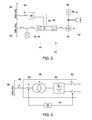
Figure 2 is a schematic drawing showing part of a marine power distribution and propulsion system with a restart system according to the present invention; -
Figure 3 is a schematic drawings showing the restart system ofFigure 2 ; -
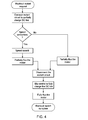
Figure 4 is a flow diagram showing the steps of a blackout restart process according to the present invention; -
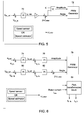
Figure 5 is a schematic drawing showing a first slip control process; -
Figure 6 is a schematic drawing showing a second slip control process; and -
Figures 7 to 11 are graphs showing the results of a simulated blackout restart process. - With reference to
Figure 2 , a marine power distribution andpropulsion system 30 according to the present invention includes a PTI/PTOhybrid drive system 32. Thehybrid drive system 32 includes an induction (or asynchronous)electrical machine 34 and adiesel engine 36. The rotor of theelectrical machine 34 and the driving end of thediesel engine 36 are mechanically coupled through agearbox 38 and are used to drive apropulsion thruster 40, for example. - The
electrical machine 34 is connected to amain ac busbar 42 by means of anAFE converter 44 with asupply bridge 46 having ac terminals connected to the main ac busbar by means of afilter 52 and amachine bridge 48 connected to the terminals of the electrical machine. The dc output of thesupply bridge 46 is connected to the dc input of themachine bridge 48 by adc link 50 with one or more capacitors. - Diesel generators (not shown) supply power to the
main ac busbar 42. - A
blackout restart system 54 is electrically connected between anemergency ac busbar 56 and thedc link 50 of theAFE converter 44. Theblackout restart system 54 is electrically connected to theemergency ac busbar 56 by acircuit breaker 58. It will be readily understood that thecircuit breaker 58 is not operated as part of the blackout restart process described in more detail below, but only for fault isolation and protection purposes. - The
blackout restart system 54 is shown in more detail inFigure 3 and includes arectifier 60. The semiconductor switching devices of therectifier 60 can be controlled by a control unit (not shown). Therectifier 60 has dc output terminals that are electrically connected to thedc link 50 by adc contactor 62 that is controlled to open and close by acontrol unit 64. Therectifier 60 has ac input terminals that are electrically connected to atransformer 66. Thetransformer 66 includes a primary winding that is electrically connected to theemergency ac busbar 56 by anac contactor 68 that is controlled to open and close by thecontrol unit 64, and a secondary winding that is electrically connected to the ac input terminals of therectifier 60. Therectifier 60 and thetransformer 66 can have any suitable number of phases, e.g., three. - When the marine distribution and propulsion system is operating normally, the
ac contactor 68 and thedc contactor 62 are open so that theblackout restart system 54 is electrically disconnected from theemergency ac busbar 56 and thedc link 50. - If the marine vessel experiences an electric power blackout situation, i.e., the diesel generators (not shown) are non-operational, the
hybrid drive system 32 can be used to recover themain ac busbar 42 by supplying power to it. In other words, theelectrical machine 34 can be driven by thediesel engine 36 so that it is operated as a generator in a PTO mode to supply power to themain ac busbar 42 through theAFE converter 44. But before theelectrical machine 34 can be operated as a generator, it must receive power in order to magnetise. This can be achieved using a multi-step blackout restart process described with reference toFigure 4 . - In response to a blackout restart request, the
ac contactor 68 and thedc contactor 62 are controlled to close to electrically connect therestart system 54 to theemergency ac busbar 56 and thedc link 50 of theAFE converter 44. Therectifier 60 is also enabled. The blackout restart request can be manually triggered by an operator, or triggered automatically by a separate control or monitoring process, for example. - Power is supplied from the
emergency ac busbar 56 through therestart system 54 to partially charge thedc link 50 of theAFE converter 44. It will be readily appreciated that any reference herein to charging the dc link means charging the dc link capacitor(s) shown inFigure 2 . In one arrangement, the rated dc link voltage is 1070 VDC and thedc link 50 is charged to 395 VDC. The firing angle of the power semiconductor devices in therectifier 60 can start at a predetermined angle (e.g., 150°) and can then decrease at a predetermined rate determined by the required restart time and the charging current limit. - When the
dc link 50 is partially charged, themachine bridge 48 of theAFE converter 44 is enabled and operated as an inverter to supply the partial dc link voltage to theelectrical machine 34 to partially flux or magnetise the electrical machine. The semiconductor switching devices of themachine bridge 48 can be controlled using a pulse width modulation (PWM) strategy so that the output ac voltage of the machine bridge has a frequency synchronous to the rotor speed of the electrical machine. If the electrical machine does not allow the rotor speed to be measured (e.g., using a speed sensor or encoder) then the rotor speed can be estimated using a suitable estimation process. The semiconductor switching devices of themachine bridge 48 can also be controlled so that the output ac voltage has a predetermined magnitude, e.g., 210 VAC, so that the electrical machine is partially fluxed or magnetised to about 30% of the rated flux depending on the speed of the electrical machine and the partial dc link voltage. - The
blackout restart system 54 is then electrically disconnected, typically by opening thedc contactor 62 to electrically disconnect the blackout restart system from thedc link 50. This allows the components of theblackout restart system 54, and in particular the power semiconductor devices of therectifier 60, to be rated to the partial dc link voltage. Otherwise, if theblackout restart system 54 remains electrically connected to the dc link (but is disconnected from the emergency ac busbar 56) it will experience the increasing dc link voltage up to the rated voltage during the slip control process - see below. In some arrangements, theac contactor 68 can be opened to electrically disconnect theblackout restart system 54 from theemergency ac busbar 56, or can be opened after thedc contactor 62 has been opened. - A slip control process is used to fully charge the dc link voltage from 395 VDC to the rated dc link voltage (i.e., 1070 VDC). It will be readily appreciated that before the slip control process is started, the electrical machine is partially fluxed or magnetised but the rotor speed is the same as the synchronous speed, i.e., the rotation rate of the magnetic field of the stator. There is no slip and consequently no torque is generated by the electrical machine. The slip control process is designed to provide a small difference (or slip) between the synchronous speed and the rotor speed so that a torque is generated. The generated torque can then be used to drive the electrical machine in a generating mode to fully charge the dc link.
- A suitable slip control process is shown in
Figure 5 . The process uses the rotor speed ω_rotor, which can either be measured (e.g., using a speed sensor or encoder) or estimated using a suitable estimation process. A dc link voltage reference Vdc_ref is compared with a dc link voltage feedback Vdc_fb that is provided by a voltage sensor. The output of the comparison is provided to a proportional-integral (PI)controller 70. The output of thePI controller 70, ω_slip, represents a target slip reference and is converted into a negative value (for negative slip since the electrical machine is operating as a generator and so rotor speed is greater than the synchronous speed) and summed with a value pω_rotor, where p is the number of pole pairs of theelectrical machine 34. The sum is provided to aPWM generator 72 as phase angle information and is multiplied by a constant K and provided to the PWM generator as amplitude information. It will be readily appreciated that the phase angle information is indicative of the phase angle between the target voltage and the actual voltage and the amplitude information is indicative of the amplitude difference between the target voltage and the actual voltage. ThePWM generator 72 can form part of a controller for themachine bridge 48. - Once the dc link is fully charged, the
machine bridge 48 of theAFE converter 44 is enabled and operated as an inverter to supply the rated dc link voltage to theelectrical machine 34 to fully flux or magnetise the electrical machine, i.e., to increase the flux to the rated flux. - In another arrangement, the slip control process can be used to fully charge the dc link to the rated dc link voltage and fully flux or magnetise the electrical machine simultaneously. Such a slip control process is shown in
Figure 6 and uses dq axis vector control. A flux reference Ψs_ref is compared with a flux feedback Ψs_fb. The output of the comparison is provided to afirst PI controller 74. The output of thefirst PI controller 74 is a d-axis current reference Id_ref that is compared with a d-axis current feedback Id_fb. The output of the comparison is provided to asecond PI controller 76. The output of thesecond PI controller 76 is provided to aPWM generator 78 as amplitude information. A dc link voltage reference Vdc_ref is compared with a dc link voltage feedback Vdc_fb that is provided by a voltage sensor. The output of the comparison is provided to athird PI controller 80. The output of thethird PI controller 80 is a q-axis current reference Iq_ref that is compared with a q-axis current feedback Iq_fb. The output of the comparison is provided to afourth PI controller 82. The output of thefourth PI controller 82 is summed with a value pω_rotor, where p is the number of pole pairs. The sum is provided to thePWM generator 78 as phase angle information. The sum is also provided to aPark transformation block 84 which also uses a measured value of the stator current Iabc to derive the d- and q-axis current feedbacks Id_fb and Iq_fb. The slip control process shown inFigure 6 can be useful in some situations because theelectrical machine 34 is regulated during the entire process and it allows the dc link voltage and the machine flux to be increased simultaneously by dynamically adjusting the flux reference Ψs_ref and the dc link voltage reference Vdc_ref. - Once the electrical machine is fully fluxed or magnetised, the blackout restart process is complete. The electrical machine can subsequently supply power to the
main ac busbar 42 through theAFE converter 44 for recovery purposes. During the blackout restart process, thesupply bridge 46 is not operated. But on completion of the blackout restart process, thesupply bridge 46 is operated as an inverter and themachine bridge 48 is operated as an active rectifier. - The results of a simulated blackout restart process are shown in
Figures 7 to 11 . - In the simulated blackout restart process, the blackout restart system is connected to the emergency ac busbar at 0.1 seconds and is disconnected from the emergency ac busbar at 2.7 seconds. A slip control process to fully charge the dc link is started at 3.2 seconds and is finished at 4.4 seconds. The electrical machine is fully fluxed at 4.4 seconds and this represents the end of the blackout restart process.
-
Figure 7 shows that the dc link voltage is charged from 0 VDC to 395 VDC between 0.1 and 2.7 seconds and then more rapidly from 395 VDC to 1070 VDC after the slip control process is started at 3.2 seconds. The rate at which the dc link voltage increases can be controlled by the blackout restart system during the first stage of the blackout restart system (i.e., from 0.1 to 2.7 seconds) and by slip control process (e.g., by the PI controller 70) during the second stage of the blackout restart system (e.g., from 3.2 to 4.4 seconds). -
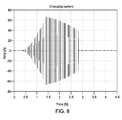
Figure 8 shows that the charging current peaks at 68 A for about one cycle. This current can be controlled by the blackout restart system. A smaller peak current means that it will take longer to partially charge the dc link and vice versa. -
Figure 9 shows that the voltage on the emergency ac busbar is not obviously affected by the blackout restart process. In the simulated blackout restart process, the emergency ac busbar only experiences a fall of about 5 V for less than about 300 ms. - The stator winding current and stator frequency slip is shown in
Figures 10 and11 , respectively. In the simulation, the electrical machine is a 2.8 MW, 690 VAC, 0.81 power factor, induction machine with a rated current of 2.9 kArms. During the slip control process, the charging current from the electrical machine reaches the rated current for about 15 cycles then decreases to less than 0.1 p.u. This is acceptable and the charging current can be further controlled by the slip control process (e.g., by the PI controller 70) as necessary. The slip during the slip control process is less than about 0.8% as the electrical machine charges the dc link using current generated from the torque, i.e., the active power. When the dc link is fully charged to the rated dc link voltage, the slip is about 0% as no active power is needed from the electrical machine to charge the dc link and no load current is needed.
Claims (15)
- A power distribution system comprising:a main ac busbar (42);an emergency ac busbar (56);a hybrid drive system (32) comprising:an electrical machine (34) and a prime mover (36), the rotor of the electrical machine (34) and the driving end of the prime mover (36) being mechanically coupled to a load (40), e.g., by means of a mechanical linkage such as a gearbox (38);a first active rectifier/inverter (46) having:ac input terminals electrically connected to the main ac busbar (42), and dc output terminals;a second active rectifier/inverter (48) having:dc input terminals electrically connected to the dc output of the first active rectifier/inverter (46) by a dc link (50), andac output terminals electrically connected to the electrical machine (34);anda blackout restart system (54) comprising a rectifier (60) having ac input terminals selectively electrically connectable to the emergency ac busbar (56), and dc output terminals selectively electrically connectable to the dc link (50).
- A power distribution system according to claim 1, wherein the rectifier (60) is an active rectifier with a series of semiconductor power switching devices.
- A power distribution system according to claim 1, wherein the rectifier is a passive rectifier.
- A power distribution system according to any preceding claim, wherein the ac input terminals of the rectifier (60) are electrically connected to the emergency ac busbar (56) by an ac contactor (68).
- A power distribution system according to any preceding claim, wherein the dc output terminals of the rectifier (60) are electrically connected to the dc link (50) by a dc contactor (62).
- A power distribution system according to any preceding claim, wherein the blackout restart system (54) further includes a transformer (66) having primary and secondary windings.
- A power distribution system according to claim 4, wherein the blackout restart system (54) further includes a transformer (66) having primary and secondary windings, the primary winding being connected to the ac contactor (68) and the secondary winding being connected to the ac input terminals of the rectifier (60).
- A power distribution system according to any preceding claim, being a marine power distribution or a marine power distribution and propulsion system, and wherein the hybrid drive system is used to drive a propeller (40) or propulsion thruster.
- A method of operating the power distribution system according to any preceding claim in the event of an electric power blackout situation, the method including the steps of:electrically connecting the blackout restart system (54) between the emergency ac busbar (56) and the dc link (50);supplying power from the emergency ac busbar (56) to the dc link (50) through the blackout restart system (54) to increase the dc link voltage to a partial dc link voltage that is less than the rated dc link voltage;operating the second active rectifier/inverter (48) as an inverter to supply the partial dc link voltage to the electrical machine (34) to increase the magnetic flux of the electrical machine (34) to a partial magnetic flux that is less than the rated magnetic flux;electrically disconnecting the blackout restart system (54) from the emergency ac busbar (56) and/or the dc link (50);supplying current from the electrical machine (34) to the dc link (50) through the second active rectifier/inverter (48) to increase the dc link voltage to the rated dc link voltage; andincreasing the magnetic flux of the electrical machine (34) to the rated magnetic flux.
- A method of operating a power distribution system in the event of an electric power blackout situation, the power distribution system comprising:a main ac busbar (42);an emergency ac busbar (56);a hybrid drive system (32) comprising:an electrical machine (34) and a prime mover (36), the rotor of the electrical machine (34) and the driving end of the prime mover (36) being mechanically coupled to a load (40), e.g., by means of a mechanical linkage such as a gearbox (38);a first active rectifier/inverter (46) having:ac input terminals electrically connected to the main ac busbar (42), and dc output terminals;a second active rectifier/inverter (48) having:dc input terminals electrically connected to the dc output of the first active rectifier/inverter (46) by a dc link (50), andac output terminals electrically connected to the electrical machine (34); wherein the method comprises the steps of:supplying power from the emergency ac busbar (56) to the dc link (50) to increase the dc link voltage to a partial dc link voltage that is less than the rated dc link voltage;operating the second active rectifier/inverter (48) as an inverter to supply the partial dc link voltage to the electrical machine (34) to increase the magnetic flux of the electrical machine to a partial magnetic flux that is less than the rated magnetic flux;supplying current from the electrical machine (34) to the dc link (50) through the second active rectifier/inverter (48) to increase the dc link voltage to the rated dc link voltage; andincreasing the magnetic flux of the electrical machine (34) to the rated magnetic flux.
- A method according to claim 9 or claim 10, wherein, during the step of operating the second active rectifier/inverter (48) as an inverter to supply the partial dc link voltage to the electrical machine (34), the second active rectifier/inverter (48) is controlled so that the output ac voltage of the second active rectifier/inverter (48) has a predetermined magnitude and/or a frequency substantially synchronous to the rotating angular velocity of the electrical machine (34).
- A method according to any of claims 9 to 11, wherein the partial dc link voltage is between about 10% and about 40%, preferably about 30%, of the rated dc link voltage and the partial magnetic flux is between about 10% and about 40%, preferably about 30%, of the rated magnetic flux of the electrical machine (34).
- A method according to any of claims 9 to 12, wherein a slip control process is used to supply current from the electrical machine (34) to the dc link (50).
- A method according to any of claims 9 to 13, wherein the second active rectifier/inverter (48) is operated as a rectifier to supply current from the electrical machine (34) to the dc link (50) to increase the dc link voltage to the rated dc link voltage and then subsequently operated as an inverter to supply the rated dc link voltage to the electrical machine (34) to increase the magnetic flux of the electrical machine (34) to the rated magnetic flux.
- A method according to any of claims 9 to 13, wherein the second active rectifier/inverter (48) is operated as a rectifier to supply current from the electrical machine (34) to the dc link (50) to increase the dc link voltage to the rated dc link voltage whilst at the same time the magnetic flux of the electrical machine (34) is increased to the rated magnetic flux.
Priority Applications (5)
| Application Number | Priority Date | Filing Date | Title |
|---|---|---|---|
| EP15164879.7A EP3086432B1 (en) | 2015-04-23 | 2015-04-23 | Power distribution systems |
| CA2927524A CA2927524C (en) | 2015-04-23 | 2016-04-21 | Power distribution systems |
| BR102016009010-5A BR102016009010B1 (en) | 2015-04-23 | 2016-04-22 | METHOD FOR OPERATING A POWER DISTRIBUTION SYSTEM |
| US15/136,580 US9954393B2 (en) | 2015-04-23 | 2016-04-22 | Power distribution systems |
| CN201610258366.8A CN106067695B (en) | 2015-04-23 | 2016-04-22 | power distribution system |
Applications Claiming Priority (1)
| Application Number | Priority Date | Filing Date | Title |
|---|---|---|---|
| EP15164879.7A EP3086432B1 (en) | 2015-04-23 | 2015-04-23 | Power distribution systems |
Publications (2)
| Publication Number | Publication Date |
|---|---|
| EP3086432A1 true EP3086432A1 (en) | 2016-10-26 |
| EP3086432B1 EP3086432B1 (en) | 2018-07-18 |
Family
ID=53015551
Family Applications (1)
| Application Number | Title | Priority Date | Filing Date |
|---|---|---|---|
| EP15164879.7A Active EP3086432B1 (en) | 2015-04-23 | 2015-04-23 | Power distribution systems |
Country Status (5)
| Country | Link |
|---|---|
| US (1) | US9954393B2 (en) |
| EP (1) | EP3086432B1 (en) |
| CN (1) | CN106067695B (en) |
| BR (1) | BR102016009010B1 (en) |
| CA (1) | CA2927524C (en) |
Cited By (1)
| Publication number | Priority date | Publication date | Assignee | Title |
|---|---|---|---|---|
| EP4167466A1 (en) * | 2021-09-23 | 2023-04-19 | General Electric Company | Electrically driven distributed propulsion system |
Families Citing this family (13)
| Publication number | Priority date | Publication date | Assignee | Title |
|---|---|---|---|---|
| EP3086432B1 (en) * | 2015-04-23 | 2018-07-18 | GE Energy Power Conversion Technology Ltd | Power distribution systems |
| US9973099B2 (en) * | 2015-08-26 | 2018-05-15 | Futurewei Technologies, Inc. | AC/DC converters with wider voltage regulation range |
| DE102017105472A1 (en) * | 2017-03-15 | 2018-09-20 | Sma Railway Technology Gmbh | Method for regulating a frequency of an output voltage of a power supply device and device therefor |
| US10270327B1 (en) * | 2017-10-13 | 2019-04-23 | Deere & Company | Voltage sensor-less position detection in an active front end |
| US10295581B2 (en) | 2017-10-13 | 2019-05-21 | Deere & Company | Voltage sensor-less position detection in an active front end |
| EP3487060A1 (en) * | 2017-11-17 | 2019-05-22 | ABB Schweiz AG | Method and control system for controlling a voltage source converter using power-synchronisation control |
| US12095308B2 (en) | 2018-09-13 | 2024-09-17 | Ls Electric Co., Ltd. | Power supply device and power supply system |
| KR102299860B1 (en) * | 2018-09-13 | 2021-09-09 | 엘에스일렉트릭 (주) | Module for supplying power and system for supplying power |
| CN109560555B (en) * | 2018-11-30 | 2022-05-03 | 西安宸瑞电工科技发展有限公司 | Power supply method and system for factory electric equipment |
| CN111884248B (en) | 2019-11-12 | 2021-10-15 | 株洲中车时代电气股份有限公司 | A voltage control method and system |
| CN112193139B (en) * | 2020-10-14 | 2023-09-08 | 济宁中科智能科技有限公司 | High-pressure control system of tunnel marine organism collection vehicle |
| CN113644723B (en) * | 2021-08-24 | 2024-10-25 | 西安中车永电电气有限公司 | A shipboard power distribution system with electromagnetic interference suppression function |
| CN115056956B (en) * | 2022-06-13 | 2024-01-23 | 武汉船用电力推进装置研究所(中国船舶重工集团公司第七一二研究所) | Rectifier transformer magnetizing circuit and method for ship electric propulsion system |
Citations (5)
| Publication number | Priority date | Publication date | Assignee | Title |
|---|---|---|---|---|
| DE19519424A1 (en) * | 1995-05-26 | 1996-11-28 | Stn Atlas Elektronik Gmbh | Converter drive |
| US6177738B1 (en) * | 1996-09-11 | 2001-01-23 | Abb Industry Oy | Isolated electrical system including asynchronous machine with prime mover and inverter/rectifier |
| US20090156068A1 (en) * | 2007-12-12 | 2009-06-18 | Foss Maritime Company | Hybrid propulsion systems |
| EP2090508A2 (en) * | 2008-01-16 | 2009-08-19 | Peter Andersen | Electric energy supply system, in particular for ships |
| US20140290591A1 (en) * | 2011-05-18 | 2014-10-02 | MTU Frierichshafen GmbH | Method and device for performing open-loop and closed-loop control of an internal combustion engine generator system |
Family Cites Families (33)
| Publication number | Priority date | Publication date | Assignee | Title |
|---|---|---|---|---|
| CN1011371B (en) * | 1989-06-08 | 1991-01-23 | 广州空军后勤部机营处 | Full automatic fast generator of diesel engine starting by electricity |
| GB0003706D0 (en) * | 2000-02-18 | 2000-04-05 | Alstom | Control system adapted to control operation of an AC/DC converter |
| GB2443002A (en) * | 2006-10-16 | 2008-04-23 | Converteam Ltd | dc power distribution system |
| JP4452953B2 (en) * | 2007-08-09 | 2010-04-21 | 日立オートモティブシステムズ株式会社 | Power converter |
| US8049358B2 (en) * | 2007-10-15 | 2011-11-01 | Converteam Technology Ltd | Marine power distribution and propulsion systems |
| US7916480B2 (en) * | 2007-12-19 | 2011-03-29 | GM Global Technology Operations LLC | Busbar assembly with integrated cooling |
| US20110000721A1 (en) * | 2009-07-02 | 2011-01-06 | Thermal Motor Innovations, Llc | Hybrid parallel load assist systems and methods |
| JP5315155B2 (en) * | 2009-07-23 | 2013-10-16 | 日立オートモティブシステムズ株式会社 | Semiconductor element control device, automotive electrical system |
| US8672069B2 (en) * | 2009-08-25 | 2014-03-18 | Deere & Company | Hybrid vehicle with multiple electric drive systems |
| US8816528B2 (en) * | 2009-09-09 | 2014-08-26 | Sundial Power Pods, Llc | Mobile power system |
| DK2312744T3 (en) * | 2009-10-13 | 2012-10-01 | Converteam Technology Ltd | Power Distribution Systems |
| NO332138B2 (en) | 2009-11-09 | 2016-04-11 | Rolls Royce Marine As Power Electric Systems Bergen | Hybrid propulsion system for a vessel |
| EP2394908B1 (en) * | 2010-06-08 | 2013-03-06 | GE Energy Power Conversion Technology Limited | Power distribution system and method for controlling it. |
| EP2627557B1 (en) * | 2010-10-14 | 2023-01-25 | GE Energy Power Conversion Technology Ltd | Marine propulsion systems |
| EP2451041A1 (en) | 2010-11-03 | 2012-05-09 | Converteam Technology Ltd | Methods of operating dual fed systems |
| JP5542646B2 (en) * | 2010-12-24 | 2014-07-09 | 日立オートモティブシステムズ株式会社 | Power module manufacturing method, power module design method |
| JP5417314B2 (en) * | 2010-12-27 | 2014-02-12 | 日立オートモティブシステムズ株式会社 | Power converter |
| JP5455887B2 (en) * | 2010-12-27 | 2014-03-26 | 日立オートモティブシステムズ株式会社 | Power converter |
| CN104334874B (en) * | 2012-06-08 | 2017-11-21 | 维斯塔斯风力系统集团公司 | Arrangement of the switching device in wind turbine tower |
| JP5879233B2 (en) * | 2012-08-31 | 2016-03-08 | 日立オートモティブシステムズ株式会社 | Power semiconductor module |
| EP2709229B1 (en) * | 2012-09-17 | 2015-03-25 | GE Energy Power Conversion Technology Ltd | Power distribution systems |
| DK2713468T3 (en) * | 2012-09-28 | 2019-11-04 | Ge Energy Power Conversion Technology Ltd | Electrical energy transfer systems |
| DK177684B1 (en) * | 2012-12-21 | 2014-03-03 | Envision Energy Denmark Aps | Wind turbine having a HTS generator with a plurality of phases |
| CN105814764A (en) * | 2013-12-20 | 2016-07-27 | 西门子公司 | equipment used to transmit electricity |
| EP3084948B1 (en) * | 2014-02-06 | 2019-07-17 | Siemens Aktiengesellschaft | Arrangement and installation for transmitting electric power with a reserve rectifier |
| EP2919354A1 (en) * | 2014-03-14 | 2015-09-16 | Siemens Aktiengesellschaft | Power supply arrangement of a wind farm |
| EP2930815B1 (en) * | 2014-04-10 | 2018-11-14 | GE Energy Power Conversion Technology Ltd | Power distribution systems |
| DE102014209332A1 (en) * | 2014-05-16 | 2015-11-19 | Senvion Gmbh | Wind turbine with improved overvoltage protection |
| GB201501135D0 (en) * | 2015-01-23 | 2015-03-11 | Rolls Royce Plc | Method and system for damping torsional oscillations |
| EP3086432B1 (en) * | 2015-04-23 | 2018-07-18 | GE Energy Power Conversion Technology Ltd | Power distribution systems |
| EP3116086B1 (en) * | 2015-07-07 | 2019-05-22 | Siemens Gamesa Renewable Energy A/S | Operating a wind turbine being connected to a utility grid both via a hvdc power connection and via an umbilical ac cable with a network bridge controller performing a power and a voltage control |
| US10037977B2 (en) * | 2015-08-19 | 2018-07-31 | Ford Global Technologies, Llc | Power electronics system |
| FI20155688A7 (en) * | 2015-09-29 | 2017-03-30 | Abb Schweiz Ag | Method for data transfer in an electrical appliance assembly, and an electrical appliance assembly |
-
2015
- 2015-04-23 EP EP15164879.7A patent/EP3086432B1/en active Active
-
2016
- 2016-04-21 CA CA2927524A patent/CA2927524C/en active Active
- 2016-04-22 US US15/136,580 patent/US9954393B2/en active Active
- 2016-04-22 CN CN201610258366.8A patent/CN106067695B/en active Active
- 2016-04-22 BR BR102016009010-5A patent/BR102016009010B1/en active IP Right Grant
Patent Citations (5)
| Publication number | Priority date | Publication date | Assignee | Title |
|---|---|---|---|---|
| DE19519424A1 (en) * | 1995-05-26 | 1996-11-28 | Stn Atlas Elektronik Gmbh | Converter drive |
| US6177738B1 (en) * | 1996-09-11 | 2001-01-23 | Abb Industry Oy | Isolated electrical system including asynchronous machine with prime mover and inverter/rectifier |
| US20090156068A1 (en) * | 2007-12-12 | 2009-06-18 | Foss Maritime Company | Hybrid propulsion systems |
| EP2090508A2 (en) * | 2008-01-16 | 2009-08-19 | Peter Andersen | Electric energy supply system, in particular for ships |
| US20140290591A1 (en) * | 2011-05-18 | 2014-10-02 | MTU Frierichshafen GmbH | Method and device for performing open-loop and closed-loop control of an internal combustion engine generator system |
Cited By (3)
| Publication number | Priority date | Publication date | Assignee | Title |
|---|---|---|---|---|
| EP4167466A1 (en) * | 2021-09-23 | 2023-04-19 | General Electric Company | Electrically driven distributed propulsion system |
| US11670942B2 (en) | 2021-09-23 | 2023-06-06 | General Electric Company | Electrically driven distributed propulsion system |
| US12249831B2 (en) | 2021-09-23 | 2025-03-11 | General Electric Company | Electrically driven distributed propulsion system |
Also Published As
| Publication number | Publication date |
|---|---|
| EP3086432B1 (en) | 2018-07-18 |
| CA2927524A1 (en) | 2016-10-23 |
| US20160315501A1 (en) | 2016-10-27 |
| CN106067695B (en) | 2022-03-01 |
| BR102016009010A2 (en) | 2016-11-16 |
| US9954393B2 (en) | 2018-04-24 |
| BR102016009010B1 (en) | 2023-01-10 |
| CA2927524C (en) | 2023-09-19 |
| CN106067695A (en) | 2016-11-02 |
Similar Documents
| Publication | Publication Date | Title |
|---|---|---|
| CA2927524C (en) | Power distribution systems | |
| US11299051B2 (en) | Electric charging system and method | |
| EP2930815B1 (en) | Power distribution systems | |
| DK1960260T3 (en) | The hybrid drive system for a watercraft | |
| US20200144949A1 (en) | Variable speed generator-motor apparatus and variable speed generator-motor system | |
| EP2627557B1 (en) | Marine propulsion systems | |
| US8513911B2 (en) | Power converters | |
| US8760096B2 (en) | Control apparatus for power conversion system including DC/AC converter connected between electric rotating machine and DC power source | |
| CN112532128B (en) | Aviation high-power composite brushless starting power generation system and control method thereof | |
| US10784802B2 (en) | Generator starter of a turbomachine with asynchronous multi-winding electric machine | |
| EP3118982B1 (en) | Fault ride through in a marine power distribution system | |
| CN101304234A (en) | power converter | |
| US12027940B2 (en) | Rectifier | |
| WO2015183353A1 (en) | Electric power generation and distribution for islanded or weakly-connected systems | |
| Singh et al. | Energy saving strategy on electric propulsion system integrated with doubly fed asynchronous motors | |
| EP2045910B1 (en) | Starter/generator system with control to address a voltage rise | |
| CN105207334B (en) | System for supplying power to a load and corresponding power supply method | |
| EP3823158A1 (en) | Variable-speed generator-motor device | |
| Sonandkar et al. | Fault tolerant capability of battery assisted quasi-Z-source inverter fed five phase PMSM drive for marine propulsion applications | |
| Aizza et al. | Coordinated speed and voltage regulation of a DC power generation system based on a woundfield split-phase generator supplying multiple rectifiers | |
| US4652807A (en) | Starting method for induction motors | |
| CN215646645U (en) | aircraft starter generator | |
| Zhou et al. | Dual voltage DC generator for compact light-weight ship electrical systems |
Legal Events
| Date | Code | Title | Description |
|---|---|---|---|
| PUAI | Public reference made under article 153(3) epc to a published international application that has entered the european phase |
Free format text: ORIGINAL CODE: 0009012 |
|
| AK | Designated contracting states |
Kind code of ref document: A1 Designated state(s): AL AT BE BG CH CY CZ DE DK EE ES FI FR GB GR HR HU IE IS IT LI LT LU LV MC MK MT NL NO PL PT RO RS SE SI SK SM TR |
|
| AX | Request for extension of the european patent |
Extension state: BA ME |
|
| STAA | Information on the status of an ep patent application or granted ep patent |
Free format text: STATUS: REQUEST FOR EXAMINATION WAS MADE |
|
| 17P | Request for examination filed |
Effective date: 20170424 |
|
| RBV | Designated contracting states (corrected) |
Designated state(s): AL AT BE BG CH CY CZ DE DK EE ES FI FR GB GR HR HU IE IS IT LI LT LU LV MC MK MT NL NO PL PT RO RS SE SI SK SM TR |
|
| GRAP | Despatch of communication of intention to grant a patent |
Free format text: ORIGINAL CODE: EPIDOSNIGR1 |
|
| STAA | Information on the status of an ep patent application or granted ep patent |
Free format text: STATUS: GRANT OF PATENT IS INTENDED |
|
| RIC1 | Information provided on ipc code assigned before grant |
Ipc: H02J 3/38 20060101AFI20180213BHEP Ipc: H02J 9/06 20060101ALI20180213BHEP |
|
| INTG | Intention to grant announced |
Effective date: 20180302 |
|
| GRAS | Grant fee paid |
Free format text: ORIGINAL CODE: EPIDOSNIGR3 |
|
| GRAA | (expected) grant |
Free format text: ORIGINAL CODE: 0009210 |
|
| STAA | Information on the status of an ep patent application or granted ep patent |
Free format text: STATUS: THE PATENT HAS BEEN GRANTED |
|
| AK | Designated contracting states |
Kind code of ref document: B1 Designated state(s): AL AT BE BG CH CY CZ DE DK EE ES FI FR GB GR HR HU IE IS IT LI LT LU LV MC MK MT NL NO PL PT RO RS SE SI SK SM TR |
|
| REG | Reference to a national code |
Ref country code: GB Ref legal event code: FG4D |
|
| REG | Reference to a national code |
Ref country code: CH Ref legal event code: EP |
|
| REG | Reference to a national code |
Ref country code: IE Ref legal event code: FG4D |
|
| REG | Reference to a national code |
Ref country code: AT Ref legal event code: REF Ref document number: 1020393 Country of ref document: AT Kind code of ref document: T Effective date: 20180815 |
|
| REG | Reference to a national code |
Ref country code: DE Ref legal event code: R096 Ref document number: 602015013600 Country of ref document: DE |
|
| REG | Reference to a national code |
Ref country code: NL Ref legal event code: MP Effective date: 20180718 |
|
| REG | Reference to a national code |
Ref country code: LT Ref legal event code: MG4D |
|
| REG | Reference to a national code |
Ref country code: AT Ref legal event code: MK05 Ref document number: 1020393 Country of ref document: AT Kind code of ref document: T Effective date: 20180718 |
|
| PG25 | Lapsed in a contracting state [announced via postgrant information from national office to epo] |
Ref country code: NL Free format text: LAPSE BECAUSE OF FAILURE TO SUBMIT A TRANSLATION OF THE DESCRIPTION OR TO PAY THE FEE WITHIN THE PRESCRIBED TIME-LIMIT Effective date: 20180718 |
|
| PG25 | Lapsed in a contracting state [announced via postgrant information from national office to epo] |
Ref country code: GR Free format text: LAPSE BECAUSE OF FAILURE TO SUBMIT A TRANSLATION OF THE DESCRIPTION OR TO PAY THE FEE WITHIN THE PRESCRIBED TIME-LIMIT Effective date: 20181019 Ref country code: BG Free format text: LAPSE BECAUSE OF FAILURE TO SUBMIT A TRANSLATION OF THE DESCRIPTION OR TO PAY THE FEE WITHIN THE PRESCRIBED TIME-LIMIT Effective date: 20181018 Ref country code: SE Free format text: LAPSE BECAUSE OF FAILURE TO SUBMIT A TRANSLATION OF THE DESCRIPTION OR TO PAY THE FEE WITHIN THE PRESCRIBED TIME-LIMIT Effective date: 20180718 Ref country code: PL Free format text: LAPSE BECAUSE OF FAILURE TO SUBMIT A TRANSLATION OF THE DESCRIPTION OR TO PAY THE FEE WITHIN THE PRESCRIBED TIME-LIMIT Effective date: 20180718 Ref country code: LT Free format text: LAPSE BECAUSE OF FAILURE TO SUBMIT A TRANSLATION OF THE DESCRIPTION OR TO PAY THE FEE WITHIN THE PRESCRIBED TIME-LIMIT Effective date: 20180718 Ref country code: FI Free format text: LAPSE BECAUSE OF FAILURE TO SUBMIT A TRANSLATION OF THE DESCRIPTION OR TO PAY THE FEE WITHIN THE PRESCRIBED TIME-LIMIT Effective date: 20180718 Ref country code: RS Free format text: LAPSE BECAUSE OF FAILURE TO SUBMIT A TRANSLATION OF THE DESCRIPTION OR TO PAY THE FEE WITHIN THE PRESCRIBED TIME-LIMIT Effective date: 20180718 Ref country code: NO Free format text: LAPSE BECAUSE OF FAILURE TO SUBMIT A TRANSLATION OF THE DESCRIPTION OR TO PAY THE FEE WITHIN THE PRESCRIBED TIME-LIMIT Effective date: 20181018 Ref country code: IS Free format text: LAPSE BECAUSE OF FAILURE TO SUBMIT A TRANSLATION OF THE DESCRIPTION OR TO PAY THE FEE WITHIN THE PRESCRIBED TIME-LIMIT Effective date: 20181118 Ref country code: AT Free format text: LAPSE BECAUSE OF FAILURE TO SUBMIT A TRANSLATION OF THE DESCRIPTION OR TO PAY THE FEE WITHIN THE PRESCRIBED TIME-LIMIT Effective date: 20180718 |
|
| PG25 | Lapsed in a contracting state [announced via postgrant information from national office to epo] |
Ref country code: AL Free format text: LAPSE BECAUSE OF FAILURE TO SUBMIT A TRANSLATION OF THE DESCRIPTION OR TO PAY THE FEE WITHIN THE PRESCRIBED TIME-LIMIT Effective date: 20180718 Ref country code: HR Free format text: LAPSE BECAUSE OF FAILURE TO SUBMIT A TRANSLATION OF THE DESCRIPTION OR TO PAY THE FEE WITHIN THE PRESCRIBED TIME-LIMIT Effective date: 20180718 Ref country code: LV Free format text: LAPSE BECAUSE OF FAILURE TO SUBMIT A TRANSLATION OF THE DESCRIPTION OR TO PAY THE FEE WITHIN THE PRESCRIBED TIME-LIMIT Effective date: 20180718 |
|
| REG | Reference to a national code |
Ref country code: DE Ref legal event code: R097 Ref document number: 602015013600 Country of ref document: DE |
|
| PG25 | Lapsed in a contracting state [announced via postgrant information from national office to epo] |
Ref country code: EE Free format text: LAPSE BECAUSE OF FAILURE TO SUBMIT A TRANSLATION OF THE DESCRIPTION OR TO PAY THE FEE WITHIN THE PRESCRIBED TIME-LIMIT Effective date: 20180718 Ref country code: IT Free format text: LAPSE BECAUSE OF FAILURE TO SUBMIT A TRANSLATION OF THE DESCRIPTION OR TO PAY THE FEE WITHIN THE PRESCRIBED TIME-LIMIT Effective date: 20180718 Ref country code: RO Free format text: LAPSE BECAUSE OF FAILURE TO SUBMIT A TRANSLATION OF THE DESCRIPTION OR TO PAY THE FEE WITHIN THE PRESCRIBED TIME-LIMIT Effective date: 20180718 Ref country code: CZ Free format text: LAPSE BECAUSE OF FAILURE TO SUBMIT A TRANSLATION OF THE DESCRIPTION OR TO PAY THE FEE WITHIN THE PRESCRIBED TIME-LIMIT Effective date: 20180718 Ref country code: ES Free format text: LAPSE BECAUSE OF FAILURE TO SUBMIT A TRANSLATION OF THE DESCRIPTION OR TO PAY THE FEE WITHIN THE PRESCRIBED TIME-LIMIT Effective date: 20180718 |
|
| PLBE | No opposition filed within time limit |
Free format text: ORIGINAL CODE: 0009261 |
|
| STAA | Information on the status of an ep patent application or granted ep patent |
Free format text: STATUS: NO OPPOSITION FILED WITHIN TIME LIMIT |
|
| PG25 | Lapsed in a contracting state [announced via postgrant information from national office to epo] |
Ref country code: SK Free format text: LAPSE BECAUSE OF FAILURE TO SUBMIT A TRANSLATION OF THE DESCRIPTION OR TO PAY THE FEE WITHIN THE PRESCRIBED TIME-LIMIT Effective date: 20180718 Ref country code: DK Free format text: LAPSE BECAUSE OF FAILURE TO SUBMIT A TRANSLATION OF THE DESCRIPTION OR TO PAY THE FEE WITHIN THE PRESCRIBED TIME-LIMIT Effective date: 20180718 Ref country code: SM Free format text: LAPSE BECAUSE OF FAILURE TO SUBMIT A TRANSLATION OF THE DESCRIPTION OR TO PAY THE FEE WITHIN THE PRESCRIBED TIME-LIMIT Effective date: 20180718 |
|
| 26N | No opposition filed |
Effective date: 20190423 |
|
| PG25 | Lapsed in a contracting state [announced via postgrant information from national office to epo] |
Ref country code: SI Free format text: LAPSE BECAUSE OF FAILURE TO SUBMIT A TRANSLATION OF THE DESCRIPTION OR TO PAY THE FEE WITHIN THE PRESCRIBED TIME-LIMIT Effective date: 20180718 |
|
| REG | Reference to a national code |
Ref country code: CH Ref legal event code: PL |
|
| REG | Reference to a national code |
Ref country code: BE Ref legal event code: MM Effective date: 20190430 |
|
| PG25 | Lapsed in a contracting state [announced via postgrant information from national office to epo] |
Ref country code: MC Free format text: LAPSE BECAUSE OF FAILURE TO SUBMIT A TRANSLATION OF THE DESCRIPTION OR TO PAY THE FEE WITHIN THE PRESCRIBED TIME-LIMIT Effective date: 20180718 Ref country code: LU Free format text: LAPSE BECAUSE OF NON-PAYMENT OF DUE FEES Effective date: 20190423 |
|
| PG25 | Lapsed in a contracting state [announced via postgrant information from national office to epo] |
Ref country code: CH Free format text: LAPSE BECAUSE OF NON-PAYMENT OF DUE FEES Effective date: 20190430 Ref country code: LI Free format text: LAPSE BECAUSE OF NON-PAYMENT OF DUE FEES Effective date: 20190430 |
|
| PG25 | Lapsed in a contracting state [announced via postgrant information from national office to epo] |
Ref country code: BE Free format text: LAPSE BECAUSE OF NON-PAYMENT OF DUE FEES Effective date: 20190430 |
|
| PG25 | Lapsed in a contracting state [announced via postgrant information from national office to epo] |
Ref country code: TR Free format text: LAPSE BECAUSE OF FAILURE TO SUBMIT A TRANSLATION OF THE DESCRIPTION OR TO PAY THE FEE WITHIN THE PRESCRIBED TIME-LIMIT Effective date: 20180718 |
|
| PG25 | Lapsed in a contracting state [announced via postgrant information from national office to epo] |
Ref country code: IE Free format text: LAPSE BECAUSE OF NON-PAYMENT OF DUE FEES Effective date: 20190423 |
|
| PG25 | Lapsed in a contracting state [announced via postgrant information from national office to epo] |
Ref country code: PT Free format text: LAPSE BECAUSE OF FAILURE TO SUBMIT A TRANSLATION OF THE DESCRIPTION OR TO PAY THE FEE WITHIN THE PRESCRIBED TIME-LIMIT Effective date: 20181118 |
|
| PG25 | Lapsed in a contracting state [announced via postgrant information from national office to epo] |
Ref country code: CY Free format text: LAPSE BECAUSE OF FAILURE TO SUBMIT A TRANSLATION OF THE DESCRIPTION OR TO PAY THE FEE WITHIN THE PRESCRIBED TIME-LIMIT Effective date: 20180718 |
|
| PG25 | Lapsed in a contracting state [announced via postgrant information from national office to epo] |
Ref country code: HU Free format text: LAPSE BECAUSE OF FAILURE TO SUBMIT A TRANSLATION OF THE DESCRIPTION OR TO PAY THE FEE WITHIN THE PRESCRIBED TIME-LIMIT; INVALID AB INITIO Effective date: 20150423 Ref country code: MT Free format text: LAPSE BECAUSE OF FAILURE TO SUBMIT A TRANSLATION OF THE DESCRIPTION OR TO PAY THE FEE WITHIN THE PRESCRIBED TIME-LIMIT Effective date: 20180718 |
|
| PG25 | Lapsed in a contracting state [announced via postgrant information from national office to epo] |
Ref country code: MK Free format text: LAPSE BECAUSE OF FAILURE TO SUBMIT A TRANSLATION OF THE DESCRIPTION OR TO PAY THE FEE WITHIN THE PRESCRIBED TIME-LIMIT Effective date: 20180718 |
|
| PGFP | Annual fee paid to national office [announced via postgrant information from national office to epo] |
Ref country code: DE Payment date: 20250319 Year of fee payment: 11 |
|
| PGFP | Annual fee paid to national office [announced via postgrant information from national office to epo] |
Ref country code: GB Payment date: 20260319 Year of fee payment: 12 |
|
| PGFP | Annual fee paid to national office [announced via postgrant information from national office to epo] |
Ref country code: FR Payment date: 20260319 Year of fee payment: 12 |