EP3085688A1 - Adamantane or pinene derivatives for use in the treatment of chlamydiales infections - Google Patents
Adamantane or pinene derivatives for use in the treatment of chlamydiales infections Download PDFInfo
- Publication number
- EP3085688A1 EP3085688A1 EP16166341.4A EP16166341A EP3085688A1 EP 3085688 A1 EP3085688 A1 EP 3085688A1 EP 16166341 A EP16166341 A EP 16166341A EP 3085688 A1 EP3085688 A1 EP 3085688A1
- Authority
- EP
- European Patent Office
- Prior art keywords
- compound
- formula
- infection
- amine
- groups
- Prior art date
- Legal status (The legal status is an assumption and is not a legal conclusion. Google has not performed a legal analysis and makes no representation as to the accuracy of the status listed.)
- Granted
Links
- 0 C[C@@]1[C@@](CCIN*)CC2=CC1C2(C)C Chemical compound C[C@@]1[C@@](CCIN*)CC2=CC1C2(C)C 0.000 description 4
- OOLSRHZMXAYDFB-UHFFFAOYSA-N CCc(cc1)ccc1I Chemical compound CCc(cc1)ccc1I OOLSRHZMXAYDFB-UHFFFAOYSA-N 0.000 description 1
Images


Classifications
-
- A—HUMAN NECESSITIES
- A61—MEDICAL OR VETERINARY SCIENCE; HYGIENE
- A61K—PREPARATIONS FOR MEDICAL, DENTAL OR TOILETRY PURPOSES
- A61K31/00—Medicinal preparations containing organic active ingredients
- A61K31/13—Amines
- A61K31/135—Amines having aromatic rings, e.g. ketamine, nortriptyline
- A61K31/137—Arylalkylamines, e.g. amphetamine, epinephrine, salbutamol, ephedrine or methadone
-
- A—HUMAN NECESSITIES
- A61—MEDICAL OR VETERINARY SCIENCE; HYGIENE
- A61K—PREPARATIONS FOR MEDICAL, DENTAL OR TOILETRY PURPOSES
- A61K31/00—Medicinal preparations containing organic active ingredients
- A61K31/16—Amides, e.g. hydroxamic acids
- A61K31/17—Amides, e.g. hydroxamic acids having the group >N—C(O)—N< or >N—C(S)—N<, e.g. urea, thiourea, carmustine
- A61K31/175—Amides, e.g. hydroxamic acids having the group >N—C(O)—N< or >N—C(S)—N<, e.g. urea, thiourea, carmustine having the group, >N—C(O)—N=N— or, e.g. carbonohydrazides, carbazones, semicarbazides, semicarbazones; Thioanalogues thereof
-
- A—HUMAN NECESSITIES
- A61—MEDICAL OR VETERINARY SCIENCE; HYGIENE
- A61K—PREPARATIONS FOR MEDICAL, DENTAL OR TOILETRY PURPOSES
- A61K31/00—Medicinal preparations containing organic active ingredients
- A61K31/33—Heterocyclic compounds
- A61K31/335—Heterocyclic compounds having oxygen as the only ring hetero atom, e.g. fungichromin
- A61K31/34—Heterocyclic compounds having oxygen as the only ring hetero atom, e.g. fungichromin having five-membered rings with one oxygen as the only ring hetero atom, e.g. isosorbide
- A61K31/341—Heterocyclic compounds having oxygen as the only ring hetero atom, e.g. fungichromin having five-membered rings with one oxygen as the only ring hetero atom, e.g. isosorbide not condensed with another ring, e.g. ranitidine, furosemide, bufetolol, muscarine
-
- A—HUMAN NECESSITIES
- A61—MEDICAL OR VETERINARY SCIENCE; HYGIENE
- A61K—PREPARATIONS FOR MEDICAL, DENTAL OR TOILETRY PURPOSES
- A61K31/00—Medicinal preparations containing organic active ingredients
- A61K31/33—Heterocyclic compounds
- A61K31/395—Heterocyclic compounds having nitrogen as a ring hetero atom, e.g. guanethidine or rifamycins
- A61K31/41—Heterocyclic compounds having nitrogen as a ring hetero atom, e.g. guanethidine or rifamycins having five-membered rings with two or more ring hetero atoms, at least one of which being nitrogen, e.g. tetrazole
- A61K31/425—Thiazoles
- A61K31/426—1,3-Thiazoles
-
- A—HUMAN NECESSITIES
- A61—MEDICAL OR VETERINARY SCIENCE; HYGIENE
- A61P—SPECIFIC THERAPEUTIC ACTIVITY OF CHEMICAL COMPOUNDS OR MEDICINAL PREPARATIONS
- A61P31/00—Antiinfectives, i.e. antibiotics, antiseptics, chemotherapeutics
- A61P31/04—Antibacterial agents
-
- C—CHEMISTRY; METALLURGY
- C07—ORGANIC CHEMISTRY
- C07C—ACYCLIC OR CARBOCYCLIC COMPOUNDS
- C07C211/00—Compounds containing amino groups bound to a carbon skeleton
- C07C211/33—Compounds containing amino groups bound to a carbon skeleton having amino groups bound to carbon atoms of rings other than six-membered aromatic rings
- C07C211/39—Compounds containing amino groups bound to a carbon skeleton having amino groups bound to carbon atoms of rings other than six-membered aromatic rings of an unsaturated carbon skeleton
- C07C211/40—Compounds containing amino groups bound to a carbon skeleton having amino groups bound to carbon atoms of rings other than six-membered aromatic rings of an unsaturated carbon skeleton containing only non-condensed rings
-
- C—CHEMISTRY; METALLURGY
- C07—ORGANIC CHEMISTRY
- C07C—ACYCLIC OR CARBOCYCLIC COMPOUNDS
- C07C217/00—Compounds containing amino and etherified hydroxy groups bound to the same carbon skeleton
- C07C217/54—Compounds containing amino and etherified hydroxy groups bound to the same carbon skeleton having etherified hydroxy groups bound to carbon atoms of at least one six-membered aromatic ring and amino groups bound to acyclic carbon atoms or to carbon atoms of rings other than six-membered aromatic rings of the same carbon skeleton
- C07C217/56—Compounds containing amino and etherified hydroxy groups bound to the same carbon skeleton having etherified hydroxy groups bound to carbon atoms of at least one six-membered aromatic ring and amino groups bound to acyclic carbon atoms or to carbon atoms of rings other than six-membered aromatic rings of the same carbon skeleton with amino groups linked to the six-membered aromatic ring, or to the condensed ring system containing that ring, by carbon chains not further substituted by singly-bound oxygen atoms
- C07C217/58—Compounds containing amino and etherified hydroxy groups bound to the same carbon skeleton having etherified hydroxy groups bound to carbon atoms of at least one six-membered aromatic ring and amino groups bound to acyclic carbon atoms or to carbon atoms of rings other than six-membered aromatic rings of the same carbon skeleton with amino groups linked to the six-membered aromatic ring, or to the condensed ring system containing that ring, by carbon chains not further substituted by singly-bound oxygen atoms with amino groups and the six-membered aromatic ring, or the condensed ring system containing that ring, bound to the same carbon atom of the carbon chain
-
- C—CHEMISTRY; METALLURGY
- C07—ORGANIC CHEMISTRY
- C07D—HETEROCYCLIC COMPOUNDS
- C07D307/00—Heterocyclic compounds containing five-membered rings having one oxygen atom as the only ring hetero atom
- C07D307/02—Heterocyclic compounds containing five-membered rings having one oxygen atom as the only ring hetero atom not condensed with other rings
- C07D307/34—Heterocyclic compounds containing five-membered rings having one oxygen atom as the only ring hetero atom not condensed with other rings having two or three double bonds between ring members or between ring members and non-ring members
- C07D307/56—Heterocyclic compounds containing five-membered rings having one oxygen atom as the only ring hetero atom not condensed with other rings having two or three double bonds between ring members or between ring members and non-ring members with hetero atoms or with carbon atoms having three bonds to hetero atoms with at the most one bond to halogen, e.g. ester or nitrile radicals, directly attached to ring carbon atoms
- C07D307/70—Nitro radicals
- C07D307/71—Nitro radicals attached in position 5
- C07D307/72—Nitro radicals attached in position 5 with hydrocarbon radicals, substituted by nitrogen-containing radicals, attached in position 2
- C07D307/73—Nitro radicals attached in position 5 with hydrocarbon radicals, substituted by nitrogen-containing radicals, attached in position 2 by amino or imino, or substituted amino or imino radicals
-
- C—CHEMISTRY; METALLURGY
- C07—ORGANIC CHEMISTRY
- C07C—ACYCLIC OR CARBOCYCLIC COMPOUNDS
- C07C2602/00—Systems containing two condensed rings
- C07C2602/36—Systems containing two condensed rings the rings having more than two atoms in common
- C07C2602/40—Systems containing two condensed rings the rings having more than two atoms in common the bicyclo ring system containing six carbon atoms
Definitions
- the present invention is in the field of therapeutic drugs to treat intracellular bacterial infection and disease.
- the invention provides compounds of formula (I) for the treatment of infection by pathogenic intracellular bacteria in the order Chlamydiales.
- the bacterial order Chlamydiales includes only obligately intracellular bacteria that have a chlamydia-like developmental cycle of replication. Chlamydiales live in animals, insects, and protozoa. The order Chlamydiales belongs to the class Chlamydiae, phylum Chlamydiae, domain Bacteria.
- the elementary body (EB) is the infectious form that attaches to and invades target epithelial cells. After entry, the EB form transitions to a reticulate body (RB), which proliferates within the expanding parasitophorous vacuole, termed the inclusion (Field & hackstadt 2002).
- RBs Upon triggering by an undefined signal, RBs transition to infectious progeny, which are later released to the surrounding milieu either by lysis or an extrusion mechanism, to infect new host cells (Hybiske & Stephens 2007).
- Chlamydiales includes the families Chlamydiaceae, Simkaniaceae and Waddliaceae, which have Gram-negative extracellular infectious bodies (EBs), and Parachlamydiaceae, which has variable Gram staining of EBs.
- EBs extracellular infectious bodies
- Parachlamydiaceae which has variable Gram staining of EBs.
- Mammalian pathogenic bacteria from Chlamydiales order include Chlamydia trachomatis responsible for genital, ocular and lung infections; Chlamydophila pneumoniae responsible for a pneumonia and associated with asthma; Chlamydophila psittaci responsible for a pneumonia transmitted to humans by birds; Simkania negevensis is associated with infections of the upper respiratory tract in infants and adults.
- Chlamydia trachomatis is an obligate intracellular human pathogen and one of the main causative agent of sexually transmitted diseases (STD). Infections of the eye with Ctr can lead to chronic conjunctivitis (trachoma) resulting in preventable blindness if untreated.
- infections of the urogenital tract cause prostatitis, pelvic inflammatory disease and in women increased risk of ectopic pregnancy or infertility.
- the number of urogenital tract infections with Ctr worldwide in 2008 was estimated by the WHO to about 106 million cases.
- Chlamydia can affect infants by causing spontaneous abortion; premature birth; conjunctivitis, which may lead to blindness; and pneumonia.
- Chlamydia may also cause reactive arthritis (Reiters' syndrome) -the triad of arthritis, conjunctivitis and urethritis (inflammation of the urethra)- especially in young men.
- Reiters' syndrome the triad of arthritis, conjunctivitis and urethritis (inflammation of the urethra)- especially in young men.
- antibiotics resistance is considered rare for Chlamydia trachomatis , it is widespread in several sexually transmitted bacteria, e.g. Neisseria gonorrhoeae or Mycoplasma genitalium ( Unemo, M. and W.M. Shafer, Antibiotic resistance in Neisseria gonorrhoeae: origin, evolution, and lessons learned for the future. Ann N Y Acad Sci, 2011. 1230: p. E19-28 ). The rapid spread of Azithromycin resistances among these bacteria has been attributed to the frequent treatment of patients with chlamydial infection with this antibiotic ( Unemo, M. and W.M.
- Simkaniaceae Parachlamydiaceae and Waddliaceae have a chlamydia-like cycle of replication. They may infect humans and give respiratory diseases; the first currently includes two genera: Simkania and Fritschea.
- Parachlamydiaceae such as Parachlamydia acanthamoebae have been found in the respiratory tract of humans and could be important respiratory pathogens. Waddliaceae can provoke abortion in ruminants. Two Fritschea species have been identified in insects. Piscichlamydia salmonis has recently been identified as an agent of the gill epitheliocystis in the Atlantic salmon.
- the genome of Simkania negevensis is approximately 2.5 Mbp in size and thus 2-3 times larger than the genome of Chlamydia ( Collingro A, Tischler P, Weinmaier T, Penz T, Heinz E, Brunham RC, Read TD, Bavoil PM, Sachse K, Kahane S, Friedman MG, Rattei T, Myers GS, Horn M. Unity in variety--the pan-genome of the Chlamydiae. Mol Biol Evol 2011;28(12):3253-3270 ).
- Chlamydophila pneumoniae and Chlamydaphila psittaci can cause community acquired or animal transmitted pneumonia, chronic bronchitis and chronic asthma ( Harkinezhad T, Geens T, Vanrompay D. Chlamydophila psittaci infections in birds: A review with emphasis on zoonotic consequences. Vet Microbiol 2009;135(1-2):68-77 ; Hughes C, Maharg P, Rosario P, Herrell M, Bratt D, Salgado J, Howard D. Possible nosocomial transmission of psittacosis. Infect Control Hosp Epidemiol 1997;18(3):165-168 ; Hahn DL, McDonald R. Can acute Chlamydia pneuynoniae respiratory tract infection initiate chronic asthma? Ann Allergy Asthma Immunol 1998;81(4):339-344 ).
- Inventors have for the first time demonstrated that a selection of adamantane and pinene derivatives shows a strong inhibition of infections with pathogenic bacteria in the order of Chlamydiales.
- the present invention relates to a compound of formula (I) : W-L 1 -NH-L 2 -Ar (I) Wherein:
- the Chlamydiales infection is a Chlamydia or Simkania infection.
- compounds of formula (I) for use as defined above which are selected from: Compound 20 (3S,5S,7S)-N-(5-bromo-2-methoxybenzyl)adamantan-1-amine compound 94 (1R,3R,5R,7R)-N-(3-nitrobenzyl)adamantan-2-amine RN-2-103 (1 R,3R,5S,7R)-N-(5-bromo-2-methoxybenzyl)-3,5-dimethyladamantan-1-amine m3 (3R,5R,7R)-N-(4-(N-(thiazol-2-yl)sulfamoyl)phenyl)adamantane-1-carboxamide m4 N-((3S,5S,7S)-adamantan-1-yl)-2-((E)-3-nitrobenzylidene)hydrazine-1-carboxamide m9 2-((3R,5S,7S)-N
- the present invention also relates to a method of treatment comprising the administration of a therapeutically effective amount of a compound of formula (I) to a subject in need thereof.
- the compounds of formula (I) are useful for the treatment of infection with pathogenic bacteria, preferably mammalian pathogenic bacteria, more preferably human pathogenic bacteria, in the order of Chlamydiales; in particular, for the treatment of infection with bacteria in the genus of Chlamydia, such as Chlamydia trachomatis , Chlamydophila pneumoniae, Chlamydophia psyttaci or Symkania, such as Symkania negevensis...
- pathogenic bacteria preferably mammalian pathogenic bacteria, more preferably human pathogenic bacteria, in the order of Chlamydiales
- pathogenic bacteria preferably mammalian pathogenic bacteria, more preferably human pathogenic bacteria, in the order of Chlamydiales
- bacteria in the genus of Chlamydia such as Chlamydia trachomatis , Chlamydophila pneumoniae, Chlamydophia psyttaci or Symkania, such as Symkania neg
- the present invention relates to compounds of formula (I) for their use for the treatment of:
- the present invention relates to compounds of formula (I) for their use to inhibit primary and progeny infection of Chlamydia.
- a primary infection is the initial infection of a host cell by a pathogen, here infectious bacteria in the order of Chlamydiales.
- a progeny infection is the infection of new host cells by the infectious bacteria released after a previous primary infection of a host cell.
- the present invention relates to a pharmaceutical composition
- a pharmaceutical composition comprising a compound of formula (Ia):
- compositions wherein, in formula (Ia), Ar is a C 6 -C 10 aryl or a 5 to 10 membered heteroaryl, said aryl group being substituted by one to three R groups, said heteroaryl groups being optionally substituted by one to three R groups, R being as defined above.
- compositions wherein, in formula (Ia), L 2 is -(CH 2 ) q -, notably -CH 2 -.
- compositions wherein, in formula (Ia), Ar is C 6 -C 10 aryl, notably phenyl.
- compositions wherein compounds of formula (Ia) are selected from:
- the compounds of formula (I) and/or (Ia) of the present invention may be administered in the form of a conventional pharmaceutical composition by any route including orally, intramuscularly, subcutaneously, topically, intranasally, intraperitoneally, intrathoracially, intravenously, epidurally, intrathecally, intracerebroventricularly and by injection into the joints.
- the dosage will depend on the route of administration, the severity of the disease, age and weight of the patient and other factors normally considered by the attending physician, when determining the individual regimen and dosage level at the most appropriate for a particular patient.
- inert, pharmaceutically acceptable carriers can be either solid or liquid.
- Solid form preparations include powders, tablets, dispersible granules, capsules, cachets, and suppositories.
- a solid carrier can be one or more substances, which may also act as diluents, flavouring agents, solubilizers, lubricants, suspending agents, binders, or tablet disintegrating agents; it can also be an encapsulating material.
- Tablets, powders, cachets, and capsules can be used as solid dosage forms suitable for oral administration.
- Liquid form compositions include solutions, suspensions, and emulsions.
- sterile water or propylene glycol solutions of the active compounds may be liquid preparations suitable for parenteral administration.
- Liquid compositions can also be formulated in solution in aqueous polyethylene glycol solution.
- Aqueous solutions for oral administration can be prepared by dissolving the active component in water and adding suitable colorants, flavouring agents, stabilizers, and thickening agents as desired.
- Aqueous solutions for oral use can be made by dispersing the finely divided active component in water together with a viscous material such as natural synthetic gums, resins, methyl cellulose, sodium carboxymethyl cellulose, and other suspending agents known to the pharmaceutical formulation art.
- the pharmaceutical composition will according to one embodiment of the present invention include 0.05% to 99% weight (percent by weight), according to an alternative embodiment from 0.10 to 50% weight, of the compound of the present invention, all percentages by weight being based on total composition.
- a therapeutically effective amount for the practice of the present invention may be determined, by the use of known criteria including the age, weight and response of the individual patient, and interpreted within the context of the disease which is being treated or which is being prevented, by one of ordinary skills in the art.
- the present invention relates to a compound of formula (Ia) as defined above, and the stereoisomeric forms, mixtures of stereoisomeric forms or pharmaceutically acceptable salts forms thereof.
- alkyl refers to a straight-chain, or branched alkyl group having 1 to 8 carbon atoms, such as methyl, ethyl, propyl, isopropyl, butyl, isobutyl, sec-butyl, tert-butyl, pentyl, isoamyl, neopentyl, 1-ethylpropyl, 3-methylpentyl, 2,2-dimethylbutyl, 2,3-dimethylbutyl, hexyl, octyl, etc.
- alkyl moiety of alkyl-containing groups such as alkoxy, alkoxycarbonyl, and alkylaminocarbonyl groups, has the same meaning as alkyl defined above.
- Lower alkyl groups which are preferred, are alkyl groups as defined above which contain 1 to 4 carbons.
- a designation such as "C 1 -C 4 alkyl” refers to an alkyl radical containing from 1 to 4 carbon atoms.
- alkoxy refers to an -O-alkyl group, wherein the term alkyl is as defined herein.
- alkoxy groups notably include methoxy, ethoxy, n-propoxy groups.
- aryl refers to a substituted or unsubstituted, mono- or bicyclic hydrocarbon aromatic ring system having 6 to 10 ring carbon atoms. Examples include phenyl and naphthyl. Preferred aryl groups include unsubstituted or substituted phenyl and naphthyl groups. Included within the definition of "aryl” are fused ring systems, including, for example, ring systems in which an aromatic ring is fused to a cycloalkyl ring. Examples of such fused ring systems include, for example, indane, indene, and tetrahydronaphthalene.
- heteroaryl refers to an aromatic group containing 5 to 10 ring carbon atoms in which one or more ring carbon atoms are replaced by at least one hetero atom such as -O-, -N-, or -S-.
- heteroaryl groups include pyrrolyl, furanyl, thienyl, pirazolyl, imidazolyl, thiazolyl, isothiazolyl, isoxazolyl, oxazolyl, oxathiolyl, oxadiazolyl, triazolyl, oxatriazolyl, furazanyl, tetrazolyl, pyridyl, pyrazinyl, pyrimidinyl, pyridazinyl, triazinyl, indolyl, isoindolyl, indazolyl, benzofuranyl, isobenzofuranyl, purinyl, quinazolinyl, quinolyl, isoquinolyl, benzoimidazolyl, benzothiazolyl, benzothiophenyl, thianaphthenyl, benzoxazolyl, benzisoxazolyl, cinnolin
- fused ring systems including, for example, ring systems in which an aromatic ring is fused to a heterocycloalkyl ring.
- fused ring systems include, for example, phthalamide, phthalic anhydride, indoline, isoindoline, tetrahydroisoquinoline, chroman, isochroman, chromene, and isochromene.
- the term "subject” refers to a warm blooded animal such as a mammal, preferably a human, or a human child, which is afflicted with, or has the potential to be afflicted with one or more diseases and conditions described herein.
- a "therapeutically effective amount” refers to an amount of a compound of the present invention effective to prevent or treat the symptoms of particular disorder.
- the term "pharmaceutically acceptable” refers to those compounds, materials, compositions, and/or dosage forms which are, within the scope of sound medical judgment, suitable for contact with the tissues of human beings and animals without excessive toxicity, irritation, allergic response, or other problem complications commensurate with a reasonable benefit/risk ratio.
- the present invention is directed to pharmaceutically acceptable salts of the compounds described above.
- pharmaceutically acceptable salts includes salts of compounds of the present invention derived from the combination of such compounds with non-toxic acid or base addition salts.
- Acid addition salts include inorganic acids such as hydrochloric, hydrobromic, hydroiodic, sulfuric, nitric and phosphoric acid, as well as organic acids such as acetic, citric, propionic, tartaric, glutamic, salicylic, oxalic, methanesulfonic, paratoluenesulfonic, succinic, and benzoic acid, and related inorganic and organic acids.
- inorganic acids such as hydrochloric, hydrobromic, hydroiodic, sulfuric, nitric and phosphoric acid
- organic acids such as acetic, citric, propionic, tartaric, glutamic, salicylic, oxalic, methanesulfonic, paratoluenesulfonic, succinic, and benzoic acid, and related inorganic and organic acids.
- Base addition salts include those derived from inorganic bases such as ammonium and alkali and alkaline earth metal hydroxides, carbonates, bicarbonates, and the like, as well as salts derived from basic organic amines such as aliphatic and aromatic amines, aliphatic diamines, hydroxy alkamines, and the like.
- bases useful in preparing the salts of this invention thus include ammonium hydroxide, potassium carbonate, sodium bicarbonate, calcium hydroxide, methylamine, diethylamine, ethylenediamine, cyclohexylamine, ethanolamine and the like.
- salts are included in the invention. They may serve as intermediates in the purification of the compounds, in the preparation of other salts, or in the identification and characterization of the compounds or intermediates.
- the pharmaceutically acceptable salts of compounds of the present invention can also exist as various solvates, such as with water, methanol, ethanol, dimethylformamide, ethyl acetate and the like. Mixtures of such solvates can also be prepared.
- the source of such solvate can be from the solvent of crystallization, inherent in the solvent of preparation or crystallization, or adventitious to such solvent. Such solvates are within the scope of the present invention.
- compounds of the present invention may exist in various stereoisomeric forms.
- the compounds of the present invention include both diastereomers and enantiomers.
- the compounds are normally prepared as racemates and can conveniently be used as such, but individual enantiomers can be isolated or synthesized by conventional techniques if so desired. Such racemates and individual enantiomers and mixtures thereof form part of the present invention.
- Stereoisomers can be prepared by stereospecific synthesis using enantiomerically pure or enantiomerically enriched starting materials.
- the specific stereoisomers of either starting materials or products can be resolved and recovered by techniques known in the art, such as resolution of racemic forms, normal, reverse-phase, and chiral chromatography, recrystallization, enzymatic resolution, or fractional recrystallization of addition salts formed by reagents used for that purpose.
- the compounds of the present invention may be prepared in a number of methods well known to those skilled in the art, including, but not limited to those described below, or through modifications of these methods by applying standard techniques known to those skilled in the art of organic synthesis.
- the appropriate modifications and substitutions will be readily apparent and well known or readily obtainable from the scientific literature to those skilled in the art. In particular, such methods can be found in R.C. Larock, Comprehensive Organic Transformations, Wiley-VCH Publishers, 1999 .
- the compounds of the present invention may contain one or more asymmetrically substituted carbon atoms, and may be isolated in optically active or racemic forms.
- optically active or racemic forms all chiral, diastereomeric, racemic forms, isomeric forms of a structure are intended, unless the specific stereochemistry or isomeric form is specifically indicated.
- mixtures of stereoisomers may be separated by standard techniques including, but not limited to, resolution of racemic forms, normal, reverse-phase, and chiral chromatography, preferential salt formation, recrystallization, and the like, or by chiral synthesis either from chiral starting materials or by deliberate synthesis of target chiral centers.
- HeLa229 ATCC CCL-2.1 were grown in RPMI1640 medium (Glutamax, 10% FBS, w/o HEPES) (Invitrogen). Stable HeLa229 cell lines were established to constantly label the Golgi apparatus (B4GalT1 in a pCMV6-AC-mRFP cloning vector, OriGene) and the ER (KDEL in a pDsRed2-ER expression vector).
- Simkania negevensis(Sn) strain Z was prepared as described previously ( Mehlitz A, Karunakaran K, Herweg JA, Krohne G, van de Linde S, Rieck E, Sauer M, Rudel T. The chlamydial organism Sn forms ER vacuole contact sites and inhibits ER-stress. Cell Microbiol 2014;16(8):1224-1243 ).
- HeLa229 cells were grown to 50-70% confluence, were inoculated with Sn in RPMI1640 with 5% FBS, for 6 h at 35°C in a humidified incubator at 5% CO 2 .
- Medium was replaced by infection medium (RPMI1640, Glutamax, 5% FBS, w/o HEPES) and growth was allowed for 3 days.
- Cells were mechanically detached and bacteria were released using ⁇ 2-5 mm glass beads (Carl Roth).
- Low speed supernatant 600 x g, 4°C and 5 min
- high-speed centrifugation 20,000 x g, 4°C and 30 min
- Bacteria were washed twice with 5 ml SPG (250 mM sucrose, 50 mM sodium phosphate, 5 mM glutamate, pH 7.4), aliquoted and stored at -80°C in SPG.
- Chlamydia trachomatis (Ctr). Laboratory-adapted strain L2/434/Bu (ATCC VR902B) was used in assays. Full biological and genetic information is available for this strain including complete genome sequence and defined proteome. This strain has a relatively low particle to infectivity ratio, perform efficient cell infection and has a higher viability than standard genital tract isolates with faster developmental cycle. Culture conditions have been described in ( Wang Y., Kahane S., Cutcliffe L.T., Skilton R.J., Lambden P.R., Clarke I.N. Development of a transformation system for Chlamydia trachomatis: Restoration of glycogen biosynthesis by acquisition of a plasmid shuttle vector. PLoS Pathogen, 2011, 7(9):e1002258. doi: 10.1371/joumal.ppat.1002258 ).
- HeLa cells were seeded in 12-well cluster plates, inhibitor-treated and infected as indicated in the respective experiment.
- infectivity assays cells were either fixed and stained at indicated time points ( Figure 2 , 4 ; inclusion formation/primary infection) or bacteria were released via one freeze thaw cycle (-70°C/37°C) followed by mechanical release through pipetting and transfer to fresh HeLa229 cells (1:25-1:50, progeny/infectivity). Cells were centrifuged for 1 h at 35°C and medium exchanged to infection medium. Progeny was fixed at day 3 post infection and processed for staining ( Figure 3 ) or harvested for immunoblotting ( Figure 1 ). Infectivity assays were imaged on an automated fluorescence microscope Leica DMIR ( Figure 4 ). Numbers and average sizes of the SCV as well as host cell numbers were determined via GroEL and DAPI staining and images were analysed and quantified using FIJI (ImageJ) and Excel (Microsoft).
- bacteria are first grown in Hela299 cells treated with inhibitors (compound 20 at a concentration of 50 and 75 ⁇ M) and the infectious particles from this primary infection are applied to fresh cells in the absence of inhibitor to measure the bacterial load (GroEL immunoblot) and inclusion formation (immunofluorescence microscopy).
- Cells with primary infection were lysed 24 h post infection (hpi). To obtain progeny infection compound treated cells were lysed 48 hpi and lysate was used to infect fresh HeLa229 cells. Progeny infection was lysed 24 hpi and analyzed together with primary infection samples by immunoblot. Chlamydial growth was detected with antibodies against chlamydial HSP60 protein and Actin was used as loading control ( Figure 6 ).
- Tested inhibitor of endolysosomal transport Compound 20 has had an inhibitor effect on primary and progeny infection for Sn ( Figures 1, 2 , 3, 4 and 5 ). This was shown by western detection of Sn GroEL ( Figure 1 ), relative Sn inclusion sizes in primary infection ( Figure 2 ), relative Sn inclusion number in progeny infection ( Figure 3 ), fluorescence microscopy ( Figure 4 ) and transmission electron microscopy (TEM; Figure 5 ).
- Compound 20 inhibits primary and progeny infection for Sn.
- HeLa229 ATCC CCL-2.1. Cells were grown in RPMI1640 medium (Glutamax, 10% FBS, w/o HEPES) (Invitrogen).
- Chlamydia trachomatis (Ctr). Laboratory-adapted strain L2/434/Bu (ATCC VR902B) was used in assays. Full biological and genetic information is available for this strain including complete genome sequence and defined proteome. This strain has a relatively low particle to infectivity ratio, perform efficient cell infection and has a higher viability than standard genital tract isolates with faster developmental cycle. Culture conditions have been described in ( Wang Y., Kahane S., Cutcliffe L.T., Skilton R.J., Lambden P.R., Clarke I.N. Development of a transformation system for Chlamydia trachomatis: Restoration of glycogen biosynthesis by acquisition of a plasmid shuttle vector. PLoS Pathogen, 2011, 7(9):e1002258. doi: 10.1371/journal.ppat.1002258 ).
Landscapes
- Health & Medical Sciences (AREA)
- Chemical & Material Sciences (AREA)
- Organic Chemistry (AREA)
- General Health & Medical Sciences (AREA)
- Public Health (AREA)
- Veterinary Medicine (AREA)
- Medicinal Chemistry (AREA)
- Animal Behavior & Ethology (AREA)
- Life Sciences & Earth Sciences (AREA)
- Pharmacology & Pharmacy (AREA)
- Epidemiology (AREA)
- Emergency Medicine (AREA)
- Oncology (AREA)
- Nuclear Medicine, Radiotherapy & Molecular Imaging (AREA)
- Communicable Diseases (AREA)
- Chemical Kinetics & Catalysis (AREA)
- General Chemical & Material Sciences (AREA)
- Pharmaceuticals Containing Other Organic And Inorganic Compounds (AREA)
Abstract
W-L1-NH-L2-Ar (I)
Wherein W, L1, L2 and Ar are as defined in claim 1.
Description
- The present invention is in the field of therapeutic drugs to treat intracellular bacterial infection and disease. In particular, the invention provides compounds of formula (I) for the treatment of infection by pathogenic intracellular bacteria in the order Chlamydiales.
- The bacterial order Chlamydiales includes only obligately intracellular bacteria that have a chlamydia-like developmental cycle of replication. Chlamydiales live in animals, insects, and protozoa. The order Chlamydiales belongs to the class Chlamydiae, phylum Chlamydiae, domain Bacteria.
- Chlamydiales order display a stereotypical developmental cycle that alternates between two forms. The elementary body (EB) is the infectious form that attaches to and invades target epithelial cells. After entry, the EB form transitions to a reticulate body (RB), which proliferates within the expanding parasitophorous vacuole, termed the inclusion (Field & Hackstadt 2002). Upon triggering by an undefined signal, RBs transition to infectious progeny, which are later released to the surrounding milieu either by lysis or an extrusion mechanism, to infect new host cells (Hybiske & Stephens 2007).
- Currently, the order Chlamydiales includes the families Chlamydiaceae, Simkaniaceae and Waddliaceae, which have Gram-negative extracellular infectious bodies (EBs), and Parachlamydiaceae, which has variable Gram staining of EBs.
- Mammalian pathogenic bacteria from Chlamydiales order include Chlamydia trachomatis responsible for genital, ocular and lung infections; Chlamydophila pneumoniae responsible for a pneumonia and associated with asthma; Chlamydophila psittaci responsible for a pneumonia transmitted to humans by birds; Simkania negevensis is associated with infections of the upper respiratory tract in infants and adults.
- Chlamydia trachomatis (Ctr) is an obligate intracellular human pathogen and one of the main causative agent of sexually transmitted diseases (STD). Infections of the eye with Ctr can lead to chronic conjunctivitis (trachoma) resulting in preventable blindness if untreated. The WHO estimates around 540 million people suffering from Ctr ocular infection whereby 1.2 million people developed blindness (Resnikoff, S., et al., Global data on visual impairment in the year 2002. Bull World Health Organ, 2004. 82(11): p. 844-51),
- Alternatively, infections of the urogenital tract cause prostatitis, pelvic inflammatory disease and in women increased risk of ectopic pregnancy or infertility. The number of urogenital tract infections with Ctr worldwide in 2008 was estimated by the WHO to about 106 million cases.
- As many as half of all infants born to mothers with chlamydia will be born with the disease. Chlamydia can affect infants by causing spontaneous abortion; premature birth; conjunctivitis, which may lead to blindness; and pneumonia.
- Chlamydia may also cause reactive arthritis (Reiters' syndrome) -the triad of arthritis, conjunctivitis and urethritis (inflammation of the urethra)- especially in young men. About 15,000 men develop reactive arthritis due to chlamydia infection each year in the U.S., and about 5,000 are permanently affected by it. It can occur in both sexes, though is more common in men.
- Although antibiotics resistance is considered rare for Chlamydia trachomatis, it is widespread in several sexually transmitted bacteria, e.g. Neisseria gonorrhoeae or Mycoplasma genitalium (Unemo, M. and W.M. Shafer, Antibiotic resistance in Neisseria gonorrhoeae: origin, evolution, and lessons learned for the future. Ann N Y Acad Sci, 2011. 1230: p. E19-28). The rapid spread of Azithromycin resistances among these bacteria has been attributed to the frequent treatment of patients with chlamydial infection with this antibiotic (Unemo, M. and W.M. Shafer, Antibiotic resistance in Neisseria gonorrhoeae: origin, evolution, and lessons learned for the future. Ann N Y Acad Sci, 2011. 1230: p. E19-28; Ison, C., Antimicrobial resistance in sexually transmitted infections in the developed world: implications for rational treatment. Curr Opin Infect Dis., 2012)..Development of treatment regimens more specific for particular pathogens without affecting others has been suggested as one strategy to avoid the continuous spread of antibiotic resistances.
- Species in the family Simkaniaceae Parachlamydiaceae and Waddliaceae have a chlamydia-like cycle of replication. They may infect humans and give respiratory diseases; the first currently includes two genera: Simkania and Fritschea.
- Parachlamydiaceae such as Parachlamydia acanthamoebae have been found in the respiratory tract of humans and could be important respiratory pathogens. Waddliaceae can provoke abortion in ruminants. Two Fritschea species have been identified in insects. Piscichlamydia salmonis has recently been identified as an agent of the gill epitheliocystis in the Atlantic salmon.
- The genome of Simkania negevensis (Sn) is approximately 2.5 Mbp in size and thus 2-3 times larger than the genome of Chlamydia (Collingro A, Tischler P, Weinmaier T, Penz T, Heinz E, Brunham RC, Read TD, Bavoil PM, Sachse K, Kahane S, Friedman MG, Rattei T, Myers GS, Horn M. Unity in variety--the pan-genome of the Chlamydiae. Mol Biol Evol 2011;28(12):3253-3270). Sn is able to replicate in several amoebae, human and simian epithelial cells and macrophages (Kahane S, Fruchter D, Dvoskin B, Friedman MG. Versatility of Simkania negevetasis infection in vitro and induction of host cell inflammatory cytokine response. J Infect 2007;55(2):e13-21; Kahane S, Gonen R, Sayada C, Elion J, Friedman MG. Description and partial characterization of a new Chlamydia-like microorganism. FEMS Microbiol Lett 1993;109(2-3):329-333) and has been associated with infections of the upper respiratory tract in infants and adults (Horn M. Chlamydiae as Symbionts in Eukaryotes. Annu Rev Microbiol 2008;62:113-131; Kahane S, Greenberg D, Friedman MG, Haikin H, Dagan R. High prevalence of "Simkania Z" a novel Chlamydia-like bacterium in infants with acute bronchiolitis. (vol 177, pg 1425, 1998). J Infect Dis 1998;178(5):1553-1553; Lieberman D, Kahane S, Lieberman D, Friedman MG. Pneumonia with serological evidence of acute infection with the Chlamydia-like microorganism "Z". Am J Respir Crit Care Med 1997;156(2 Pt 1):578-582; Lamoth F, Greub G. Amoebal pathogens as emerging causal agents of pneumonia. Fems Microbiol Rev 2010;34(3):260-280).
- Infections with the two closely related human pathogenic bacteria Chlamydophila pneumoniae and Chlamydaphila psittaci can cause community acquired or animal transmitted pneumonia, chronic bronchitis and chronic asthma (Harkinezhad T, Geens T, Vanrompay D. Chlamydophila psittaci infections in birds: A review with emphasis on zoonotic consequences. Vet Microbiol 2009;135(1-2):68-77; Hughes C, Maharg P, Rosario P, Herrell M, Bratt D, Salgado J, Howard D. Possible nosocomial transmission of psittacosis. Infect Control Hosp Epidemiol 1997;18(3):165-168; Hahn DL, McDonald R. Can acute Chlamydia pneuynoniae respiratory tract infection initiate chronic asthma? Ann Allergy Asthma Immunol 1998;81(4):339-344).
- Accordingly, it is an object of the present invention to provide compounds alternative to conventional antibiotics useful for preventing and/or treating infections by bird and mammalian, preferably human and zoonotic, pathogenic Chlamydiales.
- Inventors have for the first time demonstrated that a selection of adamantane and pinene derivatives shows a strong inhibition of infections with pathogenic bacteria in the order of Chlamydiales.
- Thus, in one aspect, the present invention relates to a compound of formula (I) :
W-L1-NH-L2-Ar (I)
Wherein: - W is independently selected from:
- an adamantyl optionally substituted by one or more C1-C6 alkyl groups, or
- a saturated pinanyl,
- L1 is independently selected from a single bond W-N, -(CH2)pC(=O)-,
- L2 is independently selected from -(CH2)q-, [-C(=O)-NH]r-N=CH-, or -(C6H4)-SO2-NH-,
- Ar is a C6-C10 aryl or a 5 to 10 membered heteroaryl, said aryl or heteroaryl groups being optionally substituted by one to three R groups,
- R is independently selected from F, Cl, Br, I, C1-C6 alkyl, C1-C6 alkoxy, NO2;
- p is 0, 1, or 2,
- q is 1 or 2,
- r is 0 or 1,
- In a preferred embodiment, the Chlamydiales infection is a Chlamydia or Simkania infection.
- In another embodiment, there are included compounds of formula (I) for use as defined above, wherein L1 is a single bond W-N.
- In still another embodiment, there are included compounds of formula (I) for use as defined above, wherein L2 is -(CH2)q-, notably -CH2-.
- In yet another embodiment, there are included compounds of formula (I) for use as defined above, wherein Ar is C6-C10 aryl, notably phenyl.
- In an additional embodiment, there are included compounds of formula (I) for use as defined above, wherein R is selected from Br, I, methoxy, NO2.
- In an additional embodiment, there are included compounds of formula (I) for use as defined above, wherein p=1 and/or q=1.
- In a particular embodiment, there are included compounds of formula (I) for use as defined above, which are selected from:

Compound 20 (3S,5S,7S)-N-(5-bromo-2-methoxybenzyl)adamantan-1-amine 
compound 94 (1R,3R,5R,7R)-N-(3-nitrobenzyl)adamantan-2-amine 
RN-2-103 (1 R,3R,5S,7R)-N-(5-bromo-2-methoxybenzyl)-3,5-dimethyladamantan-1-amine 
m3 (3R,5R,7R)-N-(4-(N-(thiazol-2-yl)sulfamoyl)phenyl)adamantane-1-carboxamide 
m4 N-((3S,5S,7S)-adamantan-1-yl)-2-((E)-3-nitrobenzylidene)hydrazine-1-carboxamide 
m9 2-((3R,5R,7R)-adamantan-1-yl)-N'((E)-(5-nitrofuran-2-yl)methylene)acetohydrazide 
VP332 (1S,2S,3S,5R)-N-(5-bromo-2-methoxybenzyl)-2,6,6-trimethylbicyclo[3.1.1]heptan-3-amine 
VP386 (1S,2S,3S,5R)-N-(5-iodo-2-methoxybenzyl)-2,6,6-trimethylbicyclo[3.1.1]heptan-3-amine 
VP390 (1S,2S,3S,5R)-N-(4-iodobenzyl)-2,6,6-trimethylbicyclo[3.1.1]heptan-3-amine - The present invention also relates to a method of treatment comprising the administration of a therapeutically effective amount of a compound of formula (I) to a subject in need thereof.
- The compounds of formula (I) are useful for the treatment of infection with pathogenic bacteria, preferably mammalian pathogenic bacteria, more preferably human pathogenic bacteria, in the order of Chlamydiales; in particular, for the treatment of infection with bacteria in the genus of Chlamydia, such as Chlamydia trachomatis, Chlamydophila pneumoniae, Chlamydophia psyttaci or Symkania, such as Symkania negevensis...
- According to one embodiment, the present invention relates to compounds of formula (I) for their use for the treatment of:
- respiratory tract infection, such as bronchiolitis, pneumonia, bronchitis, asthma, with Chlamydophila pneumoniae, Chlamydophila psyttaci (responsible for a pneumonia transmitted to humans by birds) and/or Symkania negevensis (responsible for infections of the upper respiratory tract in infants and adults); lung infection with Chlamydia trachomatis;
- ocular infection, such as conjunctivitis with Chlamydia trachomatis;
- urogenital tract infection, such as prostatitis, pelvic inflammation, urethritis, , sexually transmitted disease (STD) with Chlamydia trachomatis;
- arthritis
- blindness induced by ocular infection with Chlamydia trachomatis;
- ectopic pregnancy, infertility, spontaneous abortion, premature birth induced by urogenital tract infection with Chlamydia trachomatis.
- According to a further embodiment, the present invention relates to compounds of formula (I) for their use to inhibit primary and progeny infection of Chlamydia.
- A primary infection is the initial infection of a host cell by a pathogen, here infectious bacteria in the order of Chlamydiales.
- A progeny infection is the infection of new host cells by the infectious bacteria released after a previous primary infection of a host cell.
- In a second aspect, the present invention relates to a pharmaceutical composition comprising a compound of formula (Ia):
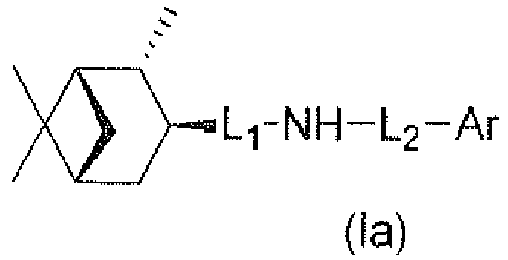
- Wherein:
- L1, L2, and Ar are as defined in formula (I) above,
- In one embodiment, there are included pharmaceutical compositions wherein, in formula (Ia), Ar is a C6-C10 aryl or a 5 to 10 membered heteroaryl, said aryl group being substituted by one to three R groups, said heteroaryl groups being optionally substituted by one to three R groups, R being as defined above.
- In one embodiment, there are included pharmaceutical compositions wherein, in fonnula (Ia), L1 is a single bond W-N.
- In another embodiment, there are included pharmaceutical compositions wherein, in formula (Ia), L2 is -(CH2)q-, notably -CH2-.
- In still another embodiment, there are included pharmaceutical compositions wherein, in formula (Ia), Ar is C6-C10 aryl, notably phenyl.
- In yet another embodiment, there are included pharmaceutical compositions wherein compounds of formula (Ia) are selected from:
- (1S,2S,3S,5R)-N-(5-bromo-2-methoxybenzyl)-2,6,6-trimethylbicyclo[3.1.1]heptan-3-amine (VP332)
- (1S,2S,3S,5R)-N-(5-iodo-2-methoxybenzyl)-2,6,6-trimethylbicyclo[3.1.1]heptan-3-amine (VP386)
- (1S,2S,3S,5R)-N-(4-iodobenzyl)-2,6,6-trimethylbicyclo[3.1.1]heptan-3-amine (VP390).
- The compounds of formula (I) and/or (Ia) of the present invention may be administered in the form of a conventional pharmaceutical composition by any route including orally, intramuscularly, subcutaneously, topically, intranasally, intraperitoneally, intrathoracially, intravenously, epidurally, intrathecally, intracerebroventricularly and by injection into the joints.
- The dosage will depend on the route of administration, the severity of the disease, age and weight of the patient and other factors normally considered by the attending physician, when determining the individual regimen and dosage level at the most appropriate for a particular patient.
- For preparing pharmaceutical compositions from the compounds of the present invention, inert, pharmaceutically acceptable carriers can be either solid or liquid. Solid form preparations include powders, tablets, dispersible granules, capsules, cachets, and suppositories.
- A solid carrier can be one or more substances, which may also act as diluents, flavouring agents, solubilizers, lubricants, suspending agents, binders, or tablet disintegrating agents; it can also be an encapsulating material.
- Tablets, powders, cachets, and capsules can be used as solid dosage forms suitable for oral administration.
- Liquid form compositions include solutions, suspensions, and emulsions. For example, sterile water or propylene glycol solutions of the active compounds may be liquid preparations suitable for parenteral administration. Liquid compositions can also be formulated in solution in aqueous polyethylene glycol solution.
- Aqueous solutions for oral administration can be prepared by dissolving the active component in water and adding suitable colorants, flavouring agents, stabilizers, and thickening agents as desired. Aqueous solutions for oral use can be made by dispersing the finely divided active component in water together with a viscous material such as natural synthetic gums, resins, methyl cellulose, sodium carboxymethyl cellulose, and other suspending agents known to the pharmaceutical formulation art.
- Depending on the mode of administration, the pharmaceutical composition will according to one embodiment of the present invention include 0.05% to 99% weight (percent by weight), according to an alternative embodiment from 0.10 to 50% weight, of the compound of the present invention, all percentages by weight being based on total composition. A therapeutically effective amount for the practice of the present invention may be determined, by the use of known criteria including the age, weight and response of the individual patient, and interpreted within the context of the disease which is being treated or which is being prevented, by one of ordinary skills in the art.
- In a third aspect, the present invention relates to a compound of formula (Ia) as defined above, and the stereoisomeric forms, mixtures of stereoisomeric forms or pharmaceutically acceptable salts forms thereof.
- It is to be noted that the present invention includes the combination of all the embodiments listed hereabove for formulae (I) or (Ia), respectively.
- The following terms and expressions contained herein are defined as follows:
- As used herein, a range of values in the form "x-y" or "x to y", or "x through y", include integers x, y, and the integers therebetween. For example, the phrases "1-6", or "1 to 6" or "1 through 6" are intended to include the
integers 1, 2, 3, 4, 5, and 6. Preferred embodiments include each individual integer in the range, as well as any subcombination of integers. For example, preferred integers for "1-6" can include 1, 2, 3, 4, 5, 6, 1-2, 1-3, 1-4, 1-5, 2-3, 2-4, 2-5, 2-6, etc. - As used herein, the term "alkyl" refers to a straight-chain, or branched alkyl group having 1 to 8 carbon atoms, such as methyl, ethyl, propyl, isopropyl, butyl, isobutyl, sec-butyl, tert-butyl, pentyl, isoamyl, neopentyl, 1-ethylpropyl, 3-methylpentyl, 2,2-dimethylbutyl, 2,3-dimethylbutyl, hexyl, octyl, etc. The alkyl moiety of alkyl-containing groups, such as alkoxy, alkoxycarbonyl, and alkylaminocarbonyl groups, has the same meaning as alkyl defined above. Lower alkyl groups, which are preferred, are alkyl groups as defined above which contain 1 to 4 carbons. A designation such as "C1-C4 alkyl" refers to an alkyl radical containing from 1 to 4 carbon atoms.
- As used herein, the term "alkoxy" refers to an -O-alkyl group, wherein the term alkyl is as defined herein. Examples of alkoxy groups notably include methoxy, ethoxy, n-propoxy groups.
- As used herein, the term "aryl" refers to a substituted or unsubstituted, mono- or bicyclic hydrocarbon aromatic ring system having 6 to 10 ring carbon atoms. Examples include phenyl and naphthyl. Preferred aryl groups include unsubstituted or substituted phenyl and naphthyl groups. Included within the definition of "aryl" are fused ring systems, including, for example, ring systems in which an aromatic ring is fused to a cycloalkyl ring. Examples of such fused ring systems include, for example, indane, indene, and tetrahydronaphthalene.
- As used herein, the term "heteroaryl" refers to an aromatic group containing 5 to 10 ring carbon atoms in which one or more ring carbon atoms are replaced by at least one hetero atom such as -O-, -N-, or -S-. Examples of heteroaryl groups include pyrrolyl, furanyl, thienyl, pirazolyl, imidazolyl, thiazolyl, isothiazolyl, isoxazolyl, oxazolyl, oxathiolyl, oxadiazolyl, triazolyl, oxatriazolyl, furazanyl, tetrazolyl, pyridyl, pyrazinyl, pyrimidinyl, pyridazinyl, triazinyl, indolyl, isoindolyl, indazolyl, benzofuranyl, isobenzofuranyl, purinyl, quinazolinyl, quinolyl, isoquinolyl, benzoimidazolyl, benzothiazolyl, benzothiophenyl, thianaphthenyl, benzoxazolyl, benzisoxazolyl, cinnolinyl, phthalazinyl, naphthyridinyl, and quinoxalinyl. Included within the definition of "heteroaryl" are fused ring systems, including, for example, ring systems in which an aromatic ring is fused to a heterocycloalkyl ring. Examples of such fused ring systems include, for example, phthalamide, phthalic anhydride, indoline, isoindoline, tetrahydroisoquinoline, chroman, isochroman, chromene, and isochromene.
- As used herein, the term "subject" refers to a warm blooded animal such as a mammal, preferably a human, or a human child, which is afflicted with, or has the potential to be afflicted with one or more diseases and conditions described herein.
- As used herein, a "therapeutically effective amount" refers to an amount of a compound of the present invention effective to prevent or treat the symptoms of particular disorder.
- As used herein, the term "pharmaceutically acceptable" refers to those compounds, materials, compositions, and/or dosage forms which are, within the scope of sound medical judgment, suitable for contact with the tissues of human beings and animals without excessive toxicity, irritation, allergic response, or other problem complications commensurate with a reasonable benefit/risk ratio.
- All other terms used in the description of the present invention have their meanings as is well known in the art.
- In another aspect, the present invention is directed to pharmaceutically acceptable salts of the compounds described above. As used herein, "pharmaceutically acceptable salts" includes salts of compounds of the present invention derived from the combination of such compounds with non-toxic acid or base addition salts.
- Acid addition salts include inorganic acids such as hydrochloric, hydrobromic, hydroiodic, sulfuric, nitric and phosphoric acid, as well as organic acids such as acetic, citric, propionic, tartaric, glutamic, salicylic, oxalic, methanesulfonic, paratoluenesulfonic, succinic, and benzoic acid, and related inorganic and organic acids.
- Base addition salts include those derived from inorganic bases such as ammonium and alkali and alkaline earth metal hydroxides, carbonates, bicarbonates, and the like, as well as salts derived from basic organic amines such as aliphatic and aromatic amines, aliphatic diamines, hydroxy alkamines, and the like. Such bases useful in preparing the salts of this invention thus include ammonium hydroxide, potassium carbonate, sodium bicarbonate, calcium hydroxide, methylamine, diethylamine, ethylenediamine, cyclohexylamine, ethanolamine and the like.
- In addition to pharmaceutically-acceptable salts, other salts are included in the invention. They may serve as intermediates in the purification of the compounds, in the preparation of other salts, or in the identification and characterization of the compounds or intermediates.
- The pharmaceutically acceptable salts of compounds of the present invention can also exist as various solvates, such as with water, methanol, ethanol, dimethylformamide, ethyl acetate and the like. Mixtures of such solvates can also be prepared. The source of such solvate can be from the solvent of crystallization, inherent in the solvent of preparation or crystallization, or adventitious to such solvent. Such solvates are within the scope of the present invention.
- It is recognized that compounds of the present invention may exist in various stereoisomeric forms. As such, the compounds of the present invention include both diastereomers and enantiomers. The compounds are normally prepared as racemates and can conveniently be used as such, but individual enantiomers can be isolated or synthesized by conventional techniques if so desired. Such racemates and individual enantiomers and mixtures thereof form part of the present invention.
- It is well known in the art how to prepare and isolate such optically active forms. Specific stereoisomers can be prepared by stereospecific synthesis using enantiomerically pure or enantiomerically enriched starting materials. The specific stereoisomers of either starting materials or products can be resolved and recovered by techniques known in the art, such as resolution of racemic forms, normal, reverse-phase, and chiral chromatography, recrystallization, enzymatic resolution, or fractional recrystallization of addition salts formed by reagents used for that purpose. Useful methods of resolving and recovering specific stereoisomers described in Eliel, E. L.; Wilen, S.H. Stereochemistry of Organic Compounds; Wiley: New York, 1994, and Jacques, J, et al. Enantiomers, Racemates, and Resolutions; Wiley: New York, 1981, each incorporated by reference herein in their entireties.
- The compounds of the present invention may be prepared in a number of methods well known to those skilled in the art, including, but not limited to those described below, or through modifications of these methods by applying standard techniques known to those skilled in the art of organic synthesis. The appropriate modifications and substitutions will be readily apparent and well known or readily obtainable from the scientific literature to those skilled in the art. In particular, such methods can be found in R.C. Larock, Comprehensive Organic Transformations, Wiley-VCH Publishers, 1999.
- All processes disclosed in association with the present invention are contemplated to be practiced on any scale, including milligram, gram, multigram, kilogram, multikilogram or commercial industrial scale.
- It will be appreciated that the compounds of the present invention may contain one or more asymmetrically substituted carbon atoms, and may be isolated in optically active or racemic forms. Thus, all chiral, diastereomeric, racemic forms, isomeric forms of a structure are intended, unless the specific stereochemistry or isomeric form is specifically indicated. It is well-known in the art how to prepare and isolate such optically active forms. For example, mixtures of stereoisomers may be separated by standard techniques including, but not limited to, resolution of racemic forms, normal, reverse-phase, and chiral chromatography, preferential salt formation, recrystallization, and the like, or by chiral synthesis either from chiral starting materials or by deliberate synthesis of target chiral centers.
- Compounds of the present invention may be prepared by a variety of synthetic routes. The reagents and starting materials are commercially available, or readily synthesized by well-known techniques by one of ordinary skill in the arts. All substituents, unless otherwise indicated, are as previously defined.
- In the reactions described hereinafter, it may be necessary to protect reactive functional groups, for example hydroxy, amino, imino, thio or carboxy groups, where these are desired in the final product, to avoid their unwanted participation in the reactions. Conventional protecting groups may be used in accordance with standard practice, for examples see T.W. Greene and P. G. M. Wuts in Protective Groups in Organic Chemistry, 3rd ed., John Wiley and Sons, 1999; J. F. W. McOmie in Protective Groups in Organic Chemistry, Plenum Press, 1973.
- The general routes to prepare the examples of the present invention are shown in the Scheme A hereafter. The reagents and starting materials are commercially available, or readily synthesized by well-known techniques by one of ordinary skill in the arts. All substituents in the synthetic Schemes, unless otherwise indicated, are as previously defined.
-
-
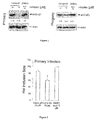
Figure 1 shows the effect ofCompound 20 on the Sn bacterial load of infected HeLa cells by GroEL immunoblot and Actin was used as loading control. -
Figure 2 shows the effect ofCompound 20 on Sn the inclusion size during primary infection of HeLa cells. -
Figure 3 shows the effect ofCompound 20 on the number Sn of inclusions during progeny infection of HeLa cells. -
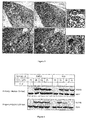
Figure 4 shows pictures illustrating effect ofCompound 20 on phenotypic variations in Sn inclusion formation in infected HeLa cells. -
Figure 5 shows pictures of the subcellular structure of Sn inclusions in infected HeLa cells by transmission electron microscopy in presence of DMSO or ofCompound 20. N: HeLa cell nucleus, V: vacuoles, Sn: Sn inclusions. After treatment withCompound 20, the number of Sn inclusions is reduced and the vacuole size is much reduced. -
Figure 6 shows immunotblot analysis of lysed HeLa cells after Ctr primary and progeny infection in presence ofCompound 20; Chlamydial growth was detected with antibodies against chlamydial HSP60 protein and Actin was used as loading control. -
Figure 7 shows microscopy images of cells stained for DAPI and Chlamydia trachomatis (detected by GFP-signal) aftercompound # 20 andcompound # 20 derivatives application at 75 µM during Chlamydia trachomatis infection of HeLa229 cells. -

- To a mixture of (+)-isopinocamphenylamine (100 mg, 0.652 mmol) in 2 mL of dry methanol was added 0.652 mmol of the appropriate aldehyde. The resulting mixture was stirred for several hours and NaBH3CN (0.979 mmol, 61.5 mg) was added in one portion immediately followed by acetic acid (1.305 mmol, 73.2 µL).
-

- To a mixture of (+)-isopinocamphenylamine (100 mg, 0.652 mmol) in 2 mL of dry methanol was added 5-bromo-2-methoxybenzaldehyde (140 mg, 0.652 mmol). The resulting mixture was stirred for several hours and NaBH3CN (0.979 mmol, 61.5 mg) was added in one portion immediately followed by acetic acid (1.305 mmol, 73.2 µL). The crude mixture was washed with a saturated solution of NaHCO3 (5 mL) and extracted with dichloromethane (3 × 20 mL). The residue was concentrated under vacuum and purified by flash chromatography (cyclohexane/ethyl acetate 1:0 to 1:1) affording 226 mg (98%) of compound as a colourless oil.
1H-NMR (400MHz, CDCl3) δ (ppm) = 0.94 (s, 3H), 0.99 (d, J = 9.6 Hz, 1H), 1.06 (d, J= 7.1 Hz, 3H), 1.21 (s, 3H), 1.63-1.69 (m, 1H), 1.76-1.85 (m, 2H), 1.89-1.98 (m, 2H), 2.28-2.40 (m, 2H), 2.81-2.88 (m, 1H), 3.67 (d, J= 13.4 Hz, 1H), 3.82 (d, J = 13.4 Hz, 1H), 3.82 (s, 3H), 6.72 (d, J = 8.6 Hz, 1H), 7.33 (dd, J = 8.6 Hz, J' = 2.5 Hz, 1H), 7.41 (d, J= 2.5 Hz, 1H).
13C-NMR (100MHz, CDCl3) δ (ppm) = 21.4, 23.4, 27.8, 33.7, 36.3, 38.6, 41.7, 44.8, 46.9, 47.8, 55.4, 56.0, 11.8, 112.7, 130.5, 130.9, 132.3, 156.6.
MS (ESI) [M+H]+ = 352.08/354.02
LC/MS (X-bridge 100 × 4.6 mm) - Gradient A : tR = 18.8 min
- Gradient D : tR = 13.50 min
-

- To a mixture of (+)-isopinocamphenylamine (100 mg, 0.652 mmol) in 2 mL of dry methanol was added 5-iodo-2-methoxybenzaldehyde (171 mg, 0.652 mmol). The resulting mixture was stirred for several hours and NaBH3CN (0.979 mmol, 61.5 mg) was added in one portion immediately followed by acetic acid (1.305 mmol, 73.2 µL). The crude mixture was washed with a saturated solution of NaHCO3 (5 mL) and extracted with dichloromethane (3 × 20 mL). The residue was concentrated under vacuum and purified by flash chromatography (cyclohexane/ethyl acetate 1:0 to 1:1) affording 260 mg (99%) of compound as a colourless oil.
1H-NMR (400MHz, CDCl3) δ (ppm) = 0.94 (s, 3H), 1,00 (d, J = 9.6 Hz, 1H), 1.06 (d, J= 7.2 Hz, 3H), 1.21 (s, 3H), 1.65-1.72 (m, 1H), 1.76-1.85 (m, 2H), 1.94-2.07 (m, 2H), 2.28-2.40 (m, 2H), 2.82-2.89 (m, 1H), 3.67 (d, J= 13.4 Hz, 1H), 3.82 (d, J= 13.4 Hz, 1H), 3.83 (s, 3H), 6.64 (d, J = 8.5 Hz, 1H), 7.52 (dd, J = 8.6 Hz, J' = 2.2 Hz, 1H), 7.58 (d, J= 2.2 Hz, 1H).
13C-NMR (100MHz, CDCl3) δ (ppm) = 21.3, 23.4, 27.8, 33.7, 36.0, 38.6, 41.7, 44.6, 46.7, 47.8, 55.4, 56.2, 82.9, 112.5, 130.8, 136.8, 138.2, 157.5.
MS (ESI) [M+H]+ = 400.13
LC/MS (X-bridge 100 × 4.6 mm) - Gradient A : tR = 19.18 min
- Gradient D : tR = 14.07 min
-

- To a mixture of (+)-isopinocamphenylamine (100 mg, 0.652 mmol) in 2mL of dry methanol was added 4-iodobenzaldehyde (151 mg, 0.652 mmol). The resulting mixture was stirred for several hours and NaBH3CN (0.979 mmol, 61.5 mg) was added in one portion immediately followed by acetic acid (1.305 mmol, 73.2 µL). The crude mixture was washed with a saturated solution of NaHCO3 (5 mL) and extracted with dichloromethane (3 × 20 mL). The residue was concentrated under vacuum and purified by flash chromatography (cyclohexane/ethyl acetate 1:0 to 1:1) affording 241 mg (97%) of compound as a colourless oil.
1H-NMR (400MHz, CDCl3) δ (ppm) = 0.93 (s, 3H), 0.97 (d, J = 9.6 Hz, 1H), 1.07 (d, J= 7.2 Hz, 3H), 1.21 (s, 3H), 1.48.1.67 (m, 3H), 1.76-1.85 (m, 2H), 1.91-1.97 (m, 1H), 2.28-2.40 (m, 2H), 2.81-2.89 (m, 1H), 3.68 (d, J = 13.4 Hz, 1H), 3.81 (d, J= 13.4 Hz, 1H), 7.12 (d, J = 8.1 Hz, 2H), 7.65 (d, J = 2.2 Hz, 2H).
13C-NMR (100MHz, CDCl3) δ (ppm) - 21.5, 23.4, 27.8, 33.8, 36.6, 38.5, 41.7, 45.1, 47.8, 51.2, 55.9, 92.1, 130.2, 137.3, 140.4.
MS (ESI) [M+H]+ = 370.66
LC/MS (X-bridge 100 × 4.6 mm) - Gradient A : tR = 19.12 min
- Gradient D : tR = 13.57 min
- HeLa229 (ATCC CCL-2.1) were grown in RPMI1640 medium (Glutamax, 10% FBS, w/o HEPES) (Invitrogen). Stable HeLa229 cell lines were established to constantly label the Golgi apparatus (B4GalT1 in a pCMV6-AC-mRFP cloning vector, OriGene) and the ER (KDEL in a pDsRed2-ER expression vector).
- Simkania negevensis(Sn) strain Z (ATCC VR-1471) was prepared as described previously (Mehlitz A, Karunakaran K, Herweg JA, Krohne G, van de Linde S, Rieck E, Sauer M, Rudel T. The chlamydial organism Sn forms ER vacuole contact sites and inhibits ER-stress. Cell Microbiol 2014;16(8):1224-1243).
- Briefly, HeLa229 cells were grown to 50-70% confluence, were inoculated with Sn in RPMI1640 with 5% FBS, for 6 h at 35°C in a humidified incubator at 5% CO2. Medium was replaced by infection medium (RPMI1640, Glutamax, 5% FBS, w/o HEPES) and growth was allowed for 3 days. Cells were mechanically detached and bacteria were released using ~2-5 mm glass beads (Carl Roth). Low speed supernatant (600 x g, 4°C and 5 min) was subjected to high-speed centrifugation (20,000 x g, 4°C and 30 min) to pellet bacteria. Bacteria were washed twice with 5 ml SPG (250 mM sucrose, 50 mM sodium phosphate, 5 mM glutamate, pH 7.4), aliquoted and stored at -80°C in SPG.
- Chlamydia trachomatis (Ctr). Laboratory-adapted strain L2/434/Bu (ATCC VR902B) was used in assays. Full biological and genetic information is available for this strain including complete genome sequence and defined proteome. This strain has a relatively low particle to infectivity ratio, perform efficient cell infection and has a higher viability than standard genital tract isolates with faster developmental cycle. Culture conditions have been described in (Wang Y., Kahane S., Cutcliffe L.T., Skilton R.J., Lambden P.R., Clarke I.N. Development of a transformation system for Chlamydia trachomatis: Restoration of glycogen biosynthesis by acquisition of a plasmid shuttle vector. PLoS Pathogen, 2011, 7(9):e1002258. doi: 10.1371/joumal.ppat.1002258).
- 40,000 HeLa cells were seeded in 12-well cluster plates, inhibitor-treated and infected as indicated in the respective experiment.
- For infectivity assays cells were either fixed and stained at indicated time points (
Figure 2 ,4 ; inclusion formation/primary infection) or bacteria were released via one freeze thaw cycle (-70°C/37°C) followed by mechanical release through pipetting and transfer to fresh HeLa229 cells (1:25-1:50, progeny/infectivity). Cells were centrifuged for 1 h at 35°C and medium exchanged to infection medium. Progeny was fixed at day 3 post infection and processed for staining (Figure 3 ) or harvested for immunoblotting (Figure 1 ). Infectivity assays were imaged on an automated fluorescence microscope Leica DMIR (Figure 4 ). Numbers and average sizes of the SCV as well as host cell numbers were determined via GroEL and DAPI staining and images were analysed and quantified using FIJI (ImageJ) and Excel (Microsoft). - In this progeny assay, bacteria are first grown in Hela299 cells treated with inhibitors (
compound 20 at a concentration of 50 and 75 µM) and the infectious particles from this primary infection are applied to fresh cells in the absence of inhibitor to measure the bacterial load (GroEL immunoblot) and inclusion formation (immunofluorescence microscopy). - Compound application during Ctr infection. HeLa229 cells were pretreated with
compound 20 in concentrations of 25, 50 and 75 µM for 30 min until Ctr (MOI1) were added to the cells.Compound 20 was present during infection. - Cells with primary infection were lysed 24 h post infection (hpi). To obtain progeny infection compound treated cells were lysed 48 hpi and lysate was used to infect fresh HeLa229 cells. Progeny infection was lysed 24 hpi and analyzed together with primary infection samples by immunoblot. Chlamydial growth was detected with antibodies against chlamydial HSP60 protein and Actin was used as loading control (
Figure 6 ). - Tested inhibitor of
endolysosomal transport Compound 20 has had an inhibitor effect on primary and progeny infection for Sn (Figures 1, 2 ,3, 4 and5 ). This was shown by western detection of Sn GroEL (Figure 1 ), relative Sn inclusion sizes in primary infection (Figure 2 ), relative Sn inclusion number in progeny infection (Figure 3 ), fluorescence microscopy (Figure 4 ) and transmission electron microscopy (TEM;Figure 5 ). - The maximal inhibition of Sn replication was observed at a concentration of 75 µM (
Figures 1, 2 ,3 and 4 ). - Sn inclusions formed normally in DMSO-treated control cells. Infected cells treated with
Compound 20 contained dramatically smaller and less sub-vacuoles and just few bacteria (Figure 5 ). - In summary,
Compound 20 inhibits primary and progeny infection for Sn. - Experiments performed to test the anti-chlamydial activity of
Compound 20 demonstrated a slight inhibitory effect of this compound on chlamydial development (Figure 6 ). This was shown by western detection of Sn Hsp60 in infected cells. - However, this treatment of the primary Ctr infection also resulted in consequences on the progeny infection (
Figure 6 );Compound 20 at 50 µM strongly reduced amounts of Ctr in the progeny. At 75 µM,Compound 20 totally blocked progeny infection. - These results highlight the utility of
Compound 20 as an anti-chlamydial compounds. - HeLa229 (ATCC CCL-2.1). Cells were grown in RPMI1640 medium (Glutamax, 10% FBS, w/o HEPES) (Invitrogen).
- Chlamydia trachomatis (Ctr). Laboratory-adapted strain L2/434/Bu (ATCC VR902B) was used in assays. Full biological and genetic information is available for this strain including complete genome sequence and defined proteome. This strain has a relatively low particle to infectivity ratio, perform efficient cell infection and has a higher viability than standard genital tract isolates with faster developmental cycle. Culture conditions have been described in (Wang Y., Kahane S., Cutcliffe L.T., Skilton R.J., Lambden P.R., Clarke I.N. Development of a transformation system for Chlamydia trachomatis: Restoration of glycogen biosynthesis by acquisition of a plasmid shuttle vector. PLoS Pathogen, 2011, 7(9):e1002258. doi: 10.1371/journal.ppat.1002258).
- Compound application during Chlamydia trachomatis infection. HeLa229 cells were pretreated with
compound # 20 and its derivatives in concentrations of 25 µM and 75 µM for 1 hour until Chlamydia trachomatis (MOI1) were added to the cells. Compounds were present during infection. To obtain progeny infection, compound treated cells were lysed 24h post infection (hpi) and lysate was used to infect fresh HeLa 229 cells. Infected cells of progeny infection were fixed with 4% Paraformaldehyde 48hpi. Cells were stained for DAPI and Chlamydia trachomatis were detected by GFP-signal. Images are representative of n = 2 independent experiments. Quantification of infected cells by Chlamydia trachomatis was realized from microscopy images with Image J software (Figure 7 ) and cellular protection by compounds at 25 µM and 75 µM was then determined (Table 1) by comparison with solvent-treated cells (control) with the following equation:
-
Table 1 Cellular protection at 75 µM (%) Cellular protection at 25 µM (%) #20 75.7 19.9 RN-2-103 100 66.9 m3 87.8 46.9 m4 81.6 22.8 m9 100 100 VP332 100 100 VP386 100 100 VP390 100 91.8 - This treatment of the primary Ctr infection with #20 and #20 derivatives resulted in a strong diminution of the progeny infection at 75 µM (
Figure 7 and Table 1) and 25 µM (Table 1) with a full protection for compounds RN-2-103, m9, VP332, VP386 and VP390 at 75 µM and m9, VP332 and VP386 at 25 µM. - These results highlight the utility of #20 derivatives as anti-chlamydial compounds.
for use in the treatment of a Chlamydiales infection.
in admixture with one or more pharmaceutically acceptable excipients.
HRMS m/z [(M+H)+] calcd for C18H27NOBr 352.1276 found.352.1271.
HRMS m/z [(M+H)+] calcd for C18H27N2OI400.1137 found 400.1126.
Claims (13)
- A compound of formula (I)
W-L1-NH-L2-Ar (I)
Wherein:W is independently selected from:- an adamantyl optionally substituted by one or more C1-C6 alkyl groups, or- a saturated pinanylL1 is independently selected from a single bond W-N, -(CH2)pC(=O)-,L2 is independently selected from -(CH2)q-, [-C(-O)-NH]r-N=CH-, or -(C6H4)-SO2-NH-,Ar is a C6-C10 aryl or a 5 to 10 membered heteroaryl, said aryl or heteroaryl groups being optionally substituted by one to three R groups,R is independently selected from F, Cl, Br, I, C1-C6 alkyl, C1-C6 alkoxy, NO2,pis 0, 1, or 2,q is 1 or 2,r is 0 or 1,and the stereoisomeric forms, mixtures of stereoisomeric forms or pharmaceutically acceptable salts forms thereof,
for use in the treatment of a Chlamydiales infection. - The compound of formula (I) for use of claim 1, wherein the Chlamydiales infection is a Chlamydia or Simkania infection.
- The compound of formula (I) for use of any of claims 1 or 2, wherein L1 is a single bond W-N.
- The compound of formula (I) for use of any of claims 1 to 3, wherein L2 is -(CH2)q-, notably -CH2-.
- The compound of formula (I) for use of claim 4, wherein Ar is C6-C10 aryl, notably phenyl.
- The compound of formula (I) for use of any of claims 1 to 5, wherein R is selected from Br, I, methoxy, NO2.
- The compound of formula (I) for use of any of claims 1 to 6, which is selected from:- (3S,5S,7S)-N-(5-bromo-2-methoxybenzyl)adamantan-1-amine (compound 20)- (1R,3R,5R,7R)-N-(3-nitrobenzyl}adamantan-2-amine (compound 94)- (1R,3R,5S,7R)-N-(5-bromo-2-methoxybenzyl)-3,5-dimethyladamantan-1-amine (RN-2-103)- (3R,5R,7R)-N-(4-(N-(thiazol-2-yl)sulfamoyl)phenyl)adamantane-1-carboxamide (m3)- N-((3S,5S,7S)-adamantan-1-yl)-2-((E)-3-nitrobenzylidene)hydrazine-1-carboxamide (m4)- 2-((3R,5R,7R)-adamantan-1-yl)-N'-((E)-(5-nitrofuran-2-yl)methylene)acetohydrazide (m9)- (1S,2S,3S,5R)-N-(5-bromo-2-methoxybenzyl)-2,6,6-trimethylbicyclo[3.1.1]heptan-3-amine (VP332)- (1S,2S,3S,5R)-N-(5-iodo-2-methoxybenzyl)-2,6,6-trimethylbicyclo[3.1.1]heptan-3-amine (VP386)- (1S,2S,3S,5R)-N-(4-iodobenzyl)-2,6,6-trimethylbicyclo[3.1.1]heptan-3-amine (VP390).
- A pharmaceutical composition comprising a compound of formula (Ia):
 L1 and L2 are as defined in formula (I) in any of claims 1 to 7,Ar is a C6-C10 aryl or a 5 to 10 membered heteroaryl, said aryl group being substituted by one to three R groups, said heteroaryl groups being optionally substituted by one to three R groups, R being as defined in any of claims 1 to 7,and the stereoisomeric forms, mixtures of stereoisomeric forms or pharmaceutically acceptable salts forms thereof,
in admixture with one or more pharmaceutically acceptable excipients. - The pharmaceutical composition of claim 8, wherein L1 is a single bond W-N.
- The pharmaceutical composition of any of claims 8 or 9, wherein L2 is -(CH2)q-, notably -CH2-.
- The pharmaceutical composition of any of claims 8 to 10, wherein Ar is C6-C10 aryl, notably phenyl.
- The pharmaceutical composition of any of claims 8 to 11, wherein the compound of formula (Ia) is selected from :- (1S,2S,3S,5R)-N-(5-bromo-2-methoxybenzyl)-2,6,6-trimethylbicyclo[3.1.1]heptan-3-amine (VP332)- (1S,2S,3S,5R)-N-(5-iodo-2-methoxybenzyl)-2,6,6-trimethylbicyclo[3.1.1]heptan-3-amine (VP386)- (1S,2S,3S,5R)-N-(4-iodobenzyl)-2,6,6-tnmethylbicyclo[3.1.1]heptan-3-amine (VP390).
- A compound of formula (Ia) as defined in any of claims 8 to 12, and the stereoisomeric forms, mixtures of stereoisomeric forms or pharmaceutically acceptable salts forms thereof.
Priority Applications (1)
| Application Number | Priority Date | Filing Date | Title |
|---|---|---|---|
| EP16166341.4A EP3085688B1 (en) | 2015-04-21 | 2016-04-21 | Adamantane or pinene derivatives for use in the treatment of chlamydiales infections |
Applications Claiming Priority (2)
| Application Number | Priority Date | Filing Date | Title |
|---|---|---|---|
| EP15305602 | 2015-04-21 | ||
| EP16166341.4A EP3085688B1 (en) | 2015-04-21 | 2016-04-21 | Adamantane or pinene derivatives for use in the treatment of chlamydiales infections |
Publications (2)
| Publication Number | Publication Date |
|---|---|
| EP3085688A1 true EP3085688A1 (en) | 2016-10-26 |
| EP3085688B1 EP3085688B1 (en) | 2020-08-19 |
Family
ID=53015742
Family Applications (1)
| Application Number | Title | Priority Date | Filing Date |
|---|---|---|---|
| EP16166341.4A Active EP3085688B1 (en) | 2015-04-21 | 2016-04-21 | Adamantane or pinene derivatives for use in the treatment of chlamydiales infections |
Country Status (2)
| Country | Link |
|---|---|
| US (1) | US10039727B2 (en) |
| EP (1) | EP3085688B1 (en) |
Citations (4)
| Publication number | Priority date | Publication date | Assignee | Title |
|---|---|---|---|---|
| WO2002014464A2 (en) * | 2000-08-17 | 2002-02-21 | Control-Ox Oy | Plant-derived and synthetic phenolic compounds and plant extracts, effective in the treatment and prevention of chlamydial infections |
| WO2008014307A2 (en) * | 2006-07-26 | 2008-01-31 | Novartis Ag | Inhibitors of undecaprenyl pyrophosphate synthase |
| WO2009153457A2 (en) * | 2008-06-17 | 2009-12-23 | Commissariat A L'energie Atomique | Novel compounds which have a protective activity with respect to the action of toxins and of viruses with an intracellular mode of action |
| CN102875474A (en) * | 2012-10-23 | 2013-01-16 | 中国科学院广州生物医药与健康研究院 | Novel naphthenic amine compounds for anti-mutant influenza virus |
Family Cites Families (1)
| Publication number | Priority date | Publication date | Assignee | Title |
|---|---|---|---|---|
| AU2013259904A1 (en) | 2012-05-08 | 2014-10-02 | Lycera Corporation | Bicyclic sulfone compounds for inhibition of RORy activity and the treatment of disease |
-
2016
- 2016-04-20 US US15/134,373 patent/US10039727B2/en active Active
- 2016-04-21 EP EP16166341.4A patent/EP3085688B1/en active Active
Patent Citations (4)
| Publication number | Priority date | Publication date | Assignee | Title |
|---|---|---|---|---|
| WO2002014464A2 (en) * | 2000-08-17 | 2002-02-21 | Control-Ox Oy | Plant-derived and synthetic phenolic compounds and plant extracts, effective in the treatment and prevention of chlamydial infections |
| WO2008014307A2 (en) * | 2006-07-26 | 2008-01-31 | Novartis Ag | Inhibitors of undecaprenyl pyrophosphate synthase |
| WO2009153457A2 (en) * | 2008-06-17 | 2009-12-23 | Commissariat A L'energie Atomique | Novel compounds which have a protective activity with respect to the action of toxins and of viruses with an intracellular mode of action |
| CN102875474A (en) * | 2012-10-23 | 2013-01-16 | 中国科学院广州生物医药与健康研究院 | Novel naphthenic amine compounds for anti-mutant influenza virus |
Non-Patent Citations (23)
| Title |
|---|
| COLLINGRO A; TISCHLER P; WEINMAIER T; PENZ T; HEINZ E; BRUNHAM RC; READ TD; BAVOIL PM; SACHSE K; KAHANE S: "Unity in variety--the pan-genome of the Chlamydiae", MOL BIOL EVOL, vol. 28, no. 12, 2011, pages 3253 - 3270 |
| ELIEL, E. L.; WILEN, S.H.: "Stereochemistry of Organic Compounds", 1994, WILEY |
| HAHN DL; MCDONALD R: "Can acute Chlamydia pneumoniae respiratory tract infection initiate chronic asthma?", ANN ALLERGY ASTHMA IMMUNOL, vol. 81, no. 4, 1998, pages 339 - 344, XP026957844 |
| HARKINEZHAD T; GEENS T; VANROMPAY D: "Chlamydophila psittaci infections in birds: A review with emphasis on zoonotic consequences", VET MICROBIOL, vol. 135, no. 1-2, 2009, pages 68 - 77, XP026029991, DOI: doi:10.1016/j.vetmic.2008.09.046 |
| HORN M.: "Chlamydiae as Symbionts in Eukaryotes", ANNU REV MICROBIOL, vol. 62, 2008, pages 113 - 131 |
| HUGHES C; MAHARG P; ROSARIO P; HERRELL M; BRATT D; SALGADO J; HOWARD D: "Possible nosocomial transmission of psittacosis", INFECT CONTROL HOSP EPIDEMIOL, vol. 18, no. 3, 1997, pages 165 - 168 |
| ISON, C.: "Antimicrobial resistance in sexually transmitted infections in the developed world: implications for rational treatment", CURR OPIN INFECT DIS., 2012 |
| J. F. W. MCOMIE: "Protective Groups in Organic Chemistry", 1973, PLENUM PRESS |
| JACQUES, J ET AL.: "Enantiomers, Racemates, and Resolutions", 1981, WILEY |
| KAHANE S; FRUCHTER D; DVOSKIN B; FRIEDMAN MG: "Versatility of Simkania negevensis infection in vitro and induction of host cell inflammatory cytokine response", J INFECT, vol. 55, no. 2, 2007, pages EL3 - 21, XP022135925, DOI: doi:10.1016/j.jinf.2007.03.002 |
| KAHANE S; GREENBERG D; FRIEDMAN MG; HAIKIN H; DAGAN R: "High prevalence of ''Simkania Z'' a novel Chlamydia-like bacterium in infants with acute bronchiolitis", J INFECT DIS, vol. 178, no. 5, 1998, pages 1553 - 1553 |
| LAMOTH F; GREUB G: "Amoebal pathogens as emerging causal agents of pneumonia", FEMS MICROBIOL REV, vol. 34, no. 3, 2010, pages 260 - 280 |
| LIEBERMAN D; KAHANE S; LIEBERMAN D; FRIEDMAN MG: "Pneumonia with serological evidence of acute infection with the Chlamydia-like microorganism ''Z", AM J RESPIR CRIT CARE MED, vol. 156, no. 2, 1997, pages 578 - 582 |
| MEHLITZ A; KARUNAKARAN K; HERWEG JA; KROHNE G; VAN DE LINDE S; RIECK E; SAUER M; RUDEL T: "The chlamydial organism Sn forms ER vacuole contact sites and inhibits ER-stress", CELL MICROBIOL, vol. 16, no. 8, 2014, pages 1224 - 1243 |
| R.C. LAROCK: "Comprehensive Organic Transformations", 1999, WILEY-VCH PUBLISHERS |
| RESNIKOFF, S. ET AL.: "Global data on visual impairment in the year 2002", BULL WORLD HEALTH ORGAN, vol. 82, no. 11, 2004, pages 844 - 51 |
| S, GONEN R; SAYADA C; ELION J; FRIEDMAN MG: "Description and partial characterization of a new Chlamydia-like microorganism", FEMS MICROBIOL LETT, vol. 109, no. 2-3, 1993, pages 329 - 333, XP023897886, DOI: doi:10.1111/j.1574-6968.1993.tb06189.x |
| T.W. GREENE; P. G. M. WUTS: "Protective Groups in Organic Chemistry", 1999, JOHN WILEY AND SONS |
| UNEMO, M.; W.M. SHAFER: "Antibiotic resistance in Neisseria gonorrhoeae: origin, evolution, and lessons learned for the future", ANN N Y ACAD SCI, vol. 1230, 2011, pages E19 - 28 |
| WANG Y.; KAHANE S.; CUTCLIFFE L.T.; SKILTON R.J.; LAMBDEN P.R.; CLARKE I.N.: "Development of a transformation system for Chlamydia trachomatis: Restoration of glycogen biosynthesis by acquisition of a plasmid shuttle vector", PLOS PATHOGEN, vol. 7, no. 9, 2011, pages E1002258 |
| WANG Y.; KAHANE S.; CUTCLIFFE L.T.; SKILTON R.J.; LAMBDEN P.R.; CLARKE I.N: "Development of a transformation system for Chlamydia trachomatis: Restoration of glycogen biosynthesis by acquisition of a plasmid shuttle vector", PLOS PATHOGEN, vol. 7, no. 9, 2011, pages E1002258 |
| ZHAO X ET AL: "Discovery of highly potent agents against influenza A virus", EUROPEAN JOURNAL OF MEDICINAL CHEMISTRY, EDITIONS SCIENTIFIQUE ELSEVIER, PARIS, FR, vol. 46, no. 1, 1 January 2011 (2011-01-01), pages 52 - 57, XP027565687, ISSN: 0223-5234, [retrieved on 20101016] * |
| ZHAO XIN ET AL: "Design and synthesis of pinanamine derivatives as anti-influenza A M2 ion channel inhibitors", ANTIVIRAL RESEARCH, vol. 96, no. 2, November 2012 (2012-11-01), pages 91 - 99, XP002758578 * |
Also Published As
| Publication number | Publication date |
|---|---|
| US20160310448A1 (en) | 2016-10-27 |
| EP3085688B1 (en) | 2020-08-19 |
| US10039727B2 (en) | 2018-08-07 |
Similar Documents
| Publication | Publication Date | Title |
|---|---|---|
| AU2013276480B2 (en) | N-substituted second generation derivatives of antifungal antibiotic Amphotericin B and methds of their preparation and application | |
| AU2014268477A1 (en) | Compounds for treatment of drug resistant and persistent tuberculosis | |
| EP3085374B1 (en) | Quinazolinone derivatives for use in the treatment of chlamydiales infections | |
| AU2014315045A1 (en) | Antimicrobial compounds and methods of making and using the same | |
| Hirano et al. | Design and synthesis of diketopiperazine and acyclic analogs related to the caprazamycins and liposidomycins as potential antibacterial agents | |
| Granata et al. | Synthesis of a calix [4] arene derivative exposing multiple units of fucose and preliminary investigation as a potential broad-spectrum antibiofilm agent | |
| Cherian et al. | Acyl-sulfamates target the essential glycerol-phosphate acyltransferase (PlsY) in Gram-positive bacteria | |
| EP3085688B1 (en) | Adamantane or pinene derivatives for use in the treatment of chlamydiales infections | |
| EP3085375B1 (en) | Benzodiazepine derivatives for use in the treatment of chlamydiales infections | |
| US7166634B2 (en) | Bis-indole pyrroles useful as antimicrobials agents | |
| AU2010265900A1 (en) | Protease inhibitors, compositions and methods of use | |
| US10221206B2 (en) | Selected macrolides with PDE4-inhibiting activity | |
| EP2852601A1 (en) | Semisynthetic derivatives of nystatin a1 | |
| US5032581A (en) | Tylosin derivatives | |
| FR2995605A1 (en) | MACROLIDE DERIVATIVES, THEIR PREPARATION AND THEIR THERAPEUTIC APPLICATION. | |
| CN111278985A (en) | Novel compound having therapeutic activity against mycobacterium avium complex infectious diseases and method for producing same | |
| US10285978B2 (en) | Heterocycle analogs of CAI-1 as agonists of quorum sensing in vibrio | |
| WO2012086889A1 (en) | Novel hispidin-based compound having an enoyl-reductase-inhibiting and an antimicrobial activity | |
| CN115043891B (en) | Compounds and their preparation methods and uses | |
| CN114075107B (en) | Cajanin derivatives and application thereof in preparation of antibacterial drugs | |
| US11414403B2 (en) | Antibacterial compound and uses of same | |
| CN121930292A (en) | 5-O-carbon mildew amine sugar tylosin lactone derivative with double-target combined antibacterial effect, and preparation method and application thereof | |
| CN119677505A (en) | New antibiotics with quorum sensing inhibitor activity | |
| CN121914189A (en) | Pyridone macrolide compound and application thereof | |
| FR2953835A1 (en) | NOVEL ANTIVIRAL COMPOUNDS, ANALOGUES OF 3-DEAZAURIDINE ARYLES IN C3 POSITION |
Legal Events
| Date | Code | Title | Description |
|---|---|---|---|
| PUAI | Public reference made under article 153(3) epc to a published international application that has entered the european phase |
Free format text: ORIGINAL CODE: 0009012 |
|
| AK | Designated contracting states |
Kind code of ref document: A1 Designated state(s): AL AT BE BG CH CY CZ DE DK EE ES FI FR GB GR HR HU IE IS IT LI LT LU LV MC MK MT NL NO PL PT RO RS SE SI SK SM TR |
|
| AX | Request for extension of the european patent |
Extension state: BA ME |
|
| STAA | Information on the status of an ep patent application or granted ep patent |
Free format text: STATUS: REQUEST FOR EXAMINATION WAS MADE |
|
| 17P | Request for examination filed |
Effective date: 20170425 |
|
| RBV | Designated contracting states (corrected) |
Designated state(s): AL AT BE BG CH CY CZ DE DK EE ES FI FR GB GR HR HU IE IS IT LI LT LU LV MC MK MT NL NO PL PT RO RS SE SI SK SM TR |
|
| STAA | Information on the status of an ep patent application or granted ep patent |
Free format text: STATUS: EXAMINATION IS IN PROGRESS |
|
| 17Q | First examination report despatched |
Effective date: 20190812 |
|
| REG | Reference to a national code |
Ref country code: DE Ref legal event code: R079 Ref document number: 602016042124 Country of ref document: DE Free format text: PREVIOUS MAIN CLASS: C07C0275260000 Ipc: A61K0031137000 |
|
| GRAP | Despatch of communication of intention to grant a patent |
Free format text: ORIGINAL CODE: EPIDOSNIGR1 |
|
| STAA | Information on the status of an ep patent application or granted ep patent |
Free format text: STATUS: GRANT OF PATENT IS INTENDED |
|
| RIC1 | Information provided on ipc code assigned before grant |
Ipc: A61K 31/341 20060101ALI20200221BHEP Ipc: A61K 31/137 20060101AFI20200221BHEP Ipc: A61K 31/426 20060101ALI20200221BHEP Ipc: C07C 217/58 20060101ALI20200221BHEP Ipc: C07C 211/40 20060101ALI20200221BHEP Ipc: A61K 31/175 20060101ALI20200221BHEP Ipc: C07D 307/73 20060101ALI20200221BHEP Ipc: A61P 31/04 20060101ALI20200221BHEP |
|
| INTG | Intention to grant announced |
Effective date: 20200319 |
|
| GRAS | Grant fee paid |
Free format text: ORIGINAL CODE: EPIDOSNIGR3 |
|
| GRAA | (expected) grant |
Free format text: ORIGINAL CODE: 0009210 |
|
| STAA | Information on the status of an ep patent application or granted ep patent |
Free format text: STATUS: THE PATENT HAS BEEN GRANTED |
|
| AK | Designated contracting states |
Kind code of ref document: B1 Designated state(s): AL AT BE BG CH CY CZ DE DK EE ES FI FR GB GR HR HU IE IS IT LI LT LU LV MC MK MT NL NO PL PT RO RS SE SI SK SM TR |
|
| REG | Reference to a national code |
Ref country code: CH Ref legal event code: EP |
|
| REG | Reference to a national code |
Ref country code: DE Ref legal event code: R096 Ref document number: 602016042124 Country of ref document: DE |
|
| REG | Reference to a national code |
Ref country code: AT Ref legal event code: REF Ref document number: 1303149 Country of ref document: AT Kind code of ref document: T Effective date: 20200915 |
|
| REG | Reference to a national code |
Ref country code: IE Ref legal event code: FG4D |
|
| REG | Reference to a national code |
Ref country code: LT Ref legal event code: MG4D |
|
| REG | Reference to a national code |
Ref country code: NL Ref legal event code: MP Effective date: 20200819 |
|
| PG25 | Lapsed in a contracting state [announced via postgrant information from national office to epo] |
Ref country code: GR Free format text: LAPSE BECAUSE OF FAILURE TO SUBMIT A TRANSLATION OF THE DESCRIPTION OR TO PAY THE FEE WITHIN THE PRESCRIBED TIME-LIMIT Effective date: 20201120 Ref country code: HR Free format text: LAPSE BECAUSE OF FAILURE TO SUBMIT A TRANSLATION OF THE DESCRIPTION OR TO PAY THE FEE WITHIN THE PRESCRIBED TIME-LIMIT Effective date: 20200819 Ref country code: PT Free format text: LAPSE BECAUSE OF FAILURE TO SUBMIT A TRANSLATION OF THE DESCRIPTION OR TO PAY THE FEE WITHIN THE PRESCRIBED TIME-LIMIT Effective date: 20201221 Ref country code: SE Free format text: LAPSE BECAUSE OF FAILURE TO SUBMIT A TRANSLATION OF THE DESCRIPTION OR TO PAY THE FEE WITHIN THE PRESCRIBED TIME-LIMIT Effective date: 20200819 Ref country code: FI Free format text: LAPSE BECAUSE OF FAILURE TO SUBMIT A TRANSLATION OF THE DESCRIPTION OR TO PAY THE FEE WITHIN THE PRESCRIBED TIME-LIMIT Effective date: 20200819 Ref country code: NO Free format text: LAPSE BECAUSE OF FAILURE TO SUBMIT A TRANSLATION OF THE DESCRIPTION OR TO PAY THE FEE WITHIN THE PRESCRIBED TIME-LIMIT Effective date: 20201119 Ref country code: LT Free format text: LAPSE BECAUSE OF FAILURE TO SUBMIT A TRANSLATION OF THE DESCRIPTION OR TO PAY THE FEE WITHIN THE PRESCRIBED TIME-LIMIT Effective date: 20200819 Ref country code: BG Free format text: LAPSE BECAUSE OF FAILURE TO SUBMIT A TRANSLATION OF THE DESCRIPTION OR TO PAY THE FEE WITHIN THE PRESCRIBED TIME-LIMIT Effective date: 20201119 |
|
| REG | Reference to a national code |
Ref country code: AT Ref legal event code: MK05 Ref document number: 1303149 Country of ref document: AT Kind code of ref document: T Effective date: 20200819 |
|
| PG25 | Lapsed in a contracting state [announced via postgrant information from national office to epo] |
Ref country code: PL Free format text: LAPSE BECAUSE OF FAILURE TO SUBMIT A TRANSLATION OF THE DESCRIPTION OR TO PAY THE FEE WITHIN THE PRESCRIBED TIME-LIMIT Effective date: 20200819 Ref country code: NL Free format text: LAPSE BECAUSE OF FAILURE TO SUBMIT A TRANSLATION OF THE DESCRIPTION OR TO PAY THE FEE WITHIN THE PRESCRIBED TIME-LIMIT Effective date: 20200819 Ref country code: LV Free format text: LAPSE BECAUSE OF FAILURE TO SUBMIT A TRANSLATION OF THE DESCRIPTION OR TO PAY THE FEE WITHIN THE PRESCRIBED TIME-LIMIT Effective date: 20200819 Ref country code: RS Free format text: LAPSE BECAUSE OF FAILURE TO SUBMIT A TRANSLATION OF THE DESCRIPTION OR TO PAY THE FEE WITHIN THE PRESCRIBED TIME-LIMIT Effective date: 20200819 Ref country code: IS Free format text: LAPSE BECAUSE OF FAILURE TO SUBMIT A TRANSLATION OF THE DESCRIPTION OR TO PAY THE FEE WITHIN THE PRESCRIBED TIME-LIMIT Effective date: 20201219 |
|
| PG25 | Lapsed in a contracting state [announced via postgrant information from national office to epo] |
Ref country code: CZ Free format text: LAPSE BECAUSE OF FAILURE TO SUBMIT A TRANSLATION OF THE DESCRIPTION OR TO PAY THE FEE WITHIN THE PRESCRIBED TIME-LIMIT Effective date: 20200819 Ref country code: DK Free format text: LAPSE BECAUSE OF FAILURE TO SUBMIT A TRANSLATION OF THE DESCRIPTION OR TO PAY THE FEE WITHIN THE PRESCRIBED TIME-LIMIT Effective date: 20200819 Ref country code: EE Free format text: LAPSE BECAUSE OF FAILURE TO SUBMIT A TRANSLATION OF THE DESCRIPTION OR TO PAY THE FEE WITHIN THE PRESCRIBED TIME-LIMIT Effective date: 20200819 Ref country code: SM Free format text: LAPSE BECAUSE OF FAILURE TO SUBMIT A TRANSLATION OF THE DESCRIPTION OR TO PAY THE FEE WITHIN THE PRESCRIBED TIME-LIMIT Effective date: 20200819 Ref country code: RO Free format text: LAPSE BECAUSE OF FAILURE TO SUBMIT A TRANSLATION OF THE DESCRIPTION OR TO PAY THE FEE WITHIN THE PRESCRIBED TIME-LIMIT Effective date: 20200819 |
|
| REG | Reference to a national code |
Ref country code: DE Ref legal event code: R097 Ref document number: 602016042124 Country of ref document: DE |
|
| PG25 | Lapsed in a contracting state [announced via postgrant information from national office to epo] |
Ref country code: ES Free format text: LAPSE BECAUSE OF FAILURE TO SUBMIT A TRANSLATION OF THE DESCRIPTION OR TO PAY THE FEE WITHIN THE PRESCRIBED TIME-LIMIT Effective date: 20200819 Ref country code: AT Free format text: LAPSE BECAUSE OF FAILURE TO SUBMIT A TRANSLATION OF THE DESCRIPTION OR TO PAY THE FEE WITHIN THE PRESCRIBED TIME-LIMIT Effective date: 20200819 Ref country code: AL Free format text: LAPSE BECAUSE OF FAILURE TO SUBMIT A TRANSLATION OF THE DESCRIPTION OR TO PAY THE FEE WITHIN THE PRESCRIBED TIME-LIMIT Effective date: 20200819 |
|
| PLBE | No opposition filed within time limit |
Free format text: ORIGINAL CODE: 0009261 |
|
| STAA | Information on the status of an ep patent application or granted ep patent |
Free format text: STATUS: NO OPPOSITION FILED WITHIN TIME LIMIT |
|
| PG25 | Lapsed in a contracting state [announced via postgrant information from national office to epo] |
Ref country code: SK Free format text: LAPSE BECAUSE OF FAILURE TO SUBMIT A TRANSLATION OF THE DESCRIPTION OR TO PAY THE FEE WITHIN THE PRESCRIBED TIME-LIMIT Effective date: 20200819 |
|
| 26N | No opposition filed |
Effective date: 20210520 |
|
| PG25 | Lapsed in a contracting state [announced via postgrant information from national office to epo] |
Ref country code: IT Free format text: LAPSE BECAUSE OF FAILURE TO SUBMIT A TRANSLATION OF THE DESCRIPTION OR TO PAY THE FEE WITHIN THE PRESCRIBED TIME-LIMIT Effective date: 20200819 |
|
| PG25 | Lapsed in a contracting state [announced via postgrant information from national office to epo] |
Ref country code: SI Free format text: LAPSE BECAUSE OF FAILURE TO SUBMIT A TRANSLATION OF THE DESCRIPTION OR TO PAY THE FEE WITHIN THE PRESCRIBED TIME-LIMIT Effective date: 20200819 |
|
| PG25 | Lapsed in a contracting state [announced via postgrant information from national office to epo] |
Ref country code: MC Free format text: LAPSE BECAUSE OF FAILURE TO SUBMIT A TRANSLATION OF THE DESCRIPTION OR TO PAY THE FEE WITHIN THE PRESCRIBED TIME-LIMIT Effective date: 20200819 |
|
| PG25 | Lapsed in a contracting state [announced via postgrant information from national office to epo] |
Ref country code: LU Free format text: LAPSE BECAUSE OF NON-PAYMENT OF DUE FEES Effective date: 20210421 |
|
| REG | Reference to a national code |
Ref country code: BE Ref legal event code: MM Effective date: 20210430 |
|
| PG25 | Lapsed in a contracting state [announced via postgrant information from national office to epo] |
Ref country code: LI Free format text: LAPSE BECAUSE OF NON-PAYMENT OF DUE FEES Effective date: 20210430 Ref country code: CH Free format text: LAPSE BECAUSE OF NON-PAYMENT OF DUE FEES Effective date: 20210430 |
|
| PG25 | Lapsed in a contracting state [announced via postgrant information from national office to epo] |
Ref country code: IE Free format text: LAPSE BECAUSE OF NON-PAYMENT OF DUE FEES Effective date: 20210421 |
|
| PG25 | Lapsed in a contracting state [announced via postgrant information from national office to epo] |
Ref country code: IS Free format text: LAPSE BECAUSE OF FAILURE TO SUBMIT A TRANSLATION OF THE DESCRIPTION OR TO PAY THE FEE WITHIN THE PRESCRIBED TIME-LIMIT Effective date: 20201219 |
|
| PG25 | Lapsed in a contracting state [announced via postgrant information from national office to epo] |
Ref country code: BE Free format text: LAPSE BECAUSE OF NON-PAYMENT OF DUE FEES Effective date: 20210430 |
|
| PG25 | Lapsed in a contracting state [announced via postgrant information from national office to epo] |
Ref country code: HU Free format text: LAPSE BECAUSE OF FAILURE TO SUBMIT A TRANSLATION OF THE DESCRIPTION OR TO PAY THE FEE WITHIN THE PRESCRIBED TIME-LIMIT; INVALID AB INITIO Effective date: 20160421 |
|
| PG25 | Lapsed in a contracting state [announced via postgrant information from national office to epo] |
Ref country code: CY Free format text: LAPSE BECAUSE OF FAILURE TO SUBMIT A TRANSLATION OF THE DESCRIPTION OR TO PAY THE FEE WITHIN THE PRESCRIBED TIME-LIMIT Effective date: 20200819 |
|
| PG25 | Lapsed in a contracting state [announced via postgrant information from national office to epo] |
Ref country code: MK Free format text: LAPSE BECAUSE OF FAILURE TO SUBMIT A TRANSLATION OF THE DESCRIPTION OR TO PAY THE FEE WITHIN THE PRESCRIBED TIME-LIMIT Effective date: 20200819 |
|
| PG25 | Lapsed in a contracting state [announced via postgrant information from national office to epo] |
Ref country code: TR Free format text: LAPSE BECAUSE OF FAILURE TO SUBMIT A TRANSLATION OF THE DESCRIPTION OR TO PAY THE FEE WITHIN THE PRESCRIBED TIME-LIMIT Effective date: 20200819 |
|
| PG25 | Lapsed in a contracting state [announced via postgrant information from national office to epo] |
Ref country code: MT Free format text: LAPSE BECAUSE OF FAILURE TO SUBMIT A TRANSLATION OF THE DESCRIPTION OR TO PAY THE FEE WITHIN THE PRESCRIBED TIME-LIMIT Effective date: 20200819 |
|
| PGFP | Annual fee paid to national office [announced via postgrant information from national office to epo] |
Ref country code: DE Payment date: 20250417 Year of fee payment: 10 |
|
| PGFP | Annual fee paid to national office [announced via postgrant information from national office to epo] |
Ref country code: GB Payment date: 20250424 Year of fee payment: 10 |
|
| PGFP | Annual fee paid to national office [announced via postgrant information from national office to epo] |
Ref country code: FR Payment date: 20250422 Year of fee payment: 10 |