EP3085390B1 - Compound for bone scanning and use thereof - Google Patents
Compound for bone scanning and use thereof Download PDFInfo
- Publication number
- EP3085390B1 EP3085390B1 EP16166010.5A EP16166010A EP3085390B1 EP 3085390 B1 EP3085390 B1 EP 3085390B1 EP 16166010 A EP16166010 A EP 16166010A EP 3085390 B1 EP3085390 B1 EP 3085390B1
- Authority
- EP
- European Patent Office
- Prior art keywords
- amdp
- dtpa
- bone
- mixture
- mmol
- Prior art date
- Legal status (The legal status is an assumption and is not a legal conclusion. Google has not performed a legal analysis and makes no representation as to the accuracy of the status listed.)
- Active
Links
- LZHILIFWNNBNDE-UHFFFAOYSA-N OC(CNCCNCCNC=O)=O Chemical compound OC(CNCCNCCNC=O)=O LZHILIFWNNBNDE-UHFFFAOYSA-N 0.000 description 1
Images















Classifications
-
- C—CHEMISTRY; METALLURGY
- C07—ORGANIC CHEMISTRY
- C07F—ACYCLIC, CARBOCYCLIC OR HETEROCYCLIC COMPOUNDS CONTAINING ELEMENTS OTHER THAN CARBON, HYDROGEN, HALOGEN, OXYGEN, NITROGEN, SULFUR, SELENIUM OR TELLURIUM
- C07F9/00—Compounds containing elements of Groups 5 or 15 of the Periodic Table
- C07F9/02—Phosphorus compounds
- C07F9/547—Heterocyclic compounds, e.g. containing phosphorus as a ring hetero atom
- C07F9/6524—Heterocyclic compounds, e.g. containing phosphorus as a ring hetero atom having four or more nitrogen atoms as the only ring hetero atoms
-
- C—CHEMISTRY; METALLURGY
- C07—ORGANIC CHEMISTRY
- C07F—ACYCLIC, CARBOCYCLIC OR HETEROCYCLIC COMPOUNDS CONTAINING ELEMENTS OTHER THAN CARBON, HYDROGEN, HALOGEN, OXYGEN, NITROGEN, SULFUR, SELENIUM OR TELLURIUM
- C07F9/00—Compounds containing elements of Groups 5 or 15 of the Periodic Table
- C07F9/02—Phosphorus compounds
- C07F9/28—Phosphorus compounds with one or more P—C bonds
- C07F9/38—Phosphonic acids [RP(=O)(OH)2]; Thiophosphonic acids ; [RP(=X1)(X2H)2(X1, X2 are each independently O, S or Se)]
- C07F9/44—Amides thereof
-
- A—HUMAN NECESSITIES
- A61—MEDICAL OR VETERINARY SCIENCE; HYGIENE
- A61B—DIAGNOSIS; SURGERY; IDENTIFICATION
- A61B5/00—Measuring for diagnostic purposes; Identification of persons
- A61B5/05—Detecting, measuring or recording for diagnosis by means of electric currents or magnetic fields; Measuring using microwaves or radio waves
- A61B5/055—Detecting, measuring or recording for diagnosis by means of electric currents or magnetic fields; Measuring using microwaves or radio waves involving electronic [EMR] or nuclear [NMR] magnetic resonance, e.g. magnetic resonance imaging
-
- A—HUMAN NECESSITIES
- A61—MEDICAL OR VETERINARY SCIENCE; HYGIENE
- A61B—DIAGNOSIS; SURGERY; IDENTIFICATION
- A61B6/00—Apparatus or devices for radiation diagnosis; Apparatus or devices for radiation diagnosis combined with radiation therapy equipment
- A61B6/02—Arrangements for diagnosis sequentially in different planes; Stereoscopic radiation diagnosis
- A61B6/03—Computed tomography [CT]
- A61B6/032—Transmission computed tomography [CT]
-
- A—HUMAN NECESSITIES
- A61—MEDICAL OR VETERINARY SCIENCE; HYGIENE
- A61B—DIAGNOSIS; SURGERY; IDENTIFICATION
- A61B6/00—Apparatus or devices for radiation diagnosis; Apparatus or devices for radiation diagnosis combined with radiation therapy equipment
- A61B6/02—Arrangements for diagnosis sequentially in different planes; Stereoscopic radiation diagnosis
- A61B6/03—Computed tomography [CT]
- A61B6/037—Emission tomography
-
- A—HUMAN NECESSITIES
- A61—MEDICAL OR VETERINARY SCIENCE; HYGIENE
- A61B—DIAGNOSIS; SURGERY; IDENTIFICATION
- A61B6/00—Apparatus or devices for radiation diagnosis; Apparatus or devices for radiation diagnosis combined with radiation therapy equipment
- A61B6/50—Apparatus or devices for radiation diagnosis; Apparatus or devices for radiation diagnosis combined with radiation therapy equipment specially adapted for specific body parts; specially adapted for specific clinical applications
- A61B6/505—Apparatus or devices for radiation diagnosis; Apparatus or devices for radiation diagnosis combined with radiation therapy equipment specially adapted for specific body parts; specially adapted for specific clinical applications for diagnosis of bone
-
- A—HUMAN NECESSITIES
- A61—MEDICAL OR VETERINARY SCIENCE; HYGIENE
- A61K—PREPARATIONS FOR MEDICAL, DENTAL OR TOILETRY PURPOSES
- A61K49/00—Preparations for testing in vivo
- A61K49/04—X-ray contrast preparations
-
- A—HUMAN NECESSITIES
- A61—MEDICAL OR VETERINARY SCIENCE; HYGIENE
- A61K—PREPARATIONS FOR MEDICAL, DENTAL OR TOILETRY PURPOSES
- A61K49/00—Preparations for testing in vivo
- A61K49/06—Nuclear magnetic resonance [NMR] contrast preparations; Magnetic resonance imaging [MRI] contrast preparations
- A61K49/08—Nuclear magnetic resonance [NMR] contrast preparations; Magnetic resonance imaging [MRI] contrast preparations characterised by the carrier
- A61K49/10—Organic compounds
- A61K49/101—Organic compounds the carrier being a complex-forming compound able to form MRI-active complexes with paramagnetic metals
- A61K49/103—Organic compounds the carrier being a complex-forming compound able to form MRI-active complexes with paramagnetic metals the complex-forming compound being acyclic, e.g. DTPA
-
- A—HUMAN NECESSITIES
- A61—MEDICAL OR VETERINARY SCIENCE; HYGIENE
- A61K—PREPARATIONS FOR MEDICAL, DENTAL OR TOILETRY PURPOSES
- A61K51/00—Preparations containing radioactive substances for use in therapy or testing in vivo
- A61K51/02—Preparations containing radioactive substances for use in therapy or testing in vivo characterised by the carrier, i.e. characterised by the agent or material covalently linked or complexing the radioactive nucleus
- A61K51/04—Organic compounds
- A61K51/0489—Phosphates or phosphonates, e.g. bone-seeking phosphonates
-
- A—HUMAN NECESSITIES
- A61—MEDICAL OR VETERINARY SCIENCE; HYGIENE
- A61P—SPECIFIC THERAPEUTIC ACTIVITY OF CHEMICAL COMPOUNDS OR MEDICINAL PREPARATIONS
- A61P19/00—Drugs for skeletal disorders
- A61P19/08—Drugs for skeletal disorders for bone diseases, e.g. rachitism, Paget's disease
-
- A—HUMAN NECESSITIES
- A61—MEDICAL OR VETERINARY SCIENCE; HYGIENE
- A61P—SPECIFIC THERAPEUTIC ACTIVITY OF CHEMICAL COMPOUNDS OR MEDICINAL PREPARATIONS
- A61P19/00—Drugs for skeletal disorders
- A61P19/08—Drugs for skeletal disorders for bone diseases, e.g. rachitism, Paget's disease
- A61P19/10—Drugs for skeletal disorders for bone diseases, e.g. rachitism, Paget's disease for osteoporosis
-
- A—HUMAN NECESSITIES
- A61—MEDICAL OR VETERINARY SCIENCE; HYGIENE
- A61P—SPECIFIC THERAPEUTIC ACTIVITY OF CHEMICAL COMPOUNDS OR MEDICINAL PREPARATIONS
- A61P35/00—Antineoplastic agents
- A61P35/04—Antineoplastic agents specific for metastasis
-
- C—CHEMISTRY; METALLURGY
- C07—ORGANIC CHEMISTRY
- C07F—ACYCLIC, CARBOCYCLIC OR HETEROCYCLIC COMPOUNDS CONTAINING ELEMENTS OTHER THAN CARBON, HYDROGEN, HALOGEN, OXYGEN, NITROGEN, SULFUR, SELENIUM OR TELLURIUM
- C07F9/00—Compounds containing elements of Groups 5 or 15 of the Periodic Table
- C07F9/02—Phosphorus compounds
- C07F9/28—Phosphorus compounds with one or more P—C bonds
- C07F9/38—Phosphonic acids [RP(=O)(OH)2]; Thiophosphonic acids ; [RP(=X1)(X2H)2(X1, X2 are each independently O, S or Se)]
- C07F9/3804—Phosphonic acids [RP(=O)(OH)2]; Thiophosphonic acids ; [RP(=X1)(X2H)2(X1, X2 are each independently O, S or Se)] not used, see subgroups
- C07F9/3808—Acyclic saturated acids which can have further substituents on alkyl
- C07F9/3817—Acids containing the structure (RX)2P(=X)-alk-N...P (X = O, S, Se)
-
- C—CHEMISTRY; METALLURGY
- C07—ORGANIC CHEMISTRY
- C07F—ACYCLIC, CARBOCYCLIC OR HETEROCYCLIC COMPOUNDS CONTAINING ELEMENTS OTHER THAN CARBON, HYDROGEN, HALOGEN, OXYGEN, NITROGEN, SULFUR, SELENIUM OR TELLURIUM
- C07F9/00—Compounds containing elements of Groups 5 or 15 of the Periodic Table
- C07F9/02—Phosphorus compounds
- C07F9/28—Phosphorus compounds with one or more P—C bonds
- C07F9/38—Phosphonic acids [RP(=O)(OH)2]; Thiophosphonic acids ; [RP(=X1)(X2H)2(X1, X2 are each independently O, S or Se)]
- C07F9/3804—Phosphonic acids [RP(=O)(OH)2]; Thiophosphonic acids ; [RP(=X1)(X2H)2(X1, X2 are each independently O, S or Se)] not used, see subgroups
- C07F9/3839—Polyphosphonic acids
- C07F9/3873—Polyphosphonic acids containing nitrogen substituent, e.g. N.....H or N-hydrocarbon group which can be substituted by halogen or nitro(so), N.....O, N.....S, N.....C(=X)- (X =O, S), N.....N, N...C(=X)...N (X =O, S)
-
- C—CHEMISTRY; METALLURGY
- C07—ORGANIC CHEMISTRY
- C07F—ACYCLIC, CARBOCYCLIC OR HETEROCYCLIC COMPOUNDS CONTAINING ELEMENTS OTHER THAN CARBON, HYDROGEN, HALOGEN, OXYGEN, NITROGEN, SULFUR, SELENIUM OR TELLURIUM
- C07F9/00—Compounds containing elements of Groups 5 or 15 of the Periodic Table
- C07F9/02—Phosphorus compounds
- C07F9/28—Phosphorus compounds with one or more P—C bonds
- C07F9/38—Phosphonic acids [RP(=O)(OH)2]; Thiophosphonic acids ; [RP(=X1)(X2H)2(X1, X2 are each independently O, S or Se)]
- C07F9/40—Esters thereof
- C07F9/4003—Esters thereof the acid moiety containing a substituent or a structure which is considered as characteristic
- C07F9/4025—Esters of poly(thio)phosphonic acids
- C07F9/405—Esters of poly(thio)phosphonic acids containing nitrogen substituent, e.g. N.....H or N-hydrocarbon group which can be substituted by halogen or nitro(so), N.....O, N.....S, N.....C(=X)- (X =O, S), N.....N, N...C(=X)...N (X =O, S)
Definitions
- the disclosure is related to compounds having good bone imaging properties; more particularly to compounds with a bisphosphonate group and chelating agent.
- a bone scan or bone scintigraphy is a scanning technology to find certain abnormalities in bone. It is primarily used to help diagnose a number of conditions relating to bones, including: in situ or metastatic carcinoma in bone, locating some sources of bone inflammation (e.g. bone pain such as lower back pain due to a fracture), the diagnosis of fractures that may not be visible in traditional X-ray images, and the detection of bone damage due to certain infections and other problems. Bone seeking agents or bone seekers such as radiolabeled bisphosphonates have been used as radiopharmaceuticals for bone scanning.
- Bisphosphonates are taken up by the skeleton and suppress osteoclast-mediated bone resorption, and a radioactive substance called tracer undergoes radioactive decay, resulting in the emission of gamma ray(s) and/or subatomic particles such as alpha or beta particles. Then a special camera takes pictures of the tracer in the bones.
- bisphosphonates have fairly weak bonding with tracer. Therefore, they tend to degrade with time and release tracer as an impurity. Moreover, the uptake of traditional radiolabeled bisphosphonates in bone takes 2 to 4 h after injection. This necessary delay could be a disadvantage for clinical use, especially for children.
- KAZUMA OGAWA et al. "Advances in Drug Design of Radiometal-Based Imaging Agents for Bone Disorders", INTERNATIONAL JOURNAL OF MOLECULAR IMAGING, vol. 17, no. 8, 1 January 2011 (2011-01-01), pages 2381-7 , relates to radiometal-based imaging agents for bone disorders such as bone metastases.
- the paper discloses compounds with a bisphosphonate and a chelating group. The compounds are chelated with the metals 99mTc, 68Ga and Gd. Said compounds are used as bone imaging agents for PET
- EP 2 468 760 A1 discloses the synthesis of 68Ga-NOTA-alendronate for use in imaging of local bone metastasis using PET/CT.
- the paper discloses also the compound 68Ga-DOTA-alendronate.
- NIDHI CHADHA et al. "Synthesis, Biological Evaluation and Molecular Docking Studies of High-Affinity Bone Targeting N,N'-Bis(alendronate) Diethylenetriamene-N,N'-Triacetic Acid: A Bifunctional Bone Scintigraphy Agent", CHEMICAL BIOLOGY & DRUG DESIGN., vol. 82, no. 4, 26 August 2013 (2013-08-26), pages 468-476 , relates to bone imaging agents and discloses the compound DTPA-bis(bisalendronate). Bone imaging using the respective 99m Tc labeled compound is disclosed.
- the disclosure provides a compound having good bone imaging properties.
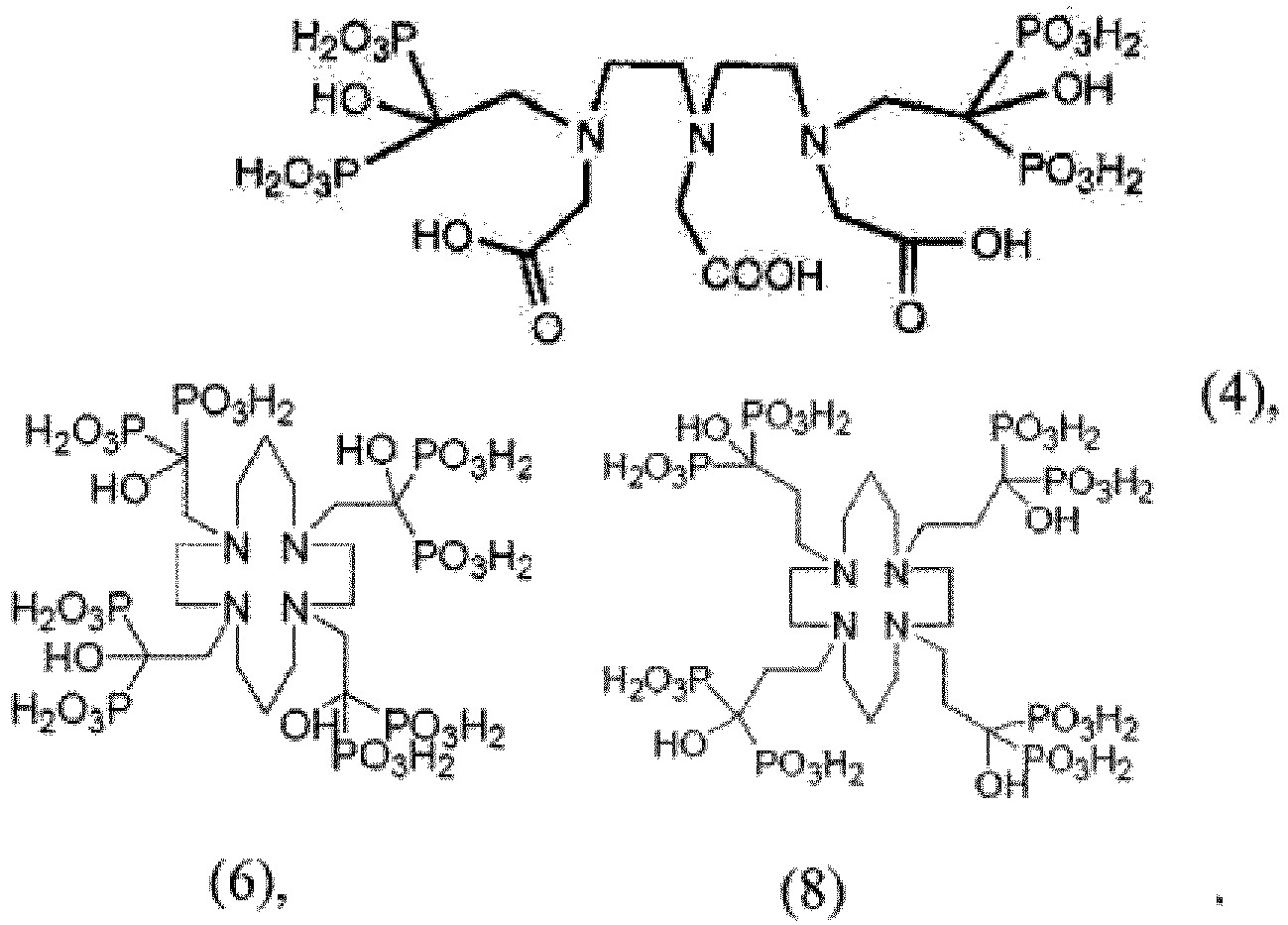
- said compound is one of the following formulas:
- the compound is chelated with a metal.
- the metal is Tc-99m, Ga-67, Ga-68, In-111, Cu (61, 62, 64), Gd, Fe or a combination thereof.
- the compound is used in imaging technology for bone metastasis and/or osteoporosis.
- the imaging technology is CT, MRI, PET or SPECT.
- the present disclosure provides a compound comprising a bisphosphonate functional group and a chelating agent.
- the bisphosphonate functional group moiety has high affinity for bone tissue
- the chelating agent moiety has high affinity for metal tracer such as radioisotope. That is, the present compound could be rapidly adsorbed to the bone tissue and could steadily emit ionising radiation (if chelating with tracer). Therefore, the present compound is suitable for bone scanning technology for purpose of finding abnormalities in bone.
- Step b Deprotection of dibenzyl group from tetraethyl(N,N-dibenzyl) aminomethyl-bisphosphonate [Compound 1] to form AMDP ester:
- Step a Conjugation- synthesis of N6-carboxymethyl-N3,N9-bis [[[4,4-bis(phosphonoethyl)methyl]carbamoyl]methyl]-3,6,9-triazaundecane dioic acid (DTPA-AMDP-ester) conjugate:
- AMDP ester 0.545 g (1.798mmol) was dissolved in 20 ml of anhydrous DMF.
- 20 ml suspension of diethylenetriaminepentaacetic dianhydride (DTPA) in DMF was added to the AMDP ester solution under nitrogen atmosphere, and the mixture was stirred at room temperature for 16 hours.
- 5 ml of water was added and the mixture was stirred for another 4.5 hour at room temperature.
- Solvent was evaporated under reduced pressure condition and the residue was purified by using gel filtration Sephadex G15 as medium to obtain 480 mg DTPA-AMDP ester product.
- the structure of DTPA-AMDP ester was confirmed by proton NMR ( Fig.
- Step b De-esterification of DTPA-AMDP-ester conjugate:
- MAMA-DS-AMDP was synthesized in 2 steps as shown in Scheme 5.
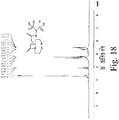
- Fig. 18 ( ⁇ 4.0, triplet; ⁇ 3.2, quintet; ⁇ 2.6, doublet; ⁇ 2.5, quartet) and Fig. 19 ( ⁇ 13) showed the 1 H and 31 P NMR spectra of MAMA-DS-AMDP.
- OB-142 was synthesized in a 3-step manner. The synthesis is shown in Scheme 6.
- Step b Synthesis of 1,4,8,11-Tetraazacyclotetradecane-1,4,8,11-tetrapropanoic acid
- Step a Synthesis of 1,4,7,10-Tetraazacyclododecane-1,4,7,10-tetrapropanoic acid ethyl ester
- Step b Synthesis of 1,4,7,10-Tetraazacyclododecane-1,4,7,10 -tetrapropanoic acid
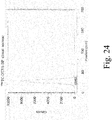
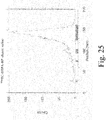
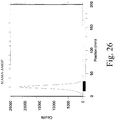
- Fig. 24 , 25 , 26 shows the radiochemistry purity of these peak.
- the radiochemistry purity would not be affected by the polarity of the dispersion phase, as shown in Fig.24 and Fig. 25 .
- the dispersion phase was changed from acetone to saline, the peak position changed, but the radiochemistry purity was not.
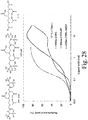
- Fig. 28 shows the effect of physical amount on the labeling 68 Ga efficiency of DTPA-AMDP, DTPA-BP and DTPA.
- the radiochemical purity increases while the amount of DTPA-AMDP, DTPA-BP or DTPA increases.
- concentration of the three compounds are same, the radiochemical purity is the highest when using DTPA-BP, which means DTPA- BP has better labeling efficiency than DTPA.
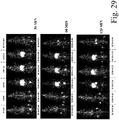
- Fig. 29 compares the planar images of 30, 60, and 120 min of normal rats which were taken 99m Tc-PAM, 99m Tc-MDP, 99m Tc-OMS, 99m Tc-OB141, 99m Tc-OB 121 and 99m Tc-DTPA-BP respectively.
- Fig. 30 compares the planar images of 20, 60, and 150 min of normal rats which were taken 99m Tc-MDP, 99m Tc-DTPA-AMDP, and 99m Tc-MAMA-AMDP respectively. Higher joint-to-muscle (J/M) or bone-to-muscle (B/M) ratios and the better quality of bone images were achieved.
- J/M joint-to-muscle
- B/M bone-to-muscle
- All compounds of present invention were more stable and had higher and more rapid uptake in the skeleton with pronounced lesion-to-normal bone activity ratios than PAM, MDP or OMS and DTPA-chelator so that showed better labeling yield and images quality in normal healthy F-344 rats.
- tetraazacyclic groups are very lipophilic so that they may have potential applications in the treatment of osteoporosis. Thus, tetraazacyclic groups were labeled with In-111 for longer observation.
- Fig. 31 shows planar images of normal rats after 111 In-OMS or 111 In-OB121 had been administrated 1, 24, and 48 hours. The images showed that OB-121 is a better compound for getting high quality images.
- all of the compounds of the present invention can be used for providing good bone scanning images, and the best candidate of 68 Ga-bisphosphonate determined from our animal studies was 68 Ga-DTPA-BP because of its imaging quality. These compounds may have potential application in therapy.
- the physical amount used for imaging was 0.1 mg. It may be enough to produce the quality of images.
Landscapes
- Health & Medical Sciences (AREA)
- Chemical & Material Sciences (AREA)
- Life Sciences & Earth Sciences (AREA)
- General Health & Medical Sciences (AREA)
- Organic Chemistry (AREA)
- Molecular Biology (AREA)
- Biochemistry (AREA)
- Veterinary Medicine (AREA)
- Public Health (AREA)
- Animal Behavior & Ethology (AREA)
- Engineering & Computer Science (AREA)
- Nuclear Medicine, Radiotherapy & Molecular Imaging (AREA)
- Physics & Mathematics (AREA)
- Medical Informatics (AREA)
- Biophysics (AREA)
- Medicinal Chemistry (AREA)
- Optics & Photonics (AREA)
- Pharmacology & Pharmacy (AREA)
- Radiology & Medical Imaging (AREA)
- Epidemiology (AREA)
- Physical Education & Sports Medicine (AREA)
- Pathology (AREA)
- Surgery (AREA)
- Heart & Thoracic Surgery (AREA)
- Biomedical Technology (AREA)
- High Energy & Nuclear Physics (AREA)
- Orthopedic Medicine & Surgery (AREA)
- Proteomics, Peptides & Aminoacids (AREA)
- Rheumatology (AREA)
- General Chemical & Material Sciences (AREA)
- Chemical Kinetics & Catalysis (AREA)
- Bioinformatics & Cheminformatics (AREA)
- Dentistry (AREA)
- Oral & Maxillofacial Surgery (AREA)
- Pulmonology (AREA)
- Theoretical Computer Science (AREA)
- Oncology (AREA)
- Crystallography & Structural Chemistry (AREA)
- Medicines Containing Antibodies Or Antigens For Use As Internal Diagnostic Agents (AREA)
- Organic Low-Molecular-Weight Compounds And Preparation Thereof (AREA)
Description
- The disclosure is related to compounds having good bone imaging properties; more particularly to compounds with a bisphosphonate group and chelating agent.
- A bone scan or bone scintigraphy is a scanning technology to find certain abnormalities in bone. It is primarily used to help diagnose a number of conditions relating to bones, including: in situ or metastatic carcinoma in bone, locating some sources of bone inflammation (e.g. bone pain such as lower back pain due to a fracture), the diagnosis of fractures that may not be visible in traditional X-ray images, and the detection of bone damage due to certain infections and other problems. Bone seeking agents or bone seekers such as radiolabeled bisphosphonates have been used as radiopharmaceuticals for bone scanning. Bisphosphonates are taken up by the skeleton and suppress osteoclast-mediated bone resorption, and a radioactive substance called tracer undergoes radioactive decay, resulting in the emission of gamma ray(s) and/or subatomic particles such as alpha or beta particles. Then a special camera takes pictures of the tracer in the bones.
- However, bisphosphonates have fairly weak bonding with tracer. Therefore, they tend to degrade with time and release tracer as an impurity. Moreover, the uptake of traditional radiolabeled bisphosphonates in bone takes 2 to 4 h after injection. This necessary delay could be a disadvantage for clinical use, especially for children.
- KAZUMA OGAWA et al. "Advances in Drug Design of Radiometal-Based Imaging Agents for Bone Disorders", INTERNATIONAL JOURNAL OF MOLECULAR IMAGING, vol. 17, no. 8, 1 January 2011 (2011-01-01), pages 2381-7, relates to radiometal-based imaging agents for bone disorders such as bone metastases. The paper discloses compounds with a bisphosphonate and a chelating group. The compounds are chelated with the metals 99mTc, 68Ga and Gd. Said compounds are used as bone imaging agents for PET
-
EP 2 468 760 A1 - NIDHI CHADHA et al. "Synthesis, Biological Evaluation and Molecular Docking Studies of High-Affinity Bone Targeting N,N'-Bis(alendronate) Diethylenetriamene-N,N'-Triacetic Acid: A Bifunctional Bone Scintigraphy Agent", CHEMICAL BIOLOGY & DRUG DESIGN., vol. 82, no. 4, 26 August 2013 (2013-08-26), pages 468-476, relates to bone imaging agents and discloses the compound DTPA-bis(bisalendronate). Bone imaging using the respective 99mTc labeled compound is disclosed.
- The disclosure provides a compound having good bone imaging properties.
- According to one embodiment, said compound is one of the following formulas:
- Preferably, the compound is chelated with a metal.
- Preferably, the metal is Tc-99m, Ga-67, Ga-68, In-111, Cu (61, 62, 64), Gd, Fe or a combination thereof.
- Preferably, the compound is used in imaging technology for bone metastasis and/or osteoporosis.
- Preferably, the imaging technology is CT, MRI, PET or SPECT.
- To sum up, the present disclosure provides a compound comprising a bisphosphonate functional group and a chelating agent. The bisphosphonate functional group moiety has high affinity for bone tissue, and the chelating agent moiety has high affinity for metal tracer such as radioisotope. That is, the present compound could be rapidly adsorbed to the bone tissue and could steadily emit ionising radiation (if chelating with tracer). Therefore, the present compound is suitable for bone scanning technology for purpose of finding abnormalities in bone.
-
-
Fig. 1 shows 1H-NMR-spectra of AMDP-ester. -
Fig. 2 shows 1H-spectra of bromoacetyl-AMDP-ester. -
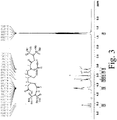
Fig. 3 shows 1H NMR-spectra of DTPA-AMDP (ester). -
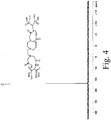
Fig. 4 shows 31P NMR-spectra of DTPA-AMDP (ester). -
Fig. 5 shows Mass spectra of DTPA-AMDP (ester). -
Fig. 6 shows 1H NMR-spectra of DTPA-AMDP. -
Fig. 7 shows 31P NMR-spectra of DTPA-AMDP. -
Fig. 8 shows Mass spectra of DTPA-AMDP. -
Fig. 9 shows 1H NMR-spectra of DTPA-BP. -
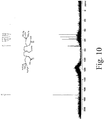
Fig. 10 shows 13C NMR-spectra of DTPA-BP. -
Fig. 11 shows 31P NMR-spectra of DTPA-BP. -
Fig. 12 shows Mass spectra of DTPA-BP. -
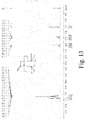
Fig. 13 shows 1H NMR-spectra of MAMA-DS (Tr). -
Fig. 14 shows 1H NMR-spectra of MAMA-DS (Tr)-AMDP ester. -
Fig. 15 shows 31P NMR-spectra of MAMA-DS (Tr)-AMDP ester. -
Fig. 16 shows Mass spectra of MAMA-DS (Tr)-AMDP ester. -
Fig. 17 shows Mass spectra of MAMA-DS (Tr)-AMDP. -
Fig. 18 shows 1H NMR-spectra of MAMA-DS-AMDP. -
Fig. 19 shows 31P NMR-spectra of MAMA-DS-AMDP. -
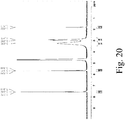
Fig. 20 shows 1H-NMR of OB-121. -
Fig. 21 shows 31P-NMR of OB-121. -
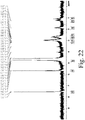
Fig. 22 shows 1H-NMR of OB-141. -
Fig. 23 shows 31P-NMR of OB-141. -
Figs. 24-25 show Radio-TLC Analysis of 99mTc-DTPA-BP -
Figs. 26-27 show Radio-TLC Analysis of 68Ga-MAMA-AMDP. -
Fig. 28 show physical amount on the labeling efficiency. -
Fig. 29 is a planar scintigraphy of 99mTc-Compounds (300mCi /rat, iv, at 30-120 min acquired 500,000, count) in normal rats. The numbers are Bone/Muscle count density ratios (counts/pixel). -
Fig. 30 is a planar scintigraphy of 99mTc-Compounds (300mCi /rat, iv, at 30-150 min acquired 500,000, count) in normal rats. The numbers are Joint/Muscle and vertebral bone/Muscle count density ratios (counts/pixel). -
Fig. 31 is planar scintigraphy of 111In-Compounds (450mCi /rat, iv, at 1-48 hours acquired 500,000, count) in normal rats. The numbers are Bone/Muscle count density ratios (counts/pixel) to demonstrate superior bone uptake in In-OMS and In-OB121 compounds. -
Fig. 32 shows X-rays image of legs of the tested mice after injecting tumor cells for 3 weeks (Osteolytic model). -
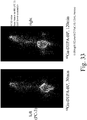
Fig. 33 is MicroPET Images of 68Ga-DTPA-BP. -
Fig. 34 is MicroPET Images of 68GA-DTPA. - In the following detailed description, for purposes of explanation, numerous specific details are described in order to provide a thorough understanding of the disclosed embodiments. It will be apparent, however, that one or more embodiments may be practiced without these specific details. In other instances, well-known structures and process are schematically shown in order to simplify the drawing.
- The following description will show the syntheses and uses of compounds according to the embodiments of present disclosure.
- The three-step synthesis method of AMDP ester and bromoacetyl-AMDP-ester is shown in
Scheme 1.
- 7.95 g (53.6 mmol) of triethylorthoformate, 19.19 g (138.9 mmol) of diethylphosphite and 8.84 g (44.8 mmol) of dibenzylamine were mixed together, and the resulting solution was refluxed for 5 hours under nitrogen atmosphere. The reaction mixture was then purged with nitrogen and heated at 150 °C for 20 hours. The reaction mixture was cooled and was added in 100 ml methylene chloride. The organic layer was washed with brine followed by 25% NaOH (25 ml, three times), and then dried over magnesium sulfate. After solvent evaporation, the residue was purified by silica gel column chromatography (ethyl acetate: hexane: methanol 14:5:1) to obtain 7.8 g of
compound 1. - 2.54 g (5.25 mmol) of
Compound 1 was dissolved in 75 ml of anhydrous ethanol, then 1.0 g of palladium in charcoal was added. The solution was purged with hydrogen and then refluxed for 22 hours under hydrogen atmosphere. The reaction mixture was filtered through celite and the solvent was evaporated to obtain 1.54 g of product (AMDP-ester).Fig. 1 showed the correct proton NMR spectra of AMDP-ester (δ 7.2, singlet; δ 4.1-4.3, nonet; δ 3.3-3.5, triplet; δ 1.7, singlet; δ 1.3-1.4, octet). - 4.1 g (38.6 mmol) of sodium carbonate was added in a solution of AMDP ester (2 g, 6.6 mmol) in acetonitrile, and the mixture was cooled at -40°C. 4.26 g (21.1 mmol) of Bromoacetyl bromidewas added dropwise to this cooled solution. Then the mixture was heated to room temperature and stirred for overnight (15 hours). Next, the solid part and the solvent part were separated, and the solvent part was then evaporated under reduced pressure condition to give a crude product. The crude product was underwent repeated evaporation with toluene. The product was 2.65 g Bromoacetyl-AMDP-ester.
Fig. 2 showed proton NMR spectrum of bromoacetyl-AMDP-ester (δ 7.2, singlet; δ 4.9, doublet; δ 4.1-4.3, broad multiplet; δ 3.9, singlet; δ 1.6, singlet; δ 1.2-1.4, quartet). - The two-step synthesis of DTPA-AMDP is shown in
Scheme 2.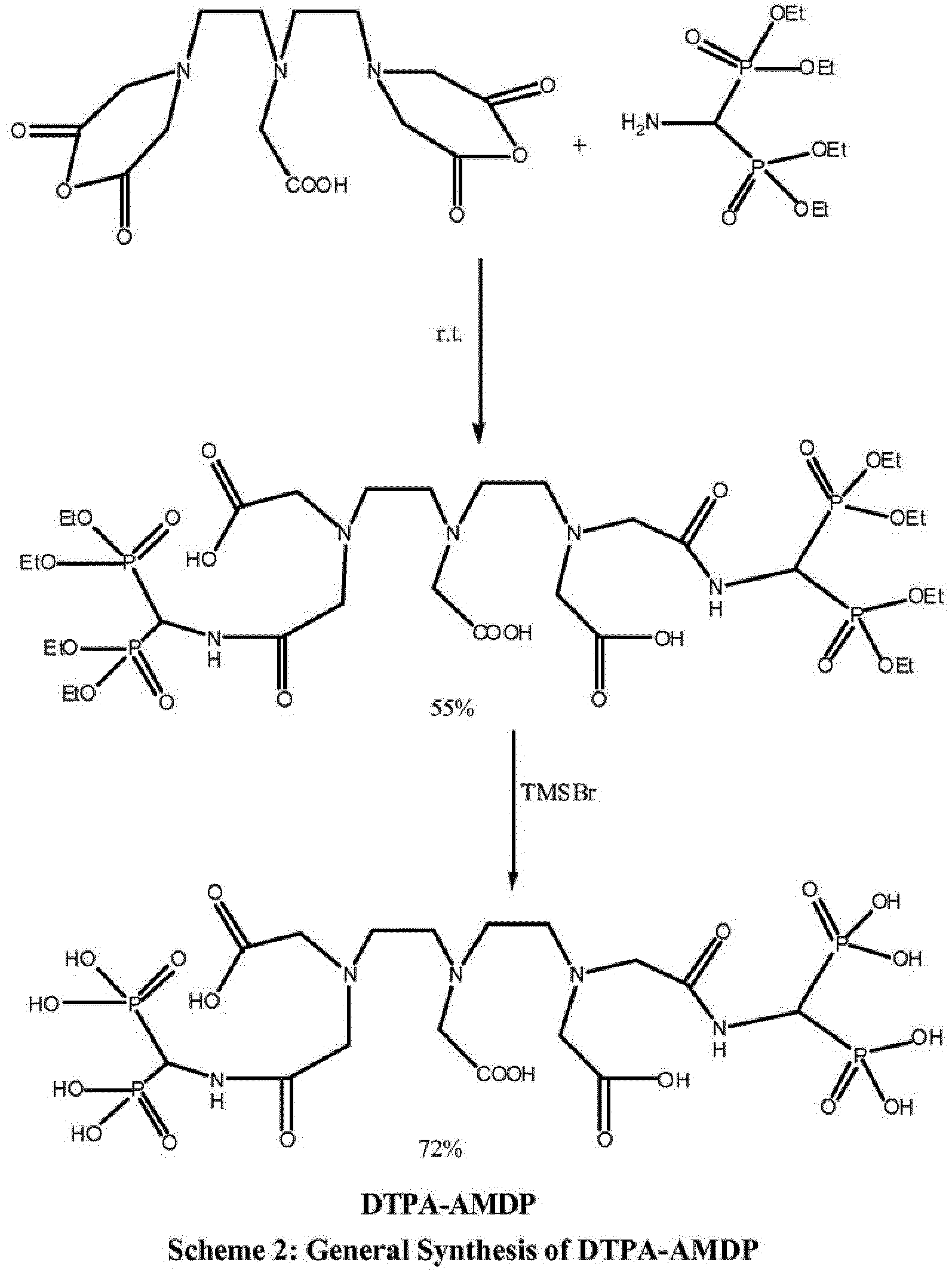
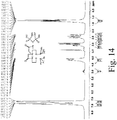
- AMDP ester 0.545 g (1.798mmol) was dissolved in 20 ml of anhydrous DMF. 20 ml suspension of diethylenetriaminepentaacetic dianhydride (DTPA) in DMF was added to the AMDP ester solution under nitrogen atmosphere, and the mixture was stirred at room temperature for 16 hours. 5 ml of water was added and the mixture was stirred for another 4.5 hour at room temperature. Solvent was evaporated under reduced pressure condition and the residue was purified by using gel filtration Sephadex G15 as medium to obtain 480 mg DTPA-AMDP ester product. The structure of DTPA-AMDP ester was confirmed by proton NMR (
Fig. 3 , δ 5-5.2, triplet; δ 4.1-4.5 broad multiplet; δ 3.73, singlet; δ 3.70, singlet; δ 3.5, singlet; δ 3.2-3.6, broad triplet; δ 3.1-3.5, broad triplet), 31P NMR (Fig. 4 , δ 16.8) and mass spectrometry (Fig. 5 ). - A solution of 0.26 g (0.2697 mmol) DTPA-AMDP ester was cooled in methylene chloride at 0°C, and was slowly added 1.14 ml (8.63mmol) bromotrimethyl silane under nitrogen atmosphere. The mixture was stirred at room temperature for 29 hours. Volatiles were evaporated under reduced pressure condition. The residue was cooled, hydrolyzed with 6 ml of water, and stirred for 15 min. The resulting solution was lyophilized and purified by sephadex, then obtained the final product 140mg DTPA-AMDP. The structure of the final product was confirmed by proton NMR (
Fig. 6 ), 31P NMR (Fig. 7 , δ 12.8), and Mass spectrometry (Fig. 8 ) - The synthesis of DTPA-BP is shown in
Scheme 3.
- In this reaction, 0.48 g (1.34mmol) of DTPA in 1 ml of THF was added to 1.8 ml (5.38mmol) of tris(trimethylsilyl) phosphite under N2 atmosphere, and the mixture was stirred for 14 hours at room temperature. Volatiles were evaporated under reduced pressure condition. The thick residue was cooled, hydrolyzed with 10 ml of methanol, and stirred at room temperature for 1 hour. The mixture was filtered to separate the solid part and the solvent part. Then the white solid part was washed by methanol and ether and purified by sephadex to obtain 83 mg product DTPA-BP. The structure of the product was confirmed by proton NMR (
Fig. 9 , δ 3.9, singlet; δ 3.5, triplet; δ 3.4, broad triplet; δ 3.2, singlet; δ 3.0, doublet), 13C NMR (Fig. 10 , δ 171; δ 72; δ 58; δ 53; δ 42), 31P NMR (Fig. 11 , δ 14.5) and mass spectrometry (Fig. 12 ). - The synthesis of MAMA-DS(Tr) is shown in
Scheme 4.
- In this reaction, 4.44 g of aminoethanethiol hydrochloride 4.44 g (39mmol) was dissolved in 60ml of DMF. 10.92 g of trityl chloride was added into the solution, and the mixture was stirred at room temperature for 48 hours. The solvent was evaporated under reduced pressure condition, and the residue was washed by ethyl acetate. The resulting solution was filtered to separate the solid part and the solvent part. Then the solid part was suspended in water and pH was adjusted to 8. Finally, drying the solid to obtain the crude product 13.5 g. Crude product 6 g (16.90 mmol) was then dissolved in chloroform and added to 8.23 ml of triethyl amine. This solution was added dropwise to the bromoacetyl bromide 0.632 g (3.13 mmol) solution in chloroform at -78°C, and the mixture was stirred at the same temperature for 30 minutes. Next, the mixture was heated to room temperature and stirred overnight. The resulting solution was washed with water. Once the water layer and organic layer were separated, the organic layer was isolated, dried and solvent was removed to get the crude. Then the crude was purified by silica gel column chromatography. The product was 3.2 g MAMA-DS (Tr).
Fig. 13 showed the proton NMR spectra of MAMA-DS (Tr) (δ 7.3, broad quartet; δ 7.2, broad multiplet, δ 3.06, quartet; δ 3.01, singlet; δ 2.4, triplet; δ 2.3, quintet; δ 1.5, singlet). - MAMA-DS-AMDP was synthesized in 2 steps as shown in
Scheme 5.
- 0.6g (0.88 mmol) of MAMA-DS (Tr) (product of Example 4) was dissolved in DMF. 0.45 g (1.05 mmol) of bromoacetyl-AMDP-ester obtained in Example 1 followed by 0.184 ml of Diisopropylethylamine was added. The resulting mixture was heated at 95°C for 15 hours. Then the solvent was evaporated under reduced pressure condition, and the residue was purified by silica gel column. The product is 267 mg MAMA-DS (Tr)-AMDP ester. The structure was confirmed by proton NMR (
Fig. 14 , δ 7.3, triplet; δ 7.1, quartet;δ 5; δ 4.1; broad multiplet), 31P NMR (Fig. 15 ) and mass spectrometry (Fig. 16 ). - 150 mg (0.146 mmol) of MAMA-DS (Tr)-AMDP ester was dissolved in chloroform. 0.15 ml (1.16 mmol) of Trimethylsilyl bromide was added into the solution and the mixture was stirred at 45°C for 2.5 hours following by stirring at room temperature for 40 hours. Then solvent was evaporated and 2.5 ml of methanol was added to the crude. The resulted solution was then stirred for 2.5 hours. After that, methanol was removed, the precipitate was dried to obtain 90 mg (yield 67%) of MAMA-DS (Tr)-AMDP.
Fig. 17 shows the mass peaks of the deesterified product. Next, 10 mg (0.01mmol) of deesterified product was dissolved in 200µl of TFA and stirred for 5 minutes. Then, triethylsilane was added. After evaporating volatiles, the crude product could be used for radio labeling.Fig. 18 (δ 4.0, triplet; δ 3.2, quintet; δ 2.6, doublet; δ 2.5, quartet) andFig. 19 (δ 13) showed the 1H and 31P NMR spectra of MAMA-DS-AMDP. - OB-142 was synthesized in a 3-step manner. The synthesis is shown in
Scheme 6.
- Some exemplary structures of tetraazacyclic bisphosphonates are shown below:

- In this reaction, 2.003 mg (10 mmol) of 1,4,8,11-Tetraazacyclotetradecane, 324.4 mg of FeCl3 (2 mmol) in 50 mL of acetonitrile and 4348 µL of Ethyl acrylate (40 mmol) were mixed and stirred at room temperature for 48 hours. Then low boiling material was evaporated under reduced pressure condition. The residue was isolated by silica-gel column chromatography using gradient solvent system (chloroform : methanol = 100:1-10:5) to obtain 4.085 g of pale yellow 1,4,8,11-Tetraazacyclotetradecane-1,4,8,11-tetrapropanoic acid ethyl ester.
- The solution of 3.604 g of 1,4,8,11-Tetraazacyclotetradecane-1,4,8,11-tetrapropanoic acid ethyl ester (6 mmol) in 3 mL of ethyl alcohol was added to 20 mL of 4-N sodium hydroxide (80 mmol). The reaction mixture was heated at 60 °C for 1 hour and then low boiling material was evaporated. The residue was isolated with Sephadex-G75 to get 2.594 g of 1,4,8,11-Tetraazacyclotetradecane-1,4,8,11-tetrapropanoic acid tetra sodium salt.
- 2.306 g of 1,4,8,11-Tetraazacyclotetradecane-1,4,8,11-tetrapropanoic acid (4 mmol) was dissolved in the solution of 1368 µL of 85% phosphorous acid (24 mmol as a 85% phosphorous acid) and 6.7 mL of chlorobenzene in 20 mL 2-neck flask equipped with caustic gas scrubber, reflux condenser, and additional funnel. Then the mixture was pre-heated around 100-110°C. 1745 µL (20 mmol) of trichlorophosphine was added to the hot mixture drop by drop for 15 min to 1 hour.
- Then a thick precipitate was formed. After heating the mixture for overnight followed by cooling down it, the bulk of the chlorobenzene was decanted, and the remaining solvent was evaporated under reduced pressure condition. The white or yellow residue was taken up in 10 mL of water and heated to reflux for 1 hour.
- 1.3159 g of sodium hydroxide was added to the mixture at room temperature. The pH was adjusted around 5 and an orange turbid material was obtained. Then, further 1.6952 g of sodium hydroxide was added into the mixture. The orange turbid material turned to brown when pH became 10. The mixture was filtered with 0.45 µm nylon membrane, and then the filtrate was dialyzed with a membrane, wherein the molecular weight cut off (MWCO) of the membrane was less than 500 Daltons. The product was lyophilized and isolated with Sephadex G-75 to get 2.059 g of 1,4,8,11 -Tetraazacyclotetradecane-1,4,8,11-tetrakis(2-hydroxy-propylenebi sphosphonate).
- 510.7 mg (1.0 mmol) of DOTA (1,4,7,10-Tetraazacyclododecane-1,4,7,10-tetraacetic acid; MW 510.7, including 5.9 mol H2O) was dissolved in the solution of 1368 µL of 85% phosphorous acid (24 mmol as a 85% phosphorous acid) and 6.7 mL of chlorobenzene in 20 mL 2-neck flask equipped with caustic gas scrubber, reflux condenser, and additional funnel. Then the mixture was pre-heated around 100-110°C. 1745 µL (20 mmol) of trichlorophosphine was added dropwise to the hot mixture.
- Then a thick precipitate was formed. After heating the mixture overnight and then cooled down it, the bulk of the chlorobenzene was decanted, and the remaining solvent was evaporated under reduced pressure condition. The white or yellow residue was taken up in 10 mL of water and heated to reflux for 1 hour.
- 1.3159 g of sodium hydroxide was added to the mixture at room temperature. The pH was around 5 resulting in orange turbid material. Then added more 1.6952 g of sodium hydroxide into the mixture. The orange turbid material turned to brown when the pH reached around10. The mixture was filtered by 0.45 µM nylon membrane, then the filtrate was dialyzed with a dialysis membrane, wherein the molecular weight cut off (MWCO) of the membrane was less than 500 Daltons.. The product was lyophilized and isolated with Sephadex G-75. The structure was confirmed by proton NMR (
Fig. 20 , δ 7.5; δ 5.6; δ 3.2; δ 2.9; δ 1.8) and 31P NMR (Fig. 21 ). - 432.5 mg (1.0 mmol) of TETA (1,4,8,11-Tetraazacyclotetradecane-1,4,8,11-tetraacetic acid; MW 432.5) was dissolved in the solution of 1368 µL of 85% phosphorous acid (24 mmol as a 85% phosphorous acid) and 6.7 mL of chlorobenzene in 20 mL 2-neck flask equipped with caustic gas scrubber, reflux condenser, and additional funnel. Then the mixture was pre-heated around 100-110°C. 1745 µL(20 mmol) of trichlorophosphine was added to the hot mixture drop by drop for 15 min to 1 hour.
- Then a thick precipitate was formed. After heating the mixture for overnight followed by cooling down it, the bulk of the chlorobenzene was decanted, and the remaining solvent was evaporated under reduced pressure condition. The white or yellow residue was taken up in 10 mL of water and heated to reflux for 1 hour.
- 1.3159 g of sodium hydroxide was added to the mixture at room temperature. The pH was adjusted around 5 and an orange turbid material was obtained. Then, further 1.6952 g of sodium hydroxide into the mixture. The orange turbid material turned to brown when pH reached around 10. The mixture was filtered with 0.45 µM nylon membrane, then the filtrate was dialyzed with a dialysis membrane, wherein the molecular weight cut off (MWCO) of the membrane was less than 500 Daltons. The product was lyophilized and isolated with Sephadex G-75. The structure was confirmed by proton NMR (
Fig. 22 , δ 7.5, singlet; δ 5.6, triplet; δ 4.7, broad multiplet; δ 3.1; δ 1.8; δ 1.2) and 31P NMR (Fig. 23 , δ 2.7). - The solution of 1722.7 mg (10 mmol) of 1,4,7,10-Tetraazacyclododecane, 324.4 mg of FeCl3 (2 mmol) in 50 mL of acetonitrile and 4348 µL of ethyl acrylate (40 mmol) was mixed and stirred at room temperature . Then low boiling material was evaporated under reduced pressure condition. The residue was isolated by silica-gel column chromatography with gradient solvent system (chloroform : methanol = 100:1-10:5)to gain 3.5 g of pale yellow 1,4,7,10-Tetraazacyclododecane-1,4,7,10-tetrapropanoic acid ethyl ester.
- The solution of 2863.7 mg of 1,4,7,10-Tetraazacyclododecane-1,4,7,10-tetrapropanoic acid ethyl ester (5 mmol) in 3 mL of ethyl alcohol was added to 20 mL of 4N sodium hydroxide (80 mmol). The mixture was heated for 1 hour at 60 °C and then low boiling material was evaporated. The residue was isolated with Sephadex-G50 to get 2.250 g of 1,4,7,10-Tetraazacyclododecane-1,4,7,10-tetrapropanoic acid tetra sodium salt.
- 2.193 g of 1,4,7,10-Tetraazacyclododecane-1,4,7,10-tetrapropanoic acid (4 mmol) was dissolved in the solution of 1368 µL of 85% phosphorous acid (24 mmol as a 85% phosphorous acid) and 6.7 mL of chlorobenzene in 20 mL 2-neck flask equipped with caustic gas scrubber, reflux condenser, and additional funnel. Then the mixture was pre-heated around 100-110°C. 1745 µL (20 mmol) of trichlorophosphine was added to the hot mixture drop by drop for 15 min to 1 hour.
- Then a thick precipitate was formed. After heating the mixture for overnight followed by cooling down it, the bulk of the chlorobenzene was decanted, and the remaining solvent was evaporated under reduced pressure condition. The white or yellow residue was taken up in 10 mL of water and heated to reflux for 1 hour.
- 1.3159 g of sodium hydroxide was added to the mixture at room temperature. The pH was adjusted around 5 and an orange turbid material was obtained. Then, further 1.6952 g of sodium hydroxide into the mixture. The orange turbid material turned to brown when pH became 10. The mixture was filtered with 0.45 µM nylon membrane, and then the filtrate was dialyzed with a membrane, wherein the molecular weight cut off (MWCO) of the membrane was less than 500 Daltons. The product was lyophilized and isolated with Sephadex G-75 to get 1149 mg of 1,4,7,10-Tetraazacyclododecane-1,4,7,10-tetrakis(2-hydroxy-propylenebisp hosphonate).
- 5 mg of the compound of present disclosure (ex: OB-121) was dissolved in 0.2 ml of water, then added tin chloride (0.1 mg in 0.1 ml of water) in at room temperature. Afterward, sodium pertechnetate (5 mCi) was added into the aforesaid solution. The procedure of labeling 68Ga was similar to labeling 99mTc except tin chloride was not added. Then the radiochemical purity of the compound of present disclosure was determined by TLC (ITLC SG, Gelman Sciences, Ann Arbor, MI). The results of 99mTc-DTPA-BP and 68Ga-MAMA-AMDP under different conditions are shown in
Fig. 24-27 (the experimental conditions are described in the following tables 1-4). According to radio-TLC (Bioscan, Washington, DC) analysis, only one peak shows inFig. 24 ,25 ,26 and the radiochemistry purity of these peak was 100%, which means that 99mTc or 68Ga were stable conjugated with the compounds of present disclosure. Moreover, no matter using acetone or saline as the dispersion phase, the radiochemistry purity would not be affected by the polarity of the dispersion phase, as shown inFig.24 andFig. 25 . When the dispersion phase was changed from acetone to saline, the peak position changed, but the radiochemistry purity was not. Further,Fig. 28 shows the effect of physical amount on the labeling 68Ga efficiency of DTPA-AMDP, DTPA-BP and DTPA. As shown inFig, 28 , the radiochemical purity increases while the amount of DTPA-AMDP, DTPA-BP or DTPA increases. When the concentration of the three compounds are same, the radiochemical purity is the highest when using DTPA-BP, which means DTPA- BP has better labeling efficiency than DTPA.


- To demonstrate whether the compounds of present disclosure could image bones, groups of normal female Fischer 344 rats were administered with 300 µCi of 99mTc-PAM, 99mTc-MDP, 99mTc-OMS, 99mTc-OB141, 99mTc-OB121, 99mTc-DTPA-BP, 99mTc-DTPA-AMDP, and 99mTc-MAMA-AMDP. Pamidronate (PAM), Methyl diphosphonate (MDP) and OMS are bone-related agents and were used as control group in present invention. Scintigraphic images, captured by a gamma camera equipped with low-energy, parallel-hole collimator or micro-PET, were obtained in 0.5-2 hours. The selected images are shown in
Figs. 29 and30 , whereinFig. 29 compares the planar images of 30, 60, and 120 min of normal rats which were taken 99mTc-PAM, 99mTc-MDP, 99mTc-OMS, 99mTc-OB141, 99mTc-OB 121 and 99mTc-DTPA-BP respectively.Fig. 30 compares the planar images of 20, 60, and 150 min of normal rats which were taken 99mTc-MDP, 99mTc-DTPA-AMDP, and 99mTc-MAMA-AMDP respectively. Higher joint-to-muscle (J/M) or bone-to-muscle (B/M) ratios and the better quality of bone images were achieved. All compounds of present invention were more stable and had higher and more rapid uptake in the skeleton with pronounced lesion-to-normal bone activity ratios than PAM, MDP or OMS and DTPA-chelator so that showed better labeling yield and images quality in normal healthy F-344 rats. Besides, as tetraazacyclic groups are very lipophilic so that they may have potential applications in the treatment of osteoporosis. Thus, tetraazacyclic groups were labeled with In-111 for longer observation.Fig. 31 shows planar images of normal rats after 111In-OMS or 111In-OB121 had been administrated 1, 24, and 48 hours. The images showed that OB-121 is a better compound for getting high quality images. - The conventional procedure to create animal model with osteoporosis is to remove ovaries of the experimental animals. However, this model creates diffused osteoporosis. To ascertain whether DTPA-BP is a good candidate for imaging of bone osteolytic effects, prostate tumor cells (PC-3) were injected into left tibia bone of a SCID mouse and fetal bovine serum (FBS) was injected into right tibia bone of the same SCID mouse for comparison. After 3 weeks, the lesions could be assessed by x-ray as well as by PET 68Ga-DTPA-BP, but not 68Ga-DTPA, as shown in
Figs. 32-34 . - In summary, all of the compounds of the present invention can be used for providing good bone scanning images, and the best candidate of 68Ga-bisphosphonate determined from our animal studies was 68Ga-DTPA-BP because of its imaging quality. These compounds may have potential application in therapy. The physical amount used for imaging was 0.1 mg. It may be enough to produce the quality of images.
Claims (5)
- A compound of one of the following formulas:


- The compound of claim 1, wherein the compound is chelated with a metal.
- The compound of claim 2, wherein the metal is Tc-99m, Ga-67, Ga-68, In-111, Cu (61, 62, 64), Gd, Fe or a combination thereof.
- The compound of claim 1, characterized by the fact that it is used in imaging technology for bone metastasis and/or osteoporosis.
- The compound of claim 4, wherein the imaging technology is CT, MRI, PET or SPECT.
Applications Claiming Priority (1)
| Application Number | Priority Date | Filing Date | Title |
|---|---|---|---|
| US201562149783P | 2015-04-20 | 2015-04-20 |
Publications (2)
| Publication Number | Publication Date |
|---|---|
| EP3085390A1 EP3085390A1 (en) | 2016-10-26 |
| EP3085390B1 true EP3085390B1 (en) | 2020-02-26 |
Family
ID=55808400
Family Applications (1)
| Application Number | Title | Priority Date | Filing Date |
|---|---|---|---|
| EP16166010.5A Active EP3085390B1 (en) | 2015-04-20 | 2016-04-19 | Compound for bone scanning and use thereof |
Country Status (7)
| Country | Link |
|---|---|
| US (1) | US9828398B2 (en) |
| EP (1) | EP3085390B1 (en) |
| JP (1) | JP6209643B2 (en) |
| KR (1) | KR101784103B1 (en) |
| CN (1) | CN106065021B (en) |
| BR (1) | BR102016008896B1 (en) |
| TW (1) | TWI609875B (en) |
Family Cites Families (7)
| Publication number | Priority date | Publication date | Assignee | Title |
|---|---|---|---|---|
| US4830847A (en) * | 1985-06-28 | 1989-05-16 | The Procter & Gamble Company | Diphosphonate-derivatized macromolecules |
| JP2001114792A (en) * | 1999-10-12 | 2001-04-24 | Nihon Medi Physics Co Ltd | Bisphosphonic acid derivatives and their labeled radionuclides |
| AU2002249935A1 (en) * | 2001-01-08 | 2002-08-19 | Neorx Corporation | Radioactively labelled conjugates of phosphonates |
| JP2008266194A (en) * | 2007-04-19 | 2008-11-06 | Hiroshi Tanaka | New organic compounds useful as raw materials for molecular probes |
| GB0906068D0 (en) * | 2009-04-07 | 2009-05-20 | King S College London | Bisphosphonate Compounds for chelating radionuclides |
| EP2468760B1 (en) * | 2009-08-20 | 2014-10-01 | Fujifilm RI Pharma Co., Ltd. | Bisphosphonic acid derivative and compound thereof labeled with radioactive metal nuclide |
| FR2973378B1 (en) * | 2011-03-28 | 2013-10-04 | Atlanthera | BIFUNCTIONAL HYDROXYBISPHOSPHONIC ACID DERIVATIVES |
-
2016
- 2016-04-19 TW TW105112113A patent/TWI609875B/en active
- 2016-04-19 KR KR1020160047590A patent/KR101784103B1/en active Active
- 2016-04-19 JP JP2016083671A patent/JP6209643B2/en active Active
- 2016-04-19 EP EP16166010.5A patent/EP3085390B1/en active Active
- 2016-04-20 BR BR102016008896-8A patent/BR102016008896B1/en active IP Right Grant
- 2016-04-20 US US15/133,292 patent/US9828398B2/en active Active
- 2016-04-20 CN CN201610246627.4A patent/CN106065021B/en active Active
Non-Patent Citations (1)
| Title |
|---|
| None * |
Also Published As
| Publication number | Publication date |
|---|---|
| BR102016008896B1 (en) | 2021-03-02 |
| CN106065021A (en) | 2016-11-02 |
| KR20160124691A (en) | 2016-10-28 |
| US9828398B2 (en) | 2017-11-28 |
| JP2017039692A (en) | 2017-02-23 |
| EP3085390A1 (en) | 2016-10-26 |
| CN106065021B (en) | 2019-02-19 |
| KR101784103B1 (en) | 2017-10-11 |
| TW201638099A (en) | 2016-11-01 |
| BR102016008896A2 (en) | 2016-10-25 |
| JP6209643B2 (en) | 2017-10-04 |
| US20160304545A1 (en) | 2016-10-20 |
| TWI609875B (en) | 2018-01-01 |
Similar Documents
| Publication | Publication Date | Title |
|---|---|---|
| EP3206720B1 (en) | Conjugated bisphosphonates for the diagnosis and therapy of bone diseases | |
| EP3319643B1 (en) | Hbed-bisphosphonates and radiometal conjugates thereof, useful as theranostic agents | |
| AU2020262961A1 (en) | Prostate-specific membrane antigen (PSMA) inhibitors as diagnostic and radionuclide therapeutic agents | |
| JP5690733B2 (en) | Bisphosphonic acid derivatives and radionuclide labeled products thereof | |
| Srivastava et al. | Synthesis and biological evaluation of newly designed phosphonate based bone-seeking agent | |
| EP1092723A2 (en) | Bisphosphonic acid derivative and compound thereof labelled with radioactive nuclide | |
| KR101784103B1 (en) | Compound for bone scanning and use thereof | |
| Chauhan et al. | 68Ga-Labeled bismacrocyclic methylene phosphonate as potential bone seeking PET radiopharmaceutical | |
| CA2991498C (en) | Hbed-bisphosphonates, radiometal conjugates thereof and their use as theranostic agents | |
| HK1254864B (en) | Hbed-bisphosphonates and radiometal conjugates thereof, useful as theranostic agents | |
| EA046784B1 (en) | TOOLS FOR DIAGNOSTIC IMAGING OF CANCER | |
| HK1248585A1 (en) | Hbed-bisphosphonates, radiometal conjugates thereof and their use as theranostic agents | |
| HK1248585B (en) | Hbed-bisphosphonates, radiometal conjugates thereof and their use as theranostic agents | |
| HK1215249B (en) | Labeled inhibitors of prostate-specific membrane antigen (psma), biological evaluation, and use as imaging agents |
Legal Events
| Date | Code | Title | Description |
|---|---|---|---|
| PUAI | Public reference made under article 153(3) epc to a published international application that has entered the european phase |
Free format text: ORIGINAL CODE: 0009012 |
|
| AK | Designated contracting states |
Kind code of ref document: A1 Designated state(s): AL AT BE BG CH CY CZ DE DK EE ES FI FR GB GR HR HU IE IS IT LI LT LU LV MC MK MT NL NO PL PT RO RS SE SI SK SM TR |
|
| AX | Request for extension of the european patent |
Extension state: BA ME |
|
| 17P | Request for examination filed |
Effective date: 20170426 |
|
| RBV | Designated contracting states (corrected) |
Designated state(s): AL AT BE BG CH CY CZ DE DK EE ES FI FR GB GR HR HU IE IS IT LI LT LU LV MC MK MT NL NO PL PT RO RS SE SI SK SM TR |
|
| STAA | Information on the status of an ep patent application or granted ep patent |
Free format text: STATUS: REQUEST FOR EXAMINATION WAS MADE |
|
| STAA | Information on the status of an ep patent application or granted ep patent |
Free format text: STATUS: EXAMINATION IS IN PROGRESS |
|
| 17Q | First examination report despatched |
Effective date: 20190123 |
|
| GRAP | Despatch of communication of intention to grant a patent |
Free format text: ORIGINAL CODE: EPIDOSNIGR1 |
|
| STAA | Information on the status of an ep patent application or granted ep patent |
Free format text: STATUS: GRANT OF PATENT IS INTENDED |
|
| RIC1 | Information provided on ipc code assigned before grant |
Ipc: C07F 9/40 20060101ALI20191105BHEP Ipc: C07F 9/38 20060101ALI20191105BHEP Ipc: A61K 51/04 20060101AFI20191105BHEP Ipc: C07F 9/6524 20060101ALI20191105BHEP |
|
| RIC1 | Information provided on ipc code assigned before grant |
Ipc: A61K 51/04 20060101AFI20191111BHEP Ipc: C07F 9/40 20060101ALI20191111BHEP Ipc: A61K 103/10 20060101ALN20191111BHEP Ipc: C07F 9/38 20060101ALI20191111BHEP Ipc: C07F 9/6524 20060101ALI20191111BHEP |
|
| INTG | Intention to grant announced |
Effective date: 20191125 |
|
| GRAS | Grant fee paid |
Free format text: ORIGINAL CODE: EPIDOSNIGR3 |
|
| GRAA | (expected) grant |
Free format text: ORIGINAL CODE: 0009210 |
|
| STAA | Information on the status of an ep patent application or granted ep patent |
Free format text: STATUS: THE PATENT HAS BEEN GRANTED |
|
| AK | Designated contracting states |
Kind code of ref document: B1 Designated state(s): AL AT BE BG CH CY CZ DE DK EE ES FI FR GB GR HR HU IE IS IT LI LT LU LV MC MK MT NL NO PL PT RO RS SE SI SK SM TR |
|
| REG | Reference to a national code |
Ref country code: GB Ref legal event code: FG4D |
|
| REG | Reference to a national code |
Ref country code: CH Ref legal event code: EP |
|
| REG | Reference to a national code |
Ref country code: AT Ref legal event code: REF Ref document number: 1236845 Country of ref document: AT Kind code of ref document: T Effective date: 20200315 |
|
| REG | Reference to a national code |
Ref country code: IE Ref legal event code: FG4D |
|
| REG | Reference to a national code |
Ref country code: DE Ref legal event code: R096 Ref document number: 602016030405 Country of ref document: DE |
|
| PG25 | Lapsed in a contracting state [announced via postgrant information from national office to epo] |
Ref country code: FI Free format text: LAPSE BECAUSE OF FAILURE TO SUBMIT A TRANSLATION OF THE DESCRIPTION OR TO PAY THE FEE WITHIN THE PRESCRIBED TIME-LIMIT Effective date: 20200226 Ref country code: RS Free format text: LAPSE BECAUSE OF FAILURE TO SUBMIT A TRANSLATION OF THE DESCRIPTION OR TO PAY THE FEE WITHIN THE PRESCRIBED TIME-LIMIT Effective date: 20200226 Ref country code: NO Free format text: LAPSE BECAUSE OF FAILURE TO SUBMIT A TRANSLATION OF THE DESCRIPTION OR TO PAY THE FEE WITHIN THE PRESCRIBED TIME-LIMIT Effective date: 20200526 |
|
| REG | Reference to a national code |
Ref country code: NL Ref legal event code: MP Effective date: 20200226 |
|
| REG | Reference to a national code |
Ref country code: LT Ref legal event code: MG4D |
|
| PG25 | Lapsed in a contracting state [announced via postgrant information from national office to epo] |
Ref country code: GR Free format text: LAPSE BECAUSE OF FAILURE TO SUBMIT A TRANSLATION OF THE DESCRIPTION OR TO PAY THE FEE WITHIN THE PRESCRIBED TIME-LIMIT Effective date: 20200527 Ref country code: BG Free format text: LAPSE BECAUSE OF FAILURE TO SUBMIT A TRANSLATION OF THE DESCRIPTION OR TO PAY THE FEE WITHIN THE PRESCRIBED TIME-LIMIT Effective date: 20200526 Ref country code: HR Free format text: LAPSE BECAUSE OF FAILURE TO SUBMIT A TRANSLATION OF THE DESCRIPTION OR TO PAY THE FEE WITHIN THE PRESCRIBED TIME-LIMIT Effective date: 20200226 Ref country code: IS Free format text: LAPSE BECAUSE OF FAILURE TO SUBMIT A TRANSLATION OF THE DESCRIPTION OR TO PAY THE FEE WITHIN THE PRESCRIBED TIME-LIMIT Effective date: 20200626 Ref country code: SE Free format text: LAPSE BECAUSE OF FAILURE TO SUBMIT A TRANSLATION OF THE DESCRIPTION OR TO PAY THE FEE WITHIN THE PRESCRIBED TIME-LIMIT Effective date: 20200226 Ref country code: LV Free format text: LAPSE BECAUSE OF FAILURE TO SUBMIT A TRANSLATION OF THE DESCRIPTION OR TO PAY THE FEE WITHIN THE PRESCRIBED TIME-LIMIT Effective date: 20200226 |
|
| PG25 | Lapsed in a contracting state [announced via postgrant information from national office to epo] |
Ref country code: NL Free format text: LAPSE BECAUSE OF FAILURE TO SUBMIT A TRANSLATION OF THE DESCRIPTION OR TO PAY THE FEE WITHIN THE PRESCRIBED TIME-LIMIT Effective date: 20200226 |
|
| PG25 | Lapsed in a contracting state [announced via postgrant information from national office to epo] |
Ref country code: ES Free format text: LAPSE BECAUSE OF FAILURE TO SUBMIT A TRANSLATION OF THE DESCRIPTION OR TO PAY THE FEE WITHIN THE PRESCRIBED TIME-LIMIT Effective date: 20200226 Ref country code: DK Free format text: LAPSE BECAUSE OF FAILURE TO SUBMIT A TRANSLATION OF THE DESCRIPTION OR TO PAY THE FEE WITHIN THE PRESCRIBED TIME-LIMIT Effective date: 20200226 Ref country code: SM Free format text: LAPSE BECAUSE OF FAILURE TO SUBMIT A TRANSLATION OF THE DESCRIPTION OR TO PAY THE FEE WITHIN THE PRESCRIBED TIME-LIMIT Effective date: 20200226 Ref country code: EE Free format text: LAPSE BECAUSE OF FAILURE TO SUBMIT A TRANSLATION OF THE DESCRIPTION OR TO PAY THE FEE WITHIN THE PRESCRIBED TIME-LIMIT Effective date: 20200226 Ref country code: LT Free format text: LAPSE BECAUSE OF FAILURE TO SUBMIT A TRANSLATION OF THE DESCRIPTION OR TO PAY THE FEE WITHIN THE PRESCRIBED TIME-LIMIT Effective date: 20200226 Ref country code: SK Free format text: LAPSE BECAUSE OF FAILURE TO SUBMIT A TRANSLATION OF THE DESCRIPTION OR TO PAY THE FEE WITHIN THE PRESCRIBED TIME-LIMIT Effective date: 20200226 Ref country code: RO Free format text: LAPSE BECAUSE OF FAILURE TO SUBMIT A TRANSLATION OF THE DESCRIPTION OR TO PAY THE FEE WITHIN THE PRESCRIBED TIME-LIMIT Effective date: 20200226 Ref country code: PT Free format text: LAPSE BECAUSE OF FAILURE TO SUBMIT A TRANSLATION OF THE DESCRIPTION OR TO PAY THE FEE WITHIN THE PRESCRIBED TIME-LIMIT Effective date: 20200719 Ref country code: CZ Free format text: LAPSE BECAUSE OF FAILURE TO SUBMIT A TRANSLATION OF THE DESCRIPTION OR TO PAY THE FEE WITHIN THE PRESCRIBED TIME-LIMIT Effective date: 20200226 |
|
| REG | Reference to a national code |
Ref country code: AT Ref legal event code: MK05 Ref document number: 1236845 Country of ref document: AT Kind code of ref document: T Effective date: 20200226 |
|
| REG | Reference to a national code |
Ref country code: DE Ref legal event code: R097 Ref document number: 602016030405 Country of ref document: DE |
|
| PG25 | Lapsed in a contracting state [announced via postgrant information from national office to epo] |
Ref country code: MC Free format text: LAPSE BECAUSE OF FAILURE TO SUBMIT A TRANSLATION OF THE DESCRIPTION OR TO PAY THE FEE WITHIN THE PRESCRIBED TIME-LIMIT Effective date: 20200226 |
|
| REG | Reference to a national code |
Ref country code: CH Ref legal event code: PL |
|
| PLBE | No opposition filed within time limit |
Free format text: ORIGINAL CODE: 0009261 |
|
| STAA | Information on the status of an ep patent application or granted ep patent |
Free format text: STATUS: NO OPPOSITION FILED WITHIN TIME LIMIT |
|
| PG25 | Lapsed in a contracting state [announced via postgrant information from national office to epo] |
Ref country code: LU Free format text: LAPSE BECAUSE OF NON-PAYMENT OF DUE FEES Effective date: 20200419 Ref country code: AT Free format text: LAPSE BECAUSE OF FAILURE TO SUBMIT A TRANSLATION OF THE DESCRIPTION OR TO PAY THE FEE WITHIN THE PRESCRIBED TIME-LIMIT Effective date: 20200226 Ref country code: IT Free format text: LAPSE BECAUSE OF FAILURE TO SUBMIT A TRANSLATION OF THE DESCRIPTION OR TO PAY THE FEE WITHIN THE PRESCRIBED TIME-LIMIT Effective date: 20200226 Ref country code: CH Free format text: LAPSE BECAUSE OF NON-PAYMENT OF DUE FEES Effective date: 20200430 Ref country code: LI Free format text: LAPSE BECAUSE OF NON-PAYMENT OF DUE FEES Effective date: 20200430 |
|
| 26N | No opposition filed |
Effective date: 20201127 |
|
| REG | Reference to a national code |
Ref country code: BE Ref legal event code: MM Effective date: 20200430 |
|
| PG25 | Lapsed in a contracting state [announced via postgrant information from national office to epo] |
Ref country code: PL Free format text: LAPSE BECAUSE OF FAILURE TO SUBMIT A TRANSLATION OF THE DESCRIPTION OR TO PAY THE FEE WITHIN THE PRESCRIBED TIME-LIMIT Effective date: 20200226 Ref country code: BE Free format text: LAPSE BECAUSE OF NON-PAYMENT OF DUE FEES Effective date: 20200430 Ref country code: SI Free format text: LAPSE BECAUSE OF FAILURE TO SUBMIT A TRANSLATION OF THE DESCRIPTION OR TO PAY THE FEE WITHIN THE PRESCRIBED TIME-LIMIT Effective date: 20200226 |
|
| PG25 | Lapsed in a contracting state [announced via postgrant information from national office to epo] |
Ref country code: IE Free format text: LAPSE BECAUSE OF NON-PAYMENT OF DUE FEES Effective date: 20200419 |
|
| PG25 | Lapsed in a contracting state [announced via postgrant information from national office to epo] |
Ref country code: TR Free format text: LAPSE BECAUSE OF FAILURE TO SUBMIT A TRANSLATION OF THE DESCRIPTION OR TO PAY THE FEE WITHIN THE PRESCRIBED TIME-LIMIT Effective date: 20200226 Ref country code: MT Free format text: LAPSE BECAUSE OF FAILURE TO SUBMIT A TRANSLATION OF THE DESCRIPTION OR TO PAY THE FEE WITHIN THE PRESCRIBED TIME-LIMIT Effective date: 20200226 Ref country code: CY Free format text: LAPSE BECAUSE OF FAILURE TO SUBMIT A TRANSLATION OF THE DESCRIPTION OR TO PAY THE FEE WITHIN THE PRESCRIBED TIME-LIMIT Effective date: 20200226 |
|
| PG25 | Lapsed in a contracting state [announced via postgrant information from national office to epo] |
Ref country code: MK Free format text: LAPSE BECAUSE OF FAILURE TO SUBMIT A TRANSLATION OF THE DESCRIPTION OR TO PAY THE FEE WITHIN THE PRESCRIBED TIME-LIMIT Effective date: 20200226 Ref country code: AL Free format text: LAPSE BECAUSE OF FAILURE TO SUBMIT A TRANSLATION OF THE DESCRIPTION OR TO PAY THE FEE WITHIN THE PRESCRIBED TIME-LIMIT Effective date: 20200226 |
|
| PGFP | Annual fee paid to national office [announced via postgrant information from national office to epo] |
Ref country code: DE Payment date: 20250429 Year of fee payment: 10 |
|
| PGFP | Annual fee paid to national office [announced via postgrant information from national office to epo] |
Ref country code: FR Payment date: 20250425 Year of fee payment: 10 |
|
| PGFP | Annual fee paid to national office [announced via postgrant information from national office to epo] |
Ref country code: GB Payment date: 20260327 Year of fee payment: 11 |