EP3083630B1 - Process methods for phosphatidylinositol 3-kinase inhibitors - Google Patents
Process methods for phosphatidylinositol 3-kinase inhibitors Download PDFInfo
- Publication number
- EP3083630B1 EP3083630B1 EP14827950.8A EP14827950A EP3083630B1 EP 3083630 B1 EP3083630 B1 EP 3083630B1 EP 14827950 A EP14827950 A EP 14827950A EP 3083630 B1 EP3083630 B1 EP 3083630B1
- Authority
- EP
- European Patent Office
- Prior art keywords
- compound
- formula
- salt
- group
- combining
- Prior art date
- Legal status (The legal status is an assumption and is not a legal conclusion. Google has not performed a legal analysis and makes no representation as to the accuracy of the status listed.)
- Active
Links
- 0 CC[C@@](C(N1c2ccccc2)=Nc2cccc(F)c2C1=O)Nc1c2nc[n](*)c2ncn1 Chemical compound CC[C@@](C(N1c2ccccc2)=Nc2cccc(F)c2C1=O)Nc1c2nc[n](*)c2ncn1 0.000 description 14
- IFSDAJWBUCMOAH-HNNXBMFYSA-N CC[C@@H](C(N1c2ccccc2)=Nc2cccc(F)c2C1=O)Nc1c2nc[nH]c2ncn1 Chemical compound CC[C@@H](C(N1c2ccccc2)=Nc2cccc(F)c2C1=O)Nc1c2nc[nH]c2ncn1 IFSDAJWBUCMOAH-HNNXBMFYSA-N 0.000 description 3
- RWSFZKWMVWPDGZ-UHFFFAOYSA-N Nc1cccc(F)c1C(O)=O Chemical compound Nc1cccc(F)c1C(O)=O RWSFZKWMVWPDGZ-UHFFFAOYSA-N 0.000 description 3
- AGDBAJVZKIXDQS-JTQLQIEISA-N C[C@@H](C(N(c1ccccc1)C(c1c2)=O)=Nc1ccc2F)N Chemical compound C[C@@H](C(N(c1ccccc1)C(c1c2)=O)=Nc1ccc2F)N AGDBAJVZKIXDQS-JTQLQIEISA-N 0.000 description 2
- BNMGOWXQUZHWIO-ZDUSSCGKSA-N CC[C@@H](C(N1c2ccccc2)=Nc2cccc(F)c2C1=O)N Chemical compound CC[C@@H](C(N1c2ccccc2)=Nc2cccc(F)c2C1=O)N BNMGOWXQUZHWIO-ZDUSSCGKSA-N 0.000 description 1
- UBFXQSLVGPFVFF-INIZCTEOSA-N CC[C@@H](C(N1c2ccccc2)=Nc2cccc(F)c2C1=O)Nc1c2nc[nH]c2ccn1 Chemical compound CC[C@@H](C(N1c2ccccc2)=Nc2cccc(F)c2C1=O)Nc1c2nc[nH]c2ccn1 UBFXQSLVGPFVFF-INIZCTEOSA-N 0.000 description 1
- PNFVIPIQXAIUAY-LURJTMIESA-N CC[C@@H](C(O)=O)NC(OC(C)(C)C)=O Chemical compound CC[C@@H](C(O)=O)NC(OC(C)(C)C)=O PNFVIPIQXAIUAY-LURJTMIESA-N 0.000 description 1
- ZQASXIBJIYQISW-ZDUSSCGKSA-N C[C@@H](C(N(c1ccccc1)C(c1c2)=O)=Nc1ccc2F)NC(OC(C)(C)C)=O Chemical compound C[C@@H](C(N(c1ccccc1)C(c1c2)=O)=Nc1ccc2F)NC(OC(C)(C)C)=O ZQASXIBJIYQISW-ZDUSSCGKSA-N 0.000 description 1
- DOCINCLJNAXZQF-LBPRGKRZSA-N C[C@@H](C(N(c1ccccc1)C(c1c2)=O)=Nc1ccc2F)Nc1c2nc[nH]c2ncn1 Chemical compound C[C@@H](C(N(c1ccccc1)C(c1c2)=O)=Nc1ccc2F)Nc1c2nc[nH]c2ncn1 DOCINCLJNAXZQF-LBPRGKRZSA-N 0.000 description 1
- QVHJQCGUWFKTSE-YFKPBYRVSA-N C[C@@H](C(O)=O)NC(OC(C)(C)C)=O Chemical compound C[C@@H](C(O)=O)NC(OC(C)(C)C)=O QVHJQCGUWFKTSE-YFKPBYRVSA-N 0.000 description 1
- FPQMGQZTBWIHDN-UHFFFAOYSA-N Nc(ccc(F)c1)c1C(O)=O Chemical compound Nc(ccc(F)c1)c1C(O)=O FPQMGQZTBWIHDN-UHFFFAOYSA-N 0.000 description 1
- RWZYAGGXGHYGMB-UHFFFAOYSA-N Nc(cccc1)c1C(O)=O Chemical compound Nc(cccc1)c1C(O)=O RWZYAGGXGHYGMB-UHFFFAOYSA-N 0.000 description 1
Classifications
-
- C—CHEMISTRY; METALLURGY
- C07—ORGANIC CHEMISTRY
- C07D—HETEROCYCLIC COMPOUNDS
- C07D265/00—Heterocyclic compounds containing six-membered rings having one nitrogen atom and one oxygen atom as the only ring hetero atoms
- C07D265/04—1,3-Oxazines; Hydrogenated 1,3-oxazines
- C07D265/06—1,3-Oxazines; Hydrogenated 1,3-oxazines not condensed with other rings
- C07D265/08—1,3-Oxazines; Hydrogenated 1,3-oxazines not condensed with other rings having one double bond between ring members or between a ring member and a non-ring member
- C07D265/10—1,3-Oxazines; Hydrogenated 1,3-oxazines not condensed with other rings having one double bond between ring members or between a ring member and a non-ring member with oxygen atoms directly attached to ring carbon atoms
-
- C—CHEMISTRY; METALLURGY
- C07—ORGANIC CHEMISTRY
- C07D—HETEROCYCLIC COMPOUNDS
- C07D265/00—Heterocyclic compounds containing six-membered rings having one nitrogen atom and one oxygen atom as the only ring hetero atoms
- C07D265/04—1,3-Oxazines; Hydrogenated 1,3-oxazines
- C07D265/12—1,3-Oxazines; Hydrogenated 1,3-oxazines condensed with carbocyclic rings or ring systems
- C07D265/14—1,3-Oxazines; Hydrogenated 1,3-oxazines condensed with carbocyclic rings or ring systems condensed with one six-membered ring
- C07D265/20—1,3-Oxazines; Hydrogenated 1,3-oxazines condensed with carbocyclic rings or ring systems condensed with one six-membered ring with hetero atoms directly attached in position 4
- C07D265/22—Oxygen atoms
-
- A—HUMAN NECESSITIES
- A61—MEDICAL OR VETERINARY SCIENCE; HYGIENE
- A61K—PREPARATIONS FOR MEDICAL, DENTAL OR TOILETRY PURPOSES
- A61K31/00—Medicinal preparations containing organic active ingredients
- A61K31/33—Heterocyclic compounds
- A61K31/395—Heterocyclic compounds having nitrogen as a ring hetero atom, e.g. guanethidine or rifamycins
- A61K31/495—Heterocyclic compounds having nitrogen as a ring hetero atom, e.g. guanethidine or rifamycins having six-membered rings with two or more nitrogen atoms as the only ring heteroatoms, e.g. piperazine or tetrazines
- A61K31/505—Pyrimidines; Hydrogenated pyrimidines, e.g. trimethoprim
- A61K31/517—Pyrimidines; Hydrogenated pyrimidines, e.g. trimethoprim ortho- or peri-condensed with carbocyclic ring systems, e.g. quinazoline, perimidine
-
- A—HUMAN NECESSITIES
- A61—MEDICAL OR VETERINARY SCIENCE; HYGIENE
- A61K—PREPARATIONS FOR MEDICAL, DENTAL OR TOILETRY PURPOSES
- A61K31/00—Medicinal preparations containing organic active ingredients
- A61K31/33—Heterocyclic compounds
- A61K31/395—Heterocyclic compounds having nitrogen as a ring hetero atom, e.g. guanethidine or rifamycins
- A61K31/535—Heterocyclic compounds having nitrogen as a ring hetero atom, e.g. guanethidine or rifamycins having six-membered rings with at least one nitrogen and one oxygen as the ring hetero atoms, e.g. 1,2-oxazines
- A61K31/536—Heterocyclic compounds having nitrogen as a ring hetero atom, e.g. guanethidine or rifamycins having six-membered rings with at least one nitrogen and one oxygen as the ring hetero atoms, e.g. 1,2-oxazines ortho- or peri-condensed with carbocyclic ring systems
-
- A—HUMAN NECESSITIES
- A61—MEDICAL OR VETERINARY SCIENCE; HYGIENE
- A61P—SPECIFIC THERAPEUTIC ACTIVITY OF CHEMICAL COMPOUNDS OR MEDICINAL PREPARATIONS
- A61P11/00—Drugs for disorders of the respiratory system
- A61P11/06—Antiasthmatics
-
- A—HUMAN NECESSITIES
- A61—MEDICAL OR VETERINARY SCIENCE; HYGIENE
- A61P—SPECIFIC THERAPEUTIC ACTIVITY OF CHEMICAL COMPOUNDS OR MEDICINAL PREPARATIONS
- A61P19/00—Drugs for skeletal disorders
- A61P19/02—Drugs for skeletal disorders for joint disorders, e.g. arthritis, arthrosis
-
- A—HUMAN NECESSITIES
- A61—MEDICAL OR VETERINARY SCIENCE; HYGIENE
- A61P—SPECIFIC THERAPEUTIC ACTIVITY OF CHEMICAL COMPOUNDS OR MEDICINAL PREPARATIONS
- A61P35/00—Antineoplastic agents
-
- C—CHEMISTRY; METALLURGY
- C07—ORGANIC CHEMISTRY
- C07C—ACYCLIC OR CARBOCYCLIC COMPOUNDS
- C07C233/00—Carboxylic acid amides
- C07C233/90—Carboxylic acid amides having nitrogen atoms of carboxamide groups further acylated
-
- C—CHEMISTRY; METALLURGY
- C07—ORGANIC CHEMISTRY
- C07C—ACYCLIC OR CARBOCYCLIC COMPOUNDS
- C07C265/00—Derivatives of isocyanic acid
- C07C265/10—Derivatives of isocyanic acid having isocyanate groups bound to carbon atoms of rings other than six-membered aromatic rings
-
- C—CHEMISTRY; METALLURGY
- C07—ORGANIC CHEMISTRY
- C07D—HETEROCYCLIC COMPOUNDS
- C07D233/00—Heterocyclic compounds containing 1,3-diazole or hydrogenated 1,3-diazole rings, not condensed with other rings
- C07D233/54—Heterocyclic compounds containing 1,3-diazole or hydrogenated 1,3-diazole rings, not condensed with other rings having two double bonds between ring members or between ring members and non-ring members
- C07D233/66—Heterocyclic compounds containing 1,3-diazole or hydrogenated 1,3-diazole rings, not condensed with other rings having two double bonds between ring members or between ring members and non-ring members with hetero atoms or with carbon atoms having three bonds to hetero atoms with at the most one bond to halogen, e.g. ester or nitrile radicals, directly attached to ring carbon atoms
- C07D233/90—Carbon atoms having three bonds to hetero atoms with at the most one bond to halogen, e.g. ester or nitrile radicals
-
- C—CHEMISTRY; METALLURGY
- C07—ORGANIC CHEMISTRY
- C07D—HETEROCYCLIC COMPOUNDS
- C07D239/00—Heterocyclic compounds containing 1,3-diazine or hydrogenated 1,3-diazine rings
- C07D239/70—Heterocyclic compounds containing 1,3-diazine or hydrogenated 1,3-diazine rings condensed with carbocyclic rings or ring systems
- C07D239/72—Quinazolines; Hydrogenated quinazolines
- C07D239/86—Quinazolines; Hydrogenated quinazolines with hetero atoms directly attached in position 4
- C07D239/88—Oxygen atoms
- C07D239/91—Oxygen atoms with aryl or aralkyl radicals attached in position 2 or 3
-
- C—CHEMISTRY; METALLURGY
- C07—ORGANIC CHEMISTRY
- C07D—HETEROCYCLIC COMPOUNDS
- C07D263/00—Heterocyclic compounds containing 1,3-oxazole or hydrogenated 1,3-oxazole rings
- C07D263/52—Heterocyclic compounds containing 1,3-oxazole or hydrogenated 1,3-oxazole rings condensed with carbocyclic rings or ring systems
- C07D263/54—Benzoxazoles; Hydrogenated benzoxazoles
- C07D263/58—Benzoxazoles; Hydrogenated benzoxazoles with hetero atoms or with carbon atoms having three bonds to hetero atoms with at the most one bond to halogen, e.g. ester or nitrile radicals, directly attached in position 2
-
- C—CHEMISTRY; METALLURGY
- C07—ORGANIC CHEMISTRY
- C07D—HETEROCYCLIC COMPOUNDS
- C07D473/00—Heterocyclic compounds containing purine ring systems
- C07D473/26—Heterocyclic compounds containing purine ring systems with an oxygen, sulphur, or nitrogen atom directly attached in position 2 or 6, but not in both
- C07D473/32—Nitrogen atom
- C07D473/34—Nitrogen atom attached in position 6, e.g. adenine
-
- C—CHEMISTRY; METALLURGY
- C07—ORGANIC CHEMISTRY
- C07D—HETEROCYCLIC COMPOUNDS
- C07D487/00—Heterocyclic compounds containing nitrogen atoms as the only ring hetero atoms in the condensed system, not provided for by groups C07D451/00 - C07D477/00
- C07D487/02—Heterocyclic compounds containing nitrogen atoms as the only ring hetero atoms in the condensed system, not provided for by groups C07D451/00 - C07D477/00 in which the condensed system contains two hetero rings
- C07D487/04—Ortho-condensed systems
Definitions
- the present disclosure relates generally to the synthesis or preparation of certain phosphatidylinositol 3-kinase (PI3K) inhibitors and their synthetic intermediates.
- Inhibitors of PI3K such as quinazoline-purinyl containing compounds, may be useful in treating PI3K-mediated disorders such as cancer. There is a need to have alternative processes in making such PI3K inhibitors.
- the present disclosure provides a process of making certain PI3K inhibitors and compound intermediates thereof.
- the present invention provides a process for synthesizing a compound of formula I: or a salt thereof, comprising
- R 3 and R 4 are each independently selected from the group consisting of hydrogen, t -butyl carbamate, tetrahydropyranyl, alkylsilyl, benzyl, and alkoxymethyl; and/or
- step b) is performed at a temperature between 0 and 80°C.
- step c) further comprises a solvent selected from the group consisting of acetonitrile, methanol, ethanol, isopropanol, n-propanol, THF, water, and toluene; and/or the compound of formula 7 or a salt thereof is crystallized from one or more solvents selected from the group consisting of alcohol, water, and combinations thereof.
- the present invention further provides a process according to the first aspect for synthesizing a compound of formula II: or a salt thereof, comprising
- the present invention further provides a process according to the first aspect for synthesizing a compound of formula III: or a salt thereof, comprising
- step a) further comprises a step of combining a dehydrating agent, wherein the dehydrating agent is preferably selected from the group consisting of diphenylphosphite, triphenylphosphite, N,N'-dicyclohexylcarbodiimide, N-(3-dimethylaminopropyl)-N'-ethylcarbodiimide hydrochloride, and 1,1'-carbonyldiimidazole; and/or
- step c) is performed at a temperature between 0 and 70°C; and/or the compound of formula 5, 12 or 18 or a salt thereof is crystallized from one or more solvents selected from either (A) the group comprising water, methanol, ethanol, isopropanol, n-propanol, concentrated NH 4 OH, acetonitrile, MTBE, DCM, EtOAc, iPrOAc, toluene, 2-Me-THF, DIPE (diisopropylether), heptane and heptanes; or (B) water, concentrated NH 4 OH, and acetonitrile; or (C) isopropanol and toluene; and/or
- solvents selected from either (A) the group comprising water, methanol, ethanol, isopropanol, n-propanol, concentrated NH 4 OH, acetonitrile, MTBE, DCM, EtOAc, iP
- the compound of formula 14 or 19 or a salt thereof is crystallized from one or more solvents selected from the group consisting of isopropanol, n-propanol, ethanol, methanol, and water.
- the process is operated in a batch process.
- the application further discloses the intermediate compounds formed from the processes disclosed herein, in particular compounds 8, 15, 14, 19, 20 and 21, and pharmaceutically acceptable salts thereof.
- the present invention provides a compound selected from the group consisting of: or a salt thereof.
- the term “about” includes and describes the value or parameter per se.
- “about x” includes and describes "x" per se.
- the term “about” when used in association with a measurement, or used to modify a value, a unit, a constant, or a range of values refers to variations of +/- 1-10%.
- the term “about” when used in association with a measurement, or used to modify a value, a unit, a constant, or a range of values refers to variations of +/- 5%.
- the term “about” when used in association with a measurement, or used to modify a value, a unit, a constant, or a range of values refers to variations of +/- 10%.
- between includes and describes the value or parameter per se.
- between x and y includes and describes "x" and "y” per se.
- alkyl refers to a straight or branched chain, saturated hydrocarbon having the indicated number of carbon atoms.
- (C 1 -C 8 )alkyl is meant to include, but is not limited to methyl, ethyl, propyl, isopropyl, butyl, sec -butyl, tert- butyl, pentyl, isopentyl, neopentyl, hexyl, isohexyl, and neohexyl.
- An alkyl group can be unsubstituted or optionally substituted with one or more substituents as described herein throughout.
- substituted alkyl refers to:1) an alkyl group as defined above, having 1, 2, 3, 4 or 5 substituents, (in some embodiments, 1, 2 or 3 substituents) selected from the group consisting of alkenyl, alkynyl, carboxy, carboxyalkyl, aminocarbonyl, hydroxy, alkoxy, halogen, CF 3 , amino, substituted amino, nitro, thiol, cyano, cycloalkyl, heterocyclyl, aryl, and heteroaryl.
- alkylene refers to a diradical of a branched or unbranched saturated hydrocarbon chain, in some embodiments, having from 1 to 20 carbon atoms ( e.g. , 1-10 carbon atoms or 1, 2, 3, 4, 5 or 6 carbon atoms). This term is exemplified by groups such as methylene (-CH 2 -), ethylene (-CH 2 CH 2 -), the propylene isomers ( e.g ., -CH 2 CH 2 CH 2 - and -CH(CH 3 )CH 2 -), and the like.
- substituted alkylene refers to an alkylene group as defined above having 1 to 5 substituents (in some embodiments, 1, 2 or 3 substituents) as defined for substituted alkyl.
- aralkyl refers to an aryl group covalently linked to an alkylene group, where aryl and alkylene are defined herein.
- Optionally substituted aralkyl refers to an optionally substituted aryl group covalently linked to an optionally substituted alkylene group.
- Such aralkyl groups are exemplified by benzyl, phenylethyl, 3-(4-methoxyphenyl)propyl, and the like.
- aralkyloxy refers to the group -O-aralkyl.
- Optionally substituted aralkyloxy refers to an optionally substituted aralkyl group covalently linked to an optionally substituted alkylene group.
- Such aralkyl groups are exemplified by benzyloxy, phenylethyloxy, and the like.
- alkenyl refers to a monoradical of a branched or unbranched unsaturated hydrocarbon group having from 2 to 20 carbon atoms (in some embodiments, from 2 to 10 carbon atoms, e.g ., 2 to 6 carbon atoms) and having from 1 to 6 carbon-carbon double bonds, e.g., 1, 2 or 3 carbon-carbon double bonds.
- substituted alkenyl refers to an alkenyl group as defined above having 1 to 5 substituents (in some embodiments, 1, 2 or 3 substituents) as defined for substituted alkyl.
- alkynyl refers to a monoradical of an unsaturated hydrocarbon, in some embodiments, having from 2 to 20 carbon atoms (in some embodiments, from 2 to 10 carbon atoms, e.g., 2 to 6 carbon atoms) and having from 1 to 6 carbon-carbon triple bonds, e.g., 1, 2 or 3 carbon-carbon triple bonds.
- alkynyl groups include ethynyl (-C ⁇ CH), propargyl (or propynyl, i.e., -C ⁇ CCH 3 ), and the like.
- substituted alkynyl refers to an alkynyl group as defined above having 1 to 5 substituents (in some embodiments, 1, 2 or 3 substituents) as defined for substituted alkyl.
- hydroxy or "hydroxyl” refers to a group -OH.
- alkoxy refers to the group R-O-, where R is alkyl; and includes, by way of example, methoxy, ethoxy, n-propoxy, iso-propoxy, n-butoxy, tert -butoxy, sec -butoxy, n-pentoxy, n-hexyloxy, 1,2-dimethylbutoxy, and the like.
- substituted alkoxy refers to the group R-O-, where R is substituted alkyl, where substituted alkyl, substituted alkenyl and substituted alkynyl are as defined herein.
- cycloalkyl refers to cyclic alkyl groups of from 3 to 20 carbon atoms having a single cyclic ring or multiple condensed rings.
- Such cycloalkyl groups include, by way of example, single ring structures such as cyclopropyl, cyclobutyl, cyclopentyl, cyclooctyl and the like or multiple ring structures such as adamantanyl and bicyclo[2.2.1]heptanyl or cyclic alkyl groups to which is fused an aryl group, for example indanyl, and the like, provided that the point of attachment is through the cyclic alkyl group.
- cycloalkenyl refers to cyclic alkyl groups of from 3 to 20 carbon atoms having a single cyclic ring or multiple condensed rings and having at least one double bond and in some embodiments, from 1 to 2 double bonds.
- substituted cycloalkyl and “substituted cycloalkenyl” refer to cycloalkyl or cycloalkenyl groups having 1, 2, 3, 4 or 5 substituents (in some embodiments, 1, 2 or 3 substituents), selected from the group consisting of alkyl, alkenyl, alkynyl, carboxy, carboxyalkyl, aminocarbonyl, hydroxy, alkoxy, halogen, CF 3 , amino, substituted amino, nitro, thiol, cyano, cycloalkyl, heterocyclyl, aryl, and heteroaryl.
- substituents in some embodiments, 1, 2 or 3 substituents
- aryl refers to an aromatic carbocyclic group of 6 to 20 carbon atoms having a single ring ( e.g., phenyl) or multiple rings ( e.g., biphenyl) or multiple condensed (fused) rings ( e.g ., naphthyl, fluorenyl and anthryl).
- aryls include phenyl, fluorenyl, naphthyl, anthryl, and the like.
- such aryl groups can optionally be substituted with 1, 2, 3, 4 or 5 substituents (in some embodiments, 1, 2 or 3 substituents), selected from the group consisting of alkyl, alkenyl, alkynyl, carboxy, carboxyalkyl, aminocarbonyl, hydroxy, alkoxy, halogen, CF 3 , amino, substituted amino, nitro, thiol, cyano, cycloalkyl, heterocyclyl, aryl, and heteroaryl.
- substituents in some embodiments, 1, 2 or 3 substituents
- substituted purinyl refers to a purinyl having 1, 2, 3, 4, or 5 substituents (in some embodiments 1, 2, or 3 substituents), each independently selected from the group consisting of alkyl, alkenyl, alkynyl, carboxy, carboxyalkyl, aminocarbonyl, hydroxy, alkoxy, halogen, CF 3 , amino, substituted amino, nitro, thiol, cyano, cycloalkyl, heterocyclyl, aryl, and heteroaryl.
- purinyl is substituted with 1, 2, or 3 substituents selected from the group consisting of methyl, ethyl, propyl, NH 2 , and N(CH 3 ) 2 .
- heterocyclyl refers to a monoradical saturated group having a single ring or multiple condensed rings, having from 1 to 40 carbon atoms, and from 1 to 10 heteroatoms or 1 to 4 heteroatoms within the ring, each heteroatom independently selected from the group consisting of nitrogen, sulfur, phosphorus, and oxygen.
- heterocyclic groups can be optionally substituted with 1 to 5 substituents (in some embodiments, 1, 2 or 3 substituents), selected from the group consisting of alkyl, alkenyl, alkynyl, carboxy, carboxyalkyl, aminocarbonyl, hydroxy, alkoxy, halogen, CF 3 , amino, substituted amino, nitro, thiol, cyano, cycloalkyl, heterocyclyl, aryl, and heteroaryl.
- substituents in some embodiments, 1, 2 or 3 substituents
- substituents selected from the group consisting of alkyl, alkenyl, alkynyl, carboxy, carboxyalkyl, aminocarbonyl, hydroxy, alkoxy, halogen, CF 3 , amino, substituted amino, nitro, thiol, cyano, cycloalkyl, heterocyclyl, aryl, and heteroaryl.
- Examples of heterocyclic groups include tetrahydrofuranyl,
- heteroaryl refers to a group comprising single or multiple rings comprising 1 to 15 carbon atoms and 1 to 4 heteroatoms selected from oxygen, nitrogen and sulfur within at least one ring.
- heteroaryl is generic to the terms “aromatic heteroaryl” and “partially saturated heteroaryl”.
- aromatic heteroaryl refers to a heteroaryl in which at least one ring is aromatic, regardless of the point of attachment. Examples of aromatic heteroaryls include pyrrole, thiophene, pyridine, quinoline, pteridine.
- partially saturated heteroaryl refers to a heteroaryl having a structure equivalent to an underlying aromatic heteroaryl which has had one or more double bonds in an aromatic ring of the underlying aromatic heteroaryl saturated.
- partially saturated heteroaryls include dihydropyrrole, dihydropyridine, 2-oxo-1,2-dihydropyridin-4-yl, and the like.
- heteroaryl groups can be optionally substituted with 1 to 5 substituents (in some embodiments, 1, 2 or 3 substituents) selected from the group consisting alkyl, alkenyl, alkynyl, carboxy, carboxyalkyl, aminocarbonyl, hydroxy, alkoxy, halogen, CF 3 , amino, substituted amino, nitro, thiol, cyano, cycloalkyl, heterocyclyl, aryl, and heteroaryl.
- substituents in some embodiments, 1, 2 or 3 substituents
- heteroaryl groups can have a single ring (e.g., pyridyl or furyl) or multiple condensed rings (e.g., indolizinyl, benzothiazole or benzothienyl).
- nitrogen heterocyclyls and heteroaryls include, but are not limited to pyrrole, imidazole, pyrazole, pyridine, pyrazine, pyrimidine, pyridazine, indolizine, isoindole, indole, indazole, purine, quinolizine, isoquinoline, quinoline, phthalazine, naphthylpyridine, quinoxaline, quinazoline, cinnoline, pteridine, carbazole, carboline, phenanthridine, acridine, phenanthroline, isothiazole, phenazine, isoxazole, phenoxazine, phenothiazin
- substituted amino refers to the group -NRR where each R is independently selected from the group consisting of hydrogen, alkyl, cycloalkyl, aryl, heteroaryl and heterocyclyl provided that both R groups are not hydrogen. Unless otherwise constrained by the definition, all substituents may optionally be further substituted by 1, 2 or 3 substituents chosen from alkyl, alkenyl, alkynyl, carboxy, carboxyalkyl, aminocarbonyl, hydroxy, alkoxy, halogen, CF 3 , amino, substituted amino, nitro, thiol, cyano, cycloalkyl, heterocyclyl, aryl, and heteroaryl.
- Carboxyalkyl refers to the groups -C(O)O-alkyl or -C(O)O-cycloalkyl, where alkyl and cycloalkyl are as defined herein, and may be optionally further substituted by alkyl, alkenyl, alkynyl, carboxy, carboxyalkyl, aminocarbonyl, hydroxy, alkoxy, halogen, CF 3 , amino, substituted amino, nitro, thiol, cyano, cycloalkyl, heterocyclyl, aryl, and heteroaryl.
- aminocarbonyl refers to the group -C(O)NRR where each R is independently hydrogen, alkyl, cycloalkyl, aryl, heteroaryl, heterocyclyl or where both R groups are joined to form a heterocyclic group ( e.g ., morpholino).
- substituents may optionally be further substituted by 1, 2 or 3 substituents chosen from alkyl, alkenyl, alkynyl, carboxy, carboxyalkyl, aminocarbonyl, hydroxy, alkoxy, halogen, CF 3 , amino, substituted amino, nitro, thiol, cyano, cycloalkyl, heterocyclyl, aryl, and heteroaryl.
- thiol refers to the group -SH.
- halogen refers to fluoro, bromo, chloro and iodo.
- a "substituted" group includes embodiments in which a monoradical substituent is bound to a single atom of the substituted group ( e.g ., forming a branch), and also includes embodiments in which the substituent may be a diradical bridging group bound to two adjacent atoms of the substituted group, thereby forming a fused ring on the substituted group.
- a given group (moiety) is described herein as being attached to a second group and the site of attachment is not explicit, the given group may be attached at any available site of the given group to any available site of the second group.
- an "alkyl-substituted phenyl" where the attachment sites are not explicit, may have any available site of the alkyl group attached to any available site of the phenyl group.
- an "available site” is a site of the group at which a hydrogen of the group may be replaced with a substituent.
- a compound of a given formula is intended to encompass the compounds of the disclosure, and the salts, esters, isomers, tautomers, solvates, isotopes and hydrates of such compounds. Additionally, the compounds of the disclosure may possess one or more asymmetric centers, and can be produced as a racemic mixture or as individual enantiomers or diastereoisomers. The number of stereoisomers present in any given compound of a given formula depends upon the number of asymmetric centers present (there are 2 n stereoisomers possible where n is the number of asymmetric centers).
- stereoisomers including individual enantiomers and diastereoisomers
- racemic and non-racemic mixtures of stereoisomers are encompassed within the scope of the present disclosure, all of which are intended to be depicted by the structures of this specification unless otherwise specifically indicated.
- Compounds of the present disclosure include separable rotational isomers, or atropisomers.
- Isomers are different compounds that have the same molecular formula. Isomers include stereoisomers, enantiomers and diastereomers.
- Steps are isomers that differ only in the way the atoms are arranged in space.
- Enantiomers are a pair of stereoisomers that are non-superimposable mirror images of each other. A 1:1 mixture of a pair of enantiomers is a “racemic” mixture. The term”( ⁇ )" is used to designate a racemic mixture where appropriate.
- Diastereoisomers are stereoisomers that have at least two asymmetric atoms, but which are not mirror-images of each other.
- the absolute stereochemistry is specified according to the Cahn Ingold Prelog R S system.
- the stereochemistry at each chiral carbon may be specified by either R or S.
- Resolved compounds whose absolute configuration is unknown are designated (+) or (-) depending on the direction (dextro- or laevorotary) that they rotate the plane of polarized light at the wavelength of the sodium D line.
- Tautomers are structural isomers resulting from the migration of an atom or a functional group within the same organic molecule and lead to a change in one or more of its structural skeleton, electronic density distribution, and chemical properties. It is understood that compounds disclosed herein includes tautomeric forms although not necessarily explicitly shown. In one example, purine may be represented by any of the following tautomers:
- a reference to any one of the purine tautomers includes the other tautomeric forms.
- amino protective group is well understood by the person skilled in synthetic organic chemistry as a moiety that can be selectively installed onto and removed from a suitable amine functional group. Amino protective groups, and methods for using them, are described in the authoritative treatise on the subject, P. G. M. Wuts and T. W. Greene, Greene's Protective Groups in Organic Synthesis, 4th Edition (Wiley, 2006 ).
- the amino protective group is selected from the group consisting of a carbamate, an amide, and a sulfonamide.
- the amino protective group is a benzyl group, or a Schiff base.
- Non-limiting examples of carbamate based amino protective groups include methyl carbamate, 9-fluoroenylmethyl carbamate (FMOC), 2,2,2-trichloroethyl carbamate, 2-trimethylsilylethyl carbamate, 1,1-dimethylpropynyl carbamate, 1-methyl-1-phenethyl carbamate, 1-methyl-1-(4-biphenylyl)ethyl carbamate, 1,1-dimethyl-2-haloethyl carbamate, 1,1-dimethyl-2-cyanoethyl carbamate, t -butyl carbamate, cyclobutyl carbamate, 1-methylcyclobutyl carbamate, 1-adamantyl carbamate, vinyl carbamate, allyl carbamate, cinnamyl carbamate, 8-quinolyl carbamate, N -hydroxypiperidinyl carbamate, 4,5-diphenyl-3-oxazolin-2-one,
- the amino protective group is selected from the group consisting methyl carbamate, t -butyl carbamate, vinyl carbamate, and allyl carbamate. In another embodiment, the amino protective group is selected from the group consisting of t -butyl carbamate (BOC) and 9-fluoroenylmethyl carbamate (FMOC).
- Non-limiting examples of amide based amino protective groups include N -formyl, N -acetyl, N -chloracetyl, N -trichloroacetyl, N -trifluoroacetyl, N - o -nitrophenylacetyl, N - o -nitrophoxyacetyl, N -acetoacetyl, N -3-phenylpropionyl, N -3-( p -hydroxyphenyl)propionyl, N -2-methyl-2-( o -nitrophenoxy)propionyl, N -4-chorobutyryl, N -o-nitrocinnamoyl, N -picolinoyl, N- ( N '-acetylmethionyl), N -benzoyl, N -phthaloyl, and N -dithiasuccinoyl.
- the amino protective group is selected from the group consisting of N -formyl, N -acetyl, N -chloracetyl, N -trichloroacetyl, N -trifluoroacetyl, and N -acetoacetyl.
- amino protective groups include N -allyl, N -phenacyl, N -3-acetoxypropyl, quaternary ammonium salts, N -methyoxymethyl, N -benzyloxymethyl, N -pivaloyloxymethyl, N -tetrahydropyranyl, N -2,4-dinitrophenyl, N -benzyl, N -o-nitrobenzyl, N -di(p-methoxyphenyl)methyl, N -triphenylmethyl, N -( p -methyoxyphenyl)diphenylmethyl, N -diphenyl-4-pyridylmethyl, N -2-picolyl N '-oxide, N , N' -isopropylidene, N -salicylidene, N -(5,-dimethyl-3-oxo-1-cyclohexenyl), N -nitro, N -oxide,
- the amino protective group is selected from the group consisting of N- allyl, N -phenacyl, N -3-acetoxypropyl, quaternary ammonium salts, N -methyoxymethyl, N -benzyloxymethyl, N -pivaloyloxymethyl, and N -tetrahydropyranyl. In one embodiment, the amino protective group is N -tetrahydropyranyl.
- the depicted structure controls.
- the stereochemistry of a structure or a portion of a structure is not indicated with, for example, bold, wedged, or dashed lines, the structure or portion of the structure is to be interpreted as encompassing all stereoisomers of it.
- solvate refers to a complex formed by the combining of a compound of any formula as disclosed herein, and a solvent.
- hydrate refers to the complex formed by the combining of a compound of any formula disclosed herein, and water.
- any formula or structure given herein is also intended to represent unlabeled forms as well as isotopically labeled forms of the compounds.
- Isotopically labeled compounds have structures depicted by the formulas given herein except that one or more atoms are replaced by an atom having a selected atomic mass or mass number.
- isotopes that can be incorporated into compounds of the disclosure include isotopes of hydrogen, carbon, nitrogen, oxygen, phosphorous, fluorine and chlorine, such as, but not limited to 2 H (deuterium, D), 3 H (tritium), 11 C, 13 C, 14 C, 15 N, 18 F, 31 P, 32 P, 35 S, 36 Cl and 125 I.
- isotopically labeled compounds of the present disclosure for example those into which radioactive isotopes such as 3 H, 13 C and 14 C are incorporated.
- isotopically labeled compounds may be useful in metabolic studies, reaction kinetic studies, detection or imaging techniques, such as positron emission tomography (PET) or single-photon emission computed tomography (SPECT) including drug or substrate tissue distribution assays or in radioactive treatment of patients.
- PET positron emission tomography
- SPECT single-photon emission computed tomography
- the isotopically labeled compound is a compound of formula 6.
- the isotopically labeled compound is a compound of formula 6, wherein X is a halogen and R 6 is the amino protective group tetrahydropyranyl (THP).
- the isotopically labeled compound is a compound of formula 6, wherein X is Cl and R 6 is THP.
- the disclosure also includes compounds of any formula disclosed herein, in which from 1 to "n" hydrogens attached to a carbon atom is/are replaced by deuterium, in which n is the number of hydrogens in the molecule.
- Such compounds may exhibit increased resistance to metabolism and may thus be useful for increasing the half-life of a compound of any formula described herein, for instance formula II or formula III, when administered to a mammal. See, for example, Foster, "Deuterium Isotope Effects in Studies of Drug Metabolism", Trends Pharmacal. Sci. 5(12):524-527 (1984 ).
- Such compounds are synthesized by means well known in the art, for example by employing starting materials in which one or more hydrogen atoms have been replaced by deuterium.
- Deuterium labeled or substituted therapeutic compounds of the disclosure may have improved DMPK (drug metabolism and pharmacokinetics) properties, relating to distribution, metabolism and excretion (ADME). Substitution with heavier isotopes such as deuterium may afford certain therapeutic advantages resulting from greater metabolic stability, for example increased in vivo half-life or reduced dosage requirements.
- An 18 F labeled compound may be useful for PET or SPECT studies.
- Isotopically labeled compounds of this disclosure and prodrugs thereof can generally be prepared by carrying out the procedures disclosed in the schemes or in the examples and preparations described below by substituting a readily available isotopically labeled reagent for a non-isotopically labeled reagent.
- deuterium i.e., 2 H or D
- substitution with heavier isotopes may afford certain therapeutic advantages resulting from greater metabolic stability, for example increased in vivo half-life or reduced dosage requirements or an improvement in therapeutic index.
- deuterium in this context is regarded as a substituent in a compound of any formula disclosed herein.
- tritium i.e., 3 H
- 14 C is regarded as a substituent in a compound of any formula disclosed herein.
- the concentration of such a heavier isotope, specifically deuterium may be defined by an isotopic enrichment factor.
- any atom not specifically designated as a particular isotope is meant to represent any stable isotope of that atom.
- a position is designated specifically as “H” or “hydrogen”, the position is understood to have hydrogen at its natural abundance isotopic composition.
- any atom specifically designated as a deuterium (D) is meant to represent deuterium.
- the compounds of this disclosure are capable of forming acid and/or base salts by virtue of the presence of amino and/or carboxyl groups or groups similar thereto.
- Base addition salts can be prepared from inorganic and organic bases.
- Salts derived from in organic bases include, by way of example only, sodium, potassium, lithium, ammonium, calcium and magnesium salts.
- Further salts derived from organic bases include, but are not limited to, salts of primary, secondary and tertiary amines, such as alkyl amines, dialkyl amines, trialkyl amines, substituted alkyl amines, di(substituted alkyl) amines, tri(substituted alkyl) amines, alkenyl amines, dialkenyl amines, trialkenyl amines, substituted alkenyl amines, di(substituted alkenyl) amines, tri(substituted alkenyl) amines, cycloalkyl amines, di(cycloalkyl) amines, tri(cycloalkyl) amines, substituted cycloalkyl
- amines where the two or three substituents, together with the amino nitrogen, form a heterocyclic or heteroaryl group.
- mono-substituted amines have 2 of the three substituents on nitrogen (R x , R y and R z ) as hydrogen; di-substituted amines have 1 of the three substituents on nitrogen (R x , R y and R z ) as hydrogen; and tri-substituted amines have none of the three substituents on nitrogen (R x , R y and R z ) as hydrogen.
- R x , R y and R z may be selected from a variety of substituents such as hydrogen, optionally substituted alkyl, aryl, heteroaryl, cycloalkyl, cycloalkenyl, heterocyclyl and the like.
- the abovementioned amines refer to the compounds wherein either one, two or three substituents on the nitrogen are as listed in the name.
- cycloalkenyl amine refers to cycloalkenyl-NH 2 , wherein “cycloalkenyl” is as defined herein.
- diheteroarylamine refers to NH(heteroaryl) 2 , wherein “heteroaryl” is as defined herein and so on.
- Acid addition salts may be prepared from inorganic and organic acids. Acid addition salts may be prepared from inorganic acids such as hydrochloric acid, hydrobromic acid, sulfuric acid, nitric acid, phosphoric acid, and the like. Salts derived from organic acids include acetic acid, propionic acid, glycolic acid, pyruvic acid, oxalic acid, malic acid, malonic acid, succinic acid, maleic acid, fumaric acid, tartaric acid, citric acid, benzoic acid, cinnamic acid, mandelic acid, methanesulfonic acid, ethanesulfonic acid, p -toluene-sulfonic acid, salicylic acid, and the like.
- a salt is a "pharmaceutically acceptable salt".
- a pharmaceutically acceptable salt of a given compound for instance a compound of Formula I, II, or III, refers to salts that retain the biological effectiveness and properties of a given compound, and which are not biologically or otherwise undesirable. See: P. Heinrich Stahl and Camille G. Wermuth (Eds.) Pharmaceutical Salts: Properties, Selection, and Use (International Union of Pure and Applied Chemistry), Wiley-VCH; 2nd revised Edition (May 16, 2011 ).
- a pharmaceutically acceptable salt of a given compound for instance a compound of any of Formula I, II, or III, or a compound of any of formula 1-21, refers to that a salt form which is generally regarded as safe and suitable for use without undue toxicity, irritation, allergic response, and the like, commensurate with a reasonable benefit/risk ratio.
- Exemplary pharmaceutically acceptable salts include acid addition salts formed with inorganic acids such as hydrochloric acid, hydrobromic acid, sulfuric acid, nitric acid, phosphoric acid, and the like; or formed with organic acids such as acetic acid, benzenesulfonic acid, benzoic acid, camphorsulfonic acid, citric acid, ethanesulfonic acid, fumaric acid, glucoheptonic acid, gluconic acid, lactic acid, maleic acid, malonic acid, mandelic acid, methanesulfonic acid, 2-napththalenesulfonic acid, oleic acid, palmitic acid, propionic acid, stearic acid, succinic acid, tartaric acid, p -toluene-sulfonic acid, trimethylacetic acid, and the like, and salts formed when an acidic proton present in the parent compound is replaced by either a metal ion, e.g., an alkali metal i
- ammonium and substituted or quaternized ammonium salts are also included in this definition.
- Representative non-limiting lists of pharmaceutically acceptable salts can be found in S.M. Berge et al., J. Pharma Sci., 66(1), 1-19 (1977 ), and Remington: The Science and Practice of Pharmacy, R. Hendrickson, ed., 21st edition, Lippincott, Williams & Wilkins, Philadelphia, PA, (2005), at p. 732 , Table 38-5.
- the present invention is directed to a process for synthesizing a compound of formula I: or a salt thereof, comprising
- the process according to the first aspect comprises a process for synthesizing a compound of formula 1: comprising step a) combining a compound of formula 2: and a compound of formula 3: wherein the compound of formula 1 is synthesized,
- R 1 is F or Cl. In some embodiments, R 1 is F. In some embodiments, R 2 is selected from the group consisting of methyl, ethyl or propyl. In some embodiments, R 2 is ethyl. In some embodiments, R 2 is unsubstituted C 1 -C 8 alkyl. In some embodiments, R 2 is unsubstituted. In some embodiments, R 3 is H and R 4 is an amino protective group. In some embodiments, R 3 is H and R 4 is a carbamate. In some embodiments, R 1 is F or Cl; R 2 is selected from the group consisting of methyl, ethyl or propyl; R 3 is H and R 4 is an amino protective group.
- the amino protective group is selected from the group consisting of t -butyl carbamate, tetrahydropyranyl, alkylsilyl, benzyl, an optionally substituted purinyl group, and alkoxymethyl.
- the amino protective group is carbamate.
- the amino protective group is t -butyl carbamate (BOC) or 9-fluoroenylmethyl carbamate (FMOC). In some embodiments, the amino protective group is BOC.
- step a) further comprises a step of combining a dehydrating agent.
- step a) i.e., combining a compound of formula 2 or a salt thereof and a compound of formula 3 or a salt thereof
- a dehydrating agent include DPP (diphenylphosphite), TPP (triphenylphosphite), DCC (N,N'-dicyclohexylcarbodiimide), EDC (N-(3-dimethylaminopropyl)-N'-ethylcarbodiimide hydrochloride), and CDI (1,1'-carbonyldiimidazole).
- the dehydrating agent is DPP (diphenylphosphite), TPP (triphenylphosphite), DCC (N,N'-dicyclohexylcarbodiimide), EDC (N-(3-dimethylaminopropyl)-N'-ethylcarbodiimide hydrochloride), CDI (1,1'-carbonyldiimidazole), or a mixture thereof.
- the dehydrating agent is DPP.
- step a) further comprises combining DPP.
- step a) is performed in the presence of DPP.
- the dehydrating reagent is combined with a compound of formula 2 and a compound of formula 3, wherein the amount of the dehydrating reagent is at least 2, 2.5, 3, 3.5, or 4 molar equivalents with respect to a compound of formula 2.
- at least 2 molar equivalents of the dehydrating reagent with respect to the compound of formula 2 is combined with the compound of formula 2 and a compound of formula 3.
- at least 2 molar equivalents of the DPP (diphenylphosphite) with respect to the compound of formula 2 is combined with the compound of formula 2 and a compound of formula 3.
- At least 2 molar equivalents of the DPP (diphenylphosphite) with respect to the compound of formula 9 is combined with the compound of formula 9 and a compound of formula 10.
- at least 2 molar equivalents of the DPP (diphenylphosphite) with respect to the compound of formula 16 is combined with the compound of formula 16 and a compound of formula 10a.
- step a) further comprises a step of combining a base.
- step a) i.e., combining a compound of formula 2 or a salt thereof and a compound of formula 3 or a salt thereof
- the base includes pyridine, 4-dimethylaminopyridine, triethylamine, isopropylethylamine, imidazole, DABCO, DBU, 2,6-lutidine, and N , N -diisopropylethylamine.
- the base is pyridine, 4-dimethylaminopyridine, triethylamine, isopropylethylamine, imidazole, DABCO, DBU, 2,6-lutidine, N , N- diisopropylethylamine, or a mixture thereof. In some embodiments, the base is pyridine.
- step a) further comprises a solvent selected from the group consisting of pyridine, toluene, tetrahydrofuran, acetonitrile and 2-MeTHF. In some embodiments, step a) further comprises a solvent selected from the group consisting of pyridine, toluene, tetrahydrofuran, acetonitrile, 2-MeTHF, and a mixture thereof.
- step a) includes combining a compound of formula 2 or a salt thereof and a compound of formula 3 or a salt thereof with a dehydrating agent, a base, a solvent, or a mixture thereof. In some embodiments, step a) includes combining a compound of formula 2 or a salt thereof and a compound of formula 3 or a salt thereof with a dehydrating agent. In some embodiments, step a) includes combining a compound of formula 2 or a salt thereof and a compound of formula 3 or a salt thereof with a dehydrating agent and a base. In some embodiments, step a) includes combining a compound of formula 2 or a salt thereof and a compound of formula 3 or a salt thereof with a dehydrating agent, a base, and a solvent.
- step a) is performed at a temperature between 0 and 45°C, between 15 and 40°C, or between 20 and 30°C. In some embodiments, step a) is performed at a temperature below 45°C.
- the process according to the first aspect comprises step b) combining the compound of formula 1 or a salt thereof; and a compound of formula 22: wherein n is 0-5; and each R 5 is independently selected from the group consisting of alkyl, alkenyl, alkynyl, carboxy, carboxyalkyl, aminocarbonyl, hydroxy, alkoxy, halogen, CF 3 , amino, substituted amino, nitro, thiol, cyano, cycloalkyl, heterocyclyl, aryl, and heteroaryl; and wherein a compound of formula 4: or a salt thereof is synthesized.
- step b) is conducted as follows: combining the compound of formula 1; and a compound of formula 22: wherein n is 0-5; and each R 5 is independently selected from the group consisting of alkyl, alkenyl, alkynyl, carboxy, carboxyalkyl, aminocarbonyl, hydroxy, alkoxy, halogen, CF 3 , amino, substituted amino, nitro, thiol, cyano, cycloalkyl, heterocyclyl, aryl, and heteroaryl; and wherein a compound of formula 4: is synthesized.
- the compound of formula 22 is a substituted aniline.
- n is 1-5, and in other embodiments, n is 1-3. In some embodiments, n is 0-3. In some embodiments, n is 0, 1, or 2. In some embodiments, n is 0.
- each R 5 is independently selected from the group consisting of alkyl, alkenyl, alkynyl, carboxy, carboxyalkyl, aminocarbonyl, hydroxy, alkoxy, halogen, CF 3 , amino, substituted amino, nitro, thiol, cyano, cycloalkyl, heterocyclyl, aryl, and heteroaryl.
- each R 5 is independently C 1 -C 4 -alkyl or halo.
- n is 1, 2, or 3; and R 5 is selected from a group consisting of alkyl and halo.
- n is 1, 2, or 3; and each R 5 is independently selected from a group consisting of C 1 -C 4 -alkyl or halo.
- n is 1, 2, or 3; and R 5 is selected from a group consisting of methyl, F, and Cl.
- n is 1, 2, or 3; and each R 5 is independently selected from a group consisting of methyl, F, and Cl.
- the compound of formula 22 is 2,6-difluoroaniline.
- step b) is performed at a temperature between 0 and 80°C; between 20 and 70°C; between 40 and 60°C; or between 45 and 55°C.
- the process according to the first aspect comprises step c) combining the compound of formula 4 or a salt thereof, wherein at least one of R 3 and R 4 of the compound of formula 4 is an amino protective group;
- one or more reagents wherein the one or more reagents are used to remove the amino protective group; wherein a compound of formula 5: or a salt thereof is synthesized.
- step c) is conducted as follows:
- step c) is conducted as follows:
- the acid is hydrochloric acid.
- the process according to the first aspect comprises step d) combining the compound of formula 5 or a salt thereof and a compound of formula 6:
- step d) is conducted as follows: combining the compound of formula 5 or a salt thereof and a compound of formula 6:
- step c) is conducted as follows:
- the compound of formula (5) is a salt. In some embodiments, the compound of formula (5) is an HCl salt.
- the compound of formula (7) is a salt. In some embodiments, the compound of formula (7) is an HCl salt.
- X is halogen. In other embodiments, X is Cl or Br. In other embodiments, X is Cl.
- step c) further comprises combining a solvent selected from the group consisting of acetonitrile, methanol, ethanol, isopropanol, n-propanol THF, water, and toluene. In some embodiments, step c) is performed in the presence of a solvent selected from the group consisting of acetonitrile, methanol, ethanol, isopropanol, n-propanol THF, water, toluene and mixtures thereof.
- step c) comprises combining one or more reagents for the deprotection of amino protective groups.
- the amino protective group is an alkoxymethyl or a carbamate, such as a t-butyl carbamate or Fmoc
- the one or more reagents is an acid.
- the acid is a mineral acid.
- mineral acids include hydrochloric acid (HCl), nitric acid (HNO 3 ), phosphoric acid (H 3 PO 4 ), sulfuric acid (H 2 SO 4 ), boric acid (H 3 BO 3 ), hydrofluoric acid (HF), hydrobromic acid (HBr), and perchloric acid (HClO 4 ).
- the reagent is hydrochloric acid (HCl), nitric acid (HNO 3 ), phosphoric acid (H 3 PO 4 ), sulfuric acid (H 2 SO 4 ), boric acid (H 3 BO 3 ), hydrofluoric acid (HF), hydrobromic acid (HBr), perchloric acid (HClO 4 ), or a mixture thereof.
- the acid is trifluoroacetic acid (TFA).
- the amino protective group is an alkyl silyl group
- the one or more reagents are tetra-n-butylammonium fluoride (TBAF) and/or trifluoroacetic acid (TFA).
- the amino protective group is benzyl
- the one or more reagents are Pd/C and H 2 .
- step c) is performed at a temperature between 0 and 70°C; between 20 and 60°C; or between 35 and 50°C.
- the compound of formula 5 is synthesized as the free base, whereas in other embodiments, the compound of formula 5 is synthesized as a salt.
- the compound of formula 5 is the salt of the compound of formula 12.
- the compound of formula 12 is synthesized as the HCl salt.
- the compound of formula 12 is synthesized as free base.
- the compound of formula 5 is the free base of the compound of formula 18.
- the compound of formula 5 is the salt of the compound of formula 18. By way of example, preparation of the salt can be followed by a neutralization step to synthesize the free base.
- the choice of synthesizing either a salt or free base form may depend on the materials physical properties. In one embodiment, for stability reasons and manufacturing reasons, such as ease of handling, the compound of formula 12 is synthesized and/or isolated as the salt. In another example, the compound of formula 18 is synthesized and/or isolated as the free base, which is sufficiently stable and easy to handle.
- the compound of formula 5 or a salt thereof is crystallized from one or more solvents independently selected from the group comprising water, methanol, ethanol, isopropanol, n-propanol, concentrated NH 4 OH, acetonitrile, MTBE ( tert -butyl methyl ether), DCM (dichloromethane), EtOAc (ethyl acetate), iPrOAc (isopropylacetate), toluene, 2-Me-THF, DIPE (diisopropylether), heptane and heptanes.
- solvents independently selected from the group comprising water, methanol, ethanol, isopropanol, n-propanol, concentrated NH 4 OH, acetonitrile, MTBE ( tert -butyl methyl ether), DCM (dichloromethane), EtOAc (ethyl acetate), iPrOAc (isopropy
- the compound of formula 5 or a salt thereof is crystallized from one or more solvents selected from the group consisting of water, NH 4 OH, acetonitrile, isopropanol, toluene, and mixtures thereof.
- the one or more solvents are i) water, NH 4 OH, and acetonitrile; or ii) isopropanol and toluene.
- step d) comprises a step of combining a base selected from the group consisting of triethylamine, pyridine, Hunig's base, and a carbonate base. In some embodiments, step d) comprises a step of combining a base selected from the group consisting of triethylamine, pyridine, Hunig's base, a carbonate base, and combinations thereof.
- step d) further comprises combining a solvent selected from the group consisting of water, an alcoholic solvent, and combinations thereof.
- step d) includes combining the compound of formula 5 or a salt thereof and a compound of formula 6 with a base or a solvent. In some embodiments, step d) includes combining the compound of formula 5 or a salt thereof and a compound of formula 6 with a base. In some embodiments, step d) includes combining the compound of formula 5 or a salt thereof and a compound of formula 6 with a solvent. In some embodiments, step d) includes combining the compound of formula 5 or a salt thereof and a compound of formula 6 with a base and a solvent.
- step d) is performed at a temperature between 35 and 110°C; between 40 and 90°C; between 50 and 80°C; or between 60 and 90°C.
- the compound of formula 7 or a salt thereof is crystallized from one or more solvents selected from the group consisting of alcohol and water.
- the one or more solvents are i) methanol and water; ii) ethanol and water; iii) propanol and water; or iv) isopropanol and water.
- the compound of formula 6 is a protected purinyl compound wherein R 6 is the amino protecting group tetrahydropyranyl (THP).
- R 6 is the amino protecting group tetrahydropyranyl
- Use of the protected purinyl compound, such as the compound of formula 13, to synthesize a compound of formula 7 or a salt thereof has been observed to proceed faster, with less dipurine adducts, and at a higher yield compared to use of an unprotected purinyl compound.
- the process according to the first aspect comprises step e) combining the compound of formula 7, or a salt thereof, and one or more reagents, wherein the one or more reagents are used to remove the amino protective group, wherein a compound of formula I: or a salt thereof is synthesized.
- step e) is conducted as follows:
- step e) comprises combining one or more reagents for the deprotection of amino protective groups.
- R 6 is THP (tetrahydropyranyl).
- R 6 is THP and the one or more reagents used to remove the amino protective group is an acid. It has been discovered that non-aqueous acidic reaction conditions help avoid undesirable reactions such as degradation and formation of ring-opening side products.
- the acid is generated in situ.
- removal of the THP protective group proceeds to completion or near completion in the absence of water.
- removal of the THP protective group proceeds to completion or near completion under anhydrous conditions.
- removal of the THP protective group proceeds to completion or near completion with less than 0.5% water present.
- the acid is generated in situ.
- step e) comprises an acid selected from the group consisting of a mineral acid, TFA and a Lewis acid.
- the acid is HCl.
- Deprotection is considered near completion when at least 90%, 95%, 97%, 98%, 99%, 99.5% or 99.9% of the protected material is deprotected.
- step e) is performed at a temperature between 30 and 70°C; between 40 and 60°C; or between 25 and 50°C.
- the compound of formula I or a salt thereof is crystallized from one or more solvents selected from the group comprising water, ethanol, methanol, isopropanol, n-propanol and acetone.
- the one or more solvents are i) water; ii) ethanol; iii) acetone; iv) water and ethanol; or v) water, ethanol and acetone.
- the compound of formula 1 is or a salt thereof.
- the compound of formula 1 is or a pharmaceutically acceptable salt thereof.
- the compound of formula 1 is N-(2-aminoethyl)-2-aminoethyl-N-(2-aminoethyl)-2-aminoethyl-N-(2-aminoethyl)-2-aminoethyl-N-(2-aminoethyl)-2-aminoethyl-N-(2-aminoethyl)-2-aminoethyl
- the compound of formula 2 is N-(2-aminoethyl)-2-aminoethyl-N-(2-aminoethyl)-2-aminoethyl-N-(2-aminoethyl)-2-aminoethyl-N-(2-aminoethyl)-2-aminoethyl-N-(2-aminoethyl)-2-aminoethyl
- the compound of formula 3 is N-(2-aminoethyl)-2-aminoethyl-N-(2-aminoethyl)-2-aminoethyl-N-(2-aminoethyl)-2-aminoethyl-N-(2-aminoethyl)-2-aminoethyl-N-(2-aminoethyl)-2-aminoethyl
- the compound of formula 4 is or a salt thereof.
- the compound of formula 4 is or a pharmaceutically acceptable salt thereof.
- the compound of formula 4 is N-(2-aminoethyl)-2-aminoethyl-N-(2-aminoethyl)-2-aminoethyl-N-(2-aminoethyl)-2-aminoethyl-N-(2-aminoethyl)-2-aminoethyl-N-(2-aminoethyl)-2-aminoethyl
- the compound of formula 5 is or a salt thereof.
- the compound of formula 5 is or a pharmaceutically acceptable salt thereof.
- the compound of formula 5 is N-(2-aminoethyl)-2-aminoethyl-N-(2-aminoethyl)-2-aminoethyl-N-(2-aminoethyl)-2-aminoethyl-N-(2-aminoethyl)-2-aminoethyl-N-(2-aminoethyl)-2-aminoethyl
- the compound of formula 6 is N-(2-aminoethyl)-2-aminoethyl-N-(2-aminoethyl)-2-aminoethyl-N-(2-aminoethyl)-2-aminoethyl-N-(2-aminoethyl)-2-aminoethyl-N-(2-aminoethyl)-2-aminoethyl
- the compound of formula 7 is or a salt thereof.
- the compound of formula 7 is or a pharmaceutically acceptable salt thereof.
- the compound of formula 7 is N-(2-aminoethyl)-2-aminoethyl-N-(2-aminoethyl)-2-aminoethyl-N-(2-aminoethyl)-2-aminoethyl-N-(2-aminoethyl)-2-aminoethyl-N-(2-aminoethyl)-2-aminoethyl
- the compound of formula I is or a salt thereof.
- the compound of formula I is or a pharmaceutically acceptable salt thereof.
- the compound of formula I is N-(2-aminoethyl)-2-aminoethyl-N-(2-aminoethyl)-2-aminoethyl-N-(2-aminoethyl)-2-aminoethyl-N-(2-aminoethyl)-2-aminoethyl-N-(2-aminoethyl)-2-aminoethyl
- the processes described herein provide an efficient synthesis.
- the processes reduce or minimize certain process steps and/or side products, such as racemization of chiral centers during deprotection conditions.
- the processes disclosed herein may be suitable for various purposes, such as one or more of laboratory, industrial, commercial, non-commercial, manufacturing, non-manufacturing, regulatory, non-regulatory, medical, non-medical, pharmaceutical, and experimental uses.
- the processes of the present application may be suitable for making compounds of the formulas disclosed herein, in the amounts of 1 mg, 5 mg, 10 mg, 50 mg, 100 mg, 250 mg, 500 mg, 750 mg, 1 g, 5 g, 10 g, 50 g, 100 g, 250 g, 500 g, 1 kg, 5 kg, 10 kg, 50 kg, 100 kg, 250 kg, 500 kg, 750 kg, 1000 kg, 2500 kg, and 5000 kg, in a single batch.
- the processes of the present application may be suitable for making compounds in the amounts between 1-100 mg, 1-500 mg, 1-1000 mg, 1-100 g, 1-500 g, 1-1000 g, 10-1000 kg, 500-1000 kg, 1000-2000 kg, 1000-5000 kg, and more than 5000 kg in a single batch.
- the processes of the present application may be suitable for making compound in the amounts of at least 1 mg, 100 mg, 1 g, 10 g, 100 g, 1 kg, 10 kg, 100 kg, 1000 kg, 2500 kg, and 5000 kg, in a single batch.
- the processes described herein may be used for making compounds in single or multiple batches, or in continuous/semi-continuous processes.
- the process is a batch process.
- the process is a continuous process.
- the process is a semi-continuous process.
- the processes of the present application may utilize at least about 1 mmol, 10 mmol, 100 mmol, 1 mol, 5 mol, 10 mol, 20 mol, 50 mol, or 100 mol of at least one starting material.
- the starting material includes any of the starting or intermediate compounds disclosed herein, a salt thereof, or a reagent.
- R 1 is halo; R 2 is selected from the group consisting of H, and optionally substituted C 1 -C 8 alkyl, and R 3 and R 4 are each an amino protective group.
- R 2 is selected from the group consisting of H, and C 1 -C 8 alkyl.
- R 2 is C 1 -C 8 alkyl.
- R 2 is C 1 -C 4 alkyl.
- R 1 is halo; R 2 is selected from the group consisting of H, and C 1 -C 8 alkyl, and R 3 and R 4 are each an amino protective group.
- R 1 is halo; R 2 is C 1 -C 8 alkyl, and R 3 and R 4 are each an amino protective group. In some embodiments, R 1 is halo; R 2 is C 1 -C 4 alkyl, and R 3 and R 4 are each an amino protective group. In further embodiments, R 3 and R 4 are amino protective groups.
- the application further discloses the compound of formula 1: or a salt thereof; and wherein the compound of formula 1 or a salt thereof is synthesized by a process comprising step a) combining a compound of formula 2: or a salt thereof, and a compound of formula 3: wherein the compound of formula 1 or a salt thereof is synthesized,
- the application further discloses the compound of formula 8: or a salt thereof, wherein the compound of formula 8 or a salt thereof is synthesized by the process comprising combining a compound of formula 9: or a salt thereof, and a compound of formula 10: wherein the compound of formula 8 or a salt thereof is synthesized.
- the present invention provides a compound of formula 14: or a salt thereof, wherein the compound of formula 14 or a salt thereof is synthesized by a process comprising combining a compound of formula 12: or a salt thereof, and a compound of formula 13: wherein the compound of formula 14 is synthesized.
- the process further comprises combining a compound of formula 11: or a salt thereof, and an acid, wherein the compound of formula 12 or a salt thereof is synthesized.
- the process comprises combining a compound of formula 11: and an acid, wherein the compound of formula 12 or a salt thereof is synthesized.
- the process further comprises combining a compound of formula 8: or a salt thereof, and aniline, wherein the compound of formula 11 is synthesized.
- the process further comprises combining compound of formula 9: or a salt thereof, and a compound of formula 10: wherein the compound of formula 8 or a salt thereof is synthesized.
- the application further discloses a compound of formula 15: or a salt thereof, wherein the compound of formula 15 or a salt thereof is synthesized by a process comprising combining a compound of formula 16: or a salt thereof, and a compound of formula 10a: wherein the compound of formula 15 or a salt thereof is synthesized.
- the application further discloses a compound of formula 15a: or a salt thereof, wherein the compound of formula 15a or a salt thereof is synthesized by a process comprising combining a compound of formula 16: or a salt thereof, wherein BB is halo, and a compound of formula 10a: wherein AA is an amino protective group and wherein the compound of formula 15 or a salt thereof is synthesized.
- BB may be F.
- the amino protective group may be selected from the group consisting of t -butyl carbamate, tetrahydropyranyl, alkylsilyl, benzyl, an optionally substituted purinyl group, and alkoxymethyl.
- the amino protective group may be carbamate.
- the amino protective group may be t -butyl carbamate (BOC) or 9-fluoroenylmethyl carbamate (FMOC).
- AA may be t -butyl carbamate (BOC).
- the present invention provides a compound of formula 19: or a salt thereof, wherein the compound of formula 19 or a salt thereof is synthesized by a process comprising combining a compound of formula 18: or a salt thereof, and a compound of formula 13: wherein a compound of formula 19 or a salt thereof is synthesized.
- the process further comprises combining a compound of formula 17: or a salt thereof, and an acid, wherein the compound of formula 18 or a salt thereof is synthesized.
- the process further comprises combining a compound of formula 17: and an acid, wherein the compound of formula 18 or a salt thereof is synthesized.
- the process further comprises combining a compound of formula 15: or a salt thereof, and aniline, wherein the compound of formula 17 is synthesized.
- the process further comprises combining compound of formula 16: or a salt thereof, and a compound of formula 10: wherein the compound of formula 15 or a salt thereof is synthesized.
- the application further discloses a compound of formula 20: or a salt thereof, wherein the compound of formula 20 or a salt thereof is synthesized by a process comprising combining a compound of formula 9: and a compound of formula 10: wherein the compound of formula 20 or a salt thereof is synthesized.
- the process may further comprise synthesizing a compound of formula 8: or a salt thereof.
- the compound of formula 8 or a salt thereof may ring-open to form the compound of formula 20 or a salt thereof.
- the compound of formula 20 may be an intermediate that is formed during the preparation of the compound of formula 8.
- the application further discloses a compound of formula 21: or a salt thereof, wherein the compound of formula 21 or a salt thereof is synthesized by a process comprising combining a compound of formula 16: or a salt thereof, and a compound of formula 10a: wherein the compound of formula 21 or a salt thereof is synthesized.
- the process may further comprises synthesizing a compound of formula 15: or a salt thereof.
- the compound of formula 15 or a salt thereof may ring-open to form the compound of formula 21 or a salt thereof.
- the compound of formula 21 may be an intermediate that is formed during the preparation of the compound of formula 15.
- compositions of the present application may comprise at least 2000 kg, 1000 kg, 750 kg, 500 kg, 250 kg, 100 kg, 10 kg, 1 kg, 0.5 kg, 50 g, 5 g, or 0.5 g of a compound of a formula disclosed herein or a salt thereof.
- compositions may comprise a multi-kilogram amount of a compound of a formula disclosed herein or salt thereof.
- compositions of the present disclosure may comprise at least about 1 mmol, 10 mmol, 100 mmol, 1 mol, 5 mol, 10 mol, 20 mol, 50 mol, or 100 mol of a compound of a formula disclosed herein or a salt thereof.
- composition may further comprise solvents, reagents, or combinations thereof.
- compositions may consist essentially of a compound of a formula disclosed herein or a salt thereof.
- the resulting compounds from the processes described herein may be used in a pharmaceutical composition.
- a pharmaceutical composition comprising a resulting compound from the processes disclosed herein or a salt thereof, and one or more pharmaceutically acceptable carriers or excipients.
- a compound of formula 16 (1.0 kg, 1.0 eq.), a compound of formula 10 (1.5 kg, 1.2 eq.) and pyridine (3.0 kg) were added to reactor A.
- the mixture was agitated at 19 to 25°C and diphenylphosphite (6.1 kg, 4.0 eq.) was added to the mixture over at least 2 h while maintaining the internal temperature at less than about 35°C.
- the reaction mixture was adjusted to 19 to 25°C and agitated until the reaction was deemed complete by HPLC analysis (1-3 h).
- Aniline (0.7 kg, 1.2 eq.) was added over a minimum of 1 h while maintaining the internal temperature at less than about 40°C.
- reaction mixture was then adjusted to 45 to 55°C and agitated until the reaction is deemed complete.
- the reaction mixture was cooled to 19 to 25°C and toluene (13 kg) was added followed by a prepared 1M HCl solution (10 kg) while maintaining the internal temperature at less than about 30°C.
- the biphasic mixture was agitated at about 22°C for at least 30 minutes and then allowed to settle.
- the aqueous layer was separated and discarded.
- a second portion of 1M HCl (10 kg) was added to the organic layer in reactor A.
- the biphasic mixture was agitated at 19 to 25°C for at least 30 minutes and then allowed to settle.
- the aqueous layer was separated and discarded.
- a compound of formula 17 was carried forward to the next step as a stock solution in toluene.
- the bottom aqueous layer was separated and transferred to reactor B (combining with the first aqueous phase).
- Toluene (4 kg) was added to the combined aqueous layers in reactor B and the biphasic mixture was agitated at 19 to 25°C for at least 30 minutes and then allowed to settle.
- the bottom aqueous layer was separated and transferred to reactor A.
- Toluene (4 kg) was added to reactor A and the biphasic mixture was agitated at 19 to 25°C for at least 30 minutes and then allowed to settle.
- the bottom aqueous layer was separated and transferred to reactor B.
- the aqueous phase was then partially concentrated under vacuum to 18 l to remove toluene and reduce acetonitrile levels to no more than 3.5%.
- the aqueous phase was then transferred, in portions, to reactor B containing water (5 kg), ammonium hydroxide (6.5 kg, 8.0 eq.) and acetonitrile (0.8 kg) while maintaining the internal temperature at no more than 19 to 25°C.
- the resulting slurry was agitated at 19 to 25°C for ca 1 h before filtering.
- the filter cake was rinsed with water (3 kg) and then dried under vacuum at no more than 50°C to afford 18.
- a compound of formula 18 (1.0 kg, 1 eq.), a compound of formula 13 (0.9 kg, 1.1 eq.), triethylamine (0.5 kg, 1.5 eq.), water (4 kg) and EtOH (2 kg) were added to reactor A. The mixture was adjusted to 75 to 85°C and agitated until the reaction was deemed complete. The mixture was then adjusted to 19 to 25°C and agitated for ca 1 h before filtering. The isolated compound of formula 19 solid was rinsed with water (2 kg) and heptanes (2 x 3 kg) and then dried under vacuum.
- the mixture was aged for about 30 minutes until a slurry was formed.
- the remaining solution from reactor A was transferred to reactor B over a period of about 1 h while maintaining the internal temperature at 65 to 75°C.
- the slurry was agitated at 65 to 75°C for 1 to 5 h until a thick slurry was formed.
- the contents were then adjusted to 19 to 25°C over about 1 h and agitated about 1 h before filtering.
- the wet cake was rinsed with water (10 kg) and then dried under vacuum at about 65°C.
Landscapes
- Chemical & Material Sciences (AREA)
- Organic Chemistry (AREA)
- Health & Medical Sciences (AREA)
- General Health & Medical Sciences (AREA)
- Veterinary Medicine (AREA)
- Public Health (AREA)
- Medicinal Chemistry (AREA)
- Pharmacology & Pharmacy (AREA)
- Life Sciences & Earth Sciences (AREA)
- Animal Behavior & Ethology (AREA)
- Nuclear Medicine, Radiotherapy & Molecular Imaging (AREA)
- General Chemical & Material Sciences (AREA)
- Chemical Kinetics & Catalysis (AREA)
- Epidemiology (AREA)
- Pulmonology (AREA)
- Engineering & Computer Science (AREA)
- Bioinformatics & Cheminformatics (AREA)
- Immunology (AREA)
- Orthopedic Medicine & Surgery (AREA)
- Rheumatology (AREA)
- Physical Education & Sports Medicine (AREA)
- Pharmaceuticals Containing Other Organic And Inorganic Compounds (AREA)
- Plural Heterocyclic Compounds (AREA)
Description
- The present disclosure relates generally to the synthesis or preparation of certain phosphatidylinositol 3-kinase (PI3K) inhibitors and their synthetic intermediates. Inhibitors of PI3K, such as quinazoline-purinyl containing compounds, may be useful in treating PI3K-mediated disorders such as cancer. There is a need to have alternative processes in making such PI3K inhibitors.
- The present disclosure provides a process of making certain PI3K inhibitors and compound intermediates thereof.
- In a first aspect, the present invention provides a process for synthesizing a compound of formula I:

- step a) combining a compound of formula 2:


- wherein R1 is halo;
- R2 is selected from the group consisting of H, and optionally substituted C1-C8 alkyl; and
- R3 and R4 are each independently selected from the group consisting of hydrogen and an amino protective group;
- step b) combining the compound of formula 1 or a salt thereof; and
a compound of formula 22:
wherein a compound of formula 4:
- step c) combining the compound of formula 4 or a salt thereof, wherein at least one of R3 and R4 of the compound of formula 4 is an amino protective group; and
one or more reagents, wherein the one or more reagents are used to remove the amino protective group;
wherein a compound of formula 5:
- step d) combining the compound of formula 5 or a salt thereof and a compound of formula 6:

- wherein X is selected from the group consisting of halogen, mesyl, mesylate, tosyl and tosylate;
and - R6 is the amino protective group tetrahydropyranyl (THP);

- wherein X is selected from the group consisting of halogen, mesyl, mesylate, tosyl and tosylate;
- step e) further combining the compound of formula 7 or a salt thereof; and one or more reagents, wherein the one or more reagents are used to remove the amino protective group, wherein a compound of formula I:
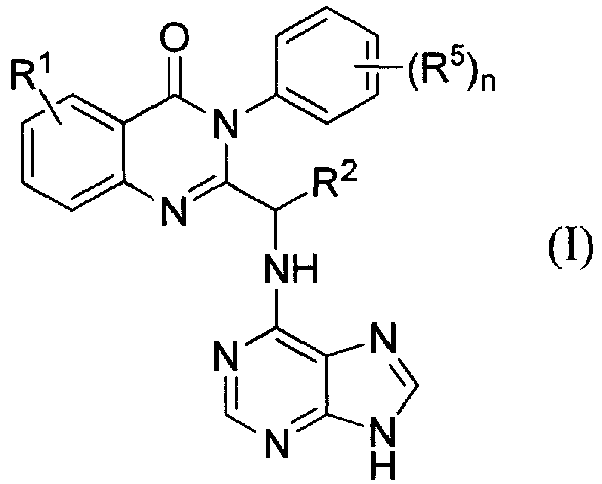
- In some embodiments of the process according to the first aspect, R3 and R4 are each independently selected from the group consisting of hydrogen, t-butyl carbamate, tetrahydropyranyl, alkylsilyl, benzyl, and alkoxymethyl; and/or
- step a) further comprises a step of combining a dehydrating agent selected from the group consisting of diphenylphosphite, triphenylphosphite, N,N'-dicyclohexylcarbodiimide, N-(3-dimethylaminopropyl)-N'-ethylcarbodiimide hydrochloride, and 1,1'-carbonyldiimidazole; and/or
- step a) further comprises a step of combining a base selected from the group consisting of pyridine, 4-dimethylaminopyridine, triethylamine, isopropylethylamine, imidazole, DABCO, DBU, 2,6-lutidine, and N,N-diisopropylethylamine; and/or
- step a) further comprises combining a solvent selected from the group consisting of pyridine, toluene, tetrahydrofuran, acetonitrile and 2-MeTHF; and/or
- step a) is performed at a temperature between 0 and 45°C.
- In one embodiment of the process according to the first aspect, step b) is performed at a temperature between 0 and 80°C.
- In further embodiments of the process according to the first aspect, step c) further comprises a solvent selected from the group consisting of acetonitrile, methanol, ethanol, isopropanol, n-propanol, THF, water, and toluene; and/or
the compound of formula 7 or a salt thereof is crystallized from one or more solvents selected from the group consisting of alcohol, water, and combinations thereof. - The present invention further provides a process according to the first aspect for synthesizing a compound of formula II:

- step a) combining a compound of formula 9:


- step b) combining the compound of formula 8 or a salt thereof and aniline, wherein a compound of formula 11:

- step c) combining the compound of formula 11 or a salt thereof and an acid, wherein a compound of formula 12:

- step d) combining the compound of formula 12 or a salt thereof and a compound of formula 13:


- step e) combining the compound of formula 14 or a salt thereof and an acid, wherein a compound of formula II:

- The present invention further provides a process according to the first aspect for synthesizing a compound of formula III:

- step a) combining a compound of formula 16:


- step b) combining the compound of formula 15 or a salt thereof and aniline, wherein a compound of formula 17:

- c) combining the compound of formula 17 or a salt thereof and an acid, wherein a compound of formula 18:

- step d) combining the compound of formula 18 or a salt thereof and a compound of formula 13:

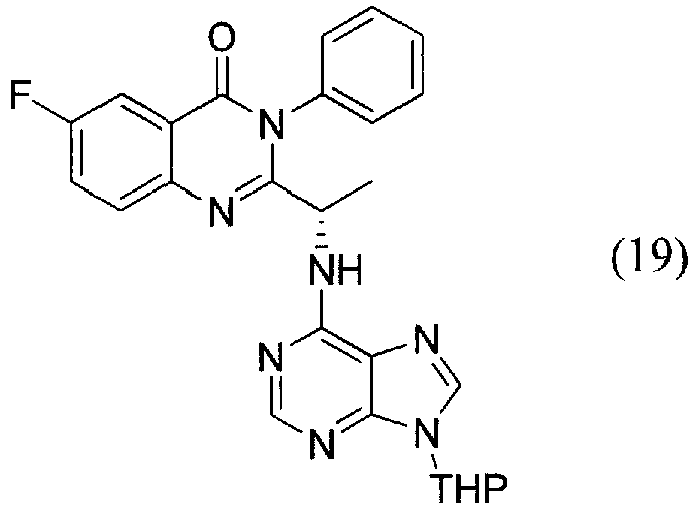
- step e) combining the compound of formula 19 or a salt thereof and an acid, wherein the compound of formula III:

- In some embodiments of the process according to the first aspect for synthesizing a compound of formula II or of formula III, step a) further comprises a step of combining a dehydrating agent, wherein the dehydrating agent is preferably selected from the group consisting of diphenylphosphite, triphenylphosphite, N,N'-dicyclohexylcarbodiimide, N-(3-dimethylaminopropyl)-N'-ethylcarbodiimide hydrochloride, and 1,1'-carbonyldiimidazole; and/or
- step a) further comprises a step of combining a base selected from the group consisting of pyridine, 4-dimethylaminopyridine, triethylamine, isopropylethylamine, imidazole, DABCO, DBU, 2,6-lutidine, and N,N-diisopropylethylamine; and/or
- step a) further comprises combining a solvent selected from the group consisting of pyridine, toluene, tetrahydrofuran, acetonitrile and 2-MeTHF; and/or
- step a) is performed at a temperature between 0 and 45°C; and/or
- step b) is performed at a temperature between 0 and 80°C; and/or
- step c) further comprises a solvent selected from the group consisting of acetonitrile, methanol, ethanol, isopropanol, n-propanol, THF, water, and toluene; and/or
- step c) comprises a mineral acid or TFA.
- In some embodiments of the process according to the first aspect, step c) is performed at a temperature between 0 and 70°C; and/or
the compound of formula 5, 12 or 18 or a salt thereof is crystallized from one or more solvents selected from either (A) the group comprising water, methanol, ethanol, isopropanol, n-propanol, concentrated NH4OH, acetonitrile, MTBE, DCM, EtOAc, iPrOAc, toluene, 2-Me-THF, DIPE (diisopropylether), heptane and heptanes; or (B) water, concentrated NH4OH, and acetonitrile; or (C) isopropanol and toluene; and/or - step d) comprises a base selected from the group consisting of triethylamine, pyridine, Hunig's base, and a carbonate base; and/or
- step d) comprises a solvent selected from the group consisting of water, an alcoholic solvent, and combinations thereof; and/or
- step d) is performed at a temperature between 35 and 110°C; and/or
- step e) comprises an acid selected from the group consisting of a mineral acid, TFA and a Lewis acid; and/or
- step e) is performed at a temperature between 30 and 70°C; and/or
- In one embodiment of the process according to the first aspect for synthesizing a compound of formula II or of formula III, the compound of formula 14 or 19 or a salt thereof is crystallized from one or more solvents selected from the group consisting of isopropanol, n-propanol, ethanol, methanol, and water.
- In one embodiment of the process according to the first aspect, the process is operated in a batch process.
- The application further discloses the intermediate compounds formed from the processes disclosed herein, in particular compounds 8, 15, 14, 19, 20 and 21, and pharmaceutically acceptable salts thereof.
- In a second aspect, the present invention provides a compound selected from the group consisting of:

- As used in the present specification, the following words and phrases are generally intended to have the meanings as set forth below, except to the extent that the context in which they are used indicates otherwise.
- The term "about" includes and describes the value or parameter per se. For example, "about x" includes and describes "x" per se. In certain embodiment, the term "about" when used in association with a measurement, or used to modify a value, a unit, a constant, or a range of values, refers to variations of +/- 1-10%. In some embodiments, the term "about" when used in association with a measurement, or used to modify a value, a unit, a constant, or a range of values, refers to variations of +/- 5%. In some embodiments, the term "about" when used in association with a measurement, or used to modify a value, a unit, a constant, or a range of values, refers to variations of +/- 10%.
- The term "between" includes and describes the value or parameter per se. For example, "between x and y" includes and describes "x" and "y" per se.
- The term "and/or" includes subject matter in the alternative as well as subject matter in combination. For instance, "x, and/or y", includes "x or y" and "x and y".
- The term "alkyl" as used herein refers to a straight or branched chain, saturated hydrocarbon having the indicated number of carbon atoms. For example, (C1-C8)alkyl is meant to include, but is not limited to methyl, ethyl, propyl, isopropyl, butyl, sec-butyl, tert-butyl, pentyl, isopentyl, neopentyl, hexyl, isohexyl, and neohexyl. An alkyl group can be unsubstituted or optionally substituted with one or more substituents as described herein throughout.
- The term "substituted alkyl" refers to:1) an alkyl group as defined above, having 1, 2, 3, 4 or 5 substituents, (in some embodiments, 1, 2 or 3 substituents) selected from the group consisting of alkenyl, alkynyl, carboxy, carboxyalkyl, aminocarbonyl, hydroxy, alkoxy, halogen, CF3, amino, substituted amino, nitro, thiol, cyano, cycloalkyl, heterocyclyl, aryl, and heteroaryl.
- The term "alkylene" refers to a diradical of a branched or unbranched saturated hydrocarbon chain, in some embodiments, having from 1 to 20 carbon atoms (e.g., 1-10 carbon atoms or 1, 2, 3, 4, 5 or 6 carbon atoms). This term is exemplified by groups such as methylene (-CH2-), ethylene (-CH2CH2-), the propylene isomers (e.g., -CH2CH2CH2- and -CH(CH3)CH2-), and the like.
- The term "substituted alkylene" refers to an alkylene group as defined above having 1 to 5 substituents (in some embodiments, 1, 2 or 3 substituents) as defined for substituted alkyl.
- The term "aralkyl" refers to an aryl group covalently linked to an alkylene group, where aryl and alkylene are defined herein. "Optionally substituted aralkyl" refers to an optionally substituted aryl group covalently linked to an optionally substituted alkylene group. Such aralkyl groups are exemplified by benzyl, phenylethyl, 3-(4-methoxyphenyl)propyl, and the like.
- The term "aralkyloxy" refers to the group -O-aralkyl. "Optionally substituted aralkyloxy" refers to an optionally substituted aralkyl group covalently linked to an optionally substituted alkylene group. Such aralkyl groups are exemplified by benzyloxy, phenylethyloxy, and the like.
- The term "alkenyl" refers to a monoradical of a branched or unbranched unsaturated hydrocarbon group having from 2 to 20 carbon atoms (in some embodiments, from 2 to 10 carbon atoms, e.g., 2 to 6 carbon atoms) and having from 1 to 6 carbon-carbon double bonds, e.g., 1, 2 or 3 carbon-carbon double bonds. In some embodiments, alkenyl groups include ethenyl (or vinyl, i.e., -CH=CH2), 1-propylene (or allyl, i.e., -CH2CH=CH2), isopropylene (-C(CH3)=CH2), and the like.
- The term "substituted alkenyl" refers to an alkenyl group as defined above having 1 to 5 substituents (in some embodiments, 1, 2 or 3 substituents) as defined for substituted alkyl.
- The term "alkynyl" refers to a monoradical of an unsaturated hydrocarbon, in some embodiments, having from 2 to 20 carbon atoms (in some embodiments, from 2 to 10 carbon atoms, e.g., 2 to 6 carbon atoms) and having from 1 to 6 carbon-carbon triple bonds, e.g., 1, 2 or 3 carbon-carbon triple bonds. In some embodiments, alkynyl groups include ethynyl (-C≡CH), propargyl (or propynyl, i.e., -C≡CCH3), and the like.
- The term "substituted alkynyl" refers to an alkynyl group as defined above having 1 to 5 substituents (in some embodiments, 1, 2 or 3 substituents) as defined for substituted alkyl.
- The term "hydroxy" or "hydroxyl" refers to a group -OH.
- The term "alkoxy" refers to the group R-O-, where R is alkyl; and includes, by way of example, methoxy, ethoxy, n-propoxy, iso-propoxy, n-butoxy, tert-butoxy, sec-butoxy, n-pentoxy, n-hexyloxy, 1,2-dimethylbutoxy, and the like.
- The term "substituted alkoxy" refers to the group R-O-, where R is substituted alkyl, where substituted alkyl, substituted alkenyl and substituted alkynyl are as defined herein.
- The term "cycloalkyl" refers to cyclic alkyl groups of from 3 to 20 carbon atoms having a single cyclic ring or multiple condensed rings. Such cycloalkyl groups include, by way of example, single ring structures such as cyclopropyl, cyclobutyl, cyclopentyl, cyclooctyl and the like or multiple ring structures such as adamantanyl and bicyclo[2.2.1]heptanyl or cyclic alkyl groups to which is fused an aryl group, for example indanyl, and the like, provided that the point of attachment is through the cyclic alkyl group.
- The term "cycloalkenyl" refers to cyclic alkyl groups of from 3 to 20 carbon atoms having a single cyclic ring or multiple condensed rings and having at least one double bond and in some embodiments, from 1 to 2 double bonds.
- The terms "substituted cycloalkyl" and "substituted cycloalkenyl" refer to cycloalkyl or cycloalkenyl groups having 1, 2, 3, 4 or 5 substituents (in some embodiments, 1, 2 or 3 substituents), selected from the group consisting of alkyl, alkenyl, alkynyl, carboxy, carboxyalkyl, aminocarbonyl, hydroxy, alkoxy, halogen, CF3, amino, substituted amino, nitro, thiol, cyano, cycloalkyl, heterocyclyl, aryl, and heteroaryl.
- The term "aryl" refers to an aromatic carbocyclic group of 6 to 20 carbon atoms having a single ring (e.g., phenyl) or multiple rings (e.g., biphenyl) or multiple condensed (fused) rings (e.g., naphthyl, fluorenyl and anthryl). In some embodiments, aryls include phenyl, fluorenyl, naphthyl, anthryl, and the like.
- Unless otherwise constrained by the definition for the aryl substituent, such aryl groups can optionally be substituted with 1, 2, 3, 4 or 5 substituents (in some embodiments, 1, 2 or 3 substituents), selected from the group consisting of alkyl, alkenyl, alkynyl, carboxy, carboxyalkyl, aminocarbonyl, hydroxy, alkoxy, halogen, CF3, amino, substituted amino, nitro, thiol, cyano, cycloalkyl, heterocyclyl, aryl, and heteroaryl.
- The term "substituted purinyl" refers to a purinyl having 1, 2, 3, 4, or 5 substituents (in some embodiments 1, 2, or 3 substituents), each independently selected from the group consisting of alkyl, alkenyl, alkynyl, carboxy, carboxyalkyl, aminocarbonyl, hydroxy, alkoxy, halogen, CF3, amino, substituted amino, nitro, thiol, cyano, cycloalkyl, heterocyclyl, aryl, and heteroaryl. In some embodiments, purinyl is substituted with 1, 2, or 3 substituents selected from the group consisting of methyl, ethyl, propyl, NH2, and N(CH3)2.
- The term "heterocyclyl", "heterocycle", or "heterocyclic" refers to a monoradical saturated group having a single ring or multiple condensed rings, having from 1 to 40 carbon atoms, and from 1 to 10 heteroatoms or 1 to 4 heteroatoms within the ring, each heteroatom independently selected from the group consisting of nitrogen, sulfur, phosphorus, and oxygen.
- Unless otherwise constrained by the definition for the heterocyclic substituent, such heterocyclic groups can be optionally substituted with 1 to 5 substituents (in some embodiments, 1, 2 or 3 substituents), selected from the group consisting of alkyl, alkenyl, alkynyl, carboxy, carboxyalkyl, aminocarbonyl, hydroxy, alkoxy, halogen, CF3, amino, substituted amino, nitro, thiol, cyano, cycloalkyl, heterocyclyl, aryl, and heteroaryl. Examples of heterocyclic groups include tetrahydrofuranyl, morpholino, piperidinyl, and the like.
- The term "heteroaryl" refers to a group comprising single or multiple rings comprising 1 to 15 carbon atoms and 1 to 4 heteroatoms selected from oxygen, nitrogen and sulfur within at least one ring. The term "heteroaryl" is generic to the terms "aromatic heteroaryl" and "partially saturated heteroaryl". The term "aromatic heteroaryl" refers to a heteroaryl in which at least one ring is aromatic, regardless of the point of attachment. Examples of aromatic heteroaryls include pyrrole, thiophene, pyridine, quinoline, pteridine. The term "partially saturated heteroaryl" refers to a heteroaryl having a structure equivalent to an underlying aromatic heteroaryl which has had one or more double bonds in an aromatic ring of the underlying aromatic heteroaryl saturated. Examples of partially saturated heteroaryls include dihydropyrrole, dihydropyridine, 2-oxo-1,2-dihydropyridin-4-yl, and the like.
- Unless otherwise constrained by the definition for the heteroaryl substituent, such heteroaryl groups can be optionally substituted with 1 to 5 substituents (in some embodiments, 1, 2 or 3 substituents) selected from the group consisting alkyl, alkenyl, alkynyl, carboxy, carboxyalkyl, aminocarbonyl, hydroxy, alkoxy, halogen, CF3, amino, substituted amino, nitro, thiol, cyano, cycloalkyl, heterocyclyl, aryl, and heteroaryl. Such heteroaryl groups can have a single ring (e.g., pyridyl or furyl) or multiple condensed rings (e.g., indolizinyl, benzothiazole or benzothienyl). Examples of nitrogen heterocyclyls and heteroaryls include, but are not limited to pyrrole, imidazole, pyrazole, pyridine, pyrazine, pyrimidine, pyridazine, indolizine, isoindole, indole, indazole, purine, quinolizine, isoquinoline, quinoline, phthalazine, naphthylpyridine, quinoxaline, quinazoline, cinnoline, pteridine, carbazole, carboline, phenanthridine, acridine, phenanthroline, isothiazole, phenazine, isoxazole, phenoxazine, phenothiazine, imidazolidine, imidazoline, and the like as well as N-alkoxy nitrogen containing heteroaryl compounds.
- The term "substituted amino" refers to the group -NRR where each R is independently selected from the group consisting of hydrogen, alkyl, cycloalkyl, aryl, heteroaryl and heterocyclyl provided that both R groups are not hydrogen. Unless otherwise constrained by the definition, all substituents may optionally be further substituted by 1, 2 or 3 substituents chosen from alkyl, alkenyl, alkynyl, carboxy, carboxyalkyl, aminocarbonyl, hydroxy, alkoxy, halogen, CF3, amino, substituted amino, nitro, thiol, cyano, cycloalkyl, heterocyclyl, aryl, and heteroaryl.
- The term "carboxyalkyl" refers to the groups -C(O)O-alkyl or -C(O)O-cycloalkyl, where alkyl and cycloalkyl are as defined herein, and may be optionally further substituted by alkyl, alkenyl, alkynyl, carboxy, carboxyalkyl, aminocarbonyl, hydroxy, alkoxy, halogen, CF3, amino, substituted amino, nitro, thiol, cyano, cycloalkyl, heterocyclyl, aryl, and heteroaryl.
- The term "aminocarbonyl" refers to the group -C(O)NRR where each R is independently hydrogen, alkyl, cycloalkyl, aryl, heteroaryl, heterocyclyl or where both R groups are joined to form a heterocyclic group (e.g., morpholino). Unless otherwise constrained by the definition, all substituents may optionally be further substituted by 1, 2 or 3 substituents chosen from alkyl, alkenyl, alkynyl, carboxy, carboxyalkyl, aminocarbonyl, hydroxy, alkoxy, halogen, CF3, amino, substituted amino, nitro, thiol, cyano, cycloalkyl, heterocyclyl, aryl, and heteroaryl.
- The term "thiol" refers to the group -SH.
- The term "halogen" or "halo" refers to fluoro, bromo, chloro and iodo.
- "Optional" or "optionally" means that the subsequently described event or circumstance may or may not occur, and that the description includes instances where said event or circumstance occurs and instances in which it does not.
- A "substituted" group includes embodiments in which a monoradical substituent is bound to a single atom of the substituted group (e.g., forming a branch), and also includes embodiments in which the substituent may be a diradical bridging group bound to two adjacent atoms of the substituted group, thereby forming a fused ring on the substituted group.
- Where a given group (moiety) is described herein as being attached to a second group and the site of attachment is not explicit, the given group may be attached at any available site of the given group to any available site of the second group. For example, an "alkyl-substituted phenyl", where the attachment sites are not explicit, may have any available site of the alkyl group attached to any available site of the phenyl group. In this regard, an "available site" is a site of the group at which a hydrogen of the group may be replaced with a substituent.
- A compound of a given formula is intended to encompass the compounds of the disclosure, and the salts, esters, isomers, tautomers, solvates, isotopes and hydrates of such compounds. Additionally, the compounds of the disclosure may possess one or more asymmetric centers, and can be produced as a racemic mixture or as individual enantiomers or diastereoisomers. The number of stereoisomers present in any given compound of a given formula depends upon the number of asymmetric centers present (there are 2n stereoisomers possible where n is the number of asymmetric centers). The individual stereoisomers (including individual enantiomers and diastereoisomers) as well as racemic and non-racemic mixtures of stereoisomers are encompassed within the scope of the present disclosure, all of which are intended to be depicted by the structures of this specification unless otherwise specifically indicated. Compounds of the present disclosure include separable rotational isomers, or atropisomers.
- "Isomers" are different compounds that have the same molecular formula. Isomers include stereoisomers, enantiomers and diastereomers.
- "Stereoisomers" are isomers that differ only in the way the atoms are arranged in space.
- "Enantiomers" are a pair of stereoisomers that are non-superimposable mirror images of each other. A 1:1 mixture of a pair of enantiomers is a "racemic" mixture. The term"(±)" is used to designate a racemic mixture where appropriate.
- "Diastereoisomers" are stereoisomers that have at least two asymmetric atoms, but which are not mirror-images of each other.
- The absolute stereochemistry is specified according to the Cahn Ingold Prelog R S system. When the compound is a pure enantiomer, the stereochemistry at each chiral carbon may be specified by either R or S. Resolved compounds whose absolute configuration is unknown are designated (+) or (-) depending on the direction (dextro- or laevorotary) that they rotate the plane of polarized light at the wavelength of the sodium D line.
- "Tautomers" are structural isomers resulting from the migration of an atom or a functional group within the same organic molecule and lead to a change in one or more of its structural skeleton, electronic density distribution, and chemical properties. It is understood that compounds disclosed herein includes tautomeric forms although not necessarily explicitly shown. In one example, purine may be represented by any of the following tautomers:

- Accordingly, a reference to any one of the purine tautomers includes the other tautomeric forms.
- The term "amino protective group" is well understood by the person skilled in synthetic organic chemistry as a moiety that can be selectively installed onto and removed from a suitable amine functional group. Amino protective groups, and methods for using them, are described in the authoritative treatise on the subject, P. G. M. Wuts and T. W. Greene, Greene's Protective Groups in Organic Synthesis, 4th Edition (Wiley, 2006). In some embodiments, the amino protective group is selected from the group consisting of a carbamate, an amide, and a sulfonamide. In some embodiments, the amino protective group is a benzyl group, or a Schiff base.
- Non-limiting examples of carbamate based amino protective groups include methyl carbamate, 9-fluoroenylmethyl carbamate (FMOC), 2,2,2-trichloroethyl carbamate, 2-trimethylsilylethyl carbamate, 1,1-dimethylpropynyl carbamate, 1-methyl-1-phenethyl carbamate, 1-methyl-1-(4-biphenylyl)ethyl carbamate, 1,1-dimethyl-2-haloethyl carbamate, 1,1-dimethyl-2-cyanoethyl carbamate, t-butyl carbamate, cyclobutyl carbamate, 1-methylcyclobutyl carbamate, 1-adamantyl carbamate, vinyl carbamate, allyl carbamate, cinnamyl carbamate, 8-quinolyl carbamate, N-hydroxypiperidinyl carbamate, 4,5-diphenyl-3-oxazolin-2-one, benzyl carbamate, p-nitrobenzyl carbamate, 3,4-dimethoxy-6-nitrobenzyl carbamate, 2,4-dichlorobenzyl carbamate, 5-benzisoxazolylmethyl carbamate, 9-anthrylmethyl carbamate, diphenylmethyl carbamate, isonicotinyl carbamate, and S-benzyl carbamate, N-(N'-phenylaminothiocarbonyl) derivative. In one embodiment, the amino protective group is selected from the group consisting methyl carbamate, t-butyl carbamate, vinyl carbamate, and allyl carbamate. In another embodiment, the amino protective group is selected from the group consisting of t-butyl carbamate (BOC) and 9-fluoroenylmethyl carbamate (FMOC).
- Non-limiting examples of amide based amino protective groups include N-formyl, N-acetyl, N-chloracetyl, N-trichloroacetyl, N-trifluoroacetyl, N-o-nitrophenylacetyl, N-o-nitrophoxyacetyl, N-acetoacetyl, N-3-phenylpropionyl, N-3-(p-hydroxyphenyl)propionyl, N-2-methyl-2-(o-nitrophenoxy)propionyl, N-4-chorobutyryl, N-o-nitrocinnamoyl, N-picolinoyl, N-(N'-acetylmethionyl), N-benzoyl, N-phthaloyl, and N-dithiasuccinoyl. In one embodiment, the amino protective group is selected from the group consisting of N-formyl, N-acetyl, N-chloracetyl, N-trichloroacetyl, N-trifluoroacetyl, and N-acetoacetyl.
- Other non-limiting examples of amino protective groups include N-allyl, N-phenacyl, N-3-acetoxypropyl, quaternary ammonium salts, N-methyoxymethyl, N-benzyloxymethyl, N-pivaloyloxymethyl, N-tetrahydropyranyl, N-2,4-dinitrophenyl, N-benzyl, N-o-nitrobenzyl, N-di(p-methoxyphenyl)methyl, N-triphenylmethyl, N-(p-methyoxyphenyl)diphenylmethyl, N-diphenyl-4-pyridylmethyl, N-2-picolyl N'-oxide, N,N'-isopropylidene, N-salicylidene, N-(5,-dimethyl-3-oxo-1-cyclohexenyl), N-nitro, N-oxide, N-diphenylphosphinyl, N-dimetylthiophosphinyl, N-dimethylthiophosphinyl, N-benzenesulfenyl, N-o-nitrobenzenesulfenyl, N-2,4,6-trimethylbenzenesulfonyl, N-toluenesulfonyl, N-benzylsulfonyl, N-trifluoromethylsulfonyl, and N-phenyacylsulfonyl. In one embodiment, the amino protective group is selected from the group consisting of N-allyl, N-phenacyl, N-3-acetoxypropyl, quaternary ammonium salts, N-methyoxymethyl, N-benzyloxymethyl, N-pivaloyloxymethyl, and N-tetrahydropyranyl. In one embodiment, the amino protective group is N-tetrahydropyranyl.
- If there is a discrepancy between a depicted structure and a name given to that structure, the depicted structure controls. In addition, if the stereochemistry of a structure or a portion of a structure is not indicated with, for example, bold, wedged, or dashed lines, the structure or portion of the structure is to be interpreted as encompassing all stereoisomers of it.
- The term "solvate" refers to a complex formed by the combining of a compound of any formula as disclosed herein, and a solvent.
- The term "hydrate" refers to the complex formed by the combining of a compound of any formula disclosed herein, and water.
- Any formula or structure given herein is also intended to represent unlabeled forms as well as isotopically labeled forms of the compounds. Isotopically labeled compounds have structures depicted by the formulas given herein except that one or more atoms are replaced by an atom having a selected atomic mass or mass number. Examples of isotopes that can be incorporated into compounds of the disclosure include isotopes of hydrogen, carbon, nitrogen, oxygen, phosphorous, fluorine and chlorine, such as, but not limited to 2H (deuterium, D), 3H (tritium), 11C, 13C, 14C, 15N, 18F, 31P, 32P, 35S, 36Cl and 125I. Various isotopically labeled compounds of the present disclosure, for example those into which radioactive isotopes such as 3H, 13C and 14C are incorporated. Such isotopically labeled compounds may be useful in metabolic studies, reaction kinetic studies, detection or imaging techniques, such as positron emission tomography (PET) or single-photon emission computed tomography (SPECT) including drug or substrate tissue distribution assays or in radioactive treatment of patients.
- In certain embodiments, the isotopically labeled compound is a compound of formula 6. In other embodiments, the isotopically labeled compound is a compound of formula 6, wherein X is a halogen and R6 is the amino protective group tetrahydropyranyl (THP). In another embodiment, the isotopically labeled compound is a compound of formula 6, wherein X is Cl and R6 is THP.
- The disclosure also includes compounds of any formula disclosed herein, in which from 1 to "n" hydrogens attached to a carbon atom is/are replaced by deuterium, in which n is the number of hydrogens in the molecule. Such compounds may exhibit increased resistance to metabolism and may thus be useful for increasing the half-life of a compound of any formula described herein, for instance formula II or formula III, when administered to a mammal. See, for example, Foster, "Deuterium Isotope Effects in Studies of Drug Metabolism", Trends Pharmacal. Sci. 5(12):524-527 (1984). Such compounds are synthesized by means well known in the art, for example by employing starting materials in which one or more hydrogen atoms have been replaced by deuterium.
- Deuterium labeled or substituted therapeutic compounds of the disclosure may have improved DMPK (drug metabolism and pharmacokinetics) properties, relating to distribution, metabolism and excretion (ADME). Substitution with heavier isotopes such as deuterium may afford certain therapeutic advantages resulting from greater metabolic stability, for example increased in vivo half-life or reduced dosage requirements. An 18F labeled compound may be useful for PET or SPECT studies. Isotopically labeled compounds of this disclosure and prodrugs thereof can generally be prepared by carrying out the procedures disclosed in the schemes or in the examples and preparations described below by substituting a readily available isotopically labeled reagent for a non-isotopically labeled reagent. Further, substitution with heavier isotopes, particularly deuterium (i.e., 2H or D) may afford certain therapeutic advantages resulting from greater metabolic stability, for example increased in vivo half-life or reduced dosage requirements or an improvement in therapeutic index. It is understood that deuterium in this context is regarded as a substituent in a compound of any formula disclosed herein. Similarly, in certain embodiments, tritium (i.e., 3H) is also regarded as a substituent in a compound of any formula disclosed herein. In certain embodiments, 14C is regarded as a substituent in a compound of any formula disclosed herein.
- The concentration of such a heavier isotope, specifically deuterium, may be defined by an isotopic enrichment factor. In the compounds of this disclosure any atom not specifically designated as a particular isotope is meant to represent any stable isotope of that atom. Unless otherwise stated, when a position is designated specifically as "H" or "hydrogen", the position is understood to have hydrogen at its natural abundance isotopic composition. Accordingly, in the compounds of this disclosure any atom specifically designated as a deuterium (D) is meant to represent deuterium.
- In many cases, the compounds of this disclosure are capable of forming acid and/or base salts by virtue of the presence of amino and/or carboxyl groups or groups similar thereto.
- Base addition salts can be prepared from inorganic and organic bases. Salts derived from in organic bases include, by way of example only, sodium, potassium, lithium, ammonium, calcium and magnesium salts. Further salts derived from organic bases include, but are not limited to, salts of primary, secondary and tertiary amines, such as alkyl amines, dialkyl amines, trialkyl amines, substituted alkyl amines, di(substituted alkyl) amines, tri(substituted alkyl) amines, alkenyl amines, dialkenyl amines, trialkenyl amines, substituted alkenyl amines, di(substituted alkenyl) amines, tri(substituted alkenyl) amines, cycloalkyl amines, di(cycloalkyl) amines, tri(cycloalkyl) amines, substituted cycloalkyl amines, disubstituted cycloalkyl amine, trisubstituted cycloalkyl amines, cycloalkenyl amines, di(cycloalkenyl) amines, tri(cycloalkenyl)amines, substituted cycloalkenyl amines, disubstituted cycloalkenyl amine, trisubstituted cycloalkenyl amines, aryl amines, diaryl amines, triaryl amines, heteroaryl amines, diheteroarylamines, triheteroaryl amines, heterocyclic amines, diheterocyclic amines, triheterocyclic amines, mixed di- and tri-amines where at least two of the substituents on the amine are different and are selected from the group consisting of alkyl, substituted alkyl, alkenyl, substituted alkenyl, cycloalkyl, substituted cycloalkyl, cycloalkenyl, substituted cycloalkenyl, aryl, heteroaryl, heterocyclic, and the like. Also included are amines where the two or three substituents, together with the amino nitrogen, form a heterocyclic or heteroaryl group. In the general structure N(Rx)(Ry)(Rz), mono-substituted amines have 2 of the three substituents on nitrogen (Rx, Ry and Rz) as hydrogen; di-substituted amines have 1 of the three substituents on nitrogen (Rx, Ry and Rz) as hydrogen; and tri-substituted amines have none of the three substituents on nitrogen (Rx, Ry and Rz) as hydrogen. Rx, Ry and Rz may be selected from a variety of substituents such as hydrogen, optionally substituted alkyl, aryl, heteroaryl, cycloalkyl, cycloalkenyl, heterocyclyl and the like. The abovementioned amines refer to the compounds wherein either one, two or three substituents on the nitrogen are as listed in the name. For example, the term "cycloalkenyl amine" refers to cycloalkenyl-NH2, wherein "cycloalkenyl" is as defined herein. The term "diheteroarylamine" refers to NH(heteroaryl)2, wherein "heteroaryl" is as defined herein and so on.
- Acid addition salts may be prepared from inorganic and organic acids. Acid addition salts may be prepared from inorganic acids such as hydrochloric acid, hydrobromic acid, sulfuric acid, nitric acid, phosphoric acid, and the like. Salts derived from organic acids include acetic acid, propionic acid, glycolic acid, pyruvic acid, oxalic acid, malic acid, malonic acid, succinic acid, maleic acid, fumaric acid, tartaric acid, citric acid, benzoic acid, cinnamic acid, mandelic acid, methanesulfonic acid, ethanesulfonic acid, p-toluene-sulfonic acid, salicylic acid, and the like.
- In some embodiments, a salt is a "pharmaceutically acceptable salt". A pharmaceutically acceptable salt of a given compound, for instance a compound of Formula I, II, or III, refers to salts that retain the biological effectiveness and properties of a given compound, and which are not biologically or otherwise undesirable. See: P. Heinrich Stahl and Camille G. Wermuth (Eds.) Pharmaceutical Salts: Properties, Selection, and Use (International Union of Pure and Applied Chemistry), Wiley-VCH; 2nd revised Edition (May 16, 2011). In certain embodiments, a pharmaceutically acceptable salt of a given compound, for instance a compound of any of Formula I, II, or III, or a compound of any of formula 1-21, refers to that a salt form which is generally regarded as safe and suitable for use without undue toxicity, irritation, allergic response, and the like, commensurate with a reasonable benefit/risk ratio. Exemplary pharmaceutically acceptable salts include acid addition salts formed with inorganic acids such as hydrochloric acid, hydrobromic acid, sulfuric acid, nitric acid, phosphoric acid, and the like; or formed with organic acids such as acetic acid, benzenesulfonic acid, benzoic acid, camphorsulfonic acid, citric acid, ethanesulfonic acid, fumaric acid, glucoheptonic acid, gluconic acid, lactic acid, maleic acid, malonic acid, mandelic acid, methanesulfonic acid, 2-napththalenesulfonic acid, oleic acid, palmitic acid, propionic acid, stearic acid, succinic acid, tartaric acid, p-toluene-sulfonic acid, trimethylacetic acid, and the like, and salts formed when an acidic proton present in the parent compound is replaced by either a metal ion, e.g., an alkali metal ion, an alkaline earth ion, or an aluminum ion; or coordinates with an organic base such as diethanolamine, triethanolamine, N-methylglucamine and the like. Also included in this definition are ammonium and substituted or quaternized ammonium salts. Representative non-limiting lists of pharmaceutically acceptable salts can be found in S.M. Berge et al., J. Pharma Sci., 66(1), 1-19 (1977), and Remington: The Science and Practice of Pharmacy, R. Hendrickson, ed., 21st edition, Lippincott, Williams & Wilkins, Philadelphia, PA, (2005), at p. 732, Table 38-5.
- Compounds described herein may be presented in the form of chemical structures or names. The compounds shown below in Table A are named using ChemBioDraw Ultra 12.0 and it should be understood that other names may be used to identify compounds of the same structure. Other compounds or radicals may be named with common names, or systematic or non-systematic names. The compounds may also be named using other nomenclature systems and symbols that are commonly recognized in the art of chemistry including, for example, Chemical Abstract Service (CAS) and International Union of Pure and Applied Chemistry (IUPAC). The naming and numbering of the compounds of the present disclosure is illustrated with the compounds shown in Table A below.
Table A. 

(S)-tert-butyl (1-(5-fluoro-4-oxo-4H-benzo[d][1,3]oxazin-2-yl)propyl)carbamate (S)-tert-butyl (1-(6-fluoro-4-oxo-4H-benzo[d][1,3]oxazin-2-yl)ethyl)carbamate 

2-amino-6-fluorobenzoic acid 2-amino-5-fluorobenzoic acid 

(S)-2-((tert-butoxycarbonyl)amino)butanoic acid (S)-2-((tert-butoxycarbonyl)amino)propanoic acid 

(S)-tert-butyl (1-(5-fluoro-4-oxo-3-phenyl-3,4-dihydroquinazolin-2-yl)propyl)carbamate (S)-tert-butyl (1-(6-fluoro-4-oxo-3-phenyl-3,4-dihydroquinazolin-2-yl)ethyl)carbamate 

(S)-2-(1-aminopropyl)-5-fluoro-3-phenylquinazolin-4(3H)-one (S)-2-(1-aminoethyl)-6-fluoro-3-phenylquinazolin-4(3H)-one 

5-fluoro-3-phenyl-2-((1S)-1-((9-(tetrahydro-2H-pyran-2-yl)-9H-purin-6-yl)amino)propyl)quinazolin-4(3H)-one 6-fluoro-3-phenyl-2-((1S)-1-((9-(tetrahydro-2H-pyran-2-yl)-9H -purin-6-yl)amino)ethyl)quinazolin-4(3H)-one 

(S)-2-(1-((9H-purin-6-yl)amino)propyl)-5-fluoro-3-phenylquinazolin-4(3H)-one (S)-2-(1-((9H-purin-6-yl)amino)ethyl)-6-fluoro-3-phenylquinazolin-4(3H)-one - In the first aspect, the present invention is directed to a process for synthesizing a compound of formula I:

- step a) combining a compound of formula 2:


- wherein R1 is halo;
- R2 is selected from the group consisting of H, and optionally substituted C1-C8 alkyl; and
- R3 and R4 are each independently selected from the group consisting of hydrogen and an amino protective group;
- step b) combining the compound of formula 1 or a salt thereof; and
a compound of formula 22:
wherein a compound of formula 4:
- step c) combining the compound of formula 4 or a salt thereof, wherein at least one of R3 and R4 of the compound of formula 4 is an amino protective group; and
one or more reagents, wherein the one or more reagents are used to remove the amino protective group;
wherein a compound of formula 5:
- step d) combining the compound of formula 5 or a salt thereof and a compound of formula 6:

- wherein X is selected from the group consisting of halogen, mesyl, mesylate, tosyl and tosylate;
and - R6 is the amino protective group tetrahydropyranyl (THP);

- wherein X is selected from the group consisting of halogen, mesyl, mesylate, tosyl and tosylate;
- step e) further combining the compound of formula 7 or a salt thereof; and one or more reagents, wherein the one or more reagents are used to remove the amino protective group, wherein a compound of formula I:

- The process according to the first aspect comprises a process for synthesizing a compound of formula 1:


- wherein R1 is halo;
- R2 is selected from the group consisting of H, and optionally substituted C1-C8 alkyl; and
- R3 and R4 are each independently selected from the group consisting of hydrogen and an amino protective group.
- In some embodiments, R1 is F or Cl. In some embodiments, R1 is F. In some embodiments, R2 is selected from the group consisting of methyl, ethyl or propyl. In some embodiments, R2 is ethyl. In some embodiments, R2 is unsubstituted C1-C8 alkyl. In some embodiments, R2 is unsubstituted. In some embodiments, R3 is H and R4 is an amino protective group. In some embodiments, R3 is H and R4 is a carbamate. In some embodiments, R1 is F or Cl; R2 is selected from the group consisting of methyl, ethyl or propyl; R3 is H and R4 is an amino protective group. In some embodiments, the amino protective group is selected from the group consisting of t-butyl carbamate, tetrahydropyranyl, alkylsilyl, benzyl, an optionally substituted purinyl group, and alkoxymethyl. In other embodiments, the amino protective group is carbamate. In some embodiments, the amino protective group is t-butyl carbamate (BOC) or 9-fluoroenylmethyl carbamate (FMOC). In some embodiments, the amino protective group is BOC.
- In some embodiments, step a) further comprises a step of combining a dehydrating agent. In some embodiments, step a) (i.e., combining a compound of formula 2 or a salt thereof and a compound of formula 3 or a salt thereof) is performed in the presence of a dehydrating agent. Non-limiting examples of the dehydrating agent include DPP (diphenylphosphite), TPP (triphenylphosphite), DCC (N,N'-dicyclohexylcarbodiimide), EDC (N-(3-dimethylaminopropyl)-N'-ethylcarbodiimide hydrochloride), and CDI (1,1'-carbonyldiimidazole). In some embodiments, the dehydrating agent is DPP (diphenylphosphite), TPP (triphenylphosphite), DCC (N,N'-dicyclohexylcarbodiimide), EDC (N-(3-dimethylaminopropyl)-N'-ethylcarbodiimide hydrochloride), CDI (1,1'-carbonyldiimidazole), or a mixture thereof. In some embodiments, the dehydrating agent is DPP. In some embodiments, step a) further comprises combining DPP. In some embodiments, step a) is performed in the presence of DPP.
- In some embodiments, the dehydrating reagent is combined with a compound of formula 2 and a compound of formula 3, wherein the amount of the dehydrating reagent is at least 2, 2.5, 3, 3.5, or 4 molar equivalents with respect to a compound of formula 2. In one embodiment, at least 2 molar equivalents of the dehydrating reagent with respect to the compound of formula 2 is combined with the compound of formula 2 and a compound of formula 3. In a another embodiment, at least 2 molar equivalents of the DPP (diphenylphosphite) with respect to the compound of formula 2 is combined with the compound of formula 2 and a compound of formula 3. In a yet another embodiment, at least 2 molar equivalents of the DPP (diphenylphosphite) with respect to the compound of formula 9 is combined with the compound of formula 9 and a compound of formula 10. In a further embodiment, at least 2 molar equivalents of the DPP (diphenylphosphite) with respect to the compound of formula 16 is combined with the compound of formula 16 and a compound of formula 10a.
- In some embodiments, step a) further comprises a step of combining a base. In some embodiments, step a) (i.e., combining a compound of formula 2 or a salt thereof and a compound of formula 3 or a salt thereof) is performed in the presence of a base. Non-limiting examples of the base includes pyridine, 4-dimethylaminopyridine, triethylamine, isopropylethylamine, imidazole, DABCO, DBU, 2,6-lutidine, and N,N-diisopropylethylamine. In some embodiments, the base is pyridine, 4-dimethylaminopyridine, triethylamine, isopropylethylamine, imidazole, DABCO, DBU, 2,6-lutidine, N,N-diisopropylethylamine, or a mixture thereof. In some embodiments, the base is pyridine.
- In some embodiments, step a) further comprises a solvent selected from the group consisting of pyridine, toluene, tetrahydrofuran, acetonitrile and 2-MeTHF. In some embodiments, step a) further comprises a solvent selected from the group consisting of pyridine, toluene, tetrahydrofuran, acetonitrile, 2-MeTHF, and a mixture thereof.
- In some embodiments, step a) includes combining a compound of formula 2 or a salt thereof and a compound of formula 3 or a salt thereof with a dehydrating agent, a base, a solvent, or a mixture thereof. In some embodiments, step a) includes combining a compound of formula 2 or a salt thereof and a compound of formula 3 or a salt thereof with a dehydrating agent. In some embodiments, step a) includes combining a compound of formula 2 or a salt thereof and a compound of formula 3 or a salt thereof with a dehydrating agent and a base. In some embodiments, step a) includes combining a compound of formula 2 or a salt thereof and a compound of formula 3 or a salt thereof with a dehydrating agent, a base, and a solvent.
- In some embodiments, step a) is performed at a temperature between 0 and 45°C, between 15 and 40°C, or between 20 and 30°C. In some embodiments, step a) is performed at a temperature below 45°C.
- The process according to the first aspect comprises step b) combining the compound of formula 1 or a salt thereof; and
a compound of formula 22:
wherein a compound of formula 4:
- In some embodiments, step b) is conducted as follows:
combining the compound of formula 1; and a compound of formula 22:
wherein a compound of formula 4:
- In some embodiments, the compound of formula 22 is a substituted aniline. In some embodiments, n is 1-5, and in other embodiments, n is 1-3. In some embodiments, n is 0-3. In some embodiments, n is 0, 1, or 2. In some embodiments, n is 0. In some embodiments, each R5 is independently selected from the group consisting of alkyl, alkenyl, alkynyl, carboxy, carboxyalkyl, aminocarbonyl, hydroxy, alkoxy, halogen, CF3, amino, substituted amino, nitro, thiol, cyano, cycloalkyl, heterocyclyl, aryl, and heteroaryl. In some embodiments, each R5 is independently C1-C4-alkyl or halo. In other embodiments, n is 1, 2, or 3; and R5 is selected from a group consisting of alkyl and halo. In some embodiments, n is 1, 2, or 3; and each R5 is independently selected from a group consisting of C1-C4-alkyl or halo. In yet other embodiments, n is 1, 2, or 3; and R5 is selected from a group consisting of methyl, F, and Cl. In some embodiments, n is 1, 2, or 3; and each R5 is independently selected from a group consisting of methyl, F, and Cl. In some embodiments, the compound of formula 22 is 2,6-difluoroaniline.
- In some embodiments, step b) is performed at a temperature between 0 and 80°C; between 20 and 70°C; between 40 and 60°C; or between 45 and 55°C.
- The process according to the first aspect comprises step c) combining the compound of formula 4 or a salt thereof, wherein at least one of R3 and R4 of the compound of formula 4 is an amino protective group; and
- one or more reagents, wherein the one or more reagents are used to remove the amino protective group; wherein a compound of formula 5:

- In some embodiments, step c) is conducted as follows:
- combining the compound of formula 4, wherein at least one of R3 and R4 of the compound of formula 4 is an amino protective group; and
- one or more reagents, wherein the one or more reagents are used to remove the amino protective group; wherein a compound of formula 5:

- In some embodiments, step c) is conducted as follows:
- combining the compound of formula 4, wherein at least one of R3 and R4 of the compound of formula 4 is an amino protective group; and
- two or more reagents, wherein one of the one or more reagents is used to remove the amino protective group and wherein another of the one or more reagents is an acid; wherein a compound of formula 5: or a salt thereof is synthesized.

- In some embodiments, the acid is hydrochloric acid.
- The process according to the first aspect comprises step d) combining the compound of formula 5 or a salt thereof and a compound of formula 6:

- wherein X is selected from the group consisting of halogen, mesyl, mesylate, tosyl and tosylate; and
- R6 is the amino protective group tetrahydropyranyl (THP); wherein a compound of formula 7:

- In some embodiments, step d) is conducted as follows:
combining the compound of formula 5 or a salt thereof and a compound of formula 6:
- wherein X is selected from the group consisting of halogen, mesyl, mesylate, tosyl and tosylate; and
- R6 is the amino protective group tetrahydropyranyl (THP); wherein a compound of formula 7:

- In some embodiments, step c) is conducted as follows:
- combining the compound of formula 4, wherein at least one of R3 and R4 of the compound of formula 4 is an amino protective group; and
- one or more reagents, wherein the one or more reagents are used to remove the amino protective group; wherein a compound of formula 5:
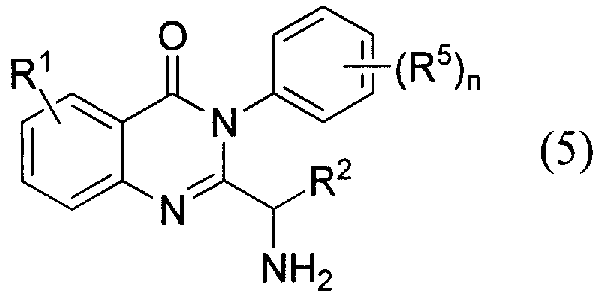
- step d) is conducted as follows:
combining the compound of formula 5 or a salt thereof and a compound of formula 6:
- wherein X is selected from the group consisting of halogen, mesyl, mesylate, tosyl and tosylate; and
- R6 is the amino protective group tetrahydropyranyl (THP); wherein a compound of formula 7:

- In some embodiments, the compound of formula (5) is a salt. In some embodiments, the compound of formula (5) is an HCl salt.
- In some embodiments, the compound of formula (7) is a salt. In some embodiments, the compound of formula (7) is an HCl salt.
- In some embodiments, X is halogen. In other embodiments, X is Cl or Br. In other embodiments, X is Cl.
- In some embodiments, step c) further comprises combining a solvent selected from the group consisting of acetonitrile, methanol, ethanol, isopropanol, n-propanol THF, water, and toluene. In some embodiments, step c) is performed in the presence of a solvent selected from the group consisting of acetonitrile, methanol, ethanol, isopropanol, n-propanol THF, water, toluene and mixtures thereof.
- In some embodiments, step c) comprises combining one or more reagents for the deprotection of amino protective groups. For instance, if the amino protective group is an alkoxymethyl or a carbamate, such as a t-butyl carbamate or Fmoc, then the one or more reagents is an acid. In further embodiments, the acid is a mineral acid. Non-limiting examples of mineral acids include hydrochloric acid (HCl), nitric acid (HNO3), phosphoric acid (H3PO4), sulfuric acid (H2SO4), boric acid (H3BO3), hydrofluoric acid (HF), hydrobromic acid (HBr), and perchloric acid (HClO4). In some embodiments, the reagent is hydrochloric acid (HCl), nitric acid (HNO3), phosphoric acid (H3PO4), sulfuric acid (H2SO4), boric acid (H3BO3), hydrofluoric acid (HF), hydrobromic acid (HBr), perchloric acid (HClO4), or a mixture thereof. In other embodiments, the acid is trifluoroacetic acid (TFA). In another example, if the amino protective group is an alkyl silyl group, the one or more reagents are tetra-n-butylammonium fluoride (TBAF) and/or trifluoroacetic acid (TFA). In yet another example, if the amino protective group is benzyl, then the one or more reagents are Pd/C and H2.
- In some embodiments, step c) is performed at a temperature between 0 and 70°C; between 20 and 60°C; or between 35 and 50°C.
- In some embodiments, the compound of formula 5 is synthesized as the free base, whereas in other embodiments, the compound of formula 5 is synthesized as a salt. In one embodiment, the compound of formula 5 is the salt of the compound of formula 12. In another embodiment, the compound of formula 12 is synthesized as the HCl salt. In yet other embodiments, the compound of formula 12 is synthesized as free base. In additional embodiments, the compound of formula 5 is the free base of the compound of formula 18. In some other embodiments, the compound of formula 5 is the salt of the compound of formula 18. By way of example, preparation of the salt can be followed by a neutralization step to synthesize the free base.
- The choice of synthesizing either a salt or free base form may depend on the materials physical properties. In one embodiment, for stability reasons and manufacturing reasons, such as ease of handling, the compound of formula 12 is synthesized and/or isolated as the salt. In another example, the compound of formula 18 is synthesized and/or isolated as the free base, which is sufficiently stable and easy to handle.
- In some embodiments, the compound of formula 5 or a salt thereof is crystallized from one or more solvents independently selected from the group comprising water, methanol, ethanol, isopropanol, n-propanol, concentrated NH4OH, acetonitrile, MTBE (tert-butyl methyl ether), DCM (dichloromethane), EtOAc (ethyl acetate), iPrOAc (isopropylacetate), toluene, 2-Me-THF, DIPE (diisopropylether), heptane and heptanes. In some embodiments, the compound of formula 5 or a salt thereof is crystallized from one or more solvents selected from the group consisting of water, NH4OH, acetonitrile, isopropanol, toluene, and mixtures thereof. In one embodiment, the one or more solvents are i) water, NH4OH, and acetonitrile; or ii) isopropanol and toluene.
- In some embodiments, step d) comprises a step of combining a base selected from the group consisting of triethylamine, pyridine, Hunig's base, and a carbonate base. In some embodiments, step d) comprises a step of combining a base selected from the group consisting of triethylamine, pyridine, Hunig's base, a carbonate base, and combinations thereof.
- In some embodiments, step d) further comprises combining a solvent selected from the group consisting of water, an alcoholic solvent, and combinations thereof.
- In some embodiments, step d) includes combining the compound of formula 5 or a salt thereof and a compound of formula 6 with a base or a solvent. In some embodiments, step d) includes combining the compound of formula 5 or a salt thereof and a compound of formula 6 with a base. In some embodiments, step d) includes combining the compound of formula 5 or a salt thereof and a compound of formula 6 with a solvent. In some embodiments, step d) includes combining the compound of formula 5 or a salt thereof and a compound of formula 6 with a base and a solvent.
- In some embodiments, step d) is performed at a temperature between 35 and 110°C; between 40 and 90°C; between 50 and 80°C; or between 60 and 90°C.
- In some embodiments, the compound of formula 7 or a salt thereof is crystallized from one or more solvents selected from the group consisting of alcohol and water. In other embodiments, the one or more solvents are i) methanol and water; ii) ethanol and water; iii) propanol and water; or iv) isopropanol and water.
- The compound of formula 6 is a protected purinyl compound wherein R6 is the amino protecting group tetrahydropyranyl (THP). Use of the protected purinyl compound, such as the compound of formula 13, to synthesize a compound of formula 7 or a salt thereof has been observed to proceed faster, with less dipurine adducts, and at a higher yield compared to use of an unprotected purinyl compound.
- The process according to the first aspect comprises step e) combining the compound of formula 7, or a salt thereof, and
one or more reagents, wherein the one or more reagents are used to remove the amino protective group, wherein a compound of formula I:
- In one embodiment, step e) is conducted as follows:
- combining the compound of formula 7, or a salt thereof, and
- one or more reagents, wherein the one or more reagents are used to remove the amino protective group, wherein a compound of formula I:

- As noted above, step e) comprises combining one or more reagents for the deprotection of amino protective groups.
- R6 is THP (tetrahydropyranyl). In some embodiments, R6 is THP and the one or more reagents used to remove the amino protective group is an acid. It has been discovered that non-aqueous acidic reaction conditions help avoid undesirable reactions such as degradation and formation of ring-opening side products. In some embodiments, the acid is generated in situ. In some embodiments, removal of the THP protective group proceeds to completion or near completion in the absence of water. In one embodiment, removal of the THP protective group proceeds to completion or near completion under anhydrous conditions. In another embodiment, removal of the THP protective group proceeds to completion or near completion with less than 0.5% water present. In a further embodiment, the acid is generated in situ. For example, ethanol and acetyl chloride may be used to generate HCl in situ. In some embodiments, step e) comprises an acid selected from the group consisting of a mineral acid, TFA and a Lewis acid. In some embodiments the acid is HCl.
- Deprotection is considered near completion when at least 90%, 95%, 97%, 98%, 99%, 99.5% or 99.9% of the protected material is deprotected.
- In some embodiments, step e) is performed at a temperature between 30 and 70°C; between 40 and 60°C; or between 25 and 50°C.
- In some embodiments, the compound of formula I or a salt thereof is crystallized from one or more solvents selected from the group comprising water, ethanol, methanol, isopropanol, n-propanol and acetone. In other embodiments, the one or more solvents are i) water; ii) ethanol; iii) acetone; iv) water and ethanol; or v) water, ethanol and acetone.
- In some of the foregoing embodiments, the compound of formula 1 is

- In some of the foregoing embodiments, the compound of formula 1 is

- In some of the foregoing embodiments, the compound of formula 1 is

- In some of the foregoing embodiments, the compound of formula 2 is

- In some of the foregoing embodiments, the compound of formula 3 is

- In some of the foregoing embodiments, the compound of formula 4 is

- In some of the foregoing embodiments, the compound of formula 4 is

- In some of the foregoing embodiments, the compound of formula 4 is

- In some of the foregoing embodiments, the compound of formula 5 is
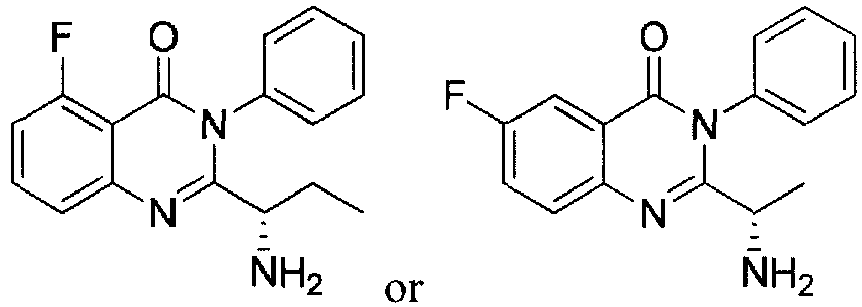
- In some of the foregoing embodiments, the compound of formula 5 is

- In some of the foregoing embodiments, the compound of formula 5 is

- In some of the foregoing embodiments, the compound of formula 6 is

- In some of the foregoing embodiments, the compound of formula 7 is

- In some of the foregoing embodiments, the compound of formula 7 is

- In some of the foregoing embodiments, the compound of formula 7 is

- In some of the foregoing embodiments, the compound of formula I is

- In some of the foregoing embodiments, the compound of formula I is

- In some of the foregoing embodiments, the compound of formula I is

- The processes described herein provide an efficient synthesis. In addition, the processes reduce or minimize certain process steps and/or side products, such as racemization of chiral centers during deprotection conditions. Furthermore, the processes disclosed herein may be suitable for various purposes, such as one or more of laboratory, industrial, commercial, non-commercial, manufacturing, non-manufacturing, regulatory, non-regulatory, medical, non-medical, pharmaceutical, and experimental uses.
- By way of example, the processes of the present application may be suitable for making compounds of the formulas disclosed herein, in the amounts of 1 mg, 5 mg, 10 mg, 50 mg, 100 mg, 250 mg, 500 mg, 750 mg, 1 g, 5 g, 10 g, 50 g, 100 g, 250 g, 500 g, 1 kg, 5 kg, 10 kg, 50 kg, 100 kg, 250 kg, 500 kg, 750 kg, 1000 kg, 2500 kg, and 5000 kg, in a single batch. In addition, the processes of the present application may be suitable for making compounds in the amounts between 1-100 mg, 1-500 mg, 1-1000 mg, 1-100 g, 1-500 g, 1-1000 g, 10-1000 kg, 500-1000 kg, 1000-2000 kg, 1000-5000 kg, and more than 5000 kg in a single batch. Additionally, the processes of the present application may be suitable for making compound in the amounts of at least 1 mg, 100 mg, 1 g, 10 g, 100 g, 1 kg, 10 kg, 100 kg, 1000 kg, 2500 kg, and 5000 kg, in a single batch. Also, the processes described herein may be used for making compounds in single or multiple batches, or in continuous/semi-continuous processes. In some embodiments, the process is a batch process. In some embodiments, the process is a continuous process. In some other embodiments, the process is a semi-continuous process.
- By way of example, the processes of the present application may utilize at least about 1 mmol, 10 mmol, 100 mmol, 1 mol, 5 mol, 10 mol, 20 mol, 50 mol, or 100 mol of at least one starting material. The starting material includes any of the starting or intermediate compounds disclosed herein, a salt thereof, or a reagent.
- In some embodiments, in the compound of formula 1:

- The application further discloses the compound of formula 1:

step a) combining a compound of formula 2:

- wherein R1 is halo;
- R2 is selected from the group consisting of H, and optionally substituted C1-C8 alkyl; and
- R3 and R4 are each independently selected from the group consisting of an amino protective group and an optionally substituted purinyl group. R1, R2, R3 and R4 may be as defined above for the compound of formula 1.
- The application further discloses the compound of formula 8:


- In some embodiments of the second aspect, the present invention provides a compound of formula 14:


a compound of formula 13:
- In further embodiments, the process further comprises combining a compound of formula 11:

an acid, wherein the compound of formula 12 or a salt thereof is synthesized. - In some embodiments, the process comprises combining a compound of formula 11:

an acid, wherein the compound of formula 12 or a salt thereof is synthesized. - In yet further embodiments, the process further comprises combining a compound of formula 8:

aniline, wherein the compound of formula 11 is synthesized. - In yet another embodiment, the process further comprises combining compound of formula 9:


- The application further discloses a compound of formula 15:
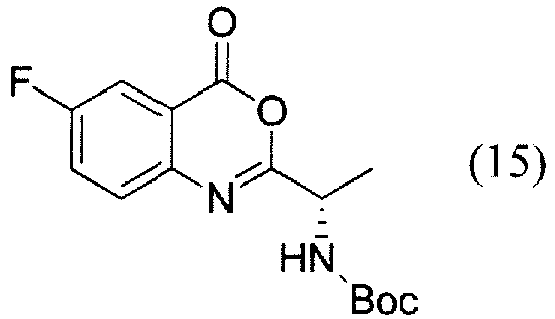


- The application further discloses a compound of formula 15a:


- In some embodiments of the second aspect, the present invention provides a compound of formula 19:


a compound of formula 13: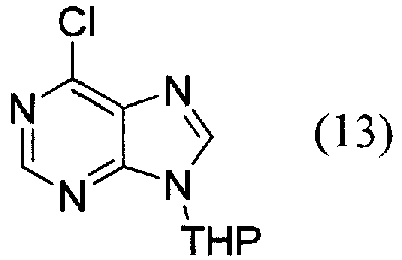
- In further embodiments, the process further comprises combining a compound of formula 17:

an acid, wherein the compound of formula 18 or a salt thereof is synthesized. - In some embodiments, the process further comprises combining a compound of formula 17:

an acid, wherein the compound of formula 18 or a salt thereof is synthesized. - In yet further embodiments, the process further comprises combining a compound of formula 15:

aniline, wherein the compound of formula 17 is synthesized. - In yet another embodiment, the process further comprises combining compound of formula 16:


- The application further discloses a compound of formula 20:


- The application further discloses a compound of formula 21:

combining a compound of formula 16:


- By way of example, the compositions of the present application may comprise at least 2000 kg, 1000 kg, 750 kg, 500 kg, 250 kg, 100 kg, 10 kg, 1 kg, 0.5 kg, 50 g, 5 g, or 0.5 g of a compound of a formula disclosed herein or a salt thereof. In some embodiments, compositions may comprise a multi-kilogram amount of a compound of a formula disclosed herein or salt thereof. In other embodiments, compositions of the present disclosure may comprise at least about 1 mmol, 10 mmol, 100 mmol, 1 mol, 5 mol, 10 mol, 20 mol, 50 mol, or 100 mol of a compound of a formula disclosed herein or a salt thereof. In addition to a compound of a formula disclosed herein or a salt thereof, composition may further comprise solvents, reagents, or combinations thereof. In another aspect, compositions may consist essentially of a compound of a formula disclosed herein or a salt thereof.
- By way of example, the resulting compounds from the processes described herein may be used in a pharmaceutical composition. In another embodiment, provided is a pharmaceutical composition comprising a resulting compound from the processes disclosed herein or a salt thereof, and one or more pharmaceutically acceptable carriers or excipients.
-

- A compound of formula 16 (1.0 kg, 1.0 eq.), a compound of formula 10 (1.5 kg, 1.2 eq.) and pyridine (3.0 kg) were added to reactor A. The mixture was agitated at 19 to 25°C and diphenylphosphite (6.1 kg, 4.0 eq.) was added to the mixture over at least 2 h while maintaining the internal temperature at less than about 35°C. The reaction mixture was adjusted to 19 to 25°C and agitated until the reaction was deemed complete by HPLC analysis (1-3 h). Aniline (0.7 kg, 1.2 eq.) was added over a minimum of 1 h while maintaining the internal temperature at less than about 40°C. The reaction mixture was then adjusted to 45 to 55°C and agitated until the reaction is deemed complete. The reaction mixture was cooled to 19 to 25°C and toluene (13 kg) was added followed by a prepared 1M HCl solution (10 kg) while maintaining the internal temperature at less than about 30°C. The biphasic mixture was agitated at about 22°C for at least 30 minutes and then allowed to settle. The aqueous layer was separated and discarded. A second portion of 1M HCl (10 kg) was added to the organic layer in reactor A. The biphasic mixture was agitated at 19 to 25°C for at least 30 minutes and then allowed to settle. The aqueous layer was separated and discarded. A compound of formula 17 was carried forward to the next step as a stock solution in toluene.
-

- To the stock solution of a compound of formula 17 in toluene was added acetonitrile (8.4 kg) and concentrated HCl (2.2 kg) while maintaining the internal temperature at no more than 30°C. The reaction mixture was adjusted to 19 to 25°C and agitated until the reaction was deemed complete. Water (5 kg) was added and the biphasic mixture was agitated at 19 to 25°C for at least 30 minutes and then allowed to settle. The bottom aqueous layer was separated and transferred to reactor B (product was in the aqueous layer). Water (10 kg) was then added to the organic layer in reactor A. The biphasic mixture was agitated at 19 to 25°C for at least 30 minutes and then allowed to settle. The bottom aqueous layer was separated and transferred to reactor B (combining with the first aqueous phase). Toluene (4 kg) was added to the combined aqueous layers in reactor B and the biphasic mixture was agitated at 19 to 25°C for at least 30 minutes and then allowed to settle. The bottom aqueous layer was separated and transferred to reactor A. Toluene (4 kg) was added to reactor A and the biphasic mixture was agitated at 19 to 25°C for at least 30 minutes and then allowed to settle. The bottom aqueous layer was separated and transferred to reactor B. The aqueous phase was then partially concentrated under vacuum to 18 l to remove toluene and reduce acetonitrile levels to no more than 3.5%. The aqueous phase was then transferred, in portions, to reactor B containing water (5 kg), ammonium hydroxide (6.5 kg, 8.0 eq.) and acetonitrile (0.8 kg) while maintaining the internal temperature at no more than 19 to 25°C. The resulting slurry was agitated at 19 to 25°C for ca 1 h before filtering. The filter cake was rinsed with water (3 kg) and then dried under vacuum at no more than 50°C to afford 18. 1H NMR (400 MHz, CDCl3): δ 7.82 (dd, J = 8.4, 2.2 Hz, 1H), 7.71 (dd, J = 9.2, 5.0 Hz, 1H), 7.55-7.45 (m, 4H), 7.27 (d, J = 6.4 Hz, 2H), 3.69 (q, J = 6.4 Hz, 1H), 2.01 (s, 2H), 1.27 (d, J = 6.0 Hz, 3H). 13C NMR (100 MHz, CDCl3): δ 162.3, 161.9, 160.5, 159.8, 144.4, 136.6, 130.3, 130.2, 129.9, 129.0, 128.9, 128.4, 123.4, 123.2, 122.3, 122.2, 112.1, 111.9, 48.7, 23.7 (signal splitting due to fluorine results in additional peaks).
-

- A compound of formula 18 (1.0 kg, 1 eq.), a compound of formula 13 (0.9 kg, 1.1 eq.), triethylamine (0.5 kg, 1.5 eq.), water (4 kg) and EtOH (2 kg) were added to reactor A. The mixture was adjusted to 75 to 85°C and agitated until the reaction was deemed complete. The mixture was then adjusted to 19 to 25°C and agitated for ca 1 h before filtering. The isolated compound of formula 19 solid was rinsed with water (2 kg) and heptanes (2 x 3 kg) and then dried under vacuum. 1H NMR (400 MHz, CDCl3): δ 8.28 (d, J = 2 Hz, 1H), 8.00 (bs, 1H), 7.89 (dd, J = 8.8, 3.0 Hz, 1H), 7.73 (m, 1H), 7.59 (m, 3H), 7.48 (m, 2H), 7.35 (m, 1H), 6.68 (m, 1H), 5.69 (dd, J = 10.0, 3.0 Hz, 1H), 5.24 (bs, 1H), 4.16 (dd, J = 11.6, 2.0 Hz, 1H), 3.77 (tt, J = 11.2, 1.4 Hz, 1H), 2.06 (m, 3H), 1.75 (m, 3H), 1.47 (d, J = 6.8 Hz, 3H).
-

- To reactor A was added a compound of formula 19 followed by EtOH (4.2 kg). Acetyl chloride (0.33 kg, 1.2 eq.) was then added slowly while maintaining the internal temperature at less than about 40°C. The mixture was then adjusted to 19 to 25°C and agitated until the reaction was deemed complete. After adjusting the temperature to 5 to 15°C, 0.84 kg of a prepared 4.5% sodium carbonate solution was added to the reaction mixture followed by water (1 kg) while maintaining the internal temperature at 5 to 15°C. To reactor B was added 5.44 kg of a prepared 4.5% sodium carbonate solution and the contents were warmed to 65 to 75°C. Approximately 20% of the solution held in reactor A was then transferred to the aqueous solution in reactor B while keeping the internal temperature at 65 to 75°C. The mixture was aged for about 30 minutes until a slurry was formed. The remaining solution from reactor A was transferred to reactor B over a period of about 1 h while maintaining the internal temperature at 65 to 75°C. The slurry was agitated at 65 to 75°C for 1 to 5 h until a thick slurry was formed. The contents were then adjusted to 19 to 25°C over about 1 h and agitated about 1 h before filtering. The wet cake was rinsed with water (10 kg) and then dried under vacuum at about 65°C. 1H NMR (400 MHz, CDCl3): δ 8.33 (s, 1H), 7.98 (br, 1H), 7.90 (dd, J = 8.4, 2.8 Hz, 1H), 7.74 (dd, J = 8.8, 5.2 Hz, 1H), 7.65-7.57 (m, 3H), 7.51-7.45 (m, 2H), 7.37 (m, 1H), 6.84 (bd, J = 8.8 Hz, 1H), 5.27 (br, 1H), 1.75 (br, 1H), 1.50 (d, J = 6.8 Hz, 3H). 19F NMR (400 MHz, CDCl3): δ -111.11 (referenced to TFA at -76.5 ppm).
Claims (10)
- A process for synthesizing a compound of formula I:
 step a) combining a compound of formula 2:

 wherein R1 is halo;R2 is selected from the group consisting of H, and optionally substituted C1-C8 alkyl; andR3 and R4 are each independently selected from the group consisting of hydrogen and an amino protective group;step b) combining the compound of formula 1 or a salt thereof; and
a compound of formula 22:
 step c) combining the compound of formula 4 or a salt thereof, wherein at least one of R3 and R4 of the compound of formula 4 is an amino protective group; and
one or more reagents, wherein the one or more reagents are used to remove the amino protective group;
wherein a compound of formula 5: step d) combining the compound of formula 5 or a salt thereof and a compound of formula 6:
 wherein X is selected from the group consisting of halogen, mesyl, mesylate, tosyl and tosylate; andR6 is the amino protective group tetrahydropyranyl (THP);wherein a compound of formula 7:
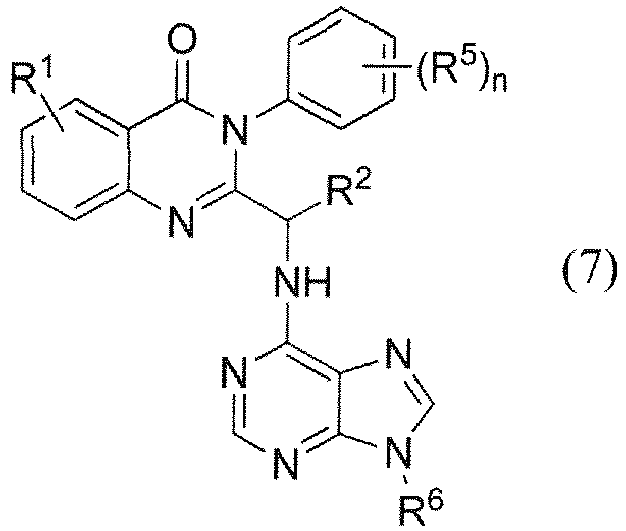 step e) further combining the compound of formula 7 or a salt thereof; and
one or more reagents, wherein the one or more reagents are used to remove the amino protective group, wherein a compound of formula I:
- The process of claim 1, wherein R3 and R4 are each independently selected from the group consisting of hydrogen, t-butyl carbamate, tetrahydropyranyl, alkylsilyl, benzyl, and alkoxymethyl; and/or
wherein step a) further comprises a step of combining a dehydrating agent selected from the group consisting of diphenylphosphite, triphenylphosphite, N,N'-dicyclohexylcarbodiimide, N-(3-dimethylaminopropyl)-N'-ethylcarbodiimide hydrochloride, and 1,1'-carbonyldiimidazole; and/or
wherein step a) further comprises a step of combining a base selected from the group consisting of pyridine, 4-dimethylaminopyridine, triethylamine, isopropylethylamine, imidazole, DABCO, DBU, 2,6-lutidine, and N,N-diisopropylethylamine; and/or
wherein step a) further comprises combining a solvent selected from the group consisting of pyridine, toluene, tetrahydrofuran, acetonitrile and 2-MeTHF; and/or
wherein step a) is performed at a temperature between 0 and 45°C. - The process of claim 1 or 2, wherein step b) is performed at a temperature between 0 and 80°C.
- The process of any one of claims 1-3, wherein step c) further comprises a solvent selected from the group consisting of acetonitrile, methanol, ethanol, isopropanol, n-propanol, THF, water, and toluene; and/or
wherein the compound of formula 7 or a salt thereof is crystallized from one or more solvents selected from the group consisting of alcohol, water, and combinations thereof. - The process of claim 1 for synthesizing a compound of formula II:
 step a) combining a compound of formula 9:
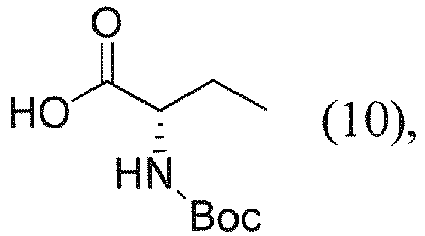
 step b) combining the compound of formula 8 or a salt thereof and aniline, wherein a compound of formula 11:
 step c) combining the compound of formula 11 or a salt thereof and an acid, wherein a compound of formula 12:
 step d) combining the compound of formula 12 or a salt thereof and a compound of formula 13:
 step e) combining the compound of formula 14 or a salt thereof and an acid, wherein a compound of formula II:or a salt thereof is synthesized.
- The process of claim 1 for synthesizing a compound of formula III:
 step a) combining a compound of formula 16:

 step b) combining the compound of formula 15 or a salt thereof and aniline, wherein a compound of formula 17:
 step c) combining the compound of formula 17 or a salt thereof and an acid, wherein a compound of formula 18:
 step d) combining the compound of formula 18 or a salt thereof and a compound of formula 13:
 step e) combining the compound of formula 19 or a salt thereof and an acid, wherein the compound of formula III:or a salt thereof is synthesized.
- The process of claim 5 or 6, wherein step a) further comprises a step of combining a dehydrating agent, wherein the dehydrating agent is preferably selected from the group consisting of diphenylphosphite, triphenylphosphite, N,N'-dicyclohexylcarbodiimide, N-(3-dimethylaminopropyl)-N'-ethylcarbodiimide hydrochloride, and 1,1'-carbonyldiimidazole; and/or
wherein step a) further comprises a step of combining a base selected from the group consisting of pyridine, 4-dimethylaminopyridine, triethylamine, isopropylethylamine, imidazole, DABCO, DBU, 2,6-lutidine, and N,N-diisopropylethylamine; and/or
wherein step a) further comprises combining a solvent selected from the group consisting of pyridine, toluene, tetrahydrofuran, acetonitrile and 2-MeTHF; and/or
wherein step a) is performed at a temperature between 0 and 45°C; and/or
wherein step b) is performed at a temperature between 0 and 80°C; and/or
wherein step c) further comprises a solvent selected from the group consisting of acetonitrile, methanol, ethanol, isopropanol, n-propanol, THF, water, and toluene; and/or
wherein step c) comprises a mineral acid or TFA. - The process of any one of claims 1-7, wherein step c) is performed at a temperature between 0 and 70°C; and/or
wherein the compound of formula 5, 12 or 18 or a salt thereof is crystallized from one or more solvents selected from either (A) the group comprising water, methanol, ethanol, isopropanol, n-propanol, concentrated NH4OH, acetonitrile, MTBE, DCM, EtOAc, iPrOAc, toluene, 2-Me-THF, DIPE (diisopropylether), heptane and heptanes; or (B) water, concentrated NH4OH, and acetonitrile; or (C) isopropanol and toluene; and/or
wherein step d) comprises a base selected from the group consisting of triethylamine, pyridine, Hunig's base, and a carbonate base; and/or
wherein step d) comprises a solvent selected from the group consisting of water, an alcoholic solvent, and combinations thereof; and/or
wherein step d) is performed at a temperature between 35 and 110°C; and/or
wherein step e) comprises an acid selected from the group consisting of a mineral acid, TFA and a Lewis acid; and/or
wherein step e) is performed at a temperature between 30 and 70°C; and/or
wherein the compound of formula I, II or III or a salt thereof is crystallized from one or more solvents selected from (A) the group comprising water, ethanol, methanol, isopropanol, n-propanol and acetone; (B) water and ethanol; or (C) acetone. - The process of any one of claims 5-7, or claim 8 when dependent on any one of claims 5-7, wherein the compound of formula 14 or 19 or a salt thereof is crystallized from one or more solvents selected from the group consisting of isopropanol, n-propanol, ethanol, methanol, and water.
- The process of any one of claims 1-9, wherein the process is operated in a batch process.
Priority Applications (3)
| Application Number | Priority Date | Filing Date | Title |
|---|---|---|---|
| EP19192296.2A EP3594215A1 (en) | 2013-12-20 | 2014-12-18 | Intermediate products in process methods for the preparation of phosphatidylinositol 3-kinase inhibitors |
| PL14827950T PL3083630T3 (en) | 2013-12-20 | 2014-12-18 | Process methods for phosphatidylinositol 3-kinase inhibitors |
| SI201431323T SI3083630T1 (en) | 2013-12-20 | 2014-12-18 | Process methods for phosphatidylinositol 3-kinase inhibitors |
Applications Claiming Priority (2)
| Application Number | Priority Date | Filing Date | Title |
|---|---|---|---|
| US201361919548P | 2013-12-20 | 2013-12-20 | |
| PCT/US2014/071286 WO2015095601A1 (en) | 2013-12-20 | 2014-12-18 | Process methods for phosphatidylinositol 3-kinase inhibitors |
Related Child Applications (1)
| Application Number | Title | Priority Date | Filing Date |
|---|---|---|---|
| EP19192296.2A Division EP3594215A1 (en) | 2013-12-20 | 2014-12-18 | Intermediate products in process methods for the preparation of phosphatidylinositol 3-kinase inhibitors |
Publications (2)
| Publication Number | Publication Date |
|---|---|
| EP3083630A1 EP3083630A1 (en) | 2016-10-26 |
| EP3083630B1 true EP3083630B1 (en) | 2019-08-21 |
Family
ID=52355226
Family Applications (2)
| Application Number | Title | Priority Date | Filing Date |
|---|---|---|---|
| EP19192296.2A Withdrawn EP3594215A1 (en) | 2013-12-20 | 2014-12-18 | Intermediate products in process methods for the preparation of phosphatidylinositol 3-kinase inhibitors |
| EP14827950.8A Active EP3083630B1 (en) | 2013-12-20 | 2014-12-18 | Process methods for phosphatidylinositol 3-kinase inhibitors |
Family Applications Before (1)
| Application Number | Title | Priority Date | Filing Date |
|---|---|---|---|
| EP19192296.2A Withdrawn EP3594215A1 (en) | 2013-12-20 | 2014-12-18 | Intermediate products in process methods for the preparation of phosphatidylinositol 3-kinase inhibitors |
Country Status (20)
| Country | Link |
|---|---|
| US (5) | US9567337B2 (en) |
| EP (2) | EP3594215A1 (en) |
| JP (1) | JP2017502021A (en) |
| KR (1) | KR20160095161A (en) |
| CN (1) | CN105849108A (en) |
| AR (1) | AR098871A1 (en) |
| AU (2) | AU2014364410B2 (en) |
| CA (1) | CA2934531C (en) |
| EA (1) | EA201690990A1 (en) |
| ES (1) | ES2752552T3 (en) |
| HK (1) | HK1224281A1 (en) |
| IL (1) | IL246127A0 (en) |
| MX (1) | MX2016008259A (en) |
| NZ (2) | NZ720867A (en) |
| PL (1) | PL3083630T3 (en) |
| PT (1) | PT3083630T (en) |
| SG (1) | SG11201604825VA (en) |
| SI (1) | SI3083630T1 (en) |
| TW (1) | TW201609679A (en) |
| WO (1) | WO2015095601A1 (en) |
Families Citing this family (11)
| Publication number | Priority date | Publication date | Assignee | Title |
|---|---|---|---|---|
| US6667300B2 (en) | 2000-04-25 | 2003-12-23 | Icos Corporation | Inhibitors of human phosphatidylinositol 3-kinase delta |
| EP1761540B1 (en) | 2004-05-13 | 2016-09-28 | Icos Corporation | Quinazolinones as inhibitors of human phosphatidylinositol 3-kinase delta |
| PE20160685A1 (en) | 2013-10-04 | 2016-07-23 | Infinity Pharmaceuticals Inc | HETEROCYCLIC COMPOUNDS AND USES OF THEM |
| WO2015095605A1 (en) | 2013-12-20 | 2015-06-25 | Gilead Calistoga Llc | Polymorphic forms of a hydrochloride salt of (s) -2-(9h-purin-6-ylamino) propyl) -5-fluoro-3-phenylquinazolin-4 (3h) -one |
| NZ720867A (en) | 2013-12-20 | 2018-01-26 | Gilead Calistoga Llc | Process methods for phosphatidylinositol 3-kinase inhibitors |
| SG10201808053XA (en) | 2014-03-19 | 2018-10-30 | Infinity Pharmaceuticals Inc | Heterocyclic compounds for use in the treatment of pi3k-gamma mediated disorders |
| US10160761B2 (en) | 2015-09-14 | 2018-12-25 | Infinity Pharmaceuticals, Inc. | Solid forms of isoquinolinones, and process of making, composition comprising, and methods of using the same |
| WO2017134607A1 (en) | 2016-02-03 | 2017-08-10 | Lupin Limited | A process for the preparation of phosphatidylinositol 3-kinase inhibitor |
| WO2017221272A1 (en) * | 2016-06-23 | 2017-12-28 | Sun Pharmaceutical Industries Limited | Process for the preparation of idelalisib |
| KR101932146B1 (en) * | 2016-07-14 | 2018-12-24 | 주식회사 바이오웨이 | Novel Quinazolinone derivatives as PI3K inhibitors, and pharmaceutical composition comprising the same |
| WO2019178596A1 (en) | 2018-03-16 | 2019-09-19 | Johnson Matthey Public Limited Company | Pyridine or n,n-dimethyl acetamide solvated solid state forms of solvated idelalisib, their use and preparation |
Family Cites Families (113)
| Publication number | Priority date | Publication date | Assignee | Title |
|---|---|---|---|---|
| DE1249281B (en) | 1963-05-18 | |||
| US3691016A (en) | 1970-04-17 | 1972-09-12 | Monsanto Co | Process for the preparation of insoluble enzymes |
| DE2027645A1 (en) | 1970-06-05 | 1971-12-09 | Byk Gulden Lomberg Chemische Fa bnk GmbH, 7750 Konstanz | Piperazinylalkyl quinazolone (4) den vate, process for their preparation and medicinal products containing them |
| NL7204972A (en) | 1971-04-21 | 1972-10-24 | ||
| US3897432A (en) | 1971-04-21 | 1975-07-29 | Merck & Co Inc | Substituted benzimidazole derivatives |
| CA1023287A (en) | 1972-12-08 | 1977-12-27 | Boehringer Mannheim G.M.B.H. | Process for the preparation of carrier-bound proteins |
| US4179337A (en) | 1973-07-20 | 1979-12-18 | Davis Frank F | Non-immunogenic polypeptides |
| US4195128A (en) | 1976-05-03 | 1980-03-25 | Bayer Aktiengesellschaft | Polymeric carrier bound ligands |
| DE2644265C2 (en) | 1976-09-30 | 1983-02-10 | Bayer Ag, 5090 Leverkusen | Quinazoline |
| US4330440A (en) | 1977-02-08 | 1982-05-18 | Development Finance Corporation Of New Zealand | Activated matrix and method of activation |
| CA1093991A (en) | 1977-02-17 | 1981-01-20 | Hideo Hirohara | Enzyme immobilization with pullulan gel |
| US4183931A (en) | 1977-09-08 | 1980-01-15 | Research Corporation | 2-Ketoalkyl-4(3H)-quinazolinones |
| US4229537A (en) | 1978-02-09 | 1980-10-21 | New York University | Preparation of trichloro-s-triazine activated supports for coupling ligands |
| DE2812635A1 (en) | 1978-03-22 | 1979-09-27 | Bayer Ag | HETEROCYCLIC COMPOUNDS |
| JPS55118918A (en) | 1979-03-06 | 1980-09-12 | Mitsubishi Electric Corp | Production of quinazolone ring-containing epoxy resin |
| JPS55118917A (en) | 1979-03-06 | 1980-09-12 | Mitsubishi Electric Corp | Production of quinazolone ring-containing epoxy resin |
| US4289872A (en) | 1979-04-06 | 1981-09-15 | Allied Corporation | Macromolecular highly branched homogeneous compound based on lysine units |
| JPS6017375B2 (en) | 1979-06-20 | 1985-05-02 | 三菱電機株式会社 | Manufacturing method of polyamide resin |
| JPS6023084B2 (en) | 1979-07-11 | 1985-06-05 | 味の素株式会社 | blood substitute |
| US4640835A (en) | 1981-10-30 | 1987-02-03 | Nippon Chemiphar Company, Ltd. | Plasminogen activator derivatives |
| US4496689A (en) | 1983-12-27 | 1985-01-29 | Miles Laboratories, Inc. | Covalently attached complex of alpha-1-proteinase inhibitor with a water soluble polymer |
| DE3675588D1 (en) | 1985-06-19 | 1990-12-20 | Ajinomoto Kk | HAEMOGLOBIN TIED TO A POLY (ALKENYLENE OXIDE). |
| US4791192A (en) | 1986-06-26 | 1988-12-13 | Takeda Chemical Industries, Ltd. | Chemically modified protein with polyethyleneglycol |
| WO1988001213A1 (en) | 1986-08-18 | 1988-02-25 | Clinical Technologies Associates, Inc. | Delivery systems for pharmacological agents |
| USRE35862E (en) | 1986-08-18 | 1998-07-28 | Emisphere Technologies, Inc. | Delivery systems for pharmacological agents encapsulated with proteinoids |
| US6696250B1 (en) | 1986-12-03 | 2004-02-24 | Competitive Technologies, Inc. | RNA ribozyme polymerases, dephosphorylases, restriction endoribonucleases and methods |
| US5229490A (en) | 1987-05-06 | 1993-07-20 | The Rockefeller University | Multiple antigen peptide system |
| US5021456A (en) | 1988-02-25 | 1991-06-04 | Merrell Dow Pharmaceuticals Inc. | Inhibitors of lysyl oxidase |
| US4965288A (en) | 1988-02-25 | 1990-10-23 | Merrell Dow Pharmaceuticals Inc. | Inhibitors of lysyl oxidase |
| US5252608A (en) | 1988-02-25 | 1993-10-12 | Merrell Dow Pharmaceuticals Inc. | Inhibitors of lysyl oxidase |
| US4943593A (en) | 1988-02-25 | 1990-07-24 | Merrell Dow Pharmaceuticals Inc. | Inhibitors of lysyl oxidase |
| US5182297A (en) | 1988-02-25 | 1993-01-26 | Merrell Dow Pharmaceuticals Inc. | Inhibitors of lysyl oxidase |
| US5059714A (en) | 1988-02-25 | 1991-10-22 | Merrell Dow Pharmaceuticals Inc. | Inhibitors of lysyl oxidase |
| US5120764A (en) | 1988-11-01 | 1992-06-09 | Merrell Dow Pharmaceuticals Inc. | Inhibitors of lysyl oxidase |
| US4997854A (en) | 1989-08-25 | 1991-03-05 | Trustees Of Boston University | Anti-fibrotic agents and methods for inhibiting the activity of lysyl oxidase in-situ using adjacently positioned diamine analogue substrates |
| US5225347A (en) | 1989-09-25 | 1993-07-06 | Innovir Laboratories, Inc. | Therapeutic ribozyme compositions and expression vectors |
| US5013556A (en) | 1989-10-20 | 1991-05-07 | Liposome Technology, Inc. | Liposomes with enhanced circulation time |
| FR2675803B1 (en) | 1991-04-25 | 1996-09-06 | Genset Sa | CLOSED, ANTISENSE AND SENSE OLIGONUCLEOTIDES AND THEIR APPLICATIONS. |
| SG43072A1 (en) | 1991-06-18 | 1997-10-17 | American Home Prod | Method of treating adult t-cell leukemia/lymphoma |
| ATE156158T1 (en) | 1992-04-14 | 1997-08-15 | Cornell Res Foundation Inc | MACROMOLECULES BASED ON DENDRITIC POLYMERS AND METHOD FOR THE PRODUCTION |
| US5658780A (en) | 1992-12-07 | 1997-08-19 | Ribozyme Pharmaceuticals, Inc. | Rel a targeted ribozymes |
| GB9301000D0 (en) | 1993-01-20 | 1993-03-10 | Glaxo Group Ltd | Chemical compounds |
| US5378725A (en) | 1993-07-19 | 1995-01-03 | The Arizona Board Of Regents | Inhibition of phosphatidylinositol 3-kinase with wortmannin and analogs thereof |
| GB9404485D0 (en) | 1994-03-09 | 1994-04-20 | Cancer Res Campaign Tech | Benzamide analogues |
| FI951367A7 (en) | 1994-03-28 | 1995-09-29 | Japan Energy Corp | Purine derivatives and inflammatory disease suppressants |
| US5480906A (en) | 1994-07-01 | 1996-01-02 | Eli Lilly And Company | Stereochemical Wortmannin derivatives |
| FI970588L (en) | 1994-08-12 | 1997-04-11 | Pro Neuron Inc | Methods for treating sepsis or inflammatory diseases with oxypurine nucleosides |
| US5561138A (en) | 1994-12-13 | 1996-10-01 | American Home Products Corporation | Method of treating anemia |
| US6043062A (en) | 1995-02-17 | 2000-03-28 | The Regents Of The University Of California | Constitutively active phosphatidylinositol 3-kinase and uses thereof |
| US6096871A (en) | 1995-04-14 | 2000-08-01 | Genentech, Inc. | Polypeptides altered to contain an epitope from the Fc region of an IgG molecule for increased half-life |
| US5948664A (en) | 1996-02-29 | 1999-09-07 | The Regents Of The University Of California | PI 3-kinase polypeptides |
| ATE279947T1 (en) | 1996-03-18 | 2004-11-15 | Univ Texas | IMMUNOGLOBULIN-LIKE DOMAIN WITH INCREASED HALF-LIFE TIMES |
| PT901487E (en) | 1996-05-15 | 2003-08-29 | Pfizer | 4 (3H) -QUINAZOLINONES 2,3,6-TRISSUBSTITUIDES |
| GB9611460D0 (en) | 1996-06-01 | 1996-08-07 | Ludwig Inst Cancer Res | Novel lipid kinase |
| US5858753A (en) | 1996-11-25 | 1999-01-12 | Icos Corporation | Lipid kinase |
| TW528755B (en) | 1996-12-24 | 2003-04-21 | Glaxo Group Ltd | 2-(purin-9-yl)-tetrahydrofuran-3,4-diol derivatives |
| DE69723869T2 (en) | 1996-12-31 | 2004-04-22 | Dr. Reddy's Laboratories Ltd. | HETEROCYCLIC COMPOUNDS, METHOD FOR THEIR PRODUCTION, PHARMACEUTICAL COMPOSITIONS THAT CONTAIN THEIR AND THEIR APPLICATION IN THE TREATMENT OF DIABETIS AND RELATED DISEASES |
| GB9702701D0 (en) | 1997-02-01 | 1997-04-02 | Univ Newcastle Ventures Ltd | Quinazolinone compounds |
| ID22711A (en) | 1997-02-28 | 1999-12-09 | Pfizer Prod Inc | ATROPISOMERS OF 3-ARIL-4 (3H) -KINAZOLINON AND ITS USE AS A RECEPTOR-AMPA ANTAGONISTS |
| ATE303997T1 (en) | 1997-06-09 | 2005-09-15 | Pfizer Prod Inc | CHINAZOLIN-4-ON AMPA ANTAGONISTS |
| WO1999001139A1 (en) | 1997-07-03 | 1999-01-14 | Thomas Jefferson University | An improved method for design and selection of efficacious antisense oligonucleotides |
| IL125950A0 (en) | 1997-09-05 | 1999-04-11 | Pfizer Prod Inc | Methods of administering ampa receptor antagonists to treat dyskinesias associated with dopamine agonist therapy |
| EP1044004A1 (en) | 1998-01-08 | 2000-10-18 | The University Of Virginia Patent Foundation | A2a adenosine receptor agonists in combination with a type iv phosphodiesterase inhibitors |
| WO1999008501A2 (en) | 1998-04-23 | 1999-02-25 | Dr. Reddy's Research Foundation | New heterocyclic compounds and their use in medicine, process for their preparation and pharmaceutical compositions containing them |
| US6048970A (en) | 1998-05-22 | 2000-04-11 | Incyte Pharmaceuticals, Inc. | Prostate growth-associated membrane proteins |
| US6100090A (en) | 1999-06-25 | 2000-08-08 | Isis Pharmaceuticals Inc. | Antisense inhibition of PI3K p85 expression |
| US6046049A (en) | 1999-07-19 | 2000-04-04 | Isis Pharmaceuticals Inc. | Antisense modulation of PI3 kinase p110 delta expression |
| ES2263501T3 (en) | 1999-10-27 | 2006-12-16 | Cytokinetics, Inc. | PROCEDURE AND COMPOSITIONS THAT USE QUINAZOLINONES. |
| SK9742002A3 (en) | 2000-01-07 | 2003-02-04 | Transform Pharmaceuticals Inc | High-throughput formation, identification, and analysis of diverse solid-forms |
| EP1857443B1 (en) | 2000-01-24 | 2012-03-28 | AstraZeneca AB | Therapeutic morpholino-substituted compounds |
| AU2972701A (en) | 2000-02-07 | 2001-08-14 | Bristol Myers Squibb Co | 3-aminopyrazole inhibitors of cyclin dependent kinases |
| US6667300B2 (en) | 2000-04-25 | 2003-12-23 | Icos Corporation | Inhibitors of human phosphatidylinositol 3-kinase delta |
| DK2223922T3 (en) | 2000-04-25 | 2016-06-06 | Icos Corp | Inhibitors of HUMANPHOSPHATIDYL-inositol 3-KINASEDELTA |
| FR2828206B1 (en) | 2001-08-03 | 2004-09-24 | Centre Nat Rech Scient | USE OF LYSYL OXIDASE INHIBITORS FOR CELL CULTURE AND TISSUE ENGINEERING |
| AU2003213092A1 (en) | 2002-02-15 | 2003-09-09 | Smithkline Beecham Corporation | Syntheses of quinazolinones |
| AU2003247483A1 (en) | 2002-05-30 | 2003-12-31 | The Children's Hospital Of Philadelphia | Methods for treatment of acute lymphocytic leukemia |
| EA011807B1 (en) | 2002-07-10 | 2009-06-30 | Лаборатуар Сероно Са | Azolidinone-vinyl fused-benzene derivatives |
| US20040092561A1 (en) | 2002-11-07 | 2004-05-13 | Thomas Ruckle | Azolidinone-vinyl fused -benzene derivatives |
| GB0217777D0 (en) | 2002-07-31 | 2002-09-11 | Novartis Ag | Organic compounds |
| US20040023390A1 (en) | 2002-08-05 | 2004-02-05 | Davidson Beverly L. | SiRNA-mediated gene silencing with viral vectors |
| CA2400254A1 (en) | 2002-09-19 | 2004-03-19 | University Health Network | Compositions and methods for treating heart disease |
| AU2003293310B2 (en) | 2002-09-30 | 2010-04-01 | Bayer Intellectual Property Gmbh | Fused azole-pyrimidine derivatives |
| JP2006510661A (en) | 2002-12-06 | 2006-03-30 | ワーナー−ランバート・カンパニー、リミテッド、ライアビリティ、カンパニー | Benzoxazin-3-ones and their derivatives as inhibitors of PI3K |
| AU2003303231A1 (en) | 2002-12-20 | 2004-07-14 | Warner-Lambert Company Llc | Benzoxazines and derivatives thereof as inhibitors of pi3ks |
| JP2006523237A (en) | 2003-04-03 | 2006-10-12 | セマフォア ファーマシューティカルズ, インコーポレイテッド | PI-3 kinase inhibitor prodrug |
| WO2004108716A1 (en) | 2003-06-05 | 2004-12-16 | Warner-Lambert Company Llc | 3-arylsulfanyl and 3-heteroarylsulfanyl substituted benzo[b]thiophenes as therapeutic agents |
| JP2006526608A (en) | 2003-06-05 | 2006-11-24 | ワーナー−ランバート カンパニー リミティド ライアビリティー カンパニー | Tetrazole benzofurancarboxamide as a therapeutic agent with PI3K activity |
| WO2004108708A1 (en) | 2003-06-05 | 2004-12-16 | Warner-Lambert Company Llc | 3-substituted indoles and derivatives thereof as therapeutic agents |
| US20040259926A1 (en) | 2003-06-05 | 2004-12-23 | Bruendl Michelle M. | 3-Aryloxy and 3-heteroaryloxy substituted benzo[b]thiophenes as therapeutic agents |
| MXPA05013210A (en) | 2003-06-05 | 2006-03-09 | Warner Lambert Co | Cycloalkylsulfanyl substituted benzo[b]thiophenes as therapeutic agents. |
| MXPA05013061A (en) | 2003-06-05 | 2006-03-02 | Warner Lambert Co | Cycloalkyl and heterocycloalkyl substituted benzothiophenes as therapeutic agents. |
| US20050043239A1 (en) | 2003-08-14 | 2005-02-24 | Jason Douangpanya | Methods of inhibiting immune responses stimulated by an endogenous factor |
| US20050054614A1 (en) | 2003-08-14 | 2005-03-10 | Diacovo Thomas G. | Methods of inhibiting leukocyte accumulation |
| CA2552664A1 (en) | 2004-01-08 | 2005-07-28 | Michigan State University | Methods for treating and preventing hypertension and hypertension-related disorders |
| WO2005112935A1 (en) | 2004-05-13 | 2005-12-01 | Vanderbilt University | Phosphoinositide 3-kinase delta selective inhibitors for inhibiting angiogenesis |
| EP1761540B1 (en) | 2004-05-13 | 2016-09-28 | Icos Corporation | Quinazolinones as inhibitors of human phosphatidylinositol 3-kinase delta |
| CA2567883A1 (en) | 2004-05-25 | 2005-12-15 | Icos Corporation | Methods for treating and/or preventing aberrant proliferation of hematopoietic cells |
| WO2005120511A1 (en) | 2004-06-04 | 2005-12-22 | Icos Corporation | Methods for treating mast cell disorders |
| WO2006089106A2 (en) | 2005-02-17 | 2006-08-24 | Icos Corporation | Phosphoinositide 3-kinase inhibitors for inhibiting leukocyte accumulation |
| WO2009058361A1 (en) | 2007-10-31 | 2009-05-07 | Dynavax Technologies Corp. | Inhibition of type i ifn production |
| KR20160091440A (en) | 2008-11-13 | 2016-08-02 | 길리아드 칼리스토가 엘엘씨 | Therapies for hematologic malignancies |
| EP2365810A2 (en) | 2008-12-04 | 2011-09-21 | The U.S.A. As Represented By The Secretary, Department Of Health And Human Services | Phosphatidylinositol-3-kinase p110 delta-targeted drugs in the treatment of cns disorders |
| ES2634492T3 (en) | 2008-12-24 | 2017-09-28 | Prana Biotechnology Ltd | Quinazolinone Compounds |
| CA2756347A1 (en) | 2009-03-24 | 2010-09-30 | Gilead Calistoga Llc | Atropisomers of 2-purinyl-3-tolyl-quinazolinone derivatives and methods of use |
| SG175259A1 (en) * | 2009-04-20 | 2011-11-28 | Gilead Calistoga Llc | Methods of treatment for solid tumors |
| WO2011032277A1 (en) | 2009-09-18 | 2011-03-24 | Boehringer Ingelheim International Gmbh | Quinazolinone derivatives as viral polymerase inhibitors |
| JP2013528228A (en) | 2010-06-11 | 2013-07-08 | ギリアード カリストガ エルエルシー | Methods of treating blood system disorders in selected patients with quinazolinone compounds |
| WO2013082540A1 (en) | 2011-12-02 | 2013-06-06 | Gilead Calistoga Llc | Compositions and methods of treating a proliferative disease with a quinazolinone derivative |
| EA025407B1 (en) | 2012-03-05 | 2016-12-30 | Джилид Калистога Ллс | Polymorphic form i of (s)-2-(1-(9h-purin-6-ylamino)propyl)-5-fluoro-3-phenylquinazolin-4(3h)-one |
| SG10202003090VA (en) | 2012-08-08 | 2020-05-28 | Kbp Biosciences Co Ltd | PI3K δ INHIBITOR |
| NZ720867A (en) | 2013-12-20 | 2018-01-26 | Gilead Calistoga Llc | Process methods for phosphatidylinositol 3-kinase inhibitors |
| WO2015095605A1 (en) | 2013-12-20 | 2015-06-25 | Gilead Calistoga Llc | Polymorphic forms of a hydrochloride salt of (s) -2-(9h-purin-6-ylamino) propyl) -5-fluoro-3-phenylquinazolin-4 (3h) -one |
| CN104262344B (en) | 2014-08-22 | 2015-11-04 | 苏州明锐医药科技有限公司 | The preparation method of Chinese mugwort Dana Delany |
-
2014
- 2014-12-18 NZ NZ720867A patent/NZ720867A/en not_active IP Right Cessation
- 2014-12-18 EA EA201690990A patent/EA201690990A1/en unknown
- 2014-12-18 JP JP2016540660A patent/JP2017502021A/en not_active Ceased
- 2014-12-18 AU AU2014364410A patent/AU2014364410B2/en active Active
- 2014-12-18 PT PT148279508T patent/PT3083630T/en unknown
- 2014-12-18 US US14/575,670 patent/US9567337B2/en active Active
- 2014-12-18 EP EP19192296.2A patent/EP3594215A1/en not_active Withdrawn
- 2014-12-18 WO PCT/US2014/071286 patent/WO2015095601A1/en not_active Ceased
- 2014-12-18 CA CA2934531A patent/CA2934531C/en active Active
- 2014-12-18 NZ NZ736970A patent/NZ736970A/en unknown
- 2014-12-18 KR KR1020167019209A patent/KR20160095161A/en not_active Ceased
- 2014-12-18 HK HK16112366.3A patent/HK1224281A1/en unknown
- 2014-12-18 EP EP14827950.8A patent/EP3083630B1/en active Active
- 2014-12-18 ES ES14827950T patent/ES2752552T3/en active Active
- 2014-12-18 MX MX2016008259A patent/MX2016008259A/en unknown
- 2014-12-18 CN CN201480069696.1A patent/CN105849108A/en active Pending
- 2014-12-18 SI SI201431323T patent/SI3083630T1/en unknown
- 2014-12-18 SG SG11201604825VA patent/SG11201604825VA/en unknown
- 2014-12-18 PL PL14827950T patent/PL3083630T3/en unknown
- 2014-12-19 AR ARP140104806A patent/AR098871A1/en unknown
- 2014-12-19 TW TW103144667A patent/TW201609679A/en unknown
-
2016
- 2016-06-08 IL IL246127A patent/IL246127A0/en unknown
- 2016-12-28 US US15/392,198 patent/US10059677B2/en active Active
-
2017
- 2017-11-17 US US15/817,044 patent/US10047060B2/en active Active
-
2018
- 2018-01-19 AU AU2018200461A patent/AU2018200461B2/en active Active
- 2018-07-02 US US16/025,862 patent/US10414737B2/en active Active
-
2019
- 2019-08-06 US US16/533,506 patent/US10954199B2/en active Active
Non-Patent Citations (1)
| Title |
|---|
| None * |
Also Published As
Similar Documents
| Publication | Publication Date | Title |
|---|---|---|
| AU2018200461B2 (en) | Process methods for phosphatidylinositol 3-kinase inhibitors | |
| AU2020264335B2 (en) | Processes for preparing antiviral compounds | |
| JP6594487B2 (en) | Synthesis of antiviral compounds | |
| EP3693366B1 (en) | Processes for preparing ask1 inhibitors | |
| KR20160118359A (en) | Preparation of 3,4-dihydro-1,4-benzoxazepin-5(2h)-one derivatives by cyclisation of 2-(amino ethyloxy) benzoic acid derivatives | |
| WO2017134607A1 (en) | A process for the preparation of phosphatidylinositol 3-kinase inhibitor | |
| HK40104000A (en) | Processes for preparing ask1 inhibitors | |
| HK1236198A1 (en) | Processes for preparing antiviral compounds | |
| HK1236198B (en) | Processes for preparing antiviral compounds | |
| HK1246275B (en) | Processes for preparing ask1 inhibitors | |
| HK1208670B (en) | Synthesis of antiviral compound |
Legal Events
| Date | Code | Title | Description |
|---|---|---|---|
| PUAI | Public reference made under article 153(3) epc to a published international application that has entered the european phase |
Free format text: ORIGINAL CODE: 0009012 |
|
| 17P | Request for examination filed |
Effective date: 20160720 |
|
| AK | Designated contracting states |
Kind code of ref document: A1 Designated state(s): AL AT BE BG CH CY CZ DE DK EE ES FI FR GB GR HR HU IE IS IT LI LT LU LV MC MK MT NL NO PL PT RO RS SE SI SK SM TR |
|
| AX | Request for extension of the european patent |
Extension state: BA ME |
|
| STAA | Information on the status of an ep patent application or granted ep patent |
Free format text: STATUS: EXAMINATION IS IN PROGRESS |
|
| 17Q | First examination report despatched |
Effective date: 20170728 |
|
| GRAP | Despatch of communication of intention to grant a patent |
Free format text: ORIGINAL CODE: EPIDOSNIGR1 |
|
| STAA | Information on the status of an ep patent application or granted ep patent |
Free format text: STATUS: GRANT OF PATENT IS INTENDED |
|
| INTG | Intention to grant announced |
Effective date: 20181011 |
|
| GRAJ | Information related to disapproval of communication of intention to grant by the applicant or resumption of examination proceedings by the epo deleted |
Free format text: ORIGINAL CODE: EPIDOSDIGR1 |
|
| STAA | Information on the status of an ep patent application or granted ep patent |
Free format text: STATUS: EXAMINATION IS IN PROGRESS |
|
| GRAS | Grant fee paid |
Free format text: ORIGINAL CODE: EPIDOSNIGR3 |
|
| STAA | Information on the status of an ep patent application or granted ep patent |
Free format text: STATUS: GRANT OF PATENT IS INTENDED |
|
| GRAP | Despatch of communication of intention to grant a patent |
Free format text: ORIGINAL CODE: EPIDOSNIGR1 |
|
| INTC | Intention to grant announced (deleted) | ||
| INTG | Intention to grant announced |
Effective date: 20190312 |
|
| GRAA | (expected) grant |
Free format text: ORIGINAL CODE: 0009210 |
|
| STAA | Information on the status of an ep patent application or granted ep patent |
Free format text: STATUS: THE PATENT HAS BEEN GRANTED |
|
| AK | Designated contracting states |
Kind code of ref document: B1 Designated state(s): AL AT BE BG CH CY CZ DE DK EE ES FI FR GB GR HR HU IE IS IT LI LT LU LV MC MK MT NL NO PL PT RO RS SE SI SK SM TR |
|
| AX | Request for extension of the european patent |
Extension state: BA ME |
|
| REG | Reference to a national code |
Ref country code: GB Ref legal event code: FG4D |
|
| REG | Reference to a national code |
Ref country code: CH Ref legal event code: EP |
|
| REG | Reference to a national code |
Ref country code: DE Ref legal event code: R096 Ref document number: 602014052262 Country of ref document: DE |
|
| REG | Reference to a national code |
Ref country code: AT Ref legal event code: REF Ref document number: 1169625 Country of ref document: AT Kind code of ref document: T Effective date: 20190915 |
|
| REG | Reference to a national code |
Ref country code: IE Ref legal event code: FG4D |
|
| REG | Reference to a national code |
Ref country code: CH Ref legal event code: NV Representative=s name: E. BLUM AND CO. AG PATENT- UND MARKENANWAELTE , CH |
|
| REG | Reference to a national code |
Ref country code: NL Ref legal event code: FP |
|
| REG | Reference to a national code |
Ref country code: PT Ref legal event code: SC4A Ref document number: 3083630 Country of ref document: PT Date of ref document: 20191115 Kind code of ref document: T Free format text: AVAILABILITY OF NATIONAL TRANSLATION Effective date: 20191106 |
|
| REG | Reference to a national code |
Ref country code: DE Ref legal event code: R082 Ref document number: 602014052262 Country of ref document: DE Representative=s name: ZWICKER SCHNAPPAUF & PARTNER PATENTANWAELTE PA, DE |
|
| REG | Reference to a national code |
Ref country code: SE Ref legal event code: TRGR |
|
| REG | Reference to a national code |
Ref country code: NO Ref legal event code: T2 Effective date: 20190821 |
|
| REG | Reference to a national code |
Ref country code: LT Ref legal event code: MG4D |
|
| PG25 | Lapsed in a contracting state [announced via postgrant information from national office to epo] |
Ref country code: BG Free format text: LAPSE BECAUSE OF FAILURE TO SUBMIT A TRANSLATION OF THE DESCRIPTION OR TO PAY THE FEE WITHIN THE PRESCRIBED TIME-LIMIT Effective date: 20191121 Ref country code: LT Free format text: LAPSE BECAUSE OF FAILURE TO SUBMIT A TRANSLATION OF THE DESCRIPTION OR TO PAY THE FEE WITHIN THE PRESCRIBED TIME-LIMIT Effective date: 20190821 Ref country code: FI Free format text: LAPSE BECAUSE OF FAILURE TO SUBMIT A TRANSLATION OF THE DESCRIPTION OR TO PAY THE FEE WITHIN THE PRESCRIBED TIME-LIMIT Effective date: 20190821 Ref country code: HR Free format text: LAPSE BECAUSE OF FAILURE TO SUBMIT A TRANSLATION OF THE DESCRIPTION OR TO PAY THE FEE WITHIN THE PRESCRIBED TIME-LIMIT Effective date: 20190821 |
|
| REG | Reference to a national code |
Ref country code: SK Ref legal event code: T3 Ref document number: E 32705 Country of ref document: SK |
|
| PG25 | Lapsed in a contracting state [announced via postgrant information from national office to epo] |
Ref country code: AL Free format text: LAPSE BECAUSE OF FAILURE TO SUBMIT A TRANSLATION OF THE DESCRIPTION OR TO PAY THE FEE WITHIN THE PRESCRIBED TIME-LIMIT Effective date: 20190821 Ref country code: LV Free format text: LAPSE BECAUSE OF FAILURE TO SUBMIT A TRANSLATION OF THE DESCRIPTION OR TO PAY THE FEE WITHIN THE PRESCRIBED TIME-LIMIT Effective date: 20190821 Ref country code: IS Free format text: LAPSE BECAUSE OF FAILURE TO SUBMIT A TRANSLATION OF THE DESCRIPTION OR TO PAY THE FEE WITHIN THE PRESCRIBED TIME-LIMIT Effective date: 20191221 Ref country code: RS Free format text: LAPSE BECAUSE OF FAILURE TO SUBMIT A TRANSLATION OF THE DESCRIPTION OR TO PAY THE FEE WITHIN THE PRESCRIBED TIME-LIMIT Effective date: 20190821 |
|
| REG | Reference to a national code |
Ref country code: ES Ref legal event code: FG2A Ref document number: 2752552 Country of ref document: ES Kind code of ref document: T3 Effective date: 20200406 |
|
| REG | Reference to a national code |
Ref country code: GR Ref legal event code: EP Ref document number: 20190403462 Country of ref document: GR Effective date: 20200318 |
|
| PG25 | Lapsed in a contracting state [announced via postgrant information from national office to epo] |
Ref country code: DK Free format text: LAPSE BECAUSE OF FAILURE TO SUBMIT A TRANSLATION OF THE DESCRIPTION OR TO PAY THE FEE WITHIN THE PRESCRIBED TIME-LIMIT Effective date: 20190821 Ref country code: EE Free format text: LAPSE BECAUSE OF FAILURE TO SUBMIT A TRANSLATION OF THE DESCRIPTION OR TO PAY THE FEE WITHIN THE PRESCRIBED TIME-LIMIT Effective date: 20190821 Ref country code: RO Free format text: LAPSE BECAUSE OF FAILURE TO SUBMIT A TRANSLATION OF THE DESCRIPTION OR TO PAY THE FEE WITHIN THE PRESCRIBED TIME-LIMIT Effective date: 20190821 |
|
| PG25 | Lapsed in a contracting state [announced via postgrant information from national office to epo] |
Ref country code: IS Free format text: LAPSE BECAUSE OF FAILURE TO SUBMIT A TRANSLATION OF THE DESCRIPTION OR TO PAY THE FEE WITHIN THE PRESCRIBED TIME-LIMIT Effective date: 20200224 Ref country code: SM Free format text: LAPSE BECAUSE OF FAILURE TO SUBMIT A TRANSLATION OF THE DESCRIPTION OR TO PAY THE FEE WITHIN THE PRESCRIBED TIME-LIMIT Effective date: 20190821 |
|
| REG | Reference to a national code |
Ref country code: DE Ref legal event code: R097 Ref document number: 602014052262 Country of ref document: DE |
|
| PLBE | No opposition filed within time limit |
Free format text: ORIGINAL CODE: 0009261 |
|
| STAA | Information on the status of an ep patent application or granted ep patent |
Free format text: STATUS: NO OPPOSITION FILED WITHIN TIME LIMIT |
|
| PG2D | Information on lapse in contracting state deleted |
Ref country code: IS |
|
| 26N | No opposition filed |
Effective date: 20200603 |
|
| PG25 | Lapsed in a contracting state [announced via postgrant information from national office to epo] |
Ref country code: MC Free format text: LAPSE BECAUSE OF FAILURE TO SUBMIT A TRANSLATION OF THE DESCRIPTION OR TO PAY THE FEE WITHIN THE PRESCRIBED TIME-LIMIT Effective date: 20190821 |
|
| REG | Reference to a national code |
Ref country code: AT Ref legal event code: UEP Ref document number: 1169625 Country of ref document: AT Kind code of ref document: T Effective date: 20190821 |
|
| PG25 | Lapsed in a contracting state [announced via postgrant information from national office to epo] |
Ref country code: LU Free format text: LAPSE BECAUSE OF NON-PAYMENT OF DUE FEES Effective date: 20191218 |
|
| PG25 | Lapsed in a contracting state [announced via postgrant information from national office to epo] |
Ref country code: CY Free format text: LAPSE BECAUSE OF FAILURE TO SUBMIT A TRANSLATION OF THE DESCRIPTION OR TO PAY THE FEE WITHIN THE PRESCRIBED TIME-LIMIT Effective date: 20190821 |
|
| PG25 | Lapsed in a contracting state [announced via postgrant information from national office to epo] |
Ref country code: HU Free format text: LAPSE BECAUSE OF FAILURE TO SUBMIT A TRANSLATION OF THE DESCRIPTION OR TO PAY THE FEE WITHIN THE PRESCRIBED TIME-LIMIT; INVALID AB INITIO Effective date: 20141218 Ref country code: MT Free format text: LAPSE BECAUSE OF FAILURE TO SUBMIT A TRANSLATION OF THE DESCRIPTION OR TO PAY THE FEE WITHIN THE PRESCRIBED TIME-LIMIT Effective date: 20190821 |
|
| PG25 | Lapsed in a contracting state [announced via postgrant information from national office to epo] |
Ref country code: MK Free format text: LAPSE BECAUSE OF FAILURE TO SUBMIT A TRANSLATION OF THE DESCRIPTION OR TO PAY THE FEE WITHIN THE PRESCRIBED TIME-LIMIT Effective date: 20190821 |
|
| PGFP | Annual fee paid to national office [announced via postgrant information from national office to epo] |
Ref country code: PL Payment date: 20250929 Year of fee payment: 12 |
|
| PGFP | Annual fee paid to national office [announced via postgrant information from national office to epo] |
Ref country code: NL Payment date: 20251003 Year of fee payment: 12 |
|
| REG | Reference to a national code |
Ref country code: CH Ref legal event code: U11 Free format text: ST27 STATUS EVENT CODE: U-0-0-U10-U11 (AS PROVIDED BY THE NATIONAL OFFICE) Effective date: 20260101 |
|
| PGFP | Annual fee paid to national office [announced via postgrant information from national office to epo] |
Ref country code: DE Payment date: 20250930 Year of fee payment: 12 |
|
| PGFP | Annual fee paid to national office [announced via postgrant information from national office to epo] |
Ref country code: GB Payment date: 20251001 Year of fee payment: 12 |
|
| PGFP | Annual fee paid to national office [announced via postgrant information from national office to epo] |
Ref country code: NO Payment date: 20251210 Year of fee payment: 12 |
|
| PGFP | Annual fee paid to national office [announced via postgrant information from national office to epo] |
Ref country code: AT Payment date: 20251126 Year of fee payment: 12 Ref country code: PT Payment date: 20251217 Year of fee payment: 12 |
|
| PGFP | Annual fee paid to national office [announced via postgrant information from national office to epo] |
Ref country code: IT Payment date: 20251121 Year of fee payment: 12 |
|
| PGFP | Annual fee paid to national office [announced via postgrant information from national office to epo] |
Ref country code: FR Payment date: 20251008 Year of fee payment: 12 |
|
| PGFP | Annual fee paid to national office [announced via postgrant information from national office to epo] |
Ref country code: BE Payment date: 20251003 Year of fee payment: 12 Ref country code: TR Payment date: 20251212 Year of fee payment: 12 Ref country code: GR Payment date: 20251114 Year of fee payment: 12 |
|
| PGFP | Annual fee paid to national office [announced via postgrant information from national office to epo] |
Ref country code: SE Payment date: 20251001 Year of fee payment: 12 |
|
| PGFP | Annual fee paid to national office [announced via postgrant information from national office to epo] |
Ref country code: IE Payment date: 20251001 Year of fee payment: 12 Ref country code: CZ Payment date: 20251203 Year of fee payment: 12 |
|
| PGFP | Annual fee paid to national office [announced via postgrant information from national office to epo] |
Ref country code: SK Payment date: 20251112 Year of fee payment: 12 |
|
| PGFP | Annual fee paid to national office [announced via postgrant information from national office to epo] |
Ref country code: SI Payment date: 20251027 Year of fee payment: 12 |
|
| PGFP | Annual fee paid to national office [announced via postgrant information from national office to epo] |
Ref country code: ES Payment date: 20260114 Year of fee payment: 12 |
|
| PGFP | Annual fee paid to national office [announced via postgrant information from national office to epo] |
Ref country code: CH Payment date: 20260101 Year of fee payment: 12 |