EP3078666A1 - Boron-dipyrromethene fluorescence probes and manufacturing method and use thereof - Google Patents
Boron-dipyrromethene fluorescence probes and manufacturing method and use thereof Download PDFInfo
- Publication number
- EP3078666A1 EP3078666A1 EP14867001.1A EP14867001A EP3078666A1 EP 3078666 A1 EP3078666 A1 EP 3078666A1 EP 14867001 A EP14867001 A EP 14867001A EP 3078666 A1 EP3078666 A1 EP 3078666A1
- Authority
- EP
- European Patent Office
- Prior art keywords
- fluorescent probe
- fluorescent
- probe
- bclo
- difluoroboron
- Prior art date
- Legal status (The legal status is an assumption and is not a legal conclusion. Google has not performed a legal analysis and makes no representation as to the accuracy of the status listed.)
- Granted
Links
- 0 *C1=CN=C(*)*1 Chemical compound *C1=CN=C(*)*1 0.000 description 1
Images


Classifications
-
- C—CHEMISTRY; METALLURGY
- C07—ORGANIC CHEMISTRY
- C07F—ACYCLIC, CARBOCYCLIC OR HETEROCYCLIC COMPOUNDS CONTAINING ELEMENTS OTHER THAN CARBON, HYDROGEN, HALOGEN, OXYGEN, NITROGEN, SULFUR, SELENIUM OR TELLURIUM
- C07F5/00—Compounds containing elements of Groups 3 or 13 of the Periodic Table
- C07F5/02—Boron compounds
- C07F5/022—Boron compounds without C-boron linkages
-
- C—CHEMISTRY; METALLURGY
- C07—ORGANIC CHEMISTRY
- C07F—ACYCLIC, CARBOCYCLIC OR HETEROCYCLIC COMPOUNDS CONTAINING ELEMENTS OTHER THAN CARBON, HYDROGEN, HALOGEN, OXYGEN, NITROGEN, SULFUR, SELENIUM OR TELLURIUM
- C07F5/00—Compounds containing elements of Groups 3 or 13 of the Periodic Table
- C07F5/02—Boron compounds
-
- C—CHEMISTRY; METALLURGY
- C09—DYES; PAINTS; POLISHES; NATURAL RESINS; ADHESIVES; COMPOSITIONS NOT OTHERWISE PROVIDED FOR; APPLICATIONS OF MATERIALS NOT OTHERWISE PROVIDED FOR
- C09K—MATERIALS FOR MISCELLANEOUS APPLICATIONS, NOT PROVIDED FOR ELSEWHERE
- C09K11/00—Luminescent materials, e.g. electroluminescent or chemiluminescent
- C09K11/06—Luminescent materials, e.g. electroluminescent or chemiluminescent containing organic luminescent materials
-
- G—PHYSICS
- G01—MEASURING; TESTING
- G01N—INVESTIGATING OR ANALYSING MATERIALS BY DETERMINING THEIR CHEMICAL OR PHYSICAL PROPERTIES
- G01N33/00—Investigating or analysing materials by specific methods not covered by groups G01N1/00 - G01N31/00
- G01N33/48—Biological material, e.g. blood, urine; Haemocytometers
- G01N33/50—Chemical analysis of biological material, e.g. blood, urine; Testing involving biospecific ligand binding methods; Immunological testing
- G01N33/58—Chemical analysis of biological material, e.g. blood, urine; Testing involving biospecific ligand binding methods; Immunological testing involving labelled substances
- G01N33/582—Chemical analysis of biological material, e.g. blood, urine; Testing involving biospecific ligand binding methods; Immunological testing involving labelled substances with fluorescent label
-
- G—PHYSICS
- G01—MEASURING; TESTING
- G01N—INVESTIGATING OR ANALYSING MATERIALS BY DETERMINING THEIR CHEMICAL OR PHYSICAL PROPERTIES
- G01N33/00—Investigating or analysing materials by specific methods not covered by groups G01N1/00 - G01N31/00
- G01N33/48—Biological material, e.g. blood, urine; Haemocytometers
- G01N33/50—Chemical analysis of biological material, e.g. blood, urine; Testing involving biospecific ligand binding methods; Immunological testing
- G01N33/84—Chemical analysis of biological material, e.g. blood, urine; Testing involving biospecific ligand binding methods; Immunological testing involving inorganic compounds or pH
-
- C—CHEMISTRY; METALLURGY
- C09—DYES; PAINTS; POLISHES; NATURAL RESINS; ADHESIVES; COMPOSITIONS NOT OTHERWISE PROVIDED FOR; APPLICATIONS OF MATERIALS NOT OTHERWISE PROVIDED FOR
- C09K—MATERIALS FOR MISCELLANEOUS APPLICATIONS, NOT PROVIDED FOR ELSEWHERE
- C09K2211/00—Chemical nature of organic luminescent or tenebrescent compounds
- C09K2211/10—Non-macromolecular compounds
- C09K2211/1018—Heterocyclic compounds
- C09K2211/1022—Heterocyclic compounds bridged by heteroatoms, e.g. N, P, Si or B
-
- C—CHEMISTRY; METALLURGY
- C09—DYES; PAINTS; POLISHES; NATURAL RESINS; ADHESIVES; COMPOSITIONS NOT OTHERWISE PROVIDED FOR; APPLICATIONS OF MATERIALS NOT OTHERWISE PROVIDED FOR
- C09K—MATERIALS FOR MISCELLANEOUS APPLICATIONS, NOT PROVIDED FOR ELSEWHERE
- C09K2211/00—Chemical nature of organic luminescent or tenebrescent compounds
- C09K2211/10—Non-macromolecular compounds
- C09K2211/1018—Heterocyclic compounds
- C09K2211/1025—Heterocyclic compounds characterised by ligands
- C09K2211/1029—Heterocyclic compounds characterised by ligands containing one nitrogen atom as the heteroatom
Definitions
- the present invention relates to a fluorescent probe, and a production method and an application thereof, in the fine chemical field. Specifically, the present invention relates to a difluoroboron dipyrromethene fluorescent probe, and a production method and an application thereof in detecting hypochlorite ion.
- the fluorescent probe has been widely used as a functional dye in various fields of science and technology, and has been intensively studied particularly in life science, clinical diagnosis, immunological analysis and detection, and the like.
- the difluoroboron dipyrromethene (BDP) fluorescent dye possess many advantages such as relatively large molar extinction coefficient, high fluorescence quantum yield, stable spectroscopic property, good photothermal stability, good chemical stability, small molecular weight and relatively low cytotoxicity, and thus has been widely used as a biomolecule fluorescent probe, fluorescence imaging reagent or the like.
- hypochloric acid is an important reactive oxygen species in organism, and physiologically, is mainly produced by a reaction between chloridion and hydrogen peroxide under the catalytic action of myeloperoxidase.
- hypochloric acid/hypochlorite ion can kill exotic bacteria due to their strong oxidability, thereby preventing invasion of the exotic bacteria and regulating cell life cycle.
- the level of hypochloric acid in human body gradually increases with age.
- the excessive hypochloric acid/hypochlorite ion may cause various diseases such as osteoarthritis, cardiovascular diseases and the like. Therefore, developing a method that can effectively monitor hypochloric acid attracts the attention of the researchers more and more.
- pyrrole can be selectively oxidized by hypochloric acid but is insensitive to other reactive oxygen species (e.g. H 2 O 2 , ⁇ OH or the like). Moreover, pyrrole has aromaticity and the unshared electron pair on nitrogen atom thereof participates to constitute the cyclic ⁇ bond, which weakens its ability to combine with proton and thus protects it from the pH interference. Besides these, the electron-rich property of pyrrole can effectively induce the photoinduced electron transfer (PET) effect to some fluorophores, thereby decreasing the background fluorescence and improving the probe sensitivity.
- PET photoinduced electron transfer
- an object of the present invention is to provide a difluoroboron dipyrromethene fluorescent probe which has 2,4-dimethylpyrrole as a recognition group and a difluoroboron dipyrromethene moiety as a fluorophore, with improved probe selectivity (not interfered by other reactive oxygen species and pH) and sensitivity, shortened response time and promising bioapplication prospect.
- the present invention provides a difluoroboron dipyrromethene fluorescent probe having the following general formula I:
- the present invention also provides a method for producing said difluoroboron dipyrromethene fluorescent probe, comprising the steps of:
- the present invention further provides an application of said difluoroboron dipyrromethene fluorescent probe in detecting hypochlorite ion.
- the present invention provides a difluoroboron dipyrromethene fluorescent probe having the following general formula I:
- said R 1 and R 3 are each independently selected from the group consisting of H and methyl, and are more preferably methyl; and said R 2 is preferably selected from the group consisting of H and ethyl, and is more preferably H.
- said difluoroboron dipyrromethene fluorescent probe of the present invention is BCIO, which has the following structure.
- the present invention further provides a method for producing said difluoroboron dipyrromethene fluorescent probe, comprising the steps of:
- the reaction may be carried out in an organic solvent containing water or an organic solvent not containing water.
- the organic solvent not containing water is preferred.
- the molar concentration of the pyrrole material in the solvent ranges from 0.012 to 0.4 mol/L.
- the organic solvent include, but not limited to, dichloromethane, tetrahydrofuran, acetonitrile, and the like.
- the pyrrole material and acryloyl chloride are condensed for two times to obtain the active intermediate III.
- the product is unstable and thus it can be directly used for the next reaction without purification. Completion of the reaction may be monitored by thin layer chromatography (TLC) during the reaction.
- TLC thin layer chromatography
- the reaction temperature should be controlled in a range from 15°C to 120°C. This is because pyrrole molecules tend to be self-polymerized to form a sticky brown material at a high temperature, which influences the main reaction and greatly reduces the yield. On the other hand, if the reaction temperature is excessively low, a long time would be taken to ensure sufficient reaction. Therefore, the reaction temperature preferably ranges from 30°C to 100°C, more preferably ranges from 30°C to 80°C, most preferably ranges from 40°C to 60°C.
- the reaction temperature ranges from -10°C to 100°C, preferably ranges from 0°C to 10°C.
- boron trifluoride compound e.g. boron trifluoride gas or boron trifluoride complex
- an organic base is needed to promote the reaction.
- Said organic base is preferably triethylamine.
- the method for purifying said difluoroboron dipyrromethene fluorescent dye of the present invention is not particularly limited, and a conventional method may be utilized. Generally, when the reaction is completed, the solvent will be distilled off. Column chromatography using petroleum ether/ethyl acetate as an eluent is preferably utilized to purify the product.
- the obtained fluorescent dye may be recovered by a conventional separation/purification method in the art to reach a desired purity.
- substituents on the ring of the compounds in the present invention may be introduced by a standard aromatic substitution reaction or be generated by a conventional functional group modification before the above-mentioned steps or immediately after the above-mentioned steps, and such reaction and modification are included in the method of the present invention.
- reaction and modification include substituent introduction based on an aromatic substitution reaction, substituent reduction, substituent alkylation, and substituent oxidation.
- the reagent and reaction conditions for these processes are conventional in the chemical field.
- Specific examples of the aromatic substitution reaction include nitro introduction by using concentrated nitric acid, acyl introduction by using acyl halide, Lewis acid (e.g.
- alkyl described in the present specification includes a linear alkyl and a branched alkyl.
- the specifically mentioned single alkyl such as “propyl” specifically means a linear alkyl
- the specifically mentioned single branched alkyl such as “isopropyl” specifically means a branched alkyl.
- C 1-4 alkyl includes methyl, ethyl, n-propyl, isopropyl, n-butyl, t-butyl and the like. The same rationale also applies to other group described in the present specification.
- Said difluoroboron dipyrromethene fluorescent probe of the present invention can be applied to detect hypochlorite ion, especially to detect hypochlorite ion in living cells.
- the fluorescent probe BCIO has very good selectivity to sodium hypochlorite, because the addition of 5 ⁇ M of sodium hypochlorite significantly enhances the fluorescent intensity of BCIO (100 times), while the addition of other reactive oxygen species does not significantly enhance the fluorescent intensity of BCIO.
- the above-synthesized compound BCIO was used to evaluate the response of the fluorescent probe to hypochlorite ion in a nanomole level.
- the measurement results are shown in Fig. 4 .
- the fluorescent probe BClO can be applied to detect sodium hypochlorite in a low level, and the detection limit thereof is 0.56nM according to 3 ⁇ /k calculation.
- Fig. 5 shows a time function of the probe BClO in the detection of hypochlorite ion.
- the level of the probe BClO was 1 ⁇ M
- the excitation wavelength was 480nm.
- the fluorescent intensities of BClO at 505nm versus time were recorded. It can be seen from Fig. 5 that BClO responds very rapidly to hypochlorite ion, and the fluorescent intensity thereof reaches equilibrium in one second.
- the horizontal axis is time (second), and the vertical axis is fluorescent intensity.
- the above-synthesized compound BCIO was used to evaluate the response of the fluorescent probe to pH.
- a phosphate buffer solution (containing ethanol in a volume ratio of 10% as a dye cosolvent) in which the compound BCIO (1 ⁇ M) was included, was adjusted to about pH 4.0, and the fluorescent intensities of the probe before and after the addition of 5 ⁇ M of sodium hypochlorite were measured at an excitation wavelength of 480nm. Then, an alkaline solution was added therein to gradually increase pH to about 9.0, and the corresponding fluorescent intensity changes were recorded. The measurement results are shown in Fig. 6 .
- the probe BClO can be applied to detect hypochlorite ion in the above pH range.
- the horizontal axis is pH, and the vertical axis is fluorescent intensity.
- NaOH (1 M) or HCl (1 M) was used to adjust pH.
- MCF-7 cells were cultured in DEME (invitrogen) containing 10% FCS (invitrogen).
- DEME invitrogen
- FCS invitrogen
- the cells were inoculated in a specialized confocal cell culture dish.
- 1 ⁇ M of the probe BClO was added therein, the cells were incubated for 20 minutes under the conditions of 37°C and 5% CO 2 and then rinsed with a phosphate buffer solution for three times, and the confocal imaging was carried out. Under the same conditions, 3 ⁇ M or 5 ⁇ M of sodium hypochlorite was further added, and the confocal imaging was carried out immediately.
- the culture density of cells was 2 ⁇ 10 5 cells/mL.
- the imaging instrument was Olympus FV1000-IX81 inverted microscope with oil lens of 100 times magnification. The fluorescence was exited at 488nm, and the fluorescence at a wavelength range from 490 to 550nm was collected.
- Fig. 7a to 7c are fluorescence pictures of BClO in living cells before and after the addition of sodium hypochlorite.
- Fig. 7d the results are shown in Fig. 7d . It can be seen from the figure that, the probe BCIO emits weak green fluorescence in cells before the additon of sodium hypochlorite due to a certain amount of reactive oxygen species present in MCF-7 cells, while the fluorescent intensity of the probe BCIO rapidly and significantly enhances after the additon of sodium hypochlorite, which shows the probe BClO is applicable for detecting hypochloric acid in living cells.
- Raw264.7 cells were cultured in DEME (invitrogen) containing 10% FCS (invitrogen). On the day before the fluorescence confocal imaging experiment, the cells were inoculated in a specialized confocal cell culture dish. On the next day, 1 ⁇ M of the probe BClO was added therein, the cells were incubated for 20 minutes under the conditions of 37°C and 5% CO 2 and then rinsed with a phosphate buffer solution for three times, and the confocal imaging was carried out.
- Raw264.7 cells were incubated with 1 ⁇ g/mL of LPS (lipopolysaccharide) for 12 hours and then incubated with 1 ⁇ g/mL of PMA (phorbol myristate acetate) for 1 hour, 1 ⁇ M of the probe BClO was added therein, the cells were incubated for 20 minutes under the conditions of 37°C and 5% CO 2 and then rinsed with a phosphate buffer solution for three times, and the confocal imaging was carried out.
- LPS lipopolysaccharide
- PMA phorbol myristate acetate
- the culture density of cells was 2 ⁇ 10 5 cells/mL.
- the imaging instrument was Olympus FV1000-IX81 inverted microscope with oil lens of 100 times magnification. The fluorescence was exited at 488nm, and the fluorescence at a wavelength range from 490 to 550nm was collected.
- Fig. 8a to 8b are fluorescence pictures of BClO in Raw264.7 cells before and after the stimulation of LPS and PMA.
- Fig. 8c the results are shown in Fig. 8c .
- the probe BClO emits very weak green fluorescence in the macrophage cells due to a very small amount of reactive oxygen species in Raw264.7 cells, while the fluorescent intensity of the probe BClO significantly enhances after the stimulation of LPS and PMA, which shows the probe BCIO is applicable for detecting endogenous hypochloric acid in living cells.
Landscapes
- Chemical & Material Sciences (AREA)
- Life Sciences & Earth Sciences (AREA)
- Health & Medical Sciences (AREA)
- Engineering & Computer Science (AREA)
- Organic Chemistry (AREA)
- Urology & Nephrology (AREA)
- Biomedical Technology (AREA)
- Hematology (AREA)
- Immunology (AREA)
- Molecular Biology (AREA)
- Food Science & Technology (AREA)
- General Health & Medical Sciences (AREA)
- Cell Biology (AREA)
- Medicinal Chemistry (AREA)
- Physics & Mathematics (AREA)
- Analytical Chemistry (AREA)
- Biochemistry (AREA)
- Microbiology (AREA)
- General Physics & Mathematics (AREA)
- Pathology (AREA)
- Biotechnology (AREA)
- Materials Engineering (AREA)
- Inorganic Chemistry (AREA)
- Investigating Or Analysing Materials By The Use Of Chemical Reactions (AREA)
- Investigating, Analyzing Materials By Fluorescence Or Luminescence (AREA)
Abstract
Description
- The present invention relates to a fluorescent probe, and a production method and an application thereof, in the fine chemical field. Specifically, the present invention relates to a difluoroboron dipyrromethene fluorescent probe, and a production method and an application thereof in detecting hypochlorite ion.
- The fluorescent probe has been widely used as a functional dye in various fields of science and technology, and has been intensively studied particularly in life science, clinical diagnosis, immunological analysis and detection, and the like. Among many of the fluorescent dyes, the difluoroboron dipyrromethene (BDP) fluorescent dye possess many advantages such as relatively large molar extinction coefficient, high fluorescence quantum yield, stable spectroscopic property, good photothermal stability, good chemical stability, small molecular weight and relatively low cytotoxicity, and thus has been widely used as a biomolecule fluorescent probe, fluorescence imaging reagent or the like.
- Hypochloric acid (HClO) is an important reactive oxygen species in organism, and physiologically, is mainly produced by a reaction between chloridion and hydrogen peroxide under the catalytic action of myeloperoxidase. In a cellular environment, hypochloric acid/hypochlorite ion can kill exotic bacteria due to their strong oxidability, thereby preventing invasion of the exotic bacteria and regulating cell life cycle. The level of hypochloric acid in human body gradually increases with age. However, the excessive hypochloric acid/hypochlorite ion may cause various diseases such as osteoarthritis, cardiovascular diseases and the like. Therefore, developing a method that can effectively monitor hypochloric acid attracts the attention of the researchers more and more.
- In recent years, the researchers have developed various fluorescent probes that can be applied to detect hypochloric acid/hypochlorite ion in an aqueous solution or organism. These probes have been developed mainly based on the strong oxidability of hypochloric acid, for example, based on dibenzoylhydrazine oxidation mechanism, hydroximic acid oxidation mechanism, deoximation mechanism, p-methoxyphenol oxidation mechanism, sulfur atom oxidation mechanism, and the like. However, these probes generally have shortcomings such as long response time, low sensitivity, poor selectivity, susceptibility to pH interference and the like. Pyrrole is an important material for synthesizing BDP. The inventors have found that pyrrole can be selectively oxidized by hypochloric acid but is insensitive to other reactive oxygen species (e.g. H2O2, ·OH or the like). Moreover, pyrrole has aromaticity and the unshared electron pair on nitrogen atom thereof participates to constitute the cyclic π bond, which weakens its ability to combine with proton and thus protects it from the pH interference. Besides these, the electron-rich property of pyrrole can effectively induce the photoinduced electron transfer (PET) effect to some fluorophores, thereby decreasing the background fluorescence and improving the probe sensitivity.
- In order to overcome the above-mentioned shortcomings such as long response time, low sensitivity, poor selectivity, susceptibility to pH interference and the like of the fluorescent probe in the detection of hypochlorite ion in the prior art, an object of the present invention is to provide a difluoroboron dipyrromethene fluorescent probe which has 2,4-dimethylpyrrole as a recognition group and a difluoroboron dipyrromethene moiety as a fluorophore, with improved probe selectivity (not interfered by other reactive oxygen species and pH) and sensitivity, shortened response time and promising bioapplication prospect.
- The technical object of the present invention will be achieved based on the following technical means.
- The present invention provides a difluoroboron dipyrromethene fluorescent probe having the following general formula I:

- wherein in the general formula I, R1, R2 and R3 are each independently selected from the group consisting of H, C1-8 alkyl, and substituted or unsubstituted phenyl, and
- said substituted phenyl is substituted at an optional location with one or more substituents selected from the group consisting of CN, COOH, NH2, NO2, OH, SH, C1-6alkoxy, C1-6 alkylamino, C1-6 amido, halogen and C1-6 haloalkyl.
- The present invention also provides a method for producing said difluoroboron dipyrromethene fluorescent probe, comprising the steps of:
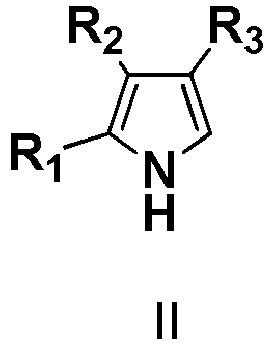
- reacting a compound having the following general formula II with acryloyl chloride in a molar ratio ranging from 1:1 to 5:1, and
- complexing the resultant reaction product with boron trifluoride in the presence of a base to obtain said difluoroboron dipyrromethene fluorescent probe.
- The present invention further provides an application of said difluoroboron dipyrromethene fluorescent probe in detecting hypochlorite ion.
- Said difluoroboron dipyrromethene fluorescent probe of the present invention has the following advantageous technical effects:
- (1) Said fluorescent probe hardly emits fluorescence in an aqueous solution, which decreases the background fluorescence in the detection;
- (2) Said fluorescent probe exhibits high sensitivity, since its fluorescence increases remarkably in the presence of hypochloric acid/hypochlorite ion in a nanomole level, and its fluorescent intensity enhancement shows a good linear relation with the level of hypochloric acid;
- (3) Said fluorescent probe exhibits good selectivity, since it hardly responds to other reactive oxygen species such as H2O2, ·OH and the like;
- (4) Said fluorescent probe responds rapidly, since its fluorescent intensity reaches equilibrium in seconds after the addition of hypochloric acid;
- (5) Said fluorescent probe shows accurate result in the detection of hypochloric acid in a pH range of 4.0 to 9.0, and thus is not interfered by pH; and
- (6) Said fluorescent probe is easily synthesized, and thus the product is easily obtained.
- Seven figures are shown in the present specification.
-
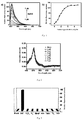
Fig. 1 is a figure showing fluorescent intensities of the fluorescent probe BCIO versus various levels of hypochlorite ion in the BClOperformance measurement experiment 1. The level of the probe BClO is 1µM, the levels of sodium hypochlorite are 0, 1, 2, 3, 4, 5, 6 and 7µM, respectively, and the measurement system is a phosphate buffer solution (containing ethanol in a volume ratio of 10% as a dye cosolvent, pH=7.4).Fig. 1a is a fluorescence titration spectrum of BClO versus sodium hypochlorite at an excitation wavelength of 480nm, andFig. 1 b is a titration curve of BClO versus sodium hypochlorite at an excitation wavelength of 480nm. -
Fig. 2 is a figure showing absorption titration results of the fluorescent probe BClO versus various levels of hypochlorite ion in the BClO performance measurement experiment 2. The level of the fluorescent probe BClO is 1µM, and the levels of sodium hypochlorite are 0, 1, 2, 3, 4, 5, 6 and 7µM, respectively. -
Fig. 3 is a histogram showing fluorescence selectivity of the fluorescent probe BClO to various reactive oxygen species in the BClO performance measurement experiment 3. The level of the fluorescent probe BClO is 1 µM, the level of sodium hypochlorite is 5µM, and the level of other reactive oxygen species is 10µM, respectively. -
Fig. 4 is a figure showing fluorescent intensity response of the fluorescent probe BCIO versus hypochlorite ion in a low level in the BCIO performance measurement experiment 4. The level of the fluorescent probe BClO is 1µM, and the levels of sodium hypochlorite are 0, 1, 2, 3, 4, 5, 6, 7, 8, 9 and 10nM, respectively. -
Fig. 5 is a figure showing response time of the fluorescent probe BCIO in the detection of sodium hypochlorite in the BCIO performance measurement experiment 5. The level of the fluorescent probe BCIO is 1µM, and the level of sodium hypochlorite is 5µM. The horizontal axis is time (s), and the vertical axis is fluorescent intensity. -
Fig. 6 is a figure showing fluorescent intensity response of the probe BClO versus hypochlorite ion in various pH conditions in the BCIOperformance measurement experiment 6. The horizontal axis is pH, and the vertical axis is fluorescent intensity. The level of the fluorescent probe BCIO is 1µM, and the level of sodium hypochlorite is 5µM. NaOH (1 M) or HCl (1 M) was used to adjust pH. -
Fig. 7 shows fluorescence imaging pictures of the probe BClO in human breast cancer (MCF-7) cells in the BClO performance measurement experiment 7. The level of the fluorescent probe BClO is 1µM.Fig. 7a, b and c are fluorescence pictures of BClO collected at a wavelength range from 490nm to 550nm in cells in which 0, 3 or 5µM of sodium hypochlorite has been added, respectively. The excitation wavelength is 488nm. The statistic analysis based on double sample test was carried out, and the fluorescent intensity at 0µM of sodium hypochlorite level was used as a standard. ***P<0.001, and the error bar indicates mean standard error (n=10). -
Fig. 8 shows fluorescence imaging pictures of the probe BClO in mice macrophage (Raw264.7) cells in the BClO performance measurement experiment 8. The level of the fluorescent probe BClO is 1µM.Fig. 8a is a cell fluorescence picture after the addition of BCIO, andFig. 8b is a cell fluorescence picture obtained by incubating Raw264.7 cells with 1µg/mL of LPS (lipopolysaccharide) for 12 hours and then incubating Raw264.7 cells with 1µg/mL of PMA (phorbol myristate acetate) for 1 hour, followed by adding BCIO. The fluorescence at a wavelength range from 490nm to 550nm was collected. The excitation wavelength is 488nm. The statistic analysis based on double sample test was carried out, and the fluorescent intensity when only BCIO was added was used as a standard. ***P<0.001, and the error bar indicates mean standard error (n=4). - The present invention provides a difluoroboron dipyrromethene fluorescent probe having the following general formula I:

- wherein in the general formula I, R1, R2 and R3 are each independently selected from the group consisting of H, C1-8 alkyl, and substituted or unsubstituted phenyl, and
- said substituted phenyl is substituted at an optional location with one or more substituents selected from the group consisting of CN, COOH, NH2, NO2, OH, SH, C1-6alkoxy, C1-6 alkylamino, C1-6 amido, halogen and C1-6 haloalkyl.
- In a preferable embodiment, in the general formula I of said difluoroboron dipyrromethene fluorescent probe according to the present invention, said R1 and R3 are each independently selected from the group consisting of H and methyl, and are more preferably methyl; and said R2 is preferably selected from the group consisting of H and ethyl, and is more preferably H.
- In a most preferable embodiment, said difluoroboron dipyrromethene fluorescent probe of the present invention is BCIO, which has the following structure.

- The present invention further provides a method for producing said difluoroboron dipyrromethene fluorescent probe, comprising the steps of:
- reacting a compound having the following general formula II with acryloyl chloride in a molar ratio ranging from 1:1 to 5:1, and

- complexing the resultant reaction product with boron trifluoride in the presence of a base to obtain said difluoroboron dipyrromethene fluorescent probe.
- Specific embodiments of said production method according to the present invention are as follows.

- (1) An intermediate compound III is prepared by reacting a compound having the general formula II with acryloyl chloride, wherein a molar ratio of the compound II to acryloyl chloride may range from 0.1:1 to 1000:1, preferably ranges from 0.5:1 to 100:1, more preferably ranges from 0.5:1 to 10:1, even more preferably ranges from 1:1 to 5:1, and is most preferably 3:1. In this reaction, the compound II and acryloyl chloride are condensed to obtain the compound having the general formula III.
- The reaction may be carried out in an organic solvent containing water or an organic solvent not containing water. The organic solvent not containing water is preferred. The molar concentration of the pyrrole material in the solvent ranges from 0.012 to 0.4 mol/L. Examples of the organic solvent include, but not limited to, dichloromethane, tetrahydrofuran, acetonitrile, and the like. In the reaction, the pyrrole material and acryloyl chloride are condensed for two times to obtain the active intermediate III. The product is unstable and thus it can be directly used for the next reaction without purification. Completion of the reaction may be monitored by thin layer chromatography (TLC) during the reaction.
- The reaction temperature should be controlled in a range from 15°C to 120°C. This is because pyrrole molecules tend to be self-polymerized to form a sticky brown material at a high temperature, which influences the main reaction and greatly reduces the yield. On the other hand, if the reaction temperature is excessively low, a long time would be taken to ensure sufficient reaction. Therefore, the reaction temperature preferably ranges from 30°C to 100°C, more preferably ranges from 30°C to 80°C, most preferably ranges from 40°C to 60°C.
- (2) Said difluoroboron dipyrromethene fluorescent probe is synthesized. Dehydrofluorination reaction occurs between the intermediate III obtained in the step (1) and a boron trifluoride compound in the presence of an organic base to form the product that is the compound having the formula I. The boron trifluoride compound to be added may be a boron trifluoride gas, boron trifluoride ethyl ether complex or any compound capable of releasing boron trifluoride in a solution at normal temperature.
- The reaction temperature ranges from -10°C to 100°C, preferably ranges from 0°C to 10°C. When the boron trifluoride compound (e.g. boron trifluoride gas or boron trifluoride complex) is added, an organic base is needed to promote the reaction. Said organic base is preferably triethylamine.
- The method for purifying said difluoroboron dipyrromethene fluorescent dye of the present invention is not particularly limited, and a conventional method may be utilized. Generally, when the reaction is completed, the solvent will be distilled off. Column chromatography using petroleum ether/ethyl acetate as an eluent is preferably utilized to purify the product.
- The obtained fluorescent dye may be recovered by a conventional separation/purification method in the art to reach a desired purity.
- All the materials used in the present invention are commercially available, or can be easily prepared from conventional materials in the art with conventional methods known by a person having ordinary skill in the art or methods disclosed in the prior art.
- It should be noted that some of the substituents on the ring of the compounds in the present invention may be introduced by a standard aromatic substitution reaction or be generated by a conventional functional group modification before the above-mentioned steps or immediately after the above-mentioned steps, and such reaction and modification are included in the method of the present invention. Examples of the reaction and modification include substituent introduction based on an aromatic substitution reaction, substituent reduction, substituent alkylation, and substituent oxidation. The reagent and reaction conditions for these processes are conventional in the chemical field. Specific examples of the aromatic substitution reaction include nitro introduction by using concentrated nitric acid, acyl introduction by using acyl halide, Lewis acid (e.g. aluminum trichloride) or the like under the condition of Friedel Crafts, alkyl introduction by using alkyl halide, Lewis acid (e.g. aluminum trichloride) or the like under the condition of Friedel Crafts, and halogen introduction. Specific examples of the modification include a method of reducing nitro to amino by hydrogenation using nickel catalyst or the like, or by a heat-treatment in the presence of hydrochloric acid and iron; and a method of oxidizing alkylthio to alkylsulfinyl or alkylsulfonyl.
- The terms described in the present specification have the following definitions, unless otherwise stated.
- The term "alkyl" described in the present specification includes a linear alkyl and a branched alkyl. The specifically mentioned single alkyl such as "propyl" specifically means a linear alkyl, and the specifically mentioned single branched alkyl such as "isopropyl" specifically means a branched alkyl. For example, "C1-4 alkyl" includes methyl, ethyl, n-propyl, isopropyl, n-butyl, t-butyl and the like. The same rationale also applies to other group described in the present specification.
- Said difluoroboron dipyrromethene fluorescent probe of the present invention can be applied to detect hypochlorite ion, especially to detect hypochlorite ion in living cells.
- The following non-limiting examples are used to help a person having ordinary skill in the art to fully understand the present invention, but not to in any way limit the present invention.
-

- Into a 500mL single-neck flask containing 250mL of dichloromethane, 2,4-dimethylpyrrole (2.8g, 30mmol) was added, and then acryloyl chloride (0.9g, 10mmol) was added, the resultant mixture was stirred overnight at 50°C in a dark place under the protection of nitrogen. Under the condition of an icewater bath, 10mL of triethylamine and 10mL of boron trifluoride ethyl ether complex were added dropwise to the mixture, and continued to be stirred for 1 hour. The solvent was distilled off under a reduced pressure, and purification was carried out using column chromatography to obtain an orange solid BCIO (9.6%). 1H NMR (400 MHz, CDCl3), δ:1.96 (s, 3H), 2.17 (s, 3H), 2.35 (s, 6H), 2.53 (s, 6H), 2.84 (t, J = 8Hz, 2H), 3.17 (t, J = 8Hz, 2H), 5.62 (s, 1 H), 6.04 (s, 2H), 7.43 (s, 1 H); 13C NMR (100 MHz, CDCl3), δ:11.1, 13.0, 14.6, 16.2, 27.4, 29.9, 107.8, 114.5, 121.9, 124.0, 126.3, 131.5, 141.2, 145.5, 154.1 ppm; TOF MS: m/z calcd for C21H27BF2N3 + [M +H]+: 370.2216, found: 370.2255.
- Into a phosphate buffer solution (containing ethanol in a volume ratio of 10% as a dye cosolvent, pH=7.4), 1µM of the probe BCIO was added, and then a sodium hypochlorite solution was added therein dropwise in a final level of 0, 1, 2, 3, 4, 5, 6 or 7µM of hypochlorite ion, respectively, the fluorescent intensities at an excitation wavelength of 480nm were recorded. The measurement results are shown in
Fig. 1 a andFig. 1 b. It can be seen from the figures that the fluorescent intensity of the probe at the maximum emission peak of 505nm gradually increases with the increase of the sodium hypochlorite level, and reaches saturation when the sodium hypochlorite level is 5µM. - Into a phosphate buffer solution (containing ethanol in a volume ratio of 10% as a dye cosolvent, pH=7.4), 1µM of the probe BClO was added, and then a sodium hypochlorite solution was added therein dropwise in a final level of 0, 1, 2, 3, 4, 5, 6 or 7µM of hypochlorite ion, respectively, the fluorescent intensities were recorded. The measurement results are shown in
Fig. 2 . It can be seen from the figure that the absorption spectra of the probe are nearly kept same with the increase of the sodium hypochlorite level. - The above-synthesized compound BClO was used to evaluate the selectivity of the fluorescent probe to hypochlorite ion and reactive oxygen species. Specifically, 1µM of the compound BClO was added into a phosphate buffer solution (containing ethanol in a volume ratio of 10% as a dye cosolvent, pH=7.4) in which 5µM of hypochlorite ion or 10µM of other reactive oxygen species (H2O2, O2 -, TBHP, HO·, TBO·, 1O2, NO-) was included, and the corresponding fluorescent intensities at an excitation wavelength of 480nm and an emission wavelength of 505nm were recorded. The measurement results are shown in
Fig. 3 . It can be seen from the figure that the fluorescent probe BCIO has very good selectivity to sodium hypochlorite, because the addition of 5µM of sodium hypochlorite significantly enhances the fluorescent intensity of BCIO (100 times), while the addition of other reactive oxygen species does not significantly enhance the fluorescent intensity of BCIO. - The above-synthesized compound BCIO was used to evaluate the response of the fluorescent probe to hypochlorite ion in a nanomole level. Specifically, the compound BClO (1µM) was added into a phosphate buffer solution (containing ethanol in a volume ratio of 10% as a dye cosolvent, pH=7.4) in which sodium hypochlorite in a level of 0, 1, 2, 3, 4, 5, 6, 7, 8, 9 or 10nM was included, and the corresponding fluorescence spectra excited at 480nm and the fluorescent intensities emitted at 505nm were recorded. The measurement results are shown in
Fig. 4 . It can be seen from the figures that the fluorescent intensity of the fluorescent probe BClO significantly enhances when the level of hypochlorite ion is in a range from 0 to 10nM, and has a good linear relation with the change of sodium hypochlorite level (R2=0.99724). Thus, the fluorescent probe BClO can be applied to detect sodium hypochlorite in a low level, and the detection limit thereof is 0.56nM according to 3σ/k calculation. -
Fig. 5 shows a time function of the probe BClO in the detection of hypochlorite ion. The level of the probe BClO was 1µM, the measurement system was a phosphate buffer solution (containing ethanol in a volume ratio of 10% as a dye cosolvent, pH=7.4), and the excitation wavelength was 480nm. The fluorescent intensities of BClO at 505nm versus time were recorded. It can be seen fromFig. 5 that BClO responds very rapidly to hypochlorite ion, and the fluorescent intensity thereof reaches equilibrium in one second. The horizontal axis is time (second), and the vertical axis is fluorescent intensity. - The above-synthesized compound BCIO was used to evaluate the response of the fluorescent probe to pH. A phosphate buffer solution (containing ethanol in a volume ratio of 10% as a dye cosolvent) in which the compound BCIO (1µM) was included, was adjusted to about pH 4.0, and the fluorescent intensities of the probe before and after the addition of 5µM of sodium hypochlorite were measured at an excitation wavelength of 480nm. Then, an alkaline solution was added therein to gradually increase pH to about 9.0, and the corresponding fluorescent intensity changes were recorded. The measurement results are shown in
Fig. 6 . It can be seen from the figure that pH change in a range from 4.0 to 9.0 hardly has an influence on the fluorescence emission of the fluorescent probe BCIO before and after the addition of sodium hypochlorite. Thus, the probe BClO can be applied to detect hypochlorite ion in the above pH range. The horizontal axis is pH, and the vertical axis is fluorescent intensity. In the experiment, NaOH (1 M) or HCl (1 M) was used to adjust pH. - MCF-7 cells were cultured in DEME (invitrogen) containing 10% FCS (invitrogen). On the day before the fluorescence confocal imaging experiment, the cells were inoculated in a specialized confocal cell culture dish. On the next day, 1µM of the probe BClO was added therein, the cells were incubated for 20 minutes under the conditions of 37°C and 5% CO2 and then rinsed with a phosphate buffer solution for three times, and the confocal imaging was carried out. Under the same conditions, 3µM or 5µM of sodium hypochlorite was further added, and the confocal imaging was carried out immediately.
- The culture density of cells was 2×10⁵cells/mL. The imaging instrument was Olympus FV1000-IX81 inverted microscope with oil lens of 100 times magnification. The fluorescence was exited at 488nm, and the fluorescence at a wavelength range from 490 to 550nm was collected.
-
Fig. 7a to 7c are fluorescence pictures of BClO in living cells before and after the addition of sodium hypochlorite. In order to quantify the fluorescent intensity change of BCIO in cells, ten regions were choosen from each figure to calculate the average value of the relative fluorescent intensity, and the results are shown inFig. 7d . It can be seen from the figure that, the probe BCIO emits weak green fluorescence in cells before the additon of sodium hypochlorite due to a certain amount of reactive oxygen species present in MCF-7 cells, while the fluorescent intensity of the probe BCIO rapidly and significantly enhances after the additon of sodium hypochlorite, which shows the probe BClO is applicable for detecting hypochloric acid in living cells. - Raw264.7 cells were cultured in DEME (invitrogen) containing 10% FCS (invitrogen). On the day before the fluorescence confocal imaging experiment, the cells were inoculated in a specialized confocal cell culture dish. On the next day, 1µM of the probe BClO was added therein, the cells were incubated for 20 minutes under the conditions of 37°C and 5% CO2 and then rinsed with a phosphate buffer solution for three times, and the confocal imaging was carried out. Under the same conditions, Raw264.7 cells were incubated with 1µg/mL of LPS (lipopolysaccharide) for 12 hours and then incubated with 1µg/mL of PMA (phorbol myristate acetate) for 1 hour, 1µM of the probe BClO was added therein, the cells were incubated for 20 minutes under the conditions of 37°C and 5% CO2 and then rinsed with a phosphate buffer solution for three times, and the confocal imaging was carried out.
- The culture density of cells was 2×10⁵cells/mL. The imaging instrument was Olympus FV1000-IX81 inverted microscope with oil lens of 100 times magnification. The fluorescence was exited at 488nm, and the fluorescence at a wavelength range from 490 to 550nm was collected.
-
Fig. 8a to 8b are fluorescence pictures of BClO in Raw264.7 cells before and after the stimulation of LPS and PMA. In order to quantify the fluorescent intensity change of BClO in cells, four regions were choosen from each figure to calculate the average value of the relative fluorescent intensity, and the results are shown inFig. 8c . It can be seen from the figure that, the probe BClO emits very weak green fluorescence in the macrophage cells due to a very small amount of reactive oxygen species in Raw264.7 cells, while the fluorescent intensity of the probe BClO significantly enhances after the stimulation of LPS and PMA, which shows the probe BCIO is applicable for detecting endogenous hypochloric acid in living cells.
Claims (9)
- A difluoroboron dipyrromethene fluorescent probe having the following general formula I:
 wherein in the general formula I, R1, R2 and R3 are each independently selected from the group consisting of H, C1-8 alkyl, and substituted or unsubstituted phenyl, andsaid substituted phenyl is substituted at an optional location with one or more substituents selected from the group consisting of CN, COOH, NH2, NO2, OH, SH, C1-6alkoxy, C1-6 alkylamino, C1-6 amido, halogen and C1-6 haloalkyl.
 - The difluoroboron dipyrromethene fluorescent probe according to claim 1, wherein said R1 and R3 are each independently selected from the group consisting of H and methyl.
- The difluoroboron dipyrromethene fluorescent probe according to claim 2, wherein said R1 and R3 are both methyl.
- The difluoroboron dipyrromethene fluorescent probe according to any one of claims 1 to 3, wherein said R2 is selected from the group consisting of H and ethyl.
- The difluoroboron dipyrromethene fluorescent probe according to claim 4, wherein said R2 is H.
- A method for producing the difluoroboron dipyrromethene fluorescent probe according to any one of claims 1 to 5, comprising the steps of:reacting a compound having the following general formula II with acryloyl chloride in a molar ratio ranging from 1:1 to 5:1, and
 complexing the resultant reaction product with boron trifluoride in the presence of a base to obtain said difluoroboron dipyrromethene fluorescent probe.
 - The production method according to claim 6, wherein the compound having the general formula II is reacted with acryloyl chloride in a molar ratio of 3:1.
- An application of the difluoroboron dipyrromethene fluorescent probe according to any one of claims 1 to 5 in detecting hypochlorite ion.
- The application of the difluoroboron dipyrromethene fluorescent probe in detecting hypochlorite ion according to claim 8, wherein said difluoroboron dipyrromethene fluorescent probe is applied to detect hypochlorite ion in living cells.
Applications Claiming Priority (2)
| Application Number | Priority Date | Filing Date | Title |
|---|---|---|---|
| CN201310643027.8A CN103666456B (en) | 2013-12-02 | 2013-12-02 | A class of boron fluoride complexed dipyrromethene fluorescent probes, its preparation method and application |
| PCT/CN2014/092299 WO2015081803A1 (en) | 2013-12-02 | 2014-11-26 | Boron-dipyrromethene fluorescence probes and manufacturing method and use thereof |
Publications (3)
| Publication Number | Publication Date |
|---|---|
| EP3078666A1 true EP3078666A1 (en) | 2016-10-12 |
| EP3078666A4 EP3078666A4 (en) | 2016-12-21 |
| EP3078666B1 EP3078666B1 (en) | 2018-01-31 |
Family
ID=50305247
Family Applications (1)
| Application Number | Title | Priority Date | Filing Date |
|---|---|---|---|
| EP14867001.1A Not-in-force EP3078666B1 (en) | 2013-12-02 | 2014-11-26 | Boron-dipyrromethene fluorescence probes and manufacturing method and use thereof |
Country Status (5)
| Country | Link |
|---|---|
| US (1) | US9862731B2 (en) |
| EP (1) | EP3078666B1 (en) |
| JP (1) | JP6275256B2 (en) |
| CN (1) | CN103666456B (en) |
| WO (1) | WO2015081803A1 (en) |
Families Citing this family (16)
| Publication number | Priority date | Publication date | Assignee | Title |
|---|---|---|---|---|
| CN103666456B (en) * | 2013-12-02 | 2015-02-04 | 大连理工大学 | A class of boron fluoride complexed dipyrromethene fluorescent probes, its preparation method and application |
| CN106349261B (en) * | 2015-07-16 | 2019-03-26 | 中国科学院上海药物研究所 | Fluorescent switch type BODIPY class compound and its preparation method and application |
| CN106220664B (en) * | 2016-08-10 | 2018-06-22 | 浙江大学 | A kind of fluorescence probe for detecting autophagy stream and its preparation and application |
| CN107253965B (en) * | 2017-06-29 | 2019-07-05 | 大连大学 | A class of FRET molecules based on fluoroboropyrrole and coumarin and their synthesis methods |
| CN109574880B (en) * | 2017-09-29 | 2022-06-17 | 纳莹(上海)生物科技有限公司 | Fluorescent probe and preparation method and application thereof |
| CN109535190B (en) * | 2018-10-26 | 2021-01-01 | 安徽师范大学 | meso-pyrrolidone BODIPY dye viscosity probe and preparation method and application thereof |
| CN109608396B (en) * | 2018-12-29 | 2021-11-26 | 大连理工大学 | Composite probe composition for MicroRNA detection and application thereof |
| CN112574239B (en) * | 2019-09-27 | 2022-03-25 | 中国科学院上海药物研究所 | 3-thiazolenyl boron fluoride complex dipyrromethene compound and preparation method and application thereof |
| CN111187288B (en) * | 2020-01-14 | 2023-04-28 | 安徽师范大学 | Preparation method of 3,8-dipyrrole-BODIPY fluorescent dye and qualitative detection method of hypochlorite |
| CN113683632B (en) * | 2021-07-22 | 2023-11-28 | 广东省科学院测试分析研究所(中国广州分析测试中心) | Near-infrared palladium ion fluorescent probe compound and synthesis method thereof |
| CN115028662B (en) * | 2022-07-19 | 2024-06-28 | 浙江理工大学 | Fluorescent probe for detecting hypochlorous acid and preparation method and use method thereof |
| CN115343267B (en) * | 2022-08-30 | 2023-07-04 | 广州大学 | Fluorescence detection method for hypochlorite ions and application of fluorescence detection method |
| CN115677744B (en) * | 2022-10-31 | 2024-11-05 | 太原工业学院 | Fluorescent probe for detecting Ag+ and preparation method thereof |
| CN116836190A (en) * | 2023-05-10 | 2023-10-03 | 福州大学 | Dipyrromethene fluorescent dye containing 3, 5-di-tert-butyl |
| CN117700431B (en) * | 2023-11-01 | 2025-07-04 | 河南中医药大学 | Large Stokes displacement near infrared fluorescent probe for detecting HClO, preparation method and biological imaging application thereof |
| CN119735723B (en) * | 2025-03-03 | 2025-06-17 | 浙江工业大学 | Preparation and application of branched BODIPY polymer nanofluorescent probe |
Family Cites Families (14)
| Publication number | Priority date | Publication date | Assignee | Title |
|---|---|---|---|---|
| JP2000001509A (en) * | 1998-06-17 | 2000-01-07 | Kansai Paint Co Ltd | Visible-curing resin composition and its use |
| JP2000039716A (en) | 1998-07-22 | 2000-02-08 | Kansai Paint Co Ltd | Positive type visible light sensitive resin composition and its use |
| RU2296333C2 (en) * | 2001-07-02 | 2007-03-27 | Арктик Диагностикс Ой | Dyes based on dipyrromethene boron difluoride with biphotonic absorption and their use |
| CN1715919A (en) * | 2005-07-12 | 2006-01-04 | 大连理工大学 | Fluorescent boron dye fluorescent probe for detection of zinc ion in cells |
| CN1944540A (en) * | 2006-09-15 | 2007-04-11 | 大连理工大学 | Near infrared boron fluoride complexed dipyrrolyl methine fluorescent dye for biological analysis |
| US7858598B2 (en) * | 2007-03-12 | 2010-12-28 | Morningside Ventures Limited & Versitech Limited | Reagents for detection of hypochlorous acid |
| KR101035236B1 (en) * | 2008-09-04 | 2011-05-18 | 한국원자력연구원 | Crown Ether Derivatives Containing BODPIPS, Methods of Making the Same, and Methods of Selectively Detecting Metal Ions Using the Same |
| CN102061103A (en) * | 2009-11-11 | 2011-05-18 | 大连理工大学 | Type I boron fluoride complex dipyrromethene dye, and preparation method and application thereof |
| CN101851500B (en) * | 2010-05-05 | 2013-05-08 | 大连理工大学 | Fluorescent Probes for Mercury Ion Detection with Fluoroboron Dye |
| KR101421778B1 (en) * | 2011-03-30 | 2014-07-22 | 단국대학교 산학협력단 | A fluorescent molecular imaging probe for detection of reactive oxygen species and a preparation method thereof |
| CN102702768B (en) * | 2012-06-04 | 2013-12-04 | 天津理工大学 | Novel red BODIPY fluorescent dye and preparation method and application thereof |
| CN102816826A (en) * | 2012-08-08 | 2012-12-12 | 南京大学 | Application of boron fluoride complexed dipyrromethene fluorescent dye-calix[4]arene complex as probe in the detection of cell pH |
| CN102993763B (en) * | 2012-12-09 | 2014-08-27 | 大连理工大学 | A Class of Singly Charged Boron Fluoride Complexed Dipyrromethene Fluorescent Dye and Its Application |
| CN103666456B (en) * | 2013-12-02 | 2015-02-04 | 大连理工大学 | A class of boron fluoride complexed dipyrromethene fluorescent probes, its preparation method and application |
-
2013
- 2013-12-02 CN CN201310643027.8A patent/CN103666456B/en not_active Expired - Fee Related
-
2014
- 2014-11-26 JP JP2016535729A patent/JP6275256B2/en not_active Expired - Fee Related
- 2014-11-26 WO PCT/CN2014/092299 patent/WO2015081803A1/en not_active Ceased
- 2014-11-26 US US15/039,674 patent/US9862731B2/en not_active Expired - Fee Related
- 2014-11-26 EP EP14867001.1A patent/EP3078666B1/en not_active Not-in-force
Also Published As
| Publication number | Publication date |
|---|---|
| JP6275256B2 (en) | 2018-02-07 |
| CN103666456A (en) | 2014-03-26 |
| JP2017504574A (en) | 2017-02-09 |
| WO2015081803A1 (en) | 2015-06-11 |
| US20170029444A1 (en) | 2017-02-02 |
| US9862731B2 (en) | 2018-01-09 |
| CN103666456B (en) | 2015-02-04 |
| EP3078666B1 (en) | 2018-01-31 |
| EP3078666A4 (en) | 2016-12-21 |
Similar Documents
| Publication | Publication Date | Title |
|---|---|---|
| EP3078666B1 (en) | Boron-dipyrromethene fluorescence probes and manufacturing method and use thereof | |
| Zhao et al. | Transforming the recognition site of 4-hydroxyaniline into 4-methoxyaniline grafted onto a BODIPY core switches the selective detection of peroxynitrite to hypochlorous acid | |
| CN106831642A (en) | Fluorescent probe for detecting zinc ions or pyrophosphate, preparation method and application | |
| Liu et al. | A fast-response, highly sensitive and selective fluorescent probe for the ratiometric imaging of hydrogen peroxide with a 100 nm red-shifted emission | |
| CN109970600B (en) | A kind of triphenylamine derivative Schiff base organic fluorescent probe and preparation method thereof | |
| CN114230494A (en) | Synthesis of large Stokes shift near-infrared fluorescent probe and application thereof in detecting hydrogen sulfide | |
| Zhang et al. | An efficient ratiometric fluorescent excimer probe for hypochlorite based on a cofacial xanthene-bridged bispyrene | |
| Wu et al. | A β-diketonate− europium (III) complex-based time-gated luminescence probe for selective visualization of peroxynitrite in living cells | |
| CN115232152B (en) | Fluorescent probe for detecting hypochlorous acid, preparation method and application thereof | |
| CN104804029A (en) | Fluorine-boron pyrrole compound and applications thereof | |
| CN107286173B (en) | Rhodol derivative and preparation method and application thereof | |
| CN110642857B (en) | A bifunctional fluorescent probe for detecting viscosity and pH and its preparation and application | |
| CN1715919A (en) | Fluorescent boron dye fluorescent probe for detection of zinc ion in cells | |
| CN109021000B (en) | Fluorescent probe for detecting hydrogen peroxide, synthetic method and application | |
| CN107843578A (en) | A kind of fluorescence probe based on cumarin copper ion complex, preparation method and its application in Selective recognition pyrophosphate | |
| Jia et al. | A water-soluble fluorescence resonance energy transfer probe for hypochlorous acid and its application to cell imaging | |
| CN110172070A (en) | A fluorescent probe for detecting viscosity and hydrogen peroxide, its synthesis method and application | |
| CN110981857B (en) | Ultrasensitive ferrous ion fluorescent probe, preparation method and application | |
| CN111533761B (en) | Ratio type pH probe with organelle or protein targeting function and application thereof | |
| CN116874462B (en) | A tetraphenylethylene-aromatic ring hybrid fluorescent probe that simultaneously responds to ClO- and viscosity, its preparation method and application | |
| Zhang et al. | Rational engineering of a recognition group to construct a two-photon reaction-based fluorescent probe for rapid and selective sensing of cysteine | |
| CN114478317B (en) | An ozone fluorescent probe and its preparation method and application | |
| US20030119195A1 (en) | Potassium fluoroionophore | |
| CN109781678B (en) | Preparation and application of ratiometric fluorescent probe applied to intramitochondrial hypochlorous acid detection | |
| CN109705055A (en) | Benzothiazole compound, preparation method thereof and application of benzothiazole compound as hypobromous acid probe |
Legal Events
| Date | Code | Title | Description |
|---|---|---|---|
| PUAI | Public reference made under article 153(3) epc to a published international application that has entered the european phase |
Free format text: ORIGINAL CODE: 0009012 |
|
| 17P | Request for examination filed |
Effective date: 20160615 |
|
| AK | Designated contracting states |
Kind code of ref document: A1 Designated state(s): AL AT BE BG CH CY CZ DE DK EE ES FI FR GB GR HR HU IE IS IT LI LT LU LV MC MK MT NL NO PL PT RO RS SE SI SK SM TR |
|
| AX | Request for extension of the european patent |
Extension state: BA ME |
|
| RIC1 | Information provided on ipc code assigned before grant |
Ipc: G01N 21/64 20060101ALI20161031BHEP Ipc: C07F 5/02 20060101AFI20161031BHEP Ipc: G01N 33/52 20060101ALI20161031BHEP Ipc: C09K 11/06 20060101ALI20161031BHEP |
|
| A4 | Supplementary search report drawn up and despatched |
Effective date: 20161121 |
|
| RIC1 | Information provided on ipc code assigned before grant |
Ipc: C09K 11/06 20060101ALI20161114BHEP Ipc: C07F 5/02 20060101AFI20161114BHEP Ipc: G01N 33/52 20060101ALI20161114BHEP Ipc: G01N 21/64 20060101ALI20161114BHEP |
|
| STAA | Information on the status of an ep patent application or granted ep patent |
Free format text: STATUS: EXAMINATION IS IN PROGRESS |
|
| DAX | Request for extension of the european patent (deleted) | ||
| 17Q | First examination report despatched |
Effective date: 20170307 |
|
| GRAP | Despatch of communication of intention to grant a patent |
Free format text: ORIGINAL CODE: EPIDOSNIGR1 |
|
| STAA | Information on the status of an ep patent application or granted ep patent |
Free format text: STATUS: GRANT OF PATENT IS INTENDED |
|
| INTG | Intention to grant announced |
Effective date: 20170803 |
|
| GRAS | Grant fee paid |
Free format text: ORIGINAL CODE: EPIDOSNIGR3 |
|
| GRAA | (expected) grant |
Free format text: ORIGINAL CODE: 0009210 |
|
| STAA | Information on the status of an ep patent application or granted ep patent |
Free format text: STATUS: THE PATENT HAS BEEN GRANTED |
|
| AK | Designated contracting states |
Kind code of ref document: B1 Designated state(s): AL AT BE BG CH CY CZ DE DK EE ES FI FR GB GR HR HU IE IS IT LI LT LU LV MC MK MT NL NO PL PT RO RS SE SI SK SM TR |
|
| REG | Reference to a national code |
Ref country code: GB Ref legal event code: FG4D Ref country code: CH Ref legal event code: EP |
|
| REG | Reference to a national code |
Ref country code: AT Ref legal event code: REF Ref document number: 967275 Country of ref document: AT Kind code of ref document: T Effective date: 20180215 |
|
| REG | Reference to a national code |
Ref country code: IE Ref legal event code: FG4D |
|
| REG | Reference to a national code |
Ref country code: DE Ref legal event code: R096 Ref document number: 602014020681 Country of ref document: DE |
|
| REG | Reference to a national code |
Ref country code: FR Ref legal event code: PLFP Year of fee payment: 5 |
|
| REG | Reference to a national code |
Ref country code: NL Ref legal event code: MP Effective date: 20180131 |
|
| REG | Reference to a national code |
Ref country code: LT Ref legal event code: MG4D |
|
| REG | Reference to a national code |
Ref country code: AT Ref legal event code: MK05 Ref document number: 967275 Country of ref document: AT Kind code of ref document: T Effective date: 20180131 |
|
| PG25 | Lapsed in a contracting state [announced via postgrant information from national office to epo] |
Ref country code: FI Free format text: LAPSE BECAUSE OF FAILURE TO SUBMIT A TRANSLATION OF THE DESCRIPTION OR TO PAY THE FEE WITHIN THE PRESCRIBED TIME-LIMIT Effective date: 20180131 Ref country code: ES Free format text: LAPSE BECAUSE OF FAILURE TO SUBMIT A TRANSLATION OF THE DESCRIPTION OR TO PAY THE FEE WITHIN THE PRESCRIBED TIME-LIMIT Effective date: 20180131 Ref country code: LT Free format text: LAPSE BECAUSE OF FAILURE TO SUBMIT A TRANSLATION OF THE DESCRIPTION OR TO PAY THE FEE WITHIN THE PRESCRIBED TIME-LIMIT Effective date: 20180131 Ref country code: NL Free format text: LAPSE BECAUSE OF FAILURE TO SUBMIT A TRANSLATION OF THE DESCRIPTION OR TO PAY THE FEE WITHIN THE PRESCRIBED TIME-LIMIT Effective date: 20180131 Ref country code: HR Free format text: LAPSE BECAUSE OF FAILURE TO SUBMIT A TRANSLATION OF THE DESCRIPTION OR TO PAY THE FEE WITHIN THE PRESCRIBED TIME-LIMIT Effective date: 20180131 Ref country code: NO Free format text: LAPSE BECAUSE OF FAILURE TO SUBMIT A TRANSLATION OF THE DESCRIPTION OR TO PAY THE FEE WITHIN THE PRESCRIBED TIME-LIMIT Effective date: 20180430 |
|
| PG25 | Lapsed in a contracting state [announced via postgrant information from national office to epo] |
Ref country code: GR Free format text: LAPSE BECAUSE OF FAILURE TO SUBMIT A TRANSLATION OF THE DESCRIPTION OR TO PAY THE FEE WITHIN THE PRESCRIBED TIME-LIMIT Effective date: 20180501 Ref country code: SE Free format text: LAPSE BECAUSE OF FAILURE TO SUBMIT A TRANSLATION OF THE DESCRIPTION OR TO PAY THE FEE WITHIN THE PRESCRIBED TIME-LIMIT Effective date: 20180131 Ref country code: AT Free format text: LAPSE BECAUSE OF FAILURE TO SUBMIT A TRANSLATION OF THE DESCRIPTION OR TO PAY THE FEE WITHIN THE PRESCRIBED TIME-LIMIT Effective date: 20180131 Ref country code: RS Free format text: LAPSE BECAUSE OF FAILURE TO SUBMIT A TRANSLATION OF THE DESCRIPTION OR TO PAY THE FEE WITHIN THE PRESCRIBED TIME-LIMIT Effective date: 20180131 Ref country code: IS Free format text: LAPSE BECAUSE OF FAILURE TO SUBMIT A TRANSLATION OF THE DESCRIPTION OR TO PAY THE FEE WITHIN THE PRESCRIBED TIME-LIMIT Effective date: 20180531 Ref country code: BG Free format text: LAPSE BECAUSE OF FAILURE TO SUBMIT A TRANSLATION OF THE DESCRIPTION OR TO PAY THE FEE WITHIN THE PRESCRIBED TIME-LIMIT Effective date: 20180430 Ref country code: LV Free format text: LAPSE BECAUSE OF FAILURE TO SUBMIT A TRANSLATION OF THE DESCRIPTION OR TO PAY THE FEE WITHIN THE PRESCRIBED TIME-LIMIT Effective date: 20180131 Ref country code: PL Free format text: LAPSE BECAUSE OF FAILURE TO SUBMIT A TRANSLATION OF THE DESCRIPTION OR TO PAY THE FEE WITHIN THE PRESCRIBED TIME-LIMIT Effective date: 20180131 |
|
| PG25 | Lapsed in a contracting state [announced via postgrant information from national office to epo] |
Ref country code: EE Free format text: LAPSE BECAUSE OF FAILURE TO SUBMIT A TRANSLATION OF THE DESCRIPTION OR TO PAY THE FEE WITHIN THE PRESCRIBED TIME-LIMIT Effective date: 20180131 Ref country code: IT Free format text: LAPSE BECAUSE OF FAILURE TO SUBMIT A TRANSLATION OF THE DESCRIPTION OR TO PAY THE FEE WITHIN THE PRESCRIBED TIME-LIMIT Effective date: 20180131 Ref country code: AL Free format text: LAPSE BECAUSE OF FAILURE TO SUBMIT A TRANSLATION OF THE DESCRIPTION OR TO PAY THE FEE WITHIN THE PRESCRIBED TIME-LIMIT Effective date: 20180131 |
|
| REG | Reference to a national code |
Ref country code: DE Ref legal event code: R097 Ref document number: 602014020681 Country of ref document: DE |
|
| PG25 | Lapsed in a contracting state [announced via postgrant information from national office to epo] |
Ref country code: CZ Free format text: LAPSE BECAUSE OF FAILURE TO SUBMIT A TRANSLATION OF THE DESCRIPTION OR TO PAY THE FEE WITHIN THE PRESCRIBED TIME-LIMIT Effective date: 20180131 Ref country code: SK Free format text: LAPSE BECAUSE OF FAILURE TO SUBMIT A TRANSLATION OF THE DESCRIPTION OR TO PAY THE FEE WITHIN THE PRESCRIBED TIME-LIMIT Effective date: 20180131 Ref country code: DK Free format text: LAPSE BECAUSE OF FAILURE TO SUBMIT A TRANSLATION OF THE DESCRIPTION OR TO PAY THE FEE WITHIN THE PRESCRIBED TIME-LIMIT Effective date: 20180131 Ref country code: SM Free format text: LAPSE BECAUSE OF FAILURE TO SUBMIT A TRANSLATION OF THE DESCRIPTION OR TO PAY THE FEE WITHIN THE PRESCRIBED TIME-LIMIT Effective date: 20180131 |
|
| PLBE | No opposition filed within time limit |
Free format text: ORIGINAL CODE: 0009261 |
|
| STAA | Information on the status of an ep patent application or granted ep patent |
Free format text: STATUS: NO OPPOSITION FILED WITHIN TIME LIMIT |
|
| 26N | No opposition filed |
Effective date: 20181102 |
|
| PG25 | Lapsed in a contracting state [announced via postgrant information from national office to epo] |
Ref country code: SI Free format text: LAPSE BECAUSE OF FAILURE TO SUBMIT A TRANSLATION OF THE DESCRIPTION OR TO PAY THE FEE WITHIN THE PRESCRIBED TIME-LIMIT Effective date: 20180131 |
|
| REG | Reference to a national code |
Ref country code: CH Ref legal event code: PL |
|
| PG25 | Lapsed in a contracting state [announced via postgrant information from national office to epo] |
Ref country code: MC Free format text: LAPSE BECAUSE OF FAILURE TO SUBMIT A TRANSLATION OF THE DESCRIPTION OR TO PAY THE FEE WITHIN THE PRESCRIBED TIME-LIMIT Effective date: 20180131 Ref country code: LU Free format text: LAPSE BECAUSE OF NON-PAYMENT OF DUE FEES Effective date: 20181126 |
|
| REG | Reference to a national code |
Ref country code: BE Ref legal event code: MM Effective date: 20181130 |
|
| REG | Reference to a national code |
Ref country code: IE Ref legal event code: MM4A |
|
| PG25 | Lapsed in a contracting state [announced via postgrant information from national office to epo] |
Ref country code: CH Free format text: LAPSE BECAUSE OF NON-PAYMENT OF DUE FEES Effective date: 20181130 Ref country code: LI Free format text: LAPSE BECAUSE OF NON-PAYMENT OF DUE FEES Effective date: 20181130 |
|
| PG25 | Lapsed in a contracting state [announced via postgrant information from national office to epo] |
Ref country code: IE Free format text: LAPSE BECAUSE OF NON-PAYMENT OF DUE FEES Effective date: 20181126 |
|
| PG25 | Lapsed in a contracting state [announced via postgrant information from national office to epo] |
Ref country code: BE Free format text: LAPSE BECAUSE OF NON-PAYMENT OF DUE FEES Effective date: 20181130 |
|
| REG | Reference to a national code |
Ref country code: CH Ref legal event code: AERF |
|
| PG25 | Lapsed in a contracting state [announced via postgrant information from national office to epo] |
Ref country code: MT Free format text: LAPSE BECAUSE OF NON-PAYMENT OF DUE FEES Effective date: 20181126 |
|
| PG25 | Lapsed in a contracting state [announced via postgrant information from national office to epo] |
Ref country code: TR Free format text: LAPSE BECAUSE OF FAILURE TO SUBMIT A TRANSLATION OF THE DESCRIPTION OR TO PAY THE FEE WITHIN THE PRESCRIBED TIME-LIMIT Effective date: 20180131 |
|
| PG25 | Lapsed in a contracting state [announced via postgrant information from national office to epo] |
Ref country code: PT Free format text: LAPSE BECAUSE OF FAILURE TO SUBMIT A TRANSLATION OF THE DESCRIPTION OR TO PAY THE FEE WITHIN THE PRESCRIBED TIME-LIMIT Effective date: 20180131 |
|
| PG25 | Lapsed in a contracting state [announced via postgrant information from national office to epo] |
Ref country code: HU Free format text: LAPSE BECAUSE OF FAILURE TO SUBMIT A TRANSLATION OF THE DESCRIPTION OR TO PAY THE FEE WITHIN THE PRESCRIBED TIME-LIMIT; INVALID AB INITIO Effective date: 20141126 Ref country code: RO Free format text: LAPSE BECAUSE OF FAILURE TO SUBMIT A TRANSLATION OF THE DESCRIPTION OR TO PAY THE FEE WITHIN THE PRESCRIBED TIME-LIMIT Effective date: 20180131 Ref country code: MK Free format text: LAPSE BECAUSE OF NON-PAYMENT OF DUE FEES Effective date: 20180131 Ref country code: CY Free format text: LAPSE BECAUSE OF FAILURE TO SUBMIT A TRANSLATION OF THE DESCRIPTION OR TO PAY THE FEE WITHIN THE PRESCRIBED TIME-LIMIT Effective date: 20180131 |
|
| PGFP | Annual fee paid to national office [announced via postgrant information from national office to epo] |
Ref country code: GB Payment date: 20231128 Year of fee payment: 10 |
|
| PGFP | Annual fee paid to national office [announced via postgrant information from national office to epo] |
Ref country code: FR Payment date: 20231128 Year of fee payment: 10 Ref country code: DE Payment date: 20231128 Year of fee payment: 10 Ref country code: CH Payment date: 20231201 Year of fee payment: 10 |
|
| REG | Reference to a national code |
Ref country code: DE Ref legal event code: R119 Ref document number: 602014020681 Country of ref document: DE |
|
| REG | Reference to a national code |
Ref country code: CH Ref legal event code: PL |
|
| REG | Reference to a national code |
Ref country code: CH Ref legal event code: PL |
|
| GBPC | Gb: european patent ceased through non-payment of renewal fee |
Effective date: 20241126 |
|
| PG25 | Lapsed in a contracting state [announced via postgrant information from national office to epo] |
Ref country code: CH Free format text: LAPSE BECAUSE OF NON-PAYMENT OF DUE FEES Effective date: 20241130 |
|
| PG25 | Lapsed in a contracting state [announced via postgrant information from national office to epo] |
Ref country code: DE Free format text: LAPSE BECAUSE OF NON-PAYMENT OF DUE FEES Effective date: 20250603 |
|
| PG25 | Lapsed in a contracting state [announced via postgrant information from national office to epo] |
Ref country code: GB Free format text: LAPSE BECAUSE OF NON-PAYMENT OF DUE FEES Effective date: 20241126 |
|
| PG25 | Lapsed in a contracting state [announced via postgrant information from national office to epo] |
Ref country code: FR Free format text: LAPSE BECAUSE OF NON-PAYMENT OF DUE FEES Effective date: 20241130 |