EP3076636B1 - Verfahren zur bereitstellung eines namensdienstes innerhalb eines industriellen kommunikationssystems und namensdienst-server - Google Patents
Verfahren zur bereitstellung eines namensdienstes innerhalb eines industriellen kommunikationssystems und namensdienst-server Download PDFInfo
- Publication number
- EP3076636B1 EP3076636B1 EP15162021.8A EP15162021A EP3076636B1 EP 3076636 B1 EP3076636 B1 EP 3076636B1 EP 15162021 A EP15162021 A EP 15162021A EP 3076636 B1 EP3076636 B1 EP 3076636B1
- Authority
- EP
- European Patent Office
- Prior art keywords
- router
- name
- name service
- service server
- notifications
- Prior art date
- Legal status (The legal status is an assumption and is not a legal conclusion. Google has not performed a legal analysis and makes no representation as to the accuracy of the status listed.)
- Active
Links
Images

Classifications
-
- H—ELECTRICITY
- H04—ELECTRIC COMMUNICATION TECHNIQUE
- H04L—TRANSMISSION OF DIGITAL INFORMATION, e.g. TELEGRAPHIC COMMUNICATION
- H04L61/00—Network arrangements, protocols or services for addressing or naming
- H04L61/50—Address allocation
- H04L61/5092—Address allocation by self-assignment, e.g. picking addresses at random and testing if they are already in use
-
- H—ELECTRICITY
- H04—ELECTRIC COMMUNICATION TECHNIQUE
- H04L—TRANSMISSION OF DIGITAL INFORMATION, e.g. TELEGRAPHIC COMMUNICATION
- H04L2101/00—Indexing scheme associated with group H04L61/00
- H04L2101/30—Types of network names
Definitions
- An industrial automation system usually comprises a large number of automation devices networked with one another via an industrial communication network and, in the context of manufacturing or process automation, serves to control or regulate systems, machines or devices. Due to time-critical conditions in technical systems automated by means of industrial automation systems, in industrial communication networks for communication between automation devices predominantly real-time communication protocols, such as PROFINET, PROFIBUS or real-time Ethernet, are used.
- real-time communication protocols such as PROFINET, PROFIBUS or real-time Ethernet
- Interruptions of communication links between computer units of an industrial automation system or automation devices may lead to an undesirable or unnecessary repetition of a transmission of a service request. This causes an additional utilization of communication links of the industrial automation system, which can lead to further system errors or errors.
- a particular problem arises in industrial automation systems regularly from a message traffic with relatively many, but relatively short messages, whereby the above problems are amplified.
- Ethernet-based communication networks may experience problems when network resources are required to transmit short data frames with real-time requirements competing for transmission of data frames with large payload data content. This can lead to a delayed transmission of data frames with real-time requirements or even lead to a loss of individual such data frames.
- a method of networking an automated system that includes at least one cell having a subnet is described.
- the subnet is connected via a router to another subnet of the automated system.
- a multicast group is provided that spans both subnets.
- a communication network address of a communication network interface of a module is detected.
- the module of the multicast group has previously joined via the communication network address, and the communication network interface has been previously connected to the subnet.
- the communication network address assigns a name to the communication network interface of the module.
- a further communication network address of the communication network interface of the module is determined, which has at least part of a numerical representation of the name.
- US 2005 0041671 A1 discloses a communication system having at least first and second routers wherein the second router requests at least one IPv6 address prefix from the first router.
- the first router comprises an IPv6 address prefix storage unit, of which an at least IPv6 address prefix is posted on request of the second router.
- the second router includes a unit for generating another IPv6 address prefix based on the IPv6 address prefix posted by the first router.
- the further IPv6 address prefix is used by a communication device connected to the second router to generate an IPv6 address and for this purpose is announced by the second router.
- US 8 194 661 B2 is a method for automatically configuring a communication device within a segmented one
- a communication network is described in which is checked by a monitoring unit, whether a received IPv6 data packet includes a router advertisement (Router Advertisement) or a router query (Router Solicitation).
- a MAC sender address of the data packet is removed by the monitoring unit from the IPv6 data packet.
- the monitoring unit inserts an external MAC address into the IPv6 data packet in order to forward it as a multicast message to a router.
- the monitoring unit removes a MAC router address from the IPv6 data packet and instead inserts an internal MAC address in the IPv6 data packet to forward it as a unicast message to the communication device to be configured.
- the router announcements comprise a topological or hierarchical name component of the respective router, which is assigned to a spatial or hierarchical arrangement of the respective router.
- Router announcements with name information from superimposed subnets are received by subordinate subnets associated routers and supplemented by a respective router associated topological or hierarchical name component part and distributed within the respective subordinate subnet. From topological or hierarchical name components and a name component that is unique within their respective subnetwork, communication terminals independently generate their device names.
- a method known as DNS Update for Dynamic DNS is known in which a master name server merely caches received Dynamic Update Requests during a collection phase before updating associated entries in its zone file. Such a collection phase can take several minutes, so dynamic updates are not immediately propagated to any slave name servers that maintain a copy of the zone file.
- IPv6 Router Advertisement based DNS autoconfiguration ; Jeong, Jae-Hoon, April 13, 2003 discloses DNS autoconfiguration using router advertisements .
- the present invention has for its object to provide an easy to implement method for providing a name service within an industrial communication system, which allows an efficient and reliable response of networked automation devices on easily manageable names, and to provide a suitable communication device.
- the automation devices 105 are, for example, programmable logic controllers of a complex machine 106 and each comprise a communication module with a function unit 130 for implementing a distributed name service (Name Hierarchy Daemon) and an automation module 140.
- a complex machine 106 may also include automation devices 104 with an integrated routing module 110 and a router Advertisement Daemon 120 within a machine subnet 203, 204.
- the automation modules 140 each comprise at least a central processing unit and an input / output unit.
- the input / output units are used to exchange control and measured variables between the respective automation device 104, 105 and a machine or device controlled by the automation device 104, 105.
- the central units of the automation modules 140 are provided in particular for determining suitable control variables from detected measured variables.
- the above components of the programmable controllers 104, 105 are interconnected in the present embodiment via a backplane bus system.
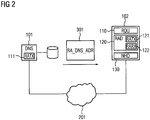
- the DNS server 101 sends messages 301 containing router advertisements that include information about an IPv6 address of the DNS server 101.
- the DNS server 101 has a transmitting unit 111 for generating and transmitting messages 301 with router advertisements, which comprise the IPv6 address of the DNS server 301.
- the messages 301 including the IPv6 address of the DNS server 101 become RFC 4861 and RFC 6106 transmitted.
- the messages 301 with router advertisements, which comprise the IPv6 address of the DNS server 301 can either be transmitted directly to communication or automation devices to be configured or forwarded there by routers as part of a transmission of own router advertisements. In principle, routers are not absolutely necessary for transmitting the IPv6 address of the DNS server 101 to communication or automation devices to be configured in this regard.
- all routers 102, 103 comprise, in addition to a routing module 110, a router advertisement daemon 120 and a name hierarchy daemon 130.
- the router 102, 103 or automation devices 104 with routing functions propagate IPv6 prefixes by means of the router advertisement daemons 120 in subordinate subnetworks 201-204.
- the IPv6 prefixes are components of messages with router advertisements, which are transmitted in accordance with Internet Control Message Protocol Version 6.
- the router advertisements comprise a topological or hierarchical name component of the respective router, the topological or hierarchical name component being assigned to a spatial or hierarchical arrangement of the respective router.
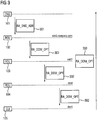
- the router 102 which is associated with the base domain, receives from the DNS server 101 the Router Advertisement message 301 comprising the IPv6 address of the DNS server 301, and accepts this information for its own Router Advertisements.
- the router 102 adds to its messages 301 with router advertisements in the present embodiment the name component "site3.company.com" by means of a manufacturer-specific option RA_DOM_OPT.
- Each subordinate router 103 or each automation device 104 with routing functions adds a further topological or hierarchical name component which corresponds to a spatial or hierarchical arrangement of the respective router 103 or automation device 104 is assigned.
- RA_DOM_OPT Corresponding spatial or hierarchical statements, in the present exemplary embodiment "cell2" and "rob8", are optionally added to an already existing option RA_DOM_OPT or appended as further options RA_DOM_OPT.
- RA_DOM_OPT a first entry in a DNS search list can also be used for a successive completion of topological or hierarchical name components.
- Router Advertisements with name information from superimposed subnets are taken by means of the respective name Hierarchy Daemon 130 by subordinate subnets associated router 102 or automation devices 103 and added to the respective router 102 or automation device 103 topological or hierarchical name component part.
- the router advertisements with the supplemented name information are distributed within the respective subordinate subnetwork.
- the router advertisement daemons 120 each include one in FIG. 2 Dedicated reception and evaluation unit 122 shown.
- Router Advertisements is in the Router Advertisement daemons 120 each a functional unit for the distribution of routers Advertisements provided.
- the automation devices 103, 104 respectively generate their device names independently by means of their name Hierarchy Daemon 130 from received topological or hierarchical name components and a name component which is unique within their respective subnetwork. For this purpose, the automation devices 103, 104 evaluate the manufacturer-specific option RA_DOM_OPT of the router advertisements. In addition, generate the programmable controllers 103, 104 independently from IPv6 prefixes propagated by means of router advertisements within their respective subnet their IPv6 address.
- the name Hierarchy Daemons 130 of the programmable controllers 103, 104 each comprise a name service client for dynamic DNS, by means of which the IPv6 address of the name service server requests a storage of an IPv6 address and an assigned device name of the respective communication device in the name service server becomes.
- the automation devices 103, 104 in accordance with RFC 2136 each autonomously transmit a message 303 with a registration request to the DNS server 101, by which a storage of their device name-address assignment in the name service server is triggered.
Landscapes
- Engineering & Computer Science (AREA)
- Computer Networks & Wireless Communication (AREA)
- Signal Processing (AREA)
- Data Exchanges In Wide-Area Networks (AREA)
Description
- Ein industrielles Automatisierungssystem umfasst üblicherweise eine Vielzahl von über ein industrielles Kommunikationsnetz miteinander vernetzten Automatisierungsgeräten und dient im Rahmen einer Fertigungs- oder Prozessautomatisierung zur Steuerung oder Regelung von Anlagen, Maschinen bzw. Geräten. Aufgrund zeitkritischer Rahmenbedingungen in mittels industrieller Automatisierungssysteme automatisierten technischen Systemen werden in industriellen Kommunikationsnetzen zur Kommunikation zwischen Automatisierungsgeräten überwiegend Echtzeit-Kommunikationsprotokolle, wie PROFINET, PROFIBUS oder Real-Time-Ethernet, verwendet.
- Unterbrechungen von Kommunikationsverbindungen zwischen Rechnereinheiten eines industriellen Automatisierungssystems oder Automatisierungsgeräten können zu einer unerwünschten oder unnötigen Wiederholung einer Übermittlung einer Dienstanforderung führen. Dies verursacht eine zusätzliche Auslastung von Kommunikationsverbindungen des industriellen Automatisierungssystems, was zu weiteren Systemstörungen oder -fehlern führen kann. Eine besondere Problematik resultiert in industriellen Automatisierungssystemen regelmäßig aus einem Meldungsverkehr mit verhältnismäßig vielen, aber relativ kurzen Nachrichten, wodurch obige Probleme verstärkt werden.
- Aufgrund einer Nutzung für häufig äußerst unterschiedliche Anwendungen können in Ethernet-basierten Kommunikationsnetzen beispielsweise Probleme entstehen, wenn Netzressourcen für eine Übermittlung kurzer Datenrahmen mit Echtzeitanforderungen konkurrierend für eine Übermittlung von Datenrahmen mit großem Nutzdateninhalt beansprucht werden. Dies kann zu einer verzögerten Übermittlung der Datenrahmen mit Echtzeitanforderungen oder sogar zu einem Verlust einzelner solcher Datenrahmen führen.
- In
WO 2007/144364 A1 ist ein Verfahren zur Vernetzung einer automatisierten Anlage beschrieben, die zumindest eine Zelle mit einem Subnetz umfasst. Das Subnetz ist über einen Router an ein weiteres Subnetz der automatisierten Anlage angebunden. Zur Vernetzung der automatisierten Anlage wird eine Multicastgruppe bereitgestellt, die sich über beide Subnetze erstreckt. Mittels der Multicastgruppe wird eine Kommunikationsnetzadresse einer Kommunikationsnetzschnittstelle einer Baugruppe detektiert. Dabei ist die Baugruppe der Multicastgruppe zuvor über die Kommunikationsnetzadresse beigetreten, und die Kommunikationsnetzschnittstelle ist zuvor an das Subnetz angeschlossen worden. Über die Kommunikationsnetzadresse wird ein Name an die Kommunikationsnetzschnittstelle der Baugruppe zugewiesen. In einem weiteren Schritt erfolgt eine Ermittlung einer weiteren Kommunikationsnetzadresse der Kommunikationsnetzschnittstelle der Baugruppe, die zumindest einen Teil einer numerischen Repräsentation des Namens aufweist. -
US 2005 0041671 A1 offenbart ein Kommunikationssystem mit zumindest einem ersten und zweiten Router, bei dem der zweite Router zumindest ein IPv6-Adresspräfix vom ersten Router anfordert. Dabei umfasst der erste Router eine Speichereinheit für IPv6-Adresspräfixe, von denen ein zumindest IPv6-Adresspräfix auf Anforderung des zweiten Routers bekanntgegeben wird. Der zweite Router umfasst eine Einheit zur Erzeugung eines weiteren IPv6-Adresspräfixes auf Basis des durch den ersten Router bekanntgegebenen IPv6-Adresspräfixes. Der weitere IPv6-Adresspräfix wird von einem an den zweiten Router angeschlossenen Kommunikationsgerät zur Erzeugung einer IPv6-Adresse verwendet und hierzu durch den zweiten Router bekanntgegeben. - In
US 8 194 661 B2 ist ein Verfahren zur automatischen Konfiguration eines Kommunikationsgeräts innerhalb eines segmentierten Kommunikationsnetzes beschrieben, bei dem durch eine Überwachungseinheit überprüft wird, ob ein empfangenes IPv6-Datenpaket eine Router-Bekanntgabe (Router Advertisement) oder eine Router-Abfrage (Router Solicitation) umfasst. Im Fall einer Router-Abfrage wird eine MAC-Absender-Adresse des Datenpakets durch die Überwachungseinheit aus dem IPv6-Datenpaket entfernt. Außerdem wird durch die Überwachungseinheit eine externe MAC-Adresse in das IPv6-Datenpaket eingefügt, um dieses als Multicast-Nachricht an einem Router weiterzuleiten. Bei einer Router-Bekanntgabe entfernt die Überwachungseinheit eine MAC-Router-Adresse aus dem IPv6-Datenpaket und fügt stattdessen eine interne MAC-Adresse in das IPv6-Datenpaket ein, um dieses als Unicast-Nachricht an das zu konfigurierende Kommunikationsgerät weiterzuleiten. - Aus der älteren europäischen Patentanmeldung mit der Veröffentlichungsnummer
EP2940972 ist ein Verfahren zur Bereitstellung eines Namensdienstes innerhalb eines industriellen Kommunikationssystems bekannt, bei dem IPv6-Präfixe durch Router mittels Nachrichten mit Router-Bekanntgaben in jeweils unterlagerten Teilnetzen verbreitet werden. Dabei umfassen die Router-Bekanntgaben einen topologischen bzw. hierarchischen Namensbestandteil des jeweiligen Routers, der einer räumlichen oder hierarchischen Anordnung des jeweiligen Routers zugeordnet ist. Router-Bekanntgaben mit Namensinformationen aus überlagerten Teilnetzen werden durch unterlagerten Teilnetzen zugeordnete Router entgegen genommen und um einen dem jeweiligen Router zugeordneten topologischen bzw. hierarchischen Namensbestandteil ergänzt und innerhalb des jeweiligen unterlagerten Teilnetzes verbreitet. Aus topologischen bzw. hierarchischen Namensbestandteilen und einem innerhalb ihres jeweiligen Teilnetzes eindeutigen Namensbestandteil erzeugen Kommunikationsendgeräte selbständig ihren Gerätenamen. Dieses Dokument offenbart den Stand der Technik gemäß Art. 54(3) EPÜ. In der älteren europäischen Patentanmeldung mit dem AnmeldeaktenzeichenEP 14171757.9 - In Internet Engineering Task Force (IETF), Request for Comments (RFC) 6106, ISSN 2070-1721, November 2010 (siehe http://www.rfc-base.org/txt/rfc-6106.txt ) ist eine Erweiterung von Router Advertisements beschrieben, die es ermöglicht, Kommunikationsgeräten einen zu benutzenden DNS-Server (Domain Name System) automatisch mitzuteilen. Damit bedarf es keiner manuellen Konfiguration des DNS-Servers in den Kommunikationsgeräten. Darüber hinaus ist ermöglicht RFC 4861, September 2007 (siehe http://www.rfc-base.org/txt/rfc-4861.txt), dass Router Advertisements durch Kommunikationsgeräte versendet werden, die keine Router sind.
- Aus RFC 2136, April 1997 (siehe https://www.ietf.org/rfc/ rfc2136.txt) ist ein als DNS Update bekanntes Verfahren für dynamisches DNS bekannt, bei dem ein Master-Nameserver empfangene Dynamic Update Requests während einer Sammelphase lediglich zwischenspeichert, bevor er zugeordnete Einträge in seiner Zonendatei aktualisiert. Eine solche Sammelphase kann mehrere Minuten dauern, so dass dynamische Aktualisierungen nicht sofort an etwaige Slave-Nameserver weitergegeben werden, die eine Kopie der Zonendatei verwalten. Das Dokument "IPv6 Router Advertisement based DNS Autoconfiguration"; Jeong, Jae-Hoon , 13. April 2003 offenbart DNS Autokonfiguraton mittels Router Advertisements. Der vorliegenden Erfindung liegt die Aufgabe zugrunde, ein einfach realisierbares Verfahren zur Bereitstellung eines Namensdienstes innerhalb eines industriellen Kommunikationssystems zu schaffen, das ein effizientes und zuverlässiges Ansprechen von vernetzten Automatisierungsgeräten über komfortabel handhabbare Namen ermöglicht, und ein geeignetes Kommunikationsgerät anzugeben.
- Diese Aufgabe wird erfindungsgemäß durch ein Verfahren mit den in Anspruch 1 angegebenen Merkmalen und durch einen Namensdienst-Server mit den in Anspruch 14 angegebenen Merkmalen gelöst. Vorteilhafte Weiterbildungen der vorliegenden Erfindung sind in den abhängigen Patentansprüchen angegeben.
- Die vorliegende Erfindung wird nachfolgend an einem Ausführungsbeispiel anhand der Zeichnung näher erläutert.
- Es zeigt
- Figur 1
- eine schematische Darstellung eines industriellen Automatisierungssystems mit einem DNS-Server, mehreren Teilnetzen und zu konfigurierenden Automatisierungsgeräten,
- Figur 2
- eine schematische Darstellung einer Übermittlung einer DNS-Server-Adressinformation an einen Router,
- Figur 3
- eine schematische Darstellung eines Datenaustauschs zwischen dem DNS-Server, IPv6-Routern und einem zu konfigurierenden Automatisierungsgerät.
- Das in
Figur 1 schematisch dargestellte industrielle Automatisierungssystem umfasst einen DNS-Server 101 (Domain Name System) ohne Routing-Funktion, einen Router 102, der einer Basis-Domäne zugeordnet ist, mehrere Teilnetze 201-204 mit zugeordneten Routern 103 bzw. Routing-Funktionen aufweisenden Automatisierungsgeräten 104 und eine Mehrzahl modularer Automatisierungsgeräte 105 ohne Routing-Funktionen. Die Automatisierungsgeräte 105 sind beispielsweise speicherprogrammierbare Steuerungen einer komplexen Maschine 106 und umfassen jeweils ein Kommunikationsmodul mit einer Funktionseinheit 130 zur Implementierung eines verteilten Namensdienstes (Name Hierarchy Daemon) und ein Automatisierungsmodul 140. Eine komplexe Maschine 106 kann auch Automatisierungsgeräte 104 mit einem integrierten Routing-Modul 110 und einer Funktionseinheit 120 zur Verbreitung von Router Advertisements (Router Advertisement Daemon) innerhalb eines maschineninternen Teilnetzes 203, 204 umfassen. - Die Automatisierungsmodule 140 umfassen jeweils zumindest eine Zentraleinheit und eine Eingabe/Ausgabe-Einheit. Die Eingabe/Ausgabe-Einheiten dienen einem Austausch von Steuerungs- und Messgrößen zwischen dem jeweiligen Automatisierungsgerät 104, 105 und einer durch das Automatisierungsgerät 104, 105 gesteuerten Maschine oder Vorrichtung. Die Zentraleinheiten der Automatisierungsmodule 140 sind insbesondere für eine Ermittlung geeigneter Steuerungsgrößen aus erfassten Messgrößen vorgesehen. Obige Komponenten der Automatisierungsgeräte 104, 105 sind im vorliegenden Ausführungsbeispiel über ein Rückwandbus-System miteinander verbunden.
- Entsprechend
Figur 2 versendet der DNS-Server 101 Nachrichten 301 mit Router Advertisements, die Informationen über eine IPv6-Adresse des DNS-Servers 101 umfassen. Hierzu weist der DNS-Server 101 eine Sendeeinheit 111 zur Erzeugung und Übermittlung von Nachrichten 301 mit Router Advertisements auf, welche die IPv6-Adresse des DNS-Servers 301 umfassen. Dabei werden die Nachrichten 301, welche die IPv6-Adresse des DNS-Servers 101 umfassen, entsprechend RFC 4861 und RFC 6106 übermittelt. Die Nachrichten 301 mit Router Advertisements, welche die IPv6-Adresse des DNS-Servers 301 umfassen, können entweder direkt an zu konfigurierende Kommunikations- bzw. Automatisierungsgeräte übermittelt oder durch Router im Rahmen einer Übermittlung eigener Router Advertiments dorthin weitergeleitet werden. Grundsätzlich sind Router für eine Übermittlung der IPv6-Adresse des DNS-Servers 101 an diesbezüglich zu konfigurierende Kommunikations- bzw. Automatisierungsgeräte nicht zwingend erforderlich. - Sämtliche Router 102, 103 umfassen im vorliegenden Ausführungsbeispiel neben einem Routing-Modul 110 einen Router Advertisement Daemon 120 und einen Name Hierarchy Daemon 130. Mittels der Router Advertisement Daemons 120 verbreiten die Router 102, 103 bzw. Automatisierungsgeräte 104 mit Routing-Funktionen IPv6-Präfixe in jeweils unterlagerten Teilnetzen 201-204. Dabei sind die IPv6-Präfixe Bestandteile von Nachrichten mit Router Advertisements, die entsprechend Internet Control Message Protocol Version 6 übermittelt werden. Die Router Advertisements umfassen einen topologischen bzw. hierarchischen Namensbestandteil des jeweiligen Routers, wobei der topologische bzw. hierarchische Namensbestandteil einer räumlichen oder hierarchischen Anordnung des jeweiligen Routers zugeordnet ist.
- Entsprechend
Figur 3 empfängt der Router 102, welcher der Basis-Domäne zugeordnet ist, vom DNS-Server 101 die Nachricht 301 mit Router Advertisement, welche die IPv6-Adresse des DNS-Servers 301 umfasst, und übernimmt diese Information für seine eigenen Router Advertisements. Hierbei fügt der Router 102 seinen Nachrichten 301 mit Router Advertisements im vorliegenden Ausführungsbeispiel den Namensbestandteil "site3.company.com" mittels einer herstellerspezifische Option RA_DOM_OPT hinzu. Durch jeden unterlagerten Router 103 bzw. jedes Automatisierungsgerät 104 mit Routing-Funktionen wird ein weiterer topologischer bzw. hierarchischer Namensbestandteil ergänzt, der einer räumlichen oder hierarchischen Anordnung des jeweiligen Routers 103 bzw. Automatisierungsgeräts 104 zugeordnet ist. Entsprechende räumliche oder hierarchische Angaben, im vorliegenden Ausführungsbeispiel "cell2" und "rob8" werden dabei wahlweise zu einer bereits vorhandenen Option RA_DOM_OPT hinzugefügt oder als weitere Optionen RA_DOM_OPT angehängt. Alternativ zur Option RA_DOM_OPT kann beispielsweise auch ein erster Eintrag in einer DNS-Suchliste für eine sukzessive Ergänzung von topologischen bzw. hierarchischen Namensbestandteilen genutzt werden. - Router Advertisements mit Namensinformationen aus überlagerten Teilnetzen werden mittels des jeweiligen Name Hierarchy Daemon 130 durch unterlagerten Teilnetzen zugeordnete Router 102 bzw. Automatisierungsgeräte 103 entgegen genommen und um einen dem jeweiligen Router 102 bzw. Automatisierungsgerät 103 zugeordneten topologischen bzw. hierarchischen Namensbestandteil ergänzt. Mittels des jeweiligen Router Advertisement Daemon 120 werden die Router Advertisements mit den ergänzten Namensinformationen innerhalb des jeweiligen unterlagerten Teilnetzes verbreitet. Zur Entgegennahme und Auswertung von Nachrichten mit Router Advertisements, welche die IPv6-Adresse des Namensdienst-Servers 101 umfassen, umfassen die Router Advertisement Daemons 120 jeweils eine in
Figur 2 dargestellte dedizierte Empfangs- und Auswerteeinheit 122. Für eine Weiterleitung der um einen dem jeweiligen Router zugeordneten topologischen bzw. hierarchischen Namensbestandteil und um die IPv6-Adresse des Namensdienst-Servers ergänzten Router Advertisements ist in den Router Advertisement Daemons 120 jeweils eine Funktionseinheit zur Verbreitung von Router Advertisements vorgesehen. - Die Automatisierungsgeräte 103, 104 erzeugen jeweils mittels ihres Name Hierarchy Daemon 130 aus empfangenen topologischen bzw. hierarchischen Namensbestandteilen und einem innerhalb ihres jeweiligen Teilnetzes eindeutigen Namensbestandteil selbständig ihren Gerätenamen. Hierzu werten die Automatisierungsgeräte 103, 104 die herstellerspezifische Option RA_DOM_OPT der Router Advertisements aus. Darüber hinaus erzeugen die Automatisierungsgeräte 103, 104 aus mittels Router Advertisements innerhalb ihres jeweiligen Teilnetzes verbreiteten IPv6-Präfixen selbständig ihre IPv6-Adresse. Die Name Hierarchy Daemons 130 der Automatisierungsgeräte 103, 104 umfassen jeweils einen Namensdienst-Client für dynamisches DNS umfassen, mittels dessen anhand der IPv6-Adresse des Namensdienst-Servers eine Speicherung einer IPv6-Adresse und eines zugeordneten Gerätenamens des jeweiligen Kommunikationsgeräts im Namensdienst-Server anfordert wird. Hierzu übermitteln die Automatisierungsgeräte 103, 104 entsprechend RFC 2136 jeweils selbständig eine Nachricht 303 mit einer Registrierungsanforderung an den DNS-Server 101, durch die eine Speicherung ihrer Gerätename-Adress-Zuordnung im Namensdient-Server ausgelöst wird.
Claims (10)
- Verfahren zur Bereitstellung eines Namensdienstes innerhalb eines industriellen Automatisierungssystems, bei dem- ein Namensdienst-Server (101) des industriellen Automatisierungssystems Nachrichten (301) mit Router-Bekanntgaben versendet, die Informationen über eine IPv6-Adresse des Namensdienst-Servers umfassen,- Kommunikationsendgeräte (104, 105) aus mittels der Router-Bekanntgaben innerhalb ihres jeweiligen Teilnetzes (202-204) verbreiteten IPv6-Präfixen selbständig ihre IPv6-Adresse erzeugen,- Kommunikationsendgeräte (104, 105) aus topologischen und/oder hierarchischen Namensbestandteilen und einem innerhalb ihres jeweiligen Teilnetzes (202-204) eindeutigen Namensbestandteil selbständig ihren Gerätenamen erzeugen,- Kommunikationsgeräte (103-105) jeweils einen Namensdienst-Client (130) für dynamisches DNS umfassen, mittels dessen anhand der IPv6-Adresse des Namensdienst-Servers (101) eine Speicherung einer IPv6-Adresse und eines zugeordneten Gerätenamens des jeweiligen Kommunikationsgeräts im Namensdienst-Server anfordert wird,- IPv6-Präfixe durch Router (102, 103) mittels Nachrichten (301, 302) mit Router-Bekanntgaben in jeweils unterlagerten Teilnetzen (202-204) verbreitet werden, wobei die Router-Bekanntgaben einen topologischen und/oder hierarchischen Namensbestandteil des jeweiligen Routers umfassen und wobei der topologische und/oder hierarchische Namensbestandteil einer räumlichen oder hierarchischen Anordnung des jeweiligen Routers zugeordnet ist,- Router-Bekanntgaben mit Namensinformationen aus überlagerten Teilnetzen (201-204) durch unterlagerten Teilnetzen (202-204) zugeordnete Router (102, 103) entgegen genommen und um einen dem jeweiligen Router zugeordneten topologischen und/oder hierarchischen Namensbestandteil ergänzt und innerhalb des jeweiligen unterlagerten Teilnetzes verbreitet werden, und bei dem die Informationen über die IPv6-Adresse des Namensdienst-Servers (101) durch Router empfangen und mittels Router-Bekanntgaben innerhalb ihres unterlagerten Teilnetzes verbreitet werden.
- Verfahren nach Anspruch 1,
bei dem der Namensdienst-Server ein Domain Name System Server ist, der einen Namensdienst an Namensdienst-Clients von IPv6-basierten Kommunikationsgeräten bereitstellt. - Verfahren nach einem der Ansprüche 1 oder 2,
bei dem der Namensdienst-Server keine Router-Funktionseinheit umfasst. - Verfahren nach einem der Ansprüche 1 bis 3,
bei dem die Kommunikationsgeräte anhand der IPv6-Adresse des Namensdient-Servers selbständig eine Speicherung ihrer Gerätename-Adress-Zuordnung im Namensdient-Server entsprechend RFC 2136 anfordern. - Verfahren nach einem der Ansprüche 1 bis 4,
bei dem der Namensdienst-Server eine Sendeeinheit zur Erzeugung und Übermittlung von Nachrichten mit Router-Bekanntgaben umfasst, welche die IPv6-Adresse des Namensdienst-Servers umfassen. - Verfahren nach Anspruch 5,
bei dem die Nachrichten, welche die IPv6-Adresse des Namensdienst-Servers umfassen, entsprechend RFC 4861 und RFC 6106 übermittelt werden. - Verfahren nach einem der Ansprüche 1 bis 6,
bei dem Router-Bekanntgaben aus überlagerten Teilnetzen durch unterlagerten Teilnetzen zugeordnete Router um einen dem jeweiligen Router zugeordneten topologischen und/oder hierarchischen Namensbestandteil ergänzt werden. - Verfahren nach einem der Ansprüche 1 bis 7,
bei dem die um einen dem jeweiligen Router zugeordneten topologischen und/oder hierarchischen Namensbestandteil und um die IPv6-Adresse des Namensdienst-Servers ergänzten Router-Bekanntgaben mittels einer jeweiligen Funktionseinheit zur Verbreitung von Router-Bekanntgaben innerhalb des jeweiligen unterlagerten Teilnetzes verbreitet werden. - Verfahren nach Anspruch 8,
bei dem in jeden Router jeweils eine Empfangseinheit zur Entgegennahme und Auswertung von Nachrichten mit Router-Bekanntgaben sowie eine Funktionseinheit zur Verbreitung von Router-Bekanntgaben integriert sind. - Verfahren nach einem der Ansprüche 1 bis 9,
bei dem die Nachrichten mit Router-Bekanntgaben entsprechend Internet Control Message Protocol Version 6 übermittelt werden.
Priority Applications (1)
| Application Number | Priority Date | Filing Date | Title |
|---|---|---|---|
| EP15162021.8A EP3076636B1 (de) | 2015-03-31 | 2015-03-31 | Verfahren zur bereitstellung eines namensdienstes innerhalb eines industriellen kommunikationssystems und namensdienst-server |
Applications Claiming Priority (1)
| Application Number | Priority Date | Filing Date | Title |
|---|---|---|---|
| EP15162021.8A EP3076636B1 (de) | 2015-03-31 | 2015-03-31 | Verfahren zur bereitstellung eines namensdienstes innerhalb eines industriellen kommunikationssystems und namensdienst-server |
Publications (2)
| Publication Number | Publication Date |
|---|---|
| EP3076636A1 EP3076636A1 (de) | 2016-10-05 |
| EP3076636B1 true EP3076636B1 (de) | 2018-01-17 |
Family
ID=52875532
Family Applications (1)
| Application Number | Title | Priority Date | Filing Date |
|---|---|---|---|
| EP15162021.8A Active EP3076636B1 (de) | 2015-03-31 | 2015-03-31 | Verfahren zur bereitstellung eines namensdienstes innerhalb eines industriellen kommunikationssystems und namensdienst-server |
Country Status (1)
| Country | Link |
|---|---|
| EP (1) | EP3076636B1 (de) |
Cited By (3)
| Publication number | Priority date | Publication date | Assignee | Title |
|---|---|---|---|---|
| WO2019063217A1 (de) | 2017-09-29 | 2019-04-04 | Siemens Aktiengesellschaft | Verfahren zur bereitstellung eines namensdienstes inner-halb eines industriellen automatisierungssystems und switch |
| EP3641278A1 (de) | 2018-10-17 | 2020-04-22 | Siemens Aktiengesellschaft | Verfahren zur bereitstellung redundanter relay-, insbesondere routing funktion, system, computerprogramm und computerlesbares medium |
| LU102271B1 (de) * | 2020-11-27 | 2022-05-30 | Phoenix Contact Gmbh & Co | Zuweisungsverfahren zum Zuweisen von Geräte- Identifikationen und hierzu eingerichtetes Netzwerkgerät |
Families Citing this family (1)
| Publication number | Priority date | Publication date | Assignee | Title |
|---|---|---|---|---|
| EP3611876A1 (de) * | 2018-08-13 | 2020-02-19 | Siemens Aktiengesellschaft | Verfahren zur konfiguration, verfahren zur bereitstellung von topologie-informationen, verwendung, gerät, computerprogramm und computerlesbares medium |
Family Cites Families (4)
| Publication number | Priority date | Publication date | Assignee | Title |
|---|---|---|---|---|
| US20050041671A1 (en) | 2003-07-28 | 2005-02-24 | Naoya Ikeda | Network system and an interworking apparatus |
| CN1984155B (zh) * | 2005-12-15 | 2010-09-15 | 上海贝尔阿尔卡特股份有限公司 | 一种IPv6接入网中的域名配置方法及其网络设备 |
| DE102006027683A1 (de) | 2006-06-14 | 2007-12-20 | Siemens Ag | Verfahren und Vorrichtung zur Vernetzung einer automatisierten Anlage |
| US8194661B2 (en) | 2009-09-30 | 2012-06-05 | International Business Machines Corporation | Autoconfiguration of an IPv6 component in a segmented network |
-
2015
- 2015-03-31 EP EP15162021.8A patent/EP3076636B1/de active Active
Non-Patent Citations (1)
| Title |
|---|
| None * |
Cited By (5)
| Publication number | Priority date | Publication date | Assignee | Title |
|---|---|---|---|---|
| WO2019063217A1 (de) | 2017-09-29 | 2019-04-04 | Siemens Aktiengesellschaft | Verfahren zur bereitstellung eines namensdienstes inner-halb eines industriellen automatisierungssystems und switch |
| EP3641278A1 (de) | 2018-10-17 | 2020-04-22 | Siemens Aktiengesellschaft | Verfahren zur bereitstellung redundanter relay-, insbesondere routing funktion, system, computerprogramm und computerlesbares medium |
| US11641322B2 (en) | 2018-10-17 | 2023-05-02 | Siemens Aktiengesellschaft | System, computer program, computer-readable medium and method for providing a redundant relay, particularly a routing function |
| LU102271B1 (de) * | 2020-11-27 | 2022-05-30 | Phoenix Contact Gmbh & Co | Zuweisungsverfahren zum Zuweisen von Geräte- Identifikationen und hierzu eingerichtetes Netzwerkgerät |
| WO2022112507A1 (de) * | 2020-11-27 | 2022-06-02 | Phoenix Contact Gmbh & Co.Kg | Zuweisungsverfahren zum zuweisen von geräte-identifikationen und hierzu eingerichtetes netzwerkgerät |
Also Published As
| Publication number | Publication date |
|---|---|
| EP3076636A1 (de) | 2016-10-05 |
Similar Documents
| Publication | Publication Date | Title |
|---|---|---|
| EP3091714B1 (de) | Verfahren zur bereitstellung eines namensdienstes innerhalb eines industriellen automatisierungssystems und kommunikationsgerät | |
| EP3059930B1 (de) | Verfahren zur konfiguration eines kommunikationsgeräts eines industriellen automatisierungssystems und kommunikationsgerät | |
| EP3062490B1 (de) | Verfahren zur Datenübermittlung innerhalb eines industriellen Automatisierungssystems und Kommunikationsgerät | |
| EP2940972B1 (de) | Verfahren zur bereitstellung eines namensdienstes innerhalb eines industriellen kommunikationssystems und router | |
| EP2940926B1 (de) | Verfahren zur Konfiguration eines Kommunikationsgeräts innerhalb eines industriellen Automatisierungssystems und Verteilereinheit für einen Konfigurationsserver eines industriellen Kommunikationsnetzes | |
| EP3041199B1 (de) | Verfahren zur ermittlung von kommunikationsgeräteadressen innerhalb eines kommunikationsnetzes eines industriellen automatisierungssystems und kommunikationsgerät | |
| EP3242466B1 (de) | Verfahren zur konfiguration von kommunikationsgeräten eines industriellen automatisierungssystems und konfigurationsdatenverteilereinheit | |
| EP3076636B1 (de) | Verfahren zur bereitstellung eines namensdienstes innerhalb eines industriellen kommunikationssystems und namensdienst-server | |
| EP3142296B1 (de) | Verfahren zur konfiguration eines modularen steuerungsgeräts eines industriellen automatisierungssystems und modulares steuerungsgerät | |
| EP2913727B1 (de) | Verfahren zur Übermittlung von Nachrichten über ein Rückwandbus-System eines modularen industriellen Automatisierungsgeräts | |
| EP3136688B1 (de) | Verfahren zur bereitstellung eines zugriffs auf gerätekonfigurationsdaten innerhalb eines industriellen automatisierungssystems und web-server-komponente | |
| EP3766212B1 (de) | Verfahren zur ermittlung von geräteadressen innerhalb eines kommunikationsnetzes eines industriellen automatisierungssystems, kommunikationsgerät und steuerungseinheit | |
| EP2975477B1 (de) | Verfahren zur Registrierung von Gerätenamen aus einem industriellen Automatisierungssystem bei einem Kommunikationsnetz-Namensdienst, zentraler und dezentraler Namensdienst-Agent | |
| EP3051371B1 (de) | Verfahren zum Aufbau einer unterbrechungsfreien Kommunikationsverbindung und Kommunikationsgerät | |
| EP3462710B1 (de) | Verfahren zur bereitstellung eines namensdienstes innerhalb eines industriellen automatisierungssystems und switch | |
| EP3267636B1 (de) | Modulares industrielles automatisierungsgerät und verfahren zur konfiguration eines modularen industriellen automatisierungsgeräts | |
| EP2996311A1 (de) | Verfahren zur Bereitstellung von Informationen über Kommunikationsgerätenamen innerhalb eines industriellen Automatisierungssystems und Kommunikationsgerät | |
| EP3544265A1 (de) | Verfahren zur bereitstellung von diensten durch ein server-system an automatisierungsgeräte eines industriellen automatisierungssystems und konfigurationseinheit | |
| EP2991320B1 (de) | Verfahren zur ermittlung von kommunikationsgerätenamen innerhalb eines industriellen automatisierungssystems, diagnoseeinheit und diagnosedatenbereitstellungseinheit | |
| EP3142334B1 (de) | Verfahren zum betrieb von kommunikationsgeräten innerhalb eines industriellen automatisierungssystems | |
| EP2924957A1 (de) | Verfahren zur Konfiguration eines Kommunikationsgeräts innerhalb eines industriellen Automatisierungssystems und Kommunikationsgerät | |
| EP2996004B1 (de) | Verfahren zur Bereitstellung von Informationen über Kommunikationsnetzadressen innerhalb eines industriellen Automatisierungssystems und Router | |
| WO2019228728A1 (de) | Verfahren zur registrierung von industriellen automatisierungsgeräten oder kommunikationsgeräten zugeordneten gerätenamen in einem namensdienst-system und kontroll-komponente | |
| EP2903209A1 (de) | Verfahren zur Aktualisierung von Nachrichtenfilterregeln einer Netzzugangskontrolleinheit eines industriellen Kommunikationsnetzes, Adressverwaltungseinheit und Konvertereinheit | |
| EP3758338A1 (de) | Verfahren zur konfiguration von kommunikationsgeräten, konfigurationsdatenverteilereinheit und konfigurationsserver |
Legal Events
| Date | Code | Title | Description |
|---|---|---|---|
| PUAI | Public reference made under article 153(3) epc to a published international application that has entered the european phase |
Free format text: ORIGINAL CODE: 0009012 |
|
| AK | Designated contracting states |
Kind code of ref document: A1 Designated state(s): AL AT BE BG CH CY CZ DE DK EE ES FI FR GB GR HR HU IE IS IT LI LT LU LV MC MK MT NL NO PL PT RO RS SE SI SK SM TR |
|
| AX | Request for extension of the european patent |
Extension state: BA ME |
|
| 17P | Request for examination filed |
Effective date: 20170403 |
|
| RBV | Designated contracting states (corrected) |
Designated state(s): AL AT BE BG CH CY CZ DE DK EE ES FI FR GB GR HR HU IE IS IT LI LT LU LV MC MK MT NL NO PL PT RO RS SE SI SK SM TR |
|
| RAP1 | Party data changed (applicant data changed or rights of an application transferred) |
Owner name: SIEMENS AKTIENGESELLSCHAFT |
|
| GRAP | Despatch of communication of intention to grant a patent |
Free format text: ORIGINAL CODE: EPIDOSNIGR1 |
|
| INTG | Intention to grant announced |
Effective date: 20170912 |
|
| GRAS | Grant fee paid |
Free format text: ORIGINAL CODE: EPIDOSNIGR3 |
|
| GRAA | (expected) grant |
Free format text: ORIGINAL CODE: 0009210 |
|
| AK | Designated contracting states |
Kind code of ref document: B1 Designated state(s): AL AT BE BG CH CY CZ DE DK EE ES FI FR GB GR HR HU IE IS IT LI LT LU LV MC MK MT NL NO PL PT RO RS SE SI SK SM TR |
|
| REG | Reference to a national code |
Ref country code: GB Ref legal event code: FG4D Free format text: NOT ENGLISH |
|
| REG | Reference to a national code |
Ref country code: CH Ref legal event code: EP |
|
| REG | Reference to a national code |
Ref country code: IE Ref legal event code: FG4D Free format text: LANGUAGE OF EP DOCUMENT: GERMAN |
|
| REG | Reference to a national code |
Ref country code: AT Ref legal event code: REF Ref document number: 965136 Country of ref document: AT Kind code of ref document: T Effective date: 20180215 |
|
| REG | Reference to a national code |
Ref country code: DE Ref legal event code: R096 Ref document number: 502015002857 Country of ref document: DE |
|
| REG | Reference to a national code |
Ref country code: FR Ref legal event code: PLFP Year of fee payment: 4 |
|
| REG | Reference to a national code |
Ref country code: NL Ref legal event code: MP Effective date: 20180117 |
|
| REG | Reference to a national code |
Ref country code: LT Ref legal event code: MG4D |
|
| PG25 | Lapsed in a contracting state [announced via postgrant information from national office to epo] |
Ref country code: NL Free format text: LAPSE BECAUSE OF FAILURE TO SUBMIT A TRANSLATION OF THE DESCRIPTION OR TO PAY THE FEE WITHIN THE PRESCRIBED TIME-LIMIT Effective date: 20180117 |
|
| PG25 | Lapsed in a contracting state [announced via postgrant information from national office to epo] |
Ref country code: ES Free format text: LAPSE BECAUSE OF FAILURE TO SUBMIT A TRANSLATION OF THE DESCRIPTION OR TO PAY THE FEE WITHIN THE PRESCRIBED TIME-LIMIT Effective date: 20180117 Ref country code: LT Free format text: LAPSE BECAUSE OF FAILURE TO SUBMIT A TRANSLATION OF THE DESCRIPTION OR TO PAY THE FEE WITHIN THE PRESCRIBED TIME-LIMIT Effective date: 20180117 Ref country code: CY Free format text: LAPSE BECAUSE OF FAILURE TO SUBMIT A TRANSLATION OF THE DESCRIPTION OR TO PAY THE FEE WITHIN THE PRESCRIBED TIME-LIMIT Effective date: 20180117 Ref country code: FI Free format text: LAPSE BECAUSE OF FAILURE TO SUBMIT A TRANSLATION OF THE DESCRIPTION OR TO PAY THE FEE WITHIN THE PRESCRIBED TIME-LIMIT Effective date: 20180117 Ref country code: HR Free format text: LAPSE BECAUSE OF FAILURE TO SUBMIT A TRANSLATION OF THE DESCRIPTION OR TO PAY THE FEE WITHIN THE PRESCRIBED TIME-LIMIT Effective date: 20180117 Ref country code: NO Free format text: LAPSE BECAUSE OF FAILURE TO SUBMIT A TRANSLATION OF THE DESCRIPTION OR TO PAY THE FEE WITHIN THE PRESCRIBED TIME-LIMIT Effective date: 20180417 |
|
| PG25 | Lapsed in a contracting state [announced via postgrant information from national office to epo] |
Ref country code: GR Free format text: LAPSE BECAUSE OF FAILURE TO SUBMIT A TRANSLATION OF THE DESCRIPTION OR TO PAY THE FEE WITHIN THE PRESCRIBED TIME-LIMIT Effective date: 20180418 Ref country code: PL Free format text: LAPSE BECAUSE OF FAILURE TO SUBMIT A TRANSLATION OF THE DESCRIPTION OR TO PAY THE FEE WITHIN THE PRESCRIBED TIME-LIMIT Effective date: 20180117 Ref country code: BG Free format text: LAPSE BECAUSE OF FAILURE TO SUBMIT A TRANSLATION OF THE DESCRIPTION OR TO PAY THE FEE WITHIN THE PRESCRIBED TIME-LIMIT Effective date: 20180417 Ref country code: RS Free format text: LAPSE BECAUSE OF FAILURE TO SUBMIT A TRANSLATION OF THE DESCRIPTION OR TO PAY THE FEE WITHIN THE PRESCRIBED TIME-LIMIT Effective date: 20180117 Ref country code: SE Free format text: LAPSE BECAUSE OF FAILURE TO SUBMIT A TRANSLATION OF THE DESCRIPTION OR TO PAY THE FEE WITHIN THE PRESCRIBED TIME-LIMIT Effective date: 20180117 Ref country code: LV Free format text: LAPSE BECAUSE OF FAILURE TO SUBMIT A TRANSLATION OF THE DESCRIPTION OR TO PAY THE FEE WITHIN THE PRESCRIBED TIME-LIMIT Effective date: 20180117 Ref country code: IS Free format text: LAPSE BECAUSE OF FAILURE TO SUBMIT A TRANSLATION OF THE DESCRIPTION OR TO PAY THE FEE WITHIN THE PRESCRIBED TIME-LIMIT Effective date: 20180517 |
|
| PG25 | Lapsed in a contracting state [announced via postgrant information from national office to epo] |
Ref country code: MT Free format text: LAPSE BECAUSE OF FAILURE TO SUBMIT A TRANSLATION OF THE DESCRIPTION OR TO PAY THE FEE WITHIN THE PRESCRIBED TIME-LIMIT Effective date: 20180117 |
|
| REG | Reference to a national code |
Ref country code: DE Ref legal event code: R097 Ref document number: 502015002857 Country of ref document: DE |
|
| PG25 | Lapsed in a contracting state [announced via postgrant information from national office to epo] |
Ref country code: AL Free format text: LAPSE BECAUSE OF FAILURE TO SUBMIT A TRANSLATION OF THE DESCRIPTION OR TO PAY THE FEE WITHIN THE PRESCRIBED TIME-LIMIT Effective date: 20180117 Ref country code: RO Free format text: LAPSE BECAUSE OF FAILURE TO SUBMIT A TRANSLATION OF THE DESCRIPTION OR TO PAY THE FEE WITHIN THE PRESCRIBED TIME-LIMIT Effective date: 20180117 Ref country code: EE Free format text: LAPSE BECAUSE OF FAILURE TO SUBMIT A TRANSLATION OF THE DESCRIPTION OR TO PAY THE FEE WITHIN THE PRESCRIBED TIME-LIMIT Effective date: 20180117 |
|
| REG | Reference to a national code |
Ref country code: CH Ref legal event code: PL |
|
| PLBE | No opposition filed within time limit |
Free format text: ORIGINAL CODE: 0009261 |
|
| STAA | Information on the status of an ep patent application or granted ep patent |
Free format text: STATUS: NO OPPOSITION FILED WITHIN TIME LIMIT |
|
| PG25 | Lapsed in a contracting state [announced via postgrant information from national office to epo] |
Ref country code: DK Free format text: LAPSE BECAUSE OF FAILURE TO SUBMIT A TRANSLATION OF THE DESCRIPTION OR TO PAY THE FEE WITHIN THE PRESCRIBED TIME-LIMIT Effective date: 20180117 Ref country code: SM Free format text: LAPSE BECAUSE OF FAILURE TO SUBMIT A TRANSLATION OF THE DESCRIPTION OR TO PAY THE FEE WITHIN THE PRESCRIBED TIME-LIMIT Effective date: 20180117 Ref country code: CZ Free format text: LAPSE BECAUSE OF FAILURE TO SUBMIT A TRANSLATION OF THE DESCRIPTION OR TO PAY THE FEE WITHIN THE PRESCRIBED TIME-LIMIT Effective date: 20180117 Ref country code: SK Free format text: LAPSE BECAUSE OF FAILURE TO SUBMIT A TRANSLATION OF THE DESCRIPTION OR TO PAY THE FEE WITHIN THE PRESCRIBED TIME-LIMIT Effective date: 20180117 Ref country code: MC Free format text: LAPSE BECAUSE OF FAILURE TO SUBMIT A TRANSLATION OF THE DESCRIPTION OR TO PAY THE FEE WITHIN THE PRESCRIBED TIME-LIMIT Effective date: 20180117 |
|
| REG | Reference to a national code |
Ref country code: BE Ref legal event code: MM Effective date: 20180331 |
|
| 26N | No opposition filed |
Effective date: 20181018 |
|
| REG | Reference to a national code |
Ref country code: IE Ref legal event code: MM4A |
|
| PG25 | Lapsed in a contracting state [announced via postgrant information from national office to epo] |
Ref country code: LU Free format text: LAPSE BECAUSE OF NON-PAYMENT OF DUE FEES Effective date: 20180331 |
|
| PG25 | Lapsed in a contracting state [announced via postgrant information from national office to epo] |
Ref country code: IE Free format text: LAPSE BECAUSE OF NON-PAYMENT OF DUE FEES Effective date: 20180331 |
|
| PG25 | Lapsed in a contracting state [announced via postgrant information from national office to epo] |
Ref country code: CH Free format text: LAPSE BECAUSE OF NON-PAYMENT OF DUE FEES Effective date: 20180331 Ref country code: BE Free format text: LAPSE BECAUSE OF NON-PAYMENT OF DUE FEES Effective date: 20180331 Ref country code: SI Free format text: LAPSE BECAUSE OF FAILURE TO SUBMIT A TRANSLATION OF THE DESCRIPTION OR TO PAY THE FEE WITHIN THE PRESCRIBED TIME-LIMIT Effective date: 20180117 Ref country code: LI Free format text: LAPSE BECAUSE OF NON-PAYMENT OF DUE FEES Effective date: 20180331 |
|
| GBPC | Gb: european patent ceased through non-payment of renewal fee |
Effective date: 20190331 |
|
| PG25 | Lapsed in a contracting state [announced via postgrant information from national office to epo] |
Ref country code: GB Free format text: LAPSE BECAUSE OF NON-PAYMENT OF DUE FEES Effective date: 20190331 |
|
| PG25 | Lapsed in a contracting state [announced via postgrant information from national office to epo] |
Ref country code: TR Free format text: LAPSE BECAUSE OF FAILURE TO SUBMIT A TRANSLATION OF THE DESCRIPTION OR TO PAY THE FEE WITHIN THE PRESCRIBED TIME-LIMIT Effective date: 20180117 |
|
| PG25 | Lapsed in a contracting state [announced via postgrant information from national office to epo] |
Ref country code: PT Free format text: LAPSE BECAUSE OF FAILURE TO SUBMIT A TRANSLATION OF THE DESCRIPTION OR TO PAY THE FEE WITHIN THE PRESCRIBED TIME-LIMIT Effective date: 20180117 |
|
| PG25 | Lapsed in a contracting state [announced via postgrant information from national office to epo] |
Ref country code: HU Free format text: LAPSE BECAUSE OF FAILURE TO SUBMIT A TRANSLATION OF THE DESCRIPTION OR TO PAY THE FEE WITHIN THE PRESCRIBED TIME-LIMIT; INVALID AB INITIO Effective date: 20150331 Ref country code: MK Free format text: LAPSE BECAUSE OF NON-PAYMENT OF DUE FEES Effective date: 20180117 |
|
| REG | Reference to a national code |
Ref country code: AT Ref legal event code: MM01 Ref document number: 965136 Country of ref document: AT Kind code of ref document: T Effective date: 20200331 |
|
| PG25 | Lapsed in a contracting state [announced via postgrant information from national office to epo] |
Ref country code: AT Free format text: LAPSE BECAUSE OF NON-PAYMENT OF DUE FEES Effective date: 20200331 |
|
| REG | Reference to a national code |
Ref country code: DE Ref legal event code: R079 Ref document number: 502015002857 Country of ref document: DE Free format text: PREVIOUS MAIN CLASS: H04L0029120000 Ipc: H04L0067286900 |
|
| PGFP | Annual fee paid to national office [announced via postgrant information from national office to epo] |
Ref country code: DE Payment date: 20230808 Year of fee payment: 10 |
|
| PGFP | Annual fee paid to national office [announced via postgrant information from national office to epo] |
Ref country code: FR Payment date: 20250314 Year of fee payment: 11 |
|
| PGFP | Annual fee paid to national office [announced via postgrant information from national office to epo] |
Ref country code: IT Payment date: 20231003 Year of fee payment: 11 |
|
| REG | Reference to a national code |
Ref country code: DE Ref legal event code: R119 Ref document number: 502015002857 Country of ref document: DE |
|
| PG25 | Lapsed in a contracting state [announced via postgrant information from national office to epo] |
Ref country code: DE Free format text: LAPSE BECAUSE OF NON-PAYMENT OF DUE FEES Effective date: 20251001 |