EP3076601A1 - Method and device for predicting the attainable bitrate of a telecommunication line - Google Patents
Method and device for predicting the attainable bitrate of a telecommunication line Download PDFInfo
- Publication number
- EP3076601A1 EP3076601A1 EP15305467.1A EP15305467A EP3076601A1 EP 3076601 A1 EP3076601 A1 EP 3076601A1 EP 15305467 A EP15305467 A EP 15305467A EP 3076601 A1 EP3076601 A1 EP 3076601A1
- Authority
- EP
- European Patent Office
- Prior art keywords
- telecommunication line
- prediction
- line
- telecommunication
- bitrate
- Prior art date
- Legal status (The legal status is an assumption and is not a legal conclusion. Google has not performed a legal analysis and makes no representation as to the accuracy of the status listed.)
- Granted
Links
Images
Classifications
-
- H—ELECTRICITY
- H04—ELECTRIC COMMUNICATION TECHNIQUE
- H04M—TELEPHONIC COMMUNICATION
- H04M3/00—Automatic or semi-automatic exchanges
- H04M3/22—Arrangements for supervision, monitoring or testing
- H04M3/26—Arrangements for supervision, monitoring or testing with means for applying test signals or for measuring
- H04M3/28—Automatic routine testing ; Fault testing; Installation testing; Test methods, test equipment or test arrangements therefor
- H04M3/30—Automatic routine testing ; Fault testing; Installation testing; Test methods, test equipment or test arrangements therefor for subscriber's lines, for the local loop
- H04M3/305—Automatic routine testing ; Fault testing; Installation testing; Test methods, test equipment or test arrangements therefor for subscriber's lines, for the local loop testing of physical copper line parameters, e.g. capacitance or resistance
- H04M3/306—Automatic routine testing ; Fault testing; Installation testing; Test methods, test equipment or test arrangements therefor for subscriber's lines, for the local loop testing of physical copper line parameters, e.g. capacitance or resistance for frequencies above the voice frequency, e.g. xDSL line qualification
-
- H—ELECTRICITY
- H04—ELECTRIC COMMUNICATION TECHNIQUE
- H04B—TRANSMISSION
- H04B3/00—Line transmission systems
- H04B3/02—Details
- H04B3/46—Monitoring; Testing
-
- H—ELECTRICITY
- H04—ELECTRIC COMMUNICATION TECHNIQUE
- H04L—TRANSMISSION OF DIGITAL INFORMATION, e.g. TELEGRAPHIC COMMUNICATION
- H04L41/00—Arrangements for maintenance, administration or management of data switching networks, e.g. of packet switching networks
- H04L41/14—Network analysis or design
- H04L41/147—Network analysis or design for predicting network behaviour
-
- H—ELECTRICITY
- H04—ELECTRIC COMMUNICATION TECHNIQUE
- H04L—TRANSMISSION OF DIGITAL INFORMATION, e.g. TELEGRAPHIC COMMUNICATION
- H04L43/00—Arrangements for monitoring or testing data switching networks
- H04L43/08—Monitoring or testing based on specific metrics, e.g. QoS, energy consumption or environmental parameters
- H04L43/0876—Network utilisation, e.g. volume of load or congestion level
- H04L43/0888—Throughput
-
- H—ELECTRICITY
- H04—ELECTRIC COMMUNICATION TECHNIQUE
- H04L—TRANSMISSION OF DIGITAL INFORMATION, e.g. TELEGRAPHIC COMMUNICATION
- H04L43/00—Arrangements for monitoring or testing data switching networks
- H04L43/08—Monitoring or testing based on specific metrics, e.g. QoS, energy consumption or environmental parameters
- H04L43/0876—Network utilisation, e.g. volume of load or congestion level
- H04L43/0894—Packet rate
-
- H—ELECTRICITY
- H04—ELECTRIC COMMUNICATION TECHNIQUE
- H04B—TRANSMISSION
- H04B3/00—Line transmission systems
- H04B3/02—Details
- H04B3/46—Monitoring; Testing
- H04B3/48—Testing attenuation
-
- H—ELECTRICITY
- H04—ELECTRIC COMMUNICATION TECHNIQUE
- H04L—TRANSMISSION OF DIGITAL INFORMATION, e.g. TELEGRAPHIC COMMUNICATION
- H04L12/00—Data switching networks
- H04L12/28—Data switching networks characterised by path configuration, e.g. LAN [Local Area Networks] or WAN [Wide Area Networks]
- H04L12/2801—Broadband local area networks
Definitions
- the present invention relates to the field of telecommunications.
- the present invention relates to a method and a device for predicting the attainable bitrate of a telecommunication line after upgrading from an origin DSL technology to a target DSL technology.
- DSL Digital Subscriber Line
- VDSL2 Vectoring and upcoming Vplus or G.fast standards.
- VDSL2 Vectoring and upcoming Vplus or G.fast standards.
- the upgrade operation of the DSL technology to another is a very delicate operation because it must be performed without impacting the quality of service.
- the DSL operator must quantify reliably the gain of bitrate achievable thanks to the new technology before proposing the upgrade to the customer.
- embodiments relate to a method for determining a prediction of an attainable bitrate on at least one second telecommunication line, executed by a prediction device, comprising:
- embodiments relate to a prediction device for determining a prediction of an attainable bitrate on at least one second telecommunication line, comprising:
- the quality of the prediction may be improved.
- the method may comprise iterating the step of determining a prediction of the attainable bitrate of the at least one second telecommunication line for successive groups of at least one telecommunication line.
- determining a prediction of the attainable bitrate of the at least one second telecommunication line comprises:
- determining a prediction of the attainable bitrate of the at least one second telecommunication line comprises:
- the prediction parameters may include at least one of a noise level, a physical characteristic of the second telecommunication line, a theoretical model and a modem property.
- the prediction of the attainable bitrate of the at least one second telecommunication line may also be determined in function of a category of the second telecommunication line.
- Embodiments also relate to a computer program comprising instructions for performing the method mentioned before when said instructions are executed by a computer.
- FIG. 1 is a partial view of telecommunication network 1.
- the telecommunication network 1 comprises a prediction device 2, a plurality of access nodes 3, a plurality of customer premises equipments 4 and a plurality of telecommunication lines 5 connecting respective customer premises equipments 4 to one of the access nodes 3.
- An access node 3 and a customer premises equipments 4 use a DSL technology for communication over the telecommunication line 5.
- the access node 3 is or comprise a DSLAM and the customer premises equipments 4 is or comprise a user's DSL modem.
- the operator of the telecommunication network 1 plans to upgrade at least some of the telecommunication lines 5 from an origin DSL technology to a target DSL technology (for example from ADSL2 to VDSL2).
- the prediction device 2 is capable of communicating with the access nodes 3 and/or the customer premises equipments 4 for obtaining operational parameters related to the telecommunications lines 5. For example, the access nodes 3 and/or the customer premises equipments 4 regularly report operational parameters to the prediction device 2 and/or send the operational parameters in response to a request from the prediction device 2. Before upgrading a telecommunication line 5 from the origin DSL technology to the target DSL technology, the prediction device 2 determines a prediction of the attainable bitrate on the telecommunication line 5 with the target DSL technology, in function of the obtained operational parameters. The prediction method is described in more details with reference to Figure 2 . The prediction is based on a prediction algorithm or tool, referred to as "Upgrade Predictor", which determines a predicted value of the attainable bitrate on the telecommunication line 5 with the target DSL technology.
- Upgrade Predictor which determines a predicted value of the attainable bitrate on the telecommunication line 5 with the target DSL technology.
- the prediction device 2 may be a network analyzer which, in addition to the prediction function mentioned before, performs other monitoring and/or troubleshooting tasks related to the access nodes 3, customer premises equipments 4 and telecommunication lines 5.
- Figure 2 is a flowchart of a method for predicting the attainable bitrates on telecommunication lines 5, executed by the prediction device 2.
- Groups of telecommunication lines 5 are successively upgraded from the origin DSL technology to the target DSL technology. For example, one group of telecommunication lines 5 is upgraded each day.
- the prediction for the next group of telecommunication lines 5 may be improved.
- L ij denotes the line j of group i.
- the prediction device 2 obtains operational parameters OP ij for the respective lines L ij (step Sl).
- the operational parameters OP ij specify the quality and performance of the transmission on the line L ij , and include for example actual bitrate, output power, actual noise margin, actual INP, actual delay, loop attenuation, electrical length, some profile parameters (i.e band plan, maximum frequency, upstream power back-off parameters, downstream power-back-off parameters,).
- the prediction device 2 determines predictions PredBR ij of the attainable bitrate on the respective lines L ij with the target DSL technology (Step S2).
- the prediction PredBR ij for line L ij depends on the operational parameters OP ij and of prediction parameters PP i .
- the prediction parameters PP i specify assumptions about the environment of the telecommunication lines 5 (noise level, physical characteristics of the line, theoretical models, modem properties%) and may be referred as "expert settings”.
- Various known techniques, including a tool called “Upgrade Predictor” exist for predicting an attainable bitrate in function of operational parameters and of prediction parameters (experts settings).
- the upgrade predictor uses the collected operational parameters to estimates the carrier data (i.e transfer function, SNR, QLN (Quiet Line Noise), PSD..) and to provide an estimated bitrate.
- the prediction device 2 After the group i has been upgraded from the origin DSL technology to the target DSL technology, the prediction device 2 obtains the attainable bitrates BR ij measures for the respective lines L ij (step S3).
- the prediction device 2 determines the correction COR i for the current group i in function of the predictions PredBR (i-l)i and the measured attainable bitrates BR (i-l)i of the previous group i-1 (step S5).
- steps Sl and S2 are repeated for the current group i, the correction COR i influence the determination of the predictions PredBR ij by the upgrade predictor.
- the prediction PredBR ij is determined in function of the operational parameters OP ij , of prediction parameters PP i and of the predictions PredBR (i-l)i and the measured attainable bitrates BR (i-l)i of the previous group i-1.
- the correction COR i depends on the mean error between the predictions PredBR (i-l)i and the measured attainable bitrates BR (i-l)i for the lines L (i-l)i .
- the prediction device 2 first determines an estimate of the predictions PredBR ij by applying the upgrade predictor with the operational parameters OP ij and the prediction parameters PP i . Then, the prediction device 2 determines the predictions PredBR ij by substracting the correction COR i from the output of the upgrade predictor.
- a similar approach may be based on a correction COR i in terms of mean relative error (in %).
- the prediction device 2 first adapts a prediction algorithm or tool (for example the upgrade predictor) in function of the correction COR i .
- a prediction algorithm or tool for example the upgrade predictor
- the prediction device 2 change the value of one or more prediction parameters PP i used by the upgrade predictor.
- the prediction device 2 determines the predictions PredBR ij by applying the adapted prediction algorithm.
- the operational parameters OP ij for the group i may be obtained before obtaining the measured attanaible bitrate BR (i-l)i of the previous group i-1.
- the predictions for a group of telecommunication lines 5 take into account a correction factor determined by comparing the predicted and measured attainable bitrates for a previous group of telecommunication lines 5, the quality of the prediction may be improved. This may be iterated for successive groups of telecommunication lines 5, such that the prediction will be more reliable and the upgrade predictor will be more robust.
- the telecommunication lines 5 to be upgraded are classified in different categories, based for example on the type of customer premises equipments 4.
- the prediction method may be applied independently for each category of line. Accordingly, respective systematic bias introduced on respective categories of telecommunication lines 5, for example by respective types of customer premises equipments, may be cancelled independently. In practice, this mean that corrections COR i may be determined and applied for the respective categories.
- determining a prediction PredBR ij at step S2 may comprise determining a plurality of estimates at successive times, for example one estimate by day, and determining the prediction PredBR ij in function of the last N estimates. In this case, if one or more operational parameters are badly reported for one of the estimate, or an estimate is not available for a given day for any reason, the prediction PredBR ij may be corrected by the aggregation of several estimates.
- Figure 3 is a structural view of the prediction device 2, which comprises a processor 6 and a memory 7.
- the memory 7 stores a computer program P which, when executed by the processor 6, cause the prediction device 2 to execute method described above with reference to Figure 2 .
- processor When provided by a processor, the functions may be provided by a single dedicated processor, by a single shared processor, or by a plurality of individual processors, some of which may be shared, for example in a cloud computing architecture.
- explicit use of the term "processor” should not be construed to refer exclusively to hardware capable of executing software, and may implicitly include, without limitation, digital signal processor (DSP) hardware, network processor, application specific integrated circuit (ASIC), field programmable gate array (FPGA), read only memory (ROM) for storing software, random access memory (RAM), and non volatile storage.
- DSP digital signal processor
- ASIC application specific integrated circuit
- FPGA field programmable gate array
- ROM read only memory
- RAM random access memory
- non volatile storage Other hardware, conventional and/or custom, may also be included.
- Their function may be carried out through the operation of program logic, through dedicated logic, through the interaction of program control and dedicated logic, or even manually, the particular technique being selectable by the implementer as more specifically understood from the context.
- any block diagrams herein represent conceptual views of illustrative circuitry embodying the principles of the invention.
- any flow charts represents various processes which may be substantially represented in computer readable medium and so executed by a computer or processor, whether or not such computer or processor is explicitly shown.
- Embodiments of the method can be performed by means of dedicated hardware and/of software or any combination of both.
Landscapes
- Engineering & Computer Science (AREA)
- Signal Processing (AREA)
- Computer Networks & Wireless Communication (AREA)
- Environmental & Geological Engineering (AREA)
- Monitoring And Testing Of Exchanges (AREA)
- Telephonic Communication Services (AREA)
- Data Exchanges In Wide-Area Networks (AREA)
Abstract
- obtaining (S1) operational parameters (OPij) of at least one first telecommunication line (5) while the first telecommunication line (5) is used with an origin Digital Subscriber Line technology, and
- determining (S2) a prediction (PredBRij) of the attainable bitrate of the at least one first telecommunication line (5) with a target Digital Subscriber line technology, in function of the operational parameters (OPij) of the least one first telecommunication line,
- after the first telecommunication line (5) has been upgraded from the origin Digital Subscriber line technology to the target Digital Subscriber line technology, obtaining (S3) a measure of the attainable bitrate (BRij) of the at least one first telecommunication line (5),
- obtaining (S1) operational parameters (OPij) of at least one second telecommunication line (5) while the second telecommunication line (5) is used with the origin Digital Subscriber Line technology,
- determining (S2) a prediction (PredBRij) of the attainable bitrate of the at least one second telecommunication line (5) with the target Digital Subscriber Line technology, in function of the operational parameters (OPij) of the least one second telecommunication line (5) and of the prediction (PredBR(i-l)j) of the attainable bitrate and the measured attainable bitrate (BR(i-l)j) of the at least one first telecommunication line (5).
Description
- The present invention relates to the field of telecommunications. In particular, the present invention relates to a method and a device for predicting the attainable bitrate of a telecommunication line after upgrading from an origin DSL technology to a target DSL technology.
- Various Digital Subscriber Line (DSL) technologies have been proposed. The old DSL technologies like ADSL, ADSL2 or ADSL2+ are bit by bit replaced by newer technologies such as VDSL2, Vectoring and upcoming Vplus or G.fast standards. The upgrade operation of the DSL technology to another is a very delicate operation because it must be performed without impacting the quality of service. The DSL operator must quantify reliably the gain of bitrate achievable thanks to the new technology before proposing the upgrade to the customer.
- It has been proposed to predict the attainable bitrate of a DSL line, starting from an original DSL technology to a new target DSL technology, in function of collected operational parameters of the line and of on some assumptions about the environment of the line (noise level, physical characteristic of the line, theoretical models, modem properties ...) usually referred as "expert settings". However, these assumptions may be correct for some lines and less for others, or verified for an operator and approximated for another.
- For this reason and before predicting attainable bitrates on a large scale, DSL operators usually perform a field trial. These validation tests consist of comparing the predicted attainable bitrates on a limited number of lines, with the attainable bitrate after a real physical upgrade to the same target technology using the same configuration. Often, an expert must achieve a tuning of some expert settings so that the comparison is satisfactory. This means that an adaptation of the prediction assumptions must be done to meet the operator environment and constraints. These validation tests generates some delay and human resources efforts.
- It is thus an object of embodiments of the present invention to propose methods and devices for predicting the attainable bitrate of a telecommunication line, which do not show the inherent shortcomings of the prior art.
- Accordingly, embodiments relate to a method for determining a prediction of an attainable bitrate on at least one second telecommunication line, executed by a prediction device, comprising:
- obtaining operational parameters of at least one first telecommunication line while the first telecommunication line is used with an origin Digital Subscriber Line technology, and
- determining a prediction of the attainable bitrate of the at least one first telecommunication line with a target Digital Subscriber line technology, in function of the operational parameters of the least one first telecommunication line,
- after the first telecommunication line has been upgraded from the origin Digital Subscriber line technology to the target Digital Subscriber line technology, obtaining a measure of the attainable bitrate of the at least one first telecommunication line,
- obtaining operational parameters of at least one second telecommunication line while the second telecommunication line is used with the origin Digital Subscriber Line technology,
- determining a prediction of the attainable bitrate of the at least one second telecommunication line with the target Digital Subscriber Line technology, in function of the operational parameters of the least one second telecommunication line and of the prediction of the attainable bitrate and the measured attainable bitrate of the at least one first telecommunication line.
- Correspondingly, embodiments relate to a prediction device for determining a prediction of an attainable bitrate on at least one second telecommunication line, comprising:
- means for obtaining operational parameters of at least one first telecommunication line while the first telecommunication line is used with an origin Digital Subscriber Line technology, and
- means for determining a prediction of the attainable bitrate of the at least one first telecommunication line with a target Digital Subscriber line technology, in function of the operational parameters of the least one first telecommunication line,
- means for obtaining a measure of the attainable bitrate of the at least one first telecommunication line after the first telecommunication line has been upgraded from the origin Digital Subscriber line technology to the target Digital Subscriber line technology,
- means for obtaining operational parameters of at least one second telecommunication line while the second telecommunication line is used with the origin Digital Subscriber Line technology,
- means for determining a prediction of the attainable bitrate of the at least one second telecommunication line with the target Digital Subscriber Line technology, in function of the operational parameters of the least one second telecommunication line and of the prediction of the attainable bitrate and the measured attainable bitrate of the at least one first telecommunication line.
- Accordingly, since the prediction for a second telecommunication line takes into account a comparison of the predicted and measured attainable bitrates for a first telecommunication lines, the quality of the prediction may be improved.
- The method may comprise iterating the step of determining a prediction of the attainable bitrate of the at least one second telecommunication line for successive groups of at least one telecommunication line.
- In some embodiments, determining a prediction of the attainable bitrate of the at least one second telecommunication line comprises:
- determining a correction in function of the difference between the prediction of the attainable bitrate and the measured attainable bitrate of the at least one first telecommunication line,
- determining an estimate of prediction of the attainable bitrate of the at least one second telecommunication line,
- substracting the correction from the estimate.
- In some embodiments, determining a prediction of the attainable bitrate of the at least one second telecommunication line comprises:
- adapting a prediction algorithm in function the prediction of the attainable bitrate and the measured attainable bitrate of the at least one first telecommunication line, by changing at least one prediction parameter used by the prediction algorithm,
- determining the prediction of the attainable bitrate of the at least one second telecommunication line by using the adapted prediction algorithm.
- The prediction parameters may include at least one of a noise level, a physical characteristic of the second telecommunication line, a theoretical model and a modem property.
- The prediction of the attainable bitrate of the at least one second telecommunication line may also be determined in function of a category of the second telecommunication line.
- Embodiments also relate to a computer program comprising instructions for performing the method mentioned before when said instructions are executed by a computer.
- The above and other objects and features of the invention will become more apparent and the invention itself will be best understood by referring to the following description of embodiments taken in conjunction with the accompanying drawings wherein:
-
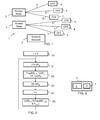
Figure 1 is a block diagram of an telecommunication network comprising a prediction device for predicting the attainable bitrate of telecommunication lines, -
Figure 2 is a flowchart of a method executed by the prediction device ofFigure 1 , and -
Figure 3 is a structural view of the prediction device ofFigure 1 . -
Figure 1 is a partial view oftelecommunication network 1. Thetelecommunication network 1 comprises aprediction device 2, a plurality ofaccess nodes 3, a plurality ofcustomer premises equipments 4 and a plurality oftelecommunication lines 5 connecting respectivecustomer premises equipments 4 to one of theaccess nodes 3. - An
access node 3 and acustomer premises equipments 4 use a DSL technology for communication over thetelecommunication line 5. For example, theaccess node 3 is or comprise a DSLAM and thecustomer premises equipments 4 is or comprise a user's DSL modem. We consider a case wherein the operator of thetelecommunication network 1 plans to upgrade at least some of thetelecommunication lines 5 from an origin DSL technology to a target DSL technology (for example from ADSL2 to VDSL2). - The
prediction device 2 is capable of communicating with theaccess nodes 3 and/or thecustomer premises equipments 4 for obtaining operational parameters related to thetelecommunications lines 5. For example, theaccess nodes 3 and/or thecustomer premises equipments 4 regularly report operational parameters to theprediction device 2 and/or send the operational parameters in response to a request from theprediction device 2. Before upgrading atelecommunication line 5 from the origin DSL technology to the target DSL technology, theprediction device 2 determines a prediction of the attainable bitrate on thetelecommunication line 5 with the target DSL technology, in function of the obtained operational parameters. The prediction method is described in more details with reference toFigure 2 . The prediction is based on a prediction algorithm or tool, referred to as "Upgrade Predictor", which determines a predicted value of the attainable bitrate on thetelecommunication line 5 with the target DSL technology. - The
prediction device 2 may be a network analyzer which, in addition to the prediction function mentioned before, performs other monitoring and/or troubleshooting tasks related to theaccess nodes 3,customer premises equipments 4 andtelecommunication lines 5. -
Figure 2 is a flowchart of a method for predicting the attainable bitrates ontelecommunication lines 5, executed by theprediction device 2. Groups oftelecommunication lines 5 are successively upgraded from the origin DSL technology to the target DSL technology. For example, one group oftelecommunication lines 5 is upgraded each day. By comparing the predicted attainable bitrates of thetelecommunication lines 5 of a group, determined before the upgrade is performed, with the attainable bitrates measured after the upgrade has been performed, the prediction for the next group oftelecommunication lines 5 may be improved. - Hereafter, index i refers to the successive groups of telecommunication lines 5 (initialized at i = 0 at step S0), and index i refer to the
respective telecommunication lines 5 of a group. Lij denotes the line j of group i. - Before the group i is upgraded from the origin DSL technology to the target DSL technology, the
prediction device 2 obtains operational parameters OPij for the respective lines Lij (step Sl). The operational parameters OPij specify the quality and performance of the transmission on the line Lij, and include for example actual bitrate, output power, actual noise margin, actual INP, actual delay, loop attenuation, electrical length, some profile parameters (i.e band plan, maximum frequency, upstream power back-off parameters, downstream power-back-off parameters,...). - Then, the
prediction device 2 determines predictions PredBRij of the attainable bitrate on the respective lines Lij with the target DSL technology (Step S2). The prediction PredBRij for line Lij depends on the operational parameters OPij and of prediction parameters PPi. The prediction parameters PPi specify assumptions about the environment of the telecommunication lines 5 (noise level, physical characteristics of the line, theoretical models, modem properties...) and may be referred as "expert settings". Various known techniques, including a tool called "Upgrade Predictor", exist for predicting an attainable bitrate in function of operational parameters and of prediction parameters (experts settings). The upgrade predictor uses the collected operational parameters to estimates the carrier data (i.e transfer function, SNR, QLN (Quiet Line Noise), PSD..) and to provide an estimated bitrate. - Moreover, the prediction PredBRij depends also on a correction CORi. Initially (i=0), the correction CORi does not influence the determination of the prediction PredBRij by the upgrade predictor. For successive groups i > 0, the correction CORi and its influence on the output of the upgrade predictor will be described in more detail hereafter.
- After the group i has been upgraded from the origin DSL technology to the target DSL technology, the
prediction device 2 obtains the attainable bitrates BRij measures for the respective lines Lij (step S3). - When the next group of
telecommunication lines 5 is considered (index i is incremented at step S4), theprediction device 2 determines the correction CORi for the current group i in function of the predictions PredBR(i-l)i and the measured attainable bitrates BR(i-l)i of the previous group i-1 (step S5). When steps Sl and S2 are repeated for the current group i, the correction CORi influence the determination of the predictions PredBRij by the upgrade predictor. In other words, the prediction PredBRij is determined in function of the operational parameters OPij, of prediction parameters PPi and of the predictions PredBR(i-l)i and the measured attainable bitrates BR(i-l)i of the previous group i-1. - Various techniques may be used for determining the correction CORi at step S5 and taking the correction CORi into account when determining a prediction PredBRij at step S2.
- For example, in an embodiment, the correction CORi depends on the mean error between the predictions PredBR(i-l)i and the measured attainable bitrates BR(i-l)i for the lines L(i-l)i. At step S2, the
prediction device 2 first determines an estimate of the predictions PredBRij by applying the upgrade predictor with the operational parameters OPij and the prediction parameters PPi. Then, theprediction device 2 determines the predictions PredBRij by substracting the correction CORi from the output of the upgrade predictor. A similar approach may be based on a correction CORi in terms of mean relative error (in %). - In another embodiment, at
step 2, theprediction device 2 first adapts a prediction algorithm or tool (for example the upgrade predictor) in function of the correction CORi. For example, theprediction device 2 change the value of one or more prediction parameters PPi used by the upgrade predictor. Then, theprediction device 2 determines the predictions PredBRij by applying the adapted prediction algorithm. - The order of steps shown on
Figure 2 is given as an example. However, other order may be applied. For example, the operational parameters OPij for the group i may be obtained before obtaining the measured attanaible bitrate BR(i-l)i of the previous group i-1. - Since the predictions for a group of
telecommunication lines 5 take into account a correction factor determined by comparing the predicted and measured attainable bitrates for a previous group oftelecommunication lines 5, the quality of the prediction may be improved. This may be iterated for successive groups oftelecommunication lines 5, such that the prediction will be more reliable and the upgrade predictor will be more robust. - In one embodiment, the
telecommunication lines 5 to be upgraded are classified in different categories, based for example on the type ofcustomer premises equipments 4. The prediction method may be applied independently for each category of line. Accordingly, respective systematic bias introduced on respective categories oftelecommunication lines 5, for example by respective types of customer premises equipments, may be cancelled independently. In practice, this mean that corrections CORi may be determined and applied for the respective categories. - In some embodiments, determining a prediction PredBRij at step S2 may comprise determining a plurality of estimates at successive times, for example one estimate by day, and determining the prediction PredBRij in function of the last N estimates. In this case, if one or more operational parameters are badly reported for one of the estimate, or an estimate is not available for a given day for any reason, the prediction PredBRij may be corrected by the aggregation of several estimates.
-
Figure 3 is a structural view of theprediction device 2, which comprises aprocessor 6 and amemory 7. Thememory 7 stores a computer program P which, when executed by theprocessor 6, cause theprediction device 2 to execute method described above with reference toFigure 2 . - It is to be remarked that the functions of the various elements shown in the figures may be provided through the use of dedicated hardware as well as hardware capable of executing software in association with appropriate software. When provided by a processor, the functions may be provided by a single dedicated processor, by a single shared processor, or by a plurality of individual processors, some of which may be shared, for example in a cloud computing architecture. Moreover, explicit use of the term "processor" should not be construed to refer exclusively to hardware capable of executing software, and may implicitly include, without limitation, digital signal processor (DSP) hardware, network processor, application specific integrated circuit (ASIC), field programmable gate array (FPGA), read only memory (ROM) for storing software, random access memory (RAM), and non volatile storage. Other hardware, conventional and/or custom, may also be included. Their function may be carried out through the operation of program logic, through dedicated logic, through the interaction of program control and dedicated logic, or even manually, the particular technique being selectable by the implementer as more specifically understood from the context.
- It should be further appreciated by those skilled in the art that any block diagrams herein represent conceptual views of illustrative circuitry embodying the principles of the invention. Similarly, it will be appreciated that any flow charts represents various processes which may be substantially represented in computer readable medium and so executed by a computer or processor, whether or not such computer or processor is explicitly shown.
- Embodiments of the method can be performed by means of dedicated hardware and/of software or any combination of both.
- While the principles of the invention have been described above in connection with specific embodiments, it is to be clearly understood that this description is made only by way of example and not as a limitation on the scope of the invention, as defined in the appended claims.
Claims (9)
- Method for determining a prediction (PredBRij) of an attainable bitrate on at least one second telecommunication line (5), executed by a prediction device (2), comprising:- obtaining (Sl) operational parameters (OPij) of at least one first telecommunication line (5) while the first telecommunication line (5) is used with an origin Digital Subscriber Line technology, and- determining (S2) a prediction (PredBRij) of the attainable bitrate of the at least one first telecommunication line (5) with a target Digital Subscriber line technology, in function of the operational parameters (OPij) of the least one first telecommunication line,- after the first telecommunication line (5) has been upgraded from the origin Digital Subscriber line technology to the target Digital Subscriber line technology, obtaining (S3) a measure of the attainable bitrate (BRij) of the at least one first telecommunication line (5),- obtaining (Sl) operational parameters (OPij) of at least one second telecommunication line (5) while the second telecommunication line (5) is used with the origin Digital Subscriber Line technology,- determining (S2) a prediction (PredBRij) of the attainable bitrate of the at least one second telecommunication line (5) with the target Digital Subscriber Line technology, in function of the operational parameters (OPij) of the least one second telecommunication line (5) and of the prediction (PredBR(i-l)i) of the attainable bitrate and the measured attainable bitrate (BR(i-l)i) of the at least one first telecommunication line (5).
- Method according to claim 1, wherein the operational parameters (OPij) include at least one of an actual bitrate, an output power, an actual noise margin, an actual impulse noise protection, an actual delay, a loop attenuation, an electrical length, a band plan, a maximum frequency, an upstream power back-off parameter, a downstream power-back-off parameter.
- Method according to one of claims 1 and 2, comprising iterating the step of determining (S2) a prediction of the attainable bitrate of the at least one second telecommunication line for successive groups of at least one telecommunication line.
- Method according to one of claims 1 to 3, wherein determining (S2) a prediction of the attainable bitrate of the at least one second telecommunication line comprises:- determining (S5) a correction (CORi) in function of the difference between the prediction of the attainable bitrate and the measured attainable bitrate of the at least one first telecommunication line,- determining an estimate of prediction of the attainable bitrate of the at least one second telecommunication line,- substracting the correction from the estimate.
- Method according to one of claims 1 to 3, wherein determining (S2) a prediction of the attainable bitrate of the at least one second telecommunication line comprises:- adapting a prediction algorithm in function the prediction of the attainable bitrate and the measured attainable bitrate of the at least one first telecommunication line, by changing at least one prediction parameter used by the prediction algorithm,- determining the prediction of the attainable bitrate of the at least one second telecommunication line by using the adapted prediction algorithm.
- Method according to claim 5, wherein the prediction parameters include at least one of a noise level, a physical characteristic of the second telecommunication line, a theoretical model and a modem property.
- Method according to one of claims 1 to 6, wherein the prediction of the attainable bitrate of the at least one second telecommunication line is determined also in function of a category of the second telecommunication line.
- Computer program (P) comprising instructions for performing the method of one of claims 1 to 7 when said instructions are executed by a computer.
- Prediction device (2) for determining a prediction (PredBRij) of an attainable bitrate on at least one second telecommunication line (5), comprising:- means (6, 7, P) for obtaining operational parameters (OPij) of at least one first telecommunication line (5) while the first telecommunication line (5) is used with an origin Digital Subscriber Line technology, and- means (6, 7, P) for determining a prediction (PredBRij) of the attainable bitrate of the at least one first telecommunication line (5) with a target Digital Subscriber line technology, in function of the operational parameters (OPij) of the least one first telecommunication line,- means (6, 7, P) for obtaining a measure of the attainable bitrate (BRij) of the at least one first telecommunication line (5) after the first telecommunication line (5) has been upgraded from the origin Digital Subscriber line technology to the target Digital Subscriber line technology,- means (6, 7, P) for obtaining operational parameters (OPij) of at least one second telecommunication line (5) while the second telecommunication line (5) is used with the origin Digital Subscriber Line technology,- means (6, 7, P) for determining a prediction (PredBRij) of the attainable bitrate of the at least one second telecommunication line (5) with the target Digital Subscriber Line technology, in function of the operational parameters (OPij) of the least one second telecommunication line (5) and of the prediction (PredBR(i-l)i) of the attainable bitrate and the measured attainable bitrate (BR(i-l)i) of the at least one first telecommunication line (5).
Priority Applications (2)
| Application Number | Priority Date | Filing Date | Title |
|---|---|---|---|
| ES15305467.1T ES2675549T3 (en) | 2015-03-31 | 2015-03-31 | Procedure and device for predicting the attainable bit rate of a telecommunication line |
| EP15305467.1A EP3076601B1 (en) | 2015-03-31 | 2015-03-31 | Method and device for predicting the attainable bitrate of a telecommunication line |
Applications Claiming Priority (1)
| Application Number | Priority Date | Filing Date | Title |
|---|---|---|---|
| EP15305467.1A EP3076601B1 (en) | 2015-03-31 | 2015-03-31 | Method and device for predicting the attainable bitrate of a telecommunication line |
Publications (2)
| Publication Number | Publication Date |
|---|---|
| EP3076601A1 true EP3076601A1 (en) | 2016-10-05 |
| EP3076601B1 EP3076601B1 (en) | 2018-05-02 |
Family
ID=52946489
Family Applications (1)
| Application Number | Title | Priority Date | Filing Date |
|---|---|---|---|
| EP15305467.1A Active EP3076601B1 (en) | 2015-03-31 | 2015-03-31 | Method and device for predicting the attainable bitrate of a telecommunication line |
Country Status (2)
| Country | Link |
|---|---|
| EP (1) | EP3076601B1 (en) |
| ES (1) | ES2675549T3 (en) |
Citations (2)
| Publication number | Priority date | Publication date | Assignee | Title |
|---|---|---|---|---|
| EP2645633A1 (en) * | 2012-03-29 | 2013-10-02 | British Telecommunications Public Limited Company | Estimating line rate |
| EP2787653A1 (en) * | 2013-04-01 | 2014-10-08 | Fluke Corporation | Prequalification of vectoring before implementation |
-
2015
- 2015-03-31 EP EP15305467.1A patent/EP3076601B1/en active Active
- 2015-03-31 ES ES15305467.1T patent/ES2675549T3/en active Active
Patent Citations (2)
| Publication number | Priority date | Publication date | Assignee | Title |
|---|---|---|---|---|
| EP2645633A1 (en) * | 2012-03-29 | 2013-10-02 | British Telecommunications Public Limited Company | Estimating line rate |
| EP2787653A1 (en) * | 2013-04-01 | 2014-10-08 | Fluke Corporation | Prequalification of vectoring before implementation |
Non-Patent Citations (2)
| Title |
|---|
| ALCATEL-LUCENT: "TELENOR ACHIEVES COMPETITIVE ADVANTAGE IN ULTRA-BROADBAND", 4 August 2014 (2014-08-04), pages 1 - 4, XP055213693, Retrieved from the Internet <URL:http://www.tmcnet.com/tmc/whitepapers/documents/whitepapers/2014/10448-telenor-achieves-competitive-advantage-ultra-broadband.pdf> [retrieved on 20150916] * |
| JAMES SCHLECHTER: "D SL LOOP PRE-QUALIFIC ATION SOFT WARE", 22 October 2012 (2012-10-22), XP055213695, Retrieved from the Internet <URL:https://www.tno.nl/media/2417/spider_flyer.pdf> [retrieved on 20150916] * |
Also Published As
| Publication number | Publication date |
|---|---|
| ES2675549T3 (en) | 2018-07-11 |
| EP3076601B1 (en) | 2018-05-02 |
Similar Documents
| Publication | Publication Date | Title |
|---|---|---|
| JP5504327B2 (en) | Interpolation method and apparatus for enhancing crosstalk estimation efficiency | |
| BR112015007306B1 (en) | ACOUSTIC ECHO CANCELLATION METHOD | |
| CN106716929B (en) | Method and apparatus for creating a channel for transmitting data over a DSL connection | |
| CN111106842B (en) | Method for eliminating adjacent channel interference, electronic equipment and readable storage medium | |
| US6687372B1 (en) | Pure delay estimation | |
| EP3076601B1 (en) | Method and device for predicting the attainable bitrate of a telecommunication line | |
| CN104488198B (en) | For the method and apparatus determining the parameter of the number characterizing spare space | |
| CN111510400B (en) | Method and apparatus for predicting the bit rate of a repaired communication channel | |
| US8385205B2 (en) | Modeling packet traffic using an inverse leaky bucket | |
| CN119544605B (en) | Network adjustment method, device, electronic equipment and storage medium | |
| US11941535B2 (en) | Computer-implemented method of modifying an algorithm operating on a computing system | |
| WO2020148773A1 (en) | Predicting network behaviour | |
| Diniz et al. | Set-membership affine projection algorithm for echo cancellation | |
| US10142489B2 (en) | Digital subscriber line profile selection method and apparatus | |
| Vitale et al. | An analytical approach to performance analysis of coupled processor systems | |
| US10237125B2 (en) | Dynamic line management system | |
| EP2770670A1 (en) | Method and device for monitoring the performance of a vectoring group of telecommunication lines | |
| US10938981B2 (en) | Method and apparatus for determining a bridged tap length | |
| EP3255809B1 (en) | Method and device for detecting a crosstalk issue on a digital subscriber line | |
| US11092634B2 (en) | Cable network modelling | |
| CN118802669B (en) | A method, apparatus, device, and storage medium for analyzing network bandwidth overruns. | |
| CN107979390B (en) | Method and device for vectoring system to identify external serial port | |
| Hartmann et al. | The one‐level functional equation of multi‐rate loss systems | |
| EP2469824A1 (en) | Crosstalk reduction by DPBO parameters determination | |
| WO2016146431A1 (en) | Method for estimating a location of a bridge tap |
Legal Events
| Date | Code | Title | Description |
|---|---|---|---|
| PUAI | Public reference made under article 153(3) epc to a published international application that has entered the european phase |
Free format text: ORIGINAL CODE: 0009012 |
|
| AK | Designated contracting states |
Kind code of ref document: A1 Designated state(s): AL AT BE BG CH CY CZ DE DK EE ES FI FR GB GR HR HU IE IS IT LI LT LU LV MC MK MT NL NO PL PT RO RS SE SI SK SM TR |
|
| AX | Request for extension of the european patent |
Extension state: BA ME |
|
| STAA | Information on the status of an ep patent application or granted ep patent |
Free format text: STATUS: REQUEST FOR EXAMINATION WAS MADE |
|
| 17P | Request for examination filed |
Effective date: 20170405 |
|
| RBV | Designated contracting states (corrected) |
Designated state(s): AL AT BE BG CH CY CZ DE DK EE ES FI FR GB GR HR HU IE IS IT LI LT LU LV MC MK MT NL NO PL PT RO RS SE SI SK SM TR |
|
| GRAP | Despatch of communication of intention to grant a patent |
Free format text: ORIGINAL CODE: EPIDOSNIGR1 |
|
| RIC1 | Information provided on ipc code assigned before grant |
Ipc: H04B 3/46 20150101ALI20180201BHEP Ipc: H04L 12/24 20060101ALI20180201BHEP Ipc: H04M 3/30 20060101ALI20180201BHEP Ipc: H04L 12/26 20060101AFI20180201BHEP |
|
| STAA | Information on the status of an ep patent application or granted ep patent |
Free format text: STATUS: GRANT OF PATENT IS INTENDED |
|
| GRAS | Grant fee paid |
Free format text: ORIGINAL CODE: EPIDOSNIGR3 |
|
| GRAA | (expected) grant |
Free format text: ORIGINAL CODE: 0009210 |
|
| STAA | Information on the status of an ep patent application or granted ep patent |
Free format text: STATUS: THE PATENT HAS BEEN GRANTED |
|
| INTG | Intention to grant announced |
Effective date: 20180308 |
|
| RAP1 | Party data changed (applicant data changed or rights of an application transferred) |
Owner name: ALCATEL LUCENT |
|
| AK | Designated contracting states |
Kind code of ref document: B1 Designated state(s): AL AT BE BG CH CY CZ DE DK EE ES FI FR GB GR HR HU IE IS IT LI LT LU LV MC MK MT NL NO PL PT RO RS SE SI SK SM TR |
|
| REG | Reference to a national code |
Ref country code: GB Ref legal event code: FG4D |
|
| REG | Reference to a national code |
Ref country code: CH Ref legal event code: EP Ref country code: AT Ref legal event code: REF Ref document number: 996381 Country of ref document: AT Kind code of ref document: T Effective date: 20180515 |
|
| REG | Reference to a national code |
Ref country code: DE Ref legal event code: R096 Ref document number: 602015010643 Country of ref document: DE Ref country code: IE Ref legal event code: FG4D |
|
| REG | Reference to a national code |
Ref country code: ES Ref legal event code: FG2A Ref document number: 2675549 Country of ref document: ES Kind code of ref document: T3 Effective date: 20180711 |
|
| REG | Reference to a national code |
Ref country code: NL Ref legal event code: MP Effective date: 20180502 |
|
| REG | Reference to a national code |
Ref country code: LT Ref legal event code: MG4D |
|
| PG25 | Lapsed in a contracting state [announced via postgrant information from national office to epo] |
Ref country code: SE Free format text: LAPSE BECAUSE OF FAILURE TO SUBMIT A TRANSLATION OF THE DESCRIPTION OR TO PAY THE FEE WITHIN THE PRESCRIBED TIME-LIMIT Effective date: 20180502 Ref country code: FI Free format text: LAPSE BECAUSE OF FAILURE TO SUBMIT A TRANSLATION OF THE DESCRIPTION OR TO PAY THE FEE WITHIN THE PRESCRIBED TIME-LIMIT Effective date: 20180502 Ref country code: BG Free format text: LAPSE BECAUSE OF FAILURE TO SUBMIT A TRANSLATION OF THE DESCRIPTION OR TO PAY THE FEE WITHIN THE PRESCRIBED TIME-LIMIT Effective date: 20180802 Ref country code: NO Free format text: LAPSE BECAUSE OF FAILURE TO SUBMIT A TRANSLATION OF THE DESCRIPTION OR TO PAY THE FEE WITHIN THE PRESCRIBED TIME-LIMIT Effective date: 20180802 Ref country code: LT Free format text: LAPSE BECAUSE OF FAILURE TO SUBMIT A TRANSLATION OF THE DESCRIPTION OR TO PAY THE FEE WITHIN THE PRESCRIBED TIME-LIMIT Effective date: 20180502 |
|
| PG25 | Lapsed in a contracting state [announced via postgrant information from national office to epo] |
Ref country code: GR Free format text: LAPSE BECAUSE OF FAILURE TO SUBMIT A TRANSLATION OF THE DESCRIPTION OR TO PAY THE FEE WITHIN THE PRESCRIBED TIME-LIMIT Effective date: 20180803 Ref country code: NL Free format text: LAPSE BECAUSE OF FAILURE TO SUBMIT A TRANSLATION OF THE DESCRIPTION OR TO PAY THE FEE WITHIN THE PRESCRIBED TIME-LIMIT Effective date: 20180502 Ref country code: HR Free format text: LAPSE BECAUSE OF FAILURE TO SUBMIT A TRANSLATION OF THE DESCRIPTION OR TO PAY THE FEE WITHIN THE PRESCRIBED TIME-LIMIT Effective date: 20180502 Ref country code: RS Free format text: LAPSE BECAUSE OF FAILURE TO SUBMIT A TRANSLATION OF THE DESCRIPTION OR TO PAY THE FEE WITHIN THE PRESCRIBED TIME-LIMIT Effective date: 20180502 Ref country code: LV Free format text: LAPSE BECAUSE OF FAILURE TO SUBMIT A TRANSLATION OF THE DESCRIPTION OR TO PAY THE FEE WITHIN THE PRESCRIBED TIME-LIMIT Effective date: 20180502 |
|
| REG | Reference to a national code |
Ref country code: AT Ref legal event code: MK05 Ref document number: 996381 Country of ref document: AT Kind code of ref document: T Effective date: 20180502 |
|
| PG25 | Lapsed in a contracting state [announced via postgrant information from national office to epo] |
Ref country code: AT Free format text: LAPSE BECAUSE OF FAILURE TO SUBMIT A TRANSLATION OF THE DESCRIPTION OR TO PAY THE FEE WITHIN THE PRESCRIBED TIME-LIMIT Effective date: 20180502 Ref country code: CZ Free format text: LAPSE BECAUSE OF FAILURE TO SUBMIT A TRANSLATION OF THE DESCRIPTION OR TO PAY THE FEE WITHIN THE PRESCRIBED TIME-LIMIT Effective date: 20180502 Ref country code: RO Free format text: LAPSE BECAUSE OF FAILURE TO SUBMIT A TRANSLATION OF THE DESCRIPTION OR TO PAY THE FEE WITHIN THE PRESCRIBED TIME-LIMIT Effective date: 20180502 Ref country code: EE Free format text: LAPSE BECAUSE OF FAILURE TO SUBMIT A TRANSLATION OF THE DESCRIPTION OR TO PAY THE FEE WITHIN THE PRESCRIBED TIME-LIMIT Effective date: 20180502 Ref country code: PL Free format text: LAPSE BECAUSE OF FAILURE TO SUBMIT A TRANSLATION OF THE DESCRIPTION OR TO PAY THE FEE WITHIN THE PRESCRIBED TIME-LIMIT Effective date: 20180502 Ref country code: DK Free format text: LAPSE BECAUSE OF FAILURE TO SUBMIT A TRANSLATION OF THE DESCRIPTION OR TO PAY THE FEE WITHIN THE PRESCRIBED TIME-LIMIT Effective date: 20180502 Ref country code: SK Free format text: LAPSE BECAUSE OF FAILURE TO SUBMIT A TRANSLATION OF THE DESCRIPTION OR TO PAY THE FEE WITHIN THE PRESCRIBED TIME-LIMIT Effective date: 20180502 |
|
| REG | Reference to a national code |
Ref country code: DE Ref legal event code: R097 Ref document number: 602015010643 Country of ref document: DE |
|
| PG25 | Lapsed in a contracting state [announced via postgrant information from national office to epo] |
Ref country code: IT Free format text: LAPSE BECAUSE OF FAILURE TO SUBMIT A TRANSLATION OF THE DESCRIPTION OR TO PAY THE FEE WITHIN THE PRESCRIBED TIME-LIMIT Effective date: 20180502 Ref country code: SM Free format text: LAPSE BECAUSE OF FAILURE TO SUBMIT A TRANSLATION OF THE DESCRIPTION OR TO PAY THE FEE WITHIN THE PRESCRIBED TIME-LIMIT Effective date: 20180502 |
|
| PLBE | No opposition filed within time limit |
Free format text: ORIGINAL CODE: 0009261 |
|
| STAA | Information on the status of an ep patent application or granted ep patent |
Free format text: STATUS: NO OPPOSITION FILED WITHIN TIME LIMIT |
|
| 26N | No opposition filed |
Effective date: 20190205 |
|
| PG25 | Lapsed in a contracting state [announced via postgrant information from national office to epo] |
Ref country code: SI Free format text: LAPSE BECAUSE OF FAILURE TO SUBMIT A TRANSLATION OF THE DESCRIPTION OR TO PAY THE FEE WITHIN THE PRESCRIBED TIME-LIMIT Effective date: 20180502 |
|
| PGFP | Annual fee paid to national office [announced via postgrant information from national office to epo] |
Ref country code: FR Payment date: 20190213 Year of fee payment: 5 |
|
| PG25 | Lapsed in a contracting state [announced via postgrant information from national office to epo] |
Ref country code: MC Free format text: LAPSE BECAUSE OF FAILURE TO SUBMIT A TRANSLATION OF THE DESCRIPTION OR TO PAY THE FEE WITHIN THE PRESCRIBED TIME-LIMIT Effective date: 20180502 |
|
| REG | Reference to a national code |
Ref country code: CH Ref legal event code: PL |
|
| PG25 | Lapsed in a contracting state [announced via postgrant information from national office to epo] |
Ref country code: AL Free format text: LAPSE BECAUSE OF FAILURE TO SUBMIT A TRANSLATION OF THE DESCRIPTION OR TO PAY THE FEE WITHIN THE PRESCRIBED TIME-LIMIT Effective date: 20180502 Ref country code: LU Free format text: LAPSE BECAUSE OF NON-PAYMENT OF DUE FEES Effective date: 20190331 |
|
| REG | Reference to a national code |
Ref country code: BE Ref legal event code: MM Effective date: 20190331 |
|
| PG25 | Lapsed in a contracting state [announced via postgrant information from national office to epo] |
Ref country code: IE Free format text: LAPSE BECAUSE OF NON-PAYMENT OF DUE FEES Effective date: 20190331 Ref country code: LI Free format text: LAPSE BECAUSE OF NON-PAYMENT OF DUE FEES Effective date: 20190331 Ref country code: CH Free format text: LAPSE BECAUSE OF NON-PAYMENT OF DUE FEES Effective date: 20190331 |
|
| PG25 | Lapsed in a contracting state [announced via postgrant information from national office to epo] |
Ref country code: BE Free format text: LAPSE BECAUSE OF NON-PAYMENT OF DUE FEES Effective date: 20190331 |
|
| PG25 | Lapsed in a contracting state [announced via postgrant information from national office to epo] |
Ref country code: TR Free format text: LAPSE BECAUSE OF FAILURE TO SUBMIT A TRANSLATION OF THE DESCRIPTION OR TO PAY THE FEE WITHIN THE PRESCRIBED TIME-LIMIT Effective date: 20180502 |
|
| PG25 | Lapsed in a contracting state [announced via postgrant information from national office to epo] |
Ref country code: MT Free format text: LAPSE BECAUSE OF NON-PAYMENT OF DUE FEES Effective date: 20190331 Ref country code: PT Free format text: LAPSE BECAUSE OF FAILURE TO SUBMIT A TRANSLATION OF THE DESCRIPTION OR TO PAY THE FEE WITHIN THE PRESCRIBED TIME-LIMIT Effective date: 20180903 |
|
| REG | Reference to a national code |
Ref country code: ES Ref legal event code: FD2A Effective date: 20200727 |
|
| PG25 | Lapsed in a contracting state [announced via postgrant information from national office to epo] |
Ref country code: ES Free format text: LAPSE BECAUSE OF NON-PAYMENT OF DUE FEES Effective date: 20190401 |
|
| PG25 | Lapsed in a contracting state [announced via postgrant information from national office to epo] |
Ref country code: FR Free format text: LAPSE BECAUSE OF NON-PAYMENT OF DUE FEES Effective date: 20200331 |
|
| PG25 | Lapsed in a contracting state [announced via postgrant information from national office to epo] |
Ref country code: CY Free format text: LAPSE BECAUSE OF FAILURE TO SUBMIT A TRANSLATION OF THE DESCRIPTION OR TO PAY THE FEE WITHIN THE PRESCRIBED TIME-LIMIT Effective date: 20180502 |
|
| PG25 | Lapsed in a contracting state [announced via postgrant information from national office to epo] |
Ref country code: IS Free format text: LAPSE BECAUSE OF FAILURE TO SUBMIT A TRANSLATION OF THE DESCRIPTION OR TO PAY THE FEE WITHIN THE PRESCRIBED TIME-LIMIT Effective date: 20180902 |
|
| PG25 | Lapsed in a contracting state [announced via postgrant information from national office to epo] |
Ref country code: HU Free format text: LAPSE BECAUSE OF FAILURE TO SUBMIT A TRANSLATION OF THE DESCRIPTION OR TO PAY THE FEE WITHIN THE PRESCRIBED TIME-LIMIT; INVALID AB INITIO Effective date: 20150331 |
|
| REG | Reference to a national code |
Ref country code: DE Ref legal event code: R079 Ref document number: 602015010643 Country of ref document: DE Free format text: PREVIOUS MAIN CLASS: H04L0012260000 Ipc: H04L0043000000 |
|
| PG25 | Lapsed in a contracting state [announced via postgrant information from national office to epo] |
Ref country code: MK Free format text: LAPSE BECAUSE OF FAILURE TO SUBMIT A TRANSLATION OF THE DESCRIPTION OR TO PAY THE FEE WITHIN THE PRESCRIBED TIME-LIMIT Effective date: 20180502 |
|
| PGFP | Annual fee paid to national office [announced via postgrant information from national office to epo] |
Ref country code: GB Payment date: 20260209 Year of fee payment: 12 |
|
| PGFP | Annual fee paid to national office [announced via postgrant information from national office to epo] |
Ref country code: DE Payment date: 20260204 Year of fee payment: 12 |