EP3073367B1 - Method and electronic device for providing content - Google Patents
Method and electronic device for providing content Download PDFInfo
- Publication number
- EP3073367B1 EP3073367B1 EP16162609.8A EP16162609A EP3073367B1 EP 3073367 B1 EP3073367 B1 EP 3073367B1 EP 16162609 A EP16162609 A EP 16162609A EP 3073367 B1 EP3073367 B1 EP 3073367B1
- Authority
- EP
- European Patent Office
- Prior art keywords
- content
- electronic device
- processor
- output module
- voice input
- Prior art date
- Legal status (The legal status is an assumption and is not a legal conclusion. Google has not performed a legal analysis and makes no representation as to the accuracy of the status listed.)
- Active
Links
Images






Classifications
-
- G—PHYSICS
- G10—MUSICAL INSTRUMENTS; ACOUSTICS
- G10L—SPEECH ANALYSIS TECHNIQUES OR SPEECH SYNTHESIS; SPEECH RECOGNITION; SPEECH OR VOICE PROCESSING TECHNIQUES; SPEECH OR AUDIO CODING OR DECODING
- G10L15/00—Speech recognition
- G10L15/22—Procedures used during a speech recognition process, e.g. man-machine dialogue
-
- G—PHYSICS
- G06—COMPUTING OR CALCULATING; COUNTING
- G06F—ELECTRIC DIGITAL DATA PROCESSING
- G06F3/00—Input arrangements for transferring data to be processed into a form capable of being handled by the computer; Output arrangements for transferring data from processing unit to output unit, e.g. interface arrangements
- G06F3/16—Sound input; Sound output
- G06F3/167—Audio in a user interface, e.g. using voice commands for navigating, audio feedback
-
- G—PHYSICS
- G06—COMPUTING OR CALCULATING; COUNTING
- G06F—ELECTRIC DIGITAL DATA PROCESSING
- G06F3/00—Input arrangements for transferring data to be processed into a form capable of being handled by the computer; Output arrangements for transferring data from processing unit to output unit, e.g. interface arrangements
- G06F3/01—Input arrangements or combined input and output arrangements for interaction between user and computer
- G06F3/011—Arrangements for interaction with the human body, e.g. for user immersion in virtual reality
- G06F3/013—Eye tracking input arrangements
-
- G—PHYSICS
- G06—COMPUTING OR CALCULATING; COUNTING
- G06F—ELECTRIC DIGITAL DATA PROCESSING
- G06F3/00—Input arrangements for transferring data to be processed into a form capable of being handled by the computer; Output arrangements for transferring data from processing unit to output unit, e.g. interface arrangements
- G06F3/01—Input arrangements or combined input and output arrangements for interaction between user and computer
- G06F3/048—Interaction techniques based on graphical user interfaces [GUI]
- G06F3/0481—Interaction techniques based on graphical user interfaces [GUI] based on specific properties of the displayed interaction object or a metaphor-based environment, e.g. interaction with desktop elements like windows or icons, or assisted by a cursor's changing behaviour or appearance
- G06F3/04817—Interaction techniques based on graphical user interfaces [GUI] based on specific properties of the displayed interaction object or a metaphor-based environment, e.g. interaction with desktop elements like windows or icons, or assisted by a cursor's changing behaviour or appearance using icons
-
- G—PHYSICS
- G06—COMPUTING OR CALCULATING; COUNTING
- G06F—ELECTRIC DIGITAL DATA PROCESSING
- G06F3/00—Input arrangements for transferring data to be processed into a form capable of being handled by the computer; Output arrangements for transferring data from processing unit to output unit, e.g. interface arrangements
- G06F3/01—Input arrangements or combined input and output arrangements for interaction between user and computer
- G06F3/048—Interaction techniques based on graphical user interfaces [GUI]
- G06F3/0484—Interaction techniques based on graphical user interfaces [GUI] for the control of specific functions or operations, e.g. selecting or manipulating an object, an image or a displayed text element, setting a parameter value or selecting a range
-
- G—PHYSICS
- G06—COMPUTING OR CALCULATING; COUNTING
- G06F—ELECTRIC DIGITAL DATA PROCESSING
- G06F3/00—Input arrangements for transferring data to be processed into a form capable of being handled by the computer; Output arrangements for transferring data from processing unit to output unit, e.g. interface arrangements
- G06F3/16—Sound input; Sound output
-
- G—PHYSICS
- G10—MUSICAL INSTRUMENTS; ACOUSTICS
- G10L—SPEECH ANALYSIS TECHNIQUES OR SPEECH SYNTHESIS; SPEECH RECOGNITION; SPEECH OR VOICE PROCESSING TECHNIQUES; SPEECH OR AUDIO CODING OR DECODING
- G10L17/00—Speaker identification or verification techniques
- G10L17/06—Decision making techniques; Pattern matching strategies
-
- H—ELECTRICITY
- H04—ELECTRIC COMMUNICATION TECHNIQUE
- H04N—PICTORIAL COMMUNICATION, e.g. TELEVISION
- H04N23/00—Cameras or camera modules comprising electronic image sensors; Control thereof
Definitions
- the present disclosure relates to a method and an electronic device for providing content in response to a voice input.
- a user input interface applied to electronic devices is implemented to support a user input based on a voice input as well as a user input (e.g., an input through a button type key pad, a keyboard, a mouse, a touch panel, and the like) based on the physical manipulation by a user.
- a user input e.g., an input through a button type key pad, a keyboard, a mouse, a touch panel, and the like
- An electronic device that has a voice interface, such as an interface based on a user's voice, receives the user's voice to convert the received user's voice into an electrical signal and performs a function set in advance by processing the electrical signal.
- a voice interface such as an interface based on a user's voice
- EP 2 672 225 A1 discloses a method for executing a navigation program on a device comprising a touch- sensitive screen and a touch input interface, the method comprising: generating and displaying a two-dimensional (2D) navigation presentation; displaying a 3D control (150) for transitioning from the 2D navigation presentation to the 3D presentation; and in response to receiving a touch input selection of the 3D control, generating and displaying a three-dimensional (3D) navigation presentation.
- An electronic device may include at least one of smartphones, tablet personal computers (PCs), mobile phones, video telephones, electronic book readers, desktop PCs, laptop PCs, netbook computers, workstations, servers, personal digital assistants (PDAs), portable multimedia players (PMPs), Motion Picture Experts Group (MPEG-1 or MPEG-2) Audio Layer 3 (MP3) players, mobile medical devices, cameras, or wearable devices.
- PCs tablet personal computers
- PDAs personal digital assistants
- PMPs Portable multimedia players
- MPEG-1 or MPEG-2 Motion Picture Experts Group Audio Layer 3
- MP3 Motion Picture Experts Group Audio Layer 3
- a wearable device may include at least one of an accessory type (e.g., watch, ring, bracelet, ankle bracelet, necklace, glasses, contact lens, or head-mounted-device (HMD)), a fabric or clothing type (e.g., electronic apparel), a physical attachment type (e.g., skin pad or tattoo), or a body implantation type (e.g., implantable circuit).
- an accessory type e.g., watch, ring, bracelet, ankle bracelet, necklace, glasses, contact lens, or head-mounted-device (HMD)
- a fabric or clothing type e.g., electronic apparel
- a physical attachment type e.g., skin pad or tattoo
- a body implantation type e.g., implantable circuit
- the electronic device may be one of the above-described devices or a combination thereof.
- An electronic device according to an embodiment may be a flexible electronic device.
- an electronic device according to an embodiment may not be limited to the above-described electronic devices and may include other electronic devices and new electronic devices according to the development of technologies.
- the term "user” used herein may refer to a person who uses an electronic device or may refer to a device (e.g., an artificial intelligence electronic device) that uses an electronic device.
- FIG. 1 is a block diagram illustrating a configuration of an electronic device according to an embodiment of the present disclosure.
- an electronic device 100 may include a bus 110, a processor 120, a memory 130, a voice input module 140, an audio output module 150, a video output module 160, and a camera 170.
- the electronic device 100 may not include at least one of the above-described components or may further include other component(s).
- the bus 110 may interconnect the above-described components 120 to 170 and may be a circuit for conveying communications (e.g., a control message and/or data) among the above-described components.
- the processor 120 may include one or more of a central processing unit (CPU), an application processor (AP), or a communication processor (CP).
- the processor 120 may perform, for example, data processing or an operation associated with control and/or communication of at least one other component(s) of the electronic device 100.
- the processor 120 may execute a voice recognition application (e.g., S-Voice) stored in the memory 130 and may convert a voice input to a control command or a content request based on the voice recognition application. If the voice input is converted to the control command, the processor 120 may control various modules included in the electronic device 100 based on the control command. For example, in the case where a voice input is "Turn on Bluetooth.”, the processor 120 may activate a Bluetooth module embedded in the electronic device 100.
- a voice recognition application e.g., S-Voice
- the processor 120 may output corresponding content based on the content request. For example, if a voice input, such as "Let me know today's weather.”, is converted to a request about weather content, the processor 120 may provide the weather content to a user.
- the processor 120 may determine an output scheme of content to be outputted through the audio output module 150 or the video output module 160 based on a status of the voice recognition application or an operating environment of the electronic device 100.
- the processor 120 may output content corresponding to the voice input through the audio output module 150 or the video output module 160 based on the determined output scheme.
- the processor 120 may determine to control the video output module 160 to output detailed information of content corresponding to a voice input. Furthermore, in the case where the voice recognition application is running in a background of the electronic device, the processor 120 may determine to control the video output module 160 to output an icon associated with the content.
- an application is running in the foreground should be understood as an execution screen of the application is displayed on the whole area or the almost whole area of the video output module 160 of the electronic device 100.
- a state in which an application is running in the background should be understood as the application is running in a non-foreground state.
- a screen of the voice recognition application (e.g., a screen displayed according to S-Voice, refer to FIG. 4B ) may be displayed on the video output module 160.
- the processor 120 may display corresponding content on a screen of the voice recognition application in response to the voice input.
- a screen e.g., a screen displayed according to a web browsing application, refer to FIG. 4A
- the processor 120 may additionally display an icon (e.g., a first icon 501 of FIG. 5A ) associated with the content on the screen of another application in response to the voice input.
- the processor 120 may output detailed information of the content associated with the icon through the video output module 160 in response to the selection of the icon.
- the processor 120 may display the icon and may simultaneously change a shape of the icon based on the content.
- the icon associated with the content may be dynamically implemented in the form of an animation.
- content corresponding to a voice input may be provided to a user through the audio output module 150 based on text to speech (hereinafter referred to as "TTS").
- TTS text to speech
- the processor 120 may perform synchronization between an output of content by the audio output module 150 and a shape change of an icon displayed on the video output module 160.
- the processor 120 may analyze a voice input received from the voice input module 140 and may detect a noise included in the voice input and/or the number of users corresponding to the voice input based on the analyzed result.
- the processor 120 may determine an output scheme of content to be outputted through the audio output module 150 based on the detection result.
- the processor 120 may determine to control the audio output module 150 to output abstract information of content corresponding to the voice input. Furthermore, if the noise which satisfies the specified condition is not detected in the voice input, the processor 120 may determine to control the audio output module 150 to output detailed information of content.
- the noise which satisfies the specified condition may be detected based on an analysis of frequency, wave shape, or amplitude.
- the noise which satisfies the specified condition may include a residential noise at an outdoor space.
- a usual white noise may not be considered in determining whether the noise which satisfies the specified condition is included in the voice input. Accordingly, the processor 120 may determine whether the user is in an outdoor public space or in a private space.
- the processor 120 may determine to control the audio output module 150 to output abstract information of content. If a user corresponding to the voice input is detected in the voice input, the processor 120 may determine to control the audio output module 150 to output detailed information of content.
- the detection of the number of users corresponding to a voice input may be performed, for example, through a frequency analysis about the voice input.
- the processor 120 may determine whether only a user who uses the electronic device 100 exists in the vicinity of the electronic device 100 or whether the user exists with another user in the vicinity of the electronic device 100, through the frequency analysis.
- the processor 120 may determine an output scheme of the video output module 160 based on an output scheme of the audio output module 150. For example, if a noise which satisfies a specified condition is detected in a voice input or if a plurality of users corresponding to the voice input is detected in the voice input, the processor 120 may output abstract information of content through the audio output module 150 and may simultaneously output detailed information of the content through the video output module 160.
- the processor 120 may determine an output scheme of the content to be outputted through the audio output module 150 based on a result of determining a gaze at the camera 170.
- the processor 120 may determine to control the audio output module 150 to output abstract information of content. If it is determined that the user's gaze is not toward the video output module 160, the processor 120 may determine to control the audio output module 150 to output detailed information of content.
- the processor 120 may determine an output scheme of the video output module 160 based on an output scheme of the audio output module 150. For example, if it is determined that a user's gaze is toward the video output module 160, the processor 120 may output abstract information of content through the audio output module 150 and may simultaneously output detailed information of the content through the video output module 160.
- the processor 120 may determine an output scheme of the content to be outputted through the audio output module 150 or the video output module 160 based on a video of the vicinity of the electronic device 100 shot by the camera 170.
- the processor 120 may determine the output scheme of the content based on the number of users included in the shot video.
- the processor 120 may apply a face recognition algorithm to the shot video and may determine the number of users included in the shot video or may recognize a specific user.
- the processor 120 may determine to control the audio output module 150 and/or the video output module 160 to output detailed information of content. In contrast, if it is determined that a plurality of users is included in the shot video, the processor 120 may determine to control the audio output module 150 and/or the video output module 160 to output abstract information of content or not to output information of content.
- the processor 120 may determine to control the audio output module 150 and/or the video output module 160 to output detailed information of content. In contrast, if it is determined that an unauthenticated user is included in the shot video, the processor 120 may determine to control the audio output module 150 and/or the video output module 160 to output abstract information of content or not to output information of content.
- Abstract information of content may be information of a portion of content or summarized information of the content or may correspond to a portion of the content.
- the abstract information of content may be understood as including an icon associated with the content.
- detailed information of content may be all information about the content.
- the abstract information and the detailed information of the content may be acoustically provided to a user through the audio output module 150 based on a voice output function, such as TTS. Furthermore, abstract information and detailed information of the content may be visually provided to the user through the video output module 160.
- the memory 130 may include a volatile and/or a nonvolatile memory.
- the memory 130 may store instructions or data associated with at least one other component(s) of the electronic device 100.
- the memory 130 may store software, an application program which performs a content providing method according to various embodiments of the present disclosure, a voice recognition application, a web browsing application and data for executing the above-mentioned software or applications.
- the memory 130 may store a control command and/or a content request corresponding to a voice input or may store abstract information and/or detailed information of content corresponding to the content request.
- the voice input module 140 may receive a voice input uttered from a user. It may be understood that the voice input module 140 includes a physical microphone and additionally, a circuitry (e.g., analog-digital converter (ADC)) which performs a signal processing about the received voice input.
- ADC analog-digital converter
- the audio output module 150 may include a speaker, a headphone, an earphone, a corresponding driver, an audio output interface, and the like. Abstract information or detailed information of content may be outputted as a sound through the audio output module 150 so as to be acoustically provided to a user.
- the video output module 160 may correspond to a display.
- the display may include, for example, a liquid crystal display (LCD), a light-emitting diode (LED) display, an organic LED (OLED) display, a microelectromechanical systems (MEMS) display, or an electronic paper display.
- LCD liquid crystal display
- LED light-emitting diode
- OLED organic LED
- MEMS microelectromechanical systems
- Abstract information or detailed information of content may be outputted as a screen through the video output module 160 so as to be visually provided to a user.
- the video output module 160 may display, for example, various contents (e.g., a text, an image, a video, an icon, a symbol, and the like) to a user.
- the video output module 160 may include a touch screen and may receive, for example, a touch, gesture, proximity, or hovering input using an electronic pen or a portion of a user's body.
- the camera 170 may shoot a still image and a video.
- at least one of the camera 170 may include one or more image sensors, lenses, an image processing module, and the like.
- the electronic device 100 may include one or more cameras 170.
- the camera 170 may shoot a video of the vicinity of the electronic device 100 and at least a portion (e.g., face) of a user's body existing in the vicinity of the electronic device 100.
- the camera 170 may determine whether a user of the electronic device 100 is detected. For example, a method for tracking a user's pupil (so-called, eye tracking) may be used in determining a user's gaze.
- eye tracking a method for tracking a user's pupil
- FIG. 2 is a flow chart illustrating a method for providing content according to an embodiment of the present disclosure.
- the voice input module 140 may receive a voice input from a user through a voice recognition application.
- the received voice input may be provided to the processor 120 which executes the voice recognition application.
- the processor 120 may determine content to be outputted based on the voice input and may determine an output scheme of the content based on a status of the voice recognition application or an operating environment of the electronic device 100.
- the content to be outputted may be set in advance by the voice recognition application in response to the voice input.
- the processor 120 may output the content corresponding to the voice input based on the output scheme determined in operation 203 using at least one of the audio output module 150 or the video output module 160.
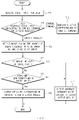
- FIG. 3 is a flow chart illustrating a method for providing content based on a status of a voice recognition application according to an embodiment of the present disclosure.
- a content providing method based on a status of a voice recognition application may include operation 301 to operation 317.
- the voice input module 140 may receive a voice input from a user.
- the voice input may be a simple word, such as "weather”, “schedule”, “Bluetooth”, “wireless fidelity (Wi-Fi)", and the like, or may be a sentence, such as "Let me know today's weather.”, “Let me know today's schedule.”, “Read today's news.”, “Turn on Bluetooth.”, “Turn on Wi-Fi.”, and the like.
- the voice input may be a control command (e.g., "Turn on Bluetooth.") to control a specific module embedded in the electronic device 100 or may be a content request (e.g., "Let me know today's weather.") which requests specific content.
- a control command e.g., "Turn on Bluetooth.”
- a content request e.g., "Let me know today's weather.”
- the processor 120 may determine whether the received voice input is the control command about the module embedded in the electronic device 100 or is the content request which requests an output of the specific content. If the voice input corresponds to the content request, the procedure proceeds to operation 305. If the voice input corresponds to the control command, the procedure proceeds to operation 317. For example, if the voice input corresponds to a "weather”, the procedure proceeds to operation 305. If the voice input corresponds to "Turn on Bluetooth.”, the procedure proceeds to operation 317.
- the processor 120 may determine a status of the voice recognition application and may determine whether the voice recognition application is running in the background or in the foreground. If the voice recognition application is running in the background, the procedure proceeds to operation 307. If the voice recognition application is running in the foreground, the procedure proceeds to operation 313.
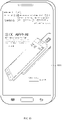
- FIG. 4A illustrates an electronic device in which a voice recognition application is running in a background according to an embodiment of the present disclosure.
- a web browsing application may be running in the foreground in the electronic device 100.
- a screen 400a of the web browsing application may be displayed on the video output module 160 of the electronic device 100.
- the voice recognition application is running in the background, a screen of the voice recognition application may not be displayed.
- the electronic device 100 may receive the voice input from the user through the voice input module 140.
- the user may provide a voice (e.g., "Hi, Galaxy.”), which is specified in advance, such that a state of the voice recognition application is switched from a sleep state to an active state.
- FIG. 4B illustrates an electronic device in which a voice recognition application is running in a foreground according to an embodiment of the present disclosure.
- the voice recognition application may be running in the foreground in the electronic device 100.
- a screen 400b of the voice recognition application may be displayed on the video output module 160 of the electronic device 100.
- the user before providing the voice input to the electronic device 100, the user may provide a voice which is specified in advance or may select (touch) an object, which has a shape of a microphone illustrated in the bottom of the screen 400b, such that a state of the voice recognition application is switched from a sleep state to an active state.
- the processor 120 may determine to control the video output module 160 to output an icon associated with content corresponding to the voice input (content request).
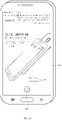
- FIG. 5A illustrates an icon which is to be outputted when a voice recognition application is running in a background in an electronic device according to an embodiment of the present disclosure.
- a screen 500a of the electronic device 100 may be displayed following the screen 400a of FIG. 4A .
- the processor 120 of the electronic device 100 may display a first icon 501 associated with the weather (e.g., cloudy and rain) of the day, on which the voice input is received, on the screen 500a on which the web browsing application is displayed.
- a dynamic animation effect may be added to the first icon 501.
- the animation effect such as rain from the cloud, may be applied to the first icon 501.
- the processor 120 may determine to control the video output module 160 to output detailed information of content related to the first icon 501 in response to the selection (e.g., touch) about the first icon 501. For example, if the user touched the first icon 501, the video output module 160 may be switched from the screen 500a of FIG. 5A to a screen of the voice recognition application and may output detailed information of weather content on the screen (e.g., a screen 600 of FIG. 6 ) of the voice recognition application.
- the video output module 160 may be switched from the screen 500a of FIG. 5A to a screen of the voice recognition application and may output detailed information of weather content on the screen (e.g., a screen 600 of FIG. 6 ) of the voice recognition application.
- the processor 120 may determine to change a shape of the icon displayed in operation 307 based on the corresponding content.
- FIG. 5B illustrates that a first icon of FIG. 5A is changed to a second icon based on corresponding content according to an embodiment of the present disclosure.
- the processor 120 of the electronic device 100 may change the first icon 501 of FIG. 5A to the second icon 502 of FIG. 5B such that the weather (e.g., clear up in the afternoon after cloudy and rain) of the day on which the voice input is received is symbolically displayed.
- the animation effect may be added in changing the first icon 501 of FIG. 5A to a second icon 502 of FIG. 5B . With this kind of the animation effect, the electronic device 100 may more effectively provide corresponding weather content to the user.
- the processor 120 may output corresponding content through the audio output module 150 in synchronization with the shape change of the icon in operation 309. For example, in synchronization with the change from the first icon 501 of FIG. 5A to the second icon 502 of FIG. 5B , the processor 120 may determine to control the audio output module 150 to output weather content, such as "Today, rain in the morning and sunny in the afternoon". For example, when an audio corresponding to "Today, rain in the morning.” is outputted, the first icon 501 may be outputted. However, when an audio corresponding to "Sunny in the afternoon.” is outputted, the first icon 501 may be changed to the second icon 502.
- weather content such as "Today, rain in the morning and sunny in the afternoon”.
- the first icon 501 may be outputted.
- the first icon 501 may be changed to the second icon 502.
- the processor 120 may determine to control the video output module 160 to output detailed information of content corresponding to the voice input (content request).
- FIG. 6 illustrates a case in which a voice input from a user corresponds to a word "weather" according to an embodiment of the present disclosure.
- a screen 600 may be displayed after displaying of the screen 400b of FIG. 4B in response to the voice input from the user.
- the processor 120 of the electronic device 100 may output detailed information (detailed information of weather content) of a weather of an area, on which the electronic device 100 is located, through the video output module 160 in response to the voice input of the "weather".
- the detailed information of the weather may include weather information, dress suggestion according to the weather, a weekly weather, and the like.
- the processor 120 may determine to control the audio output module 150 to output content corresponding to the content request.
- FIG. 6 illustrates that the processor 120 outputs content, such as "This is the weather information on Seocho-2 Dong, Seoul. Today, it is going to rain. How about wearing boots when you go out.”, through the audio output module 150 based on TTS.
- the processor 120 may perform a function corresponding to the control command. For example, in the case where the voice input corresponds to "Bluetooth” or “Turn on Bluetooth.”, the processor 120 may perform control to activate the Bluetooth module.
- the processor 120 may perform a function corresponding to the control command and may simultaneously display an icon associated with the function corresponding to the control command on the screen of the video output module 160. For example, if the voice input module 140 receives the voice input corresponding to "Turn on Bluetooth.” while the web browsing application is running in the foreground as shown in FIG. 5A , the processor 120 may activate the Bluetooth module, and at the same time, may display an icon associated with Bluetooth instead of the first icon 501 of FIG. 5A on the screen 500a of the video output module 160.
- the output scheme (e.g., icon display or detailed information provision) of the video output module 160 may be automatically determined based on an execution status of the voice recognition application.
- the electronic device 100 may effectively provide content according to the voice recognition without interrupting the situation (e.g., output situation of the video output module 160) in which the user currently uses the electronic device 100.
- the voice recognition application in the case where the voice recognition application is running in the background, only an icon which does not interfere with a different application may be displayed on the video output module 160 in response to the voice input. That is, since the voice recognition application is not running in the foreground even though the voice input is received, the user may more effectively use an application.
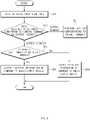
- FIG. 7 is a flow chart illustrating a method for providing content based on an analysis of a voice input according to an embodiment of the present disclosure.
- a content providing method based on an analysis of a voice input may include operation 701 to operation 715. Since operation 701, operation 703, and operation 715 of FIG. 7 correspond to operation 301, operation 303, and operation 317 of FIG. 3 , respectively, the duplicated descriptions will be omitted. However, a voice input received in operation 701 may correspond to "Let me know today's schedule".
- the processor 120 may analyze the voice input and may detect a noise included in the voice input and the number of users corresponding to the voice input. The detection result may be used to determine an output scheme of content.
- the processor 120 may determine whether a noise which satisfies a specified condition is included in the voice input. For example, the processor 120 may determine whether a noise which generally occurs in the outside is included in the voice input. For example, a fine noise which is generated in the quiet inside or a noise according to an internal operation of the electronic device 100 may not be considered in determining whether the noise satisfies the specified condition in operation 707. If the noise which satisfies the specified condition is included in the voice input, the procedure proceeds to operation 713. Otherwise, the procedure proceeds to operation 709.
- the processor 120 may determine the number of users corresponding to the voice input. For example, the processor 120 may determine the number of users corresponding to the voice input through an analysis of frequency or wave shape. If the number of users corresponding to the voice input is a user, the procedure proceeds to operation 711. If the number of users corresponding to the voice input is a plurality of users, the procedure proceeds to operation 713.
- the processor 120 may output detailed information of content through the audio output module 150. For example, when the user is alone indoors without a surrounding noise, the user may be acoustically provided with detailed information of schedule content, such as "Today, there is a team meeting at 9:30 AM and a date at 8 PM.” in response to the voice input, such as "Let me know today's schedule”.
- the processor 120 may output abstract information of content through the audio output module 150.
- the user who is talking with other users or is in the noisy outside may be acoustically provided with abstract information of schedule content, such as "Today, there are two schedules.”, in response to the voice input, such as "Let me know today's schedule”.
- the electronic device 100 may analyze the voice input and may grasp the operating environment of the electronic device 100.
- the electronic device 100 may determine an output scheme of content based on the grasped operating environment. Furthermore, since the output scheme of content is differently set by distinguishing between the case where one user is present indoors and the case where a plurality of users is present, the content, such as detailed information of "schedule", which causes a difficult situation if the content is known to the outside may not be outputted through the audio output module 150.
- FIG. 8 is a flow chart illustrating a method for providing content based on determination of a user's gaze according to an embodiment of the present disclosure.
- a content providing method based on determination of a user's gaze may include operation 801 to operation 811. Since operation 801, operation 803, and operation 811 correspond to operation 301, operation 303, and operation 317 of FIG. 3 , respectively, the duplicated descriptions will be omitted. However, in operation 801, a received voice input may correspond to "Read today's news".
- the processor 120 may determine whether a gaze of the user of the electronic device 100 is toward the video output module 160.
- the processor 120 may determine an output scheme of content (e.g., headline news article) to be outputted through the audio output module 150 and/or the video output module 160 based on a result of determining the user's gaze. If it is determined that the user's gaze is toward the video output module 160, the procedure proceeds to operation 807. If it is determined that the user's gaze is not toward the video output module 160, the procedure proceeds to operation 809.
- an output scheme of content e.g., headline news article
- the processor 120 may determine to control the audio output module 150 to output abstract information of content.
- the user may be acoustically provided with only a title of the headline news article (abstract information of content) through the audio output module 150 in response to the voice input, such as "Read today's news".
- the processor 120 may determine to control the audio output module 150 to output detailed information of the content.
- the user may be acoustically provided with the title and content of the headline news article (detailed information of content) through the audio output module 150 in response to the voice input, such as "Read today's news".
- an output scheme of content may be determined based on whether the user's gaze is toward to the video output module 160, that is, an operating environment of the electronic device 100.
- the user who is provided with the content through the video output module 160 may increase the capacity to concentrate in a content acquisition since the user does not need to be repeatedly provided with detailed information of the same content through the audio output module 150.
- the user may be acoustically provided with detailed information of content.
- FIG. 9 is a flow chart illustrating a method for providing content based on a video processing according to an embodiment of the present disclosure.
- a content providing method based on a video processing may include operation 901 to operation 911. Since operation 901, operation 903, and operation 911 of FIG. 9 correspond to operation 301, operation 303, and operation 317 of FIG. 3 , respectively, the duplicated descriptions will be omitted. However, a voice input received in operation 901 may correspond to "Let me know today's schedule".
- the processor 120 may determine whether a user is included in the video obtained from the camera 170 or whether a plurality of users is included in the video obtained from the camera 170. For example, the processor 120 may determine how many users are included in the video shot by the camera 170. For example, the processor 120 may recognize a user's face through a face recognition algorithm and thus may determine the number of users based on the face recognition algorithm. If a user is included in the video, the procedure proceeds to operation 909. If a plurality of users is included in the video, the procedure proceeds to operation 907.
- the processor 120 may recognize a specific user through the face recognition algorithm. For example, the processor 120 may determine whether there is an authenticated user of the electronic device 100 in the video shot by the camera 170. If a user included in the video is the authenticated user, the procedure proceeds to operation 909. If a user included in the video is not the authenticated user, the procedure proceeds to operation 907.
- the processor 120 may determine to control the audio output module 150 to output abstract information of content. If a plurality of users (i.e., two or more) is included in the video shot by and received from the camera 170, the processor 120 may output abstract information of content through the audio output module 150. Alternatively and additionally, the processor 120 may output an icon associated with content through the video output module 160.
- the user of the electronic device 100 may be acoustically provided with abstract information of schedule content, such as "Today, there are two schedules.”, in response to the voice input, such as "Let me know today's schedule”. Furthermore, the user of the electronic device 100 may be acoustically provided with abstract information of the schedule content and may be visually provided with an icon (e.g., a calendar icon associated with the schedule content) associated with the content through the video output module 160 at the same time.
- an icon e.g., a calendar icon associated with the schedule content
- the processor 120 may output abstract information of content through the audio output module 150. Alternatively, if the authenticated user of the electronic device 100 is not included in the received video, the processor 120 may not even output abstract information of content.
- the processor 120 may determine to control the audio output module 150 to output detailed information of content. If a user is included in the video shot by and received from the camera 170, the processor 120 may output detailed information of content through the audio output module 150. Alternatively and additionally, the processor 120 may output detailed information of content through the video output module 160.
- the user when only a user is present in the vicinity of the electronic device 100, the user may be acoustically provided with detailed information of schedule content, such as "Today, there is a team meeting at 9:30 AM and a date at 8 PM.” in response to the voice input, such as "Let me know today's schedule”.
- the user of the electronic device 100 may be acoustically provided with detailed information of the schedule content and may be visually provided with a screen, on which the detailed information of the content is displayed, through the video output module 160 at the same time.
- the processor 120 may output detailed information of content through the audio output module 150.
- the processor 120 may output abstract information of content.
- the electronic device 100 may grasp an operating environment of the electronic device 100 by analyzing a video obtained from the camera 170.
- the electronic device 100 may determine an output scheme of content based on the grasped operating environment. Furthermore, since the output scheme of content is set differently according to the case where a user is present and the case where a plurality of users is present, the content, such as detailed information of "schedule", which causes a difficult situation if the content is known to the outside may not be outputted through the audio output module 150.
- the electronic device 100 may authenticate whether a user present in the vicinity of the electronic device 100 is the true user using the face recognition algorithm. Accordingly, the true user of the electronic device 100 may be provided with content, which causes a difficult situation if the content is known to the outside, with higher security.
- FIGS. 3 , 7 , 8 , and 9 are examples and may not be limited to a description given with reference to accompanying drawings. Furthermore, at least two or more of the content providing methods described in FIGS. 3 , 7 , 8 , and 9 may be combined.
- the electronic device 100 may display an icon (e.g., an icon of calendar shape) associated with "schedule" on a screen of the e-book application.
- the electronic device 100 may provide abstract information of content, such as "There is one schedule, today.”, through the audio output module 150 together with the display of the icon, based on TTS.
- module used herein may represent, for example, a unit including one or more combinations of hardware, software and firmware.
- the term “module” may be interchangeably used with the terms “unit”, “logic”, “logical block”, “component” and “circuit”.
- the “module” may be a minimum unit of an integrated component or may be a part thereof.
- the “module” may be a minimum unit for performing one or more functions or a part thereof.
- the “module” may be implemented mechanically or electronically.
- the “module” may include at least one of an application-specific integrated circuit (ASIC) chip, a field-programmable gate array (FPGA), and a programmable-logic device for performing some operations, which are known or will be developed.
- ASIC application-specific integrated circuit
- FPGA field-programmable gate array
- At least a portion of an apparatus (e.g., modules or functions thereof) or a method (e.g., operations) according to various embodiments of the present disclosure may be, for example, implemented by instructions stored in a computer-readable storage media in the form of a program module.
- the instruction when executed by one or more processors (e.g., a processor 120), may cause the one or more processors to perform a function corresponding to the instruction.
- the computer-readable storage media for example, may be the memory 130.
- a computer-readable recording medium may include a hard disk, a magnetic media, a floppy disk, a magnetic media (e.g., a magnetic tape), an optical media (e.g., a compact disc read only memory (CD-ROM) and a digital versatile disc (DVD), a magneto-optical media (e.g., a floptical disk), and hardware devices (e.g., a ROM, a random access memory (RAM), or a flash memory).
- a program instruction may include not only a mechanical code such as things generated by a compiler but also a high-level language code executable on a computer using an interpreter.
- the above-mentioned hardware device may be configured to operate as one or more software modules to perform operations according to various embodiments of the present disclosure, and vice versa.
- Modules or program modules according to various embodiments of the present disclosure may include at least one or more of the above-mentioned components, some of the above-mentioned components may be omitted, or other additional components may be further included therein.
- Operations executed by modules, program modules, or other elements may be executed by a successive method, a parallel method, a repeated method, or a heuristic method. Also, a portion of operations may be executed in different sequences, omitted, or other operations may be added.
- the electronic device may grasp a status of a voice recognition application or an operating environment of the electronic device and may determine an output scheme of content based on the grasped operating environment.
- the content may be provided in the output scheme which is the most suitable to a situation in which a user utilizes an electronic device.
Landscapes
- Engineering & Computer Science (AREA)
- Theoretical Computer Science (AREA)
- General Engineering & Computer Science (AREA)
- Physics & Mathematics (AREA)
- Human Computer Interaction (AREA)
- General Physics & Mathematics (AREA)
- Multimedia (AREA)
- Health & Medical Sciences (AREA)
- Audiology, Speech & Language Pathology (AREA)
- General Health & Medical Sciences (AREA)
- Signal Processing (AREA)
- Acoustics & Sound (AREA)
- Business, Economics & Management (AREA)
- Computational Linguistics (AREA)
- Computer Vision & Pattern Recognition (AREA)
- Game Theory and Decision Science (AREA)
- User Interface Of Digital Computer (AREA)
- Tourism & Hospitality (AREA)
- Economics (AREA)
- Human Resources & Organizations (AREA)
- Marketing (AREA)
- Primary Health Care (AREA)
- Strategic Management (AREA)
- General Business, Economics & Management (AREA)
Description
- The present disclosure relates to a method and an electronic device for providing content in response to a voice input.
- Currently, a user input interface applied to electronic devices is implemented to support a user input based on a voice input as well as a user input (e.g., an input through a button type key pad, a keyboard, a mouse, a touch panel, and the like) based on the physical manipulation by a user.
- An electronic device that has a voice interface, such as an interface based on a user's voice, receives the user's voice to convert the received user's voice into an electrical signal and performs a function set in advance by processing the electrical signal.
-
EP 2 672 225 A1 - The above information is presented as background information only to assist with an understanding of the present disclosure. No determination has been made, and no assertion is made, as to whether any of the above might be applicable as prior art with regard to the present disclosure.
- Aspects of the present disclosure are to address at least the above-mentioned problems and/or disadvantages and to provide at least the advantages described below.
- This object and other objects which will become apparent from the following description are achieved at least in part by a content providing method which is capable of outputting content corresponding to a voice input and an electronic device performing the same according to the independent claims. Embodiments are defined by the dependent claims.
- Other aspects, advantages, and salient features of the disclosure will become apparent to those skilled in the art from the following detailed description, which, taken in conjunction with the annexed drawings, discloses various embodiments of the present disclosure.
- The above and other aspects, features, and advantages of certain embodiments of the present disclosure will be more apparent from the following description taken in conjunction with the accompanying drawings, in which:
-
FIG. 1 is a block diagram illustrating a configuration of an electronic device according to an embodiment of the present disclosure; -
FIG. 2 is a flow chart illustrating a method for providing content according to an embodiment of the present disclosure; -
FIG. 3 is a flow chart illustrating a method for providing content based on a status of a voice recognition application according to an embodiment of the present disclosure; -
FIG. 4A is a diagram illustrating an electronic device in which a voice recognition application is running in a background according to an embodiment of the present disclosure; -
FIG. 4B is a diagram illustrating an electronic device in which a voice recognition application is running in a foreground according to an embodiment of the present disclosure; -
FIG. 5A illustrates an electronic device in which an icon is outputted when a voice recognition application is running in a background according to an embodiment of the present disclosure; -
FIG. 5B illustrates an electronic device in which a shape of an icon is changed according to an embodiment of the present disclosure; -
FIG. 6 illustrates an electronic device in which detailed information of content is displayed according to an embodiment of the present disclosure; -
FIG. 7 is a flow chart illustrating a method for providing content based on an analysis of a voice input according to an embodiment of the present disclosure; -
FIG. 8 is a flow chart illustrating a method for providing content based on determination of a user's gaze according to an embodiment of the present disclosure; and -
FIG. 9 is a flow chart illustrating a method for providing content based on a video processing. - Throughout the drawings, it should be noted that like reference numbers are used to depict the same or similar elements, features, and structures.
- The following description with reference to accompanying drawings is provided to assist in a comprehensive understanding of various embodiments of the present disclosure as defined by the claims and their equivalents. It includes various specific details to assist in that understanding but these are to be regarded as merely exemplary. Accordingly, those of ordinary skill in the art will recognize that various changes and modifications of the various embodiments described herein can be made without departing from the scope of the present disclosure. In addition, descriptions of well-known functions and constructions may be omitted for clarity and conciseness.
- The terms and words used in the following description and claims are not limited to the bibliographical meanings, but, are merely used by the inventor to enable a clear and consistent understanding of the present disclosure. Accordingly, it should be apparent to those skilled in the art that the following description of various embodiments of the present disclosure is provided for illustration purpose only and not for the purpose of limiting the present disclosure as defined by the appended claims and their equivalents.
- It is to be understood that the singular forms "a," "an," and "the" include plural referents unless the context clearly dictates otherwise. Thus, for example, reference to "a component surface" includes reference to one or more of such surfaces.
- An electronic device according to various embodiments of the present disclosure may include at least one of smartphones, tablet personal computers (PCs), mobile phones, video telephones, electronic book readers, desktop PCs, laptop PCs, netbook computers, workstations, servers, personal digital assistants (PDAs), portable multimedia players (PMPs), Motion Picture Experts Group (MPEG-1 or MPEG-2) Audio Layer 3 (MP3) players, mobile medical devices, cameras, or wearable devices. According to various embodiments of the present disclosure, a wearable device may include at least one of an accessory type (e.g., watch, ring, bracelet, ankle bracelet, necklace, glasses, contact lens, or head-mounted-device (HMD)), a fabric or clothing type (e.g., electronic apparel), a physical attachment type (e.g., skin pad or tattoo), or a body implantation type (e.g., implantable circuit).
- According to various embodiments, the electronic device may be one of the above-described devices or a combination thereof. An electronic device according to an embodiment may be a flexible electronic device. Furthermore, an electronic device according to an embodiment may not be limited to the above-described electronic devices and may include other electronic devices and new electronic devices according to the development of technologies.
- Hereinafter, electronic devices according to an embodiment of the present disclosure will be described with reference to the accompanying drawings. The term "user" used herein may refer to a person who uses an electronic device or may refer to a device (e.g., an artificial intelligence electronic device) that uses an electronic device.
-
FIG. 1 is a block diagram illustrating a configuration of an electronic device according to an embodiment of the present disclosure. - Referring to
FIG. 1 , anelectronic device 100 according to an embodiment of the present disclosure may include abus 110, aprocessor 120, amemory 130, avoice input module 140, anaudio output module 150, avideo output module 160, and acamera 170. Theelectronic device 100 may not include at least one of the above-described components or may further include other component(s). - The
bus 110 may interconnect the above-describedcomponents 120 to 170 and may be a circuit for conveying communications (e.g., a control message and/or data) among the above-described components. - The
processor 120 may include one or more of a central processing unit (CPU), an application processor (AP), or a communication processor (CP). Theprocessor 120 may perform, for example, data processing or an operation associated with control and/or communication of at least one other component(s) of theelectronic device 100. - The
processor 120 may execute a voice recognition application (e.g., S-Voice) stored in thememory 130 and may convert a voice input to a control command or a content request based on the voice recognition application. If the voice input is converted to the control command, theprocessor 120 may control various modules included in theelectronic device 100 based on the control command. For example, in the case where a voice input is "Turn on Bluetooth.", theprocessor 120 may activate a Bluetooth module embedded in theelectronic device 100. - Furthermore, if the voice input is converted to a content request, the
processor 120 may output corresponding content based on the content request. For example, if a voice input, such as "Let me know today's weather.", is converted to a request about weather content, theprocessor 120 may provide the weather content to a user. - According to an embodiment of the present disclosure, the
processor 120 may determine an output scheme of content to be outputted through theaudio output module 150 or thevideo output module 160 based on a status of the voice recognition application or an operating environment of theelectronic device 100. Theprocessor 120 may output content corresponding to the voice input through theaudio output module 150 or thevideo output module 160 based on the determined output scheme. - For example, in the case where the voice recognition application is running in a foreground of the
electronic device 100, theprocessor 120 may determine to control thevideo output module 160 to output detailed information of content corresponding to a voice input. Furthermore, in the case where the voice recognition application is running in a background of the electronic device, theprocessor 120 may determine to control thevideo output module 160 to output an icon associated with the content. - In this specification, that an application is running in the foreground should be understood as an execution screen of the application is displayed on the whole area or the almost whole area of the
video output module 160 of theelectronic device 100. Furthermore, a state in which an application is running in the background should be understood as the application is running in a non-foreground state. - For example, if the voice recognition application is running in the foreground, a screen of the voice recognition application (e.g., a screen displayed according to S-Voice, refer to
FIG. 4B ) may be displayed on thevideo output module 160. At this time, if a voice input is received from a user, theprocessor 120 may display corresponding content on a screen of the voice recognition application in response to the voice input. - However, if the voice recognition application is running in the background, a screen (e.g., a screen displayed according to a web browsing application, refer to
FIG. 4A ) of an application which is different from the voice recognition application may be displayed on thevideo output module 160. At this time, if a voice input is received from a user, theprocessor 120 may additionally display an icon (e.g., afirst icon 501 ofFIG. 5A ) associated with the content on the screen of another application in response to the voice input. At this time, if the user selects the icon (e.g., touch), theprocessor 120 may output detailed information of the content associated with the icon through thevideo output module 160 in response to the selection of the icon. - Furthermore, if a voice input is received from a user while the voice recognition application is running in the background, the
processor 120 may display the icon and may simultaneously change a shape of the icon based on the content. - For example, the icon associated with the content may be dynamically implemented in the form of an animation. Furthermore, content corresponding to a voice input may be provided to a user through the
audio output module 150 based on text to speech (hereinafter referred to as "TTS"). In this case, theprocessor 120 may perform synchronization between an output of content by theaudio output module 150 and a shape change of an icon displayed on thevideo output module 160. - Furthermore, the
processor 120 according to an embodiment of the present disclosure may analyze a voice input received from thevoice input module 140 and may detect a noise included in the voice input and/or the number of users corresponding to the voice input based on the analyzed result. Theprocessor 120 may determine an output scheme of content to be outputted through theaudio output module 150 based on the detection result. - For example, if a noise which satisfies a specified condition is detected in a voice input, the
processor 120 may determine to control theaudio output module 150 to output abstract information of content corresponding to the voice input. Furthermore, if the noise which satisfies the specified condition is not detected in the voice input, theprocessor 120 may determine to control theaudio output module 150 to output detailed information of content. - The noise which satisfies the specified condition may be detected based on an analysis of frequency, wave shape, or amplitude. For example, the noise which satisfies the specified condition may include a residential noise at an outdoor space. Furthermore, a usual white noise may not be considered in determining whether the noise which satisfies the specified condition is included in the voice input. Accordingly, the
processor 120 may determine whether the user is in an outdoor public space or in a private space. - Furthermore, according to an embodiment, if a plurality of users corresponding to a voice input is detected in the voice input, the
processor 120 may determine to control theaudio output module 150 to output abstract information of content. If a user corresponding to the voice input is detected in the voice input, theprocessor 120 may determine to control theaudio output module 150 to output detailed information of content. - The detection of the number of users corresponding to a voice input may be performed, for example, through a frequency analysis about the voice input. The
processor 120 may determine whether only a user who uses theelectronic device 100 exists in the vicinity of theelectronic device 100 or whether the user exists with another user in the vicinity of theelectronic device 100, through the frequency analysis. - According to an exemplary embodiment, not part of the present invention, the
processor 120 may determine an output scheme of thevideo output module 160 based on an output scheme of theaudio output module 150. For example, if a noise which satisfies a specified condition is detected in a voice input or if a plurality of users corresponding to the voice input is detected in the voice input, theprocessor 120 may output abstract information of content through theaudio output module 150 and may simultaneously output detailed information of the content through thevideo output module 160. - The
processor 120 according to an embodiment of the present disclosure may determine an output scheme of the content to be outputted through theaudio output module 150 based on a result of determining a gaze at thecamera 170. - For example, if it is determined that a user's gaze is toward the
video output module 160, theprocessor 120 may determine to control theaudio output module 150 to output abstract information of content. If it is determined that the user's gaze is not toward thevideo output module 160, theprocessor 120 may determine to control theaudio output module 150 to output detailed information of content. - The
processor 120 may determine an output scheme of thevideo output module 160 based on an output scheme of theaudio output module 150. For example, if it is determined that a user's gaze is toward thevideo output module 160, theprocessor 120 may output abstract information of content through theaudio output module 150 and may simultaneously output detailed information of the content through thevideo output module 160. - Furthermore, the
processor 120 according to an exemplary embodiment, not part of the present invention, may determine an output scheme of the content to be outputted through theaudio output module 150 or thevideo output module 160 based on a video of the vicinity of theelectronic device 100 shot by thecamera 170. - For example, the
processor 120 may determine the output scheme of the content based on the number of users included in the shot video. When determining the number of users, theprocessor 120 may apply a face recognition algorithm to the shot video and may determine the number of users included in the shot video or may recognize a specific user. - For example, if it is determined that a user is included in the shot video, the
processor 120 may determine to control theaudio output module 150 and/or thevideo output module 160 to output detailed information of content. In contrast, if it is determined that a plurality of users is included in the shot video, theprocessor 120 may determine to control theaudio output module 150 and/or thevideo output module 160 to output abstract information of content or not to output information of content. - Furthermore, as another example, if it is determined that an authenticated user of the
electronic device 100 is included in the shot video, theprocessor 120 may determine to control theaudio output module 150 and/or thevideo output module 160 to output detailed information of content. In contrast, if it is determined that an unauthenticated user is included in the shot video, theprocessor 120 may determine to control theaudio output module 150 and/or thevideo output module 160 to output abstract information of content or not to output information of content. - Abstract information of content may be information of a portion of content or summarized information of the content or may correspond to a portion of the content. In some embodiments, the abstract information of content may be understood as including an icon associated with the content. Furthermore, detailed information of content may be all information about the content.
- The abstract information and the detailed information of the content may be acoustically provided to a user through the
audio output module 150 based on a voice output function, such as TTS. Furthermore, abstract information and detailed information of the content may be visually provided to the user through thevideo output module 160. - The
memory 130 may include a volatile and/or a nonvolatile memory. For example, thememory 130 may store instructions or data associated with at least one other component(s) of theelectronic device 100. According to an embodiment of the present disclosure, thememory 130 may store software, an application program which performs a content providing method according to various embodiments of the present disclosure, a voice recognition application, a web browsing application and data for executing the above-mentioned software or applications. For example, thememory 130 may store a control command and/or a content request corresponding to a voice input or may store abstract information and/or detailed information of content corresponding to the content request. - The
voice input module 140 may receive a voice input uttered from a user. It may be understood that thevoice input module 140 includes a physical microphone and additionally, a circuitry (e.g., analog-digital converter (ADC)) which performs a signal processing about the received voice input. - The
audio output module 150 may include a speaker, a headphone, an earphone, a corresponding driver, an audio output interface, and the like. Abstract information or detailed information of content may be outputted as a sound through theaudio output module 150 so as to be acoustically provided to a user. - For example, the
video output module 160 may correspond to a display. The display may include, for example, a liquid crystal display (LCD), a light-emitting diode (LED) display, an organic LED (OLED) display, a microelectromechanical systems (MEMS) display, or an electronic paper display. Abstract information or detailed information of content may be outputted as a screen through thevideo output module 160 so as to be visually provided to a user. - The
video output module 160 may display, for example, various contents (e.g., a text, an image, a video, an icon, a symbol, and the like) to a user. Thevideo output module 160 may include a touch screen and may receive, for example, a touch, gesture, proximity, or hovering input using an electronic pen or a portion of a user's body. - For example, the
camera 170 may shoot a still image and a video. According to an embodiment of the present disclosure, at least one of thecamera 170 may include one or more image sensors, lenses, an image processing module, and the like. Furthermore, theelectronic device 100 may include one ormore cameras 170. Thecamera 170 may shoot a video of the vicinity of theelectronic device 100 and at least a portion (e.g., face) of a user's body existing in the vicinity of theelectronic device 100. - According to an embodiment, the camera 170 (in conjunction with the processor 120) may determine whether a user of the
electronic device 100 is detected. For example, a method for tracking a user's pupil (so-called, eye tracking) may be used in determining a user's gaze. -
FIG. 2 is a flow chart illustrating a method for providing content according to an embodiment of the present disclosure. - Referring to
FIG. 2 , inoperation 201, thevoice input module 140 may receive a voice input from a user through a voice recognition application. The received voice input may be provided to theprocessor 120 which executes the voice recognition application. - In
operation 203, theprocessor 120 may determine content to be outputted based on the voice input and may determine an output scheme of the content based on a status of the voice recognition application or an operating environment of theelectronic device 100. The content to be outputted may be set in advance by the voice recognition application in response to the voice input. - In
operation 205, theprocessor 120 may output the content corresponding to the voice input based on the output scheme determined inoperation 203 using at least one of theaudio output module 150 or thevideo output module 160. -
FIG. 3 is a flow chart illustrating a method for providing content based on a status of a voice recognition application according to an embodiment of the present disclosure. - Referring to
FIG. 3 , a content providing method based on a status of a voice recognition application according to an embodiment of the present disclosure may includeoperation 301 tooperation 317. - In
operation 301, thevoice input module 140 may receive a voice input from a user. For example, the voice input may be a simple word, such as "weather", "schedule", "Bluetooth", "wireless fidelity (Wi-Fi)", and the like, or may be a sentence, such as "Let me know today's weather.", "Let me know today's schedule.", "Read today's news.", "Turn on Bluetooth.", "Turn on Wi-Fi.", and the like. Furthermore, the voice input may be a control command (e.g., "Turn on Bluetooth.") to control a specific module embedded in theelectronic device 100 or may be a content request (e.g., "Let me know today's weather.") which requests specific content. - In
operation 303, theprocessor 120 may determine whether the received voice input is the control command about the module embedded in theelectronic device 100 or is the content request which requests an output of the specific content. If the voice input corresponds to the content request, the procedure proceeds tooperation 305. If the voice input corresponds to the control command, the procedure proceeds tooperation 317. For example, if the voice input corresponds to a "weather", the procedure proceeds tooperation 305. If the voice input corresponds to "Turn on Bluetooth.", the procedure proceeds tooperation 317. - In
operation 305, theprocessor 120 may determine a status of the voice recognition application and may determine whether the voice recognition application is running in the background or in the foreground. If the voice recognition application is running in the background, the procedure proceeds tooperation 307. If the voice recognition application is running in the foreground, the procedure proceeds tooperation 313. -
FIG. 4A illustrates an electronic device in which a voice recognition application is running in a background according to an embodiment of the present disclosure. - Referring to
FIG. 4A , a web browsing application may be running in the foreground in theelectronic device 100. Ascreen 400a of the web browsing application may be displayed on thevideo output module 160 of theelectronic device 100. If the voice recognition application is running in the background, a screen of the voice recognition application may not be displayed. However, since the voice recognition application is running in the background, theelectronic device 100 may receive the voice input from the user through thevoice input module 140. According to an embodiment of the present disclosure, before providing the voice input (e.g., "weather") to theelectronic device 100, the user may provide a voice (e.g., "Hi, Galaxy."), which is specified in advance, such that a state of the voice recognition application is switched from a sleep state to an active state. -
FIG. 4B illustrates an electronic device in which a voice recognition application is running in a foreground according to an embodiment of the present disclosure. - Referring to
FIG. 4B , the voice recognition application may be running in the foreground in theelectronic device 100. Ascreen 400b of the voice recognition application may be displayed on thevideo output module 160 of theelectronic device 100. According to an embodiment of the present disclosure, before providing the voice input to theelectronic device 100, the user may provide a voice which is specified in advance or may select (touch) an object, which has a shape of a microphone illustrated in the bottom of thescreen 400b, such that a state of the voice recognition application is switched from a sleep state to an active state. - In
operation 307, theprocessor 120 may determine to control thevideo output module 160 to output an icon associated with content corresponding to the voice input (content request). -
FIG. 5A illustrates an icon which is to be outputted when a voice recognition application is running in a background in an electronic device according to an embodiment of the present disclosure. - Referring to
FIG. 5A , ascreen 500a of theelectronic device 100 may be displayed following thescreen 400a ofFIG. 4A . For example, if the voice input corresponding to the "weather" is received from the user, theprocessor 120 of theelectronic device 100 may display afirst icon 501 associated with the weather (e.g., cloudy and rain) of the day, on which the voice input is received, on thescreen 500a on which the web browsing application is displayed. According to an embodiment of the present disclosure, a dynamic animation effect may be added to thefirst icon 501. For example, the animation effect, such as rain from the cloud, may be applied to thefirst icon 501. - According to an embodiment of the present disclosure, the
processor 120 may determine to control thevideo output module 160 to output detailed information of content related to thefirst icon 501 in response to the selection (e.g., touch) about thefirst icon 501. For example, if the user touched thefirst icon 501, thevideo output module 160 may be switched from thescreen 500a ofFIG. 5A to a screen of the voice recognition application and may output detailed information of weather content on the screen (e.g., ascreen 600 ofFIG. 6 ) of the voice recognition application. - In
operation 309, theprocessor 120 may determine to change a shape of the icon displayed inoperation 307 based on the corresponding content. -
FIG. 5B illustrates that a first icon ofFIG. 5A is changed to a second icon based on corresponding content according to an embodiment of the present disclosure. - Referring to
FIG. 5B , for example, if a voice input corresponding to the "weather" is received from the user, theprocessor 120 of theelectronic device 100 may change thefirst icon 501 ofFIG. 5A to thesecond icon 502 ofFIG. 5B such that the weather (e.g., clear up in the afternoon after cloudy and rain) of the day on which the voice input is received is symbolically displayed. Furthermore, according to an embodiment, the animation effect may be added in changing thefirst icon 501 ofFIG. 5A to asecond icon 502 ofFIG. 5B . With this kind of the animation effect, theelectronic device 100 may more effectively provide corresponding weather content to the user. - In
operation 311, theprocessor 120 may output corresponding content through theaudio output module 150 in synchronization with the shape change of the icon inoperation 309. For example, in synchronization with the change from thefirst icon 501 ofFIG. 5A to thesecond icon 502 ofFIG. 5B , theprocessor 120 may determine to control theaudio output module 150 to output weather content, such as "Today, rain in the morning and sunny in the afternoon". For example, when an audio corresponding to "Today, rain in the morning." is outputted, thefirst icon 501 may be outputted. However, when an audio corresponding to "Sunny in the afternoon." is outputted, thefirst icon 501 may be changed to thesecond icon 502. - In
operation 313, if the voice recognition application is running in the foreground, theprocessor 120 may determine to control thevideo output module 160 to output detailed information of content corresponding to the voice input (content request). -
FIG. 6 illustrates a case in which a voice input from a user corresponds to a word "weather" according to an embodiment of the present disclosure. - Referring to
FIG. 6 , ascreen 600 may be displayed after displaying of thescreen 400b ofFIG. 4B in response to the voice input from the user. For example, theprocessor 120 of theelectronic device 100 may output detailed information (detailed information of weather content) of a weather of an area, on which theelectronic device 100 is located, through thevideo output module 160 in response to the voice input of the "weather". As illustrated inFIG. 6 , the detailed information of the weather may include weather information, dress suggestion according to the weather, a weekly weather, and the like. - In
operation 315, theprocessor 120 may determine to control theaudio output module 150 to output content corresponding to the content request. For example,FIG. 6 illustrates that theprocessor 120 outputs content, such as "This is the weather information on Seocho-2 Dong, Seoul. Today, it is going to rain. How about wearing boots when you go out.", through theaudio output module 150 based on TTS. - Since
operation 317 corresponds to the case where the received voice input corresponds to the control command, theprocessor 120 may perform a function corresponding to the control command. For example, in the case where the voice input corresponds to "Bluetooth" or "Turn on Bluetooth.", theprocessor 120 may perform control to activate the Bluetooth module. - According to an embodiment of the present disclosure, the
processor 120 may perform a function corresponding to the control command and may simultaneously display an icon associated with the function corresponding to the control command on the screen of thevideo output module 160. For example, if thevoice input module 140 receives the voice input corresponding to "Turn on Bluetooth." while the web browsing application is running in the foreground as shown inFIG. 5A , theprocessor 120 may activate the Bluetooth module, and at the same time, may display an icon associated with Bluetooth instead of thefirst icon 501 ofFIG. 5A on thescreen 500a of thevideo output module 160. - According to various embodiments of the present disclosure, the output scheme (e.g., icon display or detailed information provision) of the
video output module 160 may be automatically determined based on an execution status of the voice recognition application. As such, theelectronic device 100 may effectively provide content according to the voice recognition without interrupting the situation (e.g., output situation of the video output module 160) in which the user currently uses theelectronic device 100. - Furthermore, according to an embodiment of the present disclosure, in the case where the voice recognition application is running in the background, only an icon which does not interfere with a different application may be displayed on the
video output module 160 in response to the voice input. That is, since the voice recognition application is not running in the foreground even though the voice input is received, the user may more effectively use an application. -
FIG. 7 is a flow chart illustrating a method for providing content based on an analysis of a voice input according to an embodiment of the present disclosure. - Referring to
FIG. 7 , a content providing method based on an analysis of a voice input according to an embodiment of the present disclosure may includeoperation 701 tooperation 715. Sinceoperation 701,operation 703, andoperation 715 ofFIG. 7 correspond tooperation 301,operation 303, andoperation 317 ofFIG. 3 , respectively, the duplicated descriptions will be omitted. However, a voice input received inoperation 701 may correspond to "Let me know today's schedule". - In
operation 705, theprocessor 120 may analyze the voice input and may detect a noise included in the voice input and the number of users corresponding to the voice input. The detection result may be used to determine an output scheme of content. - In
operation 707, theprocessor 120 may determine whether a noise which satisfies a specified condition is included in the voice input. For example, theprocessor 120 may determine whether a noise which generally occurs in the outside is included in the voice input. For example, a fine noise which is generated in the quiet inside or a noise according to an internal operation of theelectronic device 100 may not be considered in determining whether the noise satisfies the specified condition inoperation 707. If the noise which satisfies the specified condition is included in the voice input, the procedure proceeds tooperation 713. Otherwise, the procedure proceeds tooperation 709. - In
operation 709, theprocessor 120 may determine the number of users corresponding to the voice input. For example, theprocessor 120 may determine the number of users corresponding to the voice input through an analysis of frequency or wave shape. If the number of users corresponding to the voice input is a user, the procedure proceeds tooperation 711. If the number of users corresponding to the voice input is a plurality of users, the procedure proceeds tooperation 713. - In
operation 711, in the case where the noise which satisfies the specified condition is not included in the voice input, and a user corresponding to the voice input is detected in the voice input, theprocessor 120 may output detailed information of content through theaudio output module 150. For example, when the user is alone indoors without a surrounding noise, the user may be acoustically provided with detailed information of schedule content, such as "Today, there is a team meeting at 9:30 AM and a date at 8 PM." in response to the voice input, such as "Let me know today's schedule". - In
operation 713, in the case where the noise which satisfies the specified condition is included in the voice input, and a plurality of users corresponding to the voice input is detected in the voice input, theprocessor 120 may output abstract information of content through theaudio output module 150. For example, the user who is talking with other users or is in the noisy outside may be acoustically provided with abstract information of schedule content, such as "Today, there are two schedules.", in response to the voice input, such as "Let me know today's schedule". - According to various embodiments of the present disclosure, the
electronic device 100 may analyze the voice input and may grasp the operating environment of theelectronic device 100. Theelectronic device 100 may determine an output scheme of content based on the grasped operating environment. Furthermore, since the output scheme of content is differently set by distinguishing between the case where one user is present indoors and the case where a plurality of users is present, the content, such as detailed information of "schedule", which causes a difficult situation if the content is known to the outside may not be outputted through theaudio output module 150. -
FIG. 8 is a flow chart illustrating a method for providing content based on determination of a user's gaze according to an embodiment of the present disclosure. - Referring to
FIG. 8 , according to an embodiment of the present disclosure, a content providing method based on determination of a user's gaze may includeoperation 801 tooperation 811. Sinceoperation 801,operation 803, andoperation 811 correspond tooperation 301,operation 303, andoperation 317 ofFIG. 3 , respectively, the duplicated descriptions will be omitted. However, inoperation 801, a received voice input may correspond to "Read today's news". - In
operation 805, theprocessor 120 may determine whether a gaze of the user of theelectronic device 100 is toward thevideo output module 160. Theprocessor 120 may determine an output scheme of content (e.g., headline news article) to be outputted through theaudio output module 150 and/or thevideo output module 160 based on a result of determining the user's gaze. If it is determined that the user's gaze is toward thevideo output module 160, the procedure proceeds tooperation 807. If it is determined that the user's gaze is not toward thevideo output module 160, the procedure proceeds tooperation 809. - In
operation 807, theprocessor 120 may determine to control theaudio output module 150 to output abstract information of content. For example, the user may be acoustically provided with only a title of the headline news article (abstract information of content) through theaudio output module 150 in response to the voice input, such as "Read today's news". - In
operation 809, theprocessor 120 may determine to control theaudio output module 150 to output detailed information of the content. For example, the user may be acoustically provided with the title and content of the headline news article (detailed information of content) through theaudio output module 150 in response to the voice input, such as "Read today's news". - According to various embodiments of the present disclosure, an output scheme of content may be determined based on whether the user's gaze is toward to the
video output module 160, that is, an operating environment of theelectronic device 100. For example, the user who is provided with the content through thevideo output module 160 may increase the capacity to concentrate in a content acquisition since the user does not need to be repeatedly provided with detailed information of the same content through theaudio output module 150. Furthermore, when it is difficult for the user's gaze to be toward thevideo output module 160 of theelectronic device 100, for example, when the user is in driving, the user may be acoustically provided with detailed information of content. -
FIG. 9 is a flow chart illustrating a method for providing content based on a video processing according to an embodiment of the present disclosure. - Referring to
FIG. 9 , a content providing method based on a video processing according to an embodiment of the present disclosure may includeoperation 901 tooperation 911. Sinceoperation 901,operation 903, andoperation 911 ofFIG. 9 correspond tooperation 301,operation 303, andoperation 317 ofFIG. 3 , respectively, the duplicated descriptions will be omitted. However, a voice input received inoperation 901 may correspond to "Let me know today's schedule". - In
operation 905, theprocessor 120 may determine whether a user is included in the video obtained from thecamera 170 or whether a plurality of users is included in the video obtained from thecamera 170. For example, theprocessor 120 may determine how many users are included in the video shot by thecamera 170. For example, theprocessor 120 may recognize a user's face through a face recognition algorithm and thus may determine the number of users based on the face recognition algorithm. If a user is included in the video, the procedure proceeds tooperation 909. If a plurality of users is included in the video, the procedure proceeds tooperation 907. - Furthermore, according to an embodiment, the
processor 120 may recognize a specific user through the face recognition algorithm. For example, theprocessor 120 may determine whether there is an authenticated user of theelectronic device 100 in the video shot by thecamera 170. If a user included in the video is the authenticated user, the procedure proceeds tooperation 909. If a user included in the video is not the authenticated user, the procedure proceeds tooperation 907. - In
operation 907, theprocessor 120 may determine to control theaudio output module 150 to output abstract information of content. If a plurality of users (i.e., two or more) is included in the video shot by and received from thecamera 170, theprocessor 120 may output abstract information of content through theaudio output module 150. Alternatively and additionally, theprocessor 120 may output an icon associated with content through thevideo output module 160. - For example, in the case where there is a plurality of users in a vicinity of the
electronic device 100, the user of theelectronic device 100 may be acoustically provided with abstract information of schedule content, such as "Today, there are two schedules.", in response to the voice input, such as "Let me know today's schedule". Furthermore, the user of theelectronic device 100 may be acoustically provided with abstract information of the schedule content and may be visually provided with an icon (e.g., a calendar icon associated with the schedule content) associated with the content through thevideo output module 160 at the same time. - Furthermore, according to an embodiment, if a user (authenticated user) of the
electronic device 100 is not included in the video received from thecamera 170, theprocessor 120 may output abstract information of content through theaudio output module 150. Alternatively, if the authenticated user of theelectronic device 100 is not included in the received video, theprocessor 120 may not even output abstract information of content. - In
operation 909, theprocessor 120 may determine to control theaudio output module 150 to output detailed information of content. If a user is included in the video shot by and received from thecamera 170, theprocessor 120 may output detailed information of content through theaudio output module 150. Alternatively and additionally, theprocessor 120 may output detailed information of content through thevideo output module 160. - For example, when only a user is present in the vicinity of the
electronic device 100, the user may be acoustically provided with detailed information of schedule content, such as "Today, there is a team meeting at 9:30 AM and a date at 8 PM." in response to the voice input, such as "Let me know today's schedule". Furthermore, the user of theelectronic device 100 may be acoustically provided with detailed information of the schedule content and may be visually provided with a screen, on which the detailed information of the content is displayed, through thevideo output module 160 at the same time. - Furthermore, according to an embodiment of the present disclosure, if a true user (authenticated user) of the
electronic device 100 is included in the video shot by and received from thecamera 170, theprocessor 120 may output detailed information of content through theaudio output module 150. Alternatively, if the true user of theelectronic device 100 is included in the received video, theprocessor 120 may output abstract information of content. - According to various embodiments of the present disclosure, the
electronic device 100 may grasp an operating environment of theelectronic device 100 by analyzing a video obtained from thecamera 170. Theelectronic device 100 may determine an output scheme of content based on the grasped operating environment. Furthermore, since the output scheme of content is set differently according to the case where a user is present and the case where a plurality of users is present, the content, such as detailed information of "schedule", which causes a difficult situation if the content is known to the outside may not be outputted through theaudio output module 150. - Furthermore, in an embodiment in which a specific user is recognized, the
electronic device 100 may authenticate whether a user present in the vicinity of theelectronic device 100 is the true user using the face recognition algorithm. Accordingly, the true user of theelectronic device 100 may be provided with content, which causes a difficult situation if the content is known to the outside, with higher security. - Meanwhile, content providing methods described in
FIGS. 3 ,7 ,8 , and9 are examples and may not be limited to a description given with reference to accompanying drawings. Furthermore, at least two or more of the content providing methods described inFIGS. 3 ,7 ,8 , and9 may be combined. - For example, when an e-book application is running in the foreground in the
electronic device 100, a user who is in the noisy outside may perform an voice input, such as "Hi, Galaxy." and "Let me know today's schedule." with respect to theelectronic device 100. In this case, theelectronic device 100 may display an icon (e.g., an icon of calendar shape) associated with "schedule" on a screen of the e-book application. Furthermore, theelectronic device 100 may provide abstract information of content, such as "There is one schedule, today.", through theaudio output module 150 together with the display of the icon, based on TTS. - The term "module" used herein may represent, for example, a unit including one or more combinations of hardware, software and firmware. The term "module" may be interchangeably used with the terms "unit", "logic", "logical block", "component" and "circuit". The "module" may be a minimum unit of an integrated component or may be a part thereof. The "module" may be a minimum unit for performing one or more functions or a part thereof. The "module" may be implemented mechanically or electronically. For example, the "module" may include at least one of an application-specific integrated circuit (ASIC) chip, a field-programmable gate array (FPGA), and a programmable-logic device for performing some operations, which are known or will be developed.
- At least a portion of an apparatus (e.g., modules or functions thereof) or a method (e.g., operations) according to various embodiments of the present disclosure may be, for example, implemented by instructions stored in a computer-readable storage media in the form of a program module. The instruction, when executed by one or more processors (e.g., a processor 120), may cause the one or more processors to perform a function corresponding to the instruction. The computer-readable storage media, for example, may be the
memory 130. - A computer-readable recording medium may include a hard disk, a magnetic media, a floppy disk, a magnetic media (e.g., a magnetic tape), an optical media (e.g., a compact disc read only memory (CD-ROM) and a digital versatile disc (DVD), a magneto-optical media (e.g., a floptical disk), and hardware devices (e.g., a ROM, a random access memory (RAM), or a flash memory). Also, a program instruction may include not only a mechanical code such as things generated by a compiler but also a high-level language code executable on a computer using an interpreter. The above-mentioned hardware device may be configured to operate as one or more software modules to perform operations according to various embodiments of the present disclosure, and vice versa.
- Modules or program modules according to various embodiments of the present disclosure may include at least one or more of the above-mentioned components, some of the above-mentioned components may be omitted, or other additional components may be further included therein. Operations executed by modules, program modules, or other elements may be executed by a successive method, a parallel method, a repeated method, or a heuristic method. Also, a portion of operations may be executed in different sequences, omitted, or other operations may be added.
- According to an embodiment of the present disclosure, the electronic device may grasp a status of a voice recognition application or an operating environment of the electronic device and may determine an output scheme of content based on the grasped operating environment. With this method, the content may be provided in the output scheme which is the most suitable to a situation in which a user utilizes an electronic device.
- While the present disclosure has been shown and described with reference to various embodiments thereof, it will be understood by those skilled in the art that various changes in form and details may be made therein without departing from the scope of the appended claims and their equivalents.
Claims (13)
- An electronic device comprising:a voice input module (140) configured to receive a voice input;an audio output module (150);a display;a memory (130) configured to store a voice recognition application which provides content in response to the voice input; anda processor (120) configured to:execute the voice recognition application,convert the voice input to a content request based on the voice recognition application,determine (203) content to be outputted through the display and the audio output module based on the content request,determine (203) an output scheme, said output scheme determining which portion of the content is to be outputted through the display and which portion of the content is to be outputted through the audio output module, based on whether the voice recognition application is running in foreground or in background, andoutput the content through the display and the audio output module based onthe determined output scheme,wherein, when the voice recognition application is running in background, the content outputted through the display is an icon associated with content of a different application than the one running in the foreground.
- The electronic device of claim 1, wherein the processor is further configured to change (309) a shape of the icon based on the content.
- The electronic device of claim 2, wherein the processor is further configured to:
synchronize (311) the output of the content by the audio output module and a shape change of the icon. - The electronic device of claim 1, wherein the processor is further configured to control the display to output the detailed information of the content in response to a selection of the icon.
- The electronic device of claim 1, wherein the processor is further configured to:detect (705, 707, 709) a noise included in the voice input or a number of users corresponding to the voice input, anddetermine (711, 713) an output scheme of content to be outputted through the audio output module based on the detection result.
- The electronic device of claim 5, wherein if a noise which satisfies a specified condition is detected in the voice input, the processor is further configured to control the audio output module to output (713) abstract information of the content.
- The electronic device of claim 5, wherein if a noise which satisfies a specified condition is not detected in the voice input, the processor is further configured to control the audio output module to output (711) detailed information of the content.
- The electronic device of claim 5, wherein if the detected numbers of users is 2 or more, the processor is further configured to control the audio output module to output (713) abstract information of the content.
- The electronic device of claim 5, wherein if the detected numbers of users is 1, the processor is further configured to control the audio output module to output (711) detailed information of the content.
- The electronic device of claim 1, further comprising:a camera (170) configured to detect a gaze of a user of the electronic device,wherein the processor is further configured to determine the output scheme of the content to be outputted through the audio output module based on a result of determining the gaze (805).
- The electronic device of claim 10, wherein, if it is determined that the user's gaze is toward the display, the processor is further configured to control the audio output module to output (807) abstract information of the content.
- The electronic device of claim 10, wherein, if it is determined that the user's gaze is not toward the display, the processor is further configured to control the audio output module to output (809) detailed information of the content.
- A method for providing content in an electronic device, the method comprising:receiving (201) a voice input through a voice recognition application;convert the voice input to a content request based on the voice recognition application,determining content to be outputted through a display and an audio output module, based on the content request;determining (203) an output scheme, said output scheme determining which portion of the content is to be outputted through of the display and which portion of the content is to be outputted through the audio output module, based on whether the voice recognition application is running in foreground or in background; andoutputting (205) the content corresponding to the voice input through the display andthe audio output module based on the determined output scheme,wherein, when the voice recognition application is running in background, the content outputted through the display is an icon associated with the content of a different application than the one running in the foreground.
Applications Claiming Priority (1)
| Application Number | Priority Date | Filing Date | Title |
|---|---|---|---|
| KR1020150042740A KR102390853B1 (en) | 2015-03-26 | 2015-03-26 | Method and electronic device for providing content |
Publications (2)
| Publication Number | Publication Date |
|---|---|
| EP3073367A1 EP3073367A1 (en) | 2016-09-28 |
| EP3073367B1 true EP3073367B1 (en) | 2022-05-04 |
Family
ID=55650230
Family Applications (1)
| Application Number | Title | Priority Date | Filing Date |
|---|---|---|---|
| EP16162609.8A Active EP3073367B1 (en) | 2015-03-26 | 2016-03-29 | Method and electronic device for providing content |
Country Status (4)
| Country | Link |
|---|---|
| US (1) | US10049662B2 (en) |
| EP (1) | EP3073367B1 (en) |
| KR (1) | KR102390853B1 (en) |
| CN (1) | CN106020763B (en) |
Families Citing this family (14)
| Publication number | Priority date | Publication date | Assignee | Title |
|---|---|---|---|---|
| WO2016185809A1 (en) * | 2015-05-19 | 2016-11-24 | ソニー株式会社 | Information processing apparatus, information processing method, and program |
| CN109725798B (en) * | 2017-10-25 | 2021-07-27 | 腾讯科技(北京)有限公司 | Smart role switching method and related device |
| TWI658404B (en) * | 2018-02-09 | 2019-05-01 | Acer Incorporated | Speech recognition system and method thereof |
| CN108509175B (en) * | 2018-03-30 | 2021-10-22 | 联想(北京)有限公司 | Voice interaction method and electronic equipment |
| WO2020027771A1 (en) * | 2018-07-30 | 2020-02-06 | Google Llc | Systems and methods for identifying and providing information about semantic entities in audio signals |
| US11231975B2 (en) * | 2018-09-29 | 2022-01-25 | Apple Inc. | Devices, methods, and user interfaces for providing audio notifications |
| CN111801731B (en) * | 2019-01-22 | 2024-02-13 | 京东方科技集团股份有限公司 | Voice control method, voice control device and computer-executable non-volatile storage medium |
| JP7211181B2 (en) * | 2019-03-15 | 2023-01-24 | コニカミノルタ株式会社 | Controller, image forming system and program |
| US11429793B2 (en) * | 2019-05-28 | 2022-08-30 | Dell Products L.P. | Site ambient audio collection |
| US12301911B2 (en) | 2019-09-03 | 2025-05-13 | Lg Electronics Inc. | Display device and control method therefor |
| EP3910626A1 (en) * | 2020-05-12 | 2021-11-17 | Deutsche Telekom AG | Presentation control |
| KR20220037299A (en) * | 2020-09-17 | 2022-03-24 | 삼성전자주식회사 | electronic apparatus and controlling method thereof |
| KR102811886B1 (en) | 2020-10-12 | 2025-05-23 | 삼성전자주식회사 | Electronic apparatus and method for controllilng electronic apparatus |
| US12210796B2 (en) | 2021-04-27 | 2025-01-28 | Apple Inc. | Devices, methods, and graphical user interfaces for enabling delivery of audio notifications |
Citations (2)
| Publication number | Priority date | Publication date | Assignee | Title |
|---|---|---|---|---|
| WO2011088053A2 (en) * | 2010-01-18 | 2011-07-21 | Apple Inc. | Intelligent automated assistant |
| EP2672225A2 (en) * | 2012-06-05 | 2013-12-11 | Apple Inc. | Navigation application |
Family Cites Families (22)
| Publication number | Priority date | Publication date | Assignee | Title |
|---|---|---|---|---|
| US6263051B1 (en) * | 1999-09-13 | 2001-07-17 | Microstrategy, Inc. | System and method for voice service bureau |
| US7096185B2 (en) * | 2000-03-31 | 2006-08-22 | United Video Properties, Inc. | User speech interfaces for interactive media guidance applications |
| US7334050B2 (en) * | 2000-06-07 | 2008-02-19 | Nvidia International, Inc. | Voice applications and voice-based interface |
| US6791904B1 (en) * | 2001-10-15 | 2004-09-14 | Outburst Technologies, Inc. | Method and apparatus to receive selected audio content |
| US7318198B2 (en) * | 2002-04-30 | 2008-01-08 | Ricoh Company, Ltd. | Apparatus operation device for operating an apparatus without using eyesight |
| US7275032B2 (en) * | 2003-04-25 | 2007-09-25 | Bvoice Corporation | Telephone call handling center where operators utilize synthesized voices generated or modified to exhibit or omit prescribed speech characteristics |
| KR101160872B1 (en) | 2005-03-04 | 2012-07-02 | 삼성전자주식회사 | method for controlling the input/output interface and apparatus thereof |
| US8284157B2 (en) * | 2010-01-15 | 2012-10-09 | Microsoft Corporation | Directed performance in motion capture system |
| CN103327158A (en) * | 2012-03-19 | 2013-09-25 | 上海博路信息技术有限公司 | Voice recognition locking and unlocking method |
| US9626150B2 (en) | 2012-04-27 | 2017-04-18 | Hewlett-Packard Development Company, L.P. | Audio input from user |
| CN103021409B (en) * | 2012-11-13 | 2016-02-24 | 安徽科大讯飞信息科技股份有限公司 | A kind of vice activation camera system |
| CN104076916B (en) * | 2013-03-29 | 2017-05-24 | 联想(北京)有限公司 | Information processing method and electronic device |
| JP6229287B2 (en) * | 2013-04-03 | 2017-11-15 | ソニー株式会社 | Information processing apparatus, information processing method, and computer program |
| CN103280217B (en) * | 2013-05-02 | 2016-05-04 | 锤子科技(北京)有限公司 | A kind of audio recognition method of mobile terminal and device thereof |
| CN103309618A (en) | 2013-07-02 | 2013-09-18 | 姜洪明 | Mobile operating system |
| US9575720B2 (en) * | 2013-07-31 | 2017-02-21 | Google Inc. | Visual confirmation for a recognized voice-initiated action |
| CN104424944B (en) * | 2013-08-19 | 2018-01-23 | 联想(北京)有限公司 | A kind of information processing method and electronic equipment |
| CN103491406A (en) * | 2013-09-02 | 2014-01-01 | 中山大学 | Android intelligent television system based on voice recognition |
| CN103488384A (en) * | 2013-09-30 | 2014-01-01 | 乐视致新电子科技(天津)有限公司 | Voice assistant application interface display method and device |
| CN103760969A (en) * | 2013-12-12 | 2014-04-30 | 宇龙计算机通信科技(深圳)有限公司 | Mobile terminal and method for controlling application program through voice |
| KR102208477B1 (en) * | 2014-06-30 | 2021-01-27 | 삼성전자주식회사 | Operating Method For Microphones and Electronic Device supporting the same |
| CN104363517B (en) * | 2014-11-12 | 2018-05-11 | 科大讯飞股份有限公司 | Voice switching method and system based on TV scene and voice assistant |
-
2015
- 2015-03-26 KR KR1020150042740A patent/KR102390853B1/en active Active
-
2016
- 2016-03-25 CN CN201610178076.2A patent/CN106020763B/en active Active
- 2016-03-28 US US15/082,499 patent/US10049662B2/en active Active
- 2016-03-29 EP EP16162609.8A patent/EP3073367B1/en active Active
Patent Citations (2)
| Publication number | Priority date | Publication date | Assignee | Title |
|---|---|---|---|---|
| WO2011088053A2 (en) * | 2010-01-18 | 2011-07-21 | Apple Inc. | Intelligent automated assistant |
| EP2672225A2 (en) * | 2012-06-05 | 2013-12-11 | Apple Inc. | Navigation application |
Also Published As
| Publication number | Publication date |
|---|---|
| CN106020763B (en) | 2019-03-15 |
| CN106020763A (en) | 2016-10-12 |
| KR102390853B1 (en) | 2022-04-27 |
| EP3073367A1 (en) | 2016-09-28 |
| US20160284351A1 (en) | 2016-09-29 |
| US10049662B2 (en) | 2018-08-14 |
| KR20160115330A (en) | 2016-10-06 |
Similar Documents
| Publication | Publication Date | Title |
|---|---|---|
| US10049662B2 (en) | Method and electronic device for providing content | |
| EP3567584B1 (en) | Electronic apparatus and method for operating same | |
| US10841265B2 (en) | Apparatus and method for providing information | |
| KR102880884B1 (en) | Electronic device and operating method thereof | |
| KR102673702B1 (en) | Providing Method for feedback and Electronic device supporting the same | |
| DK178925B1 (en) | Method and device for invoking a wireless communication pairing mode for pairing electronic devices | |
| EP3023862B1 (en) | Power control method and apparatus for reducing power consumption | |
| EP3411780B1 (en) | Intelligent electronic device and method of operating the same | |
| WO2021120914A1 (en) | Interface element display method and electronic device | |
| CN109804618B (en) | Electronic device and computer-readable recording medium for displaying images | |
| KR20170097519A (en) | Voice processing method and device | |
| US20120270605A1 (en) | Vibration Sensing System and Method for Categorizing Portable Device Context and Modifying Device Operation | |
| CN104823147A (en) | Multi-modal user expressions and user intensity as interactions with application | |
| CN105607696A (en) | Method of controlling screen and electronic device for processing the same | |
| US10592099B2 (en) | Device and method of controlling the device | |
| KR102632795B1 (en) | Method for displaying navigator related to contents and electronic device for the same | |
| US9836275B2 (en) | User device having a voice recognition function and an operation method thereof | |
| US10423223B2 (en) | Method and device for displaying content | |
| US20150109200A1 (en) | Identifying gestures corresponding to functions | |
| KR102841063B1 (en) | Electronic device and operating method thereof | |
| US10545900B2 (en) | Physical configuration of a device for interaction mode selection | |
| WO2022222688A1 (en) | Window control method and device | |
| WO2022228043A1 (en) | Display method, electronic device, storage medium and program product | |
| US20200125215A1 (en) | Electronic device that executes assigned operation in response to touch pressure, and method therefor | |
| KR102161050B1 (en) | Method for executing function of device, and device thereof |
Legal Events
| Date | Code | Title | Description |
|---|---|---|---|
| PUAI | Public reference made under article 153(3) epc to a published international application that has entered the european phase |
Free format text: ORIGINAL CODE: 0009012 |
|
| 17P | Request for examination filed |
Effective date: 20160329 |
|
| AK | Designated contracting states |
Kind code of ref document: A1 Designated state(s): AL AT BE BG CH CY CZ DE DK EE ES FI FR GB GR HR HU IE IS IT LI LT LU LV MC MK MT NL NO PL PT RO RS SE SI SK SM TR |
|
| AX | Request for extension of the european patent |
Extension state: BA ME |
|
| STAA | Information on the status of an ep patent application or granted ep patent |
Free format text: STATUS: EXAMINATION IS IN PROGRESS |
|
| 17Q | First examination report despatched |
Effective date: 20190318 |
|
| GRAP | Despatch of communication of intention to grant a patent |
Free format text: ORIGINAL CODE: EPIDOSNIGR1 |
|
| STAA | Information on the status of an ep patent application or granted ep patent |
Free format text: STATUS: GRANT OF PATENT IS INTENDED |
|
| INTG | Intention to grant announced |
Effective date: 20220131 |
|
| GRAS | Grant fee paid |
Free format text: ORIGINAL CODE: EPIDOSNIGR3 |
|
| GRAA | (expected) grant |
Free format text: ORIGINAL CODE: 0009210 |
|
| STAA | Information on the status of an ep patent application or granted ep patent |
Free format text: STATUS: THE PATENT HAS BEEN GRANTED |
|
| AK | Designated contracting states |
Kind code of ref document: B1 Designated state(s): AL AT BE BG CH CY CZ DE DK EE ES FI FR GB GR HR HU IE IS IT LI LT LU LV MC MK MT NL NO PL PT RO RS SE SI SK SM TR |
|
| REG | Reference to a national code |
Ref country code: GB Ref legal event code: FG4D |
|
| REG | Reference to a national code |
Ref country code: CH Ref legal event code: EP |
|
| REG | Reference to a national code |
Ref country code: AT Ref legal event code: REF Ref document number: 1489792 Country of ref document: AT Kind code of ref document: T Effective date: 20220515 |
|
| REG | Reference to a national code |
Ref country code: DE Ref legal event code: R096 Ref document number: 602016071668 Country of ref document: DE |
|
| REG | Reference to a national code |
Ref country code: IE Ref legal event code: FG4D |
|
| REG | Reference to a national code |
Ref country code: LT Ref legal event code: MG9D |
|
| REG | Reference to a national code |
Ref country code: NL Ref legal event code: MP Effective date: 20220504 |
|
| REG | Reference to a national code |
Ref country code: AT Ref legal event code: MK05 Ref document number: 1489792 Country of ref document: AT Kind code of ref document: T Effective date: 20220504 |
|
| PG25 | Lapsed in a contracting state [announced via postgrant information from national office to epo] |
Ref country code: SE Free format text: LAPSE BECAUSE OF FAILURE TO SUBMIT A TRANSLATION OF THE DESCRIPTION OR TO PAY THE FEE WITHIN THE PRESCRIBED TIME-LIMIT Effective date: 20220504 Ref country code: PT Free format text: LAPSE BECAUSE OF FAILURE TO SUBMIT A TRANSLATION OF THE DESCRIPTION OR TO PAY THE FEE WITHIN THE PRESCRIBED TIME-LIMIT Effective date: 20220905 Ref country code: NO Free format text: LAPSE BECAUSE OF FAILURE TO SUBMIT A TRANSLATION OF THE DESCRIPTION OR TO PAY THE FEE WITHIN THE PRESCRIBED TIME-LIMIT Effective date: 20220804 Ref country code: NL Free format text: LAPSE BECAUSE OF FAILURE TO SUBMIT A TRANSLATION OF THE DESCRIPTION OR TO PAY THE FEE WITHIN THE PRESCRIBED TIME-LIMIT Effective date: 20220504 Ref country code: LT Free format text: LAPSE BECAUSE OF FAILURE TO SUBMIT A TRANSLATION OF THE DESCRIPTION OR TO PAY THE FEE WITHIN THE PRESCRIBED TIME-LIMIT Effective date: 20220504 Ref country code: HR Free format text: LAPSE BECAUSE OF FAILURE TO SUBMIT A TRANSLATION OF THE DESCRIPTION OR TO PAY THE FEE WITHIN THE PRESCRIBED TIME-LIMIT Effective date: 20220504 Ref country code: GR Free format text: LAPSE BECAUSE OF FAILURE TO SUBMIT A TRANSLATION OF THE DESCRIPTION OR TO PAY THE FEE WITHIN THE PRESCRIBED TIME-LIMIT Effective date: 20220805 Ref country code: FI Free format text: LAPSE BECAUSE OF FAILURE TO SUBMIT A TRANSLATION OF THE DESCRIPTION OR TO PAY THE FEE WITHIN THE PRESCRIBED TIME-LIMIT Effective date: 20220504 Ref country code: ES Free format text: LAPSE BECAUSE OF FAILURE TO SUBMIT A TRANSLATION OF THE DESCRIPTION OR TO PAY THE FEE WITHIN THE PRESCRIBED TIME-LIMIT Effective date: 20220504 Ref country code: BG Free format text: LAPSE BECAUSE OF FAILURE TO SUBMIT A TRANSLATION OF THE DESCRIPTION OR TO PAY THE FEE WITHIN THE PRESCRIBED TIME-LIMIT Effective date: 20220804 Ref country code: AT Free format text: LAPSE BECAUSE OF FAILURE TO SUBMIT A TRANSLATION OF THE DESCRIPTION OR TO PAY THE FEE WITHIN THE PRESCRIBED TIME-LIMIT Effective date: 20220504 |
|
| PG25 | Lapsed in a contracting state [announced via postgrant information from national office to epo] |
Ref country code: RS Free format text: LAPSE BECAUSE OF FAILURE TO SUBMIT A TRANSLATION OF THE DESCRIPTION OR TO PAY THE FEE WITHIN THE PRESCRIBED TIME-LIMIT Effective date: 20220504 Ref country code: PL Free format text: LAPSE BECAUSE OF FAILURE TO SUBMIT A TRANSLATION OF THE DESCRIPTION OR TO PAY THE FEE WITHIN THE PRESCRIBED TIME-LIMIT Effective date: 20220504 Ref country code: LV Free format text: LAPSE BECAUSE OF FAILURE TO SUBMIT A TRANSLATION OF THE DESCRIPTION OR TO PAY THE FEE WITHIN THE PRESCRIBED TIME-LIMIT Effective date: 20220504 Ref country code: IS Free format text: LAPSE BECAUSE OF FAILURE TO SUBMIT A TRANSLATION OF THE DESCRIPTION OR TO PAY THE FEE WITHIN THE PRESCRIBED TIME-LIMIT Effective date: 20220904 |
|
| PG25 | Lapsed in a contracting state [announced via postgrant information from national office to epo] |
Ref country code: SM Free format text: LAPSE BECAUSE OF FAILURE TO SUBMIT A TRANSLATION OF THE DESCRIPTION OR TO PAY THE FEE WITHIN THE PRESCRIBED TIME-LIMIT Effective date: 20220504 Ref country code: SK Free format text: LAPSE BECAUSE OF FAILURE TO SUBMIT A TRANSLATION OF THE DESCRIPTION OR TO PAY THE FEE WITHIN THE PRESCRIBED TIME-LIMIT Effective date: 20220504 Ref country code: RO Free format text: LAPSE BECAUSE OF FAILURE TO SUBMIT A TRANSLATION OF THE DESCRIPTION OR TO PAY THE FEE WITHIN THE PRESCRIBED TIME-LIMIT Effective date: 20220504 Ref country code: EE Free format text: LAPSE BECAUSE OF FAILURE TO SUBMIT A TRANSLATION OF THE DESCRIPTION OR TO PAY THE FEE WITHIN THE PRESCRIBED TIME-LIMIT Effective date: 20220504 Ref country code: DK Free format text: LAPSE BECAUSE OF FAILURE TO SUBMIT A TRANSLATION OF THE DESCRIPTION OR TO PAY THE FEE WITHIN THE PRESCRIBED TIME-LIMIT Effective date: 20220504 Ref country code: CZ Free format text: LAPSE BECAUSE OF FAILURE TO SUBMIT A TRANSLATION OF THE DESCRIPTION OR TO PAY THE FEE WITHIN THE PRESCRIBED TIME-LIMIT Effective date: 20220504 |
|
| REG | Reference to a national code |
Ref country code: DE Ref legal event code: R097 Ref document number: 602016071668 Country of ref document: DE |
|
| PLBE | No opposition filed within time limit |
Free format text: ORIGINAL CODE: 0009261 |
|
| STAA | Information on the status of an ep patent application or granted ep patent |
Free format text: STATUS: NO OPPOSITION FILED WITHIN TIME LIMIT |
|
| PG25 | Lapsed in a contracting state [announced via postgrant information from national office to epo] |
Ref country code: AL Free format text: LAPSE BECAUSE OF FAILURE TO SUBMIT A TRANSLATION OF THE DESCRIPTION OR TO PAY THE FEE WITHIN THE PRESCRIBED TIME-LIMIT Effective date: 20220504 |
|
| 26N | No opposition filed |
Effective date: 20230207 |
|
| PG25 | Lapsed in a contracting state [announced via postgrant information from national office to epo] |
Ref country code: SI Free format text: LAPSE BECAUSE OF FAILURE TO SUBMIT A TRANSLATION OF THE DESCRIPTION OR TO PAY THE FEE WITHIN THE PRESCRIBED TIME-LIMIT Effective date: 20220504 |
|
| PG25 | Lapsed in a contracting state [announced via postgrant information from national office to epo] |
Ref country code: MC Free format text: LAPSE BECAUSE OF FAILURE TO SUBMIT A TRANSLATION OF THE DESCRIPTION OR TO PAY THE FEE WITHIN THE PRESCRIBED TIME-LIMIT Effective date: 20220504 |
|
| REG | Reference to a national code |
Ref country code: CH Ref legal event code: PL |
|
| GBPC | Gb: european patent ceased through non-payment of renewal fee |
Effective date: 20230329 |
|
| REG | Reference to a national code |
Ref country code: BE Ref legal event code: MM Effective date: 20230331 |
|
| PG25 | Lapsed in a contracting state [announced via postgrant information from national office to epo] |
Ref country code: LU Free format text: LAPSE BECAUSE OF NON-PAYMENT OF DUE FEES Effective date: 20230329 |
|
| REG | Reference to a national code |
Ref country code: IE Ref legal event code: MM4A |
|
| PG25 | Lapsed in a contracting state [announced via postgrant information from national office to epo] |
Ref country code: GB Free format text: LAPSE BECAUSE OF NON-PAYMENT OF DUE FEES Effective date: 20230329 |
|
| PG25 | Lapsed in a contracting state [announced via postgrant information from national office to epo] |
Ref country code: LI Free format text: LAPSE BECAUSE OF NON-PAYMENT OF DUE FEES Effective date: 20230331 Ref country code: IT Free format text: LAPSE BECAUSE OF FAILURE TO SUBMIT A TRANSLATION OF THE DESCRIPTION OR TO PAY THE FEE WITHIN THE PRESCRIBED TIME-LIMIT Effective date: 20220504 Ref country code: IE Free format text: LAPSE BECAUSE OF NON-PAYMENT OF DUE FEES Effective date: 20230329 Ref country code: GB Free format text: LAPSE BECAUSE OF NON-PAYMENT OF DUE FEES Effective date: 20230329 Ref country code: FR Free format text: LAPSE BECAUSE OF NON-PAYMENT OF DUE FEES Effective date: 20230331 Ref country code: CH Free format text: LAPSE BECAUSE OF NON-PAYMENT OF DUE FEES Effective date: 20230331 |
|
| PG25 | Lapsed in a contracting state [announced via postgrant information from national office to epo] |
Ref country code: BE Free format text: LAPSE BECAUSE OF NON-PAYMENT OF DUE FEES Effective date: 20230331 |
|
| PG25 | Lapsed in a contracting state [announced via postgrant information from national office to epo] |
Ref country code: BG Free format text: LAPSE BECAUSE OF FAILURE TO SUBMIT A TRANSLATION OF THE DESCRIPTION OR TO PAY THE FEE WITHIN THE PRESCRIBED TIME-LIMIT Effective date: 20220504 |
|
| PG25 | Lapsed in a contracting state [announced via postgrant information from national office to epo] |
Ref country code: BG Free format text: LAPSE BECAUSE OF FAILURE TO SUBMIT A TRANSLATION OF THE DESCRIPTION OR TO PAY THE FEE WITHIN THE PRESCRIBED TIME-LIMIT Effective date: 20220504 |
|
| PG25 | Lapsed in a contracting state [announced via postgrant information from national office to epo] |
Ref country code: CY Free format text: LAPSE BECAUSE OF FAILURE TO SUBMIT A TRANSLATION OF THE DESCRIPTION OR TO PAY THE FEE WITHIN THE PRESCRIBED TIME-LIMIT; INVALID AB INITIO Effective date: 20160329 |
|
| PG25 | Lapsed in a contracting state [announced via postgrant information from national office to epo] |
Ref country code: HU Free format text: LAPSE BECAUSE OF FAILURE TO SUBMIT A TRANSLATION OF THE DESCRIPTION OR TO PAY THE FEE WITHIN THE PRESCRIBED TIME-LIMIT; INVALID AB INITIO Effective date: 20160329 |
|
| PG25 | Lapsed in a contracting state [announced via postgrant information from national office to epo] |
Ref country code: TR Free format text: LAPSE BECAUSE OF FAILURE TO SUBMIT A TRANSLATION OF THE DESCRIPTION OR TO PAY THE FEE WITHIN THE PRESCRIBED TIME-LIMIT Effective date: 20220504 |
|
| PGFP | Annual fee paid to national office [announced via postgrant information from national office to epo] |
Ref country code: DE Payment date: 20260220 Year of fee payment: 11 |