EP3071634B1 - Self-healing polymeric composition - Google Patents
Self-healing polymeric composition Download PDFInfo
- Publication number
- EP3071634B1 EP3071634B1 EP14805769.8A EP14805769A EP3071634B1 EP 3071634 B1 EP3071634 B1 EP 3071634B1 EP 14805769 A EP14805769 A EP 14805769A EP 3071634 B1 EP3071634 B1 EP 3071634B1
- Authority
- EP
- European Patent Office
- Prior art keywords
- self
- healing
- polymeric composition
- corrosion
- healing polymeric
- Prior art date
- Legal status (The legal status is an assumption and is not a legal conclusion. Google has not performed a legal analysis and makes no representation as to the accuracy of the status listed.)
- Active
Links
Images



Classifications
-
- C—CHEMISTRY; METALLURGY
- C09—DYES; PAINTS; POLISHES; NATURAL RESINS; ADHESIVES; COMPOSITIONS NOT OTHERWISE PROVIDED FOR; APPLICATIONS OF MATERIALS NOT OTHERWISE PROVIDED FOR
- C09D—COATING COMPOSITIONS, e.g. PAINTS, VARNISHES OR LACQUERS; FILLING PASTES; CHEMICAL PAINT OR INK REMOVERS; INKS; CORRECTING FLUIDS; WOODSTAINS; PASTES OR SOLIDS FOR COLOURING OR PRINTING; USE OF MATERIALS THEREFOR
- C09D133/00—Coating compositions based on homopolymers or copolymers of compounds having one or more unsaturated aliphatic radicals, each having only one carbon-to-carbon double bond, and at least one being terminated by only one carboxyl radical, or of salts, anhydrides, esters, amides, imides, or nitriles thereof; Coating compositions based on derivatives of such polymers
- C09D133/04—Homopolymers or copolymers of esters
- C09D133/06—Homopolymers or copolymers of esters of esters containing only carbon, hydrogen and oxygen, the oxygen atom being present only as part of the carboxyl radical
-
- C—CHEMISTRY; METALLURGY
- C08—ORGANIC MACROMOLECULAR COMPOUNDS; THEIR PREPARATION OR CHEMICAL WORKING-UP; COMPOSITIONS BASED THEREON
- C08J—WORKING-UP; GENERAL PROCESSES OF COMPOUNDING; AFTER-TREATMENT NOT COVERED BY SUBCLASSES C08B, C08C, C08F, C08G or C08H
- C08J3/00—Processes of treating or compounding macromolecular substances
- C08J3/24—Crosslinking, e.g. vulcanising, of macromolecules
- C08J3/241—Preventing premature crosslinking by physical separation of components, e.g. encapsulation
-
- B—PERFORMING OPERATIONS; TRANSPORTING
- B29—WORKING OF PLASTICS; WORKING OF SUBSTANCES IN A PLASTIC STATE IN GENERAL
- B29C—SHAPING OR JOINING OF PLASTICS; SHAPING OF MATERIAL IN A PLASTIC STATE, NOT OTHERWISE PROVIDED FOR; AFTER-TREATMENT OF THE SHAPED PRODUCTS, e.g. REPAIRING
- B29C73/00—Repairing of articles made from plastics or substances in a plastic state, e.g. of articles shaped or produced by using techniques covered by this subclass or subclass B29D
- B29C73/16—Auto-repairing or self-sealing arrangements or agents
- B29C73/163—Sealing compositions or agents, e.g. combined with propellant agents
-
- C—CHEMISTRY; METALLURGY
- C09—DYES; PAINTS; POLISHES; NATURAL RESINS; ADHESIVES; COMPOSITIONS NOT OTHERWISE PROVIDED FOR; APPLICATIONS OF MATERIALS NOT OTHERWISE PROVIDED FOR
- C09D—COATING COMPOSITIONS, e.g. PAINTS, VARNISHES OR LACQUERS; FILLING PASTES; CHEMICAL PAINT OR INK REMOVERS; INKS; CORRECTING FLUIDS; WOODSTAINS; PASTES OR SOLIDS FOR COLOURING OR PRINTING; USE OF MATERIALS THEREFOR
- C09D161/00—Coating compositions based on condensation polymers of aldehydes or ketones; Coating compositions based on derivatives of such polymers
- C09D161/04—Condensation polymers of aldehydes or ketones with phenols only
- C09D161/06—Condensation polymers of aldehydes or ketones with phenols only of aldehydes with phenols
-
- C—CHEMISTRY; METALLURGY
- C09—DYES; PAINTS; POLISHES; NATURAL RESINS; ADHESIVES; COMPOSITIONS NOT OTHERWISE PROVIDED FOR; APPLICATIONS OF MATERIALS NOT OTHERWISE PROVIDED FOR
- C09D—COATING COMPOSITIONS, e.g. PAINTS, VARNISHES OR LACQUERS; FILLING PASTES; CHEMICAL PAINT OR INK REMOVERS; INKS; CORRECTING FLUIDS; WOODSTAINS; PASTES OR SOLIDS FOR COLOURING OR PRINTING; USE OF MATERIALS THEREFOR
- C09D161/00—Coating compositions based on condensation polymers of aldehydes or ketones; Coating compositions based on derivatives of such polymers
- C09D161/20—Condensation polymers of aldehydes or ketones with only compounds containing hydrogen attached to nitrogen
- C09D161/22—Condensation polymers of aldehydes or ketones with only compounds containing hydrogen attached to nitrogen of aldehydes with acyclic or carbocyclic compounds
- C09D161/24—Condensation polymers of aldehydes or ketones with only compounds containing hydrogen attached to nitrogen of aldehydes with acyclic or carbocyclic compounds with urea or thiourea
-
- C—CHEMISTRY; METALLURGY
- C09—DYES; PAINTS; POLISHES; NATURAL RESINS; ADHESIVES; COMPOSITIONS NOT OTHERWISE PROVIDED FOR; APPLICATIONS OF MATERIALS NOT OTHERWISE PROVIDED FOR
- C09D—COATING COMPOSITIONS, e.g. PAINTS, VARNISHES OR LACQUERS; FILLING PASTES; CHEMICAL PAINT OR INK REMOVERS; INKS; CORRECTING FLUIDS; WOODSTAINS; PASTES OR SOLIDS FOR COLOURING OR PRINTING; USE OF MATERIALS THEREFOR
- C09D161/00—Coating compositions based on condensation polymers of aldehydes or ketones; Coating compositions based on derivatives of such polymers
- C09D161/20—Condensation polymers of aldehydes or ketones with only compounds containing hydrogen attached to nitrogen
- C09D161/26—Condensation polymers of aldehydes or ketones with only compounds containing hydrogen attached to nitrogen of aldehydes with heterocyclic compounds
- C09D161/28—Condensation polymers of aldehydes or ketones with only compounds containing hydrogen attached to nitrogen of aldehydes with heterocyclic compounds with melamine
-
- C—CHEMISTRY; METALLURGY
- C09—DYES; PAINTS; POLISHES; NATURAL RESINS; ADHESIVES; COMPOSITIONS NOT OTHERWISE PROVIDED FOR; APPLICATIONS OF MATERIALS NOT OTHERWISE PROVIDED FOR
- C09D—COATING COMPOSITIONS, e.g. PAINTS, VARNISHES OR LACQUERS; FILLING PASTES; CHEMICAL PAINT OR INK REMOVERS; INKS; CORRECTING FLUIDS; WOODSTAINS; PASTES OR SOLIDS FOR COLOURING OR PRINTING; USE OF MATERIALS THEREFOR
- C09D163/00—Coating compositions based on epoxy resins; Coating compositions based on derivatives of epoxy resins
-
- C—CHEMISTRY; METALLURGY
- C09—DYES; PAINTS; POLISHES; NATURAL RESINS; ADHESIVES; COMPOSITIONS NOT OTHERWISE PROVIDED FOR; APPLICATIONS OF MATERIALS NOT OTHERWISE PROVIDED FOR
- C09D—COATING COMPOSITIONS, e.g. PAINTS, VARNISHES OR LACQUERS; FILLING PASTES; CHEMICAL PAINT OR INK REMOVERS; INKS; CORRECTING FLUIDS; WOODSTAINS; PASTES OR SOLIDS FOR COLOURING OR PRINTING; USE OF MATERIALS THEREFOR
- C09D175/00—Coating compositions based on polyureas or polyurethanes; Coating compositions based on derivatives of such polymers
- C09D175/02—Polyureas
-
- C—CHEMISTRY; METALLURGY
- C09—DYES; PAINTS; POLISHES; NATURAL RESINS; ADHESIVES; COMPOSITIONS NOT OTHERWISE PROVIDED FOR; APPLICATIONS OF MATERIALS NOT OTHERWISE PROVIDED FOR
- C09D—COATING COMPOSITIONS, e.g. PAINTS, VARNISHES OR LACQUERS; FILLING PASTES; CHEMICAL PAINT OR INK REMOVERS; INKS; CORRECTING FLUIDS; WOODSTAINS; PASTES OR SOLIDS FOR COLOURING OR PRINTING; USE OF MATERIALS THEREFOR
- C09D5/00—Coating compositions, e.g. paints, varnishes or lacquers, characterised by their physical nature or the effects produced; Filling pastes
- C09D5/08—Anti-corrosive paints
Definitions
- Polymeric materials are used in a wide variety of applications, for example, in the production of different plastic objects or in coatings for surfaces.
- a recurring issue with polymeric materials is that they tend to fail or degrade due to mechanical fatigue, mechanical impact, oxidative aging, thermal fatigue, chemical degradation, or a combination of these processes. The degradation can lead to embrittlement of the polymer and associated cracking. Mechanical fatigue and mechanical stress can also lead to cracks in the polymeric material. When cracks occur in a polymeric coating on a metal surface, the underlying metal surface can be exposed to the elements and be subject to corrosion.
- the self-healing polymeric materials are comprised of a polymer matrix and two separate kinds of microcapsules dispersed in the matrix.
- the first microcapsules include a core containing a reactive oligomer and the second microcapsules include a core containing a catalyst.
- the first microcapsule releases the reactive oligomer upon stress and the oligomer flows into the crack and polymerizes upon contact with the catalyst released from the second microcapsule.
- elongated microcapsules such as elongated hydrophobic-core and hydrophilic-core microcapsules, may be formed by pulse stirring an emulsion or shearing an emulsion between two surfaces moving at different velocities.
- the elongated microcapsules may be dispersed in a coating formulation, such as paint.
- a self-healing polymeric composition as set out in claim 1 below.
- the functionality on the polymer shell is effective in complexing with the corrosion by-products, releasing the core material to repair the failure.
- the "flowable polymerizable material” is also referred to herein as the "healing agent” or the “self-healing agent”.
- contact with the substrate is meant the oligomer will polymerize on contact with the substrate that are capable of generating reducing agents such as iron (II) or Al (III) ions under stressed or corrosive environment.
- stressure is meant a crack in the polymer matrix, a loss of cohesion within the polymer matrix, or another defect that can be repaired by the flow of the polymerizable material to the defect.
- the invention relates to a self-healing polymeric composition
- a self-healing polymeric composition comprising a polymer matrix and a plurality of microcapsules dispersed in the polymer matrix.
- the microcapsules include a core of a flowable polymerizable material, a polymer shell encapsulating the core, and a corrosion sensing functional group attached to the polymer shell.
- the polymer shell is effective for rupturing with a failure of the polymer matrix to allow flow of the polymerizable material to repair the failure.
- the invention relates to a self-healing polymeric composition
- a self-healing polymeric composition comprising a polymer matrix, unencapsulated activator or catalyst and a plurality of microcapsules dispersed in the polymer matrix.
- the polymer shell is effective for rupturing upon corrosion to allow the flow of the polymerizable material.
- the unencapsulated activator activates the polymerization to repair the failure.
- Any suitable activator can be used, for example, ceric ammonium nitrate, cerium (IV) oxide and the like.
- the functional microcapsules capable of sensing corrosion byproducts and releasing healing agent to the corrosion induced cracks.
- the functional microcapsules comprise a healing agent in the core of the microcapsule and a polymer shell with a corrosion sensing functional group.
- the healing agent used in the core of the self-healing polymeric composition can be any flowable thermoplastic polymerizable material.
- the polymerizable material can polymerize without an activator (catalyst or initiator).
- the polymerizable material comprises thermoplastic oligomers, monomers or prepolymers. More particularly, in certain embodiments the thermoplastic oligomers are exemplified but not limited to acrylic oligomers with or without hydroxyl, amino, carboxyl functional groups.
- thermoplastic core materials instead of thermoset core materials offers the advantage in that a catalytic curing agent is not required to harden the material.
- the difference between our approach and previous microencapsulation approaches is shown in Figure 1 .
- the self-healing polymeric composition of the invention utilizes a thermoplastic healing material that does not require an external catalyst for activation. By eliminating the catalytic second component, the challenges associated with primer cure and the need to use a second set of capsules can be eliminated.
- thermoplastic core should have adequate flow and optimal cure rate upon fracture in order to be an effective self-healing agent.
- the polymer shell is exemplified by but not limited to formaldehyde condensation products of urea, phenol and malemine, polyurethane, polyurea, epoxy, acrylics, or other condensation polymers.
- it could be an inorganic shell such as a polymer based on silica or zirconia. A large number of other types of polymers are possible for use in the shell.
- the corrosion sensing functional group is linked to the polymer shell that are exemplified by but not limited to hydroxyl quinolines, morpholine, imidazole, oxazole and thazoles. Additional examples are disclosed in U.S. patent application publication no. 2011/0053275 A1, "Corrosion Detection Product and Method", by Lalgudi et al.,published March 3, 2011 .
- the acrylic oligomers are synthesized by free radical addition polymerization and dissolved them in suitable co-solvents to form the respective self-healing core material.
- the self-healing material is encapsulated in 8-hydroxyquinoline functionalized polymer shell via suspension polycondensation method.
- the microcapsules obtained were added to mil-spec coatings and evaluated their performance for self-healing and corrosion protection.
- the coatings are spray applied on test coupons and after curing, the panels are impacted at 1.8, 2.7, 4.5 and 6.8J (16, 24, 40, and 60 in-lbs). The resulting cracks are examined using fluorescence microscopy.
- self-healing coatings have been formulated based on oligomer filled microcapsules and reported below are the details of structure-activity relationship of microcapsules with respect to the self-healing properties and the corrosion performance.
- microcapsules of the invention are composed of three parts, which can be seen in Figure 1 .
- microcapsules can be formulated directly into any coatings to provide the desired corrosion detection and mitigation properties.
- the microcapsules can be embodied as self-healing smart beads that detect and repair corrosion.
- the bead may not only detect corrosion but deliver a payload to help heal the microscopic cracks that rust creates.
- the smart beads may have any suitable size. For example, they may be tiny beads having a major diameter of 20 to 50 ⁇ m (microns). In certain embodiments, the beads may appear to be a fine powder. The powder may be whitish in color or another suitable color.
- the smart beads are in the form of a powder and can be mixed with coatings that can be used to coat different types of surfaces that are subject to corrosion.
- the beads can be mixed with coatings that could be used to paint pipelines.
- the self-healing smart beads can reveal where corrosion is forming on metal even though one can't see degradation with the naked eye. Once detected, the beads can then release a chemical that fills the cracks.
- the beads fluoresce in the presence of corrosion and can be seen with a special light. This can give technicians the information that corrosion is happening (even if it isn't showing through the paint), and give them time to figure out how to mitigate the problem, because the beads repair and stem the onset of the corrosion.
- This technology can be valuable for many industries, for example, the oil and gas industry.
- a technician may run a routine scan of the outer shell of a pipeline with a handheld device and find a spot of corrosion. Then the technician would know that a chemical was fast at work fighting the corrosion and can report that a problem needs to be addressed at that section of the pipeline. The time and money savings could be immense.
- a smart coating can be derived from a functional nanomaterial that can be applied between a primer and a topcoat.
- the beads or nanocapsules of the present invention are combined in a paintable product offering with another technology for detection of fluorescent materials in the flowable core using Terahertz or UV radiation.
- this may include the technology described in U.S. patent no. 8,623,653 B2 to Lalgudi et al, issued January 7, 2014 .
- Three self-healing core materials were chosen for this study. They are (a) commercially available acrylic copolymer (Paraloid A-21), (b) poly(aceto-acetoxyethly methacrylate) (p-AAEM) made via free radical polymerization and (c) poly(styearyl methacrylate) (PSMA-TG) diol made via free radical polymerization of stearyl methacrylate in the presence of thio glycerol as chain transfer agent.
- p-AAEM poly(aceto-acetoxyethly methacrylate)
- PSMA-TG poly(styearyl methacrylate) diol made via free radical polymerization of stearyl methacrylate in the presence of thio glycerol as chain transfer agent.
- polymers were the dissolved in selective solvents to form the self-healing capsule core and their respective description used herein are: (a) 10% Paraloid A-21 in propylene carbonate, (b) 30% p-AAEM in propylene carbonate and (c) 50% PSMA-TG in lauryl methacrylate (LMA).
- the self-healing materials were encapsulated via polycondensation polymerization process using melamine, formaldehyde and 8-hydroxyquinoline.
- the particle size was analyzed by Malvern APA 2000. 1 micron polystyrene latex in water was used for standardization. Fluorescent imaging was performed using Zeiss microscope fitted with Axio Imager A1.
- microcapsule core and shell materials are identified for use based on one or moe of the following factors:
- the shell material (a) is insoluble in the capsule core material as well as the epoxy primer resin, (b) is inert in the applied epoxy primer resin and the core material, (c) is resilient when exposed to an applied pressure, (d) fractures upon an applied shear force.
- the core material (a) is compatible with the epoxy primer resin, (b) flows via capillary action, (c) forms a film resistant to corrosive materials, (d) is stable after encapsulated.
- the ratio of core to shell was 0.8 (i.e. 100 grams of microcapsules contains 80 grams of active healing agent). It was found that candidate (c) PSMA-TG diluted with LMA resulted in preferred microcapsules.
- the observations during the encapsulation process are given in Table 1.
- the encapsulation efficiency is dependent on the stability of the active ingredient (self-healing material) micro droplets in the continuous phase (water). Therefore, a factor in encapsulation is the stability of the active ingredient in the continuous phase. In our present study the less preferred capsule formation has been observed when using propylene carbonate solvent.
- PC is soluble in water around 17 % (ref) and its solubility parameter ( ⁇ ) is 27.2 MPa 1/2 (Ref).
- the three bulk oligomer samples discussed in the previous section were evaluated on the basis of dry time.
- low carbon steel panels were cleaned and, using a doctor blade, the samples were applied at 76 ⁇ m (3 mils) wet film to the surface of the steel panel.
- a Paraloid/toluene sample was prepared for comparison purposes. The panels were allowed to dry at ambient conditions and then were observed for changes in coating condition. The results of this initial investigation are presented in Table 2.
- the dry time of each of the three candidate materials exceeds 24 hours, whereas the dry time of the Parloid/Toluene material does not. This indicates that solvents with lower boiling points are less preferred as a carrier solvent for the self-healing agent.
- each of the candidate materials demonstrated favorable interaction with the steel substrate, as evidenced by forming a continuous film on the steel substrate. This will allow it to bond to the steel and prevent further corrosion damage from occurring in the field.
- Figure 2 shows the optical micrographs of acid-washed capsules imaged during illumination by (a) a visible light source and (b) a UV source.
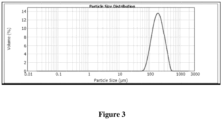
- the particle size distribution was analyzed by light scattering ( Figure 3 ) and the particle size distribution was found to be broad.
- Figure 3 shows the particle size distribution of PSMA-TG/LMA.
- the stability of the self-healing core material was studied to ensure that no stability issues would be encountered with the material.
- the microcapsules were stored at an elevated temperature of 150°F (65°C).
- the weight loss of the capsule samples was monitored over the course of 10 days. After six days, the sample weights stabilized with 91% of the core material remaining intact.
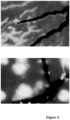
- the microscopic image of damaged coatings indicates the flow of healing agents into the cracks.
- the healing agent is reactive oligomer.
- the healing agent is aged high molecular weight polyacrylates dissolved in toluene.
- the images contained in Figure 6 show a marked improvement in the degree of corrosion that is observed in the coatings containing two coats of the microcapsules, relative to the control panels containing no microcapsules and the panels containing polyacrylate/tolune as self healing core in the microcapsules.
- the highlighted area in Figure 6 showing the behavior of the 1.8J (16 in-lb) impact sites, is magnified to highlight the difference between the different samples. Little corrosion is observed after 7 days at the 1.8J (16 in-lb) and 2.7J (24 in-lb) impact sites in the coating containing oligomer filled microcapsules, however, the samples containing no microcapsules and polyacrylate/tolune microcapsules show definitive corrosion at those same impact sites.
Landscapes
- Chemical & Material Sciences (AREA)
- Engineering & Computer Science (AREA)
- Organic Chemistry (AREA)
- Chemical Kinetics & Catalysis (AREA)
- Polymers & Plastics (AREA)
- Medicinal Chemistry (AREA)
- Mechanical Engineering (AREA)
- Analytical Chemistry (AREA)
- Health & Medical Sciences (AREA)
- Wood Science & Technology (AREA)
- Life Sciences & Earth Sciences (AREA)
- Materials Engineering (AREA)
- Compositions Of Macromolecular Compounds (AREA)
- Paints Or Removers (AREA)
- Polymerisation Methods In General (AREA)
- Manufacturing Of Micro-Capsules (AREA)
Description
- Polymeric materials are used in a wide variety of applications, for example, in the production of different plastic objects or in coatings for surfaces. A recurring issue with polymeric materials is that they tend to fail or degrade due to mechanical fatigue, mechanical impact, oxidative aging, thermal fatigue, chemical degradation, or a combination of these processes. The degradation can lead to embrittlement of the polymer and associated cracking. Mechanical fatigue and mechanical stress can also lead to cracks in the polymeric material. When cracks occur in a polymeric coating on a metal surface, the underlying metal surface can be exposed to the elements and be subject to corrosion.
- Recently there have been developed "self-healing" polymeric materials that can repair cracks or other damage in the materials after they occur. There is widespread interest to use such materials in the coating industry for corrosion mitigation and in other applications. Generally the self-healing polymeric materials are comprised of a polymer matrix and two separate kinds of microcapsules dispersed in the matrix. The first microcapsules include a core containing a reactive oligomer and the second microcapsules include a core containing a catalyst. The first microcapsule releases the reactive oligomer upon stress and the oligomer flows into the crack and polymerizes
upon contact with the catalyst released from the second microcapsule. Implementation of this two-part catalyzed cure microencapsulation technology for self-healing coating development has been challenging due to the complex curing mechanism of the coatings and other issues. There is still a need for improvements in self-healing polymeric compositions.US 2012/207921 discloses that elongated microcapsules, such as elongated hydrophobic-core and hydrophilic-core microcapsules, may be formed by pulse stirring an emulsion or shearing an emulsion between two surfaces moving at different velocities. The elongated microcapsules may be dispersed in a coating formulation, such as paint. - According to the present invention, there is provided a self-healing polymeric composition as set out in claim 1 below. The functionality on the polymer shell is effective in complexing with the corrosion by-products, releasing the core material to repair the failure.
-
-
Fig. 1 is a schematic illustration contrasting a self-healing polymeric composition according to the invention versus a previously known self-healing polymeric composition. -
Fig. 2 shows optical micrographs of some microcapsules that may be used in the invention. -
Fig. 3 is a graph showing particle size distribution of some examples of microcapsules that may be used in the invention. -
Fig. 4 shows fluorescent microscopic images of damaged coatings indicating the flow of healing agents into the cracks. -
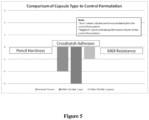
Fig. 5 is a graph showing the results of physical properties testing of a polymeric coating containing microcapsules according to the invention versus a polymeric coating without microcapsules. -
Fig. 6 shows photographs of panels exposed to testing that are coated with a control polymeric coating versus several embodiments of polymeric coatings according to the invention. - The "flowable polymerizable material" is also referred to herein as the "healing agent" or the "self-healing agent". By "contact with the substrate" is meant the oligomer will polymerize on contact with the substrate that are capable of generating reducing agents such as iron (II) or Al (III) ions under stressed or corrosive environment. By "failure" is meant a crack in the polymer matrix, a loss of cohesion within the polymer matrix, or another defect that can be repaired by the flow of the polymerizable material to the defect.
- The invention relates to a self-healing polymeric composition comprising a polymer matrix and a plurality of microcapsules dispersed in the polymer matrix. The microcapsules include a core of a flowable polymerizable material, a polymer shell encapsulating the core, and a corrosion sensing functional group attached to the polymer shell. The polymer shell is effective for rupturing with a failure of the polymer matrix to allow flow of the polymerizable material to repair the failure.
- In an embodiment, the invention relates to a self-healing polymeric composition comprising a polymer matrix, unencapsulated activator or catalyst and a plurality of microcapsules dispersed in the polymer matrix. The polymer shell is effective for rupturing upon corrosion to allow the flow of the polymerizable material. The unencapsulated activator activates the polymerization to repair the failure. Any suitable activator can be used, for example, ceric ammonium nitrate, cerium (IV) oxide and the like.
- In a particular aspect, we disclose the formation of functional microcapsules capable of sensing corrosion byproducts and releasing healing agent to the corrosion induced cracks. The functional microcapsules comprise a healing agent in the core of the microcapsule and a polymer shell with a corrosion sensing functional group.
- The healing agent used in the core of the self-healing polymeric composition can be any flowable thermoplastic polymerizable material. In certain embodiments, the polymerizable material can polymerize without an activator (catalyst or initiator). According to the invention, the polymerizable material comprises thermoplastic oligomers, monomers or prepolymers. More particularly, in certain embodiments the thermoplastic oligomers are exemplified but not limited to acrylic oligomers with or without hydroxyl, amino, carboxyl functional groups.
- The approach of using thermoplastic core materials instead of thermoset core materials offers the advantage in that a catalytic curing agent is not required to harden the material. The difference between our approach and previous microencapsulation approaches is shown in
Figure 1 . The self-healing polymeric composition of the invention utilizes a thermoplastic healing material that does not require an external catalyst for activation. By eliminating the catalytic second component, the challenges associated with primer cure and the need to use a second set of capsules can be eliminated. - The thermoplastic core should have adequate flow and optimal cure rate upon fracture in order to be an effective self-healing agent.
- The polymer shell is exemplified by but not limited to formaldehyde condensation products of urea, phenol and malemine, polyurethane, polyurea, epoxy, acrylics, or other condensation polymers. Alternative, it could be an inorganic shell such as a polymer based on silica or zirconia. A large number of other types of polymers are possible for use in the shell.
- The corrosion sensing functional group is linked to the polymer shell that are exemplified by but not limited to hydroxyl quinolines, morpholine, imidazole, oxazole and thazoles. Additional examples are disclosed in
U.S. patent application publication no. 2011/0053275 A1, "Corrosion Detection Product and Method", by Lalgudi et al.,published March 3, 2011 . - In a particular example, the acrylic oligomers are synthesized by free radical addition polymerization and dissolved them in suitable co-solvents to form the respective self-healing core material. The self-healing material is encapsulated in 8-hydroxyquinoline functionalized polymer shell via suspension polycondensation method. The microcapsules obtained were added to mil-spec coatings and evaluated their performance for self-healing and corrosion protection. The coatings are spray applied on test coupons and after curing, the panels are impacted at 1.8, 2.7, 4.5 and 6.8J (16, 24, 40, and 60 in-lbs). The resulting cracks are examined using fluorescence microscopy. It was found that the viscosity and overall stability of the oligomer in the microcapsules dictates the self-healing performance. We have observed that that the low viscosity as well as the overall stability of the self-healing material enables the capsule core to fill the micro-cracks more effectively. As a result of self-healing, the corrosion performance of the microcapsule filled coatings has been improved and it is evident from the results observed in the SAE J2334 cyclic corrosion test.
- In certain embodiments, self-healing coatings have been formulated based on oligomer filled microcapsules and reported below are the details of structure-activity relationship of microcapsules with respect to the self-healing properties and the corrosion performance.
- In certain embodiments, the microcapsules of the invention are composed of three parts, which can be seen in
Figure 1 . - 1. A self-healing thermoplastic core material to allow flow into corrosion-induced cracks.
- 2. A polymer shell material, which is cross-linked to provide the brittleness to rupture upon intersection with a propagating crack.
- 3. A corrosion sensing functional group attached to the shell of the microcapsule to provide an optical indication upon contact with corrosion by-products.
- The resulting microcapsules can be formulated directly into any coatings to provide the desired corrosion detection and mitigation properties.
- In certain embodiments, the microcapsules can be embodied as self-healing smart beads that detect and repair corrosion. For example, the bead may not only detect corrosion but deliver a payload to help heal the microscopic cracks that rust creates.
- The smart beads may have any suitable size. For example, they may be tiny beads having a major diameter of 20 to 50µm (microns). In certain embodiments, the beads may appear to be a fine powder. The powder may be whitish in color or another suitable color.
- In certain embodiments, the smart beads are in the form of a powder and can be mixed with coatings that can be used to coat different types of surfaces that are subject to corrosion. For example, the beads can be mixed with coatings that could be used to paint pipelines. The self-healing smart beads can reveal where corrosion is forming on metal even though one can't see degradation with the naked eye. Once detected, the beads can then release a chemical that fills the cracks.
- In certain embodiments, the beads fluoresce in the presence of corrosion and can be seen with a special light. This can give technicians the information that corrosion is happening (even if it isn't showing through the paint), and give them time to figure out how to mitigate the problem, because the beads repair and stem the onset of the corrosion.
- This technology can be valuable for many industries, for example, the oil and gas industry. For instance, in the oil and gas industry, a technician may run a routine scan of the outer shell of a pipeline with a handheld device and find a spot of corrosion. Then the technician would know that a chemical was fast at work fighting the corrosion and can report that a problem needs to be addressed at that section of the pipeline. The time and money savings could be immense.
- In certain embodiments, a smart coating can be derived from a functional nanomaterial that can be applied between a primer and a topcoat.
- In certain embodiments, the beads or nanocapsules of the present invention are combined in a paintable product offering with another technology for detection of fluorescent materials in the flowable core using Terahertz or UV radiation. For example, this may include the technology described in
U.S. patent no. 8,623,653 B2 to Lalgudi et al, issued January 7, 2014 . - The present invention is exemplified in the following sections:
- Three self-healing core materials were chosen for this study. They are (a) commercially available acrylic copolymer (Paraloid A-21), (b) poly(aceto-acetoxyethly methacrylate) (p-AAEM) made via free radical polymerization and (c) poly(styearyl methacrylate) (PSMA-TG) diol made via free radical polymerization of stearyl methacrylate in the presence of thio glycerol as chain transfer agent. These polymers were the dissolved in selective solvents to form the self-healing capsule core and their respective description used herein are: (a) 10% Paraloid A-21 in propylene carbonate, (b) 30% p-AAEM in propylene carbonate and (c) 50% PSMA-TG in lauryl methacrylate (LMA). The self-healing materials were encapsulated via polycondensation polymerization process using melamine, formaldehyde and 8-hydroxyquinoline.
- The particle size was analyzed by Malvern APA 2000. 1 micron polystyrene latex in water was used for standardization. Fluorescent imaging was performed using Zeiss microscope fitted with Axio Imager A1.
- To best mitigate the effects of corrosion via an encapsulated healing agent, in certain embodiments the microcapsule core and shell materials are identified for use based on one or moe of the following factors:
- The shell material (a) is insoluble in the capsule core material as well as the epoxy primer resin, (b) is inert in the applied epoxy primer resin and the core material, (c) is resilient when exposed to an applied pressure, (d) fractures upon an applied shear force. The core material (a) is compatible with the epoxy primer resin, (b) flows via capillary action, (c) forms a film resistant to corrosive materials, (d) is stable after encapsulated.
- The following three self-healing candidate materials were selected for this study:
- (a) commercially available acrylic copolymer (Paraloid A-21), (b) poly(aceto-acetoxyethly methacrylate) (p-AAEM) made via free radical polymerization and (c) poly(styearyl methacrylate) (PSMA-TG) diol made via free radical polymerization of stearyl methacrylate in the presence of thio glycerol as chain transfer agent. These polymers were then dissolved in selective solvents to form the self-healing capsule core and their respective description used in this paper are: (a) 10% Paraloid A-21 in propylene carbonate, (b) 30% p-AAEM in propylene carbonate and (c) 50% PSMA-TG in lauryl methacrylate (LMA).
- The ratio of core to shell was 0.8 (i.e. 100 grams of microcapsules contains 80 grams of active healing agent). It was found that candidate (c) PSMA-TG diluted with LMA resulted in preferred microcapsules. The observations during the encapsulation process are given in Table 1. The encapsulation efficiency is dependent on the stability of the active ingredient (self-healing material) micro droplets in the continuous phase (water). Therefore, a factor in encapsulation is the stability of the active ingredient in the continuous phase. In our present study the less preferred capsule formation has been observed when using propylene carbonate solvent. PC is soluble in water around 17 % (ref) and its solubility parameter (δ) is 27.2 MPa1/2 (Ref). We believe either high miscibility of PC with water (this would result in extracting the self-healing agent to the continuous water phase) or the close match of δ values with melamine (this would lead to inadequate shell formation) may be a factor in incomplete encapsulation or poor encapsulation efficiency.
Table 1: Summary of observations during the encapsulation process Sample Result of mixing with water: Result of Encapsulation: Paraloid A-21 in PC Cloudy interface Incomplete encapsulation with free core and shell material present. p-AAEM in PC Clean interface Possible core material polymerization FSMA-TG in LMA Cloudy interface Successful encapsulation - The three bulk oligomer samples discussed in the previous section were evaluated on the basis of dry time. For this purpose, low carbon steel panels were cleaned and, using a doctor blade, the samples were applied at 76µm (3 mils) wet film to the surface of the steel panel. Additionally, a Paraloid/toluene sample was prepared for comparison purposes. The panels were allowed to dry at ambient conditions and then were observed for changes in coating condition. The results of this initial investigation are presented in Table 2. The dry time of each of the three candidate materials exceeds 24 hours, whereas the dry time of the Parloid/Toluene material does not. This indicates that solvents with lower boiling points are less preferred as a carrier solvent for the self-healing agent. Low boiling solvents in the formulation may adversely affect the flowability of the healing agent and shelf-life of the microcapsules.
Table 2: Results of an investigation into the dry time required for Generation 1 and Generation 2 multifunctional microcapsules. Sample Dry Time Notes Paraloid A-21 in Toluene 24 hours Continuous hard film Paraloid A-21 in PC 7 days Continuous tacky film p-AAEM in PC >7 days Continuous wet film, no fish eyes PSMA-TG in LMA >7 days Continuous wet film, no fish eyes - Additionally, each of the candidate materials demonstrated favorable interaction with the steel substrate, as evidenced by forming a continuous film on the steel substrate. This will allow it to bond to the steel and prevent further corrosion damage from occurring in the field.
- The PSMA-TG/LMA microcapsule was analyzed by optical microscopy (
Figure 2 ) and capsules were =to be spherical in shape.Figure 2 shows the optical micrographs of acid-washed capsules imaged during illumination by (a) a visible light source and (b) a UV source. (Note: The relative transparence of the center of the microcapsules, relative to the edges, demonstrates that the HQ is preferentially tethered to the outer core of the microcapsules.) The particle size distribution was analyzed by light scattering (Figure 3 ) and the particle size distribution was found to be broad.Figure 3 shows the particle size distribution of PSMA-TG/LMA. - The stability of the self-healing core material was studied to ensure that no stability issues would be encountered with the material. The microcapsules were stored at an elevated temperature of 150°F (65°C). The weight loss of the capsule samples was monitored over the course of 10 days. After six days, the sample weights stabilized with 91% of the core material remaining intact. These results suggest that the self-healing material present in the microcapsule core has not been lost and remained functional inside the capsules.
- To track the ability of the healing agent to fill defects in films, an inert fluorescent dye was added into the core material prior to encapsulation. Self-healing of the microcapsule loaded coatings was tested using the reverse impact test method. Cured panels were impacted at 1.8, 2.7, 4.5 and 6.8J (16, 24, 40, and 60 in-lbs), and the resulting cracks were examined using fluorescence microscopy. High contrast images were obtained to show the presence or absence of healing agent at a given time and location.
Figure 4 demonstrates that the reactive oligomer filled microcapsules enables to fill the microcracks more effectively than the microcapsules filled with high molecular weight polymer. This is due to the low viscosity as well as the overall stability of the self-healing material present in the capsule core of the microcapsules. InFigure 4 , the microscopic image of damaged coatings indicates the flow of healing agents into the cracks. In the top image, the healing agent is reactive oligomer. In the bottom image, the healing agent is aged high molecular weight polyacrylates dissolved in toluene. - Steel coupons were coated with the total coating stack-up and evaluated based on hardness, adhesion, impact resistance, and MEK resistance. The results of the coatings testing are shown in
Figure 5 . This figure shows the results of physical properties testing performed to compare second generation capsule loaded primer coatings with primer coatings containing no microcapsule components. - The results in
Figure 5 are presented such that the microcapsule loaded primer is monitored relative to the performance of the unloaded primer coatings. Positive values indicate that the performance of the microcapsule loaded films performed more favourably than the films containing no microcapsules. Negative values indicate that the microcapsule films performed less favorably than the films containing microcapsules. The above figures demonstrate the general effect of adding liquid-filled microcapsules to the primer system. Marginally improved impact resistance and unchanged MEK resistance were observed where tested. Changes in pencil hardness were not observed for the coatings containing oligomer filled microcapsules. The crosshatch adhesion for the oligomer filled capsules is slightly lower compared to control coatings (no capsules). We believe this could be due to the presence of small amount of healing agent present on the wall of the capsules that could have affected the interfacial adhesion between the epoxy primer layer and polyurethane top layer. - All samples were prepared and tested in triplicate and the panels were subjected to reverse impact stresses followed by subsequent testing in accordance with SAE J2334 for seven days. Samples were monitored once per day, for a total of seven days. The results of this test are shown in
Figure 6 . This figure shows a comparison of panels exposed to testing in accordance with SAE J2334 for 7 days. The descriptions in (a) - (d) describe the panels from left to right: (a) CARC stack-up control, no sapsules; (b) CARC stack-up containing Paraloid/toluene (Generation 1) capsules; (c) CARC stack-up containing PSMA-TG (Generation 2) capsules, one coat; (d) CARC stack-up containing PSMA-TG capsules (Generation 2), two coats. - The images contained in
Figure 6 show a marked improvement in the degree of corrosion that is observed in the coatings containing two coats of the microcapsules, relative to the control panels containing no microcapsules and the panels containing polyacrylate/tolune as self healing core in the microcapsules. The highlighted area inFigure 6 , showing the behavior of the 1.8J (16 in-lb) impact sites, is magnified to highlight the difference between the different samples. Little corrosion is observed after 7 days at the 1.8J (16 in-lb) and 2.7J (24 in-lb) impact sites in the coating containing oligomer filled microcapsules, however, the samples containing no microcapsules and polyacrylate/tolune microcapsules show definitive corrosion at those same impact sites. These results indicate that the oligomer filled microcapsules represent a significant improvement relative to the polyacrylate/toluene filled microcapsules. The performance of the microcapsule filled coatings has been improved and it is evident from the results observed in the SAE J2334 cyclic corrosion test. - The principle and mode of operation of this invention have been explained and illustrated in its preferred embodiment. However, it must be understood that this invention may be practiced otherwise than as specifically explained and illustrated without departing from its scope, which is set forth in the appended claims.
Claims (8)
- A self-healing polymeric composition comprising:a polymer matrix and a plurality of microcapsules dispersed in the polymer matrix for coating a substrate that generates a corrosion byproduct when corroding;each microcapsule including:a core of a flowable thermoplastic polymerizable material, comprising thermoplastic oligomers, monomers or prepolymers;a polymer shell encapsulating the core, the polymer shell comprising: formaldehyde condensation products of urea, phenol and melamine; polyurethane, polyurea, epoxy, acrylics, or other condensation polymers; or silica-based or zirconia based polymer; anda functional group attached to the polymer shell that is capable of sensing the corrosion byproduct, the functional group comprising hydroxyl quinolones, morpholine, imidazole, oxazole or thiazoles;the polymer shell effective to rupture with a failure of the polymer matrix to release the polymerizable material;the polymerizable material, upon release from the shell, effective to flow and polymerize to repair the failure.
- The self-healing polymeric composition of claim 1 wherein the polymerizable material comprises thermoplastic oligomers.
- The self-healing polymeric composition of claim 2 wherein the thermoplastic oligomers have one or more hydroxyl, amine, carboxyl, vinyl and acrylic functionality.
- The self-healing polymeric composition of claim 1 wherein the polymer shell is cross-linked.
- The self-healing polymeric composition of claim 1 wherein the functional group is capable of sensing iron(II) or Al(III) ions as the corrosion byproducts.
- The self-healing polymeric composition of claim 5 wherein the polymer matrix comprises a paint.
- The self-healing polymeric composition of claim 1 or 5 wherein the polymerizable material can polymerize without an activator.
- The self-healing polymeric composition of claim 1 or 5 wherein the corrosion sensing functional group is effective to provide a visual, optical or spectral indication upon contact with a corrosion by-product.
Applications Claiming Priority (3)
| Application Number | Priority Date | Filing Date | Title |
|---|---|---|---|
| US201361905538P | 2013-11-18 | 2013-11-18 | |
| US201461987119P | 2014-05-01 | 2014-05-01 | |
| PCT/US2014/066119 WO2015074039A2 (en) | 2013-11-18 | 2014-11-18 | Self-healing polymeric composition |
Publications (3)
| Publication Number | Publication Date |
|---|---|
| EP3071634A2 EP3071634A2 (en) | 2016-09-28 |
| EP3071634C0 EP3071634C0 (en) | 2023-08-30 |
| EP3071634B1 true EP3071634B1 (en) | 2023-08-30 |
Family
ID=52001115
Family Applications (1)
| Application Number | Title | Priority Date | Filing Date |
|---|---|---|---|
| EP14805769.8A Active EP3071634B1 (en) | 2013-11-18 | 2014-11-18 | Self-healing polymeric composition |
Country Status (4)
| Country | Link |
|---|---|
| US (1) | US10570307B2 (en) |
| EP (1) | EP3071634B1 (en) |
| CA (1) | CA2929691C (en) |
| WO (1) | WO2015074039A2 (en) |
Families Citing this family (12)
| Publication number | Priority date | Publication date | Assignee | Title |
|---|---|---|---|---|
| EP3170847A1 (en) | 2015-11-20 | 2017-05-24 | OMG Borchers GmbH | Encapsulated accelerators for coatings |
| JP6821782B2 (en) | 2016-07-11 | 2021-01-27 | マイクロテック・ラボラトリーズ・インコーポレーテッド | Capsules with a surfactant-connected outer shell, and methods for making them |
| US10696899B2 (en) | 2017-05-09 | 2020-06-30 | International Business Machines Corporation | Light emitting shell in multi-compartment microcapsules |
| US10357921B2 (en) | 2017-05-24 | 2019-07-23 | International Business Machines Corporation | Light generating microcapsules for photo-curing |
| US10900908B2 (en) | 2017-05-24 | 2021-01-26 | International Business Machines Corporation | Chemiluminescence for tamper event detection |
| US10662299B2 (en) | 2017-06-09 | 2020-05-26 | International Business Machines Corporation | Heat generating microcapsules for self-healing polymer applications |
| US10392452B2 (en) | 2017-06-23 | 2019-08-27 | International Business Machines Corporation | Light generating microcapsules for self-healing polymer applications |
| US11020723B2 (en) | 2019-08-21 | 2021-06-01 | International Business Machines Corporation | Degradable microcapsules for porosity reduction |
| US11306211B2 (en) | 2019-08-21 | 2022-04-19 | International Business Machines Corporation | Porosity reduction by encapsulated polymerizing agents |
| US11543322B2 (en) * | 2020-05-01 | 2023-01-03 | Globalfoundries U.S. Inc. | Crack identification in IC chip package using encapsulated liquid penetrant contrast agent |
| CN117449799A (en) * | 2023-10-16 | 2024-01-26 | 重庆大学 | A multi-stage plugging and sealing method for gas drainage boreholes |
| CN120531079A (en) * | 2025-07-29 | 2025-08-26 | 四川省峰上生物科技有限公司 | Method for preparing antioxidant compound beverage |
Citations (9)
| Publication number | Priority date | Publication date | Assignee | Title |
|---|---|---|---|---|
| WO2002064653A2 (en) * | 2001-02-13 | 2002-08-22 | Board Of Trustees Of University Of Illinois | Multifunctional autonomically healing composite material |
| WO2004007608A2 (en) * | 2002-07-15 | 2004-01-22 | Motorola, Inc. | Self-healing polymer compositions |
| US20090036568A1 (en) * | 2006-10-17 | 2009-02-05 | Philippe Merle | Self healing composite material and method of manufacturing same |
| WO2009126802A1 (en) * | 2008-04-09 | 2009-10-15 | Battelle Memorial Institute | Corrosion detection product and method |
| EP2208611A1 (en) * | 2009-01-16 | 2010-07-21 | Stichting Dutch Polymer Institute | Self healing composition |
| US20120207921A1 (en) * | 2011-02-14 | 2012-08-16 | Space Administration | Elongated Microcapsules and their Formation |
| US20130017405A1 (en) * | 2010-05-28 | 2013-01-17 | The Johns Hopkins University | Self-Healing Coatings |
| WO2013009873A2 (en) * | 2011-07-11 | 2013-01-17 | United States Of America As Represented By The Administrator Of The National Aeronautics And Space Administration | Ph-sensitive microparticles with matrix-dispersed active agent |
| US20130196071A1 (en) * | 2012-02-01 | 2013-08-01 | Nanyang Technological University | Microencapsulation of reactive diisocyanates and the application to self-healing anticorrosion coatings |
Family Cites Families (4)
| Publication number | Priority date | Publication date | Assignee | Title |
|---|---|---|---|---|
| US7723405B2 (en) | 2006-01-05 | 2010-05-25 | The Board Of Trustees Of The University Of Illinois | Self-healing coating system |
| US20090181254A1 (en) | 2008-01-15 | 2009-07-16 | The Board Of Trustees Of The University Of Illinois | Multi-capsule system and its use for encapsulating active agents |
| JP6389883B2 (en) * | 2013-10-23 | 2018-09-12 | オートノミック マテリアルズ、インコーポレイテッド | Self-healing agent formulations containing liquid corrosion inhibitors |
| WO2015085141A1 (en) | 2013-12-06 | 2015-06-11 | Microtek Laboratories, Inc. | Microcapsules having acrylic polymeric shells |
-
2014
- 2014-11-18 US US15/036,941 patent/US10570307B2/en active Active
- 2014-11-18 CA CA2929691A patent/CA2929691C/en active Active
- 2014-11-18 EP EP14805769.8A patent/EP3071634B1/en active Active
- 2014-11-18 WO PCT/US2014/066119 patent/WO2015074039A2/en not_active Ceased
Patent Citations (9)
| Publication number | Priority date | Publication date | Assignee | Title |
|---|---|---|---|---|
| WO2002064653A2 (en) * | 2001-02-13 | 2002-08-22 | Board Of Trustees Of University Of Illinois | Multifunctional autonomically healing composite material |
| WO2004007608A2 (en) * | 2002-07-15 | 2004-01-22 | Motorola, Inc. | Self-healing polymer compositions |
| US20090036568A1 (en) * | 2006-10-17 | 2009-02-05 | Philippe Merle | Self healing composite material and method of manufacturing same |
| WO2009126802A1 (en) * | 2008-04-09 | 2009-10-15 | Battelle Memorial Institute | Corrosion detection product and method |
| EP2208611A1 (en) * | 2009-01-16 | 2010-07-21 | Stichting Dutch Polymer Institute | Self healing composition |
| US20130017405A1 (en) * | 2010-05-28 | 2013-01-17 | The Johns Hopkins University | Self-Healing Coatings |
| US20120207921A1 (en) * | 2011-02-14 | 2012-08-16 | Space Administration | Elongated Microcapsules and their Formation |
| WO2013009873A2 (en) * | 2011-07-11 | 2013-01-17 | United States Of America As Represented By The Administrator Of The National Aeronautics And Space Administration | Ph-sensitive microparticles with matrix-dispersed active agent |
| US20130196071A1 (en) * | 2012-02-01 | 2013-08-01 | Nanyang Technological University | Microencapsulation of reactive diisocyanates and the application to self-healing anticorrosion coatings |
Also Published As
| Publication number | Publication date |
|---|---|
| EP3071634C0 (en) | 2023-08-30 |
| US20160289484A1 (en) | 2016-10-06 |
| EP3071634A2 (en) | 2016-09-28 |
| WO2015074039A3 (en) | 2015-07-23 |
| US10570307B2 (en) | 2020-02-25 |
| CA2929691C (en) | 2023-04-18 |
| CA2929691A1 (en) | 2015-05-21 |
| WO2015074039A2 (en) | 2015-05-21 |
Similar Documents
| Publication | Publication Date | Title |
|---|---|---|
| US10570307B2 (en) | Self-healing polymeric composition | |
| Yang et al. | Microencapsulation of isocyanates for self-healing polymers | |
| Behzadnasab et al. | Preparation and characterization of linseed oil-filled urea–formaldehyde microcapsules and their effect on mechanical properties of an epoxy-based coating | |
| US10508204B2 (en) | Self-healing coating | |
| Behzadnasab et al. | Evaluation of corrosion performance of a self-healing epoxy-based coating containing linseed oil-filled microcapsules via electrochemical impedance spectroscopy | |
| Zhao et al. | Self-healing coatings containing microcapsule | |
| Nesterova et al. | Microcapsule-based self-healing anticorrosive coatings: Capsule size, coating formulation, and exposure testing | |
| US20100305234A1 (en) | Hydrophobic-Core Microcapsules and their Formation | |
| Ataei et al. | Self-healing performance of an epoxy coating containing microencapsulated alkyd resin based on coconut oil | |
| Shisode et al. | Preparation and characterization of microcapsules containing soybean oil and their application in self-healing anticorrosive coatings | |
| US9227221B2 (en) | Hydrophilic-core microcapsules and their formation | |
| CN105142804B (en) | Corrosion Inhibiting Composition | |
| US9943487B2 (en) | Polydopamine-coated capsules | |
| CN105050735B (en) | Corrosion inhibiting composition and the coating comprising said composition | |
| US10174221B2 (en) | Autonomic damage indication in coatings | |
| Wazarkar et al. | Microencapsulation: an emerging technique in the modern coating industry | |
| US20120207921A1 (en) | Elongated Microcapsules and their Formation | |
| Keller et al. | Self-healing of erosion damage in a polymer coating | |
| Thiangpak et al. | Self-healing abilities of shape-memory epoxy-contained polycaprolactone microspheres filled with cerium (III) nitrate coated on aluminum 2024-T3 | |
| Chen et al. | Self‐warning and self‐repairing mechanisms in functional coatings: a review | |
| Judit et al. | Micro/nanocapsules for anticorrosion coatings | |
| Khoee et al. | Size and core content optimization of epoxy nanocapsules by response surface methodology for use in self-healing coatings | |
| Bolimowski et al. | Assessment of microcapsule—catalyst particles healing system in high performance fibre reinforced polymer composite | |
| Ataei et al. | Electrosprayed PMMA microcapsules containing green soybean oil-based acrylated epoxy and a thiol: a novel resin for smart self-healing coatings | |
| Chamkouri et al. | Epoxy resin matrix integrating epoxy‐polydimethylsiloxane based self‐healing microcapsules: Healing efficiency, mechanical and thermal stability |
Legal Events
| Date | Code | Title | Description |
|---|---|---|---|
| PUAI | Public reference made under article 153(3) epc to a published international application that has entered the european phase |
Free format text: ORIGINAL CODE: 0009012 |
|
| 17P | Request for examination filed |
Effective date: 20160517 |
|
| AK | Designated contracting states |
Kind code of ref document: A2 Designated state(s): AL AT BE BG CH CY CZ DE DK EE ES FI FR GB GR HR HU IE IS IT LI LT LU LV MC MK MT NL NO PL PT RO RS SE SI SK SM TR |
|
| AX | Request for extension of the european patent |
Extension state: BA ME |
|
| DAX | Request for extension of the european patent (deleted) | ||
| PUAG | Search results despatched under rule 164(2) epc together with communication from examining division |
Free format text: ORIGINAL CODE: 0009017 |
|
| STAA | Information on the status of an ep patent application or granted ep patent |
Free format text: STATUS: EXAMINATION IS IN PROGRESS |
|
| 17Q | First examination report despatched |
Effective date: 20191217 |
|
| B565 | Issuance of search results under rule 164(2) epc |
Effective date: 20191217 |
|
| RIC1 | Information provided on ipc code assigned before grant |
Ipc: B29C 73/16 20060101ALI20191212BHEP Ipc: C08J 3/24 20060101AFI20191212BHEP |
|
| GRAP | Despatch of communication of intention to grant a patent |
Free format text: ORIGINAL CODE: EPIDOSNIGR1 |
|
| STAA | Information on the status of an ep patent application or granted ep patent |
Free format text: STATUS: GRANT OF PATENT IS INTENDED |
|
| INTG | Intention to grant announced |
Effective date: 20230315 |
|
| RIN1 | Information on inventor provided before grant (corrected) |
Inventor name: MUSZYNSKI, BETH Inventor name: LALGUDI, RAMANATHAN S. |
|
| GRAS | Grant fee paid |
Free format text: ORIGINAL CODE: EPIDOSNIGR3 |
|
| GRAA | (expected) grant |
Free format text: ORIGINAL CODE: 0009210 |
|
| STAA | Information on the status of an ep patent application or granted ep patent |
Free format text: STATUS: THE PATENT HAS BEEN GRANTED |
|
| AK | Designated contracting states |
Kind code of ref document: B1 Designated state(s): AL AT BE BG CH CY CZ DE DK EE ES FI FR GB GR HR HU IE IS IT LI LT LU LV MC MK MT NL NO PL PT RO RS SE SI SK SM TR |
|
| REG | Reference to a national code |
Ref country code: GB Ref legal event code: FG4D |
|
| REG | Reference to a national code |
Ref country code: CH Ref legal event code: EP |
|
| REG | Reference to a national code |
Ref country code: DE Ref legal event code: R096 Ref document number: 602014088124 Country of ref document: DE |
|
| REG | Reference to a national code |
Ref country code: IE Ref legal event code: FG4D |
|
| U01 | Request for unitary effect filed |
Effective date: 20230913 |
|
| U07 | Unitary effect registered |
Designated state(s): AT BE BG DE DK EE FI FR IT LT LU LV MT NL PT SE SI Effective date: 20230921 |
|
| U20 | Renewal fee for the european patent with unitary effect paid |
Year of fee payment: 10 Effective date: 20231108 |
|
| PG25 | Lapsed in a contracting state [announced via postgrant information from national office to epo] |
Ref country code: GR Free format text: LAPSE BECAUSE OF FAILURE TO SUBMIT A TRANSLATION OF THE DESCRIPTION OR TO PAY THE FEE WITHIN THE PRESCRIBED TIME-LIMIT Effective date: 20231201 |
|
| PG25 | Lapsed in a contracting state [announced via postgrant information from national office to epo] |
Ref country code: IS Free format text: LAPSE BECAUSE OF FAILURE TO SUBMIT A TRANSLATION OF THE DESCRIPTION OR TO PAY THE FEE WITHIN THE PRESCRIBED TIME-LIMIT Effective date: 20231230 |
|
| PG25 | Lapsed in a contracting state [announced via postgrant information from national office to epo] |
Ref country code: RS Free format text: LAPSE BECAUSE OF FAILURE TO SUBMIT A TRANSLATION OF THE DESCRIPTION OR TO PAY THE FEE WITHIN THE PRESCRIBED TIME-LIMIT Effective date: 20230830 Ref country code: NO Free format text: LAPSE BECAUSE OF FAILURE TO SUBMIT A TRANSLATION OF THE DESCRIPTION OR TO PAY THE FEE WITHIN THE PRESCRIBED TIME-LIMIT Effective date: 20231130 Ref country code: IS Free format text: LAPSE BECAUSE OF FAILURE TO SUBMIT A TRANSLATION OF THE DESCRIPTION OR TO PAY THE FEE WITHIN THE PRESCRIBED TIME-LIMIT Effective date: 20231230 Ref country code: HR Free format text: LAPSE BECAUSE OF FAILURE TO SUBMIT A TRANSLATION OF THE DESCRIPTION OR TO PAY THE FEE WITHIN THE PRESCRIBED TIME-LIMIT Effective date: 20230830 Ref country code: GR Free format text: LAPSE BECAUSE OF FAILURE TO SUBMIT A TRANSLATION OF THE DESCRIPTION OR TO PAY THE FEE WITHIN THE PRESCRIBED TIME-LIMIT Effective date: 20231201 |
|
| PG25 | Lapsed in a contracting state [announced via postgrant information from national office to epo] |
Ref country code: PL Free format text: LAPSE BECAUSE OF FAILURE TO SUBMIT A TRANSLATION OF THE DESCRIPTION OR TO PAY THE FEE WITHIN THE PRESCRIBED TIME-LIMIT Effective date: 20230830 |
|
| PG25 | Lapsed in a contracting state [announced via postgrant information from national office to epo] |
Ref country code: ES Free format text: LAPSE BECAUSE OF FAILURE TO SUBMIT A TRANSLATION OF THE DESCRIPTION OR TO PAY THE FEE WITHIN THE PRESCRIBED TIME-LIMIT Effective date: 20230830 |
|
| PG25 | Lapsed in a contracting state [announced via postgrant information from national office to epo] |
Ref country code: SM Free format text: LAPSE BECAUSE OF FAILURE TO SUBMIT A TRANSLATION OF THE DESCRIPTION OR TO PAY THE FEE WITHIN THE PRESCRIBED TIME-LIMIT Effective date: 20230830 Ref country code: RO Free format text: LAPSE BECAUSE OF FAILURE TO SUBMIT A TRANSLATION OF THE DESCRIPTION OR TO PAY THE FEE WITHIN THE PRESCRIBED TIME-LIMIT Effective date: 20230830 Ref country code: ES Free format text: LAPSE BECAUSE OF FAILURE TO SUBMIT A TRANSLATION OF THE DESCRIPTION OR TO PAY THE FEE WITHIN THE PRESCRIBED TIME-LIMIT Effective date: 20230830 Ref country code: CZ Free format text: LAPSE BECAUSE OF FAILURE TO SUBMIT A TRANSLATION OF THE DESCRIPTION OR TO PAY THE FEE WITHIN THE PRESCRIBED TIME-LIMIT Effective date: 20230830 Ref country code: SK Free format text: LAPSE BECAUSE OF FAILURE TO SUBMIT A TRANSLATION OF THE DESCRIPTION OR TO PAY THE FEE WITHIN THE PRESCRIBED TIME-LIMIT Effective date: 20230830 |
|
| REG | Reference to a national code |
Ref country code: DE Ref legal event code: R097 Ref document number: 602014088124 Country of ref document: DE |
|
| REG | Reference to a national code |
Ref country code: CH Ref legal event code: PL |
|
| PG25 | Lapsed in a contracting state [announced via postgrant information from national office to epo] |
Ref country code: MC Free format text: LAPSE BECAUSE OF FAILURE TO SUBMIT A TRANSLATION OF THE DESCRIPTION OR TO PAY THE FEE WITHIN THE PRESCRIBED TIME-LIMIT Effective date: 20230830 |
|
| PLBE | No opposition filed within time limit |
Free format text: ORIGINAL CODE: 0009261 |
|
| STAA | Information on the status of an ep patent application or granted ep patent |
Free format text: STATUS: NO OPPOSITION FILED WITHIN TIME LIMIT |
|
| PG25 | Lapsed in a contracting state [announced via postgrant information from national office to epo] |
Ref country code: CH Free format text: LAPSE BECAUSE OF NON-PAYMENT OF DUE FEES Effective date: 20231130 |
|
| PG25 | Lapsed in a contracting state [announced via postgrant information from national office to epo] |
Ref country code: MC Free format text: LAPSE BECAUSE OF FAILURE TO SUBMIT A TRANSLATION OF THE DESCRIPTION OR TO PAY THE FEE WITHIN THE PRESCRIBED TIME-LIMIT Effective date: 20230830 Ref country code: CH Free format text: LAPSE BECAUSE OF NON-PAYMENT OF DUE FEES Effective date: 20231130 |
|
| 26N | No opposition filed |
Effective date: 20240603 |
|
| REG | Reference to a national code |
Ref country code: IE Ref legal event code: MM4A |
|
| PG25 | Lapsed in a contracting state [announced via postgrant information from national office to epo] |
Ref country code: IE Free format text: LAPSE BECAUSE OF NON-PAYMENT OF DUE FEES Effective date: 20231118 |
|
| PG25 | Lapsed in a contracting state [announced via postgrant information from national office to epo] |
Ref country code: IE Free format text: LAPSE BECAUSE OF NON-PAYMENT OF DUE FEES Effective date: 20231118 |
|
| U21 | Renewal fee for the european patent with unitary effect paid with additional fee |
Year of fee payment: 11 Effective date: 20250210 |
|
| PG25 | Lapsed in a contracting state [announced via postgrant information from national office to epo] |
Ref country code: CY Free format text: LAPSE BECAUSE OF FAILURE TO SUBMIT A TRANSLATION OF THE DESCRIPTION OR TO PAY THE FEE WITHIN THE PRESCRIBED TIME-LIMIT; INVALID AB INITIO Effective date: 20141118 |
|
| PG25 | Lapsed in a contracting state [announced via postgrant information from national office to epo] |
Ref country code: HU Free format text: LAPSE BECAUSE OF FAILURE TO SUBMIT A TRANSLATION OF THE DESCRIPTION OR TO PAY THE FEE WITHIN THE PRESCRIBED TIME-LIMIT; INVALID AB INITIO Effective date: 20141118 |
|
| U20 | Renewal fee for the european patent with unitary effect paid |
Year of fee payment: 12 Effective date: 20251014 |
|
| PG25 | Lapsed in a contracting state [announced via postgrant information from national office to epo] |
Ref country code: TR Free format text: LAPSE BECAUSE OF FAILURE TO SUBMIT A TRANSLATION OF THE DESCRIPTION OR TO PAY THE FEE WITHIN THE PRESCRIBED TIME-LIMIT Effective date: 20230830 |
|
| PGFP | Annual fee paid to national office [announced via postgrant information from national office to epo] |
Ref country code: GB Payment date: 20251009 Year of fee payment: 12 |