EP3071053B1 - Prebiotic composition - Google Patents
Prebiotic composition Download PDFInfo
- Publication number
- EP3071053B1 EP3071053B1 EP14812876.2A EP14812876A EP3071053B1 EP 3071053 B1 EP3071053 B1 EP 3071053B1 EP 14812876 A EP14812876 A EP 14812876A EP 3071053 B1 EP3071053 B1 EP 3071053B1
- Authority
- EP
- European Patent Office
- Prior art keywords
- fructan
- microorganism
- composition according
- prebiotic
- composition
- Prior art date
- Legal status (The legal status is an assumption and is not a legal conclusion. Google has not performed a legal analysis and makes no representation as to the accuracy of the status listed.)
- Active
Links
Images





Classifications
-
- A—HUMAN NECESSITIES
- A23—FOODS OR FOODSTUFFS; TREATMENT THEREOF, NOT COVERED BY OTHER CLASSES
- A23K—FODDER
- A23K10/00—Animal feeding-stuffs
- A23K10/30—Animal feeding-stuffs from material of plant origin, e.g. roots, seeds or hay; from material of fungal origin, e.g. mushrooms
-
- A—HUMAN NECESSITIES
- A23—FOODS OR FOODSTUFFS; TREATMENT THEREOF, NOT COVERED BY OTHER CLASSES
- A23K—FODDER
- A23K10/00—Animal feeding-stuffs
- A23K10/10—Animal feeding-stuffs obtained by microbiological or biochemical processes
- A23K10/16—Addition of microorganisms or extracts thereof, e.g. single-cell proteins, to feeding-stuff compositions
- A23K10/18—Addition of microorganisms or extracts thereof, e.g. single-cell proteins, to feeding-stuff compositions of live microorganisms
-
- A—HUMAN NECESSITIES
- A23—FOODS OR FOODSTUFFS; TREATMENT THEREOF, NOT COVERED BY OTHER CLASSES
- A23K—FODDER
- A23K10/00—Animal feeding-stuffs
- A23K10/30—Animal feeding-stuffs from material of plant origin, e.g. roots, seeds or hay; from material of fungal origin, e.g. mushrooms
- A23K10/37—Animal feeding-stuffs from material of plant origin, e.g. roots, seeds or hay; from material of fungal origin, e.g. mushrooms from waste material
-
- A—HUMAN NECESSITIES
- A23—FOODS OR FOODSTUFFS; TREATMENT THEREOF, NOT COVERED BY OTHER CLASSES
- A23L—FOODS, FOODSTUFFS OR NON-ALCOHOLIC BEVERAGES, NOT OTHERWISE PROVIDED FOR; PREPARATION OR TREATMENT THEREOF
- A23L33/00—Modifying nutritive qualities of foods; Dietetic products; Preparation or treatment thereof
- A23L33/10—Modifying nutritive qualities of foods; Dietetic products; Preparation or treatment thereof using additives
- A23L33/135—Bacteria or derivatives thereof, e.g. probiotics
-
- A—HUMAN NECESSITIES
- A23—FOODS OR FOODSTUFFS; TREATMENT THEREOF, NOT COVERED BY OTHER CLASSES
- A23L—FOODS, FOODSTUFFS OR NON-ALCOHOLIC BEVERAGES, NOT OTHERWISE PROVIDED FOR; PREPARATION OR TREATMENT THEREOF
- A23L33/00—Modifying nutritive qualities of foods; Dietetic products; Preparation or treatment thereof
- A23L33/20—Reducing nutritive value; Dietetic products with reduced nutritive value
- A23L33/21—Addition of substantially indigestible substances, e.g. dietary fibres
- A23L33/22—Comminuted fibrous parts of plants, e.g. bagasse or pulp
-
- A—HUMAN NECESSITIES
- A23—FOODS OR FOODSTUFFS; TREATMENT THEREOF, NOT COVERED BY OTHER CLASSES
- A23V—INDEXING SCHEME RELATING TO FOODS, FOODSTUFFS OR NON-ALCOHOLIC BEVERAGES AND LACTIC OR PROPIONIC ACID BACTERIA USED IN FOODSTUFFS OR FOOD PREPARATION
- A23V2002/00—Food compositions, function of food ingredients or processes for food or foodstuffs
-
- A—HUMAN NECESSITIES
- A23—FOODS OR FOODSTUFFS; TREATMENT THEREOF, NOT COVERED BY OTHER CLASSES
- A23V—INDEXING SCHEME RELATING TO FOODS, FOODSTUFFS OR NON-ALCOHOLIC BEVERAGES AND LACTIC OR PROPIONIC ACID BACTERIA USED IN FOODSTUFFS OR FOOD PREPARATION
- A23V2200/00—Function of food ingredients
-
- A—HUMAN NECESSITIES
- A23—FOODS OR FOODSTUFFS; TREATMENT THEREOF, NOT COVERED BY OTHER CLASSES
- A23V—INDEXING SCHEME RELATING TO FOODS, FOODSTUFFS OR NON-ALCOHOLIC BEVERAGES AND LACTIC OR PROPIONIC ACID BACTERIA USED IN FOODSTUFFS OR FOOD PREPARATION
- A23V2400/00—Lactic or propionic acid bacteria
- A23V2400/11—Lactobacillus
- A23V2400/157—Lactis
-
- A—HUMAN NECESSITIES
- A23—FOODS OR FOODSTUFFS; TREATMENT THEREOF, NOT COVERED BY OTHER CLASSES
- A23V—INDEXING SCHEME RELATING TO FOODS, FOODSTUFFS OR NON-ALCOHOLIC BEVERAGES AND LACTIC OR PROPIONIC ACID BACTERIA USED IN FOODSTUFFS OR FOOD PREPARATION
- A23V2400/00—Lactic or propionic acid bacteria
- A23V2400/11—Lactobacillus
- A23V2400/169—Plantarum
-
- A—HUMAN NECESSITIES
- A23—FOODS OR FOODSTUFFS; TREATMENT THEREOF, NOT COVERED BY OTHER CLASSES
- A23V—INDEXING SCHEME RELATING TO FOODS, FOODSTUFFS OR NON-ALCOHOLIC BEVERAGES AND LACTIC OR PROPIONIC ACID BACTERIA USED IN FOODSTUFFS OR FOOD PREPARATION
- A23V2400/00—Lactic or propionic acid bacteria
- A23V2400/11—Lactobacillus
- A23V2400/175—Rhamnosus
-
- A—HUMAN NECESSITIES
- A23—FOODS OR FOODSTUFFS; TREATMENT THEREOF, NOT COVERED BY OTHER CLASSES
- A23V—INDEXING SCHEME RELATING TO FOODS, FOODSTUFFS OR NON-ALCOHOLIC BEVERAGES AND LACTIC OR PROPIONIC ACID BACTERIA USED IN FOODSTUFFS OR FOOD PREPARATION
- A23V2400/00—Lactic or propionic acid bacteria
- A23V2400/51—Bifidobacterium
- A23V2400/533—Longum
-
- Y—GENERAL TAGGING OF NEW TECHNOLOGICAL DEVELOPMENTS; GENERAL TAGGING OF CROSS-SECTIONAL TECHNOLOGIES SPANNING OVER SEVERAL SECTIONS OF THE IPC; TECHNICAL SUBJECTS COVERED BY FORMER USPC CROSS-REFERENCE ART COLLECTIONS [XRACs] AND DIGESTS
- Y02—TECHNOLOGIES OR APPLICATIONS FOR MITIGATION OR ADAPTATION AGAINST CLIMATE CHANGE
- Y02P—CLIMATE CHANGE MITIGATION TECHNOLOGIES IN THE PRODUCTION OR PROCESSING OF GOODS
- Y02P60/00—Technologies relating to agriculture, livestock or agroalimentary industries
- Y02P60/80—Food processing, e.g. use of renewable energies or variable speed drives in handling, conveying or stacking
- Y02P60/87—Re-use of by-products of food processing for fodder production
Definitions
- the present invention relates to prebiotic compositions and their use as feed and food supplements.
- the present invention also relates to methods of producing prebiotic compositions and pertains to the subject matter of the claims.
- prebiotic oligosaccharides as functional ingredients in food has developed considerably since the term "prebiotic” was introduced by Gibson and Roberfroid in 1995. They defined prebiotics as "a non-digestible food ingredient that beneficially affects the host by selectively stimulating the growth and/or activity of one or a limited number of bacteria in the colon, and thus improves host health.”
- prebiotics Since its introduction, the concept of prebiotics has attracted much attention, stimulating scientific as well as industrial interest. Whilst carbohydrates are the most abundant biological material in nature, not all dietary carbohydrates are prebiotics. There in fact exists clear criteria for classifying a food ingredient as a prebiotic. These criteria are 1) resistance to gastric acidity, to hydrolysis by mammalian enzymes, and to gastrointestinal absorption; 2) fermentation by intestinal microflora; and 3) selective stimulation of the growth and/or activity of those intestinal bacteria that contribute to health and well-being.
- fructooligosaccharides The leading prebiotic molecules on the European market are fructooligosaccharides (FOS).
- the most common fructooligosaccharides (1F series) are those that are currently marketed as probiotics and are formed by fructose molecules bound by beta 2-1 bonds, with a glucose molecule at one end abbreviated as GFn, with n typically being comprised between 2 and 4 (kestose, nystose and fructosylnystose).
- Fructooligosaccharides of the second type, the 6F series in which the fructose molecules are bound by beta 2-6 bonds, with a glucose molecule at the non-reducing end, are being intensively investigated.
- FOS are naturally found in the form of high molecular weight polymers (levans).
- the third type of FOS, the 6G series, e.g. Neokestose, is a trisaccharide in which a fructose is bound by a beta 2-6 bond to the glucose unit in sucrose. All three types of FOS resist digestion in the upper part of the gastro-intestinal tract and are readily metabolisable by the endogenous bacteria of the colon.
- Fructans occur in plants as branched or linear poly-fructose molecules synthesised de novo from sucrose and are polymers of D-fructose carrying a D-glucosyl residue at the end of, or in the middle of, the chain attached via a (2-1) linkage as in sucrose.
- inulin type fructans are known to positively affect gastrointestinal performance, through their prebiotic properties.
- This type of inulin can be only be partially digested by humans. When consumed, the undigested portion serves as food for "friendly" bacteria, such as Bifidobacteria and Lactobacillus species.
- Clinical studies have shown that administering inulin can increase the number of these friendly bacteria in the colon while simultaneously reducing the population of harmful bacteria.
- Other reported benefits of inulin include increased production of beneficial short-chain fatty acids such as butyrate, increased absorption of calcium and magnesium, and improved elimination of toxic compounds.
- Clinical studies have also shown an anti-carcinogen effect for these fructan prebiotics. Studies in rats showed that inulin when given with a probiotic as a mixture decreased the instance of colon tumours induced by colon carcinogen Azoxymethane.
- branched fructo-oligosaccharides consisting of a chain which comprises mainly fructose units and has a preferred chain length of 2 to 15 units, on which are fixed one or more side chains mainly composed of fructose units.
- the length of the side chain which may be straight or branched, is of 1 to 10 units.
- fructan compositions for stimulating the growth of bifidogenic bacteria and/or other beneficial bacteria including compositions comprising one or more branched or unbranched levan, compositions comprising one or more branched FOS, and compositions comprising mixtures of fructans of a single type but different degree of polymerization. These compositions include compositions comprising short-chain fructans and compositions predominately comprising glucose-terminated fructans and are disclosed as food additives, sweeteners, and bulking agents.
- the abstract of GB2498543 discloses a powdered composition for application to the surface of the skin, characterised in that the powder comprises at least one prebiotic, for example inulin and/or alpha glucan oligosaccharide.
- the composition may be used to stimulate the growth of beneficial microorganisms on the surface of the skin, more preferably, in the treatment or prevention of aberrant infection of the skin or for use as a cosmetic. Also disclosed is a method for producing such a powder composition.
- High-sugar grasses could be used as a cheap and abundant source of prebiotic fructans.
- High sugar grasses grow in a wider range of geographies than traditional sources of prebiotic fructans (chicory and Jerusalem artichokes), they are easier to harvest (not requiring the removal of the whole plant) and they are not a food crop; being cheaper for manufacturers to purchase in bulk.
- a prebiotic composition comprising branched fructan molecules derived from a fructan extract of perennial high sugar grass (HSG) and obtained by enzymic endo-hydrolase hydrolysis, wherein said branched fructan molecules have;a molecular weight of between about 0.3 to about 3kDa; and/or a fructan chain length of about 2 to about 15 fructose units; and wherein at least 80% of the branched fructan molecules present in the composition have a fructan chain length of 3 to 12 fructose units.
- a prebiotic is: a non-digestible food ingredient that beneficially affects the host by selectively stimulating the growth and/or the activity of one or a limited number of beneficial bacteria.
- Such prebiotics can exert a positive effect on the gut flora, specifically in the left side of the colon, an area of the gut which is especially prone to disorders in particular bowel cancer and ulcerative colitis.
- the prebiotic fructan molecules of the present invention are branched rather the linear inulin molecules.
- the branched fructan molecules contain both ⁇ (2 ⁇ 1) and ⁇ (2-8) linkages.
- the inventors believe that the branched fructan molecules of the present invention provide an improved prebiotic effect due to their particular size range which allows them to be more easily metabolisable by the endogenous bacteria of the colon.
- composition comprising the prebiotic composition of the first aspect and a probiotic microorganism.
- a method of producing the prebiotic composition comprising branched fructan molecules according to the present invention, said method comprising hydrolysing a fructan extract from one or more perennial high sugar grasses, wherein said hydrolysis step comprises an enzymatic hydrolysis step performed by an endo-hydrolase enzyme on the fructan extract, the method optionally further comprising subjecting the fructan extract to one or more purification steps prior to hydrolysis, wherein said purification step may optionally comprise ethanol precipitation with 70% ethanol.
- feed or food supplement comprising the prebiotic composition of the present invention.
- feed- or foodstuff comprising a feed or food material and the feed or food supplement or prebiotic composition according to the present invention.
- At least 80% of the branched fructan molecules present in the composition have a fructan chain length of 3 to 12 fructose units.
- the branched fructan molecules of the composition have a fructan chain length of about 3 to about 12, about 3 to about 10, fructose units. In a preferred embodiment the fructan chain length is about 4 about 8 fructose units.
- At least 5%, at least 10%, at least 15%, at least 20%, at least 25%, at least 30%, at least 35%, at least 40%, at least 45%, at least 50%, at least 55%, at least 60%, at least 65%, at least 70%, at least 75%, at least 80%, at least 85%, at least 90%, at least 95%, 100% of the branched fructan molecules present in the composition have a fructan chain length within the preferred ranges.
- the molecular weight of the branched fructan molecules of the composition is between about 0.35 and about 2.75kDa, about 0.4 and about 2.5kDa, about 0.45 and about 2.3kDa, about 0.46 and about 2.2kDa, about 0.47 and about 2.0kDa, about 0.48 and about 1.9kDa.
- At least 5%, at least 10%, at least 15%, at least 20%, at least 25%, at least 30%, at least 35%, at least 40%, at least 45%, at least 50%, at least 55%, at least 60%, at least 65%, at least 70%, at least 75%, at least 80%, at least 85%, at least 90%, at least 95%, 100% of the branched fructan molecules in the prebiotic composition have a molecular weight within the preferred ranges. More preferably, at least 80% of the branched fructan molecules in the prebiotic composition have a molecular weight within the preferred ranges.
- At least 5%, at least 10%, at least 15%, at least 20%, at least 25%, at least 30%, at least 35%, at least 40%, at least 45%, at least 50%, at least 55%, at least 60%, at least 65%, at least 70%, at least 75%, at least 80%, at least 85%, at least 90%, at least 95%, 100% of the fructan molecules in the prebiotic composition are branched fructan molecules.
- the branched fructans of the present invention are obtained by hydrolysis of a fructan extract, in particular by hydrolysis of a fructan extract from grass.
- the hydrolysis is enzymatic hydrolysis.
- the hydrolysis is performed by an endo-hydrolase enzyme.
- an endo-hydrolase enzyme Preferably, by an inulin endo-hydrolase enzyme, more preferably by Novozymes 960 inulin endo-hydrolase enzyme (available from Novozymes A/S Krogshoejvej 36 2880 Bagsvaerd Denmark).
- the inventors have surprisingly discovered that when fructan extract produced from one or more grasses is subjected to hydrolysis using the above inulin endo-hydrolase, the extract is greatly enriched for the branched fructan molecules of the present invention.
- fructan extract refers to the juice produced when the fructan containing vegetable matter is extracted by, for example, pressing.
- Suitable vegetable matter includes vegetable matter which contains branched fructan molecules.
- the vegetable matter is from perennial high sugar grasses (HSG).
- the fructan extract may be subjected to one or more purification steps prior to hydrolysis.
- purification steps include, but are not limited to, removal of particulate material by, for example, filtration or centrifugation, concentration, ion exchange, precipitation by one or more solvents, addition of ascorbic acid to prevent formation of colour.
- the solvent is ethanol, more preferably 70% ethanol.
- the enzymatic hydrolysis is performed at 37°C in a reaction containing 30% buffer (M c IIIvanes, pH5), 30% Novozyme 960 and 10% fructan. The reaction was incubated for 24 hours and terminated by heating to 80°C for 10 minutes.
- branched fructans of the composition can be obtained from any suitable species or cultivar of grass, for example, Lolium, Phleum, Cocksfoot, Fescue, Barley, Oat and/or wheat.
- the grass is perennial high sugar grass (HSG).
- High sugar grasses (fructan content of up to 30% dry wt.) grow in a wider range of geographies than traditional sources of fructans (chicory and Jerusalem artichokes), they are easier to harvest (not requiring the removal of the whole plant) and they are not a food crop.
- the one or more grasses are selected from one or more species of Lolium, Festuca, Dactylis, Phleum, Hordeum and/or Triticum.
- the one or more grasses are selected from Lolium perenne, Festuca pratensis, Dactylis glomerata, Phleum pretense, Hordeum Vulgare and/or Triticum aestivum.
- the one or more grasses are selected from Aber Magic, Aber Dart and/or S48 (Lolium spp).
- the present invention also contemplates using both pre- and probiotics as ingredients in a combination which when combined, become synbiotics.
- the purpose of this is to combine the effects of new beneficial prebiotic to stimulate the body's own beneficial bacteria and the benefits of an additional probiotic microorganism.
- composition of the present invention may be specifically designed to contain different components which can provide a synbiotic effect to the consumer.
- the probiotic microorganism present in the composition may be a naturally occurring microorganism or it may be a transformed microorganism.
- the microorganism may also be a combination of suitable microorganisms.
- the probiotic microorganism comprises a bacteria, mould and/or yeast.
- the microorganisms are viable.
- viable means a microorganism which is metabolically active.
- the probiotic microorganism comprises a bacteria.
- probiotic bacterium or strain it is meant a non-pathogenic microorganism which, when ingested live, exercises a beneficial effect on the host's health or physiology.
- probiotic strains generally have the ability to survive the passage through the upper part of the digestive tract. They are non-pathogenic, non- toxic and exercise their beneficial effect on health on the one hand via ecological interactions with the resident flora in the digestive tract, and on the other hand via their ability to influence the immune system in a positive manner
- the probiotic strains most commonly used are principally bacteria and yeasts of the following genera: Lactobacillus spp., Streptococcus spp., Enterococcus spp., Bifidobacterium spp. and Saccharomyces spp.
- the microorganism may be a bacterium from one or more of the following genera: Lactococcus, Streptococcus, Pediococcus, Enterococcus, Leuconostoc, Carnobacterium, Propionibacterium, Bifidobacterium, Lactobacillus, Micrococcus, Staphylococcus, Bacillus, Kocuria, Arthrobacter, Brevibacterium and Corynebacterium.
- the microorganism may be a mixture of more than one probiotic microorganisms (preferably more than on probiotic bacteria); a mixture of more than more lactic acid bacteria.
- the mixture may comprise one or more stains from Lactobacillus spp, Lactococcus spp, Bacillus spp, Streptococcus spp and/or Bifidobacterium spp.
- the microorganism is at least one strain of Lactobacillus spp. In one embodiment preferably the microorganism is at least one strain of Lactobacillus plantarum and/or Lactobacillus acidophilus.
- the microorganism is at least one strain of Lactococcus spp. In one embodiment preferably the microorganism is at least one strain of Lactococcus thermophilous, and/or Lactococcus lactis.
- the microorganism is at least one strain of Bifidobacterium spp. In one embodiment preferably the microorganism is at least one strain of Bifidobacteruim bifidum and/or Bifidobacteruim animalis.
- the microorganism is at least one strain of Bacillus spp. In one embodiment preferably the microorganism is at least one strain of Bacillus coagulans and/or Bacillus cereus.
- the microorganism is at least one strain of Streptococcus spp. In one embodiment preferably the microorganism is at least strain one of Streptococcus thermophiles.
- the microorganism is a yeast.
- yeast Preferably, one or more of the following genera: Saccharomyces, Pichia, Bretanomyces, Candida, Debaryomyces, Hanseniaspora, Hansenula, Kloeckera, Metschnikowia, Schizosaccharomyces, Torulaspora, and Zygosaccharomyces.
- the microorganism is a strain of Saccharomyces spp or Pichia spp.
- the prebiotic of the present invention may be administered simultaneously with (e.g. in admixture together with or delivered simultaneously by the same or different routes) or sequentially to (e.g. by the same or different routes) the probiotic microorganism and/or a metabolite thereof.
- the branched fructan molecules of the present invention can be provided independently as either liquid or as solid/granulated compositions. In one preferred embodiment, the branched fructan molecules are provided as a solid.
- branched fructan molecules when said branched fructan molecules are in liquid form they are in the extract obtained by juicing the vegetable matter. Preferably said extract is concentrated. It will be understood that the branched fructan molecules can be precipitated to provide a solid prebiotic composition. It will be further understood that the feed/food supplement or prebiotic composition according to the present invention may be provided in the form of a solution or as a solid - depending on the use and/or the mode of application and/or the mode of administration.
- the feed/food supplement or prebiotic composition described is in a liquid formulation suitable for consumption, preferably such liquid composition contains either buffer, salts, sorbitol and/ or glycerol.
- the feed/food supplement or prebiotic composition described may be solid, preferably a tablet, a powder or in a granulated form.
- the feed/ food supplement or prebiotic composition supplement further comprises at least one physiologically acceptable carrier.
- the physiologically acceptable carrier is preferably selected from at least one of maltodextrin. limestone (calcium carbonate), cyclodextrin, wheat or a wheat component, sucrose, starch, anti-foam, Na[2]SC ⁇ A>[1] Talc, PVA and mixtures thereof.
- the liquid feed/food supplement or prebiotic composition described may be dried on the physiologically acceptable carrier.
- the prebiotic composition may be provided as a food supplement for human consumption.
- the prebiotic composition when provided as a food supplement, is provided as a unit dose.
- the unit dose can be any unit dose suitable for oral administration.
- the unit dose may be liquid, for example a solution or suspension in a container, or solid, for example, a tablet powder or capsule.
- the unit dose is provided as a pelleted tablet or as a powder.
- the feed supplement may be for any suitable animal, for example, sheep poultry, swine or companion animals such as dogs or cats.
- the feed supplement may contain the feed/food supplement or prebiotic composition in any suitable amount.
- the food/feed supplement comprises at least 0.1 % by weight of the prebiotic composition. More preferably, the feed supplement may comprise at least 0.5%; at least 1 %; at least 2%; at least 3%; or at least 4, 5, 6, 7, 8, 9, 10, 15, 20, 25, 30, 35, 40, 45, 50, 60, 70, 80 or 90% by weight of the prebiotic composition it will be obvious to the skilled person that the feed/food supplement or prebiotic composition according to the present invention may also comprise other components such as stabilising agents and/or bulking agents.
- a method of preparing a food/feed supplement comprises a mixing step that comprises admixing the prebiotic composition optionally with at least one physiologically acceptable carrier.
- the food/feed supplement may be homogenized to produce a powder.
- the food/feed supplement may be formulated in to granules.
- the method of preparing a feed supplement may also comprise the further step of pelleting the powder using any suitable method known in the art.
- feed supplement is suitable for addition to any appropriate feed material.
- prebiotic composition of the present invention may be added to any suitable food material.
- the term food material refers to the basic food material to be consumed by a human, it will be further understood that this may comprise, for example, at least one plant and/or animal material.
- the prebiotic composition of the present invention is added to a dairy product such as yoghurt.
- foodstuff refers to a food material to which one or more food supplements have been added.
- feed material refers to the basic feed material to be consumed by an animal, it will be further understood that this may comprise, for example, at least one or more unprocessed grains, and/or processed plant and/or animal material such as soybean meal or bone meal.
- feedstuff refers to a feed material to which one or more feed supplements have been added.
- the feedstuff may also contain additional minerals such as, for example, calcium and/or additional vitamins.
- Feedstuff is typically produced in feed mills in which raw materials are first ground to a suitable particle size and then mixed with appropriate additives.
- the feedstuff may then be produced as a mash or pellets; the later typically involves a method by which the temperature is raised to a target level and then the feed is passed through a die to produce pellets of a particular size. The pellets are allowed to cool. Subsequently liquid additives such as fat and enzyme may be added.
- Production of feedstuff may also involve an additional step that includes extrusion or expansion prior to pelleting - in particular by suitable techniques that may include at least the use of steam.
- the feedstuff may be a feedstuff for a monogastric animal, such as poultry (for example, broiler, layer, broiler breeders, turkey, duck, geese, water fowl), swine (ail age categories), a pet (for example dogs, cats) or fish.
- poultry for example, broiler, layer, broiler breeders, turkey, duck, geese, water fowl
- swine ail age categories
- a pet for example dogs, cats or fish.
- the foodstuff or feedstuff may comprise at least 0.0001 % by weight of the food/feed supplement.
- the foodstuff or feedstuff may comprise at least 0.0005%; at least 0.0010%; at least 0.0020%; at least 0.0025%; at least 0.0050%; at least 0.0100%; at least 0.020%; at least 0.100% at least 0.200%; at least 0.250%; at least 0.500%, at least 0.750%, at least 1.00%, at least 1.50%, at least 1.75%, at least 2.00%, at least 3.00%, at least 4.00%, at least 5.00%, at least 6.00%, at least 7.00%, at least 8.00%, at least 9.00%, or at least 0.00%, by weight of the food/feed supplement.
- the fermentation reaction is an aerobic process in which the molecular oxygen needed is supplied by a molecular oxygen-containing gas such as air, oxygen-enriched air, or even substantially pure molecular oxygen, provided to maintain the contents of the fermentation vessel with a suitable oxygen partial pressure effective in assisting the microorganism species to grow in a fostering fashion.
- a molecular oxygen-containing gas such as air, oxygen-enriched air, or even substantially pure molecular oxygen
- the probiotic fructan molecules for use in the present invention are in a purified form.
- the term "purified" means that the given component is present at a high level.
- the component is desirably the predominant component present in a composition. Preferably, it is present at a level of at least about 60%, or at least about 65%, or at least about 70%, or at least about 75%, or at least about 80% said level being determined on a dry weight/dry weight basis with respect to the total composition under consideration.
- the amount is at least about 85% said level being determined on a dry weight/dry weight basis with respect to the total composition under consideration.
- the probiotic fructan molecules for use in the present invention are used as a concentrate.
- the concentrate may be a concentrated form of the extract containing the fructans.
- Inulin derived from Jerusalem artichoke is routinely de-coloured by a combination of calcium hydroxide and activated carbon processing steps.
- the purpose of using calcium hydroxide is to form calcium carbonate (CaCO 3 ), in the presence of CO 2 , which, while being inert to water soluble carbohydrates, reacts with and precipitates many of the impurities that are associated to the pigmentation of the crude extract. This procedure has been modified for application to the high sugar grass variety Aber Magic.
- the supernatant was subjected to ultra-filtration (10kDa, 4.5m2 filter - recycling flow rate of 5000L/h and a filtrate rate of 300L/h at 34psi) to retain large molecular weight fructan.
- the fructans were concentrated in 12L.
- the filtrate subsequently underwent nano-filtration (approx. 1 kDa 2.4m2 filter running at 1000L/h recycling flow and 100L/h filtrate flow rate) to separate smaller prebiotic fructans from small sugars/ salts etc. resulting in a reduction in volume from the original 70L to 5L.
- the fructan samples were cleaned up by passing through an ion exchange resin (10L volume). A clean product consisting of the selected size classes was produced.
- Fructans from perennial ryegrass consist of long chains of fructose linked by ⁇ (2-1) or ⁇ (2-6) bonds. At any time, fructans in perennial ryegrass will consist of molecules ranging in length from 2 to over 150 fructose units.
- fructans in the size range 10-50 chain length (gFOS75) showed the best prebiotic effect. However this component represents a small per cent of the total fructan, with the majority having chain lengths in the 70-100 range.
- gFOS75 a number of fructan hydrolysing enzymes with either exo- and endo-activities were investigated.
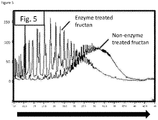
- a Novozyme inulin endo-hydrolase enzyme preparation was found to completely convert large fructan to the size class found in gFOS75 ( Fig 5 ). This fraction will be referred to as (EHgFOS75).
- Consistency of product To determine the reproducibility of the process, a series of grass samples were processed including: 1) same grass processed 3 times (batch to batch variation); 2) grass harvested at different times of the year; 3) grass harvested over 2 seasons. The latter two sets of samples will have variation in the distribution of size-classes of fructan molecules. Following digestion with the fructan endo-hydrolase and clean up, each sample showed the same fructan size and class profile (by Dionex).
- Samples were taken at time 0, 4, 8 and 24 hours and were serially diluted with prereduced half strength peptone water, enriched with 0.5 g L-1 cysteine HCl (pH 7). 20 ⁇ L of each dilution were inoculated, in triplicate, onto agar plates designed to select for the total anaerobes as well as predominant groups of gut bacteria: enterobacteria , bacteroides , bifidobacteria , lactobacilli and clostridia.
- the selective growth media used for the enumeration of major genera resident in the human large intestine were: Wilkins Challegren agar for total anaerobes; brucella bloodbased agar with addition of 75 mg L-1 kanamycin, 5 mg L-1 haemin, 75 mg L-1 vancomycin and 50 mL L-1 laked horse blood for bacteroides spp .; reinforced clostridia agar containing 8 mg L-1 novobiocin and 8 mg L-1 colistin for clostridium spp .; rogosa agar with 1.32 mL L-1 glacial acetic acid for Lactobacillus spp .; Columbia agar containing 5 g L-1 glucose, 0.5 g L-1 cysteine HCI and 0.5 mL L-1 propionic acid (adjusted to pH 5.0 using 4M NaOH) for Bifidobacterium spp .; Mac Conkey No 3 agar for Enterobacteria
- Prebiotic Index Bifidobacterium / Total + Lactobacillus / total ⁇ Bacteriodes / total + Clos / Total
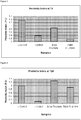
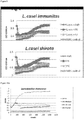
- PI was calculated for each fraction after 8 hours of culture and after 24 hours of culture as shown in Table 1. Table 1. PI values for the different fractions tested at 8 and 24 hours fermentations. 8 Hours culture 24 hours culture Inu 2 0.95 3.65 Inu 20 1.076 3.19 Magic 20 0.265 2.942 Magic 50 0.831 4.333 Magic 60 1.082 3.228 Magic 75 1.524 17.1 Positive control 0.806 4.382 Negative control 0.587 1.607
- results of PI at 8 and 24 hours are considered separately because the experiments were performed under static batch conditions where pH is not controlled. In this type of batch fermentation the bacterial numbers observed at 24h may be affected by a drop in pH.
- Figure 1 shows that the PI values of fractions Inu2, Inu20 and 75% at T8 are considerably higher than the positive control (commercially available FOS prebiotic Raftilose® P95).
- Samples were taken at time 0, 4, 8 and 24 hours and were serially diluted with prereduced half strength peptone water, enriched with 0.5 g L-1 cysteine HCl (pH 7). 20 ⁇ L of each dilution were inoculated, in triplicate, onto agar plates designed to select for the total anaerobes as well as predominant groups of gut bacteria: enterobacteria, bacteroides, bifidobacteria, lactobacilli and clostridia.
- the selective growth media used for the enumeration of major genera resident in the human large intestine were: Wilkins Challegren agar for total anaerobes; brucella blood-based agar with addition of 75 mg L-1 kanamycin, 5 mg L-1 haemin, 75 mg L-1 vancomycin and 50 mL L-1 laked horse blood for bacteroides spp.; reinforced clostridia agar containing 8 mg L-1 novobiocin and 8 mg L-1 colistin for clostridium spp.; rogosa agar with 1.32 mL L-1 glacial acetic acid for Lactobacillus spp.; Columbia agar containing 5 g L-1 glucose, 0.5 g L-1 cysteine HCI and 0.5 mL L-1 propionic acid (adjusted to pH 5.0 using 4M NaOH) for Bifidobacterium spp.; Nutrient agar for total aerobes, Mac Conkey No 3
- Lactobacillus Rhamnous and Lactobacillus plantarum were grown in MRS media and incubated at 37°C without shaking.
- Lacococcus lactis subsp. lactis and Lactococcus lactis subsp. cremorium were grown in GM17 media and incubated at 30°C without shaking.
- Bifidobacterium longum was grown in BHI media in anaerobic cabinet at 37°C without shaking.
- Bacillus subtilis was grown in L-broth, Bacillus amyloliquifaciens was grown in BHI media and Bacillus niacini was cultured in TSB (tryptone soya broth). All bacillus strains were incubated at 30°C in a shaking incubator (200 RPM).
- Bacteria were grown overnight (18h) in the corresponding liquid media and were used to inoculate (1% v/v) into fresh media with a final volume 300 ul in Bioscreen honeycomb 100-well plates in triplicates (Thermo Life Sciences, Basingstoke, UK).
- the carbon source added was either glucose or fructan fraction at a final concentration of 1% (w/v).
- the cultures were incubated at the appropriate temperature for 20-24 h in the Labsystems Biosceen C (Thermo Life Sciences) and growth was measured at OD 600 by taking readings at 15 minute intervals.
- the plates were shaken for 5s prior to measurement of the optical density.
- For growth of bacillus the plates were continuously shaken.
- Bifidobacteria the Biscreen C equipment was kept at 37°C in an anaerobic cabinet (Don Whitley anaerobic workstation).
- the remaining non-prebiotic fraction can be converted to fructan with shorter chain lengths as shown in Figure 5 .
- a fructan molecule size profile similar to that of the 70-75% prebiotic fraction can be obtained.
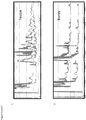
- Figure 6 shows the endo-hydrolase results from 6 species of grass.
- panels A, B and C similar profiles were obtained using the enzyme on Lolium, Festuca and Phleum ( Fig. 6 panels A, B, C) while Barley, Wheat and Oat ( Fig. 6 panels D, E, F) show a similar profile to each other.
- the difference in profile results from the fructans of Barley, Wheat and Oat being of lower molecular weight /short initial chain length.
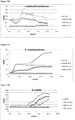
- L. plantarum As a probiotic enhances the biological activity of the prebiotic fructans initial batch culture experiments were undertaken. As shown in Figure 7 , the PI of gFOS75 (labelled as fraction 2) or large fructan size-classes (labelled as fraction 3), in the presence or absence of L . plantarum, in a culture containing a complex mixed faecal ecosyetem after 8 and 24 hours fermentation was calculated. L. plantarum is known to produce an extracellular fructan exo-hydrolase enzyme. The results show that the growth of L. plantarum was stimulated to a higher degree by gFOS75 (fraction 2). The results demonstrate that L . plantarum plays a symbiotic role in both fractions, however, it acts as a better probiotic with fraction 2 than with fraction 3 and that fraction 2 (gFOS75) is a better prebiotic than fraction 3.
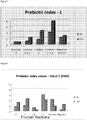
- EHgFOS75 (Fraction 5) showed a higher prebiotic index compared to gFOS75, see Figure 8 , indicating that the enzyme hydrolysis method could be used to increase the quantity of prebiotic fructan from grasses.
- Fraction 5 shows a higher prebiotic index than both the gFOS75 fraction (Fraction 2) and the positive control.
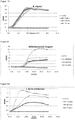
- Bacillus media has to contain glucose for the bugs to grow - the line in Figures 11A to 11C relating to "with glucose” refers to additional glucose being added to the media to supplement growth.
- Positive results were seen with B.amyloliquifaciens and B.subtilis as addition of fructan is actually stimulating growth over and above addition of extra glucose to the media - conclusively demonstrating that the fructans are a very suitable carbon source for two out of the three Bacillus species. There is also a slight improvement with B. niacini.
- the total fructan from grass can be converted to the prebiotic form using a fructan endo-hydrolysing enzyme, and that there are synergistic enhancements of the prebiotic activity by the inclusion of, for example, a Lactobacillus strain that has the capability of hydrolysing fructan through the action of an extracellular fructan exo-hydrolase.
- Enhancements of the prebiotic activity have also been shown by the inclusion of Bacillus, Bifidobacterium and Lactococcus strains.
Landscapes
- Life Sciences & Earth Sciences (AREA)
- Chemical & Material Sciences (AREA)
- Engineering & Computer Science (AREA)
- Polymers & Plastics (AREA)
- Food Science & Technology (AREA)
- Health & Medical Sciences (AREA)
- Mycology (AREA)
- Microbiology (AREA)
- Molecular Biology (AREA)
- Zoology (AREA)
- Animal Husbandry (AREA)
- Physiology (AREA)
- Biotechnology (AREA)
- Botany (AREA)
- Nutrition Science (AREA)
- Biochemistry (AREA)
- Biomedical Technology (AREA)
- Fodder In General (AREA)
- Coloring Foods And Improving Nutritive Qualities (AREA)
- Medicines Containing Material From Animals Or Micro-Organisms (AREA)
Description
- The present invention relates to prebiotic compositions and their use as feed and food supplements. The present invention also relates to methods of producing prebiotic compositions and pertains to the subject matter of the claims.
- The field of prebiotic oligosaccharides as functional ingredients in food has developed considerably since the term "prebiotic" was introduced by Gibson and Roberfroid in 1995. They defined prebiotics as "a non-digestible food ingredient that beneficially affects the host by selectively stimulating the growth and/or activity of one or a limited number of bacteria in the colon, and thus improves host health."
- Since its introduction, the concept of prebiotics has attracted much attention, stimulating scientific as well as industrial interest. Whilst carbohydrates are the most abundant biological material in nature, not all dietary carbohydrates are prebiotics. There in fact exists clear criteria for classifying a food ingredient as a prebiotic. These criteria are 1) resistance to gastric acidity, to hydrolysis by mammalian enzymes, and to gastrointestinal absorption; 2) fermentation by intestinal microflora; and 3) selective stimulation of the growth and/or activity of those intestinal bacteria that contribute to health and well-being.
- The leading prebiotic molecules on the European market are fructooligosaccharides (FOS). The most common fructooligosaccharides (1F series) are those that are currently marketed as probiotics and are formed by fructose molecules bound by beta 2-1 bonds, with a glucose molecule at one end abbreviated as GFn, with n typically being comprised between 2 and 4 (kestose, nystose and fructosylnystose). Fructooligosaccharides of the second type, the 6F series, in which the fructose molecules are bound by beta 2-6 bonds, with a glucose molecule at the non-reducing end, are being intensively investigated. These FOS are naturally found in the form of high molecular weight polymers (levans). The third type of FOS, the 6G series, e.g. Neokestose, is a trisaccharide in which a fructose is bound by a beta 2-6 bond to the glucose unit in sucrose. All three types of FOS resist digestion in the upper part of the gastro-intestinal tract and are readily metabolisable by the endogenous bacteria of the colon.
- Fructans occur in plants as branched or linear poly-fructose molecules synthesised de novo from sucrose and are polymers of D-fructose carrying a D-glucosyl residue at the end of, or in the middle of, the chain attached via a (2-1) linkage as in sucrose.
- High molecular weight inulin type fructans are known to positively affect gastrointestinal performance, through their prebiotic properties. This type of inulin can be only be partially digested by humans. When consumed, the undigested portion serves as food for "friendly" bacteria, such as Bifidobacteria and Lactobacillus species. Clinical studies have shown that administering inulin can increase the number of these friendly bacteria in the colon while simultaneously reducing the population of harmful bacteria. Other reported benefits of inulin include increased production of beneficial short-chain fatty acids such as butyrate, increased absorption of calcium and magnesium, and improved elimination of toxic compounds. Clinical studies have also shown an anti-carcinogen effect for these fructan prebiotics. Studies in rats showed that inulin when given with a probiotic as a mixture decreased the instance of colon tumours induced by colon carcinogen Azoxymethane.
- The abstract of
US5659028 discloses branched fructo-oligosaccharides consisting of a chain which comprises mainly fructose units and has a preferred chain length of 2 to 15 units, on which are fixed one or more side chains mainly composed of fructose units. The length of the side chain, which may be straight or branched, is of 1 to 10 units. A composition consisting of one or more of the above mentioned branched fructo-oligosaccharides and, particularly, mixtures comprising, apart from the branched fructo-oligosaccharides, other ingredients such as proteins, lipids or fatty acids, carbohydrates, fibers and other additives, are also described. - The abstract of
US2004/235788 discloses fructan compositions for stimulating the growth of bifidogenic bacteria and/or other beneficial bacteria including compositions comprising one or more branched or unbranched levan, compositions comprising one or more branched FOS, and compositions comprising mixtures of fructans of a single type but different degree of polymerization. These compositions include compositions comprising short-chain fructans and compositions predominately comprising glucose-terminated fructans and are disclosed as food additives, sweeteners, and bulking agents. - The abstract of
US5334516 discloses a method for production on an industrial scale of the branched fructooligosaccharide indicated by the general structural formula below using microorganisms or an enzyme produced by microorganisms which belong to the genus Aspergillus, wherein in the formula above, m=0-10, n=0-8 and m+n=3-10. - The abstract of
GB2498543 - P. Bancal and J. Gaudillére, (1989) New Phytologist, 112 (4), 459-463 discusses the rate of accumulation of fructan oligomers in wheat seedlings (Triticum aestivum L.) during the early stages of chilling treatment.
- U. Simmen et. al., (1993) Plant Physiol., 101, 459-468 discusses the identification of two sucrose-sucrose fructosyltransferases induced by light and their separation from constitutive invertases.
- Whilst various prebiotics are known, there is a need for new prebiotics, especially prebiotics which work more effectively. Isolating fructans from high-sugar grasses provides a highly abundant source material which can be harvested multiple times a year and which can be grown in hugely diverse geographies and conditions. The use of high-sugar grasses to provide a highly effective novel prebiotic material could be a possible solution to the increased demand and lower prices being sought by both the human pre/probiotics and animal feed markets.
- The inventors have postulated that high-sugar grasses could be used as a cheap and abundant source of prebiotic fructans. High sugar grasses grow in a wider range of geographies than traditional sources of prebiotic fructans (chicory and Jerusalem artichokes), they are easier to harvest (not requiring the removal of the whole plant) and they are not a food crop; being cheaper for manufacturers to purchase in bulk.
- According to a first aspect of the present invention there is provided a prebiotic composition comprising branched fructan molecules derived from a fructan extract of perennial high sugar grass (HSG) and obtained by enzymic endo-hydrolase hydrolysis, wherein said branched fructan molecules have;a molecular weight of between about 0.3 to about 3kDa; and/or a fructan chain length of about 2 to about 15 fructose units; and wherein at least 80% of the branched fructan molecules present in the composition have a fructan chain length of 3 to 12 fructose units. As used herein, a prebiotic is: a non-digestible food ingredient that beneficially affects the host by selectively stimulating the growth and/or the activity of one or a limited number of beneficial bacteria.
- Such prebiotics can exert a positive effect on the gut flora, specifically in the left side of the colon, an area of the gut which is especially prone to disorders in particular bowel cancer and ulcerative colitis.
- It will be understood that the prebiotic fructan molecules of the present invention are branched rather the linear inulin molecules. In a preferred embodiment, the branched fructan molecules contain both β(2∼1) and β(2-8) linkages.
- Without wishing to be bound by any theory, the inventors believe that the branched fructan molecules of the present invention provide an improved prebiotic effect due to their particular size range which allows them to be more easily metabolisable by the endogenous bacteria of the colon.
- There is also described a composition comprising the prebiotic composition of the first aspect and a probiotic microorganism.
- According to a third aspect of the present invention there is provided a method of producing the prebiotic composition comprising branched fructan molecules according to the present invention, said method comprising hydrolysing a fructan extract from one or more perennial high sugar grasses, wherein said hydrolysis step comprises an enzymatic hydrolysis step performed by an endo-hydrolase enzyme on the fructan extract, the method optionally further comprising subjecting the fructan extract to one or more purification steps prior to hydrolysis, wherein said purification step may optionally comprise ethanol precipitation with 70% ethanol.
- There is also described a feed or food supplement comprising the prebiotic composition of the present invention.
- There is also described a feed- or foodstuff comprising a feed or food material and the feed or food supplement or prebiotic composition according to the present invention.
- There is also described a method of making a feed or foodstuff comprising adding to a feed or food material a feed or food supplement or prebiotic composition according to the present invention.
- It will be understood that any of the preferred features disclosed herein is considered to be equally applicable to any of the aspects described above unless explicitly stated otherwise. Any preferred feature is also considered to be disclosed in combination with any other preferred feature disclosed herein.
- At least 80% of the branched fructan molecules present in the composition have a fructan chain length of 3 to 12 fructose units. Preferably, the branched fructan molecules of the composition have a fructan chain length of about 3 to about 12, about 3 to about 10, fructose units. In a preferred embodiment the fructan chain length is about 4 about 8 fructose units. Preferably, at least 5%, at least 10%, at least 15%, at least 20%, at least 25%, at least 30%, at least 35%, at least 40%, at least 45%, at least 50%, at least 55%, at least 60%, at least 65%, at least 70%, at least 75%, at least 80%, at least 85%, at least 90%, at least 95%, 100% of the branched fructan molecules present in the composition have a fructan chain length within the preferred ranges.
- Preferably the molecular weight of the branched fructan molecules of the composition is between about 0.35 and about 2.75kDa, about 0.4 and about 2.5kDa, about 0.45 and about 2.3kDa, about 0.46 and about 2.2kDa, about 0.47 and about 2.0kDa, about 0.48 and about 1.9kDa. Preferably, at least 5%, at least 10%, at least 15%, at least 20%, at least 25%, at least 30%, at least 35%, at least 40%, at least 45%, at least 50%, at least 55%, at least 60%, at least 65%, at least 70%, at least 75%, at least 80%, at least 85%, at least 90%, at least 95%, 100% of the branched fructan molecules in the prebiotic composition have a molecular weight within the preferred ranges. More preferably, at least 80% of the branched fructan molecules in the prebiotic composition have a molecular weight within the preferred ranges.
- In a preferred embodiment, at least 5%, at least 10%, at least 15%, at least 20%, at least 25%, at least 30%, at least 35%, at least 40%, at least 45%, at least 50%, at least 55%, at least 60%, at least 65%, at least 70%, at least 75%, at least 80%, at least 85%, at least 90%, at least 95%, 100% of the fructan molecules in the prebiotic composition are branched fructan molecules.
- In the present invention the branched fructans of the present invention are obtained by hydrolysis of a fructan extract, in particular by hydrolysis of a fructan extract from grass.
- The hydrolysis is enzymatic hydrolysis.
- The hydrolysis is performed by an endo-hydrolase enzyme. Preferably, by an inulin endo-hydrolase enzyme, more preferably by Novozymes 960 inulin endo-hydrolase enzyme (available from Novozymes A/S Krogshoejvej 36 2880 Bagsvaerd Denmark).
- The inventors have surprisingly discovered that when fructan extract produced from one or more grasses is subjected to hydrolysis using the above inulin endo-hydrolase, the extract is greatly enriched for the branched fructan molecules of the present invention.
- In a preferred embodiment, at least 30%, at least 40%, at least 50%, at least 60%, at least 70%, at least 75%, at least 80%, at least 85%, at least 90%, at least 95%, at least 97%, at least 98%, at least 99%, preferably 100% of the branched fructan molecules present in the grass extract is converted to the branched fructan molecules of the present invention.
- As used herein, the term fructan extract refers to the juice produced when the fructan containing vegetable matter is extracted by, for example, pressing. Suitable vegetable matter includes vegetable matter which contains branched fructan molecules. In the present invention the vegetable matter is from perennial high sugar grasses (HSG).
- It will be understood by the skilled person that the fructan extract may be subjected to one or more purification steps prior to hydrolysis. Such purification steps include, but are not limited to, removal of particulate material by, for example, filtration or centrifugation, concentration, ion exchange, precipitation by one or more solvents, addition of ascorbic acid to prevent formation of colour.
- Preferably, where solvent precipitation is undertaken the solvent is ethanol, more preferably 70% ethanol.
- It will be apparent that conditions for hydrolysis will depend upon a number of factors including the enzyme used. In a preferred embodiment, the enzymatic hydrolysis is performed at 37°C in a reaction containing 30% buffer (McIIIvanes, pH5), 30
% Novozyme 960 and 10% fructan. The reaction was incubated for 24 hours and terminated by heating to 80°C for 10 minutes. - It will be understood by the skilled person that the branched fructans of the composition can be obtained from any suitable species or cultivar of grass, for example, Lolium, Phleum, Cocksfoot, Fescue, Barley, Oat and/or wheat.
- In the present invention the grass is perennial high sugar grass (HSG). High sugar grasses (fructan content of up to 30% dry wt.) grow in a wider range of geographies than traditional sources of fructans (chicory and Jerusalem artichokes), they are easier to harvest (not requiring the removal of the whole plant) and they are not a food crop.
- Preferably, the one or more grasses are selected from one or more species of Lolium, Festuca, Dactylis, Phleum, Hordeum and/or Triticum.
- Preferably, the one or more grasses are selected from Lolium perenne, Festuca pratensis, Dactylis glomerata, Phleum pretense, Hordeum Vulgare and/or Triticum aestivum. Preferably, the one or more grasses are selected from Aber Magic, Aber Dart and/or S48 (Lolium spp).
- The present invention also contemplates using both pre- and probiotics as ingredients in a combination which when combined, become synbiotics. The purpose of this is to combine the effects of new beneficial prebiotic to stimulate the body's own beneficial bacteria and the benefits of an additional probiotic microorganism. There is a high potential in the development and the consumption of such mixtures, since some of these may well show powerful synergistic nutritional and/or health effects.
- Thus the composition of the present invention may be specifically designed to contain different components which can provide a synbiotic effect to the consumer.
- In embodiments of the invention, the probiotic microorganism present in the composition may be a naturally occurring microorganism or it may be a transformed microorganism. The microorganism may also be a combination of suitable microorganisms.
- In a preferred embodiment of the present invention the probiotic microorganism comprises a bacteria, mould and/or yeast. Preferably, the microorganisms are viable.
- As used herein, the term viable means a microorganism which is metabolically active.
- Preferably, the probiotic microorganism comprises a bacteria.
- The skilled person will understand that by the term probiotic bacterium or strain it is meant a non-pathogenic microorganism which, when ingested live, exercises a beneficial effect on the host's health or physiology. These probiotic strains generally have the ability to survive the passage through the upper part of the digestive tract. They are non-pathogenic, non- toxic and exercise their beneficial effect on health on the one hand via ecological interactions with the resident flora in the digestive tract, and on the other hand via their ability to influence the immune system in a positive manner The probiotic strains most commonly used are principally bacteria and yeasts of the following genera: Lactobacillus spp., Streptococcus spp., Enterococcus spp., Bifidobacterium spp. and Saccharomyces spp.
- Suitably, the microorganism may be a bacterium from one or more of the following genera: Lactococcus, Streptococcus, Pediococcus, Enterococcus, Leuconostoc, Carnobacterium, Propionibacterium, Bifidobacterium, Lactobacillus, Micrococcus, Staphylococcus, Bacillus, Kocuria, Arthrobacter, Brevibacterium and Corynebacterium.
- A skilled person will readily be aware of specific species and or strains of microorganisms from within the genera described herein which are used in the food and/or agricultural industries and which are generally considered suitable for human and/or animal consumption.
- For some embodiments the microorganism may be a mixture of more than one probiotic microorganisms (preferably more than on probiotic bacteria); a mixture of more than more lactic acid bacteria. Preferably, the mixture may comprise one or more stains from Lactobacillus spp, Lactococcus spp, Bacillus spp, Streptococcus spp and/or Bifidobacterium spp.
- In one embodiment preferably the microorganism is at least one strain of Lactobacillus spp. In one embodiment preferably the microorganism is at least one strain of Lactobacillus plantarum and/or Lactobacillus acidophilus.
- In one embodiment preferably the microorganism is at least one strain of Lactococcus spp. In one embodiment preferably the microorganism is at least one strain of Lactococcus thermophilous, and/or Lactococcus lactis.
- In one embodiment preferably the microorganism is at least one strain of Bifidobacterium spp. In one embodiment preferably the microorganism is at least one strain of Bifidobacteruim bifidum and/or Bifidobacteruim animalis.
- In one embodiment preferably the microorganism is at least one strain of Bacillus spp. In one embodiment preferably the microorganism is at least one strain of Bacillus coagulans and/or Bacillus cereus.
- In one embodiment preferably the microorganism is at least one strain of Streptococcus spp. In one embodiment preferably the microorganism is at least strain one of Streptococcus thermophiles.
- In a further preferred embodiment, the microorganism is a yeast. Preferably, one or more of the following genera: Saccharomyces, Pichia, Bretanomyces, Candida, Debaryomyces, Hanseniaspora, Hansenula, Kloeckera, Metschnikowia, Schizosaccharomyces, Torulaspora, and Zygosaccharomyces. More preferably the microorganism is a strain of Saccharomyces spp or Pichia spp.
- It will be understood that the prebiotic of the present invention may be administered simultaneously with (e.g. in admixture together with or delivered simultaneously by the same or different routes) or sequentially to (e.g. by the same or different routes) the probiotic microorganism and/or a metabolite thereof.
- It will be understood by the skilled person that the branched fructan molecules of the present invention can be provided independently as either liquid or as solid/granulated compositions. In one preferred embodiment, the branched fructan molecules are provided as a solid.
- Preferably, when said branched fructan molecules are in liquid form they are in the extract obtained by juicing the vegetable matter. Preferably said extract is concentrated. It will be understood that the branched fructan molecules can be precipitated to provide a solid prebiotic composition. It will be further understood that the feed/food supplement or prebiotic composition according to the present invention may be provided in the form of a solution or as a solid - depending on the use and/or the mode of application and/or the mode of administration.
- In one embodiment the feed/food supplement or prebiotic composition described is in a liquid formulation suitable for consumption, preferably such liquid composition contains either buffer, salts, sorbitol and/ or glycerol.
- The feed/food supplement or prebiotic composition described may be solid, preferably a tablet, a powder or in a granulated form.
- Preferably, the feed/ food supplement or prebiotic composition supplement further comprises at least one physiologically acceptable carrier.
- The physiologically acceptable carrier is preferably selected from at least one of maltodextrin. limestone (calcium carbonate), cyclodextrin, wheat or a wheat component, sucrose, starch, anti-foam, Na[2]SC<A>[1] Talc, PVA and mixtures thereof.
- The liquid feed/food supplement or prebiotic composition described may be dried on the physiologically acceptable carrier.
- The prebiotic composition may be provided as a food supplement for human consumption.
- Preferably, when provided as a food supplement, the prebiotic composition is provided as a unit dose. It will be understood by the skilled person that the unit dose can be any unit dose suitable for oral administration. The unit dose may be liquid, for example a solution or suspension in a container, or solid, for example, a tablet powder or capsule. In a preferred embodiment of the invention the unit dose is provided as a pelleted tablet or as a powder.
- It will be understood that the feed supplement may be for any suitable animal, for example, sheep poultry, swine or companion animals such as dogs or cats.
- It will be apparent that the feed supplement may contain the feed/food supplement or prebiotic composition in any suitable amount.
- Preferably, the food/feed supplement comprises at least 0.1 % by weight of the prebiotic composition. More preferably, the feed supplement may comprise at least 0.5%; at least 1 %; at least 2%; at least 3%; or at least 4, 5, 6, 7, 8, 9, 10, 15, 20, 25, 30, 35, 40, 45, 50, 60, 70, 80 or 90% by weight of the prebiotic composition it will be obvious to the skilled person that the feed/food supplement or prebiotic composition according to the present invention may also comprise other components such as stabilising agents and/or bulking agents.
- Preferably, a method of preparing a food/feed supplement comprises a mixing step that comprises admixing the prebiotic composition optionally with at least one physiologically acceptable carrier.
- The food/feed supplement may be homogenized to produce a powder. Alternatively, the food/feed supplement may be formulated in to granules.
- The method of preparing a feed supplement may also comprise the further step of pelleting the powder using any suitable method known in the art.
- It will be understood that the feed supplement is suitable for addition to any appropriate feed material.
- It will be further understood that the prebiotic composition of the present invention may be added to any suitable food material.
- As used herein, the term food material refers to the basic food material to be consumed by a human, it will be further understood that this may comprise, for example, at least one plant and/or animal material.
- In a preferred example, the prebiotic composition of the present invention is added to a dairy product such as yoghurt.
- As used herein, the term foodstuff refers to a food material to which one or more food supplements have been added.
- As used herein, the term feed material refers to the basic feed material to be consumed by an animal, it will be further understood that this may comprise, for example, at least one or more unprocessed grains, and/or processed plant and/or animal material such as soybean meal or bone meal.
- As used herein, the term feedstuff refers to a feed material to which one or more feed supplements have been added.
- Optionally, the feedstuff may also contain additional minerals such as, for example, calcium and/or additional vitamins.
- There is also described a method for producing a feedstuff. Feedstuff is typically produced in feed mills in which raw materials are first ground to a suitable particle size and then mixed with appropriate additives. The feedstuff may then be produced as a mash or pellets; the later typically involves a method by which the temperature is raised to a target level and then the feed is passed through a die to produce pellets of a particular size. The pellets are allowed to cool. Subsequently liquid additives such as fat and enzyme may be added. Production of feedstuff may also involve an additional step that includes extrusion or expansion prior to pelleting - in particular by suitable techniques that may include at least the use of steam.
- The feedstuff may be a feedstuff for a monogastric animal, such as poultry (for example, broiler, layer, broiler breeders, turkey, duck, geese, water fowl), swine (ail age categories), a pet (for example dogs, cats) or fish.
- The foodstuff or feedstuff may comprise at least 0.0001 % by weight of the food/feed supplement. Suitably, the foodstuff or feedstuff may comprise at least 0.0005%; at least 0.0010%; at least 0.0020%; at least 0.0025%; at least 0.0050%; at least 0.0100%; at least 0.020%; at least 0.100% at least 0.200%; at least 0.250%; at least 0.500%, at least 0.750%, at least 1.00%, at least 1.50%, at least 1.75%, at least 2.00%, at least 3.00%, at least 4.00%, at least 5.00%, at least 6.00%, at least 7.00%, at least 8.00%, at least 9.00%, or at least 0.00%, by weight of the food/feed supplement.
- The invention will now be further described with reference to the following figures in which:
-
Figure 1 shows the prebiotic index of various grass extracts after 8 hours fermentation with 10% w/v faecal slurry. -
Figure 2 shows the prebiotic index of various grass extracts after 24 hours fermentation with 10% w/v faecal slurry. -
Figure 3 shows the prebiotic index of various grass extracts after 4 hours fermentation with 10% w/v faecal slurry. -
Figure 4 shows the prebiotic index of various grass extracts after 24 hours fermentation with 10% w/v faecal slurry. -
Figure 5 shows the effect of endo-hydrolase on the size of the branched fructan molecules obtained from grass juice. -
Figure 6 shows the endo-hydrolase results from 6 species of grass. Similar profiles were obtained using the enzyme on Lolium, Festuca and Phleum (Fig. 6 panels A, B, C) while Barley, Wheat and Oat (Fig. 6 panels D, E, F) show a similar profile to each other. The difference in profile results from the fructans of Barley, Wheat and Oat being of lower molecular weight /short initial chain length. -
Figure 7 shows the synbiotic effect of L. plantarum on two different fructan fractions. -
Figure 8 shows the prebiotic index of various fraction of fructan molecules obtained grass after 8 and 24 hours. -
Figure 9 shows the effect of various fructans fragments on the growth of two commercially used probiotic strains. -
Figures 10A and10B show the effect of an added carbon source on the growth of two Lactobacillus strains. -
Figures 11A , B and C show the effect of an added carbon source on the growth of three Bacillus strains. -
Figure 12 shows the effect of an added carbon source on the growth of a Bifidobacterium strain. -
Figures 13A andB show the effect of an added carbon source on the growth of two Lactococcus strains. - Unless defined otherwise, all technical and scientific terms used herein have the same meaning as commonly understood by one of ordinary skill in the art to which this disclosure belongs. This disclosure is not limited by the exemplary methods and materials disclosed herein, and any methods and materials similar or equivalent to those described herein can be used in the practice or testing of embodiments of this disclosure. Numeric ranges are inclusive of the numbers defining the range.
- Other definitions of terms may appear throughout the specification. Before the exemplary embodiments are described in more detail, it is to understand that this disclosure is not limited to particular embodiments described, as such may, of course, vary, it is also to be understood that the terminology used herein is for the purpose of describing particular embodiments only, and is not intended to be limiting, since the scope of the present disclosure will be limited only by the appended claims. Where a range of values is provided, it is understood that each intervening value, to the tenth of the unit of the lower limit unless the context clearly dictates otherwise, between the upper and lower limits of that range is also specifically disclosed. Each smaller range between any stated value or intervening value in a stated range and any other stated or intervening value in that stated range is encompassed within this disclosure. The upper and lower limits of these smaller ranges may independently be included or excluded in the range, and each range where either, neither or both limits are included in the smaller ranges is also encompassed within this disclosure, subject to any specifically excluded limit in the stated range. Where the stated range includes one or both of the limits, ranges excluding either or both of those included limits are also included in this disclosure.
- It must be noted that as used herein and in the appended claims, the singular forms "a", "an", and "the" include plural referents unless the context clearly dictates otherwise. Thus, for example, reference to "a fructan" includes a plurality of molecules and equivalents thereof known to those skilled in the art, and so forth.
- The publications discussed herein are provided solely for their disclosure prior to the filing date of the present application. Nothing herein is to be construed as an admission that such publications constitute prior art to the claims appended hereto.
- The fermentation reaction is an aerobic process in which the molecular oxygen needed is supplied by a molecular oxygen-containing gas such as air, oxygen-enriched air, or even substantially pure molecular oxygen, provided to maintain the contents of the fermentation vessel with a suitable oxygen partial pressure effective in assisting the microorganism species to grow in a thriving fashion. In effect, by using an oxygenated hydrocarbon substrate, the oxygen requirement for growth of the microorganism is reduced. Nevertheless, molecular oxygen must be supplied for growth, since the assimilation of the substrate and corresponding growth of the microorganisms, is, in part, a combustion process.
- In one aspect, preferably the probiotic fructan molecules for use in the present invention are in a purified form. The term "purified" means that the given component is present at a high level. The component is desirably the predominant component present in a composition. Preferably, it is present at a level of at least about 60%, or at least about 65%, or at least about 70%, or at least about 75%, or at least about 80% said level being determined on a dry weight/dry weight basis with respect to the total composition under consideration. For some embodiments the amount is at least about 85% said level being determined on a dry weight/dry weight basis with respect to the total composition under consideration.
- In one aspect, preferably the probiotic fructan molecules for use in the present invention are used as a concentrate. The concentrate may be a concentrated form of the extract containing the fructans.
-
- 1) Harvest Grass, chop and juice (9.15 kg S48, 9.32 Kg magic).
- 2) Juiced frozen until required.
- 3) Juice thawed in a warm water bath and then pasteurised (70- 80°C) 20 minutes.
- 4) Remove flocculated material by centrifugation.
- 5) Rotary evaporate to approx 0.25 of starting volume.
- 6) Precipitate Fructans with 90% EtOH and recovered by filtration.
- 7) Air dry.
Crude magic fructan 370 g Crude S48 fructan 142 g - 8) Dissolve 10 g of Fructan in 100 mL H20 (magic = 60.55 mg mL; S48 28.5 mg mL).
- 9) Heat to 60°C and add stoichiometric quantities of MgSO4.7H2O and Ca(OH)2 and stirred for 10 minutes.
- 10) Clarify by centrifugation.
- 11) Repeat until solution is pale yellow. (S48 through a C18).
- 12) Precipitate by making up to 90% EtOH (-20°C) to give clean slightly off white crystals.
- 13) Harvest by filtration and air dry.
- 14) Magic hygroscopic resuspended in 50 mL H2O. S48 remained as a powder.
- Magic = 28.2 mg mL (14.1%) recovery
- S48 = 2 g fructan (33% recovery)
- Using the above method, low yields of purified fructan were obtained, and so we decided to exploit the properties of fructan solubility in ethanolic solutions. Based on results from ethanol ppt curves (data not shown) the 75% fraction was the most active.
- 1) Grind 10 g of dry Magic fructan (90% ethanol precipitate) to a fine powder.
- 2) Re-suspend powder in 50 v/w (500 mL) 95% ethanol, shake at 180 rpm, 30°C for 24 h.
- 3) Remove supernatant by filtration (110 mm, Whatman 32 low ash) and discarded.
- 4) Re-suspend solid in 20v/w of original weight (100mL) 75% ethanol and shake at 180 rpm, 30°C for 1 h.
- 5) Remove supernatant by filtration (55 mm, Whatman GF/A) and retain.
- 6) Re-suspend solid in 20v/w of original weight (100mL) 75% ethanol and shake at 180 rpm, 3°C for 1 h.
- 7) Remove supernatant by filtration (55 mm, Whatman GF/A) and retain.
- 8) Re-suspend solid in 40v/w of original weight (200mL) 75% ethanol and shake at 180 rpm, 30°C for 1 h.
- 9) Remove supernatant by filtration (55 mm, Whatman GF/A) retain and pool with the previous supernatants (400 mL). Add 100 mL of 75% ethanol to the solid and store at 4°C.
- 10) Wash 0.25 w/v (100 g) activated charcoal with 400
mL 75% ethanol and filter. - 11) Add wet charcoal to the 400 mL of supernatant and re-suspend by stirring.
- 12) Filter the suspension and wash the charcoal with a further 400
mL 75% ethanol. - 13) Pool the purified clear fractions, filter through a 0.45 µm membrane and remove the ethanol by rotary evaporation at 40°C.
- 14) Flash freeze the resulting concentrate, approx 78 mL, in a 500 mL glass beaker and freeze dry.
-
- 1) For 0.1Kg of Aber Magic pellets, grind pellets to a fine powder.
- 2) Extract in 5L of 70% ethanol overnight with stirring or shaking. (70% EtOH = 700 mL EtOH + 300 mL H2O).
- 3) Filter/centrifuge and retain supernatant.
- 4) Prepare 1kg of activated charcoal by soaking in 5 L of 70% ethanol (or less if possible). If working in bulk, best to just let it settle out for a few hours/overnight and decant as much as you can. Keep the ethanol.
- 5) Add supernatant to the charcoal and stir for a few hours. Allow to settle and decant as much as possible and retain supernatant.
- 6) Wash the charcoal with an equal volume (v/v) of 70% ethanol, allow to settle, decant as much as possible and filter.
- 7) Combine supernatants and reduce volume (rotary evaporate).
- 8) Freeze dry to form your active fructan ready for P2 (P2 - Bio-Rad gel filtration Column) clean-up (remove Glucose, Fructose and Sucrose (GFS)).
- 9) Column prep.
Bed volume (cm3) of the column, flow rate and elution volume were determined from the parameters within the Bio-Rad Bio-Gel instruction booklet for a 20 mL sample. Prepare using 20mM ammonium acetate. - 10) Sample prep.
Dissolve fructan (800mgs) in 2.5mls of ammonium acetate buffer (20mM) and inject into column at a flow rate of 0.5ml/min. using the ammonium acetate buffer as the mobile phase. - 11) Collect fractions in 3mls aliquots directly into 7ml of 100% ethanol.
- 12) Combine fractions containing fructan but no GFS.
- 13) Dry and store desiccated.
- Inulin derived from Jerusalem artichoke, is routinely de-coloured by a combination of calcium hydroxide and activated carbon processing steps. The purpose of using calcium hydroxide is to form calcium carbonate (CaCO3), in the presence of CO2, which, while being inert to water soluble carbohydrates, reacts with and precipitates many of the impurities that are associated to the pigmentation of the crude extract. This procedure has been modified for application to the high sugar grass variety Aber Magic.
- The over-all reaction gives:
CO2 + Ca(OH)2 → CaCO3 + H2O + heat (in the presence of water)
- Overall this reaction is slow and limited by the rate of solubility. Addition of sodium hydroxide, functions to catalyses the following reaction at high pH.
1) CO2 + H2O → CO2 (aq)
2) CO2 (aq) + NaOH → NaHCO3 (forming bicarbonate at high pH)
3) NaHCO3 + Ca(OH)2 → CaCO3 + H2O + NaOH
- 1)
Grind 1 kg magic pellets and extract by shaking in 20 L of 70% ethanol overnight (16 h) at 30°C. - 2) Remove the majority of particulates by filtering the ethanolic extract through a mashing sack and then through mirrar cloth and retain the supernatant.
- 3) De-water solids using a hydraulic press and filter through mirrar cloth, pool with the previously filtered supernatant.
- 4) In 4 L batches, raise the pH of the ethanolic extract to above
pH 10 with approximately 8 mL of 5 M NaOH stirring constantly. - 5) Add 50 mL aliquots of a 20% w/v suspension of calcium hydroxide (Ca(OH)2) in 70% ethanol, and bubble carbon dioxide through the mix continuously.
- 6) Following the addition of 100mL lots of Ca(OH)2 remove 2 mL samples, centrifuged briefly to monitor colour.
- 7) When approximately 100 g of Ca(OH)2 has been added monitor the colour until it changes from brown/green to pale green.
- 8) To the ethanolic extracted suspension add 200g of powdered activated carbon in 500 mL 70% ethanol with continuous stirring for 5 minutes.
- 9) Monitor colour, if clear, filter (Whatman grade 1) under vacuum, and wash the carbon/calcium carbonate cake with 0.5 L 70% ethanol.
- 10) A white precipitate (possibly CaCO3) forms in the filtrate, which can be removed by subsequent filtration.
- 11) The ethanolic extract was concentrated using a Buchi Rotavapor R-153.
- 12) Sample sent to IFR
- In this process, the large amounts of charcoal were replaced by using ascorbic acid to reduce formation of colour (reducing agent - preventing PPO activity etc.). This procedure also includes the use of HP-20 (hydrophobic resin) step included to remove polyphenolics.
- 1) Harvest grass, Chop and Juice.
- 2) Add Ascorbic acid (to 50 mM).
- 3) Centrifuge and reduce volume to 0.25 original volume (rot evap).
- 4) Crash fructan using 90% ethanol (-20°C 2hr).
- 5) Wash with 90% ethanol.
- 6) Partition fructan by re-solubilising the active fraction in 70% ethanol.
- 7) Centrifuge.
- 8) Add charcoal to 5% w/v.
- 9) Filter and wash with 70% ethanol.
- 10) Reduce volume by rotary evaporation.
- 11) Pass through a column containing HP-20 resin.
- 12) Wash column, combine washes and re-filter.
- 13) Dry.
- 14) Resuspend in min. volume of water and pass through P-2 (Biorad) column (removes GFS).
- 15) Dry and store desiccated.
-
- 1) Harvest grass.
- 2) Chop and Juice.
- 3) Centrifuge juice using a continuous centrifuge.
- 4) Collect liquid and ferment for 24hr with Yeast (ethanol red 0.1% inoc. at 30°C)-removes GFS.
- 5) Centrifuge.
- 6) Pasteurise and precipitate protein by passing through 120°C Bath (copper piping - 200ml/min).
- 7) Centrifuge and filter to give a clear liquid.
- 8) Pass liquid through a cross-filtration unit containing a 5kDa membrane (with 6 washes).
- 9) Collect samples (a) retentate (>5KDa) and (b) filtrate (<5KDa) - containing active component.
- 10) Reduce volume using rotary evaporation.
- 11) Dry samples.
- 12) Re-suspend in min. amount of water and de-colour (anion exchange cartridge).
- Estimated time 2-3 days
- 2.5 tonnes of fresh grass was processed through a hammer mill and fed through a juice press (capacity 1T/h). A volume of 70L was further processed. The juice was spun in a continuous centrifuge to remove particulate material including lipids etc, (CEPA at 25,000 rpm, at a rate of 100L/h). The resulting supernatant was pasteurised at 90°C by flow through a heated bed (20L/h). Particulate (denatured protein etc.) was removed by continuous centrifugation (40,000rpm - at a flow rate of 100L/h). The supernatant was subjected to ultra-filtration (10kDa, 4.5m2 filter - recycling flow rate of 5000L/h and a filtrate rate of 300L/h at 34psi) to retain large molecular weight fructan. Starting from an initial 70L volume, the fructans were concentrated in 12L. The filtrate subsequently underwent nano-filtration (approx. 1 kDa 2.4m2 filter running at 1000L/h recycling flow and 100L/h filtrate flow rate) to separate smaller prebiotic fructans from small sugars/ salts etc. resulting in a reduction in volume from the original 70L to 5L. The fructan samples were cleaned up by passing through an ion exchange resin (10L volume). A clean product consisting of the selected size classes was produced.
- Increasing the 'prebiotic' fraction: Fructans from perennial ryegrass consist of long chains of fructose linked by β(2-1) or β(2-6) bonds. At any time, fructans in perennial ryegrass will consist of molecules ranging in length from 2 to over 150 fructose units. Initial studies demonstrated that fructans in the size range 10-50 chain length (gFOS75) showed the best prebiotic effect. However this component represents a small per cent of the total fructan, with the majority having chain lengths in the 70-100 range. To increase the smaller fructan pool a number of fructan hydrolysing enzymes with either exo- and endo-activities were investigated. A Novozyme inulin endo-hydrolase enzyme preparation was found to completely convert large fructan to the size class found in gFOS75 (
Fig 5 ). This fraction will be referred to as (EHgFOS75). - Consistency of product: To determine the reproducibility of the process, a series of grass samples were processed including: 1) same grass processed 3 times (batch to batch variation); 2) grass harvested at different times of the year; 3) grass harvested over 2 seasons. The latter two sets of samples will have variation in the distribution of size-classes of fructan molecules. Following digestion with the fructan endo-hydrolase and clean up, each sample showed the same fructan size and class profile (by Dionex).
- The results demonstrated that regardless of the initial fructan profile (variation due to environmental and seasonal effects) a consistent gFOS75 profile could be produced relatively easily following enzyme hydrolysis.
- A preliminary evaluation of the potential prebiotic effect of 6 different fractions was performed.
- The 6 fractions studied were:
-
Inu 2 -
Inu 20 -
Magic 20% Ethanol -
Magic 50% Ethanol -
Magic 60% Ethanol -
Magic 75% Ethanol - To evaluate the potential prebiotic effect, static small scale 24 hour fermentations were performed using the above fractions as the sole source of carbohydrates. A vessel containing commercially available FOS prebiotic (Raftilose® P95) was included as a positive control. In the vessel used as a negative control the addition of carbohydrate was omitted. At time zero, basal medium was inoculated with 10% (w/v) faecal slurry. Faecal inoculum used was obtained from a healthy volunteer that had not taken any antibiotics pre- or probiotics in the previous 2 months. Eight fermentations were run in parallel at 37°C and were maintained under oxygen-free atmosphere (10% H2; 10% CO2; 80% N2) using anaerobic cabinet (Don Whitley Scientific, Shipley, West Yorkshire, UK). Each vessel contained 1% (w/v) of the test fraction and samples were removed and processed at intervals over a 24 h period.
- Samples were taken at
time Mac Conkey No 3 agar for Enterobacteria. - Bacterial counts for the different samples tested were calculated (results not shown) From the bacterial counts the prebiotic index (PI) of each fraction was calculated.
-

- PI was calculated for each fraction after 8 hours of culture and after 24 hours of culture as shown in Table 1.
Table 1. PI values for the different fractions tested at 8 and 24 hours fermentations. 8 Hours culture 24 hours culture Inu 2 0.95 3.65 Inu 201.076 3.19 Magic 200.265 2.942 Magic 500.831 4.333 Magic 601.082 3.228 Magic 751.524 17.1 Positive control 0.806 4.382 Negative control 0.587 1.607 - The PI values for the different fractions tested at 8 and 24 hours fermentations was calculated and is shown in
Figures 1 and 2 respectively. - The results of PI at 8 and 24 hours are considered separately because the experiments were performed under static batch conditions where pH is not controlled. In this type of batch fermentation the bacterial numbers observed at 24h may be affected by a drop in pH.
-
Figure 1 shows that the PI values of fractions Inu2, Inu20 and 75% at T8 are considerably higher than the positive control (commercially available FOS prebiotic Raftilose® P95). -
Figure 2 shows the PI values at T24, these results clearly show a significantly greater PI value for the fraction extracted by 75% ethanol. - To determine more exact PI values for the most interesting fraction (75% Ethanol extracted) further studies with large scale pH-controlled faecal bacterial batch culture fermentation were performed using the full 3 stage continuous colon model.
- In this study two fractions of the original 75% Ethanol extracted carbohydrates were examined. These sub-fractions were:
- Fructans extracted using the processes detailed herein using wet grass as the raw material
- Fructans extracted using the processes detailed herein using dried pelleted grass as the raw material
- Previously static small scale 24h fermentations were performed due to quickly determine those fractions with the greatest prebiotic activity. For this study a significantly larger sample was used to perform full 24 h batch fermentations using the above sub-fractions as a source of carbohydrates.
- At time zero water-jacketed fermenters were filled with basal medium and each vessel inoculated with 1% (w/v) of the test fraction. A vessel containing the commercially available prebiotic FOS (Raftilose® P95) was included as a positive control. In the vessel used as a negative control the addition of carbohydrate was omitted. Each vessel was also inoculated with 10% (w/v) faecal slurry. Faecal inoculum used was obtained from a healthy volunteer that had not taken any antibiotics pre- or probiotics in the previous 2 months. Four fermentations were run in parallel at 37°C maintained by a circulating water bath. Culture pH was controlled automatically and maintained at pH 6.8. Anaerobic conditions were maintained by sparging the vessels with oxygen-free nitrogen gas. Samples were removed and processed at intervals over a 24 h period.
- Samples were taken at
time Mac Conkey No 3 agar for Enterobacteria. - The following bacterial cultures obtained from an in-house culture collection and were used for pure culture growth experiments: Lactobacillus Rhamnous and Lactobacillus plantarum were grown in MRS media and incubated at 37°C without shaking. Lacococcus lactis subsp. lactis and Lactococcus lactis subsp. cremorium were grown in GM17 media and incubated at 30°C without shaking. Bifidobacterium longum was grown in BHI media in anaerobic cabinet at 37°C without shaking. Bacillus subtilis was grown in L-broth, Bacillus amyloliquifaciens was grown in BHI media and Bacillus niacini was cultured in TSB (tryptone soya broth). All bacillus strains were incubated at 30°C in a shaking incubator (200 RPM).
- Bacteria were grown overnight (18h) in the corresponding liquid media and were used to inoculate (1% v/v) into fresh media with a final volume 300 ul in Bioscreen honeycomb 100-well plates in triplicates (Thermo Life Sciences, Basingstoke, UK). The carbon source added was either glucose or fructan fraction at a final concentration of 1% (w/v). The cultures were incubated at the appropriate temperature for 20-24 h in the Labsystems Biosceen C (Thermo Life Sciences) and growth was measured at OD600 by taking readings at 15 minute intervals. The plates were shaken for 5s prior to measurement of the optical density. For growth of bacillus the plates were continuously shaken. For growth of Bifidobacteria the Biscreen C equipment was kept at 37°C in an anaerobic cabinet (Don Whitley anaerobic workstation).
- Bacterial counts for the different samples tested were calculated (results not shown) From the bacterial counts the prebiotic index (PI) of each fraction was calculated as shown in Table 2.
Table 2: Values of PI for the different fractions tested at 4 and 24 hours fermentations. 4 Hours culture 24 hours culture Juice fructans 0.864 1.284 Pellet fructans 0.156 0.909 Positive control 1.338 0.999 Negative control 0.385 0.109 - The calculated PI values at 4 and 24 hours are shown in
Figures 3 and 4 . - By conclusion of the fermentation at T24 both sub-fractions had a P.I. that was at least equivalent to the positive control (commercially available FOS prebiotic Raftilose® P95) with the juice fructans showing a higher P.I. than the positive control. Thereby demonstrating that prebiotic materials can be extracted from both wet and dried pelleted grasses by the protocols detailed herein and which have equivalent prebiotic potential as the commercially available FOS prebiotic Raftilose® P95.
- The results shown in
Figures 1 and 2 show that of the total fructan molecules extracted from the grass, only a specific size range gave a significant prebiotic effect i.e that extracted using 70-75% ethanol. - Using an endo-fructan hydrolysing enzyme, which cleaves fructan molecules at specific points in the chain, the remaining non-prebiotic fraction can be converted to fructan with shorter chain lengths as shown in
Figure 5 . Using this method a fructan molecule size profile similar to that of the 70-75% prebiotic fraction can be obtained. - The digests were shown to be consistent and independent of starting material as demonstrated with grass samples from different harvests over the season and between different, data not shown.
-
Figure 6 shows the endo-hydrolase results from 6 species of grass. As can be seen from panels A, B and C, similar profiles were obtained using the enzyme on Lolium, Festuca and Phleum (Fig. 6 panels A, B, C) while Barley, Wheat and Oat (Fig. 6 panels D, E, F) show a similar profile to each other. The difference in profile results from the fructans of Barley, Wheat and Oat being of lower molecular weight /short initial chain length. - The ability of a number of commercial probiotic strains, as well specific members of the human gut bacteria, to utilise the isolated oligosaccharide fractions as a source of carbon and energy was investigated.
- A number of experiments were set up to determine the prebiotic effect of grass fructans and a possible synergistic effect by including the probiotic L. plantarum.
- To test whether the inclusion of the bacterium L. plantarum as a probiotic enhances the biological activity of the prebiotic fructans initial batch culture experiments were undertaken. As shown in
Figure 7 , the PI of gFOS75 (labelled as fraction 2) or large fructan size-classes (labelled as fraction 3), in the presence or absence of L. plantarum, in a culture containing a complex mixed faecal ecosyetem after 8 and 24 hours fermentation was calculated. L. plantarum is known to produce an extracellular fructan exo-hydrolase enzyme. The results show that the growth of L. plantarum was stimulated to a higher degree by gFOS75 (fraction 2). The results demonstrate that L. plantarum plays a symbiotic role in both fractions, however, it acts as a better probiotic withfraction 2 than withfraction 3 and that fraction 2 (gFOS75) is a better prebiotic thanfraction 3. - To test whether the fraction (EHgFOS75) produced following hydrolysis of large fructan to a size class equivalent to gFOS75 has prebiotic activity further fermentation experiments were undertaken. Four fructan fractions were used. Fraction 2 - gFOS75 component; Fraction 3 -large chain fructan; Fraction 4 - large chain fructans but treated with boiled enzyme, and Fraction 5 - EHgFOS75. Raftilose, a commercial prebiotic was used as a positive control and culture media without glucose as a negative control.
- Following fermentation in static cultures, EHgFOS75 (Fraction 5) showed a higher prebiotic index compared to gFOS75, see
Figure 8 , indicating that the enzyme hydrolysis method could be used to increase the quantity of prebiotic fructan from grasses. - It appears that Fraction 5 (EHgFOS75) shows a higher prebiotic index than both the gFOS75 fraction (Fraction 2) and the positive control.
- To test the effect of fructans on a selection of probiotic strains a number of strains were selected to carry out pure culture fermentations. Strains selected were either commercial probiotic strains or in-house strains with potential probiotic properties. Each strain was grown in the presence of either fraction 3 (large fructans) or fraction 5 (EHgFOS75). Raftilose was used as a positive control and MRS media without glucose as a negative control.
Figure 9 shows that better growth was observed for L. casei immunitas and L. casei shirota in the presence of fraction 5 (EHgFOS75) thanfraction 3.Fraction 5 also performed better than the commercial product. - Referring to the methods and measurements relating to bacterial growth shown in
Figures 10 to 13 inclusive, positive results were obtained with L. Rhamnous and L.plantarum as both growth curves inFigures 10A and10B show that culture OD is higher with inclusion of fructans. Positve controls of addition of glucose show high growth as expected but increased growth with fructans indicates that the fructans are exerting a prebiotic effect insofar that both Lrhamnous and L.plantarum can utilise the fructans as a carbon source. - Bacillus media has to contain glucose for the bugs to grow - the line in
Figures 11A to 11C relating to "with glucose" refers to additional glucose being added to the media to supplement growth. Positive results were seen with B.amyloliquifaciens and B.subtilis as addition of fructan is actually stimulating growth over and above addition of extra glucose to the media - conclusively demonstrating that the fructans are a very suitable carbon source for two out of the three Bacillus species. There is also a slight improvement with B. niacini. - Referring to
Figure 12 , the results are similar to Bacillus, the media contained glucose before extra supplementation. Positive results are demonstrated with B.longum. Referring toFigures 13A and13B , no glucose in the unsupplemented media was required with these strains of Lactococcus. Very positive results seen with L.cremorium and slight positive with L.lactis. Ultimately whilst the I.cactis reading is low and a fraction of that with the glucose supplementation, the final OD for the samples is nearly twice that of the "media alone" reading (0.38 vs 0.23 or 165% that of the control). - The inventors have provided at least one example of prebiotic stimulation of growth for each of the bacterial species tests. With the data presented as final OD of "plus fructan" vs "media alone" as in Table 3 below the results suggest that at least some of the fructan is being utilised.
TABLE 3 Strain Maximum OD Percentage increase Media alone Plus fructan Lactobacillus rhamnosus 0.8 0.8 0** Lactobacillus plantarum 0.35 0.5 43 B. amyloliquifaciens 0.8 2.25 280 B. subtilis 0.31 0.375 21 B. niacini 0.65 0.67 3 Bifidobacterium longum 0.7 0.85 21 L. lactis cremorium 0.55 0.9 64 Lactococcus lactis 7000716 0.25 0.35 40 - TABLE 3 Results from
Figures 10 to 13 inclusive presented as % increase in final OD. - * Initial rapid increase in OD seen with/without fructans but fructans appeared to maintain culture OD at a much higher level over time.
- It has been demonstrated that the total fructan from grass can be converted to the prebiotic form using a fructan endo-hydrolysing enzyme, and that there are synergistic enhancements of the prebiotic activity by the inclusion of, for example, a Lactobacillus strain that has the capability of hydrolysing fructan through the action of an extracellular fructan exo-hydrolase.
- Enhancements of the prebiotic activity have also been shown by the inclusion of Bacillus, Bifidobacterium and Lactococcus strains.
Claims (13)
- A composition comprising branched fructan molecules derived from a fructan extract of perennial high sugar grass (HSG) and obtained by enzymic endo-hydrolase hydrolysis, wherein said branched fructan molecules have; a molecular weight of between 0.3 to 3kDa; and/or a fructan chain length of 2 to 15 fructose units; and wherein at least 80% of the branched fructan molecules present in the composition have a fructan chain length of 3 to 12 fructose units.
- The composition according to claim 1 , wherein the branched fructan molecules of the composition have a fructan chain length of 3 to 12, 3 to 10 or 4 to 8 fructose units.
- The composition according to claim 1 or 2, wherein the molecular weight of the branched fructan molecules of the composition is between 0.48 and 1.9kDa.
- The composition according to claim 1 or claim 3, wherein at least 80%, of the branched fructan molecules in the composition have a molecular weight of 0.48 and 1.9kDa.
- The composition according to any one of claims 1-4, wherein the branched fructans are obtained from at least one species of Lolium, Festuca, Dactylis, Phleum, Avena, Hordeum and/or Triticum.
- Use of the composition according to any preceding claim as a feed or food supplement.
- The use according to claim 6, wherein the supplement is for human administration or for administration to at least one of sheep, poultry, swine or a pet (dogs, cat, fish).
- The composition according to any one of claims 1-5 further comprising a probiotic microorganism.
- The composition according to claim 8, wherein the microorganism is a bacterium from one or more of the following genera: Lactococcus, Streptococcus, Pediococcus, Enterococcus, Leuconostoc, Carnobacterium, Propionibacterium, Bifidobacterium, Lactobacillus, Micrococcus, Staphylococcus, Bacillus, Kocuria, Arthrobacter, Brevibacterium and Corynebacterium.
- The composition according to either claim 8 or 9, wherein the microorganism is a mixture of more than one lactic acid bacteria, and optionally, the mixture comprises one or more stains from Lactobacillus spp, Lactococcus spp, Bacillus spp, Streptococcus spp and/or Bifidobacterium spp.
- The composition according to any one of claims 8 to 10, wherein:the microorganism is at least one strain of Lactobacillus plantarum and/or Lactobacillus acidophilus; orthe microorganism is at least one strain of Lactococcus thermophilus, and/or Lactococcus lactis; orthe microorganism is at least one strain of Bifidobacterium bifidum and/or Bifidobacterium animalis; orthe microorganism is at least one strain of Bacillus coagulans and/or Bacillus cereus; orthe microorganism is at least strain one of Streptococcus thermophilus.
- The composition according to claim 8, wherein the microorganism a yeast; preferably one or more of Saccharomyces, Pichia, Bretanomyces, Candida, Debaryomyces, Hanseniaspora, Hansenula, Kloeckera, Metschnikowia, Schizosaccharomyces, Torulaspora, and Zygosaccharomyces.
- A method of producing a composition according to claim 1, said method comprising the step of hydrolysing a fructan extract from one or more perennial high sugar grasses, wherein said hydrolysis step comprises an enzymatic hydrolysis step performed by an endo-hydrolase enzyme on the fructan extract, the method optionally, further comprising subjecting the fructan extract to one or more purification steps prior to hydrolysis, wherein said purification step may optionally comprise ethanol precipitation with 70% ethanol.
Applications Claiming Priority (2)
| Application Number | Priority Date | Filing Date | Title |
|---|---|---|---|
| GBGB1320409.4A GB201320409D0 (en) | 2013-11-19 | 2013-11-19 | Prebiotic composition |
| PCT/GB2014/053414 WO2015075440A1 (en) | 2013-11-19 | 2014-11-19 | Prebiotic composition |
Publications (2)
| Publication Number | Publication Date |
|---|---|
| EP3071053A1 EP3071053A1 (en) | 2016-09-28 |
| EP3071053B1 true EP3071053B1 (en) | 2019-07-10 |
Family
ID=49883849
Family Applications (1)
| Application Number | Title | Priority Date | Filing Date |
|---|---|---|---|
| EP14812876.2A Active EP3071053B1 (en) | 2013-11-19 | 2014-11-19 | Prebiotic composition |
Country Status (5)
| Country | Link |
|---|---|
| US (1) | US11311029B2 (en) |
| EP (1) | EP3071053B1 (en) |
| DK (1) | DK3071053T3 (en) |
| GB (1) | GB201320409D0 (en) |
| WO (1) | WO2015075440A1 (en) |
Families Citing this family (9)
| Publication number | Priority date | Publication date | Assignee | Title |
|---|---|---|---|---|
| MX2018007376A (en) * | 2015-12-15 | 2018-12-06 | Kuragobiotek Holdings S A P I De C V | Mixture of probiotics and prebiotics plus nutrients in biological interaction, and use thereof for treating intestinal dysbiosis in poultry, increasing the immunological response thereof and conversion factor. |
| AU2017240064B8 (en) | 2016-03-31 | 2021-11-11 | Gojo Industries, Inc. | Antimicrobial peptide stimulating sanitizing composition |
| JP2019510037A (en) | 2016-03-31 | 2019-04-11 | ゴジョ・インダストリーズ・インコーポレイテッド | Antibacterial peptide stimulant cleaning composition |
| AU2017240069B2 (en) | 2016-03-31 | 2024-03-07 | Gojo Industries, Inc. | Sanitizer composition with probiotic/prebiotic active ingredient |
| WO2018098152A1 (en) | 2016-11-23 | 2018-05-31 | Gojo Industries, Inc. | Sanitizer composition with probiotic/prebiotic active ingredient |
| NL2018873B1 (en) * | 2017-05-09 | 2018-11-15 | Grassa B V | Method and system for the production of non-ruminant animal feed |
| WO2019202591A1 (en) | 2018-04-15 | 2019-10-24 | Gan Shmuel Foods Ltd. | Compositions comprising levan and use thereof |
| GB2594433B (en) | 2019-07-01 | 2024-03-20 | Ocean Harvest Tech Uk Limited | Seaweed blend for modifying gut microbiota |
| CN119894525A (en) * | 2022-07-15 | 2025-04-25 | 哈佛大学校长及研究员协会 | Mucispirillum compositions and methods of treating cancer |
Family Cites Families (5)
| Publication number | Priority date | Publication date | Assignee | Title |
|---|---|---|---|---|
| JP2806522B2 (en) | 1987-09-04 | 1998-09-30 | 日本食品化工株式会社 | Method for producing branched fructooligosaccharide |
| US5659028A (en) * | 1990-02-23 | 1997-08-19 | Raffinerie Tirlemontoise S.A. | Branched fructo-oligosaccharides, method for obtaining them and use of products containing them |
| US20040235788A1 (en) | 2003-04-04 | 2004-11-25 | Aliakbar Mobasseri | Prebiotic compositions comprising fructans |
| US8309079B2 (en) * | 2005-10-21 | 2012-11-13 | Dsm Ip Assets B.V. | Use of fructanases in feed of hoofed animals, preferably to prevent diseases |
| GB2498543A (en) | 2012-01-19 | 2013-07-24 | Gemma Clarke | Topical prebiotic powder composition and uses thereof |
-
2013
- 2013-11-19 GB GBGB1320409.4A patent/GB201320409D0/en not_active Ceased
-
2014
- 2014-11-19 DK DK14812876.2T patent/DK3071053T3/en active
- 2014-11-19 EP EP14812876.2A patent/EP3071053B1/en active Active
- 2014-11-19 WO PCT/GB2014/053414 patent/WO2015075440A1/en not_active Ceased
- 2014-11-19 US US15/037,917 patent/US11311029B2/en active Active
Non-Patent Citations (1)
| Title |
|---|
| None * |
Also Published As
| Publication number | Publication date |
|---|---|
| EP3071053A1 (en) | 2016-09-28 |
| GB201320409D0 (en) | 2014-01-01 |
| WO2015075440A1 (en) | 2015-05-28 |
| US20160278422A1 (en) | 2016-09-29 |
| DK3071053T3 (en) | 2019-10-21 |
| US11311029B2 (en) | 2022-04-26 |
Similar Documents
| Publication | Publication Date | Title |
|---|---|---|
| US11311029B2 (en) | Prebiotic composition | |
| CN101579132B (en) | Method for extracting proteins and chitin from heads and shells of prawns | |
| KR20190111890A (en) | New Lactic Acid Bacteria and Its Uses | |
| RU2721127C1 (en) | Lactobacillus salivarius cjls1511, fodder additive composition for animals containing said bacterium or dead cells thereof, and method of producing said dead cells | |
| AU2008251346A1 (en) | Processing of natural polysaccharides by selected non-pathogenic microorganisms and methods of making and using the same | |
| JP7744241B2 (en) | Yeast products for use as prebiotic agents and compositions containing same - Patent Application 20070122997 | |
| Biagi et al. | Effect of feeding a selected combination of galacto-oligosaccharides and a strain of Bifidobacterium pseudocatenulatum on the intestinal microbiota of cats | |
| CN108467846A (en) | The cultural method of lactobacillus acidophilus and its application | |
| CN112042766A (en) | Chitosan oligosaccharide probiotic yak milk polypeptide formula milk powder and preparation method thereof | |
| Paseephol | Characterisation of prebiotic compounds from plant sources and food industry wastes: inulin from Jerusalem artichoke and lactulose from milk concentration permeate | |
| WO2008091137A1 (en) | Antibiotic feedstuff additives comprising ethanol extract of house fly larvae as active ingredient and manufacturing method thereof | |
| CN109875043A (en) | A kind of ganoderma lucidum polypeptide powder and preparation method thereof rich in biodiasmin | |
| JP2007082403A (en) | Food and drink containing complex composition comprising yucca extract, quillaia extract and lactobacillus, and method for producing the same | |
| CN112538439B (en) | A kind of Lactobacillus plantarum and its use for preparing vegetable condensed yoghurt and improving intestinal flora | |
| Novik et al. | Fractions of barley spent grain as media for growth of probiotic bacteria | |
| US11525116B2 (en) | Date palm medium compositions and methods | |
| EP2837292B1 (en) | Synbiotic food composition containing tagatose and probiotic lactic acid bacteria | |
| JP2010124720A (en) | Composition for promoting proliferation of plant lactic acid bacterium and composition for oral ingestion | |
| JP2010226961A (en) | Method for producing dried natto food | |
| JP2001231591A (en) | Method for producing mannose and / or manno-oligosaccharide | |
| JP4762987B2 (en) | Antihypertensive agent obtained by lactic acid bacteria culture | |
| Wang et al. | Evaluation of peanut flour fermented with lactic acid bacteria as a probiotic food | |
| CN115568506A (en) | Sucrose-free fermented milk and preparation method thereof | |
| CN110699292B (en) | Probiotic culture method based on agricultural and livestock product waste | |
| CN104450562A (en) | Preparation method of Chinese-date probiotics tablet of lactobacillus paracasei capable of producing bile salt hydrolase |
Legal Events
| Date | Code | Title | Description |
|---|---|---|---|
| PUAI | Public reference made under article 153(3) epc to a published international application that has entered the european phase |
Free format text: ORIGINAL CODE: 0009012 |
|
| 17P | Request for examination filed |
Effective date: 20160606 |
|
| AK | Designated contracting states |
Kind code of ref document: A1 Designated state(s): AL AT BE BG CH CY CZ DE DK EE ES FI FR GB GR HR HU IE IS IT LI LT LU LV MC MK MT NL NO PL PT RO RS SE SI SK SM TR |
|
| AX | Request for extension of the european patent |
Extension state: BA ME |
|
| STAA | Information on the status of an ep patent application or granted ep patent |
Free format text: STATUS: REQUEST FOR EXAMINATION WAS MADE |
|
| DAX | Request for extension of the european patent (deleted) | ||
| STAA | Information on the status of an ep patent application or granted ep patent |
Free format text: STATUS: EXAMINATION IS IN PROGRESS |
|
| 17Q | First examination report despatched |
Effective date: 20181015 |
|
| REG | Reference to a national code |
Ref country code: DE Ref legal event code: R079 Ref document number: 602014049924 Country of ref document: DE Free format text: PREVIOUS MAIN CLASS: A23L0033100000 Ipc: A23K0010180000 |
|
| GRAP | Despatch of communication of intention to grant a patent |
Free format text: ORIGINAL CODE: EPIDOSNIGR1 |
|
| STAA | Information on the status of an ep patent application or granted ep patent |
Free format text: STATUS: GRANT OF PATENT IS INTENDED |
|
| RIC1 | Information provided on ipc code assigned before grant |
Ipc: A23L 33/22 20160101ALI20190328BHEP Ipc: A23K 10/30 20160101ALI20190328BHEP Ipc: A23L 33/135 20160101ALI20190328BHEP Ipc: A23K 10/18 20160101AFI20190328BHEP Ipc: A23K 10/37 20160101ALI20190328BHEP |
|
| INTG | Intention to grant announced |
Effective date: 20190425 |
|
| GRAS | Grant fee paid |
Free format text: ORIGINAL CODE: EPIDOSNIGR3 |
|
| GRAA | (expected) grant |
Free format text: ORIGINAL CODE: 0009210 |
|
| STAA | Information on the status of an ep patent application or granted ep patent |
Free format text: STATUS: THE PATENT HAS BEEN GRANTED |
|
| AK | Designated contracting states |
Kind code of ref document: B1 Designated state(s): AL AT BE BG CH CY CZ DE DK EE ES FI FR GB GR HR HU IE IS IT LI LT LU LV MC MK MT NL NO PL PT RO RS SE SI SK SM TR |
|
| REG | Reference to a national code |
Ref country code: GB Ref legal event code: FG4D |
|
| REG | Reference to a national code |
Ref country code: CH Ref legal event code: EP Ref country code: AT Ref legal event code: REF Ref document number: 1152613 Country of ref document: AT Kind code of ref document: T Effective date: 20190715 |
|
| REG | Reference to a national code |
Ref country code: DE Ref legal event code: R096 Ref document number: 602014049924 Country of ref document: DE |
|
| REG | Reference to a national code |
Ref country code: IE Ref legal event code: FG4D |
|
| REG | Reference to a national code |
Ref country code: DK Ref legal event code: T3 Effective date: 20191015 |
|
| REG | Reference to a national code |
Ref country code: NL Ref legal event code: FP |
|
| REG | Reference to a national code |
Ref country code: LT Ref legal event code: MG4D |
|
| REG | Reference to a national code |
Ref country code: AT Ref legal event code: MK05 Ref document number: 1152613 Country of ref document: AT Kind code of ref document: T Effective date: 20190710 |
|
| PG25 | Lapsed in a contracting state [announced via postgrant information from national office to epo] |
Ref country code: LT Free format text: LAPSE BECAUSE OF FAILURE TO SUBMIT A TRANSLATION OF THE DESCRIPTION OR TO PAY THE FEE WITHIN THE PRESCRIBED TIME-LIMIT Effective date: 20190710 Ref country code: HR Free format text: LAPSE BECAUSE OF FAILURE TO SUBMIT A TRANSLATION OF THE DESCRIPTION OR TO PAY THE FEE WITHIN THE PRESCRIBED TIME-LIMIT Effective date: 20190710 Ref country code: PT Free format text: LAPSE BECAUSE OF FAILURE TO SUBMIT A TRANSLATION OF THE DESCRIPTION OR TO PAY THE FEE WITHIN THE PRESCRIBED TIME-LIMIT Effective date: 20191111 Ref country code: FI Free format text: LAPSE BECAUSE OF FAILURE TO SUBMIT A TRANSLATION OF THE DESCRIPTION OR TO PAY THE FEE WITHIN THE PRESCRIBED TIME-LIMIT Effective date: 20190710 Ref country code: SE Free format text: LAPSE BECAUSE OF FAILURE TO SUBMIT A TRANSLATION OF THE DESCRIPTION OR TO PAY THE FEE WITHIN THE PRESCRIBED TIME-LIMIT Effective date: 20190710 Ref country code: NO Free format text: LAPSE BECAUSE OF FAILURE TO SUBMIT A TRANSLATION OF THE DESCRIPTION OR TO PAY THE FEE WITHIN THE PRESCRIBED TIME-LIMIT Effective date: 20191010 Ref country code: BG Free format text: LAPSE BECAUSE OF FAILURE TO SUBMIT A TRANSLATION OF THE DESCRIPTION OR TO PAY THE FEE WITHIN THE PRESCRIBED TIME-LIMIT Effective date: 20191010 Ref country code: AT Free format text: LAPSE BECAUSE OF FAILURE TO SUBMIT A TRANSLATION OF THE DESCRIPTION OR TO PAY THE FEE WITHIN THE PRESCRIBED TIME-LIMIT Effective date: 20190710 |
|
| PG25 | Lapsed in a contracting state [announced via postgrant information from national office to epo] |
Ref country code: IS Free format text: LAPSE BECAUSE OF FAILURE TO SUBMIT A TRANSLATION OF THE DESCRIPTION OR TO PAY THE FEE WITHIN THE PRESCRIBED TIME-LIMIT Effective date: 20191110 Ref country code: RS Free format text: LAPSE BECAUSE OF FAILURE TO SUBMIT A TRANSLATION OF THE DESCRIPTION OR TO PAY THE FEE WITHIN THE PRESCRIBED TIME-LIMIT Effective date: 20190710 Ref country code: LV Free format text: LAPSE BECAUSE OF FAILURE TO SUBMIT A TRANSLATION OF THE DESCRIPTION OR TO PAY THE FEE WITHIN THE PRESCRIBED TIME-LIMIT Effective date: 20190710 Ref country code: ES Free format text: LAPSE BECAUSE OF FAILURE TO SUBMIT A TRANSLATION OF THE DESCRIPTION OR TO PAY THE FEE WITHIN THE PRESCRIBED TIME-LIMIT Effective date: 20190710 Ref country code: AL Free format text: LAPSE BECAUSE OF FAILURE TO SUBMIT A TRANSLATION OF THE DESCRIPTION OR TO PAY THE FEE WITHIN THE PRESCRIBED TIME-LIMIT Effective date: 20190710 Ref country code: GR Free format text: LAPSE BECAUSE OF FAILURE TO SUBMIT A TRANSLATION OF THE DESCRIPTION OR TO PAY THE FEE WITHIN THE PRESCRIBED TIME-LIMIT Effective date: 20191011 |
|
| PG25 | Lapsed in a contracting state [announced via postgrant information from national office to epo] |
Ref country code: TR Free format text: LAPSE BECAUSE OF FAILURE TO SUBMIT A TRANSLATION OF THE DESCRIPTION OR TO PAY THE FEE WITHIN THE PRESCRIBED TIME-LIMIT Effective date: 20190710 |
|
| PG25 | Lapsed in a contracting state [announced via postgrant information from national office to epo] |
Ref country code: EE Free format text: LAPSE BECAUSE OF FAILURE TO SUBMIT A TRANSLATION OF THE DESCRIPTION OR TO PAY THE FEE WITHIN THE PRESCRIBED TIME-LIMIT Effective date: 20190710 Ref country code: PL Free format text: LAPSE BECAUSE OF FAILURE TO SUBMIT A TRANSLATION OF THE DESCRIPTION OR TO PAY THE FEE WITHIN THE PRESCRIBED TIME-LIMIT Effective date: 20190710 Ref country code: RO Free format text: LAPSE BECAUSE OF FAILURE TO SUBMIT A TRANSLATION OF THE DESCRIPTION OR TO PAY THE FEE WITHIN THE PRESCRIBED TIME-LIMIT Effective date: 20190710 Ref country code: IT Free format text: LAPSE BECAUSE OF FAILURE TO SUBMIT A TRANSLATION OF THE DESCRIPTION OR TO PAY THE FEE WITHIN THE PRESCRIBED TIME-LIMIT Effective date: 20190710 |
|
| PG25 | Lapsed in a contracting state [announced via postgrant information from national office to epo] |
Ref country code: SM Free format text: LAPSE BECAUSE OF FAILURE TO SUBMIT A TRANSLATION OF THE DESCRIPTION OR TO PAY THE FEE WITHIN THE PRESCRIBED TIME-LIMIT Effective date: 20190710 Ref country code: SK Free format text: LAPSE BECAUSE OF FAILURE TO SUBMIT A TRANSLATION OF THE DESCRIPTION OR TO PAY THE FEE WITHIN THE PRESCRIBED TIME-LIMIT Effective date: 20190710 Ref country code: IS Free format text: LAPSE BECAUSE OF FAILURE TO SUBMIT A TRANSLATION OF THE DESCRIPTION OR TO PAY THE FEE WITHIN THE PRESCRIBED TIME-LIMIT Effective date: 20200224 Ref country code: CZ Free format text: LAPSE BECAUSE OF FAILURE TO SUBMIT A TRANSLATION OF THE DESCRIPTION OR TO PAY THE FEE WITHIN THE PRESCRIBED TIME-LIMIT Effective date: 20190710 |
|
| REG | Reference to a national code |
Ref country code: DE Ref legal event code: R097 Ref document number: 602014049924 Country of ref document: DE |
|
| PLBE | No opposition filed within time limit |
Free format text: ORIGINAL CODE: 0009261 |
|
| STAA | Information on the status of an ep patent application or granted ep patent |
Free format text: STATUS: NO OPPOSITION FILED WITHIN TIME LIMIT |
|
| PG2D | Information on lapse in contracting state deleted |
Ref country code: IS |
|
| PG25 | Lapsed in a contracting state [announced via postgrant information from national office to epo] |
Ref country code: LU Free format text: LAPSE BECAUSE OF NON-PAYMENT OF DUE FEES Effective date: 20191119 Ref country code: MC Free format text: LAPSE BECAUSE OF FAILURE TO SUBMIT A TRANSLATION OF THE DESCRIPTION OR TO PAY THE FEE WITHIN THE PRESCRIBED TIME-LIMIT Effective date: 20190710 |
|
| 26N | No opposition filed |
Effective date: 20200603 |
|
| PG25 | Lapsed in a contracting state [announced via postgrant information from national office to epo] |
Ref country code: SI Free format text: LAPSE BECAUSE OF FAILURE TO SUBMIT A TRANSLATION OF THE DESCRIPTION OR TO PAY THE FEE WITHIN THE PRESCRIBED TIME-LIMIT Effective date: 20190710 |
|
| PG25 | Lapsed in a contracting state [announced via postgrant information from national office to epo] |
Ref country code: CY Free format text: LAPSE BECAUSE OF FAILURE TO SUBMIT A TRANSLATION OF THE DESCRIPTION OR TO PAY THE FEE WITHIN THE PRESCRIBED TIME-LIMIT Effective date: 20190710 |
|
| PG25 | Lapsed in a contracting state [announced via postgrant information from national office to epo] |
Ref country code: HU Free format text: LAPSE BECAUSE OF FAILURE TO SUBMIT A TRANSLATION OF THE DESCRIPTION OR TO PAY THE FEE WITHIN THE PRESCRIBED TIME-LIMIT; INVALID AB INITIO Effective date: 20141119 Ref country code: MT Free format text: LAPSE BECAUSE OF FAILURE TO SUBMIT A TRANSLATION OF THE DESCRIPTION OR TO PAY THE FEE WITHIN THE PRESCRIBED TIME-LIMIT Effective date: 20190710 |
|
| PG25 | Lapsed in a contracting state [announced via postgrant information from national office to epo] |
Ref country code: MK Free format text: LAPSE BECAUSE OF FAILURE TO SUBMIT A TRANSLATION OF THE DESCRIPTION OR TO PAY THE FEE WITHIN THE PRESCRIBED TIME-LIMIT Effective date: 20190710 |
|
| PGFP | Annual fee paid to national office [announced via postgrant information from national office to epo] |
Ref country code: NL Payment date: 20231120 Year of fee payment: 10 |
|
| PGFP | Annual fee paid to national office [announced via postgrant information from national office to epo] |
Ref country code: GB Payment date: 20231113 Year of fee payment: 10 |
|
| PGFP | Annual fee paid to national office [announced via postgrant information from national office to epo] |
Ref country code: IE Payment date: 20231121 Year of fee payment: 10 Ref country code: FR Payment date: 20231120 Year of fee payment: 10 Ref country code: DK Payment date: 20231124 Year of fee payment: 10 Ref country code: DE Payment date: 20231121 Year of fee payment: 10 Ref country code: CH Payment date: 20231201 Year of fee payment: 10 |
|
| PGFP | Annual fee paid to national office [announced via postgrant information from national office to epo] |
Ref country code: BE Payment date: 20231120 Year of fee payment: 10 |
|
| REG | Reference to a national code |
Ref country code: DE Ref legal event code: R119 Ref document number: 602014049924 Country of ref document: DE |
|
| REG | Reference to a national code |
Ref country code: DK Ref legal event code: EBP Effective date: 20241130 |
|
| REG | Reference to a national code |
Ref country code: CH Ref legal event code: PL |
|
| REG | Reference to a national code |
Ref country code: NL Ref legal event code: MM Effective date: 20241201 |
|
| REG | Reference to a national code |
Ref country code: CH Ref legal event code: PL |
|
| GBPC | Gb: european patent ceased through non-payment of renewal fee |
Effective date: 20241119 |
|
| PG25 | Lapsed in a contracting state [announced via postgrant information from national office to epo] |
Ref country code: CH Free format text: LAPSE BECAUSE OF NON-PAYMENT OF DUE FEES Effective date: 20241130 |
|
| PG25 | Lapsed in a contracting state [announced via postgrant information from national office to epo] |
Ref country code: NL Free format text: LAPSE BECAUSE OF NON-PAYMENT OF DUE FEES Effective date: 20241201 |
|
| REG | Reference to a national code |
Ref country code: BE Ref legal event code: MM Effective date: 20241130 |
|
| PG25 | Lapsed in a contracting state [announced via postgrant information from national office to epo] |
Ref country code: DE Free format text: LAPSE BECAUSE OF NON-PAYMENT OF DUE FEES Effective date: 20250603 Ref country code: DK Free format text: LAPSE BECAUSE OF NON-PAYMENT OF DUE FEES Effective date: 20241130 |
|
| PG25 | Lapsed in a contracting state [announced via postgrant information from national office to epo] |
Ref country code: GB Free format text: LAPSE BECAUSE OF NON-PAYMENT OF DUE FEES Effective date: 20241119 Ref country code: BE Free format text: LAPSE BECAUSE OF NON-PAYMENT OF DUE FEES Effective date: 20241130 |
|
| PG25 | Lapsed in a contracting state [announced via postgrant information from national office to epo] |
Ref country code: FR Free format text: LAPSE BECAUSE OF NON-PAYMENT OF DUE FEES Effective date: 20241130 |
|
| PG25 | Lapsed in a contracting state [announced via postgrant information from national office to epo] |
Ref country code: IE Free format text: LAPSE BECAUSE OF NON-PAYMENT OF DUE FEES Effective date: 20241119 |