EP3070901A1 - Communication device authentication in small cell network - Google Patents
Communication device authentication in small cell network Download PDFInfo
- Publication number
- EP3070901A1 EP3070901A1 EP15305388.9A EP15305388A EP3070901A1 EP 3070901 A1 EP3070901 A1 EP 3070901A1 EP 15305388 A EP15305388 A EP 15305388A EP 3070901 A1 EP3070901 A1 EP 3070901A1
- Authority
- EP
- European Patent Office
- Prior art keywords
- communication device
- base station
- cdg
- message
- request
- Prior art date
- Legal status (The legal status is an assumption and is not a legal conclusion. Google has not performed a legal analysis and makes no representation as to the accuracy of the status listed.)
- Withdrawn
Links
Images

Classifications
-
- H—ELECTRICITY
- H04—ELECTRIC COMMUNICATION TECHNIQUE
- H04L—TRANSMISSION OF DIGITAL INFORMATION, e.g. TELEGRAPHIC COMMUNICATION
- H04L63/00—Network architectures or network communication protocols for network security
- H04L63/10—Network architectures or network communication protocols for network security for controlling access to devices or network resources
- H04L63/101—Access control lists [ACL]
-
- H—ELECTRICITY
- H04—ELECTRIC COMMUNICATION TECHNIQUE
- H04L—TRANSMISSION OF DIGITAL INFORMATION, e.g. TELEGRAPHIC COMMUNICATION
- H04L63/00—Network architectures or network communication protocols for network security
- H04L63/10—Network architectures or network communication protocols for network security for controlling access to devices or network resources
- H04L63/108—Network architectures or network communication protocols for network security for controlling access to devices or network resources when the policy decisions are valid for a limited amount of time
-
- H—ELECTRICITY
- H04—ELECTRIC COMMUNICATION TECHNIQUE
- H04W—WIRELESS COMMUNICATION NETWORKS
- H04W12/00—Security arrangements; Authentication; Protecting privacy or anonymity
- H04W12/06—Authentication
-
- H—ELECTRICITY
- H04—ELECTRIC COMMUNICATION TECHNIQUE
- H04W—WIRELESS COMMUNICATION NETWORKS
- H04W12/00—Security arrangements; Authentication; Protecting privacy or anonymity
- H04W12/06—Authentication
- H04W12/062—Pre-authentication
-
- H—ELECTRICITY
- H04—ELECTRIC COMMUNICATION TECHNIQUE
- H04W—WIRELESS COMMUNICATION NETWORKS
- H04W12/00—Security arrangements; Authentication; Protecting privacy or anonymity
- H04W12/08—Access security
-
- H—ELECTRICITY
- H04—ELECTRIC COMMUNICATION TECHNIQUE
- H04W—WIRELESS COMMUNICATION NETWORKS
- H04W48/00—Access restriction; Network selection; Access point selection
- H04W48/02—Access restriction performed under specific conditions
-
- H—ELECTRICITY
- H04—ELECTRIC COMMUNICATION TECHNIQUE
- H04W—WIRELESS COMMUNICATION NETWORKS
- H04W84/00—Network topologies
- H04W84/02—Hierarchically pre-organised networks, e.g. paging networks, cellular networks, WLAN [Wireless Local Area Network] or WLL [Wireless Local Loop]
- H04W84/04—Large scale networks; Deep hierarchical networks
- H04W84/042—Public Land Mobile systems, e.g. cellular systems
- H04W84/045—Public Land Mobile systems, e.g. cellular systems using private Base Stations, e.g. femto Base Stations, home Node B
-
- G—PHYSICS
- G06—COMPUTING OR CALCULATING; COUNTING
- G06F—ELECTRIC DIGITAL DATA PROCESSING
- G06F21/00—Security arrangements for protecting computers, components thereof, programs or data against unauthorised activity
- G06F21/30—Authentication, i.e. establishing the identity or authorisation of security principals
- G06F21/44—Program or device authentication
Definitions
- the present invention pertains to the authentication of a user of a communication device located in a small cell network.
- An existing method is to add the guest user in to an access list by requesting operator, and no direct privilege is given to the user owning the small cell.
- a method for for authenticating a first communication device located in a coverage area of a base station comprising the following steps performed by the base station:
- the user owning the small cell can authorize other users even when said user is out of premises, can have the control of guest user's usage time, can get the information of communication device that tries to enter the premises or coverage area, can preempt or extend the timer by sending a message to the operator
- the guest user will not be aware of permissions and can use the small cell network seamlessly.
- the owner of the base station will be able to know the call numbers and associated users which have tried to latch to the base station, so surveillance can also be achieved as security aspects.
- the identifier of the first communication device is the international identity of the first communication device.
- the base station sends the request message to the second communication device, if the call number is present in a contact list.
- the base station does not grant the first communication device access to the base station, if the response message is not received before the end of a countdown triggered after the sending of the request message.
- the response message further contains a timer value defining a duration of allowed access to the base station.
- the request message and the response message are short messages.
- the request message and the response message are HTTP messages.
- the invention also pertains to a base station for authenticating a first communication device located in a coverage area of the base station, comprising:
- the invention also pertains to a computer program capable of being implemented within a base station, said program comprising instructions which, when the program is executed within said base station, carry out steps according to the method according to the invention.
- a communication system comprises a base station BS, a host communication device CDH and a guest communication device CDG which are able to be connected to the base station BS.
- the communication system comprises also a messaging server MS and a register HLR, which are able to communicate between them and with the base station BS via a telecommunication network TN.
- the base station is a pico base station or a femto base station located in residential buildings.
- the base station is linked to the core of the telecommunication network TN, typically via a modem and a wired line.
- the base station includes baseband processing and radio module for a coverage area which access type is GSM (Global System for Mobile communications) coupled with a GPRS (General Packet Radio Service) network or UMTS (Universal Mobile Telecommunications System) or even CDMA (Code Division Multiple Access) or even LTE (Long Term Evolution).
- GSM Global System for Mobile communications
- GPRS General Packet Radio Service
- UMTS Universal Mobile Telecommunications System
- CDMA Code Division Multiple Access
- LTE Long Term Evolution
- the base station comprises a user interface UI and a network interface NI.
- the user interface UI gives access to a contact list and permits the host user to modify the contact list.
- the contact list contains call numbers.
- the host communication device of the host user implements an application to login to this user interface with credentials, giving access to privileged tasks via a graphical interface.
- the user interface UI implements a timer monitoring the network usage time of the guest user. In one example, timer waits for five minutes to get a response from the host communication device; if no response is received from host communication device for five minutes then it will be treated as negative and no guest communication device will be added to the contact list.
- the user interface UI manages also time extension requests received from the host communication device.
- the network interface NI is responsible for composing and sending short messages to the host communication device and for reading the short messages sent from the messaging server MS to do the required task inside the base station.
- the network interface NI maintains the contact list in a database and communicates with the user interface.
- a communication device CDH, CDG is capable of establishing a communication within a telecommunication network TN, for example with another communication device, via a radio link with the base station.
- a communication device is a mobile telephone, a smartphone, or a tablet, an electronic telecommunication device or object that is personal to the user.
- the register HLR is accessible by the base station BS through the telecommunication network TN.
- the register HLR is similar to a database containing an international identity IMSI (International Mobile Subscriber Identity) associated with a subscription profile for each user in the telecommunication network TN, especially for the users of the host communication device CDH and the guest communication device CDG.
- IMSI International Mobile Subscriber Identity
- the messaging server MS is able to parse messages sent from the host communication device CDH towards the base station.
- a method for an authentication of a communication device located in a small cell network comprises steps S1 to S8 executed within the communication system.
- step S1 the guest communication device CDG enters the coverage area of the base station and sends a localization message MesL to the base station BS.
- the localization message MesL contains an identifier IdCD of the guest communication device CDG.
- the identifier is the international identity IMSI (International Mobile Subscriber Identity) associated with the guest communication device.
- step S2 the base station BS interrogates the register HLR to retrieve a call number associated with the guest communication device CDG by means of the identifier IdCD of the guest communication device CDG.
- the base station BS sends a request to the messaging server MS, the request containing the identifier of the guest communication device CDG, e.g. the international identity IMSI.
- the messaging server parses the request to extract the identifier of the guest communication device CDG and sends another request to the register HLR, containing instructions interpretable by the HLR.
- the register HLR determines the call number associated with the identifier IdCD.
- the register HLR sends a response to the base station, the response containing the call number.
- step S3 the base station BS determines if the call number is present in the contact list.
- the base station BS does not take any further action, and the guest communication device will not access the small cell network.
- step S4 If the call number is present in the contact list, the method goes to step S4.
- step S4 the base station BS sends a request message MesRq to the host communication device CDH.
- the request message MesRq contains the call number and a request for access to the base station.
- the base station BS triggers a countdown running till a response to the sent request message MesRq is received. If no response is received before the end of the countdown, the base station drops the request considering the user of the host communication device CDH does not accept the request and the guest communication device will not access the small cell network.
- the request message MesRq is a short message SMS.
- the request message MesRq is a HTTP request sent towards the application implemented in the host communication device. If the base station does not receive an acknowledgement message, which means that the host communication device does not have internet access, the base station sends another request message MesRq under the form of a short message SMS.
- step S5 the user makes a decision for allowing the guest communication device associated with the call number an access to the base station.
- the user can view a user name associated with the call number in the contact database of the host communication device.
- the host communication device CDH sends a response message MesRp towards the base station BS.
- the response message contains a positive response to the request or a negative response to the request.
- the response message further contains a timer value defining a duration of allowed access to the base station.
- the request message MesRq is a short message SMS and the response message MesRp is also a short message.
- the content of the message is entered by the user as typing usual SMS. For example, the content of the message is "yes duration 5 min".
- the base station receives the response message MesRp, forwards this latter to the messaging server that parses the response message MesRp to extract the user response and the duration and sends back a message to the base station, the message containing instructions interpretable by the base station.
- the request message MesRq is a HTTP request and the response message MesRp is a HTTP message.
- the application in the host communication device CDH provides a user interface inviting user to select or enter values for the base station access request and the duration.
- step S6 the base station BS associates the call number with an access indicator and grants the guest communication device CDG access to the base station network.
- the access is granted for a period corresponding to the timer value.
- step S7 when the timer reaches the limit set by the timer value, the base station BS sends an extend request ReqE to the host communication device CDH.
- the extend request ReqE contains the call number and a request for extension time for the access to the base station.
- step S8 the user makes a decision for allowing the guest communication device associated with the call number an extended duration for access to the base station.
- the host communication device CDH sends a response message MesRp towards the base station BS.
- the response message contains a positive response to the request or a negative response to the request.
- the response message further contains a timer value defining a duration of allowed access to the base station.
- the invention described here relates to a method and a base station for an authentication of a user of a communication device located in a small cell network.
- steps of the invention are determined by the instructions of a computer program incorporated into a base station.
- the program comprises program instructions which, when said program is loaded and executed within the base station, carry out the steps of the method.
- the invention also applies to a computer program, particularly a computer program on or within an information medium, suitable to implement the invention.
- This program may use any programming language, and be in the form of source code, object code, or intermediate code between source code and object code, such as in a partially compiled form, or in any other form desirable for implementing the method according to the invention.
Landscapes
- Engineering & Computer Science (AREA)
- Computer Security & Cryptography (AREA)
- Computer Networks & Wireless Communication (AREA)
- Signal Processing (AREA)
- Computer Hardware Design (AREA)
- General Engineering & Computer Science (AREA)
- Computing Systems (AREA)
- Theoretical Computer Science (AREA)
- Software Systems (AREA)
- Physics & Mathematics (AREA)
- General Physics & Mathematics (AREA)
- Mobile Radio Communication Systems (AREA)
Abstract
receives a localization message (MesL) from the first communication device (CDG), the localization message containing an identifier of the first communication device (CDG),
interrogates a register (HLR) to retrieve a call number associated with the first communication device (CDG) by means of the identifier of the first communication device (CDG),
sends a request message (MesRq) to a second communication device (CDH), the request message containing the call number and a request for access to the base station,
receives a response message (MesRp) from the second communication device (CDH),
if the response message (MesRp) contains a positive response to the request, grants the first communication device (CDG) access to the base station
Description
- The present invention pertains to the authentication of a user of a communication device located in a small cell network.
- Currently, there is no simple way for a user owning a small cell to authenticate and authorize a guest user located in the small cell.
- An existing method is to add the guest user in to an access list by requesting operator, and no direct privilege is given to the user owning the small cell.
- There is a need for a user owning a small cell to be able to manage an access list of users authorized to be connected to the small cell.
- This summary is provided to introduce concepts related to the present inventive subject matter. This summary is not intended to identify essential features of the claimed subject matter nor is it intended for use in determining or limiting the scope of the claimed subject matter.
- In accordance with one embodiment, a method is provided for for authenticating a first communication device located in a coverage area of a base station, comprising the following steps performed by the base station:
- receiving a localization message from the first communication device, the localization message containing an identifier of the first communication device,
- interrogating a register to retrieve a call number associated with the first communication device by means of the identifier of the first communication device,
- sending a request message to a second communication device, the request message containing the call number and a request for access to the base station,
- receiving a response message from the second communication device,
- if the response message contains a positive response to the request, granting the first communication device access to the base station.
- Advantageously, the user owning the small cell can authorize other users even when said user is out of premises, can have the control of guest user's usage time, can get the information of communication device that tries to enter the premises or coverage area, can preempt or extend the timer by sending a message to the operator
- The guest user will not be aware of permissions and can use the small cell network seamlessly.
- The owner of the base station will be able to know the call numbers and associated users which have tried to latch to the base station, so surveillance can also be achieved as security aspects.
- In an embodiment, the identifier of the first communication device is the international identity of the first communication device.
- In an embodiment, the base station sends the request message to the second communication device, if the call number is present in a contact list.
- In an embodiment, the base station does not grant the first communication device access to the base station, if the response message is not received before the end of a countdown triggered after the sending of the request message.
- In an embodiment, the response message further contains a timer value defining a duration of allowed access to the base station.
- In an embodiment, the request message and the response message are short messages.
- In an embodiment, the request message and the response message are HTTP messages.
- The invention also pertains to a base station for authenticating a first communication device located in a coverage area of the base station, comprising:
- means for receiving a localization message from the first communication device, the localization message containing an identifier of the first communication device,
- means for interrogating a register to retrieve a call number associated with the first communication device by means of the identifier of the first communication device,
- means for sending a request message to a second communication device, the request message containing the call number and a request for access to the base station,
- means for receiving a response message from the second communication device,
- means for granting the first communication device access to the base station, if the response message contains a positive response to the request.
- The invention also pertains to a computer program capable of being implemented within a base station, said program comprising instructions which, when the program is executed within said base station, carry out steps according to the method according to the invention.
- Some embodiments of the present invention are now described, by way of example only, and with reference to the accompanying drawings. The same reference number represents the same element or the same type of element on all drawings.
-
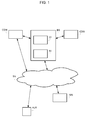
FIG. 1 is a schematic block diagram of a communication system according to one embodiment of the invention for an authentication of a communication device located in a small cell network. -
FIG. 2 is a flow chart illustrating a method for an authentication of a communication device located in a small cell network according to one embodiment of the invention. - The same reference number represents the same element or the same type of element on all drawings.
- The figures and the following description illustrate specific exemplary embodiments of the invention. It will thus be appreciated that those skilled in the art will be able to devise various arrangements that, although not explicitly described or shown herein, embody the principles of the invention and are included within the scope of the invention. Furthermore, any examples described herein are intended to aid in understanding the principles of the invention, and are to be construed as being without limitation to such specifically recited examples and conditions. As a result, the invention is not limited to the specific embodiments or examples described below, but by the claims and their equivalents.
- Referring to
FIG. 1 , a communication system comprises a base station BS, a host communication device CDH and a guest communication device CDG which are able to be connected to the base station BS. The communication system comprises also a messaging server MS and a register HLR, which are able to communicate between them and with the base station BS via a telecommunication network TN. - For example, the base station is a pico base station or a femto base station located in residential buildings. The base station is linked to the core of the telecommunication network TN, typically via a modem and a wired line.
- The base station includes baseband processing and radio module for a coverage area which access type is GSM (Global System for Mobile communications) coupled with a GPRS (General Packet Radio Service) network or UMTS (Universal Mobile Telecommunications System) or even CDMA (Code Division Multiple Access) or even LTE (Long Term Evolution).
- The base station comprises a user interface UI and a network interface NI.
- The user interface UI gives access to a contact list and permits the host user to modify the contact list. The contact list contains call numbers. The host communication device of the host user implements an application to login to this user interface with credentials, giving access to privileged tasks via a graphical interface.
- The user interface UI implements a timer monitoring the network usage time of the guest user. In one example, timer waits for five minutes to get a response from the host communication device; if no response is received from host communication device for five minutes then it will be treated as negative and no guest communication device will be added to the contact list.
- The user interface UI manages also time extension requests received from the host communication device.
- The network interface NI is responsible for composing and sending short messages to the host communication device and for reading the short messages sent from the messaging server MS to do the required task inside the base station.
- The network interface NI maintains the contact list in a database and communicates with the user interface.
- A communication device CDH, CDG is capable of establishing a communication within a telecommunication network TN, for example with another communication device, via a radio link with the base station. For instance, a communication device is a mobile telephone, a smartphone, or a tablet, an electronic telecommunication device or object that is personal to the user.
- The register HLR is accessible by the base station BS through the telecommunication network TN. The register HLR is similar to a database containing an international identity IMSI (International Mobile Subscriber Identity) associated with a subscription profile for each user in the telecommunication network TN, especially for the users of the host communication device CDH and the guest communication device CDG.
- The messaging server MS is able to parse messages sent from the host communication device CDH towards the base station.
- With reference to
FIG. 2 , a method for an authentication of a communication device located in a small cell network according to one embodiment of the invention comprises steps S1 to S8 executed within the communication system. - In step S1, the guest communication device CDG enters the coverage area of the base station and sends a localization message MesL to the base station BS. The localization message MesL contains an identifier IdCD of the guest communication device CDG. For example, the identifier is the international identity IMSI (International Mobile Subscriber Identity) associated with the guest communication device.
- In step S2, the base station BS interrogates the register HLR to retrieve a call number associated with the guest communication device CDG by means of the identifier IdCD of the guest communication device CDG. To this end, the base station BS sends a request to the messaging server MS, the request containing the identifier of the guest communication device CDG, e.g. the international identity IMSI. The messaging server parses the request to extract the identifier of the guest communication device CDG and sends another request to the register HLR, containing instructions interpretable by the HLR. The register HLR determines the call number associated with the identifier IdCD. The register HLR sends a response to the base station, the response containing the call number.
- In step S3, the base station BS determines if the call number is present in the contact list.
- If the call number is not present in the contact list, the base station BS does not take any further action, and the guest communication device will not access the small cell network.
- If the call number is present in the contact list, the method goes to step S4.
- In step S4, the base station BS sends a request message MesRq to the host communication device CDH.
- The request message MesRq contains the call number and a request for access to the base station.
- Additionally, the base station BS triggers a countdown running till a response to the sent request message MesRq is received. If no response is received before the end of the countdown, the base station drops the request considering the user of the host communication device CDH does not accept the request and the guest communication device will not access the small cell network.
- In one embodiment, the request message MesRq is a short message SMS.
- In one embodiment, the request message MesRq is a HTTP request sent towards the application implemented in the host communication device. If the base station does not receive an acknowledgement message, which means that the host communication device does not have internet access, the base station sends another request message MesRq under the form of a short message SMS.
- In step S5, the user makes a decision for allowing the guest communication device associated with the call number an access to the base station. The user can view a user name associated with the call number in the contact database of the host communication device.
- The host communication device CDH sends a response message MesRp towards the base station BS. The response message contains a positive response to the request or a negative response to the request. In case of positive response, the response message further contains a timer value defining a duration of allowed access to the base station.
- In one embodiment, the request message MesRq is a short message SMS and the response message MesRp is also a short message. In this case, the content of the message is entered by the user as typing usual SMS. For example, the content of the message is "yes
duration 5 min". The base station receives the response message MesRp, forwards this latter to the messaging server that parses the response message MesRp to extract the user response and the duration and sends back a message to the base station, the message containing instructions interpretable by the base station. - In one embodiment, the request message MesRq is a HTTP request and the response message MesRp is a HTTP message. In this case, the application in the host communication device CDH provides a user interface inviting user to select or enter values for the base station access request and the duration.
- In step S6, the base station BS associates the call number with an access indicator and grants the guest communication device CDG access to the base station network. The access is granted for a period corresponding to the timer value.
- In step S7, when the timer reaches the limit set by the timer value, the base station BS sends an extend request ReqE to the host communication device CDH. The extend request ReqE contains the call number and a request for extension time for the access to the base station.
- In step S8, the user makes a decision for allowing the guest communication device associated with the call number an extended duration for access to the base station. As in step S5, the host communication device CDH sends a response message MesRp towards the base station BS. The response message contains a positive response to the request or a negative response to the request. In case of positive response, the response message further contains a timer value defining a duration of allowed access to the base station.
- The invention described here relates to a method and a base station for an authentication of a user of a communication device located in a small cell network. According to one implementation of the invention, steps of the invention are determined by the instructions of a computer program incorporated into a base station. The program comprises program instructions which, when said program is loaded and executed within the base station, carry out the steps of the method.
- Consequently, the invention also applies to a computer program, particularly a computer program on or within an information medium, suitable to implement the invention. This program may use any programming language, and be in the form of source code, object code, or intermediate code between source code and object code, such as in a partially compiled form, or in any other form desirable for implementing the method according to the invention.
Claims (9)
- A method for authenticating a first communication device (CDG) located in a coverage area of a base station (BS), comprising the following steps performed by the base station (BS):receiving (S1) a localization message (MesL) from the first communication device (CDG), the localization message containing an identifier of the first communication device (CDG),interrogating (S2) a register (HLR) to retrieve a call number associated with the first communication device (CDG) by means of the identifier of the first communication device (CDG),sending (S4) a request message (MesRq) to a second communication device (CDH), the request message containing the call number and a request for access to the base station,receiving (S5) a response message (MesRp) from the second communication device (CDH),if the response message (MesRp) contains a positive response to the request, granting (S6) the first communication device (CDG) access to the base station (BS).
- A method according to claim 1, wherein the identifier of the first communication device (CDG) is the international identity (IMSI) of the first communication device.
- A method according to claim 1 or 2, wherein the base station sends the request message (MesRq) to the second communication device (CDH), if the call number is present in a contact list.
- A method according to any of claims 1 to 3, wherein the base station does not grant the first communication device (CDG) access to the base station, if the response message (MesRp) is not received before the end of a countdown triggered after the sending of the request message (MesRq).
- A method according to any of claims 1 to 4, wherein the response message (MesRp) further contains a timer value defining a duration of allowed access to the base station.
- A method according to any of claims 1 to 5, wherein the request message (MesRq) and the response message (MesRp) are short messages.
- A method according to any of claims 1 to 5, wherein the request message (MesRq) and the response message (MesRp) are HTTP messages.
- A base station (BS) for authenticating a first communication device (CDG) located in a coverage area of the base station (BS), comprising:means (NI) for receiving a localization message (MesL) from the first communication device (CDG), the localization message containing an identifier of the first communication device (CDG),means (NI) for interrogating a register (HLR) to retrieve a call number associated with the first communication device (CDG) by means of the identifier of the first communication device (CDG),means (NI) for sending a request message to a second communication device (CDH), the request message containing the call number and a request for access to the base station,means (NI) for receiving a response message from the second communication device (CDH),means (NI) for granting the first communication device (CDG) access to the base station (BS), if the response message contains a positive response to the request.
- A computer program capable of being implemented within a base station (BS) for authenticating a first communication device (CDG) located in a coverage area of the base station, said program comprising instructions which, when the program is loaded and executed within said server (AS), carry out the following steps:receiving (S1) a localization message (MesL) from the first communication device (CDG), the localization message containing an identifier of the first communication device (CDG),interrogating (S2) a register (HLR) to retrieve a call number associated with the first communication device (CDG) by means of the identifier of the first communication device (CDG),sending (S4) a request message (MesRq) to a second communication device (CDH), the request message containing the call number and a request for access to the base station,receiving (S5) a response message (MesRp) from the second communication device (CDH),if the response message (MesRp) contains a positive response to the request, granting (S6) the first communication device (CDG) access to the base station (BS).
Priority Applications (5)
| Application Number | Priority Date | Filing Date | Title |
|---|---|---|---|
| EP15305388.9A EP3070901A1 (en) | 2015-03-16 | 2015-03-16 | Communication device authentication in small cell network |
| CN201680015154.5A CN107431926B (en) | 2015-03-16 | 2016-01-27 | Communication device authentication in small cell networks |
| US15/555,139 US10044721B2 (en) | 2015-03-16 | 2016-01-27 | Communication device authentication in small cell network |
| KR1020177025954A KR20170118801A (en) | 2015-03-16 | 2016-01-27 | Authentication of communication device in small cell network |
| PCT/EP2016/051703 WO2016146287A1 (en) | 2015-03-16 | 2016-01-27 | Communication device authentication in small cell network |
Applications Claiming Priority (1)
| Application Number | Priority Date | Filing Date | Title |
|---|---|---|---|
| EP15305388.9A EP3070901A1 (en) | 2015-03-16 | 2015-03-16 | Communication device authentication in small cell network |
Publications (1)
| Publication Number | Publication Date |
|---|---|
| EP3070901A1 true EP3070901A1 (en) | 2016-09-21 |
Family
ID=52780495
Family Applications (1)
| Application Number | Title | Priority Date | Filing Date |
|---|---|---|---|
| EP15305388.9A Withdrawn EP3070901A1 (en) | 2015-03-16 | 2015-03-16 | Communication device authentication in small cell network |
Country Status (5)
| Country | Link |
|---|---|
| US (1) | US10044721B2 (en) |
| EP (1) | EP3070901A1 (en) |
| KR (1) | KR20170118801A (en) |
| CN (1) | CN107431926B (en) |
| WO (1) | WO2016146287A1 (en) |
Cited By (1)
| Publication number | Priority date | Publication date | Assignee | Title |
|---|---|---|---|---|
| CN113490200A (en) * | 2021-08-17 | 2021-10-08 | 中国联合网络通信集团有限公司 | CSFB calling method, MME, electronic device and medium |
Citations (3)
| Publication number | Priority date | Publication date | Assignee | Title |
|---|---|---|---|---|
| US20090093232A1 (en) * | 2007-10-08 | 2009-04-09 | Qualcomm Incorporated | Provisioning communication nodes |
| US20100330962A1 (en) * | 2009-06-30 | 2010-12-30 | Motorola, Inc. | Method and apparatus for negotiation and notification of a network access time period in a wireless communication system |
| US20120083270A1 (en) * | 2010-09-30 | 2012-04-05 | At&T Intellectual Property I, L.P. | Femtocell approved user list management via short message service (sms) |
Family Cites Families (11)
| Publication number | Priority date | Publication date | Assignee | Title |
|---|---|---|---|---|
| US7712128B2 (en) * | 2001-07-24 | 2010-05-04 | Fiberlink Communication Corporation | Wireless access system, method, signal, and computer program product |
| US20040162998A1 (en) * | 2003-02-14 | 2004-08-19 | Jukka Tuomi | Service authentication in a communication system |
| US7792530B2 (en) * | 2006-07-11 | 2010-09-07 | Broadcom Corporation | Facilitating use of a restricted base tranceiver station |
| US8923212B2 (en) * | 2007-08-17 | 2014-12-30 | Qualcomm Incorporated | Method and apparatus for interference management |
| US20100112982A1 (en) * | 2008-11-03 | 2010-05-06 | Qualcomm Incorporated | System and method to perform access control and paging using femto cells |
| US8670339B2 (en) * | 2010-10-15 | 2014-03-11 | Telefonaktiebolaget Lm Ericsson (Publ) | Implicit reject response |
| EP2845403A4 (en) * | 2012-04-26 | 2016-03-02 | Nokia Technologies Oy | Method and apparatus for controlling wireless network access parameter sharing |
| US8818276B2 (en) * | 2012-05-16 | 2014-08-26 | Nokia Corporation | Method, apparatus, and computer program product for controlling network access to guest apparatus based on presence of hosting apparatus |
| US9437063B2 (en) * | 2014-01-04 | 2016-09-06 | Latchable, Inc. | Methods and systems for multi-unit real estate management |
| US10404699B2 (en) * | 2014-02-18 | 2019-09-03 | Oracle International Corporation | Facilitating third parties to perform batch processing of requests requiring authorization from resource owners for repeat access to resources |
| US10075427B2 (en) * | 2014-03-31 | 2018-09-11 | Lenovo (Singapore) Pte. Ltd. | Resetting authentication tokens based on an implicit credential in response to an authentication request missing an authentication token |
-
2015
- 2015-03-16 EP EP15305388.9A patent/EP3070901A1/en not_active Withdrawn
-
2016
- 2016-01-27 US US15/555,139 patent/US10044721B2/en active Active
- 2016-01-27 WO PCT/EP2016/051703 patent/WO2016146287A1/en not_active Ceased
- 2016-01-27 KR KR1020177025954A patent/KR20170118801A/en not_active Ceased
- 2016-01-27 CN CN201680015154.5A patent/CN107431926B/en active Active
Patent Citations (3)
| Publication number | Priority date | Publication date | Assignee | Title |
|---|---|---|---|---|
| US20090093232A1 (en) * | 2007-10-08 | 2009-04-09 | Qualcomm Incorporated | Provisioning communication nodes |
| US20100330962A1 (en) * | 2009-06-30 | 2010-12-30 | Motorola, Inc. | Method and apparatus for negotiation and notification of a network access time period in a wireless communication system |
| US20120083270A1 (en) * | 2010-09-30 | 2012-04-05 | At&T Intellectual Property I, L.P. | Femtocell approved user list management via short message service (sms) |
Cited By (2)
| Publication number | Priority date | Publication date | Assignee | Title |
|---|---|---|---|---|
| CN113490200A (en) * | 2021-08-17 | 2021-10-08 | 中国联合网络通信集团有限公司 | CSFB calling method, MME, electronic device and medium |
| CN113490200B (en) * | 2021-08-17 | 2022-08-26 | 中国联合网络通信集团有限公司 | CSFB calling method, MME, electronic device and medium |
Also Published As
| Publication number | Publication date |
|---|---|
| WO2016146287A1 (en) | 2016-09-22 |
| CN107431926A (en) | 2017-12-01 |
| CN107431926B (en) | 2021-02-12 |
| US10044721B2 (en) | 2018-08-07 |
| US20180041514A1 (en) | 2018-02-08 |
| KR20170118801A (en) | 2017-10-25 |
Similar Documents
| Publication | Publication Date | Title |
|---|---|---|
| CN116193441B (en) | A communication method, communication device and communication system | |
| US11463883B2 (en) | Cellular service account transfer for accessory wireless devices | |
| US12295071B2 (en) | Subscriber identity profile design and generation request from outside of a secure wireless communication network and the profile provided to a partner wireless device for use thereby in obtaining wireless services via the wireless communication network | |
| US10638538B2 (en) | System and method for group device access to wireless networks | |
| EP2549785B1 (en) | Method and network side entity for authenticating communication devices | |
| US9787678B2 (en) | Multifactor authentication for mail server access | |
| US20160021532A1 (en) | Method for preventing fraud or misuse based on a risk scoring approach when using a service of a service provider, system for preventing fraud or misuse, and mobile communication network for preventing fraud or misuse | |
| US10791443B2 (en) | System and method for enhanced messaging using external identifiers | |
| US11848926B2 (en) | Network authentication | |
| CN109792671A (en) | The equipment being obstructed is checked in roaming scence | |
| WO2018099016A1 (en) | Method for controlling terminal communication service, network monitoring device and storage medium | |
| US9426721B2 (en) | Temporary access to wireless networks | |
| US11381562B2 (en) | Detection of a user equipment type related to access, services authorization and/or authentication | |
| US10044721B2 (en) | Communication device authentication in small cell network | |
| US12149931B2 (en) | Methods and devices for utilizing an exposure function of a wireless communications network | |
| SE542465C2 (en) | Methods, subscriber identity component and managing node for providing wireless device with connectivity | |
| US20170359427A1 (en) | Methods and devices for notifying authorization update | |
| US20250374049A1 (en) | System and method for controlling akma application keys for roaming mobile devices | |
| JP2026507148A (en) | Communication method and communication device | |
| WO2020094790A1 (en) | Method for authenticating a secure element cooperating with a terminal, corresponding applet, system and server | |
| KR20160129956A (en) | Server and method for remote device management based on Network |
Legal Events
| Date | Code | Title | Description |
|---|---|---|---|
| PUAI | Public reference made under article 153(3) epc to a published international application that has entered the european phase |
Free format text: ORIGINAL CODE: 0009012 |
|
| AK | Designated contracting states |
Kind code of ref document: A1 Designated state(s): AL AT BE BG CH CY CZ DE DK EE ES FI FR GB GR HR HU IE IS IT LI LT LU LV MC MK MT NL NO PL PT RO RS SE SI SK SM TR |
|
| AX | Request for extension of the european patent |
Extension state: BA ME |
|
| 17P | Request for examination filed |
Effective date: 20170321 |
|
| RBV | Designated contracting states (corrected) |
Designated state(s): AL AT BE BG CH CY CZ DE DK EE ES FI FR GB GR HR HU IE IS IT LI LT LU LV MC MK MT NL NO PL PT RO RS SE SI SK SM TR |
|
| RAP1 | Party data changed (applicant data changed or rights of an application transferred) |
Owner name: ALCATEL LUCENT |
|
| 17Q | First examination report despatched |
Effective date: 20180924 |
|
| STAA | Information on the status of an ep patent application or granted ep patent |
Free format text: STATUS: THE APPLICATION IS DEEMED TO BE WITHDRAWN |
|
| 18D | Application deemed to be withdrawn |
Effective date: 20190405 |