EP3070898B1 - State transition method and apparatus based on rohc, and storage medium - Google Patents
State transition method and apparatus based on rohc, and storage medium Download PDFInfo
- Publication number
- EP3070898B1 EP3070898B1 EP14797615.3A EP14797615A EP3070898B1 EP 3070898 B1 EP3070898 B1 EP 3070898B1 EP 14797615 A EP14797615 A EP 14797615A EP 3070898 B1 EP3070898 B1 EP 3070898B1
- Authority
- EP
- European Patent Office
- Prior art keywords
- state
- decompressor
- service stream
- compressor
- state machine
- Prior art date
- Legal status (The legal status is an assumption and is not a legal conclusion. Google has not performed a legal analysis and makes no representation as to the accuracy of the status listed.)
- Active
Links
Images



Classifications
-
- H—ELECTRICITY
- H04—ELECTRIC COMMUNICATION TECHNIQUE
- H04L—TRANSMISSION OF DIGITAL INFORMATION, e.g. TELEGRAPHIC COMMUNICATION
- H04L1/00—Arrangements for detecting or preventing errors in the information received
- H04L1/0078—Avoidance of errors by organising the transmitted data in a format specifically designed to deal with errors, e.g. location
- H04L1/0079—Formats for control data
-
- H—ELECTRICITY
- H04—ELECTRIC COMMUNICATION TECHNIQUE
- H04L—TRANSMISSION OF DIGITAL INFORMATION, e.g. TELEGRAPHIC COMMUNICATION
- H04L69/00—Network arrangements, protocols or services independent of the application payload and not provided for in the other groups of this subclass
- H04L69/04—Protocols for data compression, e.g. ROHC
-
- H—ELECTRICITY
- H03—ELECTRONIC CIRCUITRY
- H03M—CODING; DECODING; CODE CONVERSION IN GENERAL
- H03M7/00—Conversion of a code where information is represented by a given sequence or number of digits to a code where the same, similar or subset of information is represented by a different sequence or number of digits
- H03M7/30—Compression; Expansion; Suppression of unnecessary data, e.g. redundancy reduction
-
- H—ELECTRICITY
- H03—ELECTRONIC CIRCUITRY
- H03M—CODING; DECODING; CODE CONVERSION IN GENERAL
- H03M7/00—Conversion of a code where information is represented by a given sequence or number of digits to a code where the same, similar or subset of information is represented by a different sequence or number of digits
- H03M7/30—Compression; Expansion; Suppression of unnecessary data, e.g. redundancy reduction
- H03M7/60—General implementation details not specific to a particular type of compression
- H03M7/6011—Encoder aspects
-
- H—ELECTRICITY
- H03—ELECTRONIC CIRCUITRY
- H03M—CODING; DECODING; CODE CONVERSION IN GENERAL
- H03M7/00—Conversion of a code where information is represented by a given sequence or number of digits to a code where the same, similar or subset of information is represented by a different sequence or number of digits
- H03M7/30—Compression; Expansion; Suppression of unnecessary data, e.g. redundancy reduction
- H03M7/60—General implementation details not specific to a particular type of compression
- H03M7/6052—Synchronisation of encoder and decoder
-
- H—ELECTRICITY
- H04—ELECTRIC COMMUNICATION TECHNIQUE
- H04L—TRANSMISSION OF DIGITAL INFORMATION, e.g. TELEGRAPHIC COMMUNICATION
- H04L69/00—Network arrangements, protocols or services independent of the application payload and not provided for in the other groups of this subclass
- H04L69/16—Implementation or adaptation of Internet protocol [IP], of transmission control protocol [TCP] or of user datagram protocol [UDP]
- H04L69/161—Implementation details of TCP/IP or UDP/IP stack architecture; Specification of modified or new header fields
-
- H—ELECTRICITY
- H04—ELECTRIC COMMUNICATION TECHNIQUE
- H04L—TRANSMISSION OF DIGITAL INFORMATION, e.g. TELEGRAPHIC COMMUNICATION
- H04L69/00—Network arrangements, protocols or services independent of the application payload and not provided for in the other groups of this subclass
- H04L69/22—Parsing or analysis of headers
Definitions
- the present disclosure relates to wireless communication technologies based on Robust Header Compression (ROHC) Protocol, and more particularly, to a state transition method and apparatus, and a computer storage medium.
- ROHC Robust Header Compression
- packet header information is divided by ROHC into two parts including a static field and a dynamic field.
- the static field refers to a rarely changing or almost unchanging field in a service stream packet header; and the dynamic field refers to a frequently changing field in the service stream packet header.
- a header Compression Technology is embodied as data interaction between a state machine of a compressor and a state machine of a decompressor.
- FIG. 1 is a schematic diagram in implementation showing state transition of a state machine of a compressor; as shown in FIG. 1 , in the IR state, the compressor sends packet header information to a decompressor by way of non-compress; the state machine of the compressor transits from the IR state to the FO state when the compressor learns that the decompressor successfully parses a static field of a packet header; and the state machine of the compressor transits from the IR state to the SO state when the compressor learns that the decompressor successfully parses the static field and a dynamic field of the packet header.
- IR Initialization and Refresh
- FO First Order
- SO Second Order
- the state machine of the compressor transits from the SO state to the FO state; and the state machine of the compressor transits from the SO state to the IR state when the compressor learns that the decompressor fails in parsing both the static field and the dynamic field of the packet header.
- the state machine of the compressor transits from the FO state to the IR state.
- the state machine of the compressor returns to an initial state, and the compressor sends a packet to the decompressor again.
- FIG. 2 is a schematic diagram in implementation showing state transition of a state machine of a decompressor; as shown in FIG. 2 , the state machine of the decompressor is in the NC state during initial work, and the state machine of the decompressor transits from the NC state to the FC state after a decompressor end receives a packet sent by the compressor and both a static field and a dynamic field of the packet header of the packet are successfully parsed; otherwise, the state machine of the decompressor maintains in the NC state.
- NC No Context
- SC Static Context
- FC Full Context
- the state machine of the decompressor transits from the FC state to the SC state when the state machine of the decompressor is in the FC state and number of failures of the decompressor in parsing the dynamic field of the packet header exceeds a preset threshold value; otherwise the state machine of the decompressor maintains in the FC state.
- the state machine of the decompressor transits to the FC state when the state machine of the decompressor is in the SC state and the decompressor successfully parses the dynamic field of the packet header; the state machine of the decompressor transits to the NC state when number of failures of the decompressor in parsing the dynamic field of the packet header exceeds a preset threshold value; and when the state machine of the decompressor transits back to the NC state, the decompressor returns to an initial state and performs state transition on a next packet according to decompression situations of packets.
- Techniques used in BCMCS systems without feedback include sending static context information during BCMCS service initialization for use in a decompressor in a mobile station.
- Techniques used in BCMCS systems with feedback include receiving feedback from distributed mobile station decompressors and adjusting the broadcasting compressor in response to the feedback. Techniques that reduce the number of operating states in both the compressor and the decompressor are described. Techniques to classify flows so that a reduced number of contexts are used to compress/decompress session packet headers in a push-to-talk service are described.
- embodiments of the present disclosure provide a state transition method and apparatus, and a computer storage medium as defined in the attached independent claim, which may reduce number of transition among states, reduce transition frequency, and improve resource processing speed and accelerate processing efficiency. Further improvements are provided in the dependent claims.
- each service stream has a unique Context Identity (Context ID) at a sending end (a compressor) and a receiving end (a decompressor) for identifying the service stream; meanwhile, static field information of all packet headers in the service stream identifying a same Context ID is identical. Therefore, this characteristic is fully utilized in subsequent technical solutions of embodiments of the present disclosure.
- Context ID Context Identity
- Embodiments of the present disclosure record a state transition method, which is applied in a state machine of a compressor, as shown in FIG. 3 , the method includes following steps Step 31 to Step 33.
- Step 31 transits a state of the state machine of the compressor from an Initialization and Refresh (IR) state to a First Order (FO) state when it is determined that the state machine of the compressor is in an IR state and it is learned that a decompressor corresponding to the compressor can only successfully parse a static field of a service stream packet header; and transits a state of the state machine of the compressor from the IR state to a Second Order (SO) state when it is determined that the state machine of the compressor is in the IR state and it is learned that the decompressor corresponding to the compressor can successfully parse the static field and a dynamic field of the service stream packet header; in Step 32, transits a state of the state machine of the compressor from the FO state to the SO state when it is determined that the state machine of the compressor is in the FO state and it is learned that the decompressor corresponding to the compressor can successfully parse the dynamic field of the service stream packet header; and in Step 33, transits a state of the state machine of the compressor from the SO
- Step 33 maintains the state machine of the compressor in the SO state and stops transiting a state of the state machine of the compressor when the state machine of the compressor is in the SO state and it is learned that the decompressor successfully parses the static field and the dynamic field of the service stream packet header within the preset time threshold.
- header compression includes three working modes: a unidirectional mode (U mode), an optimal mode (O mode) and a reliable mode (R mode).
- U mode unidirectional mode
- O mode optimal mode
- R mode reliable mode
- U mode unidirectional mode
- manners of the compressor for learning whether decompression of the decompressor is successful or not are different, specifically referring to communication mechanism descriptions of the compressor and the decompressor during header compression, which is not unnecessarily described in embodiments of the present disclosure.
- the compressor sends a service stream to the decompressor. Transits, at a decompressor end, a state of the state machine of the decompressor to an FC state when it is determined that the state machine of the decompressor is in an NC state, and a static field and a dynamic field of a packet header are successfully parsed; otherwise, maintains the state machine of the decompressor in the NC state, and stops transiting a state of the state machine of the decompressor.
- FIG. 4 is a schematic diagram showing state transition of a state machine of a compressor according to an embodiment of the present disclosure, as shown in FIG. 4 , this embodiment includes following steps Step 401 to Step 403.
- Step 401 the compressor determines that its own state machine is working in an IR state, and the compressor sends the decompressor a packet (current packet) of which a Context ID is A when the compressor is in an IR state.
- a packet current packet
- static field information of packets having a same Context ID is identical.
- Step 402 the compressor sends the decompressor other selected packets having a Context ID as same as that of the current packet and carrying dynamic fields of packet headers when the compressor determines that its own state machine is in the FO state; and transits the state machine of the compressor from the FO state to the SO state and continues to process Step 403 when it is learned that the decompressor successfully parses the dynamic fields of the packet headers of the other packets.
- Step 403 the compressor determines that its own state machine is in the SO state, the compressor sends the decompressor other selected packets having a Context ID as same as that of the current packet and carrying dynamic fields of packet headers; transits the state machine of the compressor to the FO state and continues to process Step 402 when it is learned that the decompressor fails to parse the dynamic fields of the packet headers of the other packets within a preset time threshold; and continues to execute Step 403 when it is learned that the decompressor successfully parses static fields and dynamic fields of the other packets within the time threshold.
- static field information of packets having a same Context ID is identical, it is regarded that static fields of packet headers of other packets having a Context ID as same as that of the current packet can also be successfully parsed by the decompressor when the compressor learns that the decompressor successfully parses the static field of the packet header of the current packet of which a Context ID is A, so that a link of transiting the SO state or the FO state to the IR state is omitted, number of transition among states is reduced, transition frequency is decreased, and resource processing speed of the compressor is improved.
- FIG. 5 is a schematic diagram showing state transition of a state machine of a decompressor according to embodiments of the present disclosure, as shown in FIG. 5 , this embodiment includes following steps Step 501 to Step 503.
- Step 501 the decompressor determines that its own state machine initially works in the NC state, the decompressor receives the current packet, of which a Context ID is A, sent by the compressor when the decompressor is in the NC state; transits the state machine of the decompressor from the NC state to the FC state and continues to process Step 502 when a static field and a dynamic field of a packet header of a packet are successfully parsed; and continues to execute Step 501 when the static field and the dynamic field of the packet header of the packet are failed in parsing.
- a Context ID is A
- Step 502 transits a state of the state machine from the FC state to the SC state and continues to execute Step 503 when the decompressor determines that its own state machine is in the FC state and number of failures in parsing the dynamic fields of the packet headers of the other packets meets a preset threshold value; and continues to execute Step 502 when the dynamic fields of the packet headers of the other packets are successfully parsed.
- the decompressor deems by default that static fields of packet headers of the other packets are successfully parsed since static field information of packets having a same Context ID is identical and the current packet of which a Context ID is A has been successfully parsed.
- Step 503 transits a state of the state machine from the SC state to the FC state and continues to execute Step 502 when the decompressor determines that its own state machine is in the SC state and the decompressor successfully parses the other packets carrying dynamic fields sent by the compressor; and continues to execute Step 503 when the decompressor fails in parsing the dynamic fields of the other packets.
- Embodiments of the present disclosure further provide a first kind of computer storage medium, in which a first set of computer-executable instructions are stored, where the first set of computer-executable instructions are configured to execute the foregoing state transition method, which is applied in a state machine of a compressor.
- Embodiments of the present disclosure further provide a second kind of computer storage medium, in which a second set of computer-executable instructions are stored, where the second set of computer-executable instructions are configured to execute foregoing state transition method, which is applied in a state machine of a decompressor.
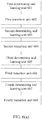
- embodiments of the present disclosure further record a state transition apparatus, which is applied in a state machine of a compressor, as shown in FIG. 6(a) , the apparatus includes: a first determining and learning unit 601, a first transition unit 602, a second determining and learning unit 603, a second transition unit 604, a third determining and learning unit 605, a third transition unit 606, a fourth determining and learning unit 607 and a fourth transition unit 608, where the first determining and learning unit 601 is configured to trigger the first transition unit 602 when it is determined that the state machine of the compressor is in an IR state and it is learned that a decompressor corresponding to the compressor can only successfully parse a static field of a service stream packet header; the first transition unit 602 is configured to transit a state of the state machine of the compressor from the IR state to a First Order (FO) state; the second determining and learning unit 603 is configured to trigger the second transition unit 604 when it is determined that the state machine of
- the fourth determining and learning unit 607 is further configured to inform the fourth transition unit 608 not to perform state transition when it is determined that the state machine of the compressor is in the SO state and it is learned that the decompressor successfully parses the static field and the dynamic field of the service stream packet header within the preset time threshold.
- the third determining and parsing unit 615 is further configured to inform the seventh transition unit 616 not to perform state transition when it is determined that the state machine of the decompressor is in the SC state and the dynamic field of the packet header is failed in parsing.
- the second determining and parsing unit 613 is further configured to inform the sixth transition unit 614 not to perform state transition when it is determined that the state machine of the decompressor is in the FC state and the static field and the dynamic field of the packet header are successfully parsed.
- the preset condition includes: number of failures in parsing the dynamic field of the packet header meets a preset threshold value.
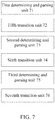
- embodiments of the present disclosure further record a state transition apparatus, which is applied in a state machine of a decompressor, as shown in FIG. 7 , the apparatus includes: a first determining and parsing unit 71, a fifth transition unit 72, a second determining and parsing unit 73, a sixth transition unit 74, a third determining and parsing unit 75 and a seventh transition unit 76, where the first determining and parsing unit 71 is configured to trigger the fifth transition unit 72 when it is determined that the state machine of the decompressor corresponding to the compressor is in a NC state and the static field and the dynamic field of a packet header are successfully parsed; the fifth transition unit 72 is configured to transit a state of the state machine of the decompressor to an FC state; the second determining and parsing unit 73 is configured to trigger the sixth transition unit 74 when it is determined that the state machine of the decompressor is in the FC state and the dynamic field of the packet header is failed in parsing and a preset
- the third determining and parsing unit 75 is further configured to inform the seventh transition unit 76 not to perform state transition when it is determined that the state machine of the decompressor is in the SC state and the dynamic field of the packet header is failed in parsing.
- the second determining and parsing unit 73 is further configured to inform the sixth transition unit 74 not to perform state transition when it is determined that the state machine of the decompressor is in the FC state and the static field and the dynamic field of the packet header are successfully parsed.
- the preset condition includes: number of failures in parsing the dynamic field of the packet header meets a preset threshold value.
- the first determining and learning unit 601, the first transition unit 602, the second determining and learning unit 603, the second transition unit 604, the third determining and learning unit 605, the third transition unit 606, the fourth determining and learning unit 607 and the fourth transition unit 608 each may be implemented by a central processing unit (CPU), or a digital signal processor (DSP), or a micro processor unit (MPU), or a field programmable gate array (FPGA) and the like; and the CPU, the DSP, the MPU and the FPGA each may be arranged in the compressor, specifically, the state machine of the compressor.
- CPU central processing unit
- DSP digital signal processor
- MPU micro processor unit
- FPGA field programmable gate array
- the first determining and parsing unit 611, the fifth transition unit 612, the second determining and parsing unit 613, the sixth transition unit 614, the third determining and parsing unit 615, the seventh transition unit 616, the first determining and parsing unit 71, the fifth transition unit 72, the second determining and parsing unit 73, the sixth transition unit 74, the third determining and parsing unit 75 and the seventh transition unit 76 each may be implemented by a CPU, or a DSP, or an MPU or an FPGA and the like; and the CPU, the DSP, the MPU and the FPGA each may be arranged in the decompressor, specifically, the state machine of the decompressor.
- the state transition method and apparatus based on ROHC and the computer storage medium utilize a characteristic that static field information of all packet headers having a same Context ID is identical, so that it is regarded by default that static fields of packet headers of subsequently transmitted packets are successfully parsed as long as a static field of a packet header of one packet can be successfully parsed at a decompressor end.
- Compared with an existing art It is neither needed to transit from an SO state or an FO state to an IR state nor needed to transit from an SC state to an NC state by utilizing technical solutions of embodiments of the present disclosure, thereby reducing number of transition among states, reducing transition frequency, and improving resource processing speed.
- the embodiments of the present disclosure may be provided as a method, a system or a computer program product. Therefore, the present disclosure may use forms of a hardware embodiment, a software embodiment, or an embodiment in combination of software and hardware aspects. Furthermore, the present disclosure may use forms of computer program products implemented on one or more computer storage media (including but not limited to a magnetic disk memory, an optical memory or the like) which includes a computer program code.
- a computer storage media including but not limited to a magnetic disk memory, an optical memory or the like
- each flow and/or block in the flowchart and/or block diagram as well as combination of flow and/or block in the flowchart and/or block diagram may be realized by computer program instructions.
- These computer program instructions may be provided to a general purpose computer, a special purpose computer, an embedded processor or processors of other programmable data processing equipment so as to generate a machine so that such a device configured to achieve functions designated in one or more flows of the flowchart and/or in one or more blocks of the block diagram is generated by means of instructions executed by computers or processors of other programmable data processing equipment.
- These computer program instructions may be stored in a computer-readable memory which can lead a computer or other programmable data processing equipment to work in a particular way so that instructions stored in the computer-readable memory may generate a manufactured product comprising a command device which can achieve functions designated in one or more flows of the flowchart and/or in one or more blocks of the block diagram.
- These computer program instructions may also be loaded onto computers or other programmable data processing equipment so that a series of operation steps are executed on the computers or other programmable equipment to generate a processing achieved by computers, thus providing steps for achieving functions designated in one or more flows of the flowchart and/or in one or more blocks of the block diagram by means of instructions executed by computers or other programmable equipment.
Landscapes
- Engineering & Computer Science (AREA)
- Theoretical Computer Science (AREA)
- Computer Networks & Wireless Communication (AREA)
- Signal Processing (AREA)
- Computer Security & Cryptography (AREA)
- Mobile Radio Communication Systems (AREA)
- Data Exchanges In Wide-Area Networks (AREA)
- Control Of Positive-Displacement Pumps (AREA)
Description
- The present disclosure relates to wireless communication technologies based on Robust Header Compression (ROHC) Protocol, and more particularly, to a state transition method and apparatus, and a computer storage medium.
- Generally, packet header information is divided by ROHC into two parts including a static field and a dynamic field. The static field refers to a rarely changing or almost unchanging field in a service stream packet header; and the dynamic field refers to a frequently changing field in the service stream packet header.
- A header Compression Technology is embodied as data interaction between a state machine of a compressor and a state machine of a decompressor.
- States of the state machine of the compressor include three states: an Initialization and Refresh (IR) state, a First Order (FO) state, and a Second Order (SO) state.
FIG. 1 is a schematic diagram in implementation showing state transition of a state machine of a compressor; as shown inFIG. 1 , in the IR state, the compressor sends packet header information to a decompressor by way of non-compress; the state machine of the compressor transits from the IR state to the FO state when the compressor learns that the decompressor successfully parses a static field of a packet header; and the state machine of the compressor transits from the IR state to the SO state when the compressor learns that the decompressor successfully parses the static field and a dynamic field of the packet header. When the state machine of the compressor is in the SO state and after the compressor learns that the decompressor fails in parsing the dynamic field of the packet header, the state machine of the compressor transits from the SO state to the FO state; and the state machine of the compressor transits from the SO state to the IR state when the compressor learns that the decompressor fails in parsing both the static field and the dynamic field of the packet header. When the state machine of the compressor is in the FO state and after the compressor learns that the decompressor fails in parsing the static field of the packet header, the state machine of the compressor transits from the FO state to the IR state. When the state transits back to the IR state, the state machine of the compressor returns to an initial state, and the compressor sends a packet to the decompressor again. - States of the state machine of the decompressor also include three states: a No Context (NC) state, a Static Context (SC) state and a Full Context (FC) state.
FIG. 2 is a schematic diagram in implementation showing state transition of a state machine of a decompressor; as shown inFIG. 2 , the state machine of the decompressor is in the NC state during initial work, and the state machine of the decompressor transits from the NC state to the FC state after a decompressor end receives a packet sent by the compressor and both a static field and a dynamic field of the packet header of the packet are successfully parsed; otherwise, the state machine of the decompressor maintains in the NC state. The state machine of the decompressor transits from the FC state to the SC state when the state machine of the decompressor is in the FC state and number of failures of the decompressor in parsing the dynamic field of the packet header exceeds a preset threshold value; otherwise the state machine of the decompressor maintains in the FC state. The state machine of the decompressor transits to the FC state when the state machine of the decompressor is in the SC state and the decompressor successfully parses the dynamic field of the packet header; the state machine of the decompressor transits to the NC state when number of failures of the decompressor in parsing the dynamic field of the packet header exceeds a preset threshold value; and when the state machine of the decompressor transits back to the NC state, the decompressor returns to an initial state and performs state transition on a next packet according to decompression situations of packets. - It can be seen form above that the state machine of the compressor and the state machine of the decompressor need to frequently transit among different states according to packet decompression situations. Consequently, number of transition is increased, and processing speed and processing efficiency of state machine resources are lowered.
- In
WO2005015881 , methods and apparatus for compression of headers in broadcasting BCMCS services in a wireless communication system are described. Techniques used in BCMCS systems without feedback include sending static context information during BCMCS service initialization for use in a decompressor in a mobile station. Techniques used in BCMCS systems with feedback include receiving feedback from distributed mobile station decompressors and adjusting the broadcasting compressor in response to the feedback. Techniques that reduce the number of operating states in both the compressor and the decompressor are described. Techniques to classify flows so that a reduced number of contexts are used to compress/decompress session packet headers in a push-to-talk service are described. - In order to solve existing technical problems, embodiments of the present disclosure provide a state transition method and apparatus, and a computer storage medium as defined in the attached independent claim, which may reduce number of transition among states, reduce transition frequency, and improve resource processing speed and accelerate processing efficiency. Further improvements are provided in the dependent claims.
- Technical solutions of embodiments of the present disclosure are implemented as below.
- Technical solutions recorded in embodiments of the present disclosure fully utilize a characteristic that static field information of all packet headers having a same Context ID is identical, so that it is regarded by default that static fields of packet headers of subsequently transmitted packets are successfully parsed after a static field of a packet header of one packet is successfully parsed at a decompressor end. It is neither needed to transit from an SO state or an FO state to an IR state nor needed to transit from an SC state to an NC state by utilizing technical solutions of embodiments of the present disclosure, thereby reducing number of transition among states, reducing transition frequency, improving resource processing speed, and accelerating resource processing efficiency.
-
-
FIG. 1 is a schematic diagram in implementation showing state transition of a state machine of a compressor; -
FIG. 2 is a schematic diagram in implementation showing state transition of a state machine of a decompressor; -
FIG. 3 is a schematic diagram showing an implementation process of a state transition method according to embodiments of the present disclosure; -
FIG. 4 is a schematic diagram showing state transition of a state machine of a compressor according to embodiments of the present disclosure; -
FIG. 5 is a schematic diagram showing state transition of a state machine of a decompressor according to embodiments of the present disclosure; -
FIG. 6(a) andFIG. 6(b) are schematic diagrams showing compositions and structures of a state transition apparatus according to embodiments of the present disclosure; and -
FIG. 7 is another schematic diagram showing compositions and structures of a state transition apparatus based on ROHC according to embodiments of the present disclosure. - In Robust Header Compression 3095 (RFC 3095) Protocol, when multiple ROHC packet service streams are transmitted in a same channel, each service stream has a unique Context Identity (Context ID) at a sending end (a compressor) and a receiving end (a decompressor) for identifying the service stream; meanwhile, static field information of all packet headers in the service stream identifying a same Context ID is identical. Therefore, this characteristic is fully utilized in subsequent technical solutions of embodiments of the present disclosure.
- Embodiments of the present disclosure record a state transition method, which is applied in a state machine of a compressor, as shown in
FIG. 3 , the method includes followingsteps Step 31 toStep 33. - In
Step 31, transits a state of the state machine of the compressor from an Initialization and Refresh (IR) state to a First Order (FO) state when it is determined that the state machine of the compressor is in an IR state and it is learned that a decompressor corresponding to the compressor can only successfully parse a static field of a service stream packet header; and
transits a state of the state machine of the compressor from the IR state to a Second Order (SO) state when it is determined that the state machine of the compressor is in the IR state and it is learned that the decompressor corresponding to the compressor can successfully parse the static field and a dynamic field of the service stream packet header;
inStep 32, transits a state of the state machine of the compressor from the FO state to the SO state when it is determined that the state machine of the compressor is in the FO state and it is learned that the decompressor corresponding to the compressor can successfully parse the dynamic field of the service stream packet header; and
inStep 33, transits a state of the state machine of the compressor from the SO state to the FO state when it is determined that the state machine of the compressor is in the SO state and it is learned that the decompressor corresponding to the compressor fails to parse the dynamic field of the service stream packet header within a preset time threshold. - In
Step 33, maintains the state machine of the compressor in the SO state and stops transiting a state of the state machine of the compressor when the state machine of the compressor is in the SO state and it is learned that the decompressor successfully parses the static field and the dynamic field of the service stream packet header within the preset time threshold. - In embodiments of the present disclosure, header compression includes three working modes: a unidirectional mode (U mode), an optimal mode (O mode) and a reliable mode (R mode). In different modes, manners of the compressor for learning whether decompression of the decompressor is successful or not are different, specifically referring to communication mechanism descriptions of the compressor and the decompressor during header compression, which is not unnecessarily described in embodiments of the present disclosure.
- The compressor sends a service stream to the decompressor. Transits, at a decompressor end, a state of the state machine of the decompressor to an FC state when it is determined that the state machine of the decompressor is in an NC state, and a static field and a dynamic field of a packet header are successfully parsed; otherwise, maintains the state machine of the decompressor in the NC state, and stops transiting a state of the state machine of the decompressor.
- Transits a state of the state machine of the decompressor to an SC state when it is determined that the state machine of the decompressor is in the FC state and the dynamic field of the packet header is failed in parsing and a preset condition is met;
where the preset condition includes: number of failures of the decompressor in parsing the dynamic field of the packet header meets a preset threshold value. - Maintains the state machine of the decompressor in the FC state and stops transiting a state of the state machine of the decompressor when the state machine of the decompressor is in the FC state and the static field and the dynamic field of the packet header are successfully parsed;
transits a state of the state machine of the decompressor to the FC state when it is determined that the state machine of the decompressor is in the SC state and the dynamic field of the packet header is successfully parsed; and
maintains the state machine of the decompressor in the SC state and stops transiting a state of the state machine of the decompressor when it is determined that the state machine of the decompressor is in the SC state and the dynamic field of the packet header is failed in parsing. -
FIG. 4 is a schematic diagram showing state transition of a state machine of a compressor according to an embodiment of the present disclosure, as shown inFIG. 4 , this embodiment includes followingsteps Step 401 toStep 403. - In
Step 401, the compressor determines that its own state machine is working in an IR state, and the compressor sends the decompressor a packet (current packet) of which a Context ID is A when the compressor is in an IR state. Here, static field information of packets having a same Context ID is identical. - Transits the state machine of the compressor from the IR state to the FO state and continues to process
Step 402 when the compressor learns that the decompressor successfully parses a static field of a packet header of the current packet; and
Transits the state machine of the compressor from the IR state to the SO state and continues to processStep 403 when the compressor learns that the decompressor successfully parses the static field and a dynamic field of a current packet header. - In
Step 402, the compressor sends the decompressor other selected packets having a Context ID as same as that of the current packet and carrying dynamic fields of packet headers when the compressor determines that its own state machine is in the FO state; and transits the state machine of the compressor from the FO state to the SO state and continues to processStep 403 when it is learned that the decompressor successfully parses the dynamic fields of the packet headers of the other packets. - In
Step 403, the compressor determines that its own state machine is in the SO state, the compressor sends the decompressor other selected packets having a Context ID as same as that of the current packet and carrying dynamic fields of packet headers;
transits the state machine of the compressor to the FO state and continues to processStep 402 when it is learned that the decompressor fails to parse the dynamic fields of the packet headers of the other packets within a preset time threshold; and
continues to executeStep 403 when it is learned that the decompressor successfully parses static fields and dynamic fields of the other packets within the time threshold. - It can be seen from above that, in subsequent packet transmission, a state of the state machine of the compressor is only switched between the SO state and the FO state, and is not needed to transit from the SO state or the FO state to the IR state.
- In embodiments of the present disclosure, since static field information of packets having a same Context ID is identical, it is regarded that static fields of packet headers of other packets having a Context ID as same as that of the current packet can also be successfully parsed by the decompressor when the compressor learns that the decompressor successfully parses the static field of the packet header of the current packet of which a Context ID is A, so that a link of transiting the SO state or the FO state to the IR state is omitted, number of transition among states is reduced, transition frequency is decreased, and resource processing speed of the compressor is improved.
-
FIG. 5 is a schematic diagram showing state transition of a state machine of a decompressor according to embodiments of the present disclosure, as shown inFIG. 5 , this embodiment includes following steps Step 501 to Step 503. - In
Step 501, the decompressor determines that its own state machine initially works in the NC state, the decompressor receives the current packet, of which a Context ID is A, sent by the compressor when the decompressor is in the NC state;
transits the state machine of the decompressor from the NC state to the FC state and continues to processStep 502 when a static field and a dynamic field of a packet header of a packet are successfully parsed; and
continues to executeStep 501 when the static field and the dynamic field of the packet header of the packet are failed in parsing. - In
Step 502, transits a state of the state machine from the FC state to the SC state and continues to executeStep 503 when the decompressor determines that its own state machine is in the FC state and number of failures in parsing the dynamic fields of the packet headers of the other packets meets a preset threshold value; and
continues to executeStep 502 when the dynamic fields of the packet headers of the other packets are successfully parsed. - In this step, the decompressor deems by default that static fields of packet headers of the other packets are successfully parsed since static field information of packets having a same Context ID is identical and the current packet of which a Context ID is A has been successfully parsed.
- In
Step 503, transits a state of the state machine from the SC state to the FC state and continues to executeStep 502 when the decompressor determines that its own state machine is in the SC state and the decompressor successfully parses the other packets carrying dynamic fields sent by the compressor; and
continues to executeStep 503 when the decompressor fails in parsing the dynamic fields of the other packets. - It can be seen from above that, in subsequent packet transmission, a state of the state machine of the decompressor will be switched between the SC state and the FC state, and is not needed to transit from the SC state to the NC state. At a decompressor end, a link of transiting from the SC state to the NC state is omitted, number of transition among states is reduced, transition frequency is decreased, and resource processing speed of the decompressor is improved.
- Embodiments of the present disclosure further provide a first kind of computer storage medium, in which a first set of computer-executable instructions are stored, where the first set of computer-executable instructions are configured to execute the foregoing state transition method, which is applied in a state machine of a compressor.
- Embodiments of the present disclosure further provide a second kind of computer storage medium, in which a second set of computer-executable instructions are stored, where the second set of computer-executable instructions are configured to execute foregoing state transition method, which is applied in a state machine of a decompressor.
- Based on the foregoing state transition method, embodiments of the present disclosure further record a state transition apparatus, which is applied in a state machine of a compressor, as shown in
FIG. 6(a) , the apparatus includes: a first determining andlearning unit 601, afirst transition unit 602, a second determining andlearning unit 603, asecond transition unit 604, a third determining andlearning unit 605, athird transition unit 606, a fourth determining andlearning unit 607 and afourth transition unit 608, where
the first determining andlearning unit 601 is configured to trigger thefirst transition unit 602 when it is determined that the state machine of the compressor is in an IR state and it is learned that a decompressor corresponding to the compressor can only successfully parse a static field of a service stream packet header;
thefirst transition unit 602 is configured to transit a state of the state machine of the compressor from the IR state to a First Order (FO) state;
the second determining andlearning unit 603 is configured to trigger thesecond transition unit 604 when it is determined that the state machine of the compressor is in the IR state and it is learned that the decompressor corresponding to the compressor can successfully parse the static field and a dynamic field of the service stream packet header;
thesecond transition unit 604 is configured to transit a state of the state machine of the compressor from the IR state to a Second-Order (SO) state;
the third determining andlearning unit 605 is configured to trigger thethird transition unit 606 when it is determined that the state machine of the compressor is in an FO state and it is learned that the decompressor corresponding to the compressor can successfully parse the dynamic field of the service stream packet header;
thethird transition unit 606 is configured to transit a state of the state machine of the compressor from the FO state to the SO state;
the fourth determining andlearning unit 607 is configured to trigger thefourth transition unit 608 when it is determined that the state machine of the compressor is in the SO state and it is learned that the decompressor corresponding to the compressor fails to parse the dynamic field of the service stream packet header within a preset time threshold; and
thefourth transition unit 608 is configured to transit a state of the state machine of the compressor from the SO state to the FO state. - The fourth determining and
learning unit 607 is further configured to inform thefourth transition unit 608 not to perform state transition when it is determined that the state machine of the compressor is in the SO state and it is learned that the decompressor successfully parses the static field and the dynamic field of the service stream packet header within the preset time threshold. - On a basis of the apparatus as shown in
FIG. 6(a) , as shown inFIG. 6(b) , the apparatus further includes: a first determining andparsing unit 611, afifth transition unit 612, a second determining andparsing unit 613, asixth transition unit 614, a third determining andparsing unit 615 and aseventh transition unit 616, where
the first determining andparsing unit 611 is configured to trigger thefifth transition unit 612 when it is determined that the state machine of the decompressor corresponding to the compressor is in an NC state and the static field and the dynamic field of the packet header are successfully parsed;
thefifth transition unit 612 is configured to transit a state of the state machine of the decompressor to an FC state;
the second determining andparsing unit 613 is configured to trigger thesixth transition unit 614 when it is determined that the state machine of the decompressor is in the FC state and the dynamic field of the packet header is failed in parsing and a preset condition is met;
thesixth transition unit 614 is configured to transit a state of the state machine of the decompressor to an SC state;
the third determining andparsing unit 615 is configured to trigger theseventh transition unit 616 when it is determined that the state machine of the decompressor is in the SC state and the dynamic field of the packet header is successfully parsed; and
theseventh transition unit 616 is configured to transit a state of the state machine of the decompressor to the FC state. - The third determining and
parsing unit 615 is further configured to inform theseventh transition unit 616 not to perform state transition when it is determined that the state machine of the decompressor is in the SC state and the dynamic field of the packet header is failed in parsing. - The second determining and
parsing unit 613 is further configured to inform thesixth transition unit 614 not to perform state transition when it is determined that the state machine of the decompressor is in the FC state and the static field and the dynamic field of the packet header are successfully parsed. - The preset condition includes: number of failures in parsing the dynamic field of the packet header meets a preset threshold value.
- Meanwhile, embodiments of the present disclosure further record a state transition apparatus, which is applied in a state machine of a decompressor, as shown in
FIG. 7 , the apparatus includes: a first determining and parsingunit 71, afifth transition unit 72, a second determining and parsingunit 73, asixth transition unit 74, a third determining and parsingunit 75 and aseventh transition unit 76, where
the first determining and parsingunit 71 is configured to trigger thefifth transition unit 72 when it is determined that the state machine of the decompressor corresponding to the compressor is in a NC state and the static field and the dynamic field of a packet header are successfully parsed;
thefifth transition unit 72 is configured to transit a state of the state machine of the decompressor to an FC state;
the second determining and parsingunit 73 is configured to trigger thesixth transition unit 74 when it is determined that the state machine of the decompressor is in the FC state and the dynamic field of the packet header is failed in parsing and a preset condition is met;
thesixth transition unit 74 is configured to transit a state of the state machine of the decompressor to an SC state;
the third determining and parsingunit 75 is configured to trigger theseventh transition unit 76 when it is determined that the state machine of the decompressor is in the SC state and the dynamic field of the packet header is successfully parsed; and
theseventh transition unit 76 is configured to transit a state of the state machine of the decompressor to the FC state. - The third determining and parsing
unit 75 is further configured to inform theseventh transition unit 76 not to perform state transition when it is determined that the state machine of the decompressor is in the SC state and the dynamic field of the packet header is failed in parsing. - The second determining and parsing
unit 73 is further configured to inform thesixth transition unit 74 not to perform state transition when it is determined that the state machine of the decompressor is in the FC state and the static field and the dynamic field of the packet header are successfully parsed. - The preset condition includes: number of failures in parsing the dynamic field of the packet header meets a preset threshold value.
- In practical application, the first determining and
learning unit 601, thefirst transition unit 602, the second determining andlearning unit 603, thesecond transition unit 604, the third determining andlearning unit 605, thethird transition unit 606, the fourth determining andlearning unit 607 and thefourth transition unit 608 each may be implemented by a central processing unit (CPU), or a digital signal processor (DSP), or a micro processor unit (MPU), or a field programmable gate array (FPGA) and the like; and the CPU, the DSP, the MPU and the FPGA each may be arranged in the compressor, specifically, the state machine of the compressor. - In practical application, the first determining and
parsing unit 611, thefifth transition unit 612, the second determining andparsing unit 613, thesixth transition unit 614, the third determining andparsing unit 615, theseventh transition unit 616, the first determining and parsingunit 71, thefifth transition unit 72, the second determining and parsingunit 73, thesixth transition unit 74, the third determining and parsingunit 75 and theseventh transition unit 76 each may be implemented by a CPU, or a DSP, or an MPU or an FPGA and the like; and the CPU, the DSP, the MPU and the FPGA each may be arranged in the decompressor, specifically, the state machine of the decompressor. - Persons skilled in the art should understand that implementation functions of various processing units in the state transition apparatus as shown in
FIG. 6 (a) ,FIG. 6 (b) andFIG. 7 may be understood by referring to related description of the foregoing state transition method. Persons skilled in the art should understand that functions of various processing units in the state transition apparatus as shown inFIG. 6 (a) ,FIG. 6 (b) andFIG. 7 may be implemented by programs running on processors, and may also be implemented by specific logic circuits. - The state transition method and apparatus based on ROHC and the computer storage medium provided by embodiments of the present disclosure utilize a characteristic that static field information of all packet headers having a same Context ID is identical, so that it is regarded by default that static fields of packet headers of subsequently transmitted packets are successfully parsed as long as a static field of a packet header of one packet can be successfully parsed at a decompressor end. Compared with an existing art. It is neither needed to transit from an SO state or an FO state to an IR state nor needed to transit from an SC state to an NC state by utilizing technical solutions of embodiments of the present disclosure, thereby reducing number of transition among states, reducing transition frequency, and improving resource processing speed.
- Those skilled in the art should realize that the embodiments of the present disclosure may be provided as a method, a system or a computer program product. Therefore, the present disclosure may use forms of a hardware embodiment, a software embodiment, or an embodiment in combination of software and hardware aspects. Furthermore, the present disclosure may use forms of computer program products implemented on one or more computer storage media (including but not limited to a magnetic disk memory, an optical memory or the like) which includes a computer program code.
- The present disclosure is described with reference to flowcharts and/or block diagrams according to the method, equipment (system) and a computer program product of the embodiments of the present disclosure. It is to be understood that each flow and/or block in the flowchart and/or block diagram as well as combination of flow and/or block in the flowchart and/or block diagram may be realized by computer program instructions. These computer program instructions may be provided to a general purpose computer, a special purpose computer, an embedded processor or processors of other programmable data processing equipment so as to generate a machine so that such a device configured to achieve functions designated in one or more flows of the flowchart and/or in one or more blocks of the block diagram is generated by means of instructions executed by computers or processors of other programmable data processing equipment.
- These computer program instructions may be stored in a computer-readable memory which can lead a computer or other programmable data processing equipment to work in a particular way so that instructions stored in the computer-readable memory may generate a manufactured product comprising a command device which can achieve functions designated in one or more flows of the flowchart and/or in one or more blocks of the block diagram.
- These computer program instructions may also be loaded onto computers or other programmable data processing equipment so that a series of operation steps are executed on the computers or other programmable equipment to generate a processing achieved by computers, thus providing steps for achieving functions designated in one or more flows of the flowchart and/or in one or more blocks of the block diagram by means of instructions executed by computers or other programmable equipment.
- The above-mentioned embodiments are merely embodiments of the present disclosure, and are not intended to limit the scope of protection of the present disclosure.
Claims (9)
- A state transition method, which is applied in a state machine of a compressor, wherein the compression is for header compression in wireless communication according to the Robust Header Compression, ROHC, protocol, comprising:when (31) it is determined that the state machine of the compressor is in an Initialization and Refresh IR state, sending a service stream identifying a Context Identity, Context ID, to a decompressor corresponding to the compressor;transiting a state of the state machine of the compressor from the IR state to a First Order FO state when the decompressor can only successfully parse a static field of the service stream packet header; and transiting a state of the state machine of the compressor from the IR state to a Second Order SO state when the decompressor can successfully parse the static field and a dynamic field of the service stream packet header;when (32) it is determined that the state machine of the compressor is in the FO state, sending other selected service stream having the same Context ID as the service stream and carrying the dynamic field of the service stream packet header to the decompressor, wherein the static field of the service stream packet header having a same Context ID is identical;transiting a state of the state machine of the compressor from the FO state to the SO state when the decompressor can successfully parse the dynamic field of the service stream packet header; andwhen (33) it is determined that the state machine of the compressor is in the SO state, sending other selected service stream having the same Context ID as the service stream and carrying the dynamic field of the service stream packet header to the decompressor;transiting a state of the state machine of the compressor from the SO state to the FO state when the decompressor fails to parse the dynamic field of the service stream packet header within a preset time threshold.
- The state transition method according to claim 1, further comprising:
stopping transiting a state of the state machine of the compressor when it is determined that the state machine of the compressor is in the SO state and the decompressor successfully parses the static field and the dynamic field of the service stream packet header within the preset time threshold. - A state transition method which is applied in a state machine of a decompressor, wherein the decompression is for header compression in wireless communication according to the Robust Header Compression, ROHC, protocol, comprising:when it is determined that the state machine of the decompressor is in a No Context NC state, receiving (501) a service stream identifying a Context Identity, Context ID, sent by a compressor corresponding to the decompressor; and transiting (501) a state of the state machine of the decompressor to a Full Context FC state when it is determined that a static field and a dynamic field of a packet header are successfully parsed;when it is determined that the state machine of the decompressor is in the FC state, receiving (502) other selected service stream having the same Context ID as the service stream and carrying dynamic field of the service stream packet header sent by the compressor, wherein the static field of the service stream packet header having a same Context ID is identical; and transiting (502) a state of the state machine of the decompressor to a Static Context SC state when it is determined that the dynamic field of the packet header is failed in parsing and a preset condition is met; andwhen it is determined that the state machine of the decompressor is in the SC state, receiving (503) other selected service stream having the same Context ID as the service stream and carrying dynamic field of the service stream packet header sent by the compressor; and transiting (503) a state of the state machine of the decompressor to the FC state when it is determined that the dynamic field of the packet header is successfully parsed.
- The state transition method according to claim 3, further comprising:
stopping transiting a state of the state machine of the decompressor when it is determined that the state machine of the decompressor is in the SC state and the dynamic field of the packet header is failed in parsing. - A state transition apparatus, which is applied in a state machine of a compressor, wherein the compression is for header compression in wireless communication according to the Robust Header Compression, ROHC, protocol, comprising: a first determining and learning unit (601), a first transition unit (602), a second determining and learning unit (603), a second transition unit (604), a third determining and learning unit (605), a third transition unit (606), a fourth determining and learning unit (607) and a fourth transition unit (608), wherein
the first determining and learning unit (601) is configured to trigger the first transition unit (602) when it is determined that the state machine of the compressor is in an Initialization and Refresh IR state, send a service stream identifying a Context Identity, Context ID, to a decompressor corresponding to the compressor and the decompressor can only successfully parse a static field of the service stream packet header;
the first transition unit (602) is configured to transit a state of the state machine of the compressor from the IR state to a First Order FO state;
the second determining and learning unit (603) is configured to trigger the second transition unit (604) when it is determined that the state machine of the compressor is in the IR state, send other selected service stream having the same Context ID as the service stream and carrying the dynamic field of the service stream packet header to the decompressor and the decompressor can successfully parse the static field and a dynamic field of the service stream packet header, where the static field of the service stream packet header having a same Context ID is identical;
the second transition unit (604) is configured to transit a state of the state machine of the compressor from the IR state to a Second Order SO state;
the third determining and learning unit (605) is configured to trigger the third transition unit (606) when it is determined that the state machine of the compressor is in the FO state, send other selected service stream having the same Context ID as the service stream and carrying the dynamic field of the service stream packet header to the decompressor and the decompressor can successfully parse the dynamic field of the service stream packet header;
the third transition unit (606) is configured to transit a state of the state machine of the compressor from the FO state to the SO state;
the fourth determining and learning unit (607) is configured to trigger the fourth transition unit (608) when it is determined that the state machine of the compressor is in the SO state, send other selected service stream having the same Context ID as the service stream and carrying the dynamic field of the service stream packet header to the decompressor and the decompressor fails to parse the dynamic field of the service stream packet header within a preset time threshold; and
the fourth transition unit (608) is configured to transit a state of the state machine of the compressor from the SO state to the FO state. - The state transition apparatus according to claim 5, wherein
the fourth determining and learning unit (607) is further configured to inform the fourth transition unit (608) not to perform state transition when it is determined that the state machine of the compressor is in the SO state and the decompressor successfully parses the static field and the dynamic field of the service stream packet header within the preset time threshold. - A state transition apparatus, which is applied in a state machine of a decompressor, wherein the decompression is for header compression in wireless communication according to the Robust Header Compression, ROHC, protocol, comprising: a first determining and parsing unit (71), a fifth transition unit (72), a second determining and parsing unit (73), a sixth transition unit (74), a third determining and parsing unit (75) and a seventh transition unit (76), wherein
the first determining and parsing unit (71) is configured to trigger the fifth transition unit (72) when it is determined that the state machine of the decompressor is in a No Context NC state, receive a service stream identifying a Context Identity, Context ID, sent by a compressor corresponding to the decompressor and a static field and a dynamic field of a packet header are successfully parsed;
the fifth transition unit (72) is configured to transit a state of the state machine of the decompressor to a Full Context FC state;
the second determining and parsing unit (73) is configured to trigger the sixth transition unit (74) when it is determined that the state machine of the decompressor is in the FC state, receive other selected service stream having the same Context ID as the service stream and carrying dynamic field of the service stream packet header sent by the compressor and the dynamic field of the packet header is failed in parsing and a preset condition is met, wherein the static field of the service stream packet header having a same Context ID is identical;
the sixth transition unit (74) is configured to transit a state of the state machine of the decompressor to a Static Context SC state;
the third determining and parsing unit (75) is configured to trigger the seventh transition unit (76) when it is determined that the state machine of the decompressor is in the SC state, receive other selected service stream having the same Context ID as the service stream and carrying dynamic field of the service stream packet header sent by the compressor and the dynamic field of the packet header is successfully parsed; and
the seventh transition unit (76) is configured to transit a state of the state machine of the decompressor to the FC state. - The state transition apparatus according to claim 7, wherein the third determining and parsing unit (75) is further configured to inform the seventh transition unit (76) not to perform state transition when it is determined that the state machine of the decompressor is in the SC state and the dynamic field of the packet header is failed in parsing.
- The state transition apparatus according to claim 7 or 8, wherein
the second determining and parsing unit (73) is further configured to inform the sixth transition unit (74) not to perform state transition when it is determined that the state machine of the decompressor is in the FC state and the static field and the dynamic field of the packet header are successfully parsed.
Applications Claiming Priority (2)
| Application Number | Priority Date | Filing Date | Title |
|---|---|---|---|
| CN201310576477.XA CN104639523A (en) | 2013-11-12 | 2013-11-15 | State transition method and device based on robust header compression |
| PCT/CN2014/079546 WO2014183719A1 (en) | 2013-11-15 | 2014-06-09 | State transition method and apparatus based on rohc, and storage medium |
Publications (3)
| Publication Number | Publication Date |
|---|---|
| EP3070898A1 EP3070898A1 (en) | 2016-09-21 |
| EP3070898A4 EP3070898A4 (en) | 2017-07-05 |
| EP3070898B1 true EP3070898B1 (en) | 2020-04-08 |
Family
ID=51897778
Family Applications (1)
| Application Number | Title | Priority Date | Filing Date |
|---|---|---|---|
| EP14797615.3A Active EP3070898B1 (en) | 2013-11-15 | 2014-06-09 | State transition method and apparatus based on rohc, and storage medium |
Country Status (5)
| Country | Link |
|---|---|
| US (1) | US10171634B2 (en) |
| EP (1) | EP3070898B1 (en) |
| CN (1) | CN104639523A (en) |
| ES (1) | ES2793932T3 (en) |
| WO (1) | WO2014183719A1 (en) |
Families Citing this family (6)
| Publication number | Priority date | Publication date | Assignee | Title |
|---|---|---|---|---|
| US10815121B2 (en) * | 2016-07-12 | 2020-10-27 | Hewlett-Packard Development Company, L.P. | Composite wafers |
| CN109219083A (en) * | 2017-07-06 | 2019-01-15 | 深圳市中兴微电子技术有限公司 | Optimization method and system in a kind of conversion of robustness header compression mode |
| CN112272935B (en) * | 2018-03-16 | 2023-04-18 | 阿克利奥公司 | Method and device for processing message data |
| CN110290480B (en) * | 2018-03-19 | 2021-12-28 | 成都鼎桥通信技术有限公司 | Group calling method, communication device and storage medium |
| CN111181936B (en) * | 2019-12-20 | 2020-11-03 | 翱捷科技股份有限公司 | A kind of ROHC system and its realization method |
| CN113784389B (en) * | 2020-06-09 | 2024-01-30 | 大唐移动通信设备有限公司 | Data processing method and device |
Family Cites Families (6)
| Publication number | Priority date | Publication date | Assignee | Title |
|---|---|---|---|---|
| US7237039B2 (en) * | 2000-09-28 | 2007-06-26 | Nokia Corporation | Method and apparatus for compressing a stream |
| US7822067B2 (en) * | 2003-08-08 | 2010-10-26 | Qualcomm Incorporated | Header compression enhancement for broadcast/multicast services |
| US7430617B2 (en) * | 2003-12-19 | 2008-09-30 | Nokia Corporation | Method and system for header compression |
| US7817628B2 (en) * | 2004-11-15 | 2010-10-19 | Telefonaktiebolaget Lm Ericsson (Publ) | Method and apparatus for header compression with transmission of context information dependent upon media characteristic |
| KR101467750B1 (en) * | 2007-06-04 | 2014-12-03 | 엘지전자 주식회사 | Method of generating MAC header and data transmission method in mobile communication system |
| US9084142B2 (en) * | 2011-10-03 | 2015-07-14 | Qualcomm Incorporated | Activating and deactivating semi-persistent scheduling for an LTE VoIP radio bearer |
-
2013
- 2013-11-15 CN CN201310576477.XA patent/CN104639523A/en not_active Withdrawn
-
2014
- 2014-06-09 ES ES14797615T patent/ES2793932T3/en active Active
- 2014-06-09 EP EP14797615.3A patent/EP3070898B1/en active Active
- 2014-06-09 WO PCT/CN2014/079546 patent/WO2014183719A1/en not_active Ceased
- 2014-06-09 US US15/036,575 patent/US10171634B2/en not_active Expired - Fee Related
Non-Patent Citations (1)
| Title |
|---|
| None * |
Also Published As
| Publication number | Publication date |
|---|---|
| US10171634B2 (en) | 2019-01-01 |
| EP3070898A1 (en) | 2016-09-21 |
| WO2014183719A1 (en) | 2014-11-20 |
| US20160301776A1 (en) | 2016-10-13 |
| EP3070898A4 (en) | 2017-07-05 |
| ES2793932T3 (en) | 2020-11-17 |
| CN104639523A (en) | 2015-05-20 |
Similar Documents
| Publication | Publication Date | Title |
|---|---|---|
| US10171634B2 (en) | State transition method and apparatus based on ROHC, and storage medium | |
| JP4908212B2 (en) | Enhanced header compression for broadcast / multicast services | |
| US12363584B2 (en) | Conserving network resources during transmission of packets of interactive services | |
| US10299163B2 (en) | Enhancement on header compression | |
| EP3962161B1 (en) | Method for reporting user equipment capability information and apparatus | |
| JP4930587B2 (en) | Radio communication header compression control method, radio base station, and transmitter | |
| US10080231B2 (en) | Channel bandwidth optimization for dynamic network conditions | |
| US10667175B2 (en) | Systems and methods for segmentation and reassembly of data frames in 802.11 wireless local area networks | |
| CN116349311A (en) | Methods, devices and computer programs | |
| CN101132412B (en) | Method, device and system for negotiating message length in iSCSI system | |
| CN107645746B (en) | A context update method, system and device | |
| KR20090039766A (en) | Method and apparatus for optimizing performance | |
| JP7741088B2 (en) | Terminal device, base station device, and method | |
| CN1996941B (en) | A Handling Method for Robust Header Compression U Mode Error | |
| CN102629927A (en) | Receiving and transmitting method and device as well as processing system for RTP (Real-time Transport Protocol) media data | |
| CN110636035B (en) | Communication method, device and readable storage medium | |
| WO2016183820A1 (en) | Method, device and base station for processing uplink data packet | |
| US20250062959A1 (en) | Data transmission method and apparatus, computer-readable medium, and electronic device | |
| US9955380B2 (en) | Method and system for optimizing radio resources between UE and ENB during VoLTE call | |
| WO2018132232A1 (en) | Robust header compression (rohc) techniques for a dynamically changing extension bit | |
| WO2022131342A1 (en) | Terminal device, base station device, and method | |
| EP3016432A1 (en) | Content compression in mobile network | |
| CN108076481A (en) | A kind of method for the access cluster multi call that lags for terminal | |
| US20250024340A1 (en) | Managing traffic flows during a handover procedure | |
| US12615681B2 (en) | Method for tailoring an activation state of a protocol data unit session and test system for testing a wireless connection |
Legal Events
| Date | Code | Title | Description |
|---|---|---|---|
| PUAI | Public reference made under article 153(3) epc to a published international application that has entered the european phase |
Free format text: ORIGINAL CODE: 0009012 |
|
| 17P | Request for examination filed |
Effective date: 20160613 |
|
| AK | Designated contracting states |
Kind code of ref document: A1 Designated state(s): AL AT BE BG CH CY CZ DE DK EE ES FI FR GB GR HR HU IE IS IT LI LT LU LV MC MK MT NL NO PL PT RO RS SE SI SK SM TR |
|
| AX | Request for extension of the european patent |
Extension state: BA ME |
|
| DAX | Request for extension of the european patent (deleted) | ||
| A4 | Supplementary search report drawn up and despatched |
Effective date: 20170602 |
|
| RIC1 | Information provided on ipc code assigned before grant |
Ipc: H04L 29/06 20060101AFI20170529BHEP Ipc: H03M 7/30 20060101ALI20170529BHEP Ipc: H04L 1/00 20060101ALI20170529BHEP Ipc: H04W 24/00 20090101ALI20170529BHEP |
|
| STAA | Information on the status of an ep patent application or granted ep patent |
Free format text: STATUS: EXAMINATION IS IN PROGRESS |
|
| 17Q | First examination report despatched |
Effective date: 20190318 |
|
| GRAP | Despatch of communication of intention to grant a patent |
Free format text: ORIGINAL CODE: EPIDOSNIGR1 |
|
| STAA | Information on the status of an ep patent application or granted ep patent |
Free format text: STATUS: GRANT OF PATENT IS INTENDED |
|
| INTG | Intention to grant announced |
Effective date: 20191021 |
|
| RIN1 | Information on inventor provided before grant (corrected) |
Inventor name: MA, DEBAO Inventor name: WU, JIAN Inventor name: DONG, JIANJUN |
|
| GRAS | Grant fee paid |
Free format text: ORIGINAL CODE: EPIDOSNIGR3 |
|
| GRAA | (expected) grant |
Free format text: ORIGINAL CODE: 0009210 |
|
| STAA | Information on the status of an ep patent application or granted ep patent |
Free format text: STATUS: THE PATENT HAS BEEN GRANTED |
|
| AK | Designated contracting states |
Kind code of ref document: B1 Designated state(s): AL AT BE BG CH CY CZ DE DK EE ES FI FR GB GR HR HU IE IS IT LI LT LU LV MC MK MT NL NO PL PT RO RS SE SI SK SM TR |
|
| REG | Reference to a national code |
Ref country code: CH Ref legal event code: EP Ref country code: AT Ref legal event code: REF Ref document number: 1255880 Country of ref document: AT Kind code of ref document: T Effective date: 20200415 |
|
| REG | Reference to a national code |
Ref country code: DE Ref legal event code: R096 Ref document number: 602014063566 Country of ref document: DE |
|
| REG | Reference to a national code |
Ref country code: IE Ref legal event code: FG4D |
|
| REG | Reference to a national code |
Ref country code: SE Ref legal event code: TRGR |
|
| PGFP | Annual fee paid to national office [announced via postgrant information from national office to epo] |
Ref country code: CH Payment date: 20200616 Year of fee payment: 7 Ref country code: FR Payment date: 20200512 Year of fee payment: 7 |
|
| REG | Reference to a national code |
Ref country code: NL Ref legal event code: MP Effective date: 20200408 |
|
| REG | Reference to a national code |
Ref country code: LT Ref legal event code: MG4D |
|
| PG25 | Lapsed in a contracting state [announced via postgrant information from national office to epo] |
Ref country code: NO Free format text: LAPSE BECAUSE OF FAILURE TO SUBMIT A TRANSLATION OF THE DESCRIPTION OR TO PAY THE FEE WITHIN THE PRESCRIBED TIME-LIMIT Effective date: 20200708 Ref country code: PT Free format text: LAPSE BECAUSE OF FAILURE TO SUBMIT A TRANSLATION OF THE DESCRIPTION OR TO PAY THE FEE WITHIN THE PRESCRIBED TIME-LIMIT Effective date: 20200817 Ref country code: GR Free format text: LAPSE BECAUSE OF FAILURE TO SUBMIT A TRANSLATION OF THE DESCRIPTION OR TO PAY THE FEE WITHIN THE PRESCRIBED TIME-LIMIT Effective date: 20200709 Ref country code: NL Free format text: LAPSE BECAUSE OF FAILURE TO SUBMIT A TRANSLATION OF THE DESCRIPTION OR TO PAY THE FEE WITHIN THE PRESCRIBED TIME-LIMIT Effective date: 20200408 Ref country code: LT Free format text: LAPSE BECAUSE OF FAILURE TO SUBMIT A TRANSLATION OF THE DESCRIPTION OR TO PAY THE FEE WITHIN THE PRESCRIBED TIME-LIMIT Effective date: 20200408 Ref country code: IS Free format text: LAPSE BECAUSE OF FAILURE TO SUBMIT A TRANSLATION OF THE DESCRIPTION OR TO PAY THE FEE WITHIN THE PRESCRIBED TIME-LIMIT Effective date: 20200808 Ref country code: FI Free format text: LAPSE BECAUSE OF FAILURE TO SUBMIT A TRANSLATION OF THE DESCRIPTION OR TO PAY THE FEE WITHIN THE PRESCRIBED TIME-LIMIT Effective date: 20200408 |
|
| PGFP | Annual fee paid to national office [announced via postgrant information from national office to epo] |
Ref country code: ES Payment date: 20200701 Year of fee payment: 7 |
|
| REG | Reference to a national code |
Ref country code: AT Ref legal event code: MK05 Ref document number: 1255880 Country of ref document: AT Kind code of ref document: T Effective date: 20200408 |
|
| REG | Reference to a national code |
Ref country code: ES Ref legal event code: FG2A Ref document number: 2793932 Country of ref document: ES Kind code of ref document: T3 Effective date: 20201117 |
|
| PG25 | Lapsed in a contracting state [announced via postgrant information from national office to epo] |
Ref country code: HR Free format text: LAPSE BECAUSE OF FAILURE TO SUBMIT A TRANSLATION OF THE DESCRIPTION OR TO PAY THE FEE WITHIN THE PRESCRIBED TIME-LIMIT Effective date: 20200408 Ref country code: BG Free format text: LAPSE BECAUSE OF FAILURE TO SUBMIT A TRANSLATION OF THE DESCRIPTION OR TO PAY THE FEE WITHIN THE PRESCRIBED TIME-LIMIT Effective date: 20200708 Ref country code: LV Free format text: LAPSE BECAUSE OF FAILURE TO SUBMIT A TRANSLATION OF THE DESCRIPTION OR TO PAY THE FEE WITHIN THE PRESCRIBED TIME-LIMIT Effective date: 20200408 Ref country code: RS Free format text: LAPSE BECAUSE OF FAILURE TO SUBMIT A TRANSLATION OF THE DESCRIPTION OR TO PAY THE FEE WITHIN THE PRESCRIBED TIME-LIMIT Effective date: 20200408 |
|
| PGFP | Annual fee paid to national office [announced via postgrant information from national office to epo] |
Ref country code: IT Payment date: 20200626 Year of fee payment: 7 |
|
| PG25 | Lapsed in a contracting state [announced via postgrant information from national office to epo] |
Ref country code: AL Free format text: LAPSE BECAUSE OF FAILURE TO SUBMIT A TRANSLATION OF THE DESCRIPTION OR TO PAY THE FEE WITHIN THE PRESCRIBED TIME-LIMIT Effective date: 20200408 |
|
| REG | Reference to a national code |
Ref country code: DE Ref legal event code: R097 Ref document number: 602014063566 Country of ref document: DE |
|
| PG25 | Lapsed in a contracting state [announced via postgrant information from national office to epo] |
Ref country code: MC Free format text: LAPSE BECAUSE OF FAILURE TO SUBMIT A TRANSLATION OF THE DESCRIPTION OR TO PAY THE FEE WITHIN THE PRESCRIBED TIME-LIMIT Effective date: 20200408 Ref country code: RO Free format text: LAPSE BECAUSE OF FAILURE TO SUBMIT A TRANSLATION OF THE DESCRIPTION OR TO PAY THE FEE WITHIN THE PRESCRIBED TIME-LIMIT Effective date: 20200408 Ref country code: CZ Free format text: LAPSE BECAUSE OF FAILURE TO SUBMIT A TRANSLATION OF THE DESCRIPTION OR TO PAY THE FEE WITHIN THE PRESCRIBED TIME-LIMIT Effective date: 20200408 Ref country code: SM Free format text: LAPSE BECAUSE OF FAILURE TO SUBMIT A TRANSLATION OF THE DESCRIPTION OR TO PAY THE FEE WITHIN THE PRESCRIBED TIME-LIMIT Effective date: 20200408 Ref country code: EE Free format text: LAPSE BECAUSE OF FAILURE TO SUBMIT A TRANSLATION OF THE DESCRIPTION OR TO PAY THE FEE WITHIN THE PRESCRIBED TIME-LIMIT Effective date: 20200408 Ref country code: DK Free format text: LAPSE BECAUSE OF FAILURE TO SUBMIT A TRANSLATION OF THE DESCRIPTION OR TO PAY THE FEE WITHIN THE PRESCRIBED TIME-LIMIT Effective date: 20200408 Ref country code: AT Free format text: LAPSE BECAUSE OF FAILURE TO SUBMIT A TRANSLATION OF THE DESCRIPTION OR TO PAY THE FEE WITHIN THE PRESCRIBED TIME-LIMIT Effective date: 20200408 |
|
| PLBE | No opposition filed within time limit |
Free format text: ORIGINAL CODE: 0009261 |
|
| STAA | Information on the status of an ep patent application or granted ep patent |
Free format text: STATUS: NO OPPOSITION FILED WITHIN TIME LIMIT |
|
| PG25 | Lapsed in a contracting state [announced via postgrant information from national office to epo] |
Ref country code: SK Free format text: LAPSE BECAUSE OF FAILURE TO SUBMIT A TRANSLATION OF THE DESCRIPTION OR TO PAY THE FEE WITHIN THE PRESCRIBED TIME-LIMIT Effective date: 20200408 Ref country code: PL Free format text: LAPSE BECAUSE OF FAILURE TO SUBMIT A TRANSLATION OF THE DESCRIPTION OR TO PAY THE FEE WITHIN THE PRESCRIBED TIME-LIMIT Effective date: 20200408 |
|
| 26N | No opposition filed |
Effective date: 20210112 |
|
| GBPC | Gb: european patent ceased through non-payment of renewal fee |
Effective date: 20200708 |
|
| PG25 | Lapsed in a contracting state [announced via postgrant information from national office to epo] |
Ref country code: LU Free format text: LAPSE BECAUSE OF NON-PAYMENT OF DUE FEES Effective date: 20200609 |
|
| REG | Reference to a national code |
Ref country code: BE Ref legal event code: MM Effective date: 20200630 |
|
| PG25 | Lapsed in a contracting state [announced via postgrant information from national office to epo] |
Ref country code: GB Free format text: LAPSE BECAUSE OF NON-PAYMENT OF DUE FEES Effective date: 20200708 Ref country code: IE Free format text: LAPSE BECAUSE OF NON-PAYMENT OF DUE FEES Effective date: 20200609 |
|
| PG25 | Lapsed in a contracting state [announced via postgrant information from national office to epo] |
Ref country code: BE Free format text: LAPSE BECAUSE OF NON-PAYMENT OF DUE FEES Effective date: 20200630 Ref country code: SE Free format text: LAPSE BECAUSE OF NON-PAYMENT OF DUE FEES Effective date: 20200610 Ref country code: SI Free format text: LAPSE BECAUSE OF FAILURE TO SUBMIT A TRANSLATION OF THE DESCRIPTION OR TO PAY THE FEE WITHIN THE PRESCRIBED TIME-LIMIT Effective date: 20200408 |
|
| PGFP | Annual fee paid to national office [announced via postgrant information from national office to epo] |
Ref country code: DE Payment date: 20201231 Year of fee payment: 7 |
|
| REG | Reference to a national code |
Ref country code: SE Ref legal event code: EUG |
|
| REG | Reference to a national code |
Ref country code: DE Ref legal event code: R079 Ref document number: 602014063566 Country of ref document: DE Free format text: PREVIOUS MAIN CLASS: H04L0029060000 Ipc: H04L0065000000 |
|
| REG | Reference to a national code |
Ref country code: DE Ref legal event code: R119 Ref document number: 602014063566 Country of ref document: DE |
|
| REG | Reference to a national code |
Ref country code: CH Ref legal event code: PL |
|
| PG25 | Lapsed in a contracting state [announced via postgrant information from national office to epo] |
Ref country code: LI Free format text: LAPSE BECAUSE OF NON-PAYMENT OF DUE FEES Effective date: 20210630 Ref country code: DE Free format text: LAPSE BECAUSE OF NON-PAYMENT OF DUE FEES Effective date: 20220101 Ref country code: CH Free format text: LAPSE BECAUSE OF NON-PAYMENT OF DUE FEES Effective date: 20210630 |
|
| PG25 | Lapsed in a contracting state [announced via postgrant information from national office to epo] |
Ref country code: TR Free format text: LAPSE BECAUSE OF FAILURE TO SUBMIT A TRANSLATION OF THE DESCRIPTION OR TO PAY THE FEE WITHIN THE PRESCRIBED TIME-LIMIT Effective date: 20200408 Ref country code: MT Free format text: LAPSE BECAUSE OF FAILURE TO SUBMIT A TRANSLATION OF THE DESCRIPTION OR TO PAY THE FEE WITHIN THE PRESCRIBED TIME-LIMIT Effective date: 20200408 Ref country code: FR Free format text: LAPSE BECAUSE OF NON-PAYMENT OF DUE FEES Effective date: 20210630 Ref country code: CY Free format text: LAPSE BECAUSE OF FAILURE TO SUBMIT A TRANSLATION OF THE DESCRIPTION OR TO PAY THE FEE WITHIN THE PRESCRIBED TIME-LIMIT Effective date: 20200408 |
|
| PG25 | Lapsed in a contracting state [announced via postgrant information from national office to epo] |
Ref country code: MK Free format text: LAPSE BECAUSE OF FAILURE TO SUBMIT A TRANSLATION OF THE DESCRIPTION OR TO PAY THE FEE WITHIN THE PRESCRIBED TIME-LIMIT Effective date: 20200408 |
|
| PG25 | Lapsed in a contracting state [announced via postgrant information from national office to epo] |
Ref country code: IT Free format text: LAPSE BECAUSE OF NON-PAYMENT OF DUE FEES Effective date: 20210609 |
|
| REG | Reference to a national code |
Ref country code: ES Ref legal event code: FD2A Effective date: 20220826 |
|
| PG25 | Lapsed in a contracting state [announced via postgrant information from national office to epo] |
Ref country code: ES Free format text: LAPSE BECAUSE OF NON-PAYMENT OF DUE FEES Effective date: 20210610 |