EP3070893A1 - Scheduling of packets in network devices - Google Patents
Scheduling of packets in network devices Download PDFInfo
- Publication number
- EP3070893A1 EP3070893A1 EP15305405.1A EP15305405A EP3070893A1 EP 3070893 A1 EP3070893 A1 EP 3070893A1 EP 15305405 A EP15305405 A EP 15305405A EP 3070893 A1 EP3070893 A1 EP 3070893A1
- Authority
- EP
- European Patent Office
- Prior art keywords
- time
- sojourn
- packet
- output
- input
- Prior art date
- Legal status (The legal status is an assumption and is not a legal conclusion. Google has not performed a legal analysis and makes no representation as to the accuracy of the status listed.)
- Granted
Links
- 239000000872 buffer Substances 0.000 claims abstract description 54
- 229940036051 sojourn Drugs 0.000 claims abstract description 46
- 230000006978 adaptation Effects 0.000 claims abstract description 19
- 238000000034 method Methods 0.000 claims description 20
- 238000004364 calculation method Methods 0.000 claims description 2
- 238000012545 processing Methods 0.000 claims description 2
- 230000006870 function Effects 0.000 description 23
- 238000009616 inductively coupled plasma Methods 0.000 description 7
- 235000010384 tocopherol Nutrition 0.000 description 7
- 235000019731 tricalcium phosphate Nutrition 0.000 description 7
- 230000007246 mechanism Effects 0.000 description 6
- 230000008901 benefit Effects 0.000 description 3
- 238000010586 diagram Methods 0.000 description 3
- 235000003642 hunger Nutrition 0.000 description 3
- 238000012913 prioritisation Methods 0.000 description 3
- 241001522296 Erithacus rubecula Species 0.000 description 2
- 238000013500 data storage Methods 0.000 description 2
- 238000007726 management method Methods 0.000 description 2
- 238000013507 mapping Methods 0.000 description 2
- 238000005259 measurement Methods 0.000 description 2
- 230000015654 memory Effects 0.000 description 2
- 230000005540 biological transmission Effects 0.000 description 1
- 230000001934 delay Effects 0.000 description 1
- 230000001419 dependent effect Effects 0.000 description 1
- 230000009977 dual effect Effects 0.000 description 1
- 230000000694 effects Effects 0.000 description 1
- 230000003993 interaction Effects 0.000 description 1
- 238000009533 lab test Methods 0.000 description 1
- 230000008569 process Effects 0.000 description 1
- 230000009467 reduction Effects 0.000 description 1
- 238000007493 shaping process Methods 0.000 description 1
- 230000037351 starvation Effects 0.000 description 1
- 230000007704 transition Effects 0.000 description 1
Images


Classifications
-
- H—ELECTRICITY
- H04—ELECTRIC COMMUNICATION TECHNIQUE
- H04L—TRANSMISSION OF DIGITAL INFORMATION, e.g. TELEGRAPHIC COMMUNICATION
- H04L47/00—Traffic control in data switching networks
- H04L47/50—Queue scheduling
- H04L47/56—Queue scheduling implementing delay-aware scheduling
- H04L47/564—Attaching a deadline to packets, e.g. earliest due date first
- H04L47/566—Deadline varies as a function of time spent in the queue
-
- H—ELECTRICITY
- H04—ELECTRIC COMMUNICATION TECHNIQUE
- H04L—TRANSMISSION OF DIGITAL INFORMATION, e.g. TELEGRAPHIC COMMUNICATION
- H04L47/00—Traffic control in data switching networks
- H04L47/10—Flow control; Congestion control
- H04L47/28—Flow control; Congestion control in relation to timing considerations
- H04L47/283—Flow control; Congestion control in relation to timing considerations in response to processing delays, e.g. caused by jitter or round trip time [RTT]
-
- H—ELECTRICITY
- H04—ELECTRIC COMMUNICATION TECHNIQUE
- H04L—TRANSMISSION OF DIGITAL INFORMATION, e.g. TELEGRAPHIC COMMUNICATION
- H04L47/00—Traffic control in data switching networks
- H04L47/50—Queue scheduling
- H04L47/62—Queue scheduling characterised by scheduling criteria
- H04L47/6205—Arrangements for avoiding head of line blocking
-
- H—ELECTRICITY
- H04—ELECTRIC COMMUNICATION TECHNIQUE
- H04L—TRANSMISSION OF DIGITAL INFORMATION, e.g. TELEGRAPHIC COMMUNICATION
- H04L47/00—Traffic control in data switching networks
- H04L47/50—Queue scheduling
- H04L47/62—Queue scheduling characterised by scheduling criteria
- H04L47/6215—Individual queue per QOS, rate or priority
-
- H—ELECTRICITY
- H04—ELECTRIC COMMUNICATION TECHNIQUE
- H04L—TRANSMISSION OF DIGITAL INFORMATION, e.g. TELEGRAPHIC COMMUNICATION
- H04L47/00—Traffic control in data switching networks
- H04L47/50—Queue scheduling
- H04L47/62—Queue scheduling characterised by scheduling criteria
- H04L47/6285—Provisions for avoiding starvation of low priority queues
Definitions
- the present invention relates to scheduling of packages in network devices. More particularly, the invention relates to a scheduling mechanism optimized for priority and/or latency scheduling.
- TCP can be congested controlled by dropping or marking packets, but there stay per flow at least 1 or 2 packets in flight, due to minimum window in the congestion control of (dc)tcp; if all packets were marked, their window will not be reduced below 1 packet, meaning that at least 1 or 2 unacknowledged packets are always sent by tcp. If more packets are in flight than the bandwidth delay product, they will end up in the queue of the bottleneck link. So this is certainly the case if there are more TCP flows active than the bandwidth delay product. If pure priority scheduling is used, the priority class will continuously have packets in the queue and lower priority flows will starve.
- the invention provides a network device for transmitting packets having packet properties, comprising:
- the network device of the invention is adapted to schedule packets over different queues depending on the sojourn related time of the first packet in that queue. Per queue a different adaptation function can be applied to this sojourn related time. The queue with the biggest adapted value can be scheduled. Thereby the adaptation function allows the prioritization to be implemented while scheduling based on adapted so journeyn related time allows fair scheduling.
- a lab test setup (using real residential gateways RGWs, Alcatel-Lucent ISAMs and Alcatel-Lucent Service Routers) showed that using a strict priority scheduler according to the prior art, it was possible to support only 15 parallel low latency flows on a 40Mbit link with a base RTT of 8ms (Bandwidth Delay Product is around 30 packets). If more flows are running in parallel, the non-prioritized flows get starved (priority queue is always full). If the base round trip time RTT is further reduced to for instance 4ms (by disabling some mechanisms on the physical layer) only 8 low priority flows will be supported. Using the mechanism of the invention, there is no limitation on the minimal Base RTT, nor the number of flows.
- the network device further comprises a classifier to classify received packets into one of the at least two input-output buffers based on the packet properties.
- packets can be prioritized by entering them into a predetermined buffer.
- the scheduler is adapted for scheduling the header packet with the highest or lowest adapted time as next outgoing packet.
- Such determination of highest or lowest adapted time can be easily implemented in the scheduler such that the scheduler operates efficiently and fast.
- determination of highest or lowest adapted time can be implemented when a large number of input-output buffers are present in the network device.
- the sojourn time calculator and the sojourn related time adaptor are provided to periodically re-calculate the sojourn time and the adapted time for each head packet in the at least two input-output-buffers.
- the scheduler has up-to-date information allowing the scheduler to correctly schedule the outgoing packets.
- the sojourn related time is based on the time a packet resides in the network device.
- the classifier is provided to add a timestamp to the received packets when classifying the received packets, and wherein the sojourn time calculator is provided to subtract the timestamp from a further timestamp determined at the moment of calculation.
- a timestamp adding means is provided to add the timestamp to the received packets. Adding a timestamp upon entry into the buffer, and subtracting the time in the timestamp from the current time is an easy way to measure the sojourn time of the packets in the buffer. Such mechanism is independent of packet size, queue length, network congestion and other influences.
- the first and second parameters are predetermined for each buffer of the at least one input-output buffers.
- the priority mechanism can be predefined and designed.
- the scheduler can schedule outgoing packets based on the adapted time.
- any function, complex arithmetic operations or value mapping using a table can be used as adaptation function. Functions such as powers, exponential functions and log functions could be useful.
- the adaptation can also be done when enqueuing a packet.
- the scheduler just needs to subtract both timestamps and schedule the packet from the first queue if the result is negative (or zero), otherwise the second. This is another embodiment of the present invention. Also with multiplications, there are possibilities to optimize.
- the first parameter a deviates from 1 and/or the second parameter b deviates from 0.
- a difference in priority is built in, which allows priority scheduling based on an amended sojourn related time.
- the invention further relates to a method for scheduling packets in a network device for transmitting packets, wherein the method comprises the steps of:
- the method describes the use of the network device according to the invention, which is described above. Therefore the advantages and effects described in relation to the network device equally apply to the method of the invention.
- the step of scheduling comprises selecting the header packet with the highest or lowest adapted time as next outgoing packet.
- At least one of the step of calculating and the step of adapting are periodically repeated to keep at least the adapted time up-to-date.
- the method further comprises adding a timestamp to each received packet upon classifying the packet in the buffers.
- the invention further relates to a computer readable storage medium comprising instructions, which, when executed cause a data processing apparatus to carry out the steps of the method of the invention.
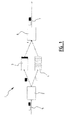
- Figure 1 illustrates a prior art network device 1 with a classifier 2, a first input-output buffer 3 and a second input-output buffer 4, wherein the classifier classifies incoming packets 5 in the buffers 3, 4 based on packet properties.
- buffer 3 is a priority buffer so that priority packages are classified into buffer 3 while other packets are classified into buffer 4.
- the scheduler 6 in figure 1 is a strict priority scheduler which prioritizes buffer 3 over buffer 4. In practice, if a packet is present in buffer 3, this packet will always be scheduled as next outgoing packet 7. As described above if the priority packet rate is too high and the priority queue cannot be emptied for a long time, this system might starve buffer 4 and non-priority packets.
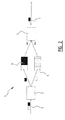
- Figure 2 illustrates a prior art network device 1 that is similar to the network device 1 in figure 1 .
- the scheduler 6 in figure 2 is a Weighted Round Robin scheduler which schedules packets according to a predetermined buffer order. For example, it might be configured to schedule, in cycles, 2 packets from buffer 4 and then 1 packet from buffer 3. Starvation is prevented, however no reduction in latency is provided.
- FIG 3 a system 1 with 2 queues is depicted.
- packets arrive 5 they receive a timestamp 8 (attached as additional info to the packet, based on the current time derived from a clock, preferably a monotonic clock), are classified 2 based on packet properties and are enqueued in one of the two FIFO queues 3, 4.
- the scheduler 6 is based on the sojourn time measurements done on the head packet of each queue.
- the timestamp of the first packets is subtracted from the current time (received from the clock) and identified by Qi. This is the sojourn time and is illustrated in the figure by blocks 9.
- the embodiment of figure 3 is extended with a Coupled active queue management AQM.
- the marking and dropping probability of the dequeued packet is calculated, as a function of some queuing property, in this case for instance also the sojourn time of both queues as illustrated by blocks 12.
- the throughput rates can be corrected, for instance to TCP fairness.
- queuing delay measurement in stead of using the timestamps per packet, that is based on byte-wise queue size and a throughput estimator.
- This or any other alternative implementation can also be used as a mechanism to determine the duration of a packet in a queue.
- a priority in terms of latency can be assigned to different types of traffic without the risk of starving the other traffic. The same is not possible by using for instance byte sized queue time. If only one packet is send in one queue, the byte size (if smaller than the threshold) will be always stay smaller, while the sojourn time is always increasing while not being scheduled, and will finally hit the threshold for scheduling.
- the delay is a function of both the scheduling rate and the size of the packets that were in the queue before it. In this way the delay can be balanced per flow, independent of both the number of flows in that traffic class and the scheduling rate of that traffic class.
- the scheduling rate/weight is constant per class, independent of the congestion level in each class, and compared to priority scheduling the delay of the second class is the delay of the sum of the delay in both classes. If the first priority class is congested, the second priority class will starve, which is not the case in the present invention.
- program storage devices e.g., digital data storage media, which are machine or computer readable and encode machine-executable or computer-executable programs of instructions, wherein said instructions perform some or all of the steps of said above-described methods.
- the program storage devices may be, e.g., digital memories, magnetic storage media such as a magnetic disks and magnetic tapes, hard drives, or optically readable digital data storage media.
- the embodiments are also intended to cover computers programmed to perform said steps of the above-described methods.
- processors may be provided through the use of dedicated hardware as well as hardware capable of executing software in association with appropriate software.
- the functions may be provided by a single dedicated processor, by a single shared processor, or by a plurality of individual processors, some of which may be shared.
- explicit use of the term "processor” or “controller” should not be construed to refer exclusively to hardware capable of executing software, and may implicitly include, without limitation, digital signal processor (DSP) hardware, network processor, application specific integrated circuit (ASIC), field programmable gate array (FPGA), read only memory (ROM) for storing software, random access memory (RAM), and non volatile storage.
- DSP digital signal processor
- ASIC application specific integrated circuit
- FPGA field programmable gate array
- ROM read only memory
- RAM random access memory
- any switches shown in the FIGS. are conceptual only. Their function may be carried out through the operation of program logic, through dedicated logic, through the interaction of program control and dedicated logic, or even manually, the particular technique being selectable by the implementer as more specifically understood from the context.
- any block diagrams herein represent conceptual views of illustrative circuitry embodying the principles of the invention.
- any flow charts, flow diagrams, state transition diagrams, pseudo code, and the like represent various processes which may be substantially represented in computer readable medium and so executed by a computer or processor, whether or not such computer or processor is explicitly shown.
Landscapes
- Engineering & Computer Science (AREA)
- Computer Networks & Wireless Communication (AREA)
- Signal Processing (AREA)
- Data Exchanges In Wide-Area Networks (AREA)
Abstract
- at least two input-output-buffers for queuing packets in the network device;
- a sojourn time calculator for calculating a sojourn related time for each head packet in the at least two input-output-buffers;
- a sojourn related time adaptor for, based on an adaptation function assigned to the corresponding input-output-buffer, adapting said sojourn related time into an adapted time for each head packet in the at least two input-output-buffers;
- a scheduler for scheduling outgoing packets based on the adapted time.
Description
- The present invention relates to scheduling of packages in network devices. More particularly, the invention relates to a scheduling mechanism optimized for priority and/or latency scheduling.
- Currently pure priority scheduling is often combined with a rate limiter (policing or shaping) to guarantee minimal throughput for lower priority traffic. Also Weighted Round Robin is applied to guarantee a specific minimal rate to different traffic classes, but this does not guarantee a latency prioritization. Both systems cannot be used for greedy traffic which is driven by end-system congestion control like Transmission Control Protocol TCP without losing the low latency advantage (current TCPs create big queues).
- Additionally, these solutions have fixed bandwidth limitations (in some cases as for weighted round robin, made relative to current link capacity if this fluctuates) and don't balance the weights over the classes according to the level of congestion (balance capacity to the number of flows that are active in each class).
- Alternatively a shared or coupled active queue management AQM can be applied on both queues to balance the flow rates which steers the congestion control algorithm in the end-systems by sending correct mark/drop signals. TCP can be congested controlled by dropping or marking packets, but there stay per flow at least 1 or 2 packets in flight, due to minimum window in the congestion control of (dc)tcp; if all packets were marked, their window will not be reduced below 1 packet, meaning that at least 1 or 2 unacknowledged packets are always sent by tcp. If more packets are in flight than the bandwidth delay product, they will end up in the queue of the bottleneck link. So this is certainly the case if there are more TCP flows active than the bandwidth delay product. If pure priority scheduling is used, the priority class will continuously have packets in the queue and lower priority flows will starve.
- It is an object of the present invention to provide a packet scheduling system that allows fair prioritization and/or latency without starving flows.
- To this end, the invention provides a network device for transmitting packets having packet properties, comprising:
- at least two input-output-buffers for queuing packets in the network device;
- a sojourn time calculator for calculating a sojourn related time for each head packet in the at least two input-output-buffers;
- a sojourn related time adaptor for, based on an adaptation function assigned to the corresponding input-output-buffer, adapting said sojourn related time into an adapted time for each head packet in the at least two input-output-buffers;
- a scheduler for scheduling outgoing packets based on the adapted time.
- The network device of the invention is adapted to schedule packets over different queues depending on the sojourn related time of the first packet in that queue. Per queue a different adaptation function can be applied to this sojourn related time. The queue with the biggest adapted value can be scheduled. Thereby the adaptation function allows the prioritization to be implemented while scheduling based on adapted sojourn related time allows fair scheduling.
- A lab test setup (using real residential gateways RGWs, Alcatel-Lucent ISAMs and Alcatel-Lucent Service Routers) showed that using a strict priority scheduler according to the prior art, it was possible to support only 15 parallel low latency flows on a 40Mbit link with a base RTT of 8ms (Bandwidth Delay Product is around 30 packets). If more flows are running in parallel, the non-prioritized flows get starved (priority queue is always full). If the base round trip time RTT is further reduced to for instance 4ms (by disabling some mechanisms on the physical layer) only 8 low priority flows will be supported. Using the mechanism of the invention, there is no limitation on the minimal Base RTT, nor the number of flows.
- Preferably, the network device further comprises a classifier to classify received packets into one of the at least two input-output buffers based on the packet properties. Thereby, packets can be prioritized by entering them into a predetermined buffer.
- Preferably the scheduler is adapted for scheduling the header packet with the highest or lowest adapted time as next outgoing packet. Such determination of highest or lowest adapted time can be easily implemented in the scheduler such that the scheduler operates efficiently and fast. Furthermore, such determination of highest or lowest adapted time can be implemented when a large number of input-output buffers are present in the network device.
- Preferably the sojourn time calculator and the sojourn related time adaptor are provided to periodically re-calculate the sojourn time and the adapted time for each head packet in the at least two input-output-buffers. By periodically re-calculating the sojourn time and the adapted time, the scheduler has up-to-date information allowing the scheduler to correctly schedule the outgoing packets.
- Preferably, the sojourn related time is based on the time a packet resides in the network device. Thereby, preferably the classifier is provided to add a timestamp to the received packets when classifying the received packets, and wherein the sojourn time calculator is provided to subtract the timestamp from a further timestamp determined at the moment of calculation. Alternatively, instead of the classifier, a timestamp adding means is provided to add the timestamp to the received packets. Adding a timestamp upon entry into the buffer, and subtracting the time in the timestamp from the current time is an easy way to measure the sojourn time of the packets in the buffer. Such mechanism is independent of packet size, queue length, network congestion and other influences.
- Preferably, the adaptation function comprises: adapted time Ta = a x Ts + b, wherein Ts is the sojourn time, and wherein a and b are predetermined first and second parameters defined for each of the at least two input-output-buffers. The first and second parameters are predetermined for each buffer of the at least one input-output buffers. Thereby, the priority mechanism can be predefined and designed. By calculating the adapted time, the scheduler can schedule outgoing packets based on the adapted time. In this context, it will be clear that alternatively any function, complex arithmetic operations or value mapping using a table can be used as adaptation function. Functions such as powers, exponential functions and log functions could be useful. The adaptation can also be done when enqueuing a packet. For instance the function Ta = Ts + b can be implemented by decrementing the enqueuing timestamp (=Te) by b, and the scheduler just can use the lowest timestamp without subtracting the current time (is the dequeuing time=Td, and Ts=Td-Te), as both Td can be eliminated when comparing both Ts times (and inverting the result due to the -Te). In case of a dual queue, the scheduler just needs to subtract both timestamps and schedule the packet from the first queue if the result is negative (or zero), otherwise the second. This is another embodiment of the present invention. Also with multiplications, there are possibilities to optimize. If for the first queue the adaptation function is Ta=(Ts+b)/a and for the second queue Ta=Ts, then at enqueuing of the second queue the following operation could be applied to the timestamp: Te=a.T+b (with T the current time). A second clock which could run (a-1) times faster (or the clock result T could be multiplied by (a-1)) could be subtracted extra from the 2 packet timestamp difference and again if the result is negative (or zero), the packet from the first queue will be scheduled. Both examples will reduce the dequeuing operations needed. In all embodiments, sojourn time is calculated, directly or indirectly, and an adaptation function is done, directly or indirectly so that all these embodiments are considered part of the present invention.
- Preferably for at least one of the at least two input-output-buffers the first parameter a deviates from 1 and/or the second parameter b deviates from 0. Thereby a difference in priority is built in, which allows priority scheduling based on an amended sojourn related time.
- The invention further relates to a method for scheduling packets in a network device for transmitting packets, wherein the method comprises the steps of:
- calculating a sojourn related time for each head packet in the at least two input-output buffers;
- adapting, based on an adaptation function assigned to the corresponding input-output buffer, said sojourn related time into an adapted time for each head packet in the at least two input-output buffers;
- scheduling outgoing packets based on the adapted time.
- The method describes the use of the network device according to the invention, which is described above. Therefore the advantages and effects described in relation to the network device equally apply to the method of the invention.
- Preferably, the step of scheduling comprises selecting the header packet with the highest or lowest adapted time as next outgoing packet.
- Preferably, at least one of the step of calculating and the step of adapting are periodically repeated to keep at least the adapted time up-to-date.
- Preferably, the method further comprises adding a timestamp to each received packet upon classifying the packet in the buffers.
- Preferably, the adaptation function is calculated so that adapted time Ta = a x Ts + b, wherein Ts is the sojourn related time, and wherein a and b are predetermined first and second parameters defined for each of the at least two input-output-buffers.
- The invention further relates to a computer readable storage medium comprising instructions, which, when executed cause a data processing apparatus to carry out the steps of the method of the invention.
- Some embodiments of apparatus and/or methods in accordance with embodiments of the present invention are now described, by way of example only, and with reference to the accompanying drawings, in which:
-
figure 1 illustrates a first priority scheduler according to the prior art; -
figure 2 illustrates a second priority scheduler according to the prior art; -
figure 3 illustrates a preferred embodiment of a scheduler according to the present invention; and -
figure 4 illustrates a further preferred embodiment of a scheduler according to the present invention. -
Figure 1 illustrates a priorart network device 1 with aclassifier 2, a first input-output buffer 3 and a second input-output buffer 4, wherein the classifier classifiesincoming packets 5 in thebuffers figure 1 ,buffer 3 is a priority buffer so that priority packages are classified intobuffer 3 while other packets are classified intobuffer 4. Thescheduler 6 infigure 1 is a strict priority scheduler which prioritizesbuffer 3 overbuffer 4. In practice, if a packet is present inbuffer 3, this packet will always be scheduled as nextoutgoing packet 7. As described above if the priority packet rate is too high and the priority queue cannot be emptied for a long time, this system might starvebuffer 4 and non-priority packets. -
Figure 2 illustrates a priorart network device 1 that is similar to thenetwork device 1 infigure 1 . Thescheduler 6 infigure 2 is a Weighted Round Robin scheduler which schedules packets according to a predetermined buffer order. For example, it might be configured to schedule, in cycles, 2 packets frombuffer 4 and then 1 packet frombuffer 3. Starvation is prevented, however no reduction in latency is provided. - In
figure 3 asystem 1 with 2 queues is depicted. When packets arrive 5 they receive a timestamp 8 (attached as additional info to the packet, based on the current time derived from a clock, preferably a monotonic clock), are classified 2 based on packet properties and are enqueued in one of the twoFIFO queues scheduler 6 is based on the sojourn time measurements done on the head packet of each queue. When a next packet can be send, the timestamp of the first packets is subtracted from the current time (received from the clock) and identified by Qi. This is the sojourn time and is illustrated in the figure byblocks 9. For each queue anadaptation function 10 can be defined (for instance q1=f(Q1)=Q1+50ms and q2=g(Q2)=Q2>>3=Q2/8). Then the resulting qi values are compared and the packet in the queue with the highest value is selected for scheduling as nextoutgoing packet 7. - The
adaptation function 10 can comprise a simple adaptation, for example to divide or multiply, optionally with a simple bit-shift operation, the value with a different number per queue, for example: q=Q<<3=Q*8, resulting in a FIFO-like queue with different queueing latency per queue, for example a ratio of 1 to 8. Also an offset can be added on some of the queues' sojourn time, for example: q=Q+10ms, resulting in a guarantee to have at least the respectively offset amount of time, in the example 10ms, less queuing delay for those queues compared to the others. Other functions are possible. - In
figure 4 the embodiment offigure 3 is extended with a Coupled active queue management AQM. Here additionally the marking and dropping probability of the dequeued packet is calculated, as a function of some queuing property, in this case for instance also the sojourn time of both queues as illustrated by blocks 12. By applying a different function per queue the throughput rates can be corrected, for instance to TCP fairness. For TCP, if the ratio of RTTs, round trip time, partially dependent on the increased queuing time, of 2 classes is X, the throughput ratio of the 2 classes will be 1/X. If TCP reno is used, the throughput r=1.22/(p^(1/2)*RTT), with p being the marking or dropping probability, and RTT the round trip time. To compensate a RTT ratio of X, a p ratio of 1/X^2 is needed. Taking base RTT (RTT without queuing delays) into account, one can define the correct mapping of marking/dropping probabilities for each individual actual queue sojourn time. Marking/dropping is shown in the figure by blocks 13. - There is an alternative queuing delay measurement, in stead of using the timestamps per packet, that is based on byte-wise queue size and a throughput estimator. This or any other alternative implementation can also be used as a mechanism to determine the duration of a packet in a queue.
- A priority in terms of latency can be assigned to different types of traffic without the risk of starving the other traffic. The same is not possible by using for instance byte sized queue time. If only one packet is send in one queue, the byte size (if smaller than the threshold) will be always stay smaller, while the sojourn time is always increasing while not being scheduled, and will finally hit the threshold for scheduling.
- Another advantage of the invention compared to other schedulers, is that the level of congestion can be balanced without the need to take the scheduling rates of the different queues into account. The delay is a function of both the scheduling rate and the size of the packets that were in the queue before it. In this way the delay can be balanced per flow, independent of both the number of flows in that traffic class and the scheduling rate of that traffic class. Compared with weighted round robin, the scheduling rate/weight is constant per class, independent of the congestion level in each class, and compared to priority scheduling the delay of the second class is the delay of the sum of the delay in both classes. If the first priority class is congested, the second priority class will starve, which is not the case in the present invention.
- A person of skill in the art would readily recognize that steps of various above-described methods can be performed by programmed computers. Herein, some embodiments are also intended to cover program storage devices, e.g., digital data storage media, which are machine or computer readable and encode machine-executable or computer-executable programs of instructions, wherein said instructions perform some or all of the steps of said above-described methods. The program storage devices may be, e.g., digital memories, magnetic storage media such as a magnetic disks and magnetic tapes, hard drives, or optically readable digital data storage media. The embodiments are also intended to cover computers programmed to perform said steps of the above-described methods.
- The description and drawings merely illustrate the principles of the invention. It will thus be appreciated that those skilled in the art will be able to devise various arrangements that, although not explicitly described or shown herein, embody the principles of the invention and are included within its spirit and scope. Furthermore, all examples recited herein are principally intended expressly to be only for pedagogical purposes to aid the reader in understanding the principles of the invention and the concepts contributed by the inventor(s) to furthering the art, and are to be construed as being without limitation to such specifically recited examples and conditions. Moreover, all statements herein reciting principles, aspects, and embodiments of the invention, as well as specific examples thereof, are intended to encompass equivalents thereof.
- The functions of the various elements shown in the FIGs., including any functional blocks labeled as "processors", may be provided through the use of dedicated hardware as well as hardware capable of executing software in association with appropriate software. When provided by a processor, the functions may be provided by a single dedicated processor, by a single shared processor, or by a plurality of individual processors, some of which may be shared. Moreover, explicit use of the term "processor" or "controller" should not be construed to refer exclusively to hardware capable of executing software, and may implicitly include, without limitation, digital signal processor (DSP) hardware, network processor, application specific integrated circuit (ASIC), field programmable gate array (FPGA), read only memory (ROM) for storing software, random access memory (RAM), and non volatile storage. Other hardware, conventional and/or custom, may also be included. Similarly, any switches shown in the FIGS. are conceptual only. Their function may be carried out through the operation of program logic, through dedicated logic, through the interaction of program control and dedicated logic, or even manually, the particular technique being selectable by the implementer as more specifically understood from the context.
- It should be appreciated by those skilled in the art that any block diagrams herein represent conceptual views of illustrative circuitry embodying the principles of the invention. Similarly, it will be appreciated that any flow charts, flow diagrams, state transition diagrams, pseudo code, and the like represent various processes which may be substantially represented in computer readable medium and so executed by a computer or processor, whether or not such computer or processor is explicitly shown.
Claims (15)
- Network device for transmitting packets having packet properties, comprising:- at least two input-output-buffers for queuing packets in the network device;- a sojourn time calculator for calculating a sojourn related time for each head packet in the at least two input-output-buffers;- a sojourn related time adaptor for, based on an adaptation function assigned to the corresponding input-output-buffer, adapting said sojourn related time into an adapted time for each head packet in the at least two input-output-buffers;- a scheduler for scheduling outgoing packets based on the adapted time.
- Network device according to claim 1, wherein the network device further comprises a classifier to classify received packets into one of the at least two input-output buffers based on the packet properties.
- Network device according to claim 1 or 2, wherein the scheduler is adapted for scheduling the header packet with the highest or lowest adapted time as next outgoing packet.
- Network device according to any one of the previous claims, wherein the sojourn time calculator and the sojourn related time adaptor are provided to periodically re-calculate at least the adapted time for each head packet in the at least two input-output-buffers.
- Network device according to any one of the previous claims, wherein the sojourn related time is based on the time a packet resides in the network device.
- Network device according to claim 5, wherein the network device further comprises a timestamp adding means to add a timestamp to the received packets when classifying the received packets, and wherein the sojourn time calculator is provided to subtract the timestamp from a further timestamp determined at the moment of calculation.
- Network device according to any one of the previous claims, wherein the adaptation function comprises: adapted time Ta = a x Ts + b, wherein Ts is the sojourn time, and wherein a and b are predetermined first and second parameters defined for each of the at least two input-output-buffers.
- Network device according to claim 7, wherein for at least one of the at least two input-output-buffers the first parameter a deviates from 1 and/or the second parameter b deviates from 0.
- Method for scheduling packets in a network device for transmitting packets, wherein the method comprises the steps of:- calculating a sojourn related time for each head packet in the at least two input-output buffers;- adapting, based on an adaptation function assigned to the corresponding input-output buffer, said sojourn related time into an adapted time for each head packet in the at least two input-output buffers;- scheduling outgoing packets based on the adapted time.
- Method according to claim 9, wherein the step of scheduling comprises selecting the header packet with the highest or lowest adapted time as next outgoing packet.
- Method according to claim 9 or 10, wherein at least one of the step of calculating and the step of adapting are periodically repeated to keep at least the adapted time up-to-date.
- Method according to any one of the claims 9-11, wherein the method further comprises adding a timestamp to each received packet upon classifying the packet in the buffers.
- Method according to any one of the claims 9-12, wherein the adaptation function is calculated so that adapted time Ta = a x Ts + b, wherein Ts is the sojourn related time, and wherein a and b are predetermined first and second parameters defined for each of the at least two input-output-buffers.
- A computer readable storage medium comprising instructions, which, when executed cause a data processing apparatus to carry out the steps of the method of any one of the claims 9-13.
- Packet queuing device, comprising:- at least two input-output-buffers for queuing packets;- a sojourn time calculator for calculating a sojourn related time for each head packet in the at least two input-output-buffers;- a sojourn related time adaptor for, based on an adaptation function assigned to the corresponding input-output-buffer, adapting said sojourn related time into an adapted time for each head packet in the at least two input-output-buffers;- a scheduler for scheduling outgoing packets based on the adapted time
Priority Applications (4)
| Application Number | Priority Date | Filing Date | Title |
|---|---|---|---|
| EP15305405.1A EP3070893B1 (en) | 2015-03-20 | 2015-03-20 | Scheduling of packets in network devices |
| PCT/EP2016/055812 WO2016150813A1 (en) | 2015-03-20 | 2016-03-17 | Scheduling of packets in network devices |
| US15/553,632 US10425347B2 (en) | 2015-03-20 | 2016-03-17 | Scheduling of packets in network devices |
| CN201680016656.XA CN107431667B (en) | 2015-03-20 | 2016-03-17 | Network device, method and storage medium for transmitting data packet |
Applications Claiming Priority (1)
| Application Number | Priority Date | Filing Date | Title |
|---|---|---|---|
| EP15305405.1A EP3070893B1 (en) | 2015-03-20 | 2015-03-20 | Scheduling of packets in network devices |
Publications (2)
| Publication Number | Publication Date |
|---|---|
| EP3070893A1 true EP3070893A1 (en) | 2016-09-21 |
| EP3070893B1 EP3070893B1 (en) | 2017-10-04 |
Family
ID=53051777
Family Applications (1)
| Application Number | Title | Priority Date | Filing Date |
|---|---|---|---|
| EP15305405.1A Not-in-force EP3070893B1 (en) | 2015-03-20 | 2015-03-20 | Scheduling of packets in network devices |
Country Status (4)
| Country | Link |
|---|---|
| US (1) | US10425347B2 (en) |
| EP (1) | EP3070893B1 (en) |
| CN (1) | CN107431667B (en) |
| WO (1) | WO2016150813A1 (en) |
Cited By (2)
| Publication number | Priority date | Publication date | Assignee | Title |
|---|---|---|---|---|
| WO2019014591A1 (en) * | 2017-07-14 | 2019-01-17 | Alibaba Group Holding Limted | Blockchain-based data processing method and device |
| US10523577B2 (en) | 2017-05-23 | 2019-12-31 | Cable Television Laboratories, Inc | Systems and methods for low latency DOCSIS queueing and scheduling |
Families Citing this family (10)
| Publication number | Priority date | Publication date | Assignee | Title |
|---|---|---|---|---|
| US10382380B1 (en) | 2016-11-17 | 2019-08-13 | Amazon Technologies, Inc. | Workload management service for first-in first-out queues for network-accessible queuing and messaging services |
| US10659364B2 (en) * | 2017-04-19 | 2020-05-19 | Nxp Usa, Inc. | Hybrid AQM controller using RBF for queue utilization approximation as a non-linear system |
| CN108494698B (en) * | 2017-12-13 | 2022-02-25 | 天地伟业技术有限公司 | Congestion control method based on transmission rate |
| CN108173784B (en) * | 2017-12-29 | 2021-12-28 | 湖南恒茂高科股份有限公司 | Aging method and device for data packet cache of switch |
| CN109088829B (en) * | 2018-09-20 | 2022-09-20 | 南方科技大学 | Data scheduling method, device, storage medium and equipment |
| CN112311693B (en) * | 2019-07-26 | 2022-08-26 | 华为技术有限公司 | Service data transmission method and device |
| CN114095453A (en) | 2020-07-31 | 2022-02-25 | 华为技术有限公司 | Method and related device for scheduling data packets |
| CN114095397A (en) * | 2020-07-31 | 2022-02-25 | 华为技术有限公司 | Method, device and equipment for transmitting message and readable storage medium |
| CN112118191B (en) * | 2020-09-18 | 2023-07-28 | 首都师范大学 | Multipath transmission congestion control method, device, control equipment and storage medium |
| CN112822268B (en) * | 2021-01-06 | 2021-11-16 | 大连理工大学 | A method for multi-service coexistence and IP layer data packet scheduling in the Industrial Internet of Things |
Citations (4)
| Publication number | Priority date | Publication date | Assignee | Title |
|---|---|---|---|---|
| EP1054544A2 (en) * | 1999-05-21 | 2000-11-22 | Hitachi, Ltd. | Packet forwarding device and packet priority setting method |
| EP1303083A1 (en) * | 2000-06-29 | 2003-04-16 | NEC Corporation | Packet scheduling apparatus |
| WO2004051906A2 (en) * | 2002-11-27 | 2004-06-17 | Rgb Media, Inc. | Apparatus and method for dynamic channel mapping and optimized scheduling of data packets |
| WO2011076239A1 (en) * | 2009-12-24 | 2011-06-30 | Telecom Italia S.P.A. | A method of scheduling transmission in a communication network, corresponding communication node and computer program product |
Family Cites Families (9)
| Publication number | Priority date | Publication date | Assignee | Title |
|---|---|---|---|---|
| US7142513B2 (en) * | 2002-05-23 | 2006-11-28 | Yea-Li Sun | Method and multi-queue packet scheduling system for managing network packet traffic with minimum performance guarantees and maximum service rate control |
| CN1306759C (en) * | 2003-09-28 | 2007-03-21 | 中国科学院研究生院 | Method for exchange system for inputting end of two-stage queueing structure |
| US7443823B2 (en) * | 2003-11-06 | 2008-10-28 | Interdigital Technology Corporation | Access points with selective communication rate and scheduling control and related methods for wireless local area networks (WLANs) |
| US8265091B2 (en) * | 2004-08-18 | 2012-09-11 | Avaya Inc. | Traffic multiplexing using timestamping |
| US20060187934A1 (en) * | 2005-02-18 | 2006-08-24 | Jordan Lu | Method and apparatus for monitoring and improving performance of a queuing scheduler |
| US20110090805A1 (en) * | 2009-10-21 | 2011-04-21 | Hong Kong Applied Science And Technology Research Institute Co., Ltd. | Systems and methods providing a decoupled quality of service architecture for communications |
| US9686201B2 (en) * | 2013-01-25 | 2017-06-20 | Cable Television Laboratories, Inc. | Predictive management of a network buffer |
| EP2869514A1 (en) * | 2013-10-30 | 2015-05-06 | Alcatel Lucent | Method and system for queue management in a packet-switched network |
| US9426215B2 (en) * | 2014-04-08 | 2016-08-23 | Aol Inc. | Determining load state of remote systems using delay and packet loss rate |
-
2015
- 2015-03-20 EP EP15305405.1A patent/EP3070893B1/en not_active Not-in-force
-
2016
- 2016-03-17 CN CN201680016656.XA patent/CN107431667B/en not_active Expired - Fee Related
- 2016-03-17 WO PCT/EP2016/055812 patent/WO2016150813A1/en not_active Ceased
- 2016-03-17 US US15/553,632 patent/US10425347B2/en not_active Expired - Fee Related
Patent Citations (4)
| Publication number | Priority date | Publication date | Assignee | Title |
|---|---|---|---|---|
| EP1054544A2 (en) * | 1999-05-21 | 2000-11-22 | Hitachi, Ltd. | Packet forwarding device and packet priority setting method |
| EP1303083A1 (en) * | 2000-06-29 | 2003-04-16 | NEC Corporation | Packet scheduling apparatus |
| WO2004051906A2 (en) * | 2002-11-27 | 2004-06-17 | Rgb Media, Inc. | Apparatus and method for dynamic channel mapping and optimized scheduling of data packets |
| WO2011076239A1 (en) * | 2009-12-24 | 2011-06-30 | Telecom Italia S.P.A. | A method of scheduling transmission in a communication network, corresponding communication node and computer program product |
Cited By (4)
| Publication number | Priority date | Publication date | Assignee | Title |
|---|---|---|---|---|
| US10523577B2 (en) | 2017-05-23 | 2019-12-31 | Cable Television Laboratories, Inc | Systems and methods for low latency DOCSIS queueing and scheduling |
| WO2019014591A1 (en) * | 2017-07-14 | 2019-01-17 | Alibaba Group Holding Limted | Blockchain-based data processing method and device |
| US11269916B2 (en) | 2017-07-14 | 2022-03-08 | Advanced New Technologies Co., Ltd. | Blockchain-based data processing method and device |
| US11947564B2 (en) | 2017-07-14 | 2024-04-02 | Advanced New Technologies Co., Ltd. | Blockchain-based data processing method and device |
Also Published As
| Publication number | Publication date |
|---|---|
| CN107431667A (en) | 2017-12-01 |
| EP3070893B1 (en) | 2017-10-04 |
| CN107431667B (en) | 2021-02-02 |
| WO2016150813A1 (en) | 2016-09-29 |
| US20180054394A1 (en) | 2018-02-22 |
| US10425347B2 (en) | 2019-09-24 |
Similar Documents
| Publication | Publication Date | Title |
|---|---|---|
| US10425347B2 (en) | Scheduling of packets in network devices | |
| US10764215B2 (en) | Programmable broadband gateway hierarchical output queueing | |
| EP2310946B1 (en) | Dynamic setting of optimal buffer sizes in ip networks | |
| US10516620B2 (en) | Congestion avoidance in a network device | |
| US10594617B2 (en) | Probabilistic normalized congestion indication based on packet size | |
| EP2742656B1 (en) | Scheduling under congestion with traffic load-based scaling | |
| EP3073680B1 (en) | Methods, queueing system, network element and network system for queueing and processing of packets | |
| US8218437B2 (en) | Shared shaping of network traffic | |
| EP3076618B1 (en) | A computer implemented method, a system and computer programs for congestion control in a transport node of a communication network | |
| US7843825B2 (en) | Method and system for packet rate shaping | |
| EP2985963A1 (en) | Packet scheduling networking device | |
| EP1232627B1 (en) | Method and system for controlling transmission of packets in computer networks | |
| EP2996293B1 (en) | A packet scheduling networking device for deadline aware data flows | |
| US20200014630A1 (en) | Method To Limit Packet Fetching With Uncertain Packet Sizes To Control Line Rate | |
| Astuti | Packet handling | |
| WO2023151772A1 (en) | Device and method for deterministic packet scheduling | |
| RU2849161C1 (en) | Method for fair queue management taking into account distance metrics and a device for implementing it | |
| US20240406117A1 (en) | Virtual-time rate for managing queues | |
| KR100462475B1 (en) | Apparatus for queue scheduling using linear control and method therefor | |
| Nádas | Transport Network Traffic Management in Access Networks | |
| Kiameso et al. | Analysis of prioritized scheduling of assured forwarding in DiffServ Architectures | |
| Crawford et al. | Fairness measurement for adaptive packet schedulers | |
| Foag et al. | Queuing algorithm for speculative Network Processors | |
| Mohamed | Some Active Queue Management Methods for Controlling Packet Queueing Delay. Design and Performance Evaluation of Some New Versions of Active Queue Management Schemes for Controlling Packet Queueing Delay in a Buffer to Satisfy Quality of Service Requirements for Real-time Multimedia Applications. |
Legal Events
| Date | Code | Title | Description |
|---|---|---|---|
| PUAI | Public reference made under article 153(3) epc to a published international application that has entered the european phase |
Free format text: ORIGINAL CODE: 0009012 |
|
| AK | Designated contracting states |
Kind code of ref document: A1 Designated state(s): AL AT BE BG CH CY CZ DE DK EE ES FI FR GB GR HR HU IE IS IT LI LT LU LV MC MK MT NL NO PL PT RO RS SE SI SK SM TR |
|
| AX | Request for extension of the european patent |
Extension state: BA ME |
|
| 17P | Request for examination filed |
Effective date: 20170321 |
|
| RBV | Designated contracting states (corrected) |
Designated state(s): AL AT BE BG CH CY CZ DE DK EE ES FI FR GB GR HR HU IE IS IT LI LT LU LV MC MK MT NL NO PL PT RO RS SE SI SK SM TR |
|
| GRAP | Despatch of communication of intention to grant a patent |
Free format text: ORIGINAL CODE: EPIDOSNIGR1 |
|
| INTG | Intention to grant announced |
Effective date: 20170509 |
|
| GRAS | Grant fee paid |
Free format text: ORIGINAL CODE: EPIDOSNIGR3 |
|
| GRAA | (expected) grant |
Free format text: ORIGINAL CODE: 0009210 |
|
| AK | Designated contracting states |
Kind code of ref document: B1 Designated state(s): AL AT BE BG CH CY CZ DE DK EE ES FI FR GB GR HR HU IE IS IT LI LT LU LV MC MK MT NL NO PL PT RO RS SE SI SK SM TR |
|
| REG | Reference to a national code |
Ref country code: GB Ref legal event code: FG4D |
|
| REG | Reference to a national code |
Ref country code: CH Ref legal event code: EP |
|
| REG | Reference to a national code |
Ref country code: AT Ref legal event code: REF Ref document number: 935009 Country of ref document: AT Kind code of ref document: T Effective date: 20171015 |
|
| REG | Reference to a national code |
Ref country code: IE Ref legal event code: FG4D |
|
| REG | Reference to a national code |
Ref country code: DE Ref legal event code: R096 Ref document number: 602015005181 Country of ref document: DE |
|
| REG | Reference to a national code |
Ref country code: NL Ref legal event code: MP Effective date: 20171004 |
|
| REG | Reference to a national code |
Ref country code: LT Ref legal event code: MG4D |
|
| REG | Reference to a national code |
Ref country code: AT Ref legal event code: MK05 Ref document number: 935009 Country of ref document: AT Kind code of ref document: T Effective date: 20171004 |
|
| REG | Reference to a national code |
Ref country code: CH Ref legal event code: PCOW Free format text: NEW ADDRESS: SITE NOKIA PARIS SACLAY ROUTE DE VILLEJUST, 91620 NOZAY (FR) |
|
| PG25 | Lapsed in a contracting state [announced via postgrant information from national office to epo] |
Ref country code: NL Free format text: LAPSE BECAUSE OF FAILURE TO SUBMIT A TRANSLATION OF THE DESCRIPTION OR TO PAY THE FEE WITHIN THE PRESCRIBED TIME-LIMIT Effective date: 20171004 |
|
| RAP2 | Party data changed (patent owner data changed or rights of a patent transferred) |
Owner name: ALCATEL LUCENT |
|
| PG25 | Lapsed in a contracting state [announced via postgrant information from national office to epo] |
Ref country code: NO Free format text: LAPSE BECAUSE OF FAILURE TO SUBMIT A TRANSLATION OF THE DESCRIPTION OR TO PAY THE FEE WITHIN THE PRESCRIBED TIME-LIMIT Effective date: 20180104 Ref country code: SE Free format text: LAPSE BECAUSE OF FAILURE TO SUBMIT A TRANSLATION OF THE DESCRIPTION OR TO PAY THE FEE WITHIN THE PRESCRIBED TIME-LIMIT Effective date: 20171004 Ref country code: LT Free format text: LAPSE BECAUSE OF FAILURE TO SUBMIT A TRANSLATION OF THE DESCRIPTION OR TO PAY THE FEE WITHIN THE PRESCRIBED TIME-LIMIT Effective date: 20171004 Ref country code: FI Free format text: LAPSE BECAUSE OF FAILURE TO SUBMIT A TRANSLATION OF THE DESCRIPTION OR TO PAY THE FEE WITHIN THE PRESCRIBED TIME-LIMIT Effective date: 20171004 Ref country code: ES Free format text: LAPSE BECAUSE OF FAILURE TO SUBMIT A TRANSLATION OF THE DESCRIPTION OR TO PAY THE FEE WITHIN THE PRESCRIBED TIME-LIMIT Effective date: 20171004 |
|
| PG25 | Lapsed in a contracting state [announced via postgrant information from national office to epo] |
Ref country code: GR Free format text: LAPSE BECAUSE OF FAILURE TO SUBMIT A TRANSLATION OF THE DESCRIPTION OR TO PAY THE FEE WITHIN THE PRESCRIBED TIME-LIMIT Effective date: 20180105 Ref country code: LV Free format text: LAPSE BECAUSE OF FAILURE TO SUBMIT A TRANSLATION OF THE DESCRIPTION OR TO PAY THE FEE WITHIN THE PRESCRIBED TIME-LIMIT Effective date: 20171004 Ref country code: RS Free format text: LAPSE BECAUSE OF FAILURE TO SUBMIT A TRANSLATION OF THE DESCRIPTION OR TO PAY THE FEE WITHIN THE PRESCRIBED TIME-LIMIT Effective date: 20171004 Ref country code: BG Free format text: LAPSE BECAUSE OF FAILURE TO SUBMIT A TRANSLATION OF THE DESCRIPTION OR TO PAY THE FEE WITHIN THE PRESCRIBED TIME-LIMIT Effective date: 20180104 Ref country code: IS Free format text: LAPSE BECAUSE OF FAILURE TO SUBMIT A TRANSLATION OF THE DESCRIPTION OR TO PAY THE FEE WITHIN THE PRESCRIBED TIME-LIMIT Effective date: 20180204 Ref country code: HR Free format text: LAPSE BECAUSE OF FAILURE TO SUBMIT A TRANSLATION OF THE DESCRIPTION OR TO PAY THE FEE WITHIN THE PRESCRIBED TIME-LIMIT Effective date: 20171004 Ref country code: AT Free format text: LAPSE BECAUSE OF FAILURE TO SUBMIT A TRANSLATION OF THE DESCRIPTION OR TO PAY THE FEE WITHIN THE PRESCRIBED TIME-LIMIT Effective date: 20171004 |
|
| REG | Reference to a national code |
Ref country code: DE Ref legal event code: R097 Ref document number: 602015005181 Country of ref document: DE |
|
| PG25 | Lapsed in a contracting state [announced via postgrant information from national office to epo] |
Ref country code: EE Free format text: LAPSE BECAUSE OF FAILURE TO SUBMIT A TRANSLATION OF THE DESCRIPTION OR TO PAY THE FEE WITHIN THE PRESCRIBED TIME-LIMIT Effective date: 20171004 Ref country code: DK Free format text: LAPSE BECAUSE OF FAILURE TO SUBMIT A TRANSLATION OF THE DESCRIPTION OR TO PAY THE FEE WITHIN THE PRESCRIBED TIME-LIMIT Effective date: 20171004 Ref country code: CZ Free format text: LAPSE BECAUSE OF FAILURE TO SUBMIT A TRANSLATION OF THE DESCRIPTION OR TO PAY THE FEE WITHIN THE PRESCRIBED TIME-LIMIT Effective date: 20171004 Ref country code: SK Free format text: LAPSE BECAUSE OF FAILURE TO SUBMIT A TRANSLATION OF THE DESCRIPTION OR TO PAY THE FEE WITHIN THE PRESCRIBED TIME-LIMIT Effective date: 20171004 |
|
| PLBE | No opposition filed within time limit |
Free format text: ORIGINAL CODE: 0009261 |
|
| STAA | Information on the status of an ep patent application or granted ep patent |
Free format text: STATUS: NO OPPOSITION FILED WITHIN TIME LIMIT |
|
| PG25 | Lapsed in a contracting state [announced via postgrant information from national office to epo] |
Ref country code: PL Free format text: LAPSE BECAUSE OF FAILURE TO SUBMIT A TRANSLATION OF THE DESCRIPTION OR TO PAY THE FEE WITHIN THE PRESCRIBED TIME-LIMIT Effective date: 20171004 Ref country code: SM Free format text: LAPSE BECAUSE OF FAILURE TO SUBMIT A TRANSLATION OF THE DESCRIPTION OR TO PAY THE FEE WITHIN THE PRESCRIBED TIME-LIMIT Effective date: 20171004 Ref country code: RO Free format text: LAPSE BECAUSE OF FAILURE TO SUBMIT A TRANSLATION OF THE DESCRIPTION OR TO PAY THE FEE WITHIN THE PRESCRIBED TIME-LIMIT Effective date: 20171004 Ref country code: IT Free format text: LAPSE BECAUSE OF FAILURE TO SUBMIT A TRANSLATION OF THE DESCRIPTION OR TO PAY THE FEE WITHIN THE PRESCRIBED TIME-LIMIT Effective date: 20171004 |
|
| 26N | No opposition filed |
Effective date: 20180705 |
|
| REG | Reference to a national code |
Ref country code: DE Ref legal event code: R119 Ref document number: 602015005181 Country of ref document: DE |
|
| REG | Reference to a national code |
Ref country code: CH Ref legal event code: PL |
|
| PG25 | Lapsed in a contracting state [announced via postgrant information from national office to epo] |
Ref country code: MC Free format text: LAPSE BECAUSE OF FAILURE TO SUBMIT A TRANSLATION OF THE DESCRIPTION OR TO PAY THE FEE WITHIN THE PRESCRIBED TIME-LIMIT Effective date: 20171004 Ref country code: SI Free format text: LAPSE BECAUSE OF FAILURE TO SUBMIT A TRANSLATION OF THE DESCRIPTION OR TO PAY THE FEE WITHIN THE PRESCRIBED TIME-LIMIT Effective date: 20171004 |
|
| REG | Reference to a national code |
Ref country code: BE Ref legal event code: MM Effective date: 20180331 |
|
| REG | Reference to a national code |
Ref country code: IE Ref legal event code: MM4A |
|
| PG25 | Lapsed in a contracting state [announced via postgrant information from national office to epo] |
Ref country code: LU Free format text: LAPSE BECAUSE OF NON-PAYMENT OF DUE FEES Effective date: 20180320 |
|
| PG25 | Lapsed in a contracting state [announced via postgrant information from national office to epo] |
Ref country code: DE Free format text: LAPSE BECAUSE OF NON-PAYMENT OF DUE FEES Effective date: 20181002 Ref country code: IE Free format text: LAPSE BECAUSE OF NON-PAYMENT OF DUE FEES Effective date: 20180320 |
|
| PG25 | Lapsed in a contracting state [announced via postgrant information from national office to epo] |
Ref country code: LI Free format text: LAPSE BECAUSE OF NON-PAYMENT OF DUE FEES Effective date: 20180331 Ref country code: CH Free format text: LAPSE BECAUSE OF NON-PAYMENT OF DUE FEES Effective date: 20180331 Ref country code: BE Free format text: LAPSE BECAUSE OF NON-PAYMENT OF DUE FEES Effective date: 20180331 |
|
| PG25 | Lapsed in a contracting state [announced via postgrant information from national office to epo] |
Ref country code: FR Free format text: LAPSE BECAUSE OF NON-PAYMENT OF DUE FEES Effective date: 20180331 |
|
| REG | Reference to a national code |
Ref country code: GB Ref legal event code: 732E Free format text: REGISTERED BETWEEN 20190418 AND 20190426 |
|
| GBPC | Gb: european patent ceased through non-payment of renewal fee |
Effective date: 20190320 |
|
| PG25 | Lapsed in a contracting state [announced via postgrant information from national office to epo] |
Ref country code: MT Free format text: LAPSE BECAUSE OF NON-PAYMENT OF DUE FEES Effective date: 20180320 Ref country code: GB Free format text: LAPSE BECAUSE OF NON-PAYMENT OF DUE FEES Effective date: 20190320 |
|
| PG25 | Lapsed in a contracting state [announced via postgrant information from national office to epo] |
Ref country code: TR Free format text: LAPSE BECAUSE OF FAILURE TO SUBMIT A TRANSLATION OF THE DESCRIPTION OR TO PAY THE FEE WITHIN THE PRESCRIBED TIME-LIMIT Effective date: 20171004 |
|
| PG25 | Lapsed in a contracting state [announced via postgrant information from national office to epo] |
Ref country code: PT Free format text: LAPSE BECAUSE OF FAILURE TO SUBMIT A TRANSLATION OF THE DESCRIPTION OR TO PAY THE FEE WITHIN THE PRESCRIBED TIME-LIMIT Effective date: 20171004 |
|
| PG25 | Lapsed in a contracting state [announced via postgrant information from national office to epo] |
Ref country code: HU Free format text: LAPSE BECAUSE OF FAILURE TO SUBMIT A TRANSLATION OF THE DESCRIPTION OR TO PAY THE FEE WITHIN THE PRESCRIBED TIME-LIMIT; INVALID AB INITIO Effective date: 20150320 Ref country code: MK Free format text: LAPSE BECAUSE OF NON-PAYMENT OF DUE FEES Effective date: 20171004 Ref country code: CY Free format text: LAPSE BECAUSE OF FAILURE TO SUBMIT A TRANSLATION OF THE DESCRIPTION OR TO PAY THE FEE WITHIN THE PRESCRIBED TIME-LIMIT Effective date: 20171004 |
|
| PG25 | Lapsed in a contracting state [announced via postgrant information from national office to epo] |
Ref country code: AL Free format text: LAPSE BECAUSE OF FAILURE TO SUBMIT A TRANSLATION OF THE DESCRIPTION OR TO PAY THE FEE WITHIN THE PRESCRIBED TIME-LIMIT Effective date: 20171004 |