EP3070616A1 - Search result evaluation system, navigation system, and search result evaluation method - Google Patents
Search result evaluation system, navigation system, and search result evaluation method Download PDFInfo
- Publication number
- EP3070616A1 EP3070616A1 EP14862537.9A EP14862537A EP3070616A1 EP 3070616 A1 EP3070616 A1 EP 3070616A1 EP 14862537 A EP14862537 A EP 14862537A EP 3070616 A1 EP3070616 A1 EP 3070616A1
- Authority
- EP
- European Patent Office
- Prior art keywords
- search
- query
- search result
- rules
- unit
- Prior art date
- Legal status (The legal status is an assumption and is not a legal conclusion. Google has not performed a legal analysis and makes no representation as to the accuracy of the status listed.)
- Ceased
Links
Images





Classifications
-
- G—PHYSICS
- G06—COMPUTING OR CALCULATING; COUNTING
- G06F—ELECTRIC DIGITAL DATA PROCESSING
- G06F16/00—Information retrieval; Database structures therefor; File system structures therefor
- G06F16/20—Information retrieval; Database structures therefor; File system structures therefor of structured data, e.g. relational data
- G06F16/24—Querying
- G06F16/245—Query processing
- G06F16/2453—Query optimisation
-
- G—PHYSICS
- G01—MEASURING; TESTING
- G01C—MEASURING DISTANCES, LEVELS OR BEARINGS; SURVEYING; NAVIGATION; GYROSCOPIC INSTRUMENTS; PHOTOGRAMMETRY OR VIDEOGRAMMETRY
- G01C21/00—Navigation; Navigational instruments not provided for in groups G01C1/00 - G01C19/00
- G01C21/26—Navigation; Navigational instruments not provided for in groups G01C1/00 - G01C19/00 specially adapted for navigation in a road network
- G01C21/34—Route searching; Route guidance
- G01C21/36—Input/output arrangements for on-board computers
- G01C21/3605—Destination input or retrieval
-
- G—PHYSICS
- G01—MEASURING; TESTING
- G01C—MEASURING DISTANCES, LEVELS OR BEARINGS; SURVEYING; NAVIGATION; GYROSCOPIC INSTRUMENTS; PHOTOGRAMMETRY OR VIDEOGRAMMETRY
- G01C21/00—Navigation; Navigational instruments not provided for in groups G01C1/00 - G01C19/00
- G01C21/26—Navigation; Navigational instruments not provided for in groups G01C1/00 - G01C19/00 specially adapted for navigation in a road network
- G01C21/34—Route searching; Route guidance
- G01C21/36—Input/output arrangements for on-board computers
- G01C21/3605—Destination input or retrieval
- G01C21/3608—Destination input or retrieval using speech input, e.g. using speech recognition
-
- G—PHYSICS
- G06—COMPUTING OR CALCULATING; COUNTING
- G06F—ELECTRIC DIGITAL DATA PROCESSING
- G06F16/00—Information retrieval; Database structures therefor; File system structures therefor
- G06F16/20—Information retrieval; Database structures therefor; File system structures therefor of structured data, e.g. relational data
- G06F16/24—Querying
- G06F16/242—Query formulation
- G06F16/2423—Interactive query statement specification based on a database schema
-
- G—PHYSICS
- G06—COMPUTING OR CALCULATING; COUNTING
- G06F—ELECTRIC DIGITAL DATA PROCESSING
- G06F16/00—Information retrieval; Database structures therefor; File system structures therefor
- G06F16/20—Information retrieval; Database structures therefor; File system structures therefor of structured data, e.g. relational data
- G06F16/29—Geographical information databases
-
- G—PHYSICS
- G06—COMPUTING OR CALCULATING; COUNTING
- G06F—ELECTRIC DIGITAL DATA PROCESSING
- G06F16/00—Information retrieval; Database structures therefor; File system structures therefor
- G06F16/90—Details of database functions independent of the retrieved data types
- G06F16/903—Querying
- G06F16/90335—Query processing
-
- G—PHYSICS
- G06—COMPUTING OR CALCULATING; COUNTING
- G06F—ELECTRIC DIGITAL DATA PROCESSING
- G06F16/00—Information retrieval; Database structures therefor; File system structures therefor
- G06F16/90—Details of database functions independent of the retrieved data types
- G06F16/95—Retrieval from the web
- G06F16/953—Querying, e.g. by the use of web search engines
- G06F16/9537—Spatial or temporal dependent retrieval, e.g. spatiotemporal queries
Definitions
- JP 2011-22873 A is a disclosure of the background art of such a technical field. JP 2011-22873 A discloses the following: "By determining the region and designated object in a table to be updated on the basis of location search logs, a search that prioritizes distance is applied only to prescribed objects without too much effort.
- a determination means 20 determines whether the designated object belongs to a specific business type on the basis of a specific business table 15, prior to location search.
- a weighting modification means 30 temporarily modifies the weighting of each evaluation item used for search such that distance is prioritized when a location search is requested for which it is determined that the object belongs to the specific business type (see abstract)."
- Patent Literature 1 JP 2011-22873 A
- An object of the present invention is to provide a search result evaluation system by which it is possible to detect immediately changes in behavior of a search device and to handle such changes such that the changes do not result in inconvenience for users of the search device.
- a representative example of the present invention is a search result evaluation system connected with a search device and that evaluates search results of the search device, the search result evaluation system including: a search unit that transmits a search query to the search device; and an evaluation unit that, if the evaluation unit receives search results from the search device, determines whether or not specifications of the search device have been modified, by evaluating the received search results, wherein, if the evaluation unit determines that the specifications of the search device have been modified, the evaluation unit outputs an anomaly signal to notify a manager of the search result evaluation system that the specifications of the search device have been modified.
- the voice recognition server 1160 converts voice data from a user into text data.
- the establishment search server 1170 receives a search query from the vehicle-installed device 1010 and searches establishments on the basis of the received search query.
- the microphone 1020 collects speech sounds from a user.
- the speech sounds collected by the microphone 1020 are used for voice recognition by the voice recognition server 1160.
- the touch panel 1030 senses information from when a user touches the display screen.
- the display screen 1040 displays information such as images and characters.
- the speaker 1050 outputs sound.
- the GPS unit 1060 obtains positional information of the vehicle in which the vehicle-installed device 1010 is installed.
- the communication unit 1110 is connected to the vehicle-installed device 1010 through the communication network 1090 and the communication device 1080, and communicates information with the vehicle-installed device 1010.
- the communication unit 1150 is connected to the voice recognition server 1160 and the establishment search server 1170, and communicates information with the voice recognition server 1160 and the establishment search server 1170.
- the query creation unit 1130 refers to query rules 5000 stored in a query rule memory unit 1200 (see FIG. 5 ) and converts the semantic representation inputted from the semantic comprehension unit 1120 into a search query compatible with the establishment search server 1170 and inputs the search query to the search unit 1140.
- the query rules 5000 are described with detail in FIG. 5 .
- the search unit 1140 transmits the search query inputted from the query creation unit 1130 to the establishment search server 1170 through the communication unit 1150.
- the evaluation unit 1180 stores the search results inputted from the communication unit 1150 to the search result memory unit 1220, and evaluates the inputted search results with reference to evaluation rules 8000 stored in the evaluation rule memory unit 1210 (see FIG. 8 ).
- the evaluation process by the evaluation unit 1180 is described in detail in FIG. 7 .
- the evaluation rules 8000 are described with detail in FIG. 8 .
- the semantic comprehension unit 1120 When the text "ramen shop of Omiya," which is the search condition, is inputted to the semantic comprehension unit 1120, the semantic comprehension unit 1120 refers to the semantic comprehension rule table 3000 stored in the semantic comprehension rule memory unit 1190 to convert the search conditions according to the inputted text to a semantic representation (2010).
- “Chinese” is set as a genre in the establishment search server 1170, and the user expresses this genre using words such as "Chinese cuisine,” “China,” and “Chinese restaurant.”
- the semantic comprehension unit 1120 refers to the genre word table 4000 stored in the semantic comprehension rule memory unit 1190, and converts the genre word in the search conditions inputted by the user to a word set in the establishment search server 1170.
- the query creation unit 1130 refers to query rules 5000 stored in a query rule memory unit 1200 and converts the inputted semantic representation into a search query to be sent to the establishment search server 1170 (2040).
- the expression "municipality of %1" in the query rules 5000 shown in FIG. 5 indicates the closest municipality for which the name includes the character array % 1.
- FIG. 6 is a descriptive view of the establishment search results 6000 of Embodiment 1 of the present invention.
- the information included in the establishment search results 6000 differs depending on the type or the like of the establishment search server 1170.
- FIG. 7 is a flowchart of an evaluation process performed by the evaluation unit 1180 of Embodiment 1 of the present invention.
- FIG. 8 is a descriptive view of the evaluation rules 8000 of Embodiment 1 of the present invention.
- the evaluation unit 1180 obtains from the search results establishments with a high probability of actually being seen by the user on the display screen, that is, an x number of establishments with the highest order 6010. The evaluation unit 1180 determines whether or not the following conditions are satisfied: among the x number of obtained establishments, the number of hits for establishments including, in the address 6030 thereof, the word "%1" is y or greater; and among the x number of obtained establishments, the number of hits where the genre 6040 is a perfect match with the word "%2" is z or greater. In other words, the evaluation unit 1180 determines whether or not the number of search results used according to the meaning of words in the semantic representation of the search query corresponding to the search results is greater than or equal to a prescribed value.
- the evaluation unit 1180 can infer that some change has happened in the establishment search server 1170, and that there is an anomaly in the currently received search results.
- step 7030 if it is determined in step 7030 that the evaluation results in step 7020 are anomalous, then the evaluation unit 1180 increments the counter by 1 (7032). This counter may be provided for each search condition, each semantic representation, or each search query.
- the evaluation unit 1180 determines whether or not the counter is greater than a prescribed value (7034). If it is determined in step 7034 that the counter is greater than the prescribed value, then the evaluation unit 1180 detects that there is an anomaly in the search results and determines that the specifications of the establishment search server 1170 have been modified, issues a notification to that effect to a manager of the relay server 1100 (7040), resets the counter (7042), and progresses to step 7050.
- modifications to the specifications of the establishment search server 1170 include modifications to the settings of the establishment search server 1170 such as modifications to the search algorithm thereof.
- the evaluation unit 1180 displays a notification to that effect in the display device of a terminal (not shown) operated by the manager of the relay server 1100. Because the manager can be notified that the specifications of the establishment search server 1170 have been modified, he/she can take measures to handle such modifications.
- a notification is issued once to the manager of the relay server 1100 indicating that an anomaly has been detected in the search results during step 7040, then if anomalies continue to be detected in search results of subsequent evaluation processes and the counter exceeds the prescribed value, then notifications are issued of anomalies in the search results to the manager of the relay server 1100. However, if a notification is issued once to the manager of the relay server 1100 indicating that an anomaly has been detected in the search results, then notification of an anomaly in the search results may be withheld until the search results are determined to be normal.
- the evaluation unit 1080 sets a notification flag.
- the setting of the notification flag is removed when it is determined in step 7030 that the evaluation results are normal. Also, if it is determined in step 7030 that the evaluation results are anomalous, then the evaluation unit 1080 determines whether or not the notification flag has been set, and if it determines that the notification flag has been set, then it progresses to step 7032, and if it determines that the notification flag has not been set, then it does not execute the processes of steps 7032 to 7042 and instead progresses to step 7050.
- FIG. 10 is a flowchart of a second search query creation process in Embodiment 1 of the present invention.
- the evaluation unit 1180 determines whether or not the best search results are the first search results (11040). If it is determined in step 11040 that the best search results are the first search results, then the evaluation unit 1180 transmits the first search results to the vehicle-installed device 1010 through the communication unit 1110 (11050) and ends the process. If the vehicle-installed device 1010 receives the first search results transmitted from the relay server 1100, then it displays the received first search results in the display screen 1040 and outputs the received first search results through the speaker 1050. In such a case, the evaluation unit 1180 may transmit to the vehicle-installed device 1010 a message indicating that the first search results are worse in quality than normal, along with the first search results.
- step 11054 If it is determined in step 11054 that the counter is less than or equal to a prescribed value or after step 11060 has been completed, the evaluation unit 1180 transmits the best search results to the vehicle-installed device 1010 through the communication unit 1110 (11070) and ends the process. If the vehicle-installed device 1010 receives the first search results transmitted from the relay server 1100, then it displays the received first search results in the display screen 1040 and outputs the received first search results through the speaker 1050.
- the semantic comprehension unit 1120 removes the ambiguity pertaining to the address in step 2020, normalizes the genre by step 2030, and converts the search condition text to one semantic representation, but the semantic comprehension unit 1120 may input a plurality of semantic representations to the search query without removing the ambiguity of the address in step 2020 or normalizing the genre in step 2030.
- the relay server 1100 may store text indicating search conditions received from the vehicle-installed device 1010 for the past week, and text that has been received a number of times greater than a prescribed value and text having a high rank in terms of the number of times it has been received may be stored in the reference text memory unit 1240 as the reference text 12000, for example. In this manner, modifications in the specifications of the establishment search server 1170 for search conditions that are frequently made by the user can be periodically scanned, and search results according to the user's intentions can be displayed to the user.
Landscapes
- Engineering & Computer Science (AREA)
- Databases & Information Systems (AREA)
- Theoretical Computer Science (AREA)
- Physics & Mathematics (AREA)
- Remote Sensing (AREA)
- Radar, Positioning & Navigation (AREA)
- General Physics & Mathematics (AREA)
- Data Mining & Analysis (AREA)
- General Engineering & Computer Science (AREA)
- Computational Linguistics (AREA)
- Automation & Control Theory (AREA)
- Health & Medical Sciences (AREA)
- Acoustics & Sound (AREA)
- Artificial Intelligence (AREA)
- Audiology, Speech & Language Pathology (AREA)
- General Health & Medical Sciences (AREA)
- Human Computer Interaction (AREA)
- Mathematical Physics (AREA)
- Information Retrieval, Db Structures And Fs Structures Therefor (AREA)
- Navigation (AREA)
Abstract
Description
- The present application claims priority from Japanese patent application
JP2013-235727 filed on November 14, 2013 - The present invention relates to a search result evaluation system for evaluating a search result of a search device.
- In recent years, search servers for searching names of establishments, addresses, and the like using character arrays inputted to a smartphone, a car navigation system, or the like have been in use.
-
JP 2011-22873 A JP 2011-22873 A - Patent Literature 1:
JP 2011-22873 A - However, if the search device of
JP 2011-22873 A - Also, there are multiple users of the search device, and multiple search queries are simultaneously sent to the search device from devices used by the users, and it is difficult to monitor by manual means the changes in behavior in the search device.
- An object of the present invention is to provide a search result evaluation system by which it is possible to detect immediately changes in behavior of a search device and to handle such changes such that the changes do not result in inconvenience for users of the search device.
- A representative example of the present invention is a search result evaluation system connected with a search device and that evaluates search results of the search device, the search result evaluation system including: a search unit that transmits a search query to the search device; and an evaluation unit that, if the evaluation unit receives search results from the search device, determines whether or not specifications of the search device have been modified, by evaluating the received search results, wherein, if the evaluation unit determines that the specifications of the search device have been modified, the evaluation unit outputs an anomaly signal to notify a manager of the search result evaluation system that the specifications of the search device have been modified.
- The following is a simple explanation of effects attained by representative examples of the invention disclosed in the present application. It is possible to provide a search result evaluation system by which it is possible to detect immediately changes in behavior of a search device and to handle such changes such that the changes do not result in inconvenience for users of the search device.
- Problems, configurations, and effects other than those described above are clarified by the following detailed description of embodiments.
-
-
FIG. 1 is a descriptive view of a search system ofEmbodiment 1 of the present invention. -
FIG. 2 is a flowchart of a search query transmission process inEmbodiment 1 of the present invention. -
FIG. 3 is a descriptive view of the semantic comprehension rule table 3000 ofEmbodiment 1 of the present invention. -
FIG. 4 is a descriptive view of the genre word table ofEmbodiment 1 of the present invention. -
FIG. 5 is a descriptive view of the query rules ofEmbodiment 1 of the present invention. -
FIG. 6 is a descriptive view of the establishment search results ofEmbodiment 1 of the present invention. -
FIG. 7 is a flowchart of an evaluation process performed by the evaluation unit ofEmbodiment 1 of the present invention. -
FIG. 8 is a descriptive view of the evaluation rules ofEmbodiment 1 of the present invention. -
FIG. 9 is a descriptive view of the evaluation rules of a modification example ofEmbodiment 1 of the present invention. -
FIG. 10 is a flowchart of a second search query creation process inEmbodiment 1 of the present invention. -
FIG. 11 is a flowchart of a process performed by the evaluation unit ofEmbodiment 1 of the present invention for when second search results are received. -
FIG. 12 is a descriptive view of the reference text stored in the reference text memory unit ofEmbodiment 2 of the present invention. - Below,
Embodiment 1 of the present invention will be described with reference toFIGs. 1 to 11 . In the present Embodiment, a case will be described in which an establishment name search is performed in a vehicle-installed device, a representative example of which is a car navigation system. However, the present invention is not limited to establishment name searches, and can be applied to song name, address, intersection name, street name, and other information searches. Also, the vehicle-installed device is not limited to a car navigation system, and may be another mobile phone, smartphone, or the like. -
FIG. 1 is a descriptive view of a search system ofEmbodiment 1 of the present invention. - The search system has a vehicle-installed
device 1010, arelay server 1100, avoice recognition server 1160, and anestablishment search server 1170. - The vehicle-installed
device 1010 is an information terminal such as a car navigation system that can be used inside a vehicle, for example. - The
relay server 1100 is connected to the vehicle-installeddevice 1010 through acommunication network 1090, and is a server that relays communication when the vehicle-installeddevice 1010 uses an information search service on the internet. Therelay server 1100 is connected to thevoice recognition server 1160 and theestablishment search server 1170, which provide the information search service. - The
voice recognition server 1160 converts voice data from a user into text data. Theestablishment search server 1170 receives a search query from the vehicle-installeddevice 1010 and searches establishments on the basis of the received search query. - First, details of the vehicle-installed
device 1010 will be explained below. - The vehicle-installed
device 1010 is a device installed in a vehicle that receives input of search conditions from a user, and is a navigation system that guides the driver of a vehicle along a route, for example. The vehicle-installeddevice 1010 has amicrophone 1020, atouch panel 1030, adisplay screen 1040, aspeaker 1050, a Global Positioning System unit 1060 (GPS), and aCPU 1070. - The
microphone 1020 collects speech sounds from a user. The speech sounds collected by themicrophone 1020 are used for voice recognition by thevoice recognition server 1160. Thetouch panel 1030 senses information from when a user touches the display screen. Thedisplay screen 1040 displays information such as images and characters. Thespeaker 1050 outputs sound. TheGPS unit 1060 obtains positional information of the vehicle in which the vehicle-installeddevice 1010 is installed. - The vehicle-installed
device 1010 is connected to thecommunication network 1090 through acommunication device 1080, and is connected to therelay server 1100. Thecommunication device 1080 is, for example, a mobile phone, a smartphone, or the like. If the vehicle-installeddevice 1010 is not a navigation system or the like, but rather a device such as a mobile phone or a smartphone that can connect to thecommunication network 1090, then thecommunication device 1080 is unnecessary. If the vehicle-installeddevice 1010 is a navigation system or the like, and the communication means corresponding to thecommunication device 1080 is provided inside the vehicle-installeddevice 1010, then the vehicle-installeddevice 1010 can connected to thecommunication network 1090 without the use of anexternal communication device 1080. - Next, details of the
relay server 1100 will be explained below. - The
relay server 1100 has acommunication unit 1110, asemantic comprehension unit 1120, aquery creation unit 1130, asearch unit 1140, acommunication unit 1150, anevaluation unit 1180, an evaluationrule memory unit 1210, a searchresult memory unit 1220, and a referencetext memory unit 1240. - The
communication unit 1110 is connected to the vehicle-installeddevice 1010 through thecommunication network 1090 and thecommunication device 1080, and communicates information with the vehicle-installeddevice 1010. Thecommunication unit 1150 is connected to thevoice recognition server 1160 and theestablishment search server 1170, and communicates information with thevoice recognition server 1160 and theestablishment search server 1170. - When the user inputs search conditions to the vehicle-installed
device 1010, the vehicle-installeddevice 1010 transmits the search information including the inputted search conditions and the position information obtained by theGPS unit 1060 to therelay server 1100 through thecommunication device 1080. The search conditions may be speech sounds collected by themicrophone 1020 or text inputted through thetouch panel 1030. - When the
communication unit 1110 of therelay server 1100 receives the search information, if speech sounds are included in the received search information, the speech sounds are transmitted to thevoice recognition server 1160 through thecommunication unit 1150. When thevoice recognition server 1160 receives speech sounds, the speech sounds are recognized, converted to text, and transmitted to therelay server 1100. When thecommunication unit 1150 of therelay server 1100 receives search conditions that were converted to text and transmitted from thevoice recognition server 1160, the search conditions are inputted to the referencetext memory unit 1240 and thesemantic comprehension unit 1120. The referencetext memory unit 1240 will be described inEmbodiment 2. - If the search conditions are in text, then the
communication unit 1110 inputs the search information to thesemantic comprehension unit 1120, and inputs the text search conditions into the referencetext memory unit 1240. - If the search information is inputted from the
communication unit semantic comprehension unit 1120 refers to a semantic comprehension rule table 3000 (seeFIG. 3 ) stored in a semantic comprehensionrule memory unit 1190, converts the search conditions included in the inputted search information into a semantic representation, and inputs this semantic representation into thequery creation unit 1130. In the semantic representation, words included in the search information are placed in association with meanings represented by the words. The semantic comprehensionrule memory unit 1190 stores the semantic comprehension rule table 3000 and a genre word table 4000. The semantic comprehension rule table 3000 is described in detail inFIG. 3 and the genre word table 4000 is described in detail inFIG. 4 . - The
query creation unit 1130 refers to queryrules 5000 stored in a query rule memory unit 1200 (seeFIG. 5 ) and converts the semantic representation inputted from thesemantic comprehension unit 1120 into a search query compatible with theestablishment search server 1170 and inputs the search query to thesearch unit 1140. The query rules 5000 are described with detail inFIG. 5 . - The
search unit 1140 transmits the search query inputted from thequery creation unit 1130 to theestablishment search server 1170 through thecommunication unit 1150. - If the
establishment search server 1170 receives a search query from therelay server 1100, it searches establishments on the basis of the received search query and transmits the search results to therelay server 1100. - When the
communication unit 1150 of therelay server 1100 receives the search results, it then inputs the received search results to theevaluation unit 1180. - The
evaluation unit 1180 stores the search results inputted from thecommunication unit 1150 to the searchresult memory unit 1220, and evaluates the inputted search results with reference toevaluation rules 8000 stored in the evaluation rule memory unit 1210 (seeFIG. 8 ). The evaluation process by theevaluation unit 1180 is described in detail inFIG. 7 . The evaluation rules 8000 are described with detail inFIG. 8 . - In
FIG. 1 , therelay server 1100 has asemantic comprehension unit 1120, aquery creation unit 1130, asearch unit 1140, anevaluation unit 1180, an evaluationrule memory unit 1210, a searchresult memory unit 1220, and a referencetext memory unit 1240, but these units may alternatively be installed in a plurality of computers. For example, thesemantic comprehension unit 1120, thequery creation unit 1130, and thesearch unit 1140, which execute a series of processes from when the search information is received to when the search query is transmitted to theestablishment search server 1170 may be installed in separate computers from theevaluation unit 1180, which evaluates the search results from theestablishment search server 1170. - Next, a series of search query transmission processes from when the
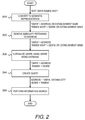
relay server 1100 receives search information to when the search query is transmitted to theestablishment search server 1170 will be described with reference toFIG. 2. FIG. 2 is a flowchart of a search query transmission process inEmbodiment 1 of the present invention. - In the present embodiment, a case will be described in which a user speaks "ramen shop of Omiya" in order to search for a ramen shop in Omiya, Saitama City. The speech sound by the user is captured by the
microphone 1020 of the vehicle-installeddevice 1010. Then, the vehicle-installeddevice 1010 transmits the search information, including the search conditions in the speech sound and location information, to therelay server 1100. Therelay server 1100 transmits the search conditions to thevoice recognition server 1160 and thevoice recognition server 1160 transmits the text "ramen shop of Omiya" to therelay server 1100. The search conditions may be inputted as text through thetouch panel 1030, in which case the search conditions are directly inputted to thesemantic comprehension unit 1120. - When the text "ramen shop of Omiya," which is the search condition, is inputted to the
semantic comprehension unit 1120, thesemantic comprehension unit 1120 refers to the semantic comprehension rule table 3000 stored in the semantic comprehensionrule memory unit 1190 to convert the search conditions according to the inputted text to a semantic representation (2010). - The semantic comprehension rule table 3000 will be described with reference to
FIG. 3. FIG. 3 is a descriptive view of the semantic comprehension rule table 3000 ofEmbodiment 1 of the present invention. - The semantic comprehension rule table 3000 includes
character arrays 3010 andsemantic representations 3020. Character array patterns are recorded in thecharacter array 3010. For example, inFIG. 3 , patterns such as "%2 of %1", "%2 in %1", and "%2 called %1" are stored. Thesemantic representations 3020 include semantic representations corresponding to such patterns. Specifically, thesemantic representations 3020 include word meanings corresponding to "%1" or "%2" in the patterns. Word meanings are, for example, addresses, establishment names, and genres. - When the text "ramen shop of Omiya" is inputted to the
semantic comprehension unit 1120 according to the semantic comprehension rule table 3000, the inputted text "ramen shop of Omiya" is converted to the semantic representations of "Omiya = address or establishment name" and "ramen shop = genre or establishment name" in order to correspond to the pattern of "%2 of %1" stored in thecharacter array 3010. - In the present embodiment, the search conditions are converted to the semantic representations with reference to the semantic comprehension rule table 3000, which has been stored in advance, but the configuration is not limited thereto. The method for conversion to a semantic representation can include various methods known in the technical field of named-entity recognition.
- Next, if there is ambiguity pertaining to the "address" of the semantic representation, the
semantic comprehension unit 1120 removes ambiguity pertaining to the "address" using location information included in the search information (2020). Ambiguity pertaining to the "address" refers to a case where it cannot be determined whether the meaning of a certain word is an "address" or something else. - In
step 2020, if the location indicated in the location information included in the search information exists near a location indicated by a word that might signify an "address," then thesemantic comprehension unit 1120 determines this word to have the meaning of "address." - For example, in the semantic representation "Omiya = address or establishment name," which was converted in
step 2010, it is unclear whether "Omiya" is an "address" or an "establishment name," which indicates an ambiguity pertaining to the address. Thus, instep 2020, thesemantic comprehension unit 1120 performs a search to determine whether or not an address including "Omiya" exists in the vicinity of the location information included in the search information. If the user is traveling near Saitama City, "Omiya, Saitama City" is searched. In this case, thesemantic comprehension unit 1120 determines that the word "Omiya" is an "address" and converts the semantic representation "Omiya = address or establishment name" to "Omiya = address". - If addresses including "Omiya" do not exist in the vicinity of the location information included in the search information, then this indicates a high probability that the word "Omiya" is a portion of an establishment name, and thus, the
semantic comprehension unit 1120 converts "Omiya = address or establishment name" to "Omiya = establishment name". In the description below, a case will be described in which the semantic representation is converted to "Omiya = address". - Next, if "genre" is included in the semantic representation, then the
semantic comprehension unit 1120 normalizes a "genre" word with reference to the genre word table 4000 stored in the semantic comprehension rule memory unit 1190 (2030). In theestablishment search server 1170, there are various words indicating the genre of a certain establishment, but in reality, the user expresses the same genre with the various words. In one example, "Chinese" is set as a genre in theestablishment search server 1170, and the user expresses this genre using words such as "Chinese cuisine," "China," and "Chinese restaurant." Thus, instep 2030, thesemantic comprehension unit 1120 refers to the genre word table 4000 stored in the semantic comprehensionrule memory unit 1190, and converts the genre word in the search conditions inputted by the user to a word set in theestablishment search server 1170. - Here, the genre word table 4000 will be described with reference to
FIG. 4. FIG. 4 is a descriptive view of the genre word table 4000 ofEmbodiment 1 of the present invention. - The genre word table 4000 includes
character arrays 4010 andgenre names 4020. Thecharacter arrays 4010 include character arrays of words signifying the same genre. Thegenre names 4020 include character arrays by which it is possible to search for genres in theestablishment search server 1170. - If a word with a high probability of signifying a genre is included in the semantic representation, the
semantic comprehension unit 1120 determines whether or not a character array matching the word is included among thecharacter arrays 4010 of the genre word table 4000. If a character array matching the word is included among thecharacter arrays 4010 of the genre word table 4000, thesemantic comprehension unit 1120 determines that the word refers to a genre. Then, thesemantic comprehension unit 1120 converts the word to a character array recorded as thegenre name 4020 in the record in which a character array corresponding to the word is stored. On the other hand, if a character array matching the word is not included among thecharacter arrays 4010 of the genre word table 4000, thesemantic comprehension unit 1120 determines that the word refers to an establishment name. - In the present embodiment, "ramen shop" is a word with a high possibility of referring to a "genre," and "ramen shop" is recorded among the
character arrays 4010 of the genre word table 4000, and thus, thesemantic comprehension unit 1120 determines that "ramen shop" is a "genre" and converts "ramen shop" to "ramen". Thus, the semantic representation "ramen shop = genre or establishment name" is converted to the semantic representation "ramen = genre". - If a character array that matches "ramen shop" is not stored among the
character arrays 4010 of the genre word table 4000, then "ramen shop" is not a genre, and in anticipation that "ramen shop" will be searched as an establishment name or another type of text, thesemantic comprehension unit 1120 converts the semantic representation "ramen shop = genre or establishment name" to "ramen shop = establishment name." - Next, the
query creation unit 1130 refers to queryrules 5000 stored in a queryrule memory unit 1200 and converts the inputted semantic representation into a search query to be sent to the establishment search server 1170 (2040). - The query rules 5000 will be described with reference to
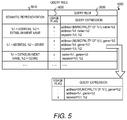
FIG. 5. FIG. 5 is a descriptive view of the query rules 5000 ofEmbodiment 1 of the present invention. - The query rules 5000 include
semantic representations 5010,usage flags 5020, and queryexpressions 5030. - The
semantic representations 5010 include semantic representations. Thequery expressions 5030 includes query expressions (query rules) for converting semantic representations to search queries to actually be sent to theestablishment search server 1170. Thequery expressions 5030 include a plurality of query expressions corresponding to each semantic representation. Each query expression has acorresponding usage flag 5020, and "x" or "-" is recorded for eachusage flag 5020. Marking the query expression with theusage flag 5020 "x" indicates that the query expression is to be used for conversion of the semantic representation to a search query, whereas marking the query expression with theusage flag 5020 "-" indicates that the query expression is not to be used for such conversion. - The expression "municipality of %1" in the query rules 5000 shown in
FIG. 5 indicates the closest municipality for which the name includes thecharacter array % 1. - In the present embodiment, the semantic representations "Omiya=address" and "ramen=genre" inputted to the
query creation unit 1130 correspond to the semantic representations "%1 = address, %2 = genre" stored among thesemantic representations 5010 of the query rules 5000 shown inFIG. 5 . Of the query expressions in the record, the query expression marked with theusage flag 5020 "x" is "address = (municipality of %1), genre=%2", and thus, the semantic representations "Omiya = address" and "ramen = genre" are converted to the search query "address = Omiya, Saitama City, genre = ramen". - The query expressions stored among the
query expressions 5030 are pre-made according to theestablishment search server 1170. Also, in the present embodiment, the query expression "address = (municipality of %1)" was converted to "address = Omiya, Saitama City", but such address conversion can be modified according to the specifications of theestablishment search server 1170. For example, if theestablishment search server 1170 allows for searches to be performed with "Omiya" as the address, the expression may be "address = Omiya". - Next, the
search unit 1140 transmits to theestablishment search server 1170 the search query "address = Omiya, Saitama City, genre = ramen", obtained by conversion by the query creation unit 1130 (2050), causes theestablishment search server 1170 to search this establishment, and then ends the process. -
Establishment search results 6000 transmitted by theestablishment search server 1170, which executed the establishment search according to the search query "address = Omiya, Saitama City, genre = ramen", will be described with reference toFIG. 6 . -
FIG. 6 is a descriptive view of theestablishment search results 6000 ofEmbodiment 1 of the present invention. - The
establishment search results 6000 are obtained by theestablishment search server 1170 by searching for establishments corresponding to the search query, and list the establishments found by this search according to an order of priority set in theestablishment search server 1170. - The
establishment search results 6000 include anorder 6010,establishment names 6020, addresses 6030,genres 6040, and reviews 6050. - The order of priority of the search results is recorded in the
order 6010. The names of the establishments are recorded in the establishment names 6020. The addresses of the establishments are recorded in theaddresses 6030. The genres of the establishments are recorded in thegenres 6040. The reviews of the establishments are recorded in thereviews 6050. - The information included in the
establishment search results 6000 differs depending on the type or the like of theestablishment search server 1170. - Next, the evaluation process of the
establishment search results 6000 performed by theevaluation unit 1180 will be described with reference toFIG. 7. FIG. 7 is a flowchart of an evaluation process performed by theevaluation unit 1180 ofEmbodiment 1 of the present invention. - First, if the
evaluation unit 1180 receivesestablishment search results 6000, it stores the receivedestablishment search results 6000 in the search result memory unit 1220 (7010). - Next, the
evaluation unit 1180 refers to the evaluation rules 8000 (seeFIG. 8 ) stored in the evaluationrule memory unit 1210, and evaluates the received establishment search results 6000 (7020). - Here, the
evaluation rules 8000 will be described with reference toFIG. 8. FIG. 8 is a descriptive view of theevaluation rules 8000 ofEmbodiment 1 of the present invention. - The evaluation rules 8000 include
semantic representations 8010 andevaluation standards 8020. Thesemantic representations 8010 include semantic representations. Theevaluation standards 8020 store standards (evaluation rules) for determining whether or not the search results according to the semantic representations are normal. Specifically, theevaluation standards 8020 include evaluation standards corresponding to respective semantic representations and evaluation standards common to all semantic representations. - First, to describe evaluation standards corresponding to respective semantic representations, an example will be described of the evaluation standards for "%1 = address, %2 = genre". In these evaluation standards, the
evaluation unit 1180 obtains from the search results establishments with a high probability of actually being seen by the user on the display screen, that is, an x number of establishments with thehighest order 6010. Theevaluation unit 1180 determines whether or not the following conditions are satisfied: among the x number of obtained establishments, the number of hits for establishments including, in theaddress 6030 thereof, the word "%1" is y or greater; and among the x number of obtained establishments, the number of hits where thegenre 6040 is a perfect match with the word "%2" is z or greater. In other words, theevaluation unit 1180 determines whether or not the number of search results used according to the meaning of words in the semantic representation of the search query corresponding to the search results is greater than or equal to a prescribed value. - If the
evaluation unit 1180 determines that the conditions are satisfied, it determines that the actual search results from the search performed by the user are appropriate, and that the received search results are normal. - If the
evaluation unit 1180 determines that the conditions are not satisfied, it determines that the actual search results from the search performed by the user are not appropriate, and that the received search results are anomalous. x, y, and z are arbitrary values that may be set appropriately by a manager. - The
evaluation unit 1180 may determine whether or not the following conditions are satisfied: the percentage of hits for establishments including, in theaddress 6030 thereof, the word "%1" in relation to the x number of hits is greater than or equal to a prescribed value, and the percentage of hits where thegenre 6040 is a perfect match with the word "%2" in relation to the x number of hits is greater than or equal to a prescribed value. Thus, theevaluation unit 1180 can accurately evaluate the received search results even if few establishments are included in the search results. - Next, the evaluation standards common to all semantic representations will be described. According to these evaluation standards, if the search date is within d days of the present, and the number of establishments in common between the search results made with the same search query as the received search results, and the currently received search results, is less than y, then the
evaluation unit 1180 can infer that some change has happened in theestablishment search server 1170, and that there is an anomaly in the currently received search results. - In other words, by comparing the current search results to previous search results according to the evaluation standards common to all semantic representations, it is possible to determine whether or not the current search results are appropriate. By contrast, the evaluation standards corresponding to the respective semantic representations are used to evaluate the current search results without comparison to the previous search results.
- The establishments that exist typically change over time, and thus, search results prior to d days before the current search date are not compared. In this manner, changes in establishments that naturally occur are not detected as false positives of anomalies in the
establishment search server 1170. Thus, if search results according to the same search query as the currently received search results are not stored in the searchresult memory unit 1220, and if search results according to the same search query as the currently received search results are from before d days prior to the present, then theevaluation unit 1180 determines that the received search results are normal. - The order of search results is sometimes modified in the
establishment search server 1170 by being accessed from outside for a certain purpose such as search engine optimization. Such modifications in the order of search results are part of the normal operation of theestablishment search server 1170, and thus, it is preferable that this modification not be detected as an anomaly in the search results. It is possible to prevent false positives for search results that result from search engine optimization by not taking into consideration the order of search results in theevaluation standards 8020, or by modifying theevaluation standards 8020 by, for example, increasing the number of search result hits (x) to be evaluated. - The
evaluation unit 1180 simply needs to evaluate the received search results using the evaluation standards corresponding to the respective semantic representations and/or the evaluation standards common to all semantic representations. - In
step 7020, theevaluation unit 1180 may evaluate the receivedestablishment search results 6000 using theevaluation rules 9000 shown inFIG. 9 . -
FIG. 9 is a descriptive view of theevaluation rules 9000 of a modification example ofEmbodiment 1 of the present invention. - The evaluation rules 9000 include
semantic representations 9010 andevaluation standards 9020. Thesemantic representations 9010 are the same as thesemantic representations 8010, and descriptions thereof are omitted. Theevaluation standards 9020 include standards for each semantic representation for determining whether or not characteristics of the search results have changed suddenly. First, to describeevaluation standards 9020, an example will be described of the evaluation standards for "%1 = address, %2 = genre". - First, according to the
evaluation standards 9020, theevaluation unit 1180 obtains, from search results of a search performed within d days ago, search results according to the semantic representation "%1 = address, %2 = genre". Next, theevaluation unit 1180 calculates the average value (Ta) of percentages of the number of establishments at addresses including words indicating addresses that were in the search query, in relation to the total number of establishments included in the obtained search results. Also, theevaluation unit 1180 calculates the average value (Tg) of percentages of the number of establishments of genres that match the words indicating genres in the search query, in relation to the total number of establishments included in the obtained search results. - Then, if the percentage of the number of establishments at addresses including words indicating addresses that were in the received search results in relation to the total number of establishments included in the received search results is greater than or equal to a value calculated by subtracting a prescribed threshold (w) from Ta, and the percentage of the number of establishments of genres that match the words indicating genres in the search query of the received search results in relation to the total number of establishments included in the received search results is greater than or equal to a value calculated by subtracting the prescribed threshold (w) from Tb, then the
evaluation unit 1180 determines that the received search results are normal. - Also, if the percentage of the number of establishments at addresses including words indicating addresses that were in the received search results in relation to the total number of establishments included in the received search results is less than a value calculated by subtracting a prescribed threshold (w) from Ta, or the percentage of the number of establishments of genres that match the words indicating genres in the search query of the received search results in relation to the total number of establishments included in the received search results is less than a value calculated by subtracting the prescribed threshold (w) from Tb, then the
evaluation unit 1180 determines that the specifications of theestablishment search server 1170 have been modified and that the received search results are anomalous. - Returning to
FIG. 7 , theevaluation unit 1180 determines whether or not the evaluation results instep 7020 are normal (7030). - If it is determined in
step 7030 that the evaluation results instep 7020 are normal, then theevaluation unit 1180 transmits the received search results to the vehicle-installeddevice 1010 through the communication unit 1110 (7060) and ends the process. If the vehicle-installeddevice 1010 receives search results transmitted from therelay server 1100, then it displays the received search results in thedisplay screen 1040 and outputs the received search results through thespeaker 1050. - On the other hand, if it is determined in
step 7030 that the evaluation results instep 7020 are anomalous, then theevaluation unit 1180 increments the counter by 1 (7032). This counter may be provided for each search condition, each semantic representation, or each search query. Next, theevaluation unit 1180 determines whether or not the counter is greater than a prescribed value (7034). If it is determined instep 7034 that the counter is greater than the prescribed value, then theevaluation unit 1180 detects that there is an anomaly in the search results and determines that the specifications of theestablishment search server 1170 have been modified, issues a notification to that effect to a manager of the relay server 1100 (7040), resets the counter (7042), and progresses to step 7050. Examples of modifications to the specifications of theestablishment search server 1170 include modifications to the settings of theestablishment search server 1170 such as modifications to the search algorithm thereof. In order to issue a notification to the manager that the specifications of theestablishment search server 1170 have been modified, theevaluation unit 1180 displays a notification to that effect in the display device of a terminal (not shown) operated by the manager of therelay server 1100. Because the manager can be notified that the specifications of theestablishment search server 1170 have been modified, he/she can take measures to handle such modifications. - If it is determined in
step 7034 that the counter is less than or equal to a prescribed value or afterstep 7042 has been completed, theevaluation unit 1180 issues a command to thequery creation unit 1130 to create a second search query (7050) and ends the process. - In
FIG. 7 , if a notification is issued once to the manager of therelay server 1100 indicating that an anomaly has been detected in the search results duringstep 7040, then if anomalies continue to be detected in search results of subsequent evaluation processes and the counter exceeds the prescribed value, then notifications are issued of anomalies in the search results to the manager of therelay server 1100. However, if a notification is issued once to the manager of therelay server 1100 indicating that an anomaly has been detected in the search results, then notification of an anomaly in the search results may be withheld until the search results are determined to be normal. - An example thereof will be described. After execution of
step 7040, theevaluation unit 1080 sets a notification flag. The setting of the notification flag is removed when it is determined instep 7030 that the evaluation results are normal. Also, if it is determined instep 7030 that the evaluation results are anomalous, then theevaluation unit 1080 determines whether or not the notification flag has been set, and if it determines that the notification flag has been set, then it progresses to step 7032, and if it determines that the notification flag has not been set, then it does not execute the processes ofsteps 7032 to 7042 and instead progresses to step 7050. - In this manner, if a notification is issued once to the manager of the
relay server 1100 indicating that an anomaly has been detected in the search results, then notification of an anomaly in the search results can be withheld until the search results are determined to be normal. - The process performed when the
query creation unit 1130 creates a second search query (second search query creation process) will be described with reference toFIG. 10 . -
FIG. 10 is a flowchart of a second search query creation process inEmbodiment 1 of the present invention. - The
query creation unit 1130 creates a search query differing from the first search query (10010). Specifically, thequery creation unit 1130, with reference to the query rules 5000, creates a search query using query expressions ("address = %1, genre = %2" and "keyword = %1, %2"), which are recorded as having ausage flag 5020 of "-" in the record having thesemantic representation 5010 "%1 = address, %2 = genre". The semantic representation is "Omiya = address" and "ramen = genre", and thus, two search queries of "address = Omiya, genre = ramen" and "keyword = Omiya, ramen" are created. The search query for "keyword" indicates that theestablishment search server 1170 searches all fields for the establishment data. Thus, by always including "keyword" in all query expressions for every semantic representation, it is possible to search for establishments that match words in the search conditions and some fields. - The
search unit 1140 transmits the search query created instep 10010 to the establishment search server 1170 (10020), repeatedly executesstep 10020 until all search queries created instep 10010 are transmitted to theestablishment search server 1170, and ends the process when all search queries created instep 10010 are transmitted to theestablishment search server 1170. Here, the two search queries created instep 10010 are transmitted to theestablishment search server 1170. -
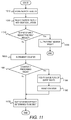
FIG. 11 is a flowchart of a process performed by theevaluation unit 1180 ofEmbodiment 1 of the present invention for when second search results are received. - The
evaluation unit 1180 receives second search results, and stores the received second search results in the search result memory unit 1220 (11010). - Next, the
evaluation unit 1180 selects the search results that are determined to be the best match for the intentions of the user (11020).Step 11020 will be described in detail. Instep 2030 of the present embodiment, the semantic representation was determined to be "Omiya = address, ramen = genre". Thus, theevaluation unit 1180 calculates for each search result the number of establishments that include "Omiya" in the address and that belong to a genre that matches "ramen" from among the first search results and the second search results (search results of two search queries). Then, theevaluation unit 1180 selects the search results with the greatest number of establishments as being the best search results. - Next, the
evaluation unit 1180 determines whether or not the best search results are the first search results (11040). If it is determined instep 11040 that the best search results are the first search results, then theevaluation unit 1180 transmits the first search results to the vehicle-installeddevice 1010 through the communication unit 1110 (11050) and ends the process. If the vehicle-installeddevice 1010 receives the first search results transmitted from therelay server 1100, then it displays the received first search results in thedisplay screen 1040 and outputs the received first search results through thespeaker 1050. In such a case, theevaluation unit 1180 may transmit to the vehicle-installed device 1010 a message indicating that the first search results are worse in quality than normal, along with the first search results. If the vehicle-installeddevice 1010 receives such a message, it outputs a message such as "Would you like to perform another search using different terms?" to thedisplay screen 1040 or thespeaker 1050. In this manner, it is possible to allow the user to input search conditions that allow the user to obtain desired search results. - On the other hand, if it is determined in
step 11040 that the best search results are not the first search results, that is, when the second search results are the best search results, then theevaluation unit 1180 increments the counter by 1 (10052). This counter may be provided for each search condition, each semantic representation, or each search query. - Next, the
evaluation unit 1180 determines whether or not the counter is greater than a prescribed value (11054). If it is determined instep 11054 that the counter is greater than the prescribed value, then theevaluation unit 1180 modifies the query rules 5000 such that "x" is recorded as theusage flag 5020 for the query expression used to create the search query for the best search results (11060). In this case, theevaluation unit 1180 records "-" as theusage flag 5020 of the query expression, which previously had "x" as theusage flag 5020. - If, for example, the search results for the search query "keyword = Omiya, ramen" are the best, then as shown in
FIG. 4 theevaluation unit 1180 switches theusage flag 5020 of the query expression "keyword = %1, %2" from "-" to "x", and modifies theusage flag 5020 of the query expression "address = (municipality of %1), genre = %2" from "x" to "-". Then, thequery creation unit 1130 creates a search query using the query expression ("keyword = %1, %2") if the semantic representation "%1 = address, %2 = genre" is inputted. - In this manner, by switching the usage flag, it is possible to provide the user with the best search results that reflect the intentions of the user even if the specifications of the
establishment search server 1170 have been modified. - When the
evaluation unit 1180 modifies the query rules 5000 instep 11060, it resets the counter (11060) and progresses to step 11070. - If it is determined in
step 11054 that the counter is less than or equal to a prescribed value or afterstep 11060 has been completed, theevaluation unit 1180 transmits the best search results to the vehicle-installeddevice 1010 through the communication unit 1110 (11070) and ends the process. If the vehicle-installeddevice 1010 receives the first search results transmitted from therelay server 1100, then it displays the received first search results in thedisplay screen 1040 and outputs the received first search results through thespeaker 1050. - According to the present embodiment, it is determined whether or not the specifications of the
establishment search server 1170 have been modified on the basis of the search results received by therelay server 1100, and if it is determined that the specifications of theestablishment search server 1170 have been modified, a notification to that effect is issued to the manager. In this manner, the manager can detect immediately changes in behavior of a search device and handle such changes such that they do not result in inconvenience for users of the search device. - Also, the user can cause the
establishment search server 1170 to search for establishments under search conditions desired by the user and search results desired by the user can be outputted, because thesemantic comprehension unit 1120 converts the search conditions inputted by the user to semantic representations and thequery creation unit 1130 converts the semantic representations to search queries. - If the evaluation results of the search results received by the
relay server 1100 are determined to be anomalous, a command is issued to thequery creation unit 1130 to create a second search query, and thequery creation unit 1130 generates a second search query using a query expression not used for generating the search query for the first search results, and transmits the second search query to theestablishment search server 1170. Theevaluation unit 1180 switches theusage flag 5020 for the query expression of the search query for the best search results, from among these search results, to "x" for the semantic representations (seeFIG. 7 ). Thus, even if the specifications of theestablishment search server 1170 were modified, the best search results (that is, the search results that are best suited to the user's intentions) for the semantic representations can be outputted to the user. - Also, the
evaluation unit 1080 refers to the semantic representations of the search query for the currently received search results and evaluates the current search results, and thus, the user can determine whether the specifications of theestablishment search server 1170 have been modified from the perspective of whether the search results conform to the user's intentions. - The
evaluation unit 1080 compares the currently received search results with the previously received search results and evaluates the search results, and thus, the user can determine whether the specifications of theestablishment search server 1170 have been modified from the perspective of whether the currently received search results have changed from the previous search results. - Next, a modification example of the present embodiment will be described.
- In the present embodiment, as described in
FIG. 2 , thesemantic comprehension unit 1120 removes the ambiguity pertaining to the address instep 2020, normalizes the genre bystep 2030, and converts the search condition text to one semantic representation, but thesemantic comprehension unit 1120 may input a plurality of semantic representations to the search query without removing the ambiguity of the address instep 2020 or normalizing the genre instep 2030. - For example, if "ramen shop of Omiya" is the search condition, then even if the location indicated by the location information included in the search information is near "Omiya", there are still cases in which "Omiya" is an "establishment name". Also, even if "ramen shop" is recorded in the genre word table 4000, there are still cases in which "Ramen Shop" is an "establishment name".
- Taking into consideration such variation in meaning, the
semantic comprehension unit 1120 of the present modification example generates the following plurality of semantic representations: - "Omiya = address, ramen = genre"
- "Omiya = establishment name, ramen = genre"
- "Omiya = address, Ramen Shop = establishment name"
- "Omiya = establishment name, Ramen Shop = establishment name"
- When the semantic representation is inputted, the
query creation unit 1130 refers to the query rules 5000 and generates the following search queries: - "address = Omiya, Saitama City, genre = ramen"
- "name = Omiya, genre = ramen"
- "address = Omiya, Saitama City, name = Ramen Shop"
- "name = Omiya, name = Ramen Shop"
- The
query creation unit 1130 transmits these four search queries to theestablishment search server 1170 and theestablishment search server 1170 transmits four search results for the respective plurality of queries to therelay server 1100. - A plurality of methods can be used to evaluate the search results using the
evaluation unit 1180. - For example, the
evaluation unit 1180 may refer to theevaluation rules 8000, and individually evaluate a search result corresponding to one semantic representation using an evaluation standard corresponding to the semantic representation. - Also, the
evaluation unit 1180 can combine the four received search results into one search result, and evaluate the one search result. For example, theevaluation unit 1180 may evaluate the combined one search result using an evaluation standard common to all semantic representations shown inFIG. 8 , or set a new evaluation standard for the combination of four semantic representations and perform evaluation using this evaluation standard. - In the present embodiment, a
relay server 1100 transmits a search query based on areference text 12000 stored in a reference text memory unit 1240 (seeFIG. 1 ) to anestablishment search server 1170 at a prescribed timing and evaluates the search results. -
FIG. 12 is a descriptive view of thereference text 12000 stored in the referencetext memory unit 1240 ofEmbodiment 2 of the present invention.
"ramen shop of Omiya", "ramen shop called Omiya", and the like are stored in the referencetext memory unit 1240 as thereference text 12000. Thereference text 12000 may inputted by the user as search conditions, or recorded by a manager ahead of time. - The
semantic comprehension unit 1120 obtains thereference text 12000 from the referencetext memory unit 1240 at a prescribed timing such as 2:00AM everyday, for example, and similar toEmbodiment 1, the obtainedreference text 12000 is converted to a semantic representation and inputted to thequery creation unit 1130. Thequery creation unit 1130 converts the inputted semantic representation to a search query and transmits the search query from thesearch unit 1140 to theestablishment search server 1170. When theevaluation unit 1180 receives the search results of the search query, it can evaluate the received search results, and if the evaluation indicates an anomaly, likeEmbodiment 1, a manager can be notified. - The
relay server 1100 may store text indicating search conditions received from the vehicle-installeddevice 1010 for the past week, and text that has been received a number of times greater than a prescribed value and text having a high rank in terms of the number of times it has been received may be stored in the referencetext memory unit 1240 as thereference text 12000, for example. In this manner, modifications in the specifications of theestablishment search server 1170 for search conditions that are frequently made by the user can be periodically scanned, and search results according to the user's intentions can be displayed to the user. - According to the present embodiment, by transmitting the search query based on the
reference text 12000 at a prescribed timing to theestablishment search server 1170, it is possible to determine whether modifications have been made in the specifications of theestablishment search server 1170 at the prescribed timing. - In
Embodiments relay server 1100 are converted by thesemantic comprehension unit 1120 to a semantic representation, and after thequery creation unit 1130 converts the semantic representation to a search query, the search query is transmitted to theestablishment search server 1170. If theestablishment search server 1170 can receive the search condition text as is, then there is no need for thesemantic comprehension unit 1120 and thequery creation unit 1130 of therelay server 1100 to perform conversion processes, and thus, therelay server 1100 may lack thesemantic comprehension unit 1120 and thequery creation unit 1130. - A case in which the
establishment search server 1170 can receive the search condition text as is, for example, a case in which theestablishment search server 1170 has thesemantic comprehension unit 1120 and thequery creation unit 1130, the text received from therelay server 1100 is converted to a semantic representation, and the semantic representation is further converted to a search query, with the search query being used to search for an establishment from among the establishment data, or the like. - If the
evaluation unit 1180 receives search results, then the process shown inFIG. 7 is executed and the search results are evaluated. In this case, the search conditions are not converted to a semantic representation by therelay server 1100, and thus, theevaluation unit 1180 cannot evaluate the search results using the evaluation standards for each semantic representation according to theevaluation rules FIGs. 8 and9 . Thus, in the present embodiment, theevaluation unit 1180 evaluates the search results using an evaluation standard common to each semantic representation according to theevaluation rules 8000 shown inFIG. 8 . - If, for example, the
search unit 1140 transmits to theestablishment search server 1170 the text "ramen shop of Omiya", and theevaluation unit 1180 receives the search results for "ramen shop of Omiya", then the received search results are evaluated by comparing the search results for the received text "ramen shop of Omiya" to the search results from when "ramen shop of Omiya" was previously searched. If theevaluation unit 1180 determines that the evaluation results are anomalous, it does not issue a command to create a second search query instep 7050, and terminates the process without executingstep 7050, but other processes are the same as inFIG. 7 . - In this manner, according to the present embodiment, the
relay server 1100 does not have asemantic comprehension unit 1120 or aquery creation unit 1130, and the present invention can be applied even to a case in which theestablishment search server 1170 can use the text as is in the query. - The present invention is not limited to the above-described embodiments but includes various modifications.
- The above-described embodiments are explained in details for better understanding of the present invention and are not limited to those including all the configurations described above. A part of the configuration of one embodiment may be replaced with that of another embodiment; the configuration of one embodiment may be incorporated to the configuration of another embodiment. A part of the configuration of each embodiment may be added, deleted, or replaced by that of a different configuration.
- The above-described configurations, functions, and processors, for all or a part of them, may be implemented by hardware: for example, by designing an integrated circuit. The above-described configurations and functions may be implemented by software, which means that a processor interprets and executes programs providing the functions. The information of programs, tables, and files to implement the functions may be stored in a storage device such as a memory, a hard disk drive, or an SSD (Solid State Drive), or a storage medium such as an IC card, or an SD card.
- A representative example of the present invention other than what is disclosed in the claims is as follows. A search result evaluation system, comprising: a search result memory unit that stores a search query and search results corresponding to the search query in association with each other, wherein evaluation rules include a rule for evaluating the search results in which, if an evaluation unit receives the search results, past search results of a search query corresponding to a search query of the received search results are obtained with reference to the search result memory unit, and the received search results and the obtained past search results are compared.
Claims (15)
- A search result evaluation system connected with a search device and that evaluates search results of the search device, the search result evaluation system comprising:a search unit that transmits a search query to the search device; andan evaluation unit that, if the evaluation unit receives search results from the search device, determines whether specifications of the search device have been modified, by evaluating the received search results,wherein, if the evaluation unit determines that the specifications of the search device have been modified, the evaluation unit outputs an anomaly signal to notify a manager of the search result evaluation system that the specifications of the search device have been modified.
- The search result evaluation system according to claim 1, further comprising:a semantic comprehension unit that converts search conditions inputted by a user to a semantic representation in which words constituting the search conditions are associated with meanings indicated by the words;query rules for converting the semantic representation to the search query; anda query creation unit that, with reference to the query rules, converts the semantic representation obtained by conversion by the semantic comprehension unit to the search query,wherein the search unit transmits to the search device the search query obtained by conversion by the query creation unit.
- The search result evaluation system according to claim 2, wherein one said semantic representation is associated with a plurality of said query rules,
wherein the plurality of query rules associated with the one semantic representation include usage query rules that are query rules used for converting the semantic representation,
wherein, if the specifications of the search device are determined to have been modified, the query creation unit uses query rules other than the usage query rules, among the query rules corresponding with the semantic representation, to convert the semantic representation to the search query, and
wherein the search unit transmits to the search device the search query obtained by conversion as a second search query. - The search result evaluation system according to claim 3, wherein the evaluation unit
determines a best search result, from among a search result of a first search query and a search result of the second search query, that is most suited to what the user intends to search on the basis of the semantic representation, when the evaluation unit receives from the search device the search result of the second search query, and
modifies the query rules, used for conversion of the search query of the best search result to the search query, to the usage query rules, if the identified best search result is the search result of the second search query. - The search result evaluation system according to claim 1, comprising:evaluation rules for evaluating the received search results,wherein the evaluation unit refers to the evaluation rules to evaluate the search results.
- The search result evaluation system according to claim 5, further comprising:a semantic comprehension unit that converts search conditions inputted by a user to a semantic representation in which words constituting the search conditions are associated with meanings indicated by the words;query rules for converting the semantic representation to the search query; anda query creation unit that, with reference to the query rules, converts the semantic representation obtained by conversion by the semantic comprehension unit to the search query,wherein the search unit transmits to the search device the search query obtained by conversion by the query creation unit, andwherein the evaluation rules include rules for the evaluation unit to evaluate the search results on the basis of a number of search results including a word in the semantic representation of the search query of the received search results, where a meaning of the word is the same as a meaning of the semantic representation.
- The search result evaluation system according to claim 1, wherein the search unit transmits to the search device a preset search query or a search query inputted previously by the user at a prescribed timing.
- A navigation system connected with the search result evaluation system according to any one of claims 1 to 7,
wherein the navigation systemis installed in a vehicle,guides the vehicle along a path,receives input of search conditions from a user, andtransmits the received search conditions to the search result evaluation system, andwherein the search query of the transmitted search conditions is transmitted to the search device from the search unit of the search result evaluation system. - A search result evaluation method by which search results of a search device are evaluated in a search result evaluation system connected to the search device, the method comprising:transmitting, by the search result evaluation system, a search query to the search device;determining, by the search result evaluation system, whether specifications of the search device have been modified if search results are received from the search device, by evaluating the received search results; andoutputting, by the search result evaluation system, an anomaly signal to notify a manager of the search result evaluation system that the specifications of the search device have been modified if the specifications of the search device are determined to have been modified.
- The search result evaluation method according to claim 9, wherein the search result evaluation system has query rules for converting a semantic representation, in which words constituting the search conditions inputted by a user are associated with meanings indicated by the words, to the search query, and
wherein the method further comprises:converting, by the search result evaluation system, the search conditions to the semantic representation;converting, by the search result evaluation system, the semantic representation to the search query with reference to the query rules;transmitting, by the search result evaluation system, the search query to the search device. - The search result evaluation method according to claim 10,
wherein one said semantic representation is associated with a plurality of said query rules,
wherein the plurality of query rules associated with the one semantic representation include usage query rules that are query rules used for converting the semantic representation, and
wherein the method further comprises:converting, by the search result evaluation system, the semantic representation to the search query using query rules other than the usage query rules among the query rules corresponding with the semantic representation, if the specifications of the search device are determined to have been modified, andtransmitting, by the search result evaluation system, the search query, obtained by conversion as a second search query, to the search device. - The search result evaluation method according to claim 11, wherein the method further comprises:determining, by the search result evaluation system, a best search result, from among a search result of a first search query and a search result of the second search query, that is most suited to what the user intends to search on the basis of the semantic representation, when the search result of the second search query is received from the search device, andmodifying, by the search result evaluation system, the query rules, used for conversion of the search query of the best search result to the search query, to the usage query rules, if the identified best search result is the search result of the second search query.
- The search result evaluation method according to claim 9,
wherein the search result evaluation system has evaluation rules for evaluating the received search results, and
wherein, in the method, the search result evaluation system refers to the evaluation rules to evaluate the search results. - The search result evaluation method according to claim 13, wherein the search result evaluation system stores query rules for converting a semantic representation, in which words constituting search conditions inputted by a user are associated with meanings indicated by the words, to the search query,
wherein the method further comprises:converting, by the search result evaluation system, the search conditions to the semantic representation;converting, by the search result evaluation system, the semantic representation to the search query with reference to the query rules;transmitting, by the search result evaluation system, the search query to the search device, andwherein the evaluation rules include rules for evaluating the search results on the basis of a number of search results including a word in the semantic representation of the search query of the received search results, where a meaning of the word is the same as a meaning of the semantic representation. - The search result evaluation method according to claim 9, wherein the search result evaluation system transmits to the search device a preset search query or a search query inputted previously by the user, at a prescribed timing.
Applications Claiming Priority (2)
| Application Number | Priority Date | Filing Date | Title |
|---|---|---|---|
| JP2013235727 | 2013-11-14 | ||
| PCT/JP2014/079840 WO2015072450A1 (en) | 2013-11-14 | 2014-11-11 | Search result evaluation system, navigation system, and search result evaluation method |
Publications (2)
| Publication Number | Publication Date |
|---|---|
| EP3070616A1 true EP3070616A1 (en) | 2016-09-21 |
| EP3070616A4 EP3070616A4 (en) | 2017-08-02 |
Family
ID=53057384
Family Applications (1)
| Application Number | Title | Priority Date | Filing Date |
|---|---|---|---|
| EP14862537.9A Ceased EP3070616A4 (en) | 2013-11-14 | 2014-11-11 | Search result evaluation system, navigation system, and search result evaluation method |
Country Status (4)
| Country | Link |
|---|---|
| US (1) | US10387413B2 (en) |
| EP (1) | EP3070616A4 (en) |
| JP (1) | JP6138965B2 (en) |
| WO (1) | WO2015072450A1 (en) |
Families Citing this family (3)
| Publication number | Priority date | Publication date | Assignee | Title |
|---|---|---|---|---|
| CN107656965B (en) * | 2017-08-22 | 2021-10-15 | 北京京东尚科信息技术有限公司 | Method and device for order inquiry |
| US10621180B2 (en) * | 2017-09-30 | 2020-04-14 | Oracle International Corporation | Attribute-based detection of anomalous relational database queries |
| US11055407B2 (en) | 2017-09-30 | 2021-07-06 | Oracle International Corporation | Distribution-based analysis of queries for anomaly detection with adaptive thresholding |
Family Cites Families (10)
| Publication number | Priority date | Publication date | Assignee | Title |
|---|---|---|---|---|
| JP3655714B2 (en) * | 1996-11-15 | 2005-06-02 | 株式会社ニューズウオッチ | Information filtering apparatus and recording medium |
| US7277987B2 (en) * | 2003-05-26 | 2007-10-02 | Canon Kabushiki Kaisha | Information processing apparatus, storage medium supporting device, and identifier changing method |
| US7912806B2 (en) * | 2005-02-21 | 2011-03-22 | Brother Kogyo Kabushiki Kaisha | System and device for providing contents |
| JP4396592B2 (en) * | 2005-07-19 | 2010-01-13 | 日本電気株式会社 | Information providing system, information providing method, and information providing program |
| US20080104045A1 (en) * | 2006-11-01 | 2008-05-01 | Cohen Alain J | Collectively enhanced semantic search |
| US9110975B1 (en) * | 2006-11-02 | 2015-08-18 | Google Inc. | Search result inputs using variant generalized queries |
| US8725716B1 (en) * | 2008-05-30 | 2014-05-13 | Google Inc. | Customized web summaries and alerts based on custom search engines |
| US20100004851A1 (en) * | 2008-07-03 | 2010-01-07 | Aisin Aw Co., Ltd. | Navigation devices, methods, and programs |
| JP2011018148A (en) * | 2009-07-08 | 2011-01-27 | Nec Corp | System configuration management device, system configuration management method, and program |
| JP5208069B2 (en) | 2009-07-17 | 2013-06-12 | ヤフー株式会社 | Region search apparatus and method |
-
2014
- 2014-11-11 WO PCT/JP2014/079840 patent/WO2015072450A1/en not_active Ceased
- 2014-11-11 EP EP14862537.9A patent/EP3070616A4/en not_active Ceased
- 2014-11-11 US US15/025,584 patent/US10387413B2/en active Active
- 2014-11-11 JP JP2015547757A patent/JP6138965B2/en not_active Expired - Fee Related
Also Published As
| Publication number | Publication date |
|---|---|
| EP3070616A4 (en) | 2017-08-02 |
| WO2015072450A1 (en) | 2015-05-21 |
| US20160239536A1 (en) | 2016-08-18 |
| JPWO2015072450A1 (en) | 2017-03-16 |
| US10387413B2 (en) | 2019-08-20 |
| JP6138965B2 (en) | 2017-05-31 |
Similar Documents
| Publication | Publication Date | Title |
|---|---|---|
| US9997157B2 (en) | Knowledge source personalization to improve language models | |
| US20220284060A1 (en) | Question Answering Method and Apparatus Based on Knowledge Graph | |
| US10909124B2 (en) | Predicting intent of a search for a particular context | |
| JP5503974B2 (en) | Location in search query | |
| US10747793B2 (en) | Expanding search queries | |
| US10122839B1 (en) | Techniques for enhancing content on a mobile device | |
| AU2013270485B2 (en) | Input processing method and apparatus | |
| US20170103072A1 (en) | Generating Image Tags | |
| US11334564B2 (en) | Expanding search queries | |
| US9767188B1 (en) | Using information from a user device and a server to suggest an input | |
| WO2013163857A1 (en) | Mobile terminal with location and navigation functions and method for quick location and navigation | |
| JP2016513827A (en) | Generate search results with status links to applications | |
| WO2015172490A1 (en) | Method and apparatus for providing extended search item | |
| US20170168695A1 (en) | Graphical User Interface for Generating Structured Search Queries | |
| US8688696B2 (en) | Multi-part search result ranking | |
| US11507549B2 (en) | Data normalization system | |
| WO2024036616A1 (en) | Terminal-based question and answer method and apparatus | |
| US12347429B2 (en) | Specifying preferred information sources to an assistant | |
| JP2019159883A (en) | Retrieval system, retrieval method | |
| US10387413B2 (en) | Search result evaluation system, navigation system and search result evaluation method | |
| CN107491539A (en) | For the search result rendering method and device of vehicle device, storage medium, terminal | |
| CN109074401B (en) | Extraction of primary content of a linked list | |
| JP2020086521A (en) | Information provision device, information provision method, and program | |
| KR20170048008A (en) | Apparatus for analyzing intention of query and method thereof | |
| US20180300395A1 (en) | 3-stage conversational argument processing method for search queries |
Legal Events
| Date | Code | Title | Description |
|---|---|---|---|
| PUAI | Public reference made under article 153(3) epc to a published international application that has entered the european phase |
Free format text: ORIGINAL CODE: 0009012 |
|
| 17P | Request for examination filed |
Effective date: 20160330 |
|
| AK | Designated contracting states |
Kind code of ref document: A1 Designated state(s): AL AT BE BG CH CY CZ DE DK EE ES FI FR GB GR HR HU IE IS IT LI LT LU LV MC MK MT NL NO PL PT RO RS SE SI SK SM TR |
|
| AX | Request for extension of the european patent |
Extension state: BA ME |
|
| DAX | Request for extension of the european patent (deleted) | ||
| A4 | Supplementary search report drawn up and despatched |
Effective date: 20170704 |
|
| RIC1 | Information provided on ipc code assigned before grant |
Ipc: G01C 21/36 20060101ALI20170628BHEP Ipc: G06F 17/30 20060101AFI20170628BHEP |
|
| STAA | Information on the status of an ep patent application or granted ep patent |
Free format text: STATUS: EXAMINATION IS IN PROGRESS |
|
| 17Q | First examination report despatched |
Effective date: 20191007 |
|
| APBK | Appeal reference recorded |
Free format text: ORIGINAL CODE: EPIDOSNREFNE |
|
| APBN | Date of receipt of notice of appeal recorded |
Free format text: ORIGINAL CODE: EPIDOSNNOA2E |
|
| REG | Reference to a national code |
Ref country code: DE Ref legal event code: R003 |
|
| APAF | Appeal reference modified |
Free format text: ORIGINAL CODE: EPIDOSCREFNE |
|
| APBT | Appeal procedure closed |
Free format text: ORIGINAL CODE: EPIDOSNNOA9E |
|
| STAA | Information on the status of an ep patent application or granted ep patent |
Free format text: STATUS: THE APPLICATION HAS BEEN REFUSED |
|
| 18R | Application refused |
Effective date: 20210521 |