EP3068403B1 - Methods of treatment of ocular conditions with a sustained drug delivery implant - Google Patents
Methods of treatment of ocular conditions with a sustained drug delivery implant Download PDFInfo
- Publication number
- EP3068403B1 EP3068403B1 EP14805768.0A EP14805768A EP3068403B1 EP 3068403 B1 EP3068403 B1 EP 3068403B1 EP 14805768 A EP14805768 A EP 14805768A EP 3068403 B1 EP3068403 B1 EP 3068403B1
- Authority
- EP
- European Patent Office
- Prior art keywords
- bioerodible implant
- implant
- bioerodible
- years
- plga
- Prior art date
- Legal status (The legal status is an assumption and is not a legal conclusion. Google has not performed a legal analysis and makes no representation as to the accuracy of the status listed.)
- Active
Links
Images



Classifications
-
- A—HUMAN NECESSITIES
- A61—MEDICAL OR VETERINARY SCIENCE; HYGIENE
- A61K—PREPARATIONS FOR MEDICAL, DENTAL OR TOILETRY PURPOSES
- A61K9/00—Medicinal preparations characterised by special physical form
- A61K9/20—Pills, tablets, discs, rods
- A61K9/2004—Excipients; Inactive ingredients
- A61K9/2022—Organic macromolecular compounds
- A61K9/2031—Organic macromolecular compounds obtained otherwise than by reactions only involving carbon-to-carbon unsaturated bonds, e.g. polyethylene glycol, polyethylene oxide, poloxamers
- A61K9/204—Polyesters, e.g. poly(lactide-co-glycolide)
-
- A—HUMAN NECESSITIES
- A61—MEDICAL OR VETERINARY SCIENCE; HYGIENE
- A61K—PREPARATIONS FOR MEDICAL, DENTAL OR TOILETRY PURPOSES
- A61K9/00—Medicinal preparations characterised by special physical form
- A61K9/10—Dispersions; Emulsions
-
- A—HUMAN NECESSITIES
- A61—MEDICAL OR VETERINARY SCIENCE; HYGIENE
- A61K—PREPARATIONS FOR MEDICAL, DENTAL OR TOILETRY PURPOSES
- A61K9/00—Medicinal preparations characterised by special physical form
- A61K9/0012—Galenical forms characterised by the site of application
- A61K9/0048—Eye, e.g. artificial tears
- A61K9/0051—Ocular inserts or implants
-
- A—HUMAN NECESSITIES
- A61—MEDICAL OR VETERINARY SCIENCE; HYGIENE
- A61K—PREPARATIONS FOR MEDICAL, DENTAL OR TOILETRY PURPOSES
- A61K31/00—Medicinal preparations containing organic active ingredients
- A61K31/56—Compounds containing cyclopenta[a]hydrophenanthrene ring systems; Derivatives thereof, e.g. steroids
- A61K31/57—Compounds containing cyclopenta[a]hydrophenanthrene ring systems; Derivatives thereof, e.g. steroids substituted in position 17 beta by a chain of two carbon atoms, e.g. pregnane or progesterone
- A61K31/573—Compounds containing cyclopenta[a]hydrophenanthrene ring systems; Derivatives thereof, e.g. steroids substituted in position 17 beta by a chain of two carbon atoms, e.g. pregnane or progesterone substituted in position 21, e.g. cortisone, dexamethasone, prednisone or aldosterone
-
- A—HUMAN NECESSITIES
- A61—MEDICAL OR VETERINARY SCIENCE; HYGIENE
- A61K—PREPARATIONS FOR MEDICAL, DENTAL OR TOILETRY PURPOSES
- A61K47/00—Medicinal preparations characterised by the non-active ingredients used, e.g. carriers or inert additives; Targeting or modifying agents chemically bound to the active ingredient
- A61K47/30—Macromolecular organic or inorganic compounds, e.g. inorganic polyphosphates
- A61K47/34—Macromolecular compounds obtained otherwise than by reactions only involving carbon-to-carbon unsaturated bonds, e.g. polyesters, polyamino acids, polysiloxanes, polyphosphazines, copolymers of polyalkylene glycol or poloxamers
-
- A—HUMAN NECESSITIES
- A61—MEDICAL OR VETERINARY SCIENCE; HYGIENE
- A61K—PREPARATIONS FOR MEDICAL, DENTAL OR TOILETRY PURPOSES
- A61K47/00—Medicinal preparations characterised by the non-active ingredients used, e.g. carriers or inert additives; Targeting or modifying agents chemically bound to the active ingredient
- A61K47/50—Medicinal preparations characterised by the non-active ingredients used, e.g. carriers or inert additives; Targeting or modifying agents chemically bound to the active ingredient the non-active ingredient being chemically bound to the active ingredient, e.g. polymer-drug conjugates
- A61K47/51—Medicinal preparations characterised by the non-active ingredients used, e.g. carriers or inert additives; Targeting or modifying agents chemically bound to the active ingredient the non-active ingredient being chemically bound to the active ingredient, e.g. polymer-drug conjugates the non-active ingredient being a modifying agent
- A61K47/56—Medicinal preparations characterised by the non-active ingredients used, e.g. carriers or inert additives; Targeting or modifying agents chemically bound to the active ingredient the non-active ingredient being chemically bound to the active ingredient, e.g. polymer-drug conjugates the non-active ingredient being a modifying agent the modifying agent being an organic macromolecular compound, e.g. an oligomeric, polymeric or dendrimeric molecule
-
- A—HUMAN NECESSITIES
- A61—MEDICAL OR VETERINARY SCIENCE; HYGIENE
- A61P—SPECIFIC THERAPEUTIC ACTIVITY OF CHEMICAL COMPOUNDS OR MEDICINAL PREPARATIONS
- A61P27/00—Drugs for disorders of the senses
- A61P27/02—Ophthalmic agents
Definitions
- the disclosure of the present application generally relates to drug delivery implants, and more specifically, drug delivery implants for use in a method for treating ocular conditions.
- Macular edema is an ocular condition that can result in a swelling of the macula.
- the edema is caused by fluid leaking from retinal blood vessels. Blood leaks out of the weak vessel walls into a very small area of the macula which is rich in cones, the nerve endings that detect color and from which daytime vision depends. Blurring then occurs in the middle or just to the side of the central visual field. Visual loss can progress over a period of months. Retinal blood vessel obstruction, eye inflammation, and age-related macular degeneration have all been associated with macular edema. The macula may also be affected by swelling following cataract extraction. Symptoms of ME include blurred central vision, distorted vision, vision tinted pink and light sensitivity.
- Causes of ME can include retinal vein occlusion, macular degeneration, diabetic macular leakage, eye inflammation, idiopathic central serous chorioretinopathy, anterior or posterior uveitis, pars planitis, retinitis pigmentosa, radiation retinopathy, posterior vitreous detachment, epiretinal membrane formation, idiopathic juxtafoveal retinal telangiectasia, Nd:YAG capsulotomy or iridotomy.
- Some patients with ME may have a history of use of topical epinephrine or prostaglandin analogs for glaucoma.
- Macular edema involves the breakdown of the inner blood retinal barrier at the level of the capillary endothelium, resulting in abnormal retinal vascular permeability and leakage into the adjacent retinal tissues.
- the macula becomes thickened due to fluid accumulation resulting in significant disturbances in visual acuity.
- Macular edema may occur in diseases causing cumulative injury over many years, such as diabetic retinopathy, or as a result of more acute events, such as central retinal vein occlusion or branch retinal vein occlusion.
- Diabetic retinopathy is a frequent microvascular complication of diabetes types 1 and 2 and represents the leading cause of blindness in the world. Diabetes-related central vision loss can arise either from microvascular occlusion (mascular ischemia) or from microvascular leakage due to breakdown of the inner blood-retinal barrier (BRB), leading to thickening or swelling of the macula (macular edema). Diabetic macular edema (DME) affects an estimated 21 million individuals worldwide.
- anti-VEGF intravitreal anti-vascular endothelial growth factor
- laser photocoagulation Several treatment options have emerged that offer to improve visual acuity, including intravitreal anti-vascular endothelial growth factor (anti-VEGF) agents and laser photocoagulation.
- anti-VEGF intravitreal anti-vascular endothelial growth factor
- laser photocoagulation Several treatment options have emerged that offer to improve visual acuity, including intravitreal anti-vascular endothelial growth factor (anti-VEGF) agents and laser photocoagulation.
- anti-VEGF intravitreal anti-vascular endothelial growth factor
- the present invention is directed to a bioerodible implant for use in a method for treating diabetic macular edema, the method comprising injecting said bioerodible implant into the vitreous of a human at a frequency of once every about six months to once every about nine months, the bioerodible implant comprising a continuous, double extruded rod comprising dexamethasone homogeneously dispersed within a biodegradable polymer matrix; wherein the biodegradable polymer matrix comprises a mixture of poly(D,L-lactide-co-glycolide) (PLGA) having hydrophilic end groups and poly(D,L-lactide-co-glycolide) (PLGA) having hydrophobic end groups; wherein the bioerodible implant is sized for implantation in the vitreous of the human; and wherein the method is therapeutically effective to treat DME; and wherein said bioerodible implant is administered for a period of time of 2 years, 3 years, 4 years, 5 years, 10 years, 15
- the implant contains dexamethasone.
- An ocular condition can include a disease, aliment or condition which affects or involves the eye or one of the parts or regions of the eye.
- the eye includes the eyeball and the tissues and fluids which constitute the eyeball, the periocular muscles (such as the oblique and rectus muscles) and the portion of the optic nerve which is within or adjacent to the eyeball.
- An anterior ocular condition is a disease, ailment or condition which affects or which involves an anterior (i.e. front of the eye) ocular region or site, such as a periocular muscle, an eye lid or an eye ball tissue or fluid which is located anterior to the posterior wall of the lens capsule or ciliary muscles.
- an anterior ocular condition primarily affects or involves, the conjunctiva, the cornea, the conjunctiva, the anterior chamber, the iris, the posterior chamber (behind the retina but in front of the posterior wall of the lens capsule), the lens or the lens capsule and blood vessels and nerve which vascularize or innervate an anterior ocular region or site.
- a posterior ocular condition is a disease, ailment or condition which primarily affects or involves a posterior ocular region or site such as choroid or sclera (in a position posterior to a plane through the posterior wall of the lens capsule), vitreous, vitreous chamber, retina, optic nerve (i.e. the optic disc), and blood vessels and nerves which vascularize or innervate a posterior ocular region or site.
- a posterior ocular condition can include a disease, ailment or condition, such as for example, macular degeneration (such as non-exudative age related macular degeneration and exudative age related macular degeneration); choroidal neovascularization; acute macular neuroretinopathy; macular edema (such as cystoid macular edema and diabetic macular edema); Behcet's disease, retinal disorders, diabetic retinopathy (including proliferative diabetic retinopathy); retinal arterial occlusive disease; central retinal vein occlusion; uveitic retinal disease; retinal detachment; ocular trauma which affects a posterior ocular site or location; a posterior ocular condition caused by or influenced by an ocular laser treatment; posterior ocular conditions caused by or influenced by a photodynamic therapy; photocoagulation; radiation retinopathy; epiretinal membrane disorders; branch retinal vein occlusion; anterior ischemic optic neuropathy;
- An anterior ocular condition can include a disease, ailment or condition, such as for example, aphakia; pseudophakia; astigmatism; blepharospasm; cataract; conjunctival diseases; conjunctivitis; corneal diseases; corneal ulcer; dry eye syndromes; eyelid diseases; lacrimal apparatus diseases; lacrimal duct obstruction; myopia; presbyopia; pupil disorders; refractive disorders and strabismus.
- Glaucoma can also be considered to be an anterior ocular condition because a clinical goal of glaucoma treatment can be to reduce a hypertension of aqueous fluid in the anterior chamber of the eye (i.e. reduce intraocular pressure).
- Potent corticosteroids such as dexamethasone suppress inflammation by inhibiting edema, fibrin deposition, capillary leakage and phagocytic migration, all key features of the inflammatory response.
- Corticosteroids prevent the release of prostaglandins, some of which have been identified as mediators of cystoid macular edema.
- a drug such as a corticosteroid
- blood eye barriers can be circumvented and intraocular therapeutic levels can be achieved with minimal risk of systemic toxicity.
- This route of administration typically results in a short half-life unless the drug can be delivered using a formulation capable of providing sustained release.
- a biodegradable implant for delivering a therapeutic agent to an ocular region, such as the vitreous may provide significant medical benefit for patients afflicted with a medical condition of the eye, such as diabetic macular edema.
- a bioerodible implant for use in a method for treating diabetic macular edema includes injecting the bioerodible implant into the vitreous of a human in need thereof at a frequency of once every about six months to once every about nine months.
- the bioerodible implant includes a continuous, double extruded rod including dexamethasone homogeneously dispersed within a biodegradable polymer matrix.
- the biodegradable polymer matrix includes a mixture of poly(D,L-lactide-co-glycolide) (PLGA) having hydrophilic end groups and poly(D,L-lactide-co-glycolide) (PLGA) having hydrophobic end groups.
- the bioerodible implant is sized for implantation in the vitreous of the human.
- the method is therapeutically effective to treat DME
- the active agent is dexamethasone.
- the bioerodible implant is administered for a period of time of 2 years, 3 years, 4 years, 5 years, 10 years, 15 years, or for the lifetime of said human.
- the macular edema is diabetic macular edema.
- the dexamethasone is present in the bioerodible implant in an amount of 60% by weight, based on the total weight of the bioerodible implant.
- the PLGA having hydrophobic end groups is present in the bioerodible implant in an amount of 10% by weight, based on the total weight of the bioerodible implant. In some embodiments, the PLGA having hydrophilic end groups is present in the bioerodible implant in an amount of 30% by weight, based on the total weight of the bioerodible implant.
- the human has a pseudophakic lens. According to another embodiment, the human has a phakic lens.
- a bioerodible implant for use in treating a medical condition of the eye comprises an active agent dispersed within a biodegradable polymer matrix.
- Example bioerodible implants and methods of making such implants are described in U.S. Patent No. 8,034,370 , U.S. Patent No. 8,242,099 , U.S. Patent No. 7,767,223 , and U.S. Patent No. 8,257,730 .
- the active agent is dexamethasone.
- the bioerodible implant is sized for implantation in the vitreous of the human.
- the ocular region can be any one or more of the anterior chamber, the posterior chamber, the vitreous cavity, the choroid, the suprachoroidal space, the conjunctiva, the subconjunctival space, the episcleral space, the intracorneal space, the epicorneal space, the sclera, the pars plana, surgically-induced avascular regions, the macula, and the retina.
- a method for making a bioerodible implant for use in treating a medical condition of the eye can include a plurality of extrusions of a biodegradable polymer. This method can also comprise the step of milling the biodegradable polymer prior to the extrusion.
- the biodegradable polymer is a poly(lactic-co-glycolic)acid (PLGA) copolymer.
- the ratio of lactic to glycolic acid monomers in the polymer can be about 50/50 weight percentage.
- the PLGA copolymer can be about 20 to about 90 weight percent of the bioerodible implant. Alternately, the PLGA copolymer can be about 40 percent by weight of the bioerodible implant.
- the implants are formed to be monolithic, i.e., the particles of active agent are distributed throughout the biodegradable polymer matrix. Furthermore, the implants are formed to release an active agent into an ocular region of the eye over various time periods. The active agent can be released over a time period including, but is not limited to, approximately twelve months, ten months, nine months, eight months, six months, seven months, eight months, three months, one month, or less than one month.
- the implants include an active agent dispersed within a biodegradable polymer.
- dexamethasone is the only active agent present in the implant.
- the steroidal anti-inflammatory agent can constitute from about 10% to about 90% by weight of the implant.
- the agent is from about 40% to about 80% by weight of the implant.
- the agent comprises about 60% by weight of the implant.
- the active agent is homogeneously dispersed in the biodegradable polymer matrix of the implants.
- the selection of the biodegradable polymer matrix to be employed will vary with the desired release kinetics, patient tolerance, the nature of the disease to be treated, and the like. Polymer characteristics that are considered include, but are not limited to, the biocompatibility and biodegradability at the site of implantation, compatibility with the active agent of interest, and processing temperatures.
- the biodegradable polymer matrix usually comprises at least about 10, at least about 20, at least about 30, at least about 40, at least about 50, at least about 60, at least about 70, at least about 80, or at least about 90 weight percent of the implant. In one variation, the biodegradable polymer matrix comprises about 40% by weight of the implant.
- Biodegradable polymer matrices which may be employed include, but are not limited to, polymers made of monomers such as organic esters or ethers, which when degraded result in physiologically acceptable degradation products. Anhydrides, amides, orthoesters, or the like, by themselves or in combination with other monomers, may also be used.
- the polymers are generally condensation polymers.
- the polymers may be crosslinked or non-crosslinked. If crosslinked, they are usually not more than lightly crosslinked, and are less than 5% crosslinked, usually less than 1% crosslinked.
- polymers of hydroxyaliphatic carboxylic acids include polymers of hydroxyaliphatic carboxylic acids, either homo- or copolymers, and polysaccharides. Included among the polyesters of interest are homo- or copolymers of D-lactic acid, L-lactic acid, racemic lactic acid, glycolic acid, caprolactone, and combinations thereof. Copolymers of glycolic and lactic acid are of particular interest, where the rate of biodegradation is controlled by the ratio of glycolic to lactic acid.
- the percent of each monomer in poly(lactic-co-glycolic)acid (PLGA) copolymer may be 0-100%, about 15-85%, about 25-75%, or about 35-65%. In a preferred variation, a 50/50 PLGA copolymer is used . More preferably, a random copolymer of 50/50 PLGA is used.
- Biodegradable polymer matrices that include mixtures of hydrophilic and hydrophobic ended PLGA are employed, and are useful in modulating polymer matrix degradation rates.
- Hydrophobic ended (also referred to as capped or end-capped) PLGA has an ester linkage hydrophobic in nature at the polymer terminus. Typical hydrophobic end groups include, but are not limited to alkyl esters and aromatic esters.
- Hydrophilic ended (also referred to as uncapped) PLGA has an end group hydrophilic in nature at the polymer terminus. Examples of suitable hydrophilic end groups that may be incorporated to enhance hydrolysis include, but are not limited to, carboxyl, hydroxyl, and polyethylene glycol.
- the specific end group will typically result from the initiator employed in the polymerization process.
- the initiator is water or carboxylic acid, the resulting end groups will be carboxyl and hydroxyl.
- the initiator is a monofunctional alcohol, the resulting end groups will be ester or hydroxyl.
- the ratio of hydrophilic end to hydrophobic end PLGA in the biodegradable polymer matrices useful according to this invention range from about 10:1 to about 1:10 by weight.
- the ratio may be 3:1, 2:1, or 1:1 by weight.
- an implant with a ratio of hydrophilic end to hydrophobic end PLGA of 3:1 w/w is used.
- buffering agents and preservatives may be employed.
- Preservatives which may be used include, but are not limited to, sodium bisulfite, sodium bisulfate, sodium thiosulfate, benzalkonium chloride, chlorobutanol, thimerosal, phenylmercuric acetate, phenylmercuric nitrate, methylparaben, polyvinyl alcohol and phenylethyl alcohol.
- buffering agents that may be employed include, but are not limited to, sodium carbonate, sodium borate, sodium phosphate, sodium acetate, sodium bicarbonate, and the like, as approved by the FDA for the desired route of administration.
- Electrolytes such as sodium chloride and potassium chloride may also be included in the formulation.
- the biodegradable ocular implants may also include additional hydrophilic or hydrophobic compounds that accelerate or retard release of the active agent.
- hydrophilic end PLGA has a higher degradation rate than hydrophobic end PLGA due to its ability to take up water more readily, increasing the amount of hydrophilic end PLGA in the implant polymer matrix will result in faster dissolution rates.
- the time from implantation to significant release of active agent increases with decreasing amounts of hydrophilic end PLGA in the ocular implant.
- the lag time for implants having 0% hydrophilic end PLGA (40% w/w hydrophobic end) was shown to be about 21 days. In comparison, a significant reduction in lag time was seen with implants having 10% w/w and 20% w/w hydrophilic end PLGA.
- the medical condition of the eye which is treated by the implant is diabetic macular edema.
- the biodegradable implants may be inserted into the eye by a variety of methods, including placement by forceps, by trocar, or by other types of applicators, after making an incision in the sclera. In some instances, a trocar or applicator may be used without creating an incision. In a variation, a hand held applicator is used to insert one or more biodegradable implants into the eye.
- the hand held applicator typically comprises an 18-30 GA stainless steel needle, a lever, an actuator, and a plunger.
- the method of implantation generally first involves accessing the target area within the ocular region with the needle. Once within the target area, e.g., the vitreous cavity, the lever on the hand held device is depressed to cause the actuator to drive the plunger forward. As the plunger moves forward, it pushes the implant into the target area.
- the target area e.g., the vitreous cavity
- the long axis of an applicator having a needle having a bevel can be held parallel to the limbus, and the sclera can be engaged at an oblique angle with the bevel of the needle upwards (away from the sclera) to create a shelved scleral path.
- the tip of the needle can then be advanced within the sclera for about 1 mm (parallel to the limbus), then re-directed toward the center or the eye and advanced until penetration of the sclera is completed and the vitreous cavity of a patient's eye is entered.
- the applicator can be activated to deliver a biodegradable implant within the vitreous of the patient.
- a bioerodible implant for use in a method of treating diabetic macular edema, the method comprising injecting said bioerodible implant into the vitreous of a patient in need thereof, at a frequency between once every six months and to once every nine months, the bioerodible implant comprising dexamethasone homogeneously dispersed within a biodegradable polymer matrix.
- the bioerodible implant is of the types disclosed herein.
- the administration of the implant to the eye of the patient includes injecting a bioerodible implant into the vitreous.
- the methods are used to treat diabetic macular edema.
- treat means to deal with medically. It includes, for example, administering the bioerodible implant useful according to the invention to prevent the onset of DME as well as to alleviate its severity.
- the bioerodible implant is administered once every 6 months to the eye of a patient in need thereof to treat DME In another embodiment, the implant is administered once every 7 months, 8 months or 9 months.
- the bioerodible implant is administered once every 6 months to 9 months to the eye of a patient in need thereof to treat DME In some embodiments, the bioerodible implant is administered at one or more of the frequencies described above for the remainder of the lifetime of the patient.
- the bioerodible implant is administered at one or more of the frequencies described above for a period of time of 2 years, 3 years, 4 years, 5 years, 10 years, 15 years, for the lifetime of the patient, or until the ocular condition (such as DME) is adequately treated.
- Such methods at such dosing regimens described above can be therapeutically effective to treat DME in a patient in need thereof.
- the methods described herein can increase the visual acuity of a patient having DME
- the implant is biodegradable, subsequent implant(s) can be inserted without the need for surgical removal of the existing implant.
- the implant may potentially reduce the risk of unwanted side effects, such as cataract formation, IOP elevation, and glaucoma and it may reduce the risk of injection-related complications, such as lens injury, retinal detachment, and infectious endophthalmitis.
- the bioerodible implant can treat an ocular condition in a patient having diabetic macular edema independent of the lens status of the patient.
- the treatment of DME can be achieved using the implants and methods disclosed herein regardless of whether a patient has a phakic lens or a pseudophakic lens.
- treatment of DME can be achieved in patients having a pseudophakic lens.
- treatment of DME can be achieved in patients having a phakic lens, but who are scheduled for or plan to have cataract surgery.
- the bioerodible implant can treat an ocular condition in a patient who is refractory to other existing treatments for DME
- a patient having DME who is refractive to anti-VEGF intraocular injections can effectively be treated by the methods disclosed herein.
- a patient having DME who is refractive to laser photocoagulation can effectively be treated by the methods disclosed herein.
- the implants used in the study were comprised of dexamethasone and a polymer matrix of 50:50 poly (D,L-lactide-co-glycolide) PLGA, constituted of two grades of PLGA (50:50 PLGA ester and 50:50 PLGA acid). See Table 1 for details. The two PLGAs combination as presented in Table 2 was chosen for the biodegradable polymer matrix. General properties of the chosen PLGAs are presented in Table 3. Table 1: Qualitative composition of a sample DEX PS DDS Component Quality Standard Function Dexamethasone Ph. Eur. Active ingredient 50:50 PLGA ester Allergan, Inc. Biodegradable extended release polymer matrix 50:50 PLGA acid Allergan, Inc.
- Biodegradable extended release polymer matrix Table 2 Quantitative Composition of a sample DEX PS DDS (manufacturing batch formula) Component 350 ⁇ g 700 ⁇ g Dexamethasone 350 ⁇ g (60%) 700 ⁇ g (60%) 50:50 PLGA ester (hydrophobic) 58 ⁇ g (10%) 116 ⁇ g (10%) 50:50 PLGA acid (hydrophilic) 175 ⁇ g (30%) 350 ⁇ g (30%) Table 3 General properties of PLGAs 50:50 PLGA ester 50:50 PLGA acid Common Names Resomer RG 502, PLG, PLGA, Poly (lactic-glycolic) acid, 50:50 Poly (D,L-lactide-co-glycolide), Polylactic/Polyglycolic acid, Polyglactin 910 Resomer RG 502H, PLG acid end, PLGA acid end, 50:50 Poly (D,L-lactide-co-glycolide) acid end Structure Where: Where: n
- patients having DME received either a bioerodible implant having 700 ⁇ g of dexamethasone, a bioerodible implant having 350 ⁇ g of dexamethasone, or a bioerodible implant having 0 ⁇ g of dexamethasone (a sham).
- the implants were injected into the vitreous of one eye of each patient.
- the patients were evaluated for retreatment every 3 months after a month 6 visit.
- Treatment i.e. administration of another implant
- Treatment was allowed every 6 months.
- Treatment was allowed if central retinal thickness in the patient was greater than 175 ⁇ m or if there was any evidence of residual retinal edema.
- Patients were allowed a maximum of 7 implants over the three-year study period per eye.
- FIG. 1 illustrates that 22.2% of patients receiving the 700 ⁇ g dexamethasone implant demonstrated a BCVA improvement greater than or equal to 15 letters and that 18.4% of patients receiving the 350 ⁇ g dexamethasone implant demonstrated a BCVA improvement greater than or equal to 15 letters.
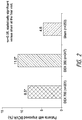
- Figure 2 illustrates that 8.5% of patients receiving the 700 ⁇ g dexamethasone implant demonstrated a BCVA improvement greater than or equal to 20 letters and that 11.0% of patients receiving the 350 ⁇ g dexamethasone implant demonstrated a BCVA improvement greater than or equal to 20 letters.
- Figure 3 illustrates that patients in groups receiving the 700 ⁇ g and 350 ⁇ g dexamethasone-containing implants generally showed a greater improvement in BCVA over the three-year study period than the patients receiving the sham implant.
- a rapid increase in BCVA was observed in patients receiving the dexamethasone implants.
- a mean BCVA increase of about 6 letters from baseline was observed over the first about 3 months of treatment for patients receiving the 350 ⁇ g dexamethasone implant
- a mean BCVA increase of about 7 letters from baseline was observed over the first about 3 months of treatment for patients receiving the 700 ⁇ g dexamethasone implant.
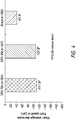
- FIG. 4 illustrates that the mean average decrease from baseline in Central Subfield Retinal Thickness ("CSRT") was greater in patients receiving the dexamethasone implants than in patients receiving the sham implant.
- Figure 4 illustrates that patients receiving the 700 ⁇ g dexamethasone implant demonstrated a CSRT mean average decrease of 111.6 ⁇ m from baseline and that patients receiving the 350 ⁇ g dexamethasone implant demonstrated a CSRT mean average decrease of 107.9 ⁇ m from baseline.
- CSRT Central Subfield Retinal Thickness
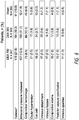
- the adverse event profile from the study is shown below in Figure 6 .
- the most common adverse events experienced in the study were cataracts and intraocular pressure.
- the number of patients who underwent surgery and the type of surgeries underwent are illustrated in Figure 7 .
- the implants and methods disclosed herein resulted in significant, long term improvement in vision in patients with diabetic macular edema.
- the proportion of patients with a greater than or equal to 15-letter gain was significantly higher with the 350 ⁇ g and 700 ⁇ g dexamethasone implants compared with sham at Year 3.
- the treatment benefit was observed with a mean of 4.1 injections over 3 years.
- Table 4 below illustrates the visual acuity outcomes at Month 39 of the study.
- Table 4 Study Outcomes OZURDEX® Sham Estimated Difference (95% CI) 1 a Mean (SD) Baseline BCVA (Letters) 56 (10) 57 (9) Median (range) Baseline BCVA (Letters) 59 (34-95) 58 (34-74) Gain of ⁇ 15 letters in BCVA (n(%)) 34 (21%) 19 (12%) 9.3% (1.4%, 17.3%) Loss of ⁇ 15 letters in BCVA (n(%)) 15 (9%) 17 (10%) -1.1% (-7.5%, 5.3%) Mean change in BCVA (SD) 4.1 (13.9) 0.9 (11.9) 3.2 (0.4, 5.9) 2 b Mean (SD) Baseline BCVA (Letters) 55 (10) 56 (9) Median (range) Baseline BCVA (Letters) 58 (34-72) 58 (36-82) Gain of ⁇ 15 letters in BCVA (n(%)) 30 (18%) 16(10%) 8.4% (0
- Table 5 illustrates the best corrected visual acuity outcomes for the pseudophakic and phakic subgroups.
- Table 5 Subgroup (Pooled) Outcomes OZURDEX® Sham Estimated Difference (95% CI) a Pseudophakic Gain of ⁇ 15 letters in BCVA (n(%)) 16(20%) 11 (11%) 8.4% (-2.2%, 19.0%) Loss of ⁇ 15 letters in BCVA (n(%)) 4 (5%) 7 (7%) -2.2% (-9.1%, 4.7%) Mean change in BCVA (SD) 5.8 (11.6) 1.4 (12.3) 4.2 (0.8, 7.6) b Phakic Gain of ⁇ 15 letters in BCVA (n(%)) 48 (20%) 24 (11%) 9.0% (2.7%, 15.4%) Loss of ⁇ 15 letters in BCVA (n(%)) 41 (17%) 28 (12%) 4.4% (-1.9%, 10.7%) Mean change in BCVA (SD) 1.0 (16.9) 0.6 (12.9) 0.3 (-2.4,3.0)
Landscapes
- Health & Medical Sciences (AREA)
- Chemical & Material Sciences (AREA)
- Life Sciences & Earth Sciences (AREA)
- Veterinary Medicine (AREA)
- General Health & Medical Sciences (AREA)
- Medicinal Chemistry (AREA)
- Public Health (AREA)
- Pharmacology & Pharmacy (AREA)
- Animal Behavior & Ethology (AREA)
- Epidemiology (AREA)
- Ophthalmology & Optometry (AREA)
- Bioinformatics & Cheminformatics (AREA)
- Engineering & Computer Science (AREA)
- Proteomics, Peptides & Aminoacids (AREA)
- Inorganic Chemistry (AREA)
- Organic Chemistry (AREA)
- Nuclear Medicine, Radiotherapy & Molecular Imaging (AREA)
- General Chemical & Material Sciences (AREA)
- Chemical Kinetics & Catalysis (AREA)
- Dispersion Chemistry (AREA)
- Pharmaceuticals Containing Other Organic And Inorganic Compounds (AREA)
- Medicinal Preparation (AREA)
- Materials For Medical Uses (AREA)
Description
- The disclosure of the present application generally relates to drug delivery implants, and more specifically, drug delivery implants for use in a method for treating ocular conditions.
- Macular edema ("ME") is an ocular condition that can result in a swelling of the macula. The edema is caused by fluid leaking from retinal blood vessels. Blood leaks out of the weak vessel walls into a very small area of the macula which is rich in cones, the nerve endings that detect color and from which daytime vision depends. Blurring then occurs in the middle or just to the side of the central visual field. Visual loss can progress over a period of months. Retinal blood vessel obstruction, eye inflammation, and age-related macular degeneration have all been associated with macular edema. The macula may also be affected by swelling following cataract extraction. Symptoms of ME include blurred central vision, distorted vision, vision tinted pink and light sensitivity. Causes of ME can include retinal vein occlusion, macular degeneration, diabetic macular leakage, eye inflammation, idiopathic central serous chorioretinopathy, anterior or posterior uveitis, pars planitis, retinitis pigmentosa, radiation retinopathy, posterior vitreous detachment, epiretinal membrane formation, idiopathic juxtafoveal retinal telangiectasia, Nd:YAG capsulotomy or iridotomy. Some patients with ME may have a history of use of topical epinephrine or prostaglandin analogs for glaucoma.
- Macular edema involves the breakdown of the inner blood retinal barrier at the level of the capillary endothelium, resulting in abnormal retinal vascular permeability and leakage into the adjacent retinal tissues. The macula becomes thickened due to fluid accumulation resulting in significant disturbances in visual acuity.
- Macular edema may occur in diseases causing cumulative injury over many years, such as diabetic retinopathy, or as a result of more acute events, such as central retinal vein occlusion or branch retinal vein occlusion.
- Diabetic retinopathy is a frequent microvascular complication of
diabetes types - Several treatment options have emerged that offer to improve visual acuity, including intravitreal anti-vascular endothelial growth factor (anti-VEGF) agents and laser photocoagulation. However, these treatment options have some drawbacks and do not work effectively for all patients.
- Haller J A et al, Archives of Ophthalmology, vol. 128, no. 3, March 2010, pages 289-296, discloses a randomised controlled trail of an intravitreous dexamethasone drug delivery system in patients with diabetic macular edema.
- The present invention is directed to a bioerodible implant for use in a method for treating diabetic macular edema, the method comprising injecting said bioerodible implant into the vitreous of a human at a frequency of once every about six months to once every about nine months, the bioerodible implant comprising a continuous, double extruded rod comprising dexamethasone homogeneously dispersed within a biodegradable polymer matrix; wherein the biodegradable polymer matrix comprises a mixture of poly(D,L-lactide-co-glycolide) (PLGA) having hydrophilic end groups and poly(D,L-lactide-co-glycolide) (PLGA) having hydrophobic end groups; wherein the bioerodible implant is sized for implantation in the vitreous of the human; and wherein the method is therapeutically effective to treat DME; and wherein said bioerodible implant is administered for a period of time of 2 years, 3 years, 4 years, 5 years, 10 years, 15 years, or for the lifetime of said human. Further embodiments of the invention are specified in the claims.
- Embodiments disclosed herein which do not fall within the scope of the claims do not form part of the invention.
- Disclosed herein are implants and implants for use in the treatment of diabetic macular edema ("DME"). The implant contains dexamethasone.
- An ocular condition can include a disease, aliment or condition which affects or involves the eye or one of the parts or regions of the eye. Broadly speaking the eye includes the eyeball and the tissues and fluids which constitute the eyeball, the periocular muscles (such as the oblique and rectus muscles) and the portion of the optic nerve which is within or adjacent to the eyeball. An anterior ocular condition is a disease, ailment or condition which affects or which involves an anterior (i.e. front of the eye) ocular region or site, such as a periocular muscle, an eye lid or an eye ball tissue or fluid which is located anterior to the posterior wall of the lens capsule or ciliary muscles. Thus, an anterior ocular condition primarily affects or involves, the conjunctiva, the cornea, the conjunctiva, the anterior chamber, the iris, the posterior chamber (behind the retina but in front of the posterior wall of the lens capsule), the lens or the lens capsule and blood vessels and nerve which vascularize or innervate an anterior ocular region or site. A posterior ocular condition is a disease, ailment or condition which primarily affects or involves a posterior ocular region or site such as choroid or sclera (in a position posterior to a plane through the posterior wall of the lens capsule), vitreous, vitreous chamber, retina, optic nerve (i.e. the optic disc), and blood vessels and nerves which vascularize or innervate a posterior ocular region or site.
- A posterior ocular condition can include a disease, ailment or condition, such as for example, macular degeneration (such as non-exudative age related macular degeneration and exudative age related macular degeneration); choroidal neovascularization; acute macular neuroretinopathy; macular edema (such as cystoid macular edema and diabetic macular edema); Behcet's disease, retinal disorders, diabetic retinopathy (including proliferative diabetic retinopathy); retinal arterial occlusive disease; central retinal vein occlusion; uveitic retinal disease; retinal detachment; ocular trauma which affects a posterior ocular site or location; a posterior ocular condition caused by or influenced by an ocular laser treatment; posterior ocular conditions caused by or influenced by a photodynamic therapy; photocoagulation; radiation retinopathy; epiretinal membrane disorders; branch retinal vein occlusion; anterior ischemic optic neuropathy; non-retinopathy diabetic retinal dysfunction, retinitis pigmentosa and glaucoma.
- An anterior ocular condition can include a disease, ailment or condition, such as for example, aphakia; pseudophakia; astigmatism; blepharospasm; cataract; conjunctival diseases; conjunctivitis; corneal diseases; corneal ulcer; dry eye syndromes; eyelid diseases; lacrimal apparatus diseases; lacrimal duct obstruction; myopia; presbyopia; pupil disorders; refractive disorders and strabismus. Glaucoma can also be considered to be an anterior ocular condition because a clinical goal of glaucoma treatment can be to reduce a hypertension of aqueous fluid in the anterior chamber of the eye (i.e. reduce intraocular pressure).
- Potent corticosteroids such as dexamethasone suppress inflammation by inhibiting edema, fibrin deposition, capillary leakage and phagocytic migration, all key features of the inflammatory response. Corticosteroids prevent the release of prostaglandins, some of which have been identified as mediators of cystoid macular edema.
- By delivering a drug, such as a corticosteroid, directly into the vitreous cavity, blood eye barriers can be circumvented and intraocular therapeutic levels can be achieved with minimal risk of systemic toxicity. This route of administration typically results in a short half-life unless the drug can be delivered using a formulation capable of providing sustained release.
- Consequently, a biodegradable implant for delivering a therapeutic agent to an ocular region, such as the vitreous may provide significant medical benefit for patients afflicted with a medical condition of the eye, such as diabetic macular edema.
- According to an embodiment a bioerodible implant for use in a method for treating diabetic macular edema includes injecting the bioerodible implant into the vitreous of a human in need thereof at a frequency of once every about six months to once every about nine months. The bioerodible implant includes a continuous, double extruded rod including dexamethasone homogeneously dispersed within a biodegradable polymer matrix. The biodegradable polymer matrix includes a mixture of poly(D,L-lactide-co-glycolide) (PLGA) having hydrophilic end groups and poly(D,L-lactide-co-glycolide) (PLGA) having hydrophobic end groups. The bioerodible implant is sized for implantation in the vitreous of the human. The method is therapeutically effective to treat DME The active agent is dexamethasone. The bioerodible implant is administered for a period of time of 2 years, 3 years, 4 years, 5 years, 10 years, 15 years, or for the lifetime of said human. In some embodiments, the macular edema is diabetic macular edema. In some embodiments, the dexamethasone is present in the bioerodible implant in an amount of 60% by weight, based on the total weight of the bioerodible implant. In some embodiments, the PLGA having hydrophobic end groups is present in the bioerodible implant in an amount of 10% by weight, based on the total weight of the bioerodible implant. In some embodiments, the PLGA having hydrophilic end groups is present in the bioerodible implant in an amount of 30% by weight, based on the total weight of the bioerodible implant. According to an embodiment, the human has a pseudophakic lens. According to another embodiment, the human has a phakic lens.
- These and other features will now be described with reference to the drawings summarized below. These drawings and the associated description are provided to illustrate one or more embodiments.
-
Figure 1 illustrates a bar graph comparing the proportion of DME patients having a BCVA improvement of greater than or equal to 15 letters in patient groups receiving example embodiment bioerodible implants according to example embodiment methods disclosed herein. -
Figure 2 illustrates a bar graph comparing the proportion of DME patients having a BCVA improvement of greater than or equal to 20 letters in patient groups receiving example embodiment bioerodible implants according to example embodiment methods disclosed herein. -
Figure 3 illustrates a line graph comparing the mean change in BCVA between different DME patient groups receiving example embodiment bioerodible implants according to example embodiment methods disclosed herein. -
Figure 4 illustrates a bar graph comparing the mean average decrease from baseline of CSRT in DME patient groups receiving example embodiment bioerodible implants according to example embodiment methods disclosed herein. -
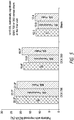
Figure 5 illustrates a bar graph comparing the proportion of DME patients having a BCVA improvement of greater than or equal to 15 letters in patient groups receiving example embodiment bioerodible implants according to example embodiment methods disclosed herein. -
Figure 6 shows a table listing common adverse events occurring during a study according to the examples. -
Figure 7 shows a table listing ocular surgeries performed to correct IOP during a study according to the examples. - The following terms as used herein have the following meanings:
- "Active agent" and "drug" are used interchangeably and refer to any substance used to treat an ocular condition.
- "Bioerodible polymer" means a polymer which degrades in vivo, and wherein erosion of the polymer over time is required to achieve the active agent release kinetics according to the present invention. Thus, hydrogels such as methylcellulose which act to release drug through polymer swelling are specifically excluded from the term "bioerodible (or biodegradable) polymer". The words "bioerodible" and "biodegradable" are synonymous and are used interchangeably herein.
- "Injury" or "damage" are interchangeable and refer to the cellular and morphological manifestations and symptoms resulting from an inflammatory-mediated condition, such as, for example, inflammation.
- "Ocular condition" means a disease, aliment or condition which affects or involves the eye or one or the parts or regions of the eye, such as a retinal disease. The eye includes the eyeball and the tissues and fluids which constitute the eyeball, the periocular muscles (such as the oblique and rectus muscles) and the portion of the optic nerve which is within or adjacent to the eyeball. :"Ocular condition" is synonymous with "medical condition of the eye"
- "Plurality" means two or more.
- "Posterior ocular condition" means a disease, ailment or condition which affects or involves a posterior ocular region or site such as choroid or sclera (in a position posterior to a plane through the posterior wall of the lens capsule), vitreous, vitreous chamber, retina, optic nerve (i.e. the optic disc), and blood vessels and nerve which vascularize or innervate a posterior ocular region or site.
- "Steroidal anti-inflammatory agent" and "glucocorticoid" are used interchangeably herein, and are meant to include steroidal agents, compounds or drugs which reduce inflammation when administered at a therapeutically effective level.
- "Suitable for insertion (or implantation) in (or into) an ocular region or site" with regard to an implant, means an implant which has a size (dimensions) such that it can be inserted or implanted without causing excessive tissue damage and without unduly physically interfering with the existing vision of the patient into which the implant is implanted or inserted.
- "Therapeutic levels" or "therapeutic amount" means an amount or a concentration of an active agent that has been locally delivered to an ocular region that is appropriate to safely treat an ocular condition so as to reduce or prevent a symptom of an ocular condition.
- According to some embodiments, a bioerodible implant for use in treating a medical condition of the eye comprises an active agent dispersed within a biodegradable polymer matrix. Example bioerodible implants and methods of making such implants are described in
U.S. Patent No. 8,034,370 ,U.S. Patent No. 8,242,099 ,U.S. Patent No. 7,767,223 , andU.S. Patent No. 8,257,730 . The active agent is dexamethasone. - The bioerodible implant is sized for implantation in the vitreous of the human. The ocular region can be any one or more of the anterior chamber, the posterior chamber, the vitreous cavity, the choroid, the suprachoroidal space, the conjunctiva, the subconjunctival space, the episcleral space, the intracorneal space, the epicorneal space, the sclera, the pars plana, surgically-induced avascular regions, the macula, and the retina.
- A method for making a bioerodible implant for use in treating a medical condition of the eye can include a plurality of extrusions of a biodegradable polymer. This method can also comprise the step of milling the biodegradable polymer prior to the extrusion. The biodegradable polymer is a poly(lactic-co-glycolic)acid (PLGA) copolymer. The ratio of lactic to glycolic acid monomers in the polymer can be about 50/50 weight percentage. Additionally, the PLGA copolymer can be about 20 to about 90 weight percent of the bioerodible implant. Alternately, the PLGA copolymer can be about 40 percent by weight of the bioerodible implant.
- Disclosed herein are biodegradable ocular implants and such implants for use in methods for treating medical conditions of the eye. Usually, the implants are formed to be monolithic, i.e., the particles of active agent are distributed throughout the biodegradable polymer matrix. Furthermore, the implants are formed to release an active agent into an ocular region of the eye over various time periods. The active agent can be released over a time period including, but is not limited to, approximately twelve months, ten months, nine months, eight months, six months, seven months, eight months, three months, one month, or less than one month.
- The implants include an active agent dispersed within a biodegradable polymer. In some embodiments, dexamethasone is the only active agent present in the implant.
- The steroidal anti-inflammatory agent, dexamethasone, can constitute from about 10% to about 90% by weight of the implant. In one variation, the agent is from about 40% to about 80% by weight of the implant. In a preferred variation, the agent comprises about 60% by weight of the implant.
- In one variation, the active agent is homogeneously dispersed in the biodegradable polymer matrix of the implants. The selection of the biodegradable polymer matrix to be employed will vary with the desired release kinetics, patient tolerance, the nature of the disease to be treated, and the like. Polymer characteristics that are considered include, but are not limited to, the biocompatibility and biodegradability at the site of implantation, compatibility with the active agent of interest, and processing temperatures. The biodegradable polymer matrix usually comprises at least about 10, at least about 20, at least about 30, at least about 40, at least about 50, at least about 60, at least about 70, at least about 80, or at least about 90 weight percent of the implant. In one variation, the biodegradable polymer matrix comprises about 40% by weight of the implant.
- Biodegradable polymer matrices which may be employed include, but are not limited to, polymers made of monomers such as organic esters or ethers, which when degraded result in physiologically acceptable degradation products. Anhydrides, amides, orthoesters, or the like, by themselves or in combination with other monomers, may also be used. The polymers are generally condensation polymers. The polymers may be crosslinked or non-crosslinked. If crosslinked, they are usually not more than lightly crosslinked, and are less than 5% crosslinked, usually less than 1% crosslinked.
- Of particular interest are polymers of hydroxyaliphatic carboxylic acids, either homo- or copolymers, and polysaccharides. Included among the polyesters of interest are homo- or copolymers of D-lactic acid, L-lactic acid, racemic lactic acid, glycolic acid, caprolactone, and combinations thereof. Copolymers of glycolic and lactic acid are of particular interest, where the rate of biodegradation is controlled by the ratio of glycolic to lactic acid. The percent of each monomer in poly(lactic-co-glycolic)acid (PLGA) copolymer may be 0-100%, about 15-85%, about 25-75%, or about 35-65%. In a preferred variation, a 50/50 PLGA copolymer is used . More preferably, a random copolymer of 50/50 PLGA is used.
- Biodegradable polymer matrices that include mixtures of hydrophilic and hydrophobic ended PLGA are employed, and are useful in modulating polymer matrix degradation rates. Hydrophobic ended (also referred to as capped or end-capped) PLGA has an ester linkage hydrophobic in nature at the polymer terminus. Typical hydrophobic end groups include, but are not limited to alkyl esters and aromatic esters. Hydrophilic ended (also referred to as uncapped) PLGA has an end group hydrophilic in nature at the polymer terminus. Examples of suitable hydrophilic end groups that may be incorporated to enhance hydrolysis include, but are not limited to, carboxyl, hydroxyl, and polyethylene glycol. The specific end group will typically result from the initiator employed in the polymerization process. For example, if the initiator is water or carboxylic acid, the resulting end groups will be carboxyl and hydroxyl. Similarly, if the initiator is a monofunctional alcohol, the resulting end groups will be ester or hydroxyl.
- In general, the ratio of hydrophilic end to hydrophobic end PLGA in the biodegradable polymer matrices useful according to this invention range from about 10:1 to about 1:10 by weight. For example, the ratio may be 3:1, 2:1, or 1:1 by weight. In a preferred variation, an implant with a ratio of hydrophilic end to hydrophobic end PLGA of 3:1 w/w is used.
- Other agents may be employed in the formulation for a variety of purposes. For example, buffering agents and preservatives may be employed. Preservatives which may be used include, but are not limited to, sodium bisulfite, sodium bisulfate, sodium thiosulfate, benzalkonium chloride, chlorobutanol, thimerosal, phenylmercuric acetate, phenylmercuric nitrate, methylparaben, polyvinyl alcohol and phenylethyl alcohol. Examples of buffering agents that may be employed include, but are not limited to, sodium carbonate, sodium borate, sodium phosphate, sodium acetate, sodium bicarbonate, and the like, as approved by the FDA for the desired route of administration. Electrolytes such as sodium chloride and potassium chloride may also be included in the formulation.
- The biodegradable ocular implants may also include additional hydrophilic or hydrophobic compounds that accelerate or retard release of the active agent. Furthermore, the inventors believe that because hydrophilic end PLGA has a higher degradation rate than hydrophobic end PLGA due to its ability to take up water more readily, increasing the amount of hydrophilic end PLGA in the implant polymer matrix will result in faster dissolution rates. The time from implantation to significant release of active agent (lag time) increases with decreasing amounts of hydrophilic end PLGA in the ocular implant. The lag time for implants having 0% hydrophilic end PLGA (40% w/w hydrophobic end) was shown to be about 21 days. In comparison, a significant reduction in lag time was seen with implants having 10% w/w and 20% w/w hydrophilic end PLGA.
- The medical condition of the eye which is treated by the implant is diabetic macular edema.
- The biodegradable implants may be inserted into the eye by a variety of methods, including placement by forceps, by trocar, or by other types of applicators, after making an incision in the sclera. In some instances, a trocar or applicator may be used without creating an incision. In a variation, a hand held applicator is used to insert one or more biodegradable implants into the eye. The hand held applicator typically comprises an 18-30 GA stainless steel needle, a lever, an actuator, and a plunger.
- The method of implantation generally first involves accessing the target area within the ocular region with the needle. Once within the target area, e.g., the vitreous cavity, the lever on the hand held device is depressed to cause the actuator to drive the plunger forward. As the plunger moves forward, it pushes the implant into the target area.
- According to an embodiment, the long axis of an applicator having a needle having a bevel can be held parallel to the limbus, and the sclera can be engaged at an oblique angle with the bevel of the needle upwards (away from the sclera) to create a shelved scleral path. The tip of the needle can then be advanced within the sclera for about 1 mm (parallel to the limbus), then re-directed toward the center or the eye and advanced until penetration of the sclera is completed and the vitreous cavity of a patient's eye is entered. After that, the applicator can be activated to deliver a biodegradable implant within the vitreous of the patient.
- In an embodiment, a bioerodible implant for use in a method of treating diabetic macular edema is provided, the method comprising injecting said bioerodible implant into the vitreous of a patient in need thereof, at a frequency between once every six months and to once every nine months, the bioerodible implant comprising dexamethasone homogeneously dispersed within a biodegradable polymer matrix. The bioerodible implant is of the types disclosed herein. According to some embodiments, the administration of the implant to the eye of the patient includes injecting a bioerodible implant into the vitreous.
- The methods are used to treat diabetic macular edema.
- To "treat," as used here, means to deal with medically. It includes, for example, administering the bioerodible implant useful according to the invention to prevent the onset of DME as well as to alleviate its severity.
- In one embodiment, the bioerodible implant is administered once every 6 months to the eye of a patient in need thereof to treat DME In another embodiment, the implant is administered once every 7 months, 8 months or 9 months. The bioerodible implant is administered once every 6 months to 9 months to the eye of a patient in need thereof to treat DME In some embodiments, the bioerodible implant is administered at one or more of the frequencies described above for the remainder of the lifetime of the patient. The bioerodible implant is administered at one or more of the frequencies described above for a period of time of 2 years, 3 years, 4 years, 5 years, 10 years, 15 years, for the lifetime of the patient, or until the ocular condition (such as DME) is adequately treated. Such methods at such dosing regimens described above can be therapeutically effective to treat DME in a patient in need thereof. In some embodiments, the methods described herein can increase the visual acuity of a patient having DME
- Since the implant is biodegradable, subsequent implant(s) can be inserted without the need for surgical removal of the existing implant. By avoiding the peak vitreous drug concentrations produced by the need for frequent repeat injections, the implant may potentially reduce the risk of unwanted side effects, such as cataract formation, IOP elevation, and glaucoma and it may reduce the risk of injection-related complications, such as lens injury, retinal detachment, and infectious endophthalmitis.
- According to some embodiments, the bioerodible implant can treat an ocular condition in a patient having diabetic macular edema independent of the lens status of the patient. For example, in some embodiments, the treatment of DME can be achieved using the implants and methods disclosed herein regardless of whether a patient has a phakic lens or a pseudophakic lens. According to some embodiments, treatment of DME can be achieved in patients having a pseudophakic lens. According to some embodiments, treatment of DME can be achieved in patients having a phakic lens, but who are scheduled for or plan to have cataract surgery.
- According to some embodiments, the bioerodible implant can treat an ocular condition in a patient who is refractory to other existing treatments for DME For example, according to some methods, a patient having DME who is refractive to anti-VEGF intraocular injections can effectively be treated by the methods disclosed herein. According to some other methods, a patient having DME who is refractive to laser photocoagulation can effectively be treated by the methods disclosed herein.
- The following examples are provided for the purposes of further describing the embodiments described herein.
- A Phase III, multicenter, masked, randomized, sham-controlled trial was conducted to assess the safety and efficacy of 700 µg and 350 µg dexamethasone posterior segment drug delivery system in patients with diabetic macular edema ("DME"). The study was conducted over a period of three years. The results of these studies are shown in
Figures 1-7 . - The implants used in the study were comprised of dexamethasone and a polymer matrix of 50:50 poly (D,L-lactide-co-glycolide) PLGA, constituted of two grades of PLGA (50:50 PLGA ester and 50:50 PLGA acid). See Table 1 for details. The two PLGAs combination as presented in Table 2 was chosen for the biodegradable polymer matrix. General properties of the chosen PLGAs are presented in Table 3.
Table 1: Qualitative composition of a sample DEX PS DDS Component Quality Standard Function Dexamethasone Ph. Eur. Active ingredient 50:50 PLGA ester Allergan, Inc. Biodegradable extended release polymer matrix 50:50 PLGA acid Allergan, Inc. Biodegradable extended release polymer matrix Table 2: Quantitative Composition of a sample DEX PS DDS (manufacturing batch formula) Component 350 µg 700 µg Dexamethasone 350 µg (60%) 700 µg (60%) 50:50 PLGA ester (hydrophobic) 58 µg (10%) 116 µg (10%) 50:50 PLGA acid (hydrophilic) 175 µg (30%) 350µg (30%) Table 3 General properties of PLGAs 50:50 PLGA ester 50:50 PLGA acid Common Names Resomer RG 502, PLG, PLGA, Poly (lactic-glycolic) acid, 50:50 Poly (D,L-lactide-co-glycolide), Polylactic/Polyglycolic acid, Polyglactin 910 Resomer RG 502H, PLG acid end, PLGA acid end, 50:50 Poly (D,L-lactide-co-glycolide) acid end Structure 
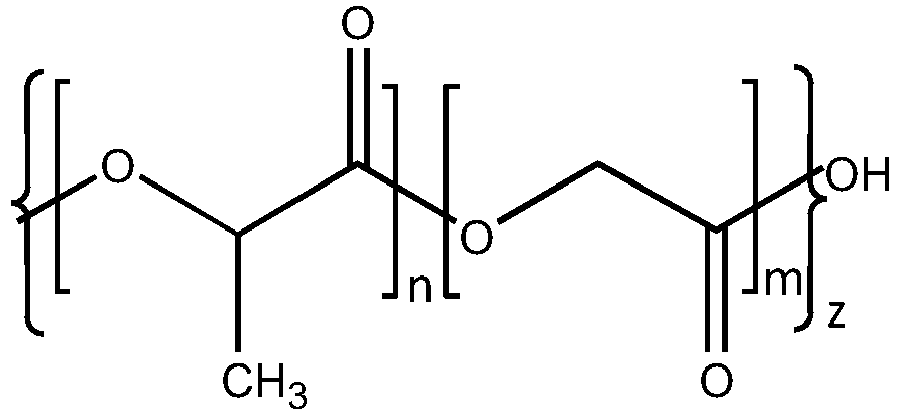
n=m n = m n = number of lactide repeating units n = number of lactide repeating units m = number of glycolide repeating units m = number of glycolide repeating units z = overall number of lactide-co-glycolide repeating units z = overall number of lactide-co-glycolide repeating units CAS Number 34346-01-5 26780-50-7 Empirical Formula [(C3H4O2)x . (C2H2O2)y]CH3, x:y=50:50 [(C3H4O2)x . (C2H2O2)y]OH, x:y=50:50 Description white to off white powder white to near white powder - In the trial, patients having DME received either a bioerodible implant having 700 µg of dexamethasone, a bioerodible implant having 350 µg of dexamethasone, or a bioerodible implant having 0 µg of dexamethasone (a sham). The implants were injected into the vitreous of one eye of each patient. The patients were evaluated for retreatment every 3 months after a
month 6 visit. Retreatment (i.e. administration of another implant) was allowed every 6 months. Retreatment was allowed if central retinal thickness in the patient was greater than 175 µm or if there was any evidence of residual retinal edema. Patients were allowed a maximum of 7 implants over the three-year study period per eye. - As illustrated in
Figures 1-2 , a statistically significant improvement in Best Corrected Visual Acuity ("BCVA") score was achieved in patients receiving the 700 µg dexamethasone implant and in patients receiving the 350 µg dexamethasone implant compared to patients receiving the sham implant.Figure 1 illustrates that 22.2% of patients receiving the 700 µg dexamethasone implant demonstrated a BCVA improvement greater than or equal to 15 letters and that 18.4% of patients receiving the 350 µg dexamethasone implant demonstrated a BCVA improvement greater than or equal to 15 letters.Figure 2 illustrates that 8.5% of patients receiving the 700 µg dexamethasone implant demonstrated a BCVA improvement greater than or equal to 20 letters and that 11.0% of patients receiving the 350 µg dexamethasone implant demonstrated a BCVA improvement greater than or equal to 20 letters. -
Figure 3 illustrates that patients in groups receiving the 700 µg and 350 µg dexamethasone-containing implants generally showed a greater improvement in BCVA over the three-year study period than the patients receiving the sham implant. As shown inFigure 3 , a rapid increase in BCVA was observed in patients receiving the dexamethasone implants. Specifically, a mean BCVA increase of about 6 letters from baseline was observed over the first about 3 months of treatment for patients receiving the 350 µg dexamethasone implant, and a mean BCVA increase of about 7 letters from baseline was observed over the first about 3 months of treatment for patients receiving the 700 µg dexamethasone implant. - As illustrated in
Figure 4 , the mean average decrease from baseline in Central Subfield Retinal Thickness ("CSRT") was greater in patients receiving the dexamethasone implants than in patients receiving the sham implant.Figure 4 illustrates that patients receiving the 700 µg dexamethasone implant demonstrated a CSRT mean average decrease of 111.6 µm from baseline and that patients receiving the 350 µg dexamethasone implant demonstrated a CSRT mean average decrease of 107.9 µm from baseline. - As illustrated in
Figure 5 , the dexamethasone implants led to significant BCVA improvements, regardless of the lens status of the patient at baseline. - The adverse event profile from the study is shown below in
Figure 6 . As shown in the Figure, the most common adverse events experienced in the study were cataracts and intraocular pressure. However, despite the occurrence of the adverse event of increased IOP, surprisingly, very few patients (about 0.3% per surgery type per study group) underwent surgery during the study for management of IOP. The number of patients who underwent surgery and the type of surgeries underwent are illustrated inFigure 7 . - As shown from the data in the Figures, the implants and methods disclosed herein resulted in significant, long term improvement in vision in patients with diabetic macular edema. The proportion of patients with a greater than or equal to 15-letter gain was significantly higher with the 350 µg and 700 µg dexamethasone implants compared with sham at
Year 3. The treatment benefit was observed with a mean of 4.1 injections over 3 years. - Table 4 below illustrates the visual acuity outcomes at
Month 39 of the study.Table 4 Study Outcomes OZURDEX® Sham Estimated Difference (95% CI) 1a Mean (SD) Baseline BCVA (Letters) 56 (10) 57 (9) Median (range) Baseline BCVA (Letters) 59 (34-95) 58 (34-74) Gain of ≥15 letters in BCVA (n(%)) 34 (21%) 19 (12%) 9.3% (1.4%, 17.3%) Loss of ≥15 letters in BCVA (n(%)) 15 (9%) 17 (10%) -1.1% (-7.5%, 5.3%) Mean change in BCVA (SD) 4.1 (13.9) 0.9 (11.9) 3.2 (0.4, 5.9) 2b Mean (SD) Baseline BCVA (Letters) 55 (10) 56 (9) Median (range) Baseline BCVA (Letters) 58 (34-72) 58 (36-82) Gain of ≥15 letters in BCVA (n(%)) 30 (18%) 16(10%) 8.4% (0.9%, 15.8%) Loss of ≥15 letters in BCVA (n(%)) 30 (18%) 18 (11%) 7.1% (-0.5%, 14.7%) Mean change in BCVA (SD) 0.4 (17.5) 0.8 (13.6) -0.7 (-4.1, 2.6) aStudy 1: OZURDEX®, N=163: Sham, N=165
bstudy 2: OZURDEX®, N=165: Sham, N=163
c14% (16.8% from OZURDEX® and 12.2% from Sham) of patients had BCVA outcome atMonth 39, for the remaining patients, the data atMonth 36 or earlier was carried forward. - Table 5 below illustrates the best corrected visual acuity outcomes for the pseudophakic and phakic subgroups.
Table 5 Subgroup (Pooled) Outcomes OZURDEX® Sham Estimated Difference (95% CI) aPseudophakic Gain of ≥15 letters in BCVA (n(%)) 16(20%) 11 (11%) 8.4% (-2.2%, 19.0%) Loss of ≥15 letters in BCVA (n(%)) 4 (5%) 7 (7%) -2.2% (-9.1%, 4.7%) Mean change in BCVA (SD) 5.8 (11.6) 1.4 (12.3) 4.2 (0.8, 7.6) bPhakic Gain of ≥15 letters in BCVA (n(%)) 48 (20%) 24 (11%) 9.0% (2.7%, 15.4%) Loss of ≥15 letters in BCVA (n(%)) 41 (17%) 28 (12%) 4.4% (-1.9%, 10.7%) Mean change in BCVA (SD) 1.0 (16.9) 0.6 (12.9) 0.3 (-2.4,3.0) a Pseudophakic: OZURDEX®, N=82; Sham, N=99
b Phakic: OZURDEX®, N=246; Sham. N=229
c14% (16.8% from OZURDEX® and 12.2% from Sham) of patients had BCVA outcome atMonth 39, for the remaining patients the data atMonth 36 or earlier was used in the analysis.
Claims (11)
- A bioerodible implant for use in a method for treating diabetic macular edema (DME), the method comprising injecting said bioerodible implant into the vitreous of a human at a frequency of once every about six months to once every about nine months, the bioerodible implant comprising a continuous, double extruded rod comprising dexamethasone homogeneously dispersed within a biodegradable polymer matrix; whereinthe biodegradable polymer matrix comprises a mixture of poly(D,L-lactide-co-glycolide) (PLGA) having hydrophilic end groups and poly(D,L-lactide-co-glycolide) (PLGA) having hydrophobic end groups;wherein the bioerodible implant is sized for implantation in the vitreous of the human; and wherein the method is therapeutically effective to treat DME; andwherein said bioerodible implant is administered for a period of time of 2 years, 3 years, 4 years, 5 years, 10 years, 15 years, or for the lifetime of said human.
- The bioerodible implant for use of Claim 1, wherein the human is refractory to anti-VEGF treatment for DME.
- The bioerodible implant for use of Claim 1 or Claim 2, wherein the dexamethasone is present in the bioerodible implant in an amount of 60% by weight, based on the total weight of the bioerodible implant.
- The bioerodible implant for use of any one of Claims 1-3, wherein the PLGA having hydrophobic end groups is present in the bioerodible implant in an amount of 10% by weight, based on the total weight of the bioerodible implant.
- The bioerodible implant for use of any one of Claims 1-4, wherein the PLGA having hydrophilic end groups is present in the bioerodible implant in an amount of 30% by weight, based on the total weight of the bioerodible implant.
- The bioerodible implant for use of any one of Claims 1-5, wherein the human has a pseudophakic lens.
- The bioerodible implant for use of any one of Claims 1-5, wherein the human has a phakic lens.
- The bioerodible implant for use of any one of Claims 1-7, wherein the method results in an increase of visual acuity in the human.
- The bioerodible implant for use of any one of Claims 1-8, wherein said bioerodible implant is administered for a period of time of 3 years.
- The bioerodible implant for use of any one of Claims 9, wherein said bioerodible implant is administered with a mean of 4.1 injections.
- The bioerodible implant for use of any one of Claim 10, wherein the method results in an increase of visual acuity in the human of greater than or equal to 15 letters.
Priority Applications (3)
| Application Number | Priority Date | Filing Date | Title |
|---|---|---|---|
| EP20173457.1A EP3714875A1 (en) | 2013-11-15 | 2014-11-14 | Methods of treatment of ocular conditions with a sustained drug delivery implant |
| PL14805768T PL3068403T3 (en) | 2013-11-15 | 2014-11-14 | Methods of treatment of ocular conditions with a sustained drug delivery implant |
| SI201431652T SI3068403T1 (en) | 2013-11-15 | 2014-11-14 | Methods of treatment of ocular conditions with a sustained drug delivery implant |
Applications Claiming Priority (2)
| Application Number | Priority Date | Filing Date | Title |
|---|---|---|---|
| US201361904887P | 2013-11-15 | 2013-11-15 | |
| PCT/US2014/065804 WO2015073895A1 (en) | 2013-11-15 | 2014-11-14 | Methods of treatment of ocular conditions with a sustained drug delivery implant |
Related Child Applications (2)
| Application Number | Title | Priority Date | Filing Date |
|---|---|---|---|
| EP20173457.1A Division-Into EP3714875A1 (en) | 2013-11-15 | 2014-11-14 | Methods of treatment of ocular conditions with a sustained drug delivery implant |
| EP20173457.1A Division EP3714875A1 (en) | 2013-11-15 | 2014-11-14 | Methods of treatment of ocular conditions with a sustained drug delivery implant |
Publications (3)
| Publication Number | Publication Date |
|---|---|
| EP3068403A1 EP3068403A1 (en) | 2016-09-21 |
| EP3068403B1 true EP3068403B1 (en) | 2020-06-17 |
| EP3068403B2 EP3068403B2 (en) | 2025-12-03 |
Family
ID=52001114
Family Applications (2)
| Application Number | Title | Priority Date | Filing Date |
|---|---|---|---|
| EP20173457.1A Pending EP3714875A1 (en) | 2013-11-15 | 2014-11-14 | Methods of treatment of ocular conditions with a sustained drug delivery implant |
| EP14805768.0A Active EP3068403B2 (en) | 2013-11-15 | 2014-11-14 | Methods of treatment of ocular conditions with a sustained drug delivery implant |
Family Applications Before (1)
| Application Number | Title | Priority Date | Filing Date |
|---|---|---|---|
| EP20173457.1A Pending EP3714875A1 (en) | 2013-11-15 | 2014-11-14 | Methods of treatment of ocular conditions with a sustained drug delivery implant |
Country Status (24)
| Country | Link |
|---|---|
| US (2) | US20150140062A1 (en) |
| EP (2) | EP3714875A1 (en) |
| JP (2) | JP6675307B2 (en) |
| KR (3) | KR102475746B1 (en) |
| CN (1) | CN105764517A (en) |
| AU (4) | AU2014348369B2 (en) |
| CA (1) | CA2929689A1 (en) |
| CL (1) | CL2016001167A1 (en) |
| CY (1) | CY1123344T1 (en) |
| DK (1) | DK3068403T3 (en) |
| ES (1) | ES2819215T3 (en) |
| HU (1) | HUE050913T2 (en) |
| IL (2) | IL245548A0 (en) |
| MX (2) | MX2016006334A (en) |
| MY (1) | MY176039A (en) |
| NZ (1) | NZ719953A (en) |
| PH (1) | PH12016500869B1 (en) |
| PL (1) | PL3068403T3 (en) |
| PT (1) | PT3068403T (en) |
| RU (1) | RU2690841C1 (en) |
| SG (1) | SG10201809363SA (en) |
| SI (1) | SI3068403T1 (en) |
| UA (1) | UA122117C2 (en) |
| WO (1) | WO2015073895A1 (en) |
Families Citing this family (8)
| Publication number | Priority date | Publication date | Assignee | Title |
|---|---|---|---|---|
| JP6914931B2 (en) * | 2015-07-23 | 2021-08-04 | アエリエ ファーマシューティカルズ インコーポレイテッド | Their use in the manufacture of pharmaceutical compositions, intravitreal implants and pharmaceuticals for the treatment of eye symptoms |
| CN109890333A (en) | 2016-09-02 | 2019-06-14 | 爱瑞制药公司 | Implantation material applicator |
| KR20210013088A (en) | 2018-05-24 | 2021-02-03 | 셀라니즈 이브이에이 퍼포먼스 폴리머스 엘엘씨 | Implantable device for sustained release of macromolecular drug compounds |
| EP3803866A4 (en) | 2018-05-24 | 2022-03-16 | Nureva Inc. | METHOD, DEVICE AND COMPUTER-READABLE MEDIA FOR MANAGING SEMI-CONSTANT (PERSISTENT) SOUND SOURCES IN MICROPHONE RECORDING/FOCUS ZONES |
| KR20210013089A (en) | 2018-05-24 | 2021-02-03 | 셀라니즈 이브이에이 퍼포먼스 폴리머스 엘엘씨 | Implantable device for sustained release of macromolecular drug compounds |
| KR20250051157A (en) | 2019-06-05 | 2025-04-16 | 리제너론 파아마슈티컬스, 인크. | Devices and methods for precision dose delivery |
| JP2023534952A (en) * | 2020-07-16 | 2023-08-15 | オキュラ セラピューティクス,インコーポレイテッド | intraocular implants containing glucocorticoids |
| BR112023022439A2 (en) | 2021-04-26 | 2023-12-26 | Celanese Eva Performance Polymers Llc | IMPLANTABLE DEVICE FOR SUSTAINED RELEASE OF A MACROMOLECULAR DRUG COMPOUND |
Citations (1)
| Publication number | Priority date | Publication date | Assignee | Title |
|---|---|---|---|---|
| US8034370B2 (en) | 2003-01-09 | 2011-10-11 | Allergan, Inc. | Ocular implant made by a double extrusion process |
Family Cites Families (8)
| Publication number | Priority date | Publication date | Assignee | Title |
|---|---|---|---|---|
| US6726918B1 (en) | 2000-07-05 | 2004-04-27 | Oculex Pharmaceuticals, Inc. | Methods for treating inflammation-mediated conditions of the eye |
| WO2002043785A2 (en) | 2000-11-29 | 2002-06-06 | Oculex Pharmaceuticals, Inc. | Intraocular implants for preventing transplant rejection in the eye |
| US8685435B2 (en) * | 2004-04-30 | 2014-04-01 | Allergan, Inc. | Extended release biodegradable ocular implants |
| US8119154B2 (en) | 2004-04-30 | 2012-02-21 | Allergan, Inc. | Sustained release intraocular implants and related methods |
| US20050244500A1 (en) * | 2004-04-30 | 2005-11-03 | Allergan, Inc. | Intravitreal implants in conjuction with photodynamic therapy to improve vision |
| US20050244469A1 (en) * | 2004-04-30 | 2005-11-03 | Allergan, Inc. | Extended therapeutic effect ocular implant treatments |
| US20090082321A1 (en) * | 2007-09-21 | 2009-03-26 | Allergan, Inc. | Steroid containing drug delivery systems |
| EP2673049A4 (en) * | 2011-02-11 | 2015-04-08 | Psivida Inc | Methods of treating macular edema using antiedema therapeutics |
-
2014
- 2014-11-14 AU AU2014348369A patent/AU2014348369B2/en active Active
- 2014-11-14 JP JP2016530991A patent/JP6675307B2/en active Active
- 2014-11-14 KR KR1020167015466A patent/KR102475746B1/en active Active
- 2014-11-14 PL PL14805768T patent/PL3068403T3/en unknown
- 2014-11-14 MX MX2016006334A patent/MX2016006334A/en unknown
- 2014-11-14 UA UAA201605224A patent/UA122117C2/en unknown
- 2014-11-14 PT PT148057680T patent/PT3068403T/en unknown
- 2014-11-14 NZ NZ719953A patent/NZ719953A/en not_active IP Right Cessation
- 2014-11-14 SG SG10201809363SA patent/SG10201809363SA/en unknown
- 2014-11-14 KR KR1020227018854A patent/KR20220082934A/en not_active Ceased
- 2014-11-14 DK DK14805768.0T patent/DK3068403T3/en active
- 2014-11-14 ES ES14805768T patent/ES2819215T3/en active Active
- 2014-11-14 HU HUE14805768A patent/HUE050913T2/en unknown
- 2014-11-14 EP EP20173457.1A patent/EP3714875A1/en active Pending
- 2014-11-14 WO PCT/US2014/065804 patent/WO2015073895A1/en not_active Ceased
- 2014-11-14 MY MYPI2016000899A patent/MY176039A/en unknown
- 2014-11-14 RU RU2016119132A patent/RU2690841C1/en active
- 2014-11-14 EP EP14805768.0A patent/EP3068403B2/en active Active
- 2014-11-14 SI SI201431652T patent/SI3068403T1/en unknown
- 2014-11-14 US US14/542,189 patent/US20150140062A1/en not_active Abandoned
- 2014-11-14 KR KR1020247013455A patent/KR20240058976A/en not_active Ceased
- 2014-11-14 CA CA2929689A patent/CA2929689A1/en active Pending
- 2014-11-14 CN CN201480062403.7A patent/CN105764517A/en active Pending
-
2016
- 2016-05-09 IL IL245548A patent/IL245548A0/en unknown
- 2016-05-11 PH PH12016500869A patent/PH12016500869B1/en unknown
- 2016-05-13 CL CL2016001167A patent/CL2016001167A1/en unknown
- 2016-05-13 MX MX2022002306A patent/MX2022002306A/en unknown
-
2019
- 2019-12-13 JP JP2019225503A patent/JP7022735B2/en active Active
-
2020
- 2020-06-30 AU AU2020204362A patent/AU2020204362A1/en not_active Abandoned
- 2020-09-14 CY CY20201100867T patent/CY1123344T1/en unknown
-
2022
- 2022-02-23 IL IL290837A patent/IL290837A/en unknown
- 2022-06-29 AU AU2022204607A patent/AU2022204607A1/en not_active Abandoned
-
2024
- 2024-08-09 AU AU2024205640A patent/AU2024205640B2/en active Active
-
2025
- 2025-02-21 US US19/060,301 patent/US20250319031A1/en active Pending
Patent Citations (1)
| Publication number | Priority date | Publication date | Assignee | Title |
|---|---|---|---|---|
| US8034370B2 (en) | 2003-01-09 | 2011-10-11 | Allergan, Inc. | Ocular implant made by a double extrusion process |
Non-Patent Citations (10)
| Title |
|---|
| "History of Changes for Study: NCT00168337", 30 May 2013 (2013-05-30), XP055795698, Retrieved from the Internet <URL:https://clinicaltrials.gov/ct2/history/NCT00168337?V_13=View#StudyPageTop> |
| "History of Changes for Study: NCT00168389", 21 June 2013 (2013-06-21), XP055795702, Retrieved from the Internet <URL:https://clinicaltrials.gov/ct2/history/NCT00168389?V_13=View#StudyPageTop> |
| BOYER ET AL.: "Three-Year, Randomized, Sham-Controlled Trial of Dexamethasone Intravitreal Implant in Patients with Diabetic Macular Edema", OPHTHALMOLOGY, vol. 121, 4 June 2014 (2014-06-04), pages 1904 - 1914, XP055162551 |
| CALLANAN ET AL.: "055795712 Dexamethasone Intravitreal Implant in Combination with Laser Photocoagulation for the Treatment of Diffuse Diabetic Macular Edema", OPHTHALMOLOGY, vol. 120, May 2013 (2013-05-01), pages 1843 - 1851, XP055795712 |
| EMA: "Assessment report for Ozurdex", ASSESSMENT REPORT EMA/439447/2011, 19 May 2011 (2011-05-19), pages 1 - 44, XP055795733, Retrieved from the Internet <URL:https://www.ema.europa.eu/en/documents/variation-report/ozurdex-h-c-1140-ii-0001-epar-assessment-report-variation_en.pdf> |
| EMA: "Ozurdex", CHMP ASSESSMENT REPORT - EMA/457364/2010, 2010, pages 1 - 58, XP055795726, Retrieved from the Internet <URL:https://www.ema.europa.eu/en/documents/assessment-report/ozurdex-epar-public-assessment-report_en.pdf> |
| HALLER ET AL.: "028397162 Dexamethasone Intravitreal Implant in Patients with Macular Edema Related to Branch or Central Retinal Vein Occlusion", OPHTHALMOLOGY, vol. 118, 2011, pages 2453 - 2460, XP028397162 |
| PACELLA ET AL.: "Preliminary results of an intravitreal dexamethasone implant (Ozurdex®) in patients with persistent diabetic macular edema", CLINICAL OPHTHALMOLOGY, vol. 7, 16 July 2013 (2013-07-16), pages 1423 - 1428, XP055162494 |
| SALMAN, A.G.: "Long-term effect of intravitreal dexamethasone implant (Ozurdex) in the treatment of resistant diabetic macular edema", JOURNAL OF EGYPTIAN OPHTHALMOLOGICAL SOCIETY, vol. 106, no. 3, 2013, pages 194 - 198, XP055795706 |
| SCHWARTZ ET AL.: "Intravitreal Corticosteroids in the Management of Diabetic Macular Edema", CURR OPHTHALMOL REP, vol. 1, 26 July 2013 (2013-07-26), pages 144 - 149, XP055795723 |
Also Published As
Similar Documents
| Publication | Publication Date | Title |
|---|---|---|
| AU2024205640B2 (en) | Methods of treatment of ocular conditions with a sustained drug delivery implant | |
| EP2664347B1 (en) | Bevacizumab for use in a method for treating atrophic age related macular degeneration | |
| JP5696121B2 (en) | Biodegradable intraocular implant containing α-2 adrenergic receptor agonist | |
| US8668676B2 (en) | Apparatus and methods for implanting particulate ocular implants | |
| Lee et al. | Novel drug delivery systems for retinal diseases: a review | |
| US20150272877A1 (en) | Ketorolac-containing sustained release drug delivery systems | |
| de Oliveira Dias et al. | New drugs and new posterior delivery methods in CME | |
| Suresh et al. | Ocular implants as drug delivery device in opthalmic therapeutics: An overview | |
| HK40038783A (en) | Methods of treatment of ocular conditions with a sustained drug delivery implant | |
| HK1228770A1 (en) | Methods of treatment of ocular conditions with a sustained drug delivery implant | |
| HK1228770B (en) | Methods of treatment of ocular conditions with a sustained drug delivery implant | |
| Ahuja et al. | Post-operative assesment of single subconjunctival triamcinolone acetate injection vs topical corticosteroid in cataract surgery: A prospective control study | |
| Barman et al. | Sustained drug delivery in the posterior segments of the eye | |
| HK1190092B (en) | Bevacizumab for use in a method for treating atrophic age related macular degeneration |
Legal Events
| Date | Code | Title | Description |
|---|---|---|---|
| PUAI | Public reference made under article 153(3) epc to a published international application that has entered the european phase |
Free format text: ORIGINAL CODE: 0009012 |
|
| 17P | Request for examination filed |
Effective date: 20160513 |
|
| AK | Designated contracting states |
Kind code of ref document: A1 Designated state(s): AL AT BE BG CH CY CZ DE DK EE ES FI FR GB GR HR HU IE IS IT LI LT LU LV MC MK MT NL NO PL PT RO RS SE SI SK SM TR |
|
| AX | Request for extension of the european patent |
Extension state: BA ME |
|
| RIN1 | Information on inventor provided before grant (corrected) |
Inventor name: PENG, LIN Inventor name: CHOU, DAVID Inventor name: BHAGAT, RAHUL Inventor name: SHIAH, JANE-GUO Inventor name: NIVAGGIOLI, THIERRY Inventor name: WEBER, DAVID A. Inventor name: BLANDA, WENDY M. |
|
| DAX | Request for extension of the european patent (deleted) | ||
| REG | Reference to a national code |
Ref country code: HK Ref legal event code: DE Ref document number: 1228770 Country of ref document: HK |
|
| STAA | Information on the status of an ep patent application or granted ep patent |
Free format text: STATUS: EXAMINATION IS IN PROGRESS |
|
| 17Q | First examination report despatched |
Effective date: 20190806 |
|
| GRAP | Despatch of communication of intention to grant a patent |
Free format text: ORIGINAL CODE: EPIDOSNIGR1 |
|
| STAA | Information on the status of an ep patent application or granted ep patent |
Free format text: STATUS: GRANT OF PATENT IS INTENDED |
|
| RIC1 | Information provided on ipc code assigned before grant |
Ipc: A61P 27/02 20060101ALI20200303BHEP Ipc: A61K 47/34 20170101ALI20200303BHEP Ipc: A61K 9/00 20060101ALI20200303BHEP Ipc: A61K 31/573 20060101AFI20200303BHEP |
|
| INTG | Intention to grant announced |
Effective date: 20200401 |
|
| GRAS | Grant fee paid |
Free format text: ORIGINAL CODE: EPIDOSNIGR3 |
|
| GRAA | (expected) grant |
Free format text: ORIGINAL CODE: 0009210 |
|
| STAA | Information on the status of an ep patent application or granted ep patent |
Free format text: STATUS: THE PATENT HAS BEEN GRANTED |
|
| AK | Designated contracting states |
Kind code of ref document: B1 Designated state(s): AL AT BE BG CH CY CZ DE DK EE ES FI FR GB GR HR HU IE IS IT LI LT LU LV MC MK MT NL NO PL PT RO RS SE SI SK SM TR |
|
| REG | Reference to a national code |
Ref country code: GB Ref legal event code: FG4D |
|
| REG | Reference to a national code |
Ref country code: CH Ref legal event code: EP |
|
| REG | Reference to a national code |
Ref country code: DE Ref legal event code: R096 Ref document number: 602014066769 Country of ref document: DE |
|
| REG | Reference to a national code |
Ref country code: IE Ref legal event code: FG4D |
|
| REG | Reference to a national code |
Ref country code: AT Ref legal event code: REF Ref document number: 1280512 Country of ref document: AT Kind code of ref document: T Effective date: 20200715 |
|
| REG | Reference to a national code |
Ref country code: DK Ref legal event code: T3 Effective date: 20200904 |
|
| REG | Reference to a national code |
Ref country code: FI Ref legal event code: FGE |
|
| REG | Reference to a national code |
Ref country code: PT Ref legal event code: SC4A Ref document number: 3068403 Country of ref document: PT Date of ref document: 20200918 Kind code of ref document: T Free format text: AVAILABILITY OF NATIONAL TRANSLATION Effective date: 20200911 |
|
| REG | Reference to a national code |
Ref country code: NL Ref legal event code: FP |
|
| REG | Reference to a national code |
Ref country code: SE Ref legal event code: TRGR |
|
| REG | Reference to a national code |
Ref country code: CH Ref legal event code: NV Representative=s name: VALIPAT S.A. C/O BOVARD SA NEUCHATEL, CH |
|
| REG | Reference to a national code |
Ref country code: GR Ref legal event code: EP Ref document number: 20200402557 Country of ref document: GR Effective date: 20201014 |
|
| PG25 | Lapsed in a contracting state [announced via postgrant information from national office to epo] |
Ref country code: LT Free format text: LAPSE BECAUSE OF FAILURE TO SUBMIT A TRANSLATION OF THE DESCRIPTION OR TO PAY THE FEE WITHIN THE PRESCRIBED TIME-LIMIT Effective date: 20200617 |
|
| REG | Reference to a national code |
Ref country code: NO Ref legal event code: T2 Effective date: 20200617 |
|
| REG | Reference to a national code |
Ref country code: LT Ref legal event code: MG4D |
|
| REG | Reference to a national code |
Ref country code: EE Ref legal event code: FG4A Ref document number: E019695 Country of ref document: EE Effective date: 20200914 |
|
| PG25 | Lapsed in a contracting state [announced via postgrant information from national office to epo] |
Ref country code: HR Free format text: LAPSE BECAUSE OF FAILURE TO SUBMIT A TRANSLATION OF THE DESCRIPTION OR TO PAY THE FEE WITHIN THE PRESCRIBED TIME-LIMIT Effective date: 20200617 Ref country code: RS Free format text: LAPSE BECAUSE OF FAILURE TO SUBMIT A TRANSLATION OF THE DESCRIPTION OR TO PAY THE FEE WITHIN THE PRESCRIBED TIME-LIMIT Effective date: 20200617 Ref country code: LV Free format text: LAPSE BECAUSE OF FAILURE TO SUBMIT A TRANSLATION OF THE DESCRIPTION OR TO PAY THE FEE WITHIN THE PRESCRIBED TIME-LIMIT Effective date: 20200617 |
|
| REG | Reference to a national code |
Ref country code: SK Ref legal event code: T3 Ref document number: E 35464 Country of ref document: SK |
|
| PG25 | Lapsed in a contracting state [announced via postgrant information from national office to epo] |
Ref country code: AL Free format text: LAPSE BECAUSE OF FAILURE TO SUBMIT A TRANSLATION OF THE DESCRIPTION OR TO PAY THE FEE WITHIN THE PRESCRIBED TIME-LIMIT Effective date: 20200617 |
|
| REG | Reference to a national code |
Ref country code: HU Ref legal event code: AG4A Ref document number: E050913 Country of ref document: HU |
|
| PG25 | Lapsed in a contracting state [announced via postgrant information from national office to epo] |
Ref country code: SM Free format text: LAPSE BECAUSE OF FAILURE TO SUBMIT A TRANSLATION OF THE DESCRIPTION OR TO PAY THE FEE WITHIN THE PRESCRIBED TIME-LIMIT Effective date: 20200617 |
|
| REG | Reference to a national code |
Ref country code: DE Ref legal event code: R026 Ref document number: 602014066769 Country of ref document: DE |
|
| PLBI | Opposition filed |
Free format text: ORIGINAL CODE: 0009260 |
|
| PLAX | Notice of opposition and request to file observation + time limit sent |
Free format text: ORIGINAL CODE: EPIDOSNOBS2 |
|
| REG | Reference to a national code |
Ref country code: ES Ref legal event code: FG2A Ref document number: 2819215 Country of ref document: ES Kind code of ref document: T3 Effective date: 20210415 |
|
| REG | Reference to a national code |
Ref country code: FI Ref legal event code: MDE Opponent name: DF-MP DOERRIES FRANK-MOLNIA & POHLMAN PATENTANWAELTE RECHTSANWAELTE PARG MBB |
|
| 26 | Opposition filed |
Opponent name: DF-MP DOERRIES FRANK-MOLNIA & POHLMAN PATENTANWAELTE RECHTSANWAELTE PARG MBB Effective date: 20210316 |
|
| REG | Reference to a national code |
Ref country code: AT Ref legal event code: UEP Ref document number: 1280512 Country of ref document: AT Kind code of ref document: T Effective date: 20200617 |
|
| PLBB | Reply of patent proprietor to notice(s) of opposition received |
Free format text: ORIGINAL CODE: EPIDOSNOBS3 |
|
| PG25 | Lapsed in a contracting state [announced via postgrant information from national office to epo] |
Ref country code: MT Free format text: LAPSE BECAUSE OF FAILURE TO SUBMIT A TRANSLATION OF THE DESCRIPTION OR TO PAY THE FEE WITHIN THE PRESCRIBED TIME-LIMIT Effective date: 20200617 |
|
| PG25 | Lapsed in a contracting state [announced via postgrant information from national office to epo] |
Ref country code: MK Free format text: LAPSE BECAUSE OF FAILURE TO SUBMIT A TRANSLATION OF THE DESCRIPTION OR TO PAY THE FEE WITHIN THE PRESCRIBED TIME-LIMIT Effective date: 20200617 |
|
| APAH | Appeal reference modified |
Free format text: ORIGINAL CODE: EPIDOSCREFNO |
|
| APBM | Appeal reference recorded |
Free format text: ORIGINAL CODE: EPIDOSNREFNO |
|
| APBP | Date of receipt of notice of appeal recorded |
Free format text: ORIGINAL CODE: EPIDOSNNOA2O |
|
| APBQ | Date of receipt of statement of grounds of appeal recorded |
Free format text: ORIGINAL CODE: EPIDOSNNOA3O |
|
| APBQ | Date of receipt of statement of grounds of appeal recorded |
Free format text: ORIGINAL CODE: EPIDOSNNOA3O |
|
| P01 | Opt-out of the competence of the unified patent court (upc) registered |
Effective date: 20230331 |
|
| PGFP | Annual fee paid to national office [announced via postgrant information from national office to epo] |
Ref country code: BG Payment date: 20230920 Year of fee payment: 10 |
|
| PGFP | Annual fee paid to national office [announced via postgrant information from national office to epo] |
Ref country code: PL Payment date: 20230920 Year of fee payment: 10 Ref country code: NL Payment date: 20231012 Year of fee payment: 10 |
|
| PGFP | Annual fee paid to national office [announced via postgrant information from national office to epo] |
Ref country code: LU Payment date: 20231012 Year of fee payment: 10 |
|
| PGFP | Annual fee paid to national office [announced via postgrant information from national office to epo] |
Ref country code: SK Payment date: 20231010 Year of fee payment: 10 |
|
| PGFP | Annual fee paid to national office [announced via postgrant information from national office to epo] |
Ref country code: GR Payment date: 20231026 Year of fee payment: 10 |
|
| PGFP | Annual fee paid to national office [announced via postgrant information from national office to epo] |
Ref country code: MC Payment date: 20231027 Year of fee payment: 10 |
|
| PGFP | Annual fee paid to national office [announced via postgrant information from national office to epo] |
Ref country code: IS Payment date: 20231106 Year of fee payment: 10 |
|
| PGFP | Annual fee paid to national office [announced via postgrant information from national office to epo] |
Ref country code: TR Payment date: 20231113 Year of fee payment: 10 Ref country code: SI Payment date: 20231011 Year of fee payment: 10 Ref country code: SE Payment date: 20231108 Year of fee payment: 10 Ref country code: RO Payment date: 20231016 Year of fee payment: 10 Ref country code: PT Payment date: 20231026 Year of fee payment: 10 Ref country code: NO Payment date: 20231026 Year of fee payment: 10 Ref country code: IE Payment date: 20231026 Year of fee payment: 10 Ref country code: HU Payment date: 20231020 Year of fee payment: 10 Ref country code: FI Payment date: 20231031 Year of fee payment: 10 Ref country code: EE Payment date: 20231011 Year of fee payment: 10 Ref country code: DK Payment date: 20231027 Year of fee payment: 10 Ref country code: CZ Payment date: 20231013 Year of fee payment: 10 Ref country code: CY Payment date: 20231011 Year of fee payment: 10 Ref country code: CH Payment date: 20231202 Year of fee payment: 10 Ref country code: AT Payment date: 20231027 Year of fee payment: 10 |
|
| PGFP | Annual fee paid to national office [announced via postgrant information from national office to epo] |
Ref country code: BE Payment date: 20231011 Year of fee payment: 10 |
|
| REG | Reference to a national code |
Ref country code: EE Ref legal event code: MM4A Ref document number: E019695 Country of ref document: EE Effective date: 20241130 |
|
| REG | Reference to a national code |
Ref country code: DK Ref legal event code: EBP Effective date: 20241130 |
|
| REG | Reference to a national code |
Ref country code: SK Ref legal event code: MM4A Ref document number: E 35464 Country of ref document: SK Effective date: 20241114 |
|
| REG | Reference to a national code |
Ref country code: CH Ref legal event code: PL |
|
| REG | Reference to a national code |
Ref country code: SE Ref legal event code: EUG |
|
| PG25 | Lapsed in a contracting state [announced via postgrant information from national office to epo] |
Ref country code: MC Free format text: LAPSE BECAUSE OF NON-PAYMENT OF DUE FEES Effective date: 20241202 |
|
| APBU | Appeal procedure closed |
Free format text: ORIGINAL CODE: EPIDOSNNOA9O |
|
| PG25 | Lapsed in a contracting state [announced via postgrant information from national office to epo] |
Ref country code: FI Free format text: LAPSE BECAUSE OF NON-PAYMENT OF DUE FEES Effective date: 20241114 |
|
| REG | Reference to a national code |
Ref country code: NL Ref legal event code: MM Effective date: 20241201 |
|
| PG25 | Lapsed in a contracting state [announced via postgrant information from national office to epo] |
Ref country code: NO Free format text: LAPSE BECAUSE OF NON-PAYMENT OF DUE FEES Effective date: 20241130 |
|
| PG25 | Lapsed in a contracting state [announced via postgrant information from national office to epo] |
Ref country code: LU Free format text: LAPSE BECAUSE OF NON-PAYMENT OF DUE FEES Effective date: 20241114 |
|
| REG | Reference to a national code |
Ref country code: AT Ref legal event code: MM01 Ref document number: 1280512 Country of ref document: AT Kind code of ref document: T Effective date: 20241114 Ref country code: CH Ref legal event code: PL |
|
| PG25 | Lapsed in a contracting state [announced via postgrant information from national office to epo] |
Ref country code: PT Free format text: LAPSE BECAUSE OF NON-PAYMENT OF DUE FEES Effective date: 20250514 |
|
| PG25 | Lapsed in a contracting state [announced via postgrant information from national office to epo] |
Ref country code: EE Free format text: LAPSE BECAUSE OF NON-PAYMENT OF DUE FEES Effective date: 20241130 |
|
| PG25 | Lapsed in a contracting state [announced via postgrant information from national office to epo] |
Ref country code: GR Free format text: LAPSE BECAUSE OF NON-PAYMENT OF DUE FEES Effective date: 20250610 Ref country code: BG Free format text: LAPSE BECAUSE OF NON-PAYMENT OF DUE FEES Effective date: 20241114 |
|
| PG25 | Lapsed in a contracting state [announced via postgrant information from national office to epo] |
Ref country code: CH Free format text: LAPSE BECAUSE OF NON-PAYMENT OF DUE FEES Effective date: 20241130 |
|
| PG25 | Lapsed in a contracting state [announced via postgrant information from national office to epo] |
Ref country code: AT Free format text: LAPSE BECAUSE OF NON-PAYMENT OF DUE FEES Effective date: 20241114 Ref country code: RO Free format text: LAPSE BECAUSE OF NON-PAYMENT OF DUE FEES Effective date: 20241114 |
|
| PG25 | Lapsed in a contracting state [announced via postgrant information from national office to epo] |
Ref country code: SK Free format text: LAPSE BECAUSE OF NON-PAYMENT OF DUE FEES Effective date: 20241114 Ref country code: CY Free format text: LAPSE BECAUSE OF NON-PAYMENT OF DUE FEES Effective date: 20241114 |
|
| PG25 | Lapsed in a contracting state [announced via postgrant information from national office to epo] |
Ref country code: CZ Free format text: LAPSE BECAUSE OF NON-PAYMENT OF DUE FEES Effective date: 20241114 |
|
| PG25 | Lapsed in a contracting state [announced via postgrant information from national office to epo] |
Ref country code: HU Free format text: LAPSE BECAUSE OF NON-PAYMENT OF DUE FEES Effective date: 20241115 |
|
| PG25 | Lapsed in a contracting state [announced via postgrant information from national office to epo] |
Ref country code: NL Free format text: LAPSE BECAUSE OF NON-PAYMENT OF DUE FEES Effective date: 20241201 |
|
| REG | Reference to a national code |
Ref country code: BE Ref legal event code: MM Effective date: 20241130 |
|
| REG | Reference to a national code |
Ref country code: SI Ref legal event code: KO00 Effective date: 20241115 |
|
| PG25 | Lapsed in a contracting state [announced via postgrant information from national office to epo] |
Ref country code: DK Free format text: LAPSE BECAUSE OF NON-PAYMENT OF DUE FEES Effective date: 20241130 |
|
| PG25 | Lapsed in a contracting state [announced via postgrant information from national office to epo] |
Ref country code: SE Free format text: LAPSE BECAUSE OF NON-PAYMENT OF DUE FEES Effective date: 20241115 |
|
| PG25 | Lapsed in a contracting state [announced via postgrant information from national office to epo] |
Ref country code: BE Free format text: LAPSE BECAUSE OF NON-PAYMENT OF DUE FEES Effective date: 20241130 |
|
| PG25 | Lapsed in a contracting state [announced via postgrant information from national office to epo] |
Ref country code: IE Free format text: LAPSE BECAUSE OF NON-PAYMENT OF DUE FEES Effective date: 20241114 |
|
| PUAH | Patent maintained in amended form |
Free format text: ORIGINAL CODE: 0009272 |
|
| STAA | Information on the status of an ep patent application or granted ep patent |
Free format text: STATUS: PATENT MAINTAINED AS AMENDED |
|
| REG | Reference to a national code |
Ref country code: CH Ref legal event code: M12 Free format text: ST27 STATUS EVENT CODE: U-0-0-M10-M12 (AS PROVIDED BY THE NATIONAL OFFICE) Effective date: 20251105 |
|
| 27A | Patent maintained in amended form |
Effective date: 20251203 |
|
| AK | Designated contracting states |
Kind code of ref document: B2 Designated state(s): AL AT BE BG CH CY CZ DE DK EE ES FI FR GB GR HR HU IE IS IT LI LT LU LV MC MK MT NL NO PL PT RO RS SE SI SK SM TR |
|
| REG | Reference to a national code |
Ref country code: DE Ref legal event code: R102 Ref document number: 602014066769 Country of ref document: DE |
|
| PGFP | Annual fee paid to national office [announced via postgrant information from national office to epo] |
Ref country code: DE Payment date: 20251013 Year of fee payment: 12 |
|
| PGFP | Annual fee paid to national office [announced via postgrant information from national office to epo] |
Ref country code: GB Payment date: 20251009 Year of fee payment: 12 |
|
| REG | Reference to a national code |
Ref country code: DE Ref legal event code: R082 Ref document number: 602014066769 Country of ref document: DE |
|
| PGFP | Annual fee paid to national office [announced via postgrant information from national office to epo] |
Ref country code: IT Payment date: 20251117 Year of fee payment: 12 |
|
| PGFP | Annual fee paid to national office [announced via postgrant information from national office to epo] |
Ref country code: FR Payment date: 20251013 Year of fee payment: 12 |
|
| PGFP | Annual fee paid to national office [announced via postgrant information from national office to epo] |
Ref country code: ES Payment date: 20251210 Year of fee payment: 12 |