EP3067891A1 - Sound processing method and terminal device - Google Patents
Sound processing method and terminal device Download PDFInfo
- Publication number
- EP3067891A1 EP3067891A1 EP14859910.3A EP14859910A EP3067891A1 EP 3067891 A1 EP3067891 A1 EP 3067891A1 EP 14859910 A EP14859910 A EP 14859910A EP 3067891 A1 EP3067891 A1 EP 3067891A1
- Authority
- EP
- European Patent Office
- Prior art keywords
- sound signal
- sound
- digital
- analog
- layer
- Prior art date
- Legal status (The legal status is an assumption and is not a legal conclusion. Google has not performed a legal analysis and makes no representation as to the accuracy of the status listed.)
- Withdrawn
Links
Images




Classifications
-
- G—PHYSICS
- G10—MUSICAL INSTRUMENTS; ACOUSTICS
- G10K—SOUND-PRODUCING DEVICES; METHODS OR DEVICES FOR PROTECTING AGAINST, OR FOR DAMPING, NOISE OR OTHER ACOUSTIC WAVES IN GENERAL; ACOUSTICS NOT OTHERWISE PROVIDED FOR
- G10K15/00—Acoustics not otherwise provided for
- G10K15/08—Arrangements for producing a reverberation or echo sound
-
- G—PHYSICS
- G10—MUSICAL INSTRUMENTS; ACOUSTICS
- G10H—ELECTROPHONIC MUSICAL INSTRUMENTS; INSTRUMENTS IN WHICH THE TONES ARE GENERATED BY ELECTROMECHANICAL MEANS OR ELECTRONIC GENERATORS, OR IN WHICH THE TONES ARE SYNTHESISED FROM A DATA STORE
- G10H1/00—Details of electrophonic musical instruments
- G10H1/36—Accompaniment arrangements
- G10H1/361—Recording/reproducing of accompaniment for use with an external source, e.g. karaoke systems
- G10H1/366—Recording/reproducing of accompaniment for use with an external source, e.g. karaoke systems with means for modifying or correcting the external signal, e.g. pitch correction, reverberation, changing a singer's voice
-
- G—PHYSICS
- G10—MUSICAL INSTRUMENTS; ACOUSTICS
- G10L—SPEECH ANALYSIS TECHNIQUES OR SPEECH SYNTHESIS; SPEECH RECOGNITION; SPEECH OR VOICE PROCESSING TECHNIQUES; SPEECH OR AUDIO CODING OR DECODING
- G10L21/00—Speech or voice signal processing techniques to produce another audible or non-audible signal, e.g. visual or tactile, in order to modify its quality or its intelligibility
- G10L21/02—Speech enhancement, e.g. noise reduction or echo cancellation
-
- G—PHYSICS
- G10—MUSICAL INSTRUMENTS; ACOUSTICS
- G10H—ELECTROPHONIC MUSICAL INSTRUMENTS; INSTRUMENTS IN WHICH THE TONES ARE GENERATED BY ELECTROMECHANICAL MEANS OR ELECTRONIC GENERATORS, OR IN WHICH THE TONES ARE SYNTHESISED FROM A DATA STORE
- G10H1/00—Details of electrophonic musical instruments
- G10H1/36—Accompaniment arrangements
- G10H1/361—Recording/reproducing of accompaniment for use with an external source, e.g. karaoke systems
-
- G—PHYSICS
- G10—MUSICAL INSTRUMENTS; ACOUSTICS
- G10H—ELECTROPHONIC MUSICAL INSTRUMENTS; INSTRUMENTS IN WHICH THE TONES ARE GENERATED BY ELECTROMECHANICAL MEANS OR ELECTRONIC GENERATORS, OR IN WHICH THE TONES ARE SYNTHESISED FROM A DATA STORE
- G10H2210/00—Aspects or methods of musical processing having intrinsic musical character, i.e. involving musical theory or musical parameters or relying on musical knowledge, as applied in electrophonic musical tools or instruments
- G10H2210/155—Musical effects
- G10H2210/265—Acoustic effect simulation, i.e. volume, spatial, resonance or reverberation effects added to a musical sound, usually by appropriate filtering or delays
- G10H2210/281—Reverberation or echo
-
- G—PHYSICS
- G10—MUSICAL INSTRUMENTS; ACOUSTICS
- G10H—ELECTROPHONIC MUSICAL INSTRUMENTS; INSTRUMENTS IN WHICH THE TONES ARE GENERATED BY ELECTROMECHANICAL MEANS OR ELECTRONIC GENERATORS, OR IN WHICH THE TONES ARE SYNTHESISED FROM A DATA STORE
- G10H2230/00—General physical, ergonomic or hardware implementation of electrophonic musical tools or instruments, e.g. shape or architecture
- G10H2230/005—Device type or category
- G10H2230/015—PDA [personal digital assistant] or palmtop computing devices used for musical purposes, e.g. portable music players, tablet computers, e-readers or smart phones in which mobile telephony functions need not be used
-
- G—PHYSICS
- G10—MUSICAL INSTRUMENTS; ACOUSTICS
- G10H—ELECTROPHONIC MUSICAL INSTRUMENTS; INSTRUMENTS IN WHICH THE TONES ARE GENERATED BY ELECTROMECHANICAL MEANS OR ELECTRONIC GENERATORS, OR IN WHICH THE TONES ARE SYNTHESISED FROM A DATA STORE
- G10H2250/00—Aspects of algorithms or signal processing methods without intrinsic musical character, yet specifically adapted for or used in electrophonic musical processing
- G10H2250/055—Filters for musical processing or musical effects; Filter responses, filter architecture, filter coefficients or control parameters therefor
- G10H2250/061—Allpass filters
-
- H—ELECTRICITY
- H03—ELECTRONIC CIRCUITRY
- H03M—CODING; DECODING; CODE CONVERSION IN GENERAL
- H03M1/00—Analogue/digital conversion; Digital/analogue conversion
- H03M1/12—Analogue/digital converters
-
- H—ELECTRICITY
- H03—ELECTRONIC CIRCUITRY
- H03M—CODING; DECODING; CODE CONVERSION IN GENERAL
- H03M1/00—Analogue/digital conversion; Digital/analogue conversion
- H03M1/66—Digital/analogue converters
-
- H—ELECTRICITY
- H04—ELECTRIC COMMUNICATION TECHNIQUE
- H04R—LOUDSPEAKERS, MICROPHONES, GRAMOPHONE PICK-UPS OR LIKE ACOUSTIC ELECTROMECHANICAL TRANSDUCERS; ELECTRIC HEARING AIDS; PUBLIC ADDRESS SYSTEMS
- H04R3/00—Circuits for transducers
- H04R3/002—Damping circuit arrangements for transducers, e.g. motional feedback circuits
-
- H—ELECTRICITY
- H04—ELECTRIC COMMUNICATION TECHNIQUE
- H04R—LOUDSPEAKERS, MICROPHONES, GRAMOPHONE PICK-UPS OR LIKE ACOUSTIC ELECTROMECHANICAL TRANSDUCERS; ELECTRIC HEARING AIDS; PUBLIC ADDRESS SYSTEMS
- H04R3/00—Circuits for transducers
- H04R3/005—Circuits for transducers for combining the signals of two or more microphones
Definitions
- the present invention relates to the field of terminal device, and more specifically, to a sound processing method and a terminal device.
- a Karaoke application as an emerging application, is increasingly welcomed.
- accompanying sound or an accompanying video is played, a sound of a singer is recorded by using a microphone, and after beautification processing is performed on the sound of the singer, the sound of the singer is synthesized with the accompanying sound or the accompanying video.
- Typical applications include Oke Hero, Chang Ba, and the like.
- a Karaoke technology has an extremely high requirement on a delay of a sound recording/playing channel (the delay is less than 50 ms); otherwise, a human ear can sense that beautified sound is delayed as compared to a sound of a singer, and the delay is mainly caused by a software platform.
- a designed delay of an application layer is relatively long (greater than 100 ms); therefore, if a sound is input in real time, beautified in real time, and output in real time, a beautified and output sound is obviously delayed as compared to a sound of a singer.
- Embodiments of the present invention provide a sound processing method and a terminal device, which can reduce a delay of a sound on which beautification processing is performed, thereby implementing real-time input, real-time beautification, and real-time output of the sound.
- a sound processing method including: acquiring an analog first sound signal; performing analog-to-digital conversion on the first sound signal, so as to generate a digital second sound signal; performing reverberation processing, at a system bottom layer, on the second sound signal, so as to generate a digital third sound signal, where the system bottom layer includes at least one of a framework layer, a hardware abstraction layer, a driver layer, and a codec CODEC layer; performing digital sound mixing processing on the third sound signal and a background sound signal sent from an application layer, so as to generate a digital fourth sound signal; performing digital-to-analog conversion on the fourth sound signal, so as to generate an analog fifth sound signal; performing analog sound mixing processing on the first sound signal and the fifth sound signal, so as to generate an analog sixth sound signal; and playing the sixth sound signal.
- the performing reverberation processing, at a system bottom layer, on the second sound signal, so as to generate a digital third sound signal includes: sending, through a recording channel, the second sound signal to a reverberation apparatus located at the system bottom layer; and performing reverberation processing on the second sound signal by using the reverberation apparatus, so as to generate the third sound signal with a reverberation effect.
- the performing reverberation processing, at a system bottom layer, on the second sound signal, so as to generate a digital third sound signal includes: performing, by using a digital signal processing apparatus located at the CODEC layer, reverberation processing on the second sound signal, so as to generate the third sound signal with a reverberation effect.
- the performing digital sound mixing processing on the third sound signal and a background sound signal sent from an application layer, so as to generate a digital fourth sound signal includes: performing superposition on the third sound signal and the background sound signal by using a digital sound mixing apparatus located at the system bottom layer, so as to generate the fourth sound signal, where the background sound signal is a digital signal.
- the performing analog sound mixing processing on the first sound signal and the fifth sound signal, so as to generate an analog sixth sound signal includes: performing superposition on the first sound signal and the fifth sound signal by using an analog sound mixing apparatus located at the CODEC layer, so as to generate the sixth sound signal.
- the method further includes: sending, through a sidetone channel at the CODEC layer, the acquired first sound signal to the analog sound mixing apparatus located at the CODEC layer.
- a terminal device including: a sound collecting apparatus, an analog-to-digital conversion apparatus, a reverberation apparatus, a digital sound mixing apparatus, a digital-to-analog conversion apparatus, an analog sound mixing apparatus, and a sound playing apparatus.
- the sound collecting apparatus, the sound playing apparatus, the analog-to-digital conversion apparatus, the digital-to-analog conversion apparatus, and the analog sound mixing apparatus are located at a codec CODEC layer.
- the reverberation apparatus and the digital sound mixing apparatus are located at a system bottom layer, where the system bottom layer includes at least one of a framework layer, a hardware abstraction layer, a driver layer, and the CODEC layer.
- the sound collecting apparatus is connected to the analog sound mixing apparatus through a sidetone channel, and the sound collecting apparatus is configured to acquire an analog first sound signal.
- the analog-to-digital conversion apparatus is configured to perform analog-to-digital conversion on the first sound signal, so as to generate a digital second sound signal.
- the reverberation apparatus is configured to perform reverberation processing, at the system bottom layer, on the second sound signal, so as to generate a digital third sound signal.
- the digital sound mixing apparatus is configured to perform digital sound mixing processing on the third sound signal and a background sound signal sent from an application layer, so as to generate a digital fourth sound signal.
- the digital-to-analog conversion apparatus is configured to perform digital-to-analog conversion on the fourth sound signal, so as to generate an analog fifth sound signal;
- the analog sound mixing apparatus is configured to perform analog sound mixing processing on the first sound signal and the fifth sound signal, so as to generate an analog sixth sound signal.
- the sound playing apparatus is configured to play the sixth sound signal.
- the reverberation apparatus when the reverberation apparatus is located at at least one of the framework layer, the hardware abstraction layer, and the driver layer, the reverberation apparatus is specifically configured to: receive, through the recording channel, the second sound signal sent by the analog-to-digital conversion apparatus; perform reverberation processing on the second sound signal, so as to generate the third sound signal with a reverberation effect; and send the third sound signal to the digital sound mixing apparatus.
- the terminal further includes a digital signal processing apparatus, and when the reverberation apparatus is located at the CODEC layer, the reverberation apparatus is specifically configured to: receive the second sound signal sent by the analog-to-digital conversion apparatus; perform, by using the digital signal processing apparatus located at the CODEC layer, reverberation processing on the second sound signal, so as to generate the third sound signal with a reverberation effect; and send the third sound signal to the digital sound mixing apparatus.
- the digital sound mixing apparatus is specifically configured to: receive the third sound signal sent by the reverberation apparatus, and receive the background sound signal sent by the application layer; perform superposition on the third sound signal and the background sound signal, so as to generate the fourth sound signal, where the background sound signal is a digital signal; and send the fourth sound signal to the digital-to-analog conversion apparatus.
- the analog sound mixing apparatus is specifically configured to: perform superposition on the first sound signal and the fifth sound signal, so as to generate the sixth sound signal.
- the sound acquiring apparatus is further configured to: send the acquired first sound signal to the analog sound mixing apparatus through the sidetone channel.
- the sound collecting apparatus is a microphone
- the sound playing apparatus is a loudspeaker
- the digital-to-analog conversion apparatus and the analog-to-digital conversion apparatus are digital-to-analog/analog-to-digital converters
- the reverberation apparatus, the digital sound mixing apparatus, and the analog sound mixing apparatus are codec chips.
- a delay of a sound on which beautification processing is performed can be reduced, thereby implementing real-time input, real-time beautification, and real-time output of the sound and improving user experience.
- FIG. 1 is a flowchart of a sound processing method according to an embodiment of the present invention. The method in FIG. 1 may be executed by a terminal device.
- 103 Perform reverberation processing, at a system bottom layer, on the second sound signal, so as to generate a digital third sound signal, where the system bottom layer includes at least one of a framework layer, a hardware abstraction layer, a driver layer, and a codec CODEC layer.
- a delay of a sound on which beautification processing is performed can be reduced, thereby implementing real-time input, real-time beautification, and real-time output of the sound and improving user experience.
- the terminal device in this embodiment of the present invention may be a handheld mobile terminal, for example, a mobile phone or a tablet computer; or may be a portable, pocket-size, handheld, computer built-in, or vehicle-mounted terminal device, which is not limited in the present invention.
- a system of the terminal device in this embodiment of the present invention may be divided into the following five layers according to a logical structure: an application layer (Application Layer), a framework layer (Framework Layer), a hardware abstraction layer (Hardware Abstraction Layer, HAL), a driver layer (Driver Layer), and a codec (Coder-Decoder Layer, CODEC) layer, where the CODEC layer belongs to a hardware layer.
- the framework layer, the hardware abstraction layer, the driver layer, and the CODEC layer that are below the application layer may be referred to as a system bottom layer.
- step 103 may include: sending, through a recording channel, the second sound signal to a reverberation apparatus located at the system bottom layer; and performing reverberation processing on the second sound signal by using the reverberation apparatus, so as to generate the third sound signal with a reverberation effect.
- the second sound signal may be sent to the reverberation apparatus through the recording channel.
- the recording channel may lead straight to the application layer.
- the reverberation apparatus may be an algorithm module (reverberation algorithm model) that is configured to beautify a sound, where the reverberation algorithm model is mainly configured to add a reverberation effect, a sound effect of a balancer, and the like to a sound signal that is input.
- the reverberation algorithm model may be a combination of one or more of a multistage-delay reverberation algorithm model, a comb filtering reverberation algorithm model, a Schroeder Schroeder reverberation algorithm model, and a Moorer Moorer reverberation algorithm model.
- a relatively commonly used reverberation algorithm model may be formed by connecting multiple low-pass filter modules in parallel, and then connecting the multiple low-pass filter modules and multiple all-pass filter modules in series. To achieve an echo effect, delays of the multiple low-pass filter modules may be different.
- the second sound signal may be sent to the application layer through the recording channel simultaneously; and optionally, after step 103, the third sound signal may be sent to the application layer through the recording channel, so that a specific application program processes and saves a sound signal of a user, and the user may perform subsequent operations such as playback and release.
- step 103 may include: performing, by using a digital signal processing apparatus located at the CODEC layer, reverberation processing on the second sound signal, so as to generate the third sound signal with a reverberation effect.
- the second sound signal may be sent to a digital signal processing (Digital Signal Processing, DSP) apparatus located in the CODEC for reverberation processing.
- DSP Digital Signal Processing
- a reverberation processing method and model of the DSP apparatus in the CODEC are similar to a processing method at the foregoing framework layer, the hardware abstraction layer, or the driver layer, and details are not described herein again.
- step 104 may include: performing superposition on the third sound signal and the background sound signal by using a digital sound mixing apparatus located at the system bottom layer, so as to generate the fourth sound signal, where the background sound signal is a digital signal.
- the generated third sound signal may be sent to the digital sound mixing apparatus that is also located at any one or more of the framework layer, the hardware abstraction layer, and the driver layer; in addition, the digital sound mixing apparatus may also receive a background sound signal of a "Karaoke" application at the application layer, for example, accompanying music.
- Two signals, that is, the third sound signal and the background sound signal, are directly added up, or the two signals with gains are added up, or superposition may be performed on the two signals by using another reverberation processing algorithm, which is not limited in the present invention.
- the fourth sound signal generated after reverberation and superposition may be sent to the digital-to-analog conversion apparatus.
- the method may further include: sending, through a sidetone channel at the CODEC layer, the acquired first sound signal to the analog sound mixing apparatus located at the CODEC layer.
- the sidetone channel may be an analog channel that connects a sound collecting apparatus and a sound playing apparatus.
- the first sound signal may be directly sent to an analog sound mixing apparatus on a sound playing apparatus end, and a delay is almost zero (less than 5 ms).
- a gain of the first sound signal may be adjusted in a loopback process.
- step 106 may include: performing superposition on the first sound signal and the fifth sound signal by using an analog sound mixing apparatus located at the CODEC layer, so as to generate the sixth sound signal.
- the analog sound mixing apparatus may directly add up two signals, that is, the fifth sound signal and the first sound signal, or add up the two signals with gains, or superposition may be performed on the two signals by using another reverberation processing algorithm, so as to generate the sixth sound signal, which is not limited in the present invention.
- the generated sixth sound signal may be output by using a loudspeaker.
- a sound signal is divided into two signals for processing: one sound signal is looped back through an analog channel and then sent to an output port with almost no delay; the other sound signal is provided with reverberation beautification processing at a system bottom layer and sent to an output port together with a background sound signal; and the two signals are mixed and output. Therefore, a delay of a sound on which beautification processing is performed can be reduced, thereby implementing real-time input, real-time beautification, and real-time output of the sound and improving user experience.
- FIG. 2 is a flowchart of a sound processing method according to an embodiment of the present invention.
- the method in FIG. 2 may be executed by a terminal device, where the terminal device may be a handheld mobile terminal, for example, a mobile phone or a tablet computer, or may be a portable, pocket-size, handheld, computer built-in, or vehicle-mounted terminal device, which is not limited in the present invention.
- the terminal device may be a handheld mobile terminal, for example, a mobile phone or a tablet computer, or may be a portable, pocket-size, handheld, computer built-in, or vehicle-mounted terminal device, which is not limited in the present invention.
- Audio of a singer is collected by using a sound collecting apparatus (for example, a microphone), so as to generate an analog first sound signal.
- a sound collecting apparatus for example, a microphone
- the sound of the singer may be collected when a background sound signal (for example, accompanying music) is being played.
- the analog first sound signal may be sent to an output port by using a sidetone channel of a sound codec (CODEC).
- CODEC sound codec
- This sound signal may be referred to as "direct sound”.
- the "direct sound” has almost no delay and does not have a beautification effect.
- spectrum of the first sound signal after passing through the sidetone channel, spectrum of the first sound signal almost remains unchanged; a phase is hardly changed; and an amplitude may change according to a setting.
- the first sound signal may also be sent to an analog-to-digital conversion apparatus, so as to generate a digital second sound signal, so that a next step of signal processing can be performed.
- the second sound signal is sent to a reverberation apparatus for reverberation beautification processing, so as to generate "beautified sound".
- the reverberation apparatus may be located at any one or more of a framework layer, a hardware abstraction layer HAL, a driver layer, and a codec layer.
- the second sound signal may be sent, through a recording channel, to the reverberation apparatus at the HAL layer for reverberation beautification processing.
- the reverberation apparatus may be an algorithm module (reverberation algorithm model) that is configured to "beautify a sound"; in other words, the reverberation apparatus at the HAL layer belongs to software logic apparatus, and actual calculation and processing are executed by a hardware layer.
- This reverberation algorithm model is mainly configured to add a reverberation effect, a sound effect of a balancer, and the like to a sound signal that is input.
- the reverberation algorithm model may be a combination of one or more of a multistage-delay reverberation algorithm model, a comb filtering reverberation algorithm model, a Schroeder Schroeder reverberation algorithm model, and a Moorer Moorer reverberation algorithm.
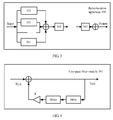
- FIG. 3 shows a schematic structural diagram of a reverberation apparatus 300.
- the reverberation apparatus 300 may be formed by connecting multiple low-pass filter modules 301 in parallel, and then connecting the multiple low-pass filter modules 301 and multiple all-pass filter modules 302 in series. To achieve an echo effect, delays of the multiple low-pass filter modules may be different.
- the Z -n delay is generated.
- a sound signal with an effect of "multiple echoes" as compared to an original sound signal is generated.
- the second sound signal generated after analog-to-digital conversion may be sent to a digital signal processor DSP located in the CODEC, where the digital signal processor may perform, on the second sound signal, "beautification processing" that is similar to beautification processing of the reverberation apparatus at the foregoing HAL.
- the DSP in the CODEC further has processing functions such as call noise reduction, encoding/decoding, recording, and recording beautification.
- the recording channel may lead straight to an application layer; however, a relatively greater delay is caused when a signal or an instruction passes through each layer of a system due to instability of the system, so that if the signal is sent to the application layer through a recording channel and returned to a hardware layer, it is very likely that the delay is greater than 100 ms, which is "distinguishable" to a user; in other words, a user may obviously sense that returned sound is delayed as compared to a sound that is sent by the user. Therefore, a feeling of "Karaoke" is gone, and user experience is deteriorated.
- a reverberation apparatus that is configured to perform beautification processing in this embodiment is located below the application layer, which greatly reduces a quantity of system layers a sound signal needs to pass through when the sound signal comes back and forth during processing of the sound signal; and a delay may be reduced to less than 50 ms, and the user senses "echo" instead of the delay.
- the second sound signal may be sent to the application layer through the recording channel, so that a specific application program processes and saves the second sound signal, and the user may perform subsequent operations such as playback and release.
- the third sound signal may also be sent to the application layer through the recording channel, so that a specific application program processes and saves the second sound signal, and the user may perform subsequent operations such as playback and release.
- a digital sound mixing apparatus may also be located at any one or more of a framework layer, a hardware abstraction layer HAL, a driver layer, and a codec layer. HAL is used as an example.
- the digital sound mixing apparatus receives the third sound signal sent by the reverberation apparatus.
- the digital sound mixing apparatus receives a background sound signal (for example, accompanying music) from the application layer.
- a fourth sound signal with "beautified sound” and "an accompaniment” is generated.
- the superposition may be directly adding up the two signals, or adding up the two signals with gains, or superposition may be performed on the two signals by using another reverberation processing algorithm, which is not limited in the present invention.
- the digital sound mixing apparatus Similar to the reverberation apparatus, the digital sound mixing apparatus also belongs to a software logic apparatus, and an actual calculation and processing are executed by a hardware layer.
- the fourth sound signal is sent to a digital-to-analog conversion apparatus, so as to generate an analog fifth sound signal, and the fifth sound signal is sent to an analog sound mixing apparatus for processing of a next step.
- the analog sound mixing apparatus receives the first sound signal generated in step 202a, and receives the fifth sound signal generated in step 205 at the same time, and then linear or non-linear superposition is performed on the two signals, so as to generate a sixth sound signal.
- the superposition may be directly adding up the two signals, or adding up the two signals with gains, or superposition may be performed on the two signals by using another reverberation processing algorithm, which is not limited in the present invention.
- the sixth sound signal may be played by using a sound playing apparatus, which enables a user to hear the "direct sound”, the "beautified sound", and the “accompaniment", and because a delay of the "beautified sound” is less than 50 ms, a singer can sense echo of a sound of the singer instead of the delay.
- a sound signal is divided into two signals for processing: one sound signal is looped back through an analog channel and then sent to an output port with almost no delay; the other sound signal is provided with reverberation beautification processing at a system bottom layer and sent to an output port together with a background sound signal; and the two signals are mixed and output. Therefore, a delay of a sound on which beautification processing is performed can be reduced, thereby implementing real-time input, real-time beautification, and real-time output of the sound and improving user experience.
- FIG. 6 is a schematic block diagram of a sound processing terminal according to an embodiment of the present invention.
- a sound processing terminal 600 shown in FIG. 6 includes a sound collecting apparatus 601, an analog-to-digital conversion apparatus 602, a reverberation apparatus 603, a digital sound mixing apparatus 604, a digital-to-analog conversion apparatus 605, an analog sound mixing apparatus 606, and a sound playing apparatus 607, where: the sound collecting apparatus 601, the sound playing apparatus 607, the analog-to-digital conversion apparatus 602, the digital-to-analog conversion apparatus 605, and the analog sound mixing apparatus 606 are located at a codec CODEC layer, and the reverberation apparatus 603 and the digital sound mixing apparatus 604 are located at a system bottom layer; the system bottom layer includes at least one of a framework layer, a hardware abstraction layer, a driver layer, and the CODEC layer; and the sound collecting apparatus 601 is connected to the analog sound mixing apparatus 606 through a sidetone channel.
- the sound collecting apparatus 601 acquires an analog first sound signal.
- the analog-to-digital conversion apparatus 602 performs analog-to-digital conversion on the first sound signal, so as to generate a digital second sound signal.
- the reverberation apparatus 603 performs reverberation processing, at the system bottom layer, on the second sound signal, so as to generate a digital third sound signal.
- the digital sound mixing apparatus 604 performs digital sound mixing processing on the third sound signal and a background sound signal sent from an application layer, so as to generate a digital fourth sound signal.
- the analog-to-digital conversion apparatus 605 performs digital-to-analog conversion on the fourth sound signal, so as to generate an analog fifth sound signal.
- the analog sound mixing apparatus 606 performs analog sound mixing processing on the first sound signal and the fifth sound signal, so as to generate an analog sixth sound signal.
- the sound playing apparatus 607 plays the sixth sound signal.
- a delay of a sound on which beautification processing is performed can be reduced, thereby implementing real-time input, real-time beautification, and real-time output of the sound and improving user experience.
- a terminal device in this embodiment of the present invention may be a handheld mobile terminal, for example, a mobile phone or a tablet computer; or may be a portable, pocket-size, handheld, computer built-in, or vehicle-mounted terminal device, which is not limited in the present invention.
- a system of the terminal device in this embodiment of the present invention may be divided into the following five layers according to a logical structure: an application layer, a framework layer, a hardware abstraction layer HAL, a driver layer, and a CODEC layer, where the CODEC layer belongs to a hardware layer.
- the framework layer, the hardware abstraction layer, the driver layer, and the CODEC layer that are below the application layer may be referred to as a system bottom layer.
- the reverberation apparatus 603 when the reverberation apparatus 603 is located at at least one of the framework layer, the hardware abstraction layer, and the driver layer, the reverberation apparatus 603 is specifically configured to: receive, through the recording channel, the second sound signal sent by the analog-to-digital conversion apparatus 602; perform reverberation processing on the second sound signal, so as to generate the third sound signal with a reverberation effect; and send the third sound signal to the digital sound mixing apparatus 604.
- the second sound signal may be sent to the reverberation apparatus through the recording channel.
- the recording channel may lead straight to the application layer.
- the reverberation apparatus may be an algorithm module (reverberation algorithm model) that is configured to beautify a sound, where the reverberation algorithm model is mainly configured to add a reverberation effect, a sound effect of a balancer, and the like to a sound signal that is input.
- the reverberation algorithm model may be a combination of one or more of a multistage-delay reverberation algorithm model, a comb filtering reverberation algorithm model, a Schroeder Schroeder reverberation algorithm model, and a Moorer Moorer reverberation algorithm model.
- a relatively commonly used reverberation algorithm module may be formed by connecting multiple low-pass filter modules in parallel, and then connecting the multiple low-pass filter model and multiple all-pass filter modules in series. To achieve an echo effect, delays of the multiple low-pass filter modules may be different.
- the sound processing terminal 600 further includes a digital signal processing apparatus, and when the reverberation apparatus 603 is located at the CODEC layer, the reverberation apparatus 603 is specifically configured to: receive the second sound signal sent by the analog-to-digital conversion apparatus 602; perform low-pass filtering and all-pass filtering on the second sound signal by using the digital signal processing apparatus located at the CODEC layer, so as to generate the third sound signal with a reverberation effect; and send the third sound signal to the digital sound mixing apparatus 604.
- the second sound signal may be sent to a digital signal processing (Digital Signal Processing, DSP) apparatus located in the CODEC for reverberation processing.
- DSP Digital Signal Processing
- a reverberation processing method and model of the DSP apparatus in the CODEC are similar to a processing method at the foregoing framework layer, the hardware abstraction layer, or the driver layer, and details are not described herein again.
- the digital sound mixing apparatus 604 is specifically configured to: receive the third sound signal sent by the reverberation apparatus 603, and receive the background sound signal sent from the application layer; perform superposition on the third sound signal and the background sound signal, so as to generate the fourth sound signal, where the background sound signal is a digital signal; and send the fourth sound signal to the digital-to-analog conversion apparatus 605.
- the generated third sound signal is sent to the digital sound mixing apparatus 604 that is also located at any one or more of the framework layer, the hardware abstraction layer, and the driver layer; in addition, the digital sound mixing apparatus 604 may also receive a background sound signal of a "Karaoke" application at the application layer, for example, accompanying music.
- Two signals, that is, the third sound signal and the background sound signal, are directly added up, or the two signals with gains are added up, or superposition may be performed on the two signals by using another reverberation processing algorithm, which is not limited in the present invention.
- the fourth sound signal generated after reverberation and superposition may be sent to the digital-to-analog conversion apparatus 605.
- the sound acquiring apparatus 601 is further configured to: send the acquired first sound signal to the analog sound mixing apparatus 606 through the sidetone channel.
- the sidetone channel may be an analog channel that connects a sound collecting apparatus and a sound playing apparatus. After being looped back through an analog channel, the first sound signal may be directly sent to an analog sound mixing apparatus of the sound playing apparatus, and a delay is almost zero (less than 5 ms).
- a gain of the first sound signal may be adjusted in a loopback process.
- the analog sound mixing apparatus 606 is specifically configured to: perform superposition on the first sound signal and the fifth sound signal, so as to generate the sixth sound signal.
- digital-to-analog conversion is performed on the fourth sound signal, so as to generate an analog fifth sound signal; and the first sound signal is sent to the analog sound mixing apparatus through the sidetone channel.
- Two signals, that is, the fifth sound signal and the first sound signal, are directly added up, or the two signals with gains are added up, or superposition may be performed on the two signals by using another reverberation processing algorithm, so as to generate the sixth sound signal, which is not limited in the present invention.
- the generated sixth sound signal may be output by using a loudspeaker.
- analog-to-digital conversion apparatus 602 may be integrated with the digital-to-analog conversion apparatus 605, so as to form an analog-to-digital/digital-to-analog conversion apparatus.
- a sound signal is divided into two signals for processing: one sound signal is looped back through an analog channel and then sent to an output port with almost no delay; the other sound signal is provided with reverberation beautification processing at a system bottom layer and sent to an output port together with a background sound signal; and the two signals are mixed and output. Therefore, a delay of a sound on which beautification processing is performed can be reduced, thereby implementing real-time input, real-time beautification, and real-time output of the sound and improving user experience.
- FIG. 7 is a schematic block diagram of a terminal device according to another embodiment of the present invention.
- the terminal device 700 in FIG. 7 includes a microphone 701, a processor 703, and a loudspeaker 704.
- the microphone 701 is configured to acquire an analog first sound signal.
- the processor 703 is configured to: perform analog-to-digital conversion on the first sound signal, so as to generate a digital second sound signal; perform reverberation processing, at a system bottom layer, on the second sound signal, so as to generate a digital third sound signal; perform digital sound mixing processing on the third sound signal and a background sound signal sent from an application layer, so as to generate a digital fourth sound signal; perform digital-to-analog conversion on the fourth sound signal, so as to generate an analog fifth sound signal; and perform analog sound mixing processing on the first sound signal and the fifth sound signal, so as to generate an analog sixth sound signal.
- the loudspeaker 704 is configured to play the sixth sound signal.
- a delay of a sound on which beautification processing is performed can be reduced, thereby implementing real-time input, real-time beautification, and real-time output of the sound and improving user experience.
- the terminal device may further include a memory 702, where the memory 702 may store an instruction that enables the processor 703 to perform an operation.
- the terminal device in this embodiment of the present invention may be a handheld mobile terminal, for example, a mobile phone or a tablet computer; or may be a portable, pocket-size, handheld, computer built-in, or vehicle-mounted terminal device, which is not limited in this embodiment of the present invention.
- a system of the terminal device in this embodiment of the present invention may be divided into the following five layers according to a logical structure: an application layer, a framework layer, a hardware abstraction layer HAL, a driver layer, and a CODEC layer, where the CODEC layer belongs to a hardware layer.
- the framework layer, the hardware abstraction layer, the driver layer, and the CODEC layer that are below the application layer may be referred to as a system bottom layer.
- the processor 703 may be located at a hardware layer; the foregoing processing that is performed, at the system bottom layer, on a sound signal, may be executed by the processor 703 located at the hardware layer; a logic process or thread of the processor 703 is located at the system bottom layer, and a priority of the process or the thread is relatively high. Therefore, impact on the process or the thread due to an unsteady system or a delay is relatively low, and a processing speed and a responding speed of the processor 703 are relatively high.
- the processor 703 may include a codec CODEC chip 705 and a digital-to-analog/analog-to-digital converter 706.
- the CODEC chip 705 is specifically configured to: receive, through a recording channel, a second sound signal obtained after conversion performed by the digital-to-analog/analog-to-digital converter 706; and perform reverberation processing on the second sound signal, so as to generate the third sound signal with a reverberation effect.
- the processor 703 may include a digital-to-analog/analog-to-digital converter 706 and a codec CODEC chip 705.
- the CODEC chip 705 is specifically configured to: receive a second sound signal obtained after conversion performed by the digital-to-analog/analog-to-digital converter 706; and perform low-pass filtering and all-pass filtering on the second sound signal, so as to generate the third sound signal with a reverberation effect.
- the processor 703 may include a digital-to-analog/analog-to-digital converter 706 and a codec CODEC chip 705.
- the CODEC chip 705 is specifically configured to: receive a background sound signal sent from the application layer; perform superposition on a third sound signal and the background sound signal, so as to generate a fourth sound signal, where the background sound signal is a digital signal; and send the fourth sound signal to the digital-to-analog/analog-to-digital converter 706.
- the digital-to-analog/analog-to-digital converter 706 converts the digital fourth sound signal into the fifth sound signal.
- the microphone 701 is further configured to: send the acquired first sound signal to the processor 703.
- the sidetone channel may be an analog channel that connects the processor 701 to the microphone 701 and the loudspeaker 704.
- the first sound signal may be directly sent to the codec CODEC chip 705, and a delay is almost zero (less than 5 ms).
- a gain of the first sound signal may be adjusted in a loopback process.
- the processor 703 is specifically configured to: perform superposition on a first sound signal and a fifth sound signal, so as to generate a sixth sound signal.
- a sound signal is divided by the terminal device 700 into two signals for processing: one sound signal is looped back through an analog channel and then sent to an output port with almost no delay; the other sound signal is provided with reverberation beautification processing at a system bottom layer and sent to an output port together with a background sound signal; and the two signals are mixed and output. Therefore, a delay of a sound on which beautification processing is performed can be reduced, thereby implementing real-time input, real-time beautification, and real-time output of the sound and improving user experience.
- the processor 703 in this embodiment of the present invention includes the codec CODEC chip 705 and the digital-to-analog/analog-to-digital converter 706, where the codec CODEC chip 705 and the digital-to-analog/analog-to-digital converter 706 may be disposed separately, or may be integrated, which is not limited in this embodiment of the present invention.
- the methods disclosed in the foregoing embodiments of the present invention may be applied to a processor, or implemented by a processor.
- the processor may be an integrated circuit chip and has a signal processing capability. During the implementation, all steps of the foregoing method may be completed by an integrated logic circuit of hardware or instructions in software forms in the processor.
- the processor may be a universal processor, a digital signal processor (DSP), an application-specific integrated circuit (ASIC), a field programmable gate array (FPGA) or another programmable logical device, a stand-alone gate or a transistor logic device, or a stand-alone hardware device, and may implement or execute the methods, the steps, and the logical block diagrams disclosed in the embodiments of the present invention.
- DSP digital signal processor
- ASIC application-specific integrated circuit
- FPGA field programmable gate array
- the general purpose processor may be a microprocessor or the processor may be any conventional processor, or the like.
- the steps of the methods disclosed in the embodiments of the present invention may be directly executed by a hardware decoding processor, or executed by a combination of hardware and software modules in a decoding processor.
- the software module may be located in a mature storage medium in the art, such as a random access memory, a flash memory, a read-only memory, a programmable read-only memory, an electrically erasable programmable read-only memory or a register.
- the storage medium is located in the memory.
- the processor reads information from the memory, and completes the steps of the foregoing methods in combination with the hardware.
- the disclosed system, apparatus, and method may be implemented in other manners.
- the described apparatus embodiment is merely exemplary.
- the unit division is merely logical function division and may be other division in actual implementation.
- a plurality of units or components may be combined or integrated into another system, or some features may be ignored or not performed.
- the displayed or discussed mutual couplings or direct couplings or communication connections may be implemented by using some interfaces.
- the indirect couplings or communication connections between the apparatuses or units may be implemented in electronic, mechanical, or other forms.
- the units described as separate parts may or may not be physically separate, and parts displayed as units may or may not be physical units, may be located in one position, or may be distributed on a plurality of network units. Some or all of the units may be selected according to actual needs to achieve the objectives of the solutions of the embodiments.
- functional units in the embodiments of the present invention may be integrated into one processing unit, or each of the units may exist alone physically, or two or more units are integrated into one unit.
- the functions When the functions are implemented in the form of a software functional unit and sold or used as an independent product, the functions may be stored in a computer-readable storage medium. Based on such an understanding, the technical solutions of the present invention essentially, or the part contributing to the prior art, or some of the technical solutions may be implemented in a form of a software product.
- the software product is stored in a storage medium, and includes several instructions for instructing a computer device (which may be a personal computer, a server, or a network device) to perform all or some of the steps of the methods described in the embodiments of the present invention.
- the storage medium includes: any medium that can store program codes, such as a USB flash disk, a removable hard disk, a read-only memory (Read-Only Memory, ROM), a random access memory (Random Access Memory, RAM), a magnetic disk, or an optical disk.
- program codes such as a USB flash disk, a removable hard disk, a read-only memory (Read-Only Memory, ROM), a random access memory (Random Access Memory, RAM), a magnetic disk, or an optical disk.
Landscapes
- Engineering & Computer Science (AREA)
- Physics & Mathematics (AREA)
- Acoustics & Sound (AREA)
- Multimedia (AREA)
- Signal Processing (AREA)
- Quality & Reliability (AREA)
- Computational Linguistics (AREA)
- Health & Medical Sciences (AREA)
- Audiology, Speech & Language Pathology (AREA)
- Human Computer Interaction (AREA)
- Telephone Function (AREA)
- Reverberation, Karaoke And Other Acoustics (AREA)
- Stereophonic System (AREA)
- Theoretical Computer Science (AREA)
Abstract
Description
- This application claims priority to Chinese Patent Application No.
201310552516.2, filed with the Chinese Patent Office on November 7, 2013 - The present invention relates to the field of terminal device, and more specifically, to a sound processing method and a terminal device.
- As a multimedia function and an application of a mobile phone are increasingly diverse, a Karaoke application, as an emerging application, is increasingly welcomed. In this type of application, accompanying sound or an accompanying video is played, a sound of a singer is recorded by using a microphone, and after beautification processing is performed on the sound of the singer, the sound of the singer is synthesized with the accompanying sound or the accompanying video. Typical applications include Oke Hero, Chang Ba, and the like.
- A Karaoke technology has an extremely high requirement on a delay of a sound recording/playing channel (the delay is less than 50 ms); otherwise, a human ear can sense that beautified sound is delayed as compared to a sound of a singer, and the delay is mainly caused by a software platform. For example, on the Android platform, a designed delay of an application layer is relatively long (greater than 100 ms); therefore, if a sound is input in real time, beautified in real time, and output in real time, a beautified and output sound is obviously delayed as compared to a sound of a singer.
- Embodiments of the present invention provide a sound processing method and a terminal device, which can reduce a delay of a sound on which beautification processing is performed, thereby implementing real-time input, real-time beautification, and real-time output of the sound.
- According to a first aspect, a sound processing method is provided, including: acquiring an analog first sound signal; performing analog-to-digital conversion on the first sound signal, so as to generate a digital second sound signal; performing reverberation processing, at a system bottom layer, on the second sound signal, so as to generate a digital third sound signal, where the system bottom layer includes at least one of a framework layer, a hardware abstraction layer, a driver layer, and a codec CODEC layer; performing digital sound mixing processing on the third sound signal and a background sound signal sent from an application layer, so as to generate a digital fourth sound signal; performing digital-to-analog conversion on the fourth sound signal, so as to generate an analog fifth sound signal; performing analog sound mixing processing on the first sound signal and the fifth sound signal, so as to generate an analog sixth sound signal; and playing the sixth sound signal.
- With reference to the first aspect, in a first implementation manner of the first aspect, when the system bottom layer includes at least one of the framework layer, the hardware abstraction layer, and the driver layer, the performing reverberation processing, at a system bottom layer, on the second sound signal, so as to generate a digital third sound signal includes: sending, through a recording channel, the second sound signal to a reverberation apparatus located at the system bottom layer; and performing reverberation processing on the second sound signal by using the reverberation apparatus, so as to generate the third sound signal with a reverberation effect.
- With reference to the first aspect and the foregoing implementation manner of the first aspect, in a second implementation manner of the first aspect, when the system bottom layer is the CODEC layer, the performing reverberation processing, at a system bottom layer, on the second sound signal, so as to generate a digital third sound signal includes: performing, by using a digital signal processing apparatus located at the CODEC layer, reverberation processing on the second sound signal, so as to generate the third sound signal with a reverberation effect.
- With reference to the first aspect and the foregoing implementation manners of the first aspect, in a third implementation manner of the first aspect, the performing digital sound mixing processing on the third sound signal and a background sound signal sent from an application layer, so as to generate a digital fourth sound signal includes: performing superposition on the third sound signal and the background sound signal by using a digital sound mixing apparatus located at the system bottom layer, so as to generate the fourth sound signal, where the background sound signal is a digital signal.
- With reference to the first aspect and the foregoing implementation manners of the first aspect, in a fourth implementation manner of the first aspect, the performing analog sound mixing processing on the first sound signal and the fifth sound signal, so as to generate an analog sixth sound signal includes: performing superposition on the first sound signal and the fifth sound signal by using an analog sound mixing apparatus located at the CODEC layer, so as to generate the sixth sound signal.
- With reference to the first aspect and the foregoing implementation manners of the first aspect, in a fifth implementation manner of the first aspect, after the analog first sound signal is acquired by using a sound collecting apparatus, the method further includes: sending, through a sidetone channel at the CODEC layer, the acquired first sound signal to the analog sound mixing apparatus located at the CODEC layer.
- According to a second aspect, a terminal device is provided, including: a sound collecting apparatus, an analog-to-digital conversion apparatus, a reverberation apparatus, a digital sound mixing apparatus, a digital-to-analog conversion apparatus, an analog sound mixing apparatus, and a sound playing apparatus. The sound collecting apparatus, the sound playing apparatus, the analog-to-digital conversion apparatus, the digital-to-analog conversion apparatus, and the analog sound mixing apparatus are located at a codec CODEC layer. The reverberation apparatus and the digital sound mixing apparatus are located at a system bottom layer, where the system bottom layer includes at least one of a framework layer, a hardware abstraction layer, a driver layer, and the CODEC layer. The sound collecting apparatus is connected to the analog sound mixing apparatus through a sidetone channel, and the sound collecting apparatus is configured to acquire an analog first sound signal. The analog-to-digital conversion apparatus is configured to perform analog-to-digital conversion on the first sound signal, so as to generate a digital second sound signal. The reverberation apparatus is configured to perform reverberation processing, at the system bottom layer, on the second sound signal, so as to generate a digital third sound signal. The digital sound mixing apparatus is configured to perform digital sound mixing processing on the third sound signal and a background sound signal sent from an application layer, so as to generate a digital fourth sound signal. The digital-to-analog conversion apparatus is configured to perform digital-to-analog conversion on the fourth sound signal, so as to generate an analog fifth sound signal; the analog sound mixing apparatus is configured to perform analog sound mixing processing on the first sound signal and the fifth sound signal, so as to generate an analog sixth sound signal. The sound playing apparatus is configured to play the sixth sound signal.
- With reference to the second aspect, in a first implementation manner of the second aspect, when the reverberation apparatus is located at at least one of the framework layer, the hardware abstraction layer, and the driver layer, the reverberation apparatus is specifically configured to: receive, through the recording channel, the second sound signal sent by the analog-to-digital conversion apparatus; perform reverberation processing on the second sound signal, so as to generate the third sound signal with a reverberation effect; and send the third sound signal to the digital sound mixing apparatus.
- With reference to the second aspect and the foregoing implementation manner of the second aspect, in a second implementation manner of the second aspect, the terminal further includes a digital signal processing apparatus, and when the reverberation apparatus is located at the CODEC layer, the reverberation apparatus is specifically configured to: receive the second sound signal sent by the analog-to-digital conversion apparatus; perform, by using the digital signal processing apparatus located at the CODEC layer, reverberation processing on the second sound signal, so as to generate the third sound signal with a reverberation effect; and send the third sound signal to the digital sound mixing apparatus.
- With reference to the second aspect and the foregoing implementation manners of the second aspect, in a third implementation manner of the second aspect, the digital sound mixing apparatus is specifically configured to: receive the third sound signal sent by the reverberation apparatus, and receive the background sound signal sent by the application layer; perform superposition on the third sound signal and the background sound signal, so as to generate the fourth sound signal, where the background sound signal is a digital signal; and send the fourth sound signal to the digital-to-analog conversion apparatus.
- With reference to the second aspect and the foregoing implementation manners of the second aspect, in a fourth implementation manner of the second aspect, the analog sound mixing apparatus is specifically configured to: perform superposition on the first sound signal and the fifth sound signal, so as to generate the sixth sound signal.
- With reference to the second aspect and the foregoing implementation manners of the second aspect, in a fifth implementation manner of the second aspect, the sound acquiring apparatus is further configured to: send the acquired first sound signal to the analog sound mixing apparatus through the sidetone channel.
- With reference to the second aspect and the foregoing implementation manners of the second aspect, in a sixth implementation manner of the second aspect, the sound collecting apparatus is a microphone, the sound playing apparatus is a loudspeaker, the digital-to-analog conversion apparatus and the analog-to-digital conversion apparatus are digital-to-analog/analog-to-digital converters, and the reverberation apparatus, the digital sound mixing apparatus, and the analog sound mixing apparatus are codec chips.
- In the embodiments of the present invention, by performing reverberation beautification processing, at a system bottom layer, on a sound signal, a delay of a sound on which beautification processing is performed can be reduced, thereby implementing real-time input, real-time beautification, and real-time output of the sound and improving user experience.
- To describe the technical solutions in the embodiments of the present invention more clearly, the following briefly introduces the accompanying drawings required for describing the embodiments of the present invention. Apparently, the accompanying drawings in the following description show merely some embodiments of the present invention, and a person of ordinary skill in the art may still derive other drawings from these accompanying drawings without creative efforts.
-
FIG. 1 is a flowchart of a sound processing method according to an embodiment of the present invention; -
FIG. 2 is a flowchart of a sound processing method according to an embodiment of the present invention; -
FIG. 3 is a schematic diagram of a reverberation model according to an embodiment of the present invention; -
FIG. 4 is a schematic diagram of a low-pass filter model according to an embodiment of the present invention; -
FIG. 5 is a schematic diagram of an all-pass filter model according to an embodiment of the present invention; -
FIG. 6 is a schematic block diagram of a terminal device according to an embodiment of the present invention; and -
FIG. 7 is a schematic block diagram of a terminal device according to another embodiment of the present invention. - The following clearly and completely describes the technical solutions in the embodiments of the present invention with reference to the accompanying drawings in the embodiments of the present invention. Apparently, the described embodiments are a part rather than all of the embodiments of the present invention. All other embodiments obtained by a person of ordinary skill in the art based on the embodiments of the present invention without creative efforts shall fall within the protection scope of the present invention.
-
FIG. 1 is a flowchart of a sound processing method according to an embodiment of the present invention. The method inFIG. 1 may be executed by a terminal device. - 101: Acquire an analog first sound signal.
- 102: Perform analog-to-digital conversion on the first sound signal, so as to generate a digital second sound signal.
- 103: Perform reverberation processing, at a system bottom layer, on the second sound signal, so as to generate a digital third sound signal, where the system bottom layer includes at least one of a framework layer, a hardware abstraction layer, a driver layer, and a codec CODEC layer.
- 104: Perform digital sound mixing processing on the third sound signal and a background sound signal sent from an application layer, so as to generate a digital fourth sound signal.
- 105: Perform digital-to-analog conversion on the fourth sound signal, so as to generate an analog fifth sound signal.
- 106: Perform analog sound mixing processing on the first sound signal and the fifth sound signal, so as to generate an analog sixth sound signal.
- 107: Play the sixth sound signal.
- In this embodiment of the present invention, by performing reverberation beautification processing, at a system bottom layer, on a sound signal, a delay of a sound on which beautification processing is performed can be reduced, thereby implementing real-time input, real-time beautification, and real-time output of the sound and improving user experience.
- It should be understood that the terminal device in this embodiment of the present invention may be a handheld mobile terminal, for example, a mobile phone or a tablet computer; or may be a portable, pocket-size, handheld, computer built-in, or vehicle-mounted terminal device, which is not limited in the present invention.
- A system of the terminal device in this embodiment of the present invention may be divided into the following five layers according to a logical structure: an application layer (Application Layer), a framework layer (Framework Layer), a hardware abstraction layer (Hardware Abstraction Layer, HAL), a driver layer (Driver Layer), and a codec (Coder-Decoder Layer, CODEC) layer, where the CODEC layer belongs to a hardware layer. The framework layer, the hardware abstraction layer, the driver layer, and the CODEC layer that are below the application layer may be referred to as a system bottom layer.
- Optionally, in an embodiment, when the system bottom layer includes at least one of the framework layer, the hardware abstraction layer, and the driver layer,
step 103 may include: sending, through a recording channel, the second sound signal to a reverberation apparatus located at the system bottom layer; and performing reverberation processing on the second sound signal by using the reverberation apparatus, so as to generate the third sound signal with a reverberation effect. - In other words, when reverberation processing is performed, at any one or more of the framework layer, the hardware abstraction layer, and the driver layer, on the second sound signal generated after analog-to-digital conversion, the second sound signal may be sent to the reverberation apparatus through the recording channel. The recording channel may lead straight to the application layer. The reverberation apparatus may be an algorithm module (reverberation algorithm model) that is configured to beautify a sound, where the reverberation algorithm model is mainly configured to add a reverberation effect, a sound effect of a balancer, and the like to a sound signal that is input. Specifically, the reverberation algorithm model may be a combination of one or more of a multistage-delay reverberation algorithm model, a comb filtering reverberation algorithm model, a Schroeder Schroeder reverberation algorithm model, and a Moorer Moorer reverberation algorithm model. A relatively commonly used reverberation algorithm model may be formed by connecting multiple low-pass filter modules in parallel, and then connecting the multiple low-pass filter modules and multiple all-pass filter modules in series. To achieve an echo effect, delays of the multiple low-pass filter modules may be different.
- Optionally, when
step 103 is being performed, the second sound signal may be sent to the application layer through the recording channel simultaneously; and optionally, afterstep 103, the third sound signal may be sent to the application layer through the recording channel, so that a specific application program processes and saves a sound signal of a user, and the user may perform subsequent operations such as playback and release. - Optionally, in an embodiment, when the system bottom layer is the CODEC layer,
step 103 may include: performing, by using a digital signal processing apparatus located at the CODEC layer, reverberation processing on the second sound signal, so as to generate the third sound signal with a reverberation effect. - In other words, if reverberation processing is performed, at the codec layer, on the second sound signal generated after analog-to-digital conversion, the second sound signal may be sent to a digital signal processing (Digital Signal Processing, DSP) apparatus located in the CODEC for reverberation processing. Specifically, a reverberation processing method and model of the DSP apparatus in the CODEC are similar to a processing method at the foregoing framework layer, the hardware abstraction layer, or the driver layer, and details are not described herein again.
- Optionally, in an embodiment, step 104 may include: performing superposition on the third sound signal and the background sound signal by using a digital sound mixing apparatus located at the system bottom layer, so as to generate the fourth sound signal, where the background sound signal is a digital signal.
- In other words, after reverberation processing is performed, at any one or more of the framework layer, the hardware abstraction layer, and the driver layer, on the second sound signal generated after analog-to-digital conversion, the generated third sound signal may be sent to the digital sound mixing apparatus that is also located at any one or more of the framework layer, the hardware abstraction layer, and the driver layer; in addition, the digital sound mixing apparatus may also receive a background sound signal of a "Karaoke" application at the application layer, for example, accompanying music. Two signals, that is, the third sound signal and the background sound signal, are directly added up, or the two signals with gains are added up, or superposition may be performed on the two signals by using another reverberation processing algorithm, which is not limited in the present invention. Afterward, the fourth sound signal generated after reverberation and superposition may be sent to the digital-to-analog conversion apparatus.
- Optionally, in an embodiment, after
step 101, the method may further include: sending, through a sidetone channel at the CODEC layer, the acquired first sound signal to the analog sound mixing apparatus located at the CODEC layer. The sidetone channel may be an analog channel that connects a sound collecting apparatus and a sound playing apparatus. After being looped back through an analog channel, the first sound signal may be directly sent to an analog sound mixing apparatus on a sound playing apparatus end, and a delay is almost zero (less than 5 ms). Optionally, a gain of the first sound signal may be adjusted in a loopback process. - Optionally, in an embodiment, step 106 may include: performing superposition on the first sound signal and the fifth sound signal by using an analog sound mixing apparatus located at the CODEC layer, so as to generate the sixth sound signal.
- Specifically, the analog sound mixing apparatus may directly add up two signals, that is, the fifth sound signal and the first sound signal, or add up the two signals with gains, or superposition may be performed on the two signals by using another reverberation processing algorithm, so as to generate the sixth sound signal, which is not limited in the present invention. The generated sixth sound signal may be output by using a loudspeaker.
- In this embodiment of the present invention, a sound signal is divided into two signals for processing: one sound signal is looped back through an analog channel and then sent to an output port with almost no delay; the other sound signal is provided with reverberation beautification processing at a system bottom layer and sent to an output port together with a background sound signal; and the two signals are mixed and output. Therefore, a delay of a sound on which beautification processing is performed can be reduced, thereby implementing real-time input, real-time beautification, and real-time output of the sound and improving user experience.
-
FIG. 2 is a flowchart of a sound processing method according to an embodiment of the present invention. The method inFIG. 2 may be executed by a terminal device, where the terminal device may be a handheld mobile terminal, for example, a mobile phone or a tablet computer, or may be a portable, pocket-size, handheld, computer built-in, or vehicle-mounted terminal device, which is not limited in the present invention. - 201: Input sound.
- Audio of a singer is collected by using a sound collecting apparatus (for example, a microphone), so as to generate an analog first sound signal. Specifically, the sound of the singer may be collected when a background sound signal (for example, accompanying music) is being played.
- 202a: Directly send the sound.
- After being generated, the analog first sound signal may be sent to an output port by using a sidetone channel of a sound codec (CODEC). This sound signal may be referred to as "direct sound". Compared with a sound that is input by a user, the "direct sound" has almost no delay and does not have a beautification effect. In other words, after passing through the sidetone channel, spectrum of the first sound signal almost remains unchanged; a phase is hardly changed; and an amplitude may change according to a setting. A formula for the "direct sound" is as follows:

SD indicates a direct sound; GD indicates a direct sound gain; τD indicates a direct sound delay (less than 5 ms); and S indicates an original signal, that is, the first sound signal. Because spectrum of SD remains unchanged as compared to spectrum of S, SD may still be considered as the first sound signal. - 202b: Perform analog-to-digital conversion.
- After the analog first sound signal is generated, in addition to the "direct sound" in 202a, the first sound signal may also be sent to an analog-to-digital conversion apparatus, so as to generate a digital second sound signal, so that a next step of signal processing can be performed.
- 203: Perform reverberation processing.
- The second sound signal is sent to a reverberation apparatus for reverberation beautification processing, so as to generate "beautified sound". The reverberation apparatus may be located at any one or more of a framework layer, a hardware abstraction layer HAL, a driver layer, and a codec layer. For example, when the reverberation apparatus is located at the HAL, the second sound signal may be sent, through a recording channel, to the reverberation apparatus at the HAL layer for reverberation beautification processing.
- Specifically, the reverberation apparatus may be an algorithm module (reverberation algorithm model) that is configured to "beautify a sound"; in other words, the reverberation apparatus at the HAL layer belongs to software logic apparatus, and actual calculation and processing are executed by a hardware layer. This reverberation algorithm model is mainly configured to add a reverberation effect, a sound effect of a balancer, and the like to a sound signal that is input. Specifically, the reverberation algorithm model may be a combination of one or more of a multistage-delay reverberation algorithm model, a comb filtering reverberation algorithm model, a Schroeder Schroeder reverberation algorithm model, and a Moorer Moorer reverberation algorithm. As an example,
FIG. 3 shows a schematic structural diagram of a reverberation apparatus 300. As shown inFIG. 3 , the reverberation apparatus 300 may be formed by connecting multiple low-pass filter modules 301 in parallel, and then connecting the multiple low-pass filter modules 301 and multiple all-pass filter modules 302 in series. To achieve an echo effect, delays of the multiple low-pass filter modules may be different. - More specifically, a schematic structural diagram of any filter module of the low-
pass filter modules 301 inFIG. 3 may be shown inFIG. 4 . A transmission function H(z) of the low-pass filter modules 301 may be:
X(z) is an output signal; Y(z) is an output signal; g is a gain; and Z-n is a delay of n unit or units, where a delay of one unit may be a sampling time. - After the second sound signal passes through the low-
pass filter modules 301, the Z-n delay is generated. However, after multiple second sound signals pass through multiple low-pass filter modules that are connected in parallel and have different delays, and superposition is performed on the signals, a sound signal with an effect of "multiple echoes" as compared to an original sound signal is generated. - More specifically, a schematic structural diagram of any filter module of the all-
pass filter module 302 inFIG. 3 may be shown inFIG. 5 . A transmission function H(z) of the all-pass filter modules 302 may be:
g is a gain; and Z-D is a delay of D unit or units. Further "beautification processing" may be performed, by using multiple all-pass filter modules 302 that are connected in series, on the second sound signal of the low-pass filter model 301, so as to generate a third sound signal. - In addition, if the reverberation apparatus is located at the CODEC layer, the second sound signal generated after analog-to-digital conversion may be sent to a digital signal processor DSP located in the CODEC, where the digital signal processor may perform, on the second sound signal, "beautification processing" that is similar to beautification processing of the reverberation apparatus at the foregoing HAL. The DSP in the CODEC further has processing functions such as call noise reduction, encoding/decoding, recording, and recording beautification.
- It should be understood that the recording channel may lead straight to an application layer; however, a relatively greater delay is caused when a signal or an instruction passes through each layer of a system due to instability of the system, so that if the signal is sent to the application layer through a recording channel and returned to a hardware layer, it is very likely that the delay is greater than 100 ms, which is "distinguishable" to a user; in other words, a user may obviously sense that returned sound is delayed as compared to a sound that is sent by the user. Therefore, a feeling of "Karaoke" is gone, and user experience is deteriorated. However, a reverberation apparatus that is configured to perform beautification processing in this embodiment is located below the application layer, which greatly reduces a quantity of system layers a sound signal needs to pass through when the sound signal comes back and forth during processing of the sound signal; and a delay may be reduced to less than 50 ms, and the user senses "echo" instead of the delay.
- As an optional step, when reverberation processing is performed on the second sound signal by using the reverberation apparatus at the system bottom layer, the second sound signal may be sent to the application layer through the recording channel, so that a specific application program processes and saves the second sound signal, and the user may perform subsequent operations such as playback and release.
- Similarly, as another optional step, after the third sound signal is generated after the reverberation processing is performed on the second sound signal in step 203, the third sound signal may also be sent to the application layer through the recording channel, so that a specific application program processes and saves the second sound signal, and the user may perform subsequent operations such as playback and release.
- 204: Perform digital sound mixing processing.
- Similar to the reverberation apparatus, a digital sound mixing apparatus may also be located at any one or more of a framework layer, a hardware abstraction layer HAL, a driver layer, and a codec layer. HAL is used as an example. The digital sound mixing apparatus receives the third sound signal sent by the reverberation apparatus. In addition, the digital sound mixing apparatus receives a background sound signal (for example, accompanying music) from the application layer. After the digital sound mixing apparatus performs linear or non-linear superposition processing on two signals, a fourth sound signal with "beautified sound" and "an accompaniment" is generated. The superposition may be directly adding up the two signals, or adding up the two signals with gains, or superposition may be performed on the two signals by using another reverberation processing algorithm, which is not limited in the present invention.
- Similar to the reverberation apparatus, the digital sound mixing apparatus also belongs to a software logic apparatus, and an actual calculation and processing are executed by a hardware layer.
- 205: Perform digital-to-analog conversion.
- The fourth sound signal is sent to a digital-to-analog conversion apparatus, so as to generate an analog fifth sound signal, and the fifth sound signal is sent to an analog sound mixing apparatus for processing of a next step.
- 206: Perform analog sound mixing processing.
- The analog sound mixing apparatus receives the first sound signal generated in
step 202a, and receives the fifth sound signal generated instep 205 at the same time, and then linear or non-linear superposition is performed on the two signals, so as to generate a sixth sound signal. The superposition may be directly adding up the two signals, or adding up the two signals with gains, or superposition may be performed on the two signals by using another reverberation processing algorithm, which is not limited in the present invention. - 207: Output sound.
- The sixth sound signal may be played by using a sound playing apparatus, which enables a user to hear the "direct sound", the "beautified sound", and the "accompaniment", and because a delay of the "beautified sound" is less than 50 ms, a singer can sense echo of a sound of the singer instead of the delay.
- In this embodiment of the present invention, a sound signal is divided into two signals for processing: one sound signal is looped back through an analog channel and then sent to an output port with almost no delay; the other sound signal is provided with reverberation beautification processing at a system bottom layer and sent to an output port together with a background sound signal; and the two signals are mixed and output. Therefore, a delay of a sound on which beautification processing is performed can be reduced, thereby implementing real-time input, real-time beautification, and real-time output of the sound and improving user experience.
-
FIG. 6 is a schematic block diagram of a sound processing terminal according to an embodiment of the present invention. Asound processing terminal 600 shown inFIG. 6 includes asound collecting apparatus 601, an analog-to-digital conversion apparatus 602, areverberation apparatus 603, a digitalsound mixing apparatus 604, a digital-to-analog conversion apparatus 605, an analogsound mixing apparatus 606, and asound playing apparatus 607, where: thesound collecting apparatus 601, thesound playing apparatus 607, the analog-to-digital conversion apparatus 602, the digital-to-analog conversion apparatus 605, and the analogsound mixing apparatus 606 are located at a codec CODEC layer, and thereverberation apparatus 603 and the digitalsound mixing apparatus 604 are located at a system bottom layer; the system bottom layer includes at least one of a framework layer, a hardware abstraction layer, a driver layer, and the CODEC layer; and thesound collecting apparatus 601 is connected to the analogsound mixing apparatus 606 through a sidetone channel. - The
sound collecting apparatus 601 acquires an analog first sound signal. The analog-to-digital conversion apparatus 602 performs analog-to-digital conversion on the first sound signal, so as to generate a digital second sound signal. Thereverberation apparatus 603 performs reverberation processing, at the system bottom layer, on the second sound signal, so as to generate a digital third sound signal. The digitalsound mixing apparatus 604 performs digital sound mixing processing on the third sound signal and a background sound signal sent from an application layer, so as to generate a digital fourth sound signal. The analog-to-digital conversion apparatus 605 performs digital-to-analog conversion on the fourth sound signal, so as to generate an analog fifth sound signal. The analogsound mixing apparatus 606 performs analog sound mixing processing on the first sound signal and the fifth sound signal, so as to generate an analog sixth sound signal. Thesound playing apparatus 607 plays the sixth sound signal. - In this embodiment of the present invention, by performing reverberation beautification processing, at a system bottom layer, on a sound signal, a delay of a sound on which beautification processing is performed can be reduced, thereby implementing real-time input, real-time beautification, and real-time output of the sound and improving user experience.
- It should be understood that a terminal device in this embodiment of the present invention may be a handheld mobile terminal, for example, a mobile phone or a tablet computer; or may be a portable, pocket-size, handheld, computer built-in, or vehicle-mounted terminal device, which is not limited in the present invention.
- A system of the terminal device in this embodiment of the present invention may be divided into the following five layers according to a logical structure: an application layer, a framework layer, a hardware abstraction layer HAL, a driver layer, and a CODEC layer, where the CODEC layer belongs to a hardware layer. The framework layer, the hardware abstraction layer, the driver layer, and the CODEC layer that are below the application layer may be referred to as a system bottom layer.
- Optionally, in an embodiment, when the
reverberation apparatus 603 is located at at least one of the framework layer, the hardware abstraction layer, and the driver layer, thereverberation apparatus 603 is specifically configured to: receive, through the recording channel, the second sound signal sent by the analog-to-digital conversion apparatus 602; perform reverberation processing on the second sound signal, so as to generate the third sound signal with a reverberation effect; and send the third sound signal to the digitalsound mixing apparatus 604. - In other words, when reverberation processing is performed, at any one or more of the framework layer, the hardware abstraction layer, and the driver layer, on the second sound signal generated after analog-to-digital conversion, the second sound signal may be sent to the reverberation apparatus through the recording channel. The recording channel may lead straight to the application layer. The reverberation apparatus may be an algorithm module (reverberation algorithm model) that is configured to beautify a sound, where the reverberation algorithm model is mainly configured to add a reverberation effect, a sound effect of a balancer, and the like to a sound signal that is input. Specifically, the reverberation algorithm model may be a combination of one or more of a multistage-delay reverberation algorithm model, a comb filtering reverberation algorithm model, a Schroeder Schroeder reverberation algorithm model, and a Moorer Moorer reverberation algorithm model. A relatively commonly used reverberation algorithm module may be formed by connecting multiple low-pass filter modules in parallel, and then connecting the multiple low-pass filter model and multiple all-pass filter modules in series. To achieve an echo effect, delays of the multiple low-pass filter modules may be different.
- Optionally, in an embodiment, the
sound processing terminal 600 further includes a digital signal processing apparatus, and when thereverberation apparatus 603 is located at the CODEC layer, thereverberation apparatus 603 is specifically configured to: receive the second sound signal sent by the analog-to-digital conversion apparatus 602; perform low-pass filtering and all-pass filtering on the second sound signal by using the digital signal processing apparatus located at the CODEC layer, so as to generate the third sound signal with a reverberation effect; and send the third sound signal to the digitalsound mixing apparatus 604. - In other words, if reverberation processing is performed, at the codec layer, on the second sound signal generated after analog-to-digital conversion, the second sound signal may be sent to a digital signal processing (Digital Signal Processing, DSP) apparatus located in the CODEC for reverberation processing. Specifically, a reverberation processing method and model of the DSP apparatus in the CODEC are similar to a processing method at the foregoing framework layer, the hardware abstraction layer, or the driver layer, and details are not described herein again.
- Optionally, in an embodiment, the digital
sound mixing apparatus 604 is specifically configured to: receive the third sound signal sent by thereverberation apparatus 603, and receive the background sound signal sent from the application layer; perform superposition on the third sound signal and the background sound signal, so as to generate the fourth sound signal, where the background sound signal is a digital signal; and send the fourth sound signal to the digital-to-analog conversion apparatus 605. - In other words, after reverberation processing is performed, at any one or more of the framework layer, the hardware abstraction layer, and the driver layer, on the second sound signal generated after analog-to-digital conversion, the generated third sound signal is sent to the digital
sound mixing apparatus 604 that is also located at any one or more of the framework layer, the hardware abstraction layer, and the driver layer; in addition, the digitalsound mixing apparatus 604 may also receive a background sound signal of a "Karaoke" application at the application layer, for example, accompanying music. Two signals, that is, the third sound signal and the background sound signal, are directly added up, or the two signals with gains are added up, or superposition may be performed on the two signals by using another reverberation processing algorithm, which is not limited in the present invention. Afterward, the fourth sound signal generated after reverberation and superposition may be sent to the digital-to-analog conversion apparatus 605. - Optionally, in an embodiment, the
sound acquiring apparatus 601 is further configured to: send the acquired first sound signal to the analogsound mixing apparatus 606 through the sidetone channel. The sidetone channel may be an analog channel that connects a sound collecting apparatus and a sound playing apparatus. After being looped back through an analog channel, the first sound signal may be directly sent to an analog sound mixing apparatus of the sound playing apparatus, and a delay is almost zero (less than 5 ms). Optionally, a gain of the first sound signal may be adjusted in a loopback process. - Optionally, in an embodiment, the analog
sound mixing apparatus 606 is specifically configured to: perform superposition on the first sound signal and the fifth sound signal, so as to generate the sixth sound signal. - Specifically, digital-to-analog conversion is performed on the fourth sound signal, so as to generate an analog fifth sound signal; and the first sound signal is sent to the analog sound mixing apparatus through the sidetone channel. Two signals, that is, the fifth sound signal and the first sound signal, are directly added up, or the two signals with gains are added up, or superposition may be performed on the two signals by using another reverberation processing algorithm, so as to generate the sixth sound signal, which is not limited in the present invention. The generated sixth sound signal may be output by using a loudspeaker.
- It can be understood that the analog-to-
digital conversion apparatus 602 may be integrated with the digital-to-analog conversion apparatus 605, so as to form an analog-to-digital/digital-to-analog conversion apparatus. - In this embodiment of the present invention, a sound signal is divided into two signals for processing: one sound signal is looped back through an analog channel and then sent to an output port with almost no delay; the other sound signal is provided with reverberation beautification processing at a system bottom layer and sent to an output port together with a background sound signal; and the two signals are mixed and output. Therefore, a delay of a sound on which beautification processing is performed can be reduced, thereby implementing real-time input, real-time beautification, and real-time output of the sound and improving user experience.
-
FIG. 7 is a schematic block diagram of a terminal device according to another embodiment of the present invention. Theterminal device 700 inFIG. 7 includes amicrophone 701, aprocessor 703, and aloudspeaker 704. - The
microphone 701 is configured to acquire an analog first sound signal. - The
processor 703 is configured to: perform analog-to-digital conversion on the first sound signal, so as to generate a digital second sound signal; perform reverberation processing, at a system bottom layer, on the second sound signal, so as to generate a digital third sound signal; perform digital sound mixing processing on the third sound signal and a background sound signal sent from an application layer, so as to generate a digital fourth sound signal; perform digital-to-analog conversion on the fourth sound signal, so as to generate an analog fifth sound signal; and perform analog sound mixing processing on the first sound signal and the fifth sound signal, so as to generate an analog sixth sound signal. - The
loudspeaker 704 is configured to play the sixth sound signal. - In this embodiment of the present invention, by performing reverberation beautification processing, at a system bottom layer, on a sound signal, a delay of a sound on which beautification processing is performed can be reduced, thereby implementing real-time input, real-time beautification, and real-time output of the sound and improving user experience.
- The terminal device may further include a
memory 702, where thememory 702 may store an instruction that enables theprocessor 703 to perform an operation. It should be understood that the terminal device in this embodiment of the present invention may be a handheld mobile terminal, for example, a mobile phone or a tablet computer; or may be a portable, pocket-size, handheld, computer built-in, or vehicle-mounted terminal device, which is not limited in this embodiment of the present invention. - A system of the terminal device in this embodiment of the present invention may be divided into the following five layers according to a logical structure: an application layer, a framework layer, a hardware abstraction layer HAL, a driver layer, and a CODEC layer, where the CODEC layer belongs to a hardware layer. The framework layer, the hardware abstraction layer, the driver layer, and the CODEC layer that are below the application layer may be referred to as a system bottom layer.
- It should be understood that the
processor 703 may be located at a hardware layer; the foregoing processing that is performed, at the system bottom layer, on a sound signal, may be executed by theprocessor 703 located at the hardware layer; a logic process or thread of theprocessor 703 is located at the system bottom layer, and a priority of the process or the thread is relatively high. Therefore, impact on the process or the thread due to an unsteady system or a delay is relatively low, and a processing speed and a responding speed of theprocessor 703 are relatively high. - Optionally, in an embodiment, the
processor 703 may include acodec CODEC chip 705 and a digital-to-analog/analog-to-digital converter 706. TheCODEC chip 705 is specifically configured to: receive, through a recording channel, a second sound signal obtained after conversion performed by the digital-to-analog/analog-to-digital converter 706; and perform reverberation processing on the second sound signal, so as to generate the third sound signal with a reverberation effect. - Optionally, in an embodiment, the
processor 703 may include a digital-to-analog/analog-to-digital converter 706 and acodec CODEC chip 705. TheCODEC chip 705 is specifically configured to: receive a second sound signal obtained after conversion performed by the digital-to-analog/analog-to-digital converter 706; and perform low-pass filtering and all-pass filtering on the second sound signal, so as to generate the third sound signal with a reverberation effect. - Optionally, in an embodiment, the
processor 703 may include a digital-to-analog/analog-to-digital converter 706 and acodec CODEC chip 705. TheCODEC chip 705 is specifically configured to: receive a background sound signal sent from the application layer; perform superposition on a third sound signal and the background sound signal, so as to generate a fourth sound signal, where the background sound signal is a digital signal; and send the fourth sound signal to the digital-to-analog/analog-to-digital converter 706. The digital-to-analog/analog-to-digital converter 706 converts the digital fourth sound signal into the fifth sound signal. - Optionally, in an embodiment, the
microphone 701 is further configured to: send the acquired first sound signal to theprocessor 703. The sidetone channel may be an analog channel that connects theprocessor 701 to themicrophone 701 and theloudspeaker 704. After being looped back through an analog channel loopback, the first sound signal may be directly sent to thecodec CODEC chip 705, and a delay is almost zero (less than 5 ms). Optionally, a gain of the first sound signal may be adjusted in a loopback process. - Optionally, in an embodiment, the
processor 703 is specifically configured to: perform superposition on a first sound signal and a fifth sound signal, so as to generate a sixth sound signal. - In this embodiment of the present invention, a sound signal is divided by the
terminal device 700 into two signals for processing: one sound signal is looped back through an analog channel and then sent to an output port with almost no delay; the other sound signal is provided with reverberation beautification processing at a system bottom layer and sent to an output port together with a background sound signal; and the two signals are mixed and output. Therefore, a delay of a sound on which beautification processing is performed can be reduced, thereby implementing real-time input, real-time beautification, and real-time output of the sound and improving user experience. - It should be noted that the
processor 703 in this embodiment of the present invention includes thecodec CODEC chip 705 and the digital-to-analog/analog-to-digital converter 706, where thecodec CODEC chip 705 and the digital-to-analog/analog-to-digital converter 706 may be disposed separately, or may be integrated, which is not limited in this embodiment of the present invention. - The methods disclosed in the foregoing embodiments of the present invention may be applied to a processor, or implemented by a processor. The processor may be an integrated circuit chip and has a signal processing capability. During the implementation, all steps of the foregoing method may be completed by an integrated logic circuit of hardware or instructions in software forms in the processor. The processor may be a universal processor, a digital signal processor (DSP), an application-specific integrated circuit (ASIC), a field programmable gate array (FPGA) or another programmable logical device, a stand-alone gate or a transistor logic device, or a stand-alone hardware device, and may implement or execute the methods, the steps, and the logical block diagrams disclosed in the embodiments of the present invention. The general purpose processor may be a microprocessor or the processor may be any conventional processor, or the like. The steps of the methods disclosed in the embodiments of the present invention may be directly executed by a hardware decoding processor, or executed by a combination of hardware and software modules in a decoding processor. The software module may be located in a mature storage medium in the art, such as a random access memory, a flash memory, a read-only memory, a programmable read-only memory, an electrically erasable programmable read-only memory or a register. The storage medium is located in the memory. The processor reads information from the memory, and completes the steps of the foregoing methods in combination with the hardware.
- A person of ordinary skill in the art may be aware that, in combination with the examples described in the embodiments disclosed in this specification, units and algorithm steps may be implemented by electronic hardware or a combination of computer software and electronic hardware. Whether the functions are performed by hardware or software depends on particular applications and design constraint conditions of the technical solutions. A person of ordinary skill in the art may use different methods to implement the described functions for each particular application, but it should not be considered that the implementation goes beyond the scope of the present invention.
- It may be clearly understood by a person skilled in the art that, for the purpose of convenient and brief description, for a detailed working process of the foregoing system, apparatus, and unit, reference may be made to a corresponding process in the foregoing method embodiments, and details are not described herein again.
- In the several embodiments provided in the present application, it should be understood that the disclosed system, apparatus, and method may be implemented in other manners. For example, the described apparatus embodiment is merely exemplary. For example, the unit division is merely logical function division and may be other division in actual implementation. For example, a plurality of units or components may be combined or integrated into another system, or some features may be ignored or not performed. In addition, the displayed or discussed mutual couplings or direct couplings or communication connections may be implemented by using some interfaces. The indirect couplings or communication connections between the apparatuses or units may be implemented in electronic, mechanical, or other forms.
- The units described as separate parts may or may not be physically separate, and parts displayed as units may or may not be physical units, may be located in one position, or may be distributed on a plurality of network units. Some or all of the units may be selected according to actual needs to achieve the objectives of the solutions of the embodiments.
- In addition, functional units in the embodiments of the present invention may be integrated into one processing unit, or each of the units may exist alone physically, or two or more units are integrated into one unit.
- When the functions are implemented in the form of a software functional unit and sold or used as an independent product, the functions may be stored in a computer-readable storage medium. Based on such an understanding, the technical solutions of the present invention essentially, or the part contributing to the prior art, or some of the technical solutions may be implemented in a form of a software product. The software product is stored in a storage medium, and includes several instructions for instructing a computer device (which may be a personal computer, a server, or a network device) to perform all or some of the steps of the methods described in the embodiments of the present invention. The storage medium includes: any medium that can store program codes, such as a USB flash disk, a removable hard disk, a read-only memory (Read-Only Memory, ROM), a random access memory (Random Access Memory, RAM), a magnetic disk, or an optical disk.
- The foregoing descriptions are merely specific implementation manners of the present invention, but are not intended to limit the protection scope of the present invention. Any variation or replacement readily figured out by a person skilled in the art within the technical scope disclosed in the present invention shall fall within the protection scope of the present invention. Therefore, the protection scope of the present invention shall be subject to the protection scope of the claims.
Claims (13)
- A sound processing method, comprising:acquiring an analog first sound signal;performing analog-to-digital conversion on the first sound signal, so as to generate a digital second sound signal;performing reverberation processing, at a system bottom layer, on the second sound signal, so as to generate a digital third sound signal, wherein the system bottom layer comprises at least one of a framework layer, a hardware abstraction layer, a driver layer, and a codec CODEC layer;performing digital sound mixing processing on the third sound signal and a background sound signal sent from an application layer, so as to generate a digital fourth sound signal;performing digital-to-analog conversion on the fourth sound signal, so as to generate an analog fifth sound signal;performing analog sound mixing processing on the first sound signal and the fifth sound signal, so as to generate an analog sixth sound signal; andplaying the sixth sound signal.
- The method according to claim 1, wherein when the system bottom layer comprises at least one of the framework layer, the hardware abstraction layer, and the driver layer, the performing reverberation processing, at the system bottom layer, on the second sound signal, so as to generate the digital third sound signal comprises:sending, through a recording channel, the second sound signal to a reverberation apparatus located at the system bottom layer; andperforming reverberation processing on the second sound signal by the reverberation apparatus, so as to generate the third sound signal with a reverberation effect.
- The method according to claim 1, wherein when the system bottom layer is the CODEC layer, the performing reverberation processing, at the system bottom layer, on the second sound signal, so as to generate the digital third sound signal comprises:performing, by using a digital signal processing apparatus located at the CODEC layer, reverberation processing on the second sound signal, so as to generate the third sound signal with a reverberation effect.
- The method according to claim 2 or 3, wherein the performing digital sound mixing processing on the third sound signal and the background sound signal sent from the application layer, so as to generate the digital fourth sound signal comprises: performing superposition on the third sound signal and the background sound signal by using a digital sound mixing apparatus located at the system bottom layer, so as to generate the fourth sound signal, wherein the background sound signal is a digital signal.
- The method according to claim 4, wherein the performing analog sound mixing processing on the first sound signal and the fifth sound signal, so as to generate the analog sixth sound signal comprises: performing superposition on the first sound signal and the fifth sound signal by using an analog sound mixing apparatus located at the CODEC layer, so as to generate the sixth sound signal.
- The method according to any one of claims 1 to 5, wherein after the analog first sound signal is acquired by using a sound collecting apparatus, the method further comprises: sending, through a sidetone channel at the CODEC layer, the acquired first sound signal to the analog sound mixing apparatus located at the CODEC layer.
- A terminal device, comprising:A sound collecting apparatus, an analog-to-digital conversion apparatus, a reverberation apparatus, a digital sound mixing apparatus, a digital-to-analog conversion apparatus, an analog sound mixing apparatus, and a sound playing apparatus, wherein: the sound collecting apparatus, the sound playing apparatus, the analog-to-digital conversion apparatus, the digital-to-analog conversion apparatus, and the analog sound mixing apparatus are located at a codec CODEC layer, and the reverberation apparatus and the digital sound mixing apparatus are located at a system bottom layer; the system bottom layer comprises at least one of a framework layer, a hardware abstraction layer, a driver layer, and the CODEC layer; the sound collecting apparatus is connected to the analog sound mixing apparatus through a sidetone channel; whereinthe sound collecting apparatus is configured to acquire an analog first sound signal;the analog-to-digital conversion apparatus is configured to perform analog-to-digital conversion on the first sound signal, so as to generate a digital second sound signal;the reverberation apparatus is configured to perform reverberation processing, at the system bottom layer, on the second sound signal, so as to generate a digital third sound signal;the digital sound mixing apparatus is configured to perform digital sound mixing processing on the third sound signal and a background sound signal sent from an application layer, so as to generate a digital fourth sound signal;the digital-to-analog conversion apparatus is configured to perform digital-to-analog conversion on the fourth sound signal, so as to generate an analog fifth sound signal;the analog sound mixing apparatus is configured to perform analog sound mixing processing on the first sound signal and the fifth sound signal, so as to generate an analog sixth sound signal; andthe sound playing apparatus is configured to play the sixth sound signal.
- The terminal device according to claim 7, wherein when the reverberation apparatus is located at at least one of the framework layer, the hardware abstraction layer, and the driver layer, the reverberation apparatus is specifically configured to:receive, through the recording channel, the second sound signal sent by the analog-to-digital conversion apparatus;perform reverberation processing on the second sound signal, so as to generate the third sound signal with a reverberation effect; andsend the third sound signal to the digital sound mixing apparatus.
- The terminal device according to claim 7, wherein the terminal further comprises a digital signal processing apparatus; when the reverberation apparatus is located at the CODEC layer, the reverberation apparatus is specifically configured to:receive the second sound signal sent by the analog-to-digital conversion apparatus;perform, by the digital signal processing apparatus located at the CODEC layer, reverberation processing on the second sound signal, so as to generate the third sound signal with a reverberation effect; andsend the third sound signal to the digital sound mixing apparatus.
- The terminal device according to claim 8 or 9, wherein the digital sound mixing apparatus is specifically configured to:receive the third sound signal sent by the reverberation apparatus, and receive the background sound signal sent by the application layer;perform superposition on the third sound signal and the background sound signal, so as to generate the fourth sound signal, wherein the background sound signal is a digital signal; andsend the fourth sound signal to the digital-to-analog conversion apparatus.
- The terminal device according to claim 10, wherein the analog sound mixing apparatus is specifically configured to: perform superposition on the first sound signal and the fifth sound signal, so as to generate the sixth sound signal.
- The terminal device according to any one of claims 7 to 11, wherein the sound acquiring apparatus is further configured to: send the acquired first sound signal to the analog sound mixing apparatus through the sidetone channel.
- The terminal device according to any one of claims 7 to 12, wherein the sound collecting apparatus is a microphone, the sound playing apparatus is a loudspeaker, the digital-to-analog conversion apparatus and the analog-to-digital conversion apparatus are digital-to-analog/analog-to-digital converters, and the reverberation apparatus, the digital sound mixing apparatus, and the analog sound mixing apparatus are codec chips.
Applications Claiming Priority (2)
| Application Number | Priority Date | Filing Date | Title |
|---|---|---|---|
| CN201310552516.2A CN104637488B (en) | 2013-11-07 | 2013-11-07 | The method and terminal device of acoustic processing |
| PCT/CN2014/090210 WO2015067160A1 (en) | 2013-11-07 | 2014-11-04 | Sound processing method and terminal device |
Publications (2)
| Publication Number | Publication Date |
|---|---|
| EP3067891A1 true EP3067891A1 (en) | 2016-09-14 |
| EP3067891A4 EP3067891A4 (en) | 2016-11-09 |
Family
ID=53040900
Family Applications (1)
| Application Number | Title | Priority Date | Filing Date |
|---|---|---|---|
| EP14859910.3A Withdrawn EP3067891A4 (en) | 2013-11-07 | 2014-11-04 | Sound processing method and terminal device |
Country Status (6)
| Country | Link |
|---|---|
| US (1) | US9858916B2 (en) |
| EP (1) | EP3067891A4 (en) |
| JP (1) | JP6272474B2 (en) |
| KR (1) | KR20160018710A (en) |
| CN (1) | CN104637488B (en) |
| WO (1) | WO2015067160A1 (en) |
Families Citing this family (20)
| Publication number | Priority date | Publication date | Assignee | Title |
|---|---|---|---|---|
| JP6568351B2 (en) * | 2014-11-28 | 2019-08-28 | 株式会社エクシング | Karaoke system, program and karaoke audio playback method |
| CN106325804B (en) * | 2015-07-03 | 2019-05-31 | 深圳市中兴微电子技术有限公司 | Audio-frequency processing method and system |
| CN105245991A (en) * | 2015-10-26 | 2016-01-13 | 汪国印 | Head-mounted karaoke singing earphone and karaoke singing processing method |
| CN106205580B (en) * | 2016-06-30 | 2019-07-26 | 维沃移动通信有限公司 | A kind of audio data processing method and terminal |
| CN106971016A (en) * | 2016-08-29 | 2017-07-21 | 长沙幻音电子科技有限公司 | A kind of Digital Audio Effects Generator that can wirelessly update based on dynamic modeling |
| CN106888328A (en) * | 2017-02-28 | 2017-06-23 | 宇龙计算机通信科技(深圳)有限公司 | A kind of call method and terminal |
| US10754765B2 (en) * | 2017-05-17 | 2020-08-25 | Google Llc | Operating system validation |
| US10121489B1 (en) * | 2017-07-21 | 2018-11-06 | Htc Corporation | Method, device, and non-transitory computer readable storage medium for processing audio signal |
| CN109559763B (en) * | 2017-09-26 | 2021-01-15 | 华为技术有限公司 | Real-time digital audio signal sound mixing method and device |
| US10573333B2 (en) * | 2017-10-26 | 2020-02-25 | Hand Held Products, Inc. | Real time device customization apparatus and methods of performing the same |
| CN107992282B (en) * | 2017-11-29 | 2020-11-03 | 珠海市魅族科技有限公司 | Audio data processing method and device, computer device and readable storage device |
| CN108922506A (en) * | 2018-06-29 | 2018-11-30 | 广州酷狗计算机科技有限公司 | Song audio generation method, device and computer readable storage medium |
| CN111048108B (en) * | 2018-10-12 | 2022-06-24 | 北京微播视界科技有限公司 | Audio processing method and device |
| CN109686348A (en) * | 2018-12-13 | 2019-04-26 | 广州艾美网络科技有限公司 | A kind of audio processing system restoring professional audio |
| CN109979473A (en) * | 2019-03-29 | 2019-07-05 | 维沃移动通信有限公司 | A kind of call sound processing method and device, terminal device |
| CN110060685B (en) * | 2019-04-15 | 2021-05-28 | 百度在线网络技术(北京)有限公司 | Voice wake-up method and device |
| CN110097890B (en) * | 2019-04-16 | 2021-11-02 | 北京搜狗科技发展有限公司 | Voice processing method and device for voice processing |
| CN111596885B (en) | 2020-07-23 | 2020-11-17 | 腾讯科技(深圳)有限公司 | Audio data processing method, server and storage medium |
| US12573407B2 (en) * | 2022-10-26 | 2026-03-10 | Sony Group Corporation | Quick audio profile using voice assistant |
| US12602197B2 (en) | 2023-01-10 | 2026-04-14 | Sony Group Corporation | Configuration of platform application with audio profile of a user |
Family Cites Families (19)
| Publication number | Priority date | Publication date | Assignee | Title |
|---|---|---|---|---|
| CN1031905C (en) * | 1992-11-23 | 1996-05-29 | 株式会社金星社 | Karaoke system and method of controlling the same |
| JP2820052B2 (en) * | 1995-02-02 | 1998-11-05 | ヤマハ株式会社 | Chorus effect imparting device |
| JP3562068B2 (en) * | 1995-11-09 | 2004-09-08 | ヤマハ株式会社 | Karaoke equipment |
| JPH1020873A (en) * | 1996-07-08 | 1998-01-23 | Sony Corp | Audio signal processing device |
| CN1178964A (en) * | 1996-07-08 | 1998-04-15 | 索尼公司 | Sound signal processor |
| JPH10149186A (en) * | 1996-11-21 | 1998-06-02 | Sony Corp | Digital signal processing circuit |
| JP2000330578A (en) * | 2000-01-01 | 2000-11-30 | Sony Corp | Signal processing device |
| US20050182504A1 (en) * | 2004-02-18 | 2005-08-18 | Bailey James L. | Apparatus to produce karaoke accompaniment |
| DK2582158T3 (en) * | 2005-06-05 | 2016-11-28 | Starkey Labs Inc | Communication system for wireless audio devices |
| CN1787069B (en) * | 2005-10-21 | 2010-09-29 | 北京中星微电子有限公司 | Audio-frequency processing apparatus with voice mixing function and portable terminal |
| CN101162894A (en) | 2006-10-13 | 2008-04-16 | 鸿富锦精密工业(深圳)有限公司 | Audio processing device and method |
| CN101166317A (en) * | 2006-10-17 | 2008-04-23 | 智多微电子(上海)有限公司 | A method and corresponding device for providing mobile equipment with sound mixing function |
| US8200479B2 (en) * | 2008-02-08 | 2012-06-12 | Texas Instruments Incorporated | Method and system for asymmetric independent audio rendering |
| CN101867691B (en) | 2009-04-16 | 2012-05-23 | 鸿富锦精密工业(深圳)有限公司 | Set top box |
| CN201378076Y (en) * | 2009-04-20 | 2010-01-06 | 广东欧珀电子工业有限公司 | Player |
| CN101609667B (en) * | 2009-07-22 | 2012-09-05 | 福州瑞芯微电子有限公司 | Method for realizing karaoke function in PMP player |
| CN101630507B (en) * | 2009-08-18 | 2014-03-05 | 华为终端有限公司 | Method, device and system for realizing remote karaoke |
| CN102710857A (en) * | 2012-05-24 | 2012-10-03 | 武汉诚迈科技有限公司 | Karaoke method suitable for android smart phone |
| US20140105411A1 (en) * | 2012-10-16 | 2014-04-17 | Peter Santos | Methods and systems for karaoke on a mobile device |
-
2013
- 2013-11-07 CN CN201310552516.2A patent/CN104637488B/en active Active
-
2014
- 2014-11-04 JP JP2016526444A patent/JP6272474B2/en not_active Expired - Fee Related
- 2014-11-04 WO PCT/CN2014/090210 patent/WO2015067160A1/en not_active Ceased
- 2014-11-04 EP EP14859910.3A patent/EP3067891A4/en not_active Withdrawn
- 2014-11-04 KR KR1020167000367A patent/KR20160018710A/en not_active Ceased
-
2015
- 2015-12-28 US US14/980,421 patent/US9858916B2/en active Active
Also Published As
| Publication number | Publication date |
|---|---|
| JP2016532890A (en) | 2016-10-20 |
| CN104637488B (en) | 2018-12-25 |
| JP6272474B2 (en) | 2018-01-31 |
| US9858916B2 (en) | 2018-01-02 |
| WO2015067160A1 (en) | 2015-05-14 |
| KR20160018710A (en) | 2016-02-17 |
| US20160133245A1 (en) | 2016-05-12 |
| EP3067891A4 (en) | 2016-11-09 |
| CN104637488A (en) | 2015-05-20 |
Similar Documents
| Publication | Publication Date | Title |
|---|---|---|
| US9858916B2 (en) | Sound processing method and terminal device | |
| CN110265064B (en) | Audio frequency crackle detection method, device and storage medium | |
| CN109767777A (en) | A kind of mixing method of live broadcast software | |
| CN108076226B (en) | Method for adjusting call quality, mobile terminal and storage medium | |
| CN107977185A (en) | Audio output control method and device | |
| CN105872253A (en) | Live broadcast sound processing method and mobile terminal | |
| EP2276186A3 (en) | Mixing signal processing apparatus and mixing signal processing integrated circuit | |
| CN104835520A (en) | Mobile equipment recording method and device | |
| CN101609667A (en) | Method of Realizing Karaoke Function in PMP Player | |
| CN112286481A (en) | Audio output method and electronic equipment | |
| CN104778950A (en) | Microphone signal delay compensation control method based on echo cancellation | |
| CN118590822A (en) | Multi-channel upmixing method, device, terminal equipment and storage medium | |
| CN106385489B (en) | A kind of method and mobile terminal of determining upstream voice data | |
| CN109887523A (en) | Audio data processing method and device, electronic equipment and storage medium for application of singing | |
| JP6203911B2 (en) | Audio signal re-input type earphone for smart device | |
| CN109243472A (en) | A kind of audio-frequency processing method and audio processing system | |
| CN106506325A (en) | Picture sharing method and device | |
| CN114786116A (en) | Sound processing method of all-in-one conference machine, all-in-one conference machine and storage medium | |
| CN109360577A (en) | The method, apparatus storage medium that audio is handled | |
| US12093313B2 (en) | Information displaying method and device | |
| US20230030369A1 (en) | Processing method of sound watermark and sound watermark generating apparatus | |
| CN202816388U (en) | Karaoke recording and playing audio equipment | |
| CN202772874U (en) | Wireless audio reception device having DOCK interface | |
| CN109274826B (en) | Method, device, terminal and computer-readable storage medium for switching voice playback mode | |
| CN208444294U (en) | Electronic equipment |
Legal Events
| Date | Code | Title | Description |
|---|---|---|---|
| PUAI | Public reference made under article 153(3) epc to a published international application that has entered the european phase |
Free format text: ORIGINAL CODE: 0009012 |
|
| 17P | Request for examination filed |
Effective date: 20151218 |
|
| AK | Designated contracting states |
Kind code of ref document: A1 Designated state(s): AL AT BE BG CH CY CZ DE DK EE ES FI FR GB GR HR HU IE IS IT LI LT LU LV MC MK MT NL NO PL PT RO RS SE SI SK SM TR |
|
| AX | Request for extension of the european patent |
Extension state: BA ME |
|
| A4 | Supplementary search report drawn up and despatched |
Effective date: 20161007 |
|
| RIC1 | Information provided on ipc code assigned before grant |
Ipc: G10L 21/02 20130101ALI20161003BHEP Ipc: H03M 1/66 20060101ALN20161003BHEP Ipc: H03M 1/12 20060101ALN20161003BHEP Ipc: G10L 21/00 20130101AFI20161003BHEP Ipc: G10H 1/36 20060101ALI20161003BHEP |
|
| DAX | Request for extension of the european patent (deleted) | ||
| STAA | Information on the status of an ep patent application or granted ep patent |
Free format text: STATUS: EXAMINATION IS IN PROGRESS |
|
| 17Q | First examination report despatched |
Effective date: 20171027 |
|
| RAP1 | Party data changed (applicant data changed or rights of an application transferred) |
Owner name: HUAWEI DEVICE (DONGGUAN) CO., LTD. |
|
| RAP1 | Party data changed (applicant data changed or rights of an application transferred) |
Owner name: HUAWEI DEVICE CO., LTD. |
|
| STAA | Information on the status of an ep patent application or granted ep patent |
Free format text: STATUS: THE APPLICATION IS DEEMED TO BE WITHDRAWN |
|
| 18D | Application deemed to be withdrawn |
Effective date: 20200617 |