EP3067331A1 - Multi-step system for treating selenium-containing wastewater - Google Patents
Multi-step system for treating selenium-containing wastewater Download PDFInfo
- Publication number
- EP3067331A1 EP3067331A1 EP16158261.4A EP16158261A EP3067331A1 EP 3067331 A1 EP3067331 A1 EP 3067331A1 EP 16158261 A EP16158261 A EP 16158261A EP 3067331 A1 EP3067331 A1 EP 3067331A1
- Authority
- EP
- European Patent Office
- Prior art keywords
- selenium
- metallic
- stream
- constituents
- organic
- Prior art date
- Legal status (The legal status is an assumption and is not a legal conclusion. Google has not performed a legal analysis and makes no representation as to the accuracy of the status listed.)
- Ceased
Links
- BUGBHKTXTAQXES-UHFFFAOYSA-N Selenium Chemical compound [Se] BUGBHKTXTAQXES-UHFFFAOYSA-N 0.000 title claims abstract description 56
- 229910052711 selenium Inorganic materials 0.000 title claims abstract description 49
- 239000011669 selenium Substances 0.000 title claims abstract description 49
- 239000002351 wastewater Substances 0.000 title claims abstract description 20
- 238000000034 method Methods 0.000 claims abstract description 31
- 239000000470 constituent Substances 0.000 claims abstract description 30
- XLYOFNOQVPJJNP-UHFFFAOYSA-N water Substances O XLYOFNOQVPJJNP-UHFFFAOYSA-N 0.000 claims abstract description 23
- 238000001914 filtration Methods 0.000 claims abstract description 19
- 239000012528 membrane Substances 0.000 claims abstract description 10
- 238000011144 upstream manufacturing Methods 0.000 claims abstract description 10
- 238000000108 ultra-filtration Methods 0.000 claims description 6
- 238000002156 mixing Methods 0.000 claims description 5
- 239000013043 chemical agent Substances 0.000 claims 2
- 238000005374 membrane filtration Methods 0.000 claims 2
- 230000003311 flocculating effect Effects 0.000 claims 1
- IJGRMHOSHXDMSA-UHFFFAOYSA-N Atomic nitrogen Chemical compound N#N IJGRMHOSHXDMSA-UHFFFAOYSA-N 0.000 abstract description 4
- NINIDFKCEFEMDL-UHFFFAOYSA-N Sulfur Chemical compound [S] NINIDFKCEFEMDL-UHFFFAOYSA-N 0.000 abstract description 3
- 239000005864 Sulphur Substances 0.000 abstract description 3
- 230000015271 coagulation Effects 0.000 abstract description 3
- 238000005345 coagulation Methods 0.000 abstract description 3
- 238000005189 flocculation Methods 0.000 abstract description 3
- 230000016615 flocculation Effects 0.000 abstract description 3
- 238000011946 reduction process Methods 0.000 abstract description 3
- BHEPBYXIRTUNPN-UHFFFAOYSA-N hydridophosphorus(.) (triplet) Chemical compound [PH] BHEPBYXIRTUNPN-UHFFFAOYSA-N 0.000 abstract description 2
- 229910052757 nitrogen Inorganic materials 0.000 abstract description 2
- 238000006243 chemical reaction Methods 0.000 description 23
- OKTJSMMVPCPJKN-UHFFFAOYSA-N Carbon Chemical compound [C] OKTJSMMVPCPJKN-UHFFFAOYSA-N 0.000 description 13
- 235000015097 nutrients Nutrition 0.000 description 12
- 244000005700 microbiome Species 0.000 description 9
- 239000000203 mixture Substances 0.000 description 7
- 229910052751 metal Inorganic materials 0.000 description 6
- 239000002184 metal Substances 0.000 description 6
- 239000010802 sludge Substances 0.000 description 6
- 239000003795 chemical substances by application Substances 0.000 description 5
- 238000011010 flushing procedure Methods 0.000 description 5
- 239000007787 solid Substances 0.000 description 5
- 239000002028 Biomass Substances 0.000 description 4
- 238000005516 engineering process Methods 0.000 description 4
- 230000012010 growth Effects 0.000 description 4
- 230000000717 retained effect Effects 0.000 description 4
- 239000002699 waste material Substances 0.000 description 4
- 229910052799 carbon Inorganic materials 0.000 description 3
- 238000010790 dilution Methods 0.000 description 3
- 239000012895 dilution Substances 0.000 description 3
- 229910001385 heavy metal Inorganic materials 0.000 description 3
- 238000010899 nucleation Methods 0.000 description 3
- 239000002244 precipitate Substances 0.000 description 3
- 238000000926 separation method Methods 0.000 description 3
- 239000000126 substance Substances 0.000 description 3
- 241000251468 Actinopterygii Species 0.000 description 2
- QGZKDVFQNNGYKY-UHFFFAOYSA-N Ammonia Chemical compound N QGZKDVFQNNGYKY-UHFFFAOYSA-N 0.000 description 2
- XEEYBQQBJWHFJM-UHFFFAOYSA-N Iron Chemical compound [Fe] XEEYBQQBJWHFJM-UHFFFAOYSA-N 0.000 description 2
- 239000012530 fluid Substances 0.000 description 2
- 239000007789 gas Substances 0.000 description 2
- 150000002739 metals Chemical class 0.000 description 2
- 239000002077 nanosphere Substances 0.000 description 2
- 239000000047 product Substances 0.000 description 2
- 241000894007 species Species 0.000 description 2
- 239000006228 supernatant Substances 0.000 description 2
- 231100000331 toxic Toxicity 0.000 description 2
- 230000002588 toxic effect Effects 0.000 description 2
- 241000588986 Alcaligenes Species 0.000 description 1
- 201000004384 Alopecia Diseases 0.000 description 1
- UGFAIRIUMAVXCW-UHFFFAOYSA-N Carbon monoxide Chemical compound [O+]#[C-] UGFAIRIUMAVXCW-UHFFFAOYSA-N 0.000 description 1
- 206010049274 Onychomadesis Diseases 0.000 description 1
- 241000589516 Pseudomonas Species 0.000 description 1
- 241000863430 Shewanella Species 0.000 description 1
- 238000005273 aeration Methods 0.000 description 1
- 229910021529 ammonia Inorganic materials 0.000 description 1
- QVGXLLKOCUKJST-UHFFFAOYSA-N atomic oxygen Chemical compound [O] QVGXLLKOCUKJST-UHFFFAOYSA-N 0.000 description 1
- 238000011001 backwashing Methods 0.000 description 1
- 230000031018 biological processes and functions Effects 0.000 description 1
- 230000033228 biological regulation Effects 0.000 description 1
- 230000001112 coagulating effect Effects 0.000 description 1
- 238000006477 desulfuration reaction Methods 0.000 description 1
- 230000023556 desulfurization Effects 0.000 description 1
- 230000029087 digestion Effects 0.000 description 1
- 230000007613 environmental effect Effects 0.000 description 1
- 239000000835 fiber Substances 0.000 description 1
- 239000003546 flue gas Substances 0.000 description 1
- 208000024963 hair loss Diseases 0.000 description 1
- 229910052742 iron Inorganic materials 0.000 description 1
- 239000007788 liquid Substances 0.000 description 1
- 230000004060 metabolic process Effects 0.000 description 1
- 229910052976 metal sulfide Inorganic materials 0.000 description 1
- 230000000813 microbial effect Effects 0.000 description 1
- 238000009629 microbiological culture Methods 0.000 description 1
- 230000000926 neurological effect Effects 0.000 description 1
- 229910052760 oxygen Inorganic materials 0.000 description 1
- 239000001301 oxygen Substances 0.000 description 1
- 239000002245 particle Substances 0.000 description 1
- 239000004033 plastic Substances 0.000 description 1
- 238000001556 precipitation Methods 0.000 description 1
- 239000008262 pumice Substances 0.000 description 1
- 239000004576 sand Substances 0.000 description 1
- 238000011218 seed culture Methods 0.000 description 1
- 239000004575 stone Substances 0.000 description 1
- 239000011573 trace mineral Substances 0.000 description 1
- 235000013619 trace mineral Nutrition 0.000 description 1
- 241001148471 unidentified anaerobic bacterium Species 0.000 description 1
- 239000011800 void material Substances 0.000 description 1
Images

Classifications
-
- C—CHEMISTRY; METALLURGY
- C02—TREATMENT OF WATER, WASTE WATER, SEWAGE, OR SLUDGE
- C02F—TREATMENT OF WATER, WASTE WATER, SEWAGE, OR SLUDGE
- C02F9/00—Multistage treatment of water, waste water or sewage
-
- C—CHEMISTRY; METALLURGY
- C02—TREATMENT OF WATER, WASTE WATER, SEWAGE, OR SLUDGE
- C02F—TREATMENT OF WATER, WASTE WATER, SEWAGE, OR SLUDGE
- C02F1/00—Treatment of water, waste water, or sewage
- C02F1/001—Processes for the treatment of water whereby the filtration technique is of importance
- C02F1/004—Processes for the treatment of water whereby the filtration technique is of importance using large scale industrial sized filters
-
- C—CHEMISTRY; METALLURGY
- C02—TREATMENT OF WATER, WASTE WATER, SEWAGE, OR SLUDGE
- C02F—TREATMENT OF WATER, WASTE WATER, SEWAGE, OR SLUDGE
- C02F1/00—Treatment of water, waste water, or sewage
- C02F1/44—Treatment of water, waste water, or sewage by dialysis, osmosis or reverse osmosis
- C02F1/444—Treatment of water, waste water, or sewage by dialysis, osmosis or reverse osmosis by ultrafiltration or microfiltration
-
- C—CHEMISTRY; METALLURGY
- C02—TREATMENT OF WATER, WASTE WATER, SEWAGE, OR SLUDGE
- C02F—TREATMENT OF WATER, WASTE WATER, SEWAGE, OR SLUDGE
- C02F1/00—Treatment of water, waste water, or sewage
- C02F1/52—Treatment of water, waste water, or sewage by flocculation or precipitation of suspended impurities
-
- C—CHEMISTRY; METALLURGY
- C02—TREATMENT OF WATER, WASTE WATER, SEWAGE, OR SLUDGE
- C02F—TREATMENT OF WATER, WASTE WATER, SEWAGE, OR SLUDGE
- C02F2101/00—Nature of the contaminant
- C02F2101/10—Inorganic compounds
- C02F2101/106—Selenium compounds
-
- C—CHEMISTRY; METALLURGY
- C02—TREATMENT OF WATER, WASTE WATER, SEWAGE, OR SLUDGE
- C02F—TREATMENT OF WATER, WASTE WATER, SEWAGE, OR SLUDGE
- C02F3/00—Biological treatment of water, waste water, or sewage
- C02F3/28—Anaerobic digestion processes
- C02F3/2826—Anaerobic digestion processes using anaerobic filters
-
- C—CHEMISTRY; METALLURGY
- C02—TREATMENT OF WATER, WASTE WATER, SEWAGE, OR SLUDGE
- C02F—TREATMENT OF WATER, WASTE WATER, SEWAGE, OR SLUDGE
- C02F3/00—Biological treatment of water, waste water, or sewage
- C02F3/28—Anaerobic digestion processes
- C02F3/2833—Anaerobic digestion processes using fluidized bed reactors
-
- Y—GENERAL TAGGING OF NEW TECHNOLOGICAL DEVELOPMENTS; GENERAL TAGGING OF CROSS-SECTIONAL TECHNOLOGIES SPANNING OVER SEVERAL SECTIONS OF THE IPC; TECHNICAL SUBJECTS COVERED BY FORMER USPC CROSS-REFERENCE ART COLLECTIONS [XRACs] AND DIGESTS
- Y02—TECHNOLOGIES OR APPLICATIONS FOR MITIGATION OR ADAPTATION AGAINST CLIMATE CHANGE
- Y02W—CLIMATE CHANGE MITIGATION TECHNOLOGIES RELATED TO WASTEWATER TREATMENT OR WASTE MANAGEMENT
- Y02W10/00—Technologies for wastewater treatment
- Y02W10/10—Biological treatment of water, waste water, or sewage
Definitions
- This specification relates to a method and apparatus for treating wastewater comprising selenium.
- Selenium is an essential trace element, but becomes toxic at very low concentrations. Selenium accumulates in the bodies of plants and fish that live in selenium-contaminated water and in the bodies of wildlife and people that eat those plants and fish. In people, elevated selenium concentrations may cause neurological damage and hair and nail loss.
- Selenium has been treated in biological reactors, for example as described in US Patent No. 6,183,644 and International Publication Number WO 2007/012181 , and as used in ABMet TM reactors sold by the GE Water and Process Technologies.
- dissolved selenium is removed from contaminated water by treating the water in a reactor containing selected endemic and other selenium reducing organisms.
- Microbes may be isolated from the specific water or imported from other selenium contaminated water. The microbes are then screened for ability to reduce selenium under the site specific environmental conditions.
- the selected microbes are optimized for selenium reduction, then established in a high density biofilm within a reactor.
- the selenium contaminated water is passed through the reactor with optimized nutrient mix added as needed.
- the elemental selenium is precipitated and removed from the water.
- US Patent No. 6,183,644 is incorporated herein by reference.
- US Publication No. 2010/0300963 describes an apparatus and process for treating flue gas desulfurization blow down water or other wastewaters having selenium.
- the process has steps of one or more of aerobic treatment to remove chemical oxygen demand and nitrify a waste stream, anoxic treatment to denitrify a waste stream, anoxic treatment to remove selenium and anaerobic treatment to remove heavy metals and sulphur.
- the process may further include one or more of (a) membrane separation of the waste stream upstream of the anoxic digestion to remove selenium, (b) dilution upstream of the biological treatment step, (c) physical/chemical pretreatment upstream of the biological process or dilution step to remove total suspended solids (TSS) and soften the waste stream, or (d) ammonia stripping upstream of the biological treatment step or dilution step.
- a membrane separation of the waste stream upstream of the anoxic digestion to remove selenium dilution upstream of the biological treatment step
- TSS total suspended solids
- ammonia stripping upstream of the biological treatment step or dilution step may be provided in a membrane bioreactor or a fixed film reactor having a granular activated carbon (GAC) bed.
- GAC granular activated carbon
- anoxic/anaerobic biological treatment may not be sufficient to meet the stringent discharge limits imposed in certain jurisdictions. Such discharge limits may affect the allowable concentration of organic, metallic and/or inorganic non-metallic constituents in the effluent.
- the elemental selenium and metal-sulphide precipitates are mostly retained within the biofilter, some amount does leave with the effluent stream.
- the biofilter feed is typically void of the organic carbon and nutrients needed to sustain the biomass within the biofliter, a carbon and nutrient source is added to the feed stream.
- the amount of nutrient can at times exceed the biomass requirements resulting in higher concentrations of unconsumed organic and inorganic non-metallic constituents in the biofilter effluent.
- This specification describes a process and apparatus for treating water comprising selenium.
- a process is described having the steps of treating the wastewater influent using a biological reduction process to produce an intermediary stream and reducing the concentration of unconsumed constituents in the intermediary stream by means of filtration optionally with upstream coagulation or flocculation.
- the intermediary stream preferably has reduced concentration of the selenium species when compared to the wastewater influent.
- the effluent preferably has reduced concentration of one or more of the inorganic non-metallic constituents (such as nitrogen, phosphorous and sulphur), metallic constituents or organic constituents.
- An apparatus having a fixed film reactor configured to receive a wastewater influent, and a membrane filter configured to receive effluent from the fixed film reactor.
- Selenium treating bioreactors which are known in the art, utilize selenium reducing organisms to reduce the concentration of selenium in the influent.
- the elemental selenium precipitate is mostly retained within the bioreactor, however, some amount of selenium does leave the bioreactor through the effluent stream.
- nutrients are typically added to the bioreactor influent to sustain the biomass required for treatment. Although actively controlled, the amount of nutrient added can at times be in excess of what is required resulting in higher concentration of unconsumed organic and inorganic non-metallic constituents in the bioreactor effluent.
- the wastewater influent may contain metallic constituents which are not typically separated from the influent stream in the bioreactor and may leave the bioreactor through the effluent stream.
- treatment by bioreactor alone in certain circumstances may not be enough to meet the allowable discharge concentrations of one or more of the metallic, organic or inorganic non-metallic constituents in the effluent.
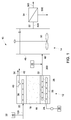
- FIG. 1 shows a multi-step treatment system 10 having a selenium removal area 12 and a downstream filtration area 14.
- the treatment system 10 may be used to reduce the total selenium content of wastewater influent 100.
- a biological reduction process is used to produce a secondary stream 200 with reduced selenium concentration.
- filtration is used optionally with upstream coagulation or flocculation to produce a treated effluent 300 with reduced concentration of one or more of the metallic, organic or inorganic non-metallic constituents.
- Treated effluent 300 has a reduced total selenium concentration, preferably below discharge regulation limits.
- treated effluent 300 preferably has reduced concentration of one or more of the metallic, organic or inorganic non-metallic constituents when compared to the secondary stream 200.
- Influent 100 flows into a reaction vessel 16 of the selenium removal area 12.
- the reaction vessel 16 supports a population of selenium reducing organisms, primarily facultative anaerobic bacteria.
- the organisms may be located in a fixed biofilm on a media bed 18.
- the reaction vessel 16 as shown is organized as a simple fixed media, single stage, downwards plug flow reactor.
- the reaction vessel 16 may be configured for upwards flow and multiple stage reactors may also be used.
- Other types of reactors, including other types of fixed film reactors may be used.
- reaction vessel 16 may be a moving bed reactor or a fluidized bed reactor.
- a suitable commercially available system for the selenium removal area 12 is an ABMet TM reactor manufactured by GE Water and Process Technologies.
- media bed 18 provides a location on which a population of microorganisms will grow and be retained within the reaction vessel.
- Activated carbon may be employed as the medium and provides a large surface area available for microbial growth.
- the activated carbon may be in the form of GAC or pelletized activated carbon.
- Other media might be used, for example polymeric fibers, crushed stone, pumice, sand, plastic media or gravel.
- the reaction vessel 16 has an upper port 20, a lower port 22 and a backwash port 24, each of which may be connected to a distribution system 26, for example one or more perforated horizontal pipes.
- Aggregate 28 may be installed around the distribution systems 26 below the bed 18 to aid in flow distribution while also preventing breakthrough of media to the distribution systems 26.
- influent 100 enters reaction vessel 16 through upper port 20 and flows downwards through media bed 18.
- the secondary stream 200 exits the reaction vessel 16 through lower port 22. While passing through the media bed 18, selenium is removed from the wastewater by biological reduction of the oxidized selenium species to elemental selenium.
- Selenium reducing organisms occur in nature and may populate the reaction vessel 16 through their own actions over time as the treatment system 10 is operated. However, the reaction vessel 16 can be populated faster by seeding the reaction vessel 16 with a culture of appropriate organisms that have been isolated and grown separately. Microbes that have demonstrated the ability to reduce oxidized selenium to elemental form include microbes of the genus Pseudomonas, Shewanella, Alcaligenes. At plant start-up, a seed culture of microbes may be supplied to seed the media bed 18. Following seeding with the desired microbial culture, the reaction vessel 16 may be operated in a recycle mode for several days to allow the microbes to attach while adding nutrients to the reaction vessel 16. After seeding, normal feed flow can be introduced.
- nutrients 30 should be added to the reaction vessel 16 during operation of the treatment system 10.
- nutrients 30 are added to the influent 100 from a nutrient tank 32 upstream of the reaction vessel 16.
- the nutrients 30 provide a carbon and energy source to support the growth and metabolism of the microorganisms in the reaction vessel 16.
- Microorganisms in the reaction vessel 16 reduce selenium in the influent 100 from an oxidized state to elemental form.
- the elemental selenium precipitates from the wastewater in the form of stable granular nanospheres in and around the microorganisms. Since the microorganisms are attached to the media, the selenium is likewise retained within the media bed 18 until removed by a flushing procedure that will be described further below.
- Some gasses may be produced in the reaction vessel 16 during operation. These gasses collect in a headspace of the reaction vessel. A gas outlet 34 may be used to release these gases to the atmosphere or collect them for further treatment.
- backwash water 36 is pumped into backwash port 24 to flush or backwash the media bed 18.
- the upflow velocity during backwashing may be about 80 ft/hour, or in a range that would be used in activated carbon fluidized bed systems, but below the settling rate of the media particles.
- the upflow velocity applied during flushing may result in an upward expansion of the media bed 18 by up to 30%.
- An upper distribution system 38 if located in the bed expansion area, may have small holes or be covered with a screen to keep media from entering it, and ports 20, 22 may be closed during flushing.
- ports 20, 22 may be closed during flushing.
- excessive biomass growth attached to the media and solids that have been removed from the water, including selenium nanospheres, are entrained in the backwash water 36.
- the backwash water 36 and entrained solids are removed through troughs 40 located above the expected media expansion area and connected to a backwash effluent line 42.
- Flushing may be required from between once every two weeks to only a few times each year, for example once a month. Flushing may take, for example, 30 minutes.
- Spent backwash water 36 may be sent to a liquid/solid separation device such as a clarifier.
- Cleaned backwash water 36 may be sent to the head of the system 10 or to another water treatment plant.
- Sludge from the clarifier may be de-watered and sent to a toxic sludge disposal system or processed further to extract the elemental selenium for safe disposal or use in industry. Although some sludge is produced, the amount is greatly reduced relative to, for example, an iron precipitation method of selenium treatment.
- the secondary stream 200 flows to the filtration area 14.
- An agent 44 may be added to the secondary stream 200 during operation of the system 10.
- the agent 44 may be a metal precipitant.
- metal precipitant may be MetClear TM metals remover product manufactured by GE Water and Process Technologies.
- the agent 44 may be a coagulating chemical adapted to precipitate and/or coagulate organic or inorganic non-metallic constituents or both.
- the secondary stream 200 enters a tank 46 via port 48.
- the tank 46 is equipped with mixing means 50.
- the mixing means 50 can be, for example, a paddle or any other mechanical mixer.
- An appropriate amount of mixing and residence time is required to precipitate and/or coagulate the unconsumed constituents in the secondary stream 200, resulting in a supernatant that can be discharged as a tertiary stream 400 via port 52.
- a clarifier may be added downstream of tank 46 to produce a clarified supernatant.
- the filtration unit 54 may comprise any filtration device suitable for the separation of the unconsumed constituents from the tertiary stream 400.
- the filtration unit 54 may comprise an ultrafiltration device.
- a fluid 500 comprising at least a portion of the constituents may be removed from the tertiary stream 400, and the treated effluent 300 may be produced.
- the treated effluent 300 has a reduced concentration of one or more of the organic, metallic or inorganic non-metallic constituents when compared to the tertiary stream 400.
- Figure 2 shows the multi-step treatment system 10 according to another embodiment of the invention having the selenium removal area 12 and the downstream filtration area 14.
- the selenium removal area 12 and the associated processing steps 16-42 are identical to the previously described processing steps 16-42 in Figure 1 .
- the secondary stream 200 flows to the filtration area 14.
- An agent 44 may be added to the secondary stream 200 during operation of the system 10.
- the agent 44 may be a metal precipitant.
- metal precipitant may be MetClear TM metals remover product manufactured by GE Water and Process Technologies.
- the secondary stream 200 enters a reactor 70 via port 72.
- the reactor 70 supports a population of microorganisms responsible for treatment of the organic constituents in the secondary stream 200. Such microorganisms may populate the reactor 70 through their own actions over time as the treatment system 10 is operated.
- activated sludge 74 comprising such microorganisms responsible for treatment of the organic constituents in the secondary stream 200 may be introduced into the reactor 70 via port 76.
- the activated sludge 74 and the secondary stream 200 may be mixed to produce a mixture 75. While in the reactor 70, the mixture 75 may be aerated through aeration means 78, for example, a fine bubble diffuser. Introducing air into the reactor 70 may promote the growth of the microorganisms in the reactor 70.
- a sludge wasting port 73 may be added at the bottom of the reactor 70.
- the reactor 70 also comprises a filtration unit 80 situated inside the reactor 70 and immersed in the mixture 75.
- the filtration unit 80 may comprise any filtration device suitable for separating one or more of the organic, metallic or inorganic non-metallic constituents from the mixture 75.
- the filtration unit 80 may comprise an ultrafiltration membrane mounted in modules and lowered into the reactor 70.
- the membrane may be subject to a vacuum that draws the treated effluent 300 through the membrane walls while retaining the organic, metallic and inorganic non-metallic constituents in the reactor 70.
- compressed air may be introduced through a distribution manifold at the base of the membrane module.
- a fluid 500 comprising at least a portion of the unconsumed constituents may be removed from the mixture 75, and the treated effluent 300 may be produced.
- the treated effluent 300 has a reduced concentration of one or more of the organic, metallic or inorganic non-metallic constituents then the mixture 75.
Landscapes
- Life Sciences & Earth Sciences (AREA)
- Hydrology & Water Resources (AREA)
- Engineering & Computer Science (AREA)
- Environmental & Geological Engineering (AREA)
- Water Supply & Treatment (AREA)
- Chemical & Material Sciences (AREA)
- Organic Chemistry (AREA)
- Removal Of Specific Substances (AREA)
- Separation Using Semi-Permeable Membranes (AREA)
- Biodiversity & Conservation Biology (AREA)
- Microbiology (AREA)
Abstract
Description
- This specification relates to a method and apparatus for treating wastewater comprising selenium.
- The following paragraphs are not an admission that any of the information below is common general knowledge or citable as prior art.
- Selenium is an essential trace element, but becomes toxic at very low concentrations. Selenium accumulates in the bodies of plants and fish that live in selenium-contaminated water and in the bodies of wildlife and people that eat those plants and fish. In people, elevated selenium concentrations may cause neurological damage and hair and nail loss.
- Selenium has been treated in biological reactors, for example as described in
US Patent No. 6,183,644 and International Publication NumberWO 2007/012181 , and as used in ABMet™ reactors sold by the GE Water and Process Technologies. In such reactors, dissolved selenium is removed from contaminated water by treating the water in a reactor containing selected endemic and other selenium reducing organisms. Microbes may be isolated from the specific water or imported from other selenium contaminated water. The microbes are then screened for ability to reduce selenium under the site specific environmental conditions. The selected microbes are optimized for selenium reduction, then established in a high density biofilm within a reactor. The selenium contaminated water is passed through the reactor with optimized nutrient mix added as needed. The elemental selenium is precipitated and removed from the water.US Patent No. 6,183,644 is incorporated herein by reference. -
US Publication No. 2010/0300963 describes an apparatus and process for treating flue gas desulfurization blow down water or other wastewaters having selenium. The process has steps of one or more of aerobic treatment to remove chemical oxygen demand and nitrify a waste stream, anoxic treatment to denitrify a waste stream, anoxic treatment to remove selenium and anaerobic treatment to remove heavy metals and sulphur. The process may further include one or more of (a) membrane separation of the waste stream upstream of the anoxic digestion to remove selenium, (b) dilution upstream of the biological treatment step, (c) physical/chemical pretreatment upstream of the biological process or dilution step to remove total suspended solids (TSS) and soften the waste stream, or (d) ammonia stripping upstream of the biological treatment step or dilution step. One or more of these processes may be provided in a membrane bioreactor or a fixed film reactor having a granular activated carbon (GAC) bed.US Publication No. 2010/0300963 is incorporated herein by reference. - The following summary is intended to introduce the reader to this specification but not define any invention. Inventions may reside in the combination of one or more of the apparatus elements or process steps described anywhere in this document.
- The inventors have observed that anoxic/anaerobic biological treatment may not be sufficient to meet the stringent discharge limits imposed in certain jurisdictions. Such discharge limits may affect the allowable concentration of organic, metallic and/or inorganic non-metallic constituents in the effluent.
- For example, although the elemental selenium and metal-sulphide precipitates are mostly retained within the biofilter, some amount does leave with the effluent stream. Also, as the biofilter feed is typically void of the organic carbon and nutrients needed to sustain the biomass within the biofliter, a carbon and nutrient source is added to the feed stream. Although actively controlled, the amount of nutrient can at times exceed the biomass requirements resulting in higher concentrations of unconsumed organic and inorganic non-metallic constituents in the biofilter effluent.
- This specification describes a process and apparatus for treating water comprising selenium. A process is described having the steps of treating the wastewater influent using a biological reduction process to produce an intermediary stream and reducing the concentration of unconsumed constituents in the intermediary stream by means of filtration optionally with upstream coagulation or flocculation. When compared to the wastewater influent, the intermediary stream preferably has reduced concentration of the selenium species when compared to the wastewater influent. When compared to the intermediary stream, the effluent preferably has reduced concentration of one or more of the inorganic non-metallic constituents (such as nitrogen, phosphorous and sulphur), metallic constituents or organic constituents.
- An apparatus is described herein having a fixed film reactor configured to receive a wastewater influent, and a membrane filter configured to receive effluent from the fixed film reactor.
- Examples of embodiments of one or more inventions will be described below with reference to the Figures described below.
-
FIG. 1 is a multi-step system for treating selenium-containing wastewater according to one embodiment of the invention. -
FIG. 2 is a multi-step system for treating selenium-containing wastewater according to another embodiment of the invention. - Various apparatuses or processes will be described below to provide an example of an embodiment of each claimed invention. No embodiment described below limits any claimed invention and any claimed invention may cover processes and apparatuses that are not described below. The claimed inventions are not limited to apparatuses or processes having all of the features of any one apparatus or process described below or to features common to multiple or all of the apparatuses described below. It is possible that an apparatus or process described below is not an embodiment of any claimed invention. The applicants, inventors and owners reserve all rights in any invention disclosed in an apparatus or process described below that is not claimed in this document and do not abandon, disclaim or dedicate to the public any such invention by its disclosure in this document.
- Selenium treating bioreactors, which are known in the art, utilize selenium reducing organisms to reduce the concentration of selenium in the influent. The elemental selenium precipitate is mostly retained within the bioreactor, however, some amount of selenium does leave the bioreactor through the effluent stream. In addition, nutrients are typically added to the bioreactor influent to sustain the biomass required for treatment. Although actively controlled, the amount of nutrient added can at times be in excess of what is required resulting in higher concentration of unconsumed organic and inorganic non-metallic constituents in the bioreactor effluent. Also, the wastewater influent may contain metallic constituents which are not typically separated from the influent stream in the bioreactor and may leave the bioreactor through the effluent stream.
- In general, treatment by bioreactor alone in certain circumstances may not be enough to meet the allowable discharge concentrations of one or more of the metallic, organic or inorganic non-metallic constituents in the effluent.
-
Figure 1 shows amulti-step treatment system 10 having aselenium removal area 12 and adownstream filtration area 14. Thetreatment system 10 may be used to reduce the total selenium content of wastewater influent 100. In the selenium removal area, a biological reduction process is used to produce asecondary stream 200 with reduced selenium concentration. In the filtration area, filtration is used optionally with upstream coagulation or flocculation to produce a treatedeffluent 300 with reduced concentration of one or more of the metallic, organic or inorganic non-metallic constituents. Treatedeffluent 300 has a reduced total selenium concentration, preferably below discharge regulation limits. In addition, treatedeffluent 300 preferably has reduced concentration of one or more of the metallic, organic or inorganic non-metallic constituents when compared to thesecondary stream 200. - Influent 100 flows into a
reaction vessel 16 of theselenium removal area 12. Thereaction vessel 16 supports a population of selenium reducing organisms, primarily facultative anaerobic bacteria. The organisms may be located in a fixed biofilm on amedia bed 18. Thereaction vessel 16 as shown is organized as a simple fixed media, single stage, downwards plug flow reactor. Optionally, thereaction vessel 16 may be configured for upwards flow and multiple stage reactors may also be used. Other types of reactors, including other types of fixed film reactors, may be used. For example,reaction vessel 16 may be a moving bed reactor or a fluidized bed reactor. - A suitable commercially available system for the
selenium removal area 12 is an ABMet™ reactor manufactured by GE Water and Process Technologies. - In the
reaction vessel 16 shown,media bed 18 provides a location on which a population of microorganisms will grow and be retained within the reaction vessel. Activated carbon may be employed as the medium and provides a large surface area available for microbial growth. The activated carbon may be in the form of GAC or pelletized activated carbon. Other media might be used, for example polymeric fibers, crushed stone, pumice, sand, plastic media or gravel. - The
reaction vessel 16 has anupper port 20, alower port 22 and abackwash port 24, each of which may be connected to adistribution system 26, for example one or more perforated horizontal pipes. Aggregate 28 may be installed around thedistribution systems 26 below thebed 18 to aid in flow distribution while also preventing breakthrough of media to thedistribution systems 26. - During normal operation, influent 100 enters
reaction vessel 16 throughupper port 20 and flows downwards throughmedia bed 18. Thesecondary stream 200 exits thereaction vessel 16 throughlower port 22. While passing through themedia bed 18, selenium is removed from the wastewater by biological reduction of the oxidized selenium species to elemental selenium. - Selenium reducing organisms occur in nature and may populate the
reaction vessel 16 through their own actions over time as thetreatment system 10 is operated. However, thereaction vessel 16 can be populated faster by seeding thereaction vessel 16 with a culture of appropriate organisms that have been isolated and grown separately. Microbes that have demonstrated the ability to reduce oxidized selenium to elemental form include microbes of the genus Pseudomonas, Shewanella, Alcaligenes. At plant start-up, a seed culture of microbes may be supplied to seed themedia bed 18. Following seeding with the desired microbial culture, thereaction vessel 16 may be operated in a recycle mode for several days to allow the microbes to attach while adding nutrients to thereaction vessel 16. After seeding, normal feed flow can be introduced. - Unless the
wastewater influent 100 contains other suitable matter,nutrients 30 should be added to thereaction vessel 16 during operation of thetreatment system 10. In the present embodiment,nutrients 30 are added to the influent 100 from anutrient tank 32 upstream of thereaction vessel 16. Thenutrients 30 provide a carbon and energy source to support the growth and metabolism of the microorganisms in thereaction vessel 16. - Microorganisms in the
reaction vessel 16 reduce selenium in the influent 100 from an oxidized state to elemental form. The elemental selenium precipitates from the wastewater in the form of stable granular nanospheres in and around the microorganisms. Since the microorganisms are attached to the media, the selenium is likewise retained within themedia bed 18 until removed by a flushing procedure that will be described further below. - Some gasses may be produced in the
reaction vessel 16 during operation. These gasses collect in a headspace of the reaction vessel. Agas outlet 34 may be used to release these gases to the atmosphere or collect them for further treatment. - As elemental selenium, and possibly other solids, accumulate in the
media bed 18, the pressure drop across themedia bed 18 will increase. At a selected time interval or pressure drop set point,backwash water 36 is pumped intobackwash port 24 to flush or backwash themedia bed 18. The upflow velocity during backwashing may be about 80 ft/hour, or in a range that would be used in activated carbon fluidized bed systems, but below the settling rate of the media particles. - The upflow velocity applied during flushing may result in an upward expansion of the
media bed 18 by up to 30%. Anupper distribution system 38, if located in the bed expansion area, may have small holes or be covered with a screen to keep media from entering it, andports backwash water 36. Thebackwash water 36 and entrained solids are removed throughtroughs 40 located above the expected media expansion area and connected to abackwash effluent line 42. - Flushing may be required from between once every two weeks to only a few times each year, for example once a month. Flushing may take, for example, 30 minutes. Spent
backwash water 36 may be sent to a liquid/solid separation device such as a clarifier. Cleanedbackwash water 36 may be sent to the head of thesystem 10 or to another water treatment plant. Sludge from the clarifier may be de-watered and sent to a toxic sludge disposal system or processed further to extract the elemental selenium for safe disposal or use in industry. Although some sludge is produced, the amount is greatly reduced relative to, for example, an iron precipitation method of selenium treatment. - Following the discharge from the
reaction vessel 16, thesecondary stream 200 flows to thefiltration area 14. Anagent 44 may be added to thesecondary stream 200 during operation of thesystem 10. - If the
secondary stream 200 contains heavy metals, theagent 44 may be a metal precipitant. Such metal precipitant may be MetClear™ metals remover product manufactured by GE Water and Process Technologies. - If the
secondary stream 200 contains unconsumed nutrient or selenium, theagent 44 may be a coagulating chemical adapted to precipitate and/or coagulate organic or inorganic non-metallic constituents or both. - The
secondary stream 200 enters atank 46 viaport 48. Thetank 46 is equipped with mixing means 50. The mixing means 50 can be, for example, a paddle or any other mechanical mixer. An appropriate amount of mixing and residence time is required to precipitate and/or coagulate the unconsumed constituents in thesecondary stream 200, resulting in a supernatant that can be discharged as atertiary stream 400 viaport 52. A clarifier may be added downstream oftank 46 to produce a clarified supernatant. - Following its discharge from the
tank 46, thetertiary stream 400 flows to afiltration unit 54. Thefiltration unit 54 may comprise any filtration device suitable for the separation of the unconsumed constituents from thetertiary stream 400. In some examples, thefiltration unit 54 may comprise an ultrafiltration device. - Thus, a fluid 500 comprising at least a portion of the constituents may be removed from the
tertiary stream 400, and the treatedeffluent 300 may be produced. Preferably, the treatedeffluent 300 has a reduced concentration of one or more of the organic, metallic or inorganic non-metallic constituents when compared to thetertiary stream 400. -
Figure 2 shows themulti-step treatment system 10 according to another embodiment of the invention having theselenium removal area 12 and thedownstream filtration area 14. - In this embodiment, the
selenium removal area 12 and the associated processing steps 16-42 are identical to the previously described processing steps 16-42 inFigure 1 . - Following the discharge from the
reaction vessel 16, thesecondary stream 200 flows to thefiltration area 14. Anagent 44 may be added to thesecondary stream 200 during operation of thesystem 10. - If the
secondary stream 200 contains heavy metals, theagent 44 may be a metal precipitant. Such metal precipitant may be MetClear™ metals remover product manufactured by GE Water and Process Technologies. - The
secondary stream 200 enters areactor 70 viaport 72. Thereactor 70 supports a population of microorganisms responsible for treatment of the organic constituents in thesecondary stream 200. Such microorganisms may populate thereactor 70 through their own actions over time as thetreatment system 10 is operated. Alternatively, activatedsludge 74 comprising such microorganisms responsible for treatment of the organic constituents in thesecondary stream 200 may be introduced into thereactor 70 viaport 76. The activatedsludge 74 and thesecondary stream 200 may be mixed to produce amixture 75. While in thereactor 70, themixture 75 may be aerated through aeration means 78, for example, a fine bubble diffuser. Introducing air into thereactor 70 may promote the growth of the microorganisms in thereactor 70. Asludge wasting port 73 may be added at the bottom of thereactor 70. - The
reactor 70 also comprises afiltration unit 80 situated inside thereactor 70 and immersed in themixture 75. Thefiltration unit 80 may comprise any filtration device suitable for separating one or more of the organic, metallic or inorganic non-metallic constituents from themixture 75. - In some examples, the
filtration unit 80 may comprise an ultrafiltration membrane mounted in modules and lowered into thereactor 70. The membrane may be subject to a vacuum that draws the treatedeffluent 300 through the membrane walls while retaining the organic, metallic and inorganic non-metallic constituents in thereactor 70. To clean the exterior of the membranes, compressed air may be introduced through a distribution manifold at the base of the membrane module. - Thus, a fluid 500 comprising at least a portion of the unconsumed constituents may be removed from the
mixture 75, and the treatedeffluent 300 may be produced. Preferably, the treatedeffluent 300 has a reduced concentration of one or more of the organic, metallic or inorganic non-metallic constituents then themixture 75. - The
system 10 and process described above are intended to provide an example or a selenium treatment process and apparatus and not to limit or define any claimed invention. Other treatment systems or process may be used within the scope of an invention defined in the following claims. - While the above description provides examples of one or more processes or apparatuses, it will be appreciated that other processes or apparatuses may be within the scope of the accompanying claims.
Claims (11)
- A process for treating wastewater containing selenium comprising the steps of:a) receiving an influent (100) comprising wastewater to be treated in a biological reactor (16);b) biologically treating said influent to produce a first intermediary stream containing reduced concentration of selenium species;c) adding a chemical agent (44) into said first intermediary stream to produce a second intermediary stream; andd) filtering said second intermediary stream to produce effluent containing reduced concentrations of one or more of an unconsumed organic, metallic or inorganic non-metallic constituents.
- A process of claim 1, wherein step c) further comprises mixing and decanting said second intermediary stream.
- A process of any preceding claim, wherein step d) comprises ultrafiltration.
- A process of any preceding claim, wherein step d) comprises filtration using immersed membranes.
- A process of any preceding claim, wherein filtration comprises ultrafiltration.
- An apparatus (10) for treating water containing selenium comprising:a) an upstream fixed film reactor vessel (16) or vessels configured to precipitate and remove selenium from water; andb) a downstream secondary treatment zone (14) coupled with said upstream fixed film reactor vessel (16) or vessels and configured to precipitate and remove one or more of an organic, metallic or inorganic non-metallic constituents.
- An apparatus (10) of claim 6, wherein the downstream secondary treatment zone comprises a means to add a chemical agent.
- An apparatus (10) of claim 6 or claim 7, wherein the downstream secondary treatment zone further comprises means of mixing, flocculating and separating one or more of the organic, metallic or inorganic non-metallic constituents from an effluent.
- An apparatus (10) of any of claims 6 to 8, wherein separating one or more of the organic, metallic or inorganic non-metallic constituents from the effluent is achieved by way of ultrafiltration.
- An apparatus (10) of any of claims 6 to 9, wherein the downstream secondary treatment zone further comprises immersed membrane filtration.
- An apparatus (10) of claim 10, wherein the immersed membrane filtration comprises ultrafiltration.
Applications Claiming Priority (2)
| Application Number | Priority Date | Filing Date | Title |
|---|---|---|---|
| US201562131614P | 2015-03-11 | 2015-03-11 | |
| US14/969,736 US10745309B2 (en) | 2015-03-11 | 2015-12-15 | Multi-step system for treating selenium-containing wastewater |
Publications (1)
| Publication Number | Publication Date |
|---|---|
| EP3067331A1 true EP3067331A1 (en) | 2016-09-14 |
Family
ID=55456643
Family Applications (1)
| Application Number | Title | Priority Date | Filing Date |
|---|---|---|---|
| EP16158261.4A Ceased EP3067331A1 (en) | 2015-03-11 | 2016-03-02 | Multi-step system for treating selenium-containing wastewater |
Country Status (3)
| Country | Link |
|---|---|
| US (1) | US10745309B2 (en) |
| EP (1) | EP3067331A1 (en) |
| CA (1) | CA2921872C (en) |
Families Citing this family (4)
| Publication number | Priority date | Publication date | Assignee | Title |
|---|---|---|---|---|
| US9833741B2 (en) * | 2015-08-24 | 2017-12-05 | Doosan Heavy Industries & Constructions Co., Ltd. | Submerged membrane filtration system using reciprocating membrane |
| CN107758918A (en) * | 2017-10-16 | 2018-03-06 | 黄山学院 | A kind of cuprous oxide optically catalytic TiO 2 composite experiment pollution treatment device |
| RU2701932C1 (en) * | 2019-04-29 | 2019-10-02 | Общество с ограниченной ответственностью "МИРРИКО" | Method of purifying natural and waste water |
| CN112661358A (en) * | 2020-12-28 | 2021-04-16 | 西安西热控制技术有限公司 | Thermal power plant waste water grading comprehensive treatment system |
Citations (8)
| Publication number | Priority date | Publication date | Assignee | Title |
|---|---|---|---|---|
| EP0891951A1 (en) * | 1996-03-19 | 1999-01-20 | Organo Corporation | Method and apparatus for treating selenium-containing waste water |
| US6183644B1 (en) | 1999-02-12 | 2001-02-06 | Weber State University | Method of selenium removal |
| EP1270513A1 (en) * | 2001-06-26 | 2003-01-02 | Aquafin N.V. | Process and installation for treating a polluted aqueous liquid showing a COD value |
| JP3799634B2 (en) * | 1995-11-10 | 2006-07-19 | 栗田工業株式会社 | Method for treating selenium-containing water |
| WO2007012181A1 (en) | 2005-07-25 | 2007-02-01 | Zenon Technology Partnership | Apparatus and method for treating fgd blowdown or similar liquids |
| KR101430104B1 (en) * | 2014-06-26 | 2014-08-14 | (유)일토씨엔엠 | Wastewater Disposal Apparatus |
| US20140263043A1 (en) * | 2013-03-15 | 2014-09-18 | Infilco Degremont, Inc. | S/m for biological treatment of wastewater with selenium removal |
| US20150034552A1 (en) * | 2013-03-14 | 2015-02-05 | American Biofilter, Llc | Water Treatment System and Method for Removal of Contaminants Using Biological Systems |
Family Cites Families (2)
| Publication number | Priority date | Publication date | Assignee | Title |
|---|---|---|---|---|
| US7378022B2 (en) * | 2006-06-06 | 2008-05-27 | Honeywell International Inc. | System and methods for biological selenium removal from water |
| US9328003B2 (en) * | 2006-09-07 | 2016-05-03 | Nalco Company | Method of heavy metal removal from water streams |
-
2015
- 2015-12-15 US US14/969,736 patent/US10745309B2/en active Active
-
2016
- 2016-02-25 CA CA2921872A patent/CA2921872C/en active Active
- 2016-03-02 EP EP16158261.4A patent/EP3067331A1/en not_active Ceased
Patent Citations (9)
| Publication number | Priority date | Publication date | Assignee | Title |
|---|---|---|---|---|
| JP3799634B2 (en) * | 1995-11-10 | 2006-07-19 | 栗田工業株式会社 | Method for treating selenium-containing water |
| EP0891951A1 (en) * | 1996-03-19 | 1999-01-20 | Organo Corporation | Method and apparatus for treating selenium-containing waste water |
| US6183644B1 (en) | 1999-02-12 | 2001-02-06 | Weber State University | Method of selenium removal |
| EP1270513A1 (en) * | 2001-06-26 | 2003-01-02 | Aquafin N.V. | Process and installation for treating a polluted aqueous liquid showing a COD value |
| WO2007012181A1 (en) | 2005-07-25 | 2007-02-01 | Zenon Technology Partnership | Apparatus and method for treating fgd blowdown or similar liquids |
| US20100300963A1 (en) | 2005-07-25 | 2010-12-02 | Jeffrey Gerard Peeters | Apparatus and method for treating fgd blowdown or similar liquids |
| US20150034552A1 (en) * | 2013-03-14 | 2015-02-05 | American Biofilter, Llc | Water Treatment System and Method for Removal of Contaminants Using Biological Systems |
| US20140263043A1 (en) * | 2013-03-15 | 2014-09-18 | Infilco Degremont, Inc. | S/m for biological treatment of wastewater with selenium removal |
| KR101430104B1 (en) * | 2014-06-26 | 2014-08-14 | (유)일토씨엔엠 | Wastewater Disposal Apparatus |
Also Published As
| Publication number | Publication date |
|---|---|
| CA2921872A1 (en) | 2016-09-11 |
| US10745309B2 (en) | 2020-08-18 |
| CA2921872C (en) | 2024-01-02 |
| US20160264439A1 (en) | 2016-09-15 |
Similar Documents
| Publication | Publication Date | Title |
|---|---|---|
| US7550087B2 (en) | Apparatus and method for treating FGD blowdown or similar liquids | |
| US20120024798A1 (en) | Selenium Removal Using Chemical Oxidation and Biological Reduction | |
| CA2921872C (en) | Multi-step system for treating selenium-containing wastewater | |
| KR100784933B1 (en) | Organic and Nitrogen Treatment Equipment for High Concentration Organic Wastewater | |
| JP2012206053A (en) | Wastewater treatment method and wastewater treatment system | |
| US20130270181A1 (en) | Selenium removal using chemical oxidation and biological reduction | |
| CN101223111B (en) | Apparatus and method for treating fgd blowdown or similar liquids | |
| WO2016122426A1 (en) | Biofilm nitrification - contact denitrification system and method | |
| US20070181493A1 (en) | Wastewater treatment with aerobic granules | |
| CN111606502A (en) | Harmless wastewater treatment process and system for livestock and poultry died of diseases | |
| EP3067329B1 (en) | Process for removing selenium | |
| KR101817471B1 (en) | Wastewater Treatment System | |
| KR100473710B1 (en) | Apparatus and method for disposing sewage with high accuracy | |
| JP5176182B2 (en) | Algae growth suppression method and apparatus for treated sewage water | |
| CN212451063U (en) | Garbage penetrating fluid treatment system | |
| EP3067328A1 (en) | Dual media system for treating wastewater containing selenium | |
| KR100438099B1 (en) | Biological Sewage/Wastewater Treatment Methodology By Using Soil Microoganisms | |
| CN105314788A (en) | Comprehensive multi-zone waste water treatment system and method | |
| KR200250140Y1 (en) | A waste water disposal plant | |
| HK1220680B (en) | Comprehensive multi-zone waste water treatment system and method | |
| KR20180110492A (en) | Applicance for processing waste water employing biological filtration as a pretreatment of short-cut nitrogen removal |
Legal Events
| Date | Code | Title | Description |
|---|---|---|---|
| PUAI | Public reference made under article 153(3) epc to a published international application that has entered the european phase |
Free format text: ORIGINAL CODE: 0009012 |
|
| AK | Designated contracting states |
Kind code of ref document: A1 Designated state(s): AL AT BE BG CH CY CZ DE DK EE ES FI FR GB GR HR HU IE IS IT LI LT LU LV MC MK MT NL NO PL PT RO RS SE SI SK SM TR |
|
| AX | Request for extension of the european patent |
Extension state: BA ME |
|
| 17P | Request for examination filed |
Effective date: 20170314 |
|
| RBV | Designated contracting states (corrected) |
Designated state(s): AL AT BE BG CH CY CZ DE DK EE ES FI FR GB GR HR HU IE IS IT LI LT LU LV MC MK MT NL NO PL PT RO RS SE SI SK SM TR |
|
| 17Q | First examination report despatched |
Effective date: 20171219 |
|
| RAP1 | Party data changed (applicant data changed or rights of an application transferred) |
Owner name: BL TECHNOLOGIES, INC. |
|
| STAA | Information on the status of an ep patent application or granted ep patent |
Free format text: STATUS: THE APPLICATION HAS BEEN REFUSED |
|
| 18R | Application refused |
Effective date: 20190920 |