EP3065060A1 - Grammar generation for simple datatypes - Google Patents
Grammar generation for simple datatypes Download PDFInfo
- Publication number
- EP3065060A1 EP3065060A1 EP16153246.0A EP16153246A EP3065060A1 EP 3065060 A1 EP3065060 A1 EP 3065060A1 EP 16153246 A EP16153246 A EP 16153246A EP 3065060 A1 EP3065060 A1 EP 3065060A1
- Authority
- EP
- European Patent Office
- Prior art keywords
- grammar
- datatype
- characters
- simple datatype
- xsd
- Prior art date
- Legal status (The legal status is an assumption and is not a legal conclusion. Google has not performed a legal analysis and makes no representation as to the accuracy of the status listed.)
- Ceased
Links
Images

Classifications
-
- G—PHYSICS
- G06—COMPUTING OR CALCULATING; COUNTING
- G06F—ELECTRIC DIGITAL DATA PROCESSING
- G06F40/00—Handling natural language data
- G06F40/10—Text processing
- G06F40/12—Use of codes for handling textual entities
- G06F40/14—Tree-structured documents
- G06F40/146—Coding or compression of tree-structured data
-
- G—PHYSICS
- G06—COMPUTING OR CALCULATING; COUNTING
- G06F—ELECTRIC DIGITAL DATA PROCESSING
- G06F40/00—Handling natural language data
- G06F40/10—Text processing
- G06F40/103—Formatting, i.e. changing of presentation of documents
- G06F40/117—Tagging; Marking up; Designating a block; Setting of attributes
Definitions
- Extensible markup language is a markup language that defines a set of rules for encoding documents in a plain-text format that is both human-readable and machine-readable.
- XML Extensible markup language
- W3C World Wide Web Consortium
- XML 1.0 Specification defines an XML document as a text that is well-formed and valid.
- An XML schema is a description of a type of XML document, typically expressed in terms of constraints on the structure and content of documents of that type, above and beyond the basic syntactical constraints imposed by the XML 1.0 Specification itself. These constraints are generally expressed using some combination of rules governing the order of elements, boolean predicates associated with the content, data types governing the content of elements and attributes, and more specialized rules such as uniqueness and referential integrity constraints.
- validation The process of checking to see if an XML document conforms to an XML schema is called validation, which is separate from XML's concept of syntactic well-formedness. All XML documents may be well-formed, but an XML document may be checked for validity, where the XML document is checked for conformance with its associated schema.
- Efficient XML interchange is a binary XML format in which XML documents are encoded in a binary data format rather than plain text.
- EXI Efficient XML interchange
- using an EXI format reduces the size and verbosity of XML documents, and may reduce the time and effort expended to parse XML documents.
- a formal definition of EXI is described in the EXI Format 1.0 Specification produced by the W3C and dated February 11, 2014, which is incorporated herein by reference in its entirety.
- An XML document may be encoded in an EXI format as an EXI stream. Additionally, the EXI stream may be decoded to form an XML document similar to or the same as the original XML document.
- An XML document or set of XML documents may include an associated XML schema definition (XSD).
- the XSD may generally describe the XML schema associated with an XML document.
- a method may include receiving an extensible markup language schema definition (XSD) including a first element having a first simple datatype and a second element having a second simple datatype different from the first simple datatype.
- XSD extensible markup language schema definition
- a grammar may be generated based on the XSD.
- the grammar may be associated with encoding and decoding an extensible markup language (XML) document based on the XSD to and from efficient XML interchange (EXI) streams.
- the grammar may be associated with the first simple datatype and with the second simple datatype.
- the document's associated XSD may be normalized into grammars.
- the grammars are rules that may be used to predict specific sequences of the XML document.
- An algorithm to generate the grammars for an XSD is included in the EXI Format 1.0 Specification. As used herein the algorithm included in the EXI Format 1.0 Specification is referred to herein as the standard grammar algorithm.
- FIG. 1 is a block diagram of an example extensible markup language interchange (EXI) processing system 100.
- the EXI processing system 100 includes a normalization device 104.
- the normalization device 104 may be configured to receive an extensible markup language schema definition (XSD) 102 and to output a normalization 106.
- the normalization 106 of the XSD may be used, for example, in encoding and/or decoding an EXI document.
- the normalization device 104 may include one or more embodiments of a grammar-generating algorithm as disclosed herein.
- the normalization 106 may include a single grammar for use with multiple simple datatypes as disclosed herein.
- the normalization 106 may be communicated to an encoder/decoder 108.
- An example encoder/decoder 108 is included in the OpenEXI project hosted at SourceForge.net. The source code and documentation of the OpenEXI project as of July 28, 2014 are incorporated herein by reference in their entirety.
- the encoder/decoder 108 may be configured to receive an extensible markup language (XML) document 110 and to encode the XML document 110 as an EXI stream 112. Alternately or additionally, the EXI stream 112 may also be received by the encoder/decoder 108 and decoded as the XML document 110.
- An original XML document 110 and the XML document 110 generated by the encoder/decoder 108 may include substantially identical XML data. However, certain types of human-readable information, such as whitespace, comments, and/or processing instructions, may not be preserved by the encoder/decoder 108 depending on associated preservation settings of the encoder/decoder 108.
- the normalization device 104 may include a processor 103a and memory 105a.
- the encoder/decoder 108 may include a processor 103b and memory 105b.
- the memory 105a and the memory 105b may include non-transitory computer-readable media. Instructions such as programming code executable by the processor 103a and the processor 103b may be encoded in the memory 105a and the memory 105b, respectively. When the instructions are executed by the processor 103a and/or the processor 103b, the normalization device 104 and/or the encoder/decoder 108 may perform operations related to and/or including the processes described herein.
- the normalization device 104 and/or the encoder/decoder 108 may be employed in an embedded device and/or a device with limited memory capacity.
- embedded devices and/or devices with limited memory capacity include, but are not limited to, sensors, microcontrollers, and appliances, such as energy management controllers, automobile microcontrollers, smart meters, or the like.
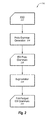
- Figure 2 is a flowchart of an example process 200 of generating full-fledged EXI grammars 210 from an XSD 202.
- the process 200 may be performed by the normalization device 104 of Figure 1 .
- the process 200 may begin with the XSD 202.
- a set of EXI proto-grammars 206 may be generated from the XSD 202 at block 204.
- One or more of the embodiments described herein may occur at block 204.
- proto-grammar generation 204 may correspond to section 8.5.4.1 of the EXI Format 1.0 Specification without the current version of section 8.5.4.1.3.1. In some embodiments, section 8.5.4.1.3.1 may be replaced with one or more of the embodiments described herein.
- a single grammar may be used for multiple different simple datatypes.
- Using a single grammar for multiple different simple datatypes may promote a compact set of grammars.
- a single grammar may be used for all simple datatypes in an XML document. More compact sets of grammars may employ relatively fewer resources to store and/or communicate, and thus may lend themselves to deployment in low-memory devices such as sensors and microcontrollers.
- the EXI proto-grammars 206 may be augmented at block 208, forming the full-fledged EXI grammars 210. Augmenting the EXI proto-grammar 206 may include inserting additional attributes, properties, or the like.
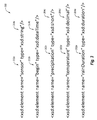
- Figure 3 illustrates a portion of an example XSD 300.
- the XSD 300 may include elements 302a-302e (collectively “elements 302”) that each has a simple datatype 304a-304e (collectively "simple datatypes 304").
- the simple datatypes 304 may be defined by an EXI specification, an XML schema specification, and/or may be user-defined.
- the simple datatypes 304 may be associated with one or more acceptable formats and/or values for characters associated with corresponding elements 302.
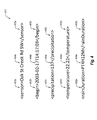
- FIG 4 illustrates a portion of an example extensible markup language (XML) document 400 based on the XSD 300 of Figure 3 .
- the XML document 400 includes start elements 402a-402e (collectively “start elements 402”), each followed by characters 404a-404e (collectively “characters 404”), and end elements 406a-406e (collectively “end elements 406").
- each of the characters 404 is encoded according to a particular grammar associated with the corresponding simple datatypes 304.
- a different grammar may be used for each different simple datatype in the XSD.
- an XSD may include 45 built-in simple datatypes, as well as additional user-defined simple datatypes.
- first state and second state may be created.
- Each grammar definition may use a number of bytes.
- the above first state and second state may occupy 143 bytes.
- the simple datatype grammar definitions may take up less space. For example, where 143 bytes are used to define a grammar, the simple datatype grammar definitions may take up 143 bytes of space if a single simple datatype grammar is used for each of the simple datatypes.
- a single grammar to be used for multiple different simple datatypes may be selected based on a simple datatype of the XML schema.
- the grammar may be selected based on a first simple datatype encountered during proto-grammar generation.
- a grammar may be selected independent of the XML schema.
- a single grammar may be preselected and used for multiple simple datatypes irrespective of the simple datatypes of the XML schema.
- an XML document such as the XML document 400 of Figure 4 may be encoded as an EXI stream.
- the XML document may be based on an XSD such as the XSD 300 of Figure 3 .
- An associated normalization may include a single grammar for multiple different simple datatypes and potentially all simple datatypes.
- a single grammar may be employed to encode a sensor element 302a characters 404a having a string simple datatype 304a, a begin element 302b characters 404b having a dateTime simple datatype 304b, a precipitation element 302c characters 404c having a short simple datatype 304c, and so on.
- "Oak St Creek Rd SW” "2003-02-17T14:17:03,” “137,” “22.22,” and "PT4H12M" of the characters 404 may be encoded according to a single grammar.
- encoding the XML document 400 as the EXI stream may further include adding event type identifiers to a stack.
- Each of the event type identifiers may be associated with an element and its associated characters.
- an event type identifier represented by the bit sequence "001" may be associated with the sensor element 302a and may be added to a stack of event types such that the "001" event type identifier is associated with the encoded characters of the EXI stream that represent "Oak St Creek Rd SW" characters 404a.
- An event type identifier represented by the bit sequence "010” may be associated with the begin element 302b and may be added to the stack such that the "010" event type identifier is associated with the encoded characters that represent "2003-02-17T14:17:03" characters 404b. Additional event type identifiers, such as additional bit sequences, may be associated with the other elements 302 and the encoded characters representing their associated characters 404.
- the event type identifiers may be pulled from the stack, or decoded, as the EXI stream is decoded.
- the event type identifiers may be decoded in an order reversed from the order the event type identifiers were added to the stack.
- the event type identifiers may be used to identify and/or call codecs for use in interpreting the encoded characters associated with the event type identifiers. For example, a decoder may pull the bit sequence "010" from the stack and call a codec for interpreting the encoded dateTime characters "2003-02-17T14:17:03,” which were encoded according to the grammar used for all simple datatypes. The decoder may then pull the bit sequence "001" from the stack and may call a codec for interpreting encoded string characters "Oak St Creek Rd SW,” which were encoded according to the grammar used for all simple datatypes.
- inventions described herein may include the use of a special-purpose or general-purpose computer including various computer hardware or software modules, as discussed in greater detail below.
- Embodiments described herein may be implemented using computer-readable media for carrying or having computer-executable instructions or data structures stored thereon.
- Such computer-readable media may be any available media that may be accessed by a general-purpose or special-purpose computer.
- Such computer-readable media may include non-transitory computer-readable storage media including Random Access Memory (RAM), Read-Only Memory (ROM), Electrically Erasable Programmable Read-Only Memory (EEPROM), Compact Disc Read-Only Memory (CD-ROM) or other optical disk storage, magnetic disk storage or other magnetic storage devices, flash memory devices (e.g., solid state memory devices), or any other storage medium which may be used to carry or store desired program code in the form of computer-executable instructions or data structures and which may be accessed by a general-purpose or special-purpose computer. Combinations of the above may also be included within the scope of computer-readable media.
- RAM Random Access Memory
- ROM Read-Only Memory
- EEPROM Electrically Erasable Programmable Read-Only Memory
- Computer-executable instructions may include, for example, instructions and data which cause a general-purpose computer, special-purpose computer, or special-purpose processing device (e.g., one or more processors) to perform a certain function or group of functions.
- module or “component” may refer to specific hardware implementations configured to perform the operations of the module or component and/or software objects or software routines that may be stored on and/or executed by general-purpose hardware (e.g., computer-readable media, processing devices, etc.) of the computing system.
- general-purpose hardware e.g., computer-readable media, processing devices, etc.
- the different components, modules, engines, and services described herein may be implemented as objects or processes that execute on the computing system (e.g., as separate threads). While some of the system and methods described herein are generally described as being implemented in software (stored on and/or executed by general-purpose hardware), specific hardware implementations or a combination of software and specific hardware implementations are also possible and contemplated.
- a "computing entity” may be any computing system as previously defined herein, or any module or combination of modulates running on a computing system.
- the invention also provides a computer program or a computer program product for carrying out any of the methods described herein, and a computer readable medium having stored thereon a program for carrying out any of the methods described herein.
- a computer program embodying the invention may be stored on a computer-readable medium, or it could, for example, be in the form of a signal such as a downloadable data signal provided from an Internet website, or it could be in any other form.
Landscapes
- Engineering & Computer Science (AREA)
- Theoretical Computer Science (AREA)
- Health & Medical Sciences (AREA)
- Artificial Intelligence (AREA)
- Audiology, Speech & Language Pathology (AREA)
- Computational Linguistics (AREA)
- General Health & Medical Sciences (AREA)
- Physics & Mathematics (AREA)
- General Engineering & Computer Science (AREA)
- General Physics & Mathematics (AREA)
- Document Processing Apparatus (AREA)
- Information Retrieval, Db Structures And Fs Structures Therefor (AREA)
Abstract
Description
- The embodiments discussed herein are related to grammar generation for simple datatypes.
- Extensible markup language (XML) is a markup language that defines a set of rules for encoding documents in a plain-text format that is both human-readable and machine-readable. One version of XML is defined in the XML 1.0 Specification produced by the World Wide Web Consortium (W3C) and dated November 26, 2008, which is incorporated herein by reference in its entirety. The XML 1.0 Specification defines an XML document as a text that is well-formed and valid.
- An XML schema is a description of a type of XML document, typically expressed in terms of constraints on the structure and content of documents of that type, above and beyond the basic syntactical constraints imposed by the XML 1.0 Specification itself. These constraints are generally expressed using some combination of rules governing the order of elements, boolean predicates associated with the content, data types governing the content of elements and attributes, and more specialized rules such as uniqueness and referential integrity constraints.
- The process of checking to see if an XML document conforms to an XML schema is called validation, which is separate from XML's concept of syntactic well-formedness. All XML documents may be well-formed, but an XML document may be checked for validity, where the XML document is checked for conformance with its associated schema.
- Although the plain-text, human-readable aspect of XML documents may be beneficial in many situations, this human-readable aspect may also lead to XML documents that are large in size and therefore incompatible with devices with limited memory or storage capacity. Efforts to reduce the size of XML documents have often eliminated this plain-text, human-readable aspect in favor of more compact documents.
- Efficient XML interchange (EXI) is a binary XML format in which XML documents are encoded in a binary data format rather than plain text. In general, using an EXI format reduces the size and verbosity of XML documents, and may reduce the time and effort expended to parse XML documents. A formal definition of EXI is described in the EXI Format 1.0 Specification produced by the W3C and dated February 11, 2014, which is incorporated herein by reference in its entirety. An XML document may be encoded in an EXI format as an EXI stream. Additionally, the EXI stream may be decoded to form an XML document similar to or the same as the original XML document.
- An XML document or set of XML documents may include an associated XML schema definition (XSD). The XSD may generally describe the XML schema associated with an XML document.
- The subject matter claimed herein is not limited to embodiments that solve any disadvantages or that operate only in environments such as those described above. Rather, this background is only provided to illustrate one example technology area where some embodiments described herein may be practiced.
- The invention is defined by the claims, to which reference should now be made.
- According to an embodiment of one aspect of the invention, a method may include receiving an extensible markup language schema definition (XSD) including a first element having a first simple datatype and a second element having a second simple datatype different from the first simple datatype. A grammar may be generated based on the XSD. The grammar may be associated with encoding and decoding an extensible markup language (XML) document based on the XSD to and from efficient XML interchange (EXI) streams. The grammar may be associated with the first simple datatype and with the second simple datatype.
- Advantages of the embodiments will be realized and achieved at least by the elements, features, and combinations particularly pointed out in the claims.
- It is to be understood that both the foregoing general description and the following detailed description are exemplary and explanatory and are not restrictive of embodiments of the invention, as claimed.
- Example embodiments will be described and explained with additional specificity and detail through the use of the accompanying drawings in which:
-
Figure 1 is a block diagram of an example efficient extensible markup language interchange (EXI) processing system; -
Figure 2 is a flowchart of an example process of generating full-fledged EXI grammars from an extensible markup language schema definition (XSD); -
Figure 3 illustrates a portion of an example XSD; and -
Figure 4 illustrates a portion of an example extensible markup language (XML) document based on the XSD ofFigure 3 . - Prior to encoding an XML document into an EXI stream or decoding an EXI stream into an XML document, the document's associated XSD may be normalized into grammars. The grammars are rules that may be used to predict specific sequences of the XML document. An algorithm to generate the grammars for an XSD is included in the EXI Format 1.0 Specification. As used herein the algorithm included in the EXI Format 1.0 Specification is referred to herein as the standard grammar algorithm.
- Embodiments of the present invention will be explained with reference to the accompanying drawings.
-
Figure 1 is a block diagram of an example extensible markup language interchange (EXI)processing system 100. The EXIprocessing system 100 includes anormalization device 104. Thenormalization device 104 may be configured to receive an extensible markup language schema definition (XSD) 102 and to output anormalization 106. Thenormalization 106 of the XSD may be used, for example, in encoding and/or decoding an EXI document. - The
normalization device 104 may include one or more embodiments of a grammar-generating algorithm as disclosed herein. In some embodiments, thenormalization 106 may include a single grammar for use with multiple simple datatypes as disclosed herein. - The
normalization 106 may be communicated to an encoder/decoder 108. An example encoder/decoder 108 is included in the OpenEXI project hosted at SourceForge.net. The source code and documentation of the OpenEXI project as of July 28, 2014 are incorporated herein by reference in their entirety. The encoder/decoder 108 may be configured to receive an extensible markup language (XML)document 110 and to encode the XMLdocument 110 as anEXI stream 112. Alternately or additionally, the EXIstream 112 may also be received by the encoder/decoder 108 and decoded as the XMLdocument 110. An original XMLdocument 110 and the XMLdocument 110 generated by the encoder/decoder 108 may include substantially identical XML data. However, certain types of human-readable information, such as whitespace, comments, and/or processing instructions, may not be preserved by the encoder/decoder 108 depending on associated preservation settings of the encoder/decoder 108. - The
normalization device 104 may include aprocessor 103a andmemory 105a. The encoder/decoder 108 may include aprocessor 103b andmemory 105b. Thememory 105a and thememory 105b may include non-transitory computer-readable media. Instructions such as programming code executable by theprocessor 103a and theprocessor 103b may be encoded in thememory 105a and thememory 105b, respectively. When the instructions are executed by theprocessor 103a and/or theprocessor 103b, thenormalization device 104 and/or the encoder/decoder 108 may perform operations related to and/or including the processes described herein. - The
normalization device 104 and/or the encoder/decoder 108 may be employed in an embedded device and/or a device with limited memory capacity. Examples of embedded devices and/or devices with limited memory capacity include, but are not limited to, sensors, microcontrollers, and appliances, such as energy management controllers, automobile microcontrollers, smart meters, or the like. -
Figure 2 is a flowchart of anexample process 200 of generating full-fledged EXI grammars 210 from an XSD 202. In some embodiments, theprocess 200 may be performed by thenormalization device 104 ofFigure 1 . - The
process 200 may begin with the XSD 202. A set of EXI proto-grammars 206 may be generated from the XSD 202 atblock 204. One or more of the embodiments described herein may occur atblock 204. - In some embodiments, proto-
grammar generation 204 may correspond to section 8.5.4.1 of the EXI Format 1.0 Specification without the current version of section 8.5.4.1.3.1. In some embodiments, section 8.5.4.1.3.1 may be replaced with one or more of the embodiments described herein. - Syntax described in the current version of section 8.5.4.1.3.1 of the EXI Format 1.0 Specification includes the following:
- Type i,0 : CH [schema-typed value] Types i,1
- Type i,1 : EE
- As described herein, in some embodiments, a single grammar may be used for multiple different simple datatypes. Using a single grammar for multiple different simple datatypes may promote a compact set of grammars. For example, a single grammar may be used for all simple datatypes in an XML document. More compact sets of grammars may employ relatively fewer resources to store and/or communicate, and thus may lend themselves to deployment in low-memory devices such as sensors and microcontrollers.
- By way of example, the foregoing portion of the current version of section 8.5.4.1.3.1 may be replaced with the following:
- Type 0 : CH [schema-typed value] Type 1
- Type 1 : EE
- In some instances, the EXI proto-
grammars 206 may be augmented atblock 208, forming the full-fledged EXI grammars 210. Augmenting the EXI proto-grammar 206 may include inserting additional attributes, properties, or the like. -
Figure 3 illustrates a portion of anexample XSD 300. TheXSD 300 may includeelements 302a-302e (collectively "elements 302") that each has asimple datatype 304a-304e (collectively "simple datatypes 304"). The simple datatypes 304 may be defined by an EXI specification, an XML schema specification, and/or may be user-defined. The simple datatypes 304 may be associated with one or more acceptable formats and/or values for characters associated with corresponding elements 302. -
Figure 4 illustrates a portion of an example extensible markup language (XML)document 400 based on theXSD 300 ofFigure 3 . TheXML document 400 includes startelements 402a-402e (collectively "start elements 402"), each followed bycharacters 404a-404e (collectively "characters 404"), and endelements 406a-406e (collectively "end elements 406"). - In the EXI Format 1.0 Standard, each of the characters 404 is encoded according to a particular grammar associated with the corresponding simple datatypes 304. Thus, conventionally, a different grammar may be used for each different simple datatype in the XSD. For example, an XSD may include 45 built-in simple datatypes, as well as additional user-defined simple datatypes.
- For each simple datatype grammar used in an EXI stream, the following first state and second state may be created.
- First state:
      <Grammar>
         <Productions>
            <CharactersTyped/>
            <Grammar> 1 </Grammar>
         </Productions>
      </Grammar>
      <Grammar>
         <Productions>
            <EndElement/>
         </Productions>
      </Grammar>

- Statement 1. A method comprising:
- receiving an extensible markup language schema definition (XSD) including a first element having a first simple datatype and a second element having a second simple datatype different from the first simple datatype; and
- generating a grammar based on the XSD, the grammar associated with encoding and decoding an extensible markup language (XML) document based on the XSD to and from efficient XML interchange (EXI) streams, the grammar associated with the first simple datatype and with the second simple datatype: further comprising:
- generating a normalization associated with the XSD, the normalization including the grammar; and
- encoding a first EXI stream from the XML document based on the XSD.
- Statement 2. A method comprising:
- receiving an extensible markup language (XML) document based on an XML schema definition (XSD) including a first element having a first simple datatype and a second element having a second simple datatype different from the first simple datatype, the XML document including:
- first characters associated with the first element and the first simple datatype; and
- second characters associated with the second element and the second simple datatype; and
- encoding the XML document as an efficient XML interchange (EXI) stream, including:
- encoding the first characters according to a grammar; and
- encoding the second characters according to the grammar.
- receiving an extensible markup language (XML) document based on an XML schema definition (XSD) including a first element having a first simple datatype and a second element having a second simple datatype different from the first simple datatype, the XML document including:
- Statement 3. A method according to statement 2, further comprising:
- adding a first event type identifier to a stack of the EXI stream such that the first event type identifier is associated with the encoded first characters, wherein the first event type identifier is associated with the first element and with the first simple datatype.
- Statement 4. A method according to statement 2, further comprising:
- further comprising adding a second event type identifier to a stack such that the second event type identifier is associated with the encoded second characters, wherein the second event type identifier is associated with the second element and with the second simple datatype.
- Statement 5. A method comprising:
- receiving an efficient extensible markup language interchange (EXI) stream including:
- first encoded characters associated with a first simple datatype; and
- second encoded characters associated with a second simple datatype different from the first simple datatype;
- decoding the EXI stream to form an extensible markup language (XML) document, including:
- decoding the first encoded characters based at least in part on a grammar associated with the EXI stream; and
- decoding the second encoded characters based at least in part on the grammar.
- receiving an efficient extensible markup language interchange (EXI) stream including:
- Statement 6: A method according to statement 5, further comprising:
- decoding a first event type identifier from a stack of the EXI stream, the first event type identifier associated with the first simple datatype and with the first encoded characters,
- Statement 7: A method according to statement 6, further comprising:
- decoding a second event type identifier from the stack, the second event type identifier associated with the second simple datatype and with the second encoded characters,
- Statement 8. A method according to statement 5 comprising:
- the EXI stream further includes third encoded characters associated with a third simple datatype different from the first simple datatype and the second simple datatype, and
- decoding the EXI stream to form the XML document further includes decoding the third encoded characters based at least in part on the grammar.
Claims (15)
- A method comprising:receiving an extensible markup language schema definition (XSD) including a first element having a first simple datatype and a second element having a second simple datatype different from the first simple datatype; andgenerating a grammar based on the XSD, the grammar associated with encoding and decoding an extensible markup language (XML) document based on the XSD to and from efficient XML interchange (EXI) streams, the grammar associated with the first simple datatype and with the second simple datatype.
- The method of claim 1, wherein the grammar is further generated based on the first simple datatype.
- The method of claim 1 or claim 2, wherein the grammar is independent of the first simple datatype and the second simple datatype.
- The method according to any of the preceding claims, wherein:the XSD further includes a third element having a third simple datatype different from the first simple datatype and different from the third simple datatype; andthe grammar is further associated with the third simple datatype.
- The method according to any of the preceding claims, wherein the grammar is the only grammar associated with any simple datatype of the XSD.
- The method according to any of the preceding claims, further comprising generating a normalization associated with the XSD, the normalization including the grammar.
- The method according to any of the preceding claims, further comprising:receiving the XML document based on the XSD, the XML document including:first characters associated with the first element and the first simple datatype; andsecond characters associated with the second element and the second simple datatype; andencoding the XML document as a first EXIstream, including:encoding the first characters according to a grammar; andencoding the second characters according to the grammar.
- The method according to any of the preceding claims, wherein the XML document is encoded as the first EXI stream according to a normalization including the grammar.
- The method according to any of the preceding claims, wherein the grammar of the normalization is associated with all simple datatypes of the XSD.
- The method according to any of the preceding claims, wherein:the XSD further includes a third element having a third simple datatype different from the first simple datatype and different from the second simple datatype;the XML document further includes third characters associated with the third element and the third simple datatype; andencoding the XML document as the first EXI stream further includes encoding the third characters according to the grammar.
- The method according to any of the preceding claims, further comprising:adding a first event type identifier to a stack of the first EXI stream such that the first event type identifier is associated with the encoded first characters, wherein the first event type identifier is associated with the first element and with the first simple datatype;adding a second event type identifier to the stack such that the second event type identifier is associated with the encoded second characters, wherein the second event type identifier is associated with the second element and with the second simple datatype; andadding a third event type identifier to the stack such that the third event type identifier is associated with the encoded third characters, wherein the third event type identifier is associated with the third element and with the third simple datatype.
- A method comprising:receiving an efficient extensible markup language interchange (EXI) stream including:first encoded characters associated with a first simple datatype; andsecond encoded characters associated with a second simple datatype different from the first simple datatype;decoding the EXI stream to form an extensible markup language (XML) document, including:decoding the first encoded characters based at least in part on a grammar associated with the EXI stream; anddecoding the second encoded characters based at least in part on the grammar.
- The method of claim 12, further comprising:decoding a first event type identifier from a stack of the EXI stream, the first event type identifier associated with the first simple datatype and with the first encoded characters; and decoding a second event type identifier from the stack, the second event type identifier associated with the second simple datatype and with the second encoded characters,wherein decoding the first encoded characters is further based at least in part on a first codec associated with the first simple datatype and decoding the second encoded characters is further based at least in part on a second codec associated with the second simple datatype.
- The method of claim 12 or claim 13, wherein the EXI stream is decoded to form the XML document according to a normalization including the grammar.
- The method of any of claims 12 - 14, wherein the grammar of the normalization is the only grammar associated with any simple datatype of the EXI stream.
Applications Claiming Priority (1)
| Application Number | Priority Date | Filing Date | Title |
|---|---|---|---|
| US14/639,852 US10282400B2 (en) | 2015-03-05 | 2015-03-05 | Grammar generation for simple datatypes |
Publications (1)
| Publication Number | Publication Date |
|---|---|
| EP3065060A1 true EP3065060A1 (en) | 2016-09-07 |
Family
ID=55262758
Family Applications (1)
| Application Number | Title | Priority Date | Filing Date |
|---|---|---|---|
| EP16153246.0A Ceased EP3065060A1 (en) | 2015-03-05 | 2016-01-28 | Grammar generation for simple datatypes |
Country Status (3)
| Country | Link |
|---|---|
| US (1) | US10282400B2 (en) |
| EP (1) | EP3065060A1 (en) |
| JP (1) | JP6699200B2 (en) |
Families Citing this family (5)
| Publication number | Priority date | Publication date | Assignee | Title |
|---|---|---|---|---|
| US10311137B2 (en) * | 2015-03-05 | 2019-06-04 | Fujitsu Limited | Grammar generation for augmented datatypes for efficient extensible markup language interchange |
| US10282400B2 (en) * | 2015-03-05 | 2019-05-07 | Fujitsu Limited | Grammar generation for simple datatypes |
| DE102016206046A1 (en) * | 2016-04-12 | 2017-10-12 | Siemens Aktiengesellschaft | Device and method for processing a binary-coded structure document |
| US10977221B2 (en) | 2017-10-20 | 2021-04-13 | Hewlett Packard Enterprise Development Lp | Encoding of data formatted in human-readable text according to schema into binary |
| US20220343069A1 (en) * | 2021-04-24 | 2022-10-27 | Jonathan Mark Vyse | Method of converting between an n-tuple and a document using a readable text and a text grammar |
Family Cites Families (38)
| Publication number | Priority date | Publication date | Assignee | Title |
|---|---|---|---|---|
| US20020077823A1 (en) * | 2000-10-13 | 2002-06-20 | Andrew Fox | Software development systems and methods |
| KR20040070894A (en) * | 2003-02-05 | 2004-08-11 | 삼성전자주식회사 | Method of compressing XML data and method of decompressing compressed XML data |
| US7565339B2 (en) * | 2006-03-31 | 2009-07-21 | Agiledelta, Inc. | Knowledge based encoding of data |
| US8862759B2 (en) * | 2006-04-05 | 2014-10-14 | Agiledelta, Inc. | Multiplexing binary encoding to facilitate compression |
| US7292160B1 (en) * | 2006-04-19 | 2007-11-06 | Microsoft Corporation | Context sensitive encoding and decoding |
| US8120515B2 (en) * | 2006-09-29 | 2012-02-21 | Agiledelta, Inc. | Knowledge based encoding of data with multiplexing to facilitate compression |
| US20110047230A1 (en) * | 2006-11-17 | 2011-02-24 | Mcgee Steven J | Method / process / procedure to enable: The Heart Beacon Rainbow Force Tracking |
| US20070150494A1 (en) * | 2006-12-14 | 2007-06-28 | Xerox Corporation | Method for transformation of an extensible markup language vocabulary to a generic document structure format |
| JP4429329B2 (en) * | 2007-02-16 | 2010-03-10 | キヤノン株式会社 | Encoding apparatus and control method thereof, decoding apparatus and control method thereof, program, and storage medium |
| FR2919400A1 (en) * | 2007-07-23 | 2009-01-30 | Canon Kk | XML document's hierarchized event data encoding method, involves determining whether part of information is predicted from grammar, and encoding conformity information when determination result is positive |
| FR2926378B1 (en) * | 2008-01-14 | 2013-07-05 | Canon Kk | METHOD AND PROCESSING DEVICE FOR ENCODING A HIERARCHISED DATA DOCUMENT |
| FR2927712B1 (en) * | 2008-02-15 | 2013-09-20 | Canon Kk | METHOD AND DEVICE FOR ACCESSING PRODUCTION OF A GRAMMAR FOR PROCESSING A HIERARCHISED DATA DOCUMENT. |
| US8923806B2 (en) * | 2008-03-14 | 2014-12-30 | William J. Johnson | System and method for presenting application data by data processing system(s) in a vicinity |
| US8850309B2 (en) * | 2008-03-27 | 2014-09-30 | Canon Kabushiki Kaisha | Optimized methods and devices for the analysis, processing and evaluation of expressions of the XPath type on data of the binary XML type |
| FR2931271B1 (en) * | 2008-05-15 | 2012-07-27 | Canon Kk | METHOD AND DEVICE FOR CODING A STRUCTURED DOCUMENT AND METHOD AND DEVICE FOR DECODING A DOCUMENT SO CODE |
| US7853724B2 (en) * | 2008-06-19 | 2010-12-14 | Agiledelta, Inc. | Automatic identification, negotiation, synchronization, and update of system interfaces |
| FR2933793B1 (en) * | 2008-07-11 | 2013-07-05 | Canon Kk | METHODS OF ENCODING AND DECODING, BY REFERENCING, VALUES IN A STRUCTURED DOCUMENT, AND ASSOCIATED SYSTEMS. |
| FR2936623B1 (en) * | 2008-09-30 | 2011-03-04 | Canon Kk | METHOD FOR ENCODING A STRUCTURED AND DECODING DOCUMENT, CORRESPONDING DEVICES |
| FR2939535B1 (en) * | 2008-12-10 | 2013-08-16 | Canon Kk | PROCESSING METHOD AND SYSTEM FOR CONFIGURING AN EXI PROCESSOR |
| FR2945363B1 (en) * | 2009-05-05 | 2014-11-14 | Canon Kk | METHOD AND DEVICE FOR CODING A STRUCTURAL DOCUMENT |
| EP2278550B1 (en) * | 2009-06-17 | 2013-08-14 | Canon Kabushiki Kaisha | Method of encoding and decoding a graphics path sequence into a layered scheme |
| JP5671320B2 (en) * | 2009-12-18 | 2015-02-18 | キヤノン株式会社 | Information processing apparatus, control method therefor, and program |
| US8949207B2 (en) * | 2010-12-09 | 2015-02-03 | Canon Kabushiki Kaisha | Method and apparatus for decoding encoded structured data from a bit-stream |
| JP5166565B2 (en) * | 2011-03-28 | 2013-03-21 | 株式会社東芝 | EXI encoder and program |
| JP5325921B2 (en) * | 2011-03-28 | 2013-10-23 | 株式会社東芝 | Decoder compiler, program and communication equipment |
| JP5325920B2 (en) * | 2011-03-28 | 2013-10-23 | 株式会社東芝 | Encoder compiler, program and communication equipment |
| GB2492096B (en) * | 2011-06-21 | 2014-02-19 | Canon Kk | Method for processing a structured document to render, and corresponding processor |
| US10228986B2 (en) * | 2011-09-29 | 2019-03-12 | Agiledelta, Inc. | Interface-adaptive data exchange |
| JP5670859B2 (en) * | 2011-10-21 | 2015-02-18 | 株式会社東芝 | Description method, EXI decoder and program |
| JP2013089183A (en) * | 2011-10-21 | 2013-05-13 | Toshiba Corp | Exi decoder and program |
| US8698657B2 (en) * | 2012-09-10 | 2014-04-15 | Canon Kabushiki Kaisha | Methods and systems for compressing and decompressing data |
| JP5665821B2 (en) * | 2012-09-18 | 2015-02-04 | 株式会社東芝 | Document processing apparatus and program |
| JP2014191613A (en) * | 2013-03-27 | 2014-10-06 | Toshiba Corp | Encoder, encoding method and program |
| US9519627B2 (en) | 2013-06-18 | 2016-12-13 | Fujitsu Limited | Grammar generation for XML schema definitions |
| US9710243B2 (en) * | 2013-11-07 | 2017-07-18 | Eagle Legacy Modernization, LLC | Parser that uses a reflection technique to build a program semantic tree |
| CN105302350B (en) * | 2014-07-25 | 2018-01-23 | 南京瀚宇彩欣科技有限责任公司 | The method that wearable intelligent device and computer perform |
| US10311137B2 (en) * | 2015-03-05 | 2019-06-04 | Fujitsu Limited | Grammar generation for augmented datatypes for efficient extensible markup language interchange |
| US10282400B2 (en) * | 2015-03-05 | 2019-05-07 | Fujitsu Limited | Grammar generation for simple datatypes |
-
2015
- 2015-03-05 US US14/639,852 patent/US10282400B2/en active Active
-
2016
- 2016-01-27 JP JP2016013096A patent/JP6699200B2/en not_active Expired - Fee Related
- 2016-01-28 EP EP16153246.0A patent/EP3065060A1/en not_active Ceased
Non-Patent Citations (5)
| Title |
|---|
| DAVID PETERSON ET AL: "Part 2: Datatypes: 4.1 Simple Type Definition", W3C XML SCHEMA DEFINITION LANGUAGE (XSD) 1.1 - W3C RECOMMENDATION, 5 April 2012 (2012-04-05), XP055628794, Retrieved from the Internet <URL:http://www.w3.org/TR/xmlschema11-2/> [retrieved on 20191004] * |
| JOHN SCHNEIDER ET AL: "Efficient XML Interchange Format 1.0", 14 February 2014 (2014-02-14), XP055220683, Retrieved from the Internet <URL:http://www.w3.org/TR/exi/> [retrieved on 20151014] * |
| RAHUL SRIVASTAVA: "XML Schema: Understanding Datatypes", WEB ARCHIVE COPY OF WEBPAGE, 14 November 2004 (2004-11-14), XP055628833, Retrieved from the Internet <URL:http://web.archive.org/web/20041114011648/http://www.oracle.com/technology/pub/articles/srivastava_datatypes.html> [retrieved on 20191004] * |
| RUMEN KYUSAKOV ET AL: "EXIP", ACM TRANSACTIONS ON THE WEB (TWEB), ACM NEW YORK, NY, USA, 2 PENN PLAZA, SUITE 701 NEW YORK NY 10121-0701 USA, vol. 8, no. 4, 6 November 2014 (2014-11-06), pages 1 - 29, XP058061318, ISSN: 1559-1131, DOI: 10.1145/2665068 * |
| TAKI KAMIYA: "RE: [LC-2363] xsi:type feature simplification", XSI PUBLIC COMMENTS MAILING LIST, 27 August 2010 (2010-08-27), XP055286227, Retrieved from the Internet <URL:https://lists.w3.org/Archives/Public/public-exi-comments/2010Aug/0001.html> [retrieved on 20160706] * |
Also Published As
| Publication number | Publication date |
|---|---|
| US10282400B2 (en) | 2019-05-07 |
| JP6699200B2 (en) | 2020-05-27 |
| US20160259764A1 (en) | 2016-09-08 |
| JP2016162449A (en) | 2016-09-05 |
Similar Documents
| Publication | Publication Date | Title |
|---|---|---|
| KR100614677B1 (en) | How to Compress / Restore Structured Documents | |
| EP3065060A1 (en) | Grammar generation for simple datatypes | |
| US9128912B2 (en) | Efficient XML interchange schema document encoding | |
| US9208256B2 (en) | Methods of coding and decoding, by referencing, values in a structured document, and associated systems | |
| CN105447099A (en) | Log structured information extraction method and apparatus | |
| CN106777292A (en) | A kind of Data Serialization method and device | |
| US8849726B2 (en) | Information processing apparatus and control method for the same | |
| US8949207B2 (en) | Method and apparatus for decoding encoded structured data from a bit-stream | |
| CN111131403A (en) | Message coding and decoding method and device for Internet of things equipment | |
| US10606891B2 (en) | JSON data validation | |
| CN107566090B (en) | Fixed-length/variable-length text message processing method and device | |
| US9519627B2 (en) | Grammar generation for XML schema definitions | |
| CN120849671B (en) | Coding and decoding method for decimal index of graph database based on key value storage | |
| CN106484728B (en) | Generation method, analytic method, generating means and the resolver of daily record data | |
| US10311137B2 (en) | Grammar generation for augmented datatypes for efficient extensible markup language interchange | |
| US10534855B2 (en) | EXI grammars to represent JSON schemas | |
| US10019418B2 (en) | Efficient XML interchange profile stream decoding | |
| JP5044943B2 (en) | Method and system for high-speed encoding of data documents | |
| EP3255557A1 (en) | Document encoding | |
| US20170249288A1 (en) | Grammar generation | |
| US20180004716A1 (en) | Method for Converting a Binary Data Stream | |
| CN102119384B (en) | Method and device for encoding elements | |
| CN113541694B (en) | Data compression method, device and electronic equipment | |
| CN118427156A (en) | File encoding method, device, equipment and medium | |
| JP2004342029A (en) | Structured document compression method and apparatus |
Legal Events
| Date | Code | Title | Description |
|---|---|---|---|
| PUAI | Public reference made under article 153(3) epc to a published international application that has entered the european phase |
Free format text: ORIGINAL CODE: 0009012 |
|
| AK | Designated contracting states |
Kind code of ref document: A1 Designated state(s): AL AT BE BG CH CY CZ DE DK EE ES FI FR GB GR HR HU IE IS IT LI LT LU LV MC MK MT NL NO PL PT RO RS SE SI SK SM TR |
|
| AX | Request for extension of the european patent |
Extension state: BA ME |
|
| STAA | Information on the status of an ep patent application or granted ep patent |
Free format text: STATUS: REQUEST FOR EXAMINATION WAS MADE |
|
| 17P | Request for examination filed |
Effective date: 20170206 |
|
| RBV | Designated contracting states (corrected) |
Designated state(s): AL AT BE BG CH CY CZ DE DK EE ES FI FR GB GR HR HU IE IS IT LI LT LU LV MC MK MT NL NO PL PT RO RS SE SI SK SM TR |
|
| STAA | Information on the status of an ep patent application or granted ep patent |
Free format text: STATUS: EXAMINATION IS IN PROGRESS |
|
| 17Q | First examination report despatched |
Effective date: 20170912 |
|
| STAA | Information on the status of an ep patent application or granted ep patent |
Free format text: STATUS: THE APPLICATION HAS BEEN REFUSED |
|
| 18R | Application refused |
Effective date: 20200514 |