EP3064271A1 - Hydrogen oxidation catalyst - Google Patents
Hydrogen oxidation catalyst Download PDFInfo
- Publication number
- EP3064271A1 EP3064271A1 EP14857273.8A EP14857273A EP3064271A1 EP 3064271 A1 EP3064271 A1 EP 3064271A1 EP 14857273 A EP14857273 A EP 14857273A EP 3064271 A1 EP3064271 A1 EP 3064271A1
- Authority
- EP
- European Patent Office
- Prior art keywords
- cation
- independently selected
- integer
- oxidation catalyst
- hydrogen
- Prior art date
- Legal status (The legal status is an assumption and is not a legal conclusion. Google has not performed a legal analysis and makes no representation as to the accuracy of the status listed.)
- Withdrawn
Links
- 229910052739 hydrogen Inorganic materials 0.000 title claims abstract description 25
- 239000001257 hydrogen Substances 0.000 title claims abstract description 25
- 239000003054 catalyst Substances 0.000 title claims abstract description 16
- 238000007254 oxidation reaction Methods 0.000 title claims abstract description 13
- 230000003647 oxidation Effects 0.000 title claims abstract description 11
- 125000004435 hydrogen atom Chemical class [H]* 0.000 title claims abstract 4
- 150000001875 compounds Chemical class 0.000 claims abstract description 23
- 239000013460 polyoxometalate Substances 0.000 claims abstract description 22
- -1 alkali metal cation Chemical class 0.000 claims abstract description 14
- 229910052721 tungsten Inorganic materials 0.000 claims abstract description 11
- 239000003446 ligand Substances 0.000 claims abstract description 9
- 150000001768 cations Chemical class 0.000 claims abstract description 8
- 239000013110 organic ligand Substances 0.000 claims abstract description 5
- 229910052783 alkali metal Inorganic materials 0.000 claims abstract description 4
- 229910052750 molybdenum Inorganic materials 0.000 claims abstract description 4
- 229910052758 niobium Inorganic materials 0.000 claims abstract description 4
- 229910052723 transition metal Inorganic materials 0.000 claims abstract description 4
- 150000003624 transition metals Chemical class 0.000 claims abstract description 4
- 125000005207 tetraalkylammonium group Chemical group 0.000 claims abstract description 3
- 125000005497 tetraalkylphosphonium group Chemical group 0.000 claims abstract description 3
- 229910052720 vanadium Inorganic materials 0.000 claims abstract 2
- 230000007935 neutral effect Effects 0.000 claims description 3
- 230000003472 neutralizing effect Effects 0.000 abstract 1
- KJTLSVCANCCWHF-UHFFFAOYSA-N Ruthenium Chemical compound [Ru] KJTLSVCANCCWHF-UHFFFAOYSA-N 0.000 description 20
- 229910052707 ruthenium Inorganic materials 0.000 description 20
- CSCPPACGZOOCGX-UHFFFAOYSA-N Acetone Chemical compound CC(C)=O CSCPPACGZOOCGX-UHFFFAOYSA-N 0.000 description 18
- BASFCYQUMIYNBI-UHFFFAOYSA-N platinum Chemical compound [Pt] BASFCYQUMIYNBI-UHFFFAOYSA-N 0.000 description 16
- IAZDPXIOMUYVGZ-UHFFFAOYSA-N Dimethylsulphoxide Chemical compound CS(C)=O IAZDPXIOMUYVGZ-UHFFFAOYSA-N 0.000 description 15
- 150000002431 hydrogen Chemical class 0.000 description 14
- 238000005259 measurement Methods 0.000 description 14
- 230000015572 biosynthetic process Effects 0.000 description 10
- 238000002484 cyclic voltammetry Methods 0.000 description 10
- 238000003786 synthesis reaction Methods 0.000 description 10
- WFKWXMTUELFFGS-UHFFFAOYSA-N tungsten Chemical compound [W] WFKWXMTUELFFGS-UHFFFAOYSA-N 0.000 description 9
- 239000010937 tungsten Substances 0.000 description 9
- 239000000203 mixture Substances 0.000 description 8
- 238000004458 analytical method Methods 0.000 description 7
- 239000000446 fuel Substances 0.000 description 7
- 229910052697 platinum Inorganic materials 0.000 description 7
- UHOVQNZJYSORNB-UHFFFAOYSA-N Benzene Chemical compound C1=CC=CC=C1 UHOVQNZJYSORNB-UHFFFAOYSA-N 0.000 description 6
- UFHFLCQGNIYNRP-UHFFFAOYSA-N Hydrogen Chemical compound [H][H] UFHFLCQGNIYNRP-UHFFFAOYSA-N 0.000 description 6
- 239000007864 aqueous solution Substances 0.000 description 6
- XLYOFNOQVPJJNP-ZSJDYOACSA-N heavy water Substances [2H]O[2H] XLYOFNOQVPJJNP-ZSJDYOACSA-N 0.000 description 6
- 239000007788 liquid Substances 0.000 description 6
- XLYOFNOQVPJJNP-UHFFFAOYSA-N water Substances O XLYOFNOQVPJJNP-UHFFFAOYSA-N 0.000 description 6
- 239000007836 KH2PO4 Substances 0.000 description 5
- 239000012295 chemical reaction liquid Substances 0.000 description 5
- 229910000402 monopotassium phosphate Inorganic materials 0.000 description 5
- 230000001590 oxidative effect Effects 0.000 description 5
- GNSKLFRGEWLPPA-UHFFFAOYSA-M potassium dihydrogen phosphate Chemical compound [K+].OP(O)([O-])=O GNSKLFRGEWLPPA-UHFFFAOYSA-M 0.000 description 5
- 239000002244 precipitate Substances 0.000 description 5
- 239000000243 solution Substances 0.000 description 5
- FAPWRFPIFSIZLT-UHFFFAOYSA-M Sodium chloride Chemical compound [Na+].[Cl-] FAPWRFPIFSIZLT-UHFFFAOYSA-M 0.000 description 4
- 238000006243 chemical reaction Methods 0.000 description 4
- 239000000706 filtrate Substances 0.000 description 4
- 238000012844 infrared spectroscopy analysis Methods 0.000 description 4
- 238000000034 method Methods 0.000 description 4
- 239000010955 niobium Substances 0.000 description 4
- 239000007787 solid Substances 0.000 description 4
- 238000004297 183W NMR spectroscopy Methods 0.000 description 3
- OKTJSMMVPCPJKN-UHFFFAOYSA-N Carbon Chemical compound [C] OKTJSMMVPCPJKN-UHFFFAOYSA-N 0.000 description 3
- QAOWNCQODCNURD-UHFFFAOYSA-N Sulfuric acid Chemical compound OS(O)(=O)=O QAOWNCQODCNURD-UHFFFAOYSA-N 0.000 description 3
- 125000004429 atom Chemical group 0.000 description 3
- QVGXLLKOCUKJST-UHFFFAOYSA-N atomic oxygen Chemical compound [O] QVGXLLKOCUKJST-UHFFFAOYSA-N 0.000 description 3
- 238000001816 cooling Methods 0.000 description 3
- 229910052751 metal Inorganic materials 0.000 description 3
- 239000002184 metal Substances 0.000 description 3
- 229910052760 oxygen Inorganic materials 0.000 description 3
- 239000001301 oxygen Substances 0.000 description 3
- 238000006479 redox reaction Methods 0.000 description 3
- 238000001644 13C nuclear magnetic resonance spectroscopy Methods 0.000 description 2
- 238000005160 1H NMR spectroscopy Methods 0.000 description 2
- 238000004679 31P NMR spectroscopy Methods 0.000 description 2
- CURLTUGMZLYLDI-UHFFFAOYSA-N Carbon dioxide Chemical compound O=C=O CURLTUGMZLYLDI-UHFFFAOYSA-N 0.000 description 2
- LFQSCWFLJHTTHZ-UHFFFAOYSA-N Ethanol Chemical compound CCO LFQSCWFLJHTTHZ-UHFFFAOYSA-N 0.000 description 2
- CPLXHLVBOLITMK-UHFFFAOYSA-N Magnesium oxide Chemical compound [Mg]=O CPLXHLVBOLITMK-UHFFFAOYSA-N 0.000 description 2
- ZOKXTWBITQBERF-UHFFFAOYSA-N Molybdenum Chemical compound [Mo] ZOKXTWBITQBERF-UHFFFAOYSA-N 0.000 description 2
- OAICVXFJPJFONN-UHFFFAOYSA-N Phosphorus Chemical compound [P] OAICVXFJPJFONN-UHFFFAOYSA-N 0.000 description 2
- JUJWROOIHBZHMG-UHFFFAOYSA-N Pyridine Chemical compound C1=CC=NC=C1 JUJWROOIHBZHMG-UHFFFAOYSA-N 0.000 description 2
- VYPSYNLAJGMNEJ-UHFFFAOYSA-N Silicium dioxide Chemical compound O=[Si]=O VYPSYNLAJGMNEJ-UHFFFAOYSA-N 0.000 description 2
- 229910021607 Silver chloride Inorganic materials 0.000 description 2
- 229920006362 Teflon® Polymers 0.000 description 2
- GWEVSGVZZGPLCZ-UHFFFAOYSA-N Titan oxide Chemical compound O=[Ti]=O GWEVSGVZZGPLCZ-UHFFFAOYSA-N 0.000 description 2
- PBCJIPOGFJYBJE-UHFFFAOYSA-N acetonitrile;hydrate Chemical compound O.CC#N PBCJIPOGFJYBJE-UHFFFAOYSA-N 0.000 description 2
- 125000000129 anionic group Chemical group 0.000 description 2
- 238000010494 dissociation reaction Methods 0.000 description 2
- 230000005593 dissociations Effects 0.000 description 2
- 238000001914 filtration Methods 0.000 description 2
- 239000012467 final product Substances 0.000 description 2
- 229910021397 glassy carbon Inorganic materials 0.000 description 2
- 150000002500 ions Chemical class 0.000 description 2
- 239000000463 material Substances 0.000 description 2
- 239000011733 molybdenum Substances 0.000 description 2
- GUCVJGMIXFAOAE-UHFFFAOYSA-N niobium atom Chemical compound [Nb] GUCVJGMIXFAOAE-UHFFFAOYSA-N 0.000 description 2
- 229910052698 phosphorus Inorganic materials 0.000 description 2
- 239000011574 phosphorus Substances 0.000 description 2
- HKZLPVFGJNLROG-UHFFFAOYSA-M silver monochloride Chemical compound [Cl-].[Ag+] HKZLPVFGJNLROG-UHFFFAOYSA-M 0.000 description 2
- 239000011734 sodium Substances 0.000 description 2
- 239000011780 sodium chloride Substances 0.000 description 2
- LEONUFNNVUYDNQ-UHFFFAOYSA-N vanadium atom Chemical compound [V] LEONUFNNVUYDNQ-UHFFFAOYSA-N 0.000 description 2
- ZOXJGFHDIHLPTG-UHFFFAOYSA-N Boron Chemical compound [B] ZOXJGFHDIHLPTG-UHFFFAOYSA-N 0.000 description 1
- MYMOFIZGZYHOMD-UHFFFAOYSA-N Dioxygen Chemical compound O=O MYMOFIZGZYHOMD-UHFFFAOYSA-N 0.000 description 1
- 238000005033 Fourier transform infrared spectroscopy Methods 0.000 description 1
- HBBGRARXTFLTSG-UHFFFAOYSA-N Lithium ion Chemical compound [Li+] HBBGRARXTFLTSG-UHFFFAOYSA-N 0.000 description 1
- NBIIXXVUZAFLBC-UHFFFAOYSA-N Phosphoric acid Chemical compound OP(O)(O)=O NBIIXXVUZAFLBC-UHFFFAOYSA-N 0.000 description 1
- NPYPAHLBTDXSSS-UHFFFAOYSA-N Potassium ion Chemical compound [K+] NPYPAHLBTDXSSS-UHFFFAOYSA-N 0.000 description 1
- XUIMIQQOPSSXEZ-UHFFFAOYSA-N Silicon Chemical compound [Si] XUIMIQQOPSSXEZ-UHFFFAOYSA-N 0.000 description 1
- FKNQFGJONOIPTF-UHFFFAOYSA-N Sodium cation Chemical compound [Na+] FKNQFGJONOIPTF-UHFFFAOYSA-N 0.000 description 1
- NINIDFKCEFEMDL-UHFFFAOYSA-N Sulfur Chemical compound [S] NINIDFKCEFEMDL-UHFFFAOYSA-N 0.000 description 1
- PNEYBMLMFCGWSK-UHFFFAOYSA-N aluminium oxide Inorganic materials [O-2].[O-2].[O-2].[Al+3].[Al+3] PNEYBMLMFCGWSK-UHFFFAOYSA-N 0.000 description 1
- 150000001450 anions Chemical class 0.000 description 1
- 229940045985 antineoplastic platinum compound Drugs 0.000 description 1
- 229910052796 boron Inorganic materials 0.000 description 1
- 239000001569 carbon dioxide Substances 0.000 description 1
- 229910002092 carbon dioxide Inorganic materials 0.000 description 1
- 229910021393 carbon nanotube Inorganic materials 0.000 description 1
- 239000002041 carbon nanotube Substances 0.000 description 1
- 238000001460 carbon-13 nuclear magnetic resonance spectrum Methods 0.000 description 1
- 239000003575 carbonaceous material Substances 0.000 description 1
- 230000015556 catabolic process Effects 0.000 description 1
- 230000003197 catalytic effect Effects 0.000 description 1
- 238000006731 degradation reaction Methods 0.000 description 1
- 230000000694 effects Effects 0.000 description 1
- 238000003487 electrochemical reaction Methods 0.000 description 1
- 239000003792 electrolyte Substances 0.000 description 1
- 230000007613 environmental effect Effects 0.000 description 1
- 239000010419 fine particle Substances 0.000 description 1
- 238000010438 heat treatment Methods 0.000 description 1
- 229910001416 lithium ion Inorganic materials 0.000 description 1
- 239000000395 magnesium oxide Substances 0.000 description 1
- 239000012528 membrane Substances 0.000 description 1
- 239000007800 oxidant agent Substances 0.000 description 1
- 230000033116 oxidation-reduction process Effects 0.000 description 1
- 239000002245 particle Substances 0.000 description 1
- 239000008188 pellet Substances 0.000 description 1
- 238000001394 phosphorus-31 nuclear magnetic resonance spectrum Methods 0.000 description 1
- 150000003058 platinum compounds Chemical class 0.000 description 1
- 229910001414 potassium ion Inorganic materials 0.000 description 1
- 238000001556 precipitation Methods 0.000 description 1
- 239000002243 precursor Substances 0.000 description 1
- 239000000047 product Substances 0.000 description 1
- 230000001737 promoting effect Effects 0.000 description 1
- 238000000425 proton nuclear magnetic resonance spectrum Methods 0.000 description 1
- UMJSCPRVCHMLSP-UHFFFAOYSA-N pyridine Natural products COC1=CC=CN=C1 UMJSCPRVCHMLSP-UHFFFAOYSA-N 0.000 description 1
- 230000002441 reversible effect Effects 0.000 description 1
- 229910001419 rubidium ion Inorganic materials 0.000 description 1
- 238000000926 separation method Methods 0.000 description 1
- 239000010703 silicon Substances 0.000 description 1
- 229910052710 silicon Inorganic materials 0.000 description 1
- 239000000377 silicon dioxide Substances 0.000 description 1
- 229910001415 sodium ion Inorganic materials 0.000 description 1
- XMVONEAAOPAGAO-UHFFFAOYSA-N sodium tungstate Chemical class [Na+].[Na+].[O-][W]([O-])(=O)=O XMVONEAAOPAGAO-UHFFFAOYSA-N 0.000 description 1
- 238000004611 spectroscopical analysis Methods 0.000 description 1
- 238000001228 spectrum Methods 0.000 description 1
- 150000003462 sulfoxides Chemical class 0.000 description 1
- 229910052717 sulfur Inorganic materials 0.000 description 1
- 239000011593 sulfur Substances 0.000 description 1
- DZLFLBLQUQXARW-UHFFFAOYSA-N tetrabutylammonium Chemical compound CCCC[N+](CCCC)(CCCC)CCCC DZLFLBLQUQXARW-UHFFFAOYSA-N 0.000 description 1
- BJQWBACJIAKDTJ-UHFFFAOYSA-N tetrabutylphosphanium Chemical compound CCCC[P+](CCCC)(CCCC)CCCC BJQWBACJIAKDTJ-UHFFFAOYSA-N 0.000 description 1
- CBXCPBUEXACCNR-UHFFFAOYSA-N tetraethylammonium Chemical compound CC[N+](CC)(CC)CC CBXCPBUEXACCNR-UHFFFAOYSA-N 0.000 description 1
- QEMXHQIAXOOASZ-UHFFFAOYSA-N tetramethylammonium Chemical compound C[N+](C)(C)C QEMXHQIAXOOASZ-UHFFFAOYSA-N 0.000 description 1
Images

Classifications
-
- H—ELECTRICITY
- H01—ELECTRIC ELEMENTS
- H01M—PROCESSES OR MEANS, e.g. BATTERIES, FOR THE DIRECT CONVERSION OF CHEMICAL ENERGY INTO ELECTRICAL ENERGY
- H01M4/00—Electrodes
- H01M4/86—Inert electrodes with catalytic activity, e.g. for fuel cells
- H01M4/90—Selection of catalytic material
- H01M4/92—Metals of platinum group
- H01M4/923—Compounds thereof with non-metallic elements
-
- H—ELECTRICITY
- H01—ELECTRIC ELEMENTS
- H01M—PROCESSES OR MEANS, e.g. BATTERIES, FOR THE DIRECT CONVERSION OF CHEMICAL ENERGY INTO ELECTRICAL ENERGY
- H01M4/00—Electrodes
- H01M4/86—Inert electrodes with catalytic activity, e.g. for fuel cells
- H01M4/90—Selection of catalytic material
- H01M4/9016—Oxides, hydroxides or oxygenated metallic salts
-
- Y—GENERAL TAGGING OF NEW TECHNOLOGICAL DEVELOPMENTS; GENERAL TAGGING OF CROSS-SECTIONAL TECHNOLOGIES SPANNING OVER SEVERAL SECTIONS OF THE IPC; TECHNICAL SUBJECTS COVERED BY FORMER USPC CROSS-REFERENCE ART COLLECTIONS [XRACs] AND DIGESTS
- Y02—TECHNOLOGIES OR APPLICATIONS FOR MITIGATION OR ADAPTATION AGAINST CLIMATE CHANGE
- Y02E—REDUCTION OF GREENHOUSE GAS [GHG] EMISSIONS, RELATED TO ENERGY GENERATION, TRANSMISSION OR DISTRIBUTION
- Y02E60/00—Enabling technologies; Technologies with a potential or indirect contribution to GHG emissions mitigation
- Y02E60/30—Hydrogen technology
- Y02E60/50—Fuel cells
Definitions
- the present invention relates to a hydrogen oxidation catalyst capable of oxidizing a hydrogen molecule (H 2 ) to hydrogen ions (H + ), and more particularly, it relates to a hydrogen oxidation catalyst formed of a specific ruthenium-containing polyoxometalate compound.
- Fuel cells are devices for extracting electric energy from fuels such as hydrogen and ethanol by an electrochemical reaction, and have a low environmental load due to their low carbon dioxide emission, and therefore have attracted attention in recent years.
- platinum fine particles and platinum compounds are generally known as a catalyst or mediator for promoting a hydrogen oxidation reaction (i.e., a reaction represented by formula (1) below, in which hydrogen molecule (H 2 ) is oxidized to hydrogen ions (H + )) and oxygen reducing reaction (i.e., a reaction represented by formula (2) below, in which an oxygen molecule reacts with hydrogen ions and electrons to produce water).
- H 2 ⁇ 2H + + 2e - (1) O 2 + 4H + + 4e - ⁇ 2H 2 O (2)
- Patent Literature 1 describes a redox fuel cell in which a catholyte solution containing a polyoxometalate redox couple is at least partially reduced at the cathode in operation of the cell, and is at least partially re-generated by reaction with an oxidant after the reduction at the cathode, it does not describe that the redox couple has hydrogen-oxidizing ability.
- the present inventors have made intensive research with a view to solve the above problems, and as a result have found that a specific ruthenium-containing polyoxometalate compound has hydrogen-oxidizing ability and is useful as hydrogen oxidation catalyst.
- the present invention provides a hydrogen oxidation catalyst which is formed of a Dawson-type polyoxometalate compound represented by general formula (I) : X a [P 2 M b O 61 Ru c (L) d ] (I)
- X is a monovalent cation independently selected from alkali metal cations, preferably lithium ion, sodium ion, potassium ion, and rubidium ion; quaternary ammonium cations, preferably tetraalkylammonium cations, such as tetramethylammonium cation, tetraethylammonium cation, and tetrabutylammonium cation; and quaternary phosphonium cations, preferably tetraalkylphosphonium cations, such as tetramethylphosphonium cation, tetraethylphosphonium cation, and tetrabutylphosphonium cation.
- alkali metal cations preferably lithium ion, sodium ion, potassium ion, and rubidium ion
- quaternary ammonium cations preferably tetraalkylammonium cations, such as
- M is a transition metal independently selected from vanadium (V), niobium (Nb), molybdenum (Mo) and tungsten (W), and M is preferably tungsten (W).
- L is a ligand independently selected from H 2 O and organic ligands such as pyridine and sulfoxide derivatives (such as dimethyl sulfoxide), provided that at least one L is H 2 O.
- L is preferably H 2 O. While not wishing to be bound by any theory, it is believed that the part on the ruthenium atom to which H 2 O coordinates as a ligand is an active site. Accordingly, the polyoxometalate compound of the present invention has at least one H 2 O as ligand L.
- a is the number of cations X needed for the electrical charge of the overall polyoxometalate compound to be neutral.
- the number b of metal M is an integer of 12 to 17
- the number c of ruthenium is an integer of 1 to 6, provided that the total of the number b of metal M and the number c of ruthenium is equal to 18.
- the number d of the ligand is an integer which is equal to the number c of ruthenium.
- examples of the Dawson-type polyoxometalate compound represented by the above general formula (I) are K 7 [( ⁇ 1 -P 2 W 17 O 61 Ru (H 2 O)] and K 7 [ ⁇ 2 -P 2 W 17 O 61 Ru (H 2 O)].
- examples of the polyoxometalate compound represented by the above general formula (I) is K 7 [ ⁇ 1 -P 2 W 17 O 61 Ru (H 2 O)].
- a hydrogen oxidation catalyst having hydrogen oxidizing ability is provided.
- the present invention provides a catalyst formed of a specific polyoxometalate compound containing ruthenium.
- Dawson-type polyoxometalates have a plurality of octahedral fundamental units in which six oxide ions (O 2- ) coordinate to metal M, and there exist isomers of ⁇ -form, ⁇ -form, ⁇ -form, ⁇ -form, ⁇ -form, etc., depending whether adjacent octahedrons share edges or not or whether adjacent octahedrons share apexes or not.
- the Dawson-type polyoxometalate compounds have a structure in which 18 octahedrons are condensed so as to share apexes, and have M and two atoms such as boron, silicon, sulfur, and phosphorus, incorporated in the structure.
- M two atoms such as boron, silicon, sulfur, and phosphorus
- both ends in the molecular long axis direction of this compound are referred to as cap regions and the site located between the two cap regions is referred to as a belt region.
- FIG. 1(a) illustrates the fundamental structure of Dawson-type polyoxometalates, taking [ ⁇ -P 2 W 18 O 62 ] 6- as an example.
- [ ⁇ -P 2 W 18 O 62 ] 6- has two regions referred to as caps, and a region located between them, called as a belt.
- An isomer in which one tungsten present in the belt region is substituted with another atom in FIG. 1(b) , ruthenium (Ru(III)) as shown in FIG.
- FIG. 1(b) is ⁇ 1 -isomer (i.e., [ ⁇ 1 -P 2 W 17 O 61 Ru] 7- ), and an isomer in which the tungsten present in a cap region is substituted with another atom (in FIG. 1(c) , ruthenium (Ru(III))) as shown in FIG. 1(c) is ⁇ 2 -isomer (i.e., [ ⁇ 2 -P 2 W 17 O 61 Ru] 7- ).
- the ⁇ 1 -isomer is racemic.
- octahedrons represent a fundamental unit in which six oxide ions (O 2- ) coordinate to tungsten (W 6+ ), and tetrahedrons (black colored regions) represent another fundamental unit in which phosphorus (P) shares oxygen with tungsten which constitutes the octahedrons.
- ruthenium is represented as a spherical body so that the position of the ruthenium is easily recognized.
- ligands are coordinated to the ruthenium atom.
- ruthenium-containing polyoxometalate compound of the present invention has been explained with reference to FIGS. 1(a), (b), and (c) , the present invention is not limited to the compounds shown in FIGS. 1(b) and (c) . Ruthenium may be present in both cap regions and belt region.
- the method for preparing the ruthenium-containing polyoxometalate compound of the present invention is not particularly limited as long as the tungsten in the corresponding precursor can be substituted with ruthenium, and ligands independently selected from H 2 O and an organic ligand can coordinate to the ruthenium.
- K 10 [ ⁇ 1 -P 2 W 17 O 61 Ru(H 2 O)] which is a preferred ruthenium-containing polyoxometalate compound of the present invention, can be obtained by, for example, preparing K 10 [ ⁇ 2 -P 2 W 17 O 61 ] ⁇ 15H 2 O via a well-known method ( R. Contant, W. G. Klemperer, O. Yaghi, Inorg. Synth.
- the hydrogen oxidation catalyst formed of the polyoxometalate compound of the present invention can be used after being supported on a carrier, for example, oxides such as silica, alumina, magnesia, and titania; carbon materials such as activated carbon and carbon nanotube; etc.
- a carrier for example, oxides such as silica, alumina, magnesia, and titania; carbon materials such as activated carbon and carbon nanotube; etc.
- the type, shape, and dimensions of the carrier can be appropriately selected according to the usage of the catalyst.
- Synthesis step 1 Synthesis for K 10 [ ⁇ 2 -P 2 W 17 O 61 ] ⁇ 15H 2 O
- K 10 [ ⁇ 2 - P 2 W 17 O 61 ] ⁇ 15H 2 O was prepared via a well-known method ( R. Contant, W. G. Klemperer, O. Yaghi, Inorg. Synth. 1990, 27, 104-118 .)
- Synthesis step 2 Synthesis for K 7 [P 2 W 17 O 61 Ru III (H 2 O)] (a mixture of ⁇ 1 -form and ⁇ 2 -form)
- Ru 2 (benzene) 2 Cl 4 (0.085 g, 0.17 mmol), K 10 [ ⁇ 2 -P 2 W 17 O 61 ] ⁇ 15H 2 O (1.592 g, 0.33 mmol), and water (20 mL) were charged into a 100 mL Teflon@ inner tube-type autoclave, and were allowed to react for 5 hours at 170°C. After cooling the autoclave, the resulting solution was filtered, a 15 ml of acetone was added to the resulting filtrate, and the resulting mixture was agitated for one hour at room temperature. The precipitates generated were separated out by centrifugal separation, and a 100 mL of acetone was added to the resulting liquid.
- Synthesis step 3 Synthesis for K 8 [ ⁇ 1 -P 2 W 17 O 61 Ru II (dmso)]-4KCl-22H 2 O
- the resulting liquid was agitated for one hour at room temperature, and the resulting solution was allowed to stand for overnight in a refrigerator.
- the solid matters precipitated during standing were filtered out, a 15 mL of acetone was added to the resulting filtrate, and the liquid was agitated for one hour at room temperature.
- After filtering out the precipitates generated a 100 mL of acetone was added to the filtrate, and the resulting liquid was agitated for 30 minutes.
- the resulting dark-green solution was allowed to stand for overnight in a refrigerator.
- K 8 [P 2 W 17 O 61 Ru(C 2 H 6 SO)] (0.158 g) obtained in synthesis step 3 was mixed with a 5 mL of water, and they were allowed to react in a 100 mL Teflon® inner tube-type autoclave for 20 hours at 170°C. After cooling the resulting reaction liquid, a 20 mL of acetone was added thereto to separate out precipitates. The precipitates were filtered out, were washed with a 20 mL of acetone, and were dried at 70°C to obtain K 7 ⁇ 1 -P 2 W 17 O 61 Ru(H 2 O) ( ⁇ 1 -form).
- IR Infrared spectroscopic analysis
- Cyclic voltammetry The measurement apparatus used was CH1620D system (manufactured by BAS Inc.). The measurement temperature was 20°C, the working electrode was glassy carbon, the counter electrode was a platinum wire, the reference electrode was Ag/AgCl (3M NaCl, 203 mV vs. NHE), the initial potential was 403 mV, the switching potential was 1303 mV, and the scan rate was 25 mV/sec. The concentration of the object to be measured was 1 mM in 0.5M KH 2 PO 4 aqueous solution (pH 4.3).
- UV-visible spectroscopic analysis UV/Vis: The measurement apparatus used was 8453 UV-Vis spectrometer (manufactured by Agilent). The measurement temperature was normal temperature (about 20°C).
- Varian system 500 500 MHz spectrometer (Agilent) was used for 1 H-NMR, 13 C-NMR and 31 P-NMR measurements, and ECA500 (500 MHz) spectrometer was used for 183 W-NMR measurements.
- HOD 459 ppm
- (CH 3 ) 2 CO (30.103 ppm) was used as an external standard in the measurements of 13 C-NMR spectra
- 85% H 3 PO 4 (0 ppm) was used as an external standard in the measurement of 31 P-NMR spectra
- saturated Na 2 WO 4 (0 ppm) was used as an external standard in the measurements of 183 W-NMR spectra.
- the elementary analysis was entrusted to Microanalyticians Labor Pascher, an elementary analysis company in Germany.
- a CV measurement was performed in 0.5M H 2 SO 4 aqueous solution.
- the measurement apparatus used was CHI320D system (manufactured by BAS Inc.). The measurement temperature was 20°C, the working electrode was glassy carbon, the counter electrode was a platinum wire, the reference electrode was Ag/AgCl (3M NaCl 203 mV vs. NHE), the initial potential was 403 mV, the switching potential was 1303 mV, and the scan rate was 25 mV/sec.
- the concentration of the final product in the 0.5M H 2 SO 4 aqueous solution was 1 mM.
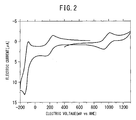
- FIG. 2 shows the electric current-voltage curve (cyclic voltammogram) obtained by the CV measurement for K 7 ⁇ 1 -P 2 W 17 O 61 Ru(H 2 O) ( ⁇ 1 -form).
- K 7 ⁇ 1 -P 2 W 17 O 61 Ru(H 2 O) ( ⁇ 1 -form) exhibited reversible redox peaks.
- FIG. 2 shows that the ruthenium in the polyoxometalate molecule of the present invention has an electric potential sufficient to oxidize hydrogen, and accordingly the polyoxometalate molecule of the present invention has a high hydrogen oxidizing ability. Further, this molecule dissociates hydrogen with ruthenium as an catalytic active site, thereby produces electrons and protons. This molecule can receive the produced electrons on tungsten, whereas this molecule can receive the produced protons on any oxygen in the molecule. Accordingly, the polyoxometalate compound of the present invention has hydrogen dissociation sites and the sites on which the electrons and protons produced by the hydrogen dissociation are received.
- the catalyst of the present invention is useful in various applications which employ hydrogen oxidation reaction in which hydrogen molecule is oxidized to hydrogen ions, for example, as a hydrogen oxidation catalyst in fuel cell.
Landscapes
- Chemical & Material Sciences (AREA)
- Engineering & Computer Science (AREA)
- Materials Engineering (AREA)
- Chemical Kinetics & Catalysis (AREA)
- Electrochemistry (AREA)
- General Chemical & Material Sciences (AREA)
- Catalysts (AREA)
- Organic Low-Molecular-Weight Compounds And Preparation Thereof (AREA)
- Inert Electrodes (AREA)
Abstract
Description
- The present invention relates to a hydrogen oxidation catalyst capable of oxidizing a hydrogen molecule (H2) to hydrogen ions (H+), and more particularly, it relates to a hydrogen oxidation catalyst formed of a specific ruthenium-containing polyoxometalate compound.
- Fuel cells are devices for extracting electric energy from fuels such as hydrogen and ethanol by an electrochemical reaction, and have a low environmental load due to their low carbon dioxide emission, and therefore have attracted attention in recent years. In fuel cells, platinum fine particles and platinum compounds are generally known as a catalyst or mediator for promoting a hydrogen oxidation reaction (i.e., a reaction represented by formula (1) below, in which hydrogen molecule (H2) is oxidized to hydrogen ions (H+)) and oxygen reducing reaction (i.e., a reaction represented by formula (2) below, in which an oxygen molecule reacts with hydrogen ions and electrons to produce water).
H2 → 2H+ + 2e- (1)
O2 + 4H+ + 4e- → 2H2O (2)
- However, platinum is very expensive. Also, in fuel cells, the precipitation of platinum as platinum particles causes the degradation of the components of the fuel cell, including the platinum catalyst, electrolyte membrane, and others (Patent Literature 1). Accordingly, as a material capable of oxidizing hydrogen a material which is alternative to platinum or is free of platinum is required. Although Patent Literature 2 describes a redox fuel cell in which a catholyte solution containing a polyoxometalate redox couple is at least partially reduced at the cathode in operation of the cell, and is at least partially re-generated by reaction with an oxidant after the reduction at the cathode, it does not describe that the redox couple has hydrogen-oxidizing ability.
-
- Patent Literature 1: Japanese Unexamined Patent Publication No.
2009-289681 - Patent Literature 2: Japanese Unexamined Patent Publication No.
2010-541127 - The present inventors have made intensive research with a view to solve the above problems, and as a result have found that a specific ruthenium-containing polyoxometalate compound has hydrogen-oxidizing ability and is useful as hydrogen oxidation catalyst.
- The present invention provides a hydrogen oxidation catalyst which is formed of a Dawson-type polyoxometalate compound represented by general formula (I) :
Xa[P2MbO61Ruc(L)d] (I)
- wherein X represents a monovalent cation independently selected from an alkali metal cation, a tetraalkyl ammonium cation and a tetraalkyl phosphonium cation;
- M represents a transition metal independently selected from vanadium (V), niobium (Nb), molybdenum (Mo) and tungsten (W);
- L represents a ligand independently selected from H2O and an organic ligand, provided that at least one L is H2O;
- a represents the number of cations X needed for the electrical charge of the overall compound to be neutral;
- b is an integer of from 12 to 17 and c is an integer of from 1 to 6, provided that the total of b and c is equal to 18; and
- d is an integer which is equal to c.
- In the above general formula (I), X is a monovalent cation independently selected from alkali metal cations, preferably lithium ion, sodium ion, potassium ion, and rubidium ion; quaternary ammonium cations, preferably tetraalkylammonium cations, such as tetramethylammonium cation, tetraethylammonium cation, and tetrabutylammonium cation; and quaternary phosphonium cations, preferably tetraalkylphosphonium cations, such as tetramethylphosphonium cation, tetraethylphosphonium cation, and tetrabutylphosphonium cation.
- M is a transition metal independently selected from vanadium (V), niobium (Nb), molybdenum (Mo) and tungsten (W), and M is preferably tungsten (W).
- L is a ligand independently selected from H2O and organic ligands such as pyridine and sulfoxide derivatives (such as dimethyl sulfoxide), provided that at least one L is H2O. L is preferably H2O. While not wishing to be bound by any theory, it is believed that the part on the ruthenium atom to which H2O coordinates as a ligand is an active site. Accordingly, the polyoxometalate compound of the present invention has at least one H2O as ligand L.
- "a" is the number of cations X needed for the electrical charge of the overall polyoxometalate compound to be neutral. The number b of metal M is an integer of 12 to 17, and the number c of ruthenium is an integer of 1 to 6, provided that the total of the number b of metal M and the number c of ruthenium is equal to 18. The number d of the ligand is an integer which is equal to the number c of ruthenium.
- In one preferred embodiment of the present invention, examples of the Dawson-type polyoxometalate compound represented by the above general formula (I) are K7 [(α1-P2W17O61Ru (H2O)] and K7 [α2-P2W17O61Ru (H2O)]. In a more preferred embodiment of the present invention, examples of the polyoxometalate compound represented by the above general formula (I) is K7 [α1-P2W17O61Ru (H2O)].
- According to the present invention, a hydrogen oxidation catalyst having hydrogen oxidizing ability is provided.
-
-
FIG. 1(a) represents the fundamental structure of a Dawson-type polyoxometalate anion [α-P2W18O62]6-,FIG. 1(b) represents the structure of [α1-P2W17O61Ru]7- which is one example of α1-isomers of [α-P2W18O62]6-, andFIG. 1(c) represents the structure of [α2-P2W17O61Ru]7- which is one example of α2-isomers of [α-P2W18O62]6-. -
FIG. 2 represents the cyclic voltammogram of K7[α1-P2W17O61Ru (H2O)] as determined in 0.5M H2SO4. - The embodiments of the present invention will be described with reference to the drawings.
- As described above, the present invention provides a catalyst formed of a specific polyoxometalate compound containing ruthenium.
- The structure of Dawson-type polyoxometalates is briefly described as follows. Dawson-type polyoxometalates have a plurality of octahedral fundamental units in which six oxide ions (O2-) coordinate to metal M, and there exist isomers of α-form, β-form, γ-form, δ-form, ε-form, etc., depending whether adjacent octahedrons share edges or not or whether adjacent octahedrons share apexes or not. The Dawson-type polyoxometalate compounds have a structure in which 18 octahedrons are condensed so as to share apexes, and have M and two atoms such as boron, silicon, sulfur, and phosphorus, incorporated in the structure. Generally, both ends in the molecular long axis direction of this compound are referred to as cap regions and the site located between the two cap regions is referred to as a belt region.
- Next,
FIG. 1(a) illustrates the fundamental structure of Dawson-type polyoxometalates, taking [α-P2W18O62]6- as an example. As illustrated inFIG. 1(a) , [α-P2W18O62]6- has two regions referred to as caps, and a region located between them, called as a belt. An isomer in which one tungsten present in the belt region is substituted with another atom (inFIG. 1(b) , ruthenium (Ru(III))) as shown inFIG. 1(b) is α1-isomer (i.e., [α1-P2W17O61Ru]7-), and an isomer in which the tungsten present in a cap region is substituted with another atom (inFIG. 1(c) , ruthenium (Ru(III))) as shown inFIG. 1(c) is α2-isomer (i.e., [α2-P2W17O61Ru]7-). The α1-isomer is racemic. InFIGS. 1(b) and (c) , octahedrons represent a fundamental unit in which six oxide ions (O2-) coordinate to tungsten (W6+), and tetrahedrons (black colored regions) represent another fundamental unit in which phosphorus (P) shares oxygen with tungsten which constitutes the octahedrons. In addition, inFIGS. 1(b) and (c) , ruthenium is represented as a spherical body so that the position of the ruthenium is easily recognized. Although not shown inFIGS. 1(a), (b), and (c) , in the polyoxometalate compound of the present invention, ligands are coordinated to the ruthenium atom. - Although the ruthenium-containing polyoxometalate compound of the present invention has been explained with reference to
FIGS. 1(a), (b), and (c) , the present invention is not limited to the compounds shown inFIGS. 1(b) and (c) . Ruthenium may be present in both cap regions and belt region. - The method for preparing the ruthenium-containing polyoxometalate compound of the present invention is not particularly limited as long as the tungsten in the corresponding precursor can be substituted with ruthenium, and ligands independently selected from H2O and an organic ligand can coordinate to the ruthenium. For example, K10[α1-P2W17O61Ru(H2O)], which is a preferred ruthenium-containing polyoxometalate compound of the present invention, can be obtained by, for example, preparing K10[α2-P2W17O61]·15H2O via a well-known method (R. Contant, W. G. Klemperer, O. Yaghi, Inorg. Synth. 1990, 27, 104-118.), reacting the resulting K10[α2- P2W17O61] ·15H2O with Ru2 (benzene)2Cl4 to synthesize K7[P2W17O61RuIII(H2O)] (a mixture of α1-form and α2-form), and subsequently, reacting the resulting K7[P2W17O61RuIII(H2O)] (a mixture of α1-form and α2-form) and dimethyl sulfoxide (dmso) to form K8[P2W17O61RuII(dmso)] (a mixture of α1-form and α2-form), purifying it using the solubility difference to obtain K8[α1-P2W17O61RuII (dmso)] (α1-form only), and heating K8[α1-P2W17O61RuII (dmso)] (α1-form only) in water to exchange dmso with water.
- The hydrogen oxidation catalyst formed of the polyoxometalate compound of the present invention can be used after being supported on a carrier, for example, oxides such as silica, alumina, magnesia, and titania; carbon materials such as activated carbon and carbon nanotube; etc. The type, shape, and dimensions of the carrier can be appropriately selected according to the usage of the catalyst.
- The present invention will be further explained with reference to the following examples, and it should be understood that the scope of the present invention is not limited by these examples.
- K7α1-P2W17O61Ru (H2O) (α1-form) was synthesized via synthesis steps 1 to 4 as follows.
- K10[α2- P2W17O61] ·15H2O was prepared via a well-known method (R. Contant, W. G. Klemperer, O. Yaghi, Inorg. Synth. 1990, 27, 104-118.)
- Ru2 (benzene)2Cl4 (0.085 g, 0.17 mmol), K10[α2-P2W17O61] ·15H2O (1.592 g, 0.33 mmol), and water (20 mL) were charged into a 100 mL Teflon@ inner tube-type autoclave, and were allowed to react for 5 hours at 170°C. After cooling the autoclave, the resulting solution was filtered, a 15 ml of acetone was added to the resulting filtrate, and the resulting mixture was agitated for one hour at room temperature. The precipitates generated were separated out by centrifugal separation, and a 100 mL of acetone was added to the resulting liquid. The mixture thus obtained was agitated for 30 minutes at room temperature to obtain a dark-brown liquid. The dark-brown liquid was allowed to stand for overnight in a refrigerator. The solid matters precipitated during standing were filtered out, and the solid matters were washed with a 100 mL of acetone and dried at 70°C to obtain K7[P2W17O61RuIII (H2O)] (a mixture of α1-form and α2-form) (yield: 0.67 g, yield percentage: 42% (weight basis)).
- IR (KBr): ν = 1090 (s), 1079 (s), 1055 (sh), 1014 (m), 950 (s), 915 (s), 817 (sh), 777 (vs) cm-1. Cyclic voltammogram (in 0.5M KH2PO4 aqueous solution (pH 4.3)): E1/2 (RuV/IV) = 1068 mV, E1/2 (RuIV/III) = 719 mV, and E1/2(RuIII/II) = 180 mV. Anionic MS (CH3CN-H2O) : calculated m/z value for [P2W17O61RuOH3]4 - = 1070.9331, measured m/z value = 1070.9338.
- K7[P2W17O61Ru(H2O)] (a mixture of α1-form and α2-form) (0.745 g, 0.43 mmol) obtained in step 2 and dimethyl sulfoxide (dmso, 1 mL, 14.08 mmol) were added to a 49 mL of water and agitated for 4 days at 80°C, and after cooling the resulting reaction liquid, KCl (1.5 g) was added to the reaction liquid, and the reaction liquid was agitated until the added KCl was dissolved therein, and the reaction liquid was allowed to stand for overnight. After filtering out the precipitates generated during standing, KCl (1.5 g) was added to the resulting filtrate. The resulting liquid was agitated for one hour at room temperature, and the resulting solution was allowed to stand for overnight in a refrigerator. The solid matters precipitated during standing were filtered out, a 15 mL of acetone was added to the resulting filtrate, and the liquid was agitated for one hour at room temperature. After filtering out the precipitates generated, a 100 mL of acetone was added to the filtrate, and the resulting liquid was agitated for 30 minutes. The resulting dark-green solution was allowed to stand for overnight in a refrigerator. The solid matters generated during standing were filtered out, were washed with a 100 mL of acetone, and were dried at 70°C to obtain K8[P2W17O61RuII (dmso)] -4KCl-22H2O (yield: 0.59 g, yield percentage: 80% (weight basis).
- IR (KBr): ν = 1082 (s), 1015 (m), 946 (m), 906 (s), 820 (vs), 781 (vs), 721 (s) cm-1. UV/Vis (0.5M KH2PO4) : λmax = 445 nm (ε = 1.7 × 10³ dm3·mol-1·cm-1) and 597 nm (ε = 2.0 × 10³ dm3·mol-1·cm-1). Cyclic voltammogram (in 0.5M KH2PO4 aqueous solution (pH 4.3): E1/2(RuIV/III) = 1341 mV and E1/2 (RuIII/II) = 560 mV. 1H-NMR (D2O) : (δ/ppm) 3.16 (s, 3H), 3.08 (s, 3H) (cf. 4.659 for HOD). 13C-NMR (D2O) : (δ/ppm) 44.18, 43.02 (cf. 30.103 for (CH3)2CO). 31P-NMR (D2O) : (δ/ppm) -9.67, -12.84. 183W-NMR (D2O) : (δ/ppm) 212.4, 127.4, 35.3, -104.4, -122.4, -127.5, -130.1, -137.1, -154.8, -157.2, -159.0, -169.1, -187.3, -200.9, -204.4, -217.7. Elementary analysis: calculated for K8[P2W17O61Ru(C2H6SO)]-4KCl-22H2O: C 0.45; H 0.94; P 1.16; W 58.4; Ru 1.89; K 8.77;
Na 0; S 0.60; Cl 2.65%; Measured: C 0.67; H 0.71; P 1.21; W 58.3; Ru 2.05; K 8.94; Na<0.01; S 0.45; Cl 2.54%. Anionic MS (CH3CN-H2O): calculated m/z value for [P2W17O61Ru(dmso)H2K]4- = 1095. 9267, measured m/z value = 1095.9247. - K8[P2W17O61Ru(C2H6SO)] (0.158 g) obtained in synthesis step 3 was mixed with a 5 mL of water, and they were allowed to react in a 100 mL Teflon® inner tube-type autoclave for 20 hours at 170°C. After cooling the resulting reaction liquid, a 20 mL of acetone was added thereto to separate out precipitates. The precipitates were filtered out, were washed with a 20 mL of acetone, and were dried at 70°C to obtain K7α1-P2W17O61Ru(H2O) (α1-form).
Analysis: Cyclic voltammogram (in 0.5M KH2PO4 aqueous solution (pH 4.3), vs. NHE): E1/2(RuV/IV) = 1059 mV, E1/2(RuIV/III) = 716 mV, and E1/2(RuIII/II) = 176 mV. - The analyses of the above intermediate and final products were performed using the following apparatuses and conditions.
- Infrared spectroscopic analysis (IR): The measurement apparatus used was NICOLET 6700 FT-IR (manufactured by Thermo Fisher Scientific). The measurement was performed by the KBr pellet method.
- Cyclic voltammetry (CV): The measurement apparatus used was CH1620D system (manufactured by BAS Inc.). The measurement temperature was 20°C, the working electrode was glassy carbon, the counter electrode was a platinum wire, the reference electrode was Ag/AgCl (3M NaCl, 203 mV vs. NHE), the initial potential was 403 mV, the switching potential was 1303 mV, and the scan rate was 25 mV/sec. The concentration of the object to be measured was 1 mM in 0.5M KH2PO4 aqueous solution (pH 4.3).
- Ultraviolet-visible spectroscopic analysis (UV/Vis): The measurement apparatus used was 8453 UV-Vis spectrometer (manufactured by Agilent). The measurement temperature was normal temperature (about 20°C).
- Varian system 500 (500 MHz) spectrometer (Agilent) was used for 1H-NMR, 13C-NMR and 31P-NMR measurements, and ECA500 (500 MHz) spectrometer was used for 183W-NMR measurements. HOD (4.659 ppm) in D2O was used as an internal standard in the measurements of 1H-NMR spectra, (CH3)2CO (30.103 ppm) was used as an external standard in the measurements of 13C-NMR spectra, 85% H3PO4 (0 ppm) was used as an external standard in the measurement of 31P-NMR spectra, and saturated Na2WO4 (0 ppm) was used as an external standard in the measurements of 183W-NMR spectra.
- The elementary analysis was entrusted to Microanalytisches Labor Pascher, an elementary analysis company in Germany.
- For the final product (K7α1-P2W17O61Ru(H2O) (α1-form)), a CV measurement was performed in 0.5M H2SO4 aqueous solution. The measurement apparatus used was CHI320D system (manufactured by BAS Inc.). The measurement temperature was 20°C, the working electrode was glassy carbon, the counter electrode was a platinum wire, the reference electrode was Ag/AgCl (3M NaCl 203 mV vs. NHE), the initial potential was 403 mV, the switching potential was 1303 mV, and the scan rate was 25 mV/sec. The concentration of the final product in the 0.5M H2SO4 aqueous solution was 1 mM.
-
FIG. 2 shows the electric current-voltage curve (cyclic voltammogram) obtained by the CV measurement for K7α1-P2W17O61Ru(H2O) (α1-form). As shown inFIG. 2 , K7α1-P2W17O61Ru(H2O) (α1-form) exhibited reversible redox peaks. The formal redox potentials E0' (= (cathodic peak potential Epc) + (anodic peak potential Epa)/2) determined from the electric current-voltage curve were +984 mV and +203 mV. Further, the number of electrons participated in the oxidation-reduction, determined from the Nernst equation was respectively 1. - Three sets of peaks are observed in the cyclic voltammogram in
FIG. 2 . - The one set of peaks at the right side (higher potential side) is attributed to the redox reaction represented by the following formula:

- The central one set of peaks is attributed to the redox reaction represented by the following formula:

- The one set of peaks at the left side (lower potential side) is attributed to the redox reaction represented by the following formula:

-
FIG. 2 shows that the ruthenium in the polyoxometalate molecule of the present invention has an electric potential sufficient to oxidize hydrogen, and accordingly the polyoxometalate molecule of the present invention has a high hydrogen oxidizing ability. Further, this molecule dissociates hydrogen with ruthenium as an catalytic active site, thereby produces electrons and protons. This molecule can receive the produced electrons on tungsten, whereas this molecule can receive the produced protons on any oxygen in the molecule. Accordingly, the polyoxometalate compound of the present invention has hydrogen dissociation sites and the sites on which the electrons and protons produced by the hydrogen dissociation are received. - Moreover, it can be seen from the sharp waveform of the cyclic voltammogram that the electron movement and proton movement proceed smoothly.
- The catalyst of the present invention is useful in various applications which employ hydrogen oxidation reaction in which hydrogen molecule is oxidized to hydrogen ions, for example, as a hydrogen oxidation catalyst in fuel cell.
Claims (2)
- A hydrogen oxidation catalyst which is formed of a Dawson-type polyoxometalate compound represented by general formula (I):
Xa[P2MbO61Ruc(L)d] (I)
wherein X represents a monovalent cation independently selected from an alkali metal cation, a tetraalkyl ammonium cation and a tetraalkyl phosphonium cation;M represents a transition metal independently selected from V, Nb, Mo and W;L represents a ligand independently selected from H2O and an organic ligand, provided that at least one L is H2O;a represents the number of cations X needed for the electrical charge of the overall compound to be neutral;b is an integer of from 12 to 17 and c is an integer of from 1 to 6, provided that the total of b and c is equal to 18; andd is an integer which is equal to c. - The hydrogen oxidation catalyst according to claim 1, wherein the polyoxometalate compound is K7[α1-P2W17O61Ru (H2O)].
Applications Claiming Priority (2)
| Application Number | Priority Date | Filing Date | Title |
|---|---|---|---|
| JP2013228775A JP2015085311A (en) | 2013-11-01 | 2013-11-01 | Hydrogen oxidation catalyst |
| PCT/JP2014/072926 WO2015064198A1 (en) | 2013-11-01 | 2014-09-01 | Hydrogen oxidation catalyst |
Publications (2)
| Publication Number | Publication Date |
|---|---|
| EP3064271A4 EP3064271A4 (en) | 2016-09-07 |
| EP3064271A1 true EP3064271A1 (en) | 2016-09-07 |
Family
ID=53003812
Family Applications (1)
| Application Number | Title | Priority Date | Filing Date |
|---|---|---|---|
| EP14857273.8A Withdrawn EP3064271A1 (en) | 2013-11-01 | 2014-09-01 | Hydrogen oxidation catalyst |
Country Status (4)
| Country | Link |
|---|---|
| US (1) | US20160276677A1 (en) |
| EP (1) | EP3064271A1 (en) |
| JP (1) | JP2015085311A (en) |
| WO (1) | WO2015064198A1 (en) |
Families Citing this family (1)
| Publication number | Priority date | Publication date | Assignee | Title |
|---|---|---|---|---|
| JP2015085311A (en) * | 2013-11-01 | 2015-05-07 | 国立大学法人広島大学 | Hydrogen oxidation catalyst |
Family Cites Families (5)
| Publication number | Priority date | Publication date | Assignee | Title |
|---|---|---|---|---|
| GB0718577D0 (en) | 2007-09-24 | 2007-10-31 | Acal Energy Ltd | Fuel cells |
| JP2009289681A (en) | 2008-05-30 | 2009-12-10 | Toyota Motor Corp | Method of cleaning fuel cell |
| FR2944716B1 (en) * | 2009-04-28 | 2011-05-27 | Centre Nat Rech Scient | CATALYST AND PROCESS FOR ELECTROCHEMICAL OXIDATION OF METHANE |
| JP5782365B2 (en) * | 2011-11-15 | 2015-09-24 | 株式会社日本触媒 | Metal compound-containing electrode catalyst |
| JP2015085311A (en) * | 2013-11-01 | 2015-05-07 | 国立大学法人広島大学 | Hydrogen oxidation catalyst |
-
2013
- 2013-11-01 JP JP2013228775A patent/JP2015085311A/en not_active Withdrawn
-
2014
- 2014-09-01 EP EP14857273.8A patent/EP3064271A1/en not_active Withdrawn
- 2014-09-01 WO PCT/JP2014/072926 patent/WO2015064198A1/en not_active Ceased
- 2014-09-01 US US15/033,390 patent/US20160276677A1/en not_active Abandoned
Also Published As
| Publication number | Publication date |
|---|---|
| WO2015064198A1 (en) | 2015-05-07 |
| US20160276677A1 (en) | 2016-09-22 |
| JP2015085311A (en) | 2015-05-07 |
| EP3064271A4 (en) | 2016-09-07 |
Similar Documents
| Publication | Publication Date | Title |
|---|---|---|
| Peljo et al. | Biomimetic oxygen reduction by cofacial porphyrins at a liquid–liquid interface | |
| Altenau et al. | Models for heteropoly blues. Degrees of valence trapping in vanadium (IV)-and molybdenum (V)-substituted Keggin anions | |
| EP2776606B1 (en) | Method for the electrochemical generation of oxygen and hydrogen | |
| US10711021B2 (en) | Metal oxide-organic hybrid materials for heterogeneous catalysis and methods of making and using thereof | |
| KR101759433B1 (en) | Nanocluster catalysts for generating hydrogen gas and manufacturing method of the same | |
| WO2010107919A1 (en) | Polyoxometalate water oxidation catalysts and methods of use thereof | |
| Nawi et al. | The electrochemistry of amavadine, a vanadium natural product | |
| Zhang et al. | A trinuclear ruthenium complex as a highly efficient molecular catalyst for water oxidation | |
| US11056705B2 (en) | Organic anolyte materials for flow batteries | |
| Ni et al. | A novel hexanuclear titanium (IV)-oxo-iminodiacetate cluster with a Ti 6 O 9 core: single-crystal structure and photocatalytic activities | |
| Sadakane et al. | Structural characterization of mono-ruthenium substituted Keggin-type silicotungstates | |
| Wang et al. | A Keggin-type polyoxomolybdate-based crystalline material formed by hydrothermal transformation: photo/electro-catalytic properties and mechanism study | |
| Bai et al. | An open chain carboxyethyltin functionalized sandwich-type tungstophosphate based on a trivacant Dawson subunit: synthesis, characterization and properties | |
| Schouwey et al. | A heterometallic macrocycle as a redox-controlled molecular hinge | |
| IT8320115A1 (en) | PROCEDURE FOR PREPARING QUATERNARY AMMONIUM HYDROXIDE BY ELECTRODIALYSIS | |
| Guo et al. | Electrochemical behavior of iron-based imidazolium chloride ionic liquids | |
| Zhou et al. | Electron-deficient Mo sites enhance electrochemical nitrate reduction to ammonia by promoting water dissociation | |
| EP3064271A1 (en) | Hydrogen oxidation catalyst | |
| Nishiki et al. | Preparation of α 1-and α 2-isomers of mono-Ru-substituted Dawson-type phosphotungstates with an aqua ligand and comparison of their redox potentials, catalytic activities, and thermal stabilities with Keggin-type derivatives | |
| JP2018034152A (en) | Multi-electron redox catalyst | |
| Boskovic et al. | Electrosynthesis and solution structure of six-electron reduced forms of metatungstate,[H 2 W 12 O 40] 6− | |
| Le Poul et al. | Gating the electron transfer at a monocopper centre through the supramolecular coordination of water molecules within a protein chamber mimic | |
| Voloshin et al. | First hybrid oximehydrazonate phthalocyaninoclathrochelates: The synthesis and properties of lutetium phthalocyanine-capped cage iron (II) complexes | |
| Dobson et al. | Coordination chemistry and redox properties of polypyridyl complexes of vanadium (II) | |
| Gushchin et al. | Mixed-ligand cluster [Mo3S4 (Dtp) 2 (μ-AcO) Cl (Me2Bipy)]: synthesis and structure |
Legal Events
| Date | Code | Title | Description |
|---|---|---|---|
| PUAI | Public reference made under article 153(3) epc to a published international application that has entered the european phase |
Free format text: ORIGINAL CODE: 0009012 |
|
| 17P | Request for examination filed |
Effective date: 20160520 |
|
| A4 | Supplementary search report drawn up and despatched |
Effective date: 20160721 |
|
| AK | Designated contracting states |
Kind code of ref document: A1 Designated state(s): AL AT BE BG CH CY CZ DE DK EE ES FI FR GB GR HR HU IE IS IT LI LT LU LV MC MK MT NL NO PL PT RO RS SE SI SK SM TR |
|
| AX | Request for extension of the european patent |
Extension state: BA ME |
|
| DAX | Request for extension of the european patent (deleted) | ||
| STAA | Information on the status of an ep patent application or granted ep patent |
Free format text: STATUS: REQUEST FOR EXAMINATION WAS MADE |
|
| STAA | Information on the status of an ep patent application or granted ep patent |
Free format text: STATUS: THE APPLICATION IS DEEMED TO BE WITHDRAWN |
|
| 18D | Application deemed to be withdrawn |
Effective date: 20170221 |