EP3063069B1 - Angles-only initial orbit determination (iod) - Google Patents
Angles-only initial orbit determination (iod) Download PDFInfo
- Publication number
- EP3063069B1 EP3063069B1 EP14793349.3A EP14793349A EP3063069B1 EP 3063069 B1 EP3063069 B1 EP 3063069B1 EP 14793349 A EP14793349 A EP 14793349A EP 3063069 B1 EP3063069 B1 EP 3063069B1
- Authority
- EP
- European Patent Office
- Prior art keywords
- observation
- orbit
- observation directions
- grid
- directions
- Prior art date
- Legal status (The legal status is an assumption and is not a legal conclusion. Google has not performed a legal analysis and makes no representation as to the accuracy of the status listed.)
- Active
Links
Images



Classifications
-
- B—PERFORMING OPERATIONS; TRANSPORTING
- B64—AIRCRAFT; AVIATION; COSMONAUTICS
- B64G—COSMONAUTICS; VEHICLES OR EQUIPMENT THEREFOR
- B64G3/00—Observing or tracking cosmonautic vehicles
Definitions
- This invention relates to initial orbit determination (IOD) from angles-only observations.
- the basis of the methodology is to search a grid of possible boundary values on the range-to-object over the observation interval to find the grid point (by solution of a boundary-value problem such as Lambert's Problem) and initial orbit (orbital element set) that best fits all of the three or more observations according to an error metric.
- range iteration techniques dictated approaches based on the iteration of the estimated values of the ranges to the object, so called “range iteration” techniques.
- the current industry standard is the Gooding Initial Orbit Determination (IOD) procedure detailed in the 1993 Defense Research Agency report.
- the Gooding IOD procedure is part of the Orbit Determination Tool Kit (ODTK), a software package that can be added to the System Took Kit (STK),
- ODTK combines both Gooding's IOD tool to determine an initial orbit and a Least Squares differential correction tool to improvide the initial orbit determination based on new angle-only observations.
- Gooding's IOD procedure is based on a higher-order Newton correction of the assumed values for two of the three unknown ranges with a Lambert problem solution algorithm (such as Gooding's own solution to the Lambert Problem) at the heart of the procedure. Gooding estimates values for the first and third unknown ranges and solves Lambert's problem to determine a state vector for an initial orbit.
- Lambert problem solution algorithm such as Gooding's own solution to the Lambert Problem
- the orbit is propagated to estimate target locations for the second observation.
- a difference angle between the measured and estimated observation direction is computed.
- a range step size is determined and used to adjust the first and third estimated ranges. Derivatives of the difference angle are computed with respect to the estimated ranges. Either Halley's method or Newton-Raphson methods of iteration are used to find a local maximum in a search plane. The step-size is reduced and process of competing the derivatives and iterating is repeated until convergence is achieved or the algorithm fails to converge.
- Gooding's IOD procedure was specifically configured for the case in which the satellite had completed an unknown number of half-orbits tracing an arc of 180 degrees or more. In these cases Gooding's SOD procedures converges rapidly to a local maximum in approximately 99.9% of the cases. However, when applied to cases in which the satellite traces a small arc of only a few degrees Gooding's IOD procedure may converge in less than approximately 60% of the the cases. Approximately 40% of the time Gooding's procedure either failed to converge or converged to a non-physical orbit (e.g. one that escaped Earth orbit or one that intersected Earth orbit).
- a non-physical orbit e.g. one that escaped Earth orbit or one that intersected Earth orbit.
- the present invention describes a methodology for initial orbit determination (IOD) of an object about an astronomical body using three or more (N) angles-only observations.
- the basis of the methodology is to search a grid of possible boundary values on the range-to-object over the observation interval to find the grid point and corresponding initial orbit that best fits all of the observations according to an error metric.
- the search is conducted by solving a boundary-value problem (e.g. Lambert's Problem) for different grid points.
- the state vector is propagated to determine estimated observation directions for the remaining N-2 observations.
- the grid point (and initial orbit) that best fit all of the observations is selected.
- the best fit is suitably determined by an error metric between the measured and estimated observation directions for the remaining N-2 observations.
- the orbital element set corresponding to the selected grid point that describes the object's initial orbit is reported out.
- the grid may be searched by testing each and every point on the grid or by using other optimization techniques such as hill climbing algorithms to find the optimal grid point
- the search may start with a broad but coarse initial grid and increase the resolution of the grid as the search converges to a solution.
- the methodology may use values of orbital element parameters to reject initial orbits that are invalid.
- the perigee range q may be used to reject orbits that pass through the astronomical body and the eccentricity e may be used to reject orbits that escape orbit about the astronomical body.
- the method may smooth the error metric over the search grid prior to selecting the best-fit grid point to reduce the influence of noise.
- the methodology is particularly useful to determine an initial orbit when the observation arc is limited to a few degrees and when greater than 3 observations are available. In an embodiment, over 100 observations are made over an arc of 5 degrees or less and processed to determine an initial orbit.
- the present invention describes a methodology for initial orbit determination using three or more (N) angles-only observations.
- the basis of the methodology is to search a grid of possible boundary values on the range-to-object over the observation interval to find the grid point and corresponding initial orbit that best fits all of the observations according to an error metric.
- the search is conducted by solving a boundary-value problem such as Lambert's Problem for different grid points
- the state vector is propagated to determine estimated observation directions for the remaining N-2 observations.
- the grid point (and initial orbit) that best fit all of the observations is selected.
- the best fit is suitably determined by an error metric between the measured and estimated observation directions for the remaining N-2 observations.
- the grid may be searched by testing each and every point on the grid or by using other optimization techniques such as hill climbing algorithms to find the optimal grid point.
- the search may start with a broad but coarse initial grid and increase the resolution of the grid as the search converges to a solution.
- the methodology may use values of orbital element parameters to reject initial orbits that are invalid.
- the perigee range q may be used to reject orbits that pass through the astronomical body and the eccentricity e may be used to reject orbits that escape orbit about the astronomical body. In other cases, these may represent valid orbits.
- the method may smooth the error metric over the search grid prior to selecting the best-fit grid point to reduce the influence of noise.
- the present methodology and the Gooding IOD procedure are similar in that both are range-iteration algorithms and both solve a boundary-value problem (e.g. the Lambert Problem) at their core.
- the two approaches differ in the number of observations that can be processed and how those observations are processed to find a solution.
- the Gooding IOD procedure is an analytic solution that is limited to processing exactly 3 observations. Gooding estimates values for the first and third unknown ranges and solves Lambert's problem to determine a state vector for an initial orbit.
- the present methodology can process 3 or more observations (preferably and typically many more than 3) and employs an error metric to find an initial orbit that best fits all of the observations.
- the present methodology is robust for large arcs greater than 180 degrees, moderate arcs ⁇ 180 degrees and small arcs ⁇ 5 degrees. Simulations have demonstrated convergence 99.9% of the time for small arcs.
- the present methodology provides a robustness for the "small arc" problem not demonstrated by any of the prior art techniques; not Gauss, Laplace or Gooding
- FIG. 1 an embodiment of a system 10 for initial orbit determination (IOD) of an object 12 about an astronomical body 14 (e.g. Earth) is depicted in Figure 1 .
- Object 12 follows an orbit 16 about astronomical body 14.
- object 12 orbits around astronomical body 14.
- the orbit 12 may pass through astronomical body 14.
- the orbit 12 may escape orbit about the astronomical body.
- the IOD methodology for each case is the same. However, if there is a priori knowledge of the orbit, invalid orbits may be eliminated.
- the present methodology measures n angle-only observation directions d o1 , d o2 .... d on of the object at times t 1 , t 2 , .., t n , where n is three or more, from known observation positions o 1 , o 2 ,... o n and uses all of the n angle-only observations to determine an initial orbit 18 that approximates true orbit 16.
- the observations may be made from a fixed observation position on the astronomical body 14 or one or more platforms 20 in orbit about the astronomical body 14. Observation of the fixed stars 21 may provide a coordinate system in which to measure the relative positions of object 12.
- One or more sensors 22 may be mounted on the one or more platforms 20 to measure the n angle-only observations directions over an observation internal, ln an embodiment, a side-staring sensor increases access to objects (e.g. satellites) in CEO. In another embodiment, a pushbroom sensor offers frequent ubiquitous coverage from LEO to beyond GEO. Processing of the n angle-only observations may be performed by computers 24 on-board the platfonm(s) and/or computers 26 co-located with a ground receive antenna 28.
- the IOD methodology may measure 3 or more observations directions within an observation interval that spans a small arc of less than 5 degrees, an intermediate arc between 5 and 180 degrees or a large arc greater than a half-orbit of 180 degrees and possibly multiple half-orbits.
- a platform is provided with a sensor having a field-of-view approximately 5 degrees wide and 1 degree long. The sensor operates in time delay integration (TDI) mode so that the stars are frozen in the image and the moving object forms a streak across the image. The sensors provides 4 observations of the object entering, crossing and leaving the FOV. Simulations have demonstrated that adding simply a 4 th observation for the small arc greatly improved convergence to the global solution of the initial orbit.
- dozens of platforms are provided with hundreds of sensors to provide well over a hundred observation directions within the small are.
- object 30 follows an orbit 32 according Keplerian motion about a given astronomical body 34 (force centre) having a gravitational strength.
- ⁇ longitude of ascending node
- ⁇ argument of perigee
- v true anomaly
- the parameters a and e or ⁇ and q are parameters that define the size and shape of the orbit, but only q is shown in the drawing to reduce clutter.
- the eccentricity e is a ratio, which would be difficult to show and is therefore not shown, while ⁇ has units of velocity squared and cannot be shown directly.
- an embodiment of the IOD methodology for determining an object's initial orbit about an astronomical body comprises, from known observation positions o 1 , o 2 ,... o n , measuring n angle-only observation directions d o1 , d o2 ,- - - d on of the object at times t 1 , t 2 , ..., t n where n is three or more (step 40 ).
- an object 42 such as a satellite follows an orbit 44 around the Earth 46.
- the measurements of angle-only observation directions are made from a platform 48 such as another satellite in an orbit 50 about the Earth.
- Measurement of the n angle-only observation directions may comprise first measuring azimuth and elevation angles to the object and then converting the azimuth and elevation angles to unit vectors in an Earth Centered Earth Fixed (ECEF) coordinate system that form the observation directions (step 52 ).
- ECEF Earth Centered Earth Fixed
- the i th observation is suitably the 1 st observation and the j th observation is suitably the n th observation.
- the initial search grid is suitably selected to span all reasonable orbits for the application of closed orbits around the astronomical orbit, here the Earth with a coarse grid sampling to reduce computational load. For an embodiment, a minimum for r i of 0 km is set with ⁇ r set at 500 km. A grid size of 151 x 151 elements is selected with a maximum of r1 equal to 75,000 km.
- the initialization of the search grid will be determined by a priori information about the object and its orbit.
- the methodology solves a boundary-value problem as a function of ( o i , o j ), ( d oi , d oj ) ( r i , ⁇ r ) to determine a state vector of a three-dimensional positions and a velocity of the object at time t i (step 58).
- the methodology solves Lambert's Orbital Boundary-Value Problem.
- Lambert's Problem is the boundary value problem for celestial mechanics, and is defined for the 3 spatial coordinates of the object at 2 specific times.
- the problem must always have at least one solution or orbit, although that solution may be "non-physical", requiring the object to travel faster than the speed of light or to pass through the central object, such as the Earth or Sun.
- Lambert's problem has no direct analytical solution, but several algorithms exist that iteratively converge to find one or all possible solutions. ( Gooding, A Procedure for the Solution of Lambert's Orbital Boundary-Value Problem, Celestial Mechanics and Dynamical Astronomy, Vol. 48, pp. 145-165,1990 .)
- the Initial Orbit Determination problem that we are solving is an optimization problem that uses an objective function that is evaluated using outputs from Lambert's problem
- a given pair of estimates of the range at times t 1 and t 2 provides all the information needed to solve Lambert's problem. That is, we now have r ( t ), a predicted 3-dimensional position for the object at all times.
- this step comprises converting the state vector to a universal orbital element set such as (a, e, i, ⁇ , ⁇ , v) (step 60 ), propagating the orbit uniquely defined by the universal orbital set to determine target locations at t 2 to t n-1 , (step 62 ) and estimating observation directions at t 2 to t n-1 (step 64 ).
- the error metric needs to measure how closely the estimated observations directions match the observed ones over the entire set of observations.
- the error metric should result in the largest score when all estimates perfectly match the observations, degrade symmetrically when any estimate is off along any axis, not degrade so quickly or so slowly that there is no local slope defining in which direction to move to improve the score, and not rely on parameters or other information which might not be available.
- the Chi-squared statistic meets many of these desired properties, but it assumes an estimate of the measurement uncertainty that might not be available.
- the methodology identifies the ( r i , ⁇ r ) pair on the search grid at which the error metric represents a best fit to the measured observation directions (e.g. a maximum value of the Chi-squared statistic) (step 68 ).
- the methodology reports an orbital element set corresponding to the identified ( r i , ⁇ r ) pair that describes the object's initial orbit 70 as shown in Figures 5a and 5b .
- pi represent positions of the object the dashed lines are observation directions with range, the solid lines are ranges of the object from Earth center and the dotted lines are estimated observation directions with range.
- this step comprises determining a state vector for the ( r i , ⁇ r ) pair that has the maximum value for the Chi-squared statistic (step 72 ), converting the state vector to a universal orbital element set (step 74 ) and reporting out the orbital element set (step 76 ).
- the search could be conducted on a single very large high-resolution grid.
- another approach is to generate an initial search grid in step 54 that spans a large range-to-object with a coarse grid resolution.
- the methodology generates a higher resolution search grid that is centered on the ( r i , ⁇ r ) pair with the maximum value from the previous iteration (step 78 ).
- the total size of the search grid may remain fixed For example, doubling the grid resolution reduces the search area by half.
- the resolution is increased by 2,2 and 2.5 every 3 iterations to affect a 10 ⁇ zoom.
- the process may repeat until the small grid step has been evaluated (step 80 ) at which point the methodology reports out the orbital element set with the best fit solution to the data (step 76 ).
- the error function topography is expected to be complex, with multiple local maxima in addition to the global maximum, and the relative values of these maxima may change as the grid scale changes, so any hill-climbing search algorithm should consider multiple starting points near each local maximum that can be identified in a brute-force grid search at the final resolution for that approach.
- Figures 6a through 6h plot the Chi-squared error statistic 90 over the search grid for successive iterations.
- the zoom is 2, 2, 2.5, 2, 2, 2.5, 2 and 2.
- the grid is re-centered around the ( r i , ⁇ r ) pair with the maximum value from the previous iteration.
- the ( r i , ⁇ r ) pair with the maximum value 92 is used to find the orbital element set to define the initial orbit.
- Optional constrains may be added to the methodology to increase search efficiency.
- the methodology may use values of orbital element parameters to reject initial orbits that are invalid.
- the perigee range q may be used to reject orbits that pass through the astronomical body (step 94 ) and the eccentricity e may be used to reject orbits that escape orbit about the astronomical body (step 96 ).
- the eccentricity e may be used to reject orbits that escape orbit about the astronomical body (step 96 ).
- these may represent valid orbits.
- Figure 7 which is a replica of Figure 6b
- a solution space 98 of valid orbits is represented by overlapping the set of orbits 100 that escape and the set of orbits 102 that impact with the astronomical body.
- the orbits that neither escape nor impact define the solution space 98 of valid orbits.
- the method may smooth the error metric over the search grid (step 106 ) prior to selecting the best-fit grid point to reduce the influence of noise.
- One simple approach is to convolve the computed error metric with a small (3x3) weighting kernel, where each output value is the weighted sum of its original value and that of its eight closest neighbors.
- the method may add a bias term to the error metric to reduce the influence or high eccentricity e.
- High eccentricity orbits are unusual so adding the bias term can keep the search from narrowing in the search in the wrong region when the search grid is still coarse.
Landscapes
- Engineering & Computer Science (AREA)
- Remote Sensing (AREA)
- Radar, Positioning & Navigation (AREA)
- Aviation & Aerospace Engineering (AREA)
- Physics & Mathematics (AREA)
- Astronomy & Astrophysics (AREA)
- General Physics & Mathematics (AREA)
- Navigation (AREA)
- Radar Systems Or Details Thereof (AREA)
- Chemical & Material Sciences (AREA)
- Combustion & Propulsion (AREA)
- Position Fixing By Use Of Radio Waves (AREA)
Description
- This invention relates to initial orbit determination (IOD) from angles-only observations. The basis of the methodology is to search a grid of possible boundary values on the range-to-object over the observation interval to find the grid point (by solution of a boundary-value problem such as Lambert's Problem) and initial orbit (orbital element set) that best fits all of the three or more observations according to an error metric.
- Determining an object's orbit about an astronomical body (e.g. the Earth, Sun, a minor planet, asteroid, etc.) from three line-of-sight (lows) observations is one of the classical problems of orbit dynamics, being significantly more difficult than solving either of Kepler's equations or Lambert's problem. It resembles Lambert's problem (the derivation of a Keplerian orbit from positions at two given times) in its minimal nature, the difference being that we have two items of data. (angles only) at three times instead of three items of data (angle and range) at two times. The greater complexity arises because details of the observers' locations must be available in the angles-only problem, wheres they are entirely irrelevant in Lambert's problem since absolute positions are knows. A full characterization of this classic problem and the known solutions are provided by. R. H. Gooding "A New Procedure for Orbit Determination Based on Three Lines of Sight (Angles Only)" Defense Research Agency, 1993. An initial orbit determination using multiple observations is disclosed in XP055168384. To present the problem in its starkest form, we suppose that nothing is known about the hypothetical orbit, other than through the three observations, except the observed object can be assumed to have a Keplerian motion about a given astronomical body (force centre) having a gravitational strength. Thus all possible solutions are sought, the problem being usually described as one of 'initial' orbit determination or IOD. If an approximate orbit can be established from the minimal data available, then a more accurate orbit can be derived later, using as many observations as desired, but that would be an entirely different problem in which the techniques of linearization (relative to the initial orbit), least squares and differential correction can be applied. These techniques are irrelevant until a sufficiently accurate set or orbital parameters is available for differential correction to converge.
- Classical solutions to the problem were devised by Laplace and Gauss some two centuries ago. These solutions assumed that orbits would be restricted to certain types and always heliocentric; only a relatively short arc of the orbit would be observed (e.g. a few degrees); observations would be affectively from a single site; and computing methods (e.g. a human) would be severely limited. The human computer did possess one advantage in that the human could improvise as necessary.
- In more recent times, solutions that provide greater universality and robustness have been required to handle a wider variety of orbits, a wider range of observed arcs (a few degrees to multiple half-orbits), observations from multiple sites and more timely solutions. A modern restatement of the problem is to find a procedure that is capable of locating all solutions of an arbitrary 'general problem'; solutions should be determined in the shortest possible time, and to the maximum possible accuracy inherent in the data; intrinsic limitations, associated with some form of indeterminancy, should be recognizable; and there should be options to increase efficiency by the avoidance of solutions that are incompatible with any legitimate assumption about the orbit. These solutions would have to be built into software of a computer to provide the universality, robust performance and timeliness required.
- These factors dictated approaches based on the iteration of the estimated values of the ranges to the object, so called "range iteration" techniques. The current industry standard is the Gooding Initial Orbit Determination (IOD) procedure detailed in the 1993 Defense Research Agency report. The Gooding IOD procedure is part of the Orbit Determination Tool Kit (ODTK), a software package that can be added to the System Took Kit (STK), The ODTK combines both Gooding's IOD tool to determine an initial orbit and a Least Squares differential correction tool to improvide the initial orbit determination based on new angle-only observations.
- Gooding's IOD procedure is based on a higher-order Newton correction of the assumed values for two of the three unknown ranges with a Lambert problem solution algorithm (such as Gooding's own solution to the Lambert Problem) at the heart of the procedure. Gooding estimates values for the first and third unknown ranges and solves Lambert's problem to determine a state vector for an initial orbit. The state vector is converted into a universal orbital element set such as (a, e, i, Ω, ω, v), where a is the semi-major axis of the ellipse, e = SQRT(1-b2/a2) where b is the semi-minor axis is its eccentricity, and the four angles i (inclination), Ω (longitude of ascending node), ω (argument of perigee), and v (true anomaly) uniquely define the orientation of the orbit. Parameters α(α = µ/a where µ is the gravitational parameter of the Earth) and perigee range q = a*(1-e) may be substituted for a and e. The orbit is propagated to estimate target locations for the second observation. A difference angle between the measured and estimated observation direction is computed. A range step size is determined and used to adjust the first and third estimated ranges. Derivatives of the difference angle are computed with respect to the estimated ranges. Either Halley's method or Newton-Raphson methods of iteration are used to find a local maximum in a search plane. The step-size is reduced and process of competing the derivatives and iterating is repeated until convergence is achieved or the algorithm fails to converge.
- Gooding's IOD procedure was specifically configured for the case in which the satellite had completed an unknown number of half-orbits tracing an arc of 180 degrees or more. In these cases Gooding's SOD procedures converges rapidly to a local maximum in approximately 99.9% of the cases. However, when applied to cases in which the satellite traces a small arc of only a few degrees Gooding's IOD procedure may converge in less than approximately 60% of the the cases. Approximately 40% of the time Gooding's procedure either failed to converge or converged to a non-physical orbit (e.g. one that escaped Earth orbit or one that intersected Earth orbit).
- The following is a summary of the invention in order to provide a basic understanding of some aspects of the invention. This summary is not intended to identify key or critical elements of the invention or to delineate the scope of the invention. Its sole purpose is to present some concepts of the invention in a simplified form as a prelude to the more detailed description and the defining claims that are presented later.
- The present invention describes a methodology for initial orbit determination (IOD) of an object about an astronomical body using three or more (N) angles-only observations. The basis of the methodology is to search a grid of possible boundary values on the range-to-object over the observation interval to find the grid point and corresponding initial orbit that best fits all of the observations according to an error metric. The search is conducted by solving a boundary-value problem (e.g. Lambert's Problem) for different grid points. The state vector is propagated to determine estimated observation directions for the remaining N-2 observations. The grid point (and initial orbit) that best fit all of the observations is selected. The best fit is suitably determined by an error metric between the measured and estimated observation directions for the remaining N-2 observations. The orbital element set corresponding to the selected grid point that describes the object's initial orbit is reported out. The grid may be searched by testing each and every point on the grid or by using other optimization techniques such as hill climbing algorithms to find the optimal grid point For efficiency, the search may start with a broad but coarse initial grid and increase the resolution of the grid as the search converges to a solution.
- To further improve search efficiency, the methodology may use values of orbital element parameters to reject initial orbits that are invalid. For example, the perigee range q may be used to reject orbits that pass through the astronomical body and the eccentricity e may be used to reject orbits that escape orbit about the astronomical body. The method may smooth the error metric over the search grid prior to selecting the best-fit grid point to reduce the influence of noise.
- The methodology is particularly useful to determine an initial orbit when the observation arc is limited to a few degrees and when greater than 3 observations are available. In an embodiment, over 100 observations are made over an arc of 5 degrees or less and processed to determine an initial orbit.
- These and other features and advantages of the invention will be apparent to those skilled in the art from the following detailed description of preferred embodiments, taken together with the accompanying drawing, in which:
-
-
FIG. 1 is a diagram of an embodiment of an observation platform for determining an object's initial orbit about an astronomical body from three or more angle-only measurements; -
FIG. 2 is a diagram of an orbit of an object about an astronomical body and a universal orbital element set that uniquely describes the orbit: -
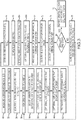
FIG. 3 is an embodiment of a flow diagram of the methodology for processing all of the N angle-only observations to determine the initial orbit; -
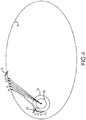
FIG. 4 is a diagram of N angle-only measurements of the object as it orbits the astronomical body; -
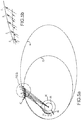
FIGs. 5a and 5b are diagrams of the N angle-only measurements and estimates for forming the error metric to select the initial orbit; -
FIGS. 6a through 6h are a sequence of plots of the error metric at finer and finer resolution about the (ri, Δr) pair on the search grid corresponding to the orbital element set for the initial orbit; and -
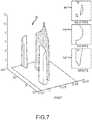
FIG. 7 is a plot of the error metric the use of the q" and "e" parameters of the orbital element set to exclude non-viable orbits. - The present invention describes a methodology for initial orbit determination using three or more (N) angles-only observations. The basis of the methodology is to search a grid of possible boundary values on the range-to-object over the observation interval to find the grid point and corresponding initial orbit that best fits all of the observations according to an error metric. The search is conducted by solving a boundary-value problem such as Lambert's Problem for different grid points The state vector is propagated to determine estimated observation directions for the remaining N-2 observations. The grid point (and initial orbit) that best fit all of the observations is selected. The best fit is suitably determined by an error metric between the measured and estimated observation directions for the remaining N-2 observations. The grid may be searched by testing each and every point on the grid or by using other optimization techniques such as hill climbing algorithms to find the optimal grid point. For efficiency, the search may start with a broad but coarse initial grid and increase the resolution of the grid as the search converges to a solution. To further improve search efficiency, the methodology may use values of orbital element parameters to reject initial orbits that are invalid. For example, the perigee range q may be used to reject orbits that pass through the astronomical body and the eccentricity e may be used to reject orbits that escape orbit about the astronomical body. In other cases, these may represent valid orbits. The method may smooth the error metric over the search grid prior to selecting the best-fit grid point to reduce the influence of noise.
- The present methodology and the Gooding IOD procedure are similar in that both are range-iteration algorithms and both solve a boundary-value problem (e.g. the Lambert Problem) at their core. The two approaches differ in the number of observations that can be processed and how those observations are processed to find a solution. The Gooding IOD procedure is an analytic solution that is limited to processing exactly 3 observations. Gooding estimates values for the first and third unknown ranges and solves Lambert's problem to determine a state vector for an initial orbit. The present methodology can process 3 or more observations (preferably and typically many more than 3) and employs an error metric to find an initial orbit that best fits all of the observations. The present methodology is robust for large arcs greater than 180 degrees, moderate arcs < 180 degrees and small arcs < 5 degrees. Simulations have demonstrated convergence 99.9% of the time for small arcs. The present methodology provides a robustness for the "small arc" problem not demonstrated by any of the prior art techniques; not Gauss, Laplace or Gooding.
- Referring now to the drawings, an embodiment of a
system 10 for initial orbit determination (IOD) of anobject 12 about an astronomical body 14 (e.g. Earth) is depicted inFigure 1 .Object 12 follows anorbit 16 aboutastronomical body 14. In most cases, object 12 orbits aroundastronomical body 14. In some cases such as with ICBMs, theorbit 12 may pass throughastronomical body 14. In other cases such asVoyageurs orbit 12 may escape orbit about the astronomical body. The IOD methodology for each case is the same. However, if there is a priori knowledge of the orbit, invalid orbits may be eliminated. - The present methodology measures n angle-only observation directions d o1, d o2.... d on of the object at times t1, t2, .., tn, where n is three or more, from known observation positions o 1, o 2,...o n and uses all of the n angle-only observations to determine an
initial orbit 18 that approximatestrue orbit 16. The observations may be made from a fixed observation position on theastronomical body 14 or one or more platforms 20 in orbit about theastronomical body 14. Observation of the fixedstars 21 may provide a coordinate system in which to measure the relative positions ofobject 12. - One or
more sensors 22 may be mounted on the one or more platforms 20 to measure the n angle-only observations directions over an observation internal, ln an embodiment, a side-staring sensor increases access to objects (e.g. satellites) in CEO. In another embodiment, a pushbroom sensor offers frequent ubiquitous coverage from LEO to beyond GEO. Processing of the n angle-only observations may be performed bycomputers 24 on-board the platfonm(s) and/orcomputers 26 co-located with a ground receiveantenna 28. - In different embodiments, the IOD methodology may measure 3 or more observations directions within an observation interval that spans a small arc of less than 5 degrees, an intermediate arc between 5 and 180 degrees or a large arc greater than a half-orbit of 180 degrees and possibly multiple half-orbits. In an embodiment, a platform is provided with a sensor having a field-of-view approximately 5 degrees wide and 1 degree long. The sensor operates in time delay integration (TDI) mode so that the stars are frozen in the image and the moving object forms a streak across the image. The sensors provides 4 observations of the object entering, crossing and leaving the FOV. Simulations have demonstrated that adding simply a 4th observation for the small arc greatly improved convergence to the global solution of the initial orbit. In another embodiment, dozens of platforms are provided with hundreds of sensors to provide well over a hundred observation directions within the small are.
- Referring now to
Figure 2 , object 30 follows anorbit 32 according Keplerian motion about a given astronomical body 34 (force centre) having a gravitational strength.Orbit 32 is uniquely described by a universal orbital. element set 36 such as (a, e. i, Ω, ω, v), where a is the semi-major axis of the ellipse, e = SQRT(1-b2/a2) is its eccentricity where b is the semi-minor axis, and the four angles i (inclination). Ω (longitude of ascending node), ω (argument of perigee), and v (true anomaly) uniquely define the orientation of the orbit Parameters a (a = µ/a where µ is the gravitational parameter of the Earth) and perigee range q = a*(1-e) may be substituted for a and e. The parameters a and e or α and q are parameters that define the size and shape of the orbit, but only q is shown in the drawing to reduce clutter. The eccentricity e is a ratio, which would be difficult to show and is therefore not shown, while α has units of velocity squared and cannot be shown directly. - Referring now to
Figures 3-7 , an embodiment of the IOD methodology for determining an object's initial orbit about an astronomical body comprises, from known observation positions o 1, o 2,...o n, measuring n angle-only observation directions d o1, d o2,- - - d on of the object at times t1, t2, ..., tn where n is three or more (step 40). As shown inFigure 4 , anobject 42 such as a satellite follows anorbit 44 around theEarth 46. The measurements of angle-only observation directions are made from aplatform 48 such as another satellite in anorbit 50 about the Earth. The pi represent positions of the object, the dashed line as are observation directions with range and the solid lines are ranges of the object from Earth center. Measurement of the n angle-only observation directions may comprise first measuring azimuth and elevation angles to the object and then converting the azimuth and elevation angles to unit vectors in an Earth Centered Earth Fixed (ECEF) coordinate system that form the observation directions (step 52). - The methodology generates a search grid in r i and Δr = rj - r i with a sampling resolution where r i and r j are a range-to-object of the different ith and jth observations (step 54). The ith observation is suitably the 1st observation and the jth observation is suitably the nth observation. The initial search grid is suitably selected to span all reasonable orbits for the application of closed orbits around the astronomical orbit, here the Earth with a coarse grid sampling to reduce computational load. For an embodiment, a minimum for ri of 0 km is set with Δr set at 500 km. A grid size of 151 x 151 elements is selected with a maximum of r1 equal to 75,000 km. The initialization of the search grid will be determined by a priori information about the object and its orbit.
- For different combinations of ri and Δr e.g. all points on the grid (step 56), the methodology solves a boundary-value problem as a function of (o i, o j), (d oi, d oj) (r i, Δr) to determine a state vector of a three-dimensional positions and a velocity of the object at time ti (step 58). In an embodiment, the methodology solves Lambert's Orbital Boundary-Value Problem. Lambert's Problem is the boundary value problem for celestial mechanics, and is defined for the 3 spatial coordinates of the object at 2 specific times.
- Lambert's problem may be defined as follows: an (unperturbed) orbit, around a given inverse-square-law center of force, C, is to be found connecting two given points P1 and P2, with a flight time Δt (= t2 - t1) that is know. That is, given the differential equation

r (t) wherer (t1) =r 1 andr (t2 ) =r 2. The problem must always have at least one solution or orbit, although that solution may be "non-physical", requiring the object to travel faster than the speed of light or to pass through the central object, such as the Earth or Sun. In cases where Δt is large, there may be multiple solutions, involving the object, orbiting in different directions and completing one or more half-revolutions. Lambert's problem has no direct analytical solution, but several algorithms exist that iteratively converge to find one or all possible solutions. (Gooding, A Procedure for the Solution of Lambert's Orbital Boundary-Value Problem, Celestial Mechanics and Dynamical Astronomy, Vol. 48, pp. 145-165,1990.) - The Initial Orbit Determination problem that we are solving is an optimization problem that uses an objective function that is evaluated using outputs from Lambert's problem A given pair of estimates of the range at times t1 and t2 provides all the information needed to solve Lambert's problem. That is, we now have
r (t), a predicted 3-dimensional position for the object at all times. (Since all of our other measurements are between t1 and t2, we don't actually need to use the solution for values of t outside of this range.) For our Initial Orbit Determination problem, we can work with a solution in either of two equivalent forms: a) a set of 6 orbital elements that can be used with Kepler's equation to propagate the orbit forward (or backward) in time, or b) an initial orbit state that gives x, y, z, vx, vy, and vz at a specific time or epoch, which can be used as a starting point for integration of the differential equation listed above. - The methodology propagates the position and velocity of the object provided by solving Lambert's problem to estimate observation directions d e1, d e2,... d en at times tk for k = 1 to n, k not equal to i or j. In an embodiment, this step comprises converting the state vector to a universal orbital element set such as (a, e, i, Ω, ω, v) (step 60), propagating the orbit uniquely defined by the universal orbital set to determine target locations at t2 to tn-1, (step 62) and estimating observation directions at t2 to tn-1 (step 64).
- The methodology computes an error metric between the measured observation directions d o1, do2,... d on and estimated observation directions d e1, d e2,... d en at times tk for k = 1 to n, k not equal i or j (steep 66). The error metric needs to measure how closely the estimated observations directions match the observed ones over the entire set of observations. The error metric should result in the largest score when all estimates perfectly match the observations, degrade symmetrically when any estimate is off along any axis, not degrade so quickly or so slowly that there is no local slope defining in which direction to move to improve the score, and not rely on parameters or other information which might not be available. It is also useful if there is a theoretical reason for the metric. The Chi-squared statistic meets many of these desired properties, but it assumes an estimate of the measurement uncertainty that might not be available. The error metric used in most of the trial runs is a logarithmic transformation of the RMS angle error between the estimates and the observations, clipped to a maximum value of 20. To be more specific,

- The methodology reports an orbital element set corresponding to the identified (r i, Δr) pair that describes the object's
initial orbit 70 as shown inFigures 5a and 5b . pi represent positions of the object the dashed lines are observation directions with range, the solid lines are ranges of the object from Earth center and the dotted lines are estimated observation directions with range. In an embodiment, this step comprises determining a state vector for the (r i, Δr) pair that has the maximum value for the Chi-squared statistic (step 72), converting the state vector to a universal orbital element set (step 74) and reporting out the orbital element set (step 76). - In theory the search could be conducted on a single very large high-resolution grid. For computational efficiency another approach is to generate an initial search grid in
step 54 that spans a large range-to-object with a coarse grid resolution. At each iteration, the methodology generates a higher resolution search grid that is centered on the (r i, Δr) pair with the maximum value from the previous iteration (step 78). The total size of the search grid may remain fixed For example, doubling the grid resolution reduces the search area by half. In an embodiment, the resolution is increased by 2,2 and 2.5 every 3 iterations to affect a 10 × zoom. The process may repeat until the small grid step has been evaluated (step 80) at which point the methodology reports out the orbital element set with the best fit solution to the data (step 76). - For the first few iterations, it may be extremely important to perform a brute force search, that is, to evaluate every grid point. This is especially important if the optional constraints (discussed below) are being imposed, as there may be parts of the grid for which orbits exist but are isolated from other viable orbits. Once a single contiguous region of potential orbits has been isolated, and the search grid has decreased to concentrate on that region, then hill-climbing algorithms can be affectively used. For a case with many observations, the error function topography is expected to be complex, with multiple local maxima in addition to the global maximum, and the relative values of these maxima may change as the grid scale changes, so any hill-climbing search algorithm should consider multiple starting points near each local maximum that can be identified in a brute-force grid search at the final resolution for that approach.
-
Figures 6a through 6h plot the Chi-squared error statistic 90 over the search grid for successive iterations. In this example, the zoom is 2, 2, 2.5, 2, 2, 2.5, 2 and 2. At each iteration, the grid is re-centered around the (r i, Δr) pair with the maximum value from the previous iteration. Upon termination of the search, the (r i, Δr) pair with themaximum value 92 is used to find the orbital element set to define the initial orbit. - Optional constrains may be added to the methodology to increase search efficiency. The methodology may use values of orbital element parameters to reject initial orbits that are invalid. For example, the perigee range q may be used to reject orbits that pass through the astronomical body (step 94) and the eccentricity e may be used to reject orbits that escape orbit about the astronomical body (step 96). In many cases it would be known a priori that such orbits are invalid for the current application In other cases, these may represent valid orbits. As shown in
Figure 7 , which is a replica ofFigure 6b , asolution space 98 of valid orbits is represented by overlapping the set oforbits 100 that escape and the set oforbits 102 that impact with the astronomical body. The orbits that neither escape nor impact define thesolution space 98 of valid orbits. - The method may smooth the error metric over the search grid (step 106) prior to selecting the best-fit grid point to reduce the influence of noise. One simple approach is to convolve the computed error metric with a small (3x3) weighting kernel, where each output value is the weighted sum of its original value and that of its eight closest neighbors.
- The method may add a bias term to the error metric to reduce the influence or high eccentricity e. High eccentricity orbits are unusual so adding the bias term can keep the search from narrowing in the search in the wrong region when the search grid is still coarse.
- While several illustrative embodiments of the invention have been shown and described, numerous variations and alternate embodiments will occur to those skillet in the art. Such variations and alternate embodiments are contemplated, and can be made without departing from the scope of the invention as defined in the appended claims.
Claims (15)
- A method of determining an object's initial orbit about an astronomical body, comprising:from known observation positions o 1, o 2,...o n, measuring n angle-only observation directions d o1, d o2,... d on of the object at times t1, t2, .... tn where n is three or more; characterised in that the method comprises:generating a search grid in r i and Δr = r j - r i with a sampling resolution where r i and r j are a range-to-object of the different ith and jth observations;for different combinations of r i and Δr,solving a boundary-value problem as a function of (o i, o j), (d oi, d oj) (r i, Δr) to determine a state vector of a three-dimensional position and a velocity of the object at time ti;propagating the position and velocity of the object to estimate observation directions d e1, d e2,... d en at times t k for k = 1 to n, k not equal i or j; andcomputing an error metric between the measured and estimated observation directions at times tk;identifying the (r i, Δr) pair on the search grid at which the error metric represents a best fit to the measured observation directions; andreporting an orbital element set corresponding to the identified (r i, Δr) pair that describes the object's initial orbit.
- The method of claim 1, wherein the number of measured observation directions n is greater than three.
- The method of claim 1, wherein the change in angle between observation direction d oi and d on is less than 5 degrees.
- The method of claim 1, wherein measuring the n angle-only observation directions comprises first measuring azimuth and elevation angles to the object and then converting the azimuth and elevation angles to unit vectors in an Earth Centered Earth Fixed (ECEF) coordinate system that form the observation directions.
- The method of claim 1, wherein the ith observation is the 1st observation and the jth observation is the nth observation.
- The method of claim 1, wherein propagating the position and velocity of the object to estimate observation directions comprises:converting the state vector to the orbital element set that describes the object's initial orbit.
- The method of claim 6, wherein propagating the position and velocity of the object to estimate observation directions further comprises:propagating the orbit to estimate object locations at tk; andcomputing the estimated observation directions from the known observation positions to the estimated object locations at tk.
- The method of claim 6, wherein the orbital element set includes an orbital element parameter of perigee range q, further comprising:using a value of perigee range q to reject orbits that pass through the astronomical body.
- The method of claim 6, wherein the orbital element set includes an orbital element parameter of eccentricity e, further comprising:using a value of eccentricity e to reject orbits that escape orbit about the astronomical body.
- The method of claim 1, further comprising applying a smoothing filter to the error metric over the search grid prior to identifying the (r i, Δr) pair.
- The method of claim 1, further comprising adding a bias term to the error metric equal to one or more of the parameters from the orbital element set multiplied by respective scale factors.
- The method of claim 1, wherein the search grid is searched for all combinations of r i and Δr.
- The method of claim 12, the search grid is regenerated at least once about the identified (r i, Δr) pair with a finer sampling resolution and the method is repeated for different combinations of r i and Δr.
- The method of claim 1, the search grid is regenerated at least once about the identified (r i, Δr) pair with a finer sampling resolution and the method is repeated for different combinations of r i and Δr.
- The method of claim 1, wherein the measurements of the observation directions are made by one or more angle-only sensors from one or more platforms, and wherein one or more computer processors execute the steps of generating the search grid, solving the boundary-value problem, propagating the state vector to the estimated observation directions, computing the error metric and identifying the (r i, Δr) pair on the search grid.
Applications Claiming Priority (2)
| Application Number | Priority Date | Filing Date | Title |
|---|---|---|---|
| US14/067,338 US9352858B2 (en) | 2013-10-30 | 2013-10-30 | Angles-only initial orbit determination (IOD) |
| PCT/US2014/058621 WO2015065641A1 (en) | 2013-10-30 | 2014-10-01 | Angles-only initial orbit determination (iod) |
Publications (2)
| Publication Number | Publication Date |
|---|---|
| EP3063069A1 EP3063069A1 (en) | 2016-09-07 |
| EP3063069B1 true EP3063069B1 (en) | 2017-09-27 |
Family
ID=51846954
Family Applications (1)
| Application Number | Title | Priority Date | Filing Date |
|---|---|---|---|
| EP14793349.3A Active EP3063069B1 (en) | 2013-10-30 | 2014-10-01 | Angles-only initial orbit determination (iod) |
Country Status (5)
| Country | Link |
|---|---|
| US (1) | US9352858B2 (en) |
| EP (1) | EP3063069B1 (en) |
| JP (1) | JP6106341B2 (en) |
| CA (1) | CA2920519C (en) |
| WO (1) | WO2015065641A1 (en) |
Families Citing this family (15)
| Publication number | Priority date | Publication date | Assignee | Title |
|---|---|---|---|---|
| CN108408087B (en) * | 2018-02-12 | 2019-07-16 | 北京空间技术研制试验中心 | The Orbital detection method of low rail long-life manned spacecraft |
| CN109774973B (en) * | 2019-02-02 | 2020-08-07 | 北京空间技术研制试验中心 | Design method for ascending intersection orbit parameters of manned lunar surface lander |
| US20210179298A1 (en) * | 2019-12-11 | 2021-06-17 | VisSidus Technologies, Inc. | System and method for determining an initial orbit of satellites post deployment |
| CN111090941A (en) * | 2019-12-17 | 2020-05-01 | 哈尔滨工业大学 | An optimal Lambert orbit rendezvous method for spacecraft based on multi-objective optimization algorithm |
| FR3105181A1 (en) * | 2019-12-18 | 2021-06-25 | Airbus Defence And Space Sas | Single-satellite orbital analysis system and method |
| US11772824B1 (en) * | 2020-06-10 | 2023-10-03 | Ball Aerospace & Technologies Corp. | Systems and methods for hybrid lunar surface and space domain situational awareness |
| CN112797988B (en) * | 2020-11-18 | 2023-04-07 | 北京理工大学 | Orbit Determination Method for Unknown Maneuvering Spacecraft Based on Neural Network |
| CN112800548B (en) * | 2021-02-25 | 2023-02-03 | 中国人民解放军国防科技大学 | Method and device for maneuvering aiming of perturbation rail |
| CN113086250B (en) * | 2021-03-12 | 2023-04-14 | 北京空间飞行器总体设计部 | A Method of Moon-Earth Transfer Orbit Correction Based on Engineering Constraints |
| CN115837992B (en) * | 2022-11-25 | 2025-07-11 | 上海卫星工程研究所 | Initial orbit correlation method and system for space-based optical observation of space debris |
| US12320765B2 (en) | 2022-12-05 | 2025-06-03 | The Aerospace Corporation | Quality control evaluation method of cyanate ester matrix resin material within CFRP composite concerning localized hydrolytic degradation |
| CN116973874B (en) * | 2023-08-02 | 2026-08-11 | 中国人民解放军63729部队 | A Method for Determining the Initial Orbit of High-Orbit Targets Based on Sparse Short-Arch Extended-Range Radar Observations |
| DE102023125956B3 (en) * | 2023-09-25 | 2024-12-12 | Vyoma GmbH | Satellite device and method for imaging space objects |
| US12028654B1 (en) | 2023-11-27 | 2024-07-02 | NorthStar Earth & Space Inc. | System and method for generating a plurality of celestial image features from a plurality of images of a sky |
| US20250371722A1 (en) * | 2024-05-31 | 2025-12-04 | Maxar Intelligence, Inc. | Methods and systems for non-earth imaging between non-co-orbital satellites |
Family Cites Families (7)
| Publication number | Priority date | Publication date | Assignee | Title |
|---|---|---|---|---|
| US5804812A (en) * | 1996-10-29 | 1998-09-08 | Mcdonnell Douglas Corporation | Multiple node lambert guidance system |
| US6708116B2 (en) * | 2001-11-13 | 2004-03-16 | Analytical Graphics, Inc. | Method and apparatus for orbit determination |
| US6707418B2 (en) * | 2002-07-12 | 2004-03-16 | Itt Manufacturing Enterprises, Inc. | Correlating single continuous wave radar space object observation for initial orbit determination |
| CA2671746A1 (en) * | 2006-11-06 | 2008-10-23 | Delta Epsilon Technologies, Llc | System and method for target tracking |
| US8825399B2 (en) * | 2008-07-24 | 2014-09-02 | Raytheon Company | System and method of passive and autonomous navigation of space vehicles using an extended Kalman filter |
| US8416133B2 (en) * | 2009-10-15 | 2013-04-09 | Navcom Technology, Inc. | System and method for compensating for faulty measurements |
| US8386099B2 (en) * | 2010-02-05 | 2013-02-26 | Applied Defense Solutions | Method and apparatus for initial orbit determination using high-precision orbit propagation and maneuver modeling |
-
2013
- 2013-10-30 US US14/067,338 patent/US9352858B2/en active Active
-
2014
- 2014-10-01 JP JP2016525543A patent/JP6106341B2/en active Active
- 2014-10-01 CA CA2920519A patent/CA2920519C/en active Active
- 2014-10-01 EP EP14793349.3A patent/EP3063069B1/en active Active
- 2014-10-01 WO PCT/US2014/058621 patent/WO2015065641A1/en not_active Ceased
Non-Patent Citations (1)
| Title |
|---|
| None * |
Also Published As
| Publication number | Publication date |
|---|---|
| WO2015065641A1 (en) | 2015-05-07 |
| US20150120096A1 (en) | 2015-04-30 |
| JP6106341B2 (en) | 2017-03-29 |
| CA2920519C (en) | 2018-02-20 |
| EP3063069A1 (en) | 2016-09-07 |
| CA2920519A1 (en) | 2015-05-07 |
| US9352858B2 (en) | 2016-05-31 |
| JP2016537239A (en) | 2016-12-01 |
Similar Documents
| Publication | Publication Date | Title |
|---|---|---|
| US9352858B2 (en) | Angles-only initial orbit determination (IOD) | |
| Poore et al. | Covariance and uncertainty realism in space surveillance and tracking | |
| Zhou et al. | Orbit determination for impulsively maneuvering spacecraft using modified state transition tensor | |
| Yang et al. | A switch-mode information fusion filter based on ISRUKF for autonomous navigation of spacecraft | |
| Crisp et al. | A semi-analytical method for calculating revisit time for satellite constellations with discontinuous coverage | |
| Andreis et al. | Autonomous vision-based algorithm for interplanetary navigation | |
| Fu et al. | Iterative spherical simplex unscented particle filter for CNS/Redshift integrated navigation system | |
| Block et al. | Cislunar SDA with low-fidelity sensors and observer uncertainty | |
| CN102607563B (en) | System for performing relative navigation on spacecraft based on background astronomical information | |
| Liu et al. | Mars cruise orbit determination from combined optical celestial techniques and x-ray pulsars | |
| Pirovano et al. | Initial orbit determination based on propagation of orbit sets with differential algebra | |
| Muratoglu et al. | Beacon number optimization for deep-space optical navigation | |
| Li et al. | Sequential unbiased converted measurement non‐linear filter with range rate in ECEF coordinates | |
| Kragel et al. | Bias estimation using targets of opportunity | |
| Yurong et al. | Covariance propagation of two-line element data | |
| Schmitt et al. | Analysis of LiDAR and Point Cloud Registration Algorithms for Spacecraft Rendezvous and Precision Landing on the Moon | |
| Baker et al. | Shape and Pole Estimation for Small-Bodies on Approach | |
| Wright et al. | Relative terrain imaging navigation (RETINA) tool for the asteroid redirect robotic mission (ARRM) | |
| Chen et al. | Spacecraft autonomous GPS navigation based on polytopic linear differential inclusion | |
| Olson | Sequential estimation methods for small body optical navigation | |
| Anibha et al. | Autonomous Observability-Constrained Lyapunov Control for Horizon-Based Small Body Navigation | |
| Nisar et al. | Non-linear filtering techniques for high precision GPS applications | |
| Bonaccorsi et al. | Robust optimization with autonomous optical-only spacecraft-to-spacecraft navigation in cislunar space | |
| Roscoe et al. | On uncertain angles-only track initiation for SSA | |
| Samson et al. | Attitude estimation strategies for a multistar tracker ADCS |
Legal Events
| Date | Code | Title | Description |
|---|---|---|---|
| PUAI | Public reference made under article 153(3) epc to a published international application that has entered the european phase |
Free format text: ORIGINAL CODE: 0009012 |
|
| 17P | Request for examination filed |
Effective date: 20160304 |
|
| AK | Designated contracting states |
Kind code of ref document: A1 Designated state(s): AL AT BE BG CH CY CZ DE DK EE ES FI FR GB GR HR HU IE IS IT LI LT LU LV MC MK MT NL NO PL PT RO RS SE SI SK SM TR |
|
| AX | Request for extension of the european patent |
Extension state: BA ME |
|
| RIN1 | Information on inventor provided before grant (corrected) |
Inventor name: SILNY, JOHN F. Inventor name: COLEMAN, GARY D. |
|
| DAX | Request for extension of the european patent (deleted) | ||
| GRAP | Despatch of communication of intention to grant a patent |
Free format text: ORIGINAL CODE: EPIDOSNIGR1 |
|
| INTG | Intention to grant announced |
Effective date: 20170410 |
|
| GRAS | Grant fee paid |
Free format text: ORIGINAL CODE: EPIDOSNIGR3 |
|
| GRAA | (expected) grant |
Free format text: ORIGINAL CODE: 0009210 |
|
| AK | Designated contracting states |
Kind code of ref document: B1 Designated state(s): AL AT BE BG CH CY CZ DE DK EE ES FI FR GB GR HR HU IE IS IT LI LT LU LV MC MK MT NL NO PL PT RO RS SE SI SK SM TR |
|
| REG | Reference to a national code |
Ref country code: GB Ref legal event code: FG4D |
|
| REG | Reference to a national code |
Ref country code: CH Ref legal event code: EP |
|
| REG | Reference to a national code |
Ref country code: AT Ref legal event code: REF Ref document number: 931690 Country of ref document: AT Kind code of ref document: T Effective date: 20171015 |
|
| REG | Reference to a national code |
Ref country code: IE Ref legal event code: FG4D |
|
| REG | Reference to a national code |
Ref country code: FR Ref legal event code: PLFP Year of fee payment: 4 |
|
| REG | Reference to a national code |
Ref country code: DE Ref legal event code: R096 Ref document number: 602014015170 Country of ref document: DE |
|
| PG25 | Lapsed in a contracting state [announced via postgrant information from national office to epo] |
Ref country code: LT Free format text: LAPSE BECAUSE OF FAILURE TO SUBMIT A TRANSLATION OF THE DESCRIPTION OR TO PAY THE FEE WITHIN THE PRESCRIBED TIME-LIMIT Effective date: 20170927 Ref country code: HR Free format text: LAPSE BECAUSE OF FAILURE TO SUBMIT A TRANSLATION OF THE DESCRIPTION OR TO PAY THE FEE WITHIN THE PRESCRIBED TIME-LIMIT Effective date: 20170927 Ref country code: NO Free format text: LAPSE BECAUSE OF FAILURE TO SUBMIT A TRANSLATION OF THE DESCRIPTION OR TO PAY THE FEE WITHIN THE PRESCRIBED TIME-LIMIT Effective date: 20171227 Ref country code: SE Free format text: LAPSE BECAUSE OF FAILURE TO SUBMIT A TRANSLATION OF THE DESCRIPTION OR TO PAY THE FEE WITHIN THE PRESCRIBED TIME-LIMIT Effective date: 20170927 Ref country code: FI Free format text: LAPSE BECAUSE OF FAILURE TO SUBMIT A TRANSLATION OF THE DESCRIPTION OR TO PAY THE FEE WITHIN THE PRESCRIBED TIME-LIMIT Effective date: 20170927 |
|
| REG | Reference to a national code |
Ref country code: NL Ref legal event code: MP Effective date: 20170927 |
|
| REG | Reference to a national code |
Ref country code: LT Ref legal event code: MG4D |
|
| REG | Reference to a national code |
Ref country code: AT Ref legal event code: MK05 Ref document number: 931690 Country of ref document: AT Kind code of ref document: T Effective date: 20170927 |
|
| PG25 | Lapsed in a contracting state [announced via postgrant information from national office to epo] |
Ref country code: GR Free format text: LAPSE BECAUSE OF FAILURE TO SUBMIT A TRANSLATION OF THE DESCRIPTION OR TO PAY THE FEE WITHIN THE PRESCRIBED TIME-LIMIT Effective date: 20171228 Ref country code: RS Free format text: LAPSE BECAUSE OF FAILURE TO SUBMIT A TRANSLATION OF THE DESCRIPTION OR TO PAY THE FEE WITHIN THE PRESCRIBED TIME-LIMIT Effective date: 20170927 Ref country code: LV Free format text: LAPSE BECAUSE OF FAILURE TO SUBMIT A TRANSLATION OF THE DESCRIPTION OR TO PAY THE FEE WITHIN THE PRESCRIBED TIME-LIMIT Effective date: 20170927 Ref country code: BG Free format text: LAPSE BECAUSE OF FAILURE TO SUBMIT A TRANSLATION OF THE DESCRIPTION OR TO PAY THE FEE WITHIN THE PRESCRIBED TIME-LIMIT Effective date: 20171227 |
|
| PG25 | Lapsed in a contracting state [announced via postgrant information from national office to epo] |
Ref country code: NL Free format text: LAPSE BECAUSE OF FAILURE TO SUBMIT A TRANSLATION OF THE DESCRIPTION OR TO PAY THE FEE WITHIN THE PRESCRIBED TIME-LIMIT Effective date: 20170927 |
|
| PG25 | Lapsed in a contracting state [announced via postgrant information from national office to epo] |
Ref country code: CZ Free format text: LAPSE BECAUSE OF FAILURE TO SUBMIT A TRANSLATION OF THE DESCRIPTION OR TO PAY THE FEE WITHIN THE PRESCRIBED TIME-LIMIT Effective date: 20170927 Ref country code: RO Free format text: LAPSE BECAUSE OF FAILURE TO SUBMIT A TRANSLATION OF THE DESCRIPTION OR TO PAY THE FEE WITHIN THE PRESCRIBED TIME-LIMIT Effective date: 20170927 Ref country code: ES Free format text: LAPSE BECAUSE OF FAILURE TO SUBMIT A TRANSLATION OF THE DESCRIPTION OR TO PAY THE FEE WITHIN THE PRESCRIBED TIME-LIMIT Effective date: 20170927 |
|
| PG25 | Lapsed in a contracting state [announced via postgrant information from national office to epo] |
Ref country code: SM Free format text: LAPSE BECAUSE OF FAILURE TO SUBMIT A TRANSLATION OF THE DESCRIPTION OR TO PAY THE FEE WITHIN THE PRESCRIBED TIME-LIMIT Effective date: 20170927 Ref country code: SK Free format text: LAPSE BECAUSE OF FAILURE TO SUBMIT A TRANSLATION OF THE DESCRIPTION OR TO PAY THE FEE WITHIN THE PRESCRIBED TIME-LIMIT Effective date: 20170927 Ref country code: AT Free format text: LAPSE BECAUSE OF FAILURE TO SUBMIT A TRANSLATION OF THE DESCRIPTION OR TO PAY THE FEE WITHIN THE PRESCRIBED TIME-LIMIT Effective date: 20170927 Ref country code: IT Free format text: LAPSE BECAUSE OF FAILURE TO SUBMIT A TRANSLATION OF THE DESCRIPTION OR TO PAY THE FEE WITHIN THE PRESCRIBED TIME-LIMIT Effective date: 20170927 Ref country code: IS Free format text: LAPSE BECAUSE OF FAILURE TO SUBMIT A TRANSLATION OF THE DESCRIPTION OR TO PAY THE FEE WITHIN THE PRESCRIBED TIME-LIMIT Effective date: 20180127 Ref country code: EE Free format text: LAPSE BECAUSE OF FAILURE TO SUBMIT A TRANSLATION OF THE DESCRIPTION OR TO PAY THE FEE WITHIN THE PRESCRIBED TIME-LIMIT Effective date: 20170927 |
|
| REG | Reference to a national code |
Ref country code: CH Ref legal event code: PL |
|
| REG | Reference to a national code |
Ref country code: DE Ref legal event code: R097 Ref document number: 602014015170 Country of ref document: DE |
|
| PG25 | Lapsed in a contracting state [announced via postgrant information from national office to epo] |
Ref country code: MC Free format text: LAPSE BECAUSE OF FAILURE TO SUBMIT A TRANSLATION OF THE DESCRIPTION OR TO PAY THE FEE WITHIN THE PRESCRIBED TIME-LIMIT Effective date: 20170927 |
|
| REG | Reference to a national code |
Ref country code: IE Ref legal event code: MM4A |
|
| PG25 | Lapsed in a contracting state [announced via postgrant information from national office to epo] |
Ref country code: LI Free format text: LAPSE BECAUSE OF NON-PAYMENT OF DUE FEES Effective date: 20171031 Ref country code: CH Free format text: LAPSE BECAUSE OF NON-PAYMENT OF DUE FEES Effective date: 20171031 Ref country code: DK Free format text: LAPSE BECAUSE OF FAILURE TO SUBMIT A TRANSLATION OF THE DESCRIPTION OR TO PAY THE FEE WITHIN THE PRESCRIBED TIME-LIMIT Effective date: 20170927 Ref country code: LU Free format text: LAPSE BECAUSE OF NON-PAYMENT OF DUE FEES Effective date: 20171001 |
|
| PLBE | No opposition filed within time limit |
Free format text: ORIGINAL CODE: 0009261 |
|
| STAA | Information on the status of an ep patent application or granted ep patent |
Free format text: STATUS: NO OPPOSITION FILED WITHIN TIME LIMIT |
|
| REG | Reference to a national code |
Ref country code: BE Ref legal event code: MM Effective date: 20171031 |
|
| PG25 | Lapsed in a contracting state [announced via postgrant information from national office to epo] |
Ref country code: PL Free format text: LAPSE BECAUSE OF FAILURE TO SUBMIT A TRANSLATION OF THE DESCRIPTION OR TO PAY THE FEE WITHIN THE PRESCRIBED TIME-LIMIT Effective date: 20170927 Ref country code: BE Free format text: LAPSE BECAUSE OF NON-PAYMENT OF DUE FEES Effective date: 20171031 |
|
| 26N | No opposition filed |
Effective date: 20180628 |
|
| REG | Reference to a national code |
Ref country code: FR Ref legal event code: PLFP Year of fee payment: 5 |
|
| PG25 | Lapsed in a contracting state [announced via postgrant information from national office to epo] |
Ref country code: MT Free format text: LAPSE BECAUSE OF NON-PAYMENT OF DUE FEES Effective date: 20171001 |
|
| PG25 | Lapsed in a contracting state [announced via postgrant information from national office to epo] |
Ref country code: IE Free format text: LAPSE BECAUSE OF NON-PAYMENT OF DUE FEES Effective date: 20171001 |
|
| PG25 | Lapsed in a contracting state [announced via postgrant information from national office to epo] |
Ref country code: SI Free format text: LAPSE BECAUSE OF FAILURE TO SUBMIT A TRANSLATION OF THE DESCRIPTION OR TO PAY THE FEE WITHIN THE PRESCRIBED TIME-LIMIT Effective date: 20170927 |
|
| PG25 | Lapsed in a contracting state [announced via postgrant information from national office to epo] |
Ref country code: HU Free format text: LAPSE BECAUSE OF FAILURE TO SUBMIT A TRANSLATION OF THE DESCRIPTION OR TO PAY THE FEE WITHIN THE PRESCRIBED TIME-LIMIT; INVALID AB INITIO Effective date: 20141001 |
|
| PG25 | Lapsed in a contracting state [announced via postgrant information from national office to epo] |
Ref country code: CY Free format text: LAPSE BECAUSE OF FAILURE TO SUBMIT A TRANSLATION OF THE DESCRIPTION OR TO PAY THE FEE WITHIN THE PRESCRIBED TIME-LIMIT Effective date: 20170927 |
|
| PG25 | Lapsed in a contracting state [announced via postgrant information from national office to epo] |
Ref country code: MK Free format text: LAPSE BECAUSE OF FAILURE TO SUBMIT A TRANSLATION OF THE DESCRIPTION OR TO PAY THE FEE WITHIN THE PRESCRIBED TIME-LIMIT Effective date: 20170927 |
|
| PG25 | Lapsed in a contracting state [announced via postgrant information from national office to epo] |
Ref country code: TR Free format text: LAPSE BECAUSE OF FAILURE TO SUBMIT A TRANSLATION OF THE DESCRIPTION OR TO PAY THE FEE WITHIN THE PRESCRIBED TIME-LIMIT Effective date: 20170927 |
|
| PG25 | Lapsed in a contracting state [announced via postgrant information from national office to epo] |
Ref country code: PT Free format text: LAPSE BECAUSE OF FAILURE TO SUBMIT A TRANSLATION OF THE DESCRIPTION OR TO PAY THE FEE WITHIN THE PRESCRIBED TIME-LIMIT Effective date: 20170927 |
|
| PG25 | Lapsed in a contracting state [announced via postgrant information from national office to epo] |
Ref country code: AL Free format text: LAPSE BECAUSE OF FAILURE TO SUBMIT A TRANSLATION OF THE DESCRIPTION OR TO PAY THE FEE WITHIN THE PRESCRIBED TIME-LIMIT Effective date: 20170927 |
|
| P01 | Opt-out of the competence of the unified patent court (upc) registered |
Effective date: 20230530 |
|
| PGFP | Annual fee paid to national office [announced via postgrant information from national office to epo] |
Ref country code: GB Payment date: 20250923 Year of fee payment: 12 |
|
| PGFP | Annual fee paid to national office [announced via postgrant information from national office to epo] |
Ref country code: FR Payment date: 20250924 Year of fee payment: 12 |
|
| PGFP | Annual fee paid to national office [announced via postgrant information from national office to epo] |
Ref country code: DE Payment date: 20250923 Year of fee payment: 12 |