EP3062257B1 - System and method for a generic single sign-on function - Google Patents
System and method for a generic single sign-on function Download PDFInfo
- Publication number
- EP3062257B1 EP3062257B1 EP16157706.9A EP16157706A EP3062257B1 EP 3062257 B1 EP3062257 B1 EP 3062257B1 EP 16157706 A EP16157706 A EP 16157706A EP 3062257 B1 EP3062257 B1 EP 3062257B1
- Authority
- EP
- European Patent Office
- Prior art keywords
- application
- authenticator
- electronic device
- applications
- access token
- Prior art date
- Legal status (The legal status is an assumption and is not a legal conclusion. Google has not performed a legal analysis and makes no representation as to the accuracy of the status listed.)
- Not-in-force
Links
Images

Classifications
-
- H—ELECTRICITY
- H04—ELECTRIC COMMUNICATION TECHNIQUE
- H04L—TRANSMISSION OF DIGITAL INFORMATION, e.g. TELEGRAPHIC COMMUNICATION
- H04L63/00—Network architectures or network communication protocols for network security
- H04L63/08—Network architectures or network communication protocols for network security for authentication of entities
- H04L63/0815—Network architectures or network communication protocols for network security for authentication of entities providing single-sign-on or federations
-
- G—PHYSICS
- G06—COMPUTING OR CALCULATING; COUNTING
- G06F—ELECTRIC DIGITAL DATA PROCESSING
- G06F21/00—Security arrangements for protecting computers, components thereof, programs or data against unauthorised activity
- G06F21/30—Authentication, i.e. establishing the identity or authorisation of security principals
- G06F21/31—User authentication
- G06F21/41—User authentication where a single sign-on provides access to a plurality of computers
-
- H—ELECTRICITY
- H04—ELECTRIC COMMUNICATION TECHNIQUE
- H04L—TRANSMISSION OF DIGITAL INFORMATION, e.g. TELEGRAPHIC COMMUNICATION
- H04L63/00—Network architectures or network communication protocols for network security
- H04L63/10—Network architectures or network communication protocols for network security for controlling access to devices or network resources
- H04L63/101—Access control lists [ACL]
Definitions
- the present disclosure relates to system access control. More particularly, the present disclosure relates to a system and method for a generic single sign-on function.
- Some application frameworks provide an account manager feature on an electronic device.
- the framework may consist of a system service and third party authenticators that may be bound by the system service.
- the account manager may provide access to a centralized registry of accounts belonging to a user.
- the user provides his or her credentials (e.g., username and password) once per account granting applications on the electronic device, in order to obtain online resources after verifying the identity of the user with the account-managing authenticator.
- credentials e.g., username and password
- account managers are more suited to consumer level implementations and typically cannot be applied effectively in an enterprise scenario.
- US 2014/298420 discloses a method of managing access to enterprise resources is provided.
- An access manager may operate at a mobile device to validate a mobile application installed at that mobile device. If the access manager does not successfully validate the mobile application, the access manager may prevent the mobile application from accessing computing resource. If the access manager does successfully validate the mobile application, then the access manager may identify the mobile application as a trusted mobile application. The access manager may thus permit the trusted mobile application to access the computing resource.
- US 2015/040246 discloses a system and method for confirming an application change event associated with a device infrastructure of a mobile device.
- CN 102 904 895 discloses a system of a safety authentication mechanism.
- the system comprises a service device and an application server, wherein the service device is used for receiving user login information and sending the user login information; and the application server comprises a communication module, a judging module and a token issuing module.
- an electronic device as disclosed in claim 1, providing generic single sign-on functionality includes a memory comprising a plurality of applications and a processor.
- the processor is configured to identify one or more applications among the plurality of applications and one or more authenticators corresponding to the one or more applications, receive a first request for a first access token from a first application of the plurality of applications, if the first application is in the identified one or more applications, transmit a second request for the first access token to a first authenticator corresponding to the first application, receive the first access token and credential information regarding a user of the electronic device used for obtaining the first access token from the first authenticator, storing the credential information in the electronic device; and wherein the first access token is used to access a server by the first application.
- a method of an electronic device for providing generic single sign-on functionality to be performed within the electronic device of the first embodiment is provided.
- a non-transitory computer readable medium is configured to control a processor to perform the method of the first embodiment for providing generic single sign-on in an electronic device.
- FIGURES 1 through 3 discussed below, and the various embodiments used to describe the principles of the present disclosure in this patent document are by way of illustration only and should not be construed in any way to limit the scope of the disclosure. Those skilled in the art will understand that the principles of the present disclosure may be implemented in any suitably arranged system and method for a generic single sign-on function.
- an electronic device may include communication functionality.
- an electronic device may be a smart phone, a tablet Personal Computer (PC), a laptop PC, a netbook PC, a Personal Digital Assistant (PDA), a Portable Multimedia Player (PMP), an MP3 player, a mobile medical device, a camera, a wearable device (e.g., a Head-Mounted Device (HMD), electronic clothes, electronic braces, an electronic necklace, an electronic accessory, an electronic tattoo, or a smart watch), and/or the like.
- PDA Personal Digital Assistant
- PMP Portable Multimedia Player
- MP3 player MP3 player
- mobile medical device e.g., a portable Multimedia Player (PMP), an MP3 player, a mobile medical device, a camera, a wearable device (e.g., a Head-Mounted Device (HMD), electronic clothes, electronic braces, an electronic necklace, an electronic accessory, an electronic tattoo, or a smart watch), and/or the like.
- HMD Head-Mounted Device
- an electronic device may be a smart home appliance with communication functionality.
- a smart home appliance may be, for example, a television, a Digital Video Disk (DVD) player, an audio, a refrigerator, an air conditioner, a vacuum cleaner, an oven, a microwave oven, a washer, a dryer, an air purifier, a set-top box, a TV box (e.g., Samsung HomeSyncTM, Apple TVTM, or Google TVTM), a gaming console, an electronic dictionary, an electronic key, a camcorder, an electronic picture frame, and/or the like.
- DVD Digital Video Disk
- an electronic device may be a medical device (e.g., Magnetic Resonance Angiography (MRA) device, a Magnetic Resonance Imaging (MRI) device, Computed Tomography (CT) device, an imaging device, or an ultrasonic device), a navigation device, a Global Positioning System (GPS) receiver, an Event Data Recorder (EDR), a Flight Data Recorder (FDR), an automotive infotainment device, a naval electronic device (e.g., navel navigator device, gyroscope, or compass), an avionic electronic device, a security device, an industrial or consumer robot, and/or the like.
- MRA Magnetic Resonance Angiography
- MRI Magnetic Resonance Imaging
- CT Computed Tomography
- an imaging device an ultrasonic device
- GPS Global Positioning System
- EDR Event Data Recorder
- FDR Flight Data Recorder
- automotive infotainment device e.g., a naval electronic device (e.g., navel navigator device,
- an electronic device may e furniture, part of a building/structure, an electronic board, electronic signature receiving device, a projector, various measuring devices (e.g., water, electricity, gas or electro-magnetic wave measuring devices), and/or the like that include communication functionality.
- various measuring devices e.g., water, electricity, gas or electro-magnetic wave measuring devices
- an electronic device may be any combination of the foregoing devices.
- an electronic device according to various embodiments of the present disclosure is not limited to the foregoing device.
- Single Sign-On provides access control for multiple related, but independent, software systems. Conversely, single sign-off is the property whereby a single action of signing out terminates access to multiple software systems. SSO and single sign-off have many advantages in an enterprise scenario.
- the generic single sign-on (GenericSSO) framework (GSF) of the present disclosure is intended to fulfill many objectives of the single sign-on function in an enterprise scenario.
- GSF The generic single sign-on (GenericSSO) framework (GSF) of the present disclosure is intended to fulfill many objectives of the single sign-on function in an enterprise scenario.
- an electronic device With the GSF, an electronic device is able to support multiple single sign-on (SSO) service providers. Firmware updates are no longer needed when a new SSO solution is added to the electronic device.
- the SSO solution of the GSF is fully Plug-and-Play.
- the single sign-on is completely controlled by a Mobile Device Management (MDM) administrator or other device management administrator and requires only a single version of a client application to call GenericSSO-related application programming interfaces (APIs) to obtain access tokens from a wide range of SSO service providers.
- An MDM agent may control the addition of accounts or management of authenticators on the device.
- MDM Mobile Device Management
- the GSF of the present disclosure provides a flexible, seamless, MDM-controlled single sign-on feature.
- the framework provides efficient APIs for MDM agents to control aspects of single sign-on such as SSO service providers, whitelisted applications and token management.
- the framework also provides interfaces to third party SSO service providers and client applications that need authentication tokens to obtain web resources.
- the framework is also compatible with third-party access management technologies including, but not limited to, OAuth, SAML, OpenID and the like.
- an enterprise administrator may desire to institute consistent policies for access security amongst all users in the enterprise. For example, the enterprise administrator may require that all enterprise users utilize a designated cloud-based file storage server, where the file storage server uses a first designated third-party access management technology. The enterprise administrator may further require that all enterprise users utilize a designated email server, where the email server uses a second designated third-party access management technology. The enterprise administrator may still further require that all enterprise users utilize a designated time-entry billing system, where the billing system also uses the first designated third-party access management technology.
- MDM Mobile Device Management
- the MDM agent identifies one or more applications that are allowed to access the cloud-based file storage server and associates it/them with an authenticator provided by the first third-party Identity Management (IdM) provider. Also at start-up, the MDM agent identifies an email application, associates it with an authenticator provided by the second third-party IdM provider, identifies a billing system application, and associates it with the first IdM authenticator.
- IdM Identity Management
- systems according to the disclosure enable the enterprise MDM administrator to notify the users' MDM agents of the change, download a third IdM authenticator used by the third access management technology, and force the billing application on its next attempt to access the billing system server to re-authenticate using the newly loaded IdM authenticator.
- Systems according to the disclosure enable the MDM agent to effect such changes on the fly or at the next device start-up.
- FIGURE 1 illustrates single sign-on framework software elements of an electronic device 100 according to the present disclosure.
- the device 100 includes a generic single sign-on framework (GSF) 102, applications 104 subject to access management policies dictated by the enterprise, an MDM agent 106, and identity provider (IdP) and/or IdM authenticator applications 108.
- GSF generic single sign-on framework
- IdP identity provider
- IdM authenticator applications 108 One or more of these elements may utilize secure computing functionality 118 provided by the hardware and operating system of the electronic device 100.
- the GSF 102 includes a GSF system services module 110, an application interface 112, an agent interface 114, and an authenticator interface 116.
- the GSF system services module 110 provides the generic single sign-on functionality of the present disclosure.
- the application interface 112 provides a standard protocol-or application programming interface (API)-for use by enterprise applications 104 in exchanging messages or procedure calls with the GSF 102.
- Such applications 104 are typically developed by independent software vendors (ISVs) or other third parties.
- the agent interface 114 provides a standard protocol for communications between an MDM agent and the GSF 102.
- the authenticator interface 116 provides a standard protocol for communications between the GSF 102 and IdP/IdM authenticators 108.
- the authenticators 108 may be implemented by ISVs as independent applications that engage in identification authentication exchanges with corresponding servers. Individual authenticators may use standard-based IdM technologies, such as Kerberos or Centrify, or vendor-proprietary technologies (denominated in FIGURE 1 as "IdP X" and "IdP Y").
- Embodiments according to the present disclosure support multiple SSO solutions and provide flexibility and improved usability to applications that use a single sign-on feature.
- ISV application developers can leverage a single version of their application and be able to adopt multiple SSO solutions without code change or customization for various SSO solutions.
- the application interface 112, agent interface 114, and authenticator interface 116 of the GSF 102 implement the GenericSSO standard.
- GenericSSO provides interfaces for easy configurability of settings by Mobile Device Management (MDM) administrators and agents.
- MDM Mobile Device Management
- the MDM agent application 106 can enroll SSO vendors and can whitelist applications for the enrolled SSO vendor.
- the MDM configurations are per user and protected by the userid of the application that sets the configuration for each user, where the application supports a multi-user model of the electronic device 100.
- the GSF 102 may provide enhanced security and usability features by leveraging such device functionality.
- the access tokens that are obtained from SSO service provider packages via authenticators 108 may be stored under the protection of a secure storage memory.
- Such secure storage may be provided by TrustZone-based Integrity Measurement Architecture (TIMA) or other suitable security architecture.
- TMA TrustZone-based Integrity Measurement Architecture
- Configuration information provided to the GSF 102 by the MDM administrator (via the MDM agent 106) also may be protected against unwarranted manipulation by other applications.
- Operation of the GSF 102 can be considered to be two fold. All calls received via the application interface 112 are processed by the GSF system service 110 and then routed via the authenticator interface 116 to an associated authenticator 108. This isolation allows all components to function independent of each other and independent of any GSF 102 changes. This design allows MDM administrators to configure any SSO provider for a user of the electronic device 100 without the applications 104 having to make changes every time a new SSO is configured. To achieve this, developers of MDM agents 106 are provided an API or other standard protocol for procedure calls to the GSF 102. The protocol is implemented in the agent interface 114.
- An MDM configuration of applications and associated authenticators is applied per userID.
- MDM is able to enroll SSO vendors and to whitelist applications that can make use of the SSO provider's services.
- the corresponding authenticator When enrolling a SSO vendor, the corresponding authenticator will be checked for installation status and enrolled. Only the whitelisted applications are allowed to access APIs of the GSF 102.
- the authenticators 108 are independent light-weight SSO service applications that perform network- and protocol-based authentication functions. The authenticators 108 do not store internally any token-related data.
- the GSF 102 fulfills many objectives of the single sign-on needs in the enterprise scenario.
- the electronic device 100 is able to support multiple SSO service providers.
- Firmware updates are no longer needed when a new SSO solution is added to the electronic device 100.
- the SSO solution of the GSF 102 is fully Plug-and-Play.
- the single sign-on is completely controlled by an MDM administrator and requires only a single version of a client application to call an API provided by the GSF 102 to obtain access tokens from a wide range of SSO service providers.
- interfaces may be provided to MDM administrators to control the SSO provider and whitelisted applications, and to manage access tokens obtained from the SSO providers.
- the GSF 102 also provides hardware-based protection to access tokens for increased security from malicious applications.
- the GSF 102 may be beneficial to MDM administrators who, in many cases, wish to control SSO aspects of enterprise applications on the device.
- the MDM administrators can effectively couple enterprise apps with an active directory of the enterprise. This allows easy provisioning and unprovisioning of applications to users in an enterprise.
- the MDM administrators are also given implicit SSO service provider and account control privileges that are not available with other current SSO systems.
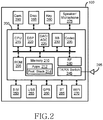
- FIGURE 2 illustrates hardware elements of an electronic device (ED) 100 for use in a single sign-on system according to the disclosure.
- the ED 100 in FIGURE 2 is a portable device, however, it will be understood that in other embodiments of the disclosure, the electronic device 100 may be a non-portable device. As described above, the ED 100 may be any of a wide variety of types of electronic devices.
- the ED 100 may include a secure area suitable for providing generic single sign-on functionality, as shown and described with reference to FIGURES 1 and 3 .
- the ED 100 comprises core circuitry 200, which includes read-only memory (ROM) 205, random access memory (RAM) 210, central processing unit (CPU) 215, digital signal processor (DSP) 220, digital-to-analog converter (DAC)/analog-to-digital converter (ADC) circuitry 225, baseband (BB) circuitry block 230, codec circuitry block 235, radio frequency (RF) circuitry block 240, transmit (TX)/receive (RX) switch 245, and antenna 295.
- ROM read-only memory
- RAM random access memory
- CPU central processing unit
- DSP digital signal processor
- DAC digital-to-analog converter
- ADC analog-to-digital converter
- BB baseband
- RF radio frequency
- TX transmit
- RX transmit
- ROM 205 may store a boot-routine and other static data and RAM 210 may store an operating system (not shown), applications 212, and protocol stack 214.
- the ROM 205 and RAM 210 include a trusted execution environment or other secure area in which the confidentiality and integrity of code and data may be ensured.
- ROM 205 and RAM 210 may comprise a single electronically erasable memory, such as a Flash memory, that is used in conjunction with a conventional RAM memory that is used to store dynamic data.
- the ED 100 further comprises SIM card interface 250, USB interface 255, GPS receiver 260, Bluetooth (BT) transceiver 265, WiFi (or WLAN) transceiver 270, speaker and microphone circuitry block 275, keyboard 280, display 285, and camera 290.
- keyboard 280 and display 285 may be implemented together as a touch screen display.
- the CPU 215 is responsible for the overall operation of ED 100.
- the CPU 215 executes applications 212 and protocol stack 214.
- CPU 215 runs the application layer and a wide variety of applications may be run in a smart phone implementation.
- Applications 212 may include audio, video, and image/graphics applications, in addition to applications related to embodiments of the present disclosure.
- CPU 215 may run applications 212 that support various audio formats such as MP3, MP4, WAV, and rm.
- CPU 215 may run image applications 212 that support JPEG image formats and video applications 212 that support video formats (e.g., MPEG-1 to MPEG-5).
- CPU 215 may support various operating systems (not shown), such as Symbian, java, android, RT-Linux, Palm, and the like.
- CPU 215 runs a real-time operating system (RTOS).
- RTOS real-time operating system
- protocol stack 214 that enable ED 100 to work with a network base station.
- protocol stack 214 is ported on CPU 215.
- DAC/ADC circuitry block 225 converts analog speech signals to digital signals, and vice versa, in GD 210.
- the ADC-converted digital signal is sent to a speech coder.
- Various types of ADCs are available, including sigma delta type.
- Automatic gain control (AGC) and automatic frequency control (AFC) are used in the receive path to control gain and frequency.
- AGC helps maintain satisfactory DAC performance by keepings signals within the dynamic range of the DAC circuits.
- AFC keeps frequency error within limit to achieve better receiver performance.
- Baseband (BB) circuitry block 230 may be implemented as part of DSP 220, which executes many of the baseband processing functions (i.e., physical layer, Layer 1, or L1 functions). BB circuitry block 230 may be ported on DSP 220 to meet the latency and power requirements of GD 210. BB circuitry block 230 converts voice and data to be carried over the air interface to I/Q baseband signals.
- DSP 220 which executes many of the baseband processing functions (i.e., physical layer, Layer 1, or L1 functions).
- BB circuitry block 230 may be ported on DSP 220 to meet the latency and power requirements of GD 210.
- BB circuitry block 230 converts voice and data to be carried over the air interface to I/Q baseband signals.
- BB circuitry block 230 may change from modem to modem for various air interface standards, such as GSM, CDMA, Wimax, LTE, HSPA, and others.
- BB circuitry block 230 is often referred to as the physical layer, or Layer 1, or L1.
- Layer 1 the physical layer
- the baseband part (Layer 1) running on DSP 220 and the protocol stack 214 running on CPU 215 are based on the GSM standard.
- the Layer 1 and protocol stack 214 are based on the CDMA standard, and so on, for the LTE and HSPA standards-based mobile phones.
- codec circuitry block 235 may compress and decompress the signal to match the data rate to the frame in which the data is sent.
- codec circuitry block 235 may convert speech at an 8 KHz sampling rate to a 13 kbps rate for a full rate speech traffic channel.
- a residually excited linear predictive coder (RELP) speech coder may be which compresses 260 bits into a 20 ms. duration to achieve a 13 kbps rate.
- RELP residually excited linear predictive coder
- the baseband or physical layer adds redundant bits to enable error detection as well as error correction.
- Error detection may be obtained with CRC and error correction using forward error correction techniques, such as a convolutional encoder (used in transmitter path) and a viterbi decoder (used in receive path). Interleaving may be done for the data, which helps in spreading the error over time, thereby helping the receiver de-interleave and decode the frame correctly.
- forward error correction techniques such as a convolutional encoder (used in transmitter path) and a viterbi decoder (used in receive path).
- Interleaving may be done for the data, which helps in spreading the error over time, thereby helping the receiver de-interleave and decode the frame correctly.
- RF circuitry block 240 includes an RF up-converter and an RF down-converter.
- the RF up-converter converts modulated baseband signals (I and Q) either at zero intermediate frequency (IF) or some IF to RF frequency (890-915 MHz).
- the RF down-converter converts RF signals (935 to 960 MHz) to baseband signals (I and Q).
- GMSK modulation is used.
- Antenna 295 is a metallic object that converts and electro-magnetic signal to and electric signal and vice versa.
- Commonly used antennas may include a helix type, a planar inverted F-type, a whip, or a patch type.
- Microstrip patch type antennas are popular among mobile phones due to small size, easy integration on a printed circuit board and multi-frequency band of operation.
- antenna 295 may support different wire-area standards, including GSM, CDMA, LTE, and WiMAX, as well as short-range standards, including WiFi (WLAN), Bluetooth, and so on.
- TX/RX switch 245 couples both the transmit (TX) path and the receive (RX) path to antenna 295 at different times.
- TX/RS switch 245 is controlled automatically by DSP 220 based on a GSM frame structure with respect to the physical slot allocated for that particular GSM mobile phone in both the downlink and the uplink.
- TX/RX switch 245 may be implement as a diplexer that acts as filter to separate various frequency bands.
- the ED 100 provides connectivity with laptops or other devices using WiFi (or WLAN) transceiver 270, BT transceiver 265, and universal serial bus (USB) interface 255.
- the ED 100 also uses GPS receiver 260 in applications 212 that require position information. If ED 100 is a conventional smart phone, applications 212 may include many popular applications, such as Facebook, Twitter, a browser, and numerous games that come pre-installed with GD 210.
- Speaker and microphone circuitry block 275 comprises microphone circuitry (or mic) that converts acoustic energy (i.e., air pressure changes caused by speech or other sounds) to electrical signals for subsequent processing. Speaker and microphone 275 further comprises speaker circuitry that converts an electrical audio signal to an audible signal (pressure changes) for human hearing.
- the speaker circuitry may include an audio amplifier to get required amplification of the audio signal and may further include a volume control circuit to change (increase or decrease) the amplitude of the audio signal.
- the ED 100 preferably includes camera 290.
- Camera 290 may comprise a 12 megapixel, 14 megapixel, or even a 41 megapixel camera.
- Display 285 may comprise, by way of example, a liquid crystal display (LCD), a thin-film transistor (TFT) screen, and organic light emitting diode (OLED) display, a thin film diode (TFD) display, or a touch screen of capacitive and resistive type.
- LCD liquid crystal display
- TFT thin-film transistor
- OLED organic light emitting diode
- TCD thin film diode
- touch screen of capacitive and resistive type
- keypad 280 may comprise a simple matrix type keypad that contains numeric digits (0 to 9), alphabetic characters (A to Z), special characters, and specific function keys.
- keypad 280 may be implemented in the mobile phone software, so that keyboard 280 appears on display 285 and is operated by the user using the touch of a finger tip.
- BB circuitry block 230, RF circuitry block 240, TX/RX switch 245, WiFi (or WLAN) transceiver 270, BT transceiver 265, and USB interface 255 comprise a communications interface that enables the ED 100 to communicate either wired or wirelessly with PMDs 104 and RS 106.
- applications 212 include a GSF 102, applications 104, an agent 106, and authenticators 108, as shown and described with reference to FIGURE 1 .
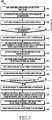
- FIGURE 3 illustrates a process 300 for a single sign-on function according to the disclosure.
- the process 300 will be described as though performed by the ED 100 shown and described with reference to FIGURES 1 and 2 . It will be understood that the process 300 may be performed by any suitable system for providing a generic single sign-on function.
- the MDM agent 106 sends via the agent interface (or API) 114 one or more messages to the GSF 102 identifying one or more applications 104 and associated authenticators 108.
- One such message may identify a single application/authenticator pair, or may list a plurality of application/authenticator pairs.
- the MDM agent 106 sends application/authenticator pairs to the GSF 102 in a first step of exemplary process 300, in other embodiments, the MDM agent 106 may send such pairs to the GSF 102 at any time.
- the GSF system service 110 determines whether the application of the newly received pair is already listed in the whitelist. If not, the GSF system service 110 stores the new application and its associated authenticator in the whitelist.
- the GSF system service 110 stores in the whitelist the newly received authenticator as associated with the application, replacing the authenticator previously associated with the application. Further, the GSF system service 110 deletes from secure storage any access tokens generated for the application by the previous authenticator (described in greater detail below). In this way, subsequent application requests for an access token will result in a call to the new authenticator to generate a new access token.
- the GSF system service 110 processes the one or more messages by storing the identities of each application and its associated authenticator in a "whitelist.”
- an MDM administrator through use of the MDM agent 106, may select for all users in an enterprise the user applications that are cleared for access to enterprise server resources and which IdP/IdM authentication technology each application will use to obtain that access.
- a first application 104 sends via the application interface (or API) 112 a message requesting an access token for use in accessing a server.
- the GSF system service 110 determines whether the first application is listed in the whitelist. If not, then (still as part of step 307) the GSF 102 sends a return message to the first application, where the message comprises a predefined message or response value indicating that the GSF 102 cannot fulfill the first application's request for an access token.
- the GSF system service 110 accesses a secure storage memory where it stores previously obtained access tokens (as described in greater detail below). If the GSF system service 110 determines that an access token has previously been obtained for the first application 104, the GSF system service 110 reads the access token from secure store and sends a reply message to the first application 104 via the application interface 112, the reply message comprising the stored access token.
- the GSF system service 110 determines that an access token has not previously been obtained for the first application 104, the GSF system service 110 identifies a first authenticator 108 associated in the whitelist with the first application. The GSF system service 110 then sends a message to the first authenticator 108 via the authenticator interface (or API) 116, the message requesting that the first authenticator obtain an access token for the first application to use in accessing the server.
- the first authenticator 108 interacts with a user of the ED 100 via user interface circuitry of the ED 100 to obtain credentials from the user.
- the credentials may be textual (e.g., userID and password) or biometric (e.g., fingerprint) or any other suitable format as required by the associated IdP/IdM authentication technology.
- the first authenticator 108 sends the credentials to an associated server via a wired or wireless communication interface of the ED 100. If the server authenticates the user's credentials, then it returns to the first authenticator a first access token related to the user and the first application.
- the first authenticator then sends a reply message to the GSF 102 via the authenticator interface 116, the message comprising the first access token.
- the first authenticator sends a second message to the GSF 102, the message comprising user credential information related to the user's credentials.
- the GSF system service 110 stores the user credential information in secure storage.
- the user credential information is stored in a TIMA secure storage.
- the GSF system service 110 stores the first access token received in step 310 in secure storage.
- the access token is stored in a TIMA secure storage.
- the GSF system service 110 then sends a reply message to the first application 104 via the application interface 112, the reply message comprising the first access token.
- the first application 104 accesses the server using the first access token.
- a second application 104 sends a message to the GSF 102, the message requesting an access token.
- the GSF system service 110 determines whether the second application 104 is listed in the whitelist. If not, the GSF system service110 sends a reply message to the second application, the message comprising information indicating that the GSF 102 cannot provide an access token to the second application.
- the GSF system service 110 identifies an authenticator 108 associated in the whitelist with the second application.
- the second application is associated with the same first authenticator 108 with which the first application 104 is associated.
- the GSF system service 110 then sends a message to the first authenticator, the message requesting that the first authenticator obtain an access token for the second application to use in accessing the server.
- the first authenticator 108 determines that this is a second access token request and sends a message to the GSF 102 requesting the user credential information stored previously in step 312.
- the first authenticator uses the stored user credential information in a second authentication transaction to obtain a second access token, which it then sends to the GSF 102 in a reply message.
- step 324 the GSF system service 110 stores the second access token in the secure storage and sends the second access token to the second application 104 in a reply message.
- step 326 the second application 104 accesses the server using the second access token.
- Any such software may be stored in a non-transitory computer readable storage medium.
- the non-transitory computer readable storage medium stores one or more programs (software modules), the one or more programs comprising instructions, which when executed by one or more processors in an electronic device, cause the electronic device to perform a method of the present disclosure.
- programs software modules
- the functionality herein may be implemented by as an Integrated Circuit (ID) or any combination of one or more processors and ICs.
- ID Integrated Circuit
- Any such software may be stored in the form of volatile or non-volatile storage such as, for example, a storage device like a Read Only Memory (ROM), Random Access Memory (RAM), memory chips, device or integrated circuits or on an optically or magnetically readable medium such as, for example, a Compact Disk (CD), Digital Versatile Disk (DVD), magnetic disk or magnetic tape or the like.
- ROM Read Only Memory
- RAM Random Access Memory
- CD Compact Disk
- DVD Digital Versatile Disk
- magnetic disk or magnetic tape or the like any such software may be stored in the form of volatile or non-volatile storage such as, for example, a storage device like a Read Only Memory (ROM), Random Access Memory (RAM), memory chips, device or integrated circuits or on an optically or magnetically readable medium such as, for example, a Compact Disk (CD), Digital Versatile Disk (DVD), magnetic disk or magnetic tape or the like.
- CD Compact Disk
- DVD Digital Versatile Disk
- the storage devices and storage media are various embodiment
- An electronic device providing generic single sign-on functionality, the electronic device comprises a memory comprising a plurality of applications, and a processor.
- the processor is configured to receive information for identifying one or more applications of the plurality of applications and one or more identity authenticators associated with the one or more applications, generate a whitelist of the one or more identified applications and the one or more identity authenticators, receive a first request for a first access token from a first application of the plurality of applications, and determine whether the first application is listed in the whitelist.
- the processor is further configured to if the first application is listed in the whitelist, determine an identity authenticator associated with the first application among the one or more identity authenticators, transmit a second request for the first access token to the identity authenticator, receive the first access token from the identity authenticator; and transmit the first access token to the first application.
- the processor is further configured to store the first access token in secure storage.
- the processor is further configured to receive information for identifying an application and an new authenticator associated with the application, determine whether the application is listed in the whitelist and associated with a previous authenticator, if the application is listed in the whitelist and associated with the previous authenticator, associate the application with the new authenticator, and remove, from the secure storage, any access token issued to the application by the previous authenticator.
- the processor is further configured to if the first application is not listed in the whitelist, transmit a predefined response message to the first application
- the processor is configured to provide a standard protocol for use by the plurality of applications in requesting access tokens.
- the processor is further configured to receive information for identifying an additional application and an additional identity authenticator associated with the additional application, and add the additional application and the additional identity authenticator to the whitelist.
- each of the one or more identity authenticators is implemented by each of the one or more applications.
- the processor is further configured to receive a message from the identity authenticator, the message comprising a request to store user credential information relating to a user of the electronic device, and store the user credential information in secure storage.
- the processor is further configured to receive a third request for a second access token from a second application, if the second application is listed in the whitelist, determine that the identity authenticator is associated with the second application, transmit a fourth request for the second access token to the identity authenticator, in response to receiving the message for the user credential information from the identity authenticator, transmit the stored user credential information to the identity authenticator, receive the second access token from the identity authenticator, and transmit the second access token to the second application.
- the processor is further configured to provide a standard procedure call protocol for use by the one or more identity authenticators in at least one of transmitting a request for an access token to the identity authenticator and receiving from the identity authenticator a request for user information.
- a non-transitory computer readable medium is configured to control a processor to perform the operation of the electronic device.
Landscapes
- Engineering & Computer Science (AREA)
- Computer Hardware Design (AREA)
- Computer Security & Cryptography (AREA)
- General Engineering & Computer Science (AREA)
- Computing Systems (AREA)
- Computer Networks & Wireless Communication (AREA)
- Signal Processing (AREA)
- Theoretical Computer Science (AREA)
- Software Systems (AREA)
- Physics & Mathematics (AREA)
- General Physics & Mathematics (AREA)
- Telephone Function (AREA)
Description
- The present disclosure relates to system access control. More particularly, the present disclosure relates to a system and method for a generic single sign-on function.
- Some application frameworks provide an account manager feature on an electronic device. The framework may consist of a system service and third party authenticators that may be bound by the system service. The account manager may provide access to a centralized registry of accounts belonging to a user. The user provides his or her credentials (e.g., username and password) once per account granting applications on the electronic device, in order to obtain online resources after verifying the identity of the user with the account-managing authenticator. However, such account managers are more suited to consumer level implementations and typically cannot be applied effectively in an enterprise scenario.
- The above information is presented as background information only to assist with an understanding of the present disclosure. No determination has been made, and no assertion is made, as to whether any of the above might be applicable as prior art with regard to the present disclosure.
-
US 2014/298420 discloses a method of managing access to enterprise resources is provided. - An access manager may operate at a mobile device to validate a mobile application installed at that mobile device. If the access manager does not successfully validate the mobile application, the access manager may prevent the mobile application from accessing computing resource. If the access manager does successfully validate the mobile application, then the access manager may identify the mobile application as a trusted mobile application. The access manager may thus permit the trusted mobile application to access the computing resource.
-
US 2015/040246 discloses a system and method for confirming an application change event associated with a device infrastructure of a mobile device. -
CN 102 904 895 - In a first embodiment, an electronic device, as disclosed in claim 1, providing generic single sign-on functionality includes a memory comprising a plurality of applications and a processor. The processor is configured to identify one or more applications among the plurality of applications and one or more authenticators corresponding to the one or more applications, receive a first request for a first access token from a first application of the plurality of applications, if the first application is in the identified one or more applications, transmit a second request for the first access token to a first authenticator corresponding to the first application, receive the first access token and credential information regarding a user of the electronic device used for obtaining the first access token from the first authenticator, storing the credential information in the electronic device; and wherein the first access token is used to access a server by the first application..
- In a second embodiment, a method of an electronic device for providing generic single sign-on functionality to be performed within the electronic device of the first embodiment is provided.
- In a third embodiment, a non-transitory computer readable medium is configured to control a processor to perform the method of the first embodiment for providing generic single sign-on in an electronic device.
- Before undertaking the DETAILED DESCRIPTION below, it may be advantageous to set forth definitions of certain words and phrases used throughout this patent document: the terms "include" and "comprise," as well as derivatives thereof, mean inclusion without limitation; the term "or," is inclusive, meaning and/or; the phrases "associated with" and "associated therewith," as well as derivatives thereof, may mean to include, be included within, interconnect with, contain, be contained within, connect to or with, couple to or with, be communicable with, cooperate with, interleave, juxtapose, be proximate to, be bound to or with, have, have a property of, or the like; and the term "controller" means any device, system or part thereof that controls at least one operation, such a device maybe implemented in hardware, firmware or software, or some combination of at least two of the same. It should be noted that the functionality associated with any particular controller may be centralized or distributed, whether locally or remotely. Definitions for certain words and phrases are provided throughout this patent document, those of ordinary skill in the art should understand that in many, if not most instances, such definitions apply to prior, as well as future uses of such defined words and phrases.
- For a more complete understanding of the present disclosure and its advantages, reference is now made to the following description taken in conjunction with the accompanying drawings, in which like reference numerals represent like parts:
-
FIGURE 1 illustrates single sign-on framework software elements of an electronic device according to the present disclosure; -
FIGURE 2 illustrates hardware elements of an electronic device for use in a single sign-on system according to the disclosure; and -
FIGURE 3 illustrates a process for a single sign-on function according to the disclosure. -
FIGURES 1 through 3 , discussed below, and the various embodiments used to describe the principles of the present disclosure in this patent document are by way of illustration only and should not be construed in any way to limit the scope of the disclosure. Those skilled in the art will understand that the principles of the present disclosure may be implemented in any suitably arranged system and method for a generic single sign-on function. - The detailed descriptions with reference to the accompanying drawings are provided to assist in the comprehensive understanding of various embodiments of the disclosure as defined by the claims and their equivalents. It includes various specific details to assist in that understanding but these are to be regarded as merely exemplary. Accordingly, those of ordinary skill in the art will recognize that various changes and modifications of the embodiments described herein can be made without departing from the scope and spirit of the disclosure. In addition, descriptions of well-known functions and constructions are omitted for clarity and conciseness.
- The terms and words used in the following description and claims are not limited to the bibliographical meanings, but are merely used by the inventor to enable a clear and consistent understanding of the disclosure. Accordingly, it should be apparent to those skilled in the art that the following description of various embodiments of the present disclosure are provided for illustration purpose only and not for the purpose of limiting the disclosure as defined by the appended claims and their equivalents.
- It is to be understood that the singular forms "a," "an," and "the" include plural referents unless the context clearly dictates otherwise. Thus, for example, reference to "a component surface" includes reference to one or more of such surfaces.
- By the term "substantially" it is meant that the recited characteristic, parameter, or value need not be achieved exactly, but that deviations or variations, including for example, tolerances, measurement error, measurement accuracy limitations and other factors known to those of skill in the art, may occur in amounts that do not preclude the effect the characteristic was intended to provide.
- Terms as used in the present disclosure are used to describe the various embodiments of the present disclosure, and are not intended to limit the present disclosure. Singular terms are intended to include plural forms, unless the context makes it clear that plural forms are not intended.
- Unless defined differently, all terms used in the present disclosure, including technical or scientific terms, have meanings that are understood generally by a person having ordinary skill in the art. Ordinary terms that may be defined in a dictionary should be understood to have the meaning consistent with their context, and unless clearly defined in the present disclosure, should not be interpreted to be excessively idealistic or formalistic.
- According to various embodiments of the present disclosure, an electronic device may include communication functionality. For example, an electronic device may be a smart phone, a tablet Personal Computer (PC), a laptop PC, a netbook PC, a Personal Digital Assistant (PDA), a Portable Multimedia Player (PMP), an MP3 player, a mobile medical device, a camera, a wearable device (e.g., a Head-Mounted Device (HMD), electronic clothes, electronic braces, an electronic necklace, an electronic accessory, an electronic tattoo, or a smart watch), and/or the like.
- According to various embodiments of the present disclosure, an electronic device may be a smart home appliance with communication functionality. A smart home appliance may be, for example, a television, a Digital Video Disk (DVD) player, an audio, a refrigerator, an air conditioner, a vacuum cleaner, an oven, a microwave oven, a washer, a dryer, an air purifier, a set-top box, a TV box (e.g., Samsung HomeSync™, Apple TV™, or Google TV™), a gaming console, an electronic dictionary, an electronic key, a camcorder, an electronic picture frame, and/or the like.
- According to various embodiments of the present disclosure, an electronic device may be a medical device (e.g., Magnetic Resonance Angiography (MRA) device, a Magnetic Resonance Imaging (MRI) device, Computed Tomography (CT) device, an imaging device, or an ultrasonic device), a navigation device, a Global Positioning System (GPS) receiver, an Event Data Recorder (EDR), a Flight Data Recorder (FDR), an automotive infotainment device, a naval electronic device (e.g., navel navigator device, gyroscope, or compass), an avionic electronic device, a security device, an industrial or consumer robot, and/or the like.
- According to various embodiments of the present disclosure, an electronic device may e furniture, part of a building/structure, an electronic board, electronic signature receiving device, a projector, various measuring devices (e.g., water, electricity, gas or electro-magnetic wave measuring devices), and/or the like that include communication functionality.
- According to various embodiments of the present disclosure, an electronic device may be any combination of the foregoing devices. In addition, it will be apparent to one having ordinary skill in the art that an electronic device according to various embodiments of the present disclosure is not limited to the foregoing device.
- Single Sign-On (SSO) provides access control for multiple related, but independent, software systems. Conversely, single sign-off is the property whereby a single action of signing out terminates access to multiple software systems. SSO and single sign-off have many advantages in an enterprise scenario.
- The generic single sign-on (GenericSSO) framework (GSF) of the present disclosure is intended to fulfill many objectives of the single sign-on function in an enterprise scenario. With the GSF, an electronic device is able to support multiple single sign-on (SSO) service providers. Firmware updates are no longer needed when a new SSO solution is added to the electronic device. The SSO solution of the GSF is fully Plug-and-Play. The single sign-on is completely controlled by a Mobile Device Management (MDM) administrator or other device management administrator and requires only a single version of a client application to call GenericSSO-related application programming interfaces (APIs) to obtain access tokens from a wide range of SSO service providers. An MDM agent may control the addition of accounts or management of authenticators on the device.
- The GSF of the present disclosure provides a flexible, seamless, MDM-controlled single sign-on feature. The framework provides efficient APIs for MDM agents to control aspects of single sign-on such as SSO service providers, whitelisted applications and token management. The framework also provides interfaces to third party SSO service providers and client applications that need authentication tokens to obtain web resources. The framework is also compatible with third-party access management technologies including, but not limited to, OAuth, SAML, OpenID and the like.
- Where a plurality of users are collected together under the administration of an enterprise (e.g., a company, a university, a family, etc.), an enterprise administrator may desire to institute consistent policies for access security amongst all users in the enterprise. For example, the enterprise administrator may require that all enterprise users utilize a designated cloud-based file storage server, where the file storage server uses a first designated third-party access management technology. The enterprise administrator may further require that all enterprise users utilize a designated email server, where the email server uses a second designated third-party access management technology. The enterprise administrator may still further require that all enterprise users utilize a designated time-entry billing system, where the billing system also uses the first designated third-party access management technology.
- Systems according to the present disclosure enable the enterprise administrator to install an MDM agent on the users' electronic device(s) to implement these enterprise-wide access policies. While such electronic devices may be any of a wide variety of types of electronic devices, as described above, such access policy management first arose in the context of smartphones and laptops and is typically referred to as Mobile Device Management (MDM). This designation will be used in the present disclosure, but it should be understood that the concepts described may be used with fixed-location electronic devices as well as mobile electronic devices. As used herein, MDM refers to any suitable technology for providing management of users' electronic devices.
- At start-up of the electronic device, the MDM agent identifies one or more applications that are allowed to access the cloud-based file storage server and associates it/them with an authenticator provided by the first third-party Identity Management (IdM) provider. Also at start-up, the MDM agent identifies an email application, associates it with an authenticator provided by the second third-party IdM provider, identifies a billing system application, and associates it with the first IdM authenticator.
- Should, for example, the billing system provider change from the first access management technology to a third such technology, systems according to the disclosure enable the enterprise MDM administrator to notify the users' MDM agents of the change, download a third IdM authenticator used by the third access management technology, and force the billing application on its next attempt to access the billing system server to re-authenticate using the newly loaded IdM authenticator. Systems according to the disclosure enable the MDM agent to effect such changes on the fly or at the next device start-up.
-
FIGURE 1 illustrates single sign-on framework software elements of anelectronic device 100 according to the present disclosure. Thedevice 100 includes a generic single sign-on framework (GSF) 102,applications 104 subject to access management policies dictated by the enterprise, anMDM agent 106, and identity provider (IdP) and/orIdM authenticator applications 108. One or more of these elements may utilize secure computing functionality 118 provided by the hardware and operating system of theelectronic device 100. - The
GSF 102 includes a GSFsystem services module 110, anapplication interface 112, anagent interface 114, and anauthenticator interface 116. The GSFsystem services module 110 provides the generic single sign-on functionality of the present disclosure. Theapplication interface 112 provides a standard protocol-or application programming interface (API)-for use byenterprise applications 104 in exchanging messages or procedure calls with theGSF 102.Such applications 104 are typically developed by independent software vendors (ISVs) or other third parties. - Similarly, the
agent interface 114 provides a standard protocol for communications between an MDM agent and theGSF 102. Theauthenticator interface 116 provides a standard protocol for communications between theGSF 102 and IdP/IdM authenticators 108. Theauthenticators 108 may be implemented by ISVs as independent applications that engage in identification authentication exchanges with corresponding servers. Individual authenticators may use standard-based IdM technologies, such as Kerberos or Centrify, or vendor-proprietary technologies (denominated inFIGURE 1 as "IdP X" and "IdP Y"). - Embodiments according to the present disclosure support multiple SSO solutions and provide flexibility and improved usability to applications that use a single sign-on feature. By coding for the
application interface 112, ISV application developers can leverage a single version of their application and be able to adopt multiple SSO solutions without code change or customization for various SSO solutions. In some embodiments, theapplication interface 112,agent interface 114, andauthenticator interface 116 of theGSF 102 implement the GenericSSO standard. GenericSSO provides interfaces for easy configurability of settings by Mobile Device Management (MDM) administrators and agents. - The
MDM agent application 106 can enroll SSO vendors and can whitelist applications for the enrolled SSO vendor. The MDM configurations are per user and protected by the userid of the application that sets the configuration for each user, where the application supports a multi-user model of theelectronic device 100. - Where an operating system and/or hardware of the
electronic device 100 provide security functionality, TheGSF 102 may provide enhanced security and usability features by leveraging such device functionality. The access tokens that are obtained from SSO service provider packages viaauthenticators 108 may be stored under the protection of a secure storage memory. Such secure storage may be provided by TrustZone-based Integrity Measurement Architecture (TIMA) or other suitable security architecture. Configuration information provided to theGSF 102 by the MDM administrator (via the MDM agent 106) also may be protected against unwarranted manipulation by other applications. - Operation of the
GSF 102 can be considered to be two fold. All calls received via theapplication interface 112 are processed by theGSF system service 110 and then routed via theauthenticator interface 116 to an associatedauthenticator 108. This isolation allows all components to function independent of each other and independent of anyGSF 102 changes. This design allows MDM administrators to configure any SSO provider for a user of theelectronic device 100 without theapplications 104 having to make changes every time a new SSO is configured. To achieve this, developers ofMDM agents 106 are provided an API or other standard protocol for procedure calls to theGSF 102. The protocol is implemented in theagent interface 114. - An MDM configuration of applications and associated authenticators is applied per userID. Preferably, in the
GSF 102, only one SSO solution will be enrolled in one container/persona. Therefore, the MDM configuration will be kept in each user space respectively. MDM is able to enroll SSO vendors and to whitelist applications that can make use of the SSO provider's services. When enrolling a SSO vendor, the corresponding authenticator will be checked for installation status and enrolled. Only the whitelisted applications are allowed to access APIs of theGSF 102. Theauthenticators 108 are independent light-weight SSO service applications that perform network- and protocol-based authentication functions. Theauthenticators 108 do not store internally any token-related data. - The
GSF 102 fulfills many objectives of the single sign-on needs in the enterprise scenario. With theGSF 102, theelectronic device 100 is able to support multiple SSO service providers. Firmware updates are no longer needed when a new SSO solution is added to theelectronic device 100. The SSO solution of theGSF 102 is fully Plug-and-Play. The single sign-on is completely controlled by an MDM administrator and requires only a single version of a client application to call an API provided by theGSF 102 to obtain access tokens from a wide range of SSO service providers. - Through the
GSF 102, interfaces may be provided to MDM administrators to control the SSO provider and whitelisted applications, and to manage access tokens obtained from the SSO providers. TheGSF 102 also provides hardware-based protection to access tokens for increased security from malicious applications. - The
GSF 102 may be beneficial to MDM administrators who, in many cases, wish to control SSO aspects of enterprise applications on the device. The MDM administrators can effectively couple enterprise apps with an active directory of the enterprise. This allows easy provisioning and unprovisioning of applications to users in an enterprise. The MDM administrators are also given implicit SSO service provider and account control privileges that are not available with other current SSO systems. -
FIGURE 2 illustrates hardware elements of an electronic device (ED) 100 for use in a single sign-on system according to the disclosure. TheED 100 inFIGURE 2 is a portable device, however, it will be understood that in other embodiments of the disclosure, theelectronic device 100 may be a non-portable device. As described above, theED 100 may be any of a wide variety of types of electronic devices. TheED 100 may include a secure area suitable for providing generic single sign-on functionality, as shown and described with reference toFIGURES 1 and3 . - The
ED 100 comprisescore circuitry 200, which includes read-only memory (ROM) 205, random access memory (RAM) 210, central processing unit (CPU) 215, digital signal processor (DSP) 220, digital-to-analog converter (DAC)/analog-to-digital converter (ADC)circuitry 225, baseband (BB)circuitry block 230,codec circuitry block 235, radio frequency (RF)circuitry block 240, transmit (TX)/receive (RX)switch 245, andantenna 295. - In one embodiment,
ROM 205 may store a boot-routine and other static data andRAM 210 may store an operating system (not shown),applications 212, andprotocol stack 214. TheROM 205 andRAM 210 include a trusted execution environment or other secure area in which the confidentiality and integrity of code and data may be ensured. In an advantageous embodiment,ROM 205 andRAM 210 may comprise a single electronically erasable memory, such as a Flash memory, that is used in conjunction with a conventional RAM memory that is used to store dynamic data. - The
ED 100 further comprisesSIM card interface 250,USB interface 255,GPS receiver 260, Bluetooth (BT)transceiver 265, WiFi (or WLAN)transceiver 270, speaker andmicrophone circuitry block 275,keyboard 280,display 285, andcamera 290. In some embodiment,keyboard 280 anddisplay 285 may be implemented together as a touch screen display. - The
CPU 215 is responsible for the overall operation ofED 100. In an exemplary embodiment, theCPU 215 executesapplications 212 andprotocol stack 214.CPU 215 runs the application layer and a wide variety of applications may be run in a smart phone implementation.Applications 212 may include audio, video, and image/graphics applications, in addition to applications related to embodiments of the present disclosure.CPU 215 may runapplications 212 that support various audio formats such as MP3, MP4, WAV, and rm.CPU 215 may runimage applications 212 that support JPEG image formats andvideo applications 212 that support video formats (e.g., MPEG-1 to MPEG-5).CPU 215 may support various operating systems (not shown), such as Symbian, java, android, RT-Linux, Palm, and the like. For time critical applications,CPU 215 runs a real-time operating system (RTOS). In addition to the physical layer, there are other layers, includingprotocol stack 214, that enableED 100 to work with a network base station. In an exemplary embodiment,protocol stack 214 is ported onCPU 215. - DAC/
ADC circuitry block 225 converts analog speech signals to digital signals, and vice versa, inGD 210. In the transmit path, the ADC-converted digital signal is sent to a speech coder. Various types of ADCs are available, including sigma delta type. Automatic gain control (AGC) and automatic frequency control (AFC) are used in the receive path to control gain and frequency. AGC helps maintain satisfactory DAC performance by keepings signals within the dynamic range of the DAC circuits. AFC keeps frequency error within limit to achieve better receiver performance. - Baseband (BB)
circuitry block 230 may be implemented as part ofDSP 220, which executes many of the baseband processing functions (i.e., physical layer, Layer 1, or L1 functions).BB circuitry block 230 may be ported onDSP 220 to meet the latency and power requirements ofGD 210.BB circuitry block 230 converts voice and data to be carried over the air interface to I/Q baseband signals. -
BB circuitry block 230 may change from modem to modem for various air interface standards, such as GSM, CDMA, Wimax, LTE, HSPA, and others.BB circuitry block 230 is often referred to as the physical layer, or Layer 1, or L1. For mobile phones that work on GSM networks, the baseband part (Layer 1) running onDSP 220 and theprotocol stack 214 running onCPU 215 are based on the GSM standard. For CDMA mobile phones, the Layer 1 andprotocol stack 214 are based on the CDMA standard, and so on, for the LTE and HSPA standards-based mobile phones. - For speech or audio inputs,
codec circuitry block 235 may compress and decompress the signal to match the data rate to the frame in which the data is sent. By way of example,codec circuitry block 235 may convert speech at an 8 KHz sampling rate to a 13 kbps rate for a full rate speech traffic channel. To do this, a residually excited linear predictive coder (RELP) speech coder may be which compresses 260 bits into a 20 ms. duration to achieve a 13 kbps rate. - The baseband or physical layer adds redundant bits to enable error detection as well as error correction. Error detection may be obtained with CRC and error correction using forward error correction techniques, such as a convolutional encoder (used in transmitter path) and a viterbi decoder (used in receive path). Interleaving may be done for the data, which helps in spreading the error over time, thereby helping the receiver de-interleave and decode the frame correctly.
-
RF circuitry block 240 includes an RF up-converter and an RF down-converter. For a GSM system, the RF up-converter converts modulated baseband signals (I and Q) either at zero intermediate frequency (IF) or some IF to RF frequency (890-915 MHz). The RF down-converter converts RF signals (935 to 960 MHz) to baseband signals (I and Q). For a GSM system, GMSK modulation is used. -
Antenna 295 is a metallic object that converts and electro-magnetic signal to and electric signal and vice versa. Commonly used antennas may include a helix type, a planar inverted F-type, a whip, or a patch type. Microstrip patch type antennas are popular among mobile phones due to small size, easy integration on a printed circuit board and multi-frequency band of operation. In a preferred embodiment ofGD 210,antenna 295 may support different wire-area standards, including GSM, CDMA, LTE, and WiMAX, as well as short-range standards, including WiFi (WLAN), Bluetooth, and so on. - If
antenna 295 comprises only one antenna used for both transmit and receive operations at different times, the TX/RX switch 245 couples both the transmit (TX) path and the receive (RX) path toantenna 295 at different times. TX/RS switch 245 is controlled automatically byDSP 220 based on a GSM frame structure with respect to the physical slot allocated for that particular GSM mobile phone in both the downlink and the uplink. For frequency division duplexing (FDD) systems, TX/RX switch 245 may be implement as a diplexer that acts as filter to separate various frequency bands. - The
ED 100 provides connectivity with laptops or other devices using WiFi (or WLAN)transceiver 270,BT transceiver 265, and universal serial bus (USB)interface 255. TheED 100 also usesGPS receiver 260 inapplications 212 that require position information. IfED 100 is a conventional smart phone,applications 212 may include many popular applications, such as Facebook, Twitter, a browser, and numerous games that come pre-installed withGD 210. - Speaker and
microphone circuitry block 275 comprises microphone circuitry (or mic) that converts acoustic energy (i.e., air pressure changes caused by speech or other sounds) to electrical signals for subsequent processing. Speaker andmicrophone 275 further comprises speaker circuitry that converts an electrical audio signal to an audible signal (pressure changes) for human hearing. The speaker circuitry may include an audio amplifier to get required amplification of the audio signal and may further include a volume control circuit to change (increase or decrease) the amplitude of the audio signal. - The
ED 100 preferably includescamera 290. Presently, almost all mobile phones feature a camera module.Camera 290 may comprise a 12 megapixel, 14 megapixel, or even a 41 megapixel camera. -
Display 285 may comprise, by way of example, a liquid crystal display (LCD), a thin-film transistor (TFT) screen, and organic light emitting diode (OLED) display, a thin film diode (TFD) display, or a touch screen of capacitive and resistive type. - In a simple embodiment,
keypad 280 may comprise a simple matrix type keypad that contains numeric digits (0 to 9), alphabetic characters (A to Z), special characters, and specific function keys. In a more advanced embodiment for a smart phone implementation,keypad 280 may be implemented in the mobile phone software, so thatkeyboard 280 appears ondisplay 285 and is operated by the user using the touch of a finger tip. -
BB circuitry block 230,RF circuitry block 240, TX/RX switch 245, WiFi (or WLAN)transceiver 270,BT transceiver 265, andUSB interface 255 comprise a communications interface that enables theED 100 to communicate either wired or wirelessly withPMDs 104 andRS 106. - According to the principles of the disclosure,
applications 212 include aGSF 102,applications 104, anagent 106, andauthenticators 108, as shown and described with reference toFIGURE 1 . -
FIGURE 3 illustrates aprocess 300 for a single sign-on function according to the disclosure. For clarity of presentation, theprocess 300 will be described as though performed by theED 100 shown and described with reference toFIGURES 1 and2 . It will be understood that theprocess 300 may be performed by any suitable system for providing a generic single sign-on function. - In
step 302, typically but not exclusively at start-up of theED 100, theMDM agent 106 sends via the agent interface (or API) 114 one or more messages to theGSF 102 identifying one ormore applications 104 and associatedauthenticators 108. One such message may identify a single application/authenticator pair, or may list a plurality of application/authenticator pairs. - While the
MDM agent 106 sends application/authenticator pairs to theGSF 102 in a first step ofexemplary process 300, in other embodiments, theMDM agent 106 may send such pairs to theGSF 102 at any time. When such a message is received, theGSF system service 110 determines whether the application of the newly received pair is already listed in the whitelist. If not, theGSF system service 110 stores the new application and its associated authenticator in the whitelist. - If, instead, the application is already listed in the whitelist, the
GSF system service 110 stores in the whitelist the newly received authenticator as associated with the application, replacing the authenticator previously associated with the application. Further, theGSF system service 110 deletes from secure storage any access tokens generated for the application by the previous authenticator (described in greater detail below). In this way, subsequent application requests for an access token will result in a call to the new authenticator to generate a new access token. - In
step 304, theGSF system service 110 processes the one or more messages by storing the identities of each application and its associated authenticator in a "whitelist." In this way, an MDM administrator, through use of theMDM agent 106, may select for all users in an enterprise the user applications that are cleared for access to enterprise server resources and which IdP/IdM authentication technology each application will use to obtain that access. - Subsequently, in
step 306, afirst application 104 sends via the application interface (or API) 112 a message requesting an access token for use in accessing a server. Instep 307, theGSF system service 110 determines whether the first application is listed in the whitelist. If not, then (still as part of step 307) theGSF 102 sends a return message to the first application, where the message comprises a predefined message or response value indicating that theGSF 102 cannot fulfill the first application's request for an access token. - If the
first application 104 is listed in the whitelist, then instep 308 theGSF system service 110 accesses a secure storage memory where it stores previously obtained access tokens (as described in greater detail below). If theGSF system service 110 determines that an access token has previously been obtained for thefirst application 104, theGSF system service 110 reads the access token from secure store and sends a reply message to thefirst application 104 via theapplication interface 112, the reply message comprising the stored access token. - If the
GSF system service 110 determines that an access token has not previously been obtained for thefirst application 104, theGSF system service 110 identifies afirst authenticator 108 associated in the whitelist with the first application. TheGSF system service 110 then sends a message to thefirst authenticator 108 via the authenticator interface (or API) 116, the message requesting that the first authenticator obtain an access token for the first application to use in accessing the server. - In
step 310, thefirst authenticator 108, interacts with a user of theED 100 via user interface circuitry of theED 100 to obtain credentials from the user. The credentials may be textual (e.g., userID and password) or biometric (e.g., fingerprint) or any other suitable format as required by the associated IdP/IdM authentication technology. Once thefirst authenticator 108 has obtained credentials for the user, then as part of an authentication transaction, the first authenticator sends the credentials to an associated server via a wired or wireless communication interface of theED 100. If the server authenticates the user's credentials, then it returns to the first authenticator a first access token related to the user and the first application. The first authenticator then sends a reply message to theGSF 102 via theauthenticator interface 116, the message comprising the first access token. - In
step 312, the first authenticator sends a second message to theGSF 102, the message comprising user credential information related to the user's credentials. In response, theGSF system service 110 stores the user credential information in secure storage. In a preferred embodiment, the user credential information is stored in a TIMA secure storage. - In
step 314, theGSF system service 110 stores the first access token received instep 310 in secure storage. In a preferred embodiment, the access token is stored in a TIMA secure storage. TheGSF system service 110 then sends a reply message to thefirst application 104 via theapplication interface 112, the reply message comprising the first access token. Instep 316, thefirst application 104 accesses the server using the first access token. - In
step 318, asecond application 104 sends a message to theGSF 102, the message requesting an access token. Instep 319, theGSF system service 110 determines whether thesecond application 104 is listed in the whitelist. If not, the GSF system service110 sends a reply message to the second application, the message comprising information indicating that theGSF 102 cannot provide an access token to the second application. - If the
second application 104 is listed in the whitelist, then instep 320 theGSF system service 110 identifies anauthenticator 108 associated in the whitelist with the second application. In theexemplary process 300, the second application is associated with the samefirst authenticator 108 with which thefirst application 104 is associated. TheGSF system service 110 then sends a message to the first authenticator, the message requesting that the first authenticator obtain an access token for the second application to use in accessing the server. - In
step 322, thefirst authenticator 108 determines that this is a second access token request and sends a message to theGSF 102 requesting the user credential information stored previously instep 312. The first authenticator uses the stored user credential information in a second authentication transaction to obtain a second access token, which it then sends to theGSF 102 in a reply message. - In
step 324, theGSF system service 110 stores the second access token in the secure storage and sends the second access token to thesecond application 104 in a reply message. Instep 326, thesecond application 104 accesses the server using the second access token. - It will be appreciated that various embodiments of the present disclosure according to the claims and description in the specification can be realized in the form of hardware, software or a combination of hardware and software.
- Any such software may be stored in a non-transitory computer readable storage medium. The non-transitory computer readable storage medium stores one or more programs (software modules), the one or more programs comprising instructions, which when executed by one or more processors in an electronic device, cause the electronic device to perform a method of the present disclosure. Alternatively, the functionality herein may be implemented by as an Integrated Circuit (ID) or any combination of one or more processors and ICs.
- Any such software may be stored in the form of volatile or non-volatile storage such as, for example, a storage device like a Read Only Memory (ROM), Random Access Memory (RAM), memory chips, device or integrated circuits or on an optically or magnetically readable medium such as, for example, a Compact Disk (CD), Digital Versatile Disk (DVD), magnetic disk or magnetic tape or the like. It will be appreciated that the storage devices and storage media are various embodiments of non-transitory machine-readable storage that are suitable for storing a program or programs comprising instructions that, when executed, implement various embodiments of the present disclosure. Accordingly, various embodiments provide a program comprising code for implementing apparatus or a method as claimed in any one of the claims of this specification and a non-transitory machine-readable storage storing such a program.
- An electronic device providing generic single sign-on functionality, the electronic device comprises a memory comprising a plurality of applications, and a processor. The processor is configured to receive information for identifying one or more applications of the plurality of applications and one or more identity authenticators associated with the one or more applications, generate a whitelist of the one or more identified applications and the one or more identity authenticators, receive a first request for a first access token from a first application of the plurality of applications, and determine whether the first application is listed in the whitelist.
- In some embodiments, the processor is further configured to if the first application is listed in the whitelist, determine an identity authenticator associated with the first application among the one or more identity authenticators, transmit a second request for the first access token to the identity authenticator, receive the first access token from the identity authenticator; and transmit the first access token to the first application.
- In some embodiments, the processor is further configured to store the first access token in secure storage.
- In some embodiments, the processor is further configured to receive information for identifying an application and an new authenticator associated with the application, determine whether the application is listed in the whitelist and associated with a previous authenticator, if the application is listed in the whitelist and associated with the previous authenticator, associate the application with the new authenticator, and remove, from the secure storage, any access token issued to the application by the previous authenticator.
- In some embodiments, the processor is further configured to if the first application is not listed in the whitelist, transmit a predefined response message to the first application
- In some embodiments, the processor is configured to provide a standard protocol for use by the plurality of applications in requesting access tokens.
- In some embodiments, the processor is further configured to receive information for identifying an additional application and an additional identity authenticator associated with the additional application, and add the additional application and the additional identity authenticator to the whitelist.
- In some embodiments, each of the one or more identity authenticators is implemented by each of the one or more applications.
- In some embodiments, the processor is further configured to receive a message from the identity authenticator, the message comprising a request to store user credential information relating to a user of the electronic device, and store the user credential information in secure storage.
- In some embodiments, the processor is further configured to receive a third request for a second access token from a second application, if the second application is listed in the whitelist, determine that the identity authenticator is associated with the second application, transmit a fourth request for the second access token to the identity authenticator, in response to receiving the message for the user credential information from the identity authenticator, transmit the stored user credential information to the identity authenticator, receive the second access token from the identity authenticator, and transmit the second access token to the second application.
- In some embodiments, the electronic device of Claim 9, the processor is further configured to provide a standard procedure call protocol for use by the one or more identity authenticators in at least one of transmitting a request for an access token to the identity authenticator and receiving from the identity authenticator a request for user information.
- In some embodiments, a non-transitory computer readable medium is configured to control a processor to perform the operation of the electronic device.
- While the disclosure has been shown and described with reference to various embodiments thereof, it will be understood by those skilled in the art that various changes in form and details may be made therein without departing from the spirit and scope of the disclosure as defined by the appended claims and their equivalents. Various embodiments of the present disclosure are described as examples only and are not intended to limit the scope of the present disclosure. Accordingly, the scope of the present disclosure should be understood to include any and all modifications that may be made without departing from the technical spirit of the present disclosure.
- Although the present disclosure has been described with an exemplary embodiment, various changes and modifications may be suggested to one skilled in the art. It is intended that the present disclosure encompass such changes and modifications as fall within the scope of the appended claims.
Claims (12)
- An electronic device (100) providing generic single sign-on, SSO, functionality, the electronic device comprising:a memory comprising a plurality of applications; anda processor configured to:identify one or more applications among the plurality of applications (104) and one or more authenticators (108) corresponding to the one or more applications;receive a first request for a first access token from a first application of the plurality of applications;if the first application is in the identified one or more applications, transmit a second request for the first access token to a first authenticator corresponding to the first application, wherein the first authenticator is on the electronic device; receive the first access token and credential information, regarding a user of the electronic device used for obtaining the first access token from the first authenticator, wherein the first authenticator receives the first access token from a server based on said second request; storing the credential information in the electronic device; andwherein the first access token is used to access the server by the first application.
- The electronic device of Claim 1, wherein the processor is further configured to store the first access token in a secure storage of the electronic device.
- The electronic device of Claim 2, wherein the processor is further configured to:receive information for identifying an application and an new authenticator associated with the application;if the application is in the identified one or more applications and associated with one of the one or more authenticators:associate the application with the new authenticator;remove, from the secure storage, any access token issued to the application by the one of the one or more authenticators.
- The electronic device of Claim 1, wherein the processor is further configured to:if the first application is not in the identified one or more applications, transmit a predefined response message to the first application.
- The electronic device of Claim 1, wherein the processor is configured to provide a standard protocol for use by the plurality of applications in requesting access tokens.
- The electronic device of Claim 1, wherein the processor is further configured to:receive information for identifying an additional application and an additional authenticator associated with the additional application; andadd the additional application to a set of the identified one or more applications and the additional identity authenticator to a set of the identified one or more authenticators.
- The electronic device of Claim 1, wherein each of the one or more authenticators is implemented by each of the one or more applications.
- The electronic device of Claim 1, wherein the processor is further configured to:receive a message from the first authenticator, the message comprising a request to store the credential information for the user of the electronic device; andstore the credential information for the first authenticator in secure storage.
- The electronic device of Claim 8, wherein the processor is further configured to:receive a third request for a second access token from a second application;if the second application is in the identified one or more application, determine that the first authenticator corresponds to the second application;transmit a fourth request for the second access token to the first authenticator;in response to receiving the message for the credential information from the first authenticator, transmit the stored credential information to the first authenticator;receive the second access token from the first authenticator; andtransmit the second access token to the second application.
- The electronic device of Claim 8, wherein the processor is further configured to provide a standard procedure call protocol for use by the one or more authenticators in at least one of transmitting a request for an access token to the first authenticator and receiving from the first authenticator a request for the credential information.
- A method of electronic device for providing generic single sign-on functionality configured to implement one of claims 1 to 10.
- A non-transitory computer readable medium configured to control a processor to perform the method of Claim 11 for providing generic single sign-on in the electronic device.
Applications Claiming Priority (2)
| Application Number | Priority Date | Filing Date | Title |
|---|---|---|---|
| US201562126079P | 2015-02-27 | 2015-02-27 | |
| US14/978,481 US10158622B2 (en) | 2015-02-27 | 2015-12-22 | System and method for a generic single sign-on function |
Publications (2)
| Publication Number | Publication Date |
|---|---|
| EP3062257A1 EP3062257A1 (en) | 2016-08-31 |
| EP3062257B1 true EP3062257B1 (en) | 2017-08-02 |
Family
ID=55521474
Family Applications (1)
| Application Number | Title | Priority Date | Filing Date |
|---|---|---|---|
| EP16157706.9A Not-in-force EP3062257B1 (en) | 2015-02-27 | 2016-02-26 | System and method for a generic single sign-on function |
Country Status (2)
| Country | Link |
|---|---|
| US (1) | US10158622B2 (en) |
| EP (1) | EP3062257B1 (en) |
Families Citing this family (3)
| Publication number | Priority date | Publication date | Assignee | Title |
|---|---|---|---|---|
| US10382426B2 (en) * | 2015-07-02 | 2019-08-13 | Adobe Inc. | Authentication context transfer for accessing computing resources via single sign-on with single use access tokens |
| JP7071233B2 (en) * | 2018-06-29 | 2022-05-18 | キヤノン株式会社 | Image processing equipment, its control method, and programs |
| CN114692118A (en) * | 2020-12-25 | 2022-07-01 | 青岛海尔科技有限公司 | Method, device and equipment for cross-domain single sign-on |
Family Cites Families (9)
| Publication number | Priority date | Publication date | Assignee | Title |
|---|---|---|---|---|
| US20100043065A1 (en) * | 2008-08-12 | 2010-02-18 | International Business Machines Corporation | Single sign-on for web applications |
| US9560036B2 (en) | 2010-07-08 | 2017-01-31 | International Business Machines Corporation | Cross-protocol federated single sign-on (F-SSO) for cloud enablement |
| US8839395B2 (en) * | 2011-05-13 | 2014-09-16 | Cch Incorporated | Single sign-on between applications |
| CN104396290B (en) * | 2012-07-02 | 2018-07-10 | Sk普兰尼特有限公司 | Single certificate service system and its operating method |
| US9369456B2 (en) | 2012-09-21 | 2016-06-14 | Intuit Inc. | Single sign-on in multi-tenant environments |
| CN102904895A (en) | 2012-10-23 | 2013-01-30 | 深圳市汇智集信息科技有限公司 | System of safety authentication mechanism and method of safety authentication of system |
| CN104903909B (en) * | 2013-03-15 | 2018-07-31 | 甲骨文国际公司 | Between applications in computer guarded communication method and apparatus |
| US9270674B2 (en) * | 2013-03-29 | 2016-02-23 | Citrix Systems, Inc. | Validating the identity of a mobile application for mobile application management |
| US9305162B2 (en) | 2013-07-31 | 2016-04-05 | Good Technology Corporation | Centralized selective application approval for mobile devices |
-
2015
- 2015-12-22 US US14/978,481 patent/US10158622B2/en not_active Expired - Fee Related
-
2016
- 2016-02-26 EP EP16157706.9A patent/EP3062257B1/en not_active Not-in-force
Non-Patent Citations (1)
| Title |
|---|
| None * |
Also Published As
| Publication number | Publication date |
|---|---|
| EP3062257A1 (en) | 2016-08-31 |
| US10158622B2 (en) | 2018-12-18 |
| US20160255075A1 (en) | 2016-09-01 |
Similar Documents
| Publication | Publication Date | Title |
|---|---|---|
| US20230198984A1 (en) | Network Service Control for Access to Wireless Radio Networks | |
| US11146948B1 (en) | Electronic subscriber identity module (eSIM) transfer via activation code | |
| KR101270323B1 (en) | Methods, apparatuses, and computer program products for providing a single service sign-on | |
| US8060449B1 (en) | Partially delegated over-the-air provisioning of a secure element | |
| EP2537317B1 (en) | Method and apparatus for identity federation gateway | |
| US8959608B2 (en) | Single sign-on for a native application and a web application on a mobile device | |
| US8898748B2 (en) | Remote verification for configuration updates | |
| US20150180869A1 (en) | Cloud-based scalable authentication for electronic devices | |
| US10148737B2 (en) | System and method for managing applications as IoT objects | |
| EP4142236B1 (en) | Electronic device for performing edge computing service, and operating method of electronic device | |
| US9729330B2 (en) | Secure pairing of eHealth devices and authentication of data using a gateway device having secured area | |
| US12549637B2 (en) | Electronic device establishing data session with network slice, and method for operating same | |
| CN105869094A (en) | Medical consultation system, method and device | |
| US10158622B2 (en) | System and method for a generic single sign-on function | |
| US11423163B2 (en) | System for controlling computing process execution by users with elevated access privilege | |
| US8423012B1 (en) | Mobile device diagnostic and remediation | |
| US10581836B2 (en) | Method for accessing a service and a corresponding server | |
| EP3182302B1 (en) | Apparatus and method for sharing state information of web browser in electronic device | |
| US20250193167A1 (en) | Electronic device and method for performing user authentication on electronic device | |
| JP2013513986A5 (en) | ||
| WO2021032912A1 (en) | Plmn based authorization service | |
| EP3121783A1 (en) | Apparatus and method for distributing social presence information based on calendar events | |
| EP4277319B1 (en) | Terminal device authorization for requesting analytics | |
| US20150220720A1 (en) | Electronic device and method for controlling access to given area thereof | |
| EP4068821B1 (en) | Vsim module for portable apparatus and portable apparatus |
Legal Events
| Date | Code | Title | Description |
|---|---|---|---|
| PUAI | Public reference made under article 153(3) epc to a published international application that has entered the european phase |
Free format text: ORIGINAL CODE: 0009012 |
|
| AK | Designated contracting states |
Kind code of ref document: A1 Designated state(s): AL AT BE BG CH CY CZ DE DK EE ES FI FR GB GR HR HU IE IS IT LI LT LU LV MC MK MT NL NO PL PT RO RS SE SI SK SM TR |
|
| AX | Request for extension of the european patent |
Extension state: BA ME |
|
| 17P | Request for examination filed |
Effective date: 20160831 |
|
| RBV | Designated contracting states (corrected) |
Designated state(s): AL AT BE BG CH CY CZ DE DK EE ES FI FR GB GR HR HU IE IS IT LI LT LU LV MC MK MT NL NO PL PT RO RS SE SI SK SM TR |
|
| GRAP | Despatch of communication of intention to grant a patent |
Free format text: ORIGINAL CODE: EPIDOSNIGR1 |
|
| STAA | Information on the status of an ep patent application or granted ep patent |
Free format text: STATUS: GRANT OF PATENT IS INTENDED |
|
| INTG | Intention to grant announced |
Effective date: 20170214 |
|
| GRAS | Grant fee paid |
Free format text: ORIGINAL CODE: EPIDOSNIGR3 |
|
| GRAA | (expected) grant |
Free format text: ORIGINAL CODE: 0009210 |
|
| STAA | Information on the status of an ep patent application or granted ep patent |
Free format text: STATUS: THE PATENT HAS BEEN GRANTED |
|
| AK | Designated contracting states |
Kind code of ref document: B1 Designated state(s): AL AT BE BG CH CY CZ DE DK EE ES FI FR GB GR HR HU IE IS IT LI LT LU LV MC MK MT NL NO PL PT RO RS SE SI SK SM TR |
|
| REG | Reference to a national code |
Ref country code: CH Ref legal event code: EP Ref country code: AT Ref legal event code: REF Ref document number: 915219 Country of ref document: AT Kind code of ref document: T Effective date: 20170815 |
|
| REG | Reference to a national code |
Ref country code: IE Ref legal event code: FG4D |
|
| REG | Reference to a national code |
Ref country code: DE Ref legal event code: R096 Ref document number: 602016000185 Country of ref document: DE |
|
| REG | Reference to a national code |
Ref country code: NL Ref legal event code: FP |
|
| REG | Reference to a national code |
Ref country code: AT Ref legal event code: MK05 Ref document number: 915219 Country of ref document: AT Kind code of ref document: T Effective date: 20170802 |
|
| REG | Reference to a national code |
Ref country code: LT Ref legal event code: MG4D |
|
| PG25 | Lapsed in a contracting state [announced via postgrant information from national office to epo] |
Ref country code: LT Free format text: LAPSE BECAUSE OF FAILURE TO SUBMIT A TRANSLATION OF THE DESCRIPTION OR TO PAY THE FEE WITHIN THE PRESCRIBED TIME-LIMIT Effective date: 20170802 Ref country code: AT Free format text: LAPSE BECAUSE OF FAILURE TO SUBMIT A TRANSLATION OF THE DESCRIPTION OR TO PAY THE FEE WITHIN THE PRESCRIBED TIME-LIMIT Effective date: 20170802 Ref country code: FI Free format text: LAPSE BECAUSE OF FAILURE TO SUBMIT A TRANSLATION OF THE DESCRIPTION OR TO PAY THE FEE WITHIN THE PRESCRIBED TIME-LIMIT Effective date: 20170802 Ref country code: SE Free format text: LAPSE BECAUSE OF FAILURE TO SUBMIT A TRANSLATION OF THE DESCRIPTION OR TO PAY THE FEE WITHIN THE PRESCRIBED TIME-LIMIT Effective date: 20170802 Ref country code: HR Free format text: LAPSE BECAUSE OF FAILURE TO SUBMIT A TRANSLATION OF THE DESCRIPTION OR TO PAY THE FEE WITHIN THE PRESCRIBED TIME-LIMIT Effective date: 20170802 Ref country code: NO Free format text: LAPSE BECAUSE OF FAILURE TO SUBMIT A TRANSLATION OF THE DESCRIPTION OR TO PAY THE FEE WITHIN THE PRESCRIBED TIME-LIMIT Effective date: 20171102 |
|
| PG25 | Lapsed in a contracting state [announced via postgrant information from national office to epo] |
Ref country code: LV Free format text: LAPSE BECAUSE OF FAILURE TO SUBMIT A TRANSLATION OF THE DESCRIPTION OR TO PAY THE FEE WITHIN THE PRESCRIBED TIME-LIMIT Effective date: 20170802 Ref country code: BG Free format text: LAPSE BECAUSE OF FAILURE TO SUBMIT A TRANSLATION OF THE DESCRIPTION OR TO PAY THE FEE WITHIN THE PRESCRIBED TIME-LIMIT Effective date: 20171102 Ref country code: ES Free format text: LAPSE BECAUSE OF FAILURE TO SUBMIT A TRANSLATION OF THE DESCRIPTION OR TO PAY THE FEE WITHIN THE PRESCRIBED TIME-LIMIT Effective date: 20170802 Ref country code: PL Free format text: LAPSE BECAUSE OF FAILURE TO SUBMIT A TRANSLATION OF THE DESCRIPTION OR TO PAY THE FEE WITHIN THE PRESCRIBED TIME-LIMIT Effective date: 20170802 Ref country code: RS Free format text: LAPSE BECAUSE OF FAILURE TO SUBMIT A TRANSLATION OF THE DESCRIPTION OR TO PAY THE FEE WITHIN THE PRESCRIBED TIME-LIMIT Effective date: 20170802 Ref country code: IS Free format text: LAPSE BECAUSE OF FAILURE TO SUBMIT A TRANSLATION OF THE DESCRIPTION OR TO PAY THE FEE WITHIN THE PRESCRIBED TIME-LIMIT Effective date: 20171202 Ref country code: GR Free format text: LAPSE BECAUSE OF FAILURE TO SUBMIT A TRANSLATION OF THE DESCRIPTION OR TO PAY THE FEE WITHIN THE PRESCRIBED TIME-LIMIT Effective date: 20171103 |
|
| PG25 | Lapsed in a contracting state [announced via postgrant information from national office to epo] |
Ref country code: CZ Free format text: LAPSE BECAUSE OF FAILURE TO SUBMIT A TRANSLATION OF THE DESCRIPTION OR TO PAY THE FEE WITHIN THE PRESCRIBED TIME-LIMIT Effective date: 20170802 Ref country code: RO Free format text: LAPSE BECAUSE OF FAILURE TO SUBMIT A TRANSLATION OF THE DESCRIPTION OR TO PAY THE FEE WITHIN THE PRESCRIBED TIME-LIMIT Effective date: 20170802 Ref country code: DK Free format text: LAPSE BECAUSE OF FAILURE TO SUBMIT A TRANSLATION OF THE DESCRIPTION OR TO PAY THE FEE WITHIN THE PRESCRIBED TIME-LIMIT Effective date: 20170802 |
|
| REG | Reference to a national code |
Ref country code: DE Ref legal event code: R097 Ref document number: 602016000185 Country of ref document: DE |
|
| PG25 | Lapsed in a contracting state [announced via postgrant information from national office to epo] |
Ref country code: EE Free format text: LAPSE BECAUSE OF FAILURE TO SUBMIT A TRANSLATION OF THE DESCRIPTION OR TO PAY THE FEE WITHIN THE PRESCRIBED TIME-LIMIT Effective date: 20170802 Ref country code: SK Free format text: LAPSE BECAUSE OF FAILURE TO SUBMIT A TRANSLATION OF THE DESCRIPTION OR TO PAY THE FEE WITHIN THE PRESCRIBED TIME-LIMIT Effective date: 20170802 Ref country code: IT Free format text: LAPSE BECAUSE OF FAILURE TO SUBMIT A TRANSLATION OF THE DESCRIPTION OR TO PAY THE FEE WITHIN THE PRESCRIBED TIME-LIMIT Effective date: 20170802 Ref country code: SM Free format text: LAPSE BECAUSE OF FAILURE TO SUBMIT A TRANSLATION OF THE DESCRIPTION OR TO PAY THE FEE WITHIN THE PRESCRIBED TIME-LIMIT Effective date: 20170802 |
|
| PLBE | No opposition filed within time limit |
Free format text: ORIGINAL CODE: 0009261 |
|
| STAA | Information on the status of an ep patent application or granted ep patent |
Free format text: STATUS: NO OPPOSITION FILED WITHIN TIME LIMIT |
|
| 26N | No opposition filed |
Effective date: 20180503 |
|
| PG25 | Lapsed in a contracting state [announced via postgrant information from national office to epo] |
Ref country code: SI Free format text: LAPSE BECAUSE OF FAILURE TO SUBMIT A TRANSLATION OF THE DESCRIPTION OR TO PAY THE FEE WITHIN THE PRESCRIBED TIME-LIMIT Effective date: 20170802 |
|
| PG25 | Lapsed in a contracting state [announced via postgrant information from national office to epo] |
Ref country code: MC Free format text: LAPSE BECAUSE OF FAILURE TO SUBMIT A TRANSLATION OF THE DESCRIPTION OR TO PAY THE FEE WITHIN THE PRESCRIBED TIME-LIMIT Effective date: 20170802 |
|
| REG | Reference to a national code |
Ref country code: IE Ref legal event code: MM4A |
|
| REG | Reference to a national code |
Ref country code: BE Ref legal event code: MM Effective date: 20180228 |
|
| PG25 | Lapsed in a contracting state [announced via postgrant information from national office to epo] |
Ref country code: LU Free format text: LAPSE BECAUSE OF NON-PAYMENT OF DUE FEES Effective date: 20180226 |
|
| REG | Reference to a national code |
Ref country code: FR Ref legal event code: ST Effective date: 20181031 |
|
| PG25 | Lapsed in a contracting state [announced via postgrant information from national office to epo] |
Ref country code: IE Free format text: LAPSE BECAUSE OF NON-PAYMENT OF DUE FEES Effective date: 20180226 |
|
| PG25 | Lapsed in a contracting state [announced via postgrant information from national office to epo] |
Ref country code: BE Free format text: LAPSE BECAUSE OF NON-PAYMENT OF DUE FEES Effective date: 20180228 Ref country code: FR Free format text: LAPSE BECAUSE OF NON-PAYMENT OF DUE FEES Effective date: 20180228 |
|
| REG | Reference to a national code |
Ref country code: CH Ref legal event code: PL |
|
| PG25 | Lapsed in a contracting state [announced via postgrant information from national office to epo] |
Ref country code: CH Free format text: LAPSE BECAUSE OF NON-PAYMENT OF DUE FEES Effective date: 20190228 Ref country code: LI Free format text: LAPSE BECAUSE OF NON-PAYMENT OF DUE FEES Effective date: 20190228 |
|
| PG25 | Lapsed in a contracting state [announced via postgrant information from national office to epo] |
Ref country code: MT Free format text: LAPSE BECAUSE OF NON-PAYMENT OF DUE FEES Effective date: 20180226 |
|
| PG25 | Lapsed in a contracting state [announced via postgrant information from national office to epo] |
Ref country code: TR Free format text: LAPSE BECAUSE OF FAILURE TO SUBMIT A TRANSLATION OF THE DESCRIPTION OR TO PAY THE FEE WITHIN THE PRESCRIBED TIME-LIMIT Effective date: 20170802 |
|
| PG25 | Lapsed in a contracting state [announced via postgrant information from national office to epo] |
Ref country code: PT Free format text: LAPSE BECAUSE OF FAILURE TO SUBMIT A TRANSLATION OF THE DESCRIPTION OR TO PAY THE FEE WITHIN THE PRESCRIBED TIME-LIMIT Effective date: 20170802 |
|
| PG25 | Lapsed in a contracting state [announced via postgrant information from national office to epo] |
Ref country code: MK Free format text: LAPSE BECAUSE OF NON-PAYMENT OF DUE FEES Effective date: 20170802 Ref country code: HU Free format text: LAPSE BECAUSE OF FAILURE TO SUBMIT A TRANSLATION OF THE DESCRIPTION OR TO PAY THE FEE WITHIN THE PRESCRIBED TIME-LIMIT; INVALID AB INITIO Effective date: 20160226 Ref country code: CY Free format text: LAPSE BECAUSE OF FAILURE TO SUBMIT A TRANSLATION OF THE DESCRIPTION OR TO PAY THE FEE WITHIN THE PRESCRIBED TIME-LIMIT Effective date: 20170802 |
|
| PG25 | Lapsed in a contracting state [announced via postgrant information from national office to epo] |
Ref country code: AL Free format text: LAPSE BECAUSE OF FAILURE TO SUBMIT A TRANSLATION OF THE DESCRIPTION OR TO PAY THE FEE WITHIN THE PRESCRIBED TIME-LIMIT Effective date: 20170802 |
|
| PGFP | Annual fee paid to national office [announced via postgrant information from national office to epo] |
Ref country code: NL Payment date: 20210121 Year of fee payment: 6 |
|
| PGFP | Annual fee paid to national office [announced via postgrant information from national office to epo] |
Ref country code: DE Payment date: 20210120 Year of fee payment: 6 Ref country code: GB Payment date: 20210122 Year of fee payment: 6 |
|
| REG | Reference to a national code |
Ref country code: DE Ref legal event code: R119 Ref document number: 602016000185 Country of ref document: DE |
|
| REG | Reference to a national code |
Ref country code: NL Ref legal event code: MM Effective date: 20220301 |
|
| GBPC | Gb: european patent ceased through non-payment of renewal fee |
Effective date: 20220226 |
|
| PG25 | Lapsed in a contracting state [announced via postgrant information from national office to epo] |
Ref country code: NL Free format text: LAPSE BECAUSE OF NON-PAYMENT OF DUE FEES Effective date: 20220301 |
|
| PG25 | Lapsed in a contracting state [announced via postgrant information from national office to epo] |
Ref country code: GB Free format text: LAPSE BECAUSE OF NON-PAYMENT OF DUE FEES Effective date: 20220226 Ref country code: DE Free format text: LAPSE BECAUSE OF NON-PAYMENT OF DUE FEES Effective date: 20220901 |