EP3061620A1 - A tubular hose having an external layer provided with a code and a method for the manufacture thereof - Google Patents
A tubular hose having an external layer provided with a code and a method for the manufacture thereof Download PDFInfo
- Publication number
- EP3061620A1 EP3061620A1 EP15176954.4A EP15176954A EP3061620A1 EP 3061620 A1 EP3061620 A1 EP 3061620A1 EP 15176954 A EP15176954 A EP 15176954A EP 3061620 A1 EP3061620 A1 EP 3061620A1
- Authority
- EP
- European Patent Office
- Prior art keywords
- code
- filler material
- hose
- external layer
- grooves
- Prior art date
- Legal status (The legal status is an assumption and is not a legal conclusion. Google has not performed a legal analysis and makes no representation as to the accuracy of the status listed.)
- Withdrawn
Links
- 238000000034 method Methods 0.000 title claims abstract description 25
- 238000004519 manufacturing process Methods 0.000 title claims abstract description 7
- 239000000463 material Substances 0.000 claims abstract description 50
- 239000000945 filler Substances 0.000 claims abstract description 34
- 229920001296 polysiloxane Polymers 0.000 claims abstract description 24
- 238000009434 installation Methods 0.000 claims abstract description 9
- 239000012530 fluid Substances 0.000 claims abstract description 7
- 230000000007 visual effect Effects 0.000 claims abstract description 6
- 238000006073 displacement reaction Methods 0.000 claims description 4
- 238000010438 heat treatment Methods 0.000 claims 2
- 239000007789 gas Substances 0.000 description 3
- 239000000203 mixture Substances 0.000 description 3
- IJGRMHOSHXDMSA-UHFFFAOYSA-N Atomic nitrogen Chemical compound N#N IJGRMHOSHXDMSA-UHFFFAOYSA-N 0.000 description 2
- XEEYBQQBJWHFJM-UHFFFAOYSA-N Iron Chemical compound [Fe] XEEYBQQBJWHFJM-UHFFFAOYSA-N 0.000 description 2
- 238000009472 formulation Methods 0.000 description 2
- 239000011796 hollow space material Substances 0.000 description 2
- 239000011159 matrix material Substances 0.000 description 2
- 230000003014 reinforcing effect Effects 0.000 description 2
- UFHFLCQGNIYNRP-UHFFFAOYSA-N Hydrogen Chemical compound [H][H] UFHFLCQGNIYNRP-UHFFFAOYSA-N 0.000 description 1
- 230000002411 adverse Effects 0.000 description 1
- 239000001307 helium Substances 0.000 description 1
- 229910052734 helium Inorganic materials 0.000 description 1
- SWQJXJOGLNCZEY-UHFFFAOYSA-N helium atom Chemical compound [He] SWQJXJOGLNCZEY-UHFFFAOYSA-N 0.000 description 1
- 239000001257 hydrogen Substances 0.000 description 1
- 229910052739 hydrogen Inorganic materials 0.000 description 1
- 229910052742 iron Inorganic materials 0.000 description 1
- 239000002184 metal Substances 0.000 description 1
- 229910052751 metal Inorganic materials 0.000 description 1
- 229910052757 nitrogen Inorganic materials 0.000 description 1
- 230000003287 optical effect Effects 0.000 description 1
- 229920000728 polyester Polymers 0.000 description 1
- 230000002787 reinforcement Effects 0.000 description 1
- 229910001220 stainless steel Inorganic materials 0.000 description 1
- 239000010935 stainless steel Substances 0.000 description 1
- 238000012795 verification Methods 0.000 description 1
Images
Classifications
-
- B—PERFORMING OPERATIONS; TRANSPORTING
- B23—MACHINE TOOLS; METAL-WORKING NOT OTHERWISE PROVIDED FOR
- B23K—SOLDERING OR UNSOLDERING; WELDING; CLADDING OR PLATING BY SOLDERING OR WELDING; CUTTING BY APPLYING HEAT LOCALLY, e.g. FLAME CUTTING; WORKING BY LASER BEAM
- B23K26/00—Working by laser beam, e.g. welding, cutting or boring
- B23K26/08—Devices involving relative movement between laser beam and workpiece
- B23K26/083—Devices involving movement of the workpiece in at least one axial direction
-
- B—PERFORMING OPERATIONS; TRANSPORTING
- B41—PRINTING; LINING MACHINES; TYPEWRITERS; STAMPS
- B41M—PRINTING, DUPLICATING, MARKING, OR COPYING PROCESSES; COLOUR PRINTING
- B41M5/00—Duplicating or marking methods; Sheet materials for use therein
- B41M5/24—Ablative recording, e.g. by burning marks; Spark recording
-
- B—PERFORMING OPERATIONS; TRANSPORTING
- B41—PRINTING; LINING MACHINES; TYPEWRITERS; STAMPS
- B41F—PRINTING MACHINES OR PRESSES
- B41F9/00—Rotary intaglio printing presses
- B41F9/06—Details
-
- F—MECHANICAL ENGINEERING; LIGHTING; HEATING; WEAPONS; BLASTING
- F16—ENGINEERING ELEMENTS AND UNITS; GENERAL MEASURES FOR PRODUCING AND MAINTAINING EFFECTIVE FUNCTIONING OF MACHINES OR INSTALLATIONS; THERMAL INSULATION IN GENERAL
- F16L—PIPES; JOINTS OR FITTINGS FOR PIPES; SUPPORTS FOR PIPES, CABLES OR PROTECTIVE TUBING; MEANS FOR THERMAL INSULATION IN GENERAL
- F16L11/00—Hoses, i.e. flexible pipes
- F16L11/04—Hoses, i.e. flexible pipes made of rubber or flexible plastics
- F16L11/08—Hoses, i.e. flexible pipes made of rubber or flexible plastics with reinforcements embedded in the wall
- F16L11/081—Hoses, i.e. flexible pipes made of rubber or flexible plastics with reinforcements embedded in the wall comprising one or more layers of a helically wound cord or wire
-
- F—MECHANICAL ENGINEERING; LIGHTING; HEATING; WEAPONS; BLASTING
- F16—ENGINEERING ELEMENTS AND UNITS; GENERAL MEASURES FOR PRODUCING AND MAINTAINING EFFECTIVE FUNCTIONING OF MACHINES OR INSTALLATIONS; THERMAL INSULATION IN GENERAL
- F16L—PIPES; JOINTS OR FITTINGS FOR PIPES; SUPPORTS FOR PIPES, CABLES OR PROTECTIVE TUBING; MEANS FOR THERMAL INSULATION IN GENERAL
- F16L11/00—Hoses, i.e. flexible pipes
- F16L11/04—Hoses, i.e. flexible pipes made of rubber or flexible plastics
- F16L11/12—Hoses, i.e. flexible pipes made of rubber or flexible plastics with arrangements for particular purposes, e.g. specially profiled, with protecting layer, heated, electrically conducting
- F16L11/124—Distinguishing marks for hoses
-
- B—PERFORMING OPERATIONS; TRANSPORTING
- B29—WORKING OF PLASTICS; WORKING OF SUBSTANCES IN A PLASTIC STATE IN GENERAL
- B29C—SHAPING OR JOINING OF PLASTICS; SHAPING OF MATERIAL IN A PLASTIC STATE, NOT OTHERWISE PROVIDED FOR; AFTER-TREATMENT OF THE SHAPED PRODUCTS, e.g. REPAIRING
- B29C2795/00—Printing on articles made from plastics or substances in a plastic state
-
- B—PERFORMING OPERATIONS; TRANSPORTING
- B41—PRINTING; LINING MACHINES; TYPEWRITERS; STAMPS
- B41M—PRINTING, DUPLICATING, MARKING, OR COPYING PROCESSES; COLOUR PRINTING
- B41M7/00—After-treatment of prints, e.g. heating, irradiating, setting of the ink, protection of the printed stock
Definitions
- flexible tubular hoses mainly manufactured with silicone
- An example of a flexible tubular hose is that formed by an internal layer, which forms the internal surface of the tube, proceeding from which there are provided various concentric tubular layers consisting of reinforcing and silicone materials, finishing with an external layer, also made of silicone.
- a tubular hose to be used for transporting fluids in industrial installations is made known.
- Said industrial installations include installations in the field of food, chemistry and pharmaceutical industries.
- the hose comprises an external layer made of a polymeric material provided with a code, intaglio engraved using a laser on the external surface of the external layer formed by a plurality of grooves arranged according to a pattern of the code.
- the grooves are at least partially filled with a filler material with colored polymeric base which produces a visual contrast with the rest of the external surface of the external layer.
- the polymeric material of the external layer of the tubular hose is silicone and the filler material is an ink which comprises silicone.
- This ink since it is composed of silicone, creates a bond with the silicone of the external layer of the hose and thus adheres perfectly.
- the ink of the filler material is either curable or not by temperature, that is to say, hardens with the application of heat.
- the ink is cured at a temperature of between 100 °C and 180 °C by means of any heat source, during a period of approximately between 3 and 15 minutes.
- the filler material may completely occupy the hollow of the grooves until it is level with the rest of the surface of the external layer.
- the code engraved using the laser can be a one-dimensional code but preferably, the engraved code is a matrix or two-dimensional code, such as a QR-code code, a DataMatrix code, a Cool-Data-Matrix code, an Aztec code, a Shotcode code, etc.
- This engraved code contains the information necessary for each end client of the tubular hose, that is to say, the information contained is personalizable as a function of their requirements.
- the depth of the grooves which form the code is between 0.001 mm and 1 cm.
- the hose is preferably a flexible hose, although according to other embodiments of the invention, the hose may be rigid or of any other structure.
- the invention also provides a method for manufacturing a tubular hose provided with a code as the hose previously described, wherein the method comprises the steps of:
- the engraving of the code in step b) is realized using a laser tube applying a laser beam displacement technique.
- the engraved code is a two-dimensional code, such as a QR-Code code, and the depth of the grooves realized using the laser may be from 0.001 mm to 1 cm.
- the polymeric material of the external layer is silicone and the filler material is an ink comprising silicone.
- the ink of the filler material is curable by temperature and after step c) follows step d) for curing the ink in which the hose, or at least the part of the hose which comprises the code, is exposed to the action of a heat source by way of which the hose or the cited part of the hose reaches the curing temperature of the ink of the filler material.
- the curing temperature of the filler material is between 100 °C and 180 °C.
- the ink of the filler material is cured at 160 °C over a period of between 3 and 15 minutes.
- the curing of the ink may be carried out by means of any known suitable heat source, for example an oven.
- step c) the hollow of the grooves formed by the laser is completely filled with the filler material until it is level with the rest of the surface of the external layer of the tubular hose.
- the method which is the object of the invention is applicable to flexible tubular hoses but also to rigid hoses, as long as they have an external silicone layer.
- Fig. 3 shows the longitudinal section of a section of the tubular hose 1 which is the object of the invention to be used for transporting fluids in industrial installations.
- the hose 1 is formed by various layers, the external layer 2 being manufactured from a polymeric material, in particular silicone. The rest of the layers may be made of different materials and/or structure, according to the requirements of the hose 1.
- the internal layer 7 may also be manufactured from silicone and the hose 1 may be provided with an intermediate reinforcing layer 6 made of metal or another polymeric material such as a braided or polyester wire mesh structure.
- the hose may also include between its layers a metallic helicoidal reinforcement 8, for example made of stainless steel, iron or wire.
- the external surface 21 of the external layer 2 has a plurality of grooves 4.
- the arrangement of these grooves 4 follows the pattern of a two-dimensional code 3, particularly the pattern of a QR-Code code 3 as the one shown in the hose in Fig. 1 .
- the grooves 4 are the result of the intaglio engraving of the two-dimensional code 3 using a laser on the external surface 21, particularly using a laser tube by means of the beam displacement technique.
- Laser tube is understood to be a hermetically sealed receptacle, already known, which mainly contains CO 2 , in addition to other gases such as nitrogen, hydrogen or helium.
- the ends of the receptacle are provided with respective mirrors, one of which being partially transparent.
- the gas in the interior of the tube is activated by means of electrical energy, produced by a radio frequency unit and emits energy in the form of light.
- One part of this light the more intense part - exits through the partially transparent mirror and forms the beam of the laser. The other part of the light bounces and returns back, gathering intensity.
- the technique normally used to realize a marking or engraving by means of the use of a laser tube is by means of the displacement of the beam.
- a medium-strength laser beam is focused on the surface to be marked.
- the beam is orientated by means of a combination of galvanometric mirrors such that it follows the course of the design to be marked, in this case, the design of the pattern of the two-dimensional code 3.
- the two-dimensional code 3 Prior to engraving the two-dimensional code 3 using the laser, the two-dimensional code 3 is generated using the information necessary for each client of the user of the hose 1 to be manufactured, that is to say, the information which the two-dimensional code 3 of the hose 1 contains is personalizable as a function of the requirements of each client. This two-dimensional code 3 is transferred to a drawing program which allows it to be vectored.
- the parameters of the laser, with which the work is to be carried out are configured, for example the velocity of the engraving, the height of the lens, the power, etc. As a function of these parameters, the engraving will have greater or less definition, possibly being a few microns in depth (superficial engraving) or tens of millimeters (deep engraving).
- a groove or a plurality of grooves 4 can be configured, forming the determined drawing or scheme of the two-dimensional code 3.
- the space formed by the grooves 4 is filled (see Figs. 1 and 3 ) with a filler material 5 with a colored polymeric base which produces a visual contrast with the rest of the external surface 21 of the external layer 2.
- the result of filling the grooves 4 can be observed in Figs. 2 , 4 and 5 .
- the ink which constitutes the filler material 5 occupies the entire hollow space engraved by the laser, as in Fig. 4 , where the ink reaches the same level as the external surface 21 of the rest of the hose 1.
- the filler material 5 may partially occupy the space formed by the grooves 4, although the fill level must be such that the user can clearly see the drawing of the two-dimensional code 3, ensuring, for example a fill height above the halfway point of the depth of the engraving.
- the filler material 5 is ink which comprises silicone as part of its composition, facilitating the establishing of a bond between the ink and the silicone of the walls and bottom of the grooves 4, that is to say, with the silicone of the external layer 2 of the hose 1, achieving excellent adherence.
- the curing may be realized by means of any known heat source (for example an oven) at a curing temperature of between 100 °C and 180 °C, for example at 160 °C, over a period of between 3 and 15 minutes for normal hose sections 1.
- any known heat source for example an oven
- the correct reading of the data stored in the two-dimensional code 3 is ensured by means of the use of any reader device authorized for this purpose, such as a mobile, PDA, USB reader, etc., ensuring traceability of the manufactured tubular hose 1 at all times, even in the most adverse conditions in which the hose 1 may be operating.
- any reader device authorized for this purpose such as a mobile, PDA, USB reader, etc.
- the code 3 engraved and subsequently filled with the filler material 5 is preferably a two-dimensional code 3, for instance a QR-code code 3, although other types of codes 3 are not ruled out, for instance, linear or one-dimensional codes, also referred as barcodes, product references codes and any kind of code as an optical machine-readable representation of data relating to the hose 1.
Landscapes
- Engineering & Computer Science (AREA)
- General Engineering & Computer Science (AREA)
- Mechanical Engineering (AREA)
- Physics & Mathematics (AREA)
- Optics & Photonics (AREA)
- Plasma & Fusion (AREA)
- Rigid Pipes And Flexible Pipes (AREA)
Abstract
A tubular hose for transporting fluids in industrial installations and a method for the manufacture thereof. The tubular hose includes an external layer of a polymeric material, preferably silicone, provided with a code, intaglio engraved using a laser on the external surface of the external layer formed by a plurality of grooves arranged according to a pattern of the code. The grooves are at least partially filled with a filler material with a colored polymeric base which produces a visual contrast with the rest of the external surface of the external layer. The code is preferably a two-dimensional code.
Description
- The use of flexible tubular hoses, mainly manufactured with silicone, is widely used in the sector of the industry for transporting fluids of different types which may be subjected to extreme temperatures and to high pressures. An example of a flexible tubular hose is that formed by an internal layer, which forms the internal surface of the tube, proceeding from which there are provided various concentric tubular layers consisting of reinforcing and silicone materials, finishing with an external layer, also made of silicone.
- Due to the great number of flexible tubular hoses in one single installation or within an industry, it is necessary to identify them expediently, not just by the function of the hose or the type of fluid or gas which it is going to transport for its assembly verification, but also for the data of the hose per se, such as for example the characteristics of its materials, its origin and date of manufacture or any other relevant data regarding the life of the hose, with the aim of determining whether it can be maintained, be reused in another installation or whether it must be replaced.
- The use of plastic or metallic labels adhered to the external surface of the hoses is impractical due to the conditions of use of the hoses themselves, subjected to frictions, impacts, high pressures and temperatures, which leads to the damage or loss of the label. Another option, which has shown improved results, is the use of electronic labels inserted between the layers of material of which the flexible tubular hose is made, although there is the drawback of having to insert the electronic label during the manufacturing process of the flexible tubular hose, which does not apply to hoses which have already been manufactured.
- It would be desirable to provide flexible tubular hoses which carry the necessary associated information for the identification thereof and for the tracking at all times of the hoses, independently of the external conditions to which the hoses are subjected, facilitating the access to said information and the integrity thereof.
- With the object of providing a solution to the problems set out, a tubular hose to be used for transporting fluids in industrial installations is made known. Said industrial installations include installations in the field of food, chemistry and pharmaceutical industries. The hose comprises an external layer made of a polymeric material provided with a code, intaglio engraved using a laser on the external surface of the external layer formed by a plurality of grooves arranged according to a pattern of the code. The grooves are at least partially filled with a filler material with colored polymeric base which produces a visual contrast with the rest of the external surface of the external layer.
- Preferably the polymeric material of the external layer of the tubular hose is silicone and the filler material is an ink which comprises silicone. This ink, since it is composed of silicone, creates a bond with the silicone of the external layer of the hose and thus adheres perfectly.
- The ink of the filler material, depending on its formulation, is either curable or not by temperature, that is to say, hardens with the application of heat. For example, according to a preferred embodiment of the invention, the ink is cured at a temperature of between 100 °C and 180 °C by means of any heat source, during a period of approximately between 3 and 15 minutes.
- According to another characteristic of the invention, the filler material may completely occupy the hollow of the grooves until it is level with the rest of the surface of the external layer.
- The code engraved using the laser can be a one-dimensional code but preferably, the engraved code is a matrix or two-dimensional code, such as a QR-code code, a DataMatrix code, a Cool-Data-Matrix code, an Aztec code, a Shotcode code, etc. This engraved code contains the information necessary for each end client of the tubular hose, that is to say, the information contained is personalizable as a function of their requirements.
- According to another characteristic of the invention, the depth of the grooves which form the code is between 0.001 mm and 1 cm.
- In accordance with another characteristic of the invention, the hose is preferably a flexible hose, although according to other embodiments of the invention, the hose may be rigid or of any other structure.
- According to another aspect of the invention, the invention also provides a method for manufacturing a tubular hose provided with a code as the hose previously described, wherein the method comprises the steps of:
- a) providing a tubular hose comprising an external layer made of a polymeric material;
- b) intaglio engraving a code, using a laser on the external surface of the external layer, forming a plurality of grooves arranged according to a pattern of the code; and
- c) at least partially filling the grooves which form the code with a filler material with a colored polymeric base which produces a visual contrast with the rest of the external surface of the external layer.
- The engraving of the code in step b) is realized using a laser tube applying a laser beam displacement technique. Preferably the engraved code is a two-dimensional code, such as a QR-Code code, and the depth of the grooves realized using the laser may be from 0.001 mm to 1 cm.
- According to another characteristic of the method, the polymeric material of the external layer is silicone and the filler material is an ink comprising silicone.
- In accordance with a variant of the invention, the ink of the filler material is curable by temperature and after step c) follows step d) for curing the ink in which the hose, or at least the part of the hose which comprises the code, is exposed to the action of a heat source by way of which the hose or the cited part of the hose reaches the curing temperature of the ink of the filler material.
- Preferably, the curing temperature of the filler material is between 100 °C and 180 °C. According to the preferred variant of the invention, the ink of the filler material is cured at 160 °C over a period of between 3 and 15 minutes. The curing of the ink may be carried out by means of any known suitable heat source, for example an oven.
- Also in a preferred manner, in step c), the hollow of the grooves formed by the laser is completely filled with the filler material until it is level with the rest of the surface of the external layer of the tubular hose.
- The method which is the object of the invention is applicable to flexible tubular hoses but also to rigid hoses, as long as they have an external silicone layer.
- In the attached drawings, an embodiment of the tubular hose which is the object of the invention according to the method for the manufacture thereof is shown in an exemplary and non-limiting manner. In said drawings:
-
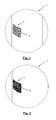
Fig. 1 is a perspective view of a section of the hose which is the object of the invention in which the laser has just engraved a two-dimensional code, particularly a QR-Code code, on the external surface according to step b) of the method; -
Fig. 2 is a perspective view of a section of the hose shown inFig. 1 but in which the grooves of the two-dimensional code have been filled with a filler material according to step c) of the method; -
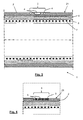
Fig. 3 is sectional view of a section of another hose which is the object of the invention according to a cut plane parallel to the longitudinal direction thereof and which traverses the code which is the object of the invention, when step b) of the method has been finalized, in which the laser has just engraved the two-dimensional code on the external surface of the hose; -
Fig. 4 is a detailed view of the upper part ofFig. 3 with the difference being that the grooves have been completely filled with a filler material according to step c) of the method; and -
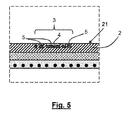
Fig. 5 is a similar view toFig. 4 with the difference being that the grooves have been partially filled with a filler material. -
Fig. 3 shows the longitudinal section of a section of thetubular hose 1 which is the object of the invention to be used for transporting fluids in industrial installations. Thehose 1 is formed by various layers, theexternal layer 2 being manufactured from a polymeric material, in particular silicone. The rest of the layers may be made of different materials and/or structure, according to the requirements of thehose 1. For example, theinternal layer 7 may also be manufactured from silicone and thehose 1 may be provided with an intermediate reinforcinglayer 6 made of metal or another polymeric material such as a braided or polyester wire mesh structure. The hose may also include between its layers a metallichelicoidal reinforcement 8, for example made of stainless steel, iron or wire. - It is observed in
Fig. 3 that theexternal surface 21 of theexternal layer 2 has a plurality ofgrooves 4. The arrangement of thesegrooves 4 follows the pattern of a two-dimensional code 3, particularly the pattern of a QR-Code code 3 as the one shown in the hose inFig. 1 . Thegrooves 4 are the result of the intaglio engraving of the two-dimensional code 3 using a laser on theexternal surface 21, particularly using a laser tube by means of the beam displacement technique. - Laser tube is understood to be a hermetically sealed receptacle, already known, which mainly contains CO2, in addition to other gases such as nitrogen, hydrogen or helium. The ends of the receptacle are provided with respective mirrors, one of which being partially transparent. The gas in the interior of the tube is activated by means of electrical energy, produced by a radio frequency unit and emits energy in the form of light. One part of this light - the more intense part - exits through the partially transparent mirror and forms the beam of the laser. The other part of the light bounces and returns back, gathering intensity.
- The technique normally used to realize a marking or engraving by means of the use of a laser tube is by means of the displacement of the beam. Using this technique, a medium-strength laser beam is focused on the surface to be marked. The beam is orientated by means of a combination of galvanometric mirrors such that it follows the course of the design to be marked, in this case, the design of the pattern of the two-
dimensional code 3. - Prior to engraving the two-
dimensional code 3 using the laser, the two-dimensional code 3 is generated using the information necessary for each client of the user of thehose 1 to be manufactured, that is to say, the information which the two-dimensional code 3 of thehose 1 contains is personalizable as a function of the requirements of each client. This two-dimensional code 3 is transferred to a drawing program which allows it to be vectored. Once the two-dimensional 3 is provided, the parameters of the laser, with which the work is to be carried out, are configured, for example the velocity of the engraving, the height of the lens, the power, etc. As a function of these parameters, the engraving will have greater or less definition, possibly being a few microns in depth (superficial engraving) or tens of millimeters (deep engraving). - With the engraving by laser, when part of the material of the
external layer 2 of thehose 1 is removed, in this case silicone, a groove or a plurality ofgrooves 4 can be configured, forming the determined drawing or scheme of the two-dimensional code 3. - The engraving on silicone, whether it is superficial or deep, is difficult to observe with the naked eye, thus to make it stand out, the space formed by the
grooves 4 is filled (seeFigs. 1 and3 ) with afiller material 5 with a colored polymeric base which produces a visual contrast with the rest of theexternal surface 21 of theexternal layer 2. The result of filling thegrooves 4 can be observed inFigs. 2 ,4 and5 . Preferably the ink which constitutes thefiller material 5 occupies the entire hollow space engraved by the laser, as inFig. 4 , where the ink reaches the same level as theexternal surface 21 of the rest of thehose 1. Alternatively, as shown inFig. 5 , thefiller material 5 may partially occupy the space formed by thegrooves 4, although the fill level must be such that the user can clearly see the drawing of the two-dimensional code 3, ensuring, for example a fill height above the halfway point of the depth of the engraving. - Advantageously, the
filler material 5 is ink which comprises silicone as part of its composition, facilitating the establishing of a bond between the ink and the silicone of the walls and bottom of thegrooves 4, that is to say, with the silicone of theexternal layer 2 of thehose 1, achieving excellent adherence. - Depending on the formulation of the ink, once the hollow space of the
grooves 4 engraved by the laser has been filled, it may or may not be necessary to cure the area of thehose 1 which has thecode 3. The curing may be realized by means of any known heat source (for example an oven) at a curing temperature of between 100 °C and 180 °C, for example at 160 °C, over a period of between 3 and 15 minutes fornormal hose sections 1. - Following the method described, the correct reading of the data stored in the two-
dimensional code 3 is ensured by means of the use of any reader device authorized for this purpose, such as a mobile, PDA, USB reader, etc., ensuring traceability of the manufacturedtubular hose 1 at all times, even in the most adverse conditions in which thehose 1 may be operating. - Lastly, it should be mentioned that the
code 3 engraved and subsequently filled with thefiller material 5 is preferably a two-dimensional code 3, for instance a QR-code code 3, although other types ofcodes 3 are not ruled out, for instance, linear or one-dimensional codes, also referred as barcodes, product references codes and any kind of code as an optical machine-readable representation of data relating to thehose 1.
Claims (16)
- A tubular hose (1) for transporting fluids in industrial installations which comprises an external layer (2) made of a polymeric material provided with a code (3) intaglio engraved using a laser on the external surface (21) of the external layer (2) formed by a plurality of grooves (4) arranged according to a pattern of the code (3), in which the grooves (4) are at least partially filled with a filler material (5) with a colored polymeric base which produces a visual contrast with the rest of the external surface (21) of the external layer (2).
- The tubular hose (1) according to claim 1, wherein the polymeric material of the external layer (2) is silicone and wherein the filler material (5) is an ink which comprises silicone.
- The tubular hose (1) according to claim 2, wherein the silicone of the ink of the filler material (5) is silicone which is curable by heating.
- The tubular hose (1) according to claim 3, wherein the ink of the filler material (5) is curable at a temperature of between 100 °C and 180 °C.
- The tubular hose (1) according to any one of the previous claims, wherein the filler material (5) completely occupies the hollow of the grooves (4) until the filler material (5) is level with the rest of the external surface (21) of the external layer (2).
- The tubular hose (1) according to any one of the previous claims, wherein the code (3) is a two-dimensional code.
- The tubular hose (1) according to any one of the previous claims, wherein a depth of the grooves (4) which form the code (3) is between 0.001 mm and 1 cm.
- The tubular hose (1) according to any one of the previous claims, wherein the tubular hose (1) is a flexible hose.
- A method for manufacturing a tubular hose (1) for transporting fluids in industrial installations, provided with a code (3) which comprises the steps of:a) providing a tubular hose (1) comprising an external layer (2) made of a polymeric material;b) intaglio engraving a code (3), using a laser on the external surface (21) of the external layer (2), forming a plurality of grooves (4) arranged according to a pattern of the code (3); andc) at least partially filling the grooves (4) which form the code (3) with a filler material (5) with a colored polymeric base which produces a visual contrast with the rest of the external surface (21) of the external layer (2).
- The method according to claim 9, wherein the polymeric material of the external layer (2) is silicone and wherein the filler material (5) is an ink which comprises silicone.
- The method according to claim 10, wherein the ink of the filler material (5) is curable by heating and wherein after step c) follows a step d) for curing the ink in which the hose (1), or at least a part of the hose (1) which comprises the code (3), is exposed to a heat source until a curing temperature of the ink of the filler material (5) is reached.
- The method according to claim 11, wherein the curing temperature of the filler material (5) is between 100 °C and 180 °C.
- The method according to claim 12, wherein the curing time of the filler material (5) is between 3 and 15 minutes.
- The method according to any one of claims 9 to 13, wherein in step c) the grooves (4) formed by the laser are completely filled with the filler material (5) until the filler material (5) is level with the rest of the external surface (21) of the external layer (2).
- The method according to any one of claims 9 to 14, wherein the engraved code (3) is a two-dimensional code.
- The method according to any one of claims 9 to 15, wherein the engraving of the code (3) in step b) is realized using a laser tube applying a laser beam displacement technique.
Applications Claiming Priority (1)
| Application Number | Priority Date | Filing Date | Title |
|---|---|---|---|
| US14/631,320 US20160243648A1 (en) | 2015-02-25 | 2015-02-25 | Tubular hose having an external layer provided with a code and a method for the manufacture thereof |
Publications (1)
| Publication Number | Publication Date |
|---|---|
| EP3061620A1 true EP3061620A1 (en) | 2016-08-31 |
Family
ID=53783063
Family Applications (1)
| Application Number | Title | Priority Date | Filing Date |
|---|---|---|---|
| EP15176954.4A Withdrawn EP3061620A1 (en) | 2015-02-25 | 2015-07-16 | A tubular hose having an external layer provided with a code and a method for the manufacture thereof |
Country Status (2)
| Country | Link |
|---|---|
| US (1) | US20160243648A1 (en) |
| EP (1) | EP3061620A1 (en) |
Cited By (2)
| Publication number | Priority date | Publication date | Assignee | Title |
|---|---|---|---|---|
| EP3556566A1 (en) * | 2018-03-06 | 2019-10-23 | Goodrich Corporation | Method for improving visual contrasts of laser etch marking on painted surfaces |
| IT202000024055A1 (en) | 2020-10-13 | 2022-04-13 | Fitt Spa | FLEXIBLE HOSE WITH QR CODE |
Families Citing this family (3)
| Publication number | Priority date | Publication date | Assignee | Title |
|---|---|---|---|---|
| EP3567294B1 (en) * | 2018-05-08 | 2021-11-24 | Witzenmann GmbH | Movable part made of metal |
| DE102018111023A1 (en) * | 2018-05-08 | 2019-11-14 | Witzenmann Gmbh | Movable component made of metal |
| JP7233977B2 (en) * | 2019-03-07 | 2023-03-07 | 株式会社ブリヂストン | Pipe joint, piping construction management system, and piping construction management method |
Citations (7)
| Publication number | Priority date | Publication date | Assignee | Title |
|---|---|---|---|---|
| JPS6143594A (en) * | 1984-08-08 | 1986-03-03 | Hitachi Ltd | Marked article and production thereof |
| EP0415674A2 (en) * | 1989-09-01 | 1991-03-06 | AT&T Corp. | Article having marking thereon and methods of making |
| WO1997044203A1 (en) * | 1996-05-21 | 1997-11-27 | Empak, Inc. | Fluoropolymer marking system |
| US20010044353A1 (en) * | 2000-01-27 | 2001-11-22 | Sokichi Nosaka | Power transmission belt having a mark thereon and a method of providing a mark on a power transmission belt |
| US6576862B1 (en) * | 1999-01-07 | 2003-06-10 | Technolines Llc | Laser-scribing process for rubber and thermoplastic materials such as a hose |
| GB2421221A (en) * | 2004-12-20 | 2006-06-21 | Uponor Innovation Ab | Laser marking of plastic pipe |
| EP2481602A1 (en) * | 2011-01-31 | 2012-08-01 | Electrolux Home Products Corporation N.V. | Process for printing on surfaces of appliances |
Family Cites Families (12)
| Publication number | Priority date | Publication date | Assignee | Title |
|---|---|---|---|---|
| CA2230042A1 (en) * | 1998-02-19 | 1999-08-19 | Floriano A. Maccario | Improved detectability of buried elongated objects such as pipes, ducts and conduits |
| US7204419B2 (en) * | 2003-05-01 | 2007-04-17 | Identifcation Dynamics, Llc | Method and apparatus for reading firearm microstamping |
| US20060179694A1 (en) * | 2005-01-31 | 2006-08-17 | Akins Charles T | Coding identification system and method for drill pipe |
| US20110175343A1 (en) * | 2005-01-31 | 2011-07-21 | Pipe Maintenance, Inc. | Identification system for drill pipes and the like |
| US20060172101A1 (en) * | 2005-02-03 | 2006-08-03 | A.P. Lin | Method for bonding composite material to alloy pipe and resultant product |
| US7587932B2 (en) * | 2007-08-14 | 2009-09-15 | Deere & Company | Apparatus and method for measuring valve lash |
| US20090192731A1 (en) * | 2008-01-24 | 2009-07-30 | Halliburton Energy Services, Inc. | System and Method for Monitoring a Health State of Hydrocarbon Production Equipment |
| TW200948539A (en) * | 2008-05-26 | 2009-12-01 | Action Tools Corp | Sleeve and manufacturing method thereof |
| US20110315261A1 (en) * | 2010-06-23 | 2011-12-29 | Coleman Jay B | Labeled drill pipe |
| US9714730B2 (en) * | 2011-09-02 | 2017-07-25 | Vallourec Oil And Gas France | Identification tags and systems suitable for thin-walled components |
| CN103390183B (en) * | 2012-05-09 | 2019-07-19 | 顾泽苍 | A kind of generation method of the anti-counterfeiting codes suitable for handset identity |
| US20150017478A1 (en) * | 2013-07-12 | 2015-01-15 | Chiu-Hsiang Tsai | Method of surface treatment on metal object and metal object with gradual patterns |
-
2015
- 2015-02-25 US US14/631,320 patent/US20160243648A1/en not_active Abandoned
- 2015-07-16 EP EP15176954.4A patent/EP3061620A1/en not_active Withdrawn
Patent Citations (7)
| Publication number | Priority date | Publication date | Assignee | Title |
|---|---|---|---|---|
| JPS6143594A (en) * | 1984-08-08 | 1986-03-03 | Hitachi Ltd | Marked article and production thereof |
| EP0415674A2 (en) * | 1989-09-01 | 1991-03-06 | AT&T Corp. | Article having marking thereon and methods of making |
| WO1997044203A1 (en) * | 1996-05-21 | 1997-11-27 | Empak, Inc. | Fluoropolymer marking system |
| US6576862B1 (en) * | 1999-01-07 | 2003-06-10 | Technolines Llc | Laser-scribing process for rubber and thermoplastic materials such as a hose |
| US20010044353A1 (en) * | 2000-01-27 | 2001-11-22 | Sokichi Nosaka | Power transmission belt having a mark thereon and a method of providing a mark on a power transmission belt |
| GB2421221A (en) * | 2004-12-20 | 2006-06-21 | Uponor Innovation Ab | Laser marking of plastic pipe |
| EP2481602A1 (en) * | 2011-01-31 | 2012-08-01 | Electrolux Home Products Corporation N.V. | Process for printing on surfaces of appliances |
Cited By (8)
| Publication number | Priority date | Publication date | Assignee | Title |
|---|---|---|---|---|
| EP3556566A1 (en) * | 2018-03-06 | 2019-10-23 | Goodrich Corporation | Method for improving visual contrasts of laser etch marking on painted surfaces |
| IT202000024055A1 (en) | 2020-10-13 | 2022-04-13 | Fitt Spa | FLEXIBLE HOSE WITH QR CODE |
| WO2022079528A1 (en) * | 2020-10-13 | 2022-04-21 | Fitt S.P.A. | Flexible hose with a qr code |
| EP4048929B1 (en) | 2020-10-13 | 2023-01-25 | FITT S.p.A | Flexible hose with a qr code |
| EP4160071A1 (en) | 2020-10-13 | 2023-04-05 | FITT S.p.A | Flexible hose with a qr code |
| CN116194699A (en) * | 2020-10-13 | 2023-05-30 | 菲特公司 | Flexible hose with QR code |
| EP4160071B1 (en) | 2020-10-13 | 2024-07-31 | FITT S.p.A. | Flexible hose with a qr code |
| US12385582B2 (en) | 2020-10-13 | 2025-08-12 | Fitt S.P.A. | Flexible hose with a QR code |
Also Published As
| Publication number | Publication date |
|---|---|
| US20160243648A1 (en) | 2016-08-25 |
Similar Documents
| Publication | Publication Date | Title |
|---|---|---|
| US20160243648A1 (en) | Tubular hose having an external layer provided with a code and a method for the manufacture thereof | |
| KR101392574B1 (en) | A method of forming a label on a medical or diagnostic container for the purpose of identification, a container formed with the label and an injection device | |
| CN103080948B (en) | Method and device for marking glass | |
| EP3256991B1 (en) | Tool, device, apparatus and method | |
| US11162873B2 (en) | Tire processing method | |
| US20170213116A1 (en) | Structurally encoded component and method of manufacturing structurally encoded component | |
| US20120203365A1 (en) | Method and device for generatively manufacturing a three-dimensional object with three-dimensional coded character | |
| JP6308421B2 (en) | Manufacturing method of three-dimensional structure | |
| EP3554793B1 (en) | Continuous liquid interface production with force monitoring and feedback | |
| ES2172082T3 (en) | ADHESIVE STRATIFICATE. | |
| EP1890748B1 (en) | Method of identifying a plurality of containers and/or finished articles obtained from the said containers | |
| CO2017012223A2 (en) | Ring marking with a two-dimensional code | |
| US20240417244A1 (en) | Enclosure | |
| CN108941884A (en) | The manufacturing method of metal product | |
| JP6442244B2 (en) | Tank for electrical equipment and manufacturing method thereof | |
| JP2019521876A (en) | Cutting edge structure and method for producing polymer cutting edge structure | |
| US12203617B2 (en) | Method of joining a pin to a cavity and joint assembly | |
| ES2906151T3 (en) | Process for the manufacture or machining of a roller, roller and functional layer of a roller | |
| US20200198163A1 (en) | Polymeric Cutting Edge Structures And Method of Manufacturing Polymeric Cutting Edge Structures | |
| ES2398787A2 (en) | Process for producing a hotplate for a hob | |
| WO2015040237A1 (en) | Method and device for marking ammunition for identification or tracking | |
| US20190391564A1 (en) | Method for identifying a 3d element, particularly an element used to produce a complex product comprising said element | |
| CN107408215A (en) | Identify plate and its manufacture method | |
| RU2550179C1 (en) | Polymeric composition, method of producing direct part marking with polymer composition and direct part marking | |
| KR102143951B1 (en) | 3D Printer Vat |
Legal Events
| Date | Code | Title | Description |
|---|---|---|---|
| PUAI | Public reference made under article 153(3) epc to a published international application that has entered the european phase |
Free format text: ORIGINAL CODE: 0009012 |
|
| AK | Designated contracting states |
Kind code of ref document: A1 Designated state(s): AL AT BE BG CH CY CZ DE DK EE ES FI FR GB GR HR HU IE IS IT LI LT LU LV MC MK MT NL NO PL PT RO RS SE SI SK SM TR |
|
| AX | Request for extension of the european patent |
Extension state: BA ME |
|
| STAA | Information on the status of an ep patent application or granted ep patent |
Free format text: STATUS: THE APPLICATION HAS BEEN PUBLISHED |
|
| STAA | Information on the status of an ep patent application or granted ep patent |
Free format text: STATUS: THE APPLICATION IS DEEMED TO BE WITHDRAWN |
|
| 18D | Application deemed to be withdrawn |
Effective date: 20170301 |