EP3053981A1 - Heat storage/dissipation material and heat storage/dissipation system - Google Patents
Heat storage/dissipation material and heat storage/dissipation system Download PDFInfo
- Publication number
- EP3053981A1 EP3053981A1 EP14850826.0A EP14850826A EP3053981A1 EP 3053981 A1 EP3053981 A1 EP 3053981A1 EP 14850826 A EP14850826 A EP 14850826A EP 3053981 A1 EP3053981 A1 EP 3053981A1
- Authority
- EP
- European Patent Office
- Prior art keywords
- heat storage
- dissipation
- heat
- phase
- titanium oxide
- Prior art date
- Legal status (The legal status is an assumption and is not a legal conclusion. Google has not performed a legal analysis and makes no representation as to the accuracy of the status listed.)
- Granted
Links
- 238000005338 heat storage Methods 0.000 title claims abstract description 348
- 239000000463 material Substances 0.000 title claims abstract description 113
- GWEVSGVZZGPLCZ-UHFFFAOYSA-N Titan oxide Chemical compound O=[Ti]=O GWEVSGVZZGPLCZ-UHFFFAOYSA-N 0.000 claims abstract description 212
- OGIDPMRJRNCKJF-UHFFFAOYSA-N titanium oxide Inorganic materials [Ti]=O OGIDPMRJRNCKJF-UHFFFAOYSA-N 0.000 claims abstract description 169
- 230000007704 transition Effects 0.000 claims abstract description 90
- 230000017525 heat dissipation Effects 0.000 claims abstract description 71
- 238000012546 transfer Methods 0.000 claims abstract description 12
- 239000007788 liquid Substances 0.000 claims abstract description 11
- 230000005291 magnetic effect Effects 0.000 claims abstract description 10
- 239000004065 semiconductor Substances 0.000 claims abstract description 9
- 229910052751 metal Inorganic materials 0.000 claims abstract description 8
- 239000002184 metal Substances 0.000 claims abstract description 8
- 230000005298 paramagnetic effect Effects 0.000 claims abstract description 8
- 238000003825 pressing Methods 0.000 claims description 22
- 239000007858 starting material Substances 0.000 claims description 22
- 238000010438 heat treatment Methods 0.000 claims description 16
- 239000000843 powder Substances 0.000 claims description 10
- 230000001678 irradiating effect Effects 0.000 claims description 9
- 239000000203 mixture Substances 0.000 claims description 5
- 229910009815 Ti3O5 Inorganic materials 0.000 claims description 4
- 239000007787 solid Substances 0.000 claims description 4
- 239000010936 titanium Substances 0.000 abstract description 8
- 239000013078 crystal Substances 0.000 description 36
- 239000002245 particle Substances 0.000 description 16
- VYPSYNLAJGMNEJ-UHFFFAOYSA-N Silicium dioxide Chemical compound O=[Si]=O VYPSYNLAJGMNEJ-UHFFFAOYSA-N 0.000 description 14
- 238000005245 sintering Methods 0.000 description 12
- 239000003921 oil Substances 0.000 description 10
- 230000002441 reversible effect Effects 0.000 description 8
- 239000000377 silicon dioxide Substances 0.000 description 7
- 238000004364 calculation method Methods 0.000 description 5
- 230000000694 effects Effects 0.000 description 5
- 230000007423 decrease Effects 0.000 description 4
- 238000010586 diagram Methods 0.000 description 4
- 238000009826 distribution Methods 0.000 description 4
- 239000011259 mixed solution Substances 0.000 description 4
- 238000000634 powder X-ray diffraction Methods 0.000 description 4
- -1 silane compound Chemical class 0.000 description 4
- UFHFLCQGNIYNRP-UHFFFAOYSA-N Hydrogen Chemical compound [H][H] UFHFLCQGNIYNRP-UHFFFAOYSA-N 0.000 description 3
- 238000002441 X-ray diffraction Methods 0.000 description 3
- 230000004888 barrier function Effects 0.000 description 3
- 230000003247 decreasing effect Effects 0.000 description 3
- 239000001257 hydrogen Substances 0.000 description 3
- 229910052739 hydrogen Inorganic materials 0.000 description 3
- 239000002105 nanoparticle Substances 0.000 description 3
- 239000011164 primary particle Substances 0.000 description 3
- 239000000243 solution Substances 0.000 description 3
- 239000002918 waste heat Substances 0.000 description 3
- 238000010521 absorption reaction Methods 0.000 description 2
- 239000007864 aqueous solution Substances 0.000 description 2
- 239000004568 cement Substances 0.000 description 2
- 230000008859 change Effects 0.000 description 2
- 238000001816 cooling Methods 0.000 description 2
- 238000011161 development Methods 0.000 description 2
- USIUVYZYUHIAEV-UHFFFAOYSA-N diphenyl ether Chemical compound C=1C=CC=CC=1OC1=CC=CC=C1 USIUVYZYUHIAEV-UHFFFAOYSA-N 0.000 description 2
- 150000002148 esters Chemical class 0.000 description 2
- 230000003993 interaction Effects 0.000 description 2
- 238000004519 manufacturing process Methods 0.000 description 2
- 238000005259 measurement Methods 0.000 description 2
- 238000000034 method Methods 0.000 description 2
- 230000008569 process Effects 0.000 description 2
- 239000011163 secondary particle Substances 0.000 description 2
- 229920002545 silicone oil Polymers 0.000 description 2
- WGTYBPLFGIVFAS-UHFFFAOYSA-M tetramethylammonium hydroxide Chemical compound [OH-].C[N+](C)(C)C WGTYBPLFGIVFAS-UHFFFAOYSA-M 0.000 description 2
- 238000012932 thermodynamic analysis Methods 0.000 description 2
- VHUUQVKOLVNVRT-UHFFFAOYSA-N Ammonium hydroxide Chemical compound [NH4+].[OH-] VHUUQVKOLVNVRT-UHFFFAOYSA-N 0.000 description 1
- 238000003991 Rietveld refinement Methods 0.000 description 1
- 229910052581 Si3N4 Inorganic materials 0.000 description 1
- 230000009471 action Effects 0.000 description 1
- 239000003513 alkali Substances 0.000 description 1
- PNEYBMLMFCGWSK-UHFFFAOYSA-N aluminium oxide Inorganic materials [O-2].[O-2].[O-2].[Al+3].[Al+3] PNEYBMLMFCGWSK-UHFFFAOYSA-N 0.000 description 1
- 238000010276 construction Methods 0.000 description 1
- PMHQVHHXPFUNSP-UHFFFAOYSA-M copper(1+);methylsulfanylmethane;bromide Chemical compound Br[Cu].CSC PMHQVHHXPFUNSP-UHFFFAOYSA-M 0.000 description 1
- 230000007547 defect Effects 0.000 description 1
- 238000001035 drying Methods 0.000 description 1
- 239000007789 gas Substances 0.000 description 1
- 239000005457 ice water Substances 0.000 description 1
- 230000006872 improvement Effects 0.000 description 1
- 230000005415 magnetization Effects 0.000 description 1
- 230000007246 mechanism Effects 0.000 description 1
- 238000002844 melting Methods 0.000 description 1
- 230000008018 melting Effects 0.000 description 1
- 238000002156 mixing Methods 0.000 description 1
- 230000004048 modification Effects 0.000 description 1
- 238000012986 modification Methods 0.000 description 1
- 230000003287 optical effect Effects 0.000 description 1
- 230000005408 paramagnetism Effects 0.000 description 1
- 238000006722 reduction reaction Methods 0.000 description 1
- 229910000077 silane Inorganic materials 0.000 description 1
- HBMJWWWQQXIZIP-UHFFFAOYSA-N silicon carbide Chemical compound [Si+]#[C-] HBMJWWWQQXIZIP-UHFFFAOYSA-N 0.000 description 1
- 229910010271 silicon carbide Inorganic materials 0.000 description 1
- HQVNEWCFYHHQES-UHFFFAOYSA-N silicon nitride Chemical compound N12[Si]34N5[Si]62N3[Si]51N64 HQVNEWCFYHHQES-UHFFFAOYSA-N 0.000 description 1
- 238000003980 solgel method Methods 0.000 description 1
- 238000003860 storage Methods 0.000 description 1
- 230000005469 synchrotron radiation Effects 0.000 description 1
- XJDNKRIXUMDJCW-UHFFFAOYSA-J titanium tetrachloride Chemical compound Cl[Ti](Cl)(Cl)Cl XJDNKRIXUMDJCW-UHFFFAOYSA-J 0.000 description 1
- 238000005406 washing Methods 0.000 description 1
Images


Classifications
-
- C—CHEMISTRY; METALLURGY
- C09—DYES; PAINTS; POLISHES; NATURAL RESINS; ADHESIVES; COMPOSITIONS NOT OTHERWISE PROVIDED FOR; APPLICATIONS OF MATERIALS NOT OTHERWISE PROVIDED FOR
- C09K—MATERIALS FOR MISCELLANEOUS APPLICATIONS, NOT PROVIDED FOR ELSEWHERE
- C09K5/00—Heat-transfer, heat-exchange or heat-storage materials, e.g. refrigerants; Materials for the production of heat or cold by chemical reactions other than by combustion
- C09K5/02—Materials undergoing a change of physical state when used
- C09K5/06—Materials undergoing a change of physical state when used the change of state being from liquid to solid or vice versa
- C09K5/063—Materials absorbing or liberating heat during crystallisation; Heat storage materials
-
- C—CHEMISTRY; METALLURGY
- C01—INORGANIC CHEMISTRY
- C01G—COMPOUNDS CONTAINING METALS NOT COVERED BY SUBCLASSES C01D OR C01F
- C01G23/00—Compounds of titanium
- C01G23/04—Oxides; Hydroxides
-
- C—CHEMISTRY; METALLURGY
- C09—DYES; PAINTS; POLISHES; NATURAL RESINS; ADHESIVES; COMPOSITIONS NOT OTHERWISE PROVIDED FOR; APPLICATIONS OF MATERIALS NOT OTHERWISE PROVIDED FOR
- C09K—MATERIALS FOR MISCELLANEOUS APPLICATIONS, NOT PROVIDED FOR ELSEWHERE
- C09K5/00—Heat-transfer, heat-exchange or heat-storage materials, e.g. refrigerants; Materials for the production of heat or cold by chemical reactions other than by combustion
- C09K5/02—Materials undergoing a change of physical state when used
-
- F—MECHANICAL ENGINEERING; LIGHTING; HEATING; WEAPONS; BLASTING
- F28—HEAT EXCHANGE IN GENERAL
- F28D—HEAT-EXCHANGE APPARATUS, NOT PROVIDED FOR IN ANOTHER SUBCLASS, IN WHICH THE HEAT-EXCHANGE MEDIA DO NOT COME INTO DIRECT CONTACT
- F28D20/00—Heat storage plants or apparatus in general; Regenerative heat-exchange apparatus not covered by groups F28D17/00 or F28D19/00
- F28D20/0034—Heat storage plants or apparatus in general; Regenerative heat-exchange apparatus not covered by groups F28D17/00 or F28D19/00 using liquid heat storage material
-
- F—MECHANICAL ENGINEERING; LIGHTING; HEATING; WEAPONS; BLASTING
- F28—HEAT EXCHANGE IN GENERAL
- F28D—HEAT-EXCHANGE APPARATUS, NOT PROVIDED FOR IN ANOTHER SUBCLASS, IN WHICH THE HEAT-EXCHANGE MEDIA DO NOT COME INTO DIRECT CONTACT
- F28D20/00—Heat storage plants or apparatus in general; Regenerative heat-exchange apparatus not covered by groups F28D17/00 or F28D19/00
- F28D20/02—Heat storage plants or apparatus in general; Regenerative heat-exchange apparatus not covered by groups F28D17/00 or F28D19/00 using latent heat
-
- C—CHEMISTRY; METALLURGY
- C01—INORGANIC CHEMISTRY
- C01P—INDEXING SCHEME RELATING TO STRUCTURAL AND PHYSICAL ASPECTS OF SOLID INORGANIC COMPOUNDS
- C01P2002/00—Crystal-structural characteristics
- C01P2002/70—Crystal-structural characteristics defined by measured X-ray, neutron or electron diffraction data
- C01P2002/72—Crystal-structural characteristics defined by measured X-ray, neutron or electron diffraction data by d-values or two theta-values, e.g. as X-ray diagram
-
- C—CHEMISTRY; METALLURGY
- C01—INORGANIC CHEMISTRY
- C01P—INDEXING SCHEME RELATING TO STRUCTURAL AND PHYSICAL ASPECTS OF SOLID INORGANIC COMPOUNDS
- C01P2002/00—Crystal-structural characteristics
- C01P2002/70—Crystal-structural characteristics defined by measured X-ray, neutron or electron diffraction data
- C01P2002/76—Crystal-structural characteristics defined by measured X-ray, neutron or electron diffraction data by a space-group or by other symmetry indications
-
- C—CHEMISTRY; METALLURGY
- C01—INORGANIC CHEMISTRY
- C01P—INDEXING SCHEME RELATING TO STRUCTURAL AND PHYSICAL ASPECTS OF SOLID INORGANIC COMPOUNDS
- C01P2002/00—Crystal-structural characteristics
- C01P2002/70—Crystal-structural characteristics defined by measured X-ray, neutron or electron diffraction data
- C01P2002/77—Crystal-structural characteristics defined by measured X-ray, neutron or electron diffraction data by unit-cell parameters, atom positions or structure diagrams
-
- C—CHEMISTRY; METALLURGY
- C01—INORGANIC CHEMISTRY
- C01P—INDEXING SCHEME RELATING TO STRUCTURAL AND PHYSICAL ASPECTS OF SOLID INORGANIC COMPOUNDS
- C01P2006/00—Physical properties of inorganic compounds
- C01P2006/32—Thermal properties
-
- C—CHEMISTRY; METALLURGY
- C01—INORGANIC CHEMISTRY
- C01P—INDEXING SCHEME RELATING TO STRUCTURAL AND PHYSICAL ASPECTS OF SOLID INORGANIC COMPOUNDS
- C01P2006/00—Physical properties of inorganic compounds
- C01P2006/32—Thermal properties
- C01P2006/33—Phase transition temperatures
- C01P2006/36—Solid to solid transition temperatures
-
- Y—GENERAL TAGGING OF NEW TECHNOLOGICAL DEVELOPMENTS; GENERAL TAGGING OF CROSS-SECTIONAL TECHNOLOGIES SPANNING OVER SEVERAL SECTIONS OF THE IPC; TECHNICAL SUBJECTS COVERED BY FORMER USPC CROSS-REFERENCE ART COLLECTIONS [XRACs] AND DIGESTS
- Y02—TECHNOLOGIES OR APPLICATIONS FOR MITIGATION OR ADAPTATION AGAINST CLIMATE CHANGE
- Y02E—REDUCTION OF GREENHOUSE GAS [GHG] EMISSIONS, RELATED TO ENERGY GENERATION, TRANSMISSION OR DISTRIBUTION
- Y02E60/00—Enabling technologies; Technologies with a potential or indirect contribution to GHG emissions mitigation
- Y02E60/14—Thermal energy storage
Definitions
- the present invention relates to a heat storage/dissipation material and a heat storage/dissipation system, and relates to a heat storage/dissipation material and a heat storage/dissipation system using, for example, an oxide containing Ti 3+ (hereinafter, simply referred to as titanium oxide).
- titanium oxide an oxide containing Ti 3+
- Non Patent Literature 1 Cement Sales Engineering Division, Sumitomo Osaka Cement Co., Ltd. "Thermal Properties of Concrete” [on line], searched on October, 1 2013, internet ⁇ URL: http://www.soc.co.jp/cement/gijutsu/pdf/netu.pdf>
- the heat storage/dissipation material formed from concrete releases stored heat immediately after completion of heating, and therefore utilization thereof is limited to heat storage/dissipation systems that make use of heat immediately after heat storage.
- development of a completely novel heat storage/dissipation system that has never existed so far is desired, for example, development of a heat storage/dissipation material that can release stored heat at a desired timing is also desired.
- the present invention has been completed in consideration of the above-described points and intends to provide a heat storage/dissipation material and a heat storage/dissipation system that can release stored heat at a desired timing.
- the heat storage/dissipation material according to the present invention contains heat storage/dissipation titanium oxide having a composition of Ti 3 O 5 , and not undergoing phase transition into a ⁇ -phase that has properties of a non-magnetic semiconductor and maintaining a state of a paramagnetic metal as long as the heat storage/dissipation titanium oxide is not subjected to pressure or light for heat dissipation, wherein the pressure or the light for heat dissipation is applied to the heat storage/dissipation titanium oxide to cause the phase transition to the ⁇ -phase and release heat stored in the heat storage/dissipation titanium oxide.
- the heat storage/dissipation system includes a heat storage apparatus heating the heat storage/dissipation material according to any one of claims 1 to 8 or irradiating the heat storage/dissipation material according to any one of claims 1 to 8 with light for heat storage to store heat in the heat storage/dissipation material, and a heat dissipation apparatus applying pressure to or irradiating, with light for heat dissipation, the heat storage/dissipation material storing the heat caused by the heat storage apparatus, to allow the heat storage/dissipation material to release the heat.
- a state of storing heat can be maintained as it is as long as pressure or light for heat dissipation is applied, heat can be released when pressure or light for heat dissipation is applied, and therefore stored heat can be released at a desired timing.
- the heat storage/dissipation material according to the present invention contains heat storage/dissipation titanium oxide having a composition of Ti 3 O 5 , and the heat storage/dissipation titanium oxide is contained so as to be dispersed in heat transfer oil in a liquid form, such as, for example, silicone oil, ester-based oil, or phenyl ether-based oil.
- the heat storage/dissipation titanium oxide in a powder form contained in the heat storage/dissipation material according to the present invention can be a crystal phase (hereinafter, referred to as ⁇ -phase or also as ⁇ -Ti 3 O 5 ) of a monoclinic system in which Ti 3 O 5 maintains a state of a paramagnetic metal in a temperature region of 460 [K] or lower as shown in FIG. 1 .
- the phase transition of the heat storage/dissipation titanium oxide into an ⁇ -phase ( ⁇ -Ti 3 O 5 ) of an orthorhombic system of a state of a paramagnetic metal occurs at a temperature exceeding about 460 [K].
- the crystal structure of general titanium oxide having a composition of Ti 3 O 5 becomes the ⁇ -phase when the temperature is higher than about 460 [K], but becomes a ⁇ -phase ( ⁇ -Ti 3 O 5 ) in which the crystal structure has properties of a non-magnetic semiconductor when the temperature is lower than about 460 [K].
- conventional titanium oxide that becomes the ⁇ -phase in a temperature region lower than about 460 [K] has a crystal structure of a monoclinic system and can be a non-magnetic semiconductor at around 0 [K] although a slight magnetization due to Curie's paramagnetism that is attributable to lattice defect is observed.
- the phase transition of the heat storage/dissipation titanium oxide contained in the heat storage/dissipation material according to the present invention into the ⁇ -phase of a state of a paramagnetic metal occurs, unlike conventional titanium oxide, even when the temperature is decreased to be lower than 460 [K], without the phase transition into the ⁇ -phase having properties of a non-magnetic semiconductor.
- the heat storage/dissipation titanium oxide that has undergone the phase transition into the ⁇ -phase by applying pressure to the ⁇ -phase or irradiating the ⁇ -phase with light for heat dissipation is capable of storing heat when the temperature becomes 460 [K] or higher by heating or irradiation with light for heat storage, and thereafter undergoes the phase transition into the ⁇ -phase at lower than 460 [K] to be capable of maintaining a state of latently storing heat even in a situation where the temperature becomes low.
- the heat storage/dissipation titanium oxide is capable of the phase transition into the ⁇ -phase that has properties of a non-magnetic semiconductor from the ⁇ -phase of the state of a paramagnetic metal when the heat storage/dissipation titanium oxide is in the ⁇ -phase and is subjected to an external stimulus that is either the pressure or the light for heat dissipation.
- the heat storage/dissipation titanium oxide undergoes the phase transition into the ⁇ -phase caused by an external stimulus, the heat storage/dissipation titanium oxide is capable of generating heat by releasing heat that is latently stored in the ⁇ -phase.
- the heat storage/dissipation titanium oxide undergoes the phase transition into the ⁇ -phase to store heat that is applied by heating when the temperature becomes 460 [K] or higher and thereafter undergoes the phase transition into the ⁇ -phase at lower than 460 [K] and is capable of maintaining a state of latently storing heat even in a situation where the temperature becomes low.
- the heat storage/dissipation titanium oxide is capable of releasing heat when the heat storage/dissipation titanium oxide undergoes the phase transition into the ⁇ -phase from the ⁇ -phase by an external stimulus and is able to latently store heat again by heating thereafter and is capable of repeating heat storage by heating and heat dissipation by applying the external stimulus.
- the heat storage/dissipation titanium oxide gets into the state of storing heat by being heated at 460 [K] or higher, and besides, is able to get into the state of storing heat when irradiated with light for heat storage having a particular wavelength.
- the heat storage/dissipation titanium oxide undergoes photo-induced phase transition into the ⁇ -phase directly from the ⁇ -phase when the heat storage/dissipation titanium oxide is in the ⁇ -phase and is irradiated with the light for heat storage, and can be in the ⁇ -phase in which heat is latently stored by provision of energy from the light for heat storage.
- the heat storage/dissipation titanium oxide can release heat when the heat storage/dissipation titanium oxide undergoes the phase transition into the ⁇ -phase from the ⁇ -phase by the external stimulus in the same manner as described above.
- the heat storage/dissipation titanium oxide is capable of repeatedly conducting heat storage by irradiation with light for heat storage and heat dissipation by applying the external stimulus.
- the heat storage/dissipation titanium oxide contained in the heat storage/dissipation material according to the present invention may be heat storage/dissipation titanium oxide using any of anatase type titanium oxide and rutile type titanium oxide as a starting material, but will be described hereinafter giving, as an example, the heat storage/dissipation titanium oxide using anatase type titanium oxide as a starting material.
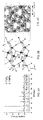
- FIG. 2A shows an SR-XRPD (Synchrotron Radiation X-Ray Powder Diffraction) pattern of the heat storage/dissipation titanium oxide at room temperature under atmospheric pressure (0.1 [MPa]).
- the heat storage/dissipation titanium oxide is constituted from a crystal structure of the ⁇ -phase, and as a result of analyzing the SR-XRPD pattern in FIG.
- FIG. 2B is the crystal structure of the ⁇ -phase observed from the b axis direction and FIG. 2C is an electron density distribution of the ⁇ -phase.
- the ⁇ -phase contained three Ti sites (Ti1, Ti2, and Ti3) and five O sites (O1, 02, 03, 04, and 05) each having symmetry not equivalent to one another, and Ti formed a distorted six-coordinate octahedral structure.
- FIG. 3B is the crystal structure of the ⁇ -phase observed from the b axis direction and FIG. 3C is an electron density distribution of the ⁇ -phase.
- the ⁇ -phase also contained three Ti sites (Ti1, Ti2, and Ti3) and five O sites (O1, 02, 03, 04, and 05) each having symmetry not equivalent to one another, and Ti formed a distorted six-coordinate octahedral structure.
- the main difference between the ⁇ -phase and the ⁇ -phase resides in the coordination structure of Ti3, and Ti3 in the ⁇ -phase forms bonds with two O1, one 03, and three 05; however, Ti3 in the ⁇ -phase forms bonds with two O1, one 03, one 04, and two 05. Accordingly, one of Ti3-O5 bonds in the ⁇ -phase is replaced by one Ti3-O4 bond in the ⁇ -phase. In this way, the structure of the heat storage/dissipation titanium oxide is different between the ⁇ -phase and in the ⁇ -phase.
- FIG. 4A shows SR-XRPD patterns when the pressures of 0.1 [MPa], 0.6 [GPa], 1.1 [GPa], 1.9 [GPa], 3.0 [GPa], and 4.6 [MPa] were applied in this order. From FIG. 4A , it was confirmed that the intensity of the peaks representing the crystal structure of the ⁇ -phase gradually decreased while the intensity of the peaks representing the crystal structure of the ⁇ -phase gradually increased as the pressure became large.
- FIG. 5 is a graph showing unit cell volumes of the ⁇ -phase and of the ⁇ -phase of the heat storage/dissipation titanium oxide, the unit cell volumes changing depending on the pressure.
- the unit cell volumes of the ⁇ -phase and of the ⁇ -phase gradually become small as the pressure is increased; however, the volume difference between the ⁇ -phase and the ⁇ -phase is maintained.
- the relationship between the Gibbs free energy and a fraction of a charge-delocalized unit (x) was calculated here using a Slichter and Drickamer model as a mean field theoretical model.
- phase transition into the ⁇ -phase from the ⁇ -phase was regarded as phase transition into a charge-localized system (also simply referred to as localized system) from a charge-delocalized system (also simply referred to as delocalized system).
- the ratio of a charge-localized unit (Ti 3+ - Ti 11/3+ - Ti 10/3+ )O 5 to a charge-delocalized unit (Ti 10/3+ ) 3 O 5 was considered to be an order parameter.
- the Gibbs free energy G in the phase transition into the ⁇ -phase from the ⁇ -phase is described as the following formula.
- G x ⁇ H + ⁇ x 1 ⁇ x + T R x ln x + 1 ⁇ x ln 1 ⁇ x ⁇ x ⁇ S
- the Gibbs free energy G of the ⁇ -phase (charge-localized system) under atmospheric pressure is taken as a basis of energy
- x represents a fraction of the charge-delocalized unit
- ⁇ H represents transition enthalpy
- ⁇ S represents transition entropy
- R represents a gas constant
- ⁇ represents an interaction parameter
- T represents temperature
- the difference between the enthalpy under 0 [GPa] and the enthalpy under 1 [GPa] was 0.516 [kJ mol -1 ] and the difference between the entropy under 0 [GPa] and the entropy under 1 [GPa] was -0.945 [JK -1 ] in the case of the ⁇ -phase.
- FIG. 6A shows curves of the Gibbs free energy G determined by the calculation versus the fraction x of the charge-delocalized unit, the curves obtained as the pressure is increased.
- values of the transition enthalpy ⁇ H and transition entropy ⁇ S obtained as measured values by conducting DSC measurement of a sample were used, and the value of the interaction parameter ⁇ determined by fitting the temperature dependence of the measured magnetic susceptibility using the transition enthalpy ⁇ H and transition entropy ⁇ S.
- the values evaluated by the first-principle phonon mode calculation were used.
- the transition enthalpy ⁇ H increases and the transition entropy ⁇ S decreases when pressure is applied from outside, and therefore the Gibbs free energy G increases as shown in FIG. 6A .
- a decrease in the transition entropy ⁇ S in the ⁇ -phase is larger than that in the ⁇ -phase, and therefore an increase in the Gibbs free energy G in the ⁇ -phase is larger than that in the ⁇ -phase. From this fact, it can be said that the phase transition due to the pressure at the transition pressure (P ⁇ ) is reproduced by the model shown in FIG. 6A . As shown in FIG. 6A and FIG. 6B , as the applied pressure is increased, the phase transition into the ⁇ -phase from the ⁇ -phase occurs because an energy barrier disappears. On the other hand, as shown in FIG.6C , the ⁇ -phase generated by applying pressure is a thermodynamically stable phase, and therefore stays as it is even after the pressure is released.
- the heat storage/dissipation titanium oxide does not release heat and continuously maintains the state of storing heat as it is as long as the heat storage/dissipation titanium oxide is not subjected to the pressure or the light for heat dissipation, and is capable of releasing the stored heat by the phase transition into the ⁇ -phase from the ⁇ -phase for the first time at a timing when the heat storage/dissipation titanium oxide is subjected to the pressure or the light for heat dissipation.
- the phase transition of the heat storage/dissipation titanium oxide into the ⁇ -phase from the ⁇ -phase occurs at a temperature exceeding about 460 [K] as described above.
- the heat storage/dissipation titanium oxide stores heat again when the temperature becomes 460 [K] or higher and is capable of maintaining the state of storing heat as it is even when cooled to room temperature.
- the heat storage/dissipation titanium oxide can store heat by heating at 460 [K] or higher as described above, and besides, undergoes the phase transition of the crystal structure into the ⁇ -phase from the ⁇ -phase also when light for heat storage, such as ultraviolet light, visible light, and infrared light (light intensity of 0.5 ⁇ 10 2 to 15 ⁇ 10 2 [mJ cm -2 pulse -1 ], more preferably 1 ⁇ 10 2 to 10 ⁇ 10 2 [mJ cm -2 pulse -1 ]), and furthermore, can get into the state of storing heat based on the energy received from the light for heat storage.
- light for heat storage such as ultraviolet light, visible light, and infrared light (light intensity of 0.5 ⁇ 10 2 to 15 ⁇ 10 2 [mJ cm -2 pulse -1 ], more preferably 1 ⁇ 10 2 to 10 ⁇ 10 2 [mJ cm -2 pulse -1 ]
- phase transition into the ⁇ -phase of the state of storing heat from the ⁇ -phase is caused by photoirradiation
- a photothermal effect in which the heat storage/dissipation titanium oxide is heated by the light for heat storage to temporarily become the ⁇ -phase and get into the state of storing heat
- a photoirradiation effect photo-induced phase transition mechanism making use of properties of a photon of light
- FIG. 7A(i) is a photograph that shows a state of the heat storage/dissipation titanium oxide before applying pressure
- FIG. 7A(ii) is a photograph that shows a state of the heat storage/dissipation titanium oxide after applying a pressure P of 2.5 [GPa]
- FIG. 7A(iii) is a photograph that shows a state of the heat storage/dissipation titanium oxide after being irradiated with pulsed laser light (pulse width of 6 [ns] and light intensity of 3.0 [mJ ⁇ m -2 pulse -1 ]) hv having a wavelength of 532 [nm] as the light for heat storage.
- pulsed laser light pulse width of 6 [ns] and light intensity of 3.0 [mJ ⁇ m -2 pulse -1 ]
- the crystal structure changed into the ⁇ -phase. From these facts, it was confirmed that the crystal structure was the ⁇ -phase that had black blue color before applying pressure, became the ⁇ -phase that had brown-based color after applying pressure P, and the color became black blue color that was the same as the color before applying pressure showing that the crystal structure became the ⁇ -phase after the pulsed laser light hv was applied. In addition, when application of pressure and irradiation with the light for heat storage were repeatedly conducted, it was confirmed that the color of the surface of the heat storage/dissipation titanium oxide was changed in the same manner as in FIG. 7A(i) to (iii) and that phase transitions into the ⁇ -phase from the ⁇ -phase, into the ⁇ -phase from the ⁇ -phase, and, further, into the ⁇ -phase from the ⁇ -phase were repeated.
- Crystallographic consideration is given to such phase transition as follows: when the pressure P is applied as shown in FIG. 7C , the bond Ti3-O5 is broken and the bond Ti3-O4 is formed in the phase transition into the ⁇ -phase from the ⁇ -phase, and subsequently when the heat storage/dissipation titanium oxide is irradiated with the light for heat storage, the bond Ti3-O4 is broken and the bond Ti3-O5 is formed again in the reverse phase transition into the ⁇ -phase from the ⁇ -phase. In this way, the reversible phase transition is caused by the change in the bonding state of Ti3 due to an external stimulus, such as pressure or photoirradiation.
- thermodynamic analysis of such reversible phase transition between the ⁇ -phase and the ⁇ -phase that is caused by alternate application of pressure and irradiation with light for heat storage is wrapped up as follows: the ⁇ -phase is a metastable state before applying pressure as shown in FIG. 7D(i) , however when the pressure is applied, the shape of the curve of Gibbs free energy G versus the fraction x of the charge-delocalized unit is changed as shown in FIG. 7D(ii) and the local portion where the energy is minimum in the ⁇ -phase disappears.
- the optical absorption of the ⁇ -phase is metallic absorption, and therefore it is understood that the light for heat storage from ultraviolet light to infrared light (laser light having a wavelength of 355 to 1064 [nm]) is suitable for the metal-semiconductor transition.
- a predetermined amount of a powdered body consisting of nano-sized TiO 2 particles is prepared.
- anatase type TiO 2 particles having a particle diameter of about 7 [nm] are used as the TiO 2 particles that constitutes the powdered body, and about 3 to 9 [g] of the TiO 2 particles are prepared.
- sintering treatment of the powdered body consisting of TiO 2 particles is conducted at about 1200 [°C] for 1 to 5 hours under hydrogen atmosphere (0.3 to 1.0 [L/min]).
- powdery heat storage/dissipation titanium oxide having a composition of an oxide containing Ti 3+ (Ti 3 O 5 ) can be produced through reduction reaction of the TiO 2 particles.
- the heat storage/dissipation titanium oxide to be obtained is a powder having a secondary particle diameter of about 2 to 3 ⁇ m, the powder obtained by sintering nanoparticles having a primary particle diameter of about 25 nm.
- Such a structure can be confirmed by SEM or TEM.
- heat storage/dissipation titanium oxide of the ⁇ -phase can be contained in the produced powder by about 50[%] or more when the hydrogen atmosphere is 0.1 [L/min] or more, the temperature during sintering is 1100 [°C] to 1400 [°C], and the sintering time is 1 hour or longer.
- the heat storage/dissipation titanium oxide can also be produced by, for example, a sol-gel method and sintering treatment.
- a solution of a silane compound is appropriately added to a mixed solution in a sol state prepared by mixing a titanium chloride aqueous solution and an ammonia aqueous solution to produce a mixed solution that is in a gel state.
- silica-coated titanium hydroxide compound particles in which the surface of the titanium hydroxide compound particles is coated with silica can be prepared.
- heat storage/dissipation titanium oxide can be produced in the silica by conducting washing, drying, and sintering after separating the silica-coated titanium hydroxide compound particles from the mixed solution.
- the silica that coats the heat storage/dissipation titanium oxide may be removed with an alkali solution or the like, such as tetramethyl ammonium hydroxide, and the heat storage/dissipation titanium oxide from which the silica is removed may be used.
- the heat storage/dissipation material can be manufactured by dispersing, in heat transfer oil in a liquid form, such as, for example, silicone oil, ester-based oil, or phenyl ether-based oil, the heat storage/dissipation titanium oxide (including heat storage/dissipation titanium oxide that is coated with silica) thus produced.
- a liquid form such as, for example, silicone oil, ester-based oil, or phenyl ether-based oil
- the heat storage/dissipation material according to the present invention contains the heat storage/dissipation titanium oxide so as to be dispersed in, for example, heat transfer oil, the state of storing heat in the heat storage/dissipation titanium oxide is maintained as long as the heat storage/dissipation titanium oxide is not subjected to the pressure or the light for heat dissipation as an external stimulus, the phase transition of the crystal structure of the heat storage/dissipation titanium oxide into the ⁇ -phase from the ⁇ -phase occurs for the first time at a timing when the contained heat storage/dissipation titanium oxide is subjected to the pressure or the light for heat dissipation and the stored heat can be released.
- the heat storage/dissipation material according to the present invention when the heat storage/dissipation material according to the present invention is heated at 460 [K] or higher after releasing heat, or is subjected to the light for heat storage after releasing heat, the crystal structure of the contained heat storage/dissipation titanium oxide changes and the heat storage/dissipation titanium oxide can get into the state of storing heat again.
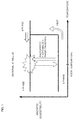
- FIG. 8 is a schematic diagram illustrating the constitution of a heat storage/dissipation system that makes use of the properties of such a heat storage/dissipation material capable of repeatedly conduct heat storage and heat dissipation and capable of release heat at a desired timing. As illustrated in FIG.
- the heat storage/dissipation system 1 includes a heat storage apparatus 2 that applies heat to the heat storage/dissipation material in a liquid form and a heat dissipation apparatus 3 that allows the heat storage/dissipation material to release heat and sends the heat thus obtained to a heat utilization engine that is not illustrated in the figure, and has the constitution in which the heat storage apparatus 2 and the heat dissipation apparatus 3 are connected through a flow channel 4.
- the flow channel 4 includes the first flow channel section 4a leading the heat storage/dissipation material that is discharged from the heat storage apparatus 2 and that is in the state of storing heat to the heat dissipation apparatus 3, and the second flow channel section 4b returning the heat storage/dissipation material after heat dissipation that is discharged from the heat dissipation apparatus 3 to the heat storage apparatus 2, and is made so that the heat storage/dissipation material can be circulated repeatedly between the heat storage apparatus 2 and the heat dissipation apparatus 3.
- the first flow channel section 4a and the second flow channel section 4b are each formed in a tube shape so that the heat storage/dissipation material can flow inside.
- the heat storage apparatus 2 includes means 6 for applying an external stimulus for heat storage purposes, applies heat to the heat storage/dissipation material by the means 6 for applying an external stimulus for heat storage purposes, and can make the heat storage/dissipation material get into the state of storing heat.
- various kinds of means for applying an external stimulus for heat storage purposes may be employed as long as a heat of 460 [K] or more can be applied to the heat storage/dissipation material, and, for example, means for heating by sunlight, in which the heat storage/dissipation material is heated by irradiation with sunlight, or means for heating by waste heat, in which the heat storage/dissipation material is heated by waste heat from a blast furnace, can also be used.
- the flow channel 4 (second flow channel section 4b) is provided on a reflecting plate that reflects the sunlight so as to meander on the reflecting plate, and the heat storage/dissipation material is heated at 460 [K] or higher by applying the sunlight collected by the reflecting plate to the heat storage/dissipation material in the flow channel 4 (second flow channel section 4b) to cause the phase transition of the heat storage/dissipation titanium oxide contained in the heat storage/dissipation material into the ⁇ -phase from the ⁇ -phase, and thereafter the heat storage/dissipation material is able to get into the state of storing heat by the phase transition into the ⁇ -phase from the ⁇ -phase caused by cooling.
- the flow channel 4 is provided along a side wall of the blast furnace, the heat storage/dissipation material is heated by conveying the heat from the blast furnace to the heat storage/dissipation material in the flow channel 4 (second flow channel section 4b) to cause the phase transition of the heat storage/dissipation titanium oxide contained in the heat storage/dissipation material into the ⁇ -phase from the ⁇ -phase, and thereafter the heat storage/dissipation material is able to get into the state of storing heat by the phase transition into the ⁇ -phase from the ⁇ -phase caused by cooling.
- the present invention is not limited to the case, and the means for applying an external stimulus for heat storage purposes, which makes the heat storage/dissipation material get into the state of storing heat by irradiation with light for heat storage, may be employed.
- the heat storage/dissipation system is provided with means for applying light for heat storage, with which the heat storage/dissipation material is irradiated with the light for heat storage, as means for applying an external stimulus for heat storage purposes, and the heat storage/dissipation material is able to get into the state of storing heat by causing the phase transition of the heat storage/dissipation titanium oxide contained in the heat storage/dissipation material into the ⁇ -phase from the ⁇ -phase by irradiating the heat storage/dissipation material after dissipating heat, which is fed from the heat dissipation apparatus 3, with the light for heat storage, such as ultraviolet light, visible light, and infrared light (light intensity of 0.5 ⁇ 10 2 to 15 ⁇ 10 2 [mJ cm -2 pulse -1 ], more preferably 1 ⁇ 10 2 to 10 ⁇ 10 2 [mJ cm -2 pulse -1 ]).
- the light for heat storage such as ultraviolet light, visible light
- the heat storage/dissipation material may only be irradiated with the light for heat storage, and therefore the heat storage/dissipation material is able to get into the state of storing heat at room temperature.
- the heat storage/dissipation material that entered the state of storing heat in this way is fed from the heat storage apparatus 2 to the heat dissipation apparatus 3 through the first flow channel section 4a.
- the heat dissipation apparatus 3 is provided with means 7 for applying an external stimulus for heat dissipation purposes, which applies, for example, pressure as the external stimulus to the heat storage/dissipation material, and applies pressure to the heat storage/dissipation material to cause the phase transition of the heat storage/dissipation titanium oxide in the heat storage/dissipation material into the ⁇ -phase from the ⁇ -phase, thereby enabling the heat storage/dissipation material to release heat.
- the means 7 for applying external stimulus for heat dissipation purposes which applies pressure as the external stimulus, stores the heat storage/dissipation material in a container section for example, and thereafter applies pressure to the heat storage/dissipation material in the container with the use of a pressing section, to apply a pressure of 0.4 [GPa] or more to the heat storage/dissipation titanium oxide contained in the heat storage/dissipation material, thereby causing the phase transition of the heat storage/dissipation titanium oxide into the ⁇ -phase from the ⁇ -phase and causing the heat stored in the heat storage/dissipation titanium oxide to be released.
- the heat dissipation apparatus 3 is capable of applying pressure to the heat storage/dissipation material at a desired timing to allow the heat storage/dissipation material to release heat when necessary.
- the means for applying light for heat dissipation, with which the heat storage/dissipation material is irradiated with light for heat dissipation such as ultraviolet light, visible light, and infrared light (light intensity of 5 ⁇ 10 2 to 30 ⁇ 10 2 [mJ cm -2 pulse -1 ], more preferably 6 ⁇ 10 2 to 20 ⁇ 10 2 [mJ cm -2 pulse -1 ]), may be employed as the means for applying an external stimulus for heat dissipation purposes.
- the means for applying light for heat dissipation can release the heat stored in the heat storage/dissipation titanium oxide, when necessary, by irradiating the heat storage/dissipating material with the light for heat dissipation at a desired timing to cause the phase transition of the heat storage/dissipation titanium oxide contained in the heat storage/dissipation material into the ⁇ -phase from the ⁇ -phase.
- the heat storage/dissipation material that has dissipated the heat in this way is fed from the heat dissipation apparatus 3 to the heat storage apparatus 2 again through the second flow channel section 4b, and can get into the state of storing heat again by the means 6 for applying an external stimulus for heat storage purposes.
- the heat storage/dissipation system 1 is capable of allowing the heat storage/dissipation material to release heat at a desired timing by repeatedly conducting heat storage and heat dissipation from the heat storage/dissipation material and applying an external stimulus to the heat storage/dissipation material in the heat dissipation apparatus 3 as necessary.
- the heat storage/dissipation titanium oxide that does not undergo phase transition into the ⁇ -phase that has properties of a non-magnetic semiconductor and maintains a state of a paramagnetic metal as long as the heat storage/dissipation titanium oxide is not subjected to the pressure or the light for heat dissipation and consists of Ti 3 O 5 , is contained in the heat storage/dissipation material so as to be dispersed in heat transfer oil in a liquid form.
- the heat storage/dissipation material can release stored heat by the phase transition of the heat storage/dissipation titanium oxide into the ⁇ -phase when the heat storage/dissipation titanium oxide is subjected to the pressure or the light for heat dissipation as the external stimulus, and therefore can release stored heat at a desired timing.
- the heat storage/dissipation material can store heat again by heating the heat storage/dissipation titanium oxide contained in the heat transfer oil at 460 [K] or higher, and therefore can repeatedly conduct heat storage and heat dissipation. Furthermore, the heat storage/dissipation material can store heat again also by irradiating the heat storage/dissipation titanium oxide with the light for heat storage having a particular wavelength when the heat storage/dissipation titanium oxide is in the ⁇ -phase after heat dissipation, and therefore heat can be stored only by photoirradiation without heating.
- the heat storage/dissipation system 1 that makes use of such a heat storage/dissipation material is provided with the heat storage apparatus 2 that makes the heat storage/dissipation material get into the state of storing heat, the heat dissipation apparatus 3 that allows the heat storage/dissipation material to release heat by applying an external stimulus to the heat storage/dissipation material, and the flow channel 4 in which the heat storage/dissipation material can be repeatedly circulated between the heat storage apparatus 2 and the heat dissipation apparatus 3.
- the heat dissipation apparatus 3 is capable of allowing the heat storage/dissipation material to release heat at a desired timing by applying an external stimulus at the desired timing to the heat storage/dissipation material that is fed from the heat storage apparatus 2 and is in the state of storing heat, with the means 7 for applying an external stimulus for heat dissipation purposes.
- the heat storage with the heat storage apparatus 2 and the heat dissipation with the heat dissipation apparatus 3 are repeatedly performed by repeatedly circulating the heat storage/dissipation material between the heat storage apparatus 2 and the heat dissipation apparatus 3 through the flow channel 4.
- the heat storage/dissipation material contains heat storage/dissipation titanium oxide that is in the ⁇ phase at room temperature, in which phase the state of storing heat can be maintained, and that releases the stored heat by the phase transition into the ⁇ -phase from the ⁇ -phase caused by application of the pressure or the light for heat dissipation.
- application of the pressure or the light for heat dissipation to the heat storage/dissipation material at a desired timing causes the heat storage/dissipation titanium oxide to undergo the phase transition into the ⁇ -phase from the ⁇ -phase, to allow the heat storage/dissipation material to release the heat at the desired timing.
- thermoelectric titanium oxide using anatase type titanium oxide as a starting material
- the heat storage/dissipation titanium oxide is not limited to the example.
- the properties, such as phase transition pressure, of the heat storage/dissipation titanium oxide to be obtained can be changed depending on the particle diameter and sintering conditions of anatase type TiO 2 particles used as a starting material.
- the heat storage/dissipation titanium oxide in the present invention may be heat storage/dissipation titanium oxide using rutile type titanium oxide as a starting material.
- the heat storage/dissipation titanium oxide of the ⁇ -phase can be contained in the produced powder by about 50 [%] or more when the hydrogen atmosphere is 0.1 [L/min] or more, the temperature during sintering is 1100 [°C] to 1400 [°C], and the sintering time is 1 hour or longer.
- powder-shaped heat storage/dissipation titanium oxide which has a size of a secondary particle diameter of about 4 ⁇ 1 ⁇ m and in which stripe type nanoparticles having a primary particle size of about 200 nm ⁇ 30 nm are sintered is obtained.
- Such a structure can be confirmed by SEM and TEM.
- the heat storage/dissipation titanium oxide using rutile type titanium oxide as a starting material undergoes the phase transition into the ⁇ -phase from the ⁇ -phase at a pressure of 60 [MPa].
- the amount of stored heat was 12 kJ/mol.
- the amount of stored heat, when converted, is 230 kJ/L, which corresponds to about 70% of energy of ice-water phase transition as solid-to-liquid melting phase transition.
- the amount of heat dissipated from the ⁇ -phase to the ⁇ -phase was estimated as 220 kJ/L based on the amount of dissipated heat measured by applying a pressure of 40 [MPa] at room temperature.
- the heat storage/dissipation titanium oxide using rutile type titanium oxide as a starting material has more excellent properties than the heat storage/dissipation titanium oxide using anatase type titanium oxide as a starting material.
- the shape of primary particles of the heat storage/dissipation titanium oxide using rutile type titanium oxide as a starting material which is different from that of the heat storage/dissipation titanium oxide using anatase type titanium oxide as a starting material, is a stripe type. It is inferred that the difference in the way how the stress was applied to the interface due to such difference in shapes is one of the reasons that brought about improvements in properties.
- the heat storage and the heat dissipation from the heat storage/dissipation titanium oxide using rutile type titanium oxide as a starting material can occur by use of the same means as in the case of the heat storage/dissipation titanium oxide using anatase type titanium oxide as a starting material. That is to say, the phase transition into the ⁇ -phase from the ⁇ -phase occurs and the heat is dissipated also in a case where the heat storage/dissipation titanium oxide is irradiated with 5 ⁇ 10 2 to 30 ⁇ 10 2 [mJ cm -2 pulse -1 ] of the light for heat dissipation, in addition to the case where a predetermined pressure is applied.
- the heat storage/dissipation titanium oxide using rutile type titanium oxide as a starting material stores heat when irradiated with the light for heat storage to have a temperature of 460 [K] or higher, thereafter undergoes the phase transition into the ⁇ -phase at lower than 460 [K], and can maintain the state of latently storing heat even in a situation where the temperature becomes low.
- the heat storage/dissipation titanium oxide using rutile type titanium oxide as a starting material undergoes the phase transition of the crystal structure into the ⁇ -phase from the ⁇ -phase also when subjected to the light for heat storage, such as ultraviolet light, visible light, and infrared light (light intensity of 0.5 ⁇ 10 2 to 15 ⁇ 10 2 [mJ cm -2 pulse -1 ], more preferably 1 ⁇ 10 2 to 10 ⁇ 10 2 [mJ cm -2 pulse -1 ]), and, further, can get into the state of storing heat based on the energy received from the light for heat storage.
- the light for heat storage such as ultraviolet light, visible light, and infrared light (light intensity of 0.5 ⁇ 10 2 to 15 ⁇ 10 2 [mJ cm -2 pulse -1 ], more preferably 1 ⁇ 10 2 to 10 ⁇ 10 2 [mJ cm -2 pulse -1 ]
- the heat storage/dissipation titanium oxide using rutile type titanium oxide as a starting material can store heat by the phase transition into the ⁇ -phase from the ⁇ -phase caused by applying a current of 0.4 [A ⁇ mm -2] .
- FIG. 9A(i) is a photograph that shows a state of the heat storage/dissipation titanium oxide before applying a current
- FIG. 9A(ii) is a photograph that shows a state of the heat storage/dissipation titanium oxide after a pressure P of 510 [MPa] is applied
- FIG. 9A(iii) is a photograph that shows a state of the heat storage/dissipation titanium oxide after a current of 0.4 [A ⁇ mm -2 ] is applied.
- the crystal structure was the ⁇ -phase that had black blue color before applying pressure, and became the ⁇ -phase that had brown-based color after applying pressure P, and the color became black blue color that was the same as the color before applying pressure and the crystal structure became the ⁇ -phase after the current was applied.
- Crystallographic consideration is given to such phase transition as follows: when the pressure P is applied as shown in FIG. 9C , the bond Ti3-O5 is broken and the bond Ti3-O4 is formed in the phase transition into the ⁇ -phase from the ⁇ -phase, and subsequently when the current is applied, the bond Ti3-O4 is broken and the bond Ti3-O5 is formed again in the reverse phase transition into the ⁇ -phase from the ⁇ -phase.
- the reversible phase transition is caused by the change in the bonding state of Ti3 due to an external stimulus, such as pressure or current.
- thermodynamic analysis of such reversible phase transition between the ⁇ -phase and the ⁇ -phase that is caused by alternate application of pressure and supply of current is wrapped up as follows: the ⁇ -phase is a metastable state before applying pressure as shown in FIG. 9D(i) , however when the pressure is applied, the shape of the curve of Gibbs free energy G versus the fraction ⁇ of the charge-delocalized unit is changed as shown in FIG. 9D(ii) and the local portion where the energy is minimum in the ⁇ -phase disappears.
- the properties, such as phase transition pressure, of the heat storage/dissipation titanium oxide to be obtained can be changed depending on the particle diameter and sintering conditions of rutile type TiO 2 particles used as a starting material also in the case where the rutile type titanium oxide is used as a starting material, in the same manner as in the case where the anatase type titanium oxide is used as a starting material, and the properties are not limited to the above-described examples.
- the present invention is not limited to the present embodiments and various modified embodiments are possible within the scope of the subject matter of the present invention.
- the heat storage/dissipation titanium oxide may be dispersed in a heat transfer member in a solid powder form, such as silicon carbide, silicon nitride, aluminum nitride, and alumina.
- the heat storage/dissipation material in which the heat storage/dissipation titanium oxide is dispersed in a heat transfer member in a liquid form or a solid powder form has been described as the heat storage/dissipation material containing heat storage/dissipation titanium oxide, however the present invention is not limited to the heat storage/dissipation material, and a heat storage/dissipation material consisting of only heat storage/dissipation titanium oxide may also be used without dispersing the heat storage/dissipation titanium oxide in the heat transfer member in a liquid form or a solid powder form.
- the heat storage/dissipation material in a powder form consisting of only heat storage/dissipation titanium oxide, may be a heat storage/dissipation material obtained by solidifying heat storage/dissipation titanium oxide into one of various shapes, such as a block form.
- the heat storage/dissipation system 1 in which the heat storage apparatus 2 and the heat dissipation apparatus 3 are connected through the flow channel 4 has been described, however the present invention is not limited to the system, and the heat storage apparatus 2 and the heat dissipation apparatus 3 may be installed independently at other places without being connected to each other through the flow channel 4.
- the heat storage/dissipation material according to the present invention can maintain the state of storing heat as it is even after the elapse of time as long as an external stimulus is not applied, and therefore even though the heat dissipation apparatus 3 is installed at another place away from the place where the heat storage apparatus 2 is installed and transportation of the heat storage/dissipation material from the heat storage apparatus 2 to the heat dissipation apparatus 3 by transportation means such as, for example, a vehicle takes time, heat can be released from the heat storage/dissipation material with the heat dissipation apparatus 3.
Landscapes
- Chemical & Material Sciences (AREA)
- Engineering & Computer Science (AREA)
- Organic Chemistry (AREA)
- Thermal Sciences (AREA)
- Physics & Mathematics (AREA)
- Combustion & Propulsion (AREA)
- Chemical Kinetics & Catalysis (AREA)
- Materials Engineering (AREA)
- Mechanical Engineering (AREA)
- General Engineering & Computer Science (AREA)
- General Life Sciences & Earth Sciences (AREA)
- Inorganic Chemistry (AREA)
- Life Sciences & Earth Sciences (AREA)
- Environmental & Geological Engineering (AREA)
- Geology (AREA)
- Inorganic Compounds Of Heavy Metals (AREA)
- Catalysts (AREA)
Abstract
Description
- The present invention relates to a heat storage/dissipation material and a heat storage/dissipation system, and relates to a heat storage/dissipation material and a heat storage/dissipation system using, for example, an oxide containing Ti3+ (hereinafter, simply referred to as titanium oxide).
- Concrete has a property of enabling storage of heat that is applied by heating (see, for example, Non Patent Literature 1), and therefore has conventionally been used as a heat storage/dissipation material conducting heat storage and heat dissipation in various fields, such as construction and civil engineering.
-
Non Patent Literature 1 Cement Sales Engineering Division, Sumitomo Osaka Cement Co., Ltd. "Thermal Properties of Concrete" [on line], searched on October, 1 2013, internet <URL: http://www.soc.co.jp/cement/gijutsu/pdf/netu.pdf> - However, the heat storage/dissipation material formed from concrete releases stored heat immediately after completion of heating, and therefore utilization thereof is limited to heat storage/dissipation systems that make use of heat immediately after heat storage. On the other hand, development of a completely novel heat storage/dissipation system that has never existed so far is desired, for example, development of a heat storage/dissipation material that can release stored heat at a desired timing is also desired.
- Thus, the present invention has been completed in consideration of the above-described points and intends to provide a heat storage/dissipation material and a heat storage/dissipation system that can release stored heat at a desired timing.
- In order to solve the problems, the heat storage/dissipation material according to the present invention contains heat storage/dissipation titanium oxide having a composition of Ti3O5, and not undergoing phase transition into a β-phase that has properties of a non-magnetic semiconductor and maintaining a state of a paramagnetic metal as long as the heat storage/dissipation titanium oxide is not subjected to pressure or light for heat dissipation, wherein the pressure or the light for heat dissipation is applied to the heat storage/dissipation titanium oxide to cause the phase transition to the β-phase and release heat stored in the heat storage/dissipation titanium oxide.
- Moreover, the heat storage/dissipation system according to the present invention includes a heat storage apparatus heating the heat storage/dissipation material according to any one of
claims 1 to 8 or irradiating the heat storage/dissipation material according to any one ofclaims 1 to 8 with light for heat storage to store heat in the heat storage/dissipation material, and a heat dissipation apparatus applying pressure to or irradiating, with light for heat dissipation, the heat storage/dissipation material storing the heat caused by the heat storage apparatus, to allow the heat storage/dissipation material to release the heat. - According to the present invention, a state of storing heat can be maintained as it is as long as pressure or light for heat dissipation is applied, heat can be released when pressure or light for heat dissipation is applied, and therefore stored heat can be released at a desired timing.
-
-
FIG. 1 is a graph schematically illustrating the relationship between magnetic susceptibility and temperature, and changes among crystal structures. -
FIG. 2A is a graph showing an SR-XRPD pattern of a λ-phase,FIG. 2B is a crystal structure of the λ-phase, andFIG. 2C is an electron density distribution of the λ-phase. -
FIG. 3A is a graph showing an SR-XRPD pattern of a β-phase,FIG. 3B is a crystal structure of the β-phase, andFIG. 3C is an electron density distribution of the β-phase. -
FIG. 4A is a graph showing SR-XRPD patterns of heat storage/dissipation titanium oxide when predetermined pressures are applied,FIG. 4B is a graph showing fractions of the λ-phase, andFIG. 4C is a graph showing fractions of the β-phase. -
FIG. 5 is a graph showing the relationship between unit cell volume of a λ-phase and a β-phase and pressure. -
FIG. 6A is a graph showing the relationship between Gibbs free energy and a fraction of a charge-delocalized unit as pressure is increased,FIG. 6B is a graph showing the relationship between the fraction of the charge-delocalized unit and pressure, andFIG. 6C is a graph showing the relationship between Gibbs free energy and the fraction of the charge-delocalized unit as pressure is decreased. -
FIG. 7A shows photographs taken when phase transitions into a λ-phase and into a β-phase occur,FIG. 7B illustrates graphs each showing a differential XRD pattern that shows phase transitions of the λ-phase and the β-phase,FIG. 7C is a diagram explaining crystal structures when phase transitions into the λ-phase and into the β-phase occur, andFIG. 7D illustrates graphs each showing the relationship between Gibbs free energy and a fraction of a charge-delocalized unit when pressure is applied and when irradiation with light is conducted. -
FIG. 8 is a schematic diagram illustrating the whole constitution of a heat storage/dissipation system according to the present invention. -
FIG. 9A shows photographs taken when phase transitions into a λ-phase and into a β-phase occur,FIG. 9B illustrates graphs each showing an XRPD pattern of the λ-phase and the β-phase,FIG. 9C is a diagram explaining crystal structures when phase transitions into the λ-phase and into the β-phase occur, andFIG. 9D shows graphs each showing the relationship between Gibbs free energy and a fraction of a charge-delocalized unit when pressure is applied and when a current is supplied. - Hereinafter, embodiments according to the present invention will be described in detail with reference to the drawings.
- (1) Overview of Heat Storage/Dissipation Material The heat storage/dissipation material according to the present invention contains heat storage/dissipation titanium oxide having a composition of Ti3O5, and the heat storage/dissipation titanium oxide is contained so as to be dispersed in heat transfer oil in a liquid form, such as, for example, silicone oil, ester-based oil, or phenyl ether-based oil. Here, the heat storage/dissipation titanium oxide in a powder form contained in the heat storage/dissipation material according to the present invention can be a crystal phase (hereinafter, referred to as λ-phase or also as λ-Ti3O5) of a monoclinic system in which Ti3O5 maintains a state of a paramagnetic metal in a temperature region of 460 [K] or lower as shown in
FIG. 1 . Moreover, in a case where temperature is increased in the λ-phase, the phase transition of the heat storage/dissipation titanium oxide into an α-phase (α-Ti3O5) of an orthorhombic system of a state of a paramagnetic metal occurs at a temperature exceeding about 460 [K]. - Incidentally, it has been confirmed that the crystal structure of general titanium oxide having a composition of Ti3O5 becomes the α-phase when the temperature is higher than about 460 [K], but becomes a β-phase (β-Ti3O5) in which the crystal structure has properties of a non-magnetic semiconductor when the temperature is lower than about 460 [K]. That is to say, conventional titanium oxide that becomes the β-phase in a temperature region lower than about 460 [K] has a crystal structure of a monoclinic system and can be a non-magnetic semiconductor at around 0 [K] although a slight magnetization due to Curie's paramagnetism that is attributable to lattice defect is observed.
- On the other hand, after the crystal structure becomes the α-phase, the phase transition of the heat storage/dissipation titanium oxide contained in the heat storage/dissipation material according to the present invention into the λ-phase of a state of a paramagnetic metal occurs, unlike conventional titanium oxide, even when the temperature is decreased to be lower than 460 [K], without the phase transition into the β-phase having properties of a non-magnetic semiconductor. In addition, the heat storage/dissipation titanium oxide that has undergone the phase transition into the β-phase by applying pressure to the λ-phase or irradiating the λ-phase with light for heat dissipation is capable of storing heat when the temperature becomes 460 [K] or higher by heating or irradiation with light for heat storage, and thereafter undergoes the phase transition into the λ-phase at lower than 460 [K] to be capable of maintaining a state of latently storing heat even in a situation where the temperature becomes low.
- In addition to the above-described constitution, the heat storage/dissipation titanium oxide is capable of the phase transition into the β-phase that has properties of a non-magnetic semiconductor from the λ-phase of the state of a paramagnetic metal when the heat storage/dissipation titanium oxide is in the λ-phase and is subjected to an external stimulus that is either the pressure or the light for heat dissipation. Moreover, when the heat storage/dissipation titanium oxide undergoes the phase transition into the β-phase caused by an external stimulus, the heat storage/dissipation titanium oxide is capable of generating heat by releasing heat that is latently stored in the λ-phase.
- Furthermore, after the phase transition into the β-phase, the heat storage/dissipation titanium oxide undergoes the phase transition into the α-phase to store heat that is applied by heating when the temperature becomes 460 [K] or higher and thereafter undergoes the phase transition into the λ-phase at lower than 460 [K] and is capable of maintaining a state of latently storing heat even in a situation where the temperature becomes low. In this way, the heat storage/dissipation titanium oxide is capable of releasing heat when the heat storage/dissipation titanium oxide undergoes the phase transition into the β-phase from the λ-phase by an external stimulus and is able to latently store heat again by heating thereafter and is capable of repeating heat storage by heating and heat dissipation by applying the external stimulus.
- Moreover, the heat storage/dissipation titanium oxide gets into the state of storing heat by being heated at 460 [K] or higher, and besides, is able to get into the state of storing heat when irradiated with light for heat storage having a particular wavelength. Practically, the heat storage/dissipation titanium oxide undergoes photo-induced phase transition into the λ-phase directly from the β-phase when the heat storage/dissipation titanium oxide is in the β-phase and is irradiated with the light for heat storage, and can be in the λ-phase in which heat is latently stored by provision of energy from the light for heat storage. Thereafter, the heat storage/dissipation titanium oxide can release heat when the heat storage/dissipation titanium oxide undergoes the phase transition into the β-phase from the λ-phase by the external stimulus in the same manner as described above. Thus, the heat storage/dissipation titanium oxide is capable of repeatedly conducting heat storage by irradiation with light for heat storage and heat dissipation by applying the external stimulus.
- The heat storage/dissipation titanium oxide contained in the heat storage/dissipation material according to the present invention may be heat storage/dissipation titanium oxide using any of anatase type titanium oxide and rutile type titanium oxide as a starting material, but will be described hereinafter giving, as an example, the heat storage/dissipation titanium oxide using anatase type titanium oxide as a starting material.
-
FIG. 2A shows an SR-XRPD (Synchrotron Radiation X-Ray Powder Diffraction) pattern of the heat storage/dissipation titanium oxide at room temperature under atmospheric pressure (0.1 [MPa]). In this case, the heat storage/dissipation titanium oxide is constituted from a crystal structure of the λ-phase, and as a result of analyzing the SR-XRPD pattern inFIG. 2A , it was found that the λ-phase was a monoclinic system, belonged to a space group C2/m, had lattice constants of a = 9.8330(2) Å, b = 3.78509(6) Å, and c = 9.9667(3) Å, had a unit lattice volume of 370.859(12) Å3, and had Rwp = 2.404 [%] and Rexp = 0.863 [%] (where Rwp and Rexp each represent a reliability factor showing validity of a crystal structure model). - It is to be noted here that a crystal structure can be said to be the crystal structure of the λ-phase when the lattice constants are a = 9.8330(2) ± 0.1 Å, b = 3.78509(6) ± 0.1 Å, and c = 9.9667(3) ± 0.3 Å.
- Moreover,
FIG. 2B is the crystal structure of the λ-phase observed from the b axis direction andFIG. 2C is an electron density distribution of the λ-phase. The λ-phase contained three Ti sites (Ti1, Ti2, and Ti3) and five O sites (O1, 02, 03, 04, and 05) each having symmetry not equivalent to one another, and Ti formed a distorted six-coordinate octahedral structure. - On the other hand, it was confirmed that when a pressure of 5.1 [GPa] was applied to the heat storage/dissipation titanium oxide of the λ-phase at room temperature, an SR-XRPD pattern that was different from the SR-XRPD of the λ-phase (
FIG. 2A ) was obtained as shown inFIG. 3A and the heat storage/dissipation titanium oxide underwent the phase transition into the β-phase. As a result of analyzing the SR-XRPD inFIG. 3A , it was found that the β-phase was a monoclinic system, belonged to a space group C2/m, had lattice constants of a = 9.6416(4) Å, b = 3.78376(9) Å, and c = 9.3584 (4) Å, had a unit lattice volume of 341.33(2) Å3, and had Rwp = 2.231 [%] and Rexp = 0.935 [%]. - Moreover,
FIG. 3B is the crystal structure of the β-phase observed from the b axis direction andFIG. 3C is an electron density distribution of the β-phase. The β-phase also contained three Ti sites (Ti1, Ti2, and Ti3) and five O sites (O1, 02, 03, 04, and 05) each having symmetry not equivalent to one another, and Ti formed a distorted six-coordinate octahedral structure. - The main difference between the β-phase and the λ-phase resides in the coordination structure of Ti3, and Ti3 in the λ-phase forms bonds with two O1, one 03, and three 05; however, Ti3 in the β-phase forms bonds with two O1, one 03, one 04, and two 05. Accordingly, one of Ti3-O5 bonds in the λ-phase is replaced by one Ti3-O4 bond in the β-phase. In this way, the structure of the heat storage/dissipation titanium oxide is different between the λ-phase and in the β-phase.
- Subsequently, studies on the fractions of the λ-phase and of the β-phase when pressure was applied to the heat storage/dissipation titanium oxide was conducted to obtain the results as shown in
FIG. 4A, FIG. 4B, and FIG. 4C. FIG. 4A shows SR-XRPD patterns when the pressures of 0.1 [MPa], 0.6 [GPa], 1.1 [GPa], 1.9 [GPa], 3.0 [GPa], and 4.6 [MPa] were applied in this order. FromFIG. 4A , it was confirmed that the intensity of the peaks representing the crystal structure of the λ-phase gradually decreased while the intensity of the peaks representing the crystal structure of the β-phase gradually increased as the pressure became large. - When the SR-XRPD patterns shown in
FIG. 4A were analyzed by a Rietveld method, a result as shown inFIG. 4B was obtained with regard to the λ-phase, and on the other hand, a result as shown inFIG. 4C was obtained with regard to the β-phase. As shown inFIG. 4B , when a pressure of 0.4 [GPa] is applied, the λ-phase begins to decrease and the phase transition of the crystal structure into the β-phase begins, when a pressure of 1.1 [GPa] is applied, the fraction of the λ-phase decreases from about 0.8 at the beginning to 0.5, and when a pressure of 3.7 [GPa] or more is finally applied, the fraction of the λ-phase in the crystal structure becomes almost 0. - As shown in
FIG. 4C , when a pressure of 0.4 [GPa] is applied, the β-phase begins to increase and the phase transition of the crystal structure from the λ-phase begins; when a pressure of 1.1 [GPa] is applied, the fraction of the β-phase increases from about 0.2 at the beginning to 0.5; and when a pressure of 3.7 [GPa] or more is finally applied, almost all the crystal structures become the β-phase. Accordingly, in order to cause the phase transition of the heat storage/dissipation titanium oxide into the β-phase from the λ-phase by applying pressure, it is desirable to apply a pressure of 0.4 [GPa] or more, preferably 1.1 [GPa] or more, more preferably 3.7[GPa] or more. -
FIG. 5 is a graph showing unit cell volumes of the λ-phase and of the β-phase of the heat storage/dissipation titanium oxide, the unit cell volumes changing depending on the pressure. As shown inFIG. 5 , the unit cell volumes of the λ-phase and of the β-phase gradually become small as the pressure is increased; however, the volume difference between the λ-phase and the β-phase is maintained. In order to understand the phase transition into the β-phase from the λ-phase, the relationship between the Gibbs free energy and a fraction of a charge-delocalized unit (x) was calculated here using a Slichter and Drickamer model as a mean field theoretical model. It is to be noted here that the phase transition into the β-phase from the λ-phase was regarded as phase transition into a charge-localized system (also simply referred to as localized system) from a charge-delocalized system (also simply referred to as delocalized system). In accordance with this, the ratio of a charge-localized unit (Ti3+ - Ti11/3+ - Ti10/3+)O5 to a charge-delocalized unit (Ti10/3+)3O5 was considered to be an order parameter. Here, the Gibbs free energy G in the phase transition into the β-phase from the λ-phase is described as the following formula.
- In this case, the Gibbs free energy G of the β-phase (charge-localized system) under atmospheric pressure is taken as a basis of energy, x represents a fraction of the charge-delocalized unit, ΔH represents transition enthalpy, ΔS represents transition entropy, R represents a gas constant, γ represents an interaction parameter, and T represents temperature.
- In order to check an effect of pressure on the Gibbs free energy G, first-principle phonon mode calculation was conducted under 0 [GPa] and 1 [GPa] at 300 [K]. The calculation results showed that the difference between the enthalpy under 0 [GPa] and the enthalpy under 1 [GPa] was 0.535 [kJ mol-1] and the difference between the entropy under 0 [GPa] and the entropy under 1 [GPa] was -2.056 [J K-1] in the case of the λ-phase. Moreover, the difference between the enthalpy under 0 [GPa] and the enthalpy under 1 [GPa] was 0.516 [kJ mol-1] and the difference between the entropy under 0 [GPa] and the entropy under 1 [GPa] was -0.945 [JK-1] in the case of the β-phase.
-
FIG. 6A shows curves of the Gibbs free energy G determined by the calculation versus the fraction x of the charge-delocalized unit, the curves obtained as the pressure is increased. For the calculation under a pressure of 0 [GPa], values of the transition enthalpy ΔH and transition entropy ΔS obtained as measured values by conducting DSC measurement of a sample were used, and the value of the interaction parameter γ determined by fitting the temperature dependence of the measured magnetic susceptibility using the transition enthalpy ΔH and transition entropy ΔS. With regard to the changes in the transition enthalpy ΔH and in the transition entropy ΔS when the pressure was applied, the values evaluated by the first-principle phonon mode calculation were used. In the heat storage/dissipation titanium oxide, the transition enthalpy ΔH increases and the transition entropy ΔS decreases when pressure is applied from outside, and therefore the Gibbs free energy G increases as shown inFIG. 6A . - A decrease in the transition entropy ΔS in the λ-phase is larger than that in the β-phase, and therefore an increase in the Gibbs free energy G in the λ-phase is larger than that in the β-phase. From this fact, it can be said that the phase transition due to the pressure at the transition pressure (Pλ→β) is reproduced by the model shown in
FIG. 6A . As shown inFIG. 6A and FIG. 6B , as the applied pressure is increased, the phase transition into the β-phase from the λ-phase occurs because an energy barrier disappears. On the other hand, as shown inFIG.6C , the β-phase generated by applying pressure is a thermodynamically stable phase, and therefore stays as it is even after the pressure is released. - Application of the pressure or the light for heat dissipation causes the phase transition of the crystal structure of the heat storage/dissipation titanium oxide into the β-phase from the λ-phase, and the heat storage/dissipation titanium oxide is capable of releasing stored heat when the phase transition into the β-phase from the λ-phase occurs. Moreover, the heat storage/dissipation titanium oxide does not release heat and continuously maintains the state of storing heat as it is as long as the heat storage/dissipation titanium oxide is not subjected to the pressure or the light for heat dissipation, and is capable of releasing the stored heat by the phase transition into the β-phase from the λ-phase for the first time at a timing when the heat storage/dissipation titanium oxide is subjected to the pressure or the light for heat dissipation.
- Moreover, after the heat is released by the phase transition into the β-phase from the λ-phase caused by being subjected to the pressure or the light for heat dissipation in such a manner as described above, the phase transition of the heat storage/dissipation titanium oxide into the α-phase from the β-phase occurs at a temperature exceeding about 460 [K] as described above. At this time, the heat storage/dissipation titanium oxide stores heat again when the temperature becomes 460 [K] or higher and is capable of maintaining the state of storing heat as it is even when cooled to room temperature.
- The heat storage/dissipation titanium oxide can store heat by heating at 460 [K] or higher as described above, and besides, undergoes the phase transition of the crystal structure into the λ-phase from the β-phase also when light for heat storage, such as ultraviolet light, visible light, and infrared light (light intensity of 0.5 × 10² to 15 × 102 [mJ cm-2 pulse-1], more preferably 1 × 10² to 10 × 102 [mJ cm-2 pulse-1]), and furthermore, can get into the state of storing heat based on the energy received from the light for heat storage. Incidentally, embodiments in which the phase transition into the λ-phase of the state of storing heat from the β-phase is caused by photoirradiation include a "photothermal effect" in which the heat storage/dissipation titanium oxide is heated by the light for heat storage to temporarily become the α-phase and get into the state of storing heat, and a "photoirradiation effect" (photo-induced phase transition mechanism making use of properties of a photon of light) in which the β-phase directly changes into the λ-phase by the light for heat storage, not through the α-phase, to get into the state of storing heat.
-
FIG. 7A(i) is a photograph that shows a state of the heat storage/dissipation titanium oxide before applying pressure,FIG. 7A(ii) is a photograph that shows a state of the heat storage/dissipation titanium oxide after applying a pressure P of 2.5 [GPa], andFIG. 7A(iii) is a photograph that shows a state of the heat storage/dissipation titanium oxide after being irradiated with pulsed laser light (pulse width of 6 [ns] and light intensity of 3.0 [mJ µm-2 pulse-1]) hv having a wavelength of 532 [nm] as the light for heat storage. It was visually confirmed that the heat storage/dissipation titanium oxide that had had black blue color before applying pressure changed the color into brown-based color when the pressure was applied, and thereafter, by irradiation of the light for heat storage, the color of the heat storage/dissipation titanium oxide turned black blue color that was the same as the color before applying pressure. - When a differential XRD pattern obtained by subtracting
FIG. 7A(i) where the heat storage/dissipation titanium oxide had black blue color fromFIG. 7A(ii) where the heat storage/dissipation titanium oxide had brown-based color was checked, it was confirmed that, as shown inFIG. 7B(i) , the crystal structure changed into the β-phase, and, on the other hand, when the differential XRD pattern obtained by subtractingFIG. 7A(ii) where the heat storage/dissipation titanium oxide had brown-based color fromFIG. 7A(iii) where the heat storage/dissipation titanium oxide had black blue color was checked, it was confirmed that, as shown inFIG. 7B(ii) , the crystal structure changed into the λ-phase. From these facts, it was confirmed that the crystal structure was the λ-phase that had black blue color before applying pressure, became the β-phase that had brown-based color after applying pressure P, and the color became black blue color that was the same as the color before applying pressure showing that the crystal structure became the λ-phase after the pulsed laser light hv was applied. In addition, when application of pressure and irradiation with the light for heat storage were repeatedly conducted, it was confirmed that the color of the surface of the heat storage/dissipation titanium oxide was changed in the same manner as inFIG. 7A(i) to (iii) and that phase transitions into the β-phase from the λ-phase, into the λ-phase from the β-phase, and, further, into the β-phase from the λ-phase were repeated. - Crystallographic consideration is given to such phase transition as follows: when the pressure P is applied as shown in
FIG. 7C , the bond Ti3-O5 is broken and the bond Ti3-O4 is formed in the phase transition into the β-phase from the λ-phase, and subsequently when the heat storage/dissipation titanium oxide is irradiated with the light for heat storage, the bond Ti3-O4 is broken and the bond Ti3-O5 is formed again in the reverse phase transition into the λ-phase from the β-phase. In this way, the reversible phase transition is caused by the change in the bonding state of Ti3 due to an external stimulus, such as pressure or photoirradiation. - Moreover, thermodynamic analysis of such reversible phase transition between the λ-phase and the β-phase that is caused by alternate application of pressure and irradiation with light for heat storage is wrapped up as follows: the λ-phase is a metastable state before applying pressure as shown in
FIG. 7D(i) , however when the pressure is applied, the shape of the curve of Gibbs free energy G versus the fraction x of the charge-delocalized unit is changed as shown inFIG. 7D(ii) and the local portion where the energy is minimum in the λ-phase disappears. - When the pressure applied to the heat storage/dissipation titanium oxide is released, the shape of the curve of the Gibbs free energy G versus the fraction x of the charge-delocalized unit turns back to the original shape before applying pressure and the local portion where the energy is minimum appears again as shown in
FIG. 7D(iii) , and thereafter when the heat storage/dissipation titanium oxide is irradiated with pulsed laser light as the light for heat storage, the reverse phase transition into the λ-phase from the β-phase is induced exceeding an energy barrier as shown inFIG. 7D(iv) . In addition, the optical absorption of the λ-phase is metallic absorption, and therefore it is understood that the light for heat storage from ultraviolet light to infrared light (laser light having a wavelength of 355 to 1064 [nm]) is suitable for the metal-semiconductor transition. - First of all, an example of a process for manufacturing the heat storage/dissipation titanium oxide will be described hereinafter. In this case, a predetermined amount of a powdered body consisting of nano-sized TiO2 particles is prepared. For example, anatase type TiO2 particles having a particle diameter of about 7 [nm] are used as the TiO2 particles that constitutes the powdered body, and about 3 to 9 [g] of the TiO2 particles are prepared.
- Subsequently, sintering treatment of the powdered body consisting of TiO2 particles is conducted at about 1200 [°C] for 1 to 5 hours under hydrogen atmosphere (0.3 to 1.0 [L/min]). By the sintering treatment, powdery heat storage/dissipation titanium oxide having a composition of an oxide containing Ti3+ (Ti3O5) can be produced through reduction reaction of the TiO2 particles. The heat storage/dissipation titanium oxide to be obtained is a powder having a secondary particle diameter of about 2 to 3 µm, the powder obtained by sintering nanoparticles having a primary particle diameter of about 25 nm. Such a structure can be confirmed by SEM or TEM.
- Incidentally, in the sintering treatment, heat storage/dissipation titanium oxide of the λ-phase can be contained in the produced powder by about 50[%] or more when the hydrogen atmosphere is 0.1 [L/min] or more, the temperature during sintering is 1100 [°C] to 1400 [°C], and the sintering time is 1 hour or longer.
- In addition, the heat storage/dissipation titanium oxide can also be produced by, for example, a sol-gel method and sintering treatment. In this case, a solution of a silane compound is appropriately added to a mixed solution in a sol state prepared by mixing a titanium chloride aqueous solution and an ammonia aqueous solution to produce a mixed solution that is in a gel state. In the mixed solution that is in a gel state, silica-coated titanium hydroxide compound particles in which the surface of the titanium hydroxide compound particles is coated with silica can be prepared. Subsequently, heat storage/dissipation titanium oxide can be produced in the silica by conducting washing, drying, and sintering after separating the silica-coated titanium hydroxide compound particles from the mixed solution. Incidentally, in producing the heat storage/dissipation titanium oxide, the silica that coats the heat storage/dissipation titanium oxide may be removed with an alkali solution or the like, such as tetramethyl ammonium hydroxide, and the heat storage/dissipation titanium oxide from which the silica is removed may be used.
- Finally, the heat storage/dissipation material can be manufactured by dispersing, in heat transfer oil in a liquid form, such as, for example, silicone oil, ester-based oil, or phenyl ether-based oil, the heat storage/dissipation titanium oxide (including heat storage/dissipation titanium oxide that is coated with silica) thus produced.
- The heat storage/dissipation material according to the present invention contains the heat storage/dissipation titanium oxide so as to be dispersed in, for example, heat transfer oil, the state of storing heat in the heat storage/dissipation titanium oxide is maintained as long as the heat storage/dissipation titanium oxide is not subjected to the pressure or the light for heat dissipation as an external stimulus, the phase transition of the crystal structure of the heat storage/dissipation titanium oxide into the β-phase from the λ-phase occurs for the first time at a timing when the contained heat storage/dissipation titanium oxide is subjected to the pressure or the light for heat dissipation and the stored heat can be released. Moreover, as described above, when the heat storage/dissipation material according to the present invention is heated at 460 [K] or higher after releasing heat, or is subjected to the light for heat storage after releasing heat, the crystal structure of the contained heat storage/dissipation titanium oxide changes and the heat storage/dissipation titanium oxide can get into the state of storing heat again.
-
FIG. 8 is a schematic diagram illustrating the constitution of a heat storage/dissipation system that makes use of the properties of such a heat storage/dissipation material capable of repeatedly conduct heat storage and heat dissipation and capable of release heat at a desired timing. As illustrated inFIG. 8 , the heat storage/dissipation system 1 includes aheat storage apparatus 2 that applies heat to the heat storage/dissipation material in a liquid form and aheat dissipation apparatus 3 that allows the heat storage/dissipation material to release heat and sends the heat thus obtained to a heat utilization engine that is not illustrated in the figure, and has the constitution in which theheat storage apparatus 2 and theheat dissipation apparatus 3 are connected through aflow channel 4. - Practically, the
flow channel 4 includes the firstflow channel section 4a leading the heat storage/dissipation material that is discharged from theheat storage apparatus 2 and that is in the state of storing heat to theheat dissipation apparatus 3, and the secondflow channel section 4b returning the heat storage/dissipation material after heat dissipation that is discharged from theheat dissipation apparatus 3 to theheat storage apparatus 2, and is made so that the heat storage/dissipation material can be circulated repeatedly between theheat storage apparatus 2 and theheat dissipation apparatus 3. In addition, the firstflow channel section 4a and the secondflow channel section 4b are each formed in a tube shape so that the heat storage/dissipation material can flow inside. - In the case of this embodiment, the
heat storage apparatus 2 includesmeans 6 for applying an external stimulus for heat storage purposes, applies heat to the heat storage/dissipation material by themeans 6 for applying an external stimulus for heat storage purposes, and can make the heat storage/dissipation material get into the state of storing heat. As themeans 6 for applying an external stimulus for heat storage purposes, various kinds of means for applying an external stimulus for heat storage purposes may be employed as long as a heat of 460 [K] or more can be applied to the heat storage/dissipation material, and, for example, means for heating by sunlight, in which the heat storage/dissipation material is heated by irradiation with sunlight, or means for heating by waste heat, in which the heat storage/dissipation material is heated by waste heat from a blast furnace, can also be used. - For example, in the means for heating by sunlight, which makes use of sunlight as a heat source, the flow channel 4 (second
flow channel section 4b) is provided on a reflecting plate that reflects the sunlight so as to meander on the reflecting plate, and the heat storage/dissipation material is heated at 460 [K] or higher by applying the sunlight collected by the reflecting plate to the heat storage/dissipation material in the flow channel 4 (secondflow channel section 4b) to cause the phase transition of the heat storage/dissipation titanium oxide contained in the heat storage/dissipation material into the α-phase from the β-phase, and thereafter the heat storage/dissipation material is able to get into the state of storing heat by the phase transition into the λ-phase from the α-phase caused by cooling. - On the other hand, for example, in the means for heating by waste heat, which makes use of a blast furnace as a heat source, the
flow channel 4 is provided along a side wall of the blast furnace, the heat storage/dissipation material is heated by conveying the heat from the blast furnace to the heat storage/dissipation material in the flow channel 4 (secondflow channel section 4b) to cause the phase transition of the heat storage/dissipation titanium oxide contained in the heat storage/dissipation material into the α-phase from the β-phase, and thereafter the heat storage/dissipation material is able to get into the state of storing heat by the phase transition into the λ-phase from the α-phase caused by cooling. - In addition, in the above-described embodiment, the case where the means for applying an external stimulus for heat storage purposes, which makes the heat storage/dissipation material get into the state of storing heat by heating, is employed has been described, however the present invention is not limited to the case, and the means for applying an external stimulus for heat storage purposes, which makes the heat storage/dissipation material get into the state of storing heat by irradiation with light for heat storage, may be employed.
- In this case, the heat storage/dissipation system is provided with means for applying light for heat storage, with which the heat storage/dissipation material is irradiated with the light for heat storage, as means for applying an external stimulus for heat storage purposes, and the heat storage/dissipation material is able to get into the state of storing heat by causing the phase transition of the heat storage/dissipation titanium oxide contained in the heat storage/dissipation material into the λ-phase from the β-phase by irradiating the heat storage/dissipation material after dissipating heat, which is fed from the
heat dissipation apparatus 3, with the light for heat storage, such as ultraviolet light, visible light, and infrared light (light intensity of 0.5 × 10² to 15 × 102 [mJ cm-2 pulse-1], more preferably 1 × 10² to 10 × 102 [mJ cm-2 pulse-1]). In the case where the means for applying light for heat storage is used in this way, the heat storage/dissipation material may only be irradiated with the light for heat storage, and therefore the heat storage/dissipation material is able to get into the state of storing heat at room temperature. - The heat storage/dissipation material that entered the state of storing heat in this way is fed from the
heat storage apparatus 2 to theheat dissipation apparatus 3 through the firstflow channel section 4a. Theheat dissipation apparatus 3 is provided withmeans 7 for applying an external stimulus for heat dissipation purposes, which applies, for example, pressure as the external stimulus to the heat storage/dissipation material, and applies pressure to the heat storage/dissipation material to cause the phase transition of the heat storage/dissipation titanium oxide in the heat storage/dissipation material into the β-phase from the λ-phase, thereby enabling the heat storage/dissipation material to release heat. - Practically, the
means 7 for applying external stimulus for heat dissipation purposes, which applies pressure as the external stimulus, stores the heat storage/dissipation material in a container section for example, and thereafter applies pressure to the heat storage/dissipation material in the container with the use of a pressing section, to apply a pressure of 0.4 [GPa] or more to the heat storage/dissipation titanium oxide contained in the heat storage/dissipation material, thereby causing the phase transition of the heat storage/dissipation titanium oxide into the β-phase from the λ-phase and causing the heat stored in the heat storage/dissipation titanium oxide to be released. Thus, theheat dissipation apparatus 3 is capable of applying pressure to the heat storage/dissipation material at a desired timing to allow the heat storage/dissipation material to release heat when necessary. - In addition, in the above-described embodiment, the case where the means for applying an external stimulus for heat dissipation purposes, which applies pressure to allow the heat storage/dissipation material to release heat, is employed has been described, however the present invention is not limited to the case. For example, the means for applying light for heat dissipation, with which the heat storage/dissipation material is irradiated with light for heat dissipation, such as ultraviolet light, visible light, and infrared light (light intensity of 5 × 10² to 30 × 102 [mJ cm-2 pulse-1], more preferably 6 × 10² to 20 × 102 [mJ cm-2 pulse-1]), may be employed as the means for applying an external stimulus for heat dissipation purposes.
- In this case, the means for applying light for heat dissipation can release the heat stored in the heat storage/dissipation titanium oxide, when necessary, by irradiating the heat storage/dissipating material with the light for heat dissipation at a desired timing to cause the phase transition of the heat storage/dissipation titanium oxide contained in the heat storage/dissipation material into the β-phase from the λ-phase.
- The heat storage/dissipation material that has dissipated the heat in this way is fed from the
heat dissipation apparatus 3 to theheat storage apparatus 2 again through the secondflow channel section 4b, and can get into the state of storing heat again by themeans 6 for applying an external stimulus for heat storage purposes. In this way, the heat storage/dissipation system 1 is capable of allowing the heat storage/dissipation material to release heat at a desired timing by repeatedly conducting heat storage and heat dissipation from the heat storage/dissipation material and applying an external stimulus to the heat storage/dissipation material in theheat dissipation apparatus 3 as necessary. - In the above-described constitution, the heat storage/dissipation titanium oxide that does not undergo phase transition into the β-phase that has properties of a non-magnetic semiconductor and maintains a state of a paramagnetic metal as long as the heat storage/dissipation titanium oxide is not subjected to the pressure or the light for heat dissipation and consists of Ti3O5, is contained in the heat storage/dissipation material so as to be dispersed in heat transfer oil in a liquid form. And the heat storage/dissipation material can release stored heat by the phase transition of the heat storage/dissipation titanium oxide into the β-phase when the heat storage/dissipation titanium oxide is subjected to the pressure or the light for heat dissipation as the external stimulus, and therefore can release stored heat at a desired timing.
- Moreover, after the heat dissipation, the heat storage/dissipation material can store heat again by heating the heat storage/dissipation titanium oxide contained in the heat transfer oil at 460 [K] or higher, and therefore can repeatedly conduct heat storage and heat dissipation. Furthermore, the heat storage/dissipation material can store heat again also by irradiating the heat storage/dissipation titanium oxide with the light for heat storage having a particular wavelength when the heat storage/dissipation titanium oxide is in the β-phase after heat dissipation, and therefore heat can be stored only by photoirradiation without heating.
- Moreover, the heat storage/
dissipation system 1 that makes use of such a heat storage/dissipation material is provided with theheat storage apparatus 2 that makes the heat storage/dissipation material get into the state of storing heat, theheat dissipation apparatus 3 that allows the heat storage/dissipation material to release heat by applying an external stimulus to the heat storage/dissipation material, and theflow channel 4 in which the heat storage/dissipation material can be repeatedly circulated between theheat storage apparatus 2 and theheat dissipation apparatus 3. Thereby, theheat dissipation apparatus 3 is capable of allowing the heat storage/dissipation material to release heat at a desired timing by applying an external stimulus at the desired timing to the heat storage/dissipation material that is fed from theheat storage apparatus 2 and is in the state of storing heat, with themeans 7 for applying an external stimulus for heat dissipation purposes. Moreover, in the heat storage/dissipation system 1, the heat storage with theheat storage apparatus 2 and the heat dissipation with theheat dissipation apparatus 3 are repeatedly performed by repeatedly circulating the heat storage/dissipation material between theheat storage apparatus 2 and theheat dissipation apparatus 3 through theflow channel 4. - According to the above-described constitution, the heat storage/dissipation material contains heat storage/dissipation titanium oxide that is in the λ phase at room temperature, in which phase the state of storing heat can be maintained, and that releases the stored heat by the phase transition into the β-phase from the λ-phase caused by application of the pressure or the light for heat dissipation. Thereby, application of the pressure or the light for heat dissipation to the heat storage/dissipation material at a desired timing causes the heat storage/dissipation titanium oxide to undergo the phase transition into the β-phase from the λ-phase, to allow the heat storage/dissipation material to release the heat at the desired timing.
- An example of the heat storage/dissipation titanium oxide using anatase type titanium oxide as a starting material has been described above, however the heat storage/dissipation titanium oxide is not limited to the example. The properties, such as phase transition pressure, of the heat storage/dissipation titanium oxide to be obtained can be changed depending on the particle diameter and sintering conditions of anatase type TiO2 particles used as a starting material.
- The heat storage/dissipation titanium oxide in the present invention may be heat storage/dissipation titanium oxide using rutile type titanium oxide as a starting material.
- In the case where the rutile type titanium oxide is used as a starting material as well as the case where the anatase type titanium oxide is used as a starting material, the heat storage/dissipation titanium oxide of the λ-phase can be contained in the produced powder by about 50 [%] or more when the hydrogen atmosphere is 0.1 [L/min] or more, the temperature during sintering is 1100 [°C] to 1400 [°C], and the sintering time is 1 hour or longer. For example, in the case where the rutile type TiO2 particles having a particle diameter of about 500 nm are used, powder-shaped heat storage/dissipation titanium oxide which has a size of a secondary particle diameter of about 4 × 1 µm and in which stripe type nanoparticles having a primary particle size of about 200 nm × 30 nm are sintered is obtained. Such a structure can be confirmed by SEM and TEM.
- It was confirmed that the heat storage/dissipation titanium oxide using rutile type titanium oxide as a starting material undergoes the phase transition into the β-phase from the λ-phase at a pressure of 60 [MPa]. As a result of DSC measurement during the phase transition into the λ-phase from the β-phase, the amount of stored heat was 12 kJ/mol. The amount of stored heat, when converted, is 230 kJ/L, which corresponds to about 70% of energy of ice-water phase transition as solid-to-liquid melting phase transition. Moreover, the amount of heat dissipated from the λ-phase to the β-phase was estimated as 220 kJ/L based on the amount of dissipated heat measured by applying a pressure of 40 [MPa] at room temperature. In this way, it is understood that the heat storage/dissipation titanium oxide using rutile type titanium oxide as a starting material has more excellent properties than the heat storage/dissipation titanium oxide using anatase type titanium oxide as a starting material.
- The shape of primary particles of the heat storage/dissipation titanium oxide using rutile type titanium oxide as a starting material, which is different from that of the heat storage/dissipation titanium oxide using anatase type titanium oxide as a starting material, is a stripe type. It is inferred that the difference in the way how the stress was applied to the interface due to such difference in shapes is one of the reasons that brought about improvements in properties.
- Basically, the heat storage and the heat dissipation from the heat storage/dissipation titanium oxide using rutile type titanium oxide as a starting material can occur by use of the same means as in the case of the heat storage/dissipation titanium oxide using anatase type titanium oxide as a starting material. That is to say, the phase transition into the β-phase from the λ-phase occurs and the heat is dissipated also in a case where the heat storage/dissipation titanium oxide is irradiated with 5 × 10² to 30 × 102 [mJ cm-2 pulse-1] of the light for heat dissipation, in addition to the case where a predetermined pressure is applied.
- Moreover, the heat storage/dissipation titanium oxide using rutile type titanium oxide as a starting material stores heat when irradiated with the light for heat storage to have a temperature of 460 [K] or higher, thereafter undergoes the phase transition into the λ-phase at lower than 460 [K], and can maintain the state of latently storing heat even in a situation where the temperature becomes low. In addition to this, the heat storage/dissipation titanium oxide using rutile type titanium oxide as a starting material undergoes the phase transition of the crystal structure into the λ-phase from the β-phase also when subjected to the light for heat storage, such as ultraviolet light, visible light, and infrared light (light intensity of 0.5 × 10² to 15 × 102 [mJ cm-2 pulse-1], more preferably 1 × 10² to 10 × 102 [mJ cm-2 pulse-1]), and, further, can get into the state of storing heat based on the energy received from the light for heat storage.
- Furthermore, the heat storage/dissipation titanium oxide using rutile type titanium oxide as a starting material can store heat by the phase transition into the λ-phase from the β-phase caused by applying a current of 0.4 [A·mm-2].
-
FIG. 9A(i) is a photograph that shows a state of the heat storage/dissipation titanium oxide before applying a current,FIG. 9A(ii) is a photograph that shows a state of the heat storage/dissipation titanium oxide after a pressure P of 510 [MPa] is applied, andFIG. 9A(iii) is a photograph that shows a state of the heat storage/dissipation titanium oxide after a current of 0.4 [A·mm-2] is applied. It was visually confirmed that the heat storage/dissipation titanium oxide that had had black blue color before applying pressure changed the color into brown-based color when the pressure was applied, and thereafter, by application of current, the color of the heat storage/dissipation titanium oxide turned black blue color that was the same as the color before applying pressure. - When the XRPD pattern shown in
FIG. 9A(ii) where the heat storage/dissipation titanium oxide had brown-based color was checked, it was confirmed that, as shown inFIG. 9B(i) , the crystal structure was a crystal structure of the β-phase, and, on the other hand, when the XRPD pattern shown inFIG. 9A(iii) where the heat storage/dissipation titanium oxide had black blue color was checked, it was confirmed that, as shown inFIG. 9B (ii) , the crystal structure changed into the λ-phase. From these facts, it was confirmed that the crystal structure was the λ-phase that had black blue color before applying pressure, and became the β-phase that had brown-based color after applying pressure P, and the color became black blue color that was the same as the color before applying pressure and the crystal structure became the λ-phase after the current was applied. - Crystallographic consideration is given to such phase transition as follows: when the pressure P is applied as shown in
FIG. 9C , the bond Ti3-O5 is broken and the bond Ti3-O4 is formed in the phase transition into the β-phase from the λ-phase, and subsequently when the current is applied, the bond Ti3-O4 is broken and the bond Ti3-O5 is formed again in the reverse phase transition into the λ-phase from the β-phase. In this way, the reversible phase transition is caused by the change in the bonding state of Ti3 due to an external stimulus, such as pressure or current. - Moreover, thermodynamic analysis of such reversible phase transition between the λ-phase and the β-phase that is caused by alternate application of pressure and supply of current is wrapped up as follows: the λ-phase is a metastable state before applying pressure as shown in
FIG. 9D(i) , however when the pressure is applied, the shape of the curve of Gibbs free energy G versus the fraction × of the charge-delocalized unit is changed as shown inFIG. 9D(ii) and the local portion where the energy is minimum in the λ-phase disappears. - When the pressure applied to the heat storage/dissipation titanium oxide is released, the shape of the curve of the Gibbs free energy G versus the fraction × of the charge-delocalized unit turns back to the original shape before applying pressure and the local portion where the energy is minimum appears again as shown in
FIG. 9D(iii) , and then when the current flows through the heat storage/dissipation titanium oxide, the reverse phase transition into the λ-phase from the β-phase is induced exceeding an energy barrier as shown inFIG. 9D(iv) . - The properties, such as phase transition pressure, of the heat storage/dissipation titanium oxide to be obtained can be changed depending on the particle diameter and sintering conditions of rutile type TiO2 particles used as a starting material also in the case where the rutile type titanium oxide is used as a starting material, in the same manner as in the case where the anatase type titanium oxide is used as a starting material, and the properties are not limited to the above-described examples.
- It is to be noted that the present invention is not limited to the present embodiments and various modified embodiments are possible within the scope of the subject matter of the present invention. For example, in the above-described embodiments, the case where the heat storage/dissipation titanium oxide is dispersed in the heat transfer oil in a liquid form has been described, however the present invention is not limited to this case, and the heat storage/dissipation titanium oxide may be dispersed in a heat transfer member in a solid powder form, such as silicon carbide, silicon nitride, aluminum nitride, and alumina.
- Moreover, in the above-described embodiments, the heat storage/dissipation material in which the heat storage/dissipation titanium oxide is dispersed in a heat transfer member in a liquid form or a solid powder form has been described as the heat storage/dissipation material containing heat storage/dissipation titanium oxide, however the present invention is not limited to the heat storage/dissipation material, and a heat storage/dissipation material consisting of only heat storage/dissipation titanium oxide may also be used without dispersing the heat storage/dissipation titanium oxide in the heat transfer member in a liquid form or a solid powder form. Moreover, in addition to the heat storage/dissipation material in a powder form consisting of only heat storage/dissipation titanium oxide, the heat storage/dissipation material may be a heat storage/dissipation material obtained by solidifying heat storage/dissipation titanium oxide into one of various shapes, such as a block form.
- Furthermore, in the above-described embodiments, the heat storage/
dissipation system 1 in which theheat storage apparatus 2 and theheat dissipation apparatus 3 are connected through theflow channel 4 has been described, however the present invention is not limited to the system, and theheat storage apparatus 2 and theheat dissipation apparatus 3 may be installed independently at other places without being connected to each other through theflow channel 4. That is to say, the heat storage/dissipation material according to the present invention can maintain the state of storing heat as it is even after the elapse of time as long as an external stimulus is not applied, and therefore even though theheat dissipation apparatus 3 is installed at another place away from the place where theheat storage apparatus 2 is installed and transportation of the heat storage/dissipation material from theheat storage apparatus 2 to theheat dissipation apparatus 3 by transportation means such as, for example, a vehicle takes time, heat can be released from the heat storage/dissipation material with theheat dissipation apparatus 3. - Reference Signs List
- 1
- Heat storage/dissipation system
- 2
- Heat storage apparatus
- 3
- Heat dissipation apparatus
Claims (10)
- A heat storage/dissipation material comprising:heat storage/dissipation titanium oxide having a composition of Ti3O5, and not undergoing phase transition into a β-phase that has properties of a non-magnetic semiconductor and maintaining a state of a paramagnetic metal as long as the heat storage/dissipation titanium oxide is not subjected to pressure or light for heat dissipation,wherein the pressure or the light for heat dissipation is applied to the heat storage/dissipation titanium oxide to cause the phase transition to the β-phase and release heat stored in the heat storage/dissipation titanium oxide.
- The heat storage/dissipation material according to claim 1, wherein the heat storage/dissipation titanium oxide is dispersed in a heat transfer member in a liquid form or a solid powder form.
- The heat storage/dissipation material according to claim 1 or 2, wherein the heat storage/dissipation titanium oxide stores heat by being heated at 460 [K] or higher.
- The heat storage/dissipation material according to claim 1 or 2, wherein the heat storage/dissipation titanium oxide stores heat by being irradiated with light for heat storage having a particular wavelength when the heat storage/dissipation titanium oxide is in the β-phase.
- The heat storage/dissipation material according to any one of claims 1 to 4, wherein the heat storage/dissipation titanium oxide is obtained using anatase type titanium oxide as a starting material and the pressure is 0.4 [GPa] or more.
- The heat storage/dissipation material according to any one of claims 1 to 4, wherein the heat storage/dissipation titanium oxide is obtained using rutile type titanium oxide as a starting material and the pressure is 60 [MPa] or more.
- The heat storage/dissipation material according to any one of claims 1 to 4, wherein the light for heat dissipation has a light intensity of 5 × 10² to 30 × 102 [mJ cm-2 pulse-1].
- The heat storage/dissipation material according to claim 4, wherein the light for heat storage irradiating the β-phase has a light intensity of 0.5 × 10² to 15 × 102 [mJ cm-2 pulse-1].
- A heat storage/dissipation system comprising:a heat storage apparatus heating the heat storage/dissipation material according to any one of claims 1 to 8 or irradiating the heat storage/dissipation material according to any one of claims 1 to 8 with light for heat storage to store heat in the heat storage/dissipation material; anda heat dissipation apparatus applying pressure to or irradiating, with light for heat dissipation, the heat storage/dissipation material storing the heat caused by the heat storage apparatus, to allow the heat storage/dissipation material to release the heat.
- The heat storage/dissipation system according to claim 9, comprising a flow channel: feeding the heat storage/dissipation material discharged from the heat storage apparatus to the heat dissipation apparatus; and returning the heat storage/dissipation material discharged from the heat dissipation apparatus to the heat storage apparatus, the heat storage/dissipation material having a constitution wherein heat storage/dissipation titanium oxide is dispersed in a heat transfer member in a liquid form.
Applications Claiming Priority (2)
| Application Number | Priority Date | Filing Date | Title |
|---|---|---|---|
| JP2013209103 | 2013-10-04 | ||
| PCT/JP2014/076667 WO2015050269A1 (en) | 2013-10-04 | 2014-10-06 | Heat storage/dissipation material and heat storage/dissipation system |
Publications (3)
| Publication Number | Publication Date |
|---|---|
| EP3053981A1 true EP3053981A1 (en) | 2016-08-10 |
| EP3053981A4 EP3053981A4 (en) | 2017-05-31 |
| EP3053981B1 EP3053981B1 (en) | 2019-04-03 |
Family
ID=52778849
Family Applications (1)
| Application Number | Title | Priority Date | Filing Date |
|---|---|---|---|
| EP14850826.0A Not-in-force EP3053981B1 (en) | 2013-10-04 | 2014-10-06 | Use of heat storage/dissipation material and heat storage/dissipation system |
Country Status (4)
| Country | Link |
|---|---|
| US (2) | US20160237331A1 (en) |
| EP (1) | EP3053981B1 (en) |
| JP (1) | JP6080026B2 (en) |
| WO (1) | WO2015050269A1 (en) |
Families Citing this family (16)
| Publication number | Priority date | Publication date | Assignee | Title |
|---|---|---|---|---|
| JP6188770B2 (en) * | 2015-11-18 | 2017-08-30 | 新日本電工株式会社 | Exhaust gas purification method and apparatus for automobile |
| JP6426658B2 (en) * | 2016-06-07 | 2018-11-21 | トヨタ自動車株式会社 | Heat storage and heat radiation system of vehicle |
| JP6687467B2 (en) * | 2016-06-07 | 2020-04-22 | トヨタ自動車株式会社 | Internal combustion engine |
| JP6183935B1 (en) * | 2016-06-28 | 2017-08-23 | 新日本電工株式会社 | Engine exhaust heat recovery method |
| JP6737120B2 (en) * | 2016-10-14 | 2020-08-05 | いすゞ自動車株式会社 | Exhaust gas aftertreatment system for internal combustion engine |
| JPWO2018174210A1 (en) * | 2017-03-24 | 2020-01-23 | 国立大学法人 東京大学 | Resin composition containing titanium oxide and heat storage material obtained therefrom |
| JP7008228B2 (en) * | 2018-03-16 | 2022-01-25 | パナソニックIpマネジメント株式会社 | Trititanium pentoxide material, sensor element, storage battery management system, and method for manufacturing trititanium pentoxide material |
| JP2019167274A (en) * | 2018-03-23 | 2019-10-03 | 東邦チタニウム株式会社 | Titanium suboxide and process for producing titanium suboxide |
| WO2020021928A1 (en) | 2018-07-24 | 2020-01-30 | パナソニックIpマネジメント株式会社 | Fluid heating device, motor system, mobile body, and hydraulic system |
| JP7038623B2 (en) * | 2018-07-27 | 2022-03-18 | 東邦チタニウム株式会社 | Manufacturing method of λ-type titanium oxide |
| KR102600089B1 (en) * | 2018-10-12 | 2023-11-07 | 주식회사 엘지에너지솔루션 | Battery module |
| US20220026163A1 (en) * | 2019-01-29 | 2022-01-27 | National University Corporation Tokai National Higher Education And Research System | Heat storage device |
| KR102417198B1 (en) * | 2019-03-04 | 2022-07-06 | 주식회사 엘지에너지솔루션 | The Pouch For Secondary Battery And The Pouch Type Secondary Battery |
| WO2020195957A1 (en) * | 2019-03-27 | 2020-10-01 | パナソニックIpマネジメント株式会社 | Heat storage device and electronic equipment |
| KR102698850B1 (en) * | 2019-09-19 | 2024-08-23 | 주식회사 엘지에너지솔루션 | Electrode Current Collector Comprising a Heat-Pressure Conversion Layer Between Two or More Metal Foils, Electrode Comprising the Same, and Lithium Secondary Battery |
| JP7653093B2 (en) * | 2021-07-20 | 2025-03-28 | 株式会社アイシン | Heat absorption and dissipation system |
Family Cites Families (7)
| Publication number | Priority date | Publication date | Assignee | Title |
|---|---|---|---|---|
| CA2495304C (en) * | 2002-08-14 | 2011-10-25 | Jp Laboratories, Inc. | Thick radiation sensitive devices |
| JP4628705B2 (en) * | 2003-06-30 | 2011-02-09 | 古河機械金属株式会社 | Thermal storage material |
| JP5046948B2 (en) * | 2005-09-28 | 2012-10-10 | 日本電気株式会社 | Phase change material and thermal control device |
| WO2010064575A1 (en) * | 2008-12-04 | 2010-06-10 | 国立大学法人東京大学 | Titanium oxide particles, manufacturing method thereof, magnetic memory, and charge storage type memory |
| US8535816B2 (en) * | 2008-12-25 | 2013-09-17 | The University Of Tokyo | Fine structural body, method for manufacturing fine structural body, magnetic memory, charge storage memory and optical information recording medium |
| JP5733736B2 (en) * | 2010-05-21 | 2015-06-10 | 国立大学法人 東京大学 | Method for producing titanium oxide particles |
| JP6153194B2 (en) * | 2013-04-17 | 2017-06-28 | 国立研究開発法人理化学研究所 | Heat storage material |
-
2014
- 2014-10-06 EP EP14850826.0A patent/EP3053981B1/en not_active Not-in-force
- 2014-10-06 US US15/026,290 patent/US20160237331A1/en not_active Abandoned
- 2014-10-06 WO PCT/JP2014/076667 patent/WO2015050269A1/en not_active Ceased
- 2014-10-06 JP JP2015540579A patent/JP6080026B2/en active Active
-
2018
- 2018-10-16 US US16/161,502 patent/US20190048243A1/en not_active Abandoned
Also Published As
| Publication number | Publication date |
|---|---|
| US20190048243A1 (en) | 2019-02-14 |
| US20160237331A1 (en) | 2016-08-18 |
| WO2015050269A1 (en) | 2015-04-09 |
| JPWO2015050269A1 (en) | 2017-03-09 |
| JP6080026B2 (en) | 2017-02-15 |
| EP3053981A4 (en) | 2017-05-31 |
| EP3053981B1 (en) | 2019-04-03 |
Similar Documents
| Publication | Publication Date | Title |
|---|---|---|
| EP3053981B1 (en) | Use of heat storage/dissipation material and heat storage/dissipation system | |
| Krishna et al. | Effect of calcination temperature on structural, photoluminescence, and thermoluminescence properties of Y2O3: Eu3+ nanophosphor | |
| Andrade et al. | Particle size effects on structural and optical properties of BaF 2 nanoparticles | |
| Aly et al. | Estimation of lattice strain for zirconia nano-particles based on Williamson-Hall analysis | |
| Li et al. | Uniform colloidal spheres for (Y1− x Gd x) 2O3 (x= 0–1): Formation mechanism, compositional impacts, and physicochemical properties of the oxides | |
| Boukerika et al. | Annealing effects on structural and luminescence properties of red Eu3+-doped Y2O3 nanophosphors prepared by sol–gel method | |
| Li et al. | Fine structural and morphological control of rare earth fluorides REF 3 (RE= La–Lu, Y) nano/microcrystals: microwave-assisted ionic liquid synthesis, magnetic and luminescent properties | |
| Kang et al. | Red photoluminescence from Bi3+ and the influence of the oxygen-vacancy perturbation in ScVO4: a combined experimental and theoretical study | |
| Prakashbabu et al. | Low temperature synthesis of pure cubic ZrO2 nanopowder: Structural and luminescence studies | |
| Kumar et al. | Organic mediated synthesis of highly luminescent Li+ ion compensated Gd 2 O 3: Eu 3+ nanophosphors and their Judd–Ofelt analysis | |
| Yang et al. | Synthesis, crystal growth, and photoluminescence properties of YAG: Eu3+ phosphors by high-energy ball milling and solid-state reaction | |
| Pudovkin et al. | Physical background for luminescence thermometry sensors based on Pr3+: LaF3 crystalline particles | |
| Chandrasekhar et al. | Thermoluminescence response in gamma and UV irradiated Dy2O3 nanophosphor | |
| Ahmad et al. | Hexagonally ordered KLaF4 host: phase-controlled synthesis and luminescence studies | |
| Mialon et al. | High temperature strategy for oxide nanoparticle synthesis | |
| Chandrasekhar et al. | Structural and phase dependent thermo and photoluminescent properties of Dy (OH) 3 and Dy2O3 nanorods | |
| Wiglusz et al. | Role of the sintering temperature and doping level in the structural and spectral properties of Eu-doped nanocrystalline YVO4 | |
| Valmalette et al. | Size effects on the stabilization of ultrafine zirconia nanoparticles | |
| Dai et al. | Structure and upconversion luminescence of hydrothermal PbWO4: Er3+, Yb3+ powders | |
| Gupta et al. | Probing site symmetry around Eu3+ in nanocrystalline ThO2 using time resolved emission spectroscopy | |
| Mao et al. | Selective synthesis and luminescence properties of self-assembled SrMoO4 superstructures via a facile sonochemical route | |
| Yang et al. | Kinetic control over YVO4: Eu3+ nanoparticles for tailored structure and luminescence properties | |
| Paradisi et al. | Eu-doped YPO4 luminescent nanopowders for anticounterfeiting applications: tuning morphology and optical properties by a rapid microwave-assisted hydrothermal method | |
| Pan et al. | Highly Luminescent YVO4− Eu3+ Nanocrystals Coating on Wirelike Y (OH) 3− Eu3+ and Y2O3− Eu3+ Microcrystals by Chemical Corrosion | |
| Zou et al. | Surface modification on time-resolved fluorescences of Fe2O3 nanocrystals |
Legal Events
| Date | Code | Title | Description |
|---|---|---|---|
| PUAI | Public reference made under article 153(3) epc to a published international application that has entered the european phase |
Free format text: ORIGINAL CODE: 0009012 |
|
| 17P | Request for examination filed |
Effective date: 20160504 |
|
| AK | Designated contracting states |
Kind code of ref document: A1 Designated state(s): AL AT BE BG CH CY CZ DE DK EE ES FI FR GB GR HR HU IE IS IT LI LT LU LV MC MK MT NL NO PL PT RO RS SE SI SK SM TR |
|
| AX | Request for extension of the european patent |
Extension state: BA ME |
|
| DAX | Request for extension of the european patent (deleted) | ||
| A4 | Supplementary search report drawn up and despatched |
Effective date: 20170428 |
|
| RIC1 | Information provided on ipc code assigned before grant |
Ipc: F28D 20/00 20060101ALI20170421BHEP Ipc: C01G 23/04 20060101ALI20170421BHEP Ipc: C09K 5/02 20060101AFI20170421BHEP |
|
| STAA | Information on the status of an ep patent application or granted ep patent |
Free format text: STATUS: EXAMINATION IS IN PROGRESS |
|
| 17Q | First examination report despatched |
Effective date: 20180430 |
|
| GRAP | Despatch of communication of intention to grant a patent |
Free format text: ORIGINAL CODE: EPIDOSNIGR1 |
|
| STAA | Information on the status of an ep patent application or granted ep patent |
Free format text: STATUS: GRANT OF PATENT IS INTENDED |
|
| INTG | Intention to grant announced |
Effective date: 20181012 |
|
| GRAS | Grant fee paid |
Free format text: ORIGINAL CODE: EPIDOSNIGR3 |
|
| GRAA | (expected) grant |
Free format text: ORIGINAL CODE: 0009210 |
|
| STAA | Information on the status of an ep patent application or granted ep patent |
Free format text: STATUS: THE PATENT HAS BEEN GRANTED |
|
| AK | Designated contracting states |
Kind code of ref document: B1 Designated state(s): AL AT BE BG CH CY CZ DE DK EE ES FI FR GB GR HR HU IE IS IT LI LT LU LV MC MK MT NL NO PL PT RO RS SE SI SK SM TR |
|
| REG | Reference to a national code |
Ref country code: GB Ref legal event code: FG4D |
|
| REG | Reference to a national code |
Ref country code: CH Ref legal event code: EP Ref country code: AT Ref legal event code: REF Ref document number: 1115693 Country of ref document: AT Kind code of ref document: T Effective date: 20190415 |
|
| REG | Reference to a national code |
Ref country code: DE Ref legal event code: R096 Ref document number: 602014044168 Country of ref document: DE |
|
| REG | Reference to a national code |
Ref country code: IE Ref legal event code: FG4D |
|
| REG | Reference to a national code |
Ref country code: NL Ref legal event code: MP Effective date: 20190403 |
|
| REG | Reference to a national code |
Ref country code: LT Ref legal event code: MG4D |
|
| REG | Reference to a national code |
Ref country code: AT Ref legal event code: MK05 Ref document number: 1115693 Country of ref document: AT Kind code of ref document: T Effective date: 20190403 |
|
| PG25 | Lapsed in a contracting state [announced via postgrant information from national office to epo] |
Ref country code: NL Free format text: LAPSE BECAUSE OF FAILURE TO SUBMIT A TRANSLATION OF THE DESCRIPTION OR TO PAY THE FEE WITHIN THE PRESCRIBED TIME-LIMIT Effective date: 20190403 |
|
| PG25 | Lapsed in a contracting state [announced via postgrant information from national office to epo] |
Ref country code: FI Free format text: LAPSE BECAUSE OF FAILURE TO SUBMIT A TRANSLATION OF THE DESCRIPTION OR TO PAY THE FEE WITHIN THE PRESCRIBED TIME-LIMIT Effective date: 20190403 Ref country code: NO Free format text: LAPSE BECAUSE OF FAILURE TO SUBMIT A TRANSLATION OF THE DESCRIPTION OR TO PAY THE FEE WITHIN THE PRESCRIBED TIME-LIMIT Effective date: 20190703 Ref country code: SE Free format text: LAPSE BECAUSE OF FAILURE TO SUBMIT A TRANSLATION OF THE DESCRIPTION OR TO PAY THE FEE WITHIN THE PRESCRIBED TIME-LIMIT Effective date: 20190403 Ref country code: AL Free format text: LAPSE BECAUSE OF FAILURE TO SUBMIT A TRANSLATION OF THE DESCRIPTION OR TO PAY THE FEE WITHIN THE PRESCRIBED TIME-LIMIT Effective date: 20190403 Ref country code: PT Free format text: LAPSE BECAUSE OF FAILURE TO SUBMIT A TRANSLATION OF THE DESCRIPTION OR TO PAY THE FEE WITHIN THE PRESCRIBED TIME-LIMIT Effective date: 20190803 Ref country code: CZ Free format text: LAPSE BECAUSE OF FAILURE TO SUBMIT A TRANSLATION OF THE DESCRIPTION OR TO PAY THE FEE WITHIN THE PRESCRIBED TIME-LIMIT Effective date: 20190403 Ref country code: HR Free format text: LAPSE BECAUSE OF FAILURE TO SUBMIT A TRANSLATION OF THE DESCRIPTION OR TO PAY THE FEE WITHIN THE PRESCRIBED TIME-LIMIT Effective date: 20190403 Ref country code: LT Free format text: LAPSE BECAUSE OF FAILURE TO SUBMIT A TRANSLATION OF THE DESCRIPTION OR TO PAY THE FEE WITHIN THE PRESCRIBED TIME-LIMIT Effective date: 20190403 Ref country code: ES Free format text: LAPSE BECAUSE OF FAILURE TO SUBMIT A TRANSLATION OF THE DESCRIPTION OR TO PAY THE FEE WITHIN THE PRESCRIBED TIME-LIMIT Effective date: 20190403 |
|
| PG25 | Lapsed in a contracting state [announced via postgrant information from national office to epo] |
Ref country code: BG Free format text: LAPSE BECAUSE OF FAILURE TO SUBMIT A TRANSLATION OF THE DESCRIPTION OR TO PAY THE FEE WITHIN THE PRESCRIBED TIME-LIMIT Effective date: 20190703 Ref country code: RS Free format text: LAPSE BECAUSE OF FAILURE TO SUBMIT A TRANSLATION OF THE DESCRIPTION OR TO PAY THE FEE WITHIN THE PRESCRIBED TIME-LIMIT Effective date: 20190403 Ref country code: PL Free format text: LAPSE BECAUSE OF FAILURE TO SUBMIT A TRANSLATION OF THE DESCRIPTION OR TO PAY THE FEE WITHIN THE PRESCRIBED TIME-LIMIT Effective date: 20190403 Ref country code: GR Free format text: LAPSE BECAUSE OF FAILURE TO SUBMIT A TRANSLATION OF THE DESCRIPTION OR TO PAY THE FEE WITHIN THE PRESCRIBED TIME-LIMIT Effective date: 20190704 Ref country code: LV Free format text: LAPSE BECAUSE OF FAILURE TO SUBMIT A TRANSLATION OF THE DESCRIPTION OR TO PAY THE FEE WITHIN THE PRESCRIBED TIME-LIMIT Effective date: 20190403 |
|
| PG25 | Lapsed in a contracting state [announced via postgrant information from national office to epo] |
Ref country code: AT Free format text: LAPSE BECAUSE OF FAILURE TO SUBMIT A TRANSLATION OF THE DESCRIPTION OR TO PAY THE FEE WITHIN THE PRESCRIBED TIME-LIMIT Effective date: 20190403 Ref country code: IS Free format text: LAPSE BECAUSE OF FAILURE TO SUBMIT A TRANSLATION OF THE DESCRIPTION OR TO PAY THE FEE WITHIN THE PRESCRIBED TIME-LIMIT Effective date: 20190803 |
|
| REG | Reference to a national code |
Ref country code: DE Ref legal event code: R097 Ref document number: 602014044168 Country of ref document: DE |
|
| PG25 | Lapsed in a contracting state [announced via postgrant information from national office to epo] |
Ref country code: DK Free format text: LAPSE BECAUSE OF FAILURE TO SUBMIT A TRANSLATION OF THE DESCRIPTION OR TO PAY THE FEE WITHIN THE PRESCRIBED TIME-LIMIT Effective date: 20190403 Ref country code: RO Free format text: LAPSE BECAUSE OF FAILURE TO SUBMIT A TRANSLATION OF THE DESCRIPTION OR TO PAY THE FEE WITHIN THE PRESCRIBED TIME-LIMIT Effective date: 20190403 Ref country code: EE Free format text: LAPSE BECAUSE OF FAILURE TO SUBMIT A TRANSLATION OF THE DESCRIPTION OR TO PAY THE FEE WITHIN THE PRESCRIBED TIME-LIMIT Effective date: 20190403 Ref country code: SK Free format text: LAPSE BECAUSE OF FAILURE TO SUBMIT A TRANSLATION OF THE DESCRIPTION OR TO PAY THE FEE WITHIN THE PRESCRIBED TIME-LIMIT Effective date: 20190403 |
|
| PLBE | No opposition filed within time limit |
Free format text: ORIGINAL CODE: 0009261 |
|
| STAA | Information on the status of an ep patent application or granted ep patent |
Free format text: STATUS: NO OPPOSITION FILED WITHIN TIME LIMIT |
|
| PG25 | Lapsed in a contracting state [announced via postgrant information from national office to epo] |
Ref country code: SM Free format text: LAPSE BECAUSE OF FAILURE TO SUBMIT A TRANSLATION OF THE DESCRIPTION OR TO PAY THE FEE WITHIN THE PRESCRIBED TIME-LIMIT Effective date: 20190403 Ref country code: IT Free format text: LAPSE BECAUSE OF FAILURE TO SUBMIT A TRANSLATION OF THE DESCRIPTION OR TO PAY THE FEE WITHIN THE PRESCRIBED TIME-LIMIT Effective date: 20190403 |
|
| 26N | No opposition filed |
Effective date: 20200106 |
|
| PG25 | Lapsed in a contracting state [announced via postgrant information from national office to epo] |
Ref country code: TR Free format text: LAPSE BECAUSE OF FAILURE TO SUBMIT A TRANSLATION OF THE DESCRIPTION OR TO PAY THE FEE WITHIN THE PRESCRIBED TIME-LIMIT Effective date: 20190403 |
|
| PG25 | Lapsed in a contracting state [announced via postgrant information from national office to epo] |
Ref country code: SI Free format text: LAPSE BECAUSE OF FAILURE TO SUBMIT A TRANSLATION OF THE DESCRIPTION OR TO PAY THE FEE WITHIN THE PRESCRIBED TIME-LIMIT Effective date: 20190403 Ref country code: MC Free format text: LAPSE BECAUSE OF FAILURE TO SUBMIT A TRANSLATION OF THE DESCRIPTION OR TO PAY THE FEE WITHIN THE PRESCRIBED TIME-LIMIT Effective date: 20190403 |
|
| REG | Reference to a national code |
Ref country code: CH Ref legal event code: PL |
|
| PG25 | Lapsed in a contracting state [announced via postgrant information from national office to epo] |
Ref country code: CH Free format text: LAPSE BECAUSE OF NON-PAYMENT OF DUE FEES Effective date: 20191031 Ref country code: LU Free format text: LAPSE BECAUSE OF NON-PAYMENT OF DUE FEES Effective date: 20191006 Ref country code: LI Free format text: LAPSE BECAUSE OF NON-PAYMENT OF DUE FEES Effective date: 20191031 |
|
| REG | Reference to a national code |
Ref country code: BE Ref legal event code: MM Effective date: 20191031 |
|
| PG25 | Lapsed in a contracting state [announced via postgrant information from national office to epo] |
Ref country code: BE Free format text: LAPSE BECAUSE OF NON-PAYMENT OF DUE FEES Effective date: 20191031 |
|
| GBPC | Gb: european patent ceased through non-payment of renewal fee |
Effective date: 20191006 |
|
| PG25 | Lapsed in a contracting state [announced via postgrant information from national office to epo] |
Ref country code: FR Free format text: LAPSE BECAUSE OF NON-PAYMENT OF DUE FEES Effective date: 20191031 Ref country code: GB Free format text: LAPSE BECAUSE OF NON-PAYMENT OF DUE FEES Effective date: 20191006 Ref country code: IE Free format text: LAPSE BECAUSE OF NON-PAYMENT OF DUE FEES Effective date: 20191006 |
|
| PGFP | Annual fee paid to national office [announced via postgrant information from national office to epo] |
Ref country code: DE Payment date: 20201031 Year of fee payment: 7 |
|
| PG25 | Lapsed in a contracting state [announced via postgrant information from national office to epo] |
Ref country code: CY Free format text: LAPSE BECAUSE OF FAILURE TO SUBMIT A TRANSLATION OF THE DESCRIPTION OR TO PAY THE FEE WITHIN THE PRESCRIBED TIME-LIMIT Effective date: 20190403 |
|
| PG25 | Lapsed in a contracting state [announced via postgrant information from national office to epo] |
Ref country code: HU Free format text: LAPSE BECAUSE OF FAILURE TO SUBMIT A TRANSLATION OF THE DESCRIPTION OR TO PAY THE FEE WITHIN THE PRESCRIBED TIME-LIMIT; INVALID AB INITIO Effective date: 20141006 Ref country code: MT Free format text: LAPSE BECAUSE OF FAILURE TO SUBMIT A TRANSLATION OF THE DESCRIPTION OR TO PAY THE FEE WITHIN THE PRESCRIBED TIME-LIMIT Effective date: 20190403 |
|
| REG | Reference to a national code |
Ref country code: DE Ref legal event code: R119 Ref document number: 602014044168 Country of ref document: DE |
|
| PG25 | Lapsed in a contracting state [announced via postgrant information from national office to epo] |
Ref country code: MK Free format text: LAPSE BECAUSE OF FAILURE TO SUBMIT A TRANSLATION OF THE DESCRIPTION OR TO PAY THE FEE WITHIN THE PRESCRIBED TIME-LIMIT Effective date: 20190403 |
|
| PG25 | Lapsed in a contracting state [announced via postgrant information from national office to epo] |
Ref country code: DE Free format text: LAPSE BECAUSE OF NON-PAYMENT OF DUE FEES Effective date: 20220503 |