EP3051883A1 - Multi-rat mobile communication devices and methods for network selection - Google Patents
Multi-rat mobile communication devices and methods for network selection Download PDFInfo
- Publication number
- EP3051883A1 EP3051883A1 EP15170473.1A EP15170473A EP3051883A1 EP 3051883 A1 EP3051883 A1 EP 3051883A1 EP 15170473 A EP15170473 A EP 15170473A EP 3051883 A1 EP3051883 A1 EP 3051883A1
- Authority
- EP
- European Patent Office
- Prior art keywords
- plmn
- pairs
- mobile communication
- communication device
- pair
- Prior art date
- Legal status (The legal status is an assumption and is not a legal conclusion. Google has not performed a legal analysis and makes no representation as to the accuracy of the status listed.)
- Withdrawn
Links
- 238000010295 mobile communication Methods 0.000 title claims abstract description 59
- 238000000034 method Methods 0.000 title claims description 26
- 238000010187 selection method Methods 0.000 claims abstract description 28
- 238000005516 engineering process Methods 0.000 claims abstract description 25
- 230000004044 response Effects 0.000 claims description 6
- 238000005259 measurement Methods 0.000 claims description 3
- 238000004891 communication Methods 0.000 description 6
- 238000010586 diagram Methods 0.000 description 6
- 238000006243 chemical reaction Methods 0.000 description 3
- 230000003287 optical effect Effects 0.000 description 2
- 230000004075 alteration Effects 0.000 description 1
- 230000005540 biological transmission Effects 0.000 description 1
- 230000006870 function Effects 0.000 description 1
- 230000000977 initiatory effect Effects 0.000 description 1
- 230000003993 interaction Effects 0.000 description 1
- 239000004973 liquid crystal related substance Substances 0.000 description 1
- 230000007774 longterm Effects 0.000 description 1
- 238000012986 modification Methods 0.000 description 1
- 230000004048 modification Effects 0.000 description 1
- 230000006855 networking Effects 0.000 description 1
- 238000012545 processing Methods 0.000 description 1
- 238000012552 review Methods 0.000 description 1
- 239000004065 semiconductor Substances 0.000 description 1
Images


Classifications
-
- H—ELECTRICITY
- H04—ELECTRIC COMMUNICATION TECHNIQUE
- H04W—WIRELESS COMMUNICATION NETWORKS
- H04W48/00—Access restriction; Network selection; Access point selection
- H04W48/18—Selecting a network or a communication service
-
- H—ELECTRICITY
- H04—ELECTRIC COMMUNICATION TECHNIQUE
- H04W—WIRELESS COMMUNICATION NETWORKS
- H04W88/00—Devices specially adapted for wireless communication networks, e.g. terminals, base stations or access point devices
- H04W88/02—Terminal devices
- H04W88/06—Terminal devices adapted for operation in multiple networks or having at least two operational modes, e.g. multi-mode terminals
Definitions
- the invention generally relates to wireless communication technologies, and more particularly, to methods for network selection by mobile communication devices supporting a plurality of Radio Access Technologies (RATs) and a plurality of radio frequencies.
- RATs Radio Access Technologies
- RATs Radio Access Technologies
- GSM Global System for Mobile communications
- GPRS General Packet Radio Service
- EDGE Enhanced Data rates for Global Evolution
- W-CDMA Wideband Code Division Multiple Access
- HSPA High Speed Packet Access
- IS-95 Interim Standard 95
- CDMA2000 Code Division Multiple Access 2000
- TD-SCDMA Time Division-Synchronous Code Division Multiple Access
- WiMAX Worldwide Interoperability for Microwave Access
- LTE Long Term Evolution
- TD-LTE Time- Division LTE
- LTE-A LTE-Advanced
- a mobile phone only supports one RAT for providing users with the flexibility of mobile communications at all times via the supported RAT.
- multi-RAT mobile phones have been developed, which generally support two or more RATs and radio frequencies, and select one of the RATs for obtaining mobile services. Since multi-RAT mobile phones support multiple RATs and radio frequencies, the Public Land Mobile Network (PLMN) selection procedure will inevitably take a long time to complete a full scan for all of the supported RATs on each supported radio frequency. This may create an unfavorable situation where a multi-RAT mobile phone enters an area with very poor signal quality only for a short time (e.g., passing through a tunnel).
- PLMN Public Land Mobile Network
- the PLMN selection procedure will be performed for a full scan. Later, even if the multi-RAT mobile phone swiftly enters an area with signal coverage of those that have been scanned in the early stage of the full scan, it will still continue the full scan with the un-scanned RATs and radio frequencies and cannot regain normal services from the available area using the scanned RAT and radio frequency.
- the delay for regaining normal services is expected to get worse especially when the number of supported RATs and radio frequencies increases, and the longer the delay is, the higher the chance of a service breakup (e.g., TCP/IP-based application).
- a mobile communication device supporting a plurality of RATs and a plurality of radio frequencies.
- the mobile communication device comprises a Baseband processor which is configured to schedule a plurality of RATs and a plurality of radio frequencies in pairs in an order for a Public Land Mobile Network (PLMN) selection procedure, and determine one of the pairs and repeat the determined pair in the order of the pairs during the PLMN selection procedure.
- PLMN Public Land Mobile Network
- a method for network selection by a mobile communication device supporting a plurality of RATs and a plurality of radio frequencies comprises the steps of: scheduling the plurality of RATs and the plurality of radio frequencies in pairs in an order for a PLMN selection procedure; and determining one of the pairs and repeating the determined pair in the order of the pairs during the PLMN selection procedure.
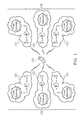
- Fig. 1 is a block diagram illustrating a wireless communications environment according to an embodiment of the invention.
- the wireless communications environment 100 comprises a mobile communication device 110, and a plurality of service networks 121 ⁇ 123 and 131 ⁇ 133, wherein the service networks 121 ⁇ 123 belong to the PLMN 120, and the service networks 131 ⁇ 133 belong to the PLMN 130. That is, the service networks 121 ⁇ 123 are deployed by one operator, and the service networks 131 ⁇ 133 are deployed by another operator.
- Each of the service networks 121 ⁇ 123 supports a respective RAT in one or more particular radio frequencies.
- each of the service networks 131 ⁇ 133 supports a respective RAT in one or more particular radio frequencies.
- the service network 121 is a GSM network
- the service network 122 is a WCDMA network
- the service network 123 is an LTE network.
- the service network 131 is an IS-95 network
- the service network 132 is a CDMA2000 network
- the service network 133 is a TD-LTE network.
- the mobile communication device 110 supports a plurality of RATs and radio frequencies, including the RATs and radio frequencies utilized by the service networks 121 ⁇ 123 and 131 ⁇ 133.
- the mobile communication device 110 may wirelessly communicate with one of the service networks 121 ⁇ 123 and 131 ⁇ 133 for obtaining mobile services, including Circuit-Switched (CS) and/or Packet-Switched (PS) services, wherein the CS services may include voice call services, and Short Message Service (SMS), etc., and the PS services may include data services, such as e-mail transmission, web browsing, file upload/download, instant messaging, streaming video, or others.
- the mobile communication device 110 may be a multi-RAT mobile device, such as a mobile phone, panel PC, or notebook PC, etc.
- the mobile communication device 110 may be an external data card for a computer host, notebook, or panel PC to obtain mobile services.
- Fig. 2 is a block diagram illustrating the mobile communication device 110 according to an embodiment of the invention.
- the mobile communication device 110 comprises a Radio Frequency (RF) device 10, a Baseband chip 20, a display device 30, an input device 40, and a storage device 50, wherein the RF device 10, the display device 30, the input device 40, and the storage device 50 are coupled to the Baseband chip 20.
- the Baseband chip 20 comprises a processor 21, such as a Micro-Control Unit (MCU), Digital Signal Processor (DSP), or the like, for controlling the communications between the subscriber identity card and the RF device 10, sending a series of frame data (e.g.
- MCU Micro-Control Unit
- DSP Digital Signal Processor
- the processor 21 coordinates the aforementioned operations of the RF device 10, the display device 30, the input device 40, and the storage device 50 for performing the method for network selection.
- the subscriber identity card may be provided in compliance with the specification of one or more of the RATs utilized by the service networks 121 ⁇ 123 and 131 ⁇ 133, and is used to store a frequency list (which may also be referred to as a stored list of frequencies), and subscriber information, including subscriber information and preset PLMNs (such as Registered PLMN (RPLMN), Home PLMN (HPLMN), and Equivalent PLMN (EPLMN)).
- RPLMN Registered PLMN
- HPLMN Home PLMN
- EPLMN Equivalent PLMN
- the subscriber identity card may be a Subscriber Identity Module (SIM) card for the service network 121 being a GSM network or the service network 122 being a WCDMA network, or the subscriber identity card may be a Universal SIM (USIM) card for the service network 122 being a WCDMA network or the service network 123 being an LTE network, or the subscriber identity card may be a User Identity Module (UIM) for the service network 131 being an IS-95 network, or the subscriber identity card may be a Removable UIM (RUIM) for the service network 132 being a CDMA2000 network.
- SIM Subscriber Identity Module
- USIM Universal SIM
- UIM User Identity Module
- RUIM Removable UIM
- the mobile communication device 110 may need more than one subscriber identity card or the subscriber identity card is a dual-mode subscriber identity card, for holding more than one set of stored information and subscriber information, which allows the mobile communication device 110 to wirelessly communicate with more than one of the service networks 121 ⁇ 123 and 131 ⁇ 133 at the same time.
- the Baseband chip 20 may further comprise one interface (not shown) to handle the connection to the subscriber identity card.
- the mobile communication device 110 may further comprise a card controller (not shown) coupled or connected between the Baseband chip 20 and the subscriber identity card.
- the card controller is responsible for powering the subscriber identity card with a voltage level according to the requirements thereof by a Power Management Integrated Chip (PMIC) and a battery, wherein the voltage level for the subscriber identity card is determined during initiation.
- PMIC Power Management Integrated Chip
- the Baseband chip 20 may read/write data from/to the subscriber identity card via the card controller.
- the card controller selectively transfers clocks, resets, and/or data signals to the subscriber identity card according to instructions issued by the Baseband chip 20.
- the stored information and subscriber information may be written directly into the mobile communication device 110, without the need for any socket to insert any subscriber identity card, or the stored and subscriber information may be provided by a virtual subscriber identity card stored in the storage device 50, and the invention is not limited thereto.
- the Baseband chip 20 may further contain other hardware components to perform baseband signal processing, including Analog-to-Digital Conversion (ADC)/Digital-to-Analog Conversion (DAC), gain adjusting, modulation/demodulation, encoding/decoding, and so on.
- ADC Analog-to-Digital Conversion
- DAC Digital-to-Analog Conversion
- the RF device 10 may receive RF wireless signals via the antenna, convert the received RF wireless signals to baseband signals, which are processed by the Baseband chip 20, or receive baseband signals from the Baseband chip 20 and convert the received baseband signals to RF wireless signals, which are later transmitted via the antenna.
- the RF device 10 may also contain multiple hardware devices to perform radio frequency conversion.
- the RF device 10 may comprise a mixer to multiply the baseband signals with a carrier oscillated in the radio frequency of the supported RATs, wherein the radio frequency may be 900MHz, 1800MHz or 1900MHz utilized in GSM/GPRS/EDGE technology, or may be 900MHz, 1900MHz or 2100MHz utilized in WCDMA technology, or may be 900MHz, 2100MHz, or 2.6GHz utilized in LTE/LTE-A/TD-LTE technology, or others, depending on the RAT in use.
- the radio frequency may be 900MHz, 1800MHz or 1900MHz utilized in GSM/GPRS/EDGE technology, or may be 900MHz, 1900MHz or 2100MHz utilized in WCDMA technology, or may be 900MHz, 2100MHz, or 2.6GHz utilized in LTE/LTE-A/TD-LTE technology, or others, depending on the RAT in use.
- the display device 30 may be a Liquid-Crystal Display (LCD), Light-Emitting Diode (LED) display, or Electronic Paper Display (EPD), etc., for providing a display function.
- the display device 30 may further comprise one or more touch sensors disposed thereon or thereunder for sensing touches, contacts, or approximations of objects, such as fingers or styluses.
- the input device 40 may comprise one or more buttons, a keyboard, a mouse, a touch pad, a video camera, a microphone, and/or a speaker, etc., serving as the Man-Machine Interface (MMI) for interaction with users.
- MMI Man-Machine Interface
- the storage device 50 may be a memory, such as a FLASH memory or a Non-volatile Random Access Memory (NVRAM), or a magnetic storage device, such as a hard disk or a magnetic tape, or an optical disc, or any combination thereof for storing communication data for the Baseband chip 20 and/or storing subscriber data read from the subscriber identity card.
- NVRAM Non-volatile Random Access Memory
- Fig. 3 is a flow chart illustrating the method for network selection by a mobile communication device according to an embodiment of the invention.
- the mobile communication device is a multi-RAT mobile phone which supports a plurality of RATs and radio frequencies.
- the mobile communication device schedules the plurality of RATs and the plurality of radio frequencies in pairs in an order for a PLMN selection procedure (step S310).
- the PLMN selection procedure is initiated in response to a power-on of the mobile communication device or in response to the mobile communication device being out of service.
- the mobile communication device determines one of the pairs and repeats the determined pair in the order of the pairs during the PLMN selection procedure (step S320).
- the determined pair is determined according to one of the following features of each of the pairs: 1) whether a RAT and a radio frequency of a pair is a serving RAT and a serving frequency; 2) whether a RAT and a radio frequency of a pair appears in neighbor information from a System Information Broadcast (SIB) or measurement configuration; 3) whether a RAT and a radio frequency of a pair appears in a frequency list from a subscriber identity card coupled in or to the mobile communication device; and 4) a priority level of a PLMN to which a RAT and a radio frequency of a pair belong.
- SIB System Information Broadcast
- each pair may be assigned a weighting value according to the features mentioned above, and the pairs are scheduled in the order of their corresponding weighting values, wherein the pair with a weighting value greater than a predetermined threshold may be determined to be repeated.
- the determined pair is repeated during the PLMN selection procedure when a predetermined number of the other pairs have been scanned.
- the mobile communication device may use a counter to count the number of pairs that have been scanned since the last repeat of the determined pair, and repeat the determined pair when the counter reaches the predetermined number.
- the determined pair is repeated during the PLMN selection procedure when a predetermined period of time has elapsed since the last repeat of the determined pair.
- the mobile communication device may use a timer to count the predetermined period of time from the last repeat of the determined pair, and repeat the determined pair when the timer expires.
- Fig. 4 is a schematic diagram illustrating the scheduling list of pairs of RATs and radio frequencies with more than one repeated pair according to an embodiment of the invention.
- the supported RATs and radio frequencies are paired up and scheduled from left to right according to the priority levels of their corresponding PLMNs.
- the pairs of RATs and radio frequencies may be scheduled according to other features of the pairs as described in the embodiment of Fig. 3 .
- the mobile communication device may maintain a prioritized list of the PLMNs, which arranges the PLMNs according to their priority levels.
- the RPLMN has the highest priority level
- the HPLMN has the next highest priority level.
- the pairs belonging to the RPLMN are determined to be the most important target for network selection.
- the scheduling list is rearranged to repeat the first 3 pairs. Specifically, the first pair is repeated after a predetermined number of subsequent pairs or after a predetermined number of times has elapsed, the second pair is repeated after a predetermined number of pairs subsequent to the repeated first pair or after a predetermined number of times has elapsed since the repeated first pair, and the third pair is repeated after a predetermined number of pairs subsequent to the repeated second pair or after a predetermined number of times has elapsed since the repeated second pair. That is, the first 3 pairs will be rescanned every once in a while to increase the chance of obtaining/regaining services from the RPLMN.
- Fig. 5 is a flow chart illustrating the method for network selection by a mobile communication device according to another embodiment of the invention.
- the mobile communication device is a multi-RAT mobile phone which supports a plurality of RATs and radio frequencies.
- the mobile communication device is powered on or detects an out-of-service situation (step S501), and then initiates a PLMN selection procedure.
- the mobile communication device first selects one PLMN from the top of a prioritized list of a plurality of PLMNs (step S502). That is, the PLMN with the highest priority level is selected.
- the prioritized list arranges the PLMNs according to their priority levels, wherein the priority levels may be in compliance with the 3rd Generation Partnership Project (3GPP) Technical Specification (TS) 23.122, V8.7.0.
- 3GPP 3rd Generation Partnership Project
- TS Technical Specification
- the RPLMN or EPLMN may have the first priority level
- the HPLMN or Equivalent Home PLMN (EHPLMN) may have the second priority level
- the PLMNs in the "User Controlled PLMN selector with Access Technology" data file stored in the subscriber identity card may have the third priority level
- the PLMNs in the "Operator Controlled PLMN selector with Access Technology" data file stored in the subscriber identity card may have the fourth priority level
- the PLMNs with high received signal quality may have the fifth priority level
- other PLMNs may have the sixth priority level and arranged in descending order of received signal quality.
- the mobile communication device determines whether any cell belonging to the selected PLMN has been found previously during the PLMN selection procedure (step S503). If no cell belonging to the selected PLMN has been found previously, the mobile communication device selects one pair of RAT and radio frequency from the top of the scheduling list of a plurality of pairs of RATs and radio frequencies, and then scans the selected pair of RAT and radio frequency (step S504). In another embodiment, when selecting a pair from the scheduling list, the mobile communication device may determine whether one or more of the pairs in the scheduling list belong to a PLMN other than the selected PLMN, and if so, the pairs belonging to a different PLMN are skipped.
- the mobile communication device determines whether any cell belonging to the selected PLMN has been found with the selected pair (step S505). If no cell belonging to the selected PLMN has been found with the selected pair, the mobile communication device determines whether all pairs in the scheduling list have been scanned (step S506), and if not, the method returns to step S504. Otherwise, if all pairs in the scheduling list are scanned, the search for the selected PLMN is determined to be complete and the method continues to step S507.
- step S507 the mobile communication device determines whether all PLMNs in the priority list have been searched, and if so, the method ends. Otherwise, if there is any unsearched PLMN in the priority list, the method returns to step S502.
- step S505 if a cell belonging to the selected PLMN has been found with the selected pair, the mobile communication device performs a registration procedure on the found cell (step S508), and then determines whether full services can be obtained from the selected PLMN (step S509). If full services can be obtained, the method ends. Otherwise, if full services cannot be obtained, the method continues to step S507. Please note that the detailed description of the registration procedure is omitted herein since it is beyond the scope of the invention.
- step S503 if a cell belonging to the selected PLMN has been found previously, the method continues to step S508.
- Figs. 3 and 5 may be implemented in program code stored in a machine-readable storage medium, such as a magnetic tape, semiconductor, magnetic disk, optical disc (e.g., CD-ROM, DVD-ROM, etc.), or others, which is loaded and executed by the Baseband processor of a mobile communication device. Therefore, the scope of the present invention shall be defined and protected by the following claims and their equivalents.
Landscapes
- Engineering & Computer Science (AREA)
- Computer Networks & Wireless Communication (AREA)
- Signal Processing (AREA)
- Computer Security & Cryptography (AREA)
- Mobile Radio Communication Systems (AREA)
Abstract
Description
- This Application claims priority of
U.S. Provisional Application No. 62/108,156, filed on January 27, 2015 - The invention generally relates to wireless communication technologies, and more particularly, to methods for network selection by mobile communication devices supporting a plurality of Radio Access Technologies (RATs) and a plurality of radio frequencies.
- With growing demand for ubiquitous computing and networking, various Radio Access Technologies (RATs) have been developed, such as the Global System for Mobile communications (GSM) technology, General Packet Radio Service (GPRS) technology, Enhanced Data rates for Global Evolution (EDGE) technology, Wideband Code Division Multiple Access (W-CDMA) technology, High Speed Packet Access (HSPA) technology, Interim Standard 95 (IS-95) technology, Code Division Multiple Access 2000 (CDMA2000) technology, CDMA2000 1x Evolution-Data Optimized or Evolution-Data (1x EV-DO) technology, Time Division-Synchronous Code Division Multiple Access (TD-SCDMA) technology, Worldwide Interoperability for Microwave Access (WiMAX) technology, Long Term Evolution (LTE) technology, Time- Division LTE (TD-LTE) technology, LTE-Advanced (LTE-A) technology, and others.
- Generally, a mobile phone only supports one RAT for providing users with the flexibility of mobile communications at all times via the supported RAT. However, due to the complexity of various network deployments, so-called multi-RAT mobile phones have been developed, which generally support two or more RATs and radio frequencies, and select one of the RATs for obtaining mobile services. Since multi-RAT mobile phones support multiple RATs and radio frequencies, the Public Land Mobile Network (PLMN) selection procedure will inevitably take a long time to complete a full scan for all of the supported RATs on each supported radio frequency. This may create an unfavorable situation where a multi-RAT mobile phone enters an area with very poor signal quality only for a short time (e.g., passing through a tunnel). For example, once the multi-RAT mobile phone detects that the signal coverage has been lost, the PLMN selection procedure will be performed for a full scan. Later, even if the multi-RAT mobile phone swiftly enters an area with signal coverage of those that have been scanned in the early stage of the full scan, it will still continue the full scan with the un-scanned RATs and radio frequencies and cannot regain normal services from the available area using the scanned RAT and radio frequency. The delay for regaining normal services is expected to get worse especially when the number of supported RATs and radio frequencies increases, and the longer the delay is, the higher the chance of a service breakup (e.g., TCP/IP-based application).
- Therefore, it is desirable to have a more sophisticated way of network selection that can reduce the time to obtain/regain normal services.
- In one aspect of the invention, a mobile communication device supporting a plurality of RATs and a plurality of radio frequencies is provided. The mobile communication device comprises a Baseband processor which is configured to schedule a plurality of RATs and a plurality of radio frequencies in pairs in an order for a Public Land Mobile Network (PLMN) selection procedure, and determine one of the pairs and repeat the determined pair in the order of the pairs during the PLMN selection procedure.
- In another aspect of the invention, a method for network selection by a mobile communication device supporting a plurality of RATs and a plurality of radio frequencies is provided. The method comprises the steps of: scheduling the plurality of RATs and the plurality of radio frequencies in pairs in an order for a PLMN selection procedure; and determining one of the pairs and repeating the determined pair in the order of the pairs during the PLMN selection procedure.
- Other aspects and features of the present invention will become apparent to those with ordinarily skill in the art upon review of the following descriptions of specific embodiments of the mobile communication devices and the methods for network selection.
- The invention can be more fully understood by reading the subsequent detailed description and examples with references made to the accompanying drawings, wherein:
-
Fig. 1 is a block diagram illustrating a wireless communications environment according to an embodiment of the invention; -
Fig. 2 is a block diagram illustrating themobile communication device 110 according to an embodiment of the invention; -
Fig. 3 is a flow chart illustrating the method for network selection by a mobile communication device according to an embodiment of the invention; -
Fig. 4 is a schematic diagram illustrating the scheduling list of pairs of RATs and radio frequencies with more than one repeated pair according to an embodiment of the invention; and -
Fig. 5 is a flow chart illustrating the method for network selection by a mobile communication device according to another embodiment of the invention. - The following description is of the best-contemplated mode of carrying out the invention. This description is made for the purpose of illustrating the general principles of the invention and should not be taken in a limiting sense. It should be understood that the embodiments may be realized in software, hardware, firmware, or any combination thereof.
-
Fig. 1 is a block diagram illustrating a wireless communications environment according to an embodiment of the invention. Thewireless communications environment 100 comprises amobile communication device 110, and a plurality ofservice networks 121∼123 and 131∼133, wherein theservice networks 121∼123 belong to thePLMN 120, and theservice networks 131∼133 belong to thePLMN 130. That is, theservice networks 121∼123 are deployed by one operator, and theservice networks 131∼133 are deployed by another operator. Each of theservice networks 121∼123 supports a respective RAT in one or more particular radio frequencies. Likewise, each of theservice networks 131∼133 supports a respective RAT in one or more particular radio frequencies. Specifically, theservice network 121 is a GSM network, theservice network 122 is a WCDMA network, and theservice network 123 is an LTE network. Theservice network 131 is an IS-95 network, theservice network 132 is a CDMA2000 network, and theservice network 133 is a TD-LTE network. - The
mobile communication device 110 supports a plurality of RATs and radio frequencies, including the RATs and radio frequencies utilized by theservice networks 121∼123 and 131∼133. Themobile communication device 110 may wirelessly communicate with one of theservice networks 121∼123 and 131∼133 for obtaining mobile services, including Circuit-Switched (CS) and/or Packet-Switched (PS) services, wherein the CS services may include voice call services, and Short Message Service (SMS), etc., and the PS services may include data services, such as e-mail transmission, web browsing, file upload/download, instant messaging, streaming video, or others. For example, themobile communication device 110 may be a multi-RAT mobile device, such as a mobile phone, panel PC, or notebook PC, etc. Alternatively, themobile communication device 110 may be an external data card for a computer host, notebook, or panel PC to obtain mobile services. -
Fig. 2 is a block diagram illustrating themobile communication device 110 according to an embodiment of the invention. Themobile communication device 110 comprises a Radio Frequency (RF)device 10, aBaseband chip 20, adisplay device 30, aninput device 40, and astorage device 50, wherein theRF device 10, thedisplay device 30, theinput device 40, and thestorage device 50 are coupled to theBaseband chip 20. TheBaseband chip 20 comprises aprocessor 21, such as a Micro-Control Unit (MCU), Digital Signal Processor (DSP), or the like, for controlling the communications between the subscriber identity card and theRF device 10, sending a series of frame data (e.g. representing text messages, graphics, images or others) to thedisplay device 30, receiving signals from theinput device 40, and storing and retrieving data to and from thestorage device 50. Most importantly, theprocessor 21 coordinates the aforementioned operations of theRF device 10, thedisplay device 30, theinput device 40, and thestorage device 50 for performing the method for network selection. - The subscriber identity card may be provided in compliance with the specification of one or more of the RATs utilized by the
service networks 121∼123 and 131∼133, and is used to store a frequency list (which may also be referred to as a stored list of frequencies), and subscriber information, including subscriber information and preset PLMNs (such as Registered PLMN (RPLMN), Home PLMN (HPLMN), and Equivalent PLMN (EPLMN)). For example, the subscriber identity card may be a Subscriber Identity Module (SIM) card for theservice network 121 being a GSM network or theservice network 122 being a WCDMA network, or the subscriber identity card may be a Universal SIM (USIM) card for theservice network 122 being a WCDMA network or theservice network 123 being an LTE network, or the subscriber identity card may be a User Identity Module (UIM) for theservice network 131 being an IS-95 network, or the subscriber identity card may be a Removable UIM (RUIM) for theservice network 132 being a CDMA2000 network. Alternatively, themobile communication device 110 may need more than one subscriber identity card or the subscriber identity card is a dual-mode subscriber identity card, for holding more than one set of stored information and subscriber information, which allows themobile communication device 110 to wirelessly communicate with more than one of theservice networks 121∼123 and 131∼133 at the same time. - In one embodiment, the
Baseband chip 20 may further comprise one interface (not shown) to handle the connection to the subscriber identity card. In another embodiment, themobile communication device 110 may further comprise a card controller (not shown) coupled or connected between theBaseband chip 20 and the subscriber identity card. The card controller is responsible for powering the subscriber identity card with a voltage level according to the requirements thereof by a Power Management Integrated Chip (PMIC) and a battery, wherein the voltage level for the subscriber identity card is determined during initiation. TheBaseband chip 20 may read/write data from/to the subscriber identity card via the card controller. In addition, the card controller selectively transfers clocks, resets, and/or data signals to the subscriber identity card according to instructions issued by theBaseband chip 20. Alternatively, the stored information and subscriber information may be written directly into themobile communication device 110, without the need for any socket to insert any subscriber identity card, or the stored and subscriber information may be provided by a virtual subscriber identity card stored in thestorage device 50, and the invention is not limited thereto. - Additionally, the Baseband
chip 20 may further contain other hardware components to perform baseband signal processing, including Analog-to-Digital Conversion (ADC)/Digital-to-Analog Conversion (DAC), gain adjusting, modulation/demodulation, encoding/decoding, and so on. TheRF device 10 may receive RF wireless signals via the antenna, convert the received RF wireless signals to baseband signals, which are processed by theBaseband chip 20, or receive baseband signals from theBaseband chip 20 and convert the received baseband signals to RF wireless signals, which are later transmitted via the antenna. TheRF device 10 may also contain multiple hardware devices to perform radio frequency conversion. For example, theRF device 10 may comprise a mixer to multiply the baseband signals with a carrier oscillated in the radio frequency of the supported RATs, wherein the radio frequency may be 900MHz, 1800MHz or 1900MHz utilized in GSM/GPRS/EDGE technology, or may be 900MHz, 1900MHz or 2100MHz utilized in WCDMA technology, or may be 900MHz, 2100MHz, or 2.6GHz utilized in LTE/LTE-A/TD-LTE technology, or others, depending on the RAT in use. - The
display device 30 may be a Liquid-Crystal Display (LCD), Light-Emitting Diode (LED) display, or Electronic Paper Display (EPD), etc., for providing a display function. Alternatively, thedisplay device 30 may further comprise one or more touch sensors disposed thereon or thereunder for sensing touches, contacts, or approximations of objects, such as fingers or styluses. - The
input device 40 may comprise one or more buttons, a keyboard, a mouse, a touch pad, a video camera, a microphone, and/or a speaker, etc., serving as the Man-Machine Interface (MMI) for interaction with users. - The
storage device 50 may be a memory, such as a FLASH memory or a Non-volatile Random Access Memory (NVRAM), or a magnetic storage device, such as a hard disk or a magnetic tape, or an optical disc, or any combination thereof for storing communication data for theBaseband chip 20 and/or storing subscriber data read from the subscriber identity card. - It should be understood that the components described in the embodiment of
Fig. 2 are for illustrative purposes only and are not intended to limit the scope of the present application. -
Fig. 3 is a flow chart illustrating the method for network selection by a mobile communication device according to an embodiment of the invention. In this embodiment, the mobile communication device is a multi-RAT mobile phone which supports a plurality of RATs and radio frequencies. To begin, the mobile communication device schedules the plurality of RATs and the plurality of radio frequencies in pairs in an order for a PLMN selection procedure (step S310). Specifically, the PLMN selection procedure is initiated in response to a power-on of the mobile communication device or in response to the mobile communication device being out of service. - Subsequently, the mobile communication device determines one of the pairs and repeats the determined pair in the order of the pairs during the PLMN selection procedure (step S320). Specifically, the determined pair is determined according to one of the following features of each of the pairs: 1) whether a RAT and a radio frequency of a pair is a serving RAT and a serving frequency; 2) whether a RAT and a radio frequency of a pair appears in neighbor information from a System Information Broadcast (SIB) or measurement configuration; 3) whether a RAT and a radio frequency of a pair appears in a frequency list from a subscriber identity card coupled in or to the mobile communication device; and 4) a priority level of a PLMN to which a RAT and a radio frequency of a pair belong. For example, each pair may be assigned a weighting value according to the features mentioned above, and the pairs are scheduled in the order of their corresponding weighting values, wherein the pair with a weighting value greater than a predetermined threshold may be determined to be repeated.
- In one embodiment, the determined pair is repeated during the PLMN selection procedure when a predetermined number of the other pairs have been scanned. For example, the mobile communication device may use a counter to count the number of pairs that have been scanned since the last repeat of the determined pair, and repeat the determined pair when the counter reaches the predetermined number. In another embodiment, the determined pair is repeated during the PLMN selection procedure when a predetermined period of time has elapsed since the last repeat of the determined pair. For example, the mobile communication device may use a timer to count the predetermined period of time from the last repeat of the determined pair, and repeat the determined pair when the timer expires.
-
Fig. 4 is a schematic diagram illustrating the scheduling list of pairs of RATs and radio frequencies with more than one repeated pair according to an embodiment of the invention. As shown in the upper half ofFig. 4 , the supported RATs and radio frequencies are paired up and scheduled from left to right according to the priority levels of their corresponding PLMNs. In another embodiment, the pairs of RATs and radio frequencies may be scheduled according to other features of the pairs as described in the embodiment ofFig. 3 . Specifically, the mobile communication device may maintain a prioritized list of the PLMNs, which arranges the PLMNs according to their priority levels. In this embodiment, the RPLMN has the highest priority level, and the HPLMN has the next highest priority level. - Among all pairs, the pairs belonging to the RPLMN are determined to be the most important target for network selection. As shown in the lower half of
Fig. 4 , the scheduling list is rearranged to repeat the first 3 pairs. Specifically, the first pair is repeated after a predetermined number of subsequent pairs or after a predetermined number of times has elapsed, the second pair is repeated after a predetermined number of pairs subsequent to the repeated first pair or after a predetermined number of times has elapsed since the repeated first pair, and the third pair is repeated after a predetermined number of pairs subsequent to the repeated second pair or after a predetermined number of times has elapsed since the repeated second pair. That is, the first 3 pairs will be rescanned every once in a while to increase the chance of obtaining/regaining services from the RPLMN. -
Fig. 5 is a flow chart illustrating the method for network selection by a mobile communication device according to another embodiment of the invention. In this embodiment, the mobile communication device is a multi-RAT mobile phone which supports a plurality of RATs and radio frequencies. To begin, the mobile communication device is powered on or detects an out-of-service situation (step S501), and then initiates a PLMN selection procedure. Specifically, during the PLMN selection procedure, the mobile communication device first selects one PLMN from the top of a prioritized list of a plurality of PLMNs (step S502). That is, the PLMN with the highest priority level is selected. - The prioritized list arranges the PLMNs according to their priority levels, wherein the priority levels may be in compliance with the 3rd Generation Partnership Project (3GPP) Technical Specification (TS) 23.122, V8.7.0. For example, the RPLMN or EPLMN may have the first priority level, the HPLMN or Equivalent Home PLMN (EHPLMN) may have the second priority level, the PLMNs in the "User Controlled PLMN selector with Access Technology" data file stored in the subscriber identity card may have the third priority level, the PLMNs in the "Operator Controlled PLMN selector with Access Technology" data file stored in the subscriber identity card may have the fourth priority level, the PLMNs with high received signal quality may have the fifth priority level, and other PLMNs may have the sixth priority level and arranged in descending order of received signal quality.
- Next, the mobile communication device determines whether any cell belonging to the selected PLMN has been found previously during the PLMN selection procedure (step S503). If no cell belonging to the selected PLMN has been found previously, the mobile communication device selects one pair of RAT and radio frequency from the top of the scheduling list of a plurality of pairs of RATs and radio frequencies, and then scans the selected pair of RAT and radio frequency (step S504). In another embodiment, when selecting a pair from the scheduling list, the mobile communication device may determine whether one or more of the pairs in the scheduling list belong to a PLMN other than the selected PLMN, and if so, the pairs belonging to a different PLMN are skipped.
- Subsequently, the mobile communication device determines whether any cell belonging to the selected PLMN has been found with the selected pair (step S505). If no cell belonging to the selected PLMN has been found with the selected pair, the mobile communication device determines whether all pairs in the scheduling list have been scanned (step S506), and if not, the method returns to step S504. Otherwise, if all pairs in the scheduling list are scanned, the search for the selected PLMN is determined to be complete and the method continues to step S507.
- In step S507, the mobile communication device determines whether all PLMNs in the priority list have been searched, and if so, the method ends. Otherwise, if there is any unsearched PLMN in the priority list, the method returns to step S502.
- Subsequent to step S505, if a cell belonging to the selected PLMN has been found with the selected pair, the mobile communication device performs a registration procedure on the found cell (step S508), and then determines whether full services can be obtained from the selected PLMN (step S509). If full services can be obtained, the method ends. Otherwise, if full services cannot be obtained, the method continues to step S507. Please note that the detailed description of the registration procedure is omitted herein since it is beyond the scope of the invention.
- Subsequent to step S503, if a cell belonging to the selected PLMN has been found previously, the method continues to step S508.
- While the invention has been described by way of example and in terms of preferred embodiment, it is to be understood that the invention is not limited thereto. Those who are skilled in this technology can still make various alterations and modifications without departing from the scope and spirit of this invention. For example, the method of
Figs. 3 and5 may be implemented in program code stored in a machine-readable storage medium, such as a magnetic tape, semiconductor, magnetic disk, optical disc (e.g., CD-ROM, DVD-ROM, etc.), or others, which is loaded and executed by the Baseband processor of a mobile communication device. Therefore, the scope of the present invention shall be defined and protected by the following claims and their equivalents.
Claims (12)
- A mobile communication device supporting a plurality of Radio Access Technologies (RATs) and a plurality of radio frequencies, comprising:a Baseband processor configured to schedule the plurality of RATs and the plurality of radio frequencies in pairs in an order for a Public Land Mobile Network (PLMN) selection procedure, and determine one of the pairs and repeat the determined pair in the order of the pairs during the PLMN selection procedure.
- The mobile communication device of claim 1, wherein the determined pair is repeated during the PLMN selection procedure when a predetermined number of the other pairs have been scanned, or when a predetermined period of time has elapsed since the last repeat of the determined pair.
- The mobile communication device of claim 1, wherein the determined pair is determined according to one of the following features of each of the pairs:whether a RAT and a radio frequency of a pair is a serving RAT and a serving frequency;whether a RAT and a radio frequency of a pair appears in neighbor information from a System Information Broadcast (SIB) or measurement configuration;whether a RAT and a radio frequency of a pair appears in a frequency list from a subscriber identity card coupled in or to the mobile communication device; anda priority level of a PLMN to which a RAT and a radio frequency of a pair belong.
- The mobile communication device of claim 1, wherein the PLMN selection procedure is initiated in response to a power-on of the mobile communication device or in response to the mobile communication device being out of service.
- The mobile communication device of claim 1, wherein the Baseband processor is further configured to determine a list of a plurality of PLMNs, and during the PLMN selection procedure, the PLMNs are selected one at a time from the top of the list and the pairs are scanned in the order with the determined pair repeated therein for each selected PLMN.
- The mobile communication device of claim 1, wherein, each time one of the PLMNs is selected, the Baseband processor is further configured to determine whether one or more of the pairs in the order belongs to a PLMN other than the selected PLMN, and the one or more of the pairs are skipped during the PLMN selection procedure for the selected PLMN.
- A method for network selection by a mobile communication device supporting a plurality of Radio Access Technologies (RATs) and a plurality of radio frequencies, comprising:scheduling the plurality of RATs and the plurality of radio frequencies in pairs in an order for a Public Land Mobile Network (PLMN) selection procedure; anddetermining one of the pairs and repeating the determined pair in the order of the pairs during the PLMN selection procedure.
- The method of claim 7, wherein the determined pair is repeated during the PLMN selection procedure when a predetermined number of the other pairs have been scanned, or when a predetermined period of time has elapsed since the last repeat of the determined pair.
- The method of claim 7, wherein the determined pair is determined according to one of the following features of each of the pairs:whether a RAT and a radio frequency of a pair is a serving RAT and a serving frequency;whether a RAT and a radio frequency of a pair appears in neighbor information from a System Information Broadcast (SIB) or measurement configuration;whether a RAT and a radio frequency of a pair appears in a frequency list from a subscriber identity card coupled in or to the mobile communication device; anda priority level of a PLMN to which a RAT and a radio frequency of a pair belong.
- The method of claim 7, wherein the PLMN selection procedure is initiated in response to a power-on of the mobile communication device or in response to the mobile communication device being out of service.
- The method of claim 7, further comprising determining a list of a plurality of PLMNs, wherein during the PLMN selection procedure, the PLMNs are selected one at a time from the top of the list and the pairs are scanned in the order with the determined pair repeated therein for the selected PLMN.
- The method of claim 11, further comprising: each time one of the PLMNs is selected, determining whether one or more of the pairs in the order belongs to a PLMN other than the selected PLMN, wherein the one or more of the pairs are skipped during the PLMN selection procedure for the selected PLMN.
Applications Claiming Priority (2)
| Application Number | Priority Date | Filing Date | Title |
|---|---|---|---|
| US201562108156P | 2015-01-27 | 2015-01-27 | |
| US14/711,028 US9408139B1 (en) | 2015-01-27 | 2015-05-13 | Multi-rat mobile communication devices and methods for network selection |
Publications (1)
| Publication Number | Publication Date |
|---|---|
| EP3051883A1 true EP3051883A1 (en) | 2016-08-03 |
Family
ID=53404349
Family Applications (1)
| Application Number | Title | Priority Date | Filing Date |
|---|---|---|---|
| EP15170473.1A Withdrawn EP3051883A1 (en) | 2015-01-27 | 2015-06-03 | Multi-rat mobile communication devices and methods for network selection |
Country Status (3)
| Country | Link |
|---|---|
| US (1) | US9408139B1 (en) |
| EP (1) | EP3051883A1 (en) |
| CN (1) | CN105828417A (en) |
Cited By (2)
| Publication number | Priority date | Publication date | Assignee | Title |
|---|---|---|---|---|
| CN107155203A (en) * | 2017-06-28 | 2017-09-12 | 努比亚技术有限公司 | Residence reselecting, device and computer-readable recording medium |
| US11395219B2 (en) | 2019-05-07 | 2022-07-19 | Samsung Electronics Co., Ltd. | Method and apparatus for performing PLMN selection in dual registration mode |
Families Citing this family (7)
| Publication number | Priority date | Publication date | Assignee | Title |
|---|---|---|---|---|
| CN104968030B (en) * | 2015-04-30 | 2016-12-28 | 广东欧珀移动通信有限公司 | A kind of method for network access and mobile communication terminal |
| US11071043B2 (en) * | 2018-05-21 | 2021-07-20 | Mediatek Inc. | Enhanced handling on forbidden PLMN list |
| WO2020034327A1 (en) * | 2018-09-27 | 2020-02-20 | Zte Corporation | Inter-radio access technology (rat) |
| WO2021179188A1 (en) * | 2020-03-11 | 2021-09-16 | Thales Dis Ais Deutschland (Gmbh) | Method for efficient frequency scan |
| CN115486131B (en) * | 2020-05-01 | 2025-07-25 | 苹果公司 | Independent Mode PLMN Selection |
| EP4376491A4 (en) * | 2021-08-30 | 2024-11-27 | Samsung Electronics Co., Ltd. | ELECTRONIC DEVICE FOR MANUAL SEARCH AND CORRESPONDING OPERATING METHOD |
| EP4721476A1 (en) * | 2023-06-01 | 2026-04-08 | Koninklijke Philips N.V. | Multiple access network handling |
Citations (5)
| Publication number | Priority date | Publication date | Assignee | Title |
|---|---|---|---|---|
| WO2008052123A1 (en) * | 2006-10-25 | 2008-05-02 | Qualcomm Incorporated | Uniform out-of-service search for wireless communication systems |
| US20080153486A1 (en) * | 2006-12-22 | 2008-06-26 | Telefonaktiebolaget L M Ericsson (Publ) | Efficient PLMN Search Order |
| EP2389037A2 (en) * | 2006-08-02 | 2011-11-23 | Research In Motion Limited | Supporting radio access system selection by multi-mode mobile stations |
| US20140066061A1 (en) * | 2012-09-04 | 2014-03-06 | Apple Inc. | Scheduling prioritized network searches for a multi-mode communication device |
| US20150004966A1 (en) * | 2013-06-26 | 2015-01-01 | Qualcomm Incorporated | Method and apparatus for an optimized search for service when a multi-mode ue goes out of service |
Family Cites Families (2)
| Publication number | Priority date | Publication date | Assignee | Title |
|---|---|---|---|---|
| US8311576B2 (en) | 2009-01-30 | 2012-11-13 | Research In Motion Limited | Method and apparatus for network scanning based on neighbor information |
| EP2882252A1 (en) * | 2013-11-15 | 2015-06-10 | HTC Corporation | Methods for handling of service request procedures and apparatuses using the same |
-
2015
- 2015-05-13 US US14/711,028 patent/US9408139B1/en not_active Expired - Fee Related
- 2015-06-03 EP EP15170473.1A patent/EP3051883A1/en not_active Withdrawn
- 2015-06-26 CN CN201510361716.9A patent/CN105828417A/en not_active Withdrawn
Patent Citations (5)
| Publication number | Priority date | Publication date | Assignee | Title |
|---|---|---|---|---|
| EP2389037A2 (en) * | 2006-08-02 | 2011-11-23 | Research In Motion Limited | Supporting radio access system selection by multi-mode mobile stations |
| WO2008052123A1 (en) * | 2006-10-25 | 2008-05-02 | Qualcomm Incorporated | Uniform out-of-service search for wireless communication systems |
| US20080153486A1 (en) * | 2006-12-22 | 2008-06-26 | Telefonaktiebolaget L M Ericsson (Publ) | Efficient PLMN Search Order |
| US20140066061A1 (en) * | 2012-09-04 | 2014-03-06 | Apple Inc. | Scheduling prioritized network searches for a multi-mode communication device |
| US20150004966A1 (en) * | 2013-06-26 | 2015-01-01 | Qualcomm Incorporated | Method and apparatus for an optimized search for service when a multi-mode ue goes out of service |
Non-Patent Citations (1)
| Title |
|---|
| 3: "Out of service in 3G Idle mode and Ping Pong", 3GPP DRAFT; NSW-060005, 3RD GENERATION PARTNERSHIP PROJECT (3GPP), MOBILE COMPETENCE CENTRE ; 650, ROUTE DES LUCIOLES ; F-06921 SOPHIA-ANTIPOLIS CEDEX ; FRANCE, no. Amsterdam, the Netherlands; 20060124, 17 January 2006 (2006-01-17), XP050440821 * |
Cited By (4)
| Publication number | Priority date | Publication date | Assignee | Title |
|---|---|---|---|---|
| CN107155203A (en) * | 2017-06-28 | 2017-09-12 | 努比亚技术有限公司 | Residence reselecting, device and computer-readable recording medium |
| CN107155203B (en) * | 2017-06-28 | 2020-12-18 | 南京中诚签信息科技有限公司 | Cell reselection method, device and computer readable storage medium |
| US11395219B2 (en) | 2019-05-07 | 2022-07-19 | Samsung Electronics Co., Ltd. | Method and apparatus for performing PLMN selection in dual registration mode |
| EP3932117A4 (en) * | 2019-05-07 | 2022-08-31 | Samsung Electronics Co., Ltd. | METHOD AND APPARATUS FOR PERFORMING A PLMN SELECTION IN A DUAL RECORDING MODE |
Also Published As
| Publication number | Publication date |
|---|---|
| CN105828417A (en) | 2016-08-03 |
| US20160219501A1 (en) | 2016-07-28 |
| US9408139B1 (en) | 2016-08-02 |
Similar Documents
| Publication | Publication Date | Title |
|---|---|---|
| US9408139B1 (en) | Multi-rat mobile communication devices and methods for network selection | |
| US9661674B2 (en) | Dual-SIM network selection techniques | |
| US10681093B2 (en) | Apparatuses and methods for coordinating communication operations associated with a plurality of subscriber identity cards in a mobile communication device with a single wireless transceiver | |
| US9813989B2 (en) | Power reduction techniques for dual-SIM devices | |
| US8675581B2 (en) | Apparatuses and methods for enhancing data rate for packet-switched (PS) data service | |
| US9706484B2 (en) | Varying HP-PLMN scan rate using scan history | |
| US11265773B2 (en) | Cell re-selection while inactive | |
| US9794866B2 (en) | Mobile device with improved network scanning | |
| US20160073331A1 (en) | Circuit Switched Fallback Optimization In Wireless Devices | |
| US10117135B2 (en) | Apparatuses and methods for reducing setup time of a circuit-switched fallback (CSFB) call | |
| US10659997B2 (en) | Apparatuses and methods for cell selection during a call fallback from an advanced network to a legacy network | |
| US9681370B2 (en) | Co-located network selection algorithm | |
| WO2023066355A1 (en) | Target information reporting method, and terminal and access network device | |
| US20160345246A1 (en) | Mobile Device with Improved Service Acquisition with Early MCC Detection | |
| CN106937337A (en) | A method for cell handover control and user equipment | |
| US11076325B2 (en) | Selective measurement of neighbor base stations | |
| US20170019780A1 (en) | Method for controlling capability of radio access technology and user equipment using the same | |
| US10159045B2 (en) | Device-based solutions to power drain caused by continuous switching between different radio access technology networks | |
| JP2014060685A (en) | Mobile station device, communication system, communication method and communication program | |
| US9906456B2 (en) | Apparatuses and methods for cell selection or reselection with application-specific congestion control for data communication (ACDC), and storage medium thereof | |
| WO2015158248A1 (en) | Apparatuses and methods for access domain selection (ads) during an inter-radio access technology (irat) procedure | |
| TW202118336A (en) | Apparatuses and methods for coordinating operations associated with multiple subscriber identities | |
| EP4498732A1 (en) | Non-public network access method and apparatus and terminal | |
| US20240205761A1 (en) | User equipment mobility based on network slice considerations |
Legal Events
| Date | Code | Title | Description |
|---|---|---|---|
| PUAI | Public reference made under article 153(3) epc to a published international application that has entered the european phase |
Free format text: ORIGINAL CODE: 0009012 |
|
| AK | Designated contracting states |
Kind code of ref document: A1 Designated state(s): AL AT BE BG CH CY CZ DE DK EE ES FI FR GB GR HR HU IE IS IT LI LT LU LV MC MK MT NL NO PL PT RO RS SE SI SK SM TR |
|
| AX | Request for extension of the european patent |
Extension state: BA ME |
|
| 17P | Request for examination filed |
Effective date: 20170203 |
|
| RBV | Designated contracting states (corrected) |
Designated state(s): AL AT BE BG CH CY CZ DE DK EE ES FI FR GB GR HR HU IE IS IT LI LT LU LV MC MK MT NL NO PL PT RO RS SE SI SK SM TR |
|
| 17Q | First examination report despatched |
Effective date: 20181121 |
|
| STAA | Information on the status of an ep patent application or granted ep patent |
Free format text: STATUS: THE APPLICATION HAS BEEN WITHDRAWN |
|
| 18W | Application withdrawn |
Effective date: 20190314 |