EP3051314A1 - Improving data dissemination in a navigation or communication system - Google Patents
Improving data dissemination in a navigation or communication system Download PDFInfo
- Publication number
- EP3051314A1 EP3051314A1 EP15000229.3A EP15000229A EP3051314A1 EP 3051314 A1 EP3051314 A1 EP 3051314A1 EP 15000229 A EP15000229 A EP 15000229A EP 3051314 A1 EP3051314 A1 EP 3051314A1
- Authority
- EP
- European Patent Office
- Prior art keywords
- transmitter
- data
- signal
- frames
- navigation
- Prior art date
- Legal status (The legal status is an assumption and is not a legal conclusion. Google has not performed a legal analysis and makes no representation as to the accuracy of the status listed.)
- Granted
Links
Images


Classifications
-
- H—ELECTRICITY
- H04—ELECTRIC COMMUNICATION TECHNIQUE
- H04W—WIRELESS COMMUNICATION NETWORKS
- H04W28/00—Network traffic management; Network resource management
- H04W28/02—Traffic management, e.g. flow control or congestion control
- H04W28/06—Optimizing the usage of the radio link, e.g. header compression, information sizing, discarding information
- H04W28/065—Optimizing the usage of the radio link, e.g. header compression, information sizing, discarding information using assembly or disassembly of packets
-
- G—PHYSICS
- G01—MEASURING; TESTING
- G01S—RADIO DIRECTION-FINDING; RADIO NAVIGATION; DETERMINING DISTANCE OR VELOCITY BY USE OF RADIO WAVES; LOCATING OR PRESENCE-DETECTING BY USE OF THE REFLECTION OR RERADIATION OF RADIO WAVES; ANALOGOUS ARRANGEMENTS USING OTHER WAVES
- G01S19/00—Satellite radio beacon positioning systems; Determining position, velocity or attitude using signals transmitted by such systems
- G01S19/01—Satellite radio beacon positioning systems transmitting time-stamped messages, e.g. GPS [Global Positioning System], GLONASS [Global Orbiting Navigation Satellite System] or GALILEO
- G01S19/02—Details of the space or ground control segments
-
- G—PHYSICS
- G01—MEASURING; TESTING
- G01S—RADIO DIRECTION-FINDING; RADIO NAVIGATION; DETERMINING DISTANCE OR VELOCITY BY USE OF RADIO WAVES; LOCATING OR PRESENCE-DETECTING BY USE OF THE REFLECTION OR RERADIATION OF RADIO WAVES; ANALOGOUS ARRANGEMENTS USING OTHER WAVES
- G01S19/00—Satellite radio beacon positioning systems; Determining position, velocity or attitude using signals transmitted by such systems
- G01S19/01—Satellite radio beacon positioning systems transmitting time-stamped messages, e.g. GPS [Global Positioning System], GLONASS [Global Orbiting Navigation Satellite System] or GALILEO
- G01S19/03—Cooperating elements; Interaction or communication between different cooperating elements or between cooperating elements and receivers
- G01S19/10—Cooperating elements; Interaction or communication between different cooperating elements or between cooperating elements and receivers providing dedicated supplementary positioning signals
- G01S19/11—Cooperating elements; Interaction or communication between different cooperating elements or between cooperating elements and receivers providing dedicated supplementary positioning signals wherein the cooperating elements are pseudolites or satellite radio beacon positioning system signal repeaters
-
- H—ELECTRICITY
- H04—ELECTRIC COMMUNICATION TECHNIQUE
- H04W—WIRELESS COMMUNICATION NETWORKS
- H04W72/00—Local resource management
- H04W72/04—Wireless resource allocation
Definitions
- the invention relates to improving data dissemination in a navigation system such as a GNSS (Global Navigation Satellite System) or an indoor navigation system or a communication system.
- GNSS Global Navigation Satellite System
- indoor navigation system or a communication system.
- data dedicated to specific users and system common data are usually transmitted on two different channels.
- common data and dedicated data may be transmitted on the same channel.
- GNSS Global Positioning System
- GALILEO European GNSS GALILEO
- common data such as global system information
- transmitter-dedicated data onboard generated data
- the L5 navigation message transmitted by GPS satellites is encoded according to a 1/2 convolutional scheme and comprises frames with each frame being divided into five sub-frames.
- satellite specific data such as the status and health and the ephemeris data of the transmitting satellite are contained
- the fourth and fifth sub-frames comprise common system data such as almanac data of the GPS satellites, the difference between the GPS and UTC time, and data on the ionosphere.
- a GPS user system receives identical data transmitted by all satellites of a GNSS, but it cannot really take advantage of the same data transmitted in parallel as the common and transmitter-dependent L5 navigation data are encoded within the same stream and spread through the unique signatures assigned to each GPS satellite.
- the invention proposes to separately encode the common data and the transmitter-dedicated data disseminated by different transmitters in a navigation or communication system, and then to assemble the two separately encoded data types in a common frame within the frame structure of the signals broadcasted in the navigation or communication system.
- the common data is data that is not entirely related to a specific transmitter, but to the navigation or communication system or a number of transmitters of the system. It typically comprises system information data common to several or all transmitters of the navigation or communication system, for example global navigation system data such as the satellite constellation state of a GNSS or communication control data of a communication system.
- the transmitter-dedicated data is data related to a specific transmitter. It typically comprises information data dedicated to a specific transmitter, for example the health status of the transmitter.
- the common data can already be encoded in a common station of the navigation or communication system and uplinked to the transmitters of the system, which do not need to encode the common data.
- Common data can be also divided into two or more subgroups, which are provided for transmission to different groups of transmitters. For example, one subgroup can contain common data to be broadcasted to all transmitters of the navigation or communication system, while another subgroup may contain common data which is transmitted to only some of the transmitters, for example common data provided for a regionally restricted application of the navigation or communication system can be assigned to a subgroup for transmission to satellites supplying the respective region with navigation or communication signals.
- the transmitter-dedicated data is usually encoded onboard of a transmitter.
- An embodiment of the invention relates to a method for disseminating data in a navigation or communication system comprising several transmitters for signals, wherein a common frame structure is provided for the signals and each transmitter disseminates common data and transmitter-dedicated data through its broadcasted signal, and wherein the method comprises the following acts to be executed by each one of the transmitters: receiving the common data encoded with a first encoding scheme; encoding transmitter-dedicated data onboard the transmitter with a second encoding scheme, which may differ or not from the first encoding scheme; assigning the encoded common data to a number of first frames of the frame structure provided for the signals and assigning the encoded transmitter-dedicated data to a number of second frames of the frame structure provided for the signals, wherein the second frames differ from the first frames; assembling a signal to be transmitted from the number of first and second frames; and transmitting the assembled signal.
- the transmitted signal may be a navigation signal, and in a communication system a communication signal between two communication devices.
- the common data encoded with a first encoding scheme may be received from a common station of the navigation or communication system, which is configured to encode the common data with the first encoding scheme and to provide the encoded common data to the transmitters via uplink channels, and/or the common data may be encoded with a first encoding scheme onboard of the transmitter.
- the acts of frame assignation may comprise applying a transmitter-dedicated assignment scheme or applying a common assignment scheme independent from a specific transmitter. In any case, a user receiver system must have knowledge of the frame assignation scheme in use.
- a further embodiment of the invention relates to a computer program, which implements the method for disseminating data in a navigation or communication system comprising several transmitters for signals according to the invention and as described herein and enables the disseminating of data in a navigation or communication system according to the invention when executed by a computer, which is equipped with means for disseminating signals such as an antenna and a RF (Radio Frequency) front end.
- a computer which is equipped with means for disseminating signals such as an antenna and a RF (Radio Frequency) front end.
- RF Radio Frequency
- a record carrier storing a computer program according to the invention may be provided, for example a CD-ROM, a DVD, a memory card, a diskette, or a similar data carrier suitable to store the computer program for electronic access.
- a yet further embodiment of the invention relates to a transmitter provided for disseminating a signal of a navigation or communication system, wherein a common frame structure is provided for the signals and the transmitter is configured to disseminate common data and transmitter-dedicated data with its transmitted signal, and wherein the transmitter comprises a receiver for receiving the common data encoded with a first encoding scheme; an encoder for encoding transmitter-dedicated data with a second encoding scheme, which may or may not differ from the first encoding scheme; a frame assigner for assigning the encoded common data to a number of first frames of the frame structure provided for the signals and for assigning the encoded transmitter-dedicated data to a number of second frames of the frame structure provided for the signals, wherein the second frames differ from the first frames; a signal assembler for assembling a signal to be transmitted from the number of first and second frames; and a signal transmitter for transmitting the assembled signal.
- the frame assigner may be configured to perform the assignation according to an assignment scheme received from a common station of the navigation or communication system.
- a further embodiment of the invention relates to a communications device, comprising a transmitter according to the invention and as described hererin for disseminating a communication signal
- a yet further embodiment of the invention relates to a satellite, particularly a GNSS or Regional Augmentation satellite, comprising a transmitter according to the invention and as described herein for disseminating a navigation signal, particularly a GNSS or Regional Augmenation navigation signal.
- a yet further embodiment of the invention relates to a pseudolite station of an indoor navigation system comprising a transmitter according to the invention and as described herein for disseminating an indoor navigation signal.
- a yet further embodiment of the invention relates to a receiver for receiving a signal disseminated by a transmitter according to the invention and as described herein, wherein the receiver comprises a Correlation, Integration & Dump unit for extracting symbols from the received signal, a Delay-Locked Loop comprising a Code discriminator, a Code Loop filter, and a Code Numerically Controlled Oscillator, a Phase-Locked Loop comprising a Carrier discriminator, a Carrier Loop filter, and a Carrier Numerically Controlled Oscillator, a Carrier Wipe-off unit for down-converting the received signal into baseband, a Code generator controlled by the Code Numerically Controlled Oscillator and providing codes for the Correlation, Integration & Dump unit for the symbols extraction, and a first symbol processing unit for processing a chain of extracted symbols by applying a first mask for extracting system symbols containing common data, summing the extracted system symbols and decoding the summed extracted system symbols in order to obtain the
- the receiver may be configured for receiving a navigation signal or a communication signal disseminated by a transmitter according to the invention and as described herein.
- the first and second symbol processing units may be configured to select the first and second masks depending on a frame assignment scheme applied by the transmitter of the signal for assigning encoded common data to a number of first frames of a frame structure provided for the signal and assigning encoded transmitter-dedicated data to a number of second frames of the frame structure provided for the signal.
- the symbol processing units may be further configured to combine data contained in the number of first frames received from multiple transmitters. This combination of the multiple received common data replicas can provide a diversity gain, and thus can improve receiver performance.
- a yet further embodiment of the invention relates to a user navigation or communication device comprising a receiver according to the invention and as described herein and a processor being configured to process transmitter-dedicated data and common data output by the receiver.
- GNSS such as GPS or Galileo
- the present invention is not restricted to an application with a GNSS and is also well suited for application with any kind of navigation and/or communication system, such as pseudolite indoor navigation systems as the environment in this case is often more stringent and broadcasted data are crucial in order to obtain the location of the transmitters.
- the invention proposes to encode separately common data transmitted by the system (e.g. GPS satellite constellation) and the transmitter-dedicated data. Both encoded data are then assembled.
- the system e.g. GPS satellite constellation
- Both encoded data are then assembled.
- each transmitter 1 ... N (satellite or communication signal transmitter station such as a mobile base station of a mobile communication system) is configured to transmit two types of data, its own information data 12 (dedicated data for each transmitter e.g. transmitter health status) and data 10, which is common to some or all transmitters 1 ... N of the constellation, particularly system information data.
- information data 12 dedicated data for each transmitter e.g. transmitter health status
- data 10 which is common to some or all transmitters 1 ... N of the constellation, particularly system information data.
- the transmitter-dedicated data 12 can be encoded onboard of the transmitter. Thus, as shown in Fig. 1 , a dedicated encoder 1 ... N is assigned to each of the transmitters 1 ... N for encoding the transmitter-dedicated data 12.
- the system information data 10 can already be encoded in a common station with an encoder C and uplinked to each transmitter.
- the system information data 10 can also be encoded onbaord of each transmitter by an encoder.
- the system information data 10 are encoded with a first encoding scheme, and the transmitter-dedicated data 12 with a second encoding scheme.
- the first and second encoding schemes may or may not differ.
- the first encoding scheme may be selected in order to meet certain bandwidth limitations of uplink channels to transmitters, while the second encoding scheme may be selected to meet processing power available onboard a transmitter.
- System information or common data can even be divided into two groups of data, data which are transmitted by the full constellation or only by a subgroup of the constellation (e.g. regional application).
- the encoding of the system information data (for the full or subgroups of the transmitter constellation) being done by a common station reduces the processing load of each transmitter.
- the system information data 10 and the transmitter-dedicated data 12 are rationally gathered in each transmitter 1 ... N and assigned to an assembled frame structure of the navigation/communication signals after encoding: the encoded common system information data 10 is assigned to a number of first frames 14, and the encoded transmitter-dedicated data 12 is assigned to a number of second frames 16.
- the first and second frames 14, 16 belong to a frame structure 18, which determines the distribution of the first and second frames within the frame structure 18 and the assignment of the encoded data 10 and 12 to the frames of the frame structure 18.
- the position of the encoded common data and transmitter-dedicated data within the frame structure 18 (assignment scheme) needs to be known by receivers of the signal.
- the assignment scheme can be transmitter-dependent or transmitter-independent. If it is transmitter-independent, it will allow using a single mask for all receiver chains to distinguish common data and transmitter-dedicated data.
- Fig. 2 shows a block diagram of a navigation or communication signal transmitter 100, which implements the principle shown in Fig. 1 .
- the transmitter 100 comprises a receiver 102 for receiving data from a central station of the navigation or communication system such as the encoded common data 14 and an assignment scheme 112 determining the assignment of encoded common data 14 and encoded transmitter-dedicated data 16 to the frames of the frame structure 18.
- the transmitter-dedicated data 12 such as the transmitter status are encoded on-board of the transmitter 100 by means of an encoder 104 and are input to a frame assigner 106.
- the frame assigner 106 further receives from the receiver 102 the encoded common data 14 and the assignment scheme 112 received from the common station.
- the frame assigner 106 assigns the encoded common data 14 and the encoded transmitter-dedicated data 12 according to the assignment scheme 112 to first and second frames of the frame structure 18 and supplies the assignment and the encoded common data and transmitter-dedicated data to a signal assembler 108.
- the signal assembler 108 assembles a navigation or communication signal 20 conforming to the frame structure 18 and supplies the assembled navigation or communication signal 20 to a signal transmitter 110, which prepares the navigation or communication signal 20 for transmission, for instance encodes the signal 20 with a unique code, for example a PRN (Pseudo-Random-Noise) code (CDMA: Code Division Multiple Access), and disseminates the final navigation or communication signal 20 as broadcast signal for reception by navigation or communication signal receivers via RF (Radio Frequency).
- PRN Physical-Random-Noise code
- CDMA Code Division Multiple Access
- Fig. 3 shows a block diagram of a navigation signal receiver 200 for processing a received navigation signal 20 after down conversion in the baseband by a Carrier Wipe-off unit 218, wherein the processing stage includes a Correlation, integration & Dump unit 202, a DLL (Delay-Locked Loop) comprising a Code discriminator 204, a Code Loop filter 206, a Code NCO (Numerically Controlled Oscillator) 208, a PLL (Phase-Locked Loop) comprising a Carrier discriminator 210, a Carrier Loop filter 212, a Carrier NCO 214, and Code generator 216 controlled by the Code NCO 208.
- the symbols of the chain (i) are extracted after correlation, integration & Dump of the chain (i). Principally, the navigation signal receiver 200 can also be applied to a communication system as communication signal receiver.
- pilot channel If there is a pilot channel, it can be used for the code and Doppler synchronisation to support the data demodulation on the data channel.
- a block diagram of a navigation signal receiver 201 (pilot+data) is shown in Fig. 4 .
- a Code NCO 209 is applied with two outputs, one to control the Code Generator 216 of the Pilot Channel and the other one to control the Code Generator 216 of the Data Channel.
- the symbols of the chain (i) are extracted after correlation, integration & Dump of the data channel of chain (i).
- the synchronisation between the symbols received in the different chains is very accurate and less than a PRN chip.
- the receiver 201 can principally applied to a communication system, wherein the pilot channel can be for example used to transmit communication control data.
- Fig. 5 shows the principle architecture of a common system symbol processing unit 220.
- the unit 220 applies for each symbols chain a first mask to extract the system symbols (containing the common data).
- a symbol chain contains the symbols received from a navigation or communication signal 20 disseminated by one of the transmitters 1 ... N.
- N symbol chains are available for processing.
- the first mask depends on the assignment scheme applied in a transmitter of a navigation or communication signal. As described above, either a common assignment scheme or a transmitter dependent assignment scheme may be applied. Depending on the arrangement performed at transmitter side, i.e. the used assignment scheme, the first mask is either chain dependent or chain independent (i.e. identical for all chains).
- Fig. 6 shows the principle architecture of a transmitter-dedicated symbol processing unit 222.
- the unit 222 applies for each symbols chain a second mask to extract the transmitter-dedicated symbols (containing the transmitter-dedicated data).
- the second mask is the inverse of the first mask.
- the transmitter-dedicated symbols are then decoded by decoders 1 ... N to obtain the transmitter-dedicated data.
- the current invention proposes a way to handle the data at transmitter level in order to decrease the processing load of the transmitter.
- This solution provides a method to split transmitter-dedicated data, global system data and even local system data to be sent to the users.
- the main advantage of this solution is the increase of performance w.r.t. BER, FER (Bit Error Rate, Frame Error Rate).
- the transmitter data rate can be increased by a factor equal to the number of transmitters (satellites or communication signal transmitters) in view that transmit the same common data without BER/FER degradation compared to the data dissemination method without diversity.
- the proposed solution can be used in global/regional satellite navigation systems as Galileo or GPS or in communication systems, particularly digital communication systems using CDMA.
- This solution can also be very well suited for pseudolite-based indoor navigation systems as the environment in this case is often more stringent and broadcasted data are crucial in order to obtain the location of the transmitters.
Landscapes
- Engineering & Computer Science (AREA)
- Computer Networks & Wireless Communication (AREA)
- Radar, Positioning & Navigation (AREA)
- Remote Sensing (AREA)
- Signal Processing (AREA)
- Physics & Mathematics (AREA)
- General Physics & Mathematics (AREA)
- Position Fixing By Use Of Radio Waves (AREA)
Abstract
Description
- The invention relates to improving data dissemination in a navigation system such as a GNSS (Global Navigation Satellite System) or an indoor navigation system or a communication system.
- In communication systems, data dedicated to specific users and system common data are usually transmitted on two different channels. However, for some communication applications, common data and dedicated data may be transmitted on the same channel.
- In navigation systems such as a GNSS like (NAVSTAR-)GPS (Global Positioning System) or the future European GNSS GALILEO, or in indoor navigation systems, a large amount of common data (such as global system information) as well as transmitter-dedicated data (onboard generated data) is sent to diverse user systems.
- For example, to this regard the L5 navigation message transmitted by GPS satellites is encoded according to a 1/2 convolutional scheme and comprises frames with each frame being divided into five sub-frames. In the first three sub-frames, satellite specific data such as the status and health and the ephemeris data of the transmitting satellite are contained, while the fourth and fifth sub-frames comprise common system data such as almanac data of the GPS satellites, the difference between the GPS and UTC time, and data on the ionosphere. Thus, a GPS user system receives identical data transmitted by all satellites of a GNSS, but it cannot really take advantage of the same data transmitted in parallel as the common and transmitter-dependent L5 navigation data are encoded within the same stream and spread through the unique signatures assigned to each GPS satellite.
- It is an object of the present invention to improve the data dissemination in a navigation or communication system.
- This object is achieved by the subject matter of the independent claims. Further embodiments are shown by the dependent claims.
- The invention proposes to separately encode the common data and the transmitter-dedicated data disseminated by different transmitters in a navigation or communication system, and then to assemble the two separately encoded data types in a common frame within the frame structure of the signals broadcasted in the navigation or communication system. The common data is data that is not entirely related to a specific transmitter, but to the navigation or communication system or a number of transmitters of the system. It typically comprises system information data common to several or all transmitters of the navigation or communication system, for example global navigation system data such as the satellite constellation state of a GNSS or communication control data of a communication system. The transmitter-dedicated data is data related to a specific transmitter. It typically comprises information data dedicated to a specific transmitter, for example the health status of the transmitter. Due to separation of encoding, the common data can already be encoded in a common station of the navigation or communication system and uplinked to the transmitters of the system, which do not need to encode the common data. Common data can be also divided into two or more subgroups, which are provided for transmission to different groups of transmitters. For example, one subgroup can contain common data to be broadcasted to all transmitters of the navigation or communication system, while another subgroup may contain common data which is transmitted to only some of the transmitters, for example common data provided for a regionally restricted application of the navigation or communication system can be assigned to a subgroup for transmission to satellites supplying the respective region with navigation or communication signals. The transmitter-dedicated data is usually encoded onboard of a transmitter.
- An embodiment of the invention relates to a method for disseminating data in a navigation or communication system comprising several transmitters for signals, wherein a common frame structure is provided for the signals and each transmitter disseminates common data and transmitter-dedicated data through its broadcasted signal, and wherein the method comprises the following acts to be executed by each one of the transmitters: receiving the common data encoded with a first encoding scheme; encoding transmitter-dedicated data onboard the transmitter with a second encoding scheme, which may differ or not from the first encoding scheme; assigning the encoded common data to a number of first frames of the frame structure provided for the signals and assigning the encoded transmitter-dedicated data to a number of second frames of the frame structure provided for the signals, wherein the second frames differ from the first frames; assembling a signal to be transmitted from the number of first and second frames; and transmitting the assembled signal. In a navigation system, the transmitted signal may be a navigation signal, and in a communication system a communication signal between two communication devices.
- The common data encoded with a first encoding scheme may be received from a common station of the navigation or communication system, which is configured to encode the common data with the first encoding scheme and to provide the encoded common data to the transmitters via uplink channels, and/or the common data may be encoded with a first encoding scheme onboard of the transmitter.
- The acts of frame assignation may comprise applying a transmitter-dedicated assignment scheme or applying a common assignment scheme independent from a specific transmitter. In any case, a user receiver system must have knowledge of the frame assignation scheme in use.
- A further embodiment of the invention relates to a computer program, which implements the method for disseminating data in a navigation or communication system comprising several transmitters for signals according to the invention and as described herein and enables the disseminating of data in a navigation or communication system according to the invention when executed by a computer, which is equipped with means for disseminating signals such as an antenna and a RF (Radio Frequency) front end.
- According to a further embodiment of the invention, a record carrier storing a computer program according to the invention may be provided, for example a CD-ROM, a DVD, a memory card, a diskette, or a similar data carrier suitable to store the computer program for electronic access.
- A yet further embodiment of the invention relates to a transmitter provided for disseminating a signal of a navigation or communication system, wherein a common frame structure is provided for the signals and the transmitter is configured to disseminate common data and transmitter-dedicated data with its transmitted signal, and wherein the transmitter comprises a receiver for receiving the common data encoded with a first encoding scheme; an encoder for encoding transmitter-dedicated data with a second encoding scheme, which may or may not differ from the first encoding scheme; a frame assigner for assigning the encoded common data to a number of first frames of the frame structure provided for the signals and for assigning the encoded transmitter-dedicated data to a number of second frames of the frame structure provided for the signals, wherein the second frames differ from the first frames; a signal assembler for assembling a signal to be transmitted from the number of first and second frames; and a signal transmitter for transmitting the assembled signal.
- The frame assigner may be configured to perform the assignation according to an assignment scheme received from a common station of the navigation or communication system.
- A further embodiment of the invention relates to a communications device, comprising a transmitter according to the invention and as described hererin for disseminating a communication signal
- A yet further embodiment of the invention relates to a satellite, particularly a GNSS or Regional Augmentation satellite, comprising a transmitter according to the invention and as described herein for disseminating a navigation signal, particularly a GNSS or Regional Augmenation navigation signal.
- A yet further embodiment of the invention relates to a pseudolite station of an indoor navigation system comprising a transmitter according to the invention and as described herein for disseminating an indoor navigation signal.
- A yet further embodiment of the invention relates to a receiver for receiving a signal disseminated by a transmitter according to the invention and as described herein, wherein the receiver comprises a Correlation, Integration & Dump unit for extracting symbols from the received signal, a Delay-Locked Loop comprising a Code discriminator, a Code Loop filter, and a Code Numerically Controlled Oscillator, a Phase-Locked Loop comprising a Carrier discriminator, a Carrier Loop filter, and a Carrier Numerically Controlled Oscillator, a Carrier Wipe-off unit for down-converting the received signal into baseband, a Code generator controlled by the Code Numerically Controlled Oscillator and providing codes for the Correlation, Integration & Dump unit for the symbols extraction, and a first symbol processing unit for processing a chain of extracted symbols by applying a first mask for extracting system symbols containing common data, summing the extracted system symbols and decoding the summed extracted system symbols in order to obtain the common data, and a second symbol processing unit for processing the chain of extracted symbols by applying a second mask for extracting transmitter-dedicated symbols containing transmitter-dedicated data, and decoding the extracted transmitter-dedicated symbols in order to obtain the transmitter-dedicated data.
- The receiver may be configured for receiving a navigation signal or a communication signal disseminated by a transmitter according to the invention and as described herein.
- The first and second symbol processing units may be configured to select the first and second masks depending on a frame assignment scheme applied by the transmitter of the signal for assigning encoded common data to a number of first frames of a frame structure provided for the signal and assigning encoded transmitter-dedicated data to a number of second frames of the frame structure provided for the signal.
- The symbol processing units may be further configured to combine data contained in the number of first frames received from multiple transmitters. This combination of the multiple received common data replicas can provide a diversity gain, and thus can improve receiver performance.
- A yet further embodiment of the invention relates to a user navigation or communication device comprising a receiver according to the invention and as described herein and a processor being configured to process transmitter-dedicated data and common data output by the receiver.
- These and other aspects of the invention will be apparent from and elucidated with reference to the embodiments described hereinafter.
- The invention will be described in more detail hereinafter with reference to exemplary embodiments. However, the invention is not limited to these exemplary embodiments.
-
-
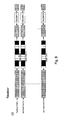
Fig. 1 shows the principle of separately encoding common data and transmitter-dedicated data and of assembling the separately encoded data in a common frame structure of a navigation or communication system on the transmitter side according to the invention; -
Fig. 2 shows a block diagram of an embodiment of a navigation or communication signal transmitter according to the invention; -
Fig. 3 shows a block diagram of an embodiment of a navigation signal receiver according to the invention; -
Fig. 4 shows a block diagram of an embodiment of a navigation signal receiver with pilot and data according to the invention; -
Fig. 5 shows the principle architecture of a system symbol processing unit on the receiver side according to the invention; and -
Fig. 6 shows the principle of a transmitter-dedicated symbol processing unit on the receiver side according to the invention. - In the following, functionally similar or identical elements may have the same reference numerals. Absolute values are shown below by way of example only and should not be construed as limiting the invention.
- In the following, embodiments of the invention are described with regard to a GNSS such as GPS or Galileo, but it should be noted that the present invention is not restricted to an application with a GNSS and is also well suited for application with any kind of navigation and/or communication system, such as pseudolite indoor navigation systems as the environment in this case is often more stringent and broadcasted data are crucial in order to obtain the location of the transmitters.
- The invention proposes to encode separately common data transmitted by the system (e.g. GPS satellite constellation) and the transmitter-dedicated data. Both encoded data are then assembled.
-
Fig. 1 shows the principle underlying the present invention: eachtransmitter 1 ... N (satellite or communication signal transmitter station such as a mobile base station of a mobile communication system) is configured to transmit two types of data, its own information data 12 (dedicated data for each transmitter e.g. transmitter health status) anddata 10, which is common to some or alltransmitters 1 ... N of the constellation, particularly system information data. - These two types of data are encoded separately. The transmitter-
dedicated data 12 can be encoded onboard of the transmitter. Thus, as shown inFig. 1 , adedicated encoder 1 ... N is assigned to each of thetransmitters 1 ... N for encoding the transmitter-dedicated data 12. Thesystem information data 10 can already be encoded in a common station with an encoder C and uplinked to each transmitter. Thesystem information data 10 can also be encoded onbaord of each transmitter by an encoder. Thesystem information data 10 are encoded with a first encoding scheme, and the transmitter-dedicateddata 12 with a second encoding scheme. The first and second encoding schemes may or may not differ. For example, the first encoding scheme may be selected in order to meet certain bandwidth limitations of uplink channels to transmitters, while the second encoding scheme may be selected to meet processing power available onboard a transmitter. System information or common data can even be divided into two groups of data, data which are transmitted by the full constellation or only by a subgroup of the constellation (e.g. regional application). The encoding of the system information data (for the full or subgroups of the transmitter constellation) being done by a common station reduces the processing load of each transmitter. - As shown in
Fig. 1 , thesystem information data 10 and the transmitter-dedicateddata 12 are rationally gathered in eachtransmitter 1 ... N and assigned to an assembled frame structure of the navigation/communication signals after encoding: the encoded commonsystem information data 10 is assigned to a number offirst frames 14, and the encoded transmitter-dedicateddata 12 is assigned to a number of second frames 16. The first andsecond frames frame structure 18, which determines the distribution of the first and second frames within theframe structure 18 and the assignment of the encodeddata frame structure 18. - The position of the encoded common data and transmitter-dedicated data within the frame structure 18 (assignment scheme) needs to be known by receivers of the signal. The assignment scheme can be transmitter-dependent or transmitter-independent. If it is transmitter-independent, it will allow using a single mask for all receiver chains to distinguish common data and transmitter-dedicated data.
-
Fig. 2 shows a block diagram of a navigation orcommunication signal transmitter 100, which implements the principle shown inFig. 1 . Thetransmitter 100 comprises areceiver 102 for receiving data from a central station of the navigation or communication system such as the encodedcommon data 14 and anassignment scheme 112 determining the assignment of encodedcommon data 14 and encoded transmitter-dedicateddata 16 to the frames of theframe structure 18. The transmitter-dedicateddata 12 such as the transmitter status are encoded on-board of thetransmitter 100 by means of anencoder 104 and are input to aframe assigner 106. Theframe assigner 106 further receives from thereceiver 102 the encodedcommon data 14 and theassignment scheme 112 received from the common station. Theframe assigner 106 assigns the encodedcommon data 14 and the encoded transmitter-dedicateddata 12 according to theassignment scheme 112 to first and second frames of theframe structure 18 and supplies the assignment and the encoded common data and transmitter-dedicated data to asignal assembler 108. Thesignal assembler 108 assembles a navigation orcommunication signal 20 conforming to theframe structure 18 and supplies the assembled navigation orcommunication signal 20 to asignal transmitter 110, which prepares the navigation orcommunication signal 20 for transmission, for instance encodes thesignal 20 with a unique code, for example a PRN (Pseudo-Random-Noise) code (CDMA: Code Division Multiple Access), and disseminates the final navigation orcommunication signal 20 as broadcast signal for reception by navigation or communication signal receivers via RF (Radio Frequency). -
Fig. 3 shows a block diagram of anavigation signal receiver 200 for processing a receivednavigation signal 20 after down conversion in the baseband by a Carrier Wipe-offunit 218, wherein the processing stage includes a Correlation, integration &Dump unit 202, a DLL (Delay-Locked Loop) comprising aCode discriminator 204, aCode Loop filter 206, a Code NCO (Numerically Controlled Oscillator) 208, a PLL (Phase-Locked Loop) comprising aCarrier discriminator 210, aCarrier Loop filter 212, aCarrier NCO 214, andCode generator 216 controlled by theCode NCO 208. The symbols of the chain (i) are extracted after correlation, integration & Dump of the chain (i). Principally, thenavigation signal receiver 200 can also be applied to a communication system as communication signal receiver. - If there is a pilot channel, it can be used for the code and Doppler synchronisation to support the data demodulation on the data channel. A block diagram of a navigation signal receiver 201 (pilot+data) is shown in
Fig. 4 . In contrast to the architecture shown inFig. 3 , aCode NCO 209 is applied with two outputs, one to control theCode Generator 216 of the Pilot Channel and the other one to control theCode Generator 216 of the Data Channel. The symbols of the chain (i) are extracted after correlation, integration & Dump of the data channel of chain (i). - The synchronisation between the symbols received in the different chains is very accurate and less than a PRN chip.
- Also, the
receiver 201 can principally applied to a communication system, wherein the pilot channel can be for example used to transmit communication control data. -
Fig. 5 shows the principle architecture of a common systemsymbol processing unit 220. Theunit 220 applies for each symbols chain a first mask to extract the system symbols (containing the common data). A symbol chain contains the symbols received from a navigation orcommunication signal 20 disseminated by one of thetransmitters 1 ... N. Thus, if navigations or communication signals from N navigation or communication signal transmitters are received, N symbol chains are available for processing. The first mask depends on the assignment scheme applied in a transmitter of a navigation or communication signal. As described above, either a common assignment scheme or a transmitter dependent assignment scheme may be applied. Depending on the arrangement performed at transmitter side, i.e. the used assignment scheme, the first mask is either chain dependent or chain independent (i.e. identical for all chains). Once the system symbols of all chains are extracted, there are combined and then decoded with a decoder C in order to obtain the common data. -
Fig. 6 shows the principle architecture of a transmitter-dedicatedsymbol processing unit 222. Theunit 222 applies for each symbols chain a second mask to extract the transmitter-dedicated symbols (containing the transmitter-dedicated data). The second mask is the inverse of the first mask. For each chain, the transmitter-dedicated symbols are then decoded bydecoders 1 ... N to obtain the transmitter-dedicated data. - The current invention proposes a way to handle the data at transmitter level in order to decrease the processing load of the transmitter. This solution provides a method to split transmitter-dedicated data, global system data and even local system data to be sent to the users.
- The main advantage of this solution is the increase of performance w.r.t. BER, FER (Bit Error Rate, Frame Error Rate).
- If the common data are received from four transmitters, the increase in terms of C/No (Carrier to Noise Density Ratio) is 6dB.
- Alternatively, the transmitter data rate can be increased by a factor equal to the number of transmitters (satellites or communication signal transmitters) in view that transmit the same common data without BER/FER degradation compared to the data dissemination method without diversity.
- The proposed solution can be used in global/regional satellite navigation systems as Galileo or GPS or in communication systems, particularly digital communication systems using CDMA. This solution can also be very well suited for pseudolite-based indoor navigation systems as the environment in this case is often more stringent and broadcasted data are crucial in order to obtain the location of the transmitters.
-
- 10
- system information (common) data
- 12
- transmitter-dedicated data
- 14
- first frames
- 16
- second frames
- 18
- assembled frame structure
- 20
- navigation/communication signal
- 100
- navigation/communication signal transmitter
- 102
- receiver
- 104
- encoder
- 106
- frame assigner
- 108
- signal assembler
- 110
- signal transmitter
- 112
- assignment scheme
- 200
- navigation signal receiver
- 201
- navigation signal pilot & data receiver
- 202
- Correlation, integration & Dump unit
- 204
- Code discriminator
- 206
- Code Loop filter
- 208
- Code NCO
- 209
- Code NCO
- 210
- Carrier discriminator
- 212
- Carrier Loop filter
- 214
- Carrier NCO
- 216
- Code generator
- 218
- Carrier Wipeoff unit
- 220
- common system symbol processing unit
- 222
- transmitter-dedicated symbol processing unit
- BER
- Bit Error Rate
- CDMA
- Code Division Multiple Access
- C/No
- Carrier to Noise Density Ratio
- DLL
- Delay-Locked Loop
- FER
- Frame Error Rate
- GNSS
- Global Navigation Satellite System
- GPS
- Global Positioning System
- NCO
- Numerically Controlled Oscillator
- PLL
- Phase-Locked Loop
- PRN
- Pseudo-Random Noise
- RF
- Radio Frequency
Claims (15)
- A method for disseminating data in a navigation or communication system comprising several transmitters for signals, wherein a common frame structure is provided for the signals and each transmitter disseminates common data (10) and transmitter-dedicated data (12) through its broadcasted signal, and wherein the method comprises the following acts to be executed by each one of the transmitters:- receiving the common data (10) encoded with a first encoding scheme;- encoding transmitter-dedicated data (12) onboard the transmitter with a second encoding scheme;- assigning the encoded common data to a number of first frames (14) of the frame structure (18) provided for the signals and assigning the encoded transmitter-dedicated data to a number of second frames (16) of the frame structure provided for the signals, wherein the second frames differ from the first frames;- assembling a signal (20) to be transmitted from the number of first and second frames; and- transmitting the assembled signal.
- The method of claim 1, wherein the common data encoded with a first encoding scheme are received from a common station of the navigation or communication system, which is configured to encode the common data with the first encoding scheme and to provide the encoded common data to the transmitters via uplink channels, and/or the common data are encoded with a first encoding scheme onboard of the transmitter by an encoder.
- The method of claim 1 or 2, wherein the acts of frame assignation comprise:- applying a transmitter-dedicated assignment scheme or- applying a common assignment scheme independent from a specific transmitter.
- A computer program implementing a method of any of the preceding claims.
- A record carrier storing a computer program according to claim 4.
- A transmitter (100) provided for disseminating a signal of a navigation or communication system, wherein a common frame structure is provided for the signals and the transmitter is configured to disseminate common data and transmitter-dedicated data with its signal, and wherein the transmitter comprises- a receiver (102) for receiving the common data encoded with a first encoding scheme;- an encoder (104) for encoding transmitter-dedicated data with a second encoding scheme;- a frame assigner (106) for assigning the encoded common data to a number of first frames of the frame structure provided for the signals and for assigning the encoded transmitter-dedicated data to a number of second frames of the frame structure provided for the signals, wherein the second frames differ from the first frames;- a signal assembler (108) for assembling a signal to be transmitted from the number of first and second frames; and- a signal transmitter (110) for transmitting the assembled signal.
- The transmitter of claim 6, wherein the frame assigner (106) is configured to perform the assignation according to an assignment scheme (112) received from a common station of the navigation or communication system.
- A communications device, comprising a transmitter of claim 6 or 7 for disseminating a communication signal.
- A satellite, particularly a GNSS or Regional Augmentation satellite, comprising a transmitter of claim 6 or 7 for disseminating a navigation signal, particularly a GNSS or Regional Augmenation navigation signal.
- A pseudolite station of an indoor navigation system comprising a transmitter of claim 6 or 7 for disseminating an indoor navigation signal.
- A receiver for receiving a signal disseminated by a transmitter according to claim 6 or 7 comprising- a Correlation, integration & Dump unit (202) for extracting symbols from the received signal (20);- a Delay-Locked Loop comprising a Code discriminator (204), a Code Loop filter (206), and a Code Numerically Controlled Oscillator (208);- a Phase-Locked Loop comprising a Carrier discriminator (210), a Carrier Loop filter (212), and a Carrier Numerically Controlled Oscillator (214);- a Carrier Wipeoff unit (218) for down converting the received signal (20) into baseband;- a Code generator (216) controlled by the Code Numerically Controlled Oscillator (208) and providing codes for the Correlation, integration & Dump unit (202) for the symbols extraction;- a first symbol processing unit (220) for processing a chain of extracted symbols by applying a first mask for extracting system symbols containing common data, combining the extracted system symbols and decoding the combined extracted system symbols in order to obtain the common data; and- a second symbol processing unit (222) for processing the chain of extracted symbols by applying a second mask for extracting transmitter-dedicated symbols containing transmitter-dedicated data, and decoding the extracted transmitter-dedicated symbols in order to obtain the transmitter-dedicated data.
- The receiver of claim 11 being configured for receiving a navigation signal or a communication signal disseminated by a transmitter according to claim 6 or 7.
- The receiver of claim 11 or 12, wherein the first and second symbol processing units (220, 222) are configured to select the first and second masks depending on a frame assignment scheme applied by the transmitter of the signal for assigning encoded common data to a number of first frames of a frame structure provided for the signal and assigning encoded transmitter-dedicated data to a number of second frames of the frame structure provided for the signal.
- The receiver of claim 13, wherein the symbol processing units (220) are configured to combine the common data of the first frames received from multiple transmitters.
- A user navigation or communications device comprising- a receiver of any of claims 11 to 14; and- a processor being configured to process transmitter-dedicated data and common data output by the receiver.
Priority Applications (2)
| Application Number | Priority Date | Filing Date | Title |
|---|---|---|---|
| EP15000229.3A EP3051314B1 (en) | 2015-01-27 | 2015-01-27 | Improving data dissemination in a navigation or communication system |
| US15/006,609 US10244429B2 (en) | 2015-01-27 | 2016-01-26 | Data dissemination in a navigation or communication system |
Applications Claiming Priority (1)
| Application Number | Priority Date | Filing Date | Title |
|---|---|---|---|
| EP15000229.3A EP3051314B1 (en) | 2015-01-27 | 2015-01-27 | Improving data dissemination in a navigation or communication system |
Publications (2)
| Publication Number | Publication Date |
|---|---|
| EP3051314A1 true EP3051314A1 (en) | 2016-08-03 |
| EP3051314B1 EP3051314B1 (en) | 2023-05-31 |
Family
ID=52444083
Family Applications (1)
| Application Number | Title | Priority Date | Filing Date |
|---|---|---|---|
| EP15000229.3A Active EP3051314B1 (en) | 2015-01-27 | 2015-01-27 | Improving data dissemination in a navigation or communication system |
Country Status (2)
| Country | Link |
|---|---|
| US (1) | US10244429B2 (en) |
| EP (1) | EP3051314B1 (en) |
Families Citing this family (1)
| Publication number | Priority date | Publication date | Assignee | Title |
|---|---|---|---|---|
| WO2015108519A1 (en) * | 2014-01-16 | 2015-07-23 | Audi Ag | Fuel cell microporous layer having multiple densities |
Citations (3)
| Publication number | Priority date | Publication date | Assignee | Title |
|---|---|---|---|---|
| GB2339100A (en) * | 1995-10-24 | 2000-01-12 | Inmarsat Ltd | GPS with limited access to correction data |
| EP1983770A1 (en) * | 2007-04-20 | 2008-10-22 | Research In Motion Limited | Multicast control channel design |
| WO2009135186A2 (en) * | 2008-05-02 | 2009-11-05 | Qualcomm Incorporated | Methods and apparatus for communicating transmitter information in a communication network |
Family Cites Families (9)
| Publication number | Priority date | Publication date | Assignee | Title |
|---|---|---|---|---|
| US6172972B1 (en) * | 1996-05-28 | 2001-01-09 | Microsoft Corporation | Multi-packet transport structure and method for sending network data over satellite network |
| KR101061116B1 (en) * | 2004-09-15 | 2011-08-31 | 엘지전자 주식회사 | Uplink Control Information Transmission Method and Decoding Method of Control Information in a Mobile Communication System |
| EP1659792A1 (en) * | 2004-11-22 | 2006-05-24 | Swisscom Mobile AG | Digital Broadcast in areas with low transmission power |
| EP1971043A1 (en) * | 2007-03-16 | 2008-09-17 | Sony Deutschland GmbH | Transmitting device and method for transmitting signals in a wireless communication system, receiving device and method for receiving signals in a wireless communication system |
| US20090034654A1 (en) * | 2007-08-03 | 2009-02-05 | Viasat Inc. | Dynamic multiplexing and de-multiplexing technique with enhanced synchronization |
| US9001886B2 (en) * | 2010-11-22 | 2015-04-07 | Cisco Technology, Inc. | Dynamic time synchronization |
| US9070236B1 (en) * | 2013-01-28 | 2015-06-30 | The United States Of America As Represented By The Secretary Of The Navy | Method and articles of manufacture for time-space-position-information (TSPI) |
| US9638803B2 (en) * | 2013-05-06 | 2017-05-02 | Accord Software & Systems Pvt. Ltd. | Navigation data configuration for optimal time to first fix |
| US20150247928A1 (en) * | 2014-02-28 | 2015-09-03 | Texas Instruments Incorporated | Cooperative location sensor apparatus and system for low complexity geolocation |
-
2015
- 2015-01-27 EP EP15000229.3A patent/EP3051314B1/en active Active
-
2016
- 2016-01-26 US US15/006,609 patent/US10244429B2/en active Active
Patent Citations (3)
| Publication number | Priority date | Publication date | Assignee | Title |
|---|---|---|---|---|
| GB2339100A (en) * | 1995-10-24 | 2000-01-12 | Inmarsat Ltd | GPS with limited access to correction data |
| EP1983770A1 (en) * | 2007-04-20 | 2008-10-22 | Research In Motion Limited | Multicast control channel design |
| WO2009135186A2 (en) * | 2008-05-02 | 2009-11-05 | Qualcomm Incorporated | Methods and apparatus for communicating transmitter information in a communication network |
Also Published As
| Publication number | Publication date |
|---|---|
| US10244429B2 (en) | 2019-03-26 |
| EP3051314B1 (en) | 2023-05-31 |
| US20160219586A1 (en) | 2016-07-28 |
Similar Documents
| Publication | Publication Date | Title |
|---|---|---|
| EP1794612B1 (en) | Determining position without use of broadcast ephemeris information | |
| US7286592B2 (en) | Method and apparatus for receiving a signal | |
| EP3417551B1 (en) | Ephemeris information management for satellite communication | |
| US7580381B2 (en) | Determination of the positions of mobile communication terminals with the aid of navigation data of various origins | |
| US6879283B1 (en) | Method and system for transmission of real-time kinematic satellite positioning system data | |
| TWI504917B (en) | A navigation signal transmission device, a navigation signal transmission method, and a location information providing device | |
| US20090219976A1 (en) | Transmission of Information to a GPS Device | |
| ID27876A (en) | SATELLITE PLACEMENT REFERENCE SYSTEMS AND METHODS | |
| CN1160209A (en) | satellite radiodetermination | |
| EP1497670A1 (en) | System and method for augmentation of satellite positioning systems | |
| Li et al. | Design and implementation of an open-source BDS-3 B1C/B2a SDR receiver | |
| WO2024028359A1 (en) | Satellite payloads and methods of operating same | |
| CN101578530B (en) | Method, system, user equipment for general broadcast positioning assistance data | |
| US10244429B2 (en) | Data dissemination in a navigation or communication system | |
| EP3732792B1 (en) | Measurement of data streams comprising data and pilot channels | |
| EP4009080A1 (en) | Methods, devices, systems, media, and receivers for processing gnss signals | |
| US20210333412A1 (en) | Systems and methods for gnss receivers | |
| Guo et al. | Architecture design of BeiDou global navigation signals | |
| Heckler et al. | TDRSS augmentation service for satellites | |
| Dafesh et al. | The Design of a Flexible, Interoperable Navigation Signal for Future Lunar Missions | |
| EP2942889A1 (en) | System and method for code multiplexing | |
| Garcia-Molina et al. | Galileo Data Signals: Enabling Fast-TTFF and Flexibility with the GeoFocus and GNSE Schemes | |
| KR102339244B1 (en) | Satellite IoT terminal and effective and robust unidirectional data transmission methods therby | |
| US10831907B2 (en) | Technique for position calculation of a receiver via use of encrypted signals of a public regulated service | |
| De Gaudenzi et al. | Galileo signal validation development |
Legal Events
| Date | Code | Title | Description |
|---|---|---|---|
| PUAI | Public reference made under article 153(3) epc to a published international application that has entered the european phase |
Free format text: ORIGINAL CODE: 0009012 |
|
| AK | Designated contracting states |
Kind code of ref document: A1 Designated state(s): AL AT BE BG CH CY CZ DE DK EE ES FI FR GB GR HR HU IE IS IT LI LT LU LV MC MK MT NL NO PL PT RO RS SE SI SK SM TR |
|
| AX | Request for extension of the european patent |
Extension state: BA ME |
|
| STAA | Information on the status of an ep patent application or granted ep patent |
Free format text: STATUS: REQUEST FOR EXAMINATION WAS MADE |
|
| 17P | Request for examination filed |
Effective date: 20170126 |
|
| RBV | Designated contracting states (corrected) |
Designated state(s): AL AT BE BG CH CY CZ DE DK EE ES FI FR GB GR HR HU IE IS IT LI LT LU LV MC MK MT NL NO PL PT RO RS SE SI SK SM TR |
|
| RAP1 | Party data changed (applicant data changed or rights of an application transferred) |
Owner name: AIRBUS DEFENCE AND SPACE GMBH |
|
| STAA | Information on the status of an ep patent application or granted ep patent |
Free format text: STATUS: EXAMINATION IS IN PROGRESS |
|
| 17Q | First examination report despatched |
Effective date: 20180214 |
|
| GRAP | Despatch of communication of intention to grant a patent |
Free format text: ORIGINAL CODE: EPIDOSNIGR1 |
|
| STAA | Information on the status of an ep patent application or granted ep patent |
Free format text: STATUS: GRANT OF PATENT IS INTENDED |
|
| RIC1 | Information provided on ipc code assigned before grant |
Ipc: H04W 72/04 20090101ALN20221124BHEP Ipc: G01S 19/11 20100101ALN20221124BHEP Ipc: H04W 28/06 20090101ALI20221124BHEP Ipc: G01S 19/02 20100101AFI20221124BHEP |
|
| INTG | Intention to grant announced |
Effective date: 20221220 |
|
| GRAS | Grant fee paid |
Free format text: ORIGINAL CODE: EPIDOSNIGR3 |
|
| GRAA | (expected) grant |
Free format text: ORIGINAL CODE: 0009210 |
|
| STAA | Information on the status of an ep patent application or granted ep patent |
Free format text: STATUS: THE PATENT HAS BEEN GRANTED |
|
| AK | Designated contracting states |
Kind code of ref document: B1 Designated state(s): AL AT BE BG CH CY CZ DE DK EE ES FI FR GB GR HR HU IE IS IT LI LT LU LV MC MK MT NL NO PL PT RO RS SE SI SK SM TR |
|
| REG | Reference to a national code |
Ref country code: GB Ref legal event code: FG4D Ref country code: CH Ref legal event code: EP |
|
| REG | Reference to a national code |
Ref country code: DE Ref legal event code: R096 Ref document number: 602015083717 Country of ref document: DE |
|
| REG | Reference to a national code |
Ref country code: AT Ref legal event code: REF Ref document number: 1571251 Country of ref document: AT Kind code of ref document: T Effective date: 20230615 |
|
| REG | Reference to a national code |
Ref country code: IE Ref legal event code: FG4D |
|
| REG | Reference to a national code |
Ref country code: LT Ref legal event code: MG9D |
|
| REG | Reference to a national code |
Ref country code: NL Ref legal event code: MP Effective date: 20230531 |
|
| REG | Reference to a national code |
Ref country code: AT Ref legal event code: MK05 Ref document number: 1571251 Country of ref document: AT Kind code of ref document: T Effective date: 20230531 |
|
| PG25 | Lapsed in a contracting state [announced via postgrant information from national office to epo] |
Ref country code: SE Free format text: LAPSE BECAUSE OF FAILURE TO SUBMIT A TRANSLATION OF THE DESCRIPTION OR TO PAY THE FEE WITHIN THE PRESCRIBED TIME-LIMIT Effective date: 20230531 Ref country code: NO Free format text: LAPSE BECAUSE OF FAILURE TO SUBMIT A TRANSLATION OF THE DESCRIPTION OR TO PAY THE FEE WITHIN THE PRESCRIBED TIME-LIMIT Effective date: 20230831 Ref country code: ES Free format text: LAPSE BECAUSE OF FAILURE TO SUBMIT A TRANSLATION OF THE DESCRIPTION OR TO PAY THE FEE WITHIN THE PRESCRIBED TIME-LIMIT Effective date: 20230531 Ref country code: AT Free format text: LAPSE BECAUSE OF FAILURE TO SUBMIT A TRANSLATION OF THE DESCRIPTION OR TO PAY THE FEE WITHIN THE PRESCRIBED TIME-LIMIT Effective date: 20230531 |
|
| PG25 | Lapsed in a contracting state [announced via postgrant information from national office to epo] |
Ref country code: RS Free format text: LAPSE BECAUSE OF FAILURE TO SUBMIT A TRANSLATION OF THE DESCRIPTION OR TO PAY THE FEE WITHIN THE PRESCRIBED TIME-LIMIT Effective date: 20230531 Ref country code: PL Free format text: LAPSE BECAUSE OF FAILURE TO SUBMIT A TRANSLATION OF THE DESCRIPTION OR TO PAY THE FEE WITHIN THE PRESCRIBED TIME-LIMIT Effective date: 20230531 Ref country code: NL Free format text: LAPSE BECAUSE OF FAILURE TO SUBMIT A TRANSLATION OF THE DESCRIPTION OR TO PAY THE FEE WITHIN THE PRESCRIBED TIME-LIMIT Effective date: 20230531 Ref country code: LV Free format text: LAPSE BECAUSE OF FAILURE TO SUBMIT A TRANSLATION OF THE DESCRIPTION OR TO PAY THE FEE WITHIN THE PRESCRIBED TIME-LIMIT Effective date: 20230531 Ref country code: LT Free format text: LAPSE BECAUSE OF FAILURE TO SUBMIT A TRANSLATION OF THE DESCRIPTION OR TO PAY THE FEE WITHIN THE PRESCRIBED TIME-LIMIT Effective date: 20230531 Ref country code: IS Free format text: LAPSE BECAUSE OF FAILURE TO SUBMIT A TRANSLATION OF THE DESCRIPTION OR TO PAY THE FEE WITHIN THE PRESCRIBED TIME-LIMIT Effective date: 20230930 Ref country code: HR Free format text: LAPSE BECAUSE OF FAILURE TO SUBMIT A TRANSLATION OF THE DESCRIPTION OR TO PAY THE FEE WITHIN THE PRESCRIBED TIME-LIMIT Effective date: 20230531 Ref country code: GR Free format text: LAPSE BECAUSE OF FAILURE TO SUBMIT A TRANSLATION OF THE DESCRIPTION OR TO PAY THE FEE WITHIN THE PRESCRIBED TIME-LIMIT Effective date: 20230901 |
|
| PG25 | Lapsed in a contracting state [announced via postgrant information from national office to epo] |
Ref country code: FI Free format text: LAPSE BECAUSE OF FAILURE TO SUBMIT A TRANSLATION OF THE DESCRIPTION OR TO PAY THE FEE WITHIN THE PRESCRIBED TIME-LIMIT Effective date: 20230531 |
|
| PG25 | Lapsed in a contracting state [announced via postgrant information from national office to epo] |
Ref country code: SK Free format text: LAPSE BECAUSE OF FAILURE TO SUBMIT A TRANSLATION OF THE DESCRIPTION OR TO PAY THE FEE WITHIN THE PRESCRIBED TIME-LIMIT Effective date: 20230531 |
|
| PG25 | Lapsed in a contracting state [announced via postgrant information from national office to epo] |
Ref country code: SM Free format text: LAPSE BECAUSE OF FAILURE TO SUBMIT A TRANSLATION OF THE DESCRIPTION OR TO PAY THE FEE WITHIN THE PRESCRIBED TIME-LIMIT Effective date: 20230531 Ref country code: SK Free format text: LAPSE BECAUSE OF FAILURE TO SUBMIT A TRANSLATION OF THE DESCRIPTION OR TO PAY THE FEE WITHIN THE PRESCRIBED TIME-LIMIT Effective date: 20230531 Ref country code: RO Free format text: LAPSE BECAUSE OF FAILURE TO SUBMIT A TRANSLATION OF THE DESCRIPTION OR TO PAY THE FEE WITHIN THE PRESCRIBED TIME-LIMIT Effective date: 20230531 Ref country code: PT Free format text: LAPSE BECAUSE OF FAILURE TO SUBMIT A TRANSLATION OF THE DESCRIPTION OR TO PAY THE FEE WITHIN THE PRESCRIBED TIME-LIMIT Effective date: 20231002 Ref country code: EE Free format text: LAPSE BECAUSE OF FAILURE TO SUBMIT A TRANSLATION OF THE DESCRIPTION OR TO PAY THE FEE WITHIN THE PRESCRIBED TIME-LIMIT Effective date: 20230531 Ref country code: DK Free format text: LAPSE BECAUSE OF FAILURE TO SUBMIT A TRANSLATION OF THE DESCRIPTION OR TO PAY THE FEE WITHIN THE PRESCRIBED TIME-LIMIT Effective date: 20230531 Ref country code: CZ Free format text: LAPSE BECAUSE OF FAILURE TO SUBMIT A TRANSLATION OF THE DESCRIPTION OR TO PAY THE FEE WITHIN THE PRESCRIBED TIME-LIMIT Effective date: 20230531 |
|
| REG | Reference to a national code |
Ref country code: DE Ref legal event code: R097 Ref document number: 602015083717 Country of ref document: DE |
|
| PLBE | No opposition filed within time limit |
Free format text: ORIGINAL CODE: 0009261 |
|
| STAA | Information on the status of an ep patent application or granted ep patent |
Free format text: STATUS: NO OPPOSITION FILED WITHIN TIME LIMIT |
|
| PG25 | Lapsed in a contracting state [announced via postgrant information from national office to epo] |
Ref country code: SI Free format text: LAPSE BECAUSE OF FAILURE TO SUBMIT A TRANSLATION OF THE DESCRIPTION OR TO PAY THE FEE WITHIN THE PRESCRIBED TIME-LIMIT Effective date: 20230531 |
|
| 26N | No opposition filed |
Effective date: 20240301 |
|
| PG25 | Lapsed in a contracting state [announced via postgrant information from national office to epo] |
Ref country code: SI Free format text: LAPSE BECAUSE OF FAILURE TO SUBMIT A TRANSLATION OF THE DESCRIPTION OR TO PAY THE FEE WITHIN THE PRESCRIBED TIME-LIMIT Effective date: 20230531 Ref country code: IT Free format text: LAPSE BECAUSE OF FAILURE TO SUBMIT A TRANSLATION OF THE DESCRIPTION OR TO PAY THE FEE WITHIN THE PRESCRIBED TIME-LIMIT Effective date: 20230531 |
|
| PG25 | Lapsed in a contracting state [announced via postgrant information from national office to epo] |
Ref country code: MC Free format text: LAPSE BECAUSE OF FAILURE TO SUBMIT A TRANSLATION OF THE DESCRIPTION OR TO PAY THE FEE WITHIN THE PRESCRIBED TIME-LIMIT Effective date: 20230531 |
|
| PG25 | Lapsed in a contracting state [announced via postgrant information from national office to epo] |
Ref country code: MC Free format text: LAPSE BECAUSE OF FAILURE TO SUBMIT A TRANSLATION OF THE DESCRIPTION OR TO PAY THE FEE WITHIN THE PRESCRIBED TIME-LIMIT Effective date: 20230531 |
|
| REG | Reference to a national code |
Ref country code: CH Ref legal event code: PL |
|
| PG25 | Lapsed in a contracting state [announced via postgrant information from national office to epo] |
Ref country code: LU Free format text: LAPSE BECAUSE OF NON-PAYMENT OF DUE FEES Effective date: 20240127 |
|
| PG25 | Lapsed in a contracting state [announced via postgrant information from national office to epo] |
Ref country code: LU Free format text: LAPSE BECAUSE OF NON-PAYMENT OF DUE FEES Effective date: 20240127 |
|
| PG25 | Lapsed in a contracting state [announced via postgrant information from national office to epo] |
Ref country code: BE Free format text: LAPSE BECAUSE OF NON-PAYMENT OF DUE FEES Effective date: 20240131 |
|
| PG25 | Lapsed in a contracting state [announced via postgrant information from national office to epo] |
Ref country code: CH Free format text: LAPSE BECAUSE OF NON-PAYMENT OF DUE FEES Effective date: 20240131 |
|
| PG25 | Lapsed in a contracting state [announced via postgrant information from national office to epo] |
Ref country code: CH Free format text: LAPSE BECAUSE OF NON-PAYMENT OF DUE FEES Effective date: 20240131 Ref country code: BE Free format text: LAPSE BECAUSE OF NON-PAYMENT OF DUE FEES Effective date: 20240131 |
|
| REG | Reference to a national code |
Ref country code: BE Ref legal event code: MM Effective date: 20240131 |
|
| PG25 | Lapsed in a contracting state [announced via postgrant information from national office to epo] |
Ref country code: BG Free format text: LAPSE BECAUSE OF FAILURE TO SUBMIT A TRANSLATION OF THE DESCRIPTION OR TO PAY THE FEE WITHIN THE PRESCRIBED TIME-LIMIT Effective date: 20230531 |
|
| PG25 | Lapsed in a contracting state [announced via postgrant information from national office to epo] |
Ref country code: BG Free format text: LAPSE BECAUSE OF FAILURE TO SUBMIT A TRANSLATION OF THE DESCRIPTION OR TO PAY THE FEE WITHIN THE PRESCRIBED TIME-LIMIT Effective date: 20230531 |
|
| PG25 | Lapsed in a contracting state [announced via postgrant information from national office to epo] |
Ref country code: IE Free format text: LAPSE BECAUSE OF NON-PAYMENT OF DUE FEES Effective date: 20240127 |
|
| PG25 | Lapsed in a contracting state [announced via postgrant information from national office to epo] |
Ref country code: IE Free format text: LAPSE BECAUSE OF NON-PAYMENT OF DUE FEES Effective date: 20240127 |
|
| PG25 | Lapsed in a contracting state [announced via postgrant information from national office to epo] |
Ref country code: CY Free format text: LAPSE BECAUSE OF FAILURE TO SUBMIT A TRANSLATION OF THE DESCRIPTION OR TO PAY THE FEE WITHIN THE PRESCRIBED TIME-LIMIT; INVALID AB INITIO Effective date: 20150127 |
|
| PG25 | Lapsed in a contracting state [announced via postgrant information from national office to epo] |
Ref country code: HU Free format text: LAPSE BECAUSE OF FAILURE TO SUBMIT A TRANSLATION OF THE DESCRIPTION OR TO PAY THE FEE WITHIN THE PRESCRIBED TIME-LIMIT; INVALID AB INITIO Effective date: 20150127 |
|
| PG25 | Lapsed in a contracting state [announced via postgrant information from national office to epo] |
Ref country code: TR Free format text: LAPSE BECAUSE OF FAILURE TO SUBMIT A TRANSLATION OF THE DESCRIPTION OR TO PAY THE FEE WITHIN THE PRESCRIBED TIME-LIMIT Effective date: 20230531 |
|
| PGFP | Annual fee paid to national office [announced via postgrant information from national office to epo] |
Ref country code: GB Payment date: 20260123 Year of fee payment: 12 |
|
| PGFP | Annual fee paid to national office [announced via postgrant information from national office to epo] |
Ref country code: DE Payment date: 20260121 Year of fee payment: 12 |
|
| PGFP | Annual fee paid to national office [announced via postgrant information from national office to epo] |
Ref country code: FR Payment date: 20260123 Year of fee payment: 12 |