EP3046374B1 - Power control method, system, device and computer storage medium - Google Patents
Power control method, system, device and computer storage medium Download PDFInfo
- Publication number
- EP3046374B1 EP3046374B1 EP14794010.0A EP14794010A EP3046374B1 EP 3046374 B1 EP3046374 B1 EP 3046374B1 EP 14794010 A EP14794010 A EP 14794010A EP 3046374 B1 EP3046374 B1 EP 3046374B1
- Authority
- EP
- European Patent Office
- Prior art keywords
- information
- harq process
- cell
- preset
- base station
- Prior art date
- Legal status (The legal status is an assumption and is not a legal conclusion. Google has not performed a legal analysis and makes no representation as to the accuracy of the status listed.)
- Not-in-force
Links
Images
Classifications
-
- H—ELECTRICITY
- H04—ELECTRIC COMMUNICATION TECHNIQUE
- H04W—WIRELESS COMMUNICATION NETWORKS
- H04W52/00—Power management, e.g. Transmission Power Control [TPC] or power classes
- H04W52/04—Transmission power control [TPC]
-
- H—ELECTRICITY
- H04—ELECTRIC COMMUNICATION TECHNIQUE
- H04W—WIRELESS COMMUNICATION NETWORKS
- H04W52/00—Power management, e.g. Transmission Power Control [TPC] or power classes
- H04W52/04—Transmission power control [TPC]
- H04W52/38—TPC being performed in particular situations
- H04W52/48—TPC being performed in particular situations during retransmission after error or non-acknowledgment
-
- H—ELECTRICITY
- H04—ELECTRIC COMMUNICATION TECHNIQUE
- H04W—WIRELESS COMMUNICATION NETWORKS
- H04W72/00—Local resource management
- H04W72/20—Control channels or signalling for resource management
- H04W72/23—Control channels or signalling for resource management in the downlink direction of a wireless link, i.e. towards a terminal
-
- H—ELECTRICITY
- H04—ELECTRIC COMMUNICATION TECHNIQUE
- H04L—TRANSMISSION OF DIGITAL INFORMATION, e.g. TELEGRAPHIC COMMUNICATION
- H04L1/00—Arrangements for detecting or preventing errors in the information received
- H04L1/12—Arrangements for detecting or preventing errors in the information received by using return channel
- H04L1/16—Arrangements for detecting or preventing errors in the information received by using return channel in which the return channel carries supervisory signals, e.g. repetition request signals
- H04L1/18—Automatic repetition systems, e.g. Van Duuren systems
- H04L1/1812—Hybrid protocols; Hybrid automatic repeat request [HARQ]
-
- H—ELECTRICITY
- H04—ELECTRIC COMMUNICATION TECHNIQUE
- H04W—WIRELESS COMMUNICATION NETWORKS
- H04W52/00—Power management, e.g. Transmission Power Control [TPC] or power classes
- H04W52/04—Transmission power control [TPC]
- H04W52/18—TPC being performed according to specific parameters
- H04W52/28—TPC being performed according to specific parameters using user profile, e.g. mobile speed, priority or network state, e.g. standby, idle or non-transmission
- H04W52/283—Power depending on the position of the mobile
-
- H—ELECTRICITY
- H04—ELECTRIC COMMUNICATION TECHNIQUE
- H04W—WIRELESS COMMUNICATION NETWORKS
- H04W52/00—Power management, e.g. Transmission Power Control [TPC] or power classes
- H04W52/04—Transmission power control [TPC]
- H04W52/38—TPC being performed in particular situations
- H04W52/44—TPC being performed in particular situations in connection with interruption of transmission
-
- H—ELECTRICITY
- H04—ELECTRIC COMMUNICATION TECHNIQUE
- H04W—WIRELESS COMMUNICATION NETWORKS
- H04W52/00—Power management, e.g. Transmission Power Control [TPC] or power classes
- H04W52/04—Transmission power control [TPC]
- H04W52/30—Transmission power control [TPC] using constraints in the total amount of available transmission power
- H04W52/32—TPC of broadcast or control channels
- H04W52/325—Power control of control or pilot channels
Definitions
- the present invention relates to power control technologies, and more particularly, to a power control method, system, device, and computer storage medium.
- Uplink dedicated physical channels of High Speed Uplink Packet Access (HSUPA) service in the Universal Mobile Telecommunications System (UMTS) comprise: Dedicated Physical Control Channel (DPCCH), E-DCH dedicated physical Control channel (E-DPCCH) and E-DCH dedicated physical data channel (E-DPDCH), wherein, the DPCCH mainly provides control information such as Pilot, Transmission Power Control (TPC), transport format combination Indicator (TFCI) and FBI; the E-DPCCH is mainly responsible for transmitting the control part of the HSUPA service, and the E-DPDCH is mainly responsible for transmitting the data part of the HSUPA service.
- TPC Transmission Power Control
- TFCI transport format combination Indicator
- FBI the E-DPCCH is mainly responsible for transmitting the control part of the HSUPA service
- the existing 3GPP protocol specifies that, the UE comprises eight Hybrid Automatic Repeat Request (HAR) processes to transmit data.
- HAR Hybrid Automatic Repeat Request
- the E-DPCCH and the DPCCH When an HARQ process is in the activated state and the HARQ process transmits uplink scheduling data in the E-DPDCH, the E-DPCCH and the DPCCH will transmit control information accordingly; and when an HARQ process is in the deactivated state and the HARQ process does not transmit uplink data in the E-DPDCH, the E-DPCCH does not transmit control information, but the DPCCH continues transmitting control information, which will bring additional interference, reduce uplink system capacity, and reduce standby time of the terminal.
- the embodiment of the present invention provides a power control method, system, device, and computer storage medium to increase uplink capacity, reduce uplink interference, and increase standby time of a user equipment (UE).
- UE user equipment
- the embodiment of the present invention provides a power control method, wherein the method comprises:
- the method further comprises: The base station monitoring information of the UE and information of a cell where the UE is located.
- the information of the UE comprises at least one of the following information: capability information of the UE,HSUPA service type information of the UE, information of an activated HARQ process or information of a deactivated HARQ process included in the UE.
- the capability information of the UE comprises information of whether the UE has a capability of disabling the DPCCH transmission in a deactivated HARQ process;
- the HSUPA service type information of the UE comprises: information of a service whose Transport Time Interval (TTI) is 2microseconds in the HSUPA or information of a service whose TTI is 10 micro seconds in the HSUPA.
- TTI Transport Time Interval
- the information of the cell where the UE is located comprises: Rise Over Thermal (ROT) information of the cell or overload rate information of the cell.
- ROT Rise Over Thermal
- said determining that a preset entry condition is met is: determining that both the information of the UE and the information of the cell where the UE is located meet the preset entry condition;
- said determining that a preset exit condition is met is: determining that both the information of the UE and the information of the cell where the UE is located meet the preset exit condition.
- said determining that both the information of the UE and the information of the cell where the UE is located meet the preset entry condition comprises: when monitoring that the UE has the capability of disabling the DPCCH transmission in a deactivated HARQ process, the UE has a deactivated HARQ process, and the service type of the UE is a service whose TTI is 2microsecondsin the HSUPA, and monitoring that the ROT information of the cell where the UE is located is greater than preset target ROT information, determining that both the information of the UE and the information of the cell where the UE located meet the preset entry condition.
- said determining that both the information of the UE and the information of the cell where the UE is located meet the preset entry condition comprises: when monitoring that the UE has the capability of disabling the DPCCH transmission in a deactivated HARQ process, the UE has a deactivated HARQ process, and the service type of the UE is a service whose TTI is 2microseconds in the HSUPA, and monitoring that the overload rate information of the cell where the UE is located is greater than preset target overload rate information, determining that both the information of the UE and the information of the cell where the UE located meet the preset entry condition.
- the base station notifying the UE to disable or enable the DPCCH transmission in a Deactivated HARQ process comprises: the base station notifying the UE to disable or enable the DPCCH transmission in a deactivated HARQ process via a downlink high speed shared control channel order (HS-SCCH order).
- HS-SCCH order downlink high speed shared control channel order
- the base station further comprises a monitoring unit configured to monitor information of the UE and information of a cell where the UE is located.
- the information of the UE comprises at least one of the following information: capability information of the UE, HSUPA service type information of the UE, information of an activated HARQ process or information of a deactivated HARQ process included in the UE; wherein
- the information of the cell where the UE is located comprises: Rise Over Thermal (ROT) information of the cell or overload rate information of the cell.
- ROT Rise Over Thermal
- the determining unit is configured to determine whether both the information of the UE and the information of the cell where the UE is located meet the preset entry condition or the preset exit condition; preferably, the determining unit is further configured to: when the monitoring unit monitors that the UE has the capability of disabling the DPCCH transmission in a deactivated HARQ process, the UE has a deactivated HARQ process, and the service type of the UE is a service whose TTI is 2microseconds in the HSUPA, and monitors that the ROT information of the cell where the UE is located is greater than preset target ROT information, determine that both the information of the UE and the information of the cell where the UE located meet the preset entry condition.
- the determining module is configured to: when the monitoring unit monitors that the UE has the capability of disabling the DPCCH transmission in a deactivated HARQ process, the UE has a deactivated HARQ process, and the service type of the UE is a service whose TTI is 2microseconds in the HSUPA, and the monitoring unit monitors that the overload rate information of the cell where the UE is located is greater than preset target overload rate information, determine that both the information of the UE and the information of the cell where the UE is located meet the preset entry condition.
- the transmitting unit is further configured to transmit a downlink high speed shared control channel order (HS-SCCH order) to notify the UE to disable or enable the DPCCH transmission in a deactivated HARQ process.
- HS-SCCH order downlink high speed shared control channel order
- the embodiment of the present invention further provides a power control system, wherein the system comprises: a base station and a user equipment (UE); wherein,
- the base station is further configured to: before determining that the preset entry condition is met, monitor information of the UE and information of a cell where the UE is located.
- the base station is configured to: when determining that both the information of the UE and the information of the cell where the UE is located meet the preset entry condition, notify the user equipment (UE) to disable the DPCCH transmission in a deactivated HARQ process; when determining that both the information of the UE and the information of the cell where the UE is located meet the preset exit condition, notify the UE to enable the DPCCH transmission in a deactivated HARQ process.
- UE user equipment
- the base station is configured to: when monitoring that the UE has a capability of disabling the DPCCH transmission in a deactivated HARQ process, the UE has a deactivated HARQ processes, and a service type of the UE is a service whose TTI is 2microseconds in the HSUPA, and monitoring that ROT information of the cell where the UE is located is greater than preset target ROT information, determine that both the information of the UE and the information of the cell where the UE located meet the preset entry condition.
- the base station is configured to: when monitoring that the UE has a capability of disabling the DPCCH transmission in a deactivated HARQ process, the UE has a deactivated HARQ process, and the service type of the UE is a service whose TTI is 2microseconds in the HSUPA, and monitoring that overload rate information of the cell where the UE is located is greater than preset target overload rate information, determine that both the information of the UE and the information of the cell where the UE located meet the preset entry condition.
- the base station is configured to notify the UE to disable or enable the DPCCH transmission in a deactivated HARQ process via a downlink high speed shared control channel order (HS-SCCH order).
- HS-SCCH order downlink high speed shared control channel order
- the embodiment of the present invention further provides a computer storage medium, wherein the computer storage medium stores computer-executable commands, the computer-executable commands are used for executing the power control method according to the embodiment of the present invention.
- the base station when determining that the preset entry condition is met, notifies the UE to disable the DPCCH transmission in the deactivated HARQ process, when determining that the preset exit condition is met, the base station notifies the UE to enable the DPCCH transmission in the deactivated HARQ process, thus, the UE disables the DPCCH transmission in the deactivated HARQ process, thereby reducing the uplink interference and increasing the system uplink capacity, and by disabling the DPCCH transmission, the UE energy consumption is reduced and the standby time of the UE is increased.
- the UE in the HSUPA system, can be classified into UEs whose TTI is 2ms and UEs whose TTI is 10ms according to the TTI; in a UE whose TTI is 2ms, the existing protocol specifies that the UE comprises eight HARQ processes to transmit data.
- the base station Node B
- the base station can monitor information of the UE and information of the cell where the UE is located; when both the information of the UE and the information of the cell where the UE is located meet the preset condition, the UE is notified to disable the DPCCH transmission in the deactivated process to reduce the uplink interference, thereby increasing the system uplink capacity and increasing the standby time of the terminal.
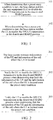
- FIG. 1 is a flow chart of the power control method in accordance with an embodiment of the present invention, as shown in FIG. 1 , it comprises the following steps: in step 101, when determining that a preset entry condition is met, the base station notifies the user equipment (UE) to disable the DPCCH transmission in the deactivated HARQ process.
- UE user equipment
- the base station determines whether the preset entry condition is met based on the information of the UE and the information of the cell where the UE is located.
- the information of the UE comprises at least one of the following information: capability information of the UE, HSUPA service type information of the UE, information of an activated HARQ process or information of a deactivated HARQ process included in the UE.
- the capability information of the UE comprises information of whether the UE has the capability of disabling the DPCCH transmission in the deactivated HARQ process;
- the HSUPA service type information of the UE comprises: information of a service whose Transport Time Interval (TTI) is 2ms in the HSUPA or a service whose TTI is 10ms in the HSUPA.
- TTI Transport Time Interval
- the information of the cell where the UE is located comprises: ROT information of the cell or overload rate information of the cell.
- the base station can notify the UE to disable the DPCCH transmission in the deactivated HARQ process via a downlink high speed shared control channel order (HS-SCCH order) when determining that the preset entry condition is met.
- HS-SCCH order downlink high speed shared control channel order
- said determining that a preset entry condition is met is: determining that both the information of the UE and the information of the cell where the UE is located meet the preset entry condition.
- said determining that both the information of the UE and the information of the cell where the UE is located meet the preset entry condition comprises: when monitoring that the UE has the capability of disabling the DPCCH transmission in the deactivated HARQ process, the UE has the deactivated HARQ process, and the service type of the UE is a service whose TTI is 2ms in the HSUPA, and monitoring that the ROT information of the cell where the UE is located is greater than preset target ROT information, determining that both the information of the UE and the information of the cell where the UE located meet the preset entry condition.
- said determining that both the information of the UE and the information of the cell where the UE is located meet the preset entry condition comprises: when monitoring that the UE has the capability of disabling the DPCCH transmission in the deactivated HARQ process, the UE has the deactivated HARQ process, and the service type of the UE is a service whose TTI is 2ms in the HSUPA, and monitoring that overload rate information of the cell where the UE is located is greater than preset target overload rate information, determining that both the information of the UE and the information of the cell where the UE is located meet the preset entry condition.
- the base station notifying the UE to disable the DPCCH transmission in the deactivated HARQ process comprises:
- the base station determines whether the information of the UE and the information of the cell where the UE is located meet the preset exit condition based on the information of the UE and the information of the cell where the UE is located; wherein, the information of the UE and the information of the cell where the UE is located have been described in the step 101 and will not be repeated herein.
- said determining that both the information of the UE and the information of the cell where the UE is located meet the preset exit condition comprises: when monitoring that the UE has the capability of disabling the DPCCH transmission in the deactivated HARQ process, the UE has the deactivated HARQ process, and the service type of the UE is the service whose TTI is 2ms in the HSUPA, and monitoring that the ROT information of the cell where the UE is located is less than the preset target ROT information, determining that both the information of the UE and the information of the cell where the UE located meet the preset exit condition;
- the UE when monitoring that the UE has the capability of disabling the DPCCH transmission in the deactivated HARQ process, the UE has the deactivated HARQ process, and the service type of the UE is the service whose TTI is 2ms in the HSUPA, and monitoring that the overload rate information of the cell where the UE is located is less than the preset target overload rate information, determining that both the information of the UE and the information of the cell where the UE located meet the preset exit condition.
- the base station notifies the UE to enable the DPCCH transmission in the deactivated HARQ process via a downlink HS-SCCH order when determining that the preset exit condition is met.
- FIG. 2 is a flow chart of the power control method in accordance with another embodiment of the present invention; as shown in FIG. 2 , it comprises the following steps: in step 201, the base station monitors information of the UE and information of the cell where the UE is located.
- the information of the UE comprises: capability information of the UE, HSUPA service type information of the UE, information of an activated HARQ process or information of a deactivated HARQ process included in the UE; wherein,
- the information of the cell where the UE is located comprises: the ROT information of the cell or the overload rate information of the cell.
- the base station receives the capability information reported by the UE, and the capability information comprises information of whether the UE has the capability of disabling the DPCCH transmission in the deactivated HARQ process, the HSUPA service type information of the UE and the process information of the UE, and the base station obtains the service type information configured by the network side device for the UE, comprising: a service whose TTI is 2ms in the HSUPA or a service whose TTI is 10ms in the HSUPA, and obtains the process information of the UE configured by the network side device for the UE, comprising: information of the activated HARQ process or information of the deactivated HARQ process; for example, in the HSUPA, in the eight HARQ processes of the HSUPA 2ms TTI UE configured by the network side, the process 0 and the process 1 are configured as activated HARQ processes, and the process 2 to the process 7 are configured as deactivated HARQ processes.
- step 202 it is to notify the UE to disable the DPCCH transmission in the deactivated HARQ process when determining that both the information of the UE and the information of the cell where the UE is located meet the preset entry condition.
- said determining that both the information of the UE and the information of the cell where the UE is located meet the preset entry condition comprises:
- the base station notifies the UE to disable the DPCCH transmission in the deactivated HARQ process via a downlink HS-SCCH order, i.e., notifying that the deactivated HARQ process in the UE is in the DPCCH disabled mode.
- the base station notifying the UE to disable the DPCCH transmission in the deactivated HARQ process via a downlink HS-SCCH order needs to modify a content of the downlink HS-SCCH order in the 3GPP protocol 25.212,and add at least one order type and define the meaning of bits in the order.
- One protocol modification implementation way is as follows:
- step 203 when determining that the information of the UE and the information of the cell where the UE is located meet the preset exit condition, it is to notify the UE to enable the DPCCH transmission in the deactivated HARQ process.
- said determining that both the information of the UE and the information of the cell where the UE is located meet the preset exit condition comprises:
- both the UEs are UEs with TTI being 2ms, and both UEs have the capability of disabling the DPCCH transmission in the deactivated HARQ process.
- the Node B monitors that the activated HARQ processes of the UE1 are ⁇ 0,1 ⁇ , the deactivated HARQ processes are ⁇ 2,3,4,5,6,7 ⁇ . All the HARQ processes of the UE2 are activated, and there is node activated HARQ process.
- the Node B (base station)detects the ROT of the cell.
- the Node B monitors that the RoT is greater than the preset cell target RoT + DetaRoT_up in consecutive t1 seconds, it illustrates that the uplink load of the cell is relatively large.
- the Node B does not send a notification.
- the t1 and the DetaRoT _up areexperimental or test values.
- the process 0 and the process 1 are activated HARQ processes
- the process 2 to the process 7 are deactiv
- both the UEs are UEs with TTI being 2ms, and both UEs have the capability of disabling the DPCCH transmission in the Deactivated HARQ process.
- the Node B monitors that the activated HARQ processes of the UE1 are ⁇ 0,1 ⁇ , the deactivated HARQ processes are ⁇ 2,3,4,5,6,7 ⁇ , and the DPCCH transmissions in the processes 2 to 7 are disabled. All the HARQ processes of the UE2 are activated, and there is no deactivated HARQ process.
- the Node B detects the ROT of the cell.
- the Node B monitors that the RoT is less than the preset cell target RoT + DetaRoT_down in consecutive t2 seconds, it illustrates that the uplink load of the cell is relatively low.
- the Node B does not send the notification.
- the t2 and the DetaRoT _up are experimental or test values.
- the process 0 and the process 1 are activated HARQ processes
- FIG. 5 is a schematic diagram of the structure of the base station in accordance with an embodiment of the present invention, as shown in FIG. 5 , the base station comprises: a determining unit 51 and a transmitting unit 52; wherein,
- the base station further comprises a monitoring unit 53, configured to monitor information of the UE and information of the cell where the UE is located.
- a monitoring unit 53 configured to monitor information of the UE and information of the cell where the UE is located.
- the information of the UE comprises at least one of the following information: capability information of the UE, HSUPA service type information of the UE, information of an activated HARQ process or information of a deactivated HARQ process included in the UE;
- the information of the cell where the UE is located comprises: the ROT information of the cell or the overload rate information of the cell.
- the determining unit 51 is configured to determine whether both the information of the UE and the information of the cell where the UE is located meet the preset entry condition or the preset exit condition;
- the determining unit 51 is further configured to: when the monitoring unit 53 monitors that the UE has the capability of disabling the DPCCH transmission in the deactivated HARQ process, the UE has the deactivated HARQ process, and the service type of the UE is the service whose TTI is 2ms in the HSUPA, and the monitoring unit 53 monitors that the ROT information of the cell where the UE is located is greater than the preset target ROT information, determine that both the information of the UE and the information of the cell where the UE is located meet the preset entry condition.
- the determining module 51 is further configured to: when the monitoring unit 53 monitors that the UE has the capability of disabling the DPCCH transmission in the deactivated process, the UE has the deactivated HARQ process, and the service type of the UE is the service whose TTI is 2ms in the HSUPA, and when the monitoring unit 53 monitors that the ROT information of the cell where the UE is located is less than the preset target ROT information, determine that both the information of the UE and the information of the cell where the UE is located meet the preset exit condition.
- the determining unit 51 is further configured to: when the monitoring unit 53 monitors that the UE has the capability of disabling the DPCCH transmission in the deactivated HARQ process, the UE has the deactivated HARQ process, and the service type of the UE is the service whose TTI is 2ms in the HSUPA, and the monitoring unit 53 monitors that the overload rate information of the cell where the UE is located is greater than the preset target overload rate information, determine that both the information of the UE and the information of the cell where the UE is located meet the preset entry condition.
- the determining module 51 is further configured to: when the monitoring unit 53 monitors that the UE has the capability of disabling the DPCCH transmission in the deactivated HARQ process, the UE has the deactivated HARQ process, and the service type of the UE is the service whose TTI is 2ms in the HSUPA, and when the monitoring unit 53 monitors that the overload rate information of the cell where the UE is located is less than the preset target overload rate information, determine that both the information of the UE and the information of the cell where the UE is located meet the preset exit condition.
- the transmitting unit 52 is further configured to transmit a downlink high speed shared control channel order (HS-SCCH order) to notify the UE to disable or enable the DPCCH transmission in the deactivated HARQ process.
- HS-SCCH order downlink high speed shared control channel order
- each processing unit in the base station in accordance with the embodiment of the present invention can be understood by referring to the related description of the abovementioned power control method, various processing units in the base station according to the embodiment of the present invention may be implemented via analog circuits implementing the functions in the embodiment of the present invention, or implemented by running the software that implements the functions of the embodiment of the present invention in an intelligent terminal.
- the determining unit 51 and the monitoring unit 53 in the base station can be achieved with the Central Processing Unit (CPU), or Digital Signal Processor (DSP), or Field-programmable gate array (FPGA) in the base station in practical applications; the transmitting unit 52 in the base station can be achieved with the transmitter in the base station in practical applications.
- CPU Central Processing Unit
- DSP Digital Signal Processor
- FPGA Field-programmable gate array
- the embodiment of the present invention further provides a power control system, wherein the system comprises: the base station and the user equipment (UE) according to the embodiment of the present invention; wherein,
- the base station is configured to: when determining that the information of the UE and the information of the cell where the UE is located meet the preset entry condition, notify the UE to disable the DPCCH transmission in the deactivated HARQ process; when determining that the information of the UE and the information of the cell where the UE is located meet the preset exit condition, notify the UE to enable the DPCCH transmission in the deactivated HARQ process.
- the base station is configured to: when monitoring that the UE has the capability of disabling the DPCCH transmission in the deactivated HARQ process, the UE has the deactivated HARQ process, and the service type of the UE is the service whose TTI is 2ms in the HSUPA, and monitoring that the ROT information of the cell where the UE is located is greater than the preset target ROT information, determine that both the information of the UE and the information of the cell where the UE is located meet the preset entry condition.
- the base station is configured to: when monitoring that the UE has the capability of disabling the DPCCH transmission in the deactivated HARQ process, the UE has deactivated HARQ process, and the service type of the UE is the service whose TTI is 2ms in the HSUPA, and monitoring that the overload rate information of the cell where the UE is located is greater than the preset target overload rate information, determine that both the information of the UE and the information of the cell where the UE is located meet the preset entry condition.
- the base station is configured to notify the UE to disable or enable the DPCCH transmission in the deactivated HARQ process via the downlink high speed shared control channel order (HS-SCCH order).
- HS-SCCH order downlink high speed shared control channel order
- the embodiments of the present invention may be provided as a method, an apparatus, a device, or a computer program product. Accordingly, the present invention can be forms of hardware embodiments, software embodiments, or embodiments combining software with hardware. Moreover, the present invention can be the form of computer program products implemented in one or more computer usable storage mediums having computer usable program codes (including but not limited to disk memory and optical memory, etc.).
- These computer program commands may also be stored in a computer-readable memory that can direct a computer or another programmable data processing device to work in a particular manner, such that the commands stored in the computer readable memory produce manufactured goods including a command device, and the command device achieves the functions specified in one or more flows in the flow charts and/or one or more blocks in the block diagrams.
- These computer program commands may also be loaded in a computer or another programmable data processing device, so that the computer or the other programmable device implements a series of operating steps to produce the processing procedures implemented by the computer, thus the commands executed in the computer or the other programmable device provide steps for achieving the functions specified in one or more flows in the flow charts and/or one or more blocks in the block diagrams.
- the base station when determining that the preset entry condition is met, notifies the UE to disable the DPCCH transmission in the deactivated HARQ process, when determining that the preset exit condition is met, the base station notifies the UE to enable the DPCCH transmission in the deactivated HARQ process, thus the UE can disable the DPCCH transmission in the deactivated HARQ process, thereby reducing the uplink interference and increasing the system uplink capacity, and by disabling the DPCCH transmission, the UE energy consumption is reduced and the standby time of the UE is increased.
Landscapes
- Engineering & Computer Science (AREA)
- Computer Networks & Wireless Communication (AREA)
- Signal Processing (AREA)
- Mobile Radio Communication Systems (AREA)
Description
- The present invention relates to power control technologies, and more particularly, to a power control method, system, device, and computer storage medium.
- Uplink dedicated physical channels of High Speed Uplink Packet Access (HSUPA) service in the Universal Mobile Telecommunications System (UMTS) comprise: Dedicated Physical Control Channel (DPCCH), E-DCH dedicated physical Control channel (E-DPCCH) and E-DCH dedicated physical data channel (E-DPDCH), wherein, the DPCCH mainly provides control information such as Pilot, Transmission Power Control (TPC), transport format combination Indicator (TFCI) and FBI; the E-DPCCH is mainly responsible for transmitting the control part of the HSUPA service, and the E-DPDCH is mainly responsible for transmitting the data part of the HSUPA service. The existing 3GPP protocol specifies that, the UE comprises eight Hybrid Automatic Repeat Request (HAR) processes to transmit data. When an HARQ process is in the activated state and the HARQ process transmits uplink scheduling data in the E-DPDCH, the E-DPCCH and the DPCCH will transmit control information accordingly; and when an HARQ process is in the deactivated state and the HARQ process does not transmit uplink data in the E-DPDCH, the E-DPCCH does not transmit control information, but the DPCCH continues transmitting control information, which will bring additional interference, reduce uplink system capacity, and reduce standby time of the terminal.
- The document Siemens et al: "Support of CPC feature", 3GPP DRAFT; DELTA_TO_R1-063017_WITH_REV_ON_REV, 3RD GENERATION PARTNERSHIP PROJECT (3GPP), MOBILE COMPETENCE CENTRE; 650, ROUTE DES LUCIOLES; F-06921 SOPHIA-ANTIPOLIS CEDEX; FRANCE, vol. RAN WG1, no. Riga, Latvia; 20061110, 10 November 2006, XP050103488 discloses a transmit power control method for discontinuous transmission and reception procedures.
- The document QUALCOMM EUROPE: "Signalling in support of DTX/DRX", 3GPP DRAFT; R1-061498, 3GPP, MOBILE COMPETENCE CENTRE; 650, ROUTE DES LUCIOLES; F-06921 SOPHIA-ANTIPOLIS CEDEX; FRANCE, vol. RAN WG1, no. Shanghai, China; 20060502, 2 May 2006, XP050102347 discloses a signaling procedure in control of DTX/DRX for the Continuous Packet Connectivity feature.
- To solve the technical problems in the related art, the embodiment of the present invention provides a power control method, system, device, and computer storage medium to increase uplink capacity, reduce uplink interference, and increase standby time of a user equipment (UE).
- To achieve the abovementioned object, the technical solution of the embodiment of the present invention is implemented as follows:
the embodiment of the present invention provides a power control method, wherein the method comprises: - when determining that a preset entry condition is met, a base station notifying a user equipment (UE) to disable a DPCCH transmission in a deactivated HARQ process;
- when determining that a preset exit condition is met, the base station notifying the UE to enable a DPCCH transmission in a deactivated HARQ process.
- Preferably, before determining that the preset entry condition is met, the method further comprises:
The base station monitoring information of the UE and information of a cell where the UE is located. - Preferably, the information of the UE comprises at least one of the following information: capability information of the UE,HSUPA service type information of the UE, information of an activated HARQ process or information of a deactivated HARQ process included in the UE.
- Preferably, the capability information of the UE comprises information of whether the UE has a capability of disabling the DPCCH transmission in a deactivated HARQ process;
the HSUPA service type information of the UE comprises: information of a service whose Transport Time Interval (TTI) is 2microseconds in the HSUPA or information of a service whose TTI is 10 micro seconds in the HSUPA. - Preferably, the information of the cell where the UE is located comprises: Rise Over Thermal (ROT) information of the cell or overload rate information of the cell.
- Preferably, said determining that a preset entry condition is met is:
determining that both the information of the UE and the information of the cell where the UE is located meet the preset entry condition; - Accordingly, said determining that a preset exit condition is met is:
determining that both the information of the UE and the information of the cell where the UE is located meet the preset exit condition. - Preferably, said determining that both the information of the UE and the information of the cell where the UE is located meet the preset entry condition comprises:
when monitoring that the UE has the capability of disabling the DPCCH transmission in a deactivated HARQ process, the UE has a deactivated HARQ process, and the service type of the UE is a service whose TTI is 2microsecondsin the HSUPA, and monitoring that the ROT information of the cell where the UE is located is greater than preset target ROT information, determining that both the information of the UE and the information of the cell where the UE located meet the preset entry condition. - Preferably, said determining that both the information of the UE and the information of the cell where the UE is located meet the preset entry condition comprises:
when monitoring that the UE has the capability of disabling the DPCCH transmission in a deactivated HARQ process, the UE has a deactivated HARQ process, and the service type of the UE is a service whose TTI is 2microseconds in the HSUPA, and monitoring that the overload rate information of the cell where the UE is located is greater than preset target overload rate information, determining that both the information of the UE and the information of the cell where the UE located meet the preset entry condition. - Preferably, the base station notifying the UE to disable or enable the DPCCH transmission in a Deactivated HARQ process comprises:
the base station notifying the UE to disable or enable the DPCCH transmission in a deactivated HARQ process via a downlink high speed shared control channel order (HS-SCCH order). - The embodiment of the present invention further provides a base station, wherein, the base station comprises: a determining unit and a transmitting unit; wherein,
- the determining unit is configured to determine whether a preset entry condition or preset exit condition is met;
- the transmitting unit is configured to: when a determination result of the determining unit is that the preset entry condition is met, notify a user equipment (UE) to disable a DPCCH transmission in a deactivated HARQ process; when the determination result of the determining unit is that the preset exit condition is met, notify the UE to disable a DPCCH transmission in a deactivated HARQ process.
- Preferably, the base station further comprises a monitoring unit configured to monitor information of the UE and information of a cell where the UE is located.
- Preferably, the information of the UE comprises at least one of the following information: capability information of the UE, HSUPA service type information of the UE, information of an activated HARQ process or information of a deactivated HARQ process included in the UE; wherein
- the capability information of the UE comprises information of whether the UE has a capability of disabling the DPCCH transmission in a deactivated HARQ process;
- the HSUPA service type information of the UE comprises: information of a service whose Transport Time Interval (TTI) is 2microsecondsin the HSUPA or information of a service whose TTI is 10microsecondsin the HSUPA.
- Preferably, the information of the cell where the UE is located comprises: Rise Over Thermal (ROT) information of the cell or overload rate information of the cell.
- Preferably, the determining unit is configured to determine whether both the information of the UE and the information of the cell where the UE is located meet the preset entry condition or the preset exit condition;
preferably, the determining unit is further configured to: when the monitoring unit monitors that the UE has the capability of disabling the DPCCH transmission in a deactivated HARQ process, the UE has a deactivated HARQ process, and the service type of the UE is a service whose TTI is 2microseconds in the HSUPA, and monitors that the ROT information of the cell where the UE is located is greater than preset target ROT information, determine that both the information of the UE and the information of the cell where the UE located meet the preset entry condition. - Preferably, the determining module is configured to: when the monitoring unit monitors that the UE has the capability of disabling the DPCCH transmission in a deactivated HARQ process, the UE has a deactivated HARQ process, and the service type of the UE is a service whose TTI is 2microseconds in the HSUPA, and the monitoring unit monitors that the overload rate information of the cell where the UE is located is greater than preset target overload rate information, determine that both the information of the UE and the information of the cell where the UE is located meet the preset entry condition.
- Preferably, the transmitting unit is further configured to transmit a downlink high speed shared control channel order (HS-SCCH order) to notify the UE to disable or enable the DPCCH transmission in a deactivated HARQ process.
- The embodiment of the present invention further provides a power control system, wherein the system comprises: a base station and a user equipment (UE); wherein,
- the base station is configured to: when determining that a preset entry condition is met, notify a user equipment (UE) to disable a DPCCH transmission in a deactivated HARQ process; when determining that a preset exit condition is met, notify the UE to enable a DPCCH transmission in a deactivated HARQ process;
- the UE is configured to disable or enable the DPCCH transmission in a deactivated HARQ process based on a notification order transmitted by the base station.
- Preferably, the base station is further configured to: before determining that the preset entry condition is met, monitor information of the UE and information of a cell where the UE is located.
- Preferably, the base station is configured to: when determining that both the information of the UE and the information of the cell where the UE is located meet the preset entry condition, notify the user equipment (UE) to disable the DPCCH transmission in a deactivated HARQ process; when determining that both the information of the UE and the information of the cell where the UE is located meet the preset exit condition, notify the UE to enable the DPCCH transmission in a deactivated HARQ process.
- Preferably, the base station is configured to: when monitoring that the UE has a capability of disabling the DPCCH transmission in a deactivated HARQ process, the UE has a deactivated HARQ processes, and a service type of the UE is a service whose TTI is 2microseconds in the HSUPA, and monitoring that ROT information of the cell where the UE is located is greater than preset target ROT information, determine that both the information of the UE and the information of the cell where the UE located meet the preset entry condition.
- Preferably, the base station is configured to: when monitoring that the UE has a capability of disabling the DPCCH transmission in a deactivated HARQ process, the UE has a deactivated HARQ process, and the service type of the UE is a service whose TTI is 2microseconds in the HSUPA, and monitoring that overload rate information of the cell where the UE is located is greater than preset target overload rate information, determine that both the information of the UE and the information of the cell where the UE located meet the preset entry condition.
- Preferably, the base station is configured to notify the UE to disable or enable the DPCCH transmission in a deactivated HARQ process via a downlink high speed shared control channel order (HS-SCCH order).
- The embodiment of the present invention further provides a computer storage medium, wherein the computer storage medium stores computer-executable commands, the computer-executable commands are used for executing the power control method according to the embodiment of the present invention.
- With the power control method, system, device and computer storage medium provided in the embodiment of the present invention, when determining that the preset entry condition is met, the base station notifies the UE to disable the DPCCH transmission in the deactivated HARQ process, when determining that the preset exit condition is met, the base station notifies the UE to enable the DPCCH transmission in the deactivated HARQ process, thus, the UE disables the DPCCH transmission in the deactivated HARQ process, thereby reducing the uplink interference and increasing the system uplink capacity, and by disabling the DPCCH transmission, the UE energy consumption is reduced and the standby time of the UE is increased.
-
-
FIG. 1 is a flow chart of a power control method in accordance with an embodiment of the present invention; -
FIG. 2 is a flow chart of the power control method in accordance with another embodiment of the present invention; -
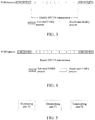
FIG. 3 is a schematic diagram of a UE disabling a DPCCH transmission in a deactivated HARQ process in accordance with another embodiment of the present invention; -
FIG. 4 is a schematic diagram of the UE enabling the DPCCH transmission in a deactivated HARQ process in accordance with another embodiment of the present invention; -
FIG. 5 is a schematic diagram of the structure of a base station in accordance with an embodiment of the present invention. - In various embodiments of the present invention, in the HSUPA system, the UE can be classified into UEs whose TTI is 2ms and UEs whose TTI is 10ms according to the TTI; in a UE whose TTI is 2ms, the existing protocol specifies that the UE comprises eight HARQ processes to transmit data. The base station (Node B) can obtain the activated/deactivated state of each HARQ process of the UE, when an HARQ process is in the deactivated state, the HARQ process cannot be used for transmitting scheduling data. Therefore, the base station can monitor information of the UE and information of the cell where the UE is located; when both the information of the UE and the information of the cell where the UE is located meet the preset condition, the UE is notified to disable the DPCCH transmission in the deactivated process to reduce the uplink interference, thereby increasing the system uplink capacity and increasing the standby time of the terminal.
- Hereinafter, in conjunction with the accompanying drawings and specific embodiments, the present invention will be described in further detail.
-
FIG. 1 is a flow chart of the power control method in accordance with an embodiment of the present invention, as shown inFIG. 1 , it comprises the following steps:
instep 101, when determining that a preset entry condition is met, the base station notifies the user equipment (UE) to disable the DPCCH transmission in the deactivated HARQ process. - Herein, by monitoring information of the UE and information of the cell where the UE is located, the base station determines whether the preset entry condition is met based on the information of the UE and the information of the cell where the UE is located.
- Wherein, the information of the UE comprises at least one of the following information: capability information of the UE, HSUPA service type information of the UE, information of an activated HARQ process or information of a deactivated HARQ process included in the UE.
- Wherein, the capability information of the UE comprises information of whether the UE has the capability of disabling the DPCCH transmission in the deactivated HARQ process;
the HSUPA service type information of the UE comprises: information of a service whose Transport Time Interval (TTI) is 2ms in the HSUPA or a service whose TTI is 10ms in the HSUPA. - Wherein, the information of the cell where the UE is located comprises: ROT information of the cell or overload rate information of the cell.
- In the present embodiment, the base station can notify the UE to disable the DPCCH transmission in the deactivated HARQ process via a downlink high speed shared control channel order (HS-SCCH order) when determining that the preset entry condition is met.
- Preferably, said determining that a preset entry condition is met is:
determining that both the information of the UE and the information of the cell where the UE is located meet the preset entry condition. - Specifically, said determining that both the information of the UE and the information of the cell where the UE is located meet the preset entry condition comprises:
when monitoring that the UE has the capability of disabling the DPCCH transmission in the deactivated HARQ process, the UE has the deactivated HARQ process, and the service type of the UE is a service whose TTI is 2ms in the HSUPA, and monitoring that the ROT information of the cell where the UE is located is greater than preset target ROT information, determining that both the information of the UE and the information of the cell where the UE located meet the preset entry condition. - OR, said determining that both the information of the UE and the information of the cell where the UE is located meet the preset entry condition comprises:
when monitoring that the UE has the capability of disabling the DPCCH transmission in the deactivated HARQ process, the UE has the deactivated HARQ process, and the service type of the UE is a service whose TTI is 2ms in the HSUPA, and monitoring that overload rate information of the cell where the UE is located is greater than preset target overload rate information, determining that both the information of the UE and the information of the cell where the UE is located meet the preset entry condition. - Wherein, the base station notifying the UE to disable the DPCCH transmission in the deactivated HARQ process comprises:
- the base station notifying the UE to disable the DPCCH transmission in the deactivated HARQ process via a downlink HS-SCCH order.
- in step 102: when determining that a preset exit condition is met, the base station notifies the UE to enable the DPCCH transmission in the deactivated HARQ process.
- Herein, by monitoring the information of the UE and the information of the cell where the UE is located, the base station determines whether the information of the UE and the information of the cell where the UE is located meet the preset exit condition based on the information of the UE and the information of the cell where the UE is located; wherein, the information of the UE and the information of the cell where the UE is located have been described in the
step 101 and will not be repeated herein. - Specifically, said determining that both the information of the UE and the information of the cell where the UE is located meet the preset exit condition comprises:
when monitoring that the UE has the capability of disabling the DPCCH transmission in the deactivated HARQ process, the UE has the deactivated HARQ process, and the service type of the UE is the service whose TTI is 2ms in the HSUPA, and monitoring that the ROT information of the cell where the UE is located is less than the preset target ROT information, determining that both the information of the UE and the information of the cell where the UE located meet the preset exit condition; - OR, when monitoring that the UE has the capability of disabling the DPCCH transmission in the deactivated HARQ process, the UE has the deactivated HARQ process, and the service type of the UE is the service whose TTI is 2ms in the HSUPA, and monitoring that the overload rate information of the cell where the UE is located is less than the preset target overload rate information, determining that both the information of the UE and the information of the cell where the UE located meet the preset exit condition.
- In the present embodiment, the base station notifies the UE to enable the DPCCH transmission in the deactivated HARQ process via a downlink HS-SCCH order when determining that the preset exit condition is met.
-
FIG. 2 is a flow chart of the power control method in accordance with another embodiment of the present invention; as shown inFIG. 2 , it comprises the following steps:
instep 201, the base station monitors information of the UE and information of the cell where the UE is located. - Herein, the information of the UE comprises: capability information of the UE, HSUPA service type information of the UE, information of an activated HARQ process or information of a deactivated HARQ process included in the UE; wherein,
- wherein, the capability information of the UE comprises information of whether the UE has the capability of disabling the DPCCH transmission in the deactivated HARQ process;
- the HSUPA service type information of the UE comprises: information of a service whose TTI is 2ms in the HSUPA or a service whose TTI is 10ms in the HSUPA.
- Wherein, the information of the cell where the UE is located comprises: the ROT information of the cell or the overload rate information of the cell.
- Specifically, the base station receives the capability information reported by the UE, and the capability information comprises information of whether the UE has the capability of disabling the DPCCH transmission in the deactivated HARQ process, the HSUPA service type information of the UE and the process information of the UE, and the base station obtains the service type information configured by the network side device for the UE, comprising: a service whose TTI is 2ms in the HSUPA or a service whose TTI is 10ms in the HSUPA, and obtains the process information of the UE configured by the network side device for the UE, comprising: information of the activated HARQ process or information of the deactivated HARQ process; for example, in the HSUPA, in the eight HARQ processes of the HSUPA 2ms TTI UE configured by the network side, the process 0 and the process 1 are configured as activated HARQ processes, and the
process 2 to theprocess 7 are configured as deactivated HARQ processes. - In
step 202,it is to notify the UE to disable the DPCCH transmission in the deactivated HARQ process when determining that both the information of the UE and the information of the cell where the UE is located meet the preset entry condition. - Wherein, said determining that both the information of the UE and the information of the cell where the UE is located meet the preset entry condition comprises:
- when monitoring that the UE has the capability of disabling the DPCCH transmission in the deactivated HARQ process, the UE has the deactivated HARQ process, and the service type of the UE is the service whose TTI is 2ms in the HSUPA, and monitoring that the ROT information of the cell where the UE is located is greater than the preset target ROT information, determining that both the information of the UE and the information of the cell where the UE is located meet the preset condition;
- or, when monitoring that the UE has the capability of disabling the DPCCH transmission in the deactivated HARQ process, the UE has the deactivated HARQ process, and the service type of the UE is the service whose TTI is 2ms in the HSUPA, and monitoring that the overload rate information of the cell where the UE is located is greater than the preset target overload rate information, determining that both the information of the UE and the information of the cell where the UE is located meet the preset entry condition.
- In the present invention, the base station notifies the UE to disable the DPCCH transmission in the deactivated HARQ process via a downlink HS-SCCH order, i.e., notifying that the deactivated HARQ process in the UE is in the DPCCH disabled mode. Specifically, the base station notifying the UE to disable the DPCCH transmission in the deactivated HARQ process via a downlink HS-SCCH order needs to modify a content of the downlink HS-SCCH order in the 3GPP protocol 25.212,and add at least one order type and define the meaning of bits in the order. One protocol modification implementation way is as follows:
- If the extended Order type xeodt, 1, xeodt,2 = '11' and the Order type xodt,1, xodt,2, xodt,3 = '100', then the mapping for xord,1, xord,2, xord,3 is according to subclause 4.6C.2.2.5.
- 4.6C.2.2.5 Orders for activation and deactivation of DPCCH OFF operation
- If the order is transmitted from the serving HS-DSCH cell or a secondary serving HS-DSCH cell, for this Order type, xord,1, xord,2, xord,3 is comprised of:
- Reserved (2 bits) : xord,1, xord,2 = xres,1, xres,2
- DPCCH OFF operation activation (1 bit): xord,3 = xdpcch-off,1
- If xdpcch-off,1 = '0', then the HS-SCCH order is a DPCCH OFF operation De-activation order.
- If xdpcch-off,1 = '1', then the HS-SCCH order is a DPCCH OFF operation Activation order.
- If the order is transmitted from a non-serving cell using HS-SCCH type 1 specified in subclause 4.6.1 and xord,1, xord,2, xord,3 = '000', then it is an HS-DSCH serving cell change order .
- Other combinations of xord,1, xord,2, xord,3 are reserved (not used in this release).
- In the abovementioned implementation way, the present embodiment adds a new order type: (xeodt, 1, xeodt,2 = "11", xodt,1, xodt,2, xodt,3 = "100", xord,1, xord,2, xord,3 = "xxx"); wherein, xeodt,1, xeodt,2 = "11", xodt,1, xodt,2, xodt,3 = "100", in other 3-bit order bits, the xord,1 and the xord,2, a total of 2 bits, are reserved, and the remaining xord,3 = "1" indicates notifying the UE to disable the DPCCH transmission in the deactivated HARQ process; xord,3 = "0" indicates notifying the UE to enable the DPCCH transmission in the deactivated HARQ process. Thus, the base station notifies the UE to disable the DPCCH transmission in the deactivated HARQ process via the downlink HS-SCCH order (xeodt,1, xeodt,2 = "11", xodt,1, xodt,2, xodt,3 = "100" , xord,1, xord,2, xord,3 = "xx1").
- In
step 203,when determining that the information of the UE and the information of the cell where the UE is located meet the preset exit condition, it is to notify the UE to enable the DPCCH transmission in the deactivated HARQ process. - Wherein, said determining that both the information of the UE and the information of the cell where the UE is located meet the preset exit condition comprises:
- when monitoring that the UE has the capability of disabling the DPCCH transmission in the deactivated HARQ process, the UE has the deactivated HARQ process, and the service type of the UE is the service whose TTI is 2ms in the HSUPA, and monitoring that the ROT information of the cell where the UE is located is less than the preset target ROT information, determining that both the information of the UE and the information of the cell where the UE is located meet the preset entry condition;
- or, when monitoring that the UE has the capability of disabling the DPCCH transmission in the deactivated HARQ process, the UE has the deactivated HARQ process, and the service type of the UE is the service whose TTI is 2ms in the HSUPA, and monitoring that the overload rate information of the cell where the UE is located is less than the preset target overload rate information, determining that both the information of the UE and the information of the cell where the UE is located meet the preset exit condition.
- In the present embodiment, similar to the
step 202, the base station notifying the UE to enable the DPCCH transmission in the deactivated HARQ process via a downlink HS-SCCH order type needs to modify the content of the downlink HS-SCCH order in the 3GPP protocol 25.212, and add one new order type: (xeodt, 1, xeodt,2 = "11", xodt,1, xodt,2, xodt,3 = "100", xord,1, xord,2, xord,3 = "xxx"); wherein, xeodt,1, xeodt,2 = "11", xodt,1, xodt,2, xodt,3 = "100", in other 3-bit order bits, the xord, 1 and the xord,2, a total of 2 bits, are reserved, and the remaining xord,3 = "1" indicates notifying the UE to disable the DPCCH transmission in the deactivated HARQ process; xord,3 = "0" indicates notifying the UE to enable the DPCCH transmission in the deactivated HARQ process. Thus, the base station notifies the UE to enable the DPCCH transmission in the deactivated HARQ process via the downlink HS-SCCH order (xeodt,1, xeodt,2 = "11" , xodt,1, xodt,2, xodt,3 = "100" , xord,1, xord,2, xord,3 = "xx0"). - Below, in conjunction with specific embodiments, the present invention will be described in further detail.
- Suppose that there are two HSUPA UEs in the cell, and both the UEs are UEs with TTI being 2ms, and both UEs have the capability of disabling the DPCCH transmission in the deactivated HARQ process. The Node B monitors that the activated HARQ processes of the UE1 are {0,1}, the deactivated HARQ processes are {2,3,4,5,6,7}. All the HARQ processes of the UE2 are activated, and there is node activated HARQ process.
- The Node B (base station)detects the ROT of the cell. When the Node B monitors that the RoT is greater than the preset cell target RoT + DetaRoT_up in consecutive t1 seconds, it illustrates that the uplink load of the cell is relatively large. In order to reduce the uplink interference and to reduce the uplink load of the cell, the Node B notifies the UE1 to disable the DPCCH transmission in the deactivated HARQ process via the downlink HS-SCCH order (xeodt,1, xeodt,2 = "11", xodt,1, xodt,2, xodt,3 = "100", xord,1, xord,2, xord,3 = "xx1"). For the UE2 without a deactivated HARQ process, the Node B does not send a notification. The t1 and the DetaRoT _up areexperimental or test values.
-
FIG. 3 is a schematic diagram of the UE disabling the DPCCH transmission in the deactivated HARQ process in the embodiment of the present invention; as shown inFIG. 3 , the process 0 and the process 1 are activated HARQ processes, and theprocess 2 to theprocess 7 are deactivated HARQ processes, when the UE1 receives the downlink HS-SCCH order (xeodt,1, xeodt,2 = "11", xodt,1, xodt,2, xodt,3 = "100", xord,1, xord,2, xord,3 = "xx1") transmitted by the Node B to notify the UE1 to disable the DPCCH transmission in the deactivated HARQ process, the DPCCH transmission is disabled in theprocess 2 to theprocess 7, and the process 0 and the process 1 remain in the DPCCH transmission enabled state. - Suppose that there are two HSUPA UEs in the cell, and both the UEs are UEs with TTI being 2ms, and both UEs have the capability of disabling the DPCCH transmission in the Deactivated HARQ process. The Node B monitors that the activated HARQ processes of the UE1 are {0,1}, the deactivated HARQ processes are {2,3,4,5,6,7}, and the DPCCH transmissions in the
processes 2 to 7 are disabled. All the HARQ processes of the UE2 are activated, and there is no deactivated HARQ process. - The Node B detects the ROT of the cell. When the Node B monitors that the RoT is less than the preset cell target RoT + DetaRoT_down in consecutive t2 seconds, it illustrates that the uplink load of the cell is relatively low. The Node B notifies the UE1 to enable the DPCCH transmission in the deactivated HARQ process via the downlink HS-SCCH order (xeodt,1, xeodt,2 = "11", xodt,1, xodt,2, xodt,3 = "100", xord,1, xord,2, xord,3 = "xx0"). For the UE2 without the deactivated HARQ process, the Node B does not send the notification. The t2 and the DetaRoT _up are experimental or test values.
-
FIG. 4 is a schematic diagram of the UE enabling the DPCCH transmission in the deactivated HARQ process in the embodiment of the present invention; as shown inFIG. 4 , the process 0 and the process 1 are activated HARQ processes, theprocess 2 to process 7 are deactivated HARQ processes, when the UE1 receives the downlink HS-SCCH order (xeodt,1, xeodt,2 = "11", xodt,1, xodt,2, xodt,3 = "100", xord,1, xord,2, xord,3 = "xx0") transmitted by the Node B to notify the UE1 to enable the DPCCH transmission in the deactivated HARQ process that is originally in the DPCCH transmission disabled state, then the DPCCH transmission is enabled in theprocess 2 to theprocess 7, while the process 0 and the process 1 remain in the DPCCH transmission enabled state. - Based on the abovementioned method, the embodiment of the present invention further provides a base station,
FIG. 5 is a schematic diagram of the structure of the base station in accordance with an embodiment of the present invention, as shown inFIG. 5 , the base station comprises: a determiningunit 51 and a transmittingunit 52; wherein, - the determining
unit 51 is configured to determine whether the preset entry condition or preset exit condition is met; - the transmitting
unit 52 is configured to: when a determination result of the determining unit is that the preset entry condition is met, notify the user equipment (UE) to disable the DPCCH transmission in the deactivated HARQ process; when the determination result of the determiningunit 51 is that the preset exit condition is met, notify the UE to disable the DPCCH transmission in the deactivated HARQ process. - Preferably, the base station further comprises a
monitoring unit 53, configured to monitor information of the UE and information of the cell where the UE is located. - Wherein, the information of the UE comprises at least one of the following information: capability information of the UE, HSUPA service type information of the UE, information of an activated HARQ process or information of a deactivated HARQ process included in the UE; wherein
- the capability information of the UE comprises information of whether the UE has the capability of disabling the DPCCH transmission in the deactivated HARQ process;
- the HSUPA service type information of the UE comprises: information of a service whose TTI is 2ms in the HSUPA or a service whose TTI is 10ms in the HSUPA.
- Wherein, the information of the cell where the UE is located comprises: the ROT information of the cell or the overload rate information of the cell.
- Preferably, the determining
unit 51 is configured to determine whether both the information of the UE and the information of the cell where the UE is located meet the preset entry condition or the preset exit condition; - Preferably, the determining
unit 51 is further configured to: when themonitoring unit 53 monitors that the UE has the capability of disabling the DPCCH transmission in the deactivated HARQ process, the UE has the deactivated HARQ process, and the service type of the UE is the service whose TTI is 2ms in the HSUPA, and themonitoring unit 53 monitors that the ROT information of the cell where the UE is located is greater than the preset target ROT information, determine that both the information of the UE and the information of the cell where the UE is located meet the preset entry condition. - Accordingly, the determining
module 51 is further configured to: when themonitoring unit 53 monitors that the UE has the capability of disabling the DPCCH transmission in the deactivated process, the UE has the deactivated HARQ process, and the service type of the UE is the service whose TTI is 2ms in the HSUPA, and when themonitoring unit 53 monitors that the ROT information of the cell where the UE is located is less than the preset target ROT information, determine that both the information of the UE and the information of the cell where the UE is located meet the preset exit condition. - Preferably, the determining
unit 51 is further configured to: when themonitoring unit 53 monitors that the UE has the capability of disabling the DPCCH transmission in the deactivated HARQ process, the UE has the deactivated HARQ process, and the service type of the UE is the service whose TTI is 2ms in the HSUPA, and themonitoring unit 53 monitors that the overload rate information of the cell where the UE is located is greater than the preset target overload rate information, determine that both the information of the UE and the information of the cell where the UE is located meet the preset entry condition. - Accordingly, the determining
module 51 is further configured to: when themonitoring unit 53 monitors that the UE has the capability of disabling the DPCCH transmission in the deactivated HARQ process, the UE has the deactivated HARQ process, and the service type of the UE is the service whose TTI is 2ms in the HSUPA, and when themonitoring unit 53 monitors that the overload rate information of the cell where the UE is located is less than the preset target overload rate information, determine that both the information of the UE and the information of the cell where the UE is located meet the preset exit condition. - Preferably, the transmitting
unit 52 is further configured to transmit a downlink high speed shared control channel order (HS-SCCH order) to notify the UE to disable or enable the DPCCH transmission in the deactivated HARQ process. - Those skilled in the art should understand, that the functions of each processing unit in the base station in accordance with the embodiment of the present invention can be understood by referring to the related description of the abovementioned power control method, various processing units in the base station according to the embodiment of the present invention may be implemented via analog circuits implementing the functions in the embodiment of the present invention, or implemented by running the software that implements the functions of the embodiment of the present invention in an intelligent terminal.
- Wherein, the determining
unit 51 and themonitoring unit 53 in the base station according to the present embodiment can be achieved with the Central Processing Unit (CPU), or Digital Signal Processor (DSP), or Field-programmable gate array (FPGA) in the base station in practical applications; the transmittingunit 52 in the base station can be achieved with the transmitter in the base station in practical applications. - The embodiment of the present invention further provides a power control system, wherein the system comprises: the base station and the user equipment (UE) according to the embodiment of the present invention; wherein,
- the base station is configured to: when determining that the preset entry condition is met, notify the user equipment (UE) to disable the DPCCH transmission in the deactivated HARQ process; when determining that the preset exit condition is met, notify the UE to enable the DPCCH transmission in the deactivated HARQ process;
- the UE is configured to disable or enable the DPCCH transmission in the deactivated HARQ process based on the notification order transmitted by the base station.
- Wherein, the base station is further configured to: before determining that the preset entry condition is met, monitor information of the UE and information of the cell where the UE is located.
- Wherein, the base station is configured to: when determining that the information of the UE and the information of the cell where the UE is located meet the preset entry condition, notify the UE to disable the DPCCH transmission in the deactivated HARQ process; when determining that the information of the UE and the information of the cell where the UE is located meet the preset exit condition, notify the UE to enable the DPCCH transmission in the deactivated HARQ process.
- Specifically, the base station is configured to: when monitoring that the UE has the capability of disabling the DPCCH transmission in the deactivated HARQ process, the UE has the deactivated HARQ process, and the service type of the UE is the service whose TTI is 2ms in the HSUPA, and monitoring that the ROT information of the cell where the UE is located is greater than the preset target ROT information, determine that both the information of the UE and the information of the cell where the UE is located meet the preset entry condition.
- Specifically, the base station is configured to: when monitoring that the UE has the capability of disabling the DPCCH transmission in the deactivated HARQ process, the UE has deactivated HARQ process, and the service type of the UE is the service whose TTI is 2ms in the HSUPA, and monitoring that the overload rate information of the cell where the UE is located is greater than the preset target overload rate information, determine that both the information of the UE and the information of the cell where the UE is located meet the preset entry condition.
- In the present embodiment, the base station is configured to notify the UE to disable or enable the DPCCH transmission in the deactivated HARQ process via the downlink high speed shared control channel order (HS-SCCH order).
- Those skilled in the art should appreciate that, the embodiments of the present invention may be provided as a method, an apparatus, a device, or a computer program product. Accordingly, the present invention can be forms of hardware embodiments, software embodiments, or embodiments combining software with hardware. Moreover, the present invention can be the form of computer program products implemented in one or more computer usable storage mediums having computer usable program codes (including but not limited to disk memory and optical memory, etc.).
- The present invention has been described by referring to the flow charts and/or block diagrams of the method, apparatus, device and computer program product in accordance with the embodiment of the present invention. It should be understood that computer program commands should be used to implement each procedure and/or block in the flow charts and/or the block diagrams, as well as combinations of the procedures and/or the blocks in the flow charts and/or the block diagrams. These computer program commands may be provided to a general purpose computer, a special purpose computer, an embedded processor or a processor of another programmable data processing device to produce a machine, thus a device implementing the functions specified in one or more flows in the flow charts and/or one or more blocks in the block diagrams is generated through the commands executed by the computer or the processor of another programmable data processing apparatus.
- These computer program commands may also be stored in a computer-readable memory that can direct a computer or another programmable data processing device to work in a particular manner, such that the commands stored in the computer readable memory produce manufactured goods including a command device, and the command device achieves the functions specified in one or more flows in the flow charts and/or one or more blocks in the block diagrams.
- These computer program commands may also be loaded in a computer or another programmable data processing device, so that the computer or the other programmable device implements a series of operating steps to produce the processing procedures implemented by the computer, thus the commands executed in the computer or the other programmable device provide steps for achieving the functions specified in one or more flows in the flow charts and/or one or more blocks in the block diagrams.
- The above description is only embodiments of the present invention, and it should be noted that, for those ordinary skilled in the art, under the premise of not departing from the principles in the embodiment of the present invention, a number of improvements and modifications can be made, and these improvements and modifications should also be considered as within the protection scope of the embodiments of the present invention.
- With the embodiment of the present invention, when determining that the preset entry condition is met, the base station notifies the UE to disable the DPCCH transmission in the deactivated HARQ process, when determining that the preset exit condition is met, the base station notifies the UE to enable the DPCCH transmission in the deactivated HARQ process, thus the UE can disable the DPCCH transmission in the deactivated HARQ process, thereby reducing the uplink interference and increasing the system uplink capacity, and by disabling the DPCCH transmission, the UE energy consumption is reduced and the standby time of the UE is increased.
Claims (15)
- A power control method comprising the following steps:when determining that a preset entry condition is met, a base station notifying a user equipment, UE, to disable a dedicated physical control channel, DPCCH, transmission in a deactivated hybrid automatic repeat request, HARQ, process (101);when determining that a preset exit condition is met, the base station notifying the UE to enable a DPCCH transmission in a deactivated HARQ process (102).
- The method of claim 1, wherein, before determining that the preset entry condition is met, the method further comprises:
the base station monitoring information of the UE and information of a cell where the UE is located (201). - The method of claim 2, wherein, the information of the UE comprises at least one of the following information: capability information of the UE, High Speed Uplink Packet Access, HSUPA, service type information of the UE, information of an activated HARQ process or information of a deactivated HARQ process included in the UE;
wherein,the capability information of the UE comprises information of whether the UE has a capability of disabling the DPCCH transmission in a deactivated HARQ process;the HSUPA service type information of the UE comprises: information of a service whose Transport Time Interval, TTI, is 2 microseconds in the HSUPA or information of a service whose TTI is 10 microseconds in the HSUPA;the information of the cell where the UE is located comprises: Rise Over Thermal, ROT, information of the cell or overload rate information of the cell. - The method of claim 3, wherein, said determining that a preset entry condition is met is:determining that both the information of the UE and the information of the cell where the UE is located meet the preset entry condition (202);accordingly, said determining that a preset exit condition is met is:determining that both the information of the UE and the information of the cell where the UE is located meet the preset exit condition (203),wherein, said determining that both the information of the UE and the information of the cell where the UE is located meet the preset entry condition comprises:
when monitoring that the UE has the capability of disabling the DPCCH transmission in a deactivated HARQ process, the UE has a deactivated HARQ process, and the service type of the UE is a service whose TTI is 2 microseconds in the HSUPA, and monitoring that the ROT information of the cell where the UE is located is greater than preset target ROT information, determining that both the information of the UE and the information of the cell where the UE located meet the preset entry condition,
or,wherein, said determining that both the information of the UE and the information of the cell where the UE is located meet the preset entry condition comprises:
when monitoring that the UE has the capability of disabling the DPCCH transmission in a deactivated HARQ process, the UE has a deactivated HARQ process, and the service type of the UE is a service whose TTI is 2 microseconds in the HSUPA, and monitoring that the overload rate information of the cell where the UE is located is greater than preset target overload rate information, determining that both the information of the UE and the information of the cell where the UE located meet the preset entry condition. - The method of claim 1, wherein, the base station notifying the UE to disable or enable the DPCCH transmission in a deactivated HARQ process comprises:
the base station notifying the UE to disable or enable the DPCCH transmission in a deactivated HARQ process via a downlink high speed shared control channel order, HS-SCCH order. - A base station comprising:a determining unit (51) and a transmitting unit (52); wherein,the determining unit is configured to determine whether a preset entry condition or preset exit condition is met;the transmitting unit is configured to: when a determination result of the determining unit is that the preset entry condition is met, notify a user equipment, UE, to disable a DPCCH transmission in a deactivated HARQ process; when the determination result of the determining unit is that the preset exit condition is met, notify the UE to enable a DPCCH transmission in a deactivated HARQ process.
- The base station of claim 6, wherein, the base station further comprises a monitoring unit (53) configured to monitor information of the UE and information of a cell where the UE is located.
- The base station of claim 7, wherein, the information of the UE comprises at least one of the following information: capability information of the UE, HSUPA service type information of the UE, information of an activated HARQ process or information of a deactivated HARQ process included in the UE; whereinthe capability information of the UE comprises information of whether the UE has a capability of disabling the DPCCH transmission in a deactivated HARQ process;the HSUPA service type information of the UE comprises: information of a service whose Transport Time Interval, TTI, is 2 microseconds in the HSUPA or information of a service whose TTI is 10 microseconds in the HSUPA,the information of the cell where the UE is located comprises: Rise Over Thermal, ROT, information of the cell or overload rate information of the cell.
- The base station of claim 8, wherein, the determining unit is configured to determine whether both the information of the UE and the information of the cell where the UE is located meet the preset entry condition or the preset exit condition,wherein, the determining unit is further configured to: when the monitoring unit monitors that the UE has the capability of disabling the DPCCH transmission in a deactivated HARQ process, the UE has a deactivated HARQ process, and the service type of the UE is a service whose TTI is 2 microseconds in the HSUPA, and monitors that the ROT information of the cell where the UE is located is greater than preset target ROT information, determine that both the information of the UE and the information of the cell where the UE located meet the preset entry condition,
or,wherein, the determining module is further configured to: when the monitoring unit monitors that the UE has the capability of disabling the DPCCH transmission in a deactivated HARQ process, the UE has a deactivated HARQ process, and the service type of the UE is a service whose TTI is 2 microseconds in the HSUPA, and the monitoring unit monitors that the overload rate information of the cell where the UE is located is greater than preset target overload rate information, determine that both the information of the UE and the information of the cell where the UE is located meet the preset entry condition. - The base station of claim 6, wherein, the transmitting unit is further configured to transmit a downlink high speed shared control channel order, HS-SCCH order, to notify the UE to disable or enable the DPCCH transmission in a deactivated HARQ process.
- A power control system comprising:a base station and a user equipment, UE; wherein,the base station is configured to: when determining that a preset entry condition is met, notify the user equipment, UE, to disable a DPCCH transmission in a deactivated HARQ process; when determining that a preset exit condition is met, notify the UE to enable a DPCCH transmission in a deactivated HARQ process;the UE is configured to disable or enable the DPCCH transmission in a deactivated HARQ process based on the notification of the base station.
- The system of claim 11, wherein, the base station is further configured to: before determining that the preset entry condition is met, monitor information of the UE and information of a cell where the UE is located;
wherein, the base station is configured to: when determining that both the information of the UE and the information of the cell where the UE is located meet the preset entry condition, notify the user equipment, UE, to disable the DPCCH transmission in a deactivated HARQ process; when determining that both the information of the UE and the information of the cell where the UE is located meet the preset exit condition, notify the UE to enable the DPCCH transmission in a deactivated HARQ process. - The system of claim 12, wherein, the base station is configured to: when monitoring that the UE has a capability of disabling the DPCCH transmission in a deactivated HARQ process, the UE has a deactivated HARQ process, and a service type of the UE is a service whose TTI is 2 microseconds in the HSUPA, and monitoring that ROT information of the cell where the UE is located is greater than preset target ROT information, determine that both the information of the UE and the information of the cell where the UE located meet the preset entry condition,
or,
wherein, the base station is configured to: when monitoring that the UE has a capability of disabling the DPCCH transmission in a deactivated HARQ process, the UE has a deactivated HARQ process, and the service type of the UE is a service whose TTI is 2microseconds in the HSUPA, and monitoring that overload rate information of the cell where the UE is located is greater than preset target overload rate information, determine that both the information of the UE and the information of the cell where the UE located meet the preset entry condition. - The system of claim 11, wherein, the base station is configured to notify the UE to disable or enable the DPCCH transmission in a deactivated HARQ process via a downlink high speed shared control channel order, HS-SCCH order.
- A computer storage medium for storing computer-executable commands, the computer-executable commands are used for executing the power control method of any one of claims 1 to 5.
Applications Claiming Priority (2)
| Application Number | Priority Date | Filing Date | Title |
|---|---|---|---|
| CN201310481630.0A CN104581895A (en) | 2013-10-15 | 2013-10-15 | Power control method and system as well as related equipment |
| PCT/CN2014/079718 WO2014180440A1 (en) | 2013-10-15 | 2014-06-12 | Power control method, system, device and computer storage medium |
Publications (3)
| Publication Number | Publication Date |
|---|---|
| EP3046374A1 EP3046374A1 (en) | 2016-07-20 |
| EP3046374A4 EP3046374A4 (en) | 2016-09-21 |
| EP3046374B1 true EP3046374B1 (en) | 2018-08-08 |
Family
ID=51866820
Family Applications (1)
| Application Number | Title | Priority Date | Filing Date |
|---|---|---|---|
| EP14794010.0A Not-in-force EP3046374B1 (en) | 2013-10-15 | 2014-06-12 | Power control method, system, device and computer storage medium |
Country Status (4)
| Country | Link |
|---|---|
| US (1) | US10034279B2 (en) |
| EP (1) | EP3046374B1 (en) |
| CN (1) | CN104581895A (en) |
| WO (1) | WO2014180440A1 (en) |
Families Citing this family (3)
| Publication number | Priority date | Publication date | Assignee | Title |
|---|---|---|---|---|
| WO2017047875A1 (en) * | 2015-09-16 | 2017-03-23 | 엘지전자(주) | Method for transceiving data in wireless communication system and apparatus for same |
| CN112398587B (en) * | 2019-08-14 | 2022-06-07 | 中国移动通信有限公司研究院 | Control method, terminal and equipment for HARQ (hybrid automatic repeat request) process feedback |
| WO2022006724A1 (en) * | 2020-07-06 | 2022-01-13 | Oppo广东移动通信有限公司 | Processing method for use in disabling harq retransmission, terminal device, and network device |
Family Cites Families (7)
| Publication number | Priority date | Publication date | Assignee | Title |
|---|---|---|---|---|
| US7526304B2 (en) * | 2005-09-29 | 2009-04-28 | Alcatel-Lucent Usa Inc. | Method of increasing the capacity of enhanced data channel on uplink in a wireless communications system |
| CN101026396B (en) * | 2006-02-17 | 2010-05-12 | 华为技术有限公司 | Power Control Method in Packet Data Transmission |
| US8565195B2 (en) * | 2006-08-21 | 2013-10-22 | Nokia Corporation | Apparatus, methods and computer program products providing support for packet data user continuous uplink connectivity |
| US20090290559A1 (en) * | 2008-04-24 | 2009-11-26 | Interdigital Patent Holdings, Inc. | Method and apparatus for harq autonomous retransmissions |
| US8780875B2 (en) * | 2008-06-05 | 2014-07-15 | Qualcomm Incorporated | Method and apparatus for controlling discontinuous transmissions |
| CN102056318B (en) * | 2009-11-05 | 2014-12-10 | 中兴通讯股份有限公司 | Method and system for triggering transmission of scheduling information by terminal |
| WO2013139023A1 (en) * | 2012-03-22 | 2013-09-26 | Renesas Mobile Corporation | Method and apparatus for providing enhanced initial access support for limited-bandwidth devices |
-
2013
- 2013-10-15 CN CN201310481630.0A patent/CN104581895A/en not_active Withdrawn
-
2014
- 2014-06-12 WO PCT/CN2014/079718 patent/WO2014180440A1/en not_active Ceased
- 2014-06-12 US US15/028,716 patent/US10034279B2/en not_active Expired - Fee Related
- 2014-06-12 EP EP14794010.0A patent/EP3046374B1/en not_active Not-in-force
Non-Patent Citations (1)
| Title |
|---|
| QUALCOMM EUROPE: "Signalling in support of DTX/DRX", 3GPP DRAFT; R1-061498, 3RD GENERATION PARTNERSHIP PROJECT (3GPP), MOBILE COMPETENCE CENTRE ; 650, ROUTE DES LUCIOLES ; F-06921 SOPHIA-ANTIPOLIS CEDEX ; FRANCE, vol. RAN WG1, no. Shanghai, China; 20060502, 2 May 2006 (2006-05-02), XP050102347 * |
Also Published As
| Publication number | Publication date |
|---|---|
| CN104581895A (en) | 2015-04-29 |
| US10034279B2 (en) | 2018-07-24 |
| WO2014180440A1 (en) | 2014-11-13 |
| EP3046374A4 (en) | 2016-09-21 |
| EP3046374A1 (en) | 2016-07-20 |
| US20160278051A1 (en) | 2016-09-22 |
Similar Documents
| Publication | Publication Date | Title |
|---|---|---|
| US12289678B2 (en) | SCG state control method and apparatus, UE, MN, SN and medium | |
| KR101318314B1 (en) | Method of power reporting and communication device thereof | |
| US11166302B2 (en) | Method and apparatus for transmitting and receiving scheduling request | |
| EP2966906B1 (en) | Method and device for processing downlink information | |
| US10028229B2 (en) | Preamble sending method, power control method, terminal, and device | |
| US8649308B2 (en) | Method and device for confirming downlink inner loop power control mode by base station | |
| KR20110036518A (en) | A method for reducing terminal power consumption in a mobile communication system using a multicarrier structure | |
| KR20140111631A (en) | Method of reference cell maintenance | |
| EP2224755B1 (en) | A method of configuring the absolute grant mapping table for base station | |
| EP3468292B1 (en) | Transition state methods, devices and products | |
| AU2021284686B2 (en) | Beam failure recovery method and apparatus, and device | |
| CN104363975A (en) | Method, apparatus and equipment for configuring downlink dedicated physical channel (DPCH) slot format | |
| JP2012532484A (en) | Uplink power control for dual and multi-carrier radio systems | |
| WO2009092266A1 (en) | A method, an apparatus and a system for controlling the user equipment to release upward resource | |
| CN103260246B (en) | A kind of carrier scheduling method and equipment | |
| EP3165030B1 (en) | System and method for transmit power control with secondary uplink pilot channel | |
| WO2014166050A1 (en) | Methods and devices for ue measurements and reporting | |
| US10034279B2 (en) | Power control method, system, device and computer storage medium | |
| CN109561472B (en) | User equipment and method of deactivating BWP, computer readable medium | |
| US20170230953A1 (en) | Method and system for realizing notification of small-cell state | |
| CN113099737A (en) | Communication method and device | |
| US20170280427A1 (en) | Methods and nodes for controlling uplink transmissions | |
| CN102056277B (en) | Method, device and system for determining downlink inner-loop power control mode | |
| CN104038988A (en) | Method and device for controlling state of micro base station | |
| CN102264119B (en) | Control method, device and system for activation of downlink shared control channel saving technology |
Legal Events
| Date | Code | Title | Description |
|---|---|---|---|
| PUAI | Public reference made under article 153(3) epc to a published international application that has entered the european phase |
Free format text: ORIGINAL CODE: 0009012 |
|
| 17P | Request for examination filed |
Effective date: 20160413 |
|
| AK | Designated contracting states |
Kind code of ref document: A1 Designated state(s): AL AT BE BG CH CY CZ DE DK EE ES FI FR GB GR HR HU IE IS IT LI LT LU LV MC MK MT NL NO PL PT RO RS SE SI SK SM TR |
|
| AX | Request for extension of the european patent |
Extension state: BA ME |
|
| A4 | Supplementary search report drawn up and despatched |
Effective date: 20160824 |
|
| RIC1 | Information provided on ipc code assigned before grant |
Ipc: H04W 52/04 20090101ALI20160818BHEP Ipc: H04W 52/32 20090101AFI20160818BHEP Ipc: H04W 52/44 20090101ALI20160818BHEP Ipc: H04W 52/48 20090101ALI20160818BHEP |
|
| DAX | Request for extension of the european patent (deleted) | ||
| STAA | Information on the status of an ep patent application or granted ep patent |
Free format text: STATUS: EXAMINATION IS IN PROGRESS |
|
| 17Q | First examination report despatched |
Effective date: 20170725 |
|
| REG | Reference to a national code |
Ref country code: DE Ref legal event code: R079 Ref document number: 602014030100 Country of ref document: DE Free format text: PREVIOUS MAIN CLASS: H04W0052320000 Ipc: H04L0001180000 |
|
| GRAP | Despatch of communication of intention to grant a patent |
Free format text: ORIGINAL CODE: EPIDOSNIGR1 |
|
| STAA | Information on the status of an ep patent application or granted ep patent |
Free format text: STATUS: GRANT OF PATENT IS INTENDED |
|
| RIC1 | Information provided on ipc code assigned before grant |
Ipc: H04W 52/48 20090101ALI20180219BHEP Ipc: H04L 1/18 20060101AFI20180219BHEP Ipc: H04W 72/04 20090101ALI20180219BHEP Ipc: H04W 52/44 20090101ALI20180219BHEP Ipc: H04W 52/32 20090101ALI20180219BHEP Ipc: H04W 52/28 20090101ALI20180219BHEP |
|
| INTG | Intention to grant announced |
Effective date: 20180312 |
|
| GRAS | Grant fee paid |
Free format text: ORIGINAL CODE: EPIDOSNIGR3 |
|
| GRAA | (expected) grant |
Free format text: ORIGINAL CODE: 0009210 |
|
| STAA | Information on the status of an ep patent application or granted ep patent |
Free format text: STATUS: THE PATENT HAS BEEN GRANTED |
|
| AK | Designated contracting states |
Kind code of ref document: B1 Designated state(s): AL AT BE BG CH CY CZ DE DK EE ES FI FR GB GR HR HU IE IS IT LI LT LU LV MC MK MT NL NO PL PT RO RS SE SI SK SM TR |
|
| REG | Reference to a national code |
Ref country code: GB Ref legal event code: FG4D |
|
| REG | Reference to a national code |
Ref country code: CH Ref legal event code: EP Ref country code: AT Ref legal event code: REF Ref document number: 1028255 Country of ref document: AT Kind code of ref document: T Effective date: 20180815 |
|
| REG | Reference to a national code |
Ref country code: IE Ref legal event code: FG4D |
|
| REG | Reference to a national code |
Ref country code: DE Ref legal event code: R096 Ref document number: 602014030100 Country of ref document: DE |
|
| REG | Reference to a national code |
Ref country code: NL Ref legal event code: MP Effective date: 20180808 |
|
| REG | Reference to a national code |
Ref country code: LT Ref legal event code: MG4D |
|
| REG | Reference to a national code |
Ref country code: AT Ref legal event code: MK05 Ref document number: 1028255 Country of ref document: AT Kind code of ref document: T Effective date: 20180808 |
|
| PG25 | Lapsed in a contracting state [announced via postgrant information from national office to epo] |
Ref country code: IS Free format text: LAPSE BECAUSE OF FAILURE TO SUBMIT A TRANSLATION OF THE DESCRIPTION OR TO PAY THE FEE WITHIN THE PRESCRIBED TIME-LIMIT Effective date: 20181208 Ref country code: RS Free format text: LAPSE BECAUSE OF FAILURE TO SUBMIT A TRANSLATION OF THE DESCRIPTION OR TO PAY THE FEE WITHIN THE PRESCRIBED TIME-LIMIT Effective date: 20180808 Ref country code: FI Free format text: LAPSE BECAUSE OF FAILURE TO SUBMIT A TRANSLATION OF THE DESCRIPTION OR TO PAY THE FEE WITHIN THE PRESCRIBED TIME-LIMIT Effective date: 20180808 Ref country code: GR Free format text: LAPSE BECAUSE OF FAILURE TO SUBMIT A TRANSLATION OF THE DESCRIPTION OR TO PAY THE FEE WITHIN THE PRESCRIBED TIME-LIMIT Effective date: 20181109 Ref country code: NO Free format text: LAPSE BECAUSE OF FAILURE TO SUBMIT A TRANSLATION OF THE DESCRIPTION OR TO PAY THE FEE WITHIN THE PRESCRIBED TIME-LIMIT Effective date: 20181108 Ref country code: SE Free format text: LAPSE BECAUSE OF FAILURE TO SUBMIT A TRANSLATION OF THE DESCRIPTION OR TO PAY THE FEE WITHIN THE PRESCRIBED TIME-LIMIT Effective date: 20180808 Ref country code: AT Free format text: LAPSE BECAUSE OF FAILURE TO SUBMIT A TRANSLATION OF THE DESCRIPTION OR TO PAY THE FEE WITHIN THE PRESCRIBED TIME-LIMIT Effective date: 20180808 Ref country code: LT Free format text: LAPSE BECAUSE OF FAILURE TO SUBMIT A TRANSLATION OF THE DESCRIPTION OR TO PAY THE FEE WITHIN THE PRESCRIBED TIME-LIMIT Effective date: 20180808 Ref country code: PL Free format text: LAPSE BECAUSE OF FAILURE TO SUBMIT A TRANSLATION OF THE DESCRIPTION OR TO PAY THE FEE WITHIN THE PRESCRIBED TIME-LIMIT Effective date: 20180808 Ref country code: NL Free format text: LAPSE BECAUSE OF FAILURE TO SUBMIT A TRANSLATION OF THE DESCRIPTION OR TO PAY THE FEE WITHIN THE PRESCRIBED TIME-LIMIT Effective date: 20180808 Ref country code: BG Free format text: LAPSE BECAUSE OF FAILURE TO SUBMIT A TRANSLATION OF THE DESCRIPTION OR TO PAY THE FEE WITHIN THE PRESCRIBED TIME-LIMIT Effective date: 20181108 |
|
| PG25 | Lapsed in a contracting state [announced via postgrant information from national office to epo] |
Ref country code: HR Free format text: LAPSE BECAUSE OF FAILURE TO SUBMIT A TRANSLATION OF THE DESCRIPTION OR TO PAY THE FEE WITHIN THE PRESCRIBED TIME-LIMIT Effective date: 20180808 Ref country code: LV Free format text: LAPSE BECAUSE OF FAILURE TO SUBMIT A TRANSLATION OF THE DESCRIPTION OR TO PAY THE FEE WITHIN THE PRESCRIBED TIME-LIMIT Effective date: 20180808 Ref country code: AL Free format text: LAPSE BECAUSE OF FAILURE TO SUBMIT A TRANSLATION OF THE DESCRIPTION OR TO PAY THE FEE WITHIN THE PRESCRIBED TIME-LIMIT Effective date: 20180808 |
|
| PG25 | Lapsed in a contracting state [announced via postgrant information from national office to epo] |
Ref country code: CZ Free format text: LAPSE BECAUSE OF FAILURE TO SUBMIT A TRANSLATION OF THE DESCRIPTION OR TO PAY THE FEE WITHIN THE PRESCRIBED TIME-LIMIT Effective date: 20180808 Ref country code: RO Free format text: LAPSE BECAUSE OF FAILURE TO SUBMIT A TRANSLATION OF THE DESCRIPTION OR TO PAY THE FEE WITHIN THE PRESCRIBED TIME-LIMIT Effective date: 20180808 Ref country code: ES Free format text: LAPSE BECAUSE OF FAILURE TO SUBMIT A TRANSLATION OF THE DESCRIPTION OR TO PAY THE FEE WITHIN THE PRESCRIBED TIME-LIMIT Effective date: 20180808 Ref country code: EE Free format text: LAPSE BECAUSE OF FAILURE TO SUBMIT A TRANSLATION OF THE DESCRIPTION OR TO PAY THE FEE WITHIN THE PRESCRIBED TIME-LIMIT Effective date: 20180808 |
|
| REG | Reference to a national code |
Ref country code: DE Ref legal event code: R097 Ref document number: 602014030100 Country of ref document: DE |
|
| PG25 | Lapsed in a contracting state [announced via postgrant information from national office to epo] |
Ref country code: DK Free format text: LAPSE BECAUSE OF FAILURE TO SUBMIT A TRANSLATION OF THE DESCRIPTION OR TO PAY THE FEE WITHIN THE PRESCRIBED TIME-LIMIT Effective date: 20180808 Ref country code: SM Free format text: LAPSE BECAUSE OF FAILURE TO SUBMIT A TRANSLATION OF THE DESCRIPTION OR TO PAY THE FEE WITHIN THE PRESCRIBED TIME-LIMIT Effective date: 20180808 Ref country code: SK Free format text: LAPSE BECAUSE OF FAILURE TO SUBMIT A TRANSLATION OF THE DESCRIPTION OR TO PAY THE FEE WITHIN THE PRESCRIBED TIME-LIMIT Effective date: 20180808 |
|
| PLBE | No opposition filed within time limit |
Free format text: ORIGINAL CODE: 0009261 |
|
| STAA | Information on the status of an ep patent application or granted ep patent |
Free format text: STATUS: NO OPPOSITION FILED WITHIN TIME LIMIT |
|
| 26N | No opposition filed |
Effective date: 20190509 |
|
| PG25 | Lapsed in a contracting state [announced via postgrant information from national office to epo] |
Ref country code: SI Free format text: LAPSE BECAUSE OF FAILURE TO SUBMIT A TRANSLATION OF THE DESCRIPTION OR TO PAY THE FEE WITHIN THE PRESCRIBED TIME-LIMIT Effective date: 20180808 |
|
| PG25 | Lapsed in a contracting state [announced via postgrant information from national office to epo] |
Ref country code: MC Free format text: LAPSE BECAUSE OF FAILURE TO SUBMIT A TRANSLATION OF THE DESCRIPTION OR TO PAY THE FEE WITHIN THE PRESCRIBED TIME-LIMIT Effective date: 20180808 |
|
| REG | Reference to a national code |
Ref country code: CH Ref legal event code: PL |
|
| REG | Reference to a national code |
Ref country code: BE Ref legal event code: MM Effective date: 20190630 |
|
| PG25 | Lapsed in a contracting state [announced via postgrant information from national office to epo] |
Ref country code: TR Free format text: LAPSE BECAUSE OF FAILURE TO SUBMIT A TRANSLATION OF THE DESCRIPTION OR TO PAY THE FEE WITHIN THE PRESCRIBED TIME-LIMIT Effective date: 20180808 |
|
| PG25 | Lapsed in a contracting state [announced via postgrant information from national office to epo] |
Ref country code: IE Free format text: LAPSE BECAUSE OF NON-PAYMENT OF DUE FEES Effective date: 20190612 |
|
| PG25 | Lapsed in a contracting state [announced via postgrant information from national office to epo] |
Ref country code: BE Free format text: LAPSE BECAUSE OF NON-PAYMENT OF DUE FEES Effective date: 20190630 Ref country code: LU Free format text: LAPSE BECAUSE OF NON-PAYMENT OF DUE FEES Effective date: 20190612 Ref country code: LI Free format text: LAPSE BECAUSE OF NON-PAYMENT OF DUE FEES Effective date: 20190630 Ref country code: CH Free format text: LAPSE BECAUSE OF NON-PAYMENT OF DUE FEES Effective date: 20190630 |
|
| PG25 | Lapsed in a contracting state [announced via postgrant information from national office to epo] |
Ref country code: PT Free format text: LAPSE BECAUSE OF FAILURE TO SUBMIT A TRANSLATION OF THE DESCRIPTION OR TO PAY THE FEE WITHIN THE PRESCRIBED TIME-LIMIT Effective date: 20181208 Ref country code: FR Free format text: LAPSE BECAUSE OF NON-PAYMENT OF DUE FEES Effective date: 20190630 |
|
| PG25 | Lapsed in a contracting state [announced via postgrant information from national office to epo] |
Ref country code: CY Free format text: LAPSE BECAUSE OF FAILURE TO SUBMIT A TRANSLATION OF THE DESCRIPTION OR TO PAY THE FEE WITHIN THE PRESCRIBED TIME-LIMIT Effective date: 20180808 |
|
| PG25 | Lapsed in a contracting state [announced via postgrant information from national office to epo] |
Ref country code: HU Free format text: LAPSE BECAUSE OF FAILURE TO SUBMIT A TRANSLATION OF THE DESCRIPTION OR TO PAY THE FEE WITHIN THE PRESCRIBED TIME-LIMIT; INVALID AB INITIO Effective date: 20140612 Ref country code: MT Free format text: LAPSE BECAUSE OF FAILURE TO SUBMIT A TRANSLATION OF THE DESCRIPTION OR TO PAY THE FEE WITHIN THE PRESCRIBED TIME-LIMIT Effective date: 20180808 |
|
| PG25 | Lapsed in a contracting state [announced via postgrant information from national office to epo] |
Ref country code: MK Free format text: LAPSE BECAUSE OF FAILURE TO SUBMIT A TRANSLATION OF THE DESCRIPTION OR TO PAY THE FEE WITHIN THE PRESCRIBED TIME-LIMIT Effective date: 20180808 |
|
| PGFP | Annual fee paid to national office [announced via postgrant information from national office to epo] |
Ref country code: GB Payment date: 20240402 Year of fee payment: 11 |
|
| PGFP | Annual fee paid to national office [announced via postgrant information from national office to epo] |
Ref country code: DE Payment date: 20240328 Year of fee payment: 11 |
|
| PGFP | Annual fee paid to national office [announced via postgrant information from national office to epo] |
Ref country code: IT Payment date: 20240513 Year of fee payment: 11 |
|
| REG | Reference to a national code |
Ref country code: DE Ref legal event code: R119 Ref document number: 602014030100 Country of ref document: DE |
|
| GBPC | Gb: european patent ceased through non-payment of renewal fee |
Effective date: 20250612 |
|
| PG25 | Lapsed in a contracting state [announced via postgrant information from national office to epo] |
Ref country code: GB Free format text: LAPSE BECAUSE OF NON-PAYMENT OF DUE FEES Effective date: 20250612 |
|
| PG25 | Lapsed in a contracting state [announced via postgrant information from national office to epo] |
Ref country code: DE Free format text: LAPSE BECAUSE OF NON-PAYMENT OF DUE FEES Effective date: 20260101 |
|
| PG25 | Lapsed in a contracting state [announced via postgrant information from national office to epo] |
Ref country code: IT Free format text: LAPSE BECAUSE OF NON-PAYMENT OF DUE FEES Effective date: 20250612 |