EP3045561A1 - Nitride free vapor deposited chromium coating - Google Patents
Nitride free vapor deposited chromium coating Download PDFInfo
- Publication number
- EP3045561A1 EP3045561A1 EP15195814.7A EP15195814A EP3045561A1 EP 3045561 A1 EP3045561 A1 EP 3045561A1 EP 15195814 A EP15195814 A EP 15195814A EP 3045561 A1 EP3045561 A1 EP 3045561A1
- Authority
- EP
- European Patent Office
- Prior art keywords
- chromium
- process according
- substrate
- chloride
- mixture
- Prior art date
- Legal status (The legal status is an assumption and is not a legal conclusion. Google has not performed a legal analysis and makes no representation as to the accuracy of the status listed.)
- Granted
Links
Images



Classifications
-
- C—CHEMISTRY; METALLURGY
- C09—DYES; PAINTS; POLISHES; NATURAL RESINS; ADHESIVES; COMPOSITIONS NOT OTHERWISE PROVIDED FOR; APPLICATIONS OF MATERIALS NOT OTHERWISE PROVIDED FOR
- C09D—COATING COMPOSITIONS, e.g. PAINTS, VARNISHES OR LACQUERS; FILLING PASTES; CHEMICAL PAINT OR INK REMOVERS; INKS; CORRECTING FLUIDS; WOODSTAINS; PASTES OR SOLIDS FOR COLOURING OR PRINTING; USE OF MATERIALS THEREFOR
- C09D5/00—Coating compositions, e.g. paints, varnishes or lacquers, characterised by their physical nature or the effects produced; Filling pastes
- C09D5/08—Anti-corrosive paints
-
- C—CHEMISTRY; METALLURGY
- C23—COATING METALLIC MATERIAL; COATING MATERIAL WITH METALLIC MATERIAL; CHEMICAL SURFACE TREATMENT; DIFFUSION TREATMENT OF METALLIC MATERIAL; COATING BY VACUUM EVAPORATION, BY SPUTTERING, BY ION IMPLANTATION OR BY CHEMICAL VAPOUR DEPOSITION, IN GENERAL; INHIBITING CORROSION OF METALLIC MATERIAL OR INCRUSTATION IN GENERAL
- C23C—COATING METALLIC MATERIAL; COATING MATERIAL WITH METALLIC MATERIAL; SURFACE TREATMENT OF METALLIC MATERIAL BY DIFFUSION INTO THE SURFACE, BY CHEMICAL CONVERSION OR SUBSTITUTION; COATING BY VACUUM EVAPORATION, BY SPUTTERING, BY ION IMPLANTATION OR BY CHEMICAL VAPOUR DEPOSITION, IN GENERAL
- C23C10/00—Solid state diffusion of only metal elements or silicon into metallic material surfaces
- C23C10/06—Solid state diffusion of only metal elements or silicon into metallic material surfaces using gases
- C23C10/08—Solid state diffusion of only metal elements or silicon into metallic material surfaces using gases only one element being diffused
- C23C10/10—Chromising
-
- C—CHEMISTRY; METALLURGY
- C23—COATING METALLIC MATERIAL; COATING MATERIAL WITH METALLIC MATERIAL; CHEMICAL SURFACE TREATMENT; DIFFUSION TREATMENT OF METALLIC MATERIAL; COATING BY VACUUM EVAPORATION, BY SPUTTERING, BY ION IMPLANTATION OR BY CHEMICAL VAPOUR DEPOSITION, IN GENERAL; INHIBITING CORROSION OF METALLIC MATERIAL OR INCRUSTATION IN GENERAL
- C23C—COATING METALLIC MATERIAL; COATING MATERIAL WITH METALLIC MATERIAL; SURFACE TREATMENT OF METALLIC MATERIAL BY DIFFUSION INTO THE SURFACE, BY CHEMICAL CONVERSION OR SUBSTITUTION; COATING BY VACUUM EVAPORATION, BY SPUTTERING, BY ION IMPLANTATION OR BY CHEMICAL VAPOUR DEPOSITION, IN GENERAL
- C23C10/00—Solid state diffusion of only metal elements or silicon into metallic material surfaces
- C23C10/28—Solid state diffusion of only metal elements or silicon into metallic material surfaces using solids, e.g. powders, pastes
- C23C10/30—Solid state diffusion of only metal elements or silicon into metallic material surfaces using solids, e.g. powders, pastes using a layer of powder or paste on the surface
- C23C10/32—Chromising
-
- C—CHEMISTRY; METALLURGY
- C23—COATING METALLIC MATERIAL; COATING MATERIAL WITH METALLIC MATERIAL; CHEMICAL SURFACE TREATMENT; DIFFUSION TREATMENT OF METALLIC MATERIAL; COATING BY VACUUM EVAPORATION, BY SPUTTERING, BY ION IMPLANTATION OR BY CHEMICAL VAPOUR DEPOSITION, IN GENERAL; INHIBITING CORROSION OF METALLIC MATERIAL OR INCRUSTATION IN GENERAL
- C23C—COATING METALLIC MATERIAL; COATING MATERIAL WITH METALLIC MATERIAL; SURFACE TREATMENT OF METALLIC MATERIAL BY DIFFUSION INTO THE SURFACE, BY CHEMICAL CONVERSION OR SUBSTITUTION; COATING BY VACUUM EVAPORATION, BY SPUTTERING, BY ION IMPLANTATION OR BY CHEMICAL VAPOUR DEPOSITION, IN GENERAL
- C23C16/00—Chemical coating by decomposition of gaseous compounds, without leaving reaction products of surface material in the coating, i.e. chemical vapour deposition [CVD] processes
- C23C16/06—Chemical coating by decomposition of gaseous compounds, without leaving reaction products of surface material in the coating, i.e. chemical vapour deposition [CVD] processes characterised by the deposition of metallic material
-
- C—CHEMISTRY; METALLURGY
- C23—COATING METALLIC MATERIAL; COATING MATERIAL WITH METALLIC MATERIAL; CHEMICAL SURFACE TREATMENT; DIFFUSION TREATMENT OF METALLIC MATERIAL; COATING BY VACUUM EVAPORATION, BY SPUTTERING, BY ION IMPLANTATION OR BY CHEMICAL VAPOUR DEPOSITION, IN GENERAL; INHIBITING CORROSION OF METALLIC MATERIAL OR INCRUSTATION IN GENERAL
- C23C—COATING METALLIC MATERIAL; COATING MATERIAL WITH METALLIC MATERIAL; SURFACE TREATMENT OF METALLIC MATERIAL BY DIFFUSION INTO THE SURFACE, BY CHEMICAL CONVERSION OR SUBSTITUTION; COATING BY VACUUM EVAPORATION, BY SPUTTERING, BY ION IMPLANTATION OR BY CHEMICAL VAPOUR DEPOSITION, IN GENERAL
- C23C16/00—Chemical coating by decomposition of gaseous compounds, without leaving reaction products of surface material in the coating, i.e. chemical vapour deposition [CVD] processes
- C23C16/44—Chemical coating by decomposition of gaseous compounds, without leaving reaction products of surface material in the coating, i.e. chemical vapour deposition [CVD] processes characterised by the method of coating
-
- F—MECHANICAL ENGINEERING; LIGHTING; HEATING; WEAPONS; BLASTING
- F01—MACHINES OR ENGINES IN GENERAL; ENGINE PLANTS IN GENERAL; STEAM ENGINES
- F01D—NON-POSITIVE DISPLACEMENT MACHINES OR ENGINES, e.g. STEAM TURBINES
- F01D5/00—Blades; Blade-carrying members; Heating, heat-insulating, cooling or antivibration means on the blades or the members
- F01D5/12—Blades
- F01D5/28—Selecting particular materials; Particular measures relating thereto; Measures against erosion or corrosion
- F01D5/288—Protective coatings for blades
Definitions
- This disclosure relates to improvements in forming chromium diffusion coatings.
- Substrates that are subject to corrosion may include a coating to protect an underlying material from corrosion.
- Vapor deposition techniques can be used to deposit chromium for diffusion into the underlying material.
- gases and activators that tend to include or form nitrides.
- Nitrides can have a negative effect on corrosion protection and have to be removed prior to entry of the substrate into service.
- the processes used for the removal of the nitride layer can damage the substrates. The need exists for a way to address nitride deposition issues without stressing and potentially damaging the parts.
- a method is provided of applying a chromium layer on a substrate by diffusion wherein the layer is substantially nitrogen free.
- a process for applying a chromium layer on a substrate comprises: contacting at least a portion of a substrate with a vapor comprising a gaseous chromium wherein the gaseous chromium is generated from a mixture comprising a chromium source and a substantially nitrogen free activator.
- the chromium diffuses into the portion of the substrate to define the chromium layer.
- the mixture comprises a chromium solid.
- the contacting step takes place in an enclosed space.
- the mixture is heated to produce gaseous chromium.
- the substrate is an aircraft engine airfoil.
- the airfoil is a high pressure turbine stage airfoil.
- the airfoil is a low pressure turbine stage airfoil.
- conditions inside the enclosed space are between 1900° F and 2000° F.
- conditions inside the enclosed space are held between 4 and 20 hours.
- the chromium layer has a thickness of between 0.3 and 1.3 mil (7.62-33.02 microns).
- the activator is a halide compound.
- the activator is a nitride free chloride compound.
- the activator is selected from the group consisting of chromium III chloride and chromium II chloride.
- the ratio of chromium to activator is between 120:1 and 160:1.
- the substrate has internal passageways.
- the portion includes the internal passageways.
- the chromium layer covers the internal passageways.
- the substrate is made of a nickel-based superalloy.
- the mixture has 98-99% by weight of chromium, and 1-2% by weight of chromium chloride.
- a process for applying a chromium layer on a substrate comprising: contacting at least a portion of the substrate with a vapor comprising a gaseous chromium wherein the gaseous chromium is generated from a mixture comprising a chromium source and a substantially nitrogen free activator.
- FIG. 1 illustrates an example of a method of diffusion coating a substrate with a chromium layer, such as a substrate made of a nickel-based superalloy.
- the method involves the use of the mixture that is tailored to provide an effective chromium diffusion onto the nickel-based superalloy of the substrate without depositing nitrides on said substrate or the deposited chromium layer.
- the mixture can consist essentially of an active coating metal which can be a mixture of chromium, a diffusion activator and a carrier material.
- the mixture may include only the listed constituents and inadvertent impurities that do not influence the properties of the mixture.
- the chromium can be of flake or powder form or consistency.
- chromium (III) chloride which can be provided in a flake or powder form can be used as the diffusion activator.
- chromium (II) chloride which can also be provided in flake or powder form can be used as the diffusion activator.
- activators such as other halide-based activators
- chromium (III) chloride in the prescribed amount, is particularly effective for facilitating the diffusion of chromium into nickel-based superalloys without forming nitrides on the resulting layer.
- the mixture again relative to the total combined weight, also has 98-99% by weight of chromium.
- the amount of chromium (III) chloride diffusion activator and chromium are selected in correspondence, for effective diffusion and area control.
- the relationship between the amount of the chromium and the amount of the chromium (III) chloride can be represented as a ratio.
- mixture, relative to the total combined weight can include X % by weight of the chromium and Z % by weight of the chromium (III) chloride in a ratio of X/Z that can be between 120:1 and 160:1.
- Providing the chromium and the chromium (III) chloride in the ratio described ensures effective diffusion of chromium into the substrate and control over the area of the substrate into which chromium diffuses. That is, the mixture herein limits lateral diffusion that would otherwise enlarge the coating area.
- a variation of the method can include heating and application steps.
- the heating is conducted in an enclosure having a continual flow of a carrying gas that is inert to produce an environment, in which said inert gas is the most abundant gas, at a temperature greater than 1900 °F./1038 °C., such as 1950 °F./1066 °C. to 2000 °F./1094 °C.
- the mixture can be heated until it starts vaporizing and is able to mix with the carrying gas.
- the inert gas used can be Argon.
- the application step includes contacting the gaseous mixture to the substrate, such as by introducing the substrate into a chamber filled with the gaseous mixture. Alternatively, by heating the solid form until the solids vaporize to produce the desired gaseous mixture and subsequently feeding the gaseous mixture vapor directionally onto the substrate. In another embodiment of the application the substrate can also be heated prior to coating in order to enhance the reception qualities of the substrate to chromium.
- the substrate can be placed in contact with the gas for a selected amount of time, depending upon a desired thickness of the chromium layer.
- the selected amount of time is between 4 and 20 hours and the final chromium diffusion coating (layer) includes at least 20% by weight of chromium.
- the aluminum in the substrate bonds to oxygen to create aluminum oxide and form the desired chromium layer. Thickness of the resulting chromium layer is dependent on the aluminum content of the substrate.
- the resulting thickness of the chromium layer is between 0.3 and 1.3 mil (7.62-33.02 microns).
- FIG. 2 shows a substrate (1), which in this example is a gas turbine engine turbine blade. It is to be understood, however, that the present method can also beneficially be applied to other substrates or other gas turbine engine components.
- the substrate generally includes an airfoil portion (3) and a root portion (5).
- the airfoil also generally includes internal air passageways (7). In the preferred embodiment of the method the internal passageways also receive a layer of chromium.
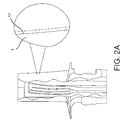
- FIG. 2A shows a magnified version of the substrate (1) with a layer of chromium (17) present.
- FIG. 3 shows a side by side comparison of the resulting layers of chromium, one using the conventional method and the other using the method of the present disclosure.
- the image on the left, the resulting nitride layer (9) on top of the chromium layer (11) can be seen.
Landscapes
- Chemical & Material Sciences (AREA)
- Organic Chemistry (AREA)
- Engineering & Computer Science (AREA)
- Materials Engineering (AREA)
- Mechanical Engineering (AREA)
- Metallurgy (AREA)
- Chemical Kinetics & Catalysis (AREA)
- General Chemical & Material Sciences (AREA)
- Life Sciences & Earth Sciences (AREA)
- Wood Science & Technology (AREA)
- Turbine Rotor Nozzle Sealing (AREA)
- Chemical Vapour Deposition (AREA)
- Other Surface Treatments For Metallic Materials (AREA)
- Physical Vapour Deposition (AREA)
Abstract
Description
- This disclosure relates to improvements in forming chromium diffusion coatings.
- Substrates that are subject to corrosion, such as gas turbine engine components, may include a coating to protect an underlying material from corrosion. Vapor deposition techniques can be used to deposit chromium for diffusion into the underlying material. However, typically these techniques use gases and activators that tend to include or form nitrides. Nitrides can have a negative effect on corrosion protection and have to be removed prior to entry of the substrate into service. However, the processes used for the removal of the nitride layer can damage the substrates. The need exists for a way to address nitride deposition issues without stressing and potentially damaging the parts.
- According to the disclosure, a method is provided of applying a chromium layer on a substrate by diffusion wherein the layer is substantially nitrogen free.
- A process for applying a chromium layer on a substrate comprises: contacting at least a portion of a substrate with a vapor comprising a gaseous chromium wherein the gaseous chromium is generated from a mixture comprising a chromium source and a substantially nitrogen free activator.
- In a further non-limiting embodiment of any of the foregoing examples, the chromium diffuses into the portion of the substrate to define the chromium layer.
- In a further non-limiting embodiment of any of the foregoing examples, the mixture comprises a chromium solid.
- In a further non-limiting embodiment of any of the foregoing examples, the contacting step takes place in an enclosed space.
- In a further non-limiting embodiment of any of the foregoing examples, the mixture is heated to produce gaseous chromium.
- In a further non-limiting embodiment of any of the foregoing examples, the substrate is an aircraft engine airfoil.
- In a further non-limiting embodiment of any of the foregoing examples, the airfoil is a high pressure turbine stage airfoil.
- In a further non-limiting embodiment of any of the foregoing examples, the airfoil is a low pressure turbine stage airfoil.
- In a further non-limiting embodiment of any of the foregoing examples, conditions inside the enclosed space are between 1900° F and 2000° F.
- In a further non-limiting embodiment of any of the foregoing examples, conditions inside the enclosed space are held between 4 and 20 hours.
- In a further non-limiting embodiment of any of the foregoing examples, the chromium layer has a thickness of between 0.3 and 1.3 mil (7.62-33.02 microns).
- In a further non-limiting embodiment of any of the foregoing examples, the activator is a halide compound.
- In a further non-limiting embodiment of any of the foregoing examples, the activator is a nitride free chloride compound.
- In a further non-limiting embodiment of any of the foregoing examples, the activator is selected from the group consisting of chromium III chloride and chromium II chloride.
- In a further non-limiting embodiment of any of the foregoing examples, the ratio of chromium to activator is between 120:1 and 160:1.
- In a further non-limiting embodiment of any of the foregoing examples, the substrate has internal passageways.
- In a further non-limiting embodiment of any of the foregoing examples, the portion includes the internal passageways.
- In a further non-limiting embodiment of any of the foregoing examples, the chromium layer covers the internal passageways.
- In a further non-limiting embodiment of any of the foregoing examples, the substrate is made of a nickel-based superalloy.
- In a further non-limiting embodiment of any of the foregoing examples, relative to a total combined weight of the chromium, and the chromium chloride, the mixture has 98-99% by weight of chromium, and 1-2% by weight of chromium chloride.
- The details of one or more embodiments of the disclosure are set forth in the accompanying drawings and the description below. Other features, objects, and advantages of the disclosure will be apparent from the description and drawings, and from the claims.
- The various features and advantages of the present disclosure will become apparent to those skilled in the art from the following detailed description. The drawings that accompany the detailed description can be briefly described as follows.
-
FIG. 1 illustrates an example of a method of diffusion coating a substrate. -
FIG. 2 shows an example of a substrate that is prepared for diffusion coating. -
FIG. 2A shows a magnified section of the substrate with a chromium layer. -
FIG. 3 shows a comparison of the resulting layers of conventional chromium application and the current disclosure, with no nitride layer present in the latter. - According to the disclosure, a process is provided for applying a chromium layer on a substrate comprising: contacting at least a portion of the substrate with a vapor comprising a gaseous chromium wherein the gaseous chromium is generated from a mixture comprising a chromium source and a substantially nitrogen free activator.
-
FIG. 1 illustrates an example of a method of diffusion coating a substrate with a chromium layer, such as a substrate made of a nickel-based superalloy. The method involves the use of the mixture that is tailored to provide an effective chromium diffusion onto the nickel-based superalloy of the substrate without depositing nitrides on said substrate or the deposited chromium layer. - One advantageous embodiment of the mixture can consist essentially of an active coating metal which can be a mixture of chromium, a diffusion activator and a carrier material. For example, the mixture may include only the listed constituents and inadvertent impurities that do not influence the properties of the mixture. The chromium can be of flake or powder form or consistency. In a preferred example chromium (III) chloride, which can be provided in a flake or powder form can be used as the diffusion activator. In another example chromium (II) chloride, which can also be provided in flake or powder form can be used as the diffusion activator.
- Other activators, such as other halide-based activators, vary in effectiveness with regard to different active coating metals, including chromium. However, the chromium (III) chloride, in the prescribed amount, is particularly effective for facilitating the diffusion of chromium into nickel-based superalloys without forming nitrides on the resulting layer.
- In a further example, the mixture, again relative to the total combined weight, also has 98-99% by weight of chromium.
- The amount of chromium (III) chloride diffusion activator and chromium are selected in correspondence, for effective diffusion and area control. The relationship between the amount of the chromium and the amount of the chromium (III) chloride can be represented as a ratio. For instance, mixture, relative to the total combined weight, can include X % by weight of the chromium and Z % by weight of the chromium (III) chloride in a ratio of X/Z that can be between 120:1 and 160:1. Providing the chromium and the chromium (III) chloride in the ratio described ensures effective diffusion of chromium into the substrate and control over the area of the substrate into which chromium diffuses. That is, the mixture herein limits lateral diffusion that would otherwise enlarge the coating area.
- A variation of the method can include heating and application steps. As an example, the heating is conducted in an enclosure having a continual flow of a carrying gas that is inert to produce an environment, in which said inert gas is the most abundant gas, at a temperature greater than 1900 °F./1038 °C., such as 1950 °F./1066 °C. to 2000 °F./1094 °C. The mixture can be heated until it starts vaporizing and is able to mix with the carrying gas. In one embodiment of the method, the inert gas used can be Argon.
- The application step includes contacting the gaseous mixture to the substrate, such as by introducing the substrate into a chamber filled with the gaseous mixture. Alternatively, by heating the solid form until the solids vaporize to produce the desired gaseous mixture and subsequently feeding the gaseous mixture vapor directionally onto the substrate. In another embodiment of the application the substrate can also be heated prior to coating in order to enhance the reception qualities of the substrate to chromium.
- The substrate can be placed in contact with the gas for a selected amount of time, depending upon a desired thickness of the chromium layer. In some examples, the selected amount of time is between 4 and 20 hours and the final chromium diffusion coating (layer) includes at least 20% by weight of chromium. As chloride compounds are contacted with the substrate, the aluminum in the substrate bonds to oxygen to create aluminum oxide and form the desired chromium layer. Thickness of the resulting chromium layer is dependent on the aluminum content of the substrate. In a preferred embodiment of the method, the resulting thickness of the chromium layer is between 0.3 and 1.3 mil (7.62-33.02 microns).
-
FIG. 2 shows a substrate (1), which in this example is a gas turbine engine turbine blade. It is to be understood, however, that the present method can also beneficially be applied to other substrates or other gas turbine engine components. In this example, the substrate generally includes an airfoil portion (3) and a root portion (5). The airfoil also generally includes internal air passageways (7). In the preferred embodiment of the method the internal passageways also receive a layer of chromium. FurtherFIG. 2A shows a magnified version of the substrate (1) with a layer of chromium (17) present. -
FIG. 3 shows a side by side comparison of the resulting layers of chromium, one using the conventional method and the other using the method of the present disclosure. Using the conventional method, the image on the left, the resulting nitride layer (9) on top of the chromium layer (11) can be seen. The image of a substrate coated according to the present disclosure, on the right, shows a chromium layer (13) on top of the substrate (15) with no nitride layer present. - Although a combination of features is shown in the illustrated examples, not all of them need to be combined to realize the benefits of various embodiments of this disclosure. In other words, a system designed according to an embodiment of this disclosure will not necessarily include all of the features shown in any one of the Figures or all of the portions schematically shown in the Figures. Moreover, selected features of one example embodiment may be combined with selected features of other example embodiments.
- The present disclosure provides a novel and non-obvious method for one or more embodiments of the present disclosure. Variations and modifications to the disclosed examples may become apparent to those skilled in the art that do not necessarily depart from the essence of this disclosure. For example, the exact ratios, enclosure conditions and the initial state of chromium. Accordingly, other embodiments are within the scope of the following preferred embodiments and the claims.
- Preferred embodiments of the present invention include:
- 1. A process for applying a chromium layer on a substrate comprising: contacting at least a portion of the substrate with a vapor comprising a gaseous chromium wherein the gaseous chromium is generated from a mixture comprising a chromium source and a substantially nitrogen free activator.
- 2. A process according to
embodiment 1 wherein the chromium diffuses into the portion of the substrate to define the chromium layer. - 3. A process according to
embodiment 1 wherein the mixture comprises a chromium solid. - 4. A process according to
embodiment 3 wherein the mixture is heated to produce gaseous chromium. - 5. A process according to
embodiment 1 wherein the contacting step takes place in an enclosed space. - 6. A process according to embodiment 5 wherein conditions inside the enclosed space are between 1900 °F and 2000 °F.
- 7. A process according to embodiment 5 wherein conditions inside the enclosed space are held between 4 and 20 hours.
- 8. A process according to
embodiment 1 wherein the substrate is an aircraft engine airfoil. - 9. A process according to embodiment 8 wherein the airfoil is a high pressure turbine stage airfoil.
- 10. A process according to embodiment 8 wherein the airfoil is a low pressure turbine stage airfoil.
- 11. A process according to
embodiment 1 wherein the chromium layer has a thickness of between 0.3 and 1.3 (mil) (7.62-33.02 microns). - 12. A process according to
embodiment 1 wherein the activator is a halide compound. - 13. A process according to
embodiment 1 wherein the activator is a nitride free chloride compound. - 14. A process according to
embodiment 1 wherein the activator is selected from the group consisting of chromium III chloride and chromium II chloride. - 15. A process according to
embodiment 1 wherein the activator is chromium III chloride. - 16. A process according to
embodiment 1 wherein the ratio of chromium to activator is between 120:1 and 160:1. - 17. A process according to
embodiment 1 wherein the substrate has internal passageways. - 18. A process according to
embodiment 17 wherein the portion includes the internal passageways. - 19. A process according to embodiment 18 wherein the chromium layer covers the internal passageways.
- 20. A process according to
embodiment 1 wherein the substrate is made of a nickel-based superalloy. - 21. A process according to
embodiment 1 wherein the mixture further comprises chromium (III) chloride. - 22. A process according to embodiment 20 wherein relative to a total combined weight of the chromium, and the activator, the mixture has 98-99% by weight of the chromium, 1-2% by weight of the chromium(III) chloride.
Claims (15)
- A process for applying a chromium layer on a substrate comprising: contacting at least a portion of the substrate with a vapor comprising a gaseous chromium wherein the gaseous chromium is generated from a mixture comprising a chromium source and a substantially nitrogen free activator.
- A process according to claim 1 wherein the chromium diffuses into the portion of the substrate to define the chromium layer.
- A process according to claim 1 or claim 2 wherein the mixture comprises a chromium solid.
- A process according to any one of the preceding claims wherein the mixture is heated to produce gaseous chromium.
- A process according to any one of the preceding claims wherein the contacting step takes place in an enclosed space.
- A process according to claim 5 wherein conditions inside the enclosed space are between 1900 °F and 2000 °F; and/or wherein conditions inside the enclosed space are held between 4 and 20 hours.
- A process according to any one of the preceding claims wherein the substrate is an aircraft engine airfoil, e.g. a high pressure turbine stage airfoil or a low pressure turbine stage airfoil.
- A process according to any one of the preceding claims wherein the chromium layer has a thickness of between 0.3 and 1.3 (mil) (7.62-33.02 microns).
- A process according to any one of the preceding claims wherein the activator:(i) is a halide compound;(ii) is a nitride free chloride compound; and/or(iii) is selected from the group consisting of chromium III chloride and chromium II chloride, preferably wherein the activator is chromium III chloride.
- A process according to any one of the preceding claims wherein the ratio of chromium to activator is between 120:1 and 160:1.
- A process according to any one of the preceding claims wherein the substrate has internal passageways.
- A process according to claim 11 wherein the portion includes the internal passageways.
- A process according to claim 11 or claim 12 wherein the chromium layer covers the internal passageways.
- A process according to any one of the preceding claims wherein the substrate is made of a nickel-based superalloy.
- A process according to any one of the preceding claims wherein the mixture further comprises chromium (III) chloride, preferably wherein relative to a total combined weight of the chromium, and the activator, the mixture has 98-99% by weight of the chromium, 1-2% by weight of the chromium(III) chloride.
Applications Claiming Priority (1)
| Application Number | Priority Date | Filing Date | Title |
|---|---|---|---|
| US14/597,263 US10023749B2 (en) | 2015-01-15 | 2015-01-15 | Method for nitride free vapor deposition of chromium coating |
Publications (2)
| Publication Number | Publication Date |
|---|---|
| EP3045561A1 true EP3045561A1 (en) | 2016-07-20 |
| EP3045561B1 EP3045561B1 (en) | 2022-11-16 |
Family
ID=54834618
Family Applications (1)
| Application Number | Title | Priority Date | Filing Date |
|---|---|---|---|
| EP15195814.7A Active EP3045561B1 (en) | 2015-01-15 | 2015-11-23 | Nitride free vapor deposited chromium coating |
Country Status (2)
| Country | Link |
|---|---|
| US (2) | US10023749B2 (en) |
| EP (1) | EP3045561B1 (en) |
Families Citing this family (1)
| Publication number | Priority date | Publication date | Assignee | Title |
|---|---|---|---|---|
| US10581851B1 (en) * | 2019-07-17 | 2020-03-03 | Capital One Services, Llc | Change monitoring and detection for a cloud computing environment |
Citations (4)
| Publication number | Priority date | Publication date | Assignee | Title |
|---|---|---|---|---|
| GB2421032A (en) * | 2004-12-11 | 2006-06-14 | Siemens Ind Turbomachinery Ltd | A method of protecting a component against hot corrosion |
| EP1788125A2 (en) * | 2005-11-22 | 2007-05-23 | United Technologies Corporation | Strip process for superalloys |
| US20110058951A1 (en) * | 2009-09-08 | 2011-03-10 | Mtu Aero Engines Gmbh | Turbine blade of a gas turbine and method for coating a turbine blade of a gas turbine |
| US20140004372A1 (en) * | 2012-06-28 | 2014-01-02 | Kevin L. Collins | Chromium diffusion coating |
Family Cites Families (6)
| Publication number | Priority date | Publication date | Assignee | Title |
|---|---|---|---|---|
| US3874901A (en) * | 1973-04-23 | 1975-04-01 | Gen Electric | Coating system for superalloys |
| US5194219A (en) | 1981-07-08 | 1993-03-16 | Alloy Surfaces Company, Inc. | Metal diffusion and after-treatment |
| US20060093849A1 (en) * | 2004-11-02 | 2006-05-04 | Farmer Andrew D | Method for applying chromium-containing coating to metal substrate and coated article thereof |
| US8124246B2 (en) | 2008-11-19 | 2012-02-28 | Honeywell International Inc. | Coated components and methods of fabricating coated components and coated turbine disks |
| US9718255B2 (en) | 2011-11-03 | 2017-08-01 | Barson Composites Corporation | Corrosion-resistant diffusion coatings |
| US10584411B2 (en) | 2014-07-18 | 2020-03-10 | United Technologies Corporation | Chromium-enriched diffused aluminide |
-
2015
- 2015-01-15 US US14/597,263 patent/US10023749B2/en active Active
- 2015-11-23 EP EP15195814.7A patent/EP3045561B1/en active Active
-
2018
- 2018-07-16 US US16/036,075 patent/US10968352B2/en active Active
Patent Citations (4)
| Publication number | Priority date | Publication date | Assignee | Title |
|---|---|---|---|---|
| GB2421032A (en) * | 2004-12-11 | 2006-06-14 | Siemens Ind Turbomachinery Ltd | A method of protecting a component against hot corrosion |
| EP1788125A2 (en) * | 2005-11-22 | 2007-05-23 | United Technologies Corporation | Strip process for superalloys |
| US20110058951A1 (en) * | 2009-09-08 | 2011-03-10 | Mtu Aero Engines Gmbh | Turbine blade of a gas turbine and method for coating a turbine blade of a gas turbine |
| US20140004372A1 (en) * | 2012-06-28 | 2014-01-02 | Kevin L. Collins | Chromium diffusion coating |
Also Published As
| Publication number | Publication date |
|---|---|
| US10023749B2 (en) | 2018-07-17 |
| US20180319998A1 (en) | 2018-11-08 |
| EP3045561B1 (en) | 2022-11-16 |
| US20160208109A1 (en) | 2016-07-21 |
| US10968352B2 (en) | 2021-04-06 |
Similar Documents
| Publication | Publication Date | Title |
|---|---|---|
| US9587302B2 (en) | Methods of applying chromium diffusion coatings onto selective regions of a component | |
| US8475598B2 (en) | Strip process for superalloys | |
| EP3049547B1 (en) | Method of simultaneously applying three different diffusion aluminide coatings to a single part | |
| JP4615677B2 (en) | Method for controlling the thickness and aluminum content of diffusion aluminide coatings | |
| US10113225B2 (en) | Maskant for use in aluminizing a turbine component | |
| US11987877B2 (en) | Chromium-enriched diffused aluminide coating | |
| US20220213585A1 (en) | Aluminum-chromium diffusion coating | |
| US20090117282A1 (en) | Diffusion aluminide coating process | |
| US6521294B2 (en) | Aluminiding of a metallic surface using an aluminum-modified maskant, and aluminum-modified maskant | |
| JP6770572B2 (en) | Slurry formulation and method for forming an aluminide coating doped with reactive elements | |
| US8425979B2 (en) | Maskant free diffusion coating process | |
| US10968352B2 (en) | Nitride free vapor deposited chromium coating | |
| US6482470B1 (en) | Diffusion aluminide coated metallic substrate including a thin diffusion portion of controlled thickness | |
| EP3048183B1 (en) | Corrosion resistant coating application method | |
| US20140004372A1 (en) | Chromium diffusion coating | |
| JP2003201803A (en) | Stabilized zirconia thermal barrier coating with hafnia | |
| US8808803B2 (en) | Coating method for reactive metal | |
| WO2006052277A3 (en) | Gas turbine engine components with aluminide coatings and method of forming such aluminide coatings on gas turbine engine components |
Legal Events
| Date | Code | Title | Description |
|---|---|---|---|
| PUAI | Public reference made under article 153(3) epc to a published international application that has entered the european phase |
Free format text: ORIGINAL CODE: 0009012 |
|
| AK | Designated contracting states |
Kind code of ref document: A1 Designated state(s): AL AT BE BG CH CY CZ DE DK EE ES FI FR GB GR HR HU IE IS IT LI LT LU LV MC MK MT NL NO PL PT RO RS SE SI SK SM TR |
|
| AX | Request for extension of the european patent |
Extension state: BA ME |
|
| RIN1 | Information on inventor provided before grant (corrected) |
Inventor name: MINOR, MICHAEL Inventor name: COLLINS, KEVIN |
|
| RAP1 | Party data changed (applicant data changed or rights of an application transferred) |
Owner name: UNITED TECHNOLOGIES CORPORATION |
|
| STAA | Information on the status of an ep patent application or granted ep patent |
Free format text: STATUS: REQUEST FOR EXAMINATION WAS MADE |
|
| 17P | Request for examination filed |
Effective date: 20170116 |
|
| RBV | Designated contracting states (corrected) |
Designated state(s): AL AT BE BG CH CY CZ DE DK EE ES FI FR GB GR HR HU IE IS IT LI LT LU LV MC MK MT NL NO PL PT RO RS SE SI SK SM TR |
|
| STAA | Information on the status of an ep patent application or granted ep patent |
Free format text: STATUS: EXAMINATION IS IN PROGRESS |
|
| 17Q | First examination report despatched |
Effective date: 20180118 |
|
| RAP1 | Party data changed (applicant data changed or rights of an application transferred) |
Owner name: RAYTHEON TECHNOLOGIES CORPORATION |
|
| GRAP | Despatch of communication of intention to grant a patent |
Free format text: ORIGINAL CODE: EPIDOSNIGR1 |
|
| STAA | Information on the status of an ep patent application or granted ep patent |
Free format text: STATUS: GRANT OF PATENT IS INTENDED |
|
| INTG | Intention to grant announced |
Effective date: 20220609 |
|
| GRAS | Grant fee paid |
Free format text: ORIGINAL CODE: EPIDOSNIGR3 |
|
| GRAA | (expected) grant |
Free format text: ORIGINAL CODE: 0009210 |
|
| STAA | Information on the status of an ep patent application or granted ep patent |
Free format text: STATUS: THE PATENT HAS BEEN GRANTED |
|
| AK | Designated contracting states |
Kind code of ref document: B1 Designated state(s): AL AT BE BG CH CY CZ DE DK EE ES FI FR GB GR HR HU IE IS IT LI LT LU LV MC MK MT NL NO PL PT RO RS SE SI SK SM TR |
|
| REG | Reference to a national code |
Ref country code: GB Ref legal event code: FG4D |
|
| REG | Reference to a national code |
Ref country code: CH Ref legal event code: EP |
|
| REG | Reference to a national code |
Ref country code: IE Ref legal event code: FG4D |
|
| REG | Reference to a national code |
Ref country code: DE Ref legal event code: R096 Ref document number: 602015081591 Country of ref document: DE |
|
| REG | Reference to a national code |
Ref country code: AT Ref legal event code: REF Ref document number: 1531823 Country of ref document: AT Kind code of ref document: T Effective date: 20221215 |
|
| REG | Reference to a national code |
Ref country code: LT Ref legal event code: MG9D |
|
| REG | Reference to a national code |
Ref country code: NL Ref legal event code: MP Effective date: 20221116 |
|
| REG | Reference to a national code |
Ref country code: AT Ref legal event code: MK05 Ref document number: 1531823 Country of ref document: AT Kind code of ref document: T Effective date: 20221116 |
|
| PG25 | Lapsed in a contracting state [announced via postgrant information from national office to epo] |
Ref country code: SE Free format text: LAPSE BECAUSE OF FAILURE TO SUBMIT A TRANSLATION OF THE DESCRIPTION OR TO PAY THE FEE WITHIN THE PRESCRIBED TIME-LIMIT Effective date: 20221116 Ref country code: PT Free format text: LAPSE BECAUSE OF FAILURE TO SUBMIT A TRANSLATION OF THE DESCRIPTION OR TO PAY THE FEE WITHIN THE PRESCRIBED TIME-LIMIT Effective date: 20230316 Ref country code: NO Free format text: LAPSE BECAUSE OF FAILURE TO SUBMIT A TRANSLATION OF THE DESCRIPTION OR TO PAY THE FEE WITHIN THE PRESCRIBED TIME-LIMIT Effective date: 20230216 Ref country code: LT Free format text: LAPSE BECAUSE OF FAILURE TO SUBMIT A TRANSLATION OF THE DESCRIPTION OR TO PAY THE FEE WITHIN THE PRESCRIBED TIME-LIMIT Effective date: 20221116 Ref country code: FI Free format text: LAPSE BECAUSE OF FAILURE TO SUBMIT A TRANSLATION OF THE DESCRIPTION OR TO PAY THE FEE WITHIN THE PRESCRIBED TIME-LIMIT Effective date: 20221116 Ref country code: ES Free format text: LAPSE BECAUSE OF FAILURE TO SUBMIT A TRANSLATION OF THE DESCRIPTION OR TO PAY THE FEE WITHIN THE PRESCRIBED TIME-LIMIT Effective date: 20221116 Ref country code: AT Free format text: LAPSE BECAUSE OF FAILURE TO SUBMIT A TRANSLATION OF THE DESCRIPTION OR TO PAY THE FEE WITHIN THE PRESCRIBED TIME-LIMIT Effective date: 20221116 |
|
| PG25 | Lapsed in a contracting state [announced via postgrant information from national office to epo] |
Ref country code: RS Free format text: LAPSE BECAUSE OF FAILURE TO SUBMIT A TRANSLATION OF THE DESCRIPTION OR TO PAY THE FEE WITHIN THE PRESCRIBED TIME-LIMIT Effective date: 20221116 Ref country code: PL Free format text: LAPSE BECAUSE OF FAILURE TO SUBMIT A TRANSLATION OF THE DESCRIPTION OR TO PAY THE FEE WITHIN THE PRESCRIBED TIME-LIMIT Effective date: 20221116 Ref country code: LV Free format text: LAPSE BECAUSE OF FAILURE TO SUBMIT A TRANSLATION OF THE DESCRIPTION OR TO PAY THE FEE WITHIN THE PRESCRIBED TIME-LIMIT Effective date: 20221116 Ref country code: IS Free format text: LAPSE BECAUSE OF FAILURE TO SUBMIT A TRANSLATION OF THE DESCRIPTION OR TO PAY THE FEE WITHIN THE PRESCRIBED TIME-LIMIT Effective date: 20230316 Ref country code: HR Free format text: LAPSE BECAUSE OF FAILURE TO SUBMIT A TRANSLATION OF THE DESCRIPTION OR TO PAY THE FEE WITHIN THE PRESCRIBED TIME-LIMIT Effective date: 20221116 Ref country code: GR Free format text: LAPSE BECAUSE OF FAILURE TO SUBMIT A TRANSLATION OF THE DESCRIPTION OR TO PAY THE FEE WITHIN THE PRESCRIBED TIME-LIMIT Effective date: 20230217 |
|
| P01 | Opt-out of the competence of the unified patent court (upc) registered |
Effective date: 20230520 |
|
| PG25 | Lapsed in a contracting state [announced via postgrant information from national office to epo] |
Ref country code: NL Free format text: LAPSE BECAUSE OF FAILURE TO SUBMIT A TRANSLATION OF THE DESCRIPTION OR TO PAY THE FEE WITHIN THE PRESCRIBED TIME-LIMIT Effective date: 20221116 |
|
| REG | Reference to a national code |
Ref country code: CH Ref legal event code: PL |
|
| REG | Reference to a national code |
Ref country code: BE Ref legal event code: MM Effective date: 20221130 |
|
| PG25 | Lapsed in a contracting state [announced via postgrant information from national office to epo] |
Ref country code: SM Free format text: LAPSE BECAUSE OF FAILURE TO SUBMIT A TRANSLATION OF THE DESCRIPTION OR TO PAY THE FEE WITHIN THE PRESCRIBED TIME-LIMIT Effective date: 20221116 Ref country code: RO Free format text: LAPSE BECAUSE OF FAILURE TO SUBMIT A TRANSLATION OF THE DESCRIPTION OR TO PAY THE FEE WITHIN THE PRESCRIBED TIME-LIMIT Effective date: 20221116 Ref country code: LI Free format text: LAPSE BECAUSE OF NON-PAYMENT OF DUE FEES Effective date: 20221130 Ref country code: EE Free format text: LAPSE BECAUSE OF FAILURE TO SUBMIT A TRANSLATION OF THE DESCRIPTION OR TO PAY THE FEE WITHIN THE PRESCRIBED TIME-LIMIT Effective date: 20221116 Ref country code: DK Free format text: LAPSE BECAUSE OF FAILURE TO SUBMIT A TRANSLATION OF THE DESCRIPTION OR TO PAY THE FEE WITHIN THE PRESCRIBED TIME-LIMIT Effective date: 20221116 Ref country code: CZ Free format text: LAPSE BECAUSE OF FAILURE TO SUBMIT A TRANSLATION OF THE DESCRIPTION OR TO PAY THE FEE WITHIN THE PRESCRIBED TIME-LIMIT Effective date: 20221116 Ref country code: CH Free format text: LAPSE BECAUSE OF NON-PAYMENT OF DUE FEES Effective date: 20221130 |
|
| REG | Reference to a national code |
Ref country code: DE Ref legal event code: R097 Ref document number: 602015081591 Country of ref document: DE |
|
| PG25 | Lapsed in a contracting state [announced via postgrant information from national office to epo] |
Ref country code: SK Free format text: LAPSE BECAUSE OF FAILURE TO SUBMIT A TRANSLATION OF THE DESCRIPTION OR TO PAY THE FEE WITHIN THE PRESCRIBED TIME-LIMIT Effective date: 20221116 Ref country code: LU Free format text: LAPSE BECAUSE OF NON-PAYMENT OF DUE FEES Effective date: 20221123 Ref country code: AL Free format text: LAPSE BECAUSE OF FAILURE TO SUBMIT A TRANSLATION OF THE DESCRIPTION OR TO PAY THE FEE WITHIN THE PRESCRIBED TIME-LIMIT Effective date: 20221116 |
|
| PLBE | No opposition filed within time limit |
Free format text: ORIGINAL CODE: 0009261 |
|
| STAA | Information on the status of an ep patent application or granted ep patent |
Free format text: STATUS: NO OPPOSITION FILED WITHIN TIME LIMIT |
|
| 26N | No opposition filed |
Effective date: 20230817 |
|
| PG25 | Lapsed in a contracting state [announced via postgrant information from national office to epo] |
Ref country code: IE Free format text: LAPSE BECAUSE OF NON-PAYMENT OF DUE FEES Effective date: 20221123 |
|
| PG25 | Lapsed in a contracting state [announced via postgrant information from national office to epo] |
Ref country code: SI Free format text: LAPSE BECAUSE OF FAILURE TO SUBMIT A TRANSLATION OF THE DESCRIPTION OR TO PAY THE FEE WITHIN THE PRESCRIBED TIME-LIMIT Effective date: 20221116 Ref country code: BE Free format text: LAPSE BECAUSE OF NON-PAYMENT OF DUE FEES Effective date: 20221130 |
|
| PG25 | Lapsed in a contracting state [announced via postgrant information from national office to epo] |
Ref country code: HU Free format text: LAPSE BECAUSE OF FAILURE TO SUBMIT A TRANSLATION OF THE DESCRIPTION OR TO PAY THE FEE WITHIN THE PRESCRIBED TIME-LIMIT; INVALID AB INITIO Effective date: 20151123 |
|
| PG25 | Lapsed in a contracting state [announced via postgrant information from national office to epo] |
Ref country code: CY Free format text: LAPSE BECAUSE OF FAILURE TO SUBMIT A TRANSLATION OF THE DESCRIPTION OR TO PAY THE FEE WITHIN THE PRESCRIBED TIME-LIMIT Effective date: 20221116 |
|
| PG25 | Lapsed in a contracting state [announced via postgrant information from national office to epo] |
Ref country code: MK Free format text: LAPSE BECAUSE OF FAILURE TO SUBMIT A TRANSLATION OF THE DESCRIPTION OR TO PAY THE FEE WITHIN THE PRESCRIBED TIME-LIMIT Effective date: 20221116 Ref country code: IT Free format text: LAPSE BECAUSE OF FAILURE TO SUBMIT A TRANSLATION OF THE DESCRIPTION OR TO PAY THE FEE WITHIN THE PRESCRIBED TIME-LIMIT Effective date: 20221116 |
|
| PG25 | Lapsed in a contracting state [announced via postgrant information from national office to epo] |
Ref country code: MC Free format text: LAPSE BECAUSE OF FAILURE TO SUBMIT A TRANSLATION OF THE DESCRIPTION OR TO PAY THE FEE WITHIN THE PRESCRIBED TIME-LIMIT Effective date: 20221116 |
|
| PG25 | Lapsed in a contracting state [announced via postgrant information from national office to epo] |
Ref country code: TR Free format text: LAPSE BECAUSE OF FAILURE TO SUBMIT A TRANSLATION OF THE DESCRIPTION OR TO PAY THE FEE WITHIN THE PRESCRIBED TIME-LIMIT Effective date: 20221116 Ref country code: MC Free format text: LAPSE BECAUSE OF FAILURE TO SUBMIT A TRANSLATION OF THE DESCRIPTION OR TO PAY THE FEE WITHIN THE PRESCRIBED TIME-LIMIT Effective date: 20221116 |
|
| PG25 | Lapsed in a contracting state [announced via postgrant information from national office to epo] |
Ref country code: BG Free format text: LAPSE BECAUSE OF FAILURE TO SUBMIT A TRANSLATION OF THE DESCRIPTION OR TO PAY THE FEE WITHIN THE PRESCRIBED TIME-LIMIT Effective date: 20221116 |
|
| PG25 | Lapsed in a contracting state [announced via postgrant information from national office to epo] |
Ref country code: MT Free format text: LAPSE BECAUSE OF FAILURE TO SUBMIT A TRANSLATION OF THE DESCRIPTION OR TO PAY THE FEE WITHIN THE PRESCRIBED TIME-LIMIT Effective date: 20221116 |
|
| REG | Reference to a national code |
Ref country code: DE Ref legal event code: R081 Ref document number: 602015081591 Country of ref document: DE Owner name: RTX CORPORATION (N.D.GES.D. STAATES DELAWARE),, US Free format text: FORMER OWNER: RAYTHEON TECHNOLOGIES CORPORATION, FARMINGTON, CT, US |
|
| PGFP | Annual fee paid to national office [announced via postgrant information from national office to epo] |
Ref country code: DE Payment date: 20251022 Year of fee payment: 11 |
|
| PGFP | Annual fee paid to national office [announced via postgrant information from national office to epo] |
Ref country code: GB Payment date: 20251023 Year of fee payment: 11 |
|
| PGFP | Annual fee paid to national office [announced via postgrant information from national office to epo] |
Ref country code: FR Payment date: 20251022 Year of fee payment: 11 |