EP3042959A1 - Method of inducing an immune response - Google Patents
Method of inducing an immune response Download PDFInfo
- Publication number
- EP3042959A1 EP3042959A1 EP15173478.7A EP15173478A EP3042959A1 EP 3042959 A1 EP3042959 A1 EP 3042959A1 EP 15173478 A EP15173478 A EP 15173478A EP 3042959 A1 EP3042959 A1 EP 3042959A1
- Authority
- EP
- European Patent Office
- Prior art keywords
- cells
- nucleic acid
- inhibitory nucleic
- mammal
- target polypeptide
- Prior art date
- Legal status (The legal status is an assumption and is not a legal conclusion. Google has not performed a legal analysis and makes no representation as to the accuracy of the status listed.)
- Withdrawn
Links
- 238000000034 method Methods 0.000 title claims abstract description 71
- 230000028993 immune response Effects 0.000 title claims abstract description 28
- 230000001939 inductive effect Effects 0.000 title claims abstract description 12
- 108090000765 processed proteins & peptides Proteins 0.000 claims abstract description 179
- 102000004196 processed proteins & peptides Human genes 0.000 claims abstract description 179
- 229920001184 polypeptide Polymers 0.000 claims abstract description 173
- 210000004027 cell Anatomy 0.000 claims abstract description 166
- 150000007523 nucleic acids Chemical class 0.000 claims abstract description 134
- 102000039446 nucleic acids Human genes 0.000 claims abstract description 133
- 108020004707 nucleic acids Proteins 0.000 claims abstract description 133
- 230000002401 inhibitory effect Effects 0.000 claims abstract description 117
- 210000001744 T-lymphocyte Anatomy 0.000 claims abstract description 82
- 229920002477 rna polymer Polymers 0.000 claims abstract description 59
- 241000124008 Mammalia Species 0.000 claims abstract description 48
- 230000001594 aberrant effect Effects 0.000 claims abstract description 35
- 238000013519 translation Methods 0.000 claims abstract description 23
- 239000008194 pharmaceutical composition Substances 0.000 claims abstract description 22
- 230000002708 enhancing effect Effects 0.000 claims abstract description 10
- 239000003937 drug carrier Substances 0.000 claims abstract description 8
- 239000003085 diluting agent Substances 0.000 claims abstract description 7
- 210000004881 tumor cell Anatomy 0.000 claims description 37
- 206010028980 Neoplasm Diseases 0.000 claims description 31
- 201000010099 disease Diseases 0.000 claims description 25
- 208000037265 diseases, disorders, signs and symptoms Diseases 0.000 claims description 25
- 108700018351 Major Histocompatibility Complex Proteins 0.000 claims description 20
- 244000052769 pathogen Species 0.000 claims description 20
- 230000020382 suppression by virus of host antigen processing and presentation of peptide antigen via MHC class I Effects 0.000 claims description 20
- 239000000427 antigen Substances 0.000 claims description 18
- 108091007433 antigens Proteins 0.000 claims description 18
- 102000036639 antigens Human genes 0.000 claims description 18
- 230000001717 pathogenic effect Effects 0.000 claims description 17
- 230000003612 virological effect Effects 0.000 claims description 13
- 241000700605 Viruses Species 0.000 claims description 11
- 230000003834 intracellular effect Effects 0.000 claims description 11
- 230000002147 killing effect Effects 0.000 claims description 11
- 201000011510 cancer Diseases 0.000 claims description 7
- 230000008685 targeting Effects 0.000 claims description 6
- 230000002452 interceptive effect Effects 0.000 claims description 4
- 230000003139 buffering effect Effects 0.000 claims 1
- 108091027967 Small hairpin RNA Proteins 0.000 description 51
- 210000001151 cytotoxic T lymphocyte Anatomy 0.000 description 39
- 108090000623 proteins and genes Proteins 0.000 description 35
- 238000012228 RNA interference-mediated gene silencing Methods 0.000 description 34
- 230000009368 gene silencing by RNA Effects 0.000 description 34
- 239000002773 nucleotide Substances 0.000 description 32
- 125000003729 nucleotide group Chemical group 0.000 description 31
- 108010058846 Ovalbumin Proteins 0.000 description 30
- 108020004999 messenger RNA Proteins 0.000 description 30
- 102000004169 proteins and genes Human genes 0.000 description 29
- 229940092253 ovalbumin Drugs 0.000 description 25
- 230000014509 gene expression Effects 0.000 description 23
- 239000013598 vector Substances 0.000 description 23
- 230000002950 deficient Effects 0.000 description 18
- 238000012384 transportation and delivery Methods 0.000 description 18
- 241000699670 Mus sp. Species 0.000 description 17
- 241000701806 Human papillomavirus Species 0.000 description 15
- 239000003795 chemical substances by application Substances 0.000 description 15
- 239000013612 plasmid Substances 0.000 description 13
- 230000000694 effects Effects 0.000 description 11
- 239000000203 mixture Substances 0.000 description 10
- 101100423701 Arabidopsis thaliana OVA1 gene Proteins 0.000 description 8
- 108020004459 Small interfering RNA Proteins 0.000 description 8
- 230000000295 complement effect Effects 0.000 description 8
- 230000030279 gene silencing Effects 0.000 description 8
- 230000009467 reduction Effects 0.000 description 8
- 230000001413 cellular effect Effects 0.000 description 7
- 231100000433 cytotoxic Toxicity 0.000 description 7
- 230000001472 cytotoxic effect Effects 0.000 description 7
- 210000002443 helper t lymphocyte Anatomy 0.000 description 7
- 238000001727 in vivo Methods 0.000 description 7
- 208000015181 infectious disease Diseases 0.000 description 7
- 108091032973 (ribonucleotides)n+m Proteins 0.000 description 6
- 102000040650 (ribonucleotides)n+m Human genes 0.000 description 6
- 101100479620 Arabidopsis thaliana OVA2 gene Proteins 0.000 description 6
- 241000713666 Lentivirus Species 0.000 description 6
- 230000000692 anti-sense effect Effects 0.000 description 6
- 230000037396 body weight Effects 0.000 description 6
- 238000002347 injection Methods 0.000 description 6
- 239000007924 injection Substances 0.000 description 6
- 241001465754 Metazoa Species 0.000 description 5
- 238000002474 experimental method Methods 0.000 description 5
- 210000000987 immune system Anatomy 0.000 description 5
- 230000006698 induction Effects 0.000 description 5
- 238000012986 modification Methods 0.000 description 5
- 230000004048 modification Effects 0.000 description 5
- 102000040430 polynucleotide Human genes 0.000 description 5
- 108091033319 polynucleotide Proteins 0.000 description 5
- 239000002157 polynucleotide Substances 0.000 description 5
- 230000004614 tumor growth Effects 0.000 description 5
- 238000011144 upstream manufacturing Methods 0.000 description 5
- 101100204735 Arabidopsis thaliana OVA3 gene Proteins 0.000 description 4
- 108020004414 DNA Proteins 0.000 description 4
- 239000006144 Dulbecco’s modified Eagle's medium Substances 0.000 description 4
- 108091034117 Oligonucleotide Proteins 0.000 description 4
- 230000034994 death Effects 0.000 description 4
- 238000013461 design Methods 0.000 description 4
- 238000011161 development Methods 0.000 description 4
- 239000002552 dosage form Substances 0.000 description 4
- 239000003814 drug Substances 0.000 description 4
- 238000012226 gene silencing method Methods 0.000 description 4
- 230000036039 immunity Effects 0.000 description 4
- 230000003053 immunization Effects 0.000 description 4
- 238000000338 in vitro Methods 0.000 description 4
- 230000005764 inhibitory process Effects 0.000 description 4
- 210000004962 mammalian cell Anatomy 0.000 description 4
- 108091070501 miRNA Proteins 0.000 description 4
- 238000004806 packaging method and process Methods 0.000 description 4
- 229920001223 polyethylene glycol Polymers 0.000 description 4
- 238000012545 processing Methods 0.000 description 4
- 230000002829 reductive effect Effects 0.000 description 4
- 239000002924 silencing RNA Substances 0.000 description 4
- 230000001225 therapeutic effect Effects 0.000 description 4
- 210000001519 tissue Anatomy 0.000 description 4
- 238000013518 transcription Methods 0.000 description 4
- 230000035897 transcription Effects 0.000 description 4
- 238000001262 western blot Methods 0.000 description 4
- 241000204031 Mycoplasma Species 0.000 description 3
- 239000002202 Polyethylene glycol Substances 0.000 description 3
- 108091081021 Sense strand Proteins 0.000 description 3
- 230000005867 T cell response Effects 0.000 description 3
- 150000001413 amino acids Chemical class 0.000 description 3
- 230000030833 cell death Effects 0.000 description 3
- 150000001875 compounds Chemical group 0.000 description 3
- 230000003828 downregulation Effects 0.000 description 3
- 238000005516 engineering process Methods 0.000 description 3
- 238000009472 formulation Methods 0.000 description 3
- 238000002649 immunization Methods 0.000 description 3
- 238000011534 incubation Methods 0.000 description 3
- 239000002502 liposome Substances 0.000 description 3
- 238000012423 maintenance Methods 0.000 description 3
- 238000004519 manufacturing process Methods 0.000 description 3
- 238000012856 packing Methods 0.000 description 3
- 230000008569 process Effects 0.000 description 3
- 239000000047 product Substances 0.000 description 3
- 230000004083 survival effect Effects 0.000 description 3
- 229940124597 therapeutic agent Drugs 0.000 description 3
- 241000710929 Alphavirus Species 0.000 description 2
- 108020004705 Codon Proteins 0.000 description 2
- 241000701022 Cytomegalovirus Species 0.000 description 2
- 241000702421 Dependoparvovirus Species 0.000 description 2
- 241000598436 Human T-cell lymphotropic virus Species 0.000 description 2
- 241000701044 Human gammaherpesvirus 4 Species 0.000 description 2
- 241000725303 Human immunodeficiency virus Species 0.000 description 2
- 101100540311 Human papillomavirus type 16 E6 gene Proteins 0.000 description 2
- 101000767631 Human papillomavirus type 16 Protein E7 Proteins 0.000 description 2
- FAPWRFPIFSIZLT-UHFFFAOYSA-M Sodium chloride Chemical compound [Na+].[Cl-] FAPWRFPIFSIZLT-UHFFFAOYSA-M 0.000 description 2
- 208000036142 Viral infection Diseases 0.000 description 2
- 238000010521 absorption reaction Methods 0.000 description 2
- 210000005006 adaptive immune system Anatomy 0.000 description 2
- 238000007792 addition Methods 0.000 description 2
- 230000004075 alteration Effects 0.000 description 2
- 238000004458 analytical method Methods 0.000 description 2
- 210000000612 antigen-presenting cell Anatomy 0.000 description 2
- 230000006907 apoptotic process Effects 0.000 description 2
- 238000003556 assay Methods 0.000 description 2
- 230000015572 biosynthetic process Effects 0.000 description 2
- 210000004369 blood Anatomy 0.000 description 2
- 239000008280 blood Substances 0.000 description 2
- 239000000872 buffer Substances 0.000 description 2
- 239000013592 cell lysate Substances 0.000 description 2
- 230000006037 cell lysis Effects 0.000 description 2
- HVYWMOMLDIMFJA-DPAQBDIFSA-N cholesterol Chemical compound C1C=C2C[C@@H](O)CC[C@]2(C)[C@@H]2[C@@H]1[C@@H]1CC[C@H]([C@H](C)CCCC(C)C)[C@@]1(C)CC2 HVYWMOMLDIMFJA-DPAQBDIFSA-N 0.000 description 2
- 230000006378 damage Effects 0.000 description 2
- 238000012217 deletion Methods 0.000 description 2
- 230000037430 deletion Effects 0.000 description 2
- 238000010790 dilution Methods 0.000 description 2
- 239000012895 dilution Substances 0.000 description 2
- 238000009509 drug development Methods 0.000 description 2
- 239000012634 fragment Substances 0.000 description 2
- 230000036541 health Effects 0.000 description 2
- 230000003993 interaction Effects 0.000 description 2
- 238000001990 intravenous administration Methods 0.000 description 2
- 230000021633 leukocyte mediated immunity Effects 0.000 description 2
- 150000002632 lipids Chemical class 0.000 description 2
- 239000000463 material Substances 0.000 description 2
- 230000001404 mediated effect Effects 0.000 description 2
- 239000002609 medium Substances 0.000 description 2
- 239000012528 membrane Substances 0.000 description 2
- 208000030159 metabolic disease Diseases 0.000 description 2
- 108091027963 non-coding RNA Proteins 0.000 description 2
- 102000042567 non-coding RNA Human genes 0.000 description 2
- 231100000590 oncogenic Toxicity 0.000 description 2
- 230000002246 oncogenic effect Effects 0.000 description 2
- 230000037361 pathway Effects 0.000 description 2
- 229920000642 polymer Polymers 0.000 description 2
- 230000032361 posttranscriptional gene silencing Effects 0.000 description 2
- 230000002685 pulmonary effect Effects 0.000 description 2
- 230000002441 reversible effect Effects 0.000 description 2
- 239000004055 small Interfering RNA Substances 0.000 description 2
- 238000010561 standard procedure Methods 0.000 description 2
- 238000007920 subcutaneous administration Methods 0.000 description 2
- 238000006467 substitution reaction Methods 0.000 description 2
- 208000024891 symptom Diseases 0.000 description 2
- 238000007910 systemic administration Methods 0.000 description 2
- 230000009885 systemic effect Effects 0.000 description 2
- 238000002560 therapeutic procedure Methods 0.000 description 2
- 208000008732 thymoma Diseases 0.000 description 2
- 238000004448 titration Methods 0.000 description 2
- 238000011282 treatment Methods 0.000 description 2
- 241000701161 unidentified adenovirus Species 0.000 description 2
- 230000035899 viability Effects 0.000 description 2
- 230000009385 viral infection Effects 0.000 description 2
- 239000013603 viral vector Substances 0.000 description 2
- JVJGCCBAOOWGEO-RUTPOYCXSA-N (2s)-2-[[(2s)-2-[[(2s)-2-[[(2s)-2-[[(2s)-4-amino-2-[[(2s,3s)-2-[[(2s,3s)-2-[[(2s)-2-azaniumyl-3-hydroxypropanoyl]amino]-3-methylpentanoyl]amino]-3-methylpentanoyl]amino]-4-oxobutanoyl]amino]-3-phenylpropanoyl]amino]-4-carboxylatobutanoyl]amino]-6-azaniumy Chemical compound OC[C@H](N)C(=O)N[C@@H]([C@@H](C)CC)C(=O)N[C@@H]([C@@H](C)CC)C(=O)N[C@@H](CC(N)=O)C(=O)N[C@H](C(=O)N[C@@H](CCC(O)=O)C(=O)N[C@@H](CCCCN)C(=O)N[C@@H](CC(C)C)C(O)=O)CC1=CC=CC=C1 JVJGCCBAOOWGEO-RUTPOYCXSA-N 0.000 description 1
- JKMHFZQWWAIEOD-UHFFFAOYSA-N 2-[4-(2-hydroxyethyl)piperazin-1-yl]ethanesulfonic acid Chemical compound OCC[NH+]1CCN(CCS([O-])(=O)=O)CC1 JKMHFZQWWAIEOD-UHFFFAOYSA-N 0.000 description 1
- 241000894006 Bacteria Species 0.000 description 1
- UXVMQQNJUSDDNG-UHFFFAOYSA-L Calcium chloride Chemical compound [Cl-].[Cl-].[Ca+2] UXVMQQNJUSDDNG-UHFFFAOYSA-L 0.000 description 1
- 241000282472 Canis lupus familiaris Species 0.000 description 1
- 108020004635 Complementary DNA Proteins 0.000 description 1
- 238000001712 DNA sequencing Methods 0.000 description 1
- 101150013359 E7 gene Proteins 0.000 description 1
- 108090000790 Enzymes Proteins 0.000 description 1
- 102000004190 Enzymes Human genes 0.000 description 1
- 241000588724 Escherichia coli Species 0.000 description 1
- 241000282326 Felis catus Species 0.000 description 1
- 101150082239 G gene Proteins 0.000 description 1
- 206010064571 Gene mutation Diseases 0.000 description 1
- 239000007995 HEPES buffer Substances 0.000 description 1
- 102100029966 HLA class II histocompatibility antigen, DP alpha 1 chain Human genes 0.000 description 1
- 229920000209 Hexadimethrine bromide Polymers 0.000 description 1
- 241000282412 Homo Species 0.000 description 1
- 101000864089 Homo sapiens HLA class II histocompatibility antigen, DP alpha 1 chain Proteins 0.000 description 1
- 101000930802 Homo sapiens HLA class II histocompatibility antigen, DQ alpha 1 chain Proteins 0.000 description 1
- 101000968032 Homo sapiens HLA class II histocompatibility antigen, DR beta 3 chain Proteins 0.000 description 1
- 241000714260 Human T-lymphotropic virus 1 Species 0.000 description 1
- 241000714259 Human T-lymphotropic virus 2 Species 0.000 description 1
- 241000341655 Human papillomavirus type 16 Species 0.000 description 1
- 102000043129 MHC class I family Human genes 0.000 description 1
- 108091054437 MHC class I family Proteins 0.000 description 1
- 108700020796 Oncogene Proteins 0.000 description 1
- 102000043276 Oncogene Human genes 0.000 description 1
- 229910019142 PO4 Inorganic materials 0.000 description 1
- 241000288906 Primates Species 0.000 description 1
- 239000012083 RIPA buffer Substances 0.000 description 1
- 108020004511 Recombinant DNA Proteins 0.000 description 1
- 102000003661 Ribonuclease III Human genes 0.000 description 1
- 108010057163 Ribonuclease III Proteins 0.000 description 1
- 241000283984 Rodentia Species 0.000 description 1
- 108020004688 Small Nuclear RNA Proteins 0.000 description 1
- 102000039471 Small Nuclear RNA Human genes 0.000 description 1
- 102000004243 Tubulin Human genes 0.000 description 1
- 108090000704 Tubulin Proteins 0.000 description 1
- 108020005202 Viral DNA Proteins 0.000 description 1
- 108010067390 Viral Proteins Proteins 0.000 description 1
- 108020000999 Viral RNA Proteins 0.000 description 1
- JLCPHMBAVCMARE-UHFFFAOYSA-N [3-[[3-[[3-[[3-[[3-[[3-[[3-[[3-[[3-[[3-[[3-[[5-(2-amino-6-oxo-1H-purin-9-yl)-3-[[3-[[3-[[3-[[3-[[3-[[5-(2-amino-6-oxo-1H-purin-9-yl)-3-[[5-(2-amino-6-oxo-1H-purin-9-yl)-3-hydroxyoxolan-2-yl]methoxy-hydroxyphosphoryl]oxyoxolan-2-yl]methoxy-hydroxyphosphoryl]oxy-5-(5-methyl-2,4-dioxopyrimidin-1-yl)oxolan-2-yl]methoxy-hydroxyphosphoryl]oxy-5-(6-aminopurin-9-yl)oxolan-2-yl]methoxy-hydroxyphosphoryl]oxy-5-(6-aminopurin-9-yl)oxolan-2-yl]methoxy-hydroxyphosphoryl]oxy-5-(6-aminopurin-9-yl)oxolan-2-yl]methoxy-hydroxyphosphoryl]oxy-5-(6-aminopurin-9-yl)oxolan-2-yl]methoxy-hydroxyphosphoryl]oxyoxolan-2-yl]methoxy-hydroxyphosphoryl]oxy-5-(5-methyl-2,4-dioxopyrimidin-1-yl)oxolan-2-yl]methoxy-hydroxyphosphoryl]oxy-5-(4-amino-2-oxopyrimidin-1-yl)oxolan-2-yl]methoxy-hydroxyphosphoryl]oxy-5-(5-methyl-2,4-dioxopyrimidin-1-yl)oxolan-2-yl]methoxy-hydroxyphosphoryl]oxy-5-(5-methyl-2,4-dioxopyrimidin-1-yl)oxolan-2-yl]methoxy-hydroxyphosphoryl]oxy-5-(6-aminopurin-9-yl)oxolan-2-yl]methoxy-hydroxyphosphoryl]oxy-5-(6-aminopurin-9-yl)oxolan-2-yl]methoxy-hydroxyphosphoryl]oxy-5-(4-amino-2-oxopyrimidin-1-yl)oxolan-2-yl]methoxy-hydroxyphosphoryl]oxy-5-(4-amino-2-oxopyrimidin-1-yl)oxolan-2-yl]methoxy-hydroxyphosphoryl]oxy-5-(4-amino-2-oxopyrimidin-1-yl)oxolan-2-yl]methoxy-hydroxyphosphoryl]oxy-5-(6-aminopurin-9-yl)oxolan-2-yl]methoxy-hydroxyphosphoryl]oxy-5-(4-amino-2-oxopyrimidin-1-yl)oxolan-2-yl]methyl [5-(6-aminopurin-9-yl)-2-(hydroxymethyl)oxolan-3-yl] hydrogen phosphate Polymers Cc1cn(C2CC(OP(O)(=O)OCC3OC(CC3OP(O)(=O)OCC3OC(CC3O)n3cnc4c3nc(N)[nH]c4=O)n3cnc4c3nc(N)[nH]c4=O)C(COP(O)(=O)OC3CC(OC3COP(O)(=O)OC3CC(OC3COP(O)(=O)OC3CC(OC3COP(O)(=O)OC3CC(OC3COP(O)(=O)OC3CC(OC3COP(O)(=O)OC3CC(OC3COP(O)(=O)OC3CC(OC3COP(O)(=O)OC3CC(OC3COP(O)(=O)OC3CC(OC3COP(O)(=O)OC3CC(OC3COP(O)(=O)OC3CC(OC3COP(O)(=O)OC3CC(OC3COP(O)(=O)OC3CC(OC3COP(O)(=O)OC3CC(OC3COP(O)(=O)OC3CC(OC3COP(O)(=O)OC3CC(OC3COP(O)(=O)OC3CC(OC3CO)n3cnc4c(N)ncnc34)n3ccc(N)nc3=O)n3cnc4c(N)ncnc34)n3ccc(N)nc3=O)n3ccc(N)nc3=O)n3ccc(N)nc3=O)n3cnc4c(N)ncnc34)n3cnc4c(N)ncnc34)n3cc(C)c(=O)[nH]c3=O)n3cc(C)c(=O)[nH]c3=O)n3ccc(N)nc3=O)n3cc(C)c(=O)[nH]c3=O)n3cnc4c3nc(N)[nH]c4=O)n3cnc4c(N)ncnc34)n3cnc4c(N)ncnc34)n3cnc4c(N)ncnc34)n3cnc4c(N)ncnc34)O2)c(=O)[nH]c1=O JLCPHMBAVCMARE-UHFFFAOYSA-N 0.000 description 1
- 238000009825 accumulation Methods 0.000 description 1
- 230000004913 activation Effects 0.000 description 1
- 239000004480 active ingredient Substances 0.000 description 1
- 230000033115 angiogenesis Effects 0.000 description 1
- 238000000137 annealing Methods 0.000 description 1
- 230000030741 antigen processing and presentation Effects 0.000 description 1
- 239000000074 antisense oligonucleotide Substances 0.000 description 1
- 238000012230 antisense oligonucleotides Methods 0.000 description 1
- 238000013459 approach Methods 0.000 description 1
- 230000006472 autoimmune response Effects 0.000 description 1
- 230000001580 bacterial effect Effects 0.000 description 1
- 208000036815 beta tubulin Diseases 0.000 description 1
- 238000002306 biochemical method Methods 0.000 description 1
- 239000001110 calcium chloride Substances 0.000 description 1
- 229910001628 calcium chloride Inorganic materials 0.000 description 1
- 239000002775 capsule Substances 0.000 description 1
- 150000001720 carbohydrates Chemical class 0.000 description 1
- 235000014633 carbohydrates Nutrition 0.000 description 1
- 231100000504 carcinogenesis Toxicity 0.000 description 1
- 239000012876 carrier material Substances 0.000 description 1
- 230000015556 catabolic process Effects 0.000 description 1
- 125000002091 cationic group Chemical group 0.000 description 1
- 210000004970 cd4 cell Anatomy 0.000 description 1
- 238000000423 cell based assay Methods 0.000 description 1
- 230000010261 cell growth Effects 0.000 description 1
- 239000006285 cell suspension Substances 0.000 description 1
- 230000010307 cell transformation Effects 0.000 description 1
- 230000004670 cellular proteolysis Effects 0.000 description 1
- 235000012000 cholesterol Nutrition 0.000 description 1
- 230000001684 chronic effect Effects 0.000 description 1
- 238000003776 cleavage reaction Methods 0.000 description 1
- 238000004590 computer program Methods 0.000 description 1
- 239000000470 constituent Substances 0.000 description 1
- 238000007796 conventional method Methods 0.000 description 1
- 238000001816 cooling Methods 0.000 description 1
- 210000000172 cytosol Anatomy 0.000 description 1
- 238000006731 degradation reaction Methods 0.000 description 1
- 230000001419 dependent effect Effects 0.000 description 1
- 230000037213 diet Effects 0.000 description 1
- 235000005911 diet Nutrition 0.000 description 1
- BNIILDVGGAEEIG-UHFFFAOYSA-L disodium hydrogen phosphate Chemical compound [Na+].[Na+].OP([O-])([O-])=O BNIILDVGGAEEIG-UHFFFAOYSA-L 0.000 description 1
- 229910000397 disodium phosphate Inorganic materials 0.000 description 1
- 239000000890 drug combination Substances 0.000 description 1
- 238000001962 electrophoresis Methods 0.000 description 1
- 238000001976 enzyme digestion Methods 0.000 description 1
- 230000007717 exclusion Effects 0.000 description 1
- 230000029142 excretion Effects 0.000 description 1
- 239000013604 expression vector Substances 0.000 description 1
- 239000000284 extract Substances 0.000 description 1
- 230000009395 genetic defect Effects 0.000 description 1
- 210000004602 germ cell Anatomy 0.000 description 1
- PCHJSUWPFVWCPO-UHFFFAOYSA-N gold Chemical compound [Au] PCHJSUWPFVWCPO-UHFFFAOYSA-N 0.000 description 1
- 239000010931 gold Substances 0.000 description 1
- 229910052737 gold Inorganic materials 0.000 description 1
- 230000012010 growth Effects 0.000 description 1
- 238000010438 heat treatment Methods 0.000 description 1
- 208000006454 hepatitis Diseases 0.000 description 1
- 231100000283 hepatitis Toxicity 0.000 description 1
- 239000005556 hormone Substances 0.000 description 1
- 229940088597 hormone Drugs 0.000 description 1
- 230000002519 immonomodulatory effect Effects 0.000 description 1
- 238000000126 in silico method Methods 0.000 description 1
- 230000028709 inflammatory response Effects 0.000 description 1
- 238000001802 infusion Methods 0.000 description 1
- -1 infusion pump Substances 0.000 description 1
- 238000003780 insertion Methods 0.000 description 1
- 230000037431 insertion Effects 0.000 description 1
- 238000007918 intramuscular administration Methods 0.000 description 1
- 238000007912 intraperitoneal administration Methods 0.000 description 1
- 238000007913 intrathecal administration Methods 0.000 description 1
- 230000000670 limiting effect Effects 0.000 description 1
- 239000012160 loading buffer Substances 0.000 description 1
- UEGPKNKPLBYCNK-UHFFFAOYSA-L magnesium acetate Chemical compound [Mg+2].CC([O-])=O.CC([O-])=O UEGPKNKPLBYCNK-UHFFFAOYSA-L 0.000 description 1
- 230000036210 malignancy Effects 0.000 description 1
- 238000013507 mapping Methods 0.000 description 1
- 239000002679 microRNA Substances 0.000 description 1
- 238000013508 migration Methods 0.000 description 1
- 230000005012 migration Effects 0.000 description 1
- 238000010369 molecular cloning Methods 0.000 description 1
- 238000012544 monitoring process Methods 0.000 description 1
- 230000035772 mutation Effects 0.000 description 1
- 239000002105 nanoparticle Substances 0.000 description 1
- 208000015122 neurodegenerative disease Diseases 0.000 description 1
- 230000007935 neutral effect Effects 0.000 description 1
- 239000002777 nucleoside Substances 0.000 description 1
- 125000003835 nucleoside group Chemical group 0.000 description 1
- 230000035515 penetration Effects 0.000 description 1
- NBIIXXVUZAFLBC-UHFFFAOYSA-K phosphate Chemical compound [O-]P([O-])([O-])=O NBIIXXVUZAFLBC-UHFFFAOYSA-K 0.000 description 1
- 239000010452 phosphate Substances 0.000 description 1
- 150000003904 phospholipids Chemical class 0.000 description 1
- 239000006187 pill Substances 0.000 description 1
- 229920000768 polyamine Polymers 0.000 description 1
- GUUBJKMBDULZTE-UHFFFAOYSA-M potassium;2-[4-(2-hydroxyethyl)piperazin-1-yl]ethanesulfonic acid;hydroxide Chemical compound [OH-].[K+].OCCN1CCN(CCS(O)(=O)=O)CC1 GUUBJKMBDULZTE-UHFFFAOYSA-M 0.000 description 1
- 239000000843 powder Substances 0.000 description 1
- 230000005855 radiation Effects 0.000 description 1
- 230000004044 response Effects 0.000 description 1
- 108091008146 restriction endonucleases Proteins 0.000 description 1
- 230000000717 retained effect Effects 0.000 description 1
- 230000001177 retroviral effect Effects 0.000 description 1
- 230000007017 scission Effects 0.000 description 1
- 150000003384 small molecules Chemical class 0.000 description 1
- 239000011780 sodium chloride Substances 0.000 description 1
- 238000002415 sodium dodecyl sulfate polyacrylamide gel electrophoresis Methods 0.000 description 1
- 238000010532 solid phase synthesis reaction Methods 0.000 description 1
- 241000894007 species Species 0.000 description 1
- 239000007921 spray Substances 0.000 description 1
- 239000003381 stabilizer Substances 0.000 description 1
- 239000008174 sterile solution Substances 0.000 description 1
- 239000006228 supernatant Substances 0.000 description 1
- 239000000829 suppository Substances 0.000 description 1
- 239000000725 suspension Substances 0.000 description 1
- 238000012385 systemic delivery Methods 0.000 description 1
- 238000012360 testing method Methods 0.000 description 1
- 238000011200 topical administration Methods 0.000 description 1
- 230000001988 toxicity Effects 0.000 description 1
- 231100000419 toxicity Toxicity 0.000 description 1
- 239000003053 toxin Substances 0.000 description 1
- 231100000765 toxin Toxicity 0.000 description 1
- 108700012359 toxins Proteins 0.000 description 1
- 230000002103 transcriptional effect Effects 0.000 description 1
- 238000010361 transduction Methods 0.000 description 1
- 230000026683 transduction Effects 0.000 description 1
- 238000012546 transfer Methods 0.000 description 1
- 230000005945 translocation Effects 0.000 description 1
- 230000001960 triggered effect Effects 0.000 description 1
- 230000000381 tumorigenic effect Effects 0.000 description 1
- 241001529453 unidentified herpesvirus Species 0.000 description 1
- 241001430294 unidentified retrovirus Species 0.000 description 1
Images

Classifications
-
- C—CHEMISTRY; METALLURGY
- C12—BIOCHEMISTRY; BEER; SPIRITS; WINE; VINEGAR; MICROBIOLOGY; ENZYMOLOGY; MUTATION OR GENETIC ENGINEERING
- C12N—MICROORGANISMS OR ENZYMES; COMPOSITIONS THEREOF; PROPAGATING, PRESERVING, OR MAINTAINING MICROORGANISMS; MUTATION OR GENETIC ENGINEERING; CULTURE MEDIA
- C12N15/00—Mutation or genetic engineering; DNA or RNA concerning genetic engineering, vectors, e.g. plasmids, or their isolation, preparation or purification; Use of hosts therefor
- C12N15/09—Recombinant DNA-technology
- C12N15/11—DNA or RNA fragments; Modified forms thereof; Non-coding nucleic acids having a biological activity
- C12N15/113—Non-coding nucleic acids modulating the expression of genes, e.g. antisense oligonucleotides; Antisense DNA or RNA; Triplex- forming oligonucleotides; Catalytic nucleic acids, e.g. ribozymes; Nucleic acids used in co-suppression or gene silencing
- C12N15/1138—Non-coding nucleic acids modulating the expression of genes, e.g. antisense oligonucleotides; Antisense DNA or RNA; Triplex- forming oligonucleotides; Catalytic nucleic acids, e.g. ribozymes; Nucleic acids used in co-suppression or gene silencing against receptors or cell surface proteins
-
- A—HUMAN NECESSITIES
- A61—MEDICAL OR VETERINARY SCIENCE; HYGIENE
- A61P—SPECIFIC THERAPEUTIC ACTIVITY OF CHEMICAL COMPOUNDS OR MEDICINAL PREPARATIONS
- A61P15/00—Drugs for genital or sexual disorders; Contraceptives
-
- A—HUMAN NECESSITIES
- A61—MEDICAL OR VETERINARY SCIENCE; HYGIENE
- A61P—SPECIFIC THERAPEUTIC ACTIVITY OF CHEMICAL COMPOUNDS OR MEDICINAL PREPARATIONS
- A61P31/00—Antiinfectives, i.e. antibiotics, antiseptics, chemotherapeutics
-
- A—HUMAN NECESSITIES
- A61—MEDICAL OR VETERINARY SCIENCE; HYGIENE
- A61P—SPECIFIC THERAPEUTIC ACTIVITY OF CHEMICAL COMPOUNDS OR MEDICINAL PREPARATIONS
- A61P31/00—Antiinfectives, i.e. antibiotics, antiseptics, chemotherapeutics
- A61P31/12—Antivirals
-
- A—HUMAN NECESSITIES
- A61—MEDICAL OR VETERINARY SCIENCE; HYGIENE
- A61P—SPECIFIC THERAPEUTIC ACTIVITY OF CHEMICAL COMPOUNDS OR MEDICINAL PREPARATIONS
- A61P35/00—Antineoplastic agents
-
- A—HUMAN NECESSITIES
- A61—MEDICAL OR VETERINARY SCIENCE; HYGIENE
- A61P—SPECIFIC THERAPEUTIC ACTIVITY OF CHEMICAL COMPOUNDS OR MEDICINAL PREPARATIONS
- A61P37/00—Drugs for immunological or allergic disorders
- A61P37/02—Immunomodulators
-
- A—HUMAN NECESSITIES
- A61—MEDICAL OR VETERINARY SCIENCE; HYGIENE
- A61P—SPECIFIC THERAPEUTIC ACTIVITY OF CHEMICAL COMPOUNDS OR MEDICINAL PREPARATIONS
- A61P37/00—Drugs for immunological or allergic disorders
- A61P37/02—Immunomodulators
- A61P37/04—Immunostimulants
-
- C—CHEMISTRY; METALLURGY
- C12—BIOCHEMISTRY; BEER; SPIRITS; WINE; VINEGAR; MICROBIOLOGY; ENZYMOLOGY; MUTATION OR GENETIC ENGINEERING
- C12N—MICROORGANISMS OR ENZYMES; COMPOSITIONS THEREOF; PROPAGATING, PRESERVING, OR MAINTAINING MICROORGANISMS; MUTATION OR GENETIC ENGINEERING; CULTURE MEDIA
- C12N15/00—Mutation or genetic engineering; DNA or RNA concerning genetic engineering, vectors, e.g. plasmids, or their isolation, preparation or purification; Use of hosts therefor
- C12N15/09—Recombinant DNA-technology
- C12N15/11—DNA or RNA fragments; Modified forms thereof; Non-coding nucleic acids having a biological activity
- C12N15/111—General methods applicable to biologically active non-coding nucleic acids
-
- C—CHEMISTRY; METALLURGY
- C12—BIOCHEMISTRY; BEER; SPIRITS; WINE; VINEGAR; MICROBIOLOGY; ENZYMOLOGY; MUTATION OR GENETIC ENGINEERING
- C12N—MICROORGANISMS OR ENZYMES; COMPOSITIONS THEREOF; PROPAGATING, PRESERVING, OR MAINTAINING MICROORGANISMS; MUTATION OR GENETIC ENGINEERING; CULTURE MEDIA
- C12N15/00—Mutation or genetic engineering; DNA or RNA concerning genetic engineering, vectors, e.g. plasmids, or their isolation, preparation or purification; Use of hosts therefor
- C12N15/09—Recombinant DNA-technology
- C12N15/11—DNA or RNA fragments; Modified forms thereof; Non-coding nucleic acids having a biological activity
- C12N15/113—Non-coding nucleic acids modulating the expression of genes, e.g. antisense oligonucleotides; Antisense DNA or RNA; Triplex- forming oligonucleotides; Catalytic nucleic acids, e.g. ribozymes; Nucleic acids used in co-suppression or gene silencing
- C12N15/1131—Non-coding nucleic acids modulating the expression of genes, e.g. antisense oligonucleotides; Antisense DNA or RNA; Triplex- forming oligonucleotides; Catalytic nucleic acids, e.g. ribozymes; Nucleic acids used in co-suppression or gene silencing against viruses
-
- C—CHEMISTRY; METALLURGY
- C12—BIOCHEMISTRY; BEER; SPIRITS; WINE; VINEGAR; MICROBIOLOGY; ENZYMOLOGY; MUTATION OR GENETIC ENGINEERING
- C12N—MICROORGANISMS OR ENZYMES; COMPOSITIONS THEREOF; PROPAGATING, PRESERVING, OR MAINTAINING MICROORGANISMS; MUTATION OR GENETIC ENGINEERING; CULTURE MEDIA
- C12N2310/00—Structure or type of the nucleic acid
- C12N2310/10—Type of nucleic acid
- C12N2310/14—Type of nucleic acid interfering nucleic acids [NA]
-
- C—CHEMISTRY; METALLURGY
- C12—BIOCHEMISTRY; BEER; SPIRITS; WINE; VINEGAR; MICROBIOLOGY; ENZYMOLOGY; MUTATION OR GENETIC ENGINEERING
- C12N—MICROORGANISMS OR ENZYMES; COMPOSITIONS THEREOF; PROPAGATING, PRESERVING, OR MAINTAINING MICROORGANISMS; MUTATION OR GENETIC ENGINEERING; CULTURE MEDIA
- C12N2310/00—Structure or type of the nucleic acid
- C12N2310/50—Physical structure
- C12N2310/53—Physical structure partially self-complementary or closed
- C12N2310/531—Stem-loop; Hairpin
-
- C—CHEMISTRY; METALLURGY
- C12—BIOCHEMISTRY; BEER; SPIRITS; WINE; VINEGAR; MICROBIOLOGY; ENZYMOLOGY; MUTATION OR GENETIC ENGINEERING
- C12N—MICROORGANISMS OR ENZYMES; COMPOSITIONS THEREOF; PROPAGATING, PRESERVING, OR MAINTAINING MICROORGANISMS; MUTATION OR GENETIC ENGINEERING; CULTURE MEDIA
- C12N2320/00—Applications; Uses
- C12N2320/30—Special therapeutic applications
Definitions
- the present invention relates to methods for inducing or enhancing the immune response in a mammal.
- the invention relates to a method for inducing or enhancing the T cell mediated immune response in a mammal.
- This invention also relates to pharmaceutical compositions comprising inhibitory nucleic acids.
- RNA interference is a form of post-transciptional gene silencing mediated by short non-coding RNA molecules. RNAi is thought to act via specific base pairing with complementary target nucleic acid resulting in the degradation of the target molecule or inhibition of its translation. There are a wide range of RNA classes and pathways that can result in down-regulation or gene silencing.
- inhibitory RNA molecules may be useful in the treatment of certain diseases, including cancer. These studies have focused on directly killing tumour cells by silencing particular genes involved in cancer maintenance and development. However, to be effective, the inhibitory RNA molecules must be delivered and expressed at a cytotoxic level in each tumour or disease cell. Accordingly, very large dosages of inhibitory RNA molecules need to be administered to achieve a reasonable amount of tumour reduction or disease control. Very little success has been achieved in the effective reduction of tumour cells or disease using this method.
- the inhibitory nucleic acid molecule is targeted to a particular region of the RNA which encodes the target polypeptide of interest, such that an aberrant, e.g. truncated, form of that protein is expressed which comprises at least one T cell epitope
- an aberrant form of the target polypeptide is processed by the cell and at least a part thereof comprising a T cell epitope is presented on the cell surface in combination with an MHC class molecule for recognition by a T cell. This results in an immune response against the polypeptide leading to the death of cells that present part of the polypeptide comprising a T cell epitope on the cell surface.
- the present invention provides a method of inducing or enhancing an immune response in a mammal to a target polypeptide expressed in a plurality of cells of the mammal, which method comprises administering to the mammal an inhibitory nucleic acid which targets a region of a ribonucleic acid (RNA) which encodes said polypeptide such that translation of a defective or aberrant form of the target polypeptide occurs in said cells, said defective or aberrant form of the target polypeptide comprising one or more T cell epitopes.
- RNA ribonucleic acid
- the present invention provides a method of inducing or enhancing an immune response in a mammal to a target polypeptide expressed in a plurality of cells of the mammal, which method comprises administering to the mammal an inhibitory nucleic acid which targets a region of a ribonucleic acid (RNA) which encodes said polypeptide such that translation of a defective or aberrant form of the target polypeptide occurs in said cells, said defective or aberrant form of the target polypeptide comprising one or more T cell epitopes and wherein at least a part of the polypeptide comprising a T cell epitope is presented on the cell surface.
- RNA ribonucleic acid
- the present invention also provides a method of inducing or enhancing an immune response in a mammal to a target polypeptide expressed in a plurality of cells of the mammal, which method comprises administering to the mammal an inhibitory nucleic acid which targets a region of an RNA which encodes said polypeptide, such that at least a portion of the polypeptide, which portion comprises a T cell epitope, is presented on the surface of the cells bound to major histocompatibility complex (MHC).
- MHC major histocompatibility complex
- a method of killing tumour cells in a patient comprises administering to the patient an inhibitory nucleic acid which targets a region of an RNA which encodes a target polypeptide expressed in said tumour cells of the patient, such that translation of a defective or aberrant form of the target polypeptide, comprising one or more T cell epitopes, occurs in said cells.
- a method of killing tumour cells in a patient comprises administering to the patient an inhibitory nucleic acid which targets a region of an RNA which encodes a target polypeptide expressed in said tumour cells of the patient, such that translation of a defective or aberrant form of the target polypeptide, comprising one or more T cell epitopes, occurs in said cells and wherein at least a part of the polypeptide comprising a T cell epitope is presented on the cell surface.
- the present invention also provides a method of killing tumour cells in a patient which method comprises administering to the patient an inhibitory nucleic acid which targets a region of an RNA which encodes a target polypeptide expressed in said tumour cells of the patient, such that at least a portion of the polypeptide, which portion comprises a T cell epitope, is presented on the cell surface bound to MHC.
- the target polypeptide is an endogenous polypeptide expressed by the tumour cells. In another embodiment the target polypeptide is a viral polypeptide expressed by a virus present in the tumour cells.
- the present invention provides a method of treating a disease caused by an intracellular pathogen, such as a virus, which method comprises administering to a patient suffering from said disease an inhibitory nucleic acid which targets a region of an RNA which encodes a target polypeptide expressed by the pathogen in cells of the patient, such that translation of a defective or aberrant form of the target polypeptide, comprising one or more T cell epitopes, occurs in said cells.
- an intracellular pathogen such as a virus
- the present invention provides a method of treating a disease caused by an intracellular pathogen, such as a virus, which method comprises administering to a patient suffering from said disease an inhibitory nucleic acid which targets a region of an RNA which encodes a target polypeptide expressed by the pathogen in cells of the patient, such that translation of a defective or aberrant form of the target polypeptide, comprising one or more T cell epitopes, occurs in said cells and wherein at least a part of the polypeptide comprising a T cell epitope is presented on surface of the cells.
- an intracellular pathogen such as a virus
- the present invention also provides a method of treating a disease caused by an intracellular pathogen which method comprises administering to a mammal suffering from said disease an inhibitory nucleic acid which targets a region of an RNA which encodes a target polypeptide expressed by the pathogen in cells of the mammal, such that at least a portion of the polypeptide, which portion comprises a T cell epitope, is presented on the cell surface bound to MHC.
- a pharmaceutical composition comprising an inhibitory nucleic acid which targets a region of an RNA which encodes a target polypeptide expressed in a plurality of cells of a mammal, such that translation of a defective or aberrant form of the target polypeptide occurs in said cells, said defective or aberrant form of the target polypeptide comprising one or more T cell epitopes, together with a pharmaceutically acceptable carrier or diluent.
- a pharmaceutical composition comprising an inhibitory nucleic acid which targets a region of an RNA which encodes a target polypeptide expressed in a plurality of cells of a mammal, such that translation of a defective or aberrant form of the target polypeptide occurs in said cells, said defective or aberrant form of the target polypeptide comprising one or more T cell epitopes and wherein at least a part of the polypeptide comprising a T cell epitope is presented on the cell surface, together with a pharmaceutically acceptable carrier or diluent.
- the present invention also provides a pharmaceutical composition
- a pharmaceutical composition comprising an inhibitory nucleic acid which targets a region of an RNA which encodes a target polypeptide expressed in a plurality of cells of a mammal, such that at least a portion of the polypeptide, which portion comprises a T cell epitope, is presented on the cell surface bound to MHC, together with a pharmaceutically acceptable carrier or diluent.
- the present invention also provides the pharmaceutical composition of the invention for use in treating cancer or in treating a disease caused by an intracellular pathogen, such as a virus.
- At least one T cell epitope is a cytotoxic T lymphocyte (CTL) epitope.
- CTL cytotoxic T lymphocyte
- the target polypeptide is a tumour antigen:
- the tumour antigen may, for example, be a polypeptide which is foreign to the cell, or an endogenous protein.
- the target polypeptide is a viral polypeptide, such as an oncogenic viral polypeptide e.g. human papilloma virus E6 or E7.
- an oncogenic viral polypeptide e.g. human papilloma virus E6 or E7.
- the dose of the inhibitory nucleic acid administered is insufficient to kill directly the cells expressing the target protein.
- the inhibitory nucleic acid is an RNAi agent, e.g. an interfering RNA, such as an siRNA or shRNA.
- inhibitory nucleic acid as described herein means a nucleic acid that binds to an mRNA that encodes a polypeptide of interest and inhibits translation of the full length polypeptide encoded by the mRNA.
- Previously inhibitory nucleic acids have been used to try to silence gene expression and therefore the inhibitory nucleic acids used were intended to prevent translation occurring altogether.
- inhibitory nucleic acid molecules are selected which allow at least some translation of a defective or aberrant polypeptide, such as a C-terminally truncated polypeptide.
- the inhibitory nucleic acid permits expression of a defective or aberrant polypeptide in cells at a level of at least 10% (in terms of number of polypeptide molecules) of normal levels in the absence of the inhibitory nucleic acid, more preferably at least 20, 30, 40 or 50%. This can be tested in vitro using suitable cell lines.
- Nucleic acids may be RNA or DNA or analogs or derivatives thereof. Nucleic acids may be double-stranded, single-stranded, linear, circular, synthetic, recombinantly produced, as well as altered nucleic acids that differ from naturally occurring RNA or DNA by the addition, deletion, substitution and/or alteration of one or more nucleotides. Such alterations can include addition of non-nucleotide material, such as to the end(s) of the nucleic acid or internally.
- Nucleotides in the nucleic acid molecules of the present invention can also comprise non-standard nucleotides, such as non-naturally occurring nucleotides or chemically synthesized nucleotides or deoxynucleotides, especially those that enhance the in vivo stability and/or pharmacokinetics of the nucleic acid molecules.
- the inhibitory nucleic acid may be capable of giving rise directly to an inhibitory effect, subject to processing by cellular machinery where appropriate, or it may be in the form of a vector which expresses such a nucleic acid, e.g. a viral vector or plasmid.
- Viral vectors includes lentiviral vectors.
- RNA interference agent RNA interference agent
- ddRNAi DNA-directed RNAi
- RNA interference agent RNA interference agent
- ddRNAi DNA-directed RNAi
- RNA interference is a form of post-transcriptional gene silencing mediated by small non-coding RNA molecules of approximately 15 to 30 nucleotides in length.
- RNA classes and pathways that can result in down-regulation of gene expression or gene silencing.
- RNAi can be triggered by 21-nucleotide (nt) duplexes of short interfering RNA or by micro-RNAs (miRNA), or other dsRNAs.
- miRNA micro-RNAs
- shRNA Functional small-hairpin RNAs
- RNAi agent is intended to encompass other terms used to describe nucleic acid molecules that are capable of mediating sequence specific RNAi, for example double- stranded RNA (dsRNA), micro-RNA (miRNA), short hairpin RNA(shRNA), chemically-modified siRNA, post-transcriptional gene silencing RNA (ptgsRNA), and others.
- dsRNA double- stranded RNA
- miRNA micro-RNA
- shRNA short hairpin RNA
- siRNA short hairpin RNA
- ptgsRNA post-transcriptional gene silencing RNA
- the inhibitory nucleic acid can be a polynucleotide with a duplex, asymmetric duplex, hairpin or asymmetric hairpin secondary structure, having self-complementary sense and antisense regions.
- the inhibitory nucleic acid may also be a circular single-stranded polynucleotide having two or more loop structures and a stem comprising self-complementary sense and antisense regions, wherein the circular polynucleotide can be processed either in vivo or in vitro to generate an active inhibitory nucleic acid molecule capable of mediating RNAi.
- the inhibitory nucleic acid can also be generated by cleavage of longer dsRNA with RNase III or Dicer.
- the inhibitory nucleic acid can be a double-stranded polynucleotide molecule comprising self-complementary sense and antisense regions.
- the inhibitory nucleic acid can be assembled from two separate oligonucleotides, where one strand is the sense strand and the other is the antisense strand.
- the inhibitory nucleic acid may be assembled from a single oligonucleotide, where the self-complementary sense and antisense regions of the inhibitory nucleic acid are linked by means of a nucleic acid based or non-nucleic acid-based linker(s), e.g. shRNA.
- Inhibitory nucleic acids of the present invention may have one or more stem-loop structures where the ends of the double-stranded RNA are connected by a single-stranded, linker RNA.
- the length of the single-stranded loop portion of is typically from about 5 to 20 nucleotides in length, such as from about 5 to 11 nucleotides in length.
- the double-stranded portions of inhibitory nucleic acid molecules may be completely homologous, or may contain non-paired portions due to sequence mismatch (the corresponding nucleotides on each strand are not complementary), bulge (lack of a corresponding complementary nucleotide on one strand), and the like. Such non-paired portions can be tolerated to the extent that they do not significantly interfere with duplex formation or efficacy.
- the inhibitory nucleic acid such as an RNAi agent
- the inhibitory nucleic acid may be from about 15 to 60, 15 to 50, or 15 to 40 (duplex) nucleotides in length, such as from about 15 to 30, 15 to 25 or 19 to 25 (duplex) nucleotides in length, e.g. from about 20 to 24 or from about 21 to 23 or 21 to 22 (duplex) nucleotides in length.
- Nucleic acid duplexes may comprise 3' overhangs of from about 1 to about 4 nucleotides, preferably about 2 or 3 nucleotides, and 5' phosphate termini.
- the inhibitory nucleic acids of the invention can include both naturally-occurring polynucleotides and analogues or derivatives thereof, e.g. siRNAs modified to alter a property such as the pharmacokinetics of the composition.
- suitable modifications include those that increase half-life of the nucleic acid in the body, increase shelf-life, stability, and ease of introduction to the target site, e.g., to enhance penetration of cellular membranes, and confer the ability to recognise and bind to targeted cells.
- modifications that are contemplated include; the use of locked nucleic acid analogues and 2'-O-Methyl RNA bases. Other modifications are described in US Patent Application Publication No. 2006/0115455 , the relevant sections of which are herein incorporated by reference.
- the inhibitory nucleic acid molecules of the invention may be designed using any suitable method known in the art: a number of algorithms are known, and are commercially available (e.g. Cenix BioScience GmbH, Dresden, Germany; Dharmacon Inc., CO, USA; Qiagen Inc., Valenica, CA, USA; and Ambion Inc., TX, USA).
- the present invention is based on allowing at least some translation to occur of target polypeptides rather than attempting to silence translation of the target polypeptide.
- the resulting expressed polypeptides comprising at least one T cell epitope, are recognised by cellular machinery as defective or aberrant e.g. as a result of misfolding, and are targeted for destruction in the cell's proteasomes leading to presentation of peptides derived from the polypeptide by MHC molecules on the surface of the cell which exposes the peptides to recognition by T cells.
- inhibitory nucleic acid molecules of, and for use in, the present invention will generally be designed such that the resulting binding moieties (e.g. siRNAs) are complementary to a region of the mRNA which encodes the target polypeptide, which region is 3' of a region of the mRNA encoding a T cell epitope, such as a a major/immunodominant CTL or helper T cell epitope, a subdominant CTL or helper T cell epitope or a cryptic CTL or helper T cell epitope.
- a T cell epitope such as a a major/immunodominant CTL or helper T cell epitope, a subdominant CTL or helper T cell epitope or a cryptic CTL or helper T cell epitope.
- the optimal distance between the 3' end of the mRNA region encoding the T cell epitope and the region to which the inhibitory nucleic acid binds for a given polypeptide and inhibitory nucleic acid construct can be determined by experimentation using a range of constructs.
- the distance between the 3' end of the mRNA region encoding the T cell epitope and the region to which the inhibitory nucleic acid binds is relatively small, i.e. less than about 100 nucleotides, such as less than about 90, 80, 70, 60 or 50 nucleotides, such as less than 40, 30 or 20 nucleotides.
- the distance between the 3' end of the mRNA region encoding the CTL epitope and the region to which the inhibitory nucleic acid binds may be at least about 5 nucleotides, such as at least 10, 15 or 20 nucleotides.
- the distance between the 3' end of the mRNA region encoding the T cell epitope and the region to which the inhibitory nucleic acid binds is greater, being more than about 50 nucleotides, such as more than about 60, 70, 80, 90 or 100 nucleotides. In this embodiment, the distance between the 3' end of the mRNA region encoding the CTL epitope and the region to which the inhibitory nucleic acid binds is typically less than about 500 nucleotides, such as at least 10, 15 or 20 nucleotides.
- sequences for the inhibitory nucleic acid molecules are selected based upon the nucleotide sequence of the target sequence(s). For example, sequences may be are based on regions of the target sequences that are conserved, or alternatively on regions that are unique to the target sequence to avoid inhibition of related sequences that it is not desired to target.
- RNAi sequence selection Methods of alignment of sequences for comparison and RNAi sequence selection are well known in the art. The determination of percent identity between two or more sequences can be accomplished using a mathematical algorithm. Computer implementations of these mathematical algorithms include, but are not limited to: CLUSTAL in the PC/Gene program (available from Intelligenetics, Mountain View, Calif.); the ALIGN program (Version 2.0), GAP, BESTFIT, BLAST, FASTA, Megalign (using Jotun Hein, Martinez, Needleman-Wunsch algorithms ) , DNAStar Lasergene (see www.dnastar.com) and TFASTA in the Wisconsin Genetics Software Package, Version 8 (available from Genetics Computer Group (GCG), 575 Science Drive, Madison, Wis., USA). Alignments using these programs can be performed using the default parameters or parameters selected by the operator. Software for performing BLAST analyses is publicly available through the National Center for Biotechnology Information (http://www.ncbi.n)m.nih.gov/).
- inhibition of target sequences by inhibitory nucleic acid molecules requires a high degree of sequence identity between the target sequence and the sense strand of the inhibitory nucleic acid molecules.
- identity is greater than about 70%, and may be greater than about 75%.
- identity is greater than about 80%, and is greater than 85% or even 90%.
- sequence identity between the target sequence and the sense strand of the inhibitory nucleic acid molecules is greater than about 90%, 91%, 92%, 93%, 94%, 95%, 96%, 97%, 98% or 99%.
- design and selection of the inhibitory nucleic acid molecule sequences may be based on other factors.
- various selection criteria based on features of the desired target sequence can assist in RNAi design (e.g. percent GC content, position from the region encoding a T cell epitope, sequence similarities based on an in silico sequence database search for homologues of the proposed RNAi agent, and thermodynamic pairing criteria)
- individual, specific, candidate inhibitory nucleic acid sequences are typically tested in vitro or in vivo to confirm that interference with expression of a desired, target can be elicited (in this case expression of defective, e.g.
- tumour-specific antibodies or CTLs are generated by such immunizations.
- a plurality of inhibitory nucleic acid molecules may be designed which target different regions of the mRNA.
- Inhibitory nucleic acid molecules are typically made either synthetically using standard techniques, such as solid phase synthesis, which enables the use of non-naturally occurring nucleotides, or recombinantly using nucleic acid vectors.
- the relevant RNA transcription units can be incorporated into a variety of vectors for introduction into target cells.
- suitable vectors include, but are not restricted to, plasmid DNA vectors, viral DNA vectors (such as adenovirus or adeno-associated virus vectors), or viral RNA vectors (such as retroviral or alphavirus vectors).
- the expression vector can encode an RNAi agent sequence that can self assemble upon expression from the vector into a duplex oligonucleotide.
- the RNAi agent can, for example, be transcribed as sequences that automatically fold into duplexes with hairpin loops from DNA templates in plasmids.
- Recombinant DNA constructs using bacterial or mammalian promoter systems can be used.
- the selected promoter can provide for constitutive or inducible transcription.
- Plasmids suitable for in vivo delivery of genetic material for therapeutic purposes are described in detail in U.S. Pat. Nos. 5,962,428 and 5,910,488 . It will be apparent to those of skill in the art that vectors originally designed to express desired gene sequences can be modified to contain a transcriptional unit cassette for transcription of an RNAi agent.
- RNAi agent-expressing vectors can be constructed based on, but not limited to, adeno-associated virus, retrovirus, adenovirus, alphavirus or lentivirus plasmid as well as other known vectors.
- the recombinant vectors capable of expressing the RNA molecules can be delivered to target cells. Such vectors can be repeatedly administered as necessary.
- certain RNA molecules can be expressed within cells from eukaryotic promoters.
- polypeptide includes peptides of two or more amino acids in length, typically having more than 5, 10 or 20 amino acids.
- protein includes single-chain polypeptide molecules as well as multiple-polypeptide complexes where individual constituent polypeptides are linked by covalent or non-covalent means.
- target polypeptide refers to any polypeptide expressed in a mammalian cell against which it is desired to generate an immune response.
- the target polypeptide can be endogenous or foreign to the mammalian cell. Endogenous polypeptides include tumour antigens.
- endogenous means that the polypeptide is encoded by the genome of the host cell.
- Foreign polypeptides are polypeptides that are not encoded by the genome of the host cell, such as polypeptides expressed by intracellular pathogens such as viruses and some mycoplasma.
- the definition of "foreign polypeptide” in this context is also taken to include polypeptides not encoded by the germ line genome of the host mammal but which result from mutations in the host cell, such as insertions, deletions, substitutions and/or translocations.
- the target polypeptide is an endogenous polypeptide involved in cancer development, maintenance or spread, such a cellular oncogenic polypeptide.
- the target polypeptide is a foreign polypeptide, such as a viral polypeptide, involved in cancer development, maintenance or spread e.g. a human papillomavirus (HPV) E6 or E7 polypeptide.
- a foreign polypeptide such as a viral polypeptide, involved in cancer development, maintenance or spread e.g. a human papillomavirus (HPV) E6 or E7 polypeptide.
- HPV human papillomavirus
- HPV E6 and E7 polypeptides are specifically excluded as target polypeptides within the context of the present invention.
- the inhibitory nucleic acid is targeted to bind upstream of the E7 major CTL epitope, but downstream of at least one other T cell epitope.
- target polypeptides include viral polypeptides, such as those associated with viral infection and survival; proteins associated with metabolic diseases and disorders; polypeptides associated with tumourigenesis, tumour migration and cell transformation, angiogenesis, immunomodulation, such as those associated with inflammatory and autoimmune responses, and polypeptides associated with neurodegenerative disorders.
- Polypeptides associated with viral infection and survival may include those expressed by a virus in order to bind, enter and replicate in a cell.
- viral sequences associated with chronic viral diseases for example hepatitis viruses, human immunodeficiency viruses (HIV), herpes viruses, human papillomaviruses (HPV), Epstein Barr viruses (EBV) and human T-cell lymphotropic virus type I and II (HTLV I, HTLV II).
- target polypeptides that are suitable for use with the present invention are mycoplasma polypeptides and other pathogen-related polypeptides.
- Target polypeptides are those which are capable of giving rise to an immune response following cellular processing and presentation. Accordingly, target polypeptides typical comprise one or more T cell epitopes.
- T cell epitopes can be divided into two classes: cytotoxic T cell epitopes and helper T cell epitopes.
- Cells infected with viruses or bacteria that exist in the cytosol are targeted by cytotoxic T cells.
- Cytotoxic T cells are characterised by the presence of a cell surface molecule known as CD8.
- a different class of T cells detects pathogens and their products which exist in vesicular compartments of the cell. These are known as helper T cells.
- This class of T cells is identified by the expression of the CD4 cell surface molecule.
- T cell is intended to refer to both CD8 and CD4 characterised T cells
- T cell epitope refers to epitopes recognised by such T cells, i.e. CTL epitopes, which are presented on the cell surface bound to major histocompatibility complex (MHC) class I proteins, as well as helper T cell epitopes which are presented on the cell surface bound to MHC class II proteins.
- MHC major histocompat
- T cells such as CTLs and helper T cells express receptors (CD8 or CD4, respectively) that recognise an antigen bound to MHC on an antigen presenting cell.
- CD8 or CD4 receptors
- the CTLs for example, then secrete certain molecules which result in the death of the infected cells.
- T cell epitopes can vary in size and are present in endogenous proteins and also foreign proteins, such as viral proteins.
- a CTL epitope is known to exist in the E7 gene of HPV.
- T cell epitopes have been identified for a range of polypeptides.
- methods and techniques for mapping the frequency and distribution of T cell epitopes within a particular polypeptide sequence have been developed (see, for example, Moutaftsi, 2006, Nat. Biotechnol. 24; 817-819 ).
- Target polypeptides may comprise a plurality of T cell epitopes. However, typically where multiple T cell epitopes exist in a given polypeptide, one of the epitopes induces a stronger T cell response than the others. Such a T cell epitope is herein termed a "major" T cell epitope (or an "immunodominant" epitope). Also typically, where multiple T cell epitopes exist in a given polypeptide, one or more epitopes may be considered to be a sub-dominant T cell epitope. T cell epitopes may also be "cryptic" epitopes (i.e. epitopes which are not exposed in the full length native polypeptide but which are revealed, for example, in fragments of the full length polypeptide).
- At least one T cell epitope is a cytotoxic T lymphocyte (CTL) epitope.
- CTL cytotoxic T lymphocyte
- the inhibitory nucleic acid molecules of the invention are designed to target a region of an RNA, typically an mRNA, which encodes the target polypeptide, such that translation of an aberrant, e.g. truncated, form of the target polypeptide occurs in the host cells.
- target a region of an RNA means that the inhibitory nucleic acid (or a product thereof following transcription and/or intracellular processing) binds to a region of the RNA and interferes with translation of the RNA. Binding generally occurs by sequence-specific interaction between the inhibitory nucleic acid and the complementary target sequence within the target RNA. Accordingly, the inhibitory nucleic acids of the invention are designed to interact with the target region of the RNA to create the desired effect.
- the inhibitory nucleic acids of the invention are targeted to a region of an RNA such that, as a result of the interaction of the inhibitory nucleic acid and the target RNA, one or more aberrant, e.g. truncated, forms of the polypeptide encoded by the RNA is produced, said aberrant, e.g. truncated, form of the target polypeptide comprising one or more T cell epitopes, preferably at least one major T cell epitope, such as a major CTL epitope.
- the aberrant form of the target polypeptide is processed by the cell and at least a part thereof comprising a T cell epitope is presented on the cell surface in combination with an MHC class molecule for recognition by a T cell, preferably a CTL.
- the one or more T cell epitopes in the aberrant, e.g. truncated, polypeptide include at least one major/immunodominant CTL epitope (with respect to the full length polypeptide).
- the one or more T cell epitopes in the aberrant polypeptide include at least one sub-dominant or cryptic T cell epitope (with respect to the full length polypeptide).
- a plurality of inhibitory nucleic acid molecules may be used which target different regions of the mRNA.
- different constructs may bind downstream of different T cell epitope-encoding portions of the mRNA to generate truncated polypeptides of differing length with different T cell epitopes proximal to the C-terminus of the truncated polypeptide.
- aberrant e.g. truncated target polypeptides expressed as a result of the effect of inhibitory nucleic acid molecules in the cell may be recognised as defective, e.g. misfolded, and sent to the cellular protein degradation machinery for processing.
- a T cell-mediated immune response may occur, depending on the ability of the presented peptides to induce such a response. This leads to the activation of T cells and the destruction of cells presenting the antigen of interest.
- the elevated presence of aberrant, e.g. truncated, target polypeptides in the cells is believed to increase immune presentation and therefore induce or enhance the T cell immune response against these target peptides in the individual.
- the present invention provides a method of inducing or enhancing an immune response in a mammal to a target polypeptide expressed in a plurality of cells of the mammal, which method comprises administering to the mammal an inhibitory nucleic acid which targets a region of a ribonucleic acid (RNA) which encodes said polypeptide.
- RNA ribonucleic acid
- mammal includes primates, such as humans, ungulates, cats, dogs, rodents and the like.
- the present invention also provides a method of killing tumour cells in a mammal which method comprises administering to the mammal an inhibitory nucleic acid which targets a region of an RNA which encodes a target polypeptide expressed in said tumour cells of the mammal, such that translation of an aberrant, preferably truncated, form of the target polypeptide, comprising one or more T cell epitopes, occurs in said cells.
- the methods of the invention can be used to treat cancers and other malignancies where a target polypeptide can form the basis for an immune response against tumour cells expressing the polypeptide.
- the present invention also provides a method of treating a disease caused by an intracellular pathogen which method comprises administering to a mammal suffering from said disease an inhibitory nucleic acid which targets a region of an RNA which encodes a target polypeptide expressed by the pathogen in cells of the mammal, such that at least a portion of the polypeptide, which portion comprises a T cell epitope, is presented on the cell surface bound to MHC.
- Intracellular pathogens include viruses and some mycoplasma.
- disease refers to any deviation from the normal health of a mammal and includes a state when disease symptoms are present, as well as conditions in which a deviation (e.g., infection, gene mutation, genetic defect, etc.) have occurred, but symptoms have not yet manifested.
- a deviation e.g., infection, gene mutation, genetic defect, etc.
- the inhibitory nucleic acids can be administered directly to target cells or tissues, or can be complexed with cationic lipids, neutral lipids, packaged within liposomes, or polymeric nanoparticles, or otherwise delivered to target cells or tissues.
- complexes include, but are not limited to, small molecules, lipids, cholesterol, phospholipids, nucleosides, nucleotides, nucleic acids, antibodies, toxins, negatively charged polymers and other polymers, for example, proteins, peptides, hormones, carbohydrates, polyethylene glycols, or polyamines, across cellular membranes.
- polyethylene glycol is covalently attached to the compounds of the present invention.
- the attached PEG can be any molecular weight but is preferably between 2000-50,000 daltons.
- the inhibitory nucleic acids can be locally administered to relevant tissues ex vivo, or in vivo for example, through injection, infusion pump, spray or a stent.
- the inhibitory nucleic acids can be delivered by systemic administration (e. g. by injection, such as subcutaneous, intravenous, topical administration, or the like) to a tissue or cell in a subject; or by administration to target cells explanted from a subject followed by reintroduction into the subject, or by any other means that would allow for introduction into the desired target cell (ex vivo therapy).
- systemic administration e. g. by injection, such as subcutaneous, intravenous, topical administration, or the like
- administration to target cells explanted from a subject followed by reintroduction into the subject or by any other means that would allow for introduction into the desired target cell (ex vivo therapy).
- systemic administration refers to in vivo systemic absorption or accumulation in the blood stream followed by distribution throughout the entire body.
- Administration routes that lead to systemic absorption include, without limitation: intravenous, subcutaneous, intraperitoneal, inhalation, oral, intrapulmonary and intramuscular.
- the inhibitory nucleic acids of the invention are combined with a pharmaceutically acceptable carrier or diluent, with or without stabilizers, buffers, and the like, to form a pharmaceutical composition.
- a pharmaceutically acceptable carrier or diluent with or without stabilizers, buffers, and the like.
- suitable pharmaceutical carriers are described in "Remington's Pharmaceutical Sciences” by E. W. Martin. When liposome delivery is used, standard protocols for formation of liposomes can be followed.
- composition refers to a composition or formulation that allows for the effective distribution of the inhibitory nucleic acid molecules of the present invention in the physical location most suitable for their desired activity. Suitable forms of the composition, in part, depend upon the use or the route of entry, for example oral, transdermal, or by injection. Such forms should not prevent the composition or formulation from reaching a target cell (i.e., a cell to which the negatively charged nucleic acid is desirable for delivery). For example, pharmaceutical compositions injected into the blood stream should be soluble. Other factors are known in the art, and include considerations such as toxicity and forms that prevent the composition or formulation from exerting its effect:
- compositions of the present invention can also be formulated and used as tablets, capsules or elixirs for oral administration, suppositories for rectal administration, sterile solutions, powders for inhalation/nasal delivery, suspensions for injectable administration, and the other compositions known in the art.
- a single dosage form of a pharmaceutical composition preferably comprises from about 1 mg to about 1 g of inhibitory nucleic acid molecules of the invention, preferably less than 100 mg.
- a single dosage form preferably comprises from about 1 ⁇ g to 1 g, preferably less than 100 mg, more preferably less than 10 or 1 mg.
- the pharmaceutical composition comprises a plurality of inhibitory nucleic acid molecules which target different regions of the mRNA encoding the target polypeptide.
- an effective administration protocol comprises suitable dose parameters and modes of administration that result in delivery of the inhibitory nucleic acid in an amount that is suitable to induce or enhance the immune response of the subject to the target polypeptide.
- an effective administration protocol comprises suitable dose parameters that result in the delivery of inhibitory nucleic acids in an amount suitable to kill tumour cells or diseased cells e.g. cells infected with a pathogen.
- the induction or enhancement of an immune response in this manner can be an effective way of using an individual's own immune system to fight a disease or reduce tumour cell growth and spread. Since, by contrast to previous methods of RNA interference, cell death is based on inducing or enhancing an immune response to cells expressing the target polypeptide, it is not necessary for every target cell to express the inhibitory nucleic acid molecule at a level cytoxic to the cell. Thus, it is only necessary that sufficient expression of inhibitory nucleic acid molecules occurs in a sufficient number of cells to achieve the desired immune response, which in turn causes the death of target cells.
- RNAi and antisense technology
- the techniques and constructs used are based on direct killing of cells by inhibiting of expression of target genes in those cells e.g. cellular oncogenes. It has proved difficult to deliver sufficient inhibitory nucleic acid molecules of sufficient efficacy to kill all targeted cells.
- the dosage of inhibitory nucleic acid required to achieve the desired effect need not be at a level that is sufficient to directly cause the death of the cells expressing the target polypeptide. Accordingly, the dose of inhibitory nucleic acid may be reduced compared to conventional techniques.
- the inhibitory nucleic acid is not directly cytotoxic to the cells to which it is administered and/or is administered at a suitable dose that is insufficient to kill directly the cells expressing the target polypeptide.
- not directly cytotoxic means that the inhibitory nucleic acid is not able to kill cells by a direct effect within the cell in which the inhibitory nucleic acid is expressed e.g. as a result of silencing expression of a gene critical for cell survival.
- the killing of cells via the generation of an immune response against the target polypeptide is herein defined as an indirect effect.
- the phrase "insufficient to kill directly the cells expressing the target polypeptide” means that the inhibitory nucleic acid is administered at a level where it is not directly cytotoxic to the cells by virtue of any gene silencing or gene down-regulation effects per se. Whether or not a particular inhibitory nucleic acid molecule is cytotoxic to cells expressing the target polypeptide (or is being administered at a cytotoxic dose) can be determined by suitable in vitro cellular assays and/or in vivo.
- the inhibitory nucleic acids are not required to be present in amount that would kill directly the cells in which they are expressed. Further, the inhibitory nucleic acids do not need to be present or expressed in each and every tumour or disease cell to be effective.
- the dosage of inhibitory nucleic acid is sufficient to lead to the induction or enhancement of the immune response to the target antigen.
- a typical dose of inhibitory nucleic acids according to the present invention is from about 100 ⁇ g to about 10 mg per kilogram of body weight for systemic delivery, preferably less than 1 mg per kg of body weight e.g. less than 0.5, 0.2 or 0.1 mg per kg of body weight.
- a preferred dose for mucosal delivery e.g.
- pulmonary delivery such as nasal delivery
- pulmonary delivery is from about 0.01 ⁇ g to 10 mg per kilogram body weight, such as from 0.1 ⁇ g to 1 mg.
- the dose is less than 0.5, 0.2 or 0.1 mg per kg of body weight. Where multiple doses are required the doses referred to above are typically per day.
- inhibitory nucleic acid or active ingredient that can be combined with suitable carrier materials to produce a single dosage form varies depending upon the host treated and the particular mode of administration. It is understood that the specific dose level for any particular subject depends upon a variety of factors including the activity of the specific compound employed, the age, body weight, general health, sex, diet, time of administration, route of administration, and rate of excretion, drug combination and the severity of the particular disease undergoing therapy.
- nucleic acid molecules of the present invention can also be administered to a subject in combination with other therapeutic compounds or treatments, such as radiation, to increase the overall therapeutic effect.
- an “effective amount” is an amount of a therapeutic agent sufficient to achieve the intended purpose.
- the effective amount of a given therapeutic agent will vary with factors such as the nature of the agent, the route of administration, the size and species of the animal to receive the therapeutic agent, and the purpose of the administration.
- the effective amount in each individual case may be determined empirically by a skilled artisan according to established methods in the art.
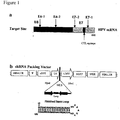
- FIG. 1 is a schematic representation of a. the target mRNA which encodes the full length HPV E6/E7 proteins.
- the target sites for shRNA E6-1 nts 417 to 145
- E6-2 nts 344-361
- E7-1 nts 181 to 198
- E7-2 nts 4 to 21
- the expression cassette is under the control of a U6 promoter (Hpal and Xhol site).
- the finished stem loop shows a representative hairpin structure of the transcribed shRNA.
- Figure 2 is a graph showing the size of secondary tumours obtained following injection of TC-1 tumour cells into normal mice previously injected with TC-1 tumour cells treated with different shRNA constructs.
- Figure 3 is a graph showing the size of secondary tumours obtained following injection of: A. TC-1 tumour cells into Rag-/- mice previously injected with TC-1 tumour cells treated with different shRNA constructs; and B. TC-1 tumour cells into Rag-/- mice previously injected with C2 tumour cells treated with different shRNA constructs.
- Figure 4A is a schematic representation of the target mRNA which encodes the full length OVA protein.
- the target sites for OVA1, OVA 2 and OVA 3 are shown.
- 165-186 a sub-dominant CTL epitope
- 528-552 another subdominant epitope
- 786-828 and 969-1017 are CD4 helper epitopes).
- Figure 4B shows the weights of challenge tumours arising from cells expressing the different OVA shRNA constructs as described above.
- shRNAs based on an HPV16 E6 mRNA sequence. Two of them were specially chosen for this study, shE6-1 targets at the common sites of all mRNA classes, whereas shE6-2 targets only class I mRNA.
- shE7-1 and shE7-2 Two more shRNAs, shE7-1 and shE7-2, based on the HPV16 E7 mRNA sequence.
- shE7-1 was designed to target a region downstream of the major E6/E7 cytotoxic T cell (CTL) epitope sequence and shE7-2 was designed to target a region upstream of the major E6/E7 CTL epitope sequence.
- CTL cytotoxic T cell
- the shRNA expression cassette contained 18 nucleotides (nts) of the target sequence followed by the loop sequence (TTCAAGA GA), reverse complement to the 18 nts, stop codon for U6 promoter and Xho1 site. (first 18 nt located at: shE6-2 nts 136 to 153 and shE6-1 at nts 417 to 434 of SEQ ID NO:1; shE7-1 nts 180 to 197 and shE7-2 nts 4 to 21 of SEQ ID NO:2).
- the shRNA cassettes and their complementary strands were synthesized (PROLIGO, Lismore, Australia) and annealed in the annealing buffer (100mM K-acetate, 30mM HEPES-KOH (pH 7.4), 2mM Mg-acetate) by heating to 95°C for 5 min followed by cooling to room temperature.
- the resulting double-strand oligo-DNA was cloned into plasmid pLentiLox3.7 (pLL3.7, a gift from Dr Luk van Parijs, MIT, Cambridge) at the Hapl and Xhol sites ( Figure 1 ).
- the insert was confirmed by both restriction enzyme digestion and DNA sequencing.
- Plasmid pLLI3.7 (transfer vector) has a self-inactivating LTR for biosafety. Plasmid pLL3.7 also contains an eGFP gene under cytomegalovirus (CMV) promoter; this enables monitoring the infection of lentiviruses by eGFP expression.
- CMV cytomegalovirus
- the lentiviral packaging plasmids pRSVRev, pMDLgpRRE and pMD.G (contains VSV.G gene) were a gift from Dr Inda Vermer (Salk Institute, San Diego, CA). These packaging plasmids are described in detail by Dull et al., 1998, J Virol. 72: 8463-8471 and were used for third-generation lentiviral vector production.
- Packing cell line 293T cells were transfected with 6.6 ⁇ g pLL3.7 (-/+ insert) and 3.3 ⁇ g of each packaging plasmid in 133 ⁇ l 1.25M CaCl 2 , 0.5ml H 2 O and 0.66ml 2x HBS (140mM NaCl, 1.5mM Na 2 HPO 4 , 50mM HEPES, pH 7.05) in a T 75 flask.
- the viral supernatant was harvested and concentrated 40-50 times using Vivaspin 20ml Concentrators (100 MW, VivaScience Sartorius Group, Sydney Australia).
- the lentiviral stocks were stored in small aliquot at -80°C for titration and cell infection.
- TC-1 cells were plated in 6-well plates (1x10 5 cells /well) and were cultured overnight. Lentiviruses were diluted in 0.5ml DMEM medium containing polybrene (8 ⁇ g/ml) and added to the cells for incubation for 1 hour at 37°C. After this, 1ml of fresh polybrene-DMEM was added to the cells and incubation continued for 24 hours. After 24 hours infection, polybrene-DMEM was replaced with fresh DMEM medium and the cells were cultured for other assays.
- TC-1 cells were infected with lentiviruses as described above and harvested 2 days post-infection. The cells were washed with PBS, counted, and resuspended in PBS at 1x 10 7 /ml. Female mice (5-6 weeks old, 5-10 mice/group) were injected with 0.1 ml cell suspension subcutaneously to the neck scruff. All experiments were approved by the University of Queensland Animal Ethics Committee.
- Cell lysates were prepared by trypsinizing the cells and resuspending them in RIPA buffer plus protein inhibitory cocktails (0.1%). For analysis of apoptosis, the cell lysates were prepared from an aliquot of cells cultured as described below for animal injection. For electrophoresis, 30-40 ⁇ g of total protein in 2x loading buffer was loaded to each well of a 10% (w/v) SDS-PAGE gel. After electrotransfer, the blot was blocked and probed with primary antibody at 4°C followed by incubation with HRP-conjugated secondary antibody (1:2000 dilution) and then bound antibody was detected by ECL (Amersham). Anti-mouse ⁇ -tubulin antibody was from Sigma. Primary antibodies were used at a 1/1000 dilution.
- Example 1 induction of an immune response against viral antigens by RNAi.
- TC-1 tumour cells were pre-treated with lentiviral vectors expressing one of the following shRNA molecules: shRNA 16E6-1; shRNA 16E6-2, shRNA 16E7-1 and shRNA 16E7-2 (see Figure 1 for a schematic representation of the regions of E6/E7 against which the shRNAs are targeted).
- TC-1 cells are a tumourigenic, H-2 b cell line expressing the E6 and E7 proteins of HPV16 ( Lin, et al., 1996. Cancer Res. 56: 21-26 ).
- the cells were then injected into C57BU6 mice (syngeneic with the tumour cells) and allowed to establish for 10 days. After this period of time parental tumour TC-1 cells that have not been treated in any way were injected into the mice.
- the mice were then analysed at day 17 to determine whether the secondary tumour cells could grow, i.e. to determine whether the mice have mounted an immune response against the E6 or E7 protein, which then inhibits growth of the injected secondary tumour cells.
- the shRNAs delivered by lentiviral vectors all suppress E7 protein expression by about 50%.
- a CTL assay was performed. Our results indicate that the reduction in E7 expression in TC-1 cells did not affect their ability to be lysed by specific cytotoxic T cells (data not shown).
- C2 cells are tumour cells that express HPV E7, but do not require E7 for viability.
- E7-1 shRNA targets a site within the E6/E7 mRNA downstream of a region encoding a major CTL epitope, whereas the other shRNAs are all targeted to sites upstream of that region. This leads us to conclude that the effect seen with the E7-1 shRNA is due to "enhanced immune presentation" of the major E7 CTL epitope.
- the shRNA cuts the mRNA and conventional wisdom would say that the mRNA is then degraded quickly. In our view, however, some mRNA is translated but as a result of the shRNA binding to the mRNA, the resulting protein is recognised by the cell as defective or aberrant (e.g. a truncated protein is produced which is misfolded etc.) and sent to the proteosome as rubbish.
- the proteosome processes proteins for presentation via MHC class I as part of normal cell processes but only certain parts of the protein will be presented and elicit an immune response - CTL epitopes for example. Targeting of the shRNA downstream of the CTL epitope may allow for greater translation of that region of the polypeptide compared with the shRNAs that are targeted further upstream. As a result, there is now more immune presentation of the E7 CTL epitope and a greater immune response.
- RNAi moieties can be designed to target a region downstream of known or predicted T cell epitopes so as to produce an incomplete mRNA. Multiple T cell epitopes could be targeted with a single protein by using multiple RNAi's.
- Example 2- Induction of an immune response against OVA by RNAi
- OVA 1 and OVA2 were designed to target a region of the OVA mRNA sequence that is downstream of a sub-dominant CTL epitope located at nucleotides +165 to +186.
- OVA 3 was designed to target a region of the OVA mRNA sequence that is downstream of the dominant CTL epitope located at nucleotides +771 to +792.
- Other T cell epitopes present in the OVA sequence are shown in Figure 4A .
- the shRNA expression cassettes contained 19nt of the target sequence, followed by the loop sequence (TTCAAGAGA), reverse complement to the 19nt, a stop codon for U6 promoter, and an Xho 1 site.
- the sequences of the shRNAs were as follows.
- shRNA cassettes and their complementary strands were synthesised as described above.
- LV-shRNAs targeting OVA were used with EG7 cells as the primary tumor while the challenge tumor was untreated EG7 cells.
- the EG7 cell line like C2, is derived from EL4 thymoma cells but expresses the ovalbumin (OVA) antigen.
- OVA1 and OVA2 results indicate the presence of significant levels of truncated protein.
Landscapes
- Health & Medical Sciences (AREA)
- Life Sciences & Earth Sciences (AREA)
- Engineering & Computer Science (AREA)
- Genetics & Genomics (AREA)
- Biomedical Technology (AREA)
- Chemical & Material Sciences (AREA)
- Organic Chemistry (AREA)
- Bioinformatics & Cheminformatics (AREA)
- General Health & Medical Sciences (AREA)
- Biotechnology (AREA)
- General Engineering & Computer Science (AREA)
- Molecular Biology (AREA)
- Wood Science & Technology (AREA)
- Zoology (AREA)
- Nuclear Medicine, Radiotherapy & Molecular Imaging (AREA)
- General Chemical & Material Sciences (AREA)
- Chemical Kinetics & Catalysis (AREA)
- Veterinary Medicine (AREA)
- Medicinal Chemistry (AREA)
- Public Health (AREA)
- Animal Behavior & Ethology (AREA)
- Pharmacology & Pharmacy (AREA)
- Biophysics (AREA)
- Biochemistry (AREA)
- Physics & Mathematics (AREA)
- Plant Pathology (AREA)
- Microbiology (AREA)
- Immunology (AREA)
- Virology (AREA)
- Communicable Diseases (AREA)
- Oncology (AREA)
- Endocrinology (AREA)
- Reproductive Health (AREA)
- Pharmaceuticals Containing Other Organic And Inorganic Compounds (AREA)
- Medicines That Contain Protein Lipid Enzymes And Other Medicines (AREA)
Abstract
A method is provided for inducing or enhancing an immune response in a mammal to a target polypeptide expressed in a plurality of cells of the mammal, which method comprises administering to the mammal an inhibitory nucleic acid which targets a region of a ribonucleic acid (RNA) which encodes said polypeptide. Also provided is a pharmaceutical composition comprising an inhibitory nucleic acid which targets a region of an RNA which encodes a target polypeptide expressed in a plurality of cells of a mammal, such that translation of an aberrant form of the target polypeptide occurs in said cells, said truncated form of the target polypeptide comprising one or more T cell epitopes; together with a pharmaceutically acceptable carrier or diluent.
Description
- The present invention relates to methods for inducing or enhancing the immune response in a mammal. In particular, the invention relates to a method for inducing or enhancing the T cell mediated immune response in a mammal. This invention also relates to pharmaceutical compositions comprising inhibitory nucleic acids.
- RNA interference (RNAi) is a form of post-transciptional gene silencing mediated by short non-coding RNA molecules. RNAi is thought to act via specific base pairing with complementary target nucleic acid resulting in the degradation of the target molecule or inhibition of its translation. There are a wide range of RNA classes and pathways that can result in down-regulation or gene silencing.
- Previous studies have shown that inhibitory RNA molecules may be useful in the treatment of certain diseases, including cancer. These studies have focused on directly killing tumour cells by silencing particular genes involved in cancer maintenance and development. However, to be effective, the inhibitory RNA molecules must be delivered and expressed at a cytotoxic level in each tumour or disease cell. Accordingly, very large dosages of inhibitory RNA molecules need to be administered to achieve a reasonable amount of tumour reduction or disease control. Very little success has been achieved in the effective reduction of tumour cells or disease using this method.
- Accordingly, there is a need for improved methods for effectively using inhibitory nucleic acids to treat disease, that do not necessarily rely on large dosages of the inhibitory nucleic acid or direct killing of every target cell to be effective.
- It has now been found that targeting inhibitory nucleic acid molecules to specific regions of an RNA encoding a polypeptide of interest can lead to the induction of a T cell response in an individual against the polypeptide. Specifically, the inhibitory nucleic acid molecule is targeted to a particular region of the RNA which encodes the target polypeptide of interest, such that an aberrant, e.g. truncated, form of that protein is expressed which comprises at least one T cell epitope The aberrant form of the target polypeptide is processed by the cell and at least a part thereof comprising a T cell epitope is presented on the cell surface in combination with an MHC class molecule for recognition by a T cell. This results in an immune response against the polypeptide leading to the death of cells that present part of the polypeptide comprising a T cell epitope on the cell surface.
- Accordingly in a first aspect the present invention provides a method of inducing or enhancing an immune response in a mammal to a target polypeptide expressed in a plurality of cells of the mammal, which method comprises administering to the mammal an inhibitory nucleic acid which targets a region of a ribonucleic acid (RNA) which encodes said polypeptide such that translation of a defective or aberrant form of the target polypeptide occurs in said cells, said defective or aberrant form of the target polypeptide comprising one or more T cell epitopes.
- In a related aspect, the present invention provides a method of inducing or enhancing an immune response in a mammal to a target polypeptide expressed in a plurality of cells of the mammal, which method comprises administering to the mammal an inhibitory nucleic acid which targets a region of a ribonucleic acid (RNA) which encodes said polypeptide such that translation of a defective or aberrant form of the target polypeptide occurs in said cells, said defective or aberrant form of the target polypeptide comprising one or more T cell epitopes and wherein at least a part of the polypeptide comprising a T cell epitope is presented on the cell surface.
- The present invention also provides a method of inducing or enhancing an immune response in a mammal to a target polypeptide expressed in a plurality of cells of the mammal, which method comprises administering to the mammal an inhibitory nucleic acid which targets a region of an RNA which encodes said polypeptide, such that at least a portion of the polypeptide, which portion comprises a T cell epitope, is presented on the surface of the cells bound to major histocompatibility complex (MHC).
- In a second aspect of the invention there is provided a method of killing tumour cells in a patient which method comprises administering to the patient an inhibitory nucleic acid which targets a region of an RNA which encodes a target polypeptide expressed in said tumour cells of the patient, such that translation of a defective or aberrant form of the target polypeptide, comprising one or more T cell epitopes, occurs in said cells.
- In a related aspect of the invention there is provided a method of killing tumour cells in a patient which method comprises administering to the patient an inhibitory nucleic acid which targets a region of an RNA which encodes a target polypeptide expressed in said tumour cells of the patient, such that translation of a defective or aberrant form of the target polypeptide, comprising one or more T cell epitopes, occurs in said cells and wherein at least a part of the polypeptide comprising a T cell epitope is presented on the cell surface.
- The present invention also provides a method of killing tumour cells in a patient which method comprises administering to the patient an inhibitory nucleic acid which targets a region of an RNA which encodes a target polypeptide expressed in said tumour cells of the patient, such that at least a portion of the polypeptide, which portion comprises a T cell epitope, is presented on the cell surface bound to MHC.
- In one embodiment the target polypeptide is an endogenous polypeptide expressed by the tumour cells. In another embodiment the target polypeptide is a viral polypeptide expressed by a virus present in the tumour cells.
- In a third aspect the present invention provides a method of treating a disease caused by an intracellular pathogen, such as a virus, which method comprises administering to a patient suffering from said disease an inhibitory nucleic acid which targets a region of an RNA which encodes a target polypeptide expressed by the pathogen in cells of the patient, such that translation of a defective or aberrant form of the target polypeptide, comprising one or more T cell epitopes, occurs in said cells.
- In a related aspect the present invention provides a method of treating a disease caused by an intracellular pathogen, such as a virus, which method comprises administering to a patient suffering from said disease an inhibitory nucleic acid which targets a region of an RNA which encodes a target polypeptide expressed by the pathogen in cells of the patient, such that translation of a defective or aberrant form of the target polypeptide, comprising one or more T cell epitopes, occurs in said cells and wherein at least a part of the polypeptide comprising a T cell epitope is presented on surface of the cells.
- The present invention also provides a method of treating a disease caused by an intracellular pathogen which method comprises administering to a mammal suffering from said disease an inhibitory nucleic acid which targets a region of an RNA which encodes a target polypeptide expressed by the pathogen in cells of the mammal, such that at least a portion of the polypeptide, which portion comprises a T cell epitope, is presented on the cell surface bound to MHC.
- In a fourth aspect of the invention there is provided a pharmaceutical composition comprising an inhibitory nucleic acid which targets a region of an RNA which encodes a target polypeptide expressed in a plurality of cells of a mammal, such that translation of a defective or aberrant form of the target polypeptide occurs in said cells, said defective or aberrant form of the target polypeptide comprising one or more T cell epitopes, together with a pharmaceutically acceptable carrier or diluent.
- In a related aspect of the invention there is provided a pharmaceutical composition comprising an inhibitory nucleic acid which targets a region of an RNA which encodes a target polypeptide expressed in a plurality of cells of a mammal, such that translation of a defective or aberrant form of the target polypeptide occurs in said cells, said defective or aberrant form of the target polypeptide comprising one or more T cell epitopes and wherein at least a part of the polypeptide comprising a T cell epitope is presented on the cell surface, together with a pharmaceutically acceptable carrier or diluent.
- The present invention also provides a pharmaceutical composition comprising an inhibitory nucleic acid which targets a region of an RNA which encodes a target polypeptide expressed in a plurality of cells of a mammal, such that at least a portion of the polypeptide, which portion comprises a T cell epitope, is presented on the cell surface bound to MHC, together with a pharmaceutically acceptable carrier or diluent.
- The present invention also provides the pharmaceutical composition of the invention for use in treating cancer or in treating a disease caused by an intracellular pathogen, such as a virus.
- Preferably in the various aspects of the invention described above, at least one T cell epitope is a cytotoxic T lymphocyte (CTL) epitope.
- In one embodiment of the various aspects of the invention described above, the target polypeptide is a tumour antigen: The tumour antigen may, for example, be a polypeptide which is foreign to the cell, or an endogenous protein.
- In an alternative embodiment the target polypeptide is a viral polypeptide, such as an oncogenic viral polypeptide e.g. human papilloma virus E6 or E7.
- Preferably, the dose of the inhibitory nucleic acid administered is insufficient to kill directly the cells expressing the target protein.
- In a preferred embodiment the inhibitory nucleic acid is an RNAi agent, e.g. an interfering RNA, such as an siRNA or shRNA.
- Unless defined otherwise, all technical and scientific terms used herein have the same meaning as commonly understood by one of ordinary skill in the art (e.g. in cell biology, chemistry and molecular biology). Standard techniques used for molecular and biochemical methods can be found in Sambrook et al., Molecular Cloning: A Laboratory Manual, 3rd ed. (2001) Cold Spring Harbor Laboratory Press, Cold Spring Harbor, N.Y. and Ausubel et al., Short Protocols in Molecular Biology (1999) 4th Ed, John Wiley & Sons, Inc. - and the full version entitled Current Protocols in Molecular Biology). See also RNA Interference Technology: From Basic Science to Drug Development, 2005, Ed Krishnarao Appasani, Cambridge University Press, UK.
- Throughout this specification the word "comprise", or variations such as "comprises" or "comprising", will be understood to imply the inclusion of a stated element, integer or step, or group of elements, integers or steps, but not the exclusion of any other element, integer or step, or group of elements, integers or steps.
- Throughout this specification, reference to numerical values, unless stated otherwise, is to be taken as meaning "about" that numerical value. The term "about" is used to indicate that a value includes the inherent variation of error for the device and the method being employed to determine the value, or the variation that exists among the study subjects.
- The term "inhibitory nucleic acid" as described herein means a nucleic acid that binds to an mRNA that encodes a polypeptide of interest and inhibits translation of the full length polypeptide encoded by the mRNA. Previously inhibitory nucleic acids have been used to try to silence gene expression and therefore the inhibitory nucleic acids used were intended to prevent translation occurring altogether. By contrast, in the context of the present invention, inhibitory nucleic acid molecules are selected which allow at least some translation of a defective or aberrant polypeptide, such as a C-terminally truncated polypeptide. Preferably, the inhibitory nucleic acid permits expression of a defective or aberrant polypeptide in cells at a level of at least 10% (in terms of number of polypeptide molecules) of normal levels in the absence of the inhibitory nucleic acid, more preferably at least 20, 30, 40 or 50%. This can be tested in vitro using suitable cell lines.
- Nucleic acids may be RNA or DNA or analogs or derivatives thereof. Nucleic acids may be double-stranded, single-stranded, linear, circular, synthetic, recombinantly produced, as well as altered nucleic acids that differ from naturally occurring RNA or DNA by the addition, deletion, substitution and/or alteration of one or more nucleotides. Such alterations can include addition of non-nucleotide material, such as to the end(s) of the nucleic acid or internally. Nucleotides in the nucleic acid molecules of the present invention can also comprise non-standard nucleotides, such as non-naturally occurring nucleotides or chemically synthesized nucleotides or deoxynucleotides, especially those that enhance the in vivo stability and/or pharmacokinetics of the nucleic acid molecules.
- The inhibitory nucleic acid may be capable of giving rise directly to an inhibitory effect, subject to processing by cellular machinery where appropriate, or it may be in the form of a vector which expresses such a nucleic acid, e.g. a viral vector or plasmid. Viral vectors includes lentiviral vectors.
- Typically, the inhibitory nucleic acid is an RNA interference agent (RNAi agent) or a nucleic acid vector that expresses or otherwise gives rise to an RNAi agent (e.g. a DNA-directed RNAi (ddRNAi) agent - see
US Patent Application Publication No. 2006/0115455 ). RNA interference (RNAi) is a form of post-transcriptional gene silencing mediated by small non-coding RNA molecules of approximately 15 to 30 nucleotides in length. There are a wide range of RNA classes and pathways that can result in down-regulation of gene expression or gene silencing. In mammalian cells, RNAi can be triggered by 21-nucleotide (nt) duplexes of short interfering RNA or by micro-RNAs (miRNA), or other dsRNAs. Functional small-hairpin RNAs (shRNA) have an added stem-loop structure which is cleaved to form short interfering RNAs. - Thus, the term RNAi agent is intended to encompass other terms used to describe nucleic acid molecules that are capable of mediating sequence specific RNAi, for example double- stranded RNA (dsRNA), micro-RNA (miRNA), short hairpin RNA(shRNA), chemically-modified siRNA, post-transcriptional gene silencing RNA (ptgsRNA), and others.
- The inhibitory nucleic acid can be a polynucleotide with a duplex, asymmetric duplex, hairpin or asymmetric hairpin secondary structure, having self-complementary sense and antisense regions. The inhibitory nucleic acid may also be a circular single-stranded polynucleotide having two or more loop structures and a stem comprising self-complementary sense and antisense regions, wherein the circular polynucleotide can be processed either in vivo or in vitro to generate an active inhibitory nucleic acid molecule capable of mediating RNAi. The inhibitory nucleic acid can also be generated by cleavage of longer dsRNA with RNase III or Dicer. These enzymes process the dsRNA into biologically active siRNA (see, e.g., Yang et al., PNAS USA 99: 9942-7 (2002); Calegari et al., 2002, PNAS USA 99: 14236; Byrom et al., 2003, Ambion TechNotes 10(1); 4-6; Kawasaki et al., 2003, Nucleic Acids Res. 31: 981-7; Knight and Bass, 2001, Science 293: 2269-71; and Robertson et al., 1968, J. Biol. Chem. 243: 82).
- In one embodiment, the inhibitory nucleic acid can be a double-stranded polynucleotide molecule comprising self-complementary sense and antisense regions. The inhibitory nucleic acid can be assembled from two separate oligonucleotides, where one strand is the sense strand and the other is the antisense strand.
- Alternatively, the inhibitory nucleic acid may be assembled from a single oligonucleotide, where the self-complementary sense and antisense regions of the inhibitory nucleic acid are linked by means of a nucleic acid based or non-nucleic acid-based linker(s), e.g. shRNA. Inhibitory nucleic acids of the present invention may have one or more stem-loop structures where the ends of the double-stranded RNA are connected by a single-stranded, linker RNA. The length of the single-stranded loop portion of is typically from about 5 to 20 nucleotides in length, such as from about 5 to 11 nucleotides in length.
- The double-stranded portions of inhibitory nucleic acid molecules may be completely homologous, or may contain non-paired portions due to sequence mismatch (the corresponding nucleotides on each strand are not complementary), bulge (lack of a corresponding complementary nucleotide on one strand), and the like. Such non-paired portions can be tolerated to the extent that they do not significantly interfere with duplex formation or efficacy.
- In a particular embodiment of the invention, the inhibitory nucleic acid, such as an RNAi agent, may be from about 15 to 60, 15 to 50, or 15 to 40 (duplex) nucleotides in length, such as from about 15 to 30, 15 to 25 or 19 to 25 (duplex) nucleotides in length, e.g. from about 20 to 24 or from about 21 to 23 or 21 to 22 (duplex) nucleotides in length. Nucleic acid duplexes may comprise 3' overhangs of from about 1 to about 4 nucleotides, preferably about 2 or 3 nucleotides, and 5' phosphate termini.
- As mentioned above, the inhibitory nucleic acids of the invention can include both naturally-occurring polynucleotides and analogues or derivatives thereof, e.g. siRNAs modified to alter a property such as the pharmacokinetics of the composition. Examples of suitable modifications include those that increase half-life of the nucleic acid in the body, increase shelf-life, stability, and ease of introduction to the target site, e.g., to enhance penetration of cellular membranes, and confer the ability to recognise and bind to targeted cells. Examples of modifications that are contemplated include; the use of locked nucleic acid analogues and 2'-O-Methyl RNA bases. Other modifications are described in
US Patent Application Publication No. 2006/0115455 , the relevant sections of which are herein incorporated by reference. - The inhibitory nucleic acid molecules of the invention may be designed using any suitable method known in the art: a number of algorithms are known, and are commercially available (e.g. Cenix BioScience GmbH, Dresden, Germany; Dharmacon Inc., CO, USA; Qiagen Inc., Valenica, CA, USA; and Ambion Inc., TX, USA). However, unlike previous approaches to RNAi, the present invention is based on allowing at least some translation to occur of target polypeptides rather than attempting to silence translation of the target polypeptide. It is believed that by targeting regions of the mRNA downstream of regions encoding T cell epitopes, the resulting expressed polypeptides comprising at least one T cell epitope, are recognised by cellular machinery as defective or aberrant e.g. as a result of misfolding, and are targeted for destruction in the cell's proteasomes leading to presentation of peptides derived from the polypeptide by MHC molecules on the surface of the cell which exposes the peptides to recognition by T cells.
- Accordingly, inhibitory nucleic acid molecules of, and for use in, the present invention will generally be designed such that the resulting binding moieties (e.g. siRNAs) are complementary to a region of the mRNA which encodes the target polypeptide, which region is 3' of a region of the mRNA encoding a T cell epitope, such as a a major/immunodominant CTL or helper T cell epitope, a subdominant CTL or helper T cell epitope or a cryptic CTL or helper T cell epitope.
- The optimal distance between the 3' end of the mRNA region encoding the T cell epitope and the region to which the inhibitory nucleic acid binds for a given polypeptide and inhibitory nucleic acid construct can be determined by experimentation using a range of constructs.
- In one embodiment, the distance between the 3' end of the mRNA region encoding the T cell epitope and the region to which the inhibitory nucleic acid binds is relatively small, i.e. less than about 100 nucleotides, such as less than about 90, 80, 70, 60 or 50 nucleotides, such as less than 40, 30 or 20 nucleotides. In this embodiment, the distance between the 3' end of the mRNA region encoding the CTL epitope and the region to which the inhibitory nucleic acid binds may be at least about 5 nucleotides, such as at least 10, 15 or 20 nucleotides.
- In another embodiment, the distance between the 3' end of the mRNA region encoding the T cell epitope and the region to which the inhibitory nucleic acid binds is greater, being more than about 50 nucleotides, such as more than about 60, 70, 80, 90 or 100 nucleotides. In this embodiment, the distance between the 3' end of the mRNA region encoding the CTL epitope and the region to which the inhibitory nucleic acid binds is typically less than about 500 nucleotides, such as at least 10, 15 or 20 nucleotides.
- The sequences for the inhibitory nucleic acid molecules, e.g. RNAi agent or agents, are selected based upon the nucleotide sequence of the target sequence(s). For example, sequences may be are based on regions of the target sequences that are conserved, or alternatively on regions that are unique to the target sequence to avoid inhibition of related sequences that it is not desired to target.
- Methods of alignment of sequences for comparison and RNAi sequence selection are well known in the art. The determination of percent identity between two or more sequences can be accomplished using a mathematical algorithm. Computer implementations of these mathematical algorithms include, but are not limited to: CLUSTAL in the PC/Gene program (available from Intelligenetics, Mountain View, Calif.); the ALIGN program (Version 2.0), GAP, BESTFIT, BLAST, FASTA, Megalign (using Jotun Hein, Martinez, Needleman-Wunsch algorithms), DNAStar Lasergene (see www.dnastar.com) and TFASTA in the Wisconsin Genetics Software Package, Version 8 (available from Genetics Computer Group (GCG), 575 Science Drive, Madison, Wis., USA). Alignments using these programs can be performed using the default parameters or parameters selected by the operator. Software for performing BLAST analyses is publicly available through the National Center for Biotechnology Information (http://www.ncbi.n)m.nih.gov/).
- Typically, inhibition of target sequences by inhibitory nucleic acid molecules requires a high degree of sequence identity between the target sequence and the sense strand of the inhibitory nucleic acid molecules. In some embodiments, such identity is greater than about 70%, and may be greater than about 75%. Preferably, identity is greater than about 80%, and is greater than 85% or even 90%. More preferably, sequence identity between the target sequence and the sense strand of the inhibitory nucleic acid molecules is greater than about 90%, 91%, 92%, 93%, 94%, 95%, 96%, 97%, 98% or 99%.
- In addition to designing inhibitory nucleic acid molecule sequences based on conserved or unique regions of a target sequence, design and selection of the inhibitory nucleic acid molecule sequences may be based on other factors. However, although various selection criteria based on features of the desired target sequence can assist in RNAi design (e.g. percent GC content, position from the region encoding a T cell epitope, sequence similarities based on an in silico sequence database search for homologues of the proposed RNAi agent, and thermodynamic pairing criteria), individual, specific, candidate inhibitory nucleic acid sequences are typically tested in vitro or in vivo to confirm that interference with expression of a desired, target can be elicited (in this case expression of defective, e.g. truncated, polypeptide and/or presentation of peptides derived from the target polypeptide on the cell surface rather than silencing) or via functional testing of elicitation of an immune response, which can be tested by immunizing mice with inhibitory nucleic acid-treated tumour cells and challenging with untreated tumour cells and observing if reduction in tumour size occurs. One could also observe if tumour-specific antibodies or CTLs are generated by such immunizations.
- In some embodiments, a plurality of inhibitory nucleic acid molecules may be designed which target different regions of the mRNA.
- Inhibitory nucleic acid molecules are typically made either synthetically using standard techniques, such as solid phase synthesis, which enables the use of non-naturally occurring nucleotides, or recombinantly using nucleic acid vectors.
- In embodiments where interfering RNA is used, the relevant RNA transcription units can be incorporated into a variety of vectors for introduction into target cells. For example, suitable vectors include, but are not restricted to, plasmid DNA vectors, viral DNA vectors (such as adenovirus or adeno-associated virus vectors), or viral RNA vectors (such as retroviral or alphavirus vectors). The expression vector can encode an RNAi agent sequence that can self assemble upon expression from the vector into a duplex oligonucleotide. The RNAi agent can, for example, be transcribed as sequences that automatically fold into duplexes with hairpin loops from DNA templates in plasmids. Recombinant DNA constructs using bacterial or mammalian promoter systems (e.g. U6/snRNA promoter systems) can be used. The selected promoter can provide for constitutive or inducible transcription. Plasmids suitable for in vivo delivery of genetic material for therapeutic purposes are described in detail in
U.S. Pat. Nos. 5,962,428 and5,910,488 . It will be apparent to those of skill in the art that vectors originally designed to express desired gene sequences can be modified to contain a transcriptional unit cassette for transcription of an RNAi agent. - RNAi agent-expressing vectors can be constructed based on, but not limited to, adeno-associated virus, retrovirus, adenovirus, alphavirus or lentivirus plasmid as well as other known vectors. The recombinant vectors capable of expressing the RNA molecules can be delivered to target cells. Such vectors can be repeatedly administered as necessary. Alternatively, certain RNA molecules can be expressed within cells from eukaryotic promoters.
- The term "polypeptide" includes peptides of two or more amino acids in length, typically having more than 5, 10 or 20 amino acids. The term "protein" includes single-chain polypeptide molecules as well as multiple-polypeptide complexes where individual constituent polypeptides are linked by covalent or non-covalent means.
- The term "target polypeptide" refers to any polypeptide expressed in a mammalian cell against which it is desired to generate an immune response. The target polypeptide can be endogenous or foreign to the mammalian cell. Endogenous polypeptides include tumour antigens. The term "endogenous" means that the polypeptide is encoded by the genome of the host cell.
- Foreign polypeptides, conversely, are polypeptides that are not encoded by the genome of the host cell, such as polypeptides expressed by intracellular pathogens such as viruses and some mycoplasma. The definition of "foreign polypeptide" in this context is also taken to include polypeptides not encoded by the germ line genome of the host mammal but which result from mutations in the host cell, such as insertions, deletions, substitutions and/or translocations.
- In one embodiment, the target polypeptide is an endogenous polypeptide involved in cancer development, maintenance or spread, such a cellular oncogenic polypeptide.
- In another embodiment, the target polypeptide is a foreign polypeptide, such as a viral polypeptide, involved in cancer development, maintenance or spread e.g. a human papillomavirus (HPV) E6 or E7 polypeptide.
- In a particular embodiment, the HPV E6 and E7 polypeptides are specifically excluded as target polypeptides within the context of the present invention. In another particular embodiment, where HPV E6 and E7 polypeptides are target polypeptides, the inhibitory nucleic acid is targeted to bind upstream of the E7 major CTL epitope, but downstream of at least one other T cell epitope.
- Other suitable target polypeptides include viral polypeptides, such as those associated with viral infection and survival; proteins associated with metabolic diseases and disorders; polypeptides associated with tumourigenesis, tumour migration and cell transformation, angiogenesis, immunomodulation, such as those associated with inflammatory and autoimmune responses, and polypeptides associated with neurodegenerative disorders.
- Polypeptides associated with viral infection and survival may include those expressed by a virus in order to bind, enter and replicate in a cell. Of particular interest are viral sequences associated with chronic viral diseases, for example hepatitis viruses, human immunodeficiency viruses (HIV), herpes viruses, human papillomaviruses (HPV), Epstein Barr viruses (EBV) and human T-cell lymphotropic virus type I and II (HTLV I, HTLV II).
- Other target polypeptides that are suitable for use with the present invention are mycoplasma polypeptides and other pathogen-related polypeptides.
- Target polypeptides are those which are capable of giving rise to an immune response following cellular processing and presentation. Accordingly, target polypeptides typical comprise one or more T cell epitopes.
- T cell epitopes can be divided into two classes: cytotoxic T cell epitopes and helper T cell epitopes. Cells infected with viruses or bacteria that exist in the cytosol are targeted by cytotoxic T cells. Cytotoxic T cells are characterised by the presence of a cell surface molecule known as CD8. A different class of T cells detects pathogens and their products which exist in vesicular compartments of the cell. These are known as helper T cells. This class of T cells is identified by the expression of the CD4 cell surface molecule. Thus the term "T cell" is intended to refer to both CD8 and CD4 characterised T cells, and the term "T cell epitope" refers to epitopes recognised by such T cells, i.e. CTL epitopes, which are presented on the cell surface bound to major histocompatibility complex (MHC) class I proteins, as well as helper T cell epitopes which are presented on the cell surface bound to MHC class II proteins.
- Foreign antigens are processed by antigen presenting cells and presented on the cell surface by major histocompatibility complex (MHC) proteins. As discussed above, T cells such as CTLs and helper T cells express receptors (CD8 or CD4, respectively) that recognise an antigen bound to MHC on an antigen presenting cell. The CTLs, for example, then secrete certain molecules which result in the death of the infected cells. Whether a certain antigen is able to trigger a T cell response is dependent on the presence and the nature of the T cell epitope in that antigen. T cell epitopes can vary in size and are present in endogenous proteins and also foreign proteins, such as viral proteins. For example, a CTL epitope is known to exist in the E7 gene of HPV. T cell epitopes have been identified for a range of polypeptides. In addition, methods and techniques for mapping the frequency and distribution of T cell epitopes within a particular polypeptide sequence have been developed (see, for example, Moutaftsi, 2006, Nat. Biotechnol. 24; 817-819).
- Target polypeptides may comprise a plurality of T cell epitopes. However, typically where multiple T cell epitopes exist in a given polypeptide, one of the epitopes induces a stronger T cell response than the others. Such a T cell epitope is herein termed a "major" T cell epitope (or an "immunodominant" epitope). Also typically, where multiple T cell epitopes exist in a given polypeptide, one or more epitopes may be considered to be a sub-dominant T cell epitope. T cell epitopes may also be "cryptic" epitopes (i.e. epitopes which are not exposed in the full length native polypeptide but which are revealed, for example, in fragments of the full length polypeptide).
- Preferably at least one T cell epitope is a cytotoxic T lymphocyte (CTL) epitope.
- As mentioned above, the inhibitory nucleic acid molecules of the invention are designed to target a region of an RNA, typically an mRNA, which encodes the target polypeptide, such that translation of an aberrant, e.g. truncated, form of the target polypeptide occurs in the host cells. The phrase, "target a region of an RNA" means that the inhibitory nucleic acid (or a product thereof following transcription and/or intracellular processing) binds to a region of the RNA and interferes with translation of the RNA. Binding generally occurs by sequence-specific interaction between the inhibitory nucleic acid and the complementary target sequence within the target RNA. Accordingly, the inhibitory nucleic acids of the invention are designed to interact with the target region of the RNA to create the desired effect.
- In one embodiment, the inhibitory nucleic acids of the invention are targeted to a region of an RNA such that, as a result of the interaction of the inhibitory nucleic acid and the target RNA, one or more aberrant, e.g. truncated, forms of the polypeptide encoded by the RNA is produced, said aberrant, e.g. truncated, form of the target polypeptide comprising one or more T cell epitopes, preferably at least one major T cell epitope, such as a major CTL epitope.
- Preferably, the aberrant form of the target polypeptide is processed by the cell and at least a part thereof comprising a T cell epitope is presented on the cell surface in combination with an MHC class molecule for recognition by a T cell, preferably a CTL.
- In one embodiment, the one or more T cell epitopes in the aberrant, e.g. truncated, polypeptide include at least one major/immunodominant CTL epitope (with respect to the full length polypeptide).
- In one embodiment, the one or more T cell epitopes in the aberrant polypeptide include at least one sub-dominant or cryptic T cell epitope (with respect to the full length polypeptide).
- In some embodiments, a plurality of inhibitory nucleic acid molecules may be used which target different regions of the mRNA. For example, different constructs may bind downstream of different T cell epitope-encoding portions of the mRNA to generate truncated polypeptides of differing length with different T cell epitopes proximal to the C-terminus of the truncated polypeptide.
- Without wishing to be bound by theory, it is believed that aberrant (e.g. truncated) target polypeptides expressed as a result of the effect of inhibitory nucleic acid molecules in the cell may be recognised as defective, e.g. misfolded, and sent to the cellular protein degradation machinery for processing. When the resulting fragments of the target protein are captured by the MHC complex and presented on the cell surface, a T cell-mediated immune response may occur, depending on the ability of the presented peptides to induce such a response. This leads to the activation of T cells and the destruction of cells presenting the antigen of interest. Thus, the elevated presence of aberrant, e.g. truncated, target polypeptides in the cells is believed to increase immune presentation and therefore induce or enhance the T cell immune response against these target peptides in the individual.
- Accordingly the present invention provides a method of inducing or enhancing an immune response in a mammal to a target polypeptide expressed in a plurality of cells of the mammal, which method comprises administering to the mammal an inhibitory nucleic acid which targets a region of a ribonucleic acid (RNA) which encodes said polypeptide.
- The term mammal includes primates, such as humans, ungulates, cats, dogs, rodents and the like.
- The present invention also provides a method of killing tumour cells in a mammal which method comprises administering to the mammal an inhibitory nucleic acid which targets a region of an RNA which encodes a target polypeptide expressed in said tumour cells of the mammal, such that translation of an aberrant, preferably truncated, form of the target polypeptide, comprising one or more T cell epitopes, occurs in said cells.
- Thus the methods of the invention can be used to treat cancers and other malignancies where a target polypeptide can form the basis for an immune response against tumour cells expressing the polypeptide.
- The present invention also provides a method of treating a disease caused by an intracellular pathogen which method comprises administering to a mammal suffering from said disease an inhibitory nucleic acid which targets a region of an RNA which encodes a target polypeptide expressed by the pathogen in cells of the mammal, such that at least a portion of the polypeptide, which portion comprises a T cell epitope, is presented on the cell surface bound to MHC.
- Intracellular pathogens include viruses and some mycoplasma.
- The term "disease" refers to any deviation from the normal health of a mammal and includes a state when disease symptoms are present, as well as conditions in which a deviation (e.g., infection, gene mutation, genetic defect, etc.) have occurred, but symptoms have not yet manifested.
- The routes of administration and dosages described are intended only as a guide since a skilled practitioner will be able to determine readily the optimum route of administration and dosage for any particular patient and condition.
- Methods for the delivery of nucleic acid molecules to mammalian cells, including therapeutic delivery, are known in the art and are described in, for example, Akhtar et a/., 1992, Trends Cell Biol. 2: 139; Delivery Strategies for Antisense Oligonucleotide Therapeutics, ed. Akhtar, 1995, Maurer et al., 1999, Mol. Membr. Biol.: 16, 129-140; pill form) and/or intrathecal delivery (Gold, 1997, Neuroscience, 76,1153-1158). See also RNA Interference Technology: From Basic Science to Drug Development, 2005, Ed Krishnarao Appasani, Cambridge University Press, UK.
- According to the method of the invention, the inhibitory nucleic acids can be administered directly to target cells or tissues, or can be complexed with cationic lipids, neutral lipids, packaged within liposomes, or polymeric nanoparticles, or otherwise delivered to target cells or tissues. Examples of other such complexes include, but are not limited to, small molecules, lipids, cholesterol, phospholipids, nucleosides, nucleotides, nucleic acids, antibodies, toxins, negatively charged polymers and other polymers, for example, proteins, peptides, hormones, carbohydrates, polyethylene glycols, or polyamines, across cellular membranes.
- In another embodiment, polyethylene glycol (PEG) is covalently attached to the compounds of the present invention. The attached PEG can be any molecular weight but is preferably between 2000-50,000 daltons.
- In one embodiment, the inhibitory nucleic acids can be locally administered to relevant tissues ex vivo, or in vivo for example, through injection, infusion pump, spray or a stent.
- In another embodiment, the inhibitory nucleic acids can be delivered by systemic administration (e. g. by injection, such as subcutaneous, intravenous, topical administration, or the like) to a tissue or cell in a subject; or by administration to target cells explanted from a subject followed by reintroduction into the subject, or by any other means that would allow for introduction into the desired target cell (ex vivo therapy).
- The term "systemic administration" refers to in vivo systemic absorption or accumulation in the blood stream followed by distribution throughout the entire body.
- Administration routes that lead to systemic absorption include, without limitation: intravenous, subcutaneous, intraperitoneal, inhalation, oral, intrapulmonary and intramuscular.
- Typically, the inhibitory nucleic acids of the invention are combined with a pharmaceutically acceptable carrier or diluent, with or without stabilizers, buffers, and the like, to form a pharmaceutical composition. Suitable pharmaceutical carriers are described in "Remington's Pharmaceutical Sciences" by E. W. Martin. When liposome delivery is used, standard protocols for formation of liposomes can be followed.
- The term "pharmaceutical composition" refers to a composition or formulation that allows for the effective distribution of the inhibitory nucleic acid molecules of the present invention in the physical location most suitable for their desired activity. Suitable forms of the composition, in part, depend upon the use or the route of entry, for example oral, transdermal, or by injection. Such forms should not prevent the composition or formulation from reaching a target cell (i.e., a cell to which the negatively charged nucleic acid is desirable for delivery). For example, pharmaceutical compositions injected into the blood stream should be soluble. Other factors are known in the art, and include considerations such as toxicity and forms that prevent the composition or formulation from exerting its effect:
- The pharmaceutical compositions of the present invention can also be formulated and used as tablets, capsules or elixirs for oral administration, suppositories for rectal administration, sterile solutions, powders for inhalation/nasal delivery, suspensions for injectable administration, and the other compositions known in the art.
- A single dosage form of a pharmaceutical composition preferably comprises from about 1 mg to about 1 g of inhibitory nucleic acid molecules of the invention, preferably less than 100 mg. In the case of dosage forms intended for local delivery (such as mucosal delivery - e.g. pulmonary delivery such as nasal delivery) a single dosage form preferably comprises from about 1 µg to 1 g, preferably less than 100 mg, more preferably less than 10 or 1 mg.
- In one embodiment, the pharmaceutical composition comprises a plurality of inhibitory nucleic acid molecules which target different regions of the mRNA encoding the target polypeptide.
- According to one embodiment of the present invention, an effective administration protocol comprises suitable dose parameters and modes of administration that result in delivery of the inhibitory nucleic acid in an amount that is suitable to induce or enhance the immune response of the subject to the target polypeptide. In another embodiment, an effective administration protocol comprises suitable dose parameters that result in the delivery of inhibitory nucleic acids in an amount suitable to kill tumour cells or diseased cells e.g. cells infected with a pathogen.
- The induction or enhancement of an immune response in this manner can be an effective way of using an individual's own immune system to fight a disease or reduce tumour cell growth and spread. Since, by contrast to previous methods of RNA interference, cell death is based on inducing or enhancing an immune response to cells expressing the target polypeptide, it is not necessary for every target cell to express the inhibitory nucleic acid molecule at a level cytoxic to the cell. Thus, it is only necessary that sufficient expression of inhibitory nucleic acid molecules occurs in a sufficient number of cells to achieve the desired immune response, which in turn causes the death of target cells.
- One of the difficulties to date with RNAi (and antisense technology) is that the techniques and constructs used are based on direct killing of cells by inhibiting of expression of target genes in those cells e.g. cellular oncogenes. It has proved difficult to deliver sufficient inhibitory nucleic acid molecules of sufficient efficacy to kill all targeted cells.
- By contrast, since the present invention does not require direct killing of the cells, the dosage of inhibitory nucleic acid required to achieve the desired effect need not be at a level that is sufficient to directly cause the death of the cells expressing the target polypeptide. Accordingly, the dose of inhibitory nucleic acid may be reduced compared to conventional techniques.
- Thus, in one embodiment, the inhibitory nucleic acid is not directly cytotoxic to the cells to which it is administered and/or is administered at a suitable dose that is insufficient to kill directly the cells expressing the target polypeptide.
- The phrase "not directly cytotoxic" means that the inhibitory nucleic acid is not able to kill cells by a direct effect within the cell in which the inhibitory nucleic acid is expressed e.g. as a result of silencing expression of a gene critical for cell survival. The killing of cells via the generation of an immune response against the target polypeptide is herein defined as an indirect effect.
- Similarly, the phrase "insufficient to kill directly the cells expressing the target polypeptide" means that the inhibitory nucleic acid is administered at a level where it is not directly cytotoxic to the cells by virtue of any gene silencing or gene down-regulation effects per se. Whether or not a particular inhibitory nucleic acid molecule is cytotoxic to cells expressing the target polypeptide (or is being administered at a cytotoxic dose) can be determined by suitable in vitro cellular assays and/or in vivo.
- Accordingly, for the inventive methods and compositions to be effective, the inhibitory nucleic acids are not required to be present in amount that would kill directly the cells in which they are expressed. Further, the inhibitory nucleic acids do not need to be present or expressed in each and every tumour or disease cell to be effective. Preferably the dosage of inhibitory nucleic acid is sufficient to lead to the induction or enhancement of the immune response to the target antigen. For example, a typical dose of inhibitory nucleic acids according to the present invention is from about 100 µg to about 10 mg per kilogram of body weight for systemic delivery, preferably less than 1 mg per kg of body weight e.g. less than 0.5, 0.2 or 0.1 mg per kg of body weight. A preferred dose for mucosal delivery (e.g. pulmonary delivery such as nasal delivery) is from about 0.01 µg to 10 mg per kilogram body weight, such as from 0.1 µg to 1 mg. Preferably the dose is less than 0.5, 0.2 or 0.1 mg per kg of body weight. Where multiple doses are required the doses referred to above are typically per day.
- The amount of inhibitory nucleic acid or active ingredient that can be combined with suitable carrier materials to produce a single dosage form varies depending upon the host treated and the particular mode of administration. It is understood that the specific dose level for any particular subject depends upon a variety of factors including the activity of the specific compound employed, the age, body weight, general health, sex, diet, time of administration, route of administration, and rate of excretion, drug combination and the severity of the particular disease undergoing therapy.
- The nucleic acid molecules of the present invention can also be administered to a subject in combination with other therapeutic compounds or treatments, such as radiation, to increase the overall therapeutic effect.
- An "effective amount" is an amount of a therapeutic agent sufficient to achieve the intended purpose. The effective amount of a given therapeutic agent will vary with factors such as the nature of the agent, the route of administration, the size and species of the animal to receive the therapeutic agent, and the purpose of the administration. The effective amount in each individual case may be determined empirically by a skilled artisan according to established methods in the art.
- The present invention will now be further described with reference to the following example, which are illustrative only and non-limiting. The examples refer to figures:
-
Figure 1 is a schematic representation of a. the target mRNA which encodes the full length HPV E6/E7 proteins. The target sites for shRNA E6-1 (nts 417 to 145), E6-2 (nts 344-361), E7-1 (nts 181 to 198) and E7-2 (nts 4 to 21) are shown; and b. lentiviral packaging vector structure. The expression cassette is under the control of a U6 promoter (Hpal and Xhol site). The finished stem loop shows a representative hairpin structure of the transcribed shRNA. -
Figure 2 is a graph showing the size of secondary tumours obtained following injection of TC-1 tumour cells into normal mice previously injected with TC-1 tumour cells treated with different shRNA constructs. -
Figure 3 is a graph showing the size of secondary tumours obtained following injection of: A. TC-1 tumour cells into Rag-/- mice previously injected with TC-1 tumour cells treated with different shRNA constructs; and B. TC-1 tumour cells into Rag-/- mice previously injected with C2 tumour cells treated with different shRNA constructs. -
Figure 4A is a schematic representation of the target mRNA which encodes the full length OVA protein. The target sites for OVA1, OVA 2 and OVA 3 are shown. (771-792 = SIINFEKL = the dominant CTL epitope of Ovalbumin, 165-186 = a sub-dominant CTL epitope, 528-552 = another subdominant epitope; and 786-828 and 969-1017 are CD4 helper epitopes). -
Figure 4B shows the weights of challenge tumours arising from cells expressing the different OVA shRNA constructs as described above. - We followed the criteria described by Tom Tuschl and used the computer program (web site http://www.mpibpc.gwdg.de/abteilungen/100/105/sirna.html) to design shRNAs based on an HPV16 E6 mRNA sequence. Two of them were specially chosen for this study, shE6-1 targets at the common sites of all mRNA classes, whereas shE6-2 targets only class I mRNA. We also designed two more shRNAs, shE7-1 and shE7-2, based on the HPV16 E7 mRNA sequence. shE7-1 was designed to target a region downstream of the major E6/E7 cytotoxic T cell (CTL) epitope sequence and shE7-2 was designed to target a region upstream of the major E6/E7 CTL epitope sequence. The nucleotide and amino acid sequences of HPV16 E6 and E7 are shown in the sequence listing as
SEQ ID NOs 1 and 2, respectively. - The shRNA expression cassette contained 18 nucleotides (nts) of the target sequence followed by the loop sequence (TTCAAGA GA), reverse complement to the 18 nts, stop codon for U6 promoter and Xho1 site. (first 18 nt located at: shE6-2 nts 136 to 153 and shE6-1 at nts 417 to 434 of SEQ ID NO:1; shE7-1 nts 180 to 197 and shE7-2 nts 4 to 21 of SEQ ID NO:2).
- 5'TGACCGGTCGATGTATGTCTTCAAGAGAGACATACATCGACGGTCTTTTTTC 3'
3'ACTGGCCAGCTACATACAGAAGTTCTCTCTGTATGTAGCTGCCACAAAAAAGAGCT 5' - 5'TCGACGTGAGGTATATGACTTCAAGAGAGTCATATACCTCACGTCGTTTTTTC 3'
3'AGCTGCACTCCATATACTGAAGTTCTCTCAGTATATGGAGTGCAGCAAAAAAGAGCT 5' - 5'TGTGTGACTCTACGCTTCGGTTCAAGAGACCGAAGCGTAGAGTCACATTTTTTC 3'
3'ACACACTGAGATGCGAAGCCAAGTTCTCTGGCTTCGCATCTCAGTGTAAAAAAGAGCT5' - 5'TCATGGAGATACACCTACATTCAAGAGATGTAGGTGTATCTCCATGTTTTTTC 3'
3'AGTACCTCTATGTGGATGTAAGTTCTCTACATCCACATAGAGGTACAAAAAAGAGCT5' - The shRNA cassettes and their complementary strands were synthesized (PROLIGO, Lismore, Australia) and annealed in the annealing buffer (100mM K-acetate, 30mM HEPES-KOH (pH 7.4), 2mM Mg-acetate) by heating to 95°C for 5 min followed by cooling to room temperature. The resulting double-strand oligo-DNA was cloned into plasmid pLentiLox3.7 (pLL3.7, a gift from Dr Luk van Parijs, MIT, Cambridge) at the Hapl and Xhol sites (
Figure 1 ). The insert was confirmed by both restriction enzyme digestion and DNA sequencing. AsFigure 1 indicates, Plasmid pLLI3.7 (transfer vector) has a self-inactivating LTR for biosafety. Plasmid pLL3.7 also contains an eGFP gene under cytomegalovirus (CMV) promoter; this enables monitoring the infection of lentiviruses by eGFP expression. The lentiviral packaging plasmids pRSVRev, pMDLgpRRE and pMD.G (contains VSV.G gene) were a gift from Dr Inda Vermer (Salk Institute, San Diego, CA). These packaging plasmids are described in detail by Dull et al., 1998, J Virol. 72: 8463-8471 and were used for third-generation lentiviral vector production. - Lentiviral production and titration were as previously described (Putral et al., 2005, Mol. Pharmacol 68: 1311-1319). Briefly, the packing plasmids and pLL3.7 were amplified in E. coli and purified using W/Endo-free Qiagen Maxi-Prep Kits (Promega, Sydney Australia) according to the manufacturer's instructions. Packing cell line 293T cells were transfected with 6.6µg pLL3.7 (-/+ insert) and 3.3µg of each packaging plasmid in 133µl 1.25M CaCl2, 0.5ml H2O and 0.66ml 2x HBS (140mM NaCl, 1.5mM Na2HPO4, 50mM HEPES, pH 7.05) in a T75 flask. The viral supernatant was harvested and concentrated 40-50 times using Vivaspin 20ml Concentrators (100 MW, VivaScience Sartorius Group, Sydney Australia). The lentiviral stocks were stored in small aliquot at -80°C for titration and cell infection.
- TC-1 cells were plated in 6-well plates (1x10⁵ cells /well) and were cultured overnight. Lentiviruses were diluted in 0.5ml DMEM medium containing polybrene (8µg/ml) and added to the cells for incubation for 1 hour at 37°C. After this, 1ml of fresh polybrene-DMEM was added to the cells and incubation continued for 24 hours. After 24 hours infection, polybrene-DMEM was replaced with fresh DMEM medium and the cells were cultured for other assays.
- TC-1 cells were infected with lentiviruses as described above and harvested 2 days post-infection. The cells were washed with PBS, counted, and resuspended in PBS at 1x 10⁷/ml. Female mice (5-6 weeks old, 5-10 mice/group) were injected with 0.1 ml cell suspension subcutaneously to the neck scruff. All experiments were approved by the University of Queensland Animal Ethics Committee.
- Cell lysates were prepared by trypsinizing the cells and resuspending them in RIPA buffer plus protein inhibitory cocktails (0.1%). For analysis of apoptosis, the cell lysates were prepared from an aliquot of cells cultured as described below for animal injection. For electrophoresis, 30-40µg of total protein in 2x loading buffer was loaded to each well of a 10% (w/v) SDS-PAGE gel. After electrotransfer, the blot was blocked and probed with primary antibody at 4°C followed by incubation with HRP-conjugated secondary antibody (1:2000 dilution) and then bound antibody was detected by ECL (Amersham). Anti-mouse β-tubulin antibody was from Sigma. Primary antibodies were used at a 1/1000 dilution.
- TC-1 tumour cells were pre-treated with lentiviral vectors expressing one of the following shRNA molecules: shRNA 16E6-1; shRNA 16E6-2, shRNA 16E7-1 and shRNA 16E7-2 (see
Figure 1 for a schematic representation of the regions of E6/E7 against which the shRNAs are targeted). TC-1 cells are a tumourigenic, H-2b cell line expressing the E6 and E7 proteins of HPV16 (Lin, et al., 1996. Cancer Res. 56: 21-26). The cells were then injected into C57BU6 mice (syngeneic with the tumour cells) and allowed to establish for 10 days. After this period of time parental tumour TC-1 cells that have not been treated in any way were injected into the mice. The mice were then analysed at day 17 to determine whether the secondary tumour cells could grow, i.e. to determine whether the mice have mounted an immune response against the E6 or E7 protein, which then inhibits growth of the injected secondary tumour cells. - The results shown in
Figure 2 show that the size of the secondary, challenge tumours differs depending on the shRNA used. E7-1 shRNA results in very small secondary tumours whereas the other shRNAs, targeted before the known CTL epitope, do not (data not shown for E6-2 shRNA). - The differences in results obtained for different shRNA constructs were not due to differing levels of knockdown since the levels of E7 protein were found to be reduced to the same degree in each case (data not shown).
- The shRNAs delivered by lentiviral vectors all suppress E7 protein expression by about 50%. To investigate whether this reduction in E7 expression in TC-1 cells would affect the antigen presentation to cytotoxic T cells of the E7 CTL epitope, a CTL assay was performed. Our results indicate that the reduction in E7 expression in TC-1 cells did not affect their ability to be lysed by specific cytotoxic T cells (data not shown).
- To further confirm this, another tumour cell line, C2, was employed. C2 cells are tumour cells that express HPV E7, but do not require E7 for viability. The results demonstrated that C2 cells transduced with shE7-1 also had reduced E7 expression (data not shown) but that, again, the reduction in E7 expression did not affect cell lysis by specific cytotoxic T cells as compared with non-transduced C2 cells which expressed normal levels of E7 protein (data not shown). Therefore, the results from both TC-1 cells and C2 cells showed that although E7 expression was reduced, cell lysis by specific cytotoxic T cells was not affected.
- It was also investigated whether a functional immune system was required to obtain the observed results detailed above. The same experiment outlined above was carried out in mice with no adaptive immune system (i.e. Rag-/- mice). It was observed that normal tumour growth was restored in mice without an adaptive immune system, as opposed to the mice with an immune system in which inhibition of secondary tumour growth was observed. (
Figure 3A - data not shown for E7-2 shRNA). This result demonstrates that the effect seen requires a functional immune system. - Further experiments were carried out to determine whether the reduction in secondary tumour growth was the result of cell death. Similar experiments as described above were carried out using C2 cells infected with lentiviruses expressing either E7-1 or E7-2 shRNA. C2 cells are tumour cells that express HPV E7, but do not require E7 for viability. It was found that the shRNA E7-1 construct retained the ability to inhibit secondary tumour growth in these cells (
Figure 3B ). This demonstrates that the results seen are not due to cell death of the primary tumour cells, i.e. that the immune response is not the result of cell apoptosis. - Our results show that of the four different shRNA constructs used to target E6 and E7 sequences, E7-1 shRNA, led to a significant reduction in secondary tumour growth as compared with the other three constructs as well as the controls. E7-1 shRNA targets a site within the E6/E7 mRNA downstream of a region encoding a major CTL epitope, whereas the other shRNAs are all targeted to sites upstream of that region. This leads us to conclude that the effect seen with the E7-1 shRNA is due to "enhanced immune presentation" of the major E7 CTL epitope.
- The shRNA cuts the mRNA and conventional wisdom would say that the mRNA is then degraded quickly. In our view, however, some mRNA is translated but as a result of the shRNA binding to the mRNA, the resulting protein is recognised by the cell as defective or aberrant (e.g. a truncated protein is produced which is misfolded etc.) and sent to the proteosome as rubbish. The proteosome processes proteins for presentation via MHC class I as part of normal cell processes but only certain parts of the protein will be presented and elicit an immune response - CTL epitopes for example. Targeting of the shRNA downstream of the CTL epitope may allow for greater translation of that region of the polypeptide compared with the shRNAs that are targeted further upstream. As a result, there is now more immune presentation of the E7 CTL epitope and a greater immune response.
- Accordingly, RNAi moieties can be designed to target a region downstream of known or predicted T cell epitopes so as to produce an incomplete mRNA. Multiple T cell epitopes could be targeted with a single protein by using multiple RNAi's.
- To further investigate the results obtained above, we selected three shRNAs (OVA1, OVA 2 and OVA3) to target the OVA mRNA sequence (See
Figure 4A ). -
OVA 1 and OVA2, as depicted inFigure 4A , were designed to target a region of the OVA mRNA sequence that is downstream of a sub-dominant CTL epitope located at nucleotides +165 to +186. OVA 3 was designed to target a region of the OVA mRNA sequence that is downstream of the dominant CTL epitope located at nucleotides +771 to +792. Other T cell epitopes present in the OVA sequence are shown inFigure 4A . - The shRNA expression cassettes contained 19nt of the target sequence, followed by the loop sequence (TTCAAGAGA), reverse complement to the 19nt, a stop codon for U6 promoter, and an Xho1 site. The sequences of the shRNAs were as follows.
- OVA1: 5'-TACCAAATGATGTTTATTCGTTTCAAGAGAACGAATAAACATCATTTGGTATTTTTTC
- OVA2: 5' TGGAACTGTATAGAGGAGGCTTTCAAGAGAAGCCTCCTCTATACAGTTCCATTTTTTC
- OVA3: 5' TATACAACCTCACATCTGTCTTTCAAGAGAAGACAGATGTGAGGTTGTATATTTTTTC
- The shRNA cassettes and their complementary strands were synthesised as described above.
- Manipulation of cells, cell transductions and animal infection procedures were carried out essentially as described above except that LV-shRNAs targeting OVA were used with EG7 cells as the primary tumor while the challenge tumor was untreated EG7 cells. The EG7 cell line, like C2, is derived from EL4 thymoma cells but expresses the ovalbumin (OVA) antigen.
- Using a second tumor model system, based upon the EG7 cell line, which, like C2, is derived from EL4 thymoma cells but which expresses the ovalbumin (OVA) antigen, we cloned the three OVA-specific shRNAs into our lentiviral system and transduced EG7 cells. We found that all three OVA-specific shRNAs were able to specifically reduce the abundance of OVA protein in these cells. However, Western blotting for OVA protein indicated that levels of expression were substantially lower in cells targeted with the OVA3 shRNA construct as compared with cells treated with the OVA1 or OVA2 shRNA constructs (data not shown). Furthermore, Western blotting indicated the presence of truncated OVA polypeptides in OVA1 and OVA2 treated cells (which, as would be predicted; were larger in OVA2-treated cells than in OVA1-treated cells - data not shown).
- The immunization-challenge experiments were repeated as before by injecting shRNA-transduced EG7 cells into mice and then 10 days later injecting non-transduced EG7 cells. Mice immunized with OVA2-transduced cells were protected against tumour development following immunization challenge. Less protection was noted in OVA1 immunized mice while immunization with vector control or OVA3-transduced cells afforded no protection (
Figure 4B ). - We tested our immunization-challenge system using a second tumor model system based on OVA, We found that 2 of the three OVA-specific shRNAs were able to enhance immunity against OVA. Interestingly, an shRNA construct which targets a sequence downstream of a region encoding a dominant CTL epitope did not lead to enhanced immunity whereas constructs which targeted downstream of subdominant epitopes but upstream of this CTL epitope did lead to enhanced immunity. However, Western blots of cell extracts indicate that in the case of OVA3, little to no OVA protein is actually being produced in the cells i.e. strong silencing of OVA expression is occurring such that there is little or no protein that is available to be processed and presented to the immune system. By contrast, the OVA1 and OVA2 results indicate the presence of significant levels of truncated protein. These data are therefore consistent with the hypothesis presented above that expression of aberrant protein which can be processed and presented, is responsible for the enhancement of the immune response: Further, these data indicate that RNAi can enhance immunity not only against a viral antigen, E7, but also against exogenous antigens such as OVA. Furthermore, the results with OVA, which has a number of T cell epitopes, indicate that multiple T cell epitopes could be targeted within a single protein by using multiple RNAi's designed for strategic locations on the target polypeptide.
- The various features and embodiments of the present invention, referred to in individual sections above apply, as appropriate, to other sections, mutatis mutandis. Consequently features specified in one section may be combined with features specified in other sections, as appropriate.
- All publications mentioned in the above specification are herein incorporated by reference. Various modifications and variations of the described methods and products of the invention will be apparent to those skilled in the art without departing from the scope of the invention. Although the invention has been described in connection with specific preferred embodiments, it should be understood that the invention as claimed should not be unduly limited to such specific embodiments. Indeed, various modifications of the described modes for carrying out the invention which are apparent to those skilled in the relevant fields are intended to be within the scope of the following claims.


Claims (25)
- A method of inducing or enhancing an immune response in a mammal to a target polypeptide expressed in a plurality of cells of the mammal, which method comprises administering to the mammal an inhibitory nucleic acid which targets a region of a ribonucleic acid (RNA) which encodes said polypeptide such that translation of an aberrant form of the target polypeptide occurs in said cells, said aberrant form of the target polypeptide comprising one or more T cell epitopes.
- A method of inducing or enhancing an immune response in a mammal to a target polypeptide expressed in a plurality of cells of the mammal, which method comprises administering to the mammal an inhibitory nucleic acid which targets a region of an RNA which encodes said polypeptide, such that at least a portion of the polypeptide, which portion comprises a T cell epitope, is presented on the surface of the cells bound to major histocompatibility complex (MHC).
- A method according to claim 1 or claim 2 wherein the target polypeptide is a tumour antigen.
- A method according to claim 1 or claim 2 wherein the target polypeptide is a viral antigen.
- A method according to any one of claims 1 to 4 wherein the dose of inhibitory nucleic acid is insufficient to kill directly the cells expressing that target polypeptide.
- A method according to any one of the preceding claims wherein the inhibitory nucleic acid is an interfering RNA.
- A method according to any one of the preceding claims wherein at least one of the T cell epitopes is a CTL epitope.
- A method according to any one of the preceding claims wherein a plurality of inhibitory nucleic acids are administered, each nucleic acid targeting a different region of said RNA.
- A pharmaceutical composition comprising an inhibitory nucleic acid which targets a region of an RNA which encodes a target polypeptide expressed in a plurality of cells of a mammal, such that translation of an aberrant form of the target polypeptide occurs in said cells, said aberrant form of the target polypeptide comprising one or more T cell epitopes,
together with a pharmaceutically acceptable carrier or diluent. - A pharmaceutical composition comprising an inhibitory nucleic acid which targets a region of an RNA which encodes a target polypeptide expressed in a plurality of cells of a mammal, such that such that at least a portion of the polypeptide, which portion comprises a T cell epitope, is presented on the surface of the cells bound to MHC,
together with a pharmaceutically acceptable carrier or diluent. - A pharmaceutical composition according to claim 9 or claim 10 wherein the target polypeptide is a tumour antigen.
- A pharmaceutical composition according to claim 9 or claim 10 wherein the target polypeptide is a viral antigen.
- A pharmaceutical composition according to any one of claims 9 to 12 wherein the dose of inhibitory nucleic acid is insufficient to kill directly the cells expressing that target polypeptide.
- A pharmaceutical composition according to any one of claims 9 to 13 wherein the inhibitory nucleic acid is an interfering RNA.
- A pharmaceutical composition according to any one of claims 9 to 14 wherein at least one of the T cell epitopes is a CTL epitope.
- A pharmaceutical composition according to any one of claims 9 to 15 comprising a plurality of said inhibitory nucleic acids, each inhibitory nucleic acid targeting a different region of said RNA.
- A method of killing tumour cells in a mammal which method comprises administering to the mammal an inhibitory nucleic acid which targets a region of an RNA which encodes a target polypeptide expressed in said tumour cells of the mammal, such that translation of an aberrant form of the target polypeptides, comprising one or more T cell epitopes, occurs in said cells.
- A method of killing tumour cells in a mammal which method comprises administering to the mammal an inhibitory nucleic acid which targets a region of an RNA which encodes a target polypeptide expressed in said tumour cells of the patient, such that at least a portion of the polypeptide, which portion comprises a T cell epitope, is presented on the surface of the cells bound to MHC.
- A method according to claim 17 or claim 18 wherein the target polypeptide is an endogenous polypeptide expressed by the tumour cells.
- A method according to claim 17 or claim 18 wherein the target polypeptide is a viral polypeptide expressed by a virus present in the tumour cells.
- A method of treating a disease caused by an intracellular pathogen which method comprises administering to a mammal suffering from said disease an inhibitory nucleic acid which targets a region of an RNA which encodes a target polypeptide expressed by the pathogen in cells of the mammal, such that translation of an aberrant form of the target polypeptide, comprising one or more T cell epitopes, occurs in said cells.
- A method of treating a disease caused by an intracellular pathogen which method comprises administering to a mammal buffering from said disease an inhibitory nucleic acid which targets a region of an RNA which encodes a target polypeptide expressed by the pathogen in cells of the mammal, such that that at least a portion of the polypeptide, which portion comprises a T cell epitope, is presented on the surface of the cells bound to MHC.
- A method according to claim 21 or claim 22 wherein the pathogen is a virus.
- A pharmaceutical composition according to any one of claims 9 to 16 for use in treating cancer.
- A pharmaceutical composition according to any one of claims 9 to 16 for use in treating a disease caused by an intracellular pathogen.
Applications Claiming Priority (2)
| Application Number | Priority Date | Filing Date | Title |
|---|---|---|---|
| US88054707P | 2007-01-16 | 2007-01-16 | |
| EP07800294.6A EP2114416B1 (en) | 2007-01-16 | 2007-09-11 | Method of inducing an immune response |
Related Parent Applications (3)
| Application Number | Title | Priority Date | Filing Date |
|---|---|---|---|
| PCT/AU2007/001340 Previously-Filed-Application WO2008086556A1 (en) | 2007-01-16 | 2007-09-11 | Method of inducing an immune response |
| EP07800294.6A Division EP2114416B1 (en) | 2007-01-16 | 2007-09-11 | Method of inducing an immune response |
| EP07800294.6A Division-Into EP2114416B1 (en) | 2007-01-16 | 2007-09-11 | Method of inducing an immune response |
Publications (1)
| Publication Number | Publication Date |
|---|---|
| EP3042959A1 true EP3042959A1 (en) | 2016-07-13 |
Family
ID=38123809
Family Applications (2)
| Application Number | Title | Priority Date | Filing Date |
|---|---|---|---|
| EP15173478.7A Withdrawn EP3042959A1 (en) | 2007-01-16 | 2007-09-11 | Method of inducing an immune response |
| EP07800294.6A Not-in-force EP2114416B1 (en) | 2007-01-16 | 2007-09-11 | Method of inducing an immune response |
Family Applications After (1)
| Application Number | Title | Priority Date | Filing Date |
|---|---|---|---|
| EP07800294.6A Not-in-force EP2114416B1 (en) | 2007-01-16 | 2007-09-11 | Method of inducing an immune response |
Country Status (5)
| Country | Link |
|---|---|
| US (3) | US8227436B2 (en) |
| EP (2) | EP3042959A1 (en) |
| AU (3) | AU2007344641B2 (en) |
| CA (2) | CA2712056C (en) |
| WO (1) | WO2008086556A1 (en) |
Families Citing this family (6)
| Publication number | Priority date | Publication date | Assignee | Title |
|---|---|---|---|---|
| CA2712056C (en) * | 2007-01-16 | 2016-06-21 | The University Of Queensland | Method of inducing an immune response |
| WO2012016139A2 (en) * | 2010-07-29 | 2012-02-02 | Sirnaomics, Inc. | Sirna compositions and methods for treatment of hpv and other infections |
| WO2016077457A1 (en) | 2014-11-11 | 2016-05-19 | Clara Foods Co. | Methods and compositions for egg white protein production |
| US12096784B2 (en) | 2019-07-11 | 2024-09-24 | Clara Foods Co. | Protein compositions and consumable products thereof |
| KR20220034848A (en) | 2019-07-11 | 2022-03-18 | 클라라 푸드즈 컴퍼니 | Protein composition and edible products thereof |
| US10927360B1 (en) | 2019-08-07 | 2021-02-23 | Clara Foods Co. | Compositions comprising digestive enzymes |
Citations (3)
| Publication number | Priority date | Publication date | Assignee | Title |
|---|---|---|---|---|
| US5910488A (en) | 1993-06-07 | 1999-06-08 | Vical Incorporated | Plasmids suitable for gene therapy |
| US5962428A (en) | 1995-03-30 | 1999-10-05 | Apollon, Inc. | Compositions and methods for delivery of genetic material |
| US20060115455A1 (en) | 2004-10-22 | 2006-06-01 | Reed Kenneth C | Therapeutic RNAi agents for treating psoriasis |
Family Cites Families (16)
| Publication number | Priority date | Publication date | Assignee | Title |
|---|---|---|---|---|
| EP0642589A4 (en) * | 1992-05-11 | 1997-05-21 | Ribozyme Pharm Inc | Method and reagent for inhibiting viral replication. |
| KR20070118315A (en) | 1999-04-21 | 2007-12-14 | 와이어쓰 | Compositions for Inhibiting the Function of Polynucleotide Sequences |
| CA2429814C (en) | 2000-12-01 | 2014-02-18 | Thomas Tuschl | Rna interference mediating small rna molecules |
| EP1386004A4 (en) | 2001-04-05 | 2005-02-16 | Ribozyme Pharm Inc | Modulation of gene expression associated with inflammation proliferation and neurite outgrowth, using nucleic acid based technologies |
| US20030170891A1 (en) | 2001-06-06 | 2003-09-11 | Mcswiggen James A. | RNA interference mediated inhibition of epidermal growth factor receptor gene expression using short interfering nucleic acid (siNA) |
| AU2003256325A1 (en) | 2002-06-26 | 2004-01-19 | The Penn State Research Foundation | Methods and materials for treating human papillomavirus infections |
| US7923547B2 (en) | 2002-09-05 | 2011-04-12 | Sirna Therapeutics, Inc. | RNA interference mediated inhibition of gene expression using chemically modified short interfering nucleic acid (siNA) |
| AU2003295600A1 (en) | 2002-11-14 | 2004-06-15 | Dharmacon, Inc. | Functional and hyperfunctional sirna |
| CA2518475C (en) | 2003-03-07 | 2014-12-23 | Alnylam Pharmaceuticals, Inc. | Irna agents comprising asymmetrical modifications |
| WO2004090108A2 (en) | 2003-04-03 | 2004-10-21 | Alnylam Pharmaceuticals | Irna conjugates |
| WO2006031901A2 (en) * | 2004-09-10 | 2006-03-23 | Somagenics, Inc. | SMALL INTERFERING RNAs THAT EFFICIENTLY INHIBIT VIRAL GENE EXPRESSION AND METHODS OF USE THEREOF |
| JP2008537551A (en) | 2005-03-31 | 2008-09-18 | カランド ファーマシューティカルズ, インコーポレイテッド | Inhibitors of ribonucleotide reductase subunit 2 and uses thereof |
| NZ571568A (en) | 2006-03-31 | 2010-11-26 | Alnylam Pharmaceuticals Inc | Double-stranded RNA molecule compositions and methods for inhibiting expression of Eg5 gene |
| US8598333B2 (en) | 2006-05-26 | 2013-12-03 | Alnylam Pharmaceuticals, Inc. | SiRNA silencing of genes expressed in cancer |
| CA2712056C (en) * | 2007-01-16 | 2016-06-21 | The University Of Queensland | Method of inducing an immune response |
| US9051567B2 (en) | 2009-06-15 | 2015-06-09 | Tekmira Pharmaceuticals Corporation | Methods for increasing efficacy of lipid formulated siRNA |
-
2007
- 2007-09-11 CA CA2712056A patent/CA2712056C/en not_active Expired - Fee Related
- 2007-09-11 EP EP15173478.7A patent/EP3042959A1/en not_active Withdrawn
- 2007-09-11 AU AU2007344641A patent/AU2007344641B2/en not_active Ceased
- 2007-09-11 EP EP07800294.6A patent/EP2114416B1/en not_active Not-in-force
- 2007-09-11 US US11/900,412 patent/US8227436B2/en not_active Expired - Fee Related
- 2007-09-11 CA CA2925983A patent/CA2925983A1/en not_active Abandoned
- 2007-09-11 WO PCT/AU2007/001340 patent/WO2008086556A1/en not_active Ceased
-
2012
- 2012-06-21 US US13/530,002 patent/US9260715B2/en not_active Expired - Fee Related
-
2014
- 2014-08-08 AU AU2014210643A patent/AU2014210643A1/en not_active Abandoned
-
2016
- 2016-01-25 US US15/005,940 patent/US20160312228A1/en not_active Abandoned
- 2016-06-27 AU AU2016204400A patent/AU2016204400A1/en not_active Abandoned
Patent Citations (3)
| Publication number | Priority date | Publication date | Assignee | Title |
|---|---|---|---|---|
| US5910488A (en) | 1993-06-07 | 1999-06-08 | Vical Incorporated | Plasmids suitable for gene therapy |
| US5962428A (en) | 1995-03-30 | 1999-10-05 | Apollon, Inc. | Compositions and methods for delivery of genetic material |
| US20060115455A1 (en) | 2004-10-22 | 2006-06-01 | Reed Kenneth C | Therapeutic RNAi agents for treating psoriasis |
Non-Patent Citations (25)
| Title |
|---|
| "alsoRNA Interference Technology: From Basic Science to Drug Development", 2005, CAMBRIDGE UNIVERSITY PRESS |
| "Delivery Strategies for Antisense Oligonucleotide Therapeutics", 1995 |
| "RNA Interference Technology: From Basic Science to Drug Development", 2005, CAMBRIDGE UNIVERSITY PRESS |
| AKHTAR ET AL., TRENDS CELL BIOL., vol. 2, 1992, pages 139 |
| AUSUBEL ET AL.: "Short Protocols in Molecular Biology", 1999, JOHN WILEY & SONS, INC. |
| BAI L. ET AL.: "Extended effects of human papillomavirus 16 E6-specific short hairpin RNA on cervical carcinoma cells", INTERNATIONAL JOURNAL OF GYNECOLOGICAL CANCER, BLACKWELL SCIENTIFIC PUBLICATIONS, CAMBRIDGE, MA, US, vol. 16, no. 2, 1 March 2006 (2006-03-01), pages 718 - 729, XP008118958, ISSN: 1048-891X * |
| BYROM ET AL., AMBION TECHNOTES, vol. 10, no. 1, 2003, pages 4 - 6 |
| CALEGARI ET AL., PNAS USA, vol. 99, 2002, pages 14236 |
| DULL ET AL., J VIROL., vol. 72, 1998, pages 8463 - 8471 |
| GOLD, NEUROSCIENCE, vol. 76, 1997, pages 1153 - 1158 |
| GU W. ET AL.: "Inhibition of cervical cancer cell growth in vitro and in vivo with lentiviral-vector delivered short hairpin RNA targeting human papillomavirus E6 and E7 oncogenes", CANCER GENE THERAPY, vol. 13, 2006, pages 1023 - 1032, XP002438177 * |
| GU W. ET AL.: "Supporting Information", 19 May 2009 (2009-05-19), XP002669188, Retrieved from the Internet <URL:http://www.pnas.org/content/suppl/2009/05/01/0812085106.DCSupplemental/0812085106SI.pdf> [retrieved on 20120209] * |
| GU WENYI ET AL.: "Both treated and untreated tumors are eliminated by short hairpin RNA-based induction of target-specific immune responses", PROCEEDINGS OF THE NATIONAL ACADEMY OF SCIENCES OF THE UNITED STATES OF AMERICA, vol. 106, no. 20, May 2009 (2009-05-01), pages 8314 - 8319, XP002669187, ISSN: 0027-8424 * |
| KAWASAKI, NUCLEIC ACIDS RES., vol. 31, 2003, pages 981 - 7 |
| KNIGHT; BASS, SCIENCE, vol. 293, 2001, pages 2269 - 71 |
| LIN ET AL., CANCER RES., vol. 56, 1996, pages 21 - 26 |
| MAURER ET AL., MOL. MEMBR. BIOL., vol. 16, 1999, pages 129 - 140 |
| MOUTAFTSI, NAT. BIOTECHNOL., vol. 24, 2006, pages 817 - 819 |
| PUTRAL ET AL., MOL. PHARMACOL, vol. 68, 2005, pages 1311 - 1319 |
| PUTRAL L.N. ET AL.: "RNA interference against human papillomavirus oncogenes in cervical cancer cells results in increased sensitivity to cisplatin", MOLECULAR PHARMACOLOGY, AMERICAN SOCIETY FOR PHARMACOLOGY AND EXPERIMENTAL THERAPEUTICS, US, vol. 68, no. 5, 1 November 2005 (2005-11-01), pages 1311 - 1319, XP008118981, ISSN: 0026-895X, [retrieved on 20050824], DOI: 10.1124/MOL.105.014191 * |
| PUTRAL L.N. ET AL.: "RNA Interference for the Treatment of Cancer", DRUG NEWS AND PERSPECTIVES, PROUS SCIENCE, vol. 19, no. 6, 1 July 2006 (2006-07-01), pages 317 - 324, XP001537330, ISSN: 0214-0934, DOI: 10.1358/DNP.2003.19.6.985937 * |
| ROBERTSON ET AL., J. BIOL. CHEM., vol. 243, 1968, pages 82 |
| SAMBROOK ET AL.: "Molecular Cloning: A Laboratory Manual", 2001, COLD SPRING HARBOR LABORATORY PRESS |
| TANG S. ET AL.: "Short-term induction and long-term suppression of HPV16 oncogene silencing by RNA interference in cervical cancer cells", ONCOGENE, vol. 25, 2006, pages 2094 - 2104, XP002438176 * |
| YANG ET AL., PNAS USA, vol. 99, 2002, pages 9942 - 7 |
Also Published As
| Publication number | Publication date |
|---|---|
| US20120269850A1 (en) | 2012-10-25 |
| US9260715B2 (en) | 2016-02-16 |
| AU2007344641B2 (en) | 2014-05-22 |
| EP2114416A4 (en) | 2012-03-28 |
| US20080214485A1 (en) | 2008-09-04 |
| AU2014210643A1 (en) | 2014-08-28 |
| WO2008086556A1 (en) | 2008-07-24 |
| AU2016204400A1 (en) | 2016-07-14 |
| US20160312228A1 (en) | 2016-10-27 |
| CA2712056A1 (en) | 2008-07-24 |
| EP2114416B1 (en) | 2015-08-05 |
| AU2007344641A1 (en) | 2008-07-24 |
| CA2925983A1 (en) | 2008-07-24 |
| EP2114416A1 (en) | 2009-11-11 |
| US8227436B2 (en) | 2012-07-24 |
| CA2712056C (en) | 2016-06-21 |
Similar Documents
| Publication | Publication Date | Title |
|---|---|---|
| US20160312228A1 (en) | Method of inducing an immune response | |
| EP3569254B1 (en) | Composition for delivery of genetic material | |
| Le et al. | Nucleic acid-based technologies targeting coronaviruses | |
| RU2719185C2 (en) | Preparations providing rna-interference for gst-pi gene modulation | |
| Sioud | On the delivery of small interfering RNAs into mammalian cells | |
| WO2007142792A2 (en) | Potent inhibition of influenza virus by specifically designed short interfering rna | |
| US20120142764A1 (en) | Multi-Cistronic shRNA Expression Cassette for Suppressing Single or Multiple Target Genes | |
| CN101314775B (en) | RNA interference targets for AIDS treatment | |
| Singh et al. | siRNAs: their potential as therapeutic agents–Part II. Methods of delivery | |
| CA2982376A1 (en) | T20 constructs for anti-hiv (human immunodeficiency virus) therapy and/or vaccines | |
| Rivera et al. | Critical issues in delivery of RNAi therapeutics in vivo | |
| Kruehn et al. | Delivery of short hairpin RNAs by transkingdom RNA interference modulates the classical ABCB1-mediated multidrug-resistant phenotype of cancer cells | |
| Yamamoto et al. | Prospects for the therapeutic application of lentivirus-based gene therapy to HIV-1 infection | |
| Trehan et al. | siRNA: sojourn from discovery to delivery challenges and clinics. | |
| Read et al. | RNA-based therapeutic strategies for cancer | |
| Sindhu et al. | Illuminating the gateway of gene silencing: perspective of RNA interference technology in clinical therapeutics | |
| US20090060889A1 (en) | Ii-RNAi involved Ii suppression in cancer immunotherapy | |
| Kalavrizioti et al. | RNA-mediated therapeutics: From gene inactivation to clinical application | |
| Katare et al. | Rna based therapeutics | |
| EP1934348A1 (en) | Compositions for silencing the expression of vdac1 and uses thereof | |
| HK40016810B (en) | Composition for delivery of genetic material | |
| Tekewe | International Journal of Drug Research and Technology | |
| Subramanya et al. | Challenges and Opportunities in Bringing RNAi Technologies from Bench to Bed | |
| Cave | Analysis of the Efficacy of Short Hairpin RNAs Targeted to the Gag Open Reading Frame of HIV-1 Subtype C | |
| WO2019020702A1 (en) | Superactive mutant thymidine kinase for use in cancer therapy |
Legal Events
| Date | Code | Title | Description |
|---|---|---|---|
| PUAI | Public reference made under article 153(3) epc to a published international application that has entered the european phase |
Free format text: ORIGINAL CODE: 0009012 |
|
| AC | Divisional application: reference to earlier application |
Ref document number: 2114416 Country of ref document: EP Kind code of ref document: P |
|
| AK | Designated contracting states |
Kind code of ref document: A1 Designated state(s): AT BE BG CH CY CZ DE DK EE ES FI FR GB GR HU IE IS IT LI LT LU LV MC MT NL PL PT RO SE SI SK TR |
|
| STAA | Information on the status of an ep patent application or granted ep patent |
Free format text: STATUS: THE APPLICATION IS DEEMED TO BE WITHDRAWN |
|
| 18D | Application deemed to be withdrawn |
Effective date: 20170114 |