EP3042905A1 - Protein kinase inhibitor containing pyrrolopyridazine derivative - Google Patents
Protein kinase inhibitor containing pyrrolopyridazine derivative Download PDFInfo
- Publication number
- EP3042905A1 EP3042905A1 EP14842502.8A EP14842502A EP3042905A1 EP 3042905 A1 EP3042905 A1 EP 3042905A1 EP 14842502 A EP14842502 A EP 14842502A EP 3042905 A1 EP3042905 A1 EP 3042905A1
- Authority
- EP
- European Patent Office
- Prior art keywords
- fluorophenyl
- pyrrolo
- pyridazin
- oxy
- phenyl
- Prior art date
- Legal status (The legal status is an assumption and is not a legal conclusion. Google has not performed a legal analysis and makes no representation as to the accuracy of the status listed.)
- Granted
Links
- 0 C[C@@](C(C1=O)=C(C2*)C2*=CN1C(/C=C1)=C=CC#CC1F)O Chemical compound C[C@@](C(C1=O)=C(C2*)C2*=CN1C(/C=C1)=C=CC#CC1F)O 0.000 description 3
Classifications
-
- C—CHEMISTRY; METALLURGY
- C07—ORGANIC CHEMISTRY
- C07D—HETEROCYCLIC COMPOUNDS
- C07D487/00—Heterocyclic compounds containing nitrogen atoms as the only ring hetero atoms in the condensed system, not provided for by groups C07D451/00 - C07D477/00
- C07D487/02—Heterocyclic compounds containing nitrogen atoms as the only ring hetero atoms in the condensed system, not provided for by groups C07D451/00 - C07D477/00 in which the condensed system contains two hetero rings
- C07D487/04—Ortho-condensed systems
-
- A—HUMAN NECESSITIES
- A61—MEDICAL OR VETERINARY SCIENCE; HYGIENE
- A61K—PREPARATIONS FOR MEDICAL, DENTAL OR TOILETRY PURPOSES
- A61K31/00—Medicinal preparations containing organic active ingredients
- A61K31/33—Heterocyclic compounds
- A61K31/395—Heterocyclic compounds having nitrogen as a ring hetero atom, e.g. guanethidine or rifamycins
- A61K31/495—Heterocyclic compounds having nitrogen as a ring hetero atom, e.g. guanethidine or rifamycins having six-membered rings with two or more nitrogen atoms as the only ring heteroatoms, e.g. piperazine or tetrazines
- A61K31/50—Pyridazines; Hydrogenated pyridazines
- A61K31/5025—Pyridazines; Hydrogenated pyridazines ortho- or peri-condensed with heterocyclic ring systems
-
- A—HUMAN NECESSITIES
- A61—MEDICAL OR VETERINARY SCIENCE; HYGIENE
- A61P—SPECIFIC THERAPEUTIC ACTIVITY OF CHEMICAL COMPOUNDS OR MEDICINAL PREPARATIONS
- A61P1/00—Drugs for disorders of the alimentary tract or the digestive system
- A61P1/04—Drugs for disorders of the alimentary tract or the digestive system for ulcers, gastritis or reflux esophagitis, e.g. antacids, inhibitors of acid secretion, mucosal protectants
-
- A—HUMAN NECESSITIES
- A61—MEDICAL OR VETERINARY SCIENCE; HYGIENE
- A61P—SPECIFIC THERAPEUTIC ACTIVITY OF CHEMICAL COMPOUNDS OR MEDICINAL PREPARATIONS
- A61P11/00—Drugs for disorders of the respiratory system
-
- A—HUMAN NECESSITIES
- A61—MEDICAL OR VETERINARY SCIENCE; HYGIENE
- A61P—SPECIFIC THERAPEUTIC ACTIVITY OF CHEMICAL COMPOUNDS OR MEDICINAL PREPARATIONS
- A61P17/00—Drugs for dermatological disorders
- A61P17/06—Antipsoriatics
-
- A—HUMAN NECESSITIES
- A61—MEDICAL OR VETERINARY SCIENCE; HYGIENE
- A61P—SPECIFIC THERAPEUTIC ACTIVITY OF CHEMICAL COMPOUNDS OR MEDICINAL PREPARATIONS
- A61P19/00—Drugs for skeletal disorders
- A61P19/02—Drugs for skeletal disorders for joint disorders, e.g. arthritis, arthrosis
-
- A—HUMAN NECESSITIES
- A61—MEDICAL OR VETERINARY SCIENCE; HYGIENE
- A61P—SPECIFIC THERAPEUTIC ACTIVITY OF CHEMICAL COMPOUNDS OR MEDICINAL PREPARATIONS
- A61P29/00—Non-central analgesic, antipyretic or antiinflammatory agents, e.g. antirheumatic agents; Non-steroidal antiinflammatory drugs [NSAID]
-
- A—HUMAN NECESSITIES
- A61—MEDICAL OR VETERINARY SCIENCE; HYGIENE
- A61P—SPECIFIC THERAPEUTIC ACTIVITY OF CHEMICAL COMPOUNDS OR MEDICINAL PREPARATIONS
- A61P35/00—Antineoplastic agents
-
- A—HUMAN NECESSITIES
- A61—MEDICAL OR VETERINARY SCIENCE; HYGIENE
- A61P—SPECIFIC THERAPEUTIC ACTIVITY OF CHEMICAL COMPOUNDS OR MEDICINAL PREPARATIONS
- A61P37/00—Drugs for immunological or allergic disorders
-
- A—HUMAN NECESSITIES
- A61—MEDICAL OR VETERINARY SCIENCE; HYGIENE
- A61P—SPECIFIC THERAPEUTIC ACTIVITY OF CHEMICAL COMPOUNDS OR MEDICINAL PREPARATIONS
- A61P43/00—Drugs for specific purposes, not provided for in groups A61P1/00-A61P41/00
Definitions
- the present invention relates to a novel compound that can be effectively used for the prevention or treatment for protein kinase-related diseases by inhibiting protein kinase(s), and a pharmaceutical composition containing the same.
- Protein kinases are enzymes which control various intracellular processes by regulating activities, positions, and functions of other proteins via phosphorylation. Abnormalities of protein kinases are closely associated with mechanisms of diseases such as cancer, immune diseases, nerve disorders, metabolism disorders and infections. Examples of protein kinases include Abl, ACK, ALK, Arg, ARK5, Aurora, Axl, Bmx, BTK, CDK, CHK, c-Kit, c-Met, c-RAF, c-SRC, EGFR, FAK, Fes, FGFR, Flt3, GSK3, IGF, IKK, JAK, Lck, LIMK, Lyn, MEK, Mer, MK-2, P38alpha, PDGFR, PDK, Pim, PKA, PKB, PKCR, Plk-1/3, Ret, Ron, Ros, Rse, Tie, Trk, Tyro3, VEGFR, YES, etc.
- c-Met is a cell membrane receptor which plays an essential role in embroyonic development and wound healing.
- Hepatocyte growth factor is a ligand of c-Met receptors and promotes tumor growth, angiogenesis, invasion, and metastasis ( Bottaro DP, Rubin JS, Faletto DL, Chan AM, Kmiecik TE, Vande Woude GF, Aaronson SA: Identification of the hepatocyte growth factor receptor as the Met proto-oncogene product. Science 1991, 251 (4995), 802-804 ).
- Abnormal c-Met activation in cancer cells is correlated with deterioration of prognosis in cancer treatment, and overexpression and mutations of c-Met have been observed in various kinds of cancers including non-small cell lung cancer. Since the invasion and metastasis of tumors are major cause of death, the inhibition of c-Met signaling is expected to be effective in cancer treatment.
- Recepteur d'Origine receptor a protein receptor belonging to c-Met series, is secreted by the liver and is a receptor for macrophage-stimulating protein (MSP), which is a serum protein regulating the actions of macrophages ( Zhou YQ, He C, Chen YQ, Wang D, Wang MH : Altered expression of the RON receptor tyrosine kinase in primary human colorectal adenocarcinomas: generation of different splicing RON variants and their oncogenic potential. Oncogene 2003, 22(2):186-197 ).
- MSP macrophage-stimulating protein
- RON is abnormally controlled in breast cancer cells and colorectal cancer cells, and in particular, it is closely related with metastasis of colorectal cancer.
- IMC-41A10 which is a monoclonal antibody binding to RON, has been reported to inhibit metastasis and tumorigenesis, and thus RON inhibitors are expected to show excellent effects against carcinogenesis or cancer metastasis.
- Korean Patent No. 10-0979439 discloses pyridine derivatives substituted with pyrazole and benzoxazole which have inhibitory activity against protein kinases, e.g., c-Met, etc.
- Korean Patent No. 10-0869393 discloses pyrazole-substituted aminoheteroaryl compounds having an inhibitory activity against c-Met protein kinase.
- the present inventors have endeavored to develop a novel compound that can be used as a protein kinase inhibitor, and as a result, have discovered that the pyrrolopyridazine derivatives described in the specification can effectively inhibit the activities of protein kinases to be effectively used for the prevention or treatment for cancer, psoriasis, rheumatoid arthritis, inflammatory bowel disease, or chronic obstructive pulmonary disease, thereby completing the present invention.
- An object of the present invention is to provide a novel pyrrolopyridazine derivative that can be effectively used for the prevention or treatment for protein kinase-related diseases by inhibiting protein kinase(s), and a pharmaceutical composition containing the same.
- Another object of the present invention is to provide a method for inhibiting the activity of protein kinase(s) using a composition containing a novel pyrrolopyridazine derivative or a pharmaceutically acceptable salt thereof as an active ingredient, and preferably inhibiting the activity of c-Met.
- the present invention provides a compound represented by the following Formula 1 or a pharmaceutically acceptable salt thereof: wherein, in Formula 1,
- R 1 is H or fluoro.
- the substituent for the aryl or heteroaryl in R 2 is selected from the group consisting of (wherein R i is selected from the group consisting of hydroxy, O-CH 2 CH 2 -O-CH 3 , OCO-NH 2 , morpholino, amino, NHCH 3 , NHCH 2 CH 3 , and N(CH 3 ) 2 ), (wherein R ii is hydroxy or methoxy), (wherein R iii is hydroxy), methyl, methoxy, fluoro, chloro, nitro, cyano, amino, methylamino, ethylamino, NH-acetyl, CO-H, CO-CH 3 , CO-morpholino, CO-NH 2 , CO-NHCH 3 , CO-N(CH 3 ) 2 , morpholino, piperazinyl, piperidinyl, SO 2 -CH 3 , SO 2 -CH 2 CH 3 , SO 2 -NH 2 , SO 2 -
- R 2 is phenyl, wherein the phenyl is unsubstituted or substituted with one or two substituents, which are respectively and independently selected from the group consisting of C 1-4 alkoxy, halogen, nitro, cyano, amino, NH(C 1-4 alkyl), CO-H, CO-(C 1-4 alkyl), CO-morpholino, CO-NH 2 , CO-NH(C 1-4 alkyl), CO-N(C 1-4 alkyl) 2 , SO 2 -(C 1-4 alkyl), SO 2 -NH 2 , SO 2 -NH(C 1-4 alkyl), and SO 2 -N(C 1-4 alkyl) 2 , in which R i is selected from the group consisting of hydroxy, O-CH 2 CH 2 -O-CH 3 , OCO-NH 2 , morpholino, amino, NH(C 1-4 alkyl), and N(C 1-4 alkyl) 2 , R ii is hydroxy or
- R 2 is pyridinyl, in which the pyridinyl is unsubstituted or substituted with a substituent, which is selected from the group consisting of C 1-4 alkoxy, halogen, amino, NH-acetyl, CO-(C 1-4 alkyl), morpholino, and piperazinyl, and R ii is hydroxy.
- a substituent which is selected from the group consisting of C 1-4 alkoxy, halogen, amino, NH-acetyl, CO-(C 1-4 alkyl), morpholino, and piperazinyl, and R ii is hydroxy.
- R 2 is pyrazolyl, in which the pyrazolyl is unsubstituted or substituted with C 1-4 alkyl, SO 2 -(C 1-4 alkyl), or piperidinyl.
- R 2 is indolyl, pyrazinyl, pyrimidinyl, thiazolyl, or thienyl, in which the indolyl, pyrazinyl, pyrimidinyl, thiazolyl, or thienyl are unsubstituted.
- Ra is H, methoxy, or ethoxy.
- Rb is H or fluoro.
- Rc is H or methyl.
- the compounds represented by Formula 1 may form a pharmaceutically acceptable salt.
- the pharmaceutically acceptable salt may include acid addition salts formed by acid which can form non-toxic acid addition salts containing pharmaceutically acceptable anions, for example, inorganic acids such as hydrochloric acid, sulfuric acid, nitric acid, phosphoric acid, hydrobromic acid, and hydriodic acid; organic carbonic acids such as tartaric acid, formic acid, citric acid, acetic acid, adipic acid, trichloroacetic acid, trifluoroacetic acid, gluconic acid, benzoic acid, lactic acid, fumaric acid, and maleic acid; and sulfonic acids such as methanesulfonic acid, benzenesulfonic acid, p-toluenesulfonic acid, and naphthalenesulfonic acid.
- the compounds of Formula 1 according to the present invention may be converted into the salts thereof by conventional methods
- the compounds according to the present invention can have asymmetric carbon centers and thus can be present as R or S isomers, racemates, mixtures of diastereomers, and individual diastereomers, and all these isomers and mixtures belong to the scope of the present invention.
- the present invention also provides a method for preparing the compound represented by the following Formula 1 indicated in Reaction Scheme 1 below:
- the present invention provides a pharmaceutical composition for preventing or treating protein kinase-related diseases containing the compound represented by Formula 1 or a pharmaceutically acceptable salt thereof as an active ingredient.
- protein kinase-related diseases refers to those diseases that can be prevented or treated by inhibiting the activity of protein kinase, and in particular, cancer, psoriasis, rheumatoid arthritis, inflammatory bowel disease, or chronic obstructive pulmonary disease.
- prevention refers to all actions resulting in suppression or delay of the above diseases by the administration of the pharmaceutical composition. Additionally, as used herein, the term “treatment” refers to all actions resulting in improvement or complete elimination of symptoms of the above diseases by the administration of the pharmaceutical composition.
- the pharmaceutical composition may further include a pharmaceutically acceptable carrier, diluent, or excipient.
- a pharmaceutically acceptable carrier refers to a carrier or diluent which neither causes significant stimulation to an organism nor abolishes the biological activities or properties of a compound to be administered thereto.
- pharmaceutically acceptable excipient refers to an inert material which is added to a composition to facilitate the administration of the compound represented by Formula 1 of the present invention. Examples of the excipient may include calcium carbonate, calcium phosphate, various types of sugar and starch, cellulose derivatives, gelatin, vegetable oil, and polyethylene glycol, but are not limited thereto.
- the pharmaceutical composition of the present invention may be administered orally or parenterally (e.g., intravenously, subcutaneously, intraperitoneally, or topically) according to the intended purposes.
- the administration dose may vary depending on the health conditions and body weight of a patient, severity of disease, drug types, routes and time of administration, but it may be appropriately selected by one of ordinary skill in the art.
- the effective daily dose of the compound represented by Formula 1 or a pharmaceutically acceptable salt thereof may be from 1 mg/kg to 500 mg/kg, and the administration may be performed once or in a few divided doses daily as necessary.
- the compounds according to the present invention and pharmaceutically acceptable salts thereof can be effectively used for the prevention or treatment of protein kinase-related diseases by inhibiting the activity of protein kinase(s).
- Ethyl cyanoacetate (70.5 mL, 0.66 mol) was added with triethyl orthoacetate (249.6 mL, 1.32 mmol) and acetic acid (19.6 mL, 0.33 mol) and stirred at 120°C for at least 12 hours.
- the solvent of the reaction mixture was concentrated and added with N,N-dimethylformamide diethylacetal (DMF-DEA) (141 mL, 0.55 mol) and stirred at 70°C for at least 2 hours.
- the reaction mixture was added with acetic acid (500 mL) and distilled water (60 mL) and refluxed for at least 12 hours.
- the reaction mixture was cooled to room temperature and added with a saturated aqueous solution of sodium hydrogen carbonate and water.
- the resulting organic layer was dried over anhydrous magnesium sulfate, filtered, and concentrated under reduced pressure.
- the resultant was added with ethyl acetate (100 mL) and concentrated.
- the thus-obtained solid was filtered to obtain 37 g (26%) of ethyl 4-ethoxy-2-oxo-1,2-dihydropyridin-3-carboxylate.
- Step 2 The compound of Step 2 was dissolved in ethanol (200 mL) and added with 3N hydrogen chloride solution (400 mL). The mixture was stirred at 60°C for 24 hours. The resulting solid was filtered to obtain 21 g (yield in Step 2: 43%) of 4-ethoxy-1-(4-fluorophenyl)-2-oxo-1,2-dihydropyridin-3-carboxylic acid.
- the target compound was prepared in the same manner as in Preparation Example 1 except that iodobenzene was used instead of 4-fluoroiodobenzene in Step 2 of Preparation Example 1.
- Methyl 4-methoxy-1-(4-fluorophenyl)-2-oxo-1,2-dihydropyridin-3-carboxylate (0.33 g, 1.18 mmol) prepared in Step 1 was treated with ethanol (5 mL) and dropwise added with 2.75 N hydrogen chloride solution (10 mL) at room temperature. The mixture was stirred at 60°C for 4 hours and the resulting solid was filtered to obtain 0.16 g (52%) of the target compound.
- the target compound was prepared in the same manner as in Preparation Example 2 except that ethyl 4-ethoxy-1-phenyl-2-oxo-1,2-dihydropyridin-3-carboxylate, which was used in Preparation Example 2, was used instead of ethyl 4-ethoxy-1-(4-fluorophenyl)-2-oxo-1,2-dihydropyridin-3-carboxylate in Step 1 of Preparation Example 2.
- Methyl 2-oxo-2H-pyran-3-carboxylate (5 g, 32.4 mmol) was dissolved in tetrahydrofuran (100 mL), added with 4-fluoroaniline (3.6 g, 32.4 mmol), and stirred at room temperature for 3 hours. The resultant was added with 1-(3-dimethylaminopropyl)-3-ethylcarbodiimide hydrochloride (8.1 g, 42.2 mmol) and 4-(dimethylamino)pyridine (0.4 g, 3.2 mmol), and stirred at room temperature for 16 hours. The resultant was added with ethyl acetate and water, and was added with 10% hydrogen chloride solution to extract.
- Step 5 Preparation of 4-ethoxy-N-(3-fluoro-4-((5-(3-(hydroxymethyl)phenyl)pyrrolo[l,2-b]pyridazin-4-yl)oxy)pheny l)-1-(4-fluorophenyl)-2-oxo-1,2-dihydropyridin-3-carboxamide
- the target compounds of Examples 2 to 86 were prepared in the same manner as in Example 1, and the compounds were prepared using appropriate reactants in consideration of Reaction Scheme 1 and the structures of the compounds to be prepared.
- reaction buffer 40 mM Tris-HCl (pH 7.5), 20 mM MgCl 2 , 0.1 mg/mL bovine serum albumin, and 50 ⁇ M DTT.
- the compounds prepared in Examples and comparative compounds were treated at various concentrations and reacted at room temperature for 1 hour, sequentially added with ADP-GloTM Reagent and the Kinase detection reagent, and reacted at room temperature for 40 minutes and 30 minutes, respectively.
- the compounds of the present invention have excellent inhibitory effect against the activity of c-Met.
Landscapes
- Health & Medical Sciences (AREA)
- Chemical & Material Sciences (AREA)
- Organic Chemistry (AREA)
- General Health & Medical Sciences (AREA)
- Veterinary Medicine (AREA)
- Public Health (AREA)
- Medicinal Chemistry (AREA)
- Animal Behavior & Ethology (AREA)
- Life Sciences & Earth Sciences (AREA)
- Pharmacology & Pharmacy (AREA)
- Nuclear Medicine, Radiotherapy & Molecular Imaging (AREA)
- General Chemical & Material Sciences (AREA)
- Chemical Kinetics & Catalysis (AREA)
- Bioinformatics & Cheminformatics (AREA)
- Engineering & Computer Science (AREA)
- Epidemiology (AREA)
- Rheumatology (AREA)
- Immunology (AREA)
- Pain & Pain Management (AREA)
- Dermatology (AREA)
- Pulmonology (AREA)
- Orthopedic Medicine & Surgery (AREA)
- Physical Education & Sports Medicine (AREA)
- Nitrogen Condensed Heterocyclic Rings (AREA)
- Pharmaceuticals Containing Other Organic And Inorganic Compounds (AREA)
Abstract
Description
- The present invention relates to a novel compound that can be effectively used for the prevention or treatment for protein kinase-related diseases by inhibiting protein kinase(s), and a pharmaceutical composition containing the same.
- Protein kinases are enzymes which control various intracellular processes by regulating activities, positions, and functions of other proteins via phosphorylation. Abnormalities of protein kinases are closely associated with mechanisms of diseases such as cancer, immune diseases, nerve disorders, metabolism disorders and infections. Examples of protein kinases include Abl, ACK, ALK, Arg, ARK5, Aurora, Axl, Bmx, BTK, CDK, CHK, c-Kit, c-Met, c-RAF, c-SRC, EGFR, FAK, Fes, FGFR, Flt3, GSK3, IGF, IKK, JAK, Lck, LIMK, Lyn, MEK, Mer, MK-2, P38alpha, PDGFR, PDK, Pim, PKA, PKB, PKCR, Plk-1/3, Ret, Ron, Ros, Rse, Tie, Trk, Tyro3, VEGFR, YES, etc.
- c-Met is a cell membrane receptor which plays an essential role in embroyonic development and wound healing. Hepatocyte growth factor (HGF) is a ligand of c-Met receptors and promotes tumor growth, angiogenesis, invasion, and metastasis (Bottaro DP, Rubin JS, Faletto DL, Chan AM, Kmiecik TE, Vande Woude GF, Aaronson SA: Identification of the hepatocyte growth factor receptor as the Met proto-oncogene product. Science 1991, 251 (4995), 802-804).
- Abnormal c-Met activation in cancer cells is correlated with deterioration of prognosis in cancer treatment, and overexpression and mutations of c-Met have been observed in various kinds of cancers including non-small cell lung cancer. Since the invasion and metastasis of tumors are major cause of death, the inhibition of c-Met signaling is expected to be effective in cancer treatment.
- Recepteur d'Origine receptor (RON), a protein receptor belonging to c-Met series, is secreted by the liver and is a receptor for macrophage-stimulating protein (MSP), which is a serum protein regulating the actions of macrophages (Zhou YQ, He C, Chen YQ, Wang D, Wang MH : Altered expression of the RON receptor tyrosine kinase in primary human colorectal adenocarcinomas: generation of different splicing RON variants and their oncogenic potential. Oncogene 2003, 22(2):186-197). The expression of RON is abnormally controlled in breast cancer cells and colorectal cancer cells, and in particular, it is closely related with metastasis of colorectal cancer. For example, IMC-41A10, which is a monoclonal antibody binding to RON, has been reported to inhibit metastasis and tumorigenesis, and thus RON inhibitors are expected to show excellent effects against carcinogenesis or cancer metastasis.
- In this regard, Korean Patent No.
10-0979439 10-0869393 - Under these circumstances, the present inventors have endeavored to develop a novel compound that can be used as a protein kinase inhibitor, and as a result, have discovered that the pyrrolopyridazine derivatives described in the specification can effectively inhibit the activities of protein kinases to be effectively used for the prevention or treatment for cancer, psoriasis, rheumatoid arthritis, inflammatory bowel disease, or chronic obstructive pulmonary disease, thereby completing the present invention.
- An object of the present invention is to provide a novel pyrrolopyridazine derivative that can be effectively used for the prevention or treatment for protein kinase-related diseases by inhibiting protein kinase(s), and a pharmaceutical composition containing the same.
- Additionally, another object of the present invention is to provide a method for inhibiting the activity of protein kinase(s) using a composition containing a novel pyrrolopyridazine derivative or a pharmaceutically acceptable salt thereof as an active ingredient, and preferably inhibiting the activity of c-Met.
- In order to accomplish the above objects, the present invention provides a compound represented by the following Formula 1 or a pharmaceutically acceptable salt thereof:

- R1 is H or halogen;
- R2 is aryl or heteroaryl selected from the group consisting of indolyl, phenyl, pyrazinyl, pyrazolyl, pyridinyl, pyrimidinyl, thiazolyl, and thienyl, wherein the aryl or the heteroaryl is unsubstituted or substituted with one or two substituents, which are respectively and independently selected from the group consisting of

- R3 is

- Preferably, R1 is H or fluoro.
- Preferably, the substituent for the aryl or heteroaryl in R2 is selected from the group consisting of


- Preferably, R2 is phenyl, wherein the phenyl is unsubstituted or substituted with one or two substituents, which are respectively and independently selected from the group consisting of

- Preferably, R2 is pyridinyl, in which the pyridinyl is unsubstituted or substituted with a substituent, which is selected from the group consisting of

- Preferably, R2 is pyrazolyl, in which the pyrazolyl is unsubstituted or substituted with C1-4 alkyl, SO2-(C1-4 alkyl), or piperidinyl.
- Preferably, R2 is indolyl, pyrazinyl, pyrimidinyl, thiazolyl, or thienyl, in which the indolyl, pyrazinyl, pyrimidinyl, thiazolyl, or thienyl are unsubstituted.
- Preferably, Ra is H, methoxy, or ethoxy.
- Preferably, Rb is H or fluoro.
- Preferably, Rc is H or methyl.
- Representative examples of the compounds represented by Formula 1 are as follows:
- 1) 4-ethoxy-N-(3-fluoro-4-((5-(3-(hydroxymethyl)phenyl)pyrrolo[1,2-b]pyridazin-4-yl)ox y)phenyl)-1-(4-fluorophenyl)-2-oxo-1,2-dihydropyridin-3-carboxamide,
- 2) 4-ethoxy-N-(3-fluoro-4-((5-phenylpyrrol[1,2-b]pyridazin-4-yl)-oxy)phenyl)-1-(4-fluor ophenyl)2-oxo-1,2-dihydropyridin-3-carboxamide,
- 3) 4-ethoxy-N-(3-fluoro-4-((5-(pyridin-3-yl)pyrrolo[1,2-b]pyridazin-4-yl)oxy)phenyl)-1-( 4-fluorophenyl)-2-oxo-1,2-dihydropyridin-3-carboxamide,
- 4) 4-ethoxy-N-(3-fluoro-4-((5-thiazol-2-yl)pyrrolo[1,2-b]pyridazin-4-yl)oxy)phenyl)-1-(4 -fluorophenyl)-2-oxo-1,2-dihydropyridin-3-carboxamide,
- 5) 4-ethoxy-N-(2-fluoro-4-((pyrazin-2-yl)pymolo[1,2-b]pyudazin-4-yl)oxy)phenyl)-1-(4-f luorophenyl)-2-oxo-1,2-dihydropyridin-3-carboxamide,
- 6) 4-ethoxy-N-(2-fluoro-4-((5-(1-methyl-1H-pyrazol-4-yl)pyrrolo[1,2-b]pyudazin-4-yl)ox y)phenyl)-1-(4-fluorophenyl)-2-oxo-1,2-dihydropyridin-3-carboxamide,
- 7) 4-ethoxy-N-(3-fluoro-4-((5-pyridin-4-yl)pyrrolo[1,2-b]pyridazin-4-yl)oxy)phenyl)-1-(4 -fluorophenyl)-2-oxo-1,2-dihydropyridin-3-carboxamide,
- 8) 4-ethoxy-N-(3-fluoro-4-((5-(pyrimidin-5-yl)pyrrolo[1,2-b]pyridazin-4-yl)oxy)phenyl)-1-(4-fluorophenyl)-2-oxo-1,2-dihydropyridin-3-carboxamide,
- 9) 4-ethoxy-N-(3-fluoro-4-((5-(6-methoxypyridin-3-yl)pyrrolo[1,2-b]pyridazin-4-yl)oxy)p henyl)-1-(4-fluorophenyl)-2-oxo-1,2-dihydropyridin-3-carboxamide,
- 10) 4-ethoxy-N-(3-fluoro-4-((5-(thiophen-3-yl)pyrrolo[1,2-b]pyridazin-4-yl)oxy)phenyl)-1-(4-fluorophenyl)-2-oxo-1,2-dihydropyridin-3-carboxamide,
- 11) 4-ethoxy-N-(3-fluoro-4-((5-(4-methoxyphenyl)pyrrolo[1,2-b]pyridazin-4-yl)oxy)pheny l)-1-(4-fluorophenyl)-2-oxo-1,2-dihydropyridin-3-carboxamide,
- 12) 4-ethoxy-N-(3-fluoro-4-((5-(2-fluorophenyl)pyrrolo[l,2-b]pyridazin-4-yl)oxy)phenyl)-1-(4-fluorophenyl)-2-oxo-1,2-dihydropyridin-3-carboxamide,
- 13) N-(4-((5-(3,4-dimethoxyphenyl)pyrrolo[1,2-b]pyridazin-4-yl)oxy)-3-fluorophenyl)-4-et hoxy-1-(4-fluorophenyl)-2-oxo-1,2-dihydropyridin-3-carboxamide,
- 14) 4-ethoxy-N-(3-fluoro-4-((5-(4-fluorophenyl)pyrrolo[1,2-b]pyridazin-4-yl)oxy)phenyl)-1-(4-fluorophenyl)-2-oxo-1,2-dihydropyridin-3-carboxamide,
- 15) 4-ethoxy-N-(3-fluoro-4-((5-(thiophen-2-yl)pyrrolo[1,2-b]pyridazin-4-yl)oxy)phenyl)-1-(4-fluorophenyl)-2-oxo-1,2-dihydropyridin-3-carboxamide,
- 16) N-(4-((5-(2-chloropyridin-4-yl)pyrrolo[1,2-b]pyridazin-4-yl)oxy)-3-fluorophenyl)-4-et hoxy-1-(4-fluorophenyl)-2-oxo-1,2-dihydropyridin-3-carboxamide,
- 17) N-(4-((5-(1H-pyrazol-4-yl)pyrrolo[1,2-b]pyudazin-4-yl)oxy)-3-fluorophenyl)-4-ethoxy -1-(4-fluorophenyl)-2-oxo-1,2-dihydropyridin-3-carboxamide,
- 18) 4-ethoxy-N-(3-fluoro-4-((5-(1-methylsulfonyl)-1H-pyrazol-4-yl)pyrrolo[1,2-b]pyridazi n-4-yl)oxy)phenyl)-1-(4-fluorophenyl)-2-oxo-1,2-dihydropyridin-3-carboxamide,
- 19) 4-ethoxy-N-(3-fluoro-4-((5-(2-fluoropyridin-4-yl)pyrrolo[1,2-b]pyridazin-4-yl)oxy)phe nyl)-1-(4-fluorophenyl)-2-oxo-1,2-dihydropyridin-3-carboxamide,
- 20) N-(4-((5-(5-chloro-2-methoxypyridin-4-yl)pyrrolo[1,2-b]pyridazin-4-yl)oxy)-3-fluorop henyl)-4-ethoxy-1-(4-fluorophenyl)-2-oxo-1,2-dihydropyridin-3-carboxamide,
- 21) N-(4-((5-(6-aminopyridin-3-yl)pyrrolo[1,2-b]pyridazin-4-yl)oxy)-3-fluorophenyl)-4-et hoxy-1-(4-fluorophenyl)-2-oxo-1,2-dihydropyridin-3-carboxamide,
- 22) 4-ethoxy-N-(3-fluoro-4-((5-(1-piperidin-4-yl)-1H-pyrazol-4-yl)pyrrolo[1,2-b]pyridazin -4-yl)oxy)phenyl)-1-(4-fluorophenyl)-2-oxo-1,2-dihydropyridin-3-carboxamide,
- 23) 4-ethoxy-N-(3-fluoro-4-((5-(3-formylphenyl)pyrrolo[1,2-b]pyridazin-4-yl)oxy)phenyl)-1-(4-fluorophenyl)-2-oxo-1,2-dihydropyridin-3-carboxamide,
- 24) 4-ethoxy-N-(3-fluoro-4-((5-(2-(piperazin-1-yl)pyridin-4-yl)pyrrolo[1,2-b]pyridazin-4-y 1)oxy)phenyl)-1-(4-fluorophenyl)-2-oxo-1,2-dihydropyridin-3-carboxamide,
- 25) N-(4-((5-(6-acetamidopyridin-3-yl)pyrrolo[l,2-b]pyridazin-4-yl)oxy)-3-fluorophenyl)-4-ethoxy-1-(4-fluorophenyl)-2-oxo-1,2-dihydropyridin-3-carboxamide,
- 26) N-(4-((5-(2-acetylpyridin-4-yl)pyrolo[1,2-b]pyridazin-4-yl)oxy)-3-fluorophenyl)-4-eth oxy-1-(4-fluorophenyl-2-oxo-1,2-dihydropyridin-3-carboxamide,
- 27) N-(4-((5-(3-acetylphenyl)pyrrolo[1,2-b]pyridazin-4-yl)oxy)-3-fluorophenyl)-4-ethoxy-1-(4-fluorophenyl-2-oxo-1,2-dihydropyridin-3-carboxamide,
- 28) N-(3-fluoro-4-((5-(pyridin-4-yl)pyrrolo[1,2-b]pyridazin-4-yl)oxy)phenyl)-4-methoxy-2 -oxo-1-phenyl-1,2-dihydropyridin-3-carboxamide,
- 29) N-(3-fluoro-4-((5-(3-hydroxymethyl)phenyl)pyrrolo[1,2-b]pyridazin-4-yl)oxy)phenyl)-1-(4-fluorophenyl)-2-oxo-1,2-dihydropyridin-3-carboxamide,
- 30) 4-ethoxy-N-(4-((5-(3-(ethylsulfonyl)phenyl)pyrrolo[1,2-b]pyridazin-4-yl)oxy)-3-fluoro phenyl)-1-(4-fluorophenyl)-2-oxo-1,2-dihydropyridin-3-carboxamide,
- 31) 4-ethoxy-N-(3-fluoro-4-((5-(3-(methylsulfonyl)phenyl)pyrrolo[1,2-b]pyridazin-4-yl)ox y)phenyl)-1-(4-fluorophenyl)-2-oxo-1,2-dihydropyridin-3-carboxamide,
- 32) 4-ethoxy-N-(3-fluoro-4-((5-(3-sulfamoylphenyl)pyrrolo[1,2-b]pyridazin-4-yl)oxy)phen yl)-1-(4-fluorophenyl)-2-oxo-1,2-dihydropyridin-3-carboxamide,
- 33) N-(4-((5-(3-acetylphenyl)pyrrolo[1,2-b]pyridazin-4-yl)oxy)-3-fluorophenyl)-4-ethoxy-1-(4-fluorophenyl-2-oxo-1,2-dihydropyridin-3-carboxamide,
- 34) N-(3-fluoro-4-((5-(pyridin-4-yl)pyrrolo[1,2-b]pyridazin-4-yl)oxy)phenyl)-4-methoxy-2 -oxo-1-phenyl-1,2-dihydropyridin-3-carboxamide,
- 35) N-(4-((5-(3-(N,N-dimethylsulfamoyl)phenyl)pyrrolo[1,2-b]pyridazin-4-yl)oxy)-3-fluor ophenyl)-4-ethoxy-1-(4-fluorophenyl)-2-oxo-1,2-dihydropyridin-3-carboxamide,
- 36) N-(4-((5-(3-(N,N-dimethylsulfamoyl)phenyl)pyrrolo[1,2-b]pyridazin-4-yl)oxy)-3-fluor ophenyl)-4-ethoxy-1-(4-fluorophenyl)-2-oxo-1,2-dihydropyridin-3-carboxamide,
- 37) 4-ethoxy-N-(3-fluoro-4-((5-(4-nitrophenyl)pyrrolo[1,2-b]pyridazin-4-yl)oxy)phenyl)-1-(4-fluorophenyl)-2-oxo-1,2-dihydropyridin-3-carboxamide,
- 38) N-(4-((5-(4-aminophenyl)pyrrolo[1,2-b]pyridazin-4-yl)oxy)-3-fluorophenyl)-4-ethoxy-1-(4-fluorophenyl)-2-oxo-1,2-dihydropyridin-3-carboxamide,
- 39) 4-ethoxy-N-(3-fluoro-4-((5-(3-((2-methoxyethoxy)methyl)phenyl)pyrrolo[1,2-b]pyrida zin-4-yl)oxy)phenyl)-1-(4-fluorophenyl)-2-oxo-1,2-dihydropyridin-3-carboxamide,
- 40) N-(3-fluoro-4-((5-(2-methoxypyridin-4-yl)pyrrolo[1,2-b]pyudazin-4-yl)oxy)phenyl)-1-(4-fluorophenyl)-2-oxo-1,2-dihydropyridin-3-carboxamide,
- 41) N-(4-((5-(3-(dimethylcarbamoyl)phenyl)pyrrolo[1,2-b]pyridazin-4-yl)oxy)-3-fluorophe nyl)-4-ethoxy-1-(4-fluorophenyl)-2-oxo-1,2-dihydropyridin-3-carboxamide,
- 42) N-(3-fluoro-4-((5-(pyridin-4-yl)pyrrolo[1,2-b]pyridazin-4-yl)oxy)phenyl)-N-(4-fluorop henyl)cyclopropane-1,1-dicarboxyamide,
- 43) 4-ethoxy-N-(3-fluoro-4-((5-(3-(2-hydroxypropan-2-yl)phenyl)pyrrolo[1,2-b]pyridazin-4-yl)oxy)phenyl)-1-(4-fluorophenyl)-2-oxo-1,2-dihydropyridin-3-carboxamide,
- 44) 4-ethoxy-N-(3-fluoro-4-((5-(3-(methylcarbamoyl)phenyl)pyrrolo[1,2-b]pyridazin-4-yl) oxy)phenyl)-1-(4-fluorophenyl)-2-oxo-1,2-dihydropyridin-3-carboxamide,
- 45) 3-(4-(4-(4-ethoxy-1-(4-fluorophenyl)-2-oxo-1,2-dihydropyridin-3-carboxamido)-2-fluo rophenoxy)pyrrolo[1,2-b]pyridazin-5-yl)benzylcarbamate,
- 46) 4-ethoxy-N-(3-fluoro-4-((5-(3-(1-hydroxyethyl)phenyl)pyrrolo[1,2-b]pyridazin-4-yl)ox y)phenyl)-1-(4-fluorophenyl)-2-oxo-1,2-dihydropyridin-3-carboxamide,
- 47) N-(3-fluoro-4-((5-(3-(1-hydroxyethyl)phenyl)pyrrolo[1,2-b]pyridazin-4-yl)oxy)phenyl) -1-(4-fluorophenyl)-2-oxo-1,2-dihydropyridin-3-carboxamide,
- 48) N-(3-fluoro-4-((5-(3-(1-hydroxyethyl)phenyl)pyrrolo[1,2-b]pyridazin-4-yl)oxy)phenyl) -4-methoxy-2-oxo-1-phenyl-1,2-dihydropyridin-3-carboxamide,
- 49) 4-ethoxy-N-(3-fluoro-4-((5-(pyrimidin-5-yl)pyrrolo[1,2-b]pyridazin-4-yl)oxy)phenyl)-1-(4-fluorophenyl)-2-oxo-1,2-dihydropyridin-3-carboxamide,
- 50) 4-ethoxy-N-(3-fluoro-4-((5-(3-morpholin-4-carbonyl)phenyl)pyrrolo[1,2-b]pyridazin-4 -yl)oxy)phenyl)-1-(4-fluorophenyl)-2-oxo-1,2-dihydropyridin-3-carboxamide,
- 51) 4-ethoxy-N-(3-fluoro-4-((5-(2-morpholidinpyridin-4-yl)pyrrolo[1,2-b]pyridazin-4-yl)o xy)phenyl)-1-(4-fluorophenyl)-2-oxo-1,2-dihydropyridin-3-carboxamide,
- 52) 4-ethoxy-N-(3-fluoro-4-((5-(3-nitrophenyl)pyrrolo[1,2-b]pyridazin-4-yl)oxy)phenyl)-1-(4-fluorophenyl)-2-oxo-1,2-dihydropyridin-3-carboxamide,
- 53) 4-ethoxy-N-(3-fluoro-4-((5-(3-aminophenyl)pyrolo[1,2-b]pyridazin-4-yl)oxy)phenyl)-1-(4-fluorophenyl)-2-oxo-1,2-dihydropyridin-3-carboxamide,
- 54) 4-ethoxy-N-(3-fluoro-4-((5-(3-(1-methoxyethyl)phenyl)pyrrolo[1,2-b]pyridazin-4-yl)o xy)phenyl)-1-(4-fluorophenyl)-2-oxo-1,2-dihydropyridin-3-carboxamide,
- 55) N-(3-fluoro-4-((5-(3-(1-hydroxyethyl)phenyl)pyrrolo[1,2-b]pyridazin-4-yl)oxy)phenyl) -N-(4-fluorophenyl)cyclopropane-1,1-dicarboxamide,
- 56) N-(4-((5-(3-((dimethylamino)methyl)phenyl)pyrrolo[1,2-b]pyridazin-4-yl)oxy)-3-fluor ophenyl)-4-ethoxy-1-(4-fluorophenyl)-2-oxo-1,2-dihydropyridin-3-carboxamide,
- 57) N-(3-fluoro-4-((5-(pyridin-4-yl)pyrrolo[1,2-b]pyudazin-4-yl)oxy)-phenyl)-1-(4-fluorop henyl)-2-oxo-1,2-dihydropyridin-3-carboxamide,
- 58) 4-ethoxy-N-(4-((5-(2-ethoxypyridin-4-yl)pyrrolo[1,2-b]pyridazin-4-yl)-oxy)-3-fluorop henyl)-1-(4-fluorophenyl)-2-oxo-1,2-dihydropyridin-3-carboxamide,
- 59) 4-ethoxy-N-(3-fluoro-4-((5-(2-methoxypyridin-4-yl)pyrrolo[1,2-b]pyridazin-4-yl)oxy)p henyl)-1-(4-fluorophenyl)-2-oxo-1,2-dihydropyridin-3-carboxamide,
- 60) N-(3-fluoro-4-((5-(pyridin-4-yl)pyrrolo[1,2-b]pyridazin-4-yl)oxy)phenyl)-4-ethoxy-2-o xo-1-phenyl-1,2-dihydropyridin-3-carboxamide,
- 61) N-(4-((5-(2,6-dimethylpyridin-4-yl)pyrrolo[1,2-b]pyridazin-4-yl)oxy)-3-fluorophenyl)-4-ethoxy-1-(4-fluorophenyl)-2-oxo-1,2-dihydropyridin-3-carboxamide,
- 62) N-(4-((5-(2-(1-hydroxyethyl)pyridin-4-yl)pyrrolo[1,2-b]pyridazin-4-yl)oxy)-3-fluoroph enyl)-4-ethoxy-1-(4-fluorophenyl)-2-oxo-1,2-dihydropyridin-3-carboxamide,
- 63) N-(4-((5-(3-((dimethylamino)methyl)phenyl)pyrrolo[1,2-b]pyridazin-4-yl)oxy)-3-fluor ophenyl)-N-(4-fluorophenyl)cyclopropane-1,1-dicarboxamide,
- 64) N-(4-((5-(3-aminophenyl)pyrrolo[1,2-b]pyridazin-4-yl)oxy)-3-fluorophenyl)-N-(4-fluo rophenyl)cyclopropane-1,1-dicarboxamide,
- 65) N-(4-((5-(3-acetamidophenyl)pyrrolo[1,2-b]pyridazin-4-yl)oxy)-3-fluorophenyl)-N-(4-fluorophenyl)cyclopropane-1,1-dicarboxamide,
- 66) N-(4-((5-(3-amino-4-fluorophenyl)pyrrolo[1,2-b]pyridazin-4-yl)oxy)-3-fluorophenyl)-N-(4-fluorophenyl)cyclopropane-1,1-dicarboxamide,
- 67) N-(4-((5-(3-amino-5-cyanophenyl)pyrrolo[1,2-b]pyridazin-4-yl)oxy)-3-fluorophenyl)-N-(4-fluorophenyl)cyclopropane-1,1-dicarboxamide,
- 68) N-(4-((5-(3-((dimethylamino)methyl)phenyl)pyrrolo[1,2-bpyridazin-4-yl]oxy)-3-fluoro phenyl)-1-(4-fluorophenyl)-6-methyl-2-oxo-1,2-dihydropyridin-3-carboxamide,
- 69) N-(4-((5-(3-carbamoylphenyl)pyrrolo[1,2-b]pyridazin-4-yl)oxy)-3-fluorophenyl)-N-(4-fluorophenyl)cyclopropane-1,1-dicarboxamide,
- 70) N-(4-((5-(3-aminomethylphenyl)pyrrolo[1,2-b]pyridazin-4-yl)oxy)-3-fluorophenyl)-N-(4-fluorophenyl)cyclopropane-1,1-dicarboxamide,
- 71) N-(4-((5-(3-hydroxymethylphenyl)pyrrolo[1,2-b]pyridazin-4-yl)oxy)-3-fluorophenyl)-N-(4-fluorophenyl)cyclopropane-1,1-dicarboxamide,
- 72) N-(4-((5-(3-(methylamino)phenyl)pyrrolo[1,2-b]pyridazin-4-yl)oxy)-3-fluorophenyl)-N-(4-fluorophenyl)cyclopropane-1,1-dicarboxamide,
- 73) N-(4-((5-(3-(ethylamino)phenyl)pyrrolo[1,2-b]pyridazin-4-yl)oxy)-3-fluorophenyl)-N-( 4-fluorophenyl)cyclopropane-1,1-dicarboxamide,
- 74) N-(4-((5-(1H-indol-6-yl)pyrrolo[1,2-b]pyridazin-4-yl)oxy)-3-fluorophenyl)-N-(4-fluor ophenyl)cyclopropane-1,1-dicarboxamide,
- 75) N-(4-((5-(2-chloro-5-((dimethylamino)methyl)phenyl)pyrrolo[1,2-b]pyridazin-4-yl)oxy )-3-fluorophenyl)-N-(4-fluorophenyl)cyclopropane-1,1-dicarboxamide,
- 76) N-(4-((5-(5-((dimethylamino)methyl)-2-fluorophenyl)pyrrolo[1,2-b]pyridazin-4-yl)oxy )-3-fluorophenyl)-N-(4-fluorophenyl)cyclopropane-1,1-dicarboxamide,
- 77) N-(4-((5-(3-((dimethylamino)methyl)-5-fluorophenyl)pyrrolo[1,2-b]pyridazin-4-yl)oxy )-3-fluorophenyl)-N-(4-fluorophenyl)cyclopropane-1,1-dicarboxamide,
- 78) N-(4-((5-(3-amino-4-methyl)-5-fluorophenyl)pyrrolo[1,2-b]pyridazin-4-yl)oxy)-3-fluor ophenyl)-N-(4-fluorophenyl)cyclopropane-1,1-dicarboxamide,
- 79) N-(4-((5-(3-amino-2-methyl)-5-fluorophenyl)pyrrolo[1,2-b]pyridazin-4-yl)oxy)-3-fluor ophenyl)-N-(4-fluorophenyl)cyclopropane-1,1-dicarboxamide,
- 80) N-(3-fluoro-4-((5-(3-((methylamino)methyl)phenyl)pyrrolo[1,2-b]pyridazin-4-yl)oxy)p henyl)-N-(4-fluorophenyl)cyclopropane-1,1-dicarboxamide,
- 81) N-(4-((5-(3-((ethylamino)methyl)phenyl)pyrrolo[1,2-b]pyridazin-4-yl)oxy)-3-fluoroph enyl)-N-(4-fluorophenyl)cyclopropane-1,1-dicarboxamide,
- 82) N-(4-((5-(3-amino-4-methoxy)-5-fluorophenyl)pyrrolo[1,2-b]pyridazin-4-yl)oxy)-3-flu orophenyl)-N-(4-fluorophenyl)cyclopropane-1,1-dicarboxamide,
- 83) N-(4-((5-(5-amino-2-fluoro)-5-fluorophenyl)pyrrolo[1,2-b]pyridazin-4-yl)oxy)-3-fluor ophenyl)-N-(4-fluorophenyl)cyclopropane-1,1-dicarboxamide,
- 84) N-(4-((5-(3-(methylcarbamoyl)phenyl)pyrrolo[1,2-b]pyridazin-4-yl)oxy)-3-fluorophen yl)-N-(4-fluorophenyl)cyclopropane-1,1-dicarboxamide,
- 85) N-(4-((5-(3-cyanomethylphenyl)pyrrolo[1,2-b]pyridazin-4-yl)oxy)-3-fluorophenyl)-N-( 4-fluorophenyl)cyclopropane-1,1-dicarboxamide, and
- 86) N-(4-((5-3-aminophenyl)pyrrolo[1,2-b]pyridazin-4-yl)oxy)-3-fluorophenyl)-1-(4-fluoro phenyl)-6-methyl-2-oxo-1,2-dihydropyridin-3-carboxamide.
- Additionally, the compounds represented by Formula 1 may form a pharmaceutically acceptable salt. Examples of the pharmaceutically acceptable salt may include acid addition salts formed by acid which can form non-toxic acid addition salts containing pharmaceutically acceptable anions, for example, inorganic acids such as hydrochloric acid, sulfuric acid, nitric acid, phosphoric acid, hydrobromic acid, and hydriodic acid; organic carbonic acids such as tartaric acid, formic acid, citric acid, acetic acid, adipic acid, trichloroacetic acid, trifluoroacetic acid, gluconic acid, benzoic acid, lactic acid, fumaric acid, and maleic acid; and sulfonic acids such as methanesulfonic acid, benzenesulfonic acid, p-toluenesulfonic acid, and naphthalenesulfonic acid. The compounds of Formula 1 according to the present invention may be converted into the salts thereof by conventional methods
- Additionally, the compounds according to the present invention can have asymmetric carbon centers and thus can be present as R or S isomers, racemates, mixtures of diastereomers, and individual diastereomers, and all these isomers and mixtures belong to the scope of the present invention.
- Additionally, the present invention also provides a method for preparing the compound represented by the following Formula 1 indicated in Reaction Scheme 1 below:

- In the Reaction Scheme 1, R1, R2, and R3 are the same as defined above. The details of Reaction Scheme 1 are as follows.
- Step 1 is preparing a compound represented by Formula 4 by reacting a compound represented by Formula 2 with a compound represented by Formula 3. Step 1 is preferably performed in the presence of Cs2CO3, and DMF is preferably used as a solvent.
- Step 2 is preparing a compound represented by Formula 5 by reacting a compound represented by Formula 4 with N-Iodosuccinimide (NIS). Preferably, CHCl3 is used as a solvent.
- Step 3 is preparing a compound represented by Formula 6 by reacting a compound represented by Formula 5 with NH4Cl. Step 3 is preferably performed in the presence of Fe, and ethanol/water is preferably used as a solvent.
- Step 4 is preparing a compound represented by Formula 8 by reacting a compound represented by Formula 6 with a compound represented by Formula 7. Step 4 is preferably performed in the presence of Et3N and SOCl2, and CH2Cl2 is preferably used as a solvent.
- Step 5 is preparing a compound represented by Formula 1 by reacting a compound represented by Formula 8 with a compound represented by Formula 9. Step 5 is preferably performed in the presence of Pd(PPh3)4 and K2CO3, and dioxane is preferably used as a solvent.
- Additionally, the present invention provides a pharmaceutical composition for preventing or treating protein kinase-related diseases containing the compound represented by Formula 1 or a pharmaceutically acceptable salt thereof as an active ingredient.
- As used herein, the term "protein kinase-related diseases" refers to those diseases that can be prevented or treated by inhibiting the activity of protein kinase, and in particular, cancer, psoriasis, rheumatoid arthritis, inflammatory bowel disease, or chronic obstructive pulmonary disease.
- As used herein, the term "prevention" refers to all actions resulting in suppression or delay of the above diseases by the administration of the pharmaceutical composition. Additionally, as used herein, the term "treatment" refers to all actions resulting in improvement or complete elimination of symptoms of the above diseases by the administration of the pharmaceutical composition.
- The pharmaceutical composition may further include a pharmaceutically acceptable carrier, diluent, or excipient. As used herein, the term "pharmaceutically acceptable carrier" refers to a carrier or diluent which neither causes significant stimulation to an organism nor abolishes the biological activities or properties of a compound to be administered thereto. Additionally, as used herein, the term "pharmaceutically acceptable excipient" refers to an inert material which is added to a composition to facilitate the administration of the compound represented by Formula 1 of the present invention. Examples of the excipient may include calcium carbonate, calcium phosphate, various types of sugar and starch, cellulose derivatives, gelatin, vegetable oil, and polyethylene glycol, but are not limited thereto.
- The pharmaceutical composition of the present invention may be administered orally or parenterally (e.g., intravenously, subcutaneously, intraperitoneally, or topically) according to the intended purposes. The administration dose may vary depending on the health conditions and body weight of a patient, severity of disease, drug types, routes and time of administration, but it may be appropriately selected by one of ordinary skill in the art. Preferably, the effective daily dose of the compound represented by Formula 1 or a pharmaceutically acceptable salt thereof may be from 1 mg/kg to 500 mg/kg, and the administration may be performed once or in a few divided doses daily as necessary.
- The compounds according to the present invention and pharmaceutically acceptable salts thereof can be effectively used for the prevention or treatment of protein kinase-related diseases by inhibiting the activity of protein kinase(s).
- Hereinafter, the present invention will be described in more detail with reference to the following Examples. However, these Examples are for illustrative purposes only, and the invention is not intended to be limited by these Examples.
- Various methods for synthesizing starting materials for the synthesis of the compounds of the present invention are known, and when the starting materials may be purchased for use when they are commercially available. Examples of the reagents suppliers may include Sigma-Aldrich, TCI, Wako, Kanto, Fluorchem, Acros, Alfa, Fluka, Dae-Jung, etc., but are not limited thereto. Additionally, all the commercially available materials were used without further purification unless specified otherwise.
- First, the compounds to be used in the synthesis in the following Examples were prepared as shown in Preparation Examples below. The Preparation Examples below are examples of the compounds represented by Formula 7 of Reaction Scheme 1 shown above, and may be appropriately altered according to the structures of the examples to be prepared.
-
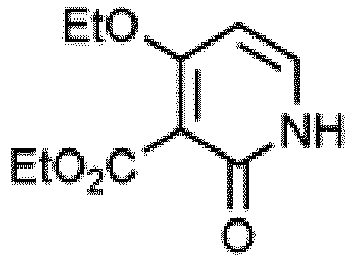
- Ethyl cyanoacetate (70.5 mL, 0.66 mol) was added with triethyl orthoacetate (249.6 mL, 1.32 mmol) and acetic acid (19.6 mL, 0.33 mol) and stirred at 120°C for at least 12 hours. The solvent of the reaction mixture was concentrated and added with N,N-dimethylformamide diethylacetal (DMF-DEA) (141 mL, 0.55 mol) and stirred at 70°C for at least 2 hours. The reaction mixture was added with acetic acid (500 mL) and distilled water (60 mL) and refluxed for at least 12 hours. The reaction mixture was cooled to room temperature and added with a saturated aqueous solution of sodium hydrogen carbonate and water. The resultant was extracted using a mixed solvent (dichloromethane : methanol = 9 : 1). The resulting organic layer was dried over anhydrous magnesium sulfate, filtered, and concentrated under reduced pressure. The resultant was added with ethyl acetate (100 mL) and concentrated. The thus-obtained solid was filtered to obtain 37 g (26%) of ethyl 4-ethoxy-2-oxo-1,2-dihydropyridin-3-carboxylate.
1H NMR (400 MHz, DMSO-d6) δ 11.61 (bs, 1H), 7.46 (d, J = 7.6 Hz, 1H), 6.21 (d, J = 7.6 Hz, 1H), 4.++14 (m, 4H), 1.22 (m, 6H)
MS: 212 [M + H]+ -

- Cesium carbonate (114 g, 0.35 mol) was added with N,N-dimethylformamide (100 mL) and filled with a nitrogen gas. The mixture was stirred at room temperature for 10 minutes, added with of 8-hydroxyquinolinol (10.2 g, 0.07 mol) after dissolving it in N,N-dimethylformamide (200 mL), and then added with copper iodide (10 g, 0.05 mol), 4-fluoroiodobenzene (58.3 g, 0.26 mol), and the compound obtained in Step 1 (37 g, 0.17 mol). The resultant was stirred at 110°C for 24 hours. Upon completion of the reaction, the resultant was cooled to room temperature, added with ethyl acetate, and stirred for 10 minutes. The reaction mixture was filtered with a Celite pad, and the resulting filtrate was extracted using water and ethyl acetate. The resulting organic layer was dried over anhydrous magnesium sulfate and filtered, and the solvent was removed under reduced pressure. The resultant was used in Step 3 below without further purification.
-

- The compound of Step 2 was dissolved in ethanol (200 mL) and added with 3N hydrogen chloride solution (400 mL). The mixture was stirred at 60°C for 24 hours. The resulting solid was filtered to obtain 21 g (yield in Step 2: 43%) of 4-ethoxy-1-(4-fluorophenyl)-2-oxo-1,2-dihydropyridin-3-carboxylic acid.
1H NMR (400 MHz, DMSO-d6) δ 7.95 (d, J = 7.6 Hz, 1H), 7.48 (m, 2H), 7.35 (m, 2H), 6.58 (d, J = 8 Hz, 1H), 4.28 (q, J = 6.8 Hz, 2H), 1.32 (t, J = 6.8 Hz, 3H)
MS : 276 [M + H]- -

- The target compound was prepared in the same manner as in Preparation Example 1 except that iodobenzene was used instead of 4-fluoroiodobenzene in Step 2 of Preparation Example 1.
1H NMR (400 MHz, DMSO-d6) δ 7.98 (d, J = 8 Hz, 1H), 7.56-7.41 (m, 5H), 6.60 (d, J = 7.6 Hz, 1H), 4.30 (q, J = 7.2 Hz, 2H), 1.34 (t, J = 7.2 Hz, 3H)
MS: 260 [M + H]+ -

- Ethyl 4-ethoxy-1-(4-fluorophenyl)-2-oxo-1,2-dihydropyridin-3-carboxylate (0.37 g, 1.20 mmol) was treated with 28% NaOMe solution and stirred at room temperature for 10 minutes. The solvent was removed by concentrating under reduced pressure to obtain 0.26 g (yield: 77%) of the target compound.
-
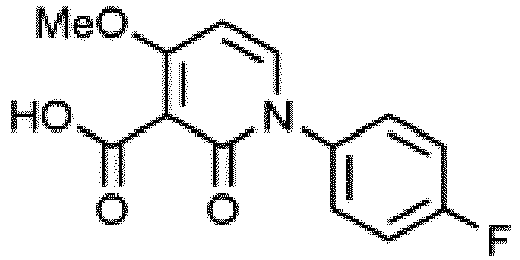
- Methyl 4-methoxy-1-(4-fluorophenyl)-2-oxo-1,2-dihydropyridin-3-carboxylate (0.33 g, 1.18 mmol) prepared in Step 1 was treated with ethanol (5 mL) and dropwise added with 2.75 N hydrogen chloride solution (10 mL) at room temperature. The mixture was stirred at 60°C for 4 hours and the resulting solid was filtered to obtain 0.16 g (52%) of the target compound.
1H NMR (400 MHz, DMSO-d6) δ 13.89 (bs, 1H), 8.02 (d, J = 7.6 Hz, 1H), 7.53-7.48 (m, 2H), 7.40-7.34 (m, 2H), 6.63 (d, J = 8 Hz, 1H), 4.02 (s, 3H)
MS : 264 [M + H]+ -

- The target compound was prepared in the same manner as in Preparation Example 2 except that ethyl 4-ethoxy-1-phenyl-2-oxo-1,2-dihydropyridin-3-carboxylate, which was used in Preparation Example 2, was used instead of ethyl 4-ethoxy-1-(4-fluorophenyl)-2-oxo-1,2-dihydropyridin-3-carboxylate in Step 1 of Preparation Example 2.
1H NMR (400 MHz, DMSO-d6) δ 7.96 (d, J = 7.8 Hz, 1H), 7.55-7.45 (m, 5H), 6.58 (d, J = 7.8 Hz, 1H), 3.99 (s, 3H)
MS : 246 [M + H]+ -

- Methyl 2-oxo-2H-pyran-3-carboxylate (5 g, 32.4 mmol) was dissolved in tetrahydrofuran (100 mL), added with 4-fluoroaniline (3.6 g, 32.4 mmol), and stirred at room temperature for 3 hours. The resultant was added with 1-(3-dimethylaminopropyl)-3-ethylcarbodiimide hydrochloride (8.1 g, 42.2 mmol) and 4-(dimethylamino)pyridine (0.4 g, 3.2 mmol), and stirred at room temperature for 16 hours. The resultant was added with ethyl acetate and water, and was added with 10% hydrogen chloride solution to extract. Then the resulting organic layer was separated and dried over anhydrous magnesium sulfate, and concentrated under reduced pressure to obtain the residue. The residue was purified by silica gel column chromatography (20% ethyl acetate in n-hexane) to obtain 1.8 g (22%) of methyl 1-(4-fluorophenyl)-2-oxo-1,2-dihydropyridin-3-carboxylate in ivory solid.
1H NMR (400MHz, DMSO-d6) δ 8.12 (dd, J = 6.8 and 2.0 Hz, 1H), 7.95 (dd, J = 6.8 and 2.0 Hz, 1H), 7.50 (d, J = 4.8 Hz, 1H), 7.48 (J = 5.2 Hz, 1H), 7.36 (t, J = 8.8 Hz, 2H), 6.41 (t, J = 6.8 Hz, 2H), 3.75 (s, 1H)
MS : 248 [M + H]+ -

- Methyl 1-(4-fluorophenyl)-2-oxo-1,2-dihydropyridin-3-carboxylate (1.8 g, 7.29 mmol) prepared in Step 1 was dissolved in methanol (25 mL), added with 1 N NaOH solution (11 mL), and stirred at room temperature for 15 hours. The reaction mixture was concentrated under reduced pressure, acidified with 1 N hydrogen chloride solution, and filtered to obtain 1.6 g (94%) of 1-(4-fluorophenyl)-2-oxo-1,2-dihydropyridin-3-carboxylic acid in white solid.
1H NMR (400MHz, DMSO-d6) δ 14.23 (s, 1H), 8.49 (dd, J = 6.8 and 2.0 Hz), 8.21 (dd, J = 6.8 and 2.0 Hz), 7.63 (d, J = 4.8 Hz, 1H), 7.61 (J = 5.2 Hz, 1H), 7.42 (t, J = 8.8 Hz, 2H), 6.79 (t, J = 7.2 Hz, 2H)
MS : 234 [M + H]+ -

- Pyrrolo[1,2-b]pyridazin-4-ol (3.7 g, 27.6 mmol) was dissolved in dimethylformamide (37 mL), added with cesium carbonate (18.0 g, 55.2 mmol) and 1,2-difluoro-4-nitrobenzene (4.83 g, 30.3 mmol), and stirred at from 30°C to 40°C for 4 hours. Upon completion of the reaction, the mixture was added with HCl to adjust the pH to 3 to 4, extracted with ethyl acetate, dried over anhydrous magnesium sulfate, and concentrated under reduced pressure to obtain the residue. The residue was suspended in isopropyl ether and filtered to obtain 6.7 g (89%) of 4-(2-fluoro-4-nitrophenoxy)pyrrolo[1,2-b]pyridazine.
1H NMR (400 MHz, CDCl3) δ 8.16-8.11 (m, 2H), 7.91 (d, J = 5.2 Hz, 1H), 7.82-7.81 (m, 1H), 7.41-7.35 (m, 1H), 6.86-6.84 (m, 1H), 6.67-6.32 (m, 1H), 5.84 (t, J = 4.8 Hz, 1H) -

- 4-(2-Fluoro-4-nitrophenoxy)pyrrolo[1,2-b]pyridazine (2.0 g, 7.32 mmol) prepared in Step 1 was dissolved in chloroform (40 mL) and cooled to 0°C. The resultant was added with N-iodosuccinimide (1.81 g, 8.05 mmol) and stirred at room temperature for 3 hours. Upon completion of the reaction, the mixture was washed by adding water thereto, extracted with ethyl acetate, dried over anhydrous magnesium sulfate, and concentrated under reduced pressure to obtain the residue. The residue was purified by silica gel column chromatography (10% ethyl acetate in n-hexane) to obtain 910 mg (31%) of 4-(2-fluoro-4-nitrophenoxy)-5-iodopyrrolo[1,2-b]pyridazine.
1H NMR (400 MHz, CDCl3) δ 8.20-8.12 (m, 2H), 7.91 (d, J = 5.6 Hz, 1H), 7.75 (d, J = 2.8 Hz, 1H), 7.38-7.34 (m, 1H), 6.98 (d, J = 2.8 Hz, 1H), 5.85-5.84 (m, 1H) -

- 4-(2-Fluoro-4-nitrophenoxy)-5-iodopyrrolo [1,2-b]pyridazine (2.7 g, 6.76 mmol) prepared in Step 2 was dissolved in a solution (methanol/distilled water = 2/1), added with Fe (1.13 g, 20.3 mmol) and ammonium chloride (3.62 g, 67.6 mmol), and stirred at 100°C for 1.5 hours. Upon completion of the reaction, the mixture was cooled to room temperature, added with ethyl acetate and stirred for 2 hours, filtered with a Celite pad, and the filtrate was obtained. The filtrate was washed with water, extracted with ethyl acetate, dried over anhydrous magnesium sulfate, and concentrated under reduced pressure to obtain the residue. The residue was suspended in isopropyl ether and filtered to obtain 2.2 g (88%) of 3-fluoro-4-((5-iodopyrrolo [1,2-b]pyridazin-4-yl)oxy)aniline.
1H NMR (400 MHz, DMSO-d6) δ 7.99 (d, J = 5.6 Hz, 1H), 7.90 (d, J = 3.2 Hz, 1H), 7.08 (t, J = 9.2 Hz, 1H), 6.92 (d, J = 2.8 Hz, 1H), 6.56-6.52 (m, 1H), 6.46-6.44 (m, 1H), 5.75 (d, J = 5.2 Hz, 1H), 5.53 (s, 2H) -

- 1-(4-Fluorophenyl)-2-oxo-1,2-dihydropyridin-3-carboxylic acid (3.94 g, 0.014 mol) and dichloromethane (50 mL) were added together and stirred. The mixture was added with SOCl2 (2.81 g, 0.024 mol) and DMF (2 to 3 drops), and stirred at room temperature for 1 hour. Upon complete dissolution, the mixture was concentrated under reduced pressure (reaction container A).
- 3-Fluoro-4-((5-iodopyrrolo [1,2-b]pyridazin-4-yl)oxy)aniline (4.37 g, 0.012 mol), which was prepared in Step 3, dichloromethane (50 mL), and triethylamine (4.96 mL, 0.036 mol) were added together to another reaction container and mixed for 0.5 hour (reaction container B).
- Dichloromethane (50 mL) was added to the concentrated mixture in the reaction container A, stirred, and the mixture was dropwise added to the reaction container B. The resultant was stirred at room temperature for 12 hours and adjusted to a neutral state by adding water and 1 N HCl thereto.
- The reaction mixture was extracted with dichloromethane, dried over anhydrous magnesium sulfate, and concentrated under reduced pressure to obtain the residue. The residue was added with ethyl acetate and the resulting solid was filtered to obtain 7.06 g (95%) of
4-ethoxy-N-(3-fluoro-4-((5-iodopyrrolo[1,2-b]pyridazin-4-yl)oxy)phenyl)-1-(4-fluorophenyl)-2 -oxo-1,2-dihydropyridin-3-carboxamide.
1H NMR (400 MHz, DMSO-d6) δ 10.61 (s, 1H), 8.01-8.00 (m, 1H), 7.95-7.90 (m, 2H), 7.86 (d, J = 8.0 Hz, 1H), 7.51-7.42 (m, 3H), 7.39-7.34 (m, 2H), 7.01 (d, J = 2.8 Hz, 1H), 6.51 (d, J = 8.0 Hz, 1H), 5.86 (d, J = 5.2 Hz, 1H), 4.26 (q, J = 6.8 Hz, 2H), 1.30 (t, J = 6.8 Hz, 3H) -

- 4-Ethoxy-N-(3-fluoro-4-((5-iodopyrrolo[1,2-b]pyridazin-4-yl)oxy)phenyl)-1-(4-fluorop henyl)-2-oxo-1,2-dihydropyridin-3-carboxamide (50 mg, 0.08 mmol), which was prepared in Step 4, was dissolved in dioxane solution (2 mL), added with Pd(PPh3)4 (9 mg, 0.008 mmol), (3-(hydroxymethyl)phenyl)boronic acid (18 mg, 0.12 mmol), and 1 M aqueous potassium carbonate solution (0.16 mL, 0.16 mol), and stirred under reflux for 12 hours to form a mixture. The mixture was extracted with dichloromethane and water, and the resulting organic layer was separated and dried over anhydrous magnesium sulfate, and concentrated under reduced pressure to obtain the residue. The residue was subjected to the prep. TLC(CH2Cl2 : MeOH = 30 : 1) method to obtain the target compound.
1H NMR (400 MHz, CDCl3) δ 11.59 (s, 1H), 7.90 (dd, J = 12.8 and 2.4 Hz, 1H), 7.82 (d, J = 5.2 Hz, 1H), 7.80 (d, J = 2.8 Hz, 1H), 7.64 (s, 1H), 7.58-7.56 (m, 1H), 7.50 (d, J = 8.0 Hz, 1H), 7.37-7.32 (m, 3H), 7.25-7.21 (m, 4H), 7.03 (t, J = 8.8 Hz, 1H), 6.89 (d, J = 2.8 Hz, 1H), 6.35 (d, J = 8.0 Hz, 1H), 5.70 (d, J = 5.2 Hz, 1H), 4.69 (s, 2H), 4.35 (q, J = 7.2 Hz, 2H), 1.58 (t, J = 7.2 Hz, 3H) - The target compounds of Examples 2 to 86 were prepared in the same manner as in Example 1, and the compounds were prepared using appropriate reactants in consideration of Reaction Scheme 1 and the structures of the compounds to be prepared.
-

MS : 579 [M + H]+ -

MS : 580 [M + H]+ -

MS : 586 [M + H]+ -

MS: 581 [M + H]+ -

MS : 583 [M + H]+ -

MS : 580 [M + H]+ -

MS: 581 [M + H]+ -

MS : 610 [M + H]+ -

MS : 585 [M + H]+ -

MS : 609 [M + H]+ -

MS : 597 [M + H]+ -

MS : 639 [M + H]+ -

MS : 597 [M + H]+ -

MS : 585 [M + H]+ -

MS : 614 [M + H]+ -

MS : 569 [M + H]+ -

MS : 647 [M + H]+ -

MS : 598 [M + H]+ -

MS : 644 [M + H]+ -

MS : 595 [M + H]+ -

MS : 652 [M + H]+ -

MS : 607 [M + H]+ -

MS : 665 [M + H]+ -

MS : 637 [M + H]+ -

MS : 622 [M + H]+ -

MS : 621 [M + H]+ -

MS : 548 [M + H]+ -

MS : 565 [M + H]+ -

MS : 671 [M + H]+ -

MS : 657 [M + H]+ -

MS : 658 [M + H]+ -

MS : 548 [M + H]+ -

MS : 621 [M + H]+ -

MS : 672 [M + H]+ -

MS : 686 [M + H]+ -

MS : 624 [M + H]+ -

MS : 594 [M + H]+ -

MS : 667 [M + H]+ -

MS : 596 [M + H]+ -

MS : 650 [M + H]+ -

MS : 526 [M + H]+ -

MS : 637 [M + H]+ -

MS : 636 [M + H]+ -

MS : 652 [M + H]+ -

MS : 623 [M + H]+ -

MS : 579 [M + H]+ -

MS : 591 [M + H]+ -

MS : 678 [M + H]+ -

MS : 692 [M + H]+ -

MS : 665 [M + H]+ -

MS : 624 [M + H]+ -

MS : 594 [M + H]+ -

MS : 637 [M + H]+ -

MS : 569 [M + H]+ -

MS : 636 [M + H]+ -

MS : 536 [M + H]+ -

MS : 624 [M + H]+ -

MS: 610 [M + H]+ -

MS: 566 [M + H]+ -

MS: 608 [M + H]+ -

MS: 624 [M + H]+ -

MS: 624 [M + H]+ -

MS: 540 [M + H]+ -

MS: 582 [M + H]+ -

MS: 558 [M + H]+ -

MS: 565 [M + H]+ -

MS: 589 [M + H]+ -

MS: 568 [M + H]+ -

MS: 554 [M + H]+ -

MS: 555 [M + H]+ -

MS: 554 [M + H]+ -
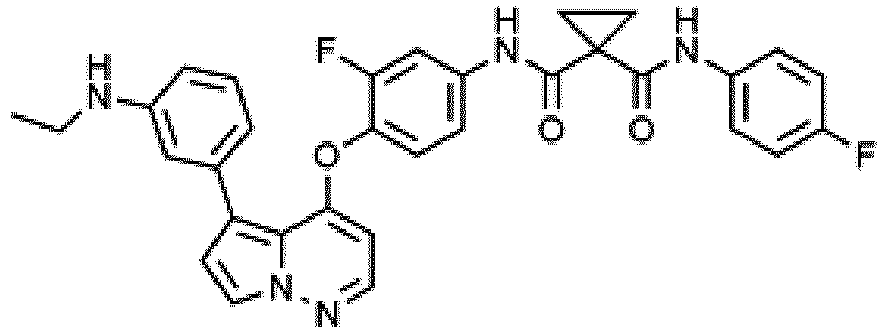
MS: 568 [M + H]+ -

MS: 564 [M + H]+ -
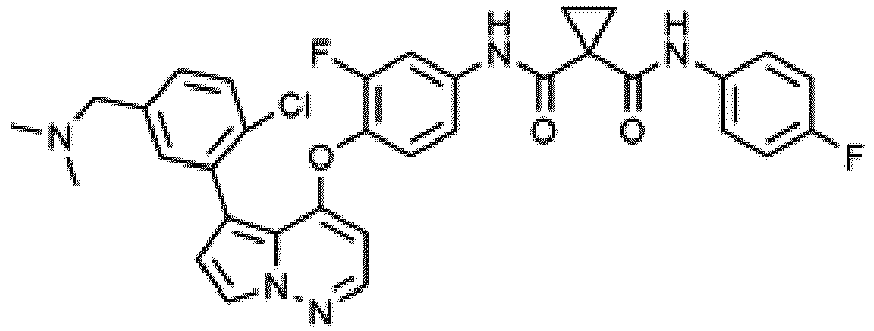
MS: 616 [M + H]+ -

MS: 600 [M + H]+ -

MS: 600 [M + H]+ -
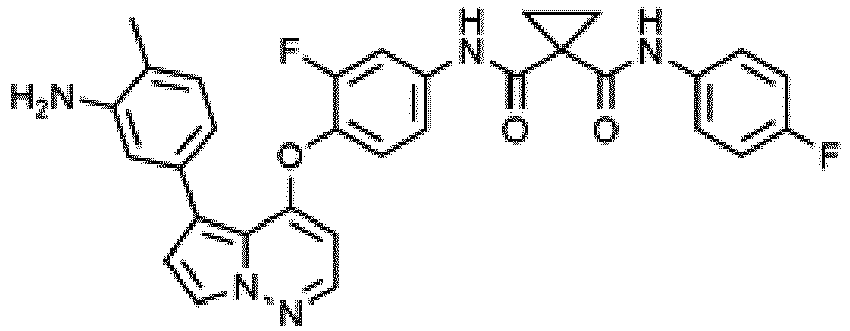
MS: 554 [M + H]+ -

MS: 554 [M + H]+ -

MS: 568 [M + H]+ -

MS: 582 [M + H]+ -

MS: 570 [M + H]+ -

MS: 558 [M + H]+ -

MS: 582 [M + H]+ -
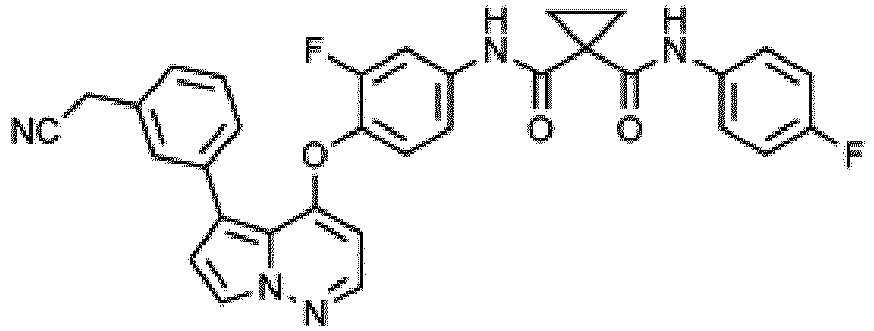
MS: 564 [M + H]+ -

MS: 564 [M + H]+ - The inhibitory effect of the compounds of the present invention on the activity of c-Met was confirmed as follows.
- Specifically, 250 µM G4Y1 peptide, which serves as a substrate for c-Met enzyme (2 ng/µL), and 50 µM ATP were subjected to an enzyme reaction in a reaction buffer (40 mM Tris-HCl (pH 7.5), 20 mM MgCl2, 0.1 mg/mL bovine serum albumin, and 50 µM DTT). The compounds prepared in Examples and comparative compounds were treated at various concentrations and reacted at room temperature for 1 hour, sequentially added with ADP-Glo™ Reagent and the Kinase detection reagent, and reacted at room temperature for 40 minutes and 30 minutes, respectively.
- Then, luminescence of the compounds was measured using the Wallaac Victor 2TM (PerkinElmer life sciences, 1420-042). The activity of c-Met inhibitors was evaluated by analyzing the data based on the measured RLU values. The activity of c-Met inhibitors was evaluated as the percentage of remaining activity of the c-Met enzyme in the samples treated with the compounds at concentrations to be tested, with the RLU value of the sample set at 100% control group. The concentrations of the compounds which showed the 50% inhibition of c-Met activity compared to that of control group were determined as IC50 value (nM). The results are shown in Table 1 below.
[Table 1] Example No. c-Met IC50 Example No. c-Met IC50 7 A 70 A 23 A 73 A 29 A 75 A 43 A 76 A 46 A 77 A 47 A 78 A 49 A 79 A 50 A 80 A 53 A 81 A 56 A 82 A 63 A 83 A 67 A 85 A A: < 40 nM, B: 40 nM to 100 nM, C: 100 nM to 500 nM, D: > 500 nM - As shown in Table 1 above, the compounds of the present invention have excellent inhibitory effect against the activity of c-Met.
Claims (14)
- A compound represented by the following Formula 1 or a pharmaceutically acceptable salt thereof:
 R1 is H or halogen;R2 is aryl or heteroaryl selected from the group consisting of indolyl, phenyl, pyrazinyl, pyrazolyl, pyridinyl, pyrimidinyl, thiazolyl, and thienyl, wherein the aryl or the heteroaryl is unsubstituted or substituted with one or two substituents, which are respectively and independently selected from the group consisting of
 R3 is
R3 is
- The compound or pharmaceutically acceptable salt thereof of claim 1, wherein R1 is H or fluoro.
- The compound or pharmaceutically acceptable salt thereof of claim 1, wherein the substituent for the aryl or heteroaryl in R2 is selected from the group consisting of


- The compound or pharmaceutically acceptable salt thereof of claim 1, wherein R2 is phenyl, wherein the phenyl is unsubstituted or substituted with one or two substituents, which are respectively and independently selected from the group consisting of


- The compound or pharmaceutically acceptable salt thereof of claim 1, wherein R2 is pyridinyl, in which the pyridinyl is unsubstituted or substituted with a substituent, which is selected from the group consisting of

- The compound or pharmaceutically acceptable salt thereof of claim 1, wherein R2 is pyrazolyl, in which the pyrazolyl is unsubstituted or substituted with C1-4 alkyl, SO2-(C1-4 alkyl), or piperidinyl.
- The compound or pharmaceutically acceptable salt thereof of claim 1, wherein R2 is indolyl, pyrazinyl, pyrimidinyl, thiazolyl, or thienyl, in which the indolyl, pyrazinyl, pyrimidinyl, thiazolyl, or thienyl are unsubstituted.
- The compound or pharmaceutically acceptable salt thereof of claim 1, wherein Ra is H, methoxy, or ethoxy.
- The compound or pharmaceutically acceptable salt thereof of claim 1, wherein Rb is H or fluoro.
- The compound or pharmaceutically acceptable salt thereof of claim 1, wherein Rc is H or methyl.
- The compound or pharmaceutically acceptable salt thereof of claim 1, wherein the compound represented by Formula 1 is selected from the group consisting of:1) 4-ethoxy-N-(3-fluoro-4-((5-(3-(hydroxymethyl)phenyl)pyrrolo[1,2-b]pyridazin-4-yl)ox y)phenyl)-1-(4-fluorophenyl)-2-oxo-1,2-dihydropyridin-3-carboxamide,2) 4-ethoxy-N-(3-fluoro-4-((5-phenylpyrrol[1,2-b]pyridazin-4-yl)-oxy)phenyl)-1-(4-fluor ophenyl)2-oxo-1,2-dihydropyridin-3-carboxamide,3) 4-ethoxy-N-(3-fluoro-4-((5-(pyridin-3-yl)pyrrolo[1,2-b]pyridazin-4-yl)oxy)phenyl)-1-( 4-fluorophenyl)-2-oxo-1,2-dihydropyridin-3-carboxamide,4) 4-ethoxy-N-(3-fluoro-4-((5-thiazol-2-yl)pyrrolo[1,2-b]pyridazin-4-yl)oxy)phenyl)-1-(4 -fluorophenyl)-2-oxo-1,2-dihydropyridin-3-carboxamide,5) 4-ethoxy-N-(2-fluoro-4-((pyrazin-2-yl)pyrrolo[1,2-b]pyridazin-4-yl)oxy)phenyl)-1-(4-f luorophenyl)-2-oxo-1,2-dihydropyridin-3-carboxamide,6) 4-ethoxy-N-(2-fluoro-4-((5-(1-methyl-1H-pyrazol-4-yl)pyrrolo[1,2-b]pyridazin-4-yl)ox y)phenyl)-1-(4-fluorophenyl)-2-oxo-1,2-dihydropyridin-3-carboxamide,7) 4-ethoxy-N-(3-fluoro-4-((5-pyridin-4-yl)pyrrolo[1,2-b]pyridazin-4-yl)oxy)phenyl)-1-(4 -fluorophenyl)-2-oxo-1,2-dihydropyridin-3-carboxamide,8) 4-ethoxy-N-(3-fluoro-4-((5-(pyrimidin-5-yl)pyrrolo[1,2-b]pyridazin-4-yl)oxy)phenyl)-1-(4-fluorophenyl)-2-oxo-1,2-dihydropyridin-3-carboxamide,9) 4-ethoxy-N-(3-fluoro-4-((5-(6-methoxypyridin-3-yl)pyrrolo[1,2-b]pyridazin-4-yl)oxy)p henyl)-1-(4-fluorophenyl)-2-oxo-1,2-dihydropyridin-3-carboxamide,10) 4-ethoxy-N-(3-fluoro-4-((5-(thiophen-3-yl)pyrrolo[1,2-b]pyridazin-4-yl)oxy)phenyl)-1-(4-fluorophenyl)-2-oxo-1,2-dihydropyridin-3-carboxamide,11) 4-ethoxy-N-(3-fluoro-4-((5-(4-methoxyphenyl)pyrrolo[1,2-b]pyridazin-4-yl)oxy)pheny l)-1-(4-fluorophenyl)-2-oxo-1,2-dihydropyridin-3-carboxamide,12) 4-ethoxy-N-(3-fluoro-4-((5-(2-fluorophenyl)pyrrolo[1,2-b]pyridazin-4-yl)oxy)phenyl)-1-(4-fluorophenyl)-2-oxo-1,2-dihydropyridin-3-carboxamide,13) N-(4-((5-(3,4-dimethoxyphenyl)pyrrolo[1,2-b]pyridazin-4-yl)oxy)-3-fluorophenyl)-4-et hoxy-1-(4-fluorophenyl)-2-oxo-1,2-dihydropyridin-3-carboxamide,14) 4-ethoxy-N-(3-fluoro-4-((5-(4-fluorophenyl)pyrrolo[1,2-b]pyridazin-4-yl)oxy)phenyl)-1-(4-fluorophenyl)-2-oxo-1,2-dihydropyridin-3-carboxamide,15) 4-ethoxy-N-(3-fluoro-4-((5-(thiophen-2-yl)pyrrolo[1,2-b]pyridazin-4-yl)oxy)phenyl)-1-(4-fluorophenyl)-2-oxo-1,2-dihydropyridin-3-carboxamide,16) N-(4-((5-(2-chloropyridin-4-yl)pyrrolo[1,2-b]pyridazin-4-yl)oxy)-3-fluorophenyl)-4-et hoxy-1-(4-fluorophenyl)-2-oxo-1,2-dihydropyridin-3-carboxamide,17) N-(4-((5-(1H-pyrazol-4-yl)pyrrolo[1,2-b]pyridazin-4-yl)oxy)-3-fluorophenyl)-4-ethoxy -1-(4-fluorophenyl)-2-oxo-1,2-dihydropyridin-3-carboxamide,18) 4-ethoxy-N-(3-fluoro-4-((5-(1-methylsulfonyl)-1H-pyrazol-4-yl)pyrrolo[1,2-b]pyridazi n-4-yl)oxy)phenyl)-1-(4-fluorophenyl)-2-oxo-1,2-dihydropyridin-3-carboxamide,19) 4-ethoxy-N-(3-fluoro-4-((5-(2-fluoropyridin-4-yl)pyrrolo[1,2-b]pyridazin-4-yl)oxy)phe nyl)-1-(4-fluorophenyl)-2-oxo-1,2-dihydropyridin-3-carboxamide,20) N-(4-((5-(5-chloro-2-methoxypyridin-4-yl)pyrrolo[1,2-b]pyridazin-4-yl)oxy)-3-fluorop henyl)-4-ethoxy-1-(4-fluorophenyl)-2-oxo-1,2-dihydropyridin-3-carboxamide,21) N-(4-((5-(6-aminopyridin-3-yl)pyrrolo[1,2-b]pyridazin-4-yl)oxy)-3-fluorophenyl)-4-et hoxy-1-(4-fluorophenyl)-2-oxo-1,2-dihydropyridin-3-carboxamide,22) 4-ethoxy-N-(3-fluoro-4-((5-(1-piperidin-4-yl)-1H-pyrazol-4-yl)pyrrolo[1,2-b]pyridazin -4-yl)oxy)phenyl)-1-(4-fluorophenyl)-2-oxo-1,2-dihydropyridin-3-carboxamide,23) 4-ethoxy-N-(3-fluoro-4-((5-(3-formylphenyl)pyrrolo[1,2-b]pyridazin-4-yl)oxy)phenyl)-1-(4-fluorophenyl)-2-oxo-1,2-dihydropyridin-3-carboxamide,24) 4-ethoxy-N-(3-fluoro-4-((5-(2-(piperazin-1-yl)pyridin-4-yl)pyrrolo[1,2-b]pyridazin-4-y 1)oxy)phenyl)-1-(4-fluorophenyl)-2-oxo-1,2-dihydropyridin-3-carboxamide,25) N-(4-((5-(6-acetamidopyridin-3-yl)pyrrolo[1,2-b]pyridazin-4-yl)oxy)-3-fluorophenyl)-4-ethoxy-1-(4-fluorophenyl)-2-oxo-1,2-dihydropyridin-3-carboxamide,26) N-(4-((5-(2-acetylpyridin-4-yl)pyrro[1,2-b]pyridazin-4-yl)oxy)-3-fluorophenyl)-4-eth oxy-1-(4-fluorophenyl-2-oxo-1,2-dihydropyridin-3-carboxamide,27) N-(4-((5-(3-acetylphenyl)pyrrolo[1,2-b]pyridazin-4-yl)oxy)-3-fluorophenyl)-4-ethoxy-1-(4-fluorophenyl-2-oxo-1,2-dihydropyridin-3-carboxamide,28) N-(3-fluoro-4-((5-(pyridin-4-yl)pyrrolo[1,2-b]pyridazin-4-yl)oxy)phenyl)-4-methoxy-2 -oxy-1-phenyl-1,2-dihydropyridin-3-carboxamide,29) N-(3-fluoro-4-((5-(3-hydroxymethyl)phenyl)pyrrolo[1,2-b]pyridazin-4-yl)oxy)phenyl)-1-(4-fluorophenyl)-2-oxo-1,2-dihydropyridin-3-carboxamide,30) 4-ethoxy-N-(4-((5-(3-(ethylsulfonyl)phenyl)pyrrolo[1,2-b]pyridazin-4-yl)oxy)-3-fluoro phenyl)-1-(4-fluorophenyl)-2-oxo-1,2-dihydropyridin-3-carboxamide,31) 4-ethoxy-N-(3-fluoro-4-((5-(3-(methylsulfonyl)phenyl)pyrrolo[1,2-b]pyridazin-4-yl)ox y)phenyl)-1-(4-fluorophenyl)-2-oxo-1,2-dihydropyridin-3-carboxamide,32) 4-ethoxy-N-(3-fluoro-4-((5-(3-sulfamoylphenyl)pyrrolo[1,2-b]pyridazin-4-yl)oxy)phen yl)-1-(4-fluorophenyl)-2-oxo-1,2-dihydropyridin-3-carboxamide,33) N-(4-((5-(3-acetylphenyl)pyrrolo[1,2-b]pyridazin-4-yl)oxy)-3-fluorophenyl)-4-ethoxy-1-(4-fluorophenyl-2-oxo-1,2-dihydropyridin-3-carboxamide,34) N-(3-fluoro-4-((5-(pyridin-4-yl)pyrrolo[1,2-b]pyridazin-4-yl)oxy)phenyl)-4-methoxy-2 -oxy-1-phenyl-1,2-dihydropyridin-3-carboxamide,35) N-(4-((5-(3-(N,N-dimethylsulfamoylphenyl)phenyl)pyrrolo[1,2-b]pyridazin-4-yl)oxy)-3-fluorophenyl)-4-ethoxy-1-(4-fluorophenyl)-2-oxo-1,2-dihydropyridin-3-carboxamide,36) N-(4-((5-(3-(N,N-dimethylsulfamoylphenyl)phenyl)pyrrolo[1,2-b]pyridazin-4-yl)oxy)-3-fluorophenyl)-4-ethoxy-1-(4-fluorophenyl)-2-oxo-1,2-dihydropyridin-3-carboxamide,37) 4-ethoxy-N-(3-fluoro-4-((5-(4-nitrophenyl)pyrrolo[1,2-b]pyridazin-4-yl)oxy)phenyl)-1-(4-fluorophenyl)-2-oxo-1,2-dihydropyridin-3-carboxamide,38) N-(4-((5-(4-aminophenyl)pyrrolo[1,2-b]pyridazin-4-yl)oxy)-3-fluorophenyl)-4-ethoxy-1-(4-fluorophenyl)-2-oxo-1,2-dihydropyridin-3-carboxamide,39) 4-ethoxy-N-(3-fluoro-4-((5-(3-((2-methoxyethoxy)methyl)phenyl)pyrrolo[1,2-b]pyrida zin-4-yl)oxy)phenyl)-1-(4-fluorophenyl)-2-oxo-1,2-dihydropyridin-3-carboxamide,40) N-(3-fluoro-4-((5-(2-methoxypyridin-4-yl)pyrrolo[1,2-b]pyridazin-4-yl)oxy)phenyl)-1-(4-fluorophenyl)-2-oxo-1,2-dihydropyridin-3-carboxamide,41) N-(4-((5-(3-(dimethylcarbamoyl)phenyl)pyrrolo[1,2-b]pyridazin-4-yl)oxy)-3-fluorophe nyl)-4-ethoxy-1-(4-fluorophenyl)-2-oxo-1,2-dihydropyridin-3-carboxamide,42) N-(3-fluoro-4-((5-(pyridin-4-yl)pyrrolo[1,2-b]pyridazin-4-yl)oxy)phenyl)-N-(4-fluorop henyl)cyclopropane-1,1-dicarboxyamide,43) 4-ethoxy-N-(3-fluoro-4-((5-(3-(2-hydroxypropan-2-yl)phenyl)pyrrolo[1,2-b]pyridazin-4-yl)oxy)phenyl)-1-(4-fluorophenyl)-2-oxo-1,2-dihydropyridin-3-carboxamide,44) 4-ethoxy-N-(3-fluoro-4-((5-(3-(methylcarbamoyl)phenyl)pyrrolo[1,2-b]pyridazin-4-yl) oxy)phenyl)-1-(4-fluorophenyl)-2-oxo-1,2-dihydropyridin-3-carboxamide,45) 3-(4-(4-(4-ethoxy-1-(4-fluorophenyl)-2-oxo-1,2-dihydropyridin-3-carboxamido)-2-fluo rophenoxy)pyrrolo[1,2-b]pyridazin-5-yl)benzylcarbamate,46) 4-ethoxy-N-(3-fluoro-4-((5-(3-(1-hydroxyethyl)phenyl)pyrrolo[1,2-b]pyridazin-4-yl)ox y)phenyl)-1-(4-fluorophenyl)-2-oxo-1,2-dihydropyridin-3-carboxamide,47) N-(3-fluoro-4-((5-(3-(1-hydroxyethyl)phenyl)pyrrolo[1,2-b]pyridazin-4-yl)oxy)phenyl) -1-(4-fluorophenyl)-2-oxo-1,2-dihydropyridin-3-carboxamide,48) N-(3-fluoro-4-((5-(3-(1-hydroxyethyl)phenyl)pyrrolo[1,2-b]pyridazin-4-yl)oxy)phenyl) -4-methoxy-2-oxo-1-phenyl-1,2-dihydropyridin-3-carboxamide,49) 4-ethoxy-N-(3-fluoro-4-((5-(pyrimidin-5-yl)pyrrolo[1,2-b]pyridazin-4-yl)oxy)phenyl)-1-(4-fluorophenyl)-2-oxo-1,2-dihydropyridin-3-carboxamide,50) 4-ethoxy-N-(3-fluoro-4-((5-(3-morpholin-4-carbonylphenyl)pyrrolo[1,2-b]pyridazin-4-yl)oxy)phenyl)-1-(4-fluorophenyl)-2-oxo-1,2-dihydropyridin-3-carboxamide,51) 4-ethoxy-N-(3-fluoro-4-((5-(2-morpholidinpyridin-4-yl)pyrrolo[1,2-b]pyridazin-4-yl)o xy)phenyl)-1-(4-fluorophenyl)-2-oxo-1,2-dihydropyridin-3-carboxamide,52) 4-ethoxy-N-(3-fluoro-4-((5-(3-nitrophenyl)pyrrolo[1,2-b]pyridazin-4-yl)oxy)phenyl)-1-(4-fluorophenyl)-2-oxo-1,2-dihydropyridin-3-carboxamide,53) 4-ethoxy-N-(3-fluoro-4-((5-(3-aminophenyl)pyrrolo[1,2-b]pyridazin-4-yl)oxy)phenyl)-1-(4-fluorophenyl)-2-oxo-1,2-dihydropyridin-3-carboxamide,54) 4-ethoxy-N-(3-fluoro-4-((5-(3-(1-methoxyethyl)phenyl)pyrrolo[1,2-b]pyridazin-4-yl)o xy)phenyl)-1-(4-fluorophenyl)-2-oxo-1,2-dihydropyridin-3-carboxamide,55) N-(3-fluoro-4-((5-(3-(1-hydroxyethyl)phenyl)pyrrolo[1,2-b]pyridazin-4-yl)oxy)phenyl) -N-(4-fluorophenyl)cyclopropane-1,1-dicarboxamide,56) N-(4-((5-(3-((dimethylamino)methyl)phenyl)pyrrolo[1,2-b]pyridazin-4-yl)oxy)-3-fluor ophenyl)-4-ethoxy-1-(4-fluorophenyl)-2-oxo-1,2-dihydropyridin-3-carboxamide,57) N-(3-fluoro-4-((5-(pyridin-4-yl)pyrrolo[1,2-b]pyridazin-4-yl)oxy)-phenyl)-1-(4-fluorop henyl)-2-oxo-1,2-dihydropyridin-3-carboxamide,58) 4-ethoxy-N-(4-((5-(2-ethoxypyridin-4-yl)pyrrolo[1,2-b]pyridazin-4-yl)-oxy)-3-fluorop henyl)-1-(4-fluorophenyl)-2-oxo-1,2-dihydropyridin-3-carboxamide,59) 4-ethoxy-N-(3-fluoro-4-((5-(2-methoxypyridin-4-yl)pyrrolo[1,2-b]pyridazin-4-yl)oxy)p henyl)-1-(4-fluorophenyl)-2-oxo-1,2-dihydropyridin-3-carboxamide,60) N-(3-fluoro-4-((5-(pyridin-4-yl)pyrrolo[1,2-b]pyridazin-4-yl)oxy)phenyl)-4-ethoxy-2-o xo-1-phenyl-1,2-dihydropyridin-3-carboxamide,61) N-(4-((5-(2,6-dimethylpyridin-4-yl)pyrrolo[1,2-b]pyridazin-4-yl)oxy)-3-fluorophenyl)-4-ethoxy-1-(4-fluorophenyl)-2-oxo-1,2-dihydropyridin-3-carboxamide,62) N-(4-((5-(2-(1-hydroxyethyl)pyridin-4-yl)pyrrolo[1,2-b]pyridazin-4-yl)oxy)-3-fluoroph enyl)-4-ethoxy-1-(4-fluorophenyl)-2-oxo-1,2-dihydropyridin-3-carboxamide,63) N-(4-((5-(3-((dimethylamino)methyl)phenyl)pyrrolo[1,2-b]pyridazin-4-yl)oxy)-3-fluor ophenyl)-N-(4-fluorophenyl)cyclopropane-1,1-dicarboxamide,64) N-(4-((5-(3-aminophenyl)pyrrolo[1,2-b]pyridazin-4-yl)oxy)-3-fluorophenyl)-N-(4-fluo rophenyl)cyclopropane-1,1-dicarboxamide,65) N-(4-((5-(3-acetamidophenyl)pyrrolo[1,2-b]pyridazin-4-yl)oxy)-3-fluorophenyl)-N-(4-fluorophenyl)cyclopropane-1,1-dicarboxamide,66) N-(4-((5-(3-amino-4-fluorophenyl)pyrrolo[1,2-b]pyridazin-4-yl)oxy)-3-fluorophenyl)-N-(4-fluorophenyl)cyclopropane-1,1-dicarboxamide,67) N-(4-((5-(3-amino-5-cyanophenyl)pyrrolo[1,2-b]pyridazin-4-yl)oxy)-3-fluorophenyl)-N-(4-fluorophenyl)cyclopropane-1,1-dicarboxamide,68) N-(4-((5-(3-((dimethylamino)methyl)phenyl)pyrrolo[1,2-bpyridazin-4-yl]oxy)-3-fluoro phenyl)-1-(4-fluorophenyl)-6-methyl-2-oxo-1,2-dihydropyridin-3-carboxamide,69) N-(4-((5-(3-carbamoylphenyl)pyrrolo[1,2-b]pyridazin-4-yl)oxy)-3-fluorophenyl)-N-(4-fluorophenyl)cyclopropane-1,1-dicarboxamide,70) N-(4-((5-(3-aminomethylphenyl)pyrrolo[1,2-b]pyridazin-4-yl)oxy)-3-fluorophenyl)-N-(4-fluorophenyl)cyclopropane-1,1-dicarboxamide,71) N-(4-((5-(3-hydroxymethylphenyl)pyrrolo[1,2-b]pyridazin-4-yl)oxy)-3-fluorophenyl)-N-(4-fluorophenyl)cyclopropane-1,1-dicarboxamide,72) N-(4-((5-(3-(methylamino)phenyl)pyrrolo[1,2-b]pyridazin-4-yl)oxy)-3-fluorophenyl)-N-(4-fluorophenyl)cyclopropane-1,1-dicarboxamide,73) N-(4-((5-(3-(ethylamino)phenyl)pyrrolo[1,2-b]pyridazin-4-yl)oxy)-3-fluorophenyl)-N-( 4-fluorophenyl)cyclopropane-1,1-dicarboxamide,74) N-(4-((5-(1H-indol-6-yl)pyrrolo[1,2-b]pyridazin-4-yl)oxy)-3-fluorophenyl)-N-(4-fluor ophenyl)cyclopropane-1,1-dicarboxamide,75) N-(4-((5-(2-chloro-5-((dimethylamino)methyl)phenyl)pyrrolo[1,2-b]pyridazin-4-yl)oxy )-3-fluorophenyl)-N-(4-fluorophenyl)cyclopropane-1,1-dicarboxamide,76) N-(4-((5-(5-((dimethylamino)methyl)-2-fluorophenyl)pyrrolo[1,2-b]pyridazin-4-yl)oxy )-3-fluorophenyl)-N-(4-fluorophenyl)cyclopropane-1,1-dicarboxamide,77) N-(4-((5-(3-((dimethylamino)methyl)-5-fluorophenyl)pyrrolo[1,2-b]pyridazin-4-yl)oxy )-3-fluorophenyl)-N-(4-fluorophenyl)cyclopropane-1,1-dicarboxamide,78) N-(4-((5-(3-amino-4-methyl)-5-fluorophenyl)pyrrolo[1,2-b]pyridazin-4-yl)oxy)-3-fluor ophenyl)-N-(4-fluorophenyl)cyclopropane-1,1-dicarboxamide,79) N-(4-((5-(3-amino-2-methyl)-5-fluorophenyl)pyrrolo[1,2-b]pyridazin-4-yl)oxy)-3-fluor ophenyl)-N-(4-fluorophenyl)cyclopropane-1,1-dicarboxamide,80) N-(3-fluoro-4-((5-(3-((methylamino)methyl)phenyl)pyrrolo[1,2-b]pyridazin-4-yl)oxy)p henyl)-N-(4-fluorophenyl)cyclopropane-1,1-dicarboxamide,81) N-(4-((5-(3-((ethylamino)methyl)phenyl)pyrrolo[1,2-b]pyridazin-4-yl)oxy)-3-fluoroph enyl)-N-(4-fluorophenyl)cyclopropane-1,1-dicarboxamide,82) N-(4-((5-(3-amino-4-methoxy)-5-fluorophenyl)pyrrolo[1,2-b]pyridazin-4-yl)oxy)-3-flu orophenyl)-N-(4-fluorophenyl)cyclopropane-1,1-dicarboxamide,83) N-(4-((5-(5-amino-2-fluoro)-5-fluorophenyl)pyrrolo[1,2-b]pyridazin-4-yl)oxy)-3-fluor ophenyl)-N-(4-fluorophenyl)cyclopropane-1,1-dicarboxamide,84) N-(4-((5-(3-(methylcarbamoyl)phenyl)pyrrolo[1,2-b]pyridazin-4-yl)oxy)-3-fluorophen yl)-N-(4-fluorophenyl)cyclopropane-1,1-dicarboxamide,85) N-(4-((5-(3-cyanomethylphenyl)pyrrolo[1,2-b]pyridazin-4-yl)oxy)-3-fluorophenyl)-N-( 4-fluorophenyl)cyclopropane-1,1-dicarboxamide, and86) N-(4-((5-3-aminophenyl)pyrrolo[1,2-b]pyridazin-4-yl)oxy)-3-fluorophenyl)-1-(4-fluoro phenyl)-6-methyl-2-oxo-1,2-dihydropyridin-3-carboxamide.
- A pharmaceutical composition comprising a compound of any one of claims 1 to 11 or a pharmaceutically acceptable salt thereof as an active ingredient.
- The pharmaceutical composition of claim 12, further comprising a pharmaceutically acceptable carrier, diluent, or excipient.
- A method of inhibiting the activity of protein kinase(s) using a composition comprising a compound of any one of claims 1 to 11 or a pharmaceutically acceptable salt thereof as an active ingredient.
Applications Claiming Priority (2)
| Application Number | Priority Date | Filing Date | Title |
|---|---|---|---|
| KR1020130106063A KR101598664B1 (en) | 2013-09-04 | 2013-09-04 | Protein kinase inhibitors comprising a pyrrolopyridazine derivative |
| PCT/KR2014/008083 WO2015034213A1 (en) | 2013-09-04 | 2014-08-29 | Protein kinase inhibitor containing pyrrolopyridazine derivative |
Publications (3)
| Publication Number | Publication Date |
|---|---|
| EP3042905A1 true EP3042905A1 (en) | 2016-07-13 |
| EP3042905A4 EP3042905A4 (en) | 2017-01-18 |
| EP3042905B1 EP3042905B1 (en) | 2020-06-17 |
Family
ID=52628622
Family Applications (1)
| Application Number | Title | Priority Date | Filing Date |
|---|---|---|---|
| EP14842502.8A Active EP3042905B1 (en) | 2013-09-04 | 2014-08-29 | Protein kinase inhibitor containing pyrrolopyridazine derivative |
Country Status (7)
| Country | Link |
|---|---|
| US (1) | US9815840B2 (en) |
| EP (1) | EP3042905B1 (en) |
| JP (1) | JP6441363B2 (en) |
| KR (1) | KR101598664B1 (en) |
| CN (1) | CN105683191B (en) |
| ES (1) | ES2807612T3 (en) |
| WO (1) | WO2015034213A1 (en) |
Families Citing this family (2)
| Publication number | Priority date | Publication date | Assignee | Title |
|---|---|---|---|---|
| CN108069938A (en) * | 2016-11-15 | 2018-05-25 | 中国药科大学 | 2,4- disubstituted pyridines and its preparation method and application |
| WO2026019979A1 (en) * | 2024-07-19 | 2026-01-22 | Merck Sharp & Dohme Llc | Pyrrolopyridazine vegfr tyrosine kinase inhibitors |
Family Cites Families (7)
| Publication number | Priority date | Publication date | Assignee | Title |
|---|---|---|---|---|
| CN100577663C (en) * | 2004-06-28 | 2010-01-06 | 布里斯托尔-迈尔斯·斯奎布公司 | Fused Heterocyclic Kinase Inhibitors |
| US7439246B2 (en) | 2004-06-28 | 2008-10-21 | Bristol-Myers Squibb Company | Fused heterocyclic kinase inhibitors |
| ATE492544T1 (en) | 2004-08-26 | 2011-01-15 | Pfizer | PYRAZOLE-SUBSTITUTED AMINOHETEROARYL COMPOUNDS AS PROTEIN KINASE INHIBITORS |
| US7348325B2 (en) * | 2005-11-30 | 2008-03-25 | Bristol-Myers Squibb Company | Pyrrolotriazine kinase inhibitors |
| WO2008086014A2 (en) | 2007-01-09 | 2008-07-17 | Amgen Inc. | Bis-aryl amide derivatives useful for the treatment of cancer |
| KR100979439B1 (en) | 2008-04-10 | 2010-09-02 | 한국화학연구원 | Novel pyrazole and benzoxazole substituted pyridine derivatives or pharmaceutically acceptable salts thereof, preparation methods thereof and pharmaceutical compositions for the prevention and treatment of aberrant cell growth diseases containing the same as active ingredients |
| KR100961410B1 (en) * | 2008-10-14 | 2010-06-09 | (주)네오팜 | As protein kinase inhibitors, heterocyclic compounds |
-
2013
- 2013-09-04 KR KR1020130106063A patent/KR101598664B1/en active Active
-
2014
- 2014-08-29 WO PCT/KR2014/008083 patent/WO2015034213A1/en not_active Ceased
- 2014-08-29 CN CN201480058662.2A patent/CN105683191B/en active Active
- 2014-08-29 US US14/916,177 patent/US9815840B2/en active Active
- 2014-08-29 ES ES14842502T patent/ES2807612T3/en active Active
- 2014-08-29 JP JP2016540797A patent/JP6441363B2/en active Active
- 2014-08-29 EP EP14842502.8A patent/EP3042905B1/en active Active
Also Published As
| Publication number | Publication date |
|---|---|
| US9815840B2 (en) | 2017-11-14 |
| US20160207931A1 (en) | 2016-07-21 |
| EP3042905B1 (en) | 2020-06-17 |
| EP3042905A4 (en) | 2017-01-18 |
| CN105683191B (en) | 2019-03-26 |
| JP2016534135A (en) | 2016-11-04 |
| KR20150027919A (en) | 2015-03-13 |
| WO2015034213A1 (en) | 2015-03-12 |
| CN105683191A (en) | 2016-06-15 |
| ES2807612T3 (en) | 2021-02-23 |
| JP6441363B2 (en) | 2018-12-19 |
| KR101598664B1 (en) | 2016-03-02 |
Similar Documents
| Publication | Publication Date | Title |
|---|---|---|
| EP2440546B1 (en) | Compounds useful for treating premature aging and in particular progeria | |
| EP3480193B1 (en) | Pyrazole derivatives as alk5 inhibitors and uses thereof | |
| EP3838898B1 (en) | Isoindolin-1-one derivative, method for preparing the same, and pharmaceutical composition comprising the same as an effective component for preventing or treating cancer | |
| US7595323B2 (en) | N-phenyl-2-pyrimidine-amine derivatives and process for the preparation thereof | |
| JP2010516680A (en) | Kinase inhibitor compounds | |
| KR102524421B1 (en) | Benzene condensed heterocyclic derivative and pharmaceutical composition containing the same | |
| CN116854668B (en) | Phthaloxizone compounds and pharmaceutical compositions and applications thereof | |
| TW200521122A (en) | Method of preparing 1,2,4-triazole compounds and intermediates thereof | |
| EP2768809B1 (en) | Pyridine-sulfoximines as tyrosine kinase inhibitors | |
| CN116023368A (en) | CRBN immunomodulator | |
| KR20200011388A (en) | Novel imidazole derivatives having jnk-inhibitory activity and pharmaceutical composition having the same | |
| EP3042905B1 (en) | Protein kinase inhibitor containing pyrrolopyridazine derivative | |
| JPWO2005087749A1 (en) | 2-Aminoquinazoline derivatives | |
| CN116924983A (en) | Novel heterocyclic compound | |
| KR102289681B1 (en) | Five-membered heterocyclic pyridine compounds and preparation method and use thereof | |
| TWI619695B (en) | Agonists of protein tyrosine phosphatase shp-1 | |
| KR101730272B1 (en) | Protein kinase inhibitors comprising a pyrrolopyridazine derivative | |
| CN106632089A (en) | Quinazoline type compound, and preparation method and application thereof | |
| EP4353727A1 (en) | Substituted furopyridines for therapeutic use | |
| CN102887867B (en) | Triazine compound and preparation method and application of triazine compound | |
| KR101418078B1 (en) | 2-(Substituted ethynyl)quinoline derivatives as mGluR5 antagonists | |
| EP1854787A1 (en) | Novel cyclic compound having quinolylalkylthio group | |
| EP4692083A1 (en) | Novel azabicycle derivatives and pharmaceutical composition for inhibiting autotaxin, comprising same | |
| CN120114459A (en) | Application of benzofuran pyrimidone or benzothiophene pyrimidone compounds | |
| EP2308880A1 (en) | Tetracyclic compound |
Legal Events
| Date | Code | Title | Description |
|---|---|---|---|
| PUAI | Public reference made under article 153(3) epc to a published international application that has entered the european phase |
Free format text: ORIGINAL CODE: 0009012 |
|
| 17P | Request for examination filed |
Effective date: 20160310 |
|
| AK | Designated contracting states |
Kind code of ref document: A1 Designated state(s): AL AT BE BG CH CY CZ DE DK EE ES FI FR GB GR HR HU IE IS IT LI LT LU LV MC MK MT NL NO PL PT RO RS SE SI SK SM TR |
|
| AX | Request for extension of the european patent |
Extension state: BA ME |
|
| DAX | Request for extension of the european patent (deleted) | ||
| A4 | Supplementary search report drawn up and despatched |
Effective date: 20161221 |
|
| RIC1 | Information provided on ipc code assigned before grant |
Ipc: A61P 37/00 20060101ALI20161215BHEP Ipc: A61K 31/5025 20060101ALI20161215BHEP Ipc: C07D 487/04 20060101AFI20161215BHEP Ipc: A61P 35/00 20060101ALI20161215BHEP |
|
| STAA | Information on the status of an ep patent application or granted ep patent |
Free format text: STATUS: EXAMINATION IS IN PROGRESS |
|
| RAP1 | Party data changed (applicant data changed or rights of an application transferred) |
Owner name: THE ASAN FOUNDATION |
|
| 17Q | First examination report despatched |
Effective date: 20180123 |
|
| RAP1 | Party data changed (applicant data changed or rights of an application transferred) |
Owner name: WELLMARKER BIO CO., LTD. |
|
| GRAP | Despatch of communication of intention to grant a patent |
Free format text: ORIGINAL CODE: EPIDOSNIGR1 |
|
| STAA | Information on the status of an ep patent application or granted ep patent |
Free format text: STATUS: GRANT OF PATENT IS INTENDED |
|
| INTG | Intention to grant announced |
Effective date: 20200110 |
|
| GRAS | Grant fee paid |
Free format text: ORIGINAL CODE: EPIDOSNIGR3 |
|
| GRAA | (expected) grant |
Free format text: ORIGINAL CODE: 0009210 |
|
| STAA | Information on the status of an ep patent application or granted ep patent |
Free format text: STATUS: THE PATENT HAS BEEN GRANTED |
|
| AK | Designated contracting states |
Kind code of ref document: B1 Designated state(s): AL AT BE BG CH CY CZ DE DK EE ES FI FR GB GR HR HU IE IS IT LI LT LU LV MC MK MT NL NO PL PT RO RS SE SI SK SM TR |
|
| REG | Reference to a national code |
Ref country code: GB Ref legal event code: FG4D |
|
| REG | Reference to a national code |
Ref country code: CH Ref legal event code: EP |
|
| REG | Reference to a national code |
Ref country code: IE Ref legal event code: FG4D |
|
| REG | Reference to a national code |
Ref country code: DE Ref legal event code: R096 Ref document number: 602014066812 Country of ref document: DE |
|
| REG | Reference to a national code |
Ref country code: AT Ref legal event code: REF Ref document number: 1281152 Country of ref document: AT Kind code of ref document: T Effective date: 20200715 |
|
| PG25 | Lapsed in a contracting state [announced via postgrant information from national office to epo] |
Ref country code: NO Free format text: LAPSE BECAUSE OF FAILURE TO SUBMIT A TRANSLATION OF THE DESCRIPTION OR TO PAY THE FEE WITHIN THE PRESCRIBED TIME-LIMIT Effective date: 20200917 Ref country code: GR Free format text: LAPSE BECAUSE OF FAILURE TO SUBMIT A TRANSLATION OF THE DESCRIPTION OR TO PAY THE FEE WITHIN THE PRESCRIBED TIME-LIMIT Effective date: 20200918 Ref country code: FI Free format text: LAPSE BECAUSE OF FAILURE TO SUBMIT A TRANSLATION OF THE DESCRIPTION OR TO PAY THE FEE WITHIN THE PRESCRIBED TIME-LIMIT Effective date: 20200617 Ref country code: SE Free format text: LAPSE BECAUSE OF FAILURE TO SUBMIT A TRANSLATION OF THE DESCRIPTION OR TO PAY THE FEE WITHIN THE PRESCRIBED TIME-LIMIT Effective date: 20200617 Ref country code: LT Free format text: LAPSE BECAUSE OF FAILURE TO SUBMIT A TRANSLATION OF THE DESCRIPTION OR TO PAY THE FEE WITHIN THE PRESCRIBED TIME-LIMIT Effective date: 20200617 |
|
| REG | Reference to a national code |
Ref country code: LT Ref legal event code: MG4D |
|
| REG | Reference to a national code |
Ref country code: NL Ref legal event code: MP Effective date: 20200617 |
|
| PG25 | Lapsed in a contracting state [announced via postgrant information from national office to epo] |
Ref country code: LV Free format text: LAPSE BECAUSE OF FAILURE TO SUBMIT A TRANSLATION OF THE DESCRIPTION OR TO PAY THE FEE WITHIN THE PRESCRIBED TIME-LIMIT Effective date: 20200617 Ref country code: HR Free format text: LAPSE BECAUSE OF FAILURE TO SUBMIT A TRANSLATION OF THE DESCRIPTION OR TO PAY THE FEE WITHIN THE PRESCRIBED TIME-LIMIT Effective date: 20200617 Ref country code: RS Free format text: LAPSE BECAUSE OF FAILURE TO SUBMIT A TRANSLATION OF THE DESCRIPTION OR TO PAY THE FEE WITHIN THE PRESCRIBED TIME-LIMIT Effective date: 20200617 Ref country code: BG Free format text: LAPSE BECAUSE OF FAILURE TO SUBMIT A TRANSLATION OF THE DESCRIPTION OR TO PAY THE FEE WITHIN THE PRESCRIBED TIME-LIMIT Effective date: 20200917 |
|
| REG | Reference to a national code |
Ref country code: AT Ref legal event code: MK05 Ref document number: 1281152 Country of ref document: AT Kind code of ref document: T Effective date: 20200617 |
|
| PG25 | Lapsed in a contracting state [announced via postgrant information from national office to epo] |
Ref country code: NL Free format text: LAPSE BECAUSE OF FAILURE TO SUBMIT A TRANSLATION OF THE DESCRIPTION OR TO PAY THE FEE WITHIN THE PRESCRIBED TIME-LIMIT Effective date: 20200617 Ref country code: AL Free format text: LAPSE BECAUSE OF FAILURE TO SUBMIT A TRANSLATION OF THE DESCRIPTION OR TO PAY THE FEE WITHIN THE PRESCRIBED TIME-LIMIT Effective date: 20200617 |
|
| PG25 | Lapsed in a contracting state [announced via postgrant information from national office to epo] |
Ref country code: CZ Free format text: LAPSE BECAUSE OF FAILURE TO SUBMIT A TRANSLATION OF THE DESCRIPTION OR TO PAY THE FEE WITHIN THE PRESCRIBED TIME-LIMIT Effective date: 20200617 Ref country code: RO Free format text: LAPSE BECAUSE OF FAILURE TO SUBMIT A TRANSLATION OF THE DESCRIPTION OR TO PAY THE FEE WITHIN THE PRESCRIBED TIME-LIMIT Effective date: 20200617 Ref country code: SM Free format text: LAPSE BECAUSE OF FAILURE TO SUBMIT A TRANSLATION OF THE DESCRIPTION OR TO PAY THE FEE WITHIN THE PRESCRIBED TIME-LIMIT Effective date: 20200617 Ref country code: EE Free format text: LAPSE BECAUSE OF FAILURE TO SUBMIT A TRANSLATION OF THE DESCRIPTION OR TO PAY THE FEE WITHIN THE PRESCRIBED TIME-LIMIT Effective date: 20200617 Ref country code: AT Free format text: LAPSE BECAUSE OF FAILURE TO SUBMIT A TRANSLATION OF THE DESCRIPTION OR TO PAY THE FEE WITHIN THE PRESCRIBED TIME-LIMIT Effective date: 20200617 Ref country code: PT Free format text: LAPSE BECAUSE OF FAILURE TO SUBMIT A TRANSLATION OF THE DESCRIPTION OR TO PAY THE FEE WITHIN THE PRESCRIBED TIME-LIMIT Effective date: 20201019 |
|
| REG | Reference to a national code |
Ref country code: ES Ref legal event code: FG2A Ref document number: 2807612 Country of ref document: ES Kind code of ref document: T3 Effective date: 20210223 |
|
| PG25 | Lapsed in a contracting state [announced via postgrant information from national office to epo] |
Ref country code: SK Free format text: LAPSE BECAUSE OF FAILURE TO SUBMIT A TRANSLATION OF THE DESCRIPTION OR TO PAY THE FEE WITHIN THE PRESCRIBED TIME-LIMIT Effective date: 20200617 Ref country code: PL Free format text: LAPSE BECAUSE OF FAILURE TO SUBMIT A TRANSLATION OF THE DESCRIPTION OR TO PAY THE FEE WITHIN THE PRESCRIBED TIME-LIMIT Effective date: 20200617 Ref country code: IS Free format text: LAPSE BECAUSE OF FAILURE TO SUBMIT A TRANSLATION OF THE DESCRIPTION OR TO PAY THE FEE WITHIN THE PRESCRIBED TIME-LIMIT Effective date: 20201017 |
|
| REG | Reference to a national code |
Ref country code: DE Ref legal event code: R097 Ref document number: 602014066812 Country of ref document: DE |
|
| PG25 | Lapsed in a contracting state [announced via postgrant information from national office to epo] |
Ref country code: MC Free format text: LAPSE BECAUSE OF FAILURE TO SUBMIT A TRANSLATION OF THE DESCRIPTION OR TO PAY THE FEE WITHIN THE PRESCRIBED TIME-LIMIT Effective date: 20200617 |
|
| REG | Reference to a national code |
Ref country code: CH Ref legal event code: PL |
|
| PLBE | No opposition filed within time limit |
Free format text: ORIGINAL CODE: 0009261 |
|
| STAA | Information on the status of an ep patent application or granted ep patent |
Free format text: STATUS: NO OPPOSITION FILED WITHIN TIME LIMIT |
|
| PG25 | Lapsed in a contracting state [announced via postgrant information from national office to epo] |
Ref country code: CH Free format text: LAPSE BECAUSE OF NON-PAYMENT OF DUE FEES Effective date: 20200831 Ref country code: DK Free format text: LAPSE BECAUSE OF FAILURE TO SUBMIT A TRANSLATION OF THE DESCRIPTION OR TO PAY THE FEE WITHIN THE PRESCRIBED TIME-LIMIT Effective date: 20200617 Ref country code: LU Free format text: LAPSE BECAUSE OF NON-PAYMENT OF DUE FEES Effective date: 20200829 Ref country code: LI Free format text: LAPSE BECAUSE OF NON-PAYMENT OF DUE FEES Effective date: 20200831 |
|
| 26N | No opposition filed |
Effective date: 20210318 |
|
| REG | Reference to a national code |
Ref country code: BE Ref legal event code: MM Effective date: 20200831 |
|
| PG25 | Lapsed in a contracting state [announced via postgrant information from national office to epo] |
Ref country code: SI Free format text: LAPSE BECAUSE OF FAILURE TO SUBMIT A TRANSLATION OF THE DESCRIPTION OR TO PAY THE FEE WITHIN THE PRESCRIBED TIME-LIMIT Effective date: 20200617 |
|
| PG25 | Lapsed in a contracting state [announced via postgrant information from national office to epo] |
Ref country code: IE Free format text: LAPSE BECAUSE OF NON-PAYMENT OF DUE FEES Effective date: 20200829 Ref country code: BE Free format text: LAPSE BECAUSE OF NON-PAYMENT OF DUE FEES Effective date: 20200831 |
|
| PG25 | Lapsed in a contracting state [announced via postgrant information from national office to epo] |
Ref country code: TR Free format text: LAPSE BECAUSE OF FAILURE TO SUBMIT A TRANSLATION OF THE DESCRIPTION OR TO PAY THE FEE WITHIN THE PRESCRIBED TIME-LIMIT Effective date: 20200617 Ref country code: MT Free format text: LAPSE BECAUSE OF FAILURE TO SUBMIT A TRANSLATION OF THE DESCRIPTION OR TO PAY THE FEE WITHIN THE PRESCRIBED TIME-LIMIT Effective date: 20200617 Ref country code: CY Free format text: LAPSE BECAUSE OF FAILURE TO SUBMIT A TRANSLATION OF THE DESCRIPTION OR TO PAY THE FEE WITHIN THE PRESCRIBED TIME-LIMIT Effective date: 20200617 |
|
| PG25 | Lapsed in a contracting state [announced via postgrant information from national office to epo] |
Ref country code: MK Free format text: LAPSE BECAUSE OF FAILURE TO SUBMIT A TRANSLATION OF THE DESCRIPTION OR TO PAY THE FEE WITHIN THE PRESCRIBED TIME-LIMIT Effective date: 20200617 |
|
| PGFP | Annual fee paid to national office [announced via postgrant information from national office to epo] |
Ref country code: ES Payment date: 20250912 Year of fee payment: 12 |
|
| PGFP | Annual fee paid to national office [announced via postgrant information from national office to epo] |
Ref country code: DE Payment date: 20250805 Year of fee payment: 12 |
|
| PGFP | Annual fee paid to national office [announced via postgrant information from national office to epo] |
Ref country code: IT Payment date: 20250806 Year of fee payment: 12 |
|
| PGFP | Annual fee paid to national office [announced via postgrant information from national office to epo] |
Ref country code: GB Payment date: 20250805 Year of fee payment: 12 |
|
| PGFP | Annual fee paid to national office [announced via postgrant information from national office to epo] |
Ref country code: FR Payment date: 20250807 Year of fee payment: 12 |