EP3042658B1 - Medicinal composition improving leptin resistance - Google Patents
Medicinal composition improving leptin resistance Download PDFInfo
- Publication number
- EP3042658B1 EP3042658B1 EP14843063.0A EP14843063A EP3042658B1 EP 3042658 B1 EP3042658 B1 EP 3042658B1 EP 14843063 A EP14843063 A EP 14843063A EP 3042658 B1 EP3042658 B1 EP 3042658B1
- Authority
- EP
- European Patent Office
- Prior art keywords
- ylazo
- amino
- naphthalene
- sulfonic acid
- pyridine
- Prior art date
- Legal status (The legal status is an assumption and is not a legal conclusion. Google has not performed a legal analysis and makes no representation as to the accuracy of the status listed.)
- Not-in-force
Links
- 0 Cc(cc1)ccc1-c(cc1)ncc1N=N[C@@](C1N)C=C(*)c2c1cccc2 Chemical compound Cc(cc1)ccc1-c(cc1)ncc1N=N[C@@](C1N)C=C(*)c2c1cccc2 0.000 description 10
Images











Classifications
-
- A—HUMAN NECESSITIES
- A61—MEDICAL OR VETERINARY SCIENCE; HYGIENE
- A61K—PREPARATIONS FOR MEDICAL, DENTAL OR TOILETRY PURPOSES
- A61K31/00—Medicinal preparations containing organic active ingredients
- A61K31/655—Azo (—N=N—), diazo (=N2), azoxy (>N—O—N< or N(=O)—N<), azido (—N3) or diazoamino (—N=N—N<) compounds
-
- A—HUMAN NECESSITIES
- A61—MEDICAL OR VETERINARY SCIENCE; HYGIENE
- A61K—PREPARATIONS FOR MEDICAL, DENTAL OR TOILETRY PURPOSES
- A61K45/00—Medicinal preparations containing active ingredients not provided for in groups A61K31/00 - A61K41/00
- A61K45/06—Mixtures of active ingredients without chemical characterisation, e.g. antiphlogistics and cardiaca
-
- A—HUMAN NECESSITIES
- A61—MEDICAL OR VETERINARY SCIENCE; HYGIENE
- A61P—SPECIFIC THERAPEUTIC ACTIVITY OF CHEMICAL COMPOUNDS OR MEDICINAL PREPARATIONS
- A61P1/00—Drugs for disorders of the alimentary tract or the digestive system
- A61P1/16—Drugs for disorders of the alimentary tract or the digestive system for liver or gallbladder disorders, e.g. hepatoprotective agents, cholagogues, litholytics
-
- A—HUMAN NECESSITIES
- A61—MEDICAL OR VETERINARY SCIENCE; HYGIENE
- A61P—SPECIFIC THERAPEUTIC ACTIVITY OF CHEMICAL COMPOUNDS OR MEDICINAL PREPARATIONS
- A61P3/00—Drugs for disorders of the metabolism
-
- A—HUMAN NECESSITIES
- A61—MEDICAL OR VETERINARY SCIENCE; HYGIENE
- A61P—SPECIFIC THERAPEUTIC ACTIVITY OF CHEMICAL COMPOUNDS OR MEDICINAL PREPARATIONS
- A61P3/00—Drugs for disorders of the metabolism
- A61P3/04—Anorexiants; Antiobesity agents
-
- A—HUMAN NECESSITIES
- A61—MEDICAL OR VETERINARY SCIENCE; HYGIENE
- A61P—SPECIFIC THERAPEUTIC ACTIVITY OF CHEMICAL COMPOUNDS OR MEDICINAL PREPARATIONS
- A61P3/00—Drugs for disorders of the metabolism
- A61P3/06—Antihyperlipidemics
-
- A—HUMAN NECESSITIES
- A61—MEDICAL OR VETERINARY SCIENCE; HYGIENE
- A61P—SPECIFIC THERAPEUTIC ACTIVITY OF CHEMICAL COMPOUNDS OR MEDICINAL PREPARATIONS
- A61P3/00—Drugs for disorders of the metabolism
- A61P3/08—Drugs for disorders of the metabolism for glucose homeostasis
- A61P3/10—Drugs for disorders of the metabolism for glucose homeostasis for hyperglycaemia, e.g. antidiabetics
-
- A—HUMAN NECESSITIES
- A61—MEDICAL OR VETERINARY SCIENCE; HYGIENE
- A61P—SPECIFIC THERAPEUTIC ACTIVITY OF CHEMICAL COMPOUNDS OR MEDICINAL PREPARATIONS
- A61P43/00—Drugs for specific purposes, not provided for in groups A61P1/00-A61P41/00
-
- C—CHEMISTRY; METALLURGY
- C07—ORGANIC CHEMISTRY
- C07C—ACYCLIC OR CARBOCYCLIC COMPOUNDS
- C07C245/00—Compounds containing chains of at least two nitrogen atoms with at least one nitrogen-to-nitrogen multiple bond
- C07C245/02—Azo compounds, i.e. compounds having the free valencies of —N=N— groups attached to different atoms, e.g. diazohydroxides
- C07C245/06—Azo compounds, i.e. compounds having the free valencies of —N=N— groups attached to different atoms, e.g. diazohydroxides with nitrogen atoms of azo groups bound to carbon atoms of six-membered aromatic rings
- C07C245/10—Azo compounds, i.e. compounds having the free valencies of —N=N— groups attached to different atoms, e.g. diazohydroxides with nitrogen atoms of azo groups bound to carbon atoms of six-membered aromatic rings with nitrogen atoms of azo groups bound to carbon atoms of six-membered aromatic rings being part of condensed ring systems
-
- C—CHEMISTRY; METALLURGY
- C07—ORGANIC CHEMISTRY
- C07D—HETEROCYCLIC COMPOUNDS
- C07D213/00—Heterocyclic compounds containing six-membered rings, not condensed with other rings, with one nitrogen atom as the only ring hetero atom and three or more double bonds between ring members or between ring members and non-ring members
- C07D213/02—Heterocyclic compounds containing six-membered rings, not condensed with other rings, with one nitrogen atom as the only ring hetero atom and three or more double bonds between ring members or between ring members and non-ring members having three double bonds between ring members or between ring members and non-ring members
- C07D213/04—Heterocyclic compounds containing six-membered rings, not condensed with other rings, with one nitrogen atom as the only ring hetero atom and three or more double bonds between ring members or between ring members and non-ring members having three double bonds between ring members or between ring members and non-ring members having no bond between the ring nitrogen atom and a non-ring member or having only hydrogen or carbon atoms directly attached to the ring nitrogen atom
- C07D213/60—Heterocyclic compounds containing six-membered rings, not condensed with other rings, with one nitrogen atom as the only ring hetero atom and three or more double bonds between ring members or between ring members and non-ring members having three double bonds between ring members or between ring members and non-ring members having no bond between the ring nitrogen atom and a non-ring member or having only hydrogen or carbon atoms directly attached to the ring nitrogen atom with hetero atoms or with carbon atoms having three bonds to hetero atoms with at the most one bond to halogen, e.g. ester or nitrile radicals, directly attached to ring carbon atoms
- C07D213/72—Nitrogen atoms
- C07D213/76—Nitrogen atoms to which a second hetero atom is attached
-
- C—CHEMISTRY; METALLURGY
- C07—ORGANIC CHEMISTRY
- C07D—HETEROCYCLIC COMPOUNDS
- C07D409/00—Heterocyclic compounds containing two or more hetero rings, at least one ring having sulfur atoms as the only ring hetero atoms
- C07D409/02—Heterocyclic compounds containing two or more hetero rings, at least one ring having sulfur atoms as the only ring hetero atoms containing two hetero rings
- C07D409/04—Heterocyclic compounds containing two or more hetero rings, at least one ring having sulfur atoms as the only ring hetero atoms containing two hetero rings directly linked by a ring-member-to-ring-member bond
Definitions
- the present disclosure provides a compound for use in improving leptin resistance and a pharmaceutical composition comprising the compound.
- the improvement of leptin resistance leads to treatment and/or prevention of a disorder associated with leptin resistance, including, particularly, metabolic disorder, obesity, hyperphagia, steatosis, diabetes, and dyslipidemia.
- the present invention relates to a compound of formula (I) as defined in the claims for use in the treatment and/or prevention of disorders associated with leptin resistance as defined in the claims.
- Leptin which was discovered in 1994, is a primary adipose hormone that conveys an adiposity signal to the brain.
- Obesity represents a risk factor for many diseases such as colon cancer, hyperlipidemia, hypertension, arteriosclerosis, and diabetes. No method for treating or preventing obesity with a medicine has been established. On the basis of the recent findings about leptin, treatment of obesity by administering leptin was attempted but ended in failure. This may be caused by "leptin resistance", which means decreased response to leptin, developed in patients of obesity. Leptin resistance likely results from the impairment in leptin transport to the brain, leptin signaling, and/or the neurocircuitry in the hypothalamus that regulate energy homeostasis, but the mechanism causing leptin resistance has not been completely revealed.
- Patent Document 1 describes 4-amino-naphthalene-1-sulfonic acid derivatives and specifically compounds of formula (I).
- the compounds are said to regulate ATPase activity of VCP (valosin-containing protein) and are used in the treatment of VCP-mediated diseases such as IBMPFD, neurodegenerative diseases, muscles diseases and dyslipidemia, among others.
- VCP valosin-containing protein
- Patent Document 2 describes ⁇ -aryl- ⁇ -oxysubstituted alkylcarboxylic acids of general formula (I).
- the compounds of general formula (I) are said to be useful in the treatment and/or prophylaxis of insulin resistance (type II diabetes), leptin resistance, impaired glucose tolerance, dyslipidemia and disorders related to syndrome X, among others.
- An object of the present disclosure is to provide a pharmaceutical for improving leptin resistance.
- Another object of the present disclosure is to provide a pharmaceutical for treating and/or preventing a disorder associated with leptin resistance.
- the present disclosure provides a compound of formula (I): wherein
- the present disclosure provides a pharmaceutical composition for use in improving leptin resistance and/or treating and/or preventing a disorder associated with leptin resistance comprising a compound of formula (I) or an oxide, ester, prodrug, pharmaceutically acceptable salt, or solvate thereof.
- a disorder associated with leptin resistance is a metabolic disorder, obesity, hyperphagia, steatosis, diabetes, or dyslipidemia.
- the compounds of the present disclosure enable improvement of leptin resistance. Accordingly, the compounds of the present disclosure enable treatment and/or prevention of a disorder associated with leptin resistance such as a metabolic disorder, obesity, hyperphagia, steatosis, diabetes, or dyslipidemia via a novel mechanism which has not been known before.
- a disorder associated with leptin resistance such as a metabolic disorder, obesity, hyperphagia, steatosis, diabetes, or dyslipidemia via a novel mechanism which has not been known before.
- Alkyl refers to a monovalent saturated aliphatic hydrocarbyl group having from 1 to 10 carbon atoms, preferably 1 to 6 carbon atoms.
- alkyl include linear and branched hydrocarbyl groups such as methyl (CH 3 -), ethyl (CH 3 CH 2 -), n-propyl (CH 3 CH 2 CH 2 -), isopropyl ((CH 3 ) 2 CH-), n-butyl (CH 3 CH 2 CH 2 CH 2 -), isobutyl ((CH 3 ) 2 CHCH 2 -), sec-butyl ((CH 3 )(CH 3 CH 2 )CH-), t-butyl ((CH 3 ) 3 C-), n-pentyl (CH 3 CH 2 CH 2 CH 2 CH 2 -), and neopentyl ((CH 3 ) 3 CCH 2 -).
- substituted as a word qualifying a name of a group means that one or more hydrogen atom of the group is, identically or differently, replaced by one or more substituent defined herein.
- Alkylene refers to a divalent saturated aliphatic hydrocarbyl group having from 1 to 10 carbon atoms, preferably 1 to 6 carbon atoms. Alkylidene and alkylene groups include branched and straight chain hydrocarbyl groups.
- Alkoxy refers to the group -O-alkyl, in which alkyl is as defined herein. Examples of the alkoxy include methoxy, ethoxy, n-propoxy, isopropoxy, n-butoxy, t-butoxy, sec-butoxy, and n-pentoxy.
- Alkylthio refers to the group -S-alkyl, in which alkyl is as defined herein.
- alkylthio include methylthio, ethylthio, n-propylthio, isopropylthio, n-butylthio, t-butylthio, sec-butylthio, and n-pentylthio.
- Aryl or “Ar” refers to a monovalent aromatic carbocyclic group of from 6 to 14 carbon atoms having a single ring (e.g., phenyl) or multiple condensed rings (e.g., naphthyl, fluorenyl or anthryl).
- Typical aryl groups include phenyl, naphthyl, and fluorenyl.
- Aryloxy refers to the group -O-aryl, in which aryl is as defined herein. Examples of the aryloxy include phenoxy and naphthoxy.
- Cyano refers to the group -CN.
- Carboxyl or “carboxy” refers to the group -COOH or a salt thereof.
- Carboxy ester refers to the group -C(O)O-alkyl, in which alkyl is as defined herein.
- Halo or halogen refers to fluoro, chloro, bromo, or iodo.
- heterocycle refers to a saturated, partially saturated, or unsaturated non-aromatic group having a single ring or multiple condensed rings, including fused bridged and spiro ring systems, and having 1 to 4 hetero atoms.
- ring atoms are selected from the group consisting of nitrogen, sulfur, or oxygen, wherein, in fused ring systems, one or more of the rings can be cycloalkyl, aryl, or heteroaryl, provided that the point of attachment is through the non-aromatic ring.
- the nitrogen and/or sulfur atom(s) of the heterocyclic group are optionally oxidized to provide for the N-oxide, sulfinyl, or sulfonyl moieties.
- heterocycloalkyl includes morpholinyl.
- Heteroaryl refers to an aromatic group of from 1 to 12 carbon atoms and 1 to 4 heteroatoms selected from the group consisting of oxygen, nitrogen and sulfur within the ring.
- Such heteroaryl groups can have a single ring (e.g., pyridinyl or furyl) or multiple condensed rings (e.g., indolizinyl, benzothienyl or dibenzothienyl), wherein one or more of the rings of the polycyclic heteroaryl may be cycloalkyl, aryl, or heteroaryl.
- the nitrogen and/or the sulfur ring atom(s) of the heteroaryl group are optionally oxidized to provide for the N-oxide (N->O), sulfinyl, or sulfonyl moieties.
- Heteroaryl includes, for example, furanyl, benzofuranyl, dibenzofuranyl, thiophenyl, benzothiophenyl, dibenzothiophenyl, pyrrolyl, indolyl, carbazole, benzothiazole, oxazole, isoxazole, pyridyl, quinolyl, isoquinolyl, thianthrenyl, phenoxathiinyl, phenothiazyl, or phenoxazyl.
- arylalkyloxycarbonyl refers to (aryl)-(alkyl)-O-C(O)-.
- impermissible substitution patterns e.g., methyl substituted with five fluoro groups. Those skilled in the art are familiar with such impermissible substitution patterns.
- Compound refers to a compound encompassed by formula (I) disclosed herein and a specific compound represented by formula (I), including the oxides, esters, prodrugs, pharmaceutically acceptable salts, and solvates thereof.
- the term further includes the stereoisomers and tautomers of the compounds.
- Solvate of a compound refers to the compound as defined above that is bound to a stoichiometric or non-stoichiometric amount of a solvent.
- the solvate includes solvates of an oxide, ester, prodrug, or pharmaceutically acceptable salt of the compound of formula (I).
- the solvent is volatile, non-toxic, and/or acceptable for administration to a human in a trace amount.
- the solvate include hydrates and alcoholates, preferably hydrates.
- Stepoisomer refers to a compound that differs from a compound having the same structure only in the chirality at one or more stereocenters.
- the stereoisomer includes enantiomers and diastereomers.
- the compound of formula (I) as well as the pharmaceutically acceptable salt, ester, oxide, and prodrug thereof may comprise an asymmetrically substituted carbon atom. Such asymmetrically substituted carbon atom may result in the compound existing in enantiomers, diastereomers, and other stereoisomeric forms that may be defined, in terms of absolute stereochemistry, such as in (R)- or (S)- forms.
- “Pharmaceutically acceptable salt” refers to a pharmaceutically acceptable salt derived from any of a variety of organic and inorganic counter ions well known in the art and includes, for example, salts of sodium, potassium, calcium, magnesium, ammonium, and tetraalkylammonium, and salts of organic or inorganic acids, such as hydrochloride, hydrobromide, tartrate, mesylate, acetate, maleate, and oxalate.
- Pharmaceutically acceptable salts include salts of the oxides, esters, or prodrugs of the compounds of formula (I).
- the term "pharmaceutically acceptable salt” includes nontoxic acid or alkaline earth metal salts of the compounds of formula (I). These salts can be prepared in situ during the final isolation and purification of the compounds of formula (I), or by separately reacting the base or acid functions in the compounds with a suitable organic or inorganic acid or base, respectively.
- Representative salts include acetate, adipate, alginate, citrate, aspartate, benzoate, benzenesulfonate, bisulfate, butyrate, camphorate, camphorsulfonate, digluconate, cyclopentanepropionate, dodecylsulfate, ethanesulfonate, glucoheptanoate, glycerophosphate, hemisulfate, heptanoate, hexanoate, fumarate, hydrochloride, hydrobromide, hydroiodide, 2-hydroxyethanesulfonate, lactate, maleate, methanesulfonate, nicotinate, 2-naphthalenesulfonate, oxalate, pamoate, pectinate, persulfate, 3-phenylproionate, picrate, pivalate, propionate, succinate, sulfate, tartrate, thiocyanate
- the basic nitrogen-containing groups may be quaternized with reactive agents including alkyl halides, such as methyl, ethyl, propyl, and butyl chlorides, bromides, and iodides; dialkyl sulfates, such as dimethyl, diethyl, dibutyl, and diamyl sulfates; long chain halides, such as decyl, lauryl, myristyl, and stearyl chlorides, bromides, and iodides; aralkyl halides such as benzyl and phenethyl chlorides. Water or oil-soluble or dispersible products are thereby obtained.
- alkyl halides such as methyl, ethyl, propyl, and butyl chlorides, bromides, and iodides
- dialkyl sulfates such as dimethyl, diethyl, dibutyl, and diamyl sulfates
- long chain halides
- Examples of the acid which may be employed to form pharmaceutically acceptable acid addition salts include inorganic acids such as hydrochloric acid, sulfuric acid and, phosphoric acid, and organic acids such as oxalic acid, maleic acid, methanesulfonic acid, succinic acid, and citric acid.
- Base addition salts can be prepared in situ during the final isolation and purification of the compounds of formula (I), or through a further reaction of the carboxylic acid group of the compound with a suitable base such as hydroxide, carbonate, or bicarbonate of a pharmaceutically acceptable metal cation, or ammonia, or an organic primary, secondary or tertiary amine.
- Pharmaceutically acceptable salts include cations of alkali and alkaline earth metals, such as sodium, lithium, potassium, calcium, magnesium, and aluminum salts, as well as nontoxic ammonium, quaternary ammonium, and amine cations, including ammonium, tetramethylammonium, tetraethylammonium, methylamine, dimethylamine, trimethylamine, triethylamine, and ethylamine.
- Other representative organic amines useful for the formation of the base addition salts include diethylamine, ethylenediamine, ethanolamine, diethanolamine, and piperazine.
- oxide refers to an oxide wherein a nitrogen and/or sulfur atom of a heteroaryl group is oxidized to form N-oxide, sulfinyl, or sulfonyl.
- esters refers to an ester that hydrolyzes in vivo, including those that break down readily in a human body to leave the parent compound or a salt thereof.
- Suitable ester groups include, for example, those derived from pharmaceutically acceptable aliphatic carboxylic acids, particularly alkanoic, alkenoic, cycloalkanoic, and alkanedioic acids, in which each alkyl or alkenyl moiety advantageously has not more than six carbon atoms.
- esters include formates, acetates, propionates, butyrates, acrylates, and ethylsuccinates.
- prodrug refers to a prodrug of the compound which is, within the scope of sound medical judgment, suitable for use in contact with the tissues of humans and animals without an undue adverse effect such as toxicity, irritation, and allergic response, commensurate with a reasonable benefit/risk ratio, and effective for their intended use, as well as the zwitterionic forms, where possible, of the compounds of the present disclosure.
- the prodrug is a compound that is rapidly transformed in vivo to yield the parent compound of the formula above, for example by hydrolysis in blood.
- a general discussion is provided in T. Higuchi and V. Stella, Pro-drugs as Novel Delivery Systems, Vol. 14 of the A.C.S. Symposium Series, and in Edward B. Roche, ed., Bioreversible Carriers in Drug Design, American Pharmaceutical Association and Pergamon Press, 1987 .
- the compounds of formula (I) or the pharmaceutically acceptable salts, esters, oxides, and prodrugs of any of them may be processed in vivo through metabolism in a human or animal body or cells to produce metabolites.
- the term "metabolite” as used herein refers to any derivatives of a parent compound produced in a subject after the administration of the parent compound.
- the derivatives may be produced from the parent compound through various biochemical transformations in the subject such as, for example, oxidation, reduction, hydrolysis, or conjugation, and include, for example, oxides and demethylated derivatives.
- the metabolites of the compounds of the present disclosure may be identified using routine techniques known in the art. See, e.g., Bertolini, G.
- the compound of the present disclosure is a compound of formula (I), wherein R 1 is aryl or heteroaryl, wherein the aryl or heteroaryl may be substituted with 1 to 3 substituents selected from the group consisting of halo, hydroxy, alkyl, halo-substituted alkyl, aryl, halo- or alkyl-substituted aryl, alkoxy, hydroxy- or carboxy-substituted alkoxy, aryloxy, CHO, C(O)-alkyl, C(O)-aryl, C(O)-alkylene-carboxyl, C(O)-alkylene-carboxy ester, cyano, heterocycloalkyl, and heteroaryl-substituted alkoxy, and R 2 is hydrogen, alkyl, phenyl or pyridyl, or an oxide, ester, prodrug, pharmaceutically acceptable salt, or solvate thereof.
- the compound of the present disclosure is a compound of formula (I), wherein R 1 is phenyl which may be substituted with 1 to 3 substituents independently selected from the group consisting of halo, hydroxy, alkyl, halo-substituted alkyl, aryl, halo- or alkyl-substituted aryl, alkoxy, hydroxy- or carboxy-substituted alkoxy, alkylthio, aryloxy, CHO, C(O)-alkyl, C(O)-aryl, C(O)-alkylene-carboxyl, C(O)-alkylene-carboxy ester, cyano, heterocycloalkyl, and heteroaryl-substituted alkoxy, or an oxide, ester, prodrug, pharmaceutically acceptable salt, or solvate thereof.
- R 1 is phenyl which may be substituted with 1 to 3 substituents independently selected from the group consisting of halo, hydroxy, al
- the compound of the present disclosure is a compound of formula (I), wherein R 1 is phenyl which may be substituted with 1 to 3 substituents independently selected from the group consisting of halo, hydroxy, alkyl, halo-substituted alkyl, aryl, halo- or alkyl-substituted aryl, alkoxy, hydroxy- or carboxy-substituted alkoxy, aryloxy, CHO, C(O)-alkyl, C(O)-aryl, C(O)-alkylene-carboxyl, C(O)-alkylene-carboxy ester, cyano, heterocycloalkyl, and heteroaryl-substituted alkoxy, or an oxide, ester, prodrug, pharmaceutically acceptable salt, or solvate thereof.
- R 1 is phenyl which may be substituted with 1 to 3 substituents independently selected from the group consisting of halo, hydroxy, alkyl, halo
- the compound of the present disclosure is a compound of formula (I), wherein R 1 is phenyl which may be substituted with 1 to 3 substituents independently selected from the group consisting of halo, hydroxy, alkyl, halo-substituted alkyl, alkoxy, alkylthio, phenyl, halo- or alkyl-substituted phenyl, pyridyl, and morpholinyl, or an oxide, ester, prodrug, pharmaceutically acceptable salt, or solvate thereof.
- R 1 is phenyl which may be substituted with 1 to 3 substituents independently selected from the group consisting of halo, hydroxy, alkyl, halo-substituted alkyl, alkoxy, alkylthio, phenyl, halo- or alkyl-substituted phenyl, pyridyl, and morpholinyl, or an oxide, ester, prodrug, pharmaceutically acceptable salt
- the compound of the present disclosure is a compound of formula (I), wherein R 1 is phenyl which may be substituted with 1 to 3 substituents independently selected from the group consisting of halo, hydroxy, alkyl, halo-substituted alkyl, alkoxy, phenyl, halo- or alkyl-substituted phenyl, pyridyl, and morpholinyl, or an oxide, ester, prodrug, pharmaceutically acceptable salt, or solvate thereof.
- R 1 is phenyl which may be substituted with 1 to 3 substituents independently selected from the group consisting of halo, hydroxy, alkyl, halo-substituted alkyl, alkoxy, phenyl, halo- or alkyl-substituted phenyl, pyridyl, and morpholinyl, or an oxide, ester, prodrug, pharmaceutically acceptable salt, or solvate thereof.
- the compound of the present disclosure is a compound of formula (I), wherein R 1 is phenyl which may be substituted with 1 to 3 substituents independently selected from the group consisting of halo, alkyl, halo-substituted alkyl, alkoxy, and alkylthio, or an oxide, ester, prodrug, pharmaceutically acceptable salt, or solvate thereof.
- the compound of the present disclosure is a compound of formula (I), wherein R 1 is phenyl which may be substituted with 1 to 3 substituents independently selected from the group consisting of halo and alkyl, or an oxide, ester, prodrug, pharmaceutically acceptable salt, or solvate thereof.
- the compound of the present disclosure is a compound of formula (I), wherein R 1 is phenyl which is substituted with halo and alkyl, or an oxide, ester, prodrug, pharmaceutically acceptable salt, or solvate thereof.
- the compound of the present disclosure is a compound of formula (I), wherein R 1 is phenyl which is substituted with fluoro and methyl, or an oxide, ester, prodrug, pharmaceutically acceptable salt, or solvate thereof.
- the compound of the present disclosure is a compound of formula (I), wherein R 1 is naphthyl, fluorenyl, furanyl, benzofuranyl, dibenzofuranyl, thiophenyl, benzothiophenyl, dibenzothiophenyl, pyrrolyl, indolyl, carbazole, benzothiazole, oxazole, isoxazole, pyridyl, quinolyl, isoquinolyl, thianthrenyl, phenoxathiinyl, phenothiazyl, or phenoxazyl which may be substituted with 1 to 3 substituents independently selected from the group consisting of halo, oxo, and alkyl, or an oxide, ester, prodrug, pharmaceutically acceptable salt, or solvate thereof.
- R 1 is naphthyl, fluorenyl, furanyl, benzofuranyl, dibenzofuranyl, thiophenyl
- the compound of the present disclosure is a compound of formula (I), wherein R 1 is naphthyl, furanyl, benzofuranyl, dibenzofuranyl, thiophenyl, benzothiophenyl, dibenzothiophenyl, pyrrolyl, indolyl, carbazole, oxazole, isoxazole, pyridyl, quinolyl, isoquinolyl, thianthrenyl, phenoxathiinyl, phenothiazyl, or phenoxazyl which may be substituted with 1 to 3 substituents independently selected from the group consisting of halo and alkyl, or an oxide, ester, prodrug, pharmaceutically acceptable salt, or solvate thereof.
- R 1 is naphthyl, furanyl, benzofuranyl, dibenzofuranyl, thiophenyl, benzothiophenyl, dibenzothiophenyl, pyrrolyl,
- the compound of the present disclosure is a compound of formula (I), wherein R 1 is naphthyl, benzofuranyl, dibenzofuranyl, benzothiophenyl, dibenzothiophenyl, indolyl, carbazole, benzothiazole, quinolyl, isoquinolyl, thianthrenyl, phenoxathiinyl, phenothiazyl, or phenoxazyl which may be substituted with 1 to 3 substituents independently selected from the group consisting of halo and alkyl, or an oxide, ester, prodrug, pharmaceutically acceptable salt, or solvate thereof.
- R 1 is naphthyl, benzofuranyl, dibenzofuranyl, benzothiophenyl, dibenzothiophenyl, indolyl, carbazole, benzothiazole, quinolyl, isoquinolyl, thianthrenyl, phenoxathiinyl, pheno
- the compound of the present disclosure is a compound of formula (I), wherein R 1 is naphthyl, benzofuranyl, dibenzofuranyl, benzothiophenyl, dibenzothiophenyl, indolyl, carbazole, quinolyl, isoquinolyl, thianthrenyl, phenoxathiinyl, phenothiazyl, or phenoxazyl which may be substituted with 1 to 3 substituents independently selected from the group consisting of halo and alkyl, or an oxide, ester, prodrug, pharmaceutically acceptable salt, or solvate thereof.
- R 1 is naphthyl, benzofuranyl, dibenzofuranyl, benzothiophenyl, dibenzothiophenyl, indolyl, carbazole, quinolyl, isoquinolyl, thianthrenyl, phenoxathiinyl, phenothiazyl, or phenoxazy
- the compound of the present disclosure is a compound of formula (I), wherein R 1 is benzofuranyl, dibenzofuranyl, benzothiophenyl, dibenzothiophenyl, or thianthrenyl which may be substituted with 1 to 3 substituents independently selected from the group consisting of halo and alkyl, or an oxide, ester, prodrug, pharmaceutically acceptable salt, or solvate thereof.
- the compound of the present disclosure is a compound of formula (I), wherein R 1 is dibenzofuranyl, benzothiophenyl, dibenzothiophenyl, carbazole, benzothiazole, or thianthrenyl which may be substituted with 1 to 3 substituents independently selected from the group consisting of halo and alkyl, or an oxide, ester, prodrug, pharmaceutically acceptable salt, or solvate thereof.
- the compound of the present disclosure is a compound of formula (I), wherein R 1 is dibenzofuranyl, benzothiophenyl, dibenzothiophenyl, or thianthrenyl which may be substituted with 1 to 3 substituents independently selected from the group consisting of halo and alkyl, or an oxide, ester, prodrug, pharmaceutically acceptable salt, or solvate thereof.
- the compound of the present disclosure is a compound of formula (I), wherein R 1 is benzothiophenyl or dibenzothiophenyl which may be substituted with 1 to 3 substituents independently selected from the group consisting of halo and alkyl, or an oxide, ester, prodrug, pharmaceutically acceptable salt, or solvate thereof.
- the compound of the present disclosure is a compound of formula (I), wherein R 1 is dibenzothiophenyl which may be substituted with 1 to 3 substituents independently selected from the group consisting of halo and alkyl, or an oxide, ester, prodrug, pharmaceutically acceptable salt, or solvate thereof.
- the compound of the present disclosure is a compound of formula (I), wherein R 1 is unsubstituted benzothiophenyl or dibenzothiophenyl, or an oxide, ester, prodrug, pharmaceutically acceptable salt, or solvate thereof.
- the compound of the present disclosure is a compound of formula (I), wherein R 1 is unsubstituted dibenzothiophenyl, or an oxide, ester, prodrug, pharmaceutically acceptable salt, or solvate thereof.
- the compound of the present disclosure is a compound of formula (I), wherein R 2 is hydrogen, halo or alkyl, or an oxide, ester, prodrug, pharmaceutically acceptable salt, or solvate thereof.
- the compound of the present disclosure is a compound of formula (I), wherein R 2 is hydrogen or alkyl, or an oxide, ester, prodrug, pharmaceutically acceptable salt, or solvate thereof.
- the compound of the present disclosure is a compound of formula (I), wherein R 2 is hydrogen, or an oxide, ester, prodrug, pharmaceutically acceptable salt, or solvate thereof.
- the compound of the present disclosure is a compound selected from Compounds 1 to 76 listed in Table 1 below, or a free acid form, oxide, ester, prodrug, pharmaceutically acceptable salt, or solvate thereof.
- the compound of the present invention is a compound as defined in claim 12. Table 1 No.
- the compound of the present disclosure is the compound of the formula , which is Compound 32 listed in Table 1 above, or an oxide, ester, prodrug, pharmaceutically acceptable salt, or solvate thereof, particularly a sodium salt thereof.
- the compound of the present disclosure is the compound of the formula , which is Compound 57 listed in Table 1 above, or an oxide, ester, prodrug, pharmaceutically acceptable salt, or solvate thereof, particularly a sodium salt thereof.
- the compound of the present invention is as defined in claim 13.
- An embodiment of the present disclosure provides a pharmaceutical composition for use in improving leptin resistance and/or treating and/or preventing a disorder associated with leptin resistance comprising at least one compound of formula (I) or an oxide, ester, prodrug, pharmaceutically acceptable salt, or solvate thereof, either alone or together with a further agent, together with a pharmaceutically acceptable carrier suitable for administration to a human or animal subject.
- Leptin resistance means a condition wherein the ability of leptin in circulating blood to suppress appetite and/or weight gain and/or to enhance energy expenditure is impaired.
- Improving leptin resistance means preventing development of leptin resistance and alleviating, reducing and/or eliminating leptin resistance.
- disorder associated with leptin resistance means a disorder that can be treated and/or prevented by the improvement of leptin resistance, including metabolic syndrome, hyperglycemia, hyperinsulinemia, metabolic disorders such as insulin resistance or glucose intolerance, diabetes such as diabetes mellitus, gestational diabetes, insulin-dependent diabetes mellitus, or non-insulin-dependent diabetes mellitus, diabetic complications such as diabetic retinopathy, diabetic nephropathy, or diabetic neuropathy, dyslipidemia such as hypercholesterolemia, hypertriglyceridemia, elevated postprandial plasma triglyceride level, hypoalphalipoproteinemia, or combined hyperlipidemia, obesity, hyperphagia, and steatosis.
- the disorders associated with leptin resistance according to the invention are defined in claim 1.
- preventing refers to preventing the disorder from occurring in the subject that is predisposed or does not yet display symptoms of the disorder.
- treating a disorder or “treatment” of a disorder in a subject refers to 1) inhibiting the disorder or arresting its development; or 2) ameliorating or causing regression of the disorder.
- subject refers to an animal. Typically the animal is a mammal. The subject also includes primates (e.g., humans), cows, sheep, goats, horses, dogs, cats, rabbits, rats, mice, fish and birds. In one embodiment, the subject is a primate. In another embodiment, the subject is a human. In another embodiment, the subject is a companion animal, particularly a dog or a cat.
- primates e.g., humans
- the subject is a primate.
- the subject is a human.
- the subject is a companion animal, particularly a dog or a cat.
- the compound of the present disclosure is administered in a therapeutically effective amount by any of accepted modes of administration for agents that serve similar utilities.
- the actual amount of the compound, i.e., the active ingredient depends upon numerous factors such as the severity of the disorder to be treated, the age and relative health of the subject, the potency of the used compound, the route and form of the administration, and other factors.
- the compound of the present disclosure may be administered more than once a day, for example three or four times a day. All of these factors are within the skill of the attending clinician.
- the amount of the active ingredient that may be combined with a carrier material to produce a single dosage form will vary depending upon the host to be treated and the particular mode of administration. It will be understood, however, that the specific dose level for any particular subject will depend upon a variety of factors including the activity of the specific compound employed, the age, body weight, general health, sex, and diet of the subject, the time and route of the administration, the rate of the excretion, the drug combination, and the severity of the specific disorder to be treated. The therapeutically effective amount for a given situation can be readily determined by routine experimentation and is within the skill and judgment of the ordinary clinician.
- a therapeutically effective amount generally can be a total daily dose administered to a host in single or divided doses which may be in amounts, for example, of from about 0.001 to about 1000 mg/kg body weight daily and from about 1.0 to about 30 mg/kg body weight daily.
- a dosage unit composition may contain such amounts of submultiples thereof to make up the daily dose.
- Suitable pharmaceutically acceptable carriers or excipients include, for example, processing agents and drug delivery modifiers and enhancers, such as, for example, calcium phosphate, magnesium stearate, talc, monosaccharides, disaccharides, starch, gelatin, cellulose, methyl cellulose, sodium carboxymethyl cellulose, dextrose, hydroxypropyl- ⁇ -cyclodextrin, polyvinylpyrrolidinone, low melting waxes, and ion exchange resins, as well as combinations of any two or more thereof.
- processing agents and drug delivery modifiers and enhancers such as, for example, calcium phosphate, magnesium stearate, talc, monosaccharides, disaccharides, starch, gelatin, cellulose, methyl cellulose, sodium carboxymethyl cellulose, dextrose, hydroxypropyl- ⁇ -cyclodextrin, polyvinylpyrrolidinone, low melting waxes, and ion exchange resins, as well as combinations of any two or
- Liquid and semisolid excipients may be selected from glycerol, propylene glycol, water, ethanol and various oils, including those of petroleum, animal, vegetable or synthetic origin, e.g., peanut oil, soybean oil, mineral oil, or sesame oil.
- liquid carriers particularly for injectable solutions, include water, saline, aqueous dextrose, and glycols.
- Other suitable pharmaceutically acceptable excipients are described in " Remington's Pharmaceutical Sciences,” Mack Pub. Co., New Jersey (1991 ).
- the choice of formulation depends on various factors such as the mode of drug administration and bioavailability of the drug substance.
- the drug can be administered as pharmaceutical compositions by any one of the following routes or combination of two or more of them: oral, systemic (e.g., transdermal, intranasal or by suppository), or parenteral (e.g., intramuscular, intravenous or subcutaneous) administration.
- An exemplary manner of administration is oral using a convenient daily dosage regimen that can be adjusted according to the degree of affliction.
- Compositions can take the form of tablets, pills, capsules, semisolids, powders, sustained release formulations, solutions, suspensions, elixirs, aerosols, or any other appropriate compositions.
- Topical administration may also involve the use of transdermal administration such as transdermal patches or ionophoresis devices.
- transdermal administration such as transdermal patches or ionophoresis devices.
- parenteral as used herein includes subcutaneous injections, intravenous, intraperitoneal, intramuscular, intrasternal injection, or infusion techniques.
- sterile injectable aqueous or oleaginous suspensions may be formulated according to the known art using suitable dispersing or wetting agents or suspending agents.
- the sterile injectable preparation may also be a sterile injectable solution or suspension in a nontoxic parenterally acceptable diluent or solvent, for example, as a solution in 1,3-propanediol.
- acceptable vehicles and solvents that may be employed are water, Ringer's solution, and isotonic sodium chloride solution.
- sterile, fixed oils are conventionally employed as a solvent or suspending medium. For this purpose fixed oils of any grade may be employed including synthetic mono- or di-glycerides.
- fatty acids such as oleic acid find use in the preparation of injectables.
- Suppositories for rectal administration of the drug can be prepared by mixing the drug with a suitable nonirritating excipient such as cocoa butter and polyethylene glycols, which are solid at ordinary temperatures but liquid at the rectal temperature and will therefore melt in the rectum and release the drug.
- a suitable nonirritating excipient such as cocoa butter and polyethylene glycols, which are solid at ordinary temperatures but liquid at the rectal temperature and will therefore melt in the rectum and release the drug.
- Solid dosage forms for oral administration may include capsules, tablets, pills, powders, and granules.
- the active compound may be admixed with at least one inert diluent such as sucrose, lactose or starch.
- Such dosage forms may also comprise, as is normal practice, additional substances other than inert diluents, e.g., lubricating agents such as magnesium stearate.
- the dosage forms may also comprise buffering agents. Tablets and pills can additionally be prepared with enteric coatings.
- Liquid dosage forms for oral administration may include pharmaceutically acceptable emulsions, solutions, suspensions, syrups, and elixirs containing inert diluents commonly used in the art, such as water.
- Such compositions may also comprise adjuvants, such as wetting agents, emulsifying and suspending agents, cyclodextrins, and sweetening, flavoring, and perfuming agents.
- liposomes are generally derived from phospholipids or other lipid substances. Liposomes are formed by mono- or multi-lamellar hydrated liquid crystals that are dispersed in an aqueous medium. Any non-toxic, physiologically acceptable and metabolizable lipid capable of forming liposomes can be used.
- the present compositions in liposome form can contain agents such as stabilizers, preservatives, and excipients. Examples of lipids are the phospholipids and phosphatidylcholines (lecithins), both natural and synthetic. Methods to form liposomes are known in the art. See, for example, Prescott, Ed., Methods in Cell Biology, Volume XIV, Academic Press, New York, N. W., p. 33 et seq. (1976 ).
- Compressed gases may be used to disperse the compound of the present disclosure in aerosol form.
- Inert gases suitable for this purpose include nitrogen and carbon dioxide.
- Other suitable pharmaceutical excipients and their formulations are described in Remington's Pharmaceutical Sciences, edited by E. W. Martin (Mack Publishing Company, 18th ed., 1990 ).
- the compound can be formulated as liquid solutions, suspensions, aerosol propellants or dry powder and loaded into a suitable dispenser for administration.
- suitable dispensers for administration.
- inhalation devices There are several types of pharmaceutical inhalation devices, nebulizers, inhalers, metered dose inhalers (MDI) and dry powder inhalers (DPI).
- MDIs typically are formulation packaged with a compressed gas. Upon actuation, the device discharges a measured amount of therapeutic agent by the compressed gas, thus affording a reliable method of administering a set amount of the agent.
- DPI dispenses therapeutic agents in the form of a free flowing powder that can be dispersed in the subject's inspiratory air-stream during breathing by the device.
- the therapeutic agent is formulated with an excipient such as lactose.
- a measured amount of the therapeutic agent is stored in a capsule form and is dispensed with each actuation.
- the compound according to the present disclosure can be used alone or, if required, in combination with other active ingredients.
- the pharmaceutical composition of the present disclosure comprises at least one compound according to the present disclosure and one or more further active ingredients, in particular for treating and/or preventing a disorder associated with leptin resistance.
- ingredients “in combination” or “combining” ingredients means not only using a dosage form comprising all the ingredients or using a combination of dosage forms comprising each ingredient separately, but also administering each ingredient at the same time or different times as long as the ingredients are used for preventing and/or treating the same disorder. Two or more further active ingredients may be used in combination.
- Suitable active ingredients for combination are, for example, active ingredients which modulate lipid metabolism, antidiabetics, hypotensive agents, perfusion-enhancing and/or antithrombotic agents, antioxidants, chemokine receptor antagonists, p38-kinase inhibitors, NPY agonists, orexin agonists, anorectics, PAF-AH inhibitors, antiphlogistics (COX inhibitors, LTB 4 -receptor antagonists), analgesics, for example aspirin, antidepressants, and other psychopharmaceuticals, in particular active ingredients which modulate lipid metabolism, antidiabetics, hypotensive agents, and antithrombotic agents.
- Particularly suitable active ingredients for combination are leptin receptor agonists such as leptin.
- Active ingredients which modulate lipid metabolism include, for example, HMG-CoA reductase inhibitors (e.g., statins such as lovastatin, simvastatin, pravastatin, fluvastatin, atorvastatin, rosuvastatin, or pitavastatin), inhibitors of HMG-CoA reductase expression, squalene synthesis inhibitors (e.g., BMS-188494 or TAK-475), ACAT inhibitors (e.g., avasimibe, melinamide, pactimibe, eflucimibe, or SMP-797), LDL receptor inductors, cholesterol absorption inhibitors (e.g., ezetimibe, tiqueside, or pamaqueside), polymeric bile acid adsorbers (e.g., cholestyramine, colestipol, colesolvam, CholestaGel, or colestimide), bile acid reabsorption inhibitors (e.g.
- Antidiabetics are to be understood as meaning insulin and insulin derivatives, and also orally effective hypoglycemic active ingredients.
- insulin and insulin derivatives include both insulins of animal, human or biotechnological origin and also mixtures thereof.
- the orally effective hypoglycemic active ingredients include sulfonylureas (e.g., tolbutamide, glibenclamide, glimepiride, glipizide, or gliclazide), biguanides (e.g., metformin), meglitinide derivatives (e.g., repaglinide or nateglinide), glucosidase inhibitors (e.g., miglitol or acarbose) and PPAR-gamma agonists.
- sulfonylureas e.g., tolbutamide, glibenclamide, glimepiride, glipizide, or gliclazide
- biguanides e.
- Antidiabetics include SGLT2 inhibitors (e.g., ipragliflozin, luseogliflozin, dapagliflozin, or tofogliflozin), inhibitors of dipeptidyl-peptidase IV (DPP-IV inhibitors) (e.g., sitagliptin or vildagliptin), oxadiazolidinones, thiazolidinediones, GLP 1 receptor agonists, glucagon antagonists, insulin sensitizers, CCK 1 receptor agonists, leptin receptor agonists, inhibitors of liver enzymes involved in the stimulation of gluconeogenesis and/or glycogenolysis, modulators of glucose uptake, and also potassium channel openers, such as, for example, those disclosed in WO 97/26265 and WO 99/03861 .
- DPP-IV inhibitors e.g., sitagliptin or vildagliptin
- Hypotensive active ingredients include calcium antagonists (e.g., nifedipine, amlodipine, verapamil, or diltiazem), angiotensin AII antagonists (e.g., losartan, valsartan, candesartan, embusartan, olmesartan, or telmisartan), ACE inhibitors (e.g., enalapril, captopril, lisinopril, ramipril, delapril, fosinopril, quinopril, perindopril, or trandopril), renin inhibitors, beta-receptor blockers (e.g., propranolol, atenolol, timolol, pindolol, alprenolol, oxprenolol, penbutolol, bupranolol, metipranolol, nadolo
- Antithrombotic agents include platelet aggregation inhibitors (e.g., aspirin, clopidogrel, ticlopidine, or dipyridamol), thrombin inhibitors (e.g., ximelagatran, melagatran, dabigatran, bivalirudin, or clexane), GPIIb/IIIa antagonists (e.g., tirofiban or abciximab), factor Xa inhibitors (e.g., rivaroxaban, DU-176b, apixaban, otamixaban, fidexaban, razaxaban, fondaparinux, idraparinux, PMD-3112, YM-150, KFA-1982, EMD-503982, MCM-17, MLN-1021, DX9065a, DPC906, JTV803, SSR-126512, or SSR-128428), heparin or low molecular weight (LMW) hepar
- the present disclosure provides a compound of formula (I): wherein
- “Improving lipid metabolism” as used herein means preventing blood total cholesterol level, HDL cholesterol level, LDL cholesterol level, free fatty acid level, and/or triglyceride level from deviating from normal range, as well as normalizing blood total cholesterol level, HDL cholesterol level, LDL cholesterol level, free fatty acid level, and/or triglyceride level that deviate from the normal range.
- the compound of the present disclosure is a compound of formula (I), wherein R 1 is aryl or heteroaryl, wherein the aryl or heteroaryl may be substituted with 1 to 3 substituents selected from the group consisting of halo, hydroxy, alkyl, halo-substituted alkyl, aryl, halo- or alkyl-substituted aryl, alkoxy, hydroxy- or carboxy-substituted alkoxy, aryloxy, CHO, C(O)-alkyl, C(O)-aryl, C(O)-alkylene-carboxyl, C(O)-alkylene-carboxy ester, cyano, heterocycloalkyl, and heteroaryl-substituted alkoxy, and R 2 is hydrogen, alkyl, phenyl, or pyridyl, or an oxide, ester, prodrug, pharmaceutically acceptable salt, or solvate thereof.
- the compound of the present disclosure is a compound of formula (I), wherein R 1 is phenyl which may be substituted with 1 to 3 substituents independently selected from the group consisting of halo, hydroxy, alkyl, halo-substituted alkyl, aryl, halo- or alkyl-substituted aryl, alkoxy, hydroxy- or carboxy-substituted alkoxy, alkylthio, aryloxy, CHO, C(O)-alkyl, C(O)-aryl, C(O)-alkylene-carboxyl, C(O)-alkylene-carboxy ester, cyano, heterocycloalkyl, and heteroaryl-substituted alkoxy, or an oxide, ester, prodrug, pharmaceutically acceptable salt, or solvate thereof.
- R 1 is phenyl which may be substituted with 1 to 3 substituents independently selected from the group consisting of halo, hydroxy, al
- the compound of the present disclosure is a compound of formula (I), wherein R 1 is phenyl which may be substituted with 1 to 3 substituents independently selected from the group consisting of halo, hydroxy, alkyl, halo-substituted alkyl, aryl, halo- or alkyl-substituted aryl, alkoxy, hydroxy- or carboxy-substituted alkoxy, aryloxy, CHO, C(O)-alkyl, C(O)-aryl, C(O)-alkylene-carboxyl, C(O)-alkylene-carboxy ester, cyano, heterocycloalkyl, and heteroaryl-substituted alkoxy, or an oxide, ester, prodrug, pharmaceutically acceptable salt, or solvate thereof.
- R 1 is phenyl which may be substituted with 1 to 3 substituents independently selected from the group consisting of halo, hydroxy, alkyl, halo
- the compound of the present disclosure is a compound of formula (I), wherein R 1 is phenyl which may be substituted with 1 to 3 substituents independently selected from the group consisting of halo, hydroxy, alkyl, halo-substituted alkyl, alkoxy, alkylthio, phenyl, halo- or alkyl-substituted phenyl, pyridyl, and morpholinyl, or an oxide, ester, prodrug, pharmaceutically acceptable salt, or solvate thereof.
- R 1 is phenyl which may be substituted with 1 to 3 substituents independently selected from the group consisting of halo, hydroxy, alkyl, halo-substituted alkyl, alkoxy, alkylthio, phenyl, halo- or alkyl-substituted phenyl, pyridyl, and morpholinyl, or an oxide, ester, prodrug, pharmaceutically acceptable salt
- the compound of the present disclosure is a compound of formula (I), wherein R 1 is phenyl which may be substituted with 1 to 3 substituents independently selected from the group consisting of halo, hydroxy, alkyl, halo-substituted alkyl, alkoxy, phenyl, halo- or alkyl-substituted phenyl, pyridyl, and morpholinyl, or an oxide, ester, prodrug, pharmaceutically acceptable salt, or solvate thereof.
- R 1 is phenyl which may be substituted with 1 to 3 substituents independently selected from the group consisting of halo, hydroxy, alkyl, halo-substituted alkyl, alkoxy, phenyl, halo- or alkyl-substituted phenyl, pyridyl, and morpholinyl, or an oxide, ester, prodrug, pharmaceutically acceptable salt, or solvate thereof.
- the compound of the present disclosure is a compound of formula (I), wherein R 1 is phenyl which may be substituted with 1 to 3 substituents independently selected from the group consisting of halo, alkyl, halo-substituted alkyl, alkoxy, and alkylthio, or an oxide, ester, prodrug, pharmaceutically acceptable salt, or solvate thereof.
- the compound of the present disclosure is a compound of formula (I), wherein R 1 is phenyl which may be substituted with 1 to 3 substituents independently selected from the group consisting of halo and alkyl, or an oxide, ester, prodrug, pharmaceutically acceptable salt, or solvate thereof.
- the compound of the present disclosure is a compound of formula (I), wherein R 1 is phenyl which is substituted with halo and alkyl, or an oxide, ester, prodrug, pharmaceutically acceptable salt, or solvate thereof.
- the compound of the present disclosure is a compound of formula (I), wherein R 1 is phenyl which is substituted with fluoro and methyl, or an oxide, ester, prodrug, pharmaceutically acceptable salt, or solvate thereof.
- the compound of the present disclosure is a compound of formula (I), wherein R 1 is naphthyl, fluorenyl, furanyl, benzofuranyl, dibenzofuranyl, thiophenyl, benzothiophenyl, dibenzothiophenyl, pyrrolyl, indolyl, carbazole, benzothiazole, oxazole, isoxazole, pyridyl, quinolyl, isoquinolyl, thianthrenyl, phenoxathiinyl, phenothiazyl, or phenoxazyl which may be substituted with 1 to 3 substituents independently selected from the group consisting of halo, oxo, and alkyl, or an oxide, ester, prodrug, pharmaceutically acceptable salt, or solvate thereof.
- R 1 is naphthyl, fluorenyl, furanyl, benzofuranyl, dibenzofuranyl, thiophenyl
- the compound of the present disclosure is a compound of formula (I), wherein R 1 is naphthyl, furanyl, benzofuranyl, dibenzofuranyl, thiophenyl, benzothiophenyl, dibenzothiophenyl, pyrrolyl, indolyl, carbazole, oxazole, isoxazole, pyridyl, quinolyl, isoquinolyl, thianthrenyl, phenoxathiinyl, phenothiazyl, or phenoxazyl which may be substituted with 1 to 3 substituents independently selected from the group consisting of halo and alkyl, or an oxide, ester, prodrug, pharmaceutically acceptable salt, or solvate thereof.
- R 1 is naphthyl, furanyl, benzofuranyl, dibenzofuranyl, thiophenyl, benzothiophenyl, dibenzothiophenyl, pyrrolyl,
- the compound of the present disclosure is a compound of formula (I), wherein R 1 is naphthyl, benzofuranyl, dibenzofuranyl, benzothiophenyl, dibenzothiophenyl, indolyl, carbazole, benzothiazole, quinolyl, isoquinolyl, thianthrenyl, phenoxathiinyl, phenothiazyl, or phenoxazyl which may be substituted with 1 to 3 substituents independently selected from the group consisting of halo and alkyl, or an oxide, ester, prodrug, pharmaceutically acceptable salt, or solvate thereof.
- the compound of the present disclosure is a compound of formula (I), wherein R 1 is naphthyl, benzofuranyl, dibenzofuranyl, benzothiophenyl, dibenzothiophenyl, indolyl, carbazole, quinolyl, isoquinolyl, thianthrenyl, phenoxathiinyl, phenothiazyl, or phenoxazyl which may be substituted with 1 to 3 substituents independently selected from the group consisting of halo and alkyl, or an oxide, ester, prodrug, pharmaceutically acceptable salt, or solvate thereof.
- the compound of the present disclosure is a compound of formula (I), wherein R 1 is benzofuranyl, dibenzofuranyl, benzothiophenyl, dibenzothiophenyl, or thianthrenyl which may be substituted with 1 to 3 substituents independently selected from the group consisting of halo and alkyl, or an oxide, ester, prodrug, pharmaceutically acceptable salt, or solvate thereof.
- the compound of the present disclosure is a compound of formula (I), wherein R 1 is dibenzofuranyl, benzothiophenyl, dibenzothiophenyl, carbazole, benzothiazole or thianthrenyl which may be substituted with 1 to 3 substituents independently selected from the group consisting of halo and alkyl, or an oxide, ester, prodrug, pharmaceutically acceptable salt, or solvate thereof.
- the compound of the present disclosure is a compound of formula (I), wherein R 1 is dibenzofuranyl, benzothiophenyl, dibenzothiophenyl, or thianthrenyl which may be substituted with 1 to 3 substituents independently selected from the group consisting of halo and alkyl, or an oxide, ester, prodrug, pharmaceutically acceptable salt, or solvate thereof.
- the compound of the present disclosure is a compound of formula (I), wherein R 1 is benzothiophenyl or dibenzothiophenyl which may be substituted with 1 to 3 substituents independently selected from the group consisting of halo and alkyl, or an oxide, ester, prodrug, pharmaceutically acceptable salt, or solvate thereof.
- the compound of the present disclosure is a compound of formula (I), wherein R 1 is dibenzothiophenyl which may be substituted with 1 to 3 substituents independently selected from the group consisting of halo and alkyl, or an oxide, ester, prodrug, pharmaceutically acceptable salt, or solvate thereof.
- the compound of the present disclosure is a compound of formula (I), wherein R 1 is unsubstituted benzothiophenyl or dibenzothiophenyl, or an oxide, ester, prodrug, pharmaceutically acceptable salt, or solvate thereof.
- the compound of the present disclosure is a compound of formula (I), wherein R 1 is unsubstituted dibenzothiophenyl, or an oxide, ester, prodrug, pharmaceutically acceptable salt, or solvate thereof.
- the compound of the present disclosure is a compound of formula (I), wherein R 2 is hydrogen, halo or alkyl, or an oxide, ester, prodrug, pharmaceutically acceptable salt, or solvate thereof.
- the compound of the present disclosure is a compound of formula (I), wherein R 2 is hydrogen or alkyl, or an oxide, ester, prodrug, pharmaceutically acceptable salt, or solvate thereof.
- the compound of the present disclosure is a compound of formula (I), wherein R 2 is hydrogen, or an oxide, ester, prodrug, pharmaceutically acceptable salt, or solvate thereof.
- the compound of the present disclosure is a compound selected from Compounds 1 to 76 listed in Table 1 above, or a free acid form, oxide, ester, prodrug, pharmaceutically acceptable salt, or solvate thereof.
- the compound of the present disclosure is the compound of the formula , which is Compound 57 listed in Table 1 above, or an oxide, ester, prodrug, pharmaceutically acceptable salt, or solvate thereof, particularly a sodium salt thereof.
- Synthesis Example 1 Synthesis of Compound 32: 4-amino-3-[6-(4-fluoro-2-methylphenyl)pyridine-3-ylazo]naphthalene-1-sulfonic acid sodium salt
- Synthesis Example 2 Synthesis of Compound 57: 4-amino-3-(6-dibenzothiophene-4-ylpyridine-3-ylazo)naphthalene-1-sulfonic acid sodium salt
- 6-Dibenzothiophene-4-ylpyridine-3-ylamine (39.5 g, 143.0 mmol) obtained in (ii) was dissolved in tetrahydrofuran/water (2600 ml), added with 98% sulfuric acid (42.5 g) to form sulfate. With cooling on ice, an aqueous solution of sodium nitrite (13.3 g, 192.5 mmol) was added dropwise at 0-5 °C, and the reaction was carried out for about 15 minutes. Amide sulfuric acid was added and the reaction was carried out for additional 5 minutes, resulting in a diazo solution.
- mice and transgenic mice overexpressing leptin were divided into three treatment groups, respectively: "standard diet (SD) + vehicle (V)", “60% high fat diet (HFD) + vehicle”, and "60% high fat diet + Compound 57".
- SD standard diet
- V vehicle
- HFD high fat diet
- Compound 57 Compound 57
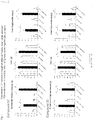
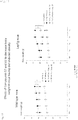
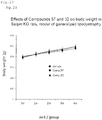
- the body weight of the transgenic mice was lower than that of the wild type mice before they were fed with the high fat diet ( Fig. 1 , left).
- the weight gain caused by the high fat diet was more remarkable in the transgenic mice than in the wild type mice.
- the body weight of the transgenic mice was as high as that of the wild type mice.
- the body weight of the wild type mice and the transgenic mice administered with Compound 57 or 32 did not increase under the high fat diet condition.
- the food intake of the wild type mice and the transgenic mice administered with Compound 57 or 32 did not increase under the high fat diet condition ( Fig. 1 , right).
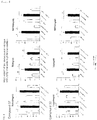
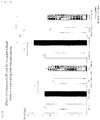
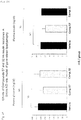
- the weight of the adipose tissues increased under the high fat diet condition in the wild type mice and the transgenic mice, but did not increase in the mice administered with Compound 57 or 32 in the both groups ( Fig. 2 , left).
- the liver weight and liver triglyceride levels were analyzed as indicators of steatosis ( Fig. 2 , middle and right).
- the liver weight and the liver triglyceride levels increased under the high fat diet condition in the wild type mice and the transgenic mice, but did not increase in the mice administered with Compound 57 or 32 in the both groups.
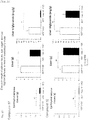
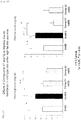
- the random plasma glucose levels and the plasma insulin levels increased under the high fat diet condition in the wild type mice and the transgenic mice, but did not increase in the mice administered with Compound 57 or 32 in the both groups ( Fig. 3 ) .
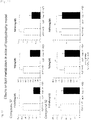
- lipid metabolism the plasma levels of total cholesterol, triglyceride, and nonesterified fatty acid were analyzed ( Fig. 4 ). They increased under the high fat diet condition in the wild type mice and the transgenic mice, but did not increase in the mice administered with Compound 57 or 32 in the both groups.
- High fat diet is generally known to induce leptin resistance. It has been reported that leptin resistance is strongly induced in LepTg mice fed with high fat diet. In this study the high fat diet caused the remarkable weight gain in the transgenic mice overexpressing leptin up to the same level as that of the wild type mice. The result suggests that a condition wherein leptin is ineffective in spite of its overexpression, leptin resistance, was induced.
- the high fat diet increased the body weight, the food intake, the weight of the adipose tissues, the liver weight, the liver triglyceride levels, and the plasma levels of glucose and insulin in the wild type mice and the transgenic mice, the increases were suppressed by the administration of Compound 57 or 32. In the treated mice these parameters were as low as those of the mice fed with the standard diet, in which no leptin resistance developed. The results mean that the compounds prevent development of leptin resistance.
- Ob/ob mice cannot produce leptin due to a mutation in the leptin gene ( Zhang et al. Nature 372: 425-432, 1994 ).
- Eight-week old male ob/ob mice purchased from CHARLES RIVER LABORATORIES JAPAN, INC., were divided into two treatment groups: "Vehicle (V)" and "Compound 57".
- the mice were kept for four weeks with ad libitum feeding of standard diet (SD), and the body weight and the food intake of the mice were measured.
- SD standard diet
- the vehicle and Compound 57 were administered to the mice by intraperitoneal injection once a day.
- the dosage of Compound 57 was 50 mg/kg/day.
- the administration of Compound 57 decreased the body weight in the ob/ob mice, but Compound 32 did not ( Fig. 5 , left).
- the food intake did not change in the either groups administered with Compound 57 or 32 ( Fig. 5 , right).
- the weight of the adipose tissues decreased in the group administered with Compound 57, but did not change in the group administered with Compound 32 ( Fig. 6 , left).
- the liver weight and the liver triglyceride levels, indicators of steatosis, decreased in the group administered with Compound 57, but did not change in the group administered with Compound 32 ( Fig. 6 , middle and right).
- glucose metabolism the random plasma glucose levels and the plasma insulin levels did not change in the both groups ( Fig. 7 ).
- Test Example 2 the effects of Compounds 57 and 32 in the absence of leptin were tested.
- Compound 57 did not change the food intake and the plasma levels of glucose, insulin, and triglyceride, but decreased the body weight, the weight of the adipose tissues, the liver weight, the liver triglyceride levels, and the plasma levels of total cholesterol, and nonesterified fatty acid.
- Compound 32 did not change these parameters.
- the results suggest that in Test Example 1 Compounds 57 and 32 suppressed the increase of the parameters such as the body weight through a leptin-dependent effect, for example the effect to suppress food intake.
- the results also suggest the possibility that Compound 57 has a leptin-independent effect to improve lipid metabolism, for example an effect to decrease lipid in blood or tissues, in addition to the effect to improve leptin resistance.
- A-ZIP/F-1 mice which are used as a model of generalized lipodystrophy, have substantially no white adipocyte and thus cannot produce leptin ( Moitra et al. Genes Dev 12: 3168-3181, 1998 ).
- Eight-week old male A-ZIP/F-1 mice gifted from Dr. Reitman of National Institutes of Health, were divided into two treatment groups: "Vehicle (V)" and "Compound 57”. The mice were kept for four weeks with ad libitum feeding of standard diet (SD), and the body weight and the food intake of the mice were measured.
- SD standard diet
- the vehicle and Compound 57 were administered to the mice by intraperitoneal injection once a day. The dosage of Compound 57 was 50 mg/kg/day.
- the administration of Compound 57 slightly decreased the body weight in the A-ZIP/F-1 mice, but Compound 32 did not ( Fig. 9 , left).
- the food intake did not change in the either groups administered with Compound 57 or 32 ( Fig. 9 , right).
- the weight of the adipose tissues cannot be estimated because the mice are a model of generalized lipodystrophy ( Fig. 10 , left).
- the liver weight and the liver triglyceride levels, the indicators of steatosis decreased in the group administered with Compound 57, but did not change in the group administered with Compound 32 ( Fig. 10 , middle and right).
- glucose metabolism the random plasma glucose levels and the plasma insulin levels did not change in the both groups ( Fig. 11 ).
- Compound 57 decreased the levels of total cholesterol, triglyceride, and nonesterified fatty acid, but Compound 32 did not change these parameters ( Fig. 12 ).
- Test Example 3 As in Test Example 2, the effects of Compounds 57 and 32 in the absence of leptin were tested. Compound 57 did not change the food intake and the plasma levels of glucose and insulin, but decreased the body weight, the liver weight, the liver triglyceride levels, and the plasma levels of total cholesterol, triglyceride and nonesterified fatty acid. Compound 32 did not cause the improvement of leptin resistance, which was observed in Test Example 1.
- Test Example 1 Compounds 57 and 32 suppressed the increase of the parameters such as the body weight through a leptin-dependent effect, for example the effect to suppress food intake.
- the results also suggest the possibility that Compound 57 has a leptin-independent effect to improve lipid metabolism, for example an effect to decrease lipid in blood or tissues, in addition to the effect to improve leptin resistance.
- the mice fed with the high fat diet for the four weeks were divided into three groups: “vehicle (V)", “Compound 57”, and “Compound 32", and fed with the high fat diet for further four weeks, and then the body weight and the food intake of the mice were measured.
- the vehicle, Compound 57, and Compound 32 were administered to the mice by intraperitoneal injection once a day.
- the each dosage of Compounds 57 and 32 was 50 mg/kg/day.
- Test Example 4 the effects of Compounds 57 and 32 in the mice having obesity were tested. According to the results of Test Example 1, the mice are thought to have leptin resistance. In this study Compound 57 decreased the body weight, the food intake, the weight of the adipose tissues, the liver weight, and the plasma levels of glucose and insulin, and Compound 32 decreased the body weight, the food intake, the weight of the adipose tissues, and the plasma levels of glucose and insulin. The results indicate that the compounds not only prevent the development of leptin resistance, but improve leptin resistance that has developed already.
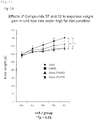
- the body weight increased more remarkably in the wild type rats fed with the high fat diet than in those fed with the standard diet ( Fig. 19 ).
- the weight gain caused by the high fat diet was not observed in the wild type rats administered with Compound 57 or 32.
- the random plasma glucose levels and the plasma insulin levels increased in the wild type rats fed with the high fat diet, but did not increase when administered with Compound 57 or 32 ( Fig. 20 ).
- the high fat diet increased the body weight and the plasma levels of glucose and insulin in the wild type rats, as seen in the wild type mice.
- the results suggest that leptin resistance was induced in the rats as in the mice.
- Compound 57 or 32 suppressed the increases also in the rats to the levels as low as those of the rats fed with the standard diet, in which no leptin resistance developed.
- the results mean that the compounds prevent development of leptin resistance also in rats.
- Lep mkyo /Lep mkyo rats cannot produce leptin due to a mutation in the leptin gene ( Aizawa-Abe et al. Physiol Genomics 45: 786-793, 3013, prepared in Institute of Laboratory Animals, graduate School of Medicine, Kyoto University ) .
- Eight-week old male Lep mkyo /Lep mkyo rats were divided into three treatment groups: "Vehicle (V)", “Compound 57”, and "Compound 32".
- the rats were kept for four weeks with ad libitum feeding of standard diet, and the body weight of the rats were measured.
- Test Example 6 the effects of Compounds 57 and 32 in the absence of leptin were tested. Compounds 57 and 32 did not change the body weight and the plasma levels of glucose and insulin. The results suggest that in Test Example 5 Compounds 57 and 32 suppressed the increase of the parameters such as the body weight in a leptin-dependent manner.
- Seipin KO rats have a mutation in the Seipin gene, the causative gene of human generalized lipodystrophy, and are used as a model of generalized lipodystrophy.
- the rats have substantially no white adipocyte and thus cannot produce leptin.
- the rats were prepared in Department of Endocrinology and Metabolism, Kyoto University .
- Eight-week old male Seipin KO rats were divided into three treatment groups: "Vehicle (V)", “Compound 57”, and "Compound 32".
- the rats were kept for four weeks with ad libitum feeding of standard diet, and the body weight of the rats were measured.
- the vehicle, Compound 57, and Compound 32 were administered to the rats by intraperitoneal injection once a day.
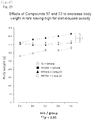
- the body weight did not change in the Seipin KO rats administered with Compound 57 or 32 ( Fig. 23 ).
- the random plasma glucose levels and the plasma insulin did not change in the rats administered with Compound 57 or 32 ( Fig. 24 ).
- Test Example 7 like in Test Example 6, the effects of Compounds 57 and 32 in the absence of leptin were tested. Compounds 57 and 32 caused no change in the body weight and the plasma levels of glucose and insulin. The results suggest that in Test Example 5 Compounds 57 and 32 suppressed the increase of the parameters such as the body weight in a leptin-dependent manner.
- the mice fed with the high fat diet for the four weeks were divided into three groups: “vehicle”, “Compound 57”, and “Compound 32", and fed with the high fat diet for further four weeks, and then the body weight of the rats was measured.
- the vehicle, Compound 57, and Compound 32 were administered to the rats by intraperitoneal injection once a day.
- Test Example 8 the effects of Compounds 57 and 32 in the rats having obesity were tested. According to the results of Test Example 5, the rats, as well as the mice in the preceding examples, are thought to have leptin resistance. In this study Compounds 57 and 32 decreased the body weight, the weight of the adipose tissues, and the plasma levels of glucose, insulin, total cholesterol, triglyceride, and nonesterified fatty acid. The results indicate that the compounds not only prevent development of leptin resistance, but improve leptin resistance that has developed already in rats as well as in mice.
Landscapes
- Health & Medical Sciences (AREA)
- Chemical & Material Sciences (AREA)
- Organic Chemistry (AREA)
- Medicinal Chemistry (AREA)
- Veterinary Medicine (AREA)
- Public Health (AREA)
- General Health & Medical Sciences (AREA)
- Animal Behavior & Ethology (AREA)
- Life Sciences & Earth Sciences (AREA)
- Pharmacology & Pharmacy (AREA)
- Nuclear Medicine, Radiotherapy & Molecular Imaging (AREA)
- Diabetes (AREA)
- Chemical Kinetics & Catalysis (AREA)
- General Chemical & Material Sciences (AREA)
- Engineering & Computer Science (AREA)
- Bioinformatics & Cheminformatics (AREA)
- Epidemiology (AREA)
- Hematology (AREA)
- Obesity (AREA)
- Endocrinology (AREA)
- Emergency Medicine (AREA)
- Child & Adolescent Psychology (AREA)
- Gastroenterology & Hepatology (AREA)
- Pharmaceuticals Containing Other Organic And Inorganic Compounds (AREA)
- Pyridine Compounds (AREA)
- Plural Heterocyclic Compounds (AREA)
- Medicines That Contain Protein Lipid Enzymes And Other Medicines (AREA)
Description
- The present disclosure provides a compound for use in improving leptin resistance and a pharmaceutical composition comprising the compound. The improvement of leptin resistance leads to treatment and/or prevention of a disorder associated with leptin resistance, including, particularly, metabolic disorder, obesity, hyperphagia, steatosis, diabetes, and dyslipidemia. The present invention relates to a compound of formula (I) as defined in the claims for use in the treatment and/or prevention of disorders associated with leptin resistance as defined in the claims.
- Adipose tissues secrete a variety of signaling molecules that regulate systemic glucose and lipid metabolism. Leptin, which was discovered in 1994, is a primary adipose hormone that conveys an adiposity signal to the brain. The brain, particularly the hypothalamus, integrates leptin and various other metabolic signals to regulate energy homeostasis and body weight by controlling both behavior and metabolic responses. Leptin decreases body weight both by suppressing appetite and by increasing energy expenditure.
- Obesity represents a risk factor for many diseases such as colon cancer, hyperlipidemia, hypertension, arteriosclerosis, and diabetes. No method for treating or preventing obesity with a medicine has been established. On the basis of the recent findings about leptin, treatment of obesity by administering leptin was attempted but ended in failure. This may be caused by "leptin resistance", which means decreased response to leptin, developed in patients of obesity. Leptin resistance likely results from the impairment in leptin transport to the brain, leptin signaling, and/or the neurocircuitry in the hypothalamus that regulate energy homeostasis, but the mechanism causing leptin resistance has not been completely revealed.
-
Patent Document 1 describes 4-amino-naphthalene-1-sulfonic acid derivatives and specifically compounds of formula (I). The compounds are said to regulate ATPase activity of VCP (valosin-containing protein) and are used in the treatment of VCP-mediated diseases such as IBMPFD, neurodegenerative diseases, muscles diseases and dyslipidemia, among others. -
Patent Document 2 describes β-aryl-α-oxysubstituted alkylcarboxylic acids of general formula (I). The compounds of general formula (I) are said to be useful in the treatment and/or prophylaxis of insulin resistance (type II diabetes), leptin resistance, impaired glucose tolerance, dyslipidemia and disorders related to syndrome X, among others. -
- Non-Patent Literature 1: A. Christine Koenner and Jens C. Bruening, Cell Metabolism 16, August 8, 2012, 144-152
- Non-Patent Literature 2: David L. Morris and Liangyou Rui, Am. J. Physiol Endocrinol Metab 297: E1247-E1259, 2009
- Patent Document 1:
EP 2 599 771 A1 - Patent Document 2:
WO 00/50414 A1 - The invention is defined by the claims. Any subject-matter falling outside the scope of the claims is provided for information purposes only. Any references in the description to methods of treatment refer to the compounds, pharmaceutical compositions and medicaments of the present invention for use in a method of treatment of the human or animal body by therapy.
- The inventors presumed that the improvement of leptin resistance would be effective for treating or preventing a disorder associated with leptin resistance such as obesity. An object of the present disclosure is to provide a pharmaceutical for improving leptin resistance. Another object of the present disclosure is to provide a pharmaceutical for treating and/or preventing a disorder associated with leptin resistance.
- In an aspect, the present disclosure provides a compound of formula (I):

- R1 is aryl or heteroaryl, wherein the aryl or heteroaryl may be substituted with 1 to 3 substituents selected from the group consisting of halo, hydroxy, alkyl, halo-substituted alkyl, aryl, halo- or alkyl-substituted aryl, alkoxy, hydroxy- or carboxy-substituted alkoxy, alkylthio, aryloxy, CHO, C(O)-alkyl, C(O)-aryl, C(O)-alkylene-carboxyl, C(O)-alkylene-carboxy ester, cyano, oxo, heterocycloalkyl, and heteroaryl-substituted alkoxy, and
- R2 is hydrogen, halo, alkyl, phenyl, or pyridyl,
- or an oxide, ester, prodrug, pharmaceutically acceptable salt, or solvate thereof (hereinafter referred to as the compound of the present disclosure) for use in improving leptin resistance and/or treating and/or preventing a disorder associated with leptin resistance.
- In a further aspect, the present disclosure provides a pharmaceutical composition for use in improving leptin resistance and/or treating and/or preventing a disorder associated with leptin resistance comprising a compound of formula (I) or an oxide, ester, prodrug, pharmaceutically acceptable salt, or solvate thereof.
- In a further aspect, a disorder associated with leptin resistance is a metabolic disorder, obesity, hyperphagia, steatosis, diabetes, or dyslipidemia.
- The compounds of the present disclosure enable improvement of leptin resistance. Accordingly, the compounds of the present disclosure enable treatment and/or prevention of a disorder associated with leptin resistance such as a metabolic disorder, obesity, hyperphagia, steatosis, diabetes, or dyslipidemia via a novel mechanism which has not been known before.
-
-
Fig. 1 shows the effects ofCompounds -
Fig. 2 shows the effects ofCompounds -
Fig. 3 shows the effects ofCompounds -
Fig. 4 shows the effects ofCompounds -
Fig. 5 shows the effects ofCompounds -
Fig. 6 shows the effects ofCompounds -
Fig. 7 shows the effects ofCompounds -
Fig. 8 shows the effects ofCompounds -
Fig. 9 shows the effects ofCompounds -
Fig. 10 shows the effects ofCompounds -
Fig. 11 shows the effects ofCompounds -
Fig. 12 shows the effects ofCompounds -
Fig. 13 shows the effects ofCompounds -
Fig. 14 shows the effects ofCompounds -
Fig. 15 shows the effects ofCompounds -
Fig. 16 shows the effects ofCompounds -
Fig. 17 shows the effects ofCompounds -
Fig. 18 shows the effects ofCompounds -
Fig. 19 shows the effects ofCompounds -
Fig. 20 shows the effects ofCompounds -
Fig. 21 shows the effects ofCompounds -
Fig. 22 shows the effects ofCompounds -
Fig. 23 shows the effects ofCompounds -
Fig. 24 shows the effects ofCompounds -
Fig. 25 shows the effects ofCompounds -
Fig. 26 shows the effects ofCompounds -
Fig. 27 shows the effects ofCompounds -
Fig. 28 shows the effects ofCompounds - Unless defined otherwise, the terms used herein have the meaning as commonly understood to those skilled in the art in the fields including organic chemistry, medicine, pharmacology, molecular biology, and microbiology. Definitions of several terms used herein are described below. The definitions herein take precedence over the general understanding.
- "Alkyl" refers to a monovalent saturated aliphatic hydrocarbyl group having from 1 to 10 carbon atoms, preferably 1 to 6 carbon atoms. Examples of the alkyl include linear and branched hydrocarbyl groups such as methyl (CH3-), ethyl (CH3CH2-), n-propyl (CH3CH2CH2-), isopropyl ((CH3)2CH-), n-butyl (CH3CH2CH2CH2-), isobutyl ((CH3)2CHCH2-), sec-butyl ((CH3)(CH3CH2)CH-), t-butyl ((CH3)3C-), n-pentyl (CH3CH2CH2CH2CH2-), and neopentyl ((CH3)3CCH2-).
- The wording "substituted" as a word qualifying a name of a group means that one or more hydrogen atom of the group is, identically or differently, replaced by one or more substituent defined herein.
- "Alkylene" refers to a divalent saturated aliphatic hydrocarbyl group having from 1 to 10 carbon atoms, preferably 1 to 6 carbon atoms. Alkylidene and alkylene groups include branched and straight chain hydrocarbyl groups.
- "Alkoxy" refers to the group -O-alkyl, in which alkyl is as defined herein. Examples of the alkoxy include methoxy, ethoxy, n-propoxy, isopropoxy, n-butoxy, t-butoxy, sec-butoxy, and n-pentoxy.
- "Alkylthio" refers to the group -S-alkyl, in which alkyl is as defined herein. Examples of the alkylthio include methylthio, ethylthio, n-propylthio, isopropylthio, n-butylthio, t-butylthio, sec-butylthio, and n-pentylthio.
- "Aryl" or "Ar" refers to a monovalent aromatic carbocyclic group of from 6 to 14 carbon atoms having a single ring (e.g., phenyl) or multiple condensed rings (e.g., naphthyl, fluorenyl or anthryl). Typical aryl groups include phenyl, naphthyl, and fluorenyl.
- "Aryloxy" refers to the group -O-aryl, in which aryl is as defined herein. Examples of the aryloxy include phenoxy and naphthoxy.
- "Cyano" refers to the group -CN.
- "Oxo" refers to an oxygen atom (=O).
- "Carboxyl" or "carboxy" refers to the group -COOH or a salt thereof.
- "Carboxy ester" refers to the group -C(O)O-alkyl, in which alkyl is as defined herein.
- "Halo" or "halogen" refers to fluoro, chloro, bromo, or iodo.
- "Hydroxy" or "hydroxyl" refers to the group -OH.
- Interchangeably used "heterocycle", "heterocyclyl", and "heterocycloalkyl" refer to a saturated, partially saturated, or unsaturated non-aromatic group having a single ring or multiple condensed rings, including fused bridged and spiro ring systems, and having 1 to 4 hetero atoms. These ring atoms are selected from the group consisting of nitrogen, sulfur, or oxygen, wherein, in fused ring systems, one or more of the rings can be cycloalkyl, aryl, or heteroaryl, provided that the point of attachment is through the non-aromatic ring. In one embodiment, the nitrogen and/or sulfur atom(s) of the heterocyclic group are optionally oxidized to provide for the N-oxide, sulfinyl, or sulfonyl moieties. For example, heterocycloalkyl includes morpholinyl.
- "Heteroaryl" refers to an aromatic group of from 1 to 12 carbon atoms and 1 to 4 heteroatoms selected from the group consisting of oxygen, nitrogen and sulfur within the ring. Such heteroaryl groups can have a single ring (e.g., pyridinyl or furyl) or multiple condensed rings (e.g., indolizinyl, benzothienyl or dibenzothienyl), wherein one or more of the rings of the polycyclic heteroaryl may be cycloalkyl, aryl, or heteroaryl. In one embodiment, the nitrogen and/or the sulfur ring atom(s) of the heteroaryl group are optionally oxidized to provide for the N-oxide (N->O), sulfinyl, or sulfonyl moieties. Heteroaryl includes, for example, furanyl, benzofuranyl, dibenzofuranyl, thiophenyl, benzothiophenyl, dibenzothiophenyl, pyrrolyl, indolyl, carbazole, benzothiazole, oxazole, isoxazole, pyridyl, quinolyl, isoquinolyl, thianthrenyl, phenoxathiinyl, phenothiazyl, or phenoxazyl.
- Unless indicated otherwise, a substituent that is not explicitly defined herein is named by describing the name of the terminal functional group of the substituent first and sequentially describing the adjacent functional group toward the point binding to the rest of the compound. For example, the substituent "arylalkyloxycarbonyl" refers to (aryl)-(alkyl)-O-C(O)-.
- It is understood that the definitions described above are not intended to include impermissible substitution patterns (e.g., methyl substituted with five fluoro groups). Those skilled in the art are familiar with such impermissible substitution patterns.
- "Compound" as used in the present disclosure refers to a compound encompassed by formula (I) disclosed herein and a specific compound represented by formula (I), including the oxides, esters, prodrugs, pharmaceutically acceptable salts, and solvates thereof. The term further includes the stereoisomers and tautomers of the compounds.
- "Solvate" of a compound refers to the compound as defined above that is bound to a stoichiometric or non-stoichiometric amount of a solvent. The solvate includes solvates of an oxide, ester, prodrug, or pharmaceutically acceptable salt of the compound of formula (I). The solvent is volatile, non-toxic, and/or acceptable for administration to a human in a trace amount. For example, the solvate include hydrates and alcoholates, preferably hydrates.
- "Stereoisomer" refers to a compound that differs from a compound having the same structure only in the chirality at one or more stereocenters. The stereoisomer includes enantiomers and diastereomers. The compound of formula (I) as well as the pharmaceutically acceptable salt, ester, oxide, and prodrug thereof may comprise an asymmetrically substituted carbon atom. Such asymmetrically substituted carbon atom may result in the compound existing in enantiomers, diastereomers, and other stereoisomeric forms that may be defined, in terms of absolute stereochemistry, such as in (R)- or (S)- forms. As a result, all such possible isomers, individual stereoisomers in their optically pure forms, mixtures thereof, racemic mixtures (or "racemates"), mixtures of diastereomers, as well as single diastereomers of the compounds are contemplated. The terms "S" and "R" configurations, as used herein, are as defined by the IUPAC 1974 RECOMMENDATIONS FOR SECTION E, FUNDAMENTAL STEREOCHEMISTRY, Pure Appl. Chem. 45:13-30 (1976).
- "Tautomer" refers to alternate forms of a compound that differ only in the position of a proton, such as enolketo and imine-enamine tautomers, or the tautomeric forms of heteroaryl groups containing a ring atom attached to both a ring -NH- moiety and a ring =N- moiety, such as pyrazoles, imidazoles, benzimidazoles, triazoles, and tetrazoles.
- "Pharmaceutically acceptable salt" refers to a pharmaceutically acceptable salt derived from any of a variety of organic and inorganic counter ions well known in the art and includes, for example, salts of sodium, potassium, calcium, magnesium, ammonium, and tetraalkylammonium, and salts of organic or inorganic acids, such as hydrochloride, hydrobromide, tartrate, mesylate, acetate, maleate, and oxalate. Pharmaceutically acceptable salts include salts of the oxides, esters, or prodrugs of the compounds of formula (I).
- As used herein, the term "pharmaceutically acceptable salt" includes nontoxic acid or alkaline earth metal salts of the compounds of formula (I). These salts can be prepared in situ during the final isolation and purification of the compounds of formula (I), or by separately reacting the base or acid functions in the compounds with a suitable organic or inorganic acid or base, respectively. Representative salts include acetate, adipate, alginate, citrate, aspartate, benzoate, benzenesulfonate, bisulfate, butyrate, camphorate, camphorsulfonate, digluconate, cyclopentanepropionate, dodecylsulfate, ethanesulfonate, glucoheptanoate, glycerophosphate, hemisulfate, heptanoate, hexanoate, fumarate, hydrochloride, hydrobromide, hydroiodide, 2-hydroxyethanesulfonate, lactate, maleate, methanesulfonate, nicotinate, 2-naphthalenesulfonate, oxalate, pamoate, pectinate, persulfate, 3-phenylproionate, picrate, pivalate, propionate, succinate, sulfate, tartrate, thiocyanate, p-toluenesulfonate, and undecanoate. The basic nitrogen-containing groups may be quaternized with reactive agents including alkyl halides, such as methyl, ethyl, propyl, and butyl chlorides, bromides, and iodides; dialkyl sulfates, such as dimethyl, diethyl, dibutyl, and diamyl sulfates; long chain halides, such as decyl, lauryl, myristyl, and stearyl chlorides, bromides, and iodides; aralkyl halides such as benzyl and phenethyl chlorides. Water or oil-soluble or dispersible products are thereby obtained.
- Examples of the acid which may be employed to form pharmaceutically acceptable acid addition salts include inorganic acids such as hydrochloric acid, sulfuric acid and, phosphoric acid, and organic acids such as oxalic acid, maleic acid, methanesulfonic acid, succinic acid, and citric acid. Base addition salts can be prepared in situ during the final isolation and purification of the compounds of formula (I), or through a further reaction of the carboxylic acid group of the compound with a suitable base such as hydroxide, carbonate, or bicarbonate of a pharmaceutically acceptable metal cation, or ammonia, or an organic primary, secondary or tertiary amine. Pharmaceutically acceptable salts include cations of alkali and alkaline earth metals, such as sodium, lithium, potassium, calcium, magnesium, and aluminum salts, as well as nontoxic ammonium, quaternary ammonium, and amine cations, including ammonium, tetramethylammonium, tetraethylammonium, methylamine, dimethylamine, trimethylamine, triethylamine, and ethylamine. Other representative organic amines useful for the formation of the base addition salts include diethylamine, ethylenediamine, ethanolamine, diethanolamine, and piperazine.
- The term "oxide" as used herein refers to an oxide wherein a nitrogen and/or sulfur atom of a heteroaryl group is oxidized to form N-oxide, sulfinyl, or sulfonyl.
- The term "ester" as used herein refers to an ester that hydrolyzes in vivo, including those that break down readily in a human body to leave the parent compound or a salt thereof. Suitable ester groups include, for example, those derived from pharmaceutically acceptable aliphatic carboxylic acids, particularly alkanoic, alkenoic, cycloalkanoic, and alkanedioic acids, in which each alkyl or alkenyl moiety advantageously has not more than six carbon atoms. Examples of particular esters include formates, acetates, propionates, butyrates, acrylates, and ethylsuccinates.
- The term "prodrug" as used in the present disclosure refers to a prodrug of the compound which is, within the scope of sound medical judgment, suitable for use in contact with the tissues of humans and animals without an undue adverse effect such as toxicity, irritation, and allergic response, commensurate with a reasonable benefit/risk ratio, and effective for their intended use, as well as the zwitterionic forms, where possible, of the compounds of the present disclosure. The prodrug is a compound that is rapidly transformed in vivo to yield the parent compound of the formula above, for example by hydrolysis in blood. A general discussion is provided in T. Higuchi and V. Stella, Pro-drugs as Novel Delivery Systems, Vol. 14 of the A.C.S. Symposium Series, and in Edward B. Roche, ed., Bioreversible Carriers in Drug Design, American Pharmaceutical Association and Pergamon Press, 1987.
- It will be apparent to those skilled in the art that the compounds of formula (I) or the pharmaceutically acceptable salts, esters, oxides, and prodrugs of any of them, may be processed in vivo through metabolism in a human or animal body or cells to produce metabolites. The term "metabolite" as used herein refers to any derivatives of a parent compound produced in a subject after the administration of the parent compound. The derivatives may be produced from the parent compound through various biochemical transformations in the subject such as, for example, oxidation, reduction, hydrolysis, or conjugation, and include, for example, oxides and demethylated derivatives. The metabolites of the compounds of the present disclosure may be identified using routine techniques known in the art. See, e.g., Bertolini, G. et al., J. Med. Chem. 40:2011-2016 (1997); Shan, D. et al., J. Pharm. Sci. 86(7):765-767; Bagshawe K., Drug Dev. Res. 34:220-230 (1995); Bodor, N., Advances in Drug Res. 13:224-331 (1984); Bundgaard, H., Design of Prodrugs (Elsevier Press 1985); and Larsen, I. K., Design and Application of Prodrugs, Drug Design and Development (Krogsgaard-Larsen et al., eds., Harwood Academic Publishers, 1991). It should be understood that individual chemical compounds that are metabolites of the compounds of formula (I) or the pharmaceutically acceptable salts, esters, oxides, and prodrugs of any of them, are included within the disclosure provided herein.
- In an embodiment, the compound of the present disclosure is a compound of formula (I), wherein R1 is aryl or heteroaryl, wherein the aryl or heteroaryl may be substituted with 1 to 3 substituents selected from the group consisting of halo, hydroxy, alkyl, halo-substituted alkyl, aryl, halo- or alkyl-substituted aryl, alkoxy, hydroxy- or carboxy-substituted alkoxy, aryloxy, CHO, C(O)-alkyl, C(O)-aryl, C(O)-alkylene-carboxyl, C(O)-alkylene-carboxy ester, cyano, heterocycloalkyl, and heteroaryl-substituted alkoxy, and
R2 is hydrogen, alkyl, phenyl or pyridyl,
or an oxide, ester, prodrug, pharmaceutically acceptable salt, or solvate thereof. - In an embodiment, the compound of the present disclosure is a compound of formula (I), wherein
R1 is phenyl which may be substituted with 1 to 3 substituents independently selected from the group consisting of halo, hydroxy, alkyl, halo-substituted alkyl, aryl, halo- or alkyl-substituted aryl, alkoxy, hydroxy- or carboxy-substituted alkoxy, alkylthio, aryloxy, CHO, C(O)-alkyl, C(O)-aryl, C(O)-alkylene-carboxyl, C(O)-alkylene-carboxy ester, cyano, heterocycloalkyl, and heteroaryl-substituted alkoxy,
or an oxide, ester, prodrug, pharmaceutically acceptable salt, or solvate thereof. - In an embodiment, the compound of the present disclosure is a compound of formula (I), wherein R1 is phenyl which may be substituted with 1 to 3 substituents independently selected from the group consisting of halo, hydroxy, alkyl, halo-substituted alkyl, aryl, halo- or alkyl-substituted aryl, alkoxy, hydroxy- or carboxy-substituted alkoxy, aryloxy, CHO, C(O)-alkyl, C(O)-aryl, C(O)-alkylene-carboxyl, C(O)-alkylene-carboxy ester, cyano, heterocycloalkyl, and heteroaryl-substituted alkoxy, or an oxide, ester, prodrug, pharmaceutically acceptable salt, or solvate thereof.
- In an embodiment, the compound of the present disclosure is a compound of formula (I), wherein
R1 is phenyl which may be substituted with 1 to 3 substituents independently selected from the group consisting of halo, hydroxy, alkyl, halo-substituted alkyl, alkoxy, alkylthio, phenyl, halo- or alkyl-substituted phenyl, pyridyl, and morpholinyl,
or an oxide, ester, prodrug, pharmaceutically acceptable salt, or solvate thereof. - In an embodiment, the compound of the present disclosure is a compound of formula (I), wherein
R1 is phenyl which may be substituted with 1 to 3 substituents independently selected from the group consisting of halo, hydroxy, alkyl, halo-substituted alkyl, alkoxy, phenyl, halo- or alkyl-substituted phenyl, pyridyl, and morpholinyl,
or an oxide, ester, prodrug, pharmaceutically acceptable salt, or solvate thereof. - In an embodiment, the compound of the present disclosure is a compound of formula (I), wherein
R1 is phenyl which may be substituted with 1 to 3 substituents independently selected from the group consisting of halo, alkyl, halo-substituted alkyl, alkoxy, and alkylthio,
or an oxide, ester, prodrug, pharmaceutically acceptable salt, or solvate thereof. - In an embodiment, the compound of the present disclosure is a compound of formula (I), wherein
R1 is phenyl which may be substituted with 1 to 3 substituents independently selected from the group consisting of halo and alkyl,
or an oxide, ester, prodrug, pharmaceutically acceptable salt, or solvate thereof. - In an embodiment, the compound of the present disclosure is a compound of formula (I), wherein
R1 is phenyl which is substituted with halo and alkyl,
or an oxide, ester, prodrug, pharmaceutically acceptable salt, or solvate thereof. - In an embodiment, the compound of the present disclosure is a compound of formula (I), wherein
R1 is phenyl which is substituted with fluoro and methyl, or an oxide, ester, prodrug, pharmaceutically acceptable salt, or solvate thereof. - In an embodiment, the compound of the present disclosure is a compound of formula (I), wherein
R1 is naphthyl, fluorenyl, furanyl, benzofuranyl, dibenzofuranyl, thiophenyl, benzothiophenyl, dibenzothiophenyl, pyrrolyl, indolyl, carbazole, benzothiazole, oxazole, isoxazole, pyridyl, quinolyl, isoquinolyl, thianthrenyl, phenoxathiinyl, phenothiazyl, or phenoxazyl which may be substituted with 1 to 3 substituents independently selected from the group consisting of halo, oxo, and alkyl,
or an oxide, ester, prodrug, pharmaceutically acceptable salt, or solvate thereof. - In an embodiment, the compound of the present disclosure is a compound of formula (I), wherein
R1 is naphthyl, furanyl, benzofuranyl, dibenzofuranyl, thiophenyl, benzothiophenyl, dibenzothiophenyl, pyrrolyl, indolyl, carbazole, oxazole, isoxazole, pyridyl, quinolyl, isoquinolyl, thianthrenyl, phenoxathiinyl, phenothiazyl, or phenoxazyl which may be substituted with 1 to 3 substituents independently selected from the group consisting of halo and alkyl,
or an oxide, ester, prodrug, pharmaceutically acceptable salt, or solvate thereof. - In an embodiment, the compound of the present disclosure is a compound of formula (I), wherein
R1 is naphthyl, benzofuranyl, dibenzofuranyl, benzothiophenyl, dibenzothiophenyl, indolyl, carbazole, benzothiazole, quinolyl, isoquinolyl, thianthrenyl, phenoxathiinyl, phenothiazyl, or phenoxazyl which may be substituted with 1 to 3 substituents independently selected from the group consisting of halo and alkyl,
or an oxide, ester, prodrug, pharmaceutically acceptable salt, or solvate thereof. - In an embodiment, the compound of the present disclosure is a compound of formula (I), wherein
R1 is naphthyl, benzofuranyl, dibenzofuranyl, benzothiophenyl, dibenzothiophenyl, indolyl, carbazole, quinolyl, isoquinolyl, thianthrenyl, phenoxathiinyl, phenothiazyl, or phenoxazyl which may be substituted with 1 to 3 substituents independently selected from the group consisting of halo and alkyl,
or an oxide, ester, prodrug, pharmaceutically acceptable salt, or solvate thereof. - In an embodiment, the compound of the present disclosure is a compound of formula (I), wherein
R1 is benzofuranyl, dibenzofuranyl, benzothiophenyl, dibenzothiophenyl, or thianthrenyl which may be substituted with 1 to 3 substituents independently selected from the group consisting of halo and alkyl,
or an oxide, ester, prodrug, pharmaceutically acceptable salt, or solvate thereof. - In an embodiment, the compound of the present disclosure is a compound of formula (I), wherein
R1 is dibenzofuranyl, benzothiophenyl, dibenzothiophenyl, carbazole, benzothiazole, or thianthrenyl which may be substituted with 1 to 3 substituents independently selected from the group consisting of halo and alkyl,
or an oxide, ester, prodrug, pharmaceutically acceptable salt, or solvate thereof. - In an embodiment, the compound of the present disclosure is a compound of formula (I), wherein
R1 is dibenzofuranyl, benzothiophenyl, dibenzothiophenyl, or thianthrenyl which may be substituted with 1 to 3 substituents independently selected from the group consisting of halo and alkyl,
or an oxide, ester, prodrug, pharmaceutically acceptable salt, or solvate thereof. - In an embodiment, the compound of the present disclosure is a compound of formula (I), wherein
R1 is benzothiophenyl or dibenzothiophenyl which may be substituted with 1 to 3 substituents independently selected from the group consisting of halo and alkyl,
or an oxide, ester, prodrug, pharmaceutically acceptable salt, or solvate thereof. - In an embodiment, the compound of the present disclosure is a compound of formula (I), wherein
R1 is dibenzothiophenyl which may be substituted with 1 to 3 substituents independently selected from the group consisting of halo and alkyl,
or an oxide, ester, prodrug, pharmaceutically acceptable salt, or solvate thereof. - In an embodiment, the compound of the present disclosure is a compound of formula (I), wherein
R1 is unsubstituted benzothiophenyl or dibenzothiophenyl, or an oxide, ester, prodrug, pharmaceutically acceptable salt, or solvate thereof. - In an embodiment, the compound of the present disclosure is a compound of formula (I), wherein
R1 is unsubstituted dibenzothiophenyl,
or an oxide, ester, prodrug, pharmaceutically acceptable salt, or solvate thereof. - In an embodiment, the compound of the present disclosure is a compound of formula (I), wherein
R2 is hydrogen, halo or alkyl,
or an oxide, ester, prodrug, pharmaceutically acceptable salt, or solvate thereof. - In an embodiment, the compound of the present disclosure is a compound of formula (I), wherein
R2 is hydrogen or alkyl,
or an oxide, ester, prodrug, pharmaceutically acceptable salt, or solvate thereof. - In an embodiment, the compound of the present disclosure is a compound of formula (I), wherein
R2 is hydrogen,
or an oxide, ester, prodrug, pharmaceutically acceptable salt, or solvate thereof. - In an embodiment, the compound of the present disclosure is a compound selected from
Compounds 1 to 76 listed in Table 1 below, or a free acid form, oxide, ester, prodrug, pharmaceutically acceptable salt, or solvate thereof. In an embodiment, the compound of the present invention is a compound as defined inclaim 12.Table 1 No. Structure Compound Name 1 
4-amino-3-(6-phenylpyridine-3-ylazo)naphthalene-1-sulfonic acid sodium salt 2 
4-amino-3-(6-p-tolylpyridine-3-ylazo)naphthalene-1-sulfonic acid sodium salt 3 
4-amino-3-(6-m-tolylpyridine-3-ylazo)naphthalene-1-sulfonic acid sodium salt 4 
4-amino-3-(6-o-tolylpyridine-3-ylazo)naphthalene-1-sulfonic acid sodium salt 5 
4-amino-3-(6-biphenyl-2-ylpyridine-3-ylazo)naphthalene-1-sulfonic acid sodium salt 6 
3-[6-(2-acetylphenyl)pyridine-3-ylazo]-4-aminonaphthalene-1-sulfonic acid sodium salt 7 
3-[6-(3-acetylphenyl)pyridine-3-ylazo]-4-aminonaphthalene-1-sulfonic acid sodium salt 8 
3-[6-(4-acetylphenyl)pyridine-3-ylazo]-4-aminonaphthalenesulfonic acid sodium salt 9 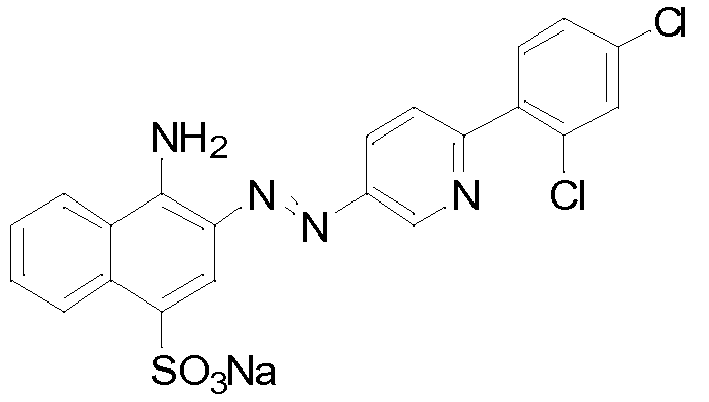
4-amino-3-[6-(2,4-dichlorophenyl)pyridine-3-ylazo]naphthalene-1-sulfonic acid sodium salt 10 
4-amino-3-[6-(2-trifluoromethylphenyl)pyridine-3-ylazo]naphthalene-1-sulfonic acid sodium salt 11 
4-amino-3-[6-(4-trifluoromethylphenyl)pyridine-3-ylazo]naphthalene-1-sulfonic acid sodium salt 12 
4-amino-3-[6-(2-chlorophenyl)pyridine-3-ylazo]naphthalene-1-sulfonic acid sodium salt 13 
4-amino-3-[6-(3-chlorophenyl)pyridine-3-ylazo]naphthalene-1-sulfonic acid sodium salt 14 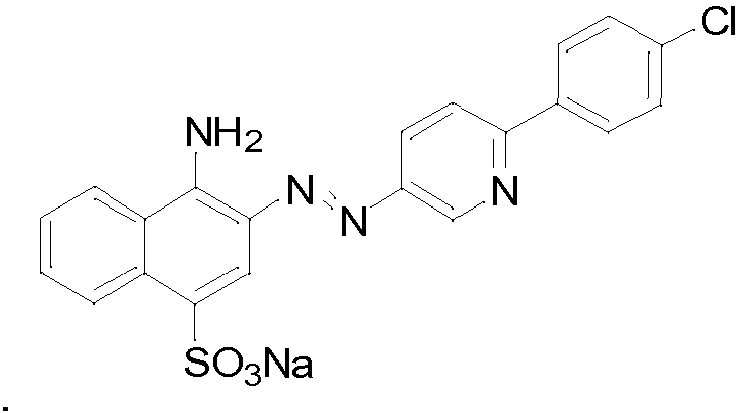
4-amino-3-[6-(4-chlorophenyl)pyridine-3-ylazo]naphthalene-1-sulfonic acid sodium salt 15 
4-amino-3-[6-(2-methoxyphenyl)pyridine-3-ylazo]naphthalene-1-sulfonic acid sodium salt 16 
4-amino-3-[6-(4-methoxyphenyl)pyridine-3-ylazo]naphthalene-1-sulfonic acid sodium salt 17 
4-amino-3-[6-(2-isopropoxyphenyl) pyridine-3-ylazo]naphthalene-1-sulfonic acid sodium salt 18 
4-amino-3-[6-(4-isopropoxyphenyl)pyridine-3-ylazo]naphthalene-1-sulfonic acid sodium salt 19 
4-amino-3-[6-(2-phenoxyphenyl)pyridine-3-ylazo]naphthalene-1-sulfonic acid sodium salt 20 
4-amino-3-[6-(3-methoxyphenyl)pyridine-3-ylazo]naphthalene-1-sulfonic acid sodium salt 21 
4-amino-3-[6-(2,3-dimethylphenyl)pyridine-3-ylazo]naphthalene-1-sulfonic acid sodium salt 22 
4-amino-3-[6-(2,5-dimethylphenyl)pyridine-3-ylazo]naphthalene-1-sulfonic acid sodium salt 23 
4-amino-3-[6-(3,5-dimethylphenyl)pyridine-3-ylazo]naphthalene-1-sulfonic acid sodium salt 24 
4-amino-3-[6-(3-trifluoromethylphenyl)pyri dine-3-ylazo]naphthalene-1-sulfonic acid sodium salt 25 
methyl 4-{4-[5-(1-amino-4-sulfonaphthalene-2-ylazo)pyridine-2-yl]phenyl}-4-oxobutyrate sodium salt 26 
4-amino-3-(6-biphenyl-3-ylpyridine-3-ylazo)naphthalene-1-sulfonic acid sodium salt 27 
4-amino-3-[6-(3-cyanophenyl)pyridine-3-ylazo]naphthalene-1-sulfonic acid sodium salt 28 
4-amino-3-[6-(4-cyanophenyl)pyridine-3-ylazo]naphthalene-1-sulfonic acid sodium salt 29 
4-amino-3-[6-(3,5-bistrifluoromethylphenyl)pyridine-3-ylazo]naphthalenesulfonic acid sodium salt 30 
4-amino-3-[6-(4-benzoylphenyl)pyridine-3-ylazo]naphthalene-1-sulfonic acid sodium salt 31 
4-amino-3-[6-(2-propoxyphenyl)pyridine-3-ylazo]naphthalene-1-sulfonic acid sodium salt 32 
4-amino-3-[6-(4-fluoro-2-methylphenyl)pyridine-3-ylazo]naphthalene-1-sulfonic acid sodium salt 33 
4-amino-3-[6-(5-fluoro-2-propoxyphenyl)pyridine-3-ylazo]naphthalene-1-sulfonic acid sodium salt 34 
4-amino-3-[6-(2-fluoro-6-propoxyphenyl)pyridine-3-ylazo]naphthalene-1-sulfonic acid sodium salt 35 
4-amino-3-[6-(4-fluoro-2-propoxyphenyl)pyridine-3-ylazo]naphthalene-1-sulfonic acid sodium salt 36 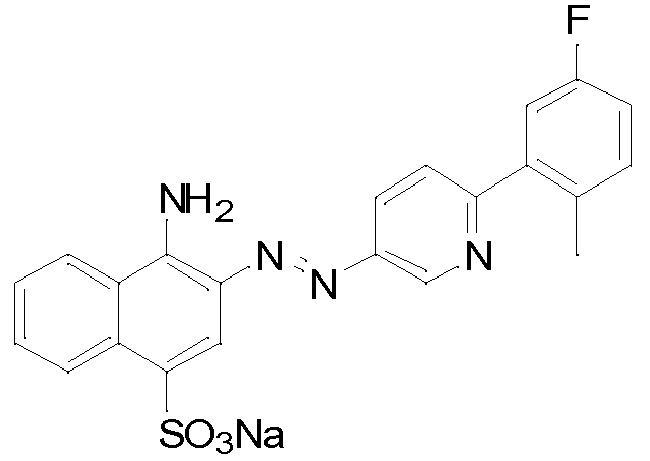
4-amino-3-[6-(5-fluoro-2-methylphenyl)pyridine-3-ylazo]naphthalene-1-sulfonic acid sodium salt 37 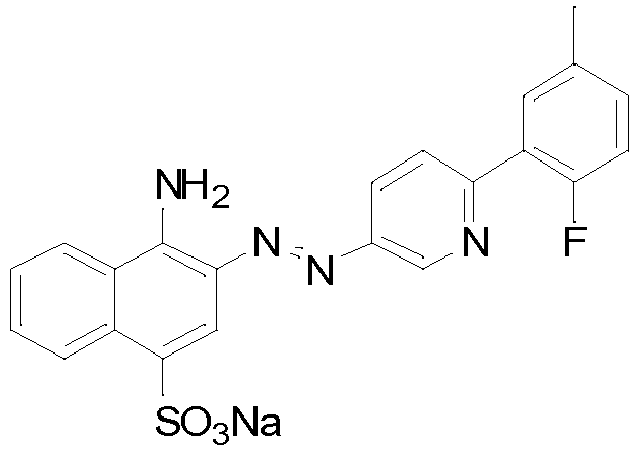
4-amino-3-[6-(2-fluoro-5-methylphenyl)pyridine-3-ylazo]naphthalene-1-sulfonic acid sodium salt 38 
4-amino-3-[6-(2-butoxyphenyl)pyridine-3-ylazo]naphthalene-1-sulfonic acid sodium salt 39 
4-amino-3-[6-(2-hexyloxyphenyl)pyridine-3-ylazo]naphthalene-1-sulfonic acid sodium salt 40 
4-amino-3-[6-(4-butylphenyl)pyridine-3-ylazo]naphthalene-1-sulfonic acid sodium salt 41 
4-amino-3-[6-(2-hydroxyphenyl)pyridine-3-ylazo]naphthalene-1-sulfonic acid sodium salt 42 
4-amino-3-{6-[2-(6-hydroxyhexyloxy)phenyl]pyr idine-3-ylazo}naphthalene-1-sulfonic acid sodium salt 43 
4-{2-[5-(1-amino-4-sulfonaphthalene-2-ylazo)pyridine-2-yl]phenoxy} butyric acid disodium salt 44 
4-amino-3-{6-[2-(3-hydroxypropoxy)phenyl]pyridine-3-ylazo}naphthalene-1-sulfonic acid sodium salt 45 
4-amino-3-[6-(2-isobutoxyphenyl)pyridine-3-ylazo]naphthalene-1-sulfonic acid sodium salt 46 
4-amino-3-[6-(5-chloro-2-hydroxyphenyl)pyridine-3-ylazo]naphthalene-1-sulfonic acid sodium salt 47 
4-amino-3-[6-(4-methylbiphenyl-2-yl)pyridine-3-ylazo]naphthalene-1-sulfonic acid sodium salt 48 
4-amino-3-[6-(4'-chloro-4-methylbiphenyl-2-yl)pyridine-3-ylazo]naphthalene-1-sulfonic acid sodium salt 49 
4-amino-3-[6-(4,3',5'-trimethylbiphenyl-2-yl)pyridine-3-ylazo]naphthalene-1-sulfonic acid sodium salt 50 
4-amino-3-[6-(3'-chloro-4-methylbiphenyl-2-yl)pyridine-3-ylazo]naphthalene-1-sulfonic acid sodium salt 51 
4-amino-3-[6-(2,6-dimethylphenyl)pyridine-3-ylazo]naphthalene-1-sulfonic acid sodium salt 52 
4-amino-3-[6-(3-formyl-2-isopropoxy-5-methylphenyl)pyridine-3-ylazo]naphthalene-1-sulfonic acid sodium salt 53 
4-amino-3-[6-(3-formyl-2-butoxy-5-methylphenyl)pyridine-3-ylazo]naphthalene-1-sulfonic acid sodium salt 54 
4-amino-3-[6-(3-morpholine-4-ylmethylphenyl)pyridine-3-ylazo]naphthalene-1-sulfonic acid sodium salt 55 
4-amino-3-(6-thiophene-2-ylpyridine-3-ylazo)naphthalene-1-sulfonic acid sodium salt 56 
4-amino-3-(6-thiophene-3-ylpyridine-3-ylazo)naphthalene-1-sulfonic acid sodium salt 57 
4-amino-3-(6-dibenzothiophene-4-ylpyridine-3-ylazo)naphthalene-1-sulfonic acid sodium salt 58 
4-amino-3-(6-oxazole-2-ylpyridine-3-ylazo)naphthalene-1-sulfonic acid sodium salt 59 
4-amino-3-(6-naphthalene-1-ylpyridine-3-ylazo)naphthalene-1-sulfonic acid sodium salt 60 
4-amino-3-(6-dibenzofuran-4-ylpyridine-3-ylazo)naphthalene-1-sulfonic acid sodium salt 61 
4-amino-3-(6-benzo[b]thiophene-3-ylpyridine-3-ylazo)naphthalene-1-sulfonic acid sodium salt 62 
4-amino-3-(6-dibenzothiophene-4-ylpyridine-3-ylazo)naphthalene-1-sulfonic acid potassium salt 63 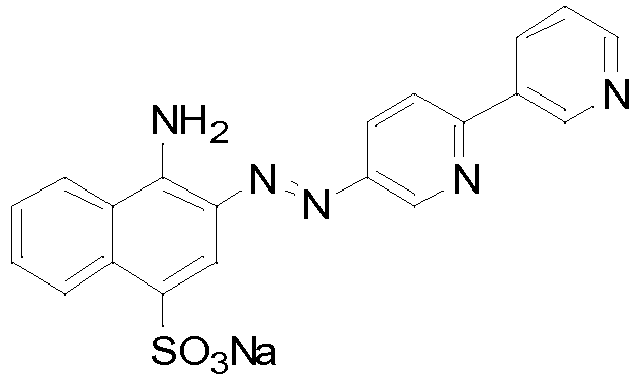
4-amino-3-([2,3']bipyridinyl-5-ylazo)naphthalene-1-sulfonic acid sodium salt 64 
4-amino-3-(4-methyl-[2,3']bipyridinyl-5-ylazo)naphthalene-1-sulfonic acid sodium salt 65 
4-amino-3-([3,2';6',3"]terpyridine-3'-ylazo)naphthalene-1-sulfonic acid sodium salt 66 
4-amino-3-[6-(5,5-dioxo-5H-5A6-dibenzothiophene-4-yl)pyridine-3-ylazo]naphthalene-1-sulfonic acid sodium salt 67 
4-amino-3-(6-thianthrene-1-ylpyridine-3-ylazo)naphthalene-1-sulfonic acid sodium salt 68 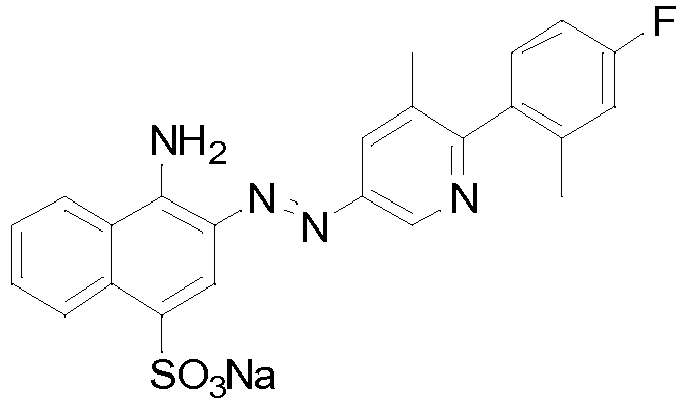
4-amino-3-[6-(4-fluoro-2-methylphenyl)-5-methylpyridine-3-ylazo]naphthalene-1-sulfonic acid sodium salt 69 
4-amino-3-{6-[3-(pyridine-3-ylmethoxy)dibenzothiophene -4-yl]pyridine-3-ylazo}naphthalene-1-sulfonic acid sodium salt 70 
4-amino-3-(6-quinoline-8-ylpyridine-3-ylazo)naphthalene-1-sulfonic acid sodium salt 71 
4-amino-3-[6-(2-methylquinoline-8-yl)pyridine-3-ylazo]naphthalene-1-sulfonic acid sodium salt 72 
4-amino-3-(6-dibenzothiophene-4-yl-5-methylpyridine-3-ylazo)naphthalene-1-sulfonic acid sodium salt 73 
4-amino-3-(6-biphenyl-2-yl-5-methylpyridine-3-ylazo)naphthalene-1-sulfonic acid sodium salt 74 
4-amino-3-(5,6-diphenylpyridine-3-ylazo)naphthalene-1-sulfonic acid sodium salt 75 
4-amino-3-[6-(2-butoxy-3-ethoxy-5-formylphenyl)pyridine-3-ylazo]naphthalene-1-sulfonic acid sodium salt 76 
4-amino-3-[6-(2-ethoxy-3-formyl-5-methylphenyl)pyridine-3-ylazo]naphthalene-1-sulfonic acid sodium salt - In an embodiment, the compound of the present disclosure is the compound of the formula

Compound 32 listed in Table 1 above, or an oxide, ester, prodrug, pharmaceutically acceptable salt, or solvate thereof, particularly a sodium salt thereof. - In an embodiment, the compound of the present disclosure is the compound of the formula

Compound 57 listed in Table 1 above, or an oxide, ester, prodrug, pharmaceutically acceptable salt, or solvate thereof, particularly a sodium salt thereof. In an embodiment, the compound of the present invention is as defined in claim 13. - Methods for synthesizing the compounds of formula (I), especially the compounds of
numbers 1 to 76, is described inWO2012/014994 andWO2012/043891 in detail. - An embodiment of the present disclosure provides a pharmaceutical composition for use in improving leptin resistance and/or treating and/or preventing a disorder associated with leptin resistance comprising at least one compound of formula (I) or an oxide, ester, prodrug, pharmaceutically acceptable salt, or solvate thereof, either alone or together with a further agent, together with a pharmaceutically acceptable carrier suitable for administration to a human or animal subject.
- "Leptin resistance" as used herein means a condition wherein the ability of leptin in circulating blood to suppress appetite and/or weight gain and/or to enhance energy expenditure is impaired. "Improving leptin resistance" as used herein means preventing development of leptin resistance and alleviating, reducing and/or eliminating leptin resistance.
- "Disorder associated with leptin resistance" as used herein means a disorder that can be treated and/or prevented by the improvement of leptin resistance, including metabolic syndrome, hyperglycemia, hyperinsulinemia, metabolic disorders such as insulin resistance or glucose intolerance, diabetes such as diabetes mellitus, gestational diabetes, insulin-dependent diabetes mellitus, or non-insulin-dependent diabetes mellitus, diabetic complications such as diabetic retinopathy, diabetic nephropathy, or diabetic neuropathy, dyslipidemia such as hypercholesterolemia, hypertriglyceridemia, elevated postprandial plasma triglyceride level, hypoalphalipoproteinemia, or combined hyperlipidemia, obesity, hyperphagia, and steatosis. The disorders associated with leptin resistance according to the invention are defined in
claim 1. - The term "preventing" a disorder or "prevention" of a disorder in a subject refers to preventing the disorder from occurring in the subject that is predisposed or does not yet display symptoms of the disorder. The term "treating" a disorder or "treatment" of a disorder in a subject refers to 1) inhibiting the disorder or arresting its development; or 2) ameliorating or causing regression of the disorder.
- The term "subject" as used herein refers to an animal. Typically the animal is a mammal. The subject also includes primates (e.g., humans), cows, sheep, goats, horses, dogs, cats, rabbits, rats, mice, fish and birds. In one embodiment, the subject is a primate. In another embodiment, the subject is a human. In another embodiment, the subject is a companion animal, particularly a dog or a cat.
- In general, the compound of the present disclosure is administered in a therapeutically effective amount by any of accepted modes of administration for agents that serve similar utilities. The actual amount of the compound, i.e., the active ingredient, depends upon numerous factors such as the severity of the disorder to be treated, the age and relative health of the subject, the potency of the used compound, the route and form of the administration, and other factors. The compound of the present disclosure may be administered more than once a day, for example three or four times a day. All of these factors are within the skill of the attending clinician.
- The amount of the active ingredient that may be combined with a carrier material to produce a single dosage form will vary depending upon the host to be treated and the particular mode of administration. It will be understood, however, that the specific dose level for any particular subject will depend upon a variety of factors including the activity of the specific compound employed, the age, body weight, general health, sex, and diet of the subject, the time and route of the administration, the rate of the excretion, the drug combination, and the severity of the specific disorder to be treated. The therapeutically effective amount for a given situation can be readily determined by routine experimentation and is within the skill and judgment of the ordinary clinician.
- A therapeutically effective amount generally can be a total daily dose administered to a host in single or divided doses which may be in amounts, for example, of from about 0.001 to about 1000 mg/kg body weight daily and from about 1.0 to about 30 mg/kg body weight daily. A dosage unit composition may contain such amounts of submultiples thereof to make up the daily dose.
- Suitable pharmaceutically acceptable carriers or excipients include, for example, processing agents and drug delivery modifiers and enhancers, such as, for example, calcium phosphate, magnesium stearate, talc, monosaccharides, disaccharides, starch, gelatin, cellulose, methyl cellulose, sodium carboxymethyl cellulose, dextrose, hydroxypropyl-β-cyclodextrin, polyvinylpyrrolidinone, low melting waxes, and ion exchange resins, as well as combinations of any two or more thereof. Liquid and semisolid excipients may be selected from glycerol, propylene glycol, water, ethanol and various oils, including those of petroleum, animal, vegetable or synthetic origin, e.g., peanut oil, soybean oil, mineral oil, or sesame oil. In some embodiments, liquid carriers, particularly for injectable solutions, include water, saline, aqueous dextrose, and glycols. Other suitable pharmaceutically acceptable excipients are described in "Remington's Pharmaceutical Sciences," Mack Pub. Co., New Jersey (1991).
- The choice of formulation depends on various factors such as the mode of drug administration and bioavailability of the drug substance. The drug can be administered as pharmaceutical compositions by any one of the following routes or combination of two or more of them: oral, systemic (e.g., transdermal, intranasal or by suppository), or parenteral (e.g., intramuscular, intravenous or subcutaneous) administration. An exemplary manner of administration is oral using a convenient daily dosage regimen that can be adjusted according to the degree of affliction. Compositions can take the form of tablets, pills, capsules, semisolids, powders, sustained release formulations, solutions, suspensions, elixirs, aerosols, or any other appropriate compositions. Another manner for administration is inhalation such as for delivering a therapeutic agent directly to the respiratory tract (see
U.S. Patent 5,607,915 ). Topical administration may also involve the use of transdermal administration such as transdermal patches or ionophoresis devices. The term "parenteral" as used herein includes subcutaneous injections, intravenous, intraperitoneal, intramuscular, intrasternal injection, or infusion techniques. - Injectable preparations, for example, sterile injectable aqueous or oleaginous suspensions may be formulated according to the known art using suitable dispersing or wetting agents or suspending agents. The sterile injectable preparation may also be a sterile injectable solution or suspension in a nontoxic parenterally acceptable diluent or solvent, for example, as a solution in 1,3-propanediol. Among the acceptable vehicles and solvents that may be employed are water, Ringer's solution, and isotonic sodium chloride solution. In addition, sterile, fixed oils are conventionally employed as a solvent or suspending medium. For this purpose fixed oils of any grade may be employed including synthetic mono- or di-glycerides. In addition, fatty acids such as oleic acid find use in the preparation of injectables.
- Suppositories for rectal administration of the drug can be prepared by mixing the drug with a suitable nonirritating excipient such as cocoa butter and polyethylene glycols, which are solid at ordinary temperatures but liquid at the rectal temperature and will therefore melt in the rectum and release the drug.
- Solid dosage forms for oral administration may include capsules, tablets, pills, powders, and granules. In such solid dosage forms, the active compound may be admixed with at least one inert diluent such as sucrose, lactose or starch. Such dosage forms may also comprise, as is normal practice, additional substances other than inert diluents, e.g., lubricating agents such as magnesium stearate. In the case of capsules, tablets, and pills, the dosage forms may also comprise buffering agents. Tablets and pills can additionally be prepared with enteric coatings.
- Liquid dosage forms for oral administration may include pharmaceutically acceptable emulsions, solutions, suspensions, syrups, and elixirs containing inert diluents commonly used in the art, such as water. Such compositions may also comprise adjuvants, such as wetting agents, emulsifying and suspending agents, cyclodextrins, and sweetening, flavoring, and perfuming agents.
- The compound of the present disclosure can also be administered in the form of liposomes. As is known in the art, liposomes are generally derived from phospholipids or other lipid substances. Liposomes are formed by mono- or multi-lamellar hydrated liquid crystals that are dispersed in an aqueous medium. Any non-toxic, physiologically acceptable and metabolizable lipid capable of forming liposomes can be used. The present compositions in liposome form can contain agents such as stabilizers, preservatives, and excipients. Examples of lipids are the phospholipids and phosphatidylcholines (lecithins), both natural and synthetic. Methods to form liposomes are known in the art. See, for example, Prescott, Ed., Methods in Cell Biology, Volume XIV, Academic Press, New York, N. W., p. 33 et seq. (1976).
- Compressed gases may be used to disperse the compound of the present disclosure in aerosol form. Inert gases suitable for this purpose include nitrogen and carbon dioxide. Other suitable pharmaceutical excipients and their formulations are described in Remington's Pharmaceutical Sciences, edited by E. W. Martin (Mack Publishing Company, 18th ed., 1990).
- For delivery via inhalation the compound can be formulated as liquid solutions, suspensions, aerosol propellants or dry powder and loaded into a suitable dispenser for administration. There are several types of pharmaceutical inhalation devices, nebulizers, inhalers, metered dose inhalers (MDI) and dry powder inhalers (DPI). Nebulizer devices produce a stream of high velocity air that causes the therapeutic agents (which are formulated in a liquid form) to spray as a mist that is carried into the subject's respiratory tract. MDIs typically are formulation packaged with a compressed gas. Upon actuation, the device discharges a measured amount of therapeutic agent by the compressed gas, thus affording a reliable method of administering a set amount of the agent. DPI dispenses therapeutic agents in the form of a free flowing powder that can be dispersed in the subject's inspiratory air-stream during breathing by the device. In order to achieve a free flowing powder, the therapeutic agent is formulated with an excipient such as lactose. A measured amount of the therapeutic agent is stored in a capsule form and is dispensed with each actuation.
- The compound according to the present disclosure can be used alone or, if required, in combination with other active ingredients. The pharmaceutical composition of the present disclosure comprises at least one compound according to the present disclosure and one or more further active ingredients, in particular for treating and/or preventing a disorder associated with leptin resistance.
- As used herein, using ingredients "in combination" or "combining" ingredients means not only using a dosage form comprising all the ingredients or using a combination of dosage forms comprising each ingredient separately, but also administering each ingredient at the same time or different times as long as the ingredients are used for preventing and/or treating the same disorder. Two or more further active ingredients may be used in combination.
- Suitable active ingredients for combination are, for example, active ingredients which modulate lipid metabolism, antidiabetics, hypotensive agents, perfusion-enhancing and/or antithrombotic agents, antioxidants, chemokine receptor antagonists, p38-kinase inhibitors, NPY agonists, orexin agonists, anorectics, PAF-AH inhibitors, antiphlogistics (COX inhibitors, LTB4-receptor antagonists), analgesics, for example aspirin, antidepressants, and other psychopharmaceuticals, in particular active ingredients which modulate lipid metabolism, antidiabetics, hypotensive agents, and antithrombotic agents. Particularly suitable active ingredients for combination are leptin receptor agonists such as leptin.
- Active ingredients which modulate lipid metabolism include, for example, HMG-CoA reductase inhibitors (e.g., statins such as lovastatin, simvastatin, pravastatin, fluvastatin, atorvastatin, rosuvastatin, or pitavastatin), inhibitors of HMG-CoA reductase expression, squalene synthesis inhibitors (e.g., BMS-188494 or TAK-475), ACAT inhibitors (e.g., avasimibe, melinamide, pactimibe, eflucimibe, or SMP-797), LDL receptor inductors, cholesterol absorption inhibitors (e.g., ezetimibe, tiqueside, or pamaqueside), polymeric bile acid adsorbers (e.g., cholestyramine, colestipol, colesolvam, CholestaGel, or colestimide), bile acid reabsorption inhibitors (e.g., ASBT (= IBAT) inhibitors such as AZD-7806, S-8921, AK-105, BARI-1741, SC-435 or, SC-635), MTP inhibitors (e.g., implitapide, BMS-201038, R-103757, or JTT-130), lipase inhibitors (e.g., orlistat), LpL activators, fibrates, niacin receptor agonists (e.g., niacin, acipimox, acifran, or radecol), CETP inhibitors (e.g., dalcetrapib, BAY 60-5521, anacetrapib, or CETP vaccine), PPAR-α agonists (e.g., fibrates such as bezafibrate, ciprofibrate, clofibrate, or fenofibrate, GW7647, leukotriene B4, oleylethanolamide, tetradecylthioacetic acid, WY-14643, GW6471, or MK-886), PPAR-γ agonists (e.g., thiazolidinediones such as pioglitazone or rosiglitazone), PPAR-δ agonists (e.g., GW-501516 or BAY 68-5042), RXR modulators, FXR modulators, LXR modulators, thyroid hormones and/or thyroid mimetics (e.g., such as D-thyroxine or 3,5,3'-triiodothyronine (T3)), ATP citrate lyase inhibitors, Lp(a) antagonists, cannabinoid receptor 1 antagonists (e.g., rimonabant or SR-147778), leptin receptor agonists (e.g., leptin), bombesin receptor agonists, histamine receptor agonists, and antioxidants/radical scavengers (e.g., probucol, AGI-1067, BO-653, or AEOL-10150).
- Antidiabetics are to be understood as meaning insulin and insulin derivatives, and also orally effective hypoglycemic active ingredients. Here, insulin and insulin derivatives include both insulins of animal, human or biotechnological origin and also mixtures thereof. The orally effective hypoglycemic active ingredients include sulfonylureas (e.g., tolbutamide, glibenclamide, glimepiride, glipizide, or gliclazide), biguanides (e.g., metformin), meglitinide derivatives (e.g., repaglinide or nateglinide), glucosidase inhibitors (e.g., miglitol or acarbose) and PPAR-gamma agonists. Antidiabetics include SGLT2 inhibitors (e.g., ipragliflozin, luseogliflozin, dapagliflozin, or tofogliflozin), inhibitors of dipeptidyl-peptidase IV (DPP-IV inhibitors) (e.g., sitagliptin or vildagliptin), oxadiazolidinones, thiazolidinediones,
GLP 1 receptor agonists, glucagon antagonists, insulin sensitizers,CCK 1 receptor agonists, leptin receptor agonists, inhibitors of liver enzymes involved in the stimulation of gluconeogenesis and/or glycogenolysis, modulators of glucose uptake, and also potassium channel openers, such as, for example, those disclosed inWO 97/26265 WO 99/03861 - Hypotensive active ingredients include calcium antagonists (e.g., nifedipine, amlodipine, verapamil, or diltiazem), angiotensin AII antagonists (e.g., losartan, valsartan, candesartan, embusartan, olmesartan, or telmisartan), ACE inhibitors (e.g., enalapril, captopril, lisinopril, ramipril, delapril, fosinopril, quinopril, perindopril, or trandopril), renin inhibitors, beta-receptor blockers (e.g., propranolol, atenolol, timolol, pindolol, alprenolol, oxprenolol, penbutolol, bupranolol, metipranolol, nadolol, mepindolol, carazalol, sotalol, metoprolol, betaxolol, celiprolol, bisoprolol, carteolol, esmolol, labetalol, carvedilol, adaprolol, landiolol, nebivolol, epanolol, or bucindolol), alpha-receptor blockers (e.g., prazosin), diuretics (e.g., furosemide, bumetanide, torsemide, bendroflumethiazide, chlorothiazide, hydrochlorothiazide, hydroflumethiazide, methyclothiazide, polythiazide, trichloromethiazide, chlorothalidone, indapamide, metolazone, quinethazone, acetazolamide, dichlorophenamide, methazolamide, glycerol, isosorbide, mannitol, amiloride, or triamteren), aldosterone or mineralocorticoid receptor antagonists (e.g., spironolactone or eplerenone), ECE inhibitors, ACE/NEP inhibitors, and vasopeptidase inhibitors.
- Antithrombotic agents include platelet aggregation inhibitors (e.g., aspirin, clopidogrel, ticlopidine, or dipyridamol), thrombin inhibitors (e.g., ximelagatran, melagatran, dabigatran, bivalirudin, or clexane), GPIIb/IIIa antagonists (e.g., tirofiban or abciximab), factor Xa inhibitors (e.g., rivaroxaban, DU-176b, apixaban, otamixaban, fidexaban, razaxaban, fondaparinux, idraparinux, PMD-3112, YM-150, KFA-1982, EMD-503982, MCM-17, MLN-1021, DX9065a, DPC906, JTV803, SSR-126512, or SSR-128428), heparin or low molecular weight (LMW) heparin derivatives, vitamin K antagonists (e.g., coumarin), and anticoagulants.
- In another aspect, the present disclosure provides a compound of formula (I):

- R1 is aryl or heteroaryl, wherein the aryl or heteroaryl may be substituted with 1 to 3 substituents selected from the group consisting of halo, hydroxy, alkyl, halo-substituted alkyl, aryl, halo- or alkyl-substituted aryl, alkoxy, hydroxy- or carboxy-substituted alkoxy, alkylthio, aryloxy, CHO, C(O)-alkyl, C(O)-aryl, C(O)-alkylene-carboxyl, C(O)-alkylene-carboxy ester, cyano, oxo, heterocycloalkyl, and heteroaryl-substituted alkoxy, and
- R2 is hydrogen, halo, alkyl, phenyl, or pyridyl,
- or an oxide, ester, prodrug, pharmaceutically acceptable salt, or solvate thereof for use in improving lipid metabolism and/or treating and/or preventing steatosis, as well as a pharmaceutical composition comprising at least one of them.
- "Improving lipid metabolism" as used herein means preventing blood total cholesterol level, HDL cholesterol level, LDL cholesterol level, free fatty acid level, and/or triglyceride level from deviating from normal range, as well as normalizing blood total cholesterol level, HDL cholesterol level, LDL cholesterol level, free fatty acid level, and/or triglyceride level that deviate from the normal range.
- In an embodiment of the last aspect, the compound of the present disclosure is a compound of formula (I), wherein
R1 is aryl or heteroaryl, wherein the aryl or heteroaryl may be substituted with 1 to 3 substituents selected from the group consisting of halo, hydroxy, alkyl, halo-substituted alkyl, aryl, halo- or alkyl-substituted aryl, alkoxy, hydroxy- or carboxy-substituted alkoxy, aryloxy, CHO, C(O)-alkyl, C(O)-aryl, C(O)-alkylene-carboxyl, C(O)-alkylene-carboxy ester, cyano, heterocycloalkyl, and heteroaryl-substituted alkoxy, and
R2 is hydrogen, alkyl, phenyl, or pyridyl,
or an oxide, ester, prodrug, pharmaceutically acceptable salt, or solvate thereof. - In an embodiment of the last aspect, the compound of the present disclosure is a compound of formula (I), wherein
R1 is phenyl which may be substituted with 1 to 3 substituents independently selected from the group consisting of halo, hydroxy, alkyl, halo-substituted alkyl, aryl, halo- or alkyl-substituted aryl, alkoxy, hydroxy- or carboxy-substituted alkoxy, alkylthio, aryloxy, CHO, C(O)-alkyl, C(O)-aryl, C(O)-alkylene-carboxyl, C(O)-alkylene-carboxy ester, cyano, heterocycloalkyl, and heteroaryl-substituted alkoxy,
or an oxide, ester, prodrug, pharmaceutically acceptable salt, or solvate thereof. - In an embodiment of the last aspect, the compound of the present disclosure is a compound of formula (I), wherein
R1 is phenyl which may be substituted with 1 to 3 substituents independently selected from the group consisting of halo, hydroxy, alkyl, halo-substituted alkyl, aryl, halo- or alkyl-substituted aryl, alkoxy, hydroxy- or carboxy-substituted alkoxy, aryloxy, CHO, C(O)-alkyl, C(O)-aryl, C(O)-alkylene-carboxyl, C(O)-alkylene-carboxy ester, cyano, heterocycloalkyl, and heteroaryl-substituted alkoxy, or an oxide, ester, prodrug, pharmaceutically acceptable salt, or solvate thereof. - In an embodiment of the last aspect, the compound of the present disclosure is a compound of formula (I), wherein
R1 is phenyl which may be substituted with 1 to 3 substituents independently selected from the group consisting of halo, hydroxy, alkyl, halo-substituted alkyl, alkoxy, alkylthio, phenyl, halo- or alkyl-substituted phenyl, pyridyl, and morpholinyl,
or an oxide, ester, prodrug, pharmaceutically acceptable salt, or solvate thereof. - In an embodiment of the last aspect, the compound of the present disclosure is a compound of formula (I), wherein
R1 is phenyl which may be substituted with 1 to 3 substituents independently selected from the group consisting of halo, hydroxy, alkyl, halo-substituted alkyl, alkoxy, phenyl, halo- or alkyl-substituted phenyl, pyridyl, and morpholinyl,
or an oxide, ester, prodrug, pharmaceutically acceptable salt, or solvate thereof. - In an embodiment of the last aspect, the compound of the present disclosure is a compound of formula (I), wherein
R1 is phenyl which may be substituted with 1 to 3 substituents independently selected from the group consisting of halo, alkyl, halo-substituted alkyl, alkoxy, and alkylthio,
or an oxide, ester, prodrug, pharmaceutically acceptable salt, or solvate thereof. - In an embodiment of the last aspect, the compound of the present disclosure is a compound of formula (I), wherein
R1 is phenyl which may be substituted with 1 to 3 substituents independently selected from the group consisting of halo and alkyl,
or an oxide, ester, prodrug, pharmaceutically acceptable salt, or solvate thereof. - In an embodiment of the last aspect, the compound of the present disclosure is a compound of formula (I), wherein
R1 is phenyl which is substituted with halo and alkyl,
or an oxide, ester, prodrug, pharmaceutically acceptable salt, or solvate thereof. - In an embodiment of the last aspect, the compound of the present disclosure is a compound of formula (I), wherein
R1 is phenyl which is substituted with fluoro and methyl, or an oxide, ester, prodrug, pharmaceutically acceptable salt, or solvate thereof. - In an embodiment of the last aspect, the compound of the present disclosure is a compound of formula (I), wherein
R1 is naphthyl, fluorenyl, furanyl, benzofuranyl, dibenzofuranyl, thiophenyl, benzothiophenyl, dibenzothiophenyl, pyrrolyl, indolyl, carbazole, benzothiazole, oxazole, isoxazole, pyridyl, quinolyl, isoquinolyl, thianthrenyl, phenoxathiinyl, phenothiazyl, or phenoxazyl which may be substituted with 1 to 3 substituents independently selected from the group consisting of halo, oxo, and alkyl,
or an oxide, ester, prodrug, pharmaceutically acceptable salt, or solvate thereof. - In an embodiment of the last aspect, the compound of the present disclosure is a compound of formula (I), wherein
R1 is naphthyl, furanyl, benzofuranyl, dibenzofuranyl, thiophenyl, benzothiophenyl, dibenzothiophenyl, pyrrolyl, indolyl, carbazole, oxazole, isoxazole, pyridyl, quinolyl, isoquinolyl, thianthrenyl, phenoxathiinyl, phenothiazyl, or phenoxazyl which may be substituted with 1 to 3 substituents independently selected from the group consisting of halo and alkyl,
or an oxide, ester, prodrug, pharmaceutically acceptable salt, or solvate thereof. - In an embodiment of the last aspect, the compound of the present disclosure is a compound of formula (I), wherein
R1 is naphthyl, benzofuranyl, dibenzofuranyl, benzothiophenyl, dibenzothiophenyl, indolyl, carbazole, benzothiazole, quinolyl, isoquinolyl, thianthrenyl, phenoxathiinyl, phenothiazyl, or phenoxazyl which may be substituted with 1 to 3 substituents independently selected from the group consisting of halo and alkyl,
or an oxide, ester, prodrug, pharmaceutically acceptable salt, or solvate thereof. - In an embodiment of the last aspect, the compound of the present disclosure is a compound of formula (I), wherein
R1 is naphthyl, benzofuranyl, dibenzofuranyl, benzothiophenyl, dibenzothiophenyl, indolyl, carbazole, quinolyl, isoquinolyl, thianthrenyl, phenoxathiinyl, phenothiazyl, or phenoxazyl which may be substituted with 1 to 3 substituents independently selected from the group consisting of halo and alkyl, or an oxide, ester, prodrug, pharmaceutically acceptable salt, or solvate thereof. - In an embodiment of the last aspect, the compound of the present disclosure is a compound of formula (I), wherein
R1 is benzofuranyl, dibenzofuranyl, benzothiophenyl, dibenzothiophenyl, or thianthrenyl which may be substituted with 1 to 3 substituents independently selected from the group consisting of halo and alkyl,
or an oxide, ester, prodrug, pharmaceutically acceptable salt, or solvate thereof. - In an embodiment of the last aspect, the compound of the present disclosure is a compound of formula (I), wherein
R1 is dibenzofuranyl, benzothiophenyl, dibenzothiophenyl, carbazole, benzothiazole or thianthrenyl which may be substituted with 1 to 3 substituents independently selected from the group consisting of halo and alkyl,
or an oxide, ester, prodrug, pharmaceutically acceptable salt, or solvate thereof. - In an embodiment of the last aspect, the compound of the present disclosure is a compound of formula (I), wherein
R1 is dibenzofuranyl, benzothiophenyl, dibenzothiophenyl, or thianthrenyl which may be substituted with 1 to 3 substituents independently selected from the group consisting of halo and alkyl,
or an oxide, ester, prodrug, pharmaceutically acceptable salt, or solvate thereof. - In an embodiment of the last aspect, the compound of the present disclosure is a compound of formula (I), wherein
R1 is benzothiophenyl or dibenzothiophenyl which may be substituted with 1 to 3 substituents independently selected from the group consisting of halo and alkyl,
or an oxide, ester, prodrug, pharmaceutically acceptable salt, or solvate thereof. - In an embodiment of the last aspect, the compound of the present disclosure is a compound of formula (I), wherein
R1 is dibenzothiophenyl which may be substituted with 1 to 3 substituents independently selected from the group consisting of halo and alkyl,
or an oxide, ester, prodrug, pharmaceutically acceptable salt, or solvate thereof. - In an embodiment of the last aspect, the compound of the present disclosure is a compound of formula (I), wherein
R1 is unsubstituted benzothiophenyl or dibenzothiophenyl, or an oxide, ester, prodrug, pharmaceutically acceptable salt, or solvate thereof. - In an embodiment of the last aspect, the compound of the present disclosure is a compound of formula (I), wherein
R1 is unsubstituted dibenzothiophenyl,
or an oxide, ester, prodrug, pharmaceutically acceptable salt, or solvate thereof. - In an embodiment of the last aspect, the compound of the present disclosure is a compound of formula (I), wherein
R2 is hydrogen, halo or alkyl,
or an oxide, ester, prodrug, pharmaceutically acceptable salt, or solvate thereof. - In an embodiment of the last aspect, the compound of the present disclosure is a compound of formula (I), wherein
R2 is hydrogen or alkyl,
or an oxide, ester, prodrug, pharmaceutically acceptable salt, or solvate thereof. - In an embodiment of the last aspect, the compound of the present disclosure is a compound of formula (I), wherein
R2 is hydrogen,
or an oxide, ester, prodrug, pharmaceutically acceptable salt, or solvate thereof. - In an embodiment of the last aspect, the compound of the present disclosure is a compound selected from
Compounds 1 to 76 listed in Table 1 above, or a free acid form, oxide, ester, prodrug, pharmaceutically acceptable salt, or solvate thereof. - In an embodiment of the last aspect, the compound of the present disclosure is the compound of the formula

Compound 57 listed in Table 1 above, or an oxide, ester, prodrug, pharmaceutically acceptable salt, or solvate thereof, particularly a sodium salt thereof. Examples - The following Examples illustrate the present disclosure.
-
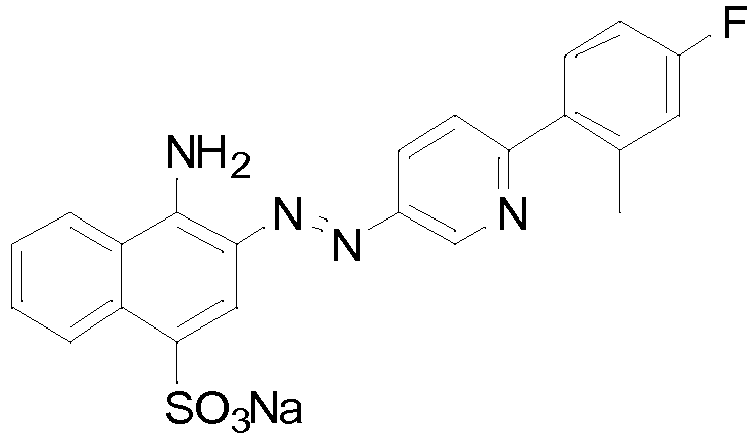
- 2-Chloro-5-nitropyridine (5.0 g, 31.5 mmol) and tetrakis(triphenylphosphine)palladium (0.35 g, 0.3 mmol) were added to 1,2-dimethoxyethan (50 ml), then degassed and purged with nitrogen three times under reduced pressure. Under nitrogen atmosphere the mixture was stirred at room temperature for 20 minutes, 4-fluoro-2-methylphenylboronic acid (31.5 mmol) and 2M aqueous sodium carbonate (31.5 ml) were poured in, and the temperature was raised to 80 °C. After the reaction at 80 °C for 3 hours, the mixture was cooled to room temperature and extracted with addition of ethyl acetate and water. The organic layer was dried with anhydrous sodium sulfate, and concentrated under reduced pressure. The products were purified by column chromatography to give the title compound.
- Ethanol (20 ml) and water (5 ml) was mixed, added with iron powder, and heated to 70-80 °C. Ammonium chloride (0.1 g, 2.1 mmol) was added, followed by 2-(4-fluoro-2-methylphenyl) -5-nitropyridine (10.0 mmol) obtained in (i) . The reaction was carried out at 70-80 °C for 1 hour. After the completion of the reaction, the iron powder was filtered while hot through Celite, and the filtrate was concentrated under reduced pressure. The residue was dissolved in isopropyl alcohol, crystallized and filtered with addition of water to give the title compound.
- 6-(4-Fluoro-2-methylphenyl)pyridine-3-ylamine (58.9 mmol) obtained in (ii) was dissolved in 99 % acetic acid (50 ml), and added with 35 % hydrochloric acid (25 g) to form hydrochloride. With cooling on ice a 36 % aqueous solution of sodium nitrite (12 g, 62.5 mmol) was added dropwise at 0-5 °C, and the reaction was carried out for about 15 minutes. Amide sulfuric acid was added and the reaction was carried out for additional 5 minutes, resulting in a diazo solution. 4-Amino-1-naphthalenesulfonic acid (13.0 g, 58.4 mmol) was suspended in water (130 ml), and the pH of the suspension was adjusted to
pH 8 to 9 with 10 % aqueous sodium hydroxide. The mixture was cooled to 5-10 °C, and added dropwise with the obtained diazo solution at 5-10 °C, during which 10 % aqueous sodium hydroxide was added to keep the pH at 7 to 9. After the completion of the addition, the reaction was carried out at 5-10 °C for 1 hour, then the temperature was raised to room temperature. Salting-out was performed with saturated aqueous sodium chloride, and the precipitated crystals were filtered with suction. Purification by column chromatography gave the title compound.
1H-NMR δ [ppm] = 9.22 (1H, d, J = 2.4Hz), 8.76 (1H, d, J = 8.1), 8.49-8.44 (2H, m), 8.34 (1H, s), 7.82 (2H, bs), 7.67-7.47 (4H, m), 7.21-7.11 (2H, m), 2.41 (3H, s) 13C-NMR(DMSO-d6) δ[ppm] = 163.5, 160.3, 158.2, 147.1, 146.7, 145.4, 138.8, 138.7, 136.1, 136.1, 132.4, 132.1, 131.8, 131.7, 129.2, 128.6, 128.3, 127.2, 125.1, 124.6, 124.2, 124.0, 117.3, 117.1, 116.6, 112.9, 112.6, 20.4, 20.4 -
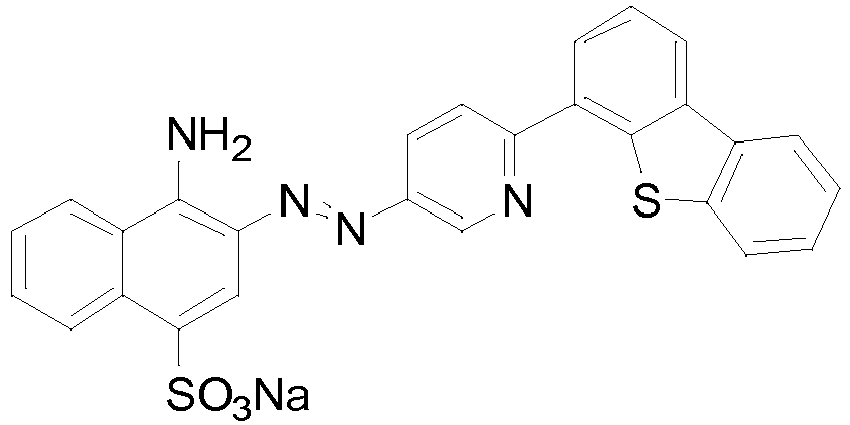
- 2-Chloro-5-nitropyridine (3.0 g, 18.9 mmol), 4-dibenzothiopheneboronic acid (4.7 g, 20.8 mmol), and tetrakis(triphenylphosphine)palladium (0.2 g, 0.2 mmol) were added to 1,2-dimethoxyethan (30 ml), then degassed and purged with nitrogen three times under reduced pressure. Under nitrogen atmosphere the mixture was stirred at room temperature for 20 minutes, then 1M aqueous sodium carbonate (40 ml) was poured in, and the temperature was raised to 80 °C. After the reaction at 80 °C for 6 hours, the mixture was cooled to room temperature and crystallized with addition of water. The precipitated crystals were filtered to give the title compound.
- Ethanol (20 ml) and water (5 ml) was mixed, added with iron powder, and heated to 70-80 °C. Ammonium chloride (0.1 g, 2.1 mmol) was added, followed by 2-dibenzothiophene-4-yl-5-nitropyridine (3.3 g, 10.0 mmol) obtained in (i). The reaction was carried out at 70-80 °C for 1 hour. After the completion of the reaction, the iron powder was filtered while hot through Celite, and the filtrate was concentrated under reduced pressure. The residue was dissolved in isopropyl alcohol, crystallized and filtered with addition of water to give the title compound.
- 6-Dibenzothiophene-4-ylpyridine-3-ylamine (39.5 g, 143.0 mmol) obtained in (ii) was dissolved in tetrahydrofuran/water (2600 ml), added with 98% sulfuric acid (42.5 g) to form sulfate. With cooling on ice, an aqueous solution of sodium nitrite (13.3 g, 192.5 mmol) was added dropwise at 0-5 °C, and the reaction was carried out for about 15 minutes. Amide sulfuric acid was added and the reaction was carried out for additional 5 minutes, resulting in a diazo solution.
- 4-Amino-1-naphthalenesulfonic acid (31.6 g, 141.5 mmol) was suspended in water, and pH of the suspension was adjusted to
pH 8 to 9 with 10% aqueous sodium hydroxide. The mixture was cooled to 5-10 °C, and added dropwise with the obtained diazo solution at 5-10 °C, during which 10% aqueous sodium hydroxide was added to keep the pH at 7 to 9. After the completion of the addition, the reaction was carried out at 5-10 °C for 1 hour, then the temperature was raised to room temperature. Under reduced pressure tetrahydrofuran was distilled off and a saturated sodium chloride solution was added. The precipitated crystals were filtered with suction, purified by column chromatography to give the title compound (29.0 g, 38.1%). 1H-NMR(DMSO-d6) δ[ppm] = 9.40 (1H, d, J = 2.4Hz), 8.77 (1H, d, J = 8.1Hz), 8.61 (1H, dd, J = 8.7, 2.4Hz), 8.51 (1H, J = 7.8Hz), 8.50 (1H, d, J = 8.7Hz), 8.44-8.39 (3H, m), 8.36 (1H, s), 8.10-8.07 (1H, m), 7.88 (2H, bs), 7.72-7.66 (1H, m), 7.65-7.60 (1H, m), 7.56-7.49 (3H, m)
13C-NMR (DMSO-d6) δ[ppm] = 154.7, 147.6, 147.2, 144.7, 141.6, 136.9, 136.5, 134.2, 132.5, 132.2, 132.1, 129.4, 128.7, 128.4, 127.9, 127.2, 125.6, 125.2, 125.1, 124.6, 124.3, 124.1, 123.1, 122.6, 121.9, 121.4, 116.1 - Eight-week old male wild type mice and transgenic mice overexpressing leptin (LepTg) (Ogawa et al. Diabetes 48: 1822-1829, 1999, prepared in Department of Endocrinology and Metabolism, Kyoto University) were divided into three treatment groups, respectively: "standard diet (SD) + vehicle (V)", "60% high fat diet (HFD) + vehicle", and "60% high fat diet +
Compound 57". The mice were kept for four weeks with ad libitum feeding, and the body weight and the food intake of the mice were measured. The vehicle andCompound 57 were administered to the mice by intraperitoneal injection once a day. The dosage ofCompound 57 was 50 mg/kg/day. After the four weeks the mice were sacrificed and blood, epididymal adipose tissues, and the liver were collected. The weight of the adipose tissues, the liver weight, the liver triglyceride levels, and the plasma levels of glucose, insulin, total cholesterol (T-chol), triglyceride (TG), and nonesterified fatty acid (NEFA) were measured (n = 5 for each group). The equivalent dosage ofCompound 32 was tested in a similar manner (n = 5 for each group). - The body weight of the transgenic mice was lower than that of the wild type mice before they were fed with the high fat diet (
Fig. 1 , left). The weight gain caused by the high fat diet was more remarkable in the transgenic mice than in the wild type mice. After the four weeks, the body weight of the transgenic mice was as high as that of the wild type mice. The body weight of the wild type mice and the transgenic mice administered withCompound Compound Fig. 1 , right). - The weight of the adipose tissues increased under the high fat diet condition in the wild type mice and the transgenic mice, but did not increase in the mice administered with
Compound Fig. 2 , left). The liver weight and liver triglyceride levels were analyzed as indicators of steatosis (Fig. 2 , middle and right). The liver weight and the liver triglyceride levels increased under the high fat diet condition in the wild type mice and the transgenic mice, but did not increase in the mice administered withCompound - Regarding glucose metabolism, the random plasma glucose levels and the plasma insulin levels increased under the high fat diet condition in the wild type mice and the transgenic mice, but did not increase in the mice administered with
Compound Fig. 3 ) . - Regarding lipid metabolism, the plasma levels of total cholesterol, triglyceride, and nonesterified fatty acid were analyzed (
Fig. 4 ). They increased under the high fat diet condition in the wild type mice and the transgenic mice, but did not increase in the mice administered withCompound - High fat diet is generally known to induce leptin resistance. It has been reported that leptin resistance is strongly induced in LepTg mice fed with high fat diet. In this study the high fat diet caused the remarkable weight gain in the transgenic mice overexpressing leptin up to the same level as that of the wild type mice. The result suggests that a condition wherein leptin is ineffective in spite of its overexpression, leptin resistance, was induced. Though the high fat diet increased the body weight, the food intake, the weight of the adipose tissues, the liver weight, the liver triglyceride levels, and the plasma levels of glucose and insulin in the wild type mice and the transgenic mice, the increases were suppressed by the administration of
Compound - Ob/ob mice cannot produce leptin due to a mutation in the leptin gene (Zhang et al. Nature 372: 425-432, 1994). Eight-week old male ob/ob mice, purchased from CHARLES RIVER LABORATORIES JAPAN, INC., were divided into two treatment groups: "Vehicle (V)" and "
Compound 57". The mice were kept for four weeks with ad libitum feeding of standard diet (SD), and the body weight and the food intake of the mice were measured. The vehicle andCompound 57 were administered to the mice by intraperitoneal injection once a day. The dosage ofCompound 57 was 50 mg/kg/day. After the four weeks the mice were sacrificed and blood, epididymal adipose tissues, and the liver were collected. The weight of the adipose tissues, the liver weight, the liver triglyceride levels, and the plasma levels of glucose, insulin, total cholesterol (T-chol), triglyceride (TG) and nonesterified fatty acid (NEFA) were measured (n = 5 for each group). The equivalent dosage ofCompound 32 was tested in a similar manner (n = 5 for each group). - The administration of
Compound 57 decreased the body weight in the ob/ob mice, butCompound 32 did not (Fig. 5 , left). The food intake did not change in the either groups administered withCompound 57 or 32 (Fig. 5 , right). The weight of the adipose tissues decreased in the group administered withCompound 57, but did not change in the group administered with Compound 32 (Fig. 6 , left). The liver weight and the liver triglyceride levels, indicators of steatosis, decreased in the group administered withCompound 57, but did not change in the group administered with Compound 32 (Fig. 6 , middle and right). Regarding glucose metabolism, the random plasma glucose levels and the plasma insulin levels did not change in the both groups (Fig. 7 ). Regarding lipid metabolism,Compound 57 decreased the total cholesterol levels and the nonesterified fatty acid levels, but did not clearly change the triglyceride levels (Fig. 8 , upper panels).Compound 32 caused no clear change in these parameters (Fig. 8 , lower panels). - In Test Example 2 the effects of
Compounds Compound 57 did not change the food intake and the plasma levels of glucose, insulin, and triglyceride, but decreased the body weight, the weight of the adipose tissues, the liver weight, the liver triglyceride levels, and the plasma levels of total cholesterol, and nonesterified fatty acid.Compound 32 did not change these parameters. The results suggest that in Test Example 1Compounds Compound 57 has a leptin-independent effect to improve lipid metabolism, for example an effect to decrease lipid in blood or tissues, in addition to the effect to improve leptin resistance. - A-ZIP/F-1 mice, which are used as a model of generalized lipodystrophy, have substantially no white adipocyte and thus cannot produce leptin (Moitra et al. Genes Dev 12: 3168-3181, 1998). Eight-week old male A-ZIP/F-1 mice, gifted from Dr. Reitman of National Institutes of Health, were divided into two treatment groups: "Vehicle (V)" and "
Compound 57". The mice were kept for four weeks with ad libitum feeding of standard diet (SD), and the body weight and the food intake of the mice were measured. The vehicle andCompound 57 were administered to the mice by intraperitoneal injection once a day. The dosage ofCompound 57 was 50 mg/kg/day. After the four weeks the mice were sacrificed and blood, epididymal adipose tissues, and the liver were collected. The weight of the adipose tissues, the liver weight, the liver triglyceride levels, the plasma levels of glucose, insulin, total cholesterol (T-chol), triglyceride (TG) and nonesterified fatty acid (NEFA) were measured (n = 5 for each group). The equivalent dosage ofCompound 32 was tested in a similar manner (n = 5 for each group). - The administration of
Compound 57 slightly decreased the body weight in the A-ZIP/F-1 mice, butCompound 32 did not (Fig. 9 , left). The food intake did not change in the either groups administered withCompound 57 or 32 (Fig. 9 , right). The weight of the adipose tissues cannot be estimated because the mice are a model of generalized lipodystrophy (Fig. 10 , left). The liver weight and the liver triglyceride levels, the indicators of steatosis, decreased in the group administered withCompound 57, but did not change in the group administered with Compound 32 (Fig. 10 , middle and right). Regarding glucose metabolism, the random plasma glucose levels and the plasma insulin levels did not change in the both groups (Fig. 11 ). Regarding lipid metabolism,Compound 57 decreased the levels of total cholesterol, triglyceride, and nonesterified fatty acid, butCompound 32 did not change these parameters (Fig. 12 ). - In Test Example 3, as in Test Example 2, the effects of
Compounds Compound 57 did not change the food intake and the plasma levels of glucose and insulin, but decreased the body weight, the liver weight, the liver triglyceride levels, and the plasma levels of total cholesterol, triglyceride and nonesterified fatty acid.Compound 32 did not cause the improvement of leptin resistance, which was observed in Test Example 1. The results suggest that in Test Example 1Compounds Compound 57 has a leptin-independent effect to improve lipid metabolism, for example an effect to decrease lipid in blood or tissues, in addition to the effect to improve leptin resistance. - Eight-week old male wild type mice and transgenic mice overexpressing leptin (LepTg) (see Test Example 1) were divided into two groups, respectively (n = 4 and 12), and kept for four weeks under a standard diet (SD) or a high fat diet (HFD) condition. All the mice fed with the standard diet for the four weeks were assigned to the group "vehicle (V)" and fed with the standard diet for further four weeks, and then the body weight and the food intake of the mice were measured. The mice fed with the high fat diet for the four weeks were divided into three groups: "vehicle (V)", "
Compound 57", and "Compound 32", and fed with the high fat diet for further four weeks, and then the body weight and the food intake of the mice were measured. The vehicle,Compound 57, andCompound 32 were administered to the mice by intraperitoneal injection once a day. The each dosage ofCompounds - When
Compound Fig. 13 ). The weight loss was more remarkable in the transgenic mice than in the wild type mice. The food intake significantly decreased in the wild type mice administered withCompound 57 and the transgenic mice administered withCompound 57 or 32 (Fig. 14 ). The weight of the adipose tissues significantly decreased in the transgenic mice administered withCompound 57 or 32 (Fig. 15 ). The liver weight, an indicator of steatosis, decreased only in the transgenic mice administered with Compound 57 (Fig. 16 ). The blood levels of glucose and triglyceride decreased in the both of the wild type mice and the transgenic mice when they were administered withCompound 57 or 32 (Figs. 17 and18 ) . - In Test Example 4 the effects of
Compounds study Compound 57 decreased the body weight, the food intake, the weight of the adipose tissues, the liver weight, and the plasma levels of glucose and insulin, andCompound 32 decreased the body weight, the food intake, the weight of the adipose tissues, and the plasma levels of glucose and insulin. The results indicate that the compounds not only prevent the development of leptin resistance, but improve leptin resistance that has developed already. - Eight-week old male wild type rats were divided into four treatment groups: "standard diet (SD) + vehicle (V)", "60% high fat diet (HFD) + vehicle", "60% high fat diet +
Compound 57", and "60% high fat diet +Compound 32". The rats were kept for four weeks with ad libitum feeding, and the body weight of the rats was measured. The vehicle,Compound 32 andCompound 57 were administered to the rats by intraperitoneal injection once a day. The each dosage ofCompounds - The body weight increased more remarkably in the wild type rats fed with the high fat diet than in those fed with the standard diet (
Fig. 19 ). The weight gain caused by the high fat diet was not observed in the wild type rats administered withCompound Compound 57 or 32 (Fig. 20 ). - The high fat diet increased the body weight and the plasma levels of glucose and insulin in the wild type rats, as seen in the wild type mice. The results suggest that leptin resistance was induced in the rats as in the mice.
Compound - Lepmkyo/Lepmkyo rats cannot produce leptin due to a mutation in the leptin gene (Aizawa-Abe et al. Physiol Genomics 45: 786-793, 3013, prepared in Institute of Laboratory Animals, Graduate School of Medicine, Kyoto University) . Eight-week old male Lepmkyo/Lepmkyo rats were divided into three treatment groups: "Vehicle (V)", "
Compound 57", and "Compound 32". The rats were kept for four weeks with ad libitum feeding of standard diet, and the body weight of the rats were measured. The vehicle,Compound 57, andCompound 32 were administered to the rats by intraperitoneal injection once a day. The each dosage ofCompounds - No difference in the body weight was found between the Lepmkyo/Lepmkyo rats administered with
Compound Fig. 21 ). Regarding glucose metabolism, the random plasma glucose levels and the plasma insulin did not change in the rats administered withCompound 57 or 32 (Fig. 22 ). - In Test Example 6 the effects of
Compounds Compounds Compounds - Seipin KO rats have a mutation in the Seipin gene, the causative gene of human generalized lipodystrophy, and are used as a model of generalized lipodystrophy. The rats have substantially no white adipocyte and thus cannot produce leptin. The rats were prepared in Department of Endocrinology and Metabolism, Kyoto University. Eight-week old male Seipin KO rats were divided into three treatment groups: "Vehicle (V)", "
Compound 57", and "Compound 32". The rats were kept for four weeks with ad libitum feeding of standard diet, and the body weight of the rats were measured. The vehicle,Compound 57, andCompound 32 were administered to the rats by intraperitoneal injection once a day. The each dosage ofCompounds - The body weight did not change in the Seipin KO rats administered with
Compound 57 or 32 (Fig. 23 ). Regarding glucose metabolism, the random plasma glucose levels and the plasma insulin did not change in the rats administered withCompound 57 or 32 (Fig. 24 ). - In Test Example 7, like in Test Example 6, the effects of
Compounds Compounds Compounds - Eight-week old male wild type rats were divided into two groups (n = 5 and 15) and kept for four weeks under a standard diet (SD) or a high fat diet (HFD) condition. All the rats fed with the standard diet for the four weeks were assigned to the group "vehicle (V)" and fed with the standard diet for further four weeks, and then the body weight of the rats was measured. The mice fed with the high fat diet for the four weeks were divided into three groups: "vehicle", "
Compound 57", and "Compound 32", and fed with the high fat diet for further four weeks, and then the body weight of the rats was measured. The vehicle,Compound 57, andCompound 32 were administered to the rats by intraperitoneal injection once a day. The each dosage ofCompounds - When
Compound Fig. 25 ). The weight of the adipose tissues increased in the rats fed with the high fat diet, and decreased in the rats administered withCompound 57 or 32 (Fig. 26 ). Regarding glucose metabolism, the plasma levels of glucose and insulin increased in the rats fed with the high fat diet, and decreased in the rats administered withCompound 57 or 32 (Fig. 27 ). Regarding lipid metabolism, the plasma levels of total cholesterol, triglyceride, and nonesterified fatty acid decreased in the rats administered withCompound 57 or 32 (Fig. 28 ). - In Test Example 8 the effects of
Compounds - The results of the pharmacological tests demonstrate that the compounds of the present disclosure, particularly Compounds 32 and 57 improve leptin resistance and thus useful for treating and/or preventing a disorder associated with leptin resistance.
Claims (15)
- A compound of formula (I):
 R1 is aryl or heteroaryl, wherein the aryl or heteroaryl may be substituted with 1 to 3 substituents independently selected from the group consisting of halo, hydroxy, alkyl, halo-substituted alkyl, aryl, halo- or alkyl-substituted aryl, alkoxy, hydroxy- or carboxy-substituted alkoxy, alkylthio, aryloxy, CHO, C(O)-alkyl, C(O)-aryl, C(O)-alkylene-carboxyl, C(O)-alkylene-carboxy ester, cyano, oxo, heterocycloalkyl, and heteroaryl-substituted alkoxy, andR2 is hydrogen, halo, alkyl, phenyl, or pyridyl,or an oxide, ester, pharmaceutically acceptable salt, or solvate thereof, for use in treating and/or preventing a disorder associated with leptin resistance selected from the group consisting of metabolic syndrome, hyperglycemia, hyperinsulinemia, insulin resistance, glucose intolerance, diabetes such as diabetes mellitus, gestational diabetes, insulin-dependent diabetes mellitus, and non-insulin-dependent diabetes mellitus, diabetic complications selected from the group consisting of diabetic retinopathy, diabetic nephropathy, and diabetic neuropathy, hypertriglyceridemia, elevated postprandial plasma triglyceride level, hypoalphalipoproteinemia, obesity, hyperphagia, and steatosis.
 - The compound for use according to claim 1, wherein R1 is naphthyl, fluorenyl, furanyl, benzofuranyl, dibenzofuranyl, thiophenyl, benzothiophenyl, dibenzothiophenyl, pyrrolyl, indolyl, carbazole, benzothiazole, oxazole, isoxazole, pyridyl, quinolyl, isoquinolyl, thianthrenyl, phenoxathiinyl, phenothiazyl, or phenoxazyl which may be substituted with 1 to 3 substituents independently selected from the group consisting of halo, oxo, and alkyl, whereby it is preferable that R1 is naphthyl, benzofuranyl, dibenzofuranyl, benzothiophenyl, dibenzothiophenyl, indolyl, carbazole, benzothiazole, quinolyl, isoquinolyl, thianthrenyl, phenoxathiinyl, phenothiazyl, or phenoxazyl which may be substituted with 1 to 3 substituents independently selected from the group consisting of halo and alkyl.
- The compound for use according to claim 1 or 2, wherein R1 is benzofuranyl, dibenzofuranyl, benzothiophenyl, dibenzothiophenyl, or thianthrenyl which may be substituted with 1 to 3 substituents independently selected from the group consisting of halo and alkyl, whereby it is preferable that R1 is benzothiophenyl or dibenzothiophenyl which may be substituted with 1 to 3 substituents independently selected from the group consisting of halo and alkyl; it is more preferable that R1 is dibenzothiophenyl which may be substituted with 1 to 3 substituents independently selected from the group consisting of halo and alkyl and it is most preferable that R1 is unsubstituted dibenzothiophenyl.
- The compound for use according to claim 1, wherein R1 is phenyl which may be substituted with 1 to 3 substituents independently selected from the group consisting of halo, hydroxy, alkyl, halo-substituted alkyl, aryl, halo- or alkyl-substituted aryl, alkoxy, hydroxy- or carboxy-substituted alkoxy, alkylthio, aryloxy, CHO, C(O)-alkyl, C(O)-aryl, C(O)-alkylene-carboxyl, C(O)-alkylene-carboxy ester, cyano, heterocycloalkyl, and heteroaryl-substituted alkoxy, whereby it is preferable that R1 is phenyl which may be substituted with 1 to 3 substituents independently selected from the group consisting of halo, hydroxy, alkyl, halo-substituted alkyl, alkoxy, alkylthio, phenyl, halo- or alkyl-substituted phenyl, pyridyl, and morpholinyl; it is more preferable that R1 is phenyl which may be substituted with 1 to 3 substituents independently selected from the group consisting of halo, alkyl, halo-substituted alkyl, alkoxy, and alkylthio.
- The compound for use according to claim 1, wherein R1 is aryl or heteroaryl, wherein the aryl or heteroaryl may be substituted with 1 to 3 substituents independently selected from the group consisting of halo, hydroxy, alkyl, halo-substituted alkyl, aryl, halo- or alkyl-substituted aryl, alkoxy, hydroxy- or carboxy-substituted alkoxy, aryloxy, CHO, C(O)-alkyl, C(O)-aryl, C(O)-alkylene-carboxyl, C(O)-alkylene-carboxy ester, cyano, heterocycloalkyl, and heteroaryl-substituted alkoxy, and
R2 is hydrogen, alkyl, phenyl, or pyridyl. - The compound for use according to claim 5, wherein R1 is phenyl which may be substituted with 1 to 3 substituents independently selected from the group consisting of halo, hydroxy, alkyl, halo-substituted alkyl, aryl, halo- or alkyl-substituted aryl, alkoxy, hydroxy- or carboxy-substituted alkoxy, aryloxy, CHO, C(O)-alkyl, C(O)-aryl, C(O)-alkylene-carboxyl, C(O)-alkylene-carboxy ester, cyano, heterocycloalkyl, and heteroaryl-substituted alkoxy.
- The compound for use according to claim 5, wherein R1 is phenyl which may be substituted with 1 to 3 substituents independently selected from the group consisting of halo, hydroxy, alkyl, halo-substituted alkyl, alkoxy, phenyl, halo- or alkyl-substituted phenyl, pyridyl, and morpholinyl.
- The compound for use according to claim 5, wherein R1 is phenyl which may be substituted with 1 to 3 substituents independently selected from the group consisting of halo and alkyl, whereby it is preferable that R1 is phenyl substituted with halo and alkyl; and it is more preferable that R1 is phenyl substituted with fluoro and methyl.
- The compound for use according to claim 5, wherein R1 is naphthyl, benzofuranyl, dibenzofuranyl, benzothiophenyl, dibenzothiophenyl, indolyl, carbazole, quinolyl, isoquinolyl, thianthrenyl, phenoxathiinyl, phenothiazyl, or phenoxazyl which may be substituted with 1 to 3 substituents independently selected from the group consisting of halo and alkyl.
- The compound for use according to any one of claims 1 to 4, wherein R2 is hydrogen, halo, or alkyl.
- The compound for use according to any one of claims 1 to 10, wherein R2 is hydrogen or alkyl, preferably hydrogen.
- The compound for use according to claim 1, which is selected from the group consisting of4-amino-3-(6-phenylpyridine-3-ylazo)naphthalene-1-sulfonic acid,4-amino-3-(6-p-tolylpyridine-3-ylazo)naphthalene-1-sulfonic acid,4-amino-3-(6-m-tolylpyridine-3-ylazo)naphthalene-1-sulfonic acid,4-amino-3-(6-o-tolylpyridine-3-ylazo)naphthalene-1-sulfonic acid,4-amino-3-(6-biphenyl-2-ylpyridine-3-ylazo)naphthalene-1-sulfonic acid,3-[6-(2-acetylphenyl)pyridine-3-ylazo]-4-aminonaphthalene-1-sulfonic acid,3-[6-(3-acetylphenyl)pyridine-3-ylazo]-4-aminonaphthalene-1-sulfonic acid,3-[6-(4-acetylphenyl)pyridine-3-ylazo]-4-aminonaphthalenesulfonic acid,4-amino-3-[6-(2,4-dichlorophenyl)pyridine-3-ylazo]naphthalene-1-sulfonic acid,4-amino-3-[6-(2-trifluoromethylphenyl)pyridine-3-ylazo]naphthalene-1-sulfonic acid,4-amino-3-[6-(4-trifluoromethylphenyl)pyridine-3-ylazo]naphthalene-1-sulfonic acid,4-amino-3-[6-(2-chlorophenyl)pyridine-3-ylazo]naphthalene-1-sulfonic acid,4-amino-3-[6-(3-chlorophenyl)pyridine-3-ylazo]naphthalene-1-sulfonic acid,4-amino-3-[6-(4-chlorophenyl)pyridine-3-ylazo]naphthalene-1-sulfonic acid,4-amino-3-[6-(2-methoxyphenyl)pyridine-3-ylazo]naphthalene-1-sulfonic acid,4-amino-3-[6-(4-methoxyphenyl)pyridine-3-ylazo]naphthalene-1-sulfonic acid,4-amino-3-[6-(2-isopropoxyphenyl)pyridine-3-ylazo]naphthalene-1-sulfonic acid,4-amino-3-[6-(4-isopropoxyphenyl)pyridine-3-ylazo]naphthalene-1-sulfonic acid,4-amino-3-[6-(2-phenoxyphenyl)pyridine-3-ylazo]naphthalene-1-sulfonic acid,4-amino-3-[6-(3-methoxyphenyl)pyridine-3-ylazo]naphthalene-1-sulfonic acid,4-amino-3-[6-(2,3-dimethylphenyl)pyridine-3-ylazo]naphthalene-1-sulfonic acid,4-amino-3-[6-(2,5-dimethylphenyl)pyridine-3-ylazo]naphthalene-1-sulfonic acid,4-amino-3-[6-(3,5-dimethylphenyl)pyridine-3-ylazo]naphthalene-1-sulfonic acid,4-amino-3-[6-(3-trifluoromethylphenyl)pyridine-3-ylazo]naphthalene-1-sulfonic acid,methyl -4-{4-[5-(1-amino-4-sulfonaphthalene-2-ylazo)pyridine-2 yl]phenyl}-4-oxobutyrate,4-amino-3-(6-biphenyl-3-ylpyridine-3-ylazo)naphthalene-1-sulfonic acid,4-amino-3-[6-(3-cyanophenyl)pyridine-3-ylazo]naphthalene-1-sulfonic acid,4-amino-3-[6-(4-cyanophenyl)pyridine-3-ylazo]naphthalene-1-sulfonic acid,4-amino-3-[6-(3,5-bistrifluoromethylphenyl)pyridine-3-ylazo]naphthalenesulfonic acid,4-amino-3-[6-(4-benzoylphenyl)pyridine-3-ylazo]naphthalene-1-sulfonic acid,4-amino-3-[6-(2-propoxyphenyl)pyridine-3-ylazo]naphthalene-1-sulfonic acid,4-amino-3-[6-(4-fluoro-2-methylphenyl)pyridine-3-ylazo]naphthalene-1-sulfonic acid,4-amino-3-[6-(5-fluoro-2-propoxyphenyl)pyridine-3-ylazo]naphthalene-1-sulfonic acid,4-amino-3-[6-(2-fluoro-6-propoxyphenyl)pyridine-3-ylazo]naphthalene-1-sulfonic acid,4-amino-3-[6-(4-fluoro-2-propoxyphenyl)pyridine-3-ylazo]naphthalene-1-sulfonic acid,4-amino-3-[6-(5-fluoro-2-methylphenyl)pyridine-3-ylazo]naphthalene-1-sulfonic acid,4-amino-3-[6-(2-fluoro-5-methylphenyl)pyridine-3-ylazo]naphthalene-1-sulfonic acid,4-amino-3-[6-(2-butoxyphenyl)pyridine-3-ylazo]naphthalene-1-sulfonic acid,4-amino-3-[6-(2-hexyloxyphenyl)pyridine-3-ylazo]naphthalene-1-sulfonic acid,4-amino-3-[6-(4-butylphenyl)pyridine-3-ylazo]naphthalene-1-sulfonic acid,4-amino-3-[6-(2-hydroxyphenyl)pyridine-3-ylazo]naphthalene-1-sulfonic acid,4-amino-3-{6-[2-(6-hydroxyhexyloxy)phenyl]pyridine-3-ylazo}naphthalene-1-sulfonic acid,4-{2-[5-(1-amino-4-sulfonaphthalene-2-ylazo)pyridine-2-yl]phenoxy}butyric acid,4-amino-3-{6-[2-(3-hydroxypropoxy)phenyl]pyridine-3-ylazo}naphthalene-1-sulfonic acid,4-amino-3-[6-(2-isobutoxyphenyl)pyridine-3-ylazo]naphthalene-1-sulfonic acid,4-amino-3-[6-(5-chloro-2-hydroxyphenyl)pyridine-3-ylazo]naphthalene-1-sulfonic acid,4-amino-3-[6-(4-methylbiphenyl-2-yl)pyridine-3-ylazo]naphthalene-1-sulfonic acid,4-amino-3-[6-(4'-chloro-4-methylbiphenyl-2-yl)pyridine-3-ylazo]naphthalene-1-sulfonic acid,4-amino-3-[6-(4,3',5'-trimethylbiphenyl-2-yl)pyridine-3-ylazo]naphthalene-1-sulfonic acid,4-amino-3-[6-(3'-chloro-4-methylbiphenyl-2-yl)pyridine-3-ylazo]naphthalene-1-sulfonic acid,4-amino-3-[6-(2,6-dimethylphenyl)pyridine-3-ylazo]naphthalene-1-sulfonic acid,4-amino-3-[6-(3-formyl-2-isopropoxy-5-methylphenyl)pyridine-3-ylazo]naphthalene-1-sulfonic acid,4-amino-3-[6-(3-formyl-2-butoxy-5-methylphenyl)pyridine-3-ylazo]naphthalene-1-sulfonic acid,4-amino-3-[6-(3-morpholine-4-ylmethylphenyl)pyridine-3-ylazo]naphthalene-1-sulfonic acid,4-amino-3-(6-thiophene-2-ylpyridine-3-ylazo)naphthalene-1-sulfonic acid,4-amino-3-(6-thiophene-3-ylpyridine-3-ylazo)naphthalene-1-sulfonic acid,4-amino-3-(6-dibenzothiophene-4-ylpyridine-3-ylazo)naphthalene-1-sulfonic acid,4-amino-3-(6-oxazole-2-ylpyridine-3-ylazo)naphthalene-1-sulfonic acid,4-amino-3-(6-naphthalene-1-ylpyridine-3-ylazo)naphthalene-1-sulfonic acid,4-amino-3-(6-dibenzofuran-4-ylpyridine-3-ylazo)naphthalene-1-sulfonic acid,4-amino-3-(6-benzo[b]thiophene-3-ylpyridine-3-ylazo)naphthalene-1-sulfonic acid,4-amino-3-(6-dibenzothiophene-4-ylpyridine-3-ylazo)naphthalene-1-sulfonic acid potassium salt4-amino-3-([2,3']bipyridinyl-5-ylazo)naphthalene-1-sulfonic acid,4-amino-3-(4-methyl-[2,3']bipyridinyl-5-ylazo)naphthalene-1-sulfonic acid,4-amino-3-([3,2';6',3"]terpyridine-3'-ylazo)naphthalene-1-sulfonic acid,4-amino-3-[6-(5,5-dioxo-5H-5λ6-dibenzothiophene-4-yl)pyridine-3-ylazo]naphthalene-1-sulfonic acid,4-amino-3-(6-thianthrene-1-ylpyridine-3-ylazo)naphthalene-1-sulfonic acid,4-amino-3-[6-(4-fluoro-2-methylphenyl)-5-methylpyridine-3-ylazo]naphthalene-1-sulfonic acid,4-amino-3-{6-[3-(pyridine-3-ylmethoxy)dibenzothiophene-4-yl]pyridine-3-ylazo}naphthalene-1-sulfonic acid,4-amino-3-(6-quinoline-8-ylpyridine-3-ylazo)naphthalene-1-sulfonic acid,4-amino-3-[6-(2-methylquinoline-8-yl)pyridine-3-ylazo]naphthalene-1-sulfonic acid,4-amino-3-(6-dibenzothiophene-4-yl-5-methylpyridine-3-ylazo)naphthalene-1-sulfonic acid,4-amino-3-(6-biphenyl-2-yl-5-methylpyridine-3-ylazo)naphthalene-1-sulfonic acid,4-amino-3-(5,6-diphenylpyridine-3-ylazo)naphthalene-1-sulfonic acid,4-amino-3-[6-(2-butoxy-3-ethoxy-5-formylphenyl)pyridine-3-ylazo]naphthalene-1-sulfonic acid, and4-amino-3-[6-(2-ethoxy-3-formyl-5-methylphenyl)pyridine-3-ylazo]naphthalene-1-sulfonic acid,or an oxide, ester, pharmaceutically acceptable salt, or solvate thereof.
- The compound for use according to claim 1, which is 4-amino-3-[6-(4-fluoro-2-methylphenyl)pyridine-3-ylazo]naphthalene-1-sulfonic acid, or 4-amino-3-(6-dibenzothiophene-4-ylpyridine-3-ylazo)naphthalene-1-sulfonic acid,
or an oxide, ester, pharmaceutically acceptable salt, or solvate thereof. - The compound for use according to any one of claims 1 to 13, which is used in combination with a leptin receptor agonist.
- The compound for use according to any one of the preceding claims, comprising administering the compound of formula (I) set forth in claim 1 to a non-human animal such as a companion animal, preferably a dog or a cat.
Priority Applications (1)
| Application Number | Priority Date | Filing Date | Title |
|---|---|---|---|
| PL14843063T PL3042658T3 (en) | 2013-09-04 | 2014-09-03 | Medicinal composition improving leptin resistance |
Applications Claiming Priority (2)
| Application Number | Priority Date | Filing Date | Title |
|---|---|---|---|
| JP2013183265 | 2013-09-04 | ||
| PCT/JP2014/073256 WO2015033981A1 (en) | 2013-09-04 | 2014-09-03 | Medicinal composition improving leptin resistance |
Publications (3)
| Publication Number | Publication Date |
|---|---|
| EP3042658A1 EP3042658A1 (en) | 2016-07-13 |
| EP3042658A4 EP3042658A4 (en) | 2017-03-29 |
| EP3042658B1 true EP3042658B1 (en) | 2019-01-16 |
Family
ID=52628448
Family Applications (1)
| Application Number | Title | Priority Date | Filing Date |
|---|---|---|---|
| EP14843063.0A Not-in-force EP3042658B1 (en) | 2013-09-04 | 2014-09-03 | Medicinal composition improving leptin resistance |
Country Status (8)
| Country | Link |
|---|---|
| US (1) | US9931351B2 (en) |
| EP (1) | EP3042658B1 (en) |
| JP (1) | JP6378685B2 (en) |
| DK (1) | DK3042658T3 (en) |
| ES (1) | ES2708577T3 (en) |
| PL (1) | PL3042658T3 (en) |
| PT (1) | PT3042658T (en) |
| WO (1) | WO2015033981A1 (en) |
Families Citing this family (6)
| Publication number | Priority date | Publication date | Assignee | Title |
|---|---|---|---|---|
| CN112218635A (en) * | 2018-04-16 | 2021-01-12 | 国立大学法人京都大学 | Pharmaceutical composition for protecting cardiomyocytes |
| JP7101982B2 (en) | 2018-07-31 | 2022-07-19 | 国立大学法人京都大学 | Pharmaceutical composition for the treatment of cerebral infarction |
| EP4049724A4 (en) * | 2019-10-24 | 2023-05-03 | Kyoto University | PHARMACEUTICAL COMPOSITION TO PROTECT THE CARTILAGE |
| JP7705649B2 (en) | 2021-04-28 | 2025-07-10 | 国立大学法人京都大学 | Composition for improving abnormalities in skin tissue |
| US20250057823A1 (en) | 2021-12-24 | 2025-02-20 | Kyoto University | Composition for improving cardiac function |
| WO2024090512A1 (en) * | 2022-10-27 | 2024-05-02 | 株式会社京都創薬研究所 | Crystals of naphthalene derivative |
Family Cites Families (9)
| Publication number | Priority date | Publication date | Assignee | Title |
|---|---|---|---|---|
| DK0679088T3 (en) | 1992-09-29 | 2002-10-28 | Inhale Therapeutic Syst | Pulmonary delivery of active fragments of parathyroid hormone |
| CZ220498A3 (en) | 1996-01-17 | 1998-11-11 | Novo Nordisk A/S | 1,2,4-thiadiazine and 1,4-thiazine derivatives, preparation and use |
| AU757693B2 (en) | 1997-07-16 | 2003-03-06 | Novo Nordisk A/S | Fused 1,2,4-thiadiazine derivatives, their preparation and use |
| US6440961B1 (en) | 1997-10-27 | 2002-08-27 | Dr. Reddy's Research Foundation | Tricyclic compounds and their use in medicine: process for their preparation and pharmaceutical compositions containing them |
| WO2007041282A2 (en) | 2005-09-29 | 2007-04-12 | The Johns Hopkins University | Methods and compositions for treatment of cystic fibrosis |
| ES2594556T3 (en) * | 2010-07-30 | 2016-12-21 | Daito Chemix Corporation | Naphthalene Derivative |
| US9206129B2 (en) | 2010-09-30 | 2015-12-08 | Daito Chemix Corporation | Agent for treatment of eye diseases |
| NZ705040A (en) | 2012-07-20 | 2017-07-28 | Cleave Biosciences Inc | Fused pyrimidines as inhibitors of p97 complex |
| PT2959903T (en) | 2013-02-20 | 2019-01-17 | Univ Kyoto | Medicine for treating eye disease |
-
2014
- 2014-09-03 JP JP2015535505A patent/JP6378685B2/en not_active Expired - Fee Related
- 2014-09-03 US US14/916,085 patent/US9931351B2/en not_active Expired - Fee Related
- 2014-09-03 DK DK14843063.0T patent/DK3042658T3/en active
- 2014-09-03 EP EP14843063.0A patent/EP3042658B1/en not_active Not-in-force
- 2014-09-03 PL PL14843063T patent/PL3042658T3/en unknown
- 2014-09-03 PT PT14843063T patent/PT3042658T/en unknown
- 2014-09-03 WO PCT/JP2014/073256 patent/WO2015033981A1/en not_active Ceased
- 2014-09-03 ES ES14843063T patent/ES2708577T3/en active Active
Non-Patent Citations (1)
| Title |
|---|
| None * |
Also Published As
| Publication number | Publication date |
|---|---|
| US20160303144A1 (en) | 2016-10-20 |
| WO2015033981A1 (en) | 2015-03-12 |
| DK3042658T3 (en) | 2019-04-23 |
| EP3042658A4 (en) | 2017-03-29 |
| PT3042658T (en) | 2019-05-13 |
| EP3042658A1 (en) | 2016-07-13 |
| ES2708577T3 (en) | 2019-04-10 |
| JPWO2015033981A1 (en) | 2017-03-02 |
| US9931351B2 (en) | 2018-04-03 |
| PL3042658T3 (en) | 2019-08-30 |
| JP6378685B2 (en) | 2018-08-22 |
Similar Documents
| Publication | Publication Date | Title |
|---|---|---|
| US11858889B2 (en) | Compound for modulating DDAH and ADMA levels, as well as methods of using thereof to treat disease | |
| DK3042658T3 (en) | Medical composition that improves leptin resistance | |
| EP3386979B1 (en) | 2-phenyl-3-(piperazinomethyl)imidazo[1,2-a]pyridine derivatives as blockers of the task-1 and task-2 channels for treating sleep-related breathing disorders | |
| EP2235011B1 (en) | Substituted pyrrolo[2, 3-b]and pyrazolo[3, 4-b]pyridines for use as adenosine receptor ligands | |
| EP2178870B1 (en) | Indole and indazole compounds as an inhibitor of cellular necrosis | |
| US20100048641A1 (en) | Use of Adenosine A1 and/or Dual A1/2ab Agonists for Production of Medicaments for Treating Diseases | |
| US20100022544A1 (en) | Cyclically substituted 3,5-dicyano-2-thiopyridines and use thereof | |
| DE102006042143A1 (en) | Novel substituted bipyridine derivatives and their use | |
| EP2379539A1 (en) | Amino acid ester prodrugs and the use thereof | |
| EP2185550A1 (en) | Substituted aryloxazoles and the use thereof | |
| EP4259618B1 (en) | Substituted pyrazolyl piperidine carboxylic acids | |
| EP2064192A2 (en) | Compounds and methods for inhibiting the interaction of bcl proteins with binding partners | |
| EP2086969B1 (en) | 3-cyano-5-thiazaheteroaryl-dihydropyridine and the use thereof for the treatment of cardiovascular diseases | |
| DE102010030688A1 (en) | Substituted dicyanopyridines and their use | |
| WO2004011456A9 (en) | Protein tyrosine kinase inhibitors | |
| EP3292133B1 (en) | Method for the preparation of 2-{4-[2-({[2-(4-chlorophenyl) -1,3-thiazol-4-yl]methyl}sulfanyl)-3,5-dicyan-6- (pyrrolidin-1-yl)pyridin-4-yl]phenoxy}ethyl-l-alanyl-l-alaninate hydrochloride | |
| EP2234980B1 (en) | Fused cynopryridines and the use thereof | |
| DE102006043519A1 (en) | 4-phenoxy-nicotinic acid derivatives and their use | |
| JP2001270861A (en) | Nitrogen-containing ring compounds and pharmaceutical compositions containing them |
Legal Events
| Date | Code | Title | Description |
|---|---|---|---|
| PUAI | Public reference made under article 153(3) epc to a published international application that has entered the european phase |
Free format text: ORIGINAL CODE: 0009012 |
|
| 17P | Request for examination filed |
Effective date: 20160401 |
|
| AK | Designated contracting states |
Kind code of ref document: A1 Designated state(s): AL AT BE BG CH CY CZ DE DK EE ES FI FR GB GR HR HU IE IS IT LI LT LU LV MC MK MT NL NO PL PT RO RS SE SI SK SM TR |
|
| AX | Request for extension of the european patent |
Extension state: BA ME |
|
| DAX | Request for extension of the european patent (deleted) | ||
| REG | Reference to a national code |
Ref country code: DE Ref legal event code: R079 Ref document number: 602014040144 Country of ref document: DE Free format text: PREVIOUS MAIN CLASS: A61K0031443600 Ipc: A61K0031655000 |
|
| A4 | Supplementary search report drawn up and despatched |
Effective date: 20170228 |
|
| RIC1 | Information provided on ipc code assigned before grant |
Ipc: A61P 43/00 20060101ALI20170222BHEP Ipc: C07D 213/76 20060101ALI20170222BHEP Ipc: C07D 409/04 20060101ALI20170222BHEP Ipc: A61K 31/4436 20060101ALI20170222BHEP Ipc: A61P 3/00 20060101ALI20170222BHEP Ipc: A61K 45/00 20060101ALI20170222BHEP Ipc: A61P 3/04 20060101ALI20170222BHEP Ipc: A61P 3/10 20060101ALI20170222BHEP Ipc: A61K 31/4418 20060101ALI20170222BHEP Ipc: A61P 1/16 20060101ALI20170222BHEP Ipc: A61K 45/06 20060101ALI20170222BHEP Ipc: A61P 3/06 20060101ALI20170222BHEP Ipc: A61K 31/655 20060101AFI20170222BHEP |
|
| STAA | Information on the status of an ep patent application or granted ep patent |
Free format text: STATUS: EXAMINATION IS IN PROGRESS |
|
| 17Q | First examination report despatched |
Effective date: 20180215 |
|
| GRAP | Despatch of communication of intention to grant a patent |
Free format text: ORIGINAL CODE: EPIDOSNIGR1 |
|
| STAA | Information on the status of an ep patent application or granted ep patent |
Free format text: STATUS: GRANT OF PATENT IS INTENDED |
|
| INTG | Intention to grant announced |
Effective date: 20180914 |
|
| GRAS | Grant fee paid |
Free format text: ORIGINAL CODE: EPIDOSNIGR3 |
|
| GRAA | (expected) grant |
Free format text: ORIGINAL CODE: 0009210 |
|
| STAA | Information on the status of an ep patent application or granted ep patent |
Free format text: STATUS: THE PATENT HAS BEEN GRANTED |
|
| AK | Designated contracting states |
Kind code of ref document: B1 Designated state(s): AL AT BE BG CH CY CZ DE DK EE ES FI FR GB GR HR HU IE IS IT LI LT LU LV MC MK MT NL NO PL PT RO RS SE SI SK SM TR |
|
| REG | Reference to a national code |
Ref country code: GB Ref legal event code: FG4D |
|
| REG | Reference to a national code |
Ref country code: CH Ref legal event code: EP Ref country code: CH Ref legal event code: NV Representative=s name: BOHEST AG, CH |
|
| REG | Reference to a national code |
Ref country code: IE Ref legal event code: FG4D |
|
| REG | Reference to a national code |
Ref country code: DE Ref legal event code: R096 Ref document number: 602014040144 Country of ref document: DE |
|
| REG | Reference to a national code |
Ref country code: AT Ref legal event code: REF Ref document number: 1089177 Country of ref document: AT Kind code of ref document: T Effective date: 20190215 |
|
| REG | Reference to a national code |
Ref country code: SE Ref legal event code: TRGR |
|
| REG | Reference to a national code |
Ref country code: ES Ref legal event code: FG2A Ref document number: 2708577 Country of ref document: ES Kind code of ref document: T3 Effective date: 20190410 |
|
| REG | Reference to a national code |
Ref country code: DK Ref legal event code: T3 Effective date: 20190415 |
|
| REG | Reference to a national code |
Ref country code: NL Ref legal event code: FP |
|
| REG | Reference to a national code |
Ref country code: PT Ref legal event code: SC4A Ref document number: 3042658 Country of ref document: PT Date of ref document: 20190513 Kind code of ref document: T Free format text: AVAILABILITY OF NATIONAL TRANSLATION Effective date: 20190411 |
|
| REG | Reference to a national code |
Ref country code: NO Ref legal event code: T2 Effective date: 20190116 |
|
| REG | Reference to a national code |
Ref country code: GR Ref legal event code: EP Ref document number: 20190401071 Country of ref document: GR Effective date: 20190524 |
|
| REG | Reference to a national code |
Ref country code: LT Ref legal event code: MG4D |
|
| PG25 | Lapsed in a contracting state [announced via postgrant information from national office to epo] |
Ref country code: LT Free format text: LAPSE BECAUSE OF FAILURE TO SUBMIT A TRANSLATION OF THE DESCRIPTION OR TO PAY THE FEE WITHIN THE PRESCRIBED TIME-LIMIT Effective date: 20190116 |
|
| PG25 | Lapsed in a contracting state [announced via postgrant information from national office to epo] |
Ref country code: RS Free format text: LAPSE BECAUSE OF FAILURE TO SUBMIT A TRANSLATION OF THE DESCRIPTION OR TO PAY THE FEE WITHIN THE PRESCRIBED TIME-LIMIT Effective date: 20190116 Ref country code: LV Free format text: LAPSE BECAUSE OF FAILURE TO SUBMIT A TRANSLATION OF THE DESCRIPTION OR TO PAY THE FEE WITHIN THE PRESCRIBED TIME-LIMIT Effective date: 20190116 Ref country code: IS Free format text: LAPSE BECAUSE OF FAILURE TO SUBMIT A TRANSLATION OF THE DESCRIPTION OR TO PAY THE FEE WITHIN THE PRESCRIBED TIME-LIMIT Effective date: 20190516 Ref country code: HR Free format text: LAPSE BECAUSE OF FAILURE TO SUBMIT A TRANSLATION OF THE DESCRIPTION OR TO PAY THE FEE WITHIN THE PRESCRIBED TIME-LIMIT Effective date: 20190116 |
|
| REG | Reference to a national code |
Ref country code: DE Ref legal event code: R097 Ref document number: 602014040144 Country of ref document: DE |
|
| PG25 | Lapsed in a contracting state [announced via postgrant information from national office to epo] |
Ref country code: SK Free format text: LAPSE BECAUSE OF FAILURE TO SUBMIT A TRANSLATION OF THE DESCRIPTION OR TO PAY THE FEE WITHIN THE PRESCRIBED TIME-LIMIT Effective date: 20190116 Ref country code: EE Free format text: LAPSE BECAUSE OF FAILURE TO SUBMIT A TRANSLATION OF THE DESCRIPTION OR TO PAY THE FEE WITHIN THE PRESCRIBED TIME-LIMIT Effective date: 20190116 Ref country code: RO Free format text: LAPSE BECAUSE OF FAILURE TO SUBMIT A TRANSLATION OF THE DESCRIPTION OR TO PAY THE FEE WITHIN THE PRESCRIBED TIME-LIMIT Effective date: 20190116 Ref country code: AL Free format text: LAPSE BECAUSE OF FAILURE TO SUBMIT A TRANSLATION OF THE DESCRIPTION OR TO PAY THE FEE WITHIN THE PRESCRIBED TIME-LIMIT Effective date: 20190116 |
|
| PLBE | No opposition filed within time limit |
Free format text: ORIGINAL CODE: 0009261 |
|
| STAA | Information on the status of an ep patent application or granted ep patent |
Free format text: STATUS: NO OPPOSITION FILED WITHIN TIME LIMIT |
|
| PG25 | Lapsed in a contracting state [announced via postgrant information from national office to epo] |
Ref country code: SM Free format text: LAPSE BECAUSE OF FAILURE TO SUBMIT A TRANSLATION OF THE DESCRIPTION OR TO PAY THE FEE WITHIN THE PRESCRIBED TIME-LIMIT Effective date: 20190116 |
|
| 26N | No opposition filed |
Effective date: 20191017 |
|
| PG25 | Lapsed in a contracting state [announced via postgrant information from national office to epo] |
Ref country code: SI Free format text: LAPSE BECAUSE OF FAILURE TO SUBMIT A TRANSLATION OF THE DESCRIPTION OR TO PAY THE FEE WITHIN THE PRESCRIBED TIME-LIMIT Effective date: 20190116 |
|
| PG25 | Lapsed in a contracting state [announced via postgrant information from national office to epo] |
Ref country code: TR Free format text: LAPSE BECAUSE OF FAILURE TO SUBMIT A TRANSLATION OF THE DESCRIPTION OR TO PAY THE FEE WITHIN THE PRESCRIBED TIME-LIMIT Effective date: 20190116 |
|
| REG | Reference to a national code |
Ref country code: AT Ref legal event code: UEP Ref document number: 1089177 Country of ref document: AT Kind code of ref document: T Effective date: 20190116 |
|
| PG25 | Lapsed in a contracting state [announced via postgrant information from national office to epo] |
Ref country code: MC Free format text: LAPSE BECAUSE OF FAILURE TO SUBMIT A TRANSLATION OF THE DESCRIPTION OR TO PAY THE FEE WITHIN THE PRESCRIBED TIME-LIMIT Effective date: 20190116 |
|
| PG25 | Lapsed in a contracting state [announced via postgrant information from national office to epo] |
Ref country code: IE Free format text: LAPSE BECAUSE OF NON-PAYMENT OF DUE FEES Effective date: 20190903 |
|
| PG25 | Lapsed in a contracting state [announced via postgrant information from national office to epo] |
Ref country code: CY Free format text: LAPSE BECAUSE OF FAILURE TO SUBMIT A TRANSLATION OF THE DESCRIPTION OR TO PAY THE FEE WITHIN THE PRESCRIBED TIME-LIMIT Effective date: 20190116 |
|
| PG25 | Lapsed in a contracting state [announced via postgrant information from national office to epo] |
Ref country code: HU Free format text: LAPSE BECAUSE OF FAILURE TO SUBMIT A TRANSLATION OF THE DESCRIPTION OR TO PAY THE FEE WITHIN THE PRESCRIBED TIME-LIMIT; INVALID AB INITIO Effective date: 20140903 Ref country code: MT Free format text: LAPSE BECAUSE OF FAILURE TO SUBMIT A TRANSLATION OF THE DESCRIPTION OR TO PAY THE FEE WITHIN THE PRESCRIBED TIME-LIMIT Effective date: 20190116 |
|
| PGFP | Annual fee paid to national office [announced via postgrant information from national office to epo] |
Ref country code: CH Payment date: 20210914 Year of fee payment: 8 Ref country code: FI Payment date: 20210921 Year of fee payment: 8 Ref country code: CZ Payment date: 20210902 Year of fee payment: 8 Ref country code: AT Payment date: 20210909 Year of fee payment: 8 Ref country code: BG Payment date: 20210730 Year of fee payment: 8 Ref country code: LU Payment date: 20210921 Year of fee payment: 8 Ref country code: NL Payment date: 20210926 Year of fee payment: 8 |
|
| PGFP | Annual fee paid to national office [announced via postgrant information from national office to epo] |
Ref country code: BE Payment date: 20210812 Year of fee payment: 8 Ref country code: GR Payment date: 20210709 Year of fee payment: 8 Ref country code: PL Payment date: 20210712 Year of fee payment: 8 Ref country code: NO Payment date: 20210826 Year of fee payment: 8 Ref country code: DK Payment date: 20210916 Year of fee payment: 8 Ref country code: SE Payment date: 20210916 Year of fee payment: 8 |
|
| PGFP | Annual fee paid to national office [announced via postgrant information from national office to epo] |
Ref country code: PT Payment date: 20210716 Year of fee payment: 8 |
|
| PG25 | Lapsed in a contracting state [announced via postgrant information from national office to epo] |
Ref country code: MK Free format text: LAPSE BECAUSE OF FAILURE TO SUBMIT A TRANSLATION OF THE DESCRIPTION OR TO PAY THE FEE WITHIN THE PRESCRIBED TIME-LIMIT Effective date: 20190116 |
|
| REG | Reference to a national code |
Ref country code: NO Ref legal event code: MMEP |
|
| PG25 | Lapsed in a contracting state [announced via postgrant information from national office to epo] |
Ref country code: PT Free format text: LAPSE BECAUSE OF NON-PAYMENT OF DUE FEES Effective date: 20230303 Ref country code: FI Free format text: LAPSE BECAUSE OF NON-PAYMENT OF DUE FEES Effective date: 20220903 Ref country code: CZ Free format text: LAPSE BECAUSE OF NON-PAYMENT OF DUE FEES Effective date: 20220903 |
|
| REG | Reference to a national code |
Ref country code: CH Ref legal event code: PL |
|
| REG | Reference to a national code |
Ref country code: DK Ref legal event code: EBP Effective date: 20220930 |
|
| REG | Reference to a national code |
Ref country code: SE Ref legal event code: EUG |
|
| REG | Reference to a national code |
Ref country code: NL Ref legal event code: MM Effective date: 20221001 |
|
| REG | Reference to a national code |
Ref country code: AT Ref legal event code: MM01 Ref document number: 1089177 Country of ref document: AT Kind code of ref document: T Effective date: 20220903 |
|
| REG | Reference to a national code |
Ref country code: BE Ref legal event code: MM Effective date: 20220930 |
|
| PG25 | Lapsed in a contracting state [announced via postgrant information from national office to epo] |
Ref country code: NL Free format text: LAPSE BECAUSE OF NON-PAYMENT OF DUE FEES Effective date: 20221001 Ref country code: LU Free format text: LAPSE BECAUSE OF NON-PAYMENT OF DUE FEES Effective date: 20220903 |
|
| PG25 | Lapsed in a contracting state [announced via postgrant information from national office to epo] |
Ref country code: NO Free format text: LAPSE BECAUSE OF NON-PAYMENT OF DUE FEES Effective date: 20220930 Ref country code: LI Free format text: LAPSE BECAUSE OF NON-PAYMENT OF DUE FEES Effective date: 20220930 Ref country code: CH Free format text: LAPSE BECAUSE OF NON-PAYMENT OF DUE FEES Effective date: 20220930 Ref country code: AT Free format text: LAPSE BECAUSE OF NON-PAYMENT OF DUE FEES Effective date: 20220903 |
|
| PG25 | Lapsed in a contracting state [announced via postgrant information from national office to epo] |
Ref country code: SE Free format text: LAPSE BECAUSE OF NON-PAYMENT OF DUE FEES Effective date: 20220904 Ref country code: GR Free format text: LAPSE BECAUSE OF NON-PAYMENT OF DUE FEES Effective date: 20230406 |
|
| PG25 | Lapsed in a contracting state [announced via postgrant information from national office to epo] |
Ref country code: BE Free format text: LAPSE BECAUSE OF NON-PAYMENT OF DUE FEES Effective date: 20220930 |
|
| PG25 | Lapsed in a contracting state [announced via postgrant information from national office to epo] |
Ref country code: DK Free format text: LAPSE BECAUSE OF NON-PAYMENT OF DUE FEES Effective date: 20220930 |
|
| PGFP | Annual fee paid to national office [announced via postgrant information from national office to epo] |
Ref country code: IT Payment date: 20230728 Year of fee payment: 10 Ref country code: GB Payment date: 20230918 Year of fee payment: 10 |
|
| PGFP | Annual fee paid to national office [announced via postgrant information from national office to epo] |
Ref country code: FR Payment date: 20230717 Year of fee payment: 10 Ref country code: DE Payment date: 20230925 Year of fee payment: 10 |
|
| PGFP | Annual fee paid to national office [announced via postgrant information from national office to epo] |
Ref country code: ES Payment date: 20231002 Year of fee payment: 10 |
|
| PG25 | Lapsed in a contracting state [announced via postgrant information from national office to epo] |
Ref country code: PL Free format text: LAPSE BECAUSE OF NON-PAYMENT OF DUE FEES Effective date: 20220903 |
|
| PG25 | Lapsed in a contracting state [announced via postgrant information from national office to epo] |
Ref country code: BG Free format text: LAPSE BECAUSE OF NON-PAYMENT OF DUE FEES Effective date: 20220903 |
|
| REG | Reference to a national code |
Ref country code: DE Ref legal event code: R119 Ref document number: 602014040144 Country of ref document: DE |
|
| GBPC | Gb: european patent ceased through non-payment of renewal fee |
Effective date: 20240903 |
|
| PG25 | Lapsed in a contracting state [announced via postgrant information from national office to epo] |
Ref country code: DE Free format text: LAPSE BECAUSE OF NON-PAYMENT OF DUE FEES Effective date: 20250401 |
|
| PG25 | Lapsed in a contracting state [announced via postgrant information from national office to epo] |
Ref country code: GB Free format text: LAPSE BECAUSE OF NON-PAYMENT OF DUE FEES Effective date: 20240903 |
|
| PG25 | Lapsed in a contracting state [announced via postgrant information from national office to epo] |
Ref country code: IT Free format text: LAPSE BECAUSE OF NON-PAYMENT OF DUE FEES Effective date: 20240903 |
|
| PG25 | Lapsed in a contracting state [announced via postgrant information from national office to epo] |
Ref country code: FR Free format text: LAPSE BECAUSE OF NON-PAYMENT OF DUE FEES Effective date: 20240930 |
|
| REG | Reference to a national code |
Ref country code: ES Ref legal event code: FD2A Effective date: 20251027 |
|
| PG25 | Lapsed in a contracting state [announced via postgrant information from national office to epo] |
Ref country code: ES Free format text: LAPSE BECAUSE OF NON-PAYMENT OF DUE FEES Effective date: 20240904 |