EP3040372A1 - Graphene aerospace composites - Google Patents
Graphene aerospace composites Download PDFInfo
- Publication number
- EP3040372A1 EP3040372A1 EP15188442.6A EP15188442A EP3040372A1 EP 3040372 A1 EP3040372 A1 EP 3040372A1 EP 15188442 A EP15188442 A EP 15188442A EP 3040372 A1 EP3040372 A1 EP 3040372A1
- Authority
- EP
- European Patent Office
- Prior art keywords
- graphene film
- graphene
- composite prepreg
- prepreg material
- amine
- Prior art date
- Legal status (The legal status is an assumption and is not a legal conclusion. Google has not performed a legal analysis and makes no representation as to the accuracy of the status listed.)
- Granted
Links
- OKTJSMMVPCPJKN-UHFFFAOYSA-N Carbon Chemical compound [C] OKTJSMMVPCPJKN-UHFFFAOYSA-N 0.000 title claims abstract description 392
- 229910021389 graphene Inorganic materials 0.000 title claims abstract description 368
- 239000002131 composite material Substances 0.000 title claims abstract description 153
- 239000000463 material Substances 0.000 claims abstract description 115
- 239000000178 monomer Substances 0.000 claims abstract description 72
- 125000003277 amino group Chemical group 0.000 claims abstract description 54
- 239000004593 Epoxy Substances 0.000 claims abstract description 42
- 150000001412 amines Chemical class 0.000 claims abstract description 35
- 125000003700 epoxy group Chemical group 0.000 claims abstract description 8
- 238000000034 method Methods 0.000 claims description 49
- 125000004432 carbon atom Chemical group C* 0.000 claims description 44
- 229910052799 carbon Inorganic materials 0.000 claims description 26
- 238000004519 manufacturing process Methods 0.000 claims description 9
- 238000010030 laminating Methods 0.000 claims description 4
- 239000010410 layer Substances 0.000 description 49
- 150000002118 epoxides Chemical group 0.000 description 47
- 229920005989 resin Polymers 0.000 description 29
- 239000011347 resin Substances 0.000 description 29
- 239000011159 matrix material Substances 0.000 description 10
- 125000005575 polycyclic aromatic hydrocarbon group Chemical group 0.000 description 9
- 230000008569 process Effects 0.000 description 9
- MQJKPEGWNLWLTK-UHFFFAOYSA-N Dapsone Chemical compound C1=CC(N)=CC=C1S(=O)(=O)C1=CC=C(N)C=C1 MQJKPEGWNLWLTK-UHFFFAOYSA-N 0.000 description 8
- 239000004918 carbon fiber reinforced polymer Substances 0.000 description 8
- 229920000647 polyepoxide Polymers 0.000 description 8
- 230000002787 reinforcement Effects 0.000 description 8
- 239000002253 acid Substances 0.000 description 7
- 239000003822 epoxy resin Substances 0.000 description 7
- 239000000758 substrate Substances 0.000 description 7
- 229920000049 Carbon (fiber) Polymers 0.000 description 5
- 125000003118 aryl group Chemical group 0.000 description 5
- 230000008901 benefit Effects 0.000 description 5
- 239000004917 carbon fiber Substances 0.000 description 5
- 238000007306 functionalization reaction Methods 0.000 description 5
- 229920002521 macromolecule Polymers 0.000 description 5
- 239000002094 self assembled monolayer Substances 0.000 description 5
- 239000013545 self-assembled monolayer Substances 0.000 description 5
- 230000001588 bifunctional effect Effects 0.000 description 4
- 238000010586 diagram Methods 0.000 description 4
- 239000000835 fiber Substances 0.000 description 4
- BDAGIHXWWSANSR-UHFFFAOYSA-N methanoic acid Natural products OC=O BDAGIHXWWSANSR-UHFFFAOYSA-N 0.000 description 4
- QTBSBXVTEAMEQO-UHFFFAOYSA-N Acetic acid Chemical compound CC(O)=O QTBSBXVTEAMEQO-UHFFFAOYSA-N 0.000 description 3
- 150000007513 acids Chemical class 0.000 description 3
- 238000006243 chemical reaction Methods 0.000 description 3
- 230000007547 defect Effects 0.000 description 3
- 239000002356 single layer Substances 0.000 description 3
- 238000001721 transfer moulding Methods 0.000 description 3
- OSWFIVFLDKOXQC-UHFFFAOYSA-N 4-(3-methoxyphenyl)aniline Chemical compound COC1=CC=CC(C=2C=CC(N)=CC=2)=C1 OSWFIVFLDKOXQC-UHFFFAOYSA-N 0.000 description 2
- PAYRUJLWNCNPSJ-UHFFFAOYSA-N Aniline Chemical compound NC1=CC=CC=C1 PAYRUJLWNCNPSJ-UHFFFAOYSA-N 0.000 description 2
- LFQSCWFLJHTTHZ-UHFFFAOYSA-N Ethanol Chemical compound CCO LFQSCWFLJHTTHZ-UHFFFAOYSA-N 0.000 description 2
- 230000008859 change Effects 0.000 description 2
- 238000007385 chemical modification Methods 0.000 description 2
- 229920001940 conductive polymer Polymers 0.000 description 2
- 238000005520 cutting process Methods 0.000 description 2
- 239000012467 final product Substances 0.000 description 2
- 235000019253 formic acid Nutrition 0.000 description 2
- VNWKTOKETHGBQD-UHFFFAOYSA-N methane Chemical compound C VNWKTOKETHGBQD-UHFFFAOYSA-N 0.000 description 2
- 230000004048 modification Effects 0.000 description 2
- 238000012986 modification Methods 0.000 description 2
- 230000003647 oxidation Effects 0.000 description 2
- 238000007254 oxidation reaction Methods 0.000 description 2
- 238000012545 processing Methods 0.000 description 2
- 239000000126 substance Substances 0.000 description 2
- 238000012546 transfer Methods 0.000 description 2
- CGSKOGYKWHUSLC-UHFFFAOYSA-N 1-(4-aminophenyl)-1,3,3-trimethyl-2h-inden-5-amine Chemical compound C12=CC=C(N)C=C2C(C)(C)CC1(C)C1=CC=C(N)C=C1 CGSKOGYKWHUSLC-UHFFFAOYSA-N 0.000 description 1
- ZRMMVODKVLXCBB-UHFFFAOYSA-N 1-n-cyclohexyl-4-n-phenylbenzene-1,4-diamine Chemical compound C1CCCCC1NC(C=C1)=CC=C1NC1=CC=CC=C1 ZRMMVODKVLXCBB-UHFFFAOYSA-N 0.000 description 1
- CWAFDVXCAAXWJU-UHFFFAOYSA-N 2-(aminomethyl)-2,5,5-trimethylcyclohexan-1-amine Chemical compound NCC1(C(CC(CC1)(C)C)N)C CWAFDVXCAAXWJU-UHFFFAOYSA-N 0.000 description 1
- SHKUUQIDMUMQQK-UHFFFAOYSA-N 2-[4-(oxiran-2-ylmethoxy)butoxymethyl]oxirane Chemical compound C1OC1COCCCCOCC1CO1 SHKUUQIDMUMQQK-UHFFFAOYSA-N 0.000 description 1
- ZJRAAAWYHORFHN-UHFFFAOYSA-N 2-[[2,6-dibromo-4-[2-[3,5-dibromo-4-(oxiran-2-ylmethoxy)phenyl]propan-2-yl]phenoxy]methyl]oxirane Chemical compound C=1C(Br)=C(OCC2OC2)C(Br)=CC=1C(C)(C)C(C=C1Br)=CC(Br)=C1OCC1CO1 ZJRAAAWYHORFHN-UHFFFAOYSA-N 0.000 description 1
- NOYXQFBTCCSKQG-UHFFFAOYSA-N 2-[[2-(oxiran-2-ylmethoxy)cyclohexyl]oxymethyl]oxirane Chemical compound C1OC1COC1CCCCC1OCC1CO1 NOYXQFBTCCSKQG-UHFFFAOYSA-N 0.000 description 1
- FIJSKXFJFGTBRV-UHFFFAOYSA-N 2-[[2-[[2-(oxiran-2-ylmethoxy)phenyl]methyl]phenoxy]methyl]oxirane Chemical compound C1OC1COC1=CC=CC=C1CC1=CC=CC=C1OCC1CO1 FIJSKXFJFGTBRV-UHFFFAOYSA-N 0.000 description 1
- FSYPIGPPWAJCJG-UHFFFAOYSA-N 2-[[4-(oxiran-2-ylmethoxy)phenoxy]methyl]oxirane Chemical compound C1OC1COC(C=C1)=CC=C1OCC1CO1 FSYPIGPPWAJCJG-UHFFFAOYSA-N 0.000 description 1
- VQMQXWYQIIUJIT-UHFFFAOYSA-N 2-[[4-(oxiran-2-ylmethoxymethyl)cyclohexyl]methoxymethyl]oxirane Chemical compound C1OC1COCC(CC1)CCC1COCC1CO1 VQMQXWYQIIUJIT-UHFFFAOYSA-N 0.000 description 1
- PZIZOAOYNGSDLZ-UHFFFAOYSA-N 2-[[4-[1-[4-(oxiran-2-ylmethoxy)phenyl]ethyl]phenoxy]methyl]oxirane Chemical compound C=1C=C(OCC2OC2)C=CC=1C(C)C(C=C1)=CC=C1OCC1CO1 PZIZOAOYNGSDLZ-UHFFFAOYSA-N 0.000 description 1
- UMBSTZYEWGEYOM-UHFFFAOYSA-N 2-[[4-[1-[4-(oxiran-2-ylmethoxy)phenyl]prop-1-en-2-yl]phenoxy]methyl]oxirane Chemical compound C=1C=C(OCC2OC2)C=CC=1C(C)=CC(C=C1)=CC=C1OCC1CO1 UMBSTZYEWGEYOM-UHFFFAOYSA-N 0.000 description 1
- HIPITKSLDBPUIB-UHFFFAOYSA-N 2-[[4-[4-(oxiran-2-ylmethoxy)phenyl]sulfanylphenoxy]methyl]oxirane Chemical compound C1OC1COC(C=C1)=CC=C1SC(C=C1)=CC=C1OCC1CO1 HIPITKSLDBPUIB-UHFFFAOYSA-N 0.000 description 1
- RLTACIWKRKVZKZ-UHFFFAOYSA-N 2-[[4-[4-(oxiran-2-ylmethoxy)phenyl]sulfonylphenoxy]methyl]oxirane Chemical compound C=1C=C(OCC2OC2)C=CC=1S(=O)(=O)C(C=C1)=CC=C1OCC1CO1 RLTACIWKRKVZKZ-UHFFFAOYSA-N 0.000 description 1
- LJGHYPLBDBRCRZ-UHFFFAOYSA-N 3-(3-aminophenyl)sulfonylaniline Chemical compound NC1=CC=CC(S(=O)(=O)C=2C=C(N)C=CC=2)=C1 LJGHYPLBDBRCRZ-UHFFFAOYSA-N 0.000 description 1
- VAGOJLCWTUPBKD-UHFFFAOYSA-N 3-(oxiran-2-ylmethoxy)-n,n-bis(oxiran-2-ylmethyl)aniline Chemical compound C1OC1COC(C=1)=CC=CC=1N(CC1OC1)CC1CO1 VAGOJLCWTUPBKD-UHFFFAOYSA-N 0.000 description 1
- WMAIZAYXLCODCS-UHFFFAOYSA-N 3-[3-(3-aminophenoxy)-2,2-dimethylpropoxy]aniline Chemical compound C=1C=CC(N)=CC=1OCC(C)(C)COC1=CC=CC(N)=C1 WMAIZAYXLCODCS-UHFFFAOYSA-N 0.000 description 1
- DKKYOQYISDAQER-UHFFFAOYSA-N 3-[3-(3-aminophenoxy)phenoxy]aniline Chemical compound NC1=CC=CC(OC=2C=C(OC=3C=C(N)C=CC=3)C=CC=2)=C1 DKKYOQYISDAQER-UHFFFAOYSA-N 0.000 description 1
- DYEYOOADMDSIGQ-UHFFFAOYSA-N 3-[[4-[(3-aminophenyl)methyl]phenyl]methyl]aniline Chemical compound NC1=CC=CC(CC=2C=CC(CC=3C=C(N)C=CC=3)=CC=2)=C1 DYEYOOADMDSIGQ-UHFFFAOYSA-N 0.000 description 1
- CWLKGDAVCFYWJK-UHFFFAOYSA-N 3-aminophenol Chemical compound NC1=CC=CC(O)=C1 CWLKGDAVCFYWJK-UHFFFAOYSA-N 0.000 description 1
- 229940018563 3-aminophenol Drugs 0.000 description 1
- ICNFHJVPAJKPHW-UHFFFAOYSA-N 4,4'-Thiodianiline Chemical compound C1=CC(N)=CC=C1SC1=CC=C(N)C=C1 ICNFHJVPAJKPHW-UHFFFAOYSA-N 0.000 description 1
- YBRVSVVVWCFQMG-UHFFFAOYSA-N 4,4'-diaminodiphenylmethane Chemical compound C1=CC(N)=CC=C1CC1=CC=C(N)C=C1 YBRVSVVVWCFQMG-UHFFFAOYSA-N 0.000 description 1
- RQEOBXYYEPMCPJ-UHFFFAOYSA-N 4,6-diethyl-2-methylbenzene-1,3-diamine Chemical compound CCC1=CC(CC)=C(N)C(C)=C1N RQEOBXYYEPMCPJ-UHFFFAOYSA-N 0.000 description 1
- QYIMZXITLDTULQ-UHFFFAOYSA-N 4-(4-amino-2-methylphenyl)-3-methylaniline Chemical compound CC1=CC(N)=CC=C1C1=CC=C(N)C=C1C QYIMZXITLDTULQ-UHFFFAOYSA-N 0.000 description 1
- AHIPJALLQVEEQF-UHFFFAOYSA-N 4-(oxiran-2-ylmethoxy)-n,n-bis(oxiran-2-ylmethyl)aniline Chemical compound C1OC1COC(C=C1)=CC=C1N(CC1OC1)CC1CO1 AHIPJALLQVEEQF-UHFFFAOYSA-N 0.000 description 1
- HLBLWEWZXPIGSM-UHFFFAOYSA-N 4-Aminophenyl ether Chemical compound C1=CC(N)=CC=C1OC1=CC=C(N)C=C1 HLBLWEWZXPIGSM-UHFFFAOYSA-N 0.000 description 1
- CBEVWPCAHIAUOD-UHFFFAOYSA-N 4-[(4-amino-3-ethylphenyl)methyl]-2-ethylaniline Chemical compound C1=C(N)C(CC)=CC(CC=2C=C(CC)C(N)=CC=2)=C1 CBEVWPCAHIAUOD-UHFFFAOYSA-N 0.000 description 1
- DZIHTWJGPDVSGE-UHFFFAOYSA-N 4-[(4-aminocyclohexyl)methyl]cyclohexan-1-amine Chemical compound C1CC(N)CCC1CC1CCC(N)CC1 DZIHTWJGPDVSGE-UHFFFAOYSA-N 0.000 description 1
- KTZLSMUPEJXXBO-UHFFFAOYSA-N 4-[(4-aminophenyl)-phenylphosphoryl]aniline Chemical compound C1=CC(N)=CC=C1P(=O)(C=1C=CC(N)=CC=1)C1=CC=CC=C1 KTZLSMUPEJXXBO-UHFFFAOYSA-N 0.000 description 1
- WUPRYUDHUFLKFL-UHFFFAOYSA-N 4-[3-(4-aminophenoxy)phenoxy]aniline Chemical compound C1=CC(N)=CC=C1OC1=CC=CC(OC=2C=CC(N)=CC=2)=C1 WUPRYUDHUFLKFL-UHFFFAOYSA-N 0.000 description 1
- JCRRFJIVUPSNTA-UHFFFAOYSA-N 4-[4-(4-aminophenoxy)phenoxy]aniline Chemical compound C1=CC(N)=CC=C1OC(C=C1)=CC=C1OC1=CC=C(N)C=C1 JCRRFJIVUPSNTA-UHFFFAOYSA-N 0.000 description 1
- KIFDSGGWDIVQGN-UHFFFAOYSA-N 4-[9-(4-aminophenyl)fluoren-9-yl]aniline Chemical compound C1=CC(N)=CC=C1C1(C=2C=CC(N)=CC=2)C2=CC=CC=C2C2=CC=CC=C21 KIFDSGGWDIVQGN-UHFFFAOYSA-N 0.000 description 1
- SNLFYGIUTYKKOE-UHFFFAOYSA-N 4-n,4-n-bis(4-aminophenyl)benzene-1,4-diamine Chemical compound C1=CC(N)=CC=C1N(C=1C=CC(N)=CC=1)C1=CC=C(N)C=C1 SNLFYGIUTYKKOE-UHFFFAOYSA-N 0.000 description 1
- ZZMVLMVFYMGSMY-UHFFFAOYSA-N 4-n-(4-methylpentan-2-yl)-1-n-phenylbenzene-1,4-diamine Chemical compound C1=CC(NC(C)CC(C)C)=CC=C1NC1=CC=CC=C1 ZZMVLMVFYMGSMY-UHFFFAOYSA-N 0.000 description 1
- YXALYBMHAYZKAP-UHFFFAOYSA-N 7-oxabicyclo[4.1.0]heptan-4-ylmethyl 7-oxabicyclo[4.1.0]heptane-4-carboxylate Chemical compound C1CC2OC2CC1C(=O)OCC1CC2OC2CC1 YXALYBMHAYZKAP-UHFFFAOYSA-N 0.000 description 1
- ADAHGVUHKDNLEB-UHFFFAOYSA-N Bis(2,3-epoxycyclopentyl)ether Chemical compound C1CC2OC2C1OC1CCC2OC21 ADAHGVUHKDNLEB-UHFFFAOYSA-N 0.000 description 1
- LCFVJGUPQDGYKZ-UHFFFAOYSA-N Bisphenol A diglycidyl ether Chemical compound C=1C=C(OCC2OC2)C=CC=1C(C)(C)C(C=C1)=CC=C1OCC1CO1 LCFVJGUPQDGYKZ-UHFFFAOYSA-N 0.000 description 1
- INOJIWLEOWRUMB-UHFFFAOYSA-N ClC(=C(C1=CC=C(C=C1)OCC1OC1)C1=CC=C(C=C1)OCC1OC1)Cl Chemical compound ClC(=C(C1=CC=C(C=C1)OCC1OC1)C1=CC=C(C=C1)OCC1OC1)Cl INOJIWLEOWRUMB-UHFFFAOYSA-N 0.000 description 1
- WPYCRFCQABTEKC-UHFFFAOYSA-N Diglycidyl resorcinol ether Chemical compound C1OC1COC(C=1)=CC=CC=1OCC1CO1 WPYCRFCQABTEKC-UHFFFAOYSA-N 0.000 description 1
- RWSOTUBLDIXVET-UHFFFAOYSA-N Dihydrogen sulfide Chemical compound S RWSOTUBLDIXVET-UHFFFAOYSA-N 0.000 description 1
- 235000015842 Hesperis Nutrition 0.000 description 1
- UFHFLCQGNIYNRP-UHFFFAOYSA-N Hydrogen Chemical compound [H][H] UFHFLCQGNIYNRP-UHFFFAOYSA-N 0.000 description 1
- 235000012633 Iberis amara Nutrition 0.000 description 1
- OUBMGJOQLXMSNT-UHFFFAOYSA-N N-isopropyl-N'-phenyl-p-phenylenediamine Chemical compound C1=CC(NC(C)C)=CC=C1NC1=CC=CC=C1 OUBMGJOQLXMSNT-UHFFFAOYSA-N 0.000 description 1
- 238000000137 annealing Methods 0.000 description 1
- 238000013459 approach Methods 0.000 description 1
- 230000000712 assembly Effects 0.000 description 1
- 238000000429 assembly Methods 0.000 description 1
- 125000004429 atom Chemical group 0.000 description 1
- 230000009286 beneficial effect Effects 0.000 description 1
- 230000015572 biosynthetic process Effects 0.000 description 1
- XUCHXOAWJMEFLF-UHFFFAOYSA-N bisphenol F diglycidyl ether Chemical compound C1OC1COC(C=C1)=CC=C1CC(C=C1)=CC=C1OCC1CO1 XUCHXOAWJMEFLF-UHFFFAOYSA-N 0.000 description 1
- 150000001721 carbon Chemical group 0.000 description 1
- 239000011203 carbon fibre reinforced carbon Substances 0.000 description 1
- 238000004140 cleaning Methods 0.000 description 1
- 230000007797 corrosion Effects 0.000 description 1
- 238000005260 corrosion Methods 0.000 description 1
- 230000001419 dependent effect Effects 0.000 description 1
- 238000010894 electron beam technology Methods 0.000 description 1
- 230000002349 favourable effect Effects 0.000 description 1
- 239000000446 fuel Substances 0.000 description 1
- 239000002828 fuel tank Substances 0.000 description 1
- 239000007789 gas Substances 0.000 description 1
- -1 graphene Chemical compound 0.000 description 1
- LNEPOXFFQSENCJ-UHFFFAOYSA-N haloperidol Chemical compound C1CC(O)(C=2C=CC(Cl)=CC=2)CCN1CCCC(=O)C1=CC=C(F)C=C1 LNEPOXFFQSENCJ-UHFFFAOYSA-N 0.000 description 1
- 229910052739 hydrogen Inorganic materials 0.000 description 1
- 239000001257 hydrogen Substances 0.000 description 1
- 229910000037 hydrogen sulfide Inorganic materials 0.000 description 1
- 230000003993 interaction Effects 0.000 description 1
- 150000002500 ions Chemical class 0.000 description 1
- 239000003562 lightweight material Substances 0.000 description 1
- QLYUUMLHTCLKGI-UHFFFAOYSA-N n-methyl-4-[4-(methylamino)phenyl]sulfonylaniline Chemical compound C1=CC(NC)=CC=C1S(=O)(=O)C1=CC=C(NC)C=C1 QLYUUMLHTCLKGI-UHFFFAOYSA-N 0.000 description 1
- 239000002064 nanoplatelet Substances 0.000 description 1
- 125000001997 phenyl group Chemical group [H]C1=C([H])C([H])=C(*)C([H])=C1[H] 0.000 description 1
- 229920005547 polycyclic aromatic hydrocarbon Polymers 0.000 description 1
- 230000001681 protective effect Effects 0.000 description 1
- 238000011160 research Methods 0.000 description 1
- 238000005507 spraying Methods 0.000 description 1
Images




Classifications
-
- B—PERFORMING OPERATIONS; TRANSPORTING
- B32—LAYERED PRODUCTS
- B32B—LAYERED PRODUCTS, i.e. PRODUCTS BUILT-UP OF STRATA OF FLAT OR NON-FLAT, e.g. CELLULAR OR HONEYCOMB, FORM
- B32B9/00—Layered products comprising a layer of a particular substance not covered by groups B32B11/00 - B32B29/00
- B32B9/005—Layered products comprising a layer of a particular substance not covered by groups B32B11/00 - B32B29/00 comprising one layer of ceramic material, e.g. porcelain, ceramic tile
- B32B9/007—Layered products comprising a layer of a particular substance not covered by groups B32B11/00 - B32B29/00 comprising one layer of ceramic material, e.g. porcelain, ceramic tile comprising carbon, e.g. graphite, composite carbon
-
- B—PERFORMING OPERATIONS; TRANSPORTING
- B29—WORKING OF PLASTICS; WORKING OF SUBSTANCES IN A PLASTIC STATE IN GENERAL
- B29C—SHAPING OR JOINING OF PLASTICS; SHAPING OF MATERIAL IN A PLASTIC STATE, NOT OTHERWISE PROVIDED FOR; AFTER-TREATMENT OF THE SHAPED PRODUCTS, e.g. REPAIRING
- B29C45/00—Injection moulding, i.e. forcing the required volume of moulding material through a nozzle into a closed mould; Apparatus therefor
- B29C45/02—Transfer moulding, i.e. transferring the required volume of moulding material by a plunger from a "shot" cavity into a mould cavity
-
- B—PERFORMING OPERATIONS; TRANSPORTING
- B29—WORKING OF PLASTICS; WORKING OF SUBSTANCES IN A PLASTIC STATE IN GENERAL
- B29C—SHAPING OR JOINING OF PLASTICS; SHAPING OF MATERIAL IN A PLASTIC STATE, NOT OTHERWISE PROVIDED FOR; AFTER-TREATMENT OF THE SHAPED PRODUCTS, e.g. REPAIRING
- B29C70/00—Shaping composites, i.e. plastics material comprising reinforcements, fillers or preformed parts, e.g. inserts
- B29C70/04—Shaping composites, i.e. plastics material comprising reinforcements, fillers or preformed parts, e.g. inserts comprising reinforcements only, e.g. self-reinforcing plastics
- B29C70/28—Shaping operations therefor
- B29C70/30—Shaping by lay-up, i.e. applying fibres, tape or broadsheet on a mould, former or core; Shaping by spray-up, i.e. spraying of fibres on a mould, former or core
-
- B—PERFORMING OPERATIONS; TRANSPORTING
- B32—LAYERED PRODUCTS
- B32B—LAYERED PRODUCTS, i.e. PRODUCTS BUILT-UP OF STRATA OF FLAT OR NON-FLAT, e.g. CELLULAR OR HONEYCOMB, FORM
- B32B27/00—Layered products comprising a layer of synthetic resin
- B32B27/06—Layered products comprising a layer of synthetic resin as the main or only constituent of a layer, which is next to another layer of the same or of a different material
-
- B—PERFORMING OPERATIONS; TRANSPORTING
- B32—LAYERED PRODUCTS
- B32B—LAYERED PRODUCTS, i.e. PRODUCTS BUILT-UP OF STRATA OF FLAT OR NON-FLAT, e.g. CELLULAR OR HONEYCOMB, FORM
- B32B3/00—Layered products comprising a layer with external or internal discontinuities or unevennesses, or a layer of non-planar shape; Layered products comprising a layer having particular features of form
- B32B3/26—Layered products comprising a layer with external or internal discontinuities or unevennesses, or a layer of non-planar shape; Layered products comprising a layer having particular features of form characterised by a particular shape of the outline of the cross-section of a continuous layer; characterised by a layer with cavities or internal voids ; characterised by an apertured layer
- B32B3/266—Layered products comprising a layer with external or internal discontinuities or unevennesses, or a layer of non-planar shape; Layered products comprising a layer having particular features of form characterised by a particular shape of the outline of the cross-section of a continuous layer; characterised by a layer with cavities or internal voids ; characterised by an apertured layer characterised by an apertured layer, the apertures going through the whole thickness of the layer, e.g. expanded metal, perforated layer, slit layer regular cells B32B3/12
-
- B—PERFORMING OPERATIONS; TRANSPORTING
- B32—LAYERED PRODUCTS
- B32B—LAYERED PRODUCTS, i.e. PRODUCTS BUILT-UP OF STRATA OF FLAT OR NON-FLAT, e.g. CELLULAR OR HONEYCOMB, FORM
- B32B3/00—Layered products comprising a layer with external or internal discontinuities or unevennesses, or a layer of non-planar shape; Layered products comprising a layer having particular features of form
- B32B3/26—Layered products comprising a layer with external or internal discontinuities or unevennesses, or a layer of non-planar shape; Layered products comprising a layer having particular features of form characterised by a particular shape of the outline of the cross-section of a continuous layer; characterised by a layer with cavities or internal voids ; characterised by an apertured layer
- B32B3/28—Layered products comprising a layer with external or internal discontinuities or unevennesses, or a layer of non-planar shape; Layered products comprising a layer having particular features of form characterised by a particular shape of the outline of the cross-section of a continuous layer; characterised by a layer with cavities or internal voids ; characterised by an apertured layer characterised by a layer comprising a deformed thin sheet, i.e. the layer having its entire thickness deformed out of the plane, e.g. corrugated, crumpled
-
- B—PERFORMING OPERATIONS; TRANSPORTING
- B32—LAYERED PRODUCTS
- B32B—LAYERED PRODUCTS, i.e. PRODUCTS BUILT-UP OF STRATA OF FLAT OR NON-FLAT, e.g. CELLULAR OR HONEYCOMB, FORM
- B32B37/00—Methods or apparatus for laminating, e.g. by curing or by ultrasonic bonding
- B32B37/06—Methods or apparatus for laminating, e.g. by curing or by ultrasonic bonding characterised by the heating method
-
- B—PERFORMING OPERATIONS; TRANSPORTING
- B32—LAYERED PRODUCTS
- B32B—LAYERED PRODUCTS, i.e. PRODUCTS BUILT-UP OF STRATA OF FLAT OR NON-FLAT, e.g. CELLULAR OR HONEYCOMB, FORM
- B32B37/00—Methods or apparatus for laminating, e.g. by curing or by ultrasonic bonding
- B32B37/14—Methods or apparatus for laminating, e.g. by curing or by ultrasonic bonding characterised by the properties of the layers
-
- B—PERFORMING OPERATIONS; TRANSPORTING
- B32—LAYERED PRODUCTS
- B32B—LAYERED PRODUCTS, i.e. PRODUCTS BUILT-UP OF STRATA OF FLAT OR NON-FLAT, e.g. CELLULAR OR HONEYCOMB, FORM
- B32B7/00—Layered products characterised by the relation between layers; Layered products characterised by the relative orientation of features between layers, or by the relative values of a measurable parameter between layers, i.e. products comprising layers having different physical, chemical or physicochemical properties; Layered products characterised by the interconnection of layers
- B32B7/04—Interconnection of layers
-
- B—PERFORMING OPERATIONS; TRANSPORTING
- B32—LAYERED PRODUCTS
- B32B—LAYERED PRODUCTS, i.e. PRODUCTS BUILT-UP OF STRATA OF FLAT OR NON-FLAT, e.g. CELLULAR OR HONEYCOMB, FORM
- B32B7/00—Layered products characterised by the relation between layers; Layered products characterised by the relative orientation of features between layers, or by the relative values of a measurable parameter between layers, i.e. products comprising layers having different physical, chemical or physicochemical properties; Layered products characterised by the interconnection of layers
- B32B7/04—Interconnection of layers
- B32B7/12—Interconnection of layers using interposed adhesives or interposed materials with bonding properties
-
- B—PERFORMING OPERATIONS; TRANSPORTING
- B32—LAYERED PRODUCTS
- B32B—LAYERED PRODUCTS, i.e. PRODUCTS BUILT-UP OF STRATA OF FLAT OR NON-FLAT, e.g. CELLULAR OR HONEYCOMB, FORM
- B32B9/00—Layered products comprising a layer of a particular substance not covered by groups B32B11/00 - B32B29/00
- B32B9/04—Layered products comprising a layer of a particular substance not covered by groups B32B11/00 - B32B29/00 comprising such particular substance as the main or only constituent of a layer, which is next to another layer of the same or of a different material
-
- B—PERFORMING OPERATIONS; TRANSPORTING
- B32—LAYERED PRODUCTS
- B32B—LAYERED PRODUCTS, i.e. PRODUCTS BUILT-UP OF STRATA OF FLAT OR NON-FLAT, e.g. CELLULAR OR HONEYCOMB, FORM
- B32B9/00—Layered products comprising a layer of a particular substance not covered by groups B32B11/00 - B32B29/00
- B32B9/04—Layered products comprising a layer of a particular substance not covered by groups B32B11/00 - B32B29/00 comprising such particular substance as the main or only constituent of a layer, which is next to another layer of the same or of a different material
- B32B9/045—Layered products comprising a layer of a particular substance not covered by groups B32B11/00 - B32B29/00 comprising such particular substance as the main or only constituent of a layer, which is next to another layer of the same or of a different material of synthetic resin
-
- C—CHEMISTRY; METALLURGY
- C08—ORGANIC MACROMOLECULAR COMPOUNDS; THEIR PREPARATION OR CHEMICAL WORKING-UP; COMPOSITIONS BASED THEREON
- C08K—Use of inorganic or non-macromolecular organic substances as compounding ingredients
- C08K9/00—Use of pretreated ingredients
- C08K9/04—Ingredients treated with organic substances
-
- B—PERFORMING OPERATIONS; TRANSPORTING
- B29—WORKING OF PLASTICS; WORKING OF SUBSTANCES IN A PLASTIC STATE IN GENERAL
- B29K—INDEXING SCHEME ASSOCIATED WITH SUBCLASSES B29B, B29C OR B29D, RELATING TO MOULDING MATERIALS OR TO MATERIALS FOR MOULDS, REINFORCEMENTS, FILLERS OR PREFORMED PARTS, e.g. INSERTS
- B29K2063/00—Use of EP, i.e. epoxy resins or derivatives thereof, as moulding material
-
- B—PERFORMING OPERATIONS; TRANSPORTING
- B29—WORKING OF PLASTICS; WORKING OF SUBSTANCES IN A PLASTIC STATE IN GENERAL
- B29K—INDEXING SCHEME ASSOCIATED WITH SUBCLASSES B29B, B29C OR B29D, RELATING TO MOULDING MATERIALS OR TO MATERIALS FOR MOULDS, REINFORCEMENTS, FILLERS OR PREFORMED PARTS, e.g. INSERTS
- B29K2307/00—Use of elements other than metals as reinforcement
- B29K2307/04—Carbon
-
- B—PERFORMING OPERATIONS; TRANSPORTING
- B32—LAYERED PRODUCTS
- B32B—LAYERED PRODUCTS, i.e. PRODUCTS BUILT-UP OF STRATA OF FLAT OR NON-FLAT, e.g. CELLULAR OR HONEYCOMB, FORM
- B32B2255/00—Coating on the layer surface
- B32B2255/26—Polymeric coating
-
- B—PERFORMING OPERATIONS; TRANSPORTING
- B32—LAYERED PRODUCTS
- B32B—LAYERED PRODUCTS, i.e. PRODUCTS BUILT-UP OF STRATA OF FLAT OR NON-FLAT, e.g. CELLULAR OR HONEYCOMB, FORM
- B32B2305/00—Condition, form or state of the layers or laminate
- B32B2305/07—Parts immersed or impregnated in a matrix
- B32B2305/076—Prepregs
-
- B—PERFORMING OPERATIONS; TRANSPORTING
- B32—LAYERED PRODUCTS
- B32B—LAYERED PRODUCTS, i.e. PRODUCTS BUILT-UP OF STRATA OF FLAT OR NON-FLAT, e.g. CELLULAR OR HONEYCOMB, FORM
- B32B2305/00—Condition, form or state of the layers or laminate
- B32B2305/72—Cured, e.g. vulcanised, cross-linked
-
- B—PERFORMING OPERATIONS; TRANSPORTING
- B32—LAYERED PRODUCTS
- B32B—LAYERED PRODUCTS, i.e. PRODUCTS BUILT-UP OF STRATA OF FLAT OR NON-FLAT, e.g. CELLULAR OR HONEYCOMB, FORM
- B32B2307/00—Properties of the layers or laminate
- B32B2307/70—Other properties
- B32B2307/72—Density
-
- B—PERFORMING OPERATIONS; TRANSPORTING
- B32—LAYERED PRODUCTS
- B32B—LAYERED PRODUCTS, i.e. PRODUCTS BUILT-UP OF STRATA OF FLAT OR NON-FLAT, e.g. CELLULAR OR HONEYCOMB, FORM
- B32B2605/00—Vehicles
- B32B2605/18—Aircraft
-
- B—PERFORMING OPERATIONS; TRANSPORTING
- B32—LAYERED PRODUCTS
- B32B—LAYERED PRODUCTS, i.e. PRODUCTS BUILT-UP OF STRATA OF FLAT OR NON-FLAT, e.g. CELLULAR OR HONEYCOMB, FORM
- B32B2607/00—Walls, panels
-
- B—PERFORMING OPERATIONS; TRANSPORTING
- B64—AIRCRAFT; AVIATION; COSMONAUTICS
- B64C—AEROPLANES; HELICOPTERS
- B64C1/00—Fuselages; Constructional features common to fuselages, wings, stabilising surfaces or the like
Definitions
- This disclosure generally relates to composite materials formed from graphene sheets or films, composite structures including component parts made from graphene composite materials, and methods for manufacturing graphene composite materials and composite structures with component parts made from graphene composite materials.
- Composite materials are used in the manufacture of a wide variety of structures and component parts due to their high strength and rigidity, low weight, corrosion resistance and other favorable properties.
- composite materials are becoming widely used to manufacture aerospace structures and component parts for aerospace structures such as aircraft ribs, spars, panels, fuselages, wings, wing boxes, fuel tanks, tail assemblies and other component parts of an aircraft because they are lightweight and strong, and therefore provide fuel economy and other benefits.
- composite structure means a structure that is manufactured, fabricated or assembled, in whole or in part, from one or more component parts made from composite materials (i.e., composite components) including, without limitation, aerospace structures.
- CFRP carbon fiber reinforced plastic
- CFRP generally comprises one or more composite layers or plies laminated together to form a sheet, laminate or layup.
- Each of the composite layers or plies comprises a reinforcement material and a matrix material.
- the matrix material surrounds, binds and supports the reinforcement material, and is generally a non-conductive polymer such as an epoxy resin.
- an aerospace grade resin is used as the matrix material, typically having four (4) epoxide groups in each epoxy monomer molecule to form multiple connections.
- the reinforcement material provides structural strength to the matrix material and the CFRP, and generally consists of strands of carbon fiber or carbon filaments, which are electrically conductive.
- Carbon fibers are typically formed as carbon tows comprising a defined number of carbon filaments.
- carbon tows may comprise bundles of carbon filaments ranging from about 1,000 to about 24,000 carbon filaments; carbon tows having up to about 300,000 carbon filaments may be used in other applications.
- a composite prepreg material comprising a plurality of layers of graphene film, each of the layers of graphene film having a size that spans an entire width and an entire length of the composite material.
- Each layer of graphene film is functionalized with one or more of holes formed through the graphene film, amine groups formed on one or more surfaces of the graphene film, and/or epoxide groups formed on at least one edge of the graphene film.
- the plurality of layers of graphene film are formed either by stacking multiple layers of graphene on top of one another such that upper and lower surfaces of adjacent layers of graphene film are in contact and bonded together through epoxy-amine bonds, or the plurality of layers of graphene film may be formed by alternately folding a graphene film along spaced lines to form a crumpled graphene sheet having a height that spans an entire height of the composite prepreg material, where the graphene film folds together such that upper and lower surfaces of adjacent layers of graphene film are in contact.
- the graphene film is functionalized with holes having a size of about 12-80 carbon atoms, amine groups having a surface density on both upper and lower surfaces of the graphene film of about 4.0E10 to about 4.0E13 groups per square millimeter of the graphene film, and a density of epoxide groups formed on at least one of the edges of the graphene film of about 7,000 to about 1,400,000 groups per millimeter, including edges formed by the holes.
- the graphene film further comprises a density of amine monomers (such as 44'DDS) and epoxy mononers (such Bisphenyl F) on a surface of the graphene film of about 1.0E-3 to about 4.0E-2 grams per square meter.
- the graphene film is functionalized with holes having a size of about 6-19 carbon atoms, amine groups having a surface density on both upper and lower surfaces of the graphene film of about 4.0E10 to about 4.0E13 groups per square millimeter of the graphene film, and a density of epoxide groups formed on at least one of the edges of the graphene film of about 7,000 to about 1,400,000 groups per millimeter, including edges formed by the holes.
- This embodiment does not include amine monomers or epoxy monomers, and therefore does not include any resin. Epoxy-amine bonds are formed in this and the previous embodiment between adjacent layers of the graphene film when heat is applied to form the composite prepreg material.
- the graphene film is folded along spaced-apart lines to form a crumpled graphene sheet having a height that spans an entire height of the composite prepreg material.
- the graphene film for this embodiment is functionalized with holes having a size of more than about 100 carbon atoms, amine groups having a surface density on upper and lower surfaces of the graphene film of about 4.0E10 to about 4.0E13 groups per square millimeter of the graphene film, and epoxide groups formed on the edges of the graphene film of about 7,000 to about 1,400,000 groups per millimeter, including edges formed by the holes.
- the graphene film further comprises a density of amine monomers (such as 44'DDS) and epoxy mononers (such Bisphenyl F) on a surface of the graphene film of about 1.0E-3 to about 4.0E-2 grams per square meter.
- a resin film is hot pressed onto both the top and bottom surfaces of the crumpled graphene sheet and then cured to form a crumpled prepreg composite material.
- the crumpled graphene sheet may be formed into the final product shape and Resin Transfer Molding (RTM) may be used to infuse resin into the crumpled graphene sheet.
- RTM Resin Transfer Molding
- the crumpled prepreg composite material has improved graphitic carbon content as compared to traditional CFRP and improved load transfer between the resin film and the carbon in the graphene film.
- the composite prepreg material is a macromolecule comprised of the base amine monomer (such as 44"DDS), base epoxy monomer (such as Bisphenyl F) and a single graphene molecule.
- a method of making a composite prepreg material is provided.
- the graphene film is layered and the layers of graphene film are laminated or bonded together to form the composite prepreg material.
- the composite prepreg material may optionally be combined with a resin matrix material and cured to form a composite material with increased strength, stiffness and modulus for use in composite structures.
- composite prepreg materials are described with reference to aerospace structures to illustrate the general principles in the present disclosure. It will be recognized by one skilled in the art that the present disclosure may be practiced in other analogous applications or environments and/or with other analogous or equivalent variations of the illustrative embodiments.
- the composite prepreg materials may be used in any industry that seeks the benefits of strong and light-weight materials.
- the disclosed composite prepreg materials and related methods of making and using the disclosed composite prepreg materials can be used in any number of applications involving such vehicles and structures. It should also be noted that those methods, procedures, components, or functions which are commonly known to persons of ordinary skill in the field of the disclosure are not described in detail herein.
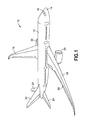
- FIG. 1 is an illustration of a perspective view of an exemplary aircraft 10 that may incorporate a composite structure 26 made from the composite prepreg materials in accordance with this disclosure.
- the aircraft 10 comprises a fuselage 12, a nose 14, a cockpit 16, wings 18, one or more propulsion units 20, a vertical tail portion 22, and horizontal tail portions 24.
- the aircraft 10 shown in FIG. 1 is an illustration of a perspective view of an exemplary aircraft 10 that may incorporate a composite structure 26 made from the composite prepreg materials in accordance with this disclosure.
- the aircraft 10 comprises a fuselage 12, a nose 14, a cockpit 16, wings 18, one or more propulsion units 20, a vertical tail portion 22, and horizontal tail portions 24.
- 1 is generally representative of a commercial passenger aircraft having one or more composite structures 26, the teachings of the disclosed embodiments may be applied to other passenger aircraft, cargo aircraft, military aircraft, rotorcraft, and other types of aircraft or aerial vehicles, as well as aerospace vehicles, satellites, space launch vehicles, rockets, and other aerospace vehicles, as well as boats and other watercraft, trains, automobiles, trucks, buses, or other suitable vehicles or items having composite structures.
- the composite structures 26 may be any type of structure that is manufactured, fabricated or assembled, in whole or in part, from one or more component parts made from composite materials.
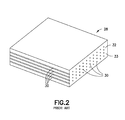
- An exemplary illustration of a typical CFRP-type of composite material 28 is shown in FIG. 2 comprising a single layer of carbon reinforcement fibers 30 impregnated with a matrix material 32.
- the matrix material 32 surrounds, binds and supports the carbon reinforcement fibers 30 and is generally a non-conductive polymer such as an epoxy resin 33.
- an aerospace-grade resin is used as the matrix material 32, having four (4) epoxide groups in each epoxy monomer molecule to form multiple connections.
- the molecules are tri-or tetra-functional epoxies and bifunctional amines.
- Aerospace-grade resins suitable for use with the composite prepreg materials of this disclosure include epoxy-amine resin systems having a cure temperature in the range of about 250°F to 355°F. Examples of such resins include, but are not limited to, a toughened epoxy resin 3900-2 available from Toray Resin Company, a division of Toray Industries, Inc., Troy, Michigan, and the CYCOM® 977-3 and CYCOM® 5320-1 curing resins available from Cytec Industries Inc., West Paterson, New Jersey.
- graphene has attracted tremendous research interest in recent years, particularly in the field of electronics.
- Graphene can now be made flawlessly or with controlled flaws in a molecular monolayer of unlimited length and width (i.e., it may be scaled for roll-to-roll processing), with grain size on the order of 100 nanometers.
- the controlled flaws can include amino-terminated groups (or amine groups) or other chemical functionalization with controlled density.
- Graphene may also be formed with holes having a predetermined size and location.
- graphene can now be oxidized by weak acids in whole or in part to form graphene derivatives, such as graphene oxide (GO) and reduced graphene oxide (rGO), having epoxide groups throughout the graphene, on part of the graphene, or only at its edges.
- graphene oxide GO
- rGO reduced graphene oxide
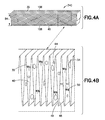
- FIGS. 3A , 3B , 4A and 4B illustrate exemplary embodiments of composite prepreg materials 34A, 34B, 34C, respectively, wherein a plurality of layers of graphene films 35 are stacked on top of one another such that upper surfaces 48 and lower surfaces 49 of adjacent layers 38 of graphene film 35 are in contact ( FIGS. 3A , 3B ) and wherein a graphene film 35 is folded to form a crumpled graphene sheet 40 ( FIGS. 4A, 4B ).
- the graphene film 35 employed in all of the embodiments disclosed herein is formed as a long graphene sheet having a width that spans a desired width of a composite prepreg material from a first edge 44 to a second edge 46.
- the graphene film 35 may have a width of 12 inches, 48 inches or 10 meters, or any other width suitable for a composite prepreg material.
- the graphene film 35 may include functionalization on an upper surface 48 and/or on a lower surface 49 of the graphene film 35 and/or at one or both of the first edge 44 and the second edge 46 or other edges in the graphene film 35.
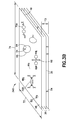
- FIG. 5 is an blown-up illustration of a roll 43 of functionalized graphene film 35 wound on a spool 42 functionalized with added amine groups 50 on the upper surface 48 of the graphene film 35, and added epoxide groups 54 on the first edge 44 of the graphene film 35.
- Epoxide groups 54 may be added on any edge of the graphene film 35.
- Amine groups 50 may also be added to the lower surface 49 of the graphene film 35.
- the amine groups 50 on the upper surface 48 and/or lower surface 49 of the graphene film 35 have a surface density of about 4.0E10 to about 2.0E13 groups per square millimeter of the graphene film 35.
- the surface density of amine groups 50 may also be described as about 0.1% to about 10.0% of carbon atoms 53 in the graphene film 35 have amine groups 50 bonded thereto. That is, 1 to 100 carbon atoms 53 per 1,000 carbon atoms in the graphene film 35 have an amine group 50 bonded thereto.
- the upper surface 48 and/or lower surface 49 of the graphene film 35 may be functionalized with amine groups 50 by several methods including, for example, the methods disclosed in U.S. Publication No. 2014/0121350 A1 to YOU et al., published May 1, 2014 , for preparing a polyimide-graphene composite material, and the method disclosed in Matei, Dan G. et al., "Functional Single-Layer Graphene Sheets from Aromatic Monolayers," Advanced Materials, 2013, 25, 4146-4151, WILEY-VCH Verlag GmbH & Co., Weinheim, Germany .
- polycyclic aromatic hydrocarbon (PAH) molecules 56 adsorb to a substrate 58, and the interactions of their aromatic rings cause them to form a self-assembled monolayer (SAM) 60.
- SAM self-assembled monolayer
- the remainder of each PAH molecule 56 beyond its first aromatic ring sticks up from the SAM 60.
- the PAH molecules 56 may be delivered to the substrate 58 via nozzles 57 arranged across a width of the substrate 58.
- a SAM 60 with additional amine groups 50 can be formed. For example, one out of every 100 aromatic molecules may have an extra amine group 50 sticking up out of it.
- FIG. 6 polycyclic aromatic hydrocarbon
- amine groups 50 may be formed anywhere on the bare substrate 58 such that the entire graphene film 35 is functionalized.
- the graphene film 35 may be flipped over to add amine groups to the lower surface 49 or amine groups 50 may be added to both the upper surface 48 and the lower surface 49 at the same time.
- Electron irradiation is used to induce bonds between the aromatic molecules at the substrate 58 to form a carbon nanomembrane (CNM).
- CCM carbon nanomembrane
- amine groups 50 may be used, and any type of amine structure may be added including, for example, 4, 4' diamino diphenyl sulfone; 1-(4-aminophenyl)-1,3,3-trimethylindan-5-amine; N,N-bis(4-aminophenyl)benzene-1,4-diamine; 4,4'-methylenedianiline; 4,4'-oxydianiline; 3,3'-[1,3-phenylenebis(oxy)]dianiline; 4,4'-(9H-fluorene-9,9-diyl)dianiline; 4,4'-[1,3-phenylenebis(oxy)]dianiline; 4,4'-methylenebis(2-ethylaniline); 3,3'-[(2,2-dimethylpropane-1,3-diyl)bis(oxy)]dianiline; 3,3'-[1,4-phenylenebis(methylene)]dianiline; 4,4'-sulfon
- the graphene film 35 has a linear density of epoxide groups 54 formed on at least one of the first edge 44 and the second edge 46 of the graphene film 35 of about 7,000 to about 1,400,000 groups per millimeter.
- the density of epoxide groups 54 may also be represented as about 0.1% to about 20% of carbon atoms at the first edge 44 of the graphene film 35 have epoxide groups 54 bonded thereto. That is, 1 to 200 carbon atoms 53 per 1,000 carbon atoms 53 has an epoxide group 54 bonded thereto.
- Epoxide groups 54 may be formed on any edge in the graphene film 35.
- Graphene film 35 may be functionalized with additional epoxide groups 54 by oxidation.
- Graphene in general, can be oxidized by weak acids in whole or in part to form graphene derivatives, such as graphene oxide (GO) and reduced graphene oxide (rGO), having epoxide groups 54 throughout the graphene derivative, on part of the graphene derivative, or only at its edges.
- the weak acid would first attack the edges of the graphene film 35 where there are hydrogen terminations 62.
- the amount of oxidation is determined by the acid strength and exposure time.
- weak acids include formic acid, acetic acid and hydrogen sulfide. It is noted that "weak" does not mean that acid has a high pH.
- an acid is described as weak if it is only partially ionized in solution. Exposing the amine-functionalized graphene film 35 to a solution of formic acid for up to 30 minutes and then cleaning with ethanol may provide the desired density of epoxide groups 54.
- epoxide groups 54 may be used, and any type of epoxide structures may be added including, for example, 2,2'-[propane-2,2-diylbis(4,1-phenyleneoxymethylene)]dioxirane; 2,2'-[methylenebis(4,1-phenyleneoxymethylene)]dioxirane; 2,2'-[methylenebis(2,1-phenyleneoxymethylene)]dioxirane; 2,2'-[ethane-1,1-diylbis(4,1-phenyleneoxymethylene)]dioxirane; (Bis M); 4-(oxiran-2-ylmethoxy)-N,N-bis(oxiran-2-ylmethyl)aniline; 2,2'-[thiobis(4,1-phenyleneoxymethylene)]dioxirane; 2,2'-[sulfonylbis(4,1-phenyleneoxymethylene)]dioxirane; 2,2'-[butane-1,
- graphene film 35 may be further functionalized by adding at least one hole 64 through the graphene film 35 to provide additional edges 66 where epoxide groups 54 can form.
- the at least one hole 64 may be formed by providing energy (such as with a laser) to remove molecules from the SAM prior to formation of the CNM, as disclosed herein.
- the at least one hole 64 is formed in the graphene film 35 to have a substantially circular shape with a diameter of about 1-2 nanometers and a size of about 6-80 carbon atoms 37. That is, about 6-80 carbon atoms 53 are removed from the graphene film 35 to form the at least one hole 64 in the graphene film 35.
- the at least one hole 64 may be positioned anywhere on the graphene film 35.
- the graphene film 35 has a density of holes 64 in the range of about 4E7 to about 4E10 holes per square millimeter, or about 1 hole per 1,000 to 1 million carbon atoms.
- the holes 64 in the graphene film 35 provide space for molecules in, for example, a resin matrix material 32 to penetrate the holes 64 and be mechanically constrained by the graphene film 35, thereby further improving bonding capabilities.
- the upper surface 48 and/or lower surface 49 of the graphene film 35 may be further functionalized with a density of amine monomers 68 and epoxy monomers 70A, 70B, each having a density in the range of about 1E-3 to 4E-2 (0.001 to 0.04) grams per square meter.
- the epoxy monomers 70A, 70B may be bifunctional epoxy monomers 70A or tetrafunctional epoxy monomers 70B.
- Fig. 3B shows the amine monomers 68 and epoxy monomers 70A, 70B on the graphene film 35 prior to bonding.
- the amine monomers 68 and epoxy monomers 70A, 70B may be deposited onto the upper surface 48 and/or lower surface 49 of the graphene film 35 using known spray coating methods and equipment.
- An exemplary amine monomer 68 is 44'DDS, which is readily available from many manufacturers including, for example, Jinan Haohua Industry Co. and Wuhan Fortuna Chemical Co. in China.
- An exemplary epoxy monomer 70A, 70B is BisF, which is also readily available from many manufacturers, including, for example, Watson International and Hangzhou Dayangchem Co. in China.
- the amine monomers 68 and epoxy monomers 70A, 70B are placed on one of the upper surface 48 and/or lower surface 49 of the graphene film 35.
- FIG. 3A shows one embodiment of a stacked composite prepreg material 34A comprising a plurality of layers of graphene film 35 having a size that spans an entire width 72 and an entire length 74 of the stacked composite prepreg material 34A. That is, each of the plurality of layers of graphene film 35 is formed to have the same width 72 and length 74 of the stacked composite prepreg material 34A.
- the graphene film 35 is functionalized with holes 64 that are roughly circular in shape and have a size of about 6-19 carbon atoms 53, amine groups 50 having a surface density on both the upper surface 48 and the lower surface 49 of the graphene film 35 of about 4.0E10 to about 4.0E13 groups per square millimeter of the graphene film 35 and epoxide groups 54 formed on the edges 76 of the graphene film 35 and the additional edges 66 in the holes 64 of about 7,000 to about 1,400,000 groups per millimeter.
- FIG. 5 shows a graphene film 35 with a hole 64 having a size of 6 carbon atoms 53, i.e., 6 carbon atoms 53 are removed from the graphene film 35 to form the hole 64.
- a preferred thickness of the stacked composite prepreg material 34A is about 0.006 inches, but any thickness may be used for a desired purpose.
- the layers of graphene film 35 may be stacked to form a stacked composite prepreg material 34A having a defined thickness that can later be built up to a thickness of a composite structure 26, or the layers of graphene film 35 can be stacked to form a stacked composite prepreg 34A having a thickness and thickness contour of the composite structure 26.
- the stacked composite prepreg material 34A can then be cured in accordance with known processes and equipment for curing composite prepreg materials.
- the stacked composite prepreg material 34A may be formed in many ways.
- the graphene film 35 may be cut and the cut parts can be stacked on top of one another. That process can continue until the desired thickness of the composite prepreg material 34A is achieved.
- Another method of stacking the graphene films 35 is to merge two or more graphene film production lines to form a continuous multi-layer graphene laminate. A length of the continuous multi-layer graphene laminate may be cut to form the composite prepreg material 34A, or the continuous multi-layer graphene laminate may be cut to a desired size and stacked, and cut and stacked.
- a composite prepreg material 34A having 1,024 layers of graphene film 35 from a 100 meter wide graphene film 35
- Cutting may also be done from the length of the graphene film 35.
- the graphene film 35 may be cut with a machine-mounted blade or electron beam, or with any other equipment or processes suitable for cutting graphene film 35.
- the stacked layers of graphene film 35 are then heated to form epoxy-amine bonds 78 between adjacent layers 38 of the graphene film 35.
- the chemical structure of a typical epoxy-amine bond 78 is shown in FIG. 3A (in enlarged view) where an epoxide group 54 on an additional edge 66 in a hole 64 in a first graphene film layer 80 has reacted with an amine group 50 on the upper surface 48 of a second graphene film layer 82. Similar reactions occur between amine groups 50 on the lower surface 49 of the first graphene film layer 80 and the epoxide groups 54 on the edges 76 of the second graphene film layer 82.
- every functionalized area (i.e., amine groups 50 and epoxide groups 54) on the graphene film 35 is connected to a functionalized area on an adjacent layer 38 of graphene film 35 via the formed epoxy-amine bonds 78.
- the stacked composite prepreg material 34A has a density of epoxy-amine bonds 78 that is the same as the densities of amine groups 50 and epoxide groups 54 disclosed above. The composite prepreg material 34A can then be formed into a composite structure and cured.
- FIG. 3B shows another embodiment of a stacked composite prepreg material 34B comprising a plurality of layers of graphene film 35 having a size that spans an entire width 72 and an entire length 74 of the stacked composite prepreg material 34B. That is, each of the plurality of layers of graphene film 35 is formed to have the same width 72 and length 74 of the stacked composite prepreg material 34B.
- the graphene film 35 is functionalized with holes 64 that are roughly circular in shape and have a size of about 12-80 carbon atoms 53, amine groups 50 having a surface density on both the upper surface 48 and the lower surface 49 of the graphene film 35 of about 4.0E10 to about 4.0E13 groups per square millimeter of the graphene film 35 and epoxide groups 54 formed on the edges 76 of the graphene film 35 and the additional edges 66 in the holes 64 of about 7,000 to about 1,400,000 groups per millimeter.
- the graphene film 35 in this embodiment is further functionalized with a density of amine monomers 68 (such as 44'DDS) and a density of epoxy monomers 70A, 70B (such as Bisphenyl F) each about 1.0E-3 to about 4.0E-2 (i.e., about 0.001 to about 0.04) grams per square meter.
- the epoxy monomer 70A is shown as a bifunctional epoxy monomer on an upper surface 48 of the graphene film 35.
- the epoxy monomer 70B is shown as a tetrafunctional epoxy monomer on the upper surface 48 of the graphene film 35.
- the layers of graphene film 35 in this embodiment may be stacked as in the previous embodiment to a desired thickness, such as the thickness of a traditional prepreg, of about 0.006 inch.
- This embodiment results in a composite prepreg material 34B that is a substitute for traditional prepreg, and having a series of laminated graphene films 35 bonded through epoxy-amine bonds 78 between adjacent layers 38 of graphene film 35 as in the first embodiment or with epoxy-amine macromolecules (not shown) made from amine monomers 68 and epoxy monomers 70A, 70B bonding together.
- the amine monomers 68 and epoxy monomers 70A, 70B can be sprayed onto the graphene film 35.
- Another approach would be to pick up the graphene film 35 on a perimeter pick up spool, and deposit the amine monomers 68 and epoxy monomers 70A, 70B on the graphene film 35 as the pickup spool is rotated, such that the graphene film 35 is layered or stacked at the same time the amine monomers 68 and epoxy monomers 70A, 70B are deposited.
- This laminated film would then be cut from the spool and formed to the final part shape.
- the result of this embodiment is a composite prepreg material that is as long as the perimeter of the spool.
- a stacked composite prepreg material 34B employ various combinations of amine groups 50, epoxide groups 54, amine monomers 68 and/or epoxy monomers 70A, 70B.
- the graphene film 35 is functionalized with amine groups 50 having a surface density on both the upper surface 48 and the lower surface 49 of the graphene film 35 of about 4.0E10 to about 4.0E13, preferably in the higher range of about 4.0E12 to about 4.0E13, groups per square millimeter of the graphene film 35 and a density of epoxy monomers 70A, 70B (such as Bisphenyl F) of about 1.0E-3 to about 4.0E-2 (i.e., about 0.001 to about 0.04) grams per square meter on at least one surface of the graphene film 35.
- epoxy monomers 70A, 70B such as Bisphenyl F
- the graphene film 35 is functionalized with epoxide groups 54 formed on the edges 76 of the graphene film 35 and the additional edges 66 in the holes 64 of about 7,000 to about 1,400,000, preferably in the higher range of about 140,000 to about 1,400,000, groups per millimeter and a density of amine monomers 68 (such as 44'DDS) of about 1.0E-3 to about 4.0E-2 (i.e., about 0.001 to about 0.04) grams per square meter.
- This embodiment does not require any amine groups 50 or epoxide monomers 70A, 70B.
- FIGS. 4A and 4B show another embodiment where a folded composite prepreg material 34C comprises a graphene film 35 that has been folded to form a crumpled graphene sheet 40 having a height 84 that spans an entire height 84 of the composite prepreg material 34C.
- the graphene film is functionalized with holes 64 having a size of greater than about 100 carbon atoms, amine groups 50 having a surface density on both the upper surface 48 and the lower surface 49 of the graphene film 35 of about 4.0E10 to about 2.0E12 groups per square millimeter of the graphene film 35, and epoxide groups 54 formed on at least one edge 44 of the graphene film 35 of about 7,000 to about 700,000 groups per millimeter.
- the surface density of amine groups 50 may also be described as about 0.1% to about 5.0% of carbon atoms 53 in the graphene film 35 have amine groups 50 bonded thereto. That is, 1 to 50 carbon atoms 53 per 1,000 carbon atoms in the graphene film 35 have an amine group 50 bonded thereto.
- the density of epoxide groups 54 may also be represented as about 0.1% to about 10% of carbon atoms in the graphene film 35 have epoxide groups 54 bonded thereto. That is, 1 to 100 carbon atoms 53 per 1,000 carbon atoms 53 has an epoxide group 54 bonded thereto.
- the graphene film 35 in this embodiment may also be functionalized with a density of amine monomers 68 and epoxy monomers 70A, 70B as described above on at least one of the upper surface 48 or the lower surface 49 of the graphene film 35 in the range of about 1.0E-3 to about 4.0E-2 grams per square meter.
- the amine monomers 68 and epoxy monomers 70A, 70B move through the holes 64 in the graphene film 35.
- the graphene film 35 optionally may include regularly spaced lines 86 extending across a width 88 of the graphene film 35 to assist with folding the graphene film 35 to form the crumpled graphene sheet 40.
- the lines 86 permit the graphene film 35 to fold in an accordion style back and forth along the lines 86.
- the lines 86 are formed by chemical modification of the upper surface 48 and/or lower surface 49 of the graphene film 35 in regularly spaced lines 86 that are preferentially weaker than unmodified portions of the graphene film 35, thus permitting the graphene film 35 to fold or crumple along the lines 86.
- Such chemical modification may be achieved by using a laser to instigate a change in the upper surface 48 and/or lower surface 49 of the graphene film 35 during the process of producing the graphene film 35, such as a weaker area where some portion of carbon bonds in the graphene film 35 have been modified or perforations 90 along the lines 86.
- the lines 86 are preferably regularly spaced apart by a distance 92 approximately equal to the desired thickness of the composite prepreg material 34C (or height 84 of the crumpled graphene sheet 40). For example, to make a crumpled composite prepreg material 34C with a typical prepreg thickness of 0.006 inch, the lines 86 should be spaced apart by a distance 92 of 0.006 inch.
- the graphene film 35 may also be functionalized with 5-7 defects 94 along the lines 86 where the regular hexagonal lattice of carbon atoms 53 in the graphene film 35 is distributed into a pentagon connected to a heptagon.
- the defects may be 5-7 carbon defects formed, for example, by ion irradiation of the graphene film 35.
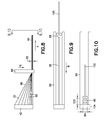
- FIG. 8 illustrates one way of forming the crumpled graphene sheet 40 that is used to make the folded composite prepreg material 34C.
- the graphene film 35 may be unrolled from a spool 42 and pulled continuously through a folding case 96 in a direction shown by arrow A. Force is applied to one end 98 of the graphene film 35 in a direction shown by arrow B as it is pulled through the folding case 96 to cause the graphene film 35 to fold in an accordion style back and forth (along the lines 86 if present) and form the crumpled graphene sheet 40.
- the folding process may be done continuously, with roll-to-roll processing, therefore not requiring any manual intervention, or it may be done manually.
- the force may be applied gradually or in increments to gradually fold the graphene film 35 along the lines 86, or as shown in FIGS. 9-10 , a plunger 100 may be used to apply the force to the end 98 of the graphene film 35 in the direction shown by arrow B.
- the graphene film 35 is inserted through the folding case 96.
- the plunger 100 is moved in the direction shown by arrow B to a final height 102 above the base 104 of the folding case 96 that is the same as the distance 92 between spaced apart line 86 in the graphene film 35.
- the graphene film 35 is 10 meters wide, 0.4 nanometers thick and 200 meters long as it is unwound from the roll 42 and folded into a crumpled graphene sheet 40 that is 0.3 meter wide, 0.15 mm thick (0.006 inch) and 200 meters long.
- the length of the graphene film 35 does not change.
- the crumple graphene sheet 40 After the crumple graphene sheet 40 is formed, or as it emerges from the folding case 96, it has a thickness or height 84 equal to the spaced apart distance 92 between the lines 86, and a width 85 having a size dependent on the width 88 of the graphene film 35. Resin is applied along the width 85 of the crumpled graphene sheet 40 either on the top 106 or the bottom 108 (see FIG. 4A ) of the crumpled graphene sheet 40, or on both the top 106 and the bottom 108.
- the resin may be applied to the crumpled graphene sheet 40 with equipment and processes known for preparing prepreg, such as feeding a film of resin on backing paper and the crumpled graphene sheet 40 through heated rollers to form the crumpled composite prepreg material 34C.
- the crumpled composite prepreg material 34C may be used as a substitute for traditional prepreg materials. It can be cut to a desired shape and a plurality of cut to shape crumpled composite prepreg materials 34C may be laid up (or laminated together) and then cured to form a composite structure 26.
- the crumpled composite prepreg material 34C may be formed into a particular shape of the desired composite structure 26 by folding the graphene film 35 into the particular shape to form a crumpled graphene sheet 40 having the particular shape that can be infused with resin as described above and cured.
- Resin may be infused into crumpled graphene sheet 40 using known processes and equipment, such as Resin Transfer Molding (RTM) processes.
- RTM Resin Transfer Molding
- the crumpled graphene sheet 40 can be placed in a mold having the particular shape, and the mold is closed. Resin is infused into the mold by applying a pressure difference between the air inside the mold and outside the mold so resin will flow into the mold through inlet pipes and air/gas flows out of the mold through outlet pipes.
- the resin displaces air so the result is a fully dense composite structure 26.
- crumpled composite prepreg materials 34C have improved graphitic carbon content over traditional CFRPs, and improved load transfer between resin and carbon.
- the crumpled composite prepreg material 34C is a macromolecule comprised of the base amine monomer (such as 44'DDS), base epoxy monomer (such as Bisphenyl F), and a single graphene macromolecule.
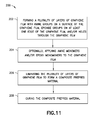
- FIG. 11 is an illustration of a flow diagram of an exemplary embodiment of a method 200 of making a stacked composite prepreg material 34A, 34B as shown in FIGS. 3A and 3B .
- the method 200 comprises step 202 of forming a plurality of layers of graphene film 35 optionally having amine groups 50 formed on an outer surface 48 of the graphene film 35, epoxide groups 54 formed on at least one of the first edge 44 and second edges 46 of the graphene film 35, and/or holes 44 formed through the graphene film 35 in accordance with the disclosure above.
- amine monomers 68 and/or epoxy monomers 70A, 70B may be applied to the graphene film as disclosed above.
- step 206 the plurality of layers of graphene film 35 are stacked and laminated together through epoxy-amine bonds 78 to form a stacked composite prepreg material 34A, 34B as disclosed above.
- step 208 the stacked composite prepreg material 34A, 34B may be combined with other stacked composite prepreg materials 34A, 34B or traditional prepreg materials and cured to form a composite structure 26.
- FIG. 12 is an illustration of a flow diagram of another exemplary embodiment of a method 300 of making a crumpled composite prepreg material 34C as shown in FIGS. 4A and 4B .
- the method 300 comprises step 302 of forming a plurality of layers of graphene film 35 optionally having amine groups 50 formed on an outer surface 48 of the graphene film 35, epoxide groups 54 formed on at least one of the first edge 44 and second edges 46 of the graphene film 35, and/or holes 44 formed through the graphene film 35 in accordance with the disclosure above.
- Other functionalization of the graphene film 35 may be applied, as well as lines 86 to assist with folding.
- step 304 the graphene film 35 is folded as described above to form the crumpled graphene sheet 40.
- amine monomers 68 and/or epoxy monomers 70A, 70B may be applied to the crumpled graphene sheet as disclosed above.
- step 308 the crumpled graphene sheet 40 is cured to form the crumpled composite prepreg material 34C is cured, or resin may be applied prior to curing.
- a composite prepreg material comprising a plurality of layers of graphene film having a size that spans an entire width and an entire length of the composite prepreg material, each of the layers of graphene film being functionalized with holes formed through the graphene film, amine groups formed on both an upper and a lower surface of the graphene film and/or epoxide groups formed on at least one edge of the graphene film.
- the composite prepreg material wherein the layers of graphene film are stacked on top of one another such that upper and lower surfaces of adjacent layers of the graphene film are in contact.
- the composite prepreg material wherein the adjacent layers of the graphene film are bonded together through epoxy-amine bonds.
- the composite prepreg material wherein the graphene film further comprises a density of amine monomers and epoxy monomers of about 1.0E-3 to about 4.0E-2 grams per square meter.
- the composite prepreg material wherein the graphene film is functionalized with holes having a size of about 6-19 carbon atoms, amine groups having a surface density on both the upper and the lower surface of the graphene film of about 4.0E10 to about 4.0E13 groups per square millimeter of the graphene film and epoxide groups formed on the at least one edge of about 7,000 to about 1,400,000 groups per millimeter.
- the composite prepreg material wherein the graphene film has a density of holes in the range of about 4E7 to about 4E10 holes per square millimeter, or about one hole per 1,000 to 1 million carbon atoms.
- the composite prepreg material wherein the graphene film is folded to form a crumpled graphene sheet having a height that spans an entire height of the composite prepreg material.
- the composite prepreg material wherein the graphene film is functionalized with holes having a size of greater than about 100 carbon atoms, amine groups having a surface density on both the upper and the lower surface of the graphene film of about 4.0E10 to about 4.0E13 groups per square millimeter of the graphene film and epoxide groups formed on the at least one edge of about 7,000 to about 1,400,000 groups per millimeter
- the composite prepreg material wherein the graphene film further comprises a density of amine monomers and epoxy monomers on at least one surface of the graphene film in the range of about 1.0E-3 to about 4.0E-2 grams per square meter.
- the composite prepreg material wherein the graphene film further comprises lines extending across a width of the graphene film where some portion of carbon bonds in the graphene film have been modified to permit the graphene film to preferentially fold along the lines.
- a method of making a composite prepreg material comprising the steps of forming a plurality of layers of graphene film functionalized with holes formed through the graphene films, amine groups formed on both an upper and a lower surface of the graphene film and/or epoxide groups formed on at least one edge of the graphene film and having a size that spans an entire width and an entire length of the composite prepreg material; and laminating the plurality of layers of graphene film to form the composite prepreg material.
- the method wherein forming the plurality of layers of graphene film comprises stacking the plurality of layers on top of one another such that upper and lower surfaces of adjacent layers of the graphene film are in contact.
- laminating the plurality of layers of the graphene film comprises applying heat to form epoxy-amine bonds between the adjacent layers of graphene film.
- the method wherein the graphene film is functionalized with holes having a size of about 12-80 carbon atoms, amine groups having a surface density on both the upper and the lower surface of the graphene film of about 4.0E10 to about 4.0E13 groups per square millimeter of the graphene film and epoxide groups formed on the at least one edge of about 7,000 to about 1,400,000 groups per millimeter.
- the method wherein the graphene film further comprises a density of amine monomers and epoxy monomers in the range of about 1.0E-3 to about 4.0E-2 grams per square meter.
- the graphene film is functionalized with holes having a size of about 12-80 carbon atoms, amine groups having a surface density on both the upper and the lower surface of the graphene film of about 4.0E12 to about 4.0E13 groups per square millimeter of the graphene film, and a density of epoxy monomers on at least one surface of the graphene film about 1.0E-3 to about 4.0E-2 grams per square meter.
- the method wherein the graphene film has a density of holes in the range of about 4E7 to about 4E10 holes per square millimeter, or about one hole per 1,000 to 1 million carbon atoms.
- the method wherein forming the plurality of graphene layers comprises folding the graphene film to form a crumpled graphene sheet having a height that spans an entire height of the composite prepreg material.
- the graphene film is functionalized with holes having a size of greater than about 100 carbon atoms, amine groups having a surface density on both the upper and the lower surface of the graphene film of about 4.0E10 to about 4.0E13 groups per square millimeter of the graphene film and epoxide groups formed on the at least one edge of about 7,000 to about 1,400,000 groups per millimeter.
- the graphene film further comprises a density of amine monomers and epoxy monomers on at least one surface of the graphene film in the range of about 1.0E-3 to about 4.0E-2 grams per square meter.
- the method further comprising modifying a portion of carbon bonds in the graphene film along lines extending across a width of the graphene film, and folding the graphene film along the lines.
- the method further comprising impregnating a film of resin onto both a top and a bottom of the crumpled graphene sheet.
- the method further comprising forming the crumpled graphene sheet into a final product shape, infusing a resin into the crumpled graphene sheet via resin transfer molding and curing the crumpled graphene sheet to form a composite material.
Landscapes
- Engineering & Computer Science (AREA)
- Chemical & Material Sciences (AREA)
- Ceramic Engineering (AREA)
- Mechanical Engineering (AREA)
- Chemical Kinetics & Catalysis (AREA)
- Health & Medical Sciences (AREA)
- Medicinal Chemistry (AREA)
- Polymers & Plastics (AREA)
- Organic Chemistry (AREA)
- Composite Materials (AREA)
- Manufacturing & Machinery (AREA)
- Reinforced Plastic Materials (AREA)
- Laminated Bodies (AREA)
Abstract
Description
- This disclosure generally relates to composite materials formed from graphene sheets or films, composite structures including component parts made from graphene composite materials, and methods for manufacturing graphene composite materials and composite structures with component parts made from graphene composite materials.
- Composite materials are used in the manufacture of a wide variety of structures and component parts due to their high strength and rigidity, low weight, corrosion resistance and other favorable properties. For example, in the aerospace industry, composite materials are becoming widely used to manufacture aerospace structures and component parts for aerospace structures such as aircraft ribs, spars, panels, fuselages, wings, wing boxes, fuel tanks, tail assemblies and other component parts of an aircraft because they are lightweight and strong, and therefore provide fuel economy and other benefits. As used herein, the term "composite structure" means a structure that is manufactured, fabricated or assembled, in whole or in part, from one or more component parts made from composite materials (i.e., composite components) including, without limitation, aerospace structures.
- One type of composite material commonly used in the aerospace industry is carbon fiber reinforced plastic ("CFRP"). CFRP generally comprises one or more composite layers or plies laminated together to form a sheet, laminate or layup. Each of the composite layers or plies comprises a reinforcement material and a matrix material. The matrix material surrounds, binds and supports the reinforcement material, and is generally a non-conductive polymer such as an epoxy resin. For aerospace applications, an aerospace grade resin is used as the matrix material, typically having four (4) epoxide groups in each epoxy monomer molecule to form multiple connections. The reinforcement material provides structural strength to the matrix material and the CFRP, and generally consists of strands of carbon fiber or carbon filaments, which are electrically conductive. Carbon fibers are typically formed as carbon tows comprising a defined number of carbon filaments. For aerospace applications, carbon tows may comprise bundles of carbon filaments ranging from about 1,000 to about 24,000 carbon filaments; carbon tows having up to about 300,000 carbon filaments may be used in other applications.
- It is desirable to increase the amount of carbon in CFRP to further improve mechanical and/or electrical properties of composite structures without increasing weight or disturbing other desirable properties. But, simply increasing the amount of carbon fiber reinforcement material in CFRP does not meet this goal and is not cost efficient. Other forms of carbon, such as graphene, which has exceptional mechanical strength and thermal conductivity, would have beneficial effects in composite structures. Graphene is a hexagonal array of carbon atoms extending over two dimensions (i.e., it is one atom thick) that is typically produced in small flakes (or nanoplatelets). Each carbon atom in graphene is covalently bonded to three other carbon atoms, providing exceptional strength. However, mixing graphene into an epoxy resin comprising carbon fibers makes the epoxy resin weaker to strain in every direction because graphene will not bond with the carbon fibers and does not interact much with the epoxy resin.
- Accordingly, there is room for improving the mechanical and electrical properties of composite structures and related methods for manufacturing composite structures that provide advantages over known composite structures and manufacturing methods.
- The foregoing purposes, as well as others, are achieved with a composite prepreg material comprising a plurality of layers of graphene film, each of the layers of graphene film having a size that spans an entire width and an entire length of the composite material. Each layer of graphene film is functionalized with one or more of holes formed through the graphene film, amine groups formed on one or more surfaces of the graphene film, and/or epoxide groups formed on at least one edge of the graphene film. The plurality of layers of graphene film are formed either by stacking multiple layers of graphene on top of one another such that upper and lower surfaces of adjacent layers of graphene film are in contact and bonded together through epoxy-amine bonds, or the plurality of layers of graphene film may be formed by alternately folding a graphene film along spaced lines to form a crumpled graphene sheet having a height that spans an entire height of the composite prepreg material, where the graphene film folds together such that upper and lower surfaces of adjacent layers of graphene film are in contact.
- In one embodiment of a composite prepreg material, the graphene film is functionalized with holes having a size of about 12-80 carbon atoms, amine groups having a surface density on both upper and lower surfaces of the graphene film of about 4.0E10 to about 4.0E13 groups per square millimeter of the graphene film, and a density of epoxide groups formed on at least one of the edges of the graphene film of about 7,000 to about 1,400,000 groups per millimeter, including edges formed by the holes. The graphene film further comprises a density of amine monomers (such as 44'DDS) and epoxy mononers (such Bisphenyl F) on a surface of the graphene film of about 1.0E-3 to about 4.0E-2 grams per square meter. Multiple layers of the graphene film of this embodiment are stacked and bonded together through epoxy-amine bonds with functional sites on adjacent graphene films or with epoxy-amine macromolecules made from the amine and epoxy monomers, resulting in a composite prepreg material that is a substitute for traditional prepreg materials, such as the CFRP materials described in the Background. This result may also be achieved by adding only epoxy monomers and functionalizing the graphene film with a higher density of amine groups, or by adding only amine monomers and functionalizing the graphene film with a higher density of epoxide groups.
- In another embodiment of a composite prepreg material, the graphene film is functionalized with holes having a size of about 6-19 carbon atoms, amine groups having a surface density on both upper and lower surfaces of the graphene film of about 4.0E10 to about 4.0E13 groups per square millimeter of the graphene film, and a density of epoxide groups formed on at least one of the edges of the graphene film of about 7,000 to about 1,400,000 groups per millimeter, including edges formed by the holes. This embodiment does not include amine monomers or epoxy monomers, and therefore does not include any resin. Epoxy-amine bonds are formed in this and the previous embodiment between adjacent layers of the graphene film when heat is applied to form the composite prepreg material.
- In yet another embodiment of a composite prepreg material, the graphene film is folded along spaced-apart lines to form a crumpled graphene sheet having a height that spans an entire height of the composite prepreg material. The graphene film for this embodiment is functionalized with holes having a size of more than about 100 carbon atoms, amine groups having a surface density on upper and lower surfaces of the graphene film of about 4.0E10 to about 4.0E13 groups per square millimeter of the graphene film, and epoxide groups formed on the edges of the graphene film of about 7,000 to about 1,400,000 groups per millimeter, including edges formed by the holes. The graphene film further comprises a density of amine monomers (such as 44'DDS) and epoxy mononers (such Bisphenyl F) on a surface of the graphene film of about 1.0E-3 to about 4.0E-2 grams per square meter. After the graphene film is folded to form the crumpled graphene sheet, a resin film is hot pressed onto both the top and bottom surfaces of the crumpled graphene sheet and then cured to form a crumpled prepreg composite material. Alternatively, the crumpled graphene sheet may be formed into the final product shape and Resin Transfer Molding (RTM) may be used to infuse resin into the crumpled graphene sheet. In this embodiment, the crumpled prepreg composite material has improved graphitic carbon content as compared to traditional CFRP and improved load transfer between the resin film and the carbon in the graphene film. The composite prepreg material is a macromolecule comprised of the base amine monomer (such as 44"DDS), base epoxy monomer (such as Bisphenyl F) and a single graphene molecule.
- In accordance with a method of the disclosure, a method of making a composite prepreg material is provided. The graphene film is layered and the layers of graphene film are laminated or bonded together to form the composite prepreg material. The composite prepreg material may optionally be combined with a resin matrix material and cured to form a composite material with increased strength, stiffness and modulus for use in composite structures.
- Composite structures, including aerospace structures, comprising component parts made with the disclosed graphene composite prepreg materials, aircraft comprising such composite structures, and methods for making such composite structures are also considered to be within the scope of the present disclosure. Other objects, features, and advantages of the various embodiments in the present disclosure will be explained in the following detailed description with reference to the appended drawings.
-
-
FIG. 1 is an illustration of a perspective view of an aircraft that may incorporate the composite materials disclosed herein. -
FIG. 2 is an illustration of a typical composite material comprising carbon reinforcement fibers and a matrix material. -
FIG. 3A is an illustration of one embodiment of a stacked composite prepreg material in accordance with this disclosure. -
FIG. 3B is an illustration of another embodiment of a stacked composite prepreg material in accordance with this disclosure. -
FIG. 4A is an illustration of one embodiment of a crumpled composite prepreg material in accordance with this disclosure. -
FIG. 4B is an illustration showing a magnified view of a portion of the crumpled prepreg material inFIG. 4A . -
FIG. 4C is an illustration of a graphene film that may be used to make the crumpled composite prepreg material inFIGS. 4A and 4B , prior to folding the graphene film. -
FIG. 5 is an illustration of one embodiment of a functionalized graphene film that may be used in the composite prepreg materials of this disclosure. -
FIG. 6 is an illustration of exemplary equipment for producing a graphene film with amine group functionalization. -
FIG. 7 is an illustration of a section of a graphene film that is functionalized with a hole. -
FIG. 8 is an illustration of equipment that may be used for folding a graphene film to form the crumpled composite prepreg material shown inFIGS. 4A and 4B . -
FIG. 9 is an illustration of a right side view of the equipment shown inFIG. 8 before a plunger is activated to fold the graphene film. -
FIG. 10 is an illustration of a right side view of the equipment shown inFIG. 8 after the plunger is activated to fold the graphene film. -
FIG. 11 is an illustration of a flow diagram of an exemplary method for making a composite prepreg material in accordance with this disclosure. -
FIG. 12 is an illustration of a flow diagram of another exemplary method for making a composite prepreg material in accordance with this disclosure. - In the following detailed description, various embodiments of composite prepreg materials are described with reference to aerospace structures to illustrate the general principles in the present disclosure. It will be recognized by one skilled in the art that the present disclosure may be practiced in other analogous applications or environments and/or with other analogous or equivalent variations of the illustrative embodiments. For example, the composite prepreg materials may be used in any industry that seeks the benefits of strong and light-weight materials. One of ordinary skill in the art will recognize and appreciate that the disclosed composite prepreg materials and related methods of making and using the disclosed composite prepreg materials can be used in any number of applications involving such vehicles and structures. It should also be noted that those methods, procedures, components, or functions which are commonly known to persons of ordinary skill in the field of the disclosure are not described in detail herein.
- Referring more particularly to the drawings,
FIG. 1 is an illustration of a perspective view of anexemplary aircraft 10 that may incorporate acomposite structure 26 made from the composite prepreg materials in accordance with this disclosure. As shown inFIG. 1 , theaircraft 10 comprises afuselage 12, anose 14, acockpit 16,wings 18, one ormore propulsion units 20, avertical tail portion 22, andhorizontal tail portions 24. Although theaircraft 10 shown inFIG. 1 is generally representative of a commercial passenger aircraft having one or morecomposite structures 26, the teachings of the disclosed embodiments may be applied to other passenger aircraft, cargo aircraft, military aircraft, rotorcraft, and other types of aircraft or aerial vehicles, as well as aerospace vehicles, satellites, space launch vehicles, rockets, and other aerospace vehicles, as well as boats and other watercraft, trains, automobiles, trucks, buses, or other suitable vehicles or items having composite structures. - The
composite structures 26 may be any type of structure that is manufactured, fabricated or assembled, in whole or in part, from one or more component parts made from composite materials. An exemplary illustration of a typical CFRP-type ofcomposite material 28 is shown inFIG. 2 comprising a single layer ofcarbon reinforcement fibers 30 impregnated with amatrix material 32. Thematrix material 32 surrounds, binds and supports thecarbon reinforcement fibers 30 and is generally a non-conductive polymer such as anepoxy resin 33. For aerospace applications, an aerospace-grade resin is used as thematrix material 32, having four (4) epoxide groups in each epoxy monomer molecule to form multiple connections. Typically, the molecules are tri-or tetra-functional epoxies and bifunctional amines. Since one component is at least trifunctional, the result of the extensive epoxy-amine chemical reaction is a dendrimeric structure, which provides strength and toughness greater than non-aerospace grade bifunctional epoxy resins. Aerospace-grade resins suitable for use with the composite prepreg materials of this disclosure include epoxy-amine resin systems having a cure temperature in the range of about 250°F to 355°F. Examples of such resins include, but are not limited to, a toughened epoxy resin 3900-2 available from Toray Resin Company, a division of Toray Industries, Inc., Troy, Michigan, and the CYCOM® 977-3 and CYCOM® 5320-1 curing resins available from Cytec Industries Inc., West Paterson, New Jersey. - In view of its exceptional properties, graphene has attracted tremendous research interest in recent years, particularly in the field of electronics. Graphene can now be made flawlessly or with controlled flaws in a molecular monolayer of unlimited length and width (i.e., it may be scaled for roll-to-roll processing), with grain size on the order of 100 nanometers. The controlled flaws can include amino-terminated groups (or amine groups) or other chemical functionalization with controlled density. Graphene may also be formed with holes having a predetermined size and location. In addition, graphene can now be oxidized by weak acids in whole or in part to form graphene derivatives, such as graphene oxide (GO) and reduced graphene oxide (rGO), having epoxide groups throughout the graphene, on part of the graphene, or only at its edges.
- It has been determined that using
composite prepreg materials graphene films 35 that are bonded together through epoxy-amine bonds and/or epoxy-amine marcomolecules to formcomposite materials 28 as disclosed herein as a replacement forcarbon reinforcement fibers 30 provides substantial benefits to the strength, stiffness and modulus of thecomposite materials 28.FIGS. 3A ,3B ,4A and 4B illustrate exemplary embodiments ofcomposite prepreg materials graphene films 35 are stacked on top of one another such thatupper surfaces 48 andlower surfaces 49 ofadjacent layers 38 ofgraphene film 35 are in contact (FIGS. 3A ,3B ) and wherein agraphene film 35 is folded to form a crumpled graphene sheet 40 (FIGS. 4A, 4B ). These embodiments are further described below. - The
graphene film 35 employed in all of the embodiments disclosed herein is formed as a long graphene sheet having a width that spans a desired width of a composite prepreg material from afirst edge 44 to asecond edge 46. For example, thegraphene film 35 may have a width of 12 inches, 48 inches or 10 meters, or any other width suitable for a composite prepreg material. Thegraphene film 35 may include functionalization on anupper surface 48 and/or on alower surface 49 of thegraphene film 35 and/or at one or both of thefirst edge 44 and thesecond edge 46 or other edges in thegraphene film 35.FIG. 5 is an blown-up illustration of aroll 43 of functionalizedgraphene film 35 wound on aspool 42 functionalized with addedamine groups 50 on theupper surface 48 of thegraphene film 35, and addedepoxide groups 54 on thefirst edge 44 of thegraphene film 35.Epoxide groups 54 may be added on any edge of thegraphene film 35.Amine groups 50 may also be added to thelower surface 49 of thegraphene film 35. - The amine groups 50 on the
upper surface 48 and/orlower surface 49 of thegraphene film 35 have a surface density of about 4.0E10 to about 2.0E13 groups per square millimeter of thegraphene film 35. The surface density ofamine groups 50 may also be described as about 0.1% to about 10.0% ofcarbon atoms 53 in thegraphene film 35 haveamine groups 50 bonded thereto. That is, 1 to 100carbon atoms 53 per 1,000 carbon atoms in thegraphene film 35 have anamine group 50 bonded thereto. - The
upper surface 48 and/orlower surface 49 of thegraphene film 35 may be functionalized withamine groups 50 by several methods including, for example, the methods disclosed inU.S. Publication No. 2014/0121350 A1 to YOU et al., published May 1, 2014 , for preparing a polyimide-graphene composite material, and the method disclosed in Matei, Dan G. et al., "Functional Single-Layer Graphene Sheets from Aromatic Monolayers," Advanced Materials, 2013, 25, 4146-4151, WILEY-VCH Verlag GmbH & Co., Weinheim, Germany. - In one method of producing
graphene film 35, illustrated inFIG. 6 , polycyclic aromatic hydrocarbon (PAH)molecules 56 adsorb to asubstrate 58, and the interactions of their aromatic rings cause them to form a self-assembled monolayer (SAM) 60. The remainder of eachPAH molecule 56 beyond its first aromatic ring sticks up from theSAM 60. ThePAH molecules 56 may be delivered to thesubstrate 58 vianozzles 57 arranged across a width of thesubstrate 58. By including a second species of PAH molecules with an amine group at some low concentration relative to the first PAH species, aSAM 60 withadditional amine groups 50 can be formed. For example, one out of every 100 aromatic molecules may have anextra amine group 50 sticking up out of it. InFIG. 6 , three of the fournozzles 57 deliver a first PAH species (PAH #1) and thefourth nozzle 57A positioned near oneedge 59 of thesubstrate 58 delivers a second PAH species (PAH #2) so theamine groups 50 are positioned near the oneedge 59, which becomes thefirst edge 44 in thegraphene film 35. Some mixing occurs between thenozzles gradient area 61 of increasing amine-functionalization toward the oneedge 59. This is just one arrangement. In preferred embodiments of this disclosure,amine groups 50 may be formed anywhere on thebare substrate 58 such that theentire graphene film 35 is functionalized. The surface of thesubstrate 58 that the PAH molecules adsorb to become theupper surface 48 of thegraphene film 35. Thegraphene film 35 may be flipped over to add amine groups to thelower surface 49 oramine groups 50 may be added to both theupper surface 48 and thelower surface 49 at the same time. Electron irradiation is used to induce bonds between the aromatic molecules at thesubstrate 58 to form a carbon nanomembrane (CNM). Temperature induced annealing in a vacuum or under protective atmosphere will complete the conversion of CNM into graphene. - Other methods of adding amine groups 50 may be used, and any type of amine structure may be added including, for example, 4, 4' diamino diphenyl sulfone; 1-(4-aminophenyl)-1,3,3-trimethylindan-5-amine; N,N-bis(4-aminophenyl)benzene-1,4-diamine; 4,4'-methylenedianiline; 4,4'-oxydianiline; 3,3'-[1,3-phenylenebis(oxy)]dianiline; 4,4'-(9H-fluorene-9,9-diyl)dianiline; 4,4'-[1,3-phenylenebis(oxy)]dianiline; 4,4'-methylenebis(2-ethylaniline); 3,3'-[(2,2-dimethylpropane-1,3-diyl)bis(oxy)]dianiline; 3,3'-[1,4-phenylenebis(methylene)]dianiline; 4,4'-sulfonylbis(N-methylaniline); 4,4'-[1,4-phenylenebis(oxy)]dianiline; 3,3'-sulfonyldianiline; aniline; 4,4'-(phenylphosphoryl)dianiline; 3-aminophenol; 4,4'-methylenedicyclohexanamine; 4,6-diethyl-2-methylbenzene-1,3-diamine; 2-(aminomethyl)-2,5,5-trimethylcyclohexanamine; 4,4'-thiodianiline; 2,2'-dimethylbiphenyl-4,4'-diamine; N-isopropyl-N'-phenylbenzene-1,4-diamine; N-(1,3-dimethylbutyl)-N'-phenylbenzene-1,4-diamine (Phenyl DMB); and N-cyclohexyl-N'-phenylbenzene-1,4-diamine (Phenyl CH).
- Referring to
FIG. 5 , thegraphene film 35 has a linear density ofepoxide groups 54 formed on at least one of thefirst edge 44 and thesecond edge 46 of thegraphene film 35 of about 7,000 to about 1,400,000 groups per millimeter. The density ofepoxide groups 54 may also be represented as about 0.1% to about 20% of carbon atoms at thefirst edge 44 of thegraphene film 35 haveepoxide groups 54 bonded thereto. That is, 1 to 200carbon atoms 53 per 1,000carbon atoms 53 has anepoxide group 54 bonded thereto.Epoxide groups 54 may be formed on any edge in thegraphene film 35. -
Graphene film 35 may be functionalized withadditional epoxide groups 54 by oxidation. Graphene, in general, can be oxidized by weak acids in whole or in part to form graphene derivatives, such as graphene oxide (GO) and reduced graphene oxide (rGO), havingepoxide groups 54 throughout the graphene derivative, on part of the graphene derivative, or only at its edges. The weak acid would first attack the edges of thegraphene film 35 where there arehydrogen terminations 62. The amount of oxidation is determined by the acid strength and exposure time. Examples of weak acids include formic acid, acetic acid and hydrogen sulfide. It is noted that "weak" does not mean that acid has a high pH. Instead, an acid is described as weak if it is only partially ionized in solution. Exposing the amine-functionalizedgraphene film 35 to a solution of formic acid for up to 30 minutes and then cleaning with ethanol may provide the desired density ofepoxide groups 54. - Other methods of adding epoxide groups 54 may be used, and any type of epoxide structures may be added including, for example, 2,2'-[propane-2,2-diylbis(4,1-phenyleneoxymethylene)]dioxirane; 2,2'-[methylenebis(4,1-phenyleneoxymethylene)]dioxirane; 2,2'-[methylenebis(2,1-phenyleneoxymethylene)]dioxirane; 2,2'-[ethane-1,1-diylbis(4,1-phenyleneoxymethylene)]dioxirane; (Bis M); 4-(oxiran-2-ylmethoxy)-N,N-bis(oxiran-2-ylmethyl)aniline; 2,2'-[thiobis(4,1-phenyleneoxymethylene)]dioxirane; 2,2'-[sulfonylbis(4,1-phenyleneoxymethylene)]dioxirane; 2,2'-[butane-1,4-diylbis(oxymethylene)]dioxirane; 3-(oxiran-2-ylmethoxy)-N,N-bis(oxiran-2-ylmethyl)aniline; 2,2'-oxybis(6-oxabicyclo[3.1.0]hexane); 2,2'-[1,4-phenylenebis(oxymethylene)]dioxirane; 2,2'-[prop-1-ene-1,2-diylbis(4,1-phenyleneoxymethylene)]dioxirane; 2,2'-[1,3-phenylenebis(oxymethylene)]dioxirane; 2,2'-[cyclohexane-1,2-diylbis(oxymethylene)]dioxirane; 2,2'-[(2,2-dichloroethene-1,1-diyl)bis(4,1-phenyleneoxymethylene)]dioxirane; 2,2'-[cyclohexane-1,4-diylbis(methyleneoxymethylene)]dioxirane; (Bis I); (Bis AF); (Bis Z); (Bis C); (Bis TMC); (Bis P); 2,2'-{propane-2,2-diylbis[(2,6-dibromo-4,1-phenylene)oxymethylene] }dioxirane; 7-oxabicyclo[4.1.0]hept-3-ylmethyl 7-oxabicyclo[4.1.0]heptane-3-carboxylate.
- Optionally, as shown in
FIG. 5 andFIG. 7 ,graphene film 35 may be further functionalized by adding at least onehole 64 through thegraphene film 35 to provideadditional edges 66 whereepoxide groups 54 can form. The at least onehole 64 may be formed by providing energy (such as with a laser) to remove molecules from the SAM prior to formation of the CNM, as disclosed herein. Preferably, the at least onehole 64 is formed in thegraphene film 35 to have a substantially circular shape with a diameter of about 1-2 nanometers and a size of about 6-80 carbon atoms 37. That is, about 6-80carbon atoms 53 are removed from thegraphene film 35 to form the at least onehole 64 in thegraphene film 35. As used herein, the term "substantially circular" means a shape that is either circular, approximating a circle or having rounded edges. The at least onehole 64 may be positioned anywhere on thegraphene film 35. Thegraphene film 35 has a density ofholes 64 in the range of about 4E7 to about 4E10 holes per square millimeter, or about 1 hole per 1,000 to 1 million carbon atoms. Theholes 64 in thegraphene film 35 provide space for molecules in, for example, aresin matrix material 32 to penetrate theholes 64 and be mechanically constrained by thegraphene film 35, thereby further improving bonding capabilities. - Referring to
FIG. 3B , theupper surface 48 and/orlower surface 49 of thegraphene film 35, as used in some embodiments, may be further functionalized with a density ofamine monomers 68 andepoxy monomers epoxy monomers epoxy monomers 70A or tetrafunctionalepoxy monomers 70B.Fig. 3B shows theamine monomers 68 andepoxy monomers graphene film 35 prior to bonding. Theamine monomers 68 andepoxy monomers upper surface 48 and/orlower surface 49 of thegraphene film 35 using known spray coating methods and equipment. Anexemplary amine monomer 68 is 44'DDS, which is readily available from many manufacturers including, for example, Jinan Haohua Industry Co. and Wuhan Fortuna Chemical Co. in China. Anexemplary epoxy monomer amine monomers 68 andepoxy monomers upper surface 48 and/orlower surface 49 of thegraphene film 35. -
FIG. 3A shows one embodiment of a stackedcomposite prepreg material 34A comprising a plurality of layers ofgraphene film 35 having a size that spans anentire width 72 and anentire length 74 of the stackedcomposite prepreg material 34A. That is, each of the plurality of layers ofgraphene film 35 is formed to have thesame width 72 andlength 74 of the stackedcomposite prepreg material 34A. In this embodiment, thegraphene film 35 is functionalized withholes 64 that are roughly circular in shape and have a size of about 6-19carbon atoms 53,amine groups 50 having a surface density on both theupper surface 48 and thelower surface 49 of thegraphene film 35 of about 4.0E10 to about 4.0E13 groups per square millimeter of thegraphene film 35 andepoxide groups 54 formed on the edges 76 of thegraphene film 35 and theadditional edges 66 in theholes 64 of about 7,000 to about 1,400,000 groups per millimeter.FIG. 5 shows agraphene film 35 with ahole 64 having a size of 6carbon atoms 53, i.e., 6carbon atoms 53 are removed from thegraphene film 35 to form thehole 64. - Thousands of layers of
graphene film 35 are stacked to make the stackedcomposite prepreg material 34A. A preferred thickness of the stackedcomposite prepreg material 34A is about 0.006 inches, but any thickness may be used for a desired purpose. For example, the layers ofgraphene film 35 may be stacked to form a stackedcomposite prepreg material 34A having a defined thickness that can later be built up to a thickness of acomposite structure 26, or the layers ofgraphene film 35 can be stacked to form a stackedcomposite prepreg 34A having a thickness and thickness contour of thecomposite structure 26. The stackedcomposite prepreg material 34A can then be cured in accordance with known processes and equipment for curing composite prepreg materials. - The stacked
composite prepreg material 34A may be formed in many ways. For example, thegraphene film 35 may be cut and the cut parts can be stacked on top of one another. That process can continue until the desired thickness of thecomposite prepreg material 34A is achieved. Another method of stacking thegraphene films 35 is to merge two or more graphene film production lines to form a continuous multi-layer graphene laminate. A length of the continuous multi-layer graphene laminate may be cut to form thecomposite prepreg material 34A, or the continuous multi-layer graphene laminate may be cut to a desired size and stacked, and cut and stacked. For example, to form acomposite prepreg material 34A having 1,024 layers ofgraphene film 35 from a 100 meterwide graphene film 35, one could cut thegraphene 35 in half (width = 50 meters), stack the two halves, cut again to form two halves (width = 25 meters), stack those two halves, cut again to form two halves (width = 12.5 meters), and that process may continue until the desiredwidth 72 andthickness 73 is achieved. Cutting may also be done from the length of thegraphene film 35. Thegraphene film 35 may be cut with a machine-mounted blade or electron beam, or with any other equipment or processes suitable for cuttinggraphene film 35. - The stacked layers of
graphene film 35 are then heated to form epoxy-amine bonds 78 betweenadjacent layers 38 of thegraphene film 35. The chemical structure of a typical epoxy-amine bond 78 is shown inFIG. 3A (in enlarged view) where anepoxide group 54 on anadditional edge 66 in ahole 64 in a firstgraphene film layer 80 has reacted with anamine group 50 on theupper surface 48 of a secondgraphene film layer 82. Similar reactions occur betweenamine groups 50 on thelower surface 49 of the firstgraphene film layer 80 and theepoxide groups 54 on the edges 76 of the secondgraphene film layer 82. Preferably, every functionalized area (i.e.,amine groups 50 and epoxide groups 54) on thegraphene film 35 is connected to a functionalized area on anadjacent layer 38 ofgraphene film 35 via the formed epoxy-amine bonds 78. In this case, the stackedcomposite prepreg material 34A has a density of epoxy-amine bonds 78 that is the same as the densities ofamine groups 50 andepoxide groups 54 disclosed above. Thecomposite prepreg material 34A can then be formed into a composite structure and cured. -
FIG. 3B shows another embodiment of a stackedcomposite prepreg material 34B comprising a plurality of layers ofgraphene film 35 having a size that spans anentire width 72 and anentire length 74 of the stackedcomposite prepreg material 34B. That is, each of the plurality of layers ofgraphene film 35 is formed to have thesame width 72 andlength 74 of the stackedcomposite prepreg material 34B. In this embodiment, thegraphene film 35 is functionalized withholes 64 that are roughly circular in shape and have a size of about 12-80carbon atoms 53,amine groups 50 having a surface density on both theupper surface 48 and thelower surface 49 of thegraphene film 35 of about 4.0E10 to about 4.0E13 groups per square millimeter of thegraphene film 35 andepoxide groups 54 formed on the edges 76 of thegraphene film 35 and theadditional edges 66 in theholes 64 of about 7,000 to about 1,400,000 groups per millimeter. Thegraphene film 35 in this embodiment is further functionalized with a density of amine monomers 68 (such as 44'DDS) and a density ofepoxy monomers epoxy monomer 70A is shown as a bifunctional epoxy monomer on anupper surface 48 of thegraphene film 35. Theepoxy monomer 70B is shown as a tetrafunctional epoxy monomer on theupper surface 48 of thegraphene film 35. The layers ofgraphene film 35 in this embodiment may be stacked as in the previous embodiment to a desired thickness, such as the thickness of a traditional prepreg, of about 0.006 inch. This embodiment results in acomposite prepreg material 34B that is a substitute for traditional prepreg, and having a series oflaminated graphene films 35 bonded through epoxy-amine bonds 78 betweenadjacent layers 38 ofgraphene film 35 as in the first embodiment or with epoxy-amine macromolecules (not shown) made fromamine monomers 68 andepoxy monomers - As described herein, the
amine monomers 68 andepoxy monomers graphene film 35. Another approach would be to pick up thegraphene film 35 on a perimeter pick up spool, and deposit theamine monomers 68 andepoxy monomers graphene film 35 as the pickup spool is rotated, such that thegraphene film 35 is layered or stacked at the same time theamine monomers 68 andepoxy monomers - Other embodiments of a stacked
composite prepreg material 34B employ various combinations ofamine groups 50,epoxide groups 54,amine monomers 68 and/orepoxy monomers graphene film 35 is functionalized withamine groups 50 having a surface density on both theupper surface 48 and thelower surface 49 of thegraphene film 35 of about 4.0E10 to about 4.0E13, preferably in the higher range of about 4.0E12 to about 4.0E13, groups per square millimeter of thegraphene film 35 and a density ofepoxy monomers graphene film 35. This embodiment does not require anyepoxide groups 54 oramine monomers 68. In another embodiment, thegraphene film 35 is functionalized withepoxide groups 54 formed on the edges 76 of thegraphene film 35 and theadditional edges 66 in theholes 64 of about 7,000 to about 1,400,000, preferably in the higher range of about 140,000 to about 1,400,000, groups per millimeter and a density of amine monomers 68 (such as 44'DDS) of about 1.0E-3 to about 4.0E-2 (i.e., about 0.001 to about 0.04) grams per square meter. This embodiment does not require anyamine groups 50 orepoxide monomers -
FIGS. 4A and 4B show another embodiment where a foldedcomposite prepreg material 34C comprises agraphene film 35 that has been folded to form a crumpledgraphene sheet 40 having aheight 84 that spans anentire height 84 of thecomposite prepreg material 34C. In this embodiment, the graphene film is functionalized withholes 64 having a size of greater than about 100 carbon atoms,amine groups 50 having a surface density on both theupper surface 48 and thelower surface 49 of thegraphene film 35 of about 4.0E10 to about 2.0E12 groups per square millimeter of thegraphene film 35, andepoxide groups 54 formed on at least oneedge 44 of thegraphene film 35 of about 7,000 to about 700,000 groups per millimeter. The surface density ofamine groups 50 may also be described as about 0.1% to about 5.0% ofcarbon atoms 53 in thegraphene film 35 haveamine groups 50 bonded thereto. That is, 1 to 50carbon atoms 53 per 1,000 carbon atoms in thegraphene film 35 have anamine group 50 bonded thereto. The density ofepoxide groups 54 may also be represented as about 0.1% to about 10% of carbon atoms in thegraphene film 35 haveepoxide groups 54 bonded thereto. That is, 1 to 100carbon atoms 53 per 1,000carbon atoms 53 has anepoxide group 54 bonded thereto. Thegraphene film 35 in this embodiment may also be functionalized with a density ofamine monomers 68 andepoxy monomers upper surface 48 or thelower surface 49 of thegraphene film 35 in the range of about 1.0E-3 to about 4.0E-2 grams per square meter. Theamine monomers 68 andepoxy monomers holes 64 in thegraphene film 35. - Referring to
FIG. 4C , thegraphene film 35 optionally may include regularly spacedlines 86 extending across awidth 88 of thegraphene film 35 to assist with folding thegraphene film 35 to form the crumpledgraphene sheet 40. Thelines 86 permit thegraphene film 35 to fold in an accordion style back and forth along thelines 86. Thelines 86 are formed by chemical modification of theupper surface 48 and/orlower surface 49 of thegraphene film 35 in regularly spacedlines 86 that are preferentially weaker than unmodified portions of thegraphene film 35, thus permitting thegraphene film 35 to fold or crumple along thelines 86. Such chemical modification may be achieved by using a laser to instigate a change in theupper surface 48 and/orlower surface 49 of thegraphene film 35 during the process of producing thegraphene film 35, such as a weaker area where some portion of carbon bonds in thegraphene film 35 have been modified orperforations 90 along thelines 86. Thelines 86 are preferably regularly spaced apart by adistance 92 approximately equal to the desired thickness of thecomposite prepreg material 34C (orheight 84 of the crumpled graphene sheet 40). For example, to make a crumpledcomposite prepreg material 34C with a typical prepreg thickness of 0.006 inch, thelines 86 should be spaced apart by adistance 92 of 0.006 inch. Thegraphene film 35 may also be functionalized with 5-7defects 94 along thelines 86 where the regular hexagonal lattice ofcarbon atoms 53 in thegraphene film 35 is distributed into a pentagon connected to a heptagon. The defects may be 5-7 carbon defects formed, for example, by ion irradiation of thegraphene film 35. -
FIG. 8 illustrates one way of forming the crumpledgraphene sheet 40 that is used to make the foldedcomposite prepreg material 34C. Thegraphene film 35 may be unrolled from aspool 42 and pulled continuously through afolding case 96 in a direction shown by arrow A. Force is applied to oneend 98 of thegraphene film 35 in a direction shown by arrow B as it is pulled through thefolding case 96 to cause thegraphene film 35 to fold in an accordion style back and forth (along thelines 86 if present) and form the crumpledgraphene sheet 40. The folding process may be done continuously, with roll-to-roll processing, therefore not requiring any manual intervention, or it may be done manually. The force may be applied gradually or in increments to gradually fold thegraphene film 35 along thelines 86, or as shown inFIGS. 9-10 , aplunger 100 may be used to apply the force to theend 98 of thegraphene film 35 in the direction shown by arrow B. InFIG. 9 , thegraphene film 35 is inserted through thefolding case 96. InFIG. 10 , theplunger 100 is moved in the direction shown by arrow B to afinal height 102 above thebase 104 of thefolding case 96 that is the same as thedistance 92 between spaced apartline 86 in thegraphene film 35. For example, in one embodiment, thegraphene film 35 is 10 meters wide, 0.4 nanometers thick and 200 meters long as it is unwound from theroll 42 and folded into a crumpledgraphene sheet 40 that is 0.3 meter wide, 0.15 mm thick (0.006 inch) and 200 meters long. The length of thegraphene film 35 does not change. - After the
crumple graphene sheet 40 is formed, or as it emerges from thefolding case 96, it has a thickness orheight 84 equal to the spaced apartdistance 92 between thelines 86, and awidth 85 having a size dependent on thewidth 88 of thegraphene film 35. Resin is applied along thewidth 85 of the crumpledgraphene sheet 40 either on the top 106 or the bottom 108 (seeFIG. 4A ) of the crumpledgraphene sheet 40, or on both the top 106 and the bottom 108. The resin may be applied to the crumpledgraphene sheet 40 with equipment and processes known for preparing prepreg, such as feeding a film of resin on backing paper and the crumpledgraphene sheet 40 through heated rollers to form the crumpledcomposite prepreg material 34C. The crumpledcomposite prepreg material 34C may be used as a substitute for traditional prepreg materials. It can be cut to a desired shape and a plurality of cut to shape crumpledcomposite prepreg materials 34C may be laid up (or laminated together) and then cured to form acomposite structure 26. - In another embodiment, the crumpled
composite prepreg material 34C may be formed into a particular shape of the desiredcomposite structure 26 by folding thegraphene film 35 into the particular shape to form a crumpledgraphene sheet 40 having the particular shape that can be infused with resin as described above and cured. Resin may be infused into crumpledgraphene sheet 40 using known processes and equipment, such as Resin Transfer Molding (RTM) processes. For example, the crumpledgraphene sheet 40 can be placed in a mold having the particular shape, and the mold is closed. Resin is infused into the mold by applying a pressure difference between the air inside the mold and outside the mold so resin will flow into the mold through inlet pipes and air/gas flows out of the mold through outlet pipes. As the resin flows into the mold and surrounds the crumpledgraphene sheet 40, the resin displaces air so the result is a fully densecomposite structure 26. - Crumpled
composite prepreg materials 34C have improved graphitic carbon content over traditional CFRPs, and improved load transfer between resin and carbon. The crumpledcomposite prepreg material 34C is a macromolecule comprised of the base amine monomer (such as 44'DDS), base epoxy monomer (such as Bisphenyl F), and a single graphene macromolecule. -
FIG. 11 is an illustration of a flow diagram of an exemplary embodiment of amethod 200 of making a stackedcomposite prepreg material FIGS. 3A and3B . Themethod 200 comprisesstep 202 of forming a plurality of layers ofgraphene film 35 optionally havingamine groups 50 formed on anouter surface 48 of thegraphene film 35,epoxide groups 54 formed on at least one of thefirst edge 44 andsecond edges 46 of thegraphene film 35, and/or holes 44 formed through thegraphene film 35 in accordance with the disclosure above. Instep 204,amine monomers 68 and/orepoxy monomers step 206, the plurality of layers ofgraphene film 35 are stacked and laminated together through epoxy-amine bonds 78 to form a stackedcomposite prepreg material step 208, the stackedcomposite prepreg material composite prepreg materials composite structure 26. -
FIG. 12 is an illustration of a flow diagram of another exemplary embodiment of amethod 300 of making a crumpledcomposite prepreg material 34C as shown inFIGS. 4A and 4B . Themethod 300 comprisesstep 302 of forming a plurality of layers ofgraphene film 35 optionally havingamine groups 50 formed on anouter surface 48 of thegraphene film 35,epoxide groups 54 formed on at least one of thefirst edge 44 andsecond edges 46 of thegraphene film 35, and/or holes 44 formed through thegraphene film 35 in accordance with the disclosure above. Other functionalization of thegraphene film 35 may be applied, as well aslines 86 to assist with folding. Instep 304, thegraphene film 35 is folded as described above to form the crumpledgraphene sheet 40. Instep 306,amine monomers 68 and/orepoxy monomers step 308, the crumpledgraphene sheet 40 is cured to form the crumpledcomposite prepreg material 34C is cured, or resin may be applied prior to curing. - A composite prepreg material comprising a plurality of layers of graphene film having a size that spans an entire width and an entire length of the composite prepreg material, each of the layers of graphene film being functionalized with holes formed through the graphene film, amine groups formed on both an upper and a lower surface of the graphene film and/or epoxide groups formed on at least one edge of the graphene film. The composite prepreg material wherein the layers of graphene film are stacked on top of one another such that upper and lower surfaces of adjacent layers of the graphene film are in contact. The composite prepreg material wherein the adjacent layers of the graphene film are bonded together through epoxy-amine bonds.
- The composite prepreg material wherein the graphene film is functionalized with holes having a size of about 12-80 carbon atoms, amine groups having a surface density on both the upper and the lower surface of the graphene film of about 4.0E10 to about 4.0E13 groups per square millimeter of the graphene film and epoxide groups formed on the at least one edge of about 7,000 to about 1,400,000 groups per millimeter. The composite prepreg material wherein the graphene film further comprises a density of amine monomers and epoxy monomers of about 1.0E-3 to about 4.0E-2 grams per square meter. The composite prepreg material wherein the graphene film is functionalized with holes having a size of about 12-80 carbon atoms, amine groups having a surface density on both the upper and the lower surface of the graphene film of about 4.0E12 to about 4.0E13 groups per square millimeter of the graphene film, and a density of epoxy monomers on at least one surface of the graphene film about 1.0E-3 to about 4.0E-2 grams per square meter.
- The composite prepreg material wherein the graphene film is functionalized with holes having a size of about 12-80 carbon atoms, epoxide groups formed on the at least one edge of about 140,000 to about 1,400,000 groups per millimeter, and a density of amine monomers on at least one surface of the graphene film about 1.0E-3 to about 4.0E-2 grams per square meter. The composite prepreg material wherein the graphene film is functionalized with holes having a size of about 6-19 carbon atoms, amine groups having a surface density on both the upper and the lower surface of the graphene film of about 4.0E10 to about 4.0E13 groups per square millimeter of the graphene film and epoxide groups formed on the at least one edge of about 7,000 to about 1,400,000 groups per millimeter. The composite prepreg material wherein the graphene film has a density of holes in the range of about 4E7 to about 4E10 holes per square millimeter, or about one hole per 1,000 to 1 million carbon atoms. The composite prepreg material wherein the graphene film is folded to form a crumpled graphene sheet having a height that spans an entire height of the composite prepreg material.
- The composite prepreg material wherein the graphene film is functionalized with holes having a size of greater than about 100 carbon atoms, amine groups having a surface density on both the upper and the lower surface of the graphene film of about 4.0E10 to about 4.0E13 groups per square millimeter of the graphene film and epoxide groups formed on the at least one edge of about 7,000 to about 1,400,000 groups per millimeter The composite prepreg material wherein the graphene film further comprises a density of amine monomers and epoxy monomers on at least one surface of the graphene film in the range of about 1.0E-3 to about 4.0E-2 grams per square meter. The composite prepreg material wherein the graphene film further comprises lines extending across a width of the graphene film where some portion of carbon bonds in the graphene film have been modified to permit the graphene film to preferentially fold along the lines.
- A method of making a composite prepreg material comprising the steps of forming a plurality of layers of graphene film functionalized with holes formed through the graphene films, amine groups formed on both an upper and a lower surface of the graphene film and/or epoxide groups formed on at least one edge of the graphene film and having a size that spans an entire width and an entire length of the composite prepreg material; and laminating the plurality of layers of graphene film to form the composite prepreg material. The method wherein forming the plurality of layers of graphene film comprises stacking the plurality of layers on top of one another such that upper and lower surfaces of adjacent layers of the graphene film are in contact. The method wherein laminating the plurality of layers of the graphene film comprises applying heat to form epoxy-amine bonds between the adjacent layers of graphene film.
- The method wherein the graphene film is functionalized with holes having a size of about 12-80 carbon atoms, amine groups having a surface density on both the upper and the lower surface of the graphene film of about 4.0E10 to about 4.0E13 groups per square millimeter of the graphene film and epoxide groups formed on the at least one edge of about 7,000 to about 1,400,000 groups per millimeter. The method wherein the graphene film further comprises a density of amine monomers and epoxy monomers in the range of about 1.0E-3 to about 4.0E-2 grams per square meter. The method wherein the graphene film is functionalized with holes having a size of about 12-80 carbon atoms, amine groups having a surface density on both the upper and the lower surface of the graphene film of about 4.0E12 to about 4.0E13 groups per square millimeter of the graphene film, and a density of epoxy monomers on at least one surface of the graphene film about 1.0E-3 to about 4.0E-2 grams per square meter.
- The method wherein the graphene film is functionalized with holes having a size of about 12-80 carbon atoms, epoxide groups formed on the at least one edge of about 140,000 to about 1,400,000 groups per millimeter, and a density of amine monomers on at least one surface of the graphene film about 1.0E-3 to about 4.0E-2 grams per square meter. The method wherein the graphene film is functionalized with holes having a size of about 6-19 carbon atoms, amine groups having a surface density on both the upper and the lower surface of the graphene film of about 4.0E10 to about 4.0E13 groups per square millimeter of the graphene film and epoxide groups formed on the at least one edge of about 7,000 to about 1,400,000 groups per millimeter.
- The method wherein the graphene film has a density of holes in the range of about 4E7 to about 4E10 holes per square millimeter, or about one hole per 1,000 to 1 million carbon atoms. The method wherein forming the plurality of graphene layers comprises folding the graphene film to form a crumpled graphene sheet having a height that spans an entire height of the composite prepreg material. The method wherein the graphene film is functionalized with holes having a size of greater than about 100 carbon atoms, amine groups having a surface density on both the upper and the lower surface of the graphene film of about 4.0E10 to about 4.0E13 groups per square millimeter of the graphene film and epoxide groups formed on the at least one edge of about 7,000 to about 1,400,000 groups per millimeter.
- The method wherein the graphene film further comprises a density of amine monomers and epoxy monomers on at least one surface of the graphene film in the range of about 1.0E-3 to about 4.0E-2 grams per square meter. The method further comprising modifying a portion of carbon bonds in the graphene film along lines extending across a width of the graphene film, and folding the graphene film along the lines. The method further comprising impregnating a film of resin onto both a top and a bottom of the crumpled graphene sheet. The method further comprising forming the crumpled graphene sheet into a final product shape, infusing a resin into the crumpled graphene sheet via resin transfer molding and curing the crumpled graphene sheet to form a composite material.
- Many other modifications and variations may of course be devised given the above description of various embodiments for implementing the principles in the present disclosure. It is intended that all such modifications and variations be considered as within the spirit and scope of this disclosure, as defined in the following claims.
Claims (15)
- A composite prepreg material comprising a plurality of layers of graphene film having a size that spans an entire width and an entire length of the composite prepreg material, each of the layers of graphene film being functionalized with holes formed through the graphene film, amine groups formed on both an upper and a lower surface of the graphene film and/or epoxide groups formed on at least one edge of the graphene film.
- The composite prepreg material of claim 1, wherein the layers of graphene film are stacked on top of one another such that upper and lower surfaces of adjacent layers of the graphene film are in contact, wherein the adjacent layers of the graphene film are bonded together through epoxy-amine bonds.
- The composite prepreg material of claim 2, wherein the graphene film is functionalized with holes having a size of about 12-80 carbon atoms, amine groups having a surface density on both the upper and the lower surface of the graphene film of about 4.0E10 to about 4.0E13 groups per square millimeter of the graphene film and epoxide groups formed on the at least one edge of about 7,000 to about 1,400,000 groups per millimeter.
- The composite prepreg material of any of claims 2 and 3, wherein the graphene film is functionalized with holes having a size of about 12-80 carbon atoms, amine groups having a surface density on both the upper and the lower surface of the graphene film of about 4.0E12 to about 4.0E13 groups per square millimeter of the graphene film, and a density of epoxy monomers on at least one surface of the graphene film about 1.0E-3 to about 4.0E-2 grams per square meter.
- The composite prepreg material of any of claims 2 and 3, wherein the graphene film is functionalized with holes having a size of about 12-80 carbon atoms, epoxide groups formed on the at least one edge of about 140,000 to about 1,400,000 groups per millimeter, and a density of amine monomers on at least one surface of the graphene film about 1.0E-3 to about 4.0E-2 grams per square meter.
- The composite prepreg material of any of claims 2-5, wherein the graphene film is functionalized with holes having a size of about 6-19 carbon atoms, amine groups having a surface density on both the upper and the lower surface of the graphene film of about 4.0E10 to about 4.0E13 groups per square millimeter of the graphene film and epoxide groups formed on the at least one edge of about 7,000 to about 1,400,000 groups per millimeter.
- The composite prepreg material of any of claims claim 1-6,
wherein the graphene film is folded to form a crumpled graphene sheet having a height that spans an entire height of the composite prepreg material. - The composite prepreg material of any of claims 1-7, wherein the graphene film further comprises lines extending across a width of the graphene film where some portion of carbon bonds in the graphene film have been modified to permit the graphene film to preferentially fold along the lines.
- A method of making a composite prepreg material comprising the steps of:forming a plurality of layers of graphene film functionalized with holes formed through the graphene films, amine groups formed on both an upper and a lower surface of the graphene film and/or epoxide groups formed on at least one edge of the graphene film and having a size that spans an entire width and an entire length of the composite prepreg material; andlaminating the plurality of layers of graphene film to form the composite prepreg material.
- The method of claim 9, wherein forming the plurality of layers of graphene film comprises stacking the plurality of layers on top of one another such that upper and lower surfaces of adjacent layers of the graphene film are in contact.
- The method of claim 10, wherein laminating the plurality of layers of the graphene film comprises applying heat to form epoxy-amine bonds between the adjacent layers of graphene film.
- The method of claim 11, wherein the graphene film is functionalized with holes having a size of about 12-80 carbon atoms, amine groups having a surface density on both the upper and the lower surface of the graphene film of about 4.0E12 to about 4.0E13 groups per square millimeter of the graphene film, and a density of epoxy monomers on at least one surface of the graphene film about 1.0E-3 to about 4.0E-2 grams per square meter.
- The method of any of claims 11 and 12, wherein the graphene film is functionalized with holes having a size of about 12-80 carbon atoms, epoxide groups formed on the at least one edge of about 140,000 to about 1,400,000 groups per millimeter, and a density of amine monomers on at least one surface of the graphene film about 1.0E-3 to about 4.0E-2 grams per square meter.
- The method of any of claims 9-13, wherein forming the plurality of graphene layers comprises folding the graphene film to form a crumpled graphene sheet having a height that spans an entire height of the composite prepreg material.
- The method of claim 14, further comprising modifying a portion of carbon bonds in the graphene film along lines extending across a width of the graphene film, and folding the graphene film along the lines.
Applications Claiming Priority (1)
| Application Number | Priority Date | Filing Date | Title |
|---|---|---|---|
| US14/589,085 US9421739B2 (en) | 2015-01-05 | 2015-01-05 | Graphene aerospace composites |
Publications (2)
| Publication Number | Publication Date |
|---|---|
| EP3040372A1 true EP3040372A1 (en) | 2016-07-06 |
| EP3040372B1 EP3040372B1 (en) | 2019-12-04 |
Family
ID=54325317
Family Applications (1)
| Application Number | Title | Priority Date | Filing Date |
|---|---|---|---|
| EP15188442.6A Active EP3040372B1 (en) | 2015-01-05 | 2015-10-05 | Graphene aerospace composites |
Country Status (3)
| Country | Link |
|---|---|
| US (1) | US9421739B2 (en) |
| EP (1) | EP3040372B1 (en) |
| ES (1) | ES2773327T3 (en) |
Cited By (3)
| Publication number | Priority date | Publication date | Assignee | Title |
|---|---|---|---|---|
| EP3665009B1 (en) * | 2017-05-26 | 2022-03-23 | Graphitene Ltd. | Multilayer film for packaging and method of manufacture thereof |
| CN115464941A (en) * | 2022-09-15 | 2022-12-13 | 上海伽材新材料科技有限公司 | A preparation method of carbon fiber/graphene composite electromagnetic shielding prepreg |
| CN116571091A (en) * | 2023-05-18 | 2023-08-11 | 南京工业大学 | A method for fast heavy ion irradiation treatment of graphene oxide film |
Families Citing this family (4)
| Publication number | Priority date | Publication date | Assignee | Title |
|---|---|---|---|---|
| US10064400B2 (en) * | 2015-06-02 | 2018-09-04 | G-Rods International Llc | Fishing rod with graphene and method of manufacturing |
| US10327429B2 (en) * | 2015-06-02 | 2019-06-25 | G-Rods International Llc | Incorporation of graphene in various components and method of manufacturing |
| CN114381022A (en) * | 2020-10-19 | 2022-04-22 | 苏州南诣科技有限公司 | Graphene film and graphene film reinforced heat-conducting composite film |
| CN114506131B (en) * | 2022-03-10 | 2023-04-07 | 北京航空航天大学 | Three-dimensional graphene functional composite laminated material and preparation method and application thereof |
Citations (3)
| Publication number | Priority date | Publication date | Assignee | Title |
|---|---|---|---|---|
| WO2012094634A2 (en) * | 2011-01-07 | 2012-07-12 | Dune Sciences, Inc. | Functionalized carbon membranes |
| US20140121350A1 (en) | 2012-10-31 | 2014-05-01 | Korea Institute Of Science And Technology | Polyimide-graphene composite material and method for preparing same |
| WO2014172619A1 (en) * | 2013-04-18 | 2014-10-23 | Rutgers, The State University Of New Jersey | In situ exfoliation method to fabricate a graphene-reninf-orced polymer matrix composite |
Family Cites Families (21)
| Publication number | Priority date | Publication date | Assignee | Title |
|---|---|---|---|---|
| EP2022886B1 (en) | 2006-05-02 | 2013-10-16 | Goodrich Corporation | Methods of making nanoreinforced carbon fiber and aircraft components comprising nanoreinforced carbon fiber |
| JP2008248457A (en) | 2007-03-30 | 2008-10-16 | Nano Carbon Technologies Kk | Carbon fiber composite and method for producing carbon fiber composite |
| KR101456904B1 (en) | 2009-05-26 | 2014-10-31 | 가부시키가이샤 인큐베이션 얼라이언스 | Carbon material and method for producing the same |
| US8287699B2 (en) | 2009-07-27 | 2012-10-16 | Nanotek Instruments, Inc. | Production of chemically functionalized nano graphene materials |
| CN103025654B (en) | 2009-12-29 | 2015-10-14 | 济宁利特纳米技术有限公司 | The preparation method and application of the Graphene that coordinating group is modified |
| EP2535903B1 (en) | 2010-02-09 | 2018-12-05 | Graphene Square Inc. | Method for manufacturing a graphene fiber |
| CA2815836C (en) | 2010-10-28 | 2017-04-25 | University Of Central Florida Research Foundation, Inc. | Oxidized graphite and carbon fiber |
| US8715609B2 (en) | 2010-12-14 | 2014-05-06 | The Boeing Company | Augmented reactor for chemical vapor deposition of ultra-long carbon nanotubes |
| US9358756B2 (en) | 2011-08-04 | 2016-06-07 | Henry Sodano | Interlaminer reinforced composite structures |
| CN102409528B (en) | 2011-08-08 | 2013-06-26 | 哈尔滨工业大学 | Preparation method of carbon fiber reinforcement grafted by graphene oxide |
| US20130164498A1 (en) * | 2011-12-21 | 2013-06-27 | Adc Acquisition Company | Thermoplastic composite prepreg for automated fiber placement |
| SG11201405346RA (en) * | 2012-03-21 | 2014-10-30 | Lockheed Corp | Methods for perforating graphene using an activated gas stream and perforated graphene produced therefrom |
| US9844757B2 (en) * | 2014-03-12 | 2017-12-19 | Lockheed Martin Corporation | Separation membranes formed from perforated graphene and methods for use thereof |
| KR101444635B1 (en) | 2012-06-21 | 2014-09-26 | 테슬라 나노코팅스, 인크. | Manufacturing method for functionalized graphitic material |
| US8647548B1 (en) | 2012-08-31 | 2014-02-11 | The Boeing Company | Method and system to reduce porosity in composite structures |
| CN103015157A (en) | 2012-12-03 | 2013-04-03 | 天津工业大学 | Method for improving tensile strength of carbon fiber by utilizing graphene |
| US10822725B2 (en) | 2013-04-15 | 2020-11-03 | Global Graphene Group, Inc. | Continuous graphitic fibers from living graphene molecules |
| CN103396586B (en) | 2013-08-09 | 2014-11-26 | 中国科学院宁波材料技术与工程研究所 | Graphene oxide fiber, preparation method and preparation method of composite material thereof |
| US9574063B2 (en) * | 2013-09-17 | 2017-02-21 | Lockheed Martin Corporation | Method of making a large area graphene composite material |
| KR101436500B1 (en) | 2013-09-23 | 2014-10-17 | 한국기계연구원 | Carbon fiber composites comprising carbon fiber coated carbon nanotube/graphene oxide hybrid and the manufacturing method thereof |
| CN103614902B (en) | 2013-11-20 | 2015-09-30 | 上海应用技术学院 | A kind of preparation method of graphene/carbon fiber composite |
-
2015
- 2015-01-05 US US14/589,085 patent/US9421739B2/en not_active Expired - Fee Related
- 2015-10-05 EP EP15188442.6A patent/EP3040372B1/en active Active
- 2015-10-05 ES ES15188442T patent/ES2773327T3/en active Active
Patent Citations (3)
| Publication number | Priority date | Publication date | Assignee | Title |
|---|---|---|---|---|
| WO2012094634A2 (en) * | 2011-01-07 | 2012-07-12 | Dune Sciences, Inc. | Functionalized carbon membranes |
| US20140121350A1 (en) | 2012-10-31 | 2014-05-01 | Korea Institute Of Science And Technology | Polyimide-graphene composite material and method for preparing same |
| WO2014172619A1 (en) * | 2013-04-18 | 2014-10-23 | Rutgers, The State University Of New Jersey | In situ exfoliation method to fabricate a graphene-reninf-orced polymer matrix composite |
Non-Patent Citations (1)
| Title |
|---|
| MATEI, DAN G. ET AL.: "Advanced Materials", vol. 25, 2013, WILEY-VCH VERLAG GMBH & CO., article "Functional Single-Layer Graphene Sheets from Aromatic Monolayers", pages: 4146 - 4151 |
Cited By (3)
| Publication number | Priority date | Publication date | Assignee | Title |
|---|---|---|---|---|
| EP3665009B1 (en) * | 2017-05-26 | 2022-03-23 | Graphitene Ltd. | Multilayer film for packaging and method of manufacture thereof |
| CN115464941A (en) * | 2022-09-15 | 2022-12-13 | 上海伽材新材料科技有限公司 | A preparation method of carbon fiber/graphene composite electromagnetic shielding prepreg |
| CN116571091A (en) * | 2023-05-18 | 2023-08-11 | 南京工业大学 | A method for fast heavy ion irradiation treatment of graphene oxide film |
Also Published As
| Publication number | Publication date |
|---|---|
| EP3040372B1 (en) | 2019-12-04 |
| US20160193809A1 (en) | 2016-07-07 |
| US9421739B2 (en) | 2016-08-23 |
| ES2773327T3 (en) | 2020-07-10 |
Similar Documents
| Publication | Publication Date | Title |
|---|---|---|
| EP3040372B1 (en) | Graphene aerospace composites | |
| US11174371B2 (en) | Graphene-augmented composite materials | |
| US10851215B2 (en) | Graphene-augmented composite materials | |
| EP3040371B1 (en) | Graphene-augmented carbon fiber for aerospace composites | |
| EP3664985B1 (en) | System and process for manufacturing aligned discontinuous fiber composites | |
| EP2804894B1 (en) | Prepreg for manufacturing composite materials | |
| US9238338B2 (en) | Method of fabricating composite laminate structures allowing ply slippage during forming | |
| EP3040307B1 (en) | Graphene fiber for aerospace composites | |
| SG10202112162SA (en) | Composite moulding materials | |
| WO2015177497A1 (en) | Additive manufacture of composite materials | |
| EP3393769B1 (en) | Electrically conductive materials, related process and use | |
| EP4219141A1 (en) | Surface film for composite laminates | |
| CN110834444B (en) | Preparation method of interlayer toughening composite material | |
| WO2025017271A1 (en) | Lightning strike surfacing material |
Legal Events
| Date | Code | Title | Description |
|---|---|---|---|
| PUAI | Public reference made under article 153(3) epc to a published international application that has entered the european phase |
Free format text: ORIGINAL CODE: 0009012 |
|
| 17P | Request for examination filed |
Effective date: 20151005 |
|
| AK | Designated contracting states |
Kind code of ref document: A1 Designated state(s): AL AT BE BG CH CY CZ DE DK EE ES FI FR GB GR HR HU IE IS IT LI LT LU LV MC MK MT NL NO PL PT RO RS SE SI SK SM TR |
|
| AX | Request for extension of the european patent |
Extension state: BA ME |
|
| RBV | Designated contracting states (corrected) |
Designated state(s): AL AT BE BG CH CY CZ DE DK EE ES FI FR GB GR HR HU IE IS IT LI LT LU LV MC MK MT NL NO PL PT RO RS SE SI SK SM TR |
|
| STAA | Information on the status of an ep patent application or granted ep patent |
Free format text: STATUS: EXAMINATION IS IN PROGRESS |
|
| 17Q | First examination report despatched |
Effective date: 20180601 |
|
| GRAP | Despatch of communication of intention to grant a patent |
Free format text: ORIGINAL CODE: EPIDOSNIGR1 |
|
| STAA | Information on the status of an ep patent application or granted ep patent |
Free format text: STATUS: GRANT OF PATENT IS INTENDED |
|
| INTG | Intention to grant announced |
Effective date: 20181122 |
|
| GRAJ | Information related to disapproval of communication of intention to grant by the applicant or resumption of examination proceedings by the epo deleted |
Free format text: ORIGINAL CODE: EPIDOSDIGR1 |
|
| STAA | Information on the status of an ep patent application or granted ep patent |
Free format text: STATUS: EXAMINATION IS IN PROGRESS |
|
| GRAP | Despatch of communication of intention to grant a patent |
Free format text: ORIGINAL CODE: EPIDOSNIGR1 |
|
| STAA | Information on the status of an ep patent application or granted ep patent |
Free format text: STATUS: GRANT OF PATENT IS INTENDED |
|
| GRAJ | Information related to disapproval of communication of intention to grant by the applicant or resumption of examination proceedings by the epo deleted |
Free format text: ORIGINAL CODE: EPIDOSDIGR1 |
|
| GRAP | Despatch of communication of intention to grant a patent |
Free format text: ORIGINAL CODE: EPIDOSNIGR1 |
|
| INTC | Intention to grant announced (deleted) | ||
| GRAJ | Information related to disapproval of communication of intention to grant by the applicant or resumption of examination proceedings by the epo deleted |
Free format text: ORIGINAL CODE: EPIDOSDIGR1 |
|
| STAA | Information on the status of an ep patent application or granted ep patent |
Free format text: STATUS: EXAMINATION IS IN PROGRESS |
|
| INTG | Intention to grant announced |
Effective date: 20190408 |
|
| INTG | Intention to grant announced |
Effective date: 20190425 |
|
| GRAP | Despatch of communication of intention to grant a patent |
Free format text: ORIGINAL CODE: EPIDOSNIGR1 |
|
| STAA | Information on the status of an ep patent application or granted ep patent |
Free format text: STATUS: GRANT OF PATENT IS INTENDED |
|
| INTC | Intention to grant announced (deleted) | ||
| INTG | Intention to grant announced |
Effective date: 20190527 |
|
| GRAS | Grant fee paid |
Free format text: ORIGINAL CODE: EPIDOSNIGR3 |
|
| GRAA | (expected) grant |
Free format text: ORIGINAL CODE: 0009210 |
|
| STAA | Information on the status of an ep patent application or granted ep patent |
Free format text: STATUS: THE PATENT HAS BEEN GRANTED |
|
| AK | Designated contracting states |
Kind code of ref document: B1 Designated state(s): AL AT BE BG CH CY CZ DE DK EE ES FI FR GB GR HR HU IE IS IT LI LT LU LV MC MK MT NL NO PL PT RO RS SE SI SK SM TR |
|
| REG | Reference to a national code |
Ref country code: GB Ref legal event code: FG4D |
|
| REG | Reference to a national code |
Ref country code: CH Ref legal event code: EP |
|
| REG | Reference to a national code |
Ref country code: AT Ref legal event code: REF Ref document number: 1209358 Country of ref document: AT Kind code of ref document: T Effective date: 20191215 |
|
| REG | Reference to a national code |
Ref country code: DE Ref legal event code: R096 Ref document number: 602015042850 Country of ref document: DE |
|
| REG | Reference to a national code |
Ref country code: IE Ref legal event code: FG4D |
|
| REG | Reference to a national code |
Ref country code: NL Ref legal event code: MP Effective date: 20191204 |
|
| REG | Reference to a national code |
Ref country code: LT Ref legal event code: MG4D |
|
| PG25 | Lapsed in a contracting state [announced via postgrant information from national office to epo] |
Ref country code: LT Free format text: LAPSE BECAUSE OF FAILURE TO SUBMIT A TRANSLATION OF THE DESCRIPTION OR TO PAY THE FEE WITHIN THE PRESCRIBED TIME-LIMIT Effective date: 20191204 Ref country code: BG Free format text: LAPSE BECAUSE OF FAILURE TO SUBMIT A TRANSLATION OF THE DESCRIPTION OR TO PAY THE FEE WITHIN THE PRESCRIBED TIME-LIMIT Effective date: 20200304 Ref country code: FI Free format text: LAPSE BECAUSE OF FAILURE TO SUBMIT A TRANSLATION OF THE DESCRIPTION OR TO PAY THE FEE WITHIN THE PRESCRIBED TIME-LIMIT Effective date: 20191204 Ref country code: SE Free format text: LAPSE BECAUSE OF FAILURE TO SUBMIT A TRANSLATION OF THE DESCRIPTION OR TO PAY THE FEE WITHIN THE PRESCRIBED TIME-LIMIT Effective date: 20191204 Ref country code: LV Free format text: LAPSE BECAUSE OF FAILURE TO SUBMIT A TRANSLATION OF THE DESCRIPTION OR TO PAY THE FEE WITHIN THE PRESCRIBED TIME-LIMIT Effective date: 20191204 Ref country code: GR Free format text: LAPSE BECAUSE OF FAILURE TO SUBMIT A TRANSLATION OF THE DESCRIPTION OR TO PAY THE FEE WITHIN THE PRESCRIBED TIME-LIMIT Effective date: 20200305 Ref country code: NO Free format text: LAPSE BECAUSE OF FAILURE TO SUBMIT A TRANSLATION OF THE DESCRIPTION OR TO PAY THE FEE WITHIN THE PRESCRIBED TIME-LIMIT Effective date: 20200304 |
|
| PG25 | Lapsed in a contracting state [announced via postgrant information from national office to epo] |
Ref country code: RS Free format text: LAPSE BECAUSE OF FAILURE TO SUBMIT A TRANSLATION OF THE DESCRIPTION OR TO PAY THE FEE WITHIN THE PRESCRIBED TIME-LIMIT Effective date: 20191204 Ref country code: HR Free format text: LAPSE BECAUSE OF FAILURE TO SUBMIT A TRANSLATION OF THE DESCRIPTION OR TO PAY THE FEE WITHIN THE PRESCRIBED TIME-LIMIT Effective date: 20191204 |
|
| PG25 | Lapsed in a contracting state [announced via postgrant information from national office to epo] |
Ref country code: AL Free format text: LAPSE BECAUSE OF FAILURE TO SUBMIT A TRANSLATION OF THE DESCRIPTION OR TO PAY THE FEE WITHIN THE PRESCRIBED TIME-LIMIT Effective date: 20191204 |
|
| REG | Reference to a national code |
Ref country code: ES Ref legal event code: FG2A Ref document number: 2773327 Country of ref document: ES Kind code of ref document: T3 Effective date: 20200710 |
|
| PG25 | Lapsed in a contracting state [announced via postgrant information from national office to epo] |
Ref country code: PT Free format text: LAPSE BECAUSE OF FAILURE TO SUBMIT A TRANSLATION OF THE DESCRIPTION OR TO PAY THE FEE WITHIN THE PRESCRIBED TIME-LIMIT Effective date: 20200429 Ref country code: EE Free format text: LAPSE BECAUSE OF FAILURE TO SUBMIT A TRANSLATION OF THE DESCRIPTION OR TO PAY THE FEE WITHIN THE PRESCRIBED TIME-LIMIT Effective date: 20191204 Ref country code: RO Free format text: LAPSE BECAUSE OF FAILURE TO SUBMIT A TRANSLATION OF THE DESCRIPTION OR TO PAY THE FEE WITHIN THE PRESCRIBED TIME-LIMIT Effective date: 20191204 Ref country code: NL Free format text: LAPSE BECAUSE OF FAILURE TO SUBMIT A TRANSLATION OF THE DESCRIPTION OR TO PAY THE FEE WITHIN THE PRESCRIBED TIME-LIMIT Effective date: 20191204 Ref country code: CZ Free format text: LAPSE BECAUSE OF FAILURE TO SUBMIT A TRANSLATION OF THE DESCRIPTION OR TO PAY THE FEE WITHIN THE PRESCRIBED TIME-LIMIT Effective date: 20191204 |
|
| PG25 | Lapsed in a contracting state [announced via postgrant information from national office to epo] |
Ref country code: SK Free format text: LAPSE BECAUSE OF FAILURE TO SUBMIT A TRANSLATION OF THE DESCRIPTION OR TO PAY THE FEE WITHIN THE PRESCRIBED TIME-LIMIT Effective date: 20191204 Ref country code: SM Free format text: LAPSE BECAUSE OF FAILURE TO SUBMIT A TRANSLATION OF THE DESCRIPTION OR TO PAY THE FEE WITHIN THE PRESCRIBED TIME-LIMIT Effective date: 20191204 Ref country code: IS Free format text: LAPSE BECAUSE OF FAILURE TO SUBMIT A TRANSLATION OF THE DESCRIPTION OR TO PAY THE FEE WITHIN THE PRESCRIBED TIME-LIMIT Effective date: 20200404 |
|
| REG | Reference to a national code |
Ref country code: DE Ref legal event code: R097 Ref document number: 602015042850 Country of ref document: DE |
|
| REG | Reference to a national code |
Ref country code: AT Ref legal event code: MK05 Ref document number: 1209358 Country of ref document: AT Kind code of ref document: T Effective date: 20191204 |
|
| PLBE | No opposition filed within time limit |
Free format text: ORIGINAL CODE: 0009261 |
|
| STAA | Information on the status of an ep patent application or granted ep patent |
Free format text: STATUS: NO OPPOSITION FILED WITHIN TIME LIMIT |
|
| PG25 | Lapsed in a contracting state [announced via postgrant information from national office to epo] |
Ref country code: DK Free format text: LAPSE BECAUSE OF FAILURE TO SUBMIT A TRANSLATION OF THE DESCRIPTION OR TO PAY THE FEE WITHIN THE PRESCRIBED TIME-LIMIT Effective date: 20191204 |
|
| 26N | No opposition filed |
Effective date: 20200907 |
|
| PG25 | Lapsed in a contracting state [announced via postgrant information from national office to epo] |
Ref country code: AT Free format text: LAPSE BECAUSE OF FAILURE TO SUBMIT A TRANSLATION OF THE DESCRIPTION OR TO PAY THE FEE WITHIN THE PRESCRIBED TIME-LIMIT Effective date: 20191204 Ref country code: PL Free format text: LAPSE BECAUSE OF FAILURE TO SUBMIT A TRANSLATION OF THE DESCRIPTION OR TO PAY THE FEE WITHIN THE PRESCRIBED TIME-LIMIT Effective date: 20191204 Ref country code: SI Free format text: LAPSE BECAUSE OF FAILURE TO SUBMIT A TRANSLATION OF THE DESCRIPTION OR TO PAY THE FEE WITHIN THE PRESCRIBED TIME-LIMIT Effective date: 20191204 |
|
| REG | Reference to a national code |
Ref country code: CH Ref legal event code: PL |
|
| PG25 | Lapsed in a contracting state [announced via postgrant information from national office to epo] |
Ref country code: MC Free format text: LAPSE BECAUSE OF FAILURE TO SUBMIT A TRANSLATION OF THE DESCRIPTION OR TO PAY THE FEE WITHIN THE PRESCRIBED TIME-LIMIT Effective date: 20191204 Ref country code: LU Free format text: LAPSE BECAUSE OF NON-PAYMENT OF DUE FEES Effective date: 20201005 |
|
| REG | Reference to a national code |
Ref country code: BE Ref legal event code: MM Effective date: 20201031 |
|
| PG25 | Lapsed in a contracting state [announced via postgrant information from national office to epo] |
Ref country code: LI Free format text: LAPSE BECAUSE OF NON-PAYMENT OF DUE FEES Effective date: 20201031 Ref country code: BE Free format text: LAPSE BECAUSE OF NON-PAYMENT OF DUE FEES Effective date: 20201031 Ref country code: CH Free format text: LAPSE BECAUSE OF NON-PAYMENT OF DUE FEES Effective date: 20201031 |
|
| PG25 | Lapsed in a contracting state [announced via postgrant information from national office to epo] |
Ref country code: IE Free format text: LAPSE BECAUSE OF NON-PAYMENT OF DUE FEES Effective date: 20201005 |
|
| PG25 | Lapsed in a contracting state [announced via postgrant information from national office to epo] |
Ref country code: TR Free format text: LAPSE BECAUSE OF FAILURE TO SUBMIT A TRANSLATION OF THE DESCRIPTION OR TO PAY THE FEE WITHIN THE PRESCRIBED TIME-LIMIT Effective date: 20191204 Ref country code: MT Free format text: LAPSE BECAUSE OF FAILURE TO SUBMIT A TRANSLATION OF THE DESCRIPTION OR TO PAY THE FEE WITHIN THE PRESCRIBED TIME-LIMIT Effective date: 20191204 Ref country code: CY Free format text: LAPSE BECAUSE OF FAILURE TO SUBMIT A TRANSLATION OF THE DESCRIPTION OR TO PAY THE FEE WITHIN THE PRESCRIBED TIME-LIMIT Effective date: 20191204 |
|
| PG25 | Lapsed in a contracting state [announced via postgrant information from national office to epo] |
Ref country code: MK Free format text: LAPSE BECAUSE OF FAILURE TO SUBMIT A TRANSLATION OF THE DESCRIPTION OR TO PAY THE FEE WITHIN THE PRESCRIBED TIME-LIMIT Effective date: 20191204 |
|
| PGFP | Annual fee paid to national office [announced via postgrant information from national office to epo] |
Ref country code: FR Payment date: 20221025 Year of fee payment: 8 |
|
| PGFP | Annual fee paid to national office [announced via postgrant information from national office to epo] |
Ref country code: IT Payment date: 20221020 Year of fee payment: 8 Ref country code: GB Payment date: 20221027 Year of fee payment: 8 Ref country code: ES Payment date: 20221102 Year of fee payment: 8 Ref country code: DE Payment date: 20221027 Year of fee payment: 8 |
|
| P01 | Opt-out of the competence of the unified patent court (upc) registered |
Effective date: 20230516 |
|
| REG | Reference to a national code |
Ref country code: DE Ref legal event code: R119 Ref document number: 602015042850 Country of ref document: DE |
|
| GBPC | Gb: european patent ceased through non-payment of renewal fee |
Effective date: 20231005 |
|
| PG25 | Lapsed in a contracting state [announced via postgrant information from national office to epo] |
Ref country code: GB Free format text: LAPSE BECAUSE OF NON-PAYMENT OF DUE FEES Effective date: 20231005 |
|
| PG25 | Lapsed in a contracting state [announced via postgrant information from national office to epo] |
Ref country code: GB Free format text: LAPSE BECAUSE OF NON-PAYMENT OF DUE FEES Effective date: 20231005 Ref country code: FR Free format text: LAPSE BECAUSE OF NON-PAYMENT OF DUE FEES Effective date: 20231031 Ref country code: DE Free format text: LAPSE BECAUSE OF NON-PAYMENT OF DUE FEES Effective date: 20240501 |
|
| REG | Reference to a national code |
Ref country code: ES Ref legal event code: FD2A Effective date: 20241127 |
|
| PG25 | Lapsed in a contracting state [announced via postgrant information from national office to epo] |
Ref country code: IT Free format text: LAPSE BECAUSE OF NON-PAYMENT OF DUE FEES Effective date: 20231005 |
|
| PG25 | Lapsed in a contracting state [announced via postgrant information from national office to epo] |
Ref country code: IT Free format text: LAPSE BECAUSE OF NON-PAYMENT OF DUE FEES Effective date: 20231005 |
|
| PG25 | Lapsed in a contracting state [announced via postgrant information from national office to epo] |
Ref country code: ES Free format text: LAPSE BECAUSE OF NON-PAYMENT OF DUE FEES Effective date: 20231006 |
|
| PG25 | Lapsed in a contracting state [announced via postgrant information from national office to epo] |
Ref country code: ES Free format text: LAPSE BECAUSE OF NON-PAYMENT OF DUE FEES Effective date: 20231006 |