EP3038332A1 - Processing method and touch terminal for combining operation and duplicate removal operation on contact entries - Google Patents
Processing method and touch terminal for combining operation and duplicate removal operation on contact entries Download PDFInfo
- Publication number
- EP3038332A1 EP3038332A1 EP14837999.3A EP14837999A EP3038332A1 EP 3038332 A1 EP3038332 A1 EP 3038332A1 EP 14837999 A EP14837999 A EP 14837999A EP 3038332 A1 EP3038332 A1 EP 3038332A1
- Authority
- EP
- European Patent Office
- Prior art keywords
- contact entries
- contact
- information
- entries
- conflict
- Prior art date
- Legal status (The legal status is an assumption and is not a legal conclusion. Google has not performed a legal analysis and makes no representation as to the accuracy of the status listed.)
- Granted
Links
Images

Classifications
-
- G—PHYSICS
- G06—COMPUTING OR CALCULATING; COUNTING
- G06F—ELECTRIC DIGITAL DATA PROCESSING
- G06F16/00—Information retrieval; Database structures therefor; File system structures therefor
- G06F16/10—File systems; File servers
- G06F16/17—Details of further file system functions
- G06F16/174—Redundancy elimination performed by the file system
- G06F16/1748—De-duplication implemented within the file system, e.g. based on file segments
-
- G—PHYSICS
- G06—COMPUTING OR CALCULATING; COUNTING
- G06F—ELECTRIC DIGITAL DATA PROCESSING
- G06F16/00—Information retrieval; Database structures therefor; File system structures therefor
- G06F16/10—File systems; File servers
- G06F16/11—File system administration, e.g. details of archiving or snapshots
- G06F16/122—File system administration, e.g. details of archiving or snapshots using management policies
-
- G—PHYSICS
- G06—COMPUTING OR CALCULATING; COUNTING
- G06F—ELECTRIC DIGITAL DATA PROCESSING
- G06F3/00—Input arrangements for transferring data to be processed into a form capable of being handled by the computer; Output arrangements for transferring data from processing unit to output unit, e.g. interface arrangements
- G06F3/01—Input arrangements or combined input and output arrangements for interaction between user and computer
- G06F3/048—Interaction techniques based on graphical user interfaces [GUI]
- G06F3/0481—Interaction techniques based on graphical user interfaces [GUI] based on specific properties of the displayed interaction object or a metaphor-based environment, e.g. interaction with desktop elements like windows or icons, or assisted by a cursor's changing behaviour or appearance
- G06F3/0482—Interaction with lists of selectable items, e.g. menus
-
- G—PHYSICS
- G06—COMPUTING OR CALCULATING; COUNTING
- G06F—ELECTRIC DIGITAL DATA PROCESSING
- G06F3/00—Input arrangements for transferring data to be processed into a form capable of being handled by the computer; Output arrangements for transferring data from processing unit to output unit, e.g. interface arrangements
- G06F3/01—Input arrangements or combined input and output arrangements for interaction between user and computer
- G06F3/048—Interaction techniques based on graphical user interfaces [GUI]
- G06F3/0487—Interaction techniques based on graphical user interfaces [GUI] using specific features provided by the input device, e.g. functions controlled by the rotation of a mouse with dual sensing arrangements, or of the nature of the input device, e.g. tap gestures based on pressure sensed by a digitiser
- G06F3/0488—Interaction techniques based on graphical user interfaces [GUI] using specific features provided by the input device, e.g. functions controlled by the rotation of a mouse with dual sensing arrangements, or of the nature of the input device, e.g. tap gestures based on pressure sensed by a digitiser using a touch-screen or digitiser, e.g. input of commands through traced gestures
- G06F3/04883—Interaction techniques based on graphical user interfaces [GUI] using specific features provided by the input device, e.g. functions controlled by the rotation of a mouse with dual sensing arrangements, or of the nature of the input device, e.g. tap gestures based on pressure sensed by a digitiser using a touch-screen or digitiser, e.g. input of commands through traced gestures for inputting data by handwriting, e.g. gesture or text
-
- H—ELECTRICITY
- H04—ELECTRIC COMMUNICATION TECHNIQUE
- H04M—TELEPHONIC COMMUNICATION
- H04M1/00—Substation equipment, e.g. for use by subscribers
- H04M1/26—Devices for calling a subscriber
- H04M1/27—Devices whereby a plurality of signals may be stored simultaneously
- H04M1/274—Devices whereby a plurality of signals may be stored simultaneously with provision for storing more than one subscriber number at a time, e.g. using toothed disc
- H04M1/2745—Devices whereby a plurality of signals may be stored simultaneously with provision for storing more than one subscriber number at a time, e.g. using toothed disc using static electronic memories, e.g. chips
- H04M1/27453—Directories allowing storage of additional subscriber data, e.g. metadata
- H04M1/27457—Management thereof, e.g. manual editing of data
-
- G—PHYSICS
- G06—COMPUTING OR CALCULATING; COUNTING
- G06F—ELECTRIC DIGITAL DATA PROCESSING
- G06F2203/00—Indexing scheme relating to G06F3/00 - G06F3/048
- G06F2203/048—Indexing scheme relating to G06F3/048
- G06F2203/04808—Several contacts: gestures triggering a specific function, e.g. scrolling, zooming, right-click, when the user establishes several contacts with the surface simultaneously; e.g. using several fingers or a combination of fingers and pen
-
- H—ELECTRICITY
- H04—ELECTRIC COMMUNICATION TECHNIQUE
- H04M—TELEPHONIC COMMUNICATION
- H04M2250/00—Details of telephonic subscriber devices
- H04M2250/22—Details of telephonic subscriber devices including a touch pad, a touch sensor or a touch detector
Definitions
- the present invention relates to the field of intelligent terminal technologies, and in particular relates to a processing method and a touch terminal for merge and deduplication operations on contact entries.
- Contact information on an intelligent terminal can be entered into a contact list inputted manually, imported by SIM card, imported by SD card, imported from the network data backup, and the like.
- some duplicated or redundant information may sometime exist, for example: multiple records correspond to the same contact name, and the contact has the same telephone number, other information (e.g. address, etc.) is identical as well; alternatively, multiple records correspond to the same contact name, and the contact's telephone numbers are different or not completely the same (i.e. there are multiple numbers), and even other information (e.g. address, etc.) is not the same.
- a user When processing the above redundant information and duplicated information, a user typically opens the contact entry information, selects an undesired record (i.e. the contact entry), and then deletes said record; alternatively, the user needs to add the information from other contact entries (e.g. adding a telephone number) into one of the contact entries, and then deletes other contact entries. All of these processes require the user to carry out many complicated operations, to open many window, and switch among different windows, which is very inconvenient and cannot reflect the intelligent features of an intelligent terminal.
- the object of the present invention is to provide a processing method and a touch terminal for merge and deduplication operations on contact entries, which can merge contact records by dragging contact entries, remove the duplicated information while merging, and detect conflict information.
- the present invention employs the following technical solution:
- Step A further comprises: sorting the contact entries according to the contact names.
- Step B specifically comprises:
- Step B specifically comprises:
- the contact entries in the address book at the coordinates of said two touch points are two adjacent contact entries or two separated contact entries in the address book.
- Step C specifically comprises:
- a method for processing merge and deduplication operations on contact entries wherein it comprises:
- Step C specifically comprises:
- each attribute of each contact entry is compared, if an attribute only exists in one contact entry, it indicates no conflict; if multiple contact entries have an identical attribute, but these attributes have the same value, it indicates that those are duplicated information and have no conflict, and only one piece of the information needs to be kept during merging; when multiple contact entries have an identical attribute and more than two values are different, a conflict will be detected; and the conflict information will be recorded, specifically comprising: name of the conflict item and conflict content, and prompting the user whether to ignore, if the user chooses to ignore, then keeping the conflicted information, if the user does not ignore, then deleting the redundant information according to the user selection.
- Step A further comprises: sorting the contact entries according to the contact names.
- Step B specifically comprises:
- Step B specifically comprises:
- Step B21 the contact entries in the address book at the coordinates of said two touch points are two adjacent contact entries or two separated contact entries in the address book.
- the method for processing merge and deduplication operations on contact entries wherein, when merging the selected contact entries, merging through the function madapter.mergeContacts(choosedobj s).
- a method for processing merge and deduplication operations on contact entries wherein it comprises:
- Step C specifically comprises:
- Step C further comprises: comparing each attribute of each contact entry, if an attribute only exists in one contact entry, it indicates no conflict; if multiple contact entries have an identical attribute, but these attributes have the same value, it indicates that those are duplicated information and have no conflict, and only one piece of the information needs to be kept during merging; when multiple contact entries have an identical attribute and more than two values are different, a conflict will be detected; and recording the conflict information, specifically comprising: name of the conflict item and conflict content, and prompting the user whether to ignore, if the user chooses to ignore, then keeping the conflicted information, if the user does not ignore, then deleting the redundant information according to the user selection.
- a touch terminal for implementing the above method for processing merge and deduplication operations on contact entries, comprising:
- the touch terminal further comprises: a sorting module for sorting the contact entries according to the contact names.
- the present invention provides a processing method and a touch terminal for merge and deduplication operations on contact entries.
- an address book When an address book is opened, recording selected contact entries according to a selection action on contact entries, receiving a drag action to merge contact entries, and merging the selected contact entries according to the drag action; removing the duplicated information in the selected contact entries during merging, and detecting conflict information in the selected contact entries.
- the present invention can delete redundant records in an address book simply by dragging contact entries to be merged, remove the duplicated information while merging, and detect conflict information, which enhances the smart effect of the touch terminal and improves user experience.
- the present invention provides a processing method and a touch terminal for merge and deduplication operations on contact entries.
- a deduplication operation a user just needs to use one finger to keep on pressing one of the records (contact entry) in the address book list; use the other finger to press another record and drag toward the position of the first pressed record; when the two records become overlapped, a merge operation is carried out with the first pressed record as the record to be kept, all records between the first pressing and the second pressing are merged, or only the two pressed records are merged.
- the present invention carries out operations by directly moving fingers on the screen, which complies with human operating habits, can process two or more records, and is very flexible. Moreover, a user can complete such operations on one screen, leading to very simple and convenient operations.
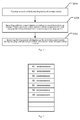
- FIG. 1 is a flow chart of a preferred embodiment of the method for processing merge and deduplication operations on contact entries according to the present invention. Said method comprises:
- the contact entries are sorted according to the contact names.
- Fig. 2 using a smartphone as an example, in the smartphone, contacts are mostly displayed to users in the form of a list, which are typically sorted in the alphabetical order of contact names.
- redundant contact information is usually arranged together, which creates a condition for merge and deduplication operations.
- S200 Recording selected contact entries according to a selection action on contact entries, receiving a drag action to merge contact entries, and merging the selected contact entries according to the drag action.
- a selection mode may be set via a menu during selection to select two or more contact entries with two touch points.
- the selection range may be set to be all contact entries between the two touch points, or the selection range may be set to be the contact entries at the positions of the two touch points.
- said S300 specifically comprises: Step 1. When merging contact entries, removing the duplicated information in the contact entries; Step 2. Detecting if there is conflict among various information in the selected contact entries; if there is, outputting a prompt message to prompt the user whether to ignore the conflicted information; if the user selects yes, saving the conflicted information, if the user selects no, saving or deleting the conflicted information according to the user selection.
- each attribute of each contact entry e.g. contact name, address and other information
- each attribute of each contact entry e.g. contact name, address and other information
- each attribute of each contact entry e.g. contact name, address and other information
- it indicates no conflict if multiple contact entries have an identical attribute (e.g. address), but these attributes have the same value, it indicates that those are duplicated information and have no conflict, and only one piece of the information needs to be kept during merging; only when multiple contact entries have an identical attribute and more than two values are different can a conflict be detected (e.g.
- conflict information needs to be recorded, specifically comprising: name of the conflict item and conflict content, and prompting the user whether to ignore, if the user chooses to ignore, then keeping the conflicted information, and if the user does not ignore, then deleting the redundant information according to the user selection.
- the method for processing merge and deduplication operations on contact entries according to the present invention may carry out merge operation on two or more contact entries.
- Step S200 specifically comprises: Step 1. When detecting that there are two touch points on the touchscreen, recording contact entries in the address book at the coordinates of said two touch points; Step 2. Receiving a drag action to merge contact entries, when the contact entry at one touch point is dragged to partially overlap with the contact entry at the other touch point, merging these two contact entries.
- the contact entries in the address book at the coordinates of said two touch points are two adjacent contact entries or two separated contact entries in the address book.
- the address book uses one finger to keep on pressing the first record (i.e. the first contact entry) therein; uses the other finger to press the second record (i.e. the second contact entry), and when these two records are selected, the second finger controls the second selected record to move toward the first selected record; when the two records become overlapped (as shown in Fig.
- a merge operation is carried out with the first pressed record as the record to be kept to merge the two records.
- the merged contact entry is shown in Fig. 3c .
- the judgment is reached according to the number of touch points on the touch screen. If there is only one touch point, or the touch points have disappeared, it indicates that the user initiates a merge operation. At this moment, if two contact entries do not have an overlapping portion, then the dragged contact entry is controlled to move to the original position.
- the present invention uses the pressed and stationary entry as the merging basis, and merges the moving entry into said entry.
- this embodiment uses the first record as the basis and merges the dragged second record into the first record
- the second record may be pressed and held in other embodiments, while the first record is dragged to be merged into the second record.
- the present invention has no limitations hereon.
- Step S200 specifically comprises: Step 1. When detecting that there are two touch points on the touchscreen, recording all contact entries between the coordinates of said two touch points; Step 2. Receiving a drag action to merge contact entries, when the contact entry at one touch point is dragged to partially overlap with the contact entry at the other touch point, merging said all contact entries.
- two or more adjacent records may be selected.
- the operation shown in Fig. 4 may be carried out.
- the user uses one finger to press the first record (the foremost contact entry, e.g. the first B1), uses the other finger to press the fourth record (the last contact entry, e.g. the first B2), and makes the second finger to press the fourth record and move toward the first record; when the fourth record and the first record become overlapped (as shown in Fig.
- the method for processing merge and deduplication operations on contact entries according to the present invention has a simple and quick operating method, the operations by directly moving fingers on the screen comply with human physiologic habits, and are therefore intuitive and easy to be accepted by users.
- the operation can process two records and multiple records, and is very flexible.
- a user can complete such operations on only one screen, making it very convenient such that the time required by a user to carry out the operation of merging contact entries is significantly reduced.
- the present invention has the capability of detecting conflicts, it may prevent merge operations undesired by the user from taking place, thereby ensuring safety.
- the merge operation according to the present invention takes place in an address book list.
- address book lists do not provide such a mode of dragging operation and related function interfaces. Therefore, the present invention needs to reload an address book list by adding corresponding functions to implement the dragging operation on contact entries, through which a user's intent of merge operation can be identified and corresponding displays can be provided to the user.
- the intelligent terminal When the intent of merge operation is identified, the intelligent terminal needs to implement the function method for carrying out a merge operation on contact entries in a contact database, thereby implementing the actual merge of contact entries. Prior to the execution of a merge operation, moreover, a confirmation needs to be made with the user to prevent a misoperation by the user.
- the present invention needs to revise the touch event processing function (the onTouchEvent function) of the address book and needs to add the support of multi-point touch, specifically:
- the revision of the touch event processing function may be carried out by means of inheriting a parent function, and see the following pseudo-code for a more specific description:
- the choosedobjs in the pseudo-code above records all contact entries selected by the first finger and the second finger, each contact entry is recorded in the object of chooseObj, which records the view of the contact entry, the contact information and the displacement record, and the movement of a view is also implemented by the move method in this object, wherein the move method is implemented by setting an offset through the offsetTopAndBottom(d) function, i.e. when dragging the contact entry, an offset is set through the function offsetTopAndBottom(d) for the view, and the specific pseudo-code is as follows:
- each attribute of each contact entry e.g. contact name, address and other information
- each attribute of each contact entry e.g. contact name, address and other information
- it indicates no conflict if an attribute only exists in one contact entry, it indicates no conflict; if multiple contact entries have an identical attribute (e.g. address), but these attributes have the same value, there is no conflict either, and only when more than two values are different can a conflict be detected (e.g. two different addresses), and at this moment, the conflict information needs to be recorded, comprising: name of the conflict item and conflict content.
- conflict check the function returns true if a conflict is detected, otherwise the function returns false. If no conflict is detected, then the value of the parameter item1 will record the value to be saved.
- the conflictString in the code above is a character string to record the conflict content, which will be mentioned again in the code below. In this embodiment, conflict check is not performed on telephone numbers, as one contact may use multiple numbers, but duplicated ones will be removed.
- the process of conflict check is also a process of merging attributes of contact entries, which is just not ultimately written into the database.
- the present invention will keep one value for each contact entry attribute. If there is no conflict, a unique value is saved, and in case of a conflict, the attribute value of the contact entry that is the closest to the entry selected by the first finger is saved.
- attribute values of each contact entry When attribute values of each contact entry are present, they can be written into the database. In case of a conflict, however, a confirmation must be made with the user by informing the user of the conflict content. If the user confirms that the conflict may be ignored, the present invention may proceed to carry out the actual operation to write into the database.
- the process to merge contact entries is: first, writing the attribute information of contact entries obtained in the process of conflict check into the database record of the contact entry selected by the first finger, and then deleting other contact entries.
- the present invention further provides a touch terminal for implementing the above method for processing merge and deduplication operations on contact entries
- said touch terminal is preferably a smartphone, and as shown in Fig. 5 , it comprises: an application opening module 10, a dragging and merging module 20 and an information processing module 30.
- Said application opening module 10 is used for opening an address book and displaying all contact entries;
- the dragging and merging module 20 is used for recording selected contact entries according to a selection action on contact entries, receiving a drag action to merge contact entries, and merging the selected contact entries according to the drag action;
- the information processing module 30 is used for removing the duplicated information in the selected contact entries during merging, and detecting conflict information in the selected contact entries. Please refer to the above embodiments for the specific working principle and implementation thereof.
- the touch terminal according to the present invention further comprises: a sorting module for sorting the contact entries according to the contact names. Please refer to the above embodiments for the specific working principle and implementation thereof.
- the present invention can delete redundant records in an address book simply by dragging contact entries to be merged, remove the duplicated information while merging, and detect conflict information, which enhances the smart effect of the touch terminal and improves user experience.
- the present invention carries out operations by directly moving fingers on the screen, which complies with human operating habits, can process two or more records, and is very flexible. Moreover, a user can complete such operations on one screen, leading to very simple and convenient operations.
Landscapes
- Engineering & Computer Science (AREA)
- Theoretical Computer Science (AREA)
- General Engineering & Computer Science (AREA)
- General Physics & Mathematics (AREA)
- Physics & Mathematics (AREA)
- Human Computer Interaction (AREA)
- Data Mining & Analysis (AREA)
- Databases & Information Systems (AREA)
- Business, Economics & Management (AREA)
- Signal Processing (AREA)
- Library & Information Science (AREA)
- General Business, Economics & Management (AREA)
- User Interface Of Digital Computer (AREA)
Abstract
Description
- The present invention relates to the field of intelligent terminal technologies, and in particular relates to a processing method and a touch terminal for merge and deduplication operations on contact entries.
- Contact information on an intelligent terminal, such as a smartphone, can be entered into a contact list inputted manually, imported by SIM card, imported by SD card, imported from the network data backup, and the like. In the import process, some duplicated or redundant information may sometime exist, for example: multiple records correspond to the same contact name, and the contact has the same telephone number, other information (e.g. address, etc.) is identical as well; alternatively, multiple records correspond to the same contact name, and the contact's telephone numbers are different or not completely the same (i.e. there are multiple numbers), and even other information (e.g. address, etc.) is not the same.
- When encountering the above situation, a user now would usually spend more time on finding the desired number from the contact list, and, at the same time, would perform merging processing on the redundant or duplicated information. Since a smartphone itself does not know what needs to be merged and what does not need to be merged (that is because, in real life, there may be two different contacts having the same name), the user can only delete some redundant information and merge duplicated information through manual processing.
- When processing the above redundant information and duplicated information, a user typically opens the contact entry information, selects an undesired record (i.e. the contact entry), and then deletes said record; alternatively, the user needs to add the information from other contact entries (e.g. adding a telephone number) into one of the contact entries, and then deletes other contact entries. All of these processes require the user to carry out many complicated operations, to open many window, and switch among different windows, which is very inconvenient and cannot reflect the intelligent features of an intelligent terminal.
- In light of the above drawbacks of the prior art, the object of the present invention is to provide a processing method and a touch terminal for merge and deduplication operations on contact entries, which can merge contact records by dragging contact entries, remove the duplicated information while merging, and detect conflict information.
- To obtain the above object, the present invention employs the following technical solution:
- A method for processing merge and deduplication operations on contact entries,
- comprising:
- A. Opening an address book and displaying all contact entries;
- B. Recording selected contact entries according to a selection action on contact entries, receiving a drag action to merge contact entries, and merging the selected contact entries according to the drag action;
- C. Removing the duplicated information in the selected contact entries during merging, and detecting conflict information in the selected contact entries.
- In the method for processing merge and deduplication operations on contact entries, Step A further comprises: sorting the contact entries according to the contact names.
- In the method for processing merge and deduplication operations on contact entries, Step B specifically comprises:
- B 11. When detecting that there are two touch points on the touchscreen, recording all contact entries between the coordinates of said two touch points;
- B 12. Receiving a drag action to merge contact entries, when the contact entry at one touch point is dragged to partially overlap with the contact entry at the other touch point, merging said all contact entries.
- In the method for processing merge and deduplication operations on contact entries, Step B specifically comprises:
- B21. When detecting that there are two touch points on the touchscreen, recording contact entries in the address book at the coordinates of said two touch points;
- B22. Receiving a drag action to merge contact entries, when the contact entry at one touch point is dragged to partially overlap with the contact entry at the other touch point, merging these two contact entries.
- In the method for processing merge and deduplication operations on contact entries, in Step B21, the contact entries in the address book at the coordinates of said two touch points are two adjacent contact entries or two separated contact entries in the address book.
- In the method for processing merge and deduplication operations on contact entries, when dragging the contact entry, an offset is set through the function offsetTopAndBottom(d) for the view.
- In the method for processing merge and deduplication operations on contact entries, Step C specifically comprises:
- C1. When merging contact entries, removing duplicated information in the selected contact entries;
- C2. Detecting if there is conflict among all pieces of information in the selected contact entries;
- C3. If there is, outputting a prompt message to prompt the user whether to ignore the conflicted information;
- C4. If yes, saving the conflicted information.
- In the method for processing merge and deduplication operations on contact entries, when merging the selected contact entries, merging through the function madapter.mergeContacts(choosedobj s).
- A method for processing merge and deduplication operations on contact entries, wherein it comprises:
- A. Opening an address book and displaying all contact entries;
- B. Recording selected contact entries according to a selection action on contact entries, receiving a drag action to merge contact entries, and merging the selected contact entries according to the drag action;
- C. Removing the duplicated information in the selected contact entries during merging, and detecting conflict information in the selected contact entries.
- Step C specifically comprises:
- C1. When merging contact entries, removing duplicated information in the selected contact entries;
- C2. Detecting if there is conflict among all pieces of information in the selected contact entries;
- C3. If there is, outputting a prompt message to prompt the user whether to ignore the conflicted information;
- C4. If yes, saving the conflicted information.
- Wherein each attribute of each contact entry is compared, if an attribute only exists in one contact entry, it indicates no conflict; if multiple contact entries have an identical attribute, but these attributes have the same value, it indicates that those are duplicated information and have no conflict, and only one piece of the information needs to be kept during merging; when multiple contact entries have an identical attribute and more than two values are different, a conflict will be detected; and the conflict information will be recorded, specifically comprising: name of the conflict item and conflict content, and prompting the user whether to ignore, if the user chooses to ignore, then keeping the conflicted information, if the user does not ignore, then deleting the redundant information according to the user selection.
- The method for processing merge and deduplication operations on contact entries, wherein Step A further comprises: sorting the contact entries according to the contact names.
- The method for processing merge and deduplication operations on contact entries, wherein Step B specifically comprises:
- B 11. When detecting that there are two touch points on the touchscreen, recording all contact entries between the coordinates of said two touch points;
- B 12. Receiving a drag action to merge contact entries, when the contact entry at one touch point is dragged to partially overlap with the contact entry at the other touch point, merging said all contact entries.
- The method for processing merge and deduplication operations on contact entries, wherein Step B specifically comprises:
- B21. When detecting that there are two touch points on the touchscreen, recording contact entries in the address book at the coordinates of said two touch points;
- B22. Receiving a drag action to merge contact entries, when the contact entry at one touch point is dragged to partially overlap with the contact entry at the other touch point, merging these two contact entries.
- The method for processing merge and deduplication operations on contact entries, wherein, in Step B21, the contact entries in the address book at the coordinates of said two touch points are two adjacent contact entries or two separated contact entries in the address book.
- The method for processing merge and deduplication operations on contact entries, wherein, when dragging the contact entry, an offset is set through the function offsetTopAndBottom(d) for the view.
- The method for processing merge and deduplication operations on contact entries, wherein, when merging the selected contact entries, merging through the function madapter.mergeContacts(choosedobj s).
- A method for processing merge and deduplication operations on contact entries, wherein it comprises:
- A. Opening an address book and displaying all contact entries;
- B. Recording selected contact entries according to a selection action on contact entries, receiving a drag action to merge contact entries, and merging the selected contact entries according to the drag action;
- C. Removing the duplicated information in the selected contact entries during merging, and detecting conflict information in the selected contact entries;
- Step C specifically comprises:
- C1. When merging contact entries, removing duplicated information in the selected contact entries;
- C2. Detecting if there is conflict among all pieces of information in the selected contact entries;
- C3. If there is, outputting a prompt message to prompt the user whether to ignore the conflicted information;
- C4. If yes, saving the conflicted information.
- The method for processing merge and deduplication operations on contact entries, wherein Step C further comprises: comparing each attribute of each contact entry, if an attribute only exists in one contact entry, it indicates no conflict; if multiple contact entries have an identical attribute, but these attributes have the same value, it indicates that those are duplicated information and have no conflict, and only one piece of the information needs to be kept during merging; when multiple contact entries have an identical attribute and more than two values are different, a conflict will be detected; and recording the conflict information, specifically comprising: name of the conflict item and conflict content, and prompting the user whether to ignore, if the user chooses to ignore, then keeping the conflicted information, if the user does not ignore, then deleting the redundant information according to the user selection.
- A touch terminal for implementing the above method for processing merge and deduplication operations on contact entries, comprising:
- an application opening module for opening an address book and displaying all contact entries;
- a dragging and merging module for recording selected contact entries according to a selection action on contact entries, receiving a drag action to merge contact entries, and merging the selected contact entries according to the drag action;
- an information processing module for removing the duplicated information in the selected contact entries during merging, and detecting conflict information in the selected contact entries.
- The touch terminal further comprises: a sorting module for sorting the contact entries according to the contact names.
- Compared with the prior art, the present invention provides a processing method and a touch terminal for merge and deduplication operations on contact entries. When an address book is opened, recording selected contact entries according to a selection action on contact entries, receiving a drag action to merge contact entries, and merging the selected contact entries according to the drag action; removing the duplicated information in the selected contact entries during merging, and detecting conflict information in the selected contact entries. The present invention can delete redundant records in an address book simply by dragging contact entries to be merged, remove the duplicated information while merging, and detect conflict information, which enhances the smart effect of the touch terminal and improves user experience.
-
- Fig.1
- is a flow chart of the method for processing merge and deduplication operations on contact entries according to the present invention.
- Fig.2
- illustrates a contact list in the method for processing merge and deduplication operations on contact entries according to the present invention.
- Fig.3
- illustrates merging two contact entries in the method for processing merge and deduplication operations on contact entries according to the present invention.
- Fig.4
- illustrates merging more than two contact entries in the method for processing merge and deduplication operations on contact entries according to the present invention.
- Fig. 5
- is a structural block diagram of the touch terminal according to the present invention.
- The present invention provides a processing method and a touch terminal for merge and deduplication operations on contact entries. When carrying out a deduplication operation, a user just needs to use one finger to keep on pressing one of the records (contact entry) in the address book list; use the other finger to press another record and drag toward the position of the first pressed record; when the two records become overlapped, a merge operation is carried out with the first pressed record as the record to be kept, all records between the first pressing and the second pressing are merged, or only the two pressed records are merged. The present invention carries out operations by directly moving fingers on the screen, which complies with human operating habits, can process two or more records, and is very flexible. Moreover, a user can complete such operations on one screen, leading to very simple and convenient operations.
- To make the objects, technical solutions and advantages of the present application clearer and more specific, the present application will be further described in detail below with reference to the accompanying drawings and embodiments. It should be understood that the specific embodiments herein are only used to describe the present application, rather than limit the present application.
- Please refer to
Fig. 1 , which is a flow chart of a preferred embodiment of the method for processing merge and deduplication operations on contact entries according to the present invention. Said method comprises: - S100. Opening an address book and displaying all contact entries.
- In this embodiment, when opening the address book, the contact entries are sorted according to the contact names. As shown in
Fig. 2 , using a smartphone as an example, in the smartphone, contacts are mostly displayed to users in the form of a list, which are typically sorted in the alphabetical order of contact names. As a result, redundant contact information is usually arranged together, which creates a condition for merge and deduplication operations. - S200. Recording selected contact entries according to a selection action on contact entries, receiving a drag action to merge contact entries, and merging the selected contact entries according to the drag action.
- During specific implementation, a user uses fingers to touch the touchscreen to select contact entries, a selection mode may be set via a menu during selection to select two or more contact entries with two touch points. For example, during selection, the selection range may be set to be all contact entries between the two touch points, or the selection range may be set to be the contact entries at the positions of the two touch points. These operation processes and implementation modes will be described in detail below.
- S300. Removing the duplicated information in the selected contact entries during merging, and detecting conflict information in the selected contact entries.
- Wherein, said S300 specifically comprises: Step 1. When merging contact entries, removing the duplicated information in the contact entries; Step 2. Detecting if there is conflict among various information in the selected contact entries; if there is, outputting a prompt message to prompt the user whether to ignore the conflicted information; if the user selects yes, saving the conflicted information, if the user selects no, saving or deleting the conflicted information according to the user selection.
- During specific implementation, to merge contact entries, it is necessary to first perform conflict detection on entries to be merged, and each attribute of each contact entry (e.g. contact name, address and other information) needs to be compared, if an attribute only exists in one contact entry, it indicates no conflict; if multiple contact entries have an identical attribute (e.g. address), but these attributes have the same value, it indicates that those are duplicated information and have no conflict, and only one piece of the information needs to be kept during merging; only when multiple contact entries have an identical attribute and more than two values are different can a conflict be detected (e.g. two different addresses), and at this moment the conflict information needs to be recorded, specifically comprising: name of the conflict item and conflict content, and prompting the user whether to ignore, if the user chooses to ignore, then keeping the conflicted information, and if the user does not ignore, then deleting the redundant information according to the user selection.
- The method for processing merge and deduplication operations on contact entries according to the present invention may carry out merge operation on two or more contact entries.
- When merging two contact entries, said Step S200 specifically comprises: Step 1. When detecting that there are two touch points on the touchscreen, recording contact entries in the address book at the coordinates of said two touch points; Step 2. Receiving a drag action to merge contact entries, when the contact entry at one touch point is dragged to partially overlap with the contact entry at the other touch point, merging these two contact entries.
- Wherein, the contact entries in the address book at the coordinates of said two touch points are two adjacent contact entries or two separated contact entries in the address book. When merging two adjacent contact entries, as shown in
Fig. 3 , if the user believes that two B1s inFig. 3a represent the same contact, then in the address book, uses one finger to keep on pressing the first record (i.e. the first contact entry) therein; uses the other finger to press the second record (i.e. the second contact entry), and when these two records are selected, the second finger controls the second selected record to move toward the first selected record; when the two records become overlapped (as shown inFig. 3b ), releases the second finger or both fingers, and at this moment, a merge operation is carried out with the first pressed record as the record to be kept to merge the two records. The merged contact entry is shown inFig. 3c . When detecting if a merge operation needs to be carried out, the judgment is reached according to the number of touch points on the touch screen. If there is only one touch point, or the touch points have disappeared, it indicates that the user initiates a merge operation. At this moment, if two contact entries do not have an overlapping portion, then the dragged contact entry is controlled to move to the original position. During merging, the present invention uses the pressed and stationary entry as the merging basis, and merges the moving entry into said entry. Although this embodiment uses the first record as the basis and merges the dragged second record into the first record, the second record may be pressed and held in other embodiments, while the first record is dragged to be merged into the second record. The present invention has no limitations hereon. - If a user wants to merge more than two contact entries at once, a mode of contact entry selection may be set through the setting function. During merging, said Step S200 specifically comprises: Step 1. When detecting that there are two touch points on the touchscreen, recording all contact entries between the coordinates of said two touch points; Step 2. Receiving a drag action to merge contact entries, when the contact entry at one touch point is dragged to partially overlap with the contact entry at the other touch point, merging said all contact entries.
- When selecting contact entries, two or more adjacent records may be selected. As shown in
Fig. 2 andFig. 4 , in the address book list inFig. 2 , if the user determines that two contact entries with the name of B1 and two contact entries with the name of B2 represent the same contact, and that the only difference is the name, then the operation shown inFig. 4 may be carried out. As shown inFig. 4a , the user uses one finger to press the first record (the foremost contact entry, e.g. the first B1), uses the other finger to press the fourth record (the last contact entry, e.g. the first B2), and makes the second finger to press the fourth record and move toward the first record; when the fourth record and the first record become overlapped (as shown inFig. 4b ), releases the second finger or both fingers, and at this moment, a merge operation is carried out with the first pressed record as the record to be kept to merge all records between the first pressing and the second pressing. When the fingers are released, the four contact entries are merged to one B1, as shown inFig. 4c . When these four records have duplications, similarly using the first record as the basis, removing the duplicated information in other records, and detecting if there is conflict information. - When contact entries are merged, all merged contact entries become only one contact entry in the address book, and therefore only have one name. When more than two contact entries are merged, if the user desires to keep the name in the middle, two operations may be carried out to achieve this goal. During merging, moreover, the name of the stationary contact entry is used as the name after merging, and the dragged contact entry is merged into the stationary contact entry.
- The method for processing merge and deduplication operations on contact entries according to the present invention has a simple and quick operating method, the operations by directly moving fingers on the screen comply with human physiologic habits, and are therefore intuitive and easy to be accepted by users. The operation can process two records and multiple records, and is very flexible. Moreover, a user can complete such operations on only one screen, making it very convenient such that the time required by a user to carry out the operation of merging contact entries is significantly reduced. In addition, as the present invention has the capability of detecting conflicts, it may prevent merge operations undesired by the user from taking place, thereby ensuring safety.
- The merge operation according to the present invention takes place in an address book list. In existing smartphone systems (e.g. the android system), address book lists do not provide such a mode of dragging operation and related function interfaces. Therefore, the present invention needs to reload an address book list by adding corresponding functions to implement the dragging operation on contact entries, through which a user's intent of merge operation can be identified and corresponding displays can be provided to the user.
- When the intent of merge operation is identified, the intelligent terminal needs to implement the function method for carrying out a merge operation on contact entries in a contact database, thereby implementing the actual merge of contact entries. Prior to the execution of a merge operation, moreover, a confirmation needs to be made with the user to prevent a misoperation by the user.
- The implementation of the present invention will be described in detail below with a smartphone as an example.
- 1. Implementing a dragging operation on contact entries on the address book interface: With the android system as an example, the address book list file on the user interface is:
- packages/apps/Contacts/src/com/android/contacts/list/DefaultContactBrowseListFragm ent.java.
- To achieve longitudinal dragging of a contact entry, the present invention needs to revise the touch event processing function (the onTouchEvent function) of the address book and needs to add the support of multi-point touch, specifically:
- First, when it is detected that there are two touch points on the touchscreen, and when the second touch point is pressed, recording all contact entries between the two coordinate points, as the ACTION_POINTER_DOWN portion in the following pseudo-code. Subsequently when the second touch point moves, all recorded contact entries move toward the contact entry selected by the first finger, the moving distance will be adjusted according to the distance between the moved contact entries and the contact entry selected by the first finger, thereby achieving the effect that all recorded contact entries approach the contact entry selected by the first finger at the same time, as the ACTION_MOVE portion in the following pseudo-code. Lastly, when the second finger leaves the screen, determining if the contact entry selected by the first finger has any overlapping portion with the contact entry selected by the second finger, if yes, then triggering the execution of a merge operation, otherwise moving all moved views to the original positions, as the ACTION_POINTER_UP portion in the following pseudo-code.
- Wherein, the revision of the touch event processing function (the onTouchEvent function) may be carried out by means of inheriting a parent function, and see the following pseudo-code for a more specific description:
 private float yo = -1.0f; // the Y-axis position of the second point pressed last time
 private float firstY1; // the boundary coordinate position within which the second
 finger may slide
 private float firstY2; // the boundary coordinate position within which the second
 finger may slide
 int position1; // the position of the contact entry selected by the first finger in the
 list
 int position2; // the position of the contact entry selected by the second finger in the
 list
 private chooseObj[] choosedobjs; // for recording contact entries between two fingers
 and movement amount record
 private boolean choosedSameView = false; // if two fingers select the same contact
 entry
 @Override
 public boolean onTouchEvent(MotionEvent ev) { // reload the touchscreen event
 int action = ev.getAction(); // get the event
 int pointcount = ev.getPointerCount(); // get the number of touch points
 if (pointcount < 2) { // if a single point touch
 return super.onTouchEvent(ev); // execute operation of single point touch
 }
 switch (action & MotionEvent.ACTION_MASK) {
 case MotionEvent.ACTION_POINTER_DOWN: { // if it is a pressing event of the
 second point
 int x1 = (int) ev.getX(0); // record the coordinate position of the touch point
 int y1 = (int) ev.getY(0);
 int x2 = (int) ev.getX(1);
 int y2 = (int) ev.getY(1);
 yo = y2; // record the Y-axis position of the second point pressed last time
 firstY1 = y1; // record the boundary coordinate position within which the second
 finger may slide
 firstY2 = y2; // record the boundary coordinate position within which the second
 finger may slide
 int position = pointToPosition(x1, y1); // get the position of the contact entry
 pressed by the first finger in the list
 int position2 = pointToPosition(x2, y2); // get the position of the contact entry
 pressed by the second finger in the list
 choosedSameView = false;
 if (position1 == position2) { // exit in case of the same contact entry
 choosedSameView = true;
 break;
 }
 // record the views of all contact entries between the first finger and the second finger
 saveAllchoosedItems(choosedobjs, position1, position2);
 break;
 }
 case MotionEvent.ACTION_MOVE: { // if it is a point motion event
 float y2 = ev.getY(1); // get the current Y coordinate of the second touch point
 // exit in case of exceeding the boundary or the same contact entry
 if (choosedSameView II !isIn(firstY1, y2, firstY2)) break;
 float offd = y2 - yo; // calculate the current movement distance of the second touch
 point
 yo = y2; // update the Y-axis position of the second point pressed last time
 // calculate the number of contact entries between the two fingers
 int count = choosedobjs != null ? choosedobjs.length : 0;
 for (int i = 0; i < count; i++) {
 float offdd = offd * i/ (count - 1); // calculate the distance of movement for the view
 of each contact entry
 choosedobjs[i].move(offdd); // move the views of the contact entries
 }
 break;
 }
 case MotionEvent.ACTION_POINTER_UP: { // in case of an event that the second
 finger is away from the screen
 float y2 = ev.getY(1); // get the current Y coordinate of the second touch point
 // if the first selected contact entry and the second selected contact entry are close
 enough, trigger a merge operation
 if (|y2 - y1| < minDistance) {
  madapter.mergeContacts(choosedobjs); // merge operation
  madapter.notifyDataSetChanged(); // refresh
  break;
  }
 // if they cannot be merged, give up and restore the list
 int count = choosedobjs != null ? choosedobjs.length : 0;
 for (int i = 0; i < count; i++) {
   choosedobjs[i].moveBack(); // move all entry views back to the original positions
 }
 choosedobjs = null; // empty the selected contact entries
 madapter.notifyDataSetChanged(); // refresh
 break;
 }
 default:;
 }
 return true;
 }
 private void move(int d) { //move method
 view.offsetTopAndBottom(d); // set offset
 offset += d; // record offset
 }
 // function for conflict check
 private boolean checkConflict(String item1, String item2, String tag) {
 if(item1 == null) { // if it is the first record, it is impossible to have conflict, record
 directly
 item1 = item2;
 return false;
 } else if (item2 == item1){ // if two records are the same, no conflict either
 return false;
 } else {
 conflictString.append(tag + item1 + " " + item2); // in case of conflict, record the
 conflict content
 return true;
 }
 }
 private StringBuilder conflictString; // conflict record character string
 // the following is used for attribute information of contact entries to be ultimately saved
 private String name, company, email, im, address, notes, nickname, website;
 private HashMap<String, String> phoneNumber = new HashMap<String, String>();
 public void mergeContacts(final chooseObj[] contacts) {
 boolean haveConflict = false; // set a conflict tag
 conflictString = new StringBuilder(); // set a conflict record character string
 int count = contacts.length; // number to be merged
 for (int i = 0; i<count; i++) { // perform conflict check on each entry
 // check if there is name conflict
 haveConflict|=checkConflict(name,getNameFromUri(contacts[i].uri),"Name");
 // check if there is company name conflict
 haveConflict|=checkConflict(company,getCompanyFromUU(contacts [i] .uri),
 "Company");
 // check if there is mailing address conflict
 haveConflict|= checkConflict(email, getEmailFromUri(contacts[i].uri), "Email");
 // check if there is instant message address conflict
 haveConflict|=checkConflict(im,getIMFromUri(contacts[i].uri),"IM");
 // check if there is address conflict
 haveConflict|=checkConflict(address,getAddressFromUri(contacts[i].uri), "Address");
 // check if there is note conflict
 haveConflict |= checkConflict(notes, getNotesFromUri(contacts[i].uri), "Notes");
 // check if there is nickname conflict
 haveConflict|=checkConflict(nickname,getNickNameFromUri(contacts[i].uri),
 "NickName");
 // check if there is website conflict
 haveConflict|=checkConflict(website,getWebsiteFromUri(contacts[i].uri), "Website");
 // record all telephone numbers (with duplicated ones removed)
 String number, kind;
 getPhoneNumberFromUri(contacts[i].uri, number, kind);
 if (!phoneNumber.containsKey(number)) {
 phoneNumber.put(number, kind);
 }
 }
 if (haveConflict) { // in case of a conflict, pop up a dialogue box and request the user
 to confirm
 new AlertDialog.Builder(mContext)
    .setTitle("there is a conflict, whether to merge, and the conflict is: "); // set a title
   .setMessage(conflictString.toString()); // set conflict content
    .setPositiveButton("ignore the conflict", new DialogInterface.OnClickListener() {
    // if the user selects, then ignore the conflict, and carry out the merge operation
    public void onClick(DialogInterface dialog, int which) {
      mergeContacts(phoneNumber, name, company, email, // merge operation
        im, address, notes, nickname, website, contacts);
     }
   })
  .setNegativeButton("cancel", null)// if the user cancels, then nothing will be carried
  out
  .create().show();
 } else { // if there is no conflict, directly carry out the merge operation without
 prompting
  mergeContacts(phoneNumber, name, company, email,
   im, address, notes, nickname, website, contacts);
 }
 }
 // The function to carry out the merge operation
 private void mergeContacts(HashMap<String, String> phoneNumber, String name,
 String company, String email,
 String im, String address, String notes, String nickname, String website, chooseObj[]
 contacts) {
 int count = contacts.length; // number to be merged
 // the first record is the record selected by the first finger, and record all information to
 be merged into the contact entry pointed by URI
 EditAndSaveContact(contacts[0].uri, phoneNumber, name, company,
  email, im, address, notes, nickname, website);
  // delete other contact entries
 for (int i = 1; i<count; i++) {
  deleteTheContact(contacts[i].uri);
  }
  }
Claims (19)
- A method for processing merge and deduplication operations on contact entries, characterized in that it comprises:A. Opening an address book and displaying all contact entries;B. Recording selected contact entries according to a selection action on contact entries, receiving a drag action to merge contact entries, and merging the selected contact entries according to the drag action;C. Removing the duplicated information in the selected contact entries during merging, and detecting conflict information in the selected contact entries.
- The method for processing merge and deduplication operations on contact entries according to Claim 1, characterized in that Step A further comprises: sorting the contact entries according to the contact names.
- The method for processing merge and deduplication operations on contact entries according to Claim 1, characterized in that Step B specifically comprises:B 11. When detecting that there are two touch points on the touchscreen, recording all contact entries between the coordinates of said two touch points;B 12. Receiving a drag action to merge contact entries, when the contact entry at one touch point is dragged to partially overlap with the contact entry at the other touch point, merging said all contact entries.
- The method for processing merge and deduplication operations on contact entries according to Claim 1, characterized in that Step B specifically comprises:B21. When detecting that there are two touch points on the touchscreen, recording contact entries in the address book at the coordinates of said two touch points;B22. Receiving a drag action to merge contact entries, when the contact entry at one touch point is dragged to partially overlap with the contact entry at the other touch point, merging these two contact entries.
- The method for processing merge and deduplication operations on contact entries according to Claim 4, characterized in that in Step B21, the contact entries in the address book at the coordinates of said two touch points are two adjacent contact entries or two separated contact entries in the address book.
- The method for processing merge and deduplication operations on contact entries according to Claim 3 or 4, characterized in that when dragging the contact entry, an offset is set through the function offsetTopAndBottom(d) for the view.
- The method for processing merge and deduplication operations on contact entries according to Claim 1, characterized in that Step C specifically comprises:C1. When merging contact entries, removing duplicated information in the selected contact entries;C2. Detecting if there is conflict among all pieces of information in the selected contact entries;C3. If there is, outputting a prompt message to prompt the user whether to ignore the conflicted information;C4. If yes, saving the conflicted information.
- The method for processing merge and deduplication operations on contact entries according to Claim 1, characterized in that when merging the selected contact entries, merging through the function madapter.mergeContacts(choosedobjs).
- A method for processing merge and deduplication operations on contact entries, characterized in that it comprises:A. Opening an address book and displaying all contact entries;B. Recording selected contact entries according to a selection action on contact entries, receiving a drag action to merge contact entries, and merging the selected contact entries according to the drag action;C. Removing the duplicated information in the selected contact entries during merging, and detecting conflict information in the selected contact entries.wherein each attribute of each contact entry is compared, if an attribute only exists in one contact entry, it indicates no conflict; if multiple contact entries have an identical attribute, but these attributes have the same value, it indicates that those are duplicated information and have no conflict, and only one piece of the information needs to be kept during merging; when multiple contact entries have an identical attribute and more than two values are different, a conflict will be detected; and the conflict information will be recorded, specifically comprising: name of the conflict item and conflict content, and prompting the user whether to ignore, if the user chooses to ignore, then keeping the conflicted information, if the user does not ignore, then deleting the redundant information according to the user selection.
Step C specifically comprises:C1. When merging contact entries, removing duplicated information in the selected contact entries;C2. Detecting if there is conflict among all pieces of information in the selected contact entries;C3. If there is, outputting a prompt message to prompt the user whether to ignore the conflicted information;C4. If yes, saving the conflicted information; - The method for processing merge and deduplication operations on contact entries according to Claim 9, characterized in that Step A further comprises: sorting the contact entries according to the contact names.
- The method for processing merge and deduplication operations on contact entries according to Claim 9, characterized in that Step B specifically comprises:B 11. When detecting that there are two touch points on the touchscreen, recording all contact entries between the coordinates of said two touch points;B 12. Receiving a drag action to merge contact entries, when the contact entry at one touch point is dragged to partially overlap with the contact entry at the other touch point, merging said all contact entries.
- The method for processing merge and deduplication operations on contact entries according to Claim 9, characterized in that Step B specifically comprises:B21. When detecting that there are two touch points on the touchscreen, recording contact entries in the address book at the coordinates of said two touch points;B22. Receiving a drag action to merge contact entries, when the contact entry at one touch point is dragged to partially overlap with the contact entry at the other touch point, merging these two contact entries.
- The method for processing merge and deduplication operations on contact entries according to Claim 12, characterized in that in Step B21, the contact entries in the address book at the coordinates of said two touch points are two adjacent contact entries or two separated contact entries in the address book.
- The method for processing merge and deduplication operations on contact entries according to Claim 11 or 13, characterized in that when dragging the contact entry, an offset is set through the function offsetTopAndBottom(d) for the view.
- The method for processing merge and deduplication operations on contact entries according to Claim 9, characterized in that when merging the selected contact entries, merging through the function madapter.mergeContacts(choosedobj s).
- A method for processing merge and deduplication operations on contact entries, characterized in that it comprises:A. Opening an address book and displaying all contact entries;B. Recording selected contact entries according to a selection action on contact entries, receiving a drag action to merge contact entries, and merging the selected contact entries according to the drag action;C. Removing the duplicated information in the selected contact entries during merging, and detecting conflict information in the selected contact entries;
wherein: Step A further comprises: sorting the contact entries according to the contact names;
Step C specifically comprises:C1. When merging contact entries, removing duplicated information in the selected contact entries;C2. Detecting if there is conflict among all pieces of information in the selected contact entries;C3. If there is, outputting a prompt message to prompt the user whether to ignore the conflicted information;C4. If yes, saving the conflicted information. - The method for processing merge and deduplication operations on contact entries according to Claim 16, characterized in that Step C further comprises: comparing each attribute of each contact entry, if an attribute only exists in one contact entry, it indicates no conflict; if multiple contact entries have an identical attribute, but these attributes have the same value, it indicates that those are duplicated information and have no conflict, and only one piece of the information needs to be kept during merging; when multiple contact entries have an identical attribute and more than two values are different, a conflict will be detected; and recording the conflict information, specifically comprising: name of the conflict item and conflict content, and prompting the user whether to ignore, if the user chooses to ignore, then keeping the conflicted information, if the user does not ignore, then deleting the redundant information according to the user selection.
- A touch terminal for implementing the method for processing merge and deduplication operations on contact entries according to Claim 1, characterized in that it comprises:- an application opening module for opening an address book and displaying all contact entries;- a dragging and merging module for recording selected contact entries according to a selection action on contact entries, receiving a drag action to merge contact entries, and merging the selected contact entries according to the drag action;- an information processing module for removing the duplicated information in the selected contact entries during merging, and detecting conflict information in the selected contact entries.
- The touch terminal according to Claim 18, characterized in that it further comprises: a sorting module for sorting the contact entries according to the contact names.
Applications Claiming Priority (2)
| Application Number | Priority Date | Filing Date | Title |
|---|---|---|---|
| CN201310361512.6A CN103442135B (en) | 2013-08-19 | 2013-08-19 | Processing method for merging contact items and eliminating duplication and touch control terminal |
| PCT/CN2014/075516 WO2015024387A1 (en) | 2013-08-19 | 2014-04-16 | Processing method and touch terminal for combining operation and duplicate removal operation on contact entries |
Publications (3)
| Publication Number | Publication Date |
|---|---|
| EP3038332A1 true EP3038332A1 (en) | 2016-06-29 |
| EP3038332A4 EP3038332A4 (en) | 2017-04-26 |
| EP3038332B1 EP3038332B1 (en) | 2019-11-13 |
Family
ID=49695797
Family Applications (1)
| Application Number | Title | Priority Date | Filing Date |
|---|---|---|---|
| EP14837999.3A Active EP3038332B1 (en) | 2013-08-19 | 2014-04-16 | Processing method and touch terminal for combining operation and duplicate removal operation on contact entries |
Country Status (4)
| Country | Link |
|---|---|
| US (1) | US9996544B2 (en) |
| EP (1) | EP3038332B1 (en) |
| CN (1) | CN103442135B (en) |
| WO (1) | WO2015024387A1 (en) |
Families Citing this family (12)
| Publication number | Priority date | Publication date | Assignee | Title |
|---|---|---|---|---|
| CN103442135B (en) | 2013-08-19 | 2015-06-17 | 惠州Tcl移动通信有限公司 | Processing method for merging contact items and eliminating duplication and touch control terminal |
| CN104796312B (en) * | 2014-01-17 | 2017-12-26 | 腾讯科技(深圳)有限公司 | Contact person information processing method, apparatus and system |
| CN103795644B (en) * | 2014-01-27 | 2017-04-05 | 福建星网锐捷网络有限公司 | Policy Table's list item collocation method, apparatus and system |
| WO2015127604A1 (en) * | 2014-02-26 | 2015-09-03 | 华为技术有限公司 | Contact person information consolidation method, device and terminal |
| EP3276925B1 (en) * | 2015-04-17 | 2019-11-06 | Huawei Technologies Co. Ltd. | Contact information adding method and user equipment |
| CN105376383B (en) * | 2015-10-28 | 2019-06-07 | 宁波萨瑞通讯有限公司 | A kind of method and system of quick transmission contact information |
| US10608972B1 (en) | 2016-08-23 | 2020-03-31 | Microsoft Technology Licensing, Llc | Messaging service integration with deduplicator |
| CN109782983B (en) * | 2017-11-13 | 2021-05-25 | 腾讯科技(深圳)有限公司 | Method and device for adjusting view layout of application program interface |
| CN109040404B (en) * | 2018-07-17 | 2020-11-06 | 维沃移动通信有限公司 | Method and device for deduplicating contacts |
| CN109101152A (en) * | 2018-07-26 | 2018-12-28 | 维沃移动通信有限公司 | A kind of data inputting method and terminal |
| CN109348034A (en) * | 2018-09-03 | 2019-02-15 | 珠海格力电器股份有限公司 | Information processing system and method for merging contact persons and mobile terminal |
| CN109889544B (en) * | 2019-03-27 | 2021-04-06 | 苏州工业园区服务外包职业学院 | Conflict detection method and device for number table entry and number table to which it belongs |
Family Cites Families (13)
| Publication number | Priority date | Publication date | Assignee | Title |
|---|---|---|---|---|
| US7739246B2 (en) * | 2004-10-14 | 2010-06-15 | Microsoft Corporation | System and method of merging contacts |
| US20110216095A1 (en) * | 2010-03-04 | 2011-09-08 | Tobias Rydenhag | Methods, Devices, and Computer Program Products Providing Multi-Touch Drag and Drop Operations for Touch-Sensitive User Interfaces |
| US8417696B2 (en) * | 2010-06-10 | 2013-04-09 | Microsoft Corporation | Contact information merger and duplicate resolution |
| US20120030566A1 (en) * | 2010-07-28 | 2012-02-02 | Victor B Michael | System with touch-based selection of data items |
| EP2475156A1 (en) * | 2011-01-07 | 2012-07-11 | Alcatel Lucent | Contacts management in a telephone |
| CN103095900A (en) * | 2011-11-07 | 2013-05-08 | 希姆通信息技术(上海)有限公司 | Information integration method in cellphone and cellphone |
| KR101890674B1 (en) * | 2011-12-07 | 2018-08-22 | 엘지전자 주식회사 | Mobile Terminal And Method For Controlling Operation Thereof |
| CN103179244A (en) * | 2011-12-23 | 2013-06-26 | 比亚迪股份有限公司 | Method and device for merging contacts, and mobile terminal |
| EP2812784A4 (en) * | 2012-02-07 | 2015-11-11 | Blackberry Ltd | Methods and devices for merging contact records |
| CN102946462B (en) * | 2012-11-01 | 2016-07-13 | 惠州Tcl移动通信有限公司 | A kind of associated person information packet processing method based on mobile phone and mobile phone |
| CN103037061B (en) | 2012-12-10 | 2016-02-10 | 东莞宇龙通信科技有限公司 | Contact information processing method and terminal |
| CN103049158B (en) * | 2012-12-31 | 2016-03-16 | 深圳市汇顶科技股份有限公司 | A kind of touch detecting method of capacitive touch screen and system |
| CN103442135B (en) | 2013-08-19 | 2015-06-17 | 惠州Tcl移动通信有限公司 | Processing method for merging contact items and eliminating duplication and touch control terminal |
-
2013
- 2013-08-19 CN CN201310361512.6A patent/CN103442135B/en active Active
-
2014
- 2014-04-16 EP EP14837999.3A patent/EP3038332B1/en active Active
- 2014-04-16 US US14/439,174 patent/US9996544B2/en active Active
- 2014-04-16 WO PCT/CN2014/075516 patent/WO2015024387A1/en not_active Ceased
Non-Patent Citations (1)
| Title |
|---|
| See references of WO2015024387A1 * |
Also Published As
| Publication number | Publication date |
|---|---|
| WO2015024387A1 (en) | 2015-02-26 |
| CN103442135A (en) | 2013-12-11 |
| US20150310029A1 (en) | 2015-10-29 |
| EP3038332A4 (en) | 2017-04-26 |
| US9996544B2 (en) | 2018-06-12 |
| EP3038332B1 (en) | 2019-11-13 |
| CN103442135B (en) | 2015-06-17 |
Similar Documents
| Publication | Publication Date | Title |
|---|---|---|
| EP3038332B1 (en) | Processing method and touch terminal for combining operation and duplicate removal operation on contact entries | |
| CN101226486B (en) | Computer-implemented method and device for capturing information | |
| US7559033B2 (en) | Method and system for improving selection capability for user interface | |
| JP6352377B2 (en) | System and method for managing digital content items | |
| KR101352019B1 (en) | User customizable drop-down control list for gui software applications | |
| KR101794373B1 (en) | Temporary formatting and charting of selected data | |
| US11470036B2 (en) | Email assistant for efficiently managing emails | |
| US20140304616A1 (en) | Mobile terminal and method for processing notification information | |
| US11112962B2 (en) | Content-based directional placement application launch | |
| US20250217024A1 (en) | Calendar view display method, electronic device, and readable storage medium | |
| US20180107676A1 (en) | Cross-folder file selection methodology | |
| EP3132395B1 (en) | Quick drafts of items in a primary work queue | |
| US20130328779A1 (en) | Remote session control using multi-touch inputs | |
| TWI539366B (en) | Information management device and method | |
| US10061893B2 (en) | Method and apparatus for controlling electronic medical record system based output window | |
| WO2024097232A1 (en) | Systems and methods for providing a timeline view of log information for a client application | |
| JP2014010644A (en) | Information processor, information processing method, and information processing program | |
| US20040205600A1 (en) | Information fragments editing system and computer memory product | |
| CN114935992B (en) | Display control method and system based on man-machine interaction | |
| CN119090445A (en) | Process configuration method and related equipment in the table | |
| WO2025051193A1 (en) | Editing interaction method and apparatus, and computer-readable storage medium | |
| CN116933759A (en) | Document processing method, related equipment and product | |
| CN115113777A (en) | Application processing method and device and terminal | |
| US20170060390A1 (en) | Control method and control device | |
| JP2019207472A (en) | Information display device and information display program |
Legal Events
| Date | Code | Title | Description |
|---|---|---|---|
| PUAI | Public reference made under article 153(3) epc to a published international application that has entered the european phase |
Free format text: ORIGINAL CODE: 0009012 |
|
| 17P | Request for examination filed |
Effective date: 20160318 |
|
| AK | Designated contracting states |
Kind code of ref document: A1 Designated state(s): AL AT BE BG CH CY CZ DE DK EE ES FI FR GB GR HR HU IE IS IT LI LT LU LV MC MK MT NL NO PL PT RO RS SE SI SK SM TR |
|
| AX | Request for extension of the european patent |
Extension state: BA ME |
|
| DAX | Request for extension of the european patent (deleted) | ||
| A4 | Supplementary search report drawn up and despatched |
Effective date: 20170327 |
|
| RIC1 | Information provided on ipc code assigned before grant |
Ipc: H04M 1/275 20060101ALI20170321BHEP Ipc: H04M 1/725 20060101AFI20170321BHEP Ipc: H04M 1/2745 20060101ALN20170321BHEP Ipc: G06F 17/30 20060101ALN20170321BHEP |
|
| STAA | Information on the status of an ep patent application or granted ep patent |
Free format text: STATUS: EXAMINATION IS IN PROGRESS |
|
| 17Q | First examination report despatched |
Effective date: 20180122 |
|
| GRAP | Despatch of communication of intention to grant a patent |
Free format text: ORIGINAL CODE: EPIDOSNIGR1 |
|
| STAA | Information on the status of an ep patent application or granted ep patent |
Free format text: STATUS: GRANT OF PATENT IS INTENDED |
|
| RIC1 | Information provided on ipc code assigned before grant |
Ipc: G06F 17/11 20060101ALN20190515BHEP Ipc: G06F 16/174 20190101ALN20190515BHEP Ipc: H04M 1/2745 20060101ALN20190515BHEP Ipc: G06F 3/0482 20130101ALN20190515BHEP Ipc: G06F 3/0488 20130101ALN20190515BHEP Ipc: H04M 1/725 20060101AFI20190515BHEP Ipc: H04M 1/275 20060101ALI20190515BHEP Ipc: G06F 16/11 20190101ALN20190515BHEP |
|
| INTG | Intention to grant announced |
Effective date: 20190607 |
|
| RIC1 | Information provided on ipc code assigned before grant |
Ipc: G06F 16/11 20190101ALN20190524BHEP Ipc: G06F 16/174 20190101ALN20190524BHEP Ipc: G06F 3/0482 20130101ALN20190524BHEP Ipc: H04M 1/725 20060101AFI20190524BHEP Ipc: H04M 1/2745 20060101ALN20190524BHEP Ipc: H04M 1/275 20060101ALI20190524BHEP Ipc: G06F 17/11 20060101ALN20190524BHEP Ipc: G06F 3/0488 20130101ALN20190524BHEP |
|
| GRAS | Grant fee paid |
Free format text: ORIGINAL CODE: EPIDOSNIGR3 |
|
| GRAA | (expected) grant |
Free format text: ORIGINAL CODE: 0009210 |
|
| STAA | Information on the status of an ep patent application or granted ep patent |
Free format text: STATUS: THE PATENT HAS BEEN GRANTED |
|
| AK | Designated contracting states |
Kind code of ref document: B1 Designated state(s): AL AT BE BG CH CY CZ DE DK EE ES FI FR GB GR HR HU IE IS IT LI LT LU LV MC MK MT NL NO PL PT RO RS SE SI SK SM TR |
|
| REG | Reference to a national code |
Ref country code: CH Ref legal event code: EP Ref country code: AT Ref legal event code: REF Ref document number: 1202881 Country of ref document: AT Kind code of ref document: T Effective date: 20191115 |
|
| REG | Reference to a national code |
Ref country code: DE Ref legal event code: R096 Ref document number: 602014056894 Country of ref document: DE |
|
| REG | Reference to a national code |
Ref country code: IE Ref legal event code: FG4D |
|
| REG | Reference to a national code |
Ref country code: NL Ref legal event code: MP Effective date: 20191113 |
|
| REG | Reference to a national code |
Ref country code: LT Ref legal event code: MG4D |
|
| PG25 | Lapsed in a contracting state [announced via postgrant information from national office to epo] |
Ref country code: PT Free format text: LAPSE BECAUSE OF FAILURE TO SUBMIT A TRANSLATION OF THE DESCRIPTION OR TO PAY THE FEE WITHIN THE PRESCRIBED TIME-LIMIT Effective date: 20200313 Ref country code: NO Free format text: LAPSE BECAUSE OF FAILURE TO SUBMIT A TRANSLATION OF THE DESCRIPTION OR TO PAY THE FEE WITHIN THE PRESCRIBED TIME-LIMIT Effective date: 20200213 Ref country code: GR Free format text: LAPSE BECAUSE OF FAILURE TO SUBMIT A TRANSLATION OF THE DESCRIPTION OR TO PAY THE FEE WITHIN THE PRESCRIBED TIME-LIMIT Effective date: 20200214 Ref country code: LT Free format text: LAPSE BECAUSE OF FAILURE TO SUBMIT A TRANSLATION OF THE DESCRIPTION OR TO PAY THE FEE WITHIN THE PRESCRIBED TIME-LIMIT Effective date: 20191113 Ref country code: PL Free format text: LAPSE BECAUSE OF FAILURE TO SUBMIT A TRANSLATION OF THE DESCRIPTION OR TO PAY THE FEE WITHIN THE PRESCRIBED TIME-LIMIT Effective date: 20191113 Ref country code: NL Free format text: LAPSE BECAUSE OF FAILURE TO SUBMIT A TRANSLATION OF THE DESCRIPTION OR TO PAY THE FEE WITHIN THE PRESCRIBED TIME-LIMIT Effective date: 20191113 Ref country code: LV Free format text: LAPSE BECAUSE OF FAILURE TO SUBMIT A TRANSLATION OF THE DESCRIPTION OR TO PAY THE FEE WITHIN THE PRESCRIBED TIME-LIMIT Effective date: 20191113 Ref country code: SE Free format text: LAPSE BECAUSE OF FAILURE TO SUBMIT A TRANSLATION OF THE DESCRIPTION OR TO PAY THE FEE WITHIN THE PRESCRIBED TIME-LIMIT Effective date: 20191113 Ref country code: FI Free format text: LAPSE BECAUSE OF FAILURE TO SUBMIT A TRANSLATION OF THE DESCRIPTION OR TO PAY THE FEE WITHIN THE PRESCRIBED TIME-LIMIT Effective date: 20191113 Ref country code: BG Free format text: LAPSE BECAUSE OF FAILURE TO SUBMIT A TRANSLATION OF THE DESCRIPTION OR TO PAY THE FEE WITHIN THE PRESCRIBED TIME-LIMIT Effective date: 20200213 |
|
| PG25 | Lapsed in a contracting state [announced via postgrant information from national office to epo] |
Ref country code: RS Free format text: LAPSE BECAUSE OF FAILURE TO SUBMIT A TRANSLATION OF THE DESCRIPTION OR TO PAY THE FEE WITHIN THE PRESCRIBED TIME-LIMIT Effective date: 20191113 Ref country code: HR Free format text: LAPSE BECAUSE OF FAILURE TO SUBMIT A TRANSLATION OF THE DESCRIPTION OR TO PAY THE FEE WITHIN THE PRESCRIBED TIME-LIMIT Effective date: 20191113 Ref country code: IS Free format text: LAPSE BECAUSE OF FAILURE TO SUBMIT A TRANSLATION OF THE DESCRIPTION OR TO PAY THE FEE WITHIN THE PRESCRIBED TIME-LIMIT Effective date: 20200313 |
|
| PG25 | Lapsed in a contracting state [announced via postgrant information from national office to epo] |
Ref country code: AL Free format text: LAPSE BECAUSE OF FAILURE TO SUBMIT A TRANSLATION OF THE DESCRIPTION OR TO PAY THE FEE WITHIN THE PRESCRIBED TIME-LIMIT Effective date: 20191113 |
|
| PG25 | Lapsed in a contracting state [announced via postgrant information from national office to epo] |
Ref country code: EE Free format text: LAPSE BECAUSE OF FAILURE TO SUBMIT A TRANSLATION OF THE DESCRIPTION OR TO PAY THE FEE WITHIN THE PRESCRIBED TIME-LIMIT Effective date: 20191113 Ref country code: DK Free format text: LAPSE BECAUSE OF FAILURE TO SUBMIT A TRANSLATION OF THE DESCRIPTION OR TO PAY THE FEE WITHIN THE PRESCRIBED TIME-LIMIT Effective date: 20191113 Ref country code: RO Free format text: LAPSE BECAUSE OF FAILURE TO SUBMIT A TRANSLATION OF THE DESCRIPTION OR TO PAY THE FEE WITHIN THE PRESCRIBED TIME-LIMIT Effective date: 20191113 Ref country code: ES Free format text: LAPSE BECAUSE OF FAILURE TO SUBMIT A TRANSLATION OF THE DESCRIPTION OR TO PAY THE FEE WITHIN THE PRESCRIBED TIME-LIMIT Effective date: 20191113 Ref country code: CZ Free format text: LAPSE BECAUSE OF FAILURE TO SUBMIT A TRANSLATION OF THE DESCRIPTION OR TO PAY THE FEE WITHIN THE PRESCRIBED TIME-LIMIT Effective date: 20191113 |
|
| REG | Reference to a national code |
Ref country code: DE Ref legal event code: R097 Ref document number: 602014056894 Country of ref document: DE |
|
| REG | Reference to a national code |
Ref country code: AT Ref legal event code: MK05 Ref document number: 1202881 Country of ref document: AT Kind code of ref document: T Effective date: 20191113 |
|
| PG25 | Lapsed in a contracting state [announced via postgrant information from national office to epo] |
Ref country code: SM Free format text: LAPSE BECAUSE OF FAILURE TO SUBMIT A TRANSLATION OF THE DESCRIPTION OR TO PAY THE FEE WITHIN THE PRESCRIBED TIME-LIMIT Effective date: 20191113 Ref country code: SK Free format text: LAPSE BECAUSE OF FAILURE TO SUBMIT A TRANSLATION OF THE DESCRIPTION OR TO PAY THE FEE WITHIN THE PRESCRIBED TIME-LIMIT Effective date: 20191113 |
|
| PLBE | No opposition filed within time limit |
Free format text: ORIGINAL CODE: 0009261 |
|
| STAA | Information on the status of an ep patent application or granted ep patent |
Free format text: STATUS: NO OPPOSITION FILED WITHIN TIME LIMIT |
|
| 26N | No opposition filed |
Effective date: 20200814 |
|
| PG25 | Lapsed in a contracting state [announced via postgrant information from national office to epo] |
Ref country code: SI Free format text: LAPSE BECAUSE OF FAILURE TO SUBMIT A TRANSLATION OF THE DESCRIPTION OR TO PAY THE FEE WITHIN THE PRESCRIBED TIME-LIMIT Effective date: 20191113 Ref country code: MC Free format text: LAPSE BECAUSE OF FAILURE TO SUBMIT A TRANSLATION OF THE DESCRIPTION OR TO PAY THE FEE WITHIN THE PRESCRIBED TIME-LIMIT Effective date: 20191113 Ref country code: AT Free format text: LAPSE BECAUSE OF FAILURE TO SUBMIT A TRANSLATION OF THE DESCRIPTION OR TO PAY THE FEE WITHIN THE PRESCRIBED TIME-LIMIT Effective date: 20191113 |
|
| REG | Reference to a national code |
Ref country code: CH Ref legal event code: PL |
|
| PG25 | Lapsed in a contracting state [announced via postgrant information from national office to epo] |
Ref country code: CH Free format text: LAPSE BECAUSE OF NON-PAYMENT OF DUE FEES Effective date: 20200430 Ref country code: LU Free format text: LAPSE BECAUSE OF NON-PAYMENT OF DUE FEES Effective date: 20200416 Ref country code: IT Free format text: LAPSE BECAUSE OF FAILURE TO SUBMIT A TRANSLATION OF THE DESCRIPTION OR TO PAY THE FEE WITHIN THE PRESCRIBED TIME-LIMIT Effective date: 20191113 Ref country code: LI Free format text: LAPSE BECAUSE OF NON-PAYMENT OF DUE FEES Effective date: 20200430 |
|
| REG | Reference to a national code |
Ref country code: BE Ref legal event code: MM Effective date: 20200430 |
|
| PG25 | Lapsed in a contracting state [announced via postgrant information from national office to epo] |
Ref country code: BE Free format text: LAPSE BECAUSE OF NON-PAYMENT OF DUE FEES Effective date: 20200430 |
|
| PG25 | Lapsed in a contracting state [announced via postgrant information from national office to epo] |
Ref country code: IE Free format text: LAPSE BECAUSE OF NON-PAYMENT OF DUE FEES Effective date: 20200416 |
|
| PG25 | Lapsed in a contracting state [announced via postgrant information from national office to epo] |
Ref country code: TR Free format text: LAPSE BECAUSE OF FAILURE TO SUBMIT A TRANSLATION OF THE DESCRIPTION OR TO PAY THE FEE WITHIN THE PRESCRIBED TIME-LIMIT Effective date: 20191113 Ref country code: MT Free format text: LAPSE BECAUSE OF FAILURE TO SUBMIT A TRANSLATION OF THE DESCRIPTION OR TO PAY THE FEE WITHIN THE PRESCRIBED TIME-LIMIT Effective date: 20191113 Ref country code: CY Free format text: LAPSE BECAUSE OF FAILURE TO SUBMIT A TRANSLATION OF THE DESCRIPTION OR TO PAY THE FEE WITHIN THE PRESCRIBED TIME-LIMIT Effective date: 20191113 |
|
| PG25 | Lapsed in a contracting state [announced via postgrant information from national office to epo] |
Ref country code: MK Free format text: LAPSE BECAUSE OF FAILURE TO SUBMIT A TRANSLATION OF THE DESCRIPTION OR TO PAY THE FEE WITHIN THE PRESCRIBED TIME-LIMIT Effective date: 20191113 |
|
| P01 | Opt-out of the competence of the unified patent court (upc) registered |
Effective date: 20230530 |
|
| PGFP | Annual fee paid to national office [announced via postgrant information from national office to epo] |
Ref country code: DE Payment date: 20250422 Year of fee payment: 12 |
|
| PGFP | Annual fee paid to national office [announced via postgrant information from national office to epo] |
Ref country code: FR Payment date: 20250425 Year of fee payment: 12 |
|
| REG | Reference to a national code |
Ref country code: DE Ref legal event code: R082 Ref document number: 602014056894 Country of ref document: DE Ref country code: DE Ref legal event code: R082 Ref document number: 602014056894 Country of ref document: DE Representative=s name: MURGITROYD GERMANY PATENTANWALTSGESELLSCHAFT M, DE |
|
| REG | Reference to a national code |
Ref country code: DE Ref legal event code: R082 Ref document number: 602014056894 Country of ref document: DE Representative=s name: MURGITROYD GERMANY PATENTANWALTSGESELLSCHAFT M, DE |
|
| PGFP | Annual fee paid to national office [announced via postgrant information from national office to epo] |
Ref country code: GB Payment date: 20260306 Year of fee payment: 13 |