EP3035289B1 - Method and device for adsorbing straight line/line segment, and method and device for constructing polygon - Google Patents
Method and device for adsorbing straight line/line segment, and method and device for constructing polygon Download PDFInfo
- Publication number
- EP3035289B1 EP3035289B1 EP14836323.7A EP14836323A EP3035289B1 EP 3035289 B1 EP3035289 B1 EP 3035289B1 EP 14836323 A EP14836323 A EP 14836323A EP 3035289 B1 EP3035289 B1 EP 3035289B1
- Authority
- EP
- European Patent Office
- Prior art keywords
- line segment
- line
- image
- straight line
- polygon
- Prior art date
- Legal status (The legal status is an assumption and is not a legal conclusion. Google has not performed a legal analysis and makes no representation as to the accuracy of the status listed.)
- Active
Links
Images





Classifications
-
- G—PHYSICS
- G06—COMPUTING OR CALCULATING; COUNTING
- G06T—IMAGE DATA PROCESSING OR GENERATION, IN GENERAL
- G06T3/00—Geometric image transformations in the plane of the image
-
- G—PHYSICS
- G06—COMPUTING OR CALCULATING; COUNTING
- G06T—IMAGE DATA PROCESSING OR GENERATION, IN GENERAL
- G06T11/00—Two-dimensional [2D] image generation
- G06T11/60—Creating or editing images; Combining images with text
-
- G—PHYSICS
- G06—COMPUTING OR CALCULATING; COUNTING
- G06T—IMAGE DATA PROCESSING OR GENERATION, IN GENERAL
- G06T7/00—Image analysis
- G06T7/20—Analysis of motion
-
- G—PHYSICS
- G06—COMPUTING OR CALCULATING; COUNTING
- G06T—IMAGE DATA PROCESSING OR GENERATION, IN GENERAL
- G06T7/00—Image analysis
- G06T7/60—Analysis of geometric attributes
-
- G—PHYSICS
- G06—COMPUTING OR CALCULATING; COUNTING
- G06V—IMAGE OR VIDEO RECOGNITION OR UNDERSTANDING
- G06V10/00—Arrangements for image or video recognition or understanding
- G06V10/20—Image preprocessing
- G06V10/24—Aligning, centring, orientation detection or correction of the image
- G06V10/243—Aligning, centring, orientation detection or correction of the image by compensating for image skew or non-uniform image deformations
Definitions
- the present invention relates to an image recognition technology, and in particular, to a method for adsorbing a straight line/line segment in an image.
- the present invention further relates to an image recognition apparatus, and in particular, to an apparatus for adsorbing a straight line/line segment in an image.
- the present invention also relates to an image processing method, and in particular, to a method for constructing a polygon in an image.
- the present invention also relates to an image processing apparatus, and in particular, to an apparatus for constructing a polygon in an image.
- a whiteboard image is an image obtained by shooting a conference whiteboard, a billboard and other text-type rectangular targets.
- Information in which a user is interested in a whiteboard image is generally in a rectangular area.
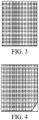
- An image is processed to remove parts outside a target area and transform an irregular quadrilateral into a regular rectangle (as shown in FIG. 3 ), or to fill a missing corner part (as shown in FIG. 4 ); a color image is converted into a black-and-white image, and an image enhancement operation is performed to make text clearer.
- a text image is an image obtained by shooting a standard text, for example, an A4-format paper text, a page in various books, and a movie poster.
- text recognition data of a text image is processed by using a text recognition engine to recognize text in the image.
- Text content in a text image is generally displayed in a rectangular area.
- there is an unwanted edge area outside a target rectangular area and next, because of a problem of a shooting angle, a case of an irregular quadrilateral (as shown in FIG. 1 ) or a missing corner (as shown in FIG. 2 ) may occur in the target rectangular area.
- the image needs to be processed to remove parts outside a target area and transform an irregular quadrilateral into a regular rectangle (as shown in FIG. 3 ), or to fill a missing corner part (as shown in FIG. 4 ); and a color text image is converted into a black-and-white image, and an image enhancement operation is performed to make a contrast between text and the background in the image clearer.
- the quadrilateral frame detection operation refers to that detection is performed on a shot image to retrieve a target quadrilateral frame, so that in a subsequent operation, an area outside the quadrilateral frame is removed and an operation of rectangular frame correction or corner filling is performed on the quadrilateral frame.
- a range of a quadrilateral frame obtained through automatic detection may be not an expected result.
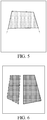
- the part of the dotted-line range is supposed to be a target frame, but the part of the solid-line range is actually detected; or as shown in FIG. 6 , in a source image, there are multiple frames that can be used for capturing.
- the part of the dotted-line range on the left side is supposed to be a target frame, but instead the part of the solid-line range on the right side is actually detected. Therefore, during initial detection of an image, one interaction interface needs to be provided to a user to adjust a target frame.
- a technical problem to be resolved by the present invention is to provide a method for adsorbing a straight line/line segment in an image, and a device for adsorbing a straight line/line segment by using this method, and a method for constructing a polygon in an image, and a device for constructing a polygon by using this method, so that a position of a quadrilateral frame in an image can be conveniently recognized, so as to construct a quadrilateral for use in subsequent image processing.
- a technical solution includes a method for adsorbing a straight line/line segment in an image according to independent claim 1.
- Another technical solution includes a method for adsorbing a straight line/line segment in an image according to independent claim 3.
- Each of the technical solutions according to the invention provides that the first part selected in dragging the pre-set line segment and the second part on the line segment are different parts.
- a finger of the user does not block the second part, so that it is convenient for the user to determine the position of the pre-set line segment in a process of dragging.
- the present invention further discloses an apparatus for adsorbing a straight line/line segment in an image according to independent claim 13.
- the present invention also discloses a method for constructing a polygon in an image.
- one polygon frame enclosed by multiple straight lines/line segments is pre-set; and a position of a straight line/line segment of at least one side of the polygon frame is determined by using the method according to independent claim 1 or independent claim 3 for adsorbing a straight line/line segment in an image, so as to construct, in an image, one polygon enclosed by multiple straight lines/line segments.
- the present invention further discloses an apparatus for constructing a polygon in an image according to independent claim 14.
- a user can be conveniently assisted, according to a line segment that exists in an image, to define a polygon frame, so that subsequent image processing can be conveniently performed.
- the present invention discloses a method for adsorbing a line segment in an image, including: pre-setting a straight line/line segment, dragging the straight line/line segment by selecting a first part of the straight line/line segment, and when a second part of the straight line/line segment is in the vicinity of a line segment in an image, setting the pre-set straight line/line segment to be superposed with the line segment, the vicinity referring to that a minimum distance between the second part of the straight line/line segment and the line segment meets a pre-set rule.
- the pre-set line segment in a process of dragging a pre-set straight line/line segment, once a second part of the straight line/line segment is dragged to the vicinity of a line segment in an image, the pre-set line segment is adsorbed to the line segment, that is, is superposed with the line segment.
- a method for adsorbing a line segment in an image including: pre-setting a straight line/line segment, dragging the straight line/line segment by selecting a first part of the straight line/line segment, and if when dragging ends, a second part of the straight line/line segment is in the vicinity of a corresponding second part of a line segment in an image, setting the pre-set straight line/line segment to be superposed with the line segment, the vicinity referring to that a minimum distance between the second part of the straight line/line segment and the corresponding second part of the line segment meets a pre-set rule.
- a process of dragging a pre-set straight line/line segment ends, for example, on a smart phone using a touch screen
- a user drags a pre-set straight line/line segment and then the finger leaves the touch screen
- a second part of the straight line/line segment is in the vicinity of a corresponding second part of a line segment in an image
- the pre-set straight line/line segment is adsorbed to the line segment, that is, is superposed with the line segment.
- the minimum distance between the pre-set line segment and the line segment may be understood as follows: As shown in FIG. 7 , a vertical line is made from a second part A or C of the pre-set straight line a to a line segment b or an extended line of the line segment b, and a length of a vertical line segment AB or CD may be regarded as the minimum distance; or, if a vertical intersection D of the vertical line CD is on the extended line of the line segment b, a distance CE between the second part C and an endpoint E, near the vertical intersection, on the line segment b may also be regarded as the minimum distance.
- a straight line for example, the straight line as shown in FIG. 7
- a line segment for example, a line segment c shown in FIG. 7
- a method for detecting a line segment in an image is a relatively mature technology at present. There may be specifically multiple methods. For example, all line segments in an image may be obtained through Hough transform, and details are no longer described in the present invention.
- a line segment in the image in the present invention may be a straight line segment, or may be a curved-line segment that approximates to a straight line segment.
- a part that is supposed to be a straight line segment may bend or undulate.
- a curved-line segment that does not bend and undulate very severely may also be recognized as a straight line segment.
- a specific recognition manner is also very mature in the prior art.
- a position where a user taps may be not very precise, and therefore the first part selected in dragging the pre-set straight line/line segment may be on the pre-set line segment, or may be in the vicinity of the pre-set line segment.
- the first part selected in dragging the pre-set line segment and the second part on the line segment are different parts.
- a finger of the user does not block the second part, so that it is convenient for the user to determine the position of the pre-set line segment in a process of dragging.
- the second part may be an endpoint of the pre-set line segment, or may be a midpoint of the pre-set line segment, or similarly, may be another position on the pre-set straight line/line segment, which may be set during use, or is a point, having a minimum distance from any position on a line segment in the image, on the pre-set straight line/line segment.
- the pre-set line segment c has a minimum distance from a point F on a line segment d in the image; therefore, a vertical line FG is made from the point F to the pre-set line segment c, and a vertical point G is a point, having a minimum distance from any position on the line segment d, on the line segment c.
- a position, intersecting with another line segment, on a line segment may be avoided, so that adsorption becomes more accurate.
- These second parts may be marked by using special marks, and therefore become noticeable to a user.
- the pre-set rule may be that a distance is less than a pre-set value.
- the pre-set rule may also be that a distance meets a pre-set formula. For example, a value is obtained by multiplying a length of a line segment in an image by one proportional factor. When a distance is less than the value, a pre-set line segment is adsorbed to the line segment, that is, is superposed with the line segment.
- a pre-set formula For example, a value is obtained by multiplying a length of a line segment in an image by one proportional factor. When a distance is less than the value, a pre-set line segment is adsorbed to the line segment, that is, is superposed with the line segment.
- the present invention further discloses an apparatus for adsorbing a line segment in an image, based on a mobile communication data terminal platform, and adopting the foregoing method for adsorbing a straight line/line segment in an image.
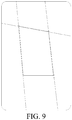
- the present invention also discloses a method for constructing a polygon in an image, where one polygon frame enclosed by multiple straight lines/line segments is pre-set; and a position of a straight line/line segment of at least one side of the polygon frame is determined by using the foregoing method for adsorbing a straight line/line segment in an image, so as to construct, in an image, one polygon enclosed by multiple straight lines/line segments, as shown in FIG. 8 to FIG. 11 .
- the polygon is a quadrilateral, so that it may be convenient for a user to perform various types of image processing.
- one polygon is first pre-set on an image, and a length and a position of a line segment of at least one side of the polygon frame are then determined by using the foregoing method for adsorbing a straight line/line segment in an image, so as to construct one polygon in the image.
- At least one side of the pre-set polygon is set to be a line segment in the image.
- a quadrilateral is used as an example, and generally, the user only needs to adjust two opposite sides to obtain one quadrilateral frame.
- a pre-set line segment is used to construct a polygon
- two adjacent sides still do not have an intersection after a position of the pre-set line segment is determined by using the foregoing method for adsorbing a straight line/line segment in an image
- the two adjacent sides are extended and intersect in a direction in which the two adjacent sides can intersect, and the intersection and the extended two adjacent sides are all used as components of the constructed polygon.
- a vertex of the polygon is not a corner where straight lines intersect and is a rounded angle instead, or a position of a vertex of the quadrilateral cannot be clearly recognized in the image for other reasons, a position of the vertex can be effectively found by using the foregoing method, so as to construct a polygon.
- the present invention further discloses an apparatus for constructing a polygon in an image, based on a mobile communication data terminal platform, and adopting the foregoing method for constructing a polygon in an image.
- determining of a position of a line segment can be completed with one time of setting, so as to conveniently assist the user to define a polygon frame, so that subsequent image processing can be conveniently performed.
Landscapes
- Engineering & Computer Science (AREA)
- Physics & Mathematics (AREA)
- General Physics & Mathematics (AREA)
- Theoretical Computer Science (AREA)
- Computer Vision & Pattern Recognition (AREA)
- Geometry (AREA)
- Multimedia (AREA)
- Processing Or Creating Images (AREA)
- Image Analysis (AREA)
- User Interface Of Digital Computer (AREA)
Description
- The present invention relates to an image recognition technology, and in particular, to a method for adsorbing a straight line/line segment in an image. The present invention further relates to an image recognition apparatus, and in particular, to an apparatus for adsorbing a straight line/line segment in an image. The present invention also relates to an image processing method, and in particular, to a method for constructing a polygon in an image. The present invention also relates to an image processing apparatus, and in particular, to an apparatus for constructing a polygon in an image.
- At present, an increasing quantity of functions of processing and retrieving information of a shot picture start emerging on a business device such as a scanner and a business phone. These functions may generally be categorized into two types:
- A whiteboard image is an image obtained by shooting a conference whiteboard, a billboard and other text-type rectangular targets. Information in which a user is interested in a whiteboard image is generally in a rectangular area. In a picture obtained through shooting, first there is an unwanted edge area outside a target rectangular area, and next because of a problem of a shooting angle, a case of an irregular quadrilateral (as shown in
FIG. 1 ) or a missing corner (as shown inFIG. 2 ) may occur in the target rectangular area. An image is processed to remove parts outside a target area and transform an irregular quadrilateral into a regular rectangle (as shown inFIG. 3 ), or to fill a missing corner part (as shown inFIG. 4 ); a color image is converted into a black-and-white image, and an image enhancement operation is performed to make text clearer. - A text image is an image obtained by shooting a standard text, for example, an A4-format paper text, a page in various books, and a movie poster. In text recognition, data of a text image is processed by using a text recognition engine to recognize text in the image. Text content in a text image is generally displayed in a rectangular area. In a picture obtained through shooting, there is an unwanted edge area outside a target rectangular area, and next, because of a problem of a shooting angle, a case of an irregular quadrilateral (as shown in
FIG. 1 ) or a missing corner (as shown inFIG. 2 ) may occur in the target rectangular area. To enable a text recognition engine to recognize a text image more accurately and rapidly, the image needs to be processed to remove parts outside a target area and transform an irregular quadrilateral into a regular rectangle (as shown inFIG. 3 ), or to fill a missing corner part (as shown inFIG. 4 ); and a color text image is converted into a black-and-white image, and an image enhancement operation is performed to make a contrast between text and the background in the image clearer. - In both types of operations above, a quadrilateral frame detection operation needs to be performed. The quadrilateral frame detection operation refers to that detection is performed on a shot image to retrieve a target quadrilateral frame, so that in a subsequent operation, an area outside the quadrilateral frame is removed and an operation of rectangular frame correction or corner filling is performed on the quadrilateral frame. However, in an actual operation, a range of a quadrilateral frame obtained through automatic detection may be not an expected result. As shown in
FIG. 5 , the part of the dotted-line range is supposed to be a target frame, but the part of the solid-line range is actually detected; or as shown inFIG. 6 , in a source image, there are multiple frames that can be used for capturing. The part of the dotted-line range on the left side is supposed to be a target frame, but instead the part of the solid-line range on the right side is actually detected. Therefore, during initial detection of an image, one interaction interface needs to be provided to a user to adjust a target frame. - In the disclosed text of Chinese Invention Patent Publication No.
CN101807293A , a method for constructing a quadrilateral frame by using vertex adsorption is recorded. However, in an actual operation, because a shooting background is relatively messy, it may be difficult to recognize a position of a vertex, or a vertex of a quadrilateral to be recognized is a rounded corner. These all result in that a vertex adsorption function becomes unusable, and a user cannot construct a quadrilateral frame by using a vertex. - The Ph.D. Thesis: Snap-Dragging: Interactive Geometric Design in Two and Three Dimensions", BIER E., UNIVERSITY OF CALIFORNIA, 19 May 1988, pages 1-168, XP001091538, is known prior art.
- A technical problem to be resolved by the present invention is to provide a method for adsorbing a straight line/line segment in an image, and a device for adsorbing a straight line/line segment by using this method, and a method for constructing a polygon in an image, and a device for constructing a polygon by using this method, so that a position of a quadrilateral frame in an image can be conveniently recognized, so as to construct a quadrilateral for use in subsequent image processing.
- The Ph.D. Thesis: Snap-Dragging: Interactive Geometric Design in Two and Three Dimensions", BIER E., UNIVERSITY OF CALIFORNIA, 19 May 1988, pages 1-168, XP001091538 mainly refers to objects which snap in correspondence of the point in which the cursor is positioned, or very close to it. When snap-dragging is implemented on mobile phones using a touch screen, dragging is usually done with a finger. A disadvantage of the know snap-dragging is that the finger used for dragging will obstruct the cursor.
- To resolve the foregoing technical problems, a technical solution includes a method for adsorbing a straight line/line segment in an image according to independent claim 1.
- Another technical solution includes a method for adsorbing a straight line/line segment in an image according to independent claim 3.
- Each of the technical solutions according to the invention provides that the first part selected in dragging the pre-set line segment and the second part on the line segment are different parts. In this case, during dragging of the user, a finger of the user does not block the second part, so that it is convenient for the user to determine the position of the pre-set line segment in a process of dragging.
- The present invention further discloses an apparatus for adsorbing a straight line/line segment in an image according to independent claim 13.
- The present invention also discloses a method for constructing a polygon in an image. In a technical solution of the method for constructing a polygon in an image, one polygon frame enclosed by multiple straight lines/line segments is pre-set; and a position of a straight line/line segment of at least one side of the polygon frame is determined by using the method according to independent claim 1 or independent claim 3 for adsorbing a straight line/line segment in an image, so as to construct, in an image, one polygon enclosed by multiple straight lines/line segments.
- The present invention further discloses an apparatus for constructing a polygon in an image according to independent claim 14.
- In the present invention, by means of the foregoing technical solutions, a user can be conveniently assisted, according to a line segment that exists in an image, to define a polygon frame, so that subsequent image processing can be conveniently performed.
- The present invention is further described in detail below with reference to the accompanying drawings and embodiments:
-
FIG. 1 to FIG. 4 are schematic diagrams of an image after shooting and processing of a whiteboard and a text; -
FIG. 5 and FIG. 6 are schematic diagrams that a target frame after frame capturing needs to be further adjusted; -
FIG. 7 is a schematic diagram of a method for adsorbing a line segment in an image according to the present invention; and -
FIG. 8 to FIG. 11 are schematic diagrams of a method for constructing a polygon in an image according to the present invention. - The present invention discloses a method for adsorbing a line segment in an image, including: pre-setting a straight line/line segment, dragging the straight line/line segment by selecting a first part of the straight line/line segment, and when a second part of the straight line/line segment is in the vicinity of a line segment in an image, setting the pre-set straight line/line segment to be superposed with the line segment, the vicinity referring to that a minimum distance between the second part of the straight line/line segment and the line segment meets a pre-set rule. In this embodiment, in a process of dragging a pre-set straight line/line segment, once a second part of the straight line/line segment is dragged to the vicinity of a line segment in an image, the pre-set line segment is adsorbed to the line segment, that is, is superposed with the line segment.
- In another disclosed embodiment of the present invention, a method for adsorbing a line segment in an image, including: pre-setting a straight line/line segment, dragging the straight line/line segment by selecting a first part of the straight line/line segment, and if when dragging ends, a second part of the straight line/line segment is in the vicinity of a corresponding second part of a line segment in an image, setting the pre-set straight line/line segment to be superposed with the line segment, the vicinity referring to that a minimum distance between the second part of the straight line/line segment and the corresponding second part of the line segment meets a pre-set rule. In this embodiment, when a process of dragging a pre-set straight line/line segment ends, for example, on a smart phone using a touch screen, when a user drags a pre-set straight line/line segment and then the finger leaves the touch screen, if a second part of the straight line/line segment is in the vicinity of a corresponding second part of a line segment in an image, the pre-set straight line/line segment is adsorbed to the line segment, that is, is superposed with the line segment.
- In the foregoing embodiment, the minimum distance between the pre-set line segment and the line segment may be understood as follows: As shown in
FIG. 7 , a vertical line is made from a second part A or C of the pre-set straight line a to a line segment b or an extended line of the line segment b, and a length of a vertical line segment AB or CD may be regarded as the minimum distance; or, if a vertical intersection D of the vertical line CD is on the extended line of the line segment b, a distance CE between the second part C and an endpoint E, near the vertical intersection, on the line segment b may also be regarded as the minimum distance. - In the present invention, a straight line, for example, the straight line as shown in
FIG. 7 , may be pre-set; or a line segment, for example, a line segment c shown inFIG. 7 , may be pre-set. - A method for detecting a line segment in an image is a relatively mature technology at present. There may be specifically multiple methods. For example, all line segments in an image may be obtained through Hough transform, and details are no longer described in the present invention.
- A line segment in the image in the present invention may be a straight line segment, or may be a curved-line segment that approximates to a straight line segment. In some images, especially in a photo image, for a reason such as a distortion in a shooting lens or uneven edges of a shot object, in a shot photo, a part that is supposed to be a straight line segment may bend or undulate. In the present invention, a curved-line segment that does not bend and undulate very severely may also be recognized as a straight line segment. A specific recognition manner is also very mature in the prior art.
- On a smart phone using a touch screen, a position where a user taps may be not very precise, and therefore the first part selected in dragging the pre-set straight line/line segment may be on the pre-set line segment, or may be in the vicinity of the pre-set line segment.
- The first part selected in dragging the pre-set line segment and the second part on the line segment are different parts. In this case, during dragging of the user, a finger of the user does not block the second part, so that it is convenient for the user to determine the position of the pre-set line segment in a process of dragging.
- The second part may be an endpoint of the pre-set line segment, or may be a midpoint of the pre-set line segment, or similarly, may be another position on the pre-set straight line/line segment, which may be set during use, or is a point, having a minimum distance from any position on a line segment in the image, on the pre-set straight line/line segment. As shown in
FIG. 7 , the pre-set line segment c has a minimum distance from a point F on a line segment d in the image; therefore, a vertical line FG is made from the point F to the pre-set line segment c, and a vertical point G is a point, having a minimum distance from any position on the line segment d, on the line segment c. For the selection of a second part, a position, intersecting with another line segment, on a line segment may be avoided, so that adsorption becomes more accurate. These second parts may be marked by using special marks, and therefore become noticeable to a user. - The pre-set rule may be that a distance is less than a pre-set value.
- The pre-set rule may also be that a distance meets a pre-set formula. For example, a value is obtained by multiplying a length of a line segment in an image by one proportional factor. When a distance is less than the value, a pre-set line segment is adsorbed to the line segment, that is, is superposed with the line segment. There are also many similar rules, a person skilled in the art may set the rule flexibly, and details are no longer described herein.
- The present invention further discloses an apparatus for adsorbing a line segment in an image, based on a mobile communication data terminal platform, and adopting the foregoing method for adsorbing a straight line/line segment in an image.
- The present invention also discloses a method for constructing a polygon in an image, where one polygon frame enclosed by multiple straight lines/line segments is pre-set; and a position of a straight line/line segment of at least one side of the polygon frame is determined by using the foregoing method for adsorbing a straight line/line segment in an image, so as to construct, in an image, one polygon enclosed by multiple straight lines/line segments, as shown in
FIG. 8 to FIG. 11 . - In an actual application, a most common case is that the polygon is a quadrilateral, so that it may be convenient for a user to perform various types of image processing.
- In one preferred embodiment, one polygon is first pre-set on an image, and a length and a position of a line segment of at least one side of the polygon frame are then determined by using the foregoing method for adsorbing a straight line/line segment in an image, so as to construct one polygon in the image.
- Furthermore, at least one side of the pre-set polygon is set to be a line segment in the image.
- When a straight line/line segment of a frame is being dragged, vertices, other than two endpoints of the frame, of the polygon are kept unchanged. In this way, a user may adjust as few side lines as possible, and then obtain a needed quadrilateral frame. A quadrilateral is used as an example, and generally, the user only needs to adjust two opposite sides to obtain one quadrilateral frame.
- When a pre-set line segment is used to construct a polygon, if two adjacent sides still do not have an intersection after a position of the pre-set line segment is determined by using the foregoing method for adsorbing a straight line/line segment in an image, the two adjacent sides are extended and intersect in a direction in which the two adjacent sides can intersect, and the intersection and the extended two adjacent sides are all used as components of the constructed polygon. For a polygon in an image, if a vertex of the polygon is not a corner where straight lines intersect and is a rounded angle instead, or a position of a vertex of the quadrilateral cannot be clearly recognized in the image for other reasons, a position of the vertex can be effectively found by using the foregoing method, so as to construct a polygon.
- The present invention further discloses an apparatus for constructing a polygon in an image, based on a mobile communication data terminal platform, and adopting the foregoing method for constructing a polygon in an image.
- In the prior art, to recognize a polygon in an image, a user needs to determine endpoints of each side line, and therefore each side line needs to be set at least twice. In the present invention, by means of the foregoing technical solutions, according to a line segment that exists in an image, determining of a position of a line segment can be completed with one time of setting, so as to conveniently assist the user to define a polygon frame, so that subsequent image processing can be conveniently performed.
- Only preferred examples of the present invention are provided above, and are not used to limit the essential technical content and scope of the present invention. The essential technical content of the present invention is defined in the claims in a general sense. Any technical entity or method completed by others that is identical with what is claimed in the claims or is an equivalent variation shall be construed as falling within the scope of the claims.
Claims (14)
- A method for adsorbing a straight line/line segment in an image, i.e. for superposing a pre-set line/line segment (a, c) with a line segment (b, d) of said image, the method being performed on a smart phone using a touch screen and comprising: pre-setting a straight line/line segment (a, c), dragging said straight line/line segment (a, c) by selecting a first part of the straight line/line segment (a, c), and when a second part of the straight line/line segment (a, c), different from the first part, is in the vicinity of a line segment (b, d) in said image, setting the pre-set straight line/line segment (a, c) to be superposed with said line segment (b, d) in said image, the vicinity referring to that a minimum distance between the second part of the straight line/line segment (a, c) and the line segment (b, d) meets a pre-set rule, wherein the first part and the second part are such that during dragging of the user, a finger of the user does not block the second part.
- The method for adsorbing a straight line/line segment in an image according to claim 1, wherein the second part is any one of the following cases:an endpoint of the pre-set line segment;a midpoint of the pre-set line segment; anda point, having a minimum distance from any position on a line segment in the image, on the pre-set straight line/line segment.
- A method for adsorbing a straight line/line segment in an image, i.e., for superposing a pre-set line/line segment (a, c) of said image, comprising: pre-setting a straight line/line segment (a, c), dragging said straight line/line segment (a, c) by selecting a first part of the straight line/line segment (a, c), and if when dragging ends on a smart phone using a touch screen, a second part of the straight line/line segment (a, c), different from the first part, is in the vicinity of a corresponding second part of a line segment (b, d) in said image, setting the pre-set straight line/line segment (a, c) to be superposed with said line segment (b, d) in said image, the vicinity referring to that a minimum distance between the second part of the straight line/line segment (a, c) and the corresponding second part of the line segment (b, d) meets a pre-set rule, wherein the first part and the second part are such that during dragging of the user, a finger of the user does not block the second part.
- The method for adsorbing a straight line/line segment in an image according to claim 3, wherein the second part is a point, having a minimum distance from any position on the line segment in the image, on the pre-set straight line/line segment.
- The method for adsorbing a straight line/line segment in an image according to claim 1, 2, 3 or 4, wherein the first part selected in dragging the pre-set line segment is either on the pre-set straight line/line segment or in the vicinity of the pre-set straight line/line segment, the vicinity referring to that a minimum distance between the first part and the pre-set straight line/line segment meets a pre-set rule.
- The method for adsorbing a straight line/line segment in an image according to claim 1 or 3, wherein the pre-set rule is that a distance is less than a pre-set value, or is that a distance meets a pre-set formula.
- A method for constructing a polygon in an image, wherein one polygon frame enclosed by multiple straight lines/line segments is pre-set, and a position of a straight line/line segment of at least one side of the polygon frame is determined by using the method for adsorbing a straight line/line segment in an image according to any one of claims 1 to 6, so as to construct, in an image, one polygon enclosed by multiple straight lines/line segments.
- The method for constructing a polygon in an image according to claim 7, wherein the polygon is a quadrilateral.
- The method for constructing a polygon in an image according to claim 7, wherein one polygon is first pre-set on the image, and a length and a position of a straight line/line segment of at least one side of the polygon frame are then determined by using the method for adsorbing a straight line/line segment in an image according to any one of claims 1 to 6, so as to construct one polygon in the image.
- The method for constructing a polygon in an image according to claim 9, wherein a straight line/line segment of at least one side of the pre-set polygon is set to be superposed with a line segment in the image.
- The method for constructing a polygon in an image according to claim 7, wherein when a straight line/line segment of a frame is being dragged, vertices, other than two endpoints of the frame, of the polygon are kept unchanged.
- The method for constructing a polygon in an image according to claim 7, wherein when a pre-set line segment is used to construct a polygon, if two adjacent sides still do not have an intersection after a position of the pre-set line segment is determined by using the method for adsorbing a straight line/line segment in an image according to any one of claims 1 to 6, the two adjacent sides are extended and intersect in a direction in which the two adjacent sides can intersect, and the intersection and the extended two adjacent sides are all used as components of the constructed polygon.
- An apparatus for adsorbing a straight line/line segment in an image, i.e., for superposing a pre-set line/line segment with a line segment of said image, based on a mobile communication terminal platform, the apparatus being configured to perform the method for adsorbing a straight line/line segment in an image according to any one of claims 1 to 6.
- An apparatus for constructing a polygon in an image, based on a mobile communication data terminal platform, the apparatus being configured to perform the method for constructing a polygon in an image according to any one of claims 7 to 12.
Applications Claiming Priority (2)
| Application Number | Priority Date | Filing Date | Title |
|---|---|---|---|
| CN201310357997.1A CN103399696B (en) | 2013-08-16 | 2013-08-16 | The method and device of straight line/line segment absorption, constructs the method and device of polygon |
| PCT/CN2014/083862 WO2015021877A1 (en) | 2013-08-16 | 2014-08-07 | Method and device for adsorbing straight line/line segment, and method and device for constructing polygon |
Publications (3)
| Publication Number | Publication Date |
|---|---|
| EP3035289A1 EP3035289A1 (en) | 2016-06-22 |
| EP3035289A4 EP3035289A4 (en) | 2017-03-08 |
| EP3035289B1 true EP3035289B1 (en) | 2020-06-24 |
Family
ID=49563334
Family Applications (1)
| Application Number | Title | Priority Date | Filing Date |
|---|---|---|---|
| EP14836323.7A Active EP3035289B1 (en) | 2013-08-16 | 2014-08-07 | Method and device for adsorbing straight line/line segment, and method and device for constructing polygon |
Country Status (8)
| Country | Link |
|---|---|
| US (1) | US10332236B2 (en) |
| EP (1) | EP3035289B1 (en) |
| JP (1) | JP6193498B2 (en) |
| KR (1) | KR101825200B1 (en) |
| CN (1) | CN103399696B (en) |
| ES (1) | ES2808899T3 (en) |
| PT (1) | PT3035289T (en) |
| WO (1) | WO2015021877A1 (en) |
Families Citing this family (9)
| Publication number | Priority date | Publication date | Assignee | Title |
|---|---|---|---|---|
| CN103400387B (en) * | 2013-08-06 | 2018-10-09 | 上海合合信息科技发展有限公司 | The method and device of line segment absorption in the picture, constructs the method and device of polygon |
| CN103399696B (en) * | 2013-08-16 | 2018-10-09 | 上海合合信息科技发展有限公司 | The method and device of straight line/line segment absorption, constructs the method and device of polygon |
| CN104765895A (en) * | 2014-01-06 | 2015-07-08 | 北京华大九天软件有限公司 | Automatic absorption method in layout editing |
| CN105844682B (en) * | 2015-01-15 | 2018-11-09 | 北京华大九天软件有限公司 | A kind of amending method of integrated circuit diagram figure |
| CN108008893A (en) * | 2017-12-01 | 2018-05-08 | 北京小米移动软件有限公司 | Image processing method and device |
| CN109240561B (en) * | 2018-08-20 | 2021-01-08 | 广州视源电子科技股份有限公司 | Method and device for selecting rotary element adsorption element, and rotary adsorption method |
| CN109979020B (en) * | 2019-04-04 | 2020-12-22 | 广州视源电子科技股份有限公司 | A line segment adsorption method, device, equipment and storage medium |
| CN111352545A (en) * | 2019-05-07 | 2020-06-30 | 鸿合科技股份有限公司 | Automatic adsorption method of interactive service and related equipment |
| CN111104036B (en) * | 2019-11-21 | 2022-04-05 | 广州视源电子科技股份有限公司 | Element control method, device, equipment and storage medium |
Family Cites Families (25)
| Publication number | Priority date | Publication date | Assignee | Title |
|---|---|---|---|---|
| CA2124505C (en) * | 1993-07-21 | 2000-01-04 | William A. S. Buxton | User interface having simultaneously movable tools and cursor |
| US5808623A (en) * | 1996-10-07 | 1998-09-15 | Adobe Systems Incorporated | System and method for perspective transform in computer using multi-pass algorithm |
| JP2002215683A (en) * | 2001-01-22 | 2002-08-02 | Amu:Kk | CAD soft |
| NZ511705A (en) * | 2001-05-14 | 2004-03-26 | Horticulture & Food Res Inst | Methods and rapid immunoassay device for detecting progesterone and other steroids |
| JP2003016463A (en) * | 2001-07-05 | 2003-01-17 | Toshiba Corp | Method for extracting outline of figure, pattern inspection method, pattern inspection apparatus, program, and computer-readable recording medium storing the same |
| DE10237011A1 (en) * | 2002-08-13 | 2004-02-26 | Philips Intellectual Property & Standards Gmbh | Fingerprint lines encoding method, involves encoding one line at time by vertices that include starting and end points, such that connecting line segments between adjacent vertices are no more than given distance away from line |
| US20040125350A1 (en) * | 2002-12-31 | 2004-07-01 | Eastman Kodak Company | Film frame alignment method and system for an imaging apparatus |
| JP2005149241A (en) * | 2003-11-17 | 2005-06-09 | Toshiba Corp | Electronic equipment and programs |
| JP2006190049A (en) * | 2005-01-05 | 2006-07-20 | Fujitsu Ltd | Vertex reduction drawing method and apparatus |
| JP2007198934A (en) * | 2006-01-27 | 2007-08-09 | Hitachi Ltd | Region of interest extraction method of image data, computer program implementing the method, and region of interest extraction system |
| US7995073B1 (en) * | 2006-07-12 | 2011-08-09 | Autodesk, Inc. | System and method for anti-aliasing compound shape vector graphics |
| AU2007201627B2 (en) * | 2007-04-13 | 2010-11-25 | Canon Kabushiki Kaisha | Gluing layout containers |
| JP2009141412A (en) * | 2007-12-03 | 2009-06-25 | Noritsu Koki Co Ltd | Print output device |
| JP5386828B2 (en) * | 2008-01-29 | 2014-01-15 | セイコーエプソン株式会社 | Image projection system and program |
| JP5422129B2 (en) * | 2008-02-07 | 2014-02-19 | 株式会社キーエンス | Defect detection apparatus, defect detection method, and computer program |
| CN101408988A (en) * | 2008-11-07 | 2009-04-15 | 武汉虹信通信技术有限责任公司 | Method for drafting expandable line |
| CN102103578B (en) * | 2009-12-17 | 2013-03-06 | 珠海金山软件有限公司 | Method and system for performing fine adjustment on tables by using computer |
| CN101807293B (en) * | 2010-03-19 | 2012-06-13 | 上海合合信息科技发展有限公司 | Method for adjusting detection result of image quadrilateral frame |
| US9025824B2 (en) * | 2010-12-07 | 2015-05-05 | Movement Training Systems Llc | Systems and methods for evaluating physical performance |
| CN102736836A (en) * | 2011-05-06 | 2012-10-17 | 新奥特(北京)视频技术有限公司 | Feasibility judgment method for dragging of vertex or side of bounding box of object in scene |
| US20140099624A1 (en) * | 2012-05-16 | 2014-04-10 | Age Of Learning, Inc. | Mentor-tuned guided learning in online educational systems |
| CN102938064B (en) * | 2012-11-23 | 2015-06-17 | 南京大学 | Park structure extraction method based on LiDAR data and ortho-images |
| CN103208119B (en) * | 2013-03-27 | 2015-07-22 | 广东欧珀移动通信有限公司 | Method for correcting perspective image shot by handheld device |
| CN103400387B (en) * | 2013-08-06 | 2018-10-09 | 上海合合信息科技发展有限公司 | The method and device of line segment absorption in the picture, constructs the method and device of polygon |
| CN103399696B (en) * | 2013-08-16 | 2018-10-09 | 上海合合信息科技发展有限公司 | The method and device of straight line/line segment absorption, constructs the method and device of polygon |
-
2013
- 2013-08-16 CN CN201310357997.1A patent/CN103399696B/en active Active
-
2014
- 2014-08-07 ES ES14836323T patent/ES2808899T3/en active Active
- 2014-08-07 KR KR1020167006997A patent/KR101825200B1/en active Active
- 2014-08-07 JP JP2016533800A patent/JP6193498B2/en active Active
- 2014-08-07 US US14/912,369 patent/US10332236B2/en active Active
- 2014-08-07 WO PCT/CN2014/083862 patent/WO2015021877A1/en not_active Ceased
- 2014-08-07 PT PT148363237T patent/PT3035289T/en unknown
- 2014-08-07 EP EP14836323.7A patent/EP3035289B1/en active Active
Non-Patent Citations (2)
| Title |
|---|
| "Official EN Translation provided from EPO", 22 June 2011, article HU JUAN ET AL: "CN 10 21 03 578 - Method and system for Performing Fine Adjustement on Tables by Using Computer", XP055473122 * |
| BIER E: "Ph.D. Thesis: Snap-Dragging: Interactive GEometric Design in Two and Three Dimensions", THESIS UNIVERSITY OF CALIFORNIA, XX, XX, 19 May 1988 (1988-05-19), pages 1 - 168, XP001091538 * |
Also Published As
| Publication number | Publication date |
|---|---|
| JP2016534447A (en) | 2016-11-04 |
| KR20160045779A (en) | 2016-04-27 |
| ES2808899T3 (en) | 2021-03-02 |
| WO2015021877A1 (en) | 2015-02-19 |
| CN103399696B (en) | 2018-10-09 |
| PT3035289T (en) | 2020-07-31 |
| JP6193498B2 (en) | 2017-09-06 |
| US10332236B2 (en) | 2019-06-25 |
| CN103399696A (en) | 2013-11-20 |
| KR101825200B1 (en) | 2018-02-02 |
| US20160203381A1 (en) | 2016-07-14 |
| EP3035289A4 (en) | 2017-03-08 |
| EP3035289A1 (en) | 2016-06-22 |
Similar Documents
| Publication | Publication Date | Title |
|---|---|---|
| US10332236B2 (en) | Method and apparatus for adsorbing straight line/line segment, method and apparatus for constructing polygon | |
| CN103500066B (en) | A screenshot device and method suitable for touch screen devices | |
| Tang et al. | Depth recovery and refinement from a single image using defocus cues | |
| US10037581B1 (en) | Methods systems and computer program products for motion initiated document capture | |
| CN107409166B (en) | Automatic generation of panning shots | |
| US9549121B2 (en) | Image acquiring method and electronic device | |
| US10678410B2 (en) | Browser-based image processing | |
| EP3222036B1 (en) | Method and apparatus for image processing | |
| CN105184838A (en) | Picture processing method and terminal | |
| KR102303206B1 (en) | Method and apparatus for recognizing object of image in electronic device | |
| CN111311619A (en) | Method and device for realizing slider verification | |
| CN110765799A (en) | Client code scanning identification method, device, equipment and storage medium | |
| CN104778007A (en) | Screen capturing method and screen capturing device | |
| WO2015018337A1 (en) | Method and device for snapping to line segment in image, method and device for constructing polygon | |
| US20130121579A1 (en) | Software for text and image edit recognition for editing of images that contain text | |
| CN113703622A (en) | Display interface processing method and device, electronic equipment and storage medium | |
| US20170017370A1 (en) | Device and method for processing data | |
| CN110737417B (en) | Demonstration equipment and display control method and device of marking line of demonstration equipment | |
| CN113592833B (en) | Object measurement method, device, equipment and storage medium | |
| CN106778733A (en) | Adjust the display methods and device of picture character | |
| CN112989779B (en) | Form generation method, electronic device and storage medium thereof | |
| CN105335854A (en) | Method of providing commodity object picture in page and apparatus | |
| US20170344204A1 (en) | Systems and methods for detecting and displaying graphic contents on digital media page | |
| CN117670692A (en) | Image processing methods and devices, electronic equipment, readable storage media | |
| CN117952928A (en) | Image processing method and device |
Legal Events
| Date | Code | Title | Description |
|---|---|---|---|
| PUAI | Public reference made under article 153(3) epc to a published international application that has entered the european phase |
Free format text: ORIGINAL CODE: 0009012 |
|
| 17P | Request for examination filed |
Effective date: 20160308 |
|
| AK | Designated contracting states |
Kind code of ref document: A1 Designated state(s): AL AT BE BG CH CY CZ DE DK EE ES FI FR GB GR HR HU IE IS IT LI LT LU LV MC MK MT NL NO PL PT RO RS SE SI SK SM TR |
|
| AX | Request for extension of the european patent |
Extension state: BA ME |
|
| DAX | Request for extension of the european patent (deleted) | ||
| A4 | Supplementary search report drawn up and despatched |
Effective date: 20170202 |
|
| RIC1 | Information provided on ipc code assigned before grant |
Ipc: G06T 3/00 20060101ALI20170127BHEP Ipc: G06T 11/60 20060101ALI20170127BHEP Ipc: G06T 11/80 20060101AFI20170127BHEP |
|
| STAA | Information on the status of an ep patent application or granted ep patent |
Free format text: STATUS: EXAMINATION IS IN PROGRESS |
|
| 17Q | First examination report despatched |
Effective date: 20171121 |
|
| GRAP | Despatch of communication of intention to grant a patent |
Free format text: ORIGINAL CODE: EPIDOSNIGR1 |
|
| STAA | Information on the status of an ep patent application or granted ep patent |
Free format text: STATUS: GRANT OF PATENT IS INTENDED |
|
| INTG | Intention to grant announced |
Effective date: 20200114 |
|
| RIN1 | Information on inventor provided before grant (corrected) |
Inventor name: ZHANG, BIN Inventor name: LONG, TENG Inventor name: DING, KAI Inventor name: GUO, FENGJUN Inventor name: ZHEN, LIXIN Inventor name: CHEN, QINGSHAN Inventor name: WANG, YUE |
|
| GRAS | Grant fee paid |
Free format text: ORIGINAL CODE: EPIDOSNIGR3 |
|
| GRAA | (expected) grant |
Free format text: ORIGINAL CODE: 0009210 |
|
| STAA | Information on the status of an ep patent application or granted ep patent |
Free format text: STATUS: THE PATENT HAS BEEN GRANTED |
|
| AK | Designated contracting states |
Kind code of ref document: B1 Designated state(s): AL AT BE BG CH CY CZ DE DK EE ES FI FR GB GR HR HU IE IS IT LI LT LU LV MC MK MT NL NO PL PT RO RS SE SI SK SM TR |
|
| REG | Reference to a national code |
Ref country code: GB Ref legal event code: FG4D |
|
| REG | Reference to a national code |
Ref country code: CH Ref legal event code: EP |
|
| REG | Reference to a national code |
Ref country code: FI Ref legal event code: FGE |
|
| REG | Reference to a national code |
Ref country code: AT Ref legal event code: REF Ref document number: 1284655 Country of ref document: AT Kind code of ref document: T Effective date: 20200715 |
|
| REG | Reference to a national code |
Ref country code: DE Ref legal event code: R096 Ref document number: 602014067073 Country of ref document: DE |
|
| REG | Reference to a national code |
Ref country code: IE Ref legal event code: FG4D |
|
| REG | Reference to a national code |
Ref country code: SE Ref legal event code: TRGR |
|
| REG | Reference to a national code |
Ref country code: PT Ref legal event code: SC4A Ref document number: 3035289 Country of ref document: PT Date of ref document: 20200731 Kind code of ref document: T Free format text: AVAILABILITY OF NATIONAL TRANSLATION Effective date: 20200728 Ref country code: CH Ref legal event code: NV Representative=s name: BOVARD AG PATENT- UND MARKENANWAELTE, CH |
|
| REG | Reference to a national code |
Ref country code: NL Ref legal event code: FP |
|
| PG25 | Lapsed in a contracting state [announced via postgrant information from national office to epo] |
Ref country code: LT Free format text: LAPSE BECAUSE OF FAILURE TO SUBMIT A TRANSLATION OF THE DESCRIPTION OR TO PAY THE FEE WITHIN THE PRESCRIBED TIME-LIMIT Effective date: 20200624 Ref country code: GR Free format text: LAPSE BECAUSE OF FAILURE TO SUBMIT A TRANSLATION OF THE DESCRIPTION OR TO PAY THE FEE WITHIN THE PRESCRIBED TIME-LIMIT Effective date: 20200925 Ref country code: NO Free format text: LAPSE BECAUSE OF FAILURE TO SUBMIT A TRANSLATION OF THE DESCRIPTION OR TO PAY THE FEE WITHIN THE PRESCRIBED TIME-LIMIT Effective date: 20200924 |
|
| REG | Reference to a national code |
Ref country code: LT Ref legal event code: MG4D |
|
| PG25 | Lapsed in a contracting state [announced via postgrant information from national office to epo] |
Ref country code: RS Free format text: LAPSE BECAUSE OF FAILURE TO SUBMIT A TRANSLATION OF THE DESCRIPTION OR TO PAY THE FEE WITHIN THE PRESCRIBED TIME-LIMIT Effective date: 20200624 Ref country code: BG Free format text: LAPSE BECAUSE OF FAILURE TO SUBMIT A TRANSLATION OF THE DESCRIPTION OR TO PAY THE FEE WITHIN THE PRESCRIBED TIME-LIMIT Effective date: 20200924 Ref country code: LV Free format text: LAPSE BECAUSE OF FAILURE TO SUBMIT A TRANSLATION OF THE DESCRIPTION OR TO PAY THE FEE WITHIN THE PRESCRIBED TIME-LIMIT Effective date: 20200624 Ref country code: HR Free format text: LAPSE BECAUSE OF FAILURE TO SUBMIT A TRANSLATION OF THE DESCRIPTION OR TO PAY THE FEE WITHIN THE PRESCRIBED TIME-LIMIT Effective date: 20200624 |
|
| PG25 | Lapsed in a contracting state [announced via postgrant information from national office to epo] |
Ref country code: AL Free format text: LAPSE BECAUSE OF FAILURE TO SUBMIT A TRANSLATION OF THE DESCRIPTION OR TO PAY THE FEE WITHIN THE PRESCRIBED TIME-LIMIT Effective date: 20200624 |
|
| PG25 | Lapsed in a contracting state [announced via postgrant information from national office to epo] |
Ref country code: EE Free format text: LAPSE BECAUSE OF FAILURE TO SUBMIT A TRANSLATION OF THE DESCRIPTION OR TO PAY THE FEE WITHIN THE PRESCRIBED TIME-LIMIT Effective date: 20200624 Ref country code: SM Free format text: LAPSE BECAUSE OF FAILURE TO SUBMIT A TRANSLATION OF THE DESCRIPTION OR TO PAY THE FEE WITHIN THE PRESCRIBED TIME-LIMIT Effective date: 20200624 Ref country code: RO Free format text: LAPSE BECAUSE OF FAILURE TO SUBMIT A TRANSLATION OF THE DESCRIPTION OR TO PAY THE FEE WITHIN THE PRESCRIBED TIME-LIMIT Effective date: 20200624 Ref country code: CZ Free format text: LAPSE BECAUSE OF FAILURE TO SUBMIT A TRANSLATION OF THE DESCRIPTION OR TO PAY THE FEE WITHIN THE PRESCRIBED TIME-LIMIT Effective date: 20200624 |
|
| PG25 | Lapsed in a contracting state [announced via postgrant information from national office to epo] |
Ref country code: IS Free format text: LAPSE BECAUSE OF FAILURE TO SUBMIT A TRANSLATION OF THE DESCRIPTION OR TO PAY THE FEE WITHIN THE PRESCRIBED TIME-LIMIT Effective date: 20201024 Ref country code: PL Free format text: LAPSE BECAUSE OF FAILURE TO SUBMIT A TRANSLATION OF THE DESCRIPTION OR TO PAY THE FEE WITHIN THE PRESCRIBED TIME-LIMIT Effective date: 20200624 Ref country code: SK Free format text: LAPSE BECAUSE OF FAILURE TO SUBMIT A TRANSLATION OF THE DESCRIPTION OR TO PAY THE FEE WITHIN THE PRESCRIBED TIME-LIMIT Effective date: 20200624 |
|
| REG | Reference to a national code |
Ref country code: ES Ref legal event code: FG2A Ref document number: 2808899 Country of ref document: ES Kind code of ref document: T3 Effective date: 20210302 |
|
| REG | Reference to a national code |
Ref country code: DE Ref legal event code: R097 Ref document number: 602014067073 Country of ref document: DE |
|
| PG25 | Lapsed in a contracting state [announced via postgrant information from national office to epo] |
Ref country code: MC Free format text: LAPSE BECAUSE OF FAILURE TO SUBMIT A TRANSLATION OF THE DESCRIPTION OR TO PAY THE FEE WITHIN THE PRESCRIBED TIME-LIMIT Effective date: 20200624 |
|
| PG25 | Lapsed in a contracting state [announced via postgrant information from national office to epo] |
Ref country code: LU Free format text: LAPSE BECAUSE OF NON-PAYMENT OF DUE FEES Effective date: 20200807 Ref country code: DK Free format text: LAPSE BECAUSE OF FAILURE TO SUBMIT A TRANSLATION OF THE DESCRIPTION OR TO PAY THE FEE WITHIN THE PRESCRIBED TIME-LIMIT Effective date: 20200624 |
|
| PLBE | No opposition filed within time limit |
Free format text: ORIGINAL CODE: 0009261 |
|
| STAA | Information on the status of an ep patent application or granted ep patent |
Free format text: STATUS: NO OPPOSITION FILED WITHIN TIME LIMIT |
|
| 26N | No opposition filed |
Effective date: 20210325 |
|
| PG25 | Lapsed in a contracting state [announced via postgrant information from national office to epo] |
Ref country code: SI Free format text: LAPSE BECAUSE OF FAILURE TO SUBMIT A TRANSLATION OF THE DESCRIPTION OR TO PAY THE FEE WITHIN THE PRESCRIBED TIME-LIMIT Effective date: 20200624 Ref country code: IE Free format text: LAPSE BECAUSE OF NON-PAYMENT OF DUE FEES Effective date: 20200807 |
|
| PGFP | Annual fee paid to national office [announced via postgrant information from national office to epo] |
Ref country code: IT Payment date: 20210805 Year of fee payment: 8 |
|
| PG25 | Lapsed in a contracting state [announced via postgrant information from national office to epo] |
Ref country code: TR Free format text: LAPSE BECAUSE OF FAILURE TO SUBMIT A TRANSLATION OF THE DESCRIPTION OR TO PAY THE FEE WITHIN THE PRESCRIBED TIME-LIMIT Effective date: 20200624 Ref country code: MT Free format text: LAPSE BECAUSE OF FAILURE TO SUBMIT A TRANSLATION OF THE DESCRIPTION OR TO PAY THE FEE WITHIN THE PRESCRIBED TIME-LIMIT Effective date: 20200624 Ref country code: CY Free format text: LAPSE BECAUSE OF FAILURE TO SUBMIT A TRANSLATION OF THE DESCRIPTION OR TO PAY THE FEE WITHIN THE PRESCRIBED TIME-LIMIT Effective date: 20200624 |
|
| PG25 | Lapsed in a contracting state [announced via postgrant information from national office to epo] |
Ref country code: MK Free format text: LAPSE BECAUSE OF FAILURE TO SUBMIT A TRANSLATION OF THE DESCRIPTION OR TO PAY THE FEE WITHIN THE PRESCRIBED TIME-LIMIT Effective date: 20200624 |
|
| REG | Reference to a national code |
Ref country code: AT Ref legal event code: UEP Ref document number: 1284655 Country of ref document: AT Kind code of ref document: T Effective date: 20200624 |
|
| PG25 | Lapsed in a contracting state [announced via postgrant information from national office to epo] |
Ref country code: IT Free format text: LAPSE BECAUSE OF NON-PAYMENT OF DUE FEES Effective date: 20220807 |
|
| PGFP | Annual fee paid to national office [announced via postgrant information from national office to epo] |
Ref country code: NL Payment date: 20250716 Year of fee payment: 12 |
|
| PGFP | Annual fee paid to national office [announced via postgrant information from national office to epo] |
Ref country code: PT Payment date: 20250807 Year of fee payment: 12 Ref country code: ES Payment date: 20250905 Year of fee payment: 12 Ref country code: FI Payment date: 20250814 Year of fee payment: 12 |
|
| PGFP | Annual fee paid to national office [announced via postgrant information from national office to epo] |
Ref country code: DE Payment date: 20250708 Year of fee payment: 12 |
|
| PGFP | Annual fee paid to national office [announced via postgrant information from national office to epo] |
Ref country code: BE Payment date: 20250716 Year of fee payment: 12 |
|
| PGFP | Annual fee paid to national office [announced via postgrant information from national office to epo] |
Ref country code: AT Payment date: 20250725 Year of fee payment: 12 |
|
| PGFP | Annual fee paid to national office [announced via postgrant information from national office to epo] |
Ref country code: CH Payment date: 20250901 Year of fee payment: 12 Ref country code: SE Payment date: 20250710 Year of fee payment: 12 |
|
| REG | Reference to a national code |
Ref country code: DE Ref legal event code: R079 Ref document number: 602014067073 Country of ref document: DE Free format text: PREVIOUS MAIN CLASS: G06T0011800000 Ipc: G06T0011600000 |
|
| PGFP | Annual fee paid to national office [announced via postgrant information from national office to epo] |
Ref country code: GB Payment date: 20260622 Year of fee payment: 13 |
|
| PGFP | Annual fee paid to national office [announced via postgrant information from national office to epo] |
Ref country code: FR Payment date: 20260629 Year of fee payment: 13 |