EP3035262A1 - A system and a method for learning of a resource management system using quantified groups of properties - Google Patents
A system and a method for learning of a resource management system using quantified groups of properties Download PDFInfo
- Publication number
- EP3035262A1 EP3035262A1 EP14198465.8A EP14198465A EP3035262A1 EP 3035262 A1 EP3035262 A1 EP 3035262A1 EP 14198465 A EP14198465 A EP 14198465A EP 3035262 A1 EP3035262 A1 EP 3035262A1
- Authority
- EP
- European Patent Office
- Prior art keywords
- properties
- epochs
- computer
- learning
- previous
- Prior art date
- Legal status (The legal status is an assumption and is not a legal conclusion. Google has not performed a legal analysis and makes no representation as to the accuracy of the status listed.)
- Withdrawn
Links
Images


Classifications
-
- G—PHYSICS
- G06—COMPUTING OR CALCULATING; COUNTING
- G06N—COMPUTING ARRANGEMENTS BASED ON SPECIFIC COMPUTATIONAL MODELS
- G06N20/00—Machine learning
-
- G—PHYSICS
- G06—COMPUTING OR CALCULATING; COUNTING
- G06F—ELECTRIC DIGITAL DATA PROCESSING
- G06F11/00—Error detection; Error correction; Monitoring
- G06F11/07—Responding to the occurrence of a fault, e.g. fault tolerance
- G06F11/14—Error detection or correction of the data by redundancy in operations
- G06F11/1446—Point-in-time backing up or restoration of persistent data
- G06F11/1458—Management of the backup or restore process
- G06F11/1461—Backup scheduling policy
-
- G—PHYSICS
- G06—COMPUTING OR CALCULATING; COUNTING
- G06F—ELECTRIC DIGITAL DATA PROCESSING
- G06F11/00—Error detection; Error correction; Monitoring
- G06F11/30—Monitoring
- G06F11/34—Recording or statistical evaluation of computer activity, e.g. of down time, of input/output operation ; Recording or statistical evaluation of user activity, e.g. usability assessment
- G06F11/3466—Performance evaluation by tracing or monitoring
- G06F11/3476—Data logging
-
- G—PHYSICS
- G06—COMPUTING OR CALCULATING; COUNTING
- G06F—ELECTRIC DIGITAL DATA PROCESSING
- G06F16/00—Information retrieval; Database structures therefor; File system structures therefor
- G06F16/20—Information retrieval; Database structures therefor; File system structures therefor of structured data, e.g. relational data
- G06F16/22—Indexing; Data structures therefor; Storage structures
-
- G—PHYSICS
- G06—COMPUTING OR CALCULATING; COUNTING
- G06Q—INFORMATION AND COMMUNICATION TECHNOLOGY [ICT] SPECIALLY ADAPTED FOR ADMINISTRATIVE, COMMERCIAL, FINANCIAL, MANAGERIAL OR SUPERVISORY PURPOSES; SYSTEMS OR METHODS SPECIALLY ADAPTED FOR ADMINISTRATIVE, COMMERCIAL, FINANCIAL, MANAGERIAL OR SUPERVISORY PURPOSES, NOT OTHERWISE PROVIDED FOR
- G06Q10/00—Administration; Management
- G06Q10/10—Office automation; Time management
-
- G—PHYSICS
- G06—COMPUTING OR CALCULATING; COUNTING
- G06F—ELECTRIC DIGITAL DATA PROCESSING
- G06F2201/00—Indexing scheme relating to error detection, to error correction, and to monitoring
- G06F2201/81—Threshold
Definitions
- the present invention relates to a system and a method for collecting and adopting data for a learning of an entity which comprises a method of collection of this data.
- a method of quantification and a method of adaptation for the learning process is provided.
- the present invention relates mainly to large complex systems containing large numbers of properties or settings or such that need to or can be managed in a homogenous way.
- a method of approaching such management has been disclosed in a pending European application EP14198454.2 . It provides a description of approaching this management in a manner not requiring any knowledge whatsoever about the nature of the managed properties or their inherent volatility.
- a computer-implemented method for adaptive management of resources disclosed therein comprises the steps of: detecting a change of a property of a resource; creating a property change record; storing the property change record in a history of changes database in a history storage; retrieving the history of changes database from the history storage; computing a collective significance of the history of changes database; comparing the collective significance of the history of changes database against a threshold of resource; and checking whether the result of the comparison constitutes a trigger for an event and if so, executing the event.
- Prior art describes a method and an exemplary system for such management in detail along with an exemplary embodiment of a process of operation of the system.
- prior art assumes parameters of this process and system arbitrarily or attempts to provide example of deduction of their values based on pre-existing assumptions.
- a US patent US8266291 discloses dynamic property volatility assignment and assessment for distributed manageable resources, including determining whether a property value of a remote resource has an associated volatility measurement.
- a network transaction is invoked to retrieve the property value at an interval that is less than or equal to the associated volatility measurement.
- a frequency-based assessment is performed comparing a frequency of change and a frequency of access for the property value. Caching the property value is performed in response to comparing the frequency-based assessment to a threshold value.
- the present invention provides a method of approaching this problem.
- a computer-implemented method for collecting and adopting data for a learning of an entity comprising the steps of: determining the number (M) of epochs; recording the system state of properties at least once during each epoch, wherein (M) number of epochs are performed; counting how many times each property changed across all the epochs; dividing all of the properties contained in the system into a number of (G) groups; translating the groups into factors; creating a threshold factor; creating an output measurement; and applying a learning method.
- the recorded system state comprises properties IDs and their values.
- counting is performed using a comparator.
- the result of counting is in form of a non-volatile record in the system storage comprising a list of all properties and their respective change counts.
- each group is a set of properties and contains those properties whose number of changes across epochs meets criteria of that group.
- the properties are divided into equally divided groups in the following manner:
- the output measurement is backup frequency or backup size or a size of an incremental backups.
- the learning method is a specific experiment scheme selected from Design of Experiment theory.
- the learning method is implemented by a neural network or a genetic algorithm.
- a computer program comprising program code means for performing all the steps of the computer-implemented method as described above when said program is run on a computer, as well as a computer readable medium storing computer-executable instructions performing all the steps of the computer-implemented method as described above when executed on a computer.
- a system for collecting and adopting data for a learning of an entity comprising: a resource provider providing properties; a storage configured to store states of properties; a time resource configured to be utilized for the purpose of creating subsequent epochs; a function resource configured to count changes of properties; and a controller configured to perform the steps of the method as described above.
- the function resource comprises a comparator configured to compare two or more values of properties and provide a result determining whether the values are same or different.
- these quantities take the form of electrical or magnetic signals capable of being stored, transferred, combined, compared, and otherwise manipulated in a computer system.
- these signals are referred to as bits, packets, messages, values, elements, symbols, characters, terms, numbers, or the like.
- a computer-readable (storage) medium typically may be non-transitory and/or comprise a non-transitory device.
- a non-transitory storage medium may include a device that may be tangible, meaning that the device has a concrete physical form, although the device may change its physical state.
- non-transitory refers to a device remaining tangible despite a change in state.
- An example embodiment of the present invention provides a method of collecting and adopting data for a learning of an entity 102 which comprises a method of collection of this data, a method of quantification and a method of adaptation for the learning process.
- An exemplary embodiment of a system 100 implementing this method is depicted in Fig. 1 .
- the system 100 is designed as a service to an external or internal entity 102 which means that it provides a method of adaptation of a learning process to an entity 102 that can be the system 100 itself, but can be a similar external system or an abstract set of data or the like.
- the system 100 includes one or more resource providers 110, 120 which provide access to specific resources 180, 190.
- the resources 180, 190 provide properties 181, 191.
- the resource providers 110, 120 can be remote and connected to the system through a network which can be the Internet, Ethernet or the like. However the usage of the word 'connected' is in no way limiting to this invention as the resource providers 110, 120 can be part of the system or be emulated entities or connected to the entity 102 and shared with system or the like.
- the system is operated by a controller 101 that can access the properties 181, 191 provided respectively by resources 180, 190 and read the values 182, 192.
- These values can be a number, text, meta-data, Boolean value or the like.
- the values can be read via any means, for instance can be periodically polled or subscribed to or the like. Exemplary embodiment of such reading can be found in prior art.
- the system 100 contains storage 150.
- the storage 150 can be a database or a hard drive device or a remote resource or the like.
- the system storage 150 is capable of storing states 160, 170 of properties 181, 191.
- reference 181 relates to a property object and reference 161 relates to the object itself or the object ID.
- the states 160, 170 are sets of property IDs 161-171 and their values 162-172. This set can be a sequence, an unordered set or the like.
- the property ID can be any entity unambiguously identifying a property in the system. This can be a text interpreted as a path on a file system or an URI for a remote resource and property or an index or the like.
- the system is equipped or otherwise can use in any manner a time resource 140 providing a time value 141.
- An example embodiment of such time resource 140 can be a real time clock. It is in no way limiting to this invention whether the time value 141 is a real time representation or a number of epochs of any kind or a number of actions or changes of any kind or the like. This time value 141 is used for the purpose of creating subsequent epochs 203. It is in no way limiting to this invention if the time resource 140 and/or time value 141 are used for other purposes as well.
- the system includes or otherwise can use in any manner a function resource 130 containing a comparator 131.
- This comparator is used to compare two or more values of settings and provide a result determining whether the values are same or different. It is in no way limiting to this invention whether the comparator can compare two or more values and whether the provided result is a simple Boolean value or a more complex one.
- Fig. 2 shows how the described system controller 101 realizes the said adaptation methods.
- the process shown in Fig. 2 constitutes an exemplary embodiment of the operation of the exemplary system controller 101 in reference to the example embodiment described in this invention. The process is executed once for every time that the adaptation of the properties is needed for the purpose of learning.
- the method of quantification 200 of properties begins at step 201 with determining the number M being the number of epochs 203 that the system uses to prepare for integration with a learning method.
- M the number of epochs 203 that the system uses to prepare for integration with a learning method.
- This number can be arbitrarily set or arbitrarily restricted or selected at random or the like. It is obvious to a one skilled in the art that more epochs mean more adequate process when stabilizing target values. This applies to the present invention as well. However this number is usually restricted by either time or cost or computation power or the like.
- the system performs M epochs 203. Each epoch comprises one or more steps 202 of storing of the system state 160, 170 in the system storage 150.
- the system counts at step 205 how many times each property changed across all the epochs.
- the comparator 131 contained in the resource 130 is used for that purpose.
- a sample embodiment of such count may be a non-volatile record 204 in the system's storage 150 containing a list of all properties and their respective change counts 214.
- the system then divides all of the properties contained in the system into a number of G groups 207. This number can be determined arbitrarily or selected at random or restricted by the conditions the system operates in or the like. It is obvious to a one skilled in the art that less then M groups can be created and more provide no added value.
- Each group 208 is a set of properties and contains those properties whose number of changes across epochs meets criteria 209 of that group.
- a sample embodiment of such division may be splitting of the properties into equally divided groups in the following manner:
- the system then translates the groups 207 into factors at step 210.
- Each group may be translated into one or more factors.
- Factors can be of a numeric nature or a Boolean value or the like.
- a sample embodiment of a factor may comprise a variable of a value from range [0,1] stating directly a priority value of that group. Therefore a factor comprises of a name and a definition of possible values of that factor.
- the system creates at step 211 another factor being the value of a threshold.
- the threshold 121 can be a predefined number, a function or external resource or the like.
- the step 211 can in fact create factors for many parameters of the entity 102. The usage of this particular one is in no way limiting to this invention and serves better understanding and provides a direct relation to prior art thus strengthening the justification of the usage of the present invention.
- the system creates an output measurement of the learned system.
- This output may be interpreted as efficiency or quality of service or the like.
- This measurement can be backup frequency or backup size or a size of an incremental backups or the like.
- These factors and the output measurement provide an integration point for a learning method of the entity 102 and applied at step 213.
- the learning method can be a specific experiment scheme selected from Design of Experiment theory or can be implemented by a neural network or a genetic algorithm or the like. It is in no way limiting to this invention how the method of learning applies the created factors or how the factors are further adjusted to fit this method.
- the learning method may be applied to new data collected in newly created and/or designed epochs or can be a simulation over the existing system storage 151 or the like.
- the elements of the vector constitute the identification of the settings whose sense is e.g. mail server name or resolution or the like. However the system does not need to know this sense until a specific action is undertaken as a result of its operation. In this example this specific action is an incremental backup of the settings.
- This example uses a real time clock to define the time value and records the time of occurrence of change within the history as indicated by the above definition.
- the value t is interpreted as a number of hours since system start.
- This example contains two parameters set arbitrarily that the present invention allows to learn or stabilize. These are threshold t and function p .
- Another method can be further utilized if the first one proved insufficient or was designed as such. For instance a one skilled in the art may use a Taguchi experiment to find relation between factors, based on that select starting points of values f i and t and then use a neural network algorithm to further fine-tune the values.
- the aforementioned method for learning of a resource management system may be performed and/or controlled by one or more computer programs.
- Such computer programs are typically executed by utilizing the computing resources in a computing device.
- Applications are stored on a non-transitory medium.
- An example of a non-transitory medium is a non-volatile memory, for example a flash memory while an example of a volatile memory is RAM.
- the computer instructions are executed by a processor.
- These memories are exemplary recording media for storing computer programs comprising computer-executable instructions performing all the steps of the computer-implemented method according the technical concept presented herein.
Landscapes
- Engineering & Computer Science (AREA)
- Theoretical Computer Science (AREA)
- General Physics & Mathematics (AREA)
- General Engineering & Computer Science (AREA)
- Physics & Mathematics (AREA)
- Software Systems (AREA)
- Quality & Reliability (AREA)
- Data Mining & Analysis (AREA)
- Business, Economics & Management (AREA)
- Strategic Management (AREA)
- Human Resources & Organizations (AREA)
- Entrepreneurship & Innovation (AREA)
- Mathematical Physics (AREA)
- Economics (AREA)
- Artificial Intelligence (AREA)
- Medical Informatics (AREA)
- Computer Vision & Pattern Recognition (AREA)
- Computing Systems (AREA)
- Evolutionary Computation (AREA)
- Computer Hardware Design (AREA)
- Marketing (AREA)
- Operations Research (AREA)
- Tourism & Hospitality (AREA)
- General Business, Economics & Management (AREA)
- Databases & Information Systems (AREA)
- Information Retrieval, Db Structures And Fs Structures Therefor (AREA)
Abstract
Description
- The present invention relates to a system and a method for collecting and adopting data for a learning of an entity which comprises a method of collection of this data. A method of quantification and a method of adaptation for the learning process is provided.
- The present invention relates mainly to large complex systems containing large numbers of properties or settings or such that need to or can be managed in a homogenous way. A method of approaching such management has been disclosed in a pending European application
EP14198454.2 - Prior art describes a method and an exemplary system for such management in detail along with an exemplary embodiment of a process of operation of the system. However, prior art assumes parameters of this process and system arbitrarily or attempts to provide example of deduction of their values based on pre-existing assumptions.
- A US patent
US8266291 discloses dynamic property volatility assignment and assessment for distributed manageable resources, including determining whether a property value of a remote resource has an associated volatility measurement. In response to determining that the property value of the remote resource has the associated volatility measurement, a network transaction is invoked to retrieve the property value at an interval that is less than or equal to the associated volatility measurement. In response to determining that the property value of the remote resource does not include the associated volatility measurement, a frequency-based assessment is performed comparing a frequency of change and a frequency of access for the property value. Caching the property value is performed in response to comparing the frequency-based assessment to a threshold value. - In reality it might prove inadequate or even impossible to deduce those values. Hence there is a need to be able for the system to develop them without the prior knowledge of any inherent quality of the said. The present invention provides a method of approaching this problem.
- There is dicslosed a computer-implemented method for collecting and adopting data for a learning of an entity, the method comprising the steps of: determining the number (M) of epochs; recording the system state of properties at least once during each epoch, wherein (M) number of epochs are performed; counting how many times each property changed across all the epochs; dividing all of the properties contained in the system into a number of (G) groups; translating the groups into factors; creating a threshold factor; creating an output measurement; and applying a learning method.
- Preferably, the recorded system state comprises properties IDs and their values.
- Preferably, counting is performed using a comparator.
- Preferably, the result of counting is in form of a non-volatile record in the system storage comprising a list of all properties and their respective change counts.
- Preferably, each group is a set of properties and contains those properties whose number of changes across epochs meets criteria of that group.
- Preferably, the properties are divided into equally divided groups in the following manner:
- group 1:0 ≤ c < M / G
- group 2: M / G ≤ c < 2M / G
- group G: (G - 1) M / G ≤ c ≤ M,
- Preferably, the output measurement is backup frequency or backup size or a size of an incremental backups.
- Preferably, the learning method is a specific experiment scheme selected from Design of Experiment theory.
- Preferably, the learning method is implemented by a neural network or a genetic algorithm.
- There is also disclosed a computer program comprising program code means for performing all the steps of the computer-implemented method as described above when said program is run on a computer, as well as a computer readable medium storing computer-executable instructions performing all the steps of the computer-implemented method as described above when executed on a computer.
- There is also disclosed a system for collecting and adopting data for a learning of an entity, the system comprising: a resource provider providing properties; a storage configured to store states of properties; a time resource configured to be utilized for the purpose of creating subsequent epochs; a function resource configured to count changes of properties; and a controller configured to perform the steps of the method as described above.
- Preferably, the function resource comprises a comparator configured to compare two or more values of properties and provide a result determining whether the values are same or different.
- The present invention is shown by means of example embodiments on a drawing, in which:
-
Fig. 1 shows an example of a system for learning of a resource management system; -
Fig. 2 shows an example of a method for learning of a resource management system. - Some portions of the detailed description which follows are presented in terms of data processing procedures, steps or other symbolic representations of operations on data bits that can be performed on computer memory. Therefore, a computer executes such logical steps thus requiring physical manipulations of physical quantities.
- Usually these quantities take the form of electrical or magnetic signals capable of being stored, transferred, combined, compared, and otherwise manipulated in a computer system. For reasons of common usage, these signals are referred to as bits, packets, messages, values, elements, symbols, characters, terms, numbers, or the like.
- Additionally, all of these and similar terms are to be associated with the appropriate physical quantities and are merely convenient labels applied to these quantities. Terms such as "processing" or "creating" or "transferring" or "executing" or "determining" or "detecting" or "obtaining" or "selecting" or "calculating" or "generating" or the like, refer to the action and processes of a computer system that manipulates and transforms data represented as physical (electronic) quantities within the computer's registers and memories into other data similarly represented as physical quantities within the memories or registers or other such information storage.
- A computer-readable (storage) medium, such as referred to herein, typically may be non-transitory and/or comprise a non-transitory device. In this context, a non-transitory storage medium may include a device that may be tangible, meaning that the device has a concrete physical form, although the device may change its physical state. Thus, for example, non-transitory refers to a device remaining tangible despite a change in state.
- An example embodiment of the present invention provides a method of collecting and adopting data for a learning of an
entity 102 which comprises a method of collection of this data, a method of quantification and a method of adaptation for the learning process. An exemplary embodiment of asystem 100 implementing this method is depicted inFig. 1 . - The
system 100 is designed as a service to an external orinternal entity 102 which means that it provides a method of adaptation of a learning process to anentity 102 that can be thesystem 100 itself, but can be a similar external system or an abstract set of data or the like. - The
system 100 includes one ormore resource providers specific resources resources properties resource providers resource providers entity 102 and shared with system or the like. - The system is operated by a
controller 101 that can access theproperties resources values - The
system 100 containsstorage 150. Thestorage 150 can be a database or a hard drive device or a remote resource or the like. Thesystem storage 150 is capable of storingstates properties reference 181 relates to a property object andreference 161 relates to the object itself or the object ID. Thestates - The system is equipped or otherwise can use in any manner a
time resource 140 providing atime value 141. An example embodiment ofsuch time resource 140 can be a real time clock. It is in no way limiting to this invention whether thetime value 141 is a real time representation or a number of epochs of any kind or a number of actions or changes of any kind or the like. Thistime value 141 is used for the purpose of creatingsubsequent epochs 203. It is in no way limiting to this invention if thetime resource 140 and/ortime value 141 are used for other purposes as well. - The system includes or otherwise can use in any manner a
function resource 130 containing acomparator 131. This comparator is used to compare two or more values of settings and provide a result determining whether the values are same or different. It is in no way limiting to this invention whether the comparator can compare two or more values and whether the provided result is a simple Boolean value or a more complex one. -
Fig. 2 shows how the describedsystem controller 101 realizes the said adaptation methods. The process shown inFig. 2 constitutes an exemplary embodiment of the operation of theexemplary system controller 101 in reference to the example embodiment described in this invention. The process is executed once for every time that the adaptation of the properties is needed for the purpose of learning. - The method of
quantification 200 of properties begins atstep 201 with determining the number M being the number ofepochs 203 that the system uses to prepare for integration with a learning method. This number can be arbitrarily set or arbitrarily restricted or selected at random or the like. It is obvious to a one skilled in the art that more epochs mean more adequate process when stabilizing target values. This applies to the present invention as well. However this number is usually restricted by either time or cost or computation power or the like. The system performsM epochs 203. Each epoch comprises one ormore steps 202 of storing of thesystem state system storage 150. After allepochs 203 are complete the system counts atstep 205 how many times each property changed across all the epochs. Thecomparator 131 contained in theresource 130 is used for that purpose. A sample embodiment of such count may be anon-volatile record 204 in the system'sstorage 150 containing a list of all properties and their respective change counts 214. Atstep 206 the system then divides all of the properties contained in the system into a number ofG groups 207. This number can be determined arbitrarily or selected at random or restricted by the conditions the system operates in or the like. It is obvious to a one skilled in the art that less then M groups can be created and more provide no added value. In practice this number may be limited by time, cost or the like, which is in no way limiting to this invention. Eachgroup 208 is a set of properties and contains those properties whose number of changes across epochs meetscriteria 209 of that group. A sample embodiment of such division may be splitting of the properties into equally divided groups in the following manner: - group1: 0 ≤ c < M/G
- group 2: M / G ≤ c < 2M / G
- ...
- group G: (G - 1) M / G ≤ c ≤ M,
- It is obvious to a one skilled in the art that in most cases the presence of the same property in more then one group provides no advantage. However it is in no way limiting to this invention whether any property can or cannot be included in more the one group.
- The system then translates the
groups 207 into factors atstep 210. Each group may be translated into one or more factors. Factors can be of a numeric nature or a Boolean value or the like. A sample embodiment of a factor may comprise a variable of a value from range [0,1] stating directly a priority value of that group. Therefore a factor comprises of a name and a definition of possible values of that factor. The system creates atstep 211 another factor being the value of a threshold. The threshold 121 can be a predefined number, a function or external resource or the like. Thestep 211 can in fact create factors for many parameters of theentity 102. The usage of this particular one is in no way limiting to this invention and serves better understanding and provides a direct relation to prior art thus strengthening the justification of the usage of the present invention. - At
step 212 the system creates an output measurement of the learned system. This output may be interpreted as efficiency or quality of service or the like. This measurement can be backup frequency or backup size or a size of an incremental backups or the like. These factors and the output measurement provide an integration point for a learning method of theentity 102 and applied atstep 213. The learning method can be a specific experiment scheme selected from Design of Experiment theory or can be implemented by a neural network or a genetic algorithm or the like. It is in no way limiting to this invention how the method of learning applies the created factors or how the factors are further adjusted to fit this method. The learning method may be applied to new data collected in newly created and/or designed epochs or can be a simulation over the existing system storage 151 or the like. - An exemplary embodiment may comprise a desktop system holding besides its functionality a number of settings changed by its users. These include display resolution, systems start-up configuration, mail server settings and many more. In general all of them can be represented by a vector:

- In such approach the elements of the vector constitute the identification of the settings whose sense is e.g. mail server name or resolution or the like. However the system does not need to know this sense until a specific action is undertaken as a result of its operation. In this example this specific action is an incremental backup of the settings. An exemplary change incoming to the system is a change of display resolution. As a result of processing the change a change record is created. This is represented by a pair:

- This example uses a real time clock to define the time value and records the time of occurrence of change within the history as indicated by the above definition. The value t is interpreted as a number of hours since system start. Subsequent changes create a history of change within the system represented by a vector:

- This example contains a priority function that assumes the following:
- Any change that occurs after 30 days or more since last change of the same setting has assigned a significance number of 1.
- Any change that occurs after less than 30 days since last change of the same setting and more than 1 day since last change of the same setting has a significance number assigned of 0.1.
- Any change that occurs after 1 day or less since last change of the same setting has a significance number assigned of 0.01.


- So after each change is added to the history, the final significance of history is computed:


- The threshold value provided guarantees that no change that was made after 30 days or more since last change of the same setting is left not backed up. Hence threshold T:

- Hence if SIG (H) ≥ t, the system creates an incremental backup and erases the history H. This allows the system to restart the whole process.
- This example contains two parameters set arbitrarily that the present invention allows to learn or stabilize. These are threshold t and function p.
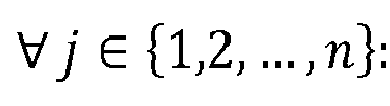
- This example assumes that the number of epochs M is larger than 30 which statistically is considered a large number. Additionally the system can determine a distance in time between any two epochs. As a result of performing the M epochs, the state history is created. This is represented by a vector:




- Since the history storage is available even after performing the learning method, another method can be further utilized if the first one proved insufficient or was designed as such. For instance a one skilled in the art may use a Taguchi experiment to find relation between factors, based on that select starting points of values fi and t and then use a neural network algorithm to further fine-tune the values.
- The implementation of the invention is effected by a particular system of
Fig. 1 and computer executed method ofFig 2 . Thus the machine or transformation test is fulfilled and the idea is not abstract. - It can be easily recognized, by one skilled in the art, that the aforementioned method for learning of a resource management system may be performed and/or controlled by one or more computer programs. Such computer programs are typically executed by utilizing the computing resources in a computing device. Applications are stored on a non-transitory medium. An example of a non-transitory medium is a non-volatile memory, for example a flash memory while an example of a volatile memory is RAM. The computer instructions are executed by a processor. These memories are exemplary recording media for storing computer programs comprising computer-executable instructions performing all the steps of the computer-implemented method according the technical concept presented herein.
- While the invention presented herein has been depicted, described, and has been defined with reference to particular preferred embodiments, such references and examples of implementation in the foregoing specification do not imply any limitation on the invention. It will, however, be evident that various modifications and changes may be made thereto without departing from the broader scope of the technical concept. The presented preferred embodiments are exemplary only, and are not exhaustive of the scope of the technical concept presented herein.
- Accordingly, the scope of protection is not limited to the preferred embodiments described in the specification, but is only limited by the claims that follow.
Claims (13)
- A computer-implemented method for collecting and adopting data for a learning of an entity, the method comprising the steps of:- determining (201) the number (M) of epochs (203);- recording (202) the system state (160, 170) of properties (181, 191) at least once during each epoch (203), wherein (M) number of epochs are performed;- counting (205) how many times each property changed across all the epochs;- dividing (206) all of the properties contained in the system into a number of (G) groups (208);- translating (210) the groups (207) into factors;- creating (211) a threshold factor;- creating (212) an output measurement; and- applying (213) a learning method.
- The method according to claim 1, wherein recorded system state (160, 170) comprises properties IDs (161-171) and their values (162-172).
- The method according to claim 1 or 2, wherein counting (205) is performed using a comparator (131).
- The method according to any of previous claims, wherein the result of counting (205) is in form of a non-volatile record (204) in the system storage (150) comprising a list of all properties and their respective change counts (214).
- The method according to any of previous claims, wherein each group (208) is a set of properties and contains those properties whose number of changes across epochs meets criteria (209) of that group.
- The method according to any of previous claims, wherein the properties are divided (206) into equally divided groups in the following manner:group 1: 0 ≤ c < M / Ggroup 2: M / G ≤ c < 2M / Ggroup G: (G - 1) M / G ≤ c ≤ M,wherein c indicates the number of changes across all epochs.
- The method according to any of previous claims, wherein the output measurement is backup frequency or backup size or a size of an incremental backups.
- The method according to any of previous claims, wherein the learning method is a specific experiment scheme selected from Design of Experiment theory.
- The method according to any of previous claims, wherein the learning method is implemented by a neural network or a genetic algorithm.
- A computer program comprising program code means for performing all the steps of the computer-implemented method according to any of claims 1-9 when said program is run on a computer.
- A computer readable medium storing computer-executable instructions performing all the steps of the computer-implemented method according to any of claims 1-9 when executed on a computer.
- A system for collecting and adopting data for a learning of an entity, the system comprising:- a resource provider (110, 120) providing properties;- a storage (150) configured to store states (160, 170) of properties;- a time resource (140) configured to be utilized for the purpose of creating subsequent epochs;- a function resource (130) configured to count changes of properties; and- a controller (101) configured to perform the steps of the method of any of claims 1 to 9.
- The system according to claim 12, wherein the function resource (130) comprises a comparator (131) configured to compare two or more values of properties and provide a result determining whether the values are same or different.
Priority Applications (2)
| Application Number | Priority Date | Filing Date | Title |
|---|---|---|---|
| EP14198465.8A EP3035262A1 (en) | 2014-12-17 | 2014-12-17 | A system and a method for learning of a resource management system using quantified groups of properties |
| US14/967,402 US20160180250A1 (en) | 2014-12-17 | 2015-12-14 | System and a method for learning of a resource management system using quantified groups of properties |
Applications Claiming Priority (1)
| Application Number | Priority Date | Filing Date | Title |
|---|---|---|---|
| EP14198465.8A EP3035262A1 (en) | 2014-12-17 | 2014-12-17 | A system and a method for learning of a resource management system using quantified groups of properties |
Publications (1)
| Publication Number | Publication Date |
|---|---|
| EP3035262A1 true EP3035262A1 (en) | 2016-06-22 |
Family
ID=52101206
Family Applications (1)
| Application Number | Title | Priority Date | Filing Date |
|---|---|---|---|
| EP14198465.8A Withdrawn EP3035262A1 (en) | 2014-12-17 | 2014-12-17 | A system and a method for learning of a resource management system using quantified groups of properties |
Country Status (2)
| Country | Link |
|---|---|
| US (1) | US20160180250A1 (en) |
| EP (1) | EP3035262A1 (en) |
Citations (1)
| Publication number | Priority date | Publication date | Assignee | Title |
|---|---|---|---|---|
| US8266291B2 (en) | 2009-11-23 | 2012-09-11 | International Business Machines Corporation | Dynamic property volatility assignment and assessment for distributed manageable resources |
-
2014
- 2014-12-17 EP EP14198465.8A patent/EP3035262A1/en not_active Withdrawn
-
2015
- 2015-12-14 US US14/967,402 patent/US20160180250A1/en not_active Abandoned
Patent Citations (1)
| Publication number | Priority date | Publication date | Assignee | Title |
|---|---|---|---|---|
| US8266291B2 (en) | 2009-11-23 | 2012-09-11 | International Business Machines Corporation | Dynamic property volatility assignment and assessment for distributed manageable resources |
Also Published As
| Publication number | Publication date |
|---|---|
| US20160180250A1 (en) | 2016-06-23 |
Similar Documents
| Publication | Publication Date | Title |
|---|---|---|
| CN108959934B (en) | Security risk assessment method, security risk assessment device, computer equipment and storage medium | |
| Kéry | Identifiability in N‐mixture models: A large‐scale screening test with bird data | |
| US10334106B1 (en) | Detecting events from customer support sessions | |
| CN111177714B (en) | Abnormal behavior detection method and device, computer equipment and storage medium | |
| US9804909B1 (en) | Scalable predictive early warning system for data backup event log | |
| EP3557491A1 (en) | Training distilled machine learning models | |
| EP2814218A1 (en) | Detecting anomalies in work practice data by combining multiple domains of information | |
| US11847187B2 (en) | Device identification device, device identification method, and device identification program | |
| CN114693011B (en) | Policy matching method, device, equipment and medium | |
| US12155694B2 (en) | Phishing detection using HTML | |
| US12524531B2 (en) | Continual learning approach for threat detection in zero-trust architectures | |
| CN117975184A (en) | Image recognition model training method and image recognition method | |
| CN112347474A (en) | A method, device, device and storage medium for constructing security threat intelligence | |
| Xia et al. | Edge unlearning is not “on Edge”! An adaptive exact unlearning system on resource-constrained devices | |
| CN118536119B (en) | Smart contract vulnerability detection method, device, equipment and medium | |
| Faure et al. | Estimating Kolmogorov entropy from recurrence plots | |
| CN107562703A (en) | Dictionary tree reconstructing method and system | |
| CN116991455A (en) | API asset identification method and device | |
| CN110532773A (en) | Malicious access behavior identification method, data processing method, device and equipment | |
| CN111143191A (en) | Website testing method and device, computer equipment and storage medium | |
| Bagozzi et al. | A Bayesian split population survival model for duration data with misclassified failure events | |
| CN110874612B (en) | Time interval prediction method and device, computer equipment and storage medium | |
| CN110659347B (en) | Associated document determining method, device, computer equipment and storage medium | |
| CN115952887B (en) | Event prediction method and information processing apparatus applied to event prediction | |
| Zhang et al. | Maximum likelihood inference for the band-read error model for capture-recapture data with misidentification |
Legal Events
| Date | Code | Title | Description |
|---|---|---|---|
| PUAI | Public reference made under article 153(3) epc to a published international application that has entered the european phase |
Free format text: ORIGINAL CODE: 0009012 |
|
| 17P | Request for examination filed |
Effective date: 20160505 |
|
| AK | Designated contracting states |
Kind code of ref document: A1 Designated state(s): AL AT BE BG CH CY CZ DE DK EE ES FI FR GB GR HR HU IE IS IT LI LT LU LV MC MK MT NL NO PL PT RO RS SE SI SK SM TR |
|
| AX | Request for extension of the european patent |
Extension state: BA ME |
|
| STAA | Information on the status of an ep patent application or granted ep patent |
Free format text: STATUS: EXAMINATION IS IN PROGRESS |
|
| 17Q | First examination report despatched |
Effective date: 20170208 |
|
| STAA | Information on the status of an ep patent application or granted ep patent |
Free format text: STATUS: THE APPLICATION IS DEEMED TO BE WITHDRAWN |
|
| 18D | Application deemed to be withdrawn |
Effective date: 20190711 |