EP3032894A1 - Method of determining transit power for data transmission between a network and a user equipment and related wireless communication system - Google Patents
Method of determining transit power for data transmission between a network and a user equipment and related wireless communication system Download PDFInfo
- Publication number
- EP3032894A1 EP3032894A1 EP15163968.9A EP15163968A EP3032894A1 EP 3032894 A1 EP3032894 A1 EP 3032894A1 EP 15163968 A EP15163968 A EP 15163968A EP 3032894 A1 EP3032894 A1 EP 3032894A1
- Authority
- EP
- European Patent Office
- Prior art keywords
- message
- gain factor
- user equipment
- network
- information element
- Prior art date
- Legal status (The legal status is an assumption and is not a legal conclusion. Google has not performed a legal analysis and makes no representation as to the accuracy of the status listed.)
- Granted
Links
Images

Classifications
-
- H—ELECTRICITY
- H04—ELECTRIC COMMUNICATION TECHNIQUE
- H04W—WIRELESS COMMUNICATION NETWORKS
- H04W72/00—Local resource management
- H04W72/04—Wireless resource allocation
- H04W72/044—Wireless resource allocation based on the type of the allocated resource
- H04W72/0473—Wireless resource allocation based on the type of the allocated resource the resource being transmission power
-
- H—ELECTRICITY
- H04—ELECTRIC COMMUNICATION TECHNIQUE
- H04W—WIRELESS COMMUNICATION NETWORKS
- H04W52/00—Power management, e.g. Transmission Power Control [TPC] or power classes
- H04W52/04—Transmission power control [TPC]
- H04W52/38—TPC being performed in particular situations
-
- H—ELECTRICITY
- H04—ELECTRIC COMMUNICATION TECHNIQUE
- H04W—WIRELESS COMMUNICATION NETWORKS
- H04W72/00—Local resource management
- H04W72/20—Control channels or signalling for resource management
- H04W72/23—Control channels or signalling for resource management in the downlink direction of a wireless link, i.e. towards a terminal
-
- H—ELECTRICITY
- H04—ELECTRIC COMMUNICATION TECHNIQUE
- H04W—WIRELESS COMMUNICATION NETWORKS
- H04W52/00—Power management, e.g. Transmission Power Control [TPC] or power classes
- H04W52/04—Transmission power control [TPC]
- H04W52/38—TPC being performed in particular situations
- H04W52/40—TPC being performed in particular situations during macro-diversity or soft handoff
-
- H—ELECTRICITY
- H04—ELECTRIC COMMUNICATION TECHNIQUE
- H04W—WIRELESS COMMUNICATION NETWORKS
- H04W52/00—Power management, e.g. Transmission Power Control [TPC] or power classes
- H04W52/04—Transmission power control [TPC]
- H04W52/38—TPC being performed in particular situations
- H04W52/44—TPC being performed in particular situations in connection with interruption of transmission
-
- H—ELECTRICITY
- H04—ELECTRIC COMMUNICATION TECHNIQUE
- H04W—WIRELESS COMMUNICATION NETWORKS
- H04W52/00—Power management, e.g. Transmission Power Control [TPC] or power classes
- H04W52/04—Transmission power control [TPC]
- H04W52/38—TPC being performed in particular situations
- H04W52/50—TPC being performed in particular situations at the moment of starting communication in a multiple access environment
Definitions
- the present invention is related to a method of determining transit power for data transmission between a network and a user equipment and a related wireless communication system.
- a universal mobile telecommunications system is a 3 rd generation (3G) network which adopts a wideband code division multiple access (WCDMA) technology capable of providing high frequency spectrum utilization, universal coverage, and high-speed/quality multimedia data transmission.
- a radio access network known as a universal terrestrial radio access network (UTRAN) includes multiple base stations, commonly known as Node-Bs (NBs), for communicating with multiple user equipment (UE).
- NBs Node-Bs
- UE user equipment
- a long-term evolution (LTE) system is a 4 th generation (4G) network which includes a new radio interface and radio network architecture capable of providing a high data rate, low latency, packet optimization, and improved system capacity and coverage.
- a radio access network known as an evolved UTRAN (E-UTRAN) includes multiple evolved NBs (eNBs) for communicating with multiple UEs and a core network which includes a mobility management entity (MME), a serving gateway and other devices for NAS (Non Access Stratum) control.
- E-UTRAN evolved UTRAN
- MME mobility management entity
- MME serving gateway
- NAS Non Access Stratum
- a UE may communicate with a wireless communication network using various channels.
- an enhanced dedicated channel (E-DCH) has been introduced in the uplink transmission.
- the E-DCH is associated with an enhanced dedicated physical data channel (E-DPDCH) and an enhanced dedicated physical control channel (E-DPCCH).
- E-DPDCH enhanced dedicated physical data channel
- E-DPCCH enhanced dedicated physical control channel
- the UE and the network may exchange capability lists, each of which allows the recipient entity (the UE or the network) to know which capabilities the sending entity (the network or the UE) supports and thus which capabilities and features may be invoked and used for various services.
- the UE and the network need to operate according to 3GPP specifications, which are structured as various release versions. Additional capabilities or modified functions are made available in each newer release version of 3GPP specifications. Existing 3GPP specifications fail to include the consistency of certain features, such as power interpolation/extrapolation.
- the network may send a RADIO BEARER RECONFIGURATION message to instruct the UE to use an interpolation formula when calculating the gain factor of the E-DPDCH. Later, the network may send an ACTIVE SET UPDATE message to update the active set of the connection between the UE and the network.
- the UE detects this inconsistency and thus uses an extrapolation formula when calculating the gain factor of the E-DPDCH. Under such circumstance, radio link failure may occur when the UE uses an inappropriate gain factor for data transmission.
- the present invention aims at providing a method of determining transit power for data transmission between a network and a user and a related wireless communication system in which an extrapolation formula or an interpolation formula is automatically used for improving the success rate of a radio link.
- the claimed method of determining transit power for data transmission between a network and a user equipment includes the network sending a first message to the UE, wherein the first message is associated with a radio bearer reconfiguration procedure and includes a first information element associated with an interpolation formula; the network sending a second message to the UE, wherein the second message is associated with updating an active set of the user equipment; the user equipment computing a first gain factor using an extrapolation formula if the second message does not include a second information element associated with the interpolation formula; the UE computing a second gain factor using the interpolation formula if data cannot be transmitted based on the first gain factor; and the UE transmitting the data based on the second gain factor.
- the claimed wireless communication system includes a network and a user equipment for determining transit power.
- the network is configured to send a first message and a second message, wherein the first message is associated with a radio bearer reconfiguration procedure and includes a first information element associated with an interpolation formula and the second message is associated with updating an active set.
- the user equipment includes a connecting unit, a computing unit and a processing unit.
- the connecting unit is configured to communicate with the network for receiving the first message and the second message and transmit data based on a first gain factor or a second gain factor.
- the computing unit id configured to compute the first gain factor using an extrapolation formula and compute the second gain factor using the interpolation formula.
- the processing unit is configured to determine if the second message includes a second information element associated with the interpolation formula, determine if data can be transmitted based on the first gain factor when a serving grant reaches a predetermined value, determine if the data can be transmitted based on the second gain factor when a timer expires, and instruct the connecting unit to send a message to notify the network of a successful radio link or an unsuccessful radio link.
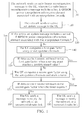
- FIG. 1 is a flowchart illustrating a method of determining transit power for data transmission between a network and a user equipment according to the present invention.
- the flowchart in FIG. 1 includes the following steps:
- a radio bearer (RB) reconfiguration procedure is used for reconfigure parameters for a radio bearer.
- the RADIO BEARER RECONFIGURATION message is transmitted on the downlink dedicated control channel (DCCH) in order to reconfigure parameters related to a change in Quality of Service (QoS) or to release and setup a radio bearer, change the multiplexing of media access control (MAC), reconfigure transport channels and physical channels, or perform a handover.
- DCCH downlink dedicated control channel
- MAC media access control
- the RADIO BEARER RECONFIGURATION message includes multiple information elements and group names, such as UE information elements, CN information elements, UTRAN mobility information elements, RB information elements, TrCH information elements, uplink transport channels, downlink transport channels, PhyCH information elements, uplink radio resources, downlink radio resources.
- the E-DCH information associated with the uplink radio resources in the RADIO BEARER RECONFIGURATION message includes E-DPCCH information and E-DPDCH information.
- E-DPCCH information includes information elements associated with E-DPCCH/DPCCH power offset, happy bit delay condition, E-TFC boost information and E-DPDCH power interpolation.
- the UE is configured to calculate the gain factor of the E-DPDCH using an interpolation formula specified according to the 3GPP specification TS 25.214.
- the UE When receiving the RADIO BEARER RECONFIGURATION message with the E-DPDCH power interpolation information element set to FALSE, the UE is configured to calculate the gain factor of the E-DPDCH using an extrapolation formula specified according to the 3GPP specification TS 25.214. In step 110, it is assumed that the first E-DPDCH power interpolation information element is associated with the interpolation formula (set to TRUE).
- the purpose of the active set update procedure is to update the active set of the connection between the UE and the network.
- the active set update procedure is initiated when the network sends an ACTIVE SET UPDATE message on the downlink DCCH for ordering the UE to make the following modifications of the active set of the connection:
- the ACTIVE SET UPDATE message includes multiple information elements and group names, such as UE information elements, CN information elements, PhyCH information elements, uplink radio resources, and downlink radio resources. Depending on the capabilities of the network, the downlink radio resources in the ACTIVE SET UPDATE message may or may not include an information element associated with E-DPDCH power interpolation. If it is determined in step 130 that the ACTIVE SET UPDATE message does not include the second E-DPDCH power interpolation information element associated with the interpolation formula, step 140 is then executed. If it is determined in step 130 that the ACTIVE SET UPDATE message includes the second E-DPDCH power interpolation information element associated with the interpolation formula, step 160 is then executed.
- the UE may compute the first gain factor using the extrapolation formula (1), wherein ⁇ ed,ref denotes the E-DPDCH gain factor of the reference E-DCH Transport Format Combination (E-TFC); L e,ref denotes the number of E-DPDCHs used for the reference E-TFC; L e,i denotes the number of E-DPDCH used for the i th E-TFC (that is, the i th E-TFC is corresponding to the E-DPDCH whose E-DPDCH gain factor is currently to be obtained); K e,ref denotes the transport block size of the reference E-TFC; K e,i denotes the transport block size of the i th E-TFC; and ⁇ harq denotes an offset of a Hybrid Automatic Repeat Request (HARQ).
- E-TFC E-DPDCH Transport Format Combination
- L e,ref denotes the number of E-DPDCHs used for the reference E
- the UE may determine if data can be transmitted based on the first gain factor when the serving grant reaches the predetermined value.
- the value of the serving grant determines the transmission power on E-DPDCH channel, and hence the maximum data rate that can be supported. If data can be successfully transmitted based on the first gain factor, step 180 is then executed for notifying the network of a successful radio link. If the UE fails to transmit data based on the first gain factor, step 160 is then executed.
- the UE may compute the second gain factor using the interpolation formula (2), wherein, ⁇ ed,ref,1 and ⁇ ed,ref,2 denote the reference gain factors of the primary and secondary reference E-TFCs respectively; L e,ref,1 and L e,ref,2 denote the number of E-DPDCHs used for the primary and secondary reference E-TFCs respectively; L e,i denotes the number of E-DPDCHs used for the i th E-TFC. K e,ref,1 and K e,ref,2 denote the transport block sizes of the primary and secondary reference E-TFCs respectively. K e,ref denotes the transport block size of the i th E-TFC; and ⁇ harq denotes an offset of an HARQ. Meanwhile, the UE also starts the timer which provides guard time.
- the UE may determine if data can be transmitted based on the second gain factor when the timer expires. If data can be successfully transmitted based on the second gain factor, step 180 is then executed for notifying the network of a successful radio link. If the UE fails to transmit data based on the second gain factor, step 180 is then executed for notifying the network of an unsuccessful radio link.
- FIG. 2 is a function diagram illustrating a wireless communication system 200 according to an embodiment of the present invention.
- the wireless communication system 200 includes a network 210 and a UE 220 having a connecting unit 222, a computing unit 224 and a processing unit 226.
- the network 210 may be implemented with any 3GPP-based telecommunication capabilities, such as 2G, 2.5G, 3G or 4G network.
- the UE 210 may include electronic devices with any 3GPP-based telecommunication capabilities, such as mobile phones, personal digital assistants, handheld computers, tablet computers, nettop computers, or laptop computers.
- the type of the network 210 and the UE 220 does not limit the scope of the present invention.
- the connecting unit 222 may include one or multiple modems, modem banks, Ethernet devices, universal serial bus (USB) interface devices, serial interfaces, token ring devices, fiber distributed data interface (FDDI) devices, wireless local area network (WLAN) devices, radio transceiver devices such as code division multiple access (CDMA) devices, UMTS/LTE radio transceiver devices, worldwide interoperability for microwave access (WiMAX) devices, and/or other well-known devices for connecting to other network entities.
- the connecting unit 222 allows the UE 220 to communicate with the network 210.
- the type of the connecting unit 222 does not limit the scope of the present invention.
- the computing unit 224 is configured to acquire the first gain factor using the extrapolation formula (1) and the second gain factor using the interpolation formula (2).
- the type of the computing unit 224 does not limit the scope of the present invention.
- the processing unit 226 is configured to execute the present method simultaneously, serially, or otherwise by one processor. For example, the processing unit 226 may execute the determination in step 130, 150 and 170, thereby instructing the connecting unit 220 to execute step 180 or 190. However, the type of the processing unit 226 does not limit the scope of the present invention.
- the UE when detecting an inconsistency in the E-DPDCH power interpolation information elements indicated in the RADIO BEARER RECONFIGURATION message and the ACTIVE SET UPDATE message, the UE is configured to compute a first gain factor using an extrapolation formula. If the data cannot be transmitted based on the first gain factor, the UE is configured to compute a second gain factor using an interpolation formula. If the data cannot be transmitted based on the second gain factor, the UE is configured to send a message to notify the network of an unsuccessful radio link. Therefore, the present invention can improve the success rate of radio link by automatically using the extrapolation formula and the interpolation formula for determining transit power for data transmission between the network and the user equipment.
Landscapes
- Engineering & Computer Science (AREA)
- Computer Networks & Wireless Communication (AREA)
- Signal Processing (AREA)
- Mobile Radio Communication Systems (AREA)
Abstract
Description
- The present invention is related to a method of determining transit power for data transmission between a network and a user equipment and a related wireless communication system.
- The 3rd Generation Partnership Project (3GPP) has developed various wireless communication networks. A universal mobile telecommunications system (UMTS) is a 3rd generation (3G) network which adopts a wideband code division multiple access (WCDMA) technology capable of providing high frequency spectrum utilization, universal coverage, and high-speed/quality multimedia data transmission. In the UMTS network, a radio access network known as a universal terrestrial radio access network (UTRAN) includes multiple base stations, commonly known as Node-Bs (NBs), for communicating with multiple user equipment (UE). A long-term evolution (LTE) system is a 4th generation (4G) network which includes a new radio interface and radio network architecture capable of providing a high data rate, low latency, packet optimization, and improved system capacity and coverage. In the LTE network, a radio access network known as an evolved UTRAN (E-UTRAN) includes multiple evolved NBs (eNBs) for communicating with multiple UEs and a core network which includes a mobility management entity (MME), a serving gateway and other devices for NAS (Non Access Stratum) control.
- A UE may communicate with a wireless communication network using various channels. In the UMTS network, an enhanced dedicated channel (E-DCH) has been introduced in the uplink transmission. The E-DCH is associated with an enhanced dedicated physical data channel (E-DPDCH) and an enhanced dedicated physical control channel (E-DPCCH). During registration, the UE and the network may exchange capability lists, each of which allows the recipient entity (the UE or the network) to know which capabilities the sending entity (the network or the UE) supports and thus which capabilities and features may be invoked and used for various services.
- The UE and the network need to operate according to 3GPP specifications, which are structured as various release versions. Additional capabilities or modified functions are made available in each newer release version of 3GPP specifications. Existing 3GPP specifications fail to include the consistency of certain features, such as power interpolation/extrapolation. For example, the network may send a RADIO BEARER RECONFIGURATION message to instruct the UE to use an interpolation formula when calculating the gain factor of the E-DPDCH. Later, the network may send an ACTIVE SET UPDATE message to update the active set of the connection between the UE and the network. If the ACTIVE SET UPDATE message does not include any information about power interpolation/extrapolation, the UE detects this inconsistency and thus uses an extrapolation formula when calculating the gain factor of the E-DPDCH. Under such circumstance, radio link failure may occur when the UE uses an inappropriate gain factor for data transmission.
- The present invention aims at providing a method of determining transit power for data transmission between a network and a user and a related wireless communication system in which an extrapolation formula or an interpolation formula is automatically used for improving the success rate of a radio link.
- This is achieved by a method of determining transit power for data transmission between a network and a user equipment according to claim 1 and a wireless communication system for determining transit power according to claim 7. The dependent claims pertain to corresponding further developments and improvements.
- As will be seen more clearly from the detailed description following below, the claimed method of determining transit power for data transmission between a network and a user equipment includes the network sending a first message to the UE, wherein the first message is associated with a radio bearer reconfiguration procedure and includes a first information element associated with an interpolation formula; the network sending a second message to the UE, wherein the second message is associated with updating an active set of the user equipment; the user equipment computing a first gain factor using an extrapolation formula if the second message does not include a second information element associated with the interpolation formula; the UE computing a second gain factor using the interpolation formula if data cannot be transmitted based on the first gain factor; and the UE transmitting the data based on the second gain factor.
- As will be seen more clearly from the detailed description following below, the claimed wireless communication system includes a network and a user equipment for determining transit power. The network is configured to send a first message and a second message, wherein the first message is associated with a radio bearer reconfiguration procedure and includes a first information element associated with an interpolation formula and the second message is associated with updating an active set. The user equipment includes a connecting unit, a computing unit and a processing unit. The connecting unit is configured to communicate with the network for receiving the first message and the second message and transmit data based on a first gain factor or a second gain factor. The computing unit id configured to compute the first gain factor using an extrapolation formula and compute the second gain factor using the interpolation formula. The processing unit is configured to determine if the second message includes a second information element associated with the interpolation formula, determine if data can be transmitted based on the first gain factor when a serving grant reaches a predetermined value, determine if the data can be transmitted based on the second gain factor when a timer expires, and instruct the connecting unit to send a message to notify the network of a successful radio link or an unsuccessful radio link.
- In the following, the invention is further illustrated by way of example, taking reference to the accompanying drawings.
-
FIG. 1 is a flowchart illustrating a method of determining transit power for data transmission between a network and a user equipment according to the present invention. -
FIG. 2 is a function diagram illustrating a wireless communication system according to an embodiment of the present invention. -
FIG. 1 is a flowchart illustrating a method of determining transit power for data transmission between a network and a user equipment according to the present invention. The flowchart inFIG. 1 includes the following steps: - Step 110: the network sends a RADIO BEARER RECONFIGURATION message to the UE, wherein the RADIO BEARER RECONFIGURATION message includes a first E-DPDCH power interpolation information element associated with an interpolation formula; execute
step 120. - Step 120: the network sends an ACTIVE SET UPDATE message to the UE; execute
step 130. - Step 130: the UE determines if the ACTIVE SET UPDATE message includes a second E-DPDCH power interpolation information element associated with the interpolation formula; if yes, execute
step 160; if no, executestep 140. - Step 140: the UE computes a first gain factor using an extrapolation formula; execute
step 150. - Step 150: the UE determines if data can be transmitted based on the first gain factor when a serving grant reaches a predetermined value; if yes, execute
step 180; if no, executestep 160. - Step 160: the UE computes a second gain factor using the interpolation formula and starts a timer; execute
step 170. - Step 170: the UE determines if data can be transmitted based on the second gain factor when the timer expires; if yes, execute
step 180; if no, executestep 190. - Step 180: the UE sends a message to notify the network of a successful radio link.
- Step 190: the UE sends a message to notify the network of an unsuccessful radio link.
- According to the 3GPP specification TS 25.331, a radio bearer (RB) reconfiguration procedure is used for reconfigure parameters for a radio bearer. To initiate the radio bearer reconfiguration procedure, the RADIO BEARER RECONFIGURATION message is transmitted on the downlink dedicated control channel (DCCH) in order to reconfigure parameters related to a change in Quality of Service (QoS) or to release and setup a radio bearer, change the multiplexing of media access control (MAC), reconfigure transport channels and physical channels, or perform a handover. The RADIO BEARER RECONFIGURATION message includes multiple information elements and group names, such as UE information elements, CN information elements, UTRAN mobility information elements, RB information elements, TrCH information elements, uplink transport channels, downlink transport channels, PhyCH information elements, uplink radio resources, downlink radio resources.
- The E-DCH information associated with the uplink radio resources in the RADIO BEARER RECONFIGURATION message includes E-DPCCH information and E-DPDCH information. E-DPCCH information includes information elements associated with E-DPCCH/DPCCH power offset, happy bit delay condition, E-TFC boost information and E-DPDCH power interpolation. When receiving the RADIO BEARER RECONFIGURATION message with the E-DPDCH power interpolation information element set to TRUE, the UE is configured to calculate the gain factor of the E-DPDCH using an interpolation formula specified according to the 3GPP specification TS 25.214. When receiving the RADIO BEARER RECONFIGURATION message with the E-DPDCH power interpolation information element set to FALSE, the UE is configured to calculate the gain factor of the E-DPDCH using an extrapolation formula specified according to the 3GPP specification TS 25.214. In
step 110, it is assumed that the first E-DPDCH power interpolation information element is associated with the interpolation formula (set to TRUE). - According to the 3GPP specification TS 25.331, the purpose of the active set update procedure is to update the active set of the connection between the UE and the network. The active set update procedure is initiated when the network sends an ACTIVE SET UPDATE message on the downlink DCCH for ordering the UE to make the following modifications of the active set of the connection:
- (a) Radio link addition to the active set;
- (b) Radio link removal from the active set;
- (c) Combined radio link addition and removal on the active set;
- (d) Addition of a radio link to the E-DCH active set;
- (e) Removal of a radio link from the E-DCH active set;
- (f) Radio link addition to the secondary E-DCH active set;
- (g) Radio link removal from the secondary E-DCH active set;
- (h) Combined radio link addition and removal on the secondary E-DCH active set.
- The ACTIVE SET UPDATE message includes multiple information elements and group names, such as UE information elements, CN information elements, PhyCH information elements, uplink radio resources, and downlink radio resources. Depending on the capabilities of the network, the downlink radio resources in the ACTIVE SET UPDATE message may or may not include an information element associated with E-DPDCH power interpolation. If it is determined in
step 130 that the ACTIVE SET UPDATE message does not include the second E-DPDCH power interpolation information element associated with the interpolation formula,step 140 is then executed. If it is determined instep 130 that the ACTIVE SET UPDATE message includes the second E-DPDCH power interpolation information element associated with the interpolation formula,step 160 is then executed. - According to the 3GPP specification TS 25.214, the E-DPDCH power extrapolation formula is represented by the following formula (1) and the E-DPDCH power interpolation formula is represented by the following formula (2):


- In
step 140, the UE may compute the first gain factor using the extrapolation formula (1), wherein βed,ref denotes the E-DPDCH gain factor of the reference E-DCH Transport Format Combination (E-TFC); Le,ref denotes the number of E-DPDCHs used for the reference E-TFC; Le,i denotes the number of E-DPDCH used for the ith E-TFC (that is, the ith E-TFC is corresponding to the E-DPDCH whose E-DPDCH gain factor is currently to be obtained); Ke,ref denotes the transport block size of the reference E-TFC; Ke,i denotes the transport block size of the ith E-TFC; and Δharq denotes an offset of a Hybrid Automatic Repeat Request (HARQ). - In
step 150, the UE may determine if data can be transmitted based on the first gain factor when the serving grant reaches the predetermined value. The value of the serving grant determines the transmission power on E-DPDCH channel, and hence the maximum data rate that can be supported. If data can be successfully transmitted based on the first gain factor,step 180 is then executed for notifying the network of a successful radio link. If the UE fails to transmit data based on the first gain factor,step 160 is then executed. - In
step 160, the UE may compute the second gain factor using the interpolation formula (2), wherein, βed,ref,1 and βed,ref,2 denote the reference gain factors of the primary and secondary reference E-TFCs respectively; Le,ref,1 and Le,ref,2 denote the number of E-DPDCHs used for the primary and secondary reference E-TFCs respectively; Le,i denotes the number of E-DPDCHs used for the ith E-TFC. Ke,ref,1 and Ke,ref,2 denote the transport block sizes of the primary and secondary reference E-TFCs respectively. Ke,ref denotes the transport block size of the ith E-TFC; and Δharq denotes an offset of an HARQ. Meanwhile, the UE also starts the timer which provides guard time. - In
step 170, the UE may determine if data can be transmitted based on the second gain factor when the timer expires. If data can be successfully transmitted based on the second gain factor,step 180 is then executed for notifying the network of a successful radio link. If the UE fails to transmit data based on the second gain factor,step 180 is then executed for notifying the network of an unsuccessful radio link. -
FIG. 2 is a function diagram illustrating awireless communication system 200 according to an embodiment of the present invention. Thewireless communication system 200 includes anetwork 210 and aUE 220 having a connectingunit 222, acomputing unit 224 and aprocessing unit 226. Thenetwork 210 may be implemented with any 3GPP-based telecommunication capabilities, such as 2G, 2.5G, 3G or 4G network. TheUE 210 may include electronic devices with any 3GPP-based telecommunication capabilities, such as mobile phones, personal digital assistants, handheld computers, tablet computers, nettop computers, or laptop computers. However, the type of thenetwork 210 and theUE 220 does not limit the scope of the present invention. - The connecting
unit 222 may include one or multiple modems, modem banks, Ethernet devices, universal serial bus (USB) interface devices, serial interfaces, token ring devices, fiber distributed data interface (FDDI) devices, wireless local area network (WLAN) devices, radio transceiver devices such as code division multiple access (CDMA) devices, UMTS/LTE radio transceiver devices, worldwide interoperability for microwave access (WiMAX) devices, and/or other well-known devices for connecting to other network entities. The connectingunit 222 allows theUE 220 to communicate with thenetwork 210. However, the type of the connectingunit 222 does not limit the scope of the present invention. - The
computing unit 224 is configured to acquire the first gain factor using the extrapolation formula (1) and the second gain factor using the interpolation formula (2). However, the type of thecomputing unit 224 does not limit the scope of the present invention. - The
processing unit 226 is configured to execute the present method simultaneously, serially, or otherwise by one processor. For example, theprocessing unit 226 may execute the determination instep unit 220 to executestep processing unit 226 does not limit the scope of the present invention. - In the present invention, when detecting an inconsistency in the E-DPDCH power interpolation information elements indicated in the RADIO BEARER RECONFIGURATION message and the ACTIVE SET UPDATE message, the UE is configured to compute a first gain factor using an extrapolation formula. If the data cannot be transmitted based on the first gain factor, the UE is configured to compute a second gain factor using an interpolation formula. If the data cannot be transmitted based on the second gain factor, the UE is configured to send a message to notify the network of an unsuccessful radio link. Therefore, the present invention can improve the success rate of radio link by automatically using the extrapolation formula and the interpolation formula for determining transit power for data transmission between the network and the user equipment.
Claims (10)
- A method of determining transit power for data transmission between a network (210) and a user equipment (220), the method characterized in that it comprises the steps of:the network (210) sending a first message to the user equipment (220), wherein the first message is associated with a radio bearer reconfiguration procedure and includes a first information element associated with an interpolation formula;the network (210) sending a second message to the user equipment (220), wherein the second message is associated with updating an active set of the user equipment (220);the user equipment (220) computing a first gain factor using an extrapolation formula if the second message does not include a second information element associated with the interpolation formula;the user equipment (220) computing a second gain factor using the interpolation formula if data cannot be transmitted based on the first gain factor; andthe user equipment (220) transmitting the data based on the second gain factor.
- The method of claim 1, characterized in that:the first message is a RADIO BEARER RECONFIGURATION message the defined according to a 3GPP specification TS 25.331; andthe second message is an ACTIVE SET UPDATE message defined according to the 3GPP specification TS 25.331.
- The method of claim 2, characterized in that:the first information element is an enhanced dedicated physical data channel (E-DPDCH) power interpolation information element in the RADIO BEARER RECONFIGURATION message defined according to the 3GPP specification TS 25.331; andthe second information element is an E-DPDCH power interpolation information element in the ACTIVE SET UPDATE message defined according to the 3GPP specification TS 25.331.
- The method of any of claims 1-3, characterized in that:the extrapolation formula is an E-DPDCH power extrapolation formula defined according to a 3GPP specification TS 25.214; andthe interpolation formula is an E-DPDCH power interpolation formula defined according to the 3GPP specification TS 25.214.
- The method of any of claims 1-4, further characterized by comprising the further step of:the user equipment (220) transmitting the data based on the first gain factor when a serving grant reaches a predetermined value.
- The method of any of claims 1-5, further characterized by comprising the further step of:the user equipment (220) starting a timer after determining that the data cannot be transmitted based on the first gain factor; andthe user equipment (220) transmitting the data based on the second gain factor when the timer expires.
- A wireless communication system (200) for determining transit power, characterized by comprising:a network (210) configured to send a first message and a second message, wherein:the first message is associated with a radio bearer reconfiguration procedure and includes a first information element associated with an interpolation formula; and the second message is associated with updating an active set; anda user equipment (220) comprising:a connecting unit (222) configured to:communicate with the network (210) for receiving the first message and the second message; andtransmit data based on a first gain factor or a second gain factor;a computing unit (224) configured to compute the first gain factor using an extrapolation formula and compute the second gain factor using the interpolation formula; and a processing unit (226) configured to:determine if the second message includes a second information element associated with the interpolation formula;determine if data can be transmitted based on the first gain factor when a serving grant reaches a predetermined value;determine if the data can be transmitted based on the second gain factor when a timer expires; andinstruct the connecting unit (222) to send a message to notify the network (210) of a successful radio link or an unsuccessful radio link.
- The wireless communication system (200) of claim 7, characterized in that:the first message is a RADIO BEARER RECONFIGURATION message the defined according to a 3GPP specification TS 25.331; andthe second message is an ACTIVE SET UPDATE message defined according to the 3GPP specification TS 25.331.
- The wireless communication system (200) of claim 8, characterized in that:the first information element is an enhanced dedicated physical data channel (E-DPDCH) power interpolation information element in the RADIO BEARER RECONFIGURATION message defined according to the 3GPP specification TS 25.331; andthe second information element is an E-DPDCH power interpolation information element in the ACTIVE SET UPDATE message defined according to the 3GPP specification TS 25.331.
- The wireless communication system (200) of any of claims 7-9, characterized in that:the extrapolation formula is an E-DPDCH power extrapolation formula defined according to a 3GPP specification TS 25.214; andthe interpolation formula is an E-DPDCH power interpolation formula defined according to the 3GPP specification TS 25.214.
Applications Claiming Priority (1)
| Application Number | Priority Date | Filing Date | Title |
|---|---|---|---|
| US14/565,406 US9468006B2 (en) | 2014-12-09 | 2014-12-09 | Method of determining transit power for data transmission between a network and a user equipment and related wireless communication system |
Publications (2)
| Publication Number | Publication Date |
|---|---|
| EP3032894A1 true EP3032894A1 (en) | 2016-06-15 |
| EP3032894B1 EP3032894B1 (en) | 2018-04-04 |
Family
ID=52997273
Family Applications (1)
| Application Number | Title | Priority Date | Filing Date |
|---|---|---|---|
| EP15163968.9A Active EP3032894B1 (en) | 2014-12-09 | 2015-04-17 | Method of determining transit power for data transmission between a network and a user equipment and related wireless communication system |
Country Status (4)
| Country | Link |
|---|---|
| US (1) | US9468006B2 (en) |
| EP (1) | EP3032894B1 (en) |
| CN (1) | CN106211299B (en) |
| TW (1) | TWI566620B (en) |
Families Citing this family (2)
| Publication number | Priority date | Publication date | Assignee | Title |
|---|---|---|---|---|
| US10779355B2 (en) * | 2017-03-24 | 2020-09-15 | Qualcomm Incorporated | Restricting bearers in a connection |
| CN107295621B (en) * | 2017-08-17 | 2019-10-25 | Oppo广东移动通信有限公司 | Method and device for controlling transmission power, storage medium and electronic equipment |
Citations (2)
| Publication number | Priority date | Publication date | Assignee | Title |
|---|---|---|---|---|
| WO2006016786A1 (en) * | 2004-08-12 | 2006-02-16 | Samsung Electronics Co., Ltd. | Method and apparatus for uplink data transmission in handover area using transport channels for uplink service |
| EP2339885A1 (en) * | 2008-11-04 | 2011-06-29 | Huawei Technologies Co., Ltd. | Method and device for determining transmission power |
Family Cites Families (9)
| Publication number | Priority date | Publication date | Assignee | Title |
|---|---|---|---|---|
| US7720667B2 (en) * | 2006-09-08 | 2010-05-18 | International Business Machines Corporation | Method and system for estimating power consumption of integrated circuitry |
| CN101166071A (en) * | 2006-10-19 | 2008-04-23 | 北京三星通信技术研究有限公司 | Error frame concealment device and method |
| JP5141180B2 (en) * | 2006-11-09 | 2013-02-13 | ソニー株式会社 | Frequency band expanding apparatus, frequency band expanding method, reproducing apparatus and reproducing method, program, and recording medium |
| CN101360077B (en) * | 2007-07-30 | 2012-10-10 | 中兴通讯股份有限公司 | Data receiving method for TD-SCDMA system |
| US20090290559A1 (en) * | 2008-04-24 | 2009-11-26 | Interdigital Patent Holdings, Inc. | Method and apparatus for harq autonomous retransmissions |
| WO2010033066A1 (en) | 2008-09-18 | 2010-03-25 | Telefonaktiebolaget L M Ericsson (Publ) | A method and arrangement for determining a minimum transmit power gain factor for an enhanced uplink data communication |
| ES2388390B1 (en) * | 2010-11-03 | 2013-09-03 | Vodafone Espana Sau | NETWORK PROCEDURE AND ENTITY FOR THE UPDATE OF THE ACTIVE SET IN MOBILE NETWORKS OF LARGE AREA. |
| JP2013048332A (en) * | 2011-08-29 | 2013-03-07 | Fujitsu Ltd | Wireless device and metric calculation method |
| CN103959867A (en) * | 2012-10-31 | 2014-07-30 | 华为技术有限公司 | Power adjustment method and device |
-
2014
- 2014-12-09 US US14/565,406 patent/US9468006B2/en active Active
-
2015
- 2015-04-17 EP EP15163968.9A patent/EP3032894B1/en active Active
- 2015-04-17 TW TW104112442A patent/TWI566620B/en active
- 2015-06-10 CN CN201510314200.9A patent/CN106211299B/en not_active Expired - Fee Related
Patent Citations (2)
| Publication number | Priority date | Publication date | Assignee | Title |
|---|---|---|---|---|
| WO2006016786A1 (en) * | 2004-08-12 | 2006-02-16 | Samsung Electronics Co., Ltd. | Method and apparatus for uplink data transmission in handover area using transport channels for uplink service |
| EP2339885A1 (en) * | 2008-11-04 | 2011-06-29 | Huawei Technologies Co., Ltd. | Method and device for determining transmission power |
Also Published As
| Publication number | Publication date |
|---|---|
| TWI566620B (en) | 2017-01-11 |
| CN106211299A (en) | 2016-12-07 |
| US20160165614A1 (en) | 2016-06-09 |
| TW201622451A (en) | 2016-06-16 |
| EP3032894B1 (en) | 2018-04-04 |
| US9468006B2 (en) | 2016-10-11 |
| CN106211299B (en) | 2019-08-09 |
Similar Documents
| Publication | Publication Date | Title |
|---|---|---|
| US11184813B2 (en) | Method for performing cell reselection and device supporting the same | |
| EP2987364B1 (en) | Method and apparatus for performing cell reselection in wireless communication system | |
| EP3022982B1 (en) | Method and apparatus for performing random access procedure in wireless communication system | |
| CN112272368B (en) | Base station, method in base station and wireless terminal | |
| CN114339925B (en) | Switching method, switching device, terminal equipment, network equipment and storage medium | |
| WO2015008989A1 (en) | Method and apparatus for managing data radio bearers for dual connectivity in wireless communication system | |
| EP3432678B1 (en) | Device and method of configuring a secondary node and reporting in dual connectivity | |
| US9635683B2 (en) | Method and apparatus for transmitting uplink control signals in wireless communication system | |
| EP2770796A2 (en) | Method for simultaneous communications with multiple base stations and related communication device | |
| CN105493568A (en) | Method and apparatus for forwarding data for small cell in wireless communication system | |
| JP2012060640A (en) | Method for providing measurement report from user equipment to network in wireless communication system | |
| CN115552849A (en) | Synchronization of low-level based mobility management | |
| US11369005B2 (en) | IAB topology management based on synchronization capabilities of IAB-node | |
| US9860929B2 (en) | User equipment, a network node, and methods for device discovery in device to-device (D2D) communications in a wireless telecommunications network | |
| US20220014901A1 (en) | Method and apparatus for identifying user equipment capability in sidelink transmission | |
| CN106664734B (en) | Method and apparatus for performing autonomous rejection for dual connectivity in a wireless communication system | |
| CN106664644B (en) | Method and apparatus for performing access control or membership verification for dual connectivity | |
| CN112534763A (en) | NR peak rate and transport block size | |
| CN107710822A (en) | Method, terminal and the base station that carrier wave redirects | |
| EP3689093B1 (en) | Handling dual connectivity in new radio | |
| CN120226409A (en) | Method and equipment for TA acquisition | |
| EP3032894B1 (en) | Method of determining transit power for data transmission between a network and a user equipment and related wireless communication system | |
| CN114390640B (en) | Method and equipment for judging error type of secondary cell transformation | |
| US20150358972A1 (en) | Method and apparatus for transmitting cell load information in wireless communication system | |
| CN115515087B (en) | Session establishment method, device, apparatus and storage medium |
Legal Events
| Date | Code | Title | Description |
|---|---|---|---|
| PUAI | Public reference made under article 153(3) epc to a published international application that has entered the european phase |
Free format text: ORIGINAL CODE: 0009012 |
|
| AK | Designated contracting states |
Kind code of ref document: A1 Designated state(s): AL AT BE BG CH CY CZ DE DK EE ES FI FR GB GR HR HU IE IS IT LI LT LU LV MC MK MT NL NO PL PT RO RS SE SI SK SM TR |
|
| AX | Request for extension of the european patent |
Extension state: BA ME |
|
| 17P | Request for examination filed |
Effective date: 20160805 |
|
| RBV | Designated contracting states (corrected) |
Designated state(s): AL AT BE BG CH CY CZ DE DK EE ES FI FR GB GR HR HU IE IS IT LI LT LU LV MC MK MT NL NO PL PT RO RS SE SI SK SM TR |
|
| STAA | Information on the status of an ep patent application or granted ep patent |
Free format text: STATUS: EXAMINATION IS IN PROGRESS |
|
| RIC1 | Information provided on ipc code assigned before grant |
Ipc: H04W 52/38 20090101AFI20170613BHEP |
|
| 17Q | First examination report despatched |
Effective date: 20170713 |
|
| GRAP | Despatch of communication of intention to grant a patent |
Free format text: ORIGINAL CODE: EPIDOSNIGR1 |
|
| STAA | Information on the status of an ep patent application or granted ep patent |
Free format text: STATUS: GRANT OF PATENT IS INTENDED |
|
| INTG | Intention to grant announced |
Effective date: 20171206 |
|
| GRAS | Grant fee paid |
Free format text: ORIGINAL CODE: EPIDOSNIGR3 |
|
| GRAA | (expected) grant |
Free format text: ORIGINAL CODE: 0009210 |
|
| STAA | Information on the status of an ep patent application or granted ep patent |
Free format text: STATUS: THE PATENT HAS BEEN GRANTED |
|
| REG | Reference to a national code |
Ref country code: FR Ref legal event code: PLFP Year of fee payment: 4 |
|
| AK | Designated contracting states |
Kind code of ref document: B1 Designated state(s): AL AT BE BG CH CY CZ DE DK EE ES FI FR GB GR HR HU IE IS IT LI LT LU LV MC MK MT NL NO PL PT RO RS SE SI SK SM TR |
|
| REG | Reference to a national code |
Ref country code: GB Ref legal event code: FG4D |
|
| REG | Reference to a national code |
Ref country code: CH Ref legal event code: EP |
|
| REG | Reference to a national code |
Ref country code: AT Ref legal event code: REF Ref document number: 986899 Country of ref document: AT Kind code of ref document: T Effective date: 20180415 |
|
| REG | Reference to a national code |
Ref country code: IE Ref legal event code: FG4D |
|
| REG | Reference to a national code |
Ref country code: DE Ref legal event code: R096 Ref document number: 602015009441 Country of ref document: DE |
|
| REG | Reference to a national code |
Ref country code: NL Ref legal event code: MP Effective date: 20180404 |
|
| REG | Reference to a national code |
Ref country code: LT Ref legal event code: MG4D |
|
| PG25 | Lapsed in a contracting state [announced via postgrant information from national office to epo] |
Ref country code: NL Free format text: LAPSE BECAUSE OF FAILURE TO SUBMIT A TRANSLATION OF THE DESCRIPTION OR TO PAY THE FEE WITHIN THE PRESCRIBED TIME-LIMIT Effective date: 20180404 |
|
| PG25 | Lapsed in a contracting state [announced via postgrant information from national office to epo] |
Ref country code: ES Free format text: LAPSE BECAUSE OF FAILURE TO SUBMIT A TRANSLATION OF THE DESCRIPTION OR TO PAY THE FEE WITHIN THE PRESCRIBED TIME-LIMIT Effective date: 20180404 Ref country code: AL Free format text: LAPSE BECAUSE OF FAILURE TO SUBMIT A TRANSLATION OF THE DESCRIPTION OR TO PAY THE FEE WITHIN THE PRESCRIBED TIME-LIMIT Effective date: 20180404 Ref country code: SE Free format text: LAPSE BECAUSE OF FAILURE TO SUBMIT A TRANSLATION OF THE DESCRIPTION OR TO PAY THE FEE WITHIN THE PRESCRIBED TIME-LIMIT Effective date: 20180404 Ref country code: NO Free format text: LAPSE BECAUSE OF FAILURE TO SUBMIT A TRANSLATION OF THE DESCRIPTION OR TO PAY THE FEE WITHIN THE PRESCRIBED TIME-LIMIT Effective date: 20180704 Ref country code: FI Free format text: LAPSE BECAUSE OF FAILURE TO SUBMIT A TRANSLATION OF THE DESCRIPTION OR TO PAY THE FEE WITHIN THE PRESCRIBED TIME-LIMIT Effective date: 20180404 Ref country code: PL Free format text: LAPSE BECAUSE OF FAILURE TO SUBMIT A TRANSLATION OF THE DESCRIPTION OR TO PAY THE FEE WITHIN THE PRESCRIBED TIME-LIMIT Effective date: 20180404 Ref country code: BG Free format text: LAPSE BECAUSE OF FAILURE TO SUBMIT A TRANSLATION OF THE DESCRIPTION OR TO PAY THE FEE WITHIN THE PRESCRIBED TIME-LIMIT Effective date: 20180704 Ref country code: LT Free format text: LAPSE BECAUSE OF FAILURE TO SUBMIT A TRANSLATION OF THE DESCRIPTION OR TO PAY THE FEE WITHIN THE PRESCRIBED TIME-LIMIT Effective date: 20180404 |
|
| PG25 | Lapsed in a contracting state [announced via postgrant information from national office to epo] |
Ref country code: GR Free format text: LAPSE BECAUSE OF FAILURE TO SUBMIT A TRANSLATION OF THE DESCRIPTION OR TO PAY THE FEE WITHIN THE PRESCRIBED TIME-LIMIT Effective date: 20180705 Ref country code: LV Free format text: LAPSE BECAUSE OF FAILURE TO SUBMIT A TRANSLATION OF THE DESCRIPTION OR TO PAY THE FEE WITHIN THE PRESCRIBED TIME-LIMIT Effective date: 20180404 Ref country code: HR Free format text: LAPSE BECAUSE OF FAILURE TO SUBMIT A TRANSLATION OF THE DESCRIPTION OR TO PAY THE FEE WITHIN THE PRESCRIBED TIME-LIMIT Effective date: 20180404 Ref country code: RS Free format text: LAPSE BECAUSE OF FAILURE TO SUBMIT A TRANSLATION OF THE DESCRIPTION OR TO PAY THE FEE WITHIN THE PRESCRIBED TIME-LIMIT Effective date: 20180404 |
|
| REG | Reference to a national code |
Ref country code: CH Ref legal event code: PL |
|
| REG | Reference to a national code |
Ref country code: AT Ref legal event code: MK05 Ref document number: 986899 Country of ref document: AT Kind code of ref document: T Effective date: 20180404 |
|
| REG | Reference to a national code |
Ref country code: BE Ref legal event code: MM Effective date: 20180430 |
|
| PG25 | Lapsed in a contracting state [announced via postgrant information from national office to epo] |
Ref country code: PT Free format text: LAPSE BECAUSE OF FAILURE TO SUBMIT A TRANSLATION OF THE DESCRIPTION OR TO PAY THE FEE WITHIN THE PRESCRIBED TIME-LIMIT Effective date: 20180806 |
|
| REG | Reference to a national code |
Ref country code: DE Ref legal event code: R097 Ref document number: 602015009441 Country of ref document: DE |
|
| REG | Reference to a national code |
Ref country code: IE Ref legal event code: MM4A |
|
| PG25 | Lapsed in a contracting state [announced via postgrant information from national office to epo] |
Ref country code: RO Free format text: LAPSE BECAUSE OF FAILURE TO SUBMIT A TRANSLATION OF THE DESCRIPTION OR TO PAY THE FEE WITHIN THE PRESCRIBED TIME-LIMIT Effective date: 20180404 Ref country code: CZ Free format text: LAPSE BECAUSE OF FAILURE TO SUBMIT A TRANSLATION OF THE DESCRIPTION OR TO PAY THE FEE WITHIN THE PRESCRIBED TIME-LIMIT Effective date: 20180404 Ref country code: EE Free format text: LAPSE BECAUSE OF FAILURE TO SUBMIT A TRANSLATION OF THE DESCRIPTION OR TO PAY THE FEE WITHIN THE PRESCRIBED TIME-LIMIT Effective date: 20180404 Ref country code: AT Free format text: LAPSE BECAUSE OF FAILURE TO SUBMIT A TRANSLATION OF THE DESCRIPTION OR TO PAY THE FEE WITHIN THE PRESCRIBED TIME-LIMIT Effective date: 20180404 Ref country code: DK Free format text: LAPSE BECAUSE OF FAILURE TO SUBMIT A TRANSLATION OF THE DESCRIPTION OR TO PAY THE FEE WITHIN THE PRESCRIBED TIME-LIMIT Effective date: 20180404 Ref country code: LU Free format text: LAPSE BECAUSE OF NON-PAYMENT OF DUE FEES Effective date: 20180417 Ref country code: SK Free format text: LAPSE BECAUSE OF FAILURE TO SUBMIT A TRANSLATION OF THE DESCRIPTION OR TO PAY THE FEE WITHIN THE PRESCRIBED TIME-LIMIT Effective date: 20180404 Ref country code: MC Free format text: LAPSE BECAUSE OF FAILURE TO SUBMIT A TRANSLATION OF THE DESCRIPTION OR TO PAY THE FEE WITHIN THE PRESCRIBED TIME-LIMIT Effective date: 20180404 |
|
| PLBE | No opposition filed within time limit |
Free format text: ORIGINAL CODE: 0009261 |
|
| STAA | Information on the status of an ep patent application or granted ep patent |
Free format text: STATUS: NO OPPOSITION FILED WITHIN TIME LIMIT |
|
| PG25 | Lapsed in a contracting state [announced via postgrant information from national office to epo] |
Ref country code: LI Free format text: LAPSE BECAUSE OF NON-PAYMENT OF DUE FEES Effective date: 20180430 Ref country code: IT Free format text: LAPSE BECAUSE OF FAILURE TO SUBMIT A TRANSLATION OF THE DESCRIPTION OR TO PAY THE FEE WITHIN THE PRESCRIBED TIME-LIMIT Effective date: 20180404 Ref country code: CH Free format text: LAPSE BECAUSE OF NON-PAYMENT OF DUE FEES Effective date: 20180430 Ref country code: BE Free format text: LAPSE BECAUSE OF NON-PAYMENT OF DUE FEES Effective date: 20180430 Ref country code: SM Free format text: LAPSE BECAUSE OF FAILURE TO SUBMIT A TRANSLATION OF THE DESCRIPTION OR TO PAY THE FEE WITHIN THE PRESCRIBED TIME-LIMIT Effective date: 20180404 |
|
| 26N | No opposition filed |
Effective date: 20190107 |
|
| PG25 | Lapsed in a contracting state [announced via postgrant information from national office to epo] |
Ref country code: IE Free format text: LAPSE BECAUSE OF NON-PAYMENT OF DUE FEES Effective date: 20180417 |
|
| PG25 | Lapsed in a contracting state [announced via postgrant information from national office to epo] |
Ref country code: SI Free format text: LAPSE BECAUSE OF FAILURE TO SUBMIT A TRANSLATION OF THE DESCRIPTION OR TO PAY THE FEE WITHIN THE PRESCRIBED TIME-LIMIT Effective date: 20180404 |
|
| REG | Reference to a national code |
Ref country code: DE Ref legal event code: R082 Ref document number: 602015009441 Country of ref document: DE Representative=s name: STRAUS, ALEXANDER, DIPL.-CHEM.UNIV. DR.PHIL., DE Ref country code: DE Ref legal event code: R082 Ref document number: 602015009441 Country of ref document: DE Representative=s name: 2K PATENT- UND RECHTSANWAELTE PARTNERSCHAFT MB, DE |
|
| PG25 | Lapsed in a contracting state [announced via postgrant information from national office to epo] |
Ref country code: MT Free format text: LAPSE BECAUSE OF NON-PAYMENT OF DUE FEES Effective date: 20180417 |
|
| PG25 | Lapsed in a contracting state [announced via postgrant information from national office to epo] |
Ref country code: TR Free format text: LAPSE BECAUSE OF FAILURE TO SUBMIT A TRANSLATION OF THE DESCRIPTION OR TO PAY THE FEE WITHIN THE PRESCRIBED TIME-LIMIT Effective date: 20180404 |
|
| PG25 | Lapsed in a contracting state [announced via postgrant information from national office to epo] |
Ref country code: HU Free format text: LAPSE BECAUSE OF FAILURE TO SUBMIT A TRANSLATION OF THE DESCRIPTION OR TO PAY THE FEE WITHIN THE PRESCRIBED TIME-LIMIT; INVALID AB INITIO Effective date: 20150417 Ref country code: CY Free format text: LAPSE BECAUSE OF FAILURE TO SUBMIT A TRANSLATION OF THE DESCRIPTION OR TO PAY THE FEE WITHIN THE PRESCRIBED TIME-LIMIT Effective date: 20180404 Ref country code: MK Free format text: LAPSE BECAUSE OF NON-PAYMENT OF DUE FEES Effective date: 20180404 |
|
| PG25 | Lapsed in a contracting state [announced via postgrant information from national office to epo] |
Ref country code: IS Free format text: LAPSE BECAUSE OF FAILURE TO SUBMIT A TRANSLATION OF THE DESCRIPTION OR TO PAY THE FEE WITHIN THE PRESCRIBED TIME-LIMIT Effective date: 20180804 |
|
| REG | Reference to a national code |
Ref country code: DE Ref legal event code: R082 Ref document number: 602015009441 Country of ref document: DE Representative=s name: STRAUS, ALEXANDER, DIPL.-CHEM.UNIV. DR.PHIL., DE |
|
| PGFP | Annual fee paid to national office [announced via postgrant information from national office to epo] |
Ref country code: FR Payment date: 20250310 Year of fee payment: 11 |
|
| PGFP | Annual fee paid to national office [announced via postgrant information from national office to epo] |
Ref country code: GB Payment date: 20250313 Year of fee payment: 11 |
|
| PGFP | Annual fee paid to national office [announced via postgrant information from national office to epo] |
Ref country code: DE Payment date: 20250311 Year of fee payment: 11 |