EP3031907B1 - Materials and methods to enhance hematopoietic stem cells engraftment procedures - Google Patents
Materials and methods to enhance hematopoietic stem cells engraftment procedures Download PDFInfo
- Publication number
- EP3031907B1 EP3031907B1 EP16153526.5A EP16153526A EP3031907B1 EP 3031907 B1 EP3031907 B1 EP 3031907B1 EP 16153526 A EP16153526 A EP 16153526A EP 3031907 B1 EP3031907 B1 EP 3031907B1
- Authority
- EP
- European Patent Office
- Prior art keywords
- cells
- pge
- hspc
- mice
- csf
- Prior art date
- Legal status (The legal status is an assumption and is not a legal conclusion. Google has not performed a legal analysis and makes no representation as to the accuracy of the status listed.)
- Revoked
Links
Images








Classifications
-
- A—HUMAN NECESSITIES
- A61—MEDICAL OR VETERINARY SCIENCE; HYGIENE
- A61K—PREPARATIONS FOR MEDICAL, DENTAL OR TOILETRY PURPOSES
- A61K31/00—Medicinal preparations containing organic active ingredients
-
- A—HUMAN NECESSITIES
- A61—MEDICAL OR VETERINARY SCIENCE; HYGIENE
- A61K—PREPARATIONS FOR MEDICAL, DENTAL OR TOILETRY PURPOSES
- A61K31/00—Medicinal preparations containing organic active ingredients
- A61K31/33—Heterocyclic compounds
- A61K31/395—Heterocyclic compounds having nitrogen as a ring hetero atom, e.g. guanethidine or rifamycins
-
- A—HUMAN NECESSITIES
- A61—MEDICAL OR VETERINARY SCIENCE; HYGIENE
- A61K—PREPARATIONS FOR MEDICAL, DENTAL OR TOILETRY PURPOSES
- A61K31/00—Medicinal preparations containing organic active ingredients
- A61K31/33—Heterocyclic compounds
- A61K31/395—Heterocyclic compounds having nitrogen as a ring hetero atom, e.g. guanethidine or rifamycins
- A61K31/40—Heterocyclic compounds having nitrogen as a ring hetero atom, e.g. guanethidine or rifamycins having five-membered rings with one nitrogen as the only ring hetero atom, e.g. sulpiride, succinimide, tolmetin, buflomedil
- A61K31/403—Heterocyclic compounds having nitrogen as a ring hetero atom, e.g. guanethidine or rifamycins having five-membered rings with one nitrogen as the only ring hetero atom, e.g. sulpiride, succinimide, tolmetin, buflomedil condensed with carbocyclic rings, e.g. carbazole
- A61K31/4035—Isoindoles, e.g. phthalimide
-
- A—HUMAN NECESSITIES
- A61—MEDICAL OR VETERINARY SCIENCE; HYGIENE
- A61K—PREPARATIONS FOR MEDICAL, DENTAL OR TOILETRY PURPOSES
- A61K31/00—Medicinal preparations containing organic active ingredients
- A61K31/33—Heterocyclic compounds
- A61K31/395—Heterocyclic compounds having nitrogen as a ring hetero atom, e.g. guanethidine or rifamycins
- A61K31/40—Heterocyclic compounds having nitrogen as a ring hetero atom, e.g. guanethidine or rifamycins having five-membered rings with one nitrogen as the only ring hetero atom, e.g. sulpiride, succinimide, tolmetin, buflomedil
- A61K31/403—Heterocyclic compounds having nitrogen as a ring hetero atom, e.g. guanethidine or rifamycins having five-membered rings with one nitrogen as the only ring hetero atom, e.g. sulpiride, succinimide, tolmetin, buflomedil condensed with carbocyclic rings, e.g. carbazole
- A61K31/404—Indoles, e.g. pindolol
- A61K31/405—Indole-alkanecarboxylic acids; Derivatives thereof, e.g. tryptophan, indomethacin
-
- A—HUMAN NECESSITIES
- A61—MEDICAL OR VETERINARY SCIENCE; HYGIENE
- A61K—PREPARATIONS FOR MEDICAL, DENTAL OR TOILETRY PURPOSES
- A61K31/00—Medicinal preparations containing organic active ingredients
- A61K31/33—Heterocyclic compounds
- A61K31/395—Heterocyclic compounds having nitrogen as a ring hetero atom, e.g. guanethidine or rifamycins
- A61K31/41—Heterocyclic compounds having nitrogen as a ring hetero atom, e.g. guanethidine or rifamycins having five-membered rings with two or more ring hetero atoms, at least one of which being nitrogen, e.g. tetrazole
- A61K31/4196—1,2,4-Triazoles
-
- A—HUMAN NECESSITIES
- A61—MEDICAL OR VETERINARY SCIENCE; HYGIENE
- A61K—PREPARATIONS FOR MEDICAL, DENTAL OR TOILETRY PURPOSES
- A61K31/00—Medicinal preparations containing organic active ingredients
- A61K31/33—Heterocyclic compounds
- A61K31/395—Heterocyclic compounds having nitrogen as a ring hetero atom, e.g. guanethidine or rifamycins
- A61K31/54—Heterocyclic compounds having nitrogen as a ring hetero atom, e.g. guanethidine or rifamycins having six-membered rings with at least one nitrogen and one sulfur as the ring hetero atoms, e.g. sulthiame
- A61K31/5415—Heterocyclic compounds having nitrogen as a ring hetero atom, e.g. guanethidine or rifamycins having six-membered rings with at least one nitrogen and one sulfur as the ring hetero atoms, e.g. sulthiame ortho- or peri-condensed with carbocyclic ring systems, e.g. phenothiazine, chlorpromazine, piroxicam
-
- A—HUMAN NECESSITIES
- A61—MEDICAL OR VETERINARY SCIENCE; HYGIENE
- A61K—PREPARATIONS FOR MEDICAL, DENTAL OR TOILETRY PURPOSES
- A61K35/00—Medicinal preparations containing materials or reaction products thereof with undetermined constitution
- A61K35/12—Materials from mammals; Compositions comprising non-specified tissues or cells; Compositions comprising non-embryonic stem cells; Genetically modified cells
- A61K35/14—Blood; Artificial blood
-
- A—HUMAN NECESSITIES
- A61—MEDICAL OR VETERINARY SCIENCE; HYGIENE
- A61K—PREPARATIONS FOR MEDICAL, DENTAL OR TOILETRY PURPOSES
- A61K35/00—Medicinal preparations containing materials or reaction products thereof with undetermined constitution
- A61K35/12—Materials from mammals; Compositions comprising non-specified tissues or cells; Compositions comprising non-embryonic stem cells; Genetically modified cells
- A61K35/28—Bone marrow; Haematopoietic stem cells; Mesenchymal stem cells of any origin, e.g. adipose-derived stem cells
-
- A—HUMAN NECESSITIES
- A61—MEDICAL OR VETERINARY SCIENCE; HYGIENE
- A61K—PREPARATIONS FOR MEDICAL, DENTAL OR TOILETRY PURPOSES
- A61K35/00—Medicinal preparations containing materials or reaction products thereof with undetermined constitution
- A61K35/12—Materials from mammals; Compositions comprising non-specified tissues or cells; Compositions comprising non-embryonic stem cells; Genetically modified cells
- A61K35/48—Reproductive organs
- A61K35/50—Placenta; Placental stem cells; Amniotic fluid; Amnion; Amniotic stem cells
-
- A—HUMAN NECESSITIES
- A61—MEDICAL OR VETERINARY SCIENCE; HYGIENE
- A61K—PREPARATIONS FOR MEDICAL, DENTAL OR TOILETRY PURPOSES
- A61K35/00—Medicinal preparations containing materials or reaction products thereof with undetermined constitution
- A61K35/12—Materials from mammals; Compositions comprising non-specified tissues or cells; Compositions comprising non-embryonic stem cells; Genetically modified cells
- A61K35/48—Reproductive organs
- A61K35/51—Umbilical cord; Umbilical cord blood; Umbilical stem cells
-
- A—HUMAN NECESSITIES
- A61—MEDICAL OR VETERINARY SCIENCE; HYGIENE
- A61K—PREPARATIONS FOR MEDICAL, DENTAL OR TOILETRY PURPOSES
- A61K38/00—Medicinal preparations containing peptides
- A61K38/16—Peptides having more than 20 amino acids; Gastrins; Somatostatins; Melanotropins; Derivatives thereof
- A61K38/17—Peptides having more than 20 amino acids; Gastrins; Somatostatins; Melanotropins; Derivatives thereof from animals; from humans
- A61K38/19—Cytokines; Lymphokines; Interferons
- A61K38/193—Colony stimulating factors [CSF]
-
- A—HUMAN NECESSITIES
- A61—MEDICAL OR VETERINARY SCIENCE; HYGIENE
- A61P—SPECIFIC THERAPEUTIC ACTIVITY OF CHEMICAL COMPOUNDS OR MEDICINAL PREPARATIONS
- A61P29/00—Non-central analgesic, antipyretic or antiinflammatory agents, e.g. antirheumatic agents; Non-steroidal antiinflammatory drugs [NSAID]
-
- A—HUMAN NECESSITIES
- A61—MEDICAL OR VETERINARY SCIENCE; HYGIENE
- A61P—SPECIFIC THERAPEUTIC ACTIVITY OF CHEMICAL COMPOUNDS OR MEDICINAL PREPARATIONS
- A61P3/00—Drugs for disorders of the metabolism
-
- A—HUMAN NECESSITIES
- A61—MEDICAL OR VETERINARY SCIENCE; HYGIENE
- A61P—SPECIFIC THERAPEUTIC ACTIVITY OF CHEMICAL COMPOUNDS OR MEDICINAL PREPARATIONS
- A61P35/00—Antineoplastic agents
- A61P35/02—Antineoplastic agents specific for leukemia
-
- A—HUMAN NECESSITIES
- A61—MEDICAL OR VETERINARY SCIENCE; HYGIENE
- A61P—SPECIFIC THERAPEUTIC ACTIVITY OF CHEMICAL COMPOUNDS OR MEDICINAL PREPARATIONS
- A61P43/00—Drugs for specific purposes, not provided for in groups A61P1/00-A61P41/00
-
- A—HUMAN NECESSITIES
- A61—MEDICAL OR VETERINARY SCIENCE; HYGIENE
- A61P—SPECIFIC THERAPEUTIC ACTIVITY OF CHEMICAL COMPOUNDS OR MEDICINAL PREPARATIONS
- A61P7/00—Drugs for disorders of the blood or the extracellular fluid
-
- A—HUMAN NECESSITIES
- A61—MEDICAL OR VETERINARY SCIENCE; HYGIENE
- A61P—SPECIFIC THERAPEUTIC ACTIVITY OF CHEMICAL COMPOUNDS OR MEDICINAL PREPARATIONS
- A61P7/00—Drugs for disorders of the blood or the extracellular fluid
- A61P7/06—Antianaemics
-
- C—CHEMISTRY; METALLURGY
- C12—BIOCHEMISTRY; BEER; SPIRITS; WINE; VINEGAR; MICROBIOLOGY; ENZYMOLOGY; MUTATION OR GENETIC ENGINEERING
- C12N—MICROORGANISMS OR ENZYMES; COMPOSITIONS THEREOF; PROPAGATING, PRESERVING, OR MAINTAINING MICROORGANISMS; MUTATION OR GENETIC ENGINEERING; CULTURE MEDIA
- C12N5/00—Undifferentiated human, animal or plant cells, e.g. cell lines; Tissues; Cultivation or maintenance thereof; Culture media therefor
- C12N5/06—Animal cells or tissues; Human cells or tissues
- C12N5/0602—Vertebrate cells
- C12N5/0634—Cells from the blood or the immune system
- C12N5/0647—Haematopoietic stem cells; Uncommitted or multipotent progenitors
-
- C—CHEMISTRY; METALLURGY
- C12—BIOCHEMISTRY; BEER; SPIRITS; WINE; VINEGAR; MICROBIOLOGY; ENZYMOLOGY; MUTATION OR GENETIC ENGINEERING
- C12N—MICROORGANISMS OR ENZYMES; COMPOSITIONS THEREOF; PROPAGATING, PRESERVING, OR MAINTAINING MICROORGANISMS; MUTATION OR GENETIC ENGINEERING; CULTURE MEDIA
- C12N9/00—Enzymes; Proenzymes; Compositions thereof; Processes for preparing, activating, inhibiting, separating or purifying enzymes
- C12N9/0004—Oxidoreductases (1.)
- C12N9/0071—Oxidoreductases (1.) acting on paired donors with incorporation of molecular oxygen (1.14)
- C12N9/0083—Miscellaneous (1.14.99)
-
- A—HUMAN NECESSITIES
- A61—MEDICAL OR VETERINARY SCIENCE; HYGIENE
- A61K—PREPARATIONS FOR MEDICAL, DENTAL OR TOILETRY PURPOSES
- A61K35/00—Medicinal preparations containing materials or reaction products thereof with undetermined constitution
- A61K35/12—Materials from mammals; Compositions comprising non-specified tissues or cells; Compositions comprising non-embryonic stem cells; Genetically modified cells
- A61K2035/124—Materials from mammals; Compositions comprising non-specified tissues or cells; Compositions comprising non-embryonic stem cells; Genetically modified cells the cells being hematopoietic, bone marrow derived or blood cells
-
- C—CHEMISTRY; METALLURGY
- C12—BIOCHEMISTRY; BEER; SPIRITS; WINE; VINEGAR; MICROBIOLOGY; ENZYMOLOGY; MUTATION OR GENETIC ENGINEERING
- C12N—MICROORGANISMS OR ENZYMES; COMPOSITIONS THEREOF; PROPAGATING, PRESERVING, OR MAINTAINING MICROORGANISMS; MUTATION OR GENETIC ENGINEERING; CULTURE MEDIA
- C12N15/00—Mutation or genetic engineering; DNA or RNA concerning genetic engineering, vectors, e.g. plasmids, or their isolation, preparation or purification; Use of hosts therefor
- C12N15/09—Recombinant DNA-technology
- C12N15/63—Introduction of foreign genetic material using vectors; Vectors; Use of hosts therefor; Regulation of expression
-
- C—CHEMISTRY; METALLURGY
- C12—BIOCHEMISTRY; BEER; SPIRITS; WINE; VINEGAR; MICROBIOLOGY; ENZYMOLOGY; MUTATION OR GENETIC ENGINEERING
- C12N—MICROORGANISMS OR ENZYMES; COMPOSITIONS THEREOF; PROPAGATING, PRESERVING, OR MAINTAINING MICROORGANISMS; MUTATION OR GENETIC ENGINEERING; CULTURE MEDIA
- C12N15/00—Mutation or genetic engineering; DNA or RNA concerning genetic engineering, vectors, e.g. plasmids, or their isolation, preparation or purification; Use of hosts therefor
- C12N15/09—Recombinant DNA-technology
- C12N15/63—Introduction of foreign genetic material using vectors; Vectors; Use of hosts therefor; Regulation of expression
- C12N15/79—Vectors or expression systems specially adapted for eukaryotic hosts
- C12N15/85—Vectors or expression systems specially adapted for eukaryotic hosts for animal cells
- C12N15/86—Viral vectors
-
- C—CHEMISTRY; METALLURGY
- C12—BIOCHEMISTRY; BEER; SPIRITS; WINE; VINEGAR; MICROBIOLOGY; ENZYMOLOGY; MUTATION OR GENETIC ENGINEERING
- C12N—MICROORGANISMS OR ENZYMES; COMPOSITIONS THEREOF; PROPAGATING, PRESERVING, OR MAINTAINING MICROORGANISMS; MUTATION OR GENETIC ENGINEERING; CULTURE MEDIA
- C12N2501/00—Active agents used in cell culture processes, e.g. differentation
- C12N2501/02—Compounds of the arachidonic acid pathway, e.g. prostaglandins, leukotrienes
-
- C—CHEMISTRY; METALLURGY
- C12—BIOCHEMISTRY; BEER; SPIRITS; WINE; VINEGAR; MICROBIOLOGY; ENZYMOLOGY; MUTATION OR GENETIC ENGINEERING
- C12N—MICROORGANISMS OR ENZYMES; COMPOSITIONS THEREOF; PROPAGATING, PRESERVING, OR MAINTAINING MICROORGANISMS; MUTATION OR GENETIC ENGINEERING; CULTURE MEDIA
- C12N5/00—Undifferentiated human, animal or plant cells, e.g. cell lines; Tissues; Cultivation or maintenance thereof; Culture media therefor
- C12N5/10—Cells modified by introduction of foreign genetic material
- C12N5/12—Fused cells, e.g. hybridomas
- C12N5/16—Animal cells
-
- C—CHEMISTRY; METALLURGY
- C12—BIOCHEMISTRY; BEER; SPIRITS; WINE; VINEGAR; MICROBIOLOGY; ENZYMOLOGY; MUTATION OR GENETIC ENGINEERING
- C12Y—ENZYMES
- C12Y114/00—Oxidoreductases acting on paired donors, with incorporation or reduction of molecular oxygen (1.14)
- C12Y114/99—Miscellaneous (1.14.99)
- C12Y114/99001—Prostaglandin-endoperoxide synthase (1.14.99.1), i.e. cyclooxygenase
Definitions
- aspects and embodiment disclosed herein are related to materials and methods for enchancing viral transduction efficiency. Also disclosed herein are methods for enhancing the engraftment of hematopoietic stem and progenitor cells.
- Hematopoietic stem and progenitor cell (HSPC) transplantation is a proven therapy for the treatment of certain malignant and nonmalignant hematologic diseases and metabolic disorders.
- Sources of HSPC for transplantation include bone marrow, mobilized peripheral blood, and umbilical cord blood (UCB) (Goldman and Horowitz, 2002; Fruehauf and Seggawiss, 2003: Broxmeyer, et al. , 2006). Physicians routinely perform transplants of bone marrow, mobilized peripheral blood stem cells and umbilical cord blood. These procedures require that sufficient numbers of hematopoietic stem and progenitor cells be harvested from healthy normal donors, or from patients before they develop a given condition or while they are in remission.
- the harvested materials are subsequently administered to patients whose hematopoietic system and presumably its diseased or malformed tissues and cells have been eradicated.
- the transplanted stem cells travel to or "home" to the appropriate bone marrow microenvironment niches, lodge within such niches, proliferate and produce new stem cells, a process called self-renewal (Porecha, et al. , 2006; Broxmeyer, 2006; Hall et al. , 2006).
- the cells also differentiate into lineage restricted progenitor cells and mature cells, thus restoring the blood forming hematopoietic system necessary for the health of the recipient.
- Progenitor cells are usually present in the transplanted materials and may be required in these grafts in order to produce mature cells. However, since progenitor cells are not stem cells and cannot self-renew, they participate in transplant therapy for only a limited period of time.
- the invention provides a method of enhancing viral transduction efficacy in a population of hematopoietic stem cells for gene therapy, comprising: ex vivo contacting a population of hematopoietic stem cells with a viral vector that contains at least one gene of interest for transduction, wherein the population of hematopoietic stem cells to be contacted with the viral vector has been contacted ex vivo with an effective amount of a molecule that has PGE 2 activity.
- the molecule having PGE 2 activity is selected from the group consisting of: an E series prostaglandin, and a dimethyl-derivative of an E series prostaglandin.
- the molecule having PGE 2 activity is selected from the group consisting of PGE 2 and 16, 16-dimethyl prostaglandin E 2 .
- the population of hematopoietic stem cells is obtained from bone marrow, mobilized peripheral blood, umbilical cord blood (UCB), or the placenta.
- Some aspects of the disclosure are directed to the enhancement of hematopoietic stem and progenitor cells harvesting and/or engraftment, some of these aspects include, but are not limited to, ex vivo survival, self-renewal and homing to appropriate marrow niches to increase the success rate for hematopoietic stem and progenitor cell therapy.
- Some aspects of the disclosure include methods directed towards increasing the number of hematopoietic stem and progenitor cells with long-term repopulation capabilities harvested from a donor. Some of these methods comprise the steps of: identifying a compound that inhibits the biosynthesis of a prostaglandin, such as prostaglandin E, or a compound that antagonizes at least one prostaglandin receptor involved in the prostaglandin response; and providing a pharmaceutically effective amount of the compound(s) to the donor prior to harvesting hematopoietic stem and progenitor cells from the donor's peripheral blood or bone marrow.
- a prostaglandin such as prostaglandin E
- a compound that antagonizes at least one prostaglandin receptor involved in the prostaglandin response comprising a pharmaceutically effective amount of the compound(s) to the donor prior to harvesting hematopoietic stem and progenitor cells from the donor's peripheral blood or bone marrow.
- prostaglandin E biosynthesis inhibitor and/or prostaglandin E's receptor antagonist is coupled with one or more clinically approved hematopoietic stem and progenitor cell mobilization agents, for example, Granulocyte-Colony Stimulating Factor (G-CSF), to increase the number or hematopoietic stem and progenitor cells that can be collected by apheresis for hematopoietic graft transplantation.
- G-CSF Granulocyte-Colony Stimulating Factor
- the compound may be selected from cylooxygenase inhibitors, including for example, indomethacin (2- ⁇ 1-[(4-chlorophenyl)carbonyl]-5-methoxy-2-methyl-1H-indol-3-yl ⁇ acetic acid) or a pharmaceutically acceptable salt thereof.
- the cyclooxygnease inhibitor is chosen from the group consisting of, aspirin, ibuprofen, Celecoxib, Rofecoxib, Meloxicam, Etoricoxib, Valdecoxib, Naproxen, Diclofenac, Licofelone, Etodolac, Ketorolac or pharmaceutically acceptable salts thereof.
- the cyclooxygenase inhibitor acts on both COX-1 and COX-2 often times with a preference for COX-2. Still another compound that can be used is Meloxicam.
- the method comprises the steps of: a) harvesting a graft from a donor, wherein the donor has been treated with an effective amount of compound to inhibit the biosynthesis of prostaglandin E 2 and/or antagonist of prostaglandin E 2 receptor; b) contacting the graft with an effective amount of prostaglandin E 2 or one or more of its derivatives ex vivo ; and c) applying the treated graft to the recipient.
- the method further comprises the step of supplying an effective amount of prostaglandin E 2 or one of its derivatives or any molecule that has PGE 2 activity to a transplant recipient in order to enhance the homing of the graft materials to their appropriate therapeutic niches.
- Some of these methods may include the steps of: providing a viral vector that contains at least one gene of interest for transduction; providing at least one stem cell that has been ex vivo treated by an effective amount of prostaglandin E 2 or its derivatives, and transfecting the viral vector to the PGE 2 or its derivative treated stem cell.
- Also disclosed herein are methods of enhancing the mobilization of hematopoietic stem and/or progenitor cells comprising the steps of: identifying a source of hematopoietic stem and/or progenitor cells; providing a compound that reduces the biosynthesis and/or activity of PGE 2 ; and contacting the source of hematopoietic stem and/or progenitor cells with an effective amount of said compound that reduces the cells PGE 2 biosynthesis and/or activity.
- the compound that reduces PGE 2 activity may be a non-steroidal anti-inflammatory compound, wherein the non-steroidal anti-inflammatory compound acts on both cyclooxygenase-1 and cyclooxygenase-2.
- the non-steroidal anti-inflammatory compound acts primarily on cyclooxygenase-2. More specifically, the non-steroidal anti-inflammatory compound may be selected from the group consisting of: aspirin, celecoxib, rofecoxib, etoricoxib, valdecoxib, ibuprofen, naproxen, diclofenac, etodolac, ketrolac and licofelone. In other cases the non-steroidal anti-inflammatory compound is indomethacin and in yet other cases the non-steroidal anti-inflammatory compound is meloxicam.
- the non-steroidal anti-inflammatory compound is administered to a patient for a period of time overlapping with co-treatment with at least one additional compound that enhances the mobilization of hematopoietic stem and progenitor cells.
- the compound that enhances the mobilization of hematopoietic stem and progenitor cells is selected from the group consisting of: G-CSF and plerixafor.
- the non-steroidal anti-inflammatory compound is administered to a patient for at least 3 days.
- Also disclosed herein are methods of enhancing the mobilization of hematopoietic stem and/or progenitor cells from a donor comprising the steps of: providing a compound that is an antagonist of at least one PGE 2 receptor; and administering an effective amount of said compound to a hematopoietic stem or progenitor cell donor prior to harvesting hematopoietic stem or progenitor cells from the donor.
- the antagonist of at least one PGE 2 receptor is selected from the groups consisting of: N-[[4'-[[3-butyl-1,5-dihydro-5-oxo-1-[2-(trifluoromethyl)phenyl]-4H-1,2,4-triazol-4-yl]methyl][1,1'-biphenyl]-2-yl]sulfonyl]-3-methyl-2-thiophenecarboxamide (L-161,982) and 4-(4,9-diethoxy-1,3-dihydro-1-oxo-2H-benz[f]isoindol-2-yl)-N-(phenylsulfonyl)-benzeneacetamide (GW627368X).
- hematopoietic stem and or progenitor cells into recipient comprising the steps of: harvesting a group of cells that includes hematopoietic stem and progenitor cells from a source that has been treated with at least one compound that reduces PGE 2 biosynthesis and/or activity in the source; contacting the set hematopoietic stem cells with a compound with PGE 2 activity ex vivo; and transplanting said hematopoietic stem and progenitor cells contacted with said compound that increases PGE 2 activity ex vivo, into a recipient.
- the hematopoietic stem cells are drawn from a bone marrow donor. While in still other instances the hematopoietic stem cells are harvested from a sample of blood drawn from a blood donor. And still other instances the cells are drawn from an umbilical cord or a placenta.
- Some embodiments include methods of increasing hematopoietic stem and/or progenitor cell engraftment rates, comprising the steps of providing a compound with PGE 2 activity; and contacting the compound with PEG 2 activity with a population of hematopoietic stem and/or progenitor cells ex vivo.
- the compound with PGE 2 activity is selected from the group consisting of any E series prostaglandin or any derivative of an E series prostaglandin, such as PGE 1 , PGE 2 , PGE 3 or the dimethyl derivatives of PGE 1 , PGE 2 , PGE 3 , including, for example, dimethyl 16,16-dimethyl PGE 2 .
- the compound having PGE 2 activity is contacted with the hematopoietic stem and/or progenitor cell population for at least 1 hr.
- Some embodiments include the steps of washing the hematopoietic stem and/or progenitor cells that were in contact with the compound having PGE 2 activity, at least once with a buffer that is substantially free of PGE 2 activity.
- still other embodiments further include the step of: introducing the hematopiotic stem and/or progenitor cells that were in contact with the compound having PGE 2 activity into a patient.
- Prostaglandin E 2 (PGE 2 ) is an abundant physiological eicosanoid and a known mediator of cancer, inflammation, and numerous other physiological systems. The roles for PGE 2 in hematopoiesis have been explored by various research teams, but the outcomes are difficult to reconcile. For example, in vitro and in vivo studies demonstrate that PGE 2 can negatively regulate myelopoiesis: PGE 2 promotes BFU-E and CFU-GEMM colony formation and enhances proliferation of CFU-S and CFU-GM.
- PGE 2 can stimulate HSPC and have biphasic effects on hematopoiesis: Short-term ex vivo PGE 2 treatment of marrow cells was shown to stimulate the production of cycling human CFU-GM from a population of quiescent cells, possibly stem cells or more primitive progenitor cells. Further, recently, it was shown that ex vivo exposure to 16, 16-dimethyl PGE 2 increased the repopulating capacity of murine bone marrow cells and kidney marrow recovery in zebrafish (North et al. , 2007). These studies implicate PGE 2 in the regulation of hematopoiesis, but fail to link PGE 2 to hematopoietic stem cell homing. Rather, the previous studies tend to indicate PGE 2 is involved in modulation of HSPC differentiation, and PGE 2 has no direct effect on cell homing.
- PGE 2 has direct and stabilizing effects on long-term repopulating HSPC and facilitates engraftment by enhancing survival, homing, and proliferation of self-renewing HSPC.
- One aspect disclosed herein is the inhibition of cyclooxygenase activity which increases the frequency of hematopoietic stem and progenitor cell circulation in the peripheral blood system.
- administration of cyclooxygenase inhibitors for example, 50 micrograms of indomethacin daily, by oral or systemic routes to hematopoietic donors one day prior to and with each day they receive a dose of mobilizing agent, enhanced the mobilization of stem cells and progenitor cells in the periphery.
- Concurrent use of cyclooxygenase inhibitor, for example, Indomethacin with clinically approved mobilizing agent, for example, G-CSF, produces a synergistic effect to mobilize progenitor cells.
- the mobilization of hematopoietic stem cell and progenitor cell can also be achieved by providing the donor with an effective amount of a prostaglandin E receptor antagonist.
- Some aspects disclosed show that ex vivo exposure to PGE 2 enhances HSPC frequency after transplantation and provides a competitive advantage for PGE 2 -treated HSPC. Treating bone marrow stem cells with PGE 2 ex vivo enhances total stem cell engraftment in mice, resulting in enhanced stem cell survival, increased stem cell homing efficiency and increased stem cell self-renewal. Enhancement of HSPC frequency induced by dmPGE 2 was demonstrated by using a limiting dilution competitive transplantation model that compared engraftment of control and dmPGE 2 -treated cells in direct head-to-head analysis within the same animal.
- un-treated hematopoietic grafts or purified hematopoietic stem cell populations e.g., SKL cells in mice or CD34+ cells in humans
- purified hematopoietic stem cell populations e.g., SKL cells in mice or CD34+ cells in humans
- authentic PGE 2 or the more stable analog 16, 16-dimethyl PGE 2 (or any additional active PGE analogue) on ice at concentrations of 0.001-10 microMolar PGE 2 per 1-10 million cells in 1 ml of culture medium, e.g. IMDM, for 1-6 hrs.
- the cells were washed 3 times in sterile saline and administered to recipients, intravenously.
- Enhanced engraftment can result from changes in HSPC frequency, homing, survival and/or proliferation. It was suggested by North, et.al. that PGE 2 did not affect HSPC homing; however, their studies did not specifically assess HSPC. Unexpectedly, as demonstrated herein the PGE 2 -induced enhanced HSPC frequency was stable throughout a >20 week period and was maintained in secondary transplants. Direct comparison in competitive transplant models showed that short-term exposure of HSPC to PGE 2 produced a ⁇ 4-fold competitive advantage.
- Flow cytometry and QRT-PCR shows expression of all 4 PGE 2 receptors (EP1-EP4) on Sca-1 + , c-kit + , Lineage neg (SKL) murine marrow cells and on CD34 + human cord blood cells (UCB) with no overt differences in receptor subtype expression.
- the increase in homing efficiency was significantly reduced by treatment with the selective CXCR4 antagonist AMD3100.
- PGE 2 treatment of a recipient enhances survival of stem cells transplanted into recipients in vivo.
- Parenteral administration of PGE 2 or active analogs to recipients at the time of transplant and to continue daily administration to enhance stem cell might increase the survival of transplanted HSPC.
- PGE 2 or its active analogue could be administered as 0.0001 -10 micro Molar to patients immediately prior to and daily after receiving a hematopoietic graft.
- FGE 2 treatment in vitro results in an increase in the proportion of SKL cells actively in cell cycle within 24 hours post-treatment.
- transplantation of PGE 2 -treated cells in BrdU treated recipient mice showed ⁇ 2-fold more donor SKL cells in S+G 2 /M phase of the cell cycle compared to transplanted cells pulsed with vehicle only.
- Survivin is thought to be required for HSPC to enter and progress through cell cycle and Survivin's deletion in conditional knockout mice indicates it is required for HSPC maintenance.
- Studies reported herein found elevated mRNA and protein levels of Survivin, with concomitant reduced active caspase-3, a protease that mediates apoptosis, in PGE 2 -treated SKL cells. Survival assays indicated that PGE 2 dose-dependently decreased apoptosis of SKL cells in vitro, coincident with a 1.7 fold increase in Survivin protein expression and a decrease in active caspase-3 (23-59% decrease; 24-72 hours post exposure).
- Pulse exposure to PGE 2 increases the proportion of HSPC in cell cycle by ⁇ 2-fold, with increased frequency of HSPC, CRU and homing of BrdU + SKL cells and maintenance of enhanced HSPC frequency in primary and secondary transplants.
- PGE 2 pulse-exposure may initiate a single round of HSPC self-renewal.
- EP2 and EP4 receptor activation is associated with phosphorylation of glycogen synthase kinase-3 (GSK-3) and increased ⁇ -catenin signalling (Hull et al.
- Survivin also facilitates HSPC cell cycling through p21 WAF1/CDKN1 (Fukuda et al. , 2004), known to be involved in HSPC function (Cheng et al. , 2000), and blocks caspase-3 activity (Li et al. , 1998; Tamm et al. , 1998). Recently, p21 was implicated in HSPC self-renewal (Janzen et al. , 2008). One finding drawn from the studies reported herein is that PGE 2 up-regulates Survivin and decreases caspase-3 suggesting that the Survivin pathway may be involved in the effects of PGE 2 on increased self-renewal. It is also interesting to note that Survivin (Peng et al.
- HIF-1 alpha transcription factor hypoxia-inducible factor-1alpha
- PGE 2 Liu et al. , 2002; Piccoli et al. , 2007
- One aspect disclosed herein is a method for enhancing the viral transduction efficacy in stem cell gene therapy.
- the ex vivo PGE 2 treatment of stem cells increased the self renewal division and survival of such cells, which is an important factor for successful viral vector mediated gene integration.
- PGE 2 promoted stem cell self-renewal division/survival can be incorporate in current stem cell transduction protocols, thus increasing the overall gene transduction efficacy in stem cell gene therapy.
- mice C57B1/6 mice were purchased from Jackson Laboratories (Bar Harbor, ME, USA). B6.SJL-PtrcAPep3B/BoyJ (BOYJ) and F1 C57B1/6/BOYJ hybrids were bred in-house. All animals were housed in micro-isolator cages with continuous access to food and acidified water. Mice used in transplant studies received Doxycycline feed at time of radiation and for 30 days post-transplant. The Animal Care and Use Committee of Indiana University School of Medicine approved all animal protocols.
- EP receptors were detected with anti EP1, EP2, EP3 and EP4 rabbit IgG (Cayman Chemicals) and secondary staining with FITC-goat-anti-rabbit IgG (Southern Biotech, Birmingham, AL).
- CXCR4 expression was analyzed using streptavidin-PECy7, c-kit-APC, Sca-1-APC-Cy7, and CXCR4-PE.
- Apoptosis was measured with FITC-Annexin-V.
- cells were permeabilized and fixed using the CytoFix/CytoPerm kit (BD) and stained with anti-active-caspase-3-FITC Flow Kit (BD) or Survivin-PE (R&D Systems).
- BD FITC-BrdU Flow Kit
- WBM cells (CD45.2) were treated on ice for 2 hours with either 1 microMolar dmPGE 2 (Cayman Chemical, Ann Arbor, MI) per 1x10 6 cells or 0.01% ETOH in sterile, non-pyrogenic PBS. After incubation, cells were washed twice and mixed with 2x10 5 congenic CD45.1 competitor marrow cells at ratios of 0.075:1, 0.25:1, 1:1, and 2.5:1 and transplanted into lethally irradiated CD45.1 mice (1100-cGy split dose) by tail-vein injection (5 mice per dilution). CD45.1 and CD45.2 cells in PB were determined monthly by flow cytometry.
- CD45.1/CD45.2 mice were treated with vehicle or dmPGE 2 and mixed with 2x10 5 competitor marrow cells from CD45.1/CD45.2 mice at ratios of 0.075:1, 0.25:1, 1:1, and 2.5:1 and transplanted into lethally irradiated CD45.1/CD45.2 mice.
- the proportion of CD45.1, CD45.2, and CD45.1/CD45.2 cells in PB was determined monthly.
- HSPC frequency was quantitated by Poisson statistics using L-CALC software (Stem Cell Technologies, Vancouver BC, Canada) with ⁇ 5% contribution to chimerism considered a negative recipient.
- Competitive repopulating units (CRU) were calculated as described (Harrison, 1980).
- Lin neg CD45.1 cells were treated on ice with 1 microMolar dmPGE 2 , vehicle, or PBS. After incubation, cells were washed and 2x10 6 cells transplanted into CD45.2 mice.
- Lin neg CD45.2 cells were treated on ice with vehicle or 1 microMolar dmPGE 2 plus 10 microMolar AMD3100 (AnorMed Inc., Vancouver, BC, Canada) and 2x10 6 treated cells injected into lethally irradiated CD45.1 mice.
- Homed SKL cells were analyzed 16 hours post-transplant.
- Lin neg cells or CD34 + UCB were treated on ice with either 1 micrMolar dmPGE 2 or vehicle control for 2 hours, washed, and then cultured in RPMI-1640+10%FBS at 37°C for 24 hours. Cells were stained for SKL (murine cells) and CXCR4, Survivin, and/or active caspase-3, as described above, and analyzed by FACS.
- Lin neg cells were treated with either 1 microMolar dmPGE 2 or vehicle for 2 hours, washed, and cultured in Stem Cell Pro Media (Stem Cell Technologies) with rmSCF (50 ng/ml) (R&D Systems, Minneapolis, MN), rhFlt-3 and rhTPO (100 ng/ml each) (Immunex, Seattle, WA). After 20 hours, cells were stained for SKL, fixed and permeabilized, and stained with 7AAD (BD Biosciences, San Jose, CA). The proportion of SKL cells in S+G 2 /M phase was determined by measuring DNA content by FACS.
- CD45.2 mice were lethally irradiated and transplanted with 5x10 6 Lin neg cells from CD45.1 mice treated with either 1 microMolar dmPGE 2 or vehicle for 2 hours.
- recipient mice received 1 milligram/mL BrdU (Sigma Aldrich, St. Louis, MO) in drinking water and 1 mg per mouse BrdU I.P.
- recipient marrow was isolated, lineage depleted, and stained for CD45.1, SKL and BrdU.
- the proportion of homed (CD45.1 + ) SKL cells that were BrdU + was determined by FACS in individual mice.
- Apoptosis Assay Lin neg cells were treated on ice with 0.1 nanoMolar to 1 microMolar dmPGE 2 or vehicle control, washed and incubated in RPMI-1640 + 2% FBS, without growth factors at 37 °C to induce apoptosis. After 24 hours, cells were stained for SKL and Annexin-V and the proportion of Annexin-V + SKL cells was determined by FACS.
- QRT-PCR was performed in a total volume of 30 microLiter using Platinum SYBR Green qPCR supermix UDG with Rox (Invitrogen, Carlsbad, CA) in an ABI-7000 (Applied Biosystems, Carlsbad, CA), with an activation step of 50°C for 2 min, denaturation at 95°C for 2 min and amplification for 45 cycles at 95 °C-15 sec, 50°C-30 sec, 72°C-30 sec, followed by dissociation to confirm that only one product was obtained.
- Nonsteroidal anti-inflammatory compounds that can be used to practice some aspects of the invention, include, but are not limited to, compounds such as: Celecoxib (4-[5-(4-methylphenyl)-3-(trifluoromethyl) pyrazol-1-yl]benzenesulfonamide) sold under the trade name Celebrex®; Rofecoxib (4-(4-methylsulfonylphenyl)-3-phenyl-5H-furan-2-one) sold under the trade name Vioxx®; Aspirin (2-acetoxybenzoic acid); Etoricoxib (5-chloro-6'-methyl-3-[4-(methylsulfonyl)phenyl]- 2,3'-bipyridine); Valdecoxib (4-(5-methyl-3-phenylisoxazol-4-yl) benzenesulfonamide) sold under the trade name Bextra®; Ibuprofen (( RS )-2-(4-isobutylphenyl
- Compounds that act as antagonists to at least one PGE2 receptor include, but are not limited to, compounds avaiable from Cayman Chemical Company (Ann Arbor, MI, U.S.A.) or other lists maintained /sold by chemical supply companies.
- PGE 2 increases long-term repopulating HSPC frequency and engraftment
- FIG. 1A bone marrow from CD45.1 or CD45.2 mice were treated with vehicle or dmPGE 2 respectively.
- CD45.1/CD45.2 hybrid marrow cells were used as competitors.
- Limiting dilutions were transplanted into lethally irradiated (1100cGys, split dose) CD45.1/CD45.2 hybrid mice and chimerism in PB analyzed for 20 weeks.
- a representative flow plot detecting each cell population is shown (bottom panel).
- FIG. 1D representative FACS plots of multi-lineage reconstitution (myeloid, B and T-lymphoid).
- middle panels multi-lineage analysis for primary transplant (32 weeks left panel) and a cohort of 4 mice that received transplants from primary transplanted mice at 20 weeks, with analysis 12 weeks later (right panel). Increased chimerism of dmPGE 2 treated cells vs. vehicle is shown for primary transplant at 20 weeks (time of secondary transplant) and secondary transplant 12 weeks later (bottom panel).
- serial transplantation assesses self-renewal and expansion of HSPC in transplanted hematopoietic grafts.
- LTRC long-term repopulating cells
- marrow was harvested from primary transplanted animals at 20 weeks post-transplant and transplanted into secondary recipients.
- Analysis of PB 12 weeks after secondary transplant showed multilineage reconstitution by cells from all transplanted mice, indicative of self-renewal of primary transplanted LTRC.
- the increase in chimerism resulting from dmPGE 2 exposure seen in primary donors was also seen in secondary transplants without any additional treatments.
- a trend towards increased competitiveness of HSPC previously treated with dmPGE 2 was observed in secondary transplants, with a slight bias towards myeloid lineage reconstitution.
- FIG. 1A This model permits quantitative comparison of engraftment and competitiveness of HSPC from control and dmPGE 2 treatment groups within the same animal ( FIG. 1A ), as well as endogenous repopulation of host cells.
- PB peripheral blood
- CRU competitive repopulating units
- Murine and human hematopoietic stem and progenitor cells express PGE 2 receptors.
- PGE 2 interacts with 4 specific, highly conserved G-protein coupled receptors; EP1-EP4 (Sugimoto and Narumiya, 2007; Tsuboi et al. , 2002). EP receptor repertoire accounts for multiple, sometimes opposing responses attributed to PGE 2 (Breyer et al. , 2001). PGE 2 receptor subtype expression on HSPC is not known previously. Referring now to FIG.
- FIG. 2B (right panel) analogous to murine cells, all four receptor subtypes were expressed on the surface of human CD34 + UCB cells and QRT-PCR analysis detected mRNA for all four EP receptors ( Figure 2B ).
- Enhanced HSPC engraftment observed upon pulse-exposure to PGE 2 may result from increased HSPC number and/or cell cycle status effects on facilitating cells or effects on HSPC homing or proliferation in the host marrow. Irrespective of its cause a marrow niche is required for HSPC to self-renew and differentiate and it is very likely that only HSPC homing to these niches can provide long-term repopulation.
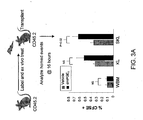
- FIG. 3A in order to assess HSPC homing, CFSE labeled whole bone marrow (WBM) CD45.2 cells were pulsed with dmPGE 2 or vehicle for 2 hours on ice, washed and injected IV in lethally irradiated CD45.2 hosts.
- SKL cells are not a homogenous HSPC population, they are highly enriched for LTRC (Okada et al. , 1992; Spangrude and Scollay, 1990).
- PGE 2 increases HSPC CXCR4, and the CXCR4 antagonist AMD3100 blocks enhanced homing
- the stromal-cell-derived factor-1 alpha (SDF-1a)/CXCR4 axis has been implicated in HSPC trafficking and homing.
- Pulse-exposure of Lin neg cells to dmPGE 2 increased CXCR4 expression on KL and SKL cells ( Figure 4A ); similarly, dmPGE 2 pulse exposure increased CXCR4 expression on CD34 + UCB cells as expected.
- QRT-PCR demonstrated elevated CXCR4 mRNA levels in dmPGE 2 -treated cells compared to vehicle, with maximal elevation observed at 6 hours (data not shown).
- the selective CXCR4 antagonist AMD3100 which inhibits in vitro migration to SDF-1 and homing of HSPC in vivo was used.
- PGE 2 pulse-exposure increased homing of SKL cells by ⁇ 2-fold, and incubation of vehicle or dmPGE 2 -pulsed cells with AMD3100 reduced SKL cell homing and abrogated the improved homing efficiency of dmPGE 2 -pulsed cells.
- PGE 2 decreases HSPC apoptosis coincident with an increase in Survivin.
- PGE 2 treatment produced a 4-fold increase in HSPC frequency and CRU ( FIG. 1 ), but only a 2-fold enhancement in homing ( FIG. 3 ), suggesting that other events are involved in enhanced engraftment.
- Apoptosis is an important regulatory process in normal and malignant hematopoiesis and PGE 2 has been implicated in anti-apoptotic signalling.
- activation of cAMP, a downstream signaling molecule of EP receptors inhibits apoptosis in CD34 + cells.
- dmPGE 2 treatment affects survival and/or proliferation of HSPC, which contributes to enhanced engraftment.
- Lin neg cells were pulsed with 0.1 nanoMolar - 1 microMolar dmPGE 2 or vehicle and cultured in serum-reduced culture medium without growth factors. Pulse-exposure to dmPGE 2 reduced apoptosis in SKL cells in a dose dependent fashion ( Figure 5A ), reaching ⁇ 65% inhibition at 1 microMolar.
- the inhibitor of apoptosis protein survivin is an important regulator of apoptosis and proliferation in both normal and malignant hematopoietic cells.
- FIG. 5B these results demonstrate that PGE 2 affected Survivin in HSPC.
- intracellular Survivin levels were significantly higher in both murine SKL cells and CD34 + UCB cells (1.7 and 2.4 fold, respectively) compared to control and QRT-PCR analysis indicated elevated Survivin mRNA compared to control.
- FIG. 5C decreased active caspase-3 coincident with an increase in Survivin was seen at 24, 48, and 72 hours post-exposure of SKL cells to dmPGE 2 compared to control.
- marrow cells were pulsed with dmPGE 2 and injected into congenic mice treated with BrdU post-transplant, and the proportion of donor BrdU + SKL cells was determined 16 hours later.
- FIG. 6B ⁇ 2-fold increase in the proportion of homed SKL cells in S+G 2 /M phase was observed for cells pulsed with dmPGE 2 prior to transplant, confirming that short-term exposure of HSPC to dmPGE 2 stimulates HSPC to enter and progress through cell cycle in vivo.
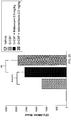
- FIG. 7A & 7B it shows effects of daily SC administration of 150 ⁇ g/kg indomethacin or 150 ug/kg baicalein alone ( FIG 7A ) or with G-CSF ( FIG 7B ) for 4 days on CFU-GM mobilization.
- indomethacin administration of 150 ⁇ g/kg indomethacin, SC, once daily for 4 days, produced a 4-fold increase in the number of mobilized progenitor cells.
- FIG. 7B Coadministration of indomethacin with G-CSF produced a highly synergistic increase in peripheral blood stem cell mobilization.
- the lipoxygenase inhibitor baicalein had no effect on baseline or G-CSF- induced CFU-GM mobilization, suggesting that the observed effects were specific to inhibition of the cyclooxygenase pathway.
- Freshly isolated Lineage neg mouse bone marrow cells were pulsed with dmPGE 2 or vehicle for 2 hours, washed and resuspended in media with 10% HI-FCS and cultured at 37 °C for 16 hours. After incubation, cells were washed, resuspended in RPMI/0.5% BSA and allowed to migrate in transwells to rmSDF-1 ⁇ for 4 hours. Total cell migration was measured by flow cytometry. Referring now to FIG. 9 , total SKL cell migration was higher for cells pulsed with dmPGE 2 . Data are the Mean ⁇ SEM percent migration for 3 experiments. ⁇ P ⁇ 0.05 for dmPGE 2 treated cells compared to cells treated with vehicle.
- Freshly isolated UCB CD34 + cells were pulsed with dmPGE 2 or vehicle for 2 hours, washed and resuspended in media with 10% HI-FCS and cultured at 37 °C for 16 hours. After incubation, cells were washed, resuspended in RPMI/0.5% BSA and migration to rhSDF-1 measured by flow cytometry. To block the CXCR4 receptor, replicate cells were incubated with 5 micrograms/ml AMD3100 for 30 minutes prior to the migration assay. Referring now to FIG. 10 , the data are the Mean ⁇ SEM percentage migration for 3 experiments.
- Blocking the CXCR4 receptor blocks PGE 2 enhancement of SKL cell homing.
- Lineage neg CD45.2 cells were treated with vehicle or 1 microMolardmPGE 2 plus 10 microMolar AMD3100, 2x10 6 treated cells injected into lethally-irradiated CD45.1 mice and homed SKL cells recovered 16 hours post-transplant and analyzed by FACS.
- FIG. 11 homing efficiency of vehicle and dmPGE 2 treated cells to bone marrow in the absence and presence of 10 microMolar AMD3100. Cells were incubated with AMD3100 for 30 minutes prior to the homing assay.
- PGE 2 increases the cell cycle rate of murine SKL cells in vitro.
- Lineage neg cells were treated with either vehicle or 1 microMolar dmPGE 2 for 2 hours, washed and cultured in media with rmSCF, rhFlt3 and rhTpo. After 20 hours cells were stained for SKL and Hoechst-33342 and Pyronin-Y. The proportion of SKL cells in cell cycle were measured by FACS.
- PGE 2 increases the cell cycle rate of highly purified CD150 + 48 - (SLAM) SKL cells in vitro.
- growth factors 50 ng/ml rmSCF, 100 ng/ml each of rhFlt-3 and rhTPO
- Pulse exposure to PGE 2 increases proliferation and cell cycle rate of homed SKL cells in vivo.
- CD45.1 Lineage neg bone marrow cells were treated with dmPGE 2 or vehicle and transplanted into lethally irradiated CD45.2 mice. Immediately after transplantation, BrdU was provided in drinking water and administered by IP injection. Bone marrow was analyzed 16 hours later and the proportion of CD45.1 + , SKL cells that were BrdU + was analyzed by FACS analysis. Referring now to FIG. 13 , CD45.1 Lin neg bone marrow cells were treated with dmPGE 2 or vehicle and transplanted into lethally irradiated CD45.2 mice. Immediately after transplantation, BrdU was provided in drinking water and administered by IP injection.
- WBM from CD45.1 and CD45.2 mice were treated with vehicle or dmPGE 2 and mixed with 2x10 5 competitor marrow cells from CD45.1/CD45.2 mice at various ratios and transplanted into lethally-irradiated CD45.1/CD45.2 mice.
- the proportion of CD45.1, CD45.2, and CD45.1/CD45.2 cells in PB was determined monthly.
- 2x10 6 WBM from previously transplanted CD45.1/CD45.2 mice at a 1:1 ratio were injected into lethally-irradiated CD45.1/CD45.2 mice in non-competitive fashion.
- CD45.1, CD45.2, and CD45.1/CD45.2 cells in PB was determined monthly.
- Increased chimerism of dmPGE 2 -treated cells vs. vehicle is shown for primary transplant at 20 weeks (time of secondary transplant) and in a sub-cohort at 32 weeks (time of 12 week analysis of secondary transplant), for secondary transplant at 12 weeks and 24 weeks, and likewise for tertiary and quaternary transplants, each art 12 weeks.
- PBSC Peripheral Blood Stem Cell
- mice were given SC treatments of 150 microgram/kg indomethacin or 150 microgram /kg baicalein (lipoxygenase inhibitor) in gelatin every 48 hours with or without G-CSF for 4 days.
- CFU-GM mobilization was determined as previously described ( Pelus et. al., Experimental Hematology 33 (2005) 295-307 ).
- FIG. 7A 7 7B the combination of the dual cyclooxygenase inhibitor Indomethacin and G-CSF synergistically mobilize mouse HSPC.
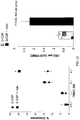
- mice were given daily, bid SC injections with G-CSF (1 microgram per mouse) or G-CSF + indomethacin (50 microgram per mouse) for 4 days.
- CFU-GM mobilization was determined as described ( Pelus et. al., Experimental Hematology 33 (2005) 295-307 ). Mice treated with the combination demonstrated a larger fold increase in CFU-GM per unit of blood than animals treated with only G-CSF.
- mice were treated with vehicle, indomethacin (50 microgram per mouse, bid SC, 4 days), AMD3100 (5 mg/kg day 5), G-CSF (1 microgram per mouse, bid SC, 4 days), AMD3100 + GRO ⁇ (5 milligram/kg and 20 milligram/kg respectively, day 5), AMD3100 + Indomethacin (Indomethacin 50 microgram per mouse, bid SC, 4 days; AMD3100 5 milligram/kg day 5), or G-CSF + Indomethacin (1 microgram and 50 microgram respectively, bid C, 4 days).
- CFU-GM mobilization was determined as previously described ( Pelus et. al., Experimental Hematology 33 (2005) 295-307 ). Referring now to FIG. 19 , CFU-GM per mL of peripheral blood plotted for various treatment regimes as outline in the above.
- mice were treated with vehicle, G-CSF (1 microgram per mouse, bid SC, 4 days), G-CSF + Indomethacin (50 microgram per mouse, bid SC, 4 days) or G-CSF + Meloxicam (0.3 mg/kg, bid SC, 4 days).
- CFU-GM mobilization was determined as previously described ( Pelus et. al., Experimental Hematology 33 (2005) 295-307 ).
- Staggered dosing with NSAID allows for recovery of CXCR4 expression on HSPC.
- CD45.1 mice were mobilized with G-CSF (1 microgram per mouse, bid, SC, 4 days) or G-CSF + Indomethacin (50 microgram per mouse, bid, SC, 4 days) and peripheral blood mononuclear cells (PBMC) were collected at day 5.
- PBMC peripheral blood mononuclear cells
- PBMC peripheral blood mononuclear cells
- CD45.2 mice were mobilized with G-CSF (1 microgram per mouse, bid , SC, 4 days), G-CSF + Indomethacin without a stagger (50 microgram per mouse, bid, SC, 4 days), G-CSF + Indomethacin with a 1 day stagger (Indomethacin started first and given for 4 days, and G-CSF given for 4 days starting on the second indomethacin treatment, creating 1 day with G-CSF without indomethacin before collection of PBMC), or G-CSF + Indomethacin with a 2 day stagger (Indomethacin started first and given for 4 days, and G-CSF given for 4 days starting on the third indomethacin treatment, creating 2 days with G-CSF without Indomethacin before collection of PBMC).
- CD45.1 mice were mobilized with G-CSF or G-CSF + Indomethacin (1 day stagger) and PBMC were transplanted with CD45.2 competitor bone marrow into lethally irradiated CD45.2 mice.
- PBSC from G-CSF plus NSAID mobilized mice restore peripheral blood neutrophil counts faster when transplanted into lethally irradiated mice compared to PBSC mobilized by G-CSF alone.
- mice were mobilized with G-CSF or G-CSF + Meloxicam (1 day stagger) and 2x10 6 PBMC were transplanted into lethally irradiated recipients.
- Neutrophils in blood were enumerated every other day by a Hemavet 950 FS (Drew Scientific) until full recovery (compared to control subset).
- Platelets in blood were enumerated every other day by a Hemavet 950 FS (Drew Scientific) until full recovery (compared to control subset).
- FIG. 23 Neutrophils in peripheral blood (PB) were enumerated every other day until full recovery (compared to control subset).
- a first group of baboons was mobilized with the following dosing regime treatment with 10 ug/kg of body weight of G-CSF then after a two week wash out period the animals were treated with 10 ug/kg G-CSF plus 0.1 mg/kg of meloxicam.
- a second group of baboon was mobilized with the following regime 10 ug/kg G-CSF plus 0.1 mg/kg of meloxicam and after a two week wash out period with 10 ug/kg G-CSF.
- FIG. 26 CD34 + cells in PB were determined by FACS analysis and CFU-GM per ml of blood determined as previously described. Co-administering G-CSF and Meloxicam increased mobilization of CD34 + cells (left panel) and CFU-GM measured per unit of blood drawn.
- mice were mobilized with G-CSF and CFU-GM in PB was compared to mobilization regimens with G-CSF and the combination of various NSAIDS (Aspirin [COX-1 and COX-2]; Licofelone [COX-2 and 5-LOX]; SC-560 [COX-1]; Valeryl Salicylate [COX-1]; Valdecoxib [COX-2]; NS-398 [COX-2]).
- NSAIDS Aspirin [COX-1 and COX-2]; Licofelone [COX-2 and 5-LOX]; SC-560 [COX-1]; Valeryl Salicylate [COX-1]; Valdecoxib [COX-2]; NS-398 [COX-2]).
- mice were mobilized with G-CSF or the combination of G-CSF and aspirin or ibuprofen (PO., bid , 4 days). CFU-GM was determined as previously described. Referring now to FIG.
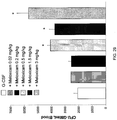
- mice were mobilized with G-CSF and following doses of meloxicam 0.0 (control) 0.02, 0.2, 0.5., 1.5, and 3 milligram/kg of body weight for meloxicam ( bid SC, 4 days) and CFU-GM was determined as previously described.
Landscapes
- Health & Medical Sciences (AREA)
- Life Sciences & Earth Sciences (AREA)
- Chemical & Material Sciences (AREA)
- General Health & Medical Sciences (AREA)
- Engineering & Computer Science (AREA)
- Medicinal Chemistry (AREA)
- Veterinary Medicine (AREA)
- Public Health (AREA)
- Pharmacology & Pharmacy (AREA)
- Animal Behavior & Ethology (AREA)
- Epidemiology (AREA)
- Zoology (AREA)
- Biomedical Technology (AREA)
- Bioinformatics & Cheminformatics (AREA)
- Organic Chemistry (AREA)
- Biotechnology (AREA)
- Hematology (AREA)
- Developmental Biology & Embryology (AREA)
- Cell Biology (AREA)
- Immunology (AREA)
- Genetics & Genomics (AREA)
- Wood Science & Technology (AREA)
- Virology (AREA)
- General Engineering & Computer Science (AREA)
- Biochemistry (AREA)
- Microbiology (AREA)
- Chemical Kinetics & Catalysis (AREA)
- General Chemical & Material Sciences (AREA)
- Nuclear Medicine, Radiotherapy & Molecular Imaging (AREA)
- Reproductive Health (AREA)
- Molecular Biology (AREA)
- Diabetes (AREA)
- Gastroenterology & Hepatology (AREA)
- Proteomics, Peptides & Aminoacids (AREA)
- Pregnancy & Childbirth (AREA)
- Physics & Mathematics (AREA)
- Rheumatology (AREA)
- Oncology (AREA)
- Pain & Pain Management (AREA)
- Obesity (AREA)
Priority Applications (1)
| Application Number | Priority Date | Filing Date | Title |
|---|---|---|---|
| EP20195600.0A EP3824884A1 (en) | 2008-11-06 | 2009-11-06 | Materials and methods to enhance hematopoietic stem cells engraftment procedures |
Applications Claiming Priority (3)
| Application Number | Priority Date | Filing Date | Title |
|---|---|---|---|
| US11201808P | 2008-11-06 | 2008-11-06 | |
| PCT/US2009/063654 WO2010054271A1 (en) | 2008-11-06 | 2009-11-06 | Materials and methds to enhance hematopoietic stem cells engraftment procedures |
| EP09825528.4A EP2362733B1 (en) | 2008-11-06 | 2009-11-06 | Materials and methods to enhance hematopoietic stem cells engraftment procedures |
Related Parent Applications (2)
| Application Number | Title | Priority Date | Filing Date |
|---|---|---|---|
| EP09825528.4A Division EP2362733B1 (en) | 2008-11-06 | 2009-11-06 | Materials and methods to enhance hematopoietic stem cells engraftment procedures |
| EP09825528.4A Division-Into EP2362733B1 (en) | 2008-11-06 | 2009-11-06 | Materials and methods to enhance hematopoietic stem cells engraftment procedures |
Related Child Applications (2)
| Application Number | Title | Priority Date | Filing Date |
|---|---|---|---|
| EP20195600.0A Division-Into EP3824884A1 (en) | 2008-11-06 | 2009-11-06 | Materials and methods to enhance hematopoietic stem cells engraftment procedures |
| EP20195600.0A Division EP3824884A1 (en) | 2008-11-06 | 2009-11-06 | Materials and methods to enhance hematopoietic stem cells engraftment procedures |
Publications (2)
| Publication Number | Publication Date |
|---|---|
| EP3031907A1 EP3031907A1 (en) | 2016-06-15 |
| EP3031907B1 true EP3031907B1 (en) | 2021-01-06 |
Family
ID=42153284
Family Applications (3)
| Application Number | Title | Priority Date | Filing Date |
|---|---|---|---|
| EP16153526.5A Revoked EP3031907B1 (en) | 2008-11-06 | 2009-11-06 | Materials and methods to enhance hematopoietic stem cells engraftment procedures |
| EP20195600.0A Withdrawn EP3824884A1 (en) | 2008-11-06 | 2009-11-06 | Materials and methods to enhance hematopoietic stem cells engraftment procedures |
| EP09825528.4A Not-in-force EP2362733B1 (en) | 2008-11-06 | 2009-11-06 | Materials and methods to enhance hematopoietic stem cells engraftment procedures |
Family Applications After (2)
| Application Number | Title | Priority Date | Filing Date |
|---|---|---|---|
| EP20195600.0A Withdrawn EP3824884A1 (en) | 2008-11-06 | 2009-11-06 | Materials and methods to enhance hematopoietic stem cells engraftment procedures |
| EP09825528.4A Not-in-force EP2362733B1 (en) | 2008-11-06 | 2009-11-06 | Materials and methods to enhance hematopoietic stem cells engraftment procedures |
Country Status (10)
| Country | Link |
|---|---|
| US (5) | US9107909B2 (https=) |
| EP (3) | EP3031907B1 (https=) |
| JP (5) | JP5846915B2 (https=) |
| CN (4) | CN102245758A (https=) |
| AU (4) | AU2009313290B2 (https=) |
| CA (3) | CA2742876C (https=) |
| ES (1) | ES2845641T3 (https=) |
| PT (1) | PT3031907T (https=) |
| WO (1) | WO2010054271A1 (https=) |
| ZA (1) | ZA201804932B (https=) |
Families Citing this family (39)
| Publication number | Priority date | Publication date | Assignee | Title |
|---|---|---|---|---|
| KR101441843B1 (ko) | 2005-10-18 | 2014-09-17 | 내셔날 쥬이쉬 헬스 | 조건부 불멸화 장기 줄기 세포 및 상기 세포의 제조 및 사용 방법 |
| EP2285832B1 (en) | 2008-05-16 | 2020-08-26 | Taiga Biotechnologies, Inc. | Antibodies and processes for preparing the same |
| EP2318435B1 (en) | 2008-08-28 | 2015-12-23 | Taiga Biotechnologies, Inc. | Modulators of myc, methods of using the same, and methods of identifying agents that modulate myc |
| PT3031907T (pt) | 2008-11-06 | 2021-01-28 | Univ Indiana Res & Tech Corp | Materiais e métodos para melhorar procedimentos de enxerto de células estaminais hematopoiéticas |
| US10813917B2 (en) | 2009-12-11 | 2020-10-27 | Medregen, Llc | Treatment methods utilizing stem cell mobilizers and immunosuppressive agents |
| EP2603227B1 (en) * | 2010-08-12 | 2017-10-04 | Fate Therapeutics, Inc. | Improved hematopoietic stem and progenitor cell therapy |
| EA033717B1 (ru) * | 2011-01-13 | 2019-11-19 | Scipharm Sarl | Способ ex vivo предварительной обработки гемопоэтических стволовых клеток и фармацевтическая композиция для улучшения приживления гемопоэтических стволовых клеток |
| PT2760994T (pt) * | 2011-09-30 | 2017-08-24 | Bluebird Bio Inc | Compostos para melhor transdução viral |
| EP3785767A1 (en) | 2011-12-02 | 2021-03-03 | Fate Therapeutics, Inc. | Enhanced stem cell composition |
| US10111907B2 (en) * | 2011-12-02 | 2018-10-30 | Fate Therapeutics, Inc. | Methods of treating ischemia |
| WO2013130499A1 (en) * | 2012-02-29 | 2013-09-06 | University Of Virginia Patent Foundation | Compositions and methods for cxcr4 signaling and umbilical cord blood stem cell engraftment |
| WO2014015318A1 (en) * | 2012-07-19 | 2014-01-23 | Bluebird Bio, Inc. | Soluble compounds for improved gene therapy methods |
| JP6285930B2 (ja) * | 2012-07-20 | 2018-02-28 | タイガ バイオテクノロジーズ,インク. | 造血コンパートメントの再構築及び自家再構築の増進 |
| US20150216903A1 (en) * | 2012-08-10 | 2015-08-06 | Bluebird Bio, Inc. | Compounds for improved viral transduction |
| JP2016516672A (ja) | 2013-02-28 | 2016-06-09 | プレジデント アンド フェローズ オブ ハーバード カレッジ | 幹細胞を動員するための方法および組成物 |
| US10272115B2 (en) | 2013-03-11 | 2019-04-30 | Taiga Biotechnologies, Inc. | Production and use of red blood cells |
| US9943545B2 (en) | 2013-03-15 | 2018-04-17 | Fate Therapeutics, Inc. | Stem cell culture media and methods of enhancing cell survival |
| US10851412B2 (en) | 2013-03-15 | 2020-12-01 | Fate Therapeutics, Inc. | Cell potency assay for therapeutic potential |
| DK3030232T3 (da) | 2013-04-29 | 2022-10-10 | Medregen Llc | Sårheling via autolog stamecellemobilisering |
| KR101489861B1 (ko) * | 2013-05-07 | 2015-02-05 | 경북대학교 산학협력단 | Amd3100을 포함하는 골질환 예방 또는 치료용 조성물 |
| US20180112180A1 (en) | 2015-01-26 | 2018-04-26 | Fate Therapeutics, Inc. | Cells with increased immuno-regulatory properties and methods for their use and manufacture |
| CN104774806B (zh) * | 2015-04-09 | 2019-02-15 | 广州赛莱拉干细胞科技股份有限公司 | 一种胎盘造血干细胞的制备方法 |
| RU2018106515A (ru) | 2015-07-21 | 2019-08-21 | Зе Чилдрен'С Медикал Сентер Корпорейшн | Pd-l1-экспрессирующие гемопоэтические стволовые клетки и применения |
| WO2017139576A1 (en) | 2016-02-12 | 2017-08-17 | Bluebird Bio, Inc. | Vcn enhancer compositions and methods of using the same |
| WO2017139561A1 (en) | 2016-02-12 | 2017-08-17 | Bluebird Bio, Inc. | Vcn enhancer compositions and methods of using the same |
| JP2019507596A (ja) * | 2016-02-26 | 2019-03-22 | プレジデント アンド フェローズ オブ ハーバード カレッジ | 生着性の高い造血幹細胞 |
| US20200224165A1 (en) * | 2016-07-22 | 2020-07-16 | Senlin Li | Methods and compositions for rejuvenation |
| KR20190092472A (ko) | 2016-12-02 | 2019-08-07 | 타이가 바이오테크놀로지스, 인코포레이티드 | 나노입자 제제 |
| JP7175277B2 (ja) * | 2017-01-27 | 2022-11-18 | チルドレンズ ホスピタル メディカル センター | 造血幹細胞の生着活性を向上させる方法 |
| US10149898B2 (en) | 2017-08-03 | 2018-12-11 | Taiga Biotechnologies, Inc. | Methods and compositions for the treatment of melanoma |
| US11213546B2 (en) | 2017-09-07 | 2022-01-04 | Emory University | Methods to mobilize tissue resident cells for adoptive t cell therapy |
| WO2019060708A1 (en) | 2017-09-22 | 2019-03-28 | The Children's Medical Center Corporation | TREATMENT OF TYPE 1 DIABETES AND AUTOIMMUNE DISEASES OR DISORDERS |
| FR3074189A1 (fr) * | 2017-11-30 | 2019-05-31 | Assistance Publique - Hopitaux De Paris | Methode de generation de greffons de cellules souches hematopoietiques |
| CN108404112B (zh) * | 2018-04-01 | 2020-05-12 | 北京诺赛启研再生医学研究院有限公司 | 提高造血干细胞归巢及植入率的方法及其试剂 |
| EP3647413A1 (en) * | 2018-10-31 | 2020-05-06 | Centro de Investigaciones Energéticas, Medioambientales y Tecnológicas O.A., M.P. (CIEMAT) | Improvements for performing and facilitating the recovery after hematopoietic stem cell transplantation |
| WO2020210231A1 (en) | 2019-04-08 | 2020-10-15 | Taiga Biotechnologies, Inc. | Compositions and methods for the cry opreservation of immune cells |
| EP3969041A4 (en) | 2019-05-14 | 2023-05-10 | Taiga Biotechnologies, Inc. | COMPOSITIONS AND METHODS FOR TREATMENT OF T-CELL DEPLETION |
| EP4129911A4 (en) | 2020-03-31 | 2023-10-04 | Denka Company Limited | Alumina powder, resin composition, and heat dissipation component |
| CN116509834B (zh) * | 2023-01-20 | 2025-05-13 | 东北师范大学 | 化合物在制备造血干/祖细胞增殖和损伤修复药物中的应用 |
Citations (2)
| Publication number | Priority date | Publication date | Assignee | Title |
|---|---|---|---|---|
| WO1997048815A2 (en) * | 1996-06-17 | 1997-12-24 | Novartis Ag | Method for enhancing gene transfer |
| WO2007112084A2 (en) * | 2006-03-24 | 2007-10-04 | Children's Medical Center Corporation | Method to modulate hematopoietic stem cell growth |
Family Cites Families (19)
| Publication number | Priority date | Publication date | Assignee | Title |
|---|---|---|---|---|
| US5399493A (en) * | 1989-06-15 | 1995-03-21 | The Regents Of The University Of Michigan | Methods and compositions for the optimization of human hematopoietic progenitor cell cultures |
| JPH08205860A (ja) * | 1994-01-21 | 1996-08-13 | Usa Government | 造血細胞の膨大化および移植方法 |
| EP1438075A4 (en) * | 2001-10-02 | 2006-04-19 | Inst Clayton De La Rech | METHOD AND COMPOSITIONS ASSOCIATED WITH LENTIVIRAL VECTORS WITH LIMITED EXPRESSION AND ITS APPLICATIONS |
| US20050163760A1 (en) | 2001-12-06 | 2005-07-28 | Nathalie Cartier-Lacave | Use of cd34+ hematopoietic progenitor cells for the treatment of cns disorders |
| AU2003214920A1 (en) * | 2002-02-04 | 2003-09-02 | Millennium Pharmaceuticals Inc. | Methods and compositions for treating hematological disorders |
| AU2004227205B2 (en) | 2003-04-08 | 2010-06-10 | Yeda Research And Development Co. Ltd | Stem cells having increased sensitivity to a chemoattractant and methods of generating and using same |
| IL158868A0 (en) | 2003-11-13 | 2004-05-12 | Yeda Res & Dev | Methods of generating and using stem cells enriched with immature primitive progenitor |
| EP1760071A4 (en) * | 2004-06-23 | 2008-03-05 | Ono Pharmaceutical Co | COMPOUND WITH S1P RECEPTOR BINDING ABILITY AND USE THEREOF |
| US20080021078A1 (en) | 2006-07-18 | 2008-01-24 | Horizon Therapeutics, Inc. | Methods and medicaments for administration of ibuprofen |
| US20070087988A1 (en) * | 2005-09-30 | 2007-04-19 | New York University | Hematopoietic progenitor kinase 1 for modulation of an immune response |
| JP2007099724A (ja) | 2005-10-06 | 2007-04-19 | Shizuoka Prefecture | スルファチドを標的とした抗ウイルス剤 |
| US8076315B2 (en) | 2005-10-14 | 2011-12-13 | The Board Of Trustees Of The University Of Illinois | Pharmacological treatments for sleep disorders (apnoe) with prostanoid receptor antagonists |
| EP2049129B1 (en) | 2006-06-22 | 2013-06-12 | Yeda Research And Development Co., Ltd. | Catecholamine receptor modulation |
| EP2679221B1 (en) | 2006-10-20 | 2020-09-23 | Children's Medical Center Corporation | Method to enhance tissue regeneration |
| US9394520B2 (en) * | 2006-12-08 | 2016-07-19 | University Of Rochester | Expansion of hematopoietic stem cells |
| US8598328B2 (en) | 2006-12-13 | 2013-12-03 | National University Corporation Nagoya University | Tol1 factor transposase and DNA introduction system using the same |
| PT3031907T (pt) | 2008-11-06 | 2021-01-28 | Univ Indiana Res & Tech Corp | Materiais e métodos para melhorar procedimentos de enxerto de células estaminais hematopoiéticas |
| EP2408444A4 (en) | 2009-03-19 | 2012-09-26 | Fate Therapeutics Inc | COMPOSITIONS WITH CYCLIC AMP AMPLIFIERS AND / OR EP LIGANDS, AND METHOD FOR THEIR PRODUCTION AND USE |
| PT2760994T (pt) | 2011-09-30 | 2017-08-24 | Bluebird Bio Inc | Compostos para melhor transdução viral |
-
2009
- 2009-11-06 PT PT161535265T patent/PT3031907T/pt unknown
- 2009-11-06 EP EP16153526.5A patent/EP3031907B1/en not_active Revoked
- 2009-11-06 JP JP2011534934A patent/JP5846915B2/ja not_active Expired - Fee Related
- 2009-11-06 CA CA2742876A patent/CA2742876C/en active Active
- 2009-11-06 EP EP20195600.0A patent/EP3824884A1/en not_active Withdrawn
- 2009-11-06 CN CN2009801495225A patent/CN102245758A/zh active Pending
- 2009-11-06 US US13/128,074 patent/US9107909B2/en active Active
- 2009-11-06 CA CA3012803A patent/CA3012803C/en active Active
- 2009-11-06 CN CN201710777354.0A patent/CN107630001A/zh active Pending
- 2009-11-06 CN CN201710777353.6A patent/CN107523587A/zh active Pending
- 2009-11-06 EP EP09825528.4A patent/EP2362733B1/en not_active Not-in-force
- 2009-11-06 CA CA3203374A patent/CA3203374A1/en active Pending
- 2009-11-06 AU AU2009313290A patent/AU2009313290B2/en not_active Ceased
- 2009-11-06 ES ES16153526T patent/ES2845641T3/es active Active
- 2009-11-06 WO PCT/US2009/063654 patent/WO2010054271A1/en not_active Ceased
- 2009-11-06 CN CN201810232658.3A patent/CN108379292A/zh active Pending
-
2014
- 2014-06-27 US US14/318,167 patent/US10213460B2/en active Active
-
2015
- 2015-03-04 US US14/638,676 patent/US9675641B2/en not_active Expired - Fee Related
- 2015-07-03 JP JP2015134076A patent/JP6632822B2/ja not_active Expired - Fee Related
-
2016
- 2016-07-21 AU AU2016206316A patent/AU2016206316C1/en not_active Ceased
-
2017
- 2017-05-11 US US15/592,375 patent/US11241454B2/en not_active Expired - Fee Related
- 2017-10-05 JP JP2017195168A patent/JP2018048156A/ja not_active Withdrawn
-
2018
- 2018-07-23 ZA ZA2018/04932A patent/ZA201804932B/en unknown
- 2018-10-08 AU AU2018241208A patent/AU2018241208B2/en not_active Ceased
-
2019
- 2019-11-29 JP JP2019217044A patent/JP2020063263A/ja not_active Withdrawn
-
2020
- 2020-08-21 AU AU2020220191A patent/AU2020220191B2/en not_active Ceased
-
2021
- 2021-12-14 US US17/550,737 patent/US20220313735A1/en not_active Abandoned
-
2023
- 2023-01-06 JP JP2023001015A patent/JP2023052244A/ja active Pending
Patent Citations (2)
| Publication number | Priority date | Publication date | Assignee | Title |
|---|---|---|---|---|
| WO1997048815A2 (en) * | 1996-06-17 | 1997-12-24 | Novartis Ag | Method for enhancing gene transfer |
| WO2007112084A2 (en) * | 2006-03-24 | 2007-10-04 | Children's Medical Center Corporation | Method to modulate hematopoietic stem cell growth |
Non-Patent Citations (9)
| Title |
|---|
| ALLEGRA M. LORD, TRISTA E. NORTH, LEONARD I. ZON: "Prostaglandin E2: Making More of Your Marrow", CELL CYCLE, LANDES BIOSCIENCE, vol. 6, no. 24, 15 December 2007 (2007-12-15), pages 3054 - 3057, XP055058145, ISSN: 15384101, DOI: 10.4161/cc.6.24.5129 |
| ANDRADE-ZALDIVAR ET AL.: "Expansion of human hematopoietic stem cells for transplantation: trends and perspectives", CYTOTECHNOLOGY, vol. 56, no. 3, 29 March 2008 (2008-03-29), pages 151 - 160, XP019602514 |
| ARTHUR BANK: "Hematopoietic stem cell gene therapy: selecting only the best", THE JOURNAL OF CLINICAL INVESTIGATION, B M J GROUP, GB, vol. 112, no. 10, 15 November 2003 (2003-11-15), GB , pages 1478 - 1480, XP055270573, ISSN: 0021-9738, DOI: 10.1172/JCI20336 |
| HORN, P.A. MORRIS, J.C. NEFF, T. KIEM, H.-P.: "Stem cell gene transfer-efficacy and safety in large animal studies", MOLECULAR THERAPY, ELSEVIER INC., US, vol. 10, no. 3, 1 September 2004 (2004-09-01), US , pages 417 - 431, XP004536752, ISSN: 1525-0016, DOI: 10.1016/j.ymthe.2004.05.017 |
| KRISTIN M. HALL ET AL: "Decreased homing of retrovirally transduced human bone marrow CD34+ cells in the NOD/SCID mouse model", EXPERIMENTAL HEMATOLOGY, vol. 34, no. 4, 1 April 2006 (2006-04-01), US, pages 433 - 442, XP055534780, ISSN: 0301-472X, DOI: 10.1016/j.exphem.2005.12.014 * |
| KRISTIN M. HALL, TAMARA L. HORVATH, RAFAT ABONOUR, KENNETH CORNETTA, EDWARD F. SROUR: "Decreased homing of retrovirally transduced human bone marrow CD34+ cells in the NOD/SCID mouse model", EXPERIMENTAL HEMATALOGY, ELSEVIER INC., US, vol. 34, no. 4, 1 April 2006 (2006-04-01), US , pages 433 - 442, XP055534780, ISSN: 0301-472X, DOI: 10.1016/j.exphem.2005.12.014 |
| LAPIDOT T, DAR A, KOLLET O: "How do stem cells find their way home?", BLOOD, AMERICAN SOCIETY OF HEMATOLOGY, US, vol. 106, no. 6, 15 September 2005 (2005-09-15), US , pages 1901 - 1910, XP003011680, ISSN: 0006-4971, DOI: 10.1182/blood-2005-04-1417 |
| TRISTA E. NORTH, WOLFRAM GOESSLING, CARL R. WALKLEY, CLAUDIA LENGERKE, KAMDEN R. KOPANI, ALLEGRA M. LORD, GERHARD J. WEBER, TERESA: "Prostaglandin E2 regulates vertebrate haematopoietic stem cell homeostasis", NATURE, ¬MACMILLAN JOURNALS LTD., ETC.|, vol. 447, no. 7147, 21 June 2007 (2007-06-21), pages 1007 - 1011, XP055002054, ISSN: 00280836, DOI: 10.1038/nature05883 |
| ZUBLER RUDOLF H.: "Ex vivo expansion of haematopoietic stem cells and gene therapy development", SWISS MED. WKLY, vol. 136, 1 January 2006 (2006-01-01), pages 795 - 799, XP055864367 |
Also Published As
Similar Documents
| Publication | Publication Date | Title |
|---|---|---|
| AU2020220191B2 (en) | Materials and methods to enhance hematopoietic stem cells engraftment procedures | |
| Wang et al. | Total body irradiation causes residual bone marrow injury by induction of persistent oxidative stress in murine hematopoietic stem cells | |
| Hoggatt et al. | Prostaglandin E2 enhances hematopoietic stem cell homing, survival, and proliferation | |
| JP2019189661A (ja) | 組織の再生を亢進するための方法 | |
| EA039149B1 (ru) | Применение композиции, содержащей вилдаглиптин, для повышения эффективности приживления гемопоэтических стволовых клеток после трансплантации и способ для повышения способности гемопоэтических стволовых клеток к приживлению | |
| US20190000885A1 (en) | Treatment with angiogenin to enhance hematopoietic reconstitution | |
| Li et al. | Foxc2 overexpression enhances benefit of endothelial progenitor cells for inhibiting neointimal formation by promoting CXCR4-dependent homing | |
| Joshi | Hypoxic Regulation of Angiotensin-Converting Enzyme 2 and Mas Receptor in Hematopoietic Stem/Progenitor Cells: A Translational Study | |
| Hoggatt | Eicosanoid regulation of hematopoietic stem and progenitor cell function |
Legal Events
| Date | Code | Title | Description |
|---|---|---|---|
| PUAI | Public reference made under article 153(3) epc to a published international application that has entered the european phase |
Free format text: ORIGINAL CODE: 0009012 |
|
| AC | Divisional application: reference to earlier application |
Ref document number: 2362733 Country of ref document: EP Kind code of ref document: P |
|
| AK | Designated contracting states |
Kind code of ref document: A1 Designated state(s): AT BE BG CH CY CZ DE DK EE ES FI FR GB GR HR HU IE IS IT LI LT LU LV MC MK MT NL NO PL PT RO SE SI SK SM TR |
|
| STAA | Information on the status of an ep patent application or granted ep patent |
Free format text: STATUS: REQUEST FOR EXAMINATION WAS MADE |
|
| 17P | Request for examination filed |
Effective date: 20161214 |
|
| RBV | Designated contracting states (corrected) |
Designated state(s): AT BE BG CH CY CZ DE DK EE ES FI FR GB GR HR HU IE IS IT LI LT LU LV MC MK MT NL NO PL PT RO SE SI SK SM TR |
|
| STAA | Information on the status of an ep patent application or granted ep patent |
Free format text: STATUS: EXAMINATION IS IN PROGRESS |
|
| 17Q | First examination report despatched |
Effective date: 20170317 |
|
| RAP1 | Party data changed (applicant data changed or rights of an application transferred) |
Owner name: INDIANA UNIVERSITY RESEARCH AND TECHNOLOGY CORPORA |
|
| TPAC | Observations filed by third parties |
Free format text: ORIGINAL CODE: EPIDOSNTIPA |
|
| TPAC | Observations filed by third parties |
Free format text: ORIGINAL CODE: EPIDOSNTIPA |
|
| TPAC | Observations filed by third parties |
Free format text: ORIGINAL CODE: EPIDOSNTIPA |
|
| RIC1 | Information provided on ipc code assigned before grant |
Ipc: A61K 31/00 20060101ALI20200916BHEP Ipc: C07C 405/00 20060101ALI20200916BHEP Ipc: A61K 31/4196 20060101ALI20200916BHEP Ipc: C12N 15/63 20060101ALI20200916BHEP Ipc: A61P 43/00 20060101ALI20200916BHEP Ipc: A61K 31/5415 20060101ALI20200916BHEP Ipc: A61K 35/51 20150101ALN20200916BHEP Ipc: C12N 9/02 20060101ALI20200916BHEP Ipc: A61K 31/4035 20060101ALI20200916BHEP Ipc: A61P 7/00 20060101ALI20200916BHEP Ipc: A61K 38/19 20060101ALI20200916BHEP Ipc: A61K 31/395 20060101ALI20200916BHEP Ipc: C12N 5/0789 20100101AFI20200916BHEP Ipc: A61P 35/02 20060101ALI20200916BHEP Ipc: A61K 31/405 20060101ALI20200916BHEP Ipc: A61P 7/06 20060101ALI20200916BHEP Ipc: A61P 29/00 20060101ALI20200916BHEP Ipc: A61K 35/50 20150101ALN20200916BHEP Ipc: A61K 35/28 20150101ALN20200916BHEP Ipc: A61P 3/00 20060101ALI20200916BHEP Ipc: A61K 35/12 20150101ALN20200916BHEP |
|
| GRAP | Despatch of communication of intention to grant a patent |
Free format text: ORIGINAL CODE: EPIDOSNIGR1 |
|
| STAA | Information on the status of an ep patent application or granted ep patent |
Free format text: STATUS: GRANT OF PATENT IS INTENDED |
|
| RIC1 | Information provided on ipc code assigned before grant |
Ipc: A61K 31/395 20060101ALI20200923BHEP Ipc: A61K 31/4035 20060101ALI20200923BHEP Ipc: A61P 35/02 20060101ALI20200923BHEP Ipc: A61P 7/00 20060101ALI20200923BHEP Ipc: A61K 31/405 20060101ALI20200923BHEP Ipc: A61P 29/00 20060101ALI20200923BHEP Ipc: A61K 35/50 20150101ALN20200923BHEP Ipc: A61K 31/4196 20060101ALI20200923BHEP Ipc: A61P 3/00 20060101ALI20200923BHEP Ipc: A61K 35/28 20150101ALN20200923BHEP Ipc: A61P 7/06 20060101ALI20200923BHEP Ipc: C12N 9/02 20060101ALI20200923BHEP Ipc: C12N 15/63 20060101ALI20200923BHEP Ipc: A61K 35/12 20150101ALN20200923BHEP Ipc: A61K 31/00 20060101ALI20200923BHEP Ipc: C12N 5/0789 20100101AFI20200923BHEP Ipc: A61K 31/5415 20060101ALI20200923BHEP Ipc: A61P 43/00 20060101ALI20200923BHEP Ipc: C07C 405/00 20060101ALI20200923BHEP Ipc: A61K 35/51 20150101ALN20200923BHEP Ipc: A61K 38/19 20060101ALI20200923BHEP |
|
| GRAS | Grant fee paid |
Free format text: ORIGINAL CODE: EPIDOSNIGR3 |
|
| INTG | Intention to grant announced |
Effective date: 20201023 |
|
| GRAA | (expected) grant |
Free format text: ORIGINAL CODE: 0009210 |
|
| STAA | Information on the status of an ep patent application or granted ep patent |
Free format text: STATUS: THE PATENT HAS BEEN GRANTED |
|
| AC | Divisional application: reference to earlier application |
Ref document number: 2362733 Country of ref document: EP Kind code of ref document: P |
|
| AK | Designated contracting states |
Kind code of ref document: B1 Designated state(s): AT BE BG CH CY CZ DE DK EE ES FI FR GB GR HR HU IE IS IT LI LT LU LV MC MK MT NL NO PL PT RO SE SI SK SM TR |
|
| REG | Reference to a national code |
Ref country code: GB Ref legal event code: FG4D |
|
| REG | Reference to a national code |
Ref country code: AT Ref legal event code: REF Ref document number: 1352392 Country of ref document: AT Kind code of ref document: T Effective date: 20210115 Ref country code: CH Ref legal event code: EP |
|
| REG | Reference to a national code |
Ref country code: DE Ref legal event code: R096 Ref document number: 602009063253 Country of ref document: DE |
|
| REG | Reference to a national code |
Ref country code: PT Ref legal event code: SC4A Ref document number: 3031907 Country of ref document: PT Date of ref document: 20210128 Kind code of ref document: T Free format text: AVAILABILITY OF NATIONAL TRANSLATION Effective date: 20210121 |
|
| REG | Reference to a national code |
Ref country code: IE Ref legal event code: FG4D |
|
| REG | Reference to a national code |
Ref country code: NL Ref legal event code: FP |
|
| REG | Reference to a national code |
Ref country code: SE Ref legal event code: TRGR |
|
| REG | Reference to a national code |
Ref country code: CH Ref legal event code: NV Representative=s name: TR-IP CONSULTING LLC, CH |
|
| REG | Reference to a national code |
Ref country code: NO Ref legal event code: T2 Effective date: 20210106 |
|
| REG | Reference to a national code |
Ref country code: GR Ref legal event code: EP Ref document number: 20210400472 Country of ref document: GR Effective date: 20210416 |
|
| REG | Reference to a national code |
Ref country code: AT Ref legal event code: MK05 Ref document number: 1352392 Country of ref document: AT Kind code of ref document: T Effective date: 20210106 |
|
| REG | Reference to a national code |
Ref country code: LT Ref legal event code: MG9D |
|
| REG | Reference to a national code |
Ref country code: ES Ref legal event code: FG2A Ref document number: 2845641 Country of ref document: ES Kind code of ref document: T3 Effective date: 20210727 |
|
| PG25 | Lapsed in a contracting state [announced via postgrant information from national office to epo] |
Ref country code: BG Free format text: LAPSE BECAUSE OF FAILURE TO SUBMIT A TRANSLATION OF THE DESCRIPTION OR TO PAY THE FEE WITHIN THE PRESCRIBED TIME-LIMIT Effective date: 20210406 Ref country code: FI Free format text: LAPSE BECAUSE OF FAILURE TO SUBMIT A TRANSLATION OF THE DESCRIPTION OR TO PAY THE FEE WITHIN THE PRESCRIBED TIME-LIMIT Effective date: 20210106 Ref country code: HR Free format text: LAPSE BECAUSE OF FAILURE TO SUBMIT A TRANSLATION OF THE DESCRIPTION OR TO PAY THE FEE WITHIN THE PRESCRIBED TIME-LIMIT Effective date: 20210106 Ref country code: LT Free format text: LAPSE BECAUSE OF FAILURE TO SUBMIT A TRANSLATION OF THE DESCRIPTION OR TO PAY THE FEE WITHIN THE PRESCRIBED TIME-LIMIT Effective date: 20210106 |
|
| PG25 | Lapsed in a contracting state [announced via postgrant information from national office to epo] |
Ref country code: AT Free format text: LAPSE BECAUSE OF FAILURE TO SUBMIT A TRANSLATION OF THE DESCRIPTION OR TO PAY THE FEE WITHIN THE PRESCRIBED TIME-LIMIT Effective date: 20210106 Ref country code: PL Free format text: LAPSE BECAUSE OF FAILURE TO SUBMIT A TRANSLATION OF THE DESCRIPTION OR TO PAY THE FEE WITHIN THE PRESCRIBED TIME-LIMIT Effective date: 20210106 Ref country code: LV Free format text: LAPSE BECAUSE OF FAILURE TO SUBMIT A TRANSLATION OF THE DESCRIPTION OR TO PAY THE FEE WITHIN THE PRESCRIBED TIME-LIMIT Effective date: 20210106 |
|
| PG25 | Lapsed in a contracting state [announced via postgrant information from national office to epo] |
Ref country code: IS Free format text: LAPSE BECAUSE OF FAILURE TO SUBMIT A TRANSLATION OF THE DESCRIPTION OR TO PAY THE FEE WITHIN THE PRESCRIBED TIME-LIMIT Effective date: 20210506 |
|
| REG | Reference to a national code |
Ref country code: DE Ref legal event code: R026 Ref document number: 602009063253 Country of ref document: DE |
|
| PLBI | Opposition filed |
Free format text: ORIGINAL CODE: 0009260 |
|
| PLAX | Notice of opposition and request to file observation + time limit sent |
Free format text: ORIGINAL CODE: EPIDOSNOBS2 |
|
| PG25 | Lapsed in a contracting state [announced via postgrant information from national office to epo] |
Ref country code: SM Free format text: LAPSE BECAUSE OF FAILURE TO SUBMIT A TRANSLATION OF THE DESCRIPTION OR TO PAY THE FEE WITHIN THE PRESCRIBED TIME-LIMIT Effective date: 20210106 Ref country code: CZ Free format text: LAPSE BECAUSE OF FAILURE TO SUBMIT A TRANSLATION OF THE DESCRIPTION OR TO PAY THE FEE WITHIN THE PRESCRIBED TIME-LIMIT Effective date: 20210106 Ref country code: EE Free format text: LAPSE BECAUSE OF FAILURE TO SUBMIT A TRANSLATION OF THE DESCRIPTION OR TO PAY THE FEE WITHIN THE PRESCRIBED TIME-LIMIT Effective date: 20210106 |
|
| 26 | Opposition filed |
Opponent name: JAMES POOLE LIMITED Effective date: 20211006 |
|
| PG25 | Lapsed in a contracting state [announced via postgrant information from national office to epo] |
Ref country code: SK Free format text: LAPSE BECAUSE OF FAILURE TO SUBMIT A TRANSLATION OF THE DESCRIPTION OR TO PAY THE FEE WITHIN THE PRESCRIBED TIME-LIMIT Effective date: 20210106 Ref country code: RO Free format text: LAPSE BECAUSE OF FAILURE TO SUBMIT A TRANSLATION OF THE DESCRIPTION OR TO PAY THE FEE WITHIN THE PRESCRIBED TIME-LIMIT Effective date: 20210106 Ref country code: DK Free format text: LAPSE BECAUSE OF FAILURE TO SUBMIT A TRANSLATION OF THE DESCRIPTION OR TO PAY THE FEE WITHIN THE PRESCRIBED TIME-LIMIT Effective date: 20210106 |
|
| PLAF | Information modified related to communication of a notice of opposition and request to file observations + time limit |
Free format text: ORIGINAL CODE: EPIDOSCOBS2 |
|
| PG25 | Lapsed in a contracting state [announced via postgrant information from national office to epo] |
Ref country code: SI Free format text: LAPSE BECAUSE OF FAILURE TO SUBMIT A TRANSLATION OF THE DESCRIPTION OR TO PAY THE FEE WITHIN THE PRESCRIBED TIME-LIMIT Effective date: 20210106 |
|
| PLBB | Reply of patent proprietor to notice(s) of opposition received |
Free format text: ORIGINAL CODE: EPIDOSNOBS3 |
|
| PG25 | Lapsed in a contracting state [announced via postgrant information from national office to epo] |
Ref country code: IS Free format text: LAPSE BECAUSE OF FAILURE TO SUBMIT A TRANSLATION OF THE DESCRIPTION OR TO PAY THE FEE WITHIN THE PRESCRIBED TIME-LIMIT Effective date: 20210506 |
|
| PG25 | Lapsed in a contracting state [announced via postgrant information from national office to epo] |
Ref country code: MC Free format text: LAPSE BECAUSE OF FAILURE TO SUBMIT A TRANSLATION OF THE DESCRIPTION OR TO PAY THE FEE WITHIN THE PRESCRIBED TIME-LIMIT Effective date: 20210106 |
|
| PG25 | Lapsed in a contracting state [announced via postgrant information from national office to epo] |
Ref country code: LU Free format text: LAPSE BECAUSE OF NON-PAYMENT OF DUE FEES Effective date: 20211106 Ref country code: BE Free format text: LAPSE BECAUSE OF NON-PAYMENT OF DUE FEES Effective date: 20211130 |
|
| REG | Reference to a national code |
Ref country code: BE Ref legal event code: MM Effective date: 20211130 |
|
| PGFP | Annual fee paid to national office [announced via postgrant information from national office to epo] |
Ref country code: SE Payment date: 20221127 Year of fee payment: 14 Ref country code: PT Payment date: 20221020 Year of fee payment: 14 Ref country code: NO Payment date: 20221125 Year of fee payment: 14 Ref country code: NL Payment date: 20221126 Year of fee payment: 14 Ref country code: IT Payment date: 20221123 Year of fee payment: 14 Ref country code: IE Payment date: 20221128 Year of fee payment: 14 Ref country code: GB Payment date: 20221128 Year of fee payment: 14 Ref country code: FR Payment date: 20221123 Year of fee payment: 14 Ref country code: ES Payment date: 20221201 Year of fee payment: 14 Ref country code: DE Payment date: 20221125 Year of fee payment: 14 |
|
| PGFP | Annual fee paid to national office [announced via postgrant information from national office to epo] |
Ref country code: GR Payment date: 20221129 Year of fee payment: 14 Ref country code: CH Payment date: 20221205 Year of fee payment: 14 |
|
| PG25 | Lapsed in a contracting state [announced via postgrant information from national office to epo] |
Ref country code: HU Free format text: LAPSE BECAUSE OF FAILURE TO SUBMIT A TRANSLATION OF THE DESCRIPTION OR TO PAY THE FEE WITHIN THE PRESCRIBED TIME-LIMIT; INVALID AB INITIO Effective date: 20091106 Ref country code: CY Free format text: LAPSE BECAUSE OF FAILURE TO SUBMIT A TRANSLATION OF THE DESCRIPTION OR TO PAY THE FEE WITHIN THE PRESCRIBED TIME-LIMIT Effective date: 20210106 |
|
| REG | Reference to a national code |
Ref country code: DE Ref legal event code: R103 Ref document number: 602009063253 Country of ref document: DE Ref country code: DE Ref legal event code: R064 Ref document number: 602009063253 Country of ref document: DE |
|
| P01 | Opt-out of the competence of the unified patent court (upc) registered |
Effective date: 20230516 |
|
| RDAF | Communication despatched that patent is revoked |
Free format text: ORIGINAL CODE: EPIDOSNREV1 |
|
| RDAG | Patent revoked |
Free format text: ORIGINAL CODE: 0009271 |
|
| STAA | Information on the status of an ep patent application or granted ep patent |
Free format text: STATUS: PATENT REVOKED |
|
| REG | Reference to a national code |
Ref country code: CH Ref legal event code: PL |
|
| 27W | Patent revoked |
Effective date: 20230609 |
|
| GBPR | Gb: patent revoked under art. 102 of the ep convention designating the uk as contracting state |
Effective date: 20230609 |
|
| REG | Reference to a national code |
Ref country code: NO Ref legal event code: MMEP |
|
| REG | Reference to a national code |
Ref country code: GR Ref legal event code: NF Ref document number: 20210400472 Country of ref document: GR Effective date: 20231113 |
|
| PG25 | Lapsed in a contracting state [announced via postgrant information from national office to epo] |
Ref country code: GR Free format text: THE PATENT HAS BEEN ANNULLED BY A DECISION OF A NATIONAL AUTHORITY Effective date: 20231024 |
|
| PG25 | Lapsed in a contracting state [announced via postgrant information from national office to epo] |
Ref country code: GR Free format text: THE PATENT HAS BEEN ANNULLED BY A DECISION OF A NATIONAL AUTHORITY Effective date: 20231024 |
|
| REG | Reference to a national code |
Ref country code: SE Ref legal event code: ECNC |
|
| PG25 | Lapsed in a contracting state [announced via postgrant information from national office to epo] |
Ref country code: MK Free format text: LAPSE BECAUSE OF FAILURE TO SUBMIT A TRANSLATION OF THE DESCRIPTION OR TO PAY THE FEE WITHIN THE PRESCRIBED TIME-LIMIT Effective date: 20210106 |
|
| PG25 | Lapsed in a contracting state [announced via postgrant information from national office to epo] |
Ref country code: MT Free format text: LAPSE BECAUSE OF FAILURE TO SUBMIT A TRANSLATION OF THE DESCRIPTION OR TO PAY THE FEE WITHIN THE PRESCRIBED TIME-LIMIT Effective date: 20210106 |
|
| PG25 | Lapsed in a contracting state [announced via postgrant information from national office to epo] |
Ref country code: TR Free format text: LAPSE BECAUSE OF FAILURE TO SUBMIT A TRANSLATION OF THE DESCRIPTION OR TO PAY THE FEE WITHIN THE PRESCRIBED TIME-LIMIT Effective date: 20210106 |