EP3028862A1 - A method for determining a sheet height - Google Patents
A method for determining a sheet height Download PDFInfo
- Publication number
- EP3028862A1 EP3028862A1 EP15196139.8A EP15196139A EP3028862A1 EP 3028862 A1 EP3028862 A1 EP 3028862A1 EP 15196139 A EP15196139 A EP 15196139A EP 3028862 A1 EP3028862 A1 EP 3028862A1
- Authority
- EP
- European Patent Office
- Prior art keywords
- sheet
- value
- height
- pixels
- values
- Prior art date
- Legal status (The legal status is an assumption and is not a legal conclusion. Google has not performed a legal analysis and makes no representation as to the accuracy of the status listed.)
- Granted
Links
Images

Classifications
-
- G—PHYSICS
- G06—COMPUTING OR CALCULATING; COUNTING
- G06K—GRAPHICAL DATA READING; PRESENTATION OF DATA; RECORD CARRIERS; HANDLING RECORD CARRIERS
- G06K15/00—Arrangements for producing a permanent visual presentation of the output data, e.g. computer output printers
- G06K15/02—Arrangements for producing a permanent visual presentation of the output data, e.g. computer output printers using printers
-
- B—PERFORMING OPERATIONS; TRANSPORTING
- B41—PRINTING; LINING MACHINES; TYPEWRITERS; STAMPS
- B41J—TYPEWRITERS; SELECTIVE PRINTING MECHANISMS, i.e. MECHANISMS PRINTING OTHERWISE THAN FROM A FORME; CORRECTION OF TYPOGRAPHICAL ERRORS
- B41J11/00—Devices or arrangements of selective printing mechanisms, e.g. ink-jet printers or thermal printers, for supporting or handling copy material in sheet or web form
- B41J11/0035—Handling copy materials differing in thickness
-
- B—PERFORMING OPERATIONS; TRANSPORTING
- B41—PRINTING; LINING MACHINES; TYPEWRITERS; STAMPS
- B41J—TYPEWRITERS; SELECTIVE PRINTING MECHANISMS, i.e. MECHANISMS PRINTING OTHERWISE THAN FROM A FORME; CORRECTION OF TYPOGRAPHICAL ERRORS
- B41J11/00—Devices or arrangements of selective printing mechanisms, e.g. ink-jet printers or thermal printers, for supporting or handling copy material in sheet or web form
- B41J11/0095—Detecting means for copy material, e.g. for detecting or sensing presence of copy material or its leading or trailing end
-
- B—PERFORMING OPERATIONS; TRANSPORTING
- B65—CONVEYING; PACKING; STORING; HANDLING THIN OR FILAMENTARY MATERIAL
- B65H—HANDLING THIN OR FILAMENTARY MATERIAL, e.g. SHEETS, WEBS, CABLES
- B65H43/00—Use of control, checking, or safety devices, e.g. automatic devices comprising an element for sensing a variable
- B65H43/08—Photoelectric devices
-
- G—PHYSICS
- G01—MEASURING; TESTING
- G01B—MEASURING LENGTH, THICKNESS OR SIMILAR LINEAR DIMENSIONS; MEASURING ANGLES; MEASURING AREAS; MEASURING IRREGULARITIES OF SURFACES OR CONTOURS
- G01B11/00—Measuring arrangements characterised by the use of optical techniques
- G01B11/02—Measuring arrangements characterised by the use of optical techniques for measuring length, width or thickness
- G01B11/06—Measuring arrangements characterised by the use of optical techniques for measuring length, width or thickness for measuring thickness ; e.g. of sheet material
- G01B11/0608—Height gauges
-
- G—PHYSICS
- G01—MEASURING; TESTING
- G01B—MEASURING LENGTH, THICKNESS OR SIMILAR LINEAR DIMENSIONS; MEASURING ANGLES; MEASURING AREAS; MEASURING IRREGULARITIES OF SURFACES OR CONTOURS
- G01B11/00—Measuring arrangements characterised by the use of optical techniques
- G01B11/02—Measuring arrangements characterised by the use of optical techniques for measuring length, width or thickness
- G01B11/06—Measuring arrangements characterised by the use of optical techniques for measuring length, width or thickness for measuring thickness ; e.g. of sheet material
- G01B11/0691—Measuring arrangements characterised by the use of optical techniques for measuring length, width or thickness for measuring thickness ; e.g. of sheet material of objects while moving
-
- H—ELECTRICITY
- H04—ELECTRIC COMMUNICATION TECHNIQUE
- H04N—PICTORIAL COMMUNICATION, e.g. TELEVISION
- H04N1/00—Scanning, transmission or reproduction of documents or the like, e.g. facsimile transmission; Details thereof
- H04N1/00681—Detecting the presence, position or size of a sheet or correcting its position before scanning
- H04N1/00684—Object of the detection
- H04N1/00708—Size or dimensions
- H04N1/00716—Thickness
-
- H—ELECTRICITY
- H04—ELECTRIC COMMUNICATION TECHNIQUE
- H04N—PICTORIAL COMMUNICATION, e.g. TELEVISION
- H04N1/00—Scanning, transmission or reproduction of documents or the like, e.g. facsimile transmission; Details thereof
- H04N1/00681—Detecting the presence, position or size of a sheet or correcting its position before scanning
- H04N1/00729—Detection means
- H04N1/00734—Optical detectors
-
- H—ELECTRICITY
- H04—ELECTRIC COMMUNICATION TECHNIQUE
- H04N—PICTORIAL COMMUNICATION, e.g. TELEVISION
- H04N1/00—Scanning, transmission or reproduction of documents or the like, e.g. facsimile transmission; Details thereof
- H04N1/00681—Detecting the presence, position or size of a sheet or correcting its position before scanning
- H04N1/00742—Detection methods
- H04N1/00745—Detecting the leading or trailing ends of a moving sheet
-
- B—PERFORMING OPERATIONS; TRANSPORTING
- B41—PRINTING; LINING MACHINES; TYPEWRITERS; STAMPS
- B41J—TYPEWRITERS; SELECTIVE PRINTING MECHANISMS, i.e. MECHANISMS PRINTING OTHERWISE THAN FROM A FORME; CORRECTION OF TYPOGRAPHICAL ERRORS
- B41J2203/00—Embodiments of or processes related to the control of the printing process
- B41J2203/01—Inspecting a printed medium or a medium to be printed using a sensing device
- B41J2203/011—Inspecting the shape or condition, e.g. wrinkled or warped, of a medium to be printed before printing on it
Definitions
- the present invention relates to methods for determining a sheet height in a sheet transportation unit, in particular in order to separate sheets that extend beyond a predefined height from other sheets not extending beyond that height.
- the invention also relates to a printing system that includes a sheet transportation unit and an optical sensor for determining a sheet height.
- a sheet of a medium such as paper
- a print process unit for having applied marking material, such as ink, on a side of the sheet directed to the print process unit, while the sheet passes the print process unit.
- the distance between the print process unit and the sheet also known as the print gap, is usually kept small, in the order of 1 to 2 mm, for achieving a high print quality. Because of this small distance, elements of the print process unit, such as print heads, are easily touched by a sheet that passes these elements, particularly if the sheet may have defects that extend above a regular, nominal height over a supporting surface of the sheet transportation unit.
- a possible solution for preventing a contact between a sheet and a print process unit is to determine a sheet height of a sheet before it comes to the print process unit and to eliminate from the transportation unit sheets that have a sheet height above a predetermined height limit.
- a sheet height may be determined by optical means, such as an optical sensor that applies electromagnetic radiation and an optical triangulation technique to determine a spatial location of sheet surface points from data derived from the projected and reflected radiation. The height of the sheet surface points are collected in a two-dimensional raster image, wherein a pixel is associated with a part of the scanned surface and a pixel value represents a local height of the sheet, as sampled by the optical sensor.
- a limit may be set for a height value that occurs for any pixel in the height image. If this limit is too high, sheets may pass that give problems with the print process unit. These sheets are called false positives. If a limit is set too low, too many sheets will be discarded, that would not have given any problem if allowed to pass towards a process unit, thereby unnecessarily lowering the productivity of a printing system. These sheets are also known as false negatives. At the same time, the height value of every pixel has to be reliable.
- a height value of a pixel corresponds to a height of a part of the sheet as measured by an optical sensor using a radiation spot size and a predetermined size of a detection element. It has experimentally been found that a deviating height value arises for a part of the sheet that is not sufficiently flat with respect to the optical sensor. These parts thereby have an uncontrolled influence on the sheet height determination. In particular, deviating height values occur at the sheet edges, where pixels are partly associated with a sheet surface part at the sheet edge and partly with a supporting surface of the sheet transportation unit, since these pixels overlap an edge of the medium sheet.
- the processing of the height image in the indicated way improves the reliability of the sheet height measurement in a way that a limit may be determined for allowing a sheet to continue its transportation path, without false positives, which would result in problems downstream, or false negatives, which would unnecessarily lower a productivity.
- a pixel is selected for having a deviating value if a first difference between the pixel value and a nearest neighbour pixel value exceeds a predetermined threshold.
- a nearest neighbour pixel is one of four pixels directly adjoining a pixel. It has been found that a large difference between a pixel value and a nearest neighbour pixel value indicates a pixel having a deviating height value and thus relating to a part of the sheet that is not sufficiently flat or otherwise not expedient for height measurement.
- a pixel is selected for having a deviating value if, in addition to the first difference, a difference between the pixel value and a further nearest neighbour pixel value also exceeds a predetermined threshold and is opposite to the first difference.
- deviating values tend to arise around leading and trailing edges of the sheet, having two opposite gradients with neighbouring pixels. Since these pixel values hamper the determination of a sheet height, they are to be selected for substitution.
- the realistic value is derived from the nearest neighbour values by selecting one of the nearest neighbour values.
- a sheet height does not depend on the deviating value, but on the more reliable neighbour value. This procedure comes down to ignoring the deviating value altogether, because the sheet height would be determined using the neighbour value anyway.
- the realistic value is derived from the nearest neighbour values by extrapolating a number of values of pixels in a line pointing to the selected pixel.
- An extrapolation yields a better estimation of a local height value, thus enhancing the reliability of a determined sheet height from the maximum values, but this procedure may involve additional processing resources.
- a light beam is applied perpendicular to a sheet surface and the optical sensor is directed in a direction opposite to a transport direction of the sheet.
- the present invention may also be embodied in a print system that comprises a sheet transportation unit for conveying a sheet to a print process unit, an optical sensor for sensing a surface geometry and a control unit configured to determine a sheet height from a two-dimensional height image of the sheet by the steps of selecting from the height image pixels that have a deviating value, substituting the deviating value of a selected pixel by a realistic value that is derived from not selected pixels, and determining a sheet height by finding a maximum value from the values of the not selected pixels and the substituted values.
- the printing system comprises a sheet expelling unit that expels a sheet from the transportation unit before the sheet arrives at the print process unit if the determined sheet height exceeds a predetermined threshold. Since the sheet height is more reliably determined by the control unit, the productivity of the print system is not unnecessarily lowered.
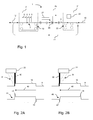
- the inkjet printing system 1 is shown to include a print process unit 2, a sensing unit 21 for identifying deformations in a transported sheet and a control unit 25. Sheets on a supporting surface 8 of a sheet transportation unit enter the printing system from the right side 10 and leave the system on the left side 12.
- the transport path includes both a simplex path from 10 to 12 and a duplex path 11 for turning around and returning a printed sheet.
- the sensing unit 21 and print process unit 2 are arranged such that both sheets on the simplex path and returning sheets on the duplex path pass sensing unit 21.
- the print process unit 2 comprises four marking devices 3, 4, 5, and 6 each having one or more inkjet printheads for marking a sheet as it passes the print area 7.
- a sheet of a print medium may optionally be arranged on a surface of a temperature controlled transport mechanism 13 in order to have a controlled print environment for the sheet.
- the heaters e.g. radiation heaters, and/or cooling means, such as a cold blast, that are used to control and maintain the temperature in a predetermined range, are not shown in Fig. 1 .
- a sheet is conveyed in substantially the same manner by the conveyor 23 as a sheet is later transported during printing in the print area 7 by the transport mechanism 13 in order to maintain a high productivity of the printing system and to obtain an accurate and reliable measurement.
- Both the transport mechanism 13 and the conveyor 23 include a belt transport device with vacuum sheet-holding pressure.
- the measurement data from sensing device 22 are sent to the data processor 25.
- This processor is configured to execute a method for deriving a sheet height and for making a decision if the sheet that is conveyed is suitable to pass to the print process unit 2. Based on this decision, the data processor 25 transmits a control signal to removal device or ejector device 26 for regulating the transport or conveyance of a sheet either to the print process unit 2 or to a reject tray 27.
- the removal device 26, located between the sensing unit 21 and the print process unit 2 may employ different means for redirecting sheets from the transport path towards the reject tray 27. In this particular embodiment, rollers are used. Using this arrangement, sheet jams within the print process unit may be avoided if the determined sheet height is larger than a gap between the supporting surface of the sheet and a position of the marking devices in the print area 7.
- the sensing device 22 emits a radiation beam 30 and comprises a sensor for receiving reflected radiation in a direction 31.
- This direction is preferably opposed to the transport direction 4, because the measurement signal 41 will show in this configuration an overshoot 42 at the leading edge of the sheet and an undershoot at the trailing edge. It is preferred to have an overshoot at the leading edge, since an excess height at the leading edge of the sheet may cause more problems in the passage of the sheet in the print area, than an excess height at the trailing edge.
- the measurement signal 46 will show an undershoot 47 at the leading edge of the sheet and an overshoot 48 at the trailing edge.
- the undershoot and overshoot may be corrected by processing the deviating values in the measurement data, it is preferred not to completely rely on this correction.
- the measurement signal 41 is shown with discrete points that indicate different moments in time that the sheet passes the radiation beam 30.
- the measurement signal is also discrete by the individual sensor elements that form an array of sensors for measuring a height over a full width of the sheet.
- Measurement value 50 indicates a deviating value of the height measurement that occurs at the leading edge of the sheet.
- the difference 51 may be identified.
- the difference 52 may also be compared to a further threshold.
- the opposing directions of the differences signals a potential deviating value.
- a method as executed by data processor 25 is shown.
- the measurement data from the sensing device 22 are collected in a two-dimensional image, wherein the individual pixels have height values, indicating a measurement of a local elevation.
- the two-dimensional image is slightly larger than a sheet on a supporting surface in order to compare the elevation of the sheet to the elevation of the supporting surface.
- pixels with deviating values are selected according to the criteria as outlined above.
- Step S3 substitutes a deviating value of a selected pixel by a realistic value, which is either a value of a neighbour pixel or a value obtained by extrapolation of non-selected pixels.
- step S4 the sheet height is determined by taking a maximum value of all pixels in the image.
- a decision whether or not to send a control signal to the ejector device is derived from a comparison between the sheet height and a predetermined limit, based on a print gap in the print area.
Landscapes
- Engineering & Computer Science (AREA)
- Multimedia (AREA)
- Signal Processing (AREA)
- Physics & Mathematics (AREA)
- General Physics & Mathematics (AREA)
- General Engineering & Computer Science (AREA)
- Theoretical Computer Science (AREA)
- Controlling Sheets Or Webs (AREA)
- Length Measuring Devices By Optical Means (AREA)
Abstract
Description
- The present invention relates to methods for determining a sheet height in a sheet transportation unit, in particular in order to separate sheets that extend beyond a predefined height from other sheets not extending beyond that height. The invention also relates to a printing system that includes a sheet transportation unit and an optical sensor for determining a sheet height.
- In a known print process, a sheet of a medium, such as paper, is separated from a stack and conveyed by a sheet transportation unit towards a print process unit for having applied marking material, such as ink, on a side of the sheet directed to the print process unit, while the sheet passes the print process unit. The distance between the print process unit and the sheet, also known as the print gap, is usually kept small, in the order of 1 to 2 mm, for achieving a high print quality. Because of this small distance, elements of the print process unit, such as print heads, are easily touched by a sheet that passes these elements, particularly if the sheet may have defects that extend above a regular, nominal height over a supporting surface of the sheet transportation unit. Since these touches may lead to degradation of the achieved print quality, to faults in the print process unit, such as nozzle failure in the case of inkjet printing, or even to sheet jams that block the transportation path for further sheets, it is needed to prevent any contact between the print process unit and the moving sheet.
- A possible solution for preventing a contact between a sheet and a print process unit is to determine a sheet height of a sheet before it comes to the print process unit and to eliminate from the transportation unit sheets that have a sheet height above a predetermined height limit. A sheet height may be determined by optical means, such as an optical sensor that applies electromagnetic radiation and an optical triangulation technique to determine a spatial location of sheet surface points from data derived from the projected and reflected radiation. The height of the sheet surface points are collected in a two-dimensional raster image, wherein a pixel is associated with a part of the scanned surface and a pixel value represents a local height of the sheet, as sampled by the optical sensor.
- However, a problem exists in deriving a criterion for rejecting a sheet to proceed to the print process unit. A limit may be set for a height value that occurs for any pixel in the height image. If this limit is too high, sheets may pass that give problems with the print process unit. These sheets are called false positives. If a limit is set too low, too many sheets will be discarded, that would not have given any problem if allowed to pass towards a process unit, thereby unnecessarily lowering the productivity of a printing system. These sheets are also known as false negatives. At the same time, the height value of every pixel has to be reliable. A height value of a pixel corresponds to a height of a part of the sheet as measured by an optical sensor using a radiation spot size and a predetermined size of a detection element. It has experimentally been found that a deviating height value arises for a part of the sheet that is not sufficiently flat with respect to the optical sensor. These parts thereby have an uncontrolled influence on the sheet height determination. In particular, deviating height values occur at the sheet edges, where pixels are partly associated with a sheet surface part at the sheet edge and partly with a supporting surface of the sheet transportation unit, since these pixels overlap an edge of the medium sheet.
- It is an object of the present invention to handle deviating height values and their influence on the sheet height determination.
- According to the present invention, a method is provided for determining a sheet height of a sheet conveyed by a sheet transportation unit using an optical sensor that senses the surface geometry of the sheet, resulting in a two-dimensional height image of the sheet, having pixels that have a value representing a local height of the sheet, comprising the steps of: a) selecting pixels from the height image that have a deviating value; b) substituting the deviating value of a selected pixel by a realistic value that is derived from not selected pixels ; and c) determining a sheet height by finding a maximum value from the values of the not selected pixels and the substituted values. The processing of the height image in the indicated way improves the reliability of the sheet height measurement in a way that a limit may be determined for allowing a sheet to continue its transportation path, without false positives, which would result in problems downstream, or false negatives, which would unnecessarily lower a productivity.
- In a specific embodiment, a pixel is selected for having a deviating value if a first difference between the pixel value and a nearest neighbour pixel value exceeds a predetermined threshold. A nearest neighbour pixel is one of four pixels directly adjoining a pixel. It has been found that a large difference between a pixel value and a nearest neighbour pixel value indicates a pixel having a deviating height value and thus relating to a part of the sheet that is not sufficiently flat or otherwise not expedient for height measurement.
- In a further embodiment, a pixel is selected for having a deviating value if, in addition to the first difference, a difference between the pixel value and a further nearest neighbour pixel value also exceeds a predetermined threshold and is opposite to the first difference. Depending on a direction in the height image relative to the transport direction of the sheet, deviating values tend to arise around leading and trailing edges of the sheet, having two opposite gradients with neighbouring pixels. Since these pixel values hamper the determination of a sheet height, they are to be selected for substitution.
- In a further embodiment, the realistic value is derived from the nearest neighbour values by selecting one of the nearest neighbour values. By substituting a selected pixel value by a nearest neighbour value, a sheet height does not depend on the deviating value, but on the more reliable neighbour value. This procedure comes down to ignoring the deviating value altogether, because the sheet height would be determined using the neighbour value anyway.
- In a another embodiment, the realistic value is derived from the nearest neighbour values by extrapolating a number of values of pixels in a line pointing to the selected pixel. An extrapolation yields a better estimation of a local height value, thus enhancing the reliability of a determined sheet height from the maximum values, but this procedure may involve additional processing resources.
- In a further embodiment, a light beam is applied perpendicular to a sheet surface and the optical sensor is directed in a direction opposite to a transport direction of the sheet. This configuration is beneficial for obtaining overestimated deviating values around the leading edge of the sheet. Since sheet deformations occurring around the leading edge are the most disturbing ones with respect to sheet passage, an underestimation of the local height is certainly to be avoided. Still, overestimated deviating values may lead to false negatives. Therefore, the reliability of the sheet transportation is enhanced by combining the indicated configuration with the presently invented method.
- The present invention may also be embodied in a print system that comprises a sheet transportation unit for conveying a sheet to a print process unit, an optical sensor for sensing a surface geometry and a control unit configured to determine a sheet height from a two-dimensional height image of the sheet by the steps of selecting from the height image pixels that have a deviating value, substituting the deviating value of a selected pixel by a realistic value that is derived from not selected pixels, and determining a sheet height by finding a maximum value from the values of the not selected pixels and the substituted values.
- In a further embodiment, the printing system comprises a sheet expelling unit that expels a sheet from the transportation unit before the sheet arrives at the print process unit if the determined sheet height exceeds a predetermined threshold. Since the sheet height is more reliably determined by the control unit, the productivity of the print system is not unnecessarily lowered.
- Further scope of applicability of the present invention will become apparent from the detailed description given hereinafter. However, it should be understood that the detailed description and specific examples, while indicating preferred embodiments of the invention, are given by way of illustration only, since various changes and modifications within the scope of the invention will become apparent to those skilled in the art from this detailed description.
- The present invention will become more fully understood from the detailed description given hereinbelow and the accompanying drawings which are given by way of illustration only, and thus are not limitative of the present invention. In these drawings:
- Figure 1
- is a schematic side view of a printing system with a sheet height determination according to an embodiment of the present invention;
- Figure 2A
- is a preferred configuration for determining a sheet height;
- Figure 2B
- is an alternative configuration for determining a sheet height;
- Figure 3
- is a visualisation of a deviating height value of a selected pixel; and
- Figure 4
- is a flow diagram for determining a sheet height.
- The present invention will now be described with reference to the accompanying drawings, wherein the same or similar elements are identified with the same reference numeral.
- With reference to
Fig. 1 of the drawings, the inkjet printing system 1 according to the preferred embodiment of the invention is shown to include aprint process unit 2, asensing unit 21 for identifying deformations in a transported sheet and acontrol unit 25. Sheets on a supportingsurface 8 of a sheet transportation unit enter the printing system from theright side 10 and leave the system on theleft side 12. The transport path includes both a simplex path from 10 to 12 and aduplex path 11 for turning around and returning a printed sheet. Thesensing unit 21 andprint process unit 2 are arranged such that both sheets on the simplex path and returning sheets on the duplex path pass sensingunit 21. Theprint process unit 2 comprises four markingdevices transport mechanism 13 in order to have a controlled print environment for the sheet. The heaters, e.g. radiation heaters, and/or cooling means, such as a cold blast, that are used to control and maintain the temperature in a predetermined range, are not shown inFig. 1 . - A
sensor device 22 in the form of an optical sensor, such as a laser scanner, is provided within thesensing unit 21 for sensing the surface geometry or topology of the sheets that are transported on a first or a second pass along the transport path from 10 to 12. During a measurement by the sensor device, a sheet is conveyed in substantially the same manner by theconveyor 23 as a sheet is later transported during printing in the print area 7 by thetransport mechanism 13 in order to maintain a high productivity of the printing system and to obtain an accurate and reliable measurement. Both thetransport mechanism 13 and theconveyor 23 include a belt transport device with vacuum sheet-holding pressure. - The measurement data from sensing
device 22 are sent to thedata processor 25. This processor is configured to execute a method for deriving a sheet height and for making a decision if the sheet that is conveyed is suitable to pass to theprint process unit 2. Based on this decision, thedata processor 25 transmits a control signal to removal device orejector device 26 for regulating the transport or conveyance of a sheet either to theprint process unit 2 or to areject tray 27. Theremoval device 26, located between the sensingunit 21 and theprint process unit 2, may employ different means for redirecting sheets from the transport path towards thereject tray 27. In this particular embodiment, rollers are used. Using this arrangement, sheet jams within the print process unit may be avoided if the determined sheet height is larger than a gap between the supporting surface of the sheet and a position of the marking devices in the print area 7. - Referring to
Fig. 2A , a preferred configuration of thesensing device 22 with respect to thesheet 18 on the supportingsurface 8 and itstransport direction 40 is shown. The sensing device emits aradiation beam 30 and comprises a sensor for receiving reflected radiation in adirection 31. This direction is preferably opposed to thetransport direction 4, because themeasurement signal 41 will show in this configuration anovershoot 42 at the leading edge of the sheet and an undershoot at the trailing edge. It is preferred to have an overshoot at the leading edge, since an excess height at the leading edge of the sheet may cause more problems in the passage of the sheet in the print area, than an excess height at the trailing edge. In contrast, in a configuration as shown inFig. 2B , where the reflected radiation is measured in a same direction as the transport direction of a sheet, themeasurement signal 46, will show anundershoot 47 at the leading edge of the sheet and anovershoot 48 at the trailing edge. Although the undershoot and overshoot may be corrected by processing the deviating values in the measurement data, it is preferred not to completely rely on this correction. - Referring to
Fig. 3 , themeasurement signal 41 is shown with discrete points that indicate different moments in time that the sheet passes theradiation beam 30. In a direction perpendicular to the transport direction, the measurement signal is also discrete by the individual sensor elements that form an array of sensors for measuring a height over a full width of the sheet.Measurement value 50 indicates a deviating value of the height measurement that occurs at the leading edge of the sheet. By comparing thedifference 51 to a predetermined threshold value, the deviating value may be identified. Optionally thedifference 52 may also be compared to a further threshold. In particular, the opposing directions of the differences signals a potential deviating value. - In
Fig. 4 , a method as executed bydata processor 25 is shown. In a first step S1, the measurement data from thesensing device 22 are collected in a two-dimensional image, wherein the individual pixels have height values, indicating a measurement of a local elevation. The two-dimensional image is slightly larger than a sheet on a supporting surface in order to compare the elevation of the sheet to the elevation of the supporting surface. In step S2, pixels with deviating values are selected according to the criteria as outlined above. Step S3 substitutes a deviating value of a selected pixel by a realistic value, which is either a value of a neighbour pixel or a value obtained by extrapolation of non-selected pixels. In step S4, the sheet height is determined by taking a maximum value of all pixels in the image. A decision whether or not to send a control signal to the ejector device is derived from a comparison between the sheet height and a predetermined limit, based on a print gap in the print area. - The invention being thus described, it will be obvious that the same may be varied in many ways. Such variations are not to be regarded as a departure from the spirit and scope of the invention, and all such modifications as would be obvious to one skilled in the art are intended to be included within the scope of the following claims.
Claims (8)
- A method for determining a sheet height of a sheet conveyed by a sheet transportation unit using an optical sensor that senses the surface geometry of the sheet, resulting in a two-dimensional height image of the sheet, having pixels that have a value representing a local height of the sheet, comprising the steps of:a) selecting pixels from the height image that have a deviating value;b) substituting the deviating value of a selected pixel by a realistic value that is derived from not selected pixels ; andc) determining a sheet height by finding a maximum value from the values of the not selected pixels and the substituted values.
- The method according to claim 1, wherein a pixel is selected for having a deviating value if a first difference between the pixel value and a nearest neighbour pixel value exceeds a predetermined threshold.
- The method according to claim 2, wherein a pixel is selected for having a deviating value if a difference between the pixel and a further nearest neighbour also exceeds a predetermined threshold and is opposite to the first difference.
- The method according to claim 1, wherein the realistic value is derived from the nearest neighbour values by selecting one of the nearest neighbour values.
- The method according to claim 1, wherein the realistic value is derived from the nearest neighbour values by extrapolating a number of values of pixels in a line pointing to the selected pixel.
- The method according to claim 1, wherein a light beam is applied perpendicular to a sheet surface and the optical sensor is directed in a direction opposite to a transport direction of the sheet.
- A printing system that comprises a sheet transportation unit for conveying a sheet to a print process unit, an optical sensor for sensing a surface geometry and a control unit configured to determine a sheet height from a two-dimensional height image of the sheet by the steps of selecting from the height image pixels that have a deviating value; substituting the deviating value of a selected pixel by a realistic value that is derived from not selected pixels ; and determining a sheet height by finding a maximum value from the values of the not selected pixels and the substituted values.
- A printing system according to claim 7, wherein a sheet expelling unit is comprised that expels a sheet from the transportation unit before the sheet arrives at the print process unit if the determined sheet height exceeds a predetermined threshold.
Priority Applications (1)
| Application Number | Priority Date | Filing Date | Title |
|---|---|---|---|
| EP15196139.8A EP3028862B1 (en) | 2014-12-01 | 2015-11-24 | A method for determining a sheet height |
Applications Claiming Priority (2)
| Application Number | Priority Date | Filing Date | Title |
|---|---|---|---|
| EP14195628 | 2014-12-01 | ||
| EP15196139.8A EP3028862B1 (en) | 2014-12-01 | 2015-11-24 | A method for determining a sheet height |
Publications (2)
| Publication Number | Publication Date |
|---|---|
| EP3028862A1 true EP3028862A1 (en) | 2016-06-08 |
| EP3028862B1 EP3028862B1 (en) | 2017-09-27 |
Family
ID=52102431
Family Applications (1)
| Application Number | Title | Priority Date | Filing Date |
|---|---|---|---|
| EP15196139.8A Active EP3028862B1 (en) | 2014-12-01 | 2015-11-24 | A method for determining a sheet height |
Country Status (2)
| Country | Link |
|---|---|
| US (1) | US9600748B2 (en) |
| EP (1) | EP3028862B1 (en) |
Cited By (2)
| Publication number | Priority date | Publication date | Assignee | Title |
|---|---|---|---|---|
| CN109218556A (en) * | 2017-06-30 | 2019-01-15 | 佳能株式会社 | Carry out image processing apparatus, drawing modification method and the storage medium of drawing modification |
| TWI859237B (en) * | 2019-05-27 | 2024-10-21 | 日商住友化學股份有限公司 | Optical film warpage measuring method and measuring device |
Families Citing this family (1)
| Publication number | Priority date | Publication date | Assignee | Title |
|---|---|---|---|---|
| US11235607B2 (en) * | 2019-07-31 | 2022-02-01 | Ricoh Company, Ltd. | Abnormality detecting device, abnormality detecting method, computer program product, and image forming device |
Citations (4)
| Publication number | Priority date | Publication date | Assignee | Title |
|---|---|---|---|---|
| US20050280687A1 (en) * | 2004-06-08 | 2005-12-22 | Canon Kabushiki Kaisha | Sheet-type detection device |
| US20110279507A1 (en) * | 2010-05-11 | 2011-11-17 | Xerox Corporation | Media Handling Device For A Printer |
| US20120243928A1 (en) * | 2011-03-23 | 2012-09-27 | Xerox Corporation | Identifying edges of web media using textural contrast between web media and backer roll |
| US20140192368A1 (en) * | 2013-01-07 | 2014-07-10 | Seiko Epson Corporation | Recording medium determination apparatus and recording medium determination method |
Family Cites Families (4)
| Publication number | Priority date | Publication date | Assignee | Title |
|---|---|---|---|---|
| DE19643018B4 (en) * | 1996-10-18 | 2010-06-17 | Isra Surface Vision Gmbh | Method and device for measuring the course of reflective surfaces |
| US6975410B1 (en) * | 2002-04-15 | 2005-12-13 | Sturgill Dennis T | Measuring device |
| US8305641B2 (en) * | 2008-03-24 | 2012-11-06 | Brother Kogyo Kabushiki Kaisha | Image-processing system |
| US9605950B2 (en) * | 2013-05-22 | 2017-03-28 | Cognex Corporation | System and method for efficient surface measurement using a laser displacement sensor |
-
2015
- 2015-11-24 EP EP15196139.8A patent/EP3028862B1/en active Active
- 2015-11-30 US US14/954,414 patent/US9600748B2/en active Active
Patent Citations (4)
| Publication number | Priority date | Publication date | Assignee | Title |
|---|---|---|---|---|
| US20050280687A1 (en) * | 2004-06-08 | 2005-12-22 | Canon Kabushiki Kaisha | Sheet-type detection device |
| US20110279507A1 (en) * | 2010-05-11 | 2011-11-17 | Xerox Corporation | Media Handling Device For A Printer |
| US20120243928A1 (en) * | 2011-03-23 | 2012-09-27 | Xerox Corporation | Identifying edges of web media using textural contrast between web media and backer roll |
| US20140192368A1 (en) * | 2013-01-07 | 2014-07-10 | Seiko Epson Corporation | Recording medium determination apparatus and recording medium determination method |
Cited By (3)
| Publication number | Priority date | Publication date | Assignee | Title |
|---|---|---|---|---|
| CN109218556A (en) * | 2017-06-30 | 2019-01-15 | 佳能株式会社 | Carry out image processing apparatus, drawing modification method and the storage medium of drawing modification |
| CN109218556B (en) * | 2017-06-30 | 2021-01-12 | 佳能株式会社 | Image processing apparatus, rendering processing method, and storage medium for performing rendering processing |
| TWI859237B (en) * | 2019-05-27 | 2024-10-21 | 日商住友化學股份有限公司 | Optical film warpage measuring method and measuring device |
Also Published As
| Publication number | Publication date |
|---|---|
| US20160155029A1 (en) | 2016-06-02 |
| EP3028862B1 (en) | 2017-09-27 |
| US9600748B2 (en) | 2017-03-21 |
Similar Documents
| Publication | Publication Date | Title |
|---|---|---|
| US8842330B1 (en) | Method to determine an alignment errors in image data and performing in-track alignment errors correction using test pattern | |
| US8842331B1 (en) | Multi-print head printer for detecting alignment errors and aligning image data reducing swath boundaries | |
| US20200089151A1 (en) | Image Forming Apparatus | |
| US9272546B2 (en) | Sheet feeding apparatus | |
| US10800193B2 (en) | Nozzle operating situation checking method for inkjet printing apparatus, an inkjet printing apparatus, and a program thereof | |
| US9162496B2 (en) | Printing method and printing apparatus | |
| US20210304384A1 (en) | Image processing apparatus, image processing method, and storage medium | |
| EP3028862B1 (en) | A method for determining a sheet height | |
| JP4033233B1 (en) | End position determination apparatus and image forming apparatus | |
| US20160145063A1 (en) | Sheet diverting unit | |
| US10486422B2 (en) | Printer and control method | |
| EP3691238A3 (en) | Image forming apparatus with multi-sensor array gap error compensation | |
| US20220021779A1 (en) | Image processing apparatus, control method, and storage medium | |
| JP2015198390A (en) | Image reading apparatus and image forming apparatus | |
| US9815313B2 (en) | Method of determining whether or not to perform decoloring process, and decoloring device | |
| JP7221185B2 (en) | Printing device and printing method | |
| US9085169B2 (en) | Inkjet printing apparatus and method of correcting step shift thereof | |
| US11225092B2 (en) | Liquid ejection apparatus and liquid ejection method | |
| US11235607B2 (en) | Abnormality detecting device, abnormality detecting method, computer program product, and image forming device | |
| JP5255891B2 (en) | Image reading device | |
| JP7358951B2 (en) | Information processing device, control method for information processing device, program, and image forming system | |
| US11243723B2 (en) | Digital representation | |
| JP6768451B2 (en) | Equipment, methods and programs | |
| US20250115043A1 (en) | Printing methods using paper scaling factors | |
| US7140708B2 (en) | Method of edge-to-edge imaging with an imaging apparatus |
Legal Events
| Date | Code | Title | Description |
|---|---|---|---|
| PUAI | Public reference made under article 153(3) epc to a published international application that has entered the european phase |
Free format text: ORIGINAL CODE: 0009012 |
|
| AK | Designated contracting states |
Kind code of ref document: A1 Designated state(s): AL AT BE BG CH CY CZ DE DK EE ES FI FR GB GR HR HU IE IS IT LI LT LU LV MC MK MT NL NO PL PT RO RS SE SI SK SM TR |
|
| AX | Request for extension of the european patent |
Extension state: BA ME |
|
| STAA | Information on the status of an ep patent application or granted ep patent |
Free format text: STATUS: REQUEST FOR EXAMINATION WAS MADE |
|
| 17P | Request for examination filed |
Effective date: 20161208 |
|
| RBV | Designated contracting states (corrected) |
Designated state(s): AL AT BE BG CH CY CZ DE DK EE ES FI FR GB GR HR HU IE IS IT LI LT LU LV MC MK MT NL NO PL PT RO RS SE SI SK SM TR |
|
| GRAP | Despatch of communication of intention to grant a patent |
Free format text: ORIGINAL CODE: EPIDOSNIGR1 |
|
| STAA | Information on the status of an ep patent application or granted ep patent |
Free format text: STATUS: GRANT OF PATENT IS INTENDED |
|
| RIC1 | Information provided on ipc code assigned before grant |
Ipc: G01B 11/06 20060101ALI20170331BHEP Ipc: B65H 43/08 20060101ALI20170331BHEP Ipc: B41J 11/00 20060101AFI20170331BHEP Ipc: G06K 15/02 20060101ALI20170331BHEP Ipc: H04N 1/00 20060101ALI20170331BHEP |
|
| INTG | Intention to grant announced |
Effective date: 20170420 |
|
| GRAS | Grant fee paid |
Free format text: ORIGINAL CODE: EPIDOSNIGR3 |
|
| GRAA | (expected) grant |
Free format text: ORIGINAL CODE: 0009210 |
|
| STAA | Information on the status of an ep patent application or granted ep patent |
Free format text: STATUS: THE PATENT HAS BEEN GRANTED |
|
| AK | Designated contracting states |
Kind code of ref document: B1 Designated state(s): AL AT BE BG CH CY CZ DE DK EE ES FI FR GB GR HR HU IE IS IT LI LT LU LV MC MK MT NL NO PL PT RO RS SE SI SK SM TR |
|
| REG | Reference to a national code |
Ref country code: GB Ref legal event code: FG4D |
|
| REG | Reference to a national code |
Ref country code: CH Ref legal event code: EP |
|
| REG | Reference to a national code |
Ref country code: AT Ref legal event code: REF Ref document number: 931604 Country of ref document: AT Kind code of ref document: T Effective date: 20171015 |
|
| REG | Reference to a national code |
Ref country code: IE Ref legal event code: FG4D |
|
| REG | Reference to a national code |
Ref country code: DE Ref legal event code: R096 Ref document number: 602015004991 Country of ref document: DE |
|
| REG | Reference to a national code |
Ref country code: FR Ref legal event code: PLFP Year of fee payment: 3 |
|
| REG | Reference to a national code |
Ref country code: NL Ref legal event code: FP |
|
| PG25 | Lapsed in a contracting state [announced via postgrant information from national office to epo] |
Ref country code: HR Free format text: LAPSE BECAUSE OF FAILURE TO SUBMIT A TRANSLATION OF THE DESCRIPTION OR TO PAY THE FEE WITHIN THE PRESCRIBED TIME-LIMIT Effective date: 20170927 Ref country code: NO Free format text: LAPSE BECAUSE OF FAILURE TO SUBMIT A TRANSLATION OF THE DESCRIPTION OR TO PAY THE FEE WITHIN THE PRESCRIBED TIME-LIMIT Effective date: 20171227 Ref country code: FI Free format text: LAPSE BECAUSE OF FAILURE TO SUBMIT A TRANSLATION OF THE DESCRIPTION OR TO PAY THE FEE WITHIN THE PRESCRIBED TIME-LIMIT Effective date: 20170927 Ref country code: LT Free format text: LAPSE BECAUSE OF FAILURE TO SUBMIT A TRANSLATION OF THE DESCRIPTION OR TO PAY THE FEE WITHIN THE PRESCRIBED TIME-LIMIT Effective date: 20170927 Ref country code: SE Free format text: LAPSE BECAUSE OF FAILURE TO SUBMIT A TRANSLATION OF THE DESCRIPTION OR TO PAY THE FEE WITHIN THE PRESCRIBED TIME-LIMIT Effective date: 20170927 |
|
| REG | Reference to a national code |
Ref country code: LT Ref legal event code: MG4D |
|
| REG | Reference to a national code |
Ref country code: AT Ref legal event code: MK05 Ref document number: 931604 Country of ref document: AT Kind code of ref document: T Effective date: 20170927 |
|
| PG25 | Lapsed in a contracting state [announced via postgrant information from national office to epo] |
Ref country code: GR Free format text: LAPSE BECAUSE OF FAILURE TO SUBMIT A TRANSLATION OF THE DESCRIPTION OR TO PAY THE FEE WITHIN THE PRESCRIBED TIME-LIMIT Effective date: 20171228 Ref country code: BG Free format text: LAPSE BECAUSE OF FAILURE TO SUBMIT A TRANSLATION OF THE DESCRIPTION OR TO PAY THE FEE WITHIN THE PRESCRIBED TIME-LIMIT Effective date: 20171227 Ref country code: RS Free format text: LAPSE BECAUSE OF FAILURE TO SUBMIT A TRANSLATION OF THE DESCRIPTION OR TO PAY THE FEE WITHIN THE PRESCRIBED TIME-LIMIT Effective date: 20170927 Ref country code: LV Free format text: LAPSE BECAUSE OF FAILURE TO SUBMIT A TRANSLATION OF THE DESCRIPTION OR TO PAY THE FEE WITHIN THE PRESCRIBED TIME-LIMIT Effective date: 20170927 |
|
| PG25 | Lapsed in a contracting state [announced via postgrant information from national office to epo] |
Ref country code: RO Free format text: LAPSE BECAUSE OF FAILURE TO SUBMIT A TRANSLATION OF THE DESCRIPTION OR TO PAY THE FEE WITHIN THE PRESCRIBED TIME-LIMIT Effective date: 20170927 Ref country code: CZ Free format text: LAPSE BECAUSE OF FAILURE TO SUBMIT A TRANSLATION OF THE DESCRIPTION OR TO PAY THE FEE WITHIN THE PRESCRIBED TIME-LIMIT Effective date: 20170927 Ref country code: ES Free format text: LAPSE BECAUSE OF FAILURE TO SUBMIT A TRANSLATION OF THE DESCRIPTION OR TO PAY THE FEE WITHIN THE PRESCRIBED TIME-LIMIT Effective date: 20170927 |
|
| PG25 | Lapsed in a contracting state [announced via postgrant information from national office to epo] |
Ref country code: IT Free format text: LAPSE BECAUSE OF FAILURE TO SUBMIT A TRANSLATION OF THE DESCRIPTION OR TO PAY THE FEE WITHIN THE PRESCRIBED TIME-LIMIT Effective date: 20170927 Ref country code: EE Free format text: LAPSE BECAUSE OF FAILURE TO SUBMIT A TRANSLATION OF THE DESCRIPTION OR TO PAY THE FEE WITHIN THE PRESCRIBED TIME-LIMIT Effective date: 20170927 Ref country code: SM Free format text: LAPSE BECAUSE OF FAILURE TO SUBMIT A TRANSLATION OF THE DESCRIPTION OR TO PAY THE FEE WITHIN THE PRESCRIBED TIME-LIMIT Effective date: 20170927 Ref country code: SK Free format text: LAPSE BECAUSE OF FAILURE TO SUBMIT A TRANSLATION OF THE DESCRIPTION OR TO PAY THE FEE WITHIN THE PRESCRIBED TIME-LIMIT Effective date: 20170927 Ref country code: AT Free format text: LAPSE BECAUSE OF FAILURE TO SUBMIT A TRANSLATION OF THE DESCRIPTION OR TO PAY THE FEE WITHIN THE PRESCRIBED TIME-LIMIT Effective date: 20170927 Ref country code: IS Free format text: LAPSE BECAUSE OF FAILURE TO SUBMIT A TRANSLATION OF THE DESCRIPTION OR TO PAY THE FEE WITHIN THE PRESCRIBED TIME-LIMIT Effective date: 20180127 |
|
| REG | Reference to a national code |
Ref country code: DE Ref legal event code: R097 Ref document number: 602015004991 Country of ref document: DE |
|
| PG25 | Lapsed in a contracting state [announced via postgrant information from national office to epo] |
Ref country code: MC Free format text: LAPSE BECAUSE OF FAILURE TO SUBMIT A TRANSLATION OF THE DESCRIPTION OR TO PAY THE FEE WITHIN THE PRESCRIBED TIME-LIMIT Effective date: 20170927 |
|
| PG25 | Lapsed in a contracting state [announced via postgrant information from national office to epo] |
Ref country code: DK Free format text: LAPSE BECAUSE OF FAILURE TO SUBMIT A TRANSLATION OF THE DESCRIPTION OR TO PAY THE FEE WITHIN THE PRESCRIBED TIME-LIMIT Effective date: 20170927 |
|
| PLBE | No opposition filed within time limit |
Free format text: ORIGINAL CODE: 0009261 |
|
| STAA | Information on the status of an ep patent application or granted ep patent |
Free format text: STATUS: NO OPPOSITION FILED WITHIN TIME LIMIT |
|
| PG25 | Lapsed in a contracting state [announced via postgrant information from national office to epo] |
Ref country code: PL Free format text: LAPSE BECAUSE OF FAILURE TO SUBMIT A TRANSLATION OF THE DESCRIPTION OR TO PAY THE FEE WITHIN THE PRESCRIBED TIME-LIMIT Effective date: 20170927 Ref country code: LU Free format text: LAPSE BECAUSE OF NON-PAYMENT OF DUE FEES Effective date: 20171124 |
|
| REG | Reference to a national code |
Ref country code: BE Ref legal event code: MM Effective date: 20171130 |
|
| 26N | No opposition filed |
Effective date: 20180628 |
|
| REG | Reference to a national code |
Ref country code: IE Ref legal event code: MM4A |
|
| PG25 | Lapsed in a contracting state [announced via postgrant information from national office to epo] |
Ref country code: MT Free format text: LAPSE BECAUSE OF NON-PAYMENT OF DUE FEES Effective date: 20171124 |
|
| PG25 | Lapsed in a contracting state [announced via postgrant information from national office to epo] |
Ref country code: IE Free format text: LAPSE BECAUSE OF NON-PAYMENT OF DUE FEES Effective date: 20171124 |
|
| PG25 | Lapsed in a contracting state [announced via postgrant information from national office to epo] |
Ref country code: SI Free format text: LAPSE BECAUSE OF FAILURE TO SUBMIT A TRANSLATION OF THE DESCRIPTION OR TO PAY THE FEE WITHIN THE PRESCRIBED TIME-LIMIT Effective date: 20170927 Ref country code: BE Free format text: LAPSE BECAUSE OF NON-PAYMENT OF DUE FEES Effective date: 20171130 |
|
| PG25 | Lapsed in a contracting state [announced via postgrant information from national office to epo] |
Ref country code: HU Free format text: LAPSE BECAUSE OF FAILURE TO SUBMIT A TRANSLATION OF THE DESCRIPTION OR TO PAY THE FEE WITHIN THE PRESCRIBED TIME-LIMIT; INVALID AB INITIO Effective date: 20151124 |
|
| REG | Reference to a national code |
Ref country code: CH Ref legal event code: PL |
|
| PG25 | Lapsed in a contracting state [announced via postgrant information from national office to epo] |
Ref country code: CH Free format text: LAPSE BECAUSE OF NON-PAYMENT OF DUE FEES Effective date: 20181130 Ref country code: LI Free format text: LAPSE BECAUSE OF NON-PAYMENT OF DUE FEES Effective date: 20181130 |
|
| PG25 | Lapsed in a contracting state [announced via postgrant information from national office to epo] |
Ref country code: CY Free format text: LAPSE BECAUSE OF FAILURE TO SUBMIT A TRANSLATION OF THE DESCRIPTION OR TO PAY THE FEE WITHIN THE PRESCRIBED TIME-LIMIT Effective date: 20170927 |
|
| PG25 | Lapsed in a contracting state [announced via postgrant information from national office to epo] |
Ref country code: MK Free format text: LAPSE BECAUSE OF FAILURE TO SUBMIT A TRANSLATION OF THE DESCRIPTION OR TO PAY THE FEE WITHIN THE PRESCRIBED TIME-LIMIT Effective date: 20170927 |
|
| PG25 | Lapsed in a contracting state [announced via postgrant information from national office to epo] |
Ref country code: TR Free format text: LAPSE BECAUSE OF FAILURE TO SUBMIT A TRANSLATION OF THE DESCRIPTION OR TO PAY THE FEE WITHIN THE PRESCRIBED TIME-LIMIT Effective date: 20170927 |
|
| PG25 | Lapsed in a contracting state [announced via postgrant information from national office to epo] |
Ref country code: PT Free format text: LAPSE BECAUSE OF FAILURE TO SUBMIT A TRANSLATION OF THE DESCRIPTION OR TO PAY THE FEE WITHIN THE PRESCRIBED TIME-LIMIT Effective date: 20170927 |
|
| PG25 | Lapsed in a contracting state [announced via postgrant information from national office to epo] |
Ref country code: AL Free format text: LAPSE BECAUSE OF FAILURE TO SUBMIT A TRANSLATION OF THE DESCRIPTION OR TO PAY THE FEE WITHIN THE PRESCRIBED TIME-LIMIT Effective date: 20170927 |
|
| PGFP | Annual fee paid to national office [announced via postgrant information from national office to epo] |
Ref country code: NL Payment date: 20241029 Year of fee payment: 10 |
|
| PGFP | Annual fee paid to national office [announced via postgrant information from national office to epo] |
Ref country code: DE Payment date: 20241121 Year of fee payment: 10 |
|
| PGFP | Annual fee paid to national office [announced via postgrant information from national office to epo] |
Ref country code: GB Payment date: 20241120 Year of fee payment: 10 |
|
| PGFP | Annual fee paid to national office [announced via postgrant information from national office to epo] |
Ref country code: FR Payment date: 20241128 Year of fee payment: 10 |