EP3026116A1 - Oligonucleotide sequence for use in pathway engineering - Google Patents
Oligonucleotide sequence for use in pathway engineering Download PDFInfo
- Publication number
- EP3026116A1 EP3026116A1 EP14195026.1A EP14195026A EP3026116A1 EP 3026116 A1 EP3026116 A1 EP 3026116A1 EP 14195026 A EP14195026 A EP 14195026A EP 3026116 A1 EP3026116 A1 EP 3026116A1
- Authority
- EP
- European Patent Office
- Prior art keywords
- seq
- oligonucleotide sequence
- oligonucleotide
- host cell
- rna
- Prior art date
- Legal status (The legal status is an assumption and is not a legal conclusion. Google has not performed a legal analysis and makes no representation as to the accuracy of the status listed.)
- Granted
Links
Images

Classifications
-
- C—CHEMISTRY; METALLURGY
- C12—BIOCHEMISTRY; BEER; SPIRITS; WINE; VINEGAR; MICROBIOLOGY; ENZYMOLOGY; MUTATION OR GENETIC ENGINEERING
- C12N—MICROORGANISMS OR ENZYMES; COMPOSITIONS THEREOF; PROPAGATING, PRESERVING, OR MAINTAINING MICROORGANISMS; MUTATION OR GENETIC ENGINEERING; CULTURE MEDIA
- C12N15/00—Mutation or genetic engineering; DNA or RNA concerning genetic engineering, vectors, e.g. plasmids, or their isolation, preparation or purification; Use of hosts therefor
- C12N15/09—Recombinant DNA-technology
- C12N15/11—DNA or RNA fragments; Modified forms thereof; Non-coding nucleic acids having a biological activity
- C12N15/113—Non-coding nucleic acids modulating the expression of genes, e.g. antisense oligonucleotides; Antisense DNA or RNA; Triplex- forming oligonucleotides; Catalytic nucleic acids, e.g. ribozymes; Nucleic acids used in co-suppression or gene silencing
- C12N15/1137—Non-coding nucleic acids modulating the expression of genes, e.g. antisense oligonucleotides; Antisense DNA or RNA; Triplex- forming oligonucleotides; Catalytic nucleic acids, e.g. ribozymes; Nucleic acids used in co-suppression or gene silencing against enzymes
-
- C—CHEMISTRY; METALLURGY
- C12—BIOCHEMISTRY; BEER; SPIRITS; WINE; VINEGAR; MICROBIOLOGY; ENZYMOLOGY; MUTATION OR GENETIC ENGINEERING
- C12N—MICROORGANISMS OR ENZYMES; COMPOSITIONS THEREOF; PROPAGATING, PRESERVING, OR MAINTAINING MICROORGANISMS; MUTATION OR GENETIC ENGINEERING; CULTURE MEDIA
- C12N15/00—Mutation or genetic engineering; DNA or RNA concerning genetic engineering, vectors, e.g. plasmids, or their isolation, preparation or purification; Use of hosts therefor
- C12N15/09—Recombinant DNA-technology
- C12N15/11—DNA or RNA fragments; Modified forms thereof; Non-coding nucleic acids having a biological activity
- C12N15/113—Non-coding nucleic acids modulating the expression of genes, e.g. antisense oligonucleotides; Antisense DNA or RNA; Triplex- forming oligonucleotides; Catalytic nucleic acids, e.g. ribozymes; Nucleic acids used in co-suppression or gene silencing
-
- C—CHEMISTRY; METALLURGY
- C12—BIOCHEMISTRY; BEER; SPIRITS; WINE; VINEGAR; MICROBIOLOGY; ENZYMOLOGY; MUTATION OR GENETIC ENGINEERING
- C12Y—ENZYMES
- C12Y503/00—Intramolecular oxidoreductases (5.3)
- C12Y503/01—Intramolecular oxidoreductases (5.3) interconverting aldoses and ketoses (5.3.1)
- C12Y503/01005—Xylose isomerase (5.3.1.5)
Definitions
- the present invention comprises a novel artificial oligonucleotide sequence which can initiate the transcription of a gene under various conditions at a high level. Further the invention relates to a recombinant DNA fragment comprising the artificial oligonucleotide sequence, an expression plasmid comprising the recombinant DNA fragment and a host cell transformed with the recombinant DNA fragment.
- yeast S. cerevisiae and S. sensu stricto species are used since thousands of years for the production of bread and alcoholic beverages like sake, wine or beer. Through this long period of industrial usage, yeasts are adapted to the process conditions and can tolerate the mechanical forces in a bioreactor, inhibitory substances and fermentation products. Further they are robust against fluctuations in temperature and can ferment sugars at low pH-value, which minimizes the contamination risk. Besides this, S. cerevisiae is a key laboratory model system and can be easily genetically modified and is generally recognized as safe - GRAS status. A broad genetic tool set is available for S. cerevisiae and many intracellular processes like metabolism, secretion, transport, signaling and other pathways are well studied, which help to successfully engineer the yeast for a wide variety of applications.
- Inducible or de-repressed promoters allow a high level of transcriptional control but they depend on an inducer or defined process conditions. Regulated promoters are limited to the production of toxic proteins or building up pathways with toxic intermediates. Further, most of the promoters of the state of the art are only known to enable the control of the transcription of one specific group of genes.
- the inventors of the present invention have therefore set themselves the task to develop novel and improved promoters which enable a high transcriptional control of a wider variety of genes and which are highly feasible for industrial applications.
- amino acids amino acids, peptides, nucleotides and nucleic acids within the present application follows the suggestions of IUPAC. Generally, amino acids are named within this document according to the one letter code.
- oligonucleotide is to be understood as a single-stranded or double-stranded DNA or RNA molecule comprising from 2 to 1000 nucleic acids, preferably from 10 to 900 nucleic acids, further preferred from 50 to 850 nucleic acids and most preferred from 100 to 820 nucleic acids.
- DNA contains deoxyribose
- RNA contains ribose (in deoxyribose there is no hydroxyl group attached to the pentose ring in the 2' position).
- the complementary base to adenine is not thymine, as it is in DNA, but rather uracil, which is an unmethylated form of thymine.
- the oligonucleotide according to the present invention comprises an nucleic acid sequence having at least 80% sequence identity, preferably at least 82%, further preferred at least 85%, particularly preferred at least 90%, even more preferred at least 92%, also preferred at least 95%, furthermore preferred at least 98% and most preferred at least 99% sequence identity to SEQ ID NO: 1.
- the nucleic acid sequence is selected from the group consisting of SEQ ID NO: 1, SEQ ID NO: 2, SEQ ID NO: 3, SEQ ID NO: 4, SEQ ID NO: 5, SEQ ID NO: 6 and SEQ ID NO: 7.
- the oligonucleotide according to the present invention increases the transcription rate of certain RNA fragments.
- the term "increasing the transcription rate” is thereby to be understood as an increase compared to an oligonucleotide with promoter activity of the state of the art.
- the "increase of the transcription rate” is generally to be determined as follows: RTL I RTL S
- the relative transcript level is measured as the concentration of RNA of the reporter system in a cell extract in relation to the concentration of the RNA of a housekeeping gene in the same cell extract.
- RTL I and RTL S are determined by use of the same type of host cell whereas the host cell is transformed with at least one recombinant DNA fragment comprising the respective oligonucleotide and the host cell is grown under identical state of the art conditions whereas the host cell is harvested within the exponential growth phase.
- the transcription rate is at least 2-fold higher when growing a yeast host cell, preferably S. cerevisiae, transformed with at least one recombinant DNA fragment comprising an oligonucleotide according to the present invention on at least two substrates selected from the group consisting of glucose, mannose, fructose, galactose, xylose, arabinose, sucrose, trehalose, raffinose, glycerol, ethanol, acetate and lactate.
- the increase was determined as follows: RTL I e RTL S e
- the relative transcript level is measured as the concentration of messenger RNA encoding for SEQ ID NO: 17 in a yeast (S . cerevisiae ) cell extract in relation to the concentration of the messenger RNA of the housekeeping gene encoding for actin in the same yeast cell extract.
- RTL Ie and RTL Se are determined by use of the same type of yeast host cell ( S . cerevisiae) whereas the yeast host cell is transformed with at least one recombinant DNA fragment comprising the respective oligonucleotide and the yeast host cell is grown under identical state of the art conditions whereas the yeast host cell is harvested within the exponential growth phase.
- the transcription rate of the gene in a yeast host cell transformed with at least one recombinant DNA fragment comprising the oligonucleotide according to the present invention is increased by at least 2-fold, more preferred at least 4-fold, particularly preferred at least 6-fold and most preferred at least 10-fold when growing the yeast host cell on at least two substrates selected from the group consisting of glucose, mannose, fructose, galactose, xylose, arabinose, sucrose, trehalose, raffinose, glycerol, ethanol, acetate and lactate.
- the transcription rate of the gene in a host cell is increased by at least 2-fold, preferably at least 4-fold, more preferred at least 6-fold, particularly preferred at least 8-fold and most preferred at least 10-fold when growing the host cell on at least two substrates selected from the group consisting of glucose, mannose, fructose, xylose, sucrose glycerol and ethanol.
- the transcription rate of the gene in a host cell is increased by at least 2-fold, preferably at least 4-fold, more preferred at least 6-fold, particularly preferred at least 8-fold and most preferred at least 10-fold when growing the host cell on at least two substrates selected from the group consisting of glucose, mannose, glycerol, ethanol and xylose.
- oligonucleotide increases the enzyme activity of an enzyme encoded by an RNA controlled by the oligonucleotide.
- x-fold higher enzyme activity is thereby to be understood as an increase compared to an oligonucleotide with promoter activity of the state of the art.
- the "x-fold higher enzyme activity” is generally to be determined as follows: EA I EA S
- the enzyme activity is measured as the amount of a substrate converted per minute by defined amount of a cell extract excluding the background activity of the reporter system.
- EA I and EA S are determined by use of the same type of host cell whereas the host cell is transformed with at least one recombinant DNA fragment comprising the respective oligonucleotide and the host cell is grown under identical state of the art conditions whereas the host cell is harvested within the exponential growth phase.
- the enzyme activity is increased by at least 2-fold when growing a yeast host cell, preferably S. cerevisiae, transformed with at least one recombinant DNA fragment comprising an oligonucleotide according to the present invention on at least two substrates selected from the group consisting of glucose, mannose, fructose, galactose, xylose, arabinose, sucrose, trehalose, raffinose, glycerol, ethanol, acetate and lactate.
- a yeast host cell preferably S. cerevisiae
- the enzyme activity is measured as the amount of xylose converted per minute by defined amount of a cell extract excluding the background activity of the reporter system.
- EA Ie and EA Se are determined by use of the same type of host cell ( S . cerevisiae) whereas the host cell is transformed with at least one recombinant DNA fragment comprising the respective oligonucleotide and the host cell is grown under identical state of the art conditions whereas the host cell is harvested within the exponential growth phase.
- the enzyme activity in a yeast host cell transformed with at least one recombinant DNA fragment comprising the oligonucleotide according to the present invention is increased by at least 2-fold, preferably at least 4-fold more preferred at least 6-fold, particularly preferred at least 8-fold and most preferred at least 10-fold when growing the yeast host cell on at least two substrates selected from the group consisting of glucose, mannose, fructose, galactose, xylose, arabinose, sucrose, trehalose, raffinose, glycerol, ethanol, acetate and lactate.
- the enzyme activity in a host cell is increased by at least 2-fold, preferably at least 4-fold, more preferred at least 6-fold, particularly preferred at least 8-fold and most preferred at least 10-fold when growing the host cell on at least two substrates selected from the group consisting of glucose, mannose, fructose, xylose, sucrose, glycerol and ethanol.
- the enzyme activity in a host cell is increased by at least 2-fold, preferably at least 4-fold, more preferred at least 6-fold, particularly preferred at least 8-fold and most preferred at least 10-fold when growing the host cell on at least two substrates selected from the group consisting of glucose, mannose, glycerol, ethanol and xylose.
- rRNA fragment is to be understood as a RNA chain that has the ability to downregulate a gene expression by being complementary to a part of an mRNA or a gene's DNA.
- rRNA fragments are MicroRNAs (miRNA) which act through RNA interference (RNAi), where an effector complex of miRNA and enzymes can cleave complementary mRNA, block the mRNA from being translated, or accelerate its degradation.
- miRNA MicroRNAs
- RNAi RNA interference
- An mRNA may contain regulatory elements itself, such as riboswitches, in the 5' untranslated region or 3' untranslated region; these cis-regulatory elements regulate the activity of that mRNA.
- the untranslated regions can also contain elements that regulate other genes.
- ribozyme ribonucleic acid enzymes
- tRNA fragment transfer RNA fragment
- tRNA fragment is to be understood as a small RNA chain of about 80 nucleotides that has the ability to transfer a specific amino acid to a growing polypeptide chain at the ribosomal site of protein synthesis during translation. It has sites for amino acid attachment and an anticodon region for codon recognition that binds to a specific sequence on the messenger RNA chain through hydrogen bonding.
- mRNA fragment is to be understood as a small RNA chain that has the ability to carry information about a protein sequence to the ribosomes. Every three nucleotides (a codon) correspond to one amino acid.
- pre-mRNA precursor mRNA
- mature mRNA This removes its introns-non-coding sections of the pre-mRNA.
- the mRNA is then exported from the nucleus to the cytoplasm, where it is bound to ribosomes and translated into its corresponding protein form with the help of tRNA.
- mRNA can bind to ribosomes while it is being transcribed from DNA. After a certain amount of time the messenger RNA degrades into its component nucleotides with the assistance of ribonucleases.
- structural proteins refers to proteins which confer stiffness and rigidity to otherwise-fluid biological components.
- Preferred structural proteins are selected from the group consisting of fibrous proteins such as collagen, elastin and keratin; and globular proteins such as actin and tubulin.
- Other proteins that serve structural functions and which are to be understood as “structural proteins” within the present invention are motor proteins such as myosin, kinesin, and dynein, which are capable of generating mechanical forces.
- RNA fragments encoding for a structural protein are selected from the group consisting of actine, elastin, filamine, collagen, myosine, lamine.
- RNA fragments encoding for a coenzyme are selected from the group of RNA fragments encoding for polypeptides which are post-translationally modified. Examples are tryptophan tryptophylquinone (TTQ) and 4-methylidene-imidazole-5-one (MIO).
- TTQ tryptophan tryptophylquinone
- MIO 4-methylidene-imidazole-5-one
- RNA fragments encoding for a transporter are selected from the group of RNA fragments encoding for uniport-, symport- and antiport carriers, proton pumps, ion channels and aquaporines.
- RNA fragments encoding for an antibody are selected from the group of RNA fragments encoding for IgA, IgD, IgE, EgG, IgM, IgY and IgW.
- RNA fragments encoding for a hormone are selected from the group of RNA fragments encoding for small peptide hormones such as TRH and vasopressin; insulin; growth hormone; glycoprotein hormones such as luteinizing hormone, follicle-stimulating hormone and thyroid-stimulating hormone.
- RNA fragments encoding for a regulator are selected from the group of RNA fragments encoding for receptors, transcription factors, metabolic sensors, light sensors, electro sensors, mechanical sensors and signal transducers.
- RNA fragments encoding for an enzyme are selected from the group of RNA fragments encoding for carbohydrate-modifying enzymes.
- carbohydrate-modifying enzyme is to be understood as comprising any enzyme capable of modifying any kind of carbohydrate such as (but not limited to) carbohydrate-cleaving, carbohydrate-oxidizing, carbohydrate-reducing, carbohydrate-decarboxylating, carbohydrate-deacetylating, carbohydrate-acetylating, carbohydrate-methylating, carbohydrate-demethylating, carbohydrate-aminating, carbohydrate-phosphorylating, carbohydrate-dephosphorylating, carbohydrate-isomerizating, carbohydrate-epimerizating and carbohydrate-deaminating enzymes.
- the carbohydrate-modifying enzyme is selected from the group consisting of the classes EC 5.1.3, EC 5.3.1, EC 2.7.1, EC 2.2.1, EC 2.2.1 and EC 1.1.1, preferably selected from the group consisting of EC 5.1.3.3, EC 5.3.1.5, EC 2.7.1.17, EC 2.2.1.2, EC 2.2.1.1 and EC 1.1.1.1.
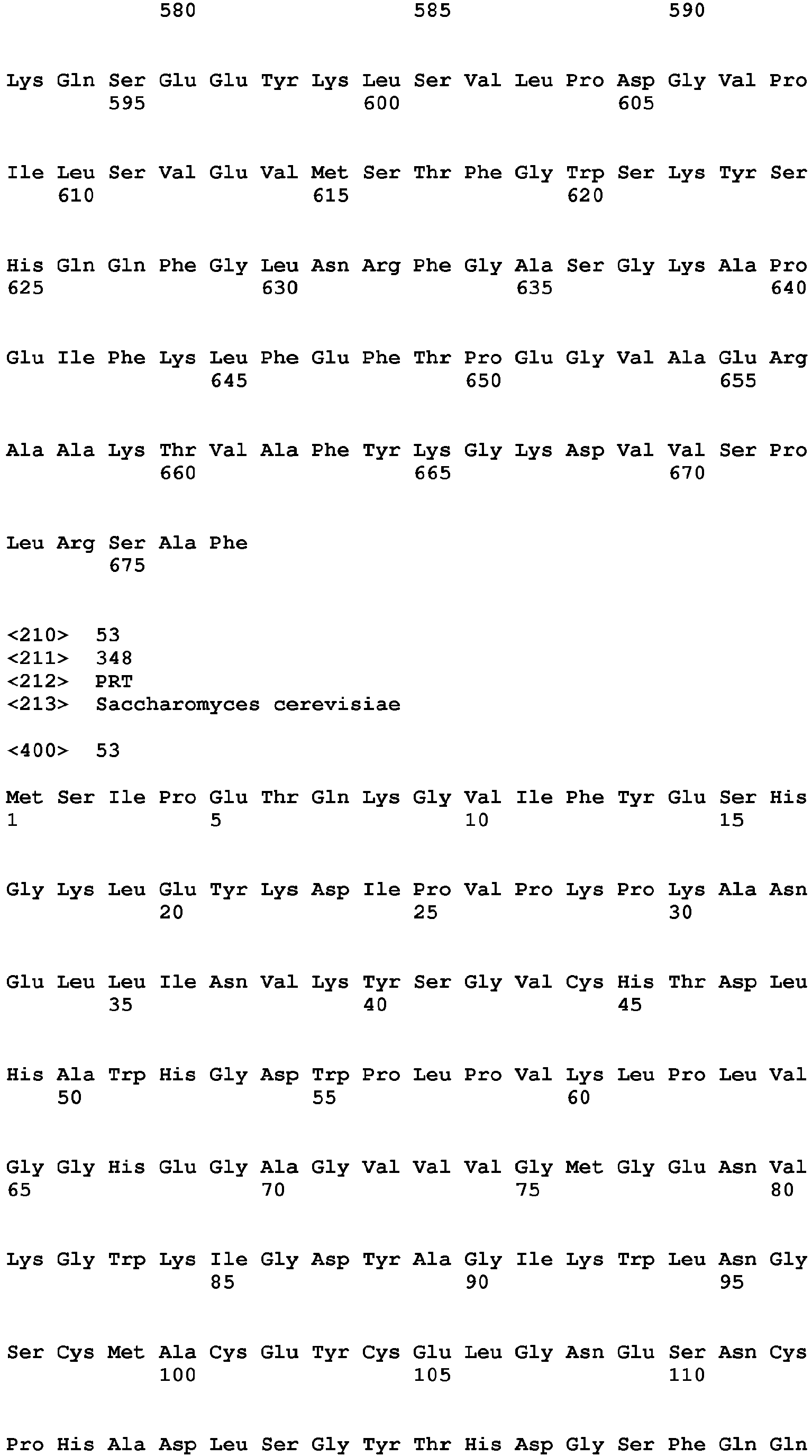
- the protein is selected from the group consisting of SEQ ID NOs 11 to 53.
- nucleotides of the oligonucleotide of the present invention are “mutated”.
- the term “mutated” is to be understood as “substituted”, “deleted” or “inserted”.
- the term “mutation” is to be understood as “substitution”, “deletion” or “insertion”. Substitutions are classified as transitions where a purine is exchanged by a purine (A ⁇ -> G) or a pyrimidine by a pyrimidine (C ⁇ ->T) or transversions where a purine is exchanged by a pyridine and vice versa (C/T ⁇ -> A/G). Insertions add one or more additional nucleotides (A, C, T or G) into an oligonucleotide. The removal of one or more nucleotides from the DNA is called deletion.
- the present invention provides a recombinant DNA fragment comprising the oligonucleotide according to the present invention.
- Particularly preferred recombinant DNA fragments according to the present invention comprise an oligonucleotide selected from the group consisting of SEQ ID NO: 1, SEQ ID NO: 2, SEQ ID NO: 3, SEQ ID NO: 4, SEQ ID NO: 5, SEQ ID NO: 6 and SEQ ID NO: 7 and a RNA fragment encoding for a protein selected from the group consisting of enzymes, structural proteins, coenzymes, transporters, antibodies, hormones and regulators.
- the protein is an enzyme and the enzyme is selected from the group consisting of the classes EC 5.1.3, EC 5.3.1, EC 2.7.1, EC 2.2.1, EC 2.2.1 and EC 1.1.1, preferably selected from the group consisting of EC 5.1.3.3, EC 5.3.1.5, EC 2.7.1.17, EC 2.2.1.2, EC 2.2.1.1 and EC 1.1.1.1.
- RNA fragments comprise an oligonucleotide selected from the group consisting of SEQ ID NO: 1, SEQ ID NO: 2, SEQ ID NO: 3, SEQ ID NO: 4, SEQ ID NO: 5, SEQ ID NO: 6 and SEQ ID NO: 7 and a RNA fragment selected from the group consisting of SEQ ID NOs 11 to 53.
- the present invention provides an expression plasmid comprising at least one recombinant DNA fragment according to the present invention.
- the present invention further provides a host cell transformed with at least one recombinant DNA fragment comprising the oligonucleotide according to the present invention.
- the host cell according to the present invention is preferably used for pathway engineering or for metabolic transformation of xylose containing substrates to preferred metabolites.
- the recombinant host cell according to the present invention is preferably selected from bacteria, yeast, or fungal cells.
- the host cell is selected from the group consisting of Escherichia, Klebsiella, Pseudomonas, Lactobacillus, Bacillus, Streptomyces; Saccharomyces, Kluyveromyces, Schizosaccharomyces, Candida, Yarrowia, Komagataella, Pichia, Hansenula, Penicillium, Trichoderma, Hypocrea, Aspergillus, Cantharellu, Agraicus, Boletos, Pleurotus, Trametes, Phanerochaete, Myceliophthora. Chaetomium, Humicola, Chrysosporium, Talaromyces and Neurospora.
- the host cell from the group consisting of Lactococcus lactis, Lactobacillus brevis, Bacillus subtilis, Bacillus megaterium, Bacillus lentus, Bacillus amyloliquefaciens, Bacillus licheniformis, Pseudomonas fluorescence, Klebsiella planticola, Escherichia coli, Streptomyces lividans, Saccharomyces cerevisiae, Saccharomyces bayanus, Saccharomyces uravum, Saccharomyces pastorianus, Saccharomyces kudriavzevii, Saccharomyces mikatae, Saccharomyces carlsbergensis, Schizosaccharomyces pombe, Kluyveromyces marxianus, Yarrowina lipolytica, Hansenula polymorpha, Pichia angusta, Komagataella pastoris, Pichia pastoris, As
- the recombinant host cell according to the present invention may comprise one or more plasmids according to the present invention.
- Example 1 growth study-selection of a screening strain
- Table 1 list of tested host cells counter name origin strain A Ethanol Red ® (Batch 897/1 production date 01.05.08) Fermentis, France strain B Simi White TM (Lot: 02905340230601V) Lallemand, Canada strain C Rhone 2226 TM (Lot: 025556551030Y9) strain D CBS 7764 Centraalbureau voor Schimmelcultures (Institute of the Royal Netherlands Academy of Arts and Sciences- KNAW), Netherland Strain E CBS 6413
- the plasmid was constructed by recombination cloning in S.cerevisiae: A yeast cell was transformed with PCR products offered 45 bp overlap to each other. The fragments were yeast Marker (pUG6 87 to 1559 bp), E.coli Marker and Ori (pUG19 754 to 2534 bp), yeast Ori (S.cerevisiae S288C chromosome IV 44978 to 449831 and S.cerevisiae S288C chromosome II 63156 to 63454 bp) and the functional part (SEQ ID NO:10, SEQ ID NO:54, S.cerevisiae S288C chromosome XI 326407 to 326108 bp). Thereby the parts were flanked by the restriction sites Sapl, Sbfl, Stul and Notl, respectively.
- the yeast strains were transformed with the re-isolated plasmid with the high-efficiency LiAc method according to Gietz and Schiestl.
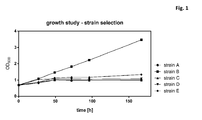
- the host cells have then been cultivated in 50 ml of a xylose- containing substrate (10g/l yeast extract, 20 g/l pepton, 20 g/l Xylose + 200 mg/l G418) under aerobic condition in 300 ml shake flask by 30°C and 250 rpm. The results are shown in figure 1 .
- a xylose- containing substrate (10g/l yeast extract, 20 g/l pepton, 20 g/l Xylose + 200 mg/l G418) under aerobic condition in 300 ml shake flask by 30°C and 250 rpm. The results are shown in figure 1 .
- Strain B has been selected for further tests due to the excellent growth performance.
- Example 2 growth study-comparison of different plasmids containing different oligonucleotides
- Strain B has been transformed with 10 plasmids.
- the plasmids were constructed in the same way as described within example 1 harboring the oligonucleotides SEQ ID NO:1, SEQ ID NO:2, SEQ ID NO:3, SEQ ID NO:4, SEQ ID NO:5, SEQ ID NO:6, SEQ ID NO:7, SEQ ID NO:8, SEQ ID NO:9 and SEQ ID NO:10, respectively.
- Strain B was transformed with the plasmids as described within example 1 and cultivated under the same conditions. The results are shown in figure 2 .
- the host cell transformed by the plasmids containing an oligonucleotide according to the present invention showed a significant higher growth performance than the host cell transformed by plasmids containing oligonucleotides of the state of the art SEQ ID NO: 9, SEQ ID NO: 10 and SEQ ID NO:8.
- Example 3 transcript level - comparison of different plasmids containing different oligonucleotides
- the yeast strains harboring the different plasmids described in example 2 were cultivated in 100 ml of glucose-, mannose-, ethanol-, glycerol- or xylose- containing substrate (10g/l yeast extract, 20 g/l pepton, 20 g/l carbon source + 200 mg/l G418) in 500 ml shake flask by 30°C and 250 rpm. 5 ml of the cultures were harvested at approximately OD 600 2 - centrifuged, washed with water and centrifuged (two times). After that the pellet of the culture was stored at -80°C.
- RNA was extracted from the cells by using the RNeasy Mini KitTM, Qiagen Germany according to producer manual. Then that 500 ng RNA were translated into cDNA through the usage of the ThermoScriptTM RT-PCR Kit, Life Technologies USA according to producer manual.
- concentration of ACT1 and XyIA mRNA could by calculated by amplifying 225 and 236 bp tall PCR products.
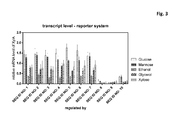
- the relative transcript levels (concentration of XyIA RNA divided by the concentration of ACT1 RNA) are shown in figure 3 .
- Table 2 x-fold change of the XyIA transcript level under the control of different oligonucleotides in comparison to the XyIA transcript level under the control of SEQ ID NO: 9 SEQ ID NO: 1 SEQ ID NO: 2 SEQ ID NO: 3 SEQ ID NO: 4 SEQ ID NO: 5 SEQ ID NO: 6 SEQ ID NO: 7 Glucose 23.4 ⁇ 5.7 23.9 ⁇ 5.9 22.6 ⁇ 5.8 24.4 ⁇ 5.3 28.9 ⁇ 5.1 26.4 ⁇ 6.6 22.3 ⁇ 4.5 Mannose 25.3 ⁇ 6.5 27.6 ⁇ 6.6 25.9 ⁇ 7.0 23.3 ⁇ 6.6 22.1 ⁇ 4.0 22.4 ⁇ 6.7 26.2 ⁇ 7.3 Ethanol 4.6 ⁇ 0.8 5.6 ⁇ 1.1 3.9 ⁇ 0.7 3.9 ⁇ 0.8 4.5 ⁇
- the reporter system under the control of the oligonucleotides according to the present invention has shown a 4 to 29 fold increase of the transcript level.
- the transcript levels vary between the various growth conditions but a significant difference regarding the control of the oligonucleotide SEQ ID NO:1 to SEQ ID NO:7 was not visible.
- Example 4 enzyme activity - comparison of different plasmids containing different oligonucleotides
- the thawed pellets were suspended in 400 ⁇ l buffer (100 mM Tris pH 7.5, 10 mM MgCl2) and homogenized. After the cell lysis the crude extracts were diluted to a total protein concentration of 1 ⁇ g/ ⁇ l (measured by Bradford assay).
- the xylose isomerase activity assays were performed in 100 ⁇ l with 10 % of the diluted crude extracts, 0.25 mM NADH, 3 U/ml sorbitol dehydrogenase and 500 mM Xylose. The reaction kinetics were followed photometrically at 340 nm.
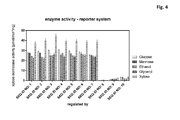
- the measured enzyme activities are shown in figure 4 .
- Table 3 x-fold change of the xylose isomerase activity under the control of different oligonucleotides in comparison to the xylose isomerase activity under the control of SEQ ID NO: 9 SEQ ID NO: 1 SEQ ID NO: 2 SEQ ID NO: 3 SEQ ID NO: 4 SEQ ID NO: 5 SEQ ID NO: 6 SEQ ID NO: 7 Glucose 22.5 ⁇ 3.6 23.7 ⁇ 3.4 24.8 ⁇ 3.5 24.9 ⁇ 4.0 23.9 ⁇ 3.9 22.8 ⁇ 4.1 20.6 ⁇ 3.2 Mannose 20.4 ⁇ 4.4 20.4 ⁇ 4.5 18.6 ⁇ 5.4 18.9 ⁇ 4.5 19.7 ⁇ 4.7 19.7 ⁇ 5.3 18.6 ⁇ 4.2 Ethanol 13.7 ⁇ 2.2 13.0 ⁇ 2.2 14.0 ⁇ 2.3 15.2 ⁇ 2.6 13.9 ⁇ 2.3 14.6 ⁇ 2.6 13.4 ⁇ 2.7
- the reporter system under the control of the oligonucleotides according to the present invention has shown a 14 to 25 fold increase of the enzyme activity. Whereby the enzyme activities vary between the various growth conditions but a significant difference regarding the control of the oligonucleotide SEQ ID NO: 1 to SEQ ID NO: 7 was not visible.
Landscapes
- Life Sciences & Earth Sciences (AREA)
- Health & Medical Sciences (AREA)
- Engineering & Computer Science (AREA)
- Genetics & Genomics (AREA)
- Organic Chemistry (AREA)
- Chemical & Material Sciences (AREA)
- Biomedical Technology (AREA)
- General Engineering & Computer Science (AREA)
- Wood Science & Technology (AREA)
- Zoology (AREA)
- Bioinformatics & Cheminformatics (AREA)
- Biotechnology (AREA)
- Molecular Biology (AREA)
- Biochemistry (AREA)
- General Health & Medical Sciences (AREA)
- Microbiology (AREA)
- Plant Pathology (AREA)
- Physics & Mathematics (AREA)
- Biophysics (AREA)
- Virology (AREA)
- Micro-Organisms Or Cultivation Processes Thereof (AREA)
- Preparation Of Compounds By Using Micro-Organisms (AREA)
- Saccharide Compounds (AREA)
Abstract
Description
- The present invention comprises a novel artificial oligonucleotide sequence which can initiate the transcription of a gene under various conditions at a high level. Further the invention relates to a recombinant DNA fragment comprising the artificial oligonucleotide sequence, an expression plasmid comprising the recombinant DNA fragment and a host cell transformed with the recombinant DNA fragment.
- The yeast S. cerevisiae and S. sensu stricto species are used since thousands of years for the production of bread and alcoholic beverages like sake, wine or beer. Through this long period of industrial usage, yeasts are adapted to the process conditions and can tolerate the mechanical forces in a bioreactor, inhibitory substances and fermentation products. Further they are robust against fluctuations in temperature and can ferment sugars at low pH-value, which minimizes the contamination risk. Besides this, S. cerevisiae is a key laboratory model system and can be easily genetically modified and is generally recognized as safe - GRAS status. A broad genetic tool set is available for S. cerevisiae and many intracellular processes like metabolism, secretion, transport, signaling and other pathways are well studied, which help to successfully engineer the yeast for a wide variety of applications.
- Especially the introduction of multi-enzyme pathways requires precise control over the level of gene expression especially of the key enzyme, which can be heterologous or native, to maximize substrate utilization and/or product formation. Thereby the transcriptional control takes place at the oligonucleotide sequence which is located in the upstream region of a gene - the promoter. Thus, promoter strength and regulation are critical points for metabolic engineering.
- As endogenous promoters do usually not completely fulfil the necessary continuum of transcriptional control and therefore do not maximize the transcription levels achievable within the cell, a critical step for the engineering of yeast is the choice of the right promoter.
- Different types of promoters are known within the art.
- Inducible or de-repressed promoters allow a high level of transcriptional control but they depend on an inducer or defined process conditions. Regulated promoters are limited to the production of toxic proteins or building up pathways with toxic intermediates. Further, most of the promoters of the state of the art are only known to enable the control of the transcription of one specific group of genes.
- Thus, promoters so far known to a person skilled in the art always involve certain disadvantages which severely limit their use to just a few specific applications.
- The inventors of the present invention have therefore set themselves the task to develop novel and improved promoters which enable a high transcriptional control of a wider variety of genes and which are highly feasible for industrial applications.
- The inventors of the present invention surprisingly found that this task can be solved by
- an oligonucleotide sequence characterized in that it increases the transcription rate of a RNA typed as messenger RNA fragment encoding for a protein selected from the group consisting of enzymes, structural proteins, coenzymes, transporters, antibodies, hormones and regulators, as regulatory RNA fragment, as enzymatically active RNA fragment or as transfer RNA fragment, said oligonucleotide sequence having at least 80% sequence identity to SEQ ID NO: 1.
- The nomenclature of amino acids, peptides, nucleotides and nucleic acids within the present application follows the suggestions of IUPAC. Generally, amino acids are named within this document according to the one letter code.
- The term "oligonucleotide" according to the present invention is to be understood as a single-stranded or double-stranded DNA or RNA molecule comprising from 2 to 1000 nucleic acids, preferably from 10 to 900 nucleic acids, further preferred from 50 to 850 nucleic acids and most preferred from 100 to 820 nucleic acids.
- The terms "DNA" and "RNA" are well known to a person skilled in the art. While DNA contains deoxyribose, RNA contains ribose (in deoxyribose there is no hydroxyl group attached to the pentose ring in the 2' position). The complementary base to adenine is not thymine, as it is in DNA, but rather uracil, which is an unmethylated form of thymine.
- The oligonucleotide according to the present invention comprises an nucleic acid sequence having at least 80% sequence identity, preferably at least 82%, further preferred at least 85%, particularly preferred at least 90%, even more preferred at least 92%, also preferred at least 95%, furthermore preferred at least 98% and most preferred at least 99% sequence identity to SEQ ID NO: 1.
- Within a particularly preferred embodiment, the nucleic acid sequence is selected from the group consisting of SEQ ID NO: 1, SEQ ID NO: 2, SEQ ID NO: 3, SEQ ID NO: 4, SEQ ID NO: 5, SEQ ID NO: 6 and SEQ ID NO: 7.
- The oligonucleotide according to the present invention increases the transcription rate of certain RNA fragments. The term "increasing the transcription rate" is thereby to be understood as an increase compared to an oligonucleotide with promoter activity of the state of the art. The "increase of the transcription rate" is generally to be determined as follows:

- RTLI - relative transcript level of a reporter system controlled by an oligonucleotide according to the invention
- RTLS - relative transcript level of a reporter system controlled by an oligonucleotide according to the state of the art
- Thereby the relative transcript level is measured as the concentration of RNA of the reporter system in a cell extract in relation to the concentration of the RNA of a housekeeping gene in the same cell extract.
- Whereas RTLI and RTLS are determined by use of the same type of host cell whereas the host cell is transformed with at least one recombinant DNA fragment comprising the respective oligonucleotide and the host cell is grown under identical state of the art conditions whereas the host cell is harvested within the exponential growth phase.
- Within a preferred embodiment the transcription rate is at least 2-fold higher when growing a yeast host cell, preferably S. cerevisiae, transformed with at least one recombinant DNA fragment comprising an oligonucleotide according to the present invention on at least two substrates selected from the group consisting of glucose, mannose, fructose, galactose, xylose, arabinose, sucrose, trehalose, raffinose, glycerol, ethanol, acetate and lactate. The increase was determined as follows:

- RTLIe - relative transcript level of the messenger RNA encoding for SEQ ID NO: 17 controlled by the oligonucleotide SEQ ID NO: 1.
- RTLSe - relative transcript level of the messenger RNA encoding for SEQ ID NO: 17 controlled by the oligonucleotide SEQ ID NO: 9
- Thereby the relative transcript level is measured as the concentration of messenger RNA encoding for SEQ ID NO: 17 in a yeast (S. cerevisiae) cell extract in relation to the concentration of the messenger RNA of the housekeeping gene encoding for actin in the same yeast cell extract.
- Whereas RTLIe and RTLSe are determined by use of the same type of yeast host cell (S. cerevisiae) whereas the yeast host cell is transformed with at least one recombinant DNA fragment comprising the respective oligonucleotide and the yeast host cell is grown under identical state of the art conditions whereas the yeast host cell is harvested within the exponential growth phase.
- Within a particularly preferred embodiment of the present invention, the transcription rate of the gene in a yeast host cell transformed with at least one recombinant DNA fragment comprising the oligonucleotide according to the present invention is increased by at least 2-fold, more preferred at least 4-fold, particularly preferred at least 6-fold and most preferred at least 10-fold when growing the yeast host cell on at least two substrates selected from the group consisting of glucose, mannose, fructose, galactose, xylose, arabinose, sucrose, trehalose, raffinose, glycerol, ethanol, acetate and lactate.
- Within a further particularly preferred embodiment of the present invention, the transcription rate of the gene in a host cell is increased by at least 2-fold, preferably at least 4-fold, more preferred at least 6-fold, particularly preferred at least 8-fold and most preferred at least 10-fold when growing the host cell on at least two substrates selected from the group consisting of glucose, mannose, fructose, xylose, sucrose glycerol and ethanol.
- Within another particularly preferred embodiment of the present invention, the transcription rate of the gene in a host cell is increased by at least 2-fold, preferably at least 4-fold, more preferred at least 6-fold, particularly preferred at least 8-fold and most preferred at least 10-fold when growing the host cell on at least two substrates selected from the group consisting of glucose, mannose, glycerol, ethanol and xylose.
- Another advantage of the oligonucleotide according to the present invention is that it increases the enzyme activity of an enzyme encoded by an RNA controlled by the oligonucleotide. The term "x-fold higher enzyme activity" is thereby to be understood as an increase compared to an oligonucleotide with promoter activity of the state of the art. The "x-fold higher enzyme activity" is generally to be determined as follows:

- EAI - enzyme activity of a reporter system controlled by an oligonucleotide according to the invention
- EAS - enzyme activity of a reporter system controlled by an oligonucleotide according to the state of the art
- Thereby the enzyme activity is measured as the amount of a substrate converted per minute by defined amount of a cell extract excluding the background activity of the reporter system.
- Whereas EAI and EAS are determined by use of the same type of host cell whereas the host cell is transformed with at least one recombinant DNA fragment comprising the respective oligonucleotide and the host cell is grown under identical state of the art conditions whereas the host cell is harvested within the exponential growth phase.
- Within a preferred embodiment the enzyme activity is increased by at least 2-fold when growing a yeast host cell, preferably S. cerevisiae, transformed with at least one recombinant DNA fragment comprising an oligonucleotide according to the present invention on at least two substrates selected from the group consisting of glucose, mannose, fructose, galactose, xylose, arabinose, sucrose, trehalose, raffinose, glycerol, ethanol, acetate and lactate.
- The increase was determined as follows:

- EAIe - enzyme activity of the protein SEQ ID NO: 17 controlled by the oligonucleotide SEQ ID NO: 1 or a derivate with at least 80% sequence identity to SEQ ID NO: 1.
- EASe - enzyme activity of the protein SEQ ID NO: 17 controlled by an oligonucleotide SEQ ID NO: 9.
- Thereby the enzyme activity is measured as the amount of xylose converted per minute by defined amount of a cell extract excluding the background activity of the reporter system.
- Whereas EAIe and EASe are determined by use of the same type of host cell (S. cerevisiae) whereas the host cell is transformed with at least one recombinant DNA fragment comprising the respective oligonucleotide and the host cell is grown under identical state of the art conditions whereas the host cell is harvested within the exponential growth phase.
- Within a particularly preferred embodiment of the present invention, the enzyme activity in a yeast host cell transformed with at least one recombinant DNA fragment comprising the oligonucleotide according to the present invention is increased by at least 2-fold, preferably at least 4-fold more preferred at least 6-fold, particularly preferred at least 8-fold and most preferred at least 10-fold when growing the yeast host cell on at least two substrates selected from the group consisting of glucose, mannose, fructose, galactose, xylose, arabinose, sucrose, trehalose, raffinose, glycerol, ethanol, acetate and lactate.
- Within a further particularly preferred embodiment of the present invention the enzyme activity in a host cell is increased by at least 2-fold, preferably at least 4-fold, more preferred at least 6-fold, particularly preferred at least 8-fold and most preferred at least 10-fold when growing the host cell on at least two substrates selected from the group consisting of glucose, mannose, fructose, xylose, sucrose, glycerol and ethanol.
- Within a further particularly preferred embodiment of the present invention the enzyme activity in a host cell is increased by at least 2-fold, preferably at least 4-fold, more preferred at least 6-fold, particularly preferred at least 8-fold and most preferred at least 10-fold when growing the host cell on at least two substrates selected from the group consisting of glucose, mannose, glycerol, ethanol and xylose.
- Within the present invention, the term "regulatory RNA fragment" (rRNA fragment) is to be understood as a RNA chain that has the ability to downregulate a gene expression by being complementary to a part of an mRNA or a gene's DNA. Examples of "rRNA fragments" are MicroRNAs (miRNA) which act through RNA interference (RNAi), where an effector complex of miRNA and enzymes can cleave complementary mRNA, block the mRNA from being translated, or accelerate its degradation. An mRNA may contain regulatory elements itself, such as riboswitches, in the 5' untranslated region or 3' untranslated region; these cis-regulatory elements regulate the activity of that mRNA. The untranslated regions can also contain elements that regulate other genes.
- Within the present invention, the term "enzymatically active RNA fragment" is to be understood as RNA which is part of a protein complex which can catalyze enzymatic reactions within the cell like ribosomal RNA or RNA that forms a catalytically active complex itself such as ribozyme (ribonucleic acid enzymes).
- Within the present invention, the term "transfer RNA fragment" (tRNA fragment) is to be understood as a small RNA chain of about 80 nucleotides that has the ability to transfer a specific amino acid to a growing polypeptide chain at the ribosomal site of protein synthesis during translation. It has sites for amino acid attachment and an anticodon region for codon recognition that binds to a specific sequence on the messenger RNA chain through hydrogen bonding.
- Within the present invention, the term "messenger RNA fragment" (mRNA fragment) is to be understood as a small RNA chain that has the ability to carry information about a protein sequence to the ribosomes. Every three nucleotides (a codon) correspond to one amino acid. In eukaryotic cells, once precursor mRNA (pre-mRNA) has been transcribed from DNA, it is processed to mature mRNA. This removes its introns-non-coding sections of the pre-mRNA. The mRNA is then exported from the nucleus to the cytoplasm, where it is bound to ribosomes and translated into its corresponding protein form with the help of tRNA. In prokaryotic cells, which do not have a nucleus and cytoplasm compartments, mRNA can bind to ribosomes while it is being transcribed from DNA. After a certain amount of time the messenger RNA degrades into its component nucleotides with the assistance of ribonucleases.
- Within the present invention the term "structural proteins" refers to proteins which confer stiffness and rigidity to otherwise-fluid biological components. Preferred structural proteins are selected from the group consisting of fibrous proteins such as collagen, elastin and keratin; and globular proteins such as actin and tubulin. Other proteins that serve structural functions and which are to be understood as "structural proteins" within the present invention are motor proteins such as myosin, kinesin, and dynein, which are capable of generating mechanical forces.
- Preferred RNA fragments encoding for a structural protein are selected from the group consisting of actine, elastin, filamine, collagen, myosine, lamine.
- Preferred RNA fragments encoding for a coenzyme are selected from the group of RNA fragments encoding for polypeptides which are post-translationally modified. Examples are tryptophan tryptophylquinone (TTQ) and 4-methylidene-imidazole-5-one (MIO).
- Preferred RNA fragments encoding for a transporter are selected from the group of RNA fragments encoding for uniport-, symport- and antiport carriers, proton pumps, ion channels and aquaporines.
- Preferred RNA fragments encoding for an antibody are selected from the group of RNA fragments encoding for IgA, IgD, IgE, EgG, IgM, IgY and IgW.
- Preferred RNA fragments encoding for a hormone are selected from the group of RNA fragments encoding for small peptide hormones such as TRH and vasopressin; insulin; growth hormone; glycoprotein hormones such as luteinizing hormone, follicle-stimulating hormone and thyroid-stimulating hormone.
- Preferred RNA fragments encoding for a regulator are selected from the group of RNA fragments encoding for receptors, transcription factors, metabolic sensors, light sensors, electro sensors, mechanical sensors and signal transducers.
- Preferred RNA fragments encoding for an enzyme are selected from the group of RNA fragments encoding for carbohydrate-modifying enzymes. Within the present invention, the term "carbohydrate-modifying enzyme" is to be understood as comprising any enzyme capable of modifying any kind of carbohydrate such as (but not limited to) carbohydrate-cleaving, carbohydrate-oxidizing, carbohydrate-reducing, carbohydrate-decarboxylating, carbohydrate-deacetylating, carbohydrate-acetylating, carbohydrate-methylating, carbohydrate-demethylating, carbohydrate-aminating, carbohydrate-phosphorylating, carbohydrate-dephosphorylating, carbohydrate-isomerizating, carbohydrate-epimerizating and carbohydrate-deaminating enzymes.
- Within a particularly preferred embodiment of the present invention, the carbohydrate-modifying enzyme is selected from the group consisting of the classes EC 5.1.3, EC 5.3.1, EC 2.7.1, EC 2.2.1, EC 2.2.1 and EC 1.1.1, preferably selected from the group consisting of EC 5.1.3.3, EC 5.3.1.5, EC 2.7.1.17, EC 2.2.1.2, EC 2.2.1.1 and EC 1.1.1.1. Within a further particularly preferred embodiment, the protein is selected from the group consisting of SEQ ID NOs 11 to 53.
- Within a further preferred embodiment of the
present invention 1 to 80 nucleotides of the oligonucleotide of the present invention are "mutated". Within the present invention the term "mutated" is to be understood as "substituted", "deleted" or "inserted". The term "mutation" is to be understood as "substitution", "deletion" or "insertion". Substitutions are classified as transitions where a purine is exchanged by a purine (A <-> G) or a pyrimidine by a pyrimidine (C <->T) or transversions where a purine is exchanged by a pyridine and vice versa (C/T <-> A/G). Insertions add one or more additional nucleotides (A, C, T or G) into an oligonucleotide. The removal of one or more nucleotides from the DNA is called deletion. - Within a further embodiment, the present invention provides a recombinant DNA fragment comprising the oligonucleotide according to the present invention.
- Particularly preferred recombinant DNA fragments according to the present invention comprise an oligonucleotide selected from the group consisting of SEQ ID NO: 1, SEQ ID NO: 2, SEQ ID NO: 3, SEQ ID NO: 4, SEQ ID NO: 5, SEQ ID NO: 6 and SEQ ID NO: 7 and a RNA fragment encoding for a protein selected from the group consisting of enzymes, structural proteins, coenzymes, transporters, antibodies, hormones and regulators. It is further particularly preferred that the protein is an enzyme and the enzyme is selected from the group consisting of the classes EC 5.1.3, EC 5.3.1, EC 2.7.1, EC 2.2.1, EC 2.2.1 and EC 1.1.1, preferably selected from the group consisting of EC 5.1.3.3, EC 5.3.1.5, EC 2.7.1.17, EC 2.2.1.2, EC 2.2.1.1 and EC 1.1.1.1. Other particularly preferred recombinant DNA fragments comprise an oligonucleotide selected from the group consisting of SEQ ID NO: 1, SEQ ID NO: 2, SEQ ID NO: 3, SEQ ID NO: 4, SEQ ID NO: 5, SEQ ID NO: 6 and SEQ ID NO: 7 and a RNA fragment selected from the group consisting of SEQ ID NOs 11 to 53.
- Within a further embodiment, the present invention provides an expression plasmid comprising at least one recombinant DNA fragment according to the present invention.
- The present invention further provides a host cell transformed with at least one recombinant DNA fragment comprising the oligonucleotide according to the present invention. The host cell according to the present invention is preferably used for pathway engineering or for metabolic transformation of xylose containing substrates to preferred metabolites.
- The recombinant host cell according to the present invention is preferably selected from bacteria, yeast, or fungal cells. In a particularly preferred embodiment, the host cell is selected from the group consisting of Escherichia, Klebsiella, Pseudomonas, Lactobacillus, Bacillus, Streptomyces; Saccharomyces, Kluyveromyces, Schizosaccharomyces, Candida, Yarrowia, Komagataella, Pichia, Hansenula, Penicillium, Trichoderma, Hypocrea, Aspergillus, Cantharellu, Agraicus, Boletos, Pleurotus, Trametes, Phanerochaete, Myceliophthora. Chaetomium, Humicola, Chrysosporium, Talaromyces and Neurospora.
- It is particularly preferred to select the host cell from the group consisting of Lactococcus lactis, Lactobacillus brevis, Bacillus subtilis, Bacillus megaterium, Bacillus lentus, Bacillus amyloliquefaciens, Bacillus licheniformis, Pseudomonas fluorescence, Klebsiella planticola, Escherichia coli, Streptomyces lividans, Saccharomyces cerevisiae, Saccharomyces bayanus, Saccharomyces uravum, Saccharomyces pastorianus, Saccharomyces kudriavzevii, Saccharomyces mikatae, Saccharomyces carlsbergensis, Schizosaccharomyces pombe, Kluyveromyces marxianus, Yarrowina lipolytica, Hansenula polymorpha, Pichia angusta, Komagataella pastoris, Pichia pastoris, Aspergillus niger, Aspergillus oryzae, Trichoderma reesei and Myceliophthora thermophila.
- The recombinant host cell according to the present invention may comprise one or more plasmids according to the present invention.
- In the following the present invention is described by the examples and figures. The examples and figures are considered for illustrative purpose only and do not limit the scope of the present invention and claims in any respect.
- 5 different host cells have been transformed with a plasmid containing an exemplary oligonucleotide for testing purposes.
Table 1: list of tested host cells counter name origin strain A Ethanol Red® (Batch 897/1 production date 01.05.08) Fermentis, France strain B Simi White™ (Lot: 02905340230601V) Lallemand, Canada strain C Rhone 2226™ (Lot: 025556551030Y9) strain D CBS 7764 Centraalbureau voor Schimmelcultures (Institute of the Royal Netherlands Academy of Arts and Sciences- KNAW), Netherland Strain E CBS 6413 - The plasmid was constructed by recombination cloning in S.cerevisiae: A yeast cell was transformed with PCR products offered 45 bp overlap to each other. The fragments were yeast Marker (pUG6 87 to 1559 bp), E.coli Marker and Ori (pUG19 754 to 2534 bp), yeast Ori (S.cerevisiae S288C chromosome IV 44978 to 449831 and S.cerevisiae S288C chromosome II 63156 to 63454 bp) and the functional part (SEQ ID NO:10, SEQ ID NO:54, S.cerevisiae S288C chromosome XI 326407 to 326108 bp). Thereby the parts were flanked by the restriction sites Sapl, Sbfl, Stul and Notl, respectively.
- The yeast strains were transformed with the re-isolated plasmid with the high-efficiency LiAc method according to Gietz and Schiestl.
- The host cells have then been cultivated in 50 ml of a xylose- containing substrate (10g/l yeast extract, 20 g/l pepton, 20 g/l Xylose + 200 mg/l G418) under aerobic condition in 300 ml shake flask by 30°C and 250 rpm. The results are shown in
figure 1 . - Strain B has been selected for further tests due to the excellent growth performance.
- Strain B has been transformed with 10 plasmids. The plasmids were constructed in the same way as described within example 1 harboring the oligonucleotides SEQ ID NO:1, SEQ ID NO:2, SEQ ID NO:3, SEQ ID NO:4, SEQ ID NO:5, SEQ ID NO:6, SEQ ID NO:7, SEQ ID NO:8, SEQ ID NO:9 and SEQ ID NO:10, respectively.
- Strain B was transformed with the plasmids as described within example 1 and cultivated under the same conditions. The results are shown in
figure 2 . - The host cell transformed by the plasmids containing an oligonucleotide according to the present invention (regulated by SEQ ID NOs:1 to 7) showed a significant higher growth performance than the host cell transformed by plasmids containing oligonucleotides of the state of the art SEQ ID NO: 9, SEQ ID NO: 10 and SEQ ID NO:8.
- The yeast strains harboring the different plasmids described in example 2 were cultivated in 100 ml of glucose-, mannose-, ethanol-, glycerol- or xylose- containing substrate (10g/l yeast extract, 20 g/l pepton, 20 g/l carbon source + 200 mg/l G418) in 500 ml shake flask by 30°C and 250 rpm. 5 ml of the cultures were harvested at approximately OD600 2 - centrifuged, washed with water and centrifuged (two times). After that the pellet of the culture was stored at -80°C.
- The total RNA was extracted from the cells by using the RNeasy Mini Kit™, Qiagen Germany according to producer manual. Then that 500 ng RNA were translated into cDNA through the usage of the ThermoScript™ RT-PCR Kit, Life Technologies USA according to producer manual. By using the iQ™ SYBR® Green Supermix and the iQ™ iCycler, BIO RAD Germany, following the producer information, the concentration of ACT1 and XyIA mRNA could by calculated by amplifying 225 and 236 bp tall PCR products.
- The relative transcript levels (concentration of XyIA RNA divided by the concentration of ACT1 RNA) are shown in
figure 3 .Table 2: x-fold change of the XyIA transcript level under the control of different oligonucleotides in comparison to the XyIA transcript level under the control of SEQ ID NO: 9 SEQ ID NO: 1 SEQ ID NO: 2 SEQ ID NO: 3 SEQ ID NO: 4 SEQ ID NO: 5 SEQ ID NO: 6 SEQ ID NO: 7 Glucose 23.4 ± 5.7 23.9 ± 5.9 22.6 ± 5.8 24.4 ± 5.3 28.9 ± 5.1 26.4 ± 6.6 22.3 ± 4.5 Mannose 25.3 ± 6.5 27.6 ± 6.6 25.9 ± 7.0 23.3 ± 6.6 22.1 ± 4.0 22.4 ± 6.7 26.2 ± 7.3 Ethanol 4.6 ± 0.8 5.6 ± 1.1 3.9 ± 0.7 3.9 ± 0.8 4.5 ± 0.6 4.7 ± 0.6 4.9 ± 1.1 Glycerol 8.3 ± 2.2 7.6 ± 3.4 7.6 ± 2.7 9.3 ± 2.7 6.6 ± 1.3 6.8 ± 2.3 7.0 ± 2.3 Xylose 6.8 ± 3.3 6.6 ± 5.3 5.8 ± 3.2 8.4 ± 4.1 7.1 ± 4.6 7.7 ± 4.5 7.9 ± 4.4 - The reporter system under the control of the oligonucleotides according to the present invention has shown a 4 to 29 fold increase of the transcript level. The transcript levels vary between the various growth conditions but a significant difference regarding the control of the oligonucleotide SEQ ID NO:1 to SEQ ID NO:7 was not visible.
- 50 ml of the cultures as defined within example 3 were harvested at approximately
OD 600 2. Afterwards the pellet of the culture was stored at -80°C. In addition, a culture of strain B carrying the plasmid described within example 2 without the functional part (empty plasmid) was treated in the same way. - The thawed pellets were suspended in 400 µl buffer (100 mM Tris pH 7.5, 10 mM MgCl2) and homogenized. After the cell lysis the crude extracts were diluted to a total protein concentration of 1 µg/µl (measured by Bradford assay). The xylose isomerase activity assays were performed in 100 µl with 10 % of the diluted crude extracts, 0.25 mM NADH, 3 U/ml sorbitol dehydrogenase and 500 mM Xylose. The reaction kinetics were followed photometrically at 340 nm.
- The measured enzyme activities (minus background activity - empty plasmid) are shown in
figure 4 .Table 3: x-fold change of the xylose isomerase activity under the control of different oligonucleotides in comparison to the xylose isomerase activity under the control of SEQ ID NO: 9 SEQ ID NO: 1 SEQ ID NO: 2 SEQ ID NO: 3 SEQ ID NO: 4 SEQ ID NO: 5 SEQ ID NO: 6 SEQ ID NO: 7 Glucose 22.5 ± 3.6 23.7 ± 3.4 24.8 ± 3.5 24.9 ± 4.0 23.9 ± 3.9 22.8 ± 4.1 20.6 ± 3.2 Mannose 20.4 ± 4.4 20.4 ± 4.5 18.6 ± 5.4 18.9 ± 4.5 19.7 ± 4.7 19.7 ± 5.3 18.6 ± 4.2 Ethanol 13.7 ± 2.2 13.0 ± 2.2 14.0 ± 2.3 15.2 ± 2.6 13.9 ± 2.3 14.6 ± 2.6 13.4 ± 2.7 Glycerol 14.8 ± 4.2 14.3 ± 3.8 16.9 ± 4.8 15.5 ± 4.3 15.4 ± 4.3 16.5 ± 4.6 15.3 ± 4.2 Xylose 14.3 ± 2.0 15.0 ± 2.5 16.7 ± 2.6 14.8 ± 2.4 14.8 ± 2.3 14.5 ± 2.2 14.5 ± 2.4 - The reporter system under the control of the oligonucleotides according to the present invention has shown a 14 to 25 fold increase of the enzyme activity. Whereby the enzyme activities vary between the various growth conditions but a significant difference regarding the control of the oligonucleotide SEQ ID NO: 1 to SEQ ID NO: 7 was not visible.
-
- Fig. 1
- shows the growth performance of 5 different yeast host cells (A to E) which have been transformed with a plasmid containing a gene encoding for SEQ ID NO:17 regulated by a oligonucleotide according to the state of art: SEQ ID NO:10.
- Fig. 2
- shows the growth performance of strain B transformed with different plasmids containing different oligonucleotides (oligonucleotides of the state of the art and oligonucleotides according to the present invention)
- Fig. 3
- shows a 4 to 29 fold increase of the transcript level of the reporter system under the control of the oligonucleotides according to the present invention (
SEQ ID NOs 1 to 7) compared to the state of the art oligonucleotidesSEQ ID NO 8, SEQ ID NO: 9 and SEQ ID NO: 10 on different substrates (glucose, mannose, ethanol, glycerol and xylose) - Fig. 4
- shows a 14 to 25 fold increase of the enzyme activity of the reporter system under the control of the oligonucleotides according to the present invention (
SEQ ID NOs 1 to 7) compared to the state of the art oligonucleotidesSEQ ID NO 8, SEQ ID NO: 9 and SEQ ID NO: 10 on different substrates (glucose, mannose, ethanol, glycerol and xylose)




























Claims (11)
- Oligonucleotide sequence characterized in that it increases the transcription rate of a RNA typed as messenger RNA fragment encoding for a protein selected from the group consisting of enzymes, structural proteins, coenzymes, transporters, antibodies, hormones and regulators, as regulatory RNA fragment, as enzymatically active RNA fragment or as transfer RNA fragment, said oligonucleotide sequence having at least 80% sequence identity to SEQ ID NO: 1.
- Oligonucleotide sequence according to claim 1, wherein said oligonucleotide sequence has at least 85% sequence identity to SEQ ID NO: 1.
- Oligonucleotide sequence according to claim 1 or 2, wherein the transcription rate of the RNA fragment in a yeast host cell is increased by at least 2-fold when growing the yeast host cell transformed with at least one recombinant DNA fragment comprising the oligonucleotide on at least two substrates selected from the group consisting of glucose, mannose, fructose, galactose, xylose, arabinose, sucrose, trehalose, raffinose, glycerol, ethanol, acetate and lactate.
- Oligonucleotide sequence according to claim 1 or 2, wherein the activity of an enzyme encoded by the RNA fragment controlled by the oligonucleotide in a yeast host cell is increased by at least 2-fold when growing the yeast host cell transformed with at least one recombinant DNA fragment comprising the oligonucleotide on at least two substrates selected from the group consisting of glucose, mannose, fructose, galactose, xylose, arabinose, sucrose, trehalose, raffinose, glycerol, ethanol, acetate and lactate.
- Oligonucleotide sequence according to any of the foregoing claims, wherein the enzyme is a carbohydrate modifying enzyme.
- Oligonucleotide sequence according to any of the foregoing claims, wherein the enzyme is a carbohydrate modifying enzyme selected from the group consisting of EC 5.1.3, EC 5.3.1, EC 2.7.1, EC 2.2.1, EC 2.2.1 and EC 1.1.1.
- Oligonucleotide sequence according to any of the foregoing claims, wherein the protein is selected from the group of consisting of SEQ ID No: 11 to 53.
- Oligonucleotide sequence according to any of the foregoing claims, wherein 1 to 80 nucleotides are substituted, deleted or inserted.
- A recombinant DNA fragment comprising the oligonucleotide sequence of any of claims 1 to 8.
- An expression plasmid comprising at least one recombinant DNA fragment according to claim 9.
- A host cell transformed with at least one recombinant DNA fragment according to claim 9 or transformed with at least one expression plasmid according to claim 10.
Priority Applications (17)
| Application Number | Priority Date | Filing Date | Title |
|---|---|---|---|
| HUE14195026A HUE032941T2 (en) | 2014-11-26 | 2014-11-26 | Oligonucleotide sequence for use in pathway engineering |
| EP14195026.1A EP3026116B1 (en) | 2014-11-26 | 2014-11-26 | Oligonucleotide sequence for use in pathway engineering |
| RS20170511A RS56018B1 (en) | 2014-11-26 | 2014-11-26 | OLIGONUCLEOTIDE SEQUENCES FOR USE IN METABOLIC ENGINEERING |
| SI201430240T SI3026116T1 (en) | 2014-11-26 | 2014-11-26 | Oligonucleotide sequence for use in pathway engineering |
| ES14195026.1T ES2626804T3 (en) | 2014-11-26 | 2014-11-26 | Oligonucleotide sequence for route engineering use |
| PL14195026T PL3026116T3 (en) | 2014-11-26 | 2014-11-26 | Oligonucleotide sequence for use in pathway engineering |
| DK14195026.1T DK3026116T3 (en) | 2014-11-26 | 2014-11-26 | OLIGONUCLEOTIDE SEQUENCE FOR USE IN PATHWAY MANIPULATION |
| CN201580064337.1A CN108064291B (en) | 2014-11-26 | 2015-11-16 | Oligonucleotide sequences for use in pathway engineering |
| AU2015352801A AU2015352801B2 (en) | 2014-11-26 | 2015-11-16 | Oligonucleotide sequence for use in pathway engineering |
| PCT/EP2015/076715 WO2016083180A1 (en) | 2014-11-26 | 2015-11-16 | Oligonucleotide sequence for use in pathway engineering |
| BR112017011182-9A BR112017011182B1 (en) | 2014-11-26 | 2015-11-16 | OLIGONUCLEOTIDE SEQUENCE, EXPRESSION PLASMID AND YEAST HOST CELL COMPRISING A RECOMBINANT DNA FRAGMENT COMPRISING SAID OLIGONUCLEOTIDE SEQUENCE |
| CA2967751A CA2967751C (en) | 2014-11-26 | 2015-11-16 | Oligonucleotide sequence for use in pathway engineering |
| US15/529,577 US10400244B2 (en) | 2014-11-26 | 2015-11-16 | Oligonucleotide sequence for use in pathway engineering |
| MYPI2017000774A MY176630A (en) | 2014-11-26 | 2015-11-16 | Oligonucleotide sequence for use in pathway engineering |
| EA201791156A EA037161B1 (en) | 2014-11-26 | 2015-11-16 | Oligonucleotide sequences for use in pathway engineering |
| ARP150103828A AR102762A1 (en) | 2014-11-26 | 2015-11-24 | SEQUENCE OF OLIGONUCLEOTIDES FOR USE IN METABOLIC ROUTE ENGINEERING |
| HRP20170884TT HRP20170884T1 (en) | 2014-11-26 | 2017-06-09 | Oligonucleotide sequence for use in pathway engineering |
Applications Claiming Priority (1)
| Application Number | Priority Date | Filing Date | Title |
|---|---|---|---|
| EP14195026.1A EP3026116B1 (en) | 2014-11-26 | 2014-11-26 | Oligonucleotide sequence for use in pathway engineering |
Publications (2)
| Publication Number | Publication Date |
|---|---|
| EP3026116A1 true EP3026116A1 (en) | 2016-06-01 |
| EP3026116B1 EP3026116B1 (en) | 2017-03-15 |
Family
ID=52000679
Family Applications (1)
| Application Number | Title | Priority Date | Filing Date |
|---|---|---|---|
| EP14195026.1A Active EP3026116B1 (en) | 2014-11-26 | 2014-11-26 | Oligonucleotide sequence for use in pathway engineering |
Country Status (17)
| Country | Link |
|---|---|
| US (1) | US10400244B2 (en) |
| EP (1) | EP3026116B1 (en) |
| CN (1) | CN108064291B (en) |
| AR (1) | AR102762A1 (en) |
| AU (1) | AU2015352801B2 (en) |
| BR (1) | BR112017011182B1 (en) |
| CA (1) | CA2967751C (en) |
| DK (1) | DK3026116T3 (en) |
| EA (1) | EA037161B1 (en) |
| ES (1) | ES2626804T3 (en) |
| HR (1) | HRP20170884T1 (en) |
| HU (1) | HUE032941T2 (en) |
| MY (1) | MY176630A (en) |
| PL (1) | PL3026116T3 (en) |
| RS (1) | RS56018B1 (en) |
| SI (1) | SI3026116T1 (en) |
| WO (1) | WO2016083180A1 (en) |
Cited By (1)
| Publication number | Priority date | Publication date | Assignee | Title |
|---|---|---|---|---|
| WO2020255106A1 (en) * | 2019-06-21 | 2020-12-24 | Universidade Do Minho | A novel xylose isomerase gene and polypeptide and uses thereof |
Families Citing this family (2)
| Publication number | Priority date | Publication date | Assignee | Title |
|---|---|---|---|---|
| WO2019185737A1 (en) * | 2018-03-27 | 2019-10-03 | Basf Se | Xylose metabolizing yeast |
| RS64248B1 (en) * | 2019-01-29 | 2023-06-30 | Clariant Produkte Deutschland Gmbh | CHIMERIC PROMOTER FOR USE IN METABOLIC ENGINEERING |
Citations (8)
| Publication number | Priority date | Publication date | Assignee | Title |
|---|---|---|---|---|
| WO2003095627A1 (en) * | 2002-05-08 | 2003-11-20 | Forskarpatent I Syd Ab | A modified yeast consuming l-arabinose |
| WO2010062597A1 (en) * | 2008-10-27 | 2010-06-03 | Butamax™ Advanced Biofuels LLC | Carbon pathway optimized production hosts for the production of isobutanol |
| JP2010136627A (en) * | 2008-12-09 | 2010-06-24 | Nippon Oil Corp | Method for making yeast to utilize galactose |
| WO2010151866A2 (en) * | 2009-06-26 | 2010-12-29 | Archer Daniels Midland Company | Improvement of ethanol yield and reduction of biomass accumulation in the recombinant strain of saccharomyces cerevisiae overexpressing atp degrading the enzymes |
| DE102012007491A1 (en) * | 2012-04-11 | 2013-10-17 | Evonik Industries Ag | New enzymes |
| WO2014035458A1 (en) * | 2012-08-29 | 2014-03-06 | Mascoma Corporation | Expression of enzymes in yeast for lignocellulose derived oligomer cbp |
| WO2014080024A2 (en) * | 2012-11-23 | 2014-05-30 | Dsm Ip Assets B.V. | Itaconic acid and itaconate methylester production |
| WO2014164392A1 (en) | 2013-03-11 | 2014-10-09 | E. I. Du Pont De Nemours And Company | Cow rumen xylose isomerases active in yeast cells |
Family Cites Families (2)
| Publication number | Priority date | Publication date | Assignee | Title |
|---|---|---|---|---|
| US7504493B2 (en) * | 1997-01-23 | 2009-03-17 | The John Hopkins University | Characterization of the yeast transcriptome |
| CN102060930B (en) * | 2010-11-30 | 2013-05-29 | 上海交通大学 | hHscFv-Rcr functional protein and preparation method of transgenic tobacco |
-
2014
- 2014-11-26 PL PL14195026T patent/PL3026116T3/en unknown
- 2014-11-26 SI SI201430240T patent/SI3026116T1/en unknown
- 2014-11-26 HU HUE14195026A patent/HUE032941T2/en unknown
- 2014-11-26 DK DK14195026.1T patent/DK3026116T3/en active
- 2014-11-26 ES ES14195026.1T patent/ES2626804T3/en active Active
- 2014-11-26 RS RS20170511A patent/RS56018B1/en unknown
- 2014-11-26 EP EP14195026.1A patent/EP3026116B1/en active Active
-
2015
- 2015-11-16 US US15/529,577 patent/US10400244B2/en active Active
- 2015-11-16 BR BR112017011182-9A patent/BR112017011182B1/en not_active IP Right Cessation
- 2015-11-16 MY MYPI2017000774A patent/MY176630A/en unknown
- 2015-11-16 WO PCT/EP2015/076715 patent/WO2016083180A1/en not_active Ceased
- 2015-11-16 AU AU2015352801A patent/AU2015352801B2/en not_active Ceased
- 2015-11-16 CN CN201580064337.1A patent/CN108064291B/en active Active
- 2015-11-16 CA CA2967751A patent/CA2967751C/en active Active
- 2015-11-16 EA EA201791156A patent/EA037161B1/en unknown
- 2015-11-24 AR ARP150103828A patent/AR102762A1/en not_active Application Discontinuation
-
2017
- 2017-06-09 HR HRP20170884TT patent/HRP20170884T1/en unknown
Patent Citations (8)
| Publication number | Priority date | Publication date | Assignee | Title |
|---|---|---|---|---|
| WO2003095627A1 (en) * | 2002-05-08 | 2003-11-20 | Forskarpatent I Syd Ab | A modified yeast consuming l-arabinose |
| WO2010062597A1 (en) * | 2008-10-27 | 2010-06-03 | Butamax™ Advanced Biofuels LLC | Carbon pathway optimized production hosts for the production of isobutanol |
| JP2010136627A (en) * | 2008-12-09 | 2010-06-24 | Nippon Oil Corp | Method for making yeast to utilize galactose |
| WO2010151866A2 (en) * | 2009-06-26 | 2010-12-29 | Archer Daniels Midland Company | Improvement of ethanol yield and reduction of biomass accumulation in the recombinant strain of saccharomyces cerevisiae overexpressing atp degrading the enzymes |
| DE102012007491A1 (en) * | 2012-04-11 | 2013-10-17 | Evonik Industries Ag | New enzymes |
| WO2014035458A1 (en) * | 2012-08-29 | 2014-03-06 | Mascoma Corporation | Expression of enzymes in yeast for lignocellulose derived oligomer cbp |
| WO2014080024A2 (en) * | 2012-11-23 | 2014-05-30 | Dsm Ip Assets B.V. | Itaconic acid and itaconate methylester production |
| WO2014164392A1 (en) | 2013-03-11 | 2014-10-09 | E. I. Du Pont De Nemours And Company | Cow rumen xylose isomerases active in yeast cells |
Cited By (1)
| Publication number | Priority date | Publication date | Assignee | Title |
|---|---|---|---|---|
| WO2020255106A1 (en) * | 2019-06-21 | 2020-12-24 | Universidade Do Minho | A novel xylose isomerase gene and polypeptide and uses thereof |
Also Published As
| Publication number | Publication date |
|---|---|
| DK3026116T3 (en) | 2017-06-06 |
| WO2016083180A1 (en) | 2016-06-02 |
| SI3026116T1 (en) | 2017-10-30 |
| CN108064291A (en) | 2018-05-22 |
| EA201791156A1 (en) | 2017-09-29 |
| AU2015352801A1 (en) | 2017-05-25 |
| AR102762A1 (en) | 2017-03-22 |
| RS56018B1 (en) | 2017-09-29 |
| CA2967751C (en) | 2020-08-11 |
| EP3026116B1 (en) | 2017-03-15 |
| US10400244B2 (en) | 2019-09-03 |
| PL3026116T3 (en) | 2017-09-29 |
| BR112017011182A2 (en) | 2018-02-06 |
| AU2015352801B2 (en) | 2018-11-01 |
| CN108064291B (en) | 2022-01-11 |
| EA037161B1 (en) | 2021-02-12 |
| US20170314029A1 (en) | 2017-11-02 |
| BR112017011182B1 (en) | 2024-02-15 |
| ES2626804T3 (en) | 2017-07-26 |
| HRP20170884T1 (en) | 2017-09-08 |
| BR112017011182A8 (en) | 2022-08-30 |
| CA2967751A1 (en) | 2016-06-02 |
| MY176630A (en) | 2020-08-19 |
| HUE032941T2 (en) | 2017-11-28 |
Similar Documents
| Publication | Publication Date | Title |
|---|---|---|
| US11203741B2 (en) | Glycerol free ethanol production | |
| US9732338B2 (en) | Promoter and use thereof | |
| US20220127564A1 (en) | Recombinant yeast host cells expressing cell-associated heterologous proteins | |
| Vadhana et al. | Improved secretion of Candida antarctica lipase B with its native signal peptide in Pichia pastoris | |
| EP3662068B1 (en) | Fungal cell with improved protein production capacity | |
| EP3026116B1 (en) | Oligonucleotide sequence for use in pathway engineering | |
| US20250129393A1 (en) | Processes for producing fermentation products using fiber-degrading enzymes in fermentation | |
| EP3690052B1 (en) | Chimeric promoter for use in metabolic engineering | |
| EP3830282A1 (en) | Increased alcohol production from yeast producing an increased amount of active crz1 protein | |
| Bartolo-Aguilar et al. | Autolysis of Pichia pastoris induced by cold | |
| Ito et al. | Combinatorial screening for transgenic yeasts with high cellulase activities in combination with a tunable expression system | |
| WO2015141705A1 (en) | Method for imparting acid resistance and salt resistance, and useful substance production using acid-resistant, salt-resistant yeast |
Legal Events
| Date | Code | Title | Description |
|---|---|---|---|
| PUAI | Public reference made under article 153(3) epc to a published international application that has entered the european phase |
Free format text: ORIGINAL CODE: 0009012 |
|
| AK | Designated contracting states |
Kind code of ref document: A1 Designated state(s): AL AT BE BG CH CY CZ DE DK EE ES FI FR GB GR HR HU IE IS IT LI LT LU LV MC MK MT NL NO PL PT RO RS SE SI SK SM TR |
|
| AX | Request for extension of the european patent |
Extension state: BA ME |
|
| 17P | Request for examination filed |
Effective date: 20160729 |
|
| RBV | Designated contracting states (corrected) |
Designated state(s): AL AT BE BG CH CY CZ DE DK EE ES FI FR GB GR HR HU IE IS IT LI LT LU LV MC MK MT NL NO PL PT RO RS SE SI SK SM TR |
|
| RAP1 | Party data changed (applicant data changed or rights of an application transferred) |
Owner name: CLARIANT INTERNATIONAL LTD |
|
| GRAP | Despatch of communication of intention to grant a patent |
Free format text: ORIGINAL CODE: EPIDOSNIGR1 |
|
| INTG | Intention to grant announced |
Effective date: 20161122 |
|
| RIN1 | Information on inventor provided before grant (corrected) |
Inventor name: DIETZ, HEIKO Inventor name: DRAGOVIC, ZDRAVKO Inventor name: REISINGER, CHRISTOPH |
|
| GRAS | Grant fee paid |
Free format text: ORIGINAL CODE: EPIDOSNIGR3 |
|
| GRAA | (expected) grant |
Free format text: ORIGINAL CODE: 0009210 |
|
| AK | Designated contracting states |
Kind code of ref document: B1 Designated state(s): AL AT BE BG CH CY CZ DE DK EE ES FI FR GB GR HR HU IE IS IT LI LT LU LV MC MK MT NL NO PL PT RO RS SE SI SK SM TR |
|
| REG | Reference to a national code |
Ref country code: CH Ref legal event code: EP Ref country code: GB Ref legal event code: FG4D |
|
| REG | Reference to a national code |
Ref country code: IE Ref legal event code: FG4D |
|
| REG | Reference to a national code |
Ref country code: AT Ref legal event code: REF Ref document number: 875618 Country of ref document: AT Kind code of ref document: T Effective date: 20170415 |
|
| REG | Reference to a national code |
Ref country code: DE Ref legal event code: R096 Ref document number: 602014007557 Country of ref document: DE |
|
| REG | Reference to a national code |
Ref country code: DK Ref legal event code: T3 Effective date: 20170601 |
|
| REG | Reference to a national code |
Ref country code: HR Ref legal event code: TUEP Ref document number: P20170884 Country of ref document: HR |
|
| REG | Reference to a national code |
Ref country code: RO Ref legal event code: EPE |
|
| REG | Reference to a national code |
Ref country code: SE Ref legal event code: TRGR |
|
| REG | Reference to a national code |
Ref country code: NL Ref legal event code: FP |
|
| REG | Reference to a national code |
Ref country code: LT Ref legal event code: MG4D |
|
| REG | Reference to a national code |
Ref country code: ES Ref legal event code: FG2A Ref document number: 2626804 Country of ref document: ES Kind code of ref document: T3 Effective date: 20170726 |
|
| PG25 | Lapsed in a contracting state [announced via postgrant information from national office to epo] |
Ref country code: GR Free format text: LAPSE BECAUSE OF FAILURE TO SUBMIT A TRANSLATION OF THE DESCRIPTION OR TO PAY THE FEE WITHIN THE PRESCRIBED TIME-LIMIT Effective date: 20170616 Ref country code: LT Free format text: LAPSE BECAUSE OF FAILURE TO SUBMIT A TRANSLATION OF THE DESCRIPTION OR TO PAY THE FEE WITHIN THE PRESCRIBED TIME-LIMIT Effective date: 20170315 |
|
| REG | Reference to a national code |
Ref country code: NO Ref legal event code: T2 Effective date: 20170315 |
|
| PG25 | Lapsed in a contracting state [announced via postgrant information from national office to epo] |
Ref country code: LV Free format text: LAPSE BECAUSE OF FAILURE TO SUBMIT A TRANSLATION OF THE DESCRIPTION OR TO PAY THE FEE WITHIN THE PRESCRIBED TIME-LIMIT Effective date: 20170315 |
|
| REG | Reference to a national code |
Ref country code: HR Ref legal event code: T1PR Ref document number: P20170884 Country of ref document: HR |
|
| PG25 | Lapsed in a contracting state [announced via postgrant information from national office to epo] |
Ref country code: EE Free format text: LAPSE BECAUSE OF FAILURE TO SUBMIT A TRANSLATION OF THE DESCRIPTION OR TO PAY THE FEE WITHIN THE PRESCRIBED TIME-LIMIT Effective date: 20170315 |
|
| REG | Reference to a national code |
Ref country code: HU Ref legal event code: AG4A Ref document number: E032941 Country of ref document: HU |
|
| REG | Reference to a national code |
Ref country code: FR Ref legal event code: PLFP Year of fee payment: 4 |
|
| PG25 | Lapsed in a contracting state [announced via postgrant information from national office to epo] |
Ref country code: PT Free format text: LAPSE BECAUSE OF FAILURE TO SUBMIT A TRANSLATION OF THE DESCRIPTION OR TO PAY THE FEE WITHIN THE PRESCRIBED TIME-LIMIT Effective date: 20170717 Ref country code: IS Free format text: LAPSE BECAUSE OF FAILURE TO SUBMIT A TRANSLATION OF THE DESCRIPTION OR TO PAY THE FEE WITHIN THE PRESCRIBED TIME-LIMIT Effective date: 20170715 Ref country code: SM Free format text: LAPSE BECAUSE OF FAILURE TO SUBMIT A TRANSLATION OF THE DESCRIPTION OR TO PAY THE FEE WITHIN THE PRESCRIBED TIME-LIMIT Effective date: 20170315 |
|
| REG | Reference to a national code |
Ref country code: DE Ref legal event code: R097 Ref document number: 602014007557 Country of ref document: DE |
|
| PGFP | Annual fee paid to national office [announced via postgrant information from national office to epo] |
Ref country code: LU Payment date: 20171124 Year of fee payment: 4 |
|
| PLBE | No opposition filed within time limit |
Free format text: ORIGINAL CODE: 0009261 |
|
| STAA | Information on the status of an ep patent application or granted ep patent |
Free format text: STATUS: NO OPPOSITION FILED WITHIN TIME LIMIT |
|
| 26N | No opposition filed |
Effective date: 20171218 |
|
| PG25 | Lapsed in a contracting state [announced via postgrant information from national office to epo] |
Ref country code: MC Free format text: LAPSE BECAUSE OF FAILURE TO SUBMIT A TRANSLATION OF THE DESCRIPTION OR TO PAY THE FEE WITHIN THE PRESCRIBED TIME-LIMIT Effective date: 20170315 |
|
| REG | Reference to a national code |
Ref country code: IE Ref legal event code: MM4A |
|
| PG25 | Lapsed in a contracting state [announced via postgrant information from national office to epo] |
Ref country code: MT Free format text: LAPSE BECAUSE OF NON-PAYMENT OF DUE FEES Effective date: 20171126 |
|
| PG25 | Lapsed in a contracting state [announced via postgrant information from national office to epo] |
Ref country code: IE Free format text: LAPSE BECAUSE OF NON-PAYMENT OF DUE FEES Effective date: 20171126 |
|
| REG | Reference to a national code |
Ref country code: HR Ref legal event code: ODRP Ref document number: P20170884 Country of ref document: HR Payment date: 20181113 Year of fee payment: 5 |
|
| PG25 | Lapsed in a contracting state [announced via postgrant information from national office to epo] |
Ref country code: LU Free format text: LAPSE BECAUSE OF NON-PAYMENT OF DUE FEES Effective date: 20181126 |
|
| PG25 | Lapsed in a contracting state [announced via postgrant information from national office to epo] |
Ref country code: CY Free format text: LAPSE BECAUSE OF FAILURE TO SUBMIT A TRANSLATION OF THE DESCRIPTION OR TO PAY THE FEE WITHIN THE PRESCRIBED TIME-LIMIT Effective date: 20170315 |
|
| REG | Reference to a national code |
Ref country code: HR Ref legal event code: ODRP Ref document number: P20170884 Country of ref document: HR Payment date: 20191115 Year of fee payment: 6 |
|
| REG | Reference to a national code |
Ref country code: AT Ref legal event code: UEP Ref document number: 875618 Country of ref document: AT Kind code of ref document: T Effective date: 20170315 |
|
| PG25 | Lapsed in a contracting state [announced via postgrant information from national office to epo] |
Ref country code: AL Free format text: LAPSE BECAUSE OF FAILURE TO SUBMIT A TRANSLATION OF THE DESCRIPTION OR TO PAY THE FEE WITHIN THE PRESCRIBED TIME-LIMIT Effective date: 20170315 |
|
| REG | Reference to a national code |
Ref country code: HR Ref legal event code: ODRP Ref document number: P20170884 Country of ref document: HR Payment date: 20201112 Year of fee payment: 7 |
|
| REG | Reference to a national code |
Ref country code: NO Ref legal event code: CHAD Owner name: CLARIANT PRODUKTE (DEUTSCHLAND) GMBH, DE Ref country code: NO Ref legal event code: CREP |
|
| REG | Reference to a national code |
Ref country code: HR Ref legal event code: ODRP Ref document number: P20170884 Country of ref document: HR Payment date: 20211115 Year of fee payment: 8 |
|
| REG | Reference to a national code |
Ref country code: DE Ref legal event code: R081 Ref document number: 602014007557 Country of ref document: DE Owner name: CLARIANT PRODUKTE (DEUTSCHLAND) GMBH, DE Free format text: FORMER OWNER: CLARIANT INTERNATIONAL LTD., MUTTENZ, CH |
|
| REG | Reference to a national code |
Ref country code: AT Ref legal event code: PC Ref document number: 875618 Country of ref document: AT Kind code of ref document: T Owner name: CLARIANT PRODUKTE (DEUTSCHLAND) GMBH, DE Effective date: 20220628 |
|
| REG | Reference to a national code |
Ref country code: BE Ref legal event code: PD Owner name: CLARIANT PRODUKTE (DEUTSCHLAND) GMBH; DE Free format text: DETAILS ASSIGNMENT: CHANGE OF OWNER(S), ASSIGNMENT; FORMER OWNER NAME: CLARIANT INTERNATIONAL LTD Effective date: 20220511 |
|
| REG | Reference to a national code |
Ref country code: HU Ref legal event code: GB9C Owner name: CLARIANT PRODUKTE (DEUTSCHLAND) GMBH, DE Free format text: FORMER OWNER(S): CLARIANT INTERNATIONAL LTD, CH |
|
| REG | Reference to a national code |
Ref country code: SK Ref legal event code: PC4A Ref document number: E 25669 Country of ref document: SK Owner name: CLARIANT PRODUKTE (DEUTSCHLAND) GMBH, FRANKFUR, DE Free format text: FORMER OWNER: CLARIANT INTERNATIONAL LTD, MUTTENZ, CH Effective date: 20221123 |
|
| REG | Reference to a national code |
Ref country code: HR Ref legal event code: ODRP Ref document number: P20170884 Country of ref document: HR Payment date: 20221114 Year of fee payment: 9 |
|
| REG | Reference to a national code |
Ref country code: GB Ref legal event code: 732E Free format text: REGISTERED BETWEEN 20221117 AND 20221123 |
|
| REG | Reference to a national code |
Ref country code: NL Ref legal event code: PD Owner name: CLARIANT PRODUKTE (DEUTSCHLAND) GMBH; DE Free format text: DETAILS ASSIGNMENT: CHANGE OF OWNER(S), ASSIGNMENT; FORMER OWNER NAME: CLARIANT INTERNATIONAL LTD Effective date: 20221206 |
|
| REG | Reference to a national code |
Ref country code: HR Ref legal event code: PPPP Ref document number: P20170884 Country of ref document: HR Owner name: CLARIANT PRODUKTE (DEUTSCHLAND) GMBH, DE |
|
| PGFP | Annual fee paid to national office [announced via postgrant information from national office to epo] |
Ref country code: TR Payment date: 20221115 Year of fee payment: 9 Ref country code: NL Payment date: 20221124 Year of fee payment: 9 Ref country code: CZ Payment date: 20221123 Year of fee payment: 9 |
|
| REG | Reference to a national code |
Ref country code: SI Ref legal event code: SP73 Owner name: CLARIANT PRODUKTE (DEUTSCHLAND) GMBH; DE Effective date: 20221220 |
|
| REG | Reference to a national code |
Ref country code: ES Ref legal event code: PC2A Owner name: CLARIANT PRODUKTE (DEUTSCHLAND) GMBH. Effective date: 20230209 |
|
| PGFP | Annual fee paid to national office [announced via postgrant information from national office to epo] |
Ref country code: SI Payment date: 20221114 Year of fee payment: 9 Ref country code: CH Payment date: 20221123 Year of fee payment: 9 Ref country code: BE Payment date: 20221124 Year of fee payment: 9 |
|
| REG | Reference to a national code |
Ref country code: NO Ref legal event code: CREP Representative=s name: ZACCO NORWAY AS, POSTBOKS 488, 0213 OSLO, NORGE |
|
| PGFP | Annual fee paid to national office [announced via postgrant information from national office to epo] |
Ref country code: MK Payment date: 20221116 Year of fee payment: 9 |
|
| P01 | Opt-out of the competence of the unified patent court (upc) registered |
Effective date: 20230512 |
|
| REG | Reference to a national code |
Ref country code: HR Ref legal event code: ODRP Ref document number: P20170884 Country of ref document: HR Payment date: 20231116 Year of fee payment: 10 |
|
| PGFP | Annual fee paid to national office [announced via postgrant information from national office to epo] |
Ref country code: SK Payment date: 20231114 Year of fee payment: 10 |
|
| PGFP | Annual fee paid to national office [announced via postgrant information from national office to epo] |
Ref country code: GB Payment date: 20231121 Year of fee payment: 10 |
|
| PGFP | Annual fee paid to national office [announced via postgrant information from national office to epo] |
Ref country code: ES Payment date: 20231218 Year of fee payment: 10 |
|
| PGFP | Annual fee paid to national office [announced via postgrant information from national office to epo] |
Ref country code: SE Payment date: 20231123 Year of fee payment: 10 Ref country code: RS Payment date: 20231114 Year of fee payment: 10 Ref country code: NO Payment date: 20231120 Year of fee payment: 10 Ref country code: HU Payment date: 20231114 Year of fee payment: 10 Ref country code: HR Payment date: 20231116 Year of fee payment: 10 Ref country code: FI Payment date: 20231124 Year of fee payment: 10 Ref country code: BG Payment date: 20231127 Year of fee payment: 10 Ref country code: AT Payment date: 20231117 Year of fee payment: 10 |
|
| REG | Reference to a national code |
Ref country code: CH Ref legal event code: PL |
|
| REG | Reference to a national code |
Ref country code: NL Ref legal event code: MM Effective date: 20231201 |
|
| PG25 | Lapsed in a contracting state [announced via postgrant information from national office to epo] |
Ref country code: CH Free format text: LAPSE BECAUSE OF NON-PAYMENT OF DUE FEES Effective date: 20231130 |
|
| PG25 | Lapsed in a contracting state [announced via postgrant information from national office to epo] |
Ref country code: CZ Free format text: LAPSE BECAUSE OF NON-PAYMENT OF DUE FEES Effective date: 20231126 |
|
| PG25 | Lapsed in a contracting state [announced via postgrant information from national office to epo] |
Ref country code: CZ Free format text: LAPSE BECAUSE OF NON-PAYMENT OF DUE FEES Effective date: 20231126 Ref country code: CH Free format text: LAPSE BECAUSE OF NON-PAYMENT OF DUE FEES Effective date: 20231130 Ref country code: SI Free format text: LAPSE BECAUSE OF NON-PAYMENT OF DUE FEES Effective date: 20231127 |
|
| REG | Reference to a national code |
Ref country code: BE Ref legal event code: MM Effective date: 20231130 |
|
| PG25 | Lapsed in a contracting state [announced via postgrant information from national office to epo] |
Ref country code: NL Free format text: LAPSE BECAUSE OF NON-PAYMENT OF DUE FEES Effective date: 20231201 |
|
| PG25 | Lapsed in a contracting state [announced via postgrant information from national office to epo] |
Ref country code: NL Free format text: LAPSE BECAUSE OF NON-PAYMENT OF DUE FEES Effective date: 20231201 |
|
| REG | Reference to a national code |
Ref country code: SI Ref legal event code: KO00 Effective date: 20240813 |
|
| PG25 | Lapsed in a contracting state [announced via postgrant information from national office to epo] |
Ref country code: BE Free format text: LAPSE BECAUSE OF NON-PAYMENT OF DUE FEES Effective date: 20231130 |
|
| PG25 | Lapsed in a contracting state [announced via postgrant information from national office to epo] |
Ref country code: BE Free format text: LAPSE BECAUSE OF NON-PAYMENT OF DUE FEES Effective date: 20231130 |
|
| REG | Reference to a national code |
Ref country code: HR Ref legal event code: PBON Ref document number: P20170884 Country of ref document: HR Effective date: 20241126 |
|
| PG25 | Lapsed in a contracting state [announced via postgrant information from national office to epo] |
Ref country code: RS Free format text: LAPSE BECAUSE OF NON-PAYMENT OF DUE FEES Effective date: 20241126 |
|
| REG | Reference to a national code |
Ref country code: SE Ref legal event code: EUG |
|
| PG25 | Lapsed in a contracting state [announced via postgrant information from national office to epo] |
Ref country code: FI Free format text: LAPSE BECAUSE OF NON-PAYMENT OF DUE FEES Effective date: 20241126 |
|
| PG25 | Lapsed in a contracting state [announced via postgrant information from national office to epo] |
Ref country code: NO Free format text: LAPSE BECAUSE OF NON-PAYMENT OF DUE FEES Effective date: 20241130 |
|
| REG | Reference to a national code |
Ref country code: AT Ref legal event code: MM01 Ref document number: 875618 Country of ref document: AT Kind code of ref document: T Effective date: 20241126 |
|
| PG25 | Lapsed in a contracting state [announced via postgrant information from national office to epo] |
Ref country code: HR Free format text: LAPSE BECAUSE OF NON-PAYMENT OF DUE FEES Effective date: 20241126 |
|
| REG | Reference to a national code |
Ref country code: SK Ref legal event code: MM4A Ref document number: E 25669 Country of ref document: SK Effective date: 20241126 |
|
| PG25 | Lapsed in a contracting state [announced via postgrant information from national office to epo] |
Ref country code: BG Free format text: LAPSE BECAUSE OF NON-PAYMENT OF DUE FEES Effective date: 20241126 |
|
| GBPC | Gb: european patent ceased through non-payment of renewal fee |
Effective date: 20241126 |
|
| PG25 | Lapsed in a contracting state [announced via postgrant information from national office to epo] |
Ref country code: AT Free format text: LAPSE BECAUSE OF NON-PAYMENT OF DUE FEES Effective date: 20241126 |
|
| PG25 | Lapsed in a contracting state [announced via postgrant information from national office to epo] |
Ref country code: SK Free format text: LAPSE BECAUSE OF NON-PAYMENT OF DUE FEES Effective date: 20241126 |
|
| PG25 | Lapsed in a contracting state [announced via postgrant information from national office to epo] |
Ref country code: HU Free format text: LAPSE BECAUSE OF NON-PAYMENT OF DUE FEES Effective date: 20241127 |
|
| PG25 | Lapsed in a contracting state [announced via postgrant information from national office to epo] |
Ref country code: SE Free format text: LAPSE BECAUSE OF NON-PAYMENT OF DUE FEES Effective date: 20241127 |
|
| PG25 | Lapsed in a contracting state [announced via postgrant information from national office to epo] |
Ref country code: GB Free format text: LAPSE BECAUSE OF NON-PAYMENT OF DUE FEES Effective date: 20241126 |
|
| PGFP | Annual fee paid to national office [announced via postgrant information from national office to epo] |
Ref country code: DE Payment date: 20251126 Year of fee payment: 12 |
|
| REG | Reference to a national code |
Ref country code: ES Ref legal event code: FD2A Effective date: 20260108 |
|
| PGFP | Annual fee paid to national office [announced via postgrant information from national office to epo] |
Ref country code: IT Payment date: 20251121 Year of fee payment: 12 Ref country code: DK Payment date: 20251124 Year of fee payment: 12 |
|
| PGFP | Annual fee paid to national office [announced via postgrant information from national office to epo] |
Ref country code: FR Payment date: 20251124 Year of fee payment: 12 |
|
| PGFP | Annual fee paid to national office [announced via postgrant information from national office to epo] |
Ref country code: PL Payment date: 20251114 Year of fee payment: 12 |
|
| PGFP | Annual fee paid to national office [announced via postgrant information from national office to epo] |
Ref country code: RO Payment date: 20251118 Year of fee payment: 12 |
|
| PG25 | Lapsed in a contracting state [announced via postgrant information from national office to epo] |
Ref country code: ES Free format text: LAPSE BECAUSE OF NON-PAYMENT OF DUE FEES Effective date: 20241127 |