EP3024280A2 - Method of access point connection - Google Patents
Method of access point connection Download PDFInfo
- Publication number
- EP3024280A2 EP3024280A2 EP15194644.9A EP15194644A EP3024280A2 EP 3024280 A2 EP3024280 A2 EP 3024280A2 EP 15194644 A EP15194644 A EP 15194644A EP 3024280 A2 EP3024280 A2 EP 3024280A2
- Authority
- EP
- European Patent Office
- Prior art keywords
- access point
- information
- anqp
- access
- server
- Prior art date
- Legal status (The legal status is an assumption and is not a legal conclusion. Google has not performed a legal analysis and makes no representation as to the accuracy of the status listed.)
- Withdrawn
Links
- 238000000034 method Methods 0.000 title claims abstract description 38
- 238000004891 communication Methods 0.000 claims abstract description 23
- 230000004044 response Effects 0.000 claims abstract description 19
- 238000010586 diagram Methods 0.000 description 6
- 238000012545 processing Methods 0.000 description 4
- 238000013500 data storage Methods 0.000 description 2
- 238000013461 design Methods 0.000 description 2
- 239000000523 sample Substances 0.000 description 2
- 230000011664 signaling Effects 0.000 description 2
- 239000002699 waste material Substances 0.000 description 2
- XUIMIQQOPSSXEZ-UHFFFAOYSA-N Silicon Chemical compound [Si] XUIMIQQOPSSXEZ-UHFFFAOYSA-N 0.000 description 1
- 230000005540 biological transmission Effects 0.000 description 1
- 230000001419 dependent effect Effects 0.000 description 1
- 238000011161 development Methods 0.000 description 1
- 230000018109 developmental process Effects 0.000 description 1
- 230000006870 function Effects 0.000 description 1
- 230000003287 optical effect Effects 0.000 description 1
- 229910052710 silicon Inorganic materials 0.000 description 1
- 239000010703 silicon Substances 0.000 description 1
Images





Classifications
-
- H—ELECTRICITY
- H04—ELECTRIC COMMUNICATION TECHNIQUE
- H04W—WIRELESS COMMUNICATION NETWORKS
- H04W48/00—Access restriction; Network selection; Access point selection
- H04W48/08—Access restriction or access information delivery, e.g. discovery data delivery
- H04W48/14—Access restriction or access information delivery, e.g. discovery data delivery using user query or user detection
-
- H—ELECTRICITY
- H04—ELECTRIC COMMUNICATION TECHNIQUE
- H04L—TRANSMISSION OF DIGITAL INFORMATION, e.g. TELEGRAPHIC COMMUNICATION
- H04L63/00—Network architectures or network communication protocols for network security
- H04L63/08—Network architectures or network communication protocols for network security for authentication of entities
- H04L63/0876—Network architectures or network communication protocols for network security for authentication of entities based on the identity of the terminal or configuration, e.g. MAC address, hardware or software configuration or device fingerprint
-
- H—ELECTRICITY
- H04—ELECTRIC COMMUNICATION TECHNIQUE
- H04W—WIRELESS COMMUNICATION NETWORKS
- H04W12/00—Security arrangements; Authentication; Protecting privacy or anonymity
- H04W12/06—Authentication
-
- H—ELECTRICITY
- H04—ELECTRIC COMMUNICATION TECHNIQUE
- H04W—WIRELESS COMMUNICATION NETWORKS
- H04W12/00—Security arrangements; Authentication; Protecting privacy or anonymity
- H04W12/08—Access security
-
- H—ELECTRICITY
- H04—ELECTRIC COMMUNICATION TECHNIQUE
- H04W—WIRELESS COMMUNICATION NETWORKS
- H04W48/00—Access restriction; Network selection; Access point selection
- H04W48/16—Discovering, processing access restriction or access information
-
- H—ELECTRICITY
- H04—ELECTRIC COMMUNICATION TECHNIQUE
- H04W—WIRELESS COMMUNICATION NETWORKS
- H04W64/00—Locating users or terminals or network equipment for network management purposes, e.g. mobility management
- H04W64/003—Locating users or terminals or network equipment for network management purposes, e.g. mobility management locating network equipment
-
- H—ELECTRICITY
- H04—ELECTRIC COMMUNICATION TECHNIQUE
- H04W—WIRELESS COMMUNICATION NETWORKS
- H04W84/00—Network topologies
- H04W84/02—Hierarchically pre-organised networks, e.g. paging networks, cellular networks, WLAN [Wireless Local Area Network] or WLL [Wireless Local Loop]
- H04W84/04—Large scale networks; Deep hierarchical networks
- H04W84/042—Public Land Mobile systems, e.g. cellular systems
-
- H—ELECTRICITY
- H04—ELECTRIC COMMUNICATION TECHNIQUE
- H04W—WIRELESS COMMUNICATION NETWORKS
- H04W88/00—Devices specially adapted for wireless communication networks, e.g. terminals, base stations or access point devices
- H04W88/08—Access point devices
Definitions
- the present invention relates to a method used in a communication device in a wireless communication system, and more particularly, to a method of access point connection.
- Network discovery and selection is one of the most significant and fundamental functions of any Wi-Fi network by which user equipments (UEs) discover access points (APs) and determine their capabilities.
- UEs can use active (probes) or passive (beacons) scanning techniques to discover APs, determine which network is the best, and make a connection.
- Wi-Fi certified passpoint is launched as an industry-wide solution to streamline network access and eliminate the need for users to find and authenticate a network each time they connect.
- Wi-Fi networks that do not support passpoint, users must search for and choose an AP, request the connection to the AP each time, and in many cases, must re-enter their authentication credentials.
- passpoint automates that entire process, enabling a seamless connection between Wi-Fi networks and UEs, all while delivering the highest Wi-Fi protected access 2 (WPA2) security. That is, passpoint is enabling a more cellular-like experience when connecting to Wi-Fi networks.
- WPA2 Wi-Fi protected access 2
- ANQP access network query protocol
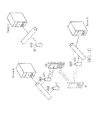
- FIGs. 1A-1D are schematic diagrams of an AP connection according to the prior art.
- the UE contains SIM credential information with ⁇ MCC ⁇ , MNC ⁇ (namely public land mobile network (PLMN) identity).
- PLMN public land mobile network
- the UE scans, it finds the AP1 which is passpoint enabled, and then starts to query the AP1 for 3rd Generation Partnership Project (3GPP) information via the ANQP.
- 3GPP 3rd Generation Partnership Project
- the AP1 replies ⁇ MCC ⁇ , MNC ⁇ to the UE, wherein the MCC ⁇ ⁇ MCC ⁇ and MNC ⁇ ⁇ MNC ⁇ .
- the UE knows that AP1 does not provide service to the UE, and will not try to associate with the AP1. As shown in FIG. 1B , the UE then moves to another location. The UE finds the AP2 which is passpoint enabled, and queries the AP2 of 3GPP information via the ANQP. However, the AP2 returns it does not contain 3GPP information. Then the UE will not try to associate with the AP2.
- the UE keeps moving to another place. It finds the AP3 which is passpoint disabled. Then the UE will not try to associate with the AP3. Finally, as shown in FIG. 1D , the UE finds the AP4 which is passpoint enabled. The UE queries the AP4 for 3GPP information via the ANQP. The AP4 replies the ⁇ MCC ⁇ , MNC ⁇ , namely the MNC and MCC value are identical to the UE. Then, the UE creates a profile associated with the AP4, and tries to establish a connection with the AP4.
- the drawback of the current design includes time consuming for the user to search for passpoint AP which is able to authenticate the user with back-end radius server.
- the worst case if there is no back-end radius server can authenticate the user, the user cannot get connection when the user tries the last AP of this area, which exhausts power to query useless information.
- the application aims at providing a method of access point connection in order to solve the abovementioned problem.
- the claimed method for a communication device in a wireless communication system comprises detecting a signal from an access point in the wireless communication system, wherein the signal indicates that the access point is passpoint enabled, transmitting a request message with credential information to the access point, and receiving a response message with an access point information from the access point.
- FIG. 2 illustrates a schematic diagram of an exemplary communication device 20.
- the communication device 20 can be a user equipment (UE) or a network node (i.e. access point, hereafter called AP).
- the UEs can be devices such as mobile phones, computer systems, machine type devices, etc.
- the network node and the UE can be seen as a transmitter or receiver according to transmission direction, e.g., for uplink (UL), the UE is the transmitter and the network node is the receiver, and for downlink (DL), the network node is the transmitter and the UE is the receiver.
- the communication device 20 may include a processing means 200 such as a microprocessor or Application Specific Integrated Circuit (ASIC), a storage unit 210 and a communication interfacing unit 220.
- ASIC Application Specific Integrated Circuit
- the storage unit 210 may be any data storage device that can store program code 214, for access by the processing means 200. Examples of the storage unit 210 include but are not limited to a subscriber identity module (SIM), read-only memory (ROM), flash memory, random-access memory (RAM), CD-ROMs, magnetic tape, hard disk, and optical data storage device.
- SIM subscriber identity module
- ROM read-only memory
- RAM random-access memory
- CD-ROMs compact disc-read-only memory
- magnetic tape magnetic tape
- hard disk hard disk
- optical data storage device optical data storage device.
- the communication interfacing unit 220 is preferably a radio transceiver and can exchange wireless signals with a network node according to processing results of the processing means 200.
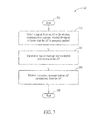
- FIG. 3 is a flowchart of a process 30 according to an example of the present disclosure.
- the process 30 is utilized in the UE for AP connection.
- the process 30 may be compiled into a program code 214 to be stored in the storage unit 210, and may include the following steps:
- the UE includes it's credential information in a request message of the ANQP, to the passpoint enabled AP.
- the passpoint enabled AP replies the AP information, which may include an AP list including APs capable to authenticate the UE and corresponding locations, to the UE.
- the UE uses pre-advertised information (i.e. credential information) to query which AP is able to authenticate the UE and where the AP is.
- the passpoint enabled AP which receives UE's credential information, forwards the UE's credential information to a back-end advertisement server, so that the server can decide the APs which is able to authenticate the UE and then transmit the AP list to the passpoint enabled AP.
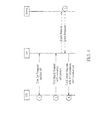
- Fig. 4 illustrate a message flow of AP connection via the ANQP.
- the UE scans passpoint enabled AP with active (probes) or passive (beacons). According to the scan result, the UE knows if there is any passpoint enabled AP.
- the UE pre-advertise it's credential information (i.e. public land mobile network (PLMN) or realm) to the passpoint enabled AP with "GAS Initial Request" message.
- PLMN public land mobile network
- the passpoint enabled AP forwards the UE's query, "Query Request” message, to the server.
- the server analyzes the query and replies "Query Response" message to the passpoint enabled AP.
- the "Query Response” message contains an AP list including APs capable of authenticating the UE and corresponding geo-spatial location of the APs.
- the UE retrieves the AP locations by "GAS Initial Response" from the passpoint enabled AP, and applies location service to find the nearest AP.
- the passpoint enabled AP replies a reason code claimed no authenticator or reply the "GAS Initial Response" with no AP list.
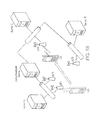
- the UE contains SIM credential information with ⁇ MCC ⁇ , MNC ⁇ .
- AP1 which is passpoint enabled, it starts to query AP1 for 3GPP information and pre-advertised it's credential information via the ANQP.
- the AP1 forwards the queries to the advertisement server.
- the server replies that the AP4 can authenticate the UE and the location of the AP4 to the UE via the AP1.
- the UE creates the profile associated with the AP4 and moves to the location of the AP4.
- the UE does not need to initiate ANQP sequence again because it already knows the AP4 can authenticate the credential of the UE. If there is no authenticator within this area, the AP1 will reply a reason code claimed no authenticator. Thus, the UE will leave and does not create profile.
- the server determines which AP can authenticate the credential of the UE and notifies the UE of APs capable of authentication and corresponding location (namely AP list). With such manner, the UE obtained the AP list can associate with an AP capable of authentication according to the AP list, so as to reduce the time consuming and power waste in AP search and ANQP sequence.
- the abovementioned steps of the processes including suggested steps can be realized by means that could be a hardware, a firmware known as a combination of a hardware device and computer instructions and data that reside as read-only software on the hardware device or an electronic system.
- hardware can include analog, digital and mixed circuits known as microcircuit, microchip, or silicon chip.
- the electronic system can include a system on chip (SOC), system in package (SiP), a computer on module (COM) and the communication device 20.
- SOC system on chip
- SiP system in package
- COM computer on module
- the present invention addresses to access point connection in Wi-Fi system.
- the UE allocates it's credential information (i.e. PLMN/realm) in a signaling/message of ANQP to the passpoint enable AP, to obtain the AP list from the server.
- PLMN/realm credential information
- AP connection can be accelerated with the AP list, and time consuming and power waste in AP search and ANQP sequence are reduced.
Landscapes
- Engineering & Computer Science (AREA)
- Computer Security & Cryptography (AREA)
- Computer Networks & Wireless Communication (AREA)
- Signal Processing (AREA)
- Power Engineering (AREA)
- Computer Hardware Design (AREA)
- Computing Systems (AREA)
- General Engineering & Computer Science (AREA)
- Mobile Radio Communication Systems (AREA)
Abstract
Description
- The present invention relates to a method used in a communication device in a wireless communication system, and more particularly, to a method of access point connection.
- Network discovery and selection is one of the most significant and fundamental functions of any Wi-Fi network by which user equipments (UEs) discover access points (APs) and determine their capabilities. UEs can use active (probes) or passive (beacons) scanning techniques to discover APs, determine which network is the best, and make a connection.
- Wi-Fi certified passpoint is launched as an industry-wide solution to streamline network access and eliminate the need for users to find and authenticate a network each time they connect. In Wi-Fi networks that do not support passpoint, users must search for and choose an AP, request the connection to the AP each time, and in many cases, must re-enter their authentication credentials. In other words, passpoint automates that entire process, enabling a seamless connection between Wi-Fi networks and UEs, all while delivering the highest Wi-Fi protected access 2 (WPA2) security. That is, passpoint is enabling a more cellular-like experience when connecting to Wi-Fi networks.
- Currently, a UE needs to find passpoint AP which is able to authenticate the UE with back-end radius server. Then the UE will get connection according to access network query protocol (ANQP) result. The ANQP is a query and response protocol used by the UE to obtain assistance information for connection.
- However, a problem on the current design of the AP connection process may rise. Please refer to
FIGs. 1A-1D , which are schematic diagrams of an AP connection according to the prior art. InFIG. 1A , the UE contains SIM credential information with {MCCα, MNCα} (namely public land mobile network (PLMN) identity). When the UE scans, it finds the AP1 which is passpoint enabled, and then starts to query the AP1 for 3rd Generation Partnership Project (3GPP) information via the ANQP. The AP1 replies {MCCβ, MNCβ} to the UE, wherein the MCCα ≠ MCCβ and MNCα ≠ MNCβ. Then the UE knows that AP1 does not provide service to the UE, and will not try to associate with the AP1. As shown inFIG. 1B , the UE then moves to another location. The UE finds the AP2 which is passpoint enabled, and queries the AP2 of 3GPP information via the ANQP. However, the AP2 returns it does not contain 3GPP information. Then the UE will not try to associate with the AP2. - Continuously, in
FIG. 1C , The UE keeps moving to another place. It finds the AP3 which is passpoint disabled. Then the UE will not try to associate with the AP3. Finally, as shown inFIG. 1D , the UE finds the AP4 which is passpoint enabled. The UE queries the AP4 for 3GPP information via the ANQP. The AP4 replies the {MCCα, MNCα}, namely the MNC and MCC value are identical to the UE. Then, the UE creates a profile associated with the AP4, and tries to establish a connection with the AP4. - The drawback of the current design includes time consuming for the user to search for passpoint AP which is able to authenticate the user with back-end radius server. The worst case, if there is no back-end radius server can authenticate the user, the user cannot get connection when the user tries the last AP of this area, which exhausts power to query useless information.
- The application aims at providing a method of access point connection in order to solve the abovementioned problem.
- This is achieved by a method of access point connection according to
claims - As will be seen more clearly from the detailed description following below, the claimed method for a communication device in a wireless communication system comprises detecting a signal from an access point in the wireless communication system, wherein the signal indicates that the access point is passpoint enabled, transmitting a request message with credential information to the access point, and receiving a response message with an access point information from the access point.
-
-
FIGs. 1A-1D are schematic diagrams of an access point connection according to the prior art. -
FIG. 2 is a schematic diagram of an exemplary communication device. -
FIG. 3 is a flowchart of an exemplary process according to the present disclosure. -
FIG. 4 is a schematic diagram of a message flow of access point connection according to the present disclosure. -
FIGs. 5A-5B are schematic diagrams of an access point connection according to the present disclosure. -
FIG. 2 illustrates a schematic diagram of anexemplary communication device 20. Thecommunication device 20 can be a user equipment (UE) or a network node (i.e. access point, hereafter called AP). The UEs can be devices such as mobile phones, computer systems, machine type devices, etc. Besides, the network node and the UE can be seen as a transmitter or receiver according to transmission direction, e.g., for uplink (UL), the UE is the transmitter and the network node is the receiver, and for downlink (DL), the network node is the transmitter and the UE is the receiver. Thecommunication device 20 may include a processing means 200 such as a microprocessor or Application Specific Integrated Circuit (ASIC), astorage unit 210 and acommunication interfacing unit 220. Thestorage unit 210 may be any data storage device that can storeprogram code 214, for access by the processing means 200. Examples of thestorage unit 210 include but are not limited to a subscriber identity module (SIM), read-only memory (ROM), flash memory, random-access memory (RAM), CD-ROMs, magnetic tape, hard disk, and optical data storage device. Thecommunication interfacing unit 220 is preferably a radio transceiver and can exchange wireless signals with a network node according to processing results of the processing means 200. - Please refer to
FIG. 3 , which is a flowchart of aprocess 30 according to an example of the present disclosure. Theprocess 30 is utilized in the UE for AP connection. Theprocess 30 may be compiled into aprogram code 214 to be stored in thestorage unit 210, and may include the following steps: - Step 300:
- Start.
- Step 310:
- Detect a signal from an AP in the wireless communication system, wherein the signal indicates that the AP is passpoint enabled.
- Step 320:
- Transmit a request message with credential information to the AP.
- Step 330:
- Receive a response message with an AP information, from the AP.
- Step 340:
- End.
- According to the
process 30, the UE includes it's credential information in a request message of the ANQP, to the passpoint enabled AP. On the other hand, the passpoint enabled AP replies the AP information, which may include an AP list including APs capable to authenticate the UE and corresponding locations, to the UE. In a word, the UE uses pre-advertised information (i.e. credential information) to query which AP is able to authenticate the UE and where the AP is. - Note that, the passpoint enabled AP, which receives UE's credential information, forwards the UE's credential information to a back-end advertisement server, so that the server can decide the APs which is able to authenticate the UE and then transmit the AP list to the passpoint enabled AP.
- In detail, please refer to
Fig. 4 , which illustrate a message flow of AP connection via the ANQP. Instep 1, the UE scans passpoint enabled AP with active (probes) or passive (beacons). According to the scan result, the UE knows if there is any passpoint enabled AP. Instep 2, The UE pre-advertise it's credential information (i.e. public land mobile network (PLMN) or realm) to the passpoint enabled AP with "GAS Initial Request" message. Instep 3, the passpoint enabled AP forwards the UE's query, "Query Request" message, to the server. The server analyzes the query and replies "Query Response" message to the passpoint enabled AP. Note that, the "Query Response" message contains an AP list including APs capable of authenticating the UE and corresponding geo-spatial location of the APs. Instep 4, the UE retrieves the AP locations by "GAS Initial Response" from the passpoint enabled AP, and applies location service to find the nearest AP. However, if there is no authenticator within this area can authenticate the UE's credential, then the passpoint enabled AP replies a reason code claimed no authenticator or reply the "GAS Initial Response" with no AP list. - Take an example based on
process 30. Please refer to 5A-5B, which illustrates the AP connection process according to the present disclosure. In the beginning, the UE contains SIM credential information with {MCCα, MNCα}. When the UE scans, it finds AP1 which is passpoint enabled, it starts to query AP1 for 3GPP information and pre-advertised it's credential information via the ANQP. The AP1 forwards the queries to the advertisement server. Then the server replies that the AP4 can authenticate the UE and the location of the AP4 to the UE via the AP1. After being notified, the UE creates the profile associated with the AP4 and moves to the location of the AP4. The UE does not need to initiate ANQP sequence again because it already knows the AP4 can authenticate the credential of the UE. If there is no authenticator within this area, the AP1 will reply a reason code claimed no authenticator. Thus, the UE will leave and does not create profile. - As can be seen, by including credential information in a signaling/message of the ANQP, the server determines which AP can authenticate the credential of the UE and notifies the UE of APs capable of authentication and corresponding location (namely AP list). With such manner, the UE obtained the AP list can associate with an AP capable of authentication according to the AP list, so as to reduce the time consuming and power waste in AP search and ANQP sequence.
- The abovementioned steps of the processes including suggested steps can be realized by means that could be a hardware, a firmware known as a combination of a hardware device and computer instructions and data that reside as read-only software on the hardware device or an electronic system. Examples of hardware can include analog, digital and mixed circuits known as microcircuit, microchip, or silicon chip. Examples of the electronic system can include a system on chip (SOC), system in package (SiP), a computer on module (COM) and the
communication device 20. - In conclusion, the present invention addresses to access point connection in Wi-Fi system. The UE allocates it's credential information (i.e. PLMN/realm) in a signaling/message of ANQP to the passpoint enable AP, to obtain the AP list from the server. As a result, AP connection can be accelerated with the AP list, and time consuming and power waste in AP search and ANQP sequence are reduced.
Claims (16)
- A method for a communication device in a wireless communication system, characterized by the method comprising:detecting a signal from an access point in the wireless communication system, wherein the signal indicates that the access point is passpoint enabled (310);transmitting a request message with credential information to the access point (320); andreceiving a response message with access point information from the access point (330).
- The method of claim 1, characterized in that the response message comprises an access point list including access points and locations corresponding to the access points, and further comprising:applying a location service to find the nearest access point according to the access point listcreating a profile associated with the found access point of the access point list; andmoving to the location of the found access point according to the access point list.
- The method of claim 1, characterized in that the credential information includes public land mobile network (PLMN) and realm.
- The method of claim 1, characterized in that the request message is defined by Access Network Query Protocol (ANQP) for querying 3GPP information of an ANQP serve, which is used for determining the access point list in which access points are able to authenticate the mobile device, and the response message is defined by ANQP for responding 3GPP information of the ANQP server.
- The method of claim 1, characterized in that the response message comprises a reason code claimed no access point capable of authentication.
- The method of claim 5, characterized in that the request message is defined by Access Network Query Protocol (ANQP) for querying 3GPP information of an ANQP server, which is used for determining at least an access point capable of authentication for the mobile device.
- A method for an access point in a wireless communication system, characterized by the method comprising:receiving a request message with credential information from a mobile device in the wireless communication system;forwarding the request message to a server;receiving a response with access point information, from the server; andtransmitting the response message to the mobile device.
- The method of claim 7, characterized in that the credential information includes PLMN and realm.
- The method of claim 7, characterized in that the access point information comprises access points and locations corresponding to the access points.
- The method of claim 9, characterized in that the request message is defined by Access Network Query Protocol (ANQP) for querying 3GPP information of the server, which is used for determining the access point list in which access points are able to authenticate the mobile device, and the response message is defined by ANQP for responding of 3GPP information of the server.
- The method of claim 7, characterized in that the server is used for determining an access point list in which access points are able to authenticate the mobile device.
- The method of claim 11, characterized in that the response indicates no access point list, and the step of transmitting the response message comprises:replying a reason code claimed no access point capable of authentication, to the mobile device.
- The method of claim 11, characterized in that the request message is defined by Access Network Query Protocol (ANQP) for querying 3GPP information of the server, and the response message is defined by ANQP for responding of 3GPP information of the server.
- A method for a server, characterized by the method comprising:receiving a request message with credential information of a mobile device of a wireless communication system, from an access point in the wireless communication system;determining an access point information; andtransmitting a response message with the access point information to the access point.
- The method of claim 14, characterized in that the credential information includes public land mobile network (PLMN) and realm.
- The method of claim 14, characterized in that the access point information comprises an access point list of access points that are able to authenticate the mobile device according to the credential information.
Applications Claiming Priority (2)
| Application Number | Priority Date | Filing Date | Title |
|---|---|---|---|
| US201462082618P | 2014-11-21 | 2014-11-21 | |
| US14/929,418 US20160150409A1 (en) | 2014-11-21 | 2015-11-02 | Method of Access Point Connection |
Publications (2)
| Publication Number | Publication Date |
|---|---|
| EP3024280A2 true EP3024280A2 (en) | 2016-05-25 |
| EP3024280A3 EP3024280A3 (en) | 2016-10-19 |
Family
ID=54695474
Family Applications (1)
| Application Number | Title | Priority Date | Filing Date |
|---|---|---|---|
| EP15194644.9A Withdrawn EP3024280A3 (en) | 2014-11-21 | 2015-11-16 | Method of access point connection |
Country Status (2)
| Country | Link |
|---|---|
| US (1) | US20160150409A1 (en) |
| EP (1) | EP3024280A3 (en) |
Families Citing this family (1)
| Publication number | Priority date | Publication date | Assignee | Title |
|---|---|---|---|---|
| US10924927B2 (en) | 2019-02-28 | 2021-02-16 | At&T Intellectual Property I, L.P. | Wireless network association and authentication system |
Family Cites Families (7)
| Publication number | Priority date | Publication date | Assignee | Title |
|---|---|---|---|---|
| JP4290967B2 (en) * | 2002-11-26 | 2009-07-08 | Necインフロンティア株式会社 | Wireless LAN network QoS control system, base station, terminal, QoS control method and program |
| US7532898B2 (en) * | 2006-01-19 | 2009-05-12 | International Business Machines Corporation | Generating and dynamically updating databases of WIFI hotspots locations and performance metrics via location mappers |
| CN102017781B (en) * | 2008-05-09 | 2015-06-17 | 马维尔国际贸易有限公司 | Systems and methods for providing location-aware WI-FI access for a portable device |
| CN103222292B (en) * | 2010-09-16 | 2016-08-10 | 诺基亚技术有限公司 | The dynamic account utilizing safe hot spot networks creates |
| US9907014B2 (en) * | 2012-07-03 | 2018-02-27 | Futurewei Technologies, Inc. | System and method for subscription and policy provisioning |
| US9622156B2 (en) * | 2012-10-19 | 2017-04-11 | Futurewei Technologies, Inc. | System and method for efficient access network query protocol (ANQP) discovery of multiple access points (APs) |
| US9277495B2 (en) * | 2013-03-05 | 2016-03-01 | Futurewei Technologies, Inc. | System and method for adaptive access network query protocol (ANQP) element provisioning |
-
2015
- 2015-11-02 US US14/929,418 patent/US20160150409A1/en not_active Abandoned
- 2015-11-16 EP EP15194644.9A patent/EP3024280A3/en not_active Withdrawn
Non-Patent Citations (1)
| Title |
|---|
| None |
Also Published As
| Publication number | Publication date |
|---|---|
| EP3024280A3 (en) | 2016-10-19 |
| US20160150409A1 (en) | 2016-05-26 |
Similar Documents
| Publication | Publication Date | Title |
|---|---|---|
| EP3453197B1 (en) | Method and apparatus for creating and using a roaming list based on a user roaming plan | |
| EP2612515B1 (en) | Roaming between networks employing different authentication protocols | |
| US10149234B2 (en) | Network access method and mobile communication terminal | |
| US8289926B2 (en) | Method of setting radio access capability in a wireless communications system and related communication device | |
| EP3402253B1 (en) | Core network control plane device selection method and apparatus | |
| EP3031243B1 (en) | Method and device for accepting or rejecting a request associated with a mobile device wirelessly connecting to a network | |
| WO2019024816A1 (en) | Method and apparatus for transmitting information | |
| JP2008167489A (en) | System and method for selecting a cellular network over a wireless local area network | |
| US10716043B2 (en) | Access point handover method and device | |
| KR20160077980A (en) | SCHEME FOR SCANNING Radio Access Technology in cellular communication system | |
| US9344886B2 (en) | Communication apparatus and control method | |
| US20180124691A1 (en) | Method and apparatus for accessing wireless network with smart device | |
| US12470917B2 (en) | Registering a user equipment to a communication network | |
| US20240364755A1 (en) | IMS Support for Non-Voice Services | |
| US10129730B2 (en) | Wireless terminal, search process method for wireless terminal, and wireless communication system | |
| US11224006B2 (en) | Apparatus and methods for anonymous paired device discovery in wireless communications systems | |
| US8594064B2 (en) | Mode steering in a wireless communication network | |
| WO2022056227A1 (en) | Private enterprise network identifier | |
| US20160150409A1 (en) | Method of Access Point Connection | |
| CN117354895A (en) | Handle PLMN prioritization | |
| CN103369630B (en) | An AP response method, a method for discovering an AP, an AP, and a terminal | |
| US9282457B2 (en) | Method of sharing credential and wireless communication system thereof | |
| WO2016027545A1 (en) | Wireless communication device and wireless communication method | |
| US11096058B2 (en) | Reconfiguration of communications devices | |
| WO2025208614A1 (en) | Aiot device id management |
Legal Events
| Date | Code | Title | Description |
|---|---|---|---|
| AK | Designated contracting states |
Kind code of ref document: A2 Designated state(s): AL AT BE BG CH CY CZ DE DK EE ES FI FR GB GR HR HU IE IS IT LI LT LU LV MC MK MT NL NO PL PT RO RS SE SI SK SM TR |
|
| AX | Request for extension of the european patent |
Extension state: BA ME |
|
| PUAI | Public reference made under article 153(3) epc to a published international application that has entered the european phase |
Free format text: ORIGINAL CODE: 0009012 |
|
| PUAL | Search report despatched |
Free format text: ORIGINAL CODE: 0009013 |
|
| AK | Designated contracting states |
Kind code of ref document: A3 Designated state(s): AL AT BE BG CH CY CZ DE DK EE ES FI FR GB GR HR HU IE IS IT LI LT LU LV MC MK MT NL NO PL PT RO RS SE SI SK SM TR |
|
| AX | Request for extension of the european patent |
Extension state: BA ME |
|
| RIC1 | Information provided on ipc code assigned before grant |
Ipc: H04W 12/06 20090101ALI20160909BHEP Ipc: H04W 48/14 20090101AFI20160909BHEP |
|
| 17P | Request for examination filed |
Effective date: 20170419 |
|
| RBV | Designated contracting states (corrected) |
Designated state(s): AL AT BE BG CH CY CZ DE DK EE ES FI FR GB GR HR HU IE IS IT LI LT LU LV MC MK MT NL NO PL PT RO RS SE SI SK SM TR |
|
| 17Q | First examination report despatched |
Effective date: 20180502 |
|
| STAA | Information on the status of an ep patent application or granted ep patent |
Free format text: STATUS: THE APPLICATION HAS BEEN WITHDRAWN |
|
| 18W | Application withdrawn |
Effective date: 20180905 |