EP3024211A1 - Method and device for announcing voice call - Google Patents
Method and device for announcing voice call Download PDFInfo
- Publication number
- EP3024211A1 EP3024211A1 EP15192413.1A EP15192413A EP3024211A1 EP 3024211 A1 EP3024211 A1 EP 3024211A1 EP 15192413 A EP15192413 A EP 15192413A EP 3024211 A1 EP3024211 A1 EP 3024211A1
- Authority
- EP
- European Patent Office
- Prior art keywords
- prompt
- voice
- voice information
- broadcast
- information
- Prior art date
- Legal status (The legal status is an assumption and is not a legal conclusion. Google has not performed a legal analysis and makes no representation as to the accuracy of the status listed.)
- Granted
Links
Images


Classifications
-
- H—ELECTRICITY
- H04—ELECTRIC COMMUNICATION TECHNIQUE
- H04L—TRANSMISSION OF DIGITAL INFORMATION, e.g. TELEGRAPHIC COMMUNICATION
- H04L65/00—Network arrangements, protocols or services for supporting real-time applications in data packet communication
- H04L65/1066—Session management
-
- H—ELECTRICITY
- H04—ELECTRIC COMMUNICATION TECHNIQUE
- H04M—TELEPHONIC COMMUNICATION
- H04M19/00—Current supply arrangements for telephone systems
- H04M19/02—Current supply arrangements for telephone systems providing ringing current or supervisory tones, e.g. dialling tone or busy tone
- H04M19/04—Current supply arrangements for telephone systems providing ringing current or supervisory tones, e.g. dialling tone or busy tone the ringing-current being generated at the substations
- H04M19/048—Arrangements providing optical indication of the incoming call, e.g. flasher circuits
Definitions
- the present disclosure relates to the field of communication technology and, more particularly, to a method and a device for announcing a voice call.
- Smart camera plays a very important role in the aspect of monitoring home security.
- images captured by the camera are obtained by a terminal device, and when performing a voice conversation, the voice is usually sent to a telecommuting opposite terminal directly; in this way, the user will be frightened without mental preparation, and thus the user experience is poor.
- the embodiments of the present disclosure provide a method and a device for announcing a voice call.
- a method for announcing a voice call including:
- the issuing prompt information of broadcasting the voice information is to be broadcast may include:
- the method for announcing a voice call may further include:
- the method for announcing a voice call may further include: broadcasting the voice information.
- the issuing prompt information of broadcasting the voice information may include:
- a device for announcing a voice call including:
- the prompt module may include:
- the device may further include:
- the device may further include:
- the prompt module may include:
- a device for announcing a voice call including:
- the present invention also provides a computer program, which when executed on a processor of a pickup device, e.g. a smart camera, performs the above method.
- a pickup device e.g. a smart camera
- the present invention also provides a computer-readable storage medium comprising such a computer program.
- the technical solutions provided by the embodiments of the present disclosure may include the following advantageous effects: the time interval between the current time at which the voice information is received and the time point corresponding to the most recent previous voice broadcasting is determined, and whether the prompt information should be issued is determined by a relationship between the time interval and the set time period; in this way, it is helpful for announcing the user located at a side of the pickup device of the voice information from the terminal device, such that the user could have an adequate mental preparation to listen to the voice information without being frightened, and the experience of the user during the voice communication is improved.
- Fig. 1 is a flow chart of a method for announcing a voice call, according to an exemplary embodiment.
- the method for announcing a voice call may be implemented in smart pickup devices (such as a smart vidicon, and a smart camera). As shown in Fig. 1 , the method for announcing a voice call includes the following steps S101-S103.
- step S101 a current time at which voice information from a terminal device is received is acquired.
- the pickup device may be provided with a communication module which could connect to the Internet, establish a communication connection with the terminal device via the Internet by the communication module, and receive voice information from the terminal device via the Internet.
- the current time is determined to be A.M. 10:05 November 12, 2014.
- step S102 a time interval between the current time and a time point corresponding to most recent previous voice broadcasting is determined.
- the time of the most recent previous voice broadcasting is A.M. 10:00 November 12, 2014, the time interval needs to be cumulated from 10:00, and the voice information is received at 10:05, then the time interval between the current time and the most recent previous voice broadcasting is 5 minutes.
- step S103 if the time interval is greater than a set time period, prompt information of broadcasting the voice information is issued.
- the set time period may be set according to individual habit of the user. For example, the user has set the set time period to be 3 minutes. At this time, the time interval (5 minutes) between the current time and the time point corresponding to the most recent previous voice broadcasting which is obtained in the above step S102 is greater than 3 minutes prescribed by the set time period, so that the voice prompt should be broadcast; on the contrary, if the time interval is smaller than the set time period, no voice prompt needs to be broadcast, and the above voice information may be broadcast directly.
- the time interval between the current time at which the voice information is received and the time point corresponding to the most recent previous voice broadcasting is determined, and whether the prompt information should be issued is determined by a relationship between the time interval and the set time period; in this way, it is helpful for announcing the user located at a side of the pickup device of the voice information from the terminal device, such that the user could have an adequate mental preparation to listen to the voice information without being frightened, and the experience of the user during the voice communication is improved.
- step S103 may include: prompting that the voice information is to be broadcast via a prompt voice.
- step S103 may include: prompting that the voice information is to be broadcast via a flickering of an indicating lamp.
- step S103 may include: controlling a player to broadcast the voice information with a volume of the voice information gradually increasing from low to loud.
- the method for announcing the voice call may include: broadcasting the voice information.
- whether the prompt information should be issued is determined by the relationship between the time interval and the set time period; in this way, it is helpful for announcing the user located at a side of the pickup device of the voice information from the terminal device, such that the user could have an adequate mental preparation to listen to the voice information without being frightened, and the experience of the user during the voice communication is improved.
- Fig. 2 is a flow chart of a method for announcing a voice call, according to a first exemplary embodiment.
- the user is prompted via a voice prompt that the voice information from the terminal device is to be broadcast.
- the method includes the following steps.
- step S201 a current time at which voice information from a terminal device is received is acquired.
- step S201 the depictions to the above step S101 may be referred to, which is not repeated herein.
- step 202 a time interval between the current time and a time point corresponding to most recent previous voice broadcasting is determined.
- step S202 the depictions to the above step S102 may be referred to, which is not repeated herein.
- step S203 if the time interval is greater than a set time period, a prompt voice is broadcast to prompt that voice information is to be broadcast.
- the user may be prompted that the voice information is to be broadcast by broadcasting the prompt voice such as "Ding-dong".
- the user may set her/his favorite prompt voice by the pickup device; or record her/his voice and then broadcast her/his voice when the pickup device needs to broadcast the prompt voice; or record voice of the user at the side of the terminal device, so as to ensure consistence between the prompt voice and the broadcast voice when the pickup device needs to broadcast the prompt voice, which greatly improves the experience of the user at the side of the pickup device when listening to the voice.
- the method for announcing the voice call may further include:
- the pickup device may broadcast the prompt voice consistent with the sound of the voice information by recognizing the sound of the voice information from the terminal device and matching the sound with the stored sound of the user, which improves the experience of the user when listening to the voice information to a greater extent.
- Fig. 3 is a flow chart of a method for announcing a voice call, according to a second exemplary embodiment.
- the user is prompted that the voice information from the terminal device is to be broadcast via a flicking of an indicating lamp.
- the method includes the following steps.
- step S301 a current time at which voice information of a terminal device is received is acquired.
- step S301 the depictions to the above step S101 may be referred to, which is not repeated herein.
- step 302 a time interval between the current time and a time point corresponding to most recent previous voice broadcasting is determined.
- step S302 the depictions to the above step S102 may be referred to, which is not repeated herein.
- step S303 if the time interval is greater than a set time period, the indicating lamp is controlled to flicker in a set frequency so as to prompt that the voice information is to be broadcast.
- the indicating lamp is used for indicating a working status of the pickup device. For example, “normally on” represents that the pickup device is in a normal working status, and “flickering" represents that the pickup device is in a course of establishing a connection with a communication network.
- the indicating lamp may be controlled to flicker in a set frequency so as to prompt the user that the voice information is to be broadcast.
- the user may make a sufficient mental preparation to listen to the voice information from the terminal device without being frightened, and the experience of the user during the voice communication is improved.
- Fig. 4 is a flow chart of a method for announcing a voice call, according to a third exemplary embodiment.
- the voice information from the terminal device being broadcast is prompted via a volume of a player broadcasting the voice information.
- the method includes the following steps.
- step S401 a current time at which voice information of a terminal device is received is acquired.
- step S401 the depictions to the above step S101 may be referred to, which is not repeated herein.
- step 302 a time interval between the current time and a time point corresponding to most recent previous voice broadcasting is determined.
- step S402 the depictions to the above step S102 may be referred to, which is not repeated herein.
- step S403 if the time interval is greater than a set time period, a player is controlled to broadcast the voice information with a volume of the voice information gradually increasing from low to loud.
- the voice information may be broadcast to the user by controlling the player to broadcast the voice information with a volume of the voice information gradually increasing from low to loud.
- the user listens to a relatively low sound of the voice information, he/she may make a sufficient mental preparation to listen to the voice information from the terminal device without being frightened, and the experience of the user during the voice communication is improved.
- the above method may further include the following step: broadcasting the voice information. After prompting the user that the voice information needs to be broadcast, the voice is broadcast; in this way, the user may feel very comfortable during listening to the voice information broadcast by the pickup device, which improves the user experience greatly.
- Fig. 5 is a block diagram of a device for announcing a voice call, according to an exemplary embodiment. As shown in Fig. 5 , the device for announcing a voice call includes:
- the prompt module 53 may include:
- the device further includes:
- the device further includes:
- the prompt module 53 may further include:
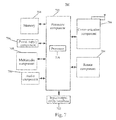
- Fig. 7 is a block diagram of a device 700 suitable for announcing a voice call, according to an exemplary embodiment.
- the device 700 may be a mobile phone, a computer, a digital broadcast terminal, a messaging device, a gaming console, a tablet, a medical device, exercise equipment, a personal digital assistant, and the like.
- the device 700 may include one or more of the following components: a processing component 702, a memory 704, a power component 706, a multimedia component 708, an audio component 710, an input/output (I/O) interface 712, a sensor component 714, and a communication component 716.
- a processing component 702 a memory 704
- a power component 706 a multimedia component 708, an audio component 710, an input/output (I/O) interface 712, a sensor component 714, and a communication component 716.
- I/O input/output
- the processing component 702 typically controls overall operations of the device 700, such as the operations associated with display, telephone calls, data communications, camera operations, and recording operations.
- the processing component 702 may include one or more processors 720 to execute instructions to perform all or part of the steps in the above described methods.
- the processing component 702 may include one or more modules which facilitate the interaction between the processing component 702 and other components.
- the processing component 702 may include a multimedia module to facilitate the interaction between the multimedia component 708 and the processing component 702.
- the memory 704 is configured to store various types of data to support the operation of the device 700. Examples of such data include instructions for any applications or methods operated on the device 700, contact data, phonebook data, messages, pictures, video, etc.
- the memory 704 may be implemented using any type of volatile or non-volatile memory devices, or a combination thereof, such as a static random access memory (SRAM), an electrically erasable programmable read-only memory (EEPROM), an erasable programmable read-only memory (EPROM), a programmable read-only memory (PROM), a read-only memory (ROM), a magnetic memory, a flash memory, a magnetic or optical disk.
- SRAM static random access memory
- EEPROM electrically erasable programmable read-only memory
- EPROM erasable programmable read-only memory
- PROM programmable read-only memory
- ROM read-only memory
- magnetic memory a magnetic memory
- flash memory a flash memory
- magnetic or optical disk a magnetic or optical
- the power component 706 provides power to various components of the device 700.
- the power component 706 may include a power management system, one or more power sources, and any other components associated with the generation, management, and distribution of power in the device 700.
- the multimedia component 708 includes a screen providing an output interface between the device 700 and the user.
- the screen may include a liquid crystal display (LCD) and a touch panel (TP). If the screen includes the touch panel, the screen may be implemented as a touch screen to receive input signals from the user.
- the touch panel includes one or more touch sensors to sense touches, swipes, and gestures on the touch panel. The touch sensors may not only sense a boundary of a touch or swipe action, but also sense a period of time and a pressure associated with the touch or swipe action.
- the multimedia component 708 includes a front camera and/or a rear camera.
- the front camera and/or the rear camera may receive an external multimedia datum while the device 700 is in an operation mode, such as a photographing mode or a video mode.
- an operation mode such as a photographing mode or a video mode.
- Each of the front camera and the rear camera may be a fixed optical lens system or have focus and optical zoom capability.
- the audio component 710 is configured to output and/or input audio signals.
- the audio component 710 includes a microphone ("MIC") configured to receive an external audio signal when the device 700 is in an operation mode, such as a call mode, a recording mode, and a voice recognition mode.
- the received audio signal may be further stored in the memory 704 or transmitted via the communication component 716.
- the audio component 710 further includes a speaker to output audio signals.
- the I/O interface 712 provides an interface between the processing component 702 and peripheral interface modules, such as a keyboard, a click wheel, buttons, and the like.
- the buttons may include, but are not limited to, a home button, a volume button, a starting button, and a locking button.
- the sensor component 714 includes one or more sensors to provide status assessments of various aspects of the device 700. For instance, the sensor component 714 may detect an open/closed status of the device 700, relative positioning of components, e.g., the display and the keypad, of the device 700, a change in position of the device 700 or a component of the device 700, a presence or absence of user contact with the device 700, an orientation or an acceleration/deceleration of the device 700, and a change in temperature of the device 700.
- the sensor component 714 may include a proximity sensor configured to detect the presence of nearby objects without any physical contact.
- the sensor component 714 may also include a light sensor, such as a CMOS or CCD image sensor, for use in imaging applications.
- the sensor component 714 may also include an accelerometer sensor, a gyroscope sensor, a magnetic sensor, a pressure sensor, or a temperature sensor.
- the communication component 716 is configured to facilitate communication, wired or wirelessly, between the device 700 and other devices.
- the device 700 can access a wireless network based on a communication standard, such as WiFi, 2G, or 3G, or a combination thereof.
- the communication component 716 receives a broadcast signal or broadcast associated information from an external broadcast management system via a broadcast channel.
- the communication component 716 further includes a near field communication (NFC) module to facilitate short-range communications.
- the NFC module may be implemented based on a radio frequency identification (RFID) technology, an infrared data association (IrDA) technology, an ultra-wideband (UWB) technology, a Bluetooth (BT) technology, and other technologies.
- RFID radio frequency identification
- IrDA infrared data association
- UWB ultra-wideband
- BT Bluetooth
- the device 700 may be implemented with one or more application specific integrated circuits (ASICs), digital signal processors (DSPs), digital signal processing devices (DSPDs), programmable logic devices (PLDs), field programmable gate arrays (FPGAs), controllers, micro-controllers, microprocessors, or other electronic components, for performing the above described methods.
- ASICs application specific integrated circuits
- DSPs digital signal processors
- DSPDs digital signal processing devices
- PLDs programmable logic devices
- FPGAs field programmable gate arrays
- controllers micro-controllers, microprocessors, or other electronic components, for performing the above described methods.
- non-transitory computer readable storage medium including instructions, such as included in the memory 704, executable by the processor 720 in the device 700, for performing the above-described methods.
- the non-transitory computer-readable storage medium may be a ROM, a RAM, a CD-ROM, a magnetic tape, a floppy disc, an optical data storage device, and the like.
Landscapes
- Engineering & Computer Science (AREA)
- Signal Processing (AREA)
- Business, Economics & Management (AREA)
- General Business, Economics & Management (AREA)
- Multimedia (AREA)
- Computer Networks & Wireless Communication (AREA)
- Telephone Function (AREA)
- Telephonic Communication Services (AREA)
- Studio Devices (AREA)
- Meter Arrangements (AREA)
- Machine Translation (AREA)
Abstract
Description
- The present disclosure relates to the field of communication technology and, more particularly, to a method and a device for announcing a voice call.
- Smart camera plays a very important role in the aspect of monitoring home security. In related art, images captured by the camera are obtained by a terminal device, and when performing a voice conversation, the voice is usually sent to a telecommuting opposite terminal directly; in this way, the user will be frightened without mental preparation, and thus the user experience is poor.
- In order to solve the problem existing in the related art, the embodiments of the present disclosure provide a method and a device for announcing a voice call.
- According to a first aspect of embodiments of the present disclosure, there is provided a method for announcing a voice call, including:
- acquiring a current time at which voice information from a terminal device is received;
- determining a time interval between the current time and a time point corresponding to most recent previous voice broadcasting; and
- if the time interval is greater than a set time period, issuing of prompt information that the voice information is to be broadcast.
- In one embodiment, the issuing prompt information of broadcasting the voice information is to be broadcast may include:
- broadcasting a prompt voice to prompt that the voice information is to be broadcast; or,
- controlling an indicating lamp to flicker in a set frequency so as to prompt that the voice information is to be broadcast.
- In one embodiment, the method for announcing a voice call may further include:
- recognizing sound of the voice information from the terminal device;
- matching the sound of the voice information with stored sound; and
- if the matching is successful, broadcasting the stored sound as the prompt voice; and
- if the matching fails, broadcasting a prompt voice to prompt that the voice information is to be broadcast.
- In one embodiment, the method for announcing a voice call may further include: broadcasting the voice information.
- In one embodiment, the issuing prompt information of broadcasting the voice information may include:
- controlling a player to broadcast the voice information with a volume of the voice information increasing gradually from low to loud.
- According to a second aspect of embodiments of the present disclosure, there is provided a device for announcing a voice call, including:
- an acquiring module configured to acquire a current time at which voice information from a terminal device is received;
- a determination module configured to determine a time interval between the current time and a time point corresponding to most recent previous voice broadcasting; and a prompt module configured to, if the time interval is greater than a set time period, issue prompt information that the voice information is to be broadcast.
- In one embodiment, the prompt module may include:
- a first prompt submodule configured to broadcast a prompt voice to prompt that the voice information is to be broadcast; and/or,
- a second prompt submodule configured to prompt that the voice information is to be broadcast via a flickering of an indicating lamp.
- In one embodiment, the device may further include:
- a recognition module configured to recognize sound of the voice information from the terminal device; and
- a matching module configured to match the sound of the voice information with stored sound;
- the prompt module being configured such that, if the matching is successful, it broadcasts the stored sound as the prompt voice; and if the matching fails, it broadcasts a prompt voice to prompt that the voice information is to be broadcast.
- In one embodiment, the device may further include:
- a broadcasting module configured to broadcast the voice information.
- In one embodiment, the prompt module may include:
- a third prompt submodule configured to control a player to broadcast the voice information with a volume of the voice information increasing gradually from low to loud.
- According to a third aspect of embodiments of the present disclosure, there is provided a device for announcing a voice call, including:
- a processor; and
- a memory for storing instructions executable by the processor;
- wherein the processor is configured to:
- acquire a current time at which voice information from a terminal device is received; determine a time interval between the current time and a time point corresponding to most recent previous voice broadcasting; and
- if the time interval is greater than a set time period, issue prompt information that the voice information is to be broadcast.
- The present invention also provides a computer program, which when executed on a processor of a pickup device, e.g. a smart camera, performs the above method. The present invention also provides a computer-readable storage medium comprising such a computer program.
- The technical solutions provided by the embodiments of the present disclosure may include the following advantageous effects: the time interval between the current time at which the voice information is received and the time point corresponding to the most recent previous voice broadcasting is determined, and whether the prompt information should be issued is determined by a relationship between the time interval and the set time period; in this way, it is helpful for announcing the user located at a side of the pickup device of the voice information from the terminal device, such that the user could have an adequate mental preparation to listen to the voice information without being frightened, and the experience of the user during the voice communication is improved.
- It is to be understood that both the foregoing general description and the following detailed description are exemplary and explanatory only and are not restrictive of the invention.
- The accompanying drawings, which are incorporated in and constitute a part of this specification, illustrate embodiments consistent with the invention and, together with the description, serve to explain the principles of the invention.
-
Fig. 1 is a flow chart of a method for announcing a voice call, according to an exemplary embodiment. -
Fig. 2 is a flow chart of a method for announcing a voice call, according to a first exemplary embodiment. -
Fig. 3 is a flow chart of a method for announcing a voice call, according to a second exemplary embodiment. -
Fig. 4 is a flow chart of a method for announcing a voice call, according to a third exemplary embodiment. -
Fig. 5 is a block diagram of a device for announcing a voice call, according to an exemplary embodiment. -
Fig. 6 is a block diagram of a device for announcing a voice call, according to another exemplary embodiment. -
Fig. 7 is a block diagram of a device suitable for announcing a voice call, according to an exemplary embodiment. - Reference will now be made in detail to exemplary embodiments, examples of which are illustrated in the accompanying drawings. The following description refers to the accompanying drawings in which the same numbers in different drawings represent the same or similar elements unless otherwise represented. The implementations set forth in the following description of exemplary embodiments do not represent all implementations consistent with the invention. Instead, they are merely examples of devices and methods consistent with some aspects related to the invention as recited in the appended claims.
-
Fig. 1 is a flow chart of a method for announcing a voice call, according to an exemplary embodiment. The method for announcing a voice call may be implemented in smart pickup devices (such as a smart vidicon, and a smart camera). As shown inFig. 1 , the method for announcing a voice call includes the following steps S101-S103. - In step S101, a current time at which voice information from a terminal device is received is acquired.
- In one embodiment, the pickup device may be provided with a communication module which could connect to the Internet, establish a communication connection with the terminal device via the Internet by the communication module, and receive voice information from the terminal device via the Internet. For example, the current time is determined to be A.M. 10:05 November 12, 2014.
- In step S102, a time interval between the current time and a time point corresponding to most recent previous voice broadcasting is determined.
- For example, the time of the most recent previous voice broadcasting is A.M. 10:00 November 12, 2014, the time interval needs to be cumulated from 10:00, and the voice information is received at 10:05, then the time interval between the current time and the most recent previous voice broadcasting is 5 minutes.
- In step S103, if the time interval is greater than a set time period, prompt information of broadcasting the voice information is issued.
- In one embodiment, the set time period may be set according to individual habit of the user. For example, the user has set the set time period to be 3 minutes. At this time, the time interval (5 minutes) between the current time and the time point corresponding to the most recent previous voice broadcasting which is obtained in the above step S102 is greater than 3 minutes prescribed by the set time period, so that the voice prompt should be broadcast; on the contrary, if the time interval is smaller than the set time period, no voice prompt needs to be broadcast, and the above voice information may be broadcast directly.
- In the present embodiment, the time interval between the current time at which the voice information is received and the time point corresponding to the most recent previous voice broadcasting is determined, and whether the prompt information should be issued is determined by a relationship between the time interval and the set time period; in this way, it is helpful for announcing the user located at a side of the pickup device of the voice information from the terminal device, such that the user could have an adequate mental preparation to listen to the voice information without being frightened, and the experience of the user during the voice communication is improved.
- In one embodiment, step S103 may include: prompting that the voice information is to be broadcast via a prompt voice.
- In one embodiment, step S103 may include: prompting that the voice information is to be broadcast via a flickering of an indicating lamp.
- In one embodiment, step S103 may include: controlling a player to broadcast the voice information with a volume of the voice information gradually increasing from low to loud.
- In one embodiment, the method for announcing the voice call may include: broadcasting the voice information.
- In the above method provided by the embodiments of the present disclosure, whether the prompt information should be issued is determined by the relationship between the time interval and the set time period; in this way, it is helpful for announcing the user located at a side of the pickup device of the voice information from the terminal device, such that the user could have an adequate mental preparation to listen to the voice information without being frightened, and the experience of the user during the voice communication is improved.
- Hereinafter, the technical solutions provided by the embodiments of the present disclosure will be explained by using the particular embodiments.
-
Fig. 2 is a flow chart of a method for announcing a voice call, according to a first exemplary embodiment. In the embodiments of the present disclosure, the user is prompted via a voice prompt that the voice information from the terminal device is to be broadcast. As shown inFig. 2 , the method includes the following steps.
In step S201, a current time at which voice information from a terminal device is received is acquired. - As to the depictions to step S201, the depictions to the above step S101 may be referred to, which is not repeated herein.
- In step 202, a time interval between the current time and a time point corresponding to most recent previous voice broadcasting is determined.
- As to the depictions to step S202, the depictions to the above step S102 may be referred to, which is not repeated herein.
- In step S203, if the time interval is greater than a set time period, a prompt voice is broadcast to prompt that voice information is to be broadcast.
- For example, the user may be prompted that the voice information is to be broadcast by broadcasting the prompt voice such as "Ding-dong". Furthermore, the user may set her/his favorite prompt voice by the pickup device; or record her/his voice and then broadcast her/his voice when the pickup device needs to broadcast the prompt voice; or record voice of the user at the side of the terminal device, so as to ensure consistence between the prompt voice and the broadcast voice when the pickup device needs to broadcast the prompt voice, which greatly improves the experience of the user at the side of the pickup device when listening to the voice.
- Alternatively, the method for announcing the voice call may further include:
- recognizing sound of the voice information from the terminal device;
- matching the sound of the voice information with stored sound; and
- if the sound of the voice information is matched with the stored sound, broadcasting the stored sound as the prompt voice; and if the sound of the voice information is not matched with the stored sound, broadcasting the prompt voice to prompt that the voice information is to be broadcast.
- The pickup device may broadcast the prompt voice consistent with the sound of the voice information by recognizing the sound of the voice information from the terminal device and matching the sound with the stored sound of the user, which improves the experience of the user when listening to the voice information to a greater extent.
-
Fig. 3 is a flow chart of a method for announcing a voice call, according to a second exemplary embodiment. In the embodiments of the present disclosure, the user is prompted that the voice information from the terminal device is to be broadcast via a flicking of an indicating lamp. As shown inFig. 3 , the method includes the following steps. - In step S301, a current time at which voice information of a terminal device is received is acquired.
- As to the depictions to step S301, the depictions to the above step S101 may be referred to, which is not repeated herein.
- In step 302, a time interval between the current time and a time point corresponding to most recent previous voice broadcasting is determined.
- As to the depictions to step S302, the depictions to the above step S102 may be referred to, which is not repeated herein.
- In step S303, if the time interval is greater than a set time period, the indicating lamp is controlled to flicker in a set frequency so as to prompt that the voice information is to be broadcast.
- The indicating lamp is used for indicating a working status of the pickup device. For example, "normally on" represents that the pickup device is in a normal working status, and "flickering" represents that the pickup device is in a course of establishing a connection with a communication network. In this embodiment, the indicating lamp may be controlled to flicker in a set frequency so as to prompt the user that the voice information is to be broadcast. When perceiving the flickering of the indicating lamp, the user may make a sufficient mental preparation to listen to the voice information from the terminal device without being frightened, and the experience of the user during the voice communication is improved.
-
Fig. 4 is a flow chart of a method for announcing a voice call, according to a third exemplary embodiment. In the embodiments of the present disclosure, the voice information from the terminal device being broadcast is prompted via a volume of a player broadcasting the voice information. As shown inFig. 4 , the method includes the following steps. - In step S401, a current time at which voice information of a terminal device is received is acquired.
- As to the depictions to step S401, the depictions to the above step S101 may be referred to, which is not repeated herein.
- In step 302, a time interval between the current time and a time point corresponding to most recent previous voice broadcasting is determined.
- As to the depictions to step S402, the depictions to the above step S102 may be referred to, which is not repeated herein.
- In step S403, if the time interval is greater than a set time period, a player is controlled to broadcast the voice information with a volume of the voice information gradually increasing from low to loud.
- In this embodiment, the voice information may be broadcast to the user by controlling the player to broadcast the voice information with a volume of the voice information gradually increasing from low to loud. When the user listens to a relatively low sound of the voice information, he/she may make a sufficient mental preparation to listen to the voice information from the terminal device without being frightened, and the experience of the user during the voice communication is improved.
- Alternatively, the above method may further include the following step: broadcasting the voice information. After prompting the user that the voice information needs to be broadcast, the voice is broadcast; in this way, the user may feel very comfortable during listening to the voice information broadcast by the pickup device, which improves the user experience greatly.
-
Fig. 5 is a block diagram of a device for announcing a voice call, according to an exemplary embodiment. As shown inFig. 5 , the device for announcing a voice call includes: - an acquiring
module 51 configured to acquire a current time at which voice information from a terminal device is received; - a
determination module 52 configured to determine a time interval between the current time and a time point corresponding to most recent previous voice broadcasting; and - a
prompt module 53 configured to, if the time interval is greater than a set time period, issue prompt information of broadcasting the voice information. - As shown in
Fig. 6 , theprompt module 53 may include: - a first
prompt submodule 531 configured to prompt that the voice information is to be broadcast via a prompt voice; and/or, - a second
prompt submodule 532 configured to prompt that the voice information is to be broadcast via a flickering of an indicating lamp. - In one embodiment, the device further includes:
- a recognition module (not shown in the drawings) configured to recognize sound of the voice information from the terminal device;
- a matching module (not shown in the drawings) configured to match the sound of the voice information with stored sound; and
- if the matching is successful, the
prompt module 53 broadcasts the stored sound as the prompt voice; and if the matching fails, theprompt module 53 broadcasts a prompt voice to prompt that the voice information is to be broadcast. - In one embodiment, the device further includes:
- a
broadcasting module 54 configured to broadcast the voice information. - In one embodiment, the
prompt module 53 may further include: - a third
prompt submodule 533 configured to control an indicating lamp to flicker in a set frequency so as to prompt that the voice information is to be broadcast. - With respect to the devices in the above embodiments, the specific manners for performing operations for individual modules therein have been described in detail in the embodiments regarding the methods, which will not be elaborated herein.
-
Fig. 7 is a block diagram of adevice 700 suitable for announcing a voice call, according to an exemplary embodiment. For example, thedevice 700 may be a mobile phone, a computer, a digital broadcast terminal, a messaging device, a gaming console, a tablet, a medical device, exercise equipment, a personal digital assistant, and the like. - Referring to
Fig. 7 , thedevice 700 may include one or more of the following components: aprocessing component 702, amemory 704, apower component 706, amultimedia component 708, anaudio component 710, an input/output (I/O)interface 712, asensor component 714, and acommunication component 716. - The
processing component 702 typically controls overall operations of thedevice 700, such as the operations associated with display, telephone calls, data communications, camera operations, and recording operations. Theprocessing component 702 may include one or more processors 720 to execute instructions to perform all or part of the steps in the above described methods. Moreover, theprocessing component 702 may include one or more modules which facilitate the interaction between theprocessing component 702 and other components. For instance, theprocessing component 702 may include a multimedia module to facilitate the interaction between themultimedia component 708 and theprocessing component 702. - The
memory 704 is configured to store various types of data to support the operation of thedevice 700. Examples of such data include instructions for any applications or methods operated on thedevice 700, contact data, phonebook data, messages, pictures, video, etc. Thememory 704 may be implemented using any type of volatile or non-volatile memory devices, or a combination thereof, such as a static random access memory (SRAM), an electrically erasable programmable read-only memory (EEPROM), an erasable programmable read-only memory (EPROM), a programmable read-only memory (PROM), a read-only memory (ROM), a magnetic memory, a flash memory, a magnetic or optical disk. - The
power component 706 provides power to various components of thedevice 700. Thepower component 706 may include a power management system, one or more power sources, and any other components associated with the generation, management, and distribution of power in thedevice 700. - The
multimedia component 708 includes a screen providing an output interface between thedevice 700 and the user. In some embodiments, the screen may include a liquid crystal display (LCD) and a touch panel (TP). If the screen includes the touch panel, the screen may be implemented as a touch screen to receive input signals from the user. The touch panel includes one or more touch sensors to sense touches, swipes, and gestures on the touch panel. The touch sensors may not only sense a boundary of a touch or swipe action, but also sense a period of time and a pressure associated with the touch or swipe action. In some embodiments, themultimedia component 708 includes a front camera and/or a rear camera. The front camera and/or the rear camera may receive an external multimedia datum while thedevice 700 is in an operation mode, such as a photographing mode or a video mode. Each of the front camera and the rear camera may be a fixed optical lens system or have focus and optical zoom capability. - The
audio component 710 is configured to output and/or input audio signals. For example, theaudio component 710 includes a microphone ("MIC") configured to receive an external audio signal when thedevice 700 is in an operation mode, such as a call mode, a recording mode, and a voice recognition mode. The received audio signal may be further stored in thememory 704 or transmitted via thecommunication component 716. In some embodiments, theaudio component 710 further includes a speaker to output audio signals. - The I/
O interface 712 provides an interface between theprocessing component 702 and peripheral interface modules, such as a keyboard, a click wheel, buttons, and the like. The buttons may include, but are not limited to, a home button, a volume button, a starting button, and a locking button. - The
sensor component 714 includes one or more sensors to provide status assessments of various aspects of thedevice 700. For instance, thesensor component 714 may detect an open/closed status of thedevice 700, relative positioning of components, e.g., the display and the keypad, of thedevice 700, a change in position of thedevice 700 or a component of thedevice 700, a presence or absence of user contact with thedevice 700, an orientation or an acceleration/deceleration of thedevice 700, and a change in temperature of thedevice 700. Thesensor component 714 may include a proximity sensor configured to detect the presence of nearby objects without any physical contact. Thesensor component 714 may also include a light sensor, such as a CMOS or CCD image sensor, for use in imaging applications. In some embodiments, thesensor component 714 may also include an accelerometer sensor, a gyroscope sensor, a magnetic sensor, a pressure sensor, or a temperature sensor. - The
communication component 716 is configured to facilitate communication, wired or wirelessly, between thedevice 700 and other devices. Thedevice 700 can access a wireless network based on a communication standard, such as WiFi, 2G, or 3G, or a combination thereof. In one exemplary embodiment, thecommunication component 716 receives a broadcast signal or broadcast associated information from an external broadcast management system via a broadcast channel. In one exemplary embodiment, thecommunication component 716 further includes a near field communication (NFC) module to facilitate short-range communications. For example, the NFC module may be implemented based on a radio frequency identification (RFID) technology, an infrared data association (IrDA) technology, an ultra-wideband (UWB) technology, a Bluetooth (BT) technology, and other technologies. - In exemplary embodiments, the
device 700 may be implemented with one or more application specific integrated circuits (ASICs), digital signal processors (DSPs), digital signal processing devices (DSPDs), programmable logic devices (PLDs), field programmable gate arrays (FPGAs), controllers, micro-controllers, microprocessors, or other electronic components, for performing the above described methods. - In exemplary embodiments, there is also provided a non-transitory computer readable storage medium including instructions, such as included in the
memory 704, executable by the processor 720 in thedevice 700, for performing the above-described methods. For example, the non-transitory computer-readable storage medium may be a ROM, a RAM, a CD-ROM, a magnetic tape, a floppy disc, an optical data storage device, and the like. - Other embodiments of the invention will be apparent to those skilled in the art from consideration of the specification and practice of the invention disclosed here. This application is intended to cover any variations, uses, or adaptations of the invention following the general principles thereof and including such departures from the present disclosure as come within known or customary practice in the art. It is intended that the specification and examples be considered as exemplary only, with a true scope of the invention being indicated by the following claims.
- It will be appreciated that the present invention is not limited to the exact construction that has been described above and illustrated in the accompanying drawings, and that various modifications and changes can be made without departing from the scope thereof. It is intended that the scope of the invention should only be limited by the appended claims.
Claims (13)
- A method for announcing a voice call, characterized in that, the method comprises:acquiring (S101, S201, S301, S401) a current time at which voice information from a terminal device is received;determining (S102, S202, S302, S402) a time interval between the current time and a time point corresponding to most recent previous voice broadcasting; andif the time interval is greater than a set time period, issuing (S103) of prompt information prompting that the voice information is to be broadcast.
- The method according to claim 1, characterized in that, the issuing (S103) of prompt information that the voice information is to be broadcast comprises:broadcasting (S203) a prompt voice to prompt that the voice information is to be broadcast; or,controlling (S303) an indicating lamp to flicker in a set frequency so as to prompt that the voice information is to be broadcast.
- The method according to claim 1 or 2, characterized in that, the method further comprises:recognizing sound of the voice information from the terminal device;matching the sound of the voice information with stored sound; andif the matching is successful, broadcasting the stored sound as the prompt voice;and if the matching fails, broadcasting a prompt voice to prompt that the voice information is to be broadcast.
- The method according to any one of the preceding claims, characterized in that, after the issuing (S103) of prompt information that the voice information is to be broadcast, the method further comprises:broadcasting the voice information.
- The method according to any one of the preceding claims, characterized in that, the issuing (S103) of prompt information that the voice information is to be broadcast comprises:controlling (S403) a player to broadcast the voice information with a volume of the voice information increasing gradually from low to loud.
- A device for announcing a voice call, characterized in that, the device comprises:an acquiring module (51) configured to acquire a current time at which voice information from a terminal device is received;a determination module (52) configured to determine a time interval between the current time and a time point corresponding to most recent previous voice broadcasting; anda prompt module (53) configured to, if the time interval is greater than a set time period, issue prompt information prompting that the voice information is to be broadcast.
- The device according to claim 6, characterized in that, the prompt module (53) comprises:a first prompt submodule (531) configured to broadcast a prompt voice to prompt that the voice information is to be broadcast; and/or,a second prompt submodule (532) configured to prompt that the voice information is to be broadcast via a flickering of an indicating lamp.
- The device according to any one of claims 6 or 7, characterized in that, the device further comprises:a recognition module configured to recognize sound of the voice information from the terminal device; anda matching module configured to match the sound of the voice information with stored sound; andthe prompt module (53) being configured such that, if the matching is successful, it broadcasts the stored sound as the prompt voice; and if the matching fails, it broadcasts a prompt voice to prompt that the voice information is to be broadcast.
- The device according to any one of claims 6 - 8, characterized in that, the device further comprises:a broadcasting module (54) configured to broadcast the voice information.
- The device according to any one of claims 6-9, characterized in that, the prompt module (53) comprises:a third prompt submodule (533) configured to control a player to broadcast the voice information with a volume of the voice information increasing gradually from low to loud.
- A device for announcing a voice call according to any one of claims 6-10, characterized in that, the device comprises:a processor (720); anda memory (704) for storing instructions executable by the processor (720);wherein the processor (720) is configured to:acquire (S101, S201, S301, S401) a current time at which voice information from a terminal device is received;detennine (S102, S202, S302, S402) a time interval between the current time and a time point corresponding to most recent previous voice broadcasting; andif the time interval is greater than a set time period, issue (S103) prompt information prompting that the voice information is to be broadcast.
- A computer program, which when executed on a processor of a pickup device, performs a method according to any one of claims 1 to 5.
- A computer-readable storage medium comprising a computer program according to claim 12.
Applications Claiming Priority (1)
| Application Number | Priority Date | Filing Date | Title |
|---|---|---|---|
| CN201410659725.1A CN104394137B (en) | 2014-11-18 | 2014-11-18 | A kind of method and device of prompting voice call |
Publications (2)
| Publication Number | Publication Date |
|---|---|
| EP3024211A1 true EP3024211A1 (en) | 2016-05-25 |
| EP3024211B1 EP3024211B1 (en) | 2020-12-02 |
Family
ID=52611973
Family Applications (1)
| Application Number | Title | Priority Date | Filing Date |
|---|---|---|---|
| EP15192413.1A Active EP3024211B1 (en) | 2014-11-18 | 2015-10-30 | Method and device for announcing voice call |
Country Status (8)
| Country | Link |
|---|---|
| EP (1) | EP3024211B1 (en) |
| JP (1) | JP6186518B2 (en) |
| KR (1) | KR101777694B1 (en) |
| CN (1) | CN104394137B (en) |
| BR (1) | BR112015019710A2 (en) |
| MX (1) | MX355067B (en) |
| RU (1) | RU2630748C2 (en) |
| WO (1) | WO2016078394A1 (en) |
Cited By (1)
| Publication number | Priority date | Publication date | Assignee | Title |
|---|---|---|---|---|
| CN108694035A (en) * | 2017-04-05 | 2018-10-23 | 北京嘀嘀无限科技发展有限公司 | Voice information broadcast management method and device |
Families Citing this family (8)
| Publication number | Priority date | Publication date | Assignee | Title |
|---|---|---|---|---|
| CN104394137B (en) * | 2014-11-18 | 2017-07-21 | 小米科技有限责任公司 | A kind of method and device of prompting voice call |
| CN107465595B (en) * | 2017-07-25 | 2021-01-12 | 腾讯科技(深圳)有限公司 | Equipment message playing control method and device, message playing equipment and storage medium |
| KR102480728B1 (en) * | 2017-11-10 | 2022-12-23 | 삼성전자주식회사 | Electronic apparatus and control method thereof |
| CN107945806B (en) * | 2017-11-10 | 2022-03-08 | 北京小米移动软件有限公司 | User identification method and device based on sound characteristics |
| CN109413259B (en) * | 2018-01-24 | 2021-07-13 | 维沃移动通信有限公司 | Method and terminal device for event reminder |
| CN108897733A (en) * | 2018-06-12 | 2018-11-27 | 重庆第二师范学院 | A kind of multi-functional vocabulary correcting device of children and its correcting method |
| WO2021142999A1 (en) | 2020-01-17 | 2021-07-22 | 青岛海信传媒网络技术有限公司 | Content-based voice broadcasting method and display device |
| CN113141527B (en) * | 2020-01-17 | 2022-06-14 | 青岛海信传媒网络技术有限公司 | Voice playing method based on content and display equipment |
Citations (2)
| Publication number | Priority date | Publication date | Assignee | Title |
|---|---|---|---|---|
| US20060246874A1 (en) * | 2005-04-28 | 2006-11-02 | Sullivan Scott L | Cell phone systems |
| EP2139209A2 (en) * | 2008-06-26 | 2009-12-30 | Kabushiki Kaisha Toshiba | Communication equipment |
Family Cites Families (11)
| Publication number | Priority date | Publication date | Assignee | Title |
|---|---|---|---|---|
| US6971066B2 (en) * | 1997-08-18 | 2005-11-29 | National Instruments Corporation | System and method for deploying a graphical program on an image acquisition device |
| RU2375834C2 (en) * | 2003-12-22 | 2009-12-10 | Сименс Акциенгезелльшафт | Method, telecommunication system and telecommunication portable device for wireless communication and telecommunication in "smart home" medium |
| EP1662760A1 (en) * | 2004-11-30 | 2006-05-31 | Sony Ericsson Mobile Communications AB | Method for providing alerts in a mobile device and mobile device therefor |
| EP1694044B1 (en) * | 2005-02-17 | 2008-06-04 | Sony Ericsson Mobile Communications AB | Method and communication system for transferring messages containing audio and/or voice information |
| EP2314031B1 (en) * | 2008-07-16 | 2012-01-25 | Fundacion Tecnalia Research & Innovation | System for delivering and presenting a message within a network |
| CN101415038B (en) * | 2008-11-21 | 2012-06-06 | 华为终端有限公司 | Voice words-leaving method and data card for implementing voice leave word |
| CN201946096U (en) * | 2010-12-31 | 2011-08-24 | 宁波威讯电子科技有限公司 | Network alarm system |
| US20130007142A1 (en) * | 2011-06-30 | 2013-01-03 | Jonathan Rosenberg | Processing A Message |
| CN102694922A (en) * | 2012-06-05 | 2012-09-26 | 李良 | Call reminding method of mobile communication equipment |
| CN103338308B (en) * | 2013-06-29 | 2016-03-02 | 华为终端有限公司 | The method of calling of mobile terminal, the method controlling mobile terminal and relevant device |
| CN104394137B (en) * | 2014-11-18 | 2017-07-21 | 小米科技有限责任公司 | A kind of method and device of prompting voice call |
-
2014
- 2014-11-18 CN CN201410659725.1A patent/CN104394137B/en active Active
-
2015
- 2015-06-04 RU RU2015129674A patent/RU2630748C2/en active
- 2015-06-04 WO PCT/CN2015/080809 patent/WO2016078394A1/en not_active Ceased
- 2015-06-04 JP JP2016559495A patent/JP6186518B2/en active Active
- 2015-06-04 KR KR1020157020870A patent/KR101777694B1/en active Active
- 2015-06-04 BR BR112015019710A patent/BR112015019710A2/en not_active IP Right Cessation
- 2015-06-04 MX MX2015010385A patent/MX355067B/en active IP Right Grant
- 2015-10-30 EP EP15192413.1A patent/EP3024211B1/en active Active
Patent Citations (2)
| Publication number | Priority date | Publication date | Assignee | Title |
|---|---|---|---|---|
| US20060246874A1 (en) * | 2005-04-28 | 2006-11-02 | Sullivan Scott L | Cell phone systems |
| EP2139209A2 (en) * | 2008-06-26 | 2009-12-30 | Kabushiki Kaisha Toshiba | Communication equipment |
Cited By (2)
| Publication number | Priority date | Publication date | Assignee | Title |
|---|---|---|---|---|
| CN108694035A (en) * | 2017-04-05 | 2018-10-23 | 北京嘀嘀无限科技发展有限公司 | Voice information broadcast management method and device |
| CN108694035B (en) * | 2017-04-05 | 2022-09-02 | 北京嘀嘀无限科技发展有限公司 | Voice information broadcasting management method and device |
Also Published As
| Publication number | Publication date |
|---|---|
| KR20160072071A (en) | 2016-06-22 |
| KR101777694B1 (en) | 2017-09-12 |
| RU2630748C2 (en) | 2017-09-12 |
| WO2016078394A1 (en) | 2016-05-26 |
| BR112015019710A2 (en) | 2017-07-18 |
| CN104394137B (en) | 2017-07-21 |
| RU2015129674A (en) | 2017-04-19 |
| JP6186518B2 (en) | 2017-08-23 |
| JP2017508413A (en) | 2017-03-23 |
| CN104394137A (en) | 2015-03-04 |
| MX2015010385A (en) | 2016-08-30 |
| EP3024211B1 (en) | 2020-12-02 |
| MX355067B (en) | 2018-04-04 |
Similar Documents
| Publication | Publication Date | Title |
|---|---|---|
| EP3024211B1 (en) | Method and device for announcing voice call | |
| EP3136793B1 (en) | Method and apparatus for awakening electronic device | |
| US20170034409A1 (en) | Method, device, and computer-readable medium for image photographing | |
| US9800666B2 (en) | Method and client terminal for remote assistance | |
| US20170154604A1 (en) | Method and apparatus for adjusting luminance | |
| US20170344192A1 (en) | Method and device for playing live videos | |
| US9491371B2 (en) | Method and device for configuring photographing parameters | |
| US20170064182A1 (en) | Method and device for acquiring image file | |
| EP3173017A1 (en) | Sleep state detection method, apparatus and system | |
| EP3048526B1 (en) | Voice prompting method and apparatus | |
| EP3125512A1 (en) | Silent ring indication while listening music over a headset | |
| EP3136699A1 (en) | Method and device for connecting external equipment | |
| US10230891B2 (en) | Method, device and medium of photography prompts | |
| EP3322227B1 (en) | Methods and apparatuses for controlling wireless connection, computer program and recording medium | |
| US11194297B2 (en) | Method and apparatus for controlling alarm clock | |
| EP3113071A1 (en) | Method and device for acquiring iris image | |
| US10318069B2 (en) | Method for controlling state of touch screen, and electronic device and medium for implementing the same | |
| CN105446616A (en) | Screen display control method, apparatus and device | |
| EP3015965A1 (en) | Method and apparatus for prompting device connection | |
| EP3276974A1 (en) | Video sharing method and apparatus, computer program and recording medium | |
| CN112306446A (en) | Hearing compensation method and device and electronic equipment | |
| EP3125514A1 (en) | Method and device for state notification | |
| US20160139770A1 (en) | Method for presenting prompt on mobile terminal and the same mobile terminal | |
| CN103973883B (en) | A kind of method and device controlling voice-input device | |
| US20160142885A1 (en) | Voice call prompting method and device |
Legal Events
| Date | Code | Title | Description |
|---|---|---|---|
| AK | Designated contracting states |
Kind code of ref document: A1 Designated state(s): AL AT BE BG CH CY CZ DE DK EE ES FI FR GB GR HR HU IE IS IT LI LT LU LV MC MK MT NL NO PL PT RO RS SE SI SK SM TR |
|
| AX | Request for extension of the european patent |
Extension state: BA ME |
|
| PUAI | Public reference made under article 153(3) epc to a published international application that has entered the european phase |
Free format text: ORIGINAL CODE: 0009012 |
|
| STAA | Information on the status of an ep patent application or granted ep patent |
Free format text: STATUS: REQUEST FOR EXAMINATION WAS MADE |
|
| 17P | Request for examination filed |
Effective date: 20161117 |
|
| RBV | Designated contracting states (corrected) |
Designated state(s): AL AT BE BG CH CY CZ DE DK EE ES FI FR GB GR HR HU IE IS IT LI LT LU LV MC MK MT NL NO PL PT RO RS SE SI SK SM TR |
|
| STAA | Information on the status of an ep patent application or granted ep patent |
Free format text: STATUS: EXAMINATION IS IN PROGRESS |
|
| 17Q | First examination report despatched |
Effective date: 20190315 |
|
| GRAP | Despatch of communication of intention to grant a patent |
Free format text: ORIGINAL CODE: EPIDOSNIGR1 |
|
| STAA | Information on the status of an ep patent application or granted ep patent |
Free format text: STATUS: GRANT OF PATENT IS INTENDED |
|
| INTG | Intention to grant announced |
Effective date: 20200610 |
|
| GRAS | Grant fee paid |
Free format text: ORIGINAL CODE: EPIDOSNIGR3 |
|
| GRAA | (expected) grant |
Free format text: ORIGINAL CODE: 0009210 |
|
| STAA | Information on the status of an ep patent application or granted ep patent |
Free format text: STATUS: THE PATENT HAS BEEN GRANTED |
|
| AK | Designated contracting states |
Kind code of ref document: B1 Designated state(s): AL AT BE BG CH CY CZ DE DK EE ES FI FR GB GR HR HU IE IS IT LI LT LU LV MC MK MT NL NO PL PT RO RS SE SI SK SM TR |
|
| REG | Reference to a national code |
Ref country code: GB Ref legal event code: FG4D |
|
| REG | Reference to a national code |
Ref country code: AT Ref legal event code: REF Ref document number: 1342202 Country of ref document: AT Kind code of ref document: T Effective date: 20201215 Ref country code: CH Ref legal event code: EP |
|
| REG | Reference to a national code |
Ref country code: DE Ref legal event code: R096 Ref document number: 602015062833 Country of ref document: DE |
|
| REG | Reference to a national code |
Ref country code: IE Ref legal event code: FG4D |
|
| PG25 | Lapsed in a contracting state [announced via postgrant information from national office to epo] |
Ref country code: GR Free format text: LAPSE BECAUSE OF FAILURE TO SUBMIT A TRANSLATION OF THE DESCRIPTION OR TO PAY THE FEE WITHIN THE PRESCRIBED TIME-LIMIT Effective date: 20210303 Ref country code: NO Free format text: LAPSE BECAUSE OF FAILURE TO SUBMIT A TRANSLATION OF THE DESCRIPTION OR TO PAY THE FEE WITHIN THE PRESCRIBED TIME-LIMIT Effective date: 20210302 Ref country code: RS Free format text: LAPSE BECAUSE OF FAILURE TO SUBMIT A TRANSLATION OF THE DESCRIPTION OR TO PAY THE FEE WITHIN THE PRESCRIBED TIME-LIMIT Effective date: 20201202 Ref country code: FI Free format text: LAPSE BECAUSE OF FAILURE TO SUBMIT A TRANSLATION OF THE DESCRIPTION OR TO PAY THE FEE WITHIN THE PRESCRIBED TIME-LIMIT Effective date: 20201202 |
|
| REG | Reference to a national code |
Ref country code: NL Ref legal event code: MP Effective date: 20201202 |
|
| REG | Reference to a national code |
Ref country code: AT Ref legal event code: MK05 Ref document number: 1342202 Country of ref document: AT Kind code of ref document: T Effective date: 20201202 |
|
| PG25 | Lapsed in a contracting state [announced via postgrant information from national office to epo] |
Ref country code: PL Free format text: LAPSE BECAUSE OF FAILURE TO SUBMIT A TRANSLATION OF THE DESCRIPTION OR TO PAY THE FEE WITHIN THE PRESCRIBED TIME-LIMIT Effective date: 20201202 Ref country code: LV Free format text: LAPSE BECAUSE OF FAILURE TO SUBMIT A TRANSLATION OF THE DESCRIPTION OR TO PAY THE FEE WITHIN THE PRESCRIBED TIME-LIMIT Effective date: 20201202 Ref country code: SE Free format text: LAPSE BECAUSE OF FAILURE TO SUBMIT A TRANSLATION OF THE DESCRIPTION OR TO PAY THE FEE WITHIN THE PRESCRIBED TIME-LIMIT Effective date: 20201202 Ref country code: BG Free format text: LAPSE BECAUSE OF FAILURE TO SUBMIT A TRANSLATION OF THE DESCRIPTION OR TO PAY THE FEE WITHIN THE PRESCRIBED TIME-LIMIT Effective date: 20210302 |
|
| PG25 | Lapsed in a contracting state [announced via postgrant information from national office to epo] |
Ref country code: NL Free format text: LAPSE BECAUSE OF FAILURE TO SUBMIT A TRANSLATION OF THE DESCRIPTION OR TO PAY THE FEE WITHIN THE PRESCRIBED TIME-LIMIT Effective date: 20201202 Ref country code: HR Free format text: LAPSE BECAUSE OF FAILURE TO SUBMIT A TRANSLATION OF THE DESCRIPTION OR TO PAY THE FEE WITHIN THE PRESCRIBED TIME-LIMIT Effective date: 20201202 |
|
| REG | Reference to a national code |
Ref country code: LT Ref legal event code: MG9D |
|
| PG25 | Lapsed in a contracting state [announced via postgrant information from national office to epo] |
Ref country code: RO Free format text: LAPSE BECAUSE OF FAILURE TO SUBMIT A TRANSLATION OF THE DESCRIPTION OR TO PAY THE FEE WITHIN THE PRESCRIBED TIME-LIMIT Effective date: 20201202 Ref country code: PT Free format text: LAPSE BECAUSE OF FAILURE TO SUBMIT A TRANSLATION OF THE DESCRIPTION OR TO PAY THE FEE WITHIN THE PRESCRIBED TIME-LIMIT Effective date: 20210405 Ref country code: SK Free format text: LAPSE BECAUSE OF FAILURE TO SUBMIT A TRANSLATION OF THE DESCRIPTION OR TO PAY THE FEE WITHIN THE PRESCRIBED TIME-LIMIT Effective date: 20201202 Ref country code: LT Free format text: LAPSE BECAUSE OF FAILURE TO SUBMIT A TRANSLATION OF THE DESCRIPTION OR TO PAY THE FEE WITHIN THE PRESCRIBED TIME-LIMIT Effective date: 20201202 Ref country code: SM Free format text: LAPSE BECAUSE OF FAILURE TO SUBMIT A TRANSLATION OF THE DESCRIPTION OR TO PAY THE FEE WITHIN THE PRESCRIBED TIME-LIMIT Effective date: 20201202 Ref country code: EE Free format text: LAPSE BECAUSE OF FAILURE TO SUBMIT A TRANSLATION OF THE DESCRIPTION OR TO PAY THE FEE WITHIN THE PRESCRIBED TIME-LIMIT Effective date: 20201202 Ref country code: CZ Free format text: LAPSE BECAUSE OF FAILURE TO SUBMIT A TRANSLATION OF THE DESCRIPTION OR TO PAY THE FEE WITHIN THE PRESCRIBED TIME-LIMIT Effective date: 20201202 |
|
| PG25 | Lapsed in a contracting state [announced via postgrant information from national office to epo] |
Ref country code: AT Free format text: LAPSE BECAUSE OF FAILURE TO SUBMIT A TRANSLATION OF THE DESCRIPTION OR TO PAY THE FEE WITHIN THE PRESCRIBED TIME-LIMIT Effective date: 20201202 |
|
| REG | Reference to a national code |
Ref country code: DE Ref legal event code: R097 Ref document number: 602015062833 Country of ref document: DE |
|
| PG25 | Lapsed in a contracting state [announced via postgrant information from national office to epo] |
Ref country code: IS Free format text: LAPSE BECAUSE OF FAILURE TO SUBMIT A TRANSLATION OF THE DESCRIPTION OR TO PAY THE FEE WITHIN THE PRESCRIBED TIME-LIMIT Effective date: 20210402 |
|
| PLBE | No opposition filed within time limit |
Free format text: ORIGINAL CODE: 0009261 |
|
| STAA | Information on the status of an ep patent application or granted ep patent |
Free format text: STATUS: NO OPPOSITION FILED WITHIN TIME LIMIT |
|
| PG25 | Lapsed in a contracting state [announced via postgrant information from national office to epo] |
Ref country code: AL Free format text: LAPSE BECAUSE OF FAILURE TO SUBMIT A TRANSLATION OF THE DESCRIPTION OR TO PAY THE FEE WITHIN THE PRESCRIBED TIME-LIMIT Effective date: 20201202 Ref country code: IT Free format text: LAPSE BECAUSE OF FAILURE TO SUBMIT A TRANSLATION OF THE DESCRIPTION OR TO PAY THE FEE WITHIN THE PRESCRIBED TIME-LIMIT Effective date: 20201202 |
|
| 26N | No opposition filed |
Effective date: 20210903 |
|
| PG25 | Lapsed in a contracting state [announced via postgrant information from national office to epo] |
Ref country code: ES Free format text: LAPSE BECAUSE OF FAILURE TO SUBMIT A TRANSLATION OF THE DESCRIPTION OR TO PAY THE FEE WITHIN THE PRESCRIBED TIME-LIMIT Effective date: 20201202 Ref country code: DK Free format text: LAPSE BECAUSE OF FAILURE TO SUBMIT A TRANSLATION OF THE DESCRIPTION OR TO PAY THE FEE WITHIN THE PRESCRIBED TIME-LIMIT Effective date: 20201202 Ref country code: SI Free format text: LAPSE BECAUSE OF FAILURE TO SUBMIT A TRANSLATION OF THE DESCRIPTION OR TO PAY THE FEE WITHIN THE PRESCRIBED TIME-LIMIT Effective date: 20201202 |
|
| REG | Reference to a national code |
Ref country code: CH Ref legal event code: PL |
|
| PG25 | Lapsed in a contracting state [announced via postgrant information from national office to epo] |
Ref country code: IS Free format text: LAPSE BECAUSE OF FAILURE TO SUBMIT A TRANSLATION OF THE DESCRIPTION OR TO PAY THE FEE WITHIN THE PRESCRIBED TIME-LIMIT Effective date: 20210402 |
|
| REG | Reference to a national code |
Ref country code: BE Ref legal event code: MM Effective date: 20211031 |
|
| PG25 | Lapsed in a contracting state [announced via postgrant information from national office to epo] |
Ref country code: MC Free format text: LAPSE BECAUSE OF FAILURE TO SUBMIT A TRANSLATION OF THE DESCRIPTION OR TO PAY THE FEE WITHIN THE PRESCRIBED TIME-LIMIT Effective date: 20201202 |
|
| PG25 | Lapsed in a contracting state [announced via postgrant information from national office to epo] |
Ref country code: LU Free format text: LAPSE BECAUSE OF NON-PAYMENT OF DUE FEES Effective date: 20211030 Ref country code: BE Free format text: LAPSE BECAUSE OF NON-PAYMENT OF DUE FEES Effective date: 20211031 |
|
| PG25 | Lapsed in a contracting state [announced via postgrant information from national office to epo] |
Ref country code: LI Free format text: LAPSE BECAUSE OF NON-PAYMENT OF DUE FEES Effective date: 20211031 Ref country code: CH Free format text: LAPSE BECAUSE OF NON-PAYMENT OF DUE FEES Effective date: 20211031 |
|
| PG25 | Lapsed in a contracting state [announced via postgrant information from national office to epo] |
Ref country code: IE Free format text: LAPSE BECAUSE OF NON-PAYMENT OF DUE FEES Effective date: 20211030 |
|
| PG25 | Lapsed in a contracting state [announced via postgrant information from national office to epo] |
Ref country code: HU Free format text: LAPSE BECAUSE OF FAILURE TO SUBMIT A TRANSLATION OF THE DESCRIPTION OR TO PAY THE FEE WITHIN THE PRESCRIBED TIME-LIMIT; INVALID AB INITIO Effective date: 20151030 |
|
| P01 | Opt-out of the competence of the unified patent court (upc) registered |
Effective date: 20230523 |
|
| PG25 | Lapsed in a contracting state [announced via postgrant information from national office to epo] |
Ref country code: CY Free format text: LAPSE BECAUSE OF FAILURE TO SUBMIT A TRANSLATION OF THE DESCRIPTION OR TO PAY THE FEE WITHIN THE PRESCRIBED TIME-LIMIT Effective date: 20201202 |
|
| PG25 | Lapsed in a contracting state [announced via postgrant information from national office to epo] |
Ref country code: MK Free format text: LAPSE BECAUSE OF FAILURE TO SUBMIT A TRANSLATION OF THE DESCRIPTION OR TO PAY THE FEE WITHIN THE PRESCRIBED TIME-LIMIT Effective date: 20201202 |
|
| REG | Reference to a national code |
Ref country code: DE Ref legal event code: R082 Ref document number: 602015062833 Country of ref document: DE Representative=s name: DEHNS GERMANY PARTNERSCHAFT MBB, DE |
|
| PG25 | Lapsed in a contracting state [announced via postgrant information from national office to epo] |
Ref country code: MT Free format text: LAPSE BECAUSE OF FAILURE TO SUBMIT A TRANSLATION OF THE DESCRIPTION OR TO PAY THE FEE WITHIN THE PRESCRIBED TIME-LIMIT Effective date: 20201202 |
|
| PG25 | Lapsed in a contracting state [announced via postgrant information from national office to epo] |
Ref country code: TR Free format text: LAPSE BECAUSE OF FAILURE TO SUBMIT A TRANSLATION OF THE DESCRIPTION OR TO PAY THE FEE WITHIN THE PRESCRIBED TIME-LIMIT Effective date: 20201202 |
|
| PGFP | Annual fee paid to national office [announced via postgrant information from national office to epo] |
Ref country code: DE Payment date: 20251021 Year of fee payment: 11 |
|
| PGFP | Annual fee paid to national office [announced via postgrant information from national office to epo] |
Ref country code: GB Payment date: 20251022 Year of fee payment: 11 |
|
| PGFP | Annual fee paid to national office [announced via postgrant information from national office to epo] |
Ref country code: FR Payment date: 20251030 Year of fee payment: 11 |