EP3024109A1 - Valve base control device and method for modular multi-level convertor - Google Patents
Valve base control device and method for modular multi-level convertor Download PDFInfo
- Publication number
- EP3024109A1 EP3024109A1 EP14826983.0A EP14826983A EP3024109A1 EP 3024109 A1 EP3024109 A1 EP 3024109A1 EP 14826983 A EP14826983 A EP 14826983A EP 3024109 A1 EP3024109 A1 EP 3024109A1
- Authority
- EP
- European Patent Office
- Prior art keywords
- bridge arm
- control unit
- sub
- converter
- modules
- Prior art date
- Legal status (The legal status is an assumption and is not a legal conclusion. Google has not performed a legal analysis and makes no representation as to the accuracy of the status listed.)
- Granted
Links
Images




Classifications
-
- H—ELECTRICITY
- H02—GENERATION; CONVERSION OR DISTRIBUTION OF ELECTRIC POWER
- H02M—APPARATUS FOR CONVERSION BETWEEN AC AND AC, BETWEEN AC AND DC, OR BETWEEN DC AND DC, AND FOR USE WITH MAINS OR SIMILAR POWER SUPPLY SYSTEMS; CONVERSION OF DC OR AC INPUT POWER INTO SURGE OUTPUT POWER; CONTROL OR REGULATION THEREOF
- H02M7/00—Conversion of AC power input into DC power output; Conversion of DC power input into AC power output
- H02M7/42—Conversion of DC power input into AC power output without possibility of reversal
- H02M7/44—Conversion of DC power input into AC power output without possibility of reversal by static converters
- H02M7/48—Conversion of DC power input into AC power output without possibility of reversal by static converters using discharge tubes with control electrode or semiconductor devices with control electrode
- H02M7/483—Converters with outputs that each can have more than two voltages levels
-
- H—ELECTRICITY
- H02—GENERATION; CONVERSION OR DISTRIBUTION OF ELECTRIC POWER
- H02J—ELECTRIC POWER NETWORKS; CIRCUIT ARRANGEMENTS OR SYSTEMS FOR SUPPLYING OR DISTRIBUTING ELECTRIC POWER; SYSTEMS FOR STORING ELECTRIC ENERGY
- H02J3/00—Circuit arrangements for AC mains or AC distribution networks
- H02J3/36—Arrangements for transfer of electric power between AC networks via high-voltage DC [HVDC] links; Arrangements for transfer of electric power between generators and networks via HVDC links
-
- H—ELECTRICITY
- H02—GENERATION; CONVERSION OR DISTRIBUTION OF ELECTRIC POWER
- H02M—APPARATUS FOR CONVERSION BETWEEN AC AND AC, BETWEEN AC AND DC, OR BETWEEN DC AND DC, AND FOR USE WITH MAINS OR SIMILAR POWER SUPPLY SYSTEMS; CONVERSION OF DC OR AC INPUT POWER INTO SURGE OUTPUT POWER; CONTROL OR REGULATION THEREOF
- H02M7/00—Conversion of AC power input into DC power output; Conversion of DC power input into AC power output
- H02M7/42—Conversion of DC power input into AC power output without possibility of reversal
- H02M7/44—Conversion of DC power input into AC power output without possibility of reversal by static converters
- H02M7/48—Conversion of DC power input into AC power output without possibility of reversal by static converters using discharge tubes with control electrode or semiconductor devices with control electrode
- H02M7/483—Converters with outputs that each can have more than two voltages levels
- H02M7/4835—Converters with outputs that each can have more than two voltages levels comprising two or more cells, each including a switchable capacitor, the capacitors having a nominal charge voltage which corresponds to a given fraction of the input voltage, and the capacitors being selectively connected in series to determine the instantaneous output voltage
-
- H—ELECTRICITY
- H02—GENERATION; CONVERSION OR DISTRIBUTION OF ELECTRIC POWER
- H02M—APPARATUS FOR CONVERSION BETWEEN AC AND AC, BETWEEN AC AND DC, OR BETWEEN DC AND DC, AND FOR USE WITH MAINS OR SIMILAR POWER SUPPLY SYSTEMS; CONVERSION OF DC OR AC INPUT POWER INTO SURGE OUTPUT POWER; CONTROL OR REGULATION THEREOF
- H02M1/00—Details of apparatus for conversion
- H02M1/0003—Details of control, feedback or regulation circuits
-
- Y—GENERAL TAGGING OF NEW TECHNOLOGICAL DEVELOPMENTS; GENERAL TAGGING OF CROSS-SECTIONAL TECHNOLOGIES SPANNING OVER SEVERAL SECTIONS OF THE IPC; TECHNICAL SUBJECTS COVERED BY FORMER USPC CROSS-REFERENCE ART COLLECTIONS [XRACs] AND DIGESTS
- Y02—TECHNOLOGIES OR APPLICATIONS FOR MITIGATION OR ADAPTATION AGAINST CLIMATE CHANGE
- Y02E—REDUCTION OF GREENHOUSE GAS [GHG] EMISSIONS, RELATED TO ENERGY GENERATION, TRANSMISSION OR DISTRIBUTION
- Y02E60/00—Enabling technologies; Technologies with a potential or indirect contribution to GHG emissions mitigation
- Y02E60/60—Arrangements for transfer of electric power between AC networks or generators via a high voltage DC link [HVCD]
Definitions
- the present invention generally relates to the technical field of high voltage direct current transmission, and in particular, to a converter valve basic control device for a flexible direct current transmission system based on a high-voltage and high-capacity module multilevel converter and a corresponding method.
- HVDC Flexible is a novel direct current transmission technology based on a switchable device, pulse width modulation (PWM) technology and a voltage source converter.
- PWM pulse width modulation
- a module multilevel converter (MMC) uses a multilevel step wave to directly fit a sine wave, and on high-voltage and high-capacity application occasions, harmonic content and loss of the converter can be greatly reduced, so that the module multilevel converter is a most common converter topological structure in the field of the flexible direct current transmission technology at present.
- the MMC flexible direct current transmission technology is a novel direct current transmission technology based on a full-controlled device IGBT, in which the converter is composed of a large number of completely identical sub-modules.
- each sub-module in the converters needs to be controlled and protected independently and accurately in real time, and this is essentially different from conventional high voltage direct current transmission based on thyristors directly connected in series.
- the invention patent application "Modular Multilevel Flexible Direct Current Transmission Valve Basic Control Device” (Application No. 201110064078.4, filed on March 16, 2011 , the entire contents of which are herein incorporated by reference) describes a valve basic control device applicable for low-capacity MMC flexible direct current transmission applied by the China Electric Power Research Institute.
- the invention is not well applicable to high-capacity MMC flexible direct current transmission technology and engineering with a large number of modules. This is because in the high-capacity MMC flexible direct current transmission engineering, a large number of modules are provided, sometimes a single bridge arm have hundreds of independent sub-modules, and the sub-modules of the same bridge arm are very difficult to control and protect in the same control unit.
- the present invention provides a valve basic control device and method of a module multilevel converter, which can meet the requirement of high-capacity MMC flexible direct current transmission.
- a converter valve basic control device for a flexible direct current transmission system based on a module multilevel converter
- the module multilevel converter being provided with a bridge arm including a plurality of cascaded sub-modules
- the converter valve basic control device including the following components structured in a hierarchical control architecture: a current control unit, used for controlling a current of the converter, generating an input number of the sub-modules of the bridge arm in real time, obtaining a current direction of the bridge arm and sending number information and current direction information; a bridge arm summary control unit, used for determining sub-modules to be input or removed according to the received state of each sub-module and the number information and the current direction information received from the current control unit, and sending a determination result; and a bridge arm segmented control unit, used for inputting or removing the sub-modules according to the determination result received from the bridge arm summary control unit, obtaining the state of each sub-module and sending the state to the bridge arm summary control unit.
- the converter valve basic control device includes one current control unit, six bridge arm summary control units and a plurality of bridge arm segmented control units.
- each bridge arm is controlled by one bridge arm summary control unit and a number of bridge arm segmented control units, the bridge arm segmented control units implementing control and protection of the sub-modules of the converter, and the bridge arm summary control unit implementing fault summarization and coordination control of the bridge arm.
- the current control unit, the bridge arm summary control unit and the bridge arm segmented control unit are all of a dual redundancy design.
- the current control unit, the bridge arm summary control unit and the bridge arm segmented control unit all operate in a hot backup manner.
- redundancy operation of the converter valve basic control device is achieved according to a master/slave state.
- the states of master and standby systems are respectively marked by sending a frequency signal through optical fibers.
- a flexible direct current transmission system based on a module multilevel converter including the converter valve basic control device mentioned above.
- a converter valve basic control method for a flexible direct current transmission system based on a module multilevel converter is provided, the module multilevel converter being provided with a bridge arm including a plurality of cascaded sub-modules, the method including: controlling a current of the converter, generating an input number of the sub-modules of the bridge arm in real time, obtaining a current direction of the bridge arm, and sending number information and current direction information; determining sub-modules to be input or removed according to the received state of each sub-module and the received number information and the current direction information, and sending a determination result; and inputting or removing the sub-modules according to the received determination result, and obtaining and sending the state of each sub-module.
- MMC flexible direct current transmission converter valve basic control device is divided into three levels of function units according to different function requirements, and various functions of the converter valve basic control device are distributed into a plurality of hardware devices to relieve the load of a single hardware processor.
- Another advantage lies in that the real-time communication problem of mass data in an actual working condition of the MMC flexible direct current transmission converter is well solved by the hierarchical architecture and the communication modes of the units. Another advantage lies in that the accuracy and instantaneity of control instruction execution and fault information report of the converter are guaranteed generally.
- the flexible direct current valve basic control device designed in the present invention achieves dual redundancy configuration, the valve basic control device implements hierarchical control, and by means of the hierarchical design of the levels, the redundancy of the levels is achieved.
- the dual redundancy mechanism designed in the present invention achieves effective switchover of dual systems, without leading to dual salves, and achieves a unique system option in dual master systems to guarantee the normal operation of the systems.
- a judgment mechanism for detecting a master/slave state of the systems is designed in the present invention to effectively guarantee the identification of the master/standby state of the systems.
- a judgment error of the system state can be effectively avoided by judging the frequency signal.
- Fig. 1 is a schematic diagram of a typical structure of a double-end MMC flexible direct current transmission system.
- Converter stations on both sides of a system connected with a double-end alternating current system 1 are MMC converters, a converter station device including an MMC converter 4, a valve reactor 3, a coupling transformer 2, a direct current grounding device 5 and a direct current cable 6.
- a direct current cable 7 is possibly not included.
- the converter 4 is the most central device and is cascaded by a plurality of identical converter sub-modules.
- Fig. 2 shows a structure of a converter in the MMC flexible direct current transmission system.
- a module multilevel converter is composed of three phases of six bridge arms in total.
- Each bridge arm includes a plurality of converter sub-modules.
- the main advantages of this structure are avoiding direct serial connection of devices and reducing the design difficulty of a main circuit, but the system is complicated due to the addition of a switching state.
- the plurality of serially connected sub-modules are accurately triggered and turned off to achieve the functions of the system and require mutually independent real-time control of triggering and turning off; the triggering control and protection difficulty of the valve basic control device is increased, and meanwhile, the reliability of the device is severely challenged. Therefore, with regard to the valve basic control device (VBC) of the MMC system, the system design reasonability, the operation mechanism reliability and the function implementation stability are key problems which directly determine whether the long-term stable and reliable operation of the MMC system is successful or not.
- VBC valve basic control device
- the valve basic control device is located at a connecting link position in the flexible direct current transmission system and functions as an intermediate hub for associating an upper layer converter control protection system (SCP) with bottom layer switching element control; compared with the valve basic electronic (VBE) technology of the traditional direct current transmission technology, the valve basic control technology of the flexible direct current transmission technology puts more emphasis on independent control of the sub-modules, including a variety of strategies and decisions of the sub-modules, for example, capacitor voltage balance control, loop current suppression and comprehensive evaluation, protection and search and the like. The main achievement of modulation, loop current suppression control, voltage balance control, valve protection, monitoring and external communication functions and the like.
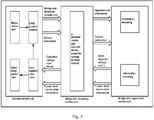
- Fig. 3 shows a structure of a valve basic control device according to an embodiment of the present invention.
- the flexible direct current valve basic control device provided by the present invention includes the following components structured in a hierarchical control architecture:
- control information is gradually grouped to achieve coordination control of the high-capacity MMC flexible direct current transmission converter and guarantee good electrical properties of alternating and direct current sides.
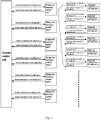
- Fig. 4 shows a relationship between units of the valve basic control device according to an embodiment of the present invention.
- the valve basic control device provided by the present invention includes one current control unit, six bridge arm summary control units and a plurality of bridge arm segmented control units. Referring to Figs. 3 and 4 , processing contents of each function unit will be described below in detail.
- the purpose of current balance control of the bridge arms of the current control unit is to eliminate loop current oscillation between the bridge arms in the operation process of the system.
- a closed loop input amount of the current balance control is real-time values of capacitor voltages of the sub-modules of the bridge arms and the current of the bridge arms, and after voltage and current hierarchical operation, final output results obtained are additional adjustment values of real-time reference voltages of the bridge arms.
- the additional adjustment values of the real-time reference voltages of the bridge arms and an adding result of the real-time reference voltages of the bridge arms are used for carrying out a modulation operation, and the purpose of the modulation operation is to convert the real-time reference voltages into the number of the converter sub-modules needing to be input by the bridge arms in real time.
- the specific method is to divide the real-time reference voltages of the bridge arms with the capacitor voltage of each sub-module, and the obtained result is the number of the converter sub-modules needing to be input by the bridge arms in real time.
- the operation results of the bridge arms are respectively sent to the bridge arm summary control units of the bridge arms in real time.
- the bridge arm summary control unit communicates with the current control unit upwards and communicates with the bridge arm segmented control unit downwards, is an intermediate link of the entire valve basic control device and functions as a connecting link.
- the bridge arm summary control unit receives the number of the converter sub-modules input by the bridge arm in real time and issued by the current control unit and the capacitor voltage valves and state information of the converter sub-modules on the bridge arm and issued by the bridge arm segmented control units of the bridge arm in real time.
- the capacitor voltage valves reported by each bridge arm segmented control unit of the bridge arm are ordered in real time, the number of the converter sub-modules needing to be input by each bridge arm segmented control unit of the bridge arm is calculated according to the ordering result and in combination with the number of the converter sub-modules input by the bridge arm in real time, and then, an operation result is sent to each bridge arm segmented control unit of the bridge arm in real time.
- the bridge arm summary control unit is responsible for forwarding global locking information issued by the current control unit to each bridge arm segmented control unit and forwarding fault tripping request information reported by each bridge arm segmented control unit to the current control unit, and achieving a bridge arm protection strategy function at the same time.
- the bridge arm segmented control unit is mainly used for achieving capacitor voltage balance control of the converter sub-modules in segments of the bridge arm: determining modules to be input by the current bridge arm group according to the number of input levels issued by the bridge arm summary control unit, classified summarizing input/removal according to collected converter sub-module state information, ordering the capacitor voltages of the converter sub-modules capable of being input or removed, and controlling the input and removal of different converter sub-modules according to the input/removal number and the actual current direction issued by the summary control unit to maintain the capacitor voltages of the converter sub-modules at the segments within a reasonable range.
- the bridge arm segmented control unit is responsible for a valve protection function of the bridge arm segment: judging faults according to the state information reported by the converter sub-modules, correspondingly processing the faults according to fault grades, and uploading fault information and fault processing to the bridge arm summary control unit; and meanwhile, the unit is responsible for achieving a valve level protection strategy function.
- the functions of the converter valve basic control device of the high-capacity MMC flexible direct current transmission converter specifically include:
- Fig. 5 shows a dual redundancy system of the valve basic control device according to an embodiment of the present invention.
- the entire valve basic control device adopts an omnibearing dual redundancy hot backup design manner to guarantee the high reliability of the valve basic control device.
- the current control unit, the bridge arm summary control unit and the bridge arm segmented control unit are respectively divided into a system A and a system B, the systems A and B are respectively connected with the systems A and B of an upper level control unit, a switchover mechanism between master and standby systems guarantees that the unit system B can be quickly operated in the case of fault of the current unit system A, while the unit system A can quickly react and be quickly operated in the case of fault of the unit system B.
- the bridge arm current control unit is located at the first layer and is responsible for controlling the bridge arm current of the converter, the upper level of the bridge arm current control unit is connected with converter station control protection (SCP), the lower level of the bridge arm current control unit is connected with the bridge arm summary control unit, a dual redundancy design solution is adopted, the bridge arm current control unit is divided into a system A and a system B of the bridge arm current control unit, wherein the upper levels of the system A and the system B of the bridge arm current control unit are connected with the system A and the system B of SCP, and the lower levels of the system A and the system B of the bridge arm current control unit are connected with the system A and the system B of the bridge arm summary control unit to constitute a complete dual redundancy system, and the system A and the system B of the bridge arm current control unit are in communication connection through an optical fiber.
- SCP converter station control protection
- the bridge arm summary control unit is located at the second layer and is responsible for controlling the converter bridge arm of the converter, the upper level of the bridge arm summary control unit is connected with the bridge arm current control unit, and the lower level of the bridge arm summary control unit is connected with the bridge arm segmented control unit, the dual redundancy design solution is adopted, the bridge arm summary control unit is divided into a system A and a system B of the bridge arm summary control unit, wherein the upper levels of the system A and the system B of the bridge arm summary control unit are connected with the system A and the system B of the bridge arm current control unit, and the lower levels of the system A and the system B of the bridge arm summary control unit are connected with the system A and the system B of the bridge arm segmented control unit to constitute a complete dual redundancy system, and the The connection between system A and the system B of the bridge arm summary control unit by means of optical fiber communication.
- a dual redundancy master-standby mechanism is as follows:
- the bridge arm segmented control unit is located at the third layer and is connected with the converter, the upper level of the bridge arm segmented control unit is connected with the bridge arm summary control unit, the lower level of the bridge arm segmented control unit is connected with the bridge arm of the converter, the dual redundancy design solution is adopted, the bridge arm segmented control unit is divided into a system A and a system B, wherein the upper levels of the system A and the system B of the bridge arm segmented control unit are connected with the system A and the system B of the bridge arm summary control unit, and the lower levels of the system A and the system B of the bridge arm segmented control unit are connected with the bridge arm of the converter to constitute a complete dual redundancy system, and the system A and the system B of the bridge arm segmented control unit are in communication connection through an optical fiber.
- Fig. 6 shows a flowchart of a converter valve basic control method for a flexible direct current transmission system based on a module multilevel converter according to the present invention, the module multilevel converter being provided with a bridge arm including a plurality of cascaded sub-modules, the method including the following steps:
Landscapes
- Engineering & Computer Science (AREA)
- Power Engineering (AREA)
- Inverter Devices (AREA)
- Rectifiers (AREA)
- Direct Current Feeding And Distribution (AREA)
Abstract
Description
- The present invention generally relates to the technical field of high voltage direct current transmission, and in particular, to a converter valve basic control device for a flexible direct current transmission system based on a high-voltage and high-capacity module multilevel converter and a corresponding method.
- Flexible direct current transmission technology (HVDC Flexible) is a novel direct current transmission technology based on a switchable device, pulse width modulation (PWM) technology and a voltage source converter. A module multilevel converter (MMC) uses a multilevel step wave to directly fit a sine wave, and on high-voltage and high-capacity application occasions, harmonic content and loss of the converter can be greatly reduced, so that the module multilevel converter is a most common converter topological structure in the field of the flexible direct current transmission technology at present.
- The MMC flexible direct current transmission technology is a novel direct current transmission technology based on a full-controlled device IGBT, in which the converter is composed of a large number of completely identical sub-modules. In an operation process of the system, each sub-module in the converters needs to be controlled and protected independently and accurately in real time, and this is essentially different from conventional high voltage direct current transmission based on thyristors directly connected in series.
- The invention patent application "Modular Multilevel Flexible Direct Current Transmission Valve Basic Control Device" (Application No.
201110064078.4, filed on March 16, 2011 - Therefore, there is a need of a new invention to meet the ever-increasing requirement for the valve basic control devices in the high-capacity MMC flexible direct current transmission technology and engineering.
- In view of the above problems, the present invention provides a valve basic control device and method of a module multilevel converter, which can meet the requirement of high-capacity MMC flexible direct current transmission.
- According to one aspect of the present invention, a converter valve basic control device for a flexible direct current transmission system based on a module multilevel converter is provided, the module multilevel converter being provided with a bridge arm including a plurality of cascaded sub-modules, the converter valve basic control device including the following components structured in a hierarchical control architecture: a current control unit, used for controlling a current of the converter, generating an input number of the sub-modules of the bridge arm in real time, obtaining a current direction of the bridge arm and sending number information and current direction information; a bridge arm summary control unit, used for determining sub-modules to be input or removed according to the received state of each sub-module and the number information and the current direction information received from the current control unit, and sending a determination result; and a bridge arm segmented control unit, used for inputting or removing the sub-modules according to the determination result received from the bridge arm summary control unit, obtaining the state of each sub-module and sending the state to the bridge arm summary control unit.
- In a preferred embodiment, the converter valve basic control device includes one current control unit, six bridge arm summary control units and a plurality of bridge arm segmented control units.
- In a preferred embodiment, each bridge arm is controlled by one bridge arm summary control unit and a number of bridge arm segmented control units, the bridge arm segmented control units implementing control and protection of the sub-modules of the converter, and the bridge arm summary control unit implementing fault summarization and coordination control of the bridge arm.
- In a preferred embodiment, the current control unit, the bridge arm summary control unit and the bridge arm segmented control unit are all of a dual redundancy design.
- In a preferred embodiment, the current control unit, the bridge arm summary control unit and the bridge arm segmented control unit all operate in a hot backup manner.
- In a preferred embodiment, through identification of the state of the converter valve basic control device by the current control unit, the bridge arm summary control unit and the bridge arm segmented control unit, redundancy operation of the converter valve basic control device is achieved according to a master/slave state.
- In a preferred embodiment, the states of master and standby systems are respectively marked by sending a frequency signal through optical fibers.
- According to another aspect, a flexible direct current transmission system based on a module multilevel converter is provided, including the converter valve basic control device mentioned above.
- According to a further aspect, a converter valve basic control method for a flexible direct current transmission system based on a module multilevel converter is provided, the module multilevel converter being provided with a bridge arm including a plurality of cascaded sub-modules, the method including: controlling a current of the converter, generating an input number of the sub-modules of the bridge arm in real time, obtaining a current direction of the bridge arm, and sending number information and current direction information; determining sub-modules to be input or removed according to the received state of each sub-module and the received number information and the current direction information, and sending a determination result; and inputting or removing the sub-modules according to the received determination result, and obtaining and sending the state of each sub-module.
- One advantage lies in that the MMC flexible direct current transmission converter valve basic control device is divided into three levels of function units according to different function requirements, and various functions of the converter valve basic control device are distributed into a plurality of hardware devices to relieve the load of a single hardware processor.
- Another advantage lies in that the real-time communication problem of mass data in an actual working condition of the MMC flexible direct current transmission converter is well solved by the hierarchical architecture and the communication modes of the units. Another advantage lies in that the accuracy and instantaneity of control instruction execution and fault information report of the converter are guaranteed generally.
- Another advantage lies in that the operation reliability and stability of the equipment are improved by the dual redundancy design of power supply. The flexible direct current valve basic control device designed in the present invention achieves dual redundancy configuration, the valve basic control device implements hierarchical control, and by means of the hierarchical design of the levels, the redundancy of the levels is achieved. The dual redundancy mechanism designed in the present invention achieves effective switchover of dual systems, without leading to dual salves, and achieves a unique system option in dual master systems to guarantee the normal operation of the systems. A judgment mechanism for detecting a master/slave state of the systems is designed in the present invention to effectively guarantee the identification of the master/standby state of the systems. A judgment error of the system state can be effectively avoided by judging the frequency signal.
- Those skilled in the art will realize more advantages of the present invention upon reading and understanding the following detailed description.
- By means of exemplary preferred embodiments described below with reference to accompany drawings, these and other aspects of the present invention will be apparent and clarified. In the drawings:
-
Fig. 1 is a schematic diagram of a typical structure of a double-end MMC flexible direct current transmission system; -
Fig. 2 shows a structure of a converter in the MMC flexible direct current transmission system; -
Fig. 3 shows a structure of a valve basic control device according to an embodiment of the present invention; -
Fig. 4 shows a relationship between units of the valve basic control device according to an embodiment of the present invention; -
Fig. 5 shows a dual redundancy system of the valve basic control device according to an embodiment of the present invention; and -
Fig. 6 is a flowchart of a valve basic control method for a flexible direct current transmission system based on a module multilevel converter according to an embodiment of the present invention. - The present invention will be described below in detail with reference to the accompany drawings, but the drawings and the description should be deemed to be illustrative and exemplary, rather than restrictive; and the present invention is not limited to the disclosed embodiments. Any accompany reference numerals in the claims should not be understood as limiting the scope thereof.
-
Fig. 1 is a schematic diagram of a typical structure of a double-end MMC flexible direct current transmission system. Converter stations on both sides of a system connected with a double-end alternatingcurrent system 1 are MMC converters, a converter station device including anMMC converter 4, avalve reactor 3, acoupling transformer 2, a directcurrent grounding device 5 and a directcurrent cable 6. In a back-to-back double-end MMC-HDVC, a direct current cable 7 is possibly not included. Theconverter 4 is the most central device and is cascaded by a plurality of identical converter sub-modules. -
Fig. 2 shows a structure of a converter in the MMC flexible direct current transmission system. As shown inFig. 2 , typically, a module multilevel converter is composed of three phases of six bridge arms in total. Each bridge arm includes a plurality of converter sub-modules. - The main advantages of this structure are avoiding direct serial connection of devices and reducing the design difficulty of a main circuit, but the system is complicated due to the addition of a switching state. The plurality of serially connected sub-modules are accurately triggered and turned off to achieve the functions of the system and require mutually independent real-time control of triggering and turning off; the triggering control and protection difficulty of the valve basic control device is increased, and meanwhile, the reliability of the device is severely challenged. Therefore, with regard to the valve basic control device (VBC) of the MMC system, the system design reasonability, the operation mechanism reliability and the function implementation stability are key problems which directly determine whether the long-term stable and reliable operation of the MMC system is successful or not.
- The valve basic control device (VBC) is located at a connecting link position in the flexible direct current transmission system and functions as an intermediate hub for associating an upper layer converter control protection system (SCP) with bottom layer switching element control; compared with the valve basic electronic (VBE) technology of the traditional direct current transmission technology, the valve basic control technology of the flexible direct current transmission technology puts more emphasis on independent control of the sub-modules, including a variety of strategies and decisions of the sub-modules, for example, capacitor voltage balance control, loop current suppression and comprehensive evaluation, protection and search and the like. The main achievement of modulation, loop current suppression control, voltage balance control, valve protection, monitoring and external communication functions and the like.
-
Fig. 3 shows a structure of a valve basic control device according to an embodiment of the present invention. As shown inFig. 3 , the flexible direct current valve basic control device provided by the present invention includes the following components structured in a hierarchical control architecture: - a current control unit, used for controlling a current of the converter, generating an input number of the sub-modules of the bridge arm in real time, obtaining a current direction of the bridge arm and sending number information and current direction information;
- a bridge arm summary control unit, used for determining sub-modules to be input or removed according to the received state of each sub-module and the number information and the current direction information received from the current control unit, and sending a determination result; and
- a bridge arm segmented control unit, used for inputting or removing the sub-modules according to the determination result received from the bridge arm summary control unit, obtaining the state of each sub-module and sending the state to the bridge arm summary control unit.
- By means of a hierarchical and segmented control strategy, the control information is gradually grouped to achieve coordination control of the high-capacity MMC flexible direct current transmission converter and guarantee good electrical properties of alternating and direct current sides.
-
Fig. 4 shows a relationship between units of the valve basic control device according to an embodiment of the present invention. As shown inFig. 4 , in an embodiment, the valve basic control device provided by the present invention includes one current control unit, six bridge arm summary control units and a plurality of bridge arm segmented control units. Referring toFigs. 3 and4 , processing contents of each function unit will be described below in detail. - The purpose of current balance control of the bridge arms of the current control unit is to eliminate loop current oscillation between the bridge arms in the operation process of the system. A closed loop input amount of the current balance control is real-time values of capacitor voltages of the sub-modules of the bridge arms and the current of the bridge arms, and after voltage and current hierarchical operation, final output results obtained are additional adjustment values of real-time reference voltages of the bridge arms. The additional adjustment values of the real-time reference voltages of the bridge arms and an adding result of the real-time reference voltages of the bridge arms are used for carrying out a modulation operation, and the purpose of the modulation operation is to convert the real-time reference voltages into the number of the converter sub-modules needing to be input by the bridge arms in real time. The specific method is to divide the real-time reference voltages of the bridge arms with the capacitor voltage of each sub-module, and the obtained result is the number of the converter sub-modules needing to be input by the bridge arms in real time. The operation results of the bridge arms are respectively sent to the bridge arm summary control units of the bridge arms in real time.
- The bridge arm summary control unit communicates with the current control unit upwards and communicates with the bridge arm segmented control unit downwards, is an intermediate link of the entire valve basic control device and functions as a connecting link. The bridge arm summary control unit receives the number of the converter sub-modules input by the bridge arm in real time and issued by the current control unit and the capacitor voltage valves and state information of the converter sub-modules on the bridge arm and issued by the bridge arm segmented control units of the bridge arm in real time. By use of the information received above, the capacitor voltage valves reported by each bridge arm segmented control unit of the bridge arm are ordered in real time, the number of the converter sub-modules needing to be input by each bridge arm segmented control unit of the bridge arm is calculated according to the ordering result and in combination with the number of the converter sub-modules input by the bridge arm in real time, and then, an operation result is sent to each bridge arm segmented control unit of the bridge arm in real time. Meanwhile, the bridge arm summary control unit is responsible for forwarding global locking information issued by the current control unit to each bridge arm segmented control unit and forwarding fault tripping request information reported by each bridge arm segmented control unit to the current control unit, and achieving a bridge arm protection strategy function at the same time.
- The bridge arm segmented control unit is mainly used for achieving capacitor voltage balance control of the converter sub-modules in segments of the bridge arm: determining modules to be input by the current bridge arm group according to the number of input levels issued by the bridge arm summary control unit, classified summarizing input/removal according to collected converter sub-module state information, ordering the capacitor voltages of the converter sub-modules capable of being input or removed, and controlling the input and removal of different converter sub-modules according to the input/removal number and the actual current direction issued by the summary control unit to maintain the capacitor voltages of the converter sub-modules at the segments within a reasonable range. Meanwhile, the bridge arm segmented control unit is responsible for a valve protection function of the bridge arm segment: judging faults according to the state information reported by the converter sub-modules, correspondingly processing the faults according to fault grades, and uploading fault information and fault processing to the bridge arm summary control unit; and meanwhile, the unit is responsible for achieving a valve level protection strategy function.
- The functions of the converter valve basic control device of the high-capacity MMC flexible direct current transmission converter specifically include:
- 1) modulation: a bridge arm voltage reference value set by an upper layer SCP needs to be calculated into a number of input sub-modules closest to a reference voltage according to an actual capacitor voltage value;
- 2) current balance control: a loop current control algorithm is added to correct the bridge arm voltage to inhibit loop current among upper and lower bridge arms, phases and stations;
- 3) voltage balance control: respective input modules of upper and lower bridge arms are determined according to the number of the input levels, collected sub-modules states are classified and summarized, the capacitor voltages of the sub-modules capable of being input or removed are judged, and input-removal control is carried out on different sub-modules according to the actual current direction to maintain the capacitor voltages of the sub-modules within a reasonable range;
- 4) protection function: faults are judged according to the state information reported by the sub-modules and are correspondingly processed according to the fault grades to avoid malfunction; and overcurrent protection and other actions of the bridge arm are achieved by bridge arm current information of bridge arm optical CT;
- 5) monitoring function: similar to a traditional direct current terminal monitor (TM) device, the state of the converter is monitored, and a fault or abnormal state is reported to a background in an event form for processing when the same occurs;
- 6) communication function: high-level data link control (HDLC) communication is achieved with the upper layer SCP, and asynchronous serial communication is achieved with a sub module controller (SMC); a GPS communication interface, an optical CT interface, etc; and
- 7) self-monitoring function: the units monitor each other therein to detect and find faults in the system and switch the system or trip according to the fault grades.
- Requirements on the high-voltage and high-capacity flexible direct current transmission valve basic control device are as follows:
- 1) unit period algorithm implementation ability within a 50-microsecond level;
- 2) unit period decision formation and execution ability within a 100-microsecond level;
- 3) information collection and data throughput ability of more than 2000 paths of channels;
- 4) a channel time delay within a 10-microsecond level and a data transmission rate of higher than 100M;
- 5) a transmission error rate under electromagnetic interference within 1‰ of an electromagnetic compatibility standard grade;
- 6) high stability and high reliability requirements of internal transmission and long-term operation of the system;
- 7) fault-tolerant ability and robustness requirements of the system;
- 8) resource information sharing and redundant backup requirements; and
- 9) system extendibility and requirements of flexible response to a variety of application occasions.
-
Fig. 5 shows a dual redundancy system of the valve basic control device according to an embodiment of the present invention. As shown inFig. 5 , in an embodiment, the entire valve basic control device adopts an omnibearing dual redundancy hot backup design manner to guarantee the high reliability of the valve basic control device. - The current control unit, the bridge arm summary control unit and the bridge arm segmented control unit are respectively divided into a system A and a system B, the systems A and B are respectively connected with the systems A and B of an upper level control unit, a switchover mechanism between master and standby systems guarantees that the unit system B can be quickly operated in the case of fault of the current unit system A, while the unit system A can quickly react and be quickly operated in the case of fault of the unit system B.
- Through identification of the state of the flexible direct current transmission system by the units of the valve basic control device, redundancy operation of the valve basic control device is achieved according to a master/salve state. The states of master and standby systems are respectively marked by sending a frequency signal through optical fibers.
- The bridge arm current control unit is located at the first layer and is responsible for controlling the bridge arm current of the converter, the upper level of the bridge arm current control unit is connected with converter station control protection (SCP), the lower level of the bridge arm current control unit is connected with the bridge arm summary control unit, a dual redundancy design solution is adopted, the bridge arm current control unit is divided into a system A and a system B of the bridge arm current control unit, wherein the upper levels of the system A and the system B of the bridge arm current control unit are connected with the system A and the system B of SCP, and the lower levels of the system A and the system B of the bridge arm current control unit are connected with the system A and the system B of the bridge arm summary control unit to constitute a complete dual redundancy system, and the system A and the system B of the bridge arm current control unit are in communication connection through an optical fiber.
- The bridge arm summary control unit is located at the second layer and is responsible for controlling the converter bridge arm of the converter, the upper level of the bridge arm summary control unit is connected with the bridge arm current control unit, and the lower level of the bridge arm summary control unit is connected with the bridge arm segmented control unit, the dual redundancy design solution is adopted, the bridge arm summary control unit is divided into a system A and a system B of the bridge arm summary control unit, wherein the upper levels of the system A and the system B of the bridge arm summary control unit are connected with the system A and the system B of the bridge arm current control unit, and the lower levels of the system A and the system B of the bridge arm summary control unit are connected with the system A and the system B of the bridge arm segmented control unit to constitute a complete dual redundancy system, and the The connection between system A and the system B of the bridge arm summary control unit by means of optical fiber communication.
- A dual redundancy master-standby mechanism is as follows:
- 1) In a normal state, the operation states of the system A and the system B are normal, then the system A and the system B maintain respective states. The firstly started system is a master system, and the subsequently started system is a standby system. After being started, the bridge arm current control unit checks whether the operation state of the system is normal, stores the state of the system and checks the state of an opposite party system. If the opposite party system is normal and is the master system, the system is normal, the system is in a standby state, and if the opposite party system is abnormal or the opposite party system has no reply, the system is the master system. If the system is abnormal, the system cannot serve as the master system, and the system is set to be abnormal.
- 2) In a normal operation process, if the master system is abnormal and the opposite party system is normal, the opposite party system will check the abnormality of the system, the system actively switches to the slave system, and the opposite party system becomes the master system.
- 3) In the normal operation process, if the master system is abnormal and the opposite party system is abnormal as well, it indicates that the bridge arm current control unit is abnormal and needs to request for tripping.
- 4) If the system A and the system B are master systems at the same time, the two systems exchange information through a communication optical fiber, the system requesting for switching the opposite party system to the slave system is converted into the master system, and the opposite party system is switched to the slave system. If the communication between the system A and the system B is abnormal, double master systems occur.
- The bridge arm segmented control unit is located at the third layer and is connected with the converter, the upper level of the bridge arm segmented control unit is connected with the bridge arm summary control unit, the lower level of the bridge arm segmented control unit is connected with the bridge arm of the converter, the dual redundancy design solution is adopted, the bridge arm segmented control unit is divided into a system A and a system B, wherein the upper levels of the system A and the system B of the bridge arm segmented control unit are connected with the system A and the system B of the bridge arm summary control unit, and the lower levels of the system A and the system B of the bridge arm segmented control unit are connected with the bridge arm of the converter to constitute a complete dual redundancy system, and the system A and the system B of the bridge arm segmented control unit are in communication connection through an optical fiber.
- 1) In a normal state, the operation states of the system A and the system B are normal, then the system A and the system B maintain respective states. The firstly started system is a master system, and the subsequently started system is a standby system. After being started, the bridge arm current control unit checks whether the operation state of the system is normal, stores the state of the system and checks the state of an opposite party system. If the opposite party system is normal and is the master system, the system is normal, the system is in a standby state, and if the opposite party system is abnormal or the opposite party system has no reply, the system is the master system. If the system is abnormal, the system cannot serve as the master system, and the system is set to be abnormal.
- 2) In the normal operation process, if the master system is abnormal and the opposite party system is normal, the opposite party system will check the abnormality of the system, the system actively switches to the slave system, and the opposite party system becomes the master system.
- 3) In the normal operation process, if the master system is abnormal and the opposite party system is abnormal as well, it indicates that the bridge arm current control unit is abnormal and needs to request for tripping.
- 4) If the system A and the system B are master systems at the same time, the two systems exchange information through the communication optical fiber, the system requesting for switching the opposite party system to the slave system is converted into the master system, and the opposite party system is switched to the slave system. If the communication between the system A and the system B is abnormal, double master systems occur. The bridge arm segmented control unit only has one outlet at last, and the original master system in the double master systems sends a signal to the converter.
-
Fig. 6 shows a flowchart of a converter valve basic control method for a flexible direct current transmission system based on a module multilevel converter according to the present invention, the module multilevel converter being provided with a bridge arm including a plurality of cascaded sub-modules, the method including the following steps: - 610, controlling a current of the converter, generating an input number of the sub-modules of the bridge arm in real time, obtaining a current direction of the bridge arm, and sending number information and current direction information;
- 620, determining sub-modules to be input or removed according to the received state of each sub-module and the received number information and the current direction information, and sending a determination result; and
- 630, inputting or removing the sub-modules according to the determination result, and obtaining and sending the state of each sub-module.
- The present invention has been described with reference to the preferred embodiments. Upon reading and understanding the foregoing detailed description, modifications and changes can be made by others. The present invention is intended to be construed as including all of these modifications and changes, as long as they are within the scope the appended claims and the equivalents thereof.
Claims (10)
- A converter valve basic control device for a flexible direct current transmission system based on a module multilevel converter, the module multilevel converter being provided with a bridge arm comprising a plurality of cascaded sub-modules, the converter valve basic control device comprising the following components structured in a hierarchical control architecture:current control unit, used for controlling a current of the converter, generating an input number of the sub-modules of the bridge arm in real time, obtaining a current direction of the bridge arm and sending number information and current direction information;bridge arm summary control unit, used for determining sub-modules to be input or removed according to the received state of each sub-module and the number information and the current direction information received from the current control unit, and sending a determination result; andbridge arm segmented control unit, used for inputting or removing the sub-modules according to the determination result received from the bridge arm summary control unit,obtaining the state of each sub-module and sending the state to the bridge arm summary control unit.
- The converter valve basic control device of claim 1, wherein:the converter valve basic control device comprises one current control unit, six bridge arm summary control units and a plurality of bridge arm segmented control units.
- The converter valve basic control device of claim 2, wherein:each bridge arm is controlled by one bridge arm summary control unit and a number of bridge arm segmented control units, the bridge arm segmented control units implementing control and protection of the sub-modules of the converter, and the bridge arm summary control unit implementing fault summarization and coordination control of the bridge arm.
- The converter valve basic control device of claim 1, wherein:the current control unit, the bridge arm summary control unit and the bridge arm segmented control unit are all of a dual redundancy design.
- The converter valve basic control device of claim 4, wherein:the current control unit, the bridge arm summary control unit and the bridge arm segmented control unit all operate in a hot backup manner.
- The converter valve basic control device of claim 4, wherein:through identification of the state of the converter valve basic control device by the current control unit, the bridge arm summary control unit and the bridge arm segmented control unit, redundancy operation of the converter valve basic control device is achieved according to a master/slave state.
- The converter valve basic control device of claim 6, wherein:the states of master and standby systems are respectively marked by sending a frequency signal through optical fibers.
- A flexible direct current transmission system based on a module multilevel converter, comprising the converter valve basic control device of any one of claims 1-7.
- A converter valve basic control method for a flexible direct current transmission system based on a module multilevel converter, the module multilevel converter being provided with a bridge arm comprising a plurality of cascaded sub-modules, the method comprising:controlling a current of the converter, generating an input number of the sub-modules of the bridge arm in real time, obtaining a current direction of the bridge arm, and sending number information and current direction information;determining sub-modules to be input or removed according to the received state of each sub-module and the received number information and the current direction information,and sending a determination result; andinputting or removing the sub-modules according to the received determination result, andobtaining and sending the state of each sub-module.
- The converter valve basic control method of claim 9, wherein the method adopts a dual redundancy design.
Applications Claiming Priority (2)
| Application Number | Priority Date | Filing Date | Title |
|---|---|---|---|
| CN201310300217.XA CN103368197B (en) | 2013-07-15 | 2013-07-15 | The valve base control appliance of modularization multi-level converter and method |
| PCT/CN2014/082048 WO2015007186A1 (en) | 2013-07-15 | 2014-07-11 | Valve base control device and method for modular multi-level convertor |
Publications (3)
| Publication Number | Publication Date |
|---|---|
| EP3024109A1 true EP3024109A1 (en) | 2016-05-25 |
| EP3024109A4 EP3024109A4 (en) | 2017-05-03 |
| EP3024109B1 EP3024109B1 (en) | 2019-02-13 |
Family
ID=49368981
Family Applications (1)
| Application Number | Title | Priority Date | Filing Date |
|---|---|---|---|
| EP14826983.0A Active EP3024109B1 (en) | 2013-07-15 | 2014-07-11 | Valve base control device and method for modular multi-level convertor |
Country Status (3)
| Country | Link |
|---|---|
| EP (1) | EP3024109B1 (en) |
| CN (1) | CN103368197B (en) |
| WO (1) | WO2015007186A1 (en) |
Cited By (4)
| Publication number | Priority date | Publication date | Assignee | Title |
|---|---|---|---|---|
| CN111478353A (en) * | 2020-03-25 | 2020-07-31 | 南方电网科学研究院有限责任公司 | Control method and device for flexible direct current transmission system |
| CN111490591A (en) * | 2019-01-28 | 2020-08-04 | 北京天诚同创电气有限公司 | Upper layer controller, upper layer control system and upper layer control method of modularized wind power converter |
| CN112865162A (en) * | 2021-01-15 | 2021-05-28 | 中国南方电网有限责任公司超高压输电公司 | Communication interface method between upper computer and valve base control electronic equipment |
| EP4258503A1 (en) * | 2022-04-07 | 2023-10-11 | General Electric Technology GmbH | Improved determination of the current flow direction in a chain-link converter |
Families Citing this family (28)
| Publication number | Priority date | Publication date | Assignee | Title |
|---|---|---|---|---|
| CN103368197B (en) * | 2013-07-15 | 2015-11-25 | 国家电网公司 | The valve base control appliance of modularization multi-level converter and method |
| CN103869779A (en) * | 2014-03-12 | 2014-06-18 | 南京南瑞继保电气有限公司 | Communication framework and method suitable for modularized multi-level converter control system |
| CN106471722B (en) * | 2014-05-12 | 2020-09-15 | 通用电器技术有限公司 | Improvements in or related to Chained Transformers |
| CN104038060B (en) * | 2014-06-03 | 2016-08-24 | 中国科学院电工研究所 | Flexible direct current power transmission system modularization multi-level converter method for equalizing voltage |
| US20160115247A1 (en) | 2014-10-23 | 2016-04-28 | Singh Biotechnology, Llc | Single domain antibodies directed against intracellular antigens |
| CN104467393A (en) * | 2015-01-04 | 2015-03-25 | 南京南瑞继保电气有限公司 | Device for preventing sub-module capacitor overvoltage |
| CN104767178B (en) * | 2015-04-16 | 2018-01-09 | 北京荣信慧科科技有限公司 | The protection control method of Protection control system based on bridge arm unit |
| CN104914746B (en) * | 2015-04-16 | 2017-11-21 | 北京荣信慧科科技有限公司 | MMC changes of current control valve device and control method based on flexible DC power transmission |
| RU2018108629A (en) | 2015-08-11 | 2019-09-12 | Дженезис Роботикс Энд Мотион Текнолоджиз Канада, Улс | ELECTRIC MACHINE |
| US10218285B2 (en) | 2015-10-19 | 2019-02-26 | Siemens Aktiengesellschaft | Medium voltage hybrid multilevel converter and method for controlling a medium voltage hybrid multilevel converter |
| CN105204482B (en) * | 2015-10-31 | 2018-02-16 | 南京南瑞继保电气有限公司 | Suitable for the cascade connection type communication construction of modularization multi-level converter control system |
| EP3353884A1 (en) | 2015-11-13 | 2018-08-01 | Siemens Aktiengesellschaft | Medium voltage transformerless multilevel converter and method for controlling a medium voltage transformerless multilevel converter |
| US9812946B2 (en) * | 2016-02-03 | 2017-11-07 | Delta Electronics, Inc. | Power converter and operating method thereof |
| CN106655146B (en) * | 2017-01-23 | 2019-09-17 | 特变电工新疆新能源股份有限公司 | A kind of configuration system and method for high pressure flexible direct current change of current control valve device |
| CN107623330B (en) * | 2017-08-29 | 2020-06-02 | 全球能源互联网研究院有限公司 | A control method of a valve base control system |
| CN107707105A (en) * | 2017-10-26 | 2018-02-16 | 中国南方电网有限责任公司超高压输电公司天生桥局 | Suitable for the communication network topology and method of soft straight modular multilevel converter valve |
| CN108631436B (en) * | 2018-02-07 | 2020-08-25 | 许继电气股份有限公司 | Multiple redundancy control system suitable for direct current transmission |
| CN110716467B (en) * | 2019-10-16 | 2021-03-30 | 南京南瑞继保电气有限公司 | A communication method and control system |
| CN110912388B (en) * | 2019-12-04 | 2024-11-29 | 全球能源互联网研究院有限公司 | Control method of double-valve-base control system |
| CN111799832B (en) * | 2020-07-14 | 2023-10-03 | 中国南方电网有限责任公司超高压输电公司柳州局 | A coordinated control method for MMC-HVDC power transmission system |
| CN113572187B (en) * | 2020-10-20 | 2023-11-21 | 国网经济技术研究院有限公司 | High-voltage DC continuous commutation failure suppression method based on virtual capacitor |
| CN112467729B (en) * | 2020-11-19 | 2022-11-01 | 西安西电电力系统有限公司 | Sub-module voltage suppression strategy during grid-side fault ride-through of offshore wind power system |
| CN113036922B (en) * | 2021-03-18 | 2022-07-22 | 南京南瑞继保电气有限公司 | Control method and device of modular multilevel converter system |
| CN113507205B (en) * | 2021-07-27 | 2022-11-11 | 华中科技大学 | Control method, controller and control system for inhibiting MMC common-mode conducted EMI |
| CN114915188A (en) * | 2022-05-30 | 2022-08-16 | 广东电网有限责任公司广州供电局 | Perpendicular compact converter valve tower |
| CN115313498A (en) * | 2022-09-06 | 2022-11-08 | 国网智能电网研究院有限公司 | System and method for obtaining bridge arm current of flexible-straight converter valve |
| CN118763715B (en) * | 2024-09-09 | 2024-11-12 | 长江三峡集团实业发展(北京)有限公司 | Offshore wind power flexible DC transmission system receiving end pre-charging control method and device |
| CN120185352B (en) * | 2025-05-21 | 2025-10-28 | 广东电网有限责任公司 | Driver adjustable energy supply method and system for IGCT-MMC soft straight sub-module |
Family Cites Families (12)
| Publication number | Priority date | Publication date | Assignee | Title |
|---|---|---|---|---|
| JP2000002725A (en) * | 1998-06-18 | 2000-01-07 | Fuji Electric Co Ltd | Inverter input current detection method |
| DE102004016062A1 (en) * | 2004-03-30 | 2005-10-27 | Bosch Rexroth Ag | Method for charging a DC intermediate circuit |
| DK2160829T3 (en) * | 2007-05-14 | 2017-10-16 | Abb Schweiz Ag | REDUNDANT POWER VALVE CONTROL IN A HIGH VOLTAGE POWER TRANSMISSION SYSTEM |
| WO2012016592A1 (en) * | 2010-08-05 | 2012-02-09 | Siemens Aktiengesellschaft | Method for controlling the voltage of a multilevel converter and control arrangement for a multilevel converter |
| CN102201670A (en) * | 2011-03-16 | 2011-09-28 | 中国电力科学研究院 | Redundant system based on pole control system and valve base control equipment, and implementation method of redundant system |
| CN102299506B (en) * | 2011-08-24 | 2014-10-29 | 中国电力科学研究院 | Protection system and method thereof for modular multi-level converter |
| CN103066805B (en) * | 2012-12-11 | 2014-12-10 | 国网智能电网研究院 | Capacitor voltage balance control method based on bundling type switching of multiple sub modules |
| CN103066567B (en) * | 2012-12-11 | 2014-03-19 | 国网智能电网研究院 | Hierarchical sectional capacity balance control method based on switching number |
| CN103078400B (en) * | 2012-12-11 | 2015-06-10 | 国网智能电网研究院 | Bridge arm collecting protection system suitable for high-capacity MMC (Multi Media Controller) flexible direct-current power transmission system |
| CN103036210B (en) * | 2012-12-12 | 2015-03-25 | 国网智能电网研究院 | Layering sectional type capacitive balance control method based on look-up table |
| CN103107725B (en) * | 2013-02-06 | 2014-12-17 | 浙江大学 | Multi-level converter with direct current voltage reverse function |
| CN103368197B (en) * | 2013-07-15 | 2015-11-25 | 国家电网公司 | The valve base control appliance of modularization multi-level converter and method |
-
2013
- 2013-07-15 CN CN201310300217.XA patent/CN103368197B/en active Active
-
2014
- 2014-07-11 WO PCT/CN2014/082048 patent/WO2015007186A1/en not_active Ceased
- 2014-07-11 EP EP14826983.0A patent/EP3024109B1/en active Active
Cited By (6)
| Publication number | Priority date | Publication date | Assignee | Title |
|---|---|---|---|---|
| CN111490591A (en) * | 2019-01-28 | 2020-08-04 | 北京天诚同创电气有限公司 | Upper layer controller, upper layer control system and upper layer control method of modularized wind power converter |
| CN111490591B (en) * | 2019-01-28 | 2023-03-17 | 北京天诚同创电气有限公司 | Upper layer controller, upper layer control system and upper layer control method of modularized wind power converter |
| CN111478353A (en) * | 2020-03-25 | 2020-07-31 | 南方电网科学研究院有限责任公司 | Control method and device for flexible direct current transmission system |
| CN112865162A (en) * | 2021-01-15 | 2021-05-28 | 中国南方电网有限责任公司超高压输电公司 | Communication interface method between upper computer and valve base control electronic equipment |
| EP4258503A1 (en) * | 2022-04-07 | 2023-10-11 | General Electric Technology GmbH | Improved determination of the current flow direction in a chain-link converter |
| US12519402B2 (en) | 2022-04-07 | 2026-01-06 | Ge Vernova Infrastructure Technology Llc | Controllers for chain-link converters |
Also Published As
| Publication number | Publication date |
|---|---|
| CN103368197B (en) | 2015-11-25 |
| EP3024109B1 (en) | 2019-02-13 |
| CN103368197A (en) | 2013-10-23 |
| EP3024109A4 (en) | 2017-05-03 |
| WO2015007186A1 (en) | 2015-01-22 |
Similar Documents
| Publication | Publication Date | Title |
|---|---|---|
| EP3024109B1 (en) | Valve base control device and method for modular multi-level convertor | |
| CN102130441B (en) | Protection configuration method of flexible direct-current (DC) transmission system of modular multiple-level converter | |
| KR102082105B1 (en) | Fault protection in converter-based dc distribution systems | |
| US9373950B2 (en) | Modular multilevel converter valve protection method | |
| Akhmatov et al. | Technical guidelines and prestandardization work for first HVDC grids | |
| CN107819356B (en) | Isolated parallel uninterruptible power supply system with choke bypass switch | |
| EP3293852B1 (en) | Isolated parallel ups system with fault location detection | |
| CN108418236B (en) | A method for AC fault ride-through of flexible multi-state switches | |
| CN102868290A (en) | Total bridge type MMC (Microsoft Management Console)-HVDC (High Voltage Direct Current Transmission) sub-module fault in-situ diagnosing and protecting method | |
| CN106505512A (en) | Unlock number of times again to overflow trip method after soft straight control system temporary blocking | |
| CN118539732A (en) | Energy self-balancing flexible DC converter valve, control method and DC system | |
| CN105186460A (en) | Overcurrent quick latching protection method suitable for modularized multi-level converter valve | |
| CN105375746A (en) | SMC-VBC-VM-based valve control system for IGBT converter valve | |
| CN205178856U (en) | IGBT change of current valve accuse system based on SMC -VBC -VM | |
| CN106684871B (en) | A self-healing control method of intelligent distribution network based on fault-tolerant thought | |
| CN106058825A (en) | Fault direction judgment method suitable for multi-terminal power supply AC system | |
| EP4089869B1 (en) | Electrical assembly | |
| CN107565521B (en) | A method for clearing the DC side short-circuit fault of a flexible DC power grid | |
| CN109861567A (en) | A coordinated control method for a modular multilevel converter and a DC circuit breaker | |
| CN114759813B (en) | Modular multilevel converter and its switching method | |
| CN117674244A (en) | HCC valve control system and method | |
| JP6612990B2 (en) | Power converter | |
| Waraich | HVDC grids protection systems-algorithms and circuit breakers | |
| CN109995002B (en) | Device cooperation-based protection method and system for flexible direct current power grid | |
| CN119340939B (en) | Control method, device, terminal and medium for hybrid line offshore wind power flexible-direct system |
Legal Events
| Date | Code | Title | Description |
|---|---|---|---|
| PUAI | Public reference made under article 153(3) epc to a published international application that has entered the european phase |
Free format text: ORIGINAL CODE: 0009012 |
|
| 17P | Request for examination filed |
Effective date: 20160211 |
|
| AK | Designated contracting states |
Kind code of ref document: A1 Designated state(s): AL AT BE BG CH CY CZ DE DK EE ES FI FR GB GR HR HU IE IS IT LI LT LU LV MC MK MT NL NO PL PT RO RS SE SI SK SM TR |
|
| AX | Request for extension of the european patent |
Extension state: BA ME |
|
| DAX | Request for extension of the european patent (deleted) | ||
| A4 | Supplementary search report drawn up and despatched |
Effective date: 20170331 |
|
| RIC1 | Information provided on ipc code assigned before grant |
Ipc: H02M 7/483 20070101ALI20170325BHEP Ipc: H02J 3/36 20060101AFI20170325BHEP Ipc: H02M 1/08 20060101ALI20170325BHEP |
|
| GRAP | Despatch of communication of intention to grant a patent |
Free format text: ORIGINAL CODE: EPIDOSNIGR1 |
|
| STAA | Information on the status of an ep patent application or granted ep patent |
Free format text: STATUS: GRANT OF PATENT IS INTENDED |
|
| INTG | Intention to grant announced |
Effective date: 20181030 |
|
| GRAS | Grant fee paid |
Free format text: ORIGINAL CODE: EPIDOSNIGR3 |
|
| GRAA | (expected) grant |
Free format text: ORIGINAL CODE: 0009210 |
|
| STAA | Information on the status of an ep patent application or granted ep patent |
Free format text: STATUS: THE PATENT HAS BEEN GRANTED |
|
| AK | Designated contracting states |
Kind code of ref document: B1 Designated state(s): AL AT BE BG CH CY CZ DE DK EE ES FI FR GB GR HR HU IE IS IT LI LT LU LV MC MK MT NL NO PL PT RO RS SE SI SK SM TR |
|
| REG | Reference to a national code |
Ref country code: GB Ref legal event code: FG4D |
|
| REG | Reference to a national code |
Ref country code: CH Ref legal event code: EP Ref country code: AT Ref legal event code: REF Ref document number: 1096753 Country of ref document: AT Kind code of ref document: T Effective date: 20190215 |
|
| REG | Reference to a national code |
Ref country code: IE Ref legal event code: FG4D |
|
| REG | Reference to a national code |
Ref country code: DE Ref legal event code: R096 Ref document number: 602014041062 Country of ref document: DE |
|
| REG | Reference to a national code |
Ref country code: LT Ref legal event code: MG4D |
|
| REG | Reference to a national code |
Ref country code: NL Ref legal event code: MP Effective date: 20190213 |
|
| PG25 | Lapsed in a contracting state [announced via postgrant information from national office to epo] |
Ref country code: LT Free format text: LAPSE BECAUSE OF FAILURE TO SUBMIT A TRANSLATION OF THE DESCRIPTION OR TO PAY THE FEE WITHIN THE PRESCRIBED TIME-LIMIT Effective date: 20190213 Ref country code: NL Free format text: LAPSE BECAUSE OF FAILURE TO SUBMIT A TRANSLATION OF THE DESCRIPTION OR TO PAY THE FEE WITHIN THE PRESCRIBED TIME-LIMIT Effective date: 20190213 Ref country code: SE Free format text: LAPSE BECAUSE OF FAILURE TO SUBMIT A TRANSLATION OF THE DESCRIPTION OR TO PAY THE FEE WITHIN THE PRESCRIBED TIME-LIMIT Effective date: 20190213 Ref country code: NO Free format text: LAPSE BECAUSE OF FAILURE TO SUBMIT A TRANSLATION OF THE DESCRIPTION OR TO PAY THE FEE WITHIN THE PRESCRIBED TIME-LIMIT Effective date: 20190513 Ref country code: PT Free format text: LAPSE BECAUSE OF FAILURE TO SUBMIT A TRANSLATION OF THE DESCRIPTION OR TO PAY THE FEE WITHIN THE PRESCRIBED TIME-LIMIT Effective date: 20190613 Ref country code: FI Free format text: LAPSE BECAUSE OF FAILURE TO SUBMIT A TRANSLATION OF THE DESCRIPTION OR TO PAY THE FEE WITHIN THE PRESCRIBED TIME-LIMIT Effective date: 20190213 |
|
| PG25 | Lapsed in a contracting state [announced via postgrant information from national office to epo] |
Ref country code: LV Free format text: LAPSE BECAUSE OF FAILURE TO SUBMIT A TRANSLATION OF THE DESCRIPTION OR TO PAY THE FEE WITHIN THE PRESCRIBED TIME-LIMIT Effective date: 20190213 Ref country code: IS Free format text: LAPSE BECAUSE OF FAILURE TO SUBMIT A TRANSLATION OF THE DESCRIPTION OR TO PAY THE FEE WITHIN THE PRESCRIBED TIME-LIMIT Effective date: 20190613 Ref country code: BG Free format text: LAPSE BECAUSE OF FAILURE TO SUBMIT A TRANSLATION OF THE DESCRIPTION OR TO PAY THE FEE WITHIN THE PRESCRIBED TIME-LIMIT Effective date: 20190513 Ref country code: RS Free format text: LAPSE BECAUSE OF FAILURE TO SUBMIT A TRANSLATION OF THE DESCRIPTION OR TO PAY THE FEE WITHIN THE PRESCRIBED TIME-LIMIT Effective date: 20190213 Ref country code: HR Free format text: LAPSE BECAUSE OF FAILURE TO SUBMIT A TRANSLATION OF THE DESCRIPTION OR TO PAY THE FEE WITHIN THE PRESCRIBED TIME-LIMIT Effective date: 20190213 Ref country code: GR Free format text: LAPSE BECAUSE OF FAILURE TO SUBMIT A TRANSLATION OF THE DESCRIPTION OR TO PAY THE FEE WITHIN THE PRESCRIBED TIME-LIMIT Effective date: 20190514 |
|
| REG | Reference to a national code |
Ref country code: AT Ref legal event code: MK05 Ref document number: 1096753 Country of ref document: AT Kind code of ref document: T Effective date: 20190213 |
|
| PG25 | Lapsed in a contracting state [announced via postgrant information from national office to epo] |
Ref country code: ES Free format text: LAPSE BECAUSE OF FAILURE TO SUBMIT A TRANSLATION OF THE DESCRIPTION OR TO PAY THE FEE WITHIN THE PRESCRIBED TIME-LIMIT Effective date: 20190213 Ref country code: AL Free format text: LAPSE BECAUSE OF FAILURE TO SUBMIT A TRANSLATION OF THE DESCRIPTION OR TO PAY THE FEE WITHIN THE PRESCRIBED TIME-LIMIT Effective date: 20190213 Ref country code: SK Free format text: LAPSE BECAUSE OF FAILURE TO SUBMIT A TRANSLATION OF THE DESCRIPTION OR TO PAY THE FEE WITHIN THE PRESCRIBED TIME-LIMIT Effective date: 20190213 Ref country code: RO Free format text: LAPSE BECAUSE OF FAILURE TO SUBMIT A TRANSLATION OF THE DESCRIPTION OR TO PAY THE FEE WITHIN THE PRESCRIBED TIME-LIMIT Effective date: 20190213 Ref country code: CZ Free format text: LAPSE BECAUSE OF FAILURE TO SUBMIT A TRANSLATION OF THE DESCRIPTION OR TO PAY THE FEE WITHIN THE PRESCRIBED TIME-LIMIT Effective date: 20190213 Ref country code: DK Free format text: LAPSE BECAUSE OF FAILURE TO SUBMIT A TRANSLATION OF THE DESCRIPTION OR TO PAY THE FEE WITHIN THE PRESCRIBED TIME-LIMIT Effective date: 20190213 Ref country code: IT Free format text: LAPSE BECAUSE OF FAILURE TO SUBMIT A TRANSLATION OF THE DESCRIPTION OR TO PAY THE FEE WITHIN THE PRESCRIBED TIME-LIMIT Effective date: 20190213 Ref country code: EE Free format text: LAPSE BECAUSE OF FAILURE TO SUBMIT A TRANSLATION OF THE DESCRIPTION OR TO PAY THE FEE WITHIN THE PRESCRIBED TIME-LIMIT Effective date: 20190213 |
|
| REG | Reference to a national code |
Ref country code: DE Ref legal event code: R097 Ref document number: 602014041062 Country of ref document: DE |
|
| PG25 | Lapsed in a contracting state [announced via postgrant information from national office to epo] |
Ref country code: PL Free format text: LAPSE BECAUSE OF FAILURE TO SUBMIT A TRANSLATION OF THE DESCRIPTION OR TO PAY THE FEE WITHIN THE PRESCRIBED TIME-LIMIT Effective date: 20190213 Ref country code: SM Free format text: LAPSE BECAUSE OF FAILURE TO SUBMIT A TRANSLATION OF THE DESCRIPTION OR TO PAY THE FEE WITHIN THE PRESCRIBED TIME-LIMIT Effective date: 20190213 |
|
| PLBE | No opposition filed within time limit |
Free format text: ORIGINAL CODE: 0009261 |
|
| STAA | Information on the status of an ep patent application or granted ep patent |
Free format text: STATUS: NO OPPOSITION FILED WITHIN TIME LIMIT |
|
| PG25 | Lapsed in a contracting state [announced via postgrant information from national office to epo] |
Ref country code: AT Free format text: LAPSE BECAUSE OF FAILURE TO SUBMIT A TRANSLATION OF THE DESCRIPTION OR TO PAY THE FEE WITHIN THE PRESCRIBED TIME-LIMIT Effective date: 20190213 |
|
| 26N | No opposition filed |
Effective date: 20191114 |
|
| PG25 | Lapsed in a contracting state [announced via postgrant information from national office to epo] |
Ref country code: MC Free format text: LAPSE BECAUSE OF FAILURE TO SUBMIT A TRANSLATION OF THE DESCRIPTION OR TO PAY THE FEE WITHIN THE PRESCRIBED TIME-LIMIT Effective date: 20190213 Ref country code: SI Free format text: LAPSE BECAUSE OF FAILURE TO SUBMIT A TRANSLATION OF THE DESCRIPTION OR TO PAY THE FEE WITHIN THE PRESCRIBED TIME-LIMIT Effective date: 20190213 |
|
| REG | Reference to a national code |
Ref country code: CH Ref legal event code: PL |
|
| PG25 | Lapsed in a contracting state [announced via postgrant information from national office to epo] |
Ref country code: TR Free format text: LAPSE BECAUSE OF FAILURE TO SUBMIT A TRANSLATION OF THE DESCRIPTION OR TO PAY THE FEE WITHIN THE PRESCRIBED TIME-LIMIT Effective date: 20190213 |
|
| REG | Reference to a national code |
Ref country code: BE Ref legal event code: MM Effective date: 20190731 |
|
| PG25 | Lapsed in a contracting state [announced via postgrant information from national office to epo] |
Ref country code: LI Free format text: LAPSE BECAUSE OF NON-PAYMENT OF DUE FEES Effective date: 20190731 Ref country code: LU Free format text: LAPSE BECAUSE OF NON-PAYMENT OF DUE FEES Effective date: 20190711 Ref country code: BE Free format text: LAPSE BECAUSE OF NON-PAYMENT OF DUE FEES Effective date: 20190731 Ref country code: CH Free format text: LAPSE BECAUSE OF NON-PAYMENT OF DUE FEES Effective date: 20190731 |
|
| PG25 | Lapsed in a contracting state [announced via postgrant information from national office to epo] |
Ref country code: FR Free format text: LAPSE BECAUSE OF NON-PAYMENT OF DUE FEES Effective date: 20190731 |
|
| PG25 | Lapsed in a contracting state [announced via postgrant information from national office to epo] |
Ref country code: IE Free format text: LAPSE BECAUSE OF NON-PAYMENT OF DUE FEES Effective date: 20190711 |
|
| PG25 | Lapsed in a contracting state [announced via postgrant information from national office to epo] |
Ref country code: CY Free format text: LAPSE BECAUSE OF FAILURE TO SUBMIT A TRANSLATION OF THE DESCRIPTION OR TO PAY THE FEE WITHIN THE PRESCRIBED TIME-LIMIT Effective date: 20190213 |
|
| PG25 | Lapsed in a contracting state [announced via postgrant information from national office to epo] |
Ref country code: MT Free format text: LAPSE BECAUSE OF FAILURE TO SUBMIT A TRANSLATION OF THE DESCRIPTION OR TO PAY THE FEE WITHIN THE PRESCRIBED TIME-LIMIT Effective date: 20190213 Ref country code: HU Free format text: LAPSE BECAUSE OF FAILURE TO SUBMIT A TRANSLATION OF THE DESCRIPTION OR TO PAY THE FEE WITHIN THE PRESCRIBED TIME-LIMIT; INVALID AB INITIO Effective date: 20140711 |
|
| PG25 | Lapsed in a contracting state [announced via postgrant information from national office to epo] |
Ref country code: MK Free format text: LAPSE BECAUSE OF FAILURE TO SUBMIT A TRANSLATION OF THE DESCRIPTION OR TO PAY THE FEE WITHIN THE PRESCRIBED TIME-LIMIT Effective date: 20190213 |
|
| PGFP | Annual fee paid to national office [announced via postgrant information from national office to epo] |
Ref country code: DE Payment date: 20250819 Year of fee payment: 12 |
|
| PGFP | Annual fee paid to national office [announced via postgrant information from national office to epo] |
Ref country code: GB Payment date: 20250822 Year of fee payment: 12 |