EP3023776B1 - Anion sensor - Google Patents
Anion sensor Download PDFInfo
- Publication number
- EP3023776B1 EP3023776B1 EP14826530.9A EP14826530A EP3023776B1 EP 3023776 B1 EP3023776 B1 EP 3023776B1 EP 14826530 A EP14826530 A EP 14826530A EP 3023776 B1 EP3023776 B1 EP 3023776B1
- Authority
- EP
- European Patent Office
- Prior art keywords
- internal
- solution
- internal solution
- ion
- buffer solution
- Prior art date
- Legal status (The legal status is an assumption and is not a legal conclusion. Google has not performed a legal analysis and makes no representation as to the accuracy of the status listed.)
- Active
Links
Images



Classifications
-
- G—PHYSICS
- G01—MEASURING; TESTING
- G01N—INVESTIGATING OR ANALYSING MATERIALS BY DETERMINING THEIR CHEMICAL OR PHYSICAL PROPERTIES
- G01N27/00—Investigating or analysing materials by the use of electric, electrochemical, or magnetic means
- G01N27/26—Investigating or analysing materials by the use of electric, electrochemical, or magnetic means by investigating electrochemical variables; by using electrolysis or electrophoresis
- G01N27/28—Electrolytic cell components
- G01N27/30—Electrodes, e.g. test electrodes; Half-cells
- G01N27/333—Ion-selective electrodes or membranes
-
- G—PHYSICS
- G01—MEASURING; TESTING
- G01N—INVESTIGATING OR ANALYSING MATERIALS BY DETERMINING THEIR CHEMICAL OR PHYSICAL PROPERTIES
- G01N33/00—Investigating or analysing materials by specific methods not covered by groups G01N1/00 - G01N31/00
- G01N33/48—Biological material, e.g. blood, urine; Haemocytometers
- G01N33/483—Physical analysis of biological material
- G01N33/487—Physical analysis of biological material of liquid biological material
- G01N33/48707—Physical analysis of biological material of liquid biological material by electrical means
Definitions
- the present invention relates to a flow cell type anion sensor of an electrolyte analyzer, and an analyzer using the anion sensor.
- An electrolyte analyzer is applied to determine the quantity of a specific ion component such as sodium ions, potassium ions, and chlorine ions, which are contained in a biological sample (referred to as a sample below) such as blood and urine.
- a biological sample such as blood and urine.
- the concentration of specific ions in a biological fluid has a close relationship with a metabolic reaction of a living body.
- Various diagnoses such as hypertension symptoms, kidney diseases, and nerve disorders can be performed by measuring the concentration of specific ions.
- a method of measuring the amount of a specific ion in a sample by using an ion sensor has been known.
- a standard sample of a known concentration is measured in advance, and a calibration curve is calculated from a measurement result.
- a potential difference between an internal standard fluid and the sample is measured and the concentration of the specific ion in the sample is measured by using the potential difference and the calibration curve.
- the Nernst's expression (Expression 1) is established between an activity a of an ion which is a target and a potential E indicated by the ion sensor.
- E E 0 + 2.303 RT / ZF log a
- R indicates a gas constant
- T indicates an absolute temperature
- Z indicates a valency
- F indicates the Faraday constant
- E0 indicates a standard electrode potential. If such an ion sensor is used, measurement of a potential enables determination of the quantity of the ion concentration.
- an anion sensor used in measurement of the chlorine ions a solid membrane electrode using Ag/AgCl, a polymeric support liquid membrane electrode, or the like is used.
- the polymeric support liquid membrane electrode is obtained by holding a sensitive substance (ligand) in a polymeric support membrane formed of polyvinyl chloride and the like.
- the sensitive substance is formed from an organic compound.
- the latter sensor is generally used in the measurement of the chlorine ion in a biological fluid.
- an anion exchange membrane In the anion sensor, an anion exchange membrane is used.
- the anion exchange membrane uses an anion exchange resin film which contains a quaternary ammonium salt as an anion exchange group using a polymer as a basic skeleton.
- Selectivity for an anion in the quaternary ammonium salt depends on resolvability of an ion between the ion exchange membrane and a sample solution.
- a sequence of the selectivity uses a so-called Hofmeister series which relates to the hydration ability of ions, as a standard. For example, there is a problem in that if anions having high lipophilicity are present together, obtaining a measurement value of the chlorine ion is easily obstructed. Conventionally, many methods for improving anion selectivity have been proposed.
- PTL 1 discloses a method of performing coating treatment on a surface of the ion exchange membrane, which does not come into contact with the sample, with a two-liquid mixture-based epoxy resin, in order to prevent degradation of performance of a chlorine ion sensor.
- PTL 2 discloses a method of performing manufacturing by using a manufacturing method in order to improve performance of a chlorine ion-sensitive membrane.
- the manufacturing method has a first process and a second process.
- an anion exchange resin film is immersed into a solution obtained by dissolving meta-phenylenediamine in a solvent.
- the anion exchange resin film impregnated with meta-phenylenediamine is immersed in a liquid mixture of formaldehyde and hydrochloric acid so as to generate a condensate of meta-phenylenediamine and formaldehyde.
- PTL 3 discloses a method for improving preservability of a solution for an ion-selective electrode by containing an aminoglycoside antibiotic material in order to improve storing performance for consumable supplies in an ion sensor system.
- PTL 4 discloses a diluted solution for an electrolyte analyzer, in which proliferation of bacteria is suppressed by adjusting a salt concentration and thus an antimicrobial effect is shown in the long term.
- the document US 2003/121779A1 discloses hand-held portable drug monitoring system to detect and quantitate cocaine and other organic drugs in saliva, sweat, and surface wipes by using an ion selective electrode or an array of ion selective electrodes.
- the system includes a solution buffered with sodium or magnesium acetate, pH 4.5.
- PTL 1 and PTL 2 disclose a method for improving the performance of the anion sensor.
- no examination for storing properties thereof was performed.
- the mechanism is not reported and a manufacturing method for extending a shelf life is not reported.
- PTL 3 and PTL 4 disclose a method for preventing breeding of saprophyte in storing of the solution for an ion-selective electrode or the diluted solution as consumable supplies used in the ion sensor. However, no examination for the shelf life of the ion sensor itself was performed.
- the present invention is to provide an anion sensor having a shelf life longer than that of the conventional anion sensor by extending the shelf life of the ion sensor itself.
- the present invention is realized by a flow-cell type anion sensor according to claim 1, an electrolyte analyser according to claim 2 or automatic clinical chemical analyser according to claim 3.
- an anion sensor which maintains stable performance and has a longer shelf life can be provided.
- the ion sensor in the present invention is included in an automatic clinical chemical analyzer as illustrated in Fig. 6 and is used in many cases.
- a reagent is dispensed from a pump 107 for a sample to a dilution tank 130.
- a sample is aspirated from a sample container 101 by using an aspiration pump 126.
- the sample container 101 is held on a sample disk by a sampling probe 127.
- the measurement sample is caused to flow into an ion sensor 128.
- a generated potential is subjected to signal processing through an AD converter 129.
- ion sensors which can measure plural types of ions may be disposed in parallel, but at least an anion sensor is included.
- the anion sensor is configured by a polymeric support liquid membrane electrode.
- the polymeric support liquid membrane electrode is obtained by holding a sensitive substance (ligand) in a polymeric support membrane formed of polyvinyl chloride and the like.
- the sensitive substance is formed from an organic compound.
- an anion exchange resin material is used as the anion sensor.
- the anion exchange resin material contains a quaternary ammonium salt as an anion exchange group by using a polymer as a basic skeleton and is subjected to coating treatment.
- a flow channel 3, a chlorine ion-sensitive membrane 2, an internal electrode 4, and a space 5 are disposed in a rectangular parallelepiped flow cell type sensor body 1.
- a liquid of a measurement target passes through the flow channel 3 and a hole is provided in a portion of the flow channel 3.
- the chlorine ion-sensitive membrane 2 is disposed around the hole so as to come into contact with the liquid flowing in the flow channel via the hole of the flow channel.
- the internal electrode 4 outputs a potential occurring in the chlorine ion-sensitive membrane 2.
- the space 5 is used for accommodating an internal solution (internal gel liquid) which electrically connects the internal electrode 4 and the chlorine ion-sensitive membrane.
- the chlorine ion-sensitive membrane 2 is an anion exchanger which is subjected to coating treatment with an amine compound and has a quaternary ammonium salt. As long as an object shows a function as an anion sensor, the anion sensor is not limited to the chlorine ion-sensitive membrane.
- the flow channel 3 is formed so as to cross the sensor body 1 in a direction vertical to the surface of the paper on which Figs. 1 and 2 are illustrated. The diameter of the flow channel 3 is about 1 mm.
- the internal electrode 4 formed from Ag/AgCl is provided in the flow cell sensor body 1.
- the internal electrode 4 is electrically connected to the chlorine ion-sensitive membrane 2 through the internal solution (internal gel liquid) in the space 5. It is possible to measure the concentration of chlorine ions contained in the liquid which flows in the flow channel 3, by measuring the potential of the internal electrode.
- a concave portion 9a is formed in the center portion of Fig. 2 .
- the anion sensor is provided in the automatic clinical chemical analyzer, setting of the sensor at a predetermined position is enabled by gripping the concave portion 9a.
- Fig. 3 is a cross-sectional view of an upper end b and a lower end b of the anion sensor in Fig. 1 .
- Fig. 4 is a perspective view of the anion sensor.
- the chlorine ion-sensitive membrane 2 is disposed on the flow channel side so as to have a convex shape.
- One side of the chlorine ion-sensitive membrane 2 comes into contact with the liquid flowing in the flow channel through the hole of the flow channel 3.
- Another side of the chlorine ion-sensitive membrane 2 comes into contact with the internal solution (internal gel liquid) which fills the space 5.
- a convex portion 8 and a concave portion 6 are provided.
- the columnar convex portion 8 is provided on one side of a surface in which the flow channel 3 having a diameter of 1 mm is formed.
- the concave portion 6 engages with the convex portion 8 on the opposite side of the surface.
- the convex portion 8 of the flow cell type sensor is put into the concave portion 6 of another adjacent flow cell type sensor, and thus the flow channel 3 performs communication without shifting.
- the flow cell type sensors detect different types of ions and may continuously measure ion concentrations of the plural types of ions by sequentially introducing the sample liquid into the flow channel.
- Fig. 4 is a perspective view when the anion sensor is placed so as to cause the convex portion 8 to be directed upward.
- the flow channel 3 having a diameter of 1 mm is formed in the convex portion 8.
- An O-ring 10 for liquid leakage prevention is provided so as to surround the flow channel 3.
- An evaluation method of the measuring method for the chlorine ion by using the anion sensor is as follows.
- an HCO 3 selection coefficient was set as an evaluation target.
- the HCO 3 selection coefficient was evaluated by using the same method as that in PTL 2.
- the outline is as follows. HCO 3 ions are added as the interfering ions to the sample solution containing chlorine ions, and the HCO 3 selection coefficient is obtained by using the Nicolsky-Eisenmann expression.
- the anion selectivity becomes excellent as the value of the HCO 3 selection coefficient becomes smaller. Determination of deterioration of the performance in storing was performed at a time when the HCO 3 selection coefficient reached 0.3.
- the internal solution (internal gel liquid) was prepared as follows.
- a buffer solution for stabilizing pH more was used in the internal solution (internal gel liquid). Since management of pH was difficult if the buffer solution had pH equal to or greater than 11, the pH buffer solution using NaCl and KCl as a base was added. There is no problem in a case where pH becomes pH 3.7, pH 4.9, pH 7.6, pH 9.0, pH 10.0, and pH 11.0 and the concentration of the chlorine ions in the internal solution (internal gel liquid) is equal to or greater than 1 mmol/L. However, here, the internal solution was prepared so as to have a concentration of 90 mmol/L to 100 mmol/L.
- the pH buffer solution according to the invention uses a CHES(2-Cyclohexylamino)ethanesulfonic acid) buffer as a Good's buffer solution, or an ammonium chloride buffer as a clinical chemical buffer solution.
- Examples of Good's buffer solutions not forming part of the invention include an MES(2-(N-Morphilino)ethanesulfonic acid) buffer solution, a Bis-Tris(Bis(2-hydroxyethyl)iminotris(hydroxymethyl)methane) buffer solution, an ADA(N-(2-Acetamido)iminodiacetic acid) buffer solution, a PIPES(Piperazine-N,N'-bis(2-ethanesulfonic acid) buffer solution, an ACES(N-(2-Acetamido)-2-aminoethanesulfonic acid) buffer solution, a MOPSO(3-(N-Morpholino)-2-hydroxypropanesulfonic acid) buffer solution, a BES(N,N-Bis(2-hydroxyethyl)-2-aminoethanesulfonic acid) buffer solution, a MOPS(3-(N-Morpholino)propanesulfonic acid
- Examples of the clinical chemical buffer solution not forming part of the invention include a sodium acetate buffer solution, citric acid-the second sodium phosphate, hydrochloric acid-veronal sodium-sodium acetate, the first potassium phosphate-the second sodium phosphate, the first potassium phosphoric acid-borax, the first potassium phosphoric acid-sodium hydroxide, hydrochloric acid-collidine, hydrochloric acid-sodium veronal, hydrochloric acid-trisaminomethane, hydrochloric acid-borax, boric acid- sodium carbonate, boric acid-borax, hydrochloric acid-amino methyl propane diol, ammonium chloride-ammonia, glycine-sodium hydroxide, boric acid-sodium hydroxide, hydrochloric acid-dimethyl glycine sodium, borax-sodium hydroxide, borax-sodium carbonate, a Sorensen buffer solution, glycine-so
- the sodium acetate buffer solution when the internal solution having pH 3.7 and pH 4.9 not forming part of the invention was adjusted, the sodium acetate buffer solution was used.
- the CHES buffer solution When the internal solution (internal gel liquid) according to the invention having pH 7.6 and pH 9.6 was adjusted, the CHES buffer solution was used.
- the ammonium chloride buffer solution was used for easily adjusting pH and the concentration of Na ions, K ions, and Cl ions.
- the ion exchanger which was similar to the ion exchanger disclosed in PTL 2 was used.
- the manufacturing method or composition is not limited to that. If an ion exchanger including a weakly basic functional group is used and coating treatment is performed with an amine compound, the present invention is effective.
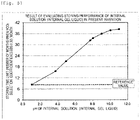
- Fig. 5 is a diagram illustrating a result of storing performance evaluation of the internal solution (internal gel liquid) in the present invention.
- the internal solution (internal gel liquid) having an adjusted pH value was manufactured and the anion sensor was filled with the internal solution.
- the HCO 3 selection coefficients in the internal solutions (internal gel liquid) having different pH values were measured and the shelf life of the anion sensor for each of pH values was examined.
- the HCO 3 selection coefficient was obtained and the anion selectivity was evaluated based on the shelf life of the anion sensor by using the above-described method.
- a transverse axis indicates the pH of the internal solution (internal gel liquid) and a longitudinal axis indicates shelf life (period of time expected that the HCO 3 selection coefficient exceeds 0.30).
- the shelf life of the anion sensor has a value of twice a reference value.
- the shelf life of the anion sensor has a value of three times a reference value.
- the pH of the internal solution is equal to or greater than 7.6, the internal gel liquid is not deteriorated even though storing is performed for two years or more.
- the pH of the internal solution is from 9.0 to 11.0, the period of time is three years.
- Fig. 5 corresponds to a graph obtained by plotting a measured value which is obtained and a measured value in a comparative example which will be described below. It is found that it is possible to significantly extend the shelf life by preparing the internal solution (internal gel liquid) so as to have a pH value in a range from acidity to alkalinity. If the pH value is set to be equal to or greater than 9.0, even though the anion sensor is disposed for a storing period of time of equal to or longer than three years, the anion sensor can be used with no problem.
- the anion exchanger or the condensate with which a surface of the anion exchanger is coated generally functions as an elaborated membrane.
- the condensate is formed of an amine compound.
- a dissociated basic material such as a quaternary ammonium salt
- an amino group is easily caused to become protons or a cleaving reaction on a molecular chain is easily performed at a pH lower than pKa (acid dissociation coefficient).
- the internal solution (internal gel liquid) is in a range from being acidic to being alkaline, protons do not transition to the membrane, the amino group of the condensate with which the anion exchanger is coated is not caused to become protons, and the condensate accomplishes the function as the elaborated membrane. Thus, it is considered that the selectivity is maintained.
- the pH buffer solution using NaCl and KCl as a base was added and had pH 1.0.
- the internal solution (internal gel liquid) was prepared so as to cause the concentration of chlorine ions in the internal solution (internal gel liquid) to be 90 mmol/L to 100 mmol/L.
- the storing time limit of the anion sensor manufactured by using the prepared internal solution was estimated.
- the internal solution (internal gel liquid) having pH 1.0 was prepared by adding any of H 3 BO 3 , CaCl 2 , and HCl to NaCl or KCl or by adding combination of H 3 BO 3 , CaCl 2 , and HCl to NaCl or KCl.
- the internal solution (internal gel liquid) having pH 1.0 was prepared by adding any of the following buffer solutions to NaCl or KCl: a hydrochloric acid-potassium chloride buffer solution, a glycine-HCl buffer solution, a citrate buffer solution, an acetate buffer solution, a citrate-phosphate buffer solution, and a phosphate buffer solution.
- the anion sensor was filled with the prepared internal solution (internal gel liquid) and the HCO 3 selection coefficient was measured. Thus, the shelf life of the anion sensor was examined. The shelf life and a storing examination method of the anion sensor were similar to those in Example 1.
- Fig. 5 illustrates the shelf life of the internal solution (internal gel liquid) having pH 1.0.
- a transverse axis indicates pH of the internal solution (internal gel liquid) and a longitudinal axis indicates the shelf life.
- the HCO 3 selection coefficient exceeds 0.30 within one year.
- the anion exchanger or the condensate with which a surface of the anion exchanger is coated generally functions as an elaborated membrane.
- the condensate is formed of an amine compound.
- a dissociated basic material such as a quaternary ammonium salt
- an amino group is easily caused to become protons or a cleaving reaction on a molecular chain is easily performed at a pH lower than pKa (acid dissociation coefficient).
- 1 sensor body
- 2 chlorine ion-sensitive membrane
- 3 flow channel
- 4 internal electrode
- 5 space
- 6 concave portion
- 7 electrode terminal
- 8 convex portion
- 9 concave portion
- 10 O-ring
Landscapes
- Health & Medical Sciences (AREA)
- Life Sciences & Earth Sciences (AREA)
- Engineering & Computer Science (AREA)
- Chemical & Material Sciences (AREA)
- Physics & Mathematics (AREA)
- Biomedical Technology (AREA)
- Molecular Biology (AREA)
- Analytical Chemistry (AREA)
- Biochemistry (AREA)
- General Health & Medical Sciences (AREA)
- General Physics & Mathematics (AREA)
- Immunology (AREA)
- Pathology (AREA)
- Electrochemistry (AREA)
- Chemical Kinetics & Catalysis (AREA)
- Biophysics (AREA)
- Hematology (AREA)
- Urology & Nephrology (AREA)
- Food Science & Technology (AREA)
- Medicinal Chemistry (AREA)
- Investigating Or Analyzing Materials By The Use Of Electric Means (AREA)
- Investigating Or Analysing Biological Materials (AREA)
Description
- The present invention relates to a flow cell type anion sensor of an electrolyte analyzer, and an analyzer using the anion sensor.
- An electrolyte analyzer is applied to determine the quantity of a specific ion component such as sodium ions, potassium ions, and chlorine ions, which are contained in a biological sample (referred to as a sample below) such as blood and urine. The concentration of specific ions in a biological fluid has a close relationship with a metabolic reaction of a living body. Various diagnoses such as hypertension symptoms, kidney diseases, and nerve disorders can be performed by measuring the concentration of specific ions.
- As one of methods used in detection of ions in a sample, a method of measuring the amount of a specific ion in a sample by using an ion sensor has been known. In such a measurement using an ion sensor, first, a standard sample of a known concentration is measured in advance, and a calibration curve is calculated from a measurement result. A potential difference between an internal standard fluid and the sample is measured and the concentration of the specific ion in the sample is measured by using the potential difference and the calibration curve. In the ion sensor, the Nernst's expression (Expression 1) is established between an activity a of an ion which is a target and a potential E indicated by the ion sensor.

- In
Expression 1, R indicates a gas constant, and T indicates an absolute temperature. Z indicates a valency, and F indicates the Faraday constant. E0 indicates a standard electrode potential. If such an ion sensor is used, measurement of a potential enables determination of the quantity of the ion concentration. As an anion sensor used in measurement of the chlorine ions, a solid membrane electrode using Ag/AgCl, a polymeric support liquid membrane electrode, or the like is used. The polymeric support liquid membrane electrode is obtained by holding a sensitive substance (ligand) in a polymeric support membrane formed of polyvinyl chloride and the like. The sensitive substance is formed from an organic compound. However, the latter sensor is generally used in the measurement of the chlorine ion in a biological fluid. - In the anion sensor, an anion exchange membrane is used. The anion exchange membrane uses an anion exchange resin film which contains a quaternary ammonium salt as an anion exchange group using a polymer as a basic skeleton. Selectivity for an anion in the quaternary ammonium salt depends on resolvability of an ion between the ion exchange membrane and a sample solution. A sequence of the selectivity uses a so-called Hofmeister series which relates to the hydration ability of ions, as a standard. For example, there is a problem in that if anions having high lipophilicity are present together, obtaining a measurement value of the chlorine ion is easily obstructed. Conventionally, many methods for improving anion selectivity have been proposed.
- For example,
PTL 1 discloses a method of performing coating treatment on a surface of the ion exchange membrane, which does not come into contact with the sample, with a two-liquid mixture-based epoxy resin, in order to prevent degradation of performance of a chlorine ion sensor. -
PTL 2 discloses a method of performing manufacturing by using a manufacturing method in order to improve performance of a chlorine ion-sensitive membrane. The manufacturing method has a first process and a second process. In the first process, an anion exchange resin film is immersed into a solution obtained by dissolving meta-phenylenediamine in a solvent. In the second process, the anion exchange resin film impregnated with meta-phenylenediamine is immersed in a liquid mixture of formaldehyde and hydrochloric acid so as to generate a condensate of meta-phenylenediamine and formaldehyde. -
PTL 3 discloses a method for improving preservability of a solution for an ion-selective electrode by containing an aminoglycoside antibiotic material in order to improve storing performance for consumable supplies in an ion sensor system. -
PTL 4 discloses a diluted solution for an electrolyte analyzer, in which proliferation of bacteria is suppressed by adjusting a salt concentration and thus an antimicrobial effect is shown in the long term. - The document
US 2003/121779A1 discloses hand-held portable drug monitoring system to detect and quantitate cocaine and other organic drugs in saliva, sweat, and surface wipes by using an ion selective electrode or an array of ion selective electrodes. The system includes a solution buffered with sodium or magnesium acetate, pH 4.5. -
- PTL 1:
JP-A-2003-207476 - PTL 2:
JP-A-10-318973 - PTL 3:
Japanese Patent No. 3321461 - PTL 4:
Japanese Patent No. 4252383 -
PTL 1 andPTL 2 disclose a method for improving the performance of the anion sensor. However, no examination for storing properties thereof was performed. There is a problem in that if a period of time elapses from when the anion sensor is manufactured, performance of the anion sensor is deteriorated and thus accurate measurement is impossible. - The mechanism is not reported and a manufacturing method for extending a shelf life is not reported.
-
PTL 3 andPTL 4 disclose a method for preventing breeding of saprophyte in storing of the solution for an ion-selective electrode or the diluted solution as consumable supplies used in the ion sensor. However, no examination for the shelf life of the ion sensor itself was performed. - Considering the problems, the present invention is to provide an anion sensor having a shelf life longer than that of the conventional anion sensor by extending the shelf life of the ion sensor itself.
- The present invention is realized by a flow-cell type anion sensor according to
claim 1, an electrolyte analyser according toclaim 2 or automatic clinical chemical analyser according toclaim 3. - According to the present invention, an anion sensor which maintains stable performance and has a longer shelf life can be provided.
-
- [
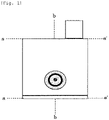
Fig. 1] Fig. 1 is a center view of a flow cell type anion sensor. - [
Fig. 2] Fig. 2 is a cross-sectional view of the flow cell type anion sensor (cross-sectional view of a surface having an upper end a-a' and a lower end a-a' inFig. 1 ). - [
Fig. 3] Fig. 3 is a cross-sectional view of the flow cell type anion sensor (cross-sectional view of an upper end b and a lower end b inFig. 1 ). - [
Fig. 4] Fig. 4 is a perspective view of the flow cell type anion sensor. - [
Fig. 5] Fig. 5 illustrates a result of evaluating storing performance of an internal solution (internal gel liquid) in the present invention. - [
Fig. 6] Fig. 6 is a configuration diagram of an automatic clinical chemical analyzer to which the present invention is applied. - Hereinafter, the present invention will be described in detail with reference to the drawings by using an example. First, an example of an anion sensor using an anion exchanger according to the present invention will be described.
- The ion sensor in the present invention is included in an automatic clinical chemical analyzer as illustrated in
Fig. 6 and is used in many cases. For example, in a device configuration ofFig. 6 , a reagent is dispensed from apump 107 for a sample to adilution tank 130. A sample is aspirated from asample container 101 by using anaspiration pump 126. Thesample container 101 is held on a sample disk by asampling probe 127. The measurement sample is caused to flow into anion sensor 128. A generated potential is subjected to signal processing through anAD converter 129. - In the ion sensor, ion sensors which can measure plural types of ions may be disposed in parallel, but at least an anion sensor is included. The anion sensor is configured by a polymeric support liquid membrane electrode. The polymeric support liquid membrane electrode is obtained by holding a sensitive substance (ligand) in a polymeric support membrane formed of polyvinyl chloride and the like. The sensitive substance is formed from an organic compound. As the anion sensor, an anion exchange resin material is used. The anion exchange resin material contains a quaternary ammonium salt as an anion exchange group by using a polymer as a basic skeleton and is subjected to coating treatment.
-
-
Fig. 1 is a center view illustrating a configuration of a flow cell type anion sensor in Example 1 of the present invention. -
Fig. 2 is a cross-sectional view of a surface obtained by linking an upper end a-a' and a lower end a-a' inFig. 1 . - A
flow channel 3, a chlorine ion-sensitive membrane 2, aninternal electrode 4, and aspace 5 are disposed in a rectangular parallelepiped flow celltype sensor body 1. A liquid of a measurement target passes through theflow channel 3 and a hole is provided in a portion of theflow channel 3. The chlorine ion-sensitive membrane 2 is disposed around the hole so as to come into contact with the liquid flowing in the flow channel via the hole of the flow channel. Theinternal electrode 4 outputs a potential occurring in the chlorine ion-sensitive membrane 2. Thespace 5 is used for accommodating an internal solution (internal gel liquid) which electrically connects theinternal electrode 4 and the chlorine ion-sensitive membrane. - The chlorine ion-
sensitive membrane 2 is an anion exchanger which is subjected to coating treatment with an amine compound and has a quaternary ammonium salt. As long as an object shows a function as an anion sensor, the anion sensor is not limited to the chlorine ion-sensitive membrane. Theflow channel 3 is formed so as to cross thesensor body 1 in a direction vertical to the surface of the paper on whichFigs. 1 and2 are illustrated. The diameter of theflow channel 3 is about 1 mm. Theinternal electrode 4 formed from Ag/AgCl is provided in the flowcell sensor body 1. Theinternal electrode 4 is electrically connected to the chlorine ion-sensitive membrane 2 through the internal solution (internal gel liquid) in thespace 5. It is possible to measure the concentration of chlorine ions contained in the liquid which flows in theflow channel 3, by measuring the potential of the internal electrode. - A concave portion 9a is formed in the center portion of
Fig. 2 . When the anion sensor is provided in the automatic clinical chemical analyzer, setting of the sensor at a predetermined position is enabled by gripping the concave portion 9a. -
Fig. 3 is a cross-sectional view of an upper end b and a lower end b of the anion sensor inFig. 1 .Fig. 4 is a perspective view of the anion sensor. - As is apparent from
Fig. 3 , the chlorine ion-sensitive membrane 2 is disposed on the flow channel side so as to have a convex shape. One side of the chlorine ion-sensitive membrane 2 comes into contact with the liquid flowing in the flow channel through the hole of theflow channel 3. Another side of the chlorine ion-sensitive membrane 2 comes into contact with the internal solution (internal gel liquid) which fills thespace 5. - When a plurality of flow cell type sensors is arranged and used, in order to bond the sensors, it is desired that a
convex portion 8 and a concave portion 6 are provided. The columnarconvex portion 8 is provided on one side of a surface in which theflow channel 3 having a diameter of 1 mm is formed. The concave portion 6 engages with theconvex portion 8 on the opposite side of the surface. When the plurality of flow cell type sensors is arranged and used, theconvex portion 8 of the flow cell type sensor is put into the concave portion 6 of another adjacent flow cell type sensor, and thus theflow channel 3 performs communication without shifting. In this case, the flow cell type sensors detect different types of ions and may continuously measure ion concentrations of the plural types of ions by sequentially introducing the sample liquid into the flow channel. -
Fig. 4 is a perspective view when the anion sensor is placed so as to cause theconvex portion 8 to be directed upward. Theflow channel 3 having a diameter of 1 mm is formed in theconvex portion 8. An O-ring 10 for liquid leakage prevention is provided so as to surround theflow channel 3. - An evaluation method of the measuring method for the chlorine ion by using the anion sensor is as follows. In the evaluation of anion selectivity, considering an influence of HCO3 ions having the strongest influence in blood serum among interfering ions to the chlorine ion-sensitive membrane, an HCO3 selection coefficient was set as an evaluation target. The HCO3 selection coefficient was evaluated by using the same method as that in
PTL 2. The outline is as follows. HCO3 ions are added as the interfering ions to the sample solution containing chlorine ions, and the HCO3 selection coefficient is obtained by using the Nicolsky-Eisenmann expression. As an index of the performance of the anion sensor, the anion selectivity becomes excellent as the value of the HCO3 selection coefficient becomes smaller. Determination of deterioration of the performance in storing was performed at a time when the HCO3 selection coefficient reached 0.3. - The internal solution (internal gel liquid) was prepared as follows.
- A buffer solution for stabilizing pH more was used in the internal solution (internal gel liquid). Since management of pH was difficult if the buffer solution had pH equal to or greater than 11, the pH buffer solution using NaCl and KCl as a base was added. There is no problem in a case where pH becomes pH 3.7, pH 4.9, pH 7.6, pH 9.0, pH 10.0, and pH 11.0 and the concentration of the chlorine ions in the internal solution (internal gel liquid) is equal to or greater than 1 mmol/L. However, here, the internal solution was prepared so as to have a concentration of 90 mmol/L to 100 mmol/L. The pH buffer solution according to the invention uses a CHES(2-Cyclohexylamino)ethanesulfonic acid) buffer as a Good's buffer solution, or an ammonium chloride buffer as a clinical chemical buffer solution.
- Examples of Good's buffer solutions not forming part of the invention include an MES(2-(N-Morphilino)ethanesulfonic acid) buffer solution, a Bis-Tris(Bis(2-hydroxyethyl)iminotris(hydroxymethyl)methane) buffer solution, an ADA(N-(2-Acetamido)iminodiacetic acid) buffer solution, a PIPES(Piperazine-N,N'-bis(2-ethanesulfonic acid) buffer solution, an ACES(N-(2-Acetamido)-2-aminoethanesulfonic acid) buffer solution, a MOPSO(3-(N-Morpholino)-2-hydroxypropanesulfonic acid) buffer solution, a BES(N,N-Bis(2-hydroxyethyl)-2-aminoethanesulfonic acid) buffer solution, a MOPS(3-(N-Morpholino)propanesulfonic acid) buffer solution, a TES(N-Tris(hydroxymethyl)methyl-2-aminoethanesulfonic acid) buffer solution, an HEPES(N-2-hydroxyethylpiperazine-N'-2-ethanesulfonic acid) buffer solution, a DIPSO(3-[N,N-Bis(2-hydroxyethyl)amino]-2-hydroxypropanesulfonic acid) buffer solution, a TAPSO(N-Tris(hydroxymethyl)methyl-2-hydroxy-3-aminopropanesulfonic acid) buffer solution, a POPSO(Piperazine-N,N'-bis(2-hydroxypropanesulfonic acid) buffer solution, an HEPPSO(N-2-Hydroxyethylpiperazine-N-2-hydroxypropane-3-sulfonic acid) buffer solution, an EPPS(N-2-Hydroxyethylpiperazine-N'-3-propanesulfonic acid, nick name: HEPPS) buffer solution, a Tricine(Tris(hydroxymethyl)methylglycine) buffer solution, a Bicine(N,N-Bis(2-hydroxyethyl)glycine) buffer solution, a TAPS(N-Tris(hydroxymethyl)methyl-3-aminopropanesulfonic acid) buffer solution, a CAPSO(3-N-Cyclohexylamino-2-hydroxypropanesulfonic acid) buffer solution, a CAPS(3-Cyclohexylaminopropanesulfonic acid) buffer solution, and the like.
- Examples of the clinical chemical buffer solution not forming part of the invention include a sodium acetate buffer solution, citric acid-the second sodium phosphate, hydrochloric acid-veronal sodium-sodium acetate, the first potassium phosphate-the second sodium phosphate, the first potassium phosphoric acid-borax, the first potassium phosphoric acid-sodium hydroxide, hydrochloric acid-collidine, hydrochloric acid-sodium veronal, hydrochloric acid-trisaminomethane, hydrochloric acid-borax, boric acid- sodium carbonate, boric acid-borax, hydrochloric acid-amino methyl propane diol, ammonium chloride-ammonia, glycine-sodium hydroxide, boric acid-sodium hydroxide, hydrochloric acid-dimethyl glycine sodium, borax-sodium hydroxide, borax-sodium carbonate, a Sorensen buffer solution, glycine-sodium chloride-hydrochloric acid, the second sodium citrate-hydrochloric acid, the second sodium citrate-sodium hydroxide, borax-sodium chloride, a Michaelis buffer solution, veronal sodium-sodium acetate-hydrochloric acid, a Clark-Rubus buffer solution, boric acid-potassium chloride-sodium hydroxide, an Atkins-Panchin buffer solution, a Paris tissue buffer solution, a Korutohofu buffer solution, an Mac-yl Bain buffer solution, a Hasuchingu-Sendoroi buffer solution, a Britton-Robinson buffer solution, a maleate buffer solution, a tris-maleate buffer solution, a veronal buffer solution, a veronal-acetate buffer solution, and the like.
- In this example, when the internal solution having pH 3.7 and pH 4.9 not forming part of the invention was adjusted, the sodium acetate buffer solution was used. When the internal solution (internal gel liquid) according to the invention having pH 7.6 and pH 9.6 was adjusted, the CHES buffer solution was used. When the internal solution (internal gel liquid) according to the invention having pH 11.0 was adjusted, the ammonium chloride buffer solution was used for easily adjusting pH and the concentration of Na ions, K ions, and Cl ions.
- In this example, the ion exchanger which was similar to the ion exchanger disclosed in
PTL 2 was used. However, the manufacturing method or composition is not limited to that. If an ion exchanger including a weakly basic functional group is used and coating treatment is performed with an amine compound, the present invention is effective. -
Fig. 5 is a diagram illustrating a result of storing performance evaluation of the internal solution (internal gel liquid) in the present invention. As described above, the internal solution (internal gel liquid) having an adjusted pH value was manufactured and the anion sensor was filled with the internal solution. The HCO3 selection coefficients in the internal solutions (internal gel liquid) having different pH values were measured and the shelf life of the anion sensor for each of pH values was examined. The HCO3 selection coefficient was obtained and the anion selectivity was evaluated based on the shelf life of the anion sensor by using the above-described method. A transverse axis indicates the pH of the internal solution (internal gel liquid) and a longitudinal axis indicates shelf life (period of time expected that the HCO3 selection coefficient exceeds 0.30). When the pH of the internal solution (internal gel liquid) is 3.7, the shelf life of the anion sensor has a value of twice a reference value. When the pH of the internal solution is 4.9, the shelf life of the anion sensor has a value of three times a reference value. When the pH of the internal solution is equal to or greater than 7.6, the internal gel liquid is not deteriorated even though storing is performed for two years or more. When the pH of the internal solution is from 9.0 to 11.0, the period of time is three years. -
Fig. 5 corresponds to a graph obtained by plotting a measured value which is obtained and a measured value in a comparative example which will be described below. It is found that it is possible to significantly extend the shelf life by preparing the internal solution (internal gel liquid) so as to have a pH value in a range from acidity to alkalinity. If the pH value is set to be equal to or greater than 9.0, even though the anion sensor is disposed for a storing period of time of equal to or longer than three years, the anion sensor can be used with no problem. - The anion exchanger or the condensate with which a surface of the anion exchanger is coated generally functions as an elaborated membrane. The condensate is formed of an amine compound. In a dissociated basic material such as a quaternary ammonium salt, an amino group is easily caused to become protons or a cleaving reaction on a molecular chain is easily performed at a pH lower than pKa (acid dissociation coefficient). Under a condition that the internal solution (internal gel liquid) is in a range from being acidic to being alkaline, protons do not transition to the membrane, the amino group of the condensate with which the anion exchanger is coated is not caused to become protons, and the condensate accomplishes the function as the elaborated membrane. Thus, it is considered that the selectivity is maintained.
- As a comparative example, the pH buffer solution using NaCl and KCl as a base was added and had pH 1.0. The internal solution (internal gel liquid) was prepared so as to cause the concentration of chlorine ions in the internal solution (internal gel liquid) to be 90 mmol/L to 100 mmol/L. The storing time limit of the anion sensor manufactured by using the prepared internal solution was estimated.
- The internal solution (internal gel liquid) having pH 1.0 was prepared by adding any of H3BO3, CaCl2, and HCl to NaCl or KCl or by adding combination of H3BO3, CaCl2, and HCl to NaCl or KCl. In addition, the internal solution (internal gel liquid) having pH 1.0 was prepared by adding any of the following buffer solutions to NaCl or KCl: a hydrochloric acid-potassium chloride buffer solution, a glycine-HCl buffer solution, a citrate buffer solution, an acetate buffer solution, a citrate-phosphate buffer solution, and a phosphate buffer solution. The anion sensor was filled with the prepared internal solution (internal gel liquid) and the HCO3 selection coefficient was measured. Thus, the shelf life of the anion sensor was examined. The shelf life and a storing examination method of the anion sensor were similar to those in Example 1.
-
Fig. 5 illustrates the shelf life of the internal solution (internal gel liquid) having pH 1.0. A transverse axis indicates pH of the internal solution (internal gel liquid) and a longitudinal axis indicates the shelf life. When the internal solution (internal gel liquid) has pH 1.0, the HCO3 selection coefficient exceeds 0.30 within one year. - The anion exchanger or the condensate with which a surface of the anion exchanger is coated generally functions as an elaborated membrane. The condensate is formed of an amine compound. In a dissociated basic material such as a quaternary ammonium salt, an amino group is easily caused to become protons or a cleaving reaction on a molecular chain is easily performed at a pH lower than pKa (acid dissociation coefficient). Under a condition that the internal solution (internal gel liquid) is acidic, protons gradually transition to the membrane, the amino group of the condensate with which the anion exchanger is coated is caused to become protons, and the condensate does not accomplish the function as the elaborated membrane due to showing of an ion-response function in the condensate. Thus, it is considered that deterioration is accelerated and the selectivity is degraded.
- 1: sensor body, 2: chlorine ion-sensitive membrane, 3: flow channel, 4: internal electrode, 5: space, 6: concave portion, 7: electrode terminal, 8: convex portion, 9: concave portion, 10: O-ring
Claims (3)
- A flow cell type anion sensor comprising:a flow channel (3);an ion-sensitive membrane (2) obtained by performing coating treatment on a membrane containing a compound which has a cation, with a material containing a compound which has an ionization group of predetermined pKa;an internal solution accommodation portion which is disposed so as to enable contact of a portion or the entirety of a first surface of the ion-sensitive membrane (2) with a sample and accommodates an internal solution so as to come into contact with a portion or the entirety of a second surface of the ion-sensitive membrane (2); andan electrode (4) provided so as to come into contact with the internal solution accommodated in the internal solution accommodation portion,wherein the ion-sensitive membrane (2), the internal solution accommodation portion, and the electrode (4) are disposed in a container,the internal solution contains a pH buffer solution using 2-(Cyclohexylamino)ethanesulfonic acid or an ammonium chloride buffer solution, and NaCl or KCl as a base, the concentration of the chlorine ions in the internal solution is equal to or greater than 1 mmol/L , and pH of the internal solution is adjusted so as to be equal to or greater than pKa of the compound having the ionization group,characterized in thatpH of the internal solution is adjusted to a range equal to or greater than pH 7.6 , wherein the pH of the internal solution is adjusted by using an ammonium chloride buffer solution if the pH of the internal solution having pH 11.0 is adjusted and in that pH of the internal solution is adjusted by using a 2-(Cyclohexylamino)ethanesulfonic acid if the pH of the internal solution having pH 7.6 and pH 9.6 is adjusted .
- An electrolyte analyzer which has the anion sensor according to Claim 1 mounted therein.
- An automatic clinical chemical analyzer which has the anion sensor according to Claim 1 mounted therein.
Applications Claiming Priority (2)
| Application Number | Priority Date | Filing Date | Title |
|---|---|---|---|
| JP2013150050 | 2013-07-19 | ||
| PCT/JP2014/061119 WO2015008517A1 (en) | 2013-07-19 | 2014-04-21 | Anion sensor |
Publications (3)
| Publication Number | Publication Date |
|---|---|
| EP3023776A1 EP3023776A1 (en) | 2016-05-25 |
| EP3023776A4 EP3023776A4 (en) | 2017-03-29 |
| EP3023776B1 true EP3023776B1 (en) | 2022-11-16 |
Family
ID=52345992
Family Applications (1)
| Application Number | Title | Priority Date | Filing Date |
|---|---|---|---|
| EP14826530.9A Active EP3023776B1 (en) | 2013-07-19 | 2014-04-21 | Anion sensor |
Country Status (5)
| Country | Link |
|---|---|
| US (1) | US10234416B2 (en) |
| EP (1) | EP3023776B1 (en) |
| JP (1) | JP6185065B2 (en) |
| CN (1) | CN105378466B (en) |
| WO (1) | WO2015008517A1 (en) |
Families Citing this family (3)
| Publication number | Priority date | Publication date | Assignee | Title |
|---|---|---|---|---|
| JP6783704B2 (en) * | 2017-05-31 | 2020-11-11 | 株式会社日立ハイテク | Anion-selective electrode and its manufacturing method |
| CN111788479B (en) * | 2018-02-23 | 2023-03-28 | 株式会社日立高新技术 | Automatic analysis device and automatic analysis method |
| US12320774B2 (en) | 2020-11-04 | 2025-06-03 | University Of Southern Mississippi | Macrocycle embedded organic electronic materials, composites, and compositions for chemical sensing |
Citations (1)
| Publication number | Priority date | Publication date | Assignee | Title |
|---|---|---|---|---|
| US20030121779A1 (en) * | 2001-10-12 | 2003-07-03 | Kidwell David A. | Ion selective electrodes for direct organic drug analysis in saliva, sweat, and surface wipes |
Family Cites Families (14)
| Publication number | Priority date | Publication date | Assignee | Title |
|---|---|---|---|---|
| WO1984001829A1 (en) * | 1982-10-29 | 1984-05-10 | Radiometer As | Ion-sensitive measuring electrode device |
| US5045171A (en) * | 1988-04-05 | 1991-09-03 | Ionics, Incorporated | Acid efficient membrane for use in electrodialysis for recovery of acid |
| US5174872A (en) * | 1990-06-08 | 1992-12-29 | Technicon Instruments Corporation | Metal-free buffer for ion selective electrode-based assays |
| JPH0915190A (en) * | 1995-06-27 | 1997-01-17 | Hitachi Ltd | Multi-sensor |
| JPH0943191A (en) * | 1995-08-04 | 1997-02-14 | Hitachi Ltd | Chloride sensor |
| JPH0961396A (en) * | 1995-08-25 | 1997-03-07 | Hitachi Ltd | Anion selective electrode |
| JPH10307120A (en) * | 1997-05-08 | 1998-11-17 | Hitachi Ltd | Chlorine ion sensor |
| JP3812049B2 (en) | 1997-05-15 | 2006-08-23 | 株式会社日立製作所 | Chlorine ion sensitive membrane and method for producing the same |
| JP3799826B2 (en) | 1998-07-14 | 2006-07-19 | 株式会社日立製作所 | Solid membrane ion-selective sensitive membrane and electrode using the same |
| JP2000329728A (en) | 1999-05-21 | 2000-11-30 | Hitachi Ltd | Anion-selective electrode, method for storing the same, and storage container |
| JP3321461B2 (en) | 2000-06-20 | 2002-09-03 | オリンパス光学工業株式会社 | Solution for ion-selective electrode with improved storage |
| JP3625448B2 (en) | 2002-01-11 | 2005-03-02 | 株式会社日立ハイテクノロジーズ | Ion sensor and biochemical automatic analyzer using the same |
| JP4252383B2 (en) | 2003-07-15 | 2009-04-08 | 株式会社常光 | Diluent for electrolyte analyzer with improved storage stability |
| DE102011118312A1 (en) * | 2011-11-11 | 2013-05-16 | Liebherr-Verzahntechnik Gmbh | Method and device for processing tooth edges |
-
2014
- 2014-04-21 US US14/896,091 patent/US10234416B2/en active Active
- 2014-04-21 JP JP2015527198A patent/JP6185065B2/en active Active
- 2014-04-21 WO PCT/JP2014/061119 patent/WO2015008517A1/en not_active Ceased
- 2014-04-21 CN CN201480039118.3A patent/CN105378466B/en active Active
- 2014-04-21 EP EP14826530.9A patent/EP3023776B1/en active Active
Patent Citations (1)
| Publication number | Priority date | Publication date | Assignee | Title |
|---|---|---|---|---|
| US20030121779A1 (en) * | 2001-10-12 | 2003-07-03 | Kidwell David A. | Ion selective electrodes for direct organic drug analysis in saliva, sweat, and surface wipes |
Also Published As
| Publication number | Publication date |
|---|---|
| US10234416B2 (en) | 2019-03-19 |
| EP3023776A1 (en) | 2016-05-25 |
| US20160131611A1 (en) | 2016-05-12 |
| JP6185065B2 (en) | 2017-08-23 |
| WO2015008517A1 (en) | 2015-01-22 |
| CN105378466A (en) | 2016-03-02 |
| CN105378466B (en) | 2017-11-24 |
| EP3023776A4 (en) | 2017-03-29 |
| JPWO2015008517A1 (en) | 2017-03-02 |
Similar Documents
| Publication | Publication Date | Title |
|---|---|---|
| Lewenstam | Routines and challenges in clinical application of electrochemical ion‐sensors | |
| Gaber et al. | Determination of benzalkonium chloride preservative in pharmaceutical formulation of eye and ear drops using new potentiometric sensors | |
| US10234416B2 (en) | Anion sensor | |
| KR100874779B1 (en) | Combined sensor for measuring hydrogen ion concentration with flat sensitive part | |
| US20120145542A1 (en) | Sensitive membrane for ion selective electrode | |
| KR20180044040A (en) | Ion sensors for sensing multiple ions in blood | |
| Satoh et al. | Improvement of a Phosphate Ion-selective Microsensor Using Bis (dibromophenylstannyl) methane as a Carrier | |
| CN102809590A (en) | Lithium-ion test method of electrolyte analyzer | |
| JP2022544989A (en) | Improved solid-state magnesium ion-selective microelectrodes and methods of making and using them | |
| Bakker | Potentiometric sensors | |
| Ali et al. | Potentiometric determination of terbinafine hydrochloride antifungal drug in pharmaceutical and biological fluids using ion selective electrodes | |
| Soleymanpour et al. | Coated wire lead (II)-selective electrode based on a Schiff base ionophore for low concentration measurements | |
| US20060042961A1 (en) | Potentiometric measurement of chloride concentration in an acidic solution | |
| Abbaspour et al. | A selective and sensitive carbon composite coated platinum electrode for aluminium determination in pharmaceutical and mineral water samples | |
| Egorov et al. | Novel anion exchangers for electrodes with improved selectivity to divalent anions | |
| EP0469468B1 (en) | Sample diluent for measurement with ion-selective electrodes and method of using the same | |
| RU2488813C1 (en) | Zinc-selective electrode membrane | |
| RU2617347C2 (en) | Method for simultaneous evaluation of donnan potential in eight electro-membrane systems | |
| US20130084214A1 (en) | Ion-Selective Ion Concentration Meter | |
| Naik | Principle and applications of ion selective electrodes-an overview | |
| JP2771260B2 (en) | Anion-selective electrode | |
| Khaled et al. | A simple potentiometric sensor for rhodamine B | |
| US10000784B2 (en) | Creatinine biosensor and method of using the same | |
| RU2508539C1 (en) | Method of determining zinc | |
| Cornish et al. | Considerations in the Use of Ion Selective Electrodes for Monitoring and Control |
Legal Events
| Date | Code | Title | Description |
|---|---|---|---|
| PUAI | Public reference made under article 153(3) epc to a published international application that has entered the european phase |
Free format text: ORIGINAL CODE: 0009012 |
|
| 17P | Request for examination filed |
Effective date: 20160218 |
|
| AK | Designated contracting states |
Kind code of ref document: A1 Designated state(s): AL AT BE BG CH CY CZ DE DK EE ES FI FR GB GR HR HU IE IS IT LI LT LU LV MC MK MT NL NO PL PT RO RS SE SI SK SM TR |
|
| AX | Request for extension of the european patent |
Extension state: BA ME |
|
| DAX | Request for extension of the european patent (deleted) | ||
| A4 | Supplementary search report drawn up and despatched |
Effective date: 20170301 |
|
| RIC1 | Information provided on ipc code assigned before grant |
Ipc: G01N 33/487 20060101ALI20170222BHEP Ipc: G01N 27/333 20060101AFI20170222BHEP Ipc: G01N 27/416 20060101ALI20170222BHEP |
|
| STAA | Information on the status of an ep patent application or granted ep patent |
Free format text: STATUS: EXAMINATION IS IN PROGRESS |
|
| 17Q | First examination report despatched |
Effective date: 20190926 |
|
| RAP1 | Party data changed (applicant data changed or rights of an application transferred) |
Owner name: HITACHI HIGH-TECH CORPORATION |
|
| GRAP | Despatch of communication of intention to grant a patent |
Free format text: ORIGINAL CODE: EPIDOSNIGR1 |
|
| STAA | Information on the status of an ep patent application or granted ep patent |
Free format text: STATUS: GRANT OF PATENT IS INTENDED |
|
| INTG | Intention to grant announced |
Effective date: 20220824 |
|
| GRAS | Grant fee paid |
Free format text: ORIGINAL CODE: EPIDOSNIGR3 |
|
| GRAA | (expected) grant |
Free format text: ORIGINAL CODE: 0009210 |
|
| STAA | Information on the status of an ep patent application or granted ep patent |
Free format text: STATUS: THE PATENT HAS BEEN GRANTED |
|
| AK | Designated contracting states |
Kind code of ref document: B1 Designated state(s): AL AT BE BG CH CY CZ DE DK EE ES FI FR GB GR HR HU IE IS IT LI LT LU LV MC MK MT NL NO PL PT RO RS SE SI SK SM TR |
|
| REG | Reference to a national code |
Ref country code: GB Ref legal event code: FG4D |
|
| RIN1 | Information on inventor provided before grant (corrected) |
Inventor name: KISHIOKA ATSUSHI Inventor name: ONO TETSUYOSHI Inventor name: SUZUKI AKIKO |
|
| REG | Reference to a national code |
Ref country code: CH Ref legal event code: EP |
|
| REG | Reference to a national code |
Ref country code: DE Ref legal event code: R096 Ref document number: 602014085564 Country of ref document: DE |
|
| REG | Reference to a national code |
Ref country code: IE Ref legal event code: FG4D |
|
| REG | Reference to a national code |
Ref country code: AT Ref legal event code: REF Ref document number: 1532052 Country of ref document: AT Kind code of ref document: T Effective date: 20221215 |
|
| REG | Reference to a national code |
Ref country code: LT Ref legal event code: MG9D |
|
| REG | Reference to a national code |
Ref country code: NL Ref legal event code: MP Effective date: 20221116 |
|
| REG | Reference to a national code |
Ref country code: AT Ref legal event code: MK05 Ref document number: 1532052 Country of ref document: AT Kind code of ref document: T Effective date: 20221116 |
|
| PG25 | Lapsed in a contracting state [announced via postgrant information from national office to epo] |
Ref country code: SE Free format text: LAPSE BECAUSE OF FAILURE TO SUBMIT A TRANSLATION OF THE DESCRIPTION OR TO PAY THE FEE WITHIN THE PRESCRIBED TIME-LIMIT Effective date: 20221116 Ref country code: PT Free format text: LAPSE BECAUSE OF FAILURE TO SUBMIT A TRANSLATION OF THE DESCRIPTION OR TO PAY THE FEE WITHIN THE PRESCRIBED TIME-LIMIT Effective date: 20230316 Ref country code: NO Free format text: LAPSE BECAUSE OF FAILURE TO SUBMIT A TRANSLATION OF THE DESCRIPTION OR TO PAY THE FEE WITHIN THE PRESCRIBED TIME-LIMIT Effective date: 20230216 Ref country code: LT Free format text: LAPSE BECAUSE OF FAILURE TO SUBMIT A TRANSLATION OF THE DESCRIPTION OR TO PAY THE FEE WITHIN THE PRESCRIBED TIME-LIMIT Effective date: 20221116 Ref country code: FI Free format text: LAPSE BECAUSE OF FAILURE TO SUBMIT A TRANSLATION OF THE DESCRIPTION OR TO PAY THE FEE WITHIN THE PRESCRIBED TIME-LIMIT Effective date: 20221116 Ref country code: ES Free format text: LAPSE BECAUSE OF FAILURE TO SUBMIT A TRANSLATION OF THE DESCRIPTION OR TO PAY THE FEE WITHIN THE PRESCRIBED TIME-LIMIT Effective date: 20221116 Ref country code: AT Free format text: LAPSE BECAUSE OF FAILURE TO SUBMIT A TRANSLATION OF THE DESCRIPTION OR TO PAY THE FEE WITHIN THE PRESCRIBED TIME-LIMIT Effective date: 20221116 |
|
| PG25 | Lapsed in a contracting state [announced via postgrant information from national office to epo] |
Ref country code: RS Free format text: LAPSE BECAUSE OF FAILURE TO SUBMIT A TRANSLATION OF THE DESCRIPTION OR TO PAY THE FEE WITHIN THE PRESCRIBED TIME-LIMIT Effective date: 20221116 Ref country code: PL Free format text: LAPSE BECAUSE OF FAILURE TO SUBMIT A TRANSLATION OF THE DESCRIPTION OR TO PAY THE FEE WITHIN THE PRESCRIBED TIME-LIMIT Effective date: 20221116 Ref country code: LV Free format text: LAPSE BECAUSE OF FAILURE TO SUBMIT A TRANSLATION OF THE DESCRIPTION OR TO PAY THE FEE WITHIN THE PRESCRIBED TIME-LIMIT Effective date: 20221116 Ref country code: IS Free format text: LAPSE BECAUSE OF FAILURE TO SUBMIT A TRANSLATION OF THE DESCRIPTION OR TO PAY THE FEE WITHIN THE PRESCRIBED TIME-LIMIT Effective date: 20230316 Ref country code: HR Free format text: LAPSE BECAUSE OF FAILURE TO SUBMIT A TRANSLATION OF THE DESCRIPTION OR TO PAY THE FEE WITHIN THE PRESCRIBED TIME-LIMIT Effective date: 20221116 Ref country code: GR Free format text: LAPSE BECAUSE OF FAILURE TO SUBMIT A TRANSLATION OF THE DESCRIPTION OR TO PAY THE FEE WITHIN THE PRESCRIBED TIME-LIMIT Effective date: 20230217 |
|
| PG25 | Lapsed in a contracting state [announced via postgrant information from national office to epo] |
Ref country code: NL Free format text: LAPSE BECAUSE OF FAILURE TO SUBMIT A TRANSLATION OF THE DESCRIPTION OR TO PAY THE FEE WITHIN THE PRESCRIBED TIME-LIMIT Effective date: 20221116 |
|
| PG25 | Lapsed in a contracting state [announced via postgrant information from national office to epo] |
Ref country code: SM Free format text: LAPSE BECAUSE OF FAILURE TO SUBMIT A TRANSLATION OF THE DESCRIPTION OR TO PAY THE FEE WITHIN THE PRESCRIBED TIME-LIMIT Effective date: 20221116 Ref country code: RO Free format text: LAPSE BECAUSE OF FAILURE TO SUBMIT A TRANSLATION OF THE DESCRIPTION OR TO PAY THE FEE WITHIN THE PRESCRIBED TIME-LIMIT Effective date: 20221116 Ref country code: EE Free format text: LAPSE BECAUSE OF FAILURE TO SUBMIT A TRANSLATION OF THE DESCRIPTION OR TO PAY THE FEE WITHIN THE PRESCRIBED TIME-LIMIT Effective date: 20221116 Ref country code: DK Free format text: LAPSE BECAUSE OF FAILURE TO SUBMIT A TRANSLATION OF THE DESCRIPTION OR TO PAY THE FEE WITHIN THE PRESCRIBED TIME-LIMIT Effective date: 20221116 Ref country code: CZ Free format text: LAPSE BECAUSE OF FAILURE TO SUBMIT A TRANSLATION OF THE DESCRIPTION OR TO PAY THE FEE WITHIN THE PRESCRIBED TIME-LIMIT Effective date: 20221116 |
|
| REG | Reference to a national code |
Ref country code: DE Ref legal event code: R097 Ref document number: 602014085564 Country of ref document: DE |
|
| PG25 | Lapsed in a contracting state [announced via postgrant information from national office to epo] |
Ref country code: SK Free format text: LAPSE BECAUSE OF FAILURE TO SUBMIT A TRANSLATION OF THE DESCRIPTION OR TO PAY THE FEE WITHIN THE PRESCRIBED TIME-LIMIT Effective date: 20221116 Ref country code: AL Free format text: LAPSE BECAUSE OF FAILURE TO SUBMIT A TRANSLATION OF THE DESCRIPTION OR TO PAY THE FEE WITHIN THE PRESCRIBED TIME-LIMIT Effective date: 20221116 |
|
| PLBE | No opposition filed within time limit |
Free format text: ORIGINAL CODE: 0009261 |
|
| STAA | Information on the status of an ep patent application or granted ep patent |
Free format text: STATUS: NO OPPOSITION FILED WITHIN TIME LIMIT |
|
| 26N | No opposition filed |
Effective date: 20230817 |
|
| PG25 | Lapsed in a contracting state [announced via postgrant information from national office to epo] |
Ref country code: SI Free format text: LAPSE BECAUSE OF FAILURE TO SUBMIT A TRANSLATION OF THE DESCRIPTION OR TO PAY THE FEE WITHIN THE PRESCRIBED TIME-LIMIT Effective date: 20221116 |
|
| REG | Reference to a national code |
Ref country code: CH Ref legal event code: PL |
|
| GBPC | Gb: european patent ceased through non-payment of renewal fee |
Effective date: 20230421 |
|
| PG25 | Lapsed in a contracting state [announced via postgrant information from national office to epo] |
Ref country code: LU Free format text: LAPSE BECAUSE OF NON-PAYMENT OF DUE FEES Effective date: 20230421 |
|
| REG | Reference to a national code |
Ref country code: BE Ref legal event code: MM Effective date: 20230430 |
|
| PG25 | Lapsed in a contracting state [announced via postgrant information from national office to epo] |
Ref country code: MC Free format text: LAPSE BECAUSE OF FAILURE TO SUBMIT A TRANSLATION OF THE DESCRIPTION OR TO PAY THE FEE WITHIN THE PRESCRIBED TIME-LIMIT Effective date: 20221116 |
|
| PG25 | Lapsed in a contracting state [announced via postgrant information from national office to epo] |
Ref country code: GB Free format text: LAPSE BECAUSE OF NON-PAYMENT OF DUE FEES Effective date: 20230421 |
|
| PG25 | Lapsed in a contracting state [announced via postgrant information from national office to epo] |
Ref country code: MC Free format text: LAPSE BECAUSE OF FAILURE TO SUBMIT A TRANSLATION OF THE DESCRIPTION OR TO PAY THE FEE WITHIN THE PRESCRIBED TIME-LIMIT Effective date: 20221116 Ref country code: LI Free format text: LAPSE BECAUSE OF NON-PAYMENT OF DUE FEES Effective date: 20230430 Ref country code: GB Free format text: LAPSE BECAUSE OF NON-PAYMENT OF DUE FEES Effective date: 20230421 Ref country code: CH Free format text: LAPSE BECAUSE OF NON-PAYMENT OF DUE FEES Effective date: 20230430 |
|
| REG | Reference to a national code |
Ref country code: IE Ref legal event code: MM4A |
|
| PG25 | Lapsed in a contracting state [announced via postgrant information from national office to epo] |
Ref country code: BE Free format text: LAPSE BECAUSE OF NON-PAYMENT OF DUE FEES Effective date: 20230430 |
|
| PG25 | Lapsed in a contracting state [announced via postgrant information from national office to epo] |
Ref country code: IE Free format text: LAPSE BECAUSE OF NON-PAYMENT OF DUE FEES Effective date: 20230421 |
|
| PG25 | Lapsed in a contracting state [announced via postgrant information from national office to epo] |
Ref country code: IE Free format text: LAPSE BECAUSE OF NON-PAYMENT OF DUE FEES Effective date: 20230421 |
|
| PG25 | Lapsed in a contracting state [announced via postgrant information from national office to epo] |
Ref country code: IT Free format text: LAPSE BECAUSE OF FAILURE TO SUBMIT A TRANSLATION OF THE DESCRIPTION OR TO PAY THE FEE WITHIN THE PRESCRIBED TIME-LIMIT Effective date: 20221116 |
|
| PG25 | Lapsed in a contracting state [announced via postgrant information from national office to epo] |
Ref country code: BG Free format text: LAPSE BECAUSE OF FAILURE TO SUBMIT A TRANSLATION OF THE DESCRIPTION OR TO PAY THE FEE WITHIN THE PRESCRIBED TIME-LIMIT Effective date: 20221116 |
|
| PG25 | Lapsed in a contracting state [announced via postgrant information from national office to epo] |
Ref country code: BG Free format text: LAPSE BECAUSE OF FAILURE TO SUBMIT A TRANSLATION OF THE DESCRIPTION OR TO PAY THE FEE WITHIN THE PRESCRIBED TIME-LIMIT Effective date: 20221116 |
|
| PG25 | Lapsed in a contracting state [announced via postgrant information from national office to epo] |
Ref country code: CY Free format text: LAPSE BECAUSE OF FAILURE TO SUBMIT A TRANSLATION OF THE DESCRIPTION OR TO PAY THE FEE WITHIN THE PRESCRIBED TIME-LIMIT; INVALID AB INITIO Effective date: 20140421 |
|
| PG25 | Lapsed in a contracting state [announced via postgrant information from national office to epo] |
Ref country code: HU Free format text: LAPSE BECAUSE OF FAILURE TO SUBMIT A TRANSLATION OF THE DESCRIPTION OR TO PAY THE FEE WITHIN THE PRESCRIBED TIME-LIMIT; INVALID AB INITIO Effective date: 20140421 |
|
| PG25 | Lapsed in a contracting state [announced via postgrant information from national office to epo] |
Ref country code: TR Free format text: LAPSE BECAUSE OF FAILURE TO SUBMIT A TRANSLATION OF THE DESCRIPTION OR TO PAY THE FEE WITHIN THE PRESCRIBED TIME-LIMIT Effective date: 20221116 |
|
| PGFP | Annual fee paid to national office [announced via postgrant information from national office to epo] |
Ref country code: FR Payment date: 20260320 Year of fee payment: 13 |
|
| PGFP | Annual fee paid to national office [announced via postgrant information from national office to epo] |
Ref country code: DE Payment date: 20260319 Year of fee payment: 13 |