EP3021234A1 - Conceptualization and search of block diagram based models - Google Patents
Conceptualization and search of block diagram based models Download PDFInfo
- Publication number
- EP3021234A1 EP3021234A1 EP15193574.9A EP15193574A EP3021234A1 EP 3021234 A1 EP3021234 A1 EP 3021234A1 EP 15193574 A EP15193574 A EP 15193574A EP 3021234 A1 EP3021234 A1 EP 3021234A1
- Authority
- EP
- European Patent Office
- Prior art keywords
- model
- property
- similarity
- tuple
- properties
- Prior art date
- Legal status (The legal status is an assumption and is not a legal conclusion. Google has not performed a legal analysis and makes no representation as to the accuracy of the status listed.)
- Withdrawn
Links
Images



Classifications
-
- G—PHYSICS
- G01—MEASURING; TESTING
- G01M—TESTING STATIC OR DYNAMIC BALANCE OF MACHINES OR STRUCTURES; TESTING OF STRUCTURES OR APPARATUS, NOT OTHERWISE PROVIDED FOR
- G01M99/00—Subject matter not provided for in other groups of this subclass
- G01M99/008—Subject matter not provided for in other groups of this subclass by doing functionality tests
-
- G—PHYSICS
- G06—COMPUTING OR CALCULATING; COUNTING
- G06F—ELECTRIC DIGITAL DATA PROCESSING
- G06F16/00—Information retrieval; Database structures therefor; File system structures therefor
- G06F16/30—Information retrieval; Database structures therefor; File system structures therefor of unstructured textual data
- G06F16/35—Clustering; Classification
- G06F16/355—Creation or modification of classes or clusters
Definitions
- the present disclosure is directed, in general, to computer-aided design, visualization, and manufacturing systems, product lifecycle management ("PLM”) systems, and similar systems, that manage data for products and other items (collectively, "Product Data Management” systems or PDM systems).
- PLM product lifecycle management
- PDM Product data management
- PLM product lifecycle management
- Various disclosed embodiments include a method for conceptualization and search of block diagram based models.
- the method includes receiving a selected model from a model library comprised of a plurality of models, mapping physical quantities to each of the plurality of properties of the selected model, associating a semantic interpretation to each of the plurality of properties, defining a similarity determination comparing the semantic interpretation of a first property and the semantic interpretation of a second property, determining property similarities comparing the specific properties for each of the plurality of models to the specific properties of the selected model by applying the similarity determination, determining a model similarity based on a weighted summation of the property similarities, and creating a similarity list of similar models with sufficient model similarities.
- FIGURES 1 through 10 discussed below, and the various embodiments used to describe the principles of the present disclosure in this patent document are by way of illustration only and should not be construed in any way to limit the scope of the disclosure. Those skilled in the art will understand that the principles of the present disclosure may be implemented in any suitably arranged device. The numerous innovative teachings of the present application will be described with reference to exemplary non-limiting embodiments.
- 1D models consist of blocks representing and modeling elements described by properties, such as ports, internal variables, parameters, and other properties for describing connection points between model elements.
- properties such as ports, internal variables, parameters, and other properties for describing connection points between model elements.
- Model properties and characteristics are reformulated into so-called "concepts,” making them independent from tool vendor or model type specific formats and allowing comparative models and model properties.
- Structural and property based similarities of models are expressed in a characteristic number representing a metric between models, making it possible to systematically search for models with desired properties. The number can be weighted and adapted to the search purpose.
- Models can be compared by their properties using "concepts.”
- the term “concept” is defined in the standards on conceptualization, such as ISO 704.
- properties for the model include ports, internal variables, and parameters.
- the ports contain an internal structure configured of port variables.
- the port variables, internal variables, and parameters in the model are represented by variable units.
- the variable units are based upon the "concept” of the interpretation of representing a physical quantity.
- Concepts are implementation independent, tool and model independent, and compare models independent of the modeling environment.
- the structure of the models, including the ports, internal variables, and parameters, are used for conceptualization and the derived "concepts" are used for comparing models.
- FIG. 1 illustrates a block diagram of a data processing system in which an embodiment can be implemented, for example as a PDM system particularly configured by software or otherwise to perform the processes as described herein, and in particular as each one of a plurality of interconnected and communicating systems as described herein.
- the data processing system depicted includes a processor 102 connected to a level two cache/bridge 104, which is connected in turn to a local system bus 106.
- Local system bus 106 may be, for example, a peripheral component interconnect (PCI) architecture bus.
- PCI peripheral component interconnect
- main memory 108 main memory
- graphics adapter 110 may be connected to display 111.
- Peripherals such as local area network (LAN) / Wide Area Network / Wireless (e.g. WiFi) adapter 112, may also be connected to local system bus 106.
- Expansion bus interface 114 connects local system bus 106 to input/output (I/O) bus 116.
- I/O bus 116 is connected to keyboard/mouse adapter 118, disk controller 120, and I/O adapter 122.
- Disk controller 120 can be connected to a storage 126, which can be any suitable machine usable or machine readable storage medium, including but not limited to nonvolatile, hard-coded type mediums such as read only memories (ROMs) or erasable, electrically programmable read only memories (EEPROMs), magnetic tape storage, and user-recordable type mediums such as floppy disks, hard disk drives and compact disk read only memories (CD-ROMs) or digital versatile disks (DVDs), and other known optical, electrical, or magnetic storage devices.
- ROMs read only memories
- EEPROMs electrically programmable read only memories
- CD-ROMs compact disk read only memories
- DVDs digital versatile disks
- Audio adapter 124 Also connected to I/O bus 116 in the example shown is audio adapter 124, to which speakers (not shown) may be connected for playing sounds.
- Keyboard/mouse adapter 118 provides a connection for a pointing device (not shown), such as a mouse, trackball, trackpointer, touchscreen, etc.
- a data processing system in accordance with an embodiment of the present disclosure includes an operating system employing a graphical user interface.
- the operating system permits multiple display windows to be presented in the graphical user interface simultaneously, with each display window providing an interface to a different application or to a different instance of the same application.
- a cursor in the graphical user interface may be manipulated by a user through the pointing device. The position of the cursor may be changed and/or an event, such as clicking a mouse button, generated to actuate a desired response.
- One of various commercial operating systems such as a version of Microsoft WindowsTM, a product of Microsoft Corporation located in Redmond, Wash. may be employed if suitably modified.
- the operating system is modified or created in accordance with the present disclosure as described.
- LAN/ WAN/Wireless adapter 112 can be connected to a network 130 (not a part of data processing system 100), which can be any public or private data processing system network or combination of networks, as known to those of skill in the art, including the Internet.
- Data processing system 100 can communicate over network 130 with server system 140, which is also not part of data processing system 100, but can be implemented, for example, as a separate data processing system 100.
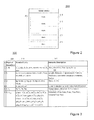
- Figure 2 illustrates a model library 200 including a plurality of models 205 in accordance with disclosed embodiments.
- the models 210 are organized in the model library 200.
- the models 210 and model library 200 are discussed in more detail below.
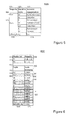
- Figure 3 illustrates a standard description table 300 in accordance with disclosed embodiments.
- the standard description table 300 contains physical quantities 305 with standard units 310 and semantic descriptions 315.
- the physical quantities 305 are quantified by the standard units 310 and described by the semantic descriptions 315.
- physical quantity 305 "t” can be quantified by the standard units 310 "s" (seconds), “us'” (microseconds), “day,” “h” (hour), “hr” (hour), “min” (minutes), “month,” “ms” (milliseconds), “week,” or “year” and described by the semantic descriptions 315 “time,” “duration,” “time span,” or “delay.”
- Each physical quantity includes a base description 320, which can be defined manually by a user or by default in the standard description table 300.
- time is the base description 320 for physical quantity 305 "t.”
- the standard description table 300 including the physical quantities 305, the standard units 310, and the semantic descriptions 315, is for illustration purposes only and provide a non-exhaustive example of the elements contained within.
- Figure 4 illustrates a structure 400 of a model 405 including a plurality of properties 410 in accordance with disclosed embodiments.
- the structure 400 of a typical model 405 contains a plurality of properties 410 including ports 415, internal variables 420, and parameters 425.
- the model 405 can include multiple specific properties 430 of a property type, such as, Port 1 and Port 2 are both ports 415.
- Figure 5 illustrates a similarity determination 500 between two properties 505 in accordance with disclosed embodiments.
- the similarity determination 500 can incorporate a similarity function 510 to determine a property similarity 515 between a first property 520 and a second property 525.
- the similarity function 510 can compare the variables units 530 or the semantic interpretation 535 for each of the properties 505.
- S(property 1 ,property 2 ) is a function for determining the similarity between a first property 520, property 1 , and a second property 525, property 2
- n 1 is the number of variable units 530 or semantic interpretations 535 for property 1
- n 2 is the number of variable units 530 or semantic interpretations 535 for property 2
- n 0 is the number of the same variable units 530 or semantic interpretations 535 in both property 1 and property 2 .
- the similarity determination 500 compares Port 1 and Port 1 from the model illustrated in Figure 4 .
- the similarity determination 500 uses a similarity function 410, such as from equation 1, where Port 1 is property 1 and Port 2 is property 2 .
- Port 1 contains three variable units 530 or semantic interpretations 535 providing a value of three for n 1 and Port 2 contains four variable units 530 or semantic interpretations 535 providing a value of four for n 2 .
- Both Port 1 and Port 2 contain "W” and "K” variable units 530 and respective semantic interpretations 535 of "Hydraulic Power" and "Temperature,” providing a value of two for n 0 .
- the similarity function 510 provides a property similarity 515 of 0.4 between Port 1 and Port 2 .
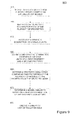
- Figure 6 illustrates a tuple similarity determination 600 comparing tuples 605 from a first model 610 and a second model 615 in accordance with disclosed embodiments.
- a tuple 605 is a pair of specific properties 620, where each tuple 605 includes one specific property 620 from the first model 610 and one specific property 620 from the second model 615.
- the tuple similarity determination 600 can incorporate a similarity function, such as the property similarity function 510 illustrated in Figure 5 , to determine a tuple similarity 630 between the specific properties 620 of a first model 610 and a second model 615.
- the tuple similarity determination 600 creates a tuple list 625 containing the tuples 605 and tuple similarities 630.
- the tuples 605 are placed in the list as unselected tuples 635 comprising all the different combinations of specific properties 620 with a respective tuple similarity 640.
- the unselected tuples 635 are ordered based on their respective tuple similarity 640.
- the tuple similarity determination 600 selects the tuple 605 with the highest tuple similarity 645 and removes the unselected tuples 635 which contain the specific property 620 of the first model 610 or the specific property 620 of the second model 615 of the selected tuple 650.
- the tuple similarity determination 600 proceeds to the tuple 605 with a next highest tuple similarity 655 and removes the unselected tuples 635 which contain the specific property 620 of the first model 610 or the specific property 620 of the second model 615 of the next selected tuple 660.
- the tuple similarity determination 600 continues selecting tuples 605 until all the unselected tuples 635 are selected or removed. Once the tuple list 625 contains only selected tuples 650, the tuple similarity determination 600 takes a summation 665 the respective tuple similarities 640 of the selected tuples 650 for a total tuple similarities 670.
- the tuple similarity determination 600 compares the specific properties 620 of a first model 610, m 1 , to the specific properties of a second model 615, m 2 .
- m 1 contains specific properties 620 A, B, C, and D and m2 contains specific properties 620 E, F, and G.
- the tuple list 625 contains all possible tuples 605 of combinations of one specific property 620 from m 1 and one specific property 620 from m 2 .
- AG is chosen as the selected tuple 650 with the highest tuple similarity 630. Tuples 605 CG, AE, DG, BG, and AF are removed from the tuple list 625 because they contain specific property 620 A or G.
- DE is chosen as the next highest unselected tuple 660 and tuples 605 DG, DF, BE, and CE are removed.
- BF is chosen as the next highest unselected tuple 660 and tuple 605 CF is removed. Because the only tuples 605 remaining in the tuple list 625 are selected tuples 650, the summation 665 of the respective tuple similarities 640 is taken and provides a total tuple similarity 670 of 2.1992.
- Figure 7 illustrates a weighted summation 700 of the model similarity 705 in accordance with disclosed embodiments.
- the model similarity 705 can be determined by a weighted summation 700 of the different property similarities between a first model 710 and a second model 715.
- the weighted summation can include a weight 720 for each property similarity.
- the models contain properties includes ports, parameter and internal variables.
- a port similarity function 725 determines the port similarity 730
- a parameter similarity function 735 determines the parameter similarity 740
- an internal variable similarity function 745 determines the internal variable similarity 750 between the first model 710 and the second model 715.
- S prop (model 1 ,model 2 ) is a function for determining the similarity between a first model 710, model 1 , and a second model 720, model 2 , "n 1 " is specific properties for model 1 , “n 2 " is the number of specific properties for model 2 , and "Sum p " is the total tuple similarity in both property 1 and property 2 .
- Figure 8 illustrates a similarity list 800 containing similar models 805 with sufficient model similarities 810 to the selected model 815 in accordance with disclosed embodiments.
- a similar model search 820 for the selected model 815 determines a model similarity 825 for similar models 805 in the model library.
- the similar model results 830 are returned to the user with the similar models 805 which are determined to contain a sufficient model similarity 810 to the selected model 815.
- the sufficient model similarity 810 limits the amount of similar models 805 in the similarity list 800 and the sufficient model similarity 810 can be a fixed or variable amount for model similarity 825. More complex models may require a greater model similarity 825 for exchanging similar models 805.
- the sufficient model similarity 810 can be stored in the system or be input with the selected model 815 in the similar model search 820.
- Figure 9 illustrates a flowchart of a process 900 for creating a similar models list for ranking similar models with sufficient model similarities in accordance with disclosed embodiments.
- step 905 the system receives a selected model from a model library comprising a plurality of models.
- Each model of the plurality of models includes properties comprising ports, internal variables, and parameters.
- step 910 the system maps physical quantities to units for each of the plurality of properties of the selected model.
- Each physical quantity can include multiple equivalent units, typically provided as a string.
- the units for the properties are mapped to a standard physical quantity based on a list of standard units for relevant physical quantities.
- the system associates a semantic description to variable units based on the physical quantity mapped to the unit for a property.
- a physical quantity can include multiple semantic meanings, which can be standardized in a list mapping the physical quantity with possible semantic meanings.
- the mapping of the physical quantity with semantic meanings can be automated by using the textual descriptions or variable unit names that all engineering systems provide. An interpretation will be chosen when the text includes a textual description or variable unit provided by the engineering system. Otherwise, the mapping is performed manually or by default, such as, a physical base unit.
- step 920 the system defines a similarity determination comparing variable units of a first property and a second property.
- S(property 1 ,propety 2 ) is a function for determining the similarity between property 1 and property 2
- n 1 is the number of variable units for property 1
- n 2 is the number of variable units for property 2
- n 0 is the number of variable units of the same unit or semantic interpretation in both property 1 and property 2 .
- step 925 the system determines property similarities, "S prop ,” comparing the properties for each of the plurality of models to the properties of the select model by applying the similarity determination.
- property similarities determined include a port similarity, "S port ;” a parameter similarity, “S par ;” and an internal variable similarity, "S ilva ,” between models.
- the system determines a model similarity based on a weighted summation of the property similarities.
- Equation 7 the sum of weights, 'w1," "w2,” and “w3,” is equal to one.
- equation 8 "a 1 " is the number of ports, internal variables, and parameters of m 1, and "a 2 " is the number of ports, internal variables, and parameters of "m 2 .”
- the system creates a similarity list of similar models with a sufficient model similarity compared to the selected model.
- the similar models are sufficiently similar as alternatives to the selected model.
- similar models containing properties with different interpretations, such as "mechanical power” instead of "hydraulic power” are removed from the list.
- the similar models from the similarity list can be selected as an alternative part and replace the selected model.
- the sufficient model similarity limits the amount of similar models in the similarity list and the sufficient model similarity can be a fixed or variable amount for model similarity. More complex models may require a greater model similarity for exchanging similar models.
- the sufficient model similarity can be stored in the system or be input with the selected model in the similar model search.
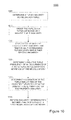
- Figure 10 illustrates a flowchart of a process 1000 for determining a property similarity comparing the properties for a first model to the properties for a second model in accordance with disclosed embodiments that may be performed, for example, by a PLM or PDM system.
- the similarity of models "m 1 " and “m 2 " based on a property are determined based on the property similarity, where "n 1 " is the number of specific properties of model “m 1 " and "n 2 " is the number of specific properties of model "m 2 .”
- step 1005 the system determines a tuple similarity between each tuple, where a tuple includes a specific property of a first model "m 1 " and a specific property of a second model "m 2. " For models “m 1 " and “m 2 ,” a total number of “n 1 " x “n 2 " possible tuples exists.
- step 1010 the system creates a tuple list containing unselected tuples with respective tuple similarities.
- the system orders the tuples in a tuple list based on tuple similarity.
- the list can be descending or ascending, as long as the tuples are ordered based on the tuple similarity.
- step 1015 the system selects a tuple with the highest tuple similarity and removes all the remaining tuples which contain either the specific property of the first model or the specific property of the second model of the selected tuple.
- step 1020 the system repeats step 1015 for the unselected tuples until all the remaining tuples are selected or removed.
- step 1025 the system determines a summation, "S ump " of the tuple similarities of the selected tuples to replace "n 0 " in the similarity determination for the property similarity, which is defined as equation 9:
- S prop m 1 m 2 : S ump n 1 + n 2 - S ump
- the system can calculate the summation of each unique combination of tuples, with a specific property only occurring once in the unique combination. "S ump " is the highest summation provided by a unique combination of tuples.
- step 1030 the system returns the similarity determination comparing the properties of a first model to the properties for a second model.
- machine usable/readable or computer usable/readable mediums include: nonvolatile, hard-coded type mediums such as read only memories (ROMs) or erasable, electrically programmable read only memories (EEPROMs), and user-recordable type mediums such as floppy disks, hard disk drives and compact disk read only memories (CD-ROMs) or digital versatile disks (DVDs).
- ROMs read only memories
- EEPROMs electrically programmable read only memories
- user-recordable type mediums such as floppy disks, hard disk drives and compact disk read only memories (CD-ROMs) or digital versatile disks (DVDs).
Landscapes
- Engineering & Computer Science (AREA)
- Theoretical Computer Science (AREA)
- Physics & Mathematics (AREA)
- General Physics & Mathematics (AREA)
- Data Mining & Analysis (AREA)
- Databases & Information Systems (AREA)
- General Engineering & Computer Science (AREA)
- Information Retrieval, Db Structures And Fs Structures Therefor (AREA)
Abstract
Description
- The present disclosure is directed, in general, to computer-aided design, visualization, and manufacturing systems, product lifecycle management ("PLM") systems, and similar systems, that manage data for products and other items (collectively, "Product Data Management" systems or PDM systems).
- Product data management (PDM) systems manage product lifecycle management (PLM) systems and other data. Improved systems are desirable.
- Various disclosed embodiments include a method for conceptualization and search of block diagram based models. The method includes receiving a selected model from a model library comprised of a plurality of models, mapping physical quantities to each of the plurality of properties of the selected model, associating a semantic interpretation to each of the plurality of properties, defining a similarity determination comparing the semantic interpretation of a first property and the semantic interpretation of a second property, determining property similarities comparing the specific properties for each of the plurality of models to the specific properties of the selected model by applying the similarity determination, determining a model similarity based on a weighted summation of the property similarities, and creating a similarity list of similar models with sufficient model similarities.
- The foregoing has outlined rather broadly the features and technical advantages of the present disclosure so that those skilled in the art may better understand the detailed description that follows. Additional features and advantages of the disclosure will be described hereinafter that form the subject of the claims. Those skilled in the art will appreciate that they may readily use the conception and the specific embodiment disclosed as a basis for modifying or designing other structures for carrying out the same purposes of the present disclosure. Those skilled in the art will also realize that such equivalent constructions do not depart from the spirit and scope of the disclosure in its broadest form.
- Before undertaking the DETAILED DESCRIPTION below, it may be advantageous to set forth definitions of certain words or phrases used throughout this patent document: the terms "include" and "comprise," as well as derivatives thereof, mean inclusion without limitation; the term "or" is inclusive, meaning and/or; the phrases "associated with" and "associated therewith," as well as derivatives thereof, may mean to include, be included within, interconnect with, contain, be contained within, connect to or with, couple to or with, be communicable with, cooperate with, interleave, juxtapose, be proximate to, be bound to or with, have, have a property of, or the like; and the term "controller" means any device, system or part thereof that controls at least one operation, whether such a device is implemented in hardware, firmware, software or some combination of at least two of the same. It should be noted that the functionality associated with any particular controller may be centralized or distributed, whether locally or remotely. Definitions for certain words and phrases are provided throughout this patent document, and those of ordinary skill in the art will understand that such definitions apply in many, if not most, instances to prior as well as future uses of such defined words and phrases. While some terms may include a wide variety of embodiments, the appended claims may expressly limit these terms to specific embodiments.
- For a more complete understanding of the present disclosure, and the advantages thereof, reference is now made to the following descriptions taken in conjunction with the accompanying drawings, wherein like numbers designate like objects, and in which:
-
Figure 1 illustrates a block diagram of a data processing system in which an embodiment can be implemented; -
Figure 2 illustrates a model library including a plurality of models in accordance with disclosed embodiments; -
Figure 3 illustrates a standard description table in accordance with disclosed embodiments; -
Figure 4 illustrates a structure of a model including a plurality of properties in accordance with disclosed embodiments; -
Figure 5 illustrates a similarity determination between two properties in accordance with disclosed embodiments; -
Figure 6 illustrates a similarity determination comparing tuples from a first model and a second model in accordance with disclosed embodiments; -
Figure 7 illustrates a weighted summation of the model similarity in accordance with disclosed embodiments; -
Figure 8 illustrates a similarity list containing similar models with sufficient model similarities to the selected model in accordance with disclosed embodiments; -
Figure 9 illustrates a flowchart of a process for creating a similar models list for ranking similar models with sufficient model similarities in accordance with disclosed embodiments; and -
Figure 10 illustrates a flowchart of a process for determining a property similarity comparing the properties for a first model to the properties for a second model in accordance with disclosed embodiments. -
FIGURES 1 through 10 , discussed below, and the various embodiments used to describe the principles of the present disclosure in this patent document are by way of illustration only and should not be construed in any way to limit the scope of the disclosure. Those skilled in the art will understand that the principles of the present disclosure may be implemented in any suitably arranged device. The numerous innovative teachings of the present application will be described with reference to exemplary non-limiting embodiments. - Many engineering tools use block diagram based models, sometimes called "ID models." "1D models" consist of blocks representing and modeling elements described by properties, such as ports, internal variables, parameters, and other properties for describing connection points between model elements. Although the model structure is syntactically simple, systematically searching for models configured with desired structural properties and semantic meaning, and finding models combined from different 1D modeling environment is a complex task. One fundamental obstacle in model synthesis is discovering sufficient models fulfilling an incomplete structural requirement.
- Model properties and characteristics are reformulated into so-called "concepts," making them independent from tool vendor or model type specific formats and allowing comparative models and model properties. Structural and property based similarities of models are expressed in a characteristic number representing a metric between models, making it possible to systematically search for models with desired properties. The number can be weighted and adapted to the search purpose.
- Models can be compared by their properties using "concepts." The term "concept" is defined in the standards on conceptualization, such as ISO 704. Examples of properties for the model include ports, internal variables, and parameters. The ports contain an internal structure configured of port variables. The port variables, internal variables, and parameters in the model are represented by variable units. The variable units are based upon the "concept" of the interpretation of representing a physical quantity. "Concepts" are implementation independent, tool and model independent, and compare models independent of the modeling environment. The structure of the models, including the ports, internal variables, and parameters, are used for conceptualization and the derived "concepts" are used for comparing models.
-
Figure 1 illustrates a block diagram of a data processing system in which an embodiment can be implemented, for example as a PDM system particularly configured by software or otherwise to perform the processes as described herein, and in particular as each one of a plurality of interconnected and communicating systems as described herein. The data processing system depicted includes aprocessor 102 connected to a level two cache/bridge 104, which is connected in turn to alocal system bus 106.Local system bus 106 may be, for example, a peripheral component interconnect (PCI) architecture bus. Also connected to local system bus in the depicted example are amain memory 108 and agraphics adapter 110. Thegraphics adapter 110 may be connected to display 111. - Other peripherals, such as local area network (LAN) / Wide Area Network / Wireless (e.g. WiFi)
adapter 112, may also be connected tolocal system bus 106.Expansion bus interface 114 connectslocal system bus 106 to input/output (I/O)bus 116. I/O bus 116 is connected to keyboard/mouse adapter 118,disk controller 120, and I/O adapter 122.Disk controller 120 can be connected to astorage 126, which can be any suitable machine usable or machine readable storage medium, including but not limited to nonvolatile, hard-coded type mediums such as read only memories (ROMs) or erasable, electrically programmable read only memories (EEPROMs), magnetic tape storage, and user-recordable type mediums such as floppy disks, hard disk drives and compact disk read only memories (CD-ROMs) or digital versatile disks (DVDs), and other known optical, electrical, or magnetic storage devices. - Also connected to I/
O bus 116 in the example shown isaudio adapter 124, to which speakers (not shown) may be connected for playing sounds. Keyboard/mouse adapter 118 provides a connection for a pointing device (not shown), such as a mouse, trackball, trackpointer, touchscreen, etc. - Those of ordinary skill in the art will appreciate that the hardware depicted in
Figure 1 may vary for particular implementations. For example, other peripheral devices, such as an optical disk drive and the like, also may be used in addition or in place of the hardware depicted. The depicted example is provided for the purpose of explanation only and is not meant to imply architectural limitations with respect to the present disclosure. - A data processing system in accordance with an embodiment of the present disclosure includes an operating system employing a graphical user interface. The operating system permits multiple display windows to be presented in the graphical user interface simultaneously, with each display window providing an interface to a different application or to a different instance of the same application. A cursor in the graphical user interface may be manipulated by a user through the pointing device. The position of the cursor may be changed and/or an event, such as clicking a mouse button, generated to actuate a desired response.
- One of various commercial operating systems, such as a version of Microsoft Windows™, a product of Microsoft Corporation located in Redmond, Wash. may be employed if suitably modified. The operating system is modified or created in accordance with the present disclosure as described.
- LAN/ WAN/
Wireless adapter 112 can be connected to a network 130 (not a part of data processing system 100), which can be any public or private data processing system network or combination of networks, as known to those of skill in the art, including the Internet.Data processing system 100 can communicate overnetwork 130 withserver system 140, which is also not part ofdata processing system 100, but can be implemented, for example, as a separatedata processing system 100. -
Figure 2 illustrates amodel library 200 including a plurality ofmodels 205 in accordance with disclosed embodiments. Themodels 210 are organized in themodel library 200. Themodels 210 andmodel library 200 are discussed in more detail below. -
Figure 3 illustrates a standard description table 300 in accordance with disclosed embodiments. The standard description table 300 containsphysical quantities 305 withstandard units 310 andsemantic descriptions 315. Thephysical quantities 305 are quantified by thestandard units 310 and described by thesemantic descriptions 315. For example,physical quantity 305 "t" can be quantified by thestandard units 310 "s" (seconds), "us'" (microseconds), "day," "h" (hour), "hr" (hour), "min" (minutes), "month," "ms" (milliseconds), "week," or "year" and described by thesemantic descriptions 315 "time," "duration," "time span," or "delay." Each physical quantity includes abase description 320, which can be defined manually by a user or by default in the standard description table 300. For example, "time" is thebase description 320 forphysical quantity 305 "t." Physical quantities having no physical meaning, null, such as coefficients in a PID controller or events carrying information, can still have a standardized semantic description. The standard description table 300, including thephysical quantities 305, thestandard units 310, and thesemantic descriptions 315, is for illustration purposes only and provide a non-exhaustive example of the elements contained within. -
Figure 4 illustrates astructure 400 of amodel 405 including a plurality ofproperties 410 in accordance with disclosed embodiments. Thestructure 400 of atypical model 405 contains a plurality ofproperties 410 includingports 415,internal variables 420, andparameters 425. Themodel 405 can include multiplespecific properties 430 of a property type, such as, Port1 and Port2 are bothports 415. -
Figure 5 illustrates asimilarity determination 500 between twoproperties 505 in accordance with disclosed embodiments. Thesimilarity determination 500 can incorporate asimilarity function 510 to determine aproperty similarity 515 between afirst property 520 and asecond property 525. Thesimilarity function 510 can compare thevariables units 530 or thesemantic interpretation 535 for each of theproperties 505. In certain embodiments, thesimilarity function 510 is defined via an equation, such as:
- In
equation 1, S(property1,property2) is a function for determining the similarity between afirst property 520, property1, and asecond property 525, property2, "n1" is the number ofvariable units 530 orsemantic interpretations 535 for property1, "n2" is the number ofvariable units 530 orsemantic interpretations 535 for property2, and "n0" is the number of the samevariable units 530 orsemantic interpretations 535 in both property1 and property2. When all thevariable units 530 orsemantic interpretation 535 in property1 exist in property2, then n0==n1, which provides equation 2:
- In the illustrated embodiment, the
similarity determination 500 compares Port1 and Port1 from the model illustrated inFigure 4 . Thesimilarity determination 500 uses asimilarity function 410, such as fromequation 1, where Port1 is property1 and Port2 is property2. Port1 contains threevariable units 530 orsemantic interpretations 535 providing a value of three for n1 and Port2 contains fourvariable units 530 orsemantic interpretations 535 providing a value of four for n2. Both Port1 and Port2 contain "W" and "K"variable units 530 and respectivesemantic interpretations 535 of "Hydraulic Power" and "Temperature," providing a value of two for n0. Thesimilarity function 510 provides aproperty similarity 515 of 0.4 between Port1 and Port2.
-
Figure 6 illustrates atuple similarity determination 600 comparingtuples 605 from afirst model 610 and asecond model 615 in accordance with disclosed embodiments. In this context, atuple 605 is a pair ofspecific properties 620, where eachtuple 605 includes onespecific property 620 from thefirst model 610 and onespecific property 620 from thesecond model 615. Thetuple similarity determination 600 can incorporate a similarity function, such as theproperty similarity function 510 illustrated inFigure 5 , to determine atuple similarity 630 between thespecific properties 620 of afirst model 610 and asecond model 615. Thetuple similarity determination 600 creates atuple list 625 containing thetuples 605 andtuple similarities 630. Thetuples 605 are placed in the list asunselected tuples 635 comprising all the different combinations ofspecific properties 620 with a respective tuple similarity 640. Theunselected tuples 635 are ordered based on their respective tuple similarity 640. Thetuple similarity determination 600 selects thetuple 605 with thehighest tuple similarity 645 and removes theunselected tuples 635 which contain thespecific property 620 of thefirst model 610 or thespecific property 620 of thesecond model 615 of the selectedtuple 650. Thetuple similarity determination 600 proceeds to thetuple 605 with a next highest tuple similarity 655 and removes theunselected tuples 635 which contain thespecific property 620 of thefirst model 610 or thespecific property 620 of thesecond model 615 of the nextselected tuple 660. Thetuple similarity determination 600 continues selectingtuples 605 until all theunselected tuples 635 are selected or removed. Once thetuple list 625 contains only selectedtuples 650, thetuple similarity determination 600 takes asummation 665 the respective tuple similarities 640 of the selectedtuples 650 for atotal tuple similarities 670. - In the illustrated embodiment, the
tuple similarity determination 600 compares thespecific properties 620 of afirst model 610, m1, to the specific properties of asecond model 615, m2. m1 contains specific properties 620 A, B, C, and D and m2 contains specific properties 620 E, F, and G. Thetuple list 625 contains allpossible tuples 605 of combinations of onespecific property 620 from m1 and onespecific property 620 from m2. AG is chosen as the selectedtuple 650 with thehighest tuple similarity 630.Tuples 605 CG, AE, DG, BG, and AF are removed from thetuple list 625 because they contain specific property 620 A or G. DE is chosen as the next highestunselected tuple 660 andtuples 605 DG, DF, BE, and CE are removed. BF is chosen as the next highestunselected tuple 660 andtuple 605 CF is removed. Because theonly tuples 605 remaining in thetuple list 625 are selectedtuples 650, thesummation 665 of the respective tuple similarities 640 is taken and provides atotal tuple similarity 670 of 2.1992. -
Figure 7 illustrates aweighted summation 700 of themodel similarity 705 in accordance with disclosed embodiments. Themodel similarity 705 can be determined by aweighted summation 700 of the different property similarities between afirst model 710 and asecond model 715. The weighted summation can include aweight 720 for each property similarity. - In the illustrated embodiment, the models contain properties includes ports, parameter and internal variables. A
port similarity function 725 determines theport similarity 730, aparameter similarity function 735 determines theparameter similarity 740, and an internalvariable similarity function 745 determines the internalvariable similarity 750 between thefirst model 710 and thesecond model 715. - In certain embodiments, the similarity functions are defined via an equation, such as:

- In
equation 4, Sprop(model1,model2) is a function for determining the similarity between afirst model 710, model1, and asecond model 720, model 2, "n1" is specific properties for model1, "n2" is the number of specific properties for model2, and "Sump" is the total tuple similarity in both property1 and property2. -
Figure 8 illustrates asimilarity list 800 containingsimilar models 805 withsufficient model similarities 810 to the selectedmodel 815 in accordance with disclosed embodiments. Asimilar model search 820 for the selectedmodel 815 determines amodel similarity 825 forsimilar models 805 in the model library. Thesimilar model results 830 are returned to the user with thesimilar models 805 which are determined to contain asufficient model similarity 810 to the selectedmodel 815. Thesufficient model similarity 810 limits the amount ofsimilar models 805 in thesimilarity list 800 and thesufficient model similarity 810 can be a fixed or variable amount formodel similarity 825. More complex models may require agreater model similarity 825 for exchangingsimilar models 805. Thesufficient model similarity 810 can be stored in the system or be input with the selectedmodel 815 in thesimilar model search 820. -
Figure 9 illustrates a flowchart of aprocess 900 for creating a similar models list for ranking similar models with sufficient model similarities in accordance with disclosed embodiments. - In
step 905, the system receives a selected model from a model library comprising a plurality of models. Each model of the plurality of models includes properties comprising ports, internal variables, and parameters. - In
step 910, the system maps physical quantities to units for each of the plurality of properties of the selected model. Each physical quantity can include multiple equivalent units, typically provided as a string. The units for the properties are mapped to a standard physical quantity based on a list of standard units for relevant physical quantities. - In
step 915, the system associates a semantic description to variable units based on the physical quantity mapped to the unit for a property. A physical quantity can include multiple semantic meanings, which can be standardized in a list mapping the physical quantity with possible semantic meanings. The mapping of the physical quantity with semantic meanings can be automated by using the textual descriptions or variable unit names that all engineering systems provide. An interpretation will be chosen when the text includes a textual description or variable unit provided by the engineering system. Otherwise, the mapping is performed manually or by default, such as, a physical base unit. - In
step 920, the system defines a similarity determination comparing variable units of a first property and a second property. In certain embodiments, the similarity determination is defined via an equation, such as:
- In
equation 5, S(property1,propety2) is a function for determining the similarity between property1 and property2, n1 is the number of variable units for property1, n2 is the number of variable units for property2, and n0, is the number of variable units of the same unit or semantic interpretation in both property1 and property2. When all the variable units in property1 exist in property2, then n0==n1, which provides:
- In
step 925, the system determines property similarities, "Sprop," comparing the properties for each of the plurality of models to the properties of the select model by applying the similarity determination. Examples of property similarities determined include a port similarity, "Sport;" a parameter similarity, "Spar;" and an internal variable similarity, "Silva," between models. - In
step 930, the system determines a model similarity based on a weighted summation of the property similarities. In certain embodiments, the model similarity is determined via an equation, such as:
- In equation 7, the sum of weights, 'w1," "w2," and "w3," is equal to one. In certain embodiments, the model similarity is determined via a different equation, such as:

- In equation 8, "a1" is the number of ports, internal variables, and parameters of m1, and "a2" is the number of ports, internal variables, and parameters of "m2."
- In
step 935, the system creates a similarity list of similar models with a sufficient model similarity compared to the selected model. The similar models are sufficiently similar as alternatives to the selected model. In certain embodiments similar models containing properties with different interpretations, such as "mechanical power" instead of "hydraulic power," are removed from the list. The similar models from the similarity list can be selected as an alternative part and replace the selected model. The sufficient model similarity limits the amount of similar models in the similarity list and the sufficient model similarity can be a fixed or variable amount for model similarity. More complex models may require a greater model similarity for exchanging similar models. The sufficient model similarity can be stored in the system or be input with the selected model in the similar model search. -
Figure 10 illustrates a flowchart of aprocess 1000 for determining a property similarity comparing the properties for a first model to the properties for a second model in accordance with disclosed embodiments that may be performed, for example, by a PLM or PDM system. The similarity of models "m1" and "m2" based on a property are determined based on the property similarity, where "n1" is the number of specific properties of model "m1" and "n2" is the number of specific properties of model "m2." - In
step 1005, the system determines a tuple similarity between each tuple, where a tuple includes a specific property of a first model "m1" and a specific property of a second model "m2." For models "m1" and "m2," a total number of "n1" x "n2" possible tuples exists. - In
step 1010, the system creates a tuple list containing unselected tuples with respective tuple similarities. The system orders the tuples in a tuple list based on tuple similarity. The list can be descending or ascending, as long as the tuples are ordered based on the tuple similarity. - In
step 1015, the system selects a tuple with the highest tuple similarity and removes all the remaining tuples which contain either the specific property of the first model or the specific property of the second model of the selected tuple. - In
step 1020, the system repeatsstep 1015 for the unselected tuples until all the remaining tuples are selected or removed. - In
step 1025, the system determines a summation, "Sump" of the tuple similarities of the selected tuples to replace "n0" in the similarity determination for the property similarity, which is defined as equation 9:
- In certain embodiments, the system can calculate the summation of each unique combination of tuples, with a specific property only occurring once in the unique combination. "Sump" is the highest summation provided by a unique combination of tuples.
- In
step 1030, the system returns the similarity determination comparing the properties of a first model to the properties for a second model. - Of course, those of skill in the art will recognize that, unless specifically indicated or required by the sequence of operations, certain steps in the processes described above may be omitted, performed concurrently or sequentially, or performed in a different order.
- Those skilled in the art will recognize that, for simplicity and clarity, the full structure and operation of all data processing systems suitable for use with the present disclosure is not being depicted or described herein. Instead, only so much of a data processing system as is unique to the present disclosure or necessary for an understanding of the present disclosure is depicted and described. The remainder of the construction and operation of
data processing system 100 may conform to any of the various current implementations and practices known in the art. - It is important to note that while the disclosure includes a description in the context of a fully functional system, those skilled in the art will appreciate that at least portions of the mechanism of the present disclosure are capable of being distributed in the form of instructions contained within a machine-usable, computer-usable, or computer-readable medium in any of a variety of forms, and that the present disclosure applies equally regardless of the particular type of instruction or signal bearing medium or storage medium utilized to actually carry out the distribution. Examples of machine usable/readable or computer usable/readable mediums include: nonvolatile, hard-coded type mediums such as read only memories (ROMs) or erasable, electrically programmable read only memories (EEPROMs), and user-recordable type mediums such as floppy disks, hard disk drives and compact disk read only memories (CD-ROMs) or digital versatile disks (DVDs).
- Although an exemplary embodiment of the present disclosure has been described in detail, those skilled in the art will understand that various changes, substitutions, variations, and improvements disclosed herein may be made without departing from the spirit and scope of the disclosure in its broadest form.
- None of the description in the present application should be read as implying that any particular element, step, or function is an essential element which must be included in the claim scope: the scope of patented subject matter is defined only by the allowed claims. Moreover, none of these claims are intended to invoke 35 USC §112(f) unless the exact words "means for" are followed by a participle.
-
- 1. A method for product data management, the method performed by a data processing system (100) and comprising:
- receiving a selected model (815) from a model library (200) comprised of a plurality of models (205), wherein a model (405) includes a plurality of properties (410);
- mapping physical quantities (305) to each of the plurality of properties (410) of the selected model (815) based on matching a variable unit (530) for each of the plurality of properties (410) to standard units (310) for the physical quantities (305);
- associating a semantic interpretation (535) to each of the plurality of properties (410) based on a semantic description (315) of the physical quantity (305) mapped to a specific property (620);
- defining a similarity determination (500) comparing the semantic interpretation (535) of a first property (520) and the semantic interpretation (535) of a second property (525);
- determining property similarities (515) comparing the specific properties (620) for each of the plurality of models (205) to the specific properties (620) of the selected model (815) by applying the similarity determination (500);
- determining a model similarity (705) based on a weighted summation (700) of the property similarities (515); and
- creating a similarity list (800) of similar models (805) with sufficient model similarities (810).
- 2. The method of
embodiments 1, wherein determining property similarities (515) comprises:- determining a tuple similarity (630) between each tuple (605), where a tuple (605) includes a specific property (620) from a first model (405) and a specific property (620) from a second model (405);
- creating a tuple list (625) containing unselected tuples (635) with respective tuple similarities (630);
- repeating until the tuple list (625) does not contain any unselected tuples (635):
- selecting the unselected tuple (635) with a highest tuple similarity (645) and remove the unselected tuples (635) containing either the specific property (620) of the first model (405) or the specific property (620) of the second model (405) of a selected tuple (650); and
- determining a summation (665) of the tuple similarities (640) of the selected tuples (650) for use in the similarity determination (500).
- 3. The method of
embodiments 1, wherein the plurality of properties (410) includes ports (415), internal variables (420), and parameters (425). - 4. The method of
embodiments 1, wherein the similarity determination (500) further compares the variable units (530) of the first property (520) to the variable units (530) of the second property (525). - 5. The method of
embodiments 1, wherein associating the semantic interpretation (535) is automated using a semantic description (315) provided by a standard description table (300). - 6. The method of
embodiments 1, wherein associating the semantic interpretation (535) is performed manually or a base description (320) is selected by default. - 7. The method of
embodiment 1, wherein the weighted summation (700) of the property similarities (515) includes a port similarity (730), a variable similarity (740), and a parameter similarity (750). - 8. A data processing system (100) comprising:
- a processor (102); and
- an accessible memory (108), the data processing system (100) particularly configured to:
- receive a selected model (815) from a model library (200) comprised of a plurality of models (205), wherein a model (405) includes a plurality of properties (410);
- map physical quantities (305) to each of the plurality of properties (410) of the selected model (815) based on matching a variable unit (530) for each of the plurality of properties (410) to standard units (310) for the physical quantities (305);
- associate a semantic interpretation (535) to each of the plurality of properties (410) based on a semantic description (315) of the physical quantity (305) mapped to a specific property (620);
- define a similarity determination (500) comparing the semantic interpretation (535) of a first property (520) and the semantic interpretation (535) of a second property (525);
- determine property similarities (515) comparing the specific properties (620) for each of the plurality of models (205) to the specific properties (620) of the selected model (815) by applying the similarity determination (500);
- determine a model similarity (705) based on a weighted summation (700) of the property similarities (515); and
- create a similarity list (800) of similar models (805) with sufficient model similarities (810).
- 9. The data processing system (100) of embodiments 8, wherein to determine property similarities (515) comprises:
- determine a tuple similarity (630) between each tuple (605), where a tuple (605) includes a specific property (620) from a first model (405) and a specific property (620) from a second model (405);
- create a tuple list (625) containing unselected tuples (635) with respective tuple similarities (640);
- repeat until the tuple list (625) does not contain any unselected tuples (635):
- select the unselected tuple (635) with a highest tuple similarity (645) and remove the unselected tuples (635) containing either the specific property (620) of the first model (405) or the specific property (620) of the second model (405) of a selected tuple (650); and
- determine a summation (665) of the tuple similarities (640) of the selected tuples (650) for use in the similarity determination (500).
- 10. The data processing system (100) of embodiments 8, wherein the plurality of properties (410) includes ports (415), internal variables (420), and parameters (425).
- 11. The data processing system (100) of embodiments 8, wherein the similarity determination (500) further compares the variable units (530) of the first property (520) to the variable units (530) of the second property (525).
- 12. The data processing system (100) of embodiments 8, wherein to associate the semantic interpretation (535) is automated using a semantic description (315) provided by a standard description table (300).
- 13. The data processing system (100) of embodiments 8, wherein to associate the semantic interpretation (535) is performed manually or a base description (320) is selected by default.
- 14. The data processing system (100) of embodiments 8, wherein the weighted summation (700) of the property similarities (515) includes a port similarity (730), a variable similarity (740), and a parameter similarity (750).
- 15. A non-transitory computer-readable medium encoded with executable instructions that, when executed, cause one or more data processing systems (100) to:
- receive a selected model (815) from a model library (200) comprised of a plurality of models (205), wherein a model (405) includes a plurality of properties (410);
- map physical quantities (305) to each of the plurality of properties (410) of the selected model (815) based on matching a variable unit (530) for each of the plurality of properties (410) to standard units (310) for the physical quantities (305);
- associate a semantic interpretation (535) to each of the plurality of properties (410) based on a semantic description (315) of the physical quantity (305) mapped to a specific property (620);
- define a similarity determination (500) comparing the semantic interpretation (535) of a first property (520) and the semantic interpretation (535) of a second property (525);
- determine property similarities (515) comparing the specific properties (620) for each of the plurality of models (205) to the specific properties (620) of the selected model (815) by applying the similarity determination (500);
- determine a model similarity (705) based on a weighted summation (700) of the property similarities (515); and
- create a similarity list (800) of similar models (805) with sufficient model similarities (810).
- 16. The computer-readable medium of embodiments 15, wherein to determine property similarities (515) comprises:
- determine a tuple similarity (630) between each tuple (605), where a tuple (605) includes a specific property (620) from a first model (405) and a specific property (620) from a second model (405);
- create a tuple list (625) containing unselected tuples (635) with respective tuple similarities (640);
- repeat until the tuple list (625) does not contain any unselected tuples (635):
- select the unselected tuple (635) with a highest tuple similarity (645) and remove the unselected tuples (635) containing either the specific property (620) of the first model (405) or the specific property (620) of the second model (405) of a selected tuple (650); and
- determine a summation (665) of the tuple similarities (640) of the selected tuples (650) for use in the similarity determination (500).
- 17. The computer-readable medium of embodiments 15, wherein the plurality of properties (410) includes ports (415), internal variables (420), and parameters (425).
- 18. The computer-readable medium of embodiments 15, wherein the similarity determination (500) further compares the variable units (530) of the first property (520) to the variable units (530) of the second property (525).
- 19. The computer-readable medium of embodiments 15, wherein to associate the semantic interpretation (535) is automated using a semantic description (315) provided by a standard description table (300).
- 20. The computer-readable medium of embodiments 15, wherein to associate the semantic interpretation (535) is performed manually or a base description (320) is selected by default.
Claims (15)
- A method for product data management, the method performed by a data processing system (100) and comprising:receiving a selected model (815) from a model library (200) comprised of a plurality of models (205), wherein a model (405) includes a plurality of properties (410);mapping physical quantities (305) to each of the plurality of properties (410) of the selected model (815) based on matching a variable unit (530) for each of the plurality of properties (410) to standard units (310) for the physical quantities (305);associating a semantic interpretation (535) to each of the plurality of properties (410) based on a semantic description (315) of the physical quantity (305) mapped to a specific property (620);defining a similarity determination (500) comparing the semantic interpretation (535) of a first property (520) and the semantic interpretation (535) of a second property (525);determining property similarities (515) comparing the specific properties (620) for each of the plurality of models (205) to the specific properties (620) of the selected model (815) by applying the similarity determination (500);determining a model similarity (705) based on a weighted summation (700) of the property similarities (515); andcreating a similarity list (800) of similar models (805) with sufficient model similarities (810).
- The method of claim 1, wherein determining property similarities (515) comprises:determining a tuple similarity (630) between each tuple (605), where a tuple (605) includes a specific property (620) from a first model (405) and a specific property (620) from a second model (405);creating a tuple list (625) containing unselected tuples (635) with respective tuple similarities (630);repeating until the tuple list (625) does not contain any unselected tuples (635):selecting the unselected tuple (635) with a highest tuple similarity (645) and remove the unselected tuples (635) containing either the specific property (620) of the first model (405) or the specific property (620) of the second model (405) of a selected tuple (650); anddetermining a summation (665) of the tuple similarities (640) of the selected tuples (650) for use in the similarity determination (500).
- The method according to any of the preceding claims, wherein the plurality of properties (410) includes ports (415), internal variables (420), and parameters (425).
- The method according to any of the preceding claims, wherein the similarity determination (500) further compares the variable units (530) of the first property (520) to the variable units (530) of the second property (525).
- The method according to any of the preceding claims, wherein associating the semantic interpretation (535) is automated using a semantic description (315) provided by a standard description table (300).
- The method according to any of the preceding claims, wherein associating the semantic interpretation (535) is performed manually or a base description (320) is selected by default.
- The method according to any of the preceding claims, wherein the weighted summation (700) of the property similarities (515) includes a port similarity (730), a variable similarity (740), and a parameter similarity (750).
- A data processing system (100) comprising:a processor (102); andan accessible memory (108), the data processing system (100) particularly configured to:receive a selected model (815) from a model library (200) comprised of a plurality of models (205), wherein a model (405) includes a plurality of properties (410);map physical quantities (305) to each of the plurality of properties (410) of the selected model (815) based on matching a variable unit (530) for each of the plurality of properties (410) to standard units (310) for the physical quantities (305);associate a semantic interpretation (535) to each of the plurality of properties (410) based on a semantic description (315) of the physical quantity (305) mapped to a specific property (620);define a similarity determination (500) comparing the semantic interpretation (535) of a first property (520) and the semantic interpretation (535) of a second property (525);determine property similarities (515) comparing the specific properties (620) for each of the plurality of models (205) to the specific properties (620) of the selected model (815) by applying the similarity determination (500);determine a model similarity (705) based on a weighted summation (700) of the property similarities (515); andcreate a similarity list (800) of similar models (805) with sufficient model similarities (810).
- The data processing system (100) of claim 8, wherein to determine property similarities (515) comprises:determine a tuple similarity (630) between each tuple (605), where a tuple (605) includes a specific property (620) from a first model (405) and a specific property (620) from a second model (405);create a tuple list (625) containing unselected tuples (635) with respective tuple similarities (640);repeat until the tuple list (625) does not contain any unselected tuples (635):select the unselected tuple (635) with a highest tuple similarity (645) and remove the unselected tuples (635) containing either the specific property (620) of the first model (405) or the specific property (620) of the second model (405) of a selected tuple (650); anddetermine a summation (665) of the tuple similarities (640) of the selected tuples (650) for use in the similarity determination (500).
- The data processing system according to any of the preceding system based claims, wherein the plurality of properties (410) includes ports (415), internal variables (420), and parameters (425).
- The data processing system according to any of the preceding system based claims, wherein the similarity determination (500) further compares the variable units (530) of the first property (520) to the variable units (530) of the second property (525).
- The data processing system according to any of the preceding system based claims, wherein to associate the semantic interpretation (535) is automated using a semantic description (315) provided by a standard description table (300).
- The data processing system according to any of the preceding system based claims, wherein to associate the semantic interpretation (535) is performed manually or a base description (320) is selected by default.
- The data processing system according to any of the preceding system based claims, wherein the weighted summation (700) of the property similarities (515) includes a port similarity (730), a variable similarity (740), and a parameter similarity (750).
- A non-transitory computer-readable medium encoded with executable instructions that, when executed, cause one or more data processing systems (100) to perform a method according to any of the claims 1 to 7.
Applications Claiming Priority (1)
| Application Number | Priority Date | Filing Date | Title |
|---|---|---|---|
| US14/542,954 US20160139004A1 (en) | 2014-11-17 | 2014-11-17 | Conceptualization and search of block diagram based models |
Publications (1)
| Publication Number | Publication Date |
|---|---|
| EP3021234A1 true EP3021234A1 (en) | 2016-05-18 |
Family
ID=54477921
Family Applications (1)
| Application Number | Title | Priority Date | Filing Date |
|---|---|---|---|
| EP15193574.9A Withdrawn EP3021234A1 (en) | 2014-11-17 | 2015-11-09 | Conceptualization and search of block diagram based models |
Country Status (2)
| Country | Link |
|---|---|
| US (1) | US20160139004A1 (en) |
| EP (1) | EP3021234A1 (en) |
Families Citing this family (4)
| Publication number | Priority date | Publication date | Assignee | Title |
|---|---|---|---|---|
| US10984195B2 (en) * | 2017-06-23 | 2021-04-20 | General Electric Company | Methods and systems for using implied properties to make a controlled-english modelling language more natural |
| CA3168787C (en) | 2020-02-22 | 2025-07-08 | Clarapath, Inc. | Facing and quality control in microtomy |
| JP2023547619A (en) | 2020-10-23 | 2023-11-13 | クララパス, インコーポレイテッド | Preliminary diagnosis of cut tissue sections |
| US12498298B2 (en) | 2021-12-20 | 2025-12-16 | Clarapath, Inc. | Automated tissue section system with cut quality prediction |
Citations (2)
| Publication number | Priority date | Publication date | Assignee | Title |
|---|---|---|---|---|
| US20090076998A1 (en) * | 2007-09-19 | 2009-03-19 | Xerox Corporation | Method and system for automatically adding new class definitions to a classification system |
| US20140214841A1 (en) * | 2013-01-31 | 2014-07-31 | Wal-Mart Stores, Inc. | Semantic Product Classification |
Family Cites Families (2)
| Publication number | Priority date | Publication date | Assignee | Title |
|---|---|---|---|---|
| US9043285B2 (en) * | 2011-10-28 | 2015-05-26 | Linkedin Corporation | Phrase-based data classification system |
| WO2013159342A1 (en) * | 2012-04-27 | 2013-10-31 | Hewlett-Packard Development Company, L.P. | Similarity score lookup and representation |
-
2014
- 2014-11-17 US US14/542,954 patent/US20160139004A1/en not_active Abandoned
-
2015
- 2015-11-09 EP EP15193574.9A patent/EP3021234A1/en not_active Withdrawn
Patent Citations (2)
| Publication number | Priority date | Publication date | Assignee | Title |
|---|---|---|---|---|
| US20090076998A1 (en) * | 2007-09-19 | 2009-03-19 | Xerox Corporation | Method and system for automatically adding new class definitions to a classification system |
| US20140214841A1 (en) * | 2013-01-31 | 2014-07-31 | Wal-Mart Stores, Inc. | Semantic Product Classification |
Also Published As
| Publication number | Publication date |
|---|---|
| US20160139004A1 (en) | 2016-05-19 |
Similar Documents
| Publication | Publication Date | Title |
|---|---|---|
| US9639240B2 (en) | Computer-implemented method for launching an installed application | |
| US9922144B2 (en) | Energy and cycle time efficiency based method for robot positioning | |
| US20160267123A1 (en) | Method for propagating information between a building information model and a specification document | |
| JP4592325B2 (en) | IT system design support system and design support method | |
| WO2013102262A1 (en) | Goal-oriented user matching among social networking environments | |
| WO2021220777A1 (en) | System for determining material to be proposed to user | |
| EP2942685A2 (en) | Method for robotic energy saving tool search | |
| JP2017059205A (en) | Subject estimation system, subject estimation method, and program | |
| US20150278404A1 (en) | Energy and cycle time efficiency based method for robot positioning | |
| US9690880B2 (en) | Goal-driven computer aided design workflow | |
| US20160139004A1 (en) | Conceptualization and search of block diagram based models | |
| WO2012158571A2 (en) | Training statistical dialog managers in spoken dialog systems with web data | |
| US7231626B2 (en) | Method of implementing an engineering change order in an integrated circuit design by windows | |
| US9400853B2 (en) | System and method for identifying under-defined geometries due to singular constraint schemes | |
| US9457469B2 (en) | Method and apparatus for automatic and efficient location generation for cooperative motion | |
| US20160210571A1 (en) | Analysis of project management | |
| Voneiff et al. | Probabilistic forecasting of horizontal well performance in unconventional reservoirs using publicly-available completion data | |
| EP2838043A2 (en) | Method for synthesis of multi-fidelity simulation models using functional operators | |
| US11907278B2 (en) | Method and apparatus for deriving keywords based on technical document database | |
| US9690834B2 (en) | Representation, comparison, and troubleshooting of native data between environments | |
| US11941327B2 (en) | Customizable reinforcement learning of column placement in structural design | |
| US10331823B2 (en) | Method and system of fast nested-loop circuit verification for process and environmental variation and hierarchical circuits | |
| US20160267393A1 (en) | Method of construction and selection of probalistic graphical models | |
| US20060291390A1 (en) | Determination of a state of flow through or a cut of a parameterized network | |
| WO2020159468A1 (en) | Sensitivity and risk analysis of digital twin |
Legal Events
| Date | Code | Title | Description |
|---|---|---|---|
| PUAI | Public reference made under article 153(3) epc to a published international application that has entered the european phase |
Free format text: ORIGINAL CODE: 0009012 |
|
| AK | Designated contracting states |
Kind code of ref document: A1 Designated state(s): AL AT BE BG CH CY CZ DE DK EE ES FI FR GB GR HR HU IE IS IT LI LT LU LV MC MK MT NL NO PL PT RO RS SE SI SK SM TR |
|
| AX | Request for extension of the european patent |
Extension state: BA ME |
|
| STAA | Information on the status of an ep patent application or granted ep patent |
Free format text: STATUS: REQUEST FOR EXAMINATION WAS MADE |
|
| 17P | Request for examination filed |
Effective date: 20161102 |
|
| RBV | Designated contracting states (corrected) |
Designated state(s): AL AT BE BG CH CY CZ DE DK EE ES FI FR GB GR HR HU IE IS IT LI LT LU LV MC MK MT NL NO PL PT RO RS SE SI SK SM TR |
|
| STAA | Information on the status of an ep patent application or granted ep patent |
Free format text: STATUS: EXAMINATION IS IN PROGRESS |
|
| 17Q | First examination report despatched |
Effective date: 20180925 |
|
| STAA | Information on the status of an ep patent application or granted ep patent |
Free format text: STATUS: THE APPLICATION IS DEEMED TO BE WITHDRAWN |
|
| 18D | Application deemed to be withdrawn |
Effective date: 20190206 |