EP3020397A2 - Process for the manufacture of ajoene derivatives - Google Patents
Process for the manufacture of ajoene derivatives Download PDFInfo
- Publication number
- EP3020397A2 EP3020397A2 EP15197845.9A EP15197845A EP3020397A2 EP 3020397 A2 EP3020397 A2 EP 3020397A2 EP 15197845 A EP15197845 A EP 15197845A EP 3020397 A2 EP3020397 A2 EP 3020397A2
- Authority
- EP
- European Patent Office
- Prior art keywords
- ajoene
- treatment
- formula
- acid
- bacterial infections
- Prior art date
- Legal status (The legal status is an assumption and is not a legal conclusion. Google has not performed a legal analysis and makes no representation as to the accuracy of the status listed.)
- Granted
Links
- 238000000034 method Methods 0.000 title claims abstract description 56
- 238000004519 manufacturing process Methods 0.000 title claims abstract description 17
- 150000008428 ajoenes Chemical class 0.000 title description 13
- 230000008569 process Effects 0.000 title description 8
- IXELFRRANAOWSF-CYBMUJFWSA-N ajoene Natural products C=CCSSC=CC[S@](=O)CC=C IXELFRRANAOWSF-CYBMUJFWSA-N 0.000 claims abstract description 173
- IXELFRRANAOWSF-UHFFFAOYSA-N cis-ajoene Natural products C=CCSSC=CCS(=O)CC=C IXELFRRANAOWSF-UHFFFAOYSA-N 0.000 claims abstract description 91
- 238000011282 treatment Methods 0.000 claims abstract description 67
- 208000035143 Bacterial infection Diseases 0.000 claims abstract description 56
- 208000022362 bacterial infectious disease Diseases 0.000 claims abstract description 56
- 239000000203 mixture Substances 0.000 claims abstract description 56
- JDLKFOPOAOFWQN-UHFFFAOYSA-N allicin Chemical compound C=CCSS(=O)CC=C JDLKFOPOAOFWQN-UHFFFAOYSA-N 0.000 claims abstract description 40
- JDLKFOPOAOFWQN-VIFPVBQESA-N Allicin Natural products C=CCS[S@](=O)CC=C JDLKFOPOAOFWQN-VIFPVBQESA-N 0.000 claims abstract description 29
- 235000010081 allicin Nutrition 0.000 claims abstract description 28
- 239000002253 acid Substances 0.000 claims abstract description 25
- 230000003115 biocidal effect Effects 0.000 claims abstract description 25
- 239000002904 solvent Substances 0.000 claims abstract description 18
- 241000894006 Bacteria Species 0.000 claims description 45
- 208000015181 infectious disease Diseases 0.000 claims description 24
- 229960000707 tobramycin Drugs 0.000 claims description 23
- NLVFBUXFDBBNBW-PBSUHMDJSA-N tobramycin Chemical compound N[C@@H]1C[C@H](O)[C@@H](CN)O[C@@H]1O[C@H]1[C@H](O)[C@@H](O[C@@H]2[C@@H]([C@@H](N)[C@H](O)[C@@H](CO)O2)O)[C@H](N)C[C@@H]1N NLVFBUXFDBBNBW-PBSUHMDJSA-N 0.000 claims description 23
- PFRGXCVKLLPLIP-UHFFFAOYSA-N diallyl disulfide Chemical compound C=CCSSCC=C PFRGXCVKLLPLIP-UHFFFAOYSA-N 0.000 claims description 16
- 239000007800 oxidant agent Substances 0.000 claims description 14
- 241000124008 Mammalia Species 0.000 claims description 13
- FFHWGQQFANVOHV-UHFFFAOYSA-N dimethyldioxirane Chemical compound CC1(C)OO1 FFHWGQQFANVOHV-UHFFFAOYSA-N 0.000 claims description 13
- JGSARLDLIJGVTE-MBNYWOFBSA-N Penicillin G Chemical compound N([C@H]1[C@H]2SC([C@@H](N2C1=O)C(O)=O)(C)C)C(=O)CC1=CC=CC=C1 JGSARLDLIJGVTE-MBNYWOFBSA-N 0.000 claims description 12
- KFSLWBXXFJQRDL-UHFFFAOYSA-N Peracetic acid Chemical compound CC(=O)OO KFSLWBXXFJQRDL-UHFFFAOYSA-N 0.000 claims description 12
- 241000589517 Pseudomonas aeruginosa Species 0.000 claims description 11
- -1 monobactams Chemical class 0.000 claims description 10
- 210000004072 lung Anatomy 0.000 claims description 9
- 206010052428 Wound Diseases 0.000 claims description 8
- 208000027418 Wounds and injury Diseases 0.000 claims description 8
- 239000003814 drug Substances 0.000 claims description 7
- 239000012286 potassium permanganate Substances 0.000 claims description 7
- ULGZDMOVFRHVEP-RWJQBGPGSA-N Erythromycin Chemical compound O([C@@H]1[C@@H](C)C(=O)O[C@@H]([C@@]([C@H](O)[C@@H](C)C(=O)[C@H](C)C[C@@](C)(O)[C@H](O[C@H]2[C@@H]([C@H](C[C@@H](C)O2)N(C)C)O)[C@H]1C)(C)O)CC)[C@H]1C[C@@](C)(OC)[C@@H](O)[C@H](C)O1 ULGZDMOVFRHVEP-RWJQBGPGSA-N 0.000 claims description 6
- 239000004098 Tetracycline Substances 0.000 claims description 6
- 230000001684 chronic effect Effects 0.000 claims description 6
- MYSWGUAQZAJSOK-UHFFFAOYSA-N ciprofloxacin Chemical compound C12=CC(N3CCNCC3)=C(F)C=C2C(=O)C(C(=O)O)=CN1C1CC1 MYSWGUAQZAJSOK-UHFFFAOYSA-N 0.000 claims description 6
- 230000007812 deficiency Effects 0.000 claims description 6
- 229940056360 penicillin g Drugs 0.000 claims description 6
- 229960001225 rifampicin Drugs 0.000 claims description 6
- JQXXHWHPUNPDRT-WLSIYKJHSA-N rifampicin Chemical compound O([C@](C1=O)(C)O/C=C/[C@@H]([C@H]([C@@H](OC(C)=O)[C@H](C)[C@H](O)[C@H](C)[C@@H](O)[C@@H](C)\C=C\C=C(C)/C(=O)NC=2C(O)=C3C([O-])=C4C)C)OC)C4=C1C3=C(O)C=2\C=N\N1CC[NH+](C)CC1 JQXXHWHPUNPDRT-WLSIYKJHSA-N 0.000 claims description 6
- UCSJYZPVAKXKNQ-HZYVHMACSA-N streptomycin Chemical compound CN[C@H]1[C@H](O)[C@@H](O)[C@H](CO)O[C@H]1O[C@@H]1[C@](C=O)(O)[C@H](C)O[C@H]1O[C@@H]1[C@@H](NC(N)=N)[C@H](O)[C@@H](NC(N)=N)[C@H](O)[C@H]1O UCSJYZPVAKXKNQ-HZYVHMACSA-N 0.000 claims description 6
- SEEPANYCNGTZFQ-UHFFFAOYSA-N sulfadiazine Chemical compound C1=CC(N)=CC=C1S(=O)(=O)NC1=NC=CC=N1 SEEPANYCNGTZFQ-UHFFFAOYSA-N 0.000 claims description 6
- 235000019364 tetracycline Nutrition 0.000 claims description 6
- 150000003522 tetracyclines Chemical class 0.000 claims description 6
- IXELFRRANAOWSF-ALCCZGGFSA-N (Z)-Ajoene Chemical compound C=CCSS\C=C/CS(=O)CC=C IXELFRRANAOWSF-ALCCZGGFSA-N 0.000 claims description 5
- 201000003883 Cystic fibrosis Diseases 0.000 claims description 5
- 201000010099 disease Diseases 0.000 claims description 5
- 208000037265 diseases, disorders, signs and symptoms Diseases 0.000 claims description 5
- NHQDETIJWKXCTC-UHFFFAOYSA-N 3-chloroperbenzoic acid Chemical compound OOC(=O)C1=CC=CC(Cl)=C1 NHQDETIJWKXCTC-UHFFFAOYSA-N 0.000 claims description 4
- 241000607528 Aeromonas hydrophila Species 0.000 claims description 4
- 241000607525 Aeromonas salmonicida Species 0.000 claims description 4
- 241000589155 Agrobacterium tumefaciens Species 0.000 claims description 4
- 241000607620 Aliivibrio fischeri Species 0.000 claims description 4
- 241000589513 Burkholderia cepacia Species 0.000 claims description 4
- 241000588879 Chromobacterium violaceum Species 0.000 claims description 4
- 241000588700 Dickeya chrysanthemi Species 0.000 claims description 4
- 241000588724 Escherichia coli Species 0.000 claims description 4
- 241000588912 Pantoea agglomerans Species 0.000 claims description 4
- 241000932831 Pantoea stewartii Species 0.000 claims description 4
- 241000588701 Pectobacterium carotovorum Species 0.000 claims description 4
- 241001645955 Pseudomonas chlororaphis subsp. aureofaciens Species 0.000 claims description 4
- 241000589771 Ralstonia solanacearum Species 0.000 claims description 4
- 241001148115 Rhizobium etli Species 0.000 claims description 4
- 241000589194 Rhizobium leguminosarum Species 0.000 claims description 4
- 241000191043 Rhodobacter sphaeroides Species 0.000 claims description 4
- 241000293869 Salmonella enterica subsp. enterica serovar Typhimurium Species 0.000 claims description 4
- 241000607717 Serratia liquefaciens Species 0.000 claims description 4
- 241000589196 Sinorhizobium meliloti Species 0.000 claims description 4
- 241000544286 Vibrio anguillarum Species 0.000 claims description 4
- 241000607618 Vibrio harveyi Species 0.000 claims description 4
- 241000607447 Yersinia enterocolitica Species 0.000 claims description 4
- 241000607477 Yersinia pseudotuberculosis Species 0.000 claims description 4
- 229940126575 aminoglycoside Drugs 0.000 claims description 4
- 244000144972 livestock Species 0.000 claims description 4
- 150000007660 quinolones Chemical class 0.000 claims description 4
- 229940098232 yersinia enterocolitica Drugs 0.000 claims description 4
- KMEGBUCIGMEPME-LQYKFRDPSA-N (2s,5r,6r)-6-[[(2r)-2-amino-2-phenylacetyl]amino]-3,3-dimethyl-7-oxo-4-thia-1-azabicyclo[3.2.0]heptane-2-carboxylic acid;(1r,4s)-3,3-dimethyl-2,2,6-trioxo-2$l^{6}-thiabicyclo[3.2.0]heptane-4-carboxylic acid Chemical compound O=S1(=O)C(C)(C)[C@H](C(O)=O)C2C(=O)C[C@H]21.C1([C@@H](N)C(=O)N[C@H]2[C@H]3SC([C@@H](N3C2=O)C(O)=O)(C)C)=CC=CC=C1 KMEGBUCIGMEPME-LQYKFRDPSA-N 0.000 claims description 3
- XWMVMWTVLSLJGY-FAJPTIRJSA-N (2s,5r,6r)-6-[[(2r)-2-carboxy-2-thiophen-3-ylacetyl]amino]-3,3-dimethyl-7-oxo-4-thia-1-azabicyclo[3.2.0]heptane-2-carboxylic acid;(2r,3z,5r)-3-(2-hydroxyethylidene)-7-oxo-4-oxa-1-azabicyclo[3.2.0]heptane-2-carboxylic acid Chemical compound OC(=O)[C@H]1C(=C/CO)/O[C@@H]2CC(=O)N21.C=1([C@@H](C(O)=O)C(=O)N[C@H]2[C@H]3SC([C@@H](N3C2=O)C(O)=O)(C)C)C=CSC=1 XWMVMWTVLSLJGY-FAJPTIRJSA-N 0.000 claims description 3
- VCOPTHOUUNAYKQ-WBTCAYNUSA-N (3s)-3,6-diamino-n-[[(2s,5s,8e,11s,15s)-15-amino-11-[(6r)-2-amino-1,4,5,6-tetrahydropyrimidin-6-yl]-8-[(carbamoylamino)methylidene]-2-(hydroxymethyl)-3,6,9,12,16-pentaoxo-1,4,7,10,13-pentazacyclohexadec-5-yl]methyl]hexanamide;(3s)-3,6-diamino-n-[[(2s,5s,8 Chemical compound N1C(=O)\C(=C/NC(N)=O)NC(=O)[C@H](CNC(=O)C[C@@H](N)CCCN)NC(=O)[C@H](C)NC(=O)[C@@H](N)CNC(=O)[C@@H]1[C@@H]1NC(N)=NCC1.N1C(=O)\C(=C/NC(N)=O)NC(=O)[C@H](CNC(=O)C[C@@H](N)CCCN)NC(=O)[C@H](CO)NC(=O)[C@@H](N)CNC(=O)[C@@H]1[C@@H]1NC(N)=NCC1 VCOPTHOUUNAYKQ-WBTCAYNUSA-N 0.000 claims description 3
- XIYOPDCBBDCGOE-IWVLMIASSA-N (4s,4ar,5s,5ar,12ar)-4-(dimethylamino)-1,5,10,11,12a-pentahydroxy-6-methylidene-3,12-dioxo-4,4a,5,5a-tetrahydrotetracene-2-carboxamide Chemical compound C=C1C2=CC=CC(O)=C2C(O)=C2[C@@H]1[C@H](O)[C@H]1[C@H](N(C)C)C(=O)C(C(N)=O)=C(O)[C@@]1(O)C2=O XIYOPDCBBDCGOE-IWVLMIASSA-N 0.000 claims description 3
- SGKRLCUYIXIAHR-AKNGSSGZSA-N (4s,4ar,5s,5ar,6r,12ar)-4-(dimethylamino)-1,5,10,11,12a-pentahydroxy-6-methyl-3,12-dioxo-4a,5,5a,6-tetrahydro-4h-tetracene-2-carboxamide Chemical compound C1=CC=C2[C@H](C)[C@@H]([C@H](O)[C@@H]3[C@](C(O)=C(C(N)=O)C(=O)[C@H]3N(C)C)(O)C3=O)C3=C(O)C2=C1O SGKRLCUYIXIAHR-AKNGSSGZSA-N 0.000 claims description 3
- FFTVPQUHLQBXQZ-KVUCHLLUSA-N (4s,4as,5ar,12ar)-4,7-bis(dimethylamino)-1,10,11,12a-tetrahydroxy-3,12-dioxo-4a,5,5a,6-tetrahydro-4h-tetracene-2-carboxamide Chemical compound C1C2=C(N(C)C)C=CC(O)=C2C(O)=C2[C@@H]1C[C@H]1[C@H](N(C)C)C(=O)C(C(N)=O)=C(O)[C@@]1(O)C2=O FFTVPQUHLQBXQZ-KVUCHLLUSA-N 0.000 claims description 3
- GUXHBMASAHGULD-SEYHBJAFSA-N (4s,4as,5as,6s,12ar)-7-chloro-4-(dimethylamino)-1,6,10,11,12a-pentahydroxy-3,12-dioxo-4a,5,5a,6-tetrahydro-4h-tetracene-2-carboxamide Chemical compound C1([C@H]2O)=C(Cl)C=CC(O)=C1C(O)=C1[C@@H]2C[C@H]2[C@H](N(C)C)C(=O)C(C(N)=O)=C(O)[C@@]2(O)C1=O GUXHBMASAHGULD-SEYHBJAFSA-N 0.000 claims description 3
- WDLWHQDACQUCJR-ZAMMOSSLSA-N (6r,7r)-7-[[(2r)-2-azaniumyl-2-(4-hydroxyphenyl)acetyl]amino]-8-oxo-3-[(e)-prop-1-enyl]-5-thia-1-azabicyclo[4.2.0]oct-2-ene-2-carboxylate Chemical compound C1([C@@H](N)C(=O)N[C@H]2[C@@H]3N(C2=O)C(=C(CS3)/C=C/C)C(O)=O)=CC=C(O)C=C1 WDLWHQDACQUCJR-ZAMMOSSLSA-N 0.000 claims description 3
- MINDHVHHQZYEEK-UHFFFAOYSA-N (E)-(2S,3R,4R,5S)-5-[(2S,3S,4S,5S)-2,3-epoxy-5-hydroxy-4-methylhexyl]tetrahydro-3,4-dihydroxy-(beta)-methyl-2H-pyran-2-crotonic acid ester with 9-hydroxynonanoic acid Natural products CC(O)C(C)C1OC1CC1C(O)C(O)C(CC(C)=CC(=O)OCCCCCCCCC(O)=O)OC1 MINDHVHHQZYEEK-UHFFFAOYSA-N 0.000 claims description 3
- XUBOMFCQGDBHNK-JTQLQIEISA-N (S)-gatifloxacin Chemical compound FC1=CC(C(C(C(O)=O)=CN2C3CC3)=O)=C2C(OC)=C1N1CCN[C@@H](C)C1 XUBOMFCQGDBHNK-JTQLQIEISA-N 0.000 claims description 3
- NCCJWSXETVVUHK-ZYSAIPPVSA-N (z)-7-[(2r)-2-amino-2-carboxyethyl]sulfanyl-2-[[(1s)-2,2-dimethylcyclopropanecarbonyl]amino]hept-2-enoic acid;(5r,6s)-3-[2-(aminomethylideneamino)ethylsulfanyl]-6-[(1r)-1-hydroxyethyl]-7-oxo-1-azabicyclo[3.2.0]hept-2-ene-2-carboxylic acid Chemical compound C1C(SCC\N=C/N)=C(C(O)=O)N2C(=O)[C@H]([C@H](O)C)[C@H]21.CC1(C)C[C@@H]1C(=O)N\C(=C/CCCCSC[C@H](N)C(O)=O)C(O)=O NCCJWSXETVVUHK-ZYSAIPPVSA-N 0.000 claims description 3
- WZRJTRPJURQBRM-UHFFFAOYSA-N 4-amino-n-(5-methyl-1,2-oxazol-3-yl)benzenesulfonamide;5-[(3,4,5-trimethoxyphenyl)methyl]pyrimidine-2,4-diamine Chemical compound O1C(C)=CC(NS(=O)(=O)C=2C=CC(N)=CC=2)=N1.COC1=C(OC)C(OC)=CC(CC=2C(=NC(N)=NC=2)N)=C1 WZRJTRPJURQBRM-UHFFFAOYSA-N 0.000 claims description 3
- WUBBRNOQWQTFEX-UHFFFAOYSA-N 4-aminosalicylic acid Chemical compound NC1=CC=C(C(O)=O)C(O)=C1 WUBBRNOQWQTFEX-UHFFFAOYSA-N 0.000 claims description 3
- GSDSWSVVBLHKDQ-UHFFFAOYSA-N 9-fluoro-3-methyl-10-(4-methylpiperazin-1-yl)-7-oxo-2,3-dihydro-7H-[1,4]oxazino[2,3,4-ij]quinoline-6-carboxylic acid Chemical compound FC1=CC(C(C(C(O)=O)=C2)=O)=C3N2C(C)COC3=C1N1CCN(C)CC1 GSDSWSVVBLHKDQ-UHFFFAOYSA-N 0.000 claims description 3
- WZPBZJONDBGPKJ-UHFFFAOYSA-N Antibiotic SQ 26917 Natural products O=C1N(S(O)(=O)=O)C(C)C1NC(=O)C(=NOC(C)(C)C(O)=O)C1=CSC(N)=N1 WZPBZJONDBGPKJ-UHFFFAOYSA-N 0.000 claims description 3
- 108010001478 Bacitracin Proteins 0.000 claims description 3
- 108010065839 Capreomycin Proteins 0.000 claims description 3
- UQLLWWBDSUHNEB-CZUORRHYSA-N Cefaprin Chemical compound N([C@H]1[C@@H]2N(C1=O)C(=C(CS2)COC(=O)C)C(O)=O)C(=O)CSC1=CC=NC=C1 UQLLWWBDSUHNEB-CZUORRHYSA-N 0.000 claims description 3
- 229930186147 Cephalosporin Natural products 0.000 claims description 3
- 239000004099 Chlortetracycline Substances 0.000 claims description 3
- 108010078777 Colistin Proteins 0.000 claims description 3
- DYDCUQKUCUHJBH-UWTATZPHSA-N D-Cycloserine Chemical compound N[C@@H]1CONC1=O DYDCUQKUCUHJBH-UWTATZPHSA-N 0.000 claims description 3
- DYDCUQKUCUHJBH-UHFFFAOYSA-N D-Cycloserine Natural products NC1CONC1=O DYDCUQKUCUHJBH-UHFFFAOYSA-N 0.000 claims description 3
- FMTDIUIBLCQGJB-UHFFFAOYSA-N Demethylchlortetracyclin Natural products C1C2C(O)C3=C(Cl)C=CC(O)=C3C(=O)C2=C(O)C2(O)C1C(N(C)C)C(O)=C(C(N)=O)C2=O FMTDIUIBLCQGJB-UHFFFAOYSA-N 0.000 claims description 3
- CEAZRRDELHUEMR-URQXQFDESA-N Gentamicin Chemical compound O1[C@H](C(C)NC)CC[C@@H](N)[C@H]1O[C@H]1[C@H](O)[C@@H](O[C@@H]2[C@@H]([C@@H](NC)[C@@](C)(O)CO2)O)[C@H](N)C[C@@H]1N CEAZRRDELHUEMR-URQXQFDESA-N 0.000 claims description 3
- 229930182566 Gentamicin Natural products 0.000 claims description 3
- 108010015899 Glycopeptides Proteins 0.000 claims description 3
- 102000002068 Glycopeptides Human genes 0.000 claims description 3
- AIJTTZAVMXIJGM-UHFFFAOYSA-N Grepafloxacin Chemical compound C1CNC(C)CN1C(C(=C1C)F)=CC2=C1C(=O)C(C(O)=O)=CN2C1CC1 AIJTTZAVMXIJGM-UHFFFAOYSA-N 0.000 claims description 3
- UETNIIAIRMUTSM-UHFFFAOYSA-N Jacareubin Natural products CC1(C)OC2=CC3Oc4c(O)c(O)ccc4C(=O)C3C(=C2C=C1)O UETNIIAIRMUTSM-UHFFFAOYSA-N 0.000 claims description 3
- GSDSWSVVBLHKDQ-JTQLQIEISA-N Levofloxacin Chemical compound C([C@@H](N1C2=C(C(C(C(O)=O)=C1)=O)C=C1F)C)OC2=C1N1CCN(C)CC1 GSDSWSVVBLHKDQ-JTQLQIEISA-N 0.000 claims description 3
- OJMMVQQUTAEWLP-UHFFFAOYSA-N Lincomycin Natural products CN1CC(CCC)CC1C(=O)NC(C(C)O)C1C(O)C(O)C(O)C(SC)O1 OJMMVQQUTAEWLP-UHFFFAOYSA-N 0.000 claims description 3
- TYMRLRRVMHJFTF-UHFFFAOYSA-N Mafenide Chemical compound NCC1=CC=C(S(N)(=O)=O)C=C1 TYMRLRRVMHJFTF-UHFFFAOYSA-N 0.000 claims description 3
- RJQXTJLFIWVMTO-TYNCELHUSA-N Methicillin Chemical compound COC1=CC=CC(OC)=C1C(=O)N[C@@H]1C(=O)N2[C@@H](C(O)=O)C(C)(C)S[C@@H]21 RJQXTJLFIWVMTO-TYNCELHUSA-N 0.000 claims description 3
- 229930193140 Neomycin Natural products 0.000 claims description 3
- YJQPYGGHQPGBLI-UHFFFAOYSA-N Novobiocin Natural products O1C(C)(C)C(OC)C(OC(N)=O)C(O)C1OC1=CC=C(C(O)=C(NC(=O)C=2C=C(CC=C(C)C)C(O)=CC=2)C(=O)O2)C2=C1C YJQPYGGHQPGBLI-UHFFFAOYSA-N 0.000 claims description 3
- KYGZCKSPAKDVKC-UHFFFAOYSA-N Oxolinic acid Chemical compound C1=C2N(CC)C=C(C(O)=O)C(=O)C2=CC2=C1OCO2 KYGZCKSPAKDVKC-UHFFFAOYSA-N 0.000 claims description 3
- 239000004100 Oxytetracycline Substances 0.000 claims description 3
- UOZODPSAJZTQNH-UHFFFAOYSA-N Paromomycin II Natural products NC1C(O)C(O)C(CN)OC1OC1C(O)C(OC2C(C(N)CC(N)C2O)OC2C(C(O)C(O)C(CO)O2)N)OC1CO UOZODPSAJZTQNH-UHFFFAOYSA-N 0.000 claims description 3
- 229930182555 Penicillin Natural products 0.000 claims description 3
- 229930195708 Penicillin V Natural products 0.000 claims description 3
- 108010040201 Polymyxins Proteins 0.000 claims description 3
- NHUHCSRWZMLRLA-UHFFFAOYSA-N Sulfisoxazole Chemical compound CC1=NOC(NS(=O)(=O)C=2C=CC(N)=CC=2)=C1C NHUHCSRWZMLRLA-UHFFFAOYSA-N 0.000 claims description 3
- 108010053950 Teicoplanin Proteins 0.000 claims description 3
- 108010059993 Vancomycin Proteins 0.000 claims description 3
- ZWBTYMGEBZUQTK-PVLSIAFMSA-N [(7S,9E,11S,12R,13S,14R,15R,16R,17S,18S,19E,21Z)-2,15,17,32-tetrahydroxy-11-methoxy-3,7,12,14,16,18,22-heptamethyl-1'-(2-methylpropyl)-6,23-dioxospiro[8,33-dioxa-24,27,29-triazapentacyclo[23.6.1.14,7.05,31.026,30]tritriaconta-1(32),2,4,9,19,21,24,26,30-nonaene-28,4'-piperidine]-13-yl] acetate Chemical compound CO[C@H]1\C=C\O[C@@]2(C)Oc3c(C2=O)c2c4NC5(CCN(CC(C)C)CC5)N=c4c(=NC(=O)\C(C)=C/C=C/[C@H](C)[C@H](O)[C@@H](C)[C@@H](O)[C@@H](C)[C@H](OC(C)=O)[C@@H]1C)c(O)c2c(O)c3C ZWBTYMGEBZUQTK-PVLSIAFMSA-N 0.000 claims description 3
- 229960004821 amikacin Drugs 0.000 claims description 3
- LKCWBDHBTVXHDL-RMDFUYIESA-N amikacin Chemical compound O([C@@H]1[C@@H](N)C[C@H]([C@@H]([C@H]1O)O[C@@H]1[C@@H]([C@@H](N)[C@H](O)[C@@H](CO)O1)O)NC(=O)[C@@H](O)CCN)[C@H]1O[C@H](CN)[C@@H](O)[C@H](O)[C@H]1O LKCWBDHBTVXHDL-RMDFUYIESA-N 0.000 claims description 3
- 229960000723 ampicillin Drugs 0.000 claims description 3
- AVKUERGKIZMTKX-NJBDSQKTSA-N ampicillin Chemical compound C1([C@@H](N)C(=O)N[C@H]2[C@H]3SC([C@@H](N3C2=O)C(O)=O)(C)C)=CC=CC=C1 AVKUERGKIZMTKX-NJBDSQKTSA-N 0.000 claims description 3
- 229960004099 azithromycin Drugs 0.000 claims description 3
- MQTOSJVFKKJCRP-BICOPXKESA-N azithromycin Chemical compound O([C@@H]1[C@@H](C)C(=O)O[C@@H]([C@@]([C@H](O)[C@@H](C)N(C)C[C@H](C)C[C@@](C)(O)[C@H](O[C@H]2[C@@H]([C@H](C[C@@H](C)O2)N(C)C)O)[C@H]1C)(C)O)CC)[C@H]1C[C@@](C)(OC)[C@@H](O)[C@H](C)O1 MQTOSJVFKKJCRP-BICOPXKESA-N 0.000 claims description 3
- 229960003644 aztreonam Drugs 0.000 claims description 3
- WZPBZJONDBGPKJ-VEHQQRBSSA-N aztreonam Chemical compound O=C1N(S([O-])(=O)=O)[C@@H](C)[C@@H]1NC(=O)C(=N/OC(C)(C)C(O)=O)\C1=CSC([NH3+])=N1 WZPBZJONDBGPKJ-VEHQQRBSSA-N 0.000 claims description 3
- PFOLLRNADZZWEX-FFGRCDKISA-N bacampicillin Chemical compound C1([C@@H](N)C(=O)N[C@H]2[C@@H]3N(C2=O)[C@H](C(S3)(C)C)C(=O)OC(C)OC(=O)OCC)=CC=CC=C1 PFOLLRNADZZWEX-FFGRCDKISA-N 0.000 claims description 3
- 229960002699 bacampicillin Drugs 0.000 claims description 3
- 229960003071 bacitracin Drugs 0.000 claims description 3
- 229930184125 bacitracin Natural products 0.000 claims description 3
- CLKOFPXJLQSYAH-ABRJDSQDSA-N bacitracin A Chemical compound C1SC([C@@H](N)[C@@H](C)CC)=N[C@@H]1C(=O)N[C@@H](CC(C)C)C(=O)N[C@H](CCC(O)=O)C(=O)N[C@@H]([C@@H](C)CC)C(=O)N[C@@H]1C(=O)N[C@H](CCCN)C(=O)N[C@@H]([C@@H](C)CC)C(=O)N[C@H](CC=2C=CC=CC=2)C(=O)N[C@@H](CC=2N=CNC=2)C(=O)N[C@H](CC(O)=O)C(=O)N[C@@H](CC(N)=O)C(=O)NCCCC1 CLKOFPXJLQSYAH-ABRJDSQDSA-N 0.000 claims description 3
- 229960004602 capreomycin Drugs 0.000 claims description 3
- JSVCEVCSANKFDY-SFYZADRCSA-N carbacephem Chemical compound C1CC(C)=C(C(O)=O)N2C(=O)[C@@H](NC(=O)C)[C@H]21 JSVCEVCSANKFDY-SFYZADRCSA-N 0.000 claims description 3
- 229940041011 carbapenems Drugs 0.000 claims description 3
- JIRBAUWICKGBFE-MNRDOXJOSA-N carindacillin Chemical group N([C@H]1[C@H]2SC([C@@H](N2C1=O)C(O)=O)(C)C)C(=O)C(C(=O)OC=1C=C2CCCC2=CC=1)C1=CC=CC=C1 JIRBAUWICKGBFE-MNRDOXJOSA-N 0.000 claims description 3
- 229960000717 carindacillin Drugs 0.000 claims description 3
- QYIYFLOTGYLRGG-GPCCPHFNSA-N cefaclor Chemical compound C1([C@H](C(=O)N[C@@H]2C(N3C(=C(Cl)CS[C@@H]32)C(O)=O)=O)N)=CC=CC=C1 QYIYFLOTGYLRGG-GPCCPHFNSA-N 0.000 claims description 3
- 229960005361 cefaclor Drugs 0.000 claims description 3
- 229960004841 cefadroxil Drugs 0.000 claims description 3
- NBFNMSULHIODTC-CYJZLJNKSA-N cefadroxil monohydrate Chemical compound O.C1([C@@H](N)C(=O)N[C@H]2[C@@H]3N(C2=O)C(=C(CS3)C)C(O)=O)=CC=C(O)C=C1 NBFNMSULHIODTC-CYJZLJNKSA-N 0.000 claims description 3
- XIURVHNZVLADCM-IUODEOHRSA-N cefalotin Chemical compound N([C@H]1[C@@H]2N(C1=O)C(=C(CS2)COC(=O)C)C(O)=O)C(=O)CC1=CC=CS1 XIURVHNZVLADCM-IUODEOHRSA-N 0.000 claims description 3
- 229960000603 cefalotin Drugs 0.000 claims description 3
- 229960003012 cefamandole Drugs 0.000 claims description 3
- OLVCFLKTBJRLHI-AXAPSJFSSA-N cefamandole Chemical compound CN1N=NN=C1SCC1=C(C(O)=O)N2C(=O)[C@@H](NC(=O)[C@H](O)C=3C=CC=CC=3)[C@H]2SC1 OLVCFLKTBJRLHI-AXAPSJFSSA-N 0.000 claims description 3
- 229960004350 cefapirin Drugs 0.000 claims description 3
- 229960001139 cefazolin Drugs 0.000 claims description 3
- MLYYVTUWGNIJIB-BXKDBHETSA-N cefazolin Chemical compound S1C(C)=NN=C1SCC1=C(C(O)=O)N2C(=O)[C@@H](NC(=O)CN3N=NN=C3)[C@H]2SC1 MLYYVTUWGNIJIB-BXKDBHETSA-N 0.000 claims description 3
- 229960003719 cefdinir Drugs 0.000 claims description 3
- RTXOFQZKPXMALH-GHXIOONMSA-N cefdinir Chemical compound S1C(N)=NC(C(=N\O)\C(=O)N[C@@H]2C(N3C(=C(C=C)CS[C@@H]32)C(O)=O)=O)=C1 RTXOFQZKPXMALH-GHXIOONMSA-N 0.000 claims description 3
- 229960002100 cefepime Drugs 0.000 claims description 3
- 229960002129 cefixime Drugs 0.000 claims description 3
- OKBVVJOGVLARMR-QSWIMTSFSA-N cefixime Chemical compound S1C(N)=NC(C(=N\OCC(O)=O)\C(=O)N[C@@H]2C(N3C(=C(C=C)CS[C@@H]32)C(O)=O)=O)=C1 OKBVVJOGVLARMR-QSWIMTSFSA-N 0.000 claims description 3
- 229960004489 cefonicid Drugs 0.000 claims description 3
- DYAIAHUQIPBDIP-AXAPSJFSSA-N cefonicid Chemical compound S([C@@H]1[C@@H](C(N1C=1C(O)=O)=O)NC(=O)[C@H](O)C=2C=CC=CC=2)CC=1CSC1=NN=NN1CS(O)(=O)=O DYAIAHUQIPBDIP-AXAPSJFSSA-N 0.000 claims description 3
- 229960004682 cefoperazone Drugs 0.000 claims description 3
- GCFBRXLSHGKWDP-XCGNWRKASA-N cefoperazone Chemical compound O=C1C(=O)N(CC)CCN1C(=O)N[C@H](C=1C=CC(O)=CC=1)C(=O)N[C@@H]1C(=O)N2C(C(O)=O)=C(CSC=3N(N=NN=3)C)CS[C@@H]21 GCFBRXLSHGKWDP-XCGNWRKASA-N 0.000 claims description 3
- 229960004261 cefotaxime Drugs 0.000 claims description 3
- GPRBEKHLDVQUJE-VINNURBNSA-N cefotaxime Chemical compound N([C@@H]1C(N2C(=C(COC(C)=O)CS[C@@H]21)C(O)=O)=O)C(=O)/C(=N/OC)C1=CSC(N)=N1 GPRBEKHLDVQUJE-VINNURBNSA-N 0.000 claims description 3
- 229960005495 cefotetan Drugs 0.000 claims description 3
- SRZNHPXWXCNNDU-RHBCBLIFSA-N cefotetan Chemical compound N([C@]1(OC)C(N2C(=C(CSC=3N(N=NN=3)C)CS[C@@H]21)C(O)=O)=O)C(=O)C1SC(=C(C(N)=O)C(O)=O)S1 SRZNHPXWXCNNDU-RHBCBLIFSA-N 0.000 claims description 3
- 229960002682 cefoxitin Drugs 0.000 claims description 3
- WZOZEZRFJCJXNZ-ZBFHGGJFSA-N cefoxitin Chemical compound N([C@]1(OC)C(N2C(=C(COC(N)=O)CS[C@@H]21)C(O)=O)=O)C(=O)CC1=CC=CS1 WZOZEZRFJCJXNZ-ZBFHGGJFSA-N 0.000 claims description 3
- 229960004797 cefpodoxime proxetil Drugs 0.000 claims description 3
- LTINZAODLRIQIX-FBXRGJNPSA-N cefpodoxime proxetil Chemical compound N([C@H]1[C@@H]2N(C1=O)C(=C(CS2)COC)C(=O)OC(C)OC(=O)OC(C)C)C(=O)C(=N/OC)\C1=CSC(N)=N1 LTINZAODLRIQIX-FBXRGJNPSA-N 0.000 claims description 3
- 229960002580 cefprozil Drugs 0.000 claims description 3
- 229960002588 cefradine Drugs 0.000 claims description 3
- 229960000484 ceftazidime Drugs 0.000 claims description 3
- 229960004086 ceftibuten Drugs 0.000 claims description 3
- UNJFKXSSGBWRBZ-BJCIPQKHSA-N ceftibuten Chemical compound S1C(N)=NC(C(=C\CC(O)=O)\C(=O)N[C@@H]2C(N3C(=CCS[C@@H]32)C(O)=O)=O)=C1 UNJFKXSSGBWRBZ-BJCIPQKHSA-N 0.000 claims description 3
- 229960001991 ceftizoxime Drugs 0.000 claims description 3
- NNULBSISHYWZJU-LLKWHZGFSA-N ceftizoxime Chemical compound N([C@@H]1C(N2C(=CCS[C@@H]21)C(O)=O)=O)C(=O)\C(=N/OC)C1=CSC(N)=N1 NNULBSISHYWZJU-LLKWHZGFSA-N 0.000 claims description 3
- 229960004755 ceftriaxone Drugs 0.000 claims description 3
- VAAUVRVFOQPIGI-SPQHTLEESA-N ceftriaxone Chemical compound S([C@@H]1[C@@H](C(N1C=1C(O)=O)=O)NC(=O)\C(=N/OC)C=2N=C(N)SC=2)CC=1CSC1=NC(=O)C(=O)NN1C VAAUVRVFOQPIGI-SPQHTLEESA-N 0.000 claims description 3
- 229960001668 cefuroxime Drugs 0.000 claims description 3
- JFPVXVDWJQMJEE-IZRZKJBUSA-N cefuroxime Chemical compound N([C@@H]1C(N2C(=C(COC(N)=O)CS[C@@H]21)C(O)=O)=O)C(=O)\C(=N/OC)C1=CC=CO1 JFPVXVDWJQMJEE-IZRZKJBUSA-N 0.000 claims description 3
- 229940106164 cephalexin Drugs 0.000 claims description 3
- ZAIPMKNFIOOWCQ-UEKVPHQBSA-N cephalexin Chemical compound C1([C@@H](N)C(=O)N[C@H]2[C@@H]3N(C2=O)C(=C(CS3)C)C(O)=O)=CC=CC=C1 ZAIPMKNFIOOWCQ-UEKVPHQBSA-N 0.000 claims description 3
- 229940124587 cephalosporin Drugs 0.000 claims description 3
- 150000001780 cephalosporins Chemical class 0.000 claims description 3
- RDLPVSKMFDYCOR-UEKVPHQBSA-N cephradine Chemical compound C1([C@@H](N)C(=O)N[C@H]2[C@@H]3N(C2=O)C(=C(CS3)C)C(O)=O)=CCC=CC1 RDLPVSKMFDYCOR-UEKVPHQBSA-N 0.000 claims description 3
- DDTDNCYHLGRFBM-YZEKDTGTSA-N chembl2367892 Chemical compound CC(=O)N[C@H]1[C@@H](O)[C@H](O)[C@H](CO)O[C@H]1O[C@@H]([C@H]1C(N[C@@H](C2=CC(O)=CC(O[C@@H]3[C@H]([C@H](O)[C@H](O)[C@@H](CO)O3)O)=C2C=2C(O)=CC=C(C=2)[C@@H](NC(=O)[C@@H]2NC(=O)[C@@H]3C=4C=C(O)C=C(C=4)OC=4C(O)=CC=C(C=4)[C@@H](N)C(=O)N[C@H](CC=4C=C(Cl)C(O5)=CC=4)C(=O)N3)C(=O)N1)C(O)=O)=O)C(C=C1Cl)=CC=C1OC1=C(O[C@H]3[C@H]([C@@H](O)[C@H](O)[C@H](CO)O3)NC(C)=O)C5=CC2=C1 DDTDNCYHLGRFBM-YZEKDTGTSA-N 0.000 claims description 3
- 229960005091 chloramphenicol Drugs 0.000 claims description 3
- WIIZWVCIJKGZOK-RKDXNWHRSA-N chloramphenicol Chemical compound ClC(Cl)C(=O)N[C@H](CO)[C@H](O)C1=CC=C([N+]([O-])=O)C=C1 WIIZWVCIJKGZOK-RKDXNWHRSA-N 0.000 claims description 3
- CYDMQBQPVICBEU-UHFFFAOYSA-N chlorotetracycline Natural products C1=CC(Cl)=C2C(O)(C)C3CC4C(N(C)C)C(O)=C(C(N)=O)C(=O)C4(O)C(O)=C3C(=O)C2=C1O CYDMQBQPVICBEU-UHFFFAOYSA-N 0.000 claims description 3
- 229960004475 chlortetracycline Drugs 0.000 claims description 3
- CYDMQBQPVICBEU-XRNKAMNCSA-N chlortetracycline Chemical compound C1=CC(Cl)=C2[C@](O)(C)[C@H]3C[C@H]4[C@H](N(C)C)C(O)=C(C(N)=O)C(=O)[C@@]4(O)C(O)=C3C(=O)C2=C1O CYDMQBQPVICBEU-XRNKAMNCSA-N 0.000 claims description 3
- 235000019365 chlortetracycline Nutrition 0.000 claims description 3
- VDUWPHTZYNWKRN-UHFFFAOYSA-N cinoxacin Chemical compound C1=C2N(CC)N=C(C(O)=O)C(=O)C2=CC2=C1OCO2 VDUWPHTZYNWKRN-UHFFFAOYSA-N 0.000 claims description 3
- 229960004621 cinoxacin Drugs 0.000 claims description 3
- 229960003405 ciprofloxacin Drugs 0.000 claims description 3
- 229960002626 clarithromycin Drugs 0.000 claims description 3
- AGOYDEPGAOXOCK-KCBOHYOISA-N clarithromycin Chemical compound O([C@@H]1[C@@H](C)C(=O)O[C@@H]([C@@]([C@H](O)[C@@H](C)C(=O)[C@H](C)C[C@](C)([C@H](O[C@H]2[C@@H]([C@H](C[C@@H](C)O2)N(C)C)O)[C@H]1C)OC)(C)O)CC)[C@H]1C[C@@](C)(OC)[C@@H](O)[C@H](C)O1 AGOYDEPGAOXOCK-KCBOHYOISA-N 0.000 claims description 3
- 229960003324 clavulanic acid Drugs 0.000 claims description 3
- 229960002227 clindamycin Drugs 0.000 claims description 3
- KDLRVYVGXIQJDK-AWPVFWJPSA-N clindamycin Chemical compound CN1C[C@H](CCC)C[C@H]1C(=O)N[C@H]([C@H](C)Cl)[C@@H]1[C@H](O)[C@H](O)[C@@H](O)[C@@H](SC)O1 KDLRVYVGXIQJDK-AWPVFWJPSA-N 0.000 claims description 3
- 229960003326 cloxacillin Drugs 0.000 claims description 3
- LQOLIRLGBULYKD-JKIFEVAISA-N cloxacillin Chemical compound N([C@@H]1C(N2[C@H](C(C)(C)S[C@@H]21)C(O)=O)=O)C(=O)C1=C(C)ON=C1C1=CC=CC=C1Cl LQOLIRLGBULYKD-JKIFEVAISA-N 0.000 claims description 3
- 229940047766 co-trimoxazole Drugs 0.000 claims description 3
- 229960003346 colistin Drugs 0.000 claims description 3
- 229960003077 cycloserine Drugs 0.000 claims description 3
- 229960002615 dalfopristin Drugs 0.000 claims description 3
- SUYRLXYYZQTJHF-VMBLUXKRSA-N dalfopristin Chemical compound O=C([C@@H]1N(C2=O)CC[C@H]1S(=O)(=O)CCN(CC)CC)O[C@H](C(C)C)[C@H](C)\C=C\C(=O)NC\C=C\C(\C)=C\[C@@H](O)CC(=O)CC1=NC2=CO1 SUYRLXYYZQTJHF-VMBLUXKRSA-N 0.000 claims description 3
- 108700028430 dalfopristin Proteins 0.000 claims description 3
- 229960002398 demeclocycline Drugs 0.000 claims description 3
- 229960001585 dicloxacillin Drugs 0.000 claims description 3
- YFAGHNZHGGCZAX-JKIFEVAISA-N dicloxacillin Chemical compound N([C@@H]1C(N2[C@H](C(C)(C)S[C@@H]21)C(O)=O)=O)C(=O)C1=C(C)ON=C1C1=C(Cl)C=CC=C1Cl YFAGHNZHGGCZAX-JKIFEVAISA-N 0.000 claims description 3
- 229960004100 dirithromycin Drugs 0.000 claims description 3
- WLOHNSSYAXHWNR-NXPDYKKBSA-N dirithromycin Chemical compound O([C@@H]1[C@@H](C)C(=O)O[C@@H]([C@@]([C@H]2O[C@H](COCCOC)N[C@H]([C@@H]2C)[C@H](C)C[C@@](C)(O)[C@H](O[C@H]2[C@@H]([C@H](C[C@@H](C)O2)N(C)C)O)[C@H]1C)(C)O)CC)[C@H]1C[C@@](C)(OC)[C@@H](O)[C@H](C)O1 WLOHNSSYAXHWNR-NXPDYKKBSA-N 0.000 claims description 3
- 229960003722 doxycycline Drugs 0.000 claims description 3
- 229940079593 drug Drugs 0.000 claims description 3
- IDYZIJYBMGIQMJ-UHFFFAOYSA-N enoxacin Chemical compound N1=C2N(CC)C=C(C(O)=O)C(=O)C2=CC(F)=C1N1CCNCC1 IDYZIJYBMGIQMJ-UHFFFAOYSA-N 0.000 claims description 3
- 229960002549 enoxacin Drugs 0.000 claims description 3
- 229960003276 erythromycin Drugs 0.000 claims description 3
- 229960000741 erythromycin ethylsuccinate Drugs 0.000 claims description 3
- NSYZCCDSJNWWJL-YXOIYICCSA-N erythromycin ethylsuccinate Chemical compound O1[C@H](C)C[C@H](N(C)C)[C@@H](OC(=O)CCC(=O)OCC)[C@@H]1O[C@H]1[C@@](O)(C)C[C@@H](C)C(=O)[C@H](C)[C@@H](O)[C@](C)(O)[C@@H](CC)OC(=O)[C@H](C)[C@@H](O[C@@H]2O[C@@H](C)[C@H](O)[C@](C)(OC)C2)[C@@H]1C NSYZCCDSJNWWJL-YXOIYICCSA-N 0.000 claims description 3
- AEOCXXJPGCBFJA-UHFFFAOYSA-N ethionamide Chemical compound CCC1=CC(C(N)=S)=CC=N1 AEOCXXJPGCBFJA-UHFFFAOYSA-N 0.000 claims description 3
- 229960002001 ethionamide Drugs 0.000 claims description 3
- 229960000308 fosfomycin Drugs 0.000 claims description 3
- YMDXZJFXQJVXBF-STHAYSLISA-N fosfomycin Chemical compound C[C@@H]1O[C@@H]1P(O)(O)=O YMDXZJFXQJVXBF-STHAYSLISA-N 0.000 claims description 3
- 229960003923 gatifloxacin Drugs 0.000 claims description 3
- ZRCVYEYHRGVLOC-HYARGMPZSA-N gemifloxacin Chemical compound C1C(CN)C(=N/OC)/CN1C(C(=C1)F)=NC2=C1C(=O)C(C(O)=O)=CN2C1CC1 ZRCVYEYHRGVLOC-HYARGMPZSA-N 0.000 claims description 3
- 229960003170 gemifloxacin Drugs 0.000 claims description 3
- 229960002518 gentamicin Drugs 0.000 claims description 3
- 229960000642 grepafloxacin Drugs 0.000 claims description 3
- 235000010299 hexamethylene tetramine Nutrition 0.000 claims description 3
- VKYKSIONXSXAKP-UHFFFAOYSA-N hexamethylenetetramine Chemical compound C1N(C2)CN3CN1CN2C3 VKYKSIONXSXAKP-UHFFFAOYSA-N 0.000 claims description 3
- 229960003444 immunosuppressant agent Drugs 0.000 claims description 3
- 230000001861 immunosuppressant effect Effects 0.000 claims description 3
- 239000003018 immunosuppressive agent Substances 0.000 claims description 3
- 229960003350 isoniazid Drugs 0.000 claims description 3
- QRXWMOHMRWLFEY-UHFFFAOYSA-N isoniazide Chemical compound NNC(=O)C1=CC=NC=C1 QRXWMOHMRWLFEY-UHFFFAOYSA-N 0.000 claims description 3
- 229960000318 kanamycin Drugs 0.000 claims description 3
- 229930027917 kanamycin Natural products 0.000 claims description 3
- SBUJHOSQTJFQJX-NOAMYHISSA-N kanamycin Chemical compound O[C@@H]1[C@@H](O)[C@H](O)[C@@H](CN)O[C@@H]1O[C@H]1[C@H](O)[C@@H](O[C@@H]2[C@@H]([C@@H](N)[C@H](O)[C@@H](CO)O2)O)[C@H](N)C[C@@H]1N SBUJHOSQTJFQJX-NOAMYHISSA-N 0.000 claims description 3
- 229930182823 kanamycin A Natural products 0.000 claims description 3
- 229960003376 levofloxacin Drugs 0.000 claims description 3
- 229960005287 lincomycin Drugs 0.000 claims description 3
- OJMMVQQUTAEWLP-KIDUDLJLSA-N lincomycin Chemical compound CN1C[C@H](CCC)C[C@H]1C(=O)N[C@H]([C@@H](C)O)[C@@H]1[C@H](O)[C@H](O)[C@@H](O)[C@@H](SC)O1 OJMMVQQUTAEWLP-KIDUDLJLSA-N 0.000 claims description 3
- 229960003907 linezolid Drugs 0.000 claims description 3
- TYZROVQLWOKYKF-ZDUSSCGKSA-N linezolid Chemical compound O=C1O[C@@H](CNC(=O)C)CN1C(C=C1F)=CC=C1N1CCOCC1 TYZROVQLWOKYKF-ZDUSSCGKSA-N 0.000 claims description 3
- 229960002422 lomefloxacin Drugs 0.000 claims description 3
- ZEKZLJVOYLTDKK-UHFFFAOYSA-N lomefloxacin Chemical compound FC1=C2N(CC)C=C(C(O)=O)C(=O)C2=CC(F)=C1N1CCNC(C)C1 ZEKZLJVOYLTDKK-UHFFFAOYSA-N 0.000 claims description 3
- 229960001977 loracarbef Drugs 0.000 claims description 3
- 239000003120 macrolide antibiotic agent Substances 0.000 claims description 3
- 229940041033 macrolides Drugs 0.000 claims description 3
- 229960003640 mafenide Drugs 0.000 claims description 3
- 239000000395 magnesium oxide Substances 0.000 claims description 3
- CPLXHLVBOLITMK-UHFFFAOYSA-N magnesium oxide Inorganic materials [Mg]=O CPLXHLVBOLITMK-UHFFFAOYSA-N 0.000 claims description 3
- AXZKOIWUVFPNLO-UHFFFAOYSA-N magnesium;oxygen(2-) Chemical compound [O-2].[Mg+2] AXZKOIWUVFPNLO-UHFFFAOYSA-N 0.000 claims description 3
- 229960002260 meropenem Drugs 0.000 claims description 3
- DMJNNHOOLUXYBV-PQTSNVLCSA-N meropenem Chemical compound C=1([C@H](C)[C@@H]2[C@H](C(N2C=1C(O)=O)=O)[C@H](O)C)S[C@@H]1CN[C@H](C(=O)N(C)C)C1 DMJNNHOOLUXYBV-PQTSNVLCSA-N 0.000 claims description 3
- 229940042016 methacycline Drugs 0.000 claims description 3
- 229960004011 methenamine Drugs 0.000 claims description 3
- 229960003085 meticillin Drugs 0.000 claims description 3
- 229960000282 metronidazole Drugs 0.000 claims description 3
- VAOCPAMSLUNLGC-UHFFFAOYSA-N metronidazole Chemical compound CC1=NC=C([N+]([O-])=O)N1CCO VAOCPAMSLUNLGC-UHFFFAOYSA-N 0.000 claims description 3
- YPBATNHYBCGSSN-VWPFQQQWSA-N mezlocillin Chemical compound N([C@@H](C(=O)N[C@H]1[C@H]2SC([C@@H](N2C1=O)C(O)=O)(C)C)C=1C=CC=CC=1)C(=O)N1CCN(S(C)(=O)=O)C1=O YPBATNHYBCGSSN-VWPFQQQWSA-N 0.000 claims description 3
- 229960000198 mezlocillin Drugs 0.000 claims description 3
- 229960004023 minocycline Drugs 0.000 claims description 3
- 229940041009 monobactams Drugs 0.000 claims description 3
- 229960003702 moxifloxacin Drugs 0.000 claims description 3
- FABPRXSRWADJSP-MEDUHNTESA-N moxifloxacin Chemical compound COC1=C(N2C[C@H]3NCCC[C@H]3C2)C(F)=CC(C(C(C(O)=O)=C2)=O)=C1N2C1CC1 FABPRXSRWADJSP-MEDUHNTESA-N 0.000 claims description 3
- 229960003128 mupirocin Drugs 0.000 claims description 3
- 229930187697 mupirocin Natural products 0.000 claims description 3
- DDHVILIIHBIMQU-YJGQQKNPSA-L mupirocin calcium hydrate Chemical compound O.O.[Ca+2].C[C@H](O)[C@H](C)[C@@H]1O[C@H]1C[C@@H]1[C@@H](O)[C@@H](O)[C@H](C\C(C)=C\C(=O)OCCCCCCCCC([O-])=O)OC1.C[C@H](O)[C@H](C)[C@@H]1O[C@H]1C[C@@H]1[C@@H](O)[C@@H](O)[C@H](C\C(C)=C\C(=O)OCCCCCCCCC([O-])=O)OC1 DDHVILIIHBIMQU-YJGQQKNPSA-L 0.000 claims description 3
- JORAUNFTUVJTNG-BSTBCYLQSA-N n-[(2s)-4-amino-1-[[(2s,3r)-1-[[(2s)-4-amino-1-oxo-1-[[(3s,6s,9s,12s,15r,18s,21s)-6,9,18-tris(2-aminoethyl)-3-[(1r)-1-hydroxyethyl]-12,15-bis(2-methylpropyl)-2,5,8,11,14,17,20-heptaoxo-1,4,7,10,13,16,19-heptazacyclotricos-21-yl]amino]butan-2-yl]amino]-3-h Chemical compound CC(C)CCCCC(=O)N[C@@H](CCN)C(=O)N[C@H]([C@@H](C)O)CN[C@@H](CCN)C(=O)N[C@H]1CCNC(=O)[C@H]([C@@H](C)O)NC(=O)[C@H](CCN)NC(=O)[C@H](CCN)NC(=O)[C@H](CC(C)C)NC(=O)[C@@H](CC(C)C)NC(=O)[C@H](CCN)NC1=O.CCC(C)CCCCC(=O)N[C@@H](CCN)C(=O)N[C@H]([C@@H](C)O)CN[C@@H](CCN)C(=O)N[C@H]1CCNC(=O)[C@H]([C@@H](C)O)NC(=O)[C@H](CCN)NC(=O)[C@H](CCN)NC(=O)[C@H](CC(C)C)NC(=O)[C@@H](CC(C)C)NC(=O)[C@H](CCN)NC1=O JORAUNFTUVJTNG-BSTBCYLQSA-N 0.000 claims description 3
- GPXLMGHLHQJAGZ-JTDSTZFVSA-N nafcillin Chemical compound C1=CC=CC2=C(C(=O)N[C@@H]3C(N4[C@H](C(C)(C)S[C@@H]43)C(O)=O)=O)C(OCC)=CC=C21 GPXLMGHLHQJAGZ-JTDSTZFVSA-N 0.000 claims description 3
- 229960000515 nafcillin Drugs 0.000 claims description 3
- 229960000210 nalidixic acid Drugs 0.000 claims description 3
- MHWLWQUZZRMNGJ-UHFFFAOYSA-N nalidixic acid Chemical compound C1=C(C)N=C2N(CC)C=C(C(O)=O)C(=O)C2=C1 MHWLWQUZZRMNGJ-UHFFFAOYSA-N 0.000 claims description 3
- 229960004927 neomycin Drugs 0.000 claims description 3
- 229960000808 netilmicin Drugs 0.000 claims description 3
- ZBGPYVZLYBDXKO-HILBYHGXSA-N netilmycin Chemical compound O([C@@H]1[C@@H](N)C[C@H]([C@@H]([C@H]1O)O[C@@H]1[C@]([C@H](NC)[C@@H](O)CO1)(C)O)NCC)[C@H]1OC(CN)=CC[C@H]1N ZBGPYVZLYBDXKO-HILBYHGXSA-N 0.000 claims description 3
- IAIWVQXQOWNYOU-FPYGCLRLSA-N nitrofural Chemical compound NC(=O)N\N=C\C1=CC=C([N+]([O-])=O)O1 IAIWVQXQOWNYOU-FPYGCLRLSA-N 0.000 claims description 3
- 229960000564 nitrofurantoin Drugs 0.000 claims description 3
- NXFQHRVNIOXGAQ-YCRREMRBSA-N nitrofurantoin Chemical compound O1C([N+](=O)[O-])=CC=C1\C=N\N1C(=O)NC(=O)C1 NXFQHRVNIOXGAQ-YCRREMRBSA-N 0.000 claims description 3
- 229960001907 nitrofurazone Drugs 0.000 claims description 3
- 229960001180 norfloxacin Drugs 0.000 claims description 3
- OGJPXUAPXNRGGI-UHFFFAOYSA-N norfloxacin Chemical compound C1=C2N(CC)C=C(C(O)=O)C(=O)C2=CC(F)=C1N1CCNCC1 OGJPXUAPXNRGGI-UHFFFAOYSA-N 0.000 claims description 3
- 229960002950 novobiocin Drugs 0.000 claims description 3
- YJQPYGGHQPGBLI-KGSXXDOSSA-N novobiocin Chemical compound O1C(C)(C)[C@H](OC)[C@@H](OC(N)=O)[C@@H](O)[C@@H]1OC1=CC=C(C(O)=C(NC(=O)C=2C=C(CC=C(C)C)C(O)=CC=2)C(=O)O2)C2=C1C YJQPYGGHQPGBLI-KGSXXDOSSA-N 0.000 claims description 3
- 229960001699 ofloxacin Drugs 0.000 claims description 3
- 229960001019 oxacillin Drugs 0.000 claims description 3
- UWYHMGVUTGAWSP-JKIFEVAISA-N oxacillin Chemical compound N([C@@H]1C(N2[C@H](C(C)(C)S[C@@H]21)C(O)=O)=O)C(=O)C1=C(C)ON=C1C1=CC=CC=C1 UWYHMGVUTGAWSP-JKIFEVAISA-N 0.000 claims description 3
- 229960000321 oxolinic acid Drugs 0.000 claims description 3
- 229960000625 oxytetracycline Drugs 0.000 claims description 3
- IWVCMVBTMGNXQD-PXOLEDIWSA-N oxytetracycline Chemical compound C1=CC=C2[C@](O)(C)[C@H]3[C@H](O)[C@H]4[C@H](N(C)C)C(O)=C(C(N)=O)C(=O)[C@@]4(O)C(O)=C3C(=O)C2=C1O IWVCMVBTMGNXQD-PXOLEDIWSA-N 0.000 claims description 3
- 235000019366 oxytetracycline Nutrition 0.000 claims description 3
- 229960001914 paromomycin Drugs 0.000 claims description 3
- UOZODPSAJZTQNH-LSWIJEOBSA-N paromomycin Chemical compound N[C@@H]1[C@@H](O)[C@H](O)[C@H](CN)O[C@@H]1O[C@H]1[C@@H](O)[C@H](O[C@H]2[C@@H]([C@@H](N)C[C@@H](N)[C@@H]2O)O[C@@H]2[C@@H]([C@@H](O)[C@H](O)[C@@H](CO)O2)N)O[C@@H]1CO UOZODPSAJZTQNH-LSWIJEOBSA-N 0.000 claims description 3
- FHFYDNQZQSQIAI-UHFFFAOYSA-N pefloxacin Chemical compound C1=C2N(CC)C=C(C(O)=O)C(=O)C2=CC(F)=C1N1CCN(C)CC1 FHFYDNQZQSQIAI-UHFFFAOYSA-N 0.000 claims description 3
- 235000019371 penicillin G benzathine Nutrition 0.000 claims description 3
- 229940056367 penicillin v Drugs 0.000 claims description 3
- 150000002960 penicillins Chemical class 0.000 claims description 3
- BPLBGHOLXOTWMN-MBNYWOFBSA-N phenoxymethylpenicillin Chemical compound N([C@H]1[C@H]2SC([C@@H](N2C1=O)C(O)=O)(C)C)C(=O)COC1=CC=CC=C1 BPLBGHOLXOTWMN-MBNYWOFBSA-N 0.000 claims description 3
- 229960002292 piperacillin Drugs 0.000 claims description 3
- IVBHGBMCVLDMKU-GXNBUGAJSA-N piperacillin Chemical compound O=C1C(=O)N(CC)CCN1C(=O)N[C@H](C=1C=CC=CC=1)C(=O)N[C@@H]1C(=O)N2[C@@H](C(O)=O)C(C)(C)S[C@@H]21 IVBHGBMCVLDMKU-GXNBUGAJSA-N 0.000 claims description 3
- XDJYMJULXQKGMM-UHFFFAOYSA-N polymyxin E1 Natural products CCC(C)CCCCC(=O)NC(CCN)C(=O)NC(C(C)O)C(=O)NC(CCN)C(=O)NC1CCNC(=O)C(C(C)O)NC(=O)C(CCN)NC(=O)C(CCN)NC(=O)C(CC(C)C)NC(=O)C(CC(C)C)NC(=O)C(CCN)NC1=O XDJYMJULXQKGMM-UHFFFAOYSA-N 0.000 claims description 3
- KNIWPHSUTGNZST-UHFFFAOYSA-N polymyxin E2 Natural products CC(C)CCCCC(=O)NC(CCN)C(=O)NC(C(C)O)C(=O)NC(CCN)C(=O)NC1CCNC(=O)C(C(C)O)NC(=O)C(CCN)NC(=O)C(CCN)NC(=O)C(CC(C)C)NC(=O)C(CC(C)C)NC(=O)C(CCN)NC1=O KNIWPHSUTGNZST-UHFFFAOYSA-N 0.000 claims description 3
- 229920001184 polypeptide Polymers 0.000 claims description 3
- 108090000765 processed proteins & peptides Proteins 0.000 claims description 3
- 102000004196 processed proteins & peptides Human genes 0.000 claims description 3
- 229960005206 pyrazinamide Drugs 0.000 claims description 3
- IPEHBUMCGVEMRF-UHFFFAOYSA-N pyrazinecarboxamide Chemical compound NC(=O)C1=CN=CC=N1 IPEHBUMCGVEMRF-UHFFFAOYSA-N 0.000 claims description 3
- 229960000885 rifabutin Drugs 0.000 claims description 3
- 229960002599 rifapentine Drugs 0.000 claims description 3
- WDZCUPBHRAEYDL-GZAUEHORSA-N rifapentine Chemical compound O([C@](C1=O)(C)O/C=C/[C@@H]([C@H]([C@@H](OC(C)=O)[C@H](C)[C@H](O)[C@H](C)[C@@H](O)[C@@H](C)\C=C\C=C(C)/C(=O)NC=2C(O)=C3C(O)=C4C)C)OC)C4=C1C3=C(O)C=2\C=N\N(CC1)CCN1C1CCCC1 WDZCUPBHRAEYDL-GZAUEHORSA-N 0.000 claims description 3
- 229960003600 silver sulfadiazine Drugs 0.000 claims description 3
- 229960004954 sparfloxacin Drugs 0.000 claims description 3
- DZZWHBIBMUVIIW-DTORHVGOSA-N sparfloxacin Chemical compound C1[C@@H](C)N[C@@H](C)CN1C1=C(F)C(N)=C2C(=O)C(C(O)=O)=CN(C3CC3)C2=C1F DZZWHBIBMUVIIW-DTORHVGOSA-N 0.000 claims description 3
- 229960000268 spectinomycin Drugs 0.000 claims description 3
- UNFWWIHTNXNPBV-WXKVUWSESA-N spectinomycin Chemical compound O([C@@H]1[C@@H](NC)[C@@H](O)[C@H]([C@@H]([C@H]1O1)O)NC)[C@]2(O)[C@H]1O[C@H](C)CC2=O UNFWWIHTNXNPBV-WXKVUWSESA-N 0.000 claims description 3
- 229960005322 streptomycin Drugs 0.000 claims description 3
- 229960002673 sulfacetamide Drugs 0.000 claims description 3
- SKIVFJLNDNKQPD-UHFFFAOYSA-N sulfacetamide Chemical compound CC(=O)NS(=O)(=O)C1=CC=C(N)C=C1 SKIVFJLNDNKQPD-UHFFFAOYSA-N 0.000 claims description 3
- 229960004306 sulfadiazine Drugs 0.000 claims description 3
- 229960000654 sulfafurazole Drugs 0.000 claims description 3
- VACCAVUAMIDAGB-UHFFFAOYSA-N sulfamethizole Chemical compound S1C(C)=NN=C1NS(=O)(=O)C1=CC=C(N)C=C1 VACCAVUAMIDAGB-UHFFFAOYSA-N 0.000 claims description 3
- 229960005158 sulfamethizole Drugs 0.000 claims description 3
- 229960005404 sulfamethoxazole Drugs 0.000 claims description 3
- 229960001940 sulfasalazine Drugs 0.000 claims description 3
- NCEXYHBECQHGNR-QZQOTICOSA-N sulfasalazine Chemical compound C1=C(O)C(C(=O)O)=CC(\N=N\C=2C=CC(=CC=2)S(=O)(=O)NC=2N=CC=CC=2)=C1 NCEXYHBECQHGNR-QZQOTICOSA-N 0.000 claims description 3
- NCEXYHBECQHGNR-UHFFFAOYSA-N sulfasalazine Natural products C1=C(O)C(C(=O)O)=CC(N=NC=2C=CC(=CC=2)S(=O)(=O)NC=2N=CC=CC=2)=C1 NCEXYHBECQHGNR-UHFFFAOYSA-N 0.000 claims description 3
- 229940124530 sulfonamide Drugs 0.000 claims description 3
- 150000003456 sulfonamides Chemical class 0.000 claims description 3
- JLKIGFTWXXRPMT-UHFFFAOYSA-N sulphamethoxazole Chemical compound O1C(C)=CC(NS(=O)(=O)C=2C=CC(N)=CC=2)=N1 JLKIGFTWXXRPMT-UHFFFAOYSA-N 0.000 claims description 3
- 229960001608 teicoplanin Drugs 0.000 claims description 3
- IWVCMVBTMGNXQD-UHFFFAOYSA-N terramycin dehydrate Natural products C1=CC=C2C(O)(C)C3C(O)C4C(N(C)C)C(O)=C(C(N)=O)C(=O)C4(O)C(O)=C3C(=O)C2=C1O IWVCMVBTMGNXQD-UHFFFAOYSA-N 0.000 claims description 3
- 229960002180 tetracycline Drugs 0.000 claims description 3
- 229930101283 tetracycline Natural products 0.000 claims description 3
- 229940040944 tetracyclines Drugs 0.000 claims description 3
- 238000002560 therapeutic procedure Methods 0.000 claims description 3
- OHKOGUYZJXTSFX-KZFFXBSXSA-N ticarcillin Chemical compound C=1([C@@H](C(O)=O)C(=O)N[C@H]2[C@H]3SC([C@@H](N3C2=O)C(O)=O)(C)C)C=CSC=1 OHKOGUYZJXTSFX-KZFFXBSXSA-N 0.000 claims description 3
- 229960004659 ticarcillin Drugs 0.000 claims description 3
- IEDVJHCEMCRBQM-UHFFFAOYSA-N trimethoprim Chemical compound COC1=C(OC)C(OC)=CC(CC=2C(=NC(N)=NC=2)N)=C1 IEDVJHCEMCRBQM-UHFFFAOYSA-N 0.000 claims description 3
- 229960001082 trimethoprim Drugs 0.000 claims description 3
- 229960005041 troleandomycin Drugs 0.000 claims description 3
- LQCLVBQBTUVCEQ-QTFUVMRISA-N troleandomycin Chemical compound O1[C@@H](C)[C@H](OC(C)=O)[C@@H](OC)C[C@@H]1O[C@@H]1[C@@H](C)C(=O)O[C@H](C)[C@H](C)[C@H](OC(C)=O)[C@@H](C)C(=O)[C@@]2(OC2)C[C@H](C)[C@H](O[C@H]2[C@@H]([C@H](C[C@@H](C)O2)N(C)C)OC(C)=O)[C@H]1C LQCLVBQBTUVCEQ-QTFUVMRISA-N 0.000 claims description 3
- 229960000497 trovafloxacin Drugs 0.000 claims description 3
- WVPSKSLAZQPAKQ-CDMJZVDBSA-N trovafloxacin Chemical compound C([C@H]1[C@@H]([C@H]1C1)N)N1C(C(=CC=1C(=O)C(C(O)=O)=C2)F)=NC=1N2C1=CC=C(F)C=C1F WVPSKSLAZQPAKQ-CDMJZVDBSA-N 0.000 claims description 3
- 229960003165 vancomycin Drugs 0.000 claims description 3
- MYPYJXKWCTUITO-LYRMYLQWSA-N vancomycin Chemical compound O([C@@H]1[C@@H](O)[C@H](O)[C@@H](CO)O[C@H]1OC1=C2C=C3C=C1OC1=CC=C(C=C1Cl)[C@@H](O)[C@H](C(N[C@@H](CC(N)=O)C(=O)N[C@H]3C(=O)N[C@H]1C(=O)N[C@H](C(N[C@@H](C3=CC(O)=CC(O)=C3C=3C(O)=CC=C1C=3)C(O)=O)=O)[C@H](O)C1=CC=C(C(=C1)Cl)O2)=O)NC(=O)[C@@H](CC(C)C)NC)[C@H]1C[C@](C)(N)[C@H](O)[C@H](C)O1 MYPYJXKWCTUITO-LYRMYLQWSA-N 0.000 claims description 3
- MYPYJXKWCTUITO-UHFFFAOYSA-N vancomycin Natural products O1C(C(=C2)Cl)=CC=C2C(O)C(C(NC(C2=CC(O)=CC(O)=C2C=2C(O)=CC=C3C=2)C(O)=O)=O)NC(=O)C3NC(=O)C2NC(=O)C(CC(N)=O)NC(=O)C(NC(=O)C(CC(C)C)NC)C(O)C(C=C3Cl)=CC=C3OC3=CC2=CC1=C3OC1OC(CO)C(O)C(O)C1OC1CC(C)(N)C(O)C(C)O1 MYPYJXKWCTUITO-UHFFFAOYSA-N 0.000 claims description 3
- LITBAYYWXZOHAW-XDZRHBBOSA-N (2s,5r,6r)-6-[[(2r)-2-[(4-ethyl-2,3-dioxopiperazine-1-carbonyl)amino]-2-phenylacetyl]amino]-3,3-dimethyl-7-oxo-4-thia-1-azabicyclo[3.2.0]heptane-2-carboxylic acid;(2s,3s,5r)-3-methyl-4,4,7-trioxo-3-(triazol-1-ylmethyl)-4$l^{6}-thia-1-azabicyclo[3.2.0]hept Chemical compound C([C@]1(C)S([C@H]2N(C(C2)=O)[C@H]1C(O)=O)(=O)=O)N1C=CN=N1.O=C1C(=O)N(CC)CCN1C(=O)N[C@H](C=1C=CC=CC=1)C(=O)N[C@@H]1C(=O)N2[C@@H](C(O)=O)C(C)(C)S[C@@H]21 LITBAYYWXZOHAW-XDZRHBBOSA-N 0.000 claims 1
- HVFLCNVBZFFHBT-ZKDACBOMSA-N cefepime Chemical compound S([C@@H]1[C@@H](C(N1C=1C([O-])=O)=O)NC(=O)\C(=N/OC)C=2N=C(N)SC=2)CC=1C[N+]1(C)CCCC1 HVFLCNVBZFFHBT-ZKDACBOMSA-N 0.000 claims 1
- NMVPEQXCMGEDNH-TZVUEUGBSA-N ceftazidime pentahydrate Chemical compound O.O.O.O.O.S([C@@H]1[C@@H](C(N1C=1C([O-])=O)=O)NC(=O)\C(=N/OC(C)(C)C(O)=O)C=2N=C(N)SC=2)CC=1C[N+]1=CC=CC=C1 NMVPEQXCMGEDNH-TZVUEUGBSA-N 0.000 claims 1
- JAPHQRWPEGVNBT-UTUOFQBUSA-M loracarbef anion Chemical compound C1([C@H](C(=O)N[C@@H]2C(N3C(=C(Cl)CC[C@@H]32)C([O-])=O)=O)N)=CC=CC=C1 JAPHQRWPEGVNBT-UTUOFQBUSA-M 0.000 claims 1
- IXELFRRANAOWSF-FNORWQNLSA-N (E)-Ajoene Chemical compound C=CCSS\C=C\CS(=O)CC=C IXELFRRANAOWSF-FNORWQNLSA-N 0.000 abstract description 90
- 150000001875 compounds Chemical class 0.000 abstract description 72
- CSCPPACGZOOCGX-UHFFFAOYSA-N Acetone Chemical compound CC(C)=O CSCPPACGZOOCGX-UHFFFAOYSA-N 0.000 description 48
- 230000018612 quorum sensing Effects 0.000 description 48
- UHOVQNZJYSORNB-UHFFFAOYSA-N Benzene Chemical compound C1=CC=CC=C1 UHOVQNZJYSORNB-UHFFFAOYSA-N 0.000 description 24
- QTBSBXVTEAMEQO-UHFFFAOYSA-N Acetic acid Chemical compound CC(O)=O QTBSBXVTEAMEQO-UHFFFAOYSA-N 0.000 description 23
- 108090000623 proteins and genes Proteins 0.000 description 22
- OFBQJSOFQDEBGM-UHFFFAOYSA-N Pentane Chemical compound CCCCC OFBQJSOFQDEBGM-UHFFFAOYSA-N 0.000 description 20
- 210000003622 mature neutrocyte Anatomy 0.000 description 19
- YMWUJEATGCHHMB-UHFFFAOYSA-N Dichloromethane Chemical compound ClCCl YMWUJEATGCHHMB-UHFFFAOYSA-N 0.000 description 18
- 238000000746 purification Methods 0.000 description 17
- 239000003242 anti bacterial agent Substances 0.000 description 16
- 238000006243 chemical reaction Methods 0.000 description 16
- 230000015572 biosynthetic process Effects 0.000 description 13
- 230000003647 oxidation Effects 0.000 description 13
- 238000007254 oxidation reaction Methods 0.000 description 13
- FCBUKWWQSZQDDI-UHFFFAOYSA-N rhamnolipid Chemical compound CCCCCCCC(CC(O)=O)OC(=O)CC(CCCCCCC)OC1OC(C)C(O)C(O)C1OC1C(O)C(O)C(O)C(C)O1 FCBUKWWQSZQDDI-UHFFFAOYSA-N 0.000 description 13
- 238000003786 synthesis reaction Methods 0.000 description 13
- XEKOWRVHYACXOJ-UHFFFAOYSA-N Ethyl acetate Chemical compound CCOC(C)=O XEKOWRVHYACXOJ-UHFFFAOYSA-N 0.000 description 12
- YXFVVABEGXRONW-UHFFFAOYSA-N Toluene Chemical compound CC1=CC=CC=C1 YXFVVABEGXRONW-UHFFFAOYSA-N 0.000 description 12
- 230000014509 gene expression Effects 0.000 description 12
- 239000007943 implant Substances 0.000 description 12
- 238000002474 experimental method Methods 0.000 description 11
- 239000000243 solution Substances 0.000 description 11
- 125000003903 2-propenyl group Chemical group [H]C([*])([H])C([H])=C([H])[H] 0.000 description 10
- 229940088710 antibiotic agent Drugs 0.000 description 10
- 239000000047 product Substances 0.000 description 10
- 230000001105 regulatory effect Effects 0.000 description 10
- OKKJLVBELUTLKV-UHFFFAOYSA-N Methanol Chemical compound OC OKKJLVBELUTLKV-UHFFFAOYSA-N 0.000 description 9
- 101100468655 Pseudomonas aeruginosa (strain ATCC 15692 / DSM 22644 / CIP 104116 / JCM 14847 / LMG 12228 / 1C / PRS 101 / PAO1) rhlA gene Proteins 0.000 description 9
- 230000001580 bacterial effect Effects 0.000 description 9
- 235000020706 garlic extract Nutrition 0.000 description 9
- RTZKZFJDLAIYFH-UHFFFAOYSA-N Diethyl ether Chemical compound CCOCC RTZKZFJDLAIYFH-UHFFFAOYSA-N 0.000 description 8
- 238000010306 acid treatment Methods 0.000 description 8
- 238000004440 column chromatography Methods 0.000 description 8
- 238000004128 high performance liquid chromatography Methods 0.000 description 8
- 238000000338 in vitro Methods 0.000 description 8
- 230000002147 killing effect Effects 0.000 description 8
- 239000007788 liquid Substances 0.000 description 8
- 239000006000 Garlic extract Substances 0.000 description 7
- 241000699670 Mus sp. Species 0.000 description 7
- WYURNTSHIVDZCO-UHFFFAOYSA-N Tetrahydrofuran Chemical compound C1CCOC1 WYURNTSHIVDZCO-UHFFFAOYSA-N 0.000 description 7
- 239000003112 inhibitor Substances 0.000 description 7
- 230000002401 inhibitory effect Effects 0.000 description 7
- 240000002234 Allium sativum Species 0.000 description 6
- 101100096647 Escherichia coli (strain K12) srmB gene Proteins 0.000 description 6
- AFVFQIVMOAPDHO-UHFFFAOYSA-N Methanesulfonic acid Chemical compound CS(O)(=O)=O AFVFQIVMOAPDHO-UHFFFAOYSA-N 0.000 description 6
- 238000013459 approach Methods 0.000 description 6
- 235000004611 garlic Nutrition 0.000 description 6
- 101150078665 lasB gene Proteins 0.000 description 6
- 239000000902 placebo Substances 0.000 description 6
- 229940068196 placebo Drugs 0.000 description 6
- 230000002685 pulmonary effect Effects 0.000 description 6
- JOXIMZWYDAKGHI-UHFFFAOYSA-N toluene-4-sulfonic acid Chemical compound CC1=CC=C(S(O)(=O)=O)C=C1 JOXIMZWYDAKGHI-UHFFFAOYSA-N 0.000 description 6
- 239000000304 virulence factor Substances 0.000 description 6
- 230000007923 virulence factor Effects 0.000 description 6
- 101100455520 Streptomyces lasalocidi lsd19 gene Proteins 0.000 description 5
- 230000000844 anti-bacterial effect Effects 0.000 description 5
- 210000004027 cell Anatomy 0.000 description 5
- 238000011097 chromatography purification Methods 0.000 description 5
- 235000019439 ethyl acetate Nutrition 0.000 description 5
- 238000001727 in vivo Methods 0.000 description 5
- 125000001997 phenyl group Chemical group [H]C1=C([H])C([H])=C(*)C([H])=C1[H] 0.000 description 5
- 239000011541 reaction mixture Substances 0.000 description 5
- 238000003757 reverse transcription PCR Methods 0.000 description 5
- 239000000126 substance Substances 0.000 description 5
- 230000002195 synergetic effect Effects 0.000 description 5
- HEDRZPFGACZZDS-UHFFFAOYSA-N Chloroform Chemical compound ClC(Cl)Cl HEDRZPFGACZZDS-UHFFFAOYSA-N 0.000 description 4
- IAZDPXIOMUYVGZ-UHFFFAOYSA-N Dimethylsulphoxide Chemical compound CS(C)=O IAZDPXIOMUYVGZ-UHFFFAOYSA-N 0.000 description 4
- VYPSYNLAJGMNEJ-UHFFFAOYSA-N Silicium dioxide Chemical compound O=[Si]=O VYPSYNLAJGMNEJ-UHFFFAOYSA-N 0.000 description 4
- UCKMPCXJQFINFW-UHFFFAOYSA-N Sulphide Chemical compound [S-2] UCKMPCXJQFINFW-UHFFFAOYSA-N 0.000 description 4
- DTQVDTLACAAQTR-UHFFFAOYSA-N Trifluoroacetic acid Chemical compound OC(=O)C(F)(F)F DTQVDTLACAAQTR-UHFFFAOYSA-N 0.000 description 4
- 150000007513 acids Chemical class 0.000 description 4
- 125000001797 benzyl group Chemical group [H]C1=C([H])C([H])=C(C([H])=C1[H])C([H])([H])* 0.000 description 4
- 230000000903 blocking effect Effects 0.000 description 4
- MIOPJNTWMNEORI-UHFFFAOYSA-N camphorsulfonic acid Chemical compound C1CC2(CS(O)(=O)=O)C(=O)CC1C2(C)C MIOPJNTWMNEORI-UHFFFAOYSA-N 0.000 description 4
- 230000000694 effects Effects 0.000 description 4
- 125000001495 ethyl group Chemical group [H]C([H])([H])C([H])([H])* 0.000 description 4
- 230000005764 inhibitory process Effects 0.000 description 4
- 230000007246 mechanism Effects 0.000 description 4
- 125000002496 methyl group Chemical group [H]C([H])([H])* 0.000 description 4
- 239000000843 powder Substances 0.000 description 4
- XJMOSONTPMZWPB-UHFFFAOYSA-M propidium iodide Chemical compound [I-].[I-].C12=CC(N)=CC=C2C2=CC=C(N)C=C2[N+](CCC[N+](C)(CC)CC)=C1C1=CC=CC=C1 XJMOSONTPMZWPB-UHFFFAOYSA-M 0.000 description 4
- 230000002829 reductive effect Effects 0.000 description 4
- 230000001018 virulence Effects 0.000 description 4
- 238000010626 work up procedure Methods 0.000 description 4
- 241000699666 Mus <mouse, genus> Species 0.000 description 3
- 101100406761 Pseudomonas aeruginosa (strain ATCC 15692 / DSM 22644 / CIP 104116 / JCM 14847 / LMG 12228 / 1C / PRS 101 / PAO1) lecA gene Proteins 0.000 description 3
- ZMANZCXQSJIPKH-UHFFFAOYSA-N Triethylamine Chemical compound CCN(CC)CC ZMANZCXQSJIPKH-UHFFFAOYSA-N 0.000 description 3
- 239000000443 aerosol Substances 0.000 description 3
- 230000000845 anti-microbial effect Effects 0.000 description 3
- 239000012223 aqueous fraction Substances 0.000 description 3
- 230000008901 benefit Effects 0.000 description 3
- 230000008568 cell cell communication Effects 0.000 description 3
- 238000001311 chemical methods and process Methods 0.000 description 3
- 238000004587 chromatography analysis Methods 0.000 description 3
- 230000002950 deficient Effects 0.000 description 3
- 239000000284 extract Substances 0.000 description 3
- 238000003780 insertion Methods 0.000 description 3
- 238000010253 intravenous injection Methods 0.000 description 3
- 239000011159 matrix material Substances 0.000 description 3
- 238000010172 mouse model Methods 0.000 description 3
- 230000000069 prophylactic effect Effects 0.000 description 3
- 101150112803 prpL gene Proteins 0.000 description 3
- 239000000376 reactant Substances 0.000 description 3
- 230000035484 reaction time Effects 0.000 description 3
- 101150080850 rhlB gene Proteins 0.000 description 3
- 229920006395 saturated elastomer Polymers 0.000 description 3
- 239000007787 solid Substances 0.000 description 3
- VZGDMQKNWNREIO-UHFFFAOYSA-N tetrachloromethane Chemical compound ClC(Cl)(Cl)Cl VZGDMQKNWNREIO-UHFFFAOYSA-N 0.000 description 3
- XLYOFNOQVPJJNP-UHFFFAOYSA-N water Substances O XLYOFNOQVPJJNP-UHFFFAOYSA-N 0.000 description 3
- GPYKKBAAPVOCIW-HSASPSRMSA-N (6r,7s)-7-[[(2r)-2-amino-2-phenylacetyl]amino]-3-chloro-8-oxo-1-azabicyclo[4.2.0]oct-2-ene-2-carboxylic acid;hydrate Chemical compound O.C1([C@H](C(=O)N[C@@H]2C(N3C(=C(Cl)CC[C@@H]32)C(O)=O)=O)N)=CC=CC=C1 GPYKKBAAPVOCIW-HSASPSRMSA-N 0.000 description 2
- XKRFYHLGVUSROY-UHFFFAOYSA-N Argon Chemical compound [Ar] XKRFYHLGVUSROY-UHFFFAOYSA-N 0.000 description 2
- FERIUCNNQQJTOY-UHFFFAOYSA-N Butyric acid Chemical compound CCCC(O)=O FERIUCNNQQJTOY-UHFFFAOYSA-N 0.000 description 2
- 102000012286 Chitinases Human genes 0.000 description 2
- 108010022172 Chitinases Proteins 0.000 description 2
- 238000000018 DNA microarray Methods 0.000 description 2
- MHAJPDPJQMAIIY-UHFFFAOYSA-N Hydrogen peroxide Chemical compound OO MHAJPDPJQMAIIY-UHFFFAOYSA-N 0.000 description 2
- 208000032376 Lung infection Diseases 0.000 description 2
- 108010053229 Lysyl endopeptidase Proteins 0.000 description 2
- 239000007832 Na2SO4 Substances 0.000 description 2
- 101100059287 Pseudomonas aeruginosa (strain ATCC 15692 / DSM 22644 / CIP 104116 / JCM 14847 / LMG 12228 / 1C / PRS 101 / PAO1) cbpD gene Proteins 0.000 description 2
- 241001240958 Pseudomonas aeruginosa PAO1 Species 0.000 description 2
- PMZURENOXWZQFD-UHFFFAOYSA-L Sodium Sulfate Chemical compound [Na+].[Na+].[O-]S([O-])(=O)=O PMZURENOXWZQFD-UHFFFAOYSA-L 0.000 description 2
- 238000000692 Student's t-test Methods 0.000 description 2
- 230000009471 action Effects 0.000 description 2
- 239000004480 active ingredient Substances 0.000 description 2
- 238000004458 analytical method Methods 0.000 description 2
- 229920001448 anionic polyelectrolyte Polymers 0.000 description 2
- 230000003385 bacteriostatic effect Effects 0.000 description 2
- 230000004071 biological effect Effects 0.000 description 2
- 230000033228 biological regulation Effects 0.000 description 2
- 125000000484 butyl group Chemical group [H]C([*])([H])C([H])([H])C([H])([H])C([H])([H])[H] 0.000 description 2
- 230000015556 catabolic process Effects 0.000 description 2
- 230000003197 catalytic effect Effects 0.000 description 2
- HVFLCNVBZFFHBT-ZKDACBOMSA-O cefepime(1+) Chemical compound S([C@@H]1[C@@H](C(N1C=1C(O)=O)=O)NC(=O)\C(=N/OC)C=2N=C(N)SC=2)CC=1C[N+]1(C)CCCC1 HVFLCNVBZFFHBT-ZKDACBOMSA-O 0.000 description 2
- ORFOPKXBNMVMKC-DWVKKRMSSA-N ceftazidime Chemical compound S([C@@H]1[C@@H](C(N1C=1C([O-])=O)=O)NC(=O)\C(=N/OC(C)(C)C(O)=O)C=2N=C(N)SC=2)CC=1C[N+]1=CC=CC=C1 ORFOPKXBNMVMKC-DWVKKRMSSA-N 0.000 description 2
- 230000008859 change Effects 0.000 description 2
- HVYWMOMLDIMFJA-DPAQBDIFSA-N cholesterol Chemical compound C1C=C2C[C@@H](O)CC[C@]2(C)[C@@H]2[C@@H]1[C@@H]1CC[C@H]([C@H](C)CCCC(C)C)[C@@]1(C)CC2 HVYWMOMLDIMFJA-DPAQBDIFSA-N 0.000 description 2
- 238000011284 combination treatment Methods 0.000 description 2
- 230000007423 decrease Effects 0.000 description 2
- 238000006731 degradation reaction Methods 0.000 description 2
- 229960004132 diethyl ether Drugs 0.000 description 2
- XBDQKXXYIPTUBI-UHFFFAOYSA-N dimethylselenoniopropionate Natural products CCC(O)=O XBDQKXXYIPTUBI-UHFFFAOYSA-N 0.000 description 2
- 239000003937 drug carrier Substances 0.000 description 2
- 239000003480 eluent Substances 0.000 description 2
- 230000009422 growth inhibiting effect Effects 0.000 description 2
- 238000010438 heat treatment Methods 0.000 description 2
- 125000004051 hexyl group Chemical group [H]C([H])([H])C([H])([H])C([H])([H])C([H])([H])C([H])([H])C([H])([H])* 0.000 description 2
- 230000002458 infectious effect Effects 0.000 description 2
- 230000037431 insertion Effects 0.000 description 2
- 238000010255 intramuscular injection Methods 0.000 description 2
- 239000007927 intramuscular injection Substances 0.000 description 2
- 238000011835 investigation Methods 0.000 description 2
- 238000002955 isolation Methods 0.000 description 2
- 210000000265 leukocyte Anatomy 0.000 description 2
- HPFQTCRYSOTMDJ-UHFFFAOYSA-M lithium;benzenethiolate Chemical compound [Li+].[S-]C1=CC=CC=C1 HPFQTCRYSOTMDJ-UHFFFAOYSA-M 0.000 description 2
- 230000001404 mediated effect Effects 0.000 description 2
- 229940098779 methanesulfonic acid Drugs 0.000 description 2
- 238000002493 microarray Methods 0.000 description 2
- 230000035772 mutation Effects 0.000 description 2
- SYSQUGFVNFXIIT-UHFFFAOYSA-N n-[4-(1,3-benzoxazol-2-yl)phenyl]-4-nitrobenzenesulfonamide Chemical class C1=CC([N+](=O)[O-])=CC=C1S(=O)(=O)NC1=CC=C(C=2OC3=CC=CC=C3N=2)C=C1 SYSQUGFVNFXIIT-UHFFFAOYSA-N 0.000 description 2
- 230000017074 necrotic cell death Effects 0.000 description 2
- 150000007524 organic acids Chemical class 0.000 description 2
- CTSLXHKWHWQRSH-UHFFFAOYSA-N oxalyl chloride Chemical compound ClC(=O)C(Cl)=O CTSLXHKWHWQRSH-UHFFFAOYSA-N 0.000 description 2
- 230000001590 oxidative effect Effects 0.000 description 2
- 125000001147 pentyl group Chemical group C(CCCC)* 0.000 description 2
- 150000002978 peroxides Chemical class 0.000 description 2
- 230000002085 persistent effect Effects 0.000 description 2
- 125000001436 propyl group Chemical group [H]C([*])([H])C([H])([H])C([H])([H])[H] 0.000 description 2
- 235000018102 proteins Nutrition 0.000 description 2
- 102000004169 proteins and genes Human genes 0.000 description 2
- 230000009467 reduction Effects 0.000 description 2
- 238000004007 reversed phase HPLC Methods 0.000 description 2
- 239000000377 silicon dioxide Substances 0.000 description 2
- 229910052938 sodium sulfate Inorganic materials 0.000 description 2
- TUPFOYXHAYOHIB-WZGOVNIISA-M sodium;(2s,5r,6r)-6-[[(2s)-2-[(4-ethyl-2,3-dioxopiperazine-1-carbonyl)amino]-2-phenylacetyl]amino]-3,3-dimethyl-7-oxo-4-thia-1-azabicyclo[3.2.0]heptane-2-carboxylate;(2s,3s,5r)-3-methyl-4,4,7-trioxo-3-(triazol-1-ylmethyl)-4$l^{6}-thia-1-azabicyclo[3.2.0]h Chemical compound [Na+].C([C@]1(C)S([C@H]2N(C(C2)=O)[C@H]1C(O)=O)(=O)=O)N1C=CN=N1.O=C1C(=O)N(CC)CCN1C(=O)N[C@@H](C=1C=CC=CC=1)C(=O)N[C@@H]1C(=O)N2[C@@H](C([O-])=O)C(C)(C)S[C@@H]21 TUPFOYXHAYOHIB-WZGOVNIISA-M 0.000 description 2
- 239000007909 solid dosage form Substances 0.000 description 2
- 238000007920 subcutaneous administration Methods 0.000 description 2
- 238000010254 subcutaneous injection Methods 0.000 description 2
- 239000007929 subcutaneous injection Substances 0.000 description 2
- NQPDZGIKBAWPEJ-UHFFFAOYSA-N valeric acid Chemical compound CCCCC(O)=O NQPDZGIKBAWPEJ-UHFFFAOYSA-N 0.000 description 2
- UKAUYVFTDYCKQA-UHFFFAOYSA-N -2-Amino-4-hydroxybutanoic acid Natural products OC(=O)C(N)CCO UKAUYVFTDYCKQA-UHFFFAOYSA-N 0.000 description 1
- FHVDTGUDJYJELY-UHFFFAOYSA-N 6-{[2-carboxy-4,5-dihydroxy-6-(phosphanyloxy)oxan-3-yl]oxy}-4,5-dihydroxy-3-phosphanyloxane-2-carboxylic acid Chemical compound O1C(C(O)=O)C(P)C(O)C(O)C1OC1C(C(O)=O)OC(OP)C(O)C1O FHVDTGUDJYJELY-UHFFFAOYSA-N 0.000 description 1
- 208000030507 AIDS Diseases 0.000 description 1
- 238000011725 BALB/c mouse Methods 0.000 description 1
- LSNNMFCWUKXFEE-UHFFFAOYSA-M Bisulfite Chemical compound OS([O-])=O LSNNMFCWUKXFEE-UHFFFAOYSA-M 0.000 description 1
- GBDGMSVANGWNLN-FNORWQNLSA-N C=CCNN/C=C/C[NH+](CC=C)[O-] Chemical compound C=CCNN/C=C/C[NH+](CC=C)[O-] GBDGMSVANGWNLN-FNORWQNLSA-N 0.000 description 1
- WWZKQHOCKIZLMA-UHFFFAOYSA-N Caprylic acid Natural products CCCCCCCC(O)=O WWZKQHOCKIZLMA-UHFFFAOYSA-N 0.000 description 1
- 101710140962 Capsid scaffolding protein Proteins 0.000 description 1
- 102000007132 Carboxyl and Carbamoyl Transferases Human genes 0.000 description 1
- 108010072957 Carboxyl and Carbamoyl Transferases Proteins 0.000 description 1
- 102000011632 Caseins Human genes 0.000 description 1
- 108010076119 Caseins Proteins 0.000 description 1
- 229920002101 Chitin Polymers 0.000 description 1
- 101710176642 Chitin-binding protein CbpD Proteins 0.000 description 1
- 208000006545 Chronic Obstructive Pulmonary Disease Diseases 0.000 description 1
- 102100035784 Decorin Human genes 0.000 description 1
- 108090000738 Decorin Proteins 0.000 description 1
- 102000016942 Elastin Human genes 0.000 description 1
- 108010014258 Elastin Proteins 0.000 description 1
- 102000004190 Enzymes Human genes 0.000 description 1
- 108090000790 Enzymes Proteins 0.000 description 1
- 241000192125 Firmicutes Species 0.000 description 1
- 206010016952 Food poisoning Diseases 0.000 description 1
- 208000019331 Foodborne disease Diseases 0.000 description 1
- 206010070245 Foreign body Diseases 0.000 description 1
- 230000005526 G1 to G0 transition Effects 0.000 description 1
- 208000023661 Haematological disease Diseases 0.000 description 1
- 206010061598 Immunodeficiency Diseases 0.000 description 1
- 206010061218 Inflammation Diseases 0.000 description 1
- 108010063045 Lactoferrin Proteins 0.000 description 1
- 102100032241 Lactotransferrin Human genes 0.000 description 1
- 102000004856 Lectins Human genes 0.000 description 1
- 108090001090 Lectins Proteins 0.000 description 1
- 238000000585 Mann–Whitney U test Methods 0.000 description 1
- PHSRRHGYXQCRPU-AWEZNQCLSA-N N-(3-oxododecanoyl)-L-homoserine lactone Chemical compound CCCCCCCCCC(=O)CC(=O)N[C@H]1CCOC1=O PHSRRHGYXQCRPU-AWEZNQCLSA-N 0.000 description 1
- 206010028980 Neoplasm Diseases 0.000 description 1
- 108091005804 Peptidases Proteins 0.000 description 1
- 206010057249 Phagocytosis Diseases 0.000 description 1
- 239000004365 Protease Substances 0.000 description 1
- 229940123361 Quorum sensing inhibitor Drugs 0.000 description 1
- 108700005075 Regulator Genes Proteins 0.000 description 1
- 102100037486 Reverse transcriptase/ribonuclease H Human genes 0.000 description 1
- 102000004357 Transferases Human genes 0.000 description 1
- 108090000992 Transferases Proteins 0.000 description 1
- 102000004338 Transferrin Human genes 0.000 description 1
- 108090000901 Transferrin Proteins 0.000 description 1
- 230000004913 activation Effects 0.000 description 1
- 230000001154 acute effect Effects 0.000 description 1
- 229940072056 alginate Drugs 0.000 description 1
- 235000010443 alginic acid Nutrition 0.000 description 1
- 229920000615 alginic acid Polymers 0.000 description 1
- 125000005233 alkylalcohol group Chemical group 0.000 description 1
- 230000004075 alteration Effects 0.000 description 1
- BFNBIHQBYMNNAN-UHFFFAOYSA-N ammonium sulfate Chemical compound N.N.OS(O)(=O)=O BFNBIHQBYMNNAN-UHFFFAOYSA-N 0.000 description 1
- 229910052921 ammonium sulfate Inorganic materials 0.000 description 1
- 239000001166 ammonium sulphate Substances 0.000 description 1
- 235000011130 ammonium sulphate Nutrition 0.000 description 1
- 230000000890 antigenic effect Effects 0.000 description 1
- 239000004599 antimicrobial Substances 0.000 description 1
- 229910052786 argon Inorganic materials 0.000 description 1
- 238000003556 assay Methods 0.000 description 1
- 239000003899 bactericide agent Substances 0.000 description 1
- 239000000022 bacteriostatic agent Substances 0.000 description 1
- 239000011324 bead Substances 0.000 description 1
- 230000003542 behavioural effect Effects 0.000 description 1
- GONOPSZTUGRENK-UHFFFAOYSA-N benzyl(trichloro)silane Chemical compound Cl[Si](Cl)(Cl)CC1=CC=CC=C1 GONOPSZTUGRENK-UHFFFAOYSA-N 0.000 description 1
- 239000011230 binding agent Substances 0.000 description 1
- 230000032770 biofilm formation Effects 0.000 description 1
- 230000037396 body weight Effects 0.000 description 1
- 201000011510 cancer Diseases 0.000 description 1
- 239000002775 capsule Substances 0.000 description 1
- 229950005499 carbon tetrachloride Drugs 0.000 description 1
- 150000001244 carboxylic acid anhydrides Chemical class 0.000 description 1
- 150000001732 carboxylic acid derivatives Chemical class 0.000 description 1
- 150000001735 carboxylic acids Chemical class 0.000 description 1
- 239000005018 casein Substances 0.000 description 1
- BECPQYXYKAMYBN-UHFFFAOYSA-N casein, tech. Chemical compound NCCCCC(C(O)=O)N=C(O)C(CC(O)=O)N=C(O)C(CCC(O)=N)N=C(O)C(CC(C)C)N=C(O)C(CCC(O)=O)N=C(O)C(CC(O)=O)N=C(O)C(CCC(O)=O)N=C(O)C(C(C)O)N=C(O)C(CCC(O)=N)N=C(O)C(CCC(O)=N)N=C(O)C(CCC(O)=N)N=C(O)C(CCC(O)=O)N=C(O)C(CCC(O)=O)N=C(O)C(COP(O)(O)=O)N=C(O)C(CCC(O)=N)N=C(O)C(N)CC1=CC=CC=C1 BECPQYXYKAMYBN-UHFFFAOYSA-N 0.000 description 1
- 235000021240 caseins Nutrition 0.000 description 1
- 125000002091 cationic group Chemical group 0.000 description 1
- 230000001413 cellular effect Effects 0.000 description 1
- 239000007795 chemical reaction product Substances 0.000 description 1
- 239000003153 chemical reaction reagent Substances 0.000 description 1
- 239000003638 chemical reducing agent Substances 0.000 description 1
- 210000000038 chest Anatomy 0.000 description 1
- 102000021178 chitin binding proteins Human genes 0.000 description 1
- 108091011157 chitin binding proteins Proteins 0.000 description 1
- 229960001701 chloroform Drugs 0.000 description 1
- 235000012000 cholesterol Nutrition 0.000 description 1
- 238000003776 cleavage reaction Methods 0.000 description 1
- 230000001332 colony forming effect Effects 0.000 description 1
- 238000004891 communication Methods 0.000 description 1
- 239000012043 crude product Substances 0.000 description 1
- 238000002425 crystallisation Methods 0.000 description 1
- 230000008025 crystallization Effects 0.000 description 1
- 230000009089 cytolysis Effects 0.000 description 1
- 231100000433 cytotoxic Toxicity 0.000 description 1
- 230000001472 cytotoxic effect Effects 0.000 description 1
- 230000000254 damaging effect Effects 0.000 description 1
- 230000003247 decreasing effect Effects 0.000 description 1
- 230000000593 degrading effect Effects 0.000 description 1
- 239000004053 dental implant Substances 0.000 description 1
- 230000001419 dependent effect Effects 0.000 description 1
- 230000000779 depleting effect Effects 0.000 description 1
- 238000001514 detection method Methods 0.000 description 1
- 230000001627 detrimental effect Effects 0.000 description 1
- 238000011161 development Methods 0.000 description 1
- 206010012601 diabetes mellitus Diseases 0.000 description 1
- 210000002249 digestive system Anatomy 0.000 description 1
- 238000004821 distillation Methods 0.000 description 1
- 239000002552 dosage form Substances 0.000 description 1
- 230000003828 downregulation Effects 0.000 description 1
- 238000012377 drug delivery Methods 0.000 description 1
- 229920002549 elastin Polymers 0.000 description 1
- 230000007613 environmental effect Effects 0.000 description 1
- 229940093499 ethyl acetate Drugs 0.000 description 1
- 238000001704 evaporation Methods 0.000 description 1
- 230000008020 evaporation Effects 0.000 description 1
- 230000005713 exacerbation Effects 0.000 description 1
- 238000000605 extraction Methods 0.000 description 1
- 239000012467 final product Substances 0.000 description 1
- 239000012530 fluid Substances 0.000 description 1
- 238000009472 formulation Methods 0.000 description 1
- 210000000224 granular leucocyte Anatomy 0.000 description 1
- 230000009036 growth inhibition Effects 0.000 description 1
- 239000003966 growth inhibitor Substances 0.000 description 1
- 230000035876 healing Effects 0.000 description 1
- 230000036541 health Effects 0.000 description 1
- 230000003301 hydrolyzing effect Effects 0.000 description 1
- 230000028993 immune response Effects 0.000 description 1
- 239000012535 impurity Substances 0.000 description 1
- 230000002779 inactivation Effects 0.000 description 1
- 230000006698 induction Effects 0.000 description 1
- 210000004969 inflammatory cell Anatomy 0.000 description 1
- 230000004054 inflammatory process Effects 0.000 description 1
- 238000002347 injection Methods 0.000 description 1
- 239000007924 injection Substances 0.000 description 1
- 210000005007 innate immune system Anatomy 0.000 description 1
- 210000000936 intestine Anatomy 0.000 description 1
- CSSYQJWUGATIHM-IKGCZBKSSA-N l-phenylalanyl-l-lysyl-l-cysteinyl-l-arginyl-l-arginyl-l-tryptophyl-l-glutaminyl-l-tryptophyl-l-arginyl-l-methionyl-l-lysyl-l-lysyl-l-leucylglycyl-l-alanyl-l-prolyl-l-seryl-l-isoleucyl-l-threonyl-l-cysteinyl-l-valyl-l-arginyl-l-arginyl-l-alanyl-l-phenylal Chemical compound C([C@H](N)C(=O)N[C@@H](CCCCN)C(=O)N[C@@H](CS)C(=O)N[C@@H](CCCNC(N)=N)C(=O)N[C@@H](CCCNC(N)=N)C(=O)N[C@@H](CC=1C2=CC=CC=C2NC=1)C(=O)N[C@@H](CCC(N)=O)C(=O)N[C@@H](CC=1C2=CC=CC=C2NC=1)C(=O)N[C@@H](CCCNC(N)=N)C(=O)N[C@@H](CCSC)C(=O)N[C@@H](CCCCN)C(=O)N[C@@H](CCCCN)C(=O)N[C@@H](CC(C)C)C(=O)NCC(=O)N[C@@H](C)C(=O)N1CCC[C@H]1C(=O)N[C@@H](CO)C(=O)N[C@@H]([C@@H](C)CC)C(=O)N[C@@H]([C@@H](C)O)C(=O)N[C@@H](CS)C(=O)N[C@@H](C(C)C)C(=O)N[C@@H](CCCNC(N)=N)C(=O)N[C@@H](CCCNC(N)=N)C(=O)N[C@@H](C)C(=O)N[C@@H](CC=1C=CC=CC=1)C(O)=O)C1=CC=CC=C1 CSSYQJWUGATIHM-IKGCZBKSSA-N 0.000 description 1
- 235000021242 lactoferrin Nutrition 0.000 description 1
- 229940078795 lactoferrin Drugs 0.000 description 1
- 101150099135 lasA gene Proteins 0.000 description 1
- 239000002523 lectin Substances 0.000 description 1
- 230000000670 limiting effect Effects 0.000 description 1
- 238000004895 liquid chromatography mass spectrometry Methods 0.000 description 1
- 239000008297 liquid dosage form Substances 0.000 description 1
- RQLKAKQYERUOJD-UHFFFAOYSA-N lithium;1,3,5-trimethylbenzene-6-ide Chemical compound [Li+].CC1=CC(C)=[C-]C(C)=C1 RQLKAKQYERUOJD-UHFFFAOYSA-N 0.000 description 1
- 230000003211 malignant effect Effects 0.000 description 1
- 238000000386 microscopy Methods 0.000 description 1
- 150000007522 mineralic acids Chemical class 0.000 description 1
- 231100000350 mutagenesis Toxicity 0.000 description 1
- FUZZWVXGSFPDMH-UHFFFAOYSA-N n-hexanoic acid Natural products CCCCCC(O)=O FUZZWVXGSFPDMH-UHFFFAOYSA-N 0.000 description 1
- 230000001338 necrotic effect Effects 0.000 description 1
- 230000003287 optical effect Effects 0.000 description 1
- 235000005985 organic acids Nutrition 0.000 description 1
- 150000007530 organic bases Chemical class 0.000 description 1
- 239000001301 oxygen Substances 0.000 description 1
- 229910052760 oxygen Inorganic materials 0.000 description 1
- 210000003200 peritoneal cavity Anatomy 0.000 description 1
- 210000004303 peritoneum Anatomy 0.000 description 1
- 230000008782 phagocytosis Effects 0.000 description 1
- 239000006187 pill Substances 0.000 description 1
- 239000002798 polar solvent Substances 0.000 description 1
- 229920001296 polysiloxane Polymers 0.000 description 1
- 239000002243 precursor Substances 0.000 description 1
- 238000012746 preparative thin layer chromatography Methods 0.000 description 1
- GWWUEGUWHDVWKD-UHFFFAOYSA-N prop-2-enoxy-prop-2-enyl-sulfanylidene-$l^{4}-sulfane Chemical compound C=CCOS(=S)CC=C GWWUEGUWHDVWKD-UHFFFAOYSA-N 0.000 description 1
- 238000011321 prophylaxis Methods 0.000 description 1
- 238000012342 propidium iodide staining Methods 0.000 description 1
- 235000019260 propionic acid Nutrition 0.000 description 1
- 230000001681 protective effect Effects 0.000 description 1
- IUVKMZGDUIUOCP-BTNSXGMBSA-N quinbolone Chemical compound O([C@H]1CC[C@H]2[C@H]3[C@@H]([C@]4(C=CC(=O)C=C4CC3)C)CC[C@@]21C)C1=CCCC1 IUVKMZGDUIUOCP-BTNSXGMBSA-N 0.000 description 1
- 238000011160 research Methods 0.000 description 1
- 230000004044 response Effects 0.000 description 1
- 101150024092 rhlA gene Proteins 0.000 description 1
- 230000007017 scission Effects 0.000 description 1
- 230000028327 secretion Effects 0.000 description 1
- 238000000926 separation method Methods 0.000 description 1
- 239000008247 solid mixture Substances 0.000 description 1
- 238000000638 solvent extraction Methods 0.000 description 1
- 230000006641 stabilisation Effects 0.000 description 1
- 239000007858 starting material Substances 0.000 description 1
- 238000003756 stirring Methods 0.000 description 1
- 210000002784 stomach Anatomy 0.000 description 1
- 239000000758 substrate Substances 0.000 description 1
- 125000001174 sulfone group Chemical group 0.000 description 1
- 239000003826 tablet Substances 0.000 description 1
- 230000001225 therapeutic effect Effects 0.000 description 1
- 150000003568 thioethers Chemical class 0.000 description 1
- 210000001519 tissue Anatomy 0.000 description 1
- 230000000451 tissue damage Effects 0.000 description 1
- 231100000827 tissue damage Toxicity 0.000 description 1
- 238000011200 topical administration Methods 0.000 description 1
- 238000013518 transcription Methods 0.000 description 1
- 230000035897 transcription Effects 0.000 description 1
- 238000011222 transcriptome analysis Methods 0.000 description 1
- 239000012581 transferrin Substances 0.000 description 1
- 238000012795 verification Methods 0.000 description 1
- 238000010792 warming Methods 0.000 description 1
Images





Classifications
-
- A—HUMAN NECESSITIES
- A61—MEDICAL OR VETERINARY SCIENCE; HYGIENE
- A61K—PREPARATIONS FOR MEDICAL, DENTAL OR TOILETRY PURPOSES
- A61K31/00—Medicinal preparations containing organic active ingredients
- A61K31/095—Sulfur, selenium, or tellurium compounds, e.g. thiols
- A61K31/105—Persulfides
-
- A—HUMAN NECESSITIES
- A61—MEDICAL OR VETERINARY SCIENCE; HYGIENE
- A61K—PREPARATIONS FOR MEDICAL, DENTAL OR TOILETRY PURPOSES
- A61K31/00—Medicinal preparations containing organic active ingredients
- A61K31/70—Carbohydrates; Sugars; Derivatives thereof
- A61K31/7028—Compounds having saccharide radicals attached to non-saccharide compounds by glycosidic linkages
- A61K31/7034—Compounds having saccharide radicals attached to non-saccharide compounds by glycosidic linkages attached to a carbocyclic compound, e.g. phloridzin
- A61K31/7036—Compounds having saccharide radicals attached to non-saccharide compounds by glycosidic linkages attached to a carbocyclic compound, e.g. phloridzin having at least one amino group directly attached to the carbocyclic ring, e.g. streptomycin, gentamycin, amikacin, validamycin, fortimicins
-
- A—HUMAN NECESSITIES
- A61—MEDICAL OR VETERINARY SCIENCE; HYGIENE
- A61K—PREPARATIONS FOR MEDICAL, DENTAL OR TOILETRY PURPOSES
- A61K45/00—Medicinal preparations containing active ingredients not provided for in groups A61K31/00 - A61K41/00
- A61K45/06—Mixtures of active ingredients without chemical characterisation, e.g. antiphlogistics and cardiaca
-
- A—HUMAN NECESSITIES
- A61—MEDICAL OR VETERINARY SCIENCE; HYGIENE
- A61P—SPECIFIC THERAPEUTIC ACTIVITY OF CHEMICAL COMPOUNDS OR MEDICINAL PREPARATIONS
- A61P11/00—Drugs for disorders of the respiratory system
-
- A—HUMAN NECESSITIES
- A61—MEDICAL OR VETERINARY SCIENCE; HYGIENE
- A61P—SPECIFIC THERAPEUTIC ACTIVITY OF CHEMICAL COMPOUNDS OR MEDICINAL PREPARATIONS
- A61P17/00—Drugs for dermatological disorders
-
- A—HUMAN NECESSITIES
- A61—MEDICAL OR VETERINARY SCIENCE; HYGIENE
- A61P—SPECIFIC THERAPEUTIC ACTIVITY OF CHEMICAL COMPOUNDS OR MEDICINAL PREPARATIONS
- A61P31/00—Antiinfectives, i.e. antibiotics, antiseptics, chemotherapeutics
- A61P31/04—Antibacterial agents
-
- C—CHEMISTRY; METALLURGY
- C07—ORGANIC CHEMISTRY
- C07C—ACYCLIC OR CARBOCYCLIC COMPOUNDS
- C07C319/00—Preparation of thiols, sulfides, hydropolysulfides or polysulfides
- C07C319/22—Preparation of thiols, sulfides, hydropolysulfides or polysulfides of hydropolysulfides or polysulfides
-
- A—HUMAN NECESSITIES
- A61—MEDICAL OR VETERINARY SCIENCE; HYGIENE
- A61M—DEVICES FOR INTRODUCING MEDIA INTO, OR ONTO, THE BODY; DEVICES FOR TRANSDUCING BODY MEDIA OR FOR TAKING MEDIA FROM THE BODY; DEVICES FOR PRODUCING OR ENDING SLEEP OR STUPOR
- A61M16/00—Devices for influencing the respiratory system of patients by gas treatment, e.g. ventilators; Tracheal tubes
- A61M16/06—Respiratory or anaesthetic masks
- A61M16/0683—Holding devices therefor
-
- Y—GENERAL TAGGING OF NEW TECHNOLOGICAL DEVELOPMENTS; GENERAL TAGGING OF CROSS-SECTIONAL TECHNOLOGIES SPANNING OVER SEVERAL SECTIONS OF THE IPC; TECHNICAL SUBJECTS COVERED BY FORMER USPC CROSS-REFERENCE ART COLLECTIONS [XRACs] AND DIGESTS
- Y02—TECHNOLOGIES OR APPLICATIONS FOR MITIGATION OR ADAPTATION AGAINST CLIMATE CHANGE
- Y02A—TECHNOLOGIES FOR ADAPTATION TO CLIMATE CHANGE
- Y02A50/00—TECHNOLOGIES FOR ADAPTATION TO CLIMATE CHANGE in human health protection, e.g. against extreme weather
- Y02A50/30—Against vector-borne diseases, e.g. mosquito-borne, fly-borne, tick-borne or waterborne diseases whose impact is exacerbated by climate change
Definitions
- the present invention relates to a chemical process the end product of which exhibits direct medical applications.
- the product of the chemical process known as ajoene has been found highly useful for the treatment of bacterial infections comprising biofilm forming bacteria by blocking expression of important quorum sensing controlled virulence factors.
- the invention also relates to a product obtainable by the above chemical process which shows synergistic antimicrobial effects with antibiotics.
- the present invention relates to the synthesis of ajoene derivatives via an oxidation of diallyldisulphide to allicin which is subsequently treated with an acid to obtain ajoene E,Z isomers in a given ratio.
- Ajoene may be subjected to oxidation to obtain oxidized variations.
- Further aspects of the invention involve a composition of ajoene derivatives with an antibiotic and the use of ajoene derivatives for the treatment of bacterial infections comprising biofilm forming bacteria.
- Bacterial infections are an increasing problem worldwide.
- the widespread use of conventional antibiotics has provoked the development of increasingly resistant bacterial strains along with a depleting arsenal of sufficiently effective antibiotics.
- QS enables bacteria to keep track of their numbers, and is considered to afford them a mechanism for minimizing host response by delaying the production of virulence factors until sufficient bacteria have been amassed to overwhelm host-defence mechanisms. Blocking of QS (either completely or partly) reinstates proper action of the host-defence system which subsequently eliminates bacterial intruders. Therefore, inhibition of QS presents an alternative therapeutic approach to the traditional antibiotic-mediated bacterial killing or growth inhibition.
- Ajoene [(E,Z)-4,5,9-trithiadodeca-1,6,11-triene-9-oxide] has previously been shown to be an active ingredient in the antimicrobial garlic extracts along with allicin and other organosulfur derivatives.
- an object of the present invention relates to providing a synthetic procedure for the effective production of ajoene derivatives or specific mixtures thereof which are applicable in the treatment of bacterial infections using QS inhibition.
- one aspect of the present invention is (E,Z)-ajoene of formula (1) for use in treatment of bacterial infections.
- Another aspect of the present invention is a composition comprising (E,Z)-ajoene of formula (1) and at least one antibiotic.
- An oxidizing agent is any chemical reactant capable of changing the oxidation state of a molecule from its original oxidation state to a higher oxidation state.
- a reducing agent is any chemical reactant capable of changing the oxidation state of a molecule from its original oxidation state to a lower oxidation state.
- an acid comprises both inorganic and organic acids.
- a pro-acid is any compound capable of converting into an acid under certain conditions. Such conditions could include heating or subjection to an aqueous environment. Any mixture of acids is also inferred.
- biofilm refers to any aggregated, often but not necessarily a surface bound (sessile) community of bacteria embedded in a biopolymeric matrix showing increased resistance e.g. to antibiotics and important parts of the innate immune system, as compared to their planktonic counterparts.
- quorum sensing refers to a bacterial behavioural coordination mechanism operating by means of cell-to-cell communication transmitted by low molecular weight, diffusible signal molecules.
- QS systems play an important role during the initial event of an infection.
- three QS systems denoted Las, Rhl and PQS
- virulence factors many of which are antigenic determinants
- certain bacteria such as P. aeruginosa is able to operate in a stealthy manner until a certain cell density is reached where the QS system is activated and virulence and immune protection is switched on.
- a coordinated release of tissue damaging and immune defence degrading virulence factors takes place.
- N -acyl-homoserine lactone producing bacteria is defined as bacteria utilising N -acyl-homoserine lactones as messenger molecules in their cell-to-cell communication during quorum sensing.
- a quorum sensing inhibitor or QS-inhibitor is a substance or mixture of substances capable of inhibiting bacterial QS based communication. Blockage of QS processes either by mutation in regulatory genes or by a QS inhibitor makes said bacteria more vulnerable to both conventional antibiotics, in particular aminoglycosides such as tobramycin and important components of the cellular host-defence such as PMN-leukocytes (PolyMorphoNuclear-leukocytes).
- the first aspect of the present invention provides a method for making compounds of general formula (1) also referred to as (E,Z)-ajoene.
- the method comprises providing an intermediate compound of formula (3) also referred to as allicin and treating said compound of formula (3) with an acid in the presence of a solvent to provide compounds of formula (1) as defined above.
- the concentration of the solution containing compound (3) may be 0.06-6.0 M, preferably 0.12-3.0 M, 0.24-1.5 M, 0.48-0.8 M, such as 0.6 M.
- the acid can be added in an excess or stoichiometric amount, but may typically be added in a catalytic amount such as 5-50 mol%, 10-40 mol%, 15-30 mol%, such as 20 mol%.
- the acid added in the conversion of intermediate (3) to compounds of formula (1) may be a a number of acids, such as carboxylic acids including acetic acid, propionic acid, butyric acid, pentanoic acid, hexanoic acid, or triflouroacetic acid (TFA), or p-toluenesulfonic acid (TsOH), methanesulfonic acid (MsOH), camphorsulphonic acid (CSA).
- the preferred acid is acetic acid.
- E:Z triflouroacetic acid
- the solvent used is 10-70 V/V% aqueous acetone, preferably 20-60 V/V%, 30-50 V/V%, such as 40 V/V% aqueous acetone (i.e. 60% acetone in 40% water).
- the reaction temperature may be adjusted to be in the range of 0-100 °C, preferably 20-80 °C, such as 40-70 °C, preferably 50-65 °C, such as 64 °C.
- the reaction time can be from 1-24 h, preferably 2-10 h, such as 3-5 h, preferably 4 h.
- the use of aqueous acetone as solvent provides the compounds of formula (1) in an E:Z ratio of 1:2-1:6, preferably 1:3-1:5, such as about 1:4, when using acetic acid in the acid treatment.
- the solvent used during the acid treatment of intermediate (3) is toluene or aqueous benzene.
- the aqueous benzene can be 1-50 V/V% aqueous benzene, preferably 5-30 V/V%, such as 7-20 V/V%, preferably 10 V/V% aqueous benzene (i.e. 90% benzene in 10% water).
- the reaction temperature may be adjusted to be in the range of 0-100 °C, preferably 10-80 °C, such as 20-60 °C, preferably 30-50 °C, such as 40 °C.
- the reaction time for the acid treatment in toluene or aqueous benzene can be from 2-96 h, preferably 24-72 h, such as 36-60 h, preferably 48 h.
- the use of toluene or aqueous benzene as solvent provides the compounds of formula (1) in an E:Z ratio of 6:1-20:1, such as about 10:1, when using acetic acid in the acid treatment.
- the purification of the obtained products may typically be performed using standard solvent extraction techniques followed by column chromatographic purification, but other methods may also be used such as distillation, preparative thin layer chromatography or crystallization for solid compounds.
- the reaction mixture is cooled to room temperature and diluted with 3 volumes of a 1:1 mixture of water and methanol followed by an extraction with an apolar solvent such as pentane.
- the aqueous fraction may be saturated with ammonium sulphate and further extracted with a more polar solvent than pentane such as dichloromethane.
- (E,Z)-ajoene (1) can be isolated by concentrating the combined organic extracts and subjecting the crude product to silica column chromatography using an eluent mobile phase comprising 40-99 V/V% ethyl acetate in pentane, preferably 50-90 V/V%, 60-80 V/V%, such as 70 V/V%.
- the purity of (E,Z)-ajoene after the above procedure may be 95-99.5%, such as 97-99.5%, 98-99.5%, 99-99.5% such as about 99.5%. It was surprisingly found by the inventors, that upon further purification of the product obtained after column chromatography, e.g. using reverse phase HPLC chromatography, or other purification steps, said (E,Z)-ajoene product lost all or parts of its biological activity, in e.g. the assays as described in the examples. This was also found when isolating pure (E)-ajoene and/or pure (Z)-ajoene, e.g. using HPLC.
- ajoene derived chemistry i.e. compounds related to ajoene, such as less than 5%, 3%, 2%, 1%, such as less than 0.5% may be highly important in the stabilisation of (E,Z)-ajoene and derivatives, towards degradation, e.g. oxidation, reduction and or cleavage, both in vitro but importantly also in vivo.
- One embodiment of the invention is a method as described above wherein the (E,Z)-ajoene of formula (1) is subjected to no more than one chromatographic purification step, said chromatographic purification step not comprising reversed phase HPLC.
- the (E,Z)-ajoene derivatives can be isolated as mixtures of isomers in yields based on compound (3) of at least 10 mol%, preferably 15 mol%, 20 mol%, 25 mol%, such as at least 30 mol%.
- the allicin of formula (3) may be manufactured by treating a compound of formula (2), also referred to as diallyldisulphide (DADS) with an oxidizing agent.
- DADS diallyldisulphide
- the oxidizing agent used to oxidize compounds of formula (2) to compounds of formula (3) may be selected from the group consisting of DMDO, MCPBA, peracetic acid, potassium permanganate, magnesium oxide and Swern oxidants (e.g. oxalyl chloride, dimethyl sulfoxide (DMSO) and an organic base, such as triethylamine)
- DMDO is a preferred oxidant as it provides the highest yields.
- the oxidizing agent may be added in catalytic or stoichiometric amount relative to compound (2) but preferably in an excess amount such as 1.01-10.0 mol equivalents, preferably 1.05-5.0 mol equivalents, such as 1.07-2.0 mol equivalents, preferably 1.10 mol equivalents.
- the compound of formula (2) may be advantageously added to a solution of the oxidizing agent at low temperature over a period of several minutes.
- the concentration of oxidizing agent in the solution can be 0.001-1.0 M, preferably 0.005-0.5 M, 0.01-0.1 M, such as 0.07 M.
- the solution may be in a solvent capable of staying fluid at low temperatures, such as acetone, dichloromethane, chloroform, tetrachloromethane, diethylether, ethyl acetate, or tetrahydrofurane.
- the solution temperature while adding compound (2) may be - 100 °C to 10 °C, preferably -80 °C to -10 °C, -60 °C to -40 °C, such as -50 °C.
- Compound (2) may be added over a period of 1-120 min, preferably 5-90 min, 7-60 min, 10-30 min, 12-20 min, such as 15 min.
- this may advantageously be allowed to warm up slowly by 10-60 °C, preferably 20-40 °C, such as 30 °C, over a period of 10-120 min, preferably 15-90 min, 20-60 min, 25-40 min, such as 30 min.
- Concentration via evaporation of solvents provides the intermediate compound (3) in a crude form with a purity of at least 80 mol%, preferably at least 85 mol%, at least 90 mol%, such as at least 95 mol%.
- the crude allicin (3) may be used without further purification, and still provide good yields in the following step. This could be due to the lack of acid present in the oxidation procedure, which seems to contribute to degradation of allicin during oxidation and subsequent storage.
- allicin (3) may advantageously be purified in order to isolate a substantially allicin (3) prior to the subsequent acid treatment. This was found to provide an even cleaner reaction and higher yields in the subsequent acid treatment step to provide compounds of formula (1).
- the purification can be performed using any conventional purification methods, preferably silica column chromatography.
- Chromatography can be performed using a mobile phase eluent consisting of a mixture of diethyl ether in pentane, preferably 0.5-20 V/V% diethylelether in pentane, such as 1-10 V/V%, 2-8 V/V%, 3-7 V/V%, 4-6 V/V%, preferably 5 V/V%.
- a compound of formula (3) is obtained in a yield based on compound (2) of at least 80 mol%, preferably at least 85 mol%, at least 90 mol%, such as at least 95 mol%.
- Y is chosen from -S-, , -S(O), or -S(O 2 )-
- This process comprises the method as defined above to make compound of formula (1) followed by an additional reaction step involving reacting (E,Z) ajoene of formula (1) with at least one additional oxidizing reagent to provide a compound of formula (4) wherein R is allyl, and optionally reacting the compound of formula (4) with an R substituted lithiated sulphide (R-SLi) to provide compounds of formula (4) wherein R is phenyl, methyl, ethyl, propyl, butyl, pentyl, hexyl, benzyl, p-tolouyl, m-tolouyl, or o-tolouyl.
- the second oxidizing agent used to oxidize compounds of formula (1) to compounds of formula (4) may be selected from the group consisting of DMDO, MCPBA, peracetic acid, potassium permanganate, Hydrogen peroxide, Bis TMS Peroxide, or any mild peroxides.
- the reaction with R-substituted lithiated sulphide may be performed in tetrahydrofurane solvent at -78 °C up to 0°C. Reaction time may be 30 min to 24 hours, preferably 30 min to 2 hours.
- the compounds obtained of general formula (4) can be isolated as mixtures of (E,Z)-isomers, or these isomers can be separated to provide substantially pure (E)-isomers or substantially pure (Z)-isomers. Also, the compounds of formula (4) having different oxidation states of Y, i.e. Y equal to -S-, S(O), or -S(O 2 )- can be either separated or isolated as mixtures.
- Another embodiment of the present invention is the compounds of formula (1) obtained by the methods of described above or alternatively the compounds of formula (1) obtainable by the methods of described above.
- the above method leads to good crude purities, which leads to the use of only one chromatographic purification step, which has proved to be vital to obtain a more biologically active (E,Z)-ajoene derivative (1).
- active ajoene derivatives may be said to have a purity in the range of 95-99.5%, such as about 97-99.5%, 98-99.5%, 99-99.5% such as about 99.5%.
- the E:Z ratio of the (E,Z) ajoene obtained may preferably be from 20:1 to 1:10, such as from 15:1 to 1:6, 12:1 to 1:5, preferably from about 10:1 to about 1:4.
- the E:Z ratio may preferably be from 1:1 to 1:10, such as from 1:2 to 1:8, 1:3 to 1:5, preferably about 1:4.
- compositions comprising a (E,Z)-ajoene having formula (1) and at least one antibiotic.
- the compound i.e. (E,Z)-ajoene having an obtainable E:Z ratio including pure E or pure Z
- Such compositions may be used in the formulation of medicaments and thus may be formulated as a medicament or dosage form comprising a (E,Z)-ajoene having formula (1), at least one antibiotic and pharmaceutically acceptable carriers and/or binders.
- the medicament may be formulated as liquid or solid dosage forms, where liquid compositions may include liquid compositions for topical administration, liquid compositions for intravenous injection, intramuscular or subcutaneous injection, or a liquid composition for inhalation as an aerosol.
- Solid dosage forms may include tablets, capsules, powders, including powders for inhalation.
- Embodiments wherein the (E,Z)-ajoene is administered in one of the above ways, while the antibiotic is administered in any other of the above ways are also inferred.
- the ajoene may be administered by inhalation, via powder or aerosol, while the antibiotic is administered intravenously.
- the E:Z ratio of the (E,Z) ajoene in the composition may preferably be from 20:1 to 1:10, such as from 15:1 to 1:6, 12:1 to 1:5, preferably from about 10:1 to about 1:4.
- the E:Z ratio may preferably be from 1:1 to 1:10, such as from 1:2 to 1:8, 1:3 to 1:5, preferably about 1:4.
- One embodiment is thus a composition as described above comprising (E,Z)-ajoene having formula (1) and at least one antibiotic for use in the treatment of infections, preferably bacterial infections comprising biofilm forming bacteria.
- an advantage of such compositions is that a synergistic effect is achieved when using a QS-inhibitor in a composition with an antibiotic, as demonstrated herein.
- an antibiotic is defined as any antibacterial substance where the antibacterial effect is not based on QS inhibition.
- the antibiotic used in combination with a QS-inhibitor can be classified as either bactericidal or bacteriostatic. Bactericidals kill bacteria directly where bacteriostatics prevent bacteria from dividing.
- Classes of antibiotics include aminoglycosides, ansamycins, carbacephem, carbapenems, cephalosporins, glycopeptides, macrolides, monobactams, penicillins, polypeptides, quinolones, sulfonamides, and tetracyclines.
- the antibiotic may be selected from any of these classes.
- the antibiotic may be selected from the group consisting of Ampicillin, Bacampicillin, Carbenicillin Indanyl , Mezlocillin, Piperacillin, Ticarcillin, Amoxicillin-Clavulanic Acid, Ampicillin-Sulbactam, Benzylpenicillin, Cloxacillin, Dicloxacillin, Methicillin, Oxacillin, Penicillin G, Penicillin V, Piperacillin Tazobactam, Ticarcillin Clavulanic Acid, Nafcillin, Cefadroxil, Cefazolin, Cephalexin, Cephalothin, Cephapirin, Cephradine, Cefaclor, Cefamandol, Cefonicid, Cefotetan, Cefoxitin, Cefprozil, Ceftmetazole, Cefuroxime, Loracarbef, Cefdinir, Ceftibuten, Cefoperazone, Cefixime, Cefotaxime, Cefpodoxime
- One aspect of the present invention is (E,Z)-ajoene of formula (1) for use in treatment of bacterial infections, preferably bacterial infections comprising biofilm forming bacteria.
- Another aspect of the invention is (E,Z)-ajoene of formula (1) as obtained by the herein described method for use in treatment of bacterial infections, preferably bacterial infections comprising biofilm forming bacteria.
- the E:Z ratio of the (E,Z) ajoene obtained may preferably be from 20:1 to 1:10, such as from 15:1 to 1:6, 12:1 to 1:5, preferably from about 10:1 to about 1:4.
- the E:Z ratio may preferably be from 1:1 to 1:10, such as from 1:2 to 1:8, 1:3 to 1:5, preferably about 1:4.
- the treatment of bacterial infections may be prophylactic.
- the compounds used may be in a composition with an antibiotic and/or a pharmaceutically acceptable carrier.
- the compounds or compositions may be administered by intravenous injections, intramuscular or subcutaneous injections, orally, topically or they may be inhaled, preferably using a suitable inhalation device. They may be inhaled as solid compositions, such as powders, or as liquid compositions in the form of aerosols.
- the bacterial infection treated is in a mammal with an immune deficiency.
- a mammal with immune deficiency is a mammal that for any reason is immuno-compromised, meaning that the performance of some or all aspects of the natural defence is lower than normal. Typically, this may be due to an immuno-compromising disease or due to therapy using immuno-suppressant medication.
- Such mammals are at higher risk of infections with biofilm forming bacteria such as Pseudomonas aeruginosa and would therefore potentially benefit from both prophylactic and acute treatment with a QS inhibitor which may be in a composition with an antibiotic.
- Mammals may comprise humans, pets and livestock, or mammals may be selected from the group consisting of humans, pets and livestock.
- Immuno-compromising diseases include diseases selected from the group consisting of cystic fibrosis, diabetes mellitus, COPD, malignant haematological disease, cancer, HIV, AIDS, chronic wounds, burn wounds.
- Patients may include patients with indwelling catheters, patients treated with medical equipment, implants, stents and patients in ICU's.
- the bacteria, particularly the biofilm forming bacteria causing the infections described above may be selected from the group of bacteria capable of QS controlled virulence such as gram negative bacteria, particularly the following groups of Gram negative bacteria: Vibrio fischeri, Aeromonas hydrophila, Aeromonas salmonicida, Agrobacterium tumefaciens, Burkholderia cepacia, Chromobacterium violaceum, Enterobacter agglomerans, Erwinia carotovora, Erwinia chrysanthemi, Erwinia Stewartii, Escherichia coli, Pseudomonas aureofaciens, Pseudomonas aeruginosa, Ralstonia solanacearum, Rhizobium etli, Rhizobium leguminosarum, Rhodobacter sphaeroides, Salmonella typhimurium, Serratia liquefaciens, Sinorh
- (E,Z)-ajoene of formula (1) for use in the treatment of bacterial infections where the infected area is a wound, such as a chronic wound and /or non-healing wound.
- the compounds may advantageously be administered topically.
- Another useful embodiment is (E,Z)-ajoene of formula (1) for use in the treatment of bacterial infections where the infected area is the lungs.
- This treatment is especially relevant for cystic fibrosis patients who, due to their reduced immune response, often suffer from persistent lung infections comprising biofilm forming bacteria, such as Pseudomonas aeruginosa. Therefore, a preferred embodiment is (E,Z)-ajoene of formula (1) for use in the treatment of bacterial infections where the infected area is the lungs of a cystic fibrosis patient.
- the compounds may advantageously be administered via inhalation or by intravenous injections.
- the infected area is an implant or the area around an implant.
- an implant is a medical device made to replace or act as a missing biological structure in a mammal.
- Such implants may include implants containing electronics such as artificial pacemakers and cochlear implants, subcutaneous drug delivery devices in the form of implantable pills or drug-eluting stents, a prosthetic device such as bone-replacement and support devices or dental implants.
- the infected area may be the part of the digestive system, such as the stomach and/or intestines.
- infections may include food poisoning or infections arising from pancreatic or biliary stents.
- Example 5 P. aeruginosa genes regulated by ajoene treatment
- DNA microarray analysis was used to identify genes regulated by ajoene treatment.
- QS regulon previously identified by Hentzer et al., [ M. Hentzer et al., EMBO J., 2003, 22, p. 3803-3815 ] and these data has been used to validate target specificity of putative quorum sensing inhibiting (QSI) compounds.
- Exponential growing P. aeruginosa cultures were treated with the following four concentrations of ajoene; 10 ⁇ g/ml (42.7 ⁇ M), 20 ⁇ g/ml (85.4 ⁇ M), 40 ⁇ g/ml (170.8 ⁇ M) and 80 ⁇ g/ml (341.6 ⁇ M).
- RT-PCR was performed with two of the key QS genes; lasB and rhlA (see Fig. 3 ).
- lasB and rhlA the key QS genes
- rhlA the repression of both the lasB and rhlA gene expression follow the same trend, with a general slightly increase in fold reduction observed with the RT-PCR based method.
- the RT-PCR data shows that a concentration of 80 ⁇ g/ml ajoene lowers the expression of rhlA almost 12 fold and lasB almost 5 fold.
- rhlA is primarily controlled by the Rhl QS system and the signal molecule BHL whereas the expression of lasB is affected by both the Las and the Rhl QS systems and the concentration of the signal molecules OdDHL and BHL.
- the genes listed in table 3 are (except prpL which regulation is entirely governed by the Las QS system) subject to regulation by both the Las and Rhl QS systems. This suggests that ajoene primarily targets the Rhl QS. (E,Z) ajoene having an E:Z ratio of 1:4 was used in these experiments.
- rhamnolipids present in the cultures grown for DNA array and RT-PCR where directly quantified by LC-MS.
- the production of rhamnolipids is initiated early in stationary phase co-ordinately regulated by the Rhl QS system encoded by the rhlA, rhlB and rhlC genes (PA3479, PA3478 and PA1131) [ V. E. Wagner et al., J Bacteriol., 2003, 185, p. 2080-2095 and R. Rahim et al., Mol Microbiol., 2001, 40, p. 708-718 ].
- Example 8 Ajoene treatment renders in vitro biofilms rhamnolipid deficient and prevents the killing of PMNs
- Biofilms exposed to PMN leukocytes produce rhamnolipids that function as a shield and protects the biofilm bacteria from phagocytosis.
- the influence of ajoene on the lysis of PMNs was demonstrated by using an in vitro continuous-culture once through flow chamber biofilm system [ B. B. Christensen et al., Methods Enzymol., 1999, 310, p. 20-42 ].
- the P. aeruginosa biofilms were grown for four days either in the presence or absence of 100 ⁇ g/ml ajoene.
- Example 10 Ajoene treatment of a pulmonary P. aeruginosa infection
- mice were intracheally challenged (at day 0) with alginate beads containing 1.5x10 8 CFU/ml P. aeruginosa. The two groups of mice were either untreated (placebo) or treated with ajoene 25 ⁇ g/g mouse once a day. The mice were given two days of prophylactic treatment or placebo prior to bacterial challenge. Treatment was continued for three days.
- the present study offers a convincing indication of ajoene and close derivatives being the major active components in garlic able to reduce a P . aeruginosa infection.
- rhamnolipid lyses the PMNs that subsequently spill out their content of DNA, hydrolytic enzymes and oxygen radicals. This creates an "evil circle” particularly with respect to tissue damage, increasing inflammation and induction of mutations in P. aeruginosa of which appearance of the mucoid phenotype significantly contributes to exacerbations.
Landscapes
- Health & Medical Sciences (AREA)
- Chemical & Material Sciences (AREA)
- Life Sciences & Earth Sciences (AREA)
- Veterinary Medicine (AREA)
- Public Health (AREA)
- General Health & Medical Sciences (AREA)
- Animal Behavior & Ethology (AREA)
- Medicinal Chemistry (AREA)
- Pharmacology & Pharmacy (AREA)
- Organic Chemistry (AREA)
- Epidemiology (AREA)
- Nuclear Medicine, Radiotherapy & Molecular Imaging (AREA)
- General Chemical & Material Sciences (AREA)
- Chemical Kinetics & Catalysis (AREA)
- Molecular Biology (AREA)
- Engineering & Computer Science (AREA)
- Bioinformatics & Cheminformatics (AREA)
- Dermatology (AREA)
- Pulmonology (AREA)
- Communicable Diseases (AREA)
- Oncology (AREA)
- Pharmaceuticals Containing Other Organic And Inorganic Compounds (AREA)
- Acyclic And Carbocyclic Compounds In Medicinal Compositions (AREA)
- Organic Low-Molecular-Weight Compounds And Preparation Thereof (AREA)
- Medicines That Contain Protein Lipid Enzymes And Other Medicines (AREA)
Abstract
Description
- The present invention relates to a chemical process the end product of which exhibits direct medical applications. The product of the chemical process known as ajoene has been found highly useful for the treatment of bacterial infections comprising biofilm forming bacteria by blocking expression of important quorum sensing controlled virulence factors. The invention also relates to a product obtainable by the above chemical process which shows synergistic antimicrobial effects with antibiotics. In particular the present invention relates to the synthesis of ajoene derivatives via an oxidation of diallyldisulphide to allicin which is subsequently treated with an acid to obtain ajoene E,Z isomers in a given ratio. Ajoene may be subjected to oxidation to obtain oxidized variations. Further aspects of the invention involve a composition of ajoene derivatives with an antibiotic and the use of ajoene derivatives for the treatment of bacterial infections comprising biofilm forming bacteria.
- Bacterial infections are an increasing problem worldwide. The widespread use of conventional antibiotics has provoked the development of increasingly resistant bacterial strains along with a depleting arsenal of sufficiently effective antibiotics.
- As a result, research towards a deeper understanding of the mechanisms involved in bacterial infections is increasing. Thus, it has been discovered that a wide variety of bacteria coordinate their behaviour through cell-to-cell communication mediated by small, diffusible signals. This phenomenon has been dubbed quorum sensing (QS) [W. C. Fuqua et al., J. Bacteriol., 1994, 176, p 269-275], and is prevalent among bacteria that form complex surface attached communities called biofilms. It is estimated by the National Health Institute of America that 80% of persistent bacterial infections involve biofilms. QS enables bacteria to keep track of their numbers, and is considered to afford them a mechanism for minimizing host response by delaying the production of virulence factors until sufficient bacteria have been amassed to overwhelm host-defence mechanisms. Blocking of QS (either completely or partly) reinstates proper action of the host-defence system which subsequently eliminates bacterial intruders. Therefore, inhibition of QS presents an alternative therapeutic approach to the traditional antibiotic-mediated bacterial killing or growth inhibition.
- It has been shown that garlic extract blocks QS and promotes rapid clearing of pulmonary infections caused by the bacterial strain Pseudomonas aeruginosa [T. Bjarnsholt et al., Microbiology, 2005, 151, p. 3873-3880]. Pseudomonas aeruginosa forms biofilm communities and utilizes QS through the production of signal molecules such as N-acyl homoserine lactones (AHL) and quinolones PQS). Garlic extract is also a well known natural medicine product having antibacterial and cholesterol lowering effects, among others.
- Ajoene [(E,Z)-4,5,9-trithiadodeca-1,6,11-triene-9-oxide] has previously been shown to be an active ingredient in the antimicrobial garlic extracts along with allicin and other organosulfur derivatives. However, in a study on ajoene (the E:Z = 1:4 isomer used), although a strong growth inhibitor of Gram positive bacteria, ajoene was shown to have a varied inhibitory effect on Gram negative bacteria, and no measurable growth inhibitory effect on P. aeruginosa [R. Naganawa et al., Applied and Environmental Microbiology, 62, 1996, p. 4238-4242].
- Present processes for the manufacture of ajoene derivatives include the isolation of ajoene derivatives or precursors from garlic extract and various synthetic approaches. Isolation from garlic is highly tedious and inefficient as the amount of ajoene available pr. Kg raw garlic is minute i.e. in the range of 10 mg and HPLC separation from related compounds in garlic is a necessity. Some synthetic and semi-synthetic approaches to ajoene and various derivatives have been disclosed in the prior art. Eric Block and co-workers have disclosed a synthetic approach starting from an oxidation of diallyl disulphide or derivatives and subsequent heating of the resulting crude allicin or derivatives to form ajoene and derivatives [
EP 185324 US 4,665,088 ]. Recently a method of converting extracted allicin to ajoene using acetic acid in acetone was also reported, however crude impure starting material was used (i.e. crude allicin extracted from garlic) [WO 2010/100486 ]. However, the yields in the above methods have often been poor or purification by HPLC chromatography has been necessary leading to low yields of ajoene at high purification costs. Furthermore these synthetic approaches often lack control of the (E,Z)-isomeric outcome of the reaction, while still maintaining high yields. - Consequently, an alternative and improved method for the manufacture of ajoene derivatives would be advantageous.
- It has now surprisingly been found that the synthesis of ajoene derivatives can be achieved in higher yields and better crude purities than previously obtained, while being able to vary the ratio of (E,Z) isomers in the final product via specific variations in the reaction conditions. Also, it was surprisingly found that certain mixtures of ajoene derivatives and/or isomers including those obtained by the above synthetic process and applying a single chromatographic purification step were effective QS inhibitors of biofilm forming bacteria, both when applied alone and in composition with conventional antibiotics.
- Thus, an object of the present invention relates to providing a synthetic procedure for the effective production of ajoene derivatives or specific mixtures thereof which are applicable in the treatment of bacterial infections using QS inhibition.
- In particular, it is an object of the present invention to provide a process for the manufacture of (E,Z)-ajoene [(E,Z)-4,5,9-trithiadodeca-1,6,11-triene-9-oxide] in controllable E:Z ratios that solves the above mentioned problems of the prior art with low product yields and time consuming and expensive purification procedures.
- Thus, one aspect of the present invention is (E,Z)-ajoene of formula (1) for use in treatment of bacterial infections.
- Another aspect of the present invention is a composition comprising (E,Z)-ajoene of formula (1) and at least one antibiotic.
- Yet another aspect of the invention relates to a method for manufacturing (E,Z) ajoene of formula (1)


- Yet another aspect of the invention is (E,Z)-ajoene of formula (1) obtainable by the method described above.
-
-
Figure 1 shows an exemplary scheme depicting the synthetic route towards (E,Z)-ajoene derivatives, including control of E:Z ratio of isomers. The reaction conditions conditions were i) Dimethyldioxirane (DMDO), acetone, -50 °C to -20 °C, 30 min, 96% yield; ii) either A) 20% AcOH, 40% aqueous acetone, 64 °C, 4 h, 36% yield, (Z:E - 4:1) or B) 20% AcOH, 40% toluene, 40 °C, 48 h, 32% yield, (Z:E - 1:10). -
Figure 2 shows an exemplary scheme depicting the synthetic route towards further oxidized derivatives of ajoene. The reaction conditions were iii) 4 equivalents of peracetic acid in dichloromethane at 0 °C to room temperature for 12 h, 38% yield or 4 equivalents of DMDO in acetone at -10 °C for 6 h at 82% yield. iv) Potassium permanganate in acetone at -20 °C for 2h at 96% yield. v) 2 equivalents of DMDO in acetone at -10 °C for 6 h giving 78% yield. vi) Lithiated sulphide (PhSLi) in THF at -78 °C to 0° C for 1 h giving 86% yield. -
Figure 3 shows a comparison of fold change (- indicates down regulation) in gene expression of rhlA and lasB as measured by RT-PCR (dark grey bars) and DNA microarray (light grey bars). Data represent the average of tree individual experiments. A star (*) indicates P<0.05, Student's t-test. Error bars are mean ± SD. -
Figure 4 shows total rhamnolipid concentration in untreated ("no add") and ajoene treated planktonic grown P. aeruginosa. The cultures were grown in medium supplemented with 10 µg/ml, 20 µg/ml, 40 µg/ml and 80 µg/ml of ajoene (at 40 µg/ml and at 80 µg/ml the rhamnolipid content is below the detection level at OD=1.5). Samples retrieved at OD600=1.5 (dark grey bars), and at OD600=2.0 (light grey bars). Data represent the average of tree individual experiments. Error bars are mean ± SD. -
Figure 5 Shows combined fluorescence and light microscopic investigations of biofilms of P. aeruginosa exposed to PMNs (a single PMN pointed out by the arrow) at day four for 180 min at 37 °C and then subsequently stained with the DNA stain propidium iodide (PI). A) The biofilm has grown without ajoene in the medium. B) The biofilm has grown in the presence of 100 µg/mL ajoene in the medium. Red fluorescence indicates necrotic PMN's leaking out their content of DNA (as stained by PI). Green fluorescence indicates top areas of the P. aeruginosa biofilm. -
Figure 6 shows biofilms of P. aeruginosa PAO1 (light grey) (A) and a clinical P. aeruginosa isolate CF438 (light grey, stained with syto9) (B) at day four after 24 hours with 10 µg/ml tobramycin treatment. Dead cells are stained with the DNA stain PI (Dark grey/black). The biofilm were visualized with CSLM. C) Implant model treated with ajoene and tobramycin. -
Figure 7 shows combined results of three separate experiments of ajoene treatment versus no treatment (placebo) using the pulmonary infectious mouse model. Mice were sacrificed on day one or day three post-infection and the contents of bacteria in the lungs were determined. Open squares indicate bacterial lung content per lung for each individual mouse. The median values are indicated with a filled black square. The statistic significance of difference in clearance was tested by a Mann-Whitney U test (analysis of nonparametric data) and p-values for the difference at day one and day three were 0.9 and 0.002 respectively. -
Figure 8 shows results of experiments of treatment with HPLC purified ajoene (top graph, ajoene purity > 99.5%) and ajoene which have not been HPLC purified (bottom graph, purity 95-99.5%) versus no treatment (placebo) using the pulmonary infectious mouse model. Mice were sacrificed on day three post-infection and the contents of bacteria in the lungs were determined.
The present invention will now be described in more detail in the following. - Prior to discussing the present invention in further details, the following terms and conventions will first be defined:
- In the context of the present invention the term (E,Z)-ajoene derivatives or (E, Z)-isomers of ajoene derivatives refers to derivatives of ajoene which are either isolated as substantially pure E-ajoene derivatives, substantially pure Z-ajoene derivatives or as mixtures of E- and Z-ajoene derivatives. The (E,Z) designations refers to the internal -C=C- double bond of ajoene as shown in the structures by a wavy line where the configuration may vary. The term "derivatives" refers to both the two isomers (E) and (Z) and mixtures thereof and also to oxidized and/or reduced derivatives of (E,Z) ajoene and mixtures thereof.
- An oxidizing agent, as defined herein, is any chemical reactant capable of changing the oxidation state of a molecule from its original oxidation state to a higher oxidation state. Similarly a reducing agent is any chemical reactant capable of changing the oxidation state of a molecule from its original oxidation state to a lower oxidation state.
- In the context of the present invention an acid comprises both inorganic and organic acids. This includes organic acid anhydrides or any other pro-acids. As defined herein a pro-acid is any compound capable of converting into an acid under certain conditions. Such conditions could include heating or subjection to an aqueous environment. Any mixture of acids is also inferred.
- As described herein biofilm refers to any aggregated, often but not necessarily a surface bound (sessile) community of bacteria embedded in a biopolymeric matrix showing increased resistance e.g. to antibiotics and important parts of the innate immune system, as compared to their planktonic counterparts.
- In the context of the present invention the term quorum sensing (QS) refers to a bacterial behavioural coordination mechanism operating by means of cell-to-cell communication transmitted by low molecular weight, diffusible signal molecules. QS systems play an important role during the initial event of an infection. By employing three QS systems (denoted Las, Rhl and PQS) to control expression of its impressive arsenal of virulence factors many of which are antigenic determinants, certain bacteria such as P. aeruginosa is able to operate in a stealthy manner until a certain cell density is reached where the QS system is activated and virulence and immune protection is switched on. Upon activation of the QS system, a coordinated release of tissue damaging and immune defence degrading virulence factors takes place.
- Also in the present context N-acyl-homoserine lactone producing bacteria is defined as bacteria utilising N-acyl-homoserine lactones as messenger molecules in their cell-to-cell communication during quorum sensing.
- As defined herein a quorum sensing inhibitor or QS-inhibitor is a substance or mixture of substances capable of inhibiting bacterial QS based communication. Blockage of QS processes either by mutation in regulatory genes or by a QS inhibitor makes said bacteria more vulnerable to both conventional antibiotics, in particular aminoglycosides such as tobramycin and important components of the cellular host-defence such as PMN-leukocytes (PolyMorphoNuclear-leukocytes).
- As mentioned above the first aspect of the present invention provides a method for making compounds of general formula (1)

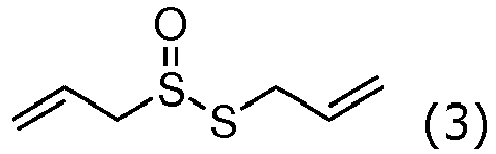
- In a preferred embodiment of the acid treatment providing the compound of formula (1), the solvent used is 10-70 V/V% aqueous acetone, preferably 20-60 V/V%, 30-50 V/V%, such as 40 V/V% aqueous acetone (i.e. 60% acetone in 40% water). After addition of the acid the reaction temperature may be adjusted to be in the range of 0-100 °C, preferably 20-80 °C, such as 40-70 °C, preferably 50-65 °C, such as 64 °C. The reaction time can be from 1-24 h, preferably 2-10 h, such as 3-5 h, preferably 4 h. The use of aqueous acetone as solvent provides the compounds of formula (1) in an E:Z ratio of 1:2-1:6, preferably 1:3-1:5, such as about 1:4, when using acetic acid in the acid treatment.
- In yet another preferred embodiment of the methods described above providing the compound of formula (1), the solvent used during the acid treatment of intermediate (3) is toluene or aqueous benzene. The aqueous benzene can be 1-50 V/V% aqueous benzene, preferably 5-30 V/V%, such as 7-20 V/V%, preferably 10 V/V% aqueous benzene (i.e. 90% benzene in 10% water). After addition of the acid the reaction temperature may be adjusted to be in the range of 0-100 °C, preferably 10-80 °C, such as 20-60 °C, preferably 30-50 °C, such as 40 °C. The reaction time for the acid treatment in toluene or aqueous benzene can be from 2-96 h, preferably 24-72 h, such as 36-60 h, preferably 48 h. The use of toluene or aqueous benzene as solvent provides the compounds of formula (1) in an E:Z ratio of 6:1-20:1, such as about 10:1, when using acetic acid in the acid treatment.
- The purification of the obtained products may typically be performed using standard solvent extraction techniques followed by column chromatographic purification, but other methods may also be used such as distillation, preparative thin layer chromatography or crystallization for solid compounds.
- In a preferred embodiment of the purification of compound (1) the reaction mixture is cooled to room temperature and diluted with 3 volumes of a 1:1 mixture of water and methanol followed by an extraction with an apolar solvent such as pentane. The aqueous fraction may be saturated with ammonium sulphate and further extracted with a more polar solvent than pentane such as dichloromethane. (E,Z)-ajoene (1) can be isolated by concentrating the combined organic extracts and subjecting the crude product to silica column chromatography using an eluent mobile phase comprising 40-99 V/V% ethyl acetate in pentane, preferably 50-90 V/V%, 60-80 V/V%, such as 70 V/V%.
- The purity of (E,Z)-ajoene after the above procedure may be 95-99.5%, such as 97-99.5%, 98-99.5%, 99-99.5% such as about 99.5%. It was surprisingly found by the inventors, that upon further purification of the product obtained after column chromatography, e.g. using reverse phase HPLC chromatography, or other purification steps, said (E,Z)-ajoene product lost all or parts of its biological activity, in e.g. the assays as described in the examples. This was also found when isolating pure (E)-ajoene and/or pure (Z)-ajoene, e.g. using HPLC. It is speculated that small amounts of ajoene derived chemistry, i.e. compounds related to ajoene, such as less than 5%, 3%, 2%, 1%, such as less than 0.5% may be highly important in the stabilisation of (E,Z)-ajoene and derivatives, towards degradation, e.g. oxidation, reduction and or cleavage, both in vitro but importantly also in vivo.
- One embodiment of the invention is a method as described above wherein the (E,Z)-ajoene of formula (1) is subjected to no more than one chromatographic purification step, said chromatographic purification step not comprising reversed phase HPLC.
- After purification the (E,Z)-ajoene derivatives can be isolated as mixtures of isomers in yields based on compound (3) of at least 10 mol%, preferably 15 mol%, 20 mol%, 25 mol%, such as at least 30 mol%.
- In one embodiment the allicin of formula (3) may be manufactured by treating a compound of formula (2), also referred to as diallyldisulphide (DADS)

- The crude allicin (3) may be used without further purification, and still provide good yields in the following step. This could be due to the lack of acid present in the oxidation procedure, which seems to contribute to degradation of allicin during oxidation and subsequent storage. However, in a preferred embodiment allicin (3) may advantageously be purified in order to isolate a substantially allicin (3) prior to the subsequent acid treatment. This was found to provide an even cleaner reaction and higher yields in the subsequent acid treatment step to provide compounds of formula (1). The purification can be performed using any conventional purification methods, preferably silica column chromatography. Chromatography can be performed using a mobile phase eluent consisting of a mixture of diethyl ether in pentane, preferably 0.5-20 V/V% diethylelether in pentane, such as 1-10 V/V%, 2-8 V/V%, 3-7 V/V%, 4-6 V/V%, preferably 5 V/V%. Thereby a compound of formula (3) is obtained in a yield based on compound (2) of at least 80 mol%, preferably at least 85 mol%, at least 90 mol%, such as at least 95 mol%.
- In a second aspect of the invention a process for making compounds of formula (4) is provided

- In one embodiment of the method defined above, the second oxidizing agent used to oxidize compounds of formula (1) to compounds of formula (4) may be selected from the group consisting of DMDO, MCPBA, peracetic acid, potassium permanganate, Hydrogen peroxide, Bis TMS Peroxide, or any mild peroxides. The reaction with R-substituted lithiated sulphide may be performed in tetrahydrofurane solvent at -78 °C up to 0°C. Reaction time may be 30 min to 24 hours, preferably 30 min to 2 hours.
- The purification of compounds of formula (4) may be performed in a similar manner to that of compounds of formula (1) as described above.
- The compounds obtained of general formula (4) can be isolated as mixtures of (E,Z)-isomers, or these isomers can be separated to provide substantially pure (E)-isomers or substantially pure (Z)-isomers. Also, the compounds of formula (4) having different oxidation states of Y, i.e. Y equal to -S-, S(O), or -S(O2)- can be either separated or isolated as mixtures.
- Another embodiment of the present invention is the compounds of formula (1) obtained by the methods of described above or alternatively the compounds of formula (1) obtainable by the methods of described above. As described, the above method leads to good crude purities, which leads to the use of only one chromatographic purification step, which has proved to be vital to obtain a more biologically active (E,Z)-ajoene derivative (1). Such active ajoene derivatives may be said to have a purity in the range of 95-99.5%, such as about 97-99.5%, 98-99.5%, 99-99.5% such as about 99.5%. The E:Z ratio of the (E,Z) ajoene obtained may preferably be from 20:1 to 1:10, such as from 15:1 to 1:6, 12:1 to 1:5, preferably from about 10:1 to about 1:4. Alternatively the E:Z ratio may preferably be from 1:1 to 1:10, such as from 1:2 to 1:8, 1:3 to 1:5, preferably about 1:4.
- Yet a further aspect of the invention is a composition comprising a (E,Z)-ajoene having formula (1) and at least one antibiotic. The compound (i.e. (E,Z)-ajoene having an obtainable E:Z ratio including pure E or pure Z) may be obtained by the method described above, or any other methods providing a biologically active QS-inhibiting (E,Z)-ajoene product. Such compositions may be used in the formulation of medicaments and thus may be formulated as a medicament or dosage form comprising a (E,Z)-ajoene having formula (1), at least one antibiotic and pharmaceutically acceptable carriers and/or binders. The medicament may be formulated as liquid or solid dosage forms, where liquid compositions may include liquid compositions for topical administration, liquid compositions for intravenous injection, intramuscular or subcutaneous injection, or a liquid composition for inhalation as an aerosol. Solid dosage forms may include tablets, capsules, powders, including powders for inhalation. Embodiments wherein the (E,Z)-ajoene is administered in one of the above ways, while the antibiotic is administered in any other of the above ways are also inferred. For example the ajoene may be administered by inhalation, via powder or aerosol, while the antibiotic is administered intravenously.
- The E:Z ratio of the (E,Z) ajoene in the composition may preferably be from 20:1 to 1:10, such as from 15:1 to 1:6, 12:1 to 1:5, preferably from about 10:1 to about 1:4. Alternatively the E:Z ratio may preferably be from 1:1 to 1:10, such as from 1:2 to 1:8, 1:3 to 1:5, preferably about 1:4.
- One embodiment is thus a composition as described above comprising (E,Z)-ajoene having formula (1) and at least one antibiotic for use in the treatment of infections, preferably bacterial infections comprising biofilm forming bacteria.
- An advantage of such compositions is that a synergistic effect is achieved when using a QS-inhibitor in a composition with an antibiotic, as demonstrated herein. In the context of the present invention an antibiotic is defined as any antibacterial substance where the antibacterial effect is not based on QS inhibition. Typically, the antibiotic used in combination with a QS-inhibitor can be classified as either bactericidal or bacteriostatic. Bactericidals kill bacteria directly where bacteriostatics prevent bacteria from dividing. Classes of antibiotics include aminoglycosides, ansamycins, carbacephem, carbapenems, cephalosporins, glycopeptides, macrolides, monobactams, penicillins, polypeptides, quinolones, sulfonamides, and tetracyclines. The antibiotic may be selected from any of these classes.
- The antibiotic may be selected from the group consisting of Ampicillin, Bacampicillin, Carbenicillin Indanyl , Mezlocillin, Piperacillin, Ticarcillin, Amoxicillin-Clavulanic Acid, Ampicillin-Sulbactam, Benzylpenicillin, Cloxacillin, Dicloxacillin, Methicillin, Oxacillin, Penicillin G, Penicillin V, Piperacillin Tazobactam, Ticarcillin Clavulanic Acid, Nafcillin, Cefadroxil, Cefazolin, Cephalexin, Cephalothin, Cephapirin, Cephradine, Cefaclor, Cefamandol, Cefonicid, Cefotetan, Cefoxitin, Cefprozil, Ceftmetazole, Cefuroxime, Loracarbef, Cefdinir, Ceftibuten, Cefoperazone, Cefixime, Cefotaxime, Cefpodoxime proxetil, Ceftazidime, Ceftizoxime, Ceftriaxone, Cefepime, Azithromycin, Clarithromycin, Clindamycin, Dirithromycin, Erythromycin, Lincomycin, Troleandomycin, Cinoxacin, Ciprofloxacin, Enoxacin, Gatifloxacin, Grepafloxacin, Levofloxacin, Lomefloxacin, Moxifloxacin, Nalidixic acid, Norfloxacin, Ofloxacin, Sparfloxacin, Trovafloxacin, Oxolinic acid, Gemifloxacin, Perfloxacin, Imipenem-Cilastatin, Meropenem, Aztreonam, Amikacin, Gentamicin, Kanamycin, Neomycin, Netilmicin, Streptomycin, Tobramycin, Paromomycin, Teicoplanin, Vancomycin, Demeclocycline, Doxycycline, Methacycline, Minocycline, Oxytetracycline, Tetracycline , Chlortetracycline, Mafenide, Silver Sulfadiazine, Sulfacetamide, Sulfadiazine, Sulfamethoxazole, Sulfasalazine, Sulfisoxazole, Trimethoprim-Sulfamethoxazole, Sulfamethizole, Rifampin, Rifabutin, Rifampin, Rifapentine, Linezolid, Quinopristin Dalfopristin, Bacitracin, Chloramphenicol, Fosfomycin, Isoniazid, Methenamine, Metronidazol, Mupirocin, Nitrofurantoin, Nitrofurazone, Novobiocin, Polymyxin, Spectinomycin, Trimethoprim, Colistin, Cycloserine, Capreomycin, Ethionamide, Pyrazinamide, Para-aminosalicyclic acid, and Erythromycin ethylsuccinate. The antibiotic may e.g. be tobramycin.
- One aspect of the present invention is (E,Z)-ajoene of formula (1) for use in treatment of bacterial infections, preferably bacterial infections comprising biofilm forming bacteria.
- Another aspect of the invention is (E,Z)-ajoene of formula (1) as obtained by the herein described method for use in treatment of bacterial infections, preferably bacterial infections comprising biofilm forming bacteria.
- The below described embodiments thus relates to both (E,Z)-ajoene in general, and also to (E,Z)-ajoene as provided in the herein described method and finally also to compositions comprising (E,Z)-ajoene and an antibiotic as described above.
- The E:Z ratio of the (E,Z) ajoene obtained may preferably be from 20:1 to 1:10, such as from 15:1 to 1:6, 12:1 to 1:5, preferably from about 10:1 to about 1:4. Alternatively the E:Z ratio may preferably be from 1:1 to 1:10, such as from 1:2 to 1:8, 1:3 to 1:5, preferably about 1:4.
- The treatment of bacterial infections, including those comprising biofilm forming bacteria, may be prophylactic. The compounds used may be in a composition with an antibiotic and/or a pharmaceutically acceptable carrier. The compounds or compositions may be administered by intravenous injections, intramuscular or subcutaneous injections, orally, topically or they may be inhaled, preferably using a suitable inhalation device. They may be inhaled as solid compositions, such as powders, or as liquid compositions in the form of aerosols.
- In a one embodiment the bacterial infection treated is in a mammal with an immune deficiency. In the context of the present invention a mammal with immune deficiency is a mammal that for any reason is immuno-compromised, meaning that the performance of some or all aspects of the natural defence is lower than normal. Typically, this may be due to an immuno-compromising disease or due to therapy using immuno-suppressant medication. Such mammals are at higher risk of infections with biofilm forming bacteria such as Pseudomonas aeruginosa and would therefore potentially benefit from both prophylactic and acute treatment with a QS inhibitor which may be in a composition with an antibiotic. Mammals may comprise humans, pets and livestock, or mammals may be selected from the group consisting of humans, pets and livestock. Immuno-compromising diseases include diseases selected from the group consisting of cystic fibrosis, diabetes mellitus, COPD, malignant haematological disease, cancer, HIV, AIDS, chronic wounds, burn wounds. Patients may include patients with indwelling catheters, patients treated with medical equipment, implants, stents and patients in ICU's.
- In a preferred embodiment of the invention the bacteria, particularly the biofilm forming bacteria causing the infections described above may be selected from the group of bacteria capable of QS controlled virulence such as gram negative bacteria, particularly the following groups of Gram negative bacteria: Vibrio fischeri, Aeromonas hydrophila, Aeromonas salmonicida, Agrobacterium tumefaciens, Burkholderia cepacia, Chromobacterium violaceum, Enterobacter agglomerans, Erwinia carotovora, Erwinia chrysanthemi, Erwinia Stewartii, Escherichia coli, Pseudomonas aureofaciens, Pseudomonas aeruginosa, Ralstonia solanacearum, Rhizobium etli, Rhizobium leguminosarum, Rhodobacter sphaeroides, Salmonella typhimurium, Serratia liquefaciens, Sinorhizobium meliloti, Vibrio anguillarum, Vibrio harveyi, Yersinia enterocolitica, Yersinia pseudotuberculosis, particularly Pseudomonas aeruginosa.
- Yet an additional preferred embodiment of the present inventions is (E,Z)-ajoene of formula (1) for use in the treatment of bacterial infections where the infected area is a wound, such as a chronic wound and /or non-healing wound. In these cases the compounds may advantageously be administered topically.
- Another useful embodiment is (E,Z)-ajoene of formula (1) for use in the treatment of bacterial infections where the infected area is the lungs. This treatment is especially relevant for cystic fibrosis patients who, due to their reduced immune response, often suffer from persistent lung infections comprising biofilm forming bacteria, such as Pseudomonas aeruginosa. Therefore, a preferred embodiment is (E,Z)-ajoene of formula (1) for use in the treatment of bacterial infections where the infected area is the lungs of a cystic fibrosis patient. In these cases the compounds may advantageously be administered via inhalation or by intravenous injections.
- In another preferred embodiment the infected area is an implant or the area around an implant. As defined herein an implant is a medical device made to replace or act as a missing biological structure in a mammal. Such implants may include implants containing electronics such as artificial pacemakers and cochlear implants, subcutaneous drug delivery devices in the form of implantable pills or drug-eluting stents, a prosthetic device such as bone-replacement and support devices or dental implants.
- In yet another embodiment the infected area may be the part of the digestive system, such as the stomach and/or intestines. Such infections may include food poisoning or infections arising from pancreatic or biliary stents.
- It should be noted that embodiments and features described in the context of one of the aspects of the present invention also apply to the other aspects of the invention. Also, all of the above embodiments above describing compounds and compositions for use in the treatment of various indications, may all equally be described as methods of treating said indication by administration of the said compounds or compositions.
- The following items are preferred embodiments of the invention:
- Item 1: (E,Z)-Ajoene of formula (1)

- Item 2: (E,Z)-Ajoene for use in treatment of bacterial infections according to
item 1, wherein the bacterial infection is an infection comprising biofilm forming bacteria. - Item 3: (E,Z)-Ajoene for use in treatment of bacterial infections according to
item 2, wherein the biofilm forming bacteria is an N-acyl-homoserine lactone producing bacteria. - Item 4: (E,Z)-Ajoene for use in treatment of bacterial infections according to any of items 1-3, wherein the bacteria is selected from the group consisting of Vibrio fischeri, Aeromonas hydrophila, Aeromonas salmonicida, Agrobacterium tumefaciens, Burkholderia cepacia, Chromobacterium violaceum, Enterobacter agglomerans, Erwinia carotovora, Erwinia chrysanthemi, Erwinia Stewartii, Escherichia coli, Pseudomonas aureofaciens, Pseudomonas aeruginosa, Ralstonia solanacearum, Rhizobium etli, Rhizobium leguminosarum, Rhodobacter sphaeroides, Salmonella typhimurium, Serratia liquefaciens, Sinorhizobium meliloti, Vibrio anguillarum, Vibrio harveyi, Yersinia enterocolitica, and Yersinia pseudotuberculosis, particularly Pseudomonas aeruginosa.
- Item 5: (E,Z)-Ajoene for use in treatment of bacterial infections according to any of items 1-4 wherein the bacterial infection is in the lungs.
- Item 6: (E,Z)-Ajoene for use in treatment of bacterial infections according to any of items 1-4 wherein the bacterial infection is in a chronic wound.
- Item 7: (E,Z)-Ajoene for use in treatment of bacterial infections according to any of items 1-6, wherein the bacterial infection is in a mammal with an immune deficiency.
- Item 8: (E,Z)-Ajoene for use in treatment of bacterial infections according to item 7, wherein the immune deficiency is due to an immuno-compromising disease or due to therapy using immuno-suppressant medication.
- Item 9: (E,Z)-Ajoene for use in treatment of bacterial infections according to item 7-8, wherein the mammal is selected from the group consisting of humans, pets and livestock.
- Item 10: (E,Z)-Ajoene for use in treatment of bacterial infections according to any of items 1-8 wherein the bacterial infection is in a mammal suffering from cystic fibrosis.
- Item 11: A composition comprising (E,Z)-ajoene of formula (1)

- Item 12: The composition according to item 11, wherein the antibiotic is selected from the group consisting of aminoglycosides, ansamycins, carbacephem, carbapenems, cephalosporins, glycopeptides, macrolides, monobactams, penicillins, polypeptides, quinolones, sulfonamides, and tetracyclines.
- Item 13: The composition according to any of items 11-12, wherein the antibiotic is selected from the group consisting of Ampicillin, Bacampicillin, Carbenicillin Indanyl , Mezlocillin, Piperacillin, Ticarcillin, Amoxicillin-Clavulanic Acid, Ampicillin-Sulbactam, Benzylpenicillin, Cloxacillin, Dicloxacillin, Methicillin, Oxacillin, Penicillin G, Penicillin V, Piperacillin Tazobactam, Ticarcillin Clavulanic Acid, Nafcillin, Cefadroxil, Cefazolin, Cephalexin, Cephalothin, Cephapirin, Cephradine, Cefaclor, Cefamandol, Cefonicid, Cefotetan, Cefoxitin, Cefprozil, Ceftmetazole, Cefuroxime, Loracarbef, Cefdinir, Ceftibuten, Cefoperazone, Cefixime, Cefotaxime, Cefpodoxime proxetil, Ceftazidime, Ceftizoxime, Ceftriaxone, Cefepime, Azithromycin, Clarithromycin, Clindamycin, Dirithromycin, Erythromycin, Lincomycin, Troleandomycin, Cinoxacin, Ciprofloxacin, Enoxacin, Gatifloxacin, Grepafloxacin, Levofloxacin, Lomefloxacin, Moxifloxacin, Nalidixic acid, Norfloxacin, Ofloxacin, Sparfloxacin, Trovafloxacin, Oxolinic acid, Gemifloxacin, Perfloxacin, Imipenem-Cilastatin, Meropenem, Aztreonam, Amikacin, Gentamicin, Kanamycin, Neomycin, Netilmicin, Streptomycin, Tobramycin, Paromomycin, Teicoplanin, Vancomycin, Demeclocycline, Doxycycline, Methacycline, Minocycline, Oxytetracycline, Tetracycline , Chlortetracycline, Mafenide, Silver Sulfadiazine, Sulfacetamide, Sulfadiazine, Sulfamethoxazole, Sulfasalazine, Sulfisoxazole, Trimethoprim-Sulfamethoxazole, Sulfamethizole, Rifampin, Rifabutin, Rifampin, Rifapentine, Linezolid, Quinopristin Dalfopristin, Bacitracin, Chloramphenicol, Fosfomycin, Isoniazid, Methenamine, Metronidazol, Mupirocin, Nitrofurantoin, Nitrofurazone, Novobiocin, Polymyxin, Spectinomycin, Trimethoprim, Colistin, Cycloserine, Capreomycin, Ethionamide, Pyrazinamide, Para-aminosalicyclic acid, and Erythromycin ethylsuccinate, particularly tobramycin.
- Item 14: The composition according to item 11-13 for use in treatment of bacterial infections.
- Item 15: The composition for use in treatment of bacterial infections according to item 14, wherein the bacteria is an N-acyl-homoserine lactone producing bacteria.
- Item 16: The composition for use in treatment of bacterial infections according to item 14-15, wherein the bacteria is selected from the group consisting of Vibrio fischeri, Aeromonas hydrophila, Aeromonas salmonicida, Agrobacterium tumefaciens, Burkholderia cepacia, Chromobacterium violaceum, Enterobacter agglomerans, Erwinia carotovora, Erwinia chrysanthemi, Erwinia Stewartii, Escherichia coli, Pseudomonas aureofaciens, Pseudomonas aeruginosa, Ralstonia solanacearum, Rhizobium etli, Rhizobium leguminosarum, Rhodobacter sphaeroides, Salmonella typhimurium, Serratia liquefaciens, Sinorhizobium meliloti, Vibrio anguillarum, Vibrio harveyi, Yersinia enterocolitica, Yersinia pseudotuberculosis, particularly Pseudomonas aeruginosa.
- Item 17: The composition for use in treatment of bacterial infections according to any of items 14-16 wherein the bacterial infection is in the lungs.
- Item 18: The composition for use in treatment of bacterial infections according to any of items 14-16 wherein the bacterial infection is in a chronic wound.
- Item 19: A method for manufacturing (E,Z)-ajoene of formula (1)


- Item 20: The method according to item 19, wherein the purity of (E,Z)-ajoene of formula (1) is 95-99.5%, such as 97-99.5%, 98-99.5%, 99-99.5% such as about 99.5%.
- Item 21: The method according to any of items 19-20, wherein the allicin of formula (3) is provided by reacting diallyldisulphide of formula (2)

- Item 22: The method according to item 21 wherein the oxidizing agent is DMDO.
- Item 23: A method according to any of items 19-22 wherein the allicin (3) is purified prior to the subsequent acid treatment.
- Item 24: A method according to any of items 19-23 where the added acid is a carboxylic acid, a carboxylic acid anhydride or a sulfonic acid.
- Item 25: (E,Z)-ajoene obtainable by the method of items 19-24.
- Item 26: (E,Z)-Ajoene according to any of items 1-10, wherein the (E,Z)-ajoene of formula (1) is obtained by the methods provided in items 19-24.
- Item 27: A composition according to any of items 11-18, wherein the (E,Z)-ajoene of formula (1) is obtained by the methods provided in items 19-24.
- All patent and non-patent references cited in the present application, are hereby incorporated by reference in their entirety.
- The invention will now be described in further details in the following non-limiting examples.
- An acetone solution of DMDO (31 mL, 0.07M, 2.2 mmol) was added dropwise over 15 min to compound (2), diallyldisulphide (0.29 g, 2.0 mmol) in acetone (1 mL) at -50 °C under argon. The resulting light yellow reaction mixture was allowed to stir for 30 min while slowly warming to -20 °C. The resulting clear reaction mixture was concentrated in vacuo. The crude residue (0.31g, 98%) was further purified by column chromatography (eluting with 5% Et2O in pentane) to yield compound (3), allicin (0.31g, 1.9 mmol, 96% yield, purity >95% and up to 99.9%) as a light yellow liquid.
- The above reaction was repeated under varying condition with respect to solvent and temperature. Remaining parameters were kept the same. As seen in table 1 below the reaction is effective under a number of conditions.
Table 1: Conversion of diallyldisulphide to allicin (3) Entry Solvent Temp 2/ Yield 1 Acetone -100°C, 78°C, -50 - -20°C 96 % 2 CH2Cl2 -100°C, 78°C, -50 - -20°C 90 % 3 CHCl3 -78 - -60°C 92 % 4 CCl4 -78 - -60°C 96 % 5 Et2O -50 - -20°C 86 % 6 EtOAc -50 - -20° C 80 % 7 THF -50 - -20°C 85 % - A solution of compound (3), allicin (0.162 g, 1.0 mmol) in a 40 % aqueous acetone solution (1.6 mL) was treated with AcOH (0.011 mL, 0.2 mmol). The resulting mixture was heated to 64 °C for 4h. The cooled reaction mixture was diluted with 50% aqueous methanol (6 mL) and extracted with pentane (5 x 10 mL). The aqueous fraction was saturated with solid NH4SO4 and the mixture was extracted with CH2Cl2 (5 x 10 mL). The combined organic extracts were dried (Na2SO4) and concentrated in vacuo. The crude residue (0.16 g) was further purified by column chromatography (eluting with 60-80% EtOAc in pentane) to yield compound (1), (E,Z)-ajoene (E:Z ratio = 1:4, 0.025g, 0.1 mmol, 32% yield) as a light yellow liquid.
- The above reaction was repeated using a variety of acids. Remaining parameters were kept the same as above. Exchange of acid had impact on both yields and E:Z ratios of ajoene as seen in table 2 below:
Table 2: conversion of allicin (3) to (E,Z) ajoene (1) using different acids. Entry Acid Conditions Yield (E:Z) 1 TsOH 40% aq. acetone, 64°C, 4h 24 (1:4) 2 CSA 40% aq. acetone, 64°C, 4h 20 (1:5) 3 MsOH 40% aq. acetone, 64°C, 4h 22 (1:4) 4 TFA 40% aq. acetone, 64°C, 4h 12 (1:1) - Importantly, it was found that when using less than highly pure allicin (3) the yields in the above reactions were drastically reduced, if not zero. It was also found that when using the methods of the prior art to obtain allicin (3), some impurities stemming from either garlic extract or the reactants or the products used in the block synthesis of allicin resulted in yields of ajoene no higher than 6-12%. This applied regardless of which solvent and acid was used for the ajoene synthesis.
- A solution of compound (3), allicin (0.162 g, 1.0 mmol) in a 10 % aqueous benzene solution (1.6 mL) was treated with AcOH (0.011 mL, 0.2 mmol). The resulting mixture was heated to 37 °C for 48h. The cooled reaction mixture was diluted with 50% aqueous methanol (6 mL) and extracted with pentane (5 x 10 mL). The aqueous fraction was saturated with solid NH4SO4 and the mixture was extracted with CH2Cl2 (5 x 10 mL). The combined organic extracts were dried (Na2SO4) and concentrated in vacuo. The crude residue (0.15g) was further purified by column chromatography (eluting with 60-80% EtOAc in pentane) to yield compound (1) (E,Z)-ajoene (E:Z ratio 10:1, 0.023g, 0.1 mmol, 30% yield) as a light yellow liquid.
- Oxidized sulphone derivatives of (E,Z) ajoene has been shown to have QS inhibitory effects. Therefore such derivatives, i.e. compounds of formula (4) were synthesized using various routes as described below (see also
Fig. 2 ):
Y = S, R = allyl
- The compound of formula (1) ((E,Z) Ajoene) was treated with potassium permanganate (KMnO4) in acetone at -20 °C for 2 hours to obtain a compound of formular (4) with Y = S and R = allyl in 96% yield. Workup and purification was analogous to that used for (E,Z) ajoene.
Y = S(O)2, R = allyl
- The compound of formula (1) ((E,Z) Ajoene) was treated with peracetic acid in dichloromethane at 0 °C for 12 hours to obtain a compound of formular (4) with S(O)2, R = allyl in 38% yield. Workup and purification was analogous to that used for (E,Z) ajoene.
- Alternatively, the compound of formula (1) ((E,Z) Ajoene) was treated with 4 equivalents of DMDO in acetone at -10 °C for 6 hours to obtain a compound of formular (4) with S(O)2, R = allyl in 82% yield. Workup and purification was analogous to that used for (E,Z) ajoene.
- In yet another alternative route the compound of formula (4) with Y = S and R = allyl as described above was treated with 2 equivalents of DMDO in acetone at -10 °C for 6 hours to obtain a compound of formular (4) with S(O)2, R = allyl in 78% yield.
Y = S, R = phenyl
- The compound of formula (4) where Y = S(O)2, R = allyl was treated with lithiated sulphide (PhSLi) in tetrahydrofurane at a temperature of -78 °C which was allowed to rise to 0 °C over 1 hour to obtain the compound of formula (4) having Y= S, R = phenyl in 86% molar yield.
Y = S, R = methyl, ethyl, benzyl
- In analogy to the method above where Y = S, R = phenyl, the corresponding compounds of formula (4) with R = methyl, ethyl, benzyl was produced in similar yields using the corresponding lithiated sulphides (i.e. MeSLi, EtSLi and allylSLi). Remaining parameters were kept the same.
- DNA microarray analysis was used to identify genes regulated by ajoene treatment. As a reference we have used the QS regulon previously identified by Hentzer et al., [M. Hentzer et al., EMBO J., 2003, 22, p. 3803-3815] and these data has been used to validate target specificity of putative quorum sensing inhibiting (QSI) compounds. Exponential growing P. aeruginosa cultures were treated with the following four concentrations of ajoene; 10 µg/ml (42.7 µM), 20 µg/ml (85.4 µM), 40 µg/ml (170.8 µM) and 80 µg/ml (341.6 µM). (E,Z) ajoene having an E:Z ratio of 1:4 was used. These concentrations do not exert any growth inhibitory effects. The samples were retrieved at an OD600nm of 2.0 (optical density) because previous investigations have shown the highest activity among the QS genes at that cell density. Gene expression of the treated cultures was compared to an untreated control.
- In general, there was only a small number of genes that were down regulated more than 5 fold by the four different concentrations of ajoene; 0 genes at 10 µg/ml ajoene, 0 genes at 20 µg/ml ajoene, 2 genes at 40 µg/ml ajoene and 11 genes at 80 µg/ml ajoene. The amount of genes up regulated more than 5 fold did not vary noticeably between the treated cultures. According to our experimental settings, expression of 10 out of the total number of 163 QS controlled P. aeruginosa genes (according to Hentzer et al., [M. Hentzer et al., EMBO J., 2003, 22, p. 3803-3815]) was down regulated by the ajoene treatments. A concentration of 80 µg/ml ajoene affects expression of 11 out of a total of 5570 P. aeruginosa genes. Ajoene is therefore highly specific for a subclass of QS controlled genes (Table 3).
Table 3: Alterations in gene expression by ajoene. Genes included are >5 times down regulated by 80 µg/ml ajoene treatment. The numbers are fold change in gene expression compared to an untreated control. Data represent the average of tree individual experiments. * Indicates P<0.05, ** indicates P<0.01, Student's t-test. Gene [Ajoene] µg/ml No Gene 10 20 40 80 Description PA0852 cbpD -2.8 -2.5 -3.9 -6.9 Chitin-binding protein PA1871 lasA -2.6 -2.2 -3.0 -8.7 LasA protease precursor PA2069 - -2.3 -2.4 -4.0 -5.3 Probable carbamoyl transferase PA2146 - -1.3 -1.8 -2.6 -7.3 Conserved hypothetical protein PA2300 chic -2.5 -2.1 -5.1 -24.6 Chitinase PA2570 pa1L -1.8 -2.0 -3.3 -6.3 LecA PA3478 rhlB -2.6 -2.0 -3.3 -8.7 Rhamnosyltransferase chain B PA3479 rhlA -2.2 -1.5 -2.6 -8.8 Rhamnosyltransferase chain A PA4141 - -1.0 -1.1 -1.3 -5.4 Hypothetical protein PA4142 - -2.0 -2.2 -2.7 -5.1 Probable secretion protein PA4175 prpL -3.7 -3.3 -5.3 -6.8 Pvds-regulated endoprotease - Among the genes significantly down-regulated by ajoene were the following QS regulated important virulence factors, LasA protease (lasA, PA1871), chitinase (chiC, PA2300), the cytotoxic galactophilic lectin (lecA, PA2570), the rhamnosyl transferase AB operon (rhlA, PA3478 and rhlB, PA3479), the PvdS-regulated endoprotease (prpL, PA4175) that degrades casein, elastin, lactoferrin, transferrin, and decorin, and the associated chitin-binding protein cbpD (PA0852) which mediates attachment to chitin-containing substrates and presumably assist in biofilm formation. lasB was not more than 5-fold down regulated.
- To verify the microarray data, RT-PCR was performed with two of the key QS genes; lasB and rhlA (see
Fig. 3 ). When comparing the two methods the repression of both the lasB and rhlA gene expression follow the same trend, with a general slightly increase in fold reduction observed with the RT-PCR based method. The RT-PCR data shows that a concentration of 80 µg/ml ajoene lowers the expression of rhlA almost 12 fold and lasB almost 5 fold. The expression of rhlA is primarily controlled by the Rhl QS system and the signal molecule BHL whereas the expression of lasB is affected by both the Las and the Rhl QS systems and the concentration of the signal molecules OdDHL and BHL. According to Rasmussen et al., [Rasmussen et al., Microbiology, 2005, 151, p. 1325-1340], the genes listed in table 3 are (except prpL which regulation is entirely governed by the Las QS system) subject to regulation by both the Las and Rhl QS systems. This suggests that ajoene primarily targets the Rhl QS. (E,Z) ajoene having an E:Z ratio of 1:4 was used in these experiments. - To exemplify the actual efficacy of ajoene in inhibiting synthesis of one of the major virulence factors, the concentration of rhamnolipid present in the cultures grown for DNA array and RT-PCR where directly quantified by LC-MS. The production of rhamnolipids is initiated early in stationary phase co-ordinately regulated by the Rhl QS system encoded by the rhlA, rhlB and rhlC genes (PA3479, PA3478 and PA1131) [V. E. Wagner et al., J Bacteriol., 2003, 185, p. 2080-2095 and R. Rahim et al., Mol Microbiol., 2001, 40, p. 708-718]. Samples where therefore retrieved at an OD600nm of 1.5 and 2.0 to monitor rhamnolipid production before and after the synthesis was fully initiated. The concentration of rhamnolipid in the samples was found to be gradually decreased with increasing concentration of ajoene. When treated with 20 µg/ml ajoene at an OD600nm of 2.0, the rhamnolipid content were reduced to approximately 1/3 compared to the untreated culture and there was almost no detectable rhamnolipid present in the sample when the cells were treated with 80 µg/ml ajoene. This concentration therefore almost completely blocks rhamnolipid synthesis. (E,Z) ajoene having an E:Z ratio of 1:4 was used.
- Biofilms exposed to PMN leukocytes produce rhamnolipids that function as a shield and protects the biofilm bacteria from phagocytosis. The influence of ajoene on the lysis of PMNs was demonstrated by using an in vitro continuous-culture once through flow chamber biofilm system [B. B. Christensen et al., Methods Enzymol., 1999, 310, p. 20-42]. The P. aeruginosa biofilms were grown for four days either in the presence or absence of 100 µg/ml ajoene. When PMNs subsequently were introduced in the flow chambers on top of the biofilms grown in the absence of ajoene, propidium iodide (PI) staining indicated necrosis of the PMNs (
Fig. 5A ). In contrast, when the biofilm was grown in the presence of ajoene no necrosis of the PMNs was observed (Fig. 5B ). Ajoene treatment therefore rescues the PMN leukocytes by blocking biofilm synthesis of ajoene. It has previously been shown that rescued PMN's can phagocytose biofilm bacteria [T. Bjarnsholt et al., Microbiology, 2005, 151, p. 3873-3880]. (E,Z) ajoene having an E:Z ratio of 1:4 was used. - One important issue in the treatment of bacterial biofilm infections is the lowered effectiveness of administered antibiotics. An infection in the airways of CF patients will result in high concentrations of anionic polyelectrolytes like DNA [T. Brandt et al., Thorax, 1995, 50, p. 880-882] released from lysed inflammatory cells such as PMN's and bacteria. It has been showed that anionic polyelectrolytes and in particularly DNA binds to and reduce the activity of cationic antibiotics like tobramycin which can lead to a decrease in the biological available tobramycin to as low as 5 % of the existing quantity [P. M. Mendelman, 1985, Am Rev Respir Dis., 132, p. 761-765]. This suggests that by blocking the production and release of rhamnolipids and eDNA, it is possible to reduce the following inactivation of tobramycin.
- In concordance with that, we have previously published that combination treatment with garlic extract and the antibiotic tobramycin of a three day old biofilm (grown in vitro in the continuous-culture, once-through flow cells) showed a synergistic killing effect [T. Bjarnsholt et al., Microbiology, 2005, 151, p. 3873-3880]. It was however unknown what was the active ingredient in the garlic extract. Thus. biofilms of P. aeruginosa strain were either grown in the presence or absence of 100 µg/ml ajoene. At day three the biofilms were treated with 10 µg/ml tobramycin for 24 hours. A prior treatment study indicated that treatment with 10 µg/ml, 100 µg/ml or 340 µg/ml would show no difference in the extent of killing. 10 µg/ml tobramycin was therefore chosen for the present study. The killing efficacy was evaluated using live dead stains and confocal scanning laser microscopy (CSLM) and showed almost 100% killing of the biofilm grown in the presence of ajoene [ajoene had not been subject to e.g. HPLC purification] and subsequently treated with tobramycin (
Fig. 6A ). This synergistic effect was also evaluated using the clinical CF isolate CF438 (a first isolate from a diagnosed CF child) which possesses functional QS systems and again almost 100% killing of the biofilm were detected (Fig. 6B ). - To examine the effect of a combination treatment with ajoene and tobramycin in vivo we used an foreign-body infection model [L.D. Christensen et al., Microbiology, 2007, 153, p. 2312-2320]. Silicone tube implants with a size of 4 mm (inner diameter 4 mm/ outer diameter 6 mm) pre-colonized with wild-type P. aeruginosa, were inserted into the peritoneal cavity of mice. Treatments were injected subcutaneously every 24 hours, where ajoene and tobramycin treatment were initiated two days pre-insertion and 24 hours post-insertion, respectively. 72 hours after insertion the implants were removed from the mice and the number of colony-forming units per implant was determined. We found that treatment of wild-type P. aeruginosa with a combination of ajoene and tobramycin resulted in a significant faster clearing of the implants as compared to both the placebo group and the single treatments with ajoene or tobramycin (p<0.0001, p=0.009 and p=0.01, respectively). A significant difference in clearing was also observed between the placebo group and the single treatment groups (p=0.008 and p<0.0001). We found no significant difference in clearing between the two single treatment groups (p=30) (
Fig. 6C ). (E,Z) ajoene having an E:Z ratio of 1:4 was used. - We have shown in vitro that addition of 100 µg/ml ajoene to a biofilm followed by addition of 10 µg/ml tobramycin kills almost 100 % of the biofilm whereas the presence of tobramycin or ajoene only results in no or only minor killing of the biofilm bacteria. It is documented that the release of eDNA is controlled by QS which taking into consideration and combined with our results points to a possible attenuation of the release of eDNA by ajoene.
- In this study ajoene was administered prophylactic and subsequently continued after infection. Injections were given subcutaneous in the peritoneum. We performed three individual in vivo treatment experiments with ajoene in the mouse model of pulmonary infection using the P. aeruginosa PAO1. BALB/c mice were intracheally challenged (at day 0) with alginate beads containing 1.5x10⁸ CFU/ml P. aeruginosa. The two groups of mice were either untreated (placebo) or treated with
ajoene 25 µg/g mouse once a day. The mice were given two days of prophylactic treatment or placebo prior to bacterial challenge. Treatment was continued for three days. Enumeration by plate counts showed a significant difference between the treated group and the control group on day three. When combining the experiments a significant difference on day three was seen (p< 0.002) with a 500 fold difference in clearance between the groups (Fig. 7 ). This is concordant with the results obtained by Bjarnsholt et al (2005) in a similar lung infection model in with raw garlic extract was used as treatment [T. Bjarnsholt et al., Microbiology, 2005, 151, p. 3873-3880]. The mice tolerated well the administered dosage of 25 µg/g body weight. - Similar experiments comparing the ability of ajoene to induce clearance of P. aeruginosa infections as described above, when used at very high purity (>99.5%, HPLC purified) or at purities from 95% to 99.5%, (i.e. crude ajoene or ajoene subject to a single column chromatography step) demonstrated that very high purity ajoene was not effective at clearing the pulmonary infection while 95-99.5% purity ajoene was (
Figure 8 , top and bottom graph respectively). This highlights that a synthesis providing a sufficiently pure "crude" ajoene product is essential in order to avoid the use of HPLC purification, as this step has a detrimental effect on biological activity. Hence, the present process providing ajoene in a purity above 95% and below 99.5% after workup and optionally column chromatography has a surprising advantage over the prior art. (E,Z) ajoene having an E:Z ratio of 1:4 was used. - When comparing the present studies with ajoene to earlier studies with garlic extracts, the present study offers a convincing indication of ajoene and close derivatives being the major active components in garlic able to reduce a P. aeruginosa infection.
- In conclusion we have demonstrated the use of ajoene to attenuate virulence of P. aeruginosa in vivo by inhibiting transcription of a handful of important QS controlled virulence genes in P. aeruginosa. From our transcriptome analysis we have suggested a possible target of ajoene being the Rhl QS system. It is worth to acknowledge that QS inhibition does not remove the P. aeruginosa capability of forming a biofilm. However, all available data indicate that a QS deficient biofilm however is more fragile compared to the QS proficient biofilm. Since for example the matrix component DNA is missing (matrix production is Rhl QS controlled) the biofilm is sensitive to sheer forces and can slough off dependent on the hydrodynamic forces. In addition, since rhamnolipid is not formed, the biofilm becomes sensitive to the action of PMNs (because the PMNs are not killed when they get in contact with the biofilm). We have previously shown that in vitro biofilms of QS deficient bacteria can be phagocytosed by freshly isolated PMNs in contrast to QS proficient biofilms. Central for biofilm tolerance to PMNs is that rhamnolipid production forms a protective shield against the incoming PMNs and we have several data supporting that this is also the case. Using QS inhibitors should therefore greatly enhance the antimicrobial properties of the PMNs and allow them to efficiently eradicate biofilm forming bacteria. Furthermore, rhamnolipid lyses the PMNs that subsequently spill out their content of DNA, hydrolytic enzymes and oxygen radicals. This creates an "evil circle" particularly with respect to tissue damage, increasing inflammation and induction of mutations in P. aeruginosa of which appearance of the mucoid phenotype significantly contributes to exacerbations.
- The decrease in infection in the mouse experiments, the removal of in vitro biofilm in a combinatorial experiment with tobramycin suggests the potentials of using ajoene as a future antimicrobial drug for treatment of chronic P. aeruginosa infections.
-
- W. C. Fuqua et al., J. Bacteriol., 1994, 176, p 269-275
- T. Bjarnsholt et al., Microbiology, 2005, 151, p. 3873-3880
- R. Naganawa et al., Applied and Environmental Microbiology, 62, 1996, p. 4238-4242
-
EP 185324 - Block et al., J. Am. Chem. Soc., 1986, 108, p. 7045-7055
-
US 4,665,088 -
WO 2010/100486 - M. Hentzer et al., EMBO J., 2003, 22, p. 3803-3815
- Rasmussen et al., Microbiology, 2005, 151, p. 1325-1340
- [V. E. Wagner et al., J Bacteriol., 2003, 185, p. 2080-2095
- R. Rahim et al., Mol Microbiol., 2001, 40, p. 708-718]
- B. B. Christensen et al., Methods Enzymol., 1999, 310, p. 20-42
- T. Brandt et al., Thorax, 1995, 50, p. 880-882
- P. M. Mendelman, 1985, Am Rev Respir Dis., 132, p. 761-765
- L.D. Christensen et al., Microbiology, 2007, 153, p. 2312-2320
Claims (15)
- (E,Z)-Ajoene of formula (1)

- (E,Z)-Ajoene for use in treatment of bacterial infections according to claim 1, wherein the bacterial infection is an infection comprising biofilm forming bacteria.
- (E,Z)-Ajoene for use in treatment of bacterial infections according to claim 2, wherein the biofilm forming bacteria is an N-acyl-homoserine lactone producing bacteria.
- (E,Z)-Ajoene for use in treatment of bacterial infections according to any of claims 1-3, wherein the bacteria is selected from the group consisting of Vibrio fischeri, Aeromonas hydrophila, Aeromonas salmonicida, Agrobacterium tumefaciens, Burkholderia cepacia, Chromobacterium violaceum, Enterobacter agglomerans, Erwinia carotovora, Erwinia chrysanthemi, Erwinia Stewartii, Escherichia coli, Pseudomonas aureofaciens, Pseudomonas aeruginosa, Ralstonia solanacearum, Rhizobium etli, Rhizobium leguminosarum, Rhodobacter sphaeroides, Salmonella typhimurium, Serratia liquefaciens, Sinorhizobium meliloti, Vibrio anguillarum, Vibrio harveyi, Yersinia enterocolitica, and Yersinia pseudotuberculosis.
- (E,Z)-Ajoene for use in treatment of bacterial infections according to any of claims 1-4 wherein the bacterial infection is in the lungs.
- (E,Z)-Ajoene for use in treatment of bacterial infections according to any of claims 1-4 wherein the bacterial infection is in a chronic wound.
- (E,Z)-Ajoene for use in treatment of bacterial infections according to any of claims 1-6, wherein the bacterial infection is in a mammal with an immune deficiency.
- (E,Z)-Ajoene for use in treatment of bacterial infections according to claim 7, wherein the immune deficiency is due to an immuno-compromising disease or due to therapy using immuno-suppressant medication.
- (E,Z)-Ajoene for use in treatment of bacterial infections according to claim 7-8, wherein the mammal is selected from the group consisting of humans, pets and livestock.
- (E,Z)-Ajoene for use in treatment of bacterial infections according to any of claims 1-6 wherein the bacterial infection is in a mammal suffering from cystic fibrosis.
- A composition comprising (E,Z)-ajoene for use in the treatment of bacterial infection according to any of claims 1-10 and at least one antibiotic.
- The composition according to claim 11, wherein the antibiotic is selected from the group consisting of aminoglycosides, ansamycins, carbacephem, carbapenems, cephalosporins, glycopeptides, macrolides, monobactams, penicillins, polypeptides, quinolones, sulfonamides, and tetracyclines.
- The composition according to any of claims 11-12, wherein the antibiotic is selected from the group consisting of Ampicillin, Bacampicillin, Carbenicillin Indanyl , Mezlocillin, Piperacillin, Ticarcillin, Amoxicillin-Clavulanic Acid, Ampicillin-Sulbactam, Benzylpenicillin, Cloxacillin, Dicloxacillin, Methicillin, Oxacillin, Penicillin G, Penicillin V, Piperacillin Tazobactam, Ticarcillin Clavulanic Acid, Nafcillin, Cefadroxil, Cefazolin, Cephalexin, Cephalothin, Cephapirin, Cephradine, Cefaclor, Cefamandol, Cefonicid, Cefotetan, Cefoxitin, Cefprozil, Ceftmetazole, Cefuroxime, Loracarbef, Cefdinir, Ceftibuten, Cefoperazone, Cefixime, Cefotaxime, Cefpodoxime proxetil, Ceftazidime, Ceftizoxime, Ceftriaxone, Cefepime, Azithromycin, Clarithromycin, Clindamycin, Dirithromycin, Erythromycin, Lincomycin, Troleandomycin, Cinoxacin, Ciprofloxacin, Enoxacin, Gatifloxacin, Grepafloxacin, Levofloxacin, Lomefloxacin, Moxifloxacin, Nalidixic acid, Norfloxacin, Ofloxacin, Sparfloxacin, Trovafloxacin, Oxolinic acid, Gemifloxacin, Perfloxacin, Imipenem-Cilastatin, Meropenem, Aztreonam, Amikacin, Gentamicin, Kanamycin, Neomycin, Netilmicin, Streptomycin, Tobramycin, Paromomycin, Teicoplanin, Vancomycin, Demeclocycline, Doxycycline, Methacycline, Minocycline, Oxytetracycline, Tetracycline , Chlortetracycline, Mafenide, Silver Sulfadiazine, Sulfacetamide, Sulfadiazine, Sulfamethoxazole, Sulfasalazine, Sulfisoxazole, Trimethoprim-Sulfamethoxazole, Sulfamethizole, Rifampin, Rifabutin, Rifampin, Rifapentine, Linezolid, Quinopristin Dalfopristin, Bacitracin, Chloramphenicol, Fosfomycin, Isoniazid, Methenamine, Metronidazol, Mupirocin, Nitrofurantoin, Nitrofurazone, Novobiocin, Polymyxin, Spectinomycin, Trimethoprim, Colistin, Cycloserine, Capreomycin, Ethionamide, Pyrazinamide, Para-aminosalicyclic acid, and Erythromycin ethylsuccinate, particularly tobramycin.
- A method for manufacturing (E,Z)-ajoene of formula (1)


- The method according to claim14, wherein the allicin of formula (3) is provided by reacting diallyldisulphide of formula (2)

Applications Claiming Priority (4)
| Application Number | Priority Date | Filing Date | Title |
|---|---|---|---|
| US42092210P | 2010-12-08 | 2010-12-08 | |
| EP10194154 | 2010-12-08 | ||
| PCT/DK2011/050467 WO2012076016A1 (en) | 2010-12-08 | 2011-12-07 | Process for the manufacture of ajoene derivatives |
| EP11799621.5A EP2649047B1 (en) | 2010-12-08 | 2011-12-07 | Compositions and medical uses of ajoene derivatives |
Related Parent Applications (2)
| Application Number | Title | Priority Date | Filing Date |
|---|---|---|---|
| EP11799621.5A Division EP2649047B1 (en) | 2010-12-08 | 2011-12-07 | Compositions and medical uses of ajoene derivatives |
| EP11799621.5A Division-Into EP2649047B1 (en) | 2010-12-08 | 2011-12-07 | Compositions and medical uses of ajoene derivatives |
Publications (3)
| Publication Number | Publication Date |
|---|---|
| EP3020397A2 true EP3020397A2 (en) | 2016-05-18 |
| EP3020397A3 EP3020397A3 (en) | 2016-08-17 |
| EP3020397B1 EP3020397B1 (en) | 2019-04-17 |
Family
ID=43903893
Family Applications (2)
| Application Number | Title | Priority Date | Filing Date |
|---|---|---|---|
| EP11799621.5A Not-in-force EP2649047B1 (en) | 2010-12-08 | 2011-12-07 | Compositions and medical uses of ajoene derivatives |
| EP15197845.9A Not-in-force EP3020397B1 (en) | 2010-12-08 | 2011-12-07 | Ajoene for use in the treatment of bacterial infections |
Family Applications Before (1)
| Application Number | Title | Priority Date | Filing Date |
|---|---|---|---|
| EP11799621.5A Not-in-force EP2649047B1 (en) | 2010-12-08 | 2011-12-07 | Compositions and medical uses of ajoene derivatives |
Country Status (8)
| Country | Link |
|---|---|
| US (2) | US20140303070A1 (en) |
| EP (2) | EP2649047B1 (en) |
| JP (2) | JP6088433B2 (en) |
| CN (1) | CN103328441B (en) |
| AU (1) | AU2016203651B2 (en) |
| CA (1) | CA2820393A1 (en) |
| ES (1) | ES2571998T3 (en) |
| WO (1) | WO2012076016A1 (en) |
Families Citing this family (14)
| Publication number | Priority date | Publication date | Assignee | Title |
|---|---|---|---|---|
| JP2014001170A (en) * | 2012-06-19 | 2014-01-09 | Nagoya Seiraku Kk | SECRETED IgA PRODUCTION INDUCER, AND FOOD AND DRINK CONTAINING THE SECRETED IgA PRODUCTION INDUCER |
| BR112016013881A2 (en) * | 2013-12-20 | 2017-08-08 | Koninklijke Philips Nv | MEMBER FOR INTERFACING WITH A PATIENT, AND INTERFACING WITH A PATIENT FOR GAS RELEASE TO A USER |
| GB201420902D0 (en) | 2014-11-25 | 2015-01-07 | Neem Biotech Ltd | A process for producing Ajoene |
| GB2533975A (en) * | 2014-12-30 | 2016-07-13 | Trio Healthcare Ltd | Antibiofilm compositions |
| WO2017044044A1 (en) * | 2015-09-08 | 2017-03-16 | Nanyang Technological University | Method of inhibiting quorum sensing in pseudomonas aeruginosa |
| CN106311734B (en) * | 2016-08-18 | 2019-06-25 | 浙江工商大学 | Agent for reducing contamination of soil antibiotic resistance gene and its preparation and application |
| CN106518739B (en) * | 2016-10-31 | 2018-12-04 | 中山大学 | A method of extracting separation 4,5,9-trithiadodeca-1,6,11-triene 9-oxide from black garlic |
| AU2018244983B2 (en) | 2017-03-30 | 2023-08-31 | Mootral Innovations Limited | Antimicrobial garlic compositions |
| KR102498819B1 (en) * | 2017-04-11 | 2023-02-10 | 미쓰이가가쿠 아그로 가부시키가이샤 | Pyridone compound and agricultural and horticultural fungicide containing it as an active ingredient |
| GB201818029D0 (en) * | 2018-11-05 | 2018-12-19 | Neem Biotech Ltd | Organosulfur compounds |
| GB201901237D0 (en) * | 2019-01-30 | 2019-03-20 | Neem Biotech Ltd | Disulphide compounds |
| CN111166732A (en) * | 2020-01-14 | 2020-05-19 | 广东省微生物研究所(广东省微生物分析检测中心) | Application of diallyl disulfide in the preparation of two-component system drugs for inhibiting Pseudomonas aeruginosa |
| MX2022011359A (en) * | 2020-03-13 | 2022-12-02 | Ahv Int B V | Compositions for disrupting biofilm formation and for treating biofilm-related disorders. |
| WO2023038522A1 (en) * | 2021-09-10 | 2023-03-16 | AHV International B.V. | Compositions and methods for treating biofilm disorders and infection |
Citations (3)
| Publication number | Priority date | Publication date | Assignee | Title |
|---|---|---|---|---|
| EP0185324A2 (en) | 1984-12-17 | 1986-06-25 | The Research Foundation Of State University Of New York | Novel organic trithio oxides and method for the preparation thereof |
| US4665088A (en) | 1984-11-14 | 1987-05-12 | The Research Foundation Of State University Of New York | (E-Z)-4,5,9-trithiadodeca-1,6,11-triene 9-oxides |
| WO2010100486A2 (en) | 2009-03-05 | 2010-09-10 | Neem Biotech Limited | Process for the preparation of ajoene |
Family Cites Families (4)
| Publication number | Priority date | Publication date | Assignee | Title |
|---|---|---|---|---|
| WO1999021008A1 (en) * | 1997-10-23 | 1999-04-29 | Pharmaprint, Inc. | Pharmaceutical grade garlic |
| GB0120887D0 (en) * | 2001-08-29 | 2001-10-17 | Sahajanand Biotech Private Ltd | Local drug delivery system in coronary stents |
| GB0122793D0 (en) * | 2001-09-21 | 2001-11-14 | Stone Island Holdings Ltd | Allicin |
| EP1721534A1 (en) * | 2004-03-03 | 2006-11-15 | Mousala, S. L. | Use of extracts and compounds of allium-genus plants as preservatives in the food and agri-food industries |
-
2011
- 2011-12-07 WO PCT/DK2011/050467 patent/WO2012076016A1/en not_active Ceased
- 2011-12-07 CN CN201180064357.0A patent/CN103328441B/en not_active Expired - Fee Related
- 2011-12-07 CA CA2820393A patent/CA2820393A1/en not_active Abandoned
- 2011-12-07 EP EP11799621.5A patent/EP2649047B1/en not_active Not-in-force
- 2011-12-07 JP JP2013542375A patent/JP6088433B2/en not_active Expired - Fee Related
- 2011-12-07 ES ES11799621T patent/ES2571998T3/en active Active
- 2011-12-07 EP EP15197845.9A patent/EP3020397B1/en not_active Not-in-force
- 2011-12-07 US US13/992,052 patent/US20140303070A1/en not_active Abandoned
-
2016
- 2016-06-01 AU AU2016203651A patent/AU2016203651B2/en not_active Ceased
- 2016-11-17 JP JP2016224111A patent/JP6253749B2/en not_active Expired - Fee Related
-
2018
- 2018-05-15 US US15/980,471 patent/US10603289B2/en not_active Expired - Fee Related
Patent Citations (3)
| Publication number | Priority date | Publication date | Assignee | Title |
|---|---|---|---|---|
| US4665088A (en) | 1984-11-14 | 1987-05-12 | The Research Foundation Of State University Of New York | (E-Z)-4,5,9-trithiadodeca-1,6,11-triene 9-oxides |
| EP0185324A2 (en) | 1984-12-17 | 1986-06-25 | The Research Foundation Of State University Of New York | Novel organic trithio oxides and method for the preparation thereof |
| WO2010100486A2 (en) | 2009-03-05 | 2010-09-10 | Neem Biotech Limited | Process for the preparation of ajoene |
Non-Patent Citations (13)
| Title |
|---|
| B. B. CHRISTENSEN ET AL., METHODS ENZYMOL., vol. 310, 1999, pages 20 - 42 |
| BJARNSHOLT ET AL., MICROBIOLOGY, vol. 151, 2005, pages 3873 - 3880 |
| BLOCK ET AL., J. AM. CHEM. SOC., vol. 108, 1986, pages 7045 - 7055 |
| L.D. CHRISTENSEN ET AL., MICROBIOLOGY, vol. 153, 2007, pages 2312 - 2320 |
| M. HENTZER ET AL., EMBO J., vol. 22, 2003, pages 3803 - 3815 |
| P. M. MENDELMAN, AM REV RESPIR DIS., vol. 132, 1985, pages 761 - 765 |
| R. NAGANAWA ET AL., APPLIED AND ENVIRONMENTAL MICROBIOLOGY, vol. 62, 1996, pages 4238 - 4242 |
| R. RAHIM ET AL., MOL MICROBIOL., vol. 40, 2001, pages 708 - 718 |
| RASMUSSEN ET AL., MICROBIOLOGY, vol. 151, 2005, pages 1325 - 1340 |
| T. BJARNSHOLT ET AL., MICROBIOLOGY, vol. 151, 2005, pages 3873 - 3880 |
| T. BRANDT ET AL., THORAX, vol. 50, 1995, pages 880 - 882 |
| V. E. WAGNER ET AL., J BACTERIOL., vol. 185, 2003, pages 2080 - 2095 |
| W. C. FUQUA ET AL., J. BACTERIOL., vol. 176, 1994, pages 269 - 275 |
Also Published As
| Publication number | Publication date |
|---|---|
| US20180360773A1 (en) | 2018-12-20 |
| US20140303070A1 (en) | 2014-10-09 |
| CN103328441B (en) | 2016-08-31 |
| US10603289B2 (en) | 2020-03-31 |
| EP2649047A1 (en) | 2013-10-16 |
| EP3020397B1 (en) | 2019-04-17 |
| JP2017061525A (en) | 2017-03-30 |
| CA2820393A1 (en) | 2012-06-14 |
| JP2014508719A (en) | 2014-04-10 |
| EP2649047B1 (en) | 2016-02-24 |
| ES2571998T3 (en) | 2016-05-27 |
| WO2012076016A1 (en) | 2012-06-14 |
| AU2016203651A1 (en) | 2016-06-16 |
| AU2016203651B2 (en) | 2017-06-01 |
| AU2011341155A1 (en) | 2013-06-27 |
| HK1223013A1 (en) | 2017-07-21 |
| EP3020397A3 (en) | 2016-08-17 |
| JP6088433B2 (en) | 2017-03-01 |
| CN103328441A (en) | 2013-09-25 |
| JP6253749B2 (en) | 2017-12-27 |
Similar Documents
| Publication | Publication Date | Title |
|---|---|---|
| US10603289B2 (en) | Process for the manufacture of ajoene derivatives | |
| CN110662746B (en) | Compounds as orally administered prodrugs of beta-lactamase inhibitors, pharmaceutical compositions thereof and use for treating bacterial infections | |
| KR102655551B1 (en) | Compounds affecting pigment production and their uses for the treatment of bacterial infections | |
| DK1879655T3 (en) | Pharmaceutical composition comprising an antibacterial agent and an active substance selected from carveol, carvacrol, alpha-ionone, beta-ionone, and thymol | |
| JP7443361B2 (en) | How to treat age-related macular degeneration | |
| RS53065B (en) | QUINOLINE DERIVATIVES AS ANTIBACTERIAL AGENTS | |
| CN101232884B (en) | As the quinoline of antibacterial | |
| JP2004508295A (en) | New compounds useful as antibacterial agents | |
| AU2011341155B2 (en) | Process for the manufacture of ajoene derivatives | |
| US20050014797A1 (en) | Compositions and methods to treat gastrointestinal disorders | |
| HK1223013B (en) | Ajoene for use in the treatment of bacterial infections | |
| KR20230162654A (en) | Rifamycin analogues in combination with vancomycin and uses thereof | |
| TWI413520B (en) | Quinoline derivatives as antibacterial agents | |
| KR20130008593A (en) | Compositions and methods for prevention and treatment of wounds | |
| ES2733474T3 (en) | Garlic for use in the treatment of bacterial infections | |
| CN109121411B (en) | Pyrimido-isoquinoline-quinone derived compounds, pharmaceutical compositions containing them and their use in the treatment of bacterial diseases | |
| US20250228841A1 (en) | Compositions affecting pigment production and methods for treatment of bacterial diseases | |
| US20100137388A1 (en) | Therapeutic Pro-Antibiotic Agents and Methods of Use Thereof | |
| WO2025078209A1 (en) | Antibiotic compounds for treating bacterial infections | |
| US20080275089A1 (en) | Compositions and methods to treat gastrointestinal disorders | |
| WO2005074898A2 (en) | Composition comprising (s) pantoprazole and an antibiotic for treating helicobacter pylori | |
| HK40016559B (en) | Compounds as perorally administered prodrugs of beta-lactamase inhibitors, pharmaceutical compositions thereof and use for treating bacterial infections | |
| HK40016559A (en) | Compounds as perorally administered prodrugs of beta-lactamase inhibitors, pharmaceutical compositions thereof and use for treating bacterial infections | |
| HK1122210B (en) | Quinoline derivatives as antibacterial agents |
Legal Events
| Date | Code | Title | Description |
|---|---|---|---|
| PUAI | Public reference made under article 153(3) epc to a published international application that has entered the european phase |
Free format text: ORIGINAL CODE: 0009012 |
|
| 17P | Request for examination filed |
Effective date: 20151203 |
|
| AC | Divisional application: reference to earlier application |
Ref document number: 2649047 Country of ref document: EP Kind code of ref document: P |
|
| AK | Designated contracting states |
Kind code of ref document: A2 Designated state(s): AL AT BE BG CH CY CZ DE DK EE ES FI FR GB GR HR HU IE IS IT LI LT LU LV MC MK MT NL NO PL PT RO RS SE SI SK SM TR |
|
| PUAL | Search report despatched |
Free format text: ORIGINAL CODE: 0009013 |
|
| AK | Designated contracting states |
Kind code of ref document: A3 Designated state(s): AL AT BE BG CH CY CZ DE DK EE ES FI FR GB GR HR HU IE IS IT LI LT LU LV MC MK MT NL NO PL PT RO RS SE SI SK SM TR |
|
| RIC1 | Information provided on ipc code assigned before grant |
Ipc: C07C 319/22 20060101ALI20160712BHEP Ipc: A61K 31/105 20060101AFI20160712BHEP Ipc: A61P 31/04 20060101ALI20160712BHEP Ipc: A61K 45/06 20060101ALI20160712BHEP Ipc: C07C 323/65 20060101ALI20160712BHEP |
|
| REG | Reference to a national code |
Ref country code: HK Ref legal event code: DE Ref document number: 1223013 Country of ref document: HK |
|
| STAA | Information on the status of an ep patent application or granted ep patent |
Free format text: STATUS: EXAMINATION IS IN PROGRESS |
|
| 17Q | First examination report despatched |
Effective date: 20180307 |
|
| GRAP | Despatch of communication of intention to grant a patent |
Free format text: ORIGINAL CODE: EPIDOSNIGR1 |
|
| STAA | Information on the status of an ep patent application or granted ep patent |
Free format text: STATUS: GRANT OF PATENT IS INTENDED |
|
| RIC1 | Information provided on ipc code assigned before grant |
Ipc: A61K 31/70 20060101ALI20180920BHEP Ipc: A61K 45/06 20060101ALI20180920BHEP Ipc: A61K 31/105 20060101AFI20180920BHEP Ipc: A61P 31/04 20060101ALI20180920BHEP |
|
| INTG | Intention to grant announced |
Effective date: 20181024 |
|
| GRAS | Grant fee paid |
Free format text: ORIGINAL CODE: EPIDOSNIGR3 |
|
| GRAA | (expected) grant |
Free format text: ORIGINAL CODE: 0009210 |
|
| STAA | Information on the status of an ep patent application or granted ep patent |
Free format text: STATUS: THE PATENT HAS BEEN GRANTED |
|
| RAP1 | Party data changed (applicant data changed or rights of an application transferred) |
Owner name: DANMARKS TEKNISKE UNIVERSITET |
|
| AC | Divisional application: reference to earlier application |
Ref document number: 2649047 Country of ref document: EP Kind code of ref document: P |
|
| AK | Designated contracting states |
Kind code of ref document: B1 Designated state(s): AL AT BE BG CH CY CZ DE DK EE ES FI FR GB GR HR HU IE IS IT LI LT LU LV MC MK MT NL NO PL PT RO RS SE SI SK SM TR |
|
| REG | Reference to a national code |
Ref country code: GB Ref legal event code: FG4D |
|
| REG | Reference to a national code |
Ref country code: CH Ref legal event code: EP |
|
| REG | Reference to a national code |
Ref country code: DE Ref legal event code: R096 Ref document number: 602011058243 Country of ref document: DE |
|
| REG | Reference to a national code |
Ref country code: AT Ref legal event code: REF Ref document number: 1120803 Country of ref document: AT Kind code of ref document: T Effective date: 20190515 Ref country code: IE Ref legal event code: FG4D |
|
| REG | Reference to a national code |
Ref country code: NL Ref legal event code: FP |
|
| REG | Reference to a national code |
Ref country code: LT Ref legal event code: MG4D |
|
| PG25 | Lapsed in a contracting state [announced via postgrant information from national office to epo] |
Ref country code: AL Free format text: LAPSE BECAUSE OF FAILURE TO SUBMIT A TRANSLATION OF THE DESCRIPTION OR TO PAY THE FEE WITHIN THE PRESCRIBED TIME-LIMIT Effective date: 20190417 Ref country code: HR Free format text: LAPSE BECAUSE OF FAILURE TO SUBMIT A TRANSLATION OF THE DESCRIPTION OR TO PAY THE FEE WITHIN THE PRESCRIBED TIME-LIMIT Effective date: 20190417 Ref country code: NO Free format text: LAPSE BECAUSE OF FAILURE TO SUBMIT A TRANSLATION OF THE DESCRIPTION OR TO PAY THE FEE WITHIN THE PRESCRIBED TIME-LIMIT Effective date: 20190717 Ref country code: PT Free format text: LAPSE BECAUSE OF FAILURE TO SUBMIT A TRANSLATION OF THE DESCRIPTION OR TO PAY THE FEE WITHIN THE PRESCRIBED TIME-LIMIT Effective date: 20190817 Ref country code: SE Free format text: LAPSE BECAUSE OF FAILURE TO SUBMIT A TRANSLATION OF THE DESCRIPTION OR TO PAY THE FEE WITHIN THE PRESCRIBED TIME-LIMIT Effective date: 20190417 Ref country code: FI Free format text: LAPSE BECAUSE OF FAILURE TO SUBMIT A TRANSLATION OF THE DESCRIPTION OR TO PAY THE FEE WITHIN THE PRESCRIBED TIME-LIMIT Effective date: 20190417 Ref country code: LT Free format text: LAPSE BECAUSE OF FAILURE TO SUBMIT A TRANSLATION OF THE DESCRIPTION OR TO PAY THE FEE WITHIN THE PRESCRIBED TIME-LIMIT Effective date: 20190417 |
|
| PG25 | Lapsed in a contracting state [announced via postgrant information from national office to epo] |
Ref country code: PL Free format text: LAPSE BECAUSE OF FAILURE TO SUBMIT A TRANSLATION OF THE DESCRIPTION OR TO PAY THE FEE WITHIN THE PRESCRIBED TIME-LIMIT Effective date: 20190417 Ref country code: LV Free format text: LAPSE BECAUSE OF FAILURE TO SUBMIT A TRANSLATION OF THE DESCRIPTION OR TO PAY THE FEE WITHIN THE PRESCRIBED TIME-LIMIT Effective date: 20190417 Ref country code: RS Free format text: LAPSE BECAUSE OF FAILURE TO SUBMIT A TRANSLATION OF THE DESCRIPTION OR TO PAY THE FEE WITHIN THE PRESCRIBED TIME-LIMIT Effective date: 20190417 Ref country code: GR Free format text: LAPSE BECAUSE OF FAILURE TO SUBMIT A TRANSLATION OF THE DESCRIPTION OR TO PAY THE FEE WITHIN THE PRESCRIBED TIME-LIMIT Effective date: 20190718 Ref country code: BG Free format text: LAPSE BECAUSE OF FAILURE TO SUBMIT A TRANSLATION OF THE DESCRIPTION OR TO PAY THE FEE WITHIN THE PRESCRIBED TIME-LIMIT Effective date: 20190717 |
|
| REG | Reference to a national code |
Ref country code: ES Ref legal event code: FG2A Ref document number: 2733474 Country of ref document: ES Kind code of ref document: T3 Effective date: 20191129 |
|
| REG | Reference to a national code |
Ref country code: AT Ref legal event code: MK05 Ref document number: 1120803 Country of ref document: AT Kind code of ref document: T Effective date: 20190417 |
|
| PG25 | Lapsed in a contracting state [announced via postgrant information from national office to epo] |
Ref country code: IS Free format text: LAPSE BECAUSE OF FAILURE TO SUBMIT A TRANSLATION OF THE DESCRIPTION OR TO PAY THE FEE WITHIN THE PRESCRIBED TIME-LIMIT Effective date: 20190817 |
|
| REG | Reference to a national code |
Ref country code: DE Ref legal event code: R097 Ref document number: 602011058243 Country of ref document: DE |
|
| PG25 | Lapsed in a contracting state [announced via postgrant information from national office to epo] |
Ref country code: RO Free format text: LAPSE BECAUSE OF FAILURE TO SUBMIT A TRANSLATION OF THE DESCRIPTION OR TO PAY THE FEE WITHIN THE PRESCRIBED TIME-LIMIT Effective date: 20190417 Ref country code: CZ Free format text: LAPSE BECAUSE OF FAILURE TO SUBMIT A TRANSLATION OF THE DESCRIPTION OR TO PAY THE FEE WITHIN THE PRESCRIBED TIME-LIMIT Effective date: 20190417 Ref country code: AT Free format text: LAPSE BECAUSE OF FAILURE TO SUBMIT A TRANSLATION OF THE DESCRIPTION OR TO PAY THE FEE WITHIN THE PRESCRIBED TIME-LIMIT Effective date: 20190417 Ref country code: SK Free format text: LAPSE BECAUSE OF FAILURE TO SUBMIT A TRANSLATION OF THE DESCRIPTION OR TO PAY THE FEE WITHIN THE PRESCRIBED TIME-LIMIT Effective date: 20190417 Ref country code: DK Free format text: LAPSE BECAUSE OF FAILURE TO SUBMIT A TRANSLATION OF THE DESCRIPTION OR TO PAY THE FEE WITHIN THE PRESCRIBED TIME-LIMIT Effective date: 20190417 Ref country code: EE Free format text: LAPSE BECAUSE OF FAILURE TO SUBMIT A TRANSLATION OF THE DESCRIPTION OR TO PAY THE FEE WITHIN THE PRESCRIBED TIME-LIMIT Effective date: 20190417 |
|
| PGFP | Annual fee paid to national office [announced via postgrant information from national office to epo] |
Ref country code: DE Payment date: 20191126 Year of fee payment: 9 Ref country code: NL Payment date: 20191212 Year of fee payment: 9 |
|
| PLBE | No opposition filed within time limit |
Free format text: ORIGINAL CODE: 0009261 |
|
| STAA | Information on the status of an ep patent application or granted ep patent |
Free format text: STATUS: NO OPPOSITION FILED WITHIN TIME LIMIT |
|
| PG25 | Lapsed in a contracting state [announced via postgrant information from national office to epo] |
Ref country code: SM Free format text: LAPSE BECAUSE OF FAILURE TO SUBMIT A TRANSLATION OF THE DESCRIPTION OR TO PAY THE FEE WITHIN THE PRESCRIBED TIME-LIMIT Effective date: 20190417 |
|
| PGFP | Annual fee paid to national office [announced via postgrant information from national office to epo] |
Ref country code: IT Payment date: 20191209 Year of fee payment: 9 Ref country code: FR Payment date: 20191115 Year of fee payment: 9 Ref country code: BE Payment date: 20191118 Year of fee payment: 9 |
|
| 26N | No opposition filed |
Effective date: 20200120 |
|
| PG25 | Lapsed in a contracting state [announced via postgrant information from national office to epo] |
Ref country code: TR Free format text: LAPSE BECAUSE OF FAILURE TO SUBMIT A TRANSLATION OF THE DESCRIPTION OR TO PAY THE FEE WITHIN THE PRESCRIBED TIME-LIMIT Effective date: 20190417 |
|
| PGFP | Annual fee paid to national office [announced via postgrant information from national office to epo] |
Ref country code: CH Payment date: 20191213 Year of fee payment: 9 |
|
| PGFP | Annual fee paid to national office [announced via postgrant information from national office to epo] |
Ref country code: ES Payment date: 20200102 Year of fee payment: 9 Ref country code: GB Payment date: 20191206 Year of fee payment: 9 |
|
| PG25 | Lapsed in a contracting state [announced via postgrant information from national office to epo] |
Ref country code: SI Free format text: LAPSE BECAUSE OF FAILURE TO SUBMIT A TRANSLATION OF THE DESCRIPTION OR TO PAY THE FEE WITHIN THE PRESCRIBED TIME-LIMIT Effective date: 20190417 |
|
| PG25 | Lapsed in a contracting state [announced via postgrant information from national office to epo] |
Ref country code: MC Free format text: LAPSE BECAUSE OF FAILURE TO SUBMIT A TRANSLATION OF THE DESCRIPTION OR TO PAY THE FEE WITHIN THE PRESCRIBED TIME-LIMIT Effective date: 20190417 |
|
| PG25 | Lapsed in a contracting state [announced via postgrant information from national office to epo] |
Ref country code: LU Free format text: LAPSE BECAUSE OF NON-PAYMENT OF DUE FEES Effective date: 20191207 Ref country code: IE Free format text: LAPSE BECAUSE OF NON-PAYMENT OF DUE FEES Effective date: 20191207 |
|
| PG25 | Lapsed in a contracting state [announced via postgrant information from national office to epo] |
Ref country code: CY Free format text: LAPSE BECAUSE OF FAILURE TO SUBMIT A TRANSLATION OF THE DESCRIPTION OR TO PAY THE FEE WITHIN THE PRESCRIBED TIME-LIMIT Effective date: 20190417 |
|
| REG | Reference to a national code |
Ref country code: DE Ref legal event code: R119 Ref document number: 602011058243 Country of ref document: DE |
|
| PG25 | Lapsed in a contracting state [announced via postgrant information from national office to epo] |
Ref country code: HU Free format text: LAPSE BECAUSE OF FAILURE TO SUBMIT A TRANSLATION OF THE DESCRIPTION OR TO PAY THE FEE WITHIN THE PRESCRIBED TIME-LIMIT; INVALID AB INITIO Effective date: 20111207 Ref country code: MT Free format text: LAPSE BECAUSE OF FAILURE TO SUBMIT A TRANSLATION OF THE DESCRIPTION OR TO PAY THE FEE WITHIN THE PRESCRIBED TIME-LIMIT Effective date: 20190417 |
|
| REG | Reference to a national code |
Ref country code: CH Ref legal event code: PL |
|
| REG | Reference to a national code |
Ref country code: NL Ref legal event code: MM Effective date: 20210101 |
|
| GBPC | Gb: european patent ceased through non-payment of renewal fee |
Effective date: 20201207 |
|
| REG | Reference to a national code |
Ref country code: BE Ref legal event code: MM Effective date: 20201231 |
|
| PG25 | Lapsed in a contracting state [announced via postgrant information from national office to epo] |
Ref country code: NL Free format text: LAPSE BECAUSE OF NON-PAYMENT OF DUE FEES Effective date: 20210101 |
|
| PG25 | Lapsed in a contracting state [announced via postgrant information from national office to epo] |
Ref country code: FR Free format text: LAPSE BECAUSE OF NON-PAYMENT OF DUE FEES Effective date: 20201231 Ref country code: IT Free format text: LAPSE BECAUSE OF NON-PAYMENT OF DUE FEES Effective date: 20201207 |
|
| PG25 | Lapsed in a contracting state [announced via postgrant information from national office to epo] |
Ref country code: GB Free format text: LAPSE BECAUSE OF NON-PAYMENT OF DUE FEES Effective date: 20201207 Ref country code: LI Free format text: LAPSE BECAUSE OF NON-PAYMENT OF DUE FEES Effective date: 20201231 Ref country code: DE Free format text: LAPSE BECAUSE OF NON-PAYMENT OF DUE FEES Effective date: 20210701 Ref country code: CH Free format text: LAPSE BECAUSE OF NON-PAYMENT OF DUE FEES Effective date: 20201231 |
|
| REG | Reference to a national code |
Ref country code: ES Ref legal event code: FD2A Effective date: 20220221 |
|
| PG25 | Lapsed in a contracting state [announced via postgrant information from national office to epo] |
Ref country code: ES Free format text: LAPSE BECAUSE OF NON-PAYMENT OF DUE FEES Effective date: 20201208 |
|
| PG25 | Lapsed in a contracting state [announced via postgrant information from national office to epo] |
Ref country code: MK Free format text: LAPSE BECAUSE OF FAILURE TO SUBMIT A TRANSLATION OF THE DESCRIPTION OR TO PAY THE FEE WITHIN THE PRESCRIBED TIME-LIMIT Effective date: 20190417 |
|
| PG25 | Lapsed in a contracting state [announced via postgrant information from national office to epo] |
Ref country code: BE Free format text: LAPSE BECAUSE OF NON-PAYMENT OF DUE FEES Effective date: 20201231 |