EP3017061B1 - Mrna-based gene expression for personalizing patient cancer therapy with an mdm2 antagonist - Google Patents
Mrna-based gene expression for personalizing patient cancer therapy with an mdm2 antagonist Download PDFInfo
- Publication number
- EP3017061B1 EP3017061B1 EP14736727.0A EP14736727A EP3017061B1 EP 3017061 B1 EP3017061 B1 EP 3017061B1 EP 14736727 A EP14736727 A EP 14736727A EP 3017061 B1 EP3017061 B1 EP 3017061B1
- Authority
- EP
- European Patent Office
- Prior art keywords
- mdm2
- cancer
- carcinoma
- patient
- mutant
- Prior art date
- Legal status (The legal status is an assumption and is not a legal conclusion. Google has not performed a legal analysis and makes no representation as to the accuracy of the status listed.)
- Not-in-force
Links
- 0 CC(OC(c(cc1)cc(OC)c1NC([C@@]([C@]1c(cccc2Cl)c2F)NC(CC(C)(C)C)[C@@]1(c(ccc(Cl)c1)c1F)C#N)=O)=O)OC(OCC*(C)OCC*(C)OC)=O Chemical compound CC(OC(c(cc1)cc(OC)c1NC([C@@]([C@]1c(cccc2Cl)c2F)NC(CC(C)(C)C)[C@@]1(c(ccc(Cl)c1)c1F)C#N)=O)=O)OC(OCC*(C)OCC*(C)OC)=O 0.000 description 1
Images

Classifications
-
- C—CHEMISTRY; METALLURGY
- C12—BIOCHEMISTRY; BEER; SPIRITS; WINE; VINEGAR; MICROBIOLOGY; ENZYMOLOGY; MUTATION OR GENETIC ENGINEERING
- C12Q—MEASURING OR TESTING PROCESSES INVOLVING ENZYMES, NUCLEIC ACIDS OR MICROORGANISMS; COMPOSITIONS OR TEST PAPERS THEREFOR; PROCESSES OF PREPARING SUCH COMPOSITIONS; CONDITION-RESPONSIVE CONTROL IN MICROBIOLOGICAL OR ENZYMOLOGICAL PROCESSES
- C12Q1/00—Measuring or testing processes involving enzymes, nucleic acids or microorganisms; Compositions therefor; Processes of preparing such compositions
- C12Q1/68—Measuring or testing processes involving enzymes, nucleic acids or microorganisms; Compositions therefor; Processes of preparing such compositions involving nucleic acids
- C12Q1/6876—Nucleic acid products used in the analysis of nucleic acids, e.g. primers or probes
- C12Q1/6883—Nucleic acid products used in the analysis of nucleic acids, e.g. primers or probes for diseases caused by alterations of genetic material
- C12Q1/6886—Nucleic acid products used in the analysis of nucleic acids, e.g. primers or probes for diseases caused by alterations of genetic material for cancer
-
- A—HUMAN NECESSITIES
- A61—MEDICAL OR VETERINARY SCIENCE; HYGIENE
- A61P—SPECIFIC THERAPEUTIC ACTIVITY OF CHEMICAL COMPOUNDS OR MEDICINAL PREPARATIONS
- A61P35/00—Antineoplastic agents
-
- A—HUMAN NECESSITIES
- A61—MEDICAL OR VETERINARY SCIENCE; HYGIENE
- A61P—SPECIFIC THERAPEUTIC ACTIVITY OF CHEMICAL COMPOUNDS OR MEDICINAL PREPARATIONS
- A61P35/00—Antineoplastic agents
- A61P35/02—Antineoplastic agents specific for leukemia
-
- A—HUMAN NECESSITIES
- A61—MEDICAL OR VETERINARY SCIENCE; HYGIENE
- A61P—SPECIFIC THERAPEUTIC ACTIVITY OF CHEMICAL COMPOUNDS OR MEDICINAL PREPARATIONS
- A61P43/00—Drugs for specific purposes, not provided for in groups A61P1/00-A61P41/00
-
- C—CHEMISTRY; METALLURGY
- C12—BIOCHEMISTRY; BEER; SPIRITS; WINE; VINEGAR; MICROBIOLOGY; ENZYMOLOGY; MUTATION OR GENETIC ENGINEERING
- C12Q—MEASURING OR TESTING PROCESSES INVOLVING ENZYMES, NUCLEIC ACIDS OR MICROORGANISMS; COMPOSITIONS OR TEST PAPERS THEREFOR; PROCESSES OF PREPARING SUCH COMPOSITIONS; CONDITION-RESPONSIVE CONTROL IN MICROBIOLOGICAL OR ENZYMOLOGICAL PROCESSES
- C12Q2600/00—Oligonucleotides characterized by their use
- C12Q2600/106—Pharmacogenomics, i.e. genetic variability in individual responses to drugs and drug metabolism
-
- C—CHEMISTRY; METALLURGY
- C12—BIOCHEMISTRY; BEER; SPIRITS; WINE; VINEGAR; MICROBIOLOGY; ENZYMOLOGY; MUTATION OR GENETIC ENGINEERING
- C12Q—MEASURING OR TESTING PROCESSES INVOLVING ENZYMES, NUCLEIC ACIDS OR MICROORGANISMS; COMPOSITIONS OR TEST PAPERS THEREFOR; PROCESSES OF PREPARING SUCH COMPOSITIONS; CONDITION-RESPONSIVE CONTROL IN MICROBIOLOGICAL OR ENZYMOLOGICAL PROCESSES
- C12Q2600/00—Oligonucleotides characterized by their use
- C12Q2600/158—Expression markers
Definitions
- the TP53 gene encodes a tumor suppressor protein that plays a critical role in the protection during the development of cancers.
- P53 is crucial in multi-cellular organisms where it regulates cell cycle, and thus acts as a tumor suppressor that is involved in preventing cancer. Further, it is a transcription factor that regulates multiple genes involved in cell cycle control, such as apoptosis, DNA repair and senescence.
- MDM2 Murine Double Minute 2
- MDM2 protein binds to the TP53 protein and blocks its transactivation domain.
- MDM2 can also function as a p53 ubiquitin ligase, which marks p53 for ubiquitin dependent degradation.
- P53 In cells that overexpress MDM2, P53 is inactivated, leading to inefficient growth arrest and apoptosis. Blocking the P53--MDM2 interaction might restore P53 function and could be a novel approach to cancer treatment. Treatment of tumor cells with MDM2 antagonists should enable p53 to mediate its downstream functions, including activation of gene transcription and induction of cell cycle arrest and apoptosis.
- TP53 mutations are rare in Acute Myeloid Leukemia (AML) and are generally not considered to be of primary importance in the development of these malignancies.
- AML Acute Myeloid Leukemia
- MDM2 has been found to be frequently overexpressed in AML, and can enhance the tumorigenic potential and resistance to apoptosis through abrogation of p53 function. It has been found that AML cell lines and 16 primary aAML samples with wild-type p53 responded to MDM2 antagonist (inhibitor) by induction of p53-dependent apoptosis.
- the present invention relates to a method for predicting the response of a patient having cancer to therapy, wherein the patients therapy comprises the treatment with a compound which acts as inhibitor of the MDM2-p53 interaction, said method comprising the steps of:
- MDM2-inhibitors Compounds which act as inhibitor of the MDM2-p53 interaction (MDM2-inhibitors, MDM2-antagonists) are known in the art. MDM2-inhibitors and methods for making them are for example disclosed in U.S. Patent 8,354,444 B2 , as well as in WO 2007/063013 , WO 2010/031713 and WO 2011/098398 . Additional MDM2-inhibitors are disclosed in WO 2013/135648 .
- U.S. Patent 8,354,444 B2 as well as WO 2010/031713 , WO 2011/098398 disclose for example compounds of formula I, II and IIa WO 2013/135648 discloses for example compounds of formula III
- the present invention relates to a method for predicting the response of a patient having cancer to therapy, wherein the patients therapy comprises the treatment with a compound which acts as inhibitor of the MDM2-p53 interaction, preferably an MDM2-inhibitor as specifically disclosed in the working examples of U.S. Patent 8,354,444 B2 , or in WO 2007/063013 , WO 2010/031713 , WO 2011/098398 and WO 2013/135648 .
- a compound which acts as inhibitor of the MDM2-p53 interaction preferably an MDM2-inhibitor as specifically disclosed in the working examples of U.S. Patent 8,354,444 B2 , or in WO 2007/063013 , WO 2010/031713 , WO 2011/098398 and WO 2013/135648 .
- the disclosure relates to a method of treating a neoplastic disease, cancer, in a patient in need thereof, comprising measuring a level in a sample from the patient to obtain a value or values representing this level, and treating the subject with a compound of general formula I or a pharmaceutically acceptable derivative thereof as defined above.
- a "neoplastic disease” that is potentially treatable based on the MDM2 response is a cancer.
- the cancer is selected from the group consisting of breast cancer, prostate cancer, cervical cancer, ovarian cancer, gastric cancer, colorectal cancer (i.e.
- the cancer is selected from the group consisting of hematological malignancies, prostate cancer, breast cancer, cervical cancer, ovarian cancer, colorectal cancer, melanoma and lung cancer.
- the cancer is acute myeloid leukemia (AML), or Myelodysplatic Syndrome (MDS), or Myeloproliferative Neoplams (MPN).
- kits for predicting the response to a compound of formula or a pharmaceutically acceptable derivative thereof, as defined above, comprising reagents necessary for measuring the level in a sample. More preferably the kit also comprises a comparator module which comprises a standard value or set of standard values to which the level of response in the sample is compared. The kit may also comprise a captive reagent.
- the kit comprises an MDM2 inibitor, preferably an MDM2-inhibitor as specifically disclosed in U.S. Patent 8,354,444 B2 , or in WO 2007/063013 , WO 2010/031713 , WO 2011/098398 and WO 2013/135648 ; or a compound according to formulae IIa or III; or a specific MDM2-inhibitor as disclosed herein.
- MDM2 inibitor preferably an MDM2-inhibitor as specifically disclosed in U.S. Patent 8,354,444 B2 , or in WO 2007/063013 , WO 2010/031713 , WO 2011/098398 and WO 2013/135648 ; or a compound according to formulae IIa or III; or a specific MDM2-inhibitor as disclosed herein.
- the present invention identifies a gene expression signature (mRNA) panel based on in vitro and clinical data that identify patients most likely to respond to MDM2 antagonist therapy.
- mRNA signature is characterized by up-regulations of three genes, specifically MDM2, XPC (xeroderma pigmentosum, complementation group C), BBC3 (BCL2 binding component 3) and down-regulation of CDKN2A (cyclin-dependent kinase inhibitor 2A).
- the present invention identifies a 4-gene expression signature (mRNA) for identifying responses to MDM2 antagonist.
- mRNA 4-gene expression signature
- the present invention also identifies a 4-gene expression signature (mRNA) for monitoring treatment of cancer in a patient with an MDM2 antagonist.
- mRNA 4-gene expression signature
- the baseline expression levels of MDM2, BBC3, CDKN2A, and XPC yield a composite score that discriminates between cell lines and patient-derived clinical specimens that are resistant to therapy, and identifies those that are sensitive (responsive) to the therapy.
- the present disclosure relates to a method for identifying sensitivity to MDM2 antagonist therapy. Furthermore, the present disclosure relates to a method for treating a cancer patient with an MDM2 antagonist by testing the sensitivity of the patient before hand by the gene signature (mRNA) panel, more specifically a panel including MDM2, and more specifically a 4-gene expression system.
- mRNA gene signature
- the present disclosure further provides the predictive signature utilizing mRNA values in determining the effectiveness of MDM2 antagonist therapy to cancers, in particular, AML.
- a gene panel containing at least the MDM2 gene as predictive mechanism for determining a patent's response to a disease, particularly cancer, more particularly acute myeloid leukemia (AML), when a patient is to be treated with an MDM2 antagonist.
- a disease particularly cancer, more particularly acute myeloid leukemia (AML)
- AML acute myeloid leukemia
- a four-gene panel in order to determine a patient's response to a disease, particularly AML, when a patient is to be treated with an MDM2 antagonist.
- an MDM2-inhibitor is any MDM2-inhibitor, preferably an MDM2-inhibitor specifically disclosed in U.S. Patent 8,354,444 B2 , or in WO 2007/063013 , WO 2010/031713 , WO 2011/098398 and WO 2013/135648 .
- an MDM2-inhibitor is a compound of formula I wherein
- Preferred compounds of formula I may have a stereochemical structure shown as formula II:
- MDM2-inhibitor in the context of the present invention is a compound of formula IIa wherein
- MDM2-inhibitor in the context of the present invention is a compound of formula III wherein
- X is selected from H, F or Cl
- Y is selected from H, F or Cl
- R 1 is lower alkyl or substituted lower alkyl
- R 3 is hydrogen or lower alkyl
- R 5 is selected from the group consisting of lower alkyl, substituted lower alkyl, natural and unnatural amino acids, -(OCH 2 CH 2 ) n -OH, -(OCH 2 CH 2 ) n -OCH 3 , -(NCH 2 CH 2 ) n -OH, - (NCH 2 CH 2 ) n -OCH 3 , -(OCH 2 CH 2 ) n -OP(O)(OR 6 ) 2 , wherein n is from 3 to 60, preferably from 3 to 45, and R 6 is hydrogen; or a pharmaceutically acceptable salt thereof.
- a benzodioxyl group halogen, hydroxy, CN, CF 3 , NH 2 , N(H, lower-alkyl), N(lower-alkyl) 2 , aminocarbonyl, carboxy, NO 2 , lower-alkoxy, thio-lower-alkoxy, lower-alkylsufonyl, aminosulfonyl, lower-alkylcarbonyl, lower-alkylcarbonyloxy, lower-alkoxycarbonyl, lower-alkyl-carbonyl-NH, fluoro-lower-alkyl, fluoro-lower-alkoxy, lower-alkoxy-carbonyl-lower-alkoxy, carboxy-lower-alkoxy, carbamoyl-lower-alkoxy, hydroxy-lower-alkoxy, NH 2 -lower-alkoxy, N(H, lower-alkyl)-lower-alkoxy, N(lower-alkyl) 2 -
- Preferred substituents for the cycloalkyl, cycloalkenyl, aryl, heteroaryl and heterocycle rings are halogen, lower alkoxy, lower alkyl, hydroxycarbonyl, carboxy, carboxy lower alkoxy, oxo and CN.
- Preferred substituents for alkyl are alkoxy and N(lower alkyl) 2 .
- alkyl refers to straight- or branched-chain saturated hydrocarbon groups having from 1 to about 20 carbon atoms, including groups having from 1 to about 7 carbon atoms. In certain embodiments, alkyl substituents may be lower alkyl substituents.
- lower alkyl refers to alkyl groups having from 1 to 6 carbon atoms, and in certain embodiments from 1 to 4 carbon atoms. Examples of alkyl groups include, but are not limited to, methyl, ethyl, n-propyl, i-propyl, n-butyl, s-butyl, t-butyl, n-pentyl, and s-pentyl.
- cycloalkyl is intended to refer to any stable monocyclic or polycyclic system which consists of carbon atoms only, any ring of which being saturated
- cycloalkenyl is intended to refer to any stable monocyclic or polycyclic system which consists of carbon atoms only, with at least one ring thereof being partially unsaturated.
- cycloalkyls include, but are not limited to, cyclopropyl, cyclobutyl, cyclopentyl, cyclohexyl, cycloheptyl, adamantyl, cyclooctyl, bicycloalkyls, including bicyclooctanes such as [2.2.2]bicyclooctane or [3.3.0]bicyclooctane, bicyclononanes such as [4.3.0]bicyclononane, and bicyclodecanes such as [4.4.0]bicyclodecane (decalin), or spiro compounds.
- cycloalkenyls include, but are not limited to, cyclopentenyl or cyclohexenyl.
- alkenyl as used herein means an unsaturated straight-chain or branched aliphatic hydrocarbon group containing one double bond and having 2 to 6, preferably 2 to 4 carbon atoms.
- alkenyl group examples include vinyl ethenyl, allyl, isopropenyl, 1-propenyl, 2-methyl-1-propenyl, 1-butenyl, 2-butenyl, 3-butenyl, 2-ethyl-1-butenyl, 3-methyl-2-butenyl, 1-pentenyl, 2-pentenyl, 3-pentenyl, 4-pentenyl, 4-methyl-3-pentenyl, 1-hexenyl, 2-hexenyl, 3-hexenyl, 4-hexenyl and 5-hexenyl.
- alkynyl as used herein means an unsaturated straight-chain or branched aliphatic hydrocarbon group containing one triple bond and having 2 to 6, preferably 2 to 4 carbon atoms.
- alkynyl group examples include ethynyl, 1-propynyl, 2-propynyl, 1-butynyl, 2-butynyl, 3-butynyl, 1-pentynyl, 2-pentynyl, 3-pentynyl, 4-pentynyl, 1-hexynyl, 2-hexynyl, 3-hexynyl, 4-hexynyl and 5-hexynyl.
- halogen as used in the definitions means fluorine, chlorine, bromine, or iodine, preferably fluorine and chlorine.
- Aryl means a monovalent, monocyclic or bicyclic, aromatic carbocyclic hydrocarbon radical, preferably a 6-10 member aromatic ring system.
- Preferred aryl groups include, but are not limited to, phenyl, naphthyl, tolyl, and xylyl. Where the aryl group is bicyclic a preferred group is 1,3-dioxo-2,3-dihydro-1H-isoindol-5-yl group.
- Heteroaryl means an aromatic heterocyclic ring system containing up to two rings.
- Preferred heteroaryl groups include, but are not limited to, thienyl, furyl, indolyl, pyrrolyl, pyridinyl, pyrazinyl, oxazolyl, thiaxolyl, quinolinyl, pyrimidinyl, imidazole substituted or unsubstituted triazolyl and substituted or unsubstituted tetrazolyl.
- aryl or heteroaryl which are bicyclic it should be understood that one ring may be aryl while the other is heteroaryl and both being substituted or unsubstituted.
- Heterocycle or “heterocyclic ring”means a substituted or unsubstituted 5 to 8 membered, mono- or bicyclic, non-aromatic hydrocarbon, wherein 1 to 3 carbon atoms are replaced by a hetero atom selected from nitrogen, oxygen or sulfur atom. Examples include pyrrolidin-2-yl; pyrrolidin-3-yl; piperidinyl; morpholin-4-yl and the like which in turn can be substituted. "Hetero atom” means an atom selected from N, O and S.
- Alkoxy, alkoxyl or lower alkoxy refers to any of the above lower alkyl groups attached to an oxygen atom.
- Typical lower alkoxy groups include methoxy, ethoxy, isopropoxy or propoxy, butyloxy and the like.
- Further included within the meaning of alkoxy are multiple alkoxy side chains, e.g. ethoxy ethoxy, methoxy ethoxy, methoxy ethoxy ethoxy and the like and substituted alkoxy side chains, e.g., dimethylamino ethoxy, diethylamino ethoxy, dimethoxy-phosphoryl methoxy and the like.
- mPEG methoxy polyethylene glycol, which is commercially available (e.g. Sigma-Aldrich or ID Biochem (Korea)).
- the molecular weight distribution of mPEG may vary according to the manufacturer and/or batch. In one embodiment of the present invention, mPEG has an average molecular weight (MW) of about 1500 Da to about 3000 Da. In another embodiment of the present invention mPEG has an average MW of about 2000 Da and about 2200 Da. Average MW is determined by MALDI-TOF mass spectrometry.
- “Pharmaceutically acceptable salt” refers to conventional acid-addition salts or base-addition salts that retain the biological effectiveness and properties of the compounds of the present invention and are formed from suitable non-toxic organic or inorganic acids or organic or inorganic bases.
- Sample acid-addition salts include those derived from inorganic acids such as hydrochloric acid, hydrobromic acid, hydroiodic acid, sulfuric acid, sulfamic acid, phosphoric acid and nitric acid, and those derived from organic acids such as p-toluenesulfonic acid, salicylic acid, methanesulfonic acid, oxalic acid, succinic acid, citric acid, malic acid, lactic acid, fumaric acid, trifluoro acetic acid and the like.
- Sample base-addition salts include those derived from ammonium, potassium, sodium and, quaternary ammonium hydroxides, such as for example, tetramethylammonium hydroxide.
- Chemical modification of a pharmaceutical compound (i.e. drug) into a salt is a technique well known to pharmaceutical chemists to obtain improved physical and chemical stability, hygroscopicity, flowability and solubility of compounds. See , e . g ., Ansel et al., Pharmaceutical Dosage Forms and Drug Delivery Systems (6th Ed. 1995) at pp. 196 and 1456- 1457 .
- an MDM2-inhibitor for use in the method according to present invention is 4-1[(2R,3S,4R,5S)-4-(4-Chloro-2-fluoro-phenyl)-3-(3-chloro-2-fluorophenyl)-4-cyano-5-(2,2-dimethyl-propyl)-pyrrolidine-2-carbonyl]-amino ⁇ -3-methoxy-benzoic acid of the formula
- This compound and methods for making it are for example disclosed in WO 2011/098398 .
- Another specific compound in the context of the present invention is 2-((1-(4-((2R,3S,4R,5S)-3-(3-Chloro-2-fluorophenyl)-4-(4-chloro-2-fluorophenyl)-4-cyano-5-neopentylpyrrolidine-2-carboxamido)-3-methoxybenzoyloxy)ethoxy)carbonylamino)acetic acid.
- Another specific compound in the context of the present invention is 2-(((4-((2R,3S,4R,5S)-3-(3-Chloro-2-fluorophenyl)-4-(4-chloro-2-fluorophenyl)-4-cyano-5-neopentylpyrrolidine-2-carboxamido)-3-methoxybenzoyloxy)methoxy)-carbonylamino)acetic acid.
- a further compound in the context of the present invention is 3-Oxo-2,4,7,10,13,16,19-heptaoxaicosyl 4-((2R,3S,4R,5S)-3-(3-chloro-2-fluorophenyl)-4-(4-chloro-2-fluorophenyl)-4-cyano-5-neopentylpyrrolidine-2-carboxamido)-3-methoxybenzoate.
- a specific compound in accordance with the present invention is 4-1[(2R,3S,4R,5S)-3-(3-Chloro-2-fluoro-phenyl)-4-(4-chloro-2-fluoro-phenyl)-4-cyano-5-(2,2-dimethyl-propyl)-pyrrolidine-2-carbonyl]-amino ⁇ -3-methoxy-benzoic acid 1-mPEG-carbonyloxy-ethyl ester (mPEG, average MW, -2000).
- a specific compound in accordance with the present invention is 4-1[(2R,3S,4R,5S)-3-(3-Chloro-2-fluoro-phenyl)-4-(4-chloro-2-fluoro-phenyl)-4-cyano-5-(2,2-dimethyl-propyl)-pyrrolidine-2-carbonyl]-amino ⁇ -3-methoxy-benzoic acid 1-mPEG-carbonyloxy-ethyl ester (mPEG, average MW, -2200)
- a specific compound in accordance with the present invention is 4-1[(2R,3S,4R,5S)-3-(3-Chloro-2-fluoro-phenyl)-4-(4-chloro-2-fluoro-phenyl)-4-cyano-5-(2,2-dimethyl-propyl)-pyrrolidine-2-carbonyl]-amino ⁇ -3-methoxy-benzoic acid 1-mPEG-carbonyloxy-methyl ester (mPEG, average MW, -2000).
- a specific compound in the context of the present invention is 3-Oxo-2,4,7,10,13-pentaoxatetradecyl 4-((2R,3S,4R,5S)-3-(3-chloro-2-fluorophenyl)-4-(4-chloro-2-fluorophenyl)-4-cyano-5-neopentylpyrrolidine-2-carboxamido)-3-methoxybenzoate;
- a specific compound in the context of the present invention is 27-Oxo-2,5,8,11,14,17,20,23,26,28-decaoxatriacontan-29-yl 4-((2R,3S,4R,5S)-3-(3-chloro-2-fluorophenyl)-4-(4-chloro-2-fluorophenyl)-4-cyano-5-neopentylpyrrolidine-2-carboxamido)-3-methoxybenzoate.
- a specific compound in the context of the present invention is 4- ⁇ [(2R,3S,4R,5S)-3-(3-Chloro-2-fluoro-phenyl)-4-(4-chloro-2-fluoro-phenyl)-4-cyano-5-(2,2-dimethyl-propyl)-pyrrolidine-2-carbonyl]-amino ⁇ -3-methoxy-benzoic acid 1-[(2R,3R,4R,5S)-2-((R)-1,2-dihydroxy-ethyl)-4,5-dihydroxy-tetrahydro-furan-3-yloxycarbonyloxy]-ethyl ester.
- Another specific compound in the context of the present invention is 4- ⁇ [(2R,3S,4R,5S)-3-(3-Chloro-2-fluoro-phenyl)-4-(4-chloro-2-fluoro-phenyl)-4-cyano-5-(2,2-dimethyl-propyl)-pyrrolidine-2-carbonyl]-amino ⁇ -3-methoxy-benzoic acid 1-(2- ⁇ 2-[2-(2-dibenzyloxyphosphoryloxy-ethoxy)-ethoxy]-ethoxy ⁇ -ethoxycarbonyloxy)-ethyl ester.
- a specific compound in the context of the present invention is 4- ⁇ [(2R,3S,4R,5S)-3-(3-Chloro-2-fluoro-phenyl)-4-(4-chloro-2-fluoro-phenyl)-4-cyano-5-(2,2-dimethyl-propyl)-pyrrolidine-2-carbonyl]-amino ⁇ -3-methoxy-benzoic acid 1-(2- ⁇ 2-[2-(2-phosphonooxy-ethoxy)-ethoxy]-ethoxy ⁇ -ethoxycarbonyloxy)-ethyl ester.
- a specific compound in accordance with the present invention is 4- ⁇ [(2R,3S,4R,5S)-3-(3-Chloro-2-fluoro-phenyl)-4-(4-chloro-2-fluoro-phenyl)-4-cyano-5-(2,2-dimethyl-propyl)-pyrrolidine-2-carbonyl] -amino ⁇ -3-methoxy-benzoic acid 1-mPEG-carbonyloxy-ethyl ester (mPEG, average MW, -2000)
- mPEG-carbonyloxy-ethyl ester mPEG, average MW, -2000
- a specific compound in accordance with the present invention is 4- ⁇ [(2R,3S,4R,5S)-3-(3-Chloro-2-fluoro-phenyl)-4-(4-chloro-2-fluoro-phenyl)-4-cyano-5-(2,2-dimethyl-propyl)-pyrrolidine-2-carbonyl] -amino ⁇ -3-methoxy-benzoic acid 1-mPEG-carbonyloxy-ethyl ester (mPEG, average MW, -2200)
- mPEG-carbonyloxy-ethyl ester mPEG, average MW, -2200
- a specific compound in accordance with the present invention is the compound of formula (A), also designated as Compound A (RG7112) This compound and methods of making it are for example disclosed in WO 2007/063013 .
- FIG. 1 A bank of 281 human cancer cell lines, collectively termed the Cell Lines for Oncology (CELLO), representing a broad array of diverse human cancer tumor types are subject to evaluation using several high-throughput genomic technology platforms.
- the mutational status of nucleic acids from each cell line is determined by exome sequencing.
- Messenger RNA (mRNA) expression levels at baseline, prior to MDM2 antagonist therapy, are obtained via RNA sequencing.
- MDM2 antagonist therapy COMPOUND A sometimes referred to herein as RG7112
- responses are obtained by assays known to those skilled in the art such as RNA sequencing and microarray measurement using Gene Chip Human Genome U133 Plus 2.0 Array.
- TP53 mutant cell lines show sensitive responses to COMPOUND A most likely because they harbor non-functional TP53 mutations, such as 22Rv1, DU145, KMS-12-BM, KMS-26, LCLC-103H, LN-18, MKN-45, NCI-H2122, NCI-H226, PC-9, SW1463.
- non-functional TP53 mutations such as 22Rv1, DU145, KMS-12-BM, KMS-26, LCLC-103H, LN-18, MKN-45, NCI-H2122, NCI-H226, PC-9, SW1463.
- Some other methods of assaying include but are not limited to a) immunohistochemistry (IHC) analysis, b) western blotting c) immunoprecipitation d) enzyme linked immunosorbant assay (ELISA) e) radioimmunoassy f) Fluorescence activated cell sorting (FACS) g) mass spectrometry, including matrix assisted laser desorpotion/ionisation (MALDI, e.g. MALDI-TOF) and electrospray ionisation mass-spectrometry (ESI--MS).
- IHC immunohistochemistry
- ELISA enzyme linked immunosorbant assay
- FACS Fluorescence activated cell sorting
- mass spectrometry including matrix assisted laser desorpotion/ionisation (MALDI, e.g. MALDI-TOF) and electrospray ionisation mass-spectrometry (ESI--MS).
- MALDI matrix assisted laser desorpotion/ionisation
- One approach for assessing potential response to a MDM2 antagonist is to assess whether or not the TP53 gene is mutated. However, this is complicated by the fact that a multitude of mutations can be found in TP53 in cancer. Not all of these mutations will interfere with activity of the p53 protein, further complicating the interpretation of TP53 mutational tests. In addition, there is a range of responses to MDM2 antagonists in wild type TP53 cell lines and patients. Therefore, the ability to predict responsiveness to an MDM2 antagonist from an easily interpretable diagnostic tool is an unmet need in clinical development of MDM2 antagonists. To this end, the development of a gene expression signature that reflects p53 pathway activity provides a means of selecting patients most likely to respond to MDM2 antagonist therapy.
- MDM2 is the number 4 top gene with an over-expression of MDM2 correlating with in vitro sensitivity, consistent with previously published data.
- a method to predict responsiveness of a patient with cancer to a therapy comprising detecting a level of at least one gene according to Table 2 and using that level as a biomarker for predicting said patients response to a compound, wherein the compound is an inhibitor of the MDM2-p53 interaction (MDM2-inhibitor). Also disclosed is a method for predicting said patients response to treatment with an MDM2-inhibitor, said method comprising detection of combined levels comprising 2, or 3, or 4, or 5, or 6, or 7, or 8, or 9, or 10, or 11, or 12, or detection of all 13 genes according to Table 2. The detection of said genes, or combination of genes, according to Table 2 can also be used to monitor response of said patient during treatment with said MDM2-inhibitor in order to decide whether said treatment shall continue ot not. Said method comprises the following steps:
- mRNA signature a multivariate logistic regression classifier is built, among the 13 genes, via upward model selection procedure.
- the mRNA signature is composed of up-regulations of three genes including MDM2, XPC (xeroderma pigmentosum, complementation group C), BBC3 (BCL2 binding component 3) and down-regulation of tumor suppressor gene CDKN2A cyclin-dependent kinase inhibitor 2a.
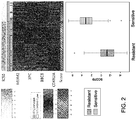
- the final signature is capable of distinguishing MDM2 antagonist sensitive cell lines from MDM2 antagonist resistant cell lines with an area (AUC) under the receiver operating characteristic (ROC) curve of 0.93 (95% CI 0.92 to 0.95, Table 3), estimated from a 10-fold cross-validation. Therefore, the MDM2 antagonist sensitive cell lines demonstrate baseline up-regulation of MDM2, XPC, and BBC3 and down-regulation of CDKN2A; whereas the MDM2 antagonist resistant cell lines are characterized by down regulation of MDM2, XPC, and BBC3 and up-regulation of CDKN2A. (See Figure 2 ).
- Sensitivity Proportion of responders that have scores or MDM2 expression higher than corresponding Youden Index e. Specificity: Proportion of non-responders that have TP53 mutations f. Sensitivity: Proportion of responders that have wild type TP53
- the other three genes in the signature are all biologically supported as regulators in the MDM2-p53 interactions or downstream p53 pathways.
- the XPC gene plays an important role involved in repairing damaged DNA, contributing to damage recognition, open complex formation, and repair protein complex formation. BBC3 mRNA levels are induced by exposure to DNA-damaging agents and by p53, which mediates DNA damage-induced apoptosis.
- the two gene products of the CDKN2A, p16 and p14ARF, are both linked to major tumor suppressor pathways; especially p14ARF, which inhibits MDM2 function by sequestering it in the nucleolus.
- p14ARF which inhibits MDM2 function by sequestering it in the nucleolus.
- the mRNA signature score is correlated with mutation status of P53 and key regulatory genes involved in MDM2-P53 interactions and downstream P53 pathways.
- cell lines with low signature score are more likely to be p53 mutant; whereas cell lines with high signature score are more likely to be p53 wild type (P ⁇ 2.2x 10 -16 ). See p53 mutation status for each cell line in Table 4. Furthermore, the majority of resistant cell lines with wild type TP53 but low signature score harbor mutations in key regulatory genes involved in MDM2-P53 interactions and downstream P53 pathways. This indicates that the signature score can serve as a surrogate mRNA-level indicator of MDM2-P53 pathway function.
- the performance of the MDM2 antagonist predictive mRNA response signature is tested in the clinical setting with specimens from the NO21279 leukemia trial ( Figure 1 ).
- 28 AML patients treated at the MTD are enrolled and completed pretreatment and C1D10 (cycle 1, day 10) sampling. Patients are composed of 18 men and 10 women with a median age 59 years (Table 6).
- the clinical endpoint in NO21279 was divided into 4 categories: Complete Response (CR), Morphologic Leukemia-Free State (MLFS), Hematologic Improvement (HI), and Progressive Disease (PD).
- CR Complete Response
- MLFS Morphologic Leukemia-Free State
- HI Hematologic Improvement
- PD Progressive Disease
- Blood leukemia samples and bone marrow biopsy samples were collected at baseline screening, after a single dose (cycle 1 day 2, C1D2) and on last day of dosing (cycle 1, day 10, C1D10) and isolated via MACS® separation 11 .
- MDM2 antagonism The early pharmacodynamic effect of MDM2 antagonism in blood leukemia samples was assessed by measuring MDM2 RT PCR change between baseline and C1D10.
- Global gene expression profiles were generated for the peripheral blood leukemia cells and bone marrow biopsy samples obtained at baseline, C1D2 and C1D10.
- TaqMan (Invitrogen, Carlsbad, CA, USA) probes were designed to detect MDM2 mRNA and the reference mRNA, beta-glucuronidase, simultaneously using two different fluorescent reporters. Gene expression profiles were generated using Affymetrix U133 Plus 2.0 microarrays.
- the identified 4-gene signature score is calculated for each of the 28 patients with AML by taking the summation of MDM2, BBC3, XPC, subtracting CDKN2A expression levels at baseline.
- This 4 gene signature panel is capable of distinguishing AML patients in response categories following treatment with MDM2 inhibitors in the following manner: CR/MLFS patients from PD/H1 patients with an AUC of the ROC curve of 0.82, and distinguishing CR/MLFS/H1 patients from PD patients with an AUC of 0.83.
- MDM2 mRNA expression as a single biomarker could only distinguish CR/MLFS patients from PD/H1 patients with an AUC of 0.51, and distinguish CR/MLFS/H1 patients from PD patients with an AUC of 0.61.
- the signature panel has significant potential to be used as a companion predictive biomarker of MDM2 antagonist therapy to select a subset of AML patients who are most likely to respond; and avoid exposing the AML patients who are less likely to respond.
- a method of identifying a patient suffering from cancer as likely to respond to a therapy comprising administration of an MDM2 inhibitor comprising,
- the present invention provides an in vitro method of identifying a patient suffering from cancer as likely to respond to a therapy comprising an MDM2 inhibitor, the method comprising,
- a compound according to formula I, II, III, or combinations thereof, or pharmaceutically acceptable derivatives thereof may be used for the prophylactic or especially therapeutic treatment of the human or animal body (subject) (patient), in particular for treating a neoplastic disease (cancer).
- cancers include, but are not limited to, epithelial neoplasms, squamous cell neoplasms, basal cell neoplasms, transitional cell papillomas and carcinomas, adenomas and adenocarcinomas, adnexal and skin appendage neoplasms, mucoepidermoid neoplasms, cystic neoplasms, mucinous and serous neoplasms, ducal-, lobular and medullary neoplasms, acinar cell neoplasms, complex epithelial neoplasms, specialized gonadal neoplasms, paragangliomas and glomus
- the disease according to the invention is a neoplastic disease, cancer, and more particularly AML.
- cancers in terms of the organs and parts of the body affected include, but are not limited to, the breast, cervix, ovaries, colon, rectum, (including colon and rectum i.e. colorectal cancer), lung, (including small cell lung cancer, non-small cell lung cancer, large cell lung cancer and mesothelioma), bone, endocrine system, adrenal gland, thymus, liver, stomach, intestine, (including gastric cancer), pancreas, bone marrow, hematological malignancies, (such as lymphoma, leukemia, myeloma or lymphoid malignancies), bladder, urinary tract, kidneys, skin, thyroid, brain, head, neck, prostate and testis.
- lung including small cell lung cancer, non-small cell lung cancer, large cell lung cancer and mesothelioma
- the cancer is selected from the group consisting of breast cancer, prostate cancer, cervical cancer, ovarian cancer, gastric cancer, colorectal cancer, pancreatic cancer, liver cancer, brain cancer, neuroendocrine cancer, lung cancer, kidney cancer, hematological malignancies, melanoma and sarcomas.
- the cancer is selected from the group consisting of breast cancer, cervical cancer, ovarian cancer, colorectal cancer, melanoma and lung cancer. More especially preferably the cancer is selected from the group consisting of lung cancer, melanoma, ovarian cancer and colorectal cancer.
- the cancer is lung cancer or ovarian cancer.
- the cancer is selected from the group consisting of colorectal cancer, lung cancer or melanoma.
- MDM2-inhibitor is a compound of general formula I, II, III, or a pharmaceutically acceptable derivative thereof as defined above, more preferably a compound of formula IIa or III or a pharmaceutically acceptable derivative thereof.
- Said compounds may be administered in a pharmaceutical composition, as is well known to a person skilled in the art.
- compositions for administration such as nasal, buccal, rectal or, especially, oral administration, and for parenteral administration, such as intravenous, intramuscular or subcutaneous administration, to warm-blooded animals, especially humans, are especially preferred. More particularly, compositions for intravenous administration are preferred.
- a compound of general formula I, II or III, preferably IIa or III, or a pharmaceutically acceptable derivative thereof can be administered alone or in combination with one or more other therapeutic agents.
- Possible combination therapy may take the form of fixed combinations, or the administration of a compound of the invention and one or more other therapeutic agents which are staggered or given independently of one another, or the combined administration of fixed combinations and one or more other therapeutic agents.
- a compound of general formal I, II or III, preferably IIa or III, or a pharmaceutically acceptable derivative thereof can, besides or in addition, be administered especially for tumour therapy in combination with chemotherapy (cytotoxic therapy), targeted therapy, endocrine therapy, radiotherapy, immunotherapy, surgical intervention, or a combination of these.
- chemotherapy cytotoxic therapy
- targeted therapy endocrine therapy
- radiotherapy immunotherapy
- surgical intervention or a combination of these.
- Long-term therapy is equally possible as is adjuvant therapy in the context of other treatment strategies, as described above.
- Other possible treatments are therapy to maintain the patient's status after tumour regression, or even chemo-preventive therapy for example in patients at risk.
- the kit and device may also preferably comprise a comparator module which comprises a standard value or set of standard values to which the level of MDM2 in the sample is compared.
- the comparator module is included in instructions for use of the kit.
- the comparator module is in the form a display device, for example a strip of colour or numerically coded material which is designed to be placed next to the readout of the sample measurement to indicate resistance levels.
- the standard value or set of standard values may be determined as described above.
- RNA sequencing (RNA-seq) by Next Generation Sequencing (NGS) technology is an accurate and sensitive approach to measure gene expression, with the additional power to detect alternative splicing, allele specific expression, non-coding RNA, and various forms of mutations (SNPs, indels, gene fusions).
- NGS Illumina HiSeq machine generates raw base calls in reads of 50 or 100 bp length, which are subjected to several data analysis steps.
- the RNA-seq is conducted at 40 to 50 million reads per sample. This number provides relatively high sensitivity to detect low-expressed genes while allowing for cost-effective multiplexing of samples.
- RNA is prepared by standard kits and RNA libraries by polyA TruSeq Illumina kits.
- RNA-seq 100 ng of mRNA per cell line is used for each RNA-seq reaction.
- a number of quality control procedures are applied to the RNA-seq data for each sample.
- the Illumina HiSeq software reports the total number of clusters (DNA fragments) loaded in each lane, percent passing sequencing quality filters (which identifies errors due to overloading and sequencing chemistry), a phred quality score for each base of each sequence read, overall average phred scores for each sequencing cycle, and overall percent error (based on alignment to the reference genome). For each RNA-seq sample, the percentage of reads that contain mitochondrial and ribosomal RNA is calculated.
- the FASTQC package is used to provide additional QC metrics (base distribution, sequence duplication, overrepresented sequences, and enriched kmers) and a graphical summary.
- the Picard toolkit that provides additional RNA-seq metrics including an estimate of 3" bias is used (caused by the use of poly-A capture or priming for cDNA synthesis in sample preparation), the percentage of reads mapping to exons, introns and intergenic regions.
- 281 cells are treated with MDM2 antagonists and the IC50 (therapy response) is generated.
- the cell lines span a broad range of tumor cell types of derivation.
- MDM2 has the 4 th highest gene with an over-expression of MDM2 correlating with in vitro sensitivity, consistent with previously published data.
- a multivariate logistic regression classifier is identified, which contains up-regulations of three genes including MDM2, XPC (xeroderma pigmentosum, complementation group C), BBC3 (BCL2 binding component 3) and down-regulation of tumor suppressor gene CDKN2A (cyclin-dependent kinase inhibitor 2A) (Table 2).
- the final signature is capable of distinguishing MDM2 antagonist sensitive cell lines from MDM2 antagonist resistant cell lines with AUC of 0.93 (95% CI 0.92 to 0.95).
- the MDM2 antagonist sensitive cell lines demonstrate baseline up-regulation of MDM2, XPC, and BBC3 and down-regulation of CDKN2A; whereas the MDM2 antagonist resistant cell lines are characterized by down-regulation of MDM2, XPC, and BBC3 and up-regulation of CDKN2A ( Figure 2 ).
- the other three genes in the signature are all biologically supported as regulators in the MDM2-p53 interactions or downstream p53 pathways.
- the XPC gene plays an important role involved in repairing damaged DNA, contributing to damage recognition, open complex formation, and repair protein complex formation.
- BBC3 also known as p53 upregulated modulator of apoptosis (PUMA), were induced by exposure to DNA-damaging agents and by p53, which mediates DNA damage-induced apoptosis.
- the two gene products of the CDKN2A, p16 and p14ARF are both linked to major tumor suppressor pathways; especially p14ARF, which inhibits MDM2 function by sequestering it in the nucleolus.
- RNAseq quantification of expression measurement which takes advantage of its sensitivity and the increased dynamic range over microarray technology.
- Table 2 the mRNA expression levels of the four genes measured through RNAseq are well correlated with those measured through microarrays. The high discriminatory ability of individual genes and the overall score are preserved through microarray quantification.
- RNA-seq RNA sequencing
- GeneChip Human Genome U133 Plus 2.0 Array Gene expression analysis of RNA-seq data is summarized here. First, the sequence reads are mapped to the reference human genome and to an additional database of splice junction fragments derived from known exon locations on the reference genome (Cufflinks software). These mapped reads are then combined to create discrete counts of reads (or sequenced bases) per gene. These gene expression counts are then normalized to equalize the total amount of RNA counts for each sample and corrected for gene/transcript length (RPKM).
- RPKM gene/transcript length
- the 12 significant genes from univariate DE analysis are set as candidates for building the signature.
- the genes are ranked via their fold changes of responder cell lines to non-responder cell lines. Positive genes are defined as those with fold changes higher than 1; whereas negative genes are defined as those with fold changes less than 1.
- a multivariate logistic regression classifier is then built through a upward model selection procedure to maximize area under the receiver operating characteristic (ROC) curve with 10-fold cross-validation. The mode selection is implemented procedure through R package bestglm. The final selected model is composed of 4 genes.
- the intensity values for samples in each microarray are rescaled by quantile normalization method. Each intensity value is then log2 transformed.
- the intensity values for samples in each microarray are rescaled by quantile normalization method. Each intensity value is then log2 transformed.
- Patients are composed of 18 men and 10 women with a median age 59 years. Based on tumor specimen assessments, 23 of 28 patients have wild-type TP53, and 5 patients have TP53 mutations (one patient with mutation A to C in intron 7; two patients with mutations CGC to CAC in exon 5; one patient with deletion G 323_3-324_1 in exon 9 farmeshift; one with mutation S240G -- S240, AGT to GGT in exon 7).
- median values for the area under the curve of 24 h (AUC0-24h) for COMPOUND A are 190,315 ng*h/mL (IQR: 119,032-242,857 ng*h/mL) among the 28 studied patients.
- Clinical responses are evaluated and are divided into 4 categories: Complete Response (CR), Morphologic Leukemia-Free State (MLFS), Hematologic Improvement (HI), and Progressive Disease (PD). Response are evaluated in the 28 patients including 3 CR, 4 MLFS, 6 HI and 15 PD.
- treatment samples are also evaluated (Cycle 1, Day 10). Median MDM2 mRNA expression in biopsies from C1D10 is increased by 2.46 times (IQR: 1.62-4.59) over baseline, demonstrating a pharmacodynamic biomarker response resulting from p53 activation of MDM2 transcription.
- Baseline blood cell specimens from 28 evaluable patients dosed at the MTD are evaluated using Affymetrix GeneChip Human Genome U133 Plus 2.0 microarrays.
- the identified 4-gene signature score is calculated for each of the 28 patients by taking the summation of MDM2, BBC3, XPC, subtracting CDKN2A expression levels at baseline.
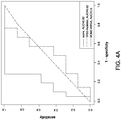
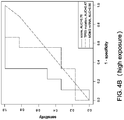
- This panel was capable of distinguishing CR/MLFS patients from PD/HI patients with an AUC of the ROC curve of 0.82 ( Figure 4 , Table 10), and distinguishing CR/MLFS/HI patients from PD patients with an AUC of 0.83 ( Figure 4 ).
- MDM2 mRNA expression as a single biomarker could only distinguish CR/MLFS patients from PD/HI patients with an AUC of 0.51, and distinguish CR/MLFS/HI patients from PD patients with an AUC of 0.61.
- the signature panel has significant potential to be used as a companion predictive biomarker of MDM2 antagonist therapy to select a subset of AML patients who are most likely to respond; and avoid exposing the AML patients who are less likely to respond.
- baseline bone marrow cell specimens are measured from the available subset of 18 patients dosed at the MTD using Affymetrix GeneChip Human Genome U133 Plus 2.0 microarrays.
- Median signature score on C1D2 is 1.11 times (IQR: 1.05-1.16), 1.08 times (IQR: 1.04-1.10), 1.17 times (IQR: 1.14-1.19), and 1.15 times (IQR: 1.13-1.15) over baseline for PD, HI, MLFS and CR patients respectively.
- Median score on C1D10 is 1.14 times (IQR: 1.08-1.21), 1.25 times (IQR: 1.23-1.30), 1.26 times (IQR: 1.23-1.31), and 1.23 times (IQR: 1.22-1.24) over baseline for PD, HI, MLFS and CR patients respectively.
- mRNA signature score is both a predictive biomarker and a pharmacodynamics biomarker of MDM2 antagonist therapyactivity.
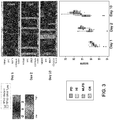
- the baseline mRNA signature score is thus predictive of patients' responses to MDM2 inhibitor, and MDM2 antagonist therapy stimulates patients by various extents during the treatment cycle that is indicative of the patients' clinical responses ( Figure 3 ).
- the predictive mRNA signature is also evaluated in two solid tumor trials ( Figure 1 ).
- NP21280 30 patients with pretreatment and C1D5 tumor biopsy samples are evaluated; and in NP22890 20 patients with pretreatment and C1D8 tumor biopsy samples are evalauted (Table 1).
- a biomarker package that enabled assessment of p53 pathway activation is assessed (p53 IHC, p21 IHC, MDM2 mRNA, and Ki67), MDM2 inhibition activates the P53 pathway and decreases cell proliferation.
- P53 and P21 concentrations, and MDM2 mRNA expression all significantly increase at C1D8 from baseline, and Ki-67-positive tumor cells are decreased from baseline in NP22890.
- the signature scores are similarly derived for patients at baseline and at C1D5 (NO21280) and C1D8 (NP22890).
- the mRNA signature scores show heterogeneous magnitudes of the correlations with the COMPOUND A pharmaco-kinetics and pharmacodynamic marker panels and between the two trials.
- NP22890 only a suggestion of a positive correlation between the signature score and MDM2 change and P21 change are observed (Table 9). No assessment of clinical outcomes is feasible for the solid tumor trial specimens.
Landscapes
- Health & Medical Sciences (AREA)
- Chemical & Material Sciences (AREA)
- Life Sciences & Earth Sciences (AREA)
- Organic Chemistry (AREA)
- General Health & Medical Sciences (AREA)
- Proteomics, Peptides & Aminoacids (AREA)
- Animal Behavior & Ethology (AREA)
- Pharmacology & Pharmacy (AREA)
- Engineering & Computer Science (AREA)
- Medicinal Chemistry (AREA)
- Public Health (AREA)
- Veterinary Medicine (AREA)
- Nuclear Medicine, Radiotherapy & Molecular Imaging (AREA)
- General Chemical & Material Sciences (AREA)
- Chemical Kinetics & Catalysis (AREA)
- Immunology (AREA)
- Zoology (AREA)
- Pathology (AREA)
- Genetics & Genomics (AREA)
- Analytical Chemistry (AREA)
- Wood Science & Technology (AREA)
- Bioinformatics & Cheminformatics (AREA)
- Oncology (AREA)
- Microbiology (AREA)
- Biochemistry (AREA)
- Biotechnology (AREA)
- Physics & Mathematics (AREA)
- Molecular Biology (AREA)
- General Engineering & Computer Science (AREA)
- Hospice & Palliative Care (AREA)
- Biophysics (AREA)
- Hematology (AREA)
- Pharmaceuticals Containing Other Organic And Inorganic Compounds (AREA)
- Measuring Or Testing Involving Enzymes Or Micro-Organisms (AREA)
- Epidemiology (AREA)
- Investigating Or Analysing Biological Materials (AREA)
- Medicinal Preparation (AREA)
- Medicines That Contain Protein Lipid Enzymes And Other Medicines (AREA)
Description
- The TP53 gene encodes a tumor suppressor protein that plays a critical role in the protection during the development of cancers. P53 is crucial in multi-cellular organisms where it regulates cell cycle, and thus acts as a tumor suppressor that is involved in preventing cancer. Further, it is a transcription factor that regulates multiple genes involved in cell cycle control, such as apoptosis, DNA repair and senescence.
- Under non-stressed conditions, the level of p53 protein is controlled by MDM2 (Murine Double Minute 2) via a negative feedback loop, wherein MDM2 transcription is driven by p53. MDM2 protein binds to the TP53 protein and blocks its transactivation domain. MDM2 can also function as a p53 ubiquitin ligase, which marks p53 for ubiquitin dependent degradation.
- In cells that overexpress MDM2, P53 is inactivated, leading to inefficient growth arrest and apoptosis. Blocking the P53--MDM2 interaction might restore P53 function and could be a novel approach to cancer treatment. Treatment of tumor cells with MDM2 antagonists should enable p53 to mediate its downstream functions, including activation of gene transcription and induction of cell cycle arrest and apoptosis.
- TP53 mutations are rare in Acute Myeloid Leukemia (AML) and are generally not considered to be of primary importance in the development of these malignancies. However, MDM2 has been found to be frequently overexpressed in AML, and can enhance the tumorigenic potential and resistance to apoptosis through abrogation of p53 function. It has been found that AML cell lines and 16 primary aAML samples with wild-type p53 responded to MDM2 antagonist (inhibitor) by induction of p53-dependent apoptosis. These findings support the rationale of targeting the p53-MDM2 interaction as a therapeutic strategy for AML.
- Based on the proposed mechanism of action of the drug, the presence of functional p53 protein and related pathway effector molecules are required for this class of drugs to be efficacious. Not all patients will have functional p53 proteins and related pathway effector molecules. In order to better determine whether a patient can benefit from therapy, there is a need to discover predictive molecular tests for identifying patients that are most likely to respond to therapy. One approach for assessing potential response to a MDM2 antagonist is to assess whether or not the TP53 gene is mutated. However, this is complicated by the fact that a multitude of mutations can be found in TP53 in cancer. Not all of these mutations will interfere with activity of the p53 protein, further complicating interpretation of TP53 mutational tests. In addition, there is a range of responses to MDM2 antagonists in wild type TP53 cell lines and patients. Therefore, the ability to predict responsiveness to an MDM2 antagonist from an easily interpretable diagnostic tool is an unmet need in clinical development of MDM2 antagonists. To this end, the development of a gene expression signature that reflects p53 pathway activity could provide a means of selecting patients most likely to respond to MDM2 antagonist therapy. Hege O. Ohnstad et al (Cancer, Vol. 119, No. 5; 2012 ) investigate the correlation of TP53 and MDM2 genotypes with response to therapy in sarcoma.
- In one aspect the present invention relates to a method for predicting the response of a patient having cancer to therapy, wherein the patients therapy comprises the treatment with a compound which acts as inhibitor of the MDM2-p53 interaction, said method comprising the steps of:
- a) measuring a level in a sample pre-obtained from the subject to obtain a value or values representing this level; and
- b) comparing the value or values from step a) to a standard value or set of standard values.
- Compounds which act as inhibitor of the MDM2-p53 interaction (MDM2-inhibitors, MDM2-antagonists) are known in the art. MDM2-inhibitors and methods for making them are for example disclosed in
U.S. Patent 8,354,444 B2 , as well as inWO 2007/063013 ,WO 2010/031713 andWO 2011/098398 . Additional MDM2-inhibitors are disclosed inWO 2013/135648 .
U.S. Patent 8,354,444 B2 , as well asWO 2010/031713 ,WO 2011/098398 disclose for example compounds of formula I, II and IIa
WO 2013/135648 discloses for example compounds of formula III
- In one aspect, the present invention relates to a method for predicting the response of a patient having cancer to therapy, wherein the patients therapy comprises the treatment with a compound which acts as inhibitor of the MDM2-p53 interaction, preferably an MDM2-inhibitor as specifically disclosed in the working examples of
U.S. Patent 8,354,444 B2 , or inWO 2007/063013 ,WO 2010/031713 ,WO 2011/098398 andWO 2013/135648 .
In a further aspect, the disclosure
relates to a method of treating a neoplastic disease, cancer, in a patient in need thereof, comprising measuring a level in a sample from the patient to obtain a value or values representing this level, and treating the subject with a compound of general formula I or a pharmaceutically acceptable derivative thereof as defined above.
A "neoplastic disease" that is potentially treatable based on the MDM2 response is a cancer. In one embodiment, the cancer is selected from the group consisting of breast cancer, prostate cancer, cervical cancer, ovarian cancer, gastric cancer, colorectal cancer (i.e. including colon cancer and rectal cancer), pancreatic cancer, liver cancer, brain cancer, neuroendocrine cancer, lung cancer, kidney cancer, hematological malignancies, melanoma and sarcomas. In another embodiment, the cancer is selected from the group consisting of hematological malignancies, prostate cancer, breast cancer, cervical cancer, ovarian cancer, colorectal cancer, melanoma and lung cancer. In yet another embodiment, the cancer is acute myeloid leukemia (AML), or Myelodysplatic Syndrome (MDS), or Myeloproliferative Neoplams (MPN). - In yet another aspect, disclosed herein is a kit for predicting the response to a compound of formula or a pharmaceutically acceptable derivative thereof, as defined above, comprising reagents necessary for measuring the level in a sample. More preferably the kit also comprises a comparator module which comprises a standard value or set of standard values to which the level of response in the sample is compared. The kit may also comprise a captive reagent.
- More preferably the kit comprises an MDM2 inibitor, preferably an MDM2-inhibitor as specifically disclosed in
U.S. Patent 8,354,444 B2 , or inWO 2007/063013 ,WO 2010/031713 ,WO 2011/098398 andWO 2013/135648 ; or a compound according to formulae IIa or III; or a specific MDM2-inhibitor as disclosed herein. - The present invention identifies a gene expression signature (mRNA) panel based on in vitro and clinical data that identify patients most likely to respond to MDM2 antagonist therapy. The mRNA signature is characterized by up-regulations of three genes, specifically MDM2, XPC (xeroderma pigmentosum, complementation group C), BBC3 (BCL2 binding component 3) and down-regulation of CDKN2A (cyclin-dependent kinase inhibitor 2A).
- The present invention identifies a 4-gene expression signature (mRNA) for identifying responses to MDM2 antagonist.
- The present invention also identifies a 4-gene expression signature (mRNA) for monitoring treatment of cancer in a patient with an MDM2 antagonist.
- The baseline expression levels of MDM2, BBC3, CDKN2A, and XPC yield a composite score that discriminates between cell lines and patient-derived clinical specimens that are resistant to therapy, and identifies those that are sensitive (responsive) to the therapy.
- As such, the present disclosure relates to a method for identifying sensitivity to MDM2 antagonist therapy. Furthermore, the present disclosure relates to a method for treating a cancer patient with an MDM2 antagonist by testing the sensitivity of the patient before hand by the gene signature (mRNA) panel, more specifically a panel including MDM2, and more specifically a 4-gene expression system.
- The present disclosure further provides the predictive signature utilizing mRNA values in determining the effectiveness of MDM2 antagonist therapy to cancers, in particular, AML.
- Also disclosed herein is the use of a gene panel containing at least the MDM2 gene as predictive mechanism for determining a patent's response to a disease, particularly cancer, more particularly acute myeloid leukemia (AML), when a patient is to be treated with an MDM2 antagonist.
- More particularly, disclosed herein is the use of a four-gene panel in order to determine a patient's response to a disease, particularly AML, when a patient is to be treated with an MDM2 antagonist.
-
-
Figure 1 : This outline provides the sequence of work that forms the invention. -
Figure 2 : MDM2 antagonist response mRNA signature in vitro.
Top: The heatmap of the four gene mRNAs (in the original, colored version green corresponds to lower expression, red to higher expression) associated with MDM2 antagonist response for the most sensitive (IC50<=1) and resistant (IC50>=10) cell lines. For the most sensitive cell lines, MDM2, XPC and BBC3 show high expression, and CDKN2A shows low expression. For each cell line TP53 mutation features are at the top of the heatmap (white = wild type). The natural log IC50 values are represented at the bottom.
Bottom: The boxplot of the 4-gene mRNA signature score for the most sensitive (IC50<=1) and resistant (IC50>=10) cell lines. -
Figure 3 : MDM2 antagonist response mRNA signature in AML trial.
Top: The heatmap of the four gene mRNAs (red in the original colored version corresponds to higher expression) associated with MDM2 antagonist response for the 28 evaluated patients. For each patient TP53 mutation features are at the top of the heatmap (white = wild-type). The clinical efficacy groups are represented at the bottom.
Bottom: The boxplot of the 4-gene mRNA sigature score for 28 evaluated patients. -
Figure 4A and4B : The area under the curve (AUC) of receiver operating characteristic (ROC) curves of the three biomarks/biosignatures in AML trial. The four gene mRNA signature score showed AUC 0.82, MDM2 mRNA single biomarker showed AUC 0.5; P53 mutation status biomarker showed AUC 0.52. - In the context of the invention, an MDM2-inhibitor is any MDM2-inhibitor, preferably an MDM2-inhibitor specifically disclosed in
U.S. Patent 8,354,444 B2 , or inWO 2007/063013 ,WO 2010/031713 ,WO 2011/098398 andWO 2013/135648 . - More specifically, an MDM2-inhibitor is a compound of formula I

- X is selected from the group consisting of H, F, Cl, Br, I, cyano, nitro, ethynyl, cyclopropyl, methyl, ethyl, isopropyl, vinyl and methoxy,
- Y is one to four group(s) independently selected from the group consisting of H, F, Cl, Br, I, CN, OH, nitro, lower alkyl, cycloalkyl, lower alkoxy, lower alkenyl, cycloalkenyl, lower alkynyl, aryl, hetereoaryl, hetereocycle, COOR', OCOR', CONR'R", NR'COR", NR"SO2R', SO2NR'R" and NR'R" wherein
- R' and R" are independently selected from H, lower alkyl, substituted lower alkyl, lower cycloalkyl, substituted lower cycloalkyl, lower alkenyl, substituted lower alkenyl, lower cycloalkenyl, substituted lower cycloalkenyl, aryl, substituted aryl, hetereoaryl, substituted hetereoaryl, hetereocycle, or substituted hetereocycle.
- and in the case of R' and R" may independently link to form a cyclic structure selected from substituted or unsubstituted cycloalkyl, substituted or unsubstituted cycloalkenyl, substituted or unsubstituted heteroaryl or substituted or unsubstituted heterocycle,
- one of R1 and R2 is selected from the group consisting of lower alkyl,
- substituted lower alkyl, lower alkenyl, substituted lower alkenyl, aryl, substituted aryl, heteroaryl, substituted heteroaryl, heterocycle, substituted heterocycle, cycloalkyl, substituted cycloalkyl, cycloalkenyl, and substituted cycloalkenyl and the other is hydrogen or lower alkyl, R3 is H or lower alkyl,
- one of R4 and R5 is selected from the group consisting of lower alkyl, substituted lower alkyl, lower alkenyl, substituted lower alkenyl, aryl, substituted aryl, heteroaryl, substituted heteroaryl, heterocycle, substituted heterocycle, cycloalkyl, substituted cycloalkyl, cycloalkenyl, and substituted cycloalkenyl and the other is hydrogen,
- R6 and R7 are selected from the group consisting of (CH2)n-R' (CH2)n-NR'R", (CH2)n-NR'COR", (CH2)n-NR'SO2R", (CH2)n-COOH, (CH2)n-COOR', (CH2)n-CONR'R", (CH2)n-OR', (CH2)n-SR', (CH2)n-SOR', (CH2)n-SO2R', (CH2)n-COR', (CH2)n-SO3H, (CH2)n-SONR'R", (CH2)n-SO2NR'R", (CH2CH2O)m-(CH2)n-R', (CH2CH2O)m-(CH2)n-OH, (CH2CH2O)m-(CH2)n-OR', (CH2CH2O)m-(CH2)n-NR'R", (CH2CH2O)m-(CH2)n-NR'COR", (CH2CH2O)m-(CH2)n-NR'SO2R", (CH2CH2O)m-(CH2)n-COOH, (CH2CH2O)m-(CH2)n-COOR', (CH2CH2O)m-(CH2)n-CONR'R", (CH2CH2O)m-(CH2)n-SO2R', (CH2CH2O)m-(CH2)n-COR', (CH2CH2O)m-(CH2)n-SONR'R", (CH2CH2O)m-(CH2)n-SO2NR'R", (CH2)p-(CH2CH2O)m-(CH2)n-R', (CH2)p-(CH2CH2O)m-(CH2)n-OH, (CH2)p-(CH2CH2O)m-(CH2)n-OR', (CH2)p-(CH2CH2O)m-(CH2)n-NR'R", (CH2)p-(CH2CH2O)m-(CH2)n-NR'COR", (CH2)p-(CH2CH2O)m-(CH2)n-NR'SO2R", (CH2)p-(CH2CH2O)m-(CH2)n-COOH, (CH2)p-(CH2CH2O)m-(CH2)n-COOR', (CH2)p-(CH2CH2O)m-(CH2)n-CONR'R", (CH2)p-(CH2CH2O)m-(CH2)n-SO2R', (CH2)p-(CH2CH2O)m (CH2)n-COR',(CH2)p-(CH2CH2O)m-(CH2)n-SONR'R",(CH2)p-(CH2CH2O)m-(CH2)n-SO2NR'R", -COR', -SOR' and SO2R' wherein R' and R" are as above,
- m, n and p are independently 0 to 6, and
- the pharmaceutically acceptable salts and esters thereof.
- Preferred compounds of formula I may have a stereochemical structure shown as formula II:

- Another MDM2-inhibitor in the context of the present invention is a compound of formula IIa

- R6 is -(CH2)n-R', and
- R' is Cyclohexyl, or
a 5 to 10 membered, mono- or bicyclic aromatic hydrocarbon wherein 1 or 2 carbon atoms may be replaced by N, S or O, and wherein any of the aforementioned cyclohexyl or aromatic hydrocarbon can be substituted once or twice with a group independently selected from lower alkyl, lower-alkenyl, lower-alkynyl, dioxo-lower-alkylene (forming e.g. a benzodioxyl group), halogen, hydroxy, CN, CF3, NH2, N(H, lower-alkyl), N(lower-alkyl)2, aminocarbonyl, carboxy, NO2, lower-alkoxy, thio-lower-alkoxy, lower-alkylsufonyl, aminosulfonyl, lower-alkylcarbonyl, lower-alkylcarbonyloxy, lower-alkoxycarbonyl, lower-alkyl-carbonyl-NH, fluoro-lower-alkyl, fluoro-lower-alkoxy, lower-alkoxy-carbonyl-lower-alkoxy, carboxy-lower-alkoxy, carbamoyl-lower-alkoxy, hydroxy-lower-alkoxy, NH2-lower-alkoxy, N(H, lower-alkyl)-lower-alkoxy, N(lower-alkyl)2-lower-alkoxy, lower-alkyl-1-oxiranyl-lower-alkoxy-lower-alkyl, 2-oxo-pyrrolidin-1-yl, (1,1-dioxo)-2-isothiazolidine, 3-lower-alkyl sulfinyl, a substituted or unsubstituted heterocyclic ring, a substituted or unsubstituted aryl ring, a substituted or unsubstituted heteroaryl ring, trifluoro-lower-alkylsulfonylamino-aryl, lower-alkyl sulfonylaminocarbonyl, lower-alkyl sulfonylaminocarbonyl-aryl, hydroxycarbamoyl-phenyl, benzyloxy-lower-alkoxy, mono- or di-lower alkyl substituted amino-sulfonyl and lower-alkyl which can optionally be substituted with halogen, hydroxy, NH2, N(H, lower-alkyl) or N(lower-alkyl)2; and - n is 0 or 1.
- The compounds of formula IIa are preferred, wherein
- R6 is -(CH2)n-R', and
- R' is phenyl, pyridinyl, pyrazinyl or pyrimidinyl which can be each unsubstituted or once or twice substituted with a substituent independently selected from halogen, C1-6 alkoxy, C1-6 alkyl, hydroxycarbonyl, carboxy, carboxy CI-6 alkoxy, oxo and CN; and n is 0.
- Another MDM2-inhibitor in the context of the present invention is a compound of formula III

- X is selected from the group consisting of H, F, Cl, Br, I, cyano, nitro, ethynyl, cyclopropyl, methyl, ethyl, isopropyl, vinyl and methoxy,
- Y is one to four group(s) independently selected from the group consisting of H, F, Cl, Br, I, CN, OH, nitro, lower alkyl, cycloalkyl, lower alkoxy, lower alkenyl, cycloalkenyl, lower alkynyl,
- Z is lower alkoxy,
- R1 is selected from the group consisting of lower alkyl, substituted lower alkyl, lower alkenyl, substituted lower alkenyl, aryl, substituted aryl, heteroaryl, substituted heteroaryl, heterocycle, substituted heterocycle, cycloalkyl, substituted cycloalkyl, cycloalkenyl, and substituted cycloalkenyl,
- R2 is a substituted phenyl selected from:

- W is F, Cl or Br,
- V is H or F,
- R3 is selected from the group consisting of hydrogen, lower alkyl or substituted lower alkyl,
- R4 is selected from the group consisting of:

- R5 is selected from the group consisting of lower alkyl, substituted lower alkyl, heterocycle, substituted heterocycle, cycloalkyl, substituted cycloalkyl, natural and unnatural amino acids, -(OCH2CH2)n-OH, -(OCH2CH2)n-OCH3, -(NCH2CH2)n-OH, -(NCH2CH2)n-OCH3 and -(OCH2CH2)n-OP(O)(OR6)2, wherein
- n is from 3 to 60, preferably from 3 to 45,
- R6 is hydrogen or benzyl; or
- a pharmaceutically acceptable salt or ester thereof.
- Compounds of formula III are preferred, wherein
X is selected from H, F or Cl,
Y is selected from H, F or Cl,
R1 is lower alkyl or substituted lower alkyl,
R3 is hydrogen or lower alkyl,
R5 is selected from the group consisting of lower alkyl, substituted lower alkyl, natural and unnatural amino acids, -(OCH2CH2)n-OH, -(OCH2CH2)n-OCH3, -(NCH2CH2)n-OH, - (NCH2CH2)n-OCH3, -(OCH2CH2)n-OP(O)(OR6)2, wherein
n is from 3 to 60, preferably from 3 to 45, and
R6 is hydrogen; or
a pharmaceutically acceptable salt thereof. - Compounds of formula III are prefedrred, wherein
X is selected from H, F or Cl;
Y is selected from H, F or Cl;
Z is CI-6 alkoxy;
R1 is CI-6 alkyl;
R2 is
- W is F, Cl or Br;
- V is H or F;
- In the specification where indicated the various groups may be substituted by 1-5 or, preferably, 1-3 substituents independently selected from the group consisting of lower alkyl, lower-alkenyl, lower-alkynyl, dioxo-lower-alkylene (forming e.g. a benzodioxyl group), halogen, hydroxy, CN, CF3, NH2, N(H, lower-alkyl), N(lower-alkyl)2, aminocarbonyl, carboxy, NO2, lower-alkoxy, thio-lower-alkoxy, lower-alkylsufonyl, aminosulfonyl, lower-alkylcarbonyl, lower-alkylcarbonyloxy, lower-alkoxycarbonyl, lower-alkyl-carbonyl-NH, fluoro-lower-alkyl, fluoro-lower-alkoxy, lower-alkoxy-carbonyl-lower-alkoxy, carboxy-lower-alkoxy, carbamoyl-lower-alkoxy, hydroxy-lower-alkoxy, NH2-lower-alkoxy, N(H, lower-alkyl)-lower-alkoxy, N(lower-alkyl)2-lower-alkoxy, lower-alkyl-1-oxiranyl-lower-alkoxy-lower-alkyl, 2-oxopyrrolidin-1-yl, (1,1-dioxo)-2-isothiazolidine, 3-lower-alkyl sulfinyl, a substituted or unsubstituted heterocyclic ring, a substituted or unsubstituted aryl ring, a substituted or unsubstituted heteroaryl ring, trifluoro-lower-alkylsulfonylamino-aryl, lower-alkyl sulfonylaminocarbonyl, lower-alkyl sulfonylaminocarbonyl-aryl, hydroxycarbamoyl-phenyl, benzyloxy-lower-alkoxy, mono- or di-lower alkyl substituted amino-sulfonyl and lower-alkyl which can optionally be substituted with halogen, hydroxy, NH2, N(H, lower-alkyl) or N(lower-alkyl)2. Preferred substituents for the cycloalkyl, cycloalkenyl, aryl, heteroaryl and heterocycle rings are halogen, lower alkoxy, lower alkyl, hydroxycarbonyl, carboxy, carboxy lower alkoxy, oxo and CN. Preferred substituents for alkyl are alkoxy and N(lower alkyl)2.
- The term "alkyl" refers to straight- or branched-chain saturated hydrocarbon groups having from 1 to about 20 carbon atoms, including groups having from 1 to about 7 carbon atoms. In certain embodiments, alkyl substituents may be lower alkyl substituents. The term "lower alkyl" refers to alkyl groups having from 1 to 6 carbon atoms, and in certain embodiments from 1 to 4 carbon atoms. Examples of alkyl groups include, but are not limited to, methyl, ethyl, n-propyl, i-propyl, n-butyl, s-butyl, t-butyl, n-pentyl, and s-pentyl.
- As used herein, "cycloalkyl" is intended to refer to any stable monocyclic or polycyclic system which consists of carbon atoms only, any ring of which being saturated, and the term "cycloalkenyl" is intended to refer to any stable monocyclic or polycyclic system which consists of carbon atoms only, with at least one ring thereof being partially unsaturated. Examples of cycloalkyls include, but are not limited to, cyclopropyl, cyclobutyl, cyclopentyl, cyclohexyl, cycloheptyl, adamantyl, cyclooctyl, bicycloalkyls, including bicyclooctanes such as [2.2.2]bicyclooctane or [3.3.0]bicyclooctane, bicyclononanes such as [4.3.0]bicyclononane, and bicyclodecanes such as [4.4.0]bicyclodecane (decalin), or spiro compounds. Examples of cycloalkenyls include, but are not limited to, cyclopentenyl or cyclohexenyl.
- The term "alkenyl" as used herein means an unsaturated straight-chain or branched aliphatic hydrocarbon group containing one double bond and having 2 to 6, preferably 2 to 4 carbon atoms. Examples of such "alkenyl group" are vinyl ethenyl, allyl, isopropenyl, 1-propenyl, 2-methyl-1-propenyl, 1-butenyl, 2-butenyl, 3-butenyl, 2-ethyl-1-butenyl, 3-methyl-2-butenyl, 1-pentenyl, 2-pentenyl, 3-pentenyl, 4-pentenyl, 4-methyl-3-pentenyl, 1-hexenyl, 2-hexenyl, 3-hexenyl, 4-hexenyl and 5-hexenyl.
- The term "alkynyl" as used herein means an unsaturated straight-chain or branched aliphatic hydrocarbon group containing one triple bond and having 2 to 6, preferably 2 to 4 carbon atoms. Examples of such "alkynyl group" are ethynyl, 1-propynyl, 2-propynyl, 1-butynyl, 2-butynyl, 3-butynyl, 1-pentynyl, 2-pentynyl, 3-pentynyl, 4-pentynyl, 1-hexynyl, 2-hexynyl, 3-hexynyl, 4-hexynyl and 5-hexynyl.
- The term "halogen" as used in the definitions means fluorine, chlorine, bromine, or iodine, preferably fluorine and chlorine.
- "Aryl" means a monovalent, monocyclic or bicyclic, aromatic carbocyclic hydrocarbon radical, preferably a 6-10 member aromatic ring system. Preferred aryl groups include, but are not limited to, phenyl, naphthyl, tolyl, and xylyl. Where the aryl group is bicyclic a preferred group is 1,3-dioxo-2,3-dihydro-1H-isoindol-5-yl group.
- "Heteroaryl" means an aromatic heterocyclic ring system containing up to two rings. Preferred heteroaryl groups include, but are not limited to, thienyl, furyl, indolyl, pyrrolyl, pyridinyl, pyrazinyl, oxazolyl, thiaxolyl, quinolinyl, pyrimidinyl, imidazole substituted or unsubstituted triazolyl and substituted or unsubstituted tetrazolyl.
- In the case of aryl or heteroaryl which are bicyclic it should be understood that one ring may be aryl while the other is heteroaryl and both being substituted or unsubstituted.
- "Heterocycle" or "heterocyclic ring"means a substituted or unsubstituted 5 to 8 membered, mono- or bicyclic, non-aromatic hydrocarbon, wherein 1 to 3 carbon atoms are replaced by a hetero atom selected from nitrogen, oxygen or sulfur atom. Examples include pyrrolidin-2-yl; pyrrolidin-3-yl; piperidinyl; morpholin-4-yl and the like which in turn can be substituted. "Hetero atom" means an atom selected from N, O and S.
- "Alkoxy, alkoxyl or lower alkoxy" refers to any of the above lower alkyl groups attached to an oxygen atom. Typical lower alkoxy groups include methoxy, ethoxy, isopropoxy or propoxy, butyloxy and the like. Further included within the meaning of alkoxy are multiple alkoxy side chains, e.g. ethoxy ethoxy, methoxy ethoxy, methoxy ethoxy ethoxy and the like and substituted alkoxy side chains, e.g., dimethylamino ethoxy, diethylamino ethoxy, dimethoxy-phosphoryl methoxy and the like.
- The term "mPEG" as used herein means methoxy polyethylene glycol, which is commercially available (e.g. Sigma-Aldrich or ID Biochem (Korea)). The molecular weight distribution of mPEG may vary according to the manufacturer and/or batch. In one embodiment of the present invention, mPEG has an average molecular weight (MW) of about 1500 Da to about 3000 Da. In another embodiment of the present invention mPEG has an average MW of about 2000 Da and about 2200 Da. Average MW is determined by MALDI-TOF mass spectrometry.
- "Pharmaceutically acceptable derivative," such as pharmaceutically acceptable salts & esters, carrier, excipient, means pharmacologically acceptable and substantially non-toxic to the subject to which the particular compound is administered.
- "Pharmaceutically acceptable salt" refers to conventional acid-addition salts or base-addition salts that retain the biological effectiveness and properties of the compounds of the present invention and are formed from suitable non-toxic organic or inorganic acids or organic or inorganic bases. Sample acid-addition salts include those derived from inorganic acids such as hydrochloric acid, hydrobromic acid, hydroiodic acid, sulfuric acid, sulfamic acid, phosphoric acid and nitric acid, and those derived from organic acids such as p-toluenesulfonic acid, salicylic acid, methanesulfonic acid, oxalic acid, succinic acid, citric acid, malic acid, lactic acid, fumaric acid, trifluoro acetic acid and the like. Sample base-addition salts include those derived from ammonium, potassium, sodium and, quaternary ammonium hydroxides, such as for example, tetramethylammonium hydroxide. Chemical modification of a pharmaceutical compound (i.e. drug) into a salt is a technique well known to pharmaceutical chemists to obtain improved physical and chemical stability, hygroscopicity, flowability and solubility of compounds. See, e.g., Ansel et al., Pharmaceutical Dosage Forms and Drug Delivery Systems (6th Ed. 1995) at pp. 196 and 1456- 1457.
- In one embodiment, an MDM2-inhibitor for use in the method according to present invention is 4-1[(2R,3S,4R,5S)-4-(4-Chloro-2-fluoro-phenyl)-3-(3-chloro-2-fluorophenyl)-4-cyano-5-(2,2-dimethyl-propyl)-pyrrolidine-2-carbonyl]-amino}-3-methoxy-benzoic acid of the formula

WO 2011/098398 . - Another specific compound in the context of the present invention is 2-((1-(4-((2R,3S,4R,5S)-3-(3-Chloro-2-fluorophenyl)-4-(4-chloro-2-fluorophenyl)-4-cyano-5-neopentylpyrrolidine-2-carboxamido)-3-methoxybenzoyloxy)ethoxy)carbonylamino)acetic acid.
- Another specific compound in the context of the present invention is 2-(((4-((2R,3S,4R,5S)-3-(3-Chloro-2-fluorophenyl)-4-(4-chloro-2-fluorophenyl)-4-cyano-5-neopentylpyrrolidine-2-carboxamido)-3-methoxybenzoyloxy)methoxy)-carbonylamino)acetic acid.
- A further compound in the context of the present invention is 3-Oxo-2,4,7,10,13,16,19-heptaoxaicosyl 4-((2R,3S,4R,5S)-3-(3-chloro-2-fluorophenyl)-4-(4-chloro-2-fluorophenyl)-4-cyano-5-neopentylpyrrolidine-2-carboxamido)-3-methoxybenzoate.
- A specific compound in accordance with the present invention is 4-1[(2R,3S,4R,5S)-3-(3-Chloro-2-fluoro-phenyl)-4-(4-chloro-2-fluoro-phenyl)-4-cyano-5-(2,2-dimethyl-propyl)-pyrrolidine-2-carbonyl]-amino}-3-methoxy-benzoic acid 1-mPEG-carbonyloxy-ethyl ester (mPEG, average MW, -2000).
- A specific compound in accordance with the present invention is 4-1[(2R,3S,4R,5S)-3-(3-Chloro-2-fluoro-phenyl)-4-(4-chloro-2-fluoro-phenyl)-4-cyano-5-(2,2-dimethyl-propyl)-pyrrolidine-2-carbonyl]-amino}-3-methoxy-benzoic acid 1-mPEG-carbonyloxy-ethyl ester (mPEG, average MW, -2200)
- A specific compound in accordance with the present invention is 4-1[(2R,3S,4R,5S)-3-(3-Chloro-2-fluoro-phenyl)-4-(4-chloro-2-fluoro-phenyl)-4-cyano-5-(2,2-dimethyl-propyl)-pyrrolidine-2-carbonyl]-amino}-3-methoxy-benzoic acid 1-mPEG-carbonyloxy-methyl ester (mPEG, average MW, -2000).
- A specific compound in the context of the present invention is 3-Oxo-2,4,7,10,13-pentaoxatetradecyl 4-((2R,3S,4R,5S)-3-(3-chloro-2-fluorophenyl)-4-(4-chloro-2-fluorophenyl)-4-cyano-5-neopentylpyrrolidine-2-carboxamido)-3-methoxybenzoate;
- A specific compound in the context of the present invention is 27-Oxo-2,5,8,11,14,17,20,23,26,28-decaoxatriacontan-29-yl 4-((2R,3S,4R,5S)-3-(3-chloro-2-fluorophenyl)-4-(4-chloro-2-fluorophenyl)-4-cyano-5-neopentylpyrrolidine-2-carboxamido)-3-methoxybenzoate.
- A specific compound in the context of the present invention is 4-{[(2R,3S,4R,5S)-3-(3-Chloro-2-fluoro-phenyl)-4-(4-chloro-2-fluoro-phenyl)-4-cyano-5-(2,2-dimethyl-propyl)-pyrrolidine-2-carbonyl]-amino}-3-methoxy-benzoic acid 1-[(2R,3R,4R,5S)-2-((R)-1,2-dihydroxy-ethyl)-4,5-dihydroxy-tetrahydro-furan-3-yloxycarbonyloxy]-ethyl ester.
- Another specific compound in the context of the present invention is 4-{[(2R,3S,4R,5S)-3-(3-Chloro-2-fluoro-phenyl)-4-(4-chloro-2-fluoro-phenyl)-4-cyano-5-(2,2-dimethyl-propyl)-pyrrolidine-2-carbonyl]-amino}-3-methoxy-benzoic acid 1-(2-{2-[2-(2-dibenzyloxyphosphoryloxy-ethoxy)-ethoxy]-ethoxy}-ethoxycarbonyloxy)-ethyl ester.
- Also, a specific compound in the context of the present invention is 4-{[(2R,3S,4R,5S)-3-(3-Chloro-2-fluoro-phenyl)-4-(4-chloro-2-fluoro-phenyl)-4-cyano-5-(2,2-dimethyl-propyl)-pyrrolidine-2-carbonyl]-amino }-3-methoxy-benzoic acid 1-(2-{2-[2-(2-phosphonooxy-ethoxy)-ethoxy]-ethoxy}-ethoxycarbonyloxy)-ethyl ester.
- Also, a specific compound in accordance with the present invention is 4-{[(2R,3S,4R,5S)-3-(3-Chloro-2-fluoro-phenyl)-4-(4-chloro-2-fluoro-phenyl)-4-cyano-5-(2,2-dimethyl-propyl)-pyrrolidine-2-carbonyl] -amino} -3-methoxy-benzoic acid 1-mPEG-carbonyloxy-ethyl ester (mPEG, average MW, -2000)

WO 2013/135648 - Also, a specific compound in accordance with the present invention is 4-{[(2R,3S,4R,5S)-3-(3-Chloro-2-fluoro-phenyl)-4-(4-chloro-2-fluoro-phenyl)-4-cyano-5-(2,2-dimethyl-propyl)-pyrrolidine-2-carbonyl] -amino} -3-methoxy-benzoic acid 1-mPEG-carbonyloxy-ethyl ester (mPEG, average MW, -2200)

WO 2013/135648 - Also, a specific compound in accordance with the present invention is the compound of formula (A), also designated as Compound A (RG7112)

WO 2007/063013 . - To generate an MDM2 antagonist therapy predictive signature, the response of MDM2 antagonist therapy in vitro with gene expression profiling (
Figure 1 ) is combined. A bank of 281 human cancer cell lines, collectively termed the Cell Lines for Oncology (CELLO), representing a broad array of diverse human cancer tumor types are subject to evaluation using several high-throughput genomic technology platforms. The mutational status of nucleic acids from each cell line is determined by exome sequencing. Messenger RNA (mRNA) expression levels at baseline, prior to MDM2 antagonist therapy, are obtained via RNA sequencing. MDM2 antagonist therapy COMPOUND A, sometimes referred to herein as RG7112, responses are obtained by assays known to those skilled in the art such as RNA sequencing and microarray measurement using Gene Chip Human Genome U133 Plus 2.0 Array. The MDM2 therapy responses are obtained by high throughout screening assays. Depending on their responses to Compound A these cell lines are classified as either sensitive, defined as IC50 <=1, or resistant, defined as IC50 >=10.
Table 1: CELLO Cell Lines Cell lines Tissue Origin IC50 22Rvl Prostate Carcinoma 0.97 A-172 Brain Glioblastoma 0.58 A-375 Skin Melanoma, malignant 0.32 A549 Lung Carcinoma, squamous cell 0.86 ACHN Kidney Adenocarcinoma, renal cell 0.29 AGS Stomach Adenocarcinoma, gastric 0.13 Caki-1 Kidney Carcinoma, clear cell 0.37 D341 Med Brain, cerebellum Medulloblastoma 0 HCT116 Intestine, large; colon Carcinoma, colorectal 0.5 HepG2 Liver Carcinoma, hepatocellular 0.18 Hs 38.T Ovary Teratoma 0.73 HT-1080 Connective tissue Fibrosarcoma 0.058 HT-1197 Urinary, bladder Carcinoma, urinary bladder, papillary (PAP) 0.19 IM-9 Lymphocyte B, peripheral blood Myeloma, multiple 0.14 IMR-32 Brain Neuroblastoma (Glioma, neuroblastoma) 0.43 KMS-12-BM Bone marrow Myeloma, multiple 0 KMS-21BM Bone marrow Myeloma, multiple 0 KMS-26 Lymphocyte Myeloma 0.45 LCLC-103H Lung Carcinoma, large cell, non-small cell lung cancer 0.7 LN-18 Brain, temporal lobe Glioblastoma 0.67 LNCaP clone FGC NA NA 0.17 LS 174T Intestine, large; colon Adenocarcinoma, colorectal 0.59 LS513 Intestine, large; caecum Carcinoma, colorectal 0.49 MC/CAR Lymphocyte B, peripheral blood Myeloma, plasmacytoma 0.69 MCF7 Breast, mammary gland Adenocarcinoma, mammary gland, breast 0.75 MKN-45 Stomach Adenocarcinoma 0.18 MKN-74 Muscle, smooth, stomach Carcinoma, gastric 0.88 MOLM-13 Blood Leukemia, acute myeloid 0.19 MV-4-11 Blood Leukemia, acute monocytic 0 NCI-H2122 Lung Adenocarcinoma 0.16 NCI-H226 Lung Carcinoma, squamous cell 0.13 NCI-H28 null Mesothelioma 0.46 NCI-H460 Lung Carcinoma 0.88 NCI-H929 Lymphocyte B, bone marrow Myeloma, plasmacytoma 0.3 NKM-1 Lymphocyte Leukemia, acute myeloid 0.32 NUGC-4 Stomach Adenocarcinoma 0.38 PA-1 Ovary Carcinoma, ovary 0.62 PC-9 Lung Adenocarcinoma 0.69 RKO Intestine, large; colon Carcinoma, colorectal 0 RPMI-2650 Nasal septum Carcinoma, squamous cell 0.77 SH-SY5Y Brain Neuroblastoma (Glioma, neuroblastoma) 0.75 SK-HEP-1 Liver Hepatoma, Hepatocellular carcinoma, HCC 0.22 SK-MEL-1 Skin Melanoma, malignant 0.75 SK-N-SH Brain Neuroblastoma (Glioma, neuroblastoma) 0.21 SNU-1 Stomach Carcinoma, gastric 0.37 SR Lymphocyte Lymphoma, large cell 0.043 SW780 Urinary, bladder Carcinoma, urinary bladder, transitional cell carcinoma (TCC) 0.97 U-87 MG Brain Glioblastoma 0.18 WERI-Rb-1 Eye, retina Retinoblastoma 0.67 Y79 Eye, retina Retinoblastoma 0.61 ZR-75-1 Breast, mammary gland Carcinoma, ductal 0.076 5637 Urinary, bladder Carcinoma, urinary bladder, papillary (PAP) 8.5 143B Bone Osteosarcoma 15 647-V Urinary tract, urothelium Carcinoma, urinary bladder, transitional cell carcinoma (TCC) 17 786-O Kidney Adenocarcinoma, renal cell 9.5 A-204 Muscle Rhabdomyosarcoma 8.4 A2058 Skin Melanom 17 A-431 Skin, epidermis Carcinoma, epidermoid 9.5 ABC-1 Lung Adenocarcinoma 9.9 ARH-77 Lymphocyte B, peripheral blood Leukemia, plasma cell 17 BT-20 Breast, mammary gland Adenocarcinoma, mammary gland, breast 3.6 C32 Skin Melanoma 3 Calu-1 Lung Carcinoma, lung epidermoid OR Carcinoma, epidermoid pulmonary 14 Calu-3 Lung Adenocarcinoma 11 Calu-6 Lung Carcinoma, anaplastic 17 Capan-2 Pancreas Adenocarcinoma 9.1 CCRF-CEM Lymphocyte T, peripheral blood Leukemia, acute lymphoid 9.7 CEM/C2 Lymphocyte T, peripheral blood Leukemia, acute lymphoid 9.3 CFPAC-1 Pancreas Adenocarcinoma, ductal, cystic fibrosis 5.7 CMK-11-5 Lymphocyte Leukemia, acute megakaryoblastic 9.6 COLO 201 Intestine, large; colon Adenocarcinoma, colorectal 10 COLO 205 Intestine, large; colon Adenocarcinoma, colorectal 9.1 COLO 320DM Intestine, large; colon Adenocarcinoma, colorectal 12 COLO-824 Breast Carcinoma 15 D-283MED NA NA 1.2 Daoy Brain, cerebellum Medulloblastoma, desmoplastic cerebellar 9.7 Detroit 562 Pharynx Carcinoma 6.2 DLD-1 Intestine, large; colon Adenocarcinoma 5.1 DMS 114 Lung Carcinoma, classic small cell lung cancer 10 DU145 Prostate Carcinoma, prostate 1 DU-4475 Breast, mammary gland Carcinoma 2.1 EGI-1 Bile duct Carcinoma, bile duct OR Cholangiocarcinoma 9 ES2 Ovary Carcinoma, clear cell 3.3 HARA-B Lung Carcinoma, squamous cell 10 HCC1143 Breast, mammary gland Carcinoma, primary ductal 12 HCC1187 Breast, mammary gland Carcinoma, primary ductal 12 HCC1500 Breast, mammary gland Carcinoma, primary ductal 1 HCC1569 Breast, mammary gland Carcinoma, primary metaplastic 15 HCC1599 Breast, mammary gland Carcinoma, primary ductal 12 HCC1806 Breast, mammary gland Carcinoma, primary acantholytic squamous cell 11 HCC1937 Breast Carcinoma, ductal 15 HCC1954 Breast, mammary gland Carcinoma, ductal 12 HCC366 Lung Adenocarcinoma, squamous cell, non-small cell lung cancer 8.7 HCC38 Breast, mammary gland Carcinoma, primary ductal 12 HCC827 Lung Adenocarcinoma 8.9 HCT-15 Intestine, large; colon Adenocarcinoma, colorectal 7.6 HCT-8 Intestine, large; colon Adenocarcinoma, colorectal, ileocecal 16 HEC-151 Uterus Adenocarcinoma, malignant, endometroid carcinoma 2.2 HEC-1-A Uterus, endometrium Adenocarcinoma 16 HEL Lymphocyte, peripheral blood Erythroleukemia OR Leukemia, erythroid 17 Hep3B Liver Carcinoma, hepatocellular 6.7 HL-60 Blood Leukemia, acute promyeloid 7 HMCB Skin Melanoma 15 HPAC Pancreas Adenocarcinoma 4.6 HPAF-II Pancreas Adenocarcinoma 10 Hs 578T Breast, mammary gland Carcinoma 8.8 Hs 766T Pancreas Carcinoma 17 HT-1376 Urinary, bladder Carcinoma 16 HT-29 Intestine, large; colon Adenocarcinoma 7.4 HuH-28 Gall bladder Carcinoma, bile duct OR Cholangiocarcinoma 15 Huh-7 Liver Hepatoma, Hepatocellular carcinoma, HCC 10 HUP-T4 Pancreas Carcinoma, pancreatic 17 JIMT-1 Breast Carcinoma 11 K-562 Bone marrow Leukemia, chronic myeloid 16 KATO-III Stomach Carcinoma, gastric 9.7 KELLY Brain Neuroblastoma (Glioma, neuroblastoma) 15 KG-1 Bone marrow Leukemia 15 KG-la Bone marrow Leukemia, acute myeloid 9 KHM-1B Lymphocyte Myeloma, multiple 6.9 KMS-11 Lymphocyte Myeloma, multiple 12 KMS-12-PE Plasma Myeloma, multiple 5.3 KMS-20 Lymphocyte Myeloma 13 KMS-28BM Lymphocyte Myeloma 9 KMS-34 Lymphocyte Myeloma 9.8 KYSE-150 Esophagus; oesophagus Carcinoma, squamous cell 3 KYSE-520 Esophagus; oesophagus Carcinoma, squamous cell 10 LoVo Intestine, large; colon Adenocarcinoma, colorectal 1.3 LP-1 Lymphocyte, peripheral blood Myeloma, multiple 4.4 LS1034 Intestine, large; caecum Carcinoma, colorectal 5.7 LS411N Intestine, large; caecum Carcinoma, colorectal 16 MCF10DCIS.com Breast Carcinoma 1.4 MDA-MB-231 Breast, mammary gland Adenocarcinoma 17 MDA-MB-435S Skin Melanoma 12 MDA-MB-468 Breast, mammary gland Adenocarcinoma, mammary gland, breast 10 ME-180 Cervix Carcinoma, epidermoid 9.3 MEG-01 null Leukemia, chronic myeloid 17 MFM-223 Breast, mammary gland Carcinoma, ductal 17 MG-63 Bone Osteosarcoma 16 MKN-1 Muscle, smooth, stomach Carcinoma, squamous cell 15 MKN-28 Stomach Carcinoma, gastric 8.1 NB-4 Myeloblast Leukemia, acute promyeloid 4.7 NCCIT Germ cell, gametocyte Teratocarcinoma 11 NCI-H1048 Lung Carcinoma, small cell lung cancer 9.4 NCI-H1299 Lung Carcinoma, non-small cell lung cancer 15 NCI-H1395 Lung Adenocarcinoma 1.3 NCI-H1437 Lung Adenocarcinoma, non-small cell lung cancer 10 NCI-H146 Lung Carcinoma, small cell lung cancer 8.3 NCI-H1568 NA NA 9.6 NCI-H1650 Lung Adenocarcinoma 10 NCI-H1666 Lung Adenocarcinoma 13 NCI-H1703 Lung Adenocarcinoma, non-small cell lung cancer 9.1 NCI-H1755 Lung Adenocarcinoma, non-small cell lung cancer 7.8 NCI-H1781 Lung Carcinoma, bronchioalveolar, non-small cell lung cancer 8.8 NCI-H1792 Lung Adenocarcinoma 7 NCI-H1793 Lung Adenocarcinoma, non-small cell lung cancer 10 NCI-H1838 Lung Adenocarcinoma, non-small cell lung cancer 9.8 NCI-H187 Lung Carcinoma, classic small cell lung cancer 15 NCI-H1944 Lung Adenocarcinoma, non-small cell lung cancer 7 NCI-H1975 Lung Adenocarcinoma 16 NCI-H1993 Lung Adenocarcinoma, non-small cell lung cancer 7.7 NCI-H2009 Lung Adenocarcinoma 9.9 NCI-H2023 Lung Adenocarcinoma, non-small cell lung cancer 5.8 NCI-H2029 Lung Carcinoma, small cell lung cancer 5.8 NCI-H2030 Lung Adenocarcinoma, non-small cell lung cancer 9.2 NCI-H2081 Lung Carcinoma, small cell lung cancer 17 NCI-H209 Lung Carcinoma, small cell lung cancer 11 NCI-H2170 Lung Carcinoma, squamous cell 12 NCI-H2171 Lung Carcinoma, small cell lung cancer 11 NCI-H2227 Lung Carcinoma, small cell lung cancer 16 NCI-H2228 Lung Adenocarcinoma, non-small cell lung cancer 9.8 NCI-H23 Lung Adenocarcinoma, non-small cell lung cancer 10 NCI-H2347 Lung Adenocarcinoma, non-small cell lung cancer 9 NCI-H250 Lung Carcinoma, classic small cell lung cancer 12 NCI-H292 Lung Carcinoma, mucoepidermoid pulmonary 1.6 NCI-H345 Lung Carcinoma, small cell lung cancer 17 NCI-H358 Lung, bronchi Carcinoma, alveola cell 8.1 NCI-H441 Lung Adenocarcinoma 10 NCI-H508 Intestine, large; caecum Adenocarcinoma, colorectal 1.2 NCI-H520 Lung Carcinoma, squamous cell 17 NCI-H526 Lung Carcinoma, small cell lung cancer 16 NCI-H661 Lung Carcinoma, large cell, neuroendocrine, non-small lung cancer 11 NCI-H69 Lung Carcinoma, small cell lung cancer 15 NCI-H716 Intestine, large; caecum Adenocarcinoma, colorectal 13 NCI-H748 Lung Carcinoma, small cell lung cancer 16 NCI-H82 Lung Carcinoma, small cell lung cancer 4.9 NCI-H838 Lung Adenocarcinoma, non-small cell lung cancer 14 NCI-N87 Stomach Carcinoma, gastric 12 NOMO-1 Bone marrow Leukemia, acute myeloid 6.3 NUGC-3 Stomach Adenocarcinoma 9.8 OPM-2 Lymphocyte B Myeloma, multiple 13 NIH:OVCAR-3 Ovary Adenocarcinoma 17 PC-1 null null 1.3 PC-10 Lung Carcinoma, squamous cell 14 PC-13 Lung Adenocarcinoma 14 PC-3 Prostate Adenocarcinoma 9 PC-6 Lung Carcinoma, small cell lung cancer 8.2 PLC/PRF/5 Liver Hepatoma 7 QG-56 Lung Carcinoma, non-small cell lung cancer 10 Raji Lymphocyte B Lymphoma, Burkitt 3 Ramos Lymphocyte B Lymphoma, Burkitt 8.8 RL95-2 Uterus, endometrium Carcinoma 9.3 RPMI-8226 Lymphocyte B, peripheral blood Myeloma, plasmacytoma 6.6 RT4 Urinary, bladder Papilloma, transitional cell 2.4 SCaBER Urinary, bladder Carcinoma, squamous cell 8.5 SCC-25 Tongue Carcinoma, squamous cell 9.4 SCH Stomach Choriocarcinoma 17 SJCRH30 Muscle Rhabdomyosarcoma 16 SK-LU-1 Lung Adenocarcinoma 11 SK-MES-1 Lung Carcinoma, squamous cell 6 SK-N-AS Brain Neuroblastoma (Glioma, neuroblastoma) 13 SK-N-DZ Brain Neuroblastoma (Glioma, neuroblastoma) 5.7 SK-N-F1 Brain Neuroblastoma (Glioma, neuroblastoma) 17 SK-OV-3 Ovary Adenocarcinoma 17 SNU-16 Stomach Carcinoma, gastric 10 SNU-5 Stomach Carcinoma, gastric 16 SU.86.86 Pancreas Carcinoma, ductal 6.7 SUM-44PE Breast Carcinoma 3 SUM52PE Breast Carcinoma 8.7 SW1116 Intestine, large; colon Adenocarcinoma, colorectal 12 SW1417 Intestine, large; colon Adenocarcinoma, colorectal 9.9 SW1463 Intestine, large; rectum Adenocarcinoma, colorectal 1 SW403 Intestine, large; colon Adenocarcinoma, colorectal 6 SW480 Intestine, large; colon Adenocarcinoma, colorectal 12 SW579 Thyroid gland Carcinoma, squamous cell 16 SW620 Intestine, large; colon Adenocarcinoma, colorectal 9.8 SW626 Ovary Adenocarcinoma 9.5 SW837 Intestine, large; rectum Adenocarcinoma 12 T-47D Breast, mammary gland Carcinoma, ductal 9.9 T84 Intestine, large; colon Carcinoma, colorectal 5.3 T98G Brain Glioblastoma, multiforme 8.3 TCCSUP Urinary, bladder Carcinoma, urinary bladder, transitional cell carcinoma (TCC) 16 TF-la Bone marrow Erythroleukemia OR Leukemia, erythroid 10 THP-1 Blood Leukemia, acute monocytic 9.7 TT Thyroid gland Carcinoma 2 U-698-M Tonsil Lymphoma, lymphoblastic, non-Hodgkin's 9.8 U-937 Pleura Lymphoma, histiocytic 5.2 UM-UC-3 Urinary, bladder Carcinoma, urinary bladder, transitional cell carcinoma (TCC) 15 VCaP Prostate Carcinoma, prostate 13 WiDr Intestine, large; colon Adenocarcinoma, colorectal 8.9 10C9 Lymphocyte B Lymphoma, Non-Hodgkin's 19 8305C Thyroid gland Carcinoma, medullary thyroid 24 A-673 Muscle Rhabdomyosarcoma 18 AN3 CA Uterus, endometrium Adenocarcinoma 18 AsPC-1 Pancreas Adenocarcinoma 19 BFTC-905 Urinary, bladder Carcinoma, urinary bladder, transitional cell carcinoma (TCC) 19 BT-474 Breast, mammary gland Carcinoma, ductal 19 BT-483 Breast, mammary gland Carcinoma, ductal 20 BxPC-3 Pancreas Adenocarcinoma 18 C-33 A Cervix Carcinoma, cervix 18 CAMA-1 Breast, mammary gland Adenocarcinoma, mammary gland, breast 22 Capan-1 Pancreas Adenocarcinoma 20 COLO-704 Ovary Carcinoma, ovary 20 EFO-21 Ovary Carcinoma, ovary 31 F-36P Myeloblast Leukemia, acute myeloid 23 HARA Lung Carcinoma, squamous cell 19 HCC1395 Breast, mammary gland Carcinoma, primary ductal 20 HDLM-2 Lymphocyte B Lymphoma, Hodgkin's disease 33 HeLa S3 Cervix Carcinoma, cervix 20 J82 Urinary, bladder Carcinoma, urinary bladder, transitional cell carcinoma (TCC) 20 KARPAS-299 Blood Lymphoma 19 Kasumi -1 Lymphocyte, peripheral blood Leukemia, acute myeloid 21 KMM-1 Lymphocyte Myeloma 19 L-363 Lymphocyte, peripheral blood Leukemia, plasma cell 32 MDA-MB-134-VI Breast, mammary gland Carcinoma, ductal 38 MDA-MB-157 Breast, mammary gland Carcinoma, medula 20 MDA-MB-361 Breast, mammary gland Adenocarcinoma, mammary gland, breast 21 MDA-MB-453 Breast, mammary gland Carcinoma 20 MFE-280 Uterus, endometrium Adenocarcinoma, malignant, endometroid carcinoma 23 MIA PaCa-2 Pancreas Carcinoma 19 NCI-H1155 Lung Carcinoma, non-small cell lung cancer 22 NCI-H446 Lung Carcinoma, small cell lung cancer 18 NCI-H522 Lung Adenocarcinoma, non-small cell lung cancer 22 NCI-H596 Lung Carcinoma, adenosquamous 18 PANC-1 Pancreas Carcinoma, epithelioid 22 SBC-5 Lung Carcinoma, small cell lung cancer 18 SCC-15 Tongue Carcinoma, squamous cell 20 SK-BR-3 Pleura Adenocarcinoma, mammary gland, breast 21 SK-ES-1 Bone Sarcoma, Ewings 25 SKM-1 Lymphocyte, peripheral blood Leukemia, acute myeloid 19 SK-MEL-30 Skin Melanoma, malignant 19 SW948 Intestine, large; colon Adenocarcinoma, colorectal 19 T24 Urinary, bladder Carcinoma, urinary bladder, transitional cell carcinoma (TCC) 21 U-118 MG Brain Glioblastoma, astrocytoma 19 U-138 MG Brain Glioblastoma 29 U-2197 Skin, hypodermis; subcutaneous Histiocytoma, fibrous, malignant 22 U266B 1 Lymphocyte B Myeloma, plasmacytoma 18 YAPC Pancreas Carcinoma, pancreatic 18 - Among the 281 cell lines, 210 cell lines show mutations in TP53 after a careful annotation removing low quality calls and germline mutations. Cell lines harboring mutant TP53 are much less sensitive to MDM2 antagonist therapy (P < 2.2x10⁻¹⁶), consistent with previously published data. However, two challenges are observed in using TP53 mutation status as a potential predictive biomarker for COMPOUND A. Although not wanting to be limited by theory, first, several TP53 mutant cell lines show sensitive responses to COMPOUND A most likely because they harbor non-functional TP53 mutations, such as 22Rv1, DU145, KMS-12-BM, KMS-26, LCLC-103H, LN-18, MKN-45, NCI-H2122, NCI-H226, PC-9, SW1463.
- Some other methods of assaying include but are not limited to a) immunohistochemistry (IHC) analysis, b) western blotting c) immunoprecipitation d) enzyme linked immunosorbant assay (ELISA) e) radioimmunoassy f) Fluorescence activated cell sorting (FACS) g) mass spectrometry, including matrix assisted laser desorpotion/ionisation (MALDI, e.g. MALDI-TOF) and electrospray ionisation mass-spectrometry (ESI--MS).
- One approach for assessing potential response to a MDM2 antagonist is to assess whether or not the TP53 gene is mutated. However, this is complicated by the fact that a multitude of mutations can be found in TP53 in cancer. Not all of these mutations will interfere with activity of the p53 protein, further complicating the interpretation of TP53 mutational tests. In addition, there is a range of responses to MDM2 antagonists in wild type TP53 cell lines and patients. Therefore, the ability to predict responsiveness to an MDM2 antagonist from an easily interpretable diagnostic tool is an unmet need in clinical development of MDM2 antagonists. To this end, the development of a gene expression signature that reflects p53 pathway activity provides a means of selecting patients most likely to respond to MDM2 antagonist therapy.
- Towards this end, a genome-wide association between baseline mRNA expression and MDM2 antagonist therapy response (IC50) is performed and identified a list of 13 genes with significant associations with P ranging from 2.38x10-47 to 9.56x10⁻²¹
- Functional annotation indicates that the 13 significant genes from the genomewide association, with correlation coefficients ranging from -0.47 to -0.31 (with one positive correlation 0.28), are known regulators in the relevant MDM2-P53 interactions or downstream P53 pathways, including cell cycle arrest and apoptosis (see Table 2). Among them, MDM2 is the
number 4 top gene with an over-expression of MDM2 correlating with in vitro sensitivity, consistent with previously published data. Therefore, disclosed herein is a method to predict responsiveness of a patient with cancer to a therapy, said method comprising detecting a level of at least one gene according to Table 2 and using that level as a biomarker for predicting said patients response to a compound, wherein the compound is an inhibitor of the MDM2-p53 interaction (MDM2-inhibitor). Also disclosed is a method for predicting said patients response to treatment with an MDM2-inhibitor, said method comprising detection of combined levels comprising 2, or 3, or 4, or 5, or 6, or 7, or 8, or 9, or 10, or 11, or 12, or detection of all 13 genes according to Table 2. The detection of said genes, or combination of genes, according to Table 2 can also be used to monitor response of said patient during treatment with said MDM2-inhibitor in order to decide whether said treatment shall continue ot not. Said method comprises the following steps: - a) taking a sample from the patient;
- b) measuring a level of at least one gene according to Table 2, in the sample;
- c) comparing said level from the patient to standard values, for example values obtained from a patient with the same cancer; and
- d) administering a compound which acts as inhibitor of the MDM2-p53 interaction.
- To further construct an mRNA signature, a multivariate logistic regression classifier is built, among the 13 genes, via upward model selection procedure. The mRNA signature is composed of up-regulations of three genes including MDM2, XPC (xeroderma pigmentosum, complementation group C), BBC3 (BCL2 binding component 3) and down-regulation of tumor suppressor gene CDKN2A cyclin-dependent kinase inhibitor 2a.
TABLE 2: Significant gene expression predictors from genomedwide association Ensg.id Gene Cor Pvalue Mean (Sen) SD (Sen) Mean (Res) SD (Res) FC Annotation ENSG00000087088 BAX -0.47 9.56E-23 5.12 0.63 4.48 0.59 1.56 apoptosis ENSG00000185088 RPS27L -0.45 2.83E-23 4.23 0.80 3.01 0.72 2.32 apoptosis ENSG00000131080 EDA2R -0.43 1.36E-24 0.28 3.59 -4.98 2.36 38.23 P53-related ENSG00000154767 XPC -0.42 5.33E-24 3.56 0.44 2.72 0.62 1.79 DNA repair ENSG00000134574 DDB2 -0.41 4.72E-24 4.65 0.78 3.78 0.82 1.83 DNA repair ENSG00000161513 FDXR -0.41 3.59E-24 4.13 0.95 3.00 1.15 2.20 P53-related ENSG00000135679 MDM2 -0.39 1.12E-24 4.63 0.87 3.60 0.64 2.04 ENSG00000124762 CDKN1A -0.39 1.04E-24 5.51 1.59 3.54 2.01 3.92 cell cycle arrest ENSG00000170855 TRIAP1 -0.38 8.10E-25 5.53 0.49 5.04 0.49 1.40 apoptosis ENSG00000105327 BBC3 -0.34 9.26E-26 2.05 1.18 0.65 1.41 2.64 apoptosis ENSG00000113328 CCNG1 -0.31 1.47E-26 5.65 0.69 4.79 0.80 1.81 cell cycle arrest ENSG00000120889 TNFRSF10B -0.31 1.37E-26 4.69 1.02 3.50 1.41 2.28 apoptosis ENSG00000147889 CDKN2A 0.28 2.38E-47 -1.71 3.79 1.35 4.26 0.12 MDM2-related - The final signature is capable of distinguishing MDM2 antagonist sensitive cell lines from MDM2 antagonist resistant cell lines with an area (AUC) under the receiver operating characteristic (ROC) curve of 0.93 (95% CI 0.92 to 0.95, Table 3), estimated from a 10-fold cross-validation. Therefore, the MDM2 antagonist sensitive cell lines demonstrate baseline up-regulation of MDM2, XPC, and BBC3 and down-regulation of CDKN2A; whereas the MDM2 antagonist resistant cell lines are characterized by down regulation of MDM2, XPC, and BBC3 and up-regulation of CDKN2A. (See
Figure 2 ).TABLE 3: Prediction from various predictive biomarkers CELLOa NO21279b Score AUC 0.92 0.82 Specificityc 0.67 0.71 Sensitivityd 0.93 1.00 TP53 AUC 0.87 0.52 Specificitye 0.95 0.19 Sensitivityf 0.80 0.86 MDM2 AUC 0.83 0.50 Specificityc 0.65 0.48 Sensitivityd 0.85 0.43 a. Responders defined as IC50<1; Non-responders defined as IC50>10 in CELLO
b. Responders defined as CR/MLFS; Non-responders defined as HI/PD in NO21279
c. Specificity: Proportion of non-responders that have scores or MDM2 expression lower than corresponding Youden Index
d. Sensitivity: Proportion of responders that have scores or MDM2 expression higher than corresponding Youden Index
e. Specificity: Proportion of non-responders that have TP53 mutations
f. Sensitivity: Proportion of responders that have wild type TP53 - As shown in
Figure 2 , cell lines with low signature score are more likely to be p53 mutant; whereas cell lines with high signature score are more likely to be p53 wild type (P <2.2x 10⁻¹⁶). See p53 mutation status for each cell line in Table 4. Furthermore, the majority of resistant cell lines with wild type TP53 but low signature score harbor mutations in key regulatory genes involved in MDM2-P53 interactions and downstream P53 pathways. This indicates that the signature score can serve as a surrogate mRNA-level indicator of MDM2-P53 pathway function.TABLE 4: p53 mutation status Cell lines Tissue Origin IC50 Score Mutation in TP53 10C9 Lymphocyte B Lymphoma, Non-Hodgkin's 19.0 -0.8 Mutant 143B Bone Osteosarcoma 15.0 0.2 Mutant 22Rv1 Prostate Carcinoma 1.0 3.0 Mutant 647-V Urinary tract, urothelium Carcinoma, urinary bladder, transitional cell carcinoma (TCC) 17.0 -1.6 Mutant 8305C Thyroid gland Carcinoma, medullary thyroid 24.0 -3.8 Mutant A-172 Brain Glioblastoma 0.6 1.4 Wild Type A2058 Skin Melanoma 17.0 -2.8 Mutant A-375 Skin Melanoma, malignant 0.3 2.8 Wild Type A549 Lung Carcinoma, squamous cell 0.9 2.4 Wild Type A-673 Muscle Rhabdomyosarcoma 18.0 0.9 Mutant ACHN Kidney Adenocarcinoma, renal cell 0.3 4.1 Wild Type AGS Stomach Adenocarcinoma, gastric 0.1 5.4 Wild Type AN3 CA Uterus, endometrium Adenocarcinoma 18.0 -1.2 Mutant ARH-77 Lymphocyte B, peripheral blood Leukemia, plasma cell 17.0 0.3 Mutant AsPC-1 Pancreas Adenocarcinoma 19.0 -1.3 Mutant BFTC-905 Urinary, bladder Carcinoma, urinary bladder, transitional cell carcinoma (TCC) 19.0 -0.7 Mutant BT-474 Breast, mammary gland Carcinoma, ductal 19.0 1.5 Mutant BT-483 Breast, mammary gland Carcinoma, ductal 20.0 1.1 Mutant BxPC-3 Pancreas Adenocarcinoma 18.0 -2.2 Mutant C-33 A Cervix Carcinoma, cervix 18.0 -0.6 Mutant Caki-1 Kidney Carcinoma, clear cell 0.4 4.5 Wild Type Calu-1 Lung Carcinoma, lung epidermoid OR Carcinoma, epidermoid pulmonary 14.0 -3.3 Wild Type Calu-3 Lung Adenocarcinoma 11.0 -3.4 Mutant Calu-6 Lung Carcinoma, anaplastic 17.0 -0.8 Mutant CAMA-1 Breast, mammary gland Adenocarcinoma, mammary gland, breast 22.0 1.9 Mutant Capan-1 Pancreas Adenocarcinoma 20.0 0.7 Mutant COLO 201 Intestine, large; colon Adenocarcinoma, colorectal 10.0 -3.2 Mutant COLO 320DM Intestine, large; colon Adenocarcinoma, colorectal 12.0 -4.9 Mutant COLO-704 Ovary Carcinoma, ovary 20.0 0.5 Wild Type COLO-824 Breast Carcinoma 15.0 -2.9 Wild Type D341 Med Brain, cerebellum Medulloblastoma 0.0 3.5 Wild Type DMS 114 Lung Carcinoma, classic small cell lung cancer 10.0 1.7 Mutant DU145 Prostate Carcinoma, prostate 1.0 -4.1 Mutant EFO-21 Ovary Carcinoma, ovary 31.0 -2.1 Mutant F-36P Myeloblast Leukemia, acute myeloid 23.0 2.7 Mutant HARA Lung Carcinoma, squamous cell 19.0 -5.1 Mutant HARA-B Lung Carcinoma, squamous cell 10.0 -4.1 Mutant HCC1143 Breast, mammary gland Carcinoma, primary ductal 12.0 0.4 Mutant HCC1187 Breast, mammary gland Carcinoma, primary ductal 12.0 -3.7 Mutant HCC1395 Breast, mammary gland Carcinoma, primary ductal 20.0 -1.5 Mutant HCC1500 Breast, mammary gland Carcinoma, primary ductal 1.0 4.8 Wild Type HCC1569 Breast, mammary gland Carcinoma, primary metaplastic 15.0 -2.1 Mutant HCC1806 Breast, mammary gland Carcinoma, primary acantholytic squamous cell 11.0 -4.2 Mutant HCC1937 Breast Carcinoma, ductal 15.0 -1.9 NA HCC1954 Breast, mammary gland Carcinoma, ductal 12.0 -4.2 Mutant HCC38 Breast, mammary gland Carcinoma, primary ductal 12.0 0.5 Mutant HCT116 Intestine, large; colon Carcinoma, colorectal 0.5 1.4 Wild Type HCT-8 Intestine, large; colon Adenocarcinoma, colorectal, ileocecal 16.0 3.5 Wild Type HDLM-2 Lymphocyte B Lymphoma, Hodgkin's disease 33.0 0.6 Mutant HEC-1-A Uterus, endometrium Adenocarcinoma 16.0 0.0 Mutant HEL Lymphocyte, peripheral blood Erythroleukemia OR Leukemia, erythroid 17.0 2.3 Mutant HeLa S3 Cervix Carcinoma, cervix 20.0 0.7 Mutant HepG2 Liver Carcinoma, hepatocellular 0.2 2.4 Wild Type HMCB Skin Melanoma 15.0 -2.2 Mutant HPAF-II Pancreas Adenocarcinoma 10.0 -0.6 Mutant Hs 38.T Ovary Teratoma 0.7 -0.4 Wild Type Hs 766T Pancreas Carcinoma 17.0 -0.7 Mutant HT-1080 Connective tissue Fibrosarcoma 0.1 6.3 Wild Type HT-1197 Urinary, bladder Carcinoma, urinary bladder, papillary (PAP) 0.2 6.5 Wild Type HT-1376 Urinary, bladder Carcinoma 16.0 1.4 Mutant HuH-28 Gall bladder Carcinoma, bile duct OR Cholangiocarcinoma 15.0 -2.0 Mutant HUP-T4 Pancreas Carcinoma, pancreatic 17.0 -0.4 Mutant IM-9 Lymphocyte B, peripheral blood Myeloma, multiple 0.1 4.2 Wild Type IMR-32 Brain Neuroblastoma (Glioma, neuroblastoma) 0.4 3.2 Wild Type J82 Urinary, bladder Carcinoma, urinary bladder, transitional cell carcinoma (TCC) 20.0 -2.4 Mutant JIMT-1 Breast Carcinoma 11.0 -1.4 Mutant K-562 Bone marrow Leukemia, chronic myeloid 16.0 5.5 Mutant KARPAS-299 Blood Lymphoma 19.0 0.1 Mutant Kasumi-1 Lymphocyte, peripheral blood Leukemia, acute myeloid 21.0 -2.7 Mutant KELLY Brain Neuroblastoma (Glioma, neuroblastoma) 15.0 0.0 Mutant KG-1 Bone marrow Leukemia 15.0 -2.5 Mutant KMM-1 Lymphocyte Myeloma 19.0 -0.6 Mutant KMS-11 Lymphocyte Myeloma, multiple 12.0 -1.7 Wild Type KMS-12-BM Bone marrow Myeloma, multiple 0.0 1.3 Mutant KMS-20 Lymphocyte Myeloma 13.0 0.0 Mutant KMS-21BM Bone marrow Myeloma, multiple 0.0 3.6 Wild Type KMS-26 Lymphocyte Myeloma 0.5 -1.8 Mutant KYSE-520 Esophagus; oesophagus Carcinoma, squamous cell 10.0 -3.1 Mutant L-363 Lymphocyte, peripheral blood Leukemia, plasma cell 32.0 -0.6 Mutant LCLC-103H Lung Carcinoma, large cell, non-small cell lung cancer 0.7 -0.6 Mutant LN-18 Brain, temporal lobe Glioblastoma 0.7 1.1 Mutant LNCaP clone FGC NA NA 0.2 1.8 Wild Type LS 174T Intestine, large; colon Adenocarcinoma, colorectal 0.6 3.6 Wild Type LS411N Intestine, large; caecum Carcinoma, colorectal 16.0 0.9 Mutant LS513 Intestine, large; caecum Carcinoma, colorectal 0.5 4.4 Wild Type MC/CAR Lymphocyte B, peripheral blood Myeloma, plasmacytoma 0.7 3.3 Wild Type MCF7 Breast, mammary gland Adenocarcinoma, mammary gland, breast 0.8 2.9 Wild Type MDA-MB-134-VI Breast, mammary gland Carcinoma, ductal 38.0 0.4 Mutant MDA-MB-157 Breast, mammary gland Carcinoma, medula 20.0 -5.4 Mutant MDA-MB-231 Breast, mammary gland Adenocarcinoma 17.0 -1.2 Mutant MDA-MB-361 Breast, mammary gland Adenocarcinoma, mammary gland, breast 21.0 -0.6 Mutant MDA-MB-435S Skin Melanoma 12.0 -3.0 Mutant MDA-MB-453 Breast, mammary gland Carcinoma 20.0 -1.4 Mutant MDA-MB-468 Breast, mammary gland Adenocarcinoma, mammary gland, breast 10.0 -2.8 Mutant MEG-01 null Leukemia, chronic myeloid 17.0 -2.8 Mutant MFE-280 Uterus, endometrium Adenocarcinoma, malignant, endometroid carcinoma 23.0 -0.9 Mutant MFM-223 Breast, mammary gland Carcinoma, ductal 17.0 2.9 Mutant MG-63 Bone Osteosarcoma 16.0 -1.0 Mutant MIA PaCa-2 Pancreas Carcinoma 19.0 -0.9 Mutant MKN-1 Muscle, smooth, stomach Carcinoma, squamous cell 15.0 -2.9 Mutant MKN-45 Stomach Adenocarcinoma 0.2 4.7 Mutant MKN-74 Muscle, smooth, stomach Carcinoma, gastric 0.9 6.8 Wild Type MOLM-13 Blood Leukemia, acute myeloid 0.2 2.7 Wild Type MV-4-11 Blood Leukemia, acute monocytic 0.0 2.4 Wild Type NCCIT Germ cell, gametocyte Teratocarcinoma 11.0 -1.3 Mutant NCI-H1155 Lung Carcinoma, non-small cell lung cancer 22.0 -1.6 Mutant NCI-H1299 Lung Carcinoma, non-small cell lung cancer 15.0 -2.5 Mutant NCI-H1437 Lung Adenocarcinoma, non-small cell lung cancer 10.0 -2.6 Mutant NCI-H1650 Lung Adenocarcinoma 10.0 0.8 Mutant NCI-H1666 Lung Adenocarcinoma 13.0 3.3 Wild Type NCI-H1793 Lung Adenocarcinoma, non-small cell lung cancer 10.0 2.3 Mutant NCI-H187 Lung Carcinoma, classic small cell lung cancer 15.0 -1.7 Mutant NCI-H1975 Lung Adenocarcinoma 16.0 -2.6 Mutant NCI-H2081 Lung Carcinoma, small cell lung cancer 17.0 -2.2 Wild Type NCI-H209 Lung Carcinoma, small cell lung cancer 11.0 -1.6 Mutant NCI-H2122 Lung Adenocarcinoma 0.2 2.8 Mutant NCI-H2170 Lung Carcinoma, squamous cell 12.0 0.9 Mutant NCI-H2171 Lung Carcinoma, small cell lung cancer 11.0 -1.9 Mutant NCI-H226 Lung Carcinoma, squamous cell 0.1 5.6 Mutant NCI-H23 Lung Adenocarcinoma, non-small cell lung cancer 10.0 -0.2 NA NCI-H28 null Mesothelioma 0.5 4.3 Wild Type NCI-H345 Lung Carcinoma, small cell lung cancer 17.0 -1.9 Mutant NCI-H441 Lung Adenocarcinoma 10.0 -0.4 Mutant NCI-H446 Lung Carcinoma, small cell lung cancer 18.0 -0.9 Mutant NCI-H460 Lung Carcinoma 0.9 1.9 Wild Type NCI-H520 Lung Carcinoma, squamous cell 17.0 -2.6 Mutant NCI-H522 Lung Adenocarcinoma, non-small cell lung cancer 22.0 -1.0 Mutant NCI-H526 Lung Carcinoma, small cell lung cancer 16.0 -2.7 Mutant NCI-H596 Lung Carcinoma, adenosquamous 18.0 -2.2 Mutant NCI-H661 Lung Carcinoma, large cell, neuroendocrine, non-small lung cancer 11.0 -2.0 Mutant NCI-H69 Lung Carcinoma, small cell lung cancer 15.0 -0.7 Mutant NCI-H716 Intestine, large; caecum Adenocarcinoma, colorectal 13.0 -1.9 Mutant NCI-H748 Lung Carcinoma, small cell lung cancer 16.0 0.3 Mutant NCI-H838 Lung Adenocarcinoma, non-small cell lung cancer 14.0 1.4 Mutant NCI-H929 Lymphocyte B, bone marrow Myeloma, plasmacytoma 0.3 3.1 Wild Type NCI-N87 Stomach Carcinoma, gastric 12.0 -2.4 Mutant NIH:OVCAR-3 Ovary Adenocarcinoma 17.0 -3.6 Mutant NKM-1 Lymphocyte Leukemia, acute myeloid 0.3 3.3 Wild Type NUGC-4 Stomach Adenocarcinoma 0.4 4.8 Wild Type OPM-2 Lymphocyte B Myeloma, multiple 13.0 -2.1 Mutant PA-1 Ovary Carcinoma, ovary 0.6 1.0 Wild Type PANC-1 Pancreas Carcinoma, epithelioid 22.0 0.0 Mutant PC-10 Lung Carcinoma, squamous cell 14.0 -1.3 Mutant PC-13 Lung Adenocarcinoma 14.0 -1.7 Mutant PC-9 Lung Adenocarcinoma 0.7 0.6 Mutant QG-56 Lung Carcinoma, non-small cell lung cancer 10.0 -4.7 Mutant RKO Intestine, large; colon Carcinoma, colorectal 0.0 3.9 Wild Type RPMI-2650 Nasal septum Carcinoma, squamous cell 0.8 3.9 Wild Type SBC-5 Lung Carcinoma, small cell lung cancer 18.0 -1.1 Mutant SCC-15 Tongue Carcinoma, squamous cell 20.0 -2.9 Mutant SCH Stomach Choriocarcinoma 17.0 -0.5 Mutant SH-SY5Y Brain Neuroblastoma (Glioma, neuroblastoma) 0.8 2.6 Wild Type SJCRH30 Muscle Rhabdomyosarcoma 16.0 -4.1 Mutant SK-BR-3 Pleura Adenocarcinoma, mammary gland, breast 21.0 0.4 Mutant SK-ES-1 Bone Sarcoma, Ewings 25.0 0.1 Mutant SK-HEP-1 Liver Hepatoma, Hepatocellular carcinoma, HCC 0.2 4.9 Wild Type SK-LU-1 Lung Adenocarcinoma 11.0 -0.7 Mutant SKM-1 Lymphocyte, peripheral blood Leukemia, acute myeloid 19.0 -2.7 Mutant SK-MEL-1 Skin Melanoma, malignant 0.8 0.4 Wild Type SK-MEL-30 Skin Melanoma, malignant 19.0 -2.7 Mutant SK-N-AS Brain Neuroblastoma (Glioma, neuroblastoma) 13.0 -2.6 Mutant SK-N-F1 Brain Neuroblastoma (Glioma, neuroblastoma) 17.0 0.4 Mutant SK-N-SH Brain Neuroblastoma (Glioma, neuroblastoma) 0.2 2.4 Wild Type SK-OV-3 Ovary Adenocarcinoma 17.0 -3.3 Mutant SNU-1 Stomach Carcinoma, gastric 0.4 3.6 Wild Type SNU-16 Stomach Carcinoma, gastric 10.0 -1.0 Mutant SNU-5 Stomach Carcinoma, gastric 16.0 -0.7 Mutant SR Lymphocyte Lymphoma, large cell 0.0 3.9 Wild Type SW1116 Intestine, large; colon Adenocarcinoma, colorectal 12.0 -2.1 Mutant SW1463 Intestine, large; rectum Adenocarcinoma, colorectal 1.0 -1.5 Mutant SW480 Intestine, large; colon Adenocarcinoma, colorectal 12.0 -0.4 Mutant SW579 Thyroid gland Carcinoma, squamous cell 16.0 -0.8 Mutant SW780 Urinary, bladder Carcinoma, urinary bladder, transitional cell carcinoma (TCC) 1.0 5.6 Wild Type SW837 Intestine, large; rectum Adenocarcinoma 12.0 -3.3 Mutant T24 Urinary, bladder Carcinoma, urinary bladder, transitional cell carcinoma (TCC) 21.0 -2.3 Mutant TCCSUP Urinary, bladder Carcinoma, urinary bladder, transitional cell carcinoma (TCC) 16.0 -3.3 Mutant TF-1a Bone marrow Erythroleukemia OR Leukemia, erythroid 10.0 -0.8 Mutant U-118 MG Brain Glioblastoma, astrocytoma 19.0 0.4 Mutant U-138 MG Brain Glioblastoma 29.0 -1.6 Mutant U-2197 Skin, hypodermis; subcutaneous Histiocytoma, fibrous, malignant 22.0 -2.8 Mutant U266B1 Lymphocyte B Myeloma, plasmacytoma 18.0 0.7 Mutant U-87 MG Brain Glioblastoma 0.2 3.1 Wild Type UM-UC-3 Urinary, bladder Carcinoma, urinary bladder, transitional cell carcinoma (TCC) 15.0 -0.3 Mutant VCaP Prostate Carcinoma, prostate 13.0 -0.4 Mutant WERI-Rb-1 Eye, retina Retinoblastoma 0.7 2.2 Wild Type Y79 Eye, retina Retinoblastoma 0.6 4.9 Wild Type YAPC Pancreas Carcinoma, pancreatic 18.0 -1.5 Mutant ZR-75-1 Breast, mammary gland Carcinoma, ductal 0.1 2.2 Wild Type - To examine the specific prediction power of the mRNA signature score across the studied tumor types, and to make sure the prediction from the signature score is not confounded by tumor lineage, the signature score within each available tumor type in CELLO is examined.
TABLE 5: Correlation between the mRNA siganture score and mutation status of key regulatory genes invovled in MDM2-p53 interatctions and downstream p53 pathways pathway gene proportion of mutant lines in resistant lines propportion of mutant lines in sensitive lines pvalue apoptosis ACINI 68% 58% 1.32E-01 apoptosis TP73 5% 0% 1.33E-01 apoptosis SPTAN1 10% 4% 1.45 E-01 apoptosis CASP6 4% 0% 1.77 E-01 apoptosis IGFBP3 4% 0% 1.77E-01 apoptosis RFWD2 4% 0% 1.77E-01 apoptosis TP53INP1 67% 58% 1.80 E-01 apoptosis AKT1 3% 0% 2.37E-01 apoptosis TP53I3 3% 0% 2.37 E-01 apoptosis PTEN 10% 6% 2.70 E-01 apoptosis CASP7 2% 0% 3.24 E-01 apoptosis NAIP 2% 0% 3.24E-01 mean score for mutant lines mean score for wildtype lines pvalue apotosis -0.03 0.14 0.58 cell cycle arrest CDKN2A 5% 0% 1.01E-01 cell cycle arrest RB1 14% 6% 1.01E-01 cell cycle arrest CCNB3 8% 2% 1.30E-01 cell cycle arrest CCNE1 2% 0% 3.24E-01 mean score for mutant lines mean score for wildtype lines pvalue cell cycle arrest -0.97 0.24 1.00E-02 - To access the signature robustness measured under various technology platforms, the signature mRNA expressions and the composite score between RNA-seq qualification and microarray quantification is examined.
- The performance of the MDM2 antagonist predictive mRNA response signature is tested in the clinical setting with specimens from the NO21279 leukemia trial (
Figure 1 ). 28 AML patients treated at the MTD are enrolled and completed pretreatment and C1D10 (cycle 1, day 10) sampling. Patients are composed of 18 men and 10 women with a median age 59 years (Table 6). The clinical endpoint in NO21279 was divided into 4 categories: Complete Response (CR), Morphologic Leukemia-Free State (MLFS), Hematologic Improvement (HI), and Progressive Disease (PD). Blood leukemia samples and bone marrow biopsy samples were collected at baseline screening, after a single dose (cycle 1day 2, C1D2) and on last day of dosing (cycle 1,day 10, C1D10) and isolated via MACS® separation 11. The early pharmacodynamic effect of MDM2 antagonism in blood leukemia samples was assessed by measuring MDM2 RT PCR change between baseline and C1D10. Global gene expression profiles were generated for the peripheral blood leukemia cells and bone marrow biopsy samples obtained at baseline, C1D2 and C1D10. - The biomarker panel measurement procedures have been previously reported 11. Analysis of TP53 mutations was done by Caris Life Sciences (Irving, TX, USA) using the PCR-based and microarray-based AmpliChip TP53 test (in development, Roche Molecular Systems, Pleasanton, CA, USA). This test reports single nucleotide substitutions or deletions in exons 2-11 and their splice sites11, 14. MDM2 mRNA concentrations were assessed at Roche Molecular Systems by quantitative real-time PCR with 50 ng total RNA from MACs isolated leukemia cells from blood. TaqMan (Invitrogen, Carlsbad, CA, USA) probes were designed to detect MDM2 mRNA and the reference mRNA, beta-glucuronidase, simultaneously using two different fluorescent reporters. Gene expression profiles were generated using Affymetrix U133 Plus 2.0 microarrays.
- Based on tumor specimen assessments, 23 of 28 patients have wild-type TP53 and 5 patients have TP53 mutations (Table 6). On
day 1, median values for the area under the curve of 24hour (AUC0-24h) for RG7112 are 190,315 ng*h/mL (IQR: 119,032-242,857 ng*h/mL) among the 28 studied patients. Clinical responses in the 28 patients include 3 CR, 4 MLFS, 6 HI and 15 PD. Median MDM2 mRNA expression in samples from C1D10 is increased by 2.46 times (IQR: 1.62-4.59) over baseline, demonstrating a pharmacodynamic biomarker response resulting from p53 activation of MDM2 transcription. Drug exposure significantly correlates with patients' clinical responses (p=0.002). 8 of 15 PD patients have insufficient exposures, defined as AUC0-24h less than 150,000ng*h/mL; whereas only 1 patient has insufficient exposures in the other three categories.TABLE 6: Details of clinical trials Trial NO21279 NO21280 NP22890 tumor type AML advanced malignancies liposarcoma no. of patients 28 22 14 Mean Age (SD) 53.3 (17.6) 57.1 (15.0) 61.4 (14.5) No. of Female (%) 10 (35) 11 (50) 6 (43) No. of patients with P53 mutation 5 0 2 - The identified 4-gene signature score is calculated for each of the 28 patients with AML by taking the summation of MDM2, BBC3, XPC, subtracting CDKN2A expression levels at baseline. There is a significant correlation between the signature scores and patients' clinical responses (PD<H1<MLFS<CR) to MDM2 antagonist therapy (Spearman correlation coefficient 0.58, P= 6.6x10⁻⁴) . The signature scores also significantly correlate with patients' pharmacodynamic biomarker responses as measured by MDM2 mRNA change from baseline to C1D10 (Spearman correlation coefficient 0.41, P= 0.02). The correlation between the signature scores and patients' clinical responses is further enhanced for the subset of 15 patients with sufficiently high exposures, defined as patients with AUC0-24h higher than 150,000ng*h/mL (Spearman correlation coefficient 0.64, P= 5.2x10⁻³).
- This 4 gene signature panel is capable of distinguishing AML patients in response categories following treatment with MDM2 inhibitors in the following manner: CR/MLFS patients from PD/H1 patients with an AUC of the ROC curve of 0.82, and distinguishing CR/MLFS/H1 patients from PD patients with an AUC of 0.83. In contrast, MDM2 mRNA expression as a single biomarker could only distinguish CR/MLFS patients from PD/H1 patients with an AUC of 0.51, and distinguish CR/MLFS/H1 patients from PD patients with an AUC of 0.61. Using a cut-off point of the signature score 15, patients are classified into likely-responder group and likely-non-responder group at baseline prior to MDM2 antagonist therapy with 100% sensitivity and 71% specificity. Therefore, the signature panel has significant potential to be used as a companion predictive biomarker of MDM2 antagonist therapy to select a subset of AML patients who are most likely to respond; and avoid exposing the AML patients who are less likely to respond.
- Therefore, disclosed herein is a method of identifying a patient suffering from cancer as likely to respond to a therapy comprising administration of an MDM2 inhibitor, the method comprising,
- a) taking a sample from the patient;
- b) measuring the expression levels of MDM2 mRNA in the sample;
- c) comparing the MDM2 mRNA expression level from the patient to standard values from a patient with the same cancer; and
- d) administering a compound which acts as inhibitor of the MDM2-p53 interaction.
- In another embodiment, the present invention provides an in vitro method of identifying a patient suffering from cancer as likely to respond to a therapy comprising an MDM2 inhibitor, the method comprising,
- a) measuring the mRNA expression level of MDM2, XPC, BBC3 and CDKN2A in a sample obtained from that patient prior to treatment;
- b) applying the expression levels obtained in a) to a mathematical equation in order to calculate the patient's signature score;
- c) comparing said patient's signature score obtained from b) to a reference level; and
- d) identifiying said patient as more likely to respond to the therapy comprising said MDM2 inhibitor when the patients's signature score is above said reference level.
- a) measuring the mRNA expression level of MDM2, XPC, BBC3 and CDKN2A in a sample obtained from that patient prior to treatment;
- b) applying the expression levels obtained in a) to a mathematical equation in order to calculate the patient's signature score prior to treatment;
- c) repeating step a) and b) after start of treatment with said MDM2 inhibitor; and
- d) comparing the signature scores obtained after start of treatment with those obtained prior to treatment, whereas higher signature scores after treatment indicate a response of the patient to the treatment, and thus a recommendation to continue the treatment.
- A compound according to formula I, II, III, or combinations thereof, or pharmaceutically acceptable derivatives thereof may be used for the prophylactic or especially therapeutic treatment of the human or animal body (subject) (patient), in particular for treating a neoplastic disease (cancer). Examples of such cancers include, but are not limited to, epithelial neoplasms, squamous cell neoplasms, basal cell neoplasms, transitional cell papillomas and carcinomas, adenomas and adenocarcinomas, adnexal and skin appendage neoplasms, mucoepidermoid neoplasms, cystic neoplasms, mucinous and serous neoplasms, ducal-, lobular and medullary neoplasms, acinar cell neoplasms, complex epithelial neoplasms, specialized gonadal neoplasms, paragangliomas and glomus tumours, naevi and melanomas, soft tissue tumours and sarcomas, fibromatous neoplasms, myxomatous neoplasms, lipomatous neoplasms, myomatous neoplasms, complex mixed and stromal neoplasms, fibroepithelial neoplasms, synovial like neoplasms, mesothelial neoplasms, germ cell neoplasms, trophoblastic neoplasms, mesonephromas, blood vessel tumours, lymphatic vessel tumours, osseous and chondromatous neoplasms, giant cell tumours, miscellaneous bone tumours, odontogenic tumours, gliomas, neuroepitheliomatous neoplasms, meningiomas, nerve sheath tumours, granular cell tumours and alveolar soft part sarcomas, Hodgkin's and non-Hodgkin's lymphomas, other lymphoreticular neoplasms, plasma cell tumours, mast cell tumours, immunoproliferative diseases, leukemias, miscellaneous myeloproliferative disorders, lymphoproliferative disorders and myelodysplastic syndromes.
- Particularly preferably, the disease according to the invention is a neoplastic disease, cancer, and more particularly AML.
- Examples of cancers in terms of the organs and parts of the body affected include, but are not limited to, the breast, cervix, ovaries, colon, rectum, (including colon and rectum i.e. colorectal cancer), lung, (including small cell lung cancer, non-small cell lung cancer, large cell lung cancer and mesothelioma), bone, endocrine system, adrenal gland, thymus, liver, stomach, intestine, (including gastric cancer), pancreas, bone marrow, hematological malignancies, (such as lymphoma, leukemia, myeloma or lymphoid malignancies), bladder, urinary tract, kidneys, skin, thyroid, brain, head, neck, prostate and testis. Preferably the cancer is selected from the group consisting of breast cancer, prostate cancer, cervical cancer, ovarian cancer, gastric cancer, colorectal cancer, pancreatic cancer, liver cancer, brain cancer, neuroendocrine cancer, lung cancer, kidney cancer, hematological malignancies, melanoma and sarcomas. Especially preferably the cancer is selected from the group consisting of breast cancer, cervical cancer, ovarian cancer, colorectal cancer, melanoma and lung cancer. More especially preferably the cancer is selected from the group consisting of lung cancer, melanoma, ovarian cancer and colorectal cancer. In another preferred embodiment, for the case when the resistance predicted is acquired resistance, the cancer is lung cancer or ovarian cancer. In yet another preferred embodiment, for the case where the resistance predicted is inherent resistance, the cancer is selected from the group consisting of colorectal cancer, lung cancer or melanoma.
- In the context of the invention there is disclosed a method of treatment, wherein the activity level of a sample from a patient for sensitivity is first established relative to a standard level or set of standard levels or pre-treatment initiation levels and then an MDM2-inhibitor is administered. Preferably said MDM2-inhibitor is a compound of general formula I, II, III, or a pharmaceutically acceptable derivative thereof as defined above, more preferably a compound of formula IIa or III or a pharmaceutically acceptable derivative thereof. Said compounds may be administered in a pharmaceutical composition, as is well known to a person skilled in the art. Compositions for administration, such as nasal, buccal, rectal or, especially, oral administration, and for parenteral administration, such as intravenous, intramuscular or subcutaneous administration, to warm-blooded animals, especially humans, are especially preferred. More particularly, compositions for intravenous administration are preferred.
- A compound of general formula I, II or III, preferably IIa or III, or a pharmaceutically acceptable derivative thereof can be administered alone or in combination with one or more other therapeutic agents. Possible combination therapy may take the form of fixed combinations, or the administration of a compound of the invention and one or more other therapeutic agents which are staggered or given independently of one another, or the combined administration of fixed combinations and one or more other therapeutic agents.
- A compound of general formal I, II or III, preferably IIa or III, or a pharmaceutically acceptable derivative thereof can, besides or in addition, be administered especially for tumour therapy in combination with chemotherapy (cytotoxic therapy), targeted therapy, endocrine therapy, radiotherapy, immunotherapy, surgical intervention, or a combination of these. Long-term therapy is equally possible as is adjuvant therapy in the context of other treatment strategies, as described above. Other possible treatments are therapy to maintain the patient's status after tumour regression, or even chemo-preventive therapy for example in patients at risk.
- In one aspect disclosed herein is a kit and in another aspect a device for predicting the response, preferably of a cancer in a subject (or patient), to a compound of general formula I, II, III, preferably IIa or III, or a pharmaceutically acceptable derivative thereof as defined, comprising reagents necessary for measuring the MDM2 gene.
- The kit and device may also preferably comprise a comparator module which comprises a standard value or set of standard values to which the level of MDM2 in the sample is compared. In a preferred embodiment, the comparator module is included in instructions for use of the kit. In another preferred embodiment the comparator module is in the form a display device, for example a strip of colour or numerically coded material which is designed to be placed next to the readout of the sample measurement to indicate resistance levels. The standard value or set of standard values may be determined as described above.
- The following examples are illustrative of the invention and not limitative thereof.
- RNA sequencing (RNA-seq) by Next Generation Sequencing (NGS) technology is an accurate and sensitive approach to measure gene expression, with the additional power to detect alternative splicing, allele specific expression, non-coding RNA, and various forms of mutations (SNPs, indels, gene fusions). The NGS Illumina HiSeq machine generates raw base calls in reads of 50 or 100 bp length, which are subjected to several data analysis steps. The RNA-seq is conducted at 40 to 50 million reads per sample. This number provides relatively high sensitivity to detect low-expressed genes while allowing for cost-effective multiplexing of samples. RNA is prepared by standard kits and RNA libraries by polyA TruSeq Illumina kits. 100 ng of mRNA per cell line is used for each RNA-seq reaction. A number of quality control procedures are applied to the RNA-seq data for each sample. The Illumina HiSeq software reports the total number of clusters (DNA fragments) loaded in each lane, percent passing sequencing quality filters (which identifies errors due to overloading and sequencing chemistry), a phred quality score for each base of each sequence read, overall average phred scores for each sequencing cycle, and overall percent error (based on alignment to the reference genome). For each RNA-seq sample, the percentage of reads that contain mitochondrial and ribosomal RNA is calculated. The FASTQC package is used to provide additional QC metrics (base distribution, sequence duplication, overrepresented sequences, and enriched kmers) and a graphical summary. Finally, the Picard toolkit that provides additional RNA-seq metrics including an estimate of 3" bias is used (caused by the use of poly-A capture or priming for cDNA synthesis in sample preparation), the percentage of reads mapping to exons, introns and intergenic regions.
- 281 cells are treated with MDM2 antagonists and the IC50 (therapy response) is generated. The cell lines span a broad range of tumor cell types of derivation.
- Among the 281 cell lines evaluated, 210 cell lines show mutations in TP53 after a careful annotation removing low quality calls and germline mutations. Among the 7 AML cell lines tested, 5 showed mutations in TP53. Cell lines harboring mutant TP53 are much less sensitive to MDM2 antagonist therapy (P<2.2x10⁻¹⁶), consistent with previously published data. The genome-wide association between baseline mRNA expression and MDM2 antagonist therapy response (IC50) identify a list of 13 genes with significant associations with P-values ranging from 2.38x10-47 to 9.56x10⁻²³ (Supplementary Table 2). Functional annotation indicated that the 13 significant genes from the genome-wide association, with correlation coefficients ranging from -0.47 to -0.31 (with one positive correlation 0.28), are known regulators in the relevant MDM2-P53 interactions or downstream P53 pathways, including cell cycle arrest and apoptosis (Supplementary Table 2). Among them, MDM2 has the 4th highest gene with an over-expression of MDM2 correlating with in vitro sensitivity, consistent with previously published data.
- A multivariate logistic regression classifier is identified, which contains up-regulations of three genes including MDM2, XPC (xeroderma pigmentosum, complementation group C), BBC3 (BCL2 binding component 3) and down-regulation of tumor suppressor gene CDKN2A (cyclin-dependent kinase inhibitor 2A) (Table 2). The final signature is capable of distinguishing MDM2 antagonist sensitive cell lines from MDM2 antagonist resistant cell lines with AUC of 0.93 (95% CI 0.92 to 0.95). Therefore, the MDM2 antagonist sensitive cell lines demonstrate baseline up-regulation of MDM2, XPC, and BBC3 and down-regulation of CDKN2A; whereas the MDM2 antagonist resistant cell lines are characterized by down-regulation of MDM2, XPC, and BBC3 and up-regulation of CDKN2A (
Figure 2 ).TABLE 7: Biosignature genes performance in CELLO and in NP21279 CELLO NO21279 OR (95% CI)a P-valueb Correlation Coefficient RNAseq results vs microarray results P-value Correlation (efficacy) P-value Correlation (change in MDM2) P-value MDM2 4.17 (2.12, 8.19) 3.41E-05 0.73 3.50E-19 0.14 2.32E-01 0.22 1.49E-01 XPC 3.42 (1.80, 6.49) 1.78E-04 0.63 1.72E-16 0.27 8.58E-02 0.49 7.40E-03 BBC3 1.62 (0.95, 2.78) 7.67E-02 0.38 1.20E-14 0.37 2.68E-02 0.05 4.09E-01 CDKN2A 0.48 (0.29, 0.79) 4.41E-03 0.89 2.46E-26 -0.23 1.20E-01 -0.29 7.62E-02 score 2.53 (1.95, 3.29) 3.52E-12 0.8 1.30E-21 0.58 9.00E-04 0.41 1.90E-02 - In addition to the target gene MDM2, the other three genes in the signature are all biologically supported as regulators in the MDM2-p53 interactions or downstream p53 pathways. The XPC gene plays an important role involved in repairing damaged DNA, contributing to damage recognition, open complex formation, and repair protein complex formation. BBC3, also known as p53 upregulated modulator of apoptosis (PUMA), were induced by exposure to DNA-damaging agents and by p53, which mediates DNA damage-induced apoptosis. The two gene products of the CDKN2A, p16 and p14ARF, are both linked to major tumor suppressor pathways; especially p14ARF, which inhibits MDM2 function by sequestering it in the nucleolus. To examine the molecular mechanisms underlying the mRNA signature, we further correlate the mRNA signature score with mutation status of p53 and key regulatory genes involved in MDM2-p53 interactions and downstream p53 pathways (Table 4). As shown in
Figure 2 , cell lines with low signature score were more likely to be p53 mutant; whereas cell lines with high signature score are more likely to be p53 wild type (P < 2.2x10⁻¹⁶). Furthermore, we identified that the majority of resistant cell lines with wild type TP53 but low signature score harbor mutations in key regulatory genes involved in MDM2-p53 interactions and downstream p53 pathway. These evidences indicated that the signature score can potentially serve as a surrogate mRNA-level indicator of MDM2-P53 pathway function. - To examine the specific prediction power of the mRNA signature score across the studied tumor types, and to make sure the prediction from the signature score is not confounded by tumor lineage, further examine the signature score within each available tumor type in CELLO (Table 8) is examined. Of note, the predictive power of the signature score is preserved in the AML cell lines.
TABLE 8: Tumor type specific correlation Tissue Number % Sen % Res Mean(Sen) SD(Sen) Mean(Res) SD(Res) Cor Pvalue Bone marrow 5 40.0 60.0 2.5 1.6 0.7 4.2 0.1 0.0 Brain 10 50.0 50.0 2.6 0.7 -0.7 1.3 -0.8 0.0 Breast, mammary gland 20 15.0 85.0 3.3 1.3 -1.1 2.4 -0.1 0.0 Intestine, large; colon 8 37.5 62.5 3.0 1.4 -1.4 3.2 -0.5 0.0 Lung 41 14.6 85.4 2.1 2.1 -1.3 1.9 -0.5 0.0 Lymphocyte 6 50.0 50.0 1.8 3.1 -0.8 0.9 -0.5 0.0 Ovary 6 33.3 66.7 0.3 0.9 -2.1 1.9 -0.3 0.0 Pancreas 9 0.0 100.0 NA NA -0.8 0.9 0.2 0.0 Skin 6 33.3 66.7 1.6 1.7 -2.7 0.3 -0.6 0.0 Stomach 8 50.0 50.0 4.6 0.8 -1.2 0.8 -0.7 0.0 Urinary, bladder 8 25.0 75.0 6.0 0.6 -1.3 1.7 -0.8 0.0 - A robust demonstration of utility of an mRNA signature across various assayplatforms is critical in clinical in development of a biomarker. In the case of this study, the signature is developed with RNAseq quantification of expression measurement, which takes advantage of its sensitivity and the increased dynamic range over microarray technology. As shown in Table 2, the mRNA expression levels of the four genes measured through RNAseq are well correlated with those measured through microarrays. The high discriminatory ability of individual genes and the overall score are preserved through microarray quantification.
- Messenger RNA (mRNA) expression levels at baseline, prior to MDM2 antagonist therapy, are obtained via RNA sequencing (RNA-seq) and microarray measurement using GeneChip Human Genome U133 Plus 2.0 Array. Gene expression analysis of RNA-seq data is summarized here. First, the sequence reads are mapped to the reference human genome and to an additional database of splice junction fragments derived from known exon locations on the reference genome (Cufflinks software). These mapped reads are then combined to create discrete counts of reads (or sequenced bases) per gene. These gene expression counts are then normalized to equalize the total amount of RNA counts for each sample and corrected for gene/transcript length (RPKM). All genes with expression values less than RPKM = 1 in all cell lines are removed (this is roughly equivalent to an expression level less than one copy of an RNA molecule per cell). Next, normalized gene counts are statistically tested to identify differentially expressed genes between responder cell lines and non-responder cell lines using statistical methods that find differentially expressed (DE) genes with negative binomial models. The negative binomial model implemented is the DEseq software. 20355 genes are subject to the differential expression analysis after QC. Bonferroni correction threshold was used to determine the statistical significance. False discovery rate is also estimated and reported.
- The 12 significant genes from univariate DE analysis are set as candidates for building the signature. The genes are ranked via their fold changes of responder cell lines to non-responder cell lines. Positive genes are defined as those with fold changes higher than 1; whereas negative genes are defined as those with fold changes less than 1. A multivariate logistic regression classifier is then built through a upward model selection procedure to maximize area under the receiver operating characteristic (ROC) curve with 10-fold cross-validation. The mode selection is implemented procedure through R package bestglm. The final selected model is composed of 4 genes. Therefore, each cell line is estimated by a linear combination of their gene-expression values (log transformed RPKM) weighted by their regression coefficients, defined as COMPOUND A signature = 1.43GMDM2 + 1.23GXPC + 0.48GBBC3 - 0.73GCDKN2A
- To reduce variation among microarrays, the intensity values for samples in each microarray are rescaled by quantile normalization method. Each intensity value is then log2 transformed.
- In the
NO21279 Phase 1 clinical trial, patients with relapsed/refractory leukemia are treated with ascending doses of COMPOUND A. Specimens from subset of patients treated at the MTD (1500 mg BID x 10 days) are evaluated as a part of the current gene expression study. Blood leukemia samples are collected at baseline,cycle 1 day 2 (C1D2) andcycle 1, day 10 (C1D10) and isolated via MACs separation. - Risk scores are calculated for patients based on their mRNA expression values of the 4 genes at baseline prior to treatment. To ensure a rigorous and an unbiased validation, the coefficients in the test cohort is not applied. However, due to the platform difference and the profound biological differences between patients and cell lines, the set of in-vitro coefficients for the patient level classifier cannot be directly applied. Therefore, the patient's signature scores is simply the sum of expression levels of the signature genes as measured by microarray analysis, multiplied by the observed direction in-vitro, defined as COMPOUND A signature = GMDM2 + GXPC + GBBC3 - GCDKN2A. Note that it is not an optimal combination of the gene expression levels. So, the reported association and prediction power of the score is a conservative estimate of the score performance.
- To reduce variation among microarrays, the intensity values for samples in each microarray are rescaled by quantile normalization method. Each intensity value is then log2 transformed.
- In the
NO21279 Phase 1 clinical trial, patients with relapsed/refractory leukemia are treated with ascending doses of COMPOUND A. Specimens from subset of patients treated at the MTD (1500 mg BID x 10 days) are evaluated as a part of the current gene expression study. Leukemia samples are collected at baseline,cycle 1 day 2 (C1D2) andcycle 1, day 10 (C1D10) and isolated via MACs separation. - Risk scores are calculated for patients based on their mRNA expression values of the 4 genes at baseline prior to treatment. To ensure a rigorous and an unbiased validation, the compute of the coefficients in the test cohort is not done. However, due to the platform difference and the biological differences between patients and cell lines, in-vitro coefficients for the patient level classifier is not applied. Therefore, the patient's signature scores is simply the sum of expression levels of the signature genes as measured by microarray analysis, multiplied by the observed direction in-vitro, defined as COMPOUND A signature = GMDM2 + GXPC + GBBC3 - GCDKN2A. Note that it is not an optimal combination of the gene expression levels, so the reported association and prediction power of the score is a conservative estimate of the score performance.
- In the
NO21279 Phase 1 clinical trial, patients with relapsed/refractory leukemia are treated with ascending doses of RG7112. Specimens from subset of patients treated at the MTD (1500 mg BID x 10 days) are evaluated as a part of the current gene expression study. Leukemia samples are collected at baseline,cycle 1 day 2 (C1D2) andcycle 1, day 10 (C1D10) and isolated via MACs separation. - Patients are composed of 18 men and 10 women with a median age 59 years. Based on tumor specimen assessments, 23 of 28 patients have wild-type TP53, and 5 patients have TP53 mutations (one patient with mutation A to C in intron 7; two patients with mutations CGC to CAC in exon 5; one patient with deletion G 323_3-324_1 in exon 9 farmeshift; one with mutation S240G -- S240, AGT to GGT in exon 7). On
day 1, median values for the area under the curve of 24 h (AUC0-24h) for COMPOUND A are 190,315 ng*h/mL (IQR: 119,032-242,857 ng*h/mL) among the 28 studied patients. Clinical responses are evaluated and are divided into 4 categories: Complete Response (CR), Morphologic Leukemia-Free State (MLFS), Hematologic Improvement (HI), and Progressive Disease (PD). Response are evaluated in the 28 patients including 3 CR, 4 MLFS, 6 HI and 15 PD. In addition to assessments of baseline samples, treatment samples are also evaluated (Cycle 1, Day 10). Median MDM2 mRNA expression in biopsies from C1D10 is increased by 2.46 times (IQR: 1.62-4.59) over baseline, demonstrating a pharmacodynamic biomarker response resulting from p53 activation of MDM2 transcription. - Baseline blood cell specimens from 28 evaluable patients dosed at the MTD are evaluated using Affymetrix GeneChip Human Genome U133 Plus 2.0 microarrays. The identified 4-gene signature score is calculated for each of the 28 patients by taking the summation of MDM2, BBC3, XPC, subtracting CDKN2A expression levels at baseline. There is a significant correlation between the signature scores and patients' clinical responses (PD<HI<MLFS<CR) to MDM2 antagonist therapy (Spearman correlation coefficient 0.58, P= 6.6x10⁻⁴). The signature scores also significantly correlate with patients' pharmacodynamic biomarker responses as measured by MDM2 mRNA change from baseline to C1D10 (Spearman correlation coefficient 0.41, P= 0.02;
Figure 3 ). The correlation between the signature scores and patients' clinical responses is further enhanced for the subset of 15 patients with sufficiently high exposures, defined as patients with AUC0-24h higher than 150,000ng*h/mL (Spearman correlation coefficient 0.64, P= 5.2x10⁻³). This panel was capable of distinguishing CR/MLFS patients from PD/HI patients with an AUC of the ROC curve of 0.82 (Figure 4 , Table 10), and distinguishing CR/MLFS/HI patients from PD patients with an AUC of 0.83 (Figure 4 ). In contrast, MDM2 mRNA expression as a single biomarker could only distinguish CR/MLFS patients from PD/HI patients with an AUC of 0.51, and distinguish CR/MLFS/HI patients from PD patients with an AUC of 0.61.Table 10. Assessment of the MDM2-antagonist therapy predictive signature Patient no. Response TP53 Status AUC0-24 (ng*h/mL) MDM2 mRNA (RT-PCR) fold change over baseline (C1D10) Patient's signature score measured from microarray technology (and from RT-PCR calculated from algorithm 1) at baseline 1 CR WILD-TYPE 242,190 1.67 16.53 (3.52) 2 CR WILD-TYPE 234,520 3.00 16.01 (2.83) 3 CR WILD-TYPE 139,330 2.23 15.37 (3.50) 4 MLFS WILD-TYPE 268,300 5.67 16.18 (3.93) 5 MLFS WILD-TYPE 247,574 5.05 15.68 (3.04) 6 MLFS MUTANT 330,300 9.66 15.28 (2.26) 7 MLFS WILD-TYPE 189,500 1.79 15.23 (2.30) 8 HI WILD-TYPE 239,490 23.00 16.49 (3.91) 9 HI WILD-TYPE 244,860 2.01 15.93 (2.91) 10 HI WILD-TYPE 191,130 1.72 15.75 (3.92) 11 HI WILD-TYPE 400,900 5.07 14.92 (1.97) 12 HI WILD-TYPE 209,420 3.20 14.66 (1.57) 13 HI WILD-TYPE 185,630 4.35 13.95 (2.36) 14 PD WILD-TYPE 65,080 1.27 16.36 (3.41) 15 PD MUTANT NA NA 15.47 (3.28) 16 PD WILD-TYPE 124,790 2.51 15.46 (1.25) 17 PD WILD-TYPE 83,480 0.96 15.27 (2.10) 18 PD WILD-TYPE NA NA 15.14 (0.37) 19 PD WILD-TYPE 127,530 1.69 15.00 (2.68) 20 PD WILD-TYPE NA NA 14.99 (1.86) 21 PD WILD-TYPE 81,720 2.26 14.86 (1.58) 22 PD WILD-TYPE 101,760 1.52 14.84 (0.98) 23 PD MUTANT 207,580 3.88 14.83 (1.78) 24 PD WILD-TYPE NA 2.65 14.68 (NA) 25 PD WILD-TYPE 396,800 5.11 14.07 (-0.99) 26 PD WILD-TYPE 159,120 9.46 13.90 (NA) 27 PD MUTANT 89,740 1.00 12.93 (-1.19) 28 PD MUTANT 78,630 1.59 12.41 (-0.79) All patients 3CR, 4 MLFS, 6 HI, 15 PD 23 WT, 5 Mutant 190,325a (IQR: 119,032-242,857) Median increase 2.46x (IQR: 1.62-4.59) Average WT score 15.54 ± 0.16 (2.33±0.28) Average mutant score 14.46 ± 0.63 (1.23±0.73) a The median exposure value for the area under the curve of 24 hour (AUC0-24h) for RG7112 among the 28 studied patients on Day 1.
b AUC0-24h less than 150,000 ng*h/mL defined as insufficient exposures - Using a cut-off point of the signature score 15, or 15.4 (selected by Youden's Index) patients are classified into likely-responder group and likely-non-responder group at baseline prior to MDM2 antagonist therapy with 100% sensitivity and 71% specificity. Therefore, the signature panel has significant potential to be used as a companion predictive biomarker of MDM2 antagonist therapy to select a subset of AML patients who are most likely to respond; and avoid exposing the AML patients who are less likely to respond.
- To understand the molecular mechanisms underlying the mRNA signature, the mRNA siganture score is correlated with mutation status of TP53. Patients with low signature scores are more likely to be TP53 mutants; whereas patients with high signature score are more likely to be TP53 wild type or TP53 mutant with predicted benign mutations (P = 6.86 x 10⁻²). Among the five p53 mutated patinets, four show progressive disseases with average score 14.2±0.8 (one patient with mutation A to C in intron 7; 2 patients with mutations CGC to CAC in exon 5; one patient with deletion G 323_3-324_1 in exon 9 frameshift), while one shows MLFS with mutation S240G - S240, AGT to GGT in exon 7, predicts not direct interact with DNA or with any amino acid residues that interact with DNA by IARC database, and score 15.8. This evidence indicates that the signature socre can potentiallys erve as a surrogate mRNA-level indicator of MDM2-P53 pathway function.
- To examine the tissue specificity of the mRNA signature, baseline bone marrow cell specimens are measured from the available subset of 18 patients dosed at the MTD using Affymetrix GeneChip Human Genome U133 Plus 2.0 microarrays. The blood-signature score and bone-marrow-signature score are significantly correlated with Spearman correlation coefficient 0.50 (P = 0.016). The bone-marrow-signature scores were significantly correlated with patients' clinical responses and pharmacodynamic biomarker responses (MDM2 expression change from
cycle 1day 1 tocycle 1 day 10) to MDM2 antagonist therapy with Spearman correlation coefficients 0.46 (P = 0.052) and 0.42 (P = 0.069) respectively. - To study the pharmacodynamics properties of the mRNA signature, blood cell specimens are measured from most of the 28 patients on C1D10 and derived the signature on C1D10. Median MDM2, XPC and BBC3 mRNA expression in samples from C1D10 is 2.37 times (IQR: 1.71-5.00), 1.69 times (IQR: 1.27-1.88), 1.45 times (IQR: 1.13-1.99) over baseline, demonstrating up-regulation of respective genes stimulated by MDM2 antagonist therapy for the positively correlated genes in the signature. On the other hand, median CDKN2A mRNA expression in biopsies from C1D10 is decreased by 0.26 times (IQR: 0.09-0.38) over baseline, demonstrating a down-regulation stimulated by MDM2 antagonist therapy for the negatively correlated gene in the signature. Therefore, the overall signature score in biopsies from C1D10 is 3.05 times (IQR: 1.88-4.23) over baseline, demonstrating an up-regulation of the overall score stimulated by MDM2 antagonist therapy. In summary, the signature scores are correlated with patients' clinical responses consistently when measured at baseline (correlation coefficient 0.58, P= 9x10⁻⁴), and during the treatment regimen: C1D2 (correlation coefficient 0.40, P= 2.69x10⁻²), and C1D10 (correlation coefficient 0.65, P=3.5x10⁻⁴). The signature score measurements are also correlated with patients' pharmacodynamic biomarker responses (MDM2 expression change) consistently when measured at baseline (correlation coefficient 0.41, P= 1.92x10⁻²), C1D2 (correlation coefficient 0.64, P= 1.07x10⁻³), and C1D10 (correlation coefficient 0.64, P= 3.3x10⁻⁴). Median signature score on C1D2 is 1.11 times (IQR: 1.05-1.16), 1.08 times (IQR: 1.04-1.10), 1.17 times (IQR: 1.14-1.19), and 1.15 times (IQR: 1.13-1.15) over baseline for PD, HI, MLFS and CR patients respectively. Median score on C1D10 is 1.14 times (IQR: 1.08-1.21), 1.25 times (IQR: 1.23-1.30), 1.26 times (IQR: 1.23-1.31), and 1.23 times (IQR: 1.22-1.24) over baseline for PD, HI, MLFS and CR patients respectively. This evidence indicates that the mRNA signature score is both a predictive biomarker and a pharmacodynamics biomarker of MDM2 antagonist therapyactivity. The baseline mRNA signature score is thus predictive of patients' responses to MDM2 inhibitor, and MDM2 antagonist therapy stimulates patients by various extents during the treatment cycle that is indicative of the patients' clinical responses (
Figure 3 ). - The predictive mRNA signature is also evaluated in two solid tumor trials (
Figure 1 ). In trial NP21280 30 patients with pretreatment and C1D5 tumor biopsy samples are evaluated; and inNP22890 20 patients with pretreatment and C1D8 tumor biopsy samples are evalauted (Table 1). In both clinical trials, a biomarker package that enabled assessment of p53 pathway activation is assessed (p53 IHC, p21 IHC, MDM2 mRNA, and Ki67), MDM2 inhibition activates the P53 pathway and decreases cell proliferation. As previously reported, P53 and P21 concentrations, and MDM2 mRNA expression all significantly increase at C1D8 from baseline, and Ki-67-positive tumor cells are decreased from baseline in NP22890. These changes in biomarker responses are not significantly correlated with drug exposure, except for MIC-1 change12. In NP21280, P53 and P21 concentrations, and MDM2 mRNA expressions, all significantly increase at C1D10 from baseline (p=2.88x10⁻³, 2.32x10⁻³, 1.03x10⁻⁵, respectively); and Ki-67-positive tumor cells are decreased from baseline (p=2.62x10⁻²). These changes in biomarker responses are also significantly correlated with drug exposure (p=4.77x10⁻³ for P53 change, p=5.30x10⁻² for P21 change, and p=2.5 x10⁻³ for MDM2 change), except for the number of Ki-67-positive tumor cells. - The signature scores are similarly derived for patients at baseline and at C1D5 (NO21280) and C1D8 (NP22890). The mRNA signature scores show heterogeneous magnitudes of the correlations with the COMPOUND A pharmaco-kinetics and pharmacodynamic marker panels and between the two trials. In NP21280, the baseline score significantly correlates with patients' MDM2 mRNA expression change with correlation coefficient 0.41(p=2.82x10⁻²), but no significant correlation between the signature score and P21 or the number of Ki-67-positive tumor cells is observed. In NP22890, only a suggestion of a positive correlation between the signature score and MDM2 change and P21 change are observed (Table 9). No assessment of clinical outcomes is feasible for the solid tumor trial specimens.
TABLE 9: Correlation between score and biomarker response in NO21280 and NP22890 NO21280 NP22890 Correlation coefficient P-value Correlation coefficient P-value Ki-67 Change -0.20 2.25E-01 0.35 8.82E-01 P53 Change 0.06 4.15E-01 -0.06 5.76E-01 P21 Change 0.17 2.85E-01 0.16 3.01E-01 MDM2 Change 0.41 2.82E-02 0.25 1.85E-01 -
- 1. Vogelstein B, Lane D, Levine AJ. Surfing the p53 network. Nature. 2000; 408(6810): 307-10.
- 2. Hainaut P, Hollstein M. p53 and human cancer: the first ten thousand mutations. Adv Cancer Res. 2000; 77: 81-137.
- 3. Harris SL, Levine AJ. The p53 pathway: positive and negative feedback loops. Oncogene. 2005; 24(17): 2899-908.
- 4. Oren M. Decision making by p53: life, death and cancer. Cell Death Differ. 2003; 10(4): 431-42.
- 5. Shangary S, Wang S. Small-molecule inhibitors of the MDM2-p53 protein-protein interaction to reactivate p53 function: a novel approach for cancer therapy. Annu Rev Pharmacol Toxicol. 2009; 49: 223-41.
- 6. Manfredi JJ. The Mdm2-p53 relationship evolves: Mdm2 swings both ways as an oncogene and a tumor suppressor. Genes Dev. 2010; 24(15): 1580-9.
- 7. Vassilev LT. MDM2 inhibitors for cancer therapy. Trends Mol Med. 2007; 13(1): 23-31.
- 8. Kojima K, Konopleva M, Samudio IJ, Shikami M, Cabreira-Hansen M, McQueen T, et al. MDM2 antagonists induce p53-dependent apoptosis in AML: implications for leukemia therapy. Blood. 2005; 106(9): 3150-9.
- 9. Vassilev LT, Vu BT, Graves B, Carvajal D, Podlaski F, Filipovic Z, et al. In vivo activation of the p53 pathway by small-molecule antagonists of MDM2. Science. 2004; 303(5659): 844-8.
- 10. Tovar C, Graves B, Packman K, Filipovic Z, Xia BH, Tardell C, et al. MDM2 Small-Molecule Antagonist RG7112 Activates p53 Signaling and Regresses Human Tumors in Preclinical Cancer Models. Cancer Res. 2013; 73(8): 2587-97.
- 11. Ray-Coquard I, Blay JY, Italiano A, Le Cesne A, Penel N, Zhi J, et al. Effect of the MDM2 antagonist RG7112 on the P53 pathway in patients with MDM2-amplified, well-differentiated or dedifferentiated liposarcoma: an exploratory proof-of-mechanism study. Lancet Oncol. 2012; 13(11): 1133-40.
- 12. Thompson T, Andreeff M, Studzinski GP, Vassilev LT. 1,25-dihydroxyvitamin D3 enhances the apoptotic activity of MDM2 antagonist nutlin-3a in acute myeloid leukemia cells expressing wild-type p53. Mol Cancer Ther. 2010; 9(5): 1158-68.
- 13. Genomic and epigenomic landscapes of adult de novo acute myeloid leukemia. N Engl J Med. 2013; 368(22): 2059-74.
- 14. Chiaretti S, Tavolaro S, Marinelli M, Messina M, Del Giudice I, Mauro FR, et al. Evaluation of TP53 mutations with the AmpliChip p53 research test in chronic lymphocytic leukemia: correlation with clinical outcome and gene expression profiling. Genes Chromosomes Cancer. 2011; 50(4): 263-74.
- 15. Bolstad BM, Irizarry RA, Astrand M, Speed TP. A comparison of normalization methods for high density oligonucleotide array data based on variance and bias. Bioinformatics. 2003; 19(2): 185-93.
- 16. van Bokhoven A, Varella-Garcia M, Korch C, Johannes WU, Smith EE, Miller HL, et al. Molecular characterization of human prostate carcinoma cell lines. Prostate. 2003; 57(3): 205-25.
- 17. Petitjean A, Mathe E, Kato S, Ishioka C, Tavtigian SV, Hainaut P, et al. Impact of mutant p53 functional properties on TP53 mutation patterns and tumor phenotype: lessons from recent developments in the IARC TP53 database. Hum Mutat. 2007; 28(6): 622-9.
- 18. Ding Q, Zhang Z, Liu JJ, Jiang N, Zhang J, Ross TM, et al. Discovery of RG7388, a Potent and Selective p53-MDM2 Inhibitor in Clinical Development. J Med Chem. 2013.
- 19. Barretina J, Caponigro G, Stransky N, Venkatesan K, Margolin AA, Kim S, et al. The Cancer Cell Line Encyclopedia enables predictive modelling of anticancer drug sensitivity. Nature. 2012; 483(7391): 603-7.
- 20. Garnett MJ, Edelman EJ, Heidorn SJ, Greenman CD, Dastur A, Lau KW, et al. Systematic identification of genomic markers of drug sensitivity in cancer cells. Nature. 2012; 483(7391): 570-5.
- 21. Higgins B, Tovar C, Glenn K, et al. Antitumor activity of the MDM2 antagonist RG7388. 2013; AACR-NCI-EORTC International Conference on Molecular Targets and Cancer Therapeutics: Abstr B55
R4 is -C(O)-R5; wherein
R5 is selected from the group consisting of -(OCH2CH2)n-OH; -(OCH2CH2)n-OCH3; and -(OCH2CH2)n-OP(O)(OR6)2, wherein n is from 3 to 60, and R6 is hydrogen; or
a pharmaceutically acceptable salt thereof.
More specifically n is from 3 to 55, more preferably n is from 3 to 45. Within this embodiment, compounds wherein R5 is -(OCH2CH2)n-OCH3 and n is from 40 to 60 are especially preferred.
The term "detecting (or measuring) a level" in accordance with the present invention preferably means detecting (or measuring) mRNA expression levels. Also disclosed is at least one gene according to Table 2, or combinations thereof, for use as biomarker(s) for determining a cancer patient's response to treatment with an MDM2-inhibitor as defined herein. The term "cancer" is as defined herein, preferably AML (see page 4).
In one embodiment, the sample obtained in a) is blood leukemia sample, or a bone marrow biopsy sample.
In another embodiment, the patient's signature score in b) is calculated from the sum of log2-transformed mRNA expression levels measured at baseline (i.e. prior to treatment), multiplied by the observed direction in-vitro, defined as signature score = GMDM2 + GXPC + GBBC3 - GCDKN2A. Within this embodiment, mRNA expression levels at baseline are measured by microarray measurements, preferably by using GeneChip Human Genome U133 Plus 2.0 Array. Also, within this embodiment, mRNA expression levels at baseline may be measured by RNA sequencing
In one embodiment, the reference level for the patient signature score as calculated using GeneChip Human Genome U133 Plus 2.0 Array measurement (the "microarray technology" or "microarray measurements") is 14.0 or 14.5. In another embodiment, the reference level for the patient signature score is 15. In a preferred embodiment, the reference level for the patient signature score is 15.4 (selected by the Youden's index).
In another embodiment, the patient signature socre is calculated based on mRNA expression levels obtained by RT PCR measurements. The patient signature score calculated using RT PCR may be different from the value calculated based on the microarray technology. However, within this embodiment according to the present invention, the patient signature score based on RT PCR can be converted into the value obtained when using microarray technology by established correlation between these methods, as well known to the person of skill in the art.
In another embodiment, when mRNA expression levels at baseline are measured by RT-PCR, the patient's signature score in b) is calculated from Algorithm 1: the sum of log2 transformed relative expression levels (delta-CP) measured at baseline (i.e. prior to treatment), multiplied by the observed direction in-vitro, defined as signature score = GMDM2 + GXPC + GBBC3 - GCDKN2A, where G = delta-CP, so delta-CPMDM2 = CPhousekeeper -CPMDM2, delta-CPXPC = CPhousekeeper -CPXPC, delta-CPBBC3 = CPhousekeeper -CPBBC3, delta-CPCDKN2A = CPhousekeeper -CPCDKN2A. The "housekeeper" gene is TMEM.
If measured on the same set of patient samples, the measurements of the signature score from RT-PCR (under the above Algorithm 1) is correlated with the measurements of the signature score from GeneChip Human Genome U133 Plus 2.0 Array with correlation coefficient 0.79. Within this embodiment, the reference level for the patient signature score from RT-PCR measurement is about 2.0, or 2.10 or 2.20. Still within this embodiment, the reference level for the patient signature score is 2.26 (selected by the Youden's index).
In yet another embodiment, when mRNA expression levels at baseline are measured by RT-PCR, the patient's signature score in b) can also be calculated from Algorithm 2: the sum of relative expression levels (2delta-CP) measured at baseline (i.e. prior to treatment), multiplied by the observed direction in-vitro, defined as signature score = GMDM2 + GXPC + GBBC3 - GCDKN2A, where G = 2delta-CP, delta-CP is defined in
If measured on the same set of patient samples, the measurements of the signature score from RT-PCR (under the above Algorithm 2) is correlated with the measurements of the signature score from GeneChip Human Genome U133 Plus 2.0 Array with correlation coefficient 0.63. Within this embodiment, the reference level for the patient signature score from RT-PCR measurement is about 4.10, or 4.20 or 4.30. Still within this embodiment, the reference level for the patient signature score is 4.34 (selected by the Youden's index).
In one embodiment the cancer is a haematological tumor, preferably AML, or MDS, or MPN.
In another embodiment, the cancer is a solid tumor, such as for example lung, prostate, colon, head, neck, or pancreatic cancer or sarcoma or melanoma.
An MDM2-inhibitor is a compound as specifically disclosed in
In one embodiment, the MDM2 inhibitor is the compound A (RG7112) as defined herein.
In another embodiment, the MDM2 inhibitor is the compound 4-{[(2R,3S,4R,5S)-4-(4-Chloro-2-fluoro-phenyl)-3-(3-chloro-2-fluoro-phenyl)-4-cyano-5-(2,2-dimethyl-propyl)-pyrrolidine-2-carbonyl]-amino }-3-methoxy-benzoic acid, of the formula


The signature score measurements also correlate with patient's pharmacodynamic biomarker responses (MDM2 expression change). The data presented in Example 5 demonstrate that the 4 mRNA signature score according to the present invention is also a pharmacodynamic biomarker for monitoring efficacy of cancer treatment comprising an MDM2 inhibitor. Therefore, in another embodiment, there is provided an in vitro method for monitoring efficacy of therapy comprising an MDM2 inhibitor, as defined above, in a patient suffering from cancer, the method comprising
Claims (11)
- A method to predict responsiveness of a patient, with cancer, to a therapy, said method comprising detecting the mRNA expression level of a four-gene signature consisting of MDM2, XPC, BBC3 and CDKN2A and using that level as a biomarker for predicting the patient's response to a compound, wherein the compound is an inhibitor of the MDM2-p53 interaction, and wherein the response is a response to cancer therapy in a patient and the biomarker is measured in vitro in a sample or samples taken from the patient.
- The method according to claim 1, said method comprising:a) measuring the mRNA expression level of MDM2, XPC, BBC3 and CDKN2A according to claim 1 in the sample;b) comparing the level from the patient to standard values from a patient with the same cancer.
- The method according to any one of claims 1 or 2, wherein the compound is 4-{[2R,3S,4R,5S)-4-(4-Cholor-2-fluoro-phenyl)-3-(3-chloro-2-fluoro-phenyl)-4-cyano-5-(2,2-dimethyl-propyl)-pyrrolidine-2-carbonyl]-amino}-3-methoxy-benzoic acid of the formula

- The method according to any one of claims 1 or 2, wherein the compound is 4-{[(2R,3S,4R,5S)-3-(3-Chloro-2-fluoro-phenyl)-4-(4-chloro-2-fluoro-phenyl)-4-cyano-5-(2,2-dimethyl-propyl)-pyrrolidine-2-carbonyl] -amino} -3-methoxy-benzoic acid 1-mPEG-carbonyloxy-ethyl ester (mPEG, average MW, -2000) of the formula:

- The method according to any one of claims 1 or 2, wherein the compound is

- The method according to claim 1, characterized in that the four-gene signature is composed of up-regulations of three genes including MDM2, XPC, BBC3 and down-regulation of CDKN2A.
- The method according to claim 1, wherein the cancer is selected from the group consisting of breast cancer, prostate cancer, cervical cancer, ovarian cancer, gastric cancer, colorectal cancer, pancreatic cancer, liver cancer, brain cancer, neuroendocrine cancer, lung cancer, kidney cancer, hematological malignancies, melanoma and sarcomas.
- The method according to claim 7, wherein the cancer is acute myeloid leukemia (AML).
- The method according to claim 1, wherein higher MDM2 mRNA expression levels in a sample or samplesi) relative to a standard value or set of standard values from a patient with the same cancer; orii) taken after treatment initiation and compared to a sample or samples taken from the same patient before treatment initiation; oriii) relative to a standard value or set of standard values from normal cells or tissues;are predictive of sensitivity to treatment with a compound which acts as inhibitor of the MDM2-p53 interaction.
- An in vitro method for monitoring efficacy of therapy comprising an MDM2 inhibitor, in a patient suffering from cancer, the method comprisinga) measuring the mRNA expression level of MDM2, XPC, BBC3 and CDKN2A in a sample obtained from that patient prior to treatment;b) using the expression levels obtained in a) to calculate a value designated as the patient's signature score prior to treatment;c) repeating step a) and b) after start of treatment with said MDM2 inhibitor; andd) comparing the signature scores obtained after start of treatment with those obtained prior to treatment, whereas higher signature scores after treatment indicate a response of the patient to the treatment, and thus a recommendation to continue the treatment.
- The method of claim 10, wherein the MDM2 inhibitor is the compound used in the methods according to claims 4, 5 or 6.
Applications Claiming Priority (3)
| Application Number | Priority Date | Filing Date | Title |
|---|---|---|---|
| US201361842567P | 2013-07-03 | 2013-07-03 | |
| US201361912781P | 2013-12-06 | 2013-12-06 | |
| PCT/EP2014/064039 WO2015000945A1 (en) | 2013-07-03 | 2014-07-02 | Mrna-based gene expression for personalizing patient cancer therapy with an mdm2 antagonist |
Publications (2)
| Publication Number | Publication Date |
|---|---|
| EP3017061A1 EP3017061A1 (en) | 2016-05-11 |
| EP3017061B1 true EP3017061B1 (en) | 2019-01-02 |
Family
ID=51162759
Family Applications (1)
| Application Number | Title | Priority Date | Filing Date |
|---|---|---|---|
| EP14736727.0A Not-in-force EP3017061B1 (en) | 2013-07-03 | 2014-07-02 | Mrna-based gene expression for personalizing patient cancer therapy with an mdm2 antagonist |
Country Status (13)
| Country | Link |
|---|---|
| EP (1) | EP3017061B1 (en) |
| JP (2) | JP6461126B2 (en) |
| KR (1) | KR101879926B1 (en) |
| CN (1) | CN105378112B (en) |
| AU (1) | AU2014286237B2 (en) |
| BR (1) | BR112015031542A2 (en) |
| CA (1) | CA2912547A1 (en) |
| HK (1) | HK1215453A1 (en) |
| IL (1) | IL242692B (en) |
| MX (1) | MX363584B (en) |
| RU (1) | RU2016101514A (en) |
| SG (1) | SG11201510816SA (en) |
| WO (1) | WO2015000945A1 (en) |
Cited By (1)
| Publication number | Priority date | Publication date | Assignee | Title |
|---|---|---|---|---|
| EP4567125A3 (en) * | 2019-07-03 | 2025-09-17 | BostonGene Corporation | Systems and methods for sample preparation, sample sequencing, and sequencing data bias correction and quality control |
Families Citing this family (22)
| Publication number | Priority date | Publication date | Assignee | Title |
|---|---|---|---|---|
| JP5631201B2 (en) | 2007-03-28 | 2014-11-26 | プレジデント アンド フェローズ オブ ハーバード カレッジ | Stitched polypeptide |
| EP2768518A4 (en) | 2011-10-18 | 2015-05-27 | Aileron Therapeutics Inc | PEPTIDOMIMETIC MACROCYCLES |
| CA2864120A1 (en) | 2012-02-15 | 2013-08-22 | Aileron Therapeutics, Inc. | Triazole-crosslinked and thioether-crosslinked peptidomimetic macrocycles |
| BR112015009470A2 (en) | 2012-11-01 | 2019-12-17 | Aileron Therapeutics Inc | disubstituted amino acids and their methods of preparation and use |
| EP3094746A1 (en) * | 2014-01-14 | 2016-11-23 | Daiichi Sankyo Company, Limited | Gene signatures associated with sensitivity to mdm2 inhibitors |
| CN107106642B (en) | 2014-09-24 | 2021-02-26 | 艾瑞朗医疗公司 | Peptidomimetic macrocycles and formulations thereof |
| EP3197478A4 (en) | 2014-09-24 | 2018-05-30 | Aileron Therapeutics, Inc. | Peptidomimetic macrocycles and uses thereof |
| EP3204514A1 (en) * | 2014-10-09 | 2017-08-16 | Daiichi Sankyo Co., Ltd. | Algorithms for gene signature-based predictor of sensitivity to mdm2 inhibitors |
| EP3260119B1 (en) | 2015-02-20 | 2023-11-15 | Daiichi Sankyo Company, Limited | Combination method for treating cancer |
| JP2018516844A (en) | 2015-03-20 | 2018-06-28 | エルロン・セラピューティクス・インコーポレイテッドAileron Therapeutics,Inc. | Peptidomimetic macrocycles and uses thereof |
| GB201517217D0 (en) | 2015-09-29 | 2015-11-11 | Astex Therapeutics Ltd And Cancer Res Technology Ltd | Pharmaceutical compounds |
| GB201517216D0 (en) | 2015-09-29 | 2015-11-11 | Cancer Res Technology Ltd And Astex Therapeutics Ltd | Pharmaceutical compounds |
| EP3498712B1 (en) * | 2016-08-08 | 2024-01-03 | Jiangsu Yayo Biotechnology Co. Ltd | Spirocyclic indolone polyethylene glycol carbonate compound, composition, preparation method and use thereof |
| GB201704966D0 (en) | 2017-03-28 | 2017-05-10 | Astex Therapeutics Ltd | Pharmaceutical compounds |
| GB201704965D0 (en) | 2017-03-28 | 2017-05-10 | Astex Therapeutics Ltd | Pharmaceutical compounds |
| WO2020018611A1 (en) * | 2018-07-18 | 2020-01-23 | Dana-Farber Cancer Institute, Inc. | Compositions and methods for identification, assessment, prevention, and treatment of ewing sarcoma using tp53 dependency biomarkers and modulators |
| KR20180093849A (en) | 2018-08-09 | 2018-08-22 | 가톨릭대학교 산학협력단 | Biomarker for predicting apoptosis of mesenchymal stromal cells and uses thereof |
| WO2020124043A1 (en) * | 2018-12-13 | 2020-06-18 | Gordon Erlinda M | Methods of exploiting oncogenic drivers along the human cyclin g1 pathway for cancer gene therapy |
| KR20190060964A (en) | 2019-05-24 | 2019-06-04 | 가톨릭대학교 산학협력단 | Biomarker for predicting apoptosis of mesenchymal stromal cells and uses thereof |
| GB201919219D0 (en) * | 2019-12-23 | 2020-02-05 | Otsuka Pharma Co Ltd | Cancer biomarkers |
| KR20230058124A (en) * | 2020-08-27 | 2023-05-02 | 오츠카 세이야쿠 가부시키가이샤 | Biomarkers for cancer treatment using MDM2 antagonists |
| RU2766739C1 (en) * | 2021-04-12 | 2022-03-15 | Федеральное государственное бюджетное учреждение "Национальный медицинский исследовательский центр онкологии имени Н.Н. Блохина" Министерства здравоохранения Российской Федерации (ФГБУ "НМИЦ онкологии им. Н.Н. Блохина" Минздрава России) | Method for prediction of clinical effectiveness in melanoma |
Family Cites Families (7)
| Publication number | Priority date | Publication date | Assignee | Title |
|---|---|---|---|---|
| EP1631689A2 (en) * | 2003-05-28 | 2006-03-08 | Genomic Health, Inc. | Gene expression markers for predicting response to chemotherapy |
| KR20100129331A (en) * | 2005-12-01 | 2010-12-08 | 에프. 호프만-라 로슈 아게 | 2,4,5-triphenyl imidazoline derivatives as inhibitors of the interaction between p53 and mdm2 proteins for use as anticancer agents |
| ES2482692T3 (en) * | 2008-05-12 | 2014-08-04 | Genomic Health, Inc. | Tests to predict the receptivity of cancer patients to chemotherapy treatment options |
| US8354444B2 (en) | 2008-09-18 | 2013-01-15 | Hoffmann-La Roche Inc. | Substituted pyrrolidine-2-carboxamides |
| CA2734363C (en) | 2008-09-18 | 2016-10-25 | F. Hoffmann-La Roche Ag | Substituted pyrrolidine-2-carboxamides |
| US20120046186A1 (en) * | 2010-08-20 | 2012-02-23 | Pelham Robert J | Gene Expression Markers for Prediction of Response to Platinum-Based Chemotherapy Drugs |
| US8993614B2 (en) | 2012-03-15 | 2015-03-31 | F. Hoffmann-La Roche Ag | Substituted pyrrolidine-2-carboxamides |
-
2014
- 2014-07-02 HK HK16103385.9A patent/HK1215453A1/en unknown
- 2014-07-02 SG SG11201510816SA patent/SG11201510816SA/en unknown
- 2014-07-02 BR BR112015031542A patent/BR112015031542A2/en not_active IP Right Cessation
- 2014-07-02 RU RU2016101514A patent/RU2016101514A/en not_active Application Discontinuation
- 2014-07-02 AU AU2014286237A patent/AU2014286237B2/en not_active Expired - Fee Related
- 2014-07-02 CN CN201480037933.6A patent/CN105378112B/en not_active Expired - Fee Related
- 2014-07-02 CA CA2912547A patent/CA2912547A1/en not_active Abandoned
- 2014-07-02 KR KR1020157037051A patent/KR101879926B1/en not_active Expired - Fee Related
- 2014-07-02 EP EP14736727.0A patent/EP3017061B1/en not_active Not-in-force
- 2014-07-02 MX MX2015018051A patent/MX363584B/en unknown
- 2014-07-02 JP JP2016522593A patent/JP6461126B2/en not_active Expired - Fee Related
- 2014-07-02 WO PCT/EP2014/064039 patent/WO2015000945A1/en not_active Ceased
-
2015
- 2015-11-19 IL IL242692A patent/IL242692B/en active IP Right Grant
-
2018
- 2018-11-05 JP JP2018207947A patent/JP2019059737A/en active Pending
Non-Patent Citations (1)
| Title |
|---|
| None * |
Cited By (1)
| Publication number | Priority date | Publication date | Assignee | Title |
|---|---|---|---|---|
| EP4567125A3 (en) * | 2019-07-03 | 2025-09-17 | BostonGene Corporation | Systems and methods for sample preparation, sample sequencing, and sequencing data bias correction and quality control |
Also Published As
| Publication number | Publication date |
|---|---|
| JP2016529880A (en) | 2016-09-29 |
| AU2014286237B2 (en) | 2020-08-20 |
| CN105378112A (en) | 2016-03-02 |
| JP6461126B2 (en) | 2019-01-30 |
| CN105378112B (en) | 2020-10-13 |
| WO2015000945A1 (en) | 2015-01-08 |
| KR20160013214A (en) | 2016-02-03 |
| RU2016101514A (en) | 2017-08-08 |
| KR101879926B1 (en) | 2018-08-16 |
| SG11201510816SA (en) | 2016-01-28 |
| HK1215453A1 (en) | 2016-08-26 |
| IL242692B (en) | 2019-12-31 |
| MX363584B (en) | 2019-03-27 |
| BR112015031542A2 (en) | 2017-07-25 |
| EP3017061A1 (en) | 2016-05-11 |
| JP2019059737A (en) | 2019-04-18 |
| MX2015018051A (en) | 2016-03-16 |
| RU2016101514A3 (en) | 2018-05-28 |
| CA2912547A1 (en) | 2015-01-08 |
| AU2014286237A1 (en) | 2016-01-28 |
Similar Documents
| Publication | Publication Date | Title |
|---|---|---|
| AU2014286237B2 (en) | mRNA-based gene expression for personalizing patient cancer therapy with an MDM2 antagonist | |
| US9657351B2 (en) | MRNA-based gene expression for personalizing patient cancer therapy with an MDM2 antagonist | |
| EP3354752B1 (en) | Methods for determining the cause of somatic mutagenesis | |
| EP3507384B1 (en) | Methods and composition for the prediction of the activity of enzastaurin | |
| EP3204776B1 (en) | Methods for personalizing patient cancer therapy with an mdm2 antagonist | |
| Cheng et al. | Lung adenocarcinoma patients with KEAP1 mutation harboring low immune cell infiltration and low activity of immune environment | |
| Petrelli et al. | BRCA2 germline mutations identify gastric cancers responsive to PARP inhibitors | |
| US20260083742A1 (en) | Homologous recombination repair deficiency (hrd) as a predictive biomarker for treating cancer with wee1 inhibitors | |
| JP2023543760A5 (en) | ||
| CN106906297A (en) | The detection agent of detection drug resistance of tumor variation | |
| EP2776043B1 (en) | Biomarkers of response to proteasome inhibitors | |
| Oksa et al. | Genomic determinants of therapy response in ETV6:: RUNX1 leukemia: ACUTE LYMPHOBLASTIC LEUKEMIA | |
| US20240096447A1 (en) | Methods of generating phenocopy signatures and uses thereof | |
| Maimaiti et al. | An m1A/m6A/m7G/m5C regulator-mediated methylation modification pattern and Landscape of immune microenvironment infiltration characterization in Lower-Grade Glioma cohorts from three continents based on machine learning | |
| HK40013899B (en) | Biomarkers for predicting sensitivity to cancer treatments | |
| Van der Voort et al. | The impact of antithrombotics on immunochemical fecal occult blood testing for colorectal cancer screening | |
| HK1259439B (en) | Methods for determining the cause of somatic mutagenesis | |
| Chinnaiyan | A Search for Gene Fusions/Translocations in Breast Cancer | |
| HK40011257A (en) | Methods and composition for the prediction of the activity of enzastaurin | |
| HK40011257B (en) | Methods and composition for the prediction of the activity of enzastaurin | |
| HK1238330A1 (en) | Methods for personalizing patient cancer therapy with an mdm2 antagonist | |
| BRPI0815543B1 (en) | IN VITRO PROCESS FOR PREDICTING THE RESPONSE OF A PATIENT WITH NON-SMALL CELL LUNG CANCER TO TREATMENT WITH ERLOTINIB, AND IN VITRO USES OF A PTPRF GENE AND ERLOTINIB | |
| HK1214842B (en) | Methods for determining the cause of somatic mutagenesis | |
| Rozen | Exome-wide Sequencing Shows Low Mutation Rates and Identifies Novel Mutated Genes in Seminomas |
Legal Events
| Date | Code | Title | Description |
|---|---|---|---|
| PUAI | Public reference made under article 153(3) epc to a published international application that has entered the european phase |
Free format text: ORIGINAL CODE: 0009012 |
|
| 17P | Request for examination filed |
Effective date: 20160203 |
|
| AK | Designated contracting states |
Kind code of ref document: A1 Designated state(s): AL AT BE BG CH CY CZ DE DK EE ES FI FR GB GR HR HU IE IS IT LI LT LU LV MC MK MT NL NO PL PT RO RS SE SI SK SM TR |
|
| AX | Request for extension of the european patent |
Extension state: BA ME |
|
| DAX | Request for extension of the european patent (deleted) | ||
| STAA | Information on the status of an ep patent application or granted ep patent |
Free format text: STATUS: EXAMINATION IS IN PROGRESS |
|
| 17Q | First examination report despatched |
Effective date: 20170208 |
|
| REG | Reference to a national code |
Ref country code: DE Ref legal event code: R079 Ref document number: 602014039111 Country of ref document: DE Free format text: PREVIOUS MAIN CLASS: C12Q0001680000 Ipc: C12Q0001688600 |
|
| RIC1 | Information provided on ipc code assigned before grant |
Ipc: C12Q 1/6886 20180101AFI20180808BHEP |
|
| GRAP | Despatch of communication of intention to grant a patent |
Free format text: ORIGINAL CODE: EPIDOSNIGR1 |
|
| STAA | Information on the status of an ep patent application or granted ep patent |
Free format text: STATUS: GRANT OF PATENT IS INTENDED |
|
| INTG | Intention to grant announced |
Effective date: 20181010 |
|
| GRAS | Grant fee paid |
Free format text: ORIGINAL CODE: EPIDOSNIGR3 |
|
| GRAA | (expected) grant |
Free format text: ORIGINAL CODE: 0009210 |
|
| STAA | Information on the status of an ep patent application or granted ep patent |
Free format text: STATUS: THE PATENT HAS BEEN GRANTED |
|
| AK | Designated contracting states |
Kind code of ref document: B1 Designated state(s): AL AT BE BG CH CY CZ DE DK EE ES FI FR GB GR HR HU IE IS IT LI LT LU LV MC MK MT NL NO PL PT RO RS SE SI SK SM TR |
|
| REG | Reference to a national code |
Ref country code: GB Ref legal event code: FG4D |
|
| REG | Reference to a national code |
Ref country code: CH Ref legal event code: EP Ref country code: AT Ref legal event code: REF Ref document number: 1084444 Country of ref document: AT Kind code of ref document: T Effective date: 20190115 |
|
| REG | Reference to a national code |
Ref country code: IE Ref legal event code: FG4D |
|
| REG | Reference to a national code |
Ref country code: DE Ref legal event code: R096 Ref document number: 602014039111 Country of ref document: DE |
|
| REG | Reference to a national code |
Ref country code: NL Ref legal event code: MP Effective date: 20190102 |
|
| REG | Reference to a national code |
Ref country code: LT Ref legal event code: MG4D |
|
| REG | Reference to a national code |
Ref country code: AT Ref legal event code: MK05 Ref document number: 1084444 Country of ref document: AT Kind code of ref document: T Effective date: 20190102 |
|
| PG25 | Lapsed in a contracting state [announced via postgrant information from national office to epo] |
Ref country code: NL Free format text: LAPSE BECAUSE OF FAILURE TO SUBMIT A TRANSLATION OF THE DESCRIPTION OR TO PAY THE FEE WITHIN THE PRESCRIBED TIME-LIMIT Effective date: 20190102 |
|
| PG25 | Lapsed in a contracting state [announced via postgrant information from national office to epo] |
Ref country code: PT Free format text: LAPSE BECAUSE OF FAILURE TO SUBMIT A TRANSLATION OF THE DESCRIPTION OR TO PAY THE FEE WITHIN THE PRESCRIBED TIME-LIMIT Effective date: 20190502 Ref country code: SE Free format text: LAPSE BECAUSE OF FAILURE TO SUBMIT A TRANSLATION OF THE DESCRIPTION OR TO PAY THE FEE WITHIN THE PRESCRIBED TIME-LIMIT Effective date: 20190102 Ref country code: ES Free format text: LAPSE BECAUSE OF FAILURE TO SUBMIT A TRANSLATION OF THE DESCRIPTION OR TO PAY THE FEE WITHIN THE PRESCRIBED TIME-LIMIT Effective date: 20190102 Ref country code: LT Free format text: LAPSE BECAUSE OF FAILURE TO SUBMIT A TRANSLATION OF THE DESCRIPTION OR TO PAY THE FEE WITHIN THE PRESCRIBED TIME-LIMIT Effective date: 20190102 Ref country code: PL Free format text: LAPSE BECAUSE OF FAILURE TO SUBMIT A TRANSLATION OF THE DESCRIPTION OR TO PAY THE FEE WITHIN THE PRESCRIBED TIME-LIMIT Effective date: 20190102 Ref country code: NO Free format text: LAPSE BECAUSE OF FAILURE TO SUBMIT A TRANSLATION OF THE DESCRIPTION OR TO PAY THE FEE WITHIN THE PRESCRIBED TIME-LIMIT Effective date: 20190402 Ref country code: FI Free format text: LAPSE BECAUSE OF FAILURE TO SUBMIT A TRANSLATION OF THE DESCRIPTION OR TO PAY THE FEE WITHIN THE PRESCRIBED TIME-LIMIT Effective date: 20190102 |
|
| PG25 | Lapsed in a contracting state [announced via postgrant information from national office to epo] |
Ref country code: IS Free format text: LAPSE BECAUSE OF FAILURE TO SUBMIT A TRANSLATION OF THE DESCRIPTION OR TO PAY THE FEE WITHIN THE PRESCRIBED TIME-LIMIT Effective date: 20190502 Ref country code: BG Free format text: LAPSE BECAUSE OF FAILURE TO SUBMIT A TRANSLATION OF THE DESCRIPTION OR TO PAY THE FEE WITHIN THE PRESCRIBED TIME-LIMIT Effective date: 20190402 Ref country code: LV Free format text: LAPSE BECAUSE OF FAILURE TO SUBMIT A TRANSLATION OF THE DESCRIPTION OR TO PAY THE FEE WITHIN THE PRESCRIBED TIME-LIMIT Effective date: 20190102 Ref country code: RS Free format text: LAPSE BECAUSE OF FAILURE TO SUBMIT A TRANSLATION OF THE DESCRIPTION OR TO PAY THE FEE WITHIN THE PRESCRIBED TIME-LIMIT Effective date: 20190102 Ref country code: HR Free format text: LAPSE BECAUSE OF FAILURE TO SUBMIT A TRANSLATION OF THE DESCRIPTION OR TO PAY THE FEE WITHIN THE PRESCRIBED TIME-LIMIT Effective date: 20190102 Ref country code: GR Free format text: LAPSE BECAUSE OF FAILURE TO SUBMIT A TRANSLATION OF THE DESCRIPTION OR TO PAY THE FEE WITHIN THE PRESCRIBED TIME-LIMIT Effective date: 20190403 |
|
| REG | Reference to a national code |
Ref country code: DE Ref legal event code: R097 Ref document number: 602014039111 Country of ref document: DE |
|
| PG25 | Lapsed in a contracting state [announced via postgrant information from national office to epo] |
Ref country code: CZ Free format text: LAPSE BECAUSE OF FAILURE TO SUBMIT A TRANSLATION OF THE DESCRIPTION OR TO PAY THE FEE WITHIN THE PRESCRIBED TIME-LIMIT Effective date: 20190102 Ref country code: IT Free format text: LAPSE BECAUSE OF FAILURE TO SUBMIT A TRANSLATION OF THE DESCRIPTION OR TO PAY THE FEE WITHIN THE PRESCRIBED TIME-LIMIT Effective date: 20190102 Ref country code: SK Free format text: LAPSE BECAUSE OF FAILURE TO SUBMIT A TRANSLATION OF THE DESCRIPTION OR TO PAY THE FEE WITHIN THE PRESCRIBED TIME-LIMIT Effective date: 20190102 Ref country code: AL Free format text: LAPSE BECAUSE OF FAILURE TO SUBMIT A TRANSLATION OF THE DESCRIPTION OR TO PAY THE FEE WITHIN THE PRESCRIBED TIME-LIMIT Effective date: 20190102 Ref country code: DK Free format text: LAPSE BECAUSE OF FAILURE TO SUBMIT A TRANSLATION OF THE DESCRIPTION OR TO PAY THE FEE WITHIN THE PRESCRIBED TIME-LIMIT Effective date: 20190102 Ref country code: AT Free format text: LAPSE BECAUSE OF FAILURE TO SUBMIT A TRANSLATION OF THE DESCRIPTION OR TO PAY THE FEE WITHIN THE PRESCRIBED TIME-LIMIT Effective date: 20190102 Ref country code: EE Free format text: LAPSE BECAUSE OF FAILURE TO SUBMIT A TRANSLATION OF THE DESCRIPTION OR TO PAY THE FEE WITHIN THE PRESCRIBED TIME-LIMIT Effective date: 20190102 Ref country code: RO Free format text: LAPSE BECAUSE OF FAILURE TO SUBMIT A TRANSLATION OF THE DESCRIPTION OR TO PAY THE FEE WITHIN THE PRESCRIBED TIME-LIMIT Effective date: 20190102 |
|
| PLBE | No opposition filed within time limit |
Free format text: ORIGINAL CODE: 0009261 |
|
| STAA | Information on the status of an ep patent application or granted ep patent |
Free format text: STATUS: NO OPPOSITION FILED WITHIN TIME LIMIT |
|
| PG25 | Lapsed in a contracting state [announced via postgrant information from national office to epo] |
Ref country code: SM Free format text: LAPSE BECAUSE OF FAILURE TO SUBMIT A TRANSLATION OF THE DESCRIPTION OR TO PAY THE FEE WITHIN THE PRESCRIBED TIME-LIMIT Effective date: 20190102 |
|
| 26N | No opposition filed |
Effective date: 20191003 |
|
| PG25 | Lapsed in a contracting state [announced via postgrant information from national office to epo] |
Ref country code: MC Free format text: LAPSE BECAUSE OF FAILURE TO SUBMIT A TRANSLATION OF THE DESCRIPTION OR TO PAY THE FEE WITHIN THE PRESCRIBED TIME-LIMIT Effective date: 20190102 Ref country code: SI Free format text: LAPSE BECAUSE OF FAILURE TO SUBMIT A TRANSLATION OF THE DESCRIPTION OR TO PAY THE FEE WITHIN THE PRESCRIBED TIME-LIMIT Effective date: 20190102 |
|
| PG25 | Lapsed in a contracting state [announced via postgrant information from national office to epo] |
Ref country code: TR Free format text: LAPSE BECAUSE OF FAILURE TO SUBMIT A TRANSLATION OF THE DESCRIPTION OR TO PAY THE FEE WITHIN THE PRESCRIBED TIME-LIMIT Effective date: 20190102 |
|
| REG | Reference to a national code |
Ref country code: BE Ref legal event code: MM Effective date: 20190731 |
|
| PG25 | Lapsed in a contracting state [announced via postgrant information from national office to epo] |
Ref country code: LU Free format text: LAPSE BECAUSE OF NON-PAYMENT OF DUE FEES Effective date: 20190702 Ref country code: BE Free format text: LAPSE BECAUSE OF NON-PAYMENT OF DUE FEES Effective date: 20190731 |
|
| PG25 | Lapsed in a contracting state [announced via postgrant information from national office to epo] |
Ref country code: IE Free format text: LAPSE BECAUSE OF NON-PAYMENT OF DUE FEES Effective date: 20190702 |
|
| PGFP | Annual fee paid to national office [announced via postgrant information from national office to epo] |
Ref country code: FR Payment date: 20200619 Year of fee payment: 7 Ref country code: CH Payment date: 20200617 Year of fee payment: 7 |
|
| PGFP | Annual fee paid to national office [announced via postgrant information from national office to epo] |
Ref country code: GB Payment date: 20200630 Year of fee payment: 7 |
|
| PGFP | Annual fee paid to national office [announced via postgrant information from national office to epo] |
Ref country code: DE Payment date: 20200615 Year of fee payment: 7 |
|
| PG25 | Lapsed in a contracting state [announced via postgrant information from national office to epo] |
Ref country code: CY Free format text: LAPSE BECAUSE OF FAILURE TO SUBMIT A TRANSLATION OF THE DESCRIPTION OR TO PAY THE FEE WITHIN THE PRESCRIBED TIME-LIMIT Effective date: 20190102 |
|
| PG25 | Lapsed in a contracting state [announced via postgrant information from national office to epo] |
Ref country code: MT Free format text: LAPSE BECAUSE OF FAILURE TO SUBMIT A TRANSLATION OF THE DESCRIPTION OR TO PAY THE FEE WITHIN THE PRESCRIBED TIME-LIMIT Effective date: 20190102 Ref country code: HU Free format text: LAPSE BECAUSE OF FAILURE TO SUBMIT A TRANSLATION OF THE DESCRIPTION OR TO PAY THE FEE WITHIN THE PRESCRIBED TIME-LIMIT; INVALID AB INITIO Effective date: 20140702 |
|
| REG | Reference to a national code |
Ref country code: DE Ref legal event code: R119 Ref document number: 602014039111 Country of ref document: DE |
|
| REG | Reference to a national code |
Ref country code: CH Ref legal event code: PL |
|
| GBPC | Gb: european patent ceased through non-payment of renewal fee |
Effective date: 20210702 |
|
| PG25 | Lapsed in a contracting state [announced via postgrant information from national office to epo] |
Ref country code: LI Free format text: LAPSE BECAUSE OF NON-PAYMENT OF DUE FEES Effective date: 20210731 Ref country code: GB Free format text: LAPSE BECAUSE OF NON-PAYMENT OF DUE FEES Effective date: 20210702 Ref country code: DE Free format text: LAPSE BECAUSE OF NON-PAYMENT OF DUE FEES Effective date: 20220201 Ref country code: CH Free format text: LAPSE BECAUSE OF NON-PAYMENT OF DUE FEES Effective date: 20210731 |
|
| PG25 | Lapsed in a contracting state [announced via postgrant information from national office to epo] |
Ref country code: FR Free format text: LAPSE BECAUSE OF NON-PAYMENT OF DUE FEES Effective date: 20210731 |
|
| PG25 | Lapsed in a contracting state [announced via postgrant information from national office to epo] |
Ref country code: MK Free format text: LAPSE BECAUSE OF FAILURE TO SUBMIT A TRANSLATION OF THE DESCRIPTION OR TO PAY THE FEE WITHIN THE PRESCRIBED TIME-LIMIT Effective date: 20190102 |