EP3013078A1 - Method for enabling a communication between a mobile device and a communication receiver, using format conversion - Google Patents
Method for enabling a communication between a mobile device and a communication receiver, using format conversion Download PDFInfo
- Publication number
- EP3013078A1 EP3013078A1 EP14190097.7A EP14190097A EP3013078A1 EP 3013078 A1 EP3013078 A1 EP 3013078A1 EP 14190097 A EP14190097 A EP 14190097A EP 3013078 A1 EP3013078 A1 EP 3013078A1
- Authority
- EP
- European Patent Office
- Prior art keywords
- mobile device
- information type
- communication
- communication receiver
- receiving information
- Prior art date
- Legal status (The legal status is an assumption and is not a legal conclusion. Google has not performed a legal analysis and makes no representation as to the accuracy of the status listed.)
- Granted
Links
Images



Classifications
-
- H—ELECTRICITY
- H04—ELECTRIC COMMUNICATION TECHNIQUE
- H04W—WIRELESS COMMUNICATION NETWORKS
- H04W8/00—Network data management
- H04W8/22—Processing or transfer of terminal data, e.g. status or physical capabilities
- H04W8/24—Transfer of terminal data
-
- G—PHYSICS
- G06—COMPUTING OR CALCULATING; COUNTING
- G06Q—INFORMATION AND COMMUNICATION TECHNOLOGY [ICT] SPECIALLY ADAPTED FOR ADMINISTRATIVE, COMMERCIAL, FINANCIAL, MANAGERIAL OR SUPERVISORY PURPOSES; SYSTEMS OR METHODS SPECIALLY ADAPTED FOR ADMINISTRATIVE, COMMERCIAL, FINANCIAL, MANAGERIAL OR SUPERVISORY PURPOSES, NOT OTHERWISE PROVIDED FOR
- G06Q20/00—Payment architectures, schemes or protocols
- G06Q20/30—Payment architectures, schemes or protocols characterised by the use of specific devices or networks
- G06Q20/32—Payment architectures, schemes or protocols characterised by the use of specific devices or networks using wireless devices
- G06Q20/327—Short range or proximity payments by means of M-devices
-
- G—PHYSICS
- G06—COMPUTING OR CALCULATING; COUNTING
- G06Q—INFORMATION AND COMMUNICATION TECHNOLOGY [ICT] SPECIALLY ADAPTED FOR ADMINISTRATIVE, COMMERCIAL, FINANCIAL, MANAGERIAL OR SUPERVISORY PURPOSES; SYSTEMS OR METHODS SPECIALLY ADAPTED FOR ADMINISTRATIVE, COMMERCIAL, FINANCIAL, MANAGERIAL OR SUPERVISORY PURPOSES, NOT OTHERWISE PROVIDED FOR
- G06Q20/00—Payment architectures, schemes or protocols
- G06Q20/30—Payment architectures, schemes or protocols characterised by the use of specific devices or networks
- G06Q20/32—Payment architectures, schemes or protocols characterised by the use of specific devices or networks using wireless devices
- G06Q20/327—Short range or proximity payments by means of M-devices
- G06Q20/3274—Short range or proximity payments by means of M-devices using a pictured code, e.g. barcode or QR-code, being displayed on the M-device
-
- G—PHYSICS
- G06—COMPUTING OR CALCULATING; COUNTING
- G06Q—INFORMATION AND COMMUNICATION TECHNOLOGY [ICT] SPECIALLY ADAPTED FOR ADMINISTRATIVE, COMMERCIAL, FINANCIAL, MANAGERIAL OR SUPERVISORY PURPOSES; SYSTEMS OR METHODS SPECIALLY ADAPTED FOR ADMINISTRATIVE, COMMERCIAL, FINANCIAL, MANAGERIAL OR SUPERVISORY PURPOSES, NOT OTHERWISE PROVIDED FOR
- G06Q20/00—Payment architectures, schemes or protocols
- G06Q20/30—Payment architectures, schemes or protocols characterised by the use of specific devices or networks
- G06Q20/32—Payment architectures, schemes or protocols characterised by the use of specific devices or networks using wireless devices
- G06Q20/327—Short range or proximity payments by means of M-devices
- G06Q20/3278—RFID or NFC payments by means of M-devices
-
- H—ELECTRICITY
- H04—ELECTRIC COMMUNICATION TECHNIQUE
- H04L—TRANSMISSION OF DIGITAL INFORMATION, e.g. TELEGRAPHIC COMMUNICATION
- H04L51/00—User-to-user messaging in packet-switching networks, transmitted according to store-and-forward or real-time protocols, e.g. e-mail
- H04L51/06—Message adaptation to terminal or network requirements
- H04L51/066—Format adaptation, e.g. format conversion or compression
-
- H—ELECTRICITY
- H04—ELECTRIC COMMUNICATION TECHNIQUE
- H04L—TRANSMISSION OF DIGITAL INFORMATION, e.g. TELEGRAPHIC COMMUNICATION
- H04L69/00—Network arrangements, protocols or services independent of the application payload and not provided for in the other groups of this subclass
- H04L69/24—Negotiation of communication capabilities
-
- H—ELECTRICITY
- H04—ELECTRIC COMMUNICATION TECHNIQUE
- H04W—WIRELESS COMMUNICATION NETWORKS
- H04W4/00—Services specially adapted for wireless communication networks; Facilities therefor
- H04W4/12—Messaging; Mailboxes; Announcements
- H04W4/14—Short messaging services, e.g. short message services [SMS] or unstructured supplementary service data [USSD]
-
- H—ELECTRICITY
- H04—ELECTRIC COMMUNICATION TECHNIQUE
- H04W—WIRELESS COMMUNICATION NETWORKS
- H04W4/00—Services specially adapted for wireless communication networks; Facilities therefor
- H04W4/18—Information format or content conversion, e.g. adaptation by the network of the transmitted or received information for the purpose of wireless delivery to users or terminals
-
- H—ELECTRICITY
- H04—ELECTRIC COMMUNICATION TECHNIQUE
- H04W—WIRELESS COMMUNICATION NETWORKS
- H04W4/00—Services specially adapted for wireless communication networks; Facilities therefor
- H04W4/80—Services using short range communication, e.g. near-field communication [NFC], radio-frequency identification [RFID] or low energy communication
-
- H—ELECTRICITY
- H04—ELECTRIC COMMUNICATION TECHNIQUE
- H04W—WIRELESS COMMUNICATION NETWORKS
- H04W76/00—Connection management
- H04W76/10—Connection setup
-
- H—ELECTRICITY
- H04—ELECTRIC COMMUNICATION TECHNIQUE
- H04W—WIRELESS COMMUNICATION NETWORKS
- H04W84/00—Network topologies
- H04W84/02—Hierarchically pre-organised networks, e.g. paging networks, cellular networks, WLAN [Wireless Local Area Network] or WLL [Wireless Local Loop]
- H04W84/10—Small scale networks; Flat hierarchical networks
- H04W84/12—WLAN [Wireless Local Area Networks]
Definitions
- the present invention is related to a method for enabling a communication between a mobile device and a communication receiver as well as a computer program product being stored on a computer readable medium enabling a communication between a mobile device and a communication receiver.
- mobile devices are used to communicate with communication receivers.
- One example is the boarding situation of a plane.
- An information element in form of a boarding pass can be stored on the mobile device.
- a communication has to take place between the mobile device and a communication receiver near the entrance of the plane.
- the mobile device presents the information element in form of a specific information type, for example, in form of a barcode or a QR code.
- the communication receiver receives this information element in the storing information type. This leads to a fast and efficient way of a communication between a mobile device and a communication receiver.
- an access control into a building or a ticketing service in front of a cinema can be structured in the same way.
- the already known method depend strongly on the fact that the communication receiver and the mobile device are able to communicate with the same way of information type and with the same way of communication type. Therefore, the mobile device necessarily needs to have the information element in form of a storing information type, which is compatible to the receiving information type of the communication receiver. If, for example, the communication receiver is only able to read a QR code and the mobile device comprises the information element only as a barcode, a communication is not possible. According to the state of the art, therefore, no communication takes place and the advantage of electronic communication channels cannot be achieved in this specific situation.
- a method for enabling a communication between a mobile device and a communication receiver. Such a method comprises the following steps:
- a communication between a mobile device and a communication receiver is enabled via a pre-step before the specific communication takes place.
- a recognition takes places in the mobile device, in the communication receiver and/or in a separate module, for example, an adapter for the mobile device or the communication receiver.
- it is recognized what kind of communication receiver in respect to the receiving information type is to be enabled for a communication with the mobile device.
- a communication receiver such as an entrance system of a door is able to receive information in two different types.
- these types can be a QR code or a barcode.
- a mobile device arrives at the communication receiver having an information element to pass this securing system of the door, which is provided in a storing information type of a barcode.
- no transformation is necessary.
- the information element is stored in a separate storing information type, for example, an electronic RFID type, transformation has to take place.
- This transformation is carried out in particular in the communication receiver, the mobile device and/or a separate adapter of these two modules.
- the transforming step is aimed on a compatibility between the sending information type of the mobile device and the receiving information type of the communication receiver.
- the receiving information type is a QR code and a storing information type is a barcode
- the present invention it is now possible to transform the storing information type into a compatibility situation such that the barcode is transformed to the sending information type of a QR code and such the communication between the mobile device and the communication receiver is enabled.
- an information type of the information element or the communication receiver of the mobile device is to be understood as the way the information element is stored and/or is communicated.
- an information type can be a barcode, a QR code, an NFC storing element, and RFID storing element, an SMS storing element, and so on.
- a transformation gives know the possibility to enable communication in much more situations than a state of the art process does.
- the communication receiver can provide the receiving information type as to one or more receiving information types actively or can be interrogated by later on described recognizing requests.
- the transformation step can take place in general by a trial-and-error method or specifically aimed on a priority list on better or worse sending information as to the security or the speed of the transfer of the information element.
- a recognition request can be formed in form of an empty list, which is filled in by the communication receiver with possible receiving information types.
- the recognition request functions like trial-and-error and tries different kind of information types within the communication receiver and fills in the empty spaces in the list itself. Therefore, the mobile device or a separate module of the mobile device gets information about the receiving information type and can recognize at least one receiving information type. In that case, the response, which is triggered at the communication receiver, can also be sent automatically by trial-and-error or specifically with a filled out list of possible receiving information types.
- the method is characterized in that the recognition step is carried out automatically in case of approximation of the mobile device to the communication receiver.
- the communication receiver and/or the mobile device can comprise proximity sensors. If now the mobile device and/or the communication receiver senses the proximity of a mobile device, respectively a communication receiver, the inventive method is started automatically. It is also possible that the recognition step is proposed automatically and enabled manually by the user of the mobile device and/or the communication receiver.
- the proximity sensors can, for example, comprise NFC sensors or RFID sensors.
- a communication channel for example, a wireless LAN, Bluetooth or the like is also possible to be used.
- an automatic start of the inventive method by approximation of the mobile device to the communication receiver the whole process of communication exchange and information exchange is speed up.
- a user approaching a door with a door access system is automatically enabled for a communication due to the fact that during the approach to the door access system the method of correlating and enabling the inventive method is already carried out automatically.
- the transformation step has already being carried out and he can directly pass the access system.
- the method is characterized in that after the recognition step a step of comparing the recognized receiving information types with sending information types of the mobile device is carried out.
- This step can take place in the communication receiver, the mobile device and/or a separate module of both elements.
- the sending information type for the transformation step is specifically chosen. For example, a later on described priority list can be used for such a choosing step.
- the comparing of recognized receiving information types with sending information types shows the possibility of one, two or even more possible communication channels and possible compatible information types between the mobile device and the communication receiver.
- the method is characterized in that in a case of two or more sending information types being compatible with the recognized receiving information types the storing information type of the information element is transformed into one specific compatible sending information type according to a priority list.
- a priority list can, for example, store the priority as to the specific parameters. For example, it is possible, that according to the priority list always the fastest information type according to the communication time or the communication speed is chosen. It is also possible that according to the priority list always the most secure information type is chosen for the sending information type for the transformation step.
- a priority list can also depend from the sort respectively the type of the communication receiver and/or the type of the information element such that speed and/or security can be chosen in different manners in different situations.
- the method is characterized in that after the transformation step the information element is sent in the sending information type to the communication receiver.
- the inventive method is mainly focused on the general enablement of a communication between the mobile device and the communication receiver.
- the actual transmission of the information element does not have to be part of the present invention.
- the present invention has already been carried out when the mobile device is enabled and ready to start the transmission of the information element. If the transmission of the information element takes place can be dependent on further inputs, for example, on manual activation of the user of the mobile device.
- the sending step of the information element can be also carried out automatically.
- the respective chosen information type can comprise also the communication channel to be used, for example, Bluetooth, wireless LAN, infrared or any other possible communication channel as to technical solutions. Also, here a priority selection as to the communication channel is possible which has been described with respect to the priority list in the above.
- communication channels can be used or recognized in the recognition step.
- a combination of two or more communication channels is possible as to the recognition step and the transmission step of the information element.
- a further advantage can be achieved by an inventive method which is characterized in that the transformation and/or the recognition step is carried out based on an activation and/or a selection of a user of the mobile device.
- the security for the user of the mobile device is increased significantly.
- the user can decide on starting the method, recognizing different kind of receiving information types and in particular selecting a specific sending information types for the transforming step.
- the transmission step of the information element itself can be decided and activated or set free by the user himself.
- the method is characterized in that the recognized at least one receiving information type and/or the sending information type of the transformation step is stored, in particular at the mobile device, for following communications with the same communication receiver or other communication receivers of the same type.
- the storing information can be provided by a history list, for example, within the mobile device, such that the transformation step can take place directly and the recognition step is focused on a reading of the history list in recognition of the type or the specification of the communication receiver.
- the comparison of a history list can be also carried out during an approach and according to the proximity between the mobile device and the communication receiver.
- the method is characterized in that the stored at least one receiving information type and/or the stored sending information type of the transformation step is sent to other mobile devices, in particular via a mobile network.
- the history list can be updated with a server and sent to the server for an update process. This leads to a situation where even for the first appearance of a mobile device in front of a communication receiver information can be downloaded from a server to other mobile devices, which is provided from a history list. This leads to a much easier recognition step even for the first time of enabling a communication between a mobile device and a communication receiver.
- a further aspect of the present invention is a computer program product being stored on a computer readable medium enabling a communication between a mobile device and a communication receiver.
- a computer program product comprises the following:
- An inventive computer program is in particular characterized in computer readable program means, initiating the computer to carry out an inventive method.
- an inventive computer program product provides the same advantages, which have been discussed in detail with respect to the inventive method.
- a mobile device 10 approaches into a proximity area around the communication receiver 30. After the mobile device 10 has entered into the proximity area, which is shown by dotted lines, the inventive method is started by the recognition step.
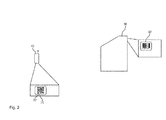
- Fig. 2 shows the specific situation as to possible communication.
- the communication receiver 30 has only one receiving information type 32 in form of a barcode.
- the mobile device 10 comprises the information element 20 in form of a storing information type 22 of a QR code. Therefore, a communication is not possible in a direct way and would have been denied according to state of the art methods.
- a recognition step is carried out starting from the mobile device 10.
- a recognition request RR is sent to the communication receiver 30 and the communication receiver 30 is triggered to answer with a recognition answer RA to the mobile device 10.
- the mobile device 10 and in particular a respective computer program product in form of an application on the mobile device 10 knows about possible compatibilities. Due to the fact that in this case the mobile device 10 is not only able for sending information type of a QR code but also in form of a barcode a transformation step can take place, which is disclosed in fig. 4 .
- the information element 20 with the stored information type 22 in form of a QR code is transformed into an information element 20 with a sending information type 12 of a barcode. That transformed information element 20 is sent to the communication receiver 30 with the sending information type 12, which is compatible to the barcode of the receiving information type 32 of the communication receiver 30. Therefore, the communication channel is enabled in this situation by the inventive method.
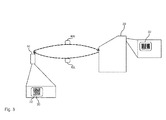
- Fig. 5 shows a special situation.
- the communication receiver is able to receive two different receiving information types 32, namely a barcode and a RFID code.
- a priority list 40 provides a specific order that in the case of these two possible receiving information types 32 a transformation has to take in the top priority sending information 12, namely the barcode in this situation. Therefore, the transformation step is based on that priority list 40.
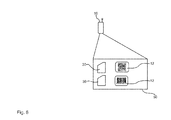
- Fig. 6 shows the possibility of storing already finished communications between the mobile device 10 and the communication receiver 30.
- the sending information type 12 is stored specifically for each communicated communication receiver 30.
- the recognition step can be now carried out within the mobile device 10. Therefore, the stored sending information type 12 can be used for the further communications with the same communication receiver 30 and thereby speeding up the whole method.
Landscapes
- Engineering & Computer Science (AREA)
- Computer Networks & Wireless Communication (AREA)
- Signal Processing (AREA)
- Business, Economics & Management (AREA)
- Accounting & Taxation (AREA)
- Physics & Mathematics (AREA)
- General Business, Economics & Management (AREA)
- General Physics & Mathematics (AREA)
- Theoretical Computer Science (AREA)
- Strategic Management (AREA)
- Computer Security & Cryptography (AREA)
- Databases & Information Systems (AREA)
- Mobile Radio Communication Systems (AREA)
- Telephone Function (AREA)
Abstract
- Recognizing at least one receiving information type (32) of the communication receiver (30),
- Transforming a storing information type (22) of an information element (20) into a sending information type (12) of the mobile device (10) which is compatible with the recognized receiving information type (32) of the communication receiver (30).
Description
- The present invention is related to a method for enabling a communication between a mobile device and a communication receiver as well as a computer program product being stored on a computer readable medium enabling a communication between a mobile device and a communication receiver.
- It is generally known that mobile devices are used to communicate with communication receivers. One example is the boarding situation of a plane. An information element in form of a boarding pass can be stored on the mobile device. To enter the plane, a communication has to take place between the mobile device and a communication receiver near the entrance of the plane. Usually, the mobile device presents the information element in form of a specific information type, for example, in form of a barcode or a QR code. The communication receiver receives this information element in the storing information type. This leads to a fast and efficient way of a communication between a mobile device and a communication receiver. Also further situations, for example, an access control into a building or a ticketing service in front of a cinema, can be structured in the same way.
- The already known method depend strongly on the fact that the communication receiver and the mobile device are able to communicate with the same way of information type and with the same way of communication type. Therefore, the mobile device necessarily needs to have the information element in form of a storing information type, which is compatible to the receiving information type of the communication receiver. If, for example, the communication receiver is only able to read a QR code and the mobile device comprises the information element only as a barcode, a communication is not possible. According to the state of the art, therefore, no communication takes place and the advantage of electronic communication channels cannot be achieved in this specific situation.
- Based on aforesaid disadvantages it is a goal of the present invention to overcome that disadvantages at least partly. In particular, it is a goal of the present invention to provide a communication between a mobile device and a communication receiver in as much situations as possible.
- Aforesaid goal is achieved by a method according to independent claim 1 as well as a computer program product defined by independent claim 11.
- Further features and details of the invention result from the subclaims, the description and the figures. Features and details discussed with respect to the inventive method therefore are also correlated with the inventive computer program product and the other way around.
- According to the present invention, a method is provided for enabling a communication between a mobile device and a communication receiver. Such a method comprises the following steps:
- Recognizing at least one receiving information type of the communication receiver,
- Transforming a storing information type of an information element into a sending information type of the mobile device, which is compatible with the recognized receiving information type of the communication receiver.
- According to the present invention, a communication between a mobile device and a communication receiver is enabled via a pre-step before the specific communication takes place. In this first step, a recognition takes places in the mobile device, in the communication receiver and/or in a separate module, for example, an adapter for the mobile device or the communication receiver. In that first step, it is recognized what kind of communication receiver in respect to the receiving information type is to be enabled for a communication with the mobile device. For example, a communication receiver such as an entrance system of a door is able to receive information in two different types. For example, these types can be a QR code or a barcode. In this case, for example, a mobile device arrives at the communication receiver having an information element to pass this securing system of the door, which is provided in a storing information type of a barcode. In such a case, no transformation is necessary. However, if the information element is stored in a separate storing information type, for example, an electronic RFID type, transformation has to take place. This transformation is carried out in particular in the communication receiver, the mobile device and/or a separate adapter of these two modules. The transforming step is aimed on a compatibility between the sending information type of the mobile device and the receiving information type of the communication receiver.
- Based on the inventive method in a situation where the storing information type of the information element and the receiving information type do not fit together, for example, the receiving information type is a QR code and a storing information type is a barcode, in the state of the art situation, no communication would have taken place. According to the present invention it is now possible to transform the storing information type into a compatibility situation such that the barcode is transformed to the sending information type of a QR code and such the communication between the mobile device and the communication receiver is enabled.
- According to the present invention, an information type of the information element or the communication receiver of the mobile device is to be understood as the way the information element is stored and/or is communicated. For example, such an information type can be a barcode, a QR code, an NFC storing element, and RFID storing element, an SMS storing element, and so on. A transformation gives know the possibility to enable communication in much more situations than a state of the art process does.
- The communication receiver can provide the receiving information type as to one or more receiving information types actively or can be interrogated by later on described recognizing requests. The transformation step can take place in general by a trial-and-error method or specifically aimed on a priority list on better or worse sending information as to the security or the speed of the transfer of the information element.
- It is of advantage that according to the present invention a method characterized in that for recognition of the at least one receiving information type a recognition request is sent to the communication receiver, in particular from the mobile device, triggering the communication receiver to send a recognition answer to the mobile device. This is one possibility of actively starting the inventive method. For example, a user can start the recognition step manually on his mobile device. A recognition request can be formed in form of an empty list, which is filled in by the communication receiver with possible receiving information types. Of course, it is also possible that the recognition request functions like trial-and-error and tries different kind of information types within the communication receiver and fills in the empty spaces in the list itself. Therefore, the mobile device or a separate module of the mobile device gets information about the receiving information type and can recognize at least one receiving information type. In that case, the response, which is triggered at the communication receiver, can also be sent automatically by trial-and-error or specifically with a filled out list of possible receiving information types.
- It is further of advantage that according to the present invention the method is characterized in that the recognition step is carried out automatically in case of approximation of the mobile device to the communication receiver. For example, the communication receiver and/or the mobile device can comprise proximity sensors. If now the mobile device and/or the communication receiver senses the proximity of a mobile device, respectively a communication receiver, the inventive method is started automatically. It is also possible that the recognition step is proposed automatically and enabled manually by the user of the mobile device and/or the communication receiver. The proximity sensors can, for example, comprise NFC sensors or RFID sensors. As a communication channel, for example, a wireless LAN, Bluetooth or the like is also possible to be used. The use of an automatic start of the inventive method by approximation of the mobile device to the communication receiver the whole process of communication exchange and information exchange is speed up. For example, a user approaching a door with a door access system is automatically enabled for a communication due to the fact that during the approach to the door access system the method of correlating and enabling the inventive method is already carried out automatically. When the user arrives the door access system the transformation step has already being carried out and he can directly pass the access system.
- It is further of advantage that according to the present invention the method is characterized in that after the recognition step a step of comparing the recognized receiving information types with sending information types of the mobile device is carried out. This step can take place in the communication receiver, the mobile device and/or a separate module of both elements. This leads to a situation where in a specific and guided way the sending information type for the transformation step is specifically chosen. For example, a later on described priority list can be used for such a choosing step. The comparing of recognized receiving information types with sending information types shows the possibility of one, two or even more possible communication channels and possible compatible information types between the mobile device and the communication receiver.
- Furthermore, it is of advantage that according to the present invention the method is characterized in that in a case of two or more sending information types being compatible with the recognized receiving information types the storing information type of the information element is transformed into one specific compatible sending information type according to a priority list. Such a priority list can, for example, store the priority as to the specific parameters. For example, it is possible, that according to the priority list always the fastest information type according to the communication time or the communication speed is chosen. It is also possible that according to the priority list always the most secure information type is chosen for the sending information type for the transformation step. Of course, such a priority list can also depend from the sort respectively the type of the communication receiver and/or the type of the information element such that speed and/or security can be chosen in different manners in different situations.
- It is further of advantage that according to the present invention the method is characterized in that after the transformation step the information element is sent in the sending information type to the communication receiver. As it become apparent from the aforesaid description, the inventive method is mainly focused on the general enablement of a communication between the mobile device and the communication receiver. The actual transmission of the information element does not have to be part of the present invention. For example, the present invention has already been carried out when the mobile device is enabled and ready to start the transmission of the information element. If the transmission of the information element takes place can be dependent on further inputs, for example, on manual activation of the user of the mobile device. Of course, it is also of advantage that after the transformation step the sending step of the information element can be also carried out automatically. Thereby, the respective chosen information type can comprise also the communication channel to be used, for example, Bluetooth, wireless LAN, infrared or any other possible communication channel as to technical solutions. Also, here a priority selection as to the communication channel is possible which has been described with respect to the priority list in the above.
- It is further of advantage that according to the present invention the method is characterized in that the information element is sent via at least one of the following communication channels:
- Bluetooth
- Wireless LAN
- NFC (near field communication)
- SMS (short message service)
- Infrared transmission
- Aforesaid list is a non-final. Also, communication channels can be used or recognized in the recognition step. Of course, also a combination of two or more communication channels is possible as to the recognition step and the transmission step of the information element.
- A further advantage can be achieved by an inventive method which is characterized in that the transformation and/or the recognition step is carried out based on an activation and/or a selection of a user of the mobile device. This leads to the situation that the user is manually in charge for starting the inventive method. This way the security for the user of the mobile device is increased significantly. In particular, the user can decide on starting the method, recognizing different kind of receiving information types and in particular selecting a specific sending information types for the transforming step. Also, the transmission step of the information element itself can be decided and activated or set free by the user himself.
- A further advantage is possible according to the present invention if the method is characterized in that the recognized at least one receiving information type and/or the sending information type of the transformation step is stored, in particular at the mobile device, for following communications with the same communication receiver or other communication receivers of the same type. This leads to a situation where for the second communication between the same mobile device and the same communication receiver the storing information can be provided by a history list, for example, within the mobile device, such that the transformation step can take place directly and the recognition step is focused on a reading of the history list in recognition of the type or the specification of the communication receiver. This leads to an easier and much more safer situation for the present invention. In particular, the comparison of a history list can be also carried out during an approach and according to the proximity between the mobile device and the communication receiver.
- It is further of advantage that according to the present invention the method is characterized in that the stored at least one receiving information type and/or the stored sending information type of the transformation step is sent to other mobile devices, in particular via a mobile network. For example, the history list can be updated with a server and sent to the server for an update process. This leads to a situation where even for the first appearance of a mobile device in front of a communication receiver information can be downloaded from a server to other mobile devices, which is provided from a history list. This leads to a much easier recognition step even for the first time of enabling a communication between a mobile device and a communication receiver.
- A further aspect of the present invention is a computer program product being stored on a computer readable medium enabling a communication between a mobile device and a communication receiver. Such a computer program product comprises the following:
- Computer readable program means, initiating the computer to recognize at least one receiving information type of the communication receiver,
- Computer readable program means, initiating the computer to transform a storing information type of an information element into a sending information type of the mobile device, which is compatible with the recognized receiving information type of the communication receiver.
- An inventive computer program is in particular characterized in computer readable program means, initiating the computer to carry out an inventive method. Thereby, an inventive computer program product provides the same advantages, which have been discussed in detail with respect to the inventive method.
- The present invention is disclosed in more detail with respect to the accompanying drawings. The drawings show in a schematic way:
- Fig. 1
- the approach of a mobile device to a communication receiver,
- Fig. 2
- the first step of the situation of an inventive method,
- Fig. 3
- a possibility of a recognition step,
- Fig. 4
- a possibility of the transfer of an information element,
- Fig. 5
- a possibility of a priority list and
- Fig. 6
- a possibility of a history list.
- According to the
figs. 1 ,2 ,4 an inventive method is described. Infig. 1 it can be seen that amobile device 10 approaches into a proximity area around thecommunication receiver 30. After themobile device 10 has entered into the proximity area, which is shown by dotted lines, the inventive method is started by the recognition step. -
Fig. 2 shows the specific situation as to possible communication. Thecommunication receiver 30 has only one receivinginformation type 32 in form of a barcode. Themobile device 10 comprises theinformation element 20 in form of a storinginformation type 22 of a QR code. Therefore, a communication is not possible in a direct way and would have been denied according to state of the art methods. - According to the present invention, now a recognition step is carried out starting from the
mobile device 10. A recognition request RR is sent to thecommunication receiver 30 and thecommunication receiver 30 is triggered to answer with a recognition answer RA to themobile device 10. Now, themobile device 10 and in particular a respective computer program product in form of an application on themobile device 10 knows about possible compatibilities. Due to the fact that in this case themobile device 10 is not only able for sending information type of a QR code but also in form of a barcode a transformation step can take place, which is disclosed infig. 4 . Theinformation element 20 with the storedinformation type 22 in form of a QR code is transformed into aninformation element 20 with a sendinginformation type 12 of a barcode. That transformedinformation element 20 is sent to thecommunication receiver 30 with the sendinginformation type 12, which is compatible to the barcode of the receivinginformation type 32 of thecommunication receiver 30. Therefore, the communication channel is enabled in this situation by the inventive method. -
Fig. 5 shows a special situation. In this case, the communication receiver is able to receive two different receivinginformation types 32, namely a barcode and a RFID code. In themobile device 10 now apriority list 40 provides a specific order that in the case of these two possible receiving information types 32 a transformation has to take in the toppriority sending information 12, namely the barcode in this situation. Therefore, the transformation step is based on thatpriority list 40. -
Fig. 6 shows the possibility of storing already finished communications between themobile device 10 and thecommunication receiver 30. In particular, the sendinginformation type 12 is stored specifically for each communicatedcommunication receiver 30. For the second, third and further communication with thesame communication receiver 30 or the same type of acommunication receiver 30, the recognition step can be now carried out within themobile device 10. Therefore, the stored sendinginformation type 12 can be used for the further communications with thesame communication receiver 30 and thereby speeding up the whole method. - Aforesaid description of the accompanying drawings is only by the way of detail. Specific features of each aspect of the present invention and of the figures can be combined with each other if of technical sense.
-
- 10
- mobile device
- 12
- sending information type
- 20
- information element
- 22
- storing information type
- 30
- communication receiver
- 32
- receiving information type
- 40
- priority list
- 50
- history list
- 100
- mobile network
- RR
- recognition request
- RA
- recognition answer
Claims (12)
- Method for enabling a communication between a mobile device (10) and a communication receiver (30), comprising the following steps:- Recognizing at least one receiving information type (32) of the communication receiver (30),- Transforming a storing information type (22) of an information element (20) into a sending information type (12) of the mobile device (10) which is compatible with the recognized receiving information type (32) of the communication receiver (30).
- Method according to claim 1, characterized in that for recognition of the at least one receiving information type (32) a recognition request (RR) is sent to the communication receiver (30), in particular from the mobile device (10), triggering the communication receiver (30) to send a recognition answer (RA) to the mobile device (10).
- Method according to any of the preceding claims, characterized in that the recognition step is carried out automatically in case of approximation of the mobile device (10) to the communication receiver (30).
- Method according to any of the preceding claims, characterized in that after the recognition step a step of comparing the recognized receiving information types (32) with sending information types (12) of the mobile device (10) is carried out.
- Method according to any of the preceding claims, characterized in that in a case of two or more sending information types (12) being compatible with the recognized receiving information types (32) the storing information type (22) of the information element (20) is transformed into one specific compatible sending information type (12) according to a priority list (40).
- Method according to any of the preceding claims, characterized in that after the transformation step the information element (20) is sent in the sending information type (22) to the communication receiver (30).
- Method according to any claim 6, characterized in that the information element (20) is send via at least one of the following communication channels:- Bluetooth- WLAN- NFC- SMS- Infrared transmission
- Method according to any of the preceding claims, characterized in that the transformation and/or the recognition step is carried out based on an activation and/or a selection of a user of the mobile device (10).
- Method according to any of the preceding claims, characterized in that the recognized at least one receiving information type (32) and/or the sending information type (12) of the transformation step is stored, in particular at the mobile device (10), for following communications with the same communication receiver (30) or other communication receivers (30) of the same type.
- Method according to claim 9, characterized in that the stored at least one receiving information type (32) and/or the stored sending information type (12) of the transformation step is send to other mobile devices (10), in particular via a mobile network (100).
- Computer program product being stored on a computer readable medium enabling a communication between a mobile device (10) and a communication receiver (30), comprising the following:- Computer readable program means, initiating the computer to recognize at least one receiving information type (32) of the communication receiver (30),- Computer readable program means, initiating the computer to transform a storing information type (22) of an information element (20) into a sending information type (12) of the mobile device (10) which is compatible with the recognized receiving information type (32) of the communication receiver (30).
- Computer program product according to claim 11, characterized in computer readable program means, initiating the computer to carry out a method with the features of claims 1 to 10.
Priority Applications (3)
| Application Number | Priority Date | Filing Date | Title |
|---|---|---|---|
| ES14190097T ES2814958T3 (en) | 2014-10-23 | 2014-10-23 | Method to enable a communication between a mobile device and a communication receiver, using format conversion |
| EP14190097.7A EP3013078B1 (en) | 2014-10-23 | 2014-10-23 | Method for enabling a communication between a mobile device and a communication receiver, using format conversion |
| US14/919,806 US10433157B2 (en) | 2014-10-23 | 2015-10-22 | Method for enabling a communication between a mobile device and a communication receiver |
Applications Claiming Priority (1)
| Application Number | Priority Date | Filing Date | Title |
|---|---|---|---|
| EP14190097.7A EP3013078B1 (en) | 2014-10-23 | 2014-10-23 | Method for enabling a communication between a mobile device and a communication receiver, using format conversion |
Publications (2)
| Publication Number | Publication Date |
|---|---|
| EP3013078A1 true EP3013078A1 (en) | 2016-04-27 |
| EP3013078B1 EP3013078B1 (en) | 2020-06-24 |
Family
ID=51798994
Family Applications (1)
| Application Number | Title | Priority Date | Filing Date |
|---|---|---|---|
| EP14190097.7A Active EP3013078B1 (en) | 2014-10-23 | 2014-10-23 | Method for enabling a communication between a mobile device and a communication receiver, using format conversion |
Country Status (3)
| Country | Link |
|---|---|
| US (1) | US10433157B2 (en) |
| EP (1) | EP3013078B1 (en) |
| ES (1) | ES2814958T3 (en) |
Citations (1)
| Publication number | Priority date | Publication date | Assignee | Title |
|---|---|---|---|---|
| US8459560B1 (en) * | 2011-11-29 | 2013-06-11 | Intuit Inc. | Converting digital wallet credential from displayed code into audio code |
Family Cites Families (10)
| Publication number | Priority date | Publication date | Assignee | Title |
|---|---|---|---|---|
| NZ544103A (en) * | 2003-05-15 | 2010-10-29 | Xy Llc | Efficient haploid cell sorting for flow cytometer systems |
| US8756161B2 (en) * | 2008-02-11 | 2014-06-17 | Accenture Global Services Limited | Customer initiated payment method using mobile device |
| US20120239578A1 (en) * | 2011-03-17 | 2012-09-20 | Allegro Systems Llc | Mobile Secure Transactions Using Human Intelligible Handshake Key |
| US8880100B2 (en) * | 2011-03-23 | 2014-11-04 | Radium, Inc. | Proximity based social networking |
| WO2012151590A2 (en) * | 2011-05-05 | 2012-11-08 | Transaction Network Services, Inc. | Systems and methods for enabling mobile payments |
| US20120310760A1 (en) * | 2011-06-03 | 2012-12-06 | Simon Phillips | Mobile device automatic card account selection for a transaction |
| EP2856404A4 (en) * | 2012-05-24 | 2015-12-09 | Google Inc | Systems, methods, and computer program products for providing a contactless protocol |
| US9053476B2 (en) * | 2013-03-15 | 2015-06-09 | Capital One Financial Corporation | Systems and methods for initiating payment from a client device |
| US20160132873A1 (en) * | 2013-06-14 | 2016-05-12 | Point Of Pay Pty Ltd | Secure data entry and display for a communication device |
| CA2866598A1 (en) * | 2013-10-09 | 2015-04-09 | Lauren Van Heerden | Systems and methods for providing enhanced point-of-sale services involving multiple financial entities |
-
2014
- 2014-10-23 ES ES14190097T patent/ES2814958T3/en active Active
- 2014-10-23 EP EP14190097.7A patent/EP3013078B1/en active Active
-
2015
- 2015-10-22 US US14/919,806 patent/US10433157B2/en active Active
Patent Citations (1)
| Publication number | Priority date | Publication date | Assignee | Title |
|---|---|---|---|---|
| US8459560B1 (en) * | 2011-11-29 | 2013-06-11 | Intuit Inc. | Converting digital wallet credential from displayed code into audio code |
Also Published As
| Publication number | Publication date |
|---|---|
| ES2814958T3 (en) | 2021-03-29 |
| US20160119779A1 (en) | 2016-04-28 |
| US10433157B2 (en) | 2019-10-01 |
| EP3013078B1 (en) | 2020-06-24 |
Similar Documents
| Publication | Publication Date | Title |
|---|---|---|
| EP3312060B1 (en) | Vehicle start method | |
| CN106650470B (en) | It enables and forbids the synchronous of privacy settings | |
| RU2016123612A (en) | METHOD FOR MANAGING INTELLECTUAL DEVICE, TERMINAL AND SERVER | |
| KR102139409B1 (en) | Information push method and device | |
| WO2021016629A3 (en) | Methods and apparatus for enhancing unmanned aerial vehicle management using a wireless network | |
| EP3253080B1 (en) | Data sharing method and system | |
| EP2654332B1 (en) | Key sharing method and system for machine type communication (mtc) server | |
| US20170225690A1 (en) | Wearable device controlled vehicle systems | |
| CN103358924A (en) | Method and apparatus for managing charging stations of electric vehicles | |
| EP2816501B1 (en) | A near field communication listen device emulating multiple NFC B technology tags | |
| EP3739925B1 (en) | Method and apparatus for operating moving object based on edge computing | |
| EP2874465B1 (en) | Method and system for remote equipment data installation | |
| US10990112B2 (en) | Method for controlling a deployment operation of motor vehicles in a parking environment, and management system for a parking area | |
| US11450208B2 (en) | Method for transferring a motor vehicle to an automatic parking system, automatic parking system, and motor vehicle | |
| EP3013078B1 (en) | Method for enabling a communication between a mobile device and a communication receiver, using format conversion | |
| CN107659933B (en) | Bidirectional pairing connection method for wireless equipment, wireless equipment and storage medium | |
| EP2282563B1 (en) | Method for releasing a mobile communication card for the use of a servcie of a mobile communication network and user equipment for interaction with a mobile communication network | |
| US9547781B2 (en) | Method for recognizing tag in environment using same frequency band and NFC device for the same | |
| CN108848066B (en) | Terminal communication method, terminal and storage medium | |
| EP2041946B1 (en) | Method and system for establishing a communication between an object, a user device and a service device | |
| US20130089028A1 (en) | Wireless communication system and method using directional communication | |
| EP2940828A1 (en) | A mobile device and power providing equipment for wireless charging | |
| EP2750091A1 (en) | Method for controlling a contactless transaction | |
| HK1202367A2 (en) | Biometric-authentication-based mobile payment system and mobile payment methods | |
| EP2922034A1 (en) | Method for linking a vehicle key to a control unit for access authorizations of a vehicle |
Legal Events
| Date | Code | Title | Description |
|---|---|---|---|
| PUAI | Public reference made under article 153(3) epc to a published international application that has entered the european phase |
Free format text: ORIGINAL CODE: 0009012 |
|
| AK | Designated contracting states |
Kind code of ref document: A1 Designated state(s): AL AT BE BG CH CY CZ DE DK EE ES FI FR GB GR HR HU IE IS IT LI LT LU LV MC MK MT NL NO PL PT RO RS SE SI SK SM TR |
|
| AX | Request for extension of the european patent |
Extension state: BA ME |
|
| 17P | Request for examination filed |
Effective date: 20161018 |
|
| RBV | Designated contracting states (corrected) |
Designated state(s): AL AT BE BG CH CY CZ DE DK EE ES FI FR GB GR HR HU IE IS IT LI LT LU LV MC MK MT NL NO PL PT RO RS SE SI SK SM TR |
|
| STAA | Information on the status of an ep patent application or granted ep patent |
Free format text: STATUS: EXAMINATION IS IN PROGRESS |
|
| 17Q | First examination report despatched |
Effective date: 20190125 |
|
| REG | Reference to a national code |
Ref country code: DE Ref legal event code: R079 Ref document number: 602014066927 Country of ref document: DE Free format text: PREVIOUS MAIN CLASS: H04W0004180000 Ipc: H04L0029060000 |
|
| GRAP | Despatch of communication of intention to grant a patent |
Free format text: ORIGINAL CODE: EPIDOSNIGR1 |
|
| STAA | Information on the status of an ep patent application or granted ep patent |
Free format text: STATUS: GRANT OF PATENT IS INTENDED |
|
| RIC1 | Information provided on ipc code assigned before grant |
Ipc: H04L 12/58 20060101ALI20200122BHEP Ipc: H04W 4/18 20090101ALI20200122BHEP Ipc: H04W 4/80 20180101ALI20200122BHEP Ipc: H04L 29/06 20060101AFI20200122BHEP |
|
| INTG | Intention to grant announced |
Effective date: 20200206 |
|
| GRAS | Grant fee paid |
Free format text: ORIGINAL CODE: EPIDOSNIGR3 |
|
| GRAA | (expected) grant |
Free format text: ORIGINAL CODE: 0009210 |
|
| STAA | Information on the status of an ep patent application or granted ep patent |
Free format text: STATUS: THE PATENT HAS BEEN GRANTED |
|
| AK | Designated contracting states |
Kind code of ref document: B1 Designated state(s): AL AT BE BG CH CY CZ DE DK EE ES FI FR GB GR HR HU IE IS IT LI LT LU LV MC MK MT NL NO PL PT RO RS SE SI SK SM TR |
|
| REG | Reference to a national code |
Ref country code: GB Ref legal event code: FG4D |
|
| REG | Reference to a national code |
Ref country code: CH Ref legal event code: EP |
|
| REG | Reference to a national code |
Ref country code: AT Ref legal event code: REF Ref document number: 1285033 Country of ref document: AT Kind code of ref document: T Effective date: 20200715 |
|
| REG | Reference to a national code |
Ref country code: DE Ref legal event code: R096 Ref document number: 602014066927 Country of ref document: DE |
|
| REG | Reference to a national code |
Ref country code: IE Ref legal event code: FG4D |
|
| PG25 | Lapsed in a contracting state [announced via postgrant information from national office to epo] |
Ref country code: LT Free format text: LAPSE BECAUSE OF FAILURE TO SUBMIT A TRANSLATION OF THE DESCRIPTION OR TO PAY THE FEE WITHIN THE PRESCRIBED TIME-LIMIT Effective date: 20200624 Ref country code: NO Free format text: LAPSE BECAUSE OF FAILURE TO SUBMIT A TRANSLATION OF THE DESCRIPTION OR TO PAY THE FEE WITHIN THE PRESCRIBED TIME-LIMIT Effective date: 20200924 Ref country code: GR Free format text: LAPSE BECAUSE OF FAILURE TO SUBMIT A TRANSLATION OF THE DESCRIPTION OR TO PAY THE FEE WITHIN THE PRESCRIBED TIME-LIMIT Effective date: 20200925 Ref country code: FI Free format text: LAPSE BECAUSE OF FAILURE TO SUBMIT A TRANSLATION OF THE DESCRIPTION OR TO PAY THE FEE WITHIN THE PRESCRIBED TIME-LIMIT Effective date: 20200624 Ref country code: SE Free format text: LAPSE BECAUSE OF FAILURE TO SUBMIT A TRANSLATION OF THE DESCRIPTION OR TO PAY THE FEE WITHIN THE PRESCRIBED TIME-LIMIT Effective date: 20200624 |
|
| REG | Reference to a national code |
Ref country code: LT Ref legal event code: MG4D |
|
| PG25 | Lapsed in a contracting state [announced via postgrant information from national office to epo] |
Ref country code: BG Free format text: LAPSE BECAUSE OF FAILURE TO SUBMIT A TRANSLATION OF THE DESCRIPTION OR TO PAY THE FEE WITHIN THE PRESCRIBED TIME-LIMIT Effective date: 20200924 Ref country code: HR Free format text: LAPSE BECAUSE OF FAILURE TO SUBMIT A TRANSLATION OF THE DESCRIPTION OR TO PAY THE FEE WITHIN THE PRESCRIBED TIME-LIMIT Effective date: 20200624 Ref country code: RS Free format text: LAPSE BECAUSE OF FAILURE TO SUBMIT A TRANSLATION OF THE DESCRIPTION OR TO PAY THE FEE WITHIN THE PRESCRIBED TIME-LIMIT Effective date: 20200624 Ref country code: LV Free format text: LAPSE BECAUSE OF FAILURE TO SUBMIT A TRANSLATION OF THE DESCRIPTION OR TO PAY THE FEE WITHIN THE PRESCRIBED TIME-LIMIT Effective date: 20200624 |
|
| REG | Reference to a national code |
Ref country code: NL Ref legal event code: MP Effective date: 20200624 |
|
| REG | Reference to a national code |
Ref country code: AT Ref legal event code: MK05 Ref document number: 1285033 Country of ref document: AT Kind code of ref document: T Effective date: 20200624 |
|
| PG25 | Lapsed in a contracting state [announced via postgrant information from national office to epo] |
Ref country code: NL Free format text: LAPSE BECAUSE OF FAILURE TO SUBMIT A TRANSLATION OF THE DESCRIPTION OR TO PAY THE FEE WITHIN THE PRESCRIBED TIME-LIMIT Effective date: 20200624 Ref country code: AL Free format text: LAPSE BECAUSE OF FAILURE TO SUBMIT A TRANSLATION OF THE DESCRIPTION OR TO PAY THE FEE WITHIN THE PRESCRIBED TIME-LIMIT Effective date: 20200624 |
|
| PG25 | Lapsed in a contracting state [announced via postgrant information from national office to epo] |
Ref country code: AT Free format text: LAPSE BECAUSE OF FAILURE TO SUBMIT A TRANSLATION OF THE DESCRIPTION OR TO PAY THE FEE WITHIN THE PRESCRIBED TIME-LIMIT Effective date: 20200624 Ref country code: EE Free format text: LAPSE BECAUSE OF FAILURE TO SUBMIT A TRANSLATION OF THE DESCRIPTION OR TO PAY THE FEE WITHIN THE PRESCRIBED TIME-LIMIT Effective date: 20200624 Ref country code: SM Free format text: LAPSE BECAUSE OF FAILURE TO SUBMIT A TRANSLATION OF THE DESCRIPTION OR TO PAY THE FEE WITHIN THE PRESCRIBED TIME-LIMIT Effective date: 20200624 Ref country code: RO Free format text: LAPSE BECAUSE OF FAILURE TO SUBMIT A TRANSLATION OF THE DESCRIPTION OR TO PAY THE FEE WITHIN THE PRESCRIBED TIME-LIMIT Effective date: 20200624 Ref country code: CZ Free format text: LAPSE BECAUSE OF FAILURE TO SUBMIT A TRANSLATION OF THE DESCRIPTION OR TO PAY THE FEE WITHIN THE PRESCRIBED TIME-LIMIT Effective date: 20200624 Ref country code: PT Free format text: LAPSE BECAUSE OF FAILURE TO SUBMIT A TRANSLATION OF THE DESCRIPTION OR TO PAY THE FEE WITHIN THE PRESCRIBED TIME-LIMIT Effective date: 20201026 |
|
| PG25 | Lapsed in a contracting state [announced via postgrant information from national office to epo] |
Ref country code: PL Free format text: LAPSE BECAUSE OF FAILURE TO SUBMIT A TRANSLATION OF THE DESCRIPTION OR TO PAY THE FEE WITHIN THE PRESCRIBED TIME-LIMIT Effective date: 20200624 Ref country code: SK Free format text: LAPSE BECAUSE OF FAILURE TO SUBMIT A TRANSLATION OF THE DESCRIPTION OR TO PAY THE FEE WITHIN THE PRESCRIBED TIME-LIMIT Effective date: 20200624 Ref country code: IS Free format text: LAPSE BECAUSE OF FAILURE TO SUBMIT A TRANSLATION OF THE DESCRIPTION OR TO PAY THE FEE WITHIN THE PRESCRIBED TIME-LIMIT Effective date: 20201024 |
|
| REG | Reference to a national code |
Ref country code: DE Ref legal event code: R097 Ref document number: 602014066927 Country of ref document: DE |
|
| REG | Reference to a national code |
Ref country code: ES Ref legal event code: FG2A Ref document number: 2814958 Country of ref document: ES Kind code of ref document: T3 Effective date: 20210329 |
|
| PG25 | Lapsed in a contracting state [announced via postgrant information from national office to epo] |
Ref country code: DK Free format text: LAPSE BECAUSE OF FAILURE TO SUBMIT A TRANSLATION OF THE DESCRIPTION OR TO PAY THE FEE WITHIN THE PRESCRIBED TIME-LIMIT Effective date: 20200624 |
|
| PLBE | No opposition filed within time limit |
Free format text: ORIGINAL CODE: 0009261 |
|
| STAA | Information on the status of an ep patent application or granted ep patent |
Free format text: STATUS: NO OPPOSITION FILED WITHIN TIME LIMIT |
|
| REG | Reference to a national code |
Ref country code: CH Ref legal event code: PL |
|
| 26N | No opposition filed |
Effective date: 20210325 |
|
| PG25 | Lapsed in a contracting state [announced via postgrant information from national office to epo] |
Ref country code: LU Free format text: LAPSE BECAUSE OF NON-PAYMENT OF DUE FEES Effective date: 20201023 Ref country code: MC Free format text: LAPSE BECAUSE OF FAILURE TO SUBMIT A TRANSLATION OF THE DESCRIPTION OR TO PAY THE FEE WITHIN THE PRESCRIBED TIME-LIMIT Effective date: 20200624 |
|
| REG | Reference to a national code |
Ref country code: BE Ref legal event code: MM Effective date: 20201031 |
|
| PG25 | Lapsed in a contracting state [announced via postgrant information from national office to epo] |
Ref country code: LI Free format text: LAPSE BECAUSE OF NON-PAYMENT OF DUE FEES Effective date: 20201031 Ref country code: SI Free format text: LAPSE BECAUSE OF FAILURE TO SUBMIT A TRANSLATION OF THE DESCRIPTION OR TO PAY THE FEE WITHIN THE PRESCRIBED TIME-LIMIT Effective date: 20200624 Ref country code: BE Free format text: LAPSE BECAUSE OF NON-PAYMENT OF DUE FEES Effective date: 20201031 Ref country code: CH Free format text: LAPSE BECAUSE OF NON-PAYMENT OF DUE FEES Effective date: 20201031 |
|
| PG25 | Lapsed in a contracting state [announced via postgrant information from national office to epo] |
Ref country code: IE Free format text: LAPSE BECAUSE OF NON-PAYMENT OF DUE FEES Effective date: 20201023 |
|
| REG | Reference to a national code |
Ref country code: DE Ref legal event code: R079 Ref document number: 602014066927 Country of ref document: DE Free format text: PREVIOUS MAIN CLASS: H04L0029060000 Ipc: H04L0065000000 |
|
| PG25 | Lapsed in a contracting state [announced via postgrant information from national office to epo] |
Ref country code: TR Free format text: LAPSE BECAUSE OF FAILURE TO SUBMIT A TRANSLATION OF THE DESCRIPTION OR TO PAY THE FEE WITHIN THE PRESCRIBED TIME-LIMIT Effective date: 20200624 Ref country code: MT Free format text: LAPSE BECAUSE OF FAILURE TO SUBMIT A TRANSLATION OF THE DESCRIPTION OR TO PAY THE FEE WITHIN THE PRESCRIBED TIME-LIMIT Effective date: 20200624 Ref country code: CY Free format text: LAPSE BECAUSE OF FAILURE TO SUBMIT A TRANSLATION OF THE DESCRIPTION OR TO PAY THE FEE WITHIN THE PRESCRIBED TIME-LIMIT Effective date: 20200624 |
|
| PG25 | Lapsed in a contracting state [announced via postgrant information from national office to epo] |
Ref country code: MK Free format text: LAPSE BECAUSE OF FAILURE TO SUBMIT A TRANSLATION OF THE DESCRIPTION OR TO PAY THE FEE WITHIN THE PRESCRIBED TIME-LIMIT Effective date: 20200624 |
|
| PGFP | Annual fee paid to national office [announced via postgrant information from national office to epo] |
Ref country code: DE Payment date: 20251021 Year of fee payment: 12 |
|
| PGFP | Annual fee paid to national office [announced via postgrant information from national office to epo] |
Ref country code: GB Payment date: 20251022 Year of fee payment: 12 |
|
| PGFP | Annual fee paid to national office [announced via postgrant information from national office to epo] |
Ref country code: IT Payment date: 20251024 Year of fee payment: 12 |
|
| PGFP | Annual fee paid to national office [announced via postgrant information from national office to epo] |
Ref country code: FR Payment date: 20251030 Year of fee payment: 12 |
|
| PGFP | Annual fee paid to national office [announced via postgrant information from national office to epo] |
Ref country code: ES Payment date: 20251210 Year of fee payment: 12 |