EP3012766A1 - Method and apparatus for processing terminal anomaly - Google Patents
Method and apparatus for processing terminal anomaly Download PDFInfo
- Publication number
- EP3012766A1 EP3012766A1 EP15190406.7A EP15190406A EP3012766A1 EP 3012766 A1 EP3012766 A1 EP 3012766A1 EP 15190406 A EP15190406 A EP 15190406A EP 3012766 A1 EP3012766 A1 EP 3012766A1
- Authority
- EP
- European Patent Office
- Prior art keywords
- information
- terminal
- use habit
- user
- predetermined
- Prior art date
- Legal status (The legal status is an assumption and is not a legal conclusion. Google has not performed a legal analysis and makes no representation as to the accuracy of the status listed.)
- Granted
Links
Images


Classifications
-
- G—PHYSICS
- G06—COMPUTING OR CALCULATING; COUNTING
- G06F—ELECTRIC DIGITAL DATA PROCESSING
- G06F21/00—Security arrangements for protecting computers, components thereof, programs or data against unauthorised activity
- G06F21/50—Monitoring users, programs or devices to maintain the integrity of platforms, e.g. of processors, firmware or operating systems
-
- G—PHYSICS
- G06—COMPUTING OR CALCULATING; COUNTING
- G06F—ELECTRIC DIGITAL DATA PROCESSING
- G06F21/00—Security arrangements for protecting computers, components thereof, programs or data against unauthorised activity
- G06F21/70—Protecting specific internal or peripheral components, in which the protection of a component leads to protection of the entire computer
- G06F21/88—Detecting or preventing theft or loss
-
- G—PHYSICS
- G06—COMPUTING OR CALCULATING; COUNTING
- G06F—ELECTRIC DIGITAL DATA PROCESSING
- G06F21/00—Security arrangements for protecting computers, components thereof, programs or data against unauthorised activity
- G06F21/30—Authentication, i.e. establishing the identity or authorisation of security principals
- G06F21/31—User authentication
- G06F21/316—User authentication by observing the pattern of computer usage, e.g. typical user behaviour
-
- G—PHYSICS
- G06—COMPUTING OR CALCULATING; COUNTING
- G06F—ELECTRIC DIGITAL DATA PROCESSING
- G06F21/00—Security arrangements for protecting computers, components thereof, programs or data against unauthorised activity
- G06F21/60—Protecting data
- G06F21/62—Protecting access to data via a platform, e.g. using keys or access control rules
- G06F21/6218—Protecting access to data via a platform, e.g. using keys or access control rules to a system of files or objects, e.g. local or distributed file system or database
- G06F21/6245—Protecting personal data, e.g. for financial or medical purposes
-
- H—ELECTRICITY
- H04—ELECTRIC COMMUNICATION TECHNIQUE
- H04W—WIRELESS COMMUNICATION NETWORKS
- H04W12/00—Security arrangements; Authentication; Protecting privacy or anonymity
- H04W12/08—Access security
- H04W12/082—Access security using revocation of authorisation
-
- H—ELECTRICITY
- H04—ELECTRIC COMMUNICATION TECHNIQUE
- H04W—WIRELESS COMMUNICATION NETWORKS
- H04W12/00—Security arrangements; Authentication; Protecting privacy or anonymity
- H04W12/12—Detection or prevention of fraud
-
- H—ELECTRICITY
- H04—ELECTRIC COMMUNICATION TECHNIQUE
- H04W—WIRELESS COMMUNICATION NETWORKS
- H04W12/00—Security arrangements; Authentication; Protecting privacy or anonymity
- H04W12/12—Detection or prevention of fraud
- H04W12/126—Anti-theft arrangements, e.g. protection against subscriber identity module [SIM] cloning
-
- H—ELECTRICITY
- H04—ELECTRIC COMMUNICATION TECHNIQUE
- H04W—WIRELESS COMMUNICATION NETWORKS
- H04W12/00—Security arrangements; Authentication; Protecting privacy or anonymity
- H04W12/60—Context-dependent security
- H04W12/68—Gesture-dependent or behaviour-dependent
Definitions
- the present disclosure relates to the field of terminal technologies, and more particularly, to a method and an apparatus for processing a terminal anomaly.
- Smart terminals provide various applications and functions for users. These applications and functions help users to achieve more convenient and rapid life styles, such that users are becoming more and more dependent on the smart terminals, and store personal and private data on the smart terminals. As a result, great loss may be caused to users if their smart terminals are lost or stolen.
- the present disclosure provides a method and an apparatus for processing a terminal anomaly, and an electronic device, to solve the technical problem in the related technologies that the terminal is subject to low data security.
- a method for processing a terminal anomaly includes:
- the use habit information includes at least one of the following:
- reporting anomaly alarm information to a predetermined object when the operation information does not match the use habit information includes:
- reporting anomaly alarm information to a predetermined object when the operation information does not match the use habit information includes:
- the anomaly alarm information includes at least one of the following:
- the apparatus further includes:
- an apparatus for processing a terminal anomaly includes:
- the use habit information includes at least one of the following:
- the reporting unit includes:
- the reporting unit includes:
- the anomaly alarm information includes at least one of the following:
- the apparatus further includes:
- an electronic device includes:
- a computer program which, when being executed on a processor of an apparatus, performs any of the above methods.
- use habit information of a user on a terminal is recorded, through a comparison made between the use habit information and operation information of a current user, identity information of the current user may be correctly determined, such that incidents such as terminal loss or terminal theft may be timely discovered; in addition, when the operation information does not match the use habit information, anomaly alarm information is reported, which helps the user to find his or her terminal as soon as possible and thus reduces user's loss.
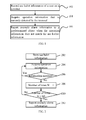
- FIG. 1 is a flowchart illustrating a method for processing a terminal anomaly according to an exemplary embodiment of the present disclosure. As illustrated in FIG. 1 , the method is applicable to a terminal, and includes the following steps.
- step 102 use habit information of a user on a terminal is recorded.
- the use habit information may include at least one of the following: height information (for example, the height at which the terminal is positioned when the user performs an operation), holding manner (for example, holding on the left hand or holding on the right hand), distance between the terminal and eyes of the user, holding angle (for example, the angle of the terminal to the horizontal direction or the vertical direction when the user performs an operation), human biological characteristic information of the user (for example, hand shape, fingerprint, face shape, iris, retina, pulse, auricle, or the like), contiguous tapping speed, interface switching manner (for example, tapping the key "Return” on the screen interface, or tapping the key "Return” on the terminal, or the like), screen unlocking manner (for example, sliding the unlocking identifier to the icon "Unlock” or to the icon “Conversation", or the like), and trajectory pattern of touch gesture (for example, the length of the sliding distance when the user slides the unlocking identifier, or the like).
- height information for example, the height at which the terminal is positioned when the user performs
- a function of defining "use habit" may be configured on the terminal, and after the terminal is initially activated and then the function is automatically enabled or manually enabled by the user, the user is guided to perform one or more operations, such that corresponding use habit information is collected and recorded.
- user's operation behavior is analyzed to determine use habit information of the user.
- the terminal may directly analyze the collected normal operation behavior and information and thus obtain the use habit information of the user, or the terminal may upload the collected data to a server and receive the use habit information determined by the server through analysis.
- step 104 operation information that is currently detected by the terminal is acquired.
- step 106 anomaly alarm information is reported to a predetermined object when the operation information does not match the use habit information.
- the reported anomaly alarm information may include at least one of the following: human biological characteristic information of the current user (for example, a face image of the user picked up via a front camera), geographical location information of the terminal and/or information of a corresponding base station, and predetermined prompt short message.
- identity information of the current user may be correctly determined, such that incidents such as terminal loss or terminal theft may be timely discovered; in addition, when the operation information does not match the use habit information, anomaly alarm information is reported, which helps the user to find his or her terminal as soon as possible and thus reduces user's loss.
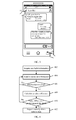
- FIG. 2 is a flowchart illustrating another method for processing a terminal anomaly according to an exemplary embodiment of the present disclosure. The method may include the following steps.
- step 202 use habit information of a user is stored on the terminal.
- the use habit information stored on the terminal may be generated by the terminal itself, or may be received and stored by the terminal after the use habit information is generated on a server.
- step 204 operation information of a current user is acquired.
- the terminal may collect the operation information in real time or according to a predetermined period, and analyze and determine whether the current user is a predetermined user.
- the terminal may perform collection and analysis on the operation information of the current user only after a corresponding command is received. For example, if the terminal is a smart phone of a user, the user may generally disable the functions of collecting operation information and identifying user identity, but when the user is aware that his or her smart phone is subject to exceptional circumstances such as loss, the user may send an enable command to his or her smart phone via other devices such as terminals, servers, or the like to enable the functions of collecting operation information and identifying user identity for the current user.
- step 206 it is determined whether the operation information of the current user matches with use habit information stored on the terminal; if the operation information of the current user matches with use habit information stored on the terminal, the process returns to step 204; and otherwise, the process proceeds to step 208.
- An application generally includes a plurality of application interfaces, and the plurality of application interfaces are subject to a hierarchical relationship. Therefore, the user needs to switch from the current interface to an upper layer interface in the manner of "Return".
- the current interface is an interface for chatting with "Xiao Bai", and if the user desires to return to an upper layer interface, such returning may be implemented via the operation (1): tapping the virtual key "Return” on the screen interface; or such returning may be implemented via the operation (2): pressing the physical key “Return” on the terminal. Therefore, when the user habitually performs the above interface switching operation via the operation (1), if the current user employs the operation (2), it is determined that a non-matching event is present.
- step 208 the counted number of times N that non-matching events are present within a predetermined time duration is increased by 1.
- the above "predetermined time duration" may be recorded by using a timer. Therefore, when the process proceeds to step 208, it may be firstly determined whether a timer is present; if the timer is present and the time duration does not expire, the corresponding counted number of times N is definitely present, and the number of times N is increased by 1; and if no timer is present, a timer may be started and the counted number of times N may be generated with the initial value of 0, and the number of times N is increased by 1.
- step 210 it is determined whether the number of times N is greater than or equal to a predetermined threshold of the number of times N0; if the number of times N is greater than or equal to the predetermined threshold of the number of times N0, the process proceeds to step 212; and otherwise, the process returns to step 204.
- step 212 the anomaly alarm information is reported to the predetermined object.
- FIG. 4 is a flowchart illustrating another method for processing a terminal anomaly according to an exemplary embodiment of the present disclosure. The method may include the following steps.
- step 402 use habit information of a user is stored on the terminal.
- the use habit information stored on the terminal may be generated by the terminal itself, or may be received and stored by the terminal after the use habit information is generated on a server.
- step 404 operation information of a current user is acquired.
- the terminal may collect the operation information in real time or according to a predetermined period, and analyze and determine whether the current user is a predetermined user.
- the terminal may perform collection and analysis on the operation information of the current user only after a corresponding command is received. For example, if the terminal is a smart phone of a user, the user may generally disable the functions of collecting operation information and identifying user identity, but when the user is aware that his or her smart phone is subject to exceptional circumstances such as loss, the user may send an enable command to his or her smart phone via other devices such as terminals, servers, or the like to enable the functions of collecting operation information and identifying user identity for the current user.
- step 406 it is determined whether the operation information of the current user matches with use habit information stored on the terminal; if the operation information of the current user matches with use habit information stored on the terminal, the process returns to step 404; and otherwise, the process proceeds to step 408.
- step 406 the matching operations in step 406 are described in detail. After the screen of a terminal is locked, if the screen is lit again, a screen locking interface is displayed on the screen of the terminal, and the screen is unlocked via a screen unlocking operation performed by the user.
- a plurality of icons are present on the screen locking interface of the terminal, including the icon “Unlock” at the lower part of the screen, the icon “Dial” at the left part of the screen, and the icon “Photograph” at the right part of the screen; the user may unlock the screen and meanwhile implement the corresponding application function by dragging the middle operation identifier to any of the positions of these icons.
- step 408 a value difference between a first operation parameter corresponding to the operation information and a second operation parameter corresponding to the use habit information is calculated.
- the operation parameter may be a movement direction of the operation identifier: when the first operation parameter and the second operation parameter respectively correspond to the operation (2) and the operation (1) as illustrated in FIG. 5 , the value difference is an angle difference between the movement directions, for example, 90 degrees; or the operation parameter may be a movement distance of the operation identifier: when the first operation parameter and the second operation parameter both employ the operation (1) as illustrated in FIG. 5 , the value difference may be a value difference between the movement distances, for example, 0.5 cm.
- step 410 it is determined whether the value difference is greater than or equal to a predetermined threshold; if the value difference is greater than or equal to the predetermined threshold, the process proceeds to step 412; and otherwise, the process returns to step 404.
- a value difference between the operation parameters may be present such that the operation parameters may not be in complete coincidence, thus, by setting a predetermined threshold, it may be accurately determined whether the value difference is caused due to a normal operation error or due to variation of the users.
- the predetermined threshold is 10 degrees, when the angle difference between the movement directions is 90 degrees, it indicates that the current user is an unauthorized user, and thus the terminal may be subject to loss or theft; or for example, when the first operation parameter and the second operation parameter both employ the operation (1) as illustrated in FIG. 5 , assume that the predetermined threshold is 0.3 cm, when the value difference between the movement distances is 0.5 cm, it indicates that the current user is an unauthorized user, and thus the terminal may be subject to loss or theft.
- step 412 the anomaly alarm information is reported to the predetermined object.
- the terminal may also be switched to a function restriction mode, for example, the screen of the terminal is locked or the current user is prohibited from enabling a predetermined function, such that an unauthorized user is prevented from snooping the terminal data or defrauding the contacts recorded on the terminal.
- a function restriction mode for example, the screen of the terminal is locked or the current user is prohibited from enabling a predetermined function, such that an unauthorized user is prevented from snooping the terminal data or defrauding the contacts recorded on the terminal.
- the terminal data may also be uploaded to a predetermined secure storage space and local terminal data is deleted. In this way, not only the data security of the terminal may be ensured, but also an unauthorized user is prevented from snooping the terminal data or defrauding the contacts recorded on the terminal.
- the present disclosure further provides embodiments illustrating an apparatus for processing a terminal anomaly.
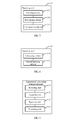
- FIG. 6 is a block diagram illustrating an apparatus for processing a terminal anomaly according to an exemplary embodiment of the present disclosure.
- the apparatus includes: a recording unit 61, an acquiring unit 62, and a reporting unit 63.
- the recording unit 61 is configured to record use habit information of a user on a terminal.
- the acquiring unit 62 is configured to acquire operation information that is currently detected by the terminal.
- the reporting unit 63 is configured to report anomaly alarm information to a predetermined object when the operation information does not match the use habit information.
- use habit information of a user on a terminal is recorded, through a comparison made between the use habit information and operation information of a current user, identity information of the current user may be correctly determined, such that incidents such as terminal loss or terminal theft may be timely discovered; in addition, when the operation information does not match the use habit information, anomaly alarm information is reported, which helps the user to find his or her terminal as soon as possible and thus reduces user's loss.
- FIG. 7 is a block diagram illustrating another apparatus for processing a terminal anomaly according to an exemplary embodiment of the present disclosure.
- the reporting unit 63 may include: a counting subunit 631, a determining subunit 632, and a first reporting subunit 633.
- the counting subunit 631 is configured to count the number of times of non-matching events within a predetermined time duration.
- the determining subunit 632 is configured to determine whether the counted number of times is greater than or equal to a predetermined threshold of the number of times.
- the first reporting subunit 633 is configured to report the anomaly alarm information to the predetermined object if the counted number of times is greater than or equal to the predetermined threshold of the number of times.
- FIG. 8 is a block diagram illustrating another apparatus for processing a terminal anomaly according to an exemplary embodiment of the present disclosure.
- the reporting unit 63 may include: a calculating subunit 634 and a second reporting subunit 635.
- the calculating subunit 634 is configured to calculate a value difference between a first operation parameter corresponding to the operation information and a second operation parameter corresponding to the use habit information.
- the second reporting subunit 635 is configured to report the anomaly alarm information to the predetermined object if the value difference is greater than or equal to a predetermined value difference threshold.
- FIG. 9 is a block diagram illustrating another apparatus for processing a terminal anomaly according to an exemplary embodiment of the present disclosure. Based on the embodiment as illustrated in FIG. 6 , in this embodiment, the apparatus may further include a processing unit 64.
- the processing unit 64 is configured to switch the terminal to a function restriction mode and/or upload terminal data to a predetermined secure storage space and delete local terminal data, when the operation information does not match the use habit information.
- the structure of the processing unit 64 in the apparatus embodiment as illustrated in FIG. 9 may also be included in the apparatus embodiment as illustrated in FIG. 7 or FIG. 8 , which is not limited in the present disclosure.
- the use habit information may include at least one of the following:
- the anomaly alarm information may include at least one of the following:
- the present disclosure further provides an apparatus for processing a terminal anomaly.
- the apparatus includes: a processor; and a memory for storing instructions executable by the processor; wherein the processor is configured to: record use habit information of a user on a terminal; acquire operation information that is currently detected by the terminal; and report anomaly alarm information to a predetermined object when the operation information does not match the use habit information.
- the present disclosure further provides a terminal.
- the terminal includes a memory and at least one program, wherein at least one program is stored in the memory, and is configured to be run by at least one processor to execute instructions, contained in the at least one program, for performing the following operations: recording use habit information of a user on a terminal; acquiring operation information that is currently detected by the terminal; and reporting anomaly alarm information to a predetermined object when the operation information does not match the use habit information.
- FIG. 10 is a schematic structural block diagram illustrating an apparatus 1000 for processing a terminal anomaly according to an exemplary embodiment of the present disclosure.
- the apparatus 1000 may be a mobile phone, a computer, a digital broadcast terminal, a messaging device, a gaming console, a tablet, a medical device, an exercise equipment, a personal digital assistant, and the like.
- the apparatus 1000 may include one or more of the following components: a processing component 1002, a memory 1004, a power component 1006, a multimedia component 1008, an audio component 1010, an input/output (I/O) interface 1012, a sensor component 1014, and a communication component 1016.
- the processing component 1002 typically controls overall operations of the apparatus 1000, such as the operations associated with display, telephone calls, data communications, camera operations, and recording operations.
- the processing component 1002 may include one or more processors 1020 to execute instructions to perform all or a part of the steps in the above-described methods.
- the processing component 1002 may include one or more modules which facilitate the interaction between the processing component 1002 and other components.
- the processing component 1002 may include a multimedia module to facilitate the interaction between the multimedia component 10010 and the processing component 1002.
- the memory 1004 is configured to store various types of data to support the operations of the apparatus 1000. Examples of such data include instructions for any application or method operated on the apparatus 1000, contact data, phonebook data, messages, pictures, videos, and the like.
- the memory 1004 may be implemented using any type of volatile or non-volatile memory devices, or a combination thereof, such as a static random access memory (SRAM), an electrically erasable programmable read-only memory (EEPROM), an erasable programmable read-only memory (EPROM), a programmable read-only memory (PROM), a read-only memory (ROM), a magnetic memory, a flash memory, a magnetic or optical disk.
- SRAM static random access memory
- EEPROM electrically erasable programmable read-only memory
- EPROM erasable programmable read-only memory
- PROM programmable read-only memory
- ROM read-only memory
- magnetic memory a magnetic memory
- flash memory a flash memory
- magnetic or optical disk a magnetic
- the power component 1006 provides power to various components of the apparatus 1000.
- the power component 1006 may include a power management system, one or more power supplies, and other components associated with the generation, management, and distribution of power in the apparatus 1000.
- the multimedia component 1008 includes a screen providing an output interface between the apparatus 1000 and the user.
- the screen may include a liquid crystal display (LCD) and a touch panel (TP). If the screen includes the touch panel, the screen may be implemented as a touch screen to receive input signals from the user.
- the touch panel includes one or more touch sensors to sense touches, swipes, and gestures on the touch panel. The touch sensors may not only sense a boundary of a touch or swipe action, but also sense a period of time and a pressure associated with the touch or swipe action.
- the multimedia component 1008 includes a front camera and/or a rear camera. The front camera and/or the rear camera may receive external multimedia data while the apparatus 1000 is in an operation mode, such as a photographing mode or a video mode. Each of the front camera and the rear camera may be a fixed optical lens system or have focus and optical zoom capability.
- the audio component 1010 is configured to output and/or input audio signals.
- the audio component 1010 includes a microphone (MIC) configured to receive an external audio signal when the apparatus 1000 is in an operation mode, such as a call mode, a recording mode, or a voice recognition mode.
- the received audio signal may be further stored in the memory 1004 or transmitted via the communication component 1016.
- the audio component 1010 further includes a speaker to output audio signals.
- the I/O interface 1012 provides an interface between the processing component 1002 and a peripheral interface module, such as a keyboard, a click wheel, a button, or the like.
- a peripheral interface module such as a keyboard, a click wheel, a button, or the like.
- the buttons may include, but are not limited to, a home button, a volume button, a starting button, and a locking button.
- the sensor component 1014 includes one or more sensors to provide status assessments of various aspects of the apparatus 1000.
- the sensor component 1014 may detect an open/closed status of the apparatus 1000, relative positioning of components, e.g., the display and the keypad, of the apparatus 1000, a change in position of the apparatus 1000 or a component of the apparatus 1000, a presence or absence of user contact with the apparatus 1000, an orientation or an acceleration/deceleration of the apparatus 1000, and a change in temperature of the apparatus 1000.
- the sensor component 1014 may include a proximity sensor configured to detect the presence of nearby objects without any physical contact.
- the sensor component 1014 may also include a light sensor, such as a CMOS or CCD image sensor, for use in imaging applications.
- the sensor component 1014 may also include an accelerometer sensor, a gyroscope sensor, a magnetic sensor, a pressure sensor, or a temperature sensor.
- the communication component 1016 is configured to facilitate communications, wired or wirelessly, between the apparatus 1000 and other devices.
- the apparatus 1000 may access a wireless network based on a communication standard, such as WiFi, 2G, or 3G, or a combination thereof.
- the communication component 1016 receives a broadcast signal or broadcast associated information from an external broadcast management system via a broadcast channel.
- the communication component 1016 further includes a near field communication (NFC) module to facilitate short-range communications.
- the NFC module may be implemented based on a radio frequency identification (RFID) technology, an infrared data association (IrDA) technology, an ultra-wideband (UWB) technology, a Bluetooth (BT) technology, and other technologies.
- RFID radio frequency identification
- IrDA infrared data association
- UWB ultra-wideband
- BT Bluetooth
- the apparatus 1000 may be implemented with one or more application specific integrated circuits (ASICs), digital signal processors (DSPs), digital signal processing devices (DSPDs), programmable logic devices (PLDs), field programmable gate arrays (FPGAs), controllers, micro-controllers, microprocessors, or other electronic components, for performing the above-described methods for processing a terminal anomaly.
- ASICs application specific integrated circuits
- DSPs digital signal processors
- DSPDs digital signal processing devices
- PLDs programmable logic devices
- FPGAs field programmable gate arrays
- controllers micro-controllers, microprocessors, or other electronic components, for performing the above-described methods for processing a terminal anomaly.
- non-transitory computer-readable storage medium including instructions, such as the memory 1004 including instructions, executable by the processor 1020 in the apparatus 1000, for performing the above-described methods for processing a terminal anomaly.
- the non-transitory computer-readable storage medium may be a ROM, a random access memory (RAM), a compact disc read-only memory (CD-ROM), a magnetic tape, a floppy disc, an optical data storage device, or the like.
Landscapes
- Engineering & Computer Science (AREA)
- Computer Security & Cryptography (AREA)
- Theoretical Computer Science (AREA)
- Computer Hardware Design (AREA)
- General Engineering & Computer Science (AREA)
- Software Systems (AREA)
- Physics & Mathematics (AREA)
- General Physics & Mathematics (AREA)
- General Health & Medical Sciences (AREA)
- Health & Medical Sciences (AREA)
- Computer Networks & Wireless Communication (AREA)
- Signal Processing (AREA)
- Social Psychology (AREA)
- Bioethics (AREA)
- Medical Informatics (AREA)
- Databases & Information Systems (AREA)
- Telephone Function (AREA)
- Alarm Systems (AREA)
- Emergency Management (AREA)
- Business, Economics & Management (AREA)
- Medical Treatment And Welfare Office Work (AREA)
- User Interface Of Digital Computer (AREA)
Abstract
Description
- The present disclosure relates to the field of terminal technologies, and more particularly, to a method and an apparatus for processing a terminal anomaly.
- Smart terminals provide various applications and functions for users. These applications and functions help users to achieve more convenient and rapid life styles, such that users are becoming more and more dependent on the smart terminals, and store personal and private data on the smart terminals. As a result, great loss may be caused to users if their smart terminals are lost or stolen.
- The present disclosure provides a method and an apparatus for processing a terminal anomaly, and an electronic device, to solve the technical problem in the related technologies that the terminal is subject to low data security.
- According to a first aspect of embodiments of the present disclosure, a method for processing a terminal anomaly is provided. The method includes:
- recording use habit information of a user on a terminal;
- acquiring operation information that is currently detected by the terminal; and
- reporting anomaly alarm information to a predetermined object when the operation information does not match the use habit information.
- Optionally, the use habit information includes at least one of the following:
- height information, holding manner, distance between the terminal and the user's eyes, holding angle, human biological characteristic information of the user, contiguous tapping speed, interface switching manner, screen unlocking manner, and trajectory pattern of touch gesture.
- Optionally, reporting anomaly alarm information to a predetermined object when the operation information does not match the use habit information includes:
- counting the number of times of non-matching events within a predetermined time duration;
- determining whether the counted number of times is greater than or equal to a predetermined threshold of the number of times; and
- reporting the anomaly alarm information to the predetermined object if the counted number of times is greater than or equal to the predetermined threshold of the number of times.
- Optionally, reporting anomaly alarm information to a predetermined object when the operation information does not match the use habit information includes:
- calculating a value difference between a first operation parameter corresponding to the operation information and a second operation parameter corresponding to the use habit information; and
- reporting the anomaly alarm information to the predetermined object if the value difference is greater than or equal to a predetermined value difference threshold.
- Optionally, the anomaly alarm information includes at least one of the following:
- human biological characteristic information of the current user, geographical location information of the terminal and/or information of a corresponding base station, and predetermined prompt short message.
- Optionally, the apparatus further includes:
- switching the terminal to a function restriction mode and/or uploading terminal data to a predetermined secure storage space and deleting local terminal data, when the operation information does not match the use habit information.
- According to a second aspect of embodiments of the present disclosure, an apparatus for processing a terminal anomaly is provided. The apparatus includes:
- a recording unit, configured to record use habit information of a user on a terminal;
- an acquiring unit, configured to acquire operation information that is currently detected by the terminal; and
- a reporting unit, configured to report anomaly alarm information to a predetermined object when the operation information does not match the use habit information.
- Optionally, the use habit information includes at least one of the following:
- height information, holding manner, distance between the terminal and the user's eyes, holding angle, human biological characteristic information of the user, contiguous tapping speed, interface switching manner, and trajectory pattern of touch gesture.
- Optionally, the reporting unit includes:
- a counting subunit, configured to count the number of times of non-matching events within a predetermined time duration;
- a determining subunit, configured to determine whether the counted number of times is greater than or equal to a predetermined threshold of the number of times; and
- a first reporting subunit, configured to report the anomaly alarm information to the predetermined object if the counted number of times is greater than or equal to the predetermined threshold of the number of times.
- Optionally, the reporting unit includes:
- a calculating subunit, configured to calculate a value difference between a first operation parameter corresponding to the operation information and a second operation parameter corresponding to the use habit information; and
- a second reporting subunit, configured to report the anomaly alarm information to the predetermined object if the value difference is greater than or equal to a predetermined value difference threshold.
- Optionally, the anomaly alarm information includes at least one of the following:
- human biological characteristic information of the current user, geographical location information of the terminal and/or information of a corresponding base station, and predetermined prompt short message.
- Optionally, the apparatus further includes:
- a processing unit, configured to switch the terminal to a function restriction mode and/or upload terminal data to a predetermined secure storage space and delete local terminal data, when the operation information does not match the use habit information.
- According to a third aspect of embodiments of the present disclosure, an electronic device is provided. The electronic device includes:
- a processor; and
- a memory for storing instructions executable by the processor;
- wherein the processor is configured to:
- record use habit information of a user on a terminal;
- acquire operation information that is currently detected by the terminal; and
- report anomaly alarm information to a predetermined object when the operation information does not match the use habit information.
- According to a fourth aspect of embodiments of the present disclosure, there is provided a computer program which, when being executed on a processor of an apparatus, performs any of the above methods.
- The technical solutions provided in the embodiments of the present disclosure may achieve the following beneficial effects:
- According to the present disclosure, use habit information of a user on a terminal is recorded, through a comparison made between the use habit information and operation information of a current user, identity information of the current user may be correctly determined, such that incidents such as terminal loss or terminal theft may be timely discovered; in addition, when the operation information does not match the use habit information, anomaly alarm information is reported, which helps the user to find his or her terminal as soon as possible and thus reduces user's loss.
- It shall be appreciated that the above general description and the detailed description hereinafter are only illustrative and interpretative, but not for limiting the present disclosure.
- The accompanying drawings herein, which are incorporated into and constitute a part of the specification, illustrate embodiments consistent with the present disclosure, and together with the specification, serve to explain the principles of the present disclosure.
-
FIG. 1 is a flowchart illustrating a method for processing a terminal anomaly according to an exemplary embodiment of the present disclosure; -
FIG. 2 is a flowchart illustrating another method for processing a terminal anomaly according to an exemplary embodiment of the present disclosure; -
FIG. 3 is a schematic diagram illustrating an interface of the method for processing a terminal anomaly according to an exemplary embodiment of the present disclosure; -
FIG. 4 is a flowchart illustrating another method for processing a terminal anomaly according to an exemplary embodiment of the present disclosure; -
FIG. 5 is a schematic diagram illustrating another interface of the method for processing a terminal anomaly according to an exemplary embodiment of the present disclosure; -
FIG. 6 is a block diagram illustrating an apparatus for processing a terminal anomaly according to an exemplary embodiment of the present disclosure; -
FIG. 7 is a block diagram illustrating another apparatus for processing a terminal anomaly according to an exemplary embodiment of the present disclosure; -
FIG. 8 is a block diagram illustrating another apparatus for processing a terminal anomaly according to an exemplary embodiment of the present disclosure; -
FIG. 9 is a block diagram illustrating another apparatus for processing a terminal anomaly according to an exemplary embodiment of the present disclosure; and -
FIG. 10 is a schematic structural block diagram illustrating an apparatus for processing a terminal anomaly according to an exemplary embodiment of the present disclosure. - Reference will now be made in detail to exemplary embodiments, examples of which are illustrated in the accompanying drawings. The following description refers to the accompanying drawings in which the same numbers in different drawings represent the same or similar elements unless otherwise represented. The implementations set forth in the following description of exemplary embodiments do not represent all implementations consistent with the present disclosure. Instead, they are merely examples of apparatuses and methods consistent with aspects related to the present disclosure as recited in the appended claims.
-
FIG. 1 is a flowchart illustrating a method for processing a terminal anomaly according to an exemplary embodiment of the present disclosure. As illustrated inFIG. 1 , the method is applicable to a terminal, and includes the following steps. - In
step 102, use habit information of a user on a terminal is recorded. - In this embodiment, the use habit information may include at least one of the following: height information (for example, the height at which the terminal is positioned when the user performs an operation), holding manner (for example, holding on the left hand or holding on the right hand), distance between the terminal and eyes of the user, holding angle (for example, the angle of the terminal to the horizontal direction or the vertical direction when the user performs an operation), human biological characteristic information of the user (for example, hand shape, fingerprint, face shape, iris, retina, pulse, auricle, or the like), contiguous tapping speed, interface switching manner (for example, tapping the key "Return" on the screen interface, or tapping the key "Return" on the terminal, or the like), screen unlocking manner (for example, sliding the unlocking identifier to the icon "Unlock" or to the icon "Conversation", or the like), and trajectory pattern of touch gesture (for example, the length of the sliding distance when the user slides the unlocking identifier, or the like).
- As an exemplary implementation, a function of defining "use habit" may be configured on the terminal, and after the terminal is initially activated and then the function is automatically enabled or manually enabled by the user, the user is guided to perform one or more operations, such that corresponding use habit information is collected and recorded. As another exemplary implementation, during normal use of the terminal by the user, user's operation behavior is analyzed to determine use habit information of the user.
- In this embodiment, after the terminal collects normal operation behavior and information of the user, the terminal may directly analyze the collected normal operation behavior and information and thus obtain the use habit information of the user, or the terminal may upload the collected data to a server and receive the use habit information determined by the server through analysis.
- In
step 104, operation information that is currently detected by the terminal is acquired. - In
step 106, anomaly alarm information is reported to a predetermined object when the operation information does not match the use habit information. - In this embodiment, the reported anomaly alarm information may include at least one of the following: human biological characteristic information of the current user (for example, a face image of the user picked up via a front camera), geographical location information of the terminal and/or information of a corresponding base station, and predetermined prompt short message.
- According to the above embodiment of the present disclosure, through a comparison made between the use habit information and operation information of a current user, identity information of the current user may be correctly determined, such that incidents such as terminal loss or terminal theft may be timely discovered; in addition, when the operation information does not match the use habit information, anomaly alarm information is reported, which helps the user to find his or her terminal as soon as possible and thus reduces user's loss.
- Referring to
FIG. 2, FIG. 2 is a flowchart illustrating another method for processing a terminal anomaly according to an exemplary embodiment of the present disclosure. The method may include the following steps. - In
step 202, use habit information of a user is stored on the terminal. - In this embodiment, the use habit information stored on the terminal may be generated by the terminal itself, or may be received and stored by the terminal after the use habit information is generated on a server.
- In
step 204, operation information of a current user is acquired. - In this embodiment, as an exemplary implementation, the terminal may collect the operation information in real time or according to a predetermined period, and analyze and determine whether the current user is a predetermined user. As another exemplary implementation, the terminal may perform collection and analysis on the operation information of the current user only after a corresponding command is received. For example, if the terminal is a smart phone of a user, the user may generally disable the functions of collecting operation information and identifying user identity, but when the user is aware that his or her smart phone is subject to exceptional circumstances such as loss, the user may send an enable command to his or her smart phone via other devices such as terminals, servers, or the like to enable the functions of collecting operation information and identifying user identity for the current user.
- In
step 206, it is determined whether the operation information of the current user matches with use habit information stored on the terminal; if the operation information of the current user matches with use habit information stored on the terminal, the process returns to step 204; and otherwise, the process proceeds to step 208. - In this embodiment, using "interface switching manner" as an example, the matching operations in
step 206 are described in detail. An application generally includes a plurality of application interfaces, and the plurality of application interfaces are subject to a hierarchical relationship. Therefore, the user needs to switch from the current interface to an upper layer interface in the manner of "Return". - As illustrated in
FIG. 3 , the current interface is an interface for chatting with "Xiao Bai", and if the user desires to return to an upper layer interface, such returning may be implemented via the operation (1): tapping the virtual key "Return" on the screen interface; or such returning may be implemented via the operation (2): pressing the physical key "Return" on the terminal. Therefore, when the user habitually performs the above interface switching operation via the operation (1), if the current user employs the operation (2), it is determined that a non-matching event is present. - In
step 208, the counted number of times N that non-matching events are present within a predetermined time duration is increased by 1. - In this embodiment, the above "predetermined time duration" may be recorded by using a timer. Therefore, when the process proceeds to step 208, it may be firstly determined whether a timer is present; if the timer is present and the time duration does not expire, the corresponding counted number of times N is definitely present, and the number of times N is increased by 1; and if no timer is present, a timer may be started and the counted number of times N may be generated with the initial value of 0, and the number of times N is increased by 1.
- In
step 210, it is determined whether the number of times N is greater than or equal to a predetermined threshold of the number of times N0; if the number of times N is greater than or equal to the predetermined threshold of the number of times N0, the process proceeds to step 212; and otherwise, the process returns to step 204. - In
step 212, the anomaly alarm information is reported to the predetermined object. - Referring to
FIG. 4, FIG. 4 is a flowchart illustrating another method for processing a terminal anomaly according to an exemplary embodiment of the present disclosure. The method may include the following steps. - In
step 402, use habit information of a user is stored on the terminal. - In this embodiment, the use habit information stored on the terminal may be generated by the terminal itself, or may be received and stored by the terminal after the use habit information is generated on a server.
- In
step 404, operation information of a current user is acquired. - In this embodiment, as an exemplary implementation, the terminal may collect the operation information in real time or according to a predetermined period, and analyze and determine whether the current user is a predetermined user. As another exemplary implementation, the terminal may perform collection and analysis on the operation information of the current user only after a corresponding command is received. For example, if the terminal is a smart phone of a user, the user may generally disable the functions of collecting operation information and identifying user identity, but when the user is aware that his or her smart phone is subject to exceptional circumstances such as loss, the user may send an enable command to his or her smart phone via other devices such as terminals, servers, or the like to enable the functions of collecting operation information and identifying user identity for the current user.
- In
step 406, it is determined whether the operation information of the current user matches with use habit information stored on the terminal; if the operation information of the current user matches with use habit information stored on the terminal, the process returns to step 404; and otherwise, the process proceeds to step 408. - In this embodiment, using "screen unlocking" as an example, the matching operations in
step 406 are described in detail. After the screen of a terminal is locked, if the screen is lit again, a screen locking interface is displayed on the screen of the terminal, and the screen is unlocked via a screen unlocking operation performed by the user. - As illustrated in
FIG. 5 , a plurality of icons are present on the screen locking interface of the terminal, including the icon "Unlock" at the lower part of the screen, the icon "Dial" at the left part of the screen, and the icon "Photograph" at the right part of the screen; the user may unlock the screen and meanwhile implement the corresponding application function by dragging the middle operation identifier to any of the positions of these icons. Assume that the user always unlock the screen via the operation (1) of dragging the operation identifier to the icon "Dial" on the left side, then when the current user unlocks the screen via the operation (2) of dragging the operation identifier to the icon "Unlock" at the lower part of the screen, it indicates that the current user may not be an authorized user, and thus the terminal may be subject to loss or theft. - In
step 408, a value difference between a first operation parameter corresponding to the operation information and a second operation parameter corresponding to the use habit information is calculated. - In this embodiment, still using the screen unlocking interface as illustrated in
FIG. 5 as an example, the operation parameter may be a movement direction of the operation identifier: when the first operation parameter and the second operation parameter respectively correspond to the operation (2) and the operation (1) as illustrated inFIG. 5 , the value difference is an angle difference between the movement directions, for example, 90 degrees; or the operation parameter may be a movement distance of the operation identifier: when the first operation parameter and the second operation parameter both employ the operation (1) as illustrated inFIG. 5 , the value difference may be a value difference between the movement distances, for example, 0.5 cm. - In
step 410, it is determined whether the value difference is greater than or equal to a predetermined threshold; if the value difference is greater than or equal to the predetermined threshold, the process proceeds to step 412; and otherwise, the process returns to step 404. - In this embodiment, since when the user performs the same operation, a value difference between the operation parameters may be present such that the operation parameters may not be in complete coincidence, thus, by setting a predetermined threshold, it may be accurately determined whether the value difference is caused due to a normal operation error or due to variation of the users.
- Therefore, for example, when the first operation parameter and the second operation parameter respectively correspond to the operation (2) and the operation (1) as illustrated in
FIG. 5 , assume that the predetermined threshold is 10 degrees, when the angle difference between the movement directions is 90 degrees, it indicates that the current user is an unauthorized user, and thus the terminal may be subject to loss or theft; or for example, when the first operation parameter and the second operation parameter both employ the operation (1) as illustrated inFIG. 5 , assume that the predetermined threshold is 0.3 cm, when the value difference between the movement distances is 0.5 cm, it indicates that the current user is an unauthorized user, and thus the terminal may be subject to loss or theft. - In
step 412, the anomaly alarm information is reported to the predetermined object. - As an exemplary implementation, in the embodiments as illustrated in
FIG. 2 andFIG. 4 , while the anomaly alarm information is reported, the terminal may also be switched to a function restriction mode, for example, the screen of the terminal is locked or the current user is prohibited from enabling a predetermined function, such that an unauthorized user is prevented from snooping the terminal data or defrauding the contacts recorded on the terminal. - As another exemplary implementation, in the embodiments as illustrated in
FIG. 2 andFIG. 4 , while the anomaly alarm information is reported, the terminal data may also be uploaded to a predetermined secure storage space and local terminal data is deleted. In this way, not only the data security of the terminal may be ensured, but also an unauthorized user is prevented from snooping the terminal data or defrauding the contacts recorded on the terminal. - Corresponding to the embodiments of the methods for processing a terminal anomaly, the present disclosure further provides embodiments illustrating an apparatus for processing a terminal anomaly.
-
FIG. 6 is a block diagram illustrating an apparatus for processing a terminal anomaly according to an exemplary embodiment of the present disclosure. Referring toFIG. 6 , the apparatus includes: arecording unit 61, an acquiringunit 62, and areporting unit 63. - The
recording unit 61 is configured to record use habit information of a user on a terminal. - The acquiring
unit 62 is configured to acquire operation information that is currently detected by the terminal. - The
reporting unit 63 is configured to report anomaly alarm information to a predetermined object when the operation information does not match the use habit information. - In the above embodiment, use habit information of a user on a terminal is recorded, through a comparison made between the use habit information and operation information of a current user, identity information of the current user may be correctly determined, such that incidents such as terminal loss or terminal theft may be timely discovered; in addition, when the operation information does not match the use habit information, anomaly alarm information is reported, which helps the user to find his or her terminal as soon as possible and thus reduces user's loss.
- Referring to
FIG. 7, FIG. 7 is a block diagram illustrating another apparatus for processing a terminal anomaly according to an exemplary embodiment of the present disclosure. Based on the embodiment as illustrated inFIG. 6 , in this embodiment, thereporting unit 63 may include: a countingsubunit 631, a determiningsubunit 632, and afirst reporting subunit 633. - The counting
subunit 631 is configured to count the number of times of non-matching events within a predetermined time duration. - The determining
subunit 632 is configured to determine whether the counted number of times is greater than or equal to a predetermined threshold of the number of times. - The
first reporting subunit 633 is configured to report the anomaly alarm information to the predetermined object if the counted number of times is greater than or equal to the predetermined threshold of the number of times. - Referring to
FIG. 8, FIG. 8 is a block diagram illustrating another apparatus for processing a terminal anomaly according to an exemplary embodiment of the present disclosure. Based on the embodiment as illustrated inFIG. 6 , in this embodiment, thereporting unit 63 may include: a calculating subunit 634 and asecond reporting subunit 635. - The calculating subunit 634 is configured to calculate a value difference between a first operation parameter corresponding to the operation information and a second operation parameter corresponding to the use habit information.
- The
second reporting subunit 635 is configured to report the anomaly alarm information to the predetermined object if the value difference is greater than or equal to a predetermined value difference threshold. - Referring to
FIG. 9, FIG. 9 is a block diagram illustrating another apparatus for processing a terminal anomaly according to an exemplary embodiment of the present disclosure. Based on the embodiment as illustrated inFIG. 6 , in this embodiment, the apparatus may further include aprocessing unit 64. - The
processing unit 64 is configured to switch the terminal to a function restriction mode and/or upload terminal data to a predetermined secure storage space and delete local terminal data, when the operation information does not match the use habit information. - It shall be noted that, the structure of the
processing unit 64 in the apparatus embodiment as illustrated inFIG. 9 may also be included in the apparatus embodiment as illustrated inFIG. 7 or FIG. 8 , which is not limited in the present disclosure. - In addition, in the embodiments as illustrated in
FIG. 6 to FIG. 9 , the use habit information may include at least one of the following: - height information, holding manner, distance between the terminal and the user's eyes, holding angle, human biological characteristic information of the user, contiguous tapping speed, interface switching manner, and trajectory pattern of touch gesture.
- In addition, in the embodiments as illustrated in
FIG. 6 to FIG. 9 , the anomaly alarm information may include at least one of the following: - human biological characteristic information of the current user, geographical location information of the terminal and/or information of a corresponding base station, and predetermined prompt short message.
- With respect to the apparatuses in the above embodiments, the specific implementations of operations executed by various modules thereof have been described in detail in the embodiments illustrating the methods, which are not described herein any further.
- With respect to the apparatus embodiments, since the apparatus embodiments are based on the method embodiments, relevant parts may be referred to the equivalents in the method embodiments. The above-described apparatus embodiments are exemplary only. The units described as separate components may be or may not be physically independent of each other. The element illustrated as a unit may be or may not be a physical unit, which may be either located at a position or deployed on a plurality of network units. Part of or all of the modules may be selected as required to implement the technical solutions disclosed in the embodiments of the present disclosure. Persons of ordinary skills in the art may understand and implement the embodiments without any creative effort.
- Correspondingly, the present disclosure further provides an apparatus for processing a terminal anomaly. The apparatus includes: a processor; and a memory for storing instructions executable by the processor; wherein the processor is configured to: record use habit information of a user on a terminal; acquire operation information that is currently detected by the terminal; and report anomaly alarm information to a predetermined object when the operation information does not match the use habit information.
- Correspondingly, the present disclosure further provides a terminal. The terminal includes a memory and at least one program, wherein at least one program is stored in the memory, and is configured to be run by at least one processor to execute instructions, contained in the at least one program, for performing the following operations: recording use habit information of a user on a terminal; acquiring operation information that is currently detected by the terminal; and reporting anomaly alarm information to a predetermined object when the operation information does not match the use habit information.
-
FIG. 10 is a schematic structural block diagram illustrating anapparatus 1000 for processing a terminal anomaly according to an exemplary embodiment of the present disclosure. For example, theapparatus 1000 may be a mobile phone, a computer, a digital broadcast terminal, a messaging device, a gaming console, a tablet, a medical device, an exercise equipment, a personal digital assistant, and the like. - Referring to
FIG. 10 , theapparatus 1000 may include one or more of the following components: aprocessing component 1002, amemory 1004, apower component 1006, amultimedia component 1008, anaudio component 1010, an input/output (I/O)interface 1012, asensor component 1014, and acommunication component 1016. - The
processing component 1002 typically controls overall operations of theapparatus 1000, such as the operations associated with display, telephone calls, data communications, camera operations, and recording operations. Theprocessing component 1002 may include one ormore processors 1020 to execute instructions to perform all or a part of the steps in the above-described methods. In addition, theprocessing component 1002 may include one or more modules which facilitate the interaction between theprocessing component 1002 and other components. For example, theprocessing component 1002 may include a multimedia module to facilitate the interaction between the multimedia component 10010 and theprocessing component 1002. - The
memory 1004 is configured to store various types of data to support the operations of theapparatus 1000. Examples of such data include instructions for any application or method operated on theapparatus 1000, contact data, phonebook data, messages, pictures, videos, and the like. Thememory 1004 may be implemented using any type of volatile or non-volatile memory devices, or a combination thereof, such as a static random access memory (SRAM), an electrically erasable programmable read-only memory (EEPROM), an erasable programmable read-only memory (EPROM), a programmable read-only memory (PROM), a read-only memory (ROM), a magnetic memory, a flash memory, a magnetic or optical disk. - The
power component 1006 provides power to various components of theapparatus 1000. Thepower component 1006 may include a power management system, one or more power supplies, and other components associated with the generation, management, and distribution of power in theapparatus 1000. - The
multimedia component 1008 includes a screen providing an output interface between theapparatus 1000 and the user. In some embodiments, the screen may include a liquid crystal display (LCD) and a touch panel (TP). If the screen includes the touch panel, the screen may be implemented as a touch screen to receive input signals from the user. The touch panel includes one or more touch sensors to sense touches, swipes, and gestures on the touch panel. The touch sensors may not only sense a boundary of a touch or swipe action, but also sense a period of time and a pressure associated with the touch or swipe action. In some embodiments, themultimedia component 1008 includes a front camera and/or a rear camera. The front camera and/or the rear camera may receive external multimedia data while theapparatus 1000 is in an operation mode, such as a photographing mode or a video mode. Each of the front camera and the rear camera may be a fixed optical lens system or have focus and optical zoom capability. - The
audio component 1010 is configured to output and/or input audio signals. For example, theaudio component 1010 includes a microphone (MIC) configured to receive an external audio signal when theapparatus 1000 is in an operation mode, such as a call mode, a recording mode, or a voice recognition mode. The received audio signal may be further stored in thememory 1004 or transmitted via thecommunication component 1016. In some embodiments, theaudio component 1010 further includes a speaker to output audio signals. - The I/
O interface 1012 provides an interface between theprocessing component 1002 and a peripheral interface module, such as a keyboard, a click wheel, a button, or the like. The buttons may include, but are not limited to, a home button, a volume button, a starting button, and a locking button. - The
sensor component 1014 includes one or more sensors to provide status assessments of various aspects of theapparatus 1000. For example, thesensor component 1014 may detect an open/closed status of theapparatus 1000, relative positioning of components, e.g., the display and the keypad, of theapparatus 1000, a change in position of theapparatus 1000 or a component of theapparatus 1000, a presence or absence of user contact with theapparatus 1000, an orientation or an acceleration/deceleration of theapparatus 1000, and a change in temperature of theapparatus 1000. Thesensor component 1014 may include a proximity sensor configured to detect the presence of nearby objects without any physical contact. Thesensor component 1014 may also include a light sensor, such as a CMOS or CCD image sensor, for use in imaging applications. In some embodiments, thesensor component 1014 may also include an accelerometer sensor, a gyroscope sensor, a magnetic sensor, a pressure sensor, or a temperature sensor. - The
communication component 1016 is configured to facilitate communications, wired or wirelessly, between theapparatus 1000 and other devices. Theapparatus 1000 may access a wireless network based on a communication standard, such as WiFi, 2G, or 3G, or a combination thereof. In one exemplary embodiment, thecommunication component 1016 receives a broadcast signal or broadcast associated information from an external broadcast management system via a broadcast channel. In one exemplary embodiment, thecommunication component 1016 further includes a near field communication (NFC) module to facilitate short-range communications. For example, the NFC module may be implemented based on a radio frequency identification (RFID) technology, an infrared data association (IrDA) technology, an ultra-wideband (UWB) technology, a Bluetooth (BT) technology, and other technologies. - In exemplary embodiments, the
apparatus 1000 may be implemented with one or more application specific integrated circuits (ASICs), digital signal processors (DSPs), digital signal processing devices (DSPDs), programmable logic devices (PLDs), field programmable gate arrays (FPGAs), controllers, micro-controllers, microprocessors, or other electronic components, for performing the above-described methods for processing a terminal anomaly. - In exemplary embodiments, there is also provided a non-transitory computer-readable storage medium including instructions, such as the
memory 1004 including instructions, executable by theprocessor 1020 in theapparatus 1000, for performing the above-described methods for processing a terminal anomaly. For example, the non-transitory computer-readable storage medium may be a ROM, a random access memory (RAM), a compact disc read-only memory (CD-ROM), a magnetic tape, a floppy disc, an optical data storage device, or the like. - Other embodiments of the present disclosure will be apparent to those skilled in the art from consideration of the specification and practice disclosed herein. This application is intended to cover any variations, uses, or adaptations of the present disclosure following the general principles thereof and including such departures from the present disclosure as coming within common knowledge or customary technical means in the art. It is intended that the specification and embodiments be considered as exemplary only, with a true scope of the invention being indicated by the appended claims.
- It will be appreciated that the present disclosure is not limited to the exact construction that has been described above and illustrated in the accompanying drawings, and that various modifications and changes can be made. The scope of the present invention is only defined by the appended claims.
Claims (14)
- A method for processing a terminal anomaly, comprising:recording use habit information of a user on a terminal;acquiring operation information that is currently detected by the terminal; andreporting anomaly alarm information to a predetermined object when the operation information does not match the use habit information.
- The method according to claim 1, characterized in that the use habit information comprises at least one of the following:height information, holding manner, distance between the terminal and the user's eyes, holding angle, human biological characteristic information of the user, contiguous tapping speed, interface switching manner, screen unlocking manner, and trajectory pattern of touch gesture.
- The method according to claim 1 or claim 2, characterized in that reporting anomaly alarm information to a predetermined object when the operation information does not match the use habit information comprises:counting the number of times of non-matching events within a predetermined time duration;determining whether the counted number of times is greater than or equal to a predetermined threshold of the number of times; andreporting the anomaly alarm information to the predetermined object if the counted number of times is greater than or equal to the predetermined threshold of the number of times.
- The method according to claim 1 or claim 2, characterized in that reporting anomaly alarm information to a predetermined object when the operation information does not match the use habit information comprises:calculating a value difference between a first operation parameter corresponding to the operation information and a second operation parameter corresponding to the use habit information; andreporting the anomaly alarm information to the predetermined object if the value difference is greater than or equal to a predetermined value difference threshold.
- The method according to any preceding claim, characterized in that the anomaly alarm information comprises at least one of the following:human biological characteristic information of the current user, geographical location information of the terminal and/or information of a corresponding base station, and predetermined prompt short message.
- The method according to any preceding claim, further comprising:switching the terminal to a function restriction mode and/or uploading terminal data to a predetermined secure storage space and deleting local terminal data, when the operation information does not match the use habit information.
- An apparatus for processing a terminal anomaly, comprising:a recording unit, configured to record use habit information of a user on a terminal;an acquiring unit, configured to acquire operation information that is currently detected by the terminal; anda reporting unit, configured to report anomaly alarm information to a predetermined object when the operation information does not match the use habit information.
- The apparatus according to claim 7, characterized in that the use habit information comprises at least one of the following:height information, holding manner, distance between the terminal and the user's eyes, holding angle, human biological characteristic information of the user, contiguous tapping speed, interface switching manner, and trajectory pattern of touch gesture.
- The apparatus according to claim 7 or claim 8, characterized in that the reporting unit comprises:a counting subunit, configured to count the number of times of non-matching events within a predetermined time duration;a determining subunit, configured to determine whether the counted number of times is greater than or equal to a predetermined threshold of the number of times; anda first reporting subunit, configured to report the anomaly alarm information to the predetermined object if the counted number of times is greater than or equal to the predetermined threshold of the number of times.
- The apparatus according to claim 7 or claim 8, characterized in that the reporting unit comprises:a calculating subunit, configured to calculate a value difference between a first operation parameter corresponding to the operation information and a second operation parameter corresponding to the use habit information; anda second reporting subunit, configured to report the anomaly alarm information to the predetermined object if the value difference is greater than or equal to a predetermined value difference threshold.
- The apparatus according to any of claims 7 to 10, characterized in that the anomaly alarm information comprises at least one of the following:human biological characteristic information of the current user, geographical location information of the terminal and/or information of a corresponding base station, and predetermined prompt short message.
- The apparatus according to any of claims 7 to 11, further comprising:a processing unit, configured to switch the terminal to a function restriction mode and/or upload terminal data to a predetermined secure storage space and delete local terminal data, when the operation information does not match the use habit information.
- An electronic device, comprising:a processor; anda memory for storing instructions executable by the processor;wherein the processor is configured to:record use habit information of a user on a terminal;acquire operation information that is currently detected by the terminal; andreport anomaly alarm information to a predetermined object when the operation information does not match the use habit information.
- A computer program which, when being executed on a processor of an apparatus, performs a method according to any of claims 1 to 6.
Applications Claiming Priority (1)
| Application Number | Priority Date | Filing Date | Title |
|---|---|---|---|
| CN201410568888.9A CN104361303A (en) | 2014-10-22 | 2014-10-22 | Terminal exception processing method and device and electronic equipment |
Publications (2)
| Publication Number | Publication Date |
|---|---|
| EP3012766A1 true EP3012766A1 (en) | 2016-04-27 |
| EP3012766B1 EP3012766B1 (en) | 2018-01-24 |
Family
ID=52528562
Family Applications (1)
| Application Number | Title | Priority Date | Filing Date |
|---|---|---|---|
| EP15190406.7A Active EP3012766B1 (en) | 2014-10-22 | 2015-10-19 | Method and apparatus for processing terminal anomaly |
Country Status (9)
| Country | Link |
|---|---|
| US (1) | US9773105B2 (en) |
| EP (1) | EP3012766B1 (en) |
| JP (1) | JP6466958B2 (en) |
| KR (1) | KR20160059454A (en) |
| CN (1) | CN104361303A (en) |
| BR (1) | BR112015008330A2 (en) |
| MX (1) | MX359827B (en) |
| RU (1) | RU2617683C2 (en) |
| WO (1) | WO2016061929A1 (en) |
Families Citing this family (39)
| Publication number | Priority date | Publication date | Assignee | Title |
|---|---|---|---|---|
| CN104462913A (en) * | 2014-11-07 | 2015-03-25 | 深圳市汇顶科技股份有限公司 | Fingerprint input information processing method and system and mobile terminal |
| CN104751070B (en) * | 2015-03-12 | 2018-07-27 | 小米科技有限责任公司 | Picture library guard method and device |
| CN106301778A (en) * | 2015-05-19 | 2017-01-04 | 中兴通讯股份有限公司 | Auth method, device, system and user terminal |
| CN105094666B (en) * | 2015-06-26 | 2018-10-12 | 小米科技有限责任公司 | Terminal safety protection method, device and terminal |
| CN105159563B (en) * | 2015-10-20 | 2018-11-20 | 上海创功通讯技术有限公司 | Terminal device and its control method |
| US10387828B2 (en) * | 2015-11-12 | 2019-08-20 | Mobile Price Card | Electronic product information display and method thereof |
| CN105791570B (en) * | 2016-02-29 | 2020-02-21 | 宇龙计算机通信科技(深圳)有限公司 | A kind of early warning method and system of mobile terminal |
| US10063579B1 (en) * | 2016-06-29 | 2018-08-28 | EMC IP Holding Company LLC | Embedding the capability to track user interactions with an application and analyzing user behavior to detect and prevent fraud |
| CN106203163A (en) * | 2016-06-30 | 2016-12-07 | 珠海市魅族科技有限公司 | A kind of abnormality eliminating method, device and terminal unit |
| CN106327193B (en) * | 2016-08-24 | 2019-08-02 | 宇龙计算机通信科技(深圳)有限公司 | A kind of system unlocking method and equipment |
| CN106503501A (en) * | 2016-09-30 | 2017-03-15 | 维沃移动通信有限公司 | A kind of startup method of user model and mobile terminal |
| CN106778389B (en) * | 2016-11-25 | 2018-09-04 | 维沃移动通信有限公司 | A kind of loss detection method and mobile terminal of mobile terminal |
| CN106709365B (en) * | 2016-11-30 | 2019-09-13 | Oppo广东移动通信有限公司 | Privacy protection method and device and mobile terminal |
| CN106791053B (en) * | 2016-12-07 | 2020-08-11 | 北京小米移动软件有限公司 | Sensing threshold calibration method and device for distance sensor |
| CN106599641A (en) * | 2016-12-13 | 2017-04-26 | 广东欧珀移动通信有限公司 | A method, device and terminal for restricting terminal locking |
| EP3401831B1 (en) * | 2017-05-11 | 2021-06-30 | Siemens Aktiengesellschaft | Device and method for detecting a physical manipulation in an electronic security module |
| US10447718B2 (en) | 2017-05-15 | 2019-10-15 | Forcepoint Llc | User profile definition and management |
| US9882918B1 (en) | 2017-05-15 | 2018-01-30 | Forcepoint, LLC | User behavior profile in a blockchain |
| US10999296B2 (en) | 2017-05-15 | 2021-05-04 | Forcepoint, LLC | Generating adaptive trust profiles using information derived from similarly situated organizations |
| US10999297B2 (en) | 2017-05-15 | 2021-05-04 | Forcepoint, LLC | Using expected behavior of an entity when prepopulating an adaptive trust profile |
| US10623431B2 (en) | 2017-05-15 | 2020-04-14 | Forcepoint Llc | Discerning psychological state from correlated user behavior and contextual information |
| US10129269B1 (en) | 2017-05-15 | 2018-11-13 | Forcepoint, LLC | Managing blockchain access to user profile information |
| US10915644B2 (en) | 2017-05-15 | 2021-02-09 | Forcepoint, LLC | Collecting data for centralized use in an adaptive trust profile event via an endpoint |
| US10862927B2 (en) | 2017-05-15 | 2020-12-08 | Forcepoint, LLC | Dividing events into sessions during adaptive trust profile operations |
| US10917423B2 (en) | 2017-05-15 | 2021-02-09 | Forcepoint, LLC | Intelligently differentiating between different types of states and attributes when using an adaptive trust profile |
| CN107346397B (en) * | 2017-06-20 | 2021-04-06 | Oppo广东移动通信有限公司 | Information processing methods and related products |
| US11095678B2 (en) * | 2017-07-12 | 2021-08-17 | The Boeing Company | Mobile security countermeasures |
| CN108156306B (en) * | 2017-12-25 | 2020-06-02 | Oppo广东移动通信有限公司 | Unlocking methods and related products |
| WO2019172718A1 (en) * | 2018-03-09 | 2019-09-12 | Samsung Electronics Co., Ltd. | Electronic device and on-device method for enhancing user experience in electronic device |
| CN108470426A (en) * | 2018-03-29 | 2018-08-31 | 李雪菲 | Method, apparatus, system and the equipment of discovering device user's exception |
| CN110659186A (en) * | 2018-06-29 | 2020-01-07 | 北京神州泰岳软件股份有限公司 | Alarm information reporting method and device |
| US10997295B2 (en) | 2019-04-26 | 2021-05-04 | Forcepoint, LLC | Adaptive trust profile reference architecture |
| US11487458B2 (en) * | 2019-11-26 | 2022-11-01 | International Business Machines Corporation | Risk detection of data loss for 5G enabled devices |
| CN111132139B (en) * | 2019-12-13 | 2023-06-02 | 西安易朴通讯技术有限公司 | Antitheft control method and intelligent wearable device |
| US12216791B2 (en) | 2020-02-24 | 2025-02-04 | Forcepoint Llc | Re-identifying pseudonymized or de-identified data utilizing distributed ledger technology |
| CN114697686B (en) * | 2020-12-25 | 2023-11-21 | 北京达佳互联信息技术有限公司 | Online interaction method and device, server and storage medium |
| CN113312106A (en) * | 2021-06-10 | 2021-08-27 | 浙江网商银行股份有限公司 | Data processing method and device |
| CN114374838A (en) * | 2021-12-31 | 2022-04-19 | 恒安嘉新(北京)科技股份公司 | A network camera monitoring method, device, equipment and medium |
| US12456137B2 (en) | 2023-03-28 | 2025-10-28 | T-Mobile Usa, Inc. | Personalizing an interaction between a mobile device associated with a user and an application or a website associated with a wireless telecommunication network |
Citations (4)
| Publication number | Priority date | Publication date | Assignee | Title |
|---|---|---|---|---|
| US20090253408A1 (en) * | 2008-04-02 | 2009-10-08 | William Fitzgerald | Method for mitigating the unauthorized use of a device |
| US20100207721A1 (en) * | 2009-02-19 | 2010-08-19 | Apple Inc. | Systems and methods for identifying unauthorized users of an electronic device |
| US20130097669A1 (en) * | 2011-09-24 | 2013-04-18 | Marc E. Davis | Behavioral fingerprint controlled theft detection and recovery |
| WO2013155143A1 (en) * | 2012-04-11 | 2013-10-17 | Google Inc. | Location-based access control for portable electronic device |
Family Cites Families (40)
| Publication number | Priority date | Publication date | Assignee | Title |
|---|---|---|---|---|
| JP3569751B2 (en) * | 1997-03-26 | 2004-09-29 | 沖電気工業株式会社 | User authentication system |
| JP3816708B2 (en) * | 1999-11-16 | 2006-08-30 | 株式会社エヌ・ティ・ティ・ドコモ | Personal digital assistant and personal authentication method |
| JP4899274B2 (en) * | 2001-08-30 | 2012-03-21 | 富士通株式会社 | Portable terminal and function suppression method |
| JP3969262B2 (en) * | 2002-09-19 | 2007-09-05 | 日本電気株式会社 | Mobile terminal device |
| RU2303811C1 (en) * | 2005-11-07 | 2007-07-27 | Закрытое акционерное общество Коммерческий банк ПриватБанк | Remote user authentication method and the system for realization of the method |
| CN101141721B (en) * | 2006-09-05 | 2012-08-29 | 北京三星通信技术研究有限公司 | Safety mobile telephone based communication custom |
| KR100963789B1 (en) | 2008-06-04 | 2010-06-17 | 경북대학교 산학협력단 | Mobile device privacy and tracking system |
| US8467768B2 (en) * | 2009-02-17 | 2013-06-18 | Lookout, Inc. | System and method for remotely securing or recovering a mobile device |
| US8312157B2 (en) * | 2009-07-16 | 2012-11-13 | Palo Alto Research Center Incorporated | Implicit authentication |
| RU101231U1 (en) * | 2010-03-02 | 2011-01-10 | Закрытое акционерное общество "Лаборатория Касперского" | MOBILE COMPUTER DEVICE SECURITY MANAGEMENT SYSTEM |
| US20120032891A1 (en) * | 2010-08-03 | 2012-02-09 | Nima Parivar | Device, Method, and Graphical User Interface with Enhanced Touch Targeting |
| US8966590B2 (en) * | 2010-08-17 | 2015-02-24 | Facebook, Inc. | Managing social network accessibility based on age |
| US8412158B2 (en) * | 2010-08-17 | 2013-04-02 | Qualcomm Incorporated | Mobile device having increased security that is less obtrusive |
| CN101963863B (en) * | 2010-09-30 | 2015-07-08 | 华为终端有限公司 | User touch operation mode self-adapting method and device |
| CN102104679A (en) * | 2010-12-09 | 2011-06-22 | 中兴通讯股份有限公司 | Method and device for preventing mobile terminal from being used by invalid user |
| US8730334B2 (en) * | 2010-12-10 | 2014-05-20 | Symantec Corporation | Techniques for providing improved perpetrator imaging |
| US9298900B2 (en) * | 2011-09-24 | 2016-03-29 | Elwha Llc | Behavioral fingerprinting via inferred personal relation |
| US9348985B2 (en) * | 2011-11-23 | 2016-05-24 | Elwha Llc | Behavioral fingerprint controlled automatic task determination |
| JP5726056B2 (en) * | 2011-12-05 | 2015-05-27 | 日立マクセル株式会社 | Portable information terminal, control method thereof, and program |
| CN102647508B (en) | 2011-12-15 | 2016-12-07 | 中兴通讯股份有限公司 | A kind of mobile terminal and method for identifying ID |
| JP2013176000A (en) * | 2012-02-27 | 2013-09-05 | Nec Casio Mobile Communications Ltd | Mobile terminal and control method therefor |
| US9405897B1 (en) * | 2012-03-30 | 2016-08-02 | Emc Corporation | Authenticating an entity |
| KR20120068777A (en) | 2012-03-30 | 2012-06-27 | 고려대학교 산학협력단 | User identification apparatus and method with means for sensing touch input |
| US9501744B1 (en) * | 2012-06-11 | 2016-11-22 | Dell Software Inc. | System and method for classifying data |
| GB2505398B (en) * | 2012-07-04 | 2014-08-13 | F Secure Corp | Social network protection system |
| JP2014120953A (en) * | 2012-12-17 | 2014-06-30 | Nec Access Technica Ltd | Portable terminal |
| CN103024744B (en) * | 2012-12-24 | 2015-08-05 | 百度在线网络技术(北京)有限公司 | The method and system of the authentication of mobile terminal |
| CN103077356B (en) * | 2013-01-11 | 2015-06-24 | 中国地质大学(武汉) | Protecting and tracking method for primary information of mobile terminal based on user behavior pattern |
| US9590966B2 (en) * | 2013-03-15 | 2017-03-07 | Intel Corporation | Reducing authentication confidence over time based on user history |
| US20140359777A1 (en) * | 2013-05-31 | 2014-12-04 | Fixmo, Inc. | Context-aware risk measurement mobile device management system |
| US9407435B2 (en) * | 2013-09-30 | 2016-08-02 | Intel Corporation | Cryptographic key generation based on multiple biometrics |
| KR101341555B1 (en) | 2013-10-04 | 2013-12-13 | 김형욱 | Method for providing resque signal sending service |
| US9332035B2 (en) * | 2013-10-10 | 2016-05-03 | The Nielsen Company (Us), Llc | Methods and apparatus to measure exposure to streaming media |
| US9517402B1 (en) * | 2013-12-18 | 2016-12-13 | Epic Games, Inc. | System and method for uniquely identifying players in computer games based on behavior and other characteristics |
| US9303999B2 (en) * | 2013-12-30 | 2016-04-05 | Google Technology Holdings LLC | Methods and systems for determining estimation of motion of a device |
| US9331994B2 (en) * | 2014-02-07 | 2016-05-03 | Bank Of America Corporation | User authentication based on historical transaction data |
| US9277361B2 (en) * | 2014-02-20 | 2016-03-01 | Google Inc. | Methods and systems for cross-validating sensor data acquired using sensors of a mobile device |
| CN103945060B (en) * | 2014-04-04 | 2017-01-11 | 惠州Tcl移动通信有限公司 | Mobile terminal processing method and system based on sensor recognition |
| CN103957322B (en) * | 2014-05-05 | 2019-05-03 | 努比亚技术有限公司 | Anti-theft method for mobile terminal and mobile terminal |
| US9497592B2 (en) * | 2014-07-03 | 2016-11-15 | Qualcomm Incorporated | Techniques for determining movements based on sensor measurements from a plurality of mobile devices co-located with a person |
-
2014
- 2014-10-22 CN CN201410568888.9A patent/CN104361303A/en active Pending
-
2015
- 2015-01-22 WO PCT/CN2015/071303 patent/WO2016061929A1/en not_active Ceased
- 2015-01-22 MX MX2015005046A patent/MX359827B/en active IP Right Grant
- 2015-01-22 BR BR112015008330A patent/BR112015008330A2/en active Search and Examination
- 2015-01-22 RU RU2015114997A patent/RU2617683C2/en active
- 2015-01-22 JP JP2016554793A patent/JP6466958B2/en active Active
- 2015-01-22 KR KR1020157007074A patent/KR20160059454A/en not_active Ceased
- 2015-04-30 US US14/701,186 patent/US9773105B2/en active Active
- 2015-10-19 EP EP15190406.7A patent/EP3012766B1/en active Active
Patent Citations (4)
| Publication number | Priority date | Publication date | Assignee | Title |
|---|---|---|---|---|
| US20090253408A1 (en) * | 2008-04-02 | 2009-10-08 | William Fitzgerald | Method for mitigating the unauthorized use of a device |
| US20100207721A1 (en) * | 2009-02-19 | 2010-08-19 | Apple Inc. | Systems and methods for identifying unauthorized users of an electronic device |
| US20130097669A1 (en) * | 2011-09-24 | 2013-04-18 | Marc E. Davis | Behavioral fingerprint controlled theft detection and recovery |
| WO2013155143A1 (en) * | 2012-04-11 | 2013-10-17 | Google Inc. | Location-based access control for portable electronic device |
Also Published As
| Publication number | Publication date |
|---|---|
| JP2017500833A (en) | 2017-01-05 |
| KR20160059454A (en) | 2016-05-26 |
| EP3012766B1 (en) | 2018-01-24 |
| RU2617683C2 (en) | 2017-04-26 |
| JP6466958B2 (en) | 2019-02-06 |
| MX2015005046A (en) | 2016-08-25 |
| US9773105B2 (en) | 2017-09-26 |
| WO2016061929A1 (en) | 2016-04-28 |
| US20160117500A1 (en) | 2016-04-28 |
| MX359827B (en) | 2018-10-10 |
| RU2015114997A (en) | 2016-11-10 |
| BR112015008330A2 (en) | 2017-07-04 |
| CN104361303A (en) | 2015-02-18 |
Similar Documents
| Publication | Publication Date | Title |
|---|---|---|
| EP3012766B1 (en) | Method and apparatus for processing terminal anomaly | |
| US10706173B2 (en) | Method and device for displaying notification information | |
| EP3041206B1 (en) | Method and device for displaying notification information | |
| US10123196B2 (en) | Method and device for alarm triggering | |
| US9904774B2 (en) | Method and device for locking file | |
| US11100735B2 (en) | Method and apparatus for controlling entrance guard | |
| CN104866749B (en) | Operate response method and device | |
| EP3261037A1 (en) | Method and apparatus for activating virtual card | |
| EP3173970A1 (en) | Image processing method and apparatus | |
| EP3179397A1 (en) | Methods and devices for managing automatic parallel login and logout in several applications | |
| US20170272425A1 (en) | Method and device for accessing smart camera | |
| CN105491236A (en) | Terminal unlocking method and device | |
| US10515224B2 (en) | Method, device and storage medium for printing information | |
| CN120997913A (en) | Methods, devices, and electronic equipment for indicating fingerprint collection location | |
| EP3447666B1 (en) | Processing fingerprint information | |
| CN106529253A (en) | Unlocking method and apparatus, and terminal device | |
| EP3211564A1 (en) | Method and device for verifying a fingerprint | |
| CN104360875A (en) | Private mode starting method and device | |
| US20170147593A1 (en) | Contact managing method and apparatus, and storage medium | |
| CN106570381A (en) | Fingerprint unlocking method and device | |
| CN110929552A (en) | Fingerprint identification method and device, electronic device, storage medium | |
| CN106331225A (en) | Touch response method and mobile terminal | |
| CN110929551A (en) | Fingerprint identification method and device, electronic device, storage medium | |
| CN110929550A (en) | Fingerprint identification method and device, electronic device, storage medium | |
| US20160173668A1 (en) | Method and device for activating an operating state of a mobile terminal |
Legal Events
| Date | Code | Title | Description |
|---|---|---|---|
| PUAI | Public reference made under article 153(3) epc to a published international application that has entered the european phase |
Free format text: ORIGINAL CODE: 0009012 |
|
| AK | Designated contracting states |
Kind code of ref document: A1 Designated state(s): AL AT BE BG CH CY CZ DE DK EE ES FI FR GB GR HR HU IE IS IT LI LT LU LV MC MK MT NL NO PL PT RO RS SE SI SK SM TR |
|
| AX | Request for extension of the european patent |
Extension state: BA ME |
|
| 17P | Request for examination filed |
Effective date: 20160413 |
|
| RBV | Designated contracting states (corrected) |
Designated state(s): AL AT BE BG CH CY CZ DE DK EE ES FI FR GB GR HR HU IE IS IT LI LT LU LV MC MK MT NL NO PL PT RO RS SE SI SK SM TR |
|
| 17Q | First examination report despatched |
Effective date: 20160708 |
|
| GRAP | Despatch of communication of intention to grant a patent |
Free format text: ORIGINAL CODE: EPIDOSNIGR1 |
|
| RIC1 | Information provided on ipc code assigned before grant |
Ipc: H04W 12/12 20090101ALI20170620BHEP Ipc: G06F 21/31 20130101AFI20170620BHEP Ipc: G06F 21/50 20130101ALI20170620BHEP Ipc: G06F 21/88 20130101ALI20170620BHEP Ipc: G06F 21/62 20130101ALI20170620BHEP |
|
| INTG | Intention to grant announced |
Effective date: 20170706 |
|
| GRAS | Grant fee paid |
Free format text: ORIGINAL CODE: EPIDOSNIGR3 |
|
| GRAJ | Information related to disapproval of communication of intention to grant by the applicant or resumption of examination proceedings by the epo deleted |
Free format text: ORIGINAL CODE: EPIDOSDIGR1 |
|
| GRAL | Information related to payment of fee for publishing/printing deleted |
Free format text: ORIGINAL CODE: EPIDOSDIGR3 |
|
| GRAR | Information related to intention to grant a patent recorded |
Free format text: ORIGINAL CODE: EPIDOSNIGR71 |
|
| INTC | Intention to grant announced (deleted) | ||
| INTG | Intention to grant announced |
Effective date: 20171109 |
|
| GRAA | (expected) grant |
Free format text: ORIGINAL CODE: 0009210 |
|
| AK | Designated contracting states |
Kind code of ref document: B1 Designated state(s): AL AT BE BG CH CY CZ DE DK EE ES FI FR GB GR HR HU IE IS IT LI LT LU LV MC MK MT NL NO PL PT RO RS SE SI SK SM TR |
|
| REG | Reference to a national code |
Ref country code: GB Ref legal event code: FG4D |
|
| REG | Reference to a national code |
Ref country code: CH Ref legal event code: EP |
|
| REG | Reference to a national code |
Ref country code: AT Ref legal event code: REF Ref document number: 966159 Country of ref document: AT Kind code of ref document: T Effective date: 20180215 |
|
| REG | Reference to a national code |
Ref country code: IE Ref legal event code: FG4D |
|
| REG | Reference to a national code |
Ref country code: DE Ref legal event code: R096 Ref document number: 602015007562 Country of ref document: DE |
|
| REG | Reference to a national code |
Ref country code: NL Ref legal event code: MP Effective date: 20180124 |
|
| REG | Reference to a national code |
Ref country code: LT Ref legal event code: MG4D |
|
| REG | Reference to a national code |
Ref country code: AT Ref legal event code: MK05 Ref document number: 966159 Country of ref document: AT Kind code of ref document: T Effective date: 20180124 |
|
| PG25 | Lapsed in a contracting state [announced via postgrant information from national office to epo] |
Ref country code: NL Free format text: LAPSE BECAUSE OF FAILURE TO SUBMIT A TRANSLATION OF THE DESCRIPTION OR TO PAY THE FEE WITHIN THE PRESCRIBED TIME-LIMIT Effective date: 20180124 |
|
| PG25 | Lapsed in a contracting state [announced via postgrant information from national office to epo] |
Ref country code: ES Free format text: LAPSE BECAUSE OF FAILURE TO SUBMIT A TRANSLATION OF THE DESCRIPTION OR TO PAY THE FEE WITHIN THE PRESCRIBED TIME-LIMIT Effective date: 20180124 Ref country code: CY Free format text: LAPSE BECAUSE OF FAILURE TO SUBMIT A TRANSLATION OF THE DESCRIPTION OR TO PAY THE FEE WITHIN THE PRESCRIBED TIME-LIMIT Effective date: 20180124 Ref country code: LT Free format text: LAPSE BECAUSE OF FAILURE TO SUBMIT A TRANSLATION OF THE DESCRIPTION OR TO PAY THE FEE WITHIN THE PRESCRIBED TIME-LIMIT Effective date: 20180124 Ref country code: HR Free format text: LAPSE BECAUSE OF FAILURE TO SUBMIT A TRANSLATION OF THE DESCRIPTION OR TO PAY THE FEE WITHIN THE PRESCRIBED TIME-LIMIT Effective date: 20180124 Ref country code: NO Free format text: LAPSE BECAUSE OF FAILURE TO SUBMIT A TRANSLATION OF THE DESCRIPTION OR TO PAY THE FEE WITHIN THE PRESCRIBED TIME-LIMIT Effective date: 20180424 Ref country code: FI Free format text: LAPSE BECAUSE OF FAILURE TO SUBMIT A TRANSLATION OF THE DESCRIPTION OR TO PAY THE FEE WITHIN THE PRESCRIBED TIME-LIMIT Effective date: 20180124 |
|
| PG25 | Lapsed in a contracting state [announced via postgrant information from national office to epo] |
Ref country code: IS Free format text: LAPSE BECAUSE OF FAILURE TO SUBMIT A TRANSLATION OF THE DESCRIPTION OR TO PAY THE FEE WITHIN THE PRESCRIBED TIME-LIMIT Effective date: 20180524 Ref country code: GR Free format text: LAPSE BECAUSE OF FAILURE TO SUBMIT A TRANSLATION OF THE DESCRIPTION OR TO PAY THE FEE WITHIN THE PRESCRIBED TIME-LIMIT Effective date: 20180425 Ref country code: PL Free format text: LAPSE BECAUSE OF FAILURE TO SUBMIT A TRANSLATION OF THE DESCRIPTION OR TO PAY THE FEE WITHIN THE PRESCRIBED TIME-LIMIT Effective date: 20180124 Ref country code: AT Free format text: LAPSE BECAUSE OF FAILURE TO SUBMIT A TRANSLATION OF THE DESCRIPTION OR TO PAY THE FEE WITHIN THE PRESCRIBED TIME-LIMIT Effective date: 20180124 Ref country code: SE Free format text: LAPSE BECAUSE OF FAILURE TO SUBMIT A TRANSLATION OF THE DESCRIPTION OR TO PAY THE FEE WITHIN THE PRESCRIBED TIME-LIMIT Effective date: 20180124 Ref country code: LV Free format text: LAPSE BECAUSE OF FAILURE TO SUBMIT A TRANSLATION OF THE DESCRIPTION OR TO PAY THE FEE WITHIN THE PRESCRIBED TIME-LIMIT Effective date: 20180124 Ref country code: BG Free format text: LAPSE BECAUSE OF FAILURE TO SUBMIT A TRANSLATION OF THE DESCRIPTION OR TO PAY THE FEE WITHIN THE PRESCRIBED TIME-LIMIT Effective date: 20180424 Ref country code: RS Free format text: LAPSE BECAUSE OF FAILURE TO SUBMIT A TRANSLATION OF THE DESCRIPTION OR TO PAY THE FEE WITHIN THE PRESCRIBED TIME-LIMIT Effective date: 20180124 |
|
| REG | Reference to a national code |
Ref country code: FR Ref legal event code: PLFP Year of fee payment: 4 |
|
| REG | Reference to a national code |
Ref country code: DE Ref legal event code: R097 Ref document number: 602015007562 Country of ref document: DE |
|
| PG25 | Lapsed in a contracting state [announced via postgrant information from national office to epo] |
Ref country code: EE Free format text: LAPSE BECAUSE OF FAILURE TO SUBMIT A TRANSLATION OF THE DESCRIPTION OR TO PAY THE FEE WITHIN THE PRESCRIBED TIME-LIMIT Effective date: 20180124 Ref country code: AL Free format text: LAPSE BECAUSE OF FAILURE TO SUBMIT A TRANSLATION OF THE DESCRIPTION OR TO PAY THE FEE WITHIN THE PRESCRIBED TIME-LIMIT Effective date: 20180124 Ref country code: IT Free format text: LAPSE BECAUSE OF FAILURE TO SUBMIT A TRANSLATION OF THE DESCRIPTION OR TO PAY THE FEE WITHIN THE PRESCRIBED TIME-LIMIT Effective date: 20180124 Ref country code: RO Free format text: LAPSE BECAUSE OF FAILURE TO SUBMIT A TRANSLATION OF THE DESCRIPTION OR TO PAY THE FEE WITHIN THE PRESCRIBED TIME-LIMIT Effective date: 20180124 |
|
| PG25 | Lapsed in a contracting state [announced via postgrant information from national office to epo] |
Ref country code: CZ Free format text: LAPSE BECAUSE OF FAILURE TO SUBMIT A TRANSLATION OF THE DESCRIPTION OR TO PAY THE FEE WITHIN THE PRESCRIBED TIME-LIMIT Effective date: 20180124 Ref country code: SM Free format text: LAPSE BECAUSE OF FAILURE TO SUBMIT A TRANSLATION OF THE DESCRIPTION OR TO PAY THE FEE WITHIN THE PRESCRIBED TIME-LIMIT Effective date: 20180124 Ref country code: DK Free format text: LAPSE BECAUSE OF FAILURE TO SUBMIT A TRANSLATION OF THE DESCRIPTION OR TO PAY THE FEE WITHIN THE PRESCRIBED TIME-LIMIT Effective date: 20180124 Ref country code: SK Free format text: LAPSE BECAUSE OF FAILURE TO SUBMIT A TRANSLATION OF THE DESCRIPTION OR TO PAY THE FEE WITHIN THE PRESCRIBED TIME-LIMIT Effective date: 20180124 |
|
| PLBE | No opposition filed within time limit |
Free format text: ORIGINAL CODE: 0009261 |
|
| STAA | Information on the status of an ep patent application or granted ep patent |
Free format text: STATUS: NO OPPOSITION FILED WITHIN TIME LIMIT |
|
| 26N | No opposition filed |
Effective date: 20181025 |
|
| PG25 | Lapsed in a contracting state [announced via postgrant information from national office to epo] |
Ref country code: SI Free format text: LAPSE BECAUSE OF FAILURE TO SUBMIT A TRANSLATION OF THE DESCRIPTION OR TO PAY THE FEE WITHIN THE PRESCRIBED TIME-LIMIT Effective date: 20180124 |
|
| REG | Reference to a national code |
Ref country code: CH Ref legal event code: PL |
|
| REG | Reference to a national code |
Ref country code: BE Ref legal event code: MM Effective date: 20181031 |
|
| PG25 | Lapsed in a contracting state [announced via postgrant information from national office to epo] |
Ref country code: MC Free format text: LAPSE BECAUSE OF FAILURE TO SUBMIT A TRANSLATION OF THE DESCRIPTION OR TO PAY THE FEE WITHIN THE PRESCRIBED TIME-LIMIT Effective date: 20180124 Ref country code: LU Free format text: LAPSE BECAUSE OF NON-PAYMENT OF DUE FEES Effective date: 20181019 |
|
| REG | Reference to a national code |
Ref country code: IE Ref legal event code: MM4A |
|
| PG25 | Lapsed in a contracting state [announced via postgrant information from national office to epo] |
Ref country code: CH Free format text: LAPSE BECAUSE OF NON-PAYMENT OF DUE FEES Effective date: 20181031 Ref country code: LI Free format text: LAPSE BECAUSE OF NON-PAYMENT OF DUE FEES Effective date: 20181031 Ref country code: BE Free format text: LAPSE BECAUSE OF NON-PAYMENT OF DUE FEES Effective date: 20181031 |
|
| PG25 | Lapsed in a contracting state [announced via postgrant information from national office to epo] |
Ref country code: IE Free format text: LAPSE BECAUSE OF NON-PAYMENT OF DUE FEES Effective date: 20181019 |
|
| PG25 | Lapsed in a contracting state [announced via postgrant information from national office to epo] |
Ref country code: MT Free format text: LAPSE BECAUSE OF NON-PAYMENT OF DUE FEES Effective date: 20181019 |
|
| PG25 | Lapsed in a contracting state [announced via postgrant information from national office to epo] |
Ref country code: TR Free format text: LAPSE BECAUSE OF FAILURE TO SUBMIT A TRANSLATION OF THE DESCRIPTION OR TO PAY THE FEE WITHIN THE PRESCRIBED TIME-LIMIT Effective date: 20180124 |
|
| PG25 | Lapsed in a contracting state [announced via postgrant information from national office to epo] |
Ref country code: PT Free format text: LAPSE BECAUSE OF FAILURE TO SUBMIT A TRANSLATION OF THE DESCRIPTION OR TO PAY THE FEE WITHIN THE PRESCRIBED TIME-LIMIT Effective date: 20180124 |
|
| PG25 | Lapsed in a contracting state [announced via postgrant information from national office to epo] |
Ref country code: MK Free format text: LAPSE BECAUSE OF NON-PAYMENT OF DUE FEES Effective date: 20180124 Ref country code: HU Free format text: LAPSE BECAUSE OF FAILURE TO SUBMIT A TRANSLATION OF THE DESCRIPTION OR TO PAY THE FEE WITHIN THE PRESCRIBED TIME-LIMIT; INVALID AB INITIO Effective date: 20151019 |
|
| P01 | Opt-out of the competence of the unified patent court (upc) registered |
Effective date: 20230523 |
|
| PGFP | Annual fee paid to national office [announced via postgrant information from national office to epo] |
Ref country code: FR Payment date: 20231026 Year of fee payment: 9 |
|
| PG25 | Lapsed in a contracting state [announced via postgrant information from national office to epo] |
Ref country code: FR Free format text: LAPSE BECAUSE OF NON-PAYMENT OF DUE FEES Effective date: 20241031 |
|
| PGFP | Annual fee paid to national office [announced via postgrant information from national office to epo] |
Ref country code: DE Payment date: 20251021 Year of fee payment: 11 |
|
| PGFP | Annual fee paid to national office [announced via postgrant information from national office to epo] |
Ref country code: GB Payment date: 20251022 Year of fee payment: 11 |