EP3011979A1 - Implant for living organisms - Google Patents
Implant for living organisms Download PDFInfo
- Publication number
- EP3011979A1 EP3011979A1 EP14813436.4A EP14813436A EP3011979A1 EP 3011979 A1 EP3011979 A1 EP 3011979A1 EP 14813436 A EP14813436 A EP 14813436A EP 3011979 A1 EP3011979 A1 EP 3011979A1
- Authority
- EP
- European Patent Office
- Prior art keywords
- equal
- base material
- biological implant
- less
- implant according
- Prior art date
- Legal status (The legal status is an assumption and is not a legal conclusion. Google has not performed a legal analysis and makes no representation as to the accuracy of the status listed.)
- Withdrawn
Links
Images

Classifications
-
- C—CHEMISTRY; METALLURGY
- C25—ELECTROLYTIC OR ELECTROPHORETIC PROCESSES; APPARATUS THEREFOR
- C25D—PROCESSES FOR THE ELECTROLYTIC OR ELECTROPHORETIC PRODUCTION OF COATINGS; ELECTROFORMING; APPARATUS THEREFOR
- C25D11/00—Electrolytic coating by surface reaction, i.e. forming conversion layers
- C25D11/02—Anodisation
- C25D11/30—Anodisation of magnesium or alloys based thereon
-
- A—HUMAN NECESSITIES
- A61—MEDICAL OR VETERINARY SCIENCE; HYGIENE
- A61B—DIAGNOSIS; SURGERY; IDENTIFICATION
- A61B17/00—Surgical instruments, devices or methods
- A61B17/56—Surgical instruments or methods for treatment of bones or joints; Devices specially adapted therefor
- A61B17/58—Surgical instruments or methods for treatment of bones or joints; Devices specially adapted therefor for osteosynthesis, e.g. bone plates, screws or setting implements
- A61B17/68—Internal fixation devices, including fasteners and spinal fixators, even if a part thereof projects from the skin
-
- A—HUMAN NECESSITIES
- A61—MEDICAL OR VETERINARY SCIENCE; HYGIENE
- A61L—METHODS OR APPARATUS FOR STERILISING MATERIALS OR OBJECTS IN GENERAL; DISINFECTION, STERILISATION OR DEODORISATION OF AIR; CHEMICAL ASPECTS OF BANDAGES, DRESSINGS, ABSORBENT PADS OR SURGICAL ARTICLES; MATERIALS FOR BANDAGES, DRESSINGS, ABSORBENT PADS OR SURGICAL ARTICLES
- A61L27/00—Materials for grafts or prostheses or for coating grafts or prostheses
- A61L27/02—Inorganic materials
- A61L27/04—Metals or alloys
- A61L27/047—Other specific metals or alloys not covered by A61L27/042 - A61L27/045 or A61L27/06
-
- A—HUMAN NECESSITIES
- A61—MEDICAL OR VETERINARY SCIENCE; HYGIENE
- A61L—METHODS OR APPARATUS FOR STERILISING MATERIALS OR OBJECTS IN GENERAL; DISINFECTION, STERILISATION OR DEODORISATION OF AIR; CHEMICAL ASPECTS OF BANDAGES, DRESSINGS, ABSORBENT PADS OR SURGICAL ARTICLES; MATERIALS FOR BANDAGES, DRESSINGS, ABSORBENT PADS OR SURGICAL ARTICLES
- A61L27/00—Materials for grafts or prostheses or for coating grafts or prostheses
- A61L27/28—Materials for coating prostheses
- A61L27/30—Inorganic materials
- A61L27/306—Other specific inorganic materials not covered by A61L27/303 - A61L27/32
-
- A—HUMAN NECESSITIES
- A61—MEDICAL OR VETERINARY SCIENCE; HYGIENE
- A61L—METHODS OR APPARATUS FOR STERILISING MATERIALS OR OBJECTS IN GENERAL; DISINFECTION, STERILISATION OR DEODORISATION OF AIR; CHEMICAL ASPECTS OF BANDAGES, DRESSINGS, ABSORBENT PADS OR SURGICAL ARTICLES; MATERIALS FOR BANDAGES, DRESSINGS, ABSORBENT PADS OR SURGICAL ARTICLES
- A61L27/00—Materials for grafts or prostheses or for coating grafts or prostheses
- A61L27/50—Materials characterised by their function or physical properties, e.g. injectable or lubricating compositions, shape-memory materials, surface modified materials
- A61L27/58—Materials at least partially resorbable by the body
-
- A—HUMAN NECESSITIES
- A61—MEDICAL OR VETERINARY SCIENCE; HYGIENE
- A61L—METHODS OR APPARATUS FOR STERILISING MATERIALS OR OBJECTS IN GENERAL; DISINFECTION, STERILISATION OR DEODORISATION OF AIR; CHEMICAL ASPECTS OF BANDAGES, DRESSINGS, ABSORBENT PADS OR SURGICAL ARTICLES; MATERIALS FOR BANDAGES, DRESSINGS, ABSORBENT PADS OR SURGICAL ARTICLES
- A61L31/00—Materials for other surgical articles, e.g. stents, stent-grafts, shunts, surgical drapes, guide wires, materials for adhesion prevention, occluding devices, surgical gloves, tissue fixation devices
- A61L31/02—Inorganic materials
- A61L31/022—Metals or alloys
-
- A—HUMAN NECESSITIES
- A61—MEDICAL OR VETERINARY SCIENCE; HYGIENE
- A61L—METHODS OR APPARATUS FOR STERILISING MATERIALS OR OBJECTS IN GENERAL; DISINFECTION, STERILISATION OR DEODORISATION OF AIR; CHEMICAL ASPECTS OF BANDAGES, DRESSINGS, ABSORBENT PADS OR SURGICAL ARTICLES; MATERIALS FOR BANDAGES, DRESSINGS, ABSORBENT PADS OR SURGICAL ARTICLES
- A61L31/00—Materials for other surgical articles, e.g. stents, stent-grafts, shunts, surgical drapes, guide wires, materials for adhesion prevention, occluding devices, surgical gloves, tissue fixation devices
- A61L31/08—Materials for coatings
- A61L31/082—Inorganic materials
- A61L31/086—Phosphorus-containing materials, e.g. apatite
-
- A—HUMAN NECESSITIES
- A61—MEDICAL OR VETERINARY SCIENCE; HYGIENE
- A61L—METHODS OR APPARATUS FOR STERILISING MATERIALS OR OBJECTS IN GENERAL; DISINFECTION, STERILISATION OR DEODORISATION OF AIR; CHEMICAL ASPECTS OF BANDAGES, DRESSINGS, ABSORBENT PADS OR SURGICAL ARTICLES; MATERIALS FOR BANDAGES, DRESSINGS, ABSORBENT PADS OR SURGICAL ARTICLES
- A61L31/00—Materials for other surgical articles, e.g. stents, stent-grafts, shunts, surgical drapes, guide wires, materials for adhesion prevention, occluding devices, surgical gloves, tissue fixation devices
- A61L31/08—Materials for coatings
- A61L31/082—Inorganic materials
- A61L31/088—Other specific inorganic materials not covered by A61L31/084 or A61L31/086
-
- A—HUMAN NECESSITIES
- A61—MEDICAL OR VETERINARY SCIENCE; HYGIENE
- A61L—METHODS OR APPARATUS FOR STERILISING MATERIALS OR OBJECTS IN GENERAL; DISINFECTION, STERILISATION OR DEODORISATION OF AIR; CHEMICAL ASPECTS OF BANDAGES, DRESSINGS, ABSORBENT PADS OR SURGICAL ARTICLES; MATERIALS FOR BANDAGES, DRESSINGS, ABSORBENT PADS OR SURGICAL ARTICLES
- A61L31/00—Materials for other surgical articles, e.g. stents, stent-grafts, shunts, surgical drapes, guide wires, materials for adhesion prevention, occluding devices, surgical gloves, tissue fixation devices
- A61L31/14—Materials characterised by their function or physical properties, e.g. injectable or lubricating compositions, shape-memory materials, surface modified materials
- A61L31/148—Materials at least partially resorbable by the body
-
- C—CHEMISTRY; METALLURGY
- C22—METALLURGY; FERROUS OR NON-FERROUS ALLOYS; TREATMENT OF ALLOYS OR NON-FERROUS METALS
- C22C—ALLOYS
- C22C23/00—Alloys based on magnesium
- C22C23/06—Alloys based on magnesium with a rare earth metal as the next major constituent
-
- C—CHEMISTRY; METALLURGY
- C23—COATING METALLIC MATERIAL; COATING MATERIAL WITH METALLIC MATERIAL; CHEMICAL SURFACE TREATMENT; DIFFUSION TREATMENT OF METALLIC MATERIAL; COATING BY VACUUM EVAPORATION, BY SPUTTERING, BY ION IMPLANTATION OR BY CHEMICAL VAPOUR DEPOSITION, IN GENERAL; INHIBITING CORROSION OF METALLIC MATERIAL OR INCRUSTATION IN GENERAL
- C23C—COATING METALLIC MATERIAL; COATING MATERIAL WITH METALLIC MATERIAL; SURFACE TREATMENT OF METALLIC MATERIAL BY DIFFUSION INTO THE SURFACE, BY CHEMICAL CONVERSION OR SUBSTITUTION; COATING BY VACUUM EVAPORATION, BY SPUTTERING, BY ION IMPLANTATION OR BY CHEMICAL VAPOUR DEPOSITION, IN GENERAL
- C23C22/00—Chemical surface treatment of metallic material by reaction of the surface with a reactive liquid, leaving reaction products of surface material in the coating, e.g. conversion coatings, passivation of metals
-
- C—CHEMISTRY; METALLURGY
- C23—COATING METALLIC MATERIAL; COATING MATERIAL WITH METALLIC MATERIAL; CHEMICAL SURFACE TREATMENT; DIFFUSION TREATMENT OF METALLIC MATERIAL; COATING BY VACUUM EVAPORATION, BY SPUTTERING, BY ION IMPLANTATION OR BY CHEMICAL VAPOUR DEPOSITION, IN GENERAL; INHIBITING CORROSION OF METALLIC MATERIAL OR INCRUSTATION IN GENERAL
- C23C—COATING METALLIC MATERIAL; COATING MATERIAL WITH METALLIC MATERIAL; SURFACE TREATMENT OF METALLIC MATERIAL BY DIFFUSION INTO THE SURFACE, BY CHEMICAL CONVERSION OR SUBSTITUTION; COATING BY VACUUM EVAPORATION, BY SPUTTERING, BY ION IMPLANTATION OR BY CHEMICAL VAPOUR DEPOSITION, IN GENERAL
- C23C22/00—Chemical surface treatment of metallic material by reaction of the surface with a reactive liquid, leaving reaction products of surface material in the coating, e.g. conversion coatings, passivation of metals
- C23C22/05—Chemical surface treatment of metallic material by reaction of the surface with a reactive liquid, leaving reaction products of surface material in the coating, e.g. conversion coatings, passivation of metals using aqueous solutions
- C23C22/06—Chemical surface treatment of metallic material by reaction of the surface with a reactive liquid, leaving reaction products of surface material in the coating, e.g. conversion coatings, passivation of metals using aqueous solutions using aqueous acidic solutions with pH less than 6
- C23C22/07—Chemical surface treatment of metallic material by reaction of the surface with a reactive liquid, leaving reaction products of surface material in the coating, e.g. conversion coatings, passivation of metals using aqueous solutions using aqueous acidic solutions with pH less than 6 containing phosphates
- C23C22/08—Orthophosphates
-
- A—HUMAN NECESSITIES
- A61—MEDICAL OR VETERINARY SCIENCE; HYGIENE
- A61L—METHODS OR APPARATUS FOR STERILISING MATERIALS OR OBJECTS IN GENERAL; DISINFECTION, STERILISATION OR DEODORISATION OF AIR; CHEMICAL ASPECTS OF BANDAGES, DRESSINGS, ABSORBENT PADS OR SURGICAL ARTICLES; MATERIALS FOR BANDAGES, DRESSINGS, ABSORBENT PADS OR SURGICAL ARTICLES
- A61L2420/00—Materials or methods for coatings medical devices
- A61L2420/02—Methods for coating medical devices
-
- A—HUMAN NECESSITIES
- A61—MEDICAL OR VETERINARY SCIENCE; HYGIENE
- A61L—METHODS OR APPARATUS FOR STERILISING MATERIALS OR OBJECTS IN GENERAL; DISINFECTION, STERILISATION OR DEODORISATION OF AIR; CHEMICAL ASPECTS OF BANDAGES, DRESSINGS, ABSORBENT PADS OR SURGICAL ARTICLES; MATERIALS FOR BANDAGES, DRESSINGS, ABSORBENT PADS OR SURGICAL ARTICLES
- A61L2430/00—Materials or treatment for tissue regeneration
- A61L2430/02—Materials or treatment for tissue regeneration for reconstruction of bones; weight-bearing implants
Definitions
- the present invention relates to a biological implant.
- Minor elements to be added in this Patent Literature 1 are selected from zirconium (Zr), molybdenum (Mo), niobium (Nb), tantalum (Ta), titanium (Ti), strontium (Sr), chromium (Cr), manganese (Mn), zinc (Zn), silicon (Si), phosphorus (P), nickel (Ni), and iron (Fe).
- the above-described trace elements are elements whose standard electrode potentials are higher than that of magnesium and lower than that of hydrogen, the elements react with a body fluid when implanted in biological tissue, which causes ionization thereof, thus leaching out more easily.
- the trace elements leach out by being ionized there is a problem in that magnesium or the magnesium alloy in the base material existing in the area surrounding the trace elements is ionized.
- the base material is formed of magnesium
- a reaction with the ionized trace elements also accelerates leaching of magnesium.
- the present invention has been conceived in light of the above-described circumstances, and an object thereof is to provide a biological implant with which it is possible to maintain a base material made of magnesium or a magnesium alloy so as to prevent rapid degradation thereof over a predetermined period after implanting.
- the present invention provides the following solutions.
- An aspect of the present invention is a biological implant including a ceramic membrane provided on a surface of a base material made of magnesium or a magnesium alloy, wherein a total content of a metal element contained in the ceramic membrane, which has a standard electrode potential equal to or greater than -2.35 V and equal to or less than 0 V, is set to be equal to or less than a value at which the base material can keep a desired mechanical strength over a healing period of an implant site in biological tissue.
- the ceramic membrane provided at the surface of the base material comes into contact with the biological tissue and is degraded by a reaction with the body fluid, thus ionizing the metal elements contained therein.
- metal ions although those having standard electrode potentials equal to or greater than -2.35 V and equal to or less than 0 V accelerate the degradation of magnesium or the magnesium alloy in the base material, in this aspect, by suppressing the total content thereof sufficiently low, it is possible to keep the mechanical strength of the base material at a desired value during a period until the biological tissue at the implant site is healed. Accordingly, the biological implant can continue to support the affected area until the affected area is healed.
- the desired mechanical strength may be 85 % or greater relative to a mechanical strength before implanting.
- the total content be equal to or less than 109 ppm.
- the total content be equal to or less than 99 ppm.
- the total content be equal to or less than 62 ppm.
- the ceramic membrane may contain magnesium and oxygen as a first main component and a second main component, respectively.
- the metal element may be at least one type of metal element selected from Nd, Sm, Dy, Gd, Al, V, Zr, Mn, Zn, Cr, Fe, Ni, Sn, and Pb.
- the ceramic membrane may be generated in a membrane-generating processing step after molding the base material.
- a ceramic membrane in which the content of a specific metal element is reduced by the membrane-generating processing performed after molding the base material, except for a membrane formed during the molding processing and a membrane formed by natural oxidation caused by contact with the atmosphere, can be formed as the ceramic membrane.
- the membrane-generating processing step may employ a wet process.
- the membrane-generating processing step may employ an anodic oxidation process.
- the membrane-generating processing step may employ a chemical conversion coating.
- an advantage is afforded in that it is possible to maintain a base material made of magnesium or a magnesium alloy so as to prevent rapid degradation thereof over a predetermined period after implanting.
- a biological implant 1 according to an embodiment of the present invention will be described below with reference to the drawings.
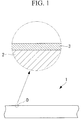
- the biological implant 1 As shown in Fig. 1 , the biological implant 1 according to this embodiment is provided with a base material 2 made of magnesium or a magnesium alloy and a ceramic membrane 3 formed on a surface of the base material 2.
- the ceramic membrane 3 is formed of a material in which the total content of elements having standard electrode potentials equal to or greater than -2.35 V and equal to or less than 0 V is suppressed to a predetermined amount or less.
- the total content of the above-described elements is increased, the elements that have been ionized by coming into contact with a body fluid accelerate ionization of magnesium or the magnesium alloy in the base material 2.
- the base material 2 is more easily corroded, and the mechanical strength thereof is reduced. Therefore, in this embodiment, the total content of the above-described elements is set to be equal to or less than a value at which the base material 2 can keep a desired mechanical strength over a predetermined period after implanting.
- the biological implant 1 that is implanted in, as biological tissue, a fractured portion of bone tissue will be described, and the total content is set so that, over the period until the fractured portion is healed, that is, over the period until autogenous bone of the fractured portion is restored, the base material 2 can keep the mechanical strength thereof at 85 % or greater relative to the mechanical strength immediately after implanting.
- the period required until the autogenous bone of the fractured portion is restored is about 90 days.
- a rapid decrease in the mechanical strength of the biological implant 1 during the period of about 90 days required for the fractured portion to heal is undesirable, and it is desirable to keep the mechanical strength at 85 % or greater.
- the initial bending strength thereof is equal to or greater than 400 MPa, and thus, at a degradation rate that is at least equivalent to that of polylactic acid, that is, with a 15 % or less reduction in the mechanical strength from the initial stage after implanting, by the virtue of having a greater initial bending strength than polylactic acid, it is possible to apply the magnesium alloy to an osteosynthetic treatment that requires an endurance against a load equal to or greater than the treatment range in which existing polylactic-acid osteosynthetic materials are used.
- the ceramic membrane 3 contains oxygen and magnesium as a first main component and a second main component, respectively, and is an anodic oxidation membrane that is generated by an anodic oxidation process performed after molding processing of the base material 2.
- the ceramic membrane 3 provided at the surface of the base material 2 comes into contact with the body fluid first, thus providing protection so as to suppress corrosion of magnesium or the magnesium alloy forming the base material 2. Because the ceramic membrane 3 also contains minute amounts of metal elements having standard electrode potentials equal to or greater than -2.35 V and equal to or less than 0 V, these metal elements are degraded and ionized in the body fluid.
- the ionized metal elements are restricted so as not to accelerate ionization of magnesium or the magnesium alloy in the base material 2. Consequently, even if the base material 2 is degraded due to corrosion, the rate thereof is restricted to a level such that the mechanical strength is reduced within a range of 15 % or less from immediately after implanting even if 90 days have passed after implanting, and the load exerted on the fractured portion is stably supported by the biological implant 1.
- the fractured portion is sufficiently restored by the autogenous bone when 90 days have passed after implanting, thereafter, it is permissible that degradation of the magnesium or magnesium-alloy implant advances and that the strength thereof is rapidly reduced.
- the Young's modulus of magnesium or the magnesium alloy is close to the Young's modulus of autogenous bone, even if the metal coexists with autogenous bone over an intermediate to long period, the physical burden that the implant exerts on the autogenous bone would be low. Therefore, because it is unlikely that the implant causes a problem of re-fracture or the like, the degradation slowly advances, and the bone tissue can safely be restored.
- the ceramic membrane 3 formed of the generated anodic oxidation membrane is firmly bonded with the base material 2 through chemical reactions, thus making it unlikely that the ceramic membrane 3 physically peels off. Consequently, the corrosion resistance thereof is enhanced, and it is possible to prevent the ceramic membrane 3 from peeling after implanting.
- ICP atomic emission spectrophotometry in accordance with JIS K 0116 was performed on three samples A, B, and C and the base material 2.
- differences from the analysis result for the base material 2 are shown in Fig. 2 together with detected metal elements and their standard electrode potentials.
- the three samples A, B, and C were individually obtained by the anodic oxidation process by using a solution containing ammonium ion and phosphate ion and by using WE43 in accordance with the ASTM standard as the base material 2; in order to control contaminating elements and amounts thereof, pure magnesium was used as the electrode material, and the samples A, B, and C were prepared using the solutions of different purities.
- WE43 is an Mg-Y-RE-Zr alloy.
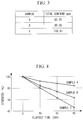
- Fig. 3 shows the total contents of metal elements in the individual samples A, B, and C, which have standard electrode potentials equal to or greater than -2.35 V and equal to or less than 0 V.
- these metal elements are at least one type of metal elements selected from Nd, Sm, Dy, Gd, Al, V, Zr, Mn, Zn, Cr, Fe, Ni, Sn, and Pb shown in areas surrounded by broken lines in Fig. 2 .
- Fig. 4 shows the relationship between the elapsed time and the mechanical strength for the individual samples A, B, and C when immersed in a simulated body fluid (PBS (-) solution at 37.0 °C).
- PBS (-) solution simulated body fluid
- the mechanical strength was measured by performing three-point bending tests in accordance with JIS Z 2248 at elapsed times of 30 days, 60 days, and 90 days after immersing.
- the results thereof showed that the total content of the metal elements having standard electrode potentials equal to or greater than -2.35 V and equal to or less than 0 V was the lowest for the sample A at 62.25 ppm, and the reduction in the bending strength after 90 days had passed also remained at about 4 %.
- the total content for the sample B was 99.35 ppm, and the reduction in the bending strength was about 9 %.
- the total content for the sample C was the highest at 109.61 ppm, and the reduction in the bending strength was about 13 %.
- the bending strength after 90 days have passed from the initial stage after implanting can be kept at 85% or greater, that, by setting the total content to 99 ppm, the bending strength after 90 days have passed from the initial stage after implanting can be kept at 90 % or greater, and that, by setting the total content to 109 ppm, the bending strength after 90 days have passed from the initial stage after implanting can be kept at 95 % or greater.
- WE43 is employed as the base material 2 in this embodiment, alternatively, any alloy classified as AE42, AM60, AS41, AZ31, EZ33, M1, QE22, ZE41, or ZK51 according to the ASTM standard may be employed.
- These alloys have relatively low total contents of the metal elements having standard electrode potentials equal to or greater than -2.35 V and equal to or less than 0 V.
- a feature of these alloys is that, even if membrane-generating processing is applied thereto, as with this embodiment, the amount by which the ceramic membrane is contaminated by the metal elements having standard electrode potentials equal to or greater than -2.35 V and equal to or less than 0 V that are derived from the alloys is suppressed, and thus, it is possible to fabricate a biological implant having a high corrosion resistance.
- anodic oxidation membrane generated by means of an anodic oxidation process has been described as an example of the ceramic membrane 3 in this embodiment, alternatively, a membrane generated by chemical conversion coating may be employed.
- a crystalline phase of magnesium phosphate may be formed at a surface of the base material 2 by immersing the base material 2 made of pure magnesium in a high-purity (5 mol/L) phosphoric acid solution.
- the total content of the metal elements having standard electrode potentials equal to or greater than -2.35 V and equal to or less than 0 V is 39.6 ppm, and the three-point bending strength after 90 days have passed after immersing in PBS is kept at 95.2 % of the value immediately after immersing.
Landscapes
- Health & Medical Sciences (AREA)
- Chemical & Material Sciences (AREA)
- Life Sciences & Earth Sciences (AREA)
- Animal Behavior & Ethology (AREA)
- General Health & Medical Sciences (AREA)
- Public Health (AREA)
- Veterinary Medicine (AREA)
- Epidemiology (AREA)
- Surgery (AREA)
- Inorganic Chemistry (AREA)
- Engineering & Computer Science (AREA)
- Heart & Thoracic Surgery (AREA)
- Vascular Medicine (AREA)
- Materials Engineering (AREA)
- Metallurgy (AREA)
- Organic Chemistry (AREA)
- Transplantation (AREA)
- Dermatology (AREA)
- Oral & Maxillofacial Surgery (AREA)
- Medicinal Chemistry (AREA)
- Orthopedic Medicine & Surgery (AREA)
- Chemical Kinetics & Catalysis (AREA)
- Mechanical Engineering (AREA)
- General Chemical & Material Sciences (AREA)
- Electrochemistry (AREA)
- Biomedical Technology (AREA)
- Medical Informatics (AREA)
- Molecular Biology (AREA)
- Nuclear Medicine, Radiotherapy & Molecular Imaging (AREA)
- Neurology (AREA)
- Materials For Medical Uses (AREA)
- Prostheses (AREA)
Abstract
Description
- The present invention relates to a biological implant.
- In the related art, there are known biological implants whose biodegradation rate is controlled by adjusting the concentration of impurity elements to be added, in minute amounts, to a base material made of a biodegradable magnesium-based alloy and a coating layer coating a surface of the base material (for example, see Patent Literature 1).
- Minor elements to be added in this
Patent Literature 1 are selected from zirconium (Zr), molybdenum (Mo), niobium (Nb), tantalum (Ta), titanium (Ti), strontium (Sr), chromium (Cr), manganese (Mn), zinc (Zn), silicon (Si), phosphorus (P), nickel (Ni), and iron (Fe). - {PTL 1} Japanese Unexamined Patent Application, Publication No.
2012-196461 - However, because the above-described trace elements are elements whose standard electrode potentials are higher than that of magnesium and lower than that of hydrogen, the elements react with a body fluid when implanted in biological tissue, which causes ionization thereof, thus leaching out more easily. When the trace elements leach out by being ionized, there is a problem in that magnesium or the magnesium alloy in the base material existing in the area surrounding the trace elements is ionized. Specifically, there is a problem in that, in the case in which the base material is formed of magnesium, in addition to leaching caused by a reaction between the base material itself and the body fluid, a reaction with the ionized trace elements also accelerates leaching of magnesium.
- The present invention has been conceived in light of the above-described circumstances, and an object thereof is to provide a biological implant with which it is possible to maintain a base material made of magnesium or a magnesium alloy so as to prevent rapid degradation thereof over a predetermined period after implanting.
- In order to achieve the above-described object, the present invention provides the following solutions.
- An aspect of the present invention is a biological implant including a ceramic membrane provided on a surface of a base material made of magnesium or a magnesium alloy, wherein a total content of a metal element contained in the ceramic membrane, which has a standard electrode potential equal to or greater than -2.35 V and equal to or less than 0 V, is set to be equal to or less than a value at which the base material can keep a desired mechanical strength over a healing period of an implant site in biological tissue.
- With this aspect, when the biological implant is implanted in the biological tissue, the ceramic membrane provided at the surface of the base material comes into contact with the biological tissue and is degraded by a reaction with the body fluid, thus ionizing the metal elements contained therein. Among metal ions, although those having standard electrode potentials equal to or greater than -2.35 V and equal to or less than 0 V accelerate the degradation of magnesium or the magnesium alloy in the base material, in this aspect, by suppressing the total content thereof sufficiently low, it is possible to keep the mechanical strength of the base material at a desired value during a period until the biological tissue at the implant site is healed. Accordingly, the biological implant can continue to support the affected area until the affected area is healed.
- In the above-described aspect, the desired mechanical strength may be 85 % or greater relative to a mechanical strength before implanting.
- By doing so, it is possible to ensure a high enough mechanical strength of the biological implant until the affected area is healed, and it is possible to continue to support the affected area.
- In the above-described aspect, it is preferable that the total content be equal to or less than 109 ppm.
- By doing so, it is possible to maintain the mechanical strength at about 85 % or greater even after 90 days have passed after implanting in the biological tissue.
- In the above-described aspect, it is preferable that the total content be equal to or less than 99 ppm.
- By doing so, it is possible to maintain the mechanical strength at about 90 % or greater even after 90 days have passed after implanting in the biological tissue.
- Furthermore, in the above-described aspect, it is preferable that the total content be equal to or less than 62 ppm.
- By doing so, it is possible to maintain the mechanical strength at about 95 % or greater even after 90 days have passed after implanting in the biological tissue.
- In the above-described aspect, the ceramic membrane may contain magnesium and oxygen as a first main component and a second main component, respectively.
- In addition, in the above-described aspect, the metal element may be at least one type of metal element selected from Nd, Sm, Dy, Gd, Al, V, Zr, Mn, Zn, Cr, Fe, Ni, Sn, and Pb.
- In the above-described aspect, the ceramic membrane may be generated in a membrane-generating processing step after molding the base material.
- By doing so, a ceramic membrane in which the content of a specific metal element is reduced by the membrane-generating processing performed after molding the base material, except for a membrane formed during the molding processing and a membrane formed by natural oxidation caused by contact with the atmosphere, can be formed as the ceramic membrane.
- In the above-described aspect, the membrane-generating processing step may employ a wet process.
- By doing so, by controlling the metal-element contents of a reagent in which the base material is immersed in the membrane-generating processing step, it is possible to precisely control the contents of metal elements having standard electrode potentials equal to or greater than -2.35 V and equal to or less than 0 V.
- In the above-described aspect, the membrane-generating processing step may employ an anodic oxidation process.
- By doing so, it is possible to enhance the adhesion strength between the generated ceramic membrane and the base material, and it is possible to enhance the corrosion resistance by preventing the membrane from physically peeling off.
- In the above-described aspect, the membrane-generating processing step may employ a chemical conversion coating.
- By doing so, it is possible to use high-purity reagents as the reagents to be used in the chemical conversion coating, such as acid treatment or the like, which facilitates manufacturing management, and it is possible to more stably enhance the corrosion resistance.
- With the present invention, an advantage is afforded in that it is possible to maintain a base material made of magnesium or a magnesium alloy so as to prevent rapid degradation thereof over a predetermined period after implanting.
-
- {
Fig. 1} Fig. 1 is a partial front view of a biological implant according to an embodiment of the present invention, and an enlarged sectional view showing details of a portion D thereof. - {
Fig. 2} Fig. 2 is a diagram showing, in the form of tables, types of metal elements contained in ceramic membranes provided in three samples of the biological implant inFig. 1 , standard electrode potentials thereof, and contents thereof. - {
Fig. 3} Fig. 3 is a diagram showing, in the form of a table, total contents of metal elements contained in the ceramic membranes of the samples inFig. 2 , which have a standard electrode potential equal to or greater than -2.35 V and equal to or less than 0 V. - {
Fig. 4} Fig. 4 is a diagram showing, in the form of a graph, the relationship between the elapsed time and strength in the case in which the samples inFig. 2 are immersed in a simulated body fluid. - A
biological implant 1 according to an embodiment of the present invention will be described below with reference to the drawings. - As shown in
Fig. 1 , thebiological implant 1 according to this embodiment is provided with abase material 2 made of magnesium or a magnesium alloy and aceramic membrane 3 formed on a surface of thebase material 2. - The
ceramic membrane 3 is formed of a material in which the total content of elements having standard electrode potentials equal to or greater than -2.35 V and equal to or less than 0 V is suppressed to a predetermined amount or less. When the total content of the above-described elements is increased, the elements that have been ionized by coming into contact with a body fluid accelerate ionization of magnesium or the magnesium alloy in thebase material 2. Specifically, with an increase in the total content of the above-described elements, thebase material 2 is more easily corroded, and the mechanical strength thereof is reduced. Therefore, in this embodiment, the total content of the above-described elements is set to be equal to or less than a value at which thebase material 2 can keep a desired mechanical strength over a predetermined period after implanting. - Specifically, in this embodiment, an example of the
biological implant 1 that is implanted in, as biological tissue, a fractured portion of bone tissue will be described, and the total content is set so that, over the period until the fractured portion is healed, that is, over the period until autogenous bone of the fractured portion is restored, thebase material 2 can keep the mechanical strength thereof at 85 % or greater relative to the mechanical strength immediately after implanting. - According to Gurlt, although there is variability among individuals, the period required until the autogenous bone of the fractured portion is restored is about 90 days. In other words, a rapid decrease in the mechanical strength of the
biological implant 1 during the period of about 90 days required for the fractured portion to heal is undesirable, and it is desirable to keep the mechanical strength at 85 % or greater. - In the literature "Y. Shikinami, et al. Biomaterials 20 (1999) 859-877", results of a bending strength test performed for the case in which a polylactic-acid osteosynthetic material is immersed in a simulated body fluid (i.e., PBS) are reported, which indicate a 16 % reduction from the initial strength after about 90 days. An initial bending strength of 270 MPa was reported for polylactic acid in the above literature. On the other hand, with the magnesium alloy, the initial bending strength thereof is equal to or greater than 400 MPa, and thus, at a degradation rate that is at least equivalent to that of polylactic acid, that is, with a 15 % or less reduction in the mechanical strength from the initial stage after implanting, by the virtue of having a greater initial bending strength than polylactic acid, it is possible to apply the magnesium alloy to an osteosynthetic treatment that requires an endurance against a load equal to or greater than the treatment range in which existing polylactic-acid osteosynthetic materials are used.
- In this embodiment, the
ceramic membrane 3 contains oxygen and magnesium as a first main component and a second main component, respectively, and is an anodic oxidation membrane that is generated by an anodic oxidation process performed after molding processing of thebase material 2. - With the thus-configured
biological implant 1 according to this embodiment, when implanted in, for example, a fractured portion of bone tissue, as an affected area of biological tissue, theceramic membrane 3 provided at the surface of thebase material 2 comes into contact with the body fluid first, thus providing protection so as to suppress corrosion of magnesium or the magnesium alloy forming thebase material 2. Because theceramic membrane 3 also contains minute amounts of metal elements having standard electrode potentials equal to or greater than -2.35 V and equal to or less than 0 V, these metal elements are degraded and ionized in the body fluid. - In this case, with the
biological implant 1 according to this embodiment, because the total content of the above-described elements is restricted, the ionized metal elements are restricted so as not to accelerate ionization of magnesium or the magnesium alloy in thebase material 2. Consequently, even if thebase material 2 is degraded due to corrosion, the rate thereof is restricted to a level such that the mechanical strength is reduced within a range of 15 % or less from immediately after implanting even if 90 days have passed after implanting, and the load exerted on the fractured portion is stably supported by thebiological implant 1. - Because the fractured portion is sufficiently restored by the autogenous bone when 90 days have passed after implanting, thereafter, it is permissible that degradation of the magnesium or magnesium-alloy implant advances and that the strength thereof is rapidly reduced. In addition, because the Young's modulus of magnesium or the magnesium alloy is close to the Young's modulus of autogenous bone, even if the metal coexists with autogenous bone over an intermediate to long period, the physical burden that the implant exerts on the autogenous bone would be low. Therefore, because it is unlikely that the implant causes a problem of re-fracture or the like, the degradation slowly advances, and the bone tissue can safely be restored.
- In addition, by forming the
ceramic membrane 3 by the anodic oxidation process, theceramic membrane 3 formed of the generated anodic oxidation membrane is firmly bonded with thebase material 2 through chemical reactions, thus making it unlikely that theceramic membrane 3 physically peels off. Consequently, the corrosion resistance thereof is enhanced, and it is possible to prevent theceramic membrane 3 from peeling after implanting. - Here, ICP atomic emission spectrophotometry in accordance with JIS K 0116 was performed on three samples A, B, and C and the
base material 2. With regard to the analysis results for the individual samples A, B, and C, differences from the analysis result for the base material 2 (sample analysis result - base-material analysis result) are shown inFig. 2 together with detected metal elements and their standard electrode potentials. - The three samples A, B, and C were individually obtained by the anodic oxidation process by using a solution containing ammonium ion and phosphate ion and by using WE43 in accordance with the ASTM standard as the
base material 2; in order to control contaminating elements and amounts thereof, pure magnesium was used as the electrode material, and the samples A, B, and C were prepared using the solutions of different purities. Here, WE43 is an Mg-Y-RE-Zr alloy. - In addition,
Fig. 3 shows the total contents of metal elements in the individual samples A, B, and C, which have standard electrode potentials equal to or greater than -2.35 V and equal to or less than 0 V. Specifically, these metal elements are at least one type of metal elements selected from Nd, Sm, Dy, Gd, Al, V, Zr, Mn, Zn, Cr, Fe, Ni, Sn, and Pb shown in areas surrounded by broken lines inFig. 2 . - Furthermore,
Fig. 4 shows the relationship between the elapsed time and the mechanical strength for the individual samples A, B, and C when immersed in a simulated body fluid (PBS (-) solution at 37.0 °C). With regard to the mechanical strength, the bending strength was measured by performing three-point bending tests in accordance with JIS Z 2248 at elapsed times of 30 days, 60 days, and 90 days after immersing. - The results thereof showed that the total content of the metal elements having standard electrode potentials equal to or greater than -2.35 V and equal to or less than 0 V was the lowest for the sample A at 62.25 ppm, and the reduction in the bending strength after 90 days had passed also remained at about 4 %. The total content for the sample B was 99.35 ppm, and the reduction in the bending strength was about 9 %. Furthermore, the total content for the sample C was the highest at 109.61 ppm, and the reduction in the bending strength was about 13 %.
- Specifically, based on these findings, it can be concluded that, by setting the total content of the metal elements having standard electrode potentials equal to or greater than -2.35 V and equal to or less than 0 V to 109 ppm or less, the bending strength after 90 days have passed from the initial stage after implanting can be kept at 85% or greater, that, by setting the total content to 99 ppm, the bending strength after 90 days have passed from the initial stage after implanting can be kept at 90 % or greater, and that, by setting the total content to 109 ppm, the bending strength after 90 days have passed from the initial stage after implanting can be kept at 95 % or greater.
- Note that, although WE43 is employed as the
base material 2 in this embodiment, alternatively, any alloy classified as AE42, AM60, AS41, AZ31, EZ33, M1, QE22, ZE41, or ZK51 according to the ASTM standard may be employed. - These alloys have relatively low total contents of the metal elements having standard electrode potentials equal to or greater than -2.35 V and equal to or less than 0 V. A feature of these alloys is that, even if membrane-generating processing is applied thereto, as with this embodiment, the amount by which the ceramic membrane is contaminated by the metal elements having standard electrode potentials equal to or greater than -2.35 V and equal to or less than 0 V that are derived from the alloys is suppressed, and thus, it is possible to fabricate a biological implant having a high corrosion resistance.
- In addition, although an anodic oxidation membrane generated by means of an anodic oxidation process has been described as an example of the
ceramic membrane 3 in this embodiment, alternatively, a membrane generated by chemical conversion coating may be employed. - For example, a crystalline phase of magnesium phosphate may be formed at a surface of the
base material 2 by immersing thebase material 2 made of pure magnesium in a high-purity (5 mol/L) phosphoric acid solution. In this case, the total content of the metal elements having standard electrode potentials equal to or greater than -2.35 V and equal to or less than 0 V is 39.6 ppm, and the three-point bending strength after 90 days have passed after immersing in PBS is kept at 95.2 % of the value immediately after immersing. -
- 1
- biological implant
- 2
- base material
- 3
- ceramic membrane
Claims (11)
- A biological implant comprising:a ceramic membrane provided on a surface of a base material made of magnesium or a magnesium alloy,wherein a total content of a metal element contained in the ceramic membrane, which has a standard electrode potential equal to or greater than -2.35 V and equal to or less than 0 V, is set to be equal to or less than a value at which the base material can keep a desired mechanical strength over a healing period of an implant site in biological tissue.
- The biological implant according to Claim 1, wherein the desired mechanical strength is 85 % or greater mechanical strength relative to a mechanical strength before implanting.
- The biological implant according to Claim 2, wherein the total content is equal to or less than 109 ppm.
- The biological implant according to Claim 3, wherein the total content is equal to or less than 99 ppm.
- The biological implant according to Claim 4, wherein the total content is equal to or less than 62 ppm.
- The biological implant according to any one of Claims 1 to 5, wherein the ceramic membrane contains oxygen and magnesium as a first main component and a second main component, respectively.
- The biological implant according to any one of Claims 1 to 6, wherein the metal element is at least one type of metal element selected from Nd, Sm, Dy, Gd, Al, V, Zr, Mn, Zn, Cr, Fe, Ni, Sn, and Pb.
- The biological implant according to any one of Claims 1 to 7, wherein the ceramic membrane is generated in a membrane-generating processing step after molding the base material.
- The biological implant according to Claim 8, wherein the membrane-generating processing step employs a wet process.
- The biological implant according to Claim 9, wherein the membrane-generating processing step employs an anodic oxidation process.
- The biological implant according to Claim 9, wherein the membrane-generating processing step employs a chemical conversion coating.
Applications Claiming Priority (2)
| Application Number | Priority Date | Filing Date | Title |
|---|---|---|---|
| JP2013127507 | 2013-06-18 | ||
| PCT/JP2014/055448 WO2014203566A1 (en) | 2013-06-18 | 2014-03-04 | Implant for living organisms |
Publications (2)
| Publication Number | Publication Date |
|---|---|
| EP3011979A1 true EP3011979A1 (en) | 2016-04-27 |
| EP3011979A4 EP3011979A4 (en) | 2017-02-15 |
Family
ID=52104312
Family Applications (1)
| Application Number | Title | Priority Date | Filing Date |
|---|---|---|---|
| EP14813436.4A Withdrawn EP3011979A4 (en) | 2013-06-18 | 2014-03-04 | Implant for living organisms |
Country Status (5)
| Country | Link |
|---|---|
| US (1) | US20160060784A1 (en) |
| EP (1) | EP3011979A4 (en) |
| JP (1) | JPWO2014203566A1 (en) |
| CN (1) | CN105050631A (en) |
| WO (1) | WO2014203566A1 (en) |
Families Citing this family (5)
| Publication number | Priority date | Publication date | Assignee | Title |
|---|---|---|---|---|
| EP2668966B1 (en) * | 2011-01-24 | 2018-09-12 | Olympus Corporation | Biodegradable implant material and method for producing same |
| JP2015119893A (en) * | 2013-12-25 | 2015-07-02 | 堤総研株式会社 | Organism implement |
| JP2015228906A (en) * | 2014-06-03 | 2015-12-21 | オリンパス株式会社 | Osteosynthesis implant |
| WO2016103423A1 (en) * | 2014-12-25 | 2016-06-30 | オリンパス株式会社 | Implant for bone setting use, and method for producing same |
| CN107217185B (en) * | 2017-06-03 | 2021-02-12 | 西南医科大学 | Degradable medical implant |
Family Cites Families (11)
| Publication number | Priority date | Publication date | Assignee | Title |
|---|---|---|---|---|
| EP1997522B1 (en) * | 2006-03-20 | 2015-05-13 | National Institute for Materials Science | Method of controlling degradation time of a biodegradable device |
| KR20080113280A (en) * | 2006-04-28 | 2008-12-29 | 바이오마그네슘 시스템즈 리미티드 | Biodegradable magnesium alloys and uses thereof |
| CN102512711A (en) | 2006-09-22 | 2012-06-27 | 友和安股份公司 | Implants comprising biodegradable metals and method for manufacturing the same |
| MX2011010391A (en) * | 2009-08-25 | 2012-01-20 | Prostec Co Ltd | Medical part and manufacturing method therefor. |
| JP2011072617A (en) * | 2009-09-30 | 2011-04-14 | Olympus Corp | Implantation material and method of manufacturing the same |
| EP2668966B1 (en) * | 2011-01-24 | 2018-09-12 | Olympus Corporation | Biodegradable implant material and method for producing same |
| EP2776083B1 (en) * | 2011-11-07 | 2017-07-26 | Synthes GmbH | Lean electrolyte for biocompatible plasmaelectrolytic coatings on magnesium implant material |
| CN102727932A (en) * | 2012-06-18 | 2012-10-17 | 东莞宜安科技股份有限公司 | A kind of high-purity magnesium medical implant and its production method |
| CN103272287B (en) * | 2013-05-24 | 2015-03-11 | 华南理工大学 | Biological medical degradable material and preparation method thereof |
| JP2015228906A (en) * | 2014-06-03 | 2015-12-21 | オリンパス株式会社 | Osteosynthesis implant |
| WO2016103423A1 (en) * | 2014-12-25 | 2016-06-30 | オリンパス株式会社 | Implant for bone setting use, and method for producing same |
-
2014
- 2014-03-04 CN CN201480017391.6A patent/CN105050631A/en active Pending
- 2014-03-04 JP JP2015522587A patent/JPWO2014203566A1/en active Pending
- 2014-03-04 EP EP14813436.4A patent/EP3011979A4/en not_active Withdrawn
- 2014-03-04 WO PCT/JP2014/055448 patent/WO2014203566A1/en not_active Ceased
-
2015
- 2015-11-10 US US14/936,854 patent/US20160060784A1/en not_active Abandoned
Also Published As
| Publication number | Publication date |
|---|---|
| CN105050631A (en) | 2015-11-11 |
| US20160060784A1 (en) | 2016-03-03 |
| EP3011979A4 (en) | 2017-02-15 |
| JPWO2014203566A1 (en) | 2017-02-23 |
| WO2014203566A1 (en) | 2014-12-24 |
Similar Documents
| Publication | Publication Date | Title |
|---|---|---|
| US20160060784A1 (en) | Biological implant | |
| Bowen et al. | Zinc exhibits ideal physiological corrosion behavior for bioabsorbable stents. | |
| EP2457601B1 (en) | Marker composite and medical implant comprising an x-ray marker | |
| RU2754035C2 (en) | Magnesium alloy, method for its production and use | |
| US8034101B2 (en) | Magnesium-based biodegradable metallic material | |
| RU2647951C2 (en) | Magnesium alloy, method for production thereof and use thereof | |
| RU2640700C2 (en) | Magnesium alloy, method of its manufacture and use | |
| Gray‐Munro et al. | The mechanism of deposition of calcium phosphate coatings from solution onto magnesium alloy AZ31 | |
| JP6678982B2 (en) | Bioabsorbable stent | |
| EP2014317B1 (en) | Implant with a near-surface diffusion layer containing magnesium and corresponding production method | |
| US10669613B2 (en) | Titanium alloy | |
| JP2009297537A (en) | Metallic implant degradable in vivo | |
| DE10128100A1 (en) | Medical implant used for humans and animals is made from magnesium alloy containing additions of rare earth metals and lithium | |
| Briceño et al. | Influence of the microstructure on electrochemical corrosion and nickel release in NiTi orthodontic archwires | |
| US20170071741A1 (en) | Osteosynthetic implant | |
| WO2020196777A1 (en) | Implant for non-luminal area | |
| EP2332588A2 (en) | Biocorrodible implant having a corrosion-inhibiting coating | |
| Arciniegas et al. | New Ni-free superelastic alloy for orthodontic applications | |
| Chang et al. | Selective leaching and surface properties of Ti50Ni50− xCux (x= 0–20 at.%) shape memory alloys for biomedical applications | |
| US20060169364A1 (en) | Metallic material and methods of making and using same | |
| KR101336408B1 (en) | Method for precipitating a ceramic coating on a metal and biodegradable implant manufactured by the same | |
| US20180112316A1 (en) | Method for the surface treatment of a biocorrodable implant | |
| WO2015064130A1 (en) | Implant for living body | |
| CN115627478A (en) | Medical magnesium alloy implant and method for delaying corrosion in body | |
| 정고은 | Mechanism study of the corrosion and ROS generation on the biodegradable metals for biomedical engineering application |
Legal Events
| Date | Code | Title | Description |
|---|---|---|---|
| PUAI | Public reference made under article 153(3) epc to a published international application that has entered the european phase |
Free format text: ORIGINAL CODE: 0009012 |
|
| 17P | Request for examination filed |
Effective date: 20160104 |
|
| AK | Designated contracting states |
Kind code of ref document: A1 Designated state(s): AL AT BE BG CH CY CZ DE DK EE ES FI FR GB GR HR HU IE IS IT LI LT LU LV MC MK MT NL NO PL PT RO RS SE SI SK SM TR |
|
| AX | Request for extension of the european patent |
Extension state: BA ME |
|
| DAX | Request for extension of the european patent (deleted) | ||
| RAP1 | Party data changed (applicant data changed or rights of an application transferred) |
Owner name: OLYMPUS CORPORATION |
|
| RIN1 | Information on inventor provided before grant (corrected) |
Inventor name: TANIGUCHI, HIROFUMI |
|
| A4 | Supplementary search report drawn up and despatched |
Effective date: 20170113 |
|
| RIC1 | Information provided on ipc code assigned before grant |
Ipc: C25D 11/30 20060101ALI20170106BHEP Ipc: C22C 23/00 20060101ALI20170106BHEP Ipc: C22C 23/06 20060101ALI20170106BHEP Ipc: A61L 27/00 20060101AFI20170106BHEP Ipc: C22C 23/02 20060101ALI20170106BHEP Ipc: C23C 22/08 20060101ALI20170106BHEP Ipc: A61B 17/68 20060101ALI20170106BHEP Ipc: C22C 23/04 20060101ALI20170106BHEP |
|
| STAA | Information on the status of an ep patent application or granted ep patent |
Free format text: STATUS: EXAMINATION IS IN PROGRESS |
|
| 17Q | First examination report despatched |
Effective date: 20181119 |
|
| STAA | Information on the status of an ep patent application or granted ep patent |
Free format text: STATUS: THE APPLICATION IS DEEMED TO BE WITHDRAWN |
|
| 18D | Application deemed to be withdrawn |
Effective date: 20190330 |