EP3011025B1 - Antisense oligonucleotide compositions - Google Patents
Antisense oligonucleotide compositions Download PDFInfo
- Publication number
- EP3011025B1 EP3011025B1 EP14732629.2A EP14732629A EP3011025B1 EP 3011025 B1 EP3011025 B1 EP 3011025B1 EP 14732629 A EP14732629 A EP 14732629A EP 3011025 B1 EP3011025 B1 EP 3011025B1
- Authority
- EP
- European Patent Office
- Prior art keywords
- protein
- antisense oligonucleotide
- antisense
- sequence
- stranded
- Prior art date
- Legal status (The legal status is an assumption and is not a legal conclusion. Google has not performed a legal analysis and makes no representation as to the accuracy of the status listed.)
- Active
Links
Images




Classifications
-
- C—CHEMISTRY; METALLURGY
- C12—BIOCHEMISTRY; BEER; SPIRITS; WINE; VINEGAR; MICROBIOLOGY; ENZYMOLOGY; MUTATION OR GENETIC ENGINEERING
- C12N—MICROORGANISMS OR ENZYMES; COMPOSITIONS THEREOF; PROPAGATING, PRESERVING, OR MAINTAINING MICROORGANISMS; MUTATION OR GENETIC ENGINEERING; CULTURE MEDIA
- C12N15/00—Mutation or genetic engineering; DNA or RNA concerning genetic engineering, vectors, e.g. plasmids, or their isolation, preparation or purification; Use of hosts therefor
- C12N15/09—Recombinant DNA-technology
- C12N15/11—DNA or RNA fragments; Modified forms thereof; Non-coding nucleic acids having a biological activity
- C12N15/113—Non-coding nucleic acids modulating the expression of genes, e.g. antisense oligonucleotides; Antisense DNA or RNA; Triplex- forming oligonucleotides; Catalytic nucleic acids, e.g. ribozymes; Nucleic acids used in co-suppression or gene silencing
- C12N15/1131—Non-coding nucleic acids modulating the expression of genes, e.g. antisense oligonucleotides; Antisense DNA or RNA; Triplex- forming oligonucleotides; Catalytic nucleic acids, e.g. ribozymes; Nucleic acids used in co-suppression or gene silencing against viruses
-
- A—HUMAN NECESSITIES
- A61—MEDICAL OR VETERINARY SCIENCE; HYGIENE
- A61P—SPECIFIC THERAPEUTIC ACTIVITY OF CHEMICAL COMPOUNDS OR MEDICINAL PREPARATIONS
- A61P31/00—Antiinfectives, i.e. antibiotics, antiseptics, chemotherapeutics
- A61P31/12—Antivirals
-
- A—HUMAN NECESSITIES
- A61—MEDICAL OR VETERINARY SCIENCE; HYGIENE
- A61P—SPECIFIC THERAPEUTIC ACTIVITY OF CHEMICAL COMPOUNDS OR MEDICINAL PREPARATIONS
- A61P31/00—Antiinfectives, i.e. antibiotics, antiseptics, chemotherapeutics
- A61P31/12—Antivirals
- A61P31/20—Antivirals for DNA viruses
-
- A—HUMAN NECESSITIES
- A61—MEDICAL OR VETERINARY SCIENCE; HYGIENE
- A61P—SPECIFIC THERAPEUTIC ACTIVITY OF CHEMICAL COMPOUNDS OR MEDICINAL PREPARATIONS
- A61P35/00—Antineoplastic agents
-
- C—CHEMISTRY; METALLURGY
- C12—BIOCHEMISTRY; BEER; SPIRITS; WINE; VINEGAR; MICROBIOLOGY; ENZYMOLOGY; MUTATION OR GENETIC ENGINEERING
- C12N—MICROORGANISMS OR ENZYMES; COMPOSITIONS THEREOF; PROPAGATING, PRESERVING, OR MAINTAINING MICROORGANISMS; MUTATION OR GENETIC ENGINEERING; CULTURE MEDIA
- C12N15/00—Mutation or genetic engineering; DNA or RNA concerning genetic engineering, vectors, e.g. plasmids, or their isolation, preparation or purification; Use of hosts therefor
- C12N15/09—Recombinant DNA-technology
- C12N15/11—DNA or RNA fragments; Modified forms thereof; Non-coding nucleic acids having a biological activity
- C12N15/111—General methods applicable to biologically active non-coding nucleic acids
-
- C—CHEMISTRY; METALLURGY
- C12—BIOCHEMISTRY; BEER; SPIRITS; WINE; VINEGAR; MICROBIOLOGY; ENZYMOLOGY; MUTATION OR GENETIC ENGINEERING
- C12N—MICROORGANISMS OR ENZYMES; COMPOSITIONS THEREOF; PROPAGATING, PRESERVING, OR MAINTAINING MICROORGANISMS; MUTATION OR GENETIC ENGINEERING; CULTURE MEDIA
- C12N15/00—Mutation or genetic engineering; DNA or RNA concerning genetic engineering, vectors, e.g. plasmids, or their isolation, preparation or purification; Use of hosts therefor
- C12N15/09—Recombinant DNA-technology
- C12N15/11—DNA or RNA fragments; Modified forms thereof; Non-coding nucleic acids having a biological activity
- C12N15/113—Non-coding nucleic acids modulating the expression of genes, e.g. antisense oligonucleotides; Antisense DNA or RNA; Triplex- forming oligonucleotides; Catalytic nucleic acids, e.g. ribozymes; Nucleic acids used in co-suppression or gene silencing
-
- C—CHEMISTRY; METALLURGY
- C12—BIOCHEMISTRY; BEER; SPIRITS; WINE; VINEGAR; MICROBIOLOGY; ENZYMOLOGY; MUTATION OR GENETIC ENGINEERING
- C12N—MICROORGANISMS OR ENZYMES; COMPOSITIONS THEREOF; PROPAGATING, PRESERVING, OR MAINTAINING MICROORGANISMS; MUTATION OR GENETIC ENGINEERING; CULTURE MEDIA
- C12N2310/00—Structure or type of the nucleic acid
- C12N2310/10—Type of nucleic acid
- C12N2310/11—Antisense
-
- C—CHEMISTRY; METALLURGY
- C12—BIOCHEMISTRY; BEER; SPIRITS; WINE; VINEGAR; MICROBIOLOGY; ENZYMOLOGY; MUTATION OR GENETIC ENGINEERING
- C12N—MICROORGANISMS OR ENZYMES; COMPOSITIONS THEREOF; PROPAGATING, PRESERVING, OR MAINTAINING MICROORGANISMS; MUTATION OR GENETIC ENGINEERING; CULTURE MEDIA
- C12N2310/00—Structure or type of the nucleic acid
- C12N2310/10—Type of nucleic acid
- C12N2310/13—Decoys
-
- C—CHEMISTRY; METALLURGY
- C12—BIOCHEMISTRY; BEER; SPIRITS; WINE; VINEGAR; MICROBIOLOGY; ENZYMOLOGY; MUTATION OR GENETIC ENGINEERING
- C12N—MICROORGANISMS OR ENZYMES; COMPOSITIONS THEREOF; PROPAGATING, PRESERVING, OR MAINTAINING MICROORGANISMS; MUTATION OR GENETIC ENGINEERING; CULTURE MEDIA
- C12N2310/00—Structure or type of the nucleic acid
- C12N2310/30—Chemical structure
- C12N2310/35—Nature of the modification
- C12N2310/351—Conjugate
- C12N2310/3513—Protein; Peptide
-
- C—CHEMISTRY; METALLURGY
- C12—BIOCHEMISTRY; BEER; SPIRITS; WINE; VINEGAR; MICROBIOLOGY; ENZYMOLOGY; MUTATION OR GENETIC ENGINEERING
- C12N—MICROORGANISMS OR ENZYMES; COMPOSITIONS THEREOF; PROPAGATING, PRESERVING, OR MAINTAINING MICROORGANISMS; MUTATION OR GENETIC ENGINEERING; CULTURE MEDIA
- C12N2310/00—Structure or type of the nucleic acid
- C12N2310/30—Chemical structure
- C12N2310/35—Nature of the modification
- C12N2310/351—Conjugate
- C12N2310/3519—Fusion with another nucleic acid
-
- C—CHEMISTRY; METALLURGY
- C12—BIOCHEMISTRY; BEER; SPIRITS; WINE; VINEGAR; MICROBIOLOGY; ENZYMOLOGY; MUTATION OR GENETIC ENGINEERING
- C12N—MICROORGANISMS OR ENZYMES; COMPOSITIONS THEREOF; PROPAGATING, PRESERVING, OR MAINTAINING MICROORGANISMS; MUTATION OR GENETIC ENGINEERING; CULTURE MEDIA
- C12N2320/00—Applications; Uses
- C12N2320/30—Special therapeutic applications
- C12N2320/32—Special delivery means, e.g. tissue-specific
Definitions
- the present disclosure relates to antisense oligonucleotide (ASO) compositions and particularly to compositions and methods for the cytosolic delivery of antisense oligonucleotides (ASOs).
- ASO antisense oligonucleotide
- Hybrid ASOs part single-stranded and part double-stranded, are provided, hybridising to form a double-stranded region that can non-covalently bond to nucleic-acid-binding protein regions.
- ASO::protein complexes may be produced that facilitate delivery of antisense DNA into target cells. Such complexes may be used to down-regulate gene expression in cells.
- Antisense oligonucleotides have been approved by the FDA for use as antivirals, for the treatment of cytomegalovirus-mediated retinitis and chronic ulcerative colitis (Roehr, 1998; Yacychyn et al., 1998).
- ASOs are comprised of segments of single-stranded DNA, or analogues thereof, that are designed to hybridise to a messenger RNA (mRNA) transcript, derived from a specific gene.
- mRNA messenger RNA
- the mRNA::ASO hybrids so formed may be degraded by RNAse H.
- the genetic material of the virus enters specific cells in order to replicate, a process requiring the translation of virus-specific mRNA.
- an antisense oligonucleotide specific for virus mRNA By treating an infected cell with an antisense oligonucleotide specific for virus mRNA, it is possible to prevent the expression of a target viral gene and to block the viral life cycle.
- An important factor in the effectiveness of antisense oligonucleotide treatment is the bioavailability of the oligonucleotides (Biroccio et al., 2003). Bioavailability can be limited by the inability of antisense oligonucleotides to penetrate the plasma membrane or endomembrane system of cells.
- antisense oligonucleotides e.g., mRNA
- the targets of antisense oligonucleotides are located within the cytosol of a cell
- the oligonucleotides need to be able to traverse cell membranes before they can access the cytosol.
- One way to address this problem of cytosolic access of antisense oligonucleotides is to administer the treatment locally rather than systemically, and in particular, to administer the antisense oligonucleotide into a discrete pharmacokinetic compartment, raising the local concentration of the antisense oligonucleotide.
- an antisense oligonucleotide treatment of cytomegalovirus-mediated retinitis involves administering fomivirsen (Vitravene®) into a discrete pharmacokinetic compartment by intravitreal injection.
- fomivirsen Vitravene®
- cytosolic access i.e., access of the antisense oligonucleotides to their target mRNA
- Other approaches to antisense oligonucleotide intracellular delivery may involve: mechanical and electrical cell damage to the cell membrane, polymeric and lipid carriers (known to non-specifically destabilise membranes), or viral vectors.
- these and similar approaches have not proved to be safe or reliable in the clinic and have not resulted (to date) in any delivery technologies licensed for antisense products in the market place.
- the present disclosure aims to provide compositions and methods for use in a system for the down-regulation of one or more genes within a cell by means of a novel arrangement of an active antisense sequence (e.g., of single-stranded DNA) flanking a partially overlapping second oligonucleotide strand that forms a binding site that can bind to a proteinaceous, nucleic-acid-binding domain.
- an active antisense sequence e.g., of single-stranded DNA
- ASO hybrids partly single- and partly double-stranded nucleotides
- antisense oligonucleotides can be delivered to the cytosol of a cell providing direct access to RNA or DNA targets within the cytosol (such as viral mRNA transcripts) via the described antisense-to-protein conjugation strategy.
- the present disclosure provides an antisense oligonucleotide composition
- a pair of antisense oligonucleotides wherein the two antisense oligonucleotides hybridise to give at least one single-stranded antisense sequence and at least one double-stranded protein-binding sequence.
- the composition further comprises a shuttle protein (e.g., recombinant LFn-GAL4), wherein the shuttle protein comprises a nucleic-acid-binding domain (for example GAL4) that recognises the double-stranded protein-binding sequence and wherein the shuttle protein is non-covalently bonded to the pair of antisense oligonucleotides.
- a shuttle protein e.g., recombinant LFn-GAL4
- the shuttle protein comprises a nucleic-acid-binding domain (for example GAL4) that recognises the double-stranded protein-binding sequence and wherein the shuttle protein is non-covalently bonded
- the present disclosure provides a method of non-covalently conjugating an antisense oligonucleotide to a shuttle protein (e.g., LFn-GAL4), the method comprising: (i) providing two antisense oligonucleotides, (ii) hybridising the two antisense oligonucleotides to form an antisense hybrid, wherein the antisense hybrid comprises at least one single-stranded antisense sequence and at least one double-stranded protein-binding sequence, (iii) providing a shuttle protein containing a nucleic-acid-binding domain that recognises a double-stranded protein-binding target sequence, and (iv) non-covalently conjugating the shuttle protein to the antisense hybrid by means of the nucleic-acid-binding domain of the protein and the protein-binding sequence of the antisense hybrid.
- a shuttle protein e.g., LFn-GAL4
- the pore-forming protein is a non-toxic protein.
- One preferred pore-forming protein is B. anthracis virulence factor Protective Antigen (PA).
- PA Protective Antigen
- the pore-forming protein may be B. anthracis PA83 or PA63.
- An alternative aspect of the present disclosure is an antisense oligonucleotide composition as described above for use in a method of down-regulating the expression of a gene from Human Papilloma Virus (HPV) in a human cervical epithelial cell (see Figure 5 and Example 7).
- the present disclosure provides an antisense oligonucleotide composition as described above as a potential treatment or prophylaxis for cancer, in particular cancers caused by human papilloma virus (HPV), including cervical cancer and oral cancers.
- HPV human papilloma virus
- Many plant and bacterial toxins (virulence factors) have evolved to deliver a toxin, in the form of a macromolecular catalytically-active protein domain, to the cytosol of a cell.
- the arrangement of two oligonucleotide strands to provide a double-stranded protein-binding region or sequence, whilst leaving free single-stranded regions of sequence that have antisense activity provides a convenient conjugation method that can be used to bind the antisense domains to agents already described in the art (such as LFn-GAL4 and PA83). This facilitates the cytosolic delivery of the antisense agents that can mediate the down-regulation of genes coding for potential drug targets, for example HPV E7.
- Antisense oligonucleotide sequence specific for Syntaxin5 with flanking and GAL4 binding sequence :
- Figure 3 shows LFn-GAL4 dimerisation as measured by SANS in response to the addition of the antisense oligonucleotide composition shown in Figure 1a - small angle neutron scattering by LFn-GAL4 and LFn-GAL4::DS-antisense oligonucleotide in PBS (at approximately 0.5 mg/ml of LFn-GAL4 in each instance).
- Units of the x-axis of Figure 3 are q/l/angstrom and of the y-axis are 1/cm.
- the intensity of such scattered radiation is a reflection of the scatterer size and shape, as well as composition (i.e., LFn-GAL4). Both the individual proteins and their blends were examined. For the individual components, generally no scattering was observed, indicating their relatively small size. In the mixture of LFn-GAL4 and the hybridised oligonucleotide, scattering was observed, confirming that an interaction was occurring to form larger structures (i.e., LFn-GAL4::ASO complexes).
- Example 8 In vitro toxicity of compositions of the invention compared with poly(ethyleneimine)
- Example 9 Antisense inhibition of an in vitro translation assay using different antisense oligonucleotide compositions
Landscapes
- Health & Medical Sciences (AREA)
- Life Sciences & Earth Sciences (AREA)
- Engineering & Computer Science (AREA)
- Genetics & Genomics (AREA)
- Biomedical Technology (AREA)
- Chemical & Material Sciences (AREA)
- Organic Chemistry (AREA)
- Molecular Biology (AREA)
- Biotechnology (AREA)
- Bioinformatics & Cheminformatics (AREA)
- General Engineering & Computer Science (AREA)
- Wood Science & Technology (AREA)
- Zoology (AREA)
- General Health & Medical Sciences (AREA)
- Plant Pathology (AREA)
- Physics & Mathematics (AREA)
- Biochemistry (AREA)
- Microbiology (AREA)
- Biophysics (AREA)
- Virology (AREA)
- Pharmacology & Pharmacy (AREA)
- Medicinal Chemistry (AREA)
- Nuclear Medicine, Radiotherapy & Molecular Imaging (AREA)
- General Chemical & Material Sciences (AREA)
- Chemical Kinetics & Catalysis (AREA)
- Veterinary Medicine (AREA)
- Animal Behavior & Ethology (AREA)
- Public Health (AREA)
- Oncology (AREA)
- Communicable Diseases (AREA)
- Medicines That Contain Protein Lipid Enzymes And Other Medicines (AREA)
- Pharmaceuticals Containing Other Organic And Inorganic Compounds (AREA)
- Peptides Or Proteins (AREA)
- Medicinal Preparation (AREA)
- Micro-Organisms Or Cultivation Processes Thereof (AREA)
Description
- The present disclosure relates to antisense oligonucleotide (ASO) compositions and particularly to compositions and methods for the cytosolic delivery of antisense oligonucleotides (ASOs). Hybrid ASOs, part single-stranded and part double-stranded, are provided, hybridising to form a double-stranded region that can non-covalently bond to nucleic-acid-binding protein regions. In this way, ASO::protein complexes may be produced that facilitate delivery of antisense DNA into target cells. Such complexes may be used to down-regulate gene expression in cells.
Antisense oligonucleotides have been approved by the FDA for use as antivirals, for the treatment of cytomegalovirus-mediated retinitis and chronic ulcerative colitis (Roehr, 1998; Yacychyn et al., 1998). ASOs are comprised of segments of single-stranded DNA, or analogues thereof, that are designed to hybridise to a messenger RNA (mRNA) transcript, derived from a specific gene. The mRNA::ASO hybrids so formed may be degraded by RNAse H. In an organism infected with a virus, the genetic material of the virus enters specific cells in order to replicate, a process requiring the translation of virus-specific mRNA. By treating an infected cell with an antisense oligonucleotide specific for virus mRNA, it is possible to prevent the expression of a target viral gene and to block the viral life cycle.
An important factor in the effectiveness of antisense oligonucleotide treatment is the bioavailability of the oligonucleotides (Biroccio et al., 2003). Bioavailability can be limited by the inability of antisense oligonucleotides to penetrate the plasma membrane or endomembrane system of cells. Since the targets of antisense oligonucleotides (e.g., mRNA) are located within the cytosol of a cell, the oligonucleotides need to be able to traverse cell membranes before they can access the cytosol.
One way to address this problem of cytosolic access of antisense oligonucleotides is to administer the treatment locally rather than systemically, and in particular, to administer the antisense oligonucleotide into a discrete pharmacokinetic compartment, raising the local concentration of the antisense oligonucleotide. For example, an antisense oligonucleotide treatment of cytomegalovirus-mediated retinitis involves administering fomivirsen (Vitravene®) into a discrete pharmacokinetic compartment by intravitreal injection. However, cytosolic access i.e., access of the antisense oligonucleotides to their target mRNA, remains a substantial limitation, even after intravitreal administration (Lysik and Wu-Pong, 2003).
Other approaches to antisense oligonucleotide intracellular delivery may involve: mechanical and electrical cell damage to the cell membrane, polymeric and lipid carriers (known to non-specifically destabilise membranes), or viral vectors. However, these and similar approaches have not proved to be safe or reliable in the clinic and have not resulted (to date) in any delivery technologies licensed for antisense products in the market place. - The present disclosure aims to provide compositions and methods for use in a system for the down-regulation of one or more genes within a cell by means of a novel arrangement of an active antisense sequence (e.g., of single-stranded DNA) flanking a partially overlapping second oligonucleotide strand that forms a binding site that can bind to a proteinaceous, nucleic-acid-binding domain. We term these partly single- and partly double-stranded nucleotides, "ASO hybrids". Unexpectedly, we have discovered and have shown empirically (unpublished data):
- 1) That ASO hybrids can show an equivalent antisense activity profile to the control single-stranded antisense oligonucleotide in a cell-free assay, for example at an ASO concentration of 30 pMol.
- 2) That ASO hybrids bind to a nucleic-acid-binding domain (such as S. cerevisiae GAL4) to form a complex without requiring a polycationic affinity handle (such as poly(L-lysine), used previously (
Gaur et al., 2002; WO97/23236 - 3) That if, in an ASO hybrid complex (for example, GAL4::ASO) the nucleic-acid-binding domain is fused to attenuated lethal factor domain 1 (from Bacillus anthracis, i.e., LFn), this supramolecular assembly can pass through a pore derived from a bacterial virulence factor (Bacillus anthracis PA63). This is unexpected as it is reported that passage through the PA pore requires the structural disassembly of cargo (molten globular transition) (Zornetta et al., 2010). For a supramolecular complex to transit into the cytosol via the PA pore, molten globular transition of the cargo, i.e., a transition from an ordered structure to a random coil, must not be taking place. Again this transition has been shown without the use of a polycationic affinity handle (such as poly(L-lysine) (
Gaur et al., 2002: WO97/23236 - It is a particular aim of the present disclosure to provide a conjugation strategy to enable compositions of antisense oligonucleotides to cross a cell membrane. In this way, antisense oligonucleotides can be delivered to the cytosol of a cell providing direct access to RNA or DNA targets within the cytosol (such as viral mRNA transcripts) via the described antisense-to-protein conjugation strategy.
- The invention to which this specification pertains is set out in the claims appended to this description.
- In one aspect, the present disclosure provides an antisense oligonucleotide composition comprising a pair of antisense oligonucleotides, wherein the two antisense oligonucleotides hybridise to give at least one single-stranded antisense sequence and at least one double-stranded protein-binding sequence. Preferably the composition further comprises a shuttle protein (e.g., recombinant LFn-GAL4), wherein the shuttle protein comprises a nucleic-acid-binding domain (for example GAL4) that recognises the double-stranded protein-binding sequence and wherein the shuttle protein is non-covalently bonded to the pair of antisense oligonucleotides.
- In another aspect, the present disclosure provides a system for delivering an antisense oligonucleotide across a membrane of a cell, the system comprising (i) a pair of antisense oligonucleotides, the pair comprising a double-stranded protein-binding sequence (e.g., GAL4) and at least one single-stranded antisense sequence (as shown for example in
Figure 1 ), and (ii) a shuttle protein having a nucleic-acid-binding domain that is capable of recognising a specific sequence (e.g., CGG-N11CCG) incorporated within the double-stranded protein-binding nucleic acid sequence to non-covalently bind the shuttle protein to the pair of antisense oligonucleotides. - In a further aspect, the present disclosure provides a method of non-covalently conjugating an antisense oligonucleotide to a shuttle protein (e.g., LFn-GAL4), the method comprising: (i) providing two antisense oligonucleotides, (ii) hybridising the two antisense oligonucleotides to form an antisense hybrid, wherein the antisense hybrid comprises at least one single-stranded antisense sequence and at least one double-stranded protein-binding sequence, (iii) providing a shuttle protein containing a nucleic-acid-binding domain that recognises a double-stranded protein-binding target sequence, and (iv) non-covalently conjugating the shuttle protein to the antisense hybrid by means of the nucleic-acid-binding domain of the protein and the protein-binding sequence of the antisense hybrid.
The method of conjugation and membrane translocation does not require the use of (polycationic or ionic) DNA condensing agents (such as poly(ethylene imine) or poly(L-Lysine)) as these materials are often toxic and this toxicity is thought to be due, at least in part, to their propensity to destabilise cell membranes (Richardson et al., 1999) (and see Table 1 below). In the context of the present invention, a shuttle protein is defined as a protein that is capable of conveying genetic material through a pore in a cell membrane. The pore may comprise a pore-forming protein, such as Bacillus anthracis PA83 or PA63. - The oligonucleotides of the disclosure comprise nucleic acid sequences, which may be of DNA or DNA analogues, for example sulphonated analogues in which certain oxygen atoms are replaced by sulphur. Other DNA analogues that may be found suitable include those disclosed by Leumann (2002). The sequences may directly adjoin each other or be connected by an intervening DNA sequence, preferably at least partly double-stranded.
- In a preferred aspect of the disclosure made, the shuttle protein is an attenuated toxin protein. In particular, the shuttle protein may be B. anthracis lethal factor domain I (LFn).
Preferably, in the attenuated toxin, at least one toxin domain, e.g., one or more of toxic domains II-IV of the B. anthracis lethal factor protein toxin, is replaced by a nucleic-acid-binding domain. For example, the nucleic-acid-binding domain may be Saccharomyces cerevisiae GAL4 (fused with LFn).
Advantageously, the antisense oligonucleotide composition further comprises a pore-forming protein. Preferably, the pore-forming protein is a non-toxic protein. One preferred pore-forming protein is B. anthracis virulence factor Protective Antigen (PA). In particular, the pore-forming protein may be B. anthracis PA83 or PA63. - In one aspect (in the instance of targeting syntaxin5 (Syn5) for down-regulation) one of the oligonucleotides includes the antisense sequence 5' AATTTGTTTGTTGAGGCTA 3' (SEQ ID No: 18). Each member of the antisense oligonucleotide pair comprises one of the two complementary strands that hybridise to form the protein-binding sequence (see
Figure 1 ). The antisense sequence may be downstream (3') or upstream (5') of the protein-binding sequence (or both, if there is more than one antisense sequence in the hybrid that results) (seeFigure 1a ).
In one embodiment, the protein-binding sequence is CGG-N11-CCG where "N" is any nucleotide comprising a purine or pyrimidine base. Suitably, the protein-binding sequence is 5' CGGCTGCTCTGATGCCG 3' (SEQ ID No: 19).
Advantageously, the antisense oligonucleotide composition comprises oligonucleotide pairs that hybridise to form a protein-binding sequence that includes the sequence: 5' CGGCATCAGAGCAGCCG 3' (SEQ ID No: 20). Examples of such sequences areSEQ ID Nos - In one aspect the oligonucleotide further comprises a flanking sequence between the protein-binding sequence and the antisense sequence (see
Figure 1a ).
Advantageously, the oligonucleotides used in the present invention may be sulphonated, thereby increasing their stability. In sulphonated oligonucleotides, one or more non-bridging oxygen atoms in the oligonucleotide chain may be replaced by sulphur atoms. Sulphonation may be effected by various known methods, for example by use of Beaucage Reagent (3H-1,2-benzodithiole-3-one-1,1,-dioxide) (Cieślak et al., 2005). Other ways of increasing stability of oligonucleotides may be employed in the invention: for example, those disclosed in Leumann (2002). - The present disclosure also provides an in vitro method of down-regulating the expression of a target gene in the cytosol of a cell by delivering an antisense oligonucleotide across a membrane of the cell using an antisense oligonucleotide composition as described above.
- An alternative aspect of the present disclosure is an antisense oligonucleotide composition as described above for use in a method of down-regulating the expression of a gene from Human Papilloma Virus (HPV) in a human cervical epithelial cell (see
Figure 5 and Example 7).
In a further aspect, the present disclosure provides an antisense oligonucleotide composition as described above as a potential treatment or prophylaxis for cancer, in particular cancers caused by human papilloma virus (HPV), including cervical cancer and oral cancers.
Many plant and bacterial toxins (virulence factors) have evolved to deliver a toxin, in the form of a macromolecular catalytically-active protein domain, to the cytosol of a cell. Examples include cholera toxin (Sandvig et al., 2005), ricin toxin (Sandvig et al., 2010) and anthrax toxin (Gaur et al., 2002). These agents are known to operate in vivo, causing human morbidity and mortality.
The present inventors have prepared a known attenuated version of Bacillus anthracis lethal factor (LFn), where the wild-type domains II-IV (responsible for catalytic toxic activity) have been removed using recombinant PCR. These domains (II-IV) have subsequently been replaced with a nucleic-acid-binding domain such as Saccharomyces cerevisiae GAL4. All of this is known in the art (Gaur et al., 2002). The inventors have shown that GAL4 can bind, indirectly, to active antisense oligonucleotides under suitable conditions i.e., when two suitable oligonucleotides are hybridised together to form a hybrid containing a single-stranded antisense sequence and a double-stranded (DS) protein-binding sequence. The inventors have further shown that the complete complex (LFn-GAL4::ASO) can be used to translocate antisense oligonucleotides into the cytosol of a cell via interaction with another protein, PA83. Significantly, the processes and materials employed by the inventors to generate the complete antisense oligonucleotide - protein complex mean that condensing agents or polycation affinity handles hitherto regarded as necessary for DNA complex formation in the art (such as poly(L-lysine) (Gaur et al., 2002;WO97/23236 - A preferred aspect of a system in accordance with the present disclosure provides a single-stranded antisense oligonucleotide sequence 3' and/or 5' to a double-stranded (DS) protein-binding sequence. Proteins such as LFn may be used in conjunction with pore-forming proteins, for example PA83. PA83 has the capacity to enhance the membrane translocation of LFn. The interaction between LFn and PA83 is described elsewhere (Krantz et al., 2005) though it has been documented to require the molten-globular transition of cargo during pore translocation. We have now shown that it is possible to use a supramolecular assembly as cargo and that an antisense sequence associated with that supramolecular assembly can translocate into the cytosol. This could not have been predicted.
- The inventors have further developed the system to use hybridised oligonucleotide containing a double-stranded LFn-GAL4 binding sequence and a 3' and/or 5' overhanging single-stranded antisense sequence, which they have shown to be no less effective than the antisense (single-stranded nucleotide) sequence without any flanking sequence at antisense oligonucleotide (ASO) concentrations above 30pMol. The complex developed by the inventors can be used as an antisense oligonucleotide conjugation system to facilitate antisense oligonucleotide cytosolic delivery without a covalent attachment between the oligonucleotides and the LFn-GAL4 protein. The present invention provides a useful tool for in vitro research as well as a basis for an antisense oligonucleotide pharmaceutical composition and a critical part of the delivery methodology of any suitable antisense therapy. In particular, the present invention may form the basis for an antisense antiviral composition for the treatment of UPV-infected cervical epithelial cells.
- The dimerisation of the LFn-GAL4 protein in response to the presence of a double-stranded protein-recognition nucleic acid sequence adjacent to the antisense sequence has been shown using small-angle neutron scattering (SANS) (see Example 5). Example 5 shows that the protein LFn-GAL4 forms high molecular weight complexes (protein radius of gyration (Rg) expanding from approximately 5nm to 25nm) upon the addition of the hybrid oligonucleotide compositions of the invention.
- In order to test a three-component system in accordance with the present invention, the inventors initially produced a prototype. The system's ability to down-regulate genes was tested in human epithelial cells (Hela). The LFn-GAL4::oligonucleotide composite, when mixed with PA83 facilitates the down-regulation of the specific, selected gene (see Example 6), corresponding to the antisense sequence. With reference to Example 6, this illustrates the down-regulation of the protein Syntaxin5 by Western blotting and immunodetection (Suga et al., 2005). Gene specificity (as well as controlling for cell number) is further emphasised by normalising the levels of target gene expression to the expression levels of a "housekeeper" gene such as Derlin1 and through the inclusion of "non-sense" controls (see
Figure 4 ). 'Non-sense' controls are controls that include single-stranded DNA that is not complementary to target RNA in the gene being expressed, and accordingly are not expected to inhibit its expression. - In addition antisense activity is also shown against the expression of the HPV gene E7 (see Example 7). HPV E7 is critical to the propagation of the HPV viral life cycle and is a target for therapeutic intervention (Jonson et al., 2008).
- The arrangement of two oligonucleotide strands to provide a double-stranded protein-binding region or sequence, whilst leaving free single-stranded regions of sequence that have antisense activity provides a convenient conjugation method that can be used to bind the antisense domains to agents already described in the art (such as LFn-GAL4 and PA83). This facilitates the cytosolic delivery of the antisense agents that can mediate the down-regulation of genes coding for potential drug targets, for example HPV E7.
- Specific embodiments to the invention are now described in more detail with reference to the accompanying drawings, in which:
-
Figure 1 comprisesFigures 1a to 1e showing five different compositions according to the invention, illustrating different topologies for creating a double-stranded protein-binding site from a pair of single-stranded antisense oligonucleotides; -
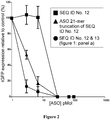
Figure 2 compares inhibitory activity of a composition according to the invention with other antisense compositions in a cell-free assay. -
Figure 3 , by using small-angle neutron scattering (SANS), shows that in the presence of antisense compositions of the invention, LFn-GAL4 dimerise to form compositions of higher molecular weight. -
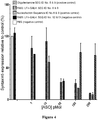
Figures 4 and5 illustrate how the described system can down-regulate expression of two different genes: down-regulating the expression of Syntaxin5 is shown inFigure 4 and of HPV (serotype 18) Early (E)7 is shown inFigure 5 ; -
Figure 6 is the LFn-GAL4 nucleotide sequence (SEQ ID No: 1); -
Figure 7 is the LFn (LF domain I) protein sequence (SEQ ID No: 2); -
Figure 8 is the GAL4 (amino acids 1-147) protein sequence (SEQ ID No: 3); -
Figure 9 is the V5-LFn-GAL4-6His DNA sequence (SEQ ID No: 4); -
Figure 10 is the V5-LFn-GAL4-6His protein sequence (SEQ ID No: 5); -
Figure 11 is the MRGS-6His-PA83 DNA sequence (SEQ ID No: 6); and -
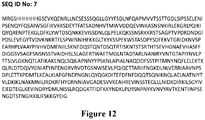
Figure 12 is the MRGS-6His-PA83 protein sequence (SEQ ID No: 7). - LFn-GAL4 was enriched from cultures of E. coli with a yield of approximately 5 mg/l. The DNA sequence coding for the protein LFn-GAL4 is SEQ ID No: 4 (
Figure 9 ) . This sequence is within the plasmid pET151/D (Invitrogen), an E.coli expression cassette. - The DNA sequence for LFn (LF domain 1) and GAL4 (amino-acids 1-147) (known in the art - Gaur et al., 2002) was sub-cloned into the pET151/D bacterial expression cassette. The addition of a V5 epitope tag at the N-terminus and 6x histidine affinity tag at the C-terminus allowed for the rapid immunodetection and affinity purification, respectively, of the fusion protein from bacterial lysate.
- Recombinant protein production: Chemically competent bacteria (E.coli BL21*DE3 (Invitrogen)) were transformed with purified plasmid (described above) and cultured overnight (10 mL) in 2x yeast extract tyrptone (2xYT) bacterial culture, containing ampicillin (200 µg/ml) media prior to sub-culturing in large volumes (1L) of 2xYT also containing a similar concentration of ampicillin. Bacterial cultures were then incubated in an orbital shaker set at 180 rpm (at 37°C) for 3 hours. Subsequently isopropyl β-D-1-thiogalactopyrnoside (IPTG) was added to a final concentration of 500 µM and incubated for a further 3 hours. Bacterial pellets were prepared by centrifugation (6 000xg for 10 min at 4°C) and subject to lysis using a French Press set to 1500 PSI. Bacterial lysates were subjected to further centrifugation (20 000xg for 20 min). The resultant supernatant was passed over a 6xHis (Co2+ Tallon® resin (Clontech)) affinity chromatography column. LFn-GAL4 was eluted using 150 mM imidazole in fractions of 1 mL. Fractions were analysed for protein purity and concentration, pooled and dialysed in phosphate buffered saline. The final protein preparation was evaluated by SDS-PAGE and subjected to Coomassie staining (to determine protein purity) and Western blot analysis (using an antibody specific to V5 and 6xHis).
- PA83 was enriched from cultures of E. coli BL21*DE3 with a yield of approximately 5 mg/l. A plasmid containing the known DNA sequence encoding PA83 was obtained as a gift from Professor Les Baillie (University of Cardiff). It contained the PA83-encoding sequence sub-cloned into the bacterial expression vector pQE30 providing an N-terminal 6x histidine affinity tag (Baillie et al., 2010). Chemically competent bacteria were transformed with purified plasmid and cultured overnight as before. During the growth phase, the 1l bacterial cultures were incubated in an orbital shaker set at 180 rpm (at 37°C) for 3 hours. Subsequently IPTG was added to a final concentration of 500 µM and incubated for a further 2 hours. Bacterial pellets were prepared by centrifugation (6 000xg for 10 min) and subjected to lysis using a French Press as before. Bacterial lysates were subjected to further centrifugation (20 000xg for 20 min). The resultant supernatant was passed over a 6x histidine affinity chromatography column. PA was eluted using 150 mM imidazole in fractions of 1 mL. Protein fractions were analysed for purity and concentration, pooled, and dialysed in phosphate-buffered saline (PBS). The final protein preparation was evaluated by SDS-PAGE and subjected to Coomassie staining (to determine purity) and western blot analysis (using an antibody specific to PA).
- The amino-acid sequence for PA83 is shown in SEQ ID No: 7 (
Figure 12 -MRGS-6His-PA83 protein). - Two complementary oligonucleotides, each encoding one strand of a GAL4 recognition sequence, were annealed, to form a double-stranded (GAL4) protein-binding sequence with flanking single-stranded antisense sequences. The ASO compositions described (SEQ ID Nos: 8 & 9: see Example 4) were used in this instance. The resulting composition is shown in
Figure 1a . Antisense oligonucleotide hybridization was performed by repeated (x10) thermal cycling, melting (1 min. at 94°C) and re-annealing (1 min. at 55°C) the two partially overlapping oligonucleotides, leaving single-strand antisense oligonucleotide sequence free to interact with mRNA in a sequence-specific manner. -
Figures 1a - 1e show several possible topologies of the protein-binding (DS) sequence of DNA (or DNA analogues) in relation to the antisense nucleic acid sequence(s) using the protein::oligonucleotide conjugation strategy disclosed herein.Figure 1a shows two sequences SEQ ID Nos: 8 and 9 oriented in opposite senses and bonded together by complementary sections - bases 23 to 48 in SEQ ID No: 8 bonding with bases 48 to 23 of SEQ ID No. 9 (SEQ ID No. 9 is shown 3' to 5' inFigure 1a ). The ASO hybrids of our invention may or may not include an additional DNA sequence flanking the antisense sequence(s). As shown inFigures 1a - 1e , the double-stranded (protein-binding) region of the ASO hybrid can be formed in a number of different ways. For example, the double-stranded region can be positioned between two antisense sequences (which may be identical or different), as inFigure 1a . Alternatively, the double-stranded region can be positioned at one side of a single antisense oligonucleotide, as inFigures 1b-1e . - Antisense oligonucleotide sequence specific for Syntaxin5 with flanking and GAL4 binding sequence:
- Forward oligonucleotide (SEQ ID No: 8)
5' AATTTGTTTGTTGAGGCTAATGCATGCCGGCTGCTCTGATGCCGGCAT 3' - Reverse oligonucleotide (SEQ ID No: 9)
5' AATTTGTTTGTTGAGGCTAATGCATGCCGGCATCAGAGCAGCCGGCAT 3' - Antisense oligonucleotide sequence specific for HPV (serotype 18) Early (E) 7 mRNA transcripts, with flanking and GAL4 binding sequence:
- Forward oligonucleotide (SEQ ID No: 10)
5' GGTCGTCTGCTGAGCTTTCTATGCATGCCGGCTGCTCTGATGCCGGCAT 3' - Reverse oligonucleotide (SEQ ID No: 11)
5' GGTCGTCTGCTGAGCTTTCTATGCATGCCGGCATCAGAGCAGCCGGCAT 3' - Antisense oligonucleotide sequence specific for TurboGFP mRNA transcripts, with flanking and GAL4 binding sequence:
- Forward oligonucleotide (SEQ ID No: 12)
5' GGTGCTCTTCATCTTGTTGGTATGCATGCCGGCTGCTCTGATGCCGGCAT 3' - Reverse oligonucleotide (SEQ ID No: 13)
5' GGTGCTCTTCATCTTGTTGGTATGCCGGCATCAGAGCAGCCGGCATGCAT 3' - The above oligonucleotides (SEQ ID Nos: 8-13) were synthesised with phosphorothioate modification to enhance the lifetime of the antisense oligonucleotide.
- Forward and reverse primer pairs (
SEQ ID Nos 8 with 9; 10 with 11; 12 with 13) were hybridized using a PCR cycler using the following conditions: Heated to 94°C for 1 min., and cooled to 55°C for 1 min., x10. This annealing process produced hybrid single- and double-stranded DNA sequences according to the invention. - Annealed ASO hybrids were produced (as in Example 4). These ASO hybrids were co-incubated with LFn-GAL4 in phosphate-buffered saline (PBS) for 30 min at room temperature at the appropriate stoichiometry (i.e., at approximately a 3:1 protein to oligonucleotide molar ratio).
- One such product so obtained was investigated by small-angle neutron scattering (SANS). The profile resulting is compared in
Figure 3 with that obtained in the absence of any antisense oligonucleotide.Figure 3 shows LFn-GAL4 dimerisation as measured by SANS in response to the addition of the antisense oligonucleotide composition shown inFigure 1a - small angle neutron scattering by LFn-GAL4 and LFn-GAL4::DS-antisense oligonucleotide in PBS (at approximately 0.5 mg/ml of LFn-GAL4 in each instance). Units of the x-axis ofFigure 3 are q/l/angstrom and of the y-axis are 1/cm. The upper thick black line shows results in the presence of the ASO, in comparison with the lower thin line where the ASO is absent. The differential in scattering profile between 0.01 and 0.04 (q/1/Å) is attributable to the LFn-GAL4 dimerising, caused by association with the double-stranded protein-binding sequence forming part of the oligonucleotide (Figure 1a ). In this instance 2mm cuvettes (Hellman Analytics, Essex, UK) were loaded with LFn-GAL4 and LFn-GAL4::oligonucleotide stoichiometry of 3:1 respectively (molar ratio). - The intensity of such scattered radiation is a reflection of the scatterer size and shape, as well as composition (i.e., LFn-GAL4). Both the individual proteins and their blends were examined. For the individual components, generally no scattering was observed, indicating their relatively small size. In the mixture of LFn-GAL4 and the hybridised oligonucleotide, scattering was observed, confirming that an interaction was occurring to form larger structures (i.e., LFn-GAL4::ASO complexes).
- One of the complexes produced in Example 5 was employed to target the expression of the gene Syntaxin5 in Hela cells. The pore-forming protein PA83 was used to help mediate antisense oligonucleotide membrane translocation via an interaction with LFn-GAL4. The ASO portion of the complex consisted of two annealed (as in Example 4) ASO sequences (SEQ ID Nos: 8 & 9). Hela cells produce Syntaxin5 when cultured under normal conditions. Hela cells were treated in various ways at a range of ASO complex concentrations: 0 (control), 1, 10, 50, 100 and 200 pMol per litre.
- In
Figure 4 : the black filled bar represents Hela cells treated with PA83, LFn-GAL4 and a "non-Syntaxin5" (GFP specific) ASO (formed from hybridised SEQ ID No: 12 and 13). The bar with no fill represents Hela cells treated with PBS only. These two treatments show sequence specificity for Syntaxin5 down-regulation (since the anti-GFP ASO sequence here is inactive against Syntaxin5) and serve as negative controls. Bars filled with horizontal hatching represent Hela cells electroporated with hybrid ASO specific for Syntaxin5 (formed from SEQ ID Nos: 8 and 9). Bars filled with vertical hatching represent Hela cells treated with PA83, LFn-GAL4 and hybrid ASO specific for Syntaxin5 (formed from SEQ ID Nos: 8 and 9). The bars filled with diagonal hatching represent Hela cells treated with hybrid ASO specific for Syntaxin5 (formed from SEQ ID Nos: 8 and 9) mixed with Oligofectamine (Invitrogen), following the manufacturer's recommendations. - Syntaxin5 expression levels in the cells were measured after 24 hours using immunoblotting. Results are shown as % expression of control (Hela cells treated with PBS only) (y axis). The data show that compositions according to the invention down-regulate Syntaxin5 expression in a gene-specific manner. This is shown at a population level by Western blotting and immunodetection. The graph of
Figure 4 displays Syntaxin5 expression levels and shows the effect of loading antisense oligonucleotide hybrids (3.2µg/mL) (SEQ ID Nos: 8 and 9) onto LFn-GAL4 (50µg/mL) co-incubated with PA (50µg/mL) on Hela cells relative to the expression of a housekeeper gene, Derlin1 (to control for any variation in cell number). The data shown is derived from 3 separate experiments and demonstrates that the addition of the compositions described can mediate the knockdown of a specific gene antisense oligonucleotide encoding an antisense sequence (i.e., Syntaxin5). The data represent three repeats of each experiment and the error bars represent the standard error of the mean. - An experiment to examine the efficacy of anti-HPV E7 antisense oligonucleotides against the expression of Human Papilloma Virus (serotype 18) Early 7 in Hela cells was undertaken as described in Example 6 above, but using different oligonucleotide sequences. In this instance the Syntaxin5-specific ASO hybrids (formed from SEQ ID No: 8 and SEQ ID No: 9) of Example 6 were replaced with HPV-E7-specific ASO hybrid also containing the hybrid protein-binding region and a small flanking region (formed from SEQ ID No: 10 and SEQ ID No: 11). In this example 200 pM of oligonucleotide, associated with LFn-GAL4 and PA83, was used (this is the black bar on the graph in
Figure 5 ). The result is shown inFigure 5 : % gene expression is shown on the y axis. The control treatment, PBS, is taken as 100%: this is the white bar on the graph inFigure 5 . The data represent three repeats of each experiment and the error bars represent the standard error of the mean. There was a statistical difference between the two treatments (p= 0.0104 as measured by a one-tailed, unpaired t-test). - The ASO hybrid-shuttle complexes produced as in Example 5 were tested for toxicity in relation to poly(ethyleneimine) (PEI) (Table 1). These data show a differential in toxicity relative to cells exposed to varying concentrations of either PEI, a cationic polymer well characterised in the literature as being able to mediate transfection, and LFn-GAL4 protein after hybridisation with ASO hybrids in the presence of 50µg/mL PA over 72h. Cell viability was normalised to untreated cells and measured by the addition of MTT (Richardson et al., 1999).
Table 1 IC50 in HeLa (micrograms/ml) IC50 in Vero (micrograms/ml) 25KDa Branched PEI 2.9 +/- 0.6 7.3 +/- 0.1 0.8KDa Branched PEI 2.4 +/- 0.2 7.4 +/- 0.3 20KDa Linear PEI 3.0 +/- 0.1 6.9 +/- 0.5 PA83 >100 >100 ASO >100 >100 GAL4-LFn >100 >100 ASO ::GAL4-LFn+PA83 >100 >100 -
Figure 2 shows the effect of compositions of the invention as compared with component ASOs in a cell-free assay (where membrane translocation is not rate-limiting). - Control reactions were performed using a "One step human high yield mini- in vitro translation kit" (Thermo Scientific), in conjunction with a control plasmid encoding the protein turboGFP (green fluorescent protein - Evrogen). The reactions were performed in 4.5 µl volumes (incubated for 3h at 30°C) and the expression of turboGFP was monitored by Western immunoblotting using an anti-6His primary antibody (1:1000 dilution) and an anti-mouse HRP-conjugated secondary antibody (1:1000). Detection was performed using a Picostable ECL kit (GE Healthcare). Three anti-turbo GFP antisense oligonucleotide (ASO) compositions were added to the reaction at differing concentrations at the beginning of the 3h incubation period previously described.
- Results are shown in
Figure 2 , (n=3 ± SEM) relative to a control containing no antisense oligonucleotides. InFigure 2 the y-axis represents the expression of turboGPF (%) relative to an untreated control, while the x-axis represents concentration of antisense oligonucleotide added to the reaction (in pMol). The data points represented with a square were derived from a single-stranded ASO oligonucleotide, SEQ ID No: 12, consisting of the turboGPF antisense sequence and (one strand of the) protein-binding sequence. The data points represented by triangles represent data generated from only the antisense sequence incorporated into SEQ ID No: 12 (i.e., the 21-mer GGTGCTCTTCATCTTGTTGGA, SEQ ID No: 21). The data points represented by circles were generated from the ASO hybrid of the invention formed by annealing together SEQ ID Nos: 12 and 13. The results shown inFigure 2 illustrate that (in vitro) the presence of the protein-binding sequence in the ASO hybrid does not inhibit the activity of the antisense sequence above an ASO concentration of 30 pMol. - Our invention may be used to produce antisense compositions having substantially no significantly reduced antisense activity (as measured in cell-free assay), relative to an antisense control having no protein-binding sequence or flanking sequence, at or above a 30pMol concentration of antisense oligonucleotide (ASO). Example 9 above (
Figure 2 ) illustrates this. -
- Baillie L.W. (2009) Is new always better than old?: The development of human vaccines for anthrax. Hum Vaccine, 5(12):806-16.
- Baillie L.W., Huwar T.B., Moore S., Mellado-Sanchez G., Rodriguez L., Neeson B.N., Flick-Smith H.C., Jenner D.C., Atkins H.S., Ingram R.J., Altmann D.M., Nataro J.P., and Pasetti M.F. (2010) An anthrax subunit vaccine candidate based on protective regions of Bacillus anthracis protective antigen and lethal factor. Vaccine, 28(41), pp.6740-6748.
- Biroccio A., Leonetti C., and Zupi G. (2003) The future of antisense therapy: combination of anticancer treatments. Oncogene, 22:6579-6588.
- Campbell R. N., Leverentz M. K., Ryan L. A., Reece R. J. (2008). Metabolic control of transcription: Paradigms and lessons from Saccharomyces cerevsiae. Biochem J. 414(2): 177-87.
- Cieślak J., Ausín C., Chmielewski M.K., Kauffman J.S., Snyder J., Del-Grosso A., Beaucage S.L. (2005) NMR study of the desulfurization of oligonucleoside phosphorothioates effected by "aged" trichloroacetic acid solutions. J. Org. Chem. 70(8):3303-6.
- Gaur R., Gupta P.K., Goyal A., Wiles W., and Singh Y. (2002) Delivery of nucleic acid into mammalian cells by anthrax toxin. Biochemical and Biophysical Research Communications. 297:1121-1127.
- Jonson A. L., Rogers L. M., Ramakrishnan S. and Downs Jr L. S. (2008), Gene silencing with siRNA targeting E6/E7 as a therapeutic intervention in a mouse model of cervical cancer. Gynecologic Oncology. 111(2): 356-364.
- Kim S.H., Mok H., Jeong J.H., Kim S.W., Park T.G. (2006) Comparative evaluation of target-specific GFP gene silencing efficiencies for antisense ODN, synthetic siRNA, and siRNA plasmid complexed with PEI-PEG-FOL conjugate. Bioconjug Chem. 17(1):241-4.
- Krantz B.A., Melnyk R.A., Zhang S., Juris S.J., Lacy D.B., Wu Z., Finkelstein A., Collier R.J.. (2005) A phenylalanine clamp catalyzes protein translocation through the anthrax toxin pore Science. 309(5735):777-81.
- Kushner N., Zhang D., Touzjian N., Essex M., Lieberman J., and Lu Y. (2003) A Fragment of Anthrax Lethal Factor Delivers Proteins to the Cytosol without Requiring Protective Antigen. Proc Natl Acad Sci USA, 100 (11): 6652-6657.
- Leumann C., DNA analogues: from supramolecular principles to biological properties. (2002) Bioorg. Med Chem.; 10(4):841-54.
- Lysik M.A., Wu-Pong S. (2003) Innovations in oligonucleotide drug delivery. J. Pharm. Sci. 92:1559-1573.
- Parkin, DM. (2006) The global health burden of infection-associated cancers in the year 2002. Int. J. Cancer. 118:3030-3044.
- Richardson S., Ferruti P. and Duncan R. (1999) Poly(amidoamine)s as potential endosomolytic polymers: Evaluation in vitro and body distribution in normal and tumour bearing animals. J. Drug Targeting, 6(6), 391-404.
- Roehr B, (1998) Fomivirsen approved for CMV retinitis. J. Int. Physicians AIDS Care. 4(10): 14-6.
- Sandvig K., and van Deurs B. (2005). Delivery into cells: Lessons learned from plant and bacterial toxins. Gene Therapy. (12)s 865- 872,
- Sandvig, Kirsten; Torgersen, Maria Lyngaas; Engedal, Kim Nikolai; Skotland, Tore & Iversen, Tore Geir (2010). Protein toxins from plants and bacteria: Probes for intracellular transport and tools in medicine. FEBS Letters. 584(12)s 2626- 2634.
- Suga K. Hattori H. and Saito A. (2005). RNA interference-mediated silencing of the .
- US Patent
WO97/23236 - Yacyshyn B.R., Bowen-Yacyshyn M.B., Jewell L., Rothlein R.A., Mainolfi E., Tami J.A., Bennett C.F., Kisner D.L., and Shanahan W.R. (1998) A placebo-controlled trial of ICAM-1 antisense oligonucleotide in the treatment of steroid-dependent Crohn's disease. Gastroenterology. 114:1133-1142.
- Zornetta I., Brandi L., Janowiak B., Dal Molin F., Tonello F., Collier J. and Montecucco C. (2010) Imaging the cell entry of the anthrax oedema and lethal toxins with fluorescent protein chimeras, Cellular Microbiology, 12(10); 1435-45.
-
- <110> Greenwich University
- <120> Antisense oligonucleotide compositions
- <130> 120120WO
- <150> UK
1131057.2
<151> 2013-06-21 - <160> 21
- <170> PatentIn version 3.5
- <210> 1
<211> 1131
<212> DNA
<213> Artificial sequence - <220>
<223> Derived from more than one source - <400> 1
atggaacgca acaaaactca ggaggaacac ctgaaagaga tcatgaaaca cattgttaaa 60 - atcgaggtga aaggcgaaga agcggttaaa aaggaggctg ccgaaaagct gctggagaag 120
- gtaccgtctg atgtgctgga aatgtataaa gcgattggtg gcaaaatcta catcgtggat 180
- ggtgatatta ccaaacacat ctccctggaa gcactgagcg aagacaagaa gaagatcaaa 240
- gatatctacg gcaaggacgc gctgctgcac gagcattacg tttacgcaaa agaaggttac 300
- gaaccggtgc tggttatcca gtccagcgag gattacgtcg aaaatacgga aaaagctctg 360
- aacgtatatt acgaaattgg taaaatcctg tctcgtgaca ttctgagcaa aattaaccaa 420
- ccttatcaga agttcctgga cgttctgaac accatcaaaa acgcttctga ctccgacggc 480
- caggacctgc tgttcactaa tcagctgaaa gaacatccga ccgatttctc tgtagaattc 540
- ctggaacaga actctaacga ggtccaagaa gtttttgcca aagcattcgc gtactacatc 600
- gagccgcagc atcgcgacgt gctgcagctg tacgctccag aagccttcaa ctatatggac 660
- aaattcaatg aacaagaaat caacctgtct atgaaactgc tgtcctccat cgaacaggct 720
- tgcgatatct gtcgtctgaa gaaactgaaa tgctctaaag aaaaaccgaa atgcgcgaaa 780
- tgcctgaaaa acaactggga atgtcgctat tcccctaaaa ccaaacgttc tccactgacc 840
- cgtgcgcacc tgaccgaagt agaatcccgt ctggaacgtc tggagcagct gtttctgctg 900
- attttcccgc gtgaagacct ggacatgatc ctgaaaatgg atagcctgca ggatatcaaa 960
- gcactgctga ccggtctgtt tgtgcaggac aacgtcaaca aagacgctgt tactgatcgc 1020
- ctggcgagcg ttgaaactga tatgccgctg accctgcgtc agcaccgtat 1080
- agctccagcg aagaatctag caacaaaggt cagcgccagc tgaccgttag c 1131
- <210> 2
<211> 230
<212> PRT
<213> Bacillus anthracis - <400> 2


- <210> 3
<211> 147
<212> PRT
<213> Saccharomyces cerevisiae - <400> 3

- <210> 4
<211> 1197
<212> DNA
<213> Artificial sequence - <220>
<223> Derived from more than one source - <400> 4


- <210> 5
<211> 398
<212> PRT
<213> Artificial sequence - <220>
<223> Derived from more than one source - <400> 5


- <210> 6
<211> 2244
<212> DNA
<213> Bacillus anthracis - <400> 6


- <210> 7
<211> 747
<212> PRT
<213> Bacillus anthracis - <400> 7


- <210> 8
<211> 48
<212> DNA
<213> Artificial sequence - <220>
<223> Synthetic - <400> 8
aatttgtttg ttgaggctaa tgcatgccgg ctgctctgat gccggcat 48 - <210> 9
<211> 48
<212> DNA
<213> Artificial sequence - <220>
<223> Synthetic - <400> 9
aatttgtttg ttgaggctaa tgcatgccgg catcagagca gccggcat 48 - <210> 10
<211> 49
<212> DNA
<213> Artificial sequence - <220>
<223> Derived from more than one source - <400> 10
ggtcgtctgc tgagctttct atgcatgccg gctgctctga tgccggcat 49 - <210> 11
<211> 49
<212> DNA
<213> Artificial sequence - <220>
<223> Derived from more than one source - <400> 11
ggtcgtctgc tgagctttct atgcatgccg gcatcagagc agccggcat 49 - <210> 12
<211> 50
<212> DNA
<213> Artificial sequence - <220>
<223> Derived from more than one source - <400> 12
ggtgctcttc atcttgttgg tatgcatgcc ggctgctctg atgccggcat 50 - <210> 13
<211> 50
<212> DNA
<213> Artificial sequence - <220>
<223> Derived from more than one source - <400> 13
ggtgctcttc atcttgttgg tatgccggca tcagagcagc cggcatgcat 50 - <210> 14
<211> 25
<212> DNA
<213> Artificial sequence - <220>
<223> Derived from more than one source - <400> 14
atgccggcat cagagcagcc ggcat 25 - <210> 15
<211> 25
<212> DNA
<213> Artificial sequence - <220>
<223> Derived from more than one source - <400> 15
atgccggctg ctctgatgcc ggcat 25 - <210> 16
<211> 48
<212> DNA
<213> Artificial sequence - <220>
<223> Derived from more than one source - <400> 16
tacggccgac gagactacgg ccgtacgtaa atttgtttgt tgaggcta 48 - <210> 17
<211> 48
<212> DNA
<213> Artificial sequence - <220>
<223> Derived from more than one source - <400> 17
atgccggcat cagagcagcc ggcatgctaa atttgtttgt tgaggcta 48 - <210> 18
<211> 19
<212> DNA
<213> Artificial sequence - <220>
<223> Derived from more than one source - <400> 18
aatttgtttg ttgaggcta 19 - <210> 19
<211> 17
<212> DNA
<213> Artificial sequence - <220>
<223> Derived from more than one source - <400> 19
cggctgctct gatgccg 17 - <210> 20
<211> 17
<212> DNA
<213> Artificial sequence - <220>
<223> Derived from more than one source - <400> 20
cggcatcaga gcagccg 17 - <210> 21
<211> 21
<212> DNA
<213> Artificial sequence - <220>
<223> Derived from more than one source - <400> 21
ggtgctcttc atcttgttgg a 21
Claims (14)
- An antisense oligonucleotide composition useful for delivering antisense oligonucleotide into the cytosol of a cell, comprising:a pair of partially complementary, single-stranded oligonucleotides, wherein the two oligonucleotides hybridise to give at least one single-stranded antisense sequence and at least one double-stranded protein-binding sequence;a shuttle protein capable of conveying genetic material through a pore in a cell membrane, the shuttle protein comprising a nucleic-acid-binding domain that recognises the double-stranded protein-binding sequence and non-covalently binds thereto, wherein the shuttle protein contains B. anthracis lethal factor (LF) domain I (LFn); anda pore-forming protein which is B. anthracis virulence factor Protective Antigen PA83
- A composition as claimed in claim 1, comprising an oligonucleotide that is modified by sulphonation to increase stability.
- An antisense oligonucleotide composition as claimed in any of the previous claims wherein the protein-binding sequence is CGG-N11-CCG, where "N" is any purine or pyrimidine base.
- An antisense oligonucleotide composition as claimed in any of the preceding claims wherein the protein-binding sequence is:
5'-CGGCTGCTCTGATGCCG-3' or 5'-CGGCATCAGAGCAGCCG-3'. - An antisense oligonucleotide composition as claimed in any of the preceding claims, wherein at least one of domains (II-IV) of B. anthracis lethal factor (LF) is replaced by the nucleic-acid-binding domain.
- An antisense oligonucleotide composition as claimed in any of claims 1 to 5, wherein the nucleic-acid-binding domain of the shuttle protein is Saccharomyces cerevisiae GAL4.
- An antisense oligonucleotide composition as claimed in any of claims 1 to 6 in which the antisense sequence is single-stranded DNA designed to hybridise to messenger RNA derived from a target gene.
- An antisense oligonucleotide composition as claimed in claim 7 in which the target gene is expressed by a virus.
- An antisense oligonucleotide composition as claimed in claim 7 or 8 in which the target gene is expressed by Human Papilloma Virus (HPV).
- An in vitro method of downregulating the expression of a target gene in the cytosol of a cell comprising delivering an antisense oligonucleotide composition as defined in any one of claims 1 to 9, and across the membrane of the cell.
- An antisense oligonucleotide composition as claimed in any of claims 1 to 9 for use in medical treatment, and optionally additionally containing at least one additive selected from the group consisting of pharmaceutically acceptable excipients and carriers.
- An antisense oligonucleotide composition as claimed in claim 11, for use in treating a subject infected with Human Papilloma Virus (HPV).
- An antisense oligonucleotide composition as claimed in claim 11, for use in the treatment of cancer, for example cervical or oral cancer.
- A method of non-covalently conjugating an antisense oligonucleotide to a shuttle protein, the method comprising:(i) providing two partially complementary single-stranded oligonucleotides;(ii) hybridising the two oligonucleotides to form an oligonucleotide hybrid, wherein the hybrid comprises at least one single-stranded antisense sequence and at least one double-stranded protein-binding sequence;(iii) providing a shuttle protein capable of conveying genetic material through a pore in a cell membrane and having a nucleic-acid-binding domain that recognises the double-stranded protein-binding sequence, and providing a pore forming protein, wherein the shuttle protein contains B. anthracis lethal factor (LF) domain I (LFn) and the pore-forming protein is B. anthracis virulence factor Protective Antigen PA83; and(iv) non-covalently conjugating the shuttle protein to the antisense hybrid by means of the nucleic-acid-binding domain of the protein and the protein-binding sequence of the oligonucleotide hybrid.
Priority Applications (1)
| Application Number | Priority Date | Filing Date | Title |
|---|---|---|---|
| PL14732629T PL3011025T3 (en) | 2013-06-21 | 2014-06-23 | Antisense oligonucleotide compositions |
Applications Claiming Priority (2)
| Application Number | Priority Date | Filing Date | Title |
|---|---|---|---|
| GBGB1311057.2A GB201311057D0 (en) | 2013-06-21 | 2013-06-21 | Antisense oligonucleotide compositions |
| PCT/GB2014/051918 WO2014203008A1 (en) | 2013-06-21 | 2014-06-23 | Antisense oligonucleotide compositions |
Publications (2)
| Publication Number | Publication Date |
|---|---|
| EP3011025A1 EP3011025A1 (en) | 2016-04-27 |
| EP3011025B1 true EP3011025B1 (en) | 2018-12-05 |
Family
ID=48950242
Family Applications (1)
| Application Number | Title | Priority Date | Filing Date |
|---|---|---|---|
| EP14732629.2A Active EP3011025B1 (en) | 2013-06-21 | 2014-06-23 | Antisense oligonucleotide compositions |
Country Status (12)
| Country | Link |
|---|---|
| US (2) | US9902960B2 (en) |
| EP (1) | EP3011025B1 (en) |
| JP (1) | JP6506270B2 (en) |
| KR (1) | KR102266092B1 (en) |
| CN (1) | CN105473717B (en) |
| AU (1) | AU2014282986B2 (en) |
| CA (1) | CA2923849C (en) |
| ES (1) | ES2714531T3 (en) |
| GB (1) | GB201311057D0 (en) |
| IL (1) | IL243174B (en) |
| PL (1) | PL3011025T3 (en) |
| WO (1) | WO2014203008A1 (en) |
Families Citing this family (2)
| Publication number | Priority date | Publication date | Assignee | Title |
|---|---|---|---|---|
| CN118127019A (en) | 2018-05-22 | 2024-06-04 | Ionis制药公司 | Regulators of APOL1 expression |
| GB201812992D0 (en) * | 2018-08-09 | 2018-09-26 | Univ Greenwich | Liposomes |
Family Cites Families (11)
| Publication number | Priority date | Publication date | Assignee | Title |
|---|---|---|---|---|
| JPH10501963A (en) | 1994-04-15 | 1998-02-24 | ターゲテッド ジェネティクス コーポレイション | Gene delivery fusion protein |
| JP2000503004A (en) * | 1995-12-13 | 2000-03-14 | プレジデント アンド フェロウズ オブ ハーバード カレッジ | Use of toxin peptides and / or affinity handles to deliver compounds to cells |
| GB9713122D0 (en) | 1997-06-20 | 1997-08-27 | Chiron Spa | Novel method of DNA transfer into cells |
| US7122317B2 (en) | 2002-03-28 | 2006-10-17 | Marligen Biosciences, Inc. | Multiplex method of detecting sequence-specific DNA binding proteins using detection duplexes comprising unmodified nucleic acid sequences as capture tags |
| AU2002323845A1 (en) | 2002-04-02 | 2003-10-13 | "Asgl-Farmatsevticheskie Innovatsii", Zakrytoe Aktsionernoe Obschestvo | Recombinant chimeric protein for the target delivery of dna to eukariotic target cells |
| US6835810B2 (en) * | 2002-05-13 | 2004-12-28 | Geneshuttle Biopharma, Inc. | Fusion protein for use as vector |
| WO2006091233A2 (en) | 2004-07-23 | 2006-08-31 | Boston Medical Center Corporation | Cellular delivery of reagents that inhibit gene expression utilizing the anthrax toxin protective antigen (pa) |
| JP2009532017A (en) * | 2006-02-10 | 2009-09-10 | ザ レジェンツ オブ ザ ユニヴァースティ オブ カリフォルニア | Introducible delivery of siRNA by dsRNA binding domain fusion to PTD / CPPS |
| KR101152354B1 (en) * | 2010-02-11 | 2012-06-13 | 한양대학교 산학협력단 | Dna aptamer specifically binding to anthrax toxins and uses thereof |
| US8932819B2 (en) * | 2011-07-06 | 2015-01-13 | Affymetrix, Inc. | Assays for affinity profiling of nucleic acid binding proteins |
| CN104080462B (en) * | 2011-12-16 | 2019-08-09 | 塔尔盖特基因生物技术有限公司 | Compositions and methods for modifying predetermined target nucleic acid sequences |
-
2013
- 2013-06-21 GB GBGB1311057.2A patent/GB201311057D0/en not_active Ceased
-
2014
- 2014-06-23 WO PCT/GB2014/051918 patent/WO2014203008A1/en not_active Ceased
- 2014-06-23 ES ES14732629T patent/ES2714531T3/en active Active
- 2014-06-23 EP EP14732629.2A patent/EP3011025B1/en active Active
- 2014-06-23 CN CN201480046298.8A patent/CN105473717B/en active Active
- 2014-06-23 JP JP2016520746A patent/JP6506270B2/en active Active
- 2014-06-23 KR KR1020167001303A patent/KR102266092B1/en active Active
- 2014-06-23 AU AU2014282986A patent/AU2014282986B2/en active Active
- 2014-06-23 CA CA2923849A patent/CA2923849C/en active Active
- 2014-06-23 US US14/899,631 patent/US9902960B2/en active Active
- 2014-06-23 PL PL14732629T patent/PL3011025T3/en unknown
-
2015
- 2015-12-17 IL IL243174A patent/IL243174B/en active IP Right Grant
-
2018
- 2018-02-14 US US15/896,688 patent/US10400241B2/en active Active
Non-Patent Citations (1)
| Title |
|---|
| PNAS, vol. 100, 2003, pages 6652 - 6657 * |
Also Published As
| Publication number | Publication date |
|---|---|
| ES2714531T3 (en) | 2019-05-28 |
| AU2014282986B2 (en) | 2020-06-25 |
| WO2014203008A9 (en) | 2015-02-05 |
| WO2014203008A1 (en) | 2014-12-24 |
| EP3011025A1 (en) | 2016-04-27 |
| JP2016526541A (en) | 2016-09-05 |
| CN105473717A (en) | 2016-04-06 |
| HK1223653A1 (en) | 2017-08-04 |
| IL243174B (en) | 2020-01-30 |
| AU2014282986A1 (en) | 2016-02-11 |
| PL3011025T3 (en) | 2019-07-31 |
| IL243174A0 (en) | 2016-03-31 |
| US10400241B2 (en) | 2019-09-03 |
| CN105473717B (en) | 2020-05-01 |
| US20180251768A1 (en) | 2018-09-06 |
| JP6506270B2 (en) | 2019-04-24 |
| GB201311057D0 (en) | 2013-08-07 |
| KR20160023784A (en) | 2016-03-03 |
| US9902960B2 (en) | 2018-02-27 |
| CA2923849A1 (en) | 2014-12-24 |
| KR102266092B1 (en) | 2021-06-16 |
| CA2923849C (en) | 2020-08-11 |
| US20160152984A1 (en) | 2016-06-02 |
Similar Documents
| Publication | Publication Date | Title |
|---|---|---|
| JP7675054B2 (en) | Nucleic acid polypeptide compositions and methods for inducing exon skipping - Patent Application 20070229633 | |
| Klabenkova et al. | Chemistry of peptide-oligonucleotide conjugates: a review | |
| Meade et al. | Exogenous siRNA delivery using peptide transduction domains/cell penetrating peptides | |
| CN110251682B (en) | Peptide sequence design and its application in peptide-mediated siRNA delivery | |
| Misawa et al. | Development of 2-aminoisobutyric acid (Aib)-rich cell-penetrating foldamers for efficient siRNA delivery | |
| JP2021533825A5 (en) | ||
| US9790498B2 (en) | Phase changing formulations of nucleic acid payloads | |
| EP3833676B1 (en) | Polypeptides self-assembling into nanoparticles | |
| US10400241B2 (en) | Antisense oligonucleotide compositions | |
| Avitabile et al. | Recent Cutting‐Edge Technologies for the Delivery of Peptide Nucleic Acid | |
| KR20230127285A (en) | Micellar nanoparticles and uses thereof | |
| JP6600621B2 (en) | Antisense molecules for the treatment of Staphylococcus aureus infections | |
| Xu et al. | In vitro and in vivo therapeutic siRNA delivery induced by a tryptophan-rich endosomolytic peptide | |
| HK1223653B (en) | Antisense oligonucleotide compositions | |
| WO2014144423A2 (en) | Antisense molecules for treatment of staphylococcus aureus infection | |
| WO2022072927A1 (en) | Advanced cell-permeable peptide carriers | |
| WO2016109522A1 (en) | Particle-nucleic acid conjugates and therapeutic uses related thereto | |
| EP3044314B1 (en) | Methods and compositions for interference with dna polymerase and dna synthesis | |
| HK40055544A (en) | Polypeptides self-assembling into nanoparticles | |
| HK40055544B (en) | Polypeptides self-assembling into nanoparticles |
Legal Events
| Date | Code | Title | Description |
|---|---|---|---|
| PUAI | Public reference made under article 153(3) epc to a published international application that has entered the european phase |
Free format text: ORIGINAL CODE: 0009012 |
|
| 17P | Request for examination filed |
Effective date: 20160121 |
|
| AK | Designated contracting states |
Kind code of ref document: A1 Designated state(s): AL AT BE BG CH CY CZ DE DK EE ES FI FR GB GR HR HU IE IS IT LI LT LU LV MC MK MT NL NO PL PT RO RS SE SI SK SM TR |
|
| AX | Request for extension of the european patent |
Extension state: BA ME |
|
| DAX | Request for extension of the european patent (deleted) | ||
| STAA | Information on the status of an ep patent application or granted ep patent |
Free format text: STATUS: EXAMINATION IS IN PROGRESS |
|
| 17Q | First examination report despatched |
Effective date: 20170410 |
|
| REG | Reference to a national code |
Ref country code: HK Ref legal event code: DE Ref document number: 1223653 Country of ref document: HK |
|
| GRAP | Despatch of communication of intention to grant a patent |
Free format text: ORIGINAL CODE: EPIDOSNIGR1 |
|
| STAA | Information on the status of an ep patent application or granted ep patent |
Free format text: STATUS: GRANT OF PATENT IS INTENDED |
|
| INTG | Intention to grant announced |
Effective date: 20180621 |
|
| GRAS | Grant fee paid |
Free format text: ORIGINAL CODE: EPIDOSNIGR3 |
|
| GRAA | (expected) grant |
Free format text: ORIGINAL CODE: 0009210 |
|
| STAA | Information on the status of an ep patent application or granted ep patent |
Free format text: STATUS: THE PATENT HAS BEEN GRANTED |
|
| AK | Designated contracting states |
Kind code of ref document: B1 Designated state(s): AL AT BE BG CH CY CZ DE DK EE ES FI FR GB GR HR HU IE IS IT LI LT LU LV MC MK MT NL NO PL PT RO RS SE SI SK SM TR |
|
| REG | Reference to a national code |
Ref country code: GB Ref legal event code: FG4D |
|
| REG | Reference to a national code |
Ref country code: CH Ref legal event code: EP |
|
| REG | Reference to a national code |
Ref country code: AT Ref legal event code: REF Ref document number: 1073088 Country of ref document: AT Kind code of ref document: T Effective date: 20181215 |
|
| REG | Reference to a national code |
Ref country code: IE Ref legal event code: FG4D |
|
| REG | Reference to a national code |
Ref country code: DE Ref legal event code: R096 Ref document number: 602014037401 Country of ref document: DE |
|
| REG | Reference to a national code |
Ref country code: NL Ref legal event code: FP |
|
| REG | Reference to a national code |
Ref country code: AT Ref legal event code: MK05 Ref document number: 1073088 Country of ref document: AT Kind code of ref document: T Effective date: 20181205 |
|
| REG | Reference to a national code |
Ref country code: LT Ref legal event code: MG4D |
|
| PG25 | Lapsed in a contracting state [announced via postgrant information from national office to epo] |
Ref country code: LV Free format text: LAPSE BECAUSE OF FAILURE TO SUBMIT A TRANSLATION OF THE DESCRIPTION OR TO PAY THE FEE WITHIN THE PRESCRIBED TIME-LIMIT Effective date: 20181205 Ref country code: FI Free format text: LAPSE BECAUSE OF FAILURE TO SUBMIT A TRANSLATION OF THE DESCRIPTION OR TO PAY THE FEE WITHIN THE PRESCRIBED TIME-LIMIT Effective date: 20181205 Ref country code: BG Free format text: LAPSE BECAUSE OF FAILURE TO SUBMIT A TRANSLATION OF THE DESCRIPTION OR TO PAY THE FEE WITHIN THE PRESCRIBED TIME-LIMIT Effective date: 20190305 Ref country code: HR Free format text: LAPSE BECAUSE OF FAILURE TO SUBMIT A TRANSLATION OF THE DESCRIPTION OR TO PAY THE FEE WITHIN THE PRESCRIBED TIME-LIMIT Effective date: 20181205 Ref country code: AT Free format text: LAPSE BECAUSE OF FAILURE TO SUBMIT A TRANSLATION OF THE DESCRIPTION OR TO PAY THE FEE WITHIN THE PRESCRIBED TIME-LIMIT Effective date: 20181205 Ref country code: LT Free format text: LAPSE BECAUSE OF FAILURE TO SUBMIT A TRANSLATION OF THE DESCRIPTION OR TO PAY THE FEE WITHIN THE PRESCRIBED TIME-LIMIT Effective date: 20181205 Ref country code: NO Free format text: LAPSE BECAUSE OF FAILURE TO SUBMIT A TRANSLATION OF THE DESCRIPTION OR TO PAY THE FEE WITHIN THE PRESCRIBED TIME-LIMIT Effective date: 20190305 |
|
| REG | Reference to a national code |
Ref country code: ES Ref legal event code: FG2A Ref document number: 2714531 Country of ref document: ES Kind code of ref document: T3 Effective date: 20190528 |
|
| PG25 | Lapsed in a contracting state [announced via postgrant information from national office to epo] |
Ref country code: RS Free format text: LAPSE BECAUSE OF FAILURE TO SUBMIT A TRANSLATION OF THE DESCRIPTION OR TO PAY THE FEE WITHIN THE PRESCRIBED TIME-LIMIT Effective date: 20181205 Ref country code: GR Free format text: LAPSE BECAUSE OF FAILURE TO SUBMIT A TRANSLATION OF THE DESCRIPTION OR TO PAY THE FEE WITHIN THE PRESCRIBED TIME-LIMIT Effective date: 20190306 Ref country code: SE Free format text: LAPSE BECAUSE OF FAILURE TO SUBMIT A TRANSLATION OF THE DESCRIPTION OR TO PAY THE FEE WITHIN THE PRESCRIBED TIME-LIMIT Effective date: 20181205 Ref country code: AL Free format text: LAPSE BECAUSE OF FAILURE TO SUBMIT A TRANSLATION OF THE DESCRIPTION OR TO PAY THE FEE WITHIN THE PRESCRIBED TIME-LIMIT Effective date: 20181205 |
|
| PG25 | Lapsed in a contracting state [announced via postgrant information from national office to epo] |
Ref country code: PT Free format text: LAPSE BECAUSE OF FAILURE TO SUBMIT A TRANSLATION OF THE DESCRIPTION OR TO PAY THE FEE WITHIN THE PRESCRIBED TIME-LIMIT Effective date: 20190405 Ref country code: CZ Free format text: LAPSE BECAUSE OF FAILURE TO SUBMIT A TRANSLATION OF THE DESCRIPTION OR TO PAY THE FEE WITHIN THE PRESCRIBED TIME-LIMIT Effective date: 20181205 |
|
| PG25 | Lapsed in a contracting state [announced via postgrant information from national office to epo] |
Ref country code: SK Free format text: LAPSE BECAUSE OF FAILURE TO SUBMIT A TRANSLATION OF THE DESCRIPTION OR TO PAY THE FEE WITHIN THE PRESCRIBED TIME-LIMIT Effective date: 20181205 Ref country code: IS Free format text: LAPSE BECAUSE OF FAILURE TO SUBMIT A TRANSLATION OF THE DESCRIPTION OR TO PAY THE FEE WITHIN THE PRESCRIBED TIME-LIMIT Effective date: 20190405 Ref country code: RO Free format text: LAPSE BECAUSE OF FAILURE TO SUBMIT A TRANSLATION OF THE DESCRIPTION OR TO PAY THE FEE WITHIN THE PRESCRIBED TIME-LIMIT Effective date: 20181205 Ref country code: SM Free format text: LAPSE BECAUSE OF FAILURE TO SUBMIT A TRANSLATION OF THE DESCRIPTION OR TO PAY THE FEE WITHIN THE PRESCRIBED TIME-LIMIT Effective date: 20181205 Ref country code: EE Free format text: LAPSE BECAUSE OF FAILURE TO SUBMIT A TRANSLATION OF THE DESCRIPTION OR TO PAY THE FEE WITHIN THE PRESCRIBED TIME-LIMIT Effective date: 20181205 |
|
| REG | Reference to a national code |
Ref country code: DE Ref legal event code: R097 Ref document number: 602014037401 Country of ref document: DE |
|
| PLBE | No opposition filed within time limit |
Free format text: ORIGINAL CODE: 0009261 |
|
| STAA | Information on the status of an ep patent application or granted ep patent |
Free format text: STATUS: NO OPPOSITION FILED WITHIN TIME LIMIT |
|
| PG25 | Lapsed in a contracting state [announced via postgrant information from national office to epo] |
Ref country code: SI Free format text: LAPSE BECAUSE OF FAILURE TO SUBMIT A TRANSLATION OF THE DESCRIPTION OR TO PAY THE FEE WITHIN THE PRESCRIBED TIME-LIMIT Effective date: 20181205 Ref country code: DK Free format text: LAPSE BECAUSE OF FAILURE TO SUBMIT A TRANSLATION OF THE DESCRIPTION OR TO PAY THE FEE WITHIN THE PRESCRIBED TIME-LIMIT Effective date: 20181205 |
|
| 26N | No opposition filed |
Effective date: 20190906 |
|
| PG25 | Lapsed in a contracting state [announced via postgrant information from national office to epo] |
Ref country code: MC Free format text: LAPSE BECAUSE OF FAILURE TO SUBMIT A TRANSLATION OF THE DESCRIPTION OR TO PAY THE FEE WITHIN THE PRESCRIBED TIME-LIMIT Effective date: 20181205 |
|
| REG | Reference to a national code |
Ref country code: CH Ref legal event code: PL |
|
| PG25 | Lapsed in a contracting state [announced via postgrant information from national office to epo] |
Ref country code: TR Free format text: LAPSE BECAUSE OF FAILURE TO SUBMIT A TRANSLATION OF THE DESCRIPTION OR TO PAY THE FEE WITHIN THE PRESCRIBED TIME-LIMIT Effective date: 20181205 |
|
| PG25 | Lapsed in a contracting state [announced via postgrant information from national office to epo] |
Ref country code: CH Free format text: LAPSE BECAUSE OF NON-PAYMENT OF DUE FEES Effective date: 20190630 Ref country code: LU Free format text: LAPSE BECAUSE OF NON-PAYMENT OF DUE FEES Effective date: 20190623 Ref country code: LI Free format text: LAPSE BECAUSE OF NON-PAYMENT OF DUE FEES Effective date: 20190630 |
|
| PG25 | Lapsed in a contracting state [announced via postgrant information from national office to epo] |
Ref country code: CY Free format text: LAPSE BECAUSE OF FAILURE TO SUBMIT A TRANSLATION OF THE DESCRIPTION OR TO PAY THE FEE WITHIN THE PRESCRIBED TIME-LIMIT Effective date: 20181205 |
|
| PG25 | Lapsed in a contracting state [announced via postgrant information from national office to epo] |
Ref country code: HU Free format text: LAPSE BECAUSE OF FAILURE TO SUBMIT A TRANSLATION OF THE DESCRIPTION OR TO PAY THE FEE WITHIN THE PRESCRIBED TIME-LIMIT; INVALID AB INITIO Effective date: 20140623 Ref country code: MT Free format text: LAPSE BECAUSE OF FAILURE TO SUBMIT A TRANSLATION OF THE DESCRIPTION OR TO PAY THE FEE WITHIN THE PRESCRIBED TIME-LIMIT Effective date: 20181205 |
|
| PG25 | Lapsed in a contracting state [announced via postgrant information from national office to epo] |
Ref country code: MK Free format text: LAPSE BECAUSE OF FAILURE TO SUBMIT A TRANSLATION OF THE DESCRIPTION OR TO PAY THE FEE WITHIN THE PRESCRIBED TIME-LIMIT Effective date: 20181205 |
|
| PGFP | Annual fee paid to national office [announced via postgrant information from national office to epo] |
Ref country code: GB Payment date: 20250627 Year of fee payment: 12 |
|
| PGFP | Annual fee paid to national office [announced via postgrant information from national office to epo] |
Ref country code: NL Payment date: 20250627 Year of fee payment: 12 Ref country code: BE Payment date: 20250627 Year of fee payment: 12 |
|
| PGFP | Annual fee paid to national office [announced via postgrant information from national office to epo] |
Ref country code: FR Payment date: 20250627 Year of fee payment: 12 |
|
| PGFP | Annual fee paid to national office [announced via postgrant information from national office to epo] |
Ref country code: IE Payment date: 20250627 Year of fee payment: 12 |
|
| PGFP | Annual fee paid to national office [announced via postgrant information from national office to epo] |
Ref country code: ES Payment date: 20250728 Year of fee payment: 12 |
|
| PGFP | Annual fee paid to national office [announced via postgrant information from national office to epo] |
Ref country code: DE Payment date: 20250722 Year of fee payment: 12 |
|
| PGFP | Annual fee paid to national office [announced via postgrant information from national office to epo] |
Ref country code: IT Payment date: 20250630 Year of fee payment: 12 |
|
| PGFP | Annual fee paid to national office [announced via postgrant information from national office to epo] |
Ref country code: PL Payment date: 20251219 Year of fee payment: 12 |