EP3004336B1 - Enzymes catalyzing the glycosylation of polyphenols - Google Patents
Enzymes catalyzing the glycosylation of polyphenols Download PDFInfo
- Publication number
- EP3004336B1 EP3004336B1 EP14726999.7A EP14726999A EP3004336B1 EP 3004336 B1 EP3004336 B1 EP 3004336B1 EP 14726999 A EP14726999 A EP 14726999A EP 3004336 B1 EP3004336 B1 EP 3004336B1
- Authority
- EP
- European Patent Office
- Prior art keywords
- enzyme
- fragment
- seq
- glycosylation
- gtfc
- Prior art date
- Legal status (The legal status is an assumption and is not a legal conclusion. Google has not performed a legal analysis and makes no representation as to the accuracy of the status listed.)
- Not-in-force
Links
- 102000004190 Enzymes Human genes 0.000 title claims description 68
- 108090000790 Enzymes Proteins 0.000 title claims description 68
- 150000008442 polyphenolic compounds Chemical class 0.000 title claims description 34
- 235000013824 polyphenols Nutrition 0.000 title claims description 33
- 238000006206 glycosylation reaction Methods 0.000 title claims description 26
- 230000013595 glycosylation Effects 0.000 title claims description 25
- 150000002215 flavonoids Chemical class 0.000 claims description 58
- 229930003935 flavonoid Natural products 0.000 claims description 55
- 235000017173 flavonoids Nutrition 0.000 claims description 55
- 108020004707 nucleic acids Proteins 0.000 claims description 37
- 102000039446 nucleic acids Human genes 0.000 claims description 37
- 150000007523 nucleic acids Chemical class 0.000 claims description 37
- 239000012634 fragment Substances 0.000 claims description 27
- 239000002773 nucleotide Substances 0.000 claims description 25
- 125000003729 nucleotide group Chemical group 0.000 claims description 25
- 150000001413 amino acids Chemical class 0.000 claims description 19
- 125000002887 hydroxy group Chemical group [H]O* 0.000 claims description 15
- 125000003275 alpha amino acid group Chemical group 0.000 claims description 13
- 238000000034 method Methods 0.000 claims description 13
- DQFBYFPFKXHELB-UHFFFAOYSA-N Chalcone Natural products C=1C=CC=CC=1C(=O)C=CC1=CC=CC=C1 DQFBYFPFKXHELB-UHFFFAOYSA-N 0.000 claims description 9
- 235000005513 chalcones Nutrition 0.000 claims description 9
- 150000004777 chromones Chemical class 0.000 claims description 9
- 150000001789 chalcones Chemical class 0.000 claims description 8
- 150000003436 stilbenoids Chemical class 0.000 claims description 8
- 150000001558 benzoic acid derivatives Chemical class 0.000 claims description 7
- 230000000295 complement effect Effects 0.000 claims description 7
- 150000004775 coumarins Chemical class 0.000 claims description 7
- 239000002253 acid Substances 0.000 claims description 6
- 239000000348 glycosyl donor Substances 0.000 claims description 6
- OTAFHZMPRISVEM-UHFFFAOYSA-N chromone Chemical compound C1=CC=C2C(=O)C=COC2=C1 OTAFHZMPRISVEM-UHFFFAOYSA-N 0.000 claims description 4
- 229930182470 glycoside Natural products 0.000 claims description 4
- 150000007965 phenolic acids Chemical class 0.000 claims description 4
- 125000000524 functional group Chemical group 0.000 claims description 3
- IOHPVZBSOKLVMN-UHFFFAOYSA-N 2-(2-phenylethyl)benzoic acid Chemical compound OC(=O)C1=CC=CC=C1CCC1=CC=CC=C1 IOHPVZBSOKLVMN-UHFFFAOYSA-N 0.000 claims description 2
- CFNMUZCFSDMZPQ-GHXNOFRVSA-N 7-[(z)-3-methyl-4-(4-methyl-5-oxo-2h-furan-2-yl)but-2-enoxy]chromen-2-one Chemical compound C=1C=C2C=CC(=O)OC2=CC=1OC/C=C(/C)CC1OC(=O)C(C)=C1 CFNMUZCFSDMZPQ-GHXNOFRVSA-N 0.000 claims description 2
- 150000007513 acids Chemical class 0.000 claims description 2
- 238000006911 enzymatic reaction Methods 0.000 claims description 2
- 150000002338 glycosides Chemical class 0.000 claims description 2
- REFJWTPEDVJJIY-UHFFFAOYSA-N Quercetin Chemical compound C=1C(O)=CC(O)=C(C(C=2O)=O)C=1OC=2C1=CC=C(O)C(O)=C1 REFJWTPEDVJJIY-UHFFFAOYSA-N 0.000 description 47
- 108020004414 DNA Proteins 0.000 description 42
- MWDZOUNAPSSOEL-UHFFFAOYSA-N kaempferol Natural products OC1=C(C(=O)c2cc(O)cc(O)c2O1)c3ccc(O)cc3 MWDZOUNAPSSOEL-UHFFFAOYSA-N 0.000 description 42
- 108090000623 proteins and genes Proteins 0.000 description 39
- 238000006243 chemical reaction Methods 0.000 description 33
- 230000036983 biotransformation Effects 0.000 description 30
- 102000004169 proteins and genes Human genes 0.000 description 27
- 239000000047 product Substances 0.000 description 26
- ZVOLCUVKHLEPEV-UHFFFAOYSA-N Quercetagetin Natural products C1=C(O)C(O)=CC=C1C1=C(O)C(=O)C2=C(O)C(O)=C(O)C=C2O1 ZVOLCUVKHLEPEV-UHFFFAOYSA-N 0.000 description 25
- HWTZYBCRDDUBJY-UHFFFAOYSA-N Rhynchosin Natural products C1=C(O)C(O)=CC=C1C1=C(O)C(=O)C2=CC(O)=C(O)C=C2O1 HWTZYBCRDDUBJY-UHFFFAOYSA-N 0.000 description 25
- 235000005875 quercetin Nutrition 0.000 description 25
- 229960001285 quercetin Drugs 0.000 description 25
- 108700023372 Glycosyltransferases Proteins 0.000 description 22
- 102000051366 Glycosyltransferases Human genes 0.000 description 22
- 241000194110 Bacillus sp. (in: Bacteria) Species 0.000 description 21
- XEKOWRVHYACXOJ-UHFFFAOYSA-N Ethyl acetate Chemical compound CCOC(C)=O XEKOWRVHYACXOJ-UHFFFAOYSA-N 0.000 description 21
- 210000004027 cell Anatomy 0.000 description 19
- 239000000758 substrate Substances 0.000 description 19
- 238000012216 screening Methods 0.000 description 17
- IYRMWMYZSQPJKC-UHFFFAOYSA-N kaempferol Chemical compound C1=CC(O)=CC=C1C1=C(O)C(=O)C2=C(O)C=C(O)C=C2O1 IYRMWMYZSQPJKC-UHFFFAOYSA-N 0.000 description 16
- 238000004458 analytical method Methods 0.000 description 15
- 108700014210 glycosyltransferase activity proteins Proteins 0.000 description 15
- HSCJRCZFDFQWRP-UHFFFAOYSA-N Uridindiphosphoglukose Natural products OC1C(O)C(O)C(CO)OC1OP(O)(=O)OP(O)(=O)OCC1C(O)C(O)C(N2C(NC(=O)C=C2)=O)O1 HSCJRCZFDFQWRP-UHFFFAOYSA-N 0.000 description 13
- 239000000386 donor Substances 0.000 description 13
- 101150055890 gtfC gene Proteins 0.000 description 13
- WGEYAGZBLYNDFV-UHFFFAOYSA-N naringenin Natural products C1(=O)C2=C(O)C=C(O)C=C2OC(C1)C1=CC=C(CC1)O WGEYAGZBLYNDFV-UHFFFAOYSA-N 0.000 description 13
- 229940117954 naringenin Drugs 0.000 description 13
- -1 specific flavonoids Chemical class 0.000 description 13
- 235000007625 naringenin Nutrition 0.000 description 12
- 239000013612 plasmid Substances 0.000 description 12
- 239000000126 substance Substances 0.000 description 12
- FTVWIRXFELQLPI-ZDUSSCGKSA-N (S)-naringenin Chemical compound C1=CC(O)=CC=C1[C@H]1OC2=CC(O)=CC(O)=C2C(=O)C1 FTVWIRXFELQLPI-ZDUSSCGKSA-N 0.000 description 11
- HSHNITRMYYLLCV-UHFFFAOYSA-N 4-methylumbelliferone Chemical compound C1=C(O)C=CC2=C1OC(=O)C=C2C HSHNITRMYYLLCV-UHFFFAOYSA-N 0.000 description 11
- OVSQVDMCBVZWGM-IDRAQACASA-N Hirsutrin Natural products O([C@H]1[C@H](O)[C@H](O)[C@H](O)[C@@H](CO)O1)C1=C(c2cc(O)c(O)cc2)Oc2c(c(O)cc(O)c2)C1=O OVSQVDMCBVZWGM-IDRAQACASA-N 0.000 description 11
- FVQOMEDMFUMIMO-UHFFFAOYSA-N Hyperosid Natural products OC1C(O)C(O)C(CO)OC1OC1C(=O)C2=C(O)C=C(O)C=C2OC1C1=CC=C(O)C(O)=C1 FVQOMEDMFUMIMO-UHFFFAOYSA-N 0.000 description 11
- 108700026244 Open Reading Frames Proteins 0.000 description 11
- 230000000694 effects Effects 0.000 description 11
- 101150035967 gtf3 gene Proteins 0.000 description 11
- OVSQVDMCBVZWGM-QSOFNFLRSA-N quercetin 3-O-beta-D-glucopyranoside Chemical compound O[C@@H]1[C@@H](O)[C@H](O)[C@@H](CO)O[C@H]1OC1=C(C=2C=C(O)C(O)=CC=2)OC2=CC(O)=CC(O)=C2C1=O OVSQVDMCBVZWGM-QSOFNFLRSA-N 0.000 description 11
- 101100324834 Salmonella typhimurium (strain LT2 / SGSC1412 / ATCC 700720) mgtB gene Proteins 0.000 description 10
- 239000000370 acceptor Substances 0.000 description 10
- GXMWXESSGGEWEM-UHFFFAOYSA-N isoquercitrin Natural products OCC(O)C1OC(OC2C(Oc3cc(O)cc(O)c3C2=O)c4ccc(O)c(O)c4)C(O)C1O GXMWXESSGGEWEM-UHFFFAOYSA-N 0.000 description 10
- UXOUKMQIEVGVLY-UHFFFAOYSA-N morin Natural products OC1=CC(O)=CC(C2=C(C(=O)C3=C(O)C=C(O)C=C3O2)O)=C1 UXOUKMQIEVGVLY-UHFFFAOYSA-N 0.000 description 10
- VGEREEWJJVICBM-UHFFFAOYSA-N phloretin Chemical compound C1=CC(O)=CC=C1CCC(=O)C1=C(O)C=C(O)C=C1O VGEREEWJJVICBM-UHFFFAOYSA-N 0.000 description 10
- QTBSBXVTEAMEQO-UHFFFAOYSA-N Acetic acid Chemical compound CC(O)=O QTBSBXVTEAMEQO-UHFFFAOYSA-N 0.000 description 9
- UBSCDKPKWHYZNX-UHFFFAOYSA-N Demethoxycapillarisin Natural products C1=CC(O)=CC=C1OC1=CC(=O)C2=C(O)C=C(O)C=C2O1 UBSCDKPKWHYZNX-UHFFFAOYSA-N 0.000 description 9
- IAZDPXIOMUYVGZ-UHFFFAOYSA-N Dimethylsulphoxide Chemical compound CS(C)=O IAZDPXIOMUYVGZ-UHFFFAOYSA-N 0.000 description 9
- 241000620209 Escherichia coli DH5[alpha] Species 0.000 description 9
- FAPWRFPIFSIZLT-UHFFFAOYSA-M Sodium chloride Chemical compound [Na+].[Cl-] FAPWRFPIFSIZLT-UHFFFAOYSA-M 0.000 description 9
- HSCJRCZFDFQWRP-JZMIEXBBSA-N UDP-alpha-D-glucose Chemical compound O[C@@H]1[C@@H](O)[C@H](O)[C@@H](CO)O[C@@H]1OP(O)(=O)OP(O)(=O)OC[C@@H]1[C@@H](O)[C@@H](O)[C@H](N2C(NC(=O)C=C2)=O)O1 HSCJRCZFDFQWRP-JZMIEXBBSA-N 0.000 description 9
- 235000008777 kaempferol Nutrition 0.000 description 9
- 108090000765 processed proteins & peptides Proteins 0.000 description 9
- 239000013049 sediment Substances 0.000 description 9
- 235000000346 sugar Nutrition 0.000 description 9
- 239000013598 vector Substances 0.000 description 9
- 150000001875 compounds Chemical class 0.000 description 8
- LRDGATPGVJTWLJ-UHFFFAOYSA-N luteolin Natural products OC1=CC(O)=CC(C=2OC3=CC(O)=CC(O)=C3C(=O)C=2)=C1 LRDGATPGVJTWLJ-UHFFFAOYSA-N 0.000 description 8
- 235000009498 luteolin Nutrition 0.000 description 8
- 230000004048 modification Effects 0.000 description 8
- 238000012986 modification Methods 0.000 description 8
- 238000006467 substitution reaction Methods 0.000 description 8
- 241000588724 Escherichia coli Species 0.000 description 7
- LUJAXSNNYBCFEE-UHFFFAOYSA-N Quercetin 3,7-dimethyl ether Natural products C=1C(OC)=CC(O)=C(C(C=2OC)=O)C=1OC=2C1=CC=C(O)C(O)=C1 LUJAXSNNYBCFEE-UHFFFAOYSA-N 0.000 description 7
- PUTDIROJWHRSJW-UHFFFAOYSA-N Quercitrin Natural products CC1OC(Oc2cc(cc(O)c2O)C3=CC(=O)c4c(O)cc(O)cc4O3)C(O)C(O)C1O PUTDIROJWHRSJW-UHFFFAOYSA-N 0.000 description 7
- 238000002835 absorbance Methods 0.000 description 7
- OXGUCUVFOIWWQJ-XIMSSLRFSA-N acanthophorin B Natural products O[C@H]1[C@H](O)[C@H](O)[C@H](C)O[C@H]1OC1=C(C=2C=C(O)C(O)=CC=2)OC2=CC(O)=CC(O)=C2C1=O OXGUCUVFOIWWQJ-XIMSSLRFSA-N 0.000 description 7
- 230000001580 bacterial effect Effects 0.000 description 7
- 230000002210 biocatalytic effect Effects 0.000 description 7
- 238000005119 centrifugation Methods 0.000 description 7
- 238000005516 engineering process Methods 0.000 description 7
- HVQAJTFOCKOKIN-UHFFFAOYSA-N flavonol Natural products O1C2=CC=CC=C2C(=O)C(O)=C1C1=CC=CC=C1 HVQAJTFOCKOKIN-UHFFFAOYSA-N 0.000 description 7
- 150000002216 flavonol derivatives Chemical class 0.000 description 7
- 235000011957 flavonols Nutrition 0.000 description 7
- OEKUVLQNKPXSOY-UHFFFAOYSA-N quercetin 3-O-beta-D-glucopyranosyl(1->3)-alpha-L-rhamnopyranosyl(1->6)-beta-d-galactopyranoside Natural products OC1C(O)C(C(O)C)OC1OC1=C(C=2C=C(O)C(O)=CC=2)OC2=CC(O)=CC(O)=C2C1=O OEKUVLQNKPXSOY-UHFFFAOYSA-N 0.000 description 7
- QPHXPNUXTNHJOF-UHFFFAOYSA-N quercetin-7-O-beta-L-rhamnopyranoside Natural products OC1C(O)C(O)C(C)OC1OC1=CC(O)=C2C(=O)C(O)=C(C=3C=C(O)C(O)=CC=3)OC2=C1 QPHXPNUXTNHJOF-UHFFFAOYSA-N 0.000 description 7
- OXGUCUVFOIWWQJ-HQBVPOQASA-N quercitrin Chemical compound O[C@@H]1[C@H](O)[C@@H](O)[C@H](C)O[C@H]1OC1=C(C=2C=C(O)C(O)=CC=2)OC2=CC(O)=CC(O)=C2C1=O OXGUCUVFOIWWQJ-HQBVPOQASA-N 0.000 description 7
- 239000000243 solution Substances 0.000 description 7
- 235000014469 Bacillus subtilis Nutrition 0.000 description 6
- 241000894006 Bacteria Species 0.000 description 6
- PEDCQBHIVMGVHV-UHFFFAOYSA-N Glycerine Chemical compound OCC(O)CO PEDCQBHIVMGVHV-UHFFFAOYSA-N 0.000 description 6
- VYPSYNLAJGMNEJ-UHFFFAOYSA-N Silicium dioxide Chemical compound O=[Si]=O VYPSYNLAJGMNEJ-UHFFFAOYSA-N 0.000 description 6
- ZCOLJUOHXJRHDI-CMWLGVBASA-N genistein 7-O-beta-D-glucoside Chemical compound O[C@@H]1[C@@H](O)[C@H](O)[C@@H](CO)O[C@H]1OC1=CC(O)=C2C(=O)C(C=3C=CC(O)=CC=3)=COC2=C1 ZCOLJUOHXJRHDI-CMWLGVBASA-N 0.000 description 6
- IQPNAANSBPBGFQ-UHFFFAOYSA-N luteolin Chemical compound C=1C(O)=CC(O)=C(C(C=2)=O)C=1OC=2C1=CC=C(O)C(O)=C1 IQPNAANSBPBGFQ-UHFFFAOYSA-N 0.000 description 6
- 239000002609 medium Substances 0.000 description 6
- DVGGLGXQSFURLP-FIZCXTQCSA-N potengriffioside A Natural products O[C@@H]1[C@@H](COC(=O)C=Cc2ccc(O)cc2)O[C@@H](Oc2c(oc3cc(O)cc(O)c3c2=O)-c2ccc(O)cc2)[C@H](O)[C@H]1O DVGGLGXQSFURLP-FIZCXTQCSA-N 0.000 description 6
- 238000002415 sodium dodecyl sulfate polyacrylamide gel electrophoresis Methods 0.000 description 6
- LTRRTGCXRIMDTF-UHFFFAOYSA-N tiliroside Natural products OC1C(COC(=O)C=Cc2ccc(O)cc2)OC(OC3=C(Oc4cc(O)cc(O)c4C3)c5ccc(O)c(O)c5)C(O)C1O LTRRTGCXRIMDTF-UHFFFAOYSA-N 0.000 description 6
- 238000012546 transfer Methods 0.000 description 6
- ZWTDXYUDJYDHJR-UHFFFAOYSA-N (E)-1-(2,4-dihydroxyphenyl)-3-(2,4-dihydroxyphenyl)-2-propen-1-one Natural products OC1=CC(O)=CC=C1C=CC(=O)C1=CC=C(O)C=C1O ZWTDXYUDJYDHJR-UHFFFAOYSA-N 0.000 description 5
- 241000193388 Bacillus thuringiensis Species 0.000 description 5
- YKGCBLWILMDSAV-GOSISDBHSA-N Isoxanthohumol Natural products O(C)c1c2C(=O)C[C@H](c3ccc(O)cc3)Oc2c(C/C=C(\C)/C)c(O)c1 YKGCBLWILMDSAV-GOSISDBHSA-N 0.000 description 5
- YQHMWTPYORBCMF-UHFFFAOYSA-N Naringenin chalcone Natural products C1=CC(O)=CC=C1C=CC(=O)C1=C(O)C=C(O)C=C1O YQHMWTPYORBCMF-UHFFFAOYSA-N 0.000 description 5
- 238000003556 assay Methods 0.000 description 5
- FUSADYLVRMROPL-UHFFFAOYSA-N demethylxanthohumol Natural products CC(C)=CCC1=C(O)C=C(O)C(C(=O)C=CC=2C=CC(O)=CC=2)=C1O FUSADYLVRMROPL-UHFFFAOYSA-N 0.000 description 5
- 229930003944 flavone Natural products 0.000 description 5
- 150000002213 flavones Chemical class 0.000 description 5
- 235000011949 flavones Nutrition 0.000 description 5
- 230000006870 function Effects 0.000 description 5
- TZBJGXHYKVUXJN-UHFFFAOYSA-N genistein Natural products C1=CC(O)=CC=C1C1=COC2=CC(O)=CC(O)=C2C1=O TZBJGXHYKVUXJN-UHFFFAOYSA-N 0.000 description 5
- 235000006539 genistein Nutrition 0.000 description 5
- 229940045109 genistein Drugs 0.000 description 5
- 238000009396 hybridization Methods 0.000 description 5
- 239000000523 sample Substances 0.000 description 5
- 239000011780 sodium chloride Substances 0.000 description 5
- 239000012064 sodium phosphate buffer Substances 0.000 description 5
- DVGGLGXQSFURLP-VWMSDXGPSA-N tribuloside Chemical compound C([C@@H]1[C@H]([C@@H]([C@@H](O)[C@H](OC=2C(C3=C(O)C=C(O)C=C3OC=2C=2C=CC(O)=CC=2)=O)O1)O)O)OC(=O)\C=C\C1=CC=C(O)C=C1 DVGGLGXQSFURLP-VWMSDXGPSA-N 0.000 description 5
- UVBDKJHYMQEAQV-UHFFFAOYSA-N xanthohumol Natural products OC1=C(CC=C(C)C)C(OC)=CC(OC)=C1C(=O)C=CC1=CC=C(O)C=C1 UVBDKJHYMQEAQV-UHFFFAOYSA-N 0.000 description 5
- 235000008209 xanthohumol Nutrition 0.000 description 5
- 241000257169 Bacillus cereus ATCC 10987 Species 0.000 description 4
- 241000006378 Bacillus cereus group Species 0.000 description 4
- FERIUCNNQQJTOY-UHFFFAOYSA-N Butyric acid Natural products CCCC(O)=O FERIUCNNQQJTOY-UHFFFAOYSA-N 0.000 description 4
- 241000196324 Embryophyta Species 0.000 description 4
- 241001198387 Escherichia coli BL21(DE3) Species 0.000 description 4
- 238000012300 Sequence Analysis Methods 0.000 description 4
- 238000000862 absorption spectrum Methods 0.000 description 4
- 239000003242 anti bacterial agent Substances 0.000 description 4
- 229940088710 antibiotic agent Drugs 0.000 description 4
- 238000006555 catalytic reaction Methods 0.000 description 4
- UJLXYODCHAELLY-XLPZGREQSA-N dTDP Chemical compound O=C1NC(=O)C(C)=CN1[C@@H]1O[C@H](COP(O)(=O)OP(O)(O)=O)[C@@H](O)C1 UJLXYODCHAELLY-XLPZGREQSA-N 0.000 description 4
- 239000000284 extract Substances 0.000 description 4
- 210000003608 fece Anatomy 0.000 description 4
- 238000004128 high performance liquid chromatography Methods 0.000 description 4
- BPHPUYQFMNQIOC-NXRLNHOXSA-N isopropyl beta-D-thiogalactopyranoside Chemical compound CC(C)S[C@@H]1O[C@H](CO)[C@H](O)[C@H](O)[C@H]1O BPHPUYQFMNQIOC-NXRLNHOXSA-N 0.000 description 4
- 101150066555 lacZ gene Proteins 0.000 description 4
- 101150112035 mgtC gene Proteins 0.000 description 4
- 230000000051 modifying effect Effects 0.000 description 4
- DLIKSSGEMUFQOK-SFTVRKLSSA-N naringenin 7-O-beta-D-glucoside Chemical compound O[C@@H]1[C@@H](O)[C@H](O)[C@@H](CO)O[C@H]1OC1=CC(O)=C(C(=O)C[C@H](O2)C=3C=CC(O)=CC=3)C2=C1 DLIKSSGEMUFQOK-SFTVRKLSSA-N 0.000 description 4
- 238000012261 overproduction Methods 0.000 description 4
- RXVLWCCRHSJBJV-UHFFFAOYSA-N prunin Natural products OCC1OC(O)C(Oc2cc(O)c3C(=O)CC(Oc3c2)c4ccc(O)cc4)C(O)C1O RXVLWCCRHSJBJV-UHFFFAOYSA-N 0.000 description 4
- 238000000746 purification Methods 0.000 description 4
- 239000013558 reference substance Substances 0.000 description 4
- 229940016667 resveratrol Drugs 0.000 description 4
- 239000002689 soil Substances 0.000 description 4
- 239000002904 solvent Substances 0.000 description 4
- 239000011550 stock solution Substances 0.000 description 4
- ORXQGKIUCDPEAJ-YRNVUSSQSA-N xanthohumol Chemical compound COC1=CC(O)=C(CC=C(C)C)C(O)=C1C(=O)\C=C\C1=CC=C(O)C=C1 ORXQGKIUCDPEAJ-YRNVUSSQSA-N 0.000 description 4
- 108020004465 16S ribosomal RNA Proteins 0.000 description 3
- ASJSAQIRZKANQN-CRCLSJGQSA-N 2-deoxy-D-ribose Chemical class OC[C@@H](O)[C@@H](O)CC=O ASJSAQIRZKANQN-CRCLSJGQSA-N 0.000 description 3
- WEVYAHXRMPXWCK-UHFFFAOYSA-N Acetonitrile Chemical compound CC#N WEVYAHXRMPXWCK-UHFFFAOYSA-N 0.000 description 3
- 244000063299 Bacillus subtilis Species 0.000 description 3
- 241000031711 Cytophagaceae Species 0.000 description 3
- 238000007400 DNA extraction Methods 0.000 description 3
- 238000001712 DNA sequencing Methods 0.000 description 3
- LFQSCWFLJHTTHZ-UHFFFAOYSA-N Ethanol Chemical compound CCO LFQSCWFLJHTTHZ-UHFFFAOYSA-N 0.000 description 3
- XFYIHRTWDXNCTA-UHFFFAOYSA-N Eugenin Natural products CCCCCCCCCCCCCCCCCCCCCCCCCCCC(=O)OC1CCC2C(C)(CCC3C2(C)CCC4(C)C5CC(C)(C)CCC5(C)CCC34C)C1C XFYIHRTWDXNCTA-UHFFFAOYSA-N 0.000 description 3
- 241000557864 Fibrisoma limi Species 0.000 description 3
- WQZGKKKJIJFFOK-GASJEMHNSA-N Glucose Natural products OC[C@H]1OC(O)[C@H](O)[C@@H](O)[C@@H]1O WQZGKKKJIJFFOK-GASJEMHNSA-N 0.000 description 3
- 241000406668 Loxodonta cyclotis Species 0.000 description 3
- OKKJLVBELUTLKV-UHFFFAOYSA-N Methanol Chemical compound OC OKKJLVBELUTLKV-UHFFFAOYSA-N 0.000 description 3
- 108091028043 Nucleic acid sequence Proteins 0.000 description 3
- 108091005461 Nucleic proteins Proteins 0.000 description 3
- HEMHJVSKTPXQMS-UHFFFAOYSA-M Sodium hydroxide Chemical compound [OH-].[Na+] HEMHJVSKTPXQMS-UHFFFAOYSA-M 0.000 description 3
- HSCJRCZFDFQWRP-ABVWGUQPSA-N UDP-alpha-D-galactose Chemical compound O[C@@H]1[C@@H](O)[C@@H](O)[C@@H](CO)O[C@@H]1OP(O)(=O)OP(O)(=O)OC[C@@H]1[C@@H](O)[C@@H](O)[C@H](N2C(NC(=O)C=C2)=O)O1 HSCJRCZFDFQWRP-ABVWGUQPSA-N 0.000 description 3
- KZNIFHPLKGYRTM-UHFFFAOYSA-N apigenin Chemical compound C1=CC(O)=CC=C1C1=CC(=O)C2=C(O)C=C(O)C=C2O1 KZNIFHPLKGYRTM-UHFFFAOYSA-N 0.000 description 3
- XADJWCRESPGUTB-UHFFFAOYSA-N apigenin Natural products C1=CC(O)=CC=C1C1=CC(=O)C2=CC(O)=C(O)C=C2O1 XADJWCRESPGUTB-UHFFFAOYSA-N 0.000 description 3
- 235000008714 apigenin Nutrition 0.000 description 3
- 229940117893 apigenin Drugs 0.000 description 3
- 238000013459 approach Methods 0.000 description 3
- ZYGHJZDHTFUPRJ-UHFFFAOYSA-N benzo-alpha-pyrone Natural products C1=CC=C2OC(=O)C=CC2=C1 ZYGHJZDHTFUPRJ-UHFFFAOYSA-N 0.000 description 3
- 230000015572 biosynthetic process Effects 0.000 description 3
- 150000001720 carbohydrates Chemical class 0.000 description 3
- 235000014633 carbohydrates Nutrition 0.000 description 3
- 239000003153 chemical reaction reagent Substances 0.000 description 3
- 238000010367 cloning Methods 0.000 description 3
- 238000004590 computer program Methods 0.000 description 3
- 238000010276 construction Methods 0.000 description 3
- 125000004122 cyclic group Chemical group 0.000 description 3
- 238000001514 detection method Methods 0.000 description 3
- 238000002330 electrospray ionisation mass spectrometry Methods 0.000 description 3
- 238000010828 elution Methods 0.000 description 3
- 229930003949 flavanone Natural products 0.000 description 3
- 150000002208 flavanones Chemical class 0.000 description 3
- 235000011981 flavanones Nutrition 0.000 description 3
- 230000014509 gene expression Effects 0.000 description 3
- 239000010931 gold Substances 0.000 description 3
- 229910052737 gold Inorganic materials 0.000 description 3
- 238000011534 incubation Methods 0.000 description 3
- CJWQYWQDLBZGPD-UHFFFAOYSA-N isoflavone Natural products C1=C(OC)C(OC)=CC(OC)=C1C1=COC2=C(C=CC(C)(C)O3)C3=C(OC)C=C2C1=O CJWQYWQDLBZGPD-UHFFFAOYSA-N 0.000 description 3
- 235000008696 isoflavones Nutrition 0.000 description 3
- 238000002955 isolation Methods 0.000 description 3
- 239000011159 matrix material Substances 0.000 description 3
- 150000002772 monosaccharides Chemical class 0.000 description 3
- AZTPTPPLNRTTGQ-UHFFFAOYSA-N noreugenin Natural products OC1=CC(O)=C2C(=O)C(C)=COC2=C1 AZTPTPPLNRTTGQ-UHFFFAOYSA-N 0.000 description 3
- 238000011002 quantification Methods 0.000 description 3
- 230000035945 sensitivity Effects 0.000 description 3
- 239000000377 silicon dioxide Substances 0.000 description 3
- 239000006228 supernatant Substances 0.000 description 3
- 238000012360 testing method Methods 0.000 description 3
- XLYOFNOQVPJJNP-UHFFFAOYSA-N water Substances O XLYOFNOQVPJJNP-UHFFFAOYSA-N 0.000 description 3
- CXQWRCVTCMQVQX-LSDHHAIUSA-N (+)-taxifolin Chemical compound C1([C@@H]2[C@H](C(C3=C(O)C=C(O)C=C3O2)=O)O)=CC=C(O)C(O)=C1 CXQWRCVTCMQVQX-LSDHHAIUSA-N 0.000 description 2
- SRNPMQHYWVKBAV-UHFFFAOYSA-N 2-(3,4-dihydroxyphenyl)chromen-4-one Chemical compound C1=C(O)C(O)=CC=C1C1=CC(=O)C2=CC=CC=C2O1 SRNPMQHYWVKBAV-UHFFFAOYSA-N 0.000 description 2
- BLZVCIGGICSWIG-UHFFFAOYSA-N 2-aminoethoxydiphenylborane Chemical compound C=1C=CC=CC=1B(OCCN)C1=CC=CC=C1 BLZVCIGGICSWIG-UHFFFAOYSA-N 0.000 description 2
- SAZHWFFOFMSQPA-UHFFFAOYSA-N 4-phenylcoumarin Chemical compound C12=CC=CC=C2OC(=O)C=C1C1=CC=CC=C1 SAZHWFFOFMSQPA-UHFFFAOYSA-N 0.000 description 2
- TWCMVXMQHSVIOJ-UHFFFAOYSA-N Aglycone of yadanzioside D Natural products COC(=O)C12OCC34C(CC5C(=CC(O)C(O)C5(C)C3C(O)C1O)C)OC(=O)C(OC(=O)C)C24 TWCMVXMQHSVIOJ-UHFFFAOYSA-N 0.000 description 2
- 101100262419 Arabidopsis thaliana UGT78D1 gene Proteins 0.000 description 2
- PLMKQQMDOMTZGG-UHFFFAOYSA-N Astrantiagenin E-methylester Natural products CC12CCC(O)C(C)(CO)C1CCC1(C)C2CC=C2C3CC(C)(C)CCC3(C(=O)OC)CCC21C PLMKQQMDOMTZGG-UHFFFAOYSA-N 0.000 description 2
- 241000304886 Bacilli Species 0.000 description 2
- 241000193830 Bacillus <bacterium> Species 0.000 description 2
- 241000674109 Bacillus sp. HH1500 Species 0.000 description 2
- JMGZEFIQIZZSBH-UHFFFAOYSA-N Bioquercetin Natural products CC1OC(OCC(O)C2OC(OC3=C(Oc4cc(O)cc(O)c4C3=O)c5ccc(O)c(O)c5)C(O)C2O)C(O)C(O)C1O JMGZEFIQIZZSBH-UHFFFAOYSA-N 0.000 description 2
- 108020004705 Codon Proteins 0.000 description 2
- KCXVZYZYPLLWCC-UHFFFAOYSA-N EDTA Chemical compound OC(=O)CN(CC(O)=O)CCN(CC(O)=O)CC(O)=O KCXVZYZYPLLWCC-UHFFFAOYSA-N 0.000 description 2
- 241000283095 Elephas maximus Species 0.000 description 2
- ZCOLJUOHXJRHDI-FZHKGVQDSA-N Genistein 7-O-glucoside Natural products O([C@H]1[C@H](O)[C@@H](O)[C@H](O)[C@H](CO)O1)c1cc(O)c2C(=O)C(c3ccc(O)cc3)=COc2c1 ZCOLJUOHXJRHDI-FZHKGVQDSA-N 0.000 description 2
- CJPNHKPXZYYCME-UHFFFAOYSA-N Genistin Natural products OCC1OC(Oc2ccc(O)c3OC(=CC(=O)c23)c4ccc(O)cc4)C(O)C(O)C1O CJPNHKPXZYYCME-UHFFFAOYSA-N 0.000 description 2
- 108091006054 His-tagged proteins Proteins 0.000 description 2
- BISZYPSIZGKOFA-IPOZFMEPSA-N Luteolin-3',7-di-O-glucoside Chemical compound O[C@@H]1[C@@H](O)[C@H](O)[C@@H](CO)O[C@H]1OC1=CC(O)=C2C(=O)C=C(C=3C=C(O[C@H]4[C@@H]([C@@H](O)[C@H](O)[C@@H](CO)O4)O)C(O)=CC=3)OC2=C1 BISZYPSIZGKOFA-IPOZFMEPSA-N 0.000 description 2
- 229910019142 PO4 Inorganic materials 0.000 description 2
- BISZYPSIZGKOFA-UHFFFAOYSA-N PR100804 Natural products OC1C(O)C(O)C(CO)OC1OC1=CC(O)=C2C(=O)C=C(C=3C=C(OC4C(C(O)C(O)C(CO)O4)O)C(O)=CC=3)OC2=C1 BISZYPSIZGKOFA-UHFFFAOYSA-N 0.000 description 2
- YCUNGEJJOMKCGZ-UHFFFAOYSA-N Pallidiflorin Natural products C1=CC(OC)=CC=C1C1=COC2=CC=CC(O)=C2C1=O YCUNGEJJOMKCGZ-UHFFFAOYSA-N 0.000 description 2
- 241001655322 Streptomycetales Species 0.000 description 2
- 208000037065 Subacute sclerosing leukoencephalitis Diseases 0.000 description 2
- 206010042297 Subacute sclerosing panencephalitis Diseases 0.000 description 2
- 241000589636 Xanthomonas campestris Species 0.000 description 2
- WQZGKKKJIJFFOK-DVKNGEFBSA-N alpha-D-glucose Chemical compound OC[C@H]1O[C@H](O)[C@H](O)[C@@H](O)[C@@H]1O WQZGKKKJIJFFOK-DVKNGEFBSA-N 0.000 description 2
- PYMYPHUHKUWMLA-UHFFFAOYSA-N arabinose Natural products OCC(O)C(O)C(O)C=O PYMYPHUHKUWMLA-UHFFFAOYSA-N 0.000 description 2
- 150000001491 aromatic compounds Chemical class 0.000 description 2
- WBEFUVAYFSOUEA-PQMHYQBVSA-N aureusidin Chemical compound O=C1C=2C(O)=CC(O)=CC=2O\C1=C/C1=CC=C(O)C(O)=C1 WBEFUVAYFSOUEA-PQMHYQBVSA-N 0.000 description 2
- SRBFZHDQGSBBOR-UHFFFAOYSA-N beta-D-Pyranose-Lyxose Natural products OC1COC(O)C(O)C1O SRBFZHDQGSBBOR-UHFFFAOYSA-N 0.000 description 2
- 238000012512 characterization method Methods 0.000 description 2
- 238000007385 chemical modification Methods 0.000 description 2
- 239000007795 chemical reaction product Substances 0.000 description 2
- 229960005091 chloramphenicol Drugs 0.000 description 2
- WIIZWVCIJKGZOK-RKDXNWHRSA-N chloramphenicol Chemical compound ClC(Cl)C(=O)N[C@H](CO)[C@H](O)C1=CC=C([N+]([O-])=O)C=C1 WIIZWVCIJKGZOK-RKDXNWHRSA-N 0.000 description 2
- 239000013599 cloning vector Substances 0.000 description 2
- VEVZSMAEJFVWIL-UHFFFAOYSA-O cyanidin cation Chemical compound [O+]=1C2=CC(O)=CC(O)=C2C=C(O)C=1C1=CC=C(O)C(O)=C1 VEVZSMAEJFVWIL-UHFFFAOYSA-O 0.000 description 2
- ZQSIJRDFPHDXIC-UHFFFAOYSA-N daidzein Chemical compound C1=CC(O)=CC=C1C1=COC2=CC(O)=CC=C2C1=O ZQSIJRDFPHDXIC-UHFFFAOYSA-N 0.000 description 2
- 230000001419 dependent effect Effects 0.000 description 2
- 238000001784 detoxification Methods 0.000 description 2
- XPPKVPWEQAFLFU-UHFFFAOYSA-J diphosphate(4-) Chemical compound [O-]P([O-])(=O)OP([O-])([O-])=O XPPKVPWEQAFLFU-UHFFFAOYSA-J 0.000 description 2
- 235000011180 diphosphates Nutrition 0.000 description 2
- IVTMALDHFAHOGL-UHFFFAOYSA-N eriodictyol 7-O-rutinoside Natural products OC1C(O)C(O)C(C)OC1OCC1C(O)C(O)C(O)C(OC=2C=C3C(C(C(O)=C(O3)C=3C=C(O)C(O)=CC=3)=O)=C(O)C=2)O1 IVTMALDHFAHOGL-UHFFFAOYSA-N 0.000 description 2
- 239000013604 expression vector Substances 0.000 description 2
- 238000000605 extraction Methods 0.000 description 2
- XHEFDIBZLJXQHF-UHFFFAOYSA-N fisetin Chemical compound C=1C(O)=CC=C(C(C=2O)=O)C=1OC=2C1=CC=C(O)C(O)=C1 XHEFDIBZLJXQHF-UHFFFAOYSA-N 0.000 description 2
- VHBFFQKBGNRLFZ-UHFFFAOYSA-N flavone Chemical compound O1C2=CC=CC=C2C(=O)C=C1C1=CC=CC=C1 VHBFFQKBGNRLFZ-UHFFFAOYSA-N 0.000 description 2
- 230000002538 fungal effect Effects 0.000 description 2
- 239000008103 glucose Substances 0.000 description 2
- 150000002402 hexoses Chemical class 0.000 description 2
- 238000013537 high throughput screening Methods 0.000 description 2
- PFOARMALXZGCHY-UHFFFAOYSA-N homoegonol Natural products C1=C(OC)C(OC)=CC=C1C1=CC2=CC(CCCO)=CC(OC)=C2O1 PFOARMALXZGCHY-UHFFFAOYSA-N 0.000 description 2
- GOMNOOKGLZYEJT-UHFFFAOYSA-N isoflavone Chemical compound C=1OC2=CC=CC=C2C(=O)C=1C1=CC=CC=C1 GOMNOOKGLZYEJT-UHFFFAOYSA-N 0.000 description 2
- 150000002515 isoflavone derivatives Chemical class 0.000 description 2
- KZMACGJDUUWFCH-UHFFFAOYSA-O malvidin Chemical compound COC1=C(O)C(OC)=CC(C=2C(=CC=3C(O)=CC(O)=CC=3[O+]=2)O)=C1 KZMACGJDUUWFCH-UHFFFAOYSA-O 0.000 description 2
- 239000002207 metabolite Substances 0.000 description 2
- BDAGIHXWWSANSR-UHFFFAOYSA-N methanoic acid Natural products OC=O BDAGIHXWWSANSR-UHFFFAOYSA-N 0.000 description 2
- 101150036725 mgtB gene Proteins 0.000 description 2
- 101150038600 mgtS gene Proteins 0.000 description 2
- 101150098208 mgtT gene Proteins 0.000 description 2
- 238000010369 molecular cloning Methods 0.000 description 2
- 229930014626 natural product Natural products 0.000 description 2
- 229920001542 oligosaccharide Polymers 0.000 description 2
- 150000002482 oligosaccharides Chemical class 0.000 description 2
- 230000002018 overexpression Effects 0.000 description 2
- 230000037361 pathway Effects 0.000 description 2
- 239000008188 pellet Substances 0.000 description 2
- 229930015704 phenylpropanoid Natural products 0.000 description 2
- 150000002995 phenylpropanoid derivatives Chemical class 0.000 description 2
- 239000010452 phosphate Substances 0.000 description 2
- 239000008363 phosphate buffer Substances 0.000 description 2
- SQVXWIUVAILQRH-UHFFFAOYSA-N pratol Chemical compound C1=CC(OC)=CC=C1C1=CC(=O)C2=CC=C(O)C=C2O1 SQVXWIUVAILQRH-UHFFFAOYSA-N 0.000 description 2
- 102000004196 processed proteins & peptides Human genes 0.000 description 2
- FDRQPMVGJOQVTL-UHFFFAOYSA-N quercetin rutinoside Natural products OC1C(O)C(O)C(CO)OC1OCC1C(O)C(O)C(O)C(OC=2C(C3=C(O)C=C(O)C=C3OC=2C=2C=C(O)C(O)=CC=2)=O)O1 FDRQPMVGJOQVTL-UHFFFAOYSA-N 0.000 description 2
- 239000011541 reaction mixture Substances 0.000 description 2
- 230000001105 regulatory effect Effects 0.000 description 2
- 238000011160 research Methods 0.000 description 2
- 108091008146 restriction endonucleases Proteins 0.000 description 2
- 235000005493 rutin Nutrition 0.000 description 2
- IKGXIBQEEMLURG-NVPNHPEKSA-N rutin Chemical compound O[C@@H]1[C@H](O)[C@@H](O)[C@H](C)O[C@H]1OC[C@@H]1[C@@H](O)[C@H](O)[C@@H](O)[C@H](OC=2C(C3=C(O)C=C(O)C=C3OC=2C=2C=C(O)C(O)=CC=2)=O)O1 IKGXIBQEEMLURG-NVPNHPEKSA-N 0.000 description 2
- ALABRVAAKCSLSC-UHFFFAOYSA-N rutin Natural products CC1OC(OCC2OC(O)C(O)C(O)C2O)C(O)C(O)C1OC3=C(Oc4cc(O)cc(O)c4C3=O)c5ccc(O)c(O)c5 ALABRVAAKCSLSC-UHFFFAOYSA-N 0.000 description 2
- 229960004555 rutoside Drugs 0.000 description 2
- 238000000926 separation method Methods 0.000 description 2
- 238000012163 sequencing technique Methods 0.000 description 2
- JXOHGGNKMLTUBP-HSUXUTPPSA-N shikimic acid Chemical compound O[C@@H]1CC(C(O)=O)=C[C@@H](O)[C@H]1O JXOHGGNKMLTUBP-HSUXUTPPSA-N 0.000 description 2
- JXOHGGNKMLTUBP-JKUQZMGJSA-N shikimic acid Natural products O[C@@H]1CC(C(O)=O)=C[C@H](O)[C@@H]1O JXOHGGNKMLTUBP-JKUQZMGJSA-N 0.000 description 2
- 238000010186 staining Methods 0.000 description 2
- PJANXHGTPQOBST-UHFFFAOYSA-N stilbene Chemical class C=1C=CC=CC=1C=CC1=CC=CC=C1 PJANXHGTPQOBST-UHFFFAOYSA-N 0.000 description 2
- RWQNBRDOKXIBIV-UHFFFAOYSA-N thymine Chemical compound CC1=CNC(=O)NC1=O RWQNBRDOKXIBIV-UHFFFAOYSA-N 0.000 description 2
- 239000002676 xenobiotic agent Substances 0.000 description 2
- XMOCLSLCDHWDHP-SWLSCSKDSA-N (+)-Epigallocatechin Natural products C1([C@H]2OC3=CC(O)=CC(O)=C3C[C@@H]2O)=CC(O)=C(O)C(O)=C1 XMOCLSLCDHWDHP-SWLSCSKDSA-N 0.000 description 1
- PFTAWBLQPZVEMU-DZGCQCFKSA-N (+)-catechin Chemical compound C1([C@H]2OC3=CC(O)=CC(O)=C3C[C@@H]2O)=CC=C(O)C(O)=C1 PFTAWBLQPZVEMU-DZGCQCFKSA-N 0.000 description 1
- PFTAWBLQPZVEMU-ZFWWWQNUSA-N (+)-epicatechin Natural products C1([C@@H]2OC3=CC(O)=CC(O)=C3C[C@@H]2O)=CC=C(O)C(O)=C1 PFTAWBLQPZVEMU-ZFWWWQNUSA-N 0.000 description 1
- PFTAWBLQPZVEMU-UKRRQHHQSA-N (-)-epicatechin Chemical compound C1([C@H]2OC3=CC(O)=CC(O)=C3C[C@H]2O)=CC=C(O)C(O)=C1 PFTAWBLQPZVEMU-UKRRQHHQSA-N 0.000 description 1
- 239000001100 (2S)-5,7-dihydroxy-2-(3-hydroxy-4-methoxyphenyl)chroman-4-one Substances 0.000 description 1
- HYGKYXGLJBDJOX-UHFFFAOYSA-N 2-(3,4-dihydroxyphenyl)-5,7-dihydroxychromen-4-one;2-phenylchromen-4-one Chemical compound O1C2=CC=CC=C2C(=O)C=C1C1=CC=CC=C1.C=1C(O)=CC(O)=C(C(C=2)=O)C=1OC=2C1=CC=C(O)C(O)=C1 HYGKYXGLJBDJOX-UHFFFAOYSA-N 0.000 description 1
- RMZNXRYIFGTWPF-UHFFFAOYSA-N 2-nitrosoacetic acid Chemical compound OC(=O)CN=O RMZNXRYIFGTWPF-UHFFFAOYSA-N 0.000 description 1
- 150000008429 3-O-β-D-glucosides Chemical class 0.000 description 1
- ZLHVIYHWWQYJID-UHFFFAOYSA-N 4'-hydroxyflavanone Chemical compound C1=CC(O)=CC=C1C1OC2=CC=CC=C2C(=O)C1 ZLHVIYHWWQYJID-UHFFFAOYSA-N 0.000 description 1
- OSWFIVFLDKOXQC-UHFFFAOYSA-N 4-(3-methoxyphenyl)aniline Chemical compound COC1=CC=CC(C=2C=CC(N)=CC=2)=C1 OSWFIVFLDKOXQC-UHFFFAOYSA-N 0.000 description 1
- FWMNVWWHGCHHJJ-SKKKGAJSSA-N 4-amino-1-[(2r)-6-amino-2-[[(2r)-2-[[(2r)-2-[[(2r)-2-amino-3-phenylpropanoyl]amino]-3-phenylpropanoyl]amino]-4-methylpentanoyl]amino]hexanoyl]piperidine-4-carboxylic acid Chemical compound C([C@H](C(=O)N[C@H](CC(C)C)C(=O)N[C@H](CCCCN)C(=O)N1CCC(N)(CC1)C(O)=O)NC(=O)[C@H](N)CC=1C=CC=CC=1)C1=CC=CC=C1 FWMNVWWHGCHHJJ-SKKKGAJSSA-N 0.000 description 1
- OPIFSICVWOWJMJ-AEOCFKNESA-N 5-bromo-4-chloro-3-indolyl beta-D-galactoside Chemical compound O[C@@H]1[C@@H](O)[C@@H](O)[C@@H](CO)O[C@H]1OC1=CNC2=CC=C(Br)C(Cl)=C12 OPIFSICVWOWJMJ-AEOCFKNESA-N 0.000 description 1
- 101100061328 Acinetobacter baumannii (strain ATCC 19606 / DSM 30007 / JCM 6841 / CCUG 19606 / CIP 70.34 / NBRC 109757 / NCIMB 12457 / NCTC 12156 / 81) craA gene Proteins 0.000 description 1
- 229920001817 Agar Polymers 0.000 description 1
- 241000219195 Arabidopsis thaliana Species 0.000 description 1
- MQVRGDZCYDEQML-UHFFFAOYSA-N Astragalin Natural products C1=CC(OC)=CC=C1C1=C(OC2C(C(O)C(O)C(CO)O2)O)C(=O)C2=C(O)C=C(O)C=C2O1 MQVRGDZCYDEQML-UHFFFAOYSA-N 0.000 description 1
- 241000972773 Aulopiformes Species 0.000 description 1
- 241000193755 Bacillus cereus Species 0.000 description 1
- 241000636903 Bacillus cereus B4264 Species 0.000 description 1
- 241000636901 Bacillus cereus G9842 Species 0.000 description 1
- 241001289971 Bacillus mycoides KBAB4 Species 0.000 description 1
- 241001095393 Bacillus thuringiensis IBL 200 Species 0.000 description 1
- 108020000946 Bacterial DNA Proteins 0.000 description 1
- 241001148536 Bacteroides sp. Species 0.000 description 1
- 238000009010 Bradford assay Methods 0.000 description 1
- 108010089921 CTCGAG-specific type II deoxyribonucleases Proteins 0.000 description 1
- OKTJSMMVPCPJKN-UHFFFAOYSA-N Carbon Chemical compound [C] OKTJSMMVPCPJKN-UHFFFAOYSA-N 0.000 description 1
- 108091026890 Coding region Proteins 0.000 description 1
- SHZGCJCMOBCMKK-UHFFFAOYSA-N D-mannomethylose Natural products CC1OC(O)C(O)C(O)C1O SHZGCJCMOBCMKK-UHFFFAOYSA-N 0.000 description 1
- HMFHBZSHGGEWLO-SOOFDHNKSA-N D-ribofuranose Chemical compound OC[C@H]1OC(O)[C@H](O)[C@@H]1O HMFHBZSHGGEWLO-SOOFDHNKSA-N 0.000 description 1
- 101150074155 DHFR gene Proteins 0.000 description 1
- 230000004544 DNA amplification Effects 0.000 description 1
- GCPYCNBGGPHOBD-UHFFFAOYSA-N Delphinidin Natural products OC1=Cc2c(O)cc(O)cc2OC1=C3C=C(O)C(=O)C(=C3)O GCPYCNBGGPHOBD-UHFFFAOYSA-N 0.000 description 1
- YZCKVEUIGOORGS-OUBTZVSYSA-N Deuterium Chemical compound [2H] YZCKVEUIGOORGS-OUBTZVSYSA-N 0.000 description 1
- 241000357495 Dyadobacter fermentans Species 0.000 description 1
- 108010042407 Endonucleases Proteins 0.000 description 1
- 102000004533 Endonucleases Human genes 0.000 description 1
- 101100278012 Escherichia coli (strain K12) dnaG gene Proteins 0.000 description 1
- 101100390711 Escherichia coli (strain K12) fhuA gene Proteins 0.000 description 1
- 101100401402 Escherichia coli (strain K12) mgtS gene Proteins 0.000 description 1
- 101100401403 Escherichia coli (strain K12) mgtT gene Proteins 0.000 description 1
- 101100375798 Escherichia coli (strain K12) ybhJ gene Proteins 0.000 description 1
- 241000835700 Fibrisoma limi BUZ 3 Species 0.000 description 1
- 241000192125 Firmicutes Species 0.000 description 1
- CITFYDYEWQIEPX-UHFFFAOYSA-N Flavanol Natural products O1C2=CC(OCC=C(C)C)=CC(O)=C2C(=O)C(O)C1C1=CC=C(O)C=C1 CITFYDYEWQIEPX-UHFFFAOYSA-N 0.000 description 1
- 210000000712 G cell Anatomy 0.000 description 1
- 108091092584 GDNA Proteins 0.000 description 1
- 108010055629 Glucosyltransferases Proteins 0.000 description 1
- 102000000340 Glucosyltransferases Human genes 0.000 description 1
- GQODBWLKUWYOFX-UHFFFAOYSA-N Isorhamnetin Natural products C1=C(O)C(C)=CC(C2=C(C(=O)C3=C(O)C=C(O)C=C3O2)O)=C1 GQODBWLKUWYOFX-UHFFFAOYSA-N 0.000 description 1
- XMOCLSLCDHWDHP-UHFFFAOYSA-N L-Epigallocatechin Natural products OC1CC2=C(O)C=C(O)C=C2OC1C1=CC(O)=C(O)C(O)=C1 XMOCLSLCDHWDHP-UHFFFAOYSA-N 0.000 description 1
- SHZGCJCMOBCMKK-JFNONXLTSA-N L-rhamnopyranose Chemical compound C[C@@H]1OC(O)[C@H](O)[C@H](O)[C@H]1O SHZGCJCMOBCMKK-JFNONXLTSA-N 0.000 description 1
- PNNNRSAQSRJVSB-UHFFFAOYSA-N L-rhamnose Natural products CC(O)C(O)C(O)C(O)C=O PNNNRSAQSRJVSB-UHFFFAOYSA-N 0.000 description 1
- 125000002842 L-seryl group Chemical group O=C([*])[C@](N([H])[H])([H])C([H])([H])O[H] 0.000 description 1
- MVAUGMLUJKTORM-UHFFFAOYSA-N Licoricidin Natural products COc1cc2OCC(Cc2cc1CC=C(C)C)c3ccc(O)c(CC=C(C)C)c3O MVAUGMLUJKTORM-UHFFFAOYSA-N 0.000 description 1
- 239000006142 Luria-Bertani Agar Substances 0.000 description 1
- 241000219828 Medicago truncatula Species 0.000 description 1
- MZSGWZGPESCJAN-MOBFUUNNSA-N Melitric acid A Natural products O([C@@H](C(=O)O)Cc1cc(O)c(O)cc1)C(=O)/C=C/c1cc(O)c(O/C(/C(=O)O)=C/c2cc(O)c(O)cc2)cc1 MZSGWZGPESCJAN-MOBFUUNNSA-N 0.000 description 1
- 108010052285 Membrane Proteins Proteins 0.000 description 1
- 102000018697 Membrane Proteins Human genes 0.000 description 1
- 238000010629 Molecular evolutionary genetics analysis Methods 0.000 description 1
- YXOLAZRVSSWPPT-UHFFFAOYSA-N Morin Chemical compound OC1=CC(O)=CC=C1C1=C(O)C(=O)C2=C(O)C=C(O)C=C2O1 YXOLAZRVSSWPPT-UHFFFAOYSA-N 0.000 description 1
- 241000186367 Mycobacterium avium Species 0.000 description 1
- IKMDFBPHZNJCSN-UHFFFAOYSA-N Myricetin Chemical compound C=1C(O)=CC(O)=C(C(C=2O)=O)C=1OC=2C1=CC(O)=C(O)C(O)=C1 IKMDFBPHZNJCSN-UHFFFAOYSA-N 0.000 description 1
- 101100301239 Myxococcus xanthus recA1 gene Proteins 0.000 description 1
- 206010028980 Neoplasm Diseases 0.000 description 1
- 241000452735 Niabella soli Species 0.000 description 1
- 241001078795 Niastella koreensis Species 0.000 description 1
- 108091034117 Oligonucleotide Proteins 0.000 description 1
- 101100408236 Oryza sativa subsp. japonica PHT1-7 gene Proteins 0.000 description 1
- 238000012408 PCR amplification Methods 0.000 description 1
- 102000006335 Phosphate-Binding Proteins Human genes 0.000 description 1
- 108010058514 Phosphate-Binding Proteins Proteins 0.000 description 1
- NBIIXXVUZAFLBC-UHFFFAOYSA-N Phosphoric acid Chemical compound OP(O)(O)=O NBIIXXVUZAFLBC-UHFFFAOYSA-N 0.000 description 1
- 101710204244 Processive diacylglycerol beta-glucosyltransferase Proteins 0.000 description 1
- 108091008611 Protein Kinase B Proteins 0.000 description 1
- 102000005765 Proto-Oncogene Proteins c-akt Human genes 0.000 description 1
- 101100084022 Pseudomonas aeruginosa (strain ATCC 15692 / DSM 22644 / CIP 104116 / JCM 14847 / LMG 12228 / 1C / PRS 101 / PAO1) lapA gene Proteins 0.000 description 1
- 101710107606 Putative glycosyltransferase Proteins 0.000 description 1
- 101710201576 Putative membrane protein Proteins 0.000 description 1
- NSZQOXBBEWYGQH-UHFFFAOYSA-N Quercetin-3-rhamnosid Natural products CC1OC(O)C(O)C(OC2=C(Oc3cc(O)cc(O)c3C2=O)c4ccc(O)c(O)c4)C1O NSZQOXBBEWYGQH-UHFFFAOYSA-N 0.000 description 1
- 230000002292 Radical scavenging effect Effects 0.000 description 1
- QNVSXXGDAPORNA-UHFFFAOYSA-N Resveratrol Natural products OC1=CC=CC(C=CC=2C=C(O)C(O)=CC=2)=C1 QNVSXXGDAPORNA-UHFFFAOYSA-N 0.000 description 1
- PYMYPHUHKUWMLA-LMVFSUKVSA-N Ribose Natural products OC[C@@H](O)[C@@H](O)[C@@H](O)C=O PYMYPHUHKUWMLA-LMVFSUKVSA-N 0.000 description 1
- 241000220317 Rosa Species 0.000 description 1
- ZONYXWQDUYMKFB-UHFFFAOYSA-N SJ000286395 Natural products O1C2=CC=CC=C2C(=O)CC1C1=CC=CC=C1 ZONYXWQDUYMKFB-UHFFFAOYSA-N 0.000 description 1
- 101100165173 Salmonella typhimurium (strain LT2 / SGSC1412 / ATCC 700720) basS gene Proteins 0.000 description 1
- 241000604780 Solitalea canadensis Species 0.000 description 1
- 108091081024 Start codon Proteins 0.000 description 1
- PJANXHGTPQOBST-VAWYXSNFSA-N Stilbene Natural products C=1C=CC=CC=1/C=C/C1=CC=CC=C1 PJANXHGTPQOBST-VAWYXSNFSA-N 0.000 description 1
- 241000186988 Streptomyces antibioticus Species 0.000 description 1
- 101100421924 Thermus thermophilus (strain ATCC BAA-163 / DSM 7039 / HB27) spo0C gene Proteins 0.000 description 1
- IQFYYKKMVGJFEH-XLPZGREQSA-N Thymidine Natural products O=C1NC(=O)C(C)=CN1[C@@H]1O[C@H](CO)[C@@H](O)C1 IQFYYKKMVGJFEH-XLPZGREQSA-N 0.000 description 1
- LUKBXSAWLPMMSZ-OWOJBTEDSA-N Trans-resveratrol Chemical compound C1=CC(O)=CC=C1\C=C\C1=CC(O)=CC(O)=C1 LUKBXSAWLPMMSZ-OWOJBTEDSA-N 0.000 description 1
- 102000004357 Transferases Human genes 0.000 description 1
- 108090000992 Transferases Proteins 0.000 description 1
- 241000223259 Trichoderma Species 0.000 description 1
- 239000007984 Tris EDTA buffer Substances 0.000 description 1
- 108050007385 UDP-glucuronosyl/UDP-glucosyltransferases Proteins 0.000 description 1
- 102000018248 UDP-glucuronosyl/UDP-glucosyltransferases Human genes 0.000 description 1
- 108010059993 Vancomycin Proteins 0.000 description 1
- JLCPHMBAVCMARE-UHFFFAOYSA-N [3-[[3-[[3-[[3-[[3-[[3-[[3-[[3-[[3-[[3-[[3-[[5-(2-amino-6-oxo-1H-purin-9-yl)-3-[[3-[[3-[[3-[[3-[[3-[[5-(2-amino-6-oxo-1H-purin-9-yl)-3-[[5-(2-amino-6-oxo-1H-purin-9-yl)-3-hydroxyoxolan-2-yl]methoxy-hydroxyphosphoryl]oxyoxolan-2-yl]methoxy-hydroxyphosphoryl]oxy-5-(5-methyl-2,4-dioxopyrimidin-1-yl)oxolan-2-yl]methoxy-hydroxyphosphoryl]oxy-5-(6-aminopurin-9-yl)oxolan-2-yl]methoxy-hydroxyphosphoryl]oxy-5-(6-aminopurin-9-yl)oxolan-2-yl]methoxy-hydroxyphosphoryl]oxy-5-(6-aminopurin-9-yl)oxolan-2-yl]methoxy-hydroxyphosphoryl]oxy-5-(6-aminopurin-9-yl)oxolan-2-yl]methoxy-hydroxyphosphoryl]oxyoxolan-2-yl]methoxy-hydroxyphosphoryl]oxy-5-(5-methyl-2,4-dioxopyrimidin-1-yl)oxolan-2-yl]methoxy-hydroxyphosphoryl]oxy-5-(4-amino-2-oxopyrimidin-1-yl)oxolan-2-yl]methoxy-hydroxyphosphoryl]oxy-5-(5-methyl-2,4-dioxopyrimidin-1-yl)oxolan-2-yl]methoxy-hydroxyphosphoryl]oxy-5-(5-methyl-2,4-dioxopyrimidin-1-yl)oxolan-2-yl]methoxy-hydroxyphosphoryl]oxy-5-(6-aminopurin-9-yl)oxolan-2-yl]methoxy-hydroxyphosphoryl]oxy-5-(6-aminopurin-9-yl)oxolan-2-yl]methoxy-hydroxyphosphoryl]oxy-5-(4-amino-2-oxopyrimidin-1-yl)oxolan-2-yl]methoxy-hydroxyphosphoryl]oxy-5-(4-amino-2-oxopyrimidin-1-yl)oxolan-2-yl]methoxy-hydroxyphosphoryl]oxy-5-(4-amino-2-oxopyrimidin-1-yl)oxolan-2-yl]methoxy-hydroxyphosphoryl]oxy-5-(6-aminopurin-9-yl)oxolan-2-yl]methoxy-hydroxyphosphoryl]oxy-5-(4-amino-2-oxopyrimidin-1-yl)oxolan-2-yl]methyl [5-(6-aminopurin-9-yl)-2-(hydroxymethyl)oxolan-3-yl] hydrogen phosphate Polymers Cc1cn(C2CC(OP(O)(=O)OCC3OC(CC3OP(O)(=O)OCC3OC(CC3O)n3cnc4c3nc(N)[nH]c4=O)n3cnc4c3nc(N)[nH]c4=O)C(COP(O)(=O)OC3CC(OC3COP(O)(=O)OC3CC(OC3COP(O)(=O)OC3CC(OC3COP(O)(=O)OC3CC(OC3COP(O)(=O)OC3CC(OC3COP(O)(=O)OC3CC(OC3COP(O)(=O)OC3CC(OC3COP(O)(=O)OC3CC(OC3COP(O)(=O)OC3CC(OC3COP(O)(=O)OC3CC(OC3COP(O)(=O)OC3CC(OC3COP(O)(=O)OC3CC(OC3COP(O)(=O)OC3CC(OC3COP(O)(=O)OC3CC(OC3COP(O)(=O)OC3CC(OC3COP(O)(=O)OC3CC(OC3COP(O)(=O)OC3CC(OC3CO)n3cnc4c(N)ncnc34)n3ccc(N)nc3=O)n3cnc4c(N)ncnc34)n3ccc(N)nc3=O)n3ccc(N)nc3=O)n3ccc(N)nc3=O)n3cnc4c(N)ncnc34)n3cnc4c(N)ncnc34)n3cc(C)c(=O)[nH]c3=O)n3cc(C)c(=O)[nH]c3=O)n3ccc(N)nc3=O)n3cc(C)c(=O)[nH]c3=O)n3cnc4c3nc(N)[nH]c4=O)n3cnc4c(N)ncnc34)n3cnc4c(N)ncnc34)n3cnc4c(N)ncnc34)n3cnc4c(N)ncnc34)O2)c(=O)[nH]c1=O JLCPHMBAVCMARE-UHFFFAOYSA-N 0.000 description 1
- 238000001042 affinity chromatography Methods 0.000 description 1
- 239000008272 agar Substances 0.000 description 1
- 238000000246 agarose gel electrophoresis Methods 0.000 description 1
- HMFHBZSHGGEWLO-UHFFFAOYSA-N alpha-D-Furanose-Ribose Natural products OCC1OC(O)C(O)C1O HMFHBZSHGGEWLO-UHFFFAOYSA-N 0.000 description 1
- 125000003277 amino group Chemical group 0.000 description 1
- 230000000202 analgesic effect Effects 0.000 description 1
- 229930014669 anthocyanidin Natural products 0.000 description 1
- 235000008758 anthocyanidins Nutrition 0.000 description 1
- 230000000844 anti-bacterial effect Effects 0.000 description 1
- 230000000843 anti-fungal effect Effects 0.000 description 1
- 230000003110 anti-inflammatory effect Effects 0.000 description 1
- 230000000840 anti-viral effect Effects 0.000 description 1
- 229940121375 antifungal agent Drugs 0.000 description 1
- 230000003078 antioxidant effect Effects 0.000 description 1
- PYMYPHUHKUWMLA-WDCZJNDASA-N arabinose Chemical compound OC[C@@H](O)[C@@H](O)[C@H](O)C=O PYMYPHUHKUWMLA-WDCZJNDASA-N 0.000 description 1
- 229930015036 aurone Natural products 0.000 description 1
- 150000001530 aurones Chemical class 0.000 description 1
- 238000002869 basic local alignment search tool Methods 0.000 description 1
- WQZGKKKJIJFFOK-VFUOTHLCSA-N beta-D-glucose Chemical compound OC[C@H]1O[C@@H](O)[C@H](O)[C@@H](O)[C@@H]1O WQZGKKKJIJFFOK-VFUOTHLCSA-N 0.000 description 1
- 238000004166 bioassay Methods 0.000 description 1
- 239000011942 biocatalyst Substances 0.000 description 1
- 230000003115 biocidal effect Effects 0.000 description 1
- 230000006696 biosynthetic metabolic pathway Effects 0.000 description 1
- 239000000872 buffer Substances 0.000 description 1
- 239000006227 byproduct Substances 0.000 description 1
- 210000004899 c-terminal region Anatomy 0.000 description 1
- 201000011510 cancer Diseases 0.000 description 1
- 229940041514 candida albicans extract Drugs 0.000 description 1
- 229910052799 carbon Inorganic materials 0.000 description 1
- 125000002915 carbonyl group Chemical group [*:2]C([*:1])=O 0.000 description 1
- 150000001735 carboxylic acids Chemical class 0.000 description 1
- ADRVNXBAWSRFAJ-UHFFFAOYSA-N catechin Natural products OC1Cc2cc(O)cc(O)c2OC1c3ccc(O)c(O)c3 ADRVNXBAWSRFAJ-UHFFFAOYSA-N 0.000 description 1
- 235000005487 catechin Nutrition 0.000 description 1
- 150000001788 chalcone derivatives Chemical class 0.000 description 1
- 229950001002 cianidanol Drugs 0.000 description 1
- 101150113191 cmr gene Proteins 0.000 description 1
- 239000002537 cosmetic Substances 0.000 description 1
- 235000001671 coumarin Nutrition 0.000 description 1
- 235000007336 cyanidin Nutrition 0.000 description 1
- 229930193997 cynaroside Natural products 0.000 description 1
- YSYKRGRSMLTJNL-URARBOGNSA-N dTDP-alpha-D-glucose Chemical class O=C1NC(=O)C(C)=CN1[C@@H]1O[C@H](COP(O)(=O)OP(O)(=O)O[C@@H]2[C@@H]([C@@H](O)[C@H](O)[C@@H](CO)O2)O)[C@@H](O)C1 YSYKRGRSMLTJNL-URARBOGNSA-N 0.000 description 1
- ZOSQFDVXNQFKBY-ZORVDHEWSA-N dTDP-rhamnose Chemical compound OC1C(O)C(O)C(C)OC1OP(O)(=O)OP(O)(=O)OC[C@@H]1[C@@H](O)C[C@H](N2C(NC(=O)C(C)=C2)=O)O1 ZOSQFDVXNQFKBY-ZORVDHEWSA-N 0.000 description 1
- 235000007240 daidzein Nutrition 0.000 description 1
- 230000008260 defense mechanism Effects 0.000 description 1
- 235000007242 delphinidin Nutrition 0.000 description 1
- JKHRCGUTYDNCLE-UHFFFAOYSA-O delphinidin Chemical compound [O+]=1C2=CC(O)=CC(O)=C2C=C(O)C=1C1=CC(O)=C(O)C(O)=C1 JKHRCGUTYDNCLE-UHFFFAOYSA-O 0.000 description 1
- 229910052805 deuterium Inorganic materials 0.000 description 1
- KQNGHARGJDXHKF-UHFFFAOYSA-N dihydrotamarixetin Natural products C1=C(O)C(OC)=CC=C1C1C(O)C(=O)C2=C(O)C=C(O)C=C2O1 KQNGHARGJDXHKF-UHFFFAOYSA-N 0.000 description 1
- VIGVRXYWWFPORY-UHFFFAOYSA-N diphenylborinic acid Chemical compound C=1C=CC=CC=1B(O)C1=CC=CC=C1 VIGVRXYWWFPORY-UHFFFAOYSA-N 0.000 description 1
- 238000007598 dipping method Methods 0.000 description 1
- 238000001035 drying Methods 0.000 description 1
- 230000007613 environmental effect Effects 0.000 description 1
- 230000006862 enzymatic digestion Effects 0.000 description 1
- 230000002255 enzymatic effect Effects 0.000 description 1
- XMOCLSLCDHWDHP-IUODEOHRSA-N epi-Gallocatechin Chemical compound C1([C@H]2OC3=CC(O)=CC(O)=C3C[C@H]2O)=CC(O)=C(O)C(O)=C1 XMOCLSLCDHWDHP-IUODEOHRSA-N 0.000 description 1
- 235000012734 epicatechin Nutrition 0.000 description 1
- LPTRNLNOHUVQMS-UHFFFAOYSA-N epicatechin Natural products Cc1cc(O)cc2OC(C(O)Cc12)c1ccc(O)c(O)c1 LPTRNLNOHUVQMS-UHFFFAOYSA-N 0.000 description 1
- DZYNKLUGCOSVKS-UHFFFAOYSA-N epigallocatechin Natural products OC1Cc2cc(O)cc(O)c2OC1c3cc(O)c(O)c(O)c3 DZYNKLUGCOSVKS-UHFFFAOYSA-N 0.000 description 1
- SBHXYTNGIZCORC-ZDUSSCGKSA-N eriodictyol Chemical compound C1([C@@H]2CC(=O)C3=C(O)C=C(C=C3O2)O)=CC=C(O)C(O)=C1 SBHXYTNGIZCORC-ZDUSSCGKSA-N 0.000 description 1
- TUJPOVKMHCLXEL-UHFFFAOYSA-N eriodictyol Natural products C1C(=O)C2=CC(O)=CC(O)=C2OC1C1=CC=C(O)C(O)=C1 TUJPOVKMHCLXEL-UHFFFAOYSA-N 0.000 description 1
- 235000011797 eriodictyol Nutrition 0.000 description 1
- SBHXYTNGIZCORC-UHFFFAOYSA-N eriodyctiol Natural products O1C2=CC(O)=CC(O)=C2C(=O)CC1C1=CC=C(O)C(O)=C1 SBHXYTNGIZCORC-UHFFFAOYSA-N 0.000 description 1
- 235000011990 fisetin Nutrition 0.000 description 1
- 150000002206 flavan-3-ols Chemical class 0.000 description 1
- 235000011987 flavanols Nutrition 0.000 description 1
- 229930003939 flavanonol Natural products 0.000 description 1
- 150000002210 flavanonols Chemical class 0.000 description 1
- NWKFECICNXDNOQ-UHFFFAOYSA-N flavylium Chemical compound C1=CC=CC=C1C1=CC=C(C=CC=C2)C2=[O+]1 NWKFECICNXDNOQ-UHFFFAOYSA-N 0.000 description 1
- 101150004979 flmA gene Proteins 0.000 description 1
- 230000004907 flux Effects 0.000 description 1
- 235000019253 formic acid Nutrition 0.000 description 1
- 235000012055 fruits and vegetables Nutrition 0.000 description 1
- 101150045500 galK gene Proteins 0.000 description 1
- 101150041954 galU gene Proteins 0.000 description 1
- 230000002068 genetic effect Effects 0.000 description 1
- 229930182478 glucoside Natural products 0.000 description 1
- 150000008131 glucosides Chemical class 0.000 description 1
- 125000002791 glucosyl group Chemical group C1([C@H](O)[C@@H](O)[C@H](O)[C@H](O1)CO)* 0.000 description 1
- 150000004676 glycans Chemical class 0.000 description 1
- 239000000937 glycosyl acceptor Substances 0.000 description 1
- 101150096208 gtaB gene Proteins 0.000 description 1
- 230000036541 health Effects 0.000 description 1
- AIONOLUJZLIMTK-AWEZNQCLSA-N hesperetin Chemical compound C1=C(O)C(OC)=CC=C1[C@H]1OC2=CC(O)=CC(O)=C2C(=O)C1 AIONOLUJZLIMTK-AWEZNQCLSA-N 0.000 description 1
- AIONOLUJZLIMTK-UHFFFAOYSA-N hesperetin Natural products C1=C(O)C(OC)=CC=C1C1OC2=CC(O)=CC(O)=C2C(=O)C1 AIONOLUJZLIMTK-UHFFFAOYSA-N 0.000 description 1
- 235000010209 hesperetin Nutrition 0.000 description 1
- 229960001587 hesperetin Drugs 0.000 description 1
- FTODBIPDTXRIGS-UHFFFAOYSA-N homoeriodictyol Natural products C1=C(O)C(OC)=CC(C2OC3=CC(O)=CC(O)=C3C(=O)C2)=C1 FTODBIPDTXRIGS-UHFFFAOYSA-N 0.000 description 1
- 101150023479 hsdS gene Proteins 0.000 description 1
- 150000004677 hydrates Chemical class 0.000 description 1
- 125000004435 hydrogen atom Chemical group [H]* 0.000 description 1
- 230000002209 hydrophobic effect Effects 0.000 description 1
- 238000007654 immersion Methods 0.000 description 1
- 238000002347 injection Methods 0.000 description 1
- 239000007924 injection Substances 0.000 description 1
- RTRZOHKLISMNRD-UHFFFAOYSA-N isoflavanone Chemical compound C1OC2=CC=CC=C2C(=O)C1C1=CC=CC=C1 RTRZOHKLISMNRD-UHFFFAOYSA-N 0.000 description 1
- 229930013032 isoflavonoid Natural products 0.000 description 1
- 150000003817 isoflavonoid derivatives Chemical class 0.000 description 1
- 235000012891 isoflavonoids Nutrition 0.000 description 1
- JBQATDIMBVLPRB-UHFFFAOYSA-N isoliquiritigenin Natural products OC1=CC(O)=CC=C1C1OC2=CC(O)=CC=C2C(=O)C1 JBQATDIMBVLPRB-UHFFFAOYSA-N 0.000 description 1
- 235000008718 isoliquiritigenin Nutrition 0.000 description 1
- DXDRHHKMWQZJHT-FPYGCLRLSA-N isoliquiritigenin Chemical compound C1=CC(O)=CC=C1\C=C\C(=O)C1=CC=C(O)C=C1O DXDRHHKMWQZJHT-FPYGCLRLSA-N 0.000 description 1
- IZQSVPBOUDKVDZ-UHFFFAOYSA-N isorhamnetin Chemical compound C1=C(O)C(OC)=CC(C2=C(C(=O)C3=C(O)C=C(O)C=C3O2)O)=C1 IZQSVPBOUDKVDZ-UHFFFAOYSA-N 0.000 description 1
- 235000008800 isorhamnetin Nutrition 0.000 description 1
- JPUKWEQWGBDDQB-QSOFNFLRSA-N kaempferol 3-O-beta-D-glucoside Chemical compound O[C@@H]1[C@@H](O)[C@H](O)[C@@H](CO)O[C@H]1OC1=C(C=2C=CC(O)=CC=2)OC2=CC(O)=CC(O)=C2C1=O JPUKWEQWGBDDQB-QSOFNFLRSA-N 0.000 description 1
- 150000002556 kaempferol derivatives Chemical class 0.000 description 1
- 101150109249 lacI gene Proteins 0.000 description 1
- GBRZTUJCDFSIHM-KRWDZBQOSA-N licoricidin Chemical compound C1([C@@H]2COC=3C=C(O)C(CC=C(C)C)=C(C=3C2)OC)=CC=C(O)C(CC=C(C)C)=C1O GBRZTUJCDFSIHM-KRWDZBQOSA-N 0.000 description 1
- GBRZTUJCDFSIHM-UHFFFAOYSA-N licorisoflavan B Natural products C1C=2C(OC)=C(CC=C(C)C)C(O)=CC=2OCC1C1=CC=C(O)C(CC=C(C)C)=C1O GBRZTUJCDFSIHM-UHFFFAOYSA-N 0.000 description 1
- 150000002634 lipophilic molecules Chemical class 0.000 description 1
- 239000007788 liquid Substances 0.000 description 1
- 150000002659 luteolin Chemical class 0.000 description 1
- PEFNSGRTCBGNAN-QNDFHXLGSA-N luteolin 7-O-beta-D-glucoside Chemical compound O[C@@H]1[C@@H](O)[C@H](O)[C@@H](CO)O[C@H]1OC1=CC(O)=C2C(=O)C=C(C=3C=C(O)C(O)=CC=3)OC2=C1 PEFNSGRTCBGNAN-QNDFHXLGSA-N 0.000 description 1
- 108010076528 macrolide glycosyltransferase Proteins 0.000 description 1
- 235000009584 malvidin Nutrition 0.000 description 1
- 238000004519 manufacturing process Methods 0.000 description 1
- 238000004949 mass spectrometry Methods 0.000 description 1
- 101150008808 mdfA gene Proteins 0.000 description 1
- 230000007246 mechanism Effects 0.000 description 1
- 230000001404 mediated effect Effects 0.000 description 1
- 238000002844 melting Methods 0.000 description 1
- 230000008018 melting Effects 0.000 description 1
- 230000037353 metabolic pathway Effects 0.000 description 1
- 244000005700 microbiome Species 0.000 description 1
- 239000000203 mixture Substances 0.000 description 1
- 235000007708 morin Nutrition 0.000 description 1
- PCOBUQBNVYZTBU-UHFFFAOYSA-N myricetin Natural products OC1=C(O)C(O)=CC(C=2OC3=CC(O)=C(O)C(O)=C3C(=O)C=2)=C1 PCOBUQBNVYZTBU-UHFFFAOYSA-N 0.000 description 1
- 235000007743 myricetin Nutrition 0.000 description 1
- 229940116852 myricetin Drugs 0.000 description 1
- 239000006225 natural substrate Substances 0.000 description 1
- 229930014802 neoflavonoid Natural products 0.000 description 1
- 150000002804 neoflavonoids Chemical class 0.000 description 1
- PEFNSGRTCBGNAN-UHFFFAOYSA-N nephrocizin Natural products OC1C(O)C(O)C(CO)OC1OC1=CC(O)=C2C(=O)C=C(C=3C=C(O)C(O)=CC=3)OC2=C1 PEFNSGRTCBGNAN-UHFFFAOYSA-N 0.000 description 1
- NCUJRUDLFCGVOE-UHFFFAOYSA-N noreugenin Chemical compound C1=C(O)C=C2OC(C)=CC(=O)C2=C1O NCUJRUDLFCGVOE-UHFFFAOYSA-N 0.000 description 1
- 238000007899 nucleic acid hybridization Methods 0.000 description 1
- 239000002777 nucleoside Substances 0.000 description 1
- 101150012154 nupG gene Proteins 0.000 description 1
- 239000002417 nutraceutical Substances 0.000 description 1
- 235000021436 nutraceutical agent Nutrition 0.000 description 1
- 235000016709 nutrition Nutrition 0.000 description 1
- 230000035764 nutrition Effects 0.000 description 1
- 101150093139 ompT gene Proteins 0.000 description 1
- 239000003960 organic solvent Substances 0.000 description 1
- 230000003647 oxidation Effects 0.000 description 1
- 238000007254 oxidation reaction Methods 0.000 description 1
- 101150048892 parB gene Proteins 0.000 description 1
- 239000002245 particle Substances 0.000 description 1
- HKUHOPQRJKPJCJ-UHFFFAOYSA-N pelargonidin Natural products OC1=Cc2c(O)cc(O)cc2OC1c1ccc(O)cc1 HKUHOPQRJKPJCJ-UHFFFAOYSA-N 0.000 description 1
- 235000006251 pelargonidin Nutrition 0.000 description 1
- XVFMGWDSJLBXDZ-UHFFFAOYSA-O pelargonidin Chemical compound C1=CC(O)=CC=C1C(C(=C1)O)=[O+]C2=C1C(O)=CC(O)=C2 XVFMGWDSJLBXDZ-UHFFFAOYSA-O 0.000 description 1
- 229930015721 peonidin Natural products 0.000 description 1
- 235000006404 peonidin Nutrition 0.000 description 1
- XFDQJKDGGOEYPI-UHFFFAOYSA-O peonidin Chemical compound C1=C(O)C(OC)=CC(C=2C(=CC=3C(O)=CC(O)=CC=3[O+]=2)O)=C1 XFDQJKDGGOEYPI-UHFFFAOYSA-O 0.000 description 1
- 229930015717 petunidin Natural products 0.000 description 1
- 235000006384 petunidin Nutrition 0.000 description 1
- AFOLOMGWVXKIQL-UHFFFAOYSA-O petunidin Chemical compound OC1=C(O)C(OC)=CC(C=2C(=CC=3C(O)=CC(O)=CC=3[O+]=2)O)=C1 AFOLOMGWVXKIQL-UHFFFAOYSA-O 0.000 description 1
- 101150009573 phoA gene Proteins 0.000 description 1
- 230000000704 physical effect Effects 0.000 description 1
- 229920001223 polyethylene glycol Polymers 0.000 description 1
- 229920006389 polyphenyl polymer Polymers 0.000 description 1
- 229920001282 polysaccharide Polymers 0.000 description 1
- 239000005017 polysaccharide Substances 0.000 description 1
- 239000013641 positive control Substances 0.000 description 1
- 230000008569 process Effects 0.000 description 1
- 230000001681 protective effect Effects 0.000 description 1
- 239000012460 protein solution Substances 0.000 description 1
- 230000009467 reduction Effects 0.000 description 1
- 101150034434 repE gene Proteins 0.000 description 1
- 230000008261 resistance mechanism Effects 0.000 description 1
- 235000021283 resveratrol Nutrition 0.000 description 1
- 101150098466 rpsL gene Proteins 0.000 description 1
- 235000019515 salmon Nutrition 0.000 description 1
- 238000005070 sampling Methods 0.000 description 1
- 238000013207 serial dilution Methods 0.000 description 1
- 230000035939 shock Effects 0.000 description 1
- 229910000162 sodium phosphate Inorganic materials 0.000 description 1
- 238000001228 spectrum Methods 0.000 description 1
- 238000005507 spraying Methods 0.000 description 1
- 235000021286 stilbenes Nutrition 0.000 description 1
- 150000005846 sugar alcohols Chemical class 0.000 description 1
- 150000008163 sugars Chemical class 0.000 description 1
- 230000009897 systematic effect Effects 0.000 description 1
- 125000003396 thiol group Chemical group [H]S* 0.000 description 1
- 229940113082 thymine Drugs 0.000 description 1
- DQFBYFPFKXHELB-VAWYXSNFSA-N trans-chalcone Chemical compound C=1C=CC=CC=1C(=O)\C=C\C1=CC=CC=C1 DQFBYFPFKXHELB-VAWYXSNFSA-N 0.000 description 1
- 101150003560 trfA gene Proteins 0.000 description 1
- IEDVJHCEMCRBQM-UHFFFAOYSA-N trimethoprim Chemical compound COC1=C(OC)C(OC)=CC(CC=2C(=NC(N)=NC=2)N)=C1 IEDVJHCEMCRBQM-UHFFFAOYSA-N 0.000 description 1
- 229960001082 trimethoprim Drugs 0.000 description 1
- 239000012137 tryptone Substances 0.000 description 1
- 230000007306 turnover Effects 0.000 description 1
- 238000002525 ultrasonication Methods 0.000 description 1
- MYPYJXKWCTUITO-LYRMYLQWSA-N vancomycin Chemical compound O([C@@H]1[C@@H](O)[C@H](O)[C@@H](CO)O[C@H]1OC1=C2C=C3C=C1OC1=CC=C(C=C1Cl)[C@@H](O)[C@H](C(N[C@@H](CC(N)=O)C(=O)N[C@H]3C(=O)N[C@H]1C(=O)N[C@H](C(N[C@@H](C3=CC(O)=CC(O)=C3C=3C(O)=CC=C1C=3)C(O)=O)=O)[C@H](O)C1=CC=C(C(=C1)Cl)O2)=O)NC(=O)[C@@H](CC(C)C)NC)[C@H]1C[C@](C)(N)[C@H](O)[C@H](C)O1 MYPYJXKWCTUITO-LYRMYLQWSA-N 0.000 description 1
- 229960003165 vancomycin Drugs 0.000 description 1
- MYPYJXKWCTUITO-UHFFFAOYSA-N vancomycin Natural products O1C(C(=C2)Cl)=CC=C2C(O)C(C(NC(C2=CC(O)=CC(O)=C2C=2C(O)=CC=C3C=2)C(O)=O)=O)NC(=O)C3NC(=O)C2NC(=O)C(CC(N)=O)NC(=O)C(NC(=O)C(CC(C)C)NC)C(O)C(C=C3Cl)=CC=C3OC3=CC2=CC1=C3OC1OC(CO)C(O)C(O)C1OC1CC(C)(N)C(O)C(C)O1 MYPYJXKWCTUITO-UHFFFAOYSA-N 0.000 description 1
- 238000005406 washing Methods 0.000 description 1
- 230000002034 xenobiotic effect Effects 0.000 description 1
- 239000012138 yeast extract Substances 0.000 description 1
Classifications
-
- C—CHEMISTRY; METALLURGY
- C12—BIOCHEMISTRY; BEER; SPIRITS; WINE; VINEGAR; MICROBIOLOGY; ENZYMOLOGY; MUTATION OR GENETIC ENGINEERING
- C12N—MICROORGANISMS OR ENZYMES; COMPOSITIONS THEREOF; PROPAGATING, PRESERVING, OR MAINTAINING MICROORGANISMS; MUTATION OR GENETIC ENGINEERING; CULTURE MEDIA
- C12N9/00—Enzymes; Proenzymes; Compositions thereof; Processes for preparing, activating, inhibiting, separating or purifying enzymes
- C12N9/10—Transferases (2.)
- C12N9/1048—Glycosyltransferases (2.4)
- C12N9/1051—Hexosyltransferases (2.4.1)
-
- C—CHEMISTRY; METALLURGY
- C12—BIOCHEMISTRY; BEER; SPIRITS; WINE; VINEGAR; MICROBIOLOGY; ENZYMOLOGY; MUTATION OR GENETIC ENGINEERING
- C12P—FERMENTATION OR ENZYME-USING PROCESSES TO SYNTHESISE A DESIRED CHEMICAL COMPOUND OR COMPOSITION OR TO SEPARATE OPTICAL ISOMERS FROM A RACEMIC MIXTURE
- C12P19/00—Preparation of compounds containing saccharide radicals
- C12P19/44—Preparation of O-glycosides, e.g. glucosides
- C12P19/60—Preparation of O-glycosides, e.g. glucosides having an oxygen of the saccharide radical directly bound to a non-saccharide heterocyclic ring or a condensed ring system containing a non-saccharide heterocyclic ring, e.g. coumermycin, novobiocin
-
- C—CHEMISTRY; METALLURGY
- C12—BIOCHEMISTRY; BEER; SPIRITS; WINE; VINEGAR; MICROBIOLOGY; ENZYMOLOGY; MUTATION OR GENETIC ENGINEERING
- C12Y—ENZYMES
- C12Y204/00—Glycosyltransferases (2.4)
- C12Y204/01—Hexosyltransferases (2.4.1)
Definitions
- the invention relates to enzymes catalyzing the glycosylation of polyphenols, in particular flavonoids, benzoic acid derivatives, stilbenoids, chalconoids, chromones, and coumarin derivatives.
- Polyphenols are secondary plant metabolites biosythesized via the Shikimic acid and phenylpropanoid pathway. They are aromatic compounds having hydroxyl groups at their ring system, or derivatives thereof. Flavonoids and benzoic acid derivatives are examples of polyphenols. Via secondary modification of the hydroxyl group(s) of the ring system a wide variety of natural derivatives of these compounds is formed. Sugar modifications frequently occur in nature, because they can have a significant impact on the solubility and the function of the compounds. Polyphenolic compounds are part of our daily nutrition in form of fruits and vegetables, and are known to have a positive influence on human health. Besides antioxidative and radical scavenging function they can act e.g.
- the GT family 1 comprises enzymes that catalyze the glycosylation of small lipophilic molecules (30). These enzymes (EC 2.4.1.x) that use a nucleotide-activated donor belong to the UDP-glycosyltransferase (UGT) superfamily and are also referred as Leloir enzymes (31, 32). Glycosyltransferases acting on flavonoids also belong to GT1 (33). Enzymes of GT1 possess a GT-B fold structure and present an inverting reaction mechanism concerning the linkage of the transferred sugar moiety (34).
- EP 2 128 265 A1 describes glycosyltransferases of fungal origin, namely from the genus Trichoderma , for the glycosylation of flavonoids.
- EP 1 985 704 A1 discloses glycosyltransferases from rose plants, also acting on flavonoids. Up to now very few flavonoid-acting GT1s of prokaryotic origin have been identified and characterized in detail.
- the currently known flavonoid accepting UGTs derived from Gram-positive bacteria all belong to the macroside glycosyltransferase (MGT) subfamily and originate from Bacilli and Streptomycetes (35-37; see also EP 1 867 729 A1 and WO 2009/015268 A1 ). Furthermore a single flavonoid acting UGT derived from the Gram-negative Xanthomonas campestris is known (38).
- the invention provides an enzyme catalyzing the glycosylation of polyphenols such as, for example, phenolic acid derivatives, chalconoids, chromones, coumarin derivatives, flavonoids, and stilbenoids, wherein the enzyme
- GtfC The novel enzyme described herein, designated GtfC, belongs to GT family 1 and is highly active on polyphenols like flavonoids and similar molecules.
- the term “comprising” as used herein encompasses the term “having”, i.e. is not to be construed as meaning that further elements have necessarily to be present in an embodiment in addition to the element explicitly mentioned.
- the term “enzyme comprising an amino acid sequence according to SEQ ID NO:X” also encompasses an enzyme having the amino acid sequence according to SEQ ID NO:X, "having" in this context meaning being exclusively composed of the amino acids in SEQ ID NO:X.
- nucleic acid in its nucleotide sequence essentially identical or similar to another nucleic acid, or a protein or peptide is in its amino acid sequence essentially identical or similar to another protein or peptide, without being completely identical to the nucleic acid or protein or peptide with which it is compared.
- the presence of homology between two nucleic acids or proteins or peptides can be determined by comparing a position in the first sequence with a corresponding position in the second sequence in order to determine whether identical or similar residues are present at that position.
- Two compared sequences are homologous to each other when a certain minimum percentage of identical or similar nucleotides or amino acids are present. Identity means that when comparing two sequences at equivalent positions the same nucleotide or amino acid is present. It may optionally be necessary to take sequence gaps into account in order to produce the best possible alignment.
- Similar amino acids are non-identical amino acids with the same or equivalent chemical and/or physical properties. The replacement of an amino acid with another amino acid with the same or equivalent physical and/or chemical properties is called a "conservative substitution". Examples of physicochemical properties of an amino acid are hydrophobicity or charge.
- nucleic acids it is referred to a similar nucleotide or a conservative substitution when, in a coding sequence, a nucleotide within a codon is replaced with another nucleotide, the new codon, e.g. due to the degeneracy of the genetic code, still encoding the same or a similar amino acid.
- the skilled person knows which nucleotide or amino acid substitution is a conservative substitution.
- nucleotides or base pairs preferably a minimum length of 70, 80, 90, 100, 110, 120, 140, 160, 180, 200, 250 , 300, 350 or 400 nucleotides or base pairs, or a length of at least 25%, 30%, 40%, 50%, 60%, 70%, 80%, 90%, 91%, 92%, 93%, 94%, 95%, 96%, 97%, 98%, 99%, 99.2% or 99.5% of the nucleotides in the respective nucleotide sequences.
- a minimum length of 20 preferably a minimum length of 25, 30, 35, 40, 45, 50, 60, 80 or 100, more preferably a minimum length of 120, 140, 160, 180 or 200 amino acids, or a minimum length of 25%, 30%, 40%, 50%, 60%, 70%, 80%, 90%, 91%, 92%, 93%, 94%, 95%, 96%, 97%, 98%, 99%, 99.2% or 99.5% of the amino acids of the respective amino acid sequences compared.
- Particularly preferably the full length of the respective protein(s) or nucleic acid(s) is used for comparison.
- the degree of similarity or identity of two sequences can, for example, be determined by using the computer program BLAST (19), see, e.g. http://www.ncbi.nlm.nih.govBLAST/) using standard parameters. A determination of homology is dependent on the length of the sequences being compared.
- two nucleic acids the shorter of which comprises at least 100 nucleotides, will be considered homologous when at least 70%, at least 75%, at least 80%, at least 85%, at least 90%, at least 95%, at least 96% , at least 97%, at least 98%, at least 99%, at least 99.2% or 99.5% of the nucleotides are identical and/or similar ("identities" or "positives” according to BLAST), preferably identical.
- identity or "positives" according to BLAST
- two nucleic acids are considered homologous when at least 80%, preferably at least 85%, 86%, 87%, 88%, 89%, or 90% of the nucleotides are identical and/or similar.
- nucleic acids In case of a sequence length of 15-49 nucleotides two nucleic acids are considered homologous when at least 90%, preferably at least 95%, 96%, 97%, 98%, 99%, 99.2% or 99.5% of the nucleotides are identical and/or similar.
- nucleic acids coding for a protein or peptide homology is assumed to exist if the translated amino acid sequences are homologous.
- similar amino acids especially those non-identical amino acids are considered, which, on the basis of the computer program "Basic Local Alignment Search Tool", abbreviated as BLAST (19); see e.g.
- a homology between two amino acid sequences is present if at least 55%, preferably at least 60%, at least 65%, at least 70%, at least 75%, at least 80%, at least 85%, at least 90%, at least 95%, at least 97%, at least 98%, at least 99%, at least 99.2% or at least 99.5% of the amino acids are identical or similar, preferably identical.
- a homology between two sequences is assumed to exist, when, using the computer program BLAST (19); see, e.g.
- hybridization is used herein in reference to the pairing of complementary nucleic acids.
- Hybridization and the strength of hybridization i.e., the strength of the association between the nucleic acids
- the degree of complementary between the nucleic acids is influenced by such factors as the degree of complementary between the nucleic acids, stringency of the conditions involved, the Tm ("melting temperature") of a nucleic acid of the formed hybrid, and the G:C ratio within the nucleic acids.
- hybridizing under stringent conditions refers to conditions of high stringency, i.e. in term of temperature, ionic strength, and the presence of other compounds such as organic solvents, under which nucleic acid hybridizations are conducted. With “high stringency” conditions, nucleic acid base pairing will occur only between nucleic acids having a high frequency of complementary base sequences. Stringent hybridization conditions are known to the skilled person (see e.g. Green M.R., Sambrook, J., Molecular Cloning: A Laboratory Manual, Cold Spring Harbor Laboratory Press; 4th edition, 2012 ).
- An example for stringent hybridization conditions is hybridizing at 42° C in a solution consisting of 5 ⁇ SSPE (43.8 g/l NaCl, 6.9 g/l NaH 2 PO 4 H 2 O and 1.85 g/l EDTA, pH adjusted to 7.4 with NaOH), 0.5% SDS, 5 ⁇ Denhardt's reagent and 100 ⁇ g/ml denatured salmon sperm DNA followed by washing in a solution comprising 0.1 ⁇ SSPE, 1.0% SDS at 42° C when a probe of about 500 nucleotides in length is employed.
- 5 ⁇ SSPE (43.8 g/l NaCl, 6.9 g/l NaH 2 PO 4 H 2 O and 1.85 g/l EDTA, pH adjusted to 7.4 with NaOH)
- SDS 5 ⁇ Denhardt's reagent
- 100 ⁇ g/ml denatured salmon sperm DNA followed by washing in a solution comprising 0.1 ⁇ SSPE, 1.0% SDS at 42° C when a probe of about 500
- glycosylation relates to a reaction in which a carbohydrate as a glycosyl donor is attached to a hydroxyl or other functional group of another molecule (a glycosyl acceptor).
- glycosyl donor relates to a carbohydrate, e.g. a mono- or oligosaccharide, reacting with a suitable acceptor compound to form a new glycosidic bond.
- carbohydrate comprises hydrates of carbon, i.e. a compound having the stoichiometric formula C n (H 2 O) n .
- the generic term includes monosaccharides, oligosaccharides and polysaccharides as well as substances derived from monosaccharides by reduction of the carbonyl group (alditols), by oxidation of one or more terminal groups to carboxylic acids, or by replacement of one or more hydroxy group(s) by a hydrogen atom, an amino group, thiol group or similar groups. It also includes derivatives of these compounds. See IUPAC. Compendium of Chemical Terminology, 2nd ed. (the "Gold Book”). Compiled by A. D. McNaught and A.
- polyphenols relates to secondary plant metabolites which are biosynthesized via the Shikimic acid and phenylpropanoid pathway, and which are aromatic compounds having one, two or more hydroxyl groups directly bound to their ring system, or derivatives thereof.
- polyphenols are flavonoids, benzoic acid derivatives, stilbenoids, chalcones, chromones, and coumarin derivatives.
- flavone relates to a group of compounds comprising flavones, derived from 2-phenylchromen-4-one (2-phenyl-1,4-benzopyrone) (e.g. quercetin, rutin), isoflavonoids, derived from 3-phenylchromen-4-one (3-phenyl-1,4-benzopyrone), and neoflavonoids, derived from 4-phenylcoumarine (4-phenyl-1,2-benzopyrone).
- flavones e.g. luteolin, apigenin
- flavanones e.g.
- flavonols e.g. morin, quercetin, rutin, kaempferol, myricetin, isorhamnetin, fisetin
- flavanols e.g. catechin, gallocatechin, epicatechin, epigallocatechingallat
- flavanonols e.g. taxifolin
- chalcones chalcone derivatives, e.g. isoliquiritigenin, phloretin, xanthohumol
- isoflavones e.g. genistein, daidzein, licoricidin
- chromones i.e.
- chromone (1,4-benzopyrone, chromen-4-one
- hydroxylated chromone derivatives e.g. noreugenin
- anthocyanidins e.g. cyanidin, delphinidin, malvidin, pelargonidin, peonidin, petunidin
- aurones e.g. aureusidin
- acylated, glycosylated, methoxylated, and sulfoylated derivatives of the afore-mentioned compound classes See also: IUPAC. Compendium of Chemical Terminology, 2nd ed. (the "Gold Book”). Compiled by A. D. McNaught and A. Wilkinson.
- stilbenoids relates to hydroxylated derivatives of stilbene, and derivatives thereof, an examples being resveratrol.
- coumarins relates to derivatives, in particular hydroxylated derivatives of coumarin (2H-chromen-2-one, 1-benzopyran-2-one), e.g. 7-hydroxy-4-methylcoumarin (4-MU, 4-methylumbelliferone).
- IUPAC Compendium of Chemical Terminology, 2nd ed. (the "Gold Book”). Compiled by A. D. McNaught and A. Wilkinson. Blackwell Scientific Publications, Oxford (1997 ).
- benzoic acid derivatives relates to derivatives, in particular hydroxylated derivatives of benzoic acid.
- An enzyme being homologous to the enzyme of the invention is at least 75%, more preferably at least 80% or 85%, most preferred at least 90%, 95%, 96%, 97%, 98%, 99%, 99.2% or at least 99.5% homologous to the enzyme defined in a) or b) above.
- the invention also relates to fragments of an enzyme being at least 97 % homologous to the enzyme according to the first aspect, wherein the fragment comprises at least 60, preferably at least 65, 70, 75, 80, 85, 90, 100, 110 or at least 120 consecutive amino acids of said enzyme, and wherein the fragment catalyzes the glycosylation of a polyphenol.
- the invention relates to a nucleic acid encoding an enzyme according to the first aspect of the invention or a fragment according to the second aspect of the invention.
- the nucleic acid encoding an enzyme according to the first aspect of the invention or a fragment according to the second aspect of the invention.
- the invention relates to a fragment of a nucleic acid or a fragment of an enzyme it is understood that the fragment, in case of nucleic acid, encodes a peptide catalyzing the glycosylation of a polyphenol or, in case of a peptide, catalyses the glycosylation of a polyphenol.
- the nucleic acid, or a fragment thereof may be incorporated in a vector such as a plasmid as a means to introduce the nucleic acid into a host cell, e.g. a fungal, bacterial or plant cell.
- the nucleid acid may be functionally linked to a suitable promoter and/or other regulatory sequence(s) in order to achieve expression of the nucleic acid, or fragment, in the cell.
- a broad variety of suitable vectors and methods for introducing such vectors into a host cell is known to the skilled person.
- the invention relates to the use of an enzyme according to the first aspect or the use of a fragment according to the second aspect of the invention for the glycosylation of polyphenols, preferably phenolic acid derivatives, flavonoids, benzoic acid derivatives, stilbenoids, chalconoids, chromones, and coumarin derivatives.
- polyphenols preferably phenolic acid derivatives, flavonoids, benzoic acid derivatives, stilbenoids, chalconoids, chromones, and coumarin derivatives.
- the invention in a fifth aspect relates to a method for preparing a glycoside of a polyphenol, preferably a flavonoid, benzoic acid derivative, stilbenoid, chalconoid, chromone, or coumarin derivative, comprising the step of reacting the polyphenol and a glycosyl donor with an enzyme according to the first aspect of the invention or a fragment thereof according to the second aspect of the invention, under suitable conditions for an enzymatic reaction to occur transferring the glycosyl donor to a hydroxyl group or other functional group of the polyphenol.
- a polyphenol preferably a flavonoid, benzoic acid derivative, stilbenoid, chalconoid, chromone, or coumarin derivative
- Suitable conditions for an enzymatic glycosylation reaction are well known to the skilled person, and can also be derived from the following examples and prior art documents referenced herein.
- Bacterial strains and plasmids used in the present work are listed in TABLE S1 and primers are listed in TABLE S2 below.
- TABLE S1 Bacterial strains, vectors and constructs used Designation Genotype Reference/Source Bacillus sp. HH1500 Bacillus cereus group soil isolate, wild type E. coli BL21 (DE3) F- ompT dcm lon hsdS(rB- mB-) ⁇ galM- (73), Merck KGaA, ybhJ ⁇ (DE3) Darmstadt, Germany E.
- Escherichia coli was grown at 37°C in LB medium (1% tryptone, 0.5% yeast extract, 0.5% NaCl) supplemented with appropriate antibiotics. Bacillus isolates were grown at 30°C in the same medium. All used chemical reagents were of analytical laboratorial grade. Polyphenolic substances were purchased from the following companies located in Germany: Merck KGaA, Darmstadt; Carl Roth GmbH, Düsseldorf; Sigma-Aldrich, Heidelberg and Applichem GmbH, Darmstadt. Additional flavonoids were ordered from Extrasynthese (Lyon, France). Stock solutions of the polyphenols were prepared in DMSO in concentrations of 100 mM.
- Strain Bacillus sp. HH1500 was originally isolated from a soil sample of the botanical garden of the University of Hamburg. DNA from Bacillus sp. HH1500 was isolated using the peqGOLD Bacterial DNA Kit (PEQLAB Biotechnologie GmbH, Er Weg, Germany) following the manufacturer protocol. The sample for the construction of the elephant feces library was derived from the Hagenbeck Zoo (Hamburg, Germany). Fresh feces of a healthy six year old female Asian elephant ( Elephas maximus ) named Kandy were taken and stored at -20°C in TE buffer (10 mM TRIS-HC1, 1 mM EDTA, pH 8) containing 30% (v/v) glycerol until DNA extraction.
- HH1500 comprised 1,920 clones; a total of 35,000 clones were obtained for the river Elbe sediment library and the elephant feces library encompassed a total of 20,000 clones. All libraries contained fosmids with average insert sizes of 35 kb.
- Fragments of p CC1FOS fosmids were subcloned into pBluescript II SK+ vector using Hind III according to the restriction of the fosmid clones p FOS4B2 and p FOSI44C11.
- the resulting plasmids were designated p SK4B2 and p SK144C11, respectively.
- Further subcloning of p SK144C11-derived fragments was achieved in pTZ19R-Cm with restriction enzymes Eco RI and Pst I .
- the obtained clones were designated as p TZ144E and p TZ144P, respectively.
- coli DH5 ⁇ was transformed with the plasmids by heat shock and the plasmid carrying subclones were identified by blue white screening on LB agar plates containing 10 ⁇ M 5-bromo-4-chloro-indolyl- ⁇ -D-galactopyranoside (X-Gal) and 400 ⁇ M isopropyl- ⁇ -D-thiogalactopyranoside (IPTG) after overnight growth.
- Different clones were analyzed by plasmid purification, followed by enzymatic digestion and agarose gel electrophoresis and/or DNA sequencing.
- PCR Amplification of open reading frames was performed with fosmid DNA as a template. The reactions were performed in 30 cycles.
- PCR fragments were ligated into p Drive using the QIAGEN PCR Cloning Kit (Qiagen, Hilden, Germany) and cloned into E. coli DH5 ⁇ . Resulting clones designated as p D mgtB and p D gtfC , respectively, were analyzed for activity in biotransformation and by DNA sequencing for the correct insert. Ligation of mgtB and gtfC into expression vector p ET19b (Novagen, Darmstadt, Germany) was achieved using the inserted endonuclease restriction sites of each ORF. Plasmids containing the correct insert were designated p ET19 mgt B and p ET19 gtf C, respectively. E.
- coli DH5 ⁇ clones harboring the desired plasmids were detected by direct colony PCR using T7 terminator primer and mgt1-XhoI-for to confirm mgt B and T7 terminator primer and gtf Nde-for to verify gtf C, respectively. Additionally, the inserts of p ET19 mgt B and p ET 19 gtf C were sequenced using T7 promotor and T7 terminator primers (TABLE S2) to verify the constructs.
- E. coli BL21 (DE3) was transformed with p ET19b constructs. An overnight preculture was harvested by centrifugation and 1% was used to inoculate an expression culture. Cells carrying p ET19 mgtB were grown at 22°C until 0.7 OD 600 . The culture was transferred to 17°C and induced by 100 ⁇ M IPTG. After 16 h, the culture was harvested by centrifugation at 7.500 g at 4°C.
- Cells were resuspended in 50 mM phosphate buffer saline (PBS) with 0.3 M NaCl at pH 7.4 and disrupted by ultrasonication with a S2 sonotrode in a UP200S (Hielscher, Teltow, Germany) at a cycle of 0.5 and an amplitude of 75%.
- PBS phosphate buffer saline
- S2 sonotrode in a UP200S (Hielscher, Teltow, Germany) at a cycle of 0.5 and an amplitude of 75%.
- deca -histidin-tagged GtfC was induced at 37°C at an OD 600 of 0.6, with 100 ⁇ M IPTG. Cells were then incubated f for four hours, harvested and lysed as stated above for MgtB.
- Samples of 4 mL were withdrawn and acidified with 100 ⁇ L 1M H 3 PO 4 aq for extraction in 2 mL ethyl acetate. They were shaken for 1 minute and phase separated by centrifugation at 2,000 g and 4°C. The supernatant was applied in TLC analysis. For quantification, samples of 100 ⁇ L were taken and dissolved 1/10 in ethyl acetate/acetic acid 3:1. These acidified ethyl acetate samples were centrifuged at 10,000 g. The supernatant was used for quantitative TLC analysis as stated below.
- Fosmid clones were grown in 96 deep well plates overnight. Clones were joined in 96, 48, eight or six clones per pool. The pools were harvested by centrifugation at 4,500 g and resuspended in 50 mL LB medium containing 12.5 ⁇ g/mL chloramphenicol, CopyControlTM Autoinduction Solution (Epicentre, Madison, WI) (5 mM arabinose final concentration) and 100 ⁇ M of flavonoid for biotransformation. Alternatively to deep well plates, clones were precultured on agar plates. After overnight incubation the colonies where washed off with 50 mM sodium phosphate buffer pH 7, harvested by centrifugation and resuspended as outlined above.
- the biotransformations were incubated in 300 mL Erlenmeyer flasks at 30°C with shaking at 175 rpm. Single clones were tested analogously but precultured in 5 mL LB and resuspended in 20 mL biotransformation media in 100 mL flasks. Samples of 4 mL were taken from the reactions after 16, 24 and 48 hours acidified with 40 ⁇ L HCl aq and prepared for TLC analysis as stated above. Positive pools were verified in a second biotransformation and then systematically downsized to detect the corresponding hit in a smaller pool until the responsible single clone was identified.
- Biocatalytic reactions of 1 mL contained 5 ⁇ g of purified His-tagged enzyme and were performed in 50 mM sodium phosphate buffer pH 7 at 37°C.
- UDP- ⁇ -D-glucose or UDP- ⁇ -D-galactose was added to final concentrations of 500 ⁇ M as donor substrate from 50 mM stock solutions in 50 mM sodium phosphate buffer pH 7.
- Acceptor substrates were used in concentrations of 100 ⁇ M and were added from stock solutions of 100 mM in DMSO leading to a final content of 0.1% in the reaction mixture.
- the reaction was stopped dissolving 100 ⁇ L reaction mixture 1/10 in ethyl acetate/acetic acid 3:1. These samples were used directly for quantitative TLC analysis.
- the absorbance of the separated bands was determined densitometrically depending on the absorbance maximum of the applied educt substances at 285 to 370 nm using the deuterium lamp in a TLC Scanner 3 (CAMAG, Muttenz, Switzerland). Subsequently, the substances on developed TLC plates were derivatized by dipping the plates in a methanolic solution of 1% (w/v) diphenyl boric acid ⁇ -aminoethyl ester (DPBA) (42) for one second using a Chromatogram Immersion Device (CAMAG, Muttenz, Switzerland) followed by drying the TLC plates in hot air with a fan. After two minutes the bands were visualized at 365 nm with a UV hand lamp and photographed. Alternatively, fluorescence of the bands was determined densitometrically by the TLC Scanner 3 depending on the absorbance maximum of the applied substances at 320 to 370 nm.
- DPBA diphenyl boric acid ⁇ -aminoethyl este
- HPLC was carried out on a Purospher Star RP-18e 125-4 column (Merck, Darmstadt, Germany), particle size of 3 ⁇ m, with a Rheos 2000 pump (Flux Instruments, Canal) and set pressure limits of 0 bar minimum and a maximum of 400 bar.
- HH1500 identified on subclone p SK4B2 are bspA (JX157885), mgtB (JX157886, SEQ ID NO: 2) and bspC (JX157887).
- the Elbe sediment metagenome derived fosmid subclone p SK144C11 comprised genes esmA (JX157626), gtfC (AGH18139, SEQ ID NO: 1), esmB (JX157628), and esmC (JX157629).
- Screening method Setup of a TLC-based screening method for the detection of flavonoid-modifying enzyme clones.
- a fosmid library of its genomic DNA in p CCIFOS was constructed.
- the obtained library contained 1,920 clones with an average insert size of 35 kb.
- the library encompassed approximately 67 Mb of cloned gDNA hence covering the average size of a genome from B. cereus group members about ten times (43).
- the sensitivity of the (HP)TLC-based assay was verified using a serial dilution of isoquercitrin, the 3-O- ⁇ -D-glucoside of quercetin, by spraying 10 ⁇ L of 0.78 ⁇ M up to 100 ⁇ M solutions of isoquercitrin on TLC plates and measuring the absorbance at 365 nm (TABLE 3).
- 10 ⁇ L of other glycosylated flavonoids were assayed at 10 ⁇ M concentrations and could be detected as clear peaks on the absorbance chromatograms (TABLE 3, and data not shown).
- the absorbance of the developed sample lanes was determined densitometrically at 365 nm. Additionally, bands of substrates and modified flavonoids were visualized by staining with 'Naturstoffreagenz A' (42), containing a 1 % solution of diphenylboric acid- ⁇ -aminoethylester in methanol; and a 5 % solution of polyethylengycol 4000 in ethanol (available from Carl Roth GmbH, Düsseldorf, Germany). In our hands the sensitivity of the assay was high enough to detect a single flavonoid modifying enzyme clone in a mixture of 96 clones.
- the 96 fosmid clones was divided into pools of 48 to locate the same peak in one of the resulting two half microtitre plates. Following this procedure, the 48 clones were divided to six times eight clones and finally the eight individual clones were analyzed. This strategy was applied successfully to identify six overlapping positive clones in the Bacillus sp. HH1500 fosmid library testing all 20 microtitre plates with 1,920 clones, totally.
- one clone p FOS4B2 of approximately 46 kb was subcloned using the Hind III restriction site of p Bluescript II SK+ vector.
- the obtained subclones were analyzed using the above-mentioned TLC screening technology. Thereby, a positive subclone designated p SK4B2 was identified and completely sequenced (GenBank entry JX157885 - JX157887).
- Subclone p SK4B2 carried an insert of 3,225 bp and encoded for a gene, designated mgtB , encoding for a 402 aa protein.
- the identified ORF was subcloned creating plasmid pDmgtB and again assayed for activity.
- TLC analysis clearly confirmed the glycosylation activity of the MgtB enzyme in this construct as well.
- the deduced amino acid sequence of MgtB (SEQ ID NO: 8) was highly similar to a predicted B. thuringiensis macroside glycosyltransferase (TABLE 1).
- TABLE 1 Open reading frames (ORF) identified on subclones p SK4B2 derived from the active Bacillus sp. HH1500 fosmid clone and p SK144C11 derived from the river Elbe sediment active fosmid clone.
- Subclone ORF AA Homolog Coverage (%) % Identity/Similarity p SK4B2 bspA 221 putative protein kinase B. thuringiensis (ZP04101830) 100 99/99 mgtB 402 macrolide glycosyltransferase B. thuringiensis (ZP04071678) 100 98/99 mgtC 261 hypothetical membrane protein B.
- the mgtB -surrounding DNA sequences in plasmid p SK4B2 represented two truncated genes that consistently were almost identical to genes from B. thuringiensis (TABLE 1). This phylogenetic relation was in accordance to the preliminary sequence analysis of the 16S rRNA gene of Bacillus sp. HH1500 (see above).
- META M etagenome E xtract T LC A nalysis.
- HTS high-throughput screening
- GtfC (SEQ ID NO: 7) showed a similarity of 71% to the putative glycosyltransferase of the Gram-negative bacterium Fibrisoma limi covering 92% of the protein (TABLE 1). Further cloning of the gtfC ORF into p Drive vector and biotransformation with E. coli DH5 ⁇ carrying the respective construct p D gtfC confirmed the flavonoid-modifying activity of GtfC.
- the sequences of the actually published prokaryotic flavonoid active GTs were aligned and finally as an outer group two eukaryotic enzymes, the flavonoid glucosyltransferase UGT85H2 from Medicago truncatula and the flavonoid rhamnosyltransferase UGT78D1 from Arabidopsis thaliana (45-46, 53). Thereof a neighborjoining tree with 100 bootstraps was computed. As expected, MgtB from Bacillus sp. HH1500 clustered with other MGTs from the B. cereus group. At time of writing, the MGT of B. thuringiensis IBL 200 and the MGT of B.
- BcGT-1 the nearest relative reported to be flavonoid active
- BcGT-4 the nearest relative reported to be flavonoid active
- BcGT-3 Another flavonoid active MGT, designated BsGT-3, originates from B . subtilis strain 168 (36).
- the remaining flavonoid active MGT is the well-studied OleD from Streptomyces antibioticus (50, 51).
- GtfC was located in a distinct cluster of UGTs and appeared to be somewhat related to hypothetical enzymes from Cytophagaceae bacteria as Dyadobacter fermentans and Fibrisoma limi . Within this cluster only the UGT XcGT-2 is known to accept flavonoid substrates (38). Interestingly, rhamnosyltransferases like BSIG 4748 from Bacteroides sp. 116 and RtfA from Mycobacterium avium phylogenetically also show affiliation to this cluster but forming a separate branch.
- the aa residues of the C-terminal donor binding regions were compared to the motifs of the closest relatives and the known flavonoid active GTs.
- the Rossmann fold ⁇ / ⁇ / ⁇ subdomain the conserved donor-binding region of UGTs.
- Plant UDP-glycosyltransferases like UGT85H2 and UGT78D1 exhibit a highly conserved motif in this region which is termed the ( P lant S econdary P roduct G lycosyltransferase) PSPG motif (45, 53-54).
- MgtB revealed a clear UDP-hexose binding motif consisting of highly conserved Gln289 and Glu310 residues for ribose binding and a conserved DQ
- GtfC lacked this motif (45, 55, 56). Instead, GtfC presented typical residues Phe336 and Leu357 for deoxy ribose nucleotide utilization (57).
- pyrophosphate binding sites in the MgtB aa sequence could be identified.
- GtfC does not possess these conserved phosphate binding residues suggesting that GtfC and related enzymes have another donor binding mode. In this context GtfC seemed to belong to a novel enzyme class underlining the low level of sequence homology.
- MgtB and GtfC were overexpressed and purified as His-tagged proteins in E. coli BL21 (DE3). Both genes mgtB and gtfC were ligated into the expression vector pET19b. The recombinant enzymes containing N-terminal His 10 -tags were purified by Ni-affinity chromatography in native conditions and gradient elution. MgtB could be purified with more than 5 mg/g cell pellet (wet weight). The maximum yield of GtfC was 3 mg/g of cell pellet. The molecular weights of the proteins were verified by SDS-PAGE analysis in denaturing conditions according to Laemmli.
- His 10 -MgtB was visible as a single band with a MW of approximately 50 kDa on a 12% SDS-PAGE. This was in accordance with the calculated molecular weight (MW) of 51.2 kDa including the N-terminal His-tag.
- His 40 -GtfC revealed a MW of about 55 kDa on a 12% SDS-PAGE which was in well accordance to the calculated MW of 54.7 kDa including the N-terminal His-tag. While virtually no additional bands were visible on SDS-PAGEs with purified recombinant MgtB protein, some minor contaminating bands were still visible on the SDS-PAGE loaded with purified GtfC. In summary both proteins could be purified to allow further biochemical characterization.
- the purified His 10 -MgtB protein was able to use UDP- ⁇ -D-glucose as a donor substrate.
- the recombinant enzyme catalyzed the transfer of ⁇ -D-glucose residues to various polyphenols.
- Biocatalytic reactions were performed with 500 ⁇ M UDP- ⁇ -D-glucose as donor and 100 ⁇ M of acceptor substrate.
- the following flavonoids served as acceptor substrates and were modified with high yields: Luteolin, quercetin, kaempferol, tiliroside, naringenin, genistein (TABLE 2).
- TABLE 2 Flavonoid substrates converted by recombinant MgtB in bioassays.
- Substrate Conversion (%) Rf value a Product(s) b 0.79 - Quercetin ⁇ 100% 0.64 Isoquercitrin 0.27 - 0.25 - Kaempferol ⁇ 100% 0.74 Astragalin 0.35 - Luteolin 82% 0.65 Cynaroside 0.32 -3',7-di-O-Glc Naringenin 52% 0.76 Prunin Genistein 72% 0.69 Genistin Tiliroside 83% 0.54 - a Rf values and products in bold indicate the main product of the biocatalytic reactions. b Products symbolized by "-" were not specified due to unavailable reference substances.
- flavonols turned out to be the best acceptor molecules.
- the conversion during a two-hour assay ranged from 52% for naringenin and approximately 100% for quercetin and kaempferol.
- quercetin and kaempferol no residual educts could be monitored by HPTLC analysis.
- the specific educts and their observed glycones of the biocatalytic reactions are summarized in TABLE 2 together with the respective Rf values.
- MgtB favored the glucosylation at the C3 hydroxy group if accessible like in the aglycone flavonols quercetin and kaempferol.
- the C7-OH was attacked and glucosylated by the enzyme which could be shown for the flavone luteolin but also the flavanone naringenin and the isoflavone genistein (TABLE 2).
- MgtB glucosylated luteolin also at the C3' hydroxy group forming the 3',7-di-O-glucoside of luteolin if the C7-OH was glucosylated previously.
- MgtB also catalyzed the conversion of the kaempferol derivative tiliroside, the kaempferol-3-O-6"-coumaroyl-glucoside.
- One glucosylated product with a Rf values of 0.54 was detected.
- chalcone xanthohumol and the stilbene t -resveratrol were tested in biotransformation reactions with E. coli expressing mgtB but conversions were not quantified (data not shown).
- Xanthohumol yielded three detectable products whereas the biotransformation of t -resveratrol yielded one observed product by absorbance TLC analysis.
- Substrate Conversion (%) Rf value a Product(s) b 0.81 - Luteolin 86 0.73 - 0.68 - 0.58 - 0.82 - Quercetin ⁇ 100 0.75 Quercitrin 0.64 Isoquercitrin 0.85 - Kaempferol ⁇ 100 0.80 - 0,68 Astragalin- 0.87 - Naringenin 76 0.84 - 0.77 Prunin 0.83 - Genistein 68 0.76 - 0.68 Genistin 0.83 - 0.77 - t -Resveratrol 96 0.64 - 0.58 - 0.51 - 0.46 - Xanthohumol 52 0.85 - 0.48 - a Rf values and products in bold indicate the main product of the biotransformation reactions. b Products symbolized by "-" were not specified due to unavailable reference substances
- Quercetin was transformed almost completely after four-hour biotransformations and yielded three detectable products (P1-P3).
- UV absorbance spectra were recorded and compared to the reference glycones of quercetin isoquercitrin and quercitrin (59).
- P1 revealed an Rf value identical to the value of isoquercitrin.
- the UV absorbance spectrum of P1 matched the spectrum of isoquercitrin.
- P2 revealed an Rf value identical to the one known for quercitrin.
- P2 also exhibited the same UV absorbance spectrum as quercitrin.
- P3 revealed an Rf value of 0.82, which clearly differed from the RF values of known and available quercetin glycones.
- P3 Compared to isoquercitrin, P3 showed a similar hypsochromic shift of band I to a ⁇ max of 363 nm; however it revealed a less hypsochromic shift in band II of only 5 nm to 272 nm with a shoulder at 280 nm. It is further notable that the HPLC-ESI-MS analysis of biotransformation products of quercetin consistently identified three distinct reaction products. P1 had a RT of 17.93 min in the HPLC analysis and revealed a molecular mass of 464 u, which is equivalent to isoquercitrin. P2 revealed a RT of 18.06 min and had a molecular mass of 448 u. This mass corresponds well with the molecular mass of quercitrin. Finally, P3 with a RT of 18.31 min revealed a molecular mass of 446 u indicating the formation of a novel not further characterized quercetin glycoside.
- Glycosylation patterns of GtfC on quercetin suggested a preference to act on the C3 hydroxy group mediating the transfer of different sugar residues. However, if a C3 OH-group was not available, GtfC efficiently catalyzed the glycosylation of other positions. Flavones lacking the hydroxy function at C3 were converted depending on the availability of other hydroxy groups. Pratol possessing only a single free C7-hydroxy group was converted weakly and resulted in a single detectable product.
- MgtB and GtfC possess interesting biocatalytic properties. While MgtB specifically mediated the transfer of glucose residues, GtfC transferred different hexose moieties. MgtB was capable to catalyze the glucosylation of already glycosylated flavonoids to form di-glycosides (e.g. formation of luteolin-3',7-di-O-glucoside) and even tiliroside to generate novel glucosides not available from natural resources. In contrast, the glycosylation pattern of GtfC suggested the transfer of single sugar residues to only aglycone flavonoid forms. Interestingly, GtfC seemed to be very variable concerning its activity at various positions on the flavonoid backbone. This may lead to the formation of truly novel flavonoids naturally not available. Hence both enzymes might be helpful in the generation of new natural compounds.
- MgtB a macroside glycosyltransferase from a soil isolate (i.e. Bacillus sp. HH1500) has been identified.
- MgtB shared 89% aa identity with BcGT-1 from B. cereus ATCC 10987, the closest relative published to act on flavonoids.
- BcGT-1 was reported to catalyze the glucosylation of flavones, flavonols, flavanones and isoflavones (47).
- BcGT-1 acted on C3-, C7- and C4'- hydroxy groups creating triglucosides of kaempferol (48).
- biocatalyses of kaempferol with MgtB yielded just two detectable glucosylated products. Instead reactions with quercetin resulted in three detectable glycones.
- the product is likely to be the 7-O-glucoside taking the glycosylation pattern of MgtB into account. Tiliroside glycosides yet were not reported in scientific literature. This raises the possibility of the generation of new natural compounds.
- the natural substrates of Bacillus MGTs still have not been reported.
- Other MGTs like OleD usually detoxify macroside antibiotics but often possess broad acceptor tolerance (35, 60).
- the metagenome-derived GtfC turned out to be a completely novel enzyme. Only seven flavonoid-active UGTs have been reported so far that originate from five different prokaryotes (35, 36, 38, 47, 49). Without XcGT-2 from Gram-negative X . campestris ATCC 33913 all remaining are MGT enzymes from Gram-positive Bacilli and Streptomycetes. MGTs play an important role in xenobiotic defense mechanisms of prokaryotes and thus show broad acceptor specificities (55, 60). This also applies for eukaryotic UGTs pointing to a biological principle of detoxification (61). To our knowledge GtfC is the first metagenome-derived GT acting on flavonoids.
- GtfC the first bacterial enzyme reported to transfer various d TDP activated hexose sugars to polyphenols (see below) in contrast to usually stringent donor specificities like Gtfs (57).
- GtfC the first bacterial enzyme reported to transfer various d TDP activated hexose sugars to polyphenols (see below) in contrast to usually stringent donor specificities like Gtfs (57).
- GtfC might be a promising biocatalyst in glycodiversification approaches (58, 62, 63).
- GtfC is similar to predicted GTs from Cytophagaceae bacteria (64-66). These Gram-negative bacteria have large genomes suggesting extensive secondary metabolic pathways and they are well known for the presence of resistance mechanism to antibiotics as trimethoprim and vancomycin (67, 68).
- GtfC A ClustalW alignment of the donor-binding region of GtfC suggested the activated donor substrates are of deoxy-thymidine nucleoside origin.
- GtfC possesses the typical aa residues Phe336 for thymine base stacking and hydrophobic Leu357 for deoxy-ribose fitting (57).
- Concerning the donor binding of GTs GtfC appears to not exhibit the known aa residues for pyrophosphate binding. Instead of the conserved residue His/Arg in the up to date solved protein structures
- GtfC contains an Asn at the aa position 349 (52, 70). This applies also for the nearest GtfC relatives Dfer1940, UGT of F.
- GtfC does not show the conserved Ser/Thr residue responsible for ⁇ -phosphate binding. Instead the Gly354 appears to be of importance for the ⁇ -phosphate binding similar to the OleD transferase (55).
- the activated sugars d TDP- ⁇ -D-glucose, -4-keto-6-deoxy- ⁇ -D-glucose or -4-keto- ⁇ -L-rhamnose, and - ⁇ -L-rhamnose are part of the d TDP-sugar biosynthesis pathway and are present in E. coli (71). Moreover, levels of d TDP-sugars are allosterically regulated by d TDP-rhamnose levels through activity of RmlA (72).
- glycosyltransferases Four additional glycosyltransferases were identified and designated MgtT, MgtC, MgtS and MgtW.
Landscapes
- Chemical & Material Sciences (AREA)
- Life Sciences & Earth Sciences (AREA)
- Organic Chemistry (AREA)
- Health & Medical Sciences (AREA)
- Engineering & Computer Science (AREA)
- Wood Science & Technology (AREA)
- Zoology (AREA)
- Genetics & Genomics (AREA)
- Bioinformatics & Cheminformatics (AREA)
- Biotechnology (AREA)
- General Engineering & Computer Science (AREA)
- Microbiology (AREA)
- General Health & Medical Sciences (AREA)
- Biochemistry (AREA)
- Biomedical Technology (AREA)
- Molecular Biology (AREA)
- Medicinal Chemistry (AREA)
- Chemical Kinetics & Catalysis (AREA)
- General Chemical & Material Sciences (AREA)
- Micro-Organisms Or Cultivation Processes Thereof (AREA)
- Enzymes And Modification Thereof (AREA)
- Preparation Of Compounds By Using Micro-Organisms (AREA)
- Physics & Mathematics (AREA)
- Biophysics (AREA)
- Plant Pathology (AREA)
- Peptides Or Proteins (AREA)
Description
- The invention relates to enzymes catalyzing the glycosylation of polyphenols, in particular flavonoids, benzoic acid derivatives, stilbenoids, chalconoids, chromones, and coumarin derivatives.
- Polyphenols are secondary plant metabolites biosythesized via the Shikimic acid and phenylpropanoid pathway. They are aromatic compounds having hydroxyl groups at their ring system, or derivatives thereof. Flavonoids and benzoic acid derivatives are examples of polyphenols. Via secondary modification of the hydroxyl group(s) of the ring system a wide variety of natural derivatives of these compounds is formed. Sugar modifications frequently occur in nature, because they can have a significant impact on the solubility and the function of the compounds. Polyphenolic compounds are part of our daily nutrition in form of fruits and vegetables, and are known to have a positive influence on human health. Besides antioxidative and radical scavenging function they can act e.g. antiallergenic, antibacterial, antifungal, antiviral, antiinflammatory, analgesic, and even cancer protective (21). Because of these broad effects there is an increasing demand for polyphenols, e.g. specific flavonoids, in the cosmetic, the pharma- and nutraceutical industries (22-24). Meeting this demand a major problem arises from their limited availability. Flavonoids, for example, are exclusively produced in plants at low levels. The extraction is linked to the use of large quantities of solvents, and the chemical modification is not easily accomplished due to their rather complex structure (25).
- The regio-specific modification of polyphenols such as flavonoids remains difficult as the directed chemical modification mostly fails. Thus enzymes have gained interest as they are able to mediate the regio- and stereochemical modification of polyphenols (26). In particular, research focusses on the specific glycosylation as a modification to influence water solubility and bioavailability of polyphenos such as, for example, flavonoids (27, 28). Enzymes that catalyze this reaction are glycosyltransferases (GTs). Generally, GTs mediate the transfer of sugar residues from a donor substrate to acceptor molecules. Based on their sequence similarities GTs are currently classified into 94 families (29). The GT family 1 (GT1) comprises enzymes that catalyze the glycosylation of small lipophilic molecules (30). These enzymes (EC 2.4.1.x) that use a nucleotide-activated donor belong to the UDP-glycosyltransferase (UGT) superfamily and are also referred as Leloir enzymes (31, 32). Glycosyltransferases acting on flavonoids also belong to GT1 (33). Enzymes of GT1 possess a GT-B fold structure and present an inverting reaction mechanism concerning the linkage of the transferred sugar moiety (34).
EP 2 128 265 A1 describes glycosyltransferases of fungal origin, namely from the genus Trichoderma, for the glycosylation of flavonoids.EP 1 985 704 A1 discloses glycosyltransferases from rose plants, also acting on flavonoids. Up to now very few flavonoid-acting GT1s of prokaryotic origin have been identified and characterized in detail. The currently known flavonoid accepting UGTs derived from Gram-positive bacteria all belong to the macroside glycosyltransferase (MGT) subfamily and originate from Bacilli and Streptomycetes (35-37; see alsoEP 1 867 729 A1 andWO 2009/015268 A1 ). Furthermore a single flavonoid acting UGT derived from the Gram-negative Xanthomonas campestris is known (38). - Consequently, there is still a need for means for modifying polypenols like flavonoids, chromones and the like. It is therefore an object of the invention to provide such means. The object is solved by the subject-matter of the independent claims. Advantageous embodiments of the invention are specified in the dependent claims.
- In a first aspect the invention provides an enzyme catalyzing the glycosylation of polyphenols such as, for example, phenolic acid derivatives, chalconoids, chromones, coumarin derivatives, flavonoids, and stilbenoids, wherein the enzyme
- a) comprises the amino acid sequence according to SEQ ID NO: 7, or
- b) is encoded by a nucleic acid comprising the nucleotide sequence of SEQ ID NO: 1, or
- c) is at least 75 % homologous to one of the enzymes defined in a) or b) above, or
- d) is encoded by a nucleic acid hybridizing under stringent conditions with a nucleic acid complementary to a sequence comprising the nucleotide sequence of SEQ ID NO: 1.
- The novel enzyme described herein, designated GtfC, belongs to GT family 1 and is highly active on polyphenols like flavonoids and similar molecules.
- The term "comprising" as used herein encompasses the term "having", i.e. is not to be construed as meaning that further elements have necessarily to be present in an embodiment in addition to the element explicitly mentioned. For example, the term "enzyme comprising an amino acid sequence according to SEQ ID NO:X" also encompasses an enzyme having the amino acid sequence according to SEQ ID NO:X, "having" in this context meaning being exclusively composed of the amino acids in SEQ ID NO:X.
- The term "homologous" as used herein in reference to a nucleic acid, protein or peptide means that a nucleic acid is in its nucleotide sequence essentially identical or similar to another nucleic acid, or a protein or peptide is in its amino acid sequence essentially identical or similar to another protein or peptide, without being completely identical to the nucleic acid or protein or peptide with which it is compared. The presence of homology between two nucleic acids or proteins or peptides can be determined by comparing a position in the first sequence with a corresponding position in the second sequence in order to determine whether identical or similar residues are present at that position. Two compared sequences are homologous to each other when a certain minimum percentage of identical or similar nucleotides or amino acids are present. Identity means that when comparing two sequences at equivalent positions the same nucleotide or amino acid is present. It may optionally be necessary to take sequence gaps into account in order to produce the best possible alignment. Similar amino acids are non-identical amino acids with the same or equivalent chemical and/or physical properties. The replacement of an amino acid with another amino acid with the same or equivalent physical and/or chemical properties is called a "conservative substitution". Examples of physicochemical properties of an amino acid are hydrophobicity or charge. In connection with nucleic acids it is referred to a similar nucleotide or a conservative substitution when, in a coding sequence, a nucleotide within a codon is replaced with another nucleotide, the new codon, e.g. due to the degeneracy of the genetic code, still encoding the same or a similar amino acid. The skilled person knows which nucleotide or amino acid substitution is a conservative substitution. To determine the degree of similarity or identity between two nucleic acids it is preferable to take a minimum length of 60 nucleotides or base pairs, preferably a minimum length of 70, 80, 90, 100, 110, 120, 140, 160, 180, 200, 250 , 300, 350 or 400 nucleotides or base pairs, or a length of at least 25%, 30%, 40%, 50%, 60%, 70%, 80%, 90%, 91%, 92%, 93%, 94%, 95%, 96%, 97%, 98%, 99%, 99.2% or 99.5% of the nucleotides in the respective nucleotide sequences. For proteins/peptides it is preferable to take a minimum length of 20, preferably a minimum length of 25, 30, 35, 40, 45, 50, 60, 80 or 100, more preferably a minimum length of 120, 140, 160, 180 or 200 amino acids, or a minimum length of 25%, 30%, 40%, 50%, 60%, 70%, 80%, 90%, 91%, 92%, 93%, 94%, 95%, 96%, 97%, 98%, 99%, 99.2% or 99.5% of the amino acids of the respective amino acid sequences compared. Particularly preferably the full length of the respective protein(s) or nucleic acid(s) is used for comparison. The degree of similarity or identity of two sequences can, for example, be determined by using the computer program BLAST (19), see, e.g. http://www.ncbi.nlm.nih.govBLAST/) using standard parameters. A determination of homology is dependent on the length of the sequences being compared. For the purposes of the present invention two nucleic acids, the shorter of which comprises at least 100 nucleotides, will be considered homologous when at least 70%, at least 75%, at least 80%, at least 85%, at least 90%, at least 95%, at least 96% , at least 97%, at least 98%, at least 99%, at least 99.2% or 99.5% of the nucleotides are identical and/or similar ("identities" or "positives" according to BLAST), preferably identical. In case of a sequence length of 50-99 nucleotides two nucleic acids are considered homologous when at least 80%, preferably at least 85%, 86%, 87%, 88%, 89%, or 90% of the nucleotides are identical and/or similar. In case of a sequence length of 15-49 nucleotides two nucleic acids are considered homologous when at least 90%, preferably at least 95%, 96%, 97%, 98%, 99%, 99.2% or 99.5% of the nucleotides are identical and/or similar. In the case of nucleic acids coding for a protein or peptide homology is assumed to exist if the translated amino acid sequences are homologous. As similar amino acids especially those non-identical amino acids are considered, which, on the basis of the computer program "Basic Local Alignment Search Tool", abbreviated as BLAST (19); see e.g. http://www.ncbi.nlm.nih.gov/BLAST/) using the BLOSUM62 substitution matrix (Henikoff, S. and Henikoff, J. Amino acid substitution matrices from protein blocks. Proc Natl. Acad. Sci. USA 89: 10915-10919, 1992) are designated as "positive", i.e. have a positive score in the BLOSUM62 substitution matrix. For the purposes of the present invention, it is assumed that a homology between two amino acid sequences is present if at least 55%, preferably at least 60%, at least 65%, at least 70%, at least 75%, at least 80%, at least 85%, at least 90%, at least 95%, at least 97%, at least 98%, at least 99%, at least 99.2% or at least 99.5% of the amino acids are identical or similar, preferably identical. In particular, a homology between two sequences is assumed to exist, when, using the computer program BLAST (19); see, e.g. http://www.ncbi.nlm.nih.gov/BLAST/) using standard parameters and the BLOSUM62 substitution matrix (20) an identity or similarity ("positives"), preferably identity, of at least 55%, preferably at least 60%, at least 65%, at least 70%, at least 75%, at least 80%, at least 85%, at least 90%, at least 95%, at least 97%, at least 98%, at least 99%, at least 99.2% or at least 99.5% is obtained. The skilled person, using his expert knowledge, will readily determine which of the available BLAST programs, eg BLASTp or PLASTn, is suitable for determination of homology. In addition, the skilled person is aware of further programs for assessing homology, which he may use if necessary. Such programs are, for example, available on the website of the European Bioinformatics Institute (EMBL) (see, e.g http://www.ebi.ac.uk/Tools/similarity.html). Where such terms like "x % homologous to" or "homology of x %" are used herein, this is to be construed as meaning that two proteins or nucleic acids are considered homologous and have a sequence similarity or identity, preferably identity, of x %, e.g. 80%.
- The term "hybridization" is used herein in reference to the pairing of complementary nucleic acids. Hybridization and the strength of hybridization (i.e., the strength of the association between the nucleic acids) is influenced by such factors as the degree of complementary between the nucleic acids, stringency of the conditions involved, the Tm ("melting temperature") of a nucleic acid of the formed hybrid, and the G:C ratio within the nucleic acids.
- The term "hybridizing under stringent conditions" refers to conditions of high stringency, i.e. in term of temperature, ionic strength, and the presence of other compounds such as organic solvents, under which nucleic acid hybridizations are conducted. With "high stringency" conditions, nucleic acid base pairing will occur only between nucleic acids having a high frequency of complementary base sequences. Stringent hybridization conditions are known to the skilled person (see e.g. Green M.R., Sambrook, J., Molecular Cloning: A Laboratory Manual, Cold Spring Harbor Laboratory Press; 4th edition, 2012). An example for stringent hybridization conditions is hybridizing at 42° C in a solution consisting of 5× SSPE (43.8 g/l NaCl, 6.9 g/l NaH2PO4H2O and 1.85 g/l EDTA, pH adjusted to 7.4 with NaOH), 0.5% SDS, 5× Denhardt's reagent and 100 µg/ml denatured salmon sperm DNA followed by washing in a solution comprising 0.1×SSPE, 1.0% SDS at 42° C when a probe of about 500 nucleotides in length is employed.
- The term "glycosylation" relates to a reaction in which a carbohydrate as a glycosyl donor is attached to a hydroxyl or other functional group of another molecule (a glycosyl acceptor).
- The term "glycosyl donor" relates to a carbohydrate, e.g. a mono- or oligosaccharide, reacting with a suitable acceptor compound to form a new glycosidic bond.
- The term "carbohydrate" comprises hydrates of carbon, i.e. a compound having the stoichiometric formula Cn(H2O)n. The generic term includes monosaccharides, oligosaccharides and polysaccharides as well as substances derived from monosaccharides by reduction of the carbonyl group (alditols), by oxidation of one or more terminal groups to carboxylic acids, or by replacement of one or more hydroxy group(s) by a hydrogen atom, an amino group, thiol group or similar groups. It also includes derivatives of these compounds. See IUPAC. Compendium of Chemical Terminology, 2nd ed. (the "Gold Book"). Compiled by A. D. McNaught and A. Wilkinson. Blackwell Scientific Publications, Oxford (1997). XML on-line corrected version: http://goldbook.iupac.org (2006-) created by M. Nic, J. Jirat, B. Kosata; updates compiled by A. Jenkins. ISBN 0-9678550-9-8. doi:10.1351/goldbook. Last update: 2014-02-24; version: 2.3.3; doi:10.1351/goldbook.C00820.
- The term "polyphenols" relates to secondary plant metabolites which are biosynthesized via the Shikimic acid and phenylpropanoid pathway, and which are aromatic compounds having one, two or more hydroxyl groups directly bound to their ring system, or derivatives thereof. Examples for polyphenols are flavonoids, benzoic acid derivatives, stilbenoids, chalcones, chromones, and coumarin derivatives.
- The term "flavonoid" relates to a group of compounds comprising flavones, derived from 2-phenylchromen-4-one (2-phenyl-1,4-benzopyrone) (e.g. quercetin, rutin), isoflavonoids, derived from 3-phenylchromen-4-one (3-phenyl-1,4-benzopyrone), and neoflavonoids, derived from 4-phenylcoumarine (4-phenyl-1,2-benzopyrone). The term comprises e.g flavones (e.g. luteolin, apigenin), flavanones (e.g. hesperetin, naringenin, eriodictyol), flavonols (e.g. morin, quercetin, rutin, kaempferol, myricetin, isorhamnetin, fisetin), flavanols (e.g. catechin, gallocatechin, epicatechin, epigallocatechingallat), flavanonols (e.g. taxifolin), chalcones (chalcone derivatives, e.g. isoliquiritigenin, phloretin, xanthohumol), isoflavones (e.g. genistein, daidzein, licoricidin), chromones, i.e. derivatives of chromone (1,4-benzopyrone, chromen-4-one), in particular hydroxylated chromone derivatives (e.g. noreugenin), anthocyanidins (e.g. cyanidin, delphinidin, malvidin, pelargonidin, peonidin, petunidin), and aurones (e.g. aureusidin), and acylated, glycosylated, methoxylated, and sulfoylated derivatives of the afore-mentioned compound classes. See also: IUPAC. Compendium of Chemical Terminology, 2nd ed. (the "Gold Book"). Compiled by A. D. McNaught and A. Wilkinson. Blackwell Scientific Publications, Oxford (1997). XML on-line corrected version: http://goldbook.iupac.org (2006-) created by M. Nic, J. Jirat, B. Kosata; updates compiled by A. Jenkins. ISBN 0-9678550-9-8. doi:10.1351/goldbook. Last update: 2014-02-24; version: 2.3.3; doi:10.1351/goldbook.F02424.
- The term "stilbenoids" relates to hydroxylated derivatives of stilbene, and derivatives thereof, an examples being resveratrol.
- The term "coumarins" relates to derivatives, in particular hydroxylated derivatives of coumarin (2H-chromen-2-one, 1-benzopyran-2-one), e.g. 7-hydroxy-4-methylcoumarin (4-MU, 4-methylumbelliferone). See also: IUPAC. Compendium of Chemical Terminology, 2nd ed. (the "Gold Book"). Compiled by A. D. McNaught and A. Wilkinson. Blackwell Scientific Publications, Oxford (1997). XML on-line corrected version: http://goldbook.iupac.org (2006-) created by M. Nic, J. Jirat, B. Kosata; updates compiled by A. Jenkins. ISBN 0-9678550-9-8. doi:10.1351/goldbook. Last update: 2014-02-24; version: 2.3.3; doi:10.1351/goldbook.C01369.
- The term "benzoic acid derivatives" relates to derivatives, in particular hydroxylated derivatives of benzoic acid.
- An enzyme being homologous to the enzyme of the invention is at least 75%, more preferably at least 80% or 85%, most preferred at least 90%, 95%, 96%, 97%, 98%, 99%, 99.2% or at least 99.5% homologous to the enzyme defined in a) or b) above.
- In a second aspect the invention also relates to fragments of an enzyme being at least 97 % homologous to the enzyme according to the first aspect, wherein the fragment comprises at least 60, preferably at least 65, 70, 75, 80, 85, 90, 100, 110 or at least 120 consecutive amino acids of said enzyme, and wherein the fragment catalyzes the glycosylation of a polyphenol.
- In a third aspect the invention relates to a nucleic acid encoding an enzyme according to the first aspect of the invention or a fragment according to the second aspect of the invention. Preferably, the nucleic acid
- a) comprises the nucleotide sequence according to SEQ ID NO: 1, or a fragment thereof, the fragment encoding a fragment of an enzyme catalyzing the glycosylation of a polyphenol, or
- b) is homologous to one of the nuleic acids defined in a) above, or
- c) hybridizes under stringent conditions with a nucleic acid complementary to the nuleic acid defined in a) above.
- In case the invention relates to a fragment of a nucleic acid or a fragment of an enzyme it is understood that the fragment, in case of nucleic acid, encodes a peptide catalyzing the glycosylation of a polyphenol or, in case of a peptide, catalyses the glycosylation of a polyphenol.
- The nucleic acid, or a fragment thereof, may be incorporated in a vector such as a plasmid as a means to introduce the nucleic acid into a host cell, e.g. a fungal, bacterial or plant cell. The nucleid acid may be functionally linked to a suitable promoter and/or other regulatory sequence(s) in order to achieve expression of the nucleic acid, or fragment, in the cell. A broad variety of suitable vectors and methods for introducing such vectors into a host cell is known to the skilled person.
- In a fourth aspect the invention relates to the use of an enzyme according to the first aspect or the use of a fragment according to the second aspect of the invention for the glycosylation of polyphenols, preferably phenolic acid derivatives, flavonoids, benzoic acid derivatives, stilbenoids, chalconoids, chromones, and coumarin derivatives.
- In a fifth aspect the invention relates to a method for preparing a glycoside of a polyphenol, preferably a flavonoid, benzoic acid derivative, stilbenoid, chalconoid, chromone, or coumarin derivative, comprising the step of reacting the polyphenol and a glycosyl donor with an enzyme according to the first aspect of the invention or a fragment thereof according to the second aspect of the invention, under suitable conditions for an enzymatic reaction to occur transferring the glycosyl donor to a hydroxyl group or other functional group of the polyphenol.
- Suitable conditions for an enzymatic glycosylation reaction are well known to the skilled person, and can also be derived from the following examples and prior art documents referenced herein.
- The invention is now described for illustrative purposes only by means of the following examples.
- Bacterial strains and plasmids used in the present work are listed in TABLE S1 and primers are listed in TABLE S2 below.
TABLE S1 Bacterial strains, vectors and constructs used Designation Genotype Reference/Source Bacillus sp. HH1500 Bacillus cereus group soil isolate, wild type E. coli BL21 (DE3) F- ompT dcm lon hsdS(rB- mB-) ΔgalM- (73), Merck KGaA, ybhJ λ(DE3) Darmstadt, Germany E. coli DH5α F- ϕ80 lacZΔM15 Δ(lacZYA-argF)U169 recA1 endA1 hsdR17(rk-, mk+) phoA supE44 λ- thi-1 gyrA96 relA1 Life Technologies, Frankfurt, Germany E. coli EPI300TM-T1R F- mcrAD (mrr-hsdRMS-mcrBC) Φ80dlacZΔM15 ΔlacX74 recAl endAl araD139 Δ(ara, leu)7697 galU galK λ- rpsL nupG trfA tonA dhfr Epicentre, Madison, WI, USA pBluescript II SK (+) 3.0 kb phagemid vector, lacZ, bla, PT7, PT3 Stratagene, LaJolla, CA, USA pCC1FosTM 8.1 kb fosmid cloning vector, CmR, lacZ, PT7, repE, redF, parA, parB, parC, loxP Epicentre, Madison, WI, USA pDrive 3.85 kb TA-cloning vector, lacZ, bla, KanR, PT7, PSP6 Qiagen, Hilden, Germany pDgtfC 5.2 kb construct of pDrive and gtfC derived by PCR from pFOS144C11 using primer pair gtf-Nde-for and gtf-Bam-rev (TABLE S2) pDmgtB 5.1 kb construct of pDrive and mgtB derived by PCR from pFOS4B2 using primer pair mgt-1-XhoI-for and mgt-1-XhoI-rev (TABLE S2) pET19b 5.7 kb, overexpression vector, PT7, lacI, bla Merck KGaA, Darmstadt, Germany pET19gtfC 7.1 kb construct of pET19b::gtfC using NdeI and BamHI sites pET19mgtB 6.9 kb construct of pET19b::mgtB using XhoI site pFOS4B2 46 kb fosmid from the B.sp.HH1500 library conferring glycosyltransferase activity pFOS19G2 45 kb fosmid derived from the B.sp.HH1500 library conferring glycosyltransferase activity pFOS144C11 40 kb fosmid from the Elbe river sediment metagenome library conferring glycosyltransferase activity pSK4B2 6.2 kb HindIII-subclone ofpFOS4B2 in pBluescript II SK(+) pSK144C11 11.5 kb HindIII-subclone of pFOS144C11 in pBluescript II SK (+) pTZ19R-Cm 3.1 kb, pTZ19R Δbla(CmR), PT7, lacZ (74) pTZ144E1 4.0 kb EcoRI-subclone of pSK144C11 in pTZ19R-Cm pTZ144E3 4.6 kb EcoRI-subclone of pSK144C11 in pTZ19R-Cm pTZ144P1 5.7 kb PstI-subclone of pSK144C11 in pTZ19R-Cm pTZ144P2 3.9 kb PstI-subclone of PSK144C11 in pTZ19R-Cm TABLE S2 Oligonucleotides and primers used for gene amplification and sequence analysis. Recognition sites of restriction endonucleases are underlined (ID = SEQ ID NO:. ID: Primer Sequence (5'-3') Tm [° C] GC (%) 13 cfn_GT-1 for TTATGTCCCGCAATTAGAAG 53.2 40 14 cfn_GT-for AGAAGGTTGAAGCAACAGG 54.5 47.4 15 cfn_GT-rev CCTACTGGAAAATGATTATCATATATTAC 58.2 27.6 16 gtf-Nde-for CATATGAGTAATTTATTTTCTTCACAAAC 56.8 24.1 17 gtf-Bam-rev GGATCCTTAGTATATCTTTTCTTCTTC 58.9 33.3 18 mgt-1-XhoI-for CTCGAGATGGCAAATGTACTCG 60.4 50 19 mgt-1-XhoI-rev CTCGAGTTTAATCTTTACGTACGGC 61.3 44 20 T3 promoter ATTAACCCTCACTAAAG 50.0 42.1 21 T7 promoter TAATACGACTCACTATAGG 53.3 36.8 22 T7 terminator GCTAGTTATTGCTCAGCGG 60,2 52.6 - If not otherwise stated Escherichia coli was grown at 37°C in LB medium (1% tryptone, 0.5% yeast extract, 0.5% NaCl) supplemented with appropriate antibiotics. Bacillus isolates were grown at 30°C in the same medium. All used chemical reagents were of analytical laboratorial grade. Polyphenolic substances were purchased from the following companies located in Germany: Merck KGaA, Darmstadt; Carl Roth GmbH, Karlsruhe; Sigma-Aldrich, Heidelberg and Applichem GmbH, Darmstadt. Additional flavonoids were ordered from Extrasynthese (Lyon, France). Stock solutions of the polyphenols were prepared in DMSO in concentrations of 100 mM.
- Strain Bacillus sp. HH1500 was originally isolated from a soil sample of the botanical garden of the University of Hamburg. DNA from Bacillus sp. HH1500 was isolated using the peqGOLD Bacterial DNA Kit (PEQLAB Biotechnologie GmbH, Erlangen, Germany) following the manufacturer protocol. The sample for the construction of the elephant feces library was derived from the Hagenbeck Zoo (Hamburg, Germany). Fresh feces of a healthy six year old female Asian elephant (Elephas maximus) named Kandy were taken and stored at -20°C in TE buffer (10 mM TRIS-HC1, 1 mM EDTA, pH 8) containing 30% (v/v) glycerol until DNA extraction. For DNA extraction the QIAamp DNA Stool Mini Kit (Qiagen, Hilden, Germany) was used. The kit was applied according the manufacturer protocol. As recommended the incubation temperature in ASL buffer was increased to 95°C. Isolation of DNA from Elbe river sediment was performed with sediment samples from the tidal flat zone of the river Elbe nearby Gluckstadt (Germany) at low tide (53°44'40" N, 009°, 26' 14" E). Environmental DNA was extracted using the SDS-based DNA extraction method published by Zhou and coworkers (39).
- Construction of the genomic and metagenomic libraries in E. coli EPI300 cells harboring fosmid pCC1FOS was achieved with the CopyControl™ Fosmid Library Production Kit (Epicentre Biotechnologies, Madison, USA) according to the manufacturer protocol using minor modifications as previously published (40). Clones were transferred into 96 well microtitre plates containing 150 µL liquid LB medium with 12.5 µg/mL of chloramphenicol and allowed to grow overnight. Libraries were stored at -70°C after adding 100 µL of 86% glycerol to each microtitre well. The genomic fosmid library of Bacillus sp. HH1500 comprised 1,920 clones; a total of 35,000 clones were obtained for the river Elbe sediment library and the elephant feces library encompassed a total of 20,000 clones. All libraries contained fosmids with average insert sizes of 35 kb.
- Fragments of pCC1FOS fosmids were subcloned into pBluescript II SK+ vector using HindIII according to the restriction of the fosmid clones pFOS4B2 and pFOSI44C11. The resulting plasmids were designated pSK4B2 and pSK144C11, respectively. Further subcloning of pSK144C11-derived fragments was achieved in pTZ19R-Cm with restriction enzymes EcoRI and PstI. The obtained clones were designated as pTZ144E and pTZ144P, respectively. E. coli DH5α was transformed with the plasmids by heat shock and the plasmid carrying subclones were identified by blue white screening on LB agar plates containing 10 µM 5-bromo-4-chloro-indolyl-β-D-galactopyranoside (X-Gal) and 400 µM isopropyl-β-D-thiogalactopyranoside (IPTG) after overnight growth. Different clones were analyzed by plasmid purification, followed by enzymatic digestion and agarose gel electrophoresis and/or DNA sequencing.
- PCR Amplification of open reading frames (ORFs) was performed with fosmid DNA as a template. The reactions were performed in 30 cycles. To amplify mgtB the primers mgt1-XhoI-for and mgt1-XhoI-rev were used, inserting an XhoI endonuclease restriction sites 5' and 3' of the ORF (see TABLE S2). For cloning of gtfC primer pair gtf-Nde-for and gtf-Bam-rev was used, inserting an NdeI site including the start codon 5' and a BamHI site 3' of the ORF (TABLE S2). PCR fragments were ligated into pDrive using the QIAGEN PCR Cloning Kit (Qiagen, Hilden, Germany) and cloned into E. coli DH5α. Resulting clones designated as pDmgtB and pDgtfC, respectively, were analyzed for activity in biotransformation and by DNA sequencing for the correct insert. Ligation of mgtB and gtfC into expression vector pET19b (Novagen, Darmstadt, Germany) was achieved using the inserted endonuclease restriction sites of each ORF. Plasmids containing the correct insert were designated pET19mgtB and pET19gtfC, respectively. E. coli DH5α clones harboring the desired plasmids were detected by direct colony PCR using T7 terminator primer and mgt1-XhoI-for to confirm mgtB and T7 terminator primer and gtf Nde-for to verify gtfC, respectively. Additionally, the inserts of pET19mgtB and pET 19 gtfC were sequenced using T7 promotor and T7 terminator primers (TABLE S2) to verify the constructs.
- For overproduction of deca-histidin (His10-) tagged proteins E. coli BL21 (DE3) was transformed with pET19b constructs. An overnight preculture was harvested by centrifugation and 1% was used to inoculate an expression culture. Cells carrying pET19mgtB were grown at 22°C until 0.7 OD600. The culture was transferred to 17°C and induced by 100 µM IPTG. After 16 h, the culture was harvested by centrifugation at 7.500 g at 4°C. Cells were resuspended in 50 mM phosphate buffer saline (PBS) with 0.3 M NaCl at pH 7.4 and disrupted by ultrasonication with a S2 sonotrode in a UP200S (Hielscher, Teltow, Germany) at a cycle of 0.5 and an amplitude of 75%.
- The overproduction of deca-histidin-tagged GtfC was induced at 37°C at an OD600 of 0.6, with 100 µM IPTG. Cells were then incubated f for four hours, harvested and lysed as stated above for MgtB.
- Crude cell extracts were centrifuged at 15.000 g and 4°C to sediment the cell debris. The clarified extracts were loaded on 1 mL HisTrap FF Crude columns using the ÄKTAprime plus system (GE Healthcare). The enzymes were purified according to the manufacturer protocol for gradient elution of His-tagged proteins. Eluted protein solutions were dialyzed twice against 1,000 vol. 50 mM PBS pH 7.4 with 0.3 M NaCl at 4°C. The purification was analyzed on a 12% SDS-PAGE. The concentration of protein was determined by Bradford method using Roti-Quant (Carl Roth GmbH, Karlsruhe, Germany).
- For the detection of flavonoid modifications in bacteria a biotransformation approach was used. Cultures were grown in LB medium with appropriate antibiotic overnight. Expression cultures were prepared as stated above for overproduction of enzymes. The cells were sedimented by centrifugation at 4,500 g and resuspended in 50 mM sodium phosphate buffer pH 7 supplemented with 1% (w/v) α-D-glucose. Biotransformations with a final concentration of 100 µM flavonoid inoculated from stock solutions of 100 mM in DMSO, i.e. 0.1%, were incubated in Erlenmeyer flasks at 30°C and 175 rpm up to 24 hours. Samples of 4 mL were withdrawn and acidified with 100 µL 1M H3PO4 aq for extraction in 2 mL ethyl acetate. They were shaken for 1 minute and phase separated by centrifugation at 2,000 g and 4°C. The supernatant was applied in TLC analysis. For quantification, samples of 100 µL were taken and dissolved 1/10 in ethyl acetate/acetic acid 3:1. These acidified ethyl acetate samples were centrifuged at 10,000 g. The supernatant was used for quantitative TLC analysis as stated below.
- Fosmid clones were grown in 96 deep well plates overnight. Clones were joined in 96, 48, eight or six clones per pool. The pools were harvested by centrifugation at 4,500 g and resuspended in 50 mL LB medium containing 12.5 µg/mL chloramphenicol, CopyControl™ Autoinduction Solution (Epicentre, Madison, WI) (5 mM arabinose final concentration) and 100 µM of flavonoid for biotransformation. Alternatively to deep well plates, clones were precultured on agar plates. After overnight incubation the colonies where washed off with 50 mM sodium phosphate buffer pH 7, harvested by centrifugation and resuspended as outlined above. The biotransformations were incubated in 300 mL Erlenmeyer flasks at 30°C with shaking at 175 rpm. Single clones were tested analogously but precultured in 5 mL LB and resuspended in 20 mL biotransformation media in 100 mL flasks. Samples of 4 mL were taken from the reactions after 16, 24 and 48 hours acidified with 40 µL HCl aq and prepared for TLC analysis as stated above. Positive pools were verified in a second biotransformation and then systematically downsized to detect the corresponding hit in a smaller pool until the responsible single clone was identified.
- Biocatalytic reactions of 1 mL contained 5 µg of purified His-tagged enzyme and were performed in 50 mM sodium phosphate buffer pH 7 at 37°C. UDP-α-D-glucose or UDP-α-D-galactose was added to final concentrations of 500 µM as donor substrate from 50 mM stock solutions in 50 mM sodium phosphate buffer pH 7. Acceptor substrates were used in concentrations of 100 µM and were added from stock solutions of 100 mM in DMSO leading to a final content of 0.1% in the reaction mixture. The reaction was stopped dissolving 100 µL reaction mixture 1/10 in ethyl acetate/acetic acid 3:1. These samples were used directly for quantitative TLC analysis.
- The supernatant transferred into HPLC flat bottom vials was used for TLC analysis. Samples of 20 µL were applied on 20×10 cm2 (HP)TLC silica 60 F254 plates (Merck KGaA, Darmstadt, Germany) versus 200 pmol of reference flavonoids. To avoid carryover of substances, i.e. prevent false positives, samples were spotted with double syringe rinsing in between by the ATS 4. The sampled TLC plates were developed in ethyl acetate/acetic acid/formic acid/water 100:11:11:27 ('Universal Pflanzenlaufmittel') (41). After separation the TLC plates were dried in an oven at 80°C for five minutes. The absorbance of the separated bands was determined densitometrically depending on the absorbance maximum of the applied educt substances at 285 to 370 nm using the deuterium lamp in a TLC Scanner 3 (CAMAG, Muttenz, Switzerland). Subsequently, the substances on developed TLC plates were derivatized by dipping the plates in a methanolic solution of 1% (w/v) diphenyl boric acid β-aminoethyl ester (DPBA) (42) for one second using a Chromatogram Immersion Device (CAMAG, Muttenz, Switzerland) followed by drying the TLC plates in hot air with a fan. After two minutes the bands were visualized at 365 nm with a UV hand lamp and photographed. Alternatively, fluorescence of the bands was determined densitometrically by the TLC Scanner 3 depending on the absorbance maximum of the applied substances at 320 to 370 nm.
- To quantify flavonoids in biotransformation and biocatalytic reactions, samples were diluted 1/10 in ethyl acetate/acetic acid 3:1 to stop the reaction. Samples of 20 µL were sprayed by an ATS 4 (CAMAG, Muttenz, Switzerland) on HPTLC silica 60 F254 plates (Merck KGaA, Darmstadt, Germany) versus different amounts of respective standard educt and product substances. TLC plates were developed, dried, derivatized and analyzed as stated above. Regression curves were calculated from the peak area of the applied reference substances to determine the amount of produced and residual flavonoids.
- HPLC was carried out on a Purospher Star RP-18e 125-4 column (Merck, Darmstadt, Germany), particle size of 3 µm, with a Rheos 2000 pump (Flux Instruments, Suisse) and set pressure limits of 0 bar minimum and a maximum of 400 bar. Injection volumes of 10 µL were separated with solvent A, water supplemented with 0.1% TFA; and solvent B, acetonitrile with 0.1% TFA in following gradient HPLC conditions: From 0 min, 0.6 mL/min 90% A, 10% B; from 14 min, 0.6 mL/min 75% A, 25% B; from 18 min, 0.6 mL/min 5% A, B=95%; from 22 min, 0.6 mL/min 5% A, 95% B; from 22.1 min, 0.6 mL/min, 90% A, 10% B; and from 28.1 min, 0.6 mL/min 90% A, 10% B. Elution was monitored with a Finnigan Surveyor PDA detector and fractions were collected by a HTC PAL autosampler (CTC Analytics). Mass spectrometry (MS) was performed on a Thermo LCQ Deca XP Plus with an ESI interface in positive ionization.
- Automated DNA sequencing of small insert plasmids was performed using ABI377 and dye terminator chemistry following the manufacturer's instructions. Large fosmid sequences were established by 454 sequencing technology. The sequences were assembled by using Gap 4 software. ORF finding was performed with Clone manager 9 Professional software. All sequences mentioned here were deposited at GenBank, but were not published before the priority date. The DNA sequences of the Bacillus sp. HH1500 16S rRNA gene has the GenBank accession number KC145729. The fosmid derived genes from B. sp. HH1500 identified on subclone pSK4B2 are bspA (JX157885), mgtB (JX157886, SEQ ID NO: 2) and bspC (JX157887). The Elbe sediment metagenome derived fosmid subclone pSK144C11 comprised genes esmA (JX157626), gtfC (AGH18139, SEQ ID NO: 1), esmB (JX157628), and esmC (JX157629).
- Screening method: Setup of a TLC-based screening method for the detection of flavonoid-modifying enzyme clones.
- "Naturstoffreagenz A". Since it is known that B. cereus and B. subtilis encode for glycosyltransferases mediating the glucosylation of flavonoids (36), several single bacterial isolates from the applicant's strain collections were initially tested with respect to their flavonoid modifying activities. Biotransformations using whole cells of wild type isolates confirmed the presence of flavonoid modifying enzymes in one of the strains. This strain was originally isolated from a soil sample of the botanical garden in Hamburg and was designated Bacillus sp. HH1500. Sequence analysis of a 16S rRNA gene (GenBank entry KC145729) showed a 100% identity to members of the B. cereus group (data not shown). In order to use this strain as a positive control, a fosmid library of its genomic DNA in pCCIFOS was constructed. The obtained library contained 1,920 clones with an average insert size of 35 kb. Thus, the library encompassed approximately 67 Mb of cloned gDNA hence covering the average size of a genome from B. cereus group members about ten times (43). Further, the sensitivity of the (HP)TLC-based assay was verified using a serial dilution of isoquercitrin, the 3-O-β-D-glucoside of quercetin, by spraying 10 µL of 0.78 µM up to 100 µM solutions of isoquercitrin on TLC plates and measuring the absorbance at 365 nm (TABLE 3). In addition, 10 µL of other glycosylated flavonoids were assayed at 10 µM concentrations and could be detected as clear peaks on the absorbance chromatograms (TABLE 3, and data not shown).
- Based on the observed sensitivities, a systematic screening scheme was designed. Initially 96 fosmid clones were grown in deep well microtitre plates at 37°C overnight. Cultures were then pooled and following this step, the cells were sedimented by centrifugation and resuspended in fresh LB medium containing the appropriate antibiotics and 100 µM of quercetin as acceptor substrate. After incubation for 16, 24 and 48 hours at 30°C, 4 mL samples of the pooled cultures were withdrawn and extracted with half the volume of ethyl acetate. Of these extracts 20 µL were applied on TLC silica plates and separated using 'Universal Pflanzenlaufmittel' as a solvent. The absorbance of the developed sample lanes was determined densitometrically at 365 nm. Additionally, bands of substrates and modified flavonoids were visualized by staining with 'Naturstoffreagenz A' (42), containing a 1 % solution of diphenylboric acid-β-aminoethylester in methanol; and a 5 % solution of polyethylengycol 4000 in ethanol (available from Carl Roth GmbH, Karlsruhe, Germany). In our hands the sensitivity of the assay was high enough to detect a single flavonoid modifying enzyme clone in a mixture of 96 clones. After the detection of a positive signal, the 96 fosmid clones was divided into pools of 48 to locate the same peak in one of the resulting two half microtitre plates. Following this procedure, the 48 clones were divided to six times eight clones and finally the eight individual clones were analyzed. This strategy was applied successfully to identify six overlapping positive clones in the Bacillus sp. HH1500 fosmid library testing all 20 microtitre plates with 1,920 clones, totally.
- Of these six fosmid clones, one clone pFOS4B2 of approximately 46 kb was subcloned using the HindIII restriction site of pBluescript II SK+ vector. The obtained subclones were analyzed using the above-mentioned TLC screening technology. Thereby, a positive subclone designated pSK4B2 was identified and completely sequenced (GenBank entry JX157885 - JX157887). Subclone pSK4B2 carried an insert of 3,225 bp and encoded for a gene, designated mgtB, encoding for a 402 aa protein. The identified ORF was subcloned creating plasmid pDmgtB and again assayed for activity. TLC analysis clearly confirmed the glycosylation activity of the MgtB enzyme in this construct as well. The deduced amino acid sequence of MgtB (SEQ ID NO: 8) was highly similar to a predicted B. thuringiensis macroside glycosyltransferase (TABLE 1).
TABLE 1: Open reading frames (ORF) identified on subclones pSK4B2 derived from the active Bacillus sp. HH1500 fosmid clone and pSK144C11 derived from the river Elbe sediment active fosmid clone. Subclone ORF AA Homolog Coverage (%) % Identity/Similarity pSK4B2 bspA 221 putative protein kinase B. thuringiensis (ZP04101830) 100 99/99 mgtB 402 macrolide glycosyltransferase B. thuringiensis (ZP04071678) 100 98/99 mgtC 261 hypothetical membrane protein B. thuringiensis (ZP00741215) 100 99/100 pSK144C11 esmA 80 putative UDP-NAc-muramate-L-alanin-ligase Niabella soli (ZP09632598) 99 69/80 gtfC 459 putative UDP-glucosyltransferase 92 51/71 Fibrisoma limi (CCH52088) esmB 170 hypothetical protein 95 63/77 Niastella koreensis (YP005009630) esmC 150 putative membrane protein 98 68/81 Solitalea canadensis (YP006258217) - The mgtB-surrounding DNA sequences in plasmid pSK4B2 represented two truncated genes that consistently were almost identical to genes from B. thuringiensis (TABLE 1). This phylogenetic relation was in accordance to the preliminary sequence analysis of the 16S rRNA gene of Bacillus sp. HH1500 (see above).
- These tests suggested that the screening procedure was suitable for the functional screening of large insert metagenome libraries. For the function-based screening of metagenomes this methodology was termed META: Metagenome Extract TLC Analysis. Although it is not fully automated high-throughput screening (HTS) technology, META allows screening of about 1,200 clones per TLC plate within a time of 48 hours for preculture, biotransformation and analysis. This number of clones appeared to be feasible if the screening was done by single person. Generally, the sampling of about one TLC plate per hour by the ATS 4 is the time limiting step of the method. But this still allows the pooled screening of several plates a day and hence throughput of numerous thousand clones a day by META.
- To further apply the screening for enzyme discovery in metagenome libraries, two fosmid libraries constructed in the applicant's laboratory were tested. One library was constructed from DNA isolated from river Elbe sediment the other from isolated DNA out of fresh elephant feces. Altogether both libraries encompassed approximately 50,000 clones with an average insert size of 35 kb. Both libraries were screened using quercetin as a substrate. Using the described strategy one positive microtitre plate pool in the river Elbe-sediment-library was discovered. Further screening of this pool resulted in the identification of a single positive fosmid clone designated pFOS144C11. Biotransformations of quercetin (Q) with 48 clone pools presented one product peak (P2) by TLC separation with an Rf value comparable to that of quercitrin, the quercetin-3-O-β-L-rhamnoside. A second peak (P3) with a Rf value higher than the available reference quercetin glycones was observed in conversions with the six-clone-pool and the single fosmid clone, respectively. Clone pFOS 144C11 carried a fosmid of approximately 40 kb. Subsequent restriction fragment subcloning into pBluescript II SK+ with HindIII yielded in the identification of the positive E. coli DH5α subclone pSK144C11. However, biotransformations with pSK144C11 showed two product peaks, a major one (P2) with an Rf value comparable to that of quercitrin and a minor one (P1) similar to isoquercitrin. The subclone pSK144C11 still had an insert of approximately 8.5 kb size. Further sequencing and subcloning of pSKI44C11 finally identified the gene putatively responsible for the modifications which was designated gtfC. The deduced 459 amino acid sequence (see SEQ ID NO: 7) of the corresponding enzyme revealed motif similarities to UDP-glucuronosyl/UDP-glucosyltransferases. GtfC (SEQ ID NO: 7) showed a similarity of 71% to the putative glycosyltransferase of the Gram-negative bacterium Fibrisoma limi covering 92% of the protein (TABLE 1). Further cloning of the gtfC ORF into pDrive vector and biotransformation with E. coli DH5α carrying the respective construct pDgtfC confirmed the flavonoid-modifying activity of GtfC.
- In summary, these results demonstrated that the developed screening procedure META is sufficiently sensitive to allow the identification of large insert clones from individual bacterial genomes (i.e. Bacillus sp. HH1500) and complex metagenome libraries (i.e. the river Elbe sediment library) showing flavonoid-modifying activities.
- To analyze the affiliation of MgtB and GtfC, a phylogenetic tree using the MEGA version 5 software (44) was calculated. The amino acid (aa) sequences of MgtB (SEQ ID NO: 8) and GtfC (SEQ ID NO: 7), and their closest sequence-based relatives determined by pBlast were aligned by ClustalW. Additionally, the sequences of the actually published prokaryotic flavonoid active GTs were aligned and finally as an outer group two eukaryotic enzymes, the flavonoid glucosyltransferase UGT85H2 from Medicago truncatula and the flavonoid rhamnosyltransferase UGT78D1 from Arabidopsis thaliana (45-46, 53). Thereof a neighborjoining tree with 100 bootstraps was computed. As expected, MgtB from Bacillus sp. HH1500 clustered with other MGTs from the B. cereus group. At time of writing, the MGT of B. thuringiensis IBL 200 and the MGT of B. cereus G9842 turned out to be the closest relatives with an aa identity to MgtB of 98 % each. Both MGTs were annotated as predicted enzymes and no substrate data were available. From the MGT cluster five other enzymes already were reported to mediate the glucosylation of flavonoids. Three of them BcGT-1 the nearest relative reported to be flavonoid active, BcGT-4, and BcGT-3 all originated from B. cereus ATCC10987 (47-49). Another flavonoid active MGT, designated BsGT-3, originates from B. subtilis strain 168 (36). The remaining flavonoid active MGT is the well-studied OleD from Streptomyces antibioticus (50, 51). GtfC was located in a distinct cluster of UGTs and appeared to be somewhat related to hypothetical enzymes from Cytophagaceae bacteria as Dyadobacter fermentans and Fibrisoma limi. Within this cluster only the UGT XcGT-2 is known to accept flavonoid substrates (38). Interestingly, rhamnosyltransferases like BSIG 4748 from Bacteroides sp. 116 and RtfA from Mycobacterium avium phylogenetically also show affiliation to this cluster but forming a separate branch.
- To further characterize the identified metagenome-derived GTs, the aa residues of the C-terminal donor binding regions were compared to the motifs of the closest relatives and the known flavonoid active GTs. Here, the Rossmann fold α/β/α subdomain, the conserved donor-binding region of UGTs, is located (52). Plant UDP-glycosyltransferases like UGT85H2 and UGT78D1 exhibit a highly conserved motif in this region which is termed the (Plant Secondary Product Glycosyltransferase) PSPG motif (45, 53-54). By alignment key aa known to be of importance for NDP-sugar binding could be identified. While MgtB revealed a clear UDP-hexose binding motif consisting of highly conserved Gln289 and Glu310 residues for ribose binding and a conserved DQ, GtfC lacked this motif (45, 55, 56). Instead, GtfC presented typical residues Phe336 and Leu357 for deoxy ribose nucleotide utilization (57). Moreover the pyrophosphate binding sites in the MgtB aa sequence could be identified. However, GtfC does not possess these conserved phosphate binding residues suggesting that GtfC and related enzymes have another donor binding mode. In this context GtfC seemed to belong to a novel enzyme class underlining the low level of sequence homology.
- To further characterize the novel enzymes and verify their functions, MgtB and GtfC were overexpressed and purified as His-tagged proteins in E. coli BL21 (DE3). Both genes mgtB and gtfC were ligated into the expression vector pET19b. The recombinant enzymes containing N-terminal His10-tags were purified by Ni-affinity chromatography in native conditions and gradient elution. MgtB could be purified with more than 5 mg/g cell pellet (wet weight). The maximum yield of GtfC was 3 mg/g of cell pellet. The molecular weights of the proteins were verified by SDS-PAGE analysis in denaturing conditions according to Laemmli. After Coomassie-staining, His10-MgtB was visible as a single band with a MW of approximately 50 kDa on a 12% SDS-PAGE. This was in accordance with the calculated molecular weight (MW) of 51.2 kDa including the N-terminal His-tag. His40-GtfC revealed a MW of about 55 kDa on a 12% SDS-PAGE which was in well accordance to the calculated MW of 54.7 kDa including the N-terminal His-tag. While virtually no additional bands were visible on SDS-PAGEs with purified recombinant MgtB protein, some minor contaminating bands were still visible on the SDS-PAGE loaded with purified GtfC. In summary both proteins could be purified to allow further biochemical characterization.
- The purified His10-MgtB protein was able to use UDP-α-D-glucose as a donor substrate. The recombinant enzyme catalyzed the transfer of α-D-glucose residues to various polyphenols. Biocatalytic reactions were performed with 500 µM UDP-α-D-glucose as donor and 100 µM of acceptor substrate. The following flavonoids served as acceptor substrates and were modified with high yields: Luteolin, quercetin, kaempferol, tiliroside, naringenin, genistein (TABLE 2).
TABLE 2: Flavonoid substrates converted by recombinant MgtB in bioassays. Reactions of 1 mL were carried out at 37 °C for 2 hours in triplicate with 500 µM UDP-glucose, 100 µM of the respective flavonoid and 5 µg/mL of purified and recombinant MgtB. Substrate Conversion (%) Rf valuea Product(s)b 
0.79 - Quercetin ~100% 0.64 Isoquercitrin 0.27 - 0.25 - Kaempferol 
~100% 0.74 Astragalin 0.35 - Luteolin 
82% 0.65 Cynaroside 0.32 -3',7-di-O-Glc Naringenin 
52% 0.76 Prunin Genistein 
72% 0.69 Genistin Tiliroside 
83% 0.54 - aRf values and products in bold indicate the main product of the biocatalytic reactions.
bProducts symbolized by "-" were not specified due to unavailable reference substances. - Thereby flavonols turned out to be the best acceptor molecules. Generally, the conversion during a two-hour assay ranged from 52% for naringenin and approximately 100% for quercetin and kaempferol. Interestingly, in the presence of quercetin and kaempferol no residual educts could be monitored by HPTLC analysis. The specific educts and their observed glycones of the biocatalytic reactions are summarized in TABLE 2 together with the respective Rf values. MgtB favored the glucosylation at the C3 hydroxy group if accessible like in the aglycone flavonols quercetin and kaempferol. Further, the C7-OH was attacked and glucosylated by the enzyme which could be shown for the flavone luteolin but also the flavanone naringenin and the isoflavone genistein (TABLE 2). MgtB glucosylated luteolin also at the C3' hydroxy group forming the 3',7-di-O-glucoside of luteolin if the C7-OH was glucosylated previously. MgtB also catalyzed the conversion of the kaempferol derivative tiliroside, the kaempferol-3-O-6"-coumaroyl-glucoside. One glucosylated product with a Rf values of 0.54 was detected. The chalcone xanthohumol and the stilbene t-resveratrol were tested in biotransformation reactions with E. coli expressing mgtB but conversions were not quantified (data not shown). Xanthohumol yielded three detectable products whereas the biotransformation of t-resveratrol yielded one observed product by absorbance TLC analysis.
- Tests with recombinant and purified GtfC using UDP-α-D-glucose and UDP-α-D-galactose and quercetin as acceptor molecule suggested that dTDP-activated sugar moieties were transferred by this enzyme. This finding was confirmed by HPLC-ESI-MS analyses of biotransformation assays (see following paragraph). Unfortunately, deoxy-ribose nucleotide activated hexoses e.g. dTDP-rhamnoside were commercially not available to further analyze the obtained reaction products in more detail (58).
- Biotransformations with the E. coli strain expressing GtfC and using various polyphenols as substrates yielded in conversions ranging from 52% for xanthohumol up to almost 100% turnover for most flavonols tested (TABLE 3).
TABLE 3: Flavonoid substrates and products of biotransformation assays with recombinant GtfC. Quantification of the reaction was performed as described herein. Triplicate reactions of 50 mL were performed in 50 mM sodium phosphate buffer (PB) pH 7.0 containing 1% (w/v) glucose and 200 µM of flavonoid at 30 °C. Substrate Conversion (%) Rf value a Product(s) b 
0.81 - Luteolin 86 0.73 - 0.68 - 0.58 - 
0.82 - Quercetin ~100 0.75 Quercitrin 0.64 Isoquercitrin 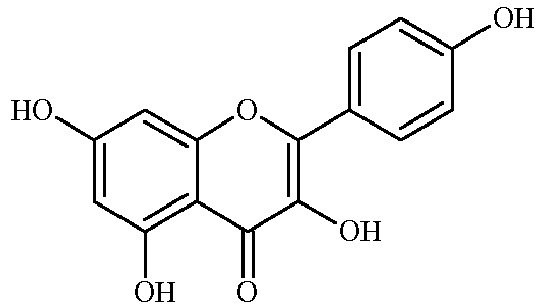
0.85 - Kaempferol ~100 0.80 - 0,68 Astragalin- 
0.87 - Naringenin 76 0.84 - 0.77 Prunin 
0.83 - Genistein 68 0.76 - 0.68 Genistin 
0.83 - 0.77 - t-Resveratrol 96 0.64 - 0.58 - 0.51 - 0.46 - Xanthohumol 
52 0.85 - 0.48 - aRf values and products in bold indicate the main product of the biotransformation reactions.
bProducts symbolized by "-" were not specified due to unavailable reference substances - Quercetin was transformed almost completely after four-hour biotransformations and yielded three detectable products (P1-P3). To further characterize these products UV absorbance spectra were recorded and compared to the reference glycones of quercetin isoquercitrin and quercitrin (59). P1 revealed an Rf value identical to the value of isoquercitrin. Further the UV absorbance spectrum of P1 matched the spectrum of isoquercitrin. P2 revealed an Rf value identical to the one known for quercitrin. P2 also exhibited the same UV absorbance spectrum as quercitrin. P3 revealed an Rf value of 0.82, which clearly differed from the RF values of known and available quercetin glycones. Compared to isoquercitrin, P3 showed a similar hypsochromic shift of band I to a λ max of 363 nm; however it revealed a less hypsochromic shift in band II of only 5 nm to 272 nm with a shoulder at 280 nm. It is further notable that the HPLC-ESI-MS analysis of biotransformation products of quercetin consistently identified three distinct reaction products. P1 had a RT of 17.93 min in the HPLC analysis and revealed a molecular mass of 464 u, which is equivalent to isoquercitrin. P2 revealed a RT of 18.06 min and had a molecular mass of 448 u. This mass corresponds well with the molecular mass of quercitrin. Finally, P3 with a RT of 18.31 min revealed a molecular mass of 446 u indicating the formation of a novel not further characterized quercetin glycoside.
- Glycosylation patterns of GtfC on quercetin suggested a preference to act on the C3 hydroxy group mediating the transfer of different sugar residues. However, if a C3 OH-group was not available, GtfC efficiently catalyzed the glycosylation of other positions. Flavones lacking the hydroxy function at C3 were converted depending on the availability of other hydroxy groups. Pratol possessing only a single free C7-hydroxy group was converted weakly and resulted in a single detectable product. Further the biotransformation of 3',4'-dihydroxyflavone yielded three detectable glycones and 5-methoxy-eupatorin yielded two products (data not shown); the biotransformation of the mono 4'-hydroxyflavanone yielded one glycosylated product and the glycosylation of naringenin yielded two products. The major biotransformation product of naringenin revealed the same Rf value and absorbance spectrum as prunin, the naringenin-7-O-glucoside (TABLE 3). The second naringenin glycone could not be further specified due to the lack of commercially available reference substances. Altogether these results suggested that GtfC acts on the C3, C3', C4' and C7 hydroxy groups of the flavonoid backbone.
- In summary these data demonstrated that MgtB and GtfC possess interesting biocatalytic properties. While MgtB specifically mediated the transfer of glucose residues, GtfC transferred different hexose moieties. MgtB was capable to catalyze the glucosylation of already glycosylated flavonoids to form di-glycosides (e.g. formation of luteolin-3',7-di-O-glucoside) and even tiliroside to generate novel glucosides not available from natural resources. In contrast, the glycosylation pattern of GtfC suggested the transfer of single sugar residues to only aglycone flavonoid forms. Interestingly, GtfC seemed to be very variable concerning its activity at various positions on the flavonoid backbone. This may lead to the formation of truly novel flavonoids naturally not available. Hence both enzymes might be helpful in the generation of new natural compounds.
- Using a novel screening technology, a macroside glycosyltransferase MgtB from a soil isolate (i.e. Bacillus sp. HH1500) has been identified. A fosmid library established with DNA from this strain, which had been isolated from the local botanical garden, only recently, was initially used to develop and verify the outlined screening technology; and using the novel screening technology, MgtB was quickly identified from a pool of almost 2,000 clones. Isolation and purification of recombinant MgtB revealed a novel MGT. MgtB shared 89% aa identity with BcGT-1 from B. cereus ATCC 10987, the closest relative published to act on flavonoids. BcGT-1 was reported to catalyze the glucosylation of flavones, flavonols, flavanones and isoflavones (47). On flavonols BcGT-1 acted on C3-, C7- and C4'- hydroxy groups creating triglucosides of kaempferol (48). In contrast biocatalyses of kaempferol with MgtB yielded just two detectable glucosylated products. Instead reactions with quercetin resulted in three detectable glycones. These data suggested that MgtB acted at the C3' OH-group. This hypothesis was also was supported by the observation that recombinant MgtB converted luteolin to luteolin-3',7-di-O-glucoside as a byproduct. These results were in accordance with the glucosylation pattern of BcGT-3 yet another MGT from B. cereus ATCC10987 (49). Interestingly, BcGT-3 shares only 40% aa identity with MgtB but both enzymes act on the same flavonoids forming di-glucosides from flavones and flavonols at the same positions and only mono-glucosides from naringenin. The most spectacular conversion observed for MgtB was that of tiliroside. The product is likely to be the 7-O-glucoside taking the glycosylation pattern of MgtB into account. Tiliroside glycosides yet were not reported in scientific literature. This raises the possibility of the generation of new natural compounds. The natural substrates of Bacillus MGTs still have not been reported. Other MGTs like OleD usually detoxify macroside antibiotics but often possess broad acceptor tolerance (35, 60).
- The metagenome-derived GtfC turned out to be a completely novel enzyme. Only seven flavonoid-active UGTs have been reported so far that originate from five different prokaryotes (35, 36, 38, 47, 49). Without XcGT-2 from Gram-negative X. campestris ATCC 33913 all remaining are MGT enzymes from Gram-positive Bacilli and Streptomycetes. MGTs play an important role in xenobiotic defense mechanisms of prokaryotes and thus show broad acceptor specificities (55, 60). This also applies for eukaryotic UGTs pointing to a biological principle of detoxification (61). To our knowledge GtfC is the first metagenome-derived GT acting on flavonoids. Moreover, it is also the first bacterial enzyme reported to transfer various dTDP activated hexose sugars to polyphenols (see below) in contrast to usually stringent donor specificities like Gtfs (57). With respect to the notion that many NDP-sugars in prokaryotes are dTDP and not UDP activated, GtfC might be a promising biocatalyst in glycodiversification approaches (58, 62, 63). GtfC is similar to predicted GTs from Cytophagaceae bacteria (64-66). These Gram-negative bacteria have large genomes suggesting extensive secondary metabolic pathways and they are well known for the presence of resistance mechanism to antibiotics as trimethoprim and vancomycin (67, 68). As commonly known glycosylation of xenobiotics is a ubiquitous detoxification process in all kingdoms of life. The phylogenetically divers members of Cytophagaceae have only recently become an object of research and a concrete estimation about the phylogenetic wideness of this family and exact taxonomic ranking still remain unclear (65, 69). Thus, the identification of the metagenome-derived GtfC and its partial characterization suggest that this group of microorganisms is perhaps highly promising resource for novel GTs and also other enzymes.
- A ClustalW alignment of the donor-binding region of GtfC suggested the activated donor substrates are of deoxy-thymidine nucleoside origin. GtfC possesses the typical aa residues Phe336 for thymine base stacking and hydrophobic Leu357 for deoxy-ribose fitting (57). Concerning the donor binding of GTs GtfC appears to not exhibit the known aa residues for pyrophosphate binding. Instead of the conserved residue His/Arg in the up to date solved protein structures GtfC contains an Asn at the aa position 349 (52, 70). This applies also for the nearest GtfC relatives Dfer1940, UGT of F. limi BUZ 3 and Slin3970 as well as the NGTs RebG and BSIG4748. Further, GtfC does not show the conserved Ser/Thr residue responsible for α-phosphate binding. Instead the Gly354 appears to be of importance for the α-phosphate binding similar to the OleD transferase (55).
- The assumption of dTDP activated co-substrates used by GtfC was supported by the observation that glucose, rhamnose and a third sugar residue with molecular weight of 446 were transferred by GtfC in biotransformations using intact E. coli cells. Besides, biocatalytic approaches with purified GtfC and either UDP-α-D-glucose or -galactose as donor substrates failed. In bacteria, the activated sugars, dTDP-α-D-glucose, -4-keto-6-deoxy-α-D-glucose or -4-keto-β-L-rhamnose, and -β-L-rhamnose are part of the dTDP-sugar biosynthesis pathway and are present in E. coli (71). Moreover, levels of dTDP-sugars are allosterically regulated by dTDP-rhamnose levels through activity of RmlA (72).
- Four additional glycosyltransferases were identified and designated MgtT, MgtC, MgtS and MgtW.
- 397 aa (SEQ ID NO: 11), gene 1194 bp (SEQ ID NO: 5), from Bacillus sp. BCHH1500; 99% aa identity to MGT from B. cereus B4264 (YP002367512)
Reaction in biotransformation (whole cell catalysis) with E. coli DH5α pDrive::mgtT shown for e.g. 4-Methylumbelliferone (4-MU, 7-Hydroxy-4-methylcoumarin), phloretin, homoeriodytiol, naringenin, et al. - 402 aa (SEQ ID NO: 9), gene 1209 bp (SEQ ID NO: 3), from Bacillus sp. BCG+1; 95% aa identity to MGT aus B. cereus ATCC10987 (NP978481)
Reaction in biotransformation (whole cell catalysis) with E. coli DH5α pDrive::mgtC shown for apigenin, luteolin; quercetin, naringenin, homoeriodytiol, phloretin, noreugenin, et al. -

- 392 aa (SEQ ID NO: 10), gene 1179 bp (SEQ ID NO: 4), from Bacillus subtilis BSHH14 99% aa identity zu MGT YjiC aus B. subtilis (YP007533161)
Reaction in biotransformation (whole cell catalysis) with E. coli BL21(DE3) pET19b::mgtS and biocatalysis with enzyme shown for phloretin, homoeriodytiol, naringenin, apigenin, luteolin; quercetin, 4-Methylumbelliferon, noreugenin, et al. -

- 402 aa (SEQ ID NO: 12), gene 1209 bp (SEQ ID NO:6), from Bacillus sp. BCHH03 99% aa identity to MGT from B. weihenstephanensis KBAB4 (YP001644794)
Reaction in biotransformation (whole cell catalysis) with E. coli DH5α pDrive::mgtW shown for quercetin, phloretin, homoeriodyctiol, et al. -

- Overview of sequences (aa = number of amino acids, bp = number of base pairs, PRT = protein, nt = number of nucleotides):
SEQ ID NO: Type aa bp/nt description 1 DNA 1380 gtfC gene 2 DNA 1209 mgtB gene 3 DNA 1209 mgtC gene 4 DNA 1179 mgtS gene 5 DNA 1194 mgtT gene 6 DNA 1209 mgtW gene 7 PRT 459 GtfC protein 8 PRT 402 MgtB protein 9 PRT 402 MgtC protein 10 PRT 392 MgtS protein 11 PRT 397 MgtT protein 12 PRT 402 MgtW protein 13 DNA 20 cfn_GT-1for 14 DNA 19 cfn_GT-for 15 DNA 29 cfn_GT-rev 16 DNA 29 gtf-Nde-for 17 DNA 27 gtf-Bam-rev 18 DNA 22 mgt-1-XhoI-for 19 DNA 25 mgt-1-XhoI-rev 20 DNA 17 T3 promoter 21 DNA 19 T7 promoter 22 DNA 19 T7 terminator -
- 19. Altschul, S.F., Gish, W., Miller, W., Myers, E.W. & Lipman, D.J. (1990) "Basic local alignment search tool." J Mol Biol 215:403-410
- 20. Henikoff, S. and Henikoff, J., Amino acid substitution matrices from protein blocks. Proc Natl Acad Sci USA 89: 10915-10919, 1992
- 21. Ververidis, F., Trantas, E., Douglas, C., Vollmer, G., Kretzschmar, G., and Panopoulos, N. 2007. Biotechnology of flavonoids and other phenylpropanoid-derived natural products. Part II: Reconstruction of multienzyme pathways in plants and microbes. Biotechnol J 2:1235-1249.
- 22. Schütz, K., Muks, E., Carle, R., and Schieber, A. 2006. Quantitative determination of phenolic compounds in artichoke-based dietary supplements and pharmaceuticals by high-performance liquid chromatography. J Agric Food Chem 54:8812-8817.
- 23. Leonard, E., Yan, Y., Fowler, Z. L., Li, Z., Lim, C. G., Lim, K. H., and Koffas, M. A. 2008. Strain improvement of recombinant Escherichia coli for efficient production of plant flavonoids. Mol Pharm 5:257-265.
- 24. Wang, C., Meek, D. J., Panchal, P., Boruvka, N., Archibald, F. S., Driscoll, B. T., and Charles, T. C. 2006. Isolation of poly-3-hydroxybutyrate metabolism genes from complex microbial communities by phenotypic complementation of bacterial mutants. Appl Environ Microbiol 72:384-391.
- 25. Manach, C., Scalbert, A., Morand, C., Remesy, C., and Jimenez, L. 2004. Polyphenols: food sources and bioavailability. Am J Clin Nutr 79:727-747.
- 26. Das, S., and Rosazza, J. P. 2006. Microbial and enzymatic transformations of flavonoids. J Nat Prod 69:499-508.
- 27. Graefe, E. U., Wittig, J., Mueller, S., Riethling, A. K., Uehleke, B., Drewelow, B., Pforte, H., Jacobasch, G., Derendorf, H., and Veit, M. 2001. Pharmacokinetics and bioavailability of quercetin glycosides in humans. J Clin Pharmacol 41:492-499.
- 28. Kren, V., and Martinkova, L. 2001. Glycosides in medicine:The role of glycosidic residue in biological activity. Curr Med Chem 8:1303-28.
- 29. Coutinho, P. M., Deleury, E., Davies, G. J., and Henrissat, B. 2003. An evolving hierarchical family classification for glycosyltransferases. J Mol Biol 328:307-317.
- 30. Bowles, D., Lim, E. K., Poppenberger, B., and Vaistij, F. E. 2006. Glycosyltransferases of lipophilic small molecules. Annu Rev Plant Biol 57:567-597.
- 31. Mackenzie, P. I., Owens, I. S., Burchell, B., Bock, K. W., Bairoch, A., Belanger, A., Fournel-Gigleux, S., Green, M., Hum, D. W., Iyanagi, T., Lancet, D., Louisot, P., Magdalou, J., Chowdhury, J. R., Ritter, J. K., Schachter, H., Tephly, T. R., Tipton, K. F., and Nebert, D. W. 1997. The UDP glycosyltransferase gene superfamily: recommended nomenclature update based on evolutionary divergence. Pharmacogenetics 7:255-269.
- 32. Lairson, L. L., Henrissat, B., Davies, G. J., and Withers, S. G. 2008. Glycosyltransferases: structures, functions, and mechanisms. Annu Rev Biochem 77:521-555.
- 33. Osmani, S. A., Bak, S. r., and Moller, B. L. 2009. Substrate specificity of plant UDP-dependent glycosyltransferases predicted from crystal structures and homology modeling. Phytochemistry 70:325-347.
- 34. Breton, C., Snajdrova, L., Jeanneau, C., Koca, J., and Imberty, A. 2006. Structures and mechanisms of glycosyltransferases. Glycobiology 16:29R-37.
- 35. Yang, M., Proctor, M. R., Bolam, D. N., Errey, J. C., Field, R. A., Gilbert, H. J., and Davis, B. G. 2005. Probing the breadth of macrolide glycosyltransferases: in vitro remodeling of a polyketide antibiotic creates active bacterial uptake and enhances potency. J Am Chem Soc 127:9336-9337.
- 36. Jeon, Y., Kim, B., Kim, J., Cheong, Y., and Ahn, J.-H. 2009. Enzymatic Glycosylation of Phenolic Compounds Using BsGT-3. Journal of the Korean Society for Appl Biol Chem 52:98-101.
- 37. Rao, K. V., and Weisner, N. T. 1981. Microbial Transformation of Quercetin by Bacillus cereus. Appl Environ Microbiol 42:450-452.
- 38. Kim, H. J., Kim, B. G., Kim, J. A., Park, Y., Lee, Y. J., Lim, Y., and Ahn, J. H. 2007. Glycosylation of flavonoids with E. coli expressing glycosyltransferase from Xanthomonas campestris. J Microbiol Biotechnol 17:539-542.
- 39. Zhou, J., Bruns, M. A., and Tiedje, J. M. 1996. DNA recovery from soils of diverse composition. Appl Environ Microbiol 62:316-322.
- 40. Ilmberger, N., Meske, D., Juergensen, J., Schulte, M., Barthen, P., Rabausch, U., Angelov, A., Mientus, M., Liebl, W., Schmitz, R. A., and Streit, W. R. 2012. Metagenomic cellulases highly tolerant towards the presence of ionic liquids--linking thermostability and halotolerance. Appl Microbiol Biotechnol 95:135-146.
- 41. Wagner, H., Bladt, S., Zgainski, E. M. 1983. Drogenanalyse, Dünnschichtchromatographische Analyse von Arzneidrogen. Springer Publisher, Berlin Heidelberg New York.
- 42. Neu, R. 1957. Chelate von Diarylborsäuren mit aliphatischen Oxyalkylaminen als Reagenzien fur den Nachweis von Oxyphenyl-benzo-γ-pyronen. Naturwissenschaften 44:181-182.
- 43. Tourasse, N. J., Helgason, E., Økstad, O. A., Hegna, I. K., and KolstØ, A. B. 2006. The Bacillus cereus group: novel aspects of population structure and genome dynamics. Appl Microbiol 101:579-593.
- 44. Tamura K, P. D., Peterson N, Stecher G, Nei M, and Kumar S. 2011. MEGA5: Molecular Evolutionary Genetics Analysis using Maximum Likelihood, Evolutionary Distance, and Maximum Parsimony Methods. Mol Biol Evol 28:2731-2739.
- 45. Li, L., Modolo, L. V., Escamilla-Trevino, L. L., Achnine, L., Dixon, R. A., and Wang, X. 2007. Crystal structure of Medicago truncatula UGT85H2--insights into the structural basis of a multifunctional (iso)flavonoid glycosyltransferase. J Mol Biol 370:951-963.
- 46. Jones, P., Messner, B., Nakajima, J.-I., Schäffner, A. R., and Saito, K. 2003. UGT73C6 and UGT78D1, Glycosyltransferases Involved in Flavonol Glycoside Biosynthesis in Arabidopsis thaliana. J Biol Chem 278:43910-43918.
- 47. Ko, J. H., Gyu Kim, B., and Joong-Hoon, A. 2006. Glycosylation of flavonoids with a glycosyltransferase from Bacillus cereus. FEMS Microbiol Lett 258:263-268.
- 48. Jung, N. R., Joe, E. J., Kim, B. G., Ahn, B. C., Park, J. C., Chong, Y., and Ahn, J. H. 2010. Change of Bacillus cereus flavonoid O-triglucosyltransferase into flavonoid O-monoglucosyltransferase by error-prone polymerase chain reaction. J Microbiol Biotechnol 20:1393-1396.
- 49. Ahn, B. C., Kim, B. G., Jeon, Y. M., Lee, E. J., Lim, Y., and Ahn, J. H. 2009. Formation of Flavone Di-O-Glucosides Using a Glycosyltransferase from Bacillus cereus. J Microbiol Biotechnol 19:387-390.
- 50. Choi, S. H., Ryu, M., Yoon, Y. J., Kim, D. M., and Lee, E. Y. 2012. Glycosylation of various flavonoids by recombinant oleandomycin glycosyltransferase from Streptomyces antibioticus in batch and repeated batch modes. Biotechnol Lett 34:499-505.
- 51. Williams, G. J., Zhang, C., and Thorson, J. S. 2007. Expanding the promiscuity of a natural-product glycosyltransferase by directed evolution. Nat Chem Biol 3:657-662.
- 52. Hu, Y., and Walker, S. 2002. Remarkable structural similarities between diverse glycosyltransferases. Chem Biol 9:1287-1296.
- 53. Hughes, J., and Hughes, M. A. 1994. Multiple secondary plant product UDP-glucose glucosyltransferase genes expressed in cassava (Manihot esculenta Crantz) cotyledons. Mitochondrial DNA 5:41 - 49.
- 54. Paquette, S., Moller, B. L., and Bak, S. 2003. On the origin of family 1 plant glycosyltransferases. Phytochemistry 62:399-413.
- 55. Bolam, D. N., Roberts, S., Proctor, M. R., Turkenburg, J. P., Dodson, E. J., Martinez-Fleites, C., Yang, M., Davis, B. G., Davies, G. J., and Gilbert, H. J. 2007. The crystal structure of two macrolide glycosyltransferases provides a blueprint for host cell antibiotic immunity. Proc Natl Acad Sci U S A 104:5336-5341.
- 56. Offen, W., Martinez-Fleites, C., Yang, M., Kiat-Lim, E., Davis, B. G., Tarling, C. A., Ford, C. M., Bowles, D. J., and Davies, G. J. 2006. Structure of a flavonoid glucosyltransferase reveals the basis for plant natural product modification. Embo J 25:1396-1405.
- 57. Mulichak, A. M., Lu, W., Losey, H. C., Walsh, C. T., and Garavito, R. M. 2004. Crystal structure of vancosaminyltransferase GtfD from the vancomycin biosynthetic pathway: interactions with acceptor and nucleotide ligands. Biochemistry 43:5170-5180.
- 58. Lim, E.-K., Ashford, D. A., and Bowles, D. J. 2006. The Synthesis of Small-Molecule Rhamnosides through the Rational Design of a Whole-Cell Biocatalysis System. ChemBioChem 7:1181-1185.
- 59. Mabry, T. J., Markham, K. R., and Thomas, M. B. 1970. The systematic identification of flavonoids. New York. Springer-Verlag.
- 60. Gantt, R. W., Goff, R. D., Williams, G. J., and Thorson, J. S. 2008. Probing the aglycon promiscuity of an engineered glycosyltransferase. Angew Chem Int Ed Engl 47:8889-8892.
- 61. Vogt, T., and Jones, P. 2000. Glycosyltransferases in plant natural product synthesis: characterization of a supergene family. Trends Plant Sci 5:380-386.
- 62. Williams, G. J., Gantt, R. W., and Thorson, J. S. 2008. The impact of enzyme engineering upon natural product glycodiversification. Curr Opin Chem Biol 12:556-564.
- 63. Yoon, J. A., Kim, B. G., Lee, W. J., Lim, Y., Chong, Y., and Ahn, J. H. 2012. Production of a Novel Quercetin Glycoside through Metabolic Engineering of Escherichia coli. Appl Environ Microbiol 78:4256-4262.
- 64. Filippini, M., Kaech, A., Ziegler, U., and Bagheri, H. C. 2011. Fibrisoma limi gen. nov., sp. nov., a filamentous bacterium isolated from tidal flats. Int J Sys Evol Microbiol 61:1418-1424.
- 65. Lail, K., Sikorski, J., Saunders, E., Lapidus, A., Glavina Del Rio, T., Copeland, A., Tice, H., Cheng, J. F., Lucas, S., Nolan, M., Bruce, D., Goodwin, L., Pitluck, S., Ivanova, N., Mavromatis, K., Ovchinnikova, G., Pati, A., Chen, A., Palaniappan, K., Land, M., Hauser, L., Chang, Y. J., Jeffries, C. D., Chain, P., Brettin, T., Detter, J. C., Schutze, A., Rohde, M., Tindall, B. J., Goker, M., Bristow, J., Eisen, J. A., Markowitz, V., Hugenholtz, P., Kyrpides, N. C., Klenk, H. P., and Chen, F. 2010. Complete genome sequence of Spirosoma linguale type strain (1). Stand Genom Sci 2:176-185.
- 66. Lang, E., Lapidus, A., Chertkov, O., Brettin, T., Detter, J. C., Han, C., Copeland, A., Glavina Del Rio, T., Nolan, M., Chen, F., Lucas, S., Tice, H., Cheng, J. F., Land, M., Hauser, L., Chang, Y. J., Jeffries, C. D., Kopitz, M., Bruce, D., Goodwin, L., Pitluck, S., Ovchinnikova, G., Pati, A., Ivanova, N., Mavrommatis, K., Chen, A., Palaniappan, K., Chain, P., Bristow, J., Eisen, J. A., Markowitz, V., Hugenholtz, P., Goker, M., Rohde, M., Kyrpides, N. C., and Klenk, H. P. 2009. Complete genome sequence of Dyadobacter fermentans type strain (NS 114). Stand Genom Sci 1:133-140.
- 67. Chelius, M. K., and Triplett, E. W. 2000. Dyadobacter fermentans gen. nov., sp. nov., a novel gram-negative bacterium isolated from surface-sterilized Zea mays stems. IntJ Sys Evol Microbiol 50:751-758.
- 68. Finster, K. W., Herbert, R. A., and Lomstein, B. A. 2009. Spirosoma spitsbergense sp. nov. and Spirosoma luteum sp. nov., isolated from a high Arctic permafrost soil, and emended description of the genus Spirosoma. Int J Sys Evol Microbiol 59:839-844.
- 69. Filippini, M., Svercel, M., Laczko, E., Kaech, A., Ziegler, U., and Bagheri, H. C. 2011. Fibrella aestuarina gen. nov., sp. nov., a filamentous bacterium of the family Cytophagaceae isolated from a tidal flat, and emended description of the genus Rudanella Weon et al. 2008. Int J Sys Evol Microbiol 61:184-189.
- 70. Ha, S., Gross, B., and Walker, S. 2001. E. Coli MurG: a paradigm for a superfamily of glycosyltransferases. Curr Drug Targets Infect Disord 1:201-213.
- 71. Samuel, G., and Reeves, P. 2003. Biosynthesis of O-antigens: genes and pathways involved in nucleotide sugar precursor synthesis and O-antigen assembly. Carbohydr Res 338:2503-2519.
- 72. Giraud, M. F., and Naismith, J. H. 2000. The rhamnose pathway. Curr Opin Struct Biol 10:687-696.
- 73. Studier, F. W., Daegelen, P., Lenski, R. E., Maslov, S., and Kim, J. F. 2009. Understanding the Differences between Genome Sequences of Escherichia coli B Strains REL606 and BL21 (DE3) and Comparison of the E. coli B and K-12 Genomes. J Mol Biol 394:653-680.
- 74. Larbig, K. D., Christmann, A., Johann, A., Klockgether, J., Hartsch, T., Merkl, R., Wiehlmann, L., Fritz, H.-J., and Tümmler, B. 2002. Gene Islands Integrated into tRNAGly Genes Confer Genome Diversity on a Pseudomonas aeruginosa Clone. J Bacteriol 184:6665-6680.
-
- <110> Universitkät Hamburg
- <120> Enzymes catalyzing the glycosylation of polyphenols
- <130> PAT 1455 PCT
- <150>
EP13169812.8
<151> 2013-05-29 - <160> 22
- <170> BiSSAP 1.3
- <210> 1
<211> 1380
<212> DNA
<213> Unknown - <220>
<223> gtfC gene - <220>
<221> CDS
<222> 1..1380
<223> /trans1_table=1 - <400> 1


- <210> 2
<211> 1209
<212> DNA
<213> Bacillus sp. - <220>
<223> mgtB gene - <220>
<221> CDS
<222> 1..1209
<223> /transl_table=11 - <400> 2


- <210> 3
<211> 1209
<212> DNA
<213> Bacillus sp. - <220>
<223> mgtC gene - <220>
<221> CDS
<222> 1..1209
<223> /transl_table=11 - <400> 3


- <210> 4
<211> 1176
<212> DNA
<213> Bacillus subtilis - <220>
<223> mgtS gene - <220>
<221> CDS
<222> 1..1176
<223> /transl_table=11 - <400> 4


- <210> 5
<211> 1194
<212> DNA
<213> Bacillus sp. - <220>
<223> mgtT gene - <220>
<221> CDS
<222> 1..1194
<223> /transl_table=11 - <400> 5

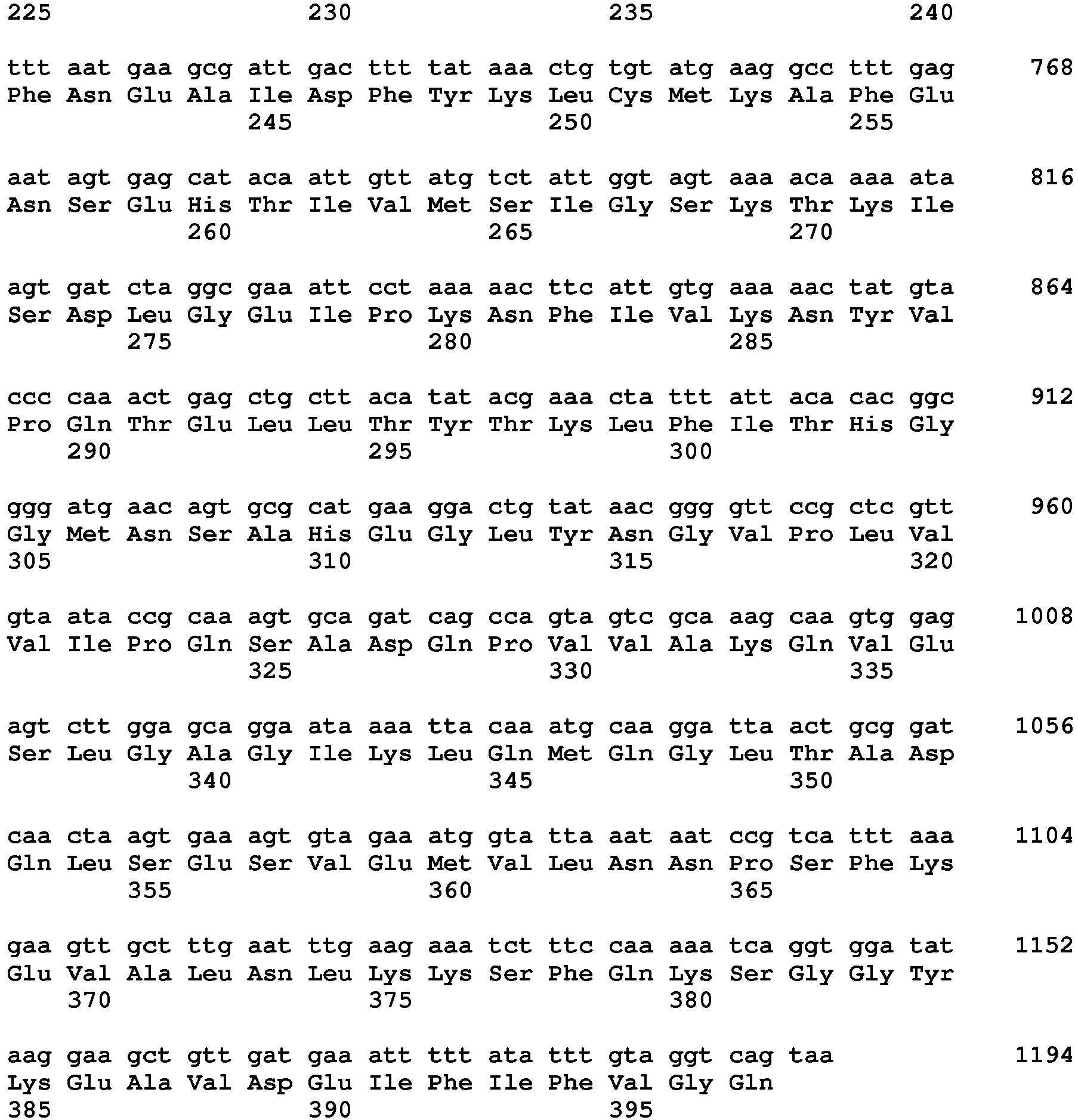
- <210> 6
<211> 1209
<212> DNA
<213> Bacillus sp. - <220>
<223> mgtW gene - <220>
<221> CDS
<222> 1..1209
<223> /trans1_table=11 - <400> 6


- <210> 7
<211> 459
<212> PRT
<213> Unknown - <220>
<223> [CDS]:1..1380 from SEQ ID NO 1 - <400> 7


- <210> 8
<211> 402
<212> PRT
<213> Bacillus sp. - <220>
<223> [CDS]:1..1209 from SEQ ID NO 2 - <400> 8


- <210> 9
<211> 402
<212> PRT
<213> Bacillus sp. - <220>
<223> [CDS]:1..1209 from SEQ ID NO 3 - <400> 9


- <210> 10
<211> 392
<212> PRT
<213> Bacillus subtilis - <220>
<223> [CDS]:1..1176 from SEQ ID NO 4 - <400> 10


- <210> 11
<211> 397
<212> PRT
<213> Bacillus sp. - <220>
<223> [CDS]:1..1194 from SEQ ID NO 5 - <400> 11


- <210> 12
<211> 402
<212> PRT
<213> Bacillus sp. - <220>
<223> [CDS]:1..1209 from SEQ ID NO 6 - <400> 12


- <210> 13
<211> 20
<212> DNA
<213> Artificial Sequence - <220>
<223> Primer cfn_GT-1for - <400> 13
ttatgtcccg caattagaag 20 - <210> 14
<211> 19
<212> DNA
<213> Artificial Sequence - <220>
<223> Primer cfn_GT-for - <400> 14
agaaggttga agcaacagg 19 - <210> 15
<211> 29
<212> DNA
<213> Artificial Sequence - <220>
<223> Primer cfn_GT-rev - <400> 15
cctactggaa aatgattatc atatattac 29 - <210> 16
<211> 29
<212> DNA
<213> Artificial Sequence - <220>
<223> Primer gtf-Nde-for - <400> 16
catatgagta atttattttc ttcacaaac 29 - <210> 17
<211> 27
<212> DNA
<213> Artificial Sequence - <220>
<223> Primer gtf-Bam-rev - <400> 17
ggatccttag tatatctttt cttcttc 27 - <210> 18
<211> 22
<212> DNA
<213> Artificial Sequence - <220>
<223> Primer mgt-1-XhoI-for - <400> 18
ctcgagatgg caaatgtact cg 22 - <210> 19
<211> 25
<212> DNA
<213> Artificial Sequence - <220>
<223> Primer mgt-1-XhoI-rev - <400> 19
ctcgagttta atctttacgt acggc 25 - <210> 20
<211> 17
<212> DNA
<213> Artificial Sequence - <220>
<223> T3 promoter - <400> 20
attaaccctc actaaag 17 - <210> 21
<211> 19
<212> DNA
<213> Artificial Sequence - <220>
<223> T7 promoter - <400> 21
taatacgact cactatagg 19 - <210> 22
<211> 19
<212> DNA
<213> Artificial Sequence - <220>
<223> T7 terminator - <400> 22
gctagttatt gctcagcgg 19
Claims (8)
- Enzyme catalyzing the glycosylation of polyphenols, wherein the enzymea) comprises the amino acid sequence according to SEQ ID NO: 7, orb) is encoded by a nucleic acid comprising the nucleotide sequence of SEQ ID NO: 1, orc) is at least 75% homologous to one of the enzymes defined in a) or b) above, ord) is encoded by a nucleic acid hybridizing under stringent conditions with a nucleic acid complementary to a sequence comprising the nucleotide sequence of SEQ ID NO: 1.
- Enzyme according to claim 1, wherein the enzyme is at least 80% or 85%, most preferred at least 90%, 95%, 96%, 97%, 98%, 99%, 99.2% or 99.5% homologous to the enzyme defined in a) or b) above.
- Fragments of an enzyme being at least 97% homologous to the enzyme having the amino acid sequence according to SEQ ID NO. 7, wherein the fragment comprises at least 60, preferably at least 65, 70, 75, 80, 85, 90, 100, 110 or at least 120 consecutive amino acids of said enzyme, and wherein the fragment catalyzes the glycosylation of a polyphenol.
- Nucleic acid encoding an enzyme according to one of claims 1 to 2, or a fragment according to claim 3.
- Nuleic acid according to claim 4, wherein the nucleic acida) comprises the nucleotide sequence according to SEQ ID NO: 1, or a fragment thereof, the fragment encoding a fragment of an enzyme catalyzing the glycosylation of a polyphenol, orb) is homologous to one of the nuleic acids defined in a) above, orc) hybridizes under stringent conditions with a nucleic acid complementary to the nuleic acid defined in a) above.
- Use of an enzyme according to one of claims 1 to 2, or a fragment thereof according to claim 3, for the glycosylation of polyphenols, preferably phenolic acid derivatives, flavonoids, benzoic acid derivatives, stilbenoids, chalconoids, chromones, and coumarin derivatives.
- Method for preparing a glycoside of a polyphenol, comprising the step of reacting the polyphenol and a glycosyl donor with an enzyme according to one of claims 1 to 2 or a fragment thereof according to claim 3, under suitable conditions for an enzymatic reaction to occur transferring the glycosyl donor to a hydroxyl group or other functional group of the polyphenol.
- The method of claim 7, wherein the polyphenol is a phenolic acid derivative, flavonoid, benzoic acid derivative, stilbenoid, chalconoid, chromone, or coumarin derivative.
Priority Applications (1)
| Application Number | Priority Date | Filing Date | Title |
|---|---|---|---|
| EP14726999.7A EP3004336B1 (en) | 2013-05-29 | 2014-05-28 | Enzymes catalyzing the glycosylation of polyphenols |
Applications Claiming Priority (3)
| Application Number | Priority Date | Filing Date | Title |
|---|---|---|---|
| EP13169812 | 2013-05-29 | ||
| EP14726999.7A EP3004336B1 (en) | 2013-05-29 | 2014-05-28 | Enzymes catalyzing the glycosylation of polyphenols |
| PCT/EP2014/061185 WO2014191524A1 (en) | 2013-05-29 | 2014-05-28 | Enzymes catalyzing the glycosylation of polyphenols |
Publications (2)
| Publication Number | Publication Date |
|---|---|
| EP3004336A1 EP3004336A1 (en) | 2016-04-13 |
| EP3004336B1 true EP3004336B1 (en) | 2017-03-29 |
Family
ID=48485073
Family Applications (1)
| Application Number | Title | Priority Date | Filing Date |
|---|---|---|---|
| EP14726999.7A Not-in-force EP3004336B1 (en) | 2013-05-29 | 2014-05-28 | Enzymes catalyzing the glycosylation of polyphenols |
Country Status (8)
| Country | Link |
|---|---|
| US (1) | US20160090578A1 (en) |
| EP (1) | EP3004336B1 (en) |
| JP (1) | JP2016518849A (en) |
| KR (1) | KR20160005093A (en) |
| CN (1) | CN105247045A (en) |
| AU (1) | AU2014273088A1 (en) |
| CA (1) | CA2912987A1 (en) |
| WO (1) | WO2014191524A1 (en) |
Families Citing this family (14)
| Publication number | Priority date | Publication date | Assignee | Title |
|---|---|---|---|---|
| EP3402788A1 (en) | 2016-01-15 | 2018-11-21 | Universität Hamburg | Flavonoide-type compounds bearing an o-rhamnosyl residue |
| US20190203240A1 (en) * | 2016-01-15 | 2019-07-04 | Universitaet Hamburg | Methods for the production of rhamnosylated flavonoids |
| CA3011018A1 (en) | 2016-01-15 | 2017-07-20 | Universitat Hamburg | Noreugenin-glycoside derivatives |
| EP3877519B1 (en) | 2018-11-09 | 2026-03-11 | Ginkgo Bioworks, Inc. | Biosynthesis of mogrosides |
| US20220290248A1 (en) * | 2019-08-13 | 2022-09-15 | Tata Consultancy Services Limited | System and method for assessing the risk of colorectal cancer |
| CN113265433B (en) * | 2020-02-17 | 2023-12-26 | 中国科学院分子植物科学卓越创新中心 | Bifunctional carbon glycosyltransferase and its applications |
| WO2021188457A1 (en) * | 2020-03-16 | 2021-09-23 | Doublerainbow Biosciences Inc. | Etoposide glycosides, methods of making, and uses thereof as an anti-cancer drug |
| US20230124589A1 (en) * | 2020-03-16 | 2023-04-20 | Doublerainbow Biosciences Inc. | Ivacaftor Glycosides, Methods Of Making, And Uses Thereof In Treating Cystic Fibrosis |
| US20230193336A1 (en) * | 2020-03-16 | 2023-06-22 | Double Rainbow Biosciences Inc. | Enasidenib glycosides and methods of treating diseases associated with isocitrate dehydrogenase (idh) dysfunction |
| CN114836398B (en) * | 2022-06-06 | 2023-06-23 | 南京工业大学 | Application of glycosyltransferase mutant in directional synthesis of non-natural ginsenoside |
| CN115927523B (en) * | 2022-10-31 | 2025-12-12 | 天津大学温州安全(应急)研究院 | Application of Bs-YjiC glycosyltransferase in Bacillus subtilis 168 |
| CN115927240B (en) * | 2023-01-04 | 2025-07-01 | 中国科学院大连化学物理研究所 | A flavonoid glycosyltransferase and its encoding gene and application |
| CN116769745A (en) * | 2023-05-05 | 2023-09-19 | 中国科学院昆明植物研究所 | Glycosyltransferase AmGT36 from astragalus membranaceus and gene and application thereof |
| CN121824651A (en) * | 2026-03-13 | 2026-04-10 | 浙江一鸣食品股份有限公司 | A water-soluble luteolin glycoside derivative obtained by fermentation of a probiotic composition, its preparation method and application |
Family Cites Families (2)
| Publication number | Priority date | Publication date | Assignee | Title |
|---|---|---|---|---|
| JP5184786B2 (en) * | 2007-01-19 | 2013-04-17 | サントリーホールディングス株式会社 | Method for glycosylation of flavonoids |
| US8722868B2 (en) * | 2009-08-07 | 2014-05-13 | National University Corporation Tokyo University Of Agriculture And Technology | Glycosyltransferase, novel glycosyltransferase gene, and novel sugar donor compound |
-
2014
- 2014-05-28 US US14/892,003 patent/US20160090578A1/en not_active Abandoned
- 2014-05-28 JP JP2016513407A patent/JP2016518849A/en active Pending
- 2014-05-28 CA CA2912987A patent/CA2912987A1/en not_active Abandoned
- 2014-05-28 EP EP14726999.7A patent/EP3004336B1/en not_active Not-in-force
- 2014-05-28 AU AU2014273088A patent/AU2014273088A1/en not_active Abandoned
- 2014-05-28 KR KR1020157034404A patent/KR20160005093A/en not_active Ceased
- 2014-05-28 CN CN201480031195.4A patent/CN105247045A/en active Pending
- 2014-05-28 WO PCT/EP2014/061185 patent/WO2014191524A1/en not_active Ceased
Non-Patent Citations (1)
| Title |
|---|
| None * |
Also Published As
| Publication number | Publication date |
|---|---|
| CA2912987A1 (en) | 2014-12-04 |
| WO2014191524A1 (en) | 2014-12-04 |
| JP2016518849A (en) | 2016-06-30 |
| CN105247045A (en) | 2016-01-13 |
| US20160090578A1 (en) | 2016-03-31 |
| AU2014273088A1 (en) | 2015-11-12 |
| EP3004336A1 (en) | 2016-04-13 |
| KR20160005093A (en) | 2016-01-13 |
Similar Documents
| Publication | Publication Date | Title |
|---|---|---|
| US20160090578A1 (en) | Enzymes catalyzing the glycosylation of polyphenols | |
| Rabausch et al. | Functional screening of metagenome and genome libraries for detection of novel flavonoid-modifying enzymes | |
| He et al. | Molecular and structural characterization of a promiscuous C‐glycosyltransferase from Trollius chinensis | |
| Wang et al. | Molecular characterization of the C‐glucosylation for puerarin biosynthesis in Pueraria lobata | |
| Achnine et al. | Genomics‐based selection and functional characterization of triterpene glycosyltransferases from the model legume Medicago truncatula | |
| Willits et al. | Bio-fermentation of modified flavonoids: an example of in vivo diversification of secondary metabolites | |
| Modolo et al. | A functional genomics approach to (iso) flavonoid glycosylation in the model legume Medicago truncatula | |
| Ibdah et al. | A novel Mg2+-dependent O-methyltransferase in the phenylpropanoid metabolism of Mesembryanthemum crystallinum | |
| Dai et al. | Exploiting the aglycon promiscuity of glycosyltransferase Bs-YjiC from Bacillus subtilis and its application in synthesis of glycosides | |
| Vogt et al. | Cloning and expression of a cDNA encoding betanidin 5‐O‐glucosyltransferase, a betanidin‐and flavonoid‐specific enzyme with high homology to inducible glucosyltransferases from the Solanaceae | |
| Kim et al. | Flavonoid 3′-O-methyltransferase from rice: cDNA cloning, characterization and functional expression | |
| Louveau et al. | Analysis of two new arabinosyltransferases belonging to the carbohydrate-active enzyme (CAZY) glycosyl transferase family1 provides insights into disease resistance and sugar donor specificity | |
| Ito et al. | C‐Glycosyltransferases catalyzing the formation of di‐C‐glucosyl flavonoids in citrus plants | |
| Richman et al. | Functional genomics uncovers three glucosyltransferases involved in the synthesis of the major sweet glucosides of Stevia rebaudiana | |
| Modolo et al. | Crystal structures of glycosyltransferase UGT78G1 reveal the molecular basis for glycosylation and deglycosylation of (iso) flavonoids | |
| EP2742131B1 (en) | Methods and materials for recombinant production of saffron compounds | |
| Braune et al. | Identification and functional expression of genes encoding flavonoid O‐and C‐glycosidases in intestinal bacteria | |
| Kim et al. | Biosynthesis and production of glycosylated flavonoids in Escherichia coli: current state and perspectives | |
| Feng et al. | Enzymatic basis for stepwise C‐glycosylation in the formation of flavonoid di‐C‐glycosides in sacred lotus (Nelumbo nucifera Gaertn.) | |
| Kim et al. | Characterization of flavonoid 7-O-glucosyltransferase from Arabidopsis thaliana | |
| US8093028B2 (en) | Engineered glycosyltransferases with expanded substrate specificity | |
| Kim et al. | Engineering flavonoid glycosyltransferases for enhanced catalytic efficiency and extended sugar-donor selectivity | |
| Ren et al. | A highly versatile fungal glucosyltransferase for specific production of quercetin-7-O-β-D-glucoside and quercetin-3-O-β-D-glucoside in different hosts | |
| EA038136B1 (en) | Use of octaketide synthases to produce kermesic acid and flavokermesic acid | |
| Liang et al. | Engineering a carbohydrate-processing transglycosidase into glycosyltransferase for natural product glycodiversification |
Legal Events
| Date | Code | Title | Description |
|---|---|---|---|
| PUAI | Public reference made under article 153(3) epc to a published international application that has entered the european phase |
Free format text: ORIGINAL CODE: 0009012 |
|
| 17P | Request for examination filed |
Effective date: 20160104 |
|
| AK | Designated contracting states |
Kind code of ref document: A1 Designated state(s): AL AT BE BG CH CY CZ DE DK EE ES FI FR GB GR HR HU IE IS IT LI LT LU LV MC MK MT NL NO PL PT RO RS SE SI SK SM TR |
|
| AX | Request for extension of the european patent |
Extension state: BA ME |
|
| DAX | Request for extension of the european patent (deleted) | ||
| GRAP | Despatch of communication of intention to grant a patent |
Free format text: ORIGINAL CODE: EPIDOSNIGR1 |
|
| STAA | Information on the status of an ep patent application or granted ep patent |
Free format text: STATUS: GRANT OF PATENT IS INTENDED |
|
| INTG | Intention to grant announced |
Effective date: 20161220 |
|
| GRAS | Grant fee paid |
Free format text: ORIGINAL CODE: EPIDOSNIGR3 |
|
| GRAA | (expected) grant |
Free format text: ORIGINAL CODE: 0009210 |
|
| STAA | Information on the status of an ep patent application or granted ep patent |
Free format text: STATUS: THE PATENT HAS BEEN GRANTED |
|
| AK | Designated contracting states |
Kind code of ref document: B1 Designated state(s): AL AT BE BG CH CY CZ DE DK EE ES FI FR GB GR HR HU IE IS IT LI LT LU LV MC MK MT NL NO PL PT RO RS SE SI SK SM TR |
|
| REG | Reference to a national code |
Ref country code: GB Ref legal event code: FG4D |
|
| REG | Reference to a national code |
Ref country code: CH Ref legal event code: EP |
|
| REG | Reference to a national code |
Ref country code: AT Ref legal event code: REF Ref document number: 879788 Country of ref document: AT Kind code of ref document: T Effective date: 20170415 |
|
| REG | Reference to a national code |
Ref country code: IE Ref legal event code: FG4D |
|
| REG | Reference to a national code |
Ref country code: NL Ref legal event code: FP |
|
| REG | Reference to a national code |
Ref country code: DE Ref legal event code: R096 Ref document number: 602014008118 Country of ref document: DE |
|
| REG | Reference to a national code |
Ref country code: FR Ref legal event code: PLFP Year of fee payment: 4 |
|
| PGFP | Annual fee paid to national office [announced via postgrant information from national office to epo] |
Ref country code: NL Payment date: 20170525 Year of fee payment: 4 |
|
| PG25 | Lapsed in a contracting state [announced via postgrant information from national office to epo] |
Ref country code: HR Free format text: LAPSE BECAUSE OF FAILURE TO SUBMIT A TRANSLATION OF THE DESCRIPTION OR TO PAY THE FEE WITHIN THE PRESCRIBED TIME-LIMIT Effective date: 20170329 Ref country code: GR Free format text: LAPSE BECAUSE OF FAILURE TO SUBMIT A TRANSLATION OF THE DESCRIPTION OR TO PAY THE FEE WITHIN THE PRESCRIBED TIME-LIMIT Effective date: 20170630 Ref country code: NO Free format text: LAPSE BECAUSE OF FAILURE TO SUBMIT A TRANSLATION OF THE DESCRIPTION OR TO PAY THE FEE WITHIN THE PRESCRIBED TIME-LIMIT Effective date: 20170629 Ref country code: FI Free format text: LAPSE BECAUSE OF FAILURE TO SUBMIT A TRANSLATION OF THE DESCRIPTION OR TO PAY THE FEE WITHIN THE PRESCRIBED TIME-LIMIT Effective date: 20170329 Ref country code: LT Free format text: LAPSE BECAUSE OF FAILURE TO SUBMIT A TRANSLATION OF THE DESCRIPTION OR TO PAY THE FEE WITHIN THE PRESCRIBED TIME-LIMIT Effective date: 20170329 |
|
| PGFP | Annual fee paid to national office [announced via postgrant information from national office to epo] |
Ref country code: CH Payment date: 20170518 Year of fee payment: 4 Ref country code: DE Payment date: 20170531 Year of fee payment: 4 Ref country code: FR Payment date: 20170525 Year of fee payment: 4 |
|
| REG | Reference to a national code |
Ref country code: AT Ref legal event code: MK05 Ref document number: 879788 Country of ref document: AT Kind code of ref document: T Effective date: 20170329 |
|
| PG25 | Lapsed in a contracting state [announced via postgrant information from national office to epo] |
Ref country code: BG Free format text: LAPSE BECAUSE OF FAILURE TO SUBMIT A TRANSLATION OF THE DESCRIPTION OR TO PAY THE FEE WITHIN THE PRESCRIBED TIME-LIMIT Effective date: 20170629 Ref country code: LV Free format text: LAPSE BECAUSE OF FAILURE TO SUBMIT A TRANSLATION OF THE DESCRIPTION OR TO PAY THE FEE WITHIN THE PRESCRIBED TIME-LIMIT Effective date: 20170329 Ref country code: RS Free format text: LAPSE BECAUSE OF FAILURE TO SUBMIT A TRANSLATION OF THE DESCRIPTION OR TO PAY THE FEE WITHIN THE PRESCRIBED TIME-LIMIT Effective date: 20170329 Ref country code: LU Free format text: LAPSE BECAUSE OF NON-PAYMENT OF DUE FEES Effective date: 20170531 Ref country code: SE Free format text: LAPSE BECAUSE OF FAILURE TO SUBMIT A TRANSLATION OF THE DESCRIPTION OR TO PAY THE FEE WITHIN THE PRESCRIBED TIME-LIMIT Effective date: 20170329 |
|
| PGFP | Annual fee paid to national office [announced via postgrant information from national office to epo] |
Ref country code: IT Payment date: 20170531 Year of fee payment: 4 Ref country code: BE Payment date: 20170518 Year of fee payment: 4 |
|
| PG25 | Lapsed in a contracting state [announced via postgrant information from national office to epo] |
Ref country code: SK Free format text: LAPSE BECAUSE OF FAILURE TO SUBMIT A TRANSLATION OF THE DESCRIPTION OR TO PAY THE FEE WITHIN THE PRESCRIBED TIME-LIMIT Effective date: 20170329 Ref country code: CZ Free format text: LAPSE BECAUSE OF FAILURE TO SUBMIT A TRANSLATION OF THE DESCRIPTION OR TO PAY THE FEE WITHIN THE PRESCRIBED TIME-LIMIT Effective date: 20170329 Ref country code: ES Free format text: LAPSE BECAUSE OF FAILURE TO SUBMIT A TRANSLATION OF THE DESCRIPTION OR TO PAY THE FEE WITHIN THE PRESCRIBED TIME-LIMIT Effective date: 20170329 Ref country code: EE Free format text: LAPSE BECAUSE OF FAILURE TO SUBMIT A TRANSLATION OF THE DESCRIPTION OR TO PAY THE FEE WITHIN THE PRESCRIBED TIME-LIMIT Effective date: 20170329 Ref country code: RO Free format text: LAPSE BECAUSE OF FAILURE TO SUBMIT A TRANSLATION OF THE DESCRIPTION OR TO PAY THE FEE WITHIN THE PRESCRIBED TIME-LIMIT Effective date: 20170329 Ref country code: AT Free format text: LAPSE BECAUSE OF FAILURE TO SUBMIT A TRANSLATION OF THE DESCRIPTION OR TO PAY THE FEE WITHIN THE PRESCRIBED TIME-LIMIT Effective date: 20170329 |
|
| PG25 | Lapsed in a contracting state [announced via postgrant information from national office to epo] |
Ref country code: SM Free format text: LAPSE BECAUSE OF FAILURE TO SUBMIT A TRANSLATION OF THE DESCRIPTION OR TO PAY THE FEE WITHIN THE PRESCRIBED TIME-LIMIT Effective date: 20170329 Ref country code: PL Free format text: LAPSE BECAUSE OF FAILURE TO SUBMIT A TRANSLATION OF THE DESCRIPTION OR TO PAY THE FEE WITHIN THE PRESCRIBED TIME-LIMIT Effective date: 20170329 Ref country code: IS Free format text: LAPSE BECAUSE OF FAILURE TO SUBMIT A TRANSLATION OF THE DESCRIPTION OR TO PAY THE FEE WITHIN THE PRESCRIBED TIME-LIMIT Effective date: 20170729 |
|
| REG | Reference to a national code |
Ref country code: DE Ref legal event code: R097 Ref document number: 602014008118 Country of ref document: DE |
|
| PG25 | Lapsed in a contracting state [announced via postgrant information from national office to epo] |
Ref country code: DK Free format text: LAPSE BECAUSE OF FAILURE TO SUBMIT A TRANSLATION OF THE DESCRIPTION OR TO PAY THE FEE WITHIN THE PRESCRIBED TIME-LIMIT Effective date: 20170329 Ref country code: MC Free format text: LAPSE BECAUSE OF FAILURE TO SUBMIT A TRANSLATION OF THE DESCRIPTION OR TO PAY THE FEE WITHIN THE PRESCRIBED TIME-LIMIT Effective date: 20170329 |
|
| PLBE | No opposition filed within time limit |
Free format text: ORIGINAL CODE: 0009261 |
|
| STAA | Information on the status of an ep patent application or granted ep patent |
Free format text: STATUS: NO OPPOSITION FILED WITHIN TIME LIMIT |
|
| REG | Reference to a national code |
Ref country code: IE Ref legal event code: MM4A |
|
| 26N | No opposition filed |
Effective date: 20180103 |
|
| PG25 | Lapsed in a contracting state [announced via postgrant information from national office to epo] |
Ref country code: LU Free format text: LAPSE BECAUSE OF NON-PAYMENT OF DUE FEES Effective date: 20170528 |
|
| PG25 | Lapsed in a contracting state [announced via postgrant information from national office to epo] |
Ref country code: IE Free format text: LAPSE BECAUSE OF NON-PAYMENT OF DUE FEES Effective date: 20170528 |
|
| PG25 | Lapsed in a contracting state [announced via postgrant information from national office to epo] |
Ref country code: SI Free format text: LAPSE BECAUSE OF FAILURE TO SUBMIT A TRANSLATION OF THE DESCRIPTION OR TO PAY THE FEE WITHIN THE PRESCRIBED TIME-LIMIT Effective date: 20170329 |
|
| PG25 | Lapsed in a contracting state [announced via postgrant information from national office to epo] |
Ref country code: MT Free format text: LAPSE BECAUSE OF NON-PAYMENT OF DUE FEES Effective date: 20170528 |
|
| REG | Reference to a national code |
Ref country code: DE Ref legal event code: R119 Ref document number: 602014008118 Country of ref document: DE |
|
| REG | Reference to a national code |
Ref country code: CH Ref legal event code: PL |
|
| REG | Reference to a national code |
Ref country code: NL Ref legal event code: MM Effective date: 20180601 |
|
| GBPC | Gb: european patent ceased through non-payment of renewal fee |
Effective date: 20180528 |
|
| REG | Reference to a national code |
Ref country code: BE Ref legal event code: MM Effective date: 20180531 |
|
| PG25 | Lapsed in a contracting state [announced via postgrant information from national office to epo] |
Ref country code: LI Free format text: LAPSE BECAUSE OF NON-PAYMENT OF DUE FEES Effective date: 20180531 Ref country code: CH Free format text: LAPSE BECAUSE OF NON-PAYMENT OF DUE FEES Effective date: 20180531 |
|
| PG25 | Lapsed in a contracting state [announced via postgrant information from national office to epo] |
Ref country code: GB Free format text: LAPSE BECAUSE OF NON-PAYMENT OF DUE FEES Effective date: 20180528 Ref country code: NL Free format text: LAPSE BECAUSE OF NON-PAYMENT OF DUE FEES Effective date: 20180601 Ref country code: IT Free format text: LAPSE BECAUSE OF NON-PAYMENT OF DUE FEES Effective date: 20180528 Ref country code: FR Free format text: LAPSE BECAUSE OF NON-PAYMENT OF DUE FEES Effective date: 20180531 Ref country code: DE Free format text: LAPSE BECAUSE OF NON-PAYMENT OF DUE FEES Effective date: 20181201 |
|
| PG25 | Lapsed in a contracting state [announced via postgrant information from national office to epo] |
Ref country code: BE Free format text: LAPSE BECAUSE OF NON-PAYMENT OF DUE FEES Effective date: 20180531 |
|
| PG25 | Lapsed in a contracting state [announced via postgrant information from national office to epo] |
Ref country code: HU Free format text: LAPSE BECAUSE OF FAILURE TO SUBMIT A TRANSLATION OF THE DESCRIPTION OR TO PAY THE FEE WITHIN THE PRESCRIBED TIME-LIMIT; INVALID AB INITIO Effective date: 20140528 |
|
| PG25 | Lapsed in a contracting state [announced via postgrant information from national office to epo] |
Ref country code: CY Free format text: LAPSE BECAUSE OF FAILURE TO SUBMIT A TRANSLATION OF THE DESCRIPTION OR TO PAY THE FEE WITHIN THE PRESCRIBED TIME-LIMIT Effective date: 20170329 |
|
| PG25 | Lapsed in a contracting state [announced via postgrant information from national office to epo] |
Ref country code: MK Free format text: LAPSE BECAUSE OF FAILURE TO SUBMIT A TRANSLATION OF THE DESCRIPTION OR TO PAY THE FEE WITHIN THE PRESCRIBED TIME-LIMIT Effective date: 20170329 |
|
| PG25 | Lapsed in a contracting state [announced via postgrant information from national office to epo] |
Ref country code: TR Free format text: LAPSE BECAUSE OF FAILURE TO SUBMIT A TRANSLATION OF THE DESCRIPTION OR TO PAY THE FEE WITHIN THE PRESCRIBED TIME-LIMIT Effective date: 20170329 |
|
| PG25 | Lapsed in a contracting state [announced via postgrant information from national office to epo] |
Ref country code: PT Free format text: LAPSE BECAUSE OF FAILURE TO SUBMIT A TRANSLATION OF THE DESCRIPTION OR TO PAY THE FEE WITHIN THE PRESCRIBED TIME-LIMIT Effective date: 20170329 |
|
| PG25 | Lapsed in a contracting state [announced via postgrant information from national office to epo] |
Ref country code: AL Free format text: LAPSE BECAUSE OF FAILURE TO SUBMIT A TRANSLATION OF THE DESCRIPTION OR TO PAY THE FEE WITHIN THE PRESCRIBED TIME-LIMIT Effective date: 20170329 |